Advertise with Googlier.com BJÖRN BRENNER – POLITICS ON THE BANKS OF THE JORDAN https://bjornbrenner.com Israeli, Palestinian and Jordanian affairs commentary Thu, 02 Feb 2023 08:00:11 +0000 en-US hourly 1 https://wordpress.org/?v=7.1.3 https://bjornbrenner.com/wp-content/uploads/2023/01/cropped-cropped-cropped-cropped-bjorn.brenner@fhs.se_-1-32x32.jpg BJÖRN BRENNER – POLITICS ON THE BANKS OF THE JORDAN https://bjornbrenner.com 32 32 From Viken to the UN: In the footsteps of Gunnar Jarring https://bjornbrenner.com/w/ Mon, 23 Jan 2023 04:57:04 +0000 https://bjornbrenner.com/?p=342 Read More]]>


“Sjöofficer från Viken är fredsmäklare i Syrien”, Byaluren, 2019:1.

Fakta Björn Brenner

Född: 3 maj 1979, uppväxt i Viken
Yrke: FN-diplomat och Syrienexpert, Kommendörkapten i flottan
Utbildning: Svensk och fransk marinofficersexamen, doktor i Mellanösternstudier
Språk: Svenska, engelska, franska, ryska och arabiska
Sidouppdrag: Ledamot av Kungl Örlogsmannasällskapet

Intervju av Ea Althin Fölsch

“Jag träffar Björn över en kopp kaffe på Öresunds konditori. Han har just kommit från Jerusalem men är på väg till kontoret i Genève. Mellanlandning 24 timmar i Viken, sedan fortsätter resan. ”Gott om tid”, säger Björn.

Björn och jag känner varandra från skoltiden och drar oss till minnes allt fint som Viken givit oss: en trygg uppväxtmiljö, kompisgänget, alla engagerade ledare på fritidsgården, skoldanserna på Vikenskolan. Förutom allt roligt förr minns jag också en annan sak med Björn: han är alltid på väg.

För två år sedan var Björn Mellanösternforskare vid Försvarshögskolan och stationerad i Jordaniens huvudstad Amman. Den perioden arbetade han med att intervjua IS-resenärer som kom tillbaka hem till Jordanien från kalifatets Raqqa. Kriget i Syrien hade redan då hunnit bli en av vår tids stora konflikter.

Under pågående arbete, ute i en by på jordanska landsbygden, ringer Björns telefon. Det är från FN-högkvarteret i New York. Rösten i andra ändan tillhör en av medarbetarna till FN:s generalsekreterare. Han meddelar att Björn utsetts till ny militär rådgivare till FN-sändebudet Staffan de Mistura. De Mistura har sedan 2014 lett världssamfundets ansträngningar att mäkla fred i Syrienkonflikten. För Björn står en ny tid för dörren.

”Alla jag växt upp med i Viken vet att FN alltid varit en dröm för mig. När vuxna frågade oss barn vad vi ville bli när vi blev stora brukade de andra svara brandmän och bagare – och jag FN-diplomat. Det var väl inget konstigt med det tyckte jag… Om Gunnar hade varit det så kunde väl jag också.”

Björn syftar på Vikensonen Gunnar Jarring. Under Kalla kriget var Jarring var en av Sveriges allra främsta diplomater ute i världen. Stora spänningar rådde då mellan USA och Sovjetunionen och Sverige spelade en särskild roll som mellanhand och jämnvikt. Jarring mötte alla den tidens stora världsledare. Vissa av dem kom och hälsade på honom i Viken.

Som Björn själv utrycker det: ”Jarring tog världen till Viken – men också Viken till världen!” En av alla de som Jarring arbetade nära var George Bush den äldre. Bush blev sedermera USA:s president men Jarring kände honom långt innan dess. På 1950-talet var Bush och Jarring unga FN-ambassadörer i karriären i New York. Bush var en i raden av alla politiska världskändisar som kom till Viken och hälsade på.

Björn berättar att han själv, långt senare, fick möjlighet att träffa George Bush som då hade hunnit bli pensionär. ”Jag berättade att jag kom från Viken och att hans vän Gunnar Jarring ofta hade pratat om honom. Bush sken upp men blev samtidigt känslosam. Det var tydligt att de två var gamla kompisar och hade hittat på mycket roligt tillsammans. Det fanns många minnen, minnen från en svunnen tid.”

Tillbaka till nutid. Två år har gått sedan det där telefonsamtalet i Jordanien. Idag arbetar Björn som FN-diplomat och vandrar i samma korridorer och sitter i samma mötesrum i New York och Genève som Jarring en gång gjorde, ett halvsekel tidigare. Viken finns åter representerat i Förenta nationerna. Jag frågar Björn vad han egentligen gör på jobbet, rent konkret.

”FN:s sändebud till Syrienkonflikten leder arbetet med att försöka föra de stridande parterna närmare varandra och inleda en fredsprocess. Min roll är att ansvara för de militärt relaterade frågorna i sändebudets team. Jag håller FN uppdaterat dag som natt om vad som sker på marken i Syrien. Jag reser också mycket med sändebudet och träffar parterna runt om i regionen. Förhandlingarna sker sedan hos oss i Genève och innefattar, förutom den syriska regeringen och oppositionen, oftast också Ryssland, Turkiet, Iran.”

När jag börjar fråga närmare om FN:s roll märker jag att Björn spetsar öronen lite extra. Kriget i Syrien är inne på sitt nionde år. Som utomstående undrar man ju om inte mer hade kunnat göras för att stoppa allt det fruktansvärda lidandet. Men Björn försvarar FN:s arbete.

”I våra samtal försöker vi hitta gemensamma beröringspunkter som parterna kan komma överens om, som kan bli de första stegen till en fredprocess. Vi arbetar dygnet runt för att nå dit. Men FN kan inte åstadkomma mer än vad parterna själva vill. Vi kan bara erbjuda en plattform för detta.”

Kaffestunden med Björn drar sig mot sitt slut och jag önskar honom lycka till framöver. Det känns fint att vår by är engagerad på olika sätt för att hjälpa Syrien och syrierna.”

]]>
Swedes on diplomatic mission to end conflict in Syria https://bjornbrenner.com/swedes-on-diplomatic-mission-to-end-conflict-in-syria/ Mon, 23 Jan 2023 04:03:00 +0000 https://bjornbrenner.com/?p=358 Read More]]>
Swedes on diplomatic mission to end conflict in Syria

Dr Björn Brenner serves as the Principal Military Advisor to the UN Special Envoy for Syria. Björn’s work on Syria as a scholar of Middle Eastern studies spans a decade – and began in 2009 as a student at Damascus University.

Prior to joining the United Nations, Björn was a postdoctoral research fellow at the Institut français du Proche-Orient IFPO in Amman, Jordan; where he worked closely on Islamist groups and Jordanian youth radicalisation. In Syria, Björn’s studies focused on traditional mechanisms of informal justice-making and mediation in the northeast part of the country.

Several articles in the news media have been published about his work, most recently by Försvarets Forum 2018:6.

Björn Brenner är militär rådgivare till FN-sändebudet i Syrien Staffan de Mistura

Blir det fred i Syrien nu?

– Inte ännu men snart. När de Mistura fick sitt uppdrag kalla­de många det för världens svå­raste jobb. För fred krävs att konfliktens olika parter hittar en uppgörelse de alla är överens om. Vi är inte där i nuläget men jobbar hårt för att nå dit.

Så vad är din roll?

– Att vara ansvarig för den militära lägesanalysen på vårt kontor och att alltid, dag som natt, ha koll på vad som hän­der på marken i Syrien. Jag sit­ter också ofta tillsammans med de Mistura och diskuterar vilka fredsalternativ som är möjliga. Utöver det hjälper jag till att skriva de Mistu­ras tal och brev till olika makt­havare och företräder honom i möten när han är ute och reser.

Hur fick du jobbet?

– FN erbjöd medlemsländer­na att nominera varsin kandi­dat till militärrådgivarposten och Sverige valde mig. Själva uttagningsprocessen i FN på­gick sedan i fler månader med skriftliga prov och intervju­er. Efter hand gallrades kandi­dater ut och till sist var vi bara två kvar. En dag kom ett myck­et efterlängtat samtal från New York.

Att arbeta i Geneve låter väldigt glamoröst, eller?

– Det är en fin stad men eftersom jag är i tjänst mer eller mindre alltid finns begränsat med tid att utforska den. Just nu är klockan 18 och det är fre­dag kväll. Arbetsdagen idag fortsätter till sent. Samtidigt som jobbet tar mycket tid är det intressant att få vara mitt i stormens öga.

Du har examen från Försvarsmaktens doktorandprogram. Borde officersyrket vara mer akademiskt?

– Inte jobbet som sådant, men våra utbildningar måste vara det. En utbildning ska ge svar men också väcka nya frågor. Detta är grunden i det akade­miska. För en akademisk utbild­ning behövs sedan disputerade officerare, både som lärare och som operatörer i systemet. Det är här doktorandprogrammet kommer in i bilden. Hittills har Försvarsmakten inte varit bra på att förstå vad man ska göra med sina disputerade officera­re. Men jag hade aldrig lyckats få detta jobb utan min doktors­examen. Konkurrensen mellan kandidaterna var stenhård och endast den traditionella militä­ra utbildningen hade inte räckt hela vägen fram.

Rekommenderar du andra officerare att fortsätta med doktorandstudier?

– Absolut, men det är viktigt för en officer att varva både teori och praktik. Sedan, oavsett om man väljer teoretiska studier eller mer praktiska jobb, gäller det att hitta ett smalt ämnes­område att bli extra bra på. Det kommer alltid finnas behov av ämnesexperter. 


]]>
GAZA UNDER HAMAS receives UK-based book prize https://bjornbrenner.com/gaza-under-hamas-receives-uk-based-book-prize/ Mon, 23 Jan 2023 01:15:09 +0000 https://bjornbrenner.com/?p=365 Read More]]>

GAZA UNDER HAMAS receives UK-based book prize

THE MIDDLE EASTERN STUDIES BOOK PRIZE
SPONSORED BY THE BRITISH-KUWAIT FRIENDSHIP SOCIETY

Dr Björn Brenner, a UN advisor and post-doctoral fellow at the Swedish Defence University, was named Runner Up to the 2018 British-Kuwait Friendship Society Book Prize, the most prestigious UK-based book award in the field of Middle Eastern Studies, administered by the British Society for Middle Eastern Studies BRISMES.

Dr Brenner’s book GAZA UNDER HAMAS: From Islamic democracy to Islamist governance (I.B. Tauris, 2017) was selected as one of seven finalists for this year’s prize. In 2017, GAZA UNDER HAMAS won Best academic book on Palestinian affairs at the Palestine Book Awards.

Sir Roger Tomkys (judge) described GAZA UNDER HAMAS as ”a superb corrective to the polemic narratives peddled on either side of the bitter conflict in that sad territory.”

The winners were announced during a ceremony at the British Academy in London.

The patrons of the prize are HRH The Prince of Wales and Dr Sheikha Sou’ad Al Sabah.

WINNERS

A HISTORY OF ALGERIA

By James McDougall, Publisher: Cambridge University Press

LETTERS OF LIGHT: Arabic script in calligraphy, print and digital design

By JR Osborn, Publisher: Harvard University Press

RUNNERS UP

GAZA UNDER HAMAS: From Islamic democracy to Islamist governance

By Björn Brenner, Publisher: I.B. Tauris

THE POLITICAL ECONOMY OF THE KURDS OF TURKEY: From the Ottoman empire to the Turkish republic

By Veli Yadirgi, Publisher: Cambridge University Press

THIRD PLACE

EVERYDAY CONVERSIONS: Islam, domestic work and south Asian migrant women in Kuwait

By Attiya Ahmad, Publisher: Duke University Press

AFGHANISTAN RISING: Islamic law and statecraft between the Ottoman and British empires

By Faiz Ahmed, Publisher: Harvard University Press

ALEPPO: A history

By Ross Burns, Publisher: Routledge

GAZA UNDER HAMAS

Hamas is designated a terrorist organisation by Israel, the EU, the USA and the UN. It has made itself notorious for its violent radicalism and uncompromising rejection of the Jewish state. So after its victory in the 2006 elections the world was watching. How would Hamas govern? Could an Islamist group without any experience of power – and with an unwavering ideology – manage to deal with day-to-day realities on the ground?

Björn Brenner investigates what happened after the elections and puts the spotlight on the people over whom Hamas rules, rather than on its ideas. Lodging with Palestinian families and experiencing their daily encounters with Hamas, he offers an intimate perspective of the group as seen through local eyes. The book is based on hard-to-secure interviews with a wide range of key political and security figures in the Hamas administration, as well as with military commanders and members of the feared Qassam Brigades.

Brenner has also sought out those that Hamas identifies as local trouble makers: the extreme Salafi-Jihadis and members of the now more quiescent mainstream Fatah party led by Mahmoud Abbas.

The book provides a new interpretation of one of the most powerful forces in the Israel-Palestine arena, arguing that the Gazan Islamists carry a potential to be much more flexible and pragmatic than anticipated – if they would think they stand to gain from it. Gaza under Hamas investigates the key challenges to Hamas’s authority and reveals why and in what ways ideology comes second to power consolidation.

JUDGES

Professor Yasir Suleiman
University of Cambridge (Chairman)

Sir Roger Tomkys
Former Chairman, Arab British Chamber of Commerce and former Master, Pembroke College, Cambridge

Professor Carole Hillenbrand
Professor Emerita of Islamic History, University of Edinburgh

Professor Charles Tripp
Professor of Politics with reference to the Middle East, SOAS

Frances Guy
UNDP, Regional Bureau for Arab States

Sheikh Mubarak al-Abdullah al-Mubarak Al Sabah
(on behalf of the Abdullah Mubarak Charitable Foundation)

Read more
https://www.bkfsprize.com/shortlisted-titles-2018/

]]>
Swedish Middle East scholar turns UN diplomat https://bjornbrenner.com/swedish-middle-east-scholar-turns-un-diplomat/ Mon, 23 Jan 2023 01:10:00 +0000 https://bjornbrenner.com/?p=380 Read More]]>


Swedish Middle East scholar turns UN diplomat

Dr Björn Brenner has joined the United Nations to serve as the Military Advisor to the UN Special Envoy for Syria. Before the conflict started, Bjorn studied in Syria staying in Damascus, Aleppo and Raqqa for long periods of time. When the war started, Bjorn’s research focus changed to Israeli, Palestinian and Jordanian domestic politics. With this UN appointment, Bjorn is shifting his focus fully back to Syria, to serve as part of the dedicated team of experts that supports and is led by H.E. Staffan de Mistura.

United Nations Offices in Geneva and the Office of the Special Envoy for Syria

PRESS RELEASE IN SWEDISH (from the Swedish Defence University)

FN har utsett Försvarshögskolans Björn Brenner till ny rådgivare och medarbetare till Staffan de Mistura, generalsekreterarens specielle sändebud till Syrien. Brenner kommer vara stationerad vid FN:s europeiska högkvarter i Genève.

I sin roll som FN-tjänsteman kommer Björn Brenner bevaka den politiska och militära utvecklingen i Syrien och rapportera direkt till FN:s specielle sändebud Staffan de Mistura. I jobbet ingår även att knyta kontakter med konfliktens olika parter för att finna gemensamma intressen och möjliga vägar framåt mot ett slutligt fredsavtal.

Brenner har en mångårig erfarenhet av säkerhetspolitiskt arbete, först som svensk marinofficer med placeringar i Ryssland och Frankrike och sedan som Mellanösternforskare vid Försvarshögskolan. Han kommer närmast från en tjänstgöring vid forskningsinstitutet IFPO i Jordaniens huvudstad Amman.

-“Det är ett internationellt uppdrag mitt i världspolitiken och det känns därför särskilt hedrande att bli tillfrågad. Arbetet att mäkla fred i Syrien har av vissa kallats världens svåraste jobb så jag möter denna uppgift med ett stort mått av ödmjukhet.” säger Björn Brenner.

Brenner är doktor i freds- och utvecklingsstudier och har bland annat utbildats vid den franska officershögskolan för marinen, Ecole Navale. Med utnämningen i FN följer befordan till kommendörkapten.
]]>
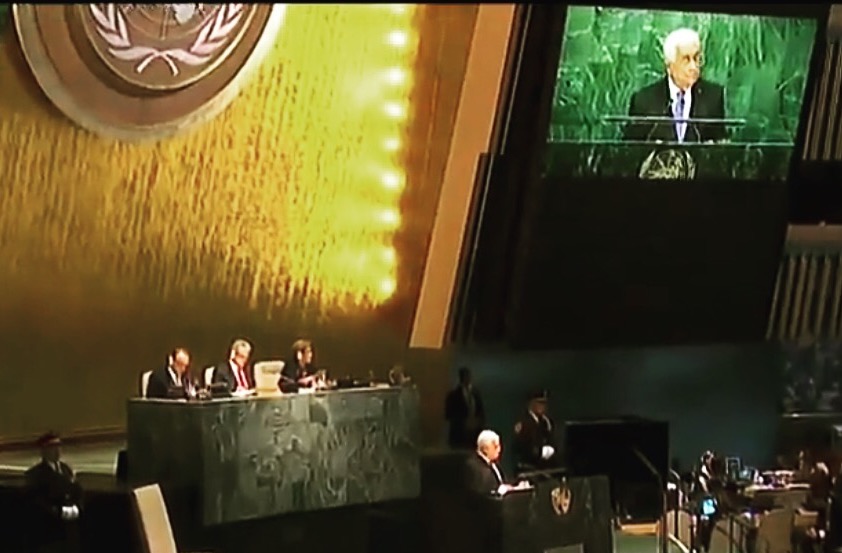
Palestinian President’s UNGA address: A note on content and possible implications https://bjornbrenner.com/palestinian-presidents-unga-address-a-note-on-content-and-possible-implications/ Sat, 21 Jan 2023 18:33:23 +0000 https://bjornbrenner.com/?p=806 Read More]]>

Commentary on Swedish Radio following Abbas’s speech:

“Palestinas flagga hissas och Abbas tal i FN” Intervju i P3 Nyheter, 1 oktober 2015.

After weeks of rumours of ‘dropping a bombshell’ in his UN speech, Abbas addressed the General Assembly on 30 September. As it showed, at the day of delivery, the promised ‘bomb’ had transformed into a mere warning shot.

In brief, the speech included two key points:

1) Palestine is a state under occupation

2) The PLO can no longer be bound by previous agreements with Israel

The first point, however, was practically to kick in an open door, at least from an international law perspective. The applicability of international law in situations of occupation is based on factual determination and not on declarations by the parties/disputants. The Hague Convention IV of 1907, which still holds true, stipulates that the triggering requisite of ‘occupation’ is when ‘territory … is actually placed under the authority of the hostile army.’ It is not refuted by anyone that parts of the West Bank and East Jerusalem are currently under Israeli (military) administration is not refuted – not even by Israel itself.

The second point remains relatively unclear, as Abbas did not specifically mention which agreements he was referring to. The Oslo I Accords, for instance, include Israel’s and the PLO’s mutual recognitions of each other. They also include the establishment of the Palestinian National Authority, not to mention the presidential post Abbas is holding himself. It was not clearly stated whether these also were under consideration to be cancelled. If, which is most likely, Abbas remarks were only meant as a threat to end security/economic cooperation with Israel, leading to (further) chaos in the Palestinian territories, no precise deadline when this would happen was mentioned. This lack of time frame very much weakened Abbas attempt (if this was the case) to frighten Israel, as well as the international community. Until a clear deadline is set (and kept), Abbas’s threats will remain empy.

Meanwhile, Abbas finds himself squeezed between; on the one side, a very disillusioned and disatisfied Palestinian public; and, on the other side, an Israeli political leadership with seemingly very little interest in negotiating a solution to the conflict. In addition to this, which also weighs heavily on Abbas, internal tensions in Fatah are building up as party members now are preparing for his succession.

]]>
From statebuilding to stagnation – ongoing paradigm shift in Palestinian politics https://bjornbrenner.com/from-statebuilding-to-stagnation-ongoing-paradigm-shift-in-palestinian-politics/ Sat, 21 Jan 2023 18:09:51 +0000 https://bjornbrenner.com/?p=763 Read More]]>

In today’s edition of the Swedish daily Svenska Dagbladet I discuss the protests and violence currently taking place in Israel and the Palestinian territories. In international media, one of the biggest questions surrounding this latest wave of violence has been whether what we now see unfolding is the beginning of a third intifada.

In the article, I argue that our current understanding of what an ‘intifada’ entails is outdated and needs to be re-thought – based on the enormous developments that have taken place since the second intifada (2000-2005) within both politics and technology. While the latest upsurge of violence might not fulfil the criteria that sparked off the earlier intifadas, the recent wave of violence nevertheless points to a very serious development with a new set of characteristics that is unlikely to go away any time soon.

To capture the nature of what is now going on – and the risk of it exploding into something much bigger – I suggest in the article that this new situation may be understood in terms of a ‘paradigm shift’, rather than an ‘intifada’. This term is associated less with the traditional set of characteristics (which I argue to be outdated). At the same time it has equal gravity and signals the potentially very serious repercussions of the events now unfolding. The term also captures the fact that the perspective of the new generation of Palestinian activists is different from the generation that participated in the second intifada.

This paradigm shift relates to and has taken place in five major areas:

  1. The idea of a sovereign Palestinian state is no longer perceived to be realistic
  2. The PLO leadership has lost its authority
  3. The traditional factions, especially Fatah and Hamas, have lost their credibility
  4. Settlement expansion seems to be a never-ending activity, with an increasing number of price tag attacks by extreme settlers
  5. With online social media tools available to everybody, the uniting role of the factions and the operative role of their leaderships are no longer needed

Read the whole article (in Swedish):

“Ingen intifada – men väl ett palestinskt paradigmskifte”, Svenska Dagbladet, 27 oktober 2015.

More on this topic (in English):

Nathan Thrall, “The End of the Abbas Era”, London Review of Books Blog, 20 October 2015.

“Will a ‘third intifada’ help the Palestinian cause”, Interview with PLO Secretary General Saeb Erekat on al-Jazeera English UpFront, 23 October 2015.

Gregg Carlstrom, “Can anyone prevent a third intifada?”, Foreign Policy, 14 October 2015.

Shlomi Eldar, “Is the Palestinian public leaving its leadership behind”, al-Monitor Israel Pulse, 23 October 2015.

Aaron David Miller, “Violence in Israel: The Possibility of a third intifada?”, Wall Street Journal Blog, 19 October 2015.

]]>
Lame hate crime legislation in Sweden concerning Islamic State flags? https://bjornbrenner.com/lame-hate-crime-legislation-in-sweden-concerning-islamic-state-flags/ Sat, 21 Jan 2023 18:00:47 +0000 https://bjornbrenner.com/?p=748 Read More]]>

The ruling by a Swedish prosecutor not to press charges against a man waving an IS flag in a Facebook post has drawn international media attention.

A 23-year-old man from southern Sweden posted a picture on Facebook of himself posing with an IS flag. The posting was reported to the police and investigated by Swedish prosecutors. However, the case was eventually dropped without resulting in any legal consequences.

In addition to the media reporting, a closer look at what actually happened is needed:

The prosecutor’s dismissal of the case was not related to any form of complaisance towards the Islamic State group. Rather, Swedish authorities across the spectrum take the threat of IS at home and abroad very seriously. However, Sweden is a society strictly governed by the rule of law. This means that, although the fight against terrorism is a top priority for the government, not all means are automatically allowed to combat terrorism. The rule of law and the protection of the individual are always considered above all else.

Not pressing charges against the 23-year-old is related to this firm view of the rule of law. Thus far, there haven’t been any similar cases in Sweden and legal precedents are still lacking as to how to deal with the waving of IS flags in the public sphere. It could be that there are weaknesses in the current legislation in this area, concerning incitement to hatred that need to be addressed, but this remains to be seen at a later stage.

In comparison with other symbols, such as the Nazi Swastika flag, the IS flag is currently not considered by Swedish judicial institutions to be illegal. The reason is that it doesn’t incite hatred against a “specific minority group”. Rather, the IS flag is understood in Sweden to symbolise hatred against everyone (except those who belong to the organisation themselves). This difference in interpretation (between the Swastika and the IS flag) leads prosecutors to the legal theoretical conclusion that no specific individual or minority group is being targeted when the flag is displayed.

The law concerning incitement to hatred was created to protect minorities from incitement on grounds of sex, race, religion or nationality. Hence, when it comes to the IS flag, in legal theoretical terms, no specific individual or group is targeted – and conversely, in these terms, it means that nobody (specific) is targeted.

During the coming months it remains to be seen whether Swedish authorities will try to solve this legal dilemma so as to take a harsher stance against the public display of IS symbols. If Sweden does go ahead with this, it would be following in the footsteps of other Scandinavian countries such as Denmark, which is already in the process of amending its hate crime legislation.

The first step for Sweden, however, is a precedent in a court of law to determine whether or not the existing legislation is sufficient to address the matter. Clearly, the current situation is problematic. IS has been designated a terrorist group by both the EU and the UN, two organisations of which Sweden is a staunch member. Whether or not incitement to hatred is directed towards a smaller or larger part of society shouldn’t matter. What IS wants and what message its symbols are meant to convey is obvious to everyone.

Listen to commentary by Björn Brenner in the i24 current affairs show The Daily Beat

“Prosecutor rules Islamic State flag is legal in Sweden”, Interview in i24 News The Daily Beat, 18 October 2016.

Read more

‘Flying the Isis flag is legal, Sweden declares’, The Independent, 15 October 2016.

‘Islamic State flag is legal in Sweden, prosecutor rules’, The Local, 16 October 2016.

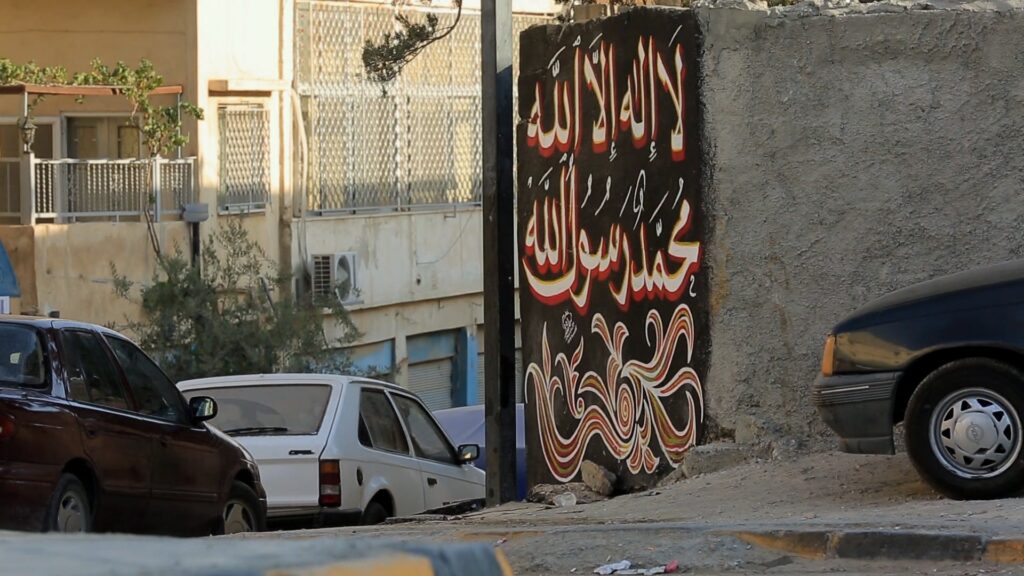
Photo (top): The Islamic creed sprayed on a wall in a Middle Eastern suburb. This graffiti has nothing to do with the case described in the text above.

]]>
Links between informal justice and governance in Gaza and the West Bank https://bjornbrenner.com/links-between-informal-justice-and-governance-in-gaza-and-the-west-bank/ Sat, 21 Jan 2023 17:37:36 +0000 https://bjornbrenner.com/?p=718 Read More]]>

In 2015, Björn joined the French Institute for Middle East Studies in Amman as a Postdoctoral Research Fellow. In addition to his ongoing research on Israeli and Palestinian politics, the year in Jordan will include field research for a new research project, titled ‘Peacemaking Politics: Sulha and the negotiation of justice in Gaza and the West Bank. This project is a cross-case analysis of how customary dispute resolution (CDR) is practised in the two political contexts of Gaza and the West Bank; how CDR venues and techniques have developed; and how CDR links to the formal processes of governance.

In the context of this research, ‘peacemaking politics’ is understood as a social scientific phenomenon situated at the intersection of religion, customs and domestic politics. The phenomenon has arisen in societies which have experienced varying levels of state authority and during these periods have fostered strong traditions of customary dispute resolution as means to handle social conflicts – in the absence of a working (state) judicial system. In the Levant, particularly, these advanced customary mechanisms for handling disputes between members of the community, redressing wrongs and restoring the social balance between individuals and families have lingered and remained in use by the people living there.

Gradually, as several Levantine states have grown stronger and attempted to reclaim their authority and administration over society, they have particularly experienced difficulties in restoring their monopoly within the judicial field. An initial reaction from these states has then often been to illegalise all forms and streams of informal justice-making, considering them as a threat to their authority. Eventually, though, the states have experienced that the popular reliance on and deeply entrenched trust in the informal institutions have been difficult to compete with. Struggling to increase the reach of and to consolidate their power, several states have rethought their strategies for how to wield their authority more efficiently. A common shift of strategy that has been observed among several of them has been to re-allow informal justice-making to be practised in parallel with the formal system. These states have then instead opted for increased control and influence over the informal judicial institutions.

Project reports and article publications will be posted on this website.

Read more:

Postdoc project summary Dr. Björn Brenner

Institut français du Proche-Orient 

]]>
EU blinded by its idealism – Has Palestine become a European project? https://bjornbrenner.com/eu-blinded-by-its-idealism-has-palestine-has-become-a-european-project/ Sat, 21 Jan 2023 15:39:03 +0000 https://bjornbrenner.com/?p=539 Read More]]>

EU blinded by its idealism – Has Palestine become a European project?


OPED IN HAARETZ BY BJÖRN BRENNER

Today’s Haaretz features an article by Björn Brenner about European perceptions of the Israeli-Palestinian conflict and the EU’s unwillingness to revise its policy goal of a two-state solution:

“Is Europe more desperate for a Palestinian state than the Palestinians?”, Haaretz, 18 June 2017.

Excerpts from the article:

“Today the European Union is one of the world’s keenest advocates of the two-state solution. Year after year, the EU continues to channel millions of euros from European taxpayers into various projects in the Palestinian territories focusing on building the institutions of a future state. Far from mere realpolitik, European policy-makers take great pride in this endeavour, spearheading what they believe to be a moral struggle for justice for the Palestinians. However, given the dramatic changes on the ground during the past decades, both social and political, clinging on to the same old policy goal from the Oslo era points to political statism – and an EU that is getting out of touch with reality. Brussels has simply been blinded by its own idealism.”

“Policy-makers in Brussels need to face the painful understanding that Palestine today is a project primarily advocated by the EU itself (together with the old guard in Ramallah). According to recent opinion polls, the majority of Palestinians want to retract from the Oslo accords, do not consider the two-state solution realistic, and believe that the (EU-funded) institutions in Ramallah are malfunctioning and corrupt. Furthermore, the majority of Palestinians consider the PA to be a burden overall, prefer non-violent resistance, and support a broader internationalisation strategy, as opposed to direct negotiations.”

“While the two-state solution is not entirely dead, it is not a realistic policy goal at this point in time. In the distant future, it is possible that the sands will shift again so that public opinion and opportunity anew realign with Brussels’ preferred solution. Until then, however, the EU must abandon its blinding idealism.”

Photo top: View of Hebron / al-Khalil

 
]]>
The enemy just blinked – why Hamas’s new charter is a big deal https://bjornbrenner.com/the-enemy-just-blinked-why-hamass-new-charter-is-a-big-deal-2/ Fri, 20 Jan 2023 18:50:49 +0000 https://bjornbrenner.com/?p=833 Read More]]>

OPED IN HAARETZ BY BJÖRN BRENNER

Summary: After several years of internal deliberations, hundreds of thousands of Hamas members have agreed on substantial revisions to their organisation’s 30-year-old founding document. The new text excludes anti-Semitic language and embraces a Palestinian state on pre-1967 lines. For Hamas, this amounts to nothing less than a departure from its original goals and a compromise with its thus far rejectionist ideology.

Read the article in full here: The Enemy Just Blinked – Why Hamas’s New Charter Is A Big Deal

“At the end of the day, Hamas has not yet relinquished its arms and is still calling for the destruction of Israel beyond the pre-1967 lines. But, importantly – no matter what Hamas’s unnoble intentions behind changing its charter may be – these changes are now a fait accompli, inked into its key ideological document and left there for the next generation of Hamsawis to deal with.”

“This shows that Hamas is indeed capable of change – and has realised that there will never be a Palestinian state spanning all the way “between the river and the sea”. While this might not lead to any palpable results for Israelis immediately, eventually it will. For now, let us nevertheless recognise what has just happened. For the first time ever, the enemy just blinked.”

The new charter will include redresses of several of the group’s most controversial standpoints, including:

A Palestinian state – Hamas will now agree on a Palestinian state based on pre-1967 borders. While not explicitly saying what will be on the other side of these borders, this acknowledges the existence of a foreign entity on the other side. Hamas will also say that it backs any peace agreement that can be reached between Israel and the Palestinian leadership, if it can be approved in a popular referendum.   

Armed struggle – As opposed to its former calls for the indiscriminate use of violence, Hamas will now state that, while it still considers the use of force to be its legitimate right, its focus will instead be on non-violent and popular resistance activities.

Non-Muslims – Hamas’s new charter will relate to other religions, Judaism and Christianity in particular, in more conciliatory language. As opposed to the explicitly anti-Semitic references in the former document, Hamas will now say that religious minorities constitute an integral component of Palestinian society. Regarding Jews, the document will specify that Hamas’s struggle concerns only those individuals who operate and have settled beyond pre-1967 lines.

Relations with other Islamic organisations – Hamas will state that it does not have any organisational ties to other Islamic organisations. Due to its former close ties with the Muslim Brotherhood, this statement marks a new chapter in the history of Hamas. Having recently been accused of conspiring with the Brotherhood against the Egyptian regime, as well as cooperating with global Salafi-Jihadi groups in Sinai, this is an attempt on the part of Hamas to deal with this. By doing so, however, Hamas will be regarded as a traitor by other extreme Islamist groups and risk a new wave of defections from its military ranks.

]]>