The post Games at MängudeÖÖ 2026 appeared first on The CGVR Study Lab.
]]>Every year, we provide the experience of showing their game at the MängudeÖÖ expo for different students and their games. The booth design, what we need to bring for it, packing, and setting everything up are all big parts of the adventure.
 |
 |
 |
 |
One of the conference talks was by James Butcher from the University of Staffordshire. He explained that while making it in the video game industry might be daunting, especially nowadays, it is important to start. There are plenty of success stories by small teams, and regardless of where you are in life, you should start now!
 |
 |
We also visited Simon Landry’s workshop on pitching music for games. It was great hearing about his process at Ubisoft: how they prompt the potential composers, what guidelines they have, how the choices are made, with examples of Assassin’s Creed and Avatar games, and how to communicate in a way that you keep the options open for the next project. Many people also brought their own audio samples, which we listened to together with Simon.
 |
 |
After the conference came the MängudeÖÖ main party. What caught my eye was the improv D&D organized by KVEST and Ruutu10. The Ruutu10 improv actors were playing characters that three volunteers from the audience controlled within a short D&D story DM-ed by the amazing Rauno Meronen.
 |
 |
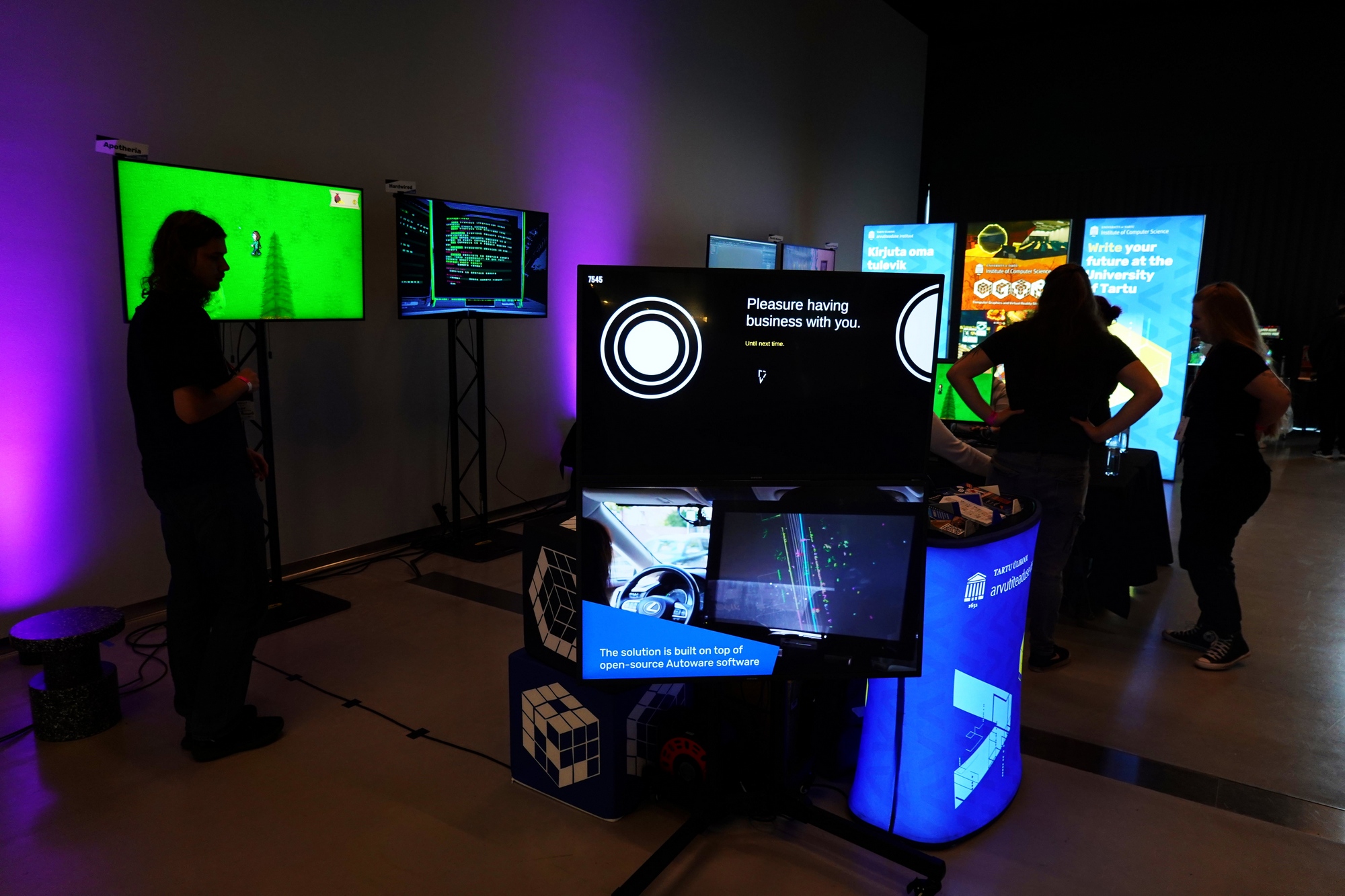
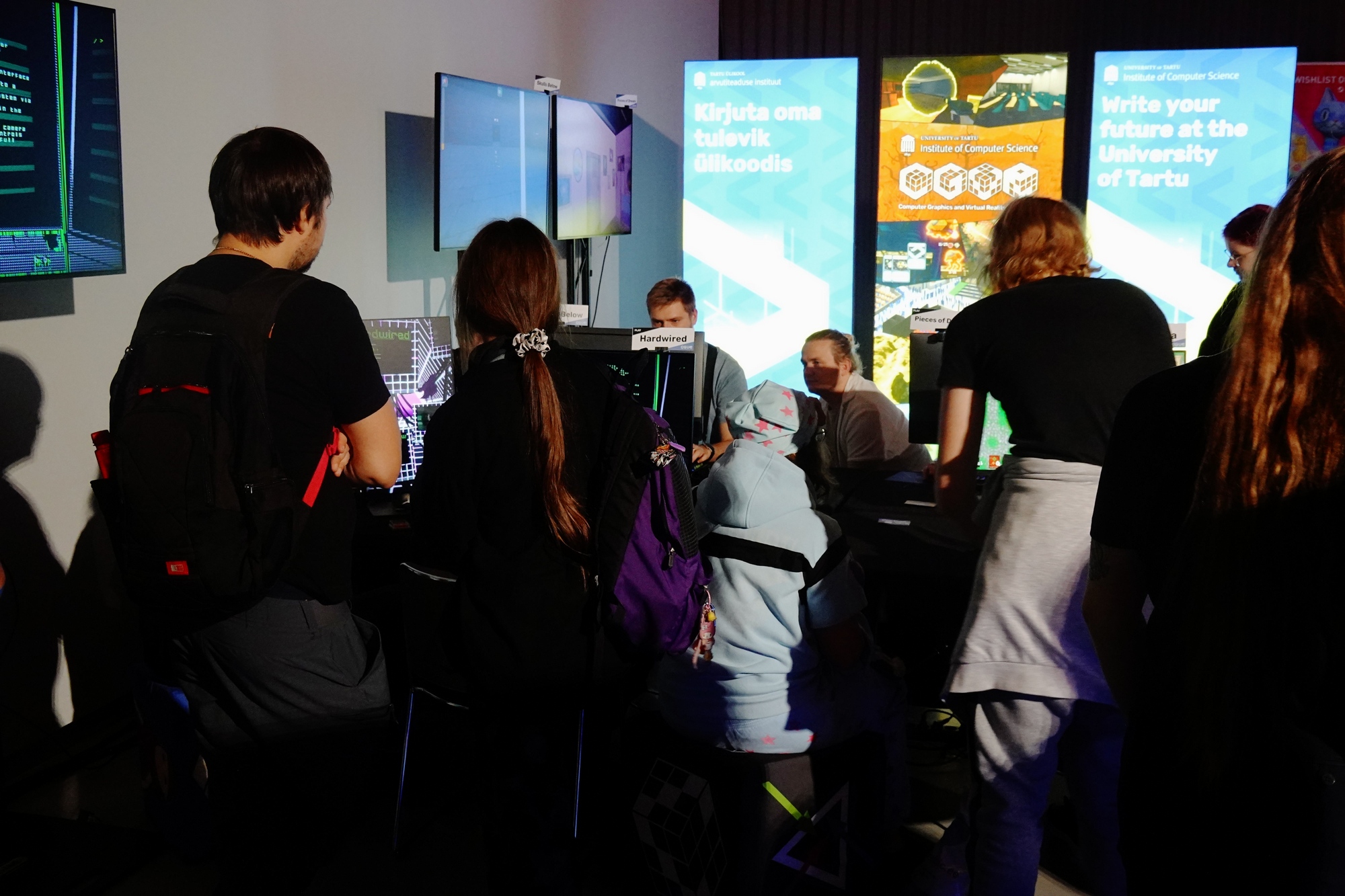
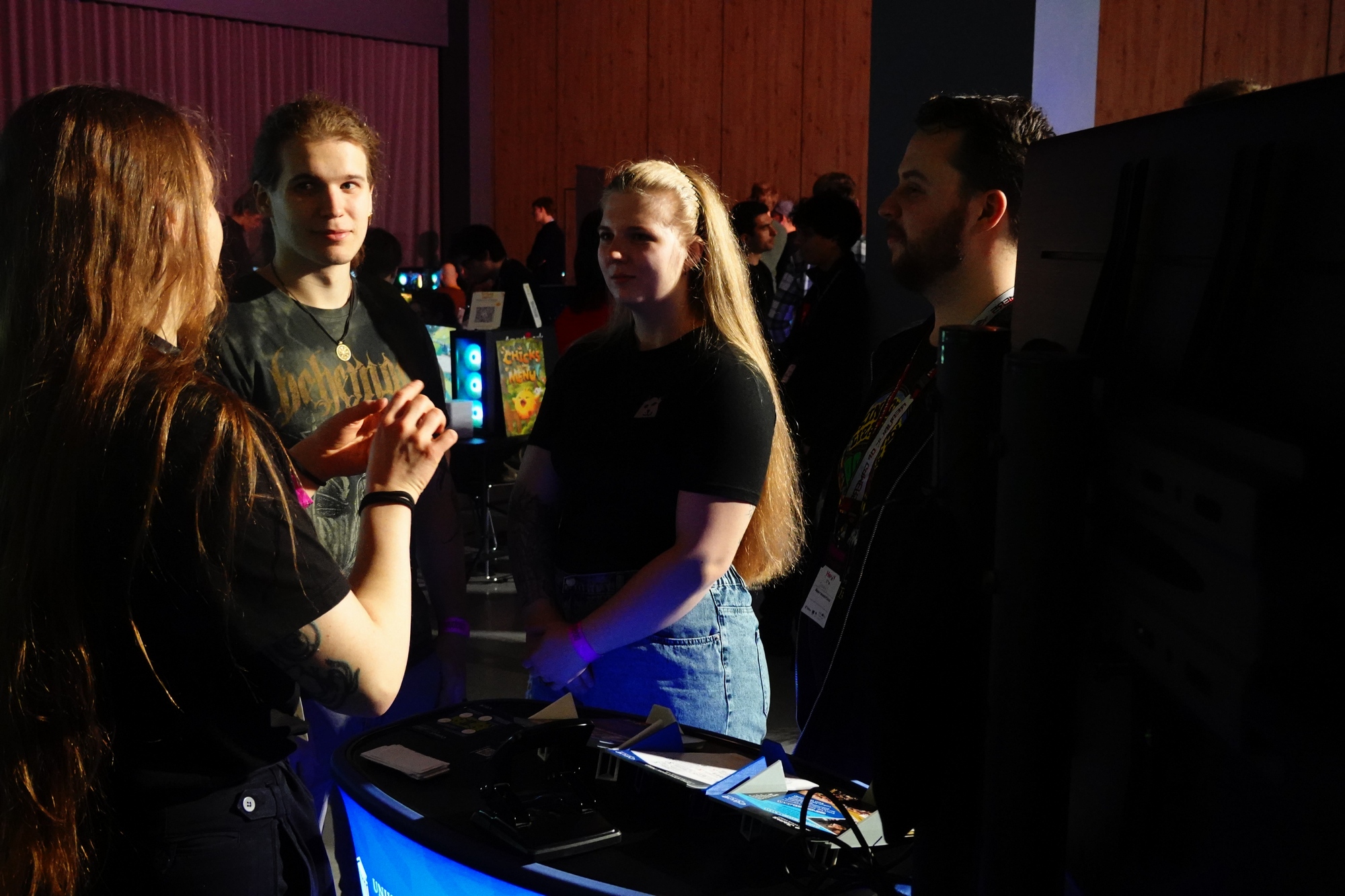
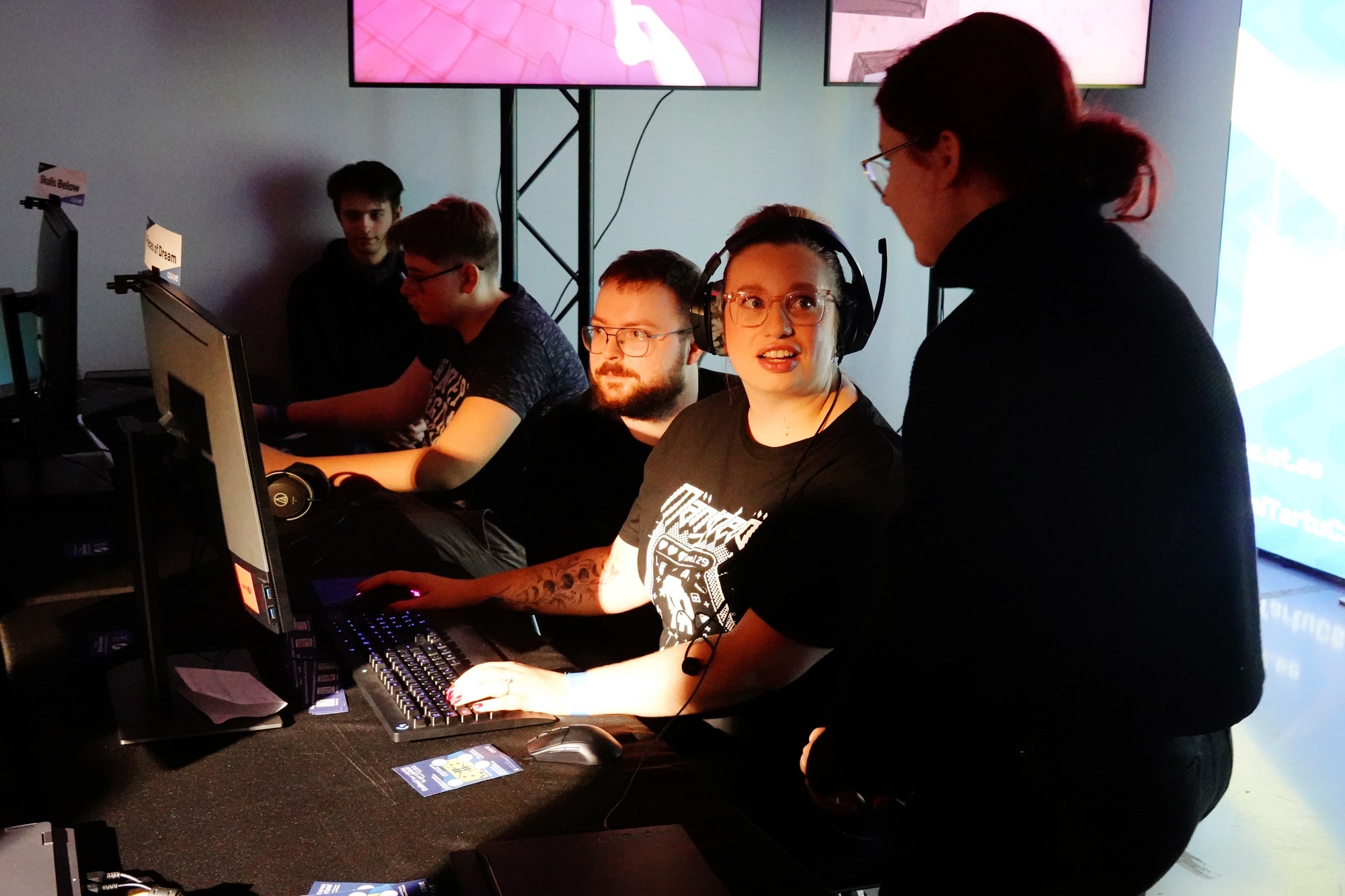
At our own booth, there were always people playing our student games and discussing game development education. We discussed many interesting topics like why the Estonian game development industry is so small compared to neighboring countries, how the emergence of new technologies is changing game development and its education today, and the different opportunities to learn the field we have at the University of Tartu. Of course, we also had our meta-game of collecting four stamps by playing all our student games and getting a prize for it.
 |
 |
 |
 |
 |
 |
 |
 |
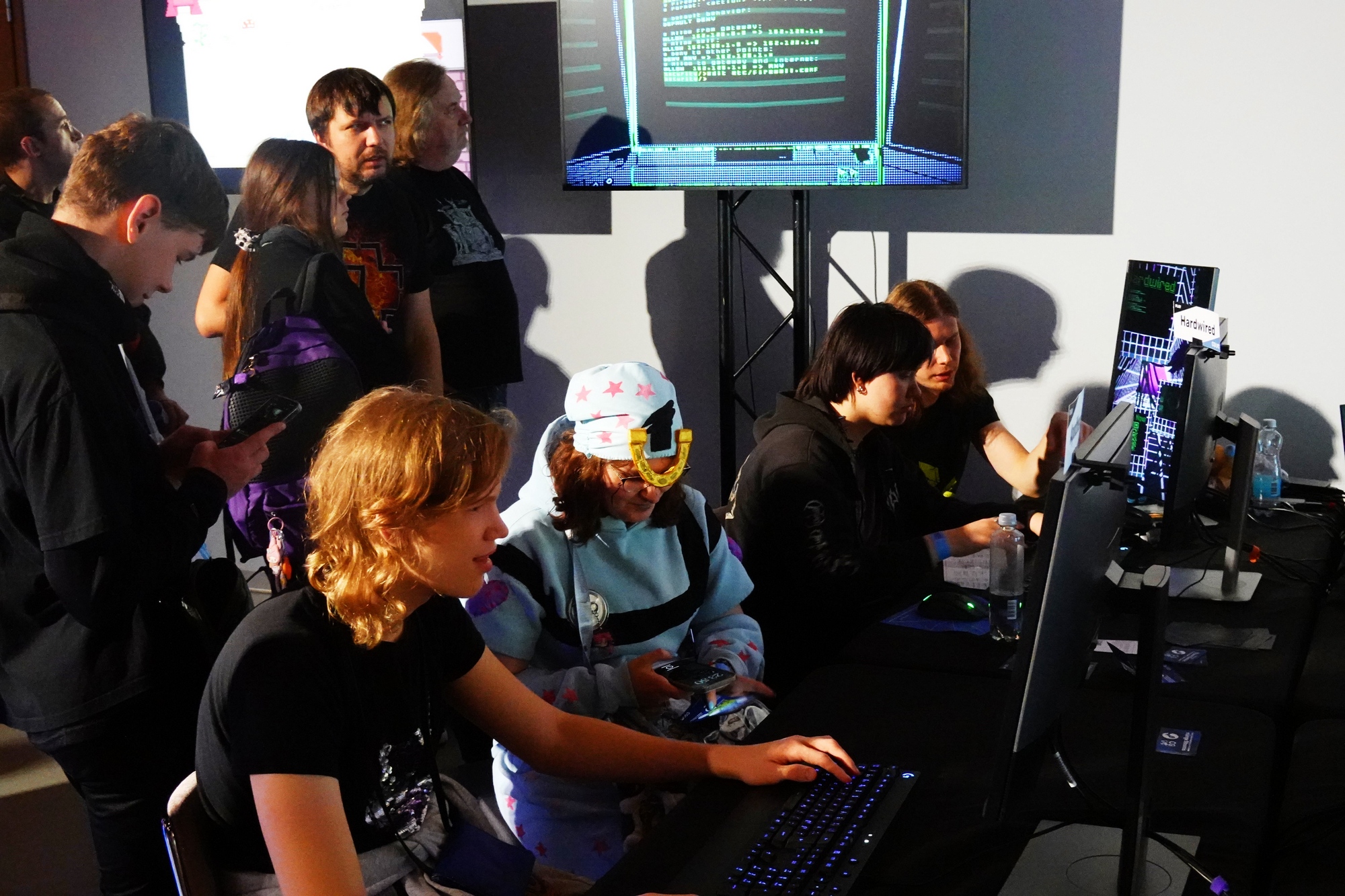
Hardwired
This is a game about being a hacker in a retro cyberpunk world made by our student Egor. For people who have ever used a command line on a computer, there is instant recognition in writing commands like “help” and “tree” in Hardwired while trying to solve an increasingly intensifying mystery. Soon to be released on Steam.
 |
 |
 |
 |
 |
 |
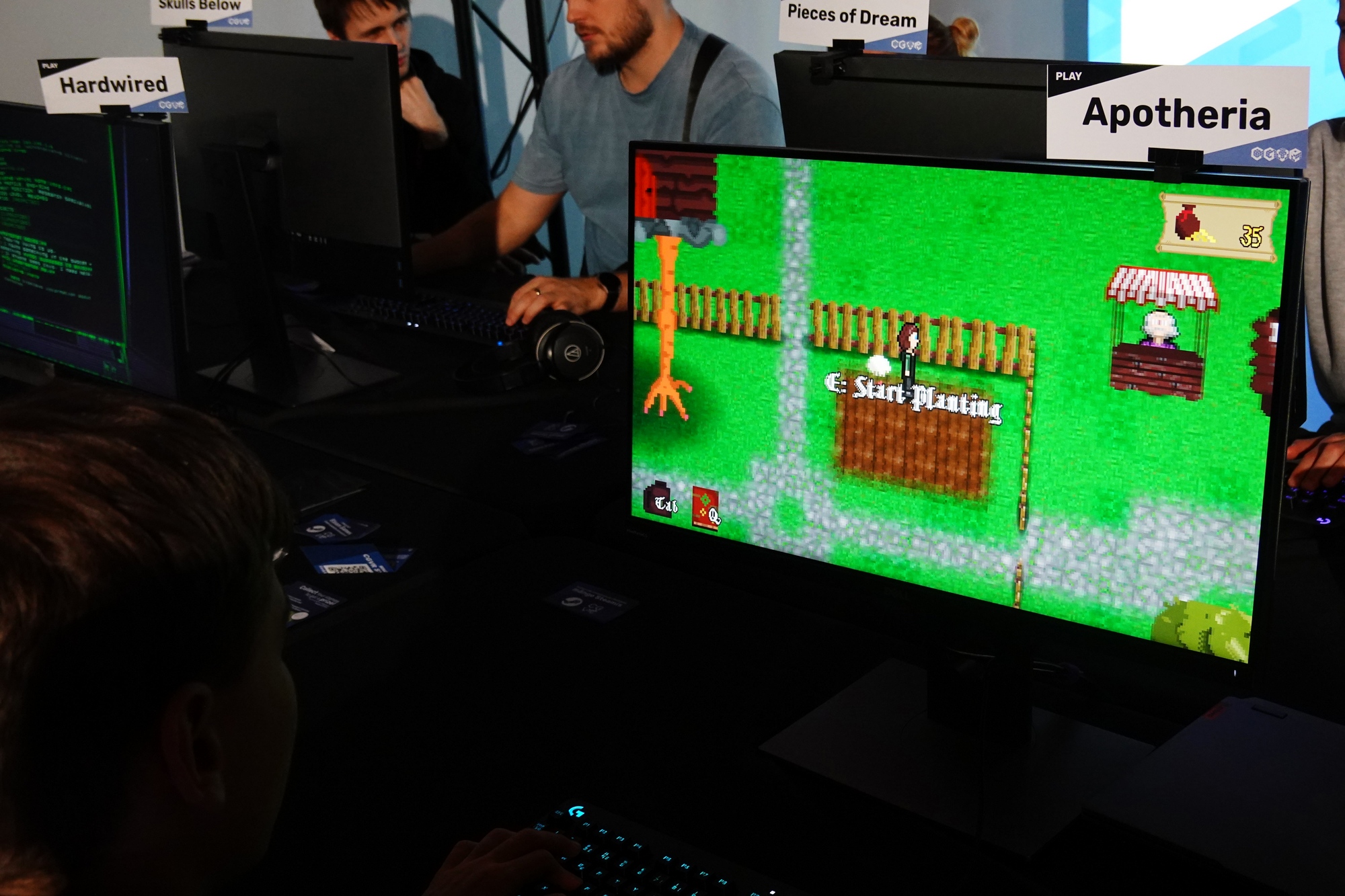
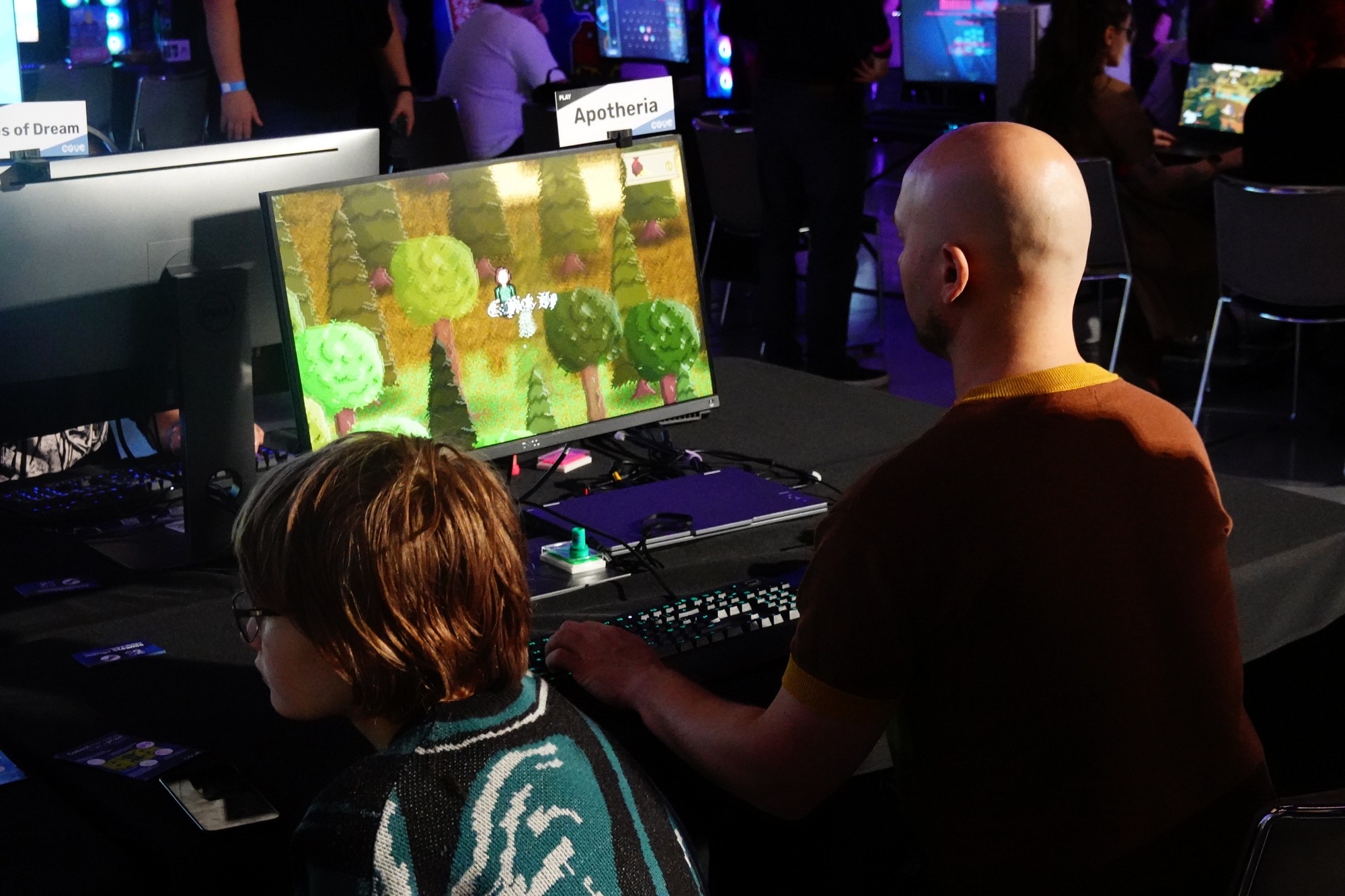
Apotheria: Herbs & Elixirs
Apotheria is a game created during our Computer Game Development and Design course by a team of four students. It is a cozy and polished game, inspired by Stardew Valley. In Apotheria, you discover different herbs growing around your house and mix them into all sorts of potions. By selling the potions, you get currency to buy seeds, which allow you to grow more herbs. It was showcased by our students Charlotte and Erik.
 |
 |
 |
 |
 |
 |
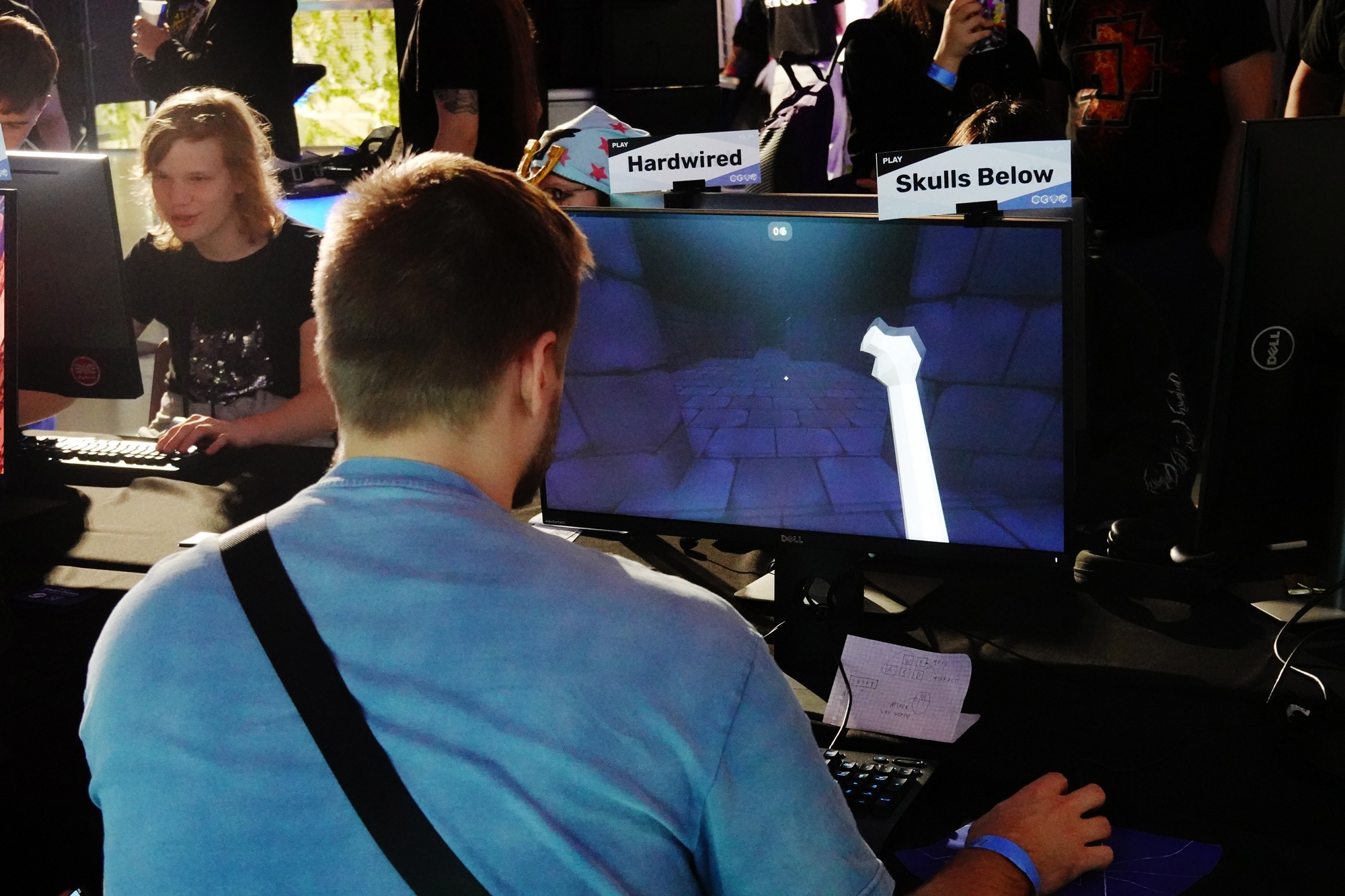
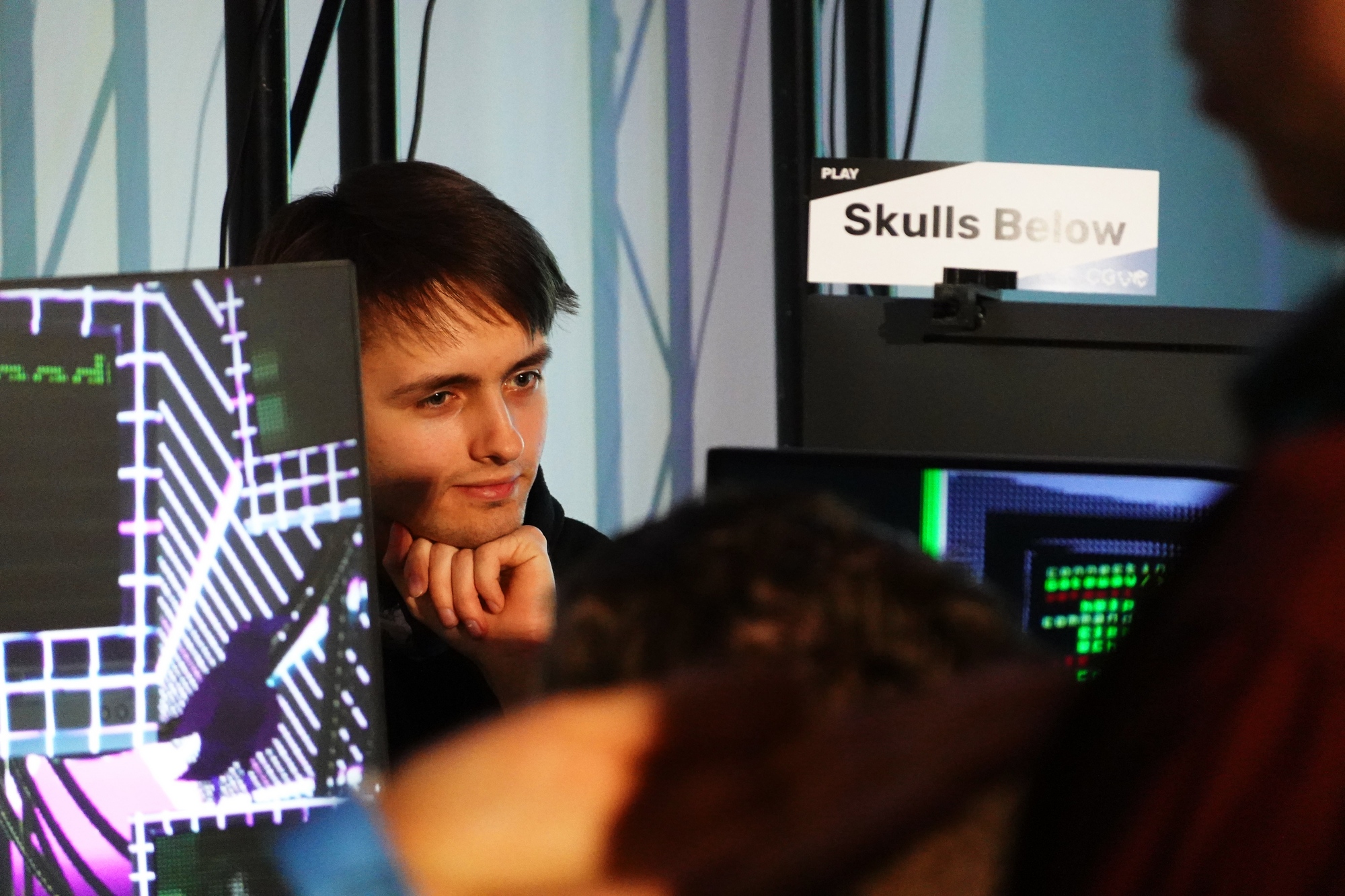
Skulls Below
The dungeon crawler first-person hack and slash game Skulls Below was developed by our student Kristo. Previously he had worked on Blastronaut for his bachelor’s thesis, but wanted to try creating something new during the summer. There is something very nostalgic about battling skeletons in a dim dungeon.
 |
 |
 |
 |
 |
|
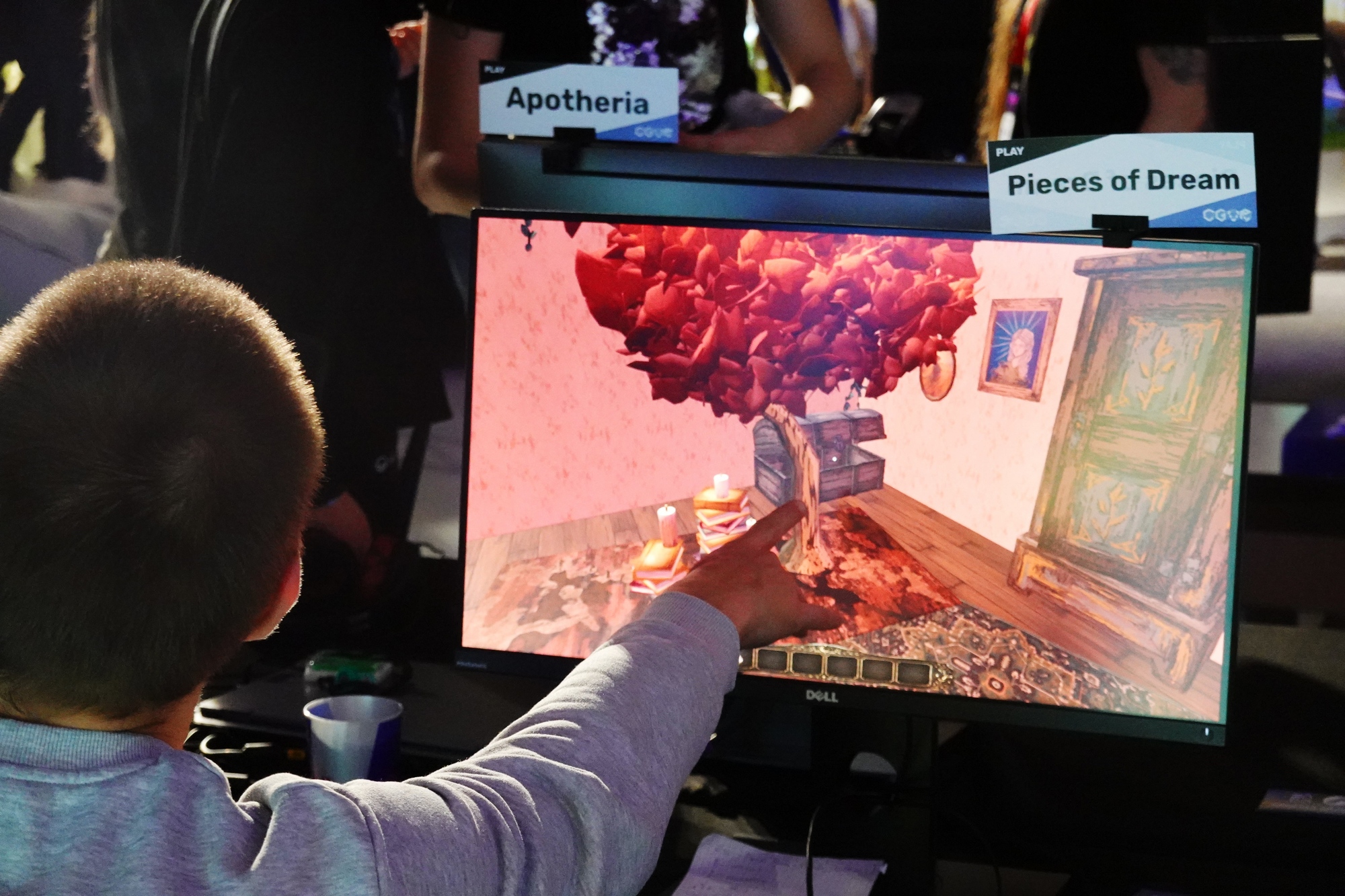
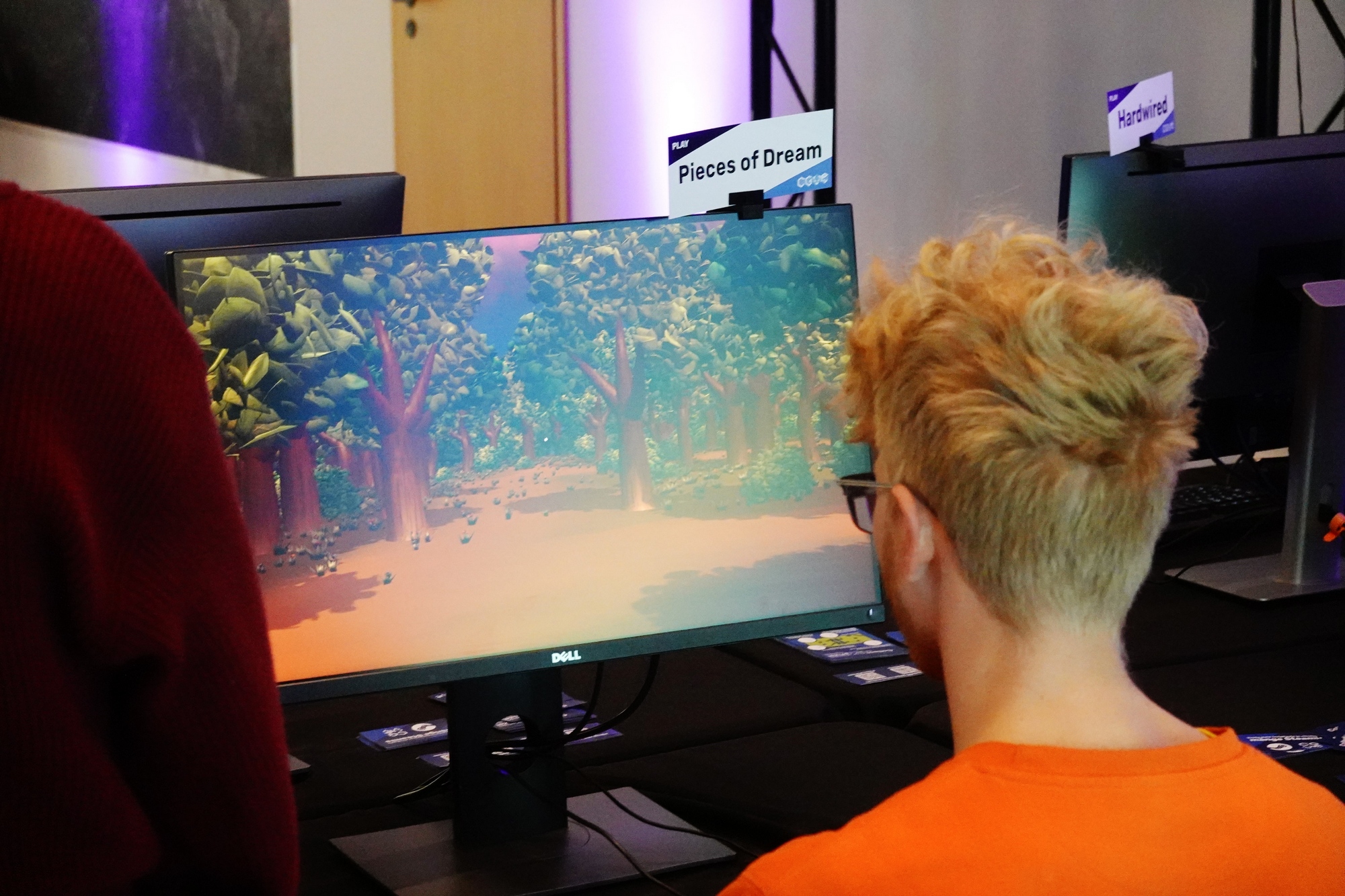
Pieces of Dream
The 3D exploration and puzzle game Pieces of Dream was also developed as a summer project by our clever student Evelina. Do not let the beautiful graphics mesmerize you into missing the environmental details important for solving the puzzles.
 |
 |
 |
 |
 |
 |
Thank you so much, MängudeÖÖ and all the amazing people who came to play our games!
The post Games at MängudeÖÖ 2026 appeared first on The CGVR Study Lab.
]]>The post University of Tartu Game Jam 2026 appeared first on The CGVR Study Lab.
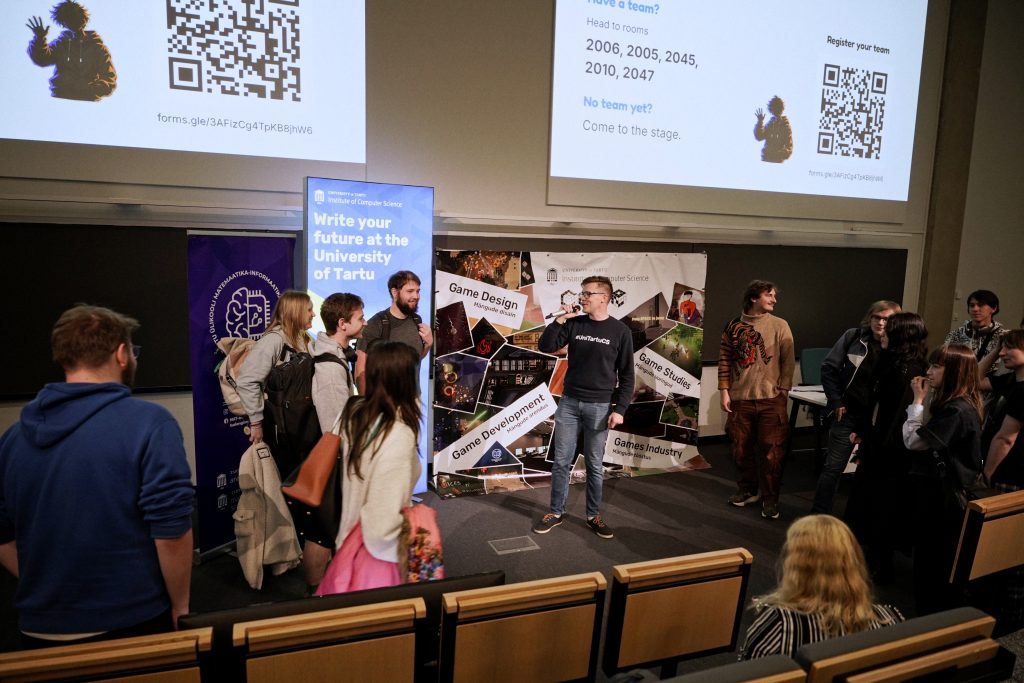
]]>Organised together with the Estonian National Museum (ERM), this edition came with an extra creative twist. In addition to the theme “Ghost in the Machine”, teams were challenged to draw inspiration from digital cultural heritage collections and use materials from heritage databases in their games.
With 22 teams submitting games, the weekend showed just how many unexpected connections can be made between history, technology, and imagination.
 |
|
 |
 |
Kicking Things Off
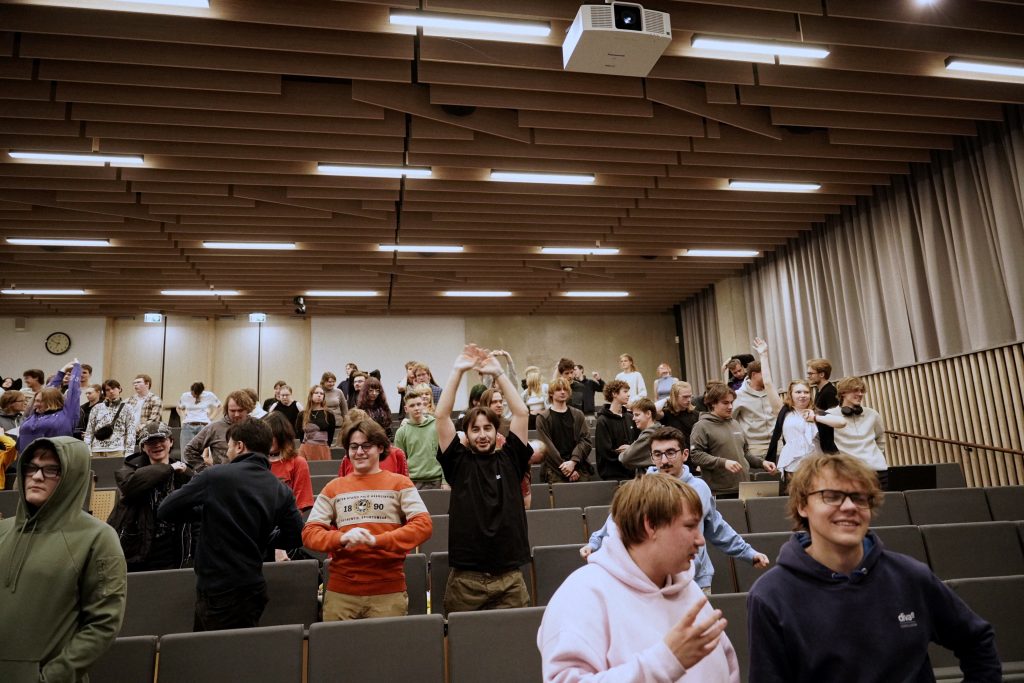
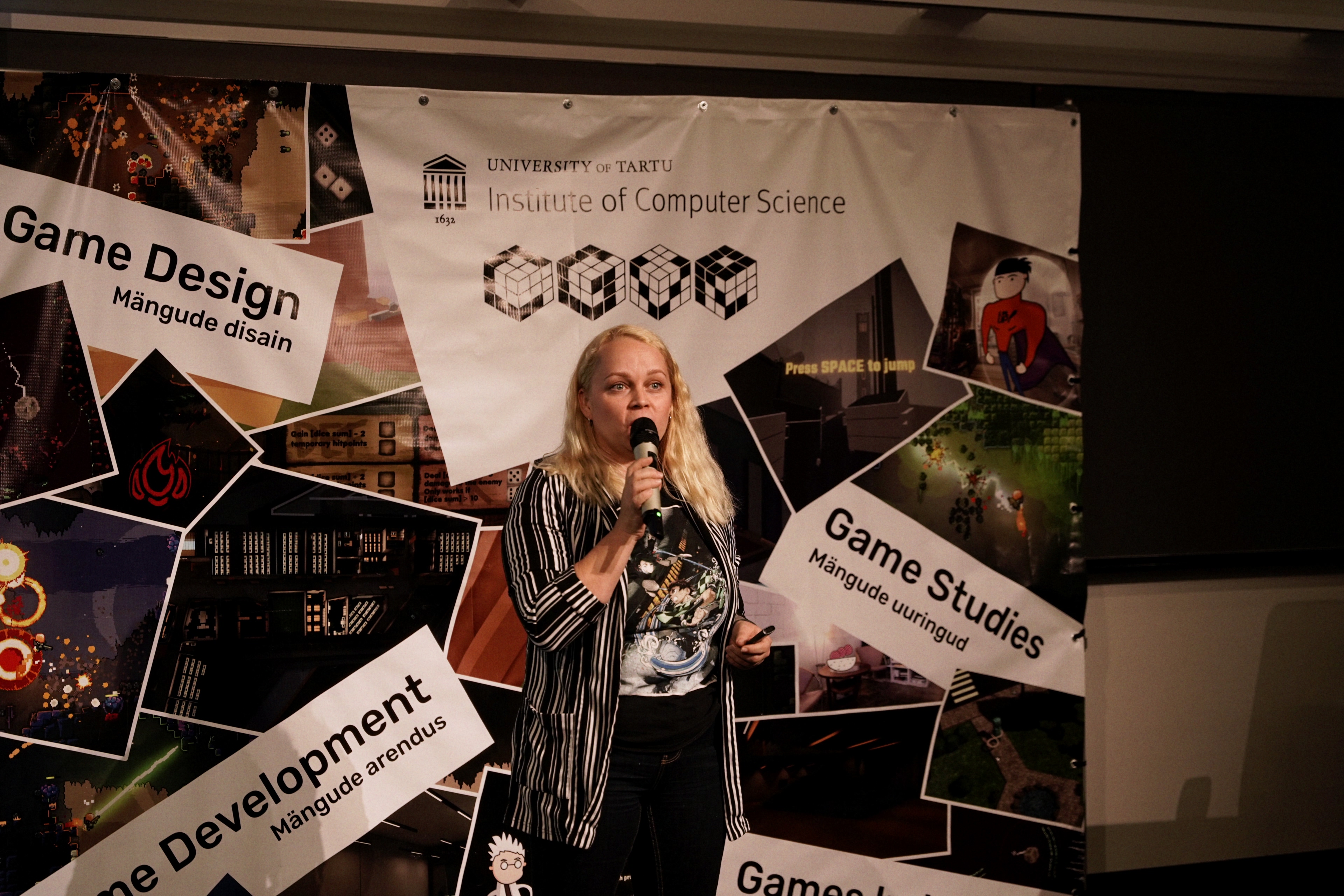
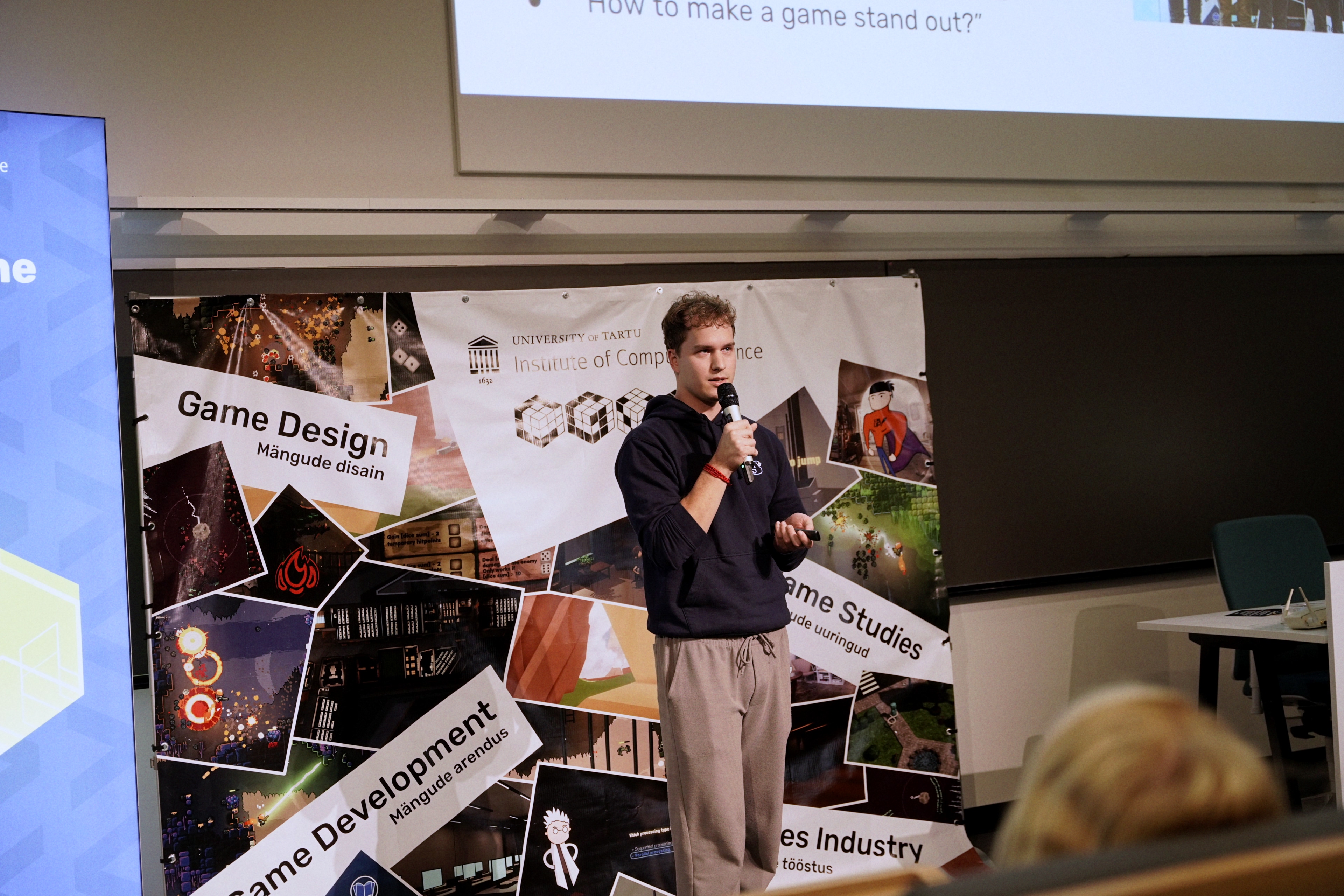
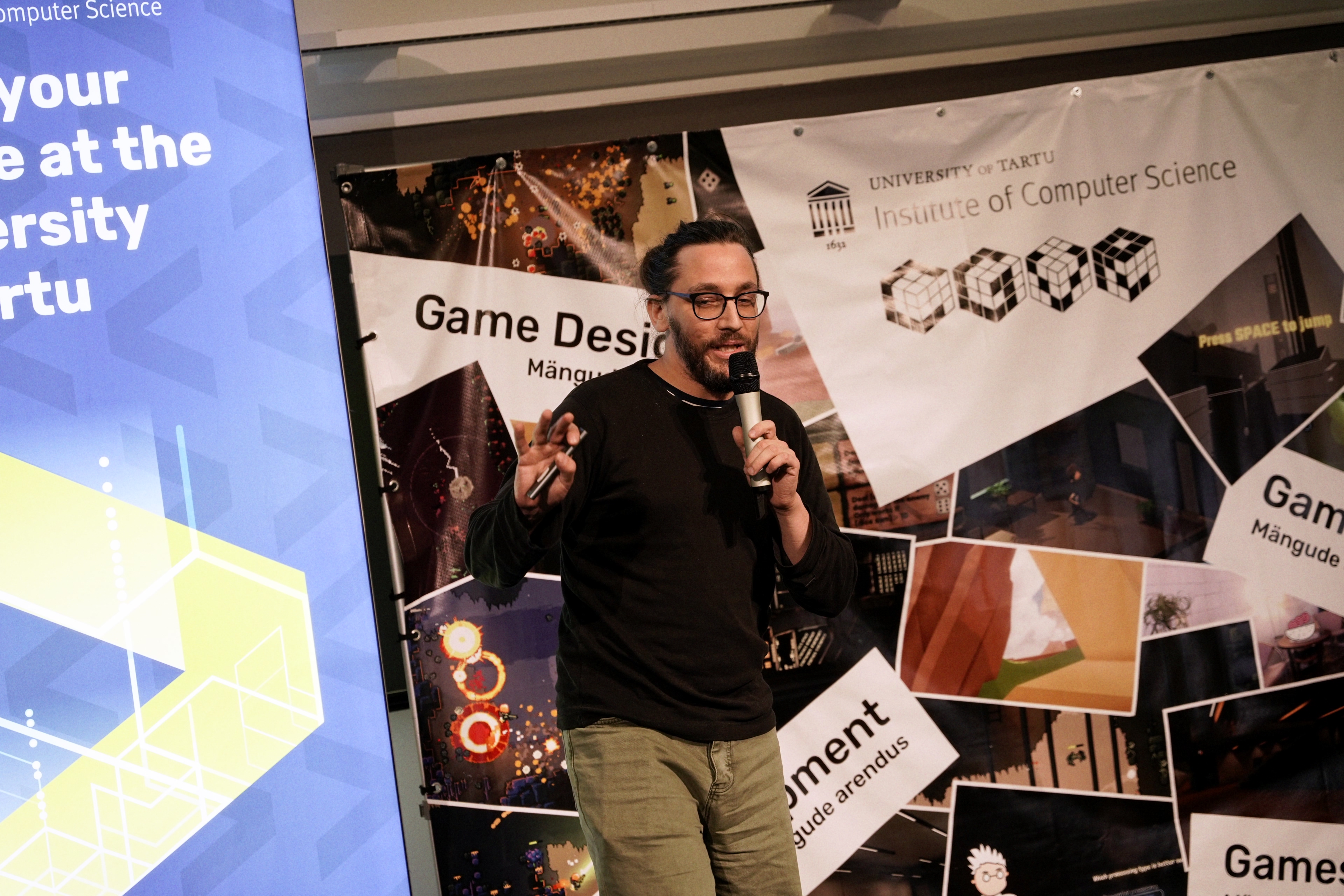
The event began on Friday, October 9, with an opening ceremony that welcomed both first-time jammers and experienced developers. Three speakers helped set the tone for the weekend:
- Gregor Artur Mäe looked back on his own game jam experiences, sharing stories and lessons from previous jams.
- Mart Alaru from ERM introduced digital cultural heritage and explained the special challenge of bringing materials from heritage databases into game development.
- Eva Roosaar encouraged everyone to make the most of the weekend and introduced MängudeÖÖ, another event that brings Estonia’s gaming community together.
You can watch a presentation recording or explore the game jam YouTube playlist.
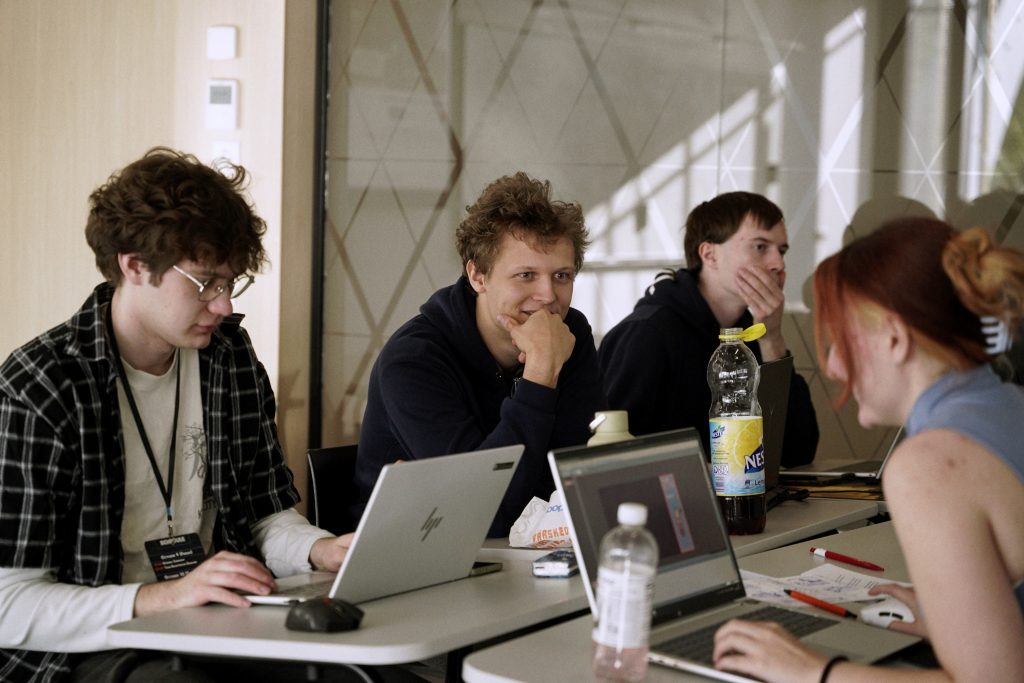
With introductions over, participants got to know one another, pitched ideas, and formed teams. The weekend’s creative challenge was about to begin.
 |
 |
 |
 |
Ghost in the Machine
On Friday, October 9, at 22:30, the official theme was revealed: Ghost in the Machine.
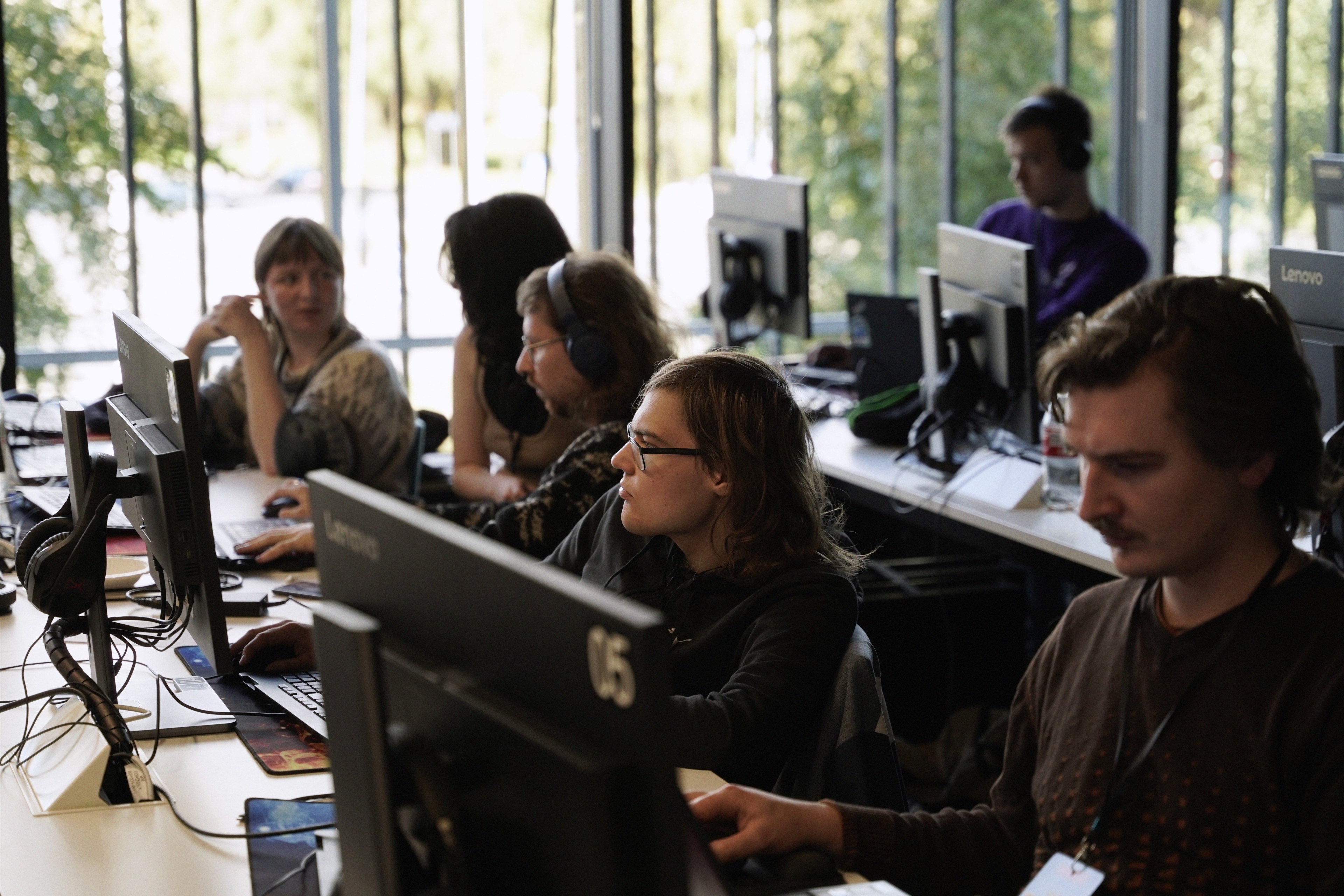
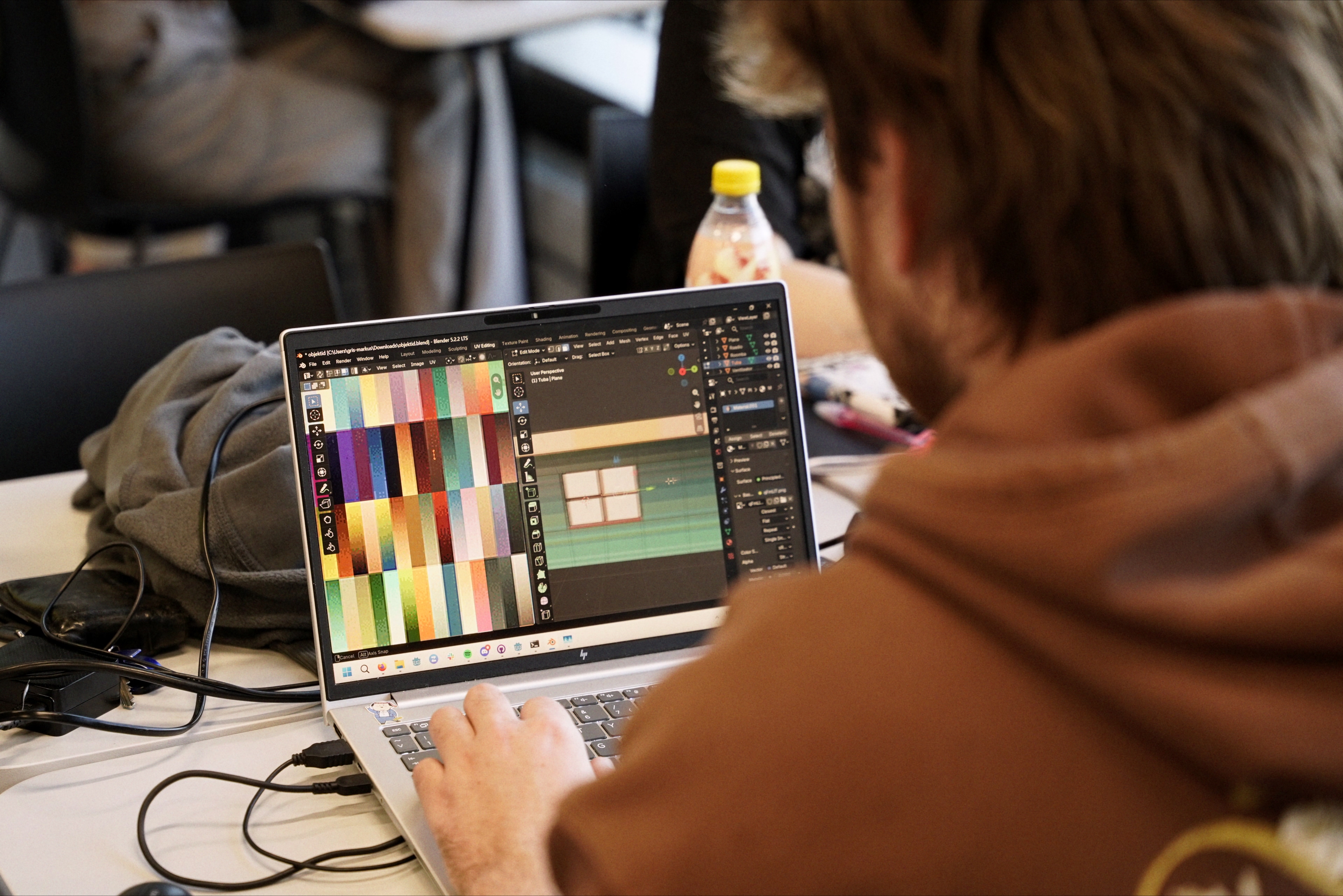
From that moment, it was time to turn ideas into games. Teams explored the theme through programming, visual art, sound, and storytelling, each bringing a different interpretation to the same starting point.
There was another layer to the challenge, too. In collaboration with ERM, participants were encouraged to explore digital heritage databases and incorporate historical or cultural materials into their projects. Old photographs, archival resources, and other heritage materials could become unexpected sources of inspiration for new interactive experiences.
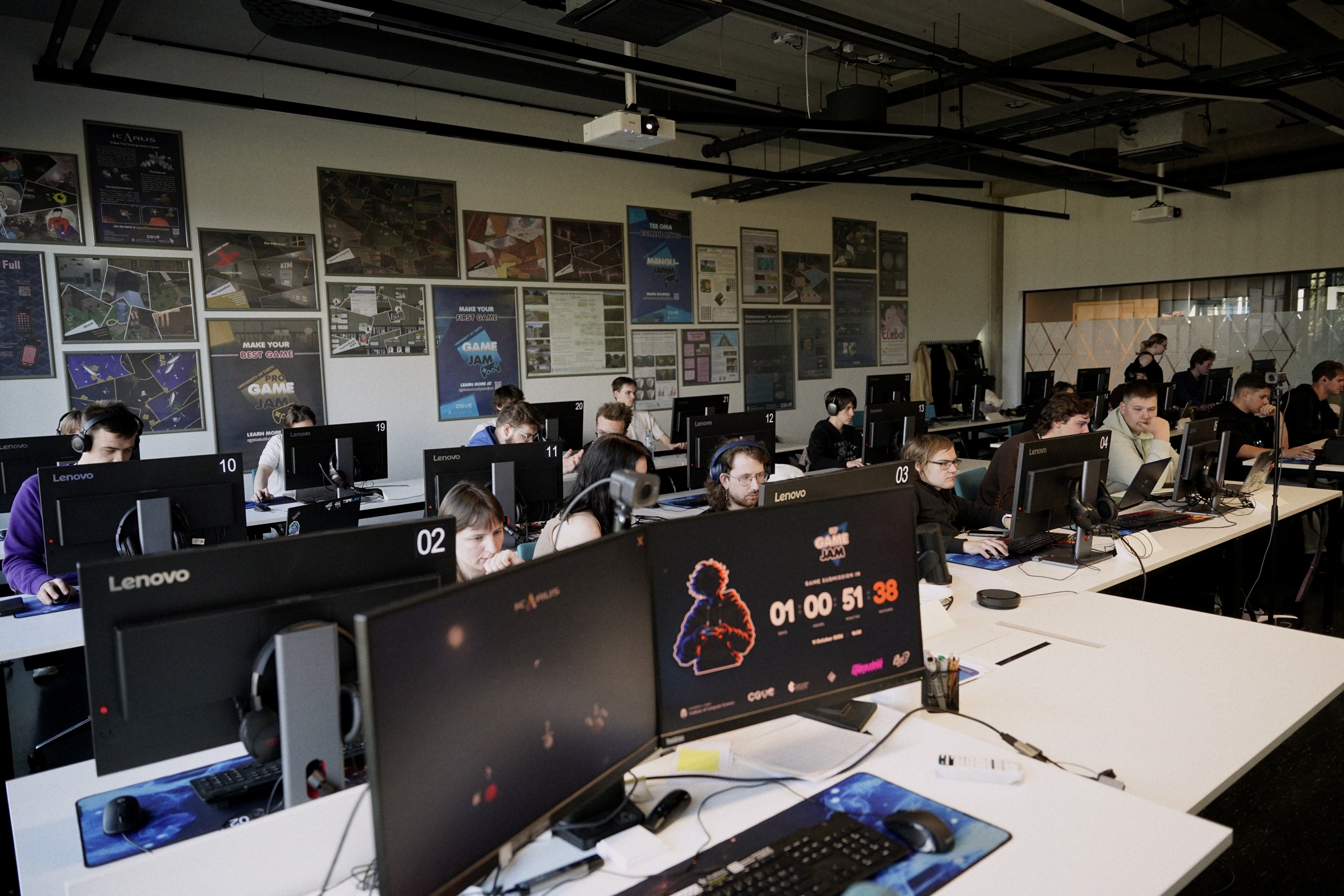
Over the weekend, the teams brainstormed, prototyped, solved problems, and helped one another along the way. As the deadline approached, their ideas gradually became playable games.
 |
 |
The Best Games
On Sunday, October 11, development came to an end. Participants had the chance to try each other’s creations and vote before the final presentations and awards.
After a weekend of imagination, dedication, and plenty of last-minute fixes, here were the top three games:
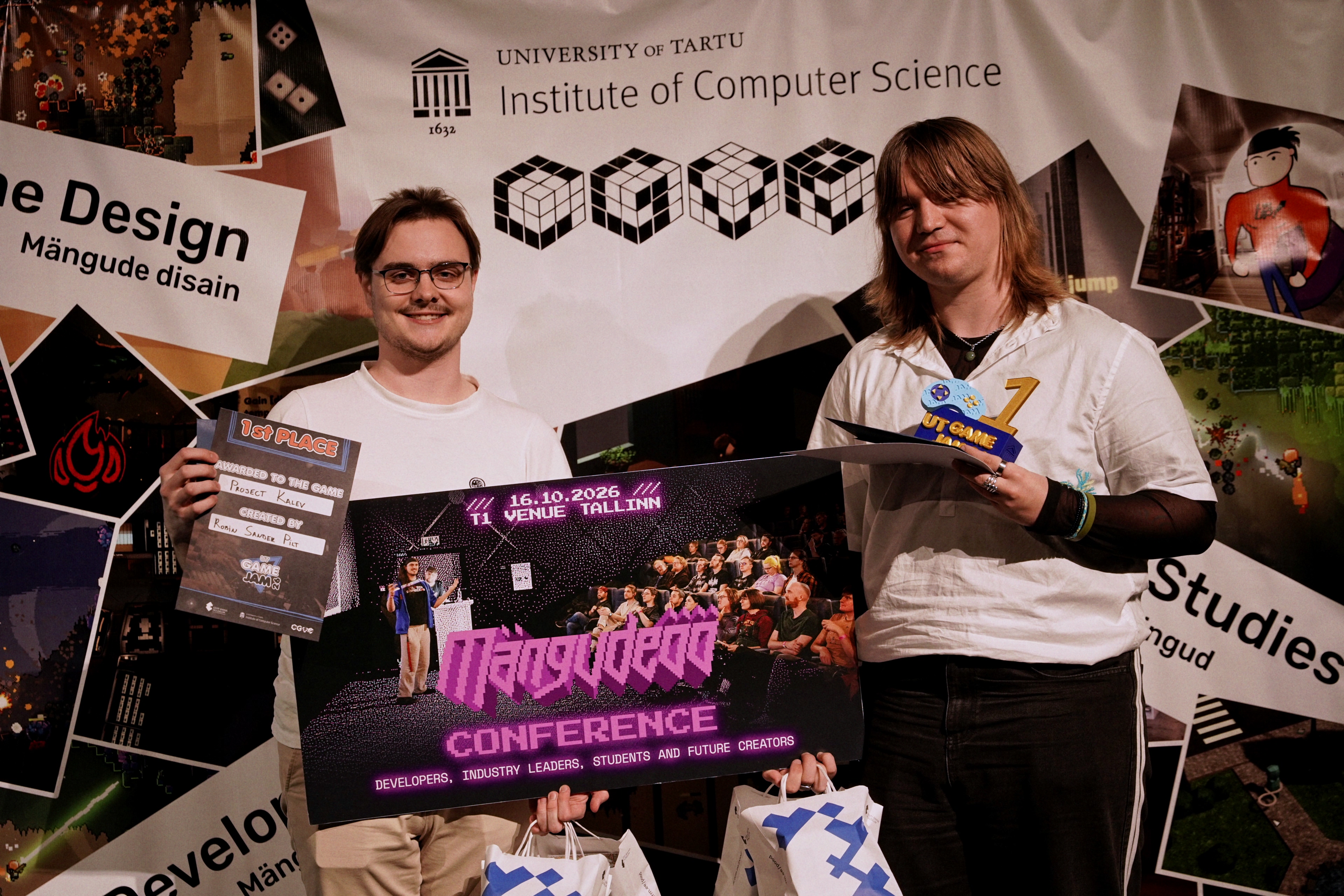
I PLACE – Project Kalev
by Arthur Klettenberg, Robin Sander Pilt, Rene Miller, Oliver Proos, Markus Jürjenson, Olesja-Väsvy Soitu
Set in Estonia after the restoration of independence, Project Kalev takes players into a retro-computing mystery. When a newly acquired computer starts acting strangely, a mysterious antivirus disk might hold the answer.
 |
 |
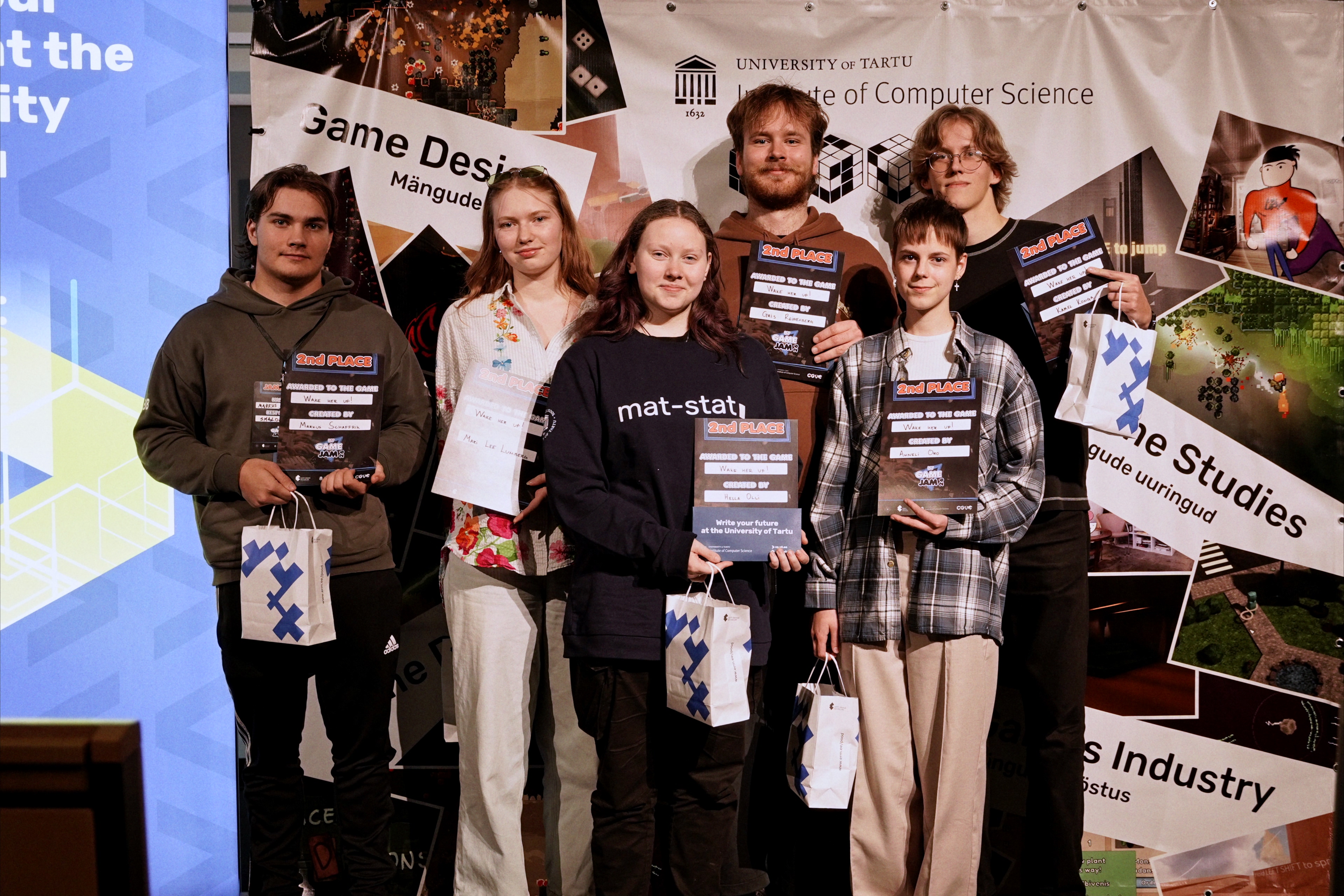
II PLACE – Wake her up!
by Mari Lee Lumberg, Anneli Oro, Markus Schaffrik, Hella Olli, Karel Konga, Gris Reinesberg
In Wake her up!, players become Gregor, a ghost trapped inside machines. His way out? Wake up a human who can help him escape. The game takes a playful approach to the theme while weaving in elements of digital heritage.
 |
 |
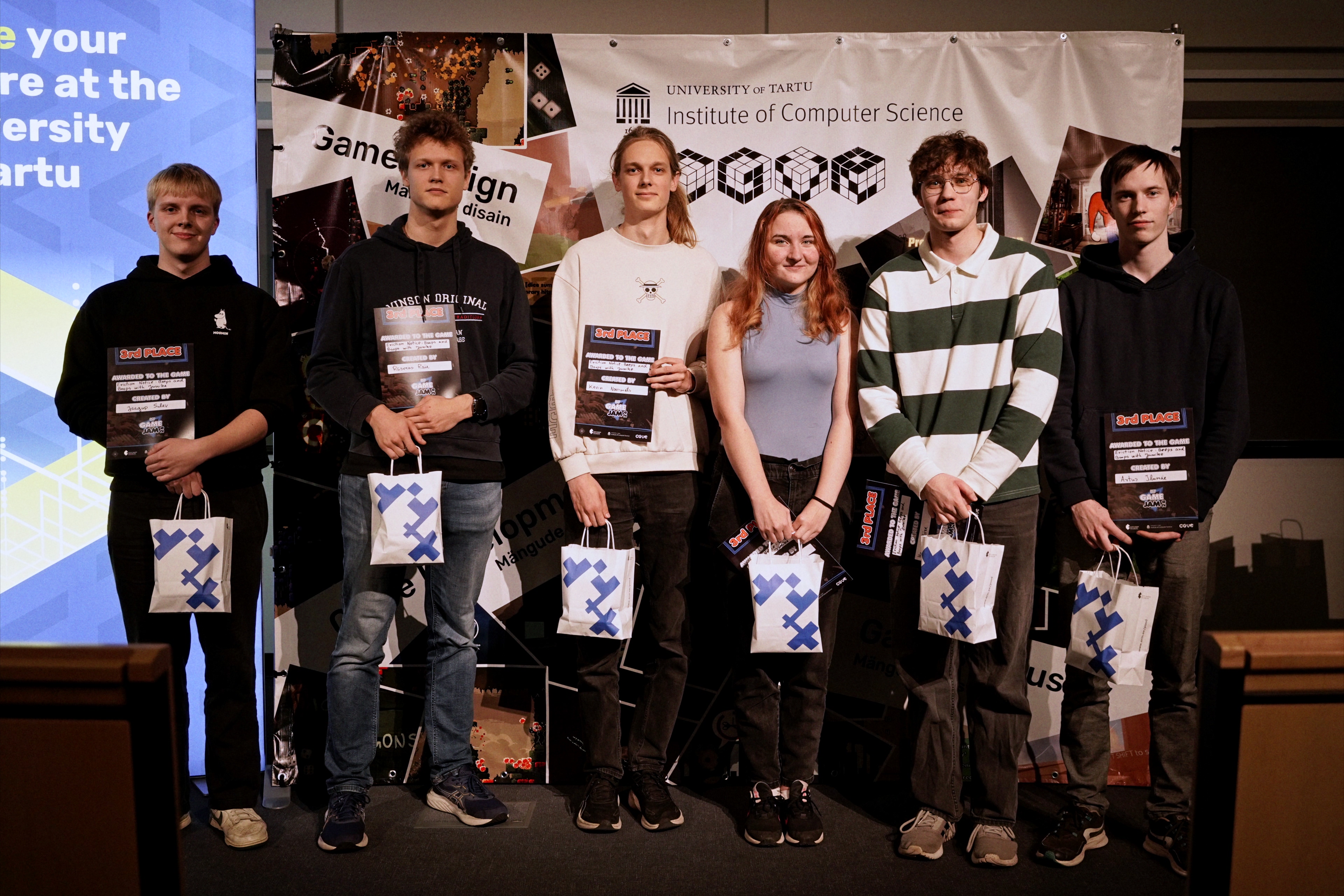
III PLACE – Eviction Notice: Beeps and Boops with Jussike
by Lilii-Ann Older, Rasmus Raie, Artur Ilumäe, Kevin Noormets, Henry Hiire, Jaagup Sulev
In this charming rhythm game, players help Jussike the Ghost save his home by playing Estonian Song Festival music on a broken gramophone. It brings musical heritage, colourful visuals, and rhythm-based gameplay together in one imaginative experience.
 |
 |
Congratulations to all the winners and everyone who completed a game! Explore all 22 entries and the full results on JamVote.
Thank You for an Amazing Weekend!
A special thank you to the Estonian National Museum for collaborating with us and showing how digital cultural heritage can spark entirely new ideas for games.
Thank you as well to everyone who helped organise and support the event and made the weekend possible.
Most importantly, thank you to all our game jammers! Whether this was your first jam or one of many, your curiosity, creativity, and willingness to experiment made the event what it was.
We hope you left with new skills, new friends, and great memories. See you at the next game jam!
The post University of Tartu Game Jam 2026 appeared first on The CGVR Study Lab.
]]>The post Tartu Ülikooli Mängujämm 2026 appeared first on The CGVR Study Lab.
]]> |
|
 |
 |
Kicking Things Off
The event began on Friday, April 17 with the opening ceremony, setting the tone for the weekend. Participants were welcomed into an energetic and creative atmosphere, and the evening featured three insightful presentations:
- Karl Nagel explored the psychological experience of music in games.
- Veronika Kukk shared practical advice on how to enjoy game jams.
- Ella Hiedel encouraged participants to take their skills to the next level and look past game jams.
 |
 |
 |
 |
Full Development Mode
On Saturday, April 18 at 04:00, the official theme was revealed as part of Ludum Dare 59: Signal.
From that moment game development started. Teams interpreted the theme in a variety of ways.
The Best Games
I PLACE – Agent Gnortz
by Tõnis Sarv, Eeva-Ruth Niitvägi, Kauri Remm, Aksel Martin Muru
 |
 |
II PLACE – Signal Saboteur
by Markus Schaffrik, Anneli Oro, Mari Lee Lumberg, Eneli Tollimagi, Anete Ainjärv, Rio Truija
 |
 |
III PLACE – Past Signal
by Jürmo Harak, Vaiparoo, Greete Rosin, Joonas Palmik, Rasmus Kuusmaa, Sofia Volkova
 |
 |
Thank you all supporters for providing either food or rewards to our jammers!
 |
 |
 |
Thank you all game jammers! See you next time.
The post Tartu Ülikooli Mängujämm 2026 appeared first on The CGVR Study Lab.
]]>The post Games at Game in Tartu 2026 appeared first on The CGVR Study Lab.
]]>Our 6×6m area was split into four sectors. We had a mini-game where participants could collect four stamps from those sectors and receive a small prize. The sectors had three bachelor’s thesis games, two UT Pro Game Jam winner games, and DeltaVR with game mechanic experiments designed during a master’s thesis. Every visitor found their own favourites, such as the VR in DeltaVR, or the platformer and strategy games created by our students.
 |
 |
Silentia
Silentia is a platformer game designed and developed by our student Daria. The game uses a clone-based mechanic combined with precision platforming. It is inspired by Celeste and Super Time Force Ultra. The challenge for the player is not only to move accurately but also to plan ahead and layer clones using their different special abilities to solve the puzzles.
 |
 |
Fevered World
Fevered World is a strategy game created by our student Aksel Martin. The purpose of the game is to create an economically viable region that produces resources, trades with its neighbors, and grows in return. The player has to choose what buildings to build and where. The simulation of both the region’s inhabitants and the background economy then uses the buildings to produce resources and engage in trade.
 |
 |
Magnetroid
Magnetroid is a game from our student Richard Miikael. Inspired by Mind Over Magnet, this precision platformer is extremely challenging but fair. The player controls a robot duck that has to platform through varying magnetic fields. This is actually a third iteration of the game, titled Magnetroid: Remagnetized.
 |
 |
Patterns Please
Patterns Please is the winning game of the UT Pro Game Jam 2026. That game jam, organized together with Estonian National Museum had a theme of patterns. Inspired by the game Papers Please, this game has the player listen to the troubles of villagers and construct them talismans with benefits specific to the troubles. The game was developed by a team of five experienced game developers and showcased at the event by Arja.
 |
 |
DeltaVR
DeltaVR is a collection of interactions set in the virtual reality version of the Delta building. During this master’s thesis work, our student Henri is experimenting with AI 3D model generation and its possibilities as core parts of game mechanics. It is likely that in several years, AI content generation becomes even more widespread. So, a intriguing question is that how that could be integrated into gameplay. Henri has designed and developed three potential avenues of that inside the DeltaVR project.
 |
 |
Tiksu-Toksu
Tiksu-Toksu is the winning game from the UT Pro Game Jam 2024. The theme at the time was Tartu, due to Tartu being the European Capital of Culture. The team of four experienced game developers decided to make a game about herding Tiksu’s into the univeristy building. As the game’s theme is tied so much with our university, and the gameplay is easily approachable, we often show it during different expos.
 |
 |
Our students got a lot of useful feedback from the visitors of the event – actual video game players. For most of them, it was also their first experience showing their games at such a large event. The feedback is now used to make their games even better. Seeing real people playing and enjoying what they have built, gave them also a huge motivation boost to keep making games.
 |
 |
 |
 |
 |
 |
 |
 |
Thank you everyone who came to play our games and to the Tartu Youth Work Center for making such a cool event!
The post Games at Game in Tartu 2026 appeared first on The CGVR Study Lab.
]]>The post University of Tartu Pro Game Jam 2026 appeared first on The CGVR Study Lab.
]]>
The University of Tartu Institute of Computer Science, CGVR Lab, and the Estonian National Museum came together to organize the University of Tartu Pro Game Jam 2026. This game jam was designed especially for professional and experienced game developers.
The event brought together over 100 participants, who formed 23 teams. Their shared goal was simple but demanding: create a fully playable game in less than 48 hours. It was both a challenge and a competition, pushing teams to work fast, think creatively, and collaborate under pressure.
 |
|
 |
 |
Patterns Across an Intense Weekend
The theme of UT Pro Game Jam 2026 was PATTERNS. During the opening ceremony, Agnes Aljas spoke about the meaning and importance of patterns, especially from a cultural and historical perspective. Diana Fehr introduced the iGame platform, which participants were able to try out during the game jam. Teams were also given a special challenge: use something from a shared assets folder, created from museum collections. The idea behind the theme was deeper than visual design. Ethnographic patterns are not just decoration. They are systems that carry memory, identity, and ways of thinking. Long before modern code, people used patterns with rules, repetition, and variation to pass on knowledge. In game development terms, these patterns can be seen as algorithms from the past. They can shape game mechanics, progression, worldbuilding, AI behavior, visuals, or storytelling. Teams were invited to explore questions like:
-
Can a pattern be learned, broken, or changed?
-
What happens when cultural memory becomes part of a game system?
-
How can heritage be turned into play?
For this challenge, teams used patterns from the Estonian National Museum collections, giving traditional designs new digital meanings.
 |
 |
 |
 |
UT Pro Game Jam 2026 was an intense and inspiring weekend. It combined fast-paced game development with cultural heritage, showing how old patterns can find new life in modern games. The result was a diverse set of creative and playable games.
The Best Games
I PLACE – Patterns Please
by Liisa Leit, Ott Saar, Raigo Kõvask, Kevin Kelus, Aurelija Artsimovitsute
Patterns Please is a folk-inspired puzzle game about weaving meaning into Estonian national belts. Listen to people’s wishes and worries, combine symbolic patterns and colors, and craft belts that may guide their future – for better or worse.
 |
 |
II PLACE – Don’t Beat Carpets
by Semilla Tuberg, Veronika Kukk, Oskar Unn, Alo Ailt, Joseph Mattias Tomp
Don’t Beat Carpets is a quirky folk-inspired game built around small mini-games where you carefully tend, clean, and restore carpets. Play as a determined grandma juggling her new carpet-cleaning job and take care of the carpets.
 |
 |
III PLACE – Patternless Behavior
by Patrick Tiit Raal, Kaaren Tenson, Trevor Mäe, Anete Ainjärv, Eneli Tollimägi, Marten Peljo
Patternless Behaviour is a folkloric ritual-combat game inspired by Estonian traditions. Ancient artisans have hidden their mastery within living patterns, teaching only through trials. Face them in symbolic combat, unravel their designs, and prove yourself worthy to inherit their craft.
 |
 |
Thank you all supporters for providing either food or rewards to our jammers!
 |
 |
 |
 |
 |
 |
Thank you all game jammers! See you next time.
The post University of Tartu Pro Game Jam 2026 appeared first on The CGVR Study Lab.
]]>The post Computer Graphics EXPO 2026 appeared first on The CGVR Study Lab.
]]>
Student District A included projects from our Computer Graphics Project course. Those were AR Subtitles, Signinsonni, Ink & Echoes, and Untitled MIDI Project. There was also Magnetroid – an ongoing bachelor’s thesis project. The other half of the room was shared between students working on our larger projects Reflexions and Blastronaut.
 |
 |
 |
 |
Student District B had the top projects from our Computer Graphics course and Computer Game Development and Design course. From the former, there were projects Procedural Animation, 2D Fluid Simulation, Tree Cellular Automata, and Audio Visualizer. From the game development course, there were Apotheria: Herbs & Elixirs, Asteroids Quest, Beachcomb, and DinoCave. On top of those, there was an ongoing bachelor’s thesis Grand Strategy Map Tool, and an ongoing master’s thesis Townfall.

In the hallway in front of the Student Districts, students showed our lab’s ongoing project DeltaVR.
 |
 |
The Entertainment Avenue started with a showcase from LVLup! Video Game Museum. Among other cool things, they brought their Micro Game Factory, where you can just draw a game level on a piece of paper, and it is instantly turned into a full working video game! Next came Sparkup Tartu Science Park who offer many interesting funding opportunities for rising video game studios. Then there was a Game in Tartu booth. They are organizing an event with the same name later this year.
 |
 |
 |
 |
The other side of the Entertainment Avenue was filled with many game studios. The Morsakabi studio is founded and ran by our alumni. At the moment they are in the process of bringing their quite popular mobile games also to PC. Next came Korter 1996 – the Best Estonian Game of 2025. Their cool pixel-art style conveyes the retro experience of living in an apartment in the post-Soviet country mixed with some cosmic horror. The theme of cosmic horror continued with the next game – Awaken. Recently released on Steam, this game from our alumni takes the player into a strange forest to search for their lost sister. Next to them was Circle Empires 2. The Circle Empires games are all about real-time strategy on circular islands. The islands have different resources, enemies, and open up as the game progresses. The final game in the Entertainment Avenue was the extremely fun party game Grannies on Wheels. In this game you and three of your friends (or computer-controlled characters) smash into each other with your small cars carrying buckets of jam and driven by grannies!
 |
 |
 |
 |
 |
 |
After going through the Entertainment Avenue, the visitors reached Education Street. There the Tallinn University’s Digital Learning Games (DLG) and Tartu Art School introduced their study opportunities. DLG is a master’s programme where one can really get to know the psychology of gamers and take their game design skills to the next level. Tartu Art School is offering different curricula for young people to learn and make beautiful video game art, including 3D!
 |
 |
 |
 |
 |
 |
Most spacious was the VR Alley. There the Estonian Virtual and Augmented Reality Association (EEVR) showed the latest projects of their member organizations and introduced to the visitors the different opportunities for working with VR in Estonia. Next to them was MaruVR with their magnum opus Bootstrap Island. In this game, the main character has to survive on a deadly tropical island and discover the story of how they got there. This game was the Best Estonian Game of 2024. Continuing in the VR Alley there was Blueray who promoted their latest educational project The Dawn of (R)evolution, which takes you on a journey of mankind through the different ages. Next to them, from our neighboring country of Finland , was the Helsinki XR Center showcasing the different projects and activities they are a part of, including a virtual reality game, where you get to experience what it is like to be a dentist. Last, but definitely not least, was VReken. If the visitor ended up in the far corner of VR Alley and put on the VReken headset, they, with full-body tracking, ended up in a melee combat with bands of enemies and high-paced action!
 |
 |
 |
 |
 |
 |
 |
 |
 |
 |
 |
 |
 |
 |
The Conference section lasted the entire event and included a wide assortment of topics. The sessions were started by a panel-talk from our study lab’s founders Madis Vasser, Raimond Tunnel, and Ats Kurvet. This year marks the 10th anniversary of the CGVR Study Lab and that talk looked back to the last decade. The Tallinn University talk explained more about their DLG master’s programme. Then Tartu Science Park explained if finding investors for a video game project is a good idea. The Korter 1996 author explained how she designed and developed her game. Blueray delved into the design and development of their The Dawn of (R)evolution project.
 |
 |
 |
 |
 |
 |
 |
 |
 |
 |
Helsinki XR Center elaborated on their recent research projects. The Circle Empires developer – Luminous OÜ – focused on what they had learned in the past 9 years regarding their game’s graphics. The Game in Tartu people promoted their upcoming event. The Grannies on Wheels developer discussed their experience of switching from solo development to working in a team. The conference ended with a technical talk by Ats Kurvet about how to optimize Unreal Engine projects using the latest top technologies the engine provides.
 |
 |
 |
 |
 |
 |
 |
 |

It was amazing seeing so many of you curious about game development, playing the games, listening to conferences, meeting the companies, and checking out our student projects!

Thank you everyone who participated and attended our expo! Let’s meet again next year!
The post Computer Graphics EXPO 2026 appeared first on The CGVR Study Lab.
]]>The post Games at GameOn 2025 appeared first on The CGVR Study Lab.
]]>Friday started with Lithuanian success stories like Human Fall Flat and Cooking Fever. Then there was a talk on how to get EU funding for creating a narrative in a game project. Later in the day was a presentation about the three best games from the Baltic countries. It was nice to meet Rein Zobel again, who talked about Bootstrap Island. The best game from Latvia was The Case of the Golden Idol, which innovated on the detective adventure puzzle game mechanic. From Lithuania, it was Crowns and Pawns: Kingdom of Deceit, which has incorporated real-world places in Lithuania and Lithuanian culture into the game world.
 |
 |
 |
 |
 |
 |
Near the end of Friday were two very cool talks. First, Tom Hall, one of the original creators of Doom and id Software, talked about how to get new ideas for making video games. Namely, it is important to be in an environment without any distractions – a creative place, where one can focus solely on letting ideas come and combining them gently inyo new ones. Taking a shower or driving a car also produces that state of mind. The second presentation was from 11 bit studios, who had switched from their own in-house engine to Unreal Engine for making Frostpunk 2. The talk was about the struggle to pick Unreal Engine instead of Unity or the in-house Liquid Engine used for the first Frostpunk game. The day ended with an amazing concert, where a live orchestra and a metal band played known songs from video games!
 |
 |
 |
 |
The talks on Saturday were on broader topics like cosplay. Tom Hall also did another presentation about the early days of id Software. On Sunday, he was giving autographs, and we got a signed Doom poster for the University of Tartu.
 |
 |
 |
 |
We went to the event with two of our master’s students, who showcased their games in our booth. It is essential to provide students with firsthand experience with real players. Observing how someone actually learns and plays a game is a crucial aspect of game development. Students received a lot of useful feedback to help them make their games even better.
Townfall
There are many city-building and strategy games. One very interesting mechanic that is not that popular in them is when the play area changes throughout the gameplay. Townfall is a game developed for a Master’s thesis that plays with that concept. As with other such games, the goal is to gather resources and build buildings for a growing population. However, as the game progresses, parts of the world will get destroyed as new unpopulated areas spawn. This keeps the player always planning ahead and expanding their city.
 |
 |
 |
 |
Nullis and Werewich
Werewich you might already be familiar with as it is the winner of the last UT Pro Game Jam, which had a theme of Estonian mythology and folklore. The game was developed in two days by a team of experienced game developers, including a master’s student who showcased it on GameOn. Another game that she is solo-developing is Nullis. This is a puzzle game, where you have a limited number of moves to destroy all the zeroes on a field. Similarly to Tetris, when the zeroes are destroyed, the columns above them drop down. Playing Nullis requires planning ahead and making smart moves. The game is planned to be released on Steam in 2026.
 |
 |
 |
 |
Overall, it was amazing to talk to different game developers, institutions teaching game development, and, of course, young people aspiring to study and become game developers.
 |
 |
 |
 |
GameOn is really a great video game convention to learn a lot about the current industry and play some cool games.
See you next year, Lithuania!
The post Games at GameOn 2025 appeared first on The CGVR Study Lab.
]]>The post Games at TipiLAN 2025 appeared first on The CGVR Study Lab.
]]> |
 |
In our area, we showcased student projects and thesis works closely tied to our study lab and the University of Tartu: Tiksu-Toksu, Psyrreal, Blastronaut, and DeltaVR. Similar to our area at MängudeÖÖ, we hosted a competition. The first 200 visitors who solved challenges in each of the games received mystery prizes.
Tiksu-Toksu
This game was the winner of the University of Tartu Pro Game Jam 2024. The theme of that jam was “Tartu” due to Tartu being the European Capital of Culture at the time. The game was made in two days by two of our computer science alumni, a very talented game artist, and a mathematics student. With a very simple mechanic of just moving and herding Tiksu’s (the mascot of the University of Tartu) into the university building, the game is very easy to learn. However, different sectors with varying time periods randomly appear on the level. In the pre-historic sector, Tiksus are still eggs and need to be pushed around. In the future sector, Tiksus have turned into evil robots and attack the player character. You can play the game yourself on this link.
 |
 |
 |
 |
Psyrreal
Psyrreal is a virtual reality experience that our VR researcher Madis Vasser is developing. We are using it to research if the positive effects of psychedelic drugs could be replicated with a virtual reality experience mimicing the psychedelic visual stimuli. Results are promising. At the event, we showed a shortened version of the entire Psyrreal experience. You can learn more about Psyrreal on this link.
 |
 |
 |
 |
Blastronaut
This video game has been developed by our game design and development educator Jaanus Jaggo as a private project. In our lab, we like to offer our students potential thesis topics on working with real world applications. Over the years, one of the projects students have chosen to do their thesis work on, has been Blastronaut. The game features many technical and game design challenges that our students have chosen to try and tackle for their theses. You can find out more about the game from this link.
 |
 |
 |
 |
DeltaVR
Our booth visitors could also virtually visit the Delta building in DeltaVR. Being a virtual reality application, things can happen that do not in real life. For example, the player could defend the building from UFOs with a bow. The DeltaVR experience has had a lot of recent improvements, like it now features the Bolt self-driving car prototype from our institute’s Autonomous Driving Lab, more intuitive user flow, and better overall audio design. This project has been completely developed by our students who have chosen it for their thesis and internship work. More about it on this link.
 |
 |
 |
 |
Overall we had a great expo and met a lot of new people interested in our video game, computer graphics, and XR studies. Thank you for coming to visit and play our games! Thanks also to the TipiLAN organizers for inviting us!
The post Games at TipiLAN 2025 appeared first on The CGVR Study Lab.
]]>The post Games at MängudeÖÖ 2025 appeared first on The CGVR Study Lab.
]]>
When the players got the prize, we asked them what their favorite game was. Remarkably, the favorites were quite evenly distributed among the four showcased games. It was encouraging to see that all the games appealed to different gamers.
 |
 |
 |
 |
 |
 |
Awaken
Awaken is being developed by Uku, who defended it as his Bachelor’s thesis this year. The game is a 2D Lovecraftian horror adventure, where the main character tries to solve their sister’s disappearance while exploring a strange forest where everything is not what it seems. The game is coming soon to Steam.
 |
 |
 |
 |
 |
 |
Stellar Manager
This game was also defended as a Bachelor’s thesis by Henrik. He is a big fan of space resource management games, but something was always missing. So, he decided to make his own. In Stellar Manager, the player builds up and trades different resources between a variety of planets. Planning ahead and ensuring that all the planets get the necessary resources is the key.
 |
 |
 |
 |
 |
 |
Werewich
Last January, our pro-level game jam had a Estonian mythology and folklore theme. Werewich was the winning of that game jam. The game tells a known story from Estonian folklore, where a person is turned into a werewolf, and has to eat rye bread to turn back. Unfortunately, the nearby village only eats mutton. So, the werewolf has to kill all the sheep for the village to even start making rye bread. Werewich won the first place due to thematic visuals, amazing soundtrack, and a simple yet very effective mechanic.
 |
 |
|
 |
 |
 |
Magnetroid
This game was initially developed in the TalTech GameCamp game jam in 2025. However, our student Riks, and other members of the team, kept developing it. In MängudeÖÖ, Riks showed Magnetroid: Remagnetized, which featured fancier art, more polished mechanics, better tutorial, and much more!
 |
 |
 |
 |
 |
 |
All our students found showcasing their games at MängudeÖÖ very motivational and useful. The feedback from actual players helps them improve their games but also make even better ones in the futre! Thank you, MängudeÖÖ!
The post Games at MängudeÖÖ 2025 appeared first on The CGVR Study Lab.
]]>The post University of Tartu Game Jam 2025 appeared first on The CGVR Study Lab.
]]>
University of Tartu Institute of Computer Science and the CGVR Lab organized another game jam titled University of Tartu Game Jam 2025. It had over 100 participants who formed 26 teams with a shared goal: to create a fully playable game in less than 48 hours. Designed especially for newcomers, the event offered a collaborative environment, making it an excellent introduction to game development.
By joining Ludum Dare 58, one of the world’s largest international game jams, participants also became part of the global game development community. The hybrid format allowed both on-site teams at the Delta Building and remote developers on Discord to take part seamlessly.
 |
|
The Three Day Journey
The game jam brought together developers, artists, writers, and musicians to make their games. The event began on Friday (03.10) with an opening talk, setting the tone for an exciting experience ahead. The evening featured multiple insightful presentations. Agnes Neier opened with “The Quest for Story: Narrative in Games,” sharing valuable thoughts on how storytelling shapes the player experience. Raimond Hendrik Tunnel followed with “How to Make a Metal Video Game Band,” offering a lively look how the participants need the best team to create their games. The final talk of the day came from Aet Ella-Maria Hiedel, who spoke on “Level Up Your Skills (Not Just Your Game),” encouraging participants to use the jam as a chance for personal growth as well as creative expression.
 |
 |
After the talks, participants formed teams and began planning their projects. By early Saturday (04.10) night, all teams were ready and at 01:00, the theme Collector was revealed. From then on, the jam truly began. In the evening participants had also access to the Computer Graphics and Virtual Reality Lab. Timo Jairus held there a contest for the participants of his game Eleball and it was also possible to play Bootstrap Island. Throughout Saturday (04.10) and well into Sunday (05.10), teams worked tirelessly to turn their ideas into playable games, experimenting, coding, designing, and refining their creations.
 |
 |
On Sunday afternoon, submissions closed. Afterward, participants had the chance to play and vote for each other’s games. Before the game presentations, game streamer Marek Pihel entertained everyone by playing and commenting on several of the submitted games live. The weekend concluded with the award ceremony, where the three best teams were recognized for their outstanding work.
|
 |
The event main focus was to grow creativity, learning, and community spirit. Every participant contributed to an atmosphere of enthusiasm and collaboration making this year’s game jam not only productive but also memorable.
The Best Games
One of our supporter Ruutu10 chose the game they thought was the funniest in the game jam which was Parmu Elu. However, the main winners of the jam were picked by the jammers themselves.
I PLACE – Hackerman: Return to the Mainframe
by Joseph Mattias Tomp, Kaur Samuel Kannel, Markus Männil
Hackerman: Return to the Mainframe is a fast-paced 2D retro action game where you dive into a neon cyberspace to recover stolen data files. Navigate through grids, dodge viruses, and outsmart firewalls as the legendary Hackerman. Collect files, avoid system traps, and restore order to the digital mainframe in this nostalgic pixel-art hacking adventure.
 |
 |
II PLACE – Organ Harvest
by Innar Raudsepp, Rasmus Lille, Adeliina Pärn, Jan Kristjan Kodasma, Arabella Matilda Ling
Organ Harvest is a darkly humorous 2D game where you collect, and combine organs in a chaotic biomedical lab. Use quick reflexes and precision to harvest organs from specimens.
 |
 |
III PLACE – Vacuumy
by Oskar Unn, Robyn Tomson, Otto-Cristofer Vanasaun, Diana Keller, Nadiia Frei, Dmytro Oshmarin
Vacuumy is a 3D cleaning simulation game where you play as a diligent dust collector on a mission to tidy up a cluttered apartment. Race against time as you navigate around furniture, sucking up dust, crumbs, and debris. Plan your route carefully — let the mess pile up in the corners, and you’ll risk running out of time!
 |
 |
Thank you all supporters for providing either food or rewards to our jammers!
 |
|
 |
 |
 |
 |
|
 |
 |
 |
|
|
|
Thank you all organizers and tutors! Thank you all game jammers! See you next time.
 |
 |
The post University of Tartu Game Jam 2025 appeared first on The CGVR Study Lab.
]]>