
(ABC News) – Miniature organs being sent into space for the very first time may soon help scientists understand how spaceflight impacts certain organs and may accelerate aging.
In a joint effort by researchers from Mount Sinai, NASA and aerospace company Space Tango, these mini organs will be exposed to the increased radiation and microgravity astronauts face in space, especially on long-duration missions. (Read More)

(Undark) – Human embryo models can provide a powerful window into the earliest stages of life. But how far should they go?
Embryo models mimic the earliest developmental stages of humans and other mammals. They could greatly improve researchers’ knowledge of fertility — offering a glimpse of the first weeks of pregnancy, a mysterious period for which natural embryos are seldom available — and potentially shed light on miscarriage, congenital anomalies, and other health issues.And because scientists can grow them in a lab from stem cells, they are easier to obtain and less ethically sensitive than real human embryos.
Right now, they don’t last long. But the technology is getting better, and some people are wondering about a future where it becomes possible for scientists to create human offspring in a lab without any involvement of sperm and egg.Long before then, though, serious ethical questions are already on the table. (Read More)
(Nature) – It is 20 years since induced pluripotent stem cells shook biomedicine. Public trust must be retained now that clinical trials are well under way.
Earlier this year, the first such therapies — one for Parkinson’s disease and the other for heart failure — received conditional approval in Japan. Clinical trials of iPS-cell therapies are under way around the world.
The stem-cell field now stands at a turning point. As more therapies are rolled out, the goal of researchers, companies and regulators must be to ensure that these treatments are developed responsibly, and that they will be available to all who need them. (Read More)
(Wired) – Mini human brains are being grown in labs all over the world. Soon, they could outthink neural networks.
I’m going to let you in on a secret. Every cell in your body has the potential to get smarter. I don’t mean this metaphorically, or in a “body keeps the score” kind of way. I mean that if lab-coated biologists took a sample of your skin and very carefully manipulated the cells inside it, they could actually make a brain. They do it all the time.
Not a brain as complex as the one behind your eyes, of course, but a glob of gray matter nonetheless, with a few-million-odd neurons that can send and receive electrical signals. Biologists call these strange creations human brain organoids. Kept at a womblike 98.6 degrees Fahrenheit for eight months, they’ll produce repetitive oscillations—brain waves—nearly indistinguishable from those made by a premature baby. (Read More)

(BBC) – That’s because Ruohola-Baker is part of a growing number of scientists worldwide harnessing the power of regenerative medicine to replace traditional dental procedures for the millions of people who are missing teeth and managing tooth pain.
If their vision becomes reality, a visit to the dentist could one day involve regrowing damaged teeth tissue or even an entire tooth, rather than repairing it with synthetic materials or yanking it out – an appealing prospect not only because of its novelty, but also because teeth play a greater role in health and well-being than many may realise. (Read More)

(Knowable Magazine) – Inks created with a patient’s own cells might one day help the body regrow tissues
Scientists have long tried to develop ways to nudge the body to build healthy tissue instead of defaulting to emergency repair. In recent years, 3D bioprinting technology has emerged as one of the most promising approaches. By depositing patients’ own, pre-cultured skin cells suspended in an ink-like gel, these printers can create personalized skin substitutes, kickstarting the regeneration process. While it is early days, the technology is coming closer to clinical reality. (Read More)

(MIT Technology Review) – Earlier this week, Life Biosciences, a biotech company focused on reversing age-related diseases, announced that it had dosed its first volunteer. A person with glaucoma has had an experimental treatment injected straight into their eyeball.
The idea is to try to treat the disease—which can cause vision loss—by regenerating healthy nerves in the eye. But David Sinclair, the chairman and cofounder of the company behind the trial, hopes to go further. If the treatment can reverse glaucoma, perhaps similar treatments can reverse other diseases of aging. Maybe, just maybe, they can reverse aging altogether. (Read More)

(WSJ) – From mini-pigs and organ printing to cryotherapy and genetics, Russia’s president has turned antiaging research into a Kremlin priority
When Vladimir Putin was captured by a hot mic telling Xi Jinping that humans could achieve immortality by replacing their organs, some dismissed the exchange as eccentric small talk between aging autocrats.
In fact, during the conversation at a Beijing military parade last September, Putin appeared to be describing a Kremlin-backed longevity initiative that has become one of Russia’s flagship scientific projects. (Read More)
(New Scientist) – Embryo organoids made from stem cells are enabling scientists to recreate early pregnancy in the lab, unlocking treatments for infertility, miscarriage and pre-eclampsia
The very first days of pregnancy have long been an enigma. Scientists are unable to peer inside the uterus during pregnancy, meaning we know little about why so many fail. This is now beginning to change, thanks to embryo models created from stem cells, which are lifting the lid on one of the great mysteries of human biology. (Read More)
(Gizmodo) – Human reproduction beyond Earth is no longer reserved for science fiction.
China launched embryo-like structures made from living human stem cells to its Tiangong space station for a first-of-its-kind experiment. The artificial embryos flew on board the Tianzhou-10 cargo craft on May 10 and spent around five days in low-Earth orbit to replicate the early development phase that comes after fertilization. (Read More)

(Nature) – The de-extinction company Colossal Biosciences says it has developed a key technology for bringing back extinct birds and rescuing endangered ones: an artificial egg.
The device — a 3D-printed lattice shell that protects a transparent silicone membrane — has ‘hatched’ around two dozen chicks. Colossal, based in Dallas, Texas, hopes to use the technology to resurrect the extinct South Island giant moa (Dinornis robustus), a 3-metre-tall New Zealand bird that laid eggs the length of a rugby ball. (Read More)

(The Times) – Scientists hope the computer made from living cells could untangle the causes of ADHD and schizophrenia
The machine is the work of Cortical Labs, an Australian start-up. Its main product, the CL1, is a shoebox-sized device that combines hundreds of thousands of brain cells with ordinary computing hardware. Each batch of cells lives for up to six months, after which they must be replaced. A CL1 costs about $35,000 (£26,000) per unit, but researchers can also rent them, accessing them through the internet.
The cells begin life as human skin cells, some of them donated by Hon Weng Chong, the company’s chief executive. (Read More)

(NYT) – The attorneys general of Texas and Arizona contend that Cord Blood Registry, which stores umbilical cord cells, profited from misleading new parents.
The company, Cord Blood Registry, houses more than a million samples of umbilical cords in Tucson, Ariz., charging families thousands of dollars in fees. CBR claims on its website that keeping those cells on ice is a “once-in-a-lifetime opportunity” because they have the “potential to treat 80+ conditions.”
That claim and others are false, according to a lawsuit filed by the attorney general of Texas last month and a similar one out of Arizona last year. Modern medicine has little use for privately banked cord blood, the lawsuits noted, citing a New York Times investigation into the industry’s deceptive marketing. (Read More)

(Wired) – R3 Bio has a bold idea for replacing lab animals: genetically-engineered whole organ systems that lack a brain. The long-term goal, says a cofounder, is to make human versions.
As the Trump administration phases out the use of animal experimentation across the federal government, a biotech startup has a bold idea for an alternative to animal testing: nonsentient “organ sacks.”
Bay Area-based R3 Bio has been quietly pitching the idea to investors and in industry publications as a way to replace lab animals without the ethical issues that come with living organisms. That’s because these structures would contain all of the typical organs—except a brain, rendering them unable to think or feel pain. The company’s long-term goal, cofounder Alice Gilman says, is to make human versions that could be used as a source of tissues and organs for people who need them. (Read More)
(Wired) – Researchers in Japan pioneered reprogrammed cells 20 years ago. Now the country has given the first-ever authorizations to manufacture and sell medical products based on the technology.
SMaRT, located in Suita City, Osaka Prefecture, is responsible for the production of Amshepri and is the world’s first commercial manufacturing facility dedicated to regenerative medicine and cell-based drugs derived from donor iPS cells. The iPS cells used as raw material for the product come from a stock provided by the Kyoto University iPS Cell Research Foundation, and the differentiation induction and manufacturing technologies are based on proprietary technologies from Kyoto University and other institutions. (Read More)
(MIT Technology Review) – Now, scientists at the University of California, Santa Cruz are taking lab-grown mini-brains into their toddler era, after demonstrating that brain organoids can process information in real time.
In a remarkable breakthrough published in the journal Cell Reports, researchers were able to effectively coach lab-grown brains into solving the “cart-pole” problem. The cart-pole problem is an engineering benchmark used in robotics, artificial intelligence — and now cognitive science — to measure how effective systems are at processing information. (Read More)

(MedPage Today) – A first in-human, phase I trial examined feasibility as well as safety
In-utero treatment of myelomeningocele, the most severe form of spina bifida, with allogeneic, live stem cells was feasible and safe, a first in-human, phase I, single-arm study indicated.
Myelomeningocele occurs when parts of the spinal cord and nerves come through the open part of the spine, causing nerve damage and other disabilities. Researchers conducted in utero repair at approximately 25 weeks’ gestation with a single dose of topically applied allogeneic human placenta-derived mesenchymal stem cells (PMSCs) seeded on an extracellular matrix. (Read More)

(Nature) – Hindering studies involving fetal tissue will impede the development of the alternatives intended to replace it, while slowing the search for new medicines.
“This decision is about advancing science by investing in breakthrough technologies more capable of modeling human health and disease,” NIH director Jayanta Bhattacharya said in a statement. Those technologies, the statement added, include computer modelling, organ-on-a-chip systems and complex 3D cell cultures called organoids.
But developmental biologists say that these tools are not yet able to model human health and disease accurately. That is also the view of the International Society for Stem Cell Research (ISSCR) in Evanston, Illinois. In response to the NIH decision, the ISSCR said: “Research with human fetal tissue (HFT) and HFT-derived cell lines has been integral to biomedical progress for nearly a century”. (Read More)
(NPR) – Research on conditions like autism, schizophrenia and even brain cancer increasingly relies on clusters of human cells called brain organoids.
These pea-size bits of neural tissue model aspects of human brain development as they grow for months and even years in a lab. They also make many people uneasy, in part because the brain is so closely tied to our sense of self.
A group of scientists, ethicists, patient advocates and journalists met for two days in Northern California this fall to discuss how scientists, and society, should proceed. (Read More)
(NPR) – Organoids are bits of neural tissue that model human brain development. Their use in science makes some uneasy, in part because the brain is so closely tied to our sense of self. (Read More or Listen Here)
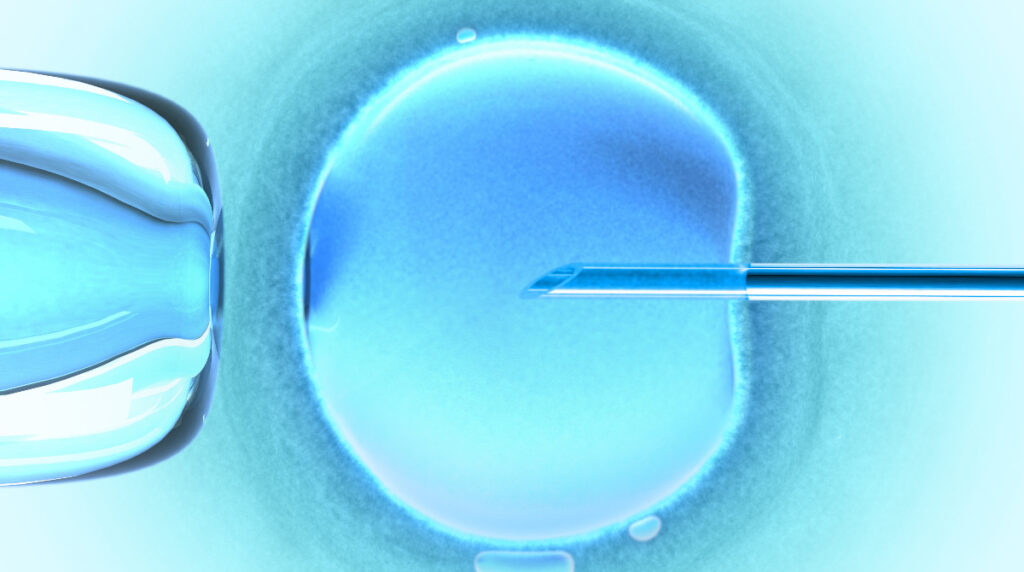
(MIT Technology Review) – In three papers published this week by Cell Press, scientists are reporting what they call the most accurate efforts yet to mimic the first moments of pregnancy in the lab. They’ve taken human embryos from IVF centers and let these merge with “organoids” made of endometrial cells, which form the lining of the uterus.
The reports—two from China and a third involving a collaboration among researchers in the United Kingdom, Spain, and the US—show how scientists are using engineered tissues to better understand early pregnancy and potentially improve IVF outcomes. (Read More)

(Washington Post via MSN) – Gaharwar and his colleagues created mini mitochondria factories by adding microscopic flower-shaped particles called nanoflowers to a lab dish containing stem cells. The nanoflowers, hundreds of which could fit in the width of a human hair, get taken into the stem cells through a natural process similar to the way cells absorb nutrients. (Read More)
(BBC) – We asked the world’s foremost minds to highlight some of the game-changing scientific breakthroughs shaping our world since the year 2000
As the 21st century gathers pace, it’s clear we’re living through a golden age of scientific discovery. From rewiring our understanding of the Universe to reshaping the tools of everyday life, breakthroughs once thought impossible are now shaping the world around us.
To reflect on the progress so far, we asked some of the world’s leading thinkers to spotlight the groundbreaking scientific breakthroughs that have transformed our world since the turn of the millennium. (Read More)

(CNN) – That may be a way off, but at King’s College London, Ana Angelova Volponi, director of the postgraduate program in regenerative dentistry, has been experimenting with lab-grown teeth for almost two decades, and was part of a team that in 2013 grew a tooth from human and mouse cells.
This year, she led a study that built upon that work and achieved a breakthrough in the material used to house the growing tooth in the lab, which better mimics the actual environment where biological teeth grow in the mouth. It’s a key step on the way to replacing the mouse cells with human cells and stimulating them to form a tooth. (Read More)
(MIT Technology Review) – Instead of relying on the same old recipe biology has followed for a billion years, give or take, Hanna is coaxing the beginnings of animal bodies directly from stem cells. Join these cells together in the right way, and they will spontaneously attempt to organize into an embryo—a feat that’s opening up the earliest phases of development to scientific scrutiny and may lead to a new source of tissue for transplant medicine. (Read More)