The post DanceSyndrome Online Winter Showcase 2026 appeared first on DanceSyndrome.
]]>
Join the DanceSyndrome team for our online Winter Showcase, demonstrating the hard work of the participants in our online dance sessions. Please use the form below to book your tickets and make your Pay as You Feel donation.
The post DanceSyndrome Online Winter Showcase 2026 appeared first on DanceSyndrome.
]]>The post ORIGIN: A Mixed Bill – Frequently Asked Questions appeared first on DanceSyndrome.
]]>
DanceSyndrome will present ORIGIN: A Mixed Bill at The Lowry in the Quays Theatre on Thursday, 19th November 2026. This page answers some ‘Frequently Asked Questions’ about this one-night-only event.


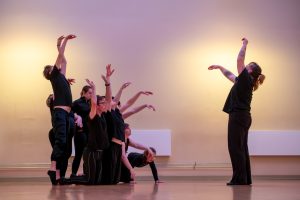
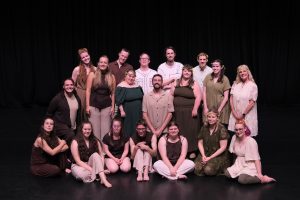
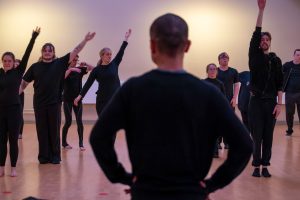
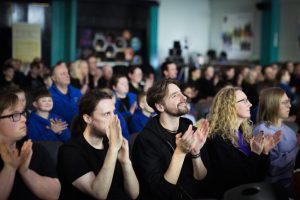

Book your tickets now!
The post ORIGIN: A Mixed Bill – Frequently Asked Questions appeared first on DanceSyndrome.
]]>The post Meet the Choreographers Behind ORIGIN: A Mixed Bill appeared first on DanceSyndrome.
]]>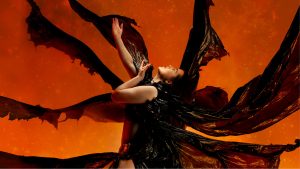 ORIGIN: A Mixed Bill is DanceSyndrome’s next performance showcase, taking place at The Lowry, Salford on Thursday 19 November 2026 at 7:00pm. The event brings together six newly commissioned works created through DanceSyndrome’s ‘iCreate’ project, an artist-led programme that places Artists with learning disabilities at the heart of the creative process.
The journey began three years ago with one simple question: “What do you want to create?” Since then, iCreate has grown into a pioneering platform for inclusive choreography, supporting disabled and non-disabled Artists to explore ideas, develop leadership skills and make ambitious new work together. ORIGIN marks an exciting next step for the project; a professional mixed bill that celebrates creativity, collaboration and the power of diverse Artists being seen, valued and celebrated.
We introduce the five Choreographers who have been working on the project below.
If you are interested in seeing the original works created by these respected Choreographers, please join us for ORIGIN: A Mixed Bill, presented for one night only at The Lowry on Thursday 19th November 2026. Tickets are available via The Lowry’s website.
Book your tickets
Book your tickets

John Burrow joined DanceSyndrome in 2019. He discovered that dance was a powerful way to support his mental health and learning difficulties, and since then his confidence, skills and love of performance have significantly grown.
During the pandemic, when DanceSyndrome’s face-to-face community sessions moved online, John continued dancing every week on Zoom and later joined outdoor sessions as in-person activity returned. He went on to complete DanceSyndrome’s Level 2 Dance Leadership training and has since progressed to co-delivering the Level 1 qualification.
Alongside his role as a Dance Leader, John also performs with DanceSyndrome’s DS Collective and has performed at several prestigious events, including the Edinburgh Fringe Festival in 2023. His performance experience led John to take an active interest in choreography and through the iCreate project he has been able to develop his skills as an Artist in this area. John’s journey perfectly reflects the principles of DanceSyndrome’s work, creating opportunities for people to develop their skills and grow as confident, creative leaders.
John has choreographed “Rebirth of Venus” for ORIGIN: A Mixed Bill.
Josh Hawkins
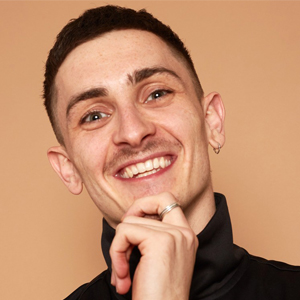
Josh Hawkins is a Manchester-based Director, Choreographer and Dancer. Since founding Hawk Dance Theatre in 2015, he has created and produced a wide range of original projects for stages, screens and festivals, with his work presented across the UK and internationally.
Josh is passionate about collaboration and creating dynamic movement work that connects different art forms and reaches diverse audiences. In 2025, he completed his first international tour with The Greatest Robot Ever, performing ten dates across Canada. He also works across television and screen, developing his movement and directorial practice in commercial and narrative contexts, with performance credits including Barbie (Warner Bros, 2023).
Josh has choreographed “Outline” for ORIGIN: A Mixed Bill.
Maiya Leeke
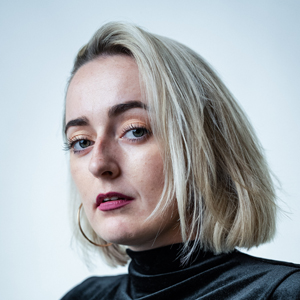
Maiya Leeke is a Performer and Choreographer whose practice spans contemporary dance, theatre, film and large-scale performance. Her work is shaped by collaboration, curiosity and a commitment to creating performances that connect with audiences in meaningful ways.
Maiya has been supported by Sadler’s Wells as a Young Associate 2023–2025, shortlisted for the Arts Foundation Fellowship Future Awards, and recognised through the Jerwood Choreographic Research Award. She has performed with companies including Candoco Dance Company, Cathy Waller Company, CoDa Dance Company and Paraorchestra.
Maiya has choreographed “Duplicate” for ORIGIN: A Mixed Bill.
Dai Matsuoka
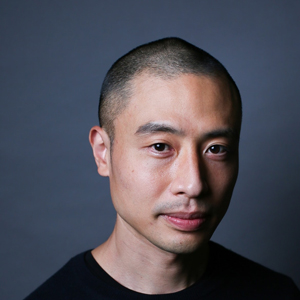
Dai Matsuoka is a Butoh Dancer, Choreographer and the Founder and Director of LAND FES, a non-profit organisation in Japan that connects Dance Artists, local communities and socially marginalised people. He graduated from Sophia University’s Faculty of Comparative Culture and Kuwasawa Design School and has performed with the internationally acclaimed company Sankai Juku since 2005.
Dai has appeared in major Sankai Juku works including Kinkan Shonen, Tobari, Unetsu and ARC. Since 2017, he has led the Scramble Dance Project, where disabled and non-disabled people create dance together. The project was initially guided by Yoshito Ohno, a legendary figure in Butoh, and has since been developed by Dai and LAND FES, with work shared internationally, including at the Korea International Accessible Dance Festival in Seoul.
Dai also runs BUTOH CHOREO LAB, an online platform featuring video lessons by high-profile Butoh dancers. His international collaborations include work with Phantom Limb Company, Paola Prestini and Adriaan Luteijn of INTRODANS, with whom he co-choreographed the integrated dance piece UNUM for Osaka Kansai EXPO 2025.
Dai has choreographed “Riptide” for ORIGIN: A Mixed Bill.
Kelly McClelland
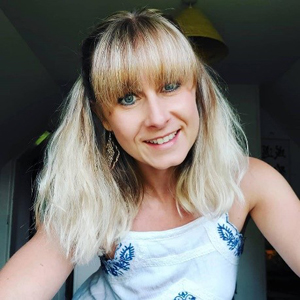
Kelly McClelland is a Dance Artist, Choreographer and Teacher whose work is rooted in musicality, authenticity and celebrating the individuality of every dancer. She trained at Northern School of Contemporary Dance, gaining a first-class honours degree in contemporary dance and a ‘Masters’ in performance. Kelly has worked with acclaimed choreographers including Hofesh Shechter, Rafael Bonachela, Shobana Jeyasingh, Kim Brandstrup, Fin Walker and Glenn Wilkinson.
Kelly now runs Eden Dance in North Cumbria and teaches as part of the core tutor team for the National Centre for Advanced Training in Dance at The Lowry. Her creative and teaching practice has included work with Phoenix Youth Academy, Rambert Grades and a range of visiting companies and artists. She has also created large-scale choreography for major sporting and cultural events, including UEFA Women’s Champions League Final Opening Ceremonies, Rugby League stadium events and community celebrations across Cumbria.
Kelly brings vibrancy, soul and generosity to every creative process. As an advocate for dance in Cumbria, she continues to create opportunities for local residents and emerging talent to thrive.
Kelly has choreographed “The Four Fire Festivals” for ORIGIN: A Mixed Bill.
If you are interested in seeing the original works created by these respected Choreographers, please join us for ORIGIN: A Mixed Bill, presented for one night only at The Lowry on Thursday 19th November 2026. Tickets are available via The Lowry’s website.
Book your tickets
Book your tickets
The post Meet the Choreographers Behind ORIGIN: A Mixed Bill appeared first on DanceSyndrome.
]]>The post Beacon Data Security Incident appeared first on DanceSyndrome.
]]>If you need an Easy Read version of this information, you can access it on this link.
What happened?
DanceSyndrome uses Beacon for storing data about the people that we work with. This includes people who have taken part in our dance activities, attended our events, made a donation or requested information from us.
Unfortunately, we were contacted by Beacon on Monday 3rd August 2026 about a cyber security breach which has impacted all of the charities that they work with.
The details they provided are as follows:
“On Wednesday 29th July 2026, Beacon became aware that they may have experienced a cyber-security incident. They immediately engaged external cyber-security experts to help investigate and secure their systems. Their current understanding is that compromised credentials were used to gain access to Beacon, and copies of our database backups were made. We were notified by Beacon that they discovered this incident on Monday 3rd August.”
Within 72 hours of learning about the breach, DanceSyndrome attempted to contact everyone whose data was stored on our Beacon account, in line with GDPR legislation and guidance from the Information Commissioners Office. Some of those emails may have been lost in junk folders or rejected by some email providers, so we are publishing further information here.
Data Involved
DanceSyndrome only collects and stores data that is necessary for our work and that we have a lawful basis to process. Our contacts might have provided us with data via paper or online forms.
We store personal contact information such as home address, phone number, email address and date of birth. We might also store the details of emergency contacts or carers, if those have been provided to us. In some situations, people may have given us information about a disability, neuro-divergence or health issue, this was also stored on Beacon.
Sensitive data such as ethnicity, sexuality, gender, bank details, financial/payment information or passwords/login details have NOT been stored on Beacon by DanceSyndrome, so these should not be impacted by this incident.
This data reach does not relate to information provided on our surveys, questionnaires or our Equality & Diversity Monitoring Form.
The Risks to You
Beacon has provided us with the following information relating to potential risk:
“Whilst the copying or sharing of this data hasn’t yet been confirmed, the evidence Beacon has so far suggested these copies were likely downloaded. There is currently no evidence that this data has been shared on the dark web and there has been no ransom request.”
We are sharing this information now so that you understand what has happened and can take sensible precautions. Being aware that your data may have been involved can help you stay alert to potential scams, phishing attempts and other common risks.
The Take Five to Stop Fraud campaign offers easy read guidance on how to avoid scams and stay safe. It might be useful for you to read. You can read about it on this link.
DanceSyndrome will remain in close contact with Beacon and will update this page if we receive new information about the level of risk or any action you may need to take.
DanceSyndrome’s Actions
DanceSyndrome acted immediately to help mitigate the impact of this breach. Staff members have changed their Beacon passwords, and we have disconnected any applications that can access data in Beacon, in line with Beacon’s recommendations.
We have reported the breach to both the Information Commissioner’s Office and Charity Commission, acting in line with DanceSyndrome’s Data Protection Policy.
This incident relates to Beacon’s systems. We had been assured by Beacon that our data was stored safely and securely, and that it was encrypted for added protection. We have been in communication with Beacon to express our concerns that this breach has occurred.
We want to respond as best we can to protect the people who might be impacted by this breach, and we assure you that we are remaining in contact with Beacon to ensure the best possible outcomes from this unfortunate situation.
Beacon has shared this list of Frequently Asked Questions about the incident, which may be of use to you: https://www.beaconcrm.org/incident-faqs or you can contact them directly at incident@beaconcrm.org.
We understand that this data breach may be upsetting, and we want to reassure you that we are responding carefully, lawfully and in line with our organisational values.
If you need support with understanding this information, please use the Contact Us page to do this.
Many thanks for your understanding.
The post Beacon Data Security Incident appeared first on DanceSyndrome.
]]>The post How can the Dance sector become more inclusive? appeared first on DanceSyndrome.
]]>
As a North West dance company that works with Artists with learning disabilities, DanceSyndrome wants to support people to develop their skills in leadership, choreography and performance, to help create a more accessible future for the dance.
In March 2026, we held a sharing and learning event in Manchester. We invited Artists with disabilities, dance organisations and arts leaders to come together and talk about what real change in dance should look like.
The day was about more than sharing ideas. It was about listening, learning and thinking about what needs to happen next. We want this to be part of a longer journey with definite actions, not just a one-off event.
The event took place at Friends Meeting House in Manchester. DanceSyndrome was joined by people from Arts Council England, Cheshire Dance, National Youth Dance Company, Stopgap Dance Company, Mind the Gap and Land Fes, from Japan. We used the day to share good practice, talk honestly and think about how we can work together to make changes happen.
 We asked everyone to introduce themselves using an object or photograph that meant something to them. We also invited people to share a dance experience they were proud of and to talk about their hopes for their future dance career. After that, we discussed what helps Artists with learning disabilities to grow, and what still needs to change so they feel more included.
A lot of important themes came out of those conversations. People talked about the need for better access and support, easier ways to find commissions and opportunities, and clearer paths between training, creating and performing. Artists also said that accessible rehearsal spaces and more inclusive networking opportunities are important. These things often cost a lot of money, so there is also a strong need for better information about funding.
Julie Nicholson, Managing Director, said:
“DanceSyndrome doesn’t want this to be a one-off conversation. This is a long-term journey about changing practice, amplifying diverse voices and making sure Artists with disabilities are not just present, but leading the way.”
Some people also talked about more challenging questions. They said Artists with learning disabilities need more visibility, support to make themselves heard and more confidence to take on important roles in dance. There was also a feeling that mainstream dance is not always ready, or fully willing, to working with Artists with disabilities in all the different ways it could.
Sophie Tickle, Artistic Director, said:
“Real inclusion in the Dance sector happens when we move beyond access being an add-on. Artists and audiences with disabilities should be shaping our work from the beginning.”
The feedback from the day was very positive. In the evaluation, everyone said events like this are needed:
• 91% said they would like to come to another event in future
• 91% said they felt listened to on the day
People described the event as informative, thought-provoking, inspiring, empowering, open and creative.
Charlotte Jones, an Artist with Mind The Gap said:
“The DanceSyndrome event was a great chance to meet other Artists and organisations and be able to learn from each other and share our experiences. As a Northern learning-disabled Artist, I hope for more collaboration and opportunities, which will make our work more powerful and have a bigger impact on society. I feel optimistic about the future of these connections and what they might hold.”
 People also told us what they want next. They asked for the learning to be shared more widely, more opportunities to work together, and practical next steps such as Artist exchanges. Some people said they would like future events to include more time for moving and dancing together, so that creative energy can build before discussions begin.
Julie Nicholson said:
“Real change in the Arts won’t happen by accident. It needs investment and strategic commitment to doing things differently. DanceSyndrome is keen to create real change, driven by the Artists themselves.”
The event showed that there is a lot of work still to do. Artists talked about how hard it can be to understand funding systems, find the right opportunities and get the support they need to build a career. It also showed that while some progress has been made, there is still more to do to make sure Artists with learning disabilities are supported fairly and consistently.
For DanceSyndrome, this is part of a longer journey. We want to keep the conversation going through more events, more partnerships and a practical action plan that is based on what Artists have told us.
Sophie Tickle said:
“This is about embedding a culture where diverse Artists are genuinely valued for their creativity and leadership, as equal contributors. We should be striving to amplify their voices and provide platforms for their work.”
The next step is to turn these ideas into action. We want the conversation in Manchester to help shape future opportunities, partnerships and change across the dance sector.
DanceSyndrome is now developing an action plan and working with partner organisations to share practice and move this work forward. We would love to hear from other Artists and organisations who share our values and want to be part of this movement.
To find out more about how to get involved in this work, please complete the form on the Contact Us page.
Come and see our Artists with learning disabilities at their next event…
Book your tickets now!
The post How can the Dance sector become more inclusive? appeared first on DanceSyndrome.
]]>The post DanceSyndrome’s Approach to Access at ORIGIN: A Mixed Bill appeared first on DanceSyndrome.
]]>
DanceSyndrome’s Approach to Access at ORIGIN: A Mixed Bill
At DanceSyndrome, accessibility isn’t something we add at the end of a project. It is part of what makes a DanceSyndrome event feel unique and authentically “DanceSyndrome.”
On Thursday 19th November 2026, we will present ORIGIN: A Mixed Bill at The Lowry in Salford. ORIGIN brings together six performance pieces created through our iCreate project, supported by Arts Council England and The Granada Foundation. Over the past three years, iCreate has opened up opportunities for Artists with learning disabilities to become choreographers, performers and visible role models. It has amplified new voices, shared new perspectives and developed ambitious new work that challenges perceptions and champions inclusion in the Arts.
You can jump straight to sections of this article by clicking the links below:
The Lowry’s Access Register Application Form (Free Essential Companion tickets)
Support available before the show
Access adjustments at the show
Book tickets on The Lowry’s website
Taking access to “another level”
Following our recent EXPRESS ’26 performance, one audience member told us:
“The joy, the inclusion, the talent, the friendships, and respect on stage were just so wonderful to watch. The adjustments to make the show accessible were on another level to anything I have seen before.”
Comments like these reinforce our belief that access should be embedded throughout both the audience and Artists’ experience, not treated as an added extra at the end of the process.
At DanceSyndrome, we believe access is part of artistic quality. By placing it at the centre of our work, we hope to demonstrate what is possible and help to raise expectations across the industry.
The reality is that accessibility is not always embedded in performances because it comes at a cost. Additional rehearsals, technical support, backstage staff, BSL interpretation, audio description, touch tours, visual stories and accessible marketing materials all require investment. Often, these elements are neglected due to a lack of funding. That is why DanceSyndrome campaigned to raise an additional £9,500 to cover access costs through The Big Give Arts for Impact in March 2026. The success of this campaign has meant that we are able to raise the bar in relation to accessibility at this event.
Setting a new standard
iCreate has been all about setting new standards and thinking about new ways forward for Artists. Accessibility has been key to the creative processes throughout the project and will continue to be central to the presentation of the work at ORIGIN.
We understand that access is subjective and what is accessible to one person may not be for another. Our aim is to make each DanceSyndrome space feel as welcoming and inclusive as possible, so we are always open to feedback about how we can meet individual needs in different ways.
Sophie Tickle, Artistic Director of DanceSyndrome, said:
“We want every DanceSyndrome performance to feel welcoming, supportive and genuinely inclusive. Accessibility isn’t separate from the artistic experience, it is a key part of it. We know that adjustments require time, practice and investment, but we believe they are essential, not optional.”
“We hope ORIGIN will demonstrate what is possible when accessibility is embedded throughout the process. By continuing to push boundaries and listen to audiences and Artists with disabilities, we want to help shape a future where inclusive practice becomes the norm rather than the exception.”
Support before the show
For many people, with and without disabilities, visiting a new venue can feel daunting. Knowing what to expect in advance can make all the difference.
That’s why our Dance Leaders, David Corr, Ellie Bamber and John Burrow, have created an access tour of The Lowry’s Quays Theatre. We hope this video helps to answer questions about the space and alleviates anxiety for anyone planning to attend.
As part of our commitment to making our events accessible to all, David, Ellie and John provide a tour of the venue space to help audiences become familiar with their surroundings before they arrive.
What to expect at ORIGIN: A Mixed Bill
Accessibility features at ORIGIN will include:
- BSL interpretation
- Integrated captions/subtitles
- Audio description and associated touch tour at 6pm
- A relaxed performance, in the sense that audience members are welcome to enter or exit the space when necessary
- Access Guide available to support people throughout the evening
- An access table in the foyer, with the opportunity to meet our Ambassadors with learning disabilities
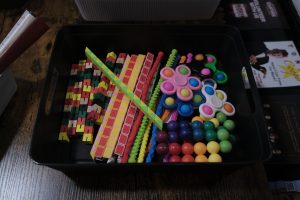
- Audience Sensory Support Kits with ear defenders, tinted glasses, fidget/stress toys, and mini fans
- A Visual Story will provide images and easy to read descriptions of what will happen in the show
- Written programme notes will describe the pieces to make the narrative of the pieces accessible
- Carefully considered lighting and sound, to create a balance between enabling people with sensory differences to enjoy the show and giving design and creative ownership to our Artists with disabilities
- Auditorium lights will be raised between each of the six different pieces to allow the audience to take a moment to prepare, in their own way, for the next performance piece
- Audible descriptions of the piece will be shared between each performance
- Additional support staff in the theatre and backstage will help everyone to have their needs met
- The Lowry operates a scheme where audience members with disabilities can bring an essential companion (parent/carer/support worker) for free. You can register for this scheme by completing their Access Register Application Form on their website or by calling their Access team on 0161 876 2183.
We hope that these adaptations remove barriers for audience members and look forward to welcoming a diverse audience to ORIGIN: A Mixed Bill at The Lowry on Thursday 19th November 2026.
Book your tickets now!
The post DanceSyndrome’s Approach to Access at ORIGIN: A Mixed Bill appeared first on DanceSyndrome.
]]>The post ORIGIN: A Mixed Bill appeared first on DanceSyndrome.
]]>
DanceSyndrome Presents:
ORIGIN: A Mixed Bill
At The Lowry, Salford
Thursday 19th November 2026 at 7:00PM
It all began with a simple question: “What do you want to create?”
Now, three years later, ORIGIN emerges – a bold, artist-led platform where diverse voices take centre stage.
Developed through DanceSyndrome’s iCreate programme, which places Artists with learning disabilities at the heart of the collaborative process, ORIGIN is a mixed bill of six newly commissioned works, created with international choreographers.
Joyful, daring and deeply original – ORIGIN is a powerful celebration of creativity, collaboration and artistic freedom. It is a defining moment: the beginning of something really exciting, a space where all Artists are seen, valued and celebrated.
Join us in the foyer from 5:45pm to learn more about DanceSyndrome’s iCreate project, visit our pre-show access table to learn more about the show, and enjoy a pre-show foyer performance from our DS Youth Collective.
Book your tickets now!
ORIGIN: A Mixed Bill – Access Information
Our Approach to Access
We are keen to offer a range of adjustments that help both audiences and Artists with disabilities to access live events, as well as our regular community workshops. As a member of our audience, it may help you to understand the access adjustments that are in place at our performance of ORIGIN: A Mixed Bill.
Our team has chosen The Lowry as our venue for this event because of their own approach to accessibility. You can find details of their access adjustments on their website.
The Lowry operates a scheme where audience members with disabilities can bring an essential companion (parent/carer/support worker) for free. You can register for this scheme by completing their Access Register Application Form on their website or by calling their Access team on 0161 876 2183.
What makes a DanceSyndrome event accessible?
We understand that access is subjective and what is accessible to one person may not be for another. Our aim is to make each DanceSyndrome space feel as welcoming and inclusive as possible, so we are always open to feedback about how we can meet individual needs in different ways.
We will have Audience Sensory Support Kits available, at our access table in the Foyer, with a range of aids for those who may benefit from them. This includes ear defenders, tinted glasses, fidget/stress toys, and mini fans to help with temperature regulation. You can speak to our dedicated Access Guide on the evening if you would like make use of these.
Programme notes and a Visual Story will be available to give extra information to people before they watch the show. This helps people with learning disabilities to fully access a show, learn about the performers and know what to expect from the performance.
The performance has carefully considered lighting and sound, to create a balance between enabling people with sensory differences to enjoy the show and giving design and creative ownership to our Artists with disabilities. The auditorium lights will be raised between each of the six different pieces to allow the audience to take a moment to prepare, in their own way, for the next performance piece. During this pause, there will be audible descriptions of the piece, time to process written programme notes and time to ensure audience members can readjust to make themselves feel more comfortable, if needed.
Integrated captions/subtitles have been used on all spoken video content for those with hearing impairments or neuro-divergences.
There will also be a BSL interpreter for people with hearing impairments and an Audio Describer an associated Touch Tour for people with visual impairments (available at 6pm on the day of the show).
This year, we are providing even more support staff, both in the theatre and backstage, to help to improve access and communication, ensuring we are fully supporting diverse audiences and performers.
We will strive to provide even more adjustments at all future performances to ensure dance is accessible to everyone. More information about Access tickets is available by calling The Lowry’s Access Line on 0161 876 2183 or visiting their Accessibility page.
The post ORIGIN: A Mixed Bill appeared first on DanceSyndrome.
]]>The post DanceSyndrome Trustee Professor Jamie Waterall OBE recognised in King’s Honours appeared first on DanceSyndrome.
]]> Everyone at DanceSyndrome is sending congratulations to our Trustee, Professor Jamie Waterall OBE, who has been recognised as an Officer of the Order of the British Empire in this weekend’s King’s Honours List.
This is significant and well-deserved recognition of Jamie’s outstanding contribution to nursing, public health and wider health leadership. His work has had a profound impact on the development of healthier, fairer communities across the UK, and we are incredibly proud of his achievements.
At DanceSyndrome, we know that inclusion should not be seen as an “extra” in any setting, whether that is Arts, corporate or health and social care settings; inclusion is central to good practice, better outcomes and more supportive services in every aspect of society. Jamie is a great fit for us as a Trustee because his work reflects all the values that are at the heart of our work: equity, dignity, co-production and the belief that every person should be able to thrive and be heard through person-centred support.
Jamie has helped us to better understand how our work and impact can be applied to the health and social care sector. Daily, DanceSyndrome sees the difference that inclusive attitudes and approaches make in our own settings. This has enabled us to develop a co-designed and co-delivered training programme that can be used to support organisations in all sectors to learn how they can embed inclusion into their own daily practice.
Our Inclusion in Action training has recently been delivered to more than 180 In-Patient Ward Managers working across Learning Disability, Mental Health, and Autism settings through a partnership with the Foundation of Nursing Studies, and Jamie has supported this. This training helps organisations and their staff to put inclusion into practice, to build confidence, challenge barriers and develop practical approaches to inclusion that can improve experiences for the people they support.
Jamie acknowledges that, at a time when health and care services are under increasing pressure, this kind of learning matters more than ever. He said “Inclusive practice strengthens relationships, improves communication and supports more effective, person-centred care. I am keen to use my own experience to help DanceSyndrome to extend their impact in this area and am incredibly proud of the difference that they are making in nursing and public health.”
Jamie’s OBE demonstrates the importance of combining research, knowledge and expertise with compassion and a commitment to better outcomes for everyone. We are delighted to have him as part of DanceSyndrome’s Board of Trustees and send many congratulations on this huge achievement.
If you would like to know more about DanceSyndrome’s Inclusion in Action training and how we are supporting more inclusive practices, please visit our Inclusion Workshops page.
The post DanceSyndrome Trustee Professor Jamie Waterall OBE recognised in King’s Honours appeared first on DanceSyndrome.
]]>The post “Do you see me… advancing public health?” appeared first on DanceSyndrome.
]]> This Learning Disability Week, we are pleased to share a new article published in Perspectives in Public Health.
The article is titled “DanceSyndrome explores the role of co-produced inclusive dance in advancing public health.” It considers how DanceSyndrome is helping to create more inclusive opportunities for people with and without disabilities through dance, leadership and performance. It shows how creative health approaches can support wellbeing, reduce isolation, build confidence and strengthen social connection.
At DanceSyndrome we believe that people with learning disabilities should not only be included but actively involved in leading and shaping creative opportunities. Founded by Jen Blackwell, who has Down’s syndrome, DanceSyndrome places co-production at the centre of our work. This means that people with learning disabilities are not just participants, but leaders, performers and decision-makers.
The article in Perspectives in Public Health shares evidence of the impact this approach can have. For many participants, taking part in our sessions offers much more than simply dance and movement. It can build self-belief, support mental health, encourage physical activity and create meaningful friendships.
Dance Leader John Burrow features in the article. John is a great example of how DanceSyndrome helps people to grow in confidence, purpose and resilience, while also supporting people to progress on to leadership roles and become “experts by experience” in wider conversations about inclusion.
The article also explores how DanceSyndrome’s work reaches beyond the dance space. Through partnerships with organisations including the Foundation of Nursing Studies, NHS England and a number of North West universities, DanceSyndrome has developed workshops and training that help health and care professionals to think differently about inclusion, communication and person-centred practice. This shows how creative, co-produced approaches can contribute to system change as well as personal wellbeing.
This week is national Learning Disability Week 2026, which is focused on the theme “Do you see me?” This annual campaign asks us all to think about whether people with a learning disability are truly seen, heard and valued in all areas of life. DanceSyndrome’s work, and this Perspectives in Public Health article in particular, shows what becomes possible when people with learning disabilities are given the chance to lead, create and be recognised for their talents and contribution.
For DanceSyndrome, inclusive dance is not only about movement and Art, it is also a way of tackling inequality, supporting recovery, strengthening communities and changing attitudes. We hope this article helps to spark further discussion about the value of creative health and the importance of disability-led, co-produced practice in public health.
You can read the full article on the Perspectives in Public Health Journal website.
If your organisation is interested in exploring partnership working around inclusive creative health, learning disability inclusion, workforce development or co-produced practice, we would love to hear from you. Please Contact Us for more information.
The post “Do you see me… advancing public health?” appeared first on DanceSyndrome.
]]>The post Learning Disability Week 2026 appeared first on DanceSyndrome.
]]> Monday 15th June sees the start of national Learning Disability Week 2026. This year, the theme is “Do you see me?”
This is something that DanceSyndrome’s dancers have considered a lot in recent years, as we work to raise awareness about what people with learning disabilities can achieve when given the right support and opportunities.
DanceSyndrome is an inclusive dance charity supporting people with learning disabilities to access a wide range of opportunities in community dance. A huge part of our mission is to challenge the way that society sees people with learning disabilities and what they are able to achieve. We challenge the barriers that people with a learning disability face by demonstrating and celebrating the amazing work that our Dance Leaders with learning disabilities are doing. This is exactly what the national #LDWeek campaign is about.
During Learning Disability Week, we want to amplify the voices of our Dance Leaders with learning disabilities, and make them more visible by sharing the ways that they use dance to challenge perceptions and help them to feel more visible in their communities. They truly demonstrate how people with learning disabilities can achieve amazing things when they are seen and supported properly by wider society.
You can check out the daily Learning Disability Week 2026 posts on our social media channels: Facebook, Bluesky, Instagram, LinkedIn & YouTube.
How to get involved
We hope that you will join us this week at one of our events, or by joining the conversation on social media. We hope to inspire people to see how much people with learning disabilities are able to achieve if they are given the right support. As a small charity, our mission is to provide the support needed so that people with learning disabilities can not just be included in dance sessions, but can take on visible leadership roles. Our work transforms lives for people who might not be able to access those opportunities elsewhere, and we’d love for you to get involved!
Join a Community Dance Session

If you’re looking for a new dance activity, we have community dance sessions across Lancashire, as well as a range of session online via Zoom.
Our Everybody Dance workshops are co-produced and co-delivered by a professional Dance Artist and a Dance Leader with a disability and explore taught dance, travel, connection exercises, and creative tasks which allow each participant’s voice to be heard and all ideas to be shared.
Check out the full list of activities and book online on the Book a Session page.
Watch a Performance

We are looking forward to presenting our next major performance at The Lowry, Salford on Thursday 19th November 2026.
Developed through DanceSyndrome’s iCreate programme, which places Artists with learning disabilities at the heart of the collaborative process, ORIGIN is a mixed bill of six newly commissioned works, created with international choreographers.
We hope you will join us for this joyful, daring and deeply original celebration of creativity, where all Artists are seen and valued.
Training for Organisations

Our inclusion workshops examine inclusive practice from the perspective of people with learning disabilities.
We look at specific barriers that people with learning disabilities may face and consider how we can break down these barriers in our own settings.
If you would like to know more about how DanceSyndrome can support your business to create more inclusive spaces, visit the Inclusion Workshops page.
If you would like to support DanceSyndrome’s life-changing work with people with learning disabilities during Learning Disability Awareness Week, please visit our Donate page or donate directly using the form below.
The post Learning Disability Week 2026 appeared first on DanceSyndrome.
]]>