The post A VR View of ‘D.C.’s Black Broadway’ appeared first on Black Broadway on U.
]]>As part of its BreakThrough Tech DC at University of Maryland’s micro-Sprinternship this winter, an all-female led team of Terps aka Sprinterns worked with University of Maryland’s Merrill College alum, Shellée Haynesworth, the Executive Producer/Creator of the Black Broadway on U Project and Capitol Interactive to create a Virtual Reality Tour highlighting the cultural and historical landmarks of D.C’s Black U Street once known as ‘Black Broadway.’ The virtual reality tour showcases a 360 view of this storied Black community, circa 1900s-1960s. The group is planning to share the virtual experience with the public in the coming weeks on the Black Broadway on U Project’s website.
Link to Maryland Today article: https://today.umd.edu/a-vr-view-of-black-broadway
The post A VR View of ‘D.C.’s Black Broadway’ appeared first on Black Broadway on U.
]]>The post A Cultural & Historical Loop: ‘Round Black Broadway on U @ Woolly Mammoth! appeared first on Black Broadway on U.
]]>This exhibit showcases the Black joy, Black life, Black pride and Black power found in D.C.’s historic “Black Broadway” along U St., despite the oppressive laws of the Jim Crow era. From the 1920s-1950s, Black venues including the neighborhood’s unsegregated concert halls, lively nightclubs, and luminary theatres hosted round-the-clock and afterhours performances. Take a “ loop” around this storied neighborhood, and bear witness to Black U Street’s community elders and stakeholders. READ ALL ABOUT IT: https://bit.ly/3IyOQfI
The post A Cultural & Historical Loop: ‘Round Black Broadway on U @ Woolly Mammoth! appeared first on Black Broadway on U.
]]>The post Celebrating 2021 Women’s History Month: U Street’s Black Women Achievers, Artisans & Thinkers of the 20th Century appeared first on Black Broadway on U.
]]>Through the lens of D.C.’s famed photographer and documentarian — Addison Scurlock, the Black Broadway on U Project celebrates and reflects on a few of these leading and prominent 20th century black women: Mary Church Terrell (one of the first African-American women to earn a college degree and national activist for civil rights and suffrage), Mary McLeod Bethune (womanist, civil rights activist, educator and founder of Bethune-Cookman College and National Council of Negro Women), Anna J. Cooper (writer, teacher, and activist who championed education for African Americans and women), Madame Lillian Evanti (D.C.’s first lady of opera and the first black woman to sing opera with an organized company in Europe.) and Madam C.J. Walker (beauty entrepreneur and the first African American woman millionaire in the U.S. in 1913).

Mary McLeod Bethune (b. 1875-1955) laid the footprint of the civil rights movement along the U Street/Shaw corridor in Washington, DC. As a child, she was educated by missionaries in South Carolina. Her dedication to education led her to found the Daytona Educational and Industrial School for Negro Women in 1904, which later became Bethune-Cookman College. In 1924, she was elected president of the National Association of Colored Women, and later she founded the National Council of Negro Women, serving as its president. She became the first black woman to direct a federal office when she was appointed Director of Negro Affairs for the National Youth Administration in 1936. She worked as a consultant to the Secretary of War on the selection of the first female military officer candidates. In the 1930s, she consulted the United Nations on issues relating to racial affairs and understanding and founded with First Lady Eleanor Roosevelt the “Black Cabinet,” which marked a critical step in the struggle for civil rights.

‘Don’t Buy Where You Can’t Work’ Protest! Mrs, Bethune pictured here with Mrs. William Hastie (wife of William Hastie, prominent D.C. Judge/NNA lawyer) picketing outside People’s Drug Store (now CVS) at 14th & U with the New Negro Alliance (NNA) in 1940 demanding that the chain hire Negro store clerks who represented the majority of their business trade. The Washington, D.C. based organization, New Negro Alliance was headquartered in the #ustreet corridor and was founded in 1933 by mostly middle class blacks to use pickets, economic boycotts, and other direct action protests to promote #civilrights. It sought to increase African American employment opportunities, especially in white collar positions and to challenge discriminatory employment practices
“I got my start by giving myself a start.” ~Madam C.J. Walker

Madam C.J. Walker (b. 1867-1919) was an African American entrepreneur, philanthropist, and political and social activist. Walker was “the first African American woman and self-made woman millionaire in America.” She earned fortune from her homemade line of hair care products for Black women in the early 20th century. Born Sarah Breedlove to parents who had been enslaved, she was inspired to create her signature hair product, ‘Madam Walker’s Wonderful Hair Grower’ after an experience with hair loss, which led to the creation of the “Walker system” of hair care.

Native Washingtonian Annie Lillian Evans (b. 1890-1967) , who would later become the famed lyric soprano superstar Madame Lillian Evanti, was the first African American to perform with a major European opera company with her debut in Delibes opera Lakme, in Nice, France, in 1925. Evanti was born into an affluent, historically significant family. The Evans family claimed a Revolutionary War soldier, two abolitionists who took part in the Harper’s Ferry Raid, and the first African-American United States Senator among their ancestors. Evanti’s own parents were well educated and accomplished; her mother Anne Brooks, a music teacher and her father, Dr. Bruce Evans, founder and principal of D.C.’s Armstrong High School. Evanti attended Armstrong Manual Training School and Miner Teachers College, and graduated from Howard University School of Music in 1917. The following year she and Roy W. Tibbs, her Howard University music professor, married and had a son, Thurlow Tibbs. In 1924, she left for Paris for further training and for better professional opportunities at a time when American opera and classical music companies refused to admit African Americans. A gifted student and performer, she was able to speak and sing in five different languages. Novelist Jessie Fausett, suggested she combined Evans and Tibbs to form the more elegant “Evanti,” the name she would use professionally thereafter.
“The cause of freedom is not the cause of a race or a sect, a party or a class- it is the cause of humankind, the very birthright of humanity.” ~Anna J. Cooper

Anna Julia Haywood Cooper (b. 1858-1964) was born a slave in Raleigh, North Carolina. Cooper dedicated her life to education. She was an American author, educator, sociologist, speaker, Black liberation activist, and one of the most prominent African-American scholars in United States history. She served as a teacher and principal of D.C.’s first public high school for black students — Washington Colored High School later known as the M Street School (now Paul Laurence Dunbar H.S. renamed for the poet). Upon receiving her PhD in history from the University of Paris-Sorbonne in 1924, Cooper became the fourth African-American woman to earn a doctoral degree. Cooper was also an organizer, an active participant of numerous organizations representing African American interests and a long-time LeDroit Park resident.

In 1898, Mary Church Terrell (b. 1863-1954) wrote how African-American women “with ambition and aspiration [are] handicapped on account of their sex, but they are everywhere baffled and mocked on account of their race.” Born in Memphis, Tennessee, Terrell was an influential educator, activist, a charter member of the NAACP and an early advocate for civil rights and the women’s suffrage movement. In 1896, she became the first president of the newly formed National Association of Colored Women. She taught Latin and was a principal at the M Street High School (now Dunbar Senior H.S.) in Washington, DC. In 1896, she was the first black woman in the U.S. to be appointed to a school board of a major city, serving in the District of Columbia until 1906. Throughout her life, she fought for equality through social and educational reform as well as led the fight to integrate D.C.’s restaurants in 1950, at age 86.
ABOUT SCURLOCK STUDIO:
Addison Scurlock (b. 1883-1964 ) was the founder/owner of Scurlock Studio (once located at 900 U Street, NW) founded in the heart of D.C.’s U Street/Black Broadway community, circa 1911. Scurlock captured their dignity, sophistication and style with his signature — “Scurlock look”, a combination of light, shadow, posing, and retouching. Learn more about the life, photogenic work and legacy of Addison Scurlock & Scurlock Studio (Location/Map Marker no. 7) at: Black Broadway on U: Discover The Community, CLICK HERE.
The post Celebrating 2021 Women’s History Month: U Street’s Black Women Achievers, Artisans & Thinkers of the 20th Century appeared first on Black Broadway on U.
]]>The post One of America’s Thriving “Black Wall Street” Districts of the 20th Century: U Street in Washington, D.C. later known as the “Black Broadway.” appeared first on Black Broadway on U.
]]>===========================================================
Let’s explore a time when Black excellence reigned in the nation’s capital. From its music, art and commerce, Washington, D.C.’s U Street community thrived as a bustling area full of achievement, culture, intellect and soul towards the end of the 19th century and the first half of the 20th century.
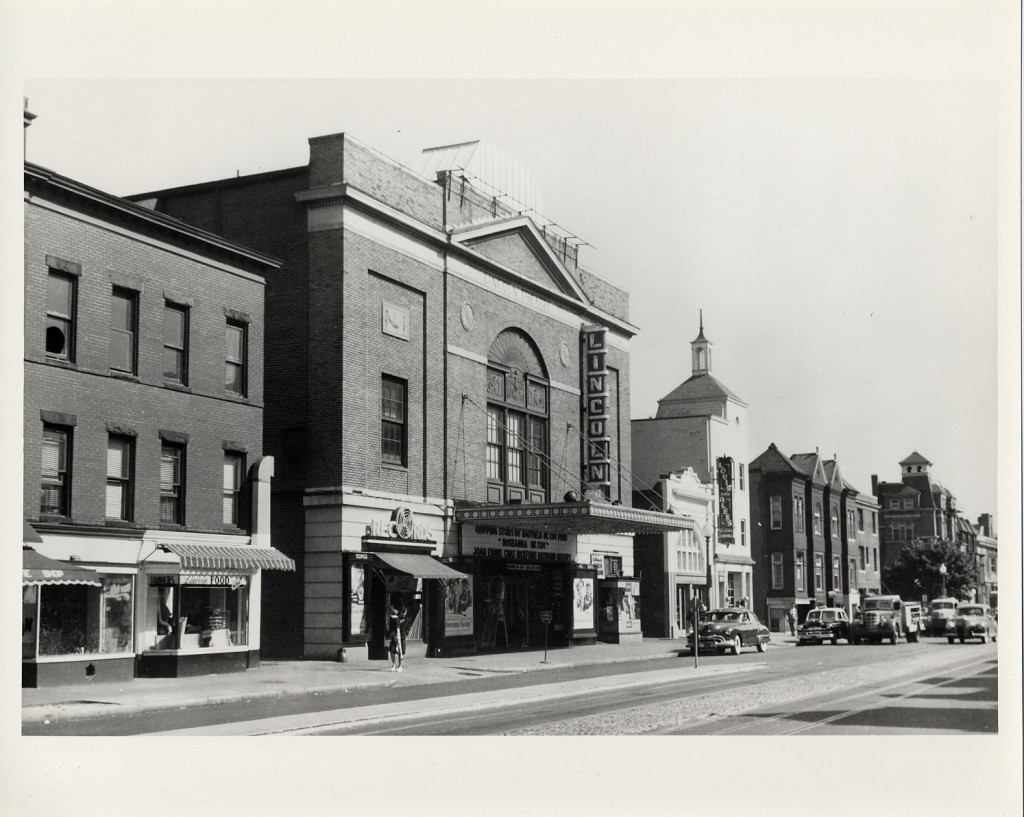
Photo Credit/Copyright: John P. Wymer Collection courtesy of DC History Center
Once known as “Black Broadway,” D.C.’s historic U Street community became the epicenter for Black talent, despite segregation and racist Jim Crow laws set in place throughout the country at the time. Like other communities across the nation, Black Americans created their own “Black Wall Streets” districts and ecosystems for self-sufficiency and to celebrate themselves. Prominent figures such as Carter G. Woodson, Mary Church Terrell, Zora Neale Hurston, Billie Holiday and many others found refuge on U Street to bask in their Blackness.
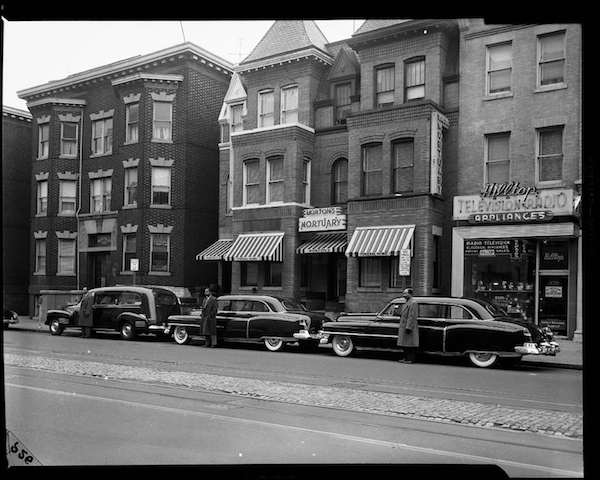
Photo Credit/Copyright: Black Broadway On U Project,Scurlock Studio Archives
By 1920, U Street was home to 300 black-owned businesses when they were black owned and run; its buildings, built and financed by blacks; its entertainment, by and for blacks. But, sadly, only a handful of these Black-owned businesses remain along D.C.’s greater historic U Street corridor today, including Ben’s Chili Bowl, Industrial Bank and Lee’s Flower and Card Shop. Due to desegregation and gentrification, Black Washingtonians and former residents are the only preservers of Black Broadway’s memories and stories.
EXPLORE: 9 “Black Wall Streets” where African American business districts once flourished and served as examples of Black economic self-empowerment. Click here to learn more: http://bit.ly/BRBlackWallStreets
===========================================================
This post is part of the Black Broadway on U Project’s 2021 Black History Month blog series.
The post One of America’s Thriving “Black Wall Street” Districts of the 20th Century: U Street in Washington, D.C. later known as the “Black Broadway.” appeared first on Black Broadway on U.
]]>The post A Bit of Piano Jazz History from DC’s U Street to Harlem’s Lenox Avenue appeared first on Black Broadway on U.
]]>From crazy cool to virtuoso piano rolls, it’s almost impossible not to acknowledge how the 88 keys have played a significant role in the evolution of jazz and helped popularize the genre beyond its bluesy roots in the American South to its urban roots in the cultural meccas from D.C.’s U Street to Harlem’s Lenox Avenue.
At the turn of 20th century, Ragtime was a popular, high-flying forerunner of jazz, its syncopated piano rhythms and riffs catapulted the sound beyond the red-light districts in Biloxi, St. Louis, Memphis and New Orleans. The “King of Ragtime” Scott Joplin and Ferdinand “Jelly Roll” Morton were among the first leading stride pianists and composers to pack up their sheet music and take their boogie woogie on the road. Both musicians were very important transitional and influential figures between ragtime and jazz piano styles.
Quick historical sidebar: Did you know? Morton later ended up playing piano in a dive bar he managed known as Jungle Inn on D.C.’s U Street in the 1930s. (Click through link below to learn more Morton’s DC history.)
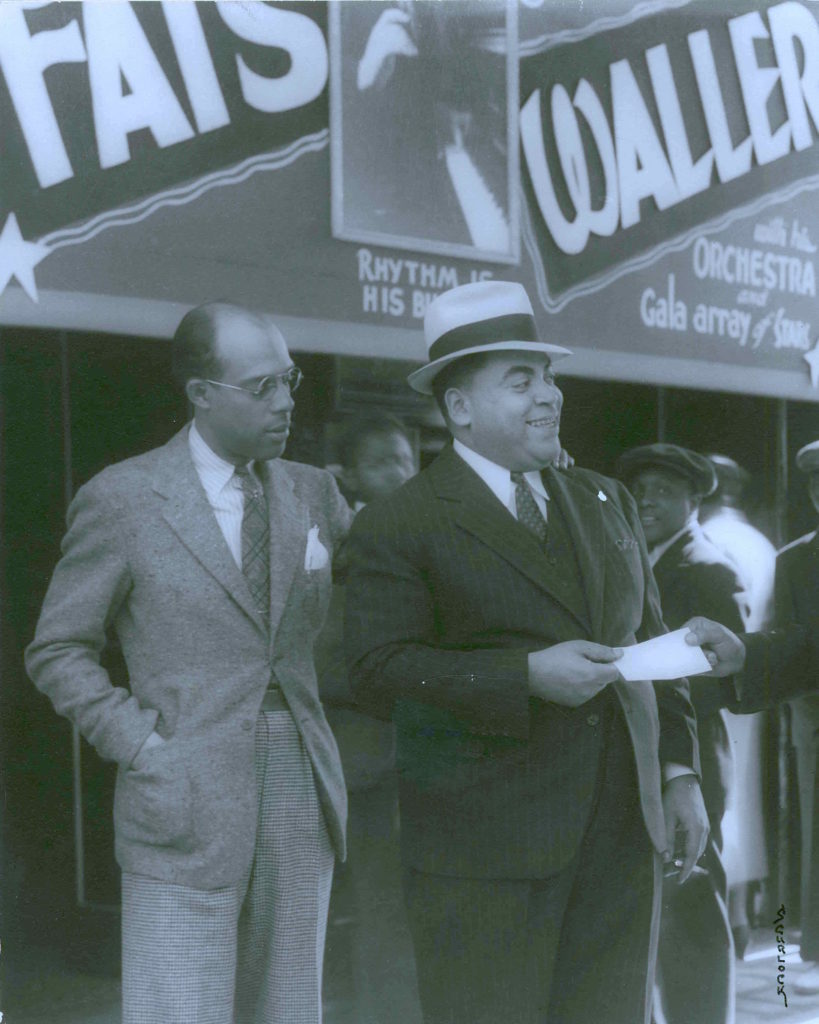
By the 1920s, Fats Waller (b. 1904-43) began tickling the ivories not long after Morton, and had become a larger-than-life persona. Beginning in his teens as a vaudeville organist in Harlem theaters, Waller’s easygoing style and humorous quips earned him a substantial following both here and overseas during his career, and his songs later inspired the Tony-winning musical Ain’t Misbehavin’, which features such Waller favorites as “Honeysuckle Rose,” “Squeeze Me,” and “Handful Of Keys” along with the title tune. A composer of hot jazz songs and Broadway musicals, he was an energetic composer who evoked a lot happiness amid the hardships of the Great Depression and early World War II years.
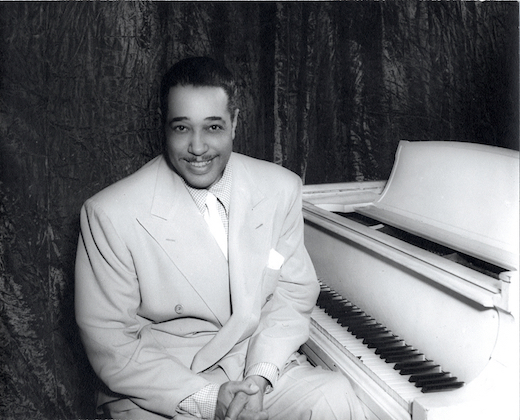
Just a few hours down the road from Lenox Ave, while Waller was making his mark, one of Washington, D.C.’s most famous natives who many jazz enthusiasts dub as the “piano king of all-time, Sir Duke” was hitting his pre-Harlem stride in U Street venues. Throughout his 50-year career, Edward Kennedy Ellington (b. 1899-1974) penned more than 1,000 compositions, including “Mood Indigo,” “Satin Doll,” “Sophisticated Lady,” and “It Don’t Mean A Thing (If It Ain’t Got That Swing)” and members of his big band orchestra added such classic tunes as “Caravan” (by Juan Tizol) and “Take The ‘A’ Train” (by frequent collaborator Billy Strayhorn) to the jazz canon.
Certainly, there’s no doubting the impact of the Harlem Renaissance’s rich era of African American artisans and intellects; the range of piano stylings, moods and compositions of Fats Waller and Duke Ellington converged at this fanciful crossroad to help the genre reach its peak and elevate jazz to its status as “America’s classical music.”
WATCH NOW |Black Broadway on U: The Early Side of Duke
DISCOVER | Jungle Inn Where Jelly Roll Morton Played
Black Broadway on U: Discover The Community
The post A Bit of Piano Jazz History from DC’s U Street to Harlem’s Lenox Avenue appeared first on Black Broadway on U.
]]>The post Echoes of Jazz in D.C. History Tour w/NMAAHC & BBoU appeared first on Black Broadway on U.
]]>Celebrating 2018 Jazz Appreciation Month! #APeoplesGroove “Echoes of Jazz in Washington, D.C.” History Tour with the Black Broadway on U (BBoU) Project in collaboration with Smithsonian National Museum of African American History and Culture (NMAAHC) takes a journey back to our nation’s early jazz mecca and incubator along D.C’s historic U Street Corridor once known as “Black Broadway.”
The tour showcases Black Broadway’s cultural landmarks and venues, Lincoln Theatre, Bohemian Caverns and True Reformers Buildings that once hosted big band and jazz acts like the dean of music/D.C. native Duke Ellington, singer Pearl Bailey who dubbed U Street as “Black Broadway” and Cab Calloway’s older sister, Blanche Calloway who was the first woman to lead her own all-male jazz band in the 1930 and later managed U Street’s Crystal Caverns (now Bohemian Caverns).
And D.C.’s Cultural Renaissance personified like no other — the style, innovation, and optimism of the golden jazz age of the 1920s, 30s and 40s. A black people’s music that can only be described as an explosion of unbridled creativity, improvisation, and unbound genius. Check out the tour via NMAAHC’s Twitter feed to DISCOVER the rich jazz history and heritage of D.C.’s U Street/Black Broadway, CLICK HERE: @NMAAHC
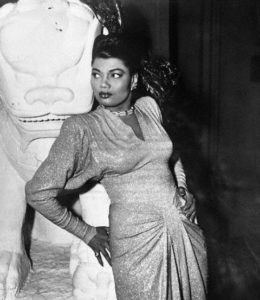
Pearl Bailey
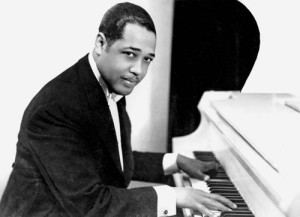
Duke Ellington
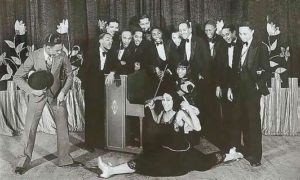
Blanche Calloway and her Joy Boys
The post Echoes of Jazz in D.C. History Tour w/NMAAHC & BBoU appeared first on Black Broadway on U.
]]>The post Black Broadway on U: In Small Spaces appeared first on Black Broadway on U.
]]>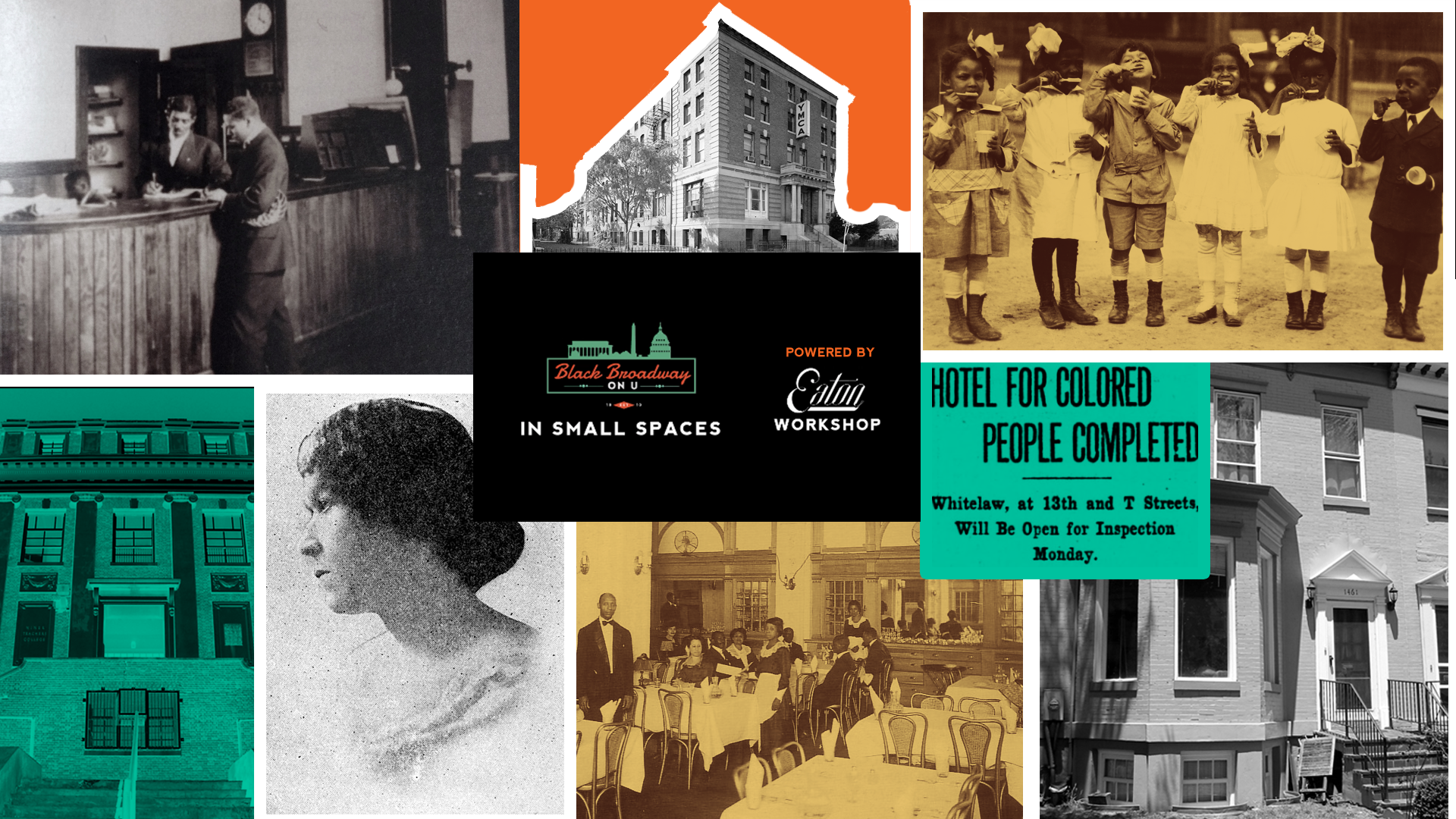
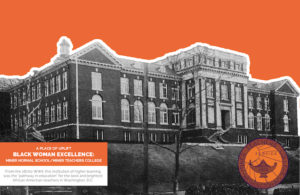
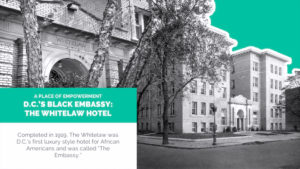
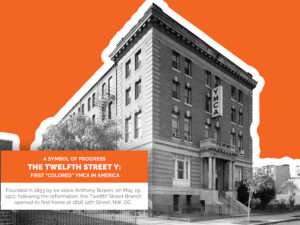
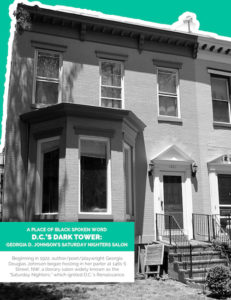
Celebrating 2018 Black History Month! Black Broadway on U: In Small Spaces powered by Eaton Workshop immerses audiences into four storied, small spaces and surviving historic community landmarks in Washington, D.C.; 12th Street “Colored” YMCA (the first African American Y in the world), The Whitelaw Hotel (D.C.’s first African American owned luxury hotel and apartment complex known as “The Embassy”), Miner Normal School (For Colored Girls Only) and Georgia Douglas Johnson’s Residence (site of Saturday Nighters Literary Salon) that still stand today along the U Street/Shaw corridor. These spaces signify “possibility and transformation,” “redemption and uplift” and “horizons of triumph” for Black Washingtonians during the late 19th century to 20th century supporting the intersection of social arts, consciousness, cultural identity, progress, prosperity and resilience.
CLICK images to VIEW | Black Broadway on U: In Small Spaces Activations
Miner Normal School/Miner Teachers College
The Whitelaw Hotel
12th Street “Colored” YMCA | Get Immersed in 360, VIEW: 12th Street Y Virtual Tour
Georgia Douglas Johnson’s Saturday Nighters Salon
The post Black Broadway on U: In Small Spaces appeared first on Black Broadway on U.
]]>The post Saving Places: Who Tells Your Story | Remembering U Street/Black Broadway appeared first on Black Broadway on U.
]]>The National Trust for Historic Preservation’s Saving Places turns the spotlight on Shellée M. Haynesworth, Cultural Storyteller/Executive Producer of the Black Broadway on U: A Transmedia Project. By Carson Bear, Editorial Assistant, National Trust for Historic Preservation
Washington, DC – Tuesday, September 19, 2017 – Telling stories about historic places is a constant learning experience. Challenges such as ever-evolving technology, long-abandoned places that are difficult to research through traditional channels, and a cultural narrative that ignores marginalized voices can seem insurmountable. But award-winning multimedia maker, storyteller, and multi-generational native Washingtonian Shellée M. Haynesworth is using these challenges to pioneer immersive, multi-platform content that reflects the values of preservation and retelling history in an inclusive, empowering way.
The post Saving Places: Who Tells Your Story | Remembering U Street/Black Broadway appeared first on Black Broadway on U.
]]>The post ESPN The Undefeated: Remembering U Street/”Black Broadway on U” appeared first on Black Broadway on U.
]]>Dawson migrated from Louisiana in July 1932 and moved to U Street with her brother. As Haynesworth and her grandmother made their way down the road, the matriarch began to point out where and how things had been, while Haynesworth noticed how everything she said was in past tense — none of these fantastic pieces of “Black Broadway” were there anymore.
Black Broadway: The hidden history of U Street in Washington, D.C.
How did we forget about ‘Black Broadway’? by Rhiannon Walker, associate editor, The Undefeated, READ THE ENTIRE STORY, HERE.
WATCH THE VIDEO, HERE:
The post ESPN The Undefeated: Remembering U Street/”Black Broadway on U” appeared first on Black Broadway on U.
]]>The post Black Broadway on U launches mobile storytelling tour, “Native Roots: The Duke’s Washington.” appeared first on Black Broadway on U.
]]>The mobile storytelling tour, Native Roots: The Duke’s Washington is a part of The MuseWeb Foundation’s Be Here initiative, created in collaboration with izi.TRAVEL. The tour allows museum visitors from all over the world a unique opportunity to discover via their smartphones and tablet devices the nation capital’s historical and musical crossroads that celebrates the city’s native son/hometown hero, Edward Kennedy “Duke” Ellington one of the greatest American composers, world-renowned pianists and music innovators of all-time. This immersive, walking tour highlights the story of Ellington’s Washington from his birthplace in the historic Foggy Bottom neighborhood to the heart of the greater U Street corridor once the mecca of America’s black culture aka “Black Broadway”, a moniker coined by Pearl Bailey, the legendary black actress and entertainer of stage and film.
ABOUT MuseWeb:
The MuseWeb Foundation is a new nonprofit offshoot of the international Museums and the Web Conference (MW), which began in 1997. For the past 20 years, MW has showcased and documented leading work in the cultural field in a free and open archive of more than 1,000 conference papers. The MuseWeb Foundation was conceived as an accelerator of cultural innovation to help develop and fund some of the most promising projects and initiatives from the conference and the cultural heritage field at large.
Be Here is the flagship project of MuseWeb. The smartphone has become an essential tool that residents and visitors alike use wherever they go. Be Here seeks to capitalize on this behavior and offer city explorers a new way to discover the hidden culture, history, and stories of America. MuseWeb awards grants to local creators and cultural and educational institutions interested in creating and publishing geolocated content.
ABOUT izi.TRAVEL:
izi.TRAVEL enables people to use their smartphones as personal guides through new places and cultures around the world. With two million downloads, izi.TRAVEL is the most popular storytelling platform for location-based audio and multimedia guides. The free app currently features over 2,000 city tours and 800 museum guides to 900 destinations all over the world. Travelers discover the world with multilingual tours that combine art and culture with local stories, while cities, museums and tourism authorities use the free and open platform to promote their local cultural heritage. The content of the app is constantly refreshed by tourism and cultural institutions, city authorities, and passionate storytellers who want to share their knowledge and inspire others.
The post Black Broadway on U launches mobile storytelling tour, “Native Roots: The Duke’s Washington.” appeared first on Black Broadway on U.
]]>