


 ]]>
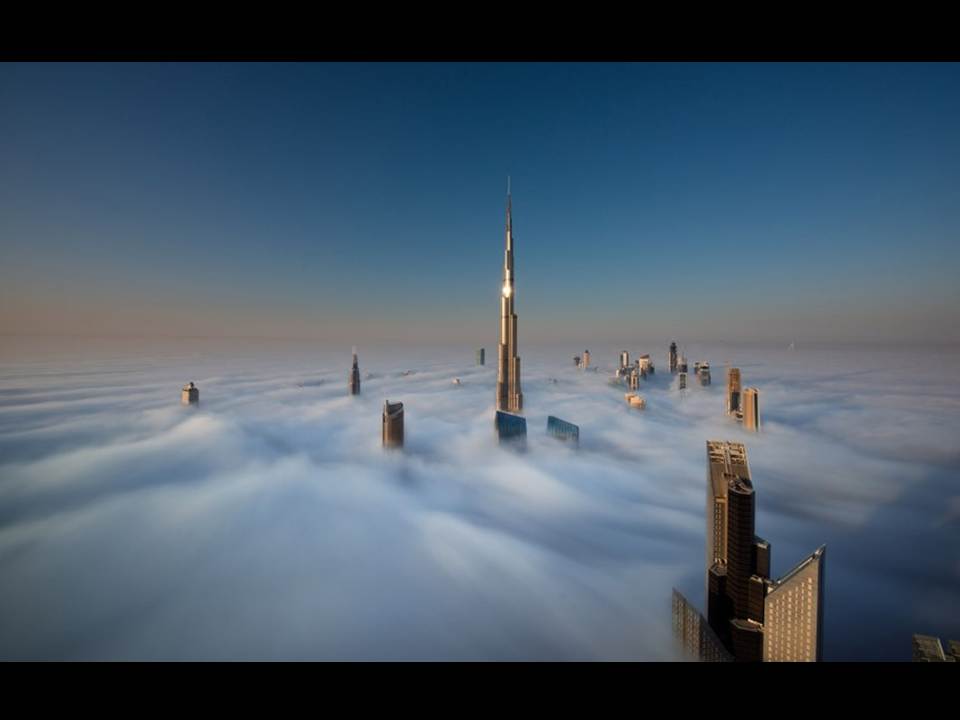
(A private discourse between blue water lilies and a city with long necks)
Empathetic imaginings part one
Osmosis psychosis


]]>

NEW PLAN
“The Problem”:
- What are the psychological, socio-cultural, political and economic effects of high-density living conditions in Hong Kong? Particularly in relation to the phenomena of the “cage house”.
- How has this problem been addressed historically?
- What might be problematic about this historical development?
- What is commendable about the historical solutions?
- E.g. Intergenerational occupation of the dwellings
How we have addressed this problem:
Logistics…
- Reconstructing a life sized “cage house”
- With walls made out of its contents, forming a visible, porous cube
- i.e. The walls will not be packed so tightly with materials that the viewer cannot see through them
- Within the confines of these partially transparent walls will be a few items of furniture representing some typical belongings of families who live in such houses
Concept…
Main idea = To reflect on the problem of limited space as a perceived limitation rather than an actual limitation.
- A depiction of the limited space that many Hong Kong people live within
- Evidence of a family of four being the occupants of the space
- Drawing attention to both the consequences of high-density urban living for many of Hong Kong’s inhabitants, as well as the ingenuity of those who adapt to living within such spaces.
- By removing the surface of the walls surrounding the home, and allowing the stacked possessions to be seen, the viewer is given an alternate perspective of the cage house.
- Feelings of claustrophobia might be evoked by the amount of items packed into the wall cavity
- A sense of the process of negotiating limited space with others might be obtained by observing the remnants of human occupation found within the house (e.g. a table with 4 bowls and chopsticks left on it, an unmade bunk bed with 4 pillows etc.)
- Drawing attention to the propensity of Hong Kong residents to hem themselves in with their possessions – it is an interesting choice to live in such small spaces as opposed to developing more of the available space in the outer regions of Hong Kong.
- The nature of the items themselves may also lead the viewer to draw conclusions about the socioeconomic status, tastes, values, and traditions of the imagined occupants of such a space.
- A sense of the history of those who might have occupied the house previously might also be observable in the layers of materials cast into the fibres of the wall.
- The concept of voyeurism also becomes relevant as the viewer peers through the gaps in the walls and into the house. This subsequently draws attention to the viewer him/herself, and might provoke feelings of guilt and shame about being a passive observer of others’ disadvantage.
- For those viewers who presently live in similar dwellings, the house might represent an illustration of (and even a monument to) the typical home environment. It may also represent an attempt to empathise with the realities of life within this type of box.
]]>


 ]]>
As I watched these squares of waste being loaded onto boats, I wondered where they were going and so this led to my curiosity in the cycle of waste and consumerism. Whereby consumerism in Hong Kong leads to use to waste to land and or public fill. Through my research I identified that Hong Kong’s landfill sites will be full within 6 years without any alternative solutions to the problem. Reuse has become a more prominent system in Hong Kong in order to prevent any unnecessary use of landfill, however the significantly overpopulated island is still fairly dependent on the use of landfill. Alternative means of deferring waste include the use of ‘public fill.’ Suitable for use in reclamation and site formation, public fill repurposes waste from construction, excavation, renovation, demolition and road works. Such waste may include rocks, concrete, asphalt, rubble, bricks, stones and earth. The use of public fill is a feature utilised in Hong Kong, providing alternative means to discard of waste and alternative locations to build upon. By following this wave length, I became interested in the idea of waste being the foundations of Hong Kong, where consumerism leads to waste, leading to public fill, alternative land, homes and further consumerism. Thereby Hong Kong is built upon their own waste.
I wished to use this idea “the foundations of society” to form an object. Exploring this idea I consciously realised that a foundation within a society could conceivably be the head of a hierarchy, for instance a King within a Kingdom, or a President of a country. An iconic object in history, with a strong identity as a ‘foundation’ is ‘the head seat within a society,’ for instance a throne. As such, following that train of thought I conceived creating a seat, representing Hong Kong’s consumer and social culture.
With this in mind I started sketching different seats which were representative of the forms in the waste depo.

At this point in time, I conceive the stool to be made as a bar stool, raised higher in reference to the skyscrapers of Hong Kong. It will be made in part, if not all from found objects in the Chai Wan waste depo site and reference the consumer culture and nature of Hong Kong built upon waste. Possibly by the use of found objects being predominantly on the base structure of the stool and the upper structure constructed from concrete reflecting the materials of the buildings.
]]>



]]>