The post Use your naïve eye – but look further appeared first on All About Writing Courses.
]]>Last month, I spent two weeks snorkelling three to four hours a day in Mauritius with my half-Mauritian swim buddy and another of our swim crew. On our first couple of days out, I ran my camera battery flat snapping everything that moved – clouds of blue damsel fish, cheeky and curious Gregories, the stripey sergeant-majors and zebra humbugs.

By day three, I recognised the ubiquity of these fish. Which is not to say they lost their beauty, just that they are not all there is to the water landscape. I started looking deeper, trying to capture what was harder to find. The surface details became familiar, so I tried to focus on the less obvious, to find what was underneath.
By looking past the ever-present varieties, I discovered the moray eel, snarling at me from his reef crevice and the vivid surgeon fish. I found the two devil firefish, sheltering beneath the skeleton of the Dalblair – stark and menacing, but home to so much life. I discovered goatfish twitching their whiskers, digging for food in the sand and the absurd-looking cow-faced puffer. I noticed a trumpet fish hitching a ride on the back of a boxy – I’ve never seen such a thing. He leant his snout (if I can call it that) on the boxy’s back and floated along, while the poor boxy worked his little fins to keep them both going.
I saw horribly degraded coral, evidence of mismanagement and a blasé attitude to its importance in the world. But I also noticed regrowth and regeneration, more than I did last year, which lifted my heart and gave me hope for the future.
All of this got me thinking about my last year’s trip. Then, I focused my newsletter on the precise details of a location, getting them right, so that you can conjure a credible world for your readers, by showing them accurate specifics. This is all true.
But if you’re writing about a new place, be aware that you’re not seeing it as a local would. Use that naïve eye to notice all the concrete details that locals take for granted. Don’t discount the beauty of the damsel fish, merely because they’re everywhere. But that shouldn’t be where your focus begins and ends. That way lies stereotype.
Dive deeper, look further, stick your head inside that wreck and find out what lies below. That’s where good writing hides.
The post Use your naïve eye – but look further appeared first on All About Writing Courses.
]]>The post Don’t be absurd, Janine appeared first on All About Writing Courses.
]]>This essay on Peter Fiennes’s En Route first appeared as a Monday Writing Motivation, my free weekly email for writers. Sign up here to get the next one.
Every week I promise myself I’ll carry a notebook, and every week I don’t. Ideas arrive in the shower, on a walk, halfway through someone else’s sentence, and I tell myself that anything that good can’t possibly be forgotten. Then it is.
On Tuesday two ideas occurred to me for future Monday Writing Motivations, but when I woke this morning – it’s Saturday – in order to write, the ideas had fled.

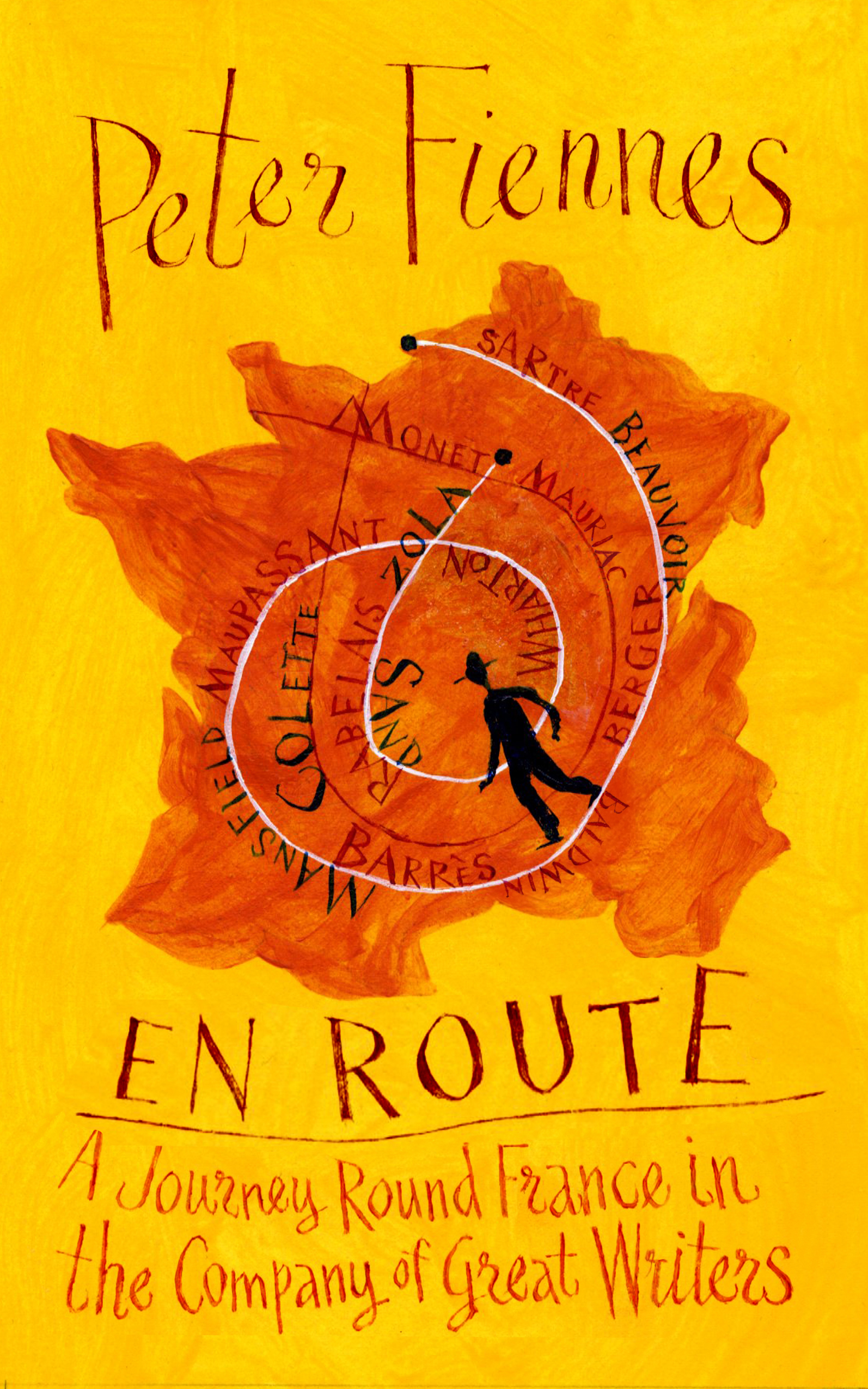
A rainy afternoon in Peter Fiennes’s En Route
So instead of an idea of my own, I’m offering one that someone else caught on the wing and committed to paper. It comes from Peter Fiennes’s En Route, which I read recently and have been pressing on people ever since. Fiennes is walking to the beach in Le Havre, in what is supposed to be summer.
On the way to the beach, I passed a string of almost-empty brasseries with wide terraces facing the sea, one of them with an elaborately etched, immaculately polished glass windbreak reading “UN ÉTÉ AU HAVRE”. But where is everyone? And what kind of summer was this? I was alone, and I found myself slowing, muffled in the grey and beige light, all soft pastels, wrapped in my raincoat (it was cold), wide concrete paving stones underfoot, concrete apartment buildings to the right, an endless stretch of balconies looking blankly out over the uneasy ocean, chairs and tables set for two (but no one sitting at them), the concrete sky above, now surprisingly low, oozing rain, and the sea to the left, white horses and no horizon, shingle and cement, mud, salt and diesel in the air, and I slowed and stopped entirely, the rain falling hard now; huddled under a covered walkway, and I heard a tearful young English voice calling out from deep inside one of the brasseries, ‘Mummy!’ and an adult laughed and said, ‘Oh don’t be absurd, Janine.’ — Peter Fiennes, En Route: A Journey Round France in the Company of Great Writers (Oneworld)
Start with what he saw. The detail isn’t exhaustive. It’s selected, and nearly all of it reflects absence. The brasseries are almost empty. The tables are laid for two, and nobody’s sitting at them. The balconies look out blankly. The one object that says anything at all is the polished glass windbreak with its etched promise of a summer in Le Havre. Then Fiennes asks outright: Where is everyone? Bear that question in mind; Fiennes will answer it.
A sentence that slows down as you read it
You will have registered Fiennes’s long and meandering sentence. It runs to well over a hundred words, (I love long sentences!) but its length isn’t what matters. What matters is that it does what it describes. Fiennes tells us he found himself slowing, and the sentence slows with him. Clause piles on clause, and as the catalogue grows the verbs quietly retreat, like the tide ebbing. We’re left with nouns and nothing happening: shingle and cement, mud, salt and diesel in the air. By the time he tells us he slowed and stopped entirely, the grammar has already stopped. You feel it grinding to a stop before you’re told about it.
 Then there’s the concrete. First the paving stones, then the apartment buildings, then the sky. By this point the word has come loose from its literal meaning, and a low sky oozing rain reads like wet cement being poured over the town. It would be easy to call this pathetic fallacy, the landscape dressed up in the writer’s mood, but that isn’t quite right. Le Havre was flattened in 1944 and rebuilt almost entirely in reinforced concrete. Fiennes’s gloom hasn’t invented the concrete; it has found it. The mood and the material suit each other. The repetition keeps pressing the point until the reader, too, is standing under a covered walkway, damp and a little dispirited, with no horizon in sight.
And then there’s Janine.
A child’s voice, English and tearful, calls “Mummy!” from deep inside one of the brasseries. An adult laughs: “Oh don’t be absurd, Janine.”
It’s very funny, and it’s tempting to call it a twist. Well, it is – a little quirk to bring the scene to an end. But it’s more than that. Fiennes has been quietly amused all along. Listen to his commentary, fenced in with parentheses: “(it was cold)”, “(but no one sitting at them)”. The dry voice is there from the start. The ending simply turns up the volume.
The ending does three things at once. First, it answers the question he posed at the start: ‘Where iseveryone?’ Everyone is inside, sheltering, and they’re English: he has crossed the Channel only to find the people he left behind. Second, it gives the paragraph’s melancholy a voice. The child’s wail is what the whole long sentence has been feeling without saying. Third, the adult’s reply, brisk and unimpressed, lands directly on the writer. Don’t be absurd. It’s a mild rebuke delivered to Janine but received by Fiennes, and by us, who had been rather enjoying his wistfulness.
What it doesn’t do is cancel anything. The sea is still grey, the tables still empty, the sky still low. The ending doesn’t resolve the mood. It lets us see the mood from outside and smile at it while the rain carries on. That’s the perspective the humour brings.
Which brings me back to my lost ideas. Nobody invents Janine. You couldn’t: the name is too specific and faintly comic, and the adult’s phrasing is too exactly right. Someone heard it on a wet day in Le Havre and wrote it down, along with the smell of diesel and salt and the etched glass. The long sentence, the repeated use of concrete and the perfectly placed punchline are all acts of craft. But craft needs material, and material has to be caught as it flies past.
So I have, once again, decided never to venture out without both a notebook and a reliable pen. Whether I’ll actually use them is another matter.
Richard
Every Monday, a writer’s nudge in your inbox
Every Monday I send out an essay like this one, about a book, a sentence or a problem I’ve been wrestling with in my own writing. It’s short, free and written for people who write. If you’d like it in your inbox, sign up below.
The post Don’t be absurd, Janine appeared first on All About Writing Courses.
]]> I have a title idea. I hope you like it…
Scrap that. I have it now.
Okay, it’s between these three …
I have it, I have it. This is the final.
Please ignore my last mail…
My poor publisher. My new book, my first work of non-fiction, had no definitive title yet. A working title, yes. The manuscript was being edited, a cover was being mocked up. But no agreement had yet been reached on the title.
I couldn’t rest, I couldn’t stop thinking about it. Titles and subtitles roiled in my head while I swam, and ate, and (half) listened to other people … and, definitely while I ought to have been sleeping. It woke me in the early hours, jerking me upright to scrabble for pens in my bedside drawer.
I know about titles. I know they can be dealbreakers. They really, really matter.
A title can be a magnet, irresistibly sucking you into a book’s forcefield. Or, turn that magnet around and see what happens. It can shove you away and spin you away to another shelf.
Or, to try another metaphor, a title is like body language. At a glance, you can tell you whether this is a book you could commit to and settle down with. Whether it’s a volume you’ll leave on your central table or hide in your bedside drawer. You’ll have a strong sense of its likelihood of being clever, or funny, or the type of genre you’ll enjoy.
I saw this in action with my first book. Its working title on my computer was Farmbook. Not much help there. Flipping through the manuscript, my eye lighted on a passage – and an idea flashed before me.
It’s just that now, knowing what happened, it seems that the violence didn’t just collide with my world in one gigantic crash. From the moment we arrived, it slithered insidiously into the joy of the prosaic everyday, into the innocence of roast chicken, and the happiness of baby chicks.
On my pre-publishing trip to London (that’s how things worked in those days), I was introduced to my editor and the team of publicists at Headline Review. ‘I think,’ my editor informed me sagely, ‘that we must call the book Country of my heart…’
I turned away to hide my gag reflex. I could have complied. They intimidated me and … what did I know, anyway?
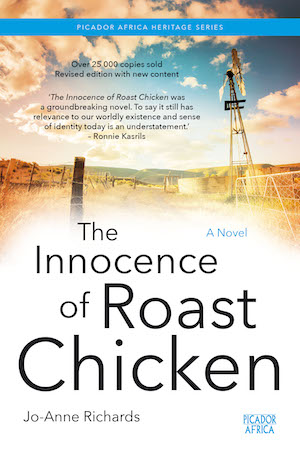 ‘Actually, I was thinking of The Innocence of Roast Chicken …’
‘Oh no…’ She swallowed a scoff. ‘I really don’t think…’
‘But that’s a brilliant title,’ the head publicist cut in. ‘We can work with that.’
And so it came to pass. It was a very successful title. Would the book have done as well as Country of my Heart? No, of course it wouldn’t.
So, back to the current book. It’s non-fiction, which means it can carry a main title and a subtitle, which is both a luxury and a burden. The main title hooks and teases. The subtitle must do the heavy lifting: it tells you what the book is really about, without giving too much away, without lecturing, without frightening you off.
Everyone loved my working title. When I used it, people smiled and simultaneously raised their eyebrows.
Men I have known
It’s cheeky and arch. Probably gives you a ‘Say, what?’ moment. And, indeed, that is what the book is about. But it’s much more than that.
It’s a (hopefully, nuanced) exploration of how men and women interact: what’s changed across sixty years and what stubbornly refuses to budge. It uses my life, yes, since I made the risky, possibly stupid decision to use myself as a case study. But it’s not a memoir, and certainly not a memoir of peccadillos. It has much bigger fish to fry.
We wrestled with it for weeks. My publisher’s inbox can attest to that. In the end, we found it. I think it’s just right. I hope it suggests to you all kinds of possibilities:
Men I Have Known: On love, power and everything in between
Publication: April 2027, through Jonathan Ball Publishers. There’s plenty more to come between now and then — I’ll spare my publisher’s inbox and share it here first.
Jo-Anne
As always, I’m here to discuss your writing and how we can help you. Simply fill in the contact form and let me know what you are working on, and what kind of help you need.
Happy writing
Jo-Anne
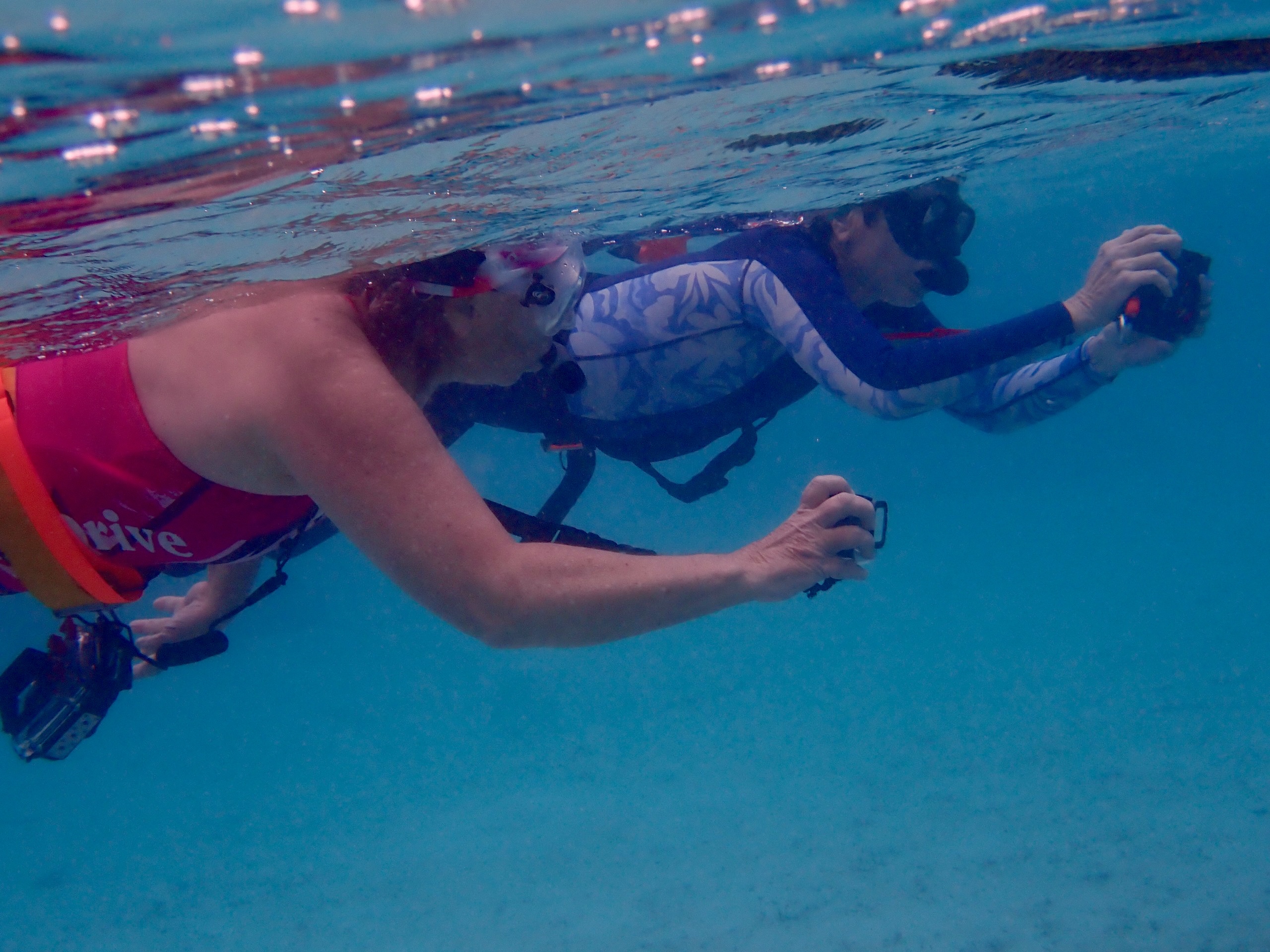
P.S. Wondering about the creatures in my underwater pics, click here to find out more.
The post How to Choose a Book Title: Lessons From Naming Men I Have Known appeared first on All About Writing Courses.
]]>The post Humour, Rejection and Redefining Success: Key Insights from Bestselling Author Sally Andrew appeared first on All About Writing Courses.
]]>All About Writing has just hosted a joyful, funny and often moving conversation with bestselling author Sally Andrew – creator of the much-loved Tannie Maria Mysteries – to talk about where Tannie Maria came from, how humour grows out of character rather than plot, how to weave weighty themes into a cozy mystery without losing the fun, and what Sally has learned about the real meaning of success.
It was, as always, a warm and collaborative exchange, shaped as much by the questions and stories shared by attendees in the chat as by our own. Watch the full replay below, then read on for a detailed recap of everything Sally shared.
Watch the Sally Andrew Webinar Replay:
Humour, Rejection and Redefining Success: Key Insights from Bestselling Author Sally Andrew
Sally’s thought’s on the theme of success for writers
Success comes through the willingness to repeatedly fail and learn from it. There’s no recipe for success, and there is: no recipe, because each day you sit down to write, you’re stepping off an abyss; a recipe, because we’re touched by the gods as creators, connecting to the chance to make something fresh with our hands, our brains, our lives. Success is learning to step into that stream and become a co-creator.
One of the biggest steps for me was dealing with envy. There was a writer I knew from school who’d written books and won an award, and I felt envious. I sat with it and thought, ‘This envy is showing me what I really want.’ That’s such a gift. It let me shift from envy to inspiration: if they can do it, I can do it.
The joy is this: to be inspired, and to enjoy the deliciousness of creating. Each of us is unique – we could write the same story and it would come out completely different, because we’re each unique souls who love to create. That appreciation is the central thing in success.
Yes, it’s amazing to have an agent, get published, earn a living from your work. But those are secondary – I know people who have all of that and aren’t happy. They haven’t found that overlapping point, as Mandela quoted, of where your greatest joy meets the cry of the world. We love to do what we love, but we’re also interconnected humans who want to offer something that helps others. Finding that overlap takes real self-respect and self-love – not ego, but appreciation of the gift.
It’s such a blessing to be a writer, whether you make a living from it or just write in your own diary. The critical voices will exist, but they need to fall back, so the creator and the editor in you can both play – and your editor must be a coach, not a critic.
Success is also just appreciating your life every day. When you fail, there’s always something to learn, and always a choice. So success is reclaiming your choices, reclaiming your power, celebrating who you are, enjoying the bliss of writing – and getting your bum on the seat. That’s what I’ve been failing at lately. You can have all the rest, but unless you put your bum on the seat and put in the hours, none of it counts. Just do it.
That’s what I’ll look to in future when I feel lost – and for my past self, to help her catch up to the present.
***
How do you build a character so beloved that she wins international cooking awards despite not existing? And how do you keep her fresh across five books, weave in weighty themes like environmental poaching and PTSD, and still make readers laugh out loud?
Meet Tannie Maria — and Her Creator
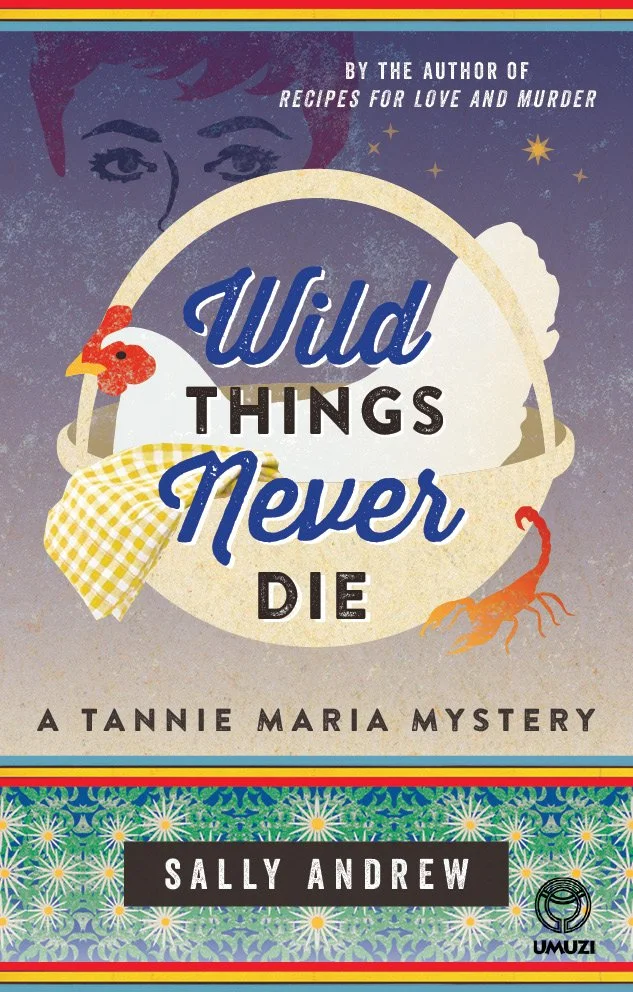 Sally opened the evening reading from her brand-new fifth novel, Wild Things Never Die, in which Tannie Maria and her fiancé, Detective Henk Kannemeyer, go undercover at a luxury game lodge to help save the vetplantjies from poachers — all while Tannie Maria wrestles with her own fear of the dark, and her hen, Henrietta, recovers from PTSD of her own. It’s classic Tannie Maria: recipes, love, murder, and a serious theme handled with a light touch.
Where Real Characters Come From
Asked how much of herself is in Tannie Maria, Sally was clear: she deliberately built a character different from herself — “but I have now got older and plumper, so I sort of feel I’m sneaking up to becoming more like her.”
Tannie Maria wasn’t even Afrikaans in the way she ended up. Sally originally wrote her as more fully Afrikaans, until a beta reader pointed out she felt ‘too crazy’ for that — so Sally gave her an English father, whose backstory eventually grew into a major plotline in book three. It’s a good reminder that character development doesn’t stop once a draft is finished — sometimes it keeps evolving for books.
The Secret to Real Humour: Character, Not Jokes
Tannie Maria’s not absurd. We can believe in her, and the humour comes from the close observation of this character and how she would behave.
Sally agreed that Tannie Maria is just her being herself.
“What makes me stop reading or carry on reading a book is when I care about the character… they’ve got to be interesting and they’ve got to be flawed.”
Big Themes, Light Touch
Every Tannie Maria book carries a serious undercurrent — fracking, corruption, PTSD, eating disorders, and in the new book, environmental poaching — but Sally is adamant that theme should never overwhelm story. She won’t finish a book until she’s found a realistic solution to the issue at its heart: “I couldn’t write the book until I could make up possible real solutions, or else it’s too depressing for me.”
The emotional arc matters most to her – in this book, choosing love over fear and connection over control – but it’s always balanced by comedy. “I love it if I can reread my book and in the middle of some scary, near-murder scene, there’s just something going on with a hen and a bra around her neck, and I can laugh out loud.”
Keeping a Five-Book Series Fresh
Rather than plotting the whole series in advance, Sally lets Tannie Maria’s growth track her own. “I always link what she’s working through to something I’m working through.”
Freshness, for Sally, doesn’t mean reinventing the wheel each time. She likes readers to return to the same stoep, the same mountains, the same birdsong — “the poetry of repetition” — just seen from a slightly different angle each time.
Can You Base a Character on Someone You Know?
One of the evening’s most useful exchanges came from an audience question: Marzanne, whose debut novel is being published next year, asked how to handle people who might recognise themselves in her fiction. Sally’s advice was blunt and freeing: put a line at the front of the book stating that all characters are fictional, then let it go. “It really is their problem… you’re entitled to base things on people” — with one important caveat: if enough people at a dinner party could identify the real person behind a character, that’s a legal risk, not just an awkward conversation. Change their appearance, their setting, something – and otherwise, stop worrying what other people think. “It’s easier said than done, but that’s the thing to focus on.”
Sally also shared her own approach: her characters are invented, but she’s occasionally discovered – after the fact – that a name or detail she made up matches something real (an invented policeman’s surname turned out to belong to an actual Ladismith constable). She’s learned to research roles and settings thoroughly, then build a character who is clearly, deliberately different from anyone real.
Writing Place Without Overwriting It
Living immersed in the Klein Karoo, Sally said, means she can bring in a single vivid detail rather than over-explain – a bird call, the shape of a mountain – and let it be enough. It’s the areas she’s had to research, rather than lived, that she’s tempted to overwrite, “to prove that I know it.” Good research, like a good petticoat, should support the story without ever being seen.
A Very South African Story, Read Around the World
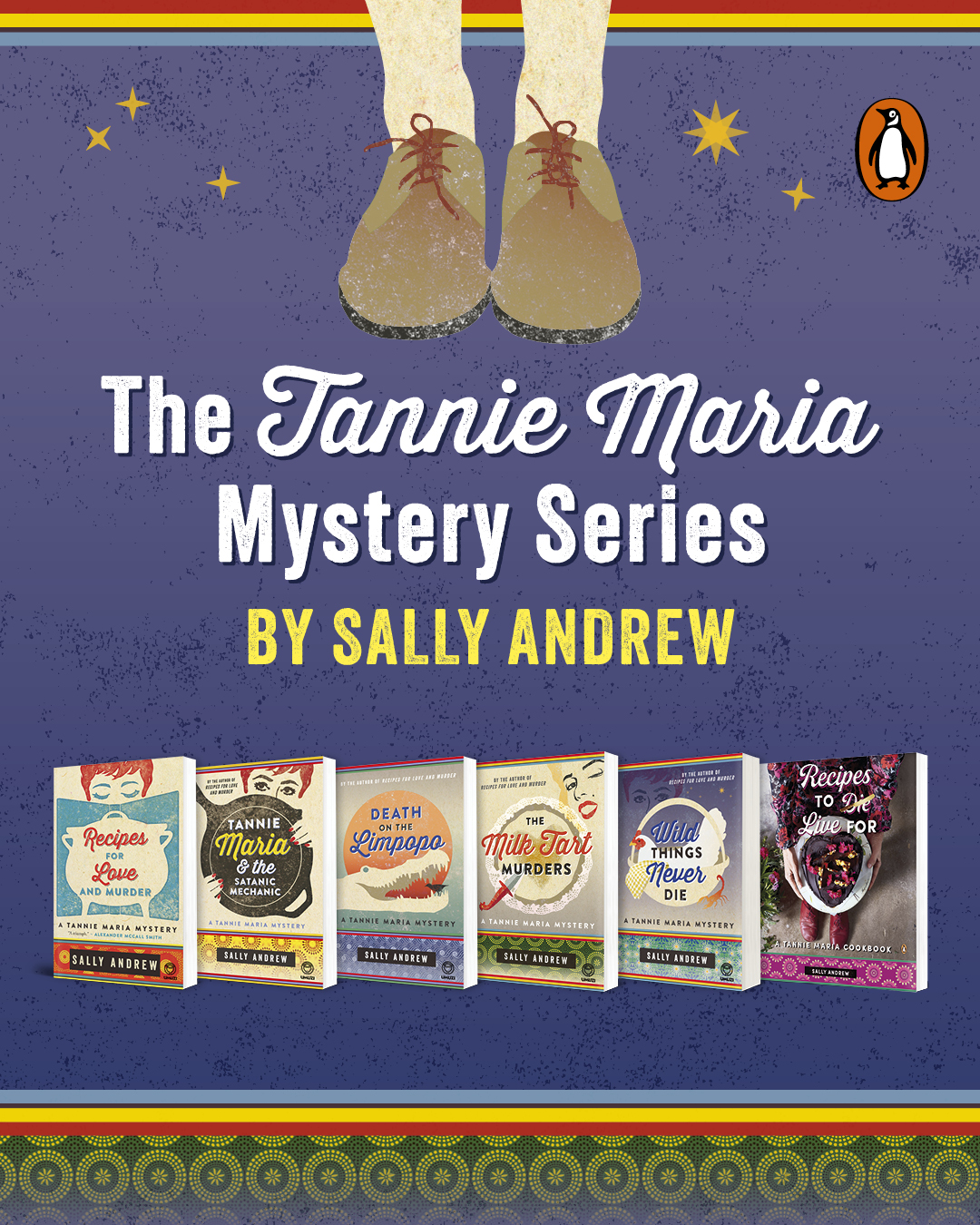 Despite being deeply rooted in the Klein Karoo, the Tannie Maria books have been translated into 14 languages. Sally’s explanation: specificity, not generality, is what travels. Readers don’t need to know what a bokmakierie is if the next line describes “the shrike sang out” — and a light-touch glossary handles the rest. What connects internationally, she said, are the archetypal threads: food, small-town life, love, nature. “People love to travel for the price of a book instead of a plane ticket.”
On Rejection: Keep Going
Sally estimates she’s been rejected roughly 200 times across her writing career — including wildly contradictory feedback on her very first manuscript, Recipes for Love and Murder. One well-known author told her, bluntly, that she “hadn’t got it.” Weeks later, a different editor told her the opposite: that she had something special. That second opinion carried her through to writing the sequel — and finding an agent. Her advice to her past self, and to anyone starting out: “Keep going. You’re going to make a living out of writing… and keep believing in the possibility of that.”
The Last Word
Sally closed the evening by reminding everyone that writing – whatever stage you’re at – is worth savouring for its own sake: “It’s such a blessing to be a writer, it’s such a blessing to enjoy it, whether you make a living of it or you just write in your own diary.”
Want more Tannie Maria?
We’re sure this conversation has left you wanting more Tannie Maria – so if you haven’t already read it, grab a copy of Wild Things Never Die, Sally’s brand-new fifth novel, or start at the very beginning of the series with Recipes for Love and Murder.
Connect with Sally Andrew
www.sallyandrew.com
Instagram: @sallyandrewkaroo
Facebook: Sally Andrew
Our Creative Writing Course is open for enrolment
If Sally’s story left you itching to write that book, our flagship Creative Writing Course covers everything we wish we’d known when we started out. We’ve opened up bookings for January 2027 and the course is on an early bird special at the moment. Spaces are limited so that everyone gets proper personal attention — so if you’re keen, don’t wait too long. The course runs live on Zoom in the evenings for ten weeks. Book your place here.

Connect with Joanne and Merle
If you watch the webinar or read this guide, we’re confident you’ll be inspired to explore the memoirs that emerged from this coming together of courage and craft. Joanne Hichens’ Death and the After Parties and Merle Levin’s The World According to Merle are excellent examples of what happens when writers give themselves permission to tell their truth—and trust that their stories matter to others walking similar paths.
Joanne: Website, Short Sharp Stories, Instagram, Facebook and Facebook Author Page
Merle: Website, Instagram and Facebook
Ready to Make 2026 Your Best Writing Year?
Whether you’re just starting your writing journey or working on your next manuscript, All About Writing offers the support and guidance you need to achieve your goals.
Start every week with writerly inspiration by signing up for Richard’s Monday Writing Motivations.
Creative Writing Course – Our comprehensive 10-week live course (starting 22nd January) takes you from the fundamentals of storytelling through to crafting compelling narratives. You’ll learn essential skills in character development, plot structure, dialogue, and revision – all whilst receiving feedback on your work and connecting with fellow writers. Sign up here
One-to-One Mentoring – Working on a novel, memoir, or larger project? Our experienced mentors provide personalised guidance tailored to your specific manuscript and goals. Regular sessions help you maintain momentum, work through challenges, and develop your craft whilst bringing your project to completion. More information here
Writers’ Circle – Join our supportive monthly community where writers share work, receive constructive feedback, and benefit from the collective wisdom of the group. It’s the accountability and encouragement many writers need to keep showing up at the page. Join here
Writing Retreats – Immerse yourself in your writing whilst exploring inspiring locations. Join us in the tranquil Karoo at our Barrydale retreat, experience the charm of the English countryside in Stow-on-the-Wold, or find creative inspiration in the romantic canals and literary history of Venice. These retreats combine dedicated writing time, expert workshops, and the opportunity to connect with fellow writers in beautiful, distraction-free settings. There’s something transformative about stepping away from daily life to focus entirely on your craft.
Free Monthly Webinars – Don’t miss our monthly webinars where we explore essential writing topics, answer your questions, and build a community of committed writers.
Whatever stage you’re at in your writing journey, the key is to start now. Make those writing appointments, focus on one project, and surround yourself with a community that understands the challenges and celebrates the victories. Your story deserves to be written—and we’re here to help you do exactly that.
If you’re not sure exactly what’s right for you, why not test the waters with our free Power of Writing Course or email Trish to discuss your writing project and how we can best help you achieve your goals.
The post Humour, Rejection and Redefining Success: Key Insights from Bestselling Author Sally Andrew appeared first on All About Writing Courses.
]]>I’m bursting with news, so forgive me if I can’t make it through the first line without spilling it.
The book I’ve been wrestling with for a good four or five years, through eight drafts, has just been accepted for publication. With an advance, nogal, which means they must believe in it.
There. I’ve said it out loud. Without touching wood. (I’ve not mentioned this book this year without reaching for wood and clutching at my thumbs.) Now let me tell you what it took to get here, because that’s probably more worth the read than the announcement itself.
 |
I wrote this book because I believed in it – not because I knew it would find a home. For a long time, I didn’t know that at all. Along the way, more than one person told me, gently or otherwise, that it would be controversial. That it might not be what people expected from me.
Each time, I had the same choice every writer faces: soften to be safer, or keep going because it’s the book I need to write.
I kept going. Not because I was confident it would work out. Confidence has never been my strong suit, as most of you know. But, the alternative was writing something smaller, and I’ve never been comfortable with that kind of compromise.
If you’ve ever sat with a manuscript that frightens you a little, because of the people it might displease, you’ll know the feeling. Only you can decide whose approval matters more: that of the page itself or the amorphous faces beyond the room.
Then came the part nobody warns you about: the waiting. I first faced a long silence from a publisher I deeply respect, not knowing if I was looking at a slow yes, or a quiet no (which brings with it a particular kind of exhaustion).
Writers spend more time waiting than almost anything else. We wait for inspiration, for the next draft to reveal itself, for an agent’s reply, for an editor’s verdict. The waiting is its own skill. No one teaches it, and I’m certain it never gets easier.
In my case, before I could find out yea or nay, I was contacted by another highly respected publisher, who had heard about the book from a friend. They asked to see it and, within a fortnight, came back with a strong yes. Thank you Jonathan Ball Publishers, for believing in it. I’m excited to be part of your stable.
Remember the adventure swim that was called off halfway? I wrote about it a couple of months ago. I was psyched and ready, but the swell rose and a seal slipped off the rock at just the wrong moment.
This feels like I got to finish my swim. Just not by the route, or in the form, that I expected.
I’m deeply grateful for this opportunity. I don’t take it for granted. Conventional publishing deals are rarer than they once were – regardless of how good the work is or how many books you’ve published. There’s no shame in walking a different path. Self-publishing, hybrid models, smaller presses: there are more roads to a finished book now than there have ever been.
What matters, though, is the eight drafts. What matters is staying in the water when the swell rises and you’re not sure you’ll make it to the next beach.
I’ve been turned back by the swell. I’ve been (humiliatingly) hauled out of the water by Scotty the ‘waterman’, when I overestimated myself. I’ve stood on the sand wondering whether to go in at all. But, you know what we say? You never regret a swim.
You’ll never regret plunging into a creative project and giving it your all. It doesn’t matter if you get a medal, a pat of recognition, or even make it to the end at all. You’ll have grown an important part of yourself, and you’ll have immersed yourself in another, creative world. It brings joy, and the satisfaction of knowing you’ve pushed yourself.
Richard knows all about this. He has plunged himself into the world of Clatterbridge – where his disabled detective, James, solves cosy mysteries with the help of his wife, Inky. R now has six manuscripts ready to run and will soon be launching the first in the series, Murder as a Working Hypothesis.
And if you’re unsure? Stick with us. You can swim with us anytime. We’ll be honest about how hard it is. We’ll also remind you why it’s worth it. We offer a great deal of help – and much of it doesn’t cost a penny.
As always, I’m here to discuss your writing and how we can help you. Simply fill in the contact form and let me know what you are working on, and what kind of help you need.
Happy writing
Jo-Anne
P.S. Wondering about the creatures in my underwater pics, click here to find out more.
The post What eight drafts and a long wait taught me about the writing process appeared first on All About Writing Courses.
]]>The post Writing a Thriller or Crime Series: Key Insights from Tony Park and Bonnie Espie appeared first on All About Writing Courses.
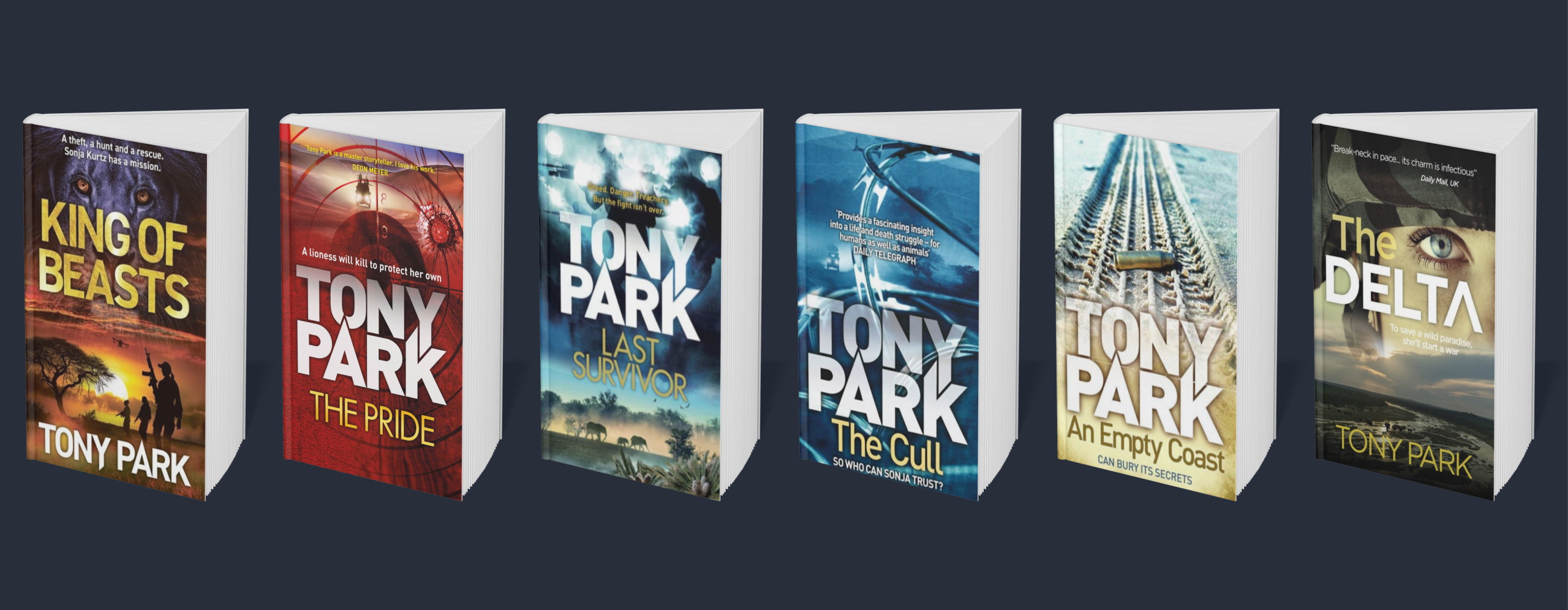
]]>All About Writing hosted a warm and wide-ranging conversation with two of southern Africa’s favourite storytellers. Tony Park, author of the bestselling Sonja Kurtz thriller series, and Bonnie Espie, author of the Winifred and Sylvie mystery series, joined me to talk about their brand-new releases – King of Beasts and Lifting the Lid.
Together they explored where their story ideas really come from, how they found their characters’ voices, the particular headaches of writing a series, and the long and winding road to getting published. It was honest, funny, and full of the kind of practical detail that only comes from writers who’ve done the work many times over. Watch the full replay below.
Watch the Replay: Writing a Thriller or Crime Series
Two Ways to Win with Tony Park and Bonnie Espie
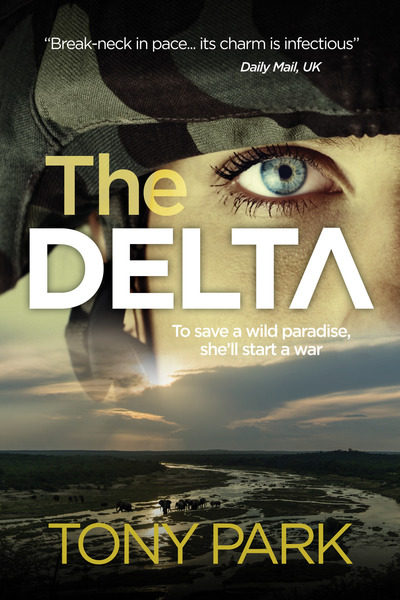 As a thank you for watching, Tony Park is giving away a free ebook copy of The Delta, the first book in his Sonja Kurtz series. Set in Botswana’s Okavango Delta, it’s got action, adventure, romance and Africa.
Follow this link to sign up and for instructions on how to download your free ebook to any ereader.
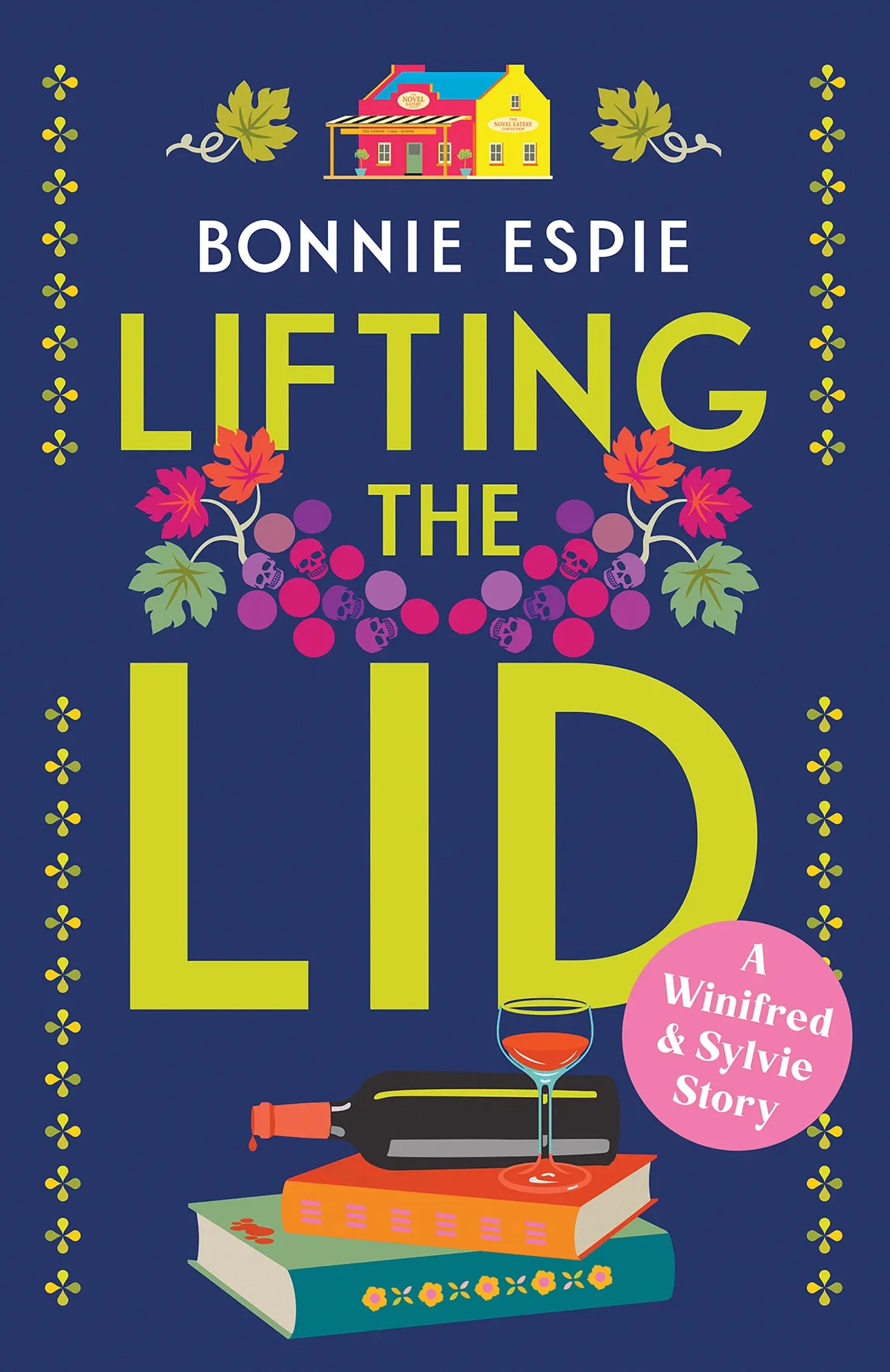 And from Bonnie Espie
Let’s Lift the Lid on your Freezer Secrets:
Wins & Sylvie are scouting for some spare freezer space for their not-so-legal side hustle. Have you got space to spare?
Tell her in the comments on her Instagram or Facebook posts what’s in your freezer and you could WIN a signed copy of Lifting the Lid.
*Bonnie’s giveaway is open to South African citizens aged 18 and over. Courier included to an address within South Africa. Entries close 31 July 2026. One winner will be chosen from the comments.
Insights from Tony Park and Bonnie Espie on what it takes to build a thriller or crime series readers keep coming back to, book after book?
Between them, Tony and Bonnie represent two very different corners of the genre — Tony’s high-stakes African thrillers built around poaching, trafficking and international intrigue, and Bonnie’s small-town, comic take on cosy crime, complete with a body and a blackmail note on page one. But the craft questions they wrestled with on the night — how to plot a crime, build a believable antagonist, and keep tension alive across multiple books — were strikingly similar.
Between them, they’ve also navigated nearly every path a writer can take to publication: traditional deals, hybrid publishing, self-publishing, rewrites and rejection. Here are the key insights from their conversation.
Meet Sonja Kurtz and Winifred & Sylvie
Tony’s Sonja Kurtz is a Namibian-born woman of German descent, now in her fifties, who grew up on a farm in Namibia and later in Botswana’s Okavango Delta. After a spell in the British Army – part of a real-life unit that trained women to operate undercover during the Troubles in Northern Ireland – she became a private military contractor. Six books on, King of Beasts finds her helping to manage a private game lodge in the South African Lowveld while her daughter, on an archaeological dig in Ukraine, is captured by a Russian soldier of fortune who is himself heading to South Africa to hunt an endangered white lion.
Bonnie’s Winifred and Sylvie are a far more unlikely pairing: Winifred, having fled Johannesburg for a small Western Cape village, wants only to open a bookshop café. She partners with the local, larger-than-life Sylvie — and on the day of their launch, the pair find a body. Lifting the Lid, the second in the series, sees them keeping a much darker secret firmly under wraps.
Where Do Story Ideas Actually Come From?
Both authors were clear: you don’t need to go hunting for an idea. Tony described how King of Beasts began with a documentary habit – he watches a great deal of military history and archaeology footage – and a news story about archaeologists working close to the front line in Ukraine after floodwaters revealed a medieval site. From there, one detail led to another: a South African fighting for Ukraine, then reports of African recruits being drawn into the conflict. “You can’t make this stuff up,” he said. “That’s why I love writing contemporary African fiction – you don’t have to try too hard to find something interesting.”
The original spark for Sonja herself came years earlier, from a chance conversation with an elderly man having his Land Rover serviced, who mentioned he’d once worked as a mercenary in the Congo. A subsequent read of Eeben Barlow’s account of the private military company Executive Outcomes – which noted a number of women from the old South African Defence Force wanting to join as mercenaries — gave Tony his central character.
Bonnie’s inspiration was closer to home. Her move from Johannesburg to a small Western Cape village, intending to finish a novel she’d been writing for four years, became the seed of the entire series. Small, specific details from that new life – walking home alone late at night, a flood, the particular texture of village life – found their way directly into the books.
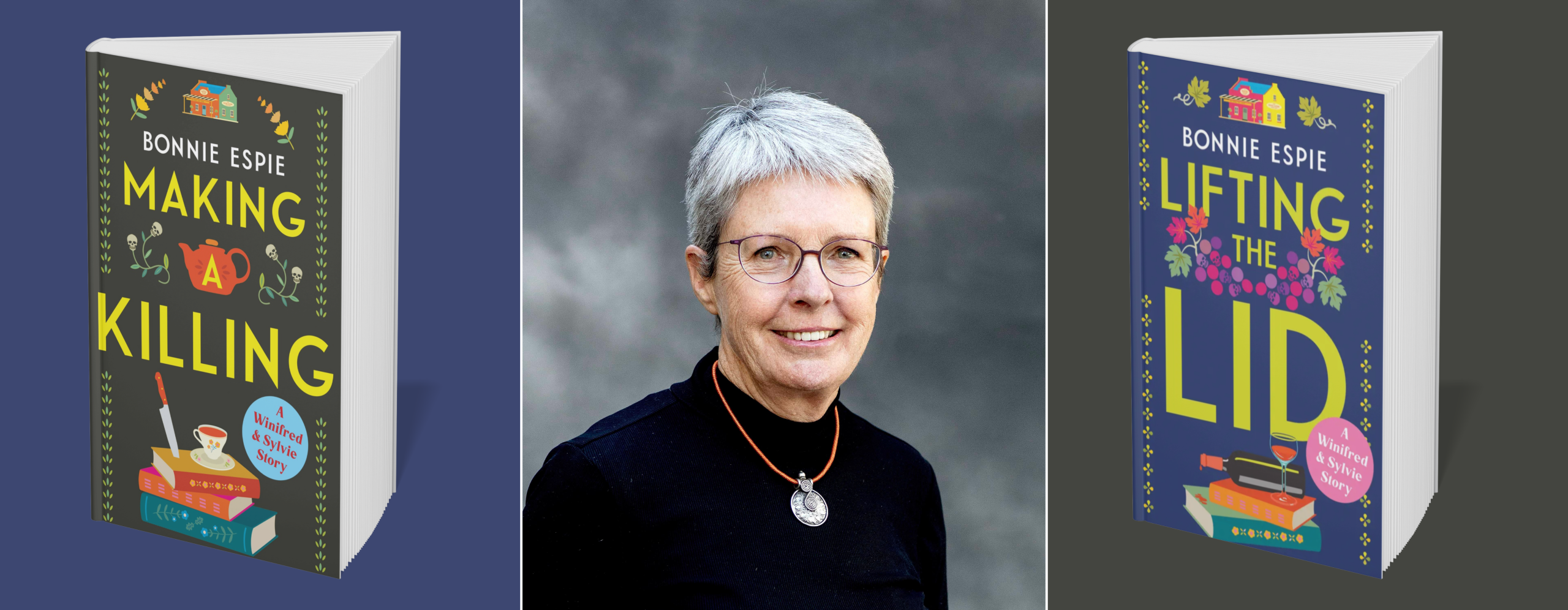 Finding Your Characters’ Voice
Bonnie’s first draft of the Winifred and Sylvie books was rejected by an early reader who felt it read as though it should be set in the UK. The fix was a full rewrite: relocating Sylvie’s character firmly in the Western Cape, giving her an Afrikaans-inflected voice and sense of humour. “That’s really, I think, when the magic started to happen,” Bonnie said – the distinctive comic tension between uptight Winifred and free-spirited Sylvie only emerged once the setting and language were authentically South African.
Tony’s Sonja began as a far more self-assured character, drawn from women he served alongside in the Australian Army. Over six books, she’s grown and regressed in equal measure – working through relationship troubles, post-traumatic stress, and a complicated relationship with her now-adult daughter. “Write about what you know,” he said, “is as much about your relationships and how your life has carried on as it is about what you’ve actually done.”
What Drives a Crime or Thriller Plot?
Tony was candid that he doesn’t plot in the traditional sense – he builds each book around what he called an “environmental issue”: abalone poaching, rhino trophy hunting, the trafficking of endangered species, or, in King of Beasts, a Russian soldier of fortune blackmailing Sonja while he hunts an endangered white lion. The crime, in other words, comes first, and the story is built to explore it. Real-world detail does the rest of the work – Tony described how the news itself handed him plot points as he wrote, from African recruits fighting in Ukraine to a real ship allegedly linked to arms shipments through Cape Town harbour.
Bonnie’s crime plot works from the opposite direction – she starts with character and situation (two unlikely business partners, a body on opening day) and lets the mystery and its consequences unfold from there. What both approaches share is a clear antagonist or threat driving events forward: for Tony, a trafficker or gangster; for Bonnie, a blackmailer whose note, cut from newspaper headlines, opens the whole series in earnest.
The Series Question: Continuity, Boredom, and Keeping It Fresh
Both writers admitted to losing track of details across a series. Bonnie described merging characters after early feedback that book one had too many, and bringing a minor character back from the brink after readers asked for him by name. Tony confessed to forgetting his own character’s tattoo and having to track down an old paperback copy of his first book to check the details – his one piece of practical advice: keep notes, even if you’re not a plotter.
On boredom, both agreed that the story itself is the best defence. Tony’s approach is to give each book a fresh or topical hook – abalone poaching, the war in Ukraine – so that the premise, not the character, drives each new instalment. Bonnie’s advice was similar: when she found herself avoiding a scene in her current work-in-progress, pushing through it (and letting herself have fun with it) reignited her enthusiasm for the whole book.
Should You Write a Series? Tony’s Advice for Book One
Perhaps the most practical piece of advice from the evening: don’t set out to write a series. Tony’s own books were only ever conceived one at a time – The Delta was written as a standalone, and it was years before he returned to write a second Sonja Kurtz book. His advice to any writer hoping their first novel might become a series: write it as though it will be the only one. Give it a proper ending. “Do not, absolutely do not,” leave readers on a cliffhanger with no guarantee of a second book – a publisher may never pick it up, and readers who feel cheated by an unresolved ending are unlikely to come back.
 Can You Use Current Events in Fiction?
Asked whether writing a series makes it risky to reference real-world events, Tony was unambiguous: yes, use them – just make sure the story can survive being read months or years after it’s written. He pointed to his own backlist, including a book set during Zimbabwe’s hyperinflation years, which continues to sell well despite being unmistakably a product of its time. The lesson: readers forgive dated detail if the story itself holds up.
Setting as Accomplice: Why Location Matters
For Tony, setting isn’t backdrop – it’s central to the genre, and central to why readers pick up his books in the first place. Many of his readers are drawn to the books because of where they’re set, not despite it, and getting a location detail wrong risks breaking trust with precisely those readers. He writes wherever he happens to be, drawing on the landscape, the people, and the language around him, and takes as much care getting a location detail right as he does any other element of craft.
Bonnie’s fictional village works almost like a co-conspirator in her crime plots – deliberately never named, but built entirely from the texture of her own life since relocating from Johannesburg. A small, closed community where everyone knows everyone is, as any crime writer will tell you, fertile ground for secrets: proof that you don’t need a real place, only a truthfully observed one.
The Long Road to Publication
Bonnie’s traditional publishing journey included a request to substantially rework her manuscript in just six weeks, and the long, often frustrating wait for a publisher’s decision that she described as “a lesson in patience.” Tony’s path has been more unconventional: traditionally published in South Africa and Australia through Pan Macmillan, but self-published internationally as an ebook through BookFunnel – a model that gives him a far greater share of each sale in markets where his readership, while smaller, is loyal. His advice to newly published authors: think carefully before signing away worldwide rights, since no literary agent would ever recommend giving them up.
Key Takeaways
- A strong crime or thriller plot often starts with the issue or threat at its centre – poaching, trafficking, a body, a blackmail note – rather than a fully worked-out plot.
- Real-world events and news stories can hand you plot points directly – pay attention to what’s already around you.
- Character voice sometimes only emerges after a full rewrite – don’t be afraid to start again if it isn’t landing.
- If you hope to write a series, write book one as a standalone with a proper ending, in case there’s never a book two.
- Keep some kind of record of your characters’ details – you will forget things, even about characters you’ve lived with for years.
- Setting can work almost like an accomplice in crime fiction – a well-observed location does real narrative work, not just decoration.
- There’s no single right way to publish – traditional, hybrid and self-publishing all have real trade-offs worth understanding.
Connect with Joanne and Merle
If you watch the webinar or read this guide, we’re confident you’ll be inspired to explore the memoirs that emerged from this coming together of courage and craft. Joanne Hichens’ Death and the After Parties and Merle Levin’s The World According to Merle are excellent examples of what happens when writers give themselves permission to tell their truth—and trust that their stories matter to others walking similar paths.
Joanne: Website, Short Sharp Stories, Instagram, Facebook and Facebook Author Page
Merle: Website, Instagram and Facebook
Ready to Make 2026 Your Best Writing Year?
Whether you’re just starting your writing journey or working on your next manuscript, All About Writing offers the support and guidance you need to achieve your goals.
Start every week with writerly inspiration by signing up for Richard’s Monday Writing Motivations.
Creative Writing Course – Our comprehensive 10-week live course (starting 22nd January) takes you from the fundamentals of storytelling through to crafting compelling narratives. You’ll learn essential skills in character development, plot structure, dialogue, and revision – all whilst receiving feedback on your work and connecting with fellow writers. Sign up here
One-to-One Mentoring – Working on a novel, memoir, or larger project? Our experienced mentors provide personalised guidance tailored to your specific manuscript and goals. Regular sessions help you maintain momentum, work through challenges, and develop your craft whilst bringing your project to completion. More information here
Writers’ Circle – Join our supportive monthly community where writers share work, receive constructive feedback, and benefit from the collective wisdom of the group. It’s the accountability and encouragement many writers need to keep showing up at the page. Join here
Writing Retreats – Immerse yourself in your writing whilst exploring inspiring locations. Join us in the tranquil Karoo at our Barrydale retreat, experience the charm of the English countryside in Stow-on-the-Wold, or find creative inspiration in the romantic canals and literary history of Venice. These retreats combine dedicated writing time, expert workshops, and the opportunity to connect with fellow writers in beautiful, distraction-free settings. There’s something transformative about stepping away from daily life to focus entirely on your craft.
Free Monthly Webinars – Don’t miss our monthly webinars where we explore essential writing topics, answer your questions, and build a community of committed writers.
Whatever stage you’re at in your writing journey, the key is to start now. Make those writing appointments, focus on one project, and surround yourself with a community that understands the challenges and celebrates the victories. Your story deserves to be written—and we’re here to help you do exactly that.
If you’re not sure exactly what’s right for you, why not test the waters with our free Power of Writing Course or email Trish to discuss your writing project and how we can best help you achieve your goals.
The post Writing a Thriller or Crime Series: Key Insights from Tony Park and Bonnie Espie appeared first on All About Writing Courses.
]]>The post From Journal to Published Memoir: Writing Tips from Sheryl and Sandy James and Indeed Books appeared first on All About Writing Courses.
]]>How does a memoir get written – from the first journal entry to the finished book on a shelf?
Sheryl and Sandy James, the mother and daughter behind the memoir Unbridling, joined Karina Szczurek and Kerry Hammerton of Indeed Books for a conversation about journaling, writing through difficult emotions, navigating the people in your story who are still living, and what it really takes to move from manuscript to published book.
It was a generous, collaborative discussion, and participants came away with both practical publishing advice and a renewed sense of permission to tell their own stories honestly. Below is the full replay, followed by a recap of the key takeaways – read on for tips you can start applying to your own writing today.
Watch the Replay: The Story behind Unbridling
How does a life become a book?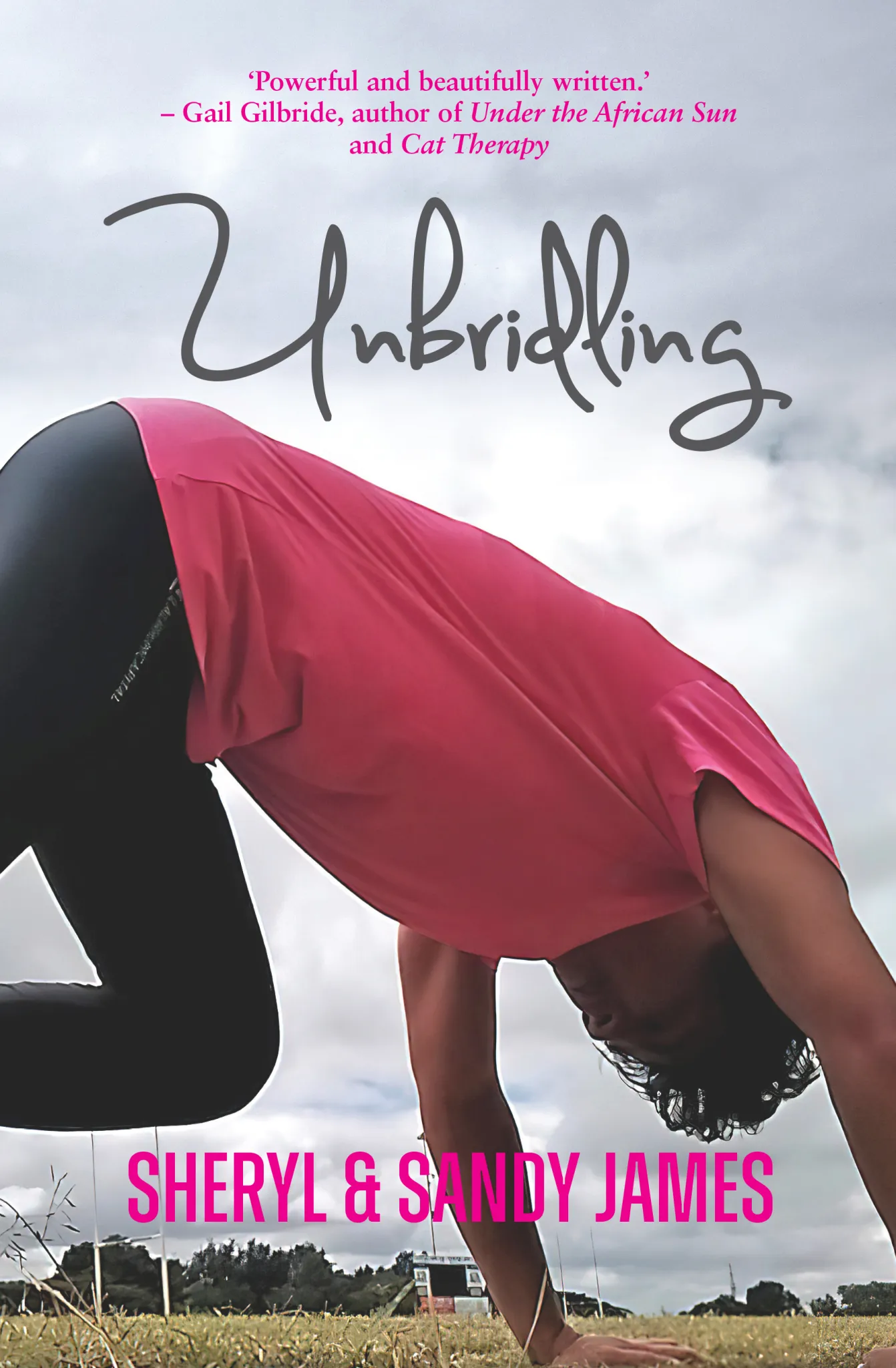
For memoir writers, the journey often starts long before the first chapter is drafted — sometimes in a notebook scribbled at night, sometimes simply carried, unwritten, in the heart. In a recent All About Writing webinar, we were joined by Sheryl and Sandy James, the mother-and-daughter authors of the memoir Unbridling, alongside Karina Szczurek and Kerry Hammerton of Indeed Books. Together they explored what it actually takes to turn lived experience into a published memoir — from the earliest journal entries, through the hardest passages to write, to the practical realities of editing, design and getting a book into bookshops.
It was a conversation full of warmth, honesty and genuinely useful advice. Here are the key insights.
Journaling: Writing It Down — or Writing It on Your Heart
Sandy and Sheryl approached journaling very differently, and both approaches fed into the finished book. Sheryl explained that most of her journaling wasn’t done on paper at all — it was, as she put it, written on her heart. When she did write things down, it was simply because putting words on paper changes how they land; it becomes a different kind of record.
Sandy’s journaling, by contrast, became increasingly meticulous over time. She had journaled casually for years — thoughts, prayers, things to get her through the day — but once Sheryl’s sporting journey began in earnest, something shifted. Sandy described a growing, almost urgent sense that this story was bigger than the two of them, and that the details needed to be retained: the crowds, the small moments, the texture of each day. That instinct to capture detail in the moment became invaluable later, when it came to shaping the book.
Writing Through Fear, Pain and Hard Emotions
Asked about the hardest things to put on the page, Sheryl reflected that there wasn’t one single moment — every story she shared carried both joy and cost, and the deeper emotions were often the most difficult to share with others, even if the writing itself came relatively easily. She described writing in the moment, as an expression of what she was going through, which made the process feel both hard and strangely natural.
For Sandy, the harder work came later, during the mentoring process that shaped the book. Much of what ended up in Unbridling — the emotional journeys between Sheryl and her brothers, the deeper context behind certain events — hadn’t been written down at all to begin with. Sandy spoke about the instinct, common to many parents, to project strength and not reveal the full extent of one’s fears. Sitting down to unpack those emotions properly, with guidance through the mentoring course, was confronting — but ultimately deeply therapeutic. As Sandy put it, the book wouldn’t speak as it does without those emotions being revealed.
Two Writers, One Story: Working Together (and Apart)
One of the most touching parts of the conversation explored how a mother and daughter wrote their shared story. Sheryl admitted she rarely re-read her own writing once it was down — she found it too hard, and simply handed it over to her mother to read. Sandy, in turn, described an organic process: Sheryl would wander into the office while Sandy worked, and Sandy would ask her to read a passage aloud, sparking comments and conversation. Sandy also took on the task of transcribing Sheryl’s handwritten pages onto the computer.
Through that process, both women discovered things about each other they hadn’t fully known before. Sheryl said she came to see her mother more fully as a person, not just as “mom”. Sandy spoke movingly about reading transcripts of Sheryl’s public speaking engagements — material that ended up woven into the book — and being repeatedly struck by how lucid and powerful a speaker her daughter had become, tracing all the way back to a childhood story about a school speech Sheryl refused to give because she had “nothing to say” about the assigned topic (and happily accepted a zero rather than fake interest).
Both also acknowledged that, while their memories of shared events weren’t wildly different, the emotional perspective of a parent versus a child telling the same story was genuinely distinct — and that talking it through together, again and again, was part of the process.
Inside Indeed Books: A Curated, Collaborative Approach to Publishing
Karina Szczurek, publisher at Karavan Press, explained how Indeed Books came about. Working with many authors over the years, she recognised that there were writers who were happy to self-publish but wanted guidance from people who understood the industry — without falling prey to the less reputable platforms that can take advantage of authors. Her aim was to create a platform that supports self-published authors while still curating carefully, so that the books are genuinely ready for bookshops and proper distribution.
Kerry Hammerton came on board after the two had worked closely together on various projects, and the partnership is built on a simple principle: both must love a story before they take it on. With Unbridling, Karina said, it was an absolute no-brainer — the inspiration of Sheryl and Sandy’s story, their voices, and their connection to community (including a particularly moving passage about the first time disabled children in their community were brought together for an event) made it an easy yes.
On what Indeed Books looks for more broadly, Kerry described it simply: stories people will genuinely enjoy reading, and writing that shows promise — even if a manuscript isn’t fully polished when it arrives, an experienced eye can recognise “that seed” worth developing. Their catalogue spans short stories, poetry, memoir and non-fiction, reflecting that it’s ultimately about the individual book rather than a fixed formula.
On the collaboration itself, Kerry explained that editing is done in-house, with one editor leading on a given book and the other providing support, depending on how much work a manuscript needs. For typesetting and design, Indeed Books works with a network of typesetters and designers, gets quotes, makes recommendations — but the author always makes the final decision. Kerry noted that the difference between a book that “looks self-published” and one that doesn’t often comes down to small, specific choices that aren’t secret, but simply require research most authors don’t have time to do themselves. That’s the expertise Indeed Books brings to the table.
Writing About People Who Are Still Alive — and Those Who Have Died
This question came up more than once during the session, including from Marianne, who couldn’t attend live and wrote in to ask how to navigate writing about people who are still part of your life. Sandy and Sheryl confirmed it was something they had to think through carefully — there were difficult episodes that didn’t make it into the book at all, and others that were generalised so as not to implicate anyone still living, while still communicating with the person concerned and ensuring they were comfortable with how they were represented.
Jo-Anne offered a guiding principle: the decision comes down to how integral an episode is to the story you’re telling. If it’s a tangent, it’s usually fine to leave it out. If it’s essential, “grit your teeth and put it down” — but there are ways to do that with care. Karina agreed, adding that one of the simplest techniques is to diffuse identifying details: if a story involves your one brother, for instance, it might become a story about “a cousin” instead — preserving the truth of what happened without exposing the real person. Karina also emphasised the importance of asking yourself why a particular story needs to be told, and, where the stakes are high, seeking advice from other writers, a mentor, a publisher — or, in some cases, a lawyer.
On writing about people who have died, Karina noted — with a wry acknowledgement of how it sounds — that the dead have no right to privacy, and you can’t defame someone who has passed away, which removes some of the legal complexity. Even so, both panellists agreed the same underlying questions still apply: how important is this to the story, and can it be told with integrity and care for the people who remain? Often, speaking to surviving relatives directly — explaining why a story matters and how someone will be portrayed — opens a way forward.
From Manuscript to Published Book: Practical Advice
Asked what they most wished writers understood about the road to publication, Kerry’s answer started with the writing itself: find a writing community, and if possible a mentor — because the quality of the writing, alongside the story, is what ultimately makes a book work.
Karina’s tip was refreshingly concrete: spend a few hours in a bookshop or library examining physical copies of books similar to the one you’re writing — whether memoir, poetry or essays. It’s a quick way to understand what your book needs to look like, and a good entry point for finding agents and publishers who work in your genre. She also shared a favourite trick: read the copyright and acknowledgements pages of books you admire. If a particular editor, proofreader or designer’s name keeps appearing in books you love, that’s exactly who you should be reaching out to.
Both authors also discussed how long the journey took: from the point of assembling chapters to the finished, printed book was around four years — which Karina confirmed is fairly standard for a memoir of this kind.
From the Chat
Attendees joined from across South Africa and beyond and the chat was full of warm appreciation and thoughtful questions. One participant, Frankie, shared that All About Writing had mentored her through her own book over five years, calling it “an incredible experience” she couldn’t have done without the team’s support. Others asked where to buy Unbridling (any good bookshop, particularly Wordsworths and Exclusive Books), how Indeed Books handles previously self-published manuscripts seeking a wider audience, and where to find publishers for an Afrikaans memoir — with Karina pointing to imprints under the Jonathan Ball/NB Publishers and Penguin Random House/LAPA groups as a starting point, alongside the advice to study comparable books and follow submission guidelines carefully.
Key Takeaways
- Journaling doesn’t have to be formal or even written down — what matters is capturing detail and feeling while they’re fresh, in whatever form works for you
- The hardest passages to write are often the most emotionally honest ones — and writing through them can be genuinely therapeutic
- If you’re co-writing a shared story, reading each other’s drafts (even out loud) can surface things you never knew about one another
- When writing about people who are still living, ask whether a detail is essential to the story — and consider diffusing identifying details if it isn’t
- Spend time physically examining books like the one you’re writing, and study copyright and acknowledgements pages to find collaborators
- A meaningful memoir can take years from first draft to finished book — that timeline is normal, not a sign you’re doing it wrong
Where to find Unbridling
Sheryl and Sandy’s memoir, Unbridling, is available from any good bookshop, and particularly Wordsworth Books and Exclusive Books.
 Want help getting your own book out to a wider audience?
If you’re curious about working with Indeed Books, or have questions about their submission process, Karina and Kerry are happy to be contacted via indeed-books.com.
If this conversation has stirred something in you — whether it’s a memoir you’ve been carrying for years, or simply the sense that your story matters and deserves to be told with care — we’d love to help you take the next step.
All About Writing offers courses, one-to-one mentoring, monthly writers’ circles and retreats designed to support exactly this kind of writing journey. Our free introductory Power of Writing Course is a good place to start, followed by our flagship Creative Writing Course.
Skills from the AAW Community: Bonnie Espie and Sally Andrew
We asked two recently published writers from the All About Writing community to share the skills they rely on most. Both have a note of hard-won honesty in their answers.
Bonnie Espie is the author of Lifting the Lid (Kwela, May 2026), a darkly comic crime novel set in a South African village — think sharp wit, layered characters, and secrets that refuse to stay buried. Bonnie offered her tips with characteristic candour: these are skills she knows matter because they’re the ones she has to keep an eye on herself.
- Be open to feedback. It often points to the invisible gaps — places where the writer has leapt ahead, but the reader hasn’t been given the steps to follow.
- Slow down. Don’t rush the writing process — take the time to fully develop scenes, ideas, and details so the reader can see the complete picture.
- Focus on specifics. Detail brings writing to life — don’t settle for ‘she lit a cigarette’; tell us which cigarette, how she smoked it, and what that reveals about her.
Buy Lifting the Lid here
Find out more through Bonnie’s website and social media
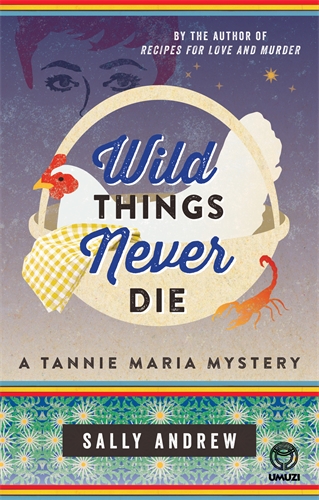 Sally Andrew is the author ofthe award-winning Tannie Maria mystery novels, the latest of which is Wild Things Never Die. Sally framed her three skills around a single idea: duality.
- Plan the structure well, and then allow flow. Strong scaffolding makes space for spontaneous, magical interiors.
- Separate the ‘hats’ of playful creator and discerning editor — don’t wear them both at the same time.
- Do thorough background research, but then resist the urge to over-explain something just because you spent hours learning about it.
Buy Wild Things Never Die here
Find out more through Sally’s website or Instagram
What Participants Took Away
The chat was active throughout, with writers from across South Africa, Namibia, the UK and the US sharing questions and reflections. A few highlights: discussion of how to handle multiple narrators and whose perspective carries the most weight; a debate about fantasy and detail (Richard’s point: the more extravagant the fantasy, the more important it is to get the small, ordinary details right); and the question of scene structure versus organic writing — with Jo-Anne’s gentle caution that scenes written in isolation are almost always going to require significant revision once the full arc becomes clear.
Want to go further?
- Join our ten-week Creative Writing Course with Jo-Anne Richards and Richard Beynon — starting Thursday 21 May. Sign up or find more information here.
- Explore writing retreats in Barrydale, Stow-on-the-Wold, and Venice
- Browse our full range of courses and one-to-one mentoring at www.allaboutwritingcourses.com
Connect with Joanne and Merle
If you watch the webinar or read this guide, we’re confident you’ll be inspired to explore the memoirs that emerged from this coming together of courage and craft. Joanne Hichens’ Death and the After Parties and Merle Levin’s The World According to Merle are excellent examples of what happens when writers give themselves permission to tell their truth—and trust that their stories matter to others walking similar paths.
Joanne: Website, Short Sharp Stories, Instagram, Facebook and Facebook Author Page
Merle: Website, Instagram and Facebook
Ready to Make 2026 Your Best Writing Year?
Whether you’re just starting your writing journey or working on your next manuscript, All About Writing offers the support and guidance you need to achieve your goals.
Start every week with writerly inspiration by signing up for Richard’s Monday Writing Motivations.
Creative Writing Course – Our comprehensive 10-week live course (starting 22nd January) takes you from the fundamentals of storytelling through to crafting compelling narratives. You’ll learn essential skills in character development, plot structure, dialogue, and revision – all whilst receiving feedback on your work and connecting with fellow writers. Sign up here
One-to-One Mentoring – Working on a novel, memoir, or larger project? Our experienced mentors provide personalised guidance tailored to your specific manuscript and goals. Regular sessions help you maintain momentum, work through challenges, and develop your craft whilst bringing your project to completion. More information here
Writers’ Circle – Join our supportive monthly community where writers share work, receive constructive feedback, and benefit from the collective wisdom of the group. It’s the accountability and encouragement many writers need to keep showing up at the page. Join here
Writing Retreats – Immerse yourself in your writing whilst exploring inspiring locations. Join us in the tranquil Karoo at our Barrydale retreat, experience the charm of the English countryside in Stow-on-the-Wold, or find creative inspiration in the romantic canals and literary history of Venice. These retreats combine dedicated writing time, expert workshops, and the opportunity to connect with fellow writers in beautiful, distraction-free settings. There’s something transformative about stepping away from daily life to focus entirely on your craft.
Free Monthly Webinars – Don’t miss our monthly webinars where we explore essential writing topics, answer your questions, and build a community of committed writers.
Whatever stage you’re at in your writing journey, the key is to start now. Make those writing appointments, focus on one project, and surround yourself with a community that understands the challenges and celebrates the victories. Your story deserves to be written—and we’re here to help you do exactly that.
If you’re not sure exactly what’s right for you, why not test the waters with our free Power of Writing Course or email Trish to discuss your writing project and how we can best help you achieve your goals.
The post From Journal to Published Memoir: Writing Tips from Sheryl and Sandy James and Indeed Books appeared first on All About Writing Courses.
]]>The post The Creative Writing Skills That Make the Most Difference: Key Insights from Jo-Anne Richards and Richard Beynon appeared first on All About Writing Courses.
]]>Jo-Anne Richards and Richard Beynon go head to head — in the most collegial way possible — to share the creative writing skills they believe make the biggest difference.
Without consulting each other beforehand, each chose their top three skills, covering everything from how to build a scene with dramatic purpose, to why point of view changes not just the feel but the very substance of your story, to the particular power of specific detail. The conversation was practical, honest, and full of the kind of insight that only comes from writers who have spent decades both practising and teaching the craft. Watch the full replay below.
Watch the Replay: The Creative Writing Skills That Make the Most Difference
Six Skills That Will Change How You Write: Essential Insights from Our Creative Writing Webinar
What are the craft skills that really move the needle? Not the ones that fill lists, but the ones that — once you’ve truly grasped them — change the way you read and the way you write?
In this wide-ranging webinar, Jo-Anne Richards and Richard Beynon each chose their three most important creative writing skills independently, without comparing notes. The result was a session of both consensus and productive divergence: some skills overlapped (detail, character, stakes), while others revealed the different emphases two experienced writers can bring to the same craft. Between them, they covered six essential areas. Here are the key insights.
-
Scene Construction: Know Your Dramatic Imperative
Richard’s first skill was the scene — and his argument was a strong one: master the scene, and you’ve mastered everything you need to write a story of any length.
Before writing any scene, Richard works through five questions. First: what is the dramatic imperative — what job does this scene need to do? This might be as small as a character learning a single fact, or as significant as falling in love. But every scene must have a reason for existing.
Second: how will that imperative be achieved? The same piece of information, Richard pointed out, can be delivered in a dozen ways — some flat and functional, some electric. Given the choice, always go for the electric.
Third: who else is present, and what role might they play?
Fourth: where does the scene begin and end? Starting too early delays the action; ending too late loses momentum.
And fifth: what pace does this scene need, given what came before? A helter-skelter action sequence might call for a quieter, more contemplative scene to follow.
For examples of scenes finely crafted and shaped, Richard recommended Elmore Leonard — and specifically Get Shorty or Maximum Bob as good starting points.
-
Character Development: Inhabit, Don’t Describe
Jo-Anne’s first skill was character — and her central argument was that readers don’t care about events. They care about people.
To illustrate, she offered a deceptively simple contrast: tell readers that a man lost everything in a fire, and they’ll move on. But show them a man who makes his wife tea before she wakes each morning, who keeps a photo of his dog in his wallet, who can never throw away a broken thing — and then put that man in the fire. Now they’ll be devastated.
The reason so many first drafts fail at the level of character, Jo-Anne argued, is that writers begin before they truly know their characters. Describing traits and listing qualities is not the same as inhabiting a character — knowing their history, their private fears, their contradictions, the things they’d never admit to themselves. Most of that knowledge will never appear on the page. But readers will feel it, even if they can’t say why.
Her example: Elena Ferrante and the Neapolitan novels. Ferrante knew Elena and Lila from the inside out before she wrote a word. The result is characters whose motivations — including the ones they can’t explain to themselves — feel bone-deep real.
-
Point of View: The Limits You Set Are Your Greatest Asset
Jo-Anne’s second skill was point of view — one of her favourite topics, as she freely admitted, and one she described as changing not just the feel of a story but its entire substance. Choose a different point of view, she said, and you’re writing a different book.
Beyond the grammatical choice of first, second or third person lies a deeper question: how close do you allow the reader to get to your characters’ inner lives, and whose inner life do they enter at all? Using Donna Tartt’s The Secret History as an example, Jo-Anne traced how the first-person narrator — reconstructing events he was partly responsible for — creates something claustrophobic, intimate, and morally uncomfortable. An omniscient third-person narrator would have produced a cooler, more distant novel.
She also made the point about restricted narration and suspense: when your narrator doesn’t know something, neither does your reader. Tana French’s Dublin Murder Squad novels exploit this brilliantly — the investigating detective always narrates, which means the reader shares the same blind spots, wrong assumptions, and emotional investments. The revelations, when they come, hit harder.
Her caution about omniscient narration: it’s the hardest mode to use well. The temptation to explain — because you can — is almost irresistible. The moment you’re explaining what characters would simply live, you’ve lost the intimacy that fiction depends on.
-
Immersion: Detail, Psychological Truth, and Stakes
Richard’s second contribution was really a desired effect rather than a single skill — but one that could be broken into three achievable elements: immersion.
The first is honest, accurate, earned detail. Even in entirely made-up worlds, the details must feel real — and they must be details that the narrator or protagonist has noticed because of who they are, not details the author inserted because they’re vivid. The detail has to be earned through point of view.
The second is psychological truth: the sense that a character’s choices are inevitable, given who they are and what they face. Characters can make unexpected or reckless choices — but those choices must have been set up in advance. Unmotivated behaviour breaks the spell. Richard’s example of a character who doesn’t work: Jack Reacher. Too good to believe. The best heroes are flawed — Frodo, Elizabeth Bennet, Thomas Cromwell — and the flaw must be the thing that drives the plot forward, not a decoration added for texture.
The third element is stakes that the reader can feel. An imminent apocalypse can leave a reader cold if the characters aren’t real to them. A man trying to clear his name before his friends lose faith in him can be gripping, because the stakes — reputation, relationship, self-respect — are clear and relatable. The best plots give you both the plot stakes and the internal psychological ones.
-
Specific Detail: The Small Carries the Large
Jo-Anne’s third skill returned to detail — the area where she and Richard overlapped most significantly, though she extended it in a different direction.
Specific detail, she argued, does more than describe a world: it creates one. And it does something else: it reveals character. What a person notices tells us who that person is. James Baldwin, she observed, doesn’t give us generic hands in Giovanni’s Room — he gives us the very particular, working, damaged hands of a man who has lived physically in the world. One detail that unlocks the whole person.
Her most striking example came from George Orwell, witnessing an execution in Burma. He notices the condemned man sidestep a puddle moments before his death — the body still caring about wet feet. That small, instinctive act, she said, unlocks the full tragedy of capital punishment more powerfully than any direct statement could. The small carries the large better than the large can carry itself.
The principle: show the smoke, let the reader infer the fire. The reader meets your details with their own emotion and imagination — and that collaboration between writer and reader is where the real magic lives.
-
Dialogue: Subtext, Economy, and the Rhythm of Speech
Richard’s third skill was dialogue — something he has spent much of his career thinking about through decades of writing for film and television.
Good dialogue, he argued, has three distinguishing qualities. First: it avoids stating the obvious. Much of the meaning of human communication happens between the lines — in gesture, in what isn’t said. Subtext is not a refinement; for many writers, it is where the story actually lives.
Second: great dialogue is effervescent. It surprises, it amuses, it crackles. Richard’s observation: we spend enormous energy in real life trying to make each other laugh, and then forget to do this when we write characters on a page. Listen to a crowded restaurant, he suggested — the tables where people are laughing are the tables you want to be at. The same principle applies to the page.
Third: good dialogue is economical. Long speeches stagnate. If a thought can’t be expressed in a couple of sentences, consider whether it needs to be expressed at all. And almost always, splitting a subject between two characters — who might hold slightly different positions — generates more energy than a single character speaking at length.
On the question of silences, interruptions, and the ums and ahs of real speech: Jo-Anne spoke from experience. When she listened closely to real speech for her first novel and tried to replicate it faithfully, the result was boring, circular, and stodgy. The rhythm of real conversation is worth capturing; the circularity is not.
Skills from the AAW Community: Bonnie Espie and Sally Andrew
We asked two recently published writers from the All About Writing community to share the skills they rely on most. Both have a note of hard-won honesty in their answers.
Bonnie Espie is the author of Lifting the Lid (Kwela, May 2026), a darkly comic crime novel set in a South African village — think sharp wit, layered characters, and secrets that refuse to stay buried. Bonnie offered her tips with characteristic candour: these are skills she knows matter because they’re the ones she has to keep an eye on herself.
- Be open to feedback. It often points to the invisible gaps — places where the writer has leapt ahead, but the reader hasn’t been given the steps to follow.
- Slow down. Don’t rush the writing process — take the time to fully develop scenes, ideas, and details so the reader can see the complete picture.
- Focus on specifics. Detail brings writing to life — don’t settle for ‘she lit a cigarette’; tell us which cigarette, how she smoked it, and what that reveals about her.
Buy Lifting the Lid here
Find out more through Bonnie’s website and social media
Sally Andrew is the author ofthe award-winning Tannie Maria mystery novels, the latest of which is Wild Things Never Die. Sally framed her three skills around a single idea: duality.
- Plan the structure well, and then allow flow. Strong scaffolding makes space for spontaneous, magical interiors.
- Separate the ‘hats’ of playful creator and discerning editor — don’t wear them both at the same time.
- Do thorough background research, but then resist the urge to over-explain something just because you spent hours learning about it.
Buy Wild Things Never Die here
Find out more through Sally’s website or Instagram
What Participants Took Away
The chat was active throughout, with writers from across South Africa, Namibia, the UK and the US sharing questions and reflections. A few highlights: discussion of how to handle multiple narrators and whose perspective carries the most weight; a debate about fantasy and detail (Richard’s point: the more extravagant the fantasy, the more important it is to get the small, ordinary details right); and the question of scene structure versus organic writing — with Jo-Anne’s gentle caution that scenes written in isolation are almost always going to require significant revision once the full arc becomes clear.
Want to go further?
- Join our ten-week Creative Writing Course with Jo-Anne Richards and Richard Beynon — starting Thursday 21 May. Sign up or find more information here.
- Explore writing retreats in Barrydale, Stow-on-the-Wold, and Venice
- Browse our full range of courses and one-to-one mentoring at www.allaboutwritingcourses.com
Connect with Joanne and Merle
If you watch the webinar or read this guide, we’re confident you’ll be inspired to explore the memoirs that emerged from this coming together of courage and craft. Joanne Hichens’ Death and the After Parties and Merle Levin’s The World According to Merle are excellent examples of what happens when writers give themselves permission to tell their truth—and trust that their stories matter to others walking similar paths.
Joanne: Website, Short Sharp Stories, Instagram, Facebook and Facebook Author Page
Merle: Website, Instagram and Facebook
Ready to Make 2026 Your Best Writing Year?
Whether you’re just starting your writing journey or working on your next manuscript, All About Writing offers the support and guidance you need to achieve your goals.
Start every week with writerly inspiration by signing up for Richard’s Monday Writing Motivations.
Creative Writing Course – Our comprehensive 10-week live course (starting 22nd January) takes you from the fundamentals of storytelling through to crafting compelling narratives. You’ll learn essential skills in character development, plot structure, dialogue, and revision – all whilst receiving feedback on your work and connecting with fellow writers. Sign up here
One-to-One Mentoring – Working on a novel, memoir, or larger project? Our experienced mentors provide personalised guidance tailored to your specific manuscript and goals. Regular sessions help you maintain momentum, work through challenges, and develop your craft whilst bringing your project to completion. More information here
Writers’ Circle – Join our supportive monthly community where writers share work, receive constructive feedback, and benefit from the collective wisdom of the group. It’s the accountability and encouragement many writers need to keep showing up at the page. Join here
Writing Retreats – Immerse yourself in your writing whilst exploring inspiring locations. Join us in the tranquil Karoo at our Barrydale retreat, experience the charm of the English countryside in Stow-on-the-Wold, or find creative inspiration in the romantic canals and literary history of Venice. These retreats combine dedicated writing time, expert workshops, and the opportunity to connect with fellow writers in beautiful, distraction-free settings. There’s something transformative about stepping away from daily life to focus entirely on your craft.
Free Monthly Webinars – Don’t miss our monthly webinars where we explore essential writing topics, answer your questions, and build a community of committed writers.
Whatever stage you’re at in your writing journey, the key is to start now. Make those writing appointments, focus on one project, and surround yourself with a community that understands the challenges and celebrates the victories. Your story deserves to be written—and we’re here to help you do exactly that.
If you’re not sure exactly what’s right for you, why not test the waters with our free Power of Writing Course or email Trish to discuss your writing project and how we can best help you achieve your goals.
The post The Creative Writing Skills That Make the Most Difference: Key Insights from Jo-Anne Richards and Richard Beynon appeared first on All About Writing Courses.
]]>The post You Can Finish Your Manuscript: Lessons from Two Writers Who Did appeared first on All About Writing Courses.
]]>What does it actually take to finish a manuscript? Not to start one — that part, many writers manage. But to keep going through the distractions and the self-doubt, to find your voice, to push through the middle, and to arrive at the point where you can say: it’s done.
Jo-Anne sat down with two writers who know exactly what that journey looks like. Rick Melvill is a creative director and scriptwriter who attended the Barrydale memoir workshop and went on to complete an illustrated memoir about his experience of being diagnosed with stage 4 cancer. Tim Chevallier is a filmmaker who has spent decades travelling the world and has now brought that life to the page in a memoir that spans continents and decades. Both attended the Barrydale Memoir Weekend. Both finished.
Here is what they shared.
Watch: You Can Finish Your Manuscript
Finish What You Started: Essential Insights from Our Manuscript Writing Webinar
How They Began
Neither Rick nor Tim arrived at their manuscripts as experienced writers. Rick came from corporate scriptwriting — he describes himself as someone who never regarded himself as “a proper writer” — while Tim, whose background is entirely visual, worried that he was “more images” than words.
For both, the Barrydale memoir workshop was the catalyst. Tim describes arriving with the desire to write but feeling intimidated, and leaving with the momentum to begin. Rick found that the workshop gave him “things to hook onto” — and crucially, it forced him to start.
Rick’s motivation was also deeply personal. Diagnosed with stage 4 melanoma and told the prognosis was terminal, he found himself overwhelmed by information and decided to respond by writing — not a heavy, clinical account, but something light-hearted and illustrated, the kind of book he wished had existed when he was first diagnosed. That sense of mission carried him through.
Tim began chronologically, then a trusted friend suggested a different approach: start not at the beginning, but at the most dramatic chapter — leaving home at seventeen and a half to go alone to a different continent. That structural shift, Tim says, was the key to the whole book.
What Kept Them Going
Both writers were honest about the challenges of sustaining momentum when writing is not your livelihood and life has other demands.
Rick’s answer was the 5am club. He writes from five to seven in the morning, before the phone rings and the inbox fills. He aims for 700 words per session — rarely reaching a thousand — and, crucially, he doesn’t go back to edit what he wrote the day before. He just keeps moving forward. He describes sitting down at his desk in the early morning silence as “doing the most important thing I can do.”
Tim’s key to keeping going was accountability. When he stalled — and he did stall, repeatedly, over the four years it took to complete the manuscript — it was friends asking to read chapter by chapter who pulled him back. “Once I’d finished a chapter, ship it off, get some feedback,” he says. “They really helped me a lot.”
Rick also addressed a question he has heard many times at Barrydale workshops: “Who’s going to care?” His answer: he’s writing his memoir for his children. Every day’s urgent pressures, he points out, are not what your family will remember. The book is.
Finding Your Voice, Structure, and Material
Rick’s approach to structure is practical: bullet points. As a scriptwriter, he learned early that overwriting and losing focus are related problems, and that knowing your key points — your chapter headings — gives you somewhere to anchor. He keeps a list of subject bullet points and writes towards them, one at a time. “If I’ve got those chapter headings,” he says, “I find that so helpful — I don’t get lost, I don’t go too long.” An evocative chapter title, he adds, also keeps you interested in getting there.
Tim began chronologically, but on a friend’s advice restructured around a dramatic opening chapter. The lesson: it’s worth questioning your structure early, and being willing to change it. Notes kept over a lifetime also proved invaluable — for Tim, years of travel journals meant he could return to specific moments, places, and conversations with real detail.
Jo-Anne noted something worth underlining: your voice is already in your writing. When she read Rick’s manuscript, she could hear him in it — his personality, his way of speaking. Voice isn’t something you construct; it’s something you uncover by writing.
The Memoir Question: What’s True, What’s Yours, and What You Can Say
The Q&A produced some of the session’s most practically useful exchanges. On the question of accuracy in memoir — whether you have to be certain that dialogue and remembered detail are precisely correct — Jo-Anne was clear: a memoir is written in scenes, which means recreating dialogue and detail to the best of your memory and your truth. Quotation marks in memoir indicate that something is dialogue, not that it is a verbatim transcript. Readers know this. You are writing your version of events as faithfully as you can.
On fact-checking: historical facts you reference — dates, events — do need to be verified. Your memory of a conversation or a moment does not need to be verified in the same way, but the version you give should be honest.
On sensitive material and real names: both Rick and Tim had navigated this. Rick used a pseudonym for the oncologist he had negative experiences with, but named those he respects. Jo-Anne’s advice on worrying about causing offence: don’t let it sit on your shoulder while you’re writing. Write the story first. Then, and only then, decide what you are and aren’t prepared to publish.
On defamation: an attorney in the audience confirmed what Jo-Anne had always understood — a deceased person cannot be defamed, and their heirs cannot sue.
On Self-Publishing
Rick chose self-publishing from the outset, in large part because he had a strong visual sense of what the book should look like — full colour, illustrated, a coffee-table quality hardcover — and knew that a traditional publisher was unlikely to accommodate that. He worked with a designer who understood his vision.
His path took an unexpected turn. He was about to publish through a traditional publisher in London but ultimately decided to go with a two-track self-publishing approach: a print-on-demand version via Amazon for global reach, and a quality hardcover edition for the South African market. His lesson: Amazon is a distribution mechanism, not a marketing strategy. The promotional work is still yours to do.
The Barrydale Community: Writing Together
Perhaps the most touching thread running through the conversation was Rick and Tim’s description of what the Barrydale workshop meant to them — not just as a writing course, but as a community.
Rick described arriving in a room of strangers and leaving, a day and a half later, feeling deeply bonded with the group. The memoir process — writing exercises, sharing your work, receiving and giving feedback — creates an intimacy that surprises people. Jo-Anne agreed: participants regularly form friendships that last well beyond a workshop, retreat or course.
Tim put it simply: “If people can afford to go there and have time, it’s such a wonderful way to meet people — to learn about structure, to learn about the basics of writing memoirs and short stories. I got back ready to go.”
Their Top Tips
Rick’s: make a bullet-point plan of your chapter headings before you start writing in earnest. It gives you a destination for each session and stops you getting lost in tangents. “If you can see a chapter heading — an evocative little title — it keeps you interested. You look at that title and think: I really want to write this.”
Tim’s: find your accountability partners early. Send chapters to people you trust, ask them to hold you to it, and use their responses to fuel your next session. And go to Barrydale.
Both would add: start. Keep going. Finish.
From the Chat: Voices from the Room
The discussion in the chat reflected just how broadly these questions resonate. Lynn shared that she is writing a memoir to and with her late sister, who passed from cancer in 2022 — a project she has titled Dialogue with the Dead. Kirsten let everyone know that her own first book, begun at one of our workshops, took longer than she expected — but it got done, and she is now working on her third. Her message: muddle through, be persistent, and you can eventually finish it.
The question of writing through guilt came up too. Adrienne described feeling that writing — because it isn’t her day job — is somehow frivolous, a waste of time. It’s a feeling many writers recognise. The chat pushed back warmly: you are not being frivolous; you are feeding your soul.
A writer from the Netherlands pointed to something Gabeba Baderoon has said: that a writer has a responsibility to reveal certain things, even intimate or hidden things, even if family will remonstrate — if as a writer you judge those revelations to be relevant and important to a wider readership. It’s a perspective worth sitting with.
And Channon offered a practical note for those whose real-life material is making them nervous: using your own life story for fiction gives you room to add, change, and disguise — enough additions, and no one can say it is entirely autobiographical.
Want to go further?
Escape to the Karoo for a transformative writing experience
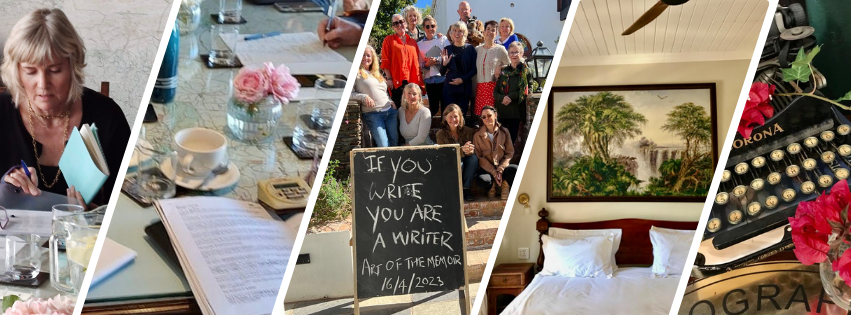
If you’re ready to take the next step, join us for our Memoir Writing Weekend at the Karoo Art Hotel in Barrydale (8–10 May) where Joanne Hichens and Jo-Anne will guide you through the skills and structure of memoir writing. For dedicated writing time with daily one-on-one sessions, stay on for the Barrydale Writing Retreat (10–15 May).
Find out more here, or download the brochure here.
Connect with Joanne and Merle
If you watch the webinar or read this guide, we’re confident you’ll be inspired to explore the memoirs that emerged from this coming together of courage and craft. Joanne Hichens’ Death and the After Parties and Merle Levin’s The World According to Merle are excellent examples of what happens when writers give themselves permission to tell their truth—and trust that their stories matter to others walking similar paths.
Joanne: Website, Short Sharp Stories, Instagram, Facebook and Facebook Author Page
Merle: Website, Instagram and Facebook
Ready to Make 2026 Your Best Writing Year?
Whether you’re just starting your writing journey or working on your next manuscript, All About Writing offers the support and guidance you need to achieve your goals.
Start every week with writerly inspiration by signing up for Richard’s Monday Writing Motivations.
Creative Writing Course – Our comprehensive 10-week live course (starting 22nd January) takes you from the fundamentals of storytelling through to crafting compelling narratives. You’ll learn essential skills in character development, plot structure, dialogue, and revision – all whilst receiving feedback on your work and connecting with fellow writers. Sign up here
One-to-One Mentoring – Working on a novel, memoir, or larger project? Our experienced mentors provide personalised guidance tailored to your specific manuscript and goals. Regular sessions help you maintain momentum, work through challenges, and develop your craft whilst bringing your project to completion. More information here
Writers’ Circle – Join our supportive monthly community where writers share work, receive constructive feedback, and benefit from the collective wisdom of the group. It’s the accountability and encouragement many writers need to keep showing up at the page. Join here
Writing Retreats – Immerse yourself in your writing whilst exploring inspiring locations. Join us in the tranquil Karoo at our Barrydale retreat, experience the charm of the English countryside in Stow-on-the-Wold, or find creative inspiration in the romantic canals and literary history of Venice. These retreats combine dedicated writing time, expert workshops, and the opportunity to connect with fellow writers in beautiful, distraction-free settings. There’s something transformative about stepping away from daily life to focus entirely on your craft.
Free Monthly Webinars – Don’t miss our monthly webinars where we explore essential writing topics, answer your questions, and build a community of committed writers.
Whatever stage you’re at in your writing journey, the key is to start now. Make those writing appointments, focus on one project, and surround yourself with a community that understands the challenges and celebrates the victories. Your story deserves to be written—and we’re here to help you do exactly that.
If you’re not sure exactly what’s right for you, why not test the waters with our free Power of Writing Course or email Trish to discuss your writing project and how we can best help you achieve your goals.
The post You Can Finish Your Manuscript: Lessons from Two Writers Who Did appeared first on All About Writing Courses.
]]>The post How to Write a Short Story: Key Insights from Joanne Hichens, David Mann and Kamva Majo appeared first on All About Writing Courses.
]]>All About Writing recently hosted one of our favourite kinds of evenings — an honest, illuminating conversation about the short story, with writers at very different points in their journey.
As Richard Beynon noted in his opening, Joanne Hichens’ work “promoting the short story and encouraging writers to write them has made and continues to make a real considerable impact” — and this evening was a perfect example of that. Joanne was joined by David Mann, multiple award-winning short story writer and art critic, and Kamva Majo, an emerging voice who is already making her mark on the South African literary scene.
Together, they explored what draws writers to the short form, how story ideas are found and developed, the difference between art and craft, and how to navigate rejection, trauma, and the realities of publishing. The conversation was warm, practical, and full of the kind of insight you only get when writers speak candidly about their own experience. Watch the full replay and read the summary below.
Watch the Full Conversation
Read the Stories: Books to Add to Your Collection
One of the best ways to learn how to write a short story is to read great ones. If this webinar has fired you up, here are five books we’d encourage you to get your hands on — each one a testament to the power of the short form.
Once Removed by David Mann
David’s debut collection features 13 subtly interlinked short stories set in the South African art world. Precise, intelligent, and quietly devastating, Once Removed won him the Thomas Pringle Award and announced him as one of the most distinctive voices in South African short fiction. Buy directly from Botsotso.
The Short.Sharp.Stories Anthologies: Power, One Life, and Fluid
Joanne Hichens is the driving force behind the Short.Sharp.Stories anthologies which have been championing South African short fiction for years. Power, described as “electrifying” by Don Makatile, includes Kamva Majo’s debut published story. One Life has been called “an astonishing showcase of the breadth and depth of the short story” by Arja Salafranca. And Fluid: The Freedom to Be, drew praise for its range and originality.
There’s a special offer running now: pick up any 2 anthologies for R450, or all 3 for R600 — including delivery. To order, contact Joanne directly at shortsharpstoriesPOWER@gmail.com.
When Water Wants To — the DALRO Can Themba Merit Award short story collection
Kamva also features in this anthology published by Wits University Press. Her story A Mortician’s Instinct is one of ten in a collection that ranges, as the publishers describe it, from the deeply personal to the wildly allegorical, playing with genre conventions and inhabiting a multitude of perspectives and unruly voices. It’s a remarkable showcase of emerging South African short fiction, and a brilliant example of exactly what Kamva spoke about in the webinar: writing from obsession, from fear, from the things that press at you until you have no choice but to put them on the page. Available from Wits University Press and good bookstores.
Reading widely in the short form isn’t just pleasurable — it’s one of the most effective short story writing tips we know. As Joanne, David and Kamva all made clear in the webinar, the writers who read are the writers who grow.
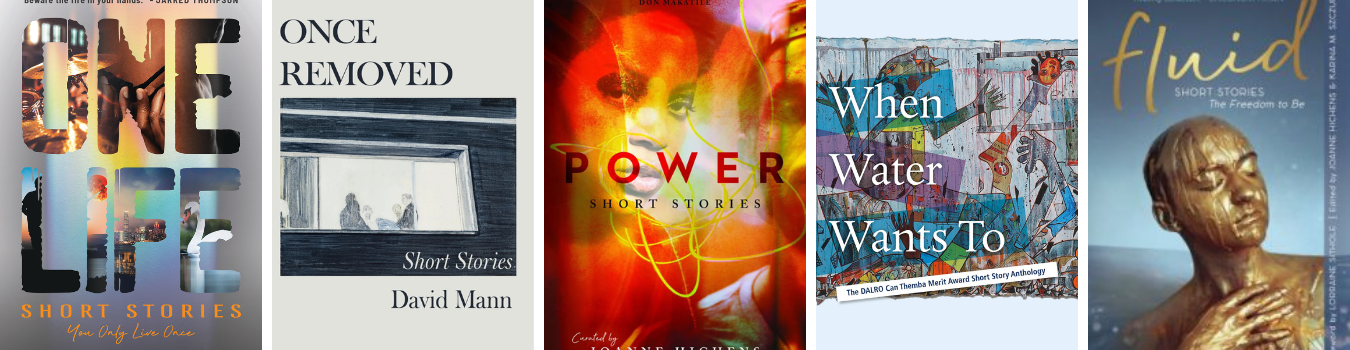
Want to take your short story craft further?
-
Join our two-evening short story workshop with Joanne Hichens — details coming soon. Email Trish to join the waitlist
-
Explore our Creative Writing Course which will help you hone your writing craft
-
Submit to the next Short.Sharp.Stories anthology: Home Cooked Recipes of Triumph and Disaster. Follow the Short.Sharp.Stories Facebook page for submission details
Notes from the short story webinar
What makes the short story such a powerful and enduring form
If you’ve ever wondered how to write a short story that truly lands — one that grips a reader from the first line and stays with them long after the last — you’re not alone. It’s one of the questions writers at every stage ask most often. What makes the short story such an enduring and powerful form? And how do writers actually find their ideas, develop their craft, and keep going through the difficult moments?
In a wide-ranging webinar hosted by All About Writing, short story editor and teacher Joanne Hichens sat down with two writers who represent, as she put it, “two different extremes”: David Mann, a multiple award-winning writer whose debut collection Once Removed has been celebrated across the South African literary world, and Kamva Majo, an emerging writer whose story in the Short Sharp Stories anthology Power announced her as a significant voice to watch.
The result was one of the most honest and practically useful conversations we’ve had about short fiction. Whether you’re writing your first short story or your fiftieth, here are the key insights.
Why write short stories?
Richard Beynon opened the evening with an anecdote about George Saunders — Booker Prize winner and author of A Swim in a Pond in the Rain — who spent a decade analysing what distinguishes the short story from the novel. His conclusion? A short story is short. In every other respect, it’s just like a novel.
Both David and Kamva spoke about why the form drew them in. For David, it’s about the era we’re living in. Short form is how we engage with the world — in bite-sized vignettes, in the kind of thinking and reading and viewing that doesn’t ask for months of sustained commitment. But beyond that, he described the short story as a site for play and experimentation, “failure with relatively low stakes” — and one that remains always in a state of process. A story goes into the world, meets readers, receives feedback, and gets reworked. It’s collaborative and alive.
Kamva’s entry point was more personal. She had always written short stories at school, but never saw it as properly creative. When she tried to return to writing for joy rather than marks, the short form was her way back in — not because it’s easier (she was clear that it isn’t), but because it gets to the result faster. Getting into the action quickly, seeing something completed, gave her the confidence to keep going.
Where do short story ideas come from?
Joanne was direct about this: writers don’t need to pluck ideas from thin air. The pressure to find something entirely original is often a form of procrastination. “Nothing is new under the sun,” said Kamva, “but the main purpose is to let people who have similar stories or life experiences find resonance in yours — and know that they are not alone.”
For Kamva, the trigger is obsession. She described the story behind The Mortician’s Instinct — she became fascinated by morticians, watching video after video, disappointed to find they were essentially ordinary people, but holding onto the darker image she had in her mind and writing from there. A second story emerged from her desire to confront her own fear of schizophrenia, rooted in a childhood experience with a family member. She read her abnormal psychology textbook, researched different forms of the condition, and built a character from that exploration. The story wrote itself from the obsession.
David works as an art critic, and almost all his fiction returns to that world. But where journalism and criticism are fixed — bound to formats, to certainties — fiction becomes an open, generative space for all the questions, predicaments and frustrations that don’t fit anywhere else. His Thomas Pringle Award-winning story Meaningful Contributions came from frustration with arts funding in South Africa: the impossible hoops, the abstract goals, the fundamental disconnect between what funders ask for and what creative work actually requires. The story became a comedic vehicle for that frustration — and ultimately won him a prize.
The practical advice from both? Find the thing that is pressing at you. A short story needs that hunger — that urgency — and readers will sense it, even if they can’t name it.
Art and craft: What’s the difference?
Joanne described the art of a story as its heart — the passion for the idea, the authentic voice, the trust in one’s own writing self. The craft is everything that can be learned: setting, point of view, plot, structure, character development.
David added something important: writing is larger than what happens on the page. It’s the ambient, secondary, passive process — turning a story over in your mind while you’re out for a run, thinking about how your character would react in a traffic jam. Seamus Heaney’s poem Digging informed his thinking here: writing as unearthing, as excavation, as making sense of the world through searching.
For Kamva, the art is the process — and the process is your life. The craft is sitting down and making something of it. She described often not realising that a neighbour, a moment, a fear would eventually find its way into a story. You’re living the material before you know it’s material.
Short story writing tips: Let character drive everything
Joanne offered a clear piece of craft advice that applies as much to short stories as to novels: stories are driven by character. In short fiction, there isn’t time for backstory — you meet the protagonist in the opening paragraph, often in the first line, and almost always at a seminal moment in their lives.
She quoted Kurt Vonnegut’s first rule of writing: make your characters want something right away, even if it’s only a glass of water. That want — that desire or need — is what drives the story forward and prevents it from becoming merely anecdotal. The character must be changed by the end. Something must shift.
George Saunders put it this way: what makes a piece of writing a story is that something happens within it that changes the character forever. We tell a story that starts at one time and ends at another in order to frame that moment of change.
Writing through trauma: The third-person distance
One of the most moving exchanges in the webinar came when Bonnie asked how to get the words of a painful experience onto the page when they seem to stick and refuse to come.
Joanne spoke from personal experience — writing about her husband’s death after he had a fatal heart attack. Her advice: just keep physically putting words on the page, not as literature at first, but simply as a record. Allow the tears to come. And make sure there is someone — a friend, a therapist — who can support you through the process.
Kamva offered a practical technique: start with your journal, where the words belong only to you. Get used to seeing the experience outside of your own mind. And then, when you’re ready to move it into a story, try writing in third person rather than first. That distance — the shift from I to she or he or they — can make the writing feel less overwhelming, less like it is you talking, and give you the creative freedom to shape the material rather than simply reliving it.
How to get a short story published
Both David and Kamva had been turned down by Short Sharp Stories before they were accepted. Kamva’s message was simple: start, and limit your expectations. The action of writing — submitting, being turned away, writing again — is what gets you from where you are to where you want to be. There’s no shortcut, and waiting for a profound piece of advice is just another form of procrastination. Just write.
David’s advice for writers further along their journey: say yes to every opportunity, even the tiny ones — the literary journal with 50 followers, the call for submissions that might be read by very few people. The ecosystem is small, but the community is wonderful. And when you receive feedback with a rejection, treat it as gold.
He also made a point worth noting: stop valorising the big publishers. In South Africa, independent publishers are the ones championing the short form and experimental work. They’re the ones willing to take a gamble on debut authors, on strange and beautiful collections. Support them. Submit to them. Buy your books from them.
Social media and copyright
One practical question from the chat: if you publish a short story on social media, does it preclude you from submitting to traditional publishers? The short answer is: tread carefully. Frank, a participant, noted correctly that most competitions and many publications explicitly exclude previously published work — including anything shared online.
David’s perspective: use social media as a testing ground for ideas, not your best work. Post fragments, early thoughts, first-draft experiments. Fold the feedback back in. Don’t give away your finished stories. And keep writing, revising, always reworking — because a short story, in his view, is always in a state of becoming.
 The last word
Joanne closed the evening with a quote from Neil Gaiman: “A short story is the ultimate close-up magic trick. A couple of thousand words to take you around the universe, or break your heart.”
The art is the voice, the passion, the spark that lights within you. The craft is sitting down — on your own, in front of a page or a screen — and doing the work. Research, first draft, revision, editing. All of it.
If this conversation has stirred something in you, don’t wait. These short story writing tips are only useful if you put them to work. Find the pressing thing. Write towards it.
Connect with Joanne and Merle
If you watch the webinar or read this guide, we’re confident you’ll be inspired to explore the memoirs that emerged from this coming together of courage and craft. Joanne Hichens’ Death and the After Parties and Merle Levin’s The World According to Merle are excellent examples of what happens when writers give themselves permission to tell their truth—and trust that their stories matter to others walking similar paths.
Joanne: Website, Short Sharp Stories, Instagram, Facebook and Facebook Author Page
Merle: Website, Instagram and Facebook
Ready to Make 2026 Your Best Writing Year?
Whether you’re just starting your writing journey or working on your next manuscript, All About Writing offers the support and guidance you need to achieve your goals.
Start every week with writerly inspiration by signing up for Richard’s Monday Writing Motivations.
Creative Writing Course – Our comprehensive 10-week live course (starting 22nd January) takes you from the fundamentals of storytelling through to crafting compelling narratives. You’ll learn essential skills in character development, plot structure, dialogue, and revision – all whilst receiving feedback on your work and connecting with fellow writers. Sign up here
One-to-One Mentoring – Working on a novel, memoir, or larger project? Our experienced mentors provide personalised guidance tailored to your specific manuscript and goals. Regular sessions help you maintain momentum, work through challenges, and develop your craft whilst bringing your project to completion. More information here
Writers’ Circle – Join our supportive monthly community where writers share work, receive constructive feedback, and benefit from the collective wisdom of the group. It’s the accountability and encouragement many writers need to keep showing up at the page. Join here
Writing Retreats – Immerse yourself in your writing whilst exploring inspiring locations. Join us in the tranquil Karoo at our Barrydale retreat, experience the charm of the English countryside in Stow-on-the-Wold, or find creative inspiration in the romantic canals and literary history of Venice. These retreats combine dedicated writing time, expert workshops, and the opportunity to connect with fellow writers in beautiful, distraction-free settings. There’s something transformative about stepping away from daily life to focus entirely on your craft.
Free Monthly Webinars – Don’t miss our monthly webinars where we explore essential writing topics, answer your questions, and build a community of committed writers.
Whatever stage you’re at in your writing journey, the key is to start now. Make those writing appointments, focus on one project, and surround yourself with a community that understands the challenges and celebrates the victories. Your story deserves to be written—and we’re here to help you do exactly that.
If you’re not sure exactly what’s right for you, why not test the waters with our free Power of Writing Course or email Trish to discuss your writing project and how we can best help you achieve your goals.
The post How to Write a Short Story: Key Insights from Joanne Hichens, David Mann and Kamva Majo appeared first on All About Writing Courses.
]]>