Let’s begin with the reality no amount of clever marketing can erase: the new home marketplace is more expensive than ever. We’re experiencing a pernicious mixture of rising build costs coupled with high interest rates and rising costs of living.
We are in a market that refuses to feel predictable.
Which is why the market is awash in rate buydowns, closing-cost assistance, flex cash, design credits, included upgrades and price reductions. Just published, the number of builders cutting prices increased to 43% in October, while the use of sales incentives continued to rise from 60% to 65% of builders nationwide, according to the National Association of Home Builders.
These offers matter. In many cases, they are the very thing that makes purchasing a home financially possible. But possible is not the same as desirable.
An incentive can help a buyer qualify. It can lower the monthly payment. It can create a reason to act now rather than later. What it cannot do (at least not on its own) is make someone fall in love with a home.
That is the challenge facing new-home marketing today, and where builders and communities should focus their attention in 2027.
Affordability Is a Barrier. Sameness Is a Bigger Problem.
Spend a few minutes looking at home builder advertising and the offers begin to blur together.
Special financing. Limited-time savings. More buying power. Thousands toward closing costs. Act now. Don’t wait. This weekend only.
Different builders. Different numbers. Nearly identical messages.
The incentive may be competitive, but the marketing is often interchangeable.
When every campaign is built around the deal, buyers are trained to compare builders on the deal alone. The home becomes a commodity. The community becomes secondary. The brand becomes little more than a logo sitting above a mortgage rate.
And if price is the only meaningful difference a builder presents, price will become the buyer’s most meaningful consideration.
That is a dangerous competition to create.
There will almost always be another builder willing to offer more for less, reduce something further or introduce a new promotion next month. Chasing that cycle may generate traffic, but it does little to build preference. It gives buyers a reason to shop without giving them a reason to choose.
The goal cannot simply be to make the home cost less. The goal is to make the home mean more.
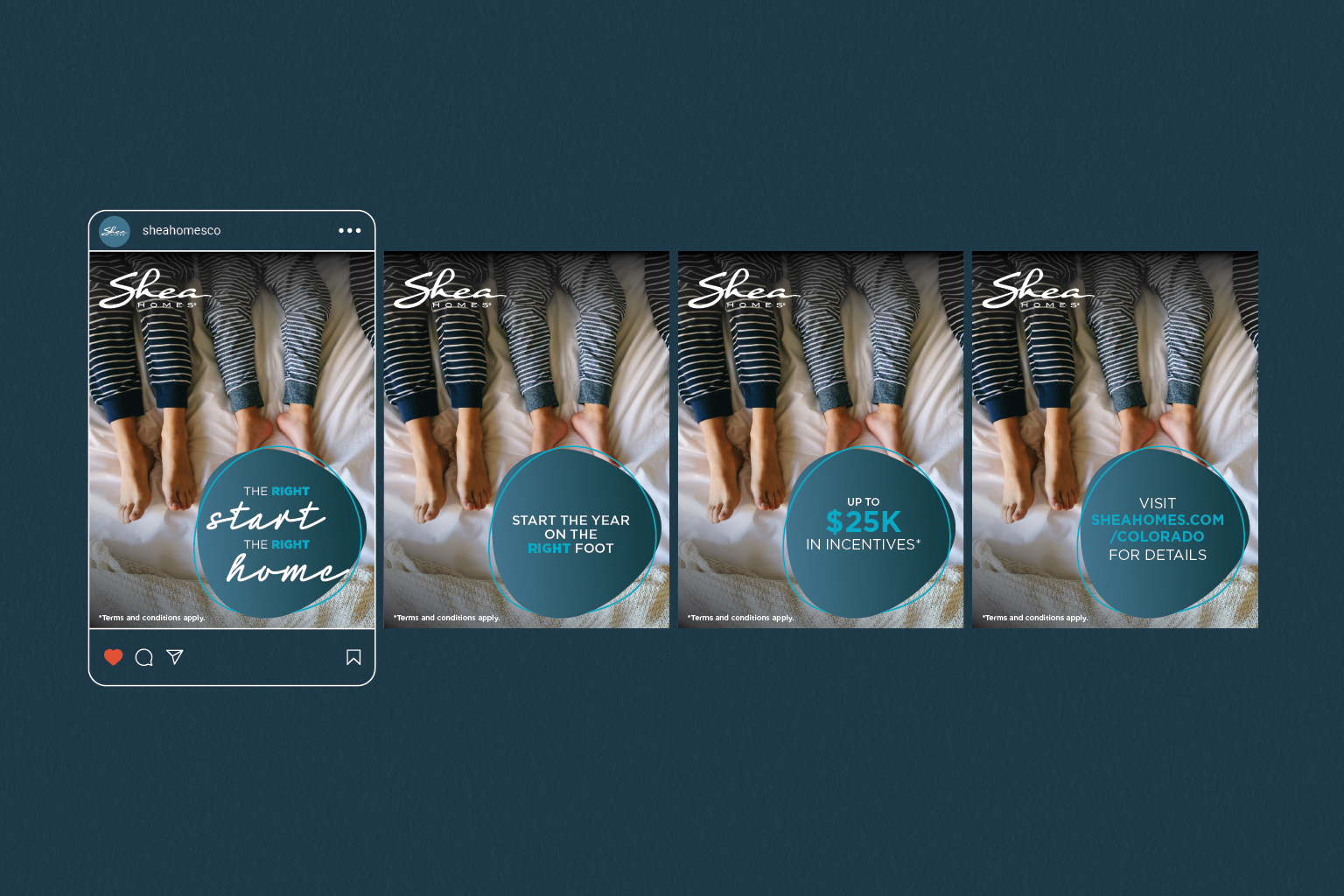
Give Buyers Two Reasons to Move.
Incentives are not the enemy of emotional marketing. In today’s market, they are often essential to it.
But their role must be understood.
The incentive answers: Why should I buy now?
The brand answers: Why do I want this home?
One creates urgency. The other creates preference.
One makes the purchase easier to justify. The other makes it feel difficult to walk away from.
The strongest new-home campaigns do not choose between the rational and the emotional. They connect them. They acknowledge the financial weight of the decision while continually reinforcing what makes the decision worth considering in the first place.
Because “it’s too expensive” is a perfectly logical reason to say no.
Marketing cannot (and should not) convince buyers to disregard that reality.
But it can demonstrate that this is not simply another expensive house. It is the kitchen where everyone gathers. The community where the kids grow up. The trail walked every morning. The first home that finally feels personal. The next version of life the buyer has been working toward.
The incentive may help make that life attainable. Desire is what makes it worth attaining.
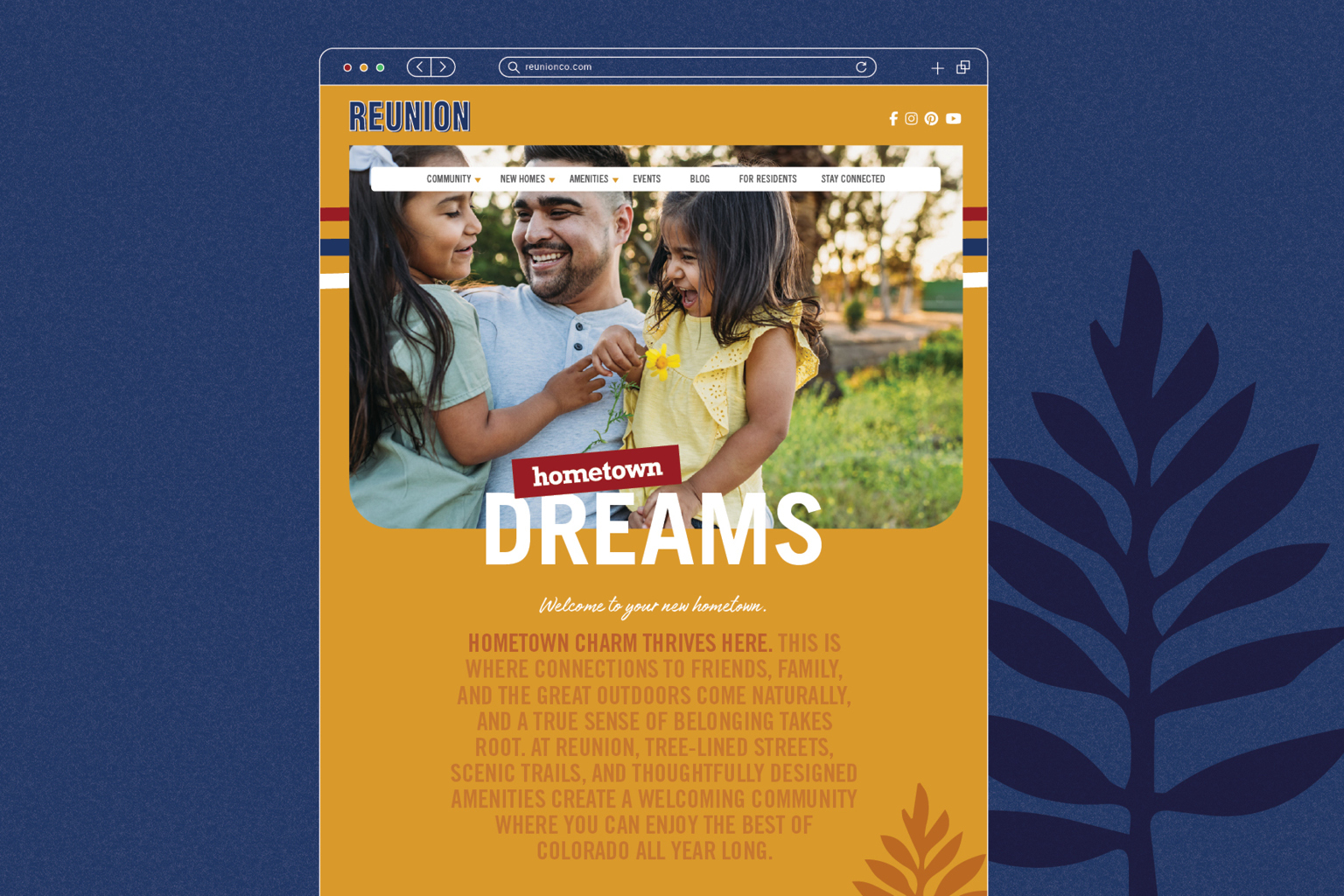
Desire Requires Specificity.
The phrase “dream home” has been used so often that it no longer asks anyone to dream.
The same is true of “more space,” “lasting memories,” “exceptional lifestyle” and nearly every other broad promise that appears throughout the category.
Emotional marketing does not mean using more emotional words. It means understanding the buyer’s life with enough specificity to reveal a feeling they recognize.
Maybe the appeal is watching children walk to school alongside neighborhood friends. Maybe it is finally having a dining room large enough to host the holidays instead of rotating between relatives’ homes.
Maybe it is moving closer to the trails, golf course, restaurants or open space that will actually shape daily life. Maybe it is a low-maintenance home that replaces weekends spent on upkeep with weekends spent elsewhere.
Maybe it is the pride of owning something beautifully designed – and the feeling that the home reflects who the buyer has become.
These details create recognition. Recognition creates relevance. And relevance is what separates true emotional pull from lifestyle-marketing wallpaper.
The home becomes desirable when the buyer can see something of themselves inside the story.
In our recent blog post about Real Estate Marketing Budget Planning for 2027, we describe the need for flexible and nimble marketing strategies and creative to suit:
“The goal is to create a connected communication system that responds to what people have shown interest in, rather than sending everyone the same message and hoping it lands.”
What 2027 really needs is a suite of creative that communicates the emotional connections – but not to a specified target audience, but to a somewhat common lifestyle aspiration. Because what one person defines as “convenience” may be completely different from another.

Desire Begins Before the Model Home Tour.
Desire is not a headline added above an incentive. It is not a lifestyle photograph placed behind a percentage rate. And it is not a paragraph of generic copy about “making memories.”
It is the cumulative result of every interaction a buyer has with the brand.
It begins with the first ad that makes the home feel distinctly relevant to their life. It grows through a website that creates intrigue instead of immediately overwhelming them with inventory. It continues through the drive into the community, the arrival experience, the sales gallery, the model-home presentation and the way the salesperson listens before beginning the pitch.
Each interaction should help the buyer move from understanding what is being sold to imagining what it would feel like to own it.
| Not Simply | But |
| This home has a larger kitchen. | This is where everyone will end up gathering. |
| The community has trails. | This could change the rhythm of our mornings. |
| The primary suite has upgraded finishes. | This feels like a place where I could finally exhale. |
Features provide evidence. Desire gives those features personal meaning.
The best marketing does not fabricate an emotion and impose it on the buyer. It recognizes the emotional value already embedded in the product and brings it forward. It asks: What does this make possible that the buyer wants badly enough to move?
That is where an incentive stops feeling like a concession and begins functioning as an invitation.
“It’s Too Expensive” Isn’t Always the End of the Conversation.
People routinely spend more than they originally intended on things they deeply want.
Not recklessly. Not without thought. But they reconsider priorities, adjust expectations and find room in the equation when something feels meaningful enough.
Price is evaluated relative to perceived value.
And perceived value is not confined to square footage, bedroom counts, appliance packages or a monthly payment.
What’s most valuable in this discussion is how the home makes someone feel, what the community says about the life they are building and whether the entire experience reinforces that this choice is worth making.
Those are criteria an incentive alone cannot overcome.
]]>- Spend where buyers are. Prioritize high-intent platforms and give every supporting channel a clear job.
- Let customers make the case. Authentic testimonials and video build trust that marketing claims alone cannot.
- Keep creative dollars flexible. Incentives, inventory and corporate priorities will change, often with little notice.
- Work the audience you already have. Surveys, segmentation and thoughtful follow-up can turn existing relationships into sharper insights and stronger demand.
- Make the experience match the promise. The arrival, sales environment and follow-up matter as much as the campaign.
- Budget for what is changing. Protect search fundamentals while reserving room to test new media, AI visibility and emerging tools.
Let’s get into home builders’ and community developers’ real estate marketing budget for next year because it’s budget season. And every budget season begins with a version of the same question: What do we need to keep doing next year?
It is an understandable place to start. But in a housing market that continues to change by the week, it is no longer the most useful question.
The better question is: How can we remain flexible for what marketing must be prepared to do next year?
For homebuilders and community developers, the answer extends well beyond maintaining a website, producing a campaign and renewing the media plan. Marketing has to reach active buyers efficiently, create desire in a price-sensitive market, build trust over a longer decision cycle and respond quickly when incentives, inventory or corporate direction changes.
That does not require spending everywhere. It requires protecting the investments that will matter most while leaving enough flexibility to act when the market does something no annual plan could predict.
As 2027 budgets take shape, these are the areas we believe homebuilders and developers cannot afford to leave out.
A smarter digital media presence
“More media” is not a strategy. Neither is dividing the budget among every available channel in the name of being everywhere.
The strongest media plans begin by defining where the most valuable audiences are, what stage of the home search they are in and what it will take to move them forward. That often means balancing broad awareness with a strong presence where active buyers are already shopping.
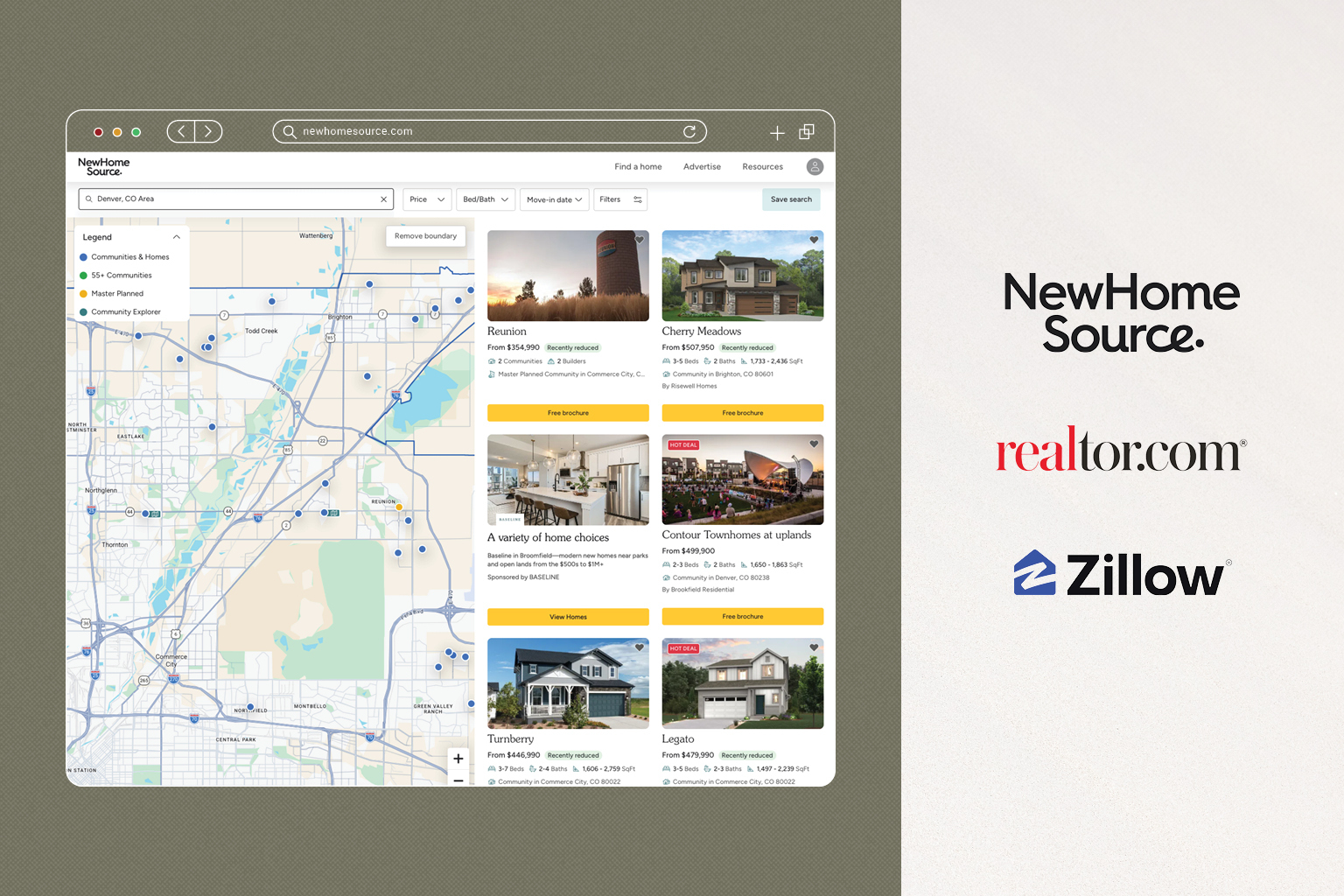
Platforms such as Zillow, Realtor.com and NewHomeSource can be tremendously important because they place new homes and communities directly in the path of high-intent prospects.
But even among active buyers, the same channel mix will not serve every community, price point or sales objective. A luxury neighborhood, a first-time buyer product and a large-scale master-planned community should not inherit the same media plan simply because it performed somewhere else.
Search, paid social, programmatic display and retargeting may still form the core of the plan. Connected TV, streaming video, digital audio, geofencing and select out-of-home placements can create additional reach and richer storytelling. Cost-effective, Realtor-only email programs can help activate an influential audience without requiring a major campaign investment.
The point is not to fund all of it, all of the time. The point is to understand the job of each channel, invest where it makes most sense for your objectives, and push ad creative and messaging that performs in those specific environments – not something that will perform everywhere.
And within nearly every channel, video deserves a larger role.
Buyers are surrounded by polished renderings, perfect photography and familiar promises.
What often earns their attention now is something more human: a homeowner describing why they moved, a sales counselor walking through a favorite feature, a resident showing what Saturday morning looks like in the community or a builder explaining a process in plain language.
Budgets should account for both higher-production brand video and a steady stream of authentic, platform-native content.
The latter does not need to look expensive. It does need to feel intentional, credible and real.
More proof. Fewer promises.
Buying a new home requires buyers to trust the builder, the community vision, the sales process, the construction experience and, in many cases, a lifestyle that is still coming to life. Every claim made by the brand is filtered through that uncertainty. And that’s a big ask of a brand.
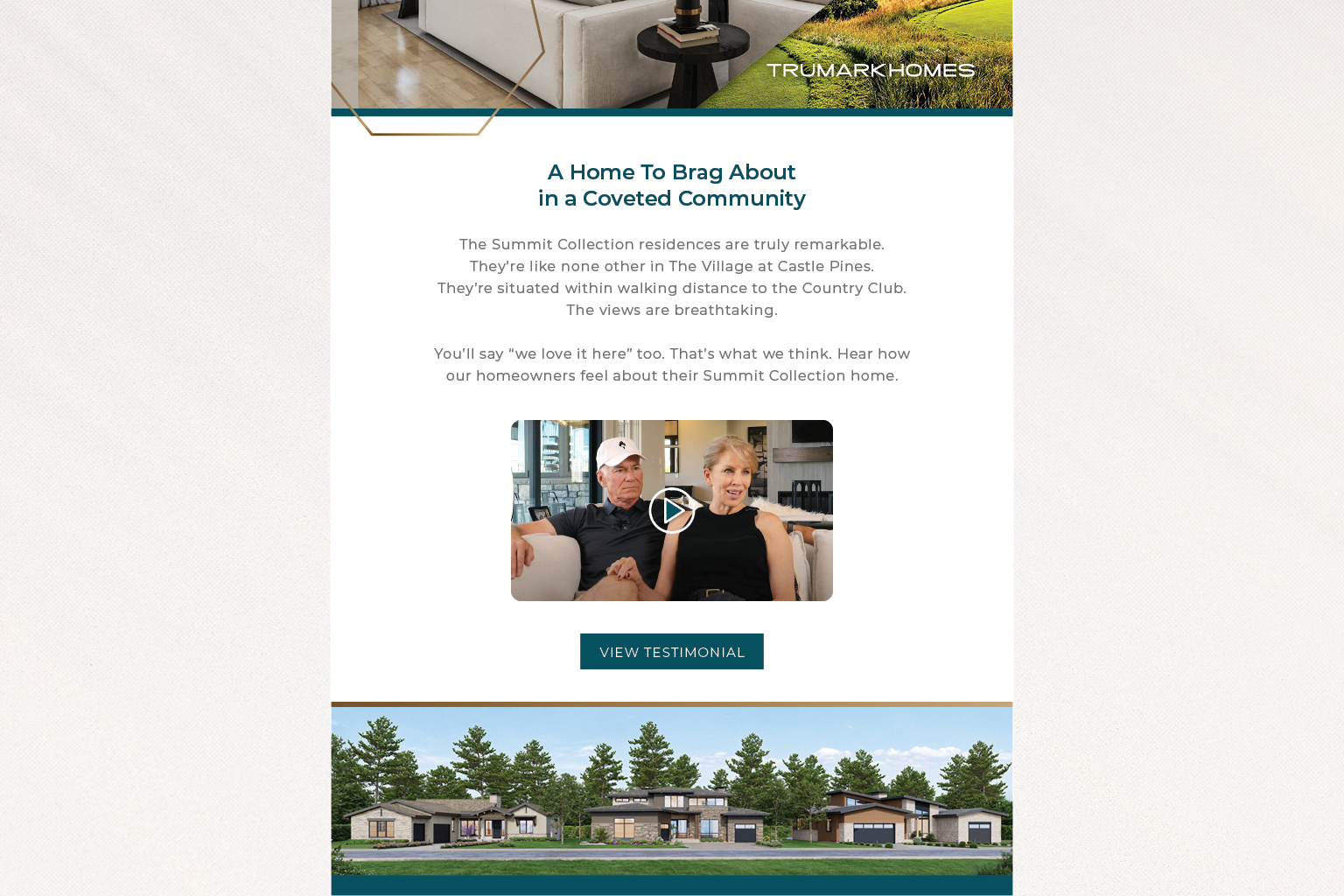
Testimonials help close the distance between what marketing says and what buyers are willing to believe.
But testimonial marketing should be more ambitious than collecting a handful of five-star quotes or producing one homeowner video each year. Builders and developers should create an ongoing system for identifying, capturing and distributing real customer experiences.
That can include:
- Professionally produced homeowner stories
- Short-form resident and buyer videos
- Written profiles and Q&As
- Reviews organized around specific parts of the experience
- Community stories centered on belonging, amenities and daily life
- Sales and construction testimonials that answer common objections
- Dedicated testimonial pages that can be searched, shared and referenced
Written content is especially important. Video may make the experience emotional, but a well-structured written profile gives search engines and AI platforms clear, indexable evidence of what real customers say about the builder or community. It also lets one story live across the website, email, social media, paid advertising and the sales process.
The strongest testimonial does not simply say, “We love our home.” It helps a prospective buyer see someone like themselves making the decision, navigating the uncertainty and feeling good about the outcome.
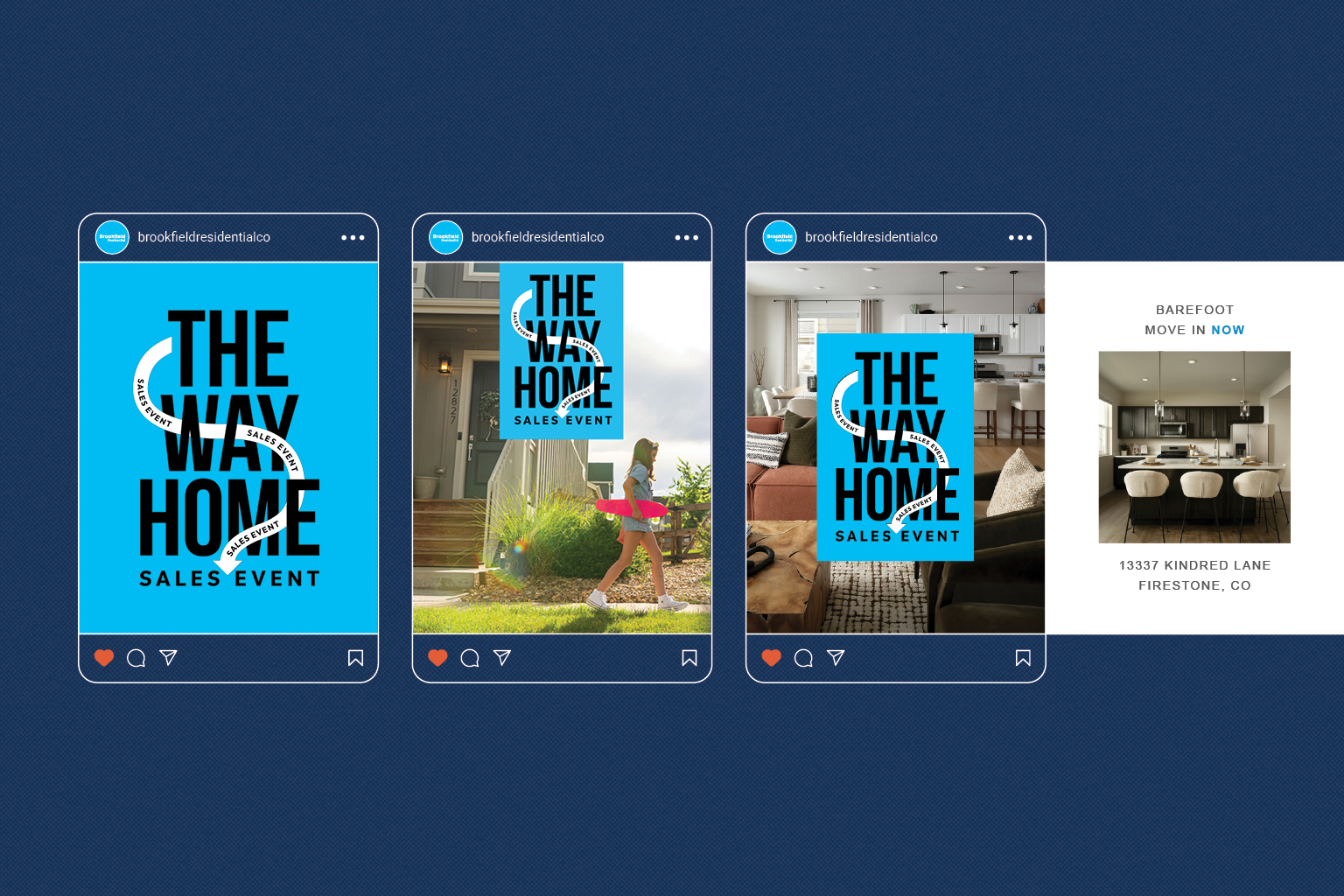
Creative flexibility in an incentive-driven market
Interest rates may move. Standing inventory may change. Corporate promotions may arrive with little notice. One neighborhood may need traffic while another needs to protect pricing. A national builder may introduce an incentive that must be adapted for a local division, audience and competitive set.
If every creative dollar is committed to a fixed calendar before the year begins, the marketing team will spend the year choosing between speed and quality.
Budgets should include a clearly defined allocation for responsive campaign development: new incentive creative, offer changes, inventory-specific messaging, division needs and unexpected sales priorities.
That means accounting for concepting, copy, design, animation, landing pages, email, digital advertising and updates across the customer journey. Which is oftentimes more than (and should be) merely swapping a rate on an existing graphic.
The need to remain nimble does not mean every promotion should look temporary. In fact, a highly promotional market makes brand discipline more important. Incentives should create urgency without reducing the home to a commodity or making the brand feel perpetually on sale.
Marketing has to be ready to move quickly while still protecting what the builder or community stands for.
More value from the audience you already have
The next useful insight may already be sitting in the CRM, the resident database or the sales center.
Most builders and developers invest heavily in acquiring new leads. Fewer put the same energy into learning from the prospects, buyers, Realtors and residents they have already earned access to.
Surveys are one of the simplest opportunities. A well-designed survey can reveal why buyers selected a community, which competitors they considered, what delayed their decision, which messages mattered and where the experience failed to meet expectations. Offering a thoughtful incentive or prize can increase participation and signal that the feedback has real value.
The same approach can extend beyond email.
QR codes in sales offices, models, welcome materials and community events can create easy opportunities to capture feedback, preferences or future interest.
Short polls can help distinguish casual engagement from meaningful buyer intent. Resident input can inform future amenities, programming, content and referral efforts.
The value is not merely “more data.” It is better decisions.
At the same time, email cannot be treated as an occasional announcement channel. Strong nurture programs, segmented follow-up and strategically timed drip campaigns are increasingly important as buyers take longer to decide.
Text marketing can play an effective role too – particularly around appointments, releases, events, inventory and time-sensitive opportunities – when the message is useful, well-timed and permission-based.
The goal is to create a connected communication system that responds to what people have shown interest in, rather than sending everyone the same message and hoping it lands.
An on-site experience worthy of the promise
Marketing does not end when the buyer arrives. That is where the claims begin to be tested.
As we explored in If You’re Not Selling Luxury Experiences, You’re Not Selling, luxury is no longer defined only by price. It is expressed through thoughtfulness, ease, confidence and the feeling that the experience has been designed around the customer.
That expectation applies well beyond traditionally luxury homes.
A buyer may discover a community through a cinematic video, refined campaign or beautifully designed website. If the drive is confusing, the signage is dated, the sales environment feels generic or the follow-up is impersonal, the story falls apart at the moment it matters most.
Budget planning should therefore account for the full physical and interpersonal experience:
- Community arrival and wayfinding
- Sales-gallery and model presentation
- Printed and digital sales materials
- Interactive maps and community storytelling
- Events and broker experiences
- Appointment preparation and post-visit follow-up
- Builder alignment within master-planned communities
- Small hospitality details that make the visit feel considered
- These are not separate from marketing. They are where marketing becomes believable.
- Search visibility for the way buyers research now
Traditional SEO remains essential, but search behavior is becoming more conversational, fragmented and answer-driven. Buyers are asking increasingly specific questions across Google, AI platforms, social media, maps and real estate marketplaces (often long before they complete a registration form).
That means 2027 budgets should protect the fundamentals while expanding what “search visibility” includes.
Websites need clear, useful information with FAQs that should answer the questions buyers actually ask. Community comparisons, local expertise, customer stories and educational content should help establish the brand as a credible source.
The objective is larger than ranking for a familiar phrase. It is making the builder or community easy to understand, easy to verify and more likely to be a consideration wherever research begins.
Budget for readiness, not repetition
The strongest 2027 marketing plans will not be the ones with the longest list of tactics. They will be the ones built around the realities of the market.
Reach active buyers where they are already looking. Use video and real customer voices to make the story more credible. Prepare for incentives and inventory to change. Learn more from the audiences you already have. Make the on-site experience as considered as the campaign that brought people there. Strengthen visibility wherever buyers research. And protect enough budget to test what comes next.
The question is not simply what marketing cost this year. It is what marketing must be ready to accomplish next year.
That is the budget worth building.
A+B1 helps homebuilders and community developers connect annual strategy, brand, creative, content, media and the buyer experience. If your 2027 planning is underway, now is the time to make sure the investments that matter most are part of the plan. Get in touch with us today. We look forward to sharing our expertise.
]]>The finishes continue to get better. The amenities are more impressive. The architecture is strong. The photography is striking. The coffee bar is stocked. Yet for many builders, traffic remains soft.
Interest rates deserve some of the blame. Affordability certainly does. The market has changed dramatically over the past few years. But so have buyers.
And that’s the conversation our industry isn’t having enough. For decades, the homebuilding industry has asked the question: How do we build a better home?
Bigger kitchens. Smarter floorplans. Better amenities. More personalization. More technology. Better value. Those investments have undoubtedly elevated the quality of new homes across Colorado.
Yet today’s homebuyer doesn’t simply expect a beautiful home. They expect an exceptional experience.
Whether they’re purchasing a $650,000 townhome or a $2+ million estate, they increasingly arrive with what we call the Affluent Buyer Mindset.
Not affluent income – affluent expectations. And they’re evaluating each experience.
As interest rates remain elevated and affordability continues to challenge much of Colorado’s housing market, many builders have understandably focused on incentives, financing, and pricing strategies. Meanwhile, one segment of the market has remained remarkably resilient: luxury housing.
Because luxury isn’t a price point. It’s an expectation.
The Affluent Buyer Mindset
Historically, luxury was measured by income. Today, it’s measured by expectation.
A family purchasing a $700,000 home may not consider themselves wealthy. In many Colorado communities, they may have stretched financially to get there. But psychologically, they expect an experience that reflects the magnitude of the investment they’re making.
That expectation doesn’t begin with the model home. It begins everywhere else in life.
Apple has conditioned us to expect beautifully designed retail experiences. Amazon has conditioned us to expect effortless convenience. Boutique hotels have conditioned us to expect personalized hospitality. Restaurants remember dietary preferences. Airlines remember seating preferences. Streaming platforms remember what we’d like to watch next.
Every exceptional experience recalibrates what consumers consider normal.
The result? People no longer compartmentalize expectations by industry.
The best experience they’ve had anywhere becomes the benchmark for experiences everywhere. Including homebuilding.

You’re Competing Against More Than Builders
Here’s where many builders unknowingly limit themselves. Competitive analyses usually compare neighboring communities.
Who’s offering the better incentive? Who has the larger clubhouse? Who upgraded their standard finishes?
Useful questions. But incomplete ones.
Your buyer isn’t comparing you only to another builder across town. They’re comparing you to the last remarkable experience they had anywhere:
- The Apple Store.
- The Four Seasons.
- Their favorite local restaurant.
- Their financial advisor.
- Their pediatrician.
- The boutique fitness studio that greets them by name before they check in.
- Every interaction shapes their definition of exceptional service.
Which means homebuilding isn’t about competing within homebuilding. It’s competing within modern consumer expectations.
Apple Stores rarely begin with the question, “What are you here to buy?” Instead, they begin with curiosity and inspiration. The product certainly matters, but the experience is intentionally designed to reduce anxiety, build confidence, and make technology feel approachable and fun.
That’s an important distinction for homebuilding. Buyers aren’t just shopping for floorplans. They’re navigating one of the biggest financial decisions of their lives. The builders who create relationships will always have an advantage.
We’ve previously argued that today’s buyer journey is one continuous brand experience rather than a collection of marketing channels. Read more about our philosophy of Brand Amalgamation here.

Buyers Remember Feelings More Than Features
Behavioral psychologists Daniel Kahneman and Barbara Frederickson spent decades studying how people remember experiences.
One of the most influential discoveries became known as the Peak-End Rule.
People don’t remember experiences as an average of every interaction.
Instead, they disproportionately remember two things: 1) The emotional peak. 2) And how the experience ended.
A buyer may spend months researching communities. Weeks comparing floorplans. Hours inside model homes. Yet, they’ll likely remember only a handful of emotional moments…
- The sales person who genuinely listened.
- The unexpected handwritten note.
- The attention-grabbing sign in a model home explaining a unique feature.
- The design appointment that made them feel excited instead of overwhelmed.
- The feeling of talking to friends and family about their wishlist for their new home.
- The welcome celebration that made the community immediately feel like home.
These moments become the story buyers tell others. It’s all about the emotional peak, and how the experience ends.
It’s like The Four Seasons and its reputation that’s built on a deceptively simple philosophy: treat every guest as an individual, not a reservation number.
The luxury isn’t found in thread counts or marble bathrooms.
It’s found in remembering names, preferences, anniversaries, and small personal details that make guests feel recognized.
Homebuyers crave the same feeling. They want to feel like someone knows who they are and understands why this home matters to them.
We’ve written before about why emotion is the true currency of memorable brands and buying decisions. If you haven’t read it yet, it’s a natural companion to this discussion.
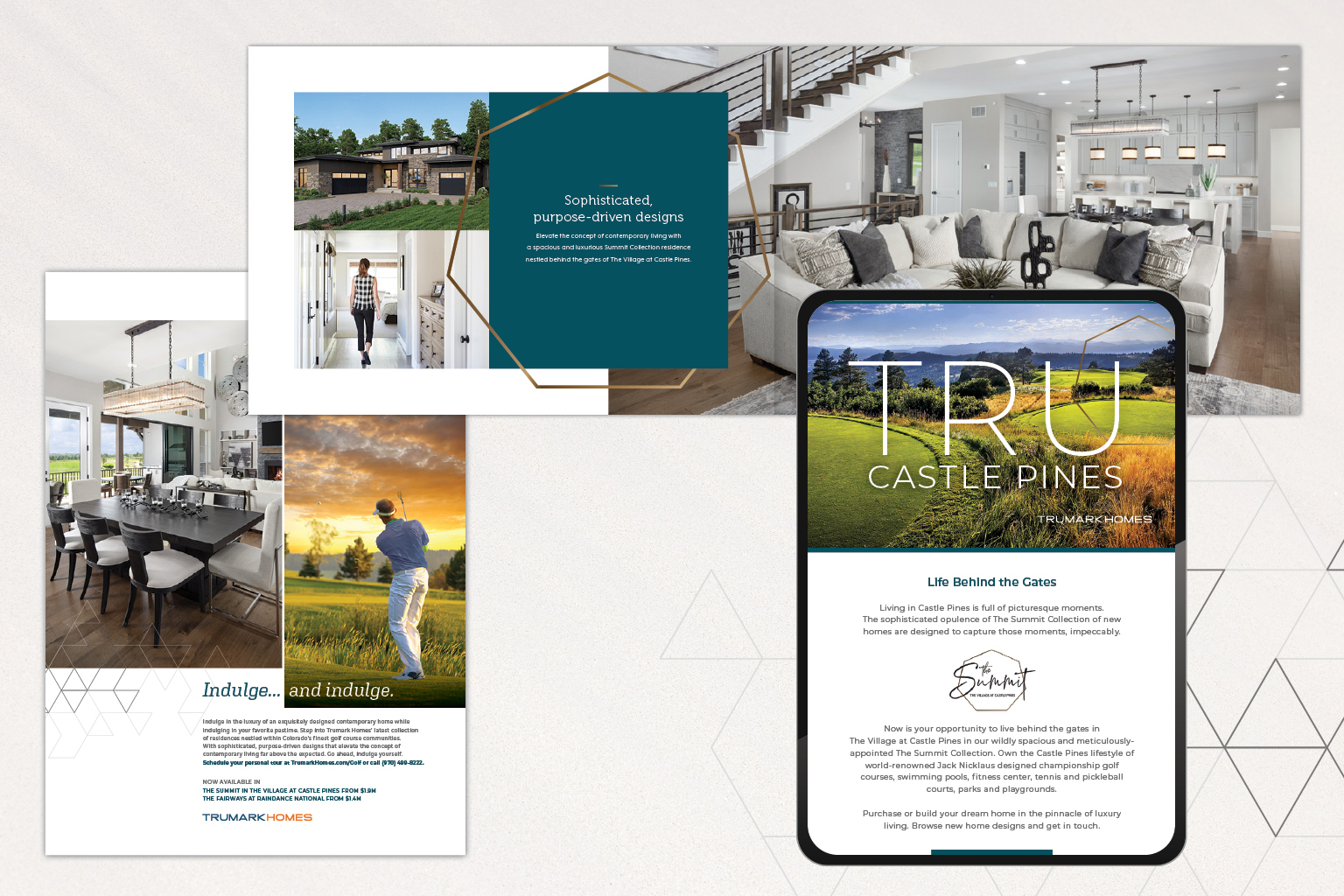
The New Luxury
Perhaps the biggest misconception about luxury is that it’s exclusive.
The new luxury is inclusive:
- Every buyer wants to feel valued.
- Every buyer wants confidence.
- Every buyer wants less friction.
- Every buyer wants someone to remember who they are.
That’s the Affluent Buyer Mindset.
In a market where even entry-level homes represent one of the largest purchases many families will ever make, these expectations aren’t unrealistic. They’re entirely rational.
Providing a luxury experience is less about treating buyers as if they’re wealthy; it’s about treating them as if their decision matters – to you and to them.
Because it does.
This is one reason premium builders like Shea Homes have long understood that the customer experience extends far beyond the architecture itself. Beautiful homes create desire, but thoughtful design appointments, personalized communication, carefully curated model homes, and communities that feel welcoming from the very first visit create something even more valuable: confidence.
Luxury brands aren’t remembered because they build beautiful products.
They’re remembered because they make important moments feel unforgettable.
That philosophy extends beyond marketing. It influences placemaking, community programming, amenities, and the emotional identity of a place. Explore more in our blog post about brand and placemaking.
Every website.
Every email.
Every monument sign.
Every sales conversation.
Every design appointment.
Every construction update.
Every homeowner event.
Buyers don’t see those divisions. They experience one brand. The builders who recognize that every touchpoint either strengthens or weakens that experience won’t simply earn more traffic or contracts. They’ll earn something far more valuable: trust.
Let’s continue the conversation. Contact us to discuss how we can help put relationship-building and memorable brand experiences at the top of your priority list.
]]>And on the surface, it’s easy to understand why.
AI can now generate logos, layouts, illustrations, ad concepts, animations, brand systems, and polished visual compositions in seconds – even websites. What once took weeks (or months) can now happen almost instantly.
Some of the outputs are genuinely impressive.
But the conversation often misses something important:
Most experienced designers aren’t worried about AI replacing them because the real value of design was never just production.
It was direction.
Especially in industries like real estate development and master-planned community marketing, where design isn’t simply meant to look attractive. It’s meant to communicate something deeper:
- a lifestyle
- a pace of life
- a personality
- an aspiration
- a feeling someone wants to step into
That level of communication has always required human interpretation, judgment, and emotional understanding.
And it still does.

For A+B1, Design Is About Communication, Not Decoration
The easiest way to misunderstand design is to think of it as visual styling.
Colors. Fonts. Layouts. Graphics.
Those things matter, of course. But they’re not the purpose of design. They’re the language of it.
The real role of design is to communicate meaning.
A thoughtfully designed brand or website should begin telling a story before someone consciously reads a single sentence. The pacing of a layout, the restraint of typography, the scale of imagery, the amount of whitespace, the sequencing of information—these things shape emotional perception almost immediately.
A community can feel elevated, grounded, adventurous, youthful, luxurious, or nostalgic before a homebuyer even realizes why.
That isn’t accidental.
And it’s not something AI independently understands.
AI can identify patterns associated with successful design. It can imitate aesthetics and reproduce styles that people historically respond to. But it doesn’t actually know why a particular direction feels trustworthy, calming, premium, or emotionally compelling.
It only knows that previous users responded positively to something similar.
That’s a massive distinction.
Because design decisions are rarely made on aesthetics alone. They’re made on emotional alignment.
AI Can Create. But It Still Needs Direction.
One of the most important distinctions in this conversation is the difference between generating visuals and directing creative intent.
At A+B1, our designers are not using AI to conceptualize brand philosophies or invent emotional positioning from scratch. Those things still come from experience, collaboration, strategic thinking, and an understanding of human behavior.
What AI is doing is helping remove the technical friction that traditionally slows creative teams down.
And that’s where it becomes incredibly valuable.
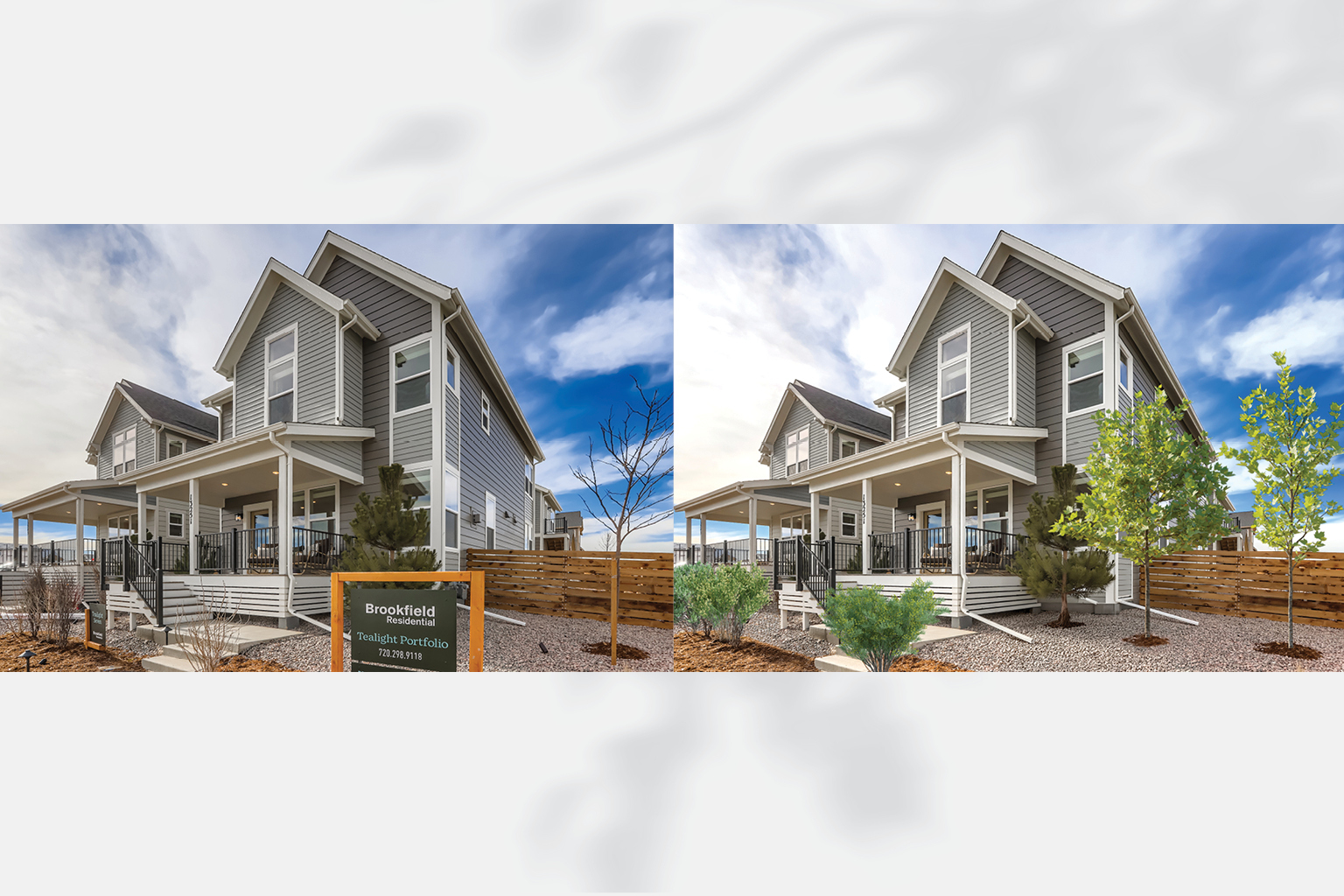
Instead of spending hours extending a photo to fit multiple marketing formats, cleaning up landscaping in an image, removing distracting elements, or adjusting environmental conditions, our team can now move much faster through those production tasks.
That doesn’t replace the designer.
It gives the designer more room to focus on the thinking.
More time spent refining emotional tone.
More time spent shaping the experience.
More time spent ensuring the work actually communicates what it’s supposed to communicate.
In many ways, the best creative professionals are becoming more effective because of AI—not less necessary.
The Real Estate Reality
This becomes especially relevant in the world of new home communities, where speed-to-market matters constantly.
If a builder has a home available now, there’s pressure to market it quickly and effectively before the community next door captures attention first.
But there’s also a balancing act between authenticity and aspiration.
Sometimes the right move is authenticity.
An iPhone photo of a real home on a real day can feel honest, approachable, and immediate. That kind of realism matters in modern marketing because audiences are increasingly skeptical of imagery that feels overly polished or artificial.
Other times, the opportunity is to elevate what already exists.
Maybe the landscaping hasn’t matured yet. Maybe the grass is dormant. Maybe there’s a dead tree in the foreground or construction elements nearby that distract from the experience being communicated.
In the past, teams either had to work around those limitations or spend significant time and budget manually editing imagery.
Now, AI allows for flexibility.
A real, on-site photograph can be thoughtfully enhanced:
- grass can look healthier
- landscaping can feel more complete
- environmental distractions can be cleaned up
- imagery can be adapted efficiently across multiple channels and formats
Not to fabricate reality, but to better communicate the intended experience.
That’s a very different use of AI than replacing creativity altogether.
It’s production support in service of a larger strategic vision.

The Risk of Sameness
Ironically, one of AI’s greatest strengths may also become one of its greatest limitations.
AI is exceptional at optimization.
It smooths edges. It balances layouts. It follows trends. It generates work that looks polished, contemporary, and technically correct.
But when everyone has access to the same systems trained on the same visual patterns, a different problem begins to emerge:
Sameness.
We’re already starting to see it across branding, social media, websites, and digital advertising.
The work becomes increasingly refined—but increasingly interchangeable.
The same visual pacing.
The same glossy confidence.
The same hyper-polished aesthetic language.
And interestingly, audiences are beginning to push back against that.
Especially younger generations who increasingly gravitate toward brands, experiences, and visuals that feel more analog, tactile, restrained, and human.
Not because they dislike technology.
But because overly perfected design can begin to feel performative – or worse, untrustworthy.
People are craving signs that something was actually considered by another person.
Texture. Warmth. Imperfection. Restraint. Personality.
Things that feel intentional instead of infinitely generated.
The Human Role Moving Forward
As AI becomes more integrated into creative workflows, the role of designers will continue to evolve.
But the value of human creative direction is only becoming more important.
Because AI doesn’t know when something feels emotionally flat.
It doesn’t recognize when a visual direction lacks authenticity. It doesn’t understand cultural nuance, emotional timing, restraint, or the subtle difference between something that looks impressive and something that genuinely resonates.
It still requires human approval. Human instinct. Human perspective.
AI can assist in generating outputs.
But it still takes people to determine whether the work means anything.
If you haven’t already, bounce around our Portfolio to see true, human-driven work that isn’t compromised or plagued by “sameness.”
]]>It can generate layouts, structure pages, write copy, and assemble something that looks polished and complete in a fraction of the time it used to take.
And in certain cases, it works.
But here’s the part that matters: That’s not the hard part.
The Illusion of a “Finished” Website and Who It’s Built For
AI is incredibly good at building what we’ve all come to recognize as a proper website:
Clean navigation.
Logical structure.
Clear sections.
A predictable flow from top to bottom.
It pulls from millions of examples – ecommerce sites, blogs, SaaS platforms – and distills them into something that feels familiar and functional. Something that any user has probably used hundreds and thousands of times in their digital existence.
And that familiarity is intentional. Because most websites are designed to be:
- easy to use
- easy to understand
- easy to navigate
AI simply accelerates that.
It gives you the most optimized version of what already exists: A streamlined, tried-and-tested, common experience.
In many use cases, that can be exactly what your brand and company intends (or needs).
But in the role of branding and marketing for master-planned community developments – that’s the farthest thing from what your brand needs (and what users should want).
Where “Optimized” Starts to Fall Short
The more AI leans into what works universally, the more everything starts to feel the same.
Not worse. Just… interchangeable.
And that’s where the cracks start to show.
Because the websites that actually stick with people – the ones that create curiosity, give reason to pause, stir emotion and create brand connection – don’t always follow the expected path.
They bend it.
They stretch it.
Sometimes they slow it down.
Or speed it up to make you go back and experience it again.
They create moments where someone:
- lingers a little longer than they planned
- pauses to take something in
- re-reads a line
- explores instead of skimming
That’s not inefficiency.
That’s intention.
And ‘intention’ is a big thing in the new home marketplace right now, which we explore more in our blog post about 2026 housing market trends.
A Community Website Isn’t Built Like Everything Else
This is especially true in the world of master-planned communities.
You’re not selling a product that someone adds to a cart.
You’re introducing a place. A future version of someone’s life. A rhythm. A pace. A feeling.
And the website is often the first experience of that.
So the goal isn’t just clarity.
It’s immersion.
It’s about:
- building anticipation
- revealing information in a way that feels intentional
- guiding someone through a story, not just a sitemap
In that context, a “perfectly optimized” website can actually work against you.
Because if it feels like everything else…
it won’t be remembered.
The Role of the Unexpected
The best community websites don’t always behave the way you expect them to.
They might:
- introduce motion in subtle, deliberate ways
- layer content so it unfolds instead of dumps
- create navigation that invites exploration instead of rushing decisions
- use pacing, whitespace, and interaction to create mood
At times, they may even cause a moment of hesitation.
Wait… how does this work? But that moment isn’t friction. It’s engagement.
It’s the digital equivalent of slowing down when you enter a place that feels different. And that’s where connection starts.
Where AI Excels (And Where We Use It Because We Work Smarter AND Harder)
None of this is to say AI doesn’t belong in the process. It absolutely does.
We use it every day at A+B1.
To:
- accelerate early development and prototyping
- explore layout directions quickly
- assist with content structuring and refinement
- streamline updates and ongoing maintenance
- reduce time spent digging for answers or sifting through search results
AI has made a lot of the mechanics of web development faster and more efficient.
And that’s a good thing.
Because it gives us more space to focus on the parts that matter most: the experience and the emotive signals; the cues of delight.
Yet there are other facets of why an AI-built website has its pitfalls from the jump and after launch.
If You Don’t Understand What You’re Building…
There’s another layer to this that’s easy to overlook.
AI lowers the barrier to building a website.
But it also increases the likelihood of building something you don’t fully understand.
And when that happens, a new set of problems emerge:
When something breaks… how do you fix it?
When performance drops… what do you adjust?
When user behavior shifts… what do you change?
When the next phase of a community launches… how does the site evolve?
A website isn’t a one-time deliverable.
It’s a living ecosystem. Especially a website promoting a residential, mixed-use master-planned community. That puppy evolves multiple times before it lives on as a community connection point.
And without a clear understanding of how it’s structured – both technically and strategically – it becomes harder to maintain, adapt, and grow.
The Role We Play
Just like we began in our last blog post about how AI is transforming marketing, we at A+B1 see AI as a multiplier.
A way to move faster.
To test more.
To refine ideas more efficiently.
But never as a replacement for direction.
Because the real work isn’t in assembling pages.
It’s in shaping experiences, creating distinction, and translating a human vision into something people can actually feel – even when engaging through a screen.
In the end, AI can build a website – yes – but it can’t build anticipation.
It can’t create the curiosity that comes from knowing what the human conscience is pulled by.
It can’t engineer subtle moments that make someone pause, lean in, get a taste of nostalgia or aspiration.
Those things are still human-driven. They’re designed.
Intentionally.
And as websites become easier to create – the human direction will matter even more.
In our next blog post, we’re continuing the deep dive into how AI is changing the landscape for marketing by exploring the nature and evolution of design (and how AI is a catalyst for the next generation of what design really means).
For now, continue the conversation with us on LinkedIn, Facebook and Instagram. Find these posts about AI in marketing and give us your thoughts.
]]>