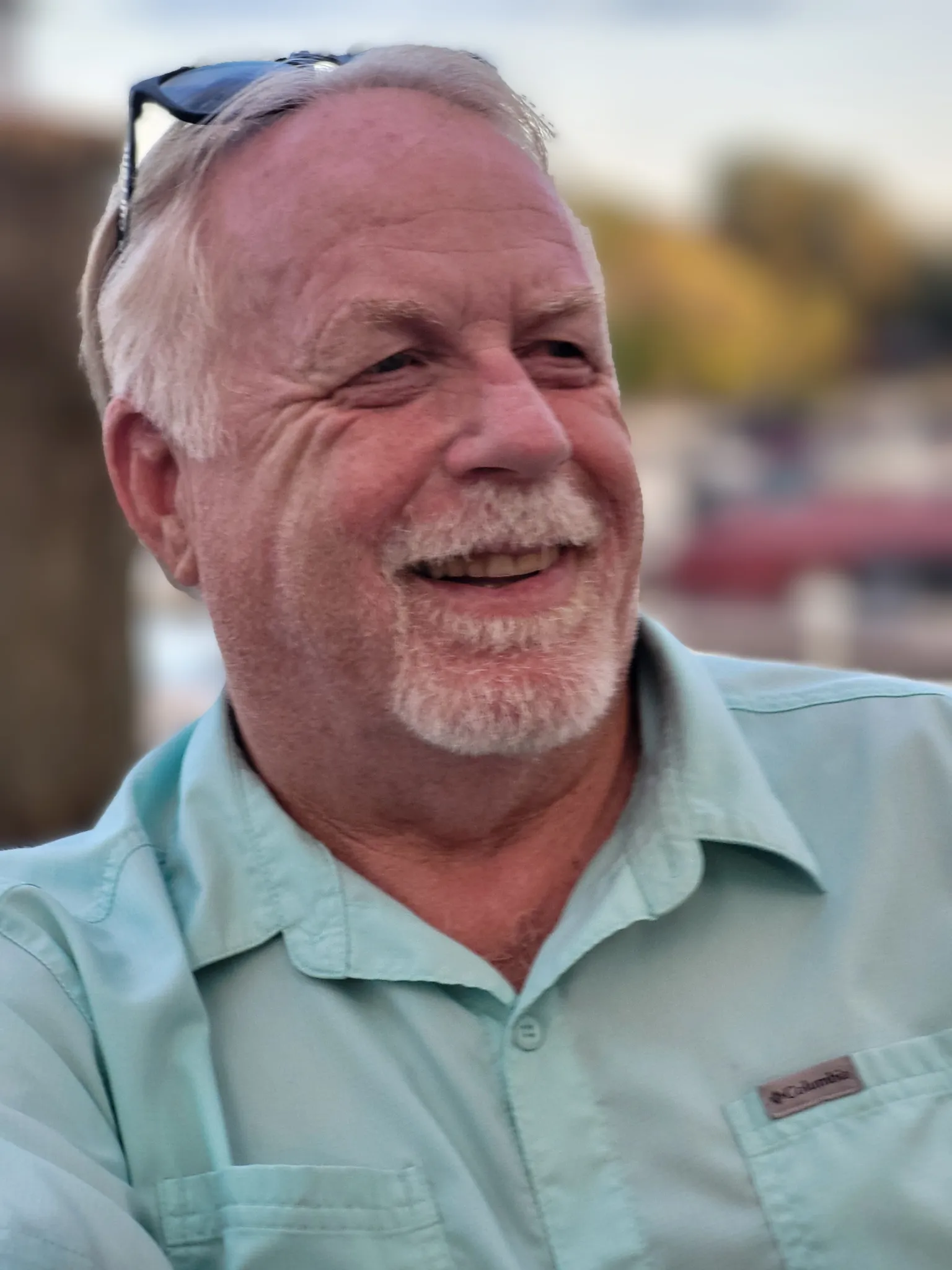
My incredibly inspiring guest for October is Minnesota author Steve Linstrom. (https://stevelinstromwriter.com) Always a voracious reader, Steve envisioned becoming the next Ernest Hemingway (except for the part about being a jerk to women), but just never found a way to get started. After college, he worked for a national food company in the Midwest, eventually rising to Regional Vice President. Steve retired from the corporate world and started a writing career at age 52, eventually going back to school and earning a Master’s Degree in English Studies, publishing several short stories and two novels. After fully retiring as an Adjunct English Instructor at Southwest Minnesota State University, Steve joined a writing group at the Riverview Library in St. Paul, providing him a wonderful prompt to revive old projects and put out new material.
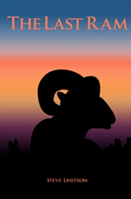
Tell Me Your Story
Steve Linstrom
My writing story begins in a doctor’s office, holding my wife Molly’s hand.
“I’m afraid it’s cancer,” the doctor said. “Stage Four.”
I’d done my research and knew what that meant. Molly’s cancer had an average five-year survival rate of 10% to 15%.
That was over twenty years ago, and I can still feel my guts hardening to stone. We both knew at that specific moment that neither of our lives would be the same again. I was 46.
We went through a great deal over the final years of Molly’s life, most of which I won’t cover here. Suffice to say, she met the challenge with grace, courage and dignity and beat the odds to live with the cancer for four years.
I still don’t have it in me to write that story. Perhaps I never will.
But that day at the doctor’s office is what made me a writer. Up until that point, I’d never written any fiction of any kind. I’d always been a voracious reader, scouring our house for any book I could find and haunting the library. Like many addictive readers, I had dreams of living the life of Ernest Hemingway (except for the parts about being a jerk to women). However, after reading one of his stories, I’d get all inspired, scribble out a paragraph or two and then hold them up to next his. They didn’t appear to even be in the same language.
I adopted the ‘maybe someday’ attitude about writing. Facing mortality makes you realize that someday needs to be today because you never know what you’ll face tomorrow.
The problem was that I never talked to anyone about reading or writing literature. I’d been a successful high school and collegiate multi-sport athlete in the small pond that is South Dakota and I was terrified of not being good at things. I never took a creative writing class. I stepped away from my studies in economics and mathematics to take a few required literature classes but rarely spent any time discussing them. Jocks don’t talk about books in locker rooms, at least not in 1970s South Dakota.
As I entered the workplace and created careers in state government and then the corporate world, I ran into much the same issue. I recall a fellow member in my corporation’s Senior Executive Development Program proudly proclaiming that he hadn’t read a book since he graduated from college.
It took the gut punch of my wife’s cancer to finally break something loose in me. I filled the incredibly boring times under the fluorescent lights in doctor’s office waiting rooms and sitting on the cold hard chairs in chemo infusion rooms by scribbling out stories to bring a smile to Molly’s face. I wrote a little about anything and everything. Everything but cancer.
I quickly recognized the need to learn craft and took some online courses. My writing began to come to life. I also got a chance to share with other writers and to comment on their work. I found that my writing wasn’t half bad and enjoyed the challenge to get better.
By the time cancer took Molly from us, I’d kind of lost my taste for the corporate world. I realized that every great idea, every innovation, every success that I’d put in place to make a name for myself, was slowly being altered, adjusted, and replaced by nerds just like me who were trying to make a name for themselves. My stories, however, were mine and whether they were good, bad, or terrible, they were mine forever. Mortality forces you to consider legacy.
I left the corporation at age 52 and decided to get serious about becoming a writer. I clearly had a great deal to learn and decided to get a master’s degree. My economics and mathematics training did not provide sufficient background to get into the program I’d chosen, so I had to take some undergraduate classes at the regional state university in the town where I lived. As I sat in class with kids younger than my youngest son, I noted a two seat buffer zone around the old guy sitting in the middle of the classroom. In the course of the semester, I was able to eliminate the buffer zone, participate in after class discussions and even got invited into a study group. They did not invite me to go to Florida on Spring Break, but that’s probably for the best.
By this time, I was ever so fortunate to have become remarried to a loving and supportive woman, Steph, who continues to put up with my journeys into literature nerdom with minimal eye rolling and always a supportive smile.
I started my graduate work a large university 200 miles away, commuting once or twice a week. They had programs supporting both a Master of Arts in Literature and a Master of Fine Arts and I got accepted to both. I chose to get the MA though I took courses from both programs. I am a firm believer that the study of literature improves creative writing and vice versa. I wrote my thesis on the “Integration of Literature into the Online Creative Writing Classroom.” To this day, whenever I find my writing getting stale or generic, I invoke the Bradbury Challenge for a few weeks, reading a short story, a poem and an essay daily.
Upon graduation I was successful in getting some short stories published and then found a small press publisher for my first novel. I added a second the next year and found moderate success as a regional small press author. My work got enough attention that if I possessed that elusive, undefinable, special sauce that differentiates bestselling authors from the rest of us, someone would have noticed. I think it’s kind of like the ability to hit a major league curveball. You either have it, or you don’t. But if you don’t get into the game seriously, you’ll never know.
I took a position teaching writing at the regional state university that I had attended just a few years before and was surprised how much I enjoyed it. Unfortunately, it did not leave much time for (or I didn’t put much time into) my own writing. Like many things, Covid took all of the fun out of teaching and I retired.
Steph retired as well, and we downsized and moved to the city. I happened upon a writers group starting up at a little local library. The group has reinvigorated and restored my interest and love of writing. I’m getting two or three stories published a year and am writing better than ever. I’ve revived many of the old projects that I’d abandoned and will be putting out a second book of short stories and a third novel in the summer of 27.
Sometimes I wonder if I’d had the courage and initiative to pursue being a creative writer earlier, my writing life would have been different. Perhaps that hard right turn forced on us in the doctor’s office over twenty years ago was the only thing that could jar my creative writing abilities. Regardless, the important message is: if you have the desire and passion to create, it’s never too late to start.
Writing is fun again.
]]>
I’m very glad to say goodbye to September 2026, Dear Readers. In fact summer of 2026 has been something of a trial all around. Dear friends have passed on, two dear friends have suffered the loss of their grown sons, Don has had eye surgery and is looking forward (not) to a heart procedure in the next few weeks, and my sister’s beloved adult daughter Abby has just endured more than a month in the hospital in Houston, 600 miles from her home in Missouri, as she battles cancer and endless infections. Her intrepid mother and father, also from Joplin, have stayed with her in Houston for the entire time. As of last report, Abby’s being sprung to go home in a week or so. The ordeal isn’t over, of course, but at least she’ll be able to battle the disease while sleeping in her own bed.
My dear, wise, friend Kevin in Oklahoma, whom I have known since God was a boy, was the primary caregiver for both his father and his uncle during their final illnesses. He and I correspond about the difficulties of aging, illness, caregiving, and generally what it all means to be alive and mortal. Not long ago he sent me an email that was so incredibly spot-on about this situation that I can do no better than to share part of it with you:
I think part of the joy of these medical situations is that you never have any idea of when things are going to change. I remember thinking during my various experiences, “Surely we’ll know more after the next appointment” or the next procedure or the next whatever. A corner is about to be turned. But I think the corners may only become apparent in retrospect. It’s kinda like torture, it just goes on without end. Despite being aware of this at some level, when I talk to my grade-school, truck-driving friend (the truck-driving came after grade school), regarding his ailing wife, I still catch myself saying “maybe you’ll know more after the next…”.
]]>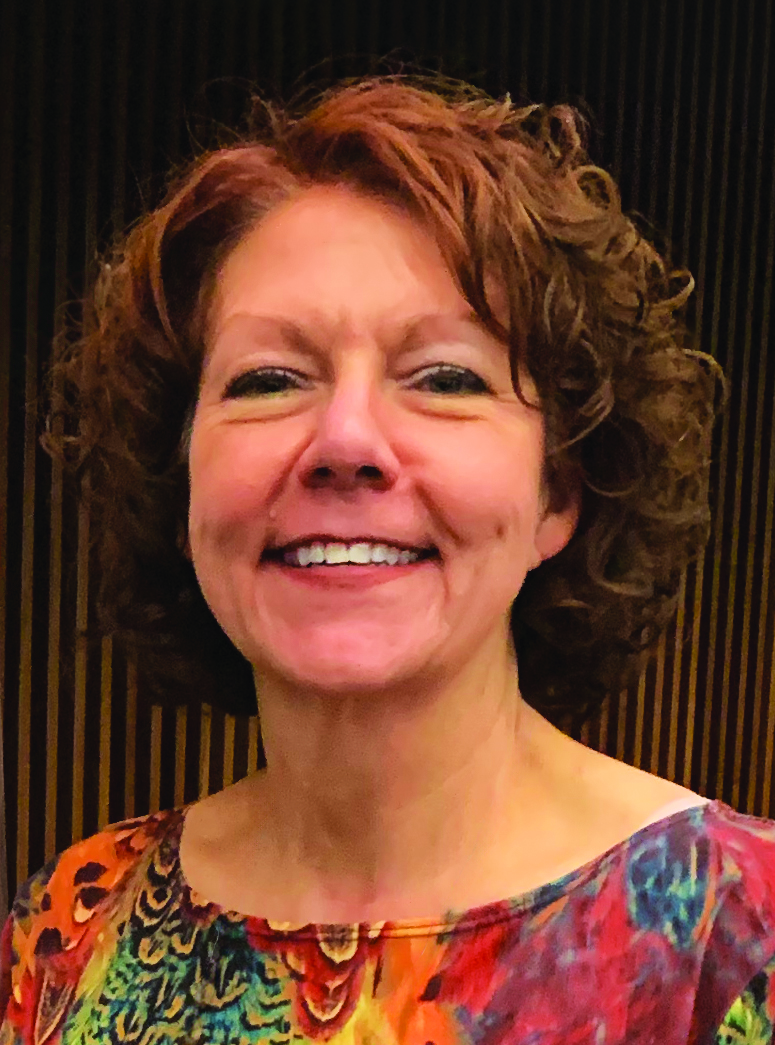
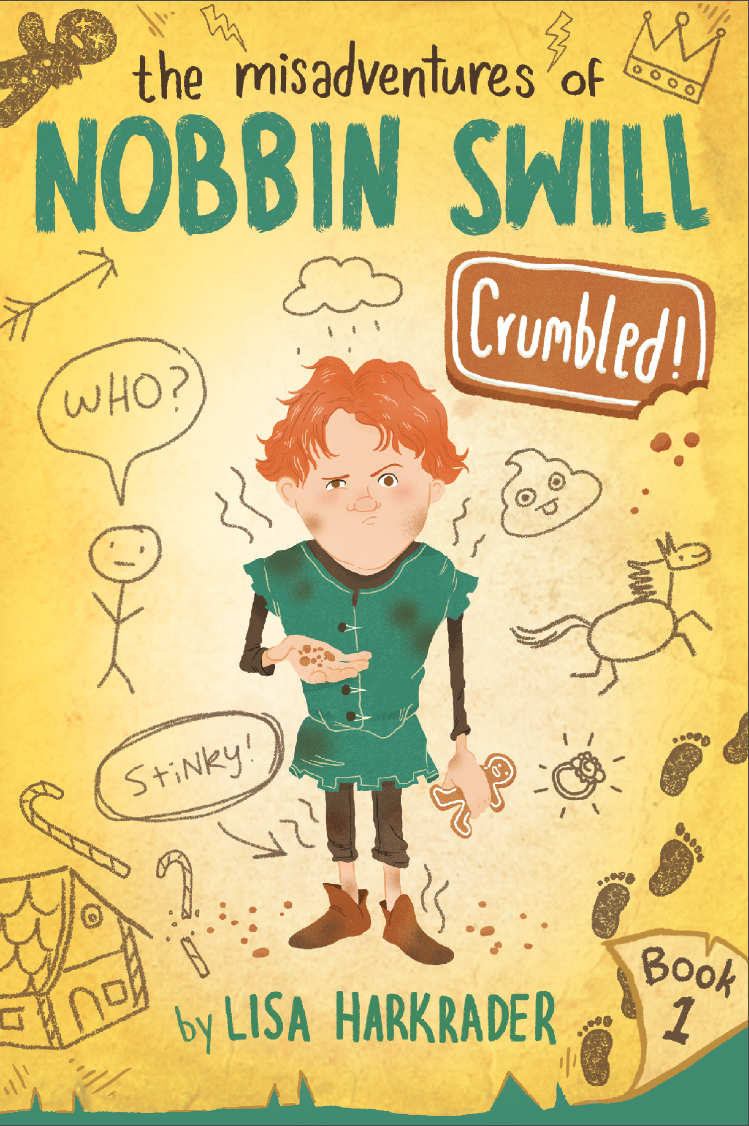
My Tell Me Your Story Guest for September is Lisa Harkrader (https://www.ldharkrader.com/). Lisa grew up in a small town in Kansas. When she was in the third grade, she wanted to be a writer and an artist. She also wanted to be a spy, a psychiatrist, and second baseman for the Kansas City Royals.Those last three haven’t happened, but she is a prolific writer and illustrator who has published forty-five books for children, including the award-winning Airball: My Life in Briefs, The Adventures of Beanboy, and the Misadventures of Nobbin Swill detective series. Lisa recently ventured into writing mysteries for adults, publishing short stories in several anthologies, including SoWest: Danger Awaits, A Right Cozy Culinary Crime, Colorado Mystery Merge 2, and the upcoming Bouchercon anthology The Lines We Cross. She has received the William Allen White Award and four Kansas Notable Books awards. Lisa lives in Tonganoxie, Kansas, with her husband and two children. And she still wants to be a spy.
One of Those Somebodies
Lisa Harkrader
I love books. I have always loved books. Even before I could read, I loved books.
I had great parents who, from a very early age, read to me before bed. They let me pick out the books each night, and almost always, one of the books I picked was The Night Before Christmas. I didn’t care what time of year it was. It could’ve been April. It could’ve been July. That’s the book I wanted. And that book convinced my parents I was brilliant—so brilliant that they thought, even before I started school, I had taught myself to read. Because I’d heard that book so many times, I’d memorized every word, including where to turn the pages. So when they weren’t reading it to me, I would read it to myself. (I can still recite it today, word for word. That’s how much I loved it.)
When I did start school, I discovered the most glorious place on earth—the school library. An entire room filled with books! Actually, in my grade school, the library was housed on the old stage at one end of the gym-slash-cafeteria, divided from the lunchroom only by the heavy, dusty theatre curtain that may have been gold originally, but by the time I came along, was sort of a dirt color. It was dark back there, and the librarian, Mrs. Abplanalp—yes, that was really her name; we called her Mrs. A because our little grade-school mouths couldn’t say Abplanalp—watched our every move with great suspicion. But I didn’t care. There were books. Shelves and shelves and shelves of books. I always checked out the maximum number allowed and had them all read long before I needed to check them back in again the next week.
It wasn’t till I was in the third grade that I realized somebody had to write all those books, and I decided right then and there that someday, one of those somebodies would be me. It was no longer enough to read books. I decided I had to write and illustrate them, too. (I also wanted to be a psychiatrist and a spy and play second base for the Kansas City Royals. Third graders dream big.)
And third grade was big. My teacher that year was Mrs. Wager. I’d seen Mrs. Wager in the hallway when I was in kindergarten, first grade, and second grade—with her tight iron-gray curls and her sensible black shoes and the gruff no-nonsense way she walked. I estimated she was about 150 years old, and I thought she looked mean. I was not happy I had to spend all of third grade with the mean teacher.
But when I got into her class, I also got a lesson in how looks can be deceiving. Mrs. Wager with the iron-gray curls was probably the kindest, most supportive teacher in the entire school. She loved her students, and encouraged them to do the things they loved and were good at.
So, since I had recently decided to be a writer and illustrator, I spent my free time writing and illustrating poems and giving them to Mrs. Wager.
And she loved them! At least, she said she did. They were third-grade poems written on a Big Chief tablet—how good could they be? But Mrs. Wager was so enthusiastic that I spent the summer after third grade writing and illustrating even more poems. I stapled them together with a construction paper cover. It was my first book! And when I went back to fourth grade, I made my way to Mrs. Wager’s classroom and gave it to her.
And she loved it! At least, she said she did. But I think she honestly did, because many years later, when I was in college, I came home and ran into Mrs. Wager in the post office. (She was still 150 years old.) She talked about my book of poems. She said she still had it, she was still proud of me, and she hoped I was following my dreams. When your third grade teacher gives you that kind of encouragement, you kind of hate to let her down.
Eventually third grade ended, and I moved on. I went to college and earned a degree in art—because, as you will recall, I both wrote and illustrated my third grade poems—and then began working as a graphic designer. I got married and started a family, and from time to time I would still try to write, sort of, and I read Writer’s Digest, and I wandered through bookstores, dreaming my dream.
But I wasn’t actually doing anything about it. . . until I started watching a TV show called Thirtysomething. (For you youngsters out there, it was a popular ensemble show from the 1980s.) One of the characters in that show gave me the kick in the pants I needed. That character was Nancy Weston.
Nancy was a bored stay-at-home mom in a sort of crumbling marriage who also had a degree in art—like I did. She’d made up a bedtime story to tell her kids, and one day she decided to write and illustrate it as a picture book. And then, a couple episodes later, an editor decided to publish it. He also thought she was pretty hot and asked her out, which caused her a lot of anguish, what with her crumbling marriage and all.
And this really ticked me off. Not because of the whole “I think I’ll write a children’s book over coffee this morning and get a big publishing contract later this afternoon.” Which is maddening enough. Or the editor’s whole “Yes, I’d love to publish your book and also take you to dinner. . . and maybe more.” Which is clearly unethical.
No, it was because Nancy Weston was living my life, achieving my dream, and worst of all, she wasn’t even a real person! That’s when I began writing with purpose. Envy and anger kicked me into gear.
I started with short stories and soon saw my stories published in magazines like Cricket and Ladybug. I moved on to longer works, and today when I walk into a library, some of those books on the shelves were written by me. I’m one of the somebodies. My third grade self can hardly believe it. And it’s all thanks to two terrific parents, a 200-year-old Christmas story, my third grade teacher, and a nonexistent person in a long-canceled TV show.
______________
Visit Lisa at her website:
https://www.lisaharkrader.com
Amazon page:
https://tinyurl.com/LisaHarkrader
Then came AI. I’m sure you’ve read that many companies have scooped up copyrighted literature, music, art, with a steam shovel and used it WITHOUT THE CREATORS’ PERMISSION to train their AI databases. The most well known case is that of BARTZ vs. ANTHROPIC, a class-action suit against Anthropic for using millions of copyrighted books to train Claude. Nine of my twelve novels are included in the suit.
Anthropic is hardly the only offender, but the only class action suit I am yet involved in. I don’t use AI. First of all, I’ve been at the writing game for a long time and almost all my books were written and published long before AI was a thing. Second of all, I don’t even use AI for innocuous things, like asking when the War of 1812 was, because I don’t want there to be the slightest suspicion that I didn’t personally come up with and write every word in every story I’ve produced in the past, present, and future.
This is like a bear trap. If Claude, for instance, used an author X’s books to train on, and at some later date author X submitted an original new work to a publisher, who then ran the manuscript through Claude to verify it wasn’t written by AI – Claude (for instance) might say “This looks like 75% AI”, because it’s being compared to author X’s work that Claude trained on in the first place.
So. Book writers are being advised to save their early manuscripts so they can prove they created the work out of their own heads. Publishers are starting to require that authors swear they didn’t have AI write any or all of their books. I’m still writing, because like most other fiction writers, that’s what I do and I love it. But what I do to get my work before the public is a thing I have to think about long and hard now.
Very long story shorter, Anthropic settled for some billions of dollars, and both authors an publishers are supposed to be compensated for having their works purloined. The paperwork is all filled out. Now we wait.
]]>
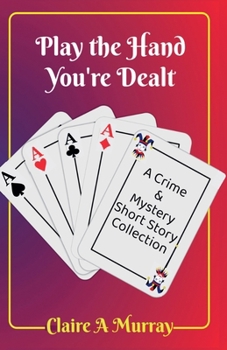
I am so happy to welcome Claire A Murray (https://www.cam-writes.com) to Tell Me Your Story. Claire writes, paints, and hosts write-ins for connection, inspiration, and sanity. She reviews books for Kings River Life Magazine, belongs to the Short Mystery Fiction Society, Mystery Writers of America, and is president of Sisters in Crime Desert Sleuths Chapter. Claire has more than twenty short stories published and is the lead editor for three Desert Sleuths anthologies. Play the Hand You’re Dealt (https://www.amazon.com/dp/B0CGQ5WYDP/) is her short story collection, and she is completing a suspense fantasy trilogy, with another trilogy also in progress. She has a suspense fantasy and trilogy in progress, and is completing the sequel to an unreleased amateur sleuth novel. Originally from New England, She now lives in Arizona. She will be teaching writing in the Emeritus College at Arizona State University this fall.
Writing is Like Painting
by Claire A Murray
In Borg terms (yes, I’m a Trekker), I would be six of eight, and perhaps that explains my nature—dominated by five older siblings, always hoping there would be leftovers enough for seconds at the dinner table, sneaking away to play tennis for hours on end to escape being given yet another chore to perform, and generally not feeling as if I fit in. Reading was my escape.
I became comfortable with being alone, living through books, and figuring things out for myself. Every day after school, a trip to the library provided adventures through books. Singing in the church choir meant leaving the house early for rehearsal, thus escaping the embarrassment my sisters and brothers experienced of marching in late—every week—because our mother was always late. Joining school activities … well, I finally found a place where I fit in.
I was crushed when my junior high teacher marked down a short story I wrote because the “tennis game” lasted too long: “tennis match” she corrected, totally missing the point of this futuristic story of a society so fit and athletic that competitions that once took hours now lasted days. More humiliating at that age, I was a red-ribbon tennis player, yet she thought I didn’t understand the game.
I tried short stories again a few times as an adult and received rejection letters—personal, handwritten, and often including helpful guidance. I was delighted to be rejected by Marion Zimmer Bradley for being too close to a book she was currently writing in her Darkover series. Sure enough, the book’s storyline was close to my submitted story. Some would get angry, accuse her of theft. I took it as a sign I was on the right track and understood her characters and the world she had created.
Years later, I wrote my first novel. Based on my experiences as the waterfront director of a summer camp, I had a strong foundation of place, time, and experiences to draw on. I included a character based on someone I worked with at the time. When my deputy director read the final draft, she recognized that employee. “You captured her better qualities along with the chaos that surrounds her” is a fair paraphrase. I knew I was on to something.
I’m glad I never shopped that book, because I’ve learned so much in the years since. I began its sequel from a different point of view, which leads me to wonder if I should rewrite the first that way. Still deciding.
I began writing short stories to improve my longer works. Write succinctly. Make every word count. Easier said than done. My first published story was motivating. Another followed. I was thrilled when I could say, “I have a half dozen short stories published.” That turned into a dozen, then more, and now more than two dozen. This September, “Charlotte’s Mine” will appear in Crime Before Our Time (Level Best Books); it’s a followup to 2023 “Charlotte’s Mining Days” in SoWest: Wrong Turn. Both stories take us back to 1890s mining days in Jerome, AZ. (I do enjoy research!)
“Ned’s Bedevilment” earned Honorable Mention from Bethlehem Writers Roundtable (https://bwgwritersroundtable.com) and will be published in their 2026 fall magazine. The first chapter of Mother’s Mountain earned 1st place from SouthWest Writers in the Speculative Fiction First Chapter Unpublished Novel category (2025). Play the Hand You’re Dealt (2023) is my collection of previously published and new stories.
Meanwhile, I’m three years and 82K words into Mother’s Mountain, a suspense fantasy trilogy. Kalen, a twentyish soldier in Lord Pentar’s army, hides her banned magical gifts even as they protect her and her fellow soldiers. Her mission to retrieve and protect a sorceress to heal Pentar’s son is threatened by raging storms, self-doubt, and a secret cadre of soldiers that wants her to fail. Above all, Kalen must decide: Does she serve Lord Pentar or the people of the realm?
Research helps me create realistic settings even when magic or mystical aspects are involved. Mention medieval and most people envision knights riding around in armor or jousting in an arena, but that was a short portion of an almost century-long period. Customs became traditions that evolved into yet others. Tools and weapons became more sophisticated. Styles, fashions, and manners changed.
People, however, remain fairly consistent. Liars, thieves, clerics, soldiers, loving families, and fractured families exist throughout history. Human nature, after all, is a study in contrasts. I enjoy creating characters who represent those many facets. Isolating a character forces me to dig deep into how they solve problems.
I’m trying to keep the language in Mother’s Mountain and my second trilogy to 15c (late 1400s) and am impressed with how rich the language was even then. Words and names we assume are contemporary are much older than we think. I play with sentence structure and dialogue to give it an old-world vibe separate from today’s language.
At one point, I considered Mother’s Mountain complete. Then I wrote new chapters from the major antagonist’s POV to flesh out the societal, religious, and political aspects of this society and reveal information to the reader the main character does not know. Those revisions have been my focus for the past two years. I’m in no hurry. Time gives me perspective.
After moving to Arizona in 2016, I added painting to my creative endeavors, another form of story-telling. Painting lets my writer’s mind wander and resolve story elements. This has evolved into the presentation Writing is Like Painting: Layering Enhancements to Transform Plot into Story. Just as I use layers in my painting, I write a basic story, then layer in transformative enhancements. Now, I’m working on painting a scene from that as-yet-incomplete novel.
When I began writing seriously, I’d start at 4:30 a.m., write for a few hours before going to work and almost all day on the weekends. Today, I am rich with time to rise and begin writing as late as 7 a.m., host write-ins, attend webinars and workshops, and focus on learning as much as I can about writing and publishing in today’s ever-challenging market. I’ve edited two Sisters in Crime Desert Sleuths anthologies and will do so again for our 2027 volume.
A few things I’ve learned from writing and painting guide my decisions. Mistakes are fixable: you can rewrite or paint over as long it fits with the rest. Nothing is wasted: what you remove from or cannot use in one work can be used in another. Time is your friend: distance from the process lets your subconscious figure out what’s not right or needs to happen next; switching from writing to painting or vice versa is one of my strategies for that, and switching from my novel to a short story is another. Keeping a list of story titles and another of story ideas can be great when there’s a call for submissions. Your own slush pile is handy: something you wrote earlier and didn’t finish or haven’t found a home for might fit an open call.
These days, I still live through books and stories. But my greatest joy is creating them!
Website: https://cam-writes.com/
Collection: https://books2read.com/u/bPkv2R
and https://www.amazon.com/dp/B0CKRH1ZJK
Social Media: https://facebook.com/clairemurraywrites/;
https://linkedin.com/in/clairemurray/;
]]>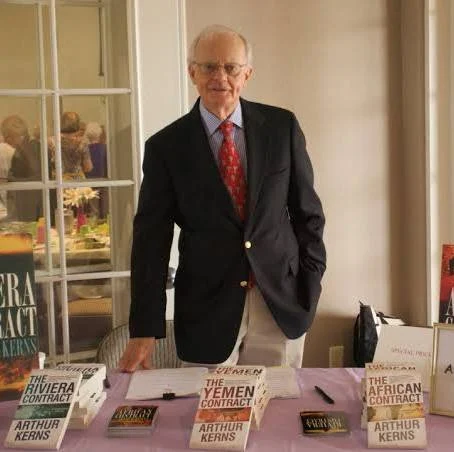
A few days ago I lost another friend. Arthur Kerns (http://arthurkerns.com) was a wonderful author and a long time member of my writers’ critique group. There were only six of us in this group, all published authors, and we were all friends and each other’s cheerleaders. Art was the only man in the group for the past couple of years, and he was really good-natured about our sometimes strong opinions about the sex scenes in his spy novels. Sometimes he’d listen and sometimes not, because as any writer knows, critiques are suggestions and your book is your own. He was a good critic himself, insightful and never mean or condescending. In fact, Art was just a really nice person, a true gentleman.
His passing was a shock. He wasn’t ill. He just took a fall and ended up in the hospital. It’s not too serious, he said. I’ll tell you all about it at our next meeting. Days later pneumonia set in and there ended up being no next meeting for him. We loved him and will miss him terribly.
Only months ago, he received the 2025 Claymore Award for Best Investigator Novel at the Killer Nashville International Writers Conference for a book we had critiqued. I’m so glad that happened for him when it did. Art had a fascinating background. He joined the FBI with a career in counterintelligence and counterterrorism. On retirement, he became a consultant with the Director of Central Intelligence and the Department of State, which took him to over sixty-five countries. His novels were full of fascinating characters, colorful settings, and delightfully twisty plots. I loved reading his insiders look at spy craft. He had just started a new novel for us to critique. Now we’ll never know how it ends.
I feel sad.
]]>
Time once again for a successful author to tell us how she chose to write what she does, and this month we go across the wide world to ask the question of Australian author Elisabeth Storrs. Elisabeth has a great love for history and myths. She is the award-winning author of A Tale of Ancient Rome trilogy which was endorsed by Ursula Le Guin, Kate Quinn, and Ben Kane. Now her obsession lies with Trojan treasure and twisted Germanic prehistory in her new release, Fables & Lies: A World War II Novel. Elisabeth is also the founder of the Historical Novel Society Australasia and the $155,000 ARA Historical Novel Prize. She lives in Sydney with her husband in a house surrounded by jacarandas. Check out Elisabeth’s web site at https://elisabethstorrs.com/buy-books/
Connect with Elisabeth through her website or Triclinium blog. You can find her on Facebook Instagram Goodreads, Amazon Pinterest LinkedIn and Bookbub. Subscribe to her newsletter for monthly inspirational interviews
Never Give Up
Elisabeth Storrs

I’ve written four historical novels, two of which took ten years to write and publish. The other two were finished under two years. So why did it take a decade to complete a work? Because life had a habit of “getting in the way” of my escape into the happy place of my imagination and historical research.
My A Tale of Rome trilogy features a Roman treaty bride, Caecilia, married to an enemy Etruscan nobleman. The first book, The Wedding Shroud, depicts a fearful and gullible girl navigating her way through an alien yet unexpectedly seductive environment. The Golden Dice and Call to Juno continue Caecilia’s story as she matures and becomes a mother during a ten-year war, together with the plights of other strong female characters such as a Roman tomb whore, Pinna, and an Etruscan servant girl called Semni.
It took me a decade to research, write and publish The Wedding Shroud, when I was part of the “sandwich generation”, squeezed between raising children and caring for elderly parents. I had a busy job and was coping with myriad other pressures that women experience in our various roles of spouse, mother, daughter or sister. Apart from a few precious periods where I could devote solid blocks of time to writing, I only had a minimum of two hours per week to spare on Thursdays which I diarized. I kept those diary dates religiously by hiring a local schoolkid to childmind while I wrote. Meanwhile I kept a notebook to jot down ideas whenever they came to me – often at 4am in the morning! Back then, I produced paper manuscripts so I would edit on my daily train commute (if I was lucky enough to score a seat), and in my lunch breaks.
My first agent couldn’t sell the book but I was advised to submit again if I changed my focus to emphasize the love story and explore a clash of cultures.
I rewrote the manuscript with a revised plot and did further research. No luck.
I rewrote it a third time in a different style with the help of a mentor. My new agent got the book over the line! I will never forget my disbelief then exultation at hearing I’d been offered a contract with an Australian publisher. To add icing to the cake, I was also commissioned to write the sequel, The Golden Dice. My next big excitement was to gain an endorsement from the legendary Ursula K Le Guin!
However, debut authors are naive. We have high hopes our books will be “the next big thing”. We expect our publisher to pour dollars into marketing to ensure our novel has the best chance of success. The sad truth is the publishing world works on what I call the “spaghetti method” – they throw debut novels against the wall like pasta. Those that stick are given more marketing dollars. The rest slide down the wall and are tipped into the bin. It hadn’t dawned on me publishers sell books directly to booksellers not readers. An author’s fate is in the hand of a bookstore owner who has limited space and razor thin margins. The shelf life of a new release is 12 weeks at best – thereafter your book baby faces being returned to the warehouse and ultimately pulped.
The Wedding Shroud was released in 2010 at exactly the time the Borders empire collapsed and the Red Group (an Australian book group) also hit financial difficulties. My novel sank without trace. I found the experience bewildering. The book I’d slaved over for ten years had been relegated to the dustheap in the space of a few months. But hope springs eternal, I concentrated on finishing the sequel within 18 months. I made the deadline but heartbreak followed. My publisher closed its fiction imprint. The deal for The Golden Dice fell through.
The adjective “stubborn” suits me. I now had two books without a home, and was determined that all my efforts would not go to waste. I decided to self-publish. To my great good fortune, a group known as Historical Fiction Authors Co-op reached out to me through the ether to ask me to join them. They were a collective of both traditional and self-published authors (including the lovely Donis Casey), many of whom had successfully cracked the market. The group was led by the amazing M Louisa Locke whom I learned was a guru in self-publishing circles as an expert on Amazon keywords and categories. Using her advice, I launched The Wedding Shroud in 2013 and The Golden Dice in 2014 as e-books into the Amazon eco-sphere at a time when the goliath supported Indie authors. Kindles were bright new shiny toys ready to be filled. By using very short windows of opportunity (3 days) to offer books for free, Indies could gain visibility to compete with legacy publishers. Through this marketing method, my books were bumped into the Historical Fiction popularity lists for months at a time alongside traditionally published heavy hitters. Suddenly I was selling thousands of e-books, rising in the rankings, and garnering reviews. I was part of the “Indie Gold Rush.” I began to plot the third book, Call to Juno.
There is a saying that success occurs when preparation meets opportunity. Out of the blue, I was contacted by Jodi Warshaw, a commissioning editor from Lake Union Publishing, an Amazon Publishing imprint. (In fact, I thought her email was simply an Amazon book recommendation so I was glad I didn’t delete it!) Jodi’s team had noticed my indie sales and wanted to buy my first two books, and commission me to finish Call to Juno. The offer was too good to say no, especially as audio editions were also to be produced. I am forever grateful for Jodi’s support and caring advice. The Wedding Shroud and The Golden Dice were re-released in 2015. I finished Call to Juno within 12 months. The ability to write it quickly (at least quickly for me) was because I was building on research I’d already done. I had also improved my skills in creating a narrative structure and establishing characters. Practice does help.
Readers are the most important people in an author’s writing life. The next unexpected email to land in my inbox was from an Italian fan who loved Call to Juno. He enthusiastically recommended my trilogy to his publishing colleague from AltreVoci Edizioni. It has been a dream come true to have my Roman books translated into Italian as Il Velo Nuziale, I Dadi D’Oro and Il Patto di Giunione.
After I finished Call to Juno in 2016, I turned my attention to Priam’s Treasure, a fabulous cache of gold found at Troy by archeologist, Heinrich Schlieman. After smuggling the trove out of Turkey, he bequeathed the Trojan gold to the German People and displayed it in the Pre and Early History Museum in Berlin. The gold was subsequently plundered by the Soviets in 1945 and disappeared for 50 years.
When researching the Trojan gold’s disappearance, I discovered the German museum curator who braved air raids to protect the priceless exhibit was a Nazi who joined Himmler’s Research Institute to protect himself from rivals and advance his career. This led me to learn more fanatical scholars promulgated the “Aryan Myth” to justify conquest, dispossession and genocide. I decided to rewrite Fables & Lies as an historical novel which not only tells the stories of the museum curators who saved their national treasures but also how the Himmler’s scholars twisted history to serve power.
My protagonist, Freyja Bremer is a patriotic museum assistant raised on Nazi dogma. Through her love affair with Cambridge educated archaeologist, Darien Lessing, her eyes are opened to the rot beneath the Regime’s lies, as they both strive to protect Priam’s Treasure and other antiquities. Intertwined is Freyja’s forced marriage to Kaspar Voigt, one of Himmler’s racial studies experts, and her quest to discover what her husband’s malicious research entails.
Little did I know that when I set out in 2016 to “walk the ground” in Berlin, it would take me another ten years before Fables & Lies would be released! I found it very challenging to research modern history after a decade of being immersed in C4th BCE Rome and Etruria. Previously I was dealing with a scarcity of written sources, now I was faced with an avalanche of them. I confess I often find myself in the tarpit of research because I become so interested in too many topics! I also felt like I was starting from scratch in terms of structuring the narrative and understanding the mindset of German civilian characters. Even so, I never thought I’d take eight years and another two to find an agent and publisher. I was repeatedly told I’d missed the crest of the WW2 craze and that no reader would be interested. Luckily, I finally found two UK publishers, The Book Guild and Bolinda Audio, who believed in a novel that is not about epic battles or organized resistance movements. Instead, it shows how courage can be found in quiet acts of defiance by ordinary people.
On a personal note, it also took years to finish the book as I was battling multiple family crises including severe illness, an untimely death, and caring for an aging mother-in-law with dementia. On top of this I was running the Historical Novel Society Australasia organizing six biennial conferences as well as introducing the $155,000 ARA Historical Novel Prize to the Australian literary scene. Once again, life got in the way! I think many authors experience the same competing forces but my advice to aspiring writers is to keep finding pleasure in the act of writing itself. Finally – remember the 5 Ps to success – patience, perseverance, preparation, practice and perspiration! In other words – never give up!
Connect with Elisabeth through her website or Triclinium blog. You can find her on Facebook Instagram Goodreads, Amazon Pinterest LinkedIn and Bookbub. Subscribe to her newsletter for monthly inspirational interviews
–––––––––––––––––
Talk about a once-in-a-lifetime experience. (I suppose that a person could live through more than one centennial event, but could one remember both of them, that is the question?)

In 1976, I was newly married and living in Lubbock Texas. We went downtown on the day and joined the crowd for the Independence Day Parade. I love parades, anyway, to the extent that I almost always tear up when I hear the drums and first catch sight of the flag corps, and of course this parade was spectacular in that already-spectacular Texas fashion.
Several local businesses were giving away free cake and hotdogs. The crowd around the tables was rather like a monkey riot, what with people grabbing free food hand over fist, and Don ended up with one whole hot dog and one that had been ripped in half. Both were squashed, and just delicious.
Fifty years later, I feel more anxious about our future than I did when I was young. But I am very grateful to have lived when and where I was born.
This brings to mind other memorable anniversary dates. Many years ago, we returned to the Western Hemisphere on a Polish ocean liner, the Stefan Batory, after several months Europe. We sailed across the Atlantic and right up the Saint Laurence Seaway to Montreal and landed on Canada Day, July 1, for a wonderful welcome home.
July 7 is the third anniversary of the launch of my first novel, The Old Buzzard Had It Coming. The joy of the occasion was dampened by the fact that my mother, who had been instrumental in the research for the book, had just died a few months earlier. Besides, I was so nervous that I practically had an out-of-body experience. I’ve launched eleven other books since then, and I have to say that it has gotten easier.
]]>
My Tell Me Your Story guest for June is Edwin Hill, who just happens to be one of my favorite authors. Edwin is the Edgar and Agatha Award–nominated author of the standalone thrillers What Happened Next, Who to Believe, and The Secrets We Share, as well as Little Comfort, The Missing Ones, and Watch Her in his wonderful Hester Thursby series. His new stand-alone novel is What Happened Next, about a man investigating a crime that happened when he was too young to remember – his father committed murder and was never seen again. Charlie Kilgore has heard the details of the murder many times, but is that all there was to it? He wants to find out what happened next. Ed Hill has been featured in Us Weekly magazine, received starred reviews in Publishers Weekly (from me), Kirkus Reviews, Booklist, and Library Journal, and was recognized as one of Six Crime Writers to Watch in Mystery Scene magazine. Ed lives in Roslindale, Massachusetts, with his partner, Michael, and his favorite reviewer, their Lab Edith Ann, who likes Edwin’s first drafts enough to eat them. Check out Ed’s website at https://www.edwin-hill.com/

EDWIN HILL
For me, one of the joys and curses of being a writer is that knack for remembering the smallest details, of giving those details meaning, and hanging onto them long after they otherwise might have faded.
In the summer leading into the pandemic, my mother’s extended family gathered at Fenway Park for a reunion of sorts. The senior members of her family – my grandparents and great uncles and aunts – had all passed on, and as can happen, we saw less of the cousins over the years.
I was excited to learn that one of my second cousins, Margaret, would be attending. I may have met Margaret – who has gone by Meg, Maggie, and other variations of her name, but was currently opting for Margaret – three or four times over the years, but I had a distinct, clear memory of an August night in the early eighties when the extended family gathered in Connecticut, when fireflies lit up the night, and when the adults gathered with cocktails and cigarettes, signaling that they wanted time without kids.
Margaret had an older brother who annoyed her, and I had an older sister who annoyed me, but somehow we formed a quartet that evening, sandwiched in age between our parents and a phalanx of younger cousins who insisted on being entertained. They wanted stories read and balls tossed and songs sung, until our quartet finally barricaded ourselves on a screened porch to escape. The children wouldn’t give up, though, and when they breached out defenses we ran into the night without a plan.
Margaret’s brother and my sister walked ahead, heads bowed together, whispering, while Margaret and I took up the rear. None of us lived in this town we were visiting, but we found a hill to climb and crossed under powerlines till we came to the top and found a view overlooking the sound. We lay on the grass and watched the stars and fireflies, and when it was time to go, we retraced our steps and returned to the party.
I’m not sure how long we were gone, but it was long enough to disrupt cocktails and for a search party to have formed, though most of the members kept their cigarettes burning. We were each admonished for our behavior, Margaret’s brother and my sister more so than either of us. Still, I could tell that my mother and Marget’s mother – first cousins – secretly hoped that the events of the evening would lead to a lifelong friendship.
I wouldn’t see Margaret again for forty years, but on another hot August day, I said hello to her while the Red Sox played. “It’s nice to see you again,” I said.
“I asked my mother to remind me who everyone was,” she said. “Didn’t we run away together?”
“We sure did,” I said.
]]>Penny

I love a great life story, and Penny Orloff has one. Penny was a working actor and dancer in Los Angeles when a Juilliard scholarship took her to New York, where she sang more than 20 Principal Soprano roles for New York City Opera and played featured roles on Broadway. In a career spanning over 50 years, she starred in 100+ productions off-Broadway, regionally, and internationally. Symphony, theater, and opera engagements have taken her all over the US, Europe, and the former Soviet Union. She has recorded for Vox-Turnabout, Warner-Nonesuch, Protone, and Original Cast Records. Penny’s one woman show, Jewish Thighs on Broadway—based on her award-winning comic novel, available at Amazon.com—toured the US for a decade, including a successful run off-Broadway. She is currently touring in a new one woman show, Songs and Stories from a Not-Quite-Kosher Life. A Tarot reader for over 50 years, Penny has used the cards in her counseling practice for decades. For ten years she was the Art Therapist at a residential drug and alcohol rehab facility in Malibu. She is the author of Art as Lifework, Life as Artwork, a creativity seminar and workbook that has been offered nation-wide since 1991; and is currently at work on her new book, Who Would You Be If You Had Nothing to Bitch About? Her personal development system, Wishful Thinking, synthesizes the human proclivity for magic and symbol with practical steps to the manifestation of your fondest dreams. She is a regular contributor of stories to the Chicken Soup for the Soul series of books.

Old Storyteller
When I was a child, my mother’s family was five generations deep, five generations alive at the same time. Some of those people lived well over a hundred years. They were living history. Their stories and the stories they told of their ancestors’ ancestors were part of a six-thousand-year-old oral tradition.
By the time I was seven, I was consciously collecting stories that had been in the family for generations. I became a reliquary. I would guard and preserve these treasures for the generations to come. And when I grew up, I would be one of those Old Storytellers.
I soaked up random memories from my grandma’s childhood in Russia, my dad’s memories of his long years at the orphanage, my great- grandmother’s tale of her youngest child, my grandma’s little brother Georgie, running off to be a gangster—which I later realized was how my mom and dad eventually met each other.
At the family table, it was understood that nobody under the minimum age of 40 had anything to say of any imaginable interest or importance. Shah, shtil! Shut up and listen—you’ll learn something. Those people had outlived the pogroms, the post-WWI influenza epidemic, the great depression, Hitler. They had survived to tell the tales. So would I.
Early on, I was aware of creating the Old Storyteller character I imagined I could be. I had lots of tribal elders as role models among my mother’s mishpochah: very old musicians who’d played forever (I still have the violin that belonged to my grandfather’s grandfather). Very old singers of songs from a hundred years past (I still have Russian and Yiddish songs that belonged to my grandmother’s Grandma Masha). They had their way of doing Old Age. And some day, I would do that. I would be that.
Time has chipped away at the sharp corners, sanded down the jagged edges, smoothed out the rough and rocky terrain that was a younger Penny. I am “colorful” and “eccentric” now, instead of weird. I realize I haven’t been in a fistfight in over 20 years. PS: I always fought above my weight class. You don’t wanna mess with me…
Cinderella has become the Fairy Godmother. Sometimes, from here, I look back on a younger me, and I remind her who she’ll be when the scars are healed, when the back-against-the-wall fight to the death has ended in survival, when the foolish, forever life-altering choice has given the inevitable result.
More than any successes—and there have been great successes—I realize that, during every meaningful challenge, from time to time this Me I have become used to appear to the girl who was becoming, and said, “Hey, Pen, look who you get to be!”
I didn’t know all the strange details of the journey to that future Me, but I must say I’m about where I expected to be. This is Autumn. This is the Harvest. The wounds are healed. I like my scars. My heart has been broken. And broken again. And will break, again.
One of the great gifts of Age is permission to tell the truth. Another is independence from the good opinion of other people. At 76, although certainly mellower I still feel like the snarky little me I have been, all along. But, sometimes, when I catch an unexpected glimpse of myself in a mirror across the room, I’m astonished to see this old gal, this Old Storyteller I always imagined I would be.
]]>