The post Tree-Ring Structure of Galactic Bar Resonance in N-Body Simulations appeared first on AAS Nova.
]]>Even in a noisy environment with fluctuations in pattern speed and encounters with the Sagittarius dwarf galaxy, a tree-ring structure arises in phase space measurements of the Milky Way’s galactic bar.
The post Tree-Ring Structure of Galactic Bar Resonance in N-Body Simulations appeared first on AAS Nova.
]]>
Astrobites reports on a new diagnostic tool used to understand how the neighborhood a black hole grows up in may affect the rest of its life.
The post Not All Black Holes Who Wander Are Lost appeared first on AAS Nova.
]]>Editor’s Note: Astrobites is a graduate-student-run organization that digests astrophysical literature for undergraduate students. As part of the partnership between the AAS and astrobites, we occasionally repost astrobites content here at AAS Nova. We hope you enjoy this post from astrobites; the original can be viewed at astrobites.org.
Title: Tracing Black Hole and Galaxy Growth Across Environments Since Cosmic Noon
Authors: Emma Jane Weller et al.
First Author’s Institution: Yale University
Status: Published in ApJ
They say you can’t choose your hometown, but it still ends up shaping who you become. Turns out the same is true for black holes. The galaxy a black hole grows up in will have a major impact on how it will live out the rest of its life. Similarly, the black hole can leave a lasting impression on its galaxy!
Astronomers have long known that a galaxy’s stellar mass (the combined mass of all its stars) tracks pretty tightly with the mass of the black hole sitting at its centre: bigger galaxy, bigger black hole. This is one pillar of the idea that galaxies and their central black holes coevolve; that is, their life stories are tangled up with one another from early on. But ever since JWST started spotting suspiciously large black holes in the early universe, astronomers have been debating whether this relationship holds steady across cosmic time, or whether the rules were different when the universe and everything in it was younger.
Not Everyone Stays in the Town Centre
Most previous studies of the relationship between black holes and their galaxies have focused only on the central black hole: the biggest, most famous resident of a galaxy, sitting right downtown at its centre. That’s a reasonable place to start, since the central black hole is usually the most massive one around and tends to dominate the story. But this article’s authors wanted to know what happens to everyone else in town, too!
That includes satellite black holes, which are the central black holes of smaller “satellite” galaxies that orbit a bigger “primary” galaxy, a bit like a small town around a big city. It also includes a stranger, more recently discovered population: wandering black holes. These are the black hole equivalent of someone whose hometown got swallowed up by an expanding metropolis, and who never quite settled into their new surroundings.
Here’s how it happens: when a small satellite galaxy merges with a larger one, the satellite gets torn apart by tidal forces and its gas and stars are stripped away. However, its central black hole is often left behind, drifting through the new, much bigger galaxy on a wide orbit. The process that would normally drag a black hole down to the centre of a galaxy, called dynamical friction, is painfully slow, so wanderers can spend billions of years roaming the outskirts.
Two Cities, Two Sets of Rules
To study how these different black hole “life paths” shape, and are shaped by, their host galaxies, the authors turned to two cosmological simulations, ASTRID and TNG300, which handle black hole physics quite differently.
In TNG300, black holes are assumed to start fairly massive and are snapped straight to the centre of their host galaxy at every timestep. This makes mergers happen quickly and often, but it also means there’s no such thing as a wandering black hole in TNG300.
ASTRID, on the other hand, seeds smaller black holes and lets them move more realistically through their galaxy using a subgrid dynamical friction model. This is what allows wandering black holes, with their slow, aimless orbits, to exist and be studied in the first place.
Figure 1 reveals a lot at once. First, ASTRID (the simulation that allows wandering black holes and tidally stripped satellites) has whole new neighbourhoods on the map that simply don’t exist in TNG300. Those populations clearly aren’t following the same tidy, linear coevolution that central black holes enjoy with their galaxies. Second, the most massive black holes tend to be the most yellow, meaning mergers did the heavy lifting for their growth. This is especially pronounced in TNG300, where roughly 80–90% of the growth of the most massive black holes comes from mergers. Meanwhile, the wanderers and stripped satellites sit at the deep-purple end: these black holes have barely merged with anyone at all.
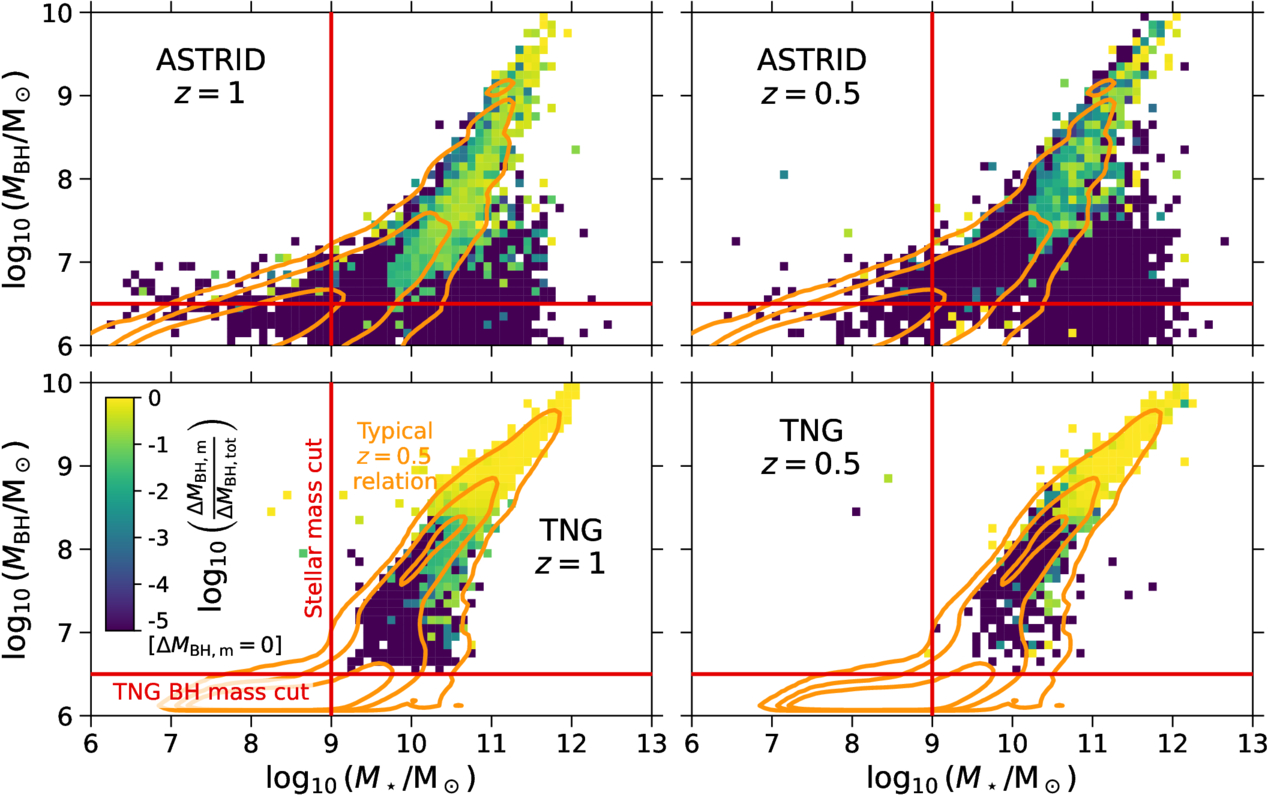
Figure 1: How black hole mass relates to host galaxy stellar mass, shown at two snapshots in cosmic history, 8 and 5 billion years ago, for both simulations (ASTRID: top row; TNG300: bottom row). Colour shows what fraction of each black hole’s growth since the last snapshot came from mergers, from purple (grown almost entirely by slowly swallowing gas) to yellow (grown mostly by swallowing other black holes). [Weller et al. 2026]
Four Kinds of Black Hole Life Stories
Pulling all of this together, the authors sketch out a kind of “neighborhood map” of black hole fates, sorted by where a black hole ends up on the mass-relation plot and how it got there (see Figure 2).
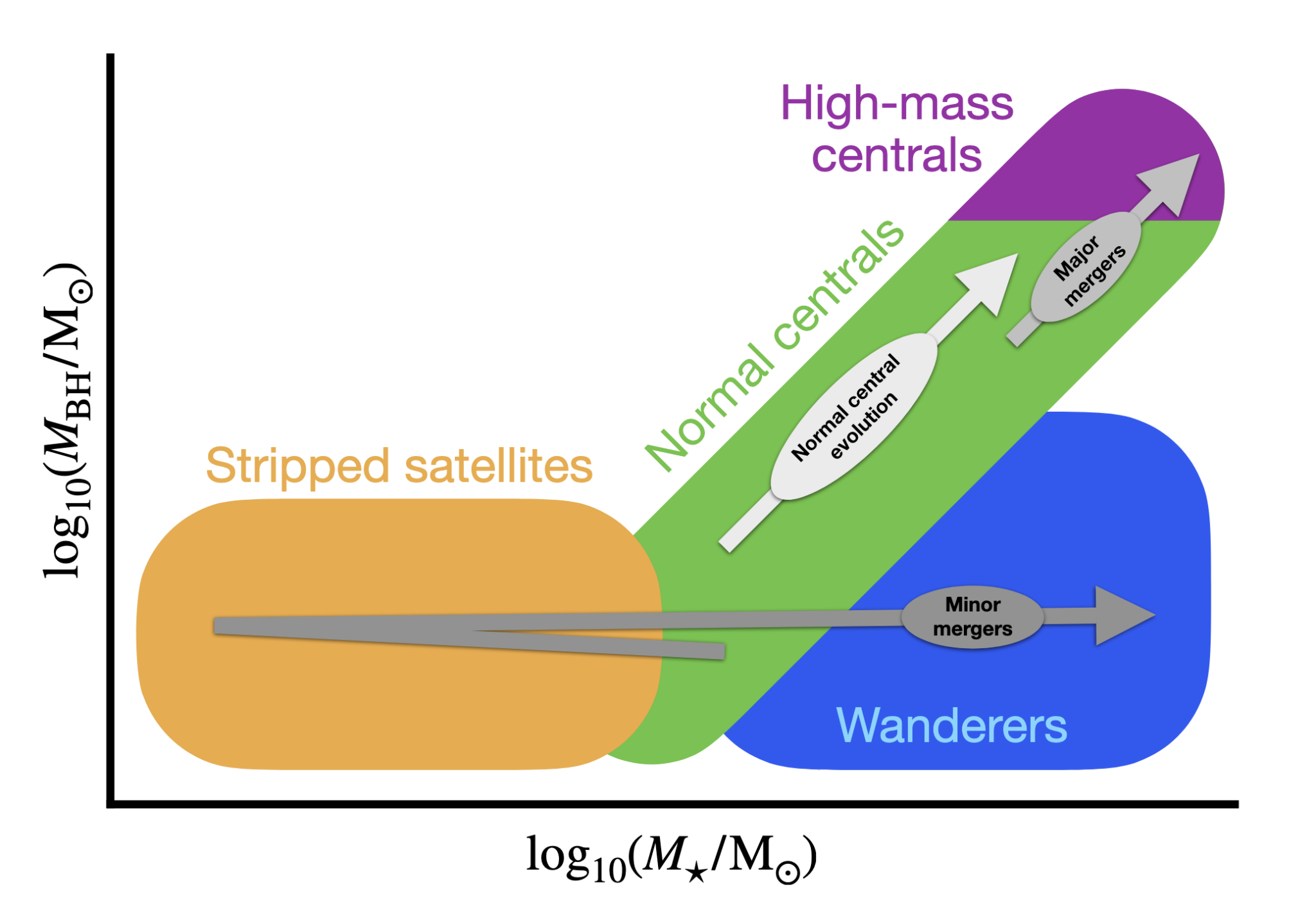
Figure 2: The distinct black hole populations revealed by the black hole mass–stellar mass relation, and the evolutionary path that lands each population in its corner of the map. [Weller et al. 2026]
- Normal centrals are the homebodies. They sit at the centre of primary or satellite galaxies and grow up steadily alongside their hometown, climbing the mass relation together through a healthy mix of accretion and the occasional merger. Their galaxies keep forming stars the whole time in a functional, unremarkable, thoroughly nice place to live.
- High-mass centrals are the ones who “made it.” These are central black holes in big primary galaxies, and their growth comes overwhelmingly from mergers with other black holes. Once they get big enough, they start throwing their weight around: their jets blast gas out of the galaxy, shutting down both star formation and their own further growth.
- Stripped satellites are the annexed suburbs. They start out on the normal mass relation, but a merger with a bigger galaxy tears away their gas and stars, shrinking their stellar mass while their black hole is left comparatively overweight for its new, smaller home. With their gas reserves gone, star formation grinds to a halt, and their black holes, starved of fuel, barely grow either.
- Wanderers are the ones who moved to the big city and never quite settled in. They start out on the normal relation inside a satellite galaxy, but when that galaxy merges into something much bigger, they’re left drifting through unfamiliar, low-density territory. With little gas around to feed on and almost no chance of merging with anyone else, their growth basically stalls.
This four-way map is a genuinely useful new way to read the black hole–galaxy relation: a black hole’s exact position on the plot isn’t just a number, it’s a fossil record of everywhere it’s ever “lived.”
There’s plenty more in the article we haven’t covered here, including how quenching plays out over time, how these results stack up against the local universe, and a closer look at how star formation rates and black hole accretion rates track each other across all four populations. If any of this piqued your interest, the full article is well worth a read.
Original astrobite edited by Ryan White and Chloe Klare.
About the author, Jayde Willingham:
I am a first-year PhD student at Swinburne University of Technology studying the early universe and how the first galaxies came to be. My work combines observations and theoretical modelling to explore how galaxies form, evolve, and shape the universe we see today. When I’m not at my desk or doing SciComm, I’m probably reading a good book with a hot beverage under a cozy blanket.
The post Not All Black Holes Who Wander Are Lost appeared first on AAS Nova.
]]>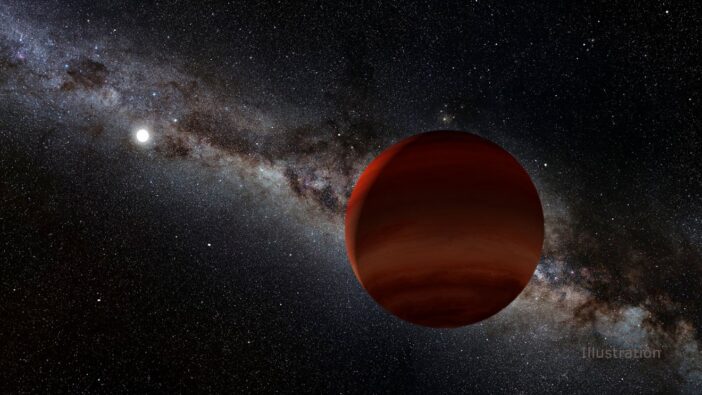
The white dwarf–brown dwarf pair J0404+1112 — one of only about a dozen known systems like it — offers researchers a chance to study a substellar atmosphere blasted with intense radiation.
The post Astronomers Get a Better Look at a Rare White Dwarf–Brown Dwarf Pair appeared first on AAS Nova.
]]>Researchers have followed up on the discovery of a rare binary system containing a white dwarf and a brown dwarf. This unusual pairing offers valuable insights into the physics of atmospheres subjected to strong radiation.
Odd Couple
In 2025, researchers searching through observations from the Transiting Exoplanet Survey Satellite (TESS) spotted an eclipsing binary system in which a brown dwarf orbits the white dwarf J0404+1112 every 2.93 hours. Only about a dozen white dwarf–brown dwarf binaries have been confirmed so far, and each newfound system offers clues to how substellar or planetary companions survive a star’s transition from main-sequence star to swollen red giant to blazing white dwarf.
Because the two objects orbit one another so closely, this remarkable system also offers researchers an opportunity to study the dynamics and chemistry of an atmosphere blasted with high-energy radiation, with important implications for close-in brown dwarfs and giant planets.
Insights from New Observations
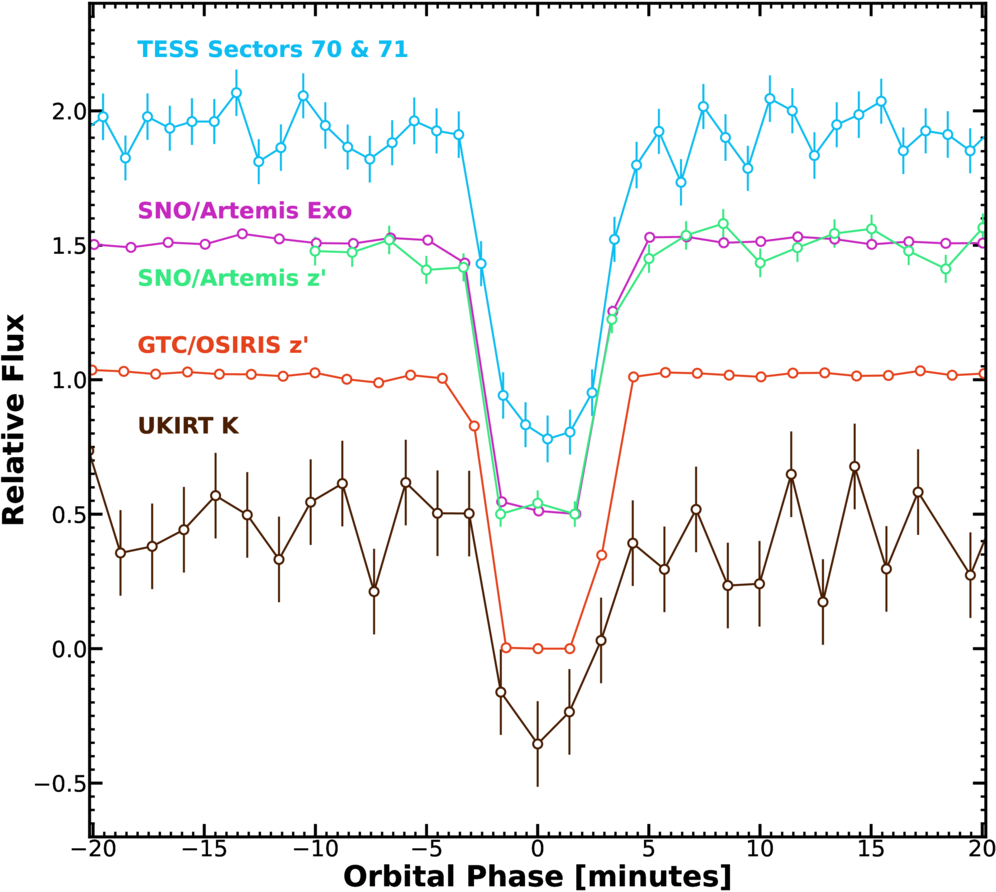
Eclipse photometry of J0404+1112 from TESS, SPECULOOS, the Gran Telescopio Canarias, and the United Kingdom Infra-Red Telescope. [de Wit et al. 2026]
Now, the team has obtained new photometry from the Gran Telescopio Canarias and the United Kingdom Infra-Red Telescope, plus spectroscopy from the Gran Telescopio Canarias, to get a better sense of the system. These observations allowed them to break the degeneracies in the white dwarf’s properties, showing it to be an 0.60-solar-mass white dwarf that has been cooling for more than 10 million years to a present-day temperature of 28,000K. The brown dwarf also appears to be more massive than initially thought, weighing in at roughly 40 Jupiter masses.
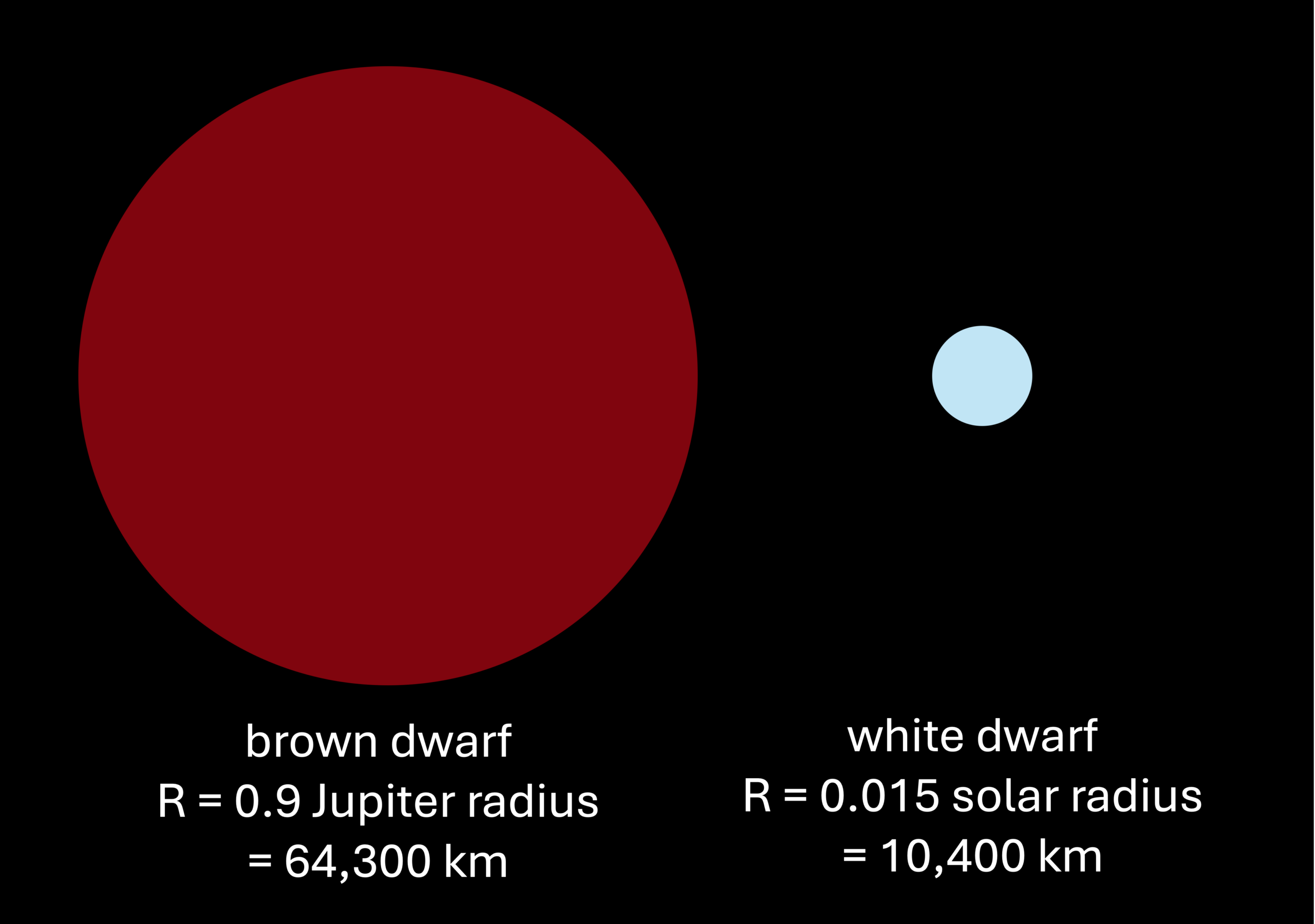
This diagram shows the relative sizes of the brown dwarf and the white dwarf. [AAS Nova/Kerry Hensley]
Like Night and Day
Because the system’s orbit is almost exactly edge on from our point of view, the white dwarf is completely eclipsed as the much larger brown dwarf passes in front of it. This allows the contributions from the two components to be separated, and for the emission from the brown dwarf’s nightside to be measured. The authors constrained the brown dwarf’s nightside temperature to roughly 1750K. Its dayside temperatures are likely to be significantly higher — potentially around 3750K at the point where the white dwarf is directly overhead — but more data are needed to constrain the dayside temperature of this world.
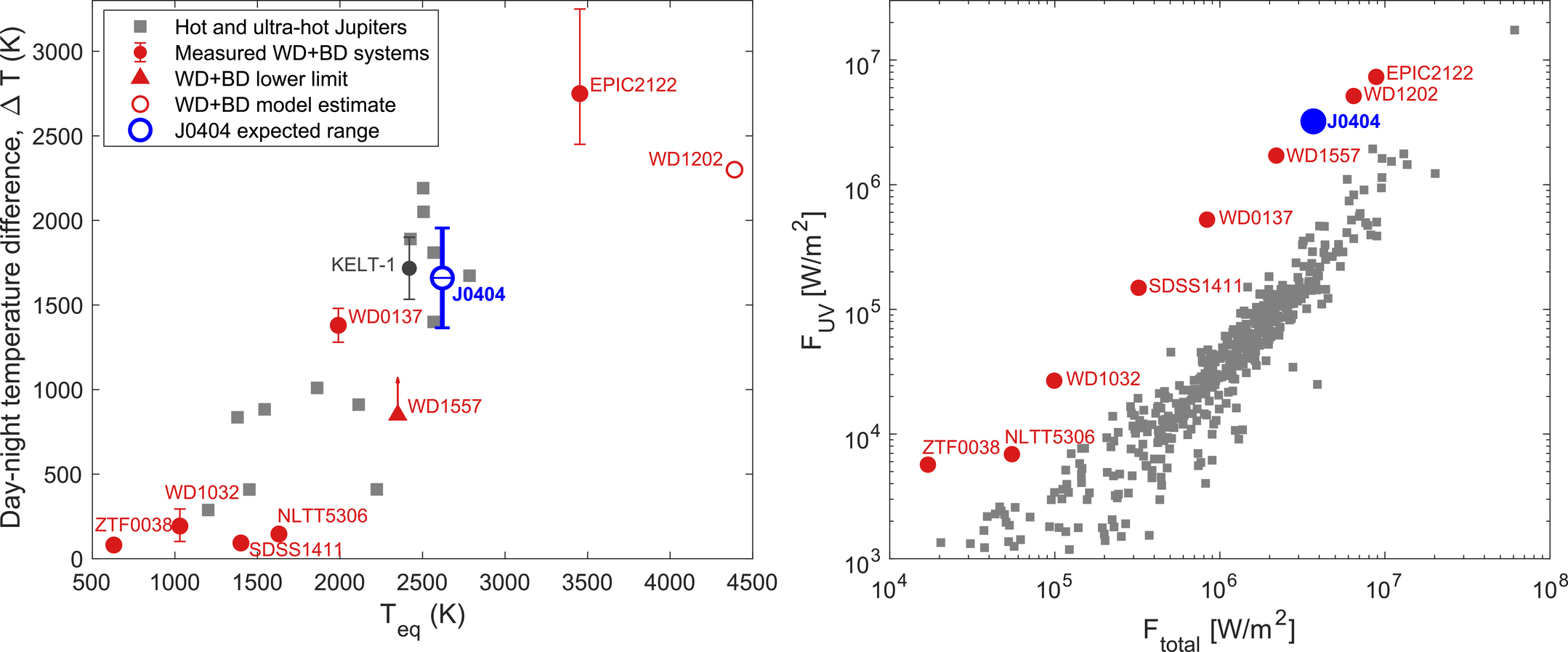
Day–night temperature difference (left) and irradiation flux (right) of the brown dwarf in this system compared to other white dwarf–brown dwarf systems and hot and ultra-hot Jupiters. Click to enlarge. [de Wit et al. 2026]
Citation
“J0404+1112: A 3 hr Eclipsing White Dwarf–Brown Dwarf Probing Multiple Atmospheric Regimes,” J. de Wit et al 2026 ApJL 1009 L40. doi:10.3847/2041-8213/ae9a97
The post Astronomers Get a Better Look at a Rare White Dwarf–Brown Dwarf Pair appeared first on AAS Nova.
]]>The post A Point-Spread Function for the Extreme Ultraviolet High-Resolution Imager on Board Solar Orbiter appeared first on AAS Nova.
]]>Researchers have assessed the diffusion and scattering within an ultraviolet instrument on board Solar Orbiter, which takes detailed observations of our home star from as close as about 60 au.
The post A Point-Spread Function for the Extreme Ultraviolet High-Resolution Imager on Board Solar Orbiter appeared first on AAS Nova.
]]>The post Inferring Globular Cluster Initial Mass Function from Stellar Streams appeared first on AAS Nova.
]]>Pairing cold dark matter simulations with observations of stellar streams and globular clusters, researchers have extracted a declining power-law-like globular cluster initial mass function.
The post Inferring Globular Cluster Initial Mass Function from Stellar Streams appeared first on AAS Nova.
]]>The post Electromagnetic Flares from Compact-Object Mergers in Active Galactic Nucleus Disks: Signatures and Predictions appeared first on AAS Nova.
]]>Emission arising from the merger of stellar-mass black holes in an active galactic nucleus disk should be identifiable through monitoring of order 1,000 active galactic nuclei of sufficient luminosity for a year.
The post Electromagnetic Flares from Compact-Object Mergers in Active Galactic Nucleus Disks: Signatures and Predictions appeared first on AAS Nova.
]]>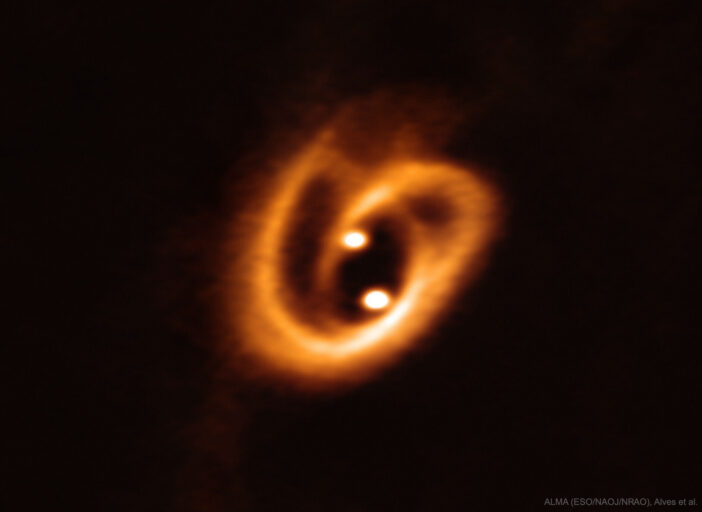
Globular clusters have far fewer binary stars than the solar neighborhood. New research identifies black hole burning as the culprit.
The post Catching the Culprit Behind Globular Clusters’ Disappearing Binaries appeared first on AAS Nova.
]]>Roughly one-third of stars in the Milky Way are in binary or multiple systems, but only ~1–10% of stars in globular clusters have a companion. Did globular clusters start with fewer binaries than the solar neighborhood, or have they since been wiped out?
Survival of the Tightest
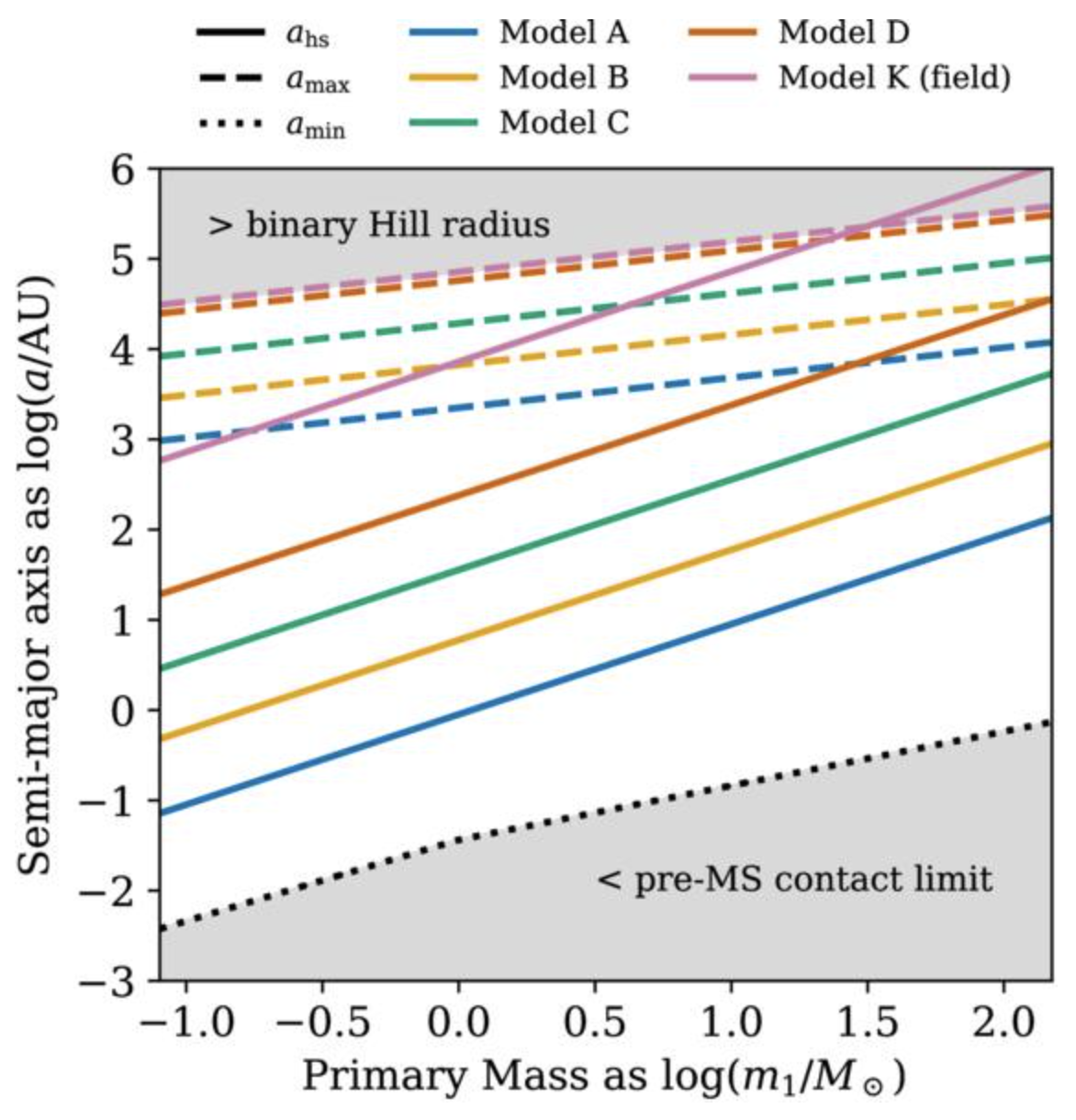
Map of the semi-major axis–primary mass parameter space for binary systems. Solid lines show the boundary between hard (below the line) and soft (above the line) binaries for a variety of models. Models A–K span a variety of cluster masses and virial radii (a proxy for cluster density). [O’Connor et al. 2026]
It turns out that the fate of a binary system depends on whether it is dynamically “hard” or “soft.” Hard binaries are generally tightly bound, and they tend to get “harder” from stellar flybys, which are common in a crowded cluster environment. Soft binaries are the opposite — they have much shorter lifetimes since encounters with other stars tend to loosen them. The team found that, assuming GCs have the same initial distribution of binaries as the solar neighborhood, the dissolution of soft binaries is sufficient to explain the present-day scarcity of binaries in GCs.
Burning Away the Binaries
What actually tears the soft binaries apart? The answer is a process called “black hole burning.” As some of the most massive objects in a globular cluster, black holes in binary systems can transfer energy when they interact with passing stars. This influx of energy can excite soft binaries to the point of dissolution, the study shows.
Black hole burning can also prevent core collapse in GCs. Left to itself, a cluster’s core gradually loses energy to its outskirts, causing the core to grow hotter and denser with stars. This leads to more dynamical interactions between stars that can then get flung from the core or enter new tight binaries. Black hole burning pumps energy back into the core and prevents this from happening.
Putting the Theory to the Test
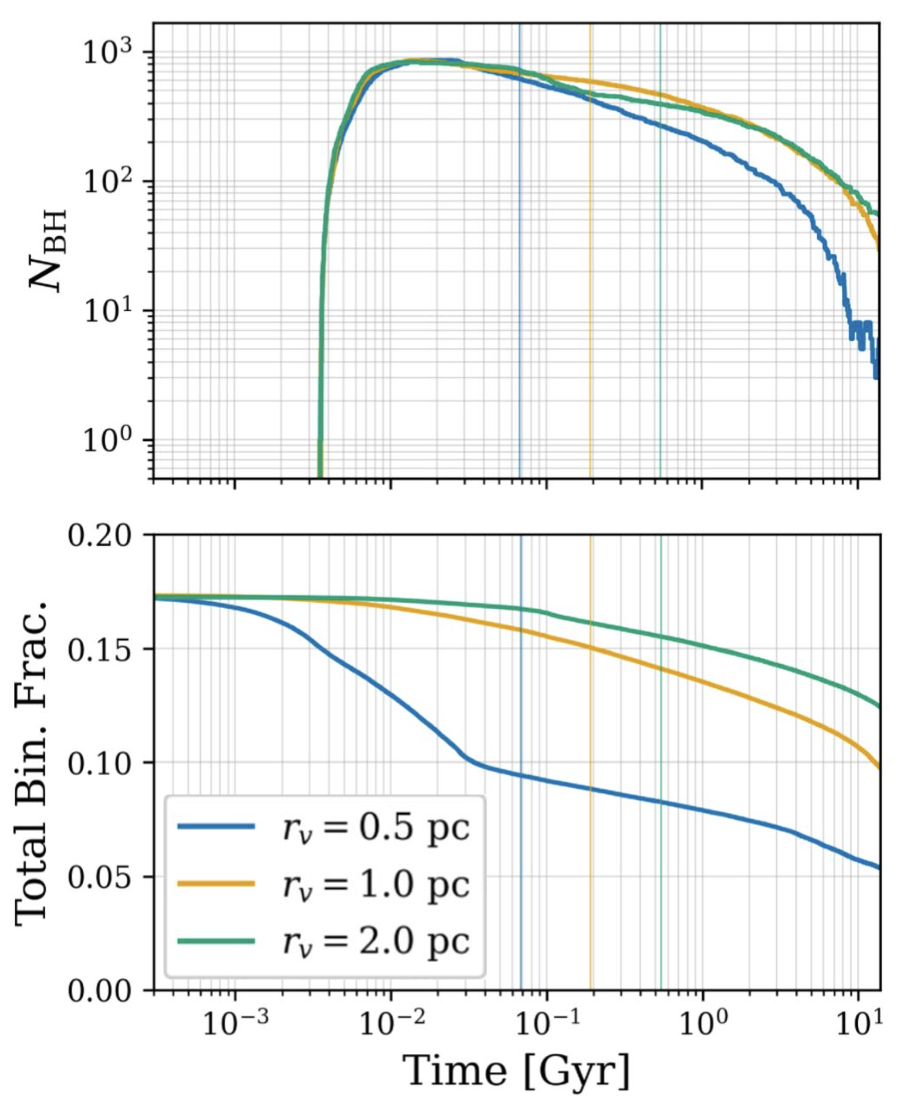
The total number of black holes in a cluster (top) and the binary fraction (bottom) as a function of time for three different cluster models. In the densest cluster (blue), binary dissolution starts early on, mainly driven by stellar collisions. For the other two models, binary dissolution mainly occurs after the number of black holes reaches its peak and black hole burning commences. [Adapted from O’Connor et al. 2026]
In general, the final binary fractions of the simulated clusters agree with those predicted by the team’s analytical formalism. This further supports the theory that there is a universal initial binary distribution between galactic GCs and our solar neighborhood. Constraining this distribution is pivotal for refining dynamical models of GCs.
In short, GCs and the solar neighborhood likely started with the same amount of binary systems, and interstellar dynamics handled the rest.
Citation
“A Common Origin for Binary Fractions in the Field and in Dense Clusters,” Christopher E. O’Connor et al 2026 ApJ 1009 L80. doi:10.3847/1538-4357/aea078
The post Catching the Culprit Behind Globular Clusters’ Disappearing Binaries appeared first on AAS Nova.
]]>The post The Properties of Globular Clusters and Elqui Associated with the Sagittarius Dwarf Galaxy appeared first on AAS Nova.
]]>After identifying a new globular cluster, HSC 61, belonging to the Sagittarius dwarf galaxy, researchers have mapped the stellar stream, determined its metallicity, and analyzed the Sagittarius merger event.
The post The Properties of Globular Clusters and Elqui Associated with the Sagittarius Dwarf Galaxy appeared first on AAS Nova.
]]>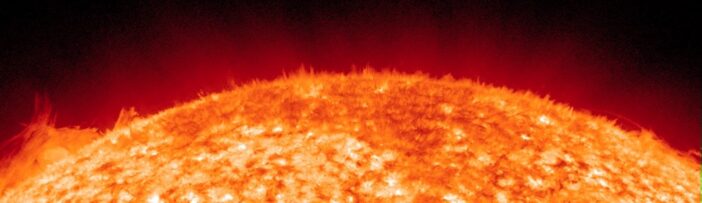
Why do spicules — tiny spikes of plasma on the Sun — appear to rotate, split, and merge? New simulations reveal the possible cause of these motions.
The post Drawing Back the Curtain on Solar Spicules appeared first on AAS Nova.
]]>The Sun’s surface is peppered with spikes of plasma called spicules that appear to shift and twist over time. Recent simulations suggest a new explanation for the motion of solar spicules.
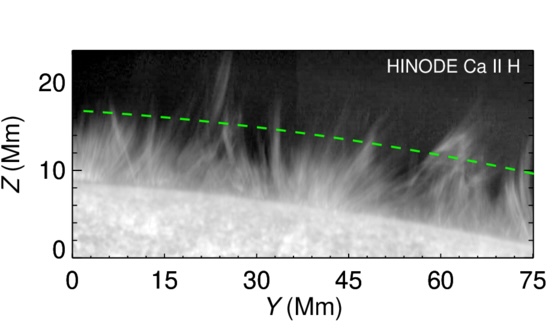
Solar spicules as seen by the Hinode mission. [Adapted from Dey et al. 2026]
Jets in Motion
Solar spicules are tiny jets of solar plasma that last just a few minutes. When viewed along the solar limb, spicules resemble blades of grass blowing in the wind. Observations show these structures moving in a variety of ways: twisting, shifting side to side, splitting, and joining together. Though spicules were first identified more than a century ago, where these motions come from is still up for debate.
In a recent research article, Sahel Dey (University of Newcastle; Indian Institute of Astrophysics; Indian Institute of Science) and collaborators performed 3D magnetohydrodynamics simulations to investigate the source of solar spicules’ motion. The team’s simulations encompassed a volume of 6,000 × 9,000 × 37,000 kilometers that stretched from beneath the visible surface of the Sun up to the lower region of the Sun’s outer atmosphere, or corona. In this region, they applied a uniform vertical magnetic field, mimicking the conditions within a coronal hole, where the Sun’s magnetic field streams outward into the solar system
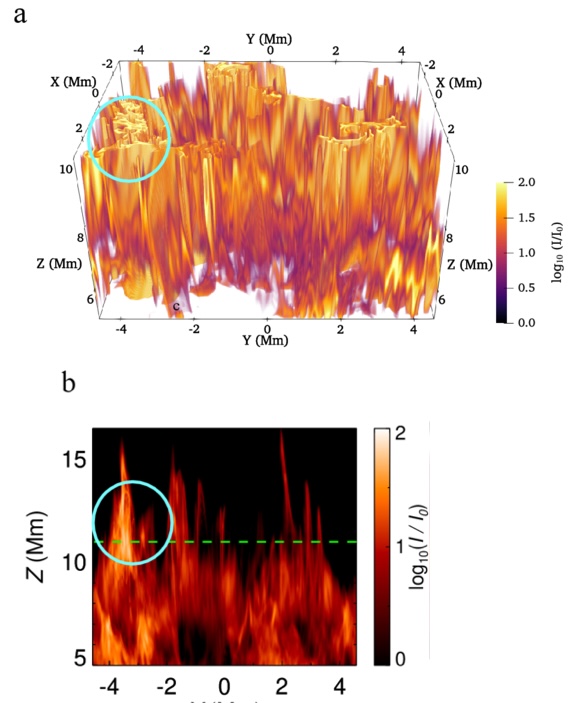
A) A three-dimensional view of simulated solar spicules, showing curtain-like structures. B) Intensity of synthetic emission from the spicules in panel A, integrated along the line of sight. The cyan circle indicates the same region in both panels. [Adapted from Dey et al. 2026]
Simulating Spicules
The jet-like appearance arises when this arrangement is viewed from the side; the team created synthetic images of their simulated spicules that show individual jet-like features. These “jets” have properties similar to those of real spicules, lasting just 5–10 minutes, journeying upward at 20–70 kilometers per second, and reaching heights of 6,000–16,000 kilometers.
These simulations clearly demonstrate that what appear to be individual jets can arise from curtain-like plasma structures. Dey and collaborators showed that this network of spicules evolves over time, buoyed upward from below by a series of shocks, pulled down gradually by gravity, and buffeted by adjacent plasma.
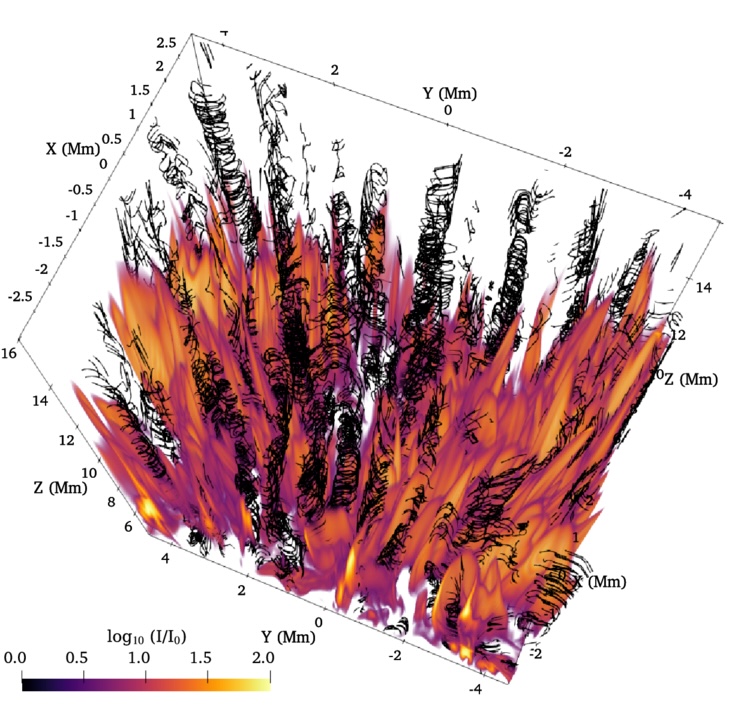
Three-dimensional view of spicules (purple–yellow regions) and coronal swirling conduits (represented by spiraling black lines). [Adapted from Dey et al. 2026]
This work demonstrates that a curtain-like configuration provides a viable explanation for the observed variety of spicule motions. Going forward, it will be critical to test this possibility further, as correctly interpreting the underlying structures of solar spicules is key to understanding how mass and energy are transferred to the solar corona.
Citation
“Solar Spicule Rotation Driven by Plasma Curtain–Vortex Interactions,” Sahel Dey et al 2026 ApJ 1008 132. doi:10.3847/1538-4357/ae8999
The post Drawing Back the Curtain on Solar Spicules appeared first on AAS Nova.
]]>
Astrobites reports on why interstellar magnetic fields can appear ordered or tangled, depending on which gas clouds you measure and how.
The post The Invisible Architecture Between the Stars appeared first on AAS Nova.
]]>Editor’s Note: Astrobites is a graduate-student-run organization that digests astrophysical literature for undergraduate students. As part of the partnership between the AAS and astrobites, we occasionally repost astrobites content here at AAS Nova. We hope you enjoy this post from astrobites; the original can be viewed at astrobites.org.
Title: Phase-Dependent Magnetic Coherence in the Turbulent Interstellar Medium
Authors: Iryna S. Butsky et al.
First Author’s Institution: Stanford University
Status: Accepted to ApJ
The space between stars isn’t empty, because it’s threaded with magnetic fields that shape how gas moves and steer cosmic rays as they race across the galaxy. As a result, understanding how the magnetic field is structured within different components of the interstellar medium, specifically clouds of different temperatures, is a key part of understanding how the interstellar medium we see today takes shape.
Because magnetic fields are invisible, astronomers need tracers to reveal their structure. One such tracer is the emission from dust grains. Dust grains are not spherical, and a dust grain’s long axis tends to align at a right angle to the magnetic field, causing dust grains to emit light that vibrates in a particular direction. This is called polarized emission. If the magnetic field in a region is very ordered, the grains all align the same way, and a large fraction of their emitted light vibrates in the same direction, giving a high polarization fraction. This fraction is therefore used as a proxy for whether the field can maintain a consistent direction on large scales (an ordered/regular magnetic field).
Comparing the polarization fraction with other tracers of gas lets astronomers infer the field’s structure in the interstellar medium. Previous observations found that the polarization fraction correlates with the fraction of cold gas, but not with the total amount of gas along the line of sight. This suggests that the field is preferentially ordered within cold clouds rather than warm clouds. Curiously, this seemed to contradict other studies that found the field to be more ordered in the warm clouds. Such disagreements are where simulations become useful: because the true magnetic field is known in a simulation, astronomers can test which interpretation the observations actually support.
In this article, the authors use high-resolution numerical simulations to reproduce the relationship between polarization fraction and cold cloud fraction. They find that as long as the line of sight crosses fewer than about 20 clouds, the polarization fraction correlates with the cold cloud fraction, but not with the total neutral gas (Figure 1). This matches earlier observations, where the correlation shows up at high galactic latitudes, which point out of the galactic plane and therefore cross only a few cold structures. When too many clouds lie along the line of sight, each cloud carries an ordered field pointing in a different direction. Averaged together, these vibration directions cancel out, lowering the polarization fraction and washing the correlation away.
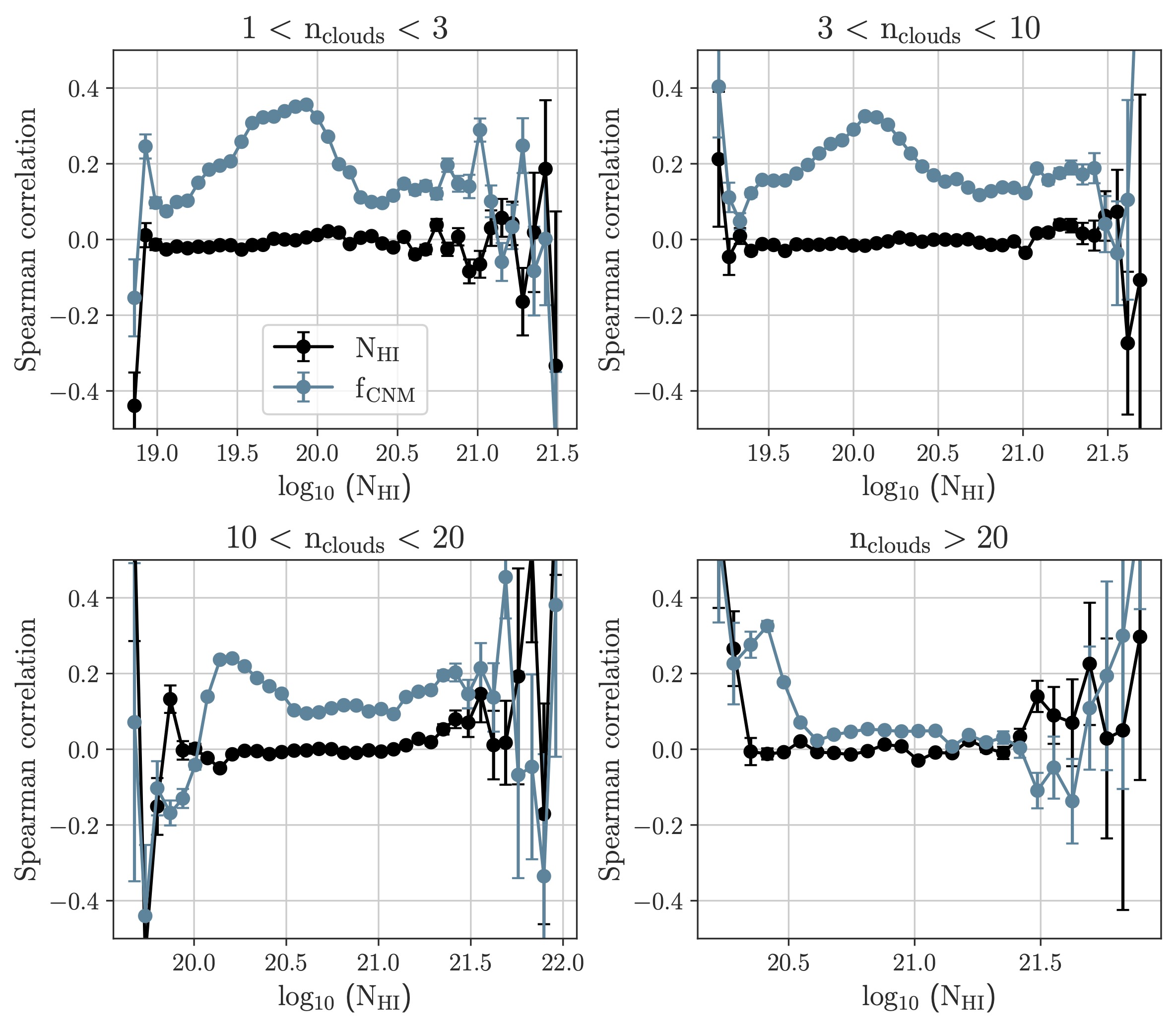
Figure 1: Correlation between dust polarization fraction, the total gas amount (neutral hydrogen column density, NHI), and the fraction of cold medium along the line of sight (fCNM) for projections of different path lengths. The polarization fraction correlates with fCNM but not with NHI. The correlation disappears once many clouds lie along the line of sight (see lower-right panel). [Butsky et al., in press]
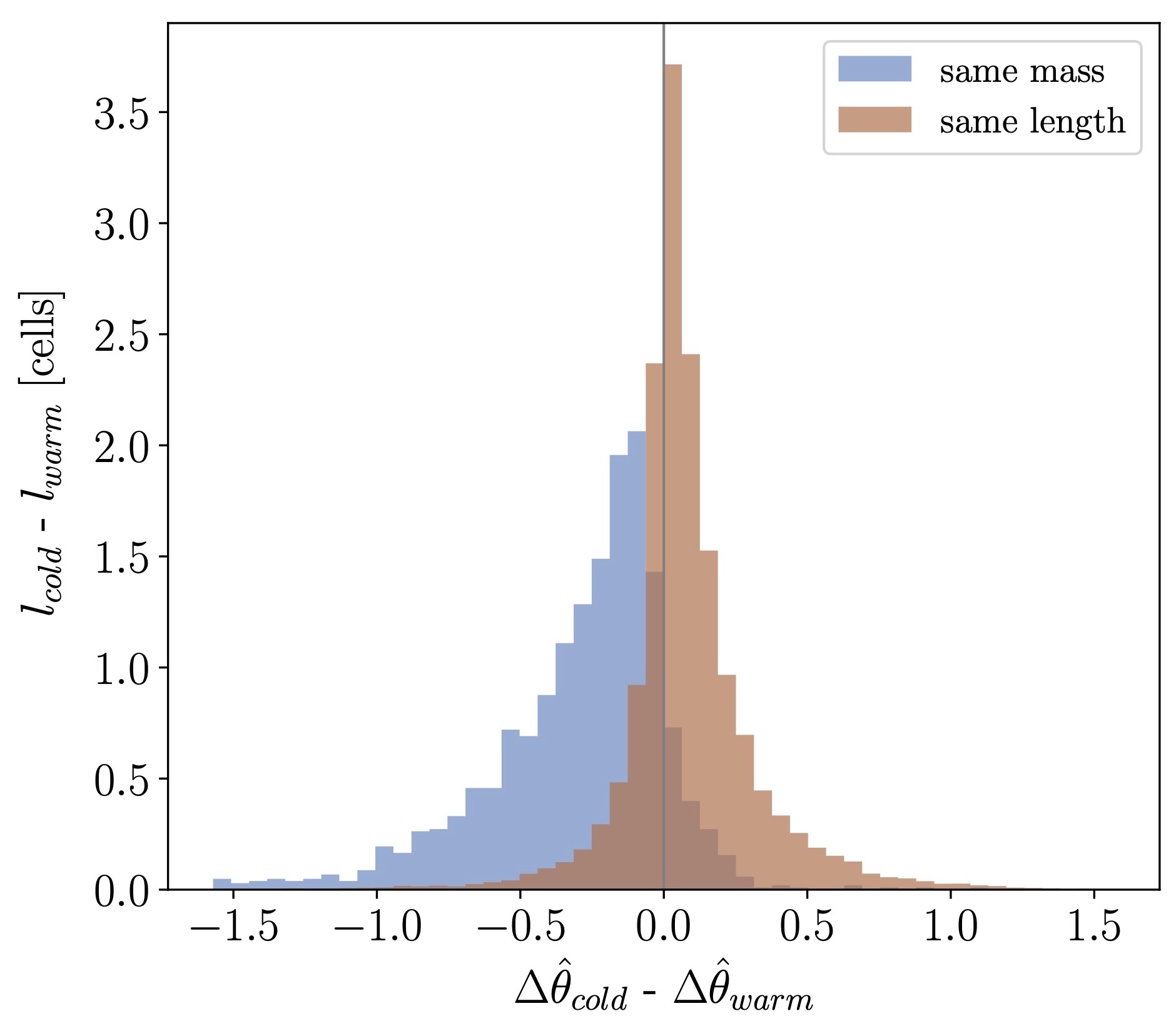
Figure 2: Distribution of the angle difference between the average magnetic field and the line of sight for cold and warm clouds, shown for clouds matched by mass and by length. A smaller angle difference means a more ordered field. At similar mass, cold clouds show a more ordered field; at similar length, the reverse holds. [Adapted from Butsky et al., in press]
This apparent paradox comes from the different nature of cold and warm clouds. Cold clouds are denser and more compact, occupying much smaller physical scales than warm clouds. So to match the length of a warm cloud, you have to string together several cold structures, sampling more of the field’s variation and making the cold gas look disordered. Measured per unit length, then, warm clouds appear more ordered. Measured per unit mass, cold clouds appear more ordered. Crucially, when we observe dust emission, we are naturally weighting by mass, so real observations effectively trace the polarization fraction per unit mass, the regime in which the cold clouds are the more coherent phase.
In the end, this work shows that the ordering of interstellar magnetic fields depends on both the gas phase and how we choose to measure it. Cold clouds carry more coherent fields per unit mass, which is exactly the quantity dust observations trace, resolving an apparent contradiction between earlier studies. It is a reminder that even our best observations come with hidden assumptions, and that simulations, where the true field is known, are essential for interpreting what the sky is really telling us.
Original astrobite edited by Viviana Cáceres.
About the author, Sandy Chiu:
I’m a PhD candidate at the University of Michigan, Ann Arbor. I’m interested in numerical simulations of cosmic rays feedback in galaxies and their comparison with observation.
The post The Invisible Architecture Between the Stars appeared first on AAS Nova.
]]>The post Gelato: A Mission Concept for Comet Surface Sample Return appeared first on AAS Nova.
]]>The Gelato mission would collect a sample from the surface of the comet 67P/Churyumov–Gerasimenko, gathering material that, unlike coma materials collected in previous missions, is relatively unprocessed.
The post Gelato: A Mission Concept for Comet Surface Sample Return appeared first on AAS Nova.
]]>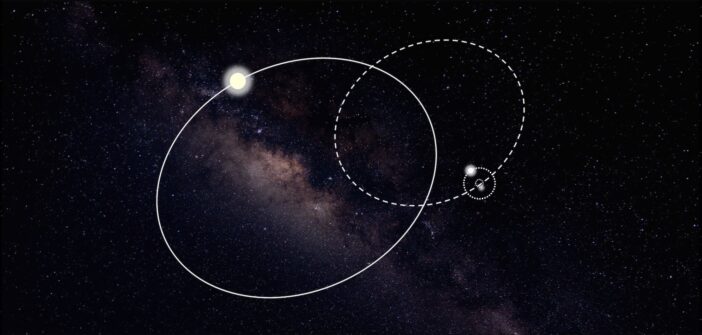
Researchers have discovered a millisecond pulsar with two stellar companions — one of only a handful of these rapidly spinning stellar remnants known to be in a triple system.
The post A Pulsar in a Rare Triple System appeared first on AAS Nova.
]]>Follow-up observations show that a recently discovered pulsar has two stellar companions, making it one of just a handful of millisecond pulsars known to be in triple-star systems.
An Unusual New Pulsar
Earlier this year, researchers reported the discovery of a pulsar with the Five-hundred-meter Aperture Spherical radio Telescope (FAST). The newfound pulsar, PSR J0435+3233, is a millisecond pulsar, rotating once every 3.2 milliseconds. What’s unique about this pulsar is how quickly it’s spinning down: its spin rate is decreasing roughly 100 times faster than other millisecond pulsars in our galaxy, suggesting an unusually strong magnetic field and the possibility of an exotic formation pathway.
The FAST observations also showed that the pulsar is not alone: it appears to be on an 8-day orbit with a white dwarf. Now, follow-up observations have revealed the pulsar’s membership in an intriguing stellar system.
From Radio to Gamma Rays
Zonglin Yang (National Astronomical Observatories, Chinese Academy of Sciences) and coauthors followed up on the discovery of PSR J0435+3233 using multiwavelength data from FAST, multiple optical and infrared observatories, and the Fermi Gamma-Ray Space Telescope.
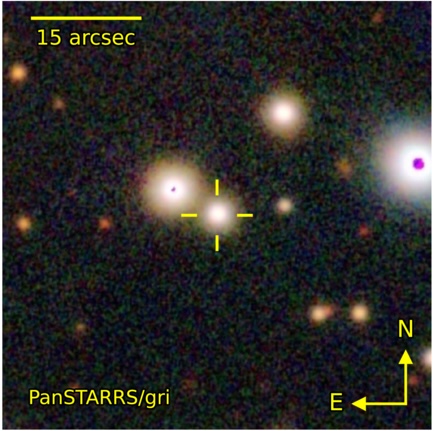
Visible-light image from PanSTARRS of the outer subgiant companion. [Adapted from Yang et al. 2026]
Insights into Stellar Evolution
While it’s common to find millisecond pulsars in binary systems — in fact, many millisecond pulsars are thought to spin up to their incredible speeds via accretion from a stellar companion — it’s rare to discover them in triple systems. Because this system is isolated out in the field rather than crowded together with other stars in a dense cluster, Yang and collaborators suspect that the three stars have been together since birth, as opposed to being assembled dynamically later on.
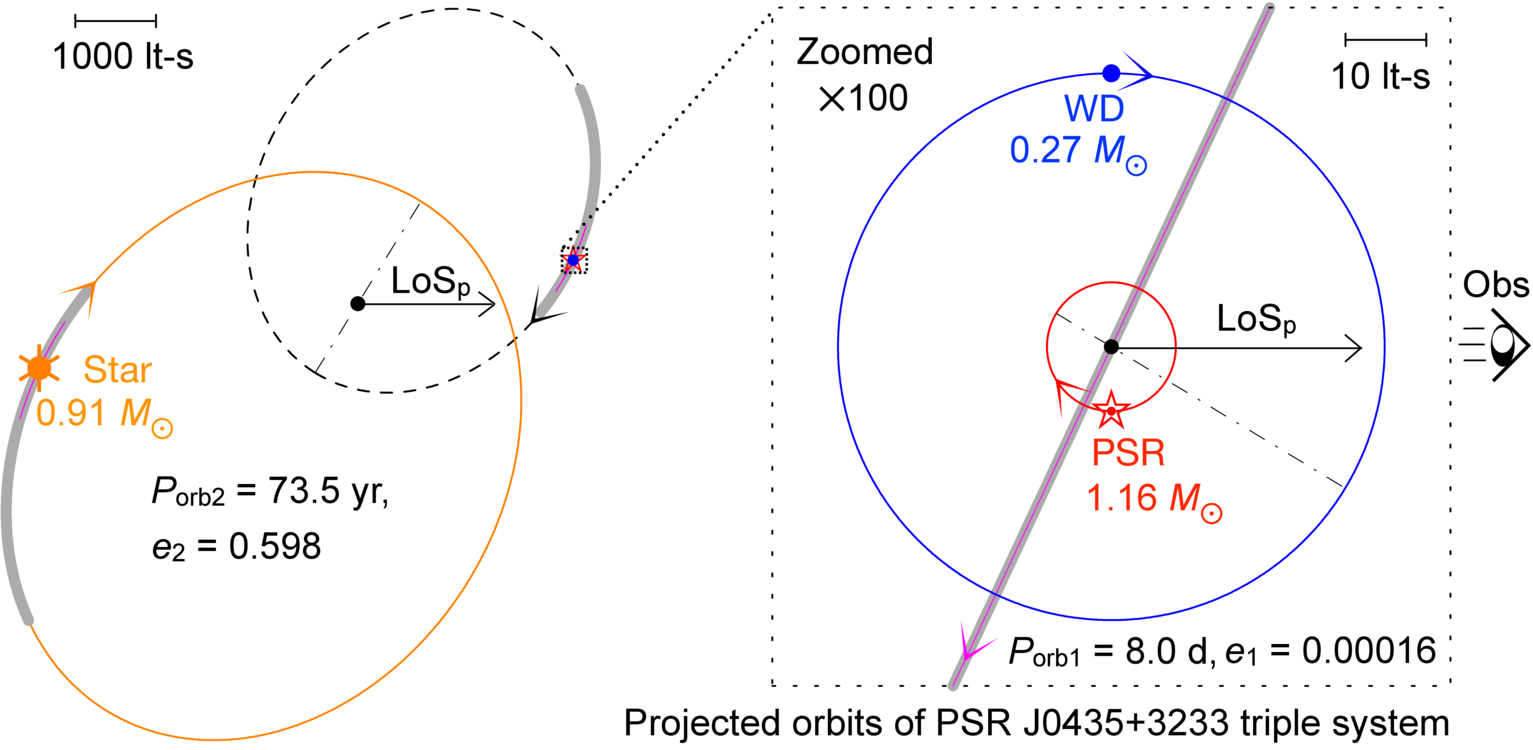
Projected orbits of the three stars in the system. Click to enlarge. [Yang et al. 2026]
Triple-star systems are common among massive stars, but how this configuration affects stellar evolution is still being explored. This discovery offers a valuable opportunity to study dynamics and stellar evolution in a rare triple system.
Citation
“The PSR J0435+3233 Triple System,” Z. L. Yang et al 2026 ApJL 1010 L9. doi:10.3847/2041-8213/aeaa29
The post A Pulsar in a Rare Triple System appeared first on AAS Nova.
]]>The post Testing Warm Dark Matter with Kinematics of the Smallest Galaxies appeared first on AAS Nova.
]]>The kinematics of small Milky Way satellites should differ depending on whether dark matter is warm or cold; current data constrain the mass of warm dark matter particles to >5.8 keV at 95% confidence.
The post Testing Warm Dark Matter with Kinematics of the Smallest Galaxies appeared first on AAS Nova.
]]>The post EP250827b/SN 2025wkm: An X-Ray Flash-Supernova Powered by a Central Engine and Circumstellar Interaction appeared first on AAS Nova.
]]>Through modeling, researchers determined that a recently discovered supernova accompanied by an X-ray flash likely gave rise to a long-lived magnetar that may be surrounded by an accretion disk.
The post EP250827b/SN 2025wkm: An X-Ray Flash-Supernova Powered by a Central Engine and Circumstellar Interaction appeared first on AAS Nova.
]]>
The hot Jupiter WASP-12b is on a collision course with its host star, and it's heading that way faster than expected. New research examines a possible explanation for the planet's speedy inspiraling.
The post Tilting WASP-12b Doesn’t Solve the Mystery of Its Inspiral appeared first on AAS Nova.
]]>In 3 million years or less, WASP-12b will tumble into its host star. It’s not surprising that the planet will meet its end this way, but it is surprising that it will happen so soon. New work tests a potential explanation for the planet’s rapid orbital decay.
Diagnosing a Doomed Planet
Roughly twice as wide as Jupiter and almost 50% more massive, exoplanet WASP-12b zips around its Sun-like stellar host every 1.09 days at a distance of just 0.023 au (3.4 million kilometers or 2.1 million miles). If placed in our solar system, WASP-12b would easily dethrone Mercury as the nearest planet to the Sun.
Observations show that WASP-12b’s already tiny orbit is shrinking, with each orbital period growing shorter at a rate of 29 milliseconds per year (Earth-year, that is). While we would expect the planet to slowly spiral inward due to tidal interactions with its star, it’s moving several orders of magnitude faster than predicted. The planet’s motion has so far defied all attempts to explain it, and now, a new research article by Caleb Lammers (Princeton University) and collaborators appears to topple yet another hypothesis for WASP-12b’s unexpectedly fast orbital decay.
A Tidy Tidal Explanation?
Previous work has proposed that WASP-12b’s rapidly shrinking orbit is due to obliquity tides, which could come into play if the planet had a nonzero obliquity, or axial tilt. Tidal dissipation generally works to keep close-in giant planets like WASP-12b from having a significant axial tilt. However, if you throw a second planet into the system, the companion can exert a torque that could force WASP-12b to remain tilted. This outside forcing, the hypothesis suggests, changes the orbital, spin, and tilt evolution of WASP-12b and ultimately pushes it toward its star far faster than expected without the tilt or the companion.
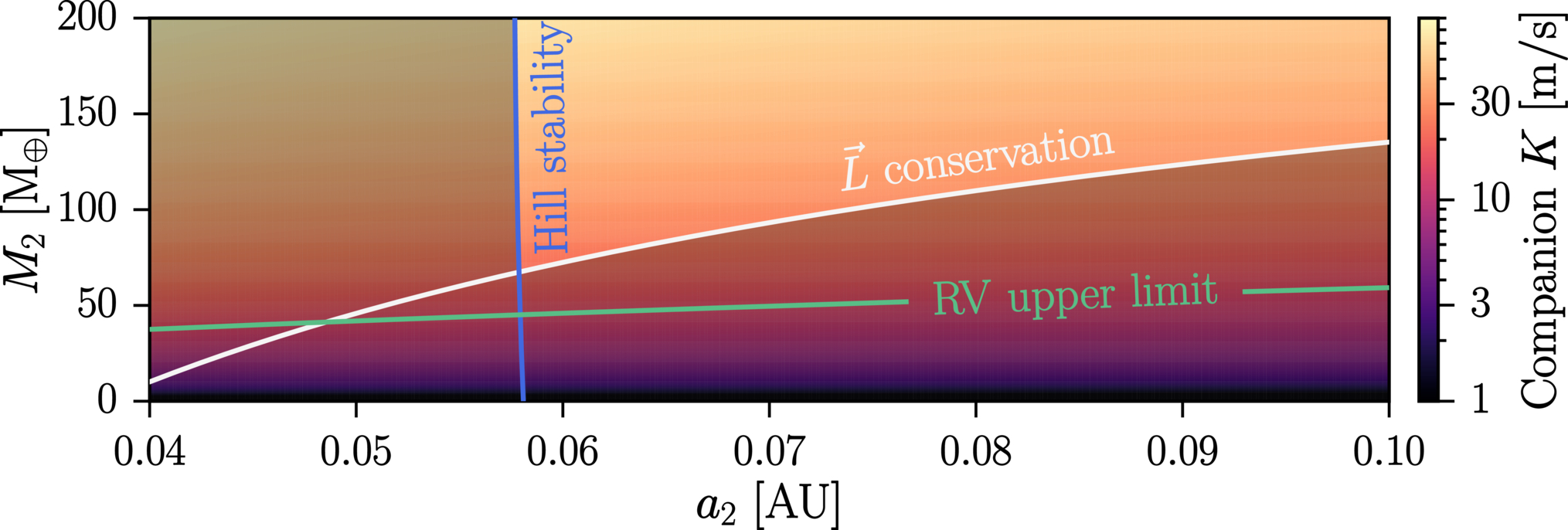
Constraints on the mass and orbital distance of the companion planet in the obliquity-tide scenario. The color shows the radial velocity signal associated with each combination of parameters. The green line shows the maximum radial velocity allowed by observations. Click to enlarge. [Lammers et al. 2026]
The Mystery Persists
This companion mass and orbital distance are both larger than predicted by previous work, which had suggested that a 10–20-Earth-mass planet at 0.04 au would be sufficient to drive WASP-12b’s inward journey. Lammers and coauthors analyzed WASP-12’s radial velocity data for evidence of such a planet tugging on the star, but found none; only under extremely particular conditions could such a planet exist and not be detected in current data.
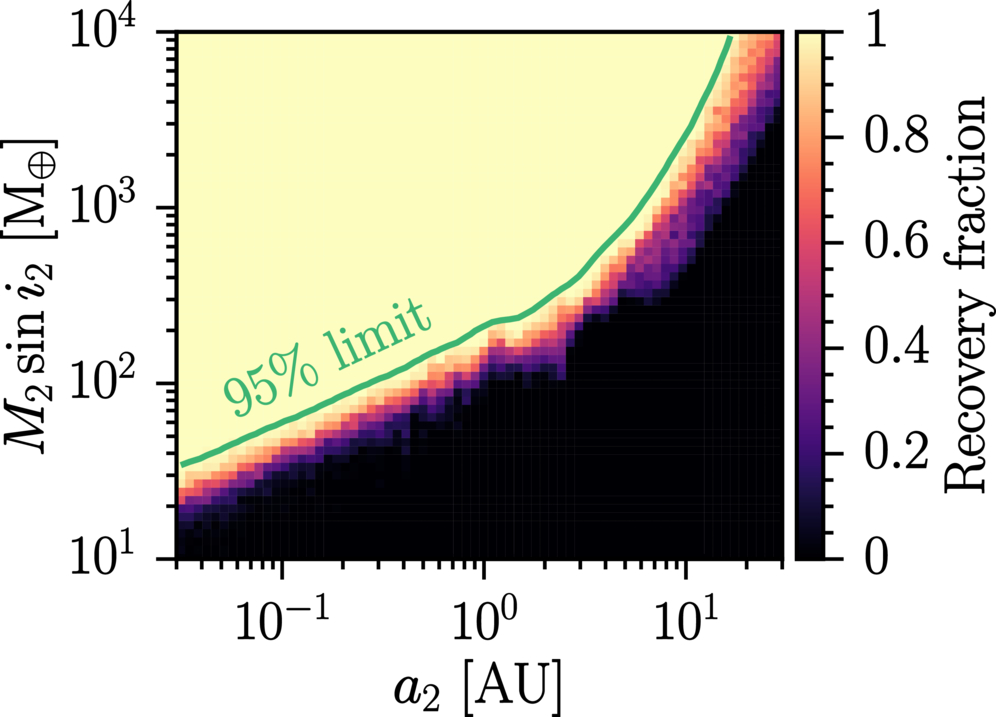
Radial velocity constraints on the properties of a hypothetical second planet in the WASP-12 system, obtained via injection-recovery tests. [Lammers et al. 2026]
Citation
“The Mysterious Inspiral of WASP-12 b: Why Obliquity Tides Cannot Drive Orbital Decay,” Caleb Lammers et al 2026 ApJL 1009 L43. doi:10.3847/2041-8213/aea405
The post Tilting WASP-12b Doesn’t Solve the Mystery of Its Inspiral appeared first on AAS Nova.
]]>The post Star Formation at the Periphery of a Molecular Superbubble: The Case of G12.79+0.43 appeared first on AAS Nova.
]]>The molecular cloud complex G12.79+0.43 contains 82 young stellar object candidates; while this complex is spatially associated with a larger superbubble, it’s not yet clear if there is a causal association.
The post Star Formation at the Periphery of a Molecular Superbubble: The Case of G12.79+0.43 appeared first on AAS Nova.
]]>The post Can We Distinguish the Source Region Location of Filament/Prominence Eruptions from the Sun-as-a-Star Hα Spectrum? appeared first on AAS Nova.
]]>Eruptions taking place in different locations on the Sun (e.g., on the solar limb versus on the disk) appear to have different spectral characteristics, paving a way for source regions of stellar flares to be studied.
The post Can We Distinguish the Source Region Location of Filament/Prominence Eruptions from the Sun-as-a-Star Hα Spectrum? appeared first on AAS Nova.
]]>
A new catalog of giant pulses from the Crab Nebula pulsar reveals a feature predicted to exist but not seen until now.
The post Featured Image: Echoes of Giant Pulses appeared first on AAS Nova.
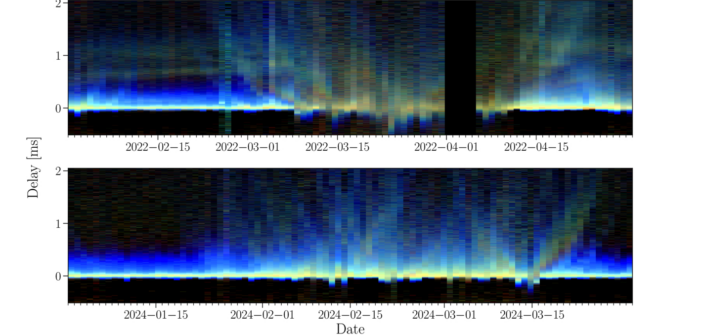
]]>What at first might appear to be abstract pixel art or a fuzzy photograph of skyglow from a distant city is actually a representation of radio emission from the pulsar at the center of the Crab Nebula. When a pulsar’s radio emission passes through a region of ionized gas — like the complex filaments of the Crab Nebula — the plasma deflects the radio signal from its intended course. This detour can create “echoes”: copies of the pulsar signal that arrive later than the original pulse. Thierry Serafin Nadeau (University of Toronto) and collaborators studied these echoes from the Crab pulsar by compiling an archive of giant pulses detected over 2.5 years by the Canadian Hydrogen Intensity Mapping Experiment (CHIME). Giant pulses, which are brighter and narrower than typical pulses, offer a powerful way to probe plasma echoes. The image above shows sweeping parabola-shaped echoes during two particularly active periods. The color shows the frequencies at which power was received: mainly at low (blue), high (red), or all (yellow-white) frequencies. This dataset revealed for the first time a feature predicted to exist but never seen: echoes from plasma structures that never pass directly in front of the pulsar from our point of view. To learn more about the echoes of the Crab pulsar, be sure to check out the research article linked below.
Citation
“Echoes in Different Tempo: Long-Term Monitoring of Crab Echoes with CHIME,” Thierry Serafin Nadeau et al 2026 ApJ 1006 82. doi:10.3847/1538-4357/ae7336
The post Featured Image: Echoes of Giant Pulses appeared first on AAS Nova.
]]>The post Predictions of Transiting Exoplanet Confirmations from Rubin LSST Surveys appeared first on AAS Nova.
]]>The upcoming Wide Fast Deep and Deep Drilling Field surveys have limited potential to confirm exoplanets, with just a handful of hot planets around M-dwarf stars likely to be confirmed in the Deep Drilling Field.
The post Predictions of Transiting Exoplanet Confirmations from Rubin LSST Surveys appeared first on AAS Nova.
]]>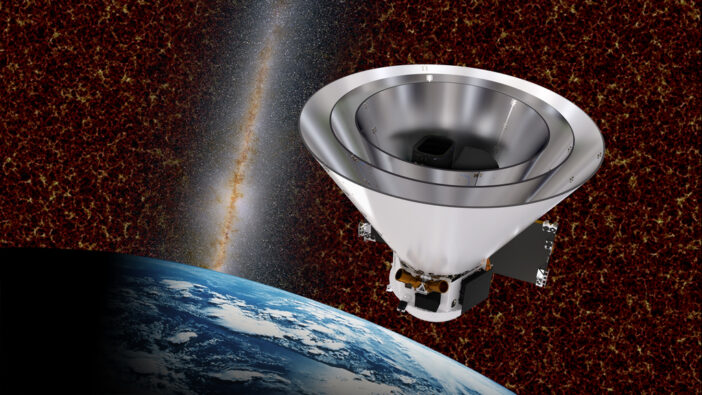
Astrobites reports on NASA’s SPHEREx mission, which is collecting an infrared spectrum for every point in the sky — potentially revolutionizing our understanding of cosmic inflation, galaxy formation, and interstellar ices.
The post SPHEREx: The Niftiest Space Telescope You May Not Have Heard Of appeared first on AAS Nova.
]]>Editor’s Note: Astrobites is a graduate-student-run organization that digests astrophysical literature for undergraduate students. As part of the partnership between the AAS and astrobites, we occasionally repost astrobites content here at AAS Nova. We hope you enjoy this post from astrobites; the original can be viewed at astrobites.org.
Title: The SPHEREx Satellite Mission
Authors: James J. Bock et al.
First Author’s Institution: California Institute of Technology; Jet Propulsion Laboratory
Status: Published in ApJ
You know JWST. You’ve likely heard about the recently launched Nancy Grace Roman Space Telescope. But did you know that NASA launched a third space telescope focused on infrared astronomy just last year? That telescope, called SPHEREx (short for Spectro-Photometer for the History of the Universe, Epoch of Reionization, and Ices Explorer, but we’ll forgive the tortured acronym), is currently carrying out its ambitious mission to record an infrared spectrum for every point in the sky. Let’s break down SPHEREx’s three main science goals and then discuss how SPHEREx will accomplish its mission.
Goal #1: Stress-Testing Cosmic Inflation
According to our best current models of cosmology, the very early universe experienced a rapid burst of accelerating expansion called cosmic inflation. During inflation, small regions of the universe that by chance had slightly higher energy density than their neighbors (due to quantum fluctuations) expanded to huge scales. Because these regions were very gravitationally attractive, once inflation ended, they became the seeds where matter accumulated and eventually formed galaxies.
This means that the distribution of galaxies that we see today is a reflection of the properties of inflation (i.e., what the quantum fluctuations were like and how inflation supersized them). SPHEREx will assemble the largest atlas of galaxies ever, recording the three-dimensional positions of hundreds of millions of galaxies across the entire sky. To do this, SPHEREx must figure out how far away these galaxies are from Earth, using their redshifts. SPHEREx’s low-resolution infrared spectroscopy allows for moderately precise measurements of these redshifts. By performing statistical analyses of how galaxies are separated from each other, SPHEREx will test different theories of inflation, like whether inflation was driven by multiple fields.
Goal #2: Frozen Assets
Astronomers are racing to find evidence for life (or at least habitability) in the atmospheres of exoplanets through transmission spectroscopy. However, we don’t know for sure how molecules that could be used in biological processes (called biogenic molecules, these include water, carbon dioxide, carbon monoxide, and methanol) even end up on planets.
We think that a large fraction of these molecules are frozen onto dust grains throughout the interstellar medium. When a new star forms in the interstellar medium, this ice and dust would become part of the star’s protoplanetary disk. The ice species can help create planetesimals (which may grow into planets) or can later deliver biogenic molecules to planetary surfaces. Earth’s oceans likely came (at least in part) from collisions with icy asteroids. As Figure 1 shows, SPHEREx will measure the abundance of ice species in different environments that track the history of solar system formation, from dense clouds in the interstellar medium that may soon form stars to regions around newborn stars and evolving protoplanetary disks. In this way, SPHEREx will track how biogenic molecules from the interstellar medium can end up on planets.
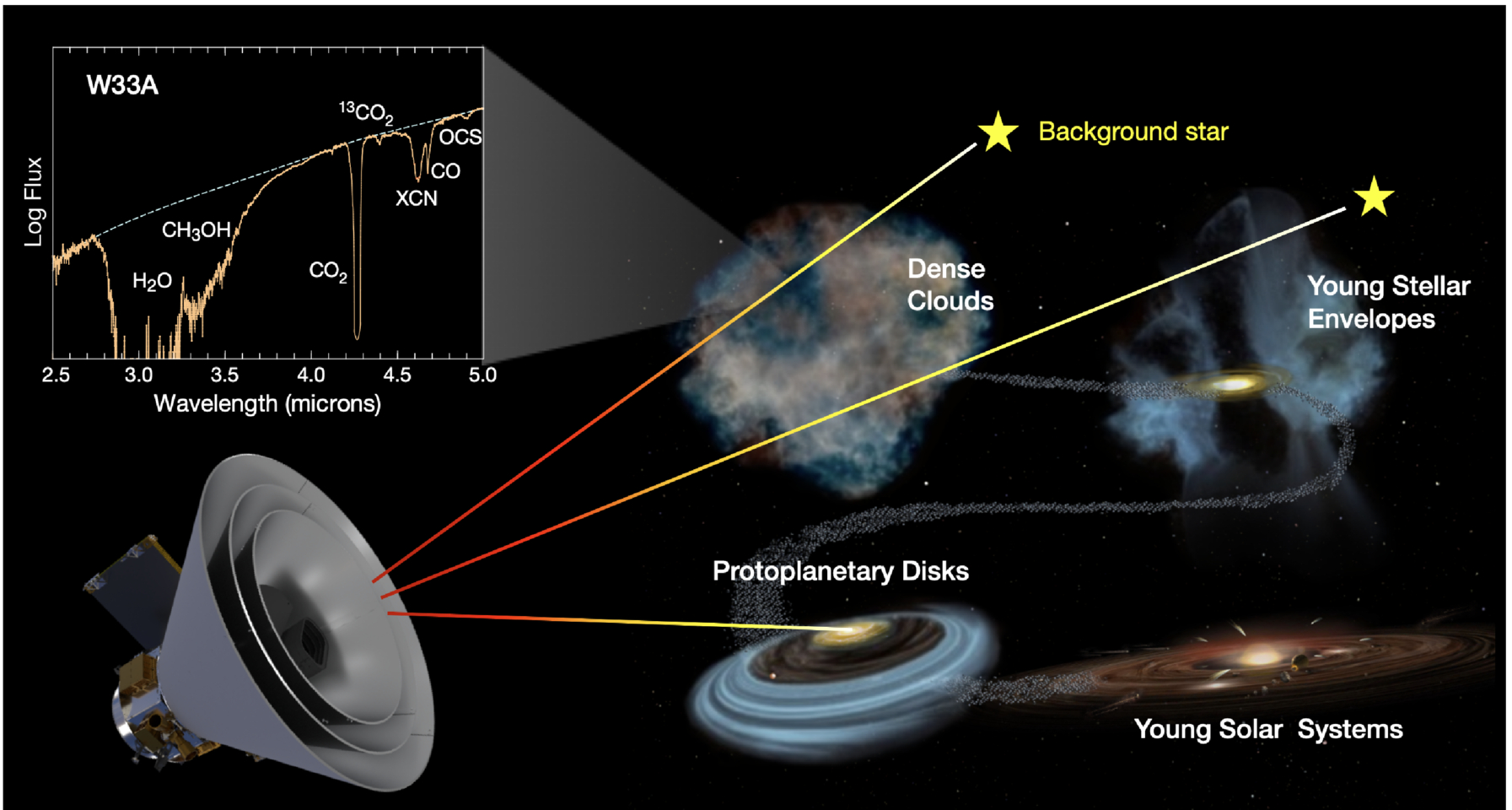
Figure 1: Examples of the sources SPHEREx will look at to search for biogenic ice species. In the top left, what the spectra of these sources will look like if those species are present: each type of ice leaves a distinct fingerprint in an infrared spectrum. [Bock et al. 2026]
Goal #3: Your Noise Is SPHEREx’s Signal
SPHEREx will measure an infrared spectrum for every point in the sky — even those that don’t contain galaxies or stars that we can resolve. These points are instead dominated by diffuse extragalactic background light. This light comes from many different sources, including stars, dust, and quasars, from the early universe to the present day, all added together incoherently. For most telescopes, the extragalactic background light is just a frustrating source of noise. For SPHEREx, it’s a treasure trove. We can compare the properties of the extragalactic background light that SPHEREx measures (its spectrum and how it fluctuates across the sky) to theoretical predictions and see if we seem to be missing anything. SPHEREx’s very broad infrared spectra — capturing redshifted light from the very early universe — and total sky coverage are crucial for this purpose. For instance, the SPHEREx team will try to isolate emission from the first stars and galaxies, which ionized most of the gas in the universe in the epoch of reionization. By understanding this and other contributions to the extragalactic background light, we can test hypotheses about how galaxies form and evolve.
Making It Happen
Beyond inflation, ices, and extragalactic background light, SPHEREx’s all-sky infrared spectra will be invaluable for countless other science cases, like studying asteroids, characterizing the atmospheres of stars that host exoplanets, and even understanding the upper atmosphere of Earth, through which SPHEREx orbits.
But how can SPHEREx even make a spectrum for every point in the sky? An image of some part of the sky is fundamentally two-dimensional, and measuring how the brightness of every point changes with wavelength adds a third dimension. Astronomers have come up with many ways to solve this problem. Integral field spectroscopy approaches typically involve splitting an image into small regions or strips, then using a dispersive element like a prism or grating to make a spectrum of each region, and finally putting these spectra side by side on a camera. Figure 2 shows an example of this strategy, as well as what the final three-dimensional “datacube” looks like after processing.
This approach is fairly complicated, relying on fancy optics, a prism or grating, and oftentimes optical fibers. From Figure 2, note that you could also make the final “datacube” product if you simply took many images with narrow filters that let through different wavelengths of light. This takes to an extreme the approach astronomers use for spectral energy distribution fitting. Of course, this would require an exorbitant number of filters. Here, the SPHEREx team had a stroke of genius: instead of having many different filters, what if you had a filter where the transmitted wavelength changes linearly across the filter? Each row would let through a different wavelength. To get a full spectrum for all points in an image, you could take many exposures, moving the telescope slightly between each exposure so points in the image fall on different rows each time.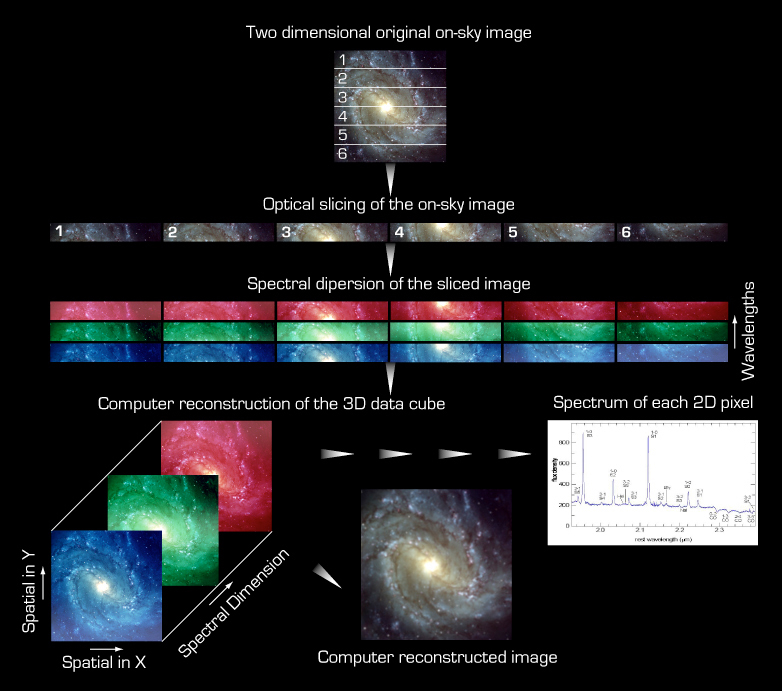
This is the SPHEREx survey strategy, with a few complications. First, before any filter, SPHEREx splits incoming light into two beams, with short-wave infrared light (SWIR, with 0.75 μm < λ < 2.42 μm) going in one direction and mid-wave infrared light (MWIR, 2.42 μm < λ < 5.00 μm) going in another. SPHEREx makes images with these two beams on different sets of detectors, so it can measure the brightness of an object at one SWIR wavelength and one MWIR wavelength simultaneously. The SPHEREx field of view covers 10.5° by 3.5°, with the SWIR and MWIR images each spread across three detectors. Every detector has a different linearly variable filter. To get a complete infrared spectrum of a given point in the sky, SPHEREx moves that point to 17 different positions on each detector. This requires 51 different telescope (17 × 3 detectors) pointings in all and yields 102 spectral values (51 × 2 for the SWIR and MWIR beams). Figure 3 shows the 17 bands on each of the six SPHEREx detectors, each corresponding to a different wavelength value.
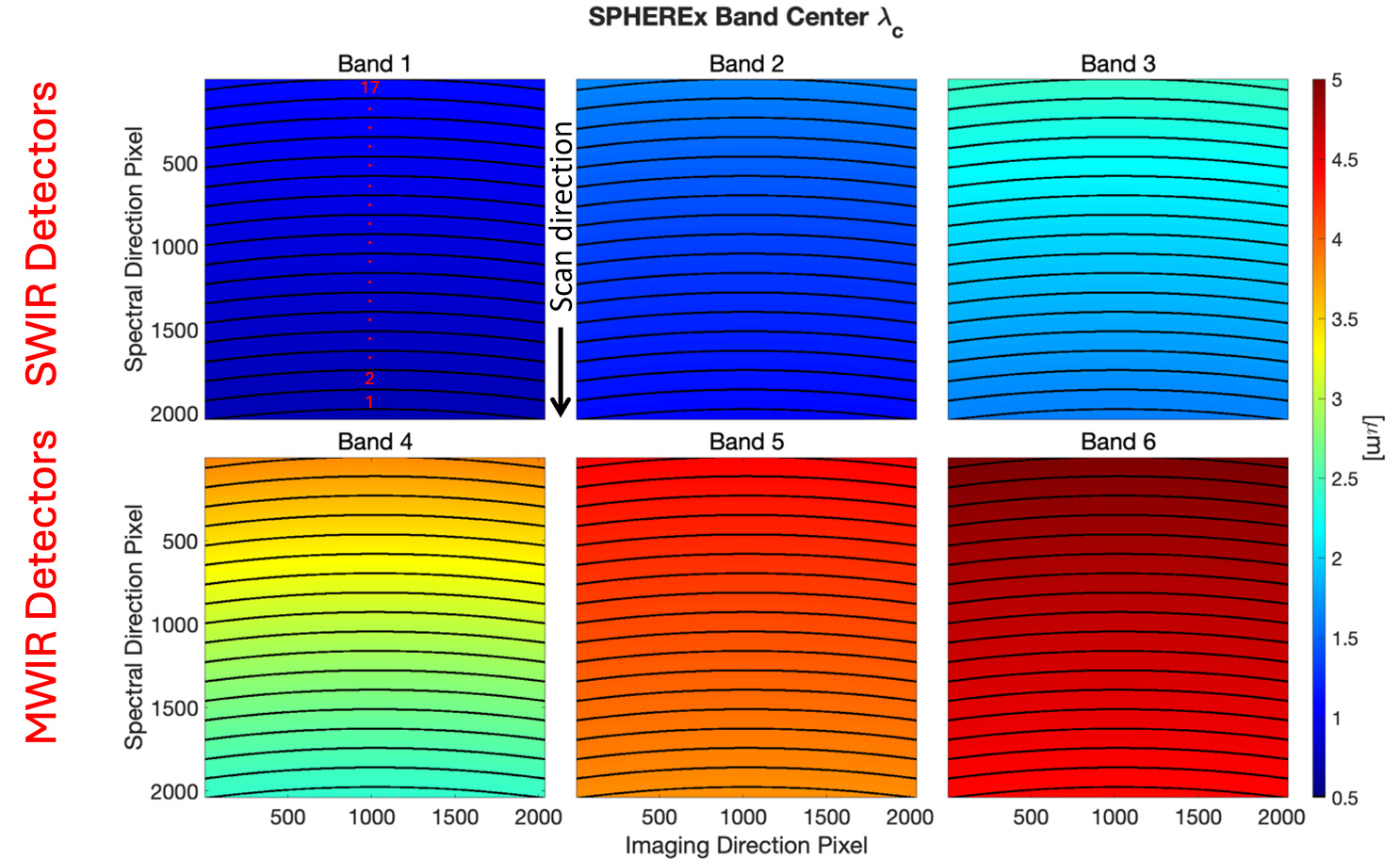
Figure 3: The wavelength of light that each part of each SPHEREx detector is sensitive to. A point in the sky is imaged on one short-wave infrared detector (top row) and one mid-wave infrared detector (bottom row) simultaneously. SPHEREx measures each point in the sky at 102 different wavelengths by placing the point at 17 different positions on each of the detectors. [Adapted from Bock et al. 2026]
Original astrobite edited by Veronika Dornan.
About the author, Chris Layden:
Chris is a PhD candidate in astrophysics at the Massachusetts Institute of Technology. His primary research interest is developing instrumentation that enables high-speed astronomical observations. With such instruments, he studies the most rapidly varying phenomena in the sky, including millisecond pulsars, accreting black holes, and solar system objects whizzing past background stars. Outside of astronomy, Chris enjoys reading classic novels, playing ultimate frisbee, and hanging out with his wife and dog.
The post SPHEREx: The Niftiest Space Telescope You May Not Have Heard Of appeared first on AAS Nova.
]]>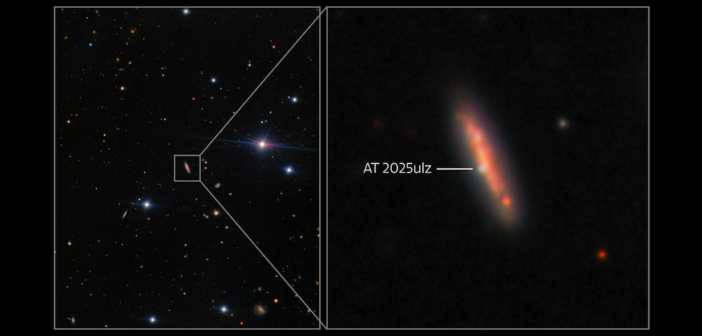
Last year, gravitational wave detectors triggered on what may have been a collision involving a sub-solar-mass neutron star. New research investigates a potential link between this event and a supernova.
The post Supernova, Kilonova, or Both? Another Look at SN 2025ulz appeared first on AAS Nova.
]]>A tentative gravitational wave signal sent astronomers searching for a possible electromagnetic counterpart. New radio observations weigh in on whether the candidate counterpart is a standard supernova or a sign of something rarer.
A Potential Neutron Star Merger
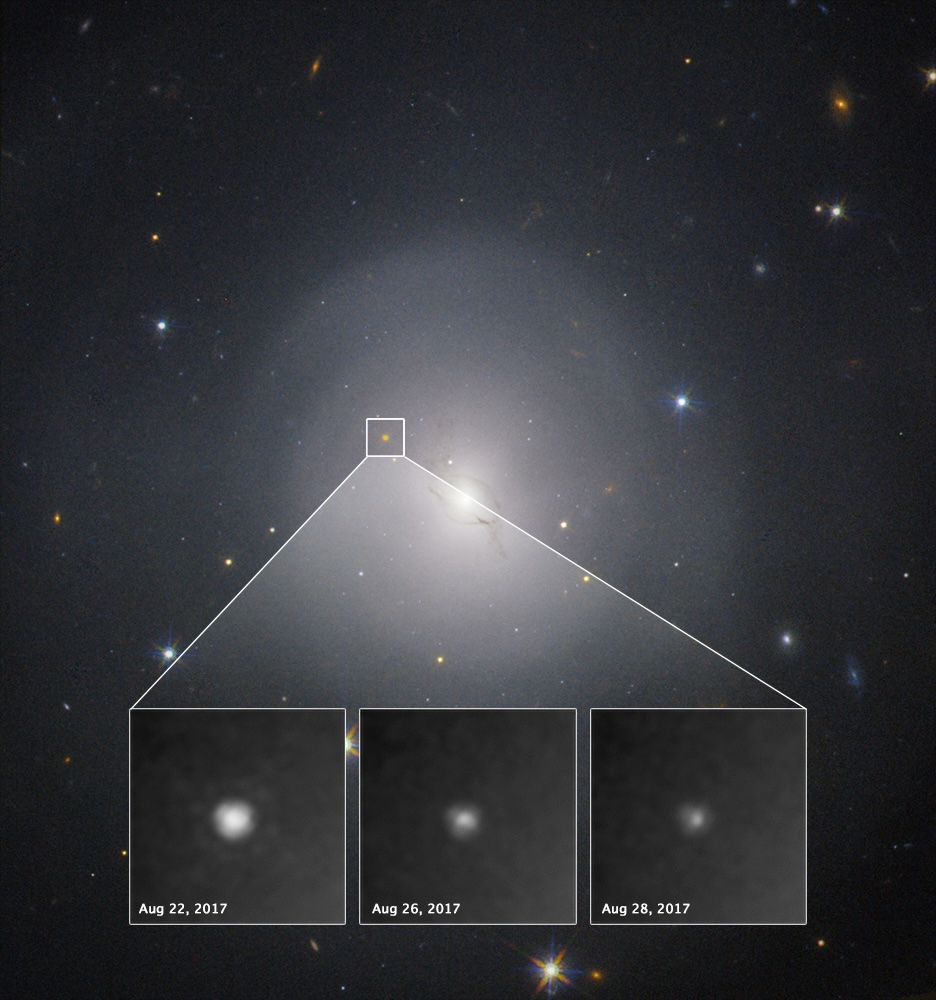
These images from the Hubble Space Telescope show the fading light of the kilonova associated with the gravitational wave event GW170817. [NASA and ESA Acknowledgment: A. Levan (U. Warwick), N. Tanvir (U. Leicester), and A. Fruchter and O. Fox (STScI)]
S250818k offered a rare opportunity to associate the light from a kilonova with a gravitational wave detection, a feat achieved only once so far, in 2017. The intrigue surrounding S250818k was heightened even further by the possibility that the collision involved at least one sub-solar-mass neutron star. Such a lightweight neutron star would fall below the lower mass limit set by stellar evolution models, requiring a different formation pathway.
S250818k’s kilonova potential rose and fell once researchers spotted an electromagnetic transient in its source region. Early optical observations revealed a kilonova-like color and rapid fading, while later observations showed brightening similar to a supernova interacting with circumstellar gas. This led the event to be classified as supernova SN 2025ulz — and therefore unlikely to be the source of the gravitational wave signal.
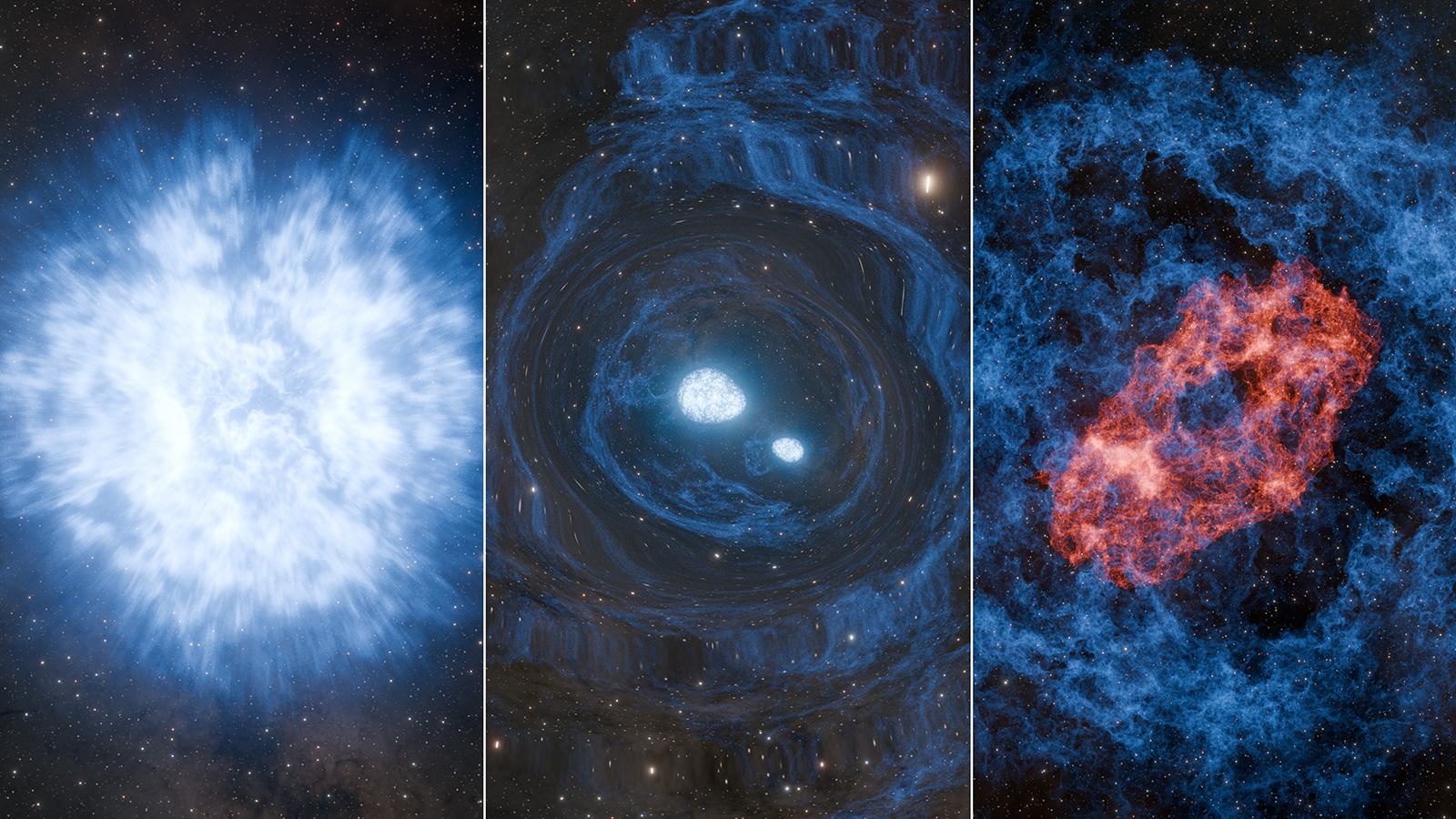
Illustration of a kilonova that occurs in the wake of a supernova. First, a massive star collapses. Then, neutron stars form in the aftermath. Finally, the neutron stars collide, producing a kilonova whose signal might be hidden by the supernova. [Caltech/K. Miller and R. Hurt (IPAC)]
A Kilonova in a Supernova?
Unlikely, but not impossible. Tanner O’Dwyer (Johns Hopkins University) and collaborators investigated the supernova for signs that it wasn’t a typical collapsing star. The team was motivated by theories suggesting that the collapse of a rapidly rotating massive star could produce both a kilonova and a supernova — potentially uniting gravitational wave signal S250818k and supernova SN 2025ulz.
In theory, the demise of a fast-spinning massive progenitor could produce one or more sub-solar-mass neutron stars. This could happen if 1) the collapsing stellar core splits into two neutron stars, or 2) in a twist on the star-formation process, neutron stars coalesce out of neutron-rich material in the disk surrounding the dying star. In either scenario, the neutron stars could merge shortly after the star’s collapse, generating kilonova emission that might be obscured by the expanding supernova.
Looking Deeply in the Radio
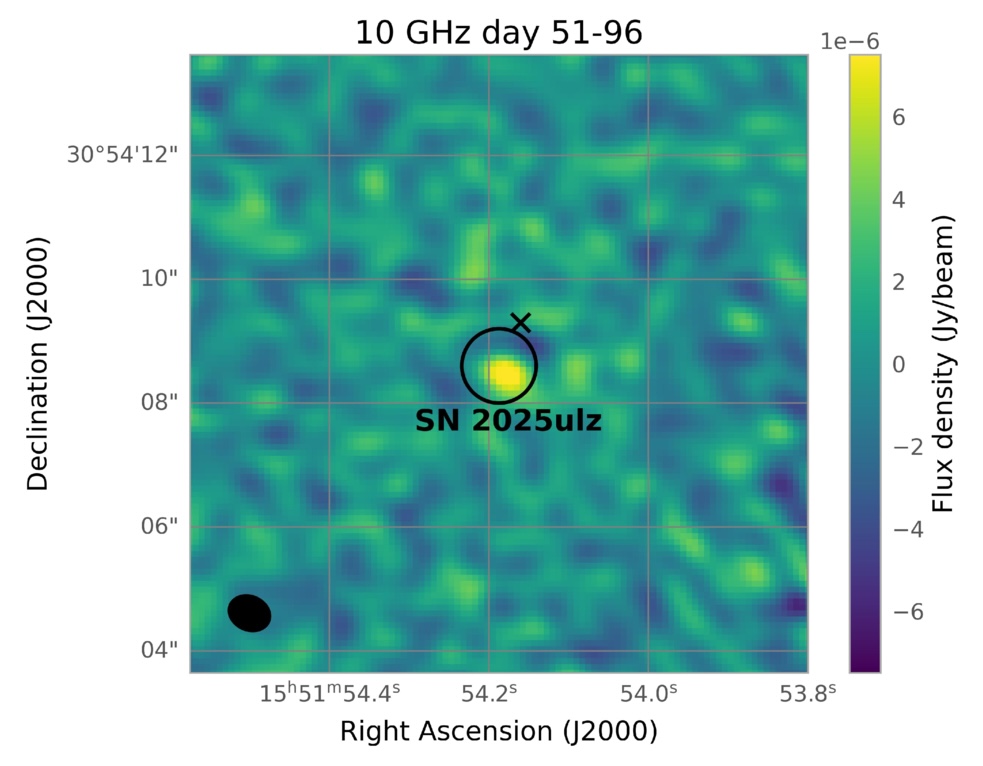
Very Large Array detection of a radio counterpart to SN 20215ulz. The circle shows the optical position of the supernova, and the “x” shows the optical position of the host galaxy. [Adapted from O’Dwyer et al. 2026]
The team found that standard supernova ejecta and relativistic jet models can both plausibly fit the data. In the supernova scenario, the estimated expansion speed and progenitor mass-loss rate place the event well within the bounds of known stripped-envelope supernovae. Though the data were also compatible with an off-axis relativistic jet, the authors were unable to resolve degeneracies in the event’s properties, including the jet energy and the interstellar medium density.
Ultimately, the authors suggested that a supernova fits the data more naturally. While this radio investigation didn’t unambiguously link S250818k and SN 2025ulz via an exotic kilonova-plus-supernova mechanism, it’s clear that radio observations have an important role to play in examining future gravitational wave signals.
Citation
“Identification of a Radio Counterpart to SN 2025ulz in the S250818k Localization Area,” Tanner O’Dwyer et al 2026 ApJL 1009 L44. doi:10.3847/2041-8213/aea4a5
The post Supernova, Kilonova, or Both? Another Look at SN 2025ulz appeared first on AAS Nova.
]]>The post MSA-3D: Connecting the Chemical and Kinematic Structures of Galaxies at z ∼ 1 appeared first on AAS Nova.
]]>Using data taken with a novel slit-stepping observing mode, researchers have found an anticorrelation between radial metallicity gradients and radial mixing time for galaxies at z ~ 1.
The post MSA-3D: Connecting the Chemical and Kinematic Structures of Galaxies at z ∼ 1 appeared first on AAS Nova.
]]>The post A Look at Eight Outbursts of Comet 7P/Pons–Winnecke appeared first on AAS Nova.
]]>Each of the studied outbursts released roughly one hundred thousand to one million kilograms of material — similar to outbursts from other comets — and caused brightening episodes of –0.2 to –1.1 magnitudes.
The post A Look at Eight Outbursts of Comet 7P/Pons–Winnecke appeared first on AAS Nova.
]]>The post Unprecedented Fast Winking of Solar Flares Triggered by Bursty Magnetic Reconnection appeared first on AAS Nova.
]]>Using high-cadence ultraviolet observations of solar flares over the course of 12 years, researchers have carried out a statistical survey that revealed rapid pulsation of small-scale flare structures.
The post Unprecedented Fast Winking of Solar Flares Triggered by Bursty Magnetic Reconnection appeared first on AAS Nova.
]]>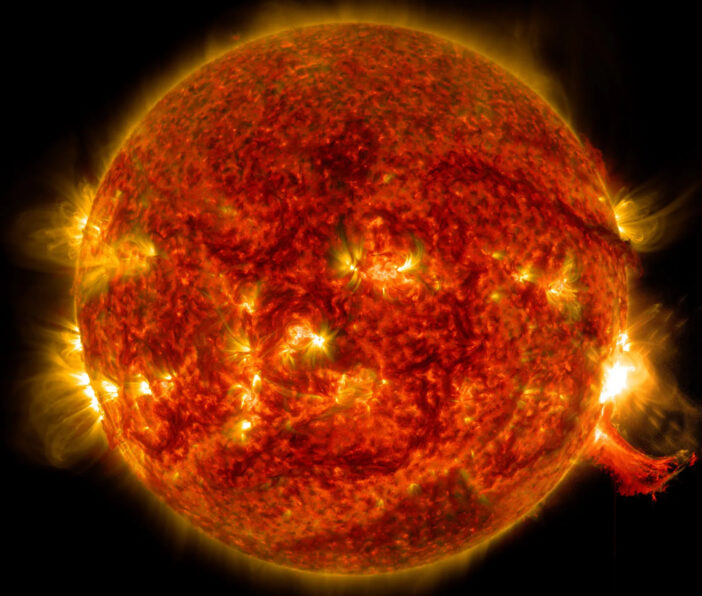
New simulations suggest the outer solar system could disassemble within about one billion years after the Sun becomes a white dwarf.
The post The Solar System Has a New Life Expectancy, and It’s a Billion Times Shorter appeared first on AAS Nova.
]]>Isaac Newton suspected that the gravitational dance between the Sun and Jupiter would eventually destabilize the solar system, but modern computational research has shown that its long-term stability is, statistically, pretty secure. However, new simulations with more realistic solar mass-loss conditions make a strong case for the disassembly of the outer solar system — and on timescales much shorter than previously thought.
Kick It Up a Notch
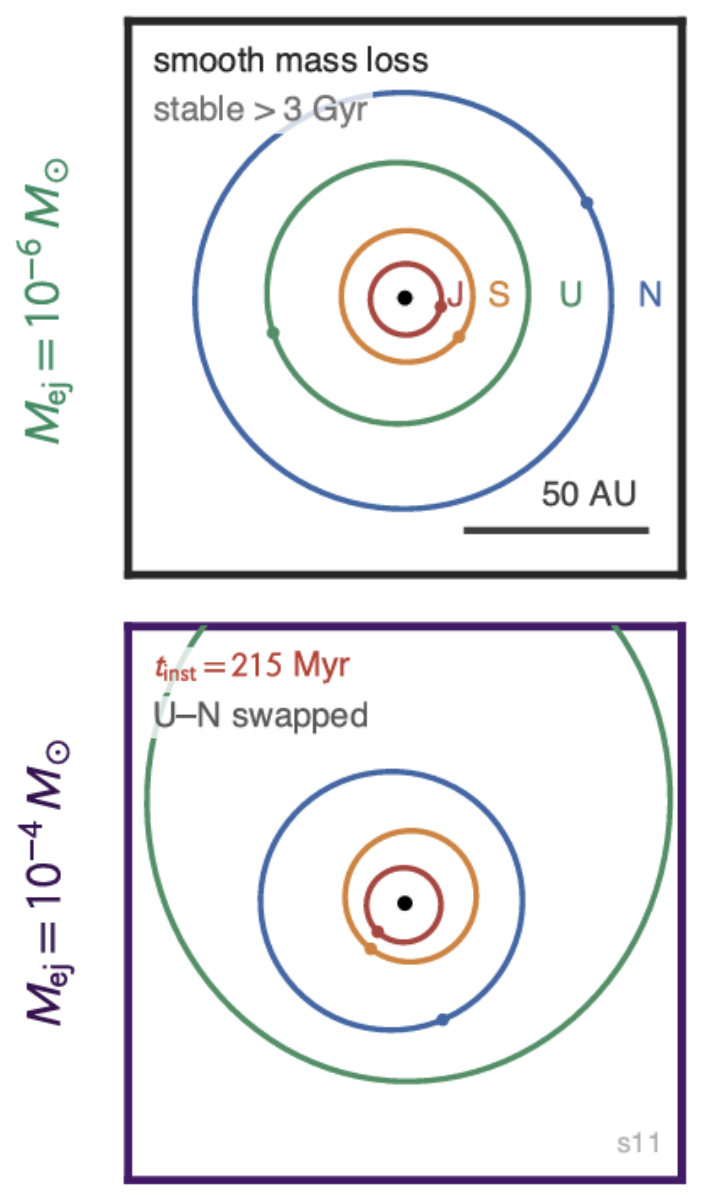
Final outer planet orbital configurations for two simulations — one stable and one unstable. t=0 at the onset of white dwarf formation. Click to enlarge. [Adapted from Batygin et al. 2026]
However, all of these studies modeled solar mass loss as a smooth function, so the dismantling of the solar system was left up to external forcings. In reality, stars on the red giant branch undergo mass ejections that are random in time and direction, corresponding to velocity “kicks” that can alter the dynamics of the planets.
A team led by Konstantin Batygin at the California Institute of Technology conducted numerical experiments to analyze the orbital dynamics of the outer solar system under different solar mass-loss conditions. First, they tested the classic case of smooth mass loss and validated previous findings that, despite planetary orbits doubling in size, the dynamics are pretty tame. This holds true even when mass is ejected anisotropically: if the timing is smooth, the asymmetries cancel out.
Outer Solar System, Your Days Are Numbered
Next, they simulated stochastic kicks and found that the behavior of the outer planets was largely tied to the ejection mass of each kick. For very small ejection masses (≤ 10-7 M☉), dynamics mimic the smooth mass-loss case. For intermediate values (10-7 to 10-6 M☉), there’s a roughly 20% chance Jupiter–Saturn and Uranus–Neptune enter mean-motion resonances: an orbital configuration where planets’ periods are a ratio of small integers. These resonant configurations don’t protect the giant planets, however: resonant simulations disassemble slightly more often than nonresonant simulations. For larger ejection masses (≥ 10-5 M☉), the outer solar system disassembles on the timescale of billions of years.
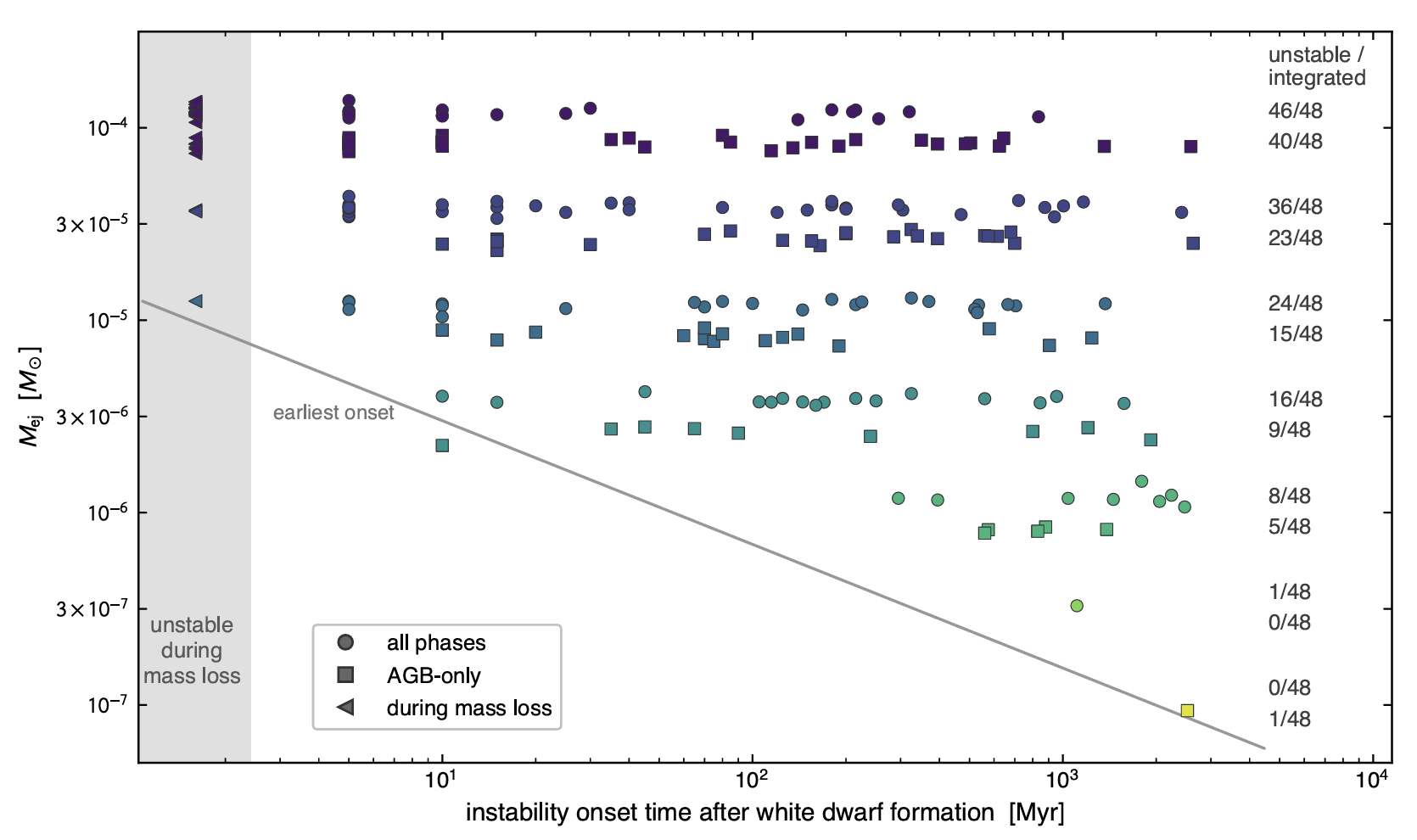
Instability onset time — or how long after white dwarf formation the outer solar system disassembles — as a function of ejection mass. The larger the ejection mass, the greater the chance of instability. Click to enlarge. [Batygin et al. 2026]
This new discovery reduces the life expectancy of the solar system from one billion billion years to a meager one billion years after white dwarf formation.
Citation
“Terminal Instability of the Solar System Triggered by Stochastic Solar Mass Loss,” Konstantin Batygin et al 2026 ApJL 1009 L22. doi:10.3847/2041-8213/aea290
The post The Solar System Has a New Life Expectancy, and It’s a Billion Times Shorter appeared first on AAS Nova.
]]>The post Tidal Grinding of Dwarf Galaxies in Cluster Environments appeared first on AAS Nova.
]]>Dwarf elliptical galaxies in the Virgo Cluster appear to come in “flat” and “round” varieties; the dynamics of these populations suggest that flat dwarf ellipticals have experienced less tidal processing.
The post Tidal Grinding of Dwarf Galaxies in Cluster Environments appeared first on AAS Nova.
]]>
Astrobites reports on the discovery of a new ultra-faint dwarf galaxy in preview data taken before the start of Vera C. Rubin Observatory's 10-year survey.
The post An Early Discovery by Rubin Observatory appeared first on AAS Nova.
]]>Editor’s Note: Astrobites is a graduate-student-run organization that digests astrophysical literature for undergraduate students. As part of the partnership between the AAS and astrobites, we occasionally repost astrobites content here at AAS Nova. We hope you enjoy this post from astrobites; the original can be viewed at astrobites.org.
Title: Discovery of the Distant, Ultra-Faint Milky Way Satellite Aquarius IV with the Vera C. Rubin Observatory Early Data Preview 2
Authors: William Cerny et al.
First Author’s Institution: Yale University
Status: Published in RNAAS
Warming Up the World’s Largest Camera
Today’s bite covers one of the NSF–DOE Vera C. Rubin Observatory‘s first major discoveries, which was found in testing data before the observatory began its decade of observations. Perched atop a mountain in Chile, the brand-new Rubin Observatory is just beginning a 10-year survey called the Legacy Survey of Space and Time (LSST). LSST will be the deepest and widest sky survey ever conducted, taking images of the entire southern night sky every three nights. This ultra-wide, ultra-high-definition time-lapse of the universe will help answer fundamental questions about dark matter and dark energy, study objects in our solar system, find distant supernova explosions, and more.
LSST is a photometric survey, meaning its main data product is images in several filters. These images are taken with the largest digital camera ever constructed, about the size of a Mini Cooper. The LSST camera has a resolution of 3.2 gigapixels. To put that number into perspective, you would need about 13 copies of the Las Vegas Sphere to display just a single LSST image… and hundreds of these images will be taken every night!
The authors of today’s article use the first dataset from the LSST camera, called Early Data Preview 2 (EDP2). EDP2 was taken from April 2025 to January 2026, covered about 3,000 square degrees (about 7% of the entire night sky), and primarily served as a test before beginning the 10-year LSST (which began in June 2026).
Small Galaxies, Big Questions
Since LSST will survey a large area at unprecedented depths, one field of interest is to study extremely dim and small galaxies called ultra-faint dwarf galaxies (UFDs). These galaxies are so faint that we can only find them close to home, orbiting the Milky Way and other nearby galaxies as satellites. UFDs don’t have much luminous matter, meaning they are likely dominated by their dark matter halos. This makes them useful test beds for our theories of dark matter and galaxy formation, if we can spot them.
Many UFDs don’t look like normal galaxies that resemble blobs of diffuse light with stars; instead, they’re more like a handful of individual stars in an image that also contains foreground stars and background galaxies. So how do you identify them? The trick is that stars born together at the same time from the same gas follow a predictable track in color and brightness called an isochrone. The authors slide a model isochrone for an ancient, metal-poor population through the data at a range of assumed distances and ask: at any spot in EDP2, are there more stars sitting on that track than random chance would predict? Cerny and coauthors found a new spot, which they call Aquarius IV, a new UFD candidate (Figure 1).
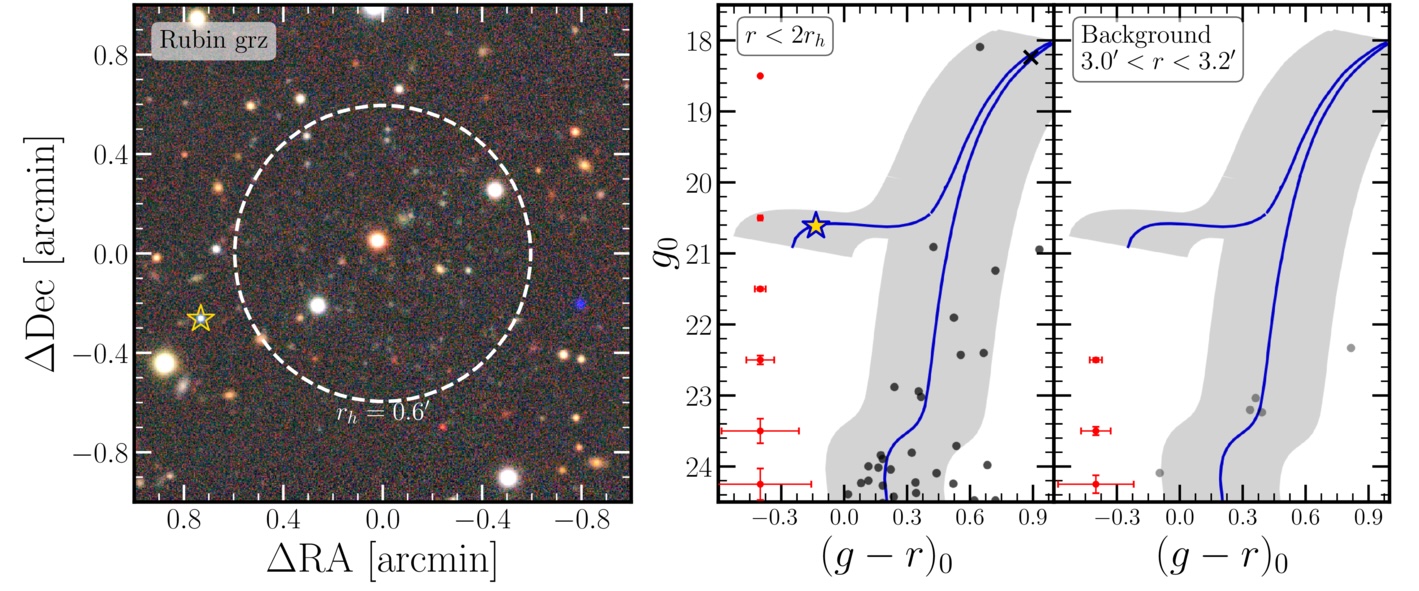
Figure 1: Left: A Rubin image centered on Aquarius IV, combining images in the g, r, and z filters. The dashed circle marks the half-light radius, the region enclosing half the galaxy’s light. Aquarius IV is only a scattering of individual faint stars. The yellow star marks a likely blue horizontal-branch member. Right: A plot of brightness against color for the stars inside twice the half-light radius (first panel) and inside a ring of sky just outside the galaxy (second panel). Stars born at the same time from the same gas fall along the isochrone (blue line; any stars in the grey regions are deemed to follow the isochrone). All the stars follow the isochrone in the first panel but not the second, indicating that the stars are associated. [Adapted from Cerny et al. 2026]
The authors also infer several properties of Aquarius IV, including its centroid coordinates, half-light radius, ellipticity, distance, and absolute magnitude. They find that its radius is larger than almost all Milky Way globular clusters (tight gravitationally bound systems of old stars that don’t reside in their own dark matter halos), suggesting that Aquarius IV is a true dwarf galaxy.
Currently, there are about 40 known UFDs around the Milky Way, and LSST is expected to roughly double this number (see this Astrobite), allowing us to study these tiny galaxies at a population level. This article proves that LSST has the potential to revolutionize many areas of astrophysics! If you are a researcher in the US or Chile and want to play with the EDP2 data yourself, you can access it via the Rubin Science Platform. For researchers from other countries, see more info here.
Original astrobite edited by Katya Gozman.
About the author, Ben Sherwin:
I am a physics PhD student and NSF Graduate Research Fellow at Stanford University. I am interested in theoretical and observational cosmology, specifically in cross-correlations between the cosmic microwave background and tracers of large-scale structure. Outside of work, I enjoy seeing the latest movies in theaters and exploring the San Francisco Bay Area.
The post An Early Discovery by Rubin Observatory appeared first on AAS Nova.
]]>The post Piercing Through the Haze: Characterizing Titan-Like Terrestrial Exoplanets with JWST appeared first on AAS Nova.
]]>Analysis of Cassini spectra of Titan suggests that JWST is unlikely to identify atmospheric components aside from methane on a Titan-like exoplanet; optical and near-ultraviolet observations will be key.
The post Piercing Through the Haze: Characterizing Titan-Like Terrestrial Exoplanets with JWST appeared first on AAS Nova.
]]>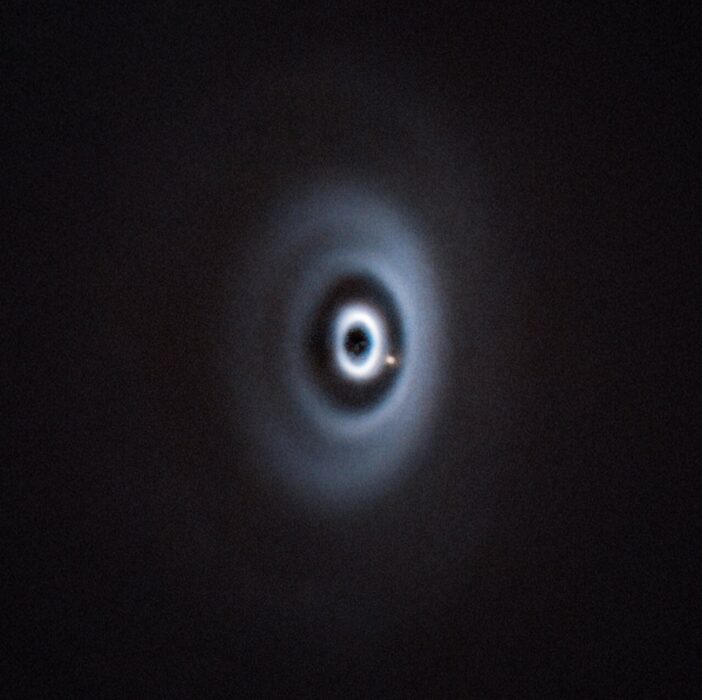
New radio observations provide the best view yet of the WISPIT 2 planetary system, revealing spiral wakes driven by a growing young planet.
The post Researchers See Gas Swirling Around a Growing Baby Planet appeared first on AAS Nova.
]]>Astronomers seem to find something new every time they point a telescope at WISPIT 2, a 5-million-year-old solar-mass star located 430 light-years away. New high-resolution radio observations provide the best view yet of how the young planets of this system interact with the disk that feeds them.
Detecting Distant Planets
In 2025, astronomers carrying out the WIde Separation Planets In Time (WISPIT) survey — a targeted search for widely separated giant planets around young Sun-like stars — revealed a dusty disk surrounding the star WISPIT 2. Orbiting within this disk is a 4.9-Jupiter-mass planet, WISPIT 2b, at 57 au from the star. This makes WISPIT 2 just the second star to host a confirmed, directly imaged planet within its protoplanetary disk. Even more remarkable, WISPIT 2b was detected in Hα, showing that the planet is still growing by accreting gas from the disk.
Later observations confirmed the presence of a second planet, WISPIT 2c, which has an estimated mass of 8–12 Jupiter masses and orbits the star at 15 au. On top of these planetary discoveries, researchers have also found that WISPIT 2 is two stars rather than one!
Best View Yet of the WISPIT 2 System
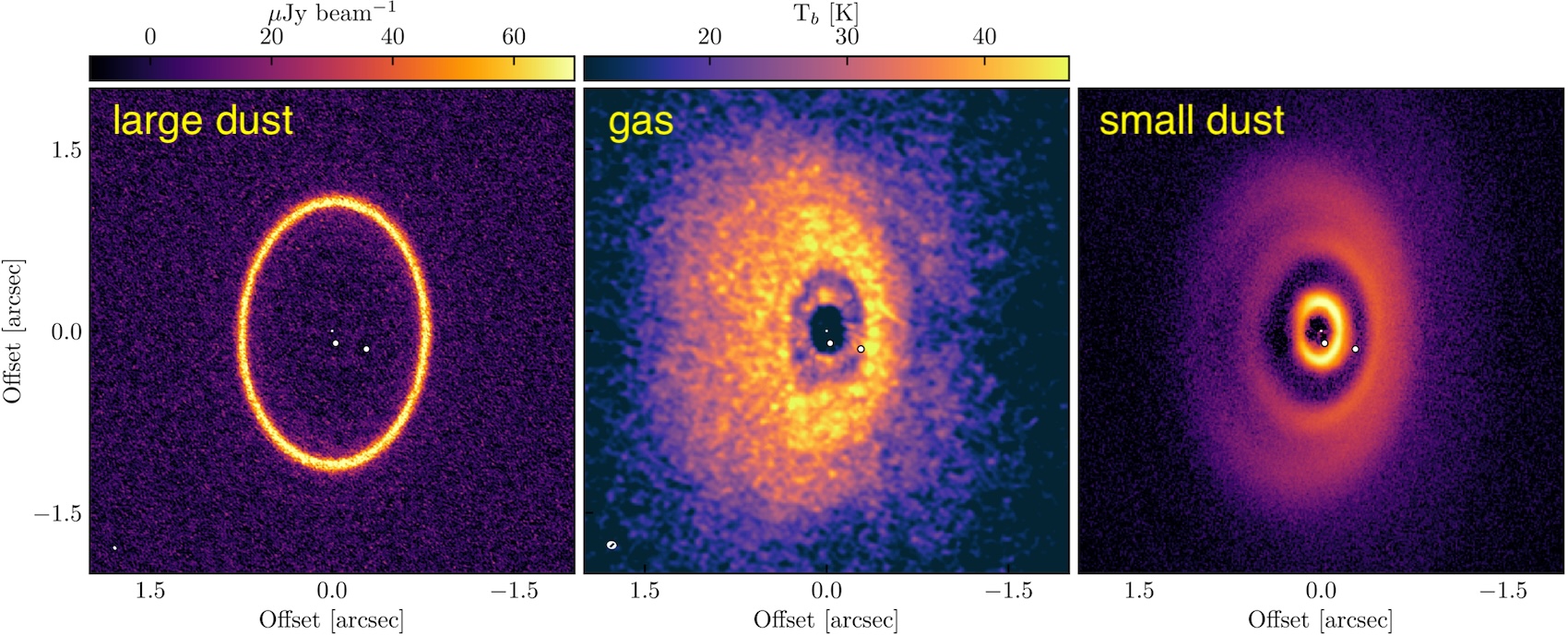
New observations of WISPIT 2 from ALMA (left and center panels) and previous observations from the Very Large Telescope (right panel). The star is shown by the small dot at the very center, and the planets are indicated by the two white circles. Click to enlarge. [Adapted from Benisty et al. 2026]
The distribution of gas within the disk, traced by emission from carbon monoxide, roughly follows the pattern seen in previous observations of small dust grains: the orbits of WISPIT 2b and 2c are depleted of gas and dust, demonstrating how the young planets have carved their own berths within the disk, creating a gap at WISPIT 2b’s orbit and a cavity around the star.
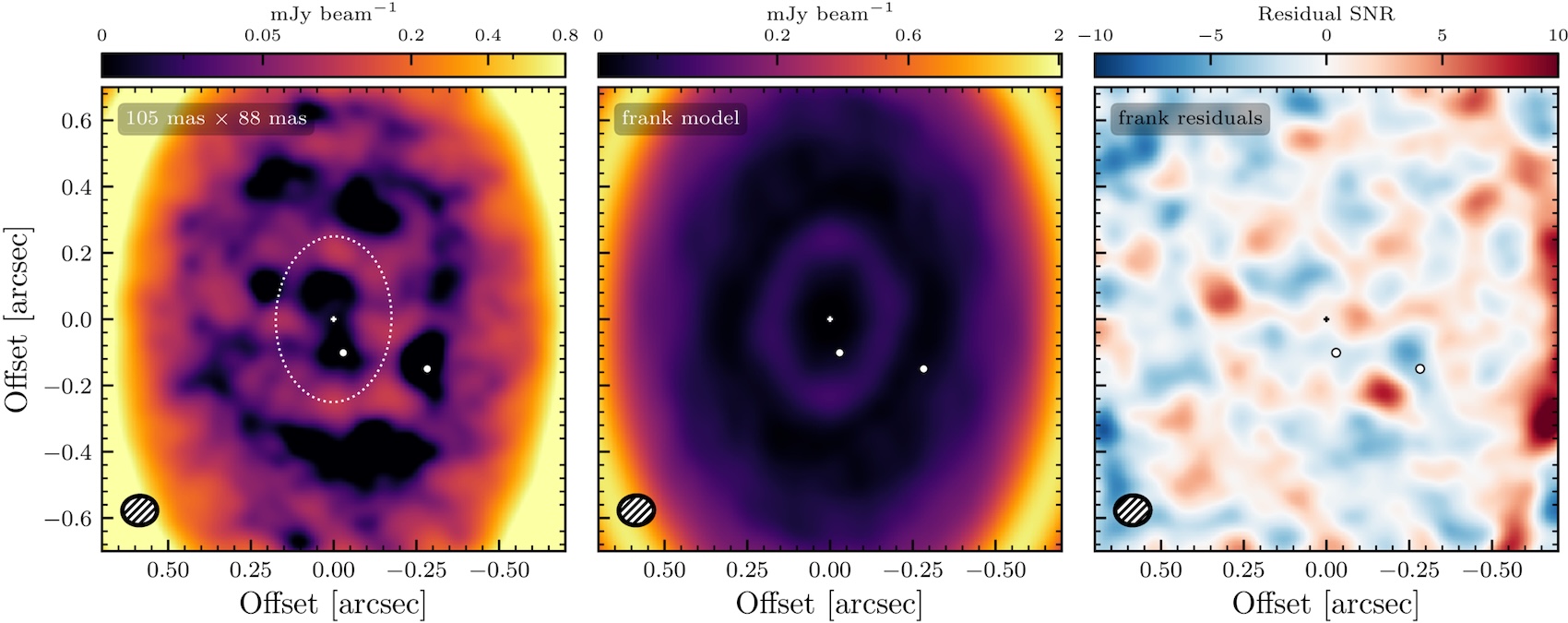
The left panel shows the dust continuum emission zoomed in on the star (plus sign) and planets (circles). The dotted line shows the location of a faint ring, which is modeled in the center panel. The right panel shows the residuals. Click to enlarge. [Benisty et al. 2026]
Spiral Wakes Making a Splash
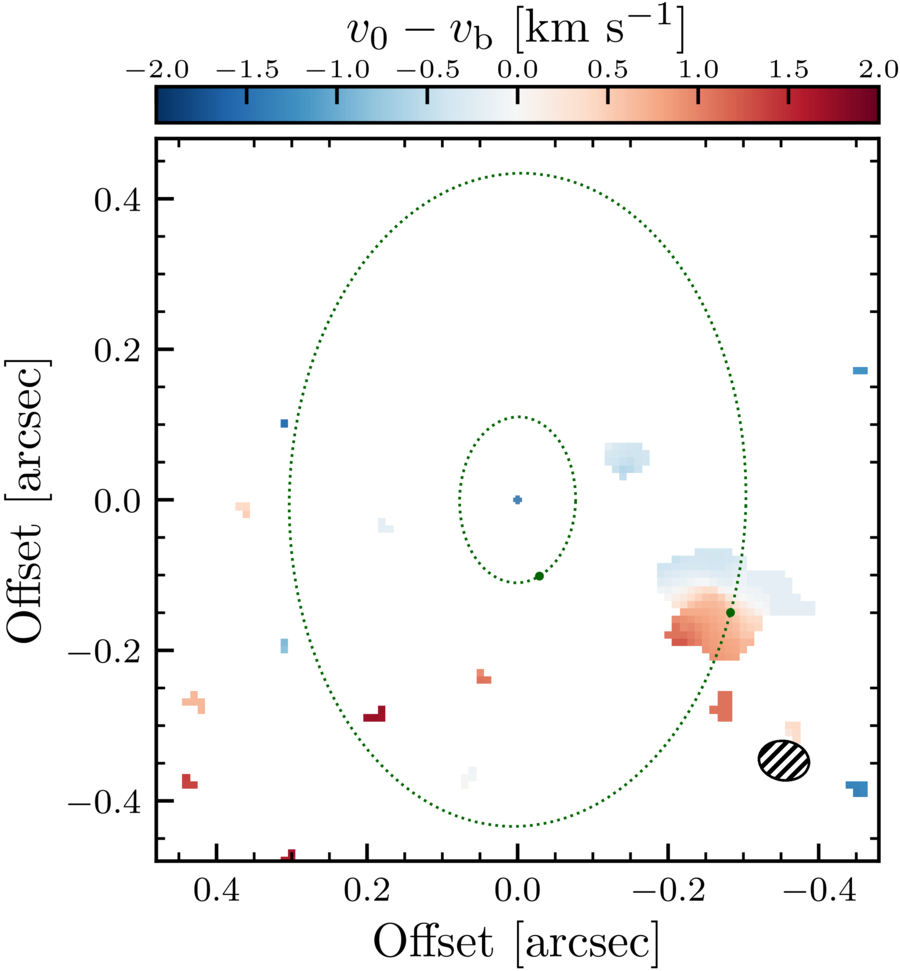
Velocity field showing the gas swirling around WISPIT 2b, which is indicated by the green circle farther from the star. [Benisty et al. 2026]
Spiral wakes have been spotted in other protoplanetary disks, but this is the first time researchers have been able to definitively associate this feature with a planet rather than other causes, such as gravitational instabilities. Looking ahead, future high-resolution spectroscopic observations of WISPIT 2b and its surroundings will offer researchers an unprecedented opportunity to compare the properties of the planet and its spiral wake against the predictions of simulations — advancing toward a powerful new way to study exoplanets embedded in protoplanetary disks.
Citation
“Mapping the WISPIT 2 Planet-Hosting Cavity at Sub-Hill-Radius Scales,” Myriam Benisty et al 2026 ApJL 1009 L32. doi:10.3847/2041-8213/aea214
The post Researchers See Gas Swirling Around a Growing Baby Planet appeared first on AAS Nova.
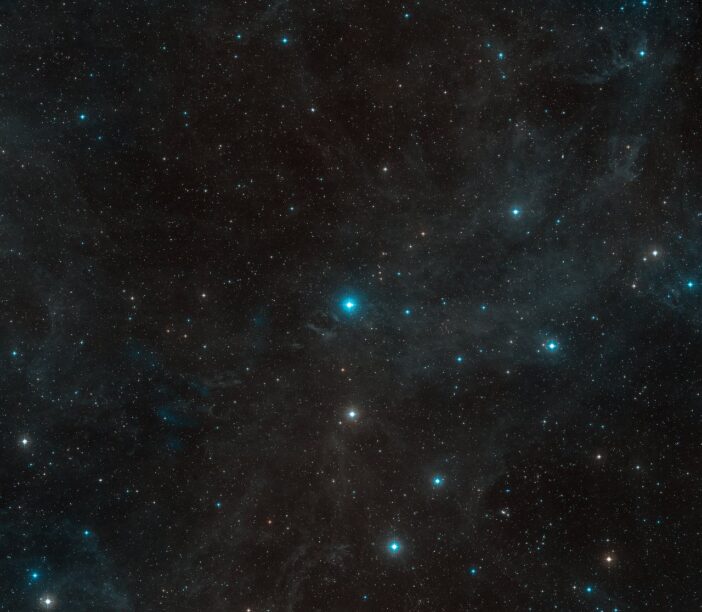
]]>
Researchers use stellar pulsations to detect substellar companions around A-type stars — including what could be a first-of-its-kind exoplanet.
The post Stellar Pulsations Suggest Habitable-Zone Planet Around a Massive Star appeared first on AAS Nova.
]]>By observing subtle variations in the timing of stellar pulsation modes, researchers may have made the first detection of a planet in the habitable zone of a massive A-type star.
Listening for Planets in Stellar Heartbeats
To date, some 6,000 exoplanets have been detected across a vast array of surveys and instruments. The majority of these have been detected around main-sequence F, G, and K stars — but not because these are the only places exoplanets can exist. Rather, this is a result of selection bias: these stars tend to be both bright and luminously stable enough for astronomers to deploy the radial velocity or transit methods.
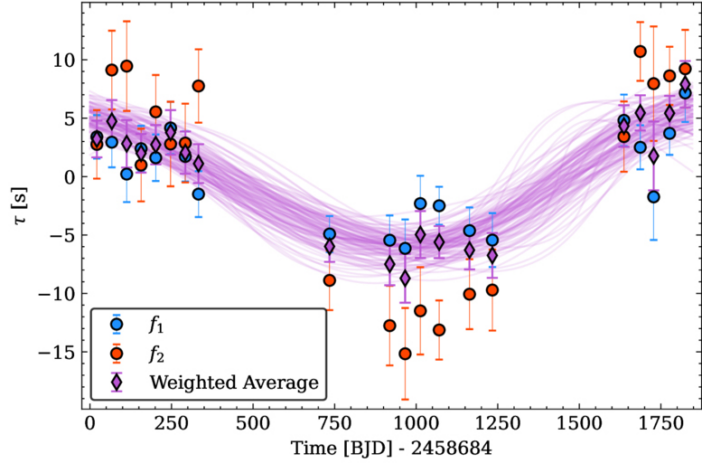
Periodic modulations in the time of observed stellar pulsations can indicate the presence of an orbiting companion. In this case, timing variations are displayed for the two most prominent pulsation modes f1 and f2 for the variable star HD 156295. The sinusoidal pattern indicates they may be caused by an orbiting companion with a mass of about 6.3 Jupiter masses at a distance of 3.9 au, in this star’s habitable zone. [Adapted from Wilson et al. 2026]
Luckily, one transit astronomer’s trash data can be a pulsation timer’s treasure. For some A-type stars called δ Scuti stars, the pulsation is regular enough to be used like a cosmic clock. Subtle variations in a star’s position due to the tug of an orbiting companion can then disrupt the timing of its otherwise steady pulsation, allowing one to once again find planets via its light curve — including massive ones on intermediate-period orbits that are the most difficult to detect around massive stars using traditional methods.
A Massive Planet in the Habitable Zone of a Hot Star?
In a new study led by Logan Wilson (Center for Astrophysics | Harvard & Smithsonian), researchers analyzed 16,440 highly pulsating δ Scuti stars observed at a high cadence by the Transiting Exoplanet Survey Satellite (TESS) in order to look for the distinctive, periodic timing modulations associated with an orbiting companion. This sample was then whittled down to nine candidate systems they believe may contain substellar companions — likely either brown dwarfs or massive planets.
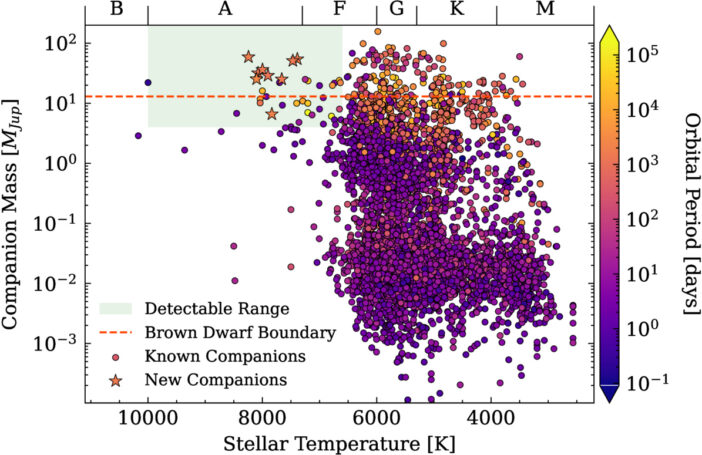
The properties of the nine candidate objects identified in this study and their host stars are shown here, along with the properties of other exoplanet systems. Through stellar pulsation timing, the researchers were able to identify substellar candidates around hot A-type stars in intermediate-period orbits, a region of parameter space that has been difficult to probe with other methods. [Wilson et al. 2026]
The other eight candidates are more consistent with brown dwarfs. Six of these candidates show somewhat uncommon masses and orbital separations that place them in a region of parameter space known as the “brown dwarf desert.” Some observations suggest this desert is less severe around hotter stars — a conclusion that this study supports.
All of these findings are still quite tentative, however; the researchers estimate that the probability for the planetary signal being real is just over 50%, and the parameters given for each candidate are still subject to large uncertainties. With new data arriving all the time, it may not take long before we have a clearer picture of these unique substellar companions.
Citation
“A Search for Substellar Companions around A-type Stars: Pulsation Timing Detection of Eight Brown Dwarf Candidates and a Possible Habitable-zone Planet,” Logan G. Wilson et al 2026 ApJ 1009 78. doi:10.3847/1538-4357/ae93a0
The post Stellar Pulsations Suggest Habitable-Zone Planet Around a Massive Star appeared first on AAS Nova.
]]>The post JADES: A Prominent Galaxy Overdensity Candidate Within the First 500 Myr appeared first on AAS Nova.
]]>A concentration of galaxies four times denser than expected provides an opportunity to understand how environment impacts galaxy evolution and the onset of reionization.
The post JADES: A Prominent Galaxy Overdensity Candidate Within the First 500 Myr appeared first on AAS Nova.
]]>The post Solar-Like Oscillations of Main-Sequence and Subgiant Stars in the TESS Field appeared first on AAS Nova.
]]>Using light curves from the Transiting Exoplanet Survey Satellite (TESS), researchers have performed an asteroseismic analysis of 221 main-sequence and subgiant solar-like oscillators.
The post Solar-Like Oscillations of Main-Sequence and Subgiant Stars in the TESS Field appeared first on AAS Nova.
]]>The post Sunrise III: Instrument, Mission, Data, and First Results appeared first on AAS Nova.
]]>Sunrise III, a stratospheric balloon-borne solar observatory, took a 6.5-day flight from northern Sweden to northwestern Canada in 2024, gathering 200 TB of data with its 1-meter telescope and three instruments.
The post Sunrise III: Instrument, Mission, Data, and First Results appeared first on AAS Nova.
]]>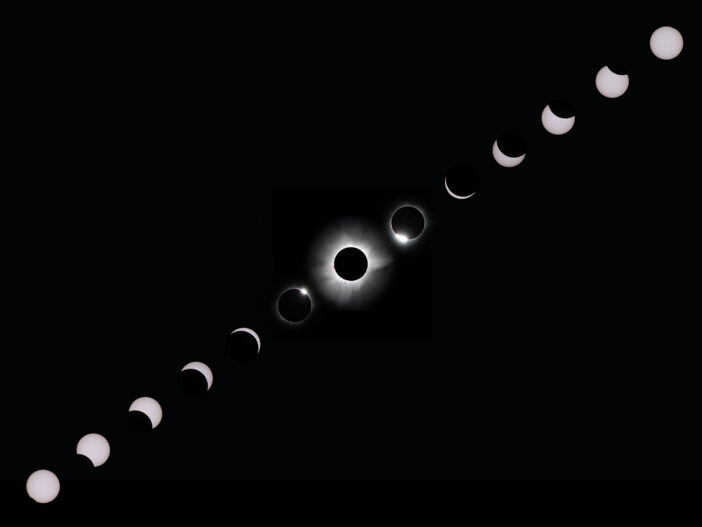
Handwritten eclipse observations and sketches of solar prominences from 1733 offer researchers a rare window into a data-poor period of solar history.
The post A New Look at a Centuries-Old Solar Eclipse appeared first on AAS Nova.
]]>Humans have recorded solar eclipses for thousands of years. Recently, researchers translated and analyzed solar eclipse observations from 18th-century Sweden to determine the Sun’s radius at that time and study the first confirmed record of solar prominences.
Looking Back Nearly 300 Years
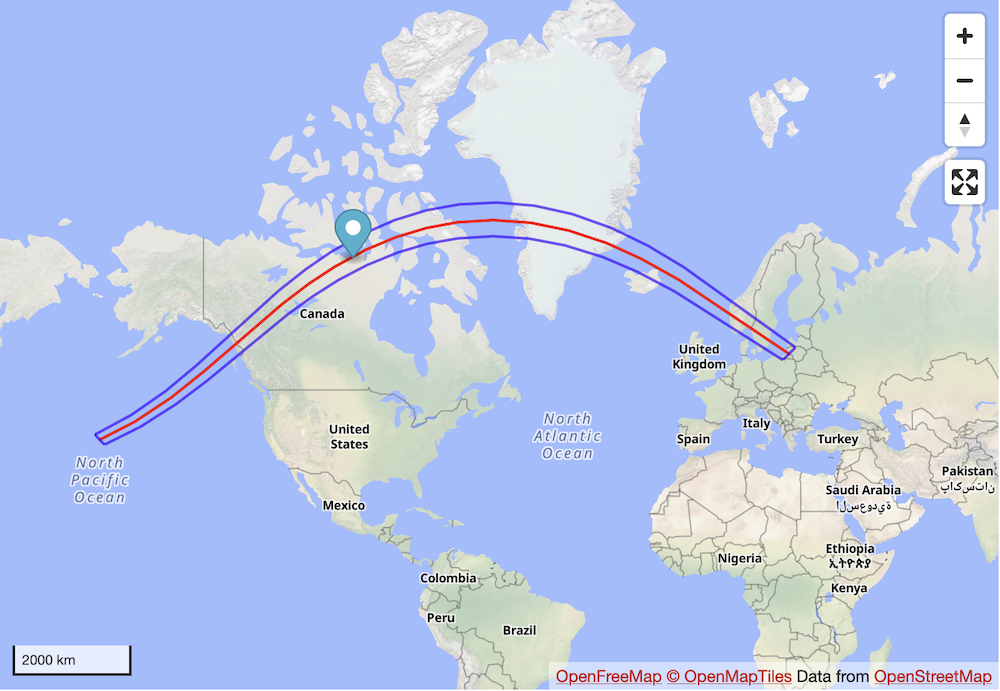
The path of the 13 May 1733 total solar eclipse. Click to enlarge. [Eclipse Predictions by Fred Espenak (NASA’s GSFC)]
Wassenius penned a short account of his observations in Latin for Philosophical Transactions of the Royal Society (the longest-running scientific journal in the world!). His drawings of the event, which include the first robust record of solar prominences, were never officially published, but were housed in the Royal Academy Archives of Sweden. Now, researchers have translated Wassenius’s full report from Swedish to English and analyzed his sketches, helping to fill an important gap in the historical record of solar activity.
Drawing from Observations
Hisashi Hayakawa (Nagoya University; Rutherford Appleton Laboratory) and collaborators translated Wassenius’s notes, which describe how he viewed the eclipsed Sun through a 21-foot-long telescope during just over two minutes of totality. From Wassenius’s measurements, Hayakawa and coauthors calculated the solar radius to be 696,250 ± 170 km; this is larger than the modern accepted radius, but it’s in line with what has been calculated from solar eclipse measurements two decades earlier, in 1715.
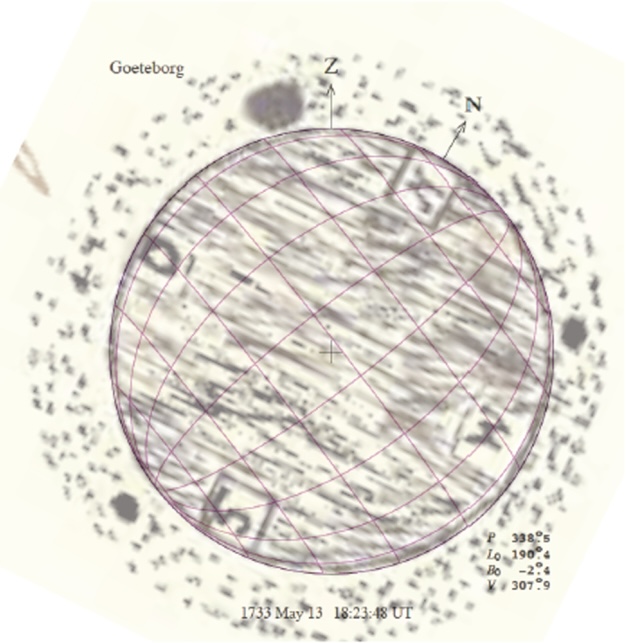
Wassenius’s sketch of the solar eclipse, showing three prominences as filled circles emerging from behind the disk of the Moon. [Adapted from Hayakawa et al. 2026]
Prominent Features
High-latitude prominences like the one (or more) seen by Wassenius are most common during what’s known as the “polar rush,” which occurs as solar activity rises toward a maximum. If these prominences are related to the polar rush, that would mean that in 1733, the Sun was not in an activity minimum as previously thought. However, it’s also possible for prominences to pop up at high latitudes during other times in the solar cycle; the authors estimated the likelihood of this happening at 20%.
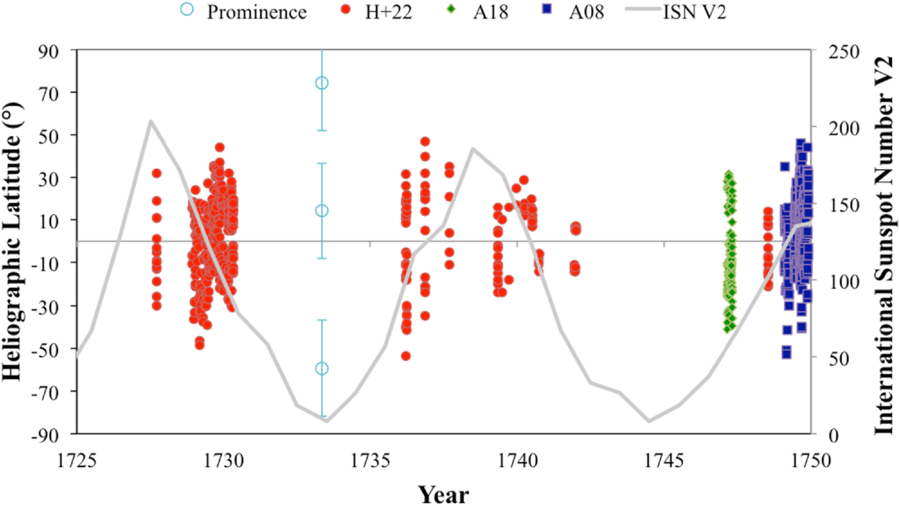
Heliographic latitude of solar prominences estimated from Wassenius’s drawings (light blue circles), compared to the positions (filled symbols) and number (gray line) of sunspots. Note that sunspot data around this time were scarce, and some researchers have suggested that revisions to the sunspot number are needed. Click to enlarge. [Hayakawa et al. 2026]
Citation
“Analyses on Wassenius’s Report for Total Solar Eclipse in 1733: Quantifications of the Solar Radius and the Earliest Reported Prominences,” Hisashi Hayakawa et al 2026 ApJ 1007 189. doi:10.3847/1538-4357/ae6451
The post A New Look at a Centuries-Old Solar Eclipse appeared first on AAS Nova.
]]>The post Dynamical Implications of the Recently Detected Feature Around Quaoar and Constraints on the Presence of Additional Satellites appeared first on AAS Nova.
]]>A recently identified opaque feature around the dwarf planet Quaoar appears to be inconsistent with an orbiting sharp-edged arc explained by triangular-point confinement; it’s likely a satellite instead.
The post Dynamical Implications of the Recently Detected Feature Around Quaoar and Constraints on the Presence of Additional Satellites appeared first on AAS Nova.
]]>
Astrobites reports on a hunt for evidence of a universal initial mass function using JWST observations of local relic galaxy Boötes I.
The post A Sneak Peek into Early-Universe Star Formation with Boötes I appeared first on AAS Nova.
]]>Editor’s Note: Astrobites is a graduate-student-run organization that digests astrophysical literature for undergraduate students. As part of the partnership between the AAS and astrobites, we occasionally repost astrobites content here at AAS Nova. We hope you enjoy this post from astrobites; the original can be viewed at astrobites.org.
Title: Probing the IMF in the Early Universe — Direct Measurements in the Boötes I UFD with JWST/NIRCam
Authors: Keyi Ding et al.
First Author’s Institution: University of Maryland
Status: Published in ApJ
The Stellar Initial Mass Function
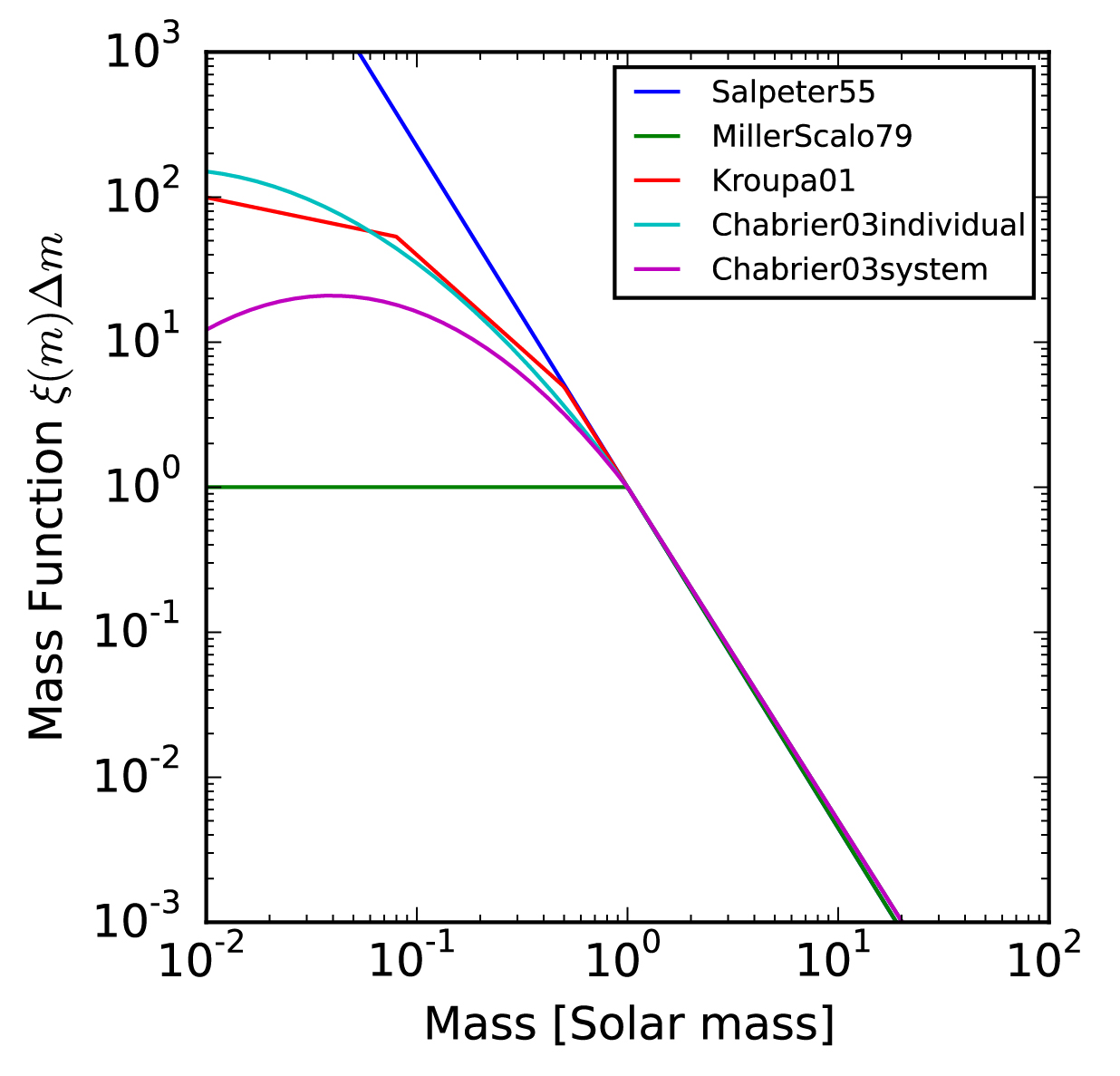
Figure 1: Several different formulations for the IMF. Astronomers have found that the Milky Way IMF seems to follow either a broken power law (Kroupa), or a log-normal (Chabrier) distribution. [JohannesBuchner; CC BY-SA 4.0]

For a relatively simple concept, the IMF is shaped by incredibly complicated underlying physical mechanisms. Things like turbulence, magnetic fields, and chemical enrichment all play a role in shaping the observed IMF. Additionally, the IMF is a pretty fundamental quantity. An enormous amount of astronomy research relies on assumptions made about the IMF. For example, since most stars are low in mass, and low-mass stars are dimmer, astronomers use the IMF to convert the amount of light in a galaxy to the number of stars; if there are more or fewer low-mass stars than we expect, our measurements will be wrong.
A big question surrounding the IMF is whether or not it’s universal. In the Milky Way, astronomers have been able to measure the IMF accurately, and they have found that it seems to be the same regardless of which bunch of stars we use to measure it.1 However, we know that galaxies in the early universe were very different compared to today. Things get tricky when you acknowledge that most measurements made of early-universe galaxies rely on modeling tools that are entirely reliant on assuming an IMF. This gnarly little detail makes measuring the IMF in the early universe especially valuable to astronomers.
What Makes Ultra-Faint Dwarfs So Special?
Today’s authors attempt to measure the early-universe IMF using a local relic, an ultra-faint dwarf galaxy (UFD). You might describe UFDs as “incredibly funky little galaxies.” They’re much less massive than the Milky Way, with about 10,000 times less stellar mass. What stars they do have tend to be very old and metal poor. The nature of UFDs has led many astronomers to think of them as fossils: relatively untouched galaxies formed in the early universe. Since we think UFDs are fossils of earlier galaxies, measuring the IMF in a UFD tells us whether the IMF was the same in the early universe as it is today. The authors focus on Boötes I, a relatively luminous UFD orbiting the Milky Way. Figure 2 shows Boötes I as seen by the Sloan Digital Sky Survey.
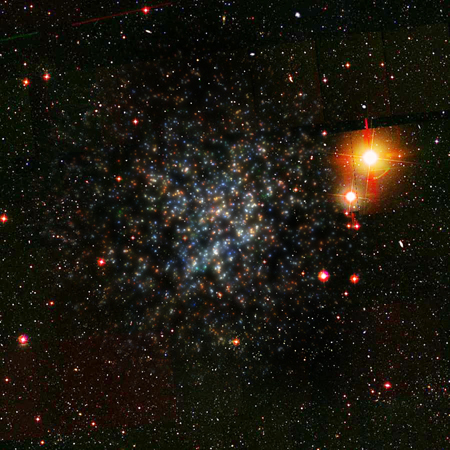
Figure 2: Boötes I as seen by the Sloan Digital Sky Survey. Because they’re so diffuse, UFDs look less like galaxies and more like groups of stars. [Vasily Belokurov – SDSS-II Collaboration]

The IMF in Boötes I
Measuring the IMF can get tricky — it’s typically pretty difficult to measure the mass of each individual star in a galaxy. Thankfully, Boötes I is close enough that we can do exactly that! Using JWST’s NIRCam instrument, today’s authors obtain imaging of Boötes I that is sensitive enough to extract roughly 10,000 stars belonging to the galaxy.
To measure the IMF from the observed population of stars, the authors use a modified version of Starwave, a Bayesian inference tool. In short, the tool takes in some assumptions about the population of stars in the galaxy, then generates many potential color–magnitude diagrams for various parameter selections. You can then assess how well each simulated color–magnitude diagram fits the observed data, thus determining likely parameters for the stellar population. The authors apply their tool for three different IMF models, testing how close the IMF in Boötes I is to that of the Milky Way. This allows them to determine how well the IMF compares to that of the Milky Way, which is typically thought of as a broken power law or log-normal distribution. If the IMF in Boötes I aligns with the Milky Way’s IMF, we’ll have a solid piece of evidence for a truly invariant IMF across cosmic time, allowing astronomers to rest easy knowing our modeling efforts haven’t been bunk this whole time.
So… What Did We Learn?
The authors find that a single power law can be ruled out to a good degree of confidence. This is good, as Milky Way studies show undeniable evidence of a turnover in the distribution. The broken power law and log-normal models both fit the observed data relatively well, aligning well with Milky Way–derived IMFs. All in all, they find solid evidence for an invariant IMF in the early universe.
However, they are unable to say with absolute certainty that the IMF is invariant. Given that their data are nearly perfect (that is, it’s pretty much impossible to get better data for Boötes I), the authors emphasize that a larger sample of UFD IMFs is needed to truly rule out an invariant IMF, but we’re certainly taking steps in the right direction! As the age-old saying goes, “more data are needed!”
Original astrobite edited by Maggie Verrico.
- Editor’s Note: The Milky Way IMF may vary from star cluster to star cluster; as described in this AAS Nova highlight from 8 July 2026, recent research using data from the Gaia spacecraft has found evidence for IMF variation in our galaxy.
 ︎
About the author, Drew Lapeer:
Drew is a first-year PhD student at the University of Massachusetts Amherst. They are broadly interested in the evolution of galaxies, with a focus on the impact of cosmic feedback on the galactic ecosystem. In their free time, they enjoy reading, rock climbing, hiking, and baking!
The post A Sneak Peek into Early-Universe Star Formation with Boötes I appeared first on AAS Nova.
]]>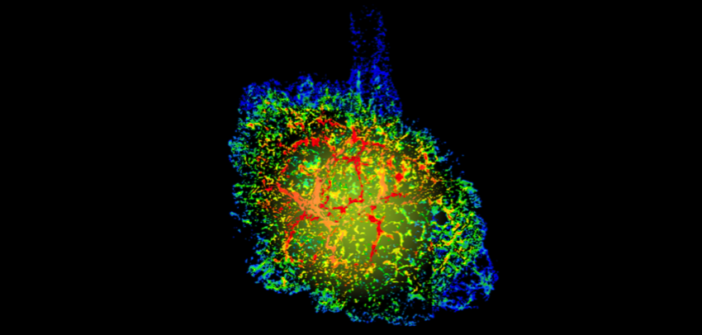
See the famous Crab Nebula in a whole new way: researchers have mapped the 3D kinematic structure of the nebula and investigated a jet-like feature emerging from the expanding shell.
The post Featured Image: Evolution of a Cosmic Crab appeared first on AAS Nova.
]]>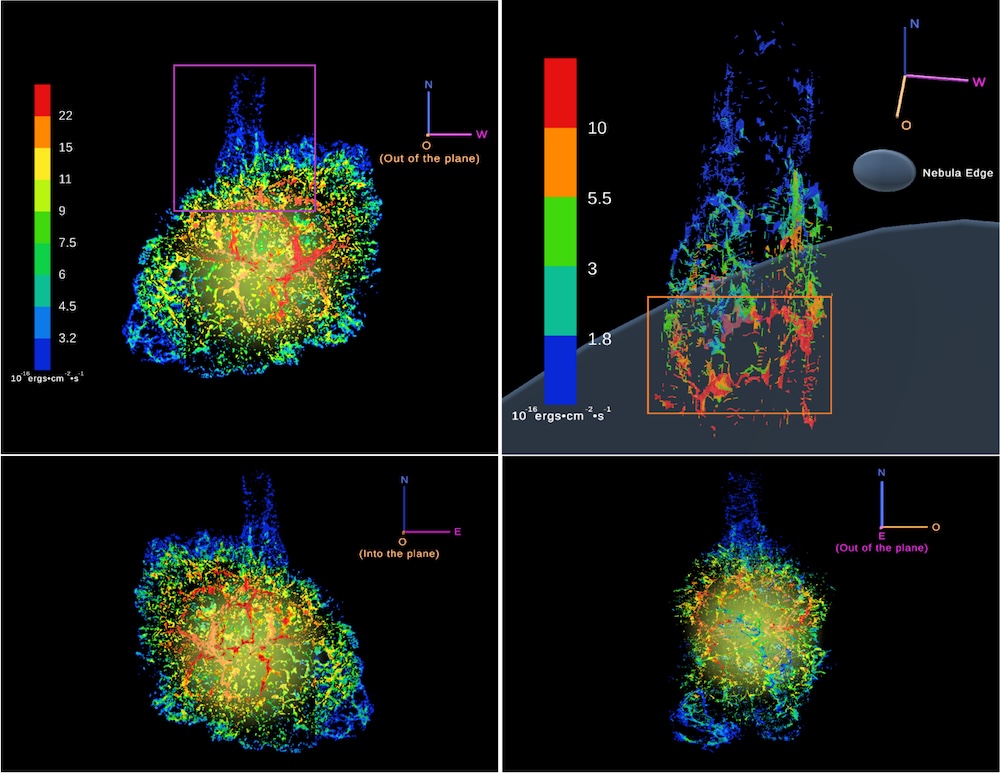
Three-dimensional reconstructions of the Crab Nebula using oxygen emission lines. An animation of the 3D reconstruction is also available. [Ding et al. 2026]
Citation
“3D Kinematic Reconstruction of the Crab Nebula That Includes the Northern Ejecta ‘Jet,'” Z. Ding et al 2026 ApJ 1007 130. doi:10.3847/1538-4357/ae84c0
The post Featured Image: Evolution of a Cosmic Crab appeared first on AAS Nova.
]]>The post Dust Grain Chemistry in the Diffuse Interstellar Medium Toward the Black Hole Transient GX 339–4 appeared first on AAS Nova.
]]>X-ray absorption observations toward a black hole transient reveal the interstellar dust grain composition along the line of sight: a silicate magnesium-rich amorphous pyroxene and metallic iron.
The post Dust Grain Chemistry in the Diffuse Interstellar Medium Toward the Black Hole Transient GX 339–4 appeared first on AAS Nova.
]]>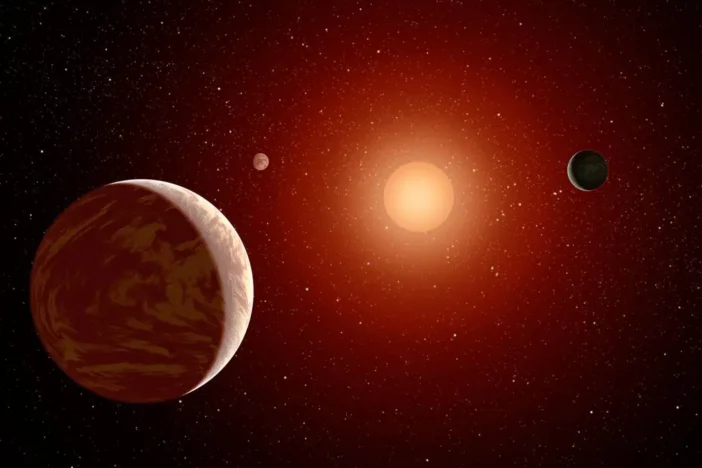
A recent study has found that the observed mass–eccentricity relation of warm Jupiters can be explained by dynamical interactions between planets in these systems.
The post Planets Scattering Planets in Warm Jupiter Systems appeared first on AAS Nova.
]]>While our solar system sports one Jupiter-like planet, exoplanet discoveries have revealed that giant planets come in a few different forms in systems with varying architectures. A recent study has explored how the mass–eccentricity relationship in warm Jupiters is shaped by dynamical interactions between planets.
Jupiter-like Planet Eccentricities
Exoplanet surveys have uncovered three different Jupiter-like planet populations across the galaxy: hot, warm, and cold Jupiters. Much like our own, cold Jupiters orbit on long periods, far away from their host stars. Conversely, hot Jupiters zip around their host stars on extremely short-period orbits. Somewhere in between, warm Jupiters orbit their host stars with periods from 10 to 365 days.
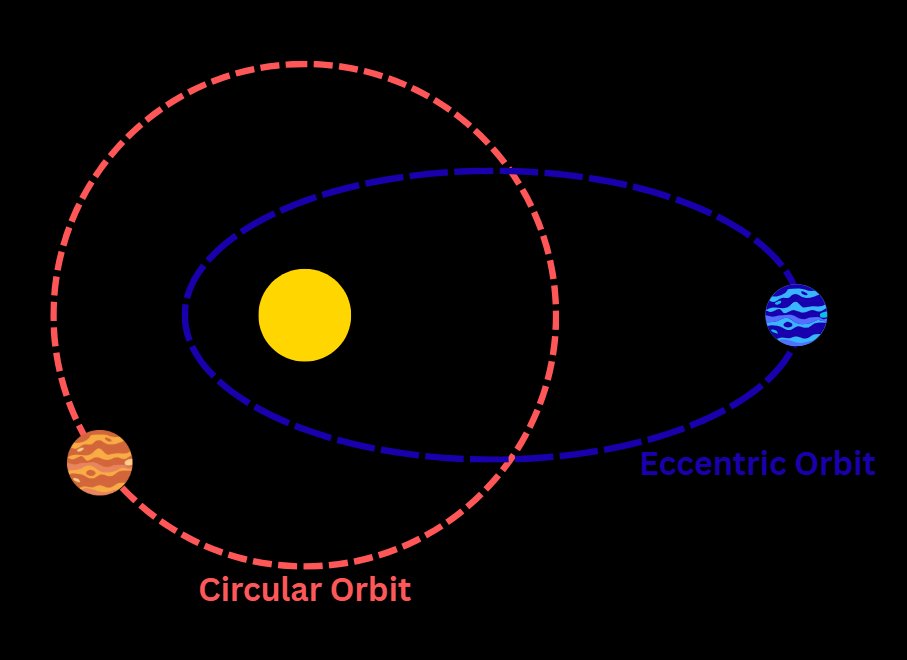
Diagram showing examples of a circular and an eccentric orbit. Click to enlarge. [AAS Nova/Lexi Gault]
Does this relationship extend to shorter-period giant planets as well? Hot Jupiters are heavily impacted by tidal interactions with their host stars, circularizing their orbits and erasing dynamical imprints on their eccentricities. Warm Jupiters, on the other hand, orbit far enough away for their eccentricities to preserve clues about their energetic histories. Recently, thanks to the Transiting Exoplanet Survey Satellite (TESS), astronomers have identified a positive correlation between planetary mass and eccentricity in a growing sample of warm Jupiters, but the exact driver of this trend has yet to be uncovered.
Planets Scattering Planets
To test if the positive mass–eccentricity correlation in warm Jupiters is consistent with planet–planet scattering, Jiayin Dong (University of Illinois at Urbana-Champaign) constructed a sample of 85 warm Jupiters from the NASA Exoplanet Archive. This carefully selected sample, dominated by discoveries from TESS and Kepler, included planets with masses between 0.3 and 15 Jupiter masses and orbital periods between 10 and 365 days. In conjunction with this sample, the authors built a planet–planet scattering framework to assess the range of properties anticipated for scattered warm Jupiter systems.
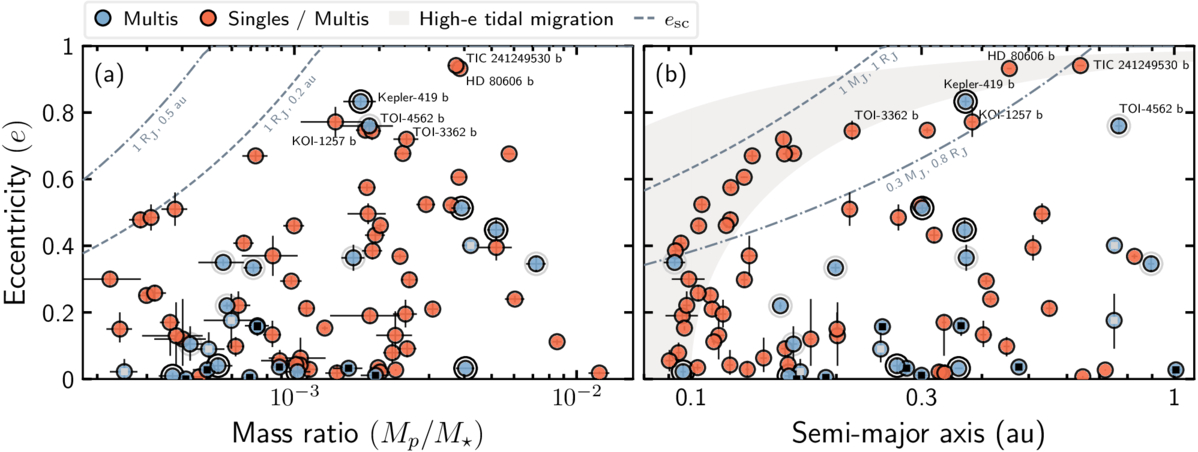
Warm Jupiter eccentricity versus planet–star mass ratio (left) and semimajor axis (right). Click to enlarge. [Dong et al 2026]
The mass–eccentricity relation of warm Jupiters, the authors suggested, represents a transition from collision-dominated interactions among low-mass planets to ejection-dominated interactions among high-mass planets. For massive enough systems, scattering can excite eccentricities high enough to trigger the high-eccentricity migration responsible for moving hot Jupiters to their close-in orbits. Overall, this study suggests that warm Jupiters are not a distinct planet species, but instead may represent the shorter-period counterparts of cold Jupiters whose orbits are shaped by the same dynamical processes. Future observations expanding the sample of warm Jupiters and discoveries of additional planet companions will further uncover the links between hot, warm, and cold Jupiter systems.
Citation
“Planet–Planet Scattering Explains the Mass–Eccentricity Relation of Warm Jupiters,” Jiayin Dong et al 2026 ApJL 1007 L29. doi:10.3847/2041-8213/ae930e
The post Planets Scattering Planets in Warm Jupiter Systems appeared first on AAS Nova.
]]>The post JWST’s First View of the Most Vigorously Star-Forming Cloud in the Galactic Center: Sagittarius B2 appeared first on AAS Nova.
]]>JWST has detected more than a dozen new candidate H II regions, despite extensive radio surveys of the region, and these observations suggest that infrared photons can escape even dense, dusty gas.
The post JWST’s First View of the Most Vigorously Star-Forming Cloud in the Galactic Center: Sagittarius B2 appeared first on AAS Nova.
]]>The post An Unusual Short Gamma-Ray Burst with Properties Intermediate Between SGRB and Magnetar Giant Flare Populations appeared first on AAS Nova.
]]>A curious gamma-ray burst with ambiguous properties may have been caused by a giant flare from a magnetar, but this would make the event three orders of magnitude more energetic than others of its class.
The post An Unusual Short Gamma-Ray Burst with Properties Intermediate Between SGRB and Magnetar Giant Flare Populations appeared first on AAS Nova.
]]>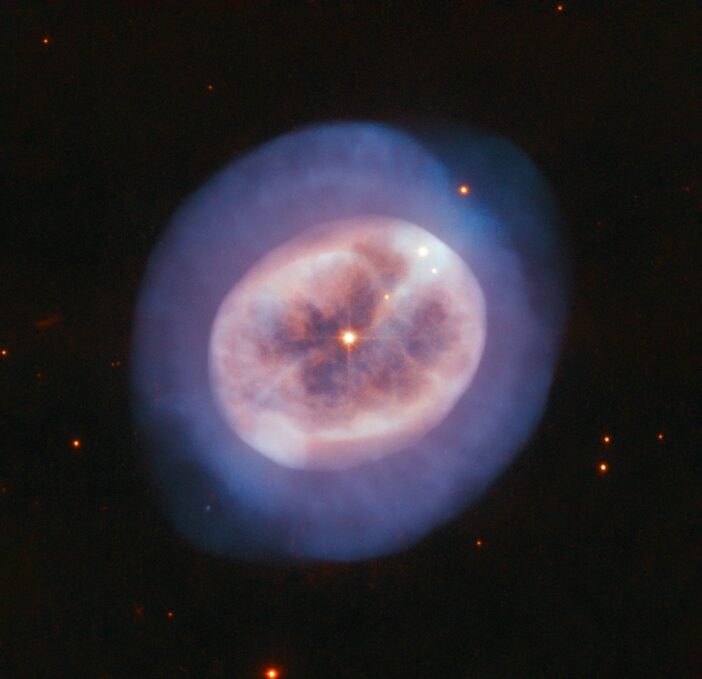
Researchers investigate a planetary nebula in a star cluster in the Andromeda Galaxy — one of just a handful of known extragalactic planetary nebula–open cluster pairs.
The post Extragalactic Planetary Nebula with Massive Progenitor Sheds Light on Stellar Evolution appeared first on AAS Nova.
]]>Editor’s Note: This article was co-written by Lucas Brown and Alexia Kubas, our 2026–2027 AAS Media Fellows. We’re excited to welcome Lucas and Alexia to the team and look forward to featuring their writing on AAS Nova regularly!
Planetary nebulae mark a key evolutionary phase for low- and intermediate-mass stars, but properties of the parent star are difficult to sleuth out. Researchers have discovered an extragalactic planetary nebula in the center of a star cluster, offering an unprecedented opportunity to trace planetary nebula properties to parent star stats.
The Puzzle of Planetary Nebula Progenitors
A planetary nebula, so named because the first ones discovered resemble the planet Uranus in a small telescope, forms when a Sun-like star runs out of fuel and sheds its outer layers, leaving a hot remnant core enveloped in a gaseous nebula. At higher masses, a different process kicks in: stellar cores can collapse to produce a chaotic burst of stellar material called a supernova. Where exactly the boundary should be placed between planetary nebula progenitors and supernova-forming stars remains an outstanding question in the field of stellar evolution.
Answering this question is challenging because once a planetary nebula becomes visible, the progenitor star’s transition into a hot, compact white dwarf is already underway, making it difficult to determine the star’s initial mass. For this task, researchers seek out planetary nebulae within open clusters — groups of stars that were born from the same molecular cloud and are roughly the same age — so that cluster characteristics can help piece together the progenitor puzzle. Since open clusters tend to be relatively young, they are also a great tool to probe planetary nebulae from more massive progenitors and explore the boundary between stars that produce planetary nebulae and those that go supernova.
Striking Gold
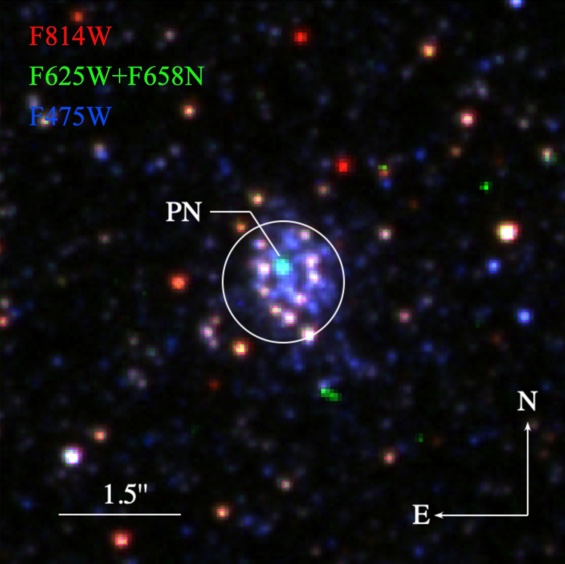
Open cluster AP 210 and planetary nebula M279 in the Andromeda Galaxy, as seen in archival Hubble observations. Click to enlarge. [Chen et al. 2026]
To make this identification, Chen’s team used archival Hubble Space Telescope and MMT data to examine the location of the planetary nebula candidate M279 within the Andromeda Galaxy. The researchers’ critical observation was that the nebula not only overlaps with the position of an open star cluster called AP 210, but it also has an estimated velocity that matches the velocity of other stars in the cluster. These associations, when combined, provide strong evidence that M279 originated within the cluster.
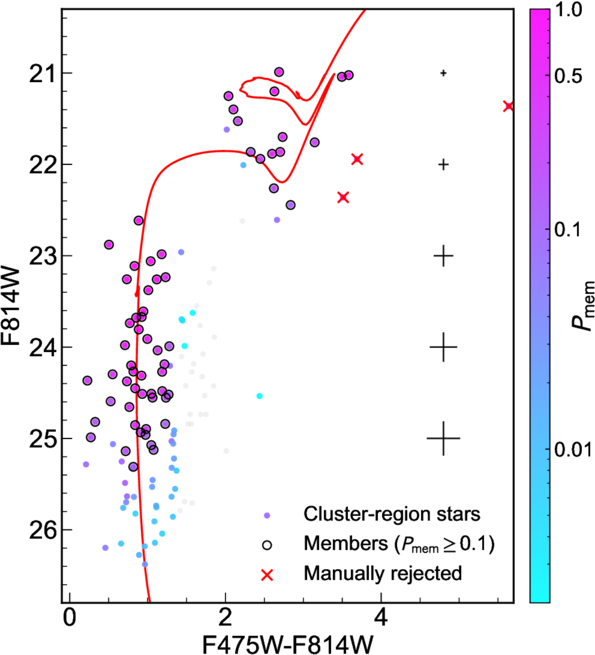
Color–magnitude diagram of stars in the open cluster AP 210. Colored dots represent stars, and the red line is the best-fitting isochrone, which was used to determine the cluster’s age. Click to enlarge. [Chen et al. 2026]
What’s My (Cluster) Age Again?
M279’s cluster origin has significant consequences for pinning down the properties of the progenitor star. First, stars in open clusters all form at roughly the same time — 90 million years ago in the case of AP 210 — allowing the authors to set a tight constraint on the progenitor’s age. Then, because the rate at which a star burns through its nuclear fuel and generates a planetary nebula is related to its initial mass, the researchers are able to connect this age to a specific progenitor mass of around 5.7 solar masses.
The team also subtracted the central star’s contribution from the observed spectrum to isolate the nebula’s composition, illuminating specific nuclear processes relevant to higher-mass stars. Planetary nebulae are cosmic cocktails whose chemical abundances trace the composition of the interstellar medium when the progenitor formed as well as elements formed via nucleosynthesis inside the star during its lifetime. Chen and collaborators found the nebula to be significantly nitrogen-enhanced, which is consistent with a massive asymptotic giant branch progenitor undergoing hot bottom burning that converts carbon to nitrogen. This newly minted metal would then be mixed back into the star’s outer layers, flooding the resultant nebula with its particular spectral signature.
While this work represents only a single observation of a high-progenitor-mass planetary nebula — and only the third compelling extragalactic planetary nebula–open cluster pair — it opens up the possibility that there may be many more waiting to be found, unlocking new insight into the lives of massive stars.
Citation
“A Planetary Nebula from a 5.7 M⊙ Progenitor in a 90 Myr M31 Star Cluster,” Pinjian Chen et al 2026 ApJL 1005 L2. doi:10.3847/2041-8213/ae77e4
The post Extragalactic Planetary Nebula with Massive Progenitor Sheds Light on Stellar Evolution appeared first on AAS Nova.
]]>The post Upper Limits on Planet-Induced Gigahertz Radio Emission from Inactive M Dwarfs appeared first on AAS Nova.
]]>No bursty radio emission characteristic of star–planet interaction was detected from a sample of five M dwarfs with close-in terrestrial planets, but researchers were able to place limits on the magnetic fields of the planets.
The post Upper Limits on Planet-Induced Gigahertz Radio Emission from Inactive M Dwarfs appeared first on AAS Nova.
]]>
Astrobites reports on why we might need a cosmic feather duster to see life on other worlds.
The post Dust Deal with It appeared first on AAS Nova.
]]>Editor’s Note: Astrobites is a graduate-student-run organization that digests astrophysical literature for undergraduate students. As part of the partnership between the AAS and astrobites, we occasionally repost astrobites content here at AAS Nova. We hope you enjoy this post from astrobites; the original can be viewed at astrobites.org.
Title: The Exozodi Spectral Effect: Residual Habitable Zone Dust May Bias exoEarth Characterization
Authors: Miles H. Currie et al.
First Author’s Institution: NASA Goddard Space Flight Center
Status: Published in AJ
Figure 1: Zodiacal light as seen from Cerro Paranal. [ESO/Y. Beletsky; CC BY 4.0]
This zodiacal dust is not exclusive to the solar system. Other star systems, such as Tau Ceti and Vega, have been found to host similar clouds of interplanetary dust. This means planets imaged in these systems will also have emission from this dust mixed into the light that we observe from the planets. The Habitable Worlds Observatory (HWO) is a future space telescope mission under development by NASA. One of its primary science goals is to directly image 25 Earth-like planets in the habitable zones of nearby stars and look for signs of life (or biosignatures) in these planets’ atmospheres. Exozodiacal dust (aka exozodi) represents the biggest source of astrophysical noise that will need to be subtracted out from HWO observations of exoEarths. The authors of today’s article look at the potential impact of exozodi emission on the spectra of exoEarth atmospheres.
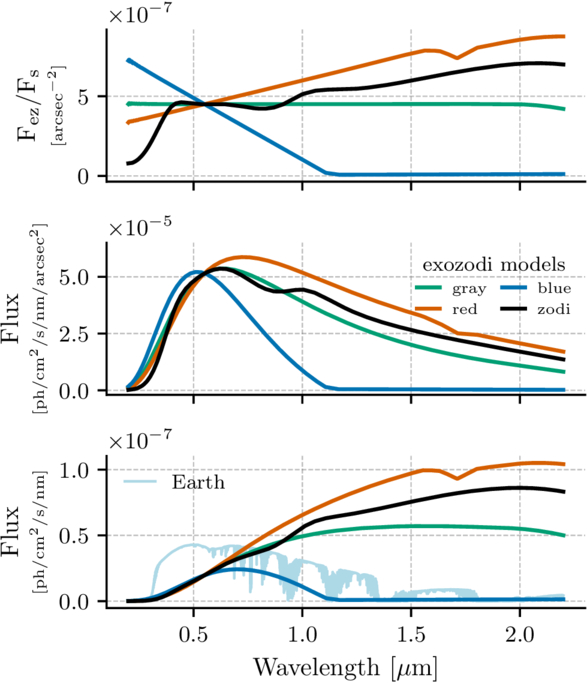
Figure 2: Different models of three “zodis” of dust observed at an inclination of 60 degrees plotted across HWO’s potential wavelength range. The gray scattering model is shown in green, the solar system’s model is shown in black, with the red and blue debris disk models shown in their respective colors. The top panel shows the flux contrast between the dust and the star. The middle panel shows the flux per area. The bottom panel shows the total flux captured with a 7.2-meter HWO with the thin blue line representing the spectrum of an Earth twin 10 parsecs (33 light-years) away for comparison. [Currie et al. 2026]
Show Me the Zodi
The authors first assume four different models of exozodi dust and how the dust’s emission changes with wavelength. The first model assumes a dust cloud that acts as a gray scatterer, meaning the particles scatter all wavelengths of light with no preference, and the second model’s dust acts just like the solar system’s does. However, it’s unknown whether the composition of exozodi will be the same as the solar system’s. Therefore, they adopt two more models of exozodi that act just like debris disks that have different compositions. One model is bluer in color because it is made up of smaller particles that preferentially scatter blue light, and the other model is redder in color because it is made up of bigger dust particles or different chemical compositions. Each of these models over HWO’s wavelength range can be seen in Figure 2. The authors then simulate a modern Earth atmosphere (both clear and 50% cloudy) as well as an Archean Earth atmosphere to understand how different exozodi models will affect observations of different exoplanet atmosphere conditions and compositions.
There’s Dust in My Spectra
In general, the effect that zodiacal dust has on the spectra of Earth-like planets can be broken down into two categories: its effect on the continuum and on the spectral features. The continuum is the object’s light emitted over all wavelengths and uninterrupted by spectral features. Spectral features are absorption and emission lines. These create either a dip or peak in the spectrum where atoms have either absorbed or emitted light at that particular wavelength. Lines at specific wavelengths tell us that a certain material is there, providing a list of possible chemicals that could be present in the planet’s atmosphere. For a brief summary of spectroscopy more generally, see here.
In the case of the continuum, exozodiacal emission raises the continuum, meaning the base flux of the planet is raised and absorption lines become more shallow. These effects can be seen in Figure 3, where the authors’ simulated spectra are plotted with and without zodiacal dust included. Not only is the continuum elevated for all models including zodiacal dust, notice how the dips become shallower at longer wavelengths. Because dust primarily radiates thermally, the red debris disk model nearly smooths out all dips beyond 1.25 microns! Molecules that absorb at these longer wavelengths, such as water or methane, may not be correctly identified with this type of exozodiacal emission.
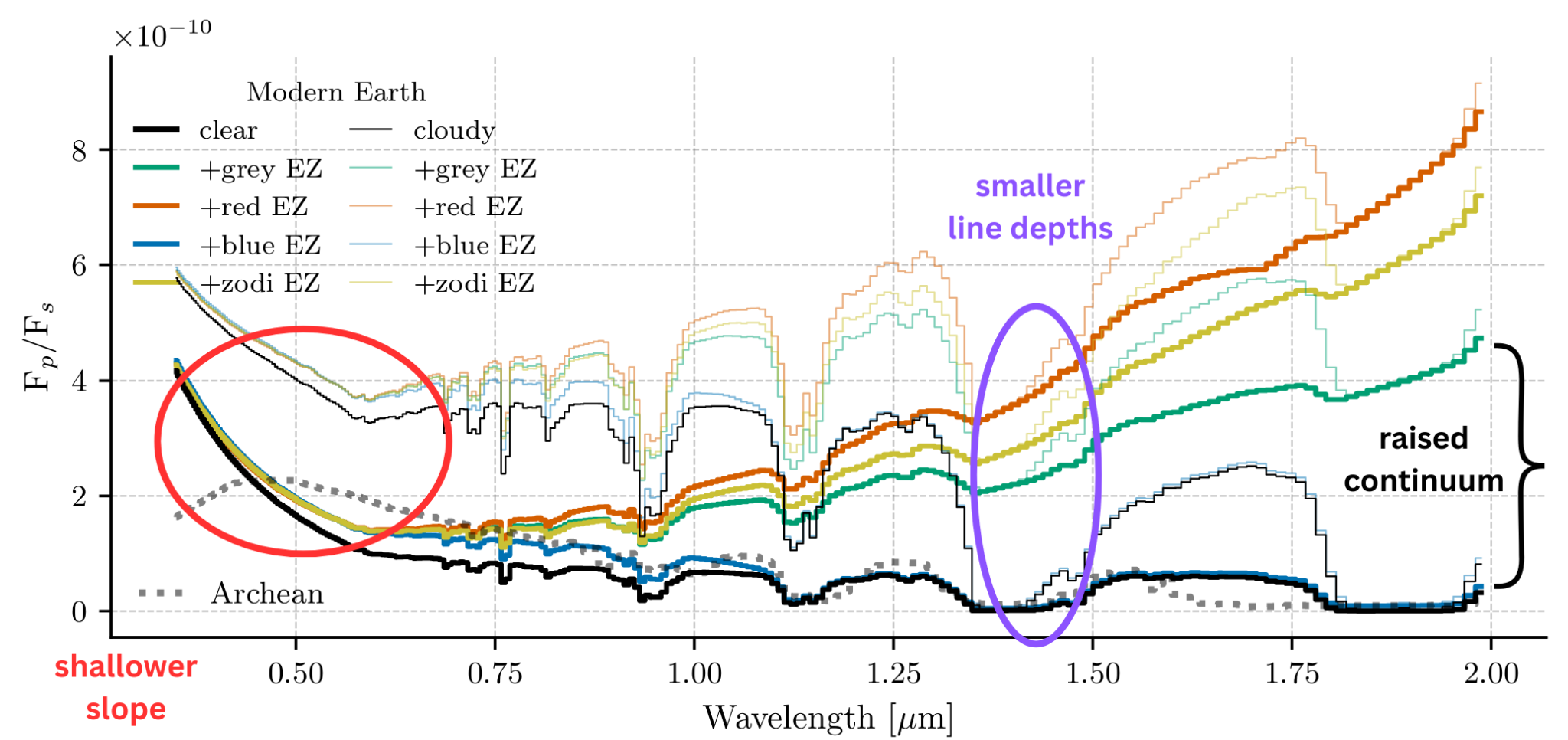
Figure 3: Spectra of simulated modern-Earth atmospheres for clear (solid bright lines) and cloudy (solid dimmer lines) scenarios. The Archean Earth atmosphere is plotted in dotted gray. The redder exozodiacal spectrum has an elevated continuum and smoothed spectral features as opposed to the original, zodi-free spectrum plotted in black. [Currie et al. 2026, with annotations by Kaz Gary]
From Figure 3, the effects of zodiacal dust are minimized with a bluer zodiacal dust model. This means systems with “bluer” zodiacal dust may be more optimal for HWO observations, as bluer dust does not scatter as much starlight as gray, solar system–like, or red dust. From their results, the authors recommend that the residual exozodi-to-planet flux ratio (in the V-band wavelengths) be kept to less than 10-2 in order to correctly understand the line depths (identify if a molecule is present or not) and 10-3 in order to accurately retrieve molecular abundances (understand how much of a molecule is present in the atmosphere). Dust is pesky enough here on Earth, but to find life on another planet like ours, we’ll dust have to deal with it.
Original astrobite edited by Anavi Uppal.
About the author, Kaz Gary:
I am a fourth-year PhD candidate at The Ohio State University with a passion for planets. My current work focuses on modeling exoplanet observations for the Habitable Worlds Observatory and understanding planetary atmospheres. Outside of research, I help develop planetarium shows and love all forms of science communication. In my free time, I enjoy playing tabletop RPGs, painting, watching terrible reality TV, and hanging out with my pet hedgehog.
The post Dust Deal with It appeared first on AAS Nova.
]]>The post The Nineteenth Data Release of the Sloan Digital Sky Survey appeared first on AAS Nova.
]]>For nearly three decades, the Sloan Digital Sky Survey has collected photometric and spectroscopic data for millions of objects; this article describes the most substantial data release to date for SDSS-V.
The post The Nineteenth Data Release of the Sloan Digital Sky Survey appeared first on AAS Nova.
]]>
We're excited to welcome Alexia Kubas and Lucas Brown to the team as AAS Media Fellows for 2026–2027!
The post Welcome and Farewell to Our AAS Media Fellows appeared first on AAS Nova.
]]>In 2017, we announced a new AAS-sponsored program for graduate students: the AAS Media Fellowship. This quarter-time opportunity is intended for current graduate students in the astronomical sciences who wish to cultivate their science-communication skills. This year, for the first time, we are welcoming two Media Fellows to the team.
We are pleased to announce that Lucas Brown and Alexia Kubas have been selected as our AAS Media Fellows for 2026–2027.

Alexia Kubas, a 2026–2027 AAS Media Fellow, is a graduate student at Cornell University.
Alexia majored in astronomy with minors in physics, math, and planetary sciences at the University of Arizona. They are now a fifth-year PhD candidate at Cornell University, researching periglacial processes on Earth and Ceres. Outside of research, Alexia founded and currently helps run an Ithaca, NY, chapter of Astronomy on Tap.
Lucas majored in physics with an astronomy concentration at the University of California, Davis, and he has a master’s degree in physics from Tufts University. He is now a physics PhD candidate at the University of California, Santa Cruz, where he works with Stefano Profumo on studying the phenomenology of primordial black holes. Outside of research, Lucas participates in outreach activities through organizations like the Santa Cruz Organization for Outreach in Physics and the Project for Inmate Education. He also serves as co-chair of the Astrobites collaboration.

2026–2027 AAS Media Fellow Lucas Brown is a graduate student at the University of California, Santa Cruz.
As AAS Media Fellows, Alexia and Lucas will regularly write and publish summaries of the latest astronomy research on AAS Nova, assist in managing the distribution of press releases as part of the AAS press office, and gain a broad understanding of the worlds of scientific publishing, communications, and policy. Alexia and Lucas will also be assisting with the press conferences at the upcoming AAS meetings, so please say hello if you spot them at future meetings!
As we welcome our new Fellows to the team, we’ll also soon bid farewell to Lexi Gault, our 2024–2026 AAS Media Fellow. Lexi will be continuing her PhD research at Indiana University, where she studies the interstellar medium conditions in nearby low-mass galaxies. After defending her PhD in Spring 2027, Lexi plans to pursue a postdoc in extragalactic astronomy or a full-time science writing position.
Please join us in welcoming Lucas and Alexia as our new Media Fellows and wishing Lexi the best in all her future endeavors!
The post Welcome and Farewell to Our AAS Media Fellows appeared first on AAS Nova.
]]>The post A Comparison of Lunar AI-Based Crater Databases Using Uniform Criteria appeared first on AAS Nova.
]]>A uniform analysis of crater catalogs finds that practically all computer-generated catalogs return worse metrics than manually generated catalogs, though most catalogs do well in some areas and poorly in others.
The post A Comparison of Lunar AI-Based Crater Databases Using Uniform Criteria appeared first on AAS Nova.
]]>
A recent study has used spectroscopy from JWST to decipher the source of carbon oxides on the four largest moons of Uranus.
The post Breaking the Ice: Origins of Carbon Oxides on Uranian Moons appeared first on AAS Nova.
]]>For decades, astronomers have tried to decipher the source of carbon oxides on Uranus’s largest moons from ground-based telescopes. A recent study has leveraged JWST spectroscopy and laboratory experiments to identify carbon oxides and their origins for Ariel, Umbriel, Titania, and Oberon.
Unknown Origins of Carbon Oxide Enrichment
Forty years ago, the Voyager 2 spacecraft flew past Uranus and its twenty-seven moons, sending back prized portraits of the planet’s large and tidally locked satellites Miranda, Ariel, Umbriel, Titania, and Oberon. These images revealed extensive valleys, smooth plains, deep canyons, and possible icy volcanic (cryovolcanic) activity across the surfaces of the icy moons — the telltale signs of intense geologic activity. While Voyager 2 could take spectacular pictures, the spacecraft was not capable of identifying the molecules and materials making up these active surfaces.

Voyager 2 images of Uranus’s six largest moons. Click to enlarge. [NASA / JPL-Caltech / Ted Stryk; CC BY-NC-ND 4.0]
Ground-based detections are limited due to contamination from Earth’s atmosphere as well as the overall weakness of the carbon dioxide spectral features, thus space-based near-infrared observations of the Uranian moons are necessary to better constrain the carbon oxides on the satellites. Luckily, JWST’s Near-Infrared Spectrograph (NIRSpec) now offers astronomers unimpeded access the moons’ carbon oxide spectral features.
Chemical Clues from Space and in the Lab
In 2024, a study acquired NIRSpec observations of Uranus’s moon Ariel, revealing prominent carbon dioxide features and confirming the presence of carbon monoxide ice hinted at by ground-based studies. Expanding on these observations to include Umbriel, Titania, and Oberon alongside Ariel, Richard J. Cartwright (Johns Hopkins University) and collaborators obtained JWST NIRSpec spectroscopy of Uranus’s four largest moons in hopes of disentangling the origin story of their carbon oxides.

Diagram illustrating the leading and trailing sides of a moon orbiting Uranus. Click to enlarge. [AAS Nova/Kerry Hensley]

Spectral ratios of the trailing and leading hemispheres for each moon, labeling spectral features of multiple carbon-bearing molecules. Click to enlarge. [Cartwright et al 2026]
Carbon Oxide Origins
What does this mean for the origins of the carbon oxides on the Uranian moons? Spectral features of carbonate minerals and the widespread presence of carbon dioxide throughout the Uranus system suggest that these compounds exist natively. On the other hand, the concentration of carbon oxide features on the trailing hemispheres supports radiolytic production as these hemispheres are bombarded with more ionizing particles from Uranus’s magnetosphere.
Based on these results, the authors have postulated that both origin scenarios, native presence and radiolysis, are required to fully explain the presence of carbon oxides. Future laboratory studies and JWST observations will continue to reveal the nature and composition of bodies in the Uranus system, furthering our understanding of our solar system siblings.
Citation
“Tracing the Source of Carbon Oxides on the Large Moons of Uranus,” Richard J. Cartwright et al 2026 Planet. Sci. J. 7 199. doi:10.3847/PSJ/ae8818
The post Breaking the Ice: Origins of Carbon Oxides on Uranian Moons appeared first on AAS Nova.
]]>The post Four-Body Gravitational Microlensing Events Involving Both a Binary Lens and a Binary Source appeared first on AAS Nova.
]]>Three newly characterized microlensing events augment the growing list of events involving binary sources and lenses, emphasizing the importance of testing models of this complexity.
The post Four-Body Gravitational Microlensing Events Involving Both a Binary Lens and a Binary Source appeared first on AAS Nova.
]]>The post Discovery of Sulfur Oxides in the Ejecta of a B[e] Supergiant appeared first on AAS Nova.
]]>Researchers have detected SO and SO2 for the first time in an early-type evolved star; these results suggest that B[e]supergiants could be useful for studying sulfur chemistry under extreme radiation conditions.
The post Discovery of Sulfur Oxides in the Ejecta of a B[e] Supergiant appeared first on AAS Nova.
]]>
New modeling tests a common assumption that's important for interpreting exoplanet spectra: that stars of all spectral types exhibit bright magnetized regions called faculae.
The post When Bright Spots Go Dark appeared first on AAS Nova.
]]>Light and dark regions speckle the Sun and other stars, complicating the interpretation of exoplanet transmission spectra. New modeling suggests that faculae — bright areas on the visible surface of the Sun — appear dark on cooler stars, adding a new wrinkle to this challenge.
Dark Spot, Bright Spot
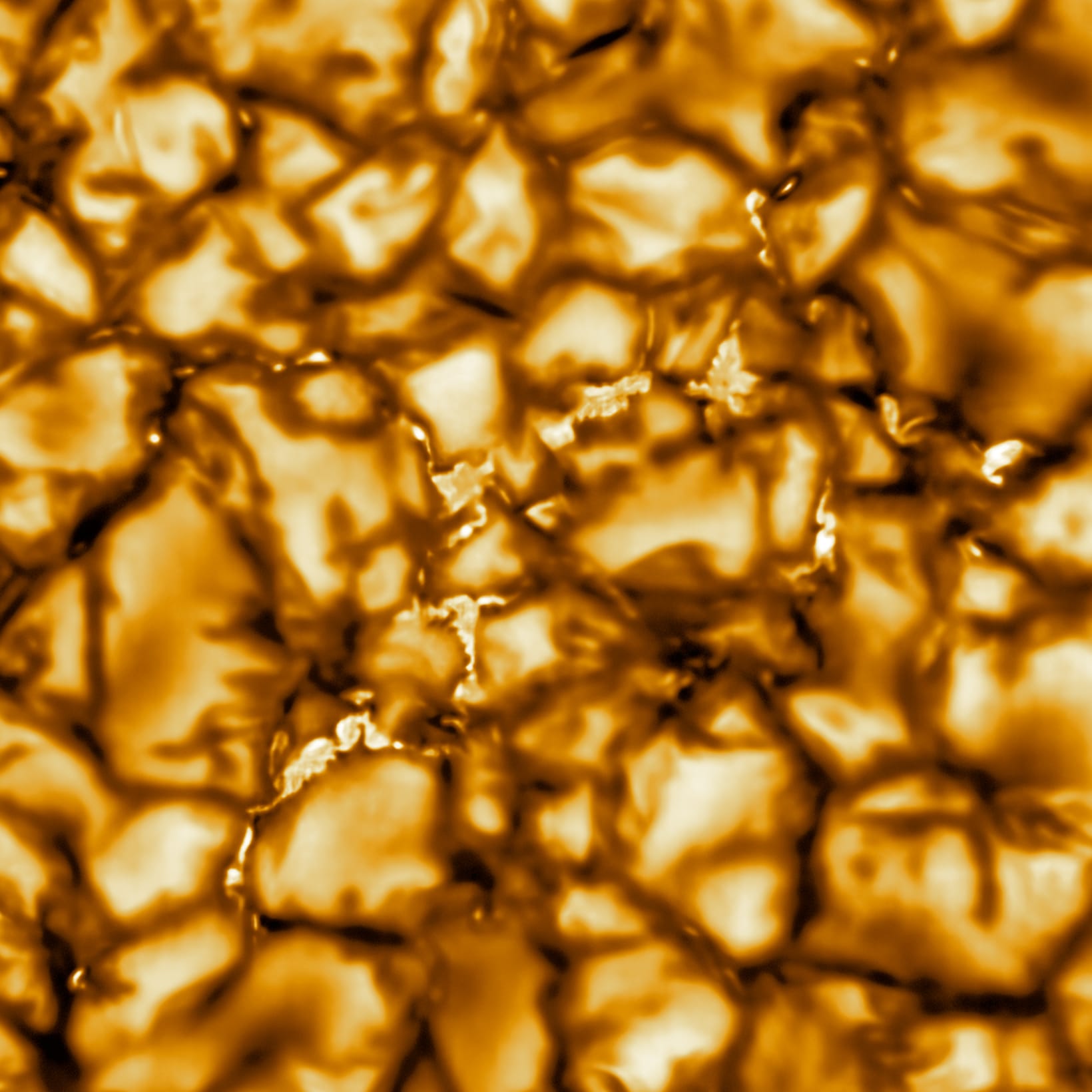
This image from the Daniel K. Inouye Solar Telescope shows solar convective cells called granules. The bright points in the dark lanes between granules are regions of enhanced magnetic field strength. [NSO/AURA/NSF; CC BY 4.0]
The Sun is freckled with dark spots — sunspots — as well as bright regions called faculae. Sunspots form where the Sun’s magnetic field bubbles up, creating pockets of cooler, less luminous plasma. Solar faculae form in regions of concentrated magnetic field, creating bright spots that line the dark crevasses between convective cells.
Other stars also have starspots and faculae, but thus far, astronomers have no direct observations of faculae on any star except the Sun. Out of necessity, researchers interpreting exoplanet spectra assume that faculae on other stars are similar to those on the Sun — but are they actually?
Would a Facula on Any Other Star Look as Bright?
To explore what faculae might look like on stars other than the Sun, Alexander Shapiro (University of Graz; Max Planck Institute for Solar System Research) and collaborators turned to three-dimensional radiative magnetohydrodynamics simulations and radiative transfer modeling. Their aim was to simulate the appearance and spectra of faculae on stars of spectral type G2, K2, M0, and M4 — from Sun-like to substantially smaller and cooler than the Sun.
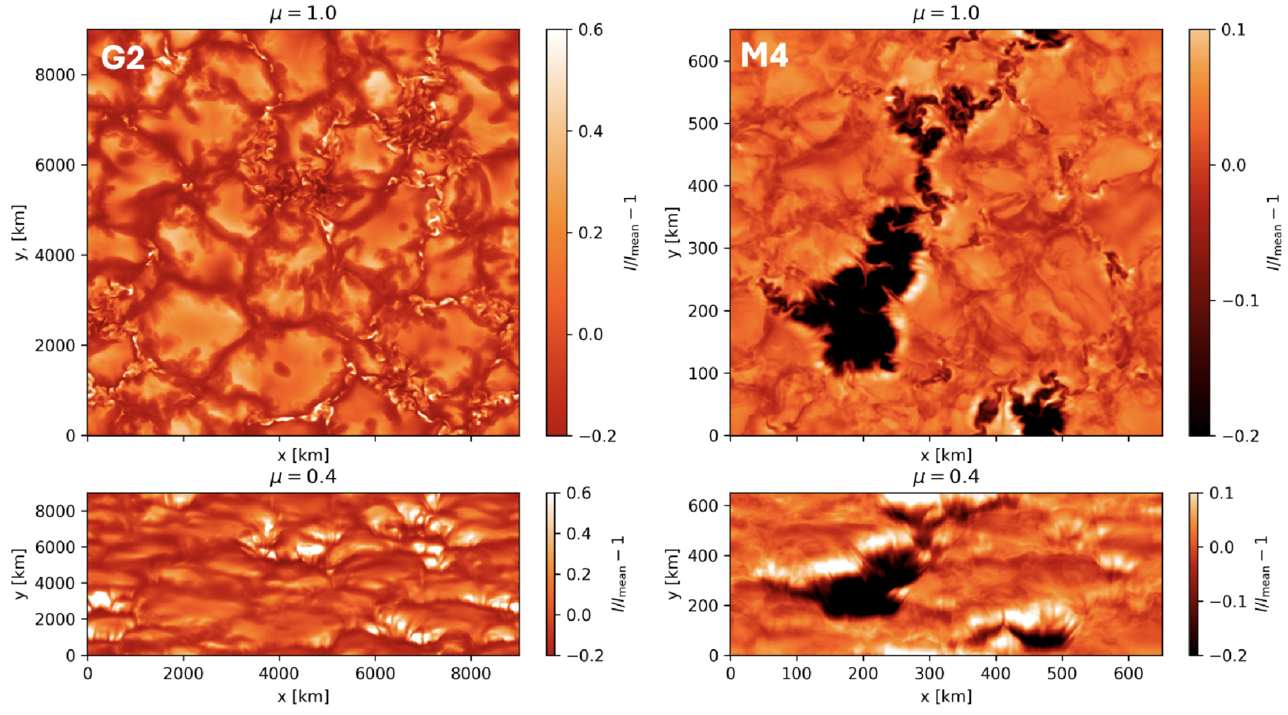
Simulated faculae on a Sun-like star (left) and an M4 star (right). These images show the faculae at 600 nm. Click to enlarge. [Shapiro et al. 2026]
Exoplanetary Effects
The transition from bright faculae on Sun-like stars to dark faculae on M4-class stars directly affects interpretations of exoplanet transmission spectra. The existence of dark faculae increases the derived exoplanet radius, whereas bright faculae on Sun-like stars decrease the derived radius. The contamination due to the faculae is wavelength dependent, with the largest contamination occurring at shorter wavelengths. This contamination, if not fully accounted for, can mimic spectral features from an exoplanet’s atmosphere.
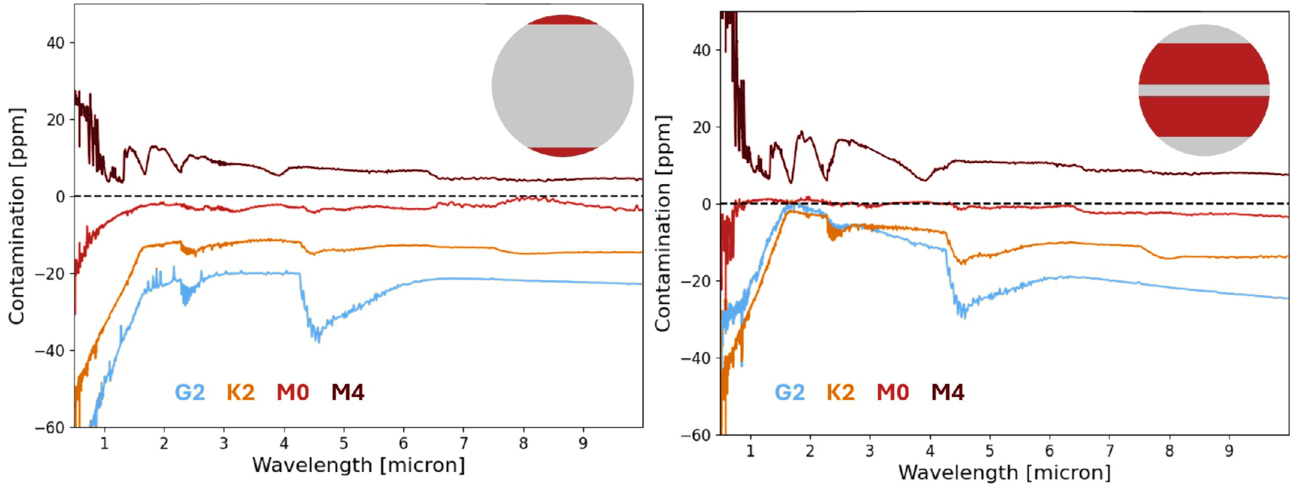
Contamination of transmission spectra by faculae near a star’s poles (left) and closer to the star’s equator (right). Faculae are bright for the simulated G2, K2, and M0 stars, and they are dark on the simulated M4 star. Click to enlarge. [Shapiro et al. 2026]
Citation
“The Curious Case of Dark Faculae on M Dwarf Stars,” A. I. Shapiro et al 2026 ApJ 1008 24. doi:10.3847/1538-4357/ae7105
The post When Bright Spots Go Dark appeared first on AAS Nova.
]]>The post Predictive Rankings of the Probability of Hosting a Temperate Terrestrial World for the HWO ExEP Mission Star List appeared first on AAS Nova.
]]>Some systems in the Habitable Worlds Observatory (HWO) Exoplanet Exploration Program (ExEP) Mission Star List have more than a 50% chance of hosting a temperate terrestrial exoplanet.
The post Predictive Rankings of the Probability of Hosting a Temperate Terrestrial World for the HWO ExEP Mission Star List appeared first on AAS Nova.
]]>
Astrobites reports on how synchrotron emission from thermal electrons could help to explain the behavior of certain tidal disruption events.
The post Thermal Electrons Can Explain the Mysterious Radio Behavior of a Tidal Disruption Event appeared first on AAS Nova.
]]>Editor’s Note: Astrobites is a graduate-student-run organization that digests astrophysical literature for undergraduate students. As part of the partnership between the AAS and astrobites, we occasionally repost astrobites content here at AAS Nova. We hope you enjoy this post from astrobites; the original can be viewed at astrobites.org.
Title: Thermal Electrons in the Radio Afterglow of Relativistic Tidal Disruption Event ZTF22aaajecp/AT 2022cmc
Authors: Lauren Rhodes et al.
First Author’s Institution: McGill University
Status: Published in ApJ
Tidal disruption events (TDEs, see Figure 1), which occur when a star gets a little too close to a supermassive black hole (SMBH) and gets ripped apart, are a hot topic across the electromagnetic spectrum. During a TDE, the star can no longer hold itself together under the gravitational pull of the SMBH. Some bits of the star end up accreting onto the black hole, which can launch a temporary outflow, or, in especially dramatic cases, a relativistic jet.
Figure 1: Timeline of events leading to a tidal disruption event. [Chloe Klare]
How to Spot a TDE
Usually, TDEs are discovered in the X-ray (after all, not many transients are powerful enough to generate an X-ray flare) or in the optical (thanks to high-cadence, wide-field surveys like the Zwicky Transient Facility and the Legacy Survey of Space and Time). However, radio is a particularly useful regime for TDE searches, especially in dusty host galaxies where we cannot see the optical TDE signatures at all; while dust obscures optical light, the radio is unaffected! There is just one catch: how exactly can we identify a TDE based on only its radio emission?
The radio light in a TDE is generated via synchrotron radiation — which is caused by fast moving electrons in strong magnetic fields — and originates in jets or shocks. Unfortunately, this is also the case in AGN, the primary extragalactic source of variable radio emission, and it can be difficult to distinguish between the two. Additionally, the amount of light we see from synchrotron radiation at a given frequency depends on how energy is distributed among the electrons in the source, which is unknown. Perhaps the simplest case — or at least the one you’ll learn about first in your undergraduate statistical mechanics course — is that the energy is distributed among the electrons thermally (left panel in Figure 2). However, most radio transients associated with black holes are assumed to have non-thermal electron energy distributions, usually where there are exponentially many more low-energy electrons than high-energy electrons (right panel in Figure 2).
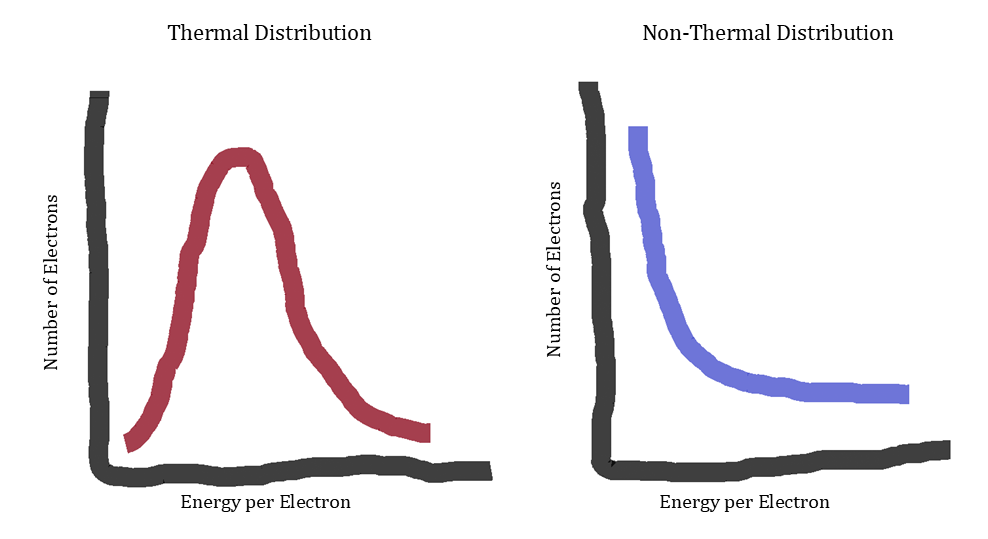
Figure 2: Energy can be distributed among the electrons in a source either thermally (left panel), where most electrons have a medium amount of energy, or non-thermally (right panel), where most electrons have a small amount of energy. Often, extragalactic radio transients are assumed to originate from non-thermal electrons, but today’s article argues why we shouldn’t ignore thermal electrons. [Chloe Klare]
This includes today’s authors, who have focused on one particular TDE, ZTF22aaajecp/AT2022cmc (I’m sure everyone mispronounces her name), or 2022cmc for short. 2022cmc is a special TDE: it is one of only five TDEs suspected to have launched a relativistic jet, and it has the highest redshift (z ~ 1.2) of the five. It was observed first in the optical and then in the X-ray and radio. The X-ray emission was highly variable for 400 days post-TDE, and then disappeared, and the first 100 days of radio emission indicated there was a relativistic outflow. At the time, it was concluded that the jet shut off and the X-ray emission ceased. However, the story doesn’t end there; the authors of today’s article continued to observe 2022cmc in the radio for an additional 900 days at frequencies spanning about 1–100 GHz.
Our authors had two key observing strategies: wide frequency coverage and long duration. Measuring the change in brightness with observing frequency, or the spectral energy distribution (SED), is important for determining which processes are responsible for the radio emission, since thermal electrons and non-thermal electrons will produce different SEDs. On the other hand, measuring the change in brightness over time, or the light curve, is important for determining what is happening at the source, such as whether there is a jet and, if so, how long it lasts. Here, our authors combine light curves at six different frequencies (Figure 3) and SEDs at nine different epochs (Figure 4) to investigate both.
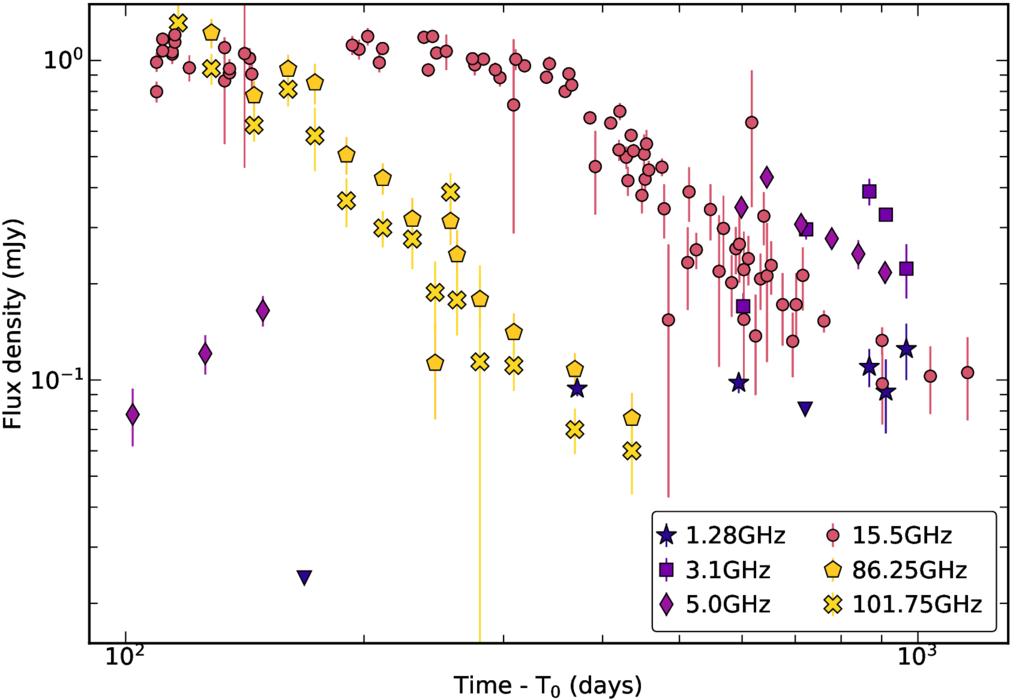
Figure 3: Light curves spanning six frequencies and 900 days obtained by today’s authors. [Rhodes et al. 2025]
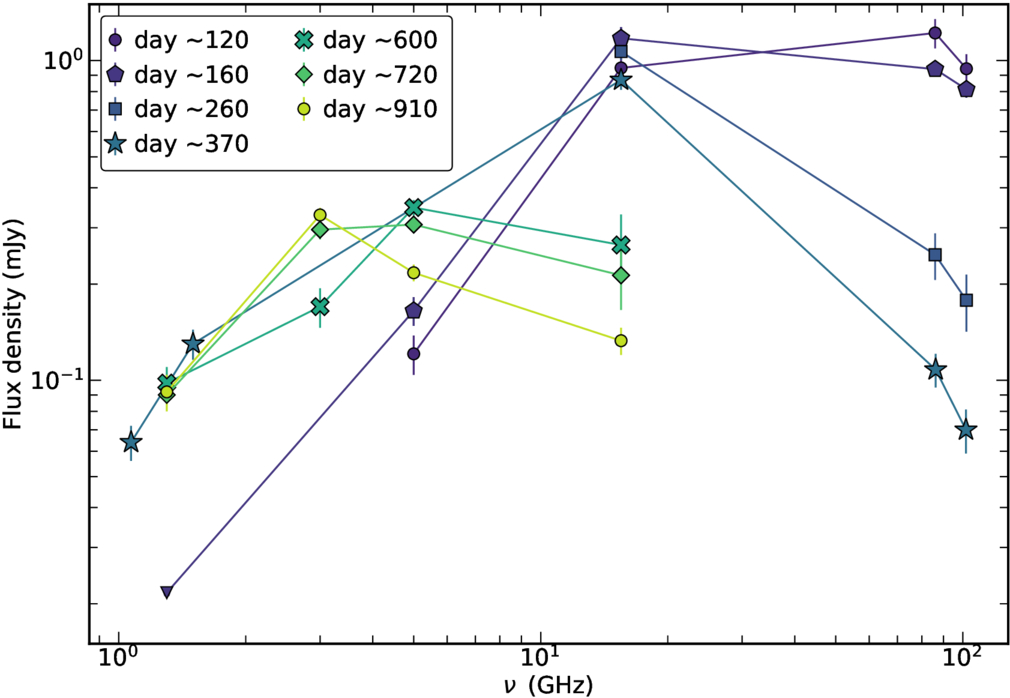
Figure 4: Nine epochs of radio SEDs, which show the peak moving to lower frequencies over time. [Rhodes et al. 2025]
The Findings
Our authors find a couple of interesting results. First, in the time domain, they find the highest-frequency light curves fade with time, while the lower-frequency light curves increase initially, hit peaks at different times (after 300 days at 15.5 GHz, and after 800 days at 1.3 GHz), and then begin to decay. The spectral evolution is even more intriguing; the SED is always peaked, and the peak shifts to lower frequencies over time, which is typical for an expanding emission region. At frequencies below the peak, the SED doesn’t change much. However, the high-frequency side of the SED shows confusing behavior: early on, it has a very steep slope (the amount of light drops off sharply at higher frequencies), but it eventually flattens.
Investigations Begin
Next, our authors consider three possibilities to explain these observations. They first consider synchrotron radiation from only non-thermal electrons in a relativistic jet (Figure 5), which is the canonical model for a gamma-ray burst radio afterglow. Initially, the jet is so fast that all its radio light is relativistically beamed in one direction (like a flashlight), and we can only see the jet if it’s pointed directly at us. Eventually, the jet slows down enough that it is no longer beamed, and light is emitted in all directions (like a light bulb). At this point, we see the light fade over time, which is exactly what happened in the high-frequency light curves. However, there is one glaring problem: this model cannot possibly explain the observed long-lasting steep SED at high frequencies. So, our authors discard this theory.
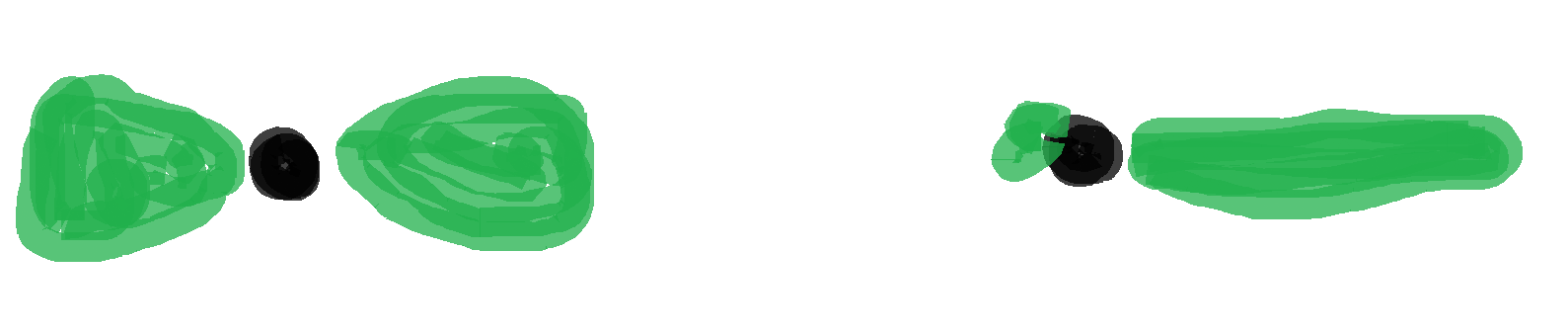
Figure 5: The left image shows what a black hole–generated jet looks like in the rest frame of the jet itself. As long as the jet isn’t moving too fast, this is what we see too. However, if the material in the jet is moving near the speed of light, we observe a relativistically beamed jet (right image). [Chloe Klare]
Lastly, our authors keep the thermal/non-thermal electrons combo and ditch the jet entirely, modeling a spherical outflow. Excitingly, this model best fits the observations, and, most importantly, can explain the mysterious high-frequency behavior. Initially, most of the radio emission originates in the thermal electron population, which produces more light at higher frequencies. As the outflow expands, the non-thermal electrons begin to dominate, and the SED transforms into the classic non-thermal synchrotron shape.
Next Steps
Ideally, our authors want to compare 2022cmc to other TDEs, but few TDEs have such thorough follow-up observations. They speculate that thermal electrons were important in the radio evolution of one of the few such TDEs, Swift J1644, and recommend we revisit its emission models. More broadly, they recommend two future priorities: first, we need extensive radio observations for larger samples of TDEs, especially around 100 GHz, where the thermal electrons contribute most to the SED; secondly, we should stop neglecting thermal electrons not just in TDE models, but in models of any black hole jets, including gamma-ray bursts and X-ray binaries. While this work addresses only one event, one thing is clear. For theorists and observers alike, there is a myriad of exciting work to be done, so it’s no wonder TDEs have garnered so much attention lately.
- A convenient property of extragalactic synchrotron sources is that all their electrons radiate independently of one another, even if they are part of the same electron population. This is called incoherent emission. (Galactic sources are another story, but I’ll save that for another time.) ︎
Original astrobite edited by Flavia Pascal.
About the author, Chloe Klare:
I’m a PhD student in astronomy and astrophysics at Penn State (with a physics minor, so I get to use my semester spent in QFT for something!). I study active galactic nuclei (in the radio!), and I’m currently looking for baby synchrotron jets in active galactic nuclei.
The post Thermal Electrons Can Explain the Mysterious Radio Behavior of a Tidal Disruption Event appeared first on AAS Nova.
]]>The post Long-Term Clustering Pattern of Solar Active Regions and Their Potential Connection with Magneto-Rossby Waves appeared first on AAS Nova.
]]>More than half of solar magnetic flux appears to emerge in three bands, two of which rotate faster than the Carrington rate; this finding suggests a connection between surface flux and interior dynamical processes.
The post Long-Term Clustering Pattern of Solar Active Regions and Their Potential Connection with Magneto-Rossby Waves appeared first on AAS Nova.
]]>
The original plan for an upcoming flagship mission to Uranus called for a slingshot around Jupiter. Now that the planet won't be in the right position at launch time, the spacecraft will need to follow a different path.
The post Who Needs Jupiter? appeared first on AAS Nova.
]]>A planned flagship spacecraft to Uranus was aiming to use Jupiter for a gravitational boost to shorten its journey to the outer solar system. Now that the mission’s launch date has been pushed back, it’ll need to find another way to its target.
Redesigning the Route
Uranus and Neptune, the ice giants of our solar system, have been comparatively neglected by humanity’s fleet of interplanetary probes. While all of the other major bodies have been visited by at least an orbiter or even a lander, the most detailed exploration we’ve done of these two planets happened when the Voyager 2 spacecraft went screaming past on its way toward interstellar space.
Schematics of different trajectories within the solar system. Left: The path the Galileo spacecraft took to Jupiter. This path arrived nearly parallel to the planet’s motion. Right: One of the proposed paths to Uranus. This path will intersect the planet’s orbit at a much steeper angle to shorten the flight time. Click to enlarge. [Simon et al. 2026]
Getting these spacecraft to their destination will be a challenge The thriftiest path to get to Uranus, a trajectory called a Hohmann transfer that’s been used for other missions aimed elsewhere in the solar system, would take 16–17 years. Rather than accept the long wait, the original authors suggested that the mission instead fly toward Jupiter, using the giant planet’s massive gravitational tug to slingshot the spacecraft toward Uranus.
However, this plan relied on Jupiter being in just the right place when the spacecraft approached. This in turn relied on the mission launching sometime in 2031 or 2032: any earlier or later, the slingshot would be aimed in the wrong direction. Now that timelines and budgets have slipped for this flagship mission, hitting this launch window seems unlikely. And, without the boost from Jupiter, the mission will have to cross 20 au of open interplanetary space on its own.
Solar Electric Propulsion to the Rescue
Several proof-of-concept designs for the mission’s SEP components. How these designs would be packaged into a rocket fairing for launch is shown at right. Click to enlarge. [Simon et al. 2026]
The power levels would likely get too low just a few astronomical units into their journey, but that would be enough: after discarding the SEP stage, the mission could coast to Uranus on a journey that would take only 13 years. Even better, this technology has a proven flight history and would require little maturation or development. The BepiColombo mission to Mercury is currently using SEP, and similar techniques are used on satellites in Earth orbit today.
Simon and collaborators also took on a number of other challenges that have cropped up since the mission was proposed, including fewer available plutonium power sources and a re-assessment of Uranus’s rings that revealed hazards in the original flight path. Their work brings the mission closer to the launch pad and illustrates how much iteration goes into the spacecraft that finally takes to the stars.
Citation
“Uranus Orbiter and Probe: Mission Challenges and Concept Updates Since the Origins, Worlds, and Life Decadal Survey,” Amy A. Simon et al 2026 Planet Sci. J. 7 143. doi:10.3847/PSJ/ae680c
The post Who Needs Jupiter? appeared first on AAS Nova.
]]>The post Six New Circumbinary Disk Occultation Candidates from the Zwicky Transient Facility appeared first on AAS Nova.
]]>Researchers have identified six new candidate circumbinary disk systems, potentially greatly increasing the number of known systems of this type; these system exhibit deep and prolonged dimming episodes.
The post Six New Circumbinary Disk Occultation Candidates from the Zwicky Transient Facility appeared first on AAS Nova.
]]>The post Hydrogen Airglow from an Escaping Ultrahot Jupiter Atmosphere appeared first on AAS Nova.
]]>Ultra-hot Jupiter KELT-9b possesses an outflow with a mass-loss rate above 1013 g s-1 — one of the highest mass-loss rates measured for a gaseous exoplanet — and a diagnostic hydrogen Balmer line from its dayside.
The post Hydrogen Airglow from an Escaping Ultrahot Jupiter Atmosphere appeared first on AAS Nova.
]]>
How early did planets form in the universe? A recent study used simulations to find that planetesimals could have formed significantly earlier than previously thought.
The post Primordial Planetesimals from the Guts of Population III Stars appeared first on AAS Nova.
]]>While previous investigations of planet formation across the universe’s history suggest that planets trickled into the picture, a recent study has found that primordial planetesimals could have formed much earlier from the insides of the first stars in the universe.
First Stars, First Planets?
When the first stars flickered on, the universe was filled with pristine gas, containing only hydrogen, helium, and a little lithium. This gas, though great at making massive stars known as Population III (Pop III) stars, was not yet enriched with the heavy elements necessary for planet formation and, of course, life. Past studies have suggested that planet formation in the universe was gradual, taking several billion years to peak after billions of stars created and spilled the needed metals into the universe. However, local pockets of enriched gas from Pop III stars could have created the right conditions for planet formation earlier in the universe’s history.
Pop III stars burned bright and fast, exploding violently in pair-instability supernovae that completely shredded the progenitor, ejecting over 100 solar masses of metals into their previously pristine surroundings. Cosmological simulations suggest that oxygen from these supernovae could have produced significant water fractions within the dense cores of the supernova remnant. This may have set the stage for planet formation in water-rich disks around subsequent generations of stars as early as 150–200 million years after the Big Bang — does numerical modeling support this planet formation hypothesis?
Simulation snapshots showing the formation and evolution of the protoplanetary disk for 13, 21, 30, 40, 50, and 60 thousands of years after protostellar birth. Click to enlarge. [Modified from Vorobyov et al 2026]
Primordial Planetesimals in Simulated Water-Rich Disks
To test if these water-rich dense cores within Pop III supernova remnants could form planetesimals, the building blocks of terrestrial planets, Eduard I. Vorobyov (University of Innsbruck; Southern Federal University) and collaborators performed numerical simulations tracing the collapse of one such gas core into a protoplanetary disk around a protostar. The simulations begin from the gravitational collapse of a 1-solar-mass gas cloud core, with a protostar emerging 24 thousand years after the initial cloud collapse. As the protostar’s gravity pulled in material from its surroundings, a rotating disk formed around the growing star.
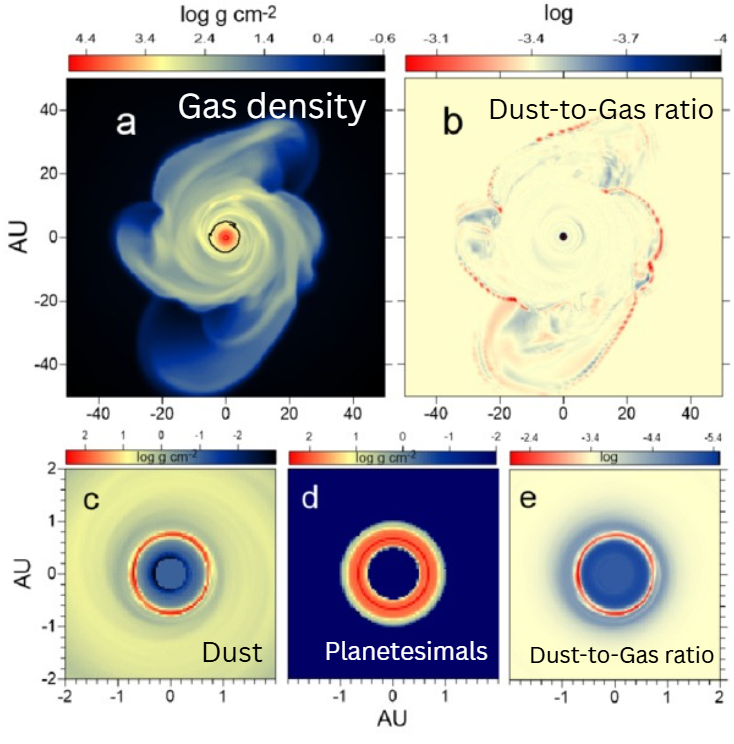
Simulation snapshot 40 thousand years after the formation of the protostar showing the gas, dust, and planetesimal surface densities and the dust-to-gas ratio. Click to enlarge. [Modified from Vorobyov et al 2026]
Citation
“Planet Formation at Cosmic Dawn: Planetesimals in H2O-rich Disks around Low-mass Stars,” Eduard I. Vorobyov et al 2026 ApJL 1007 L51. doi:10.3847/2041-8213/ae907c
The post Primordial Planetesimals from the Guts of Population III Stars appeared first on AAS Nova.
]]>The post Modeling the Milky Way Circumnuclear Disk: Rosettes and Rings appeared first on AAS Nova.
]]>Modeling of the Milky Way’s circumnuclear disk of molecular gas suggests that the gas is distributed in a disk with inner and outer radii of 1.0 and 2.9 parsecs and an inclination of 60 degrees.
The post Modeling the Milky Way Circumnuclear Disk: Rosettes and Rings appeared first on AAS Nova.
]]>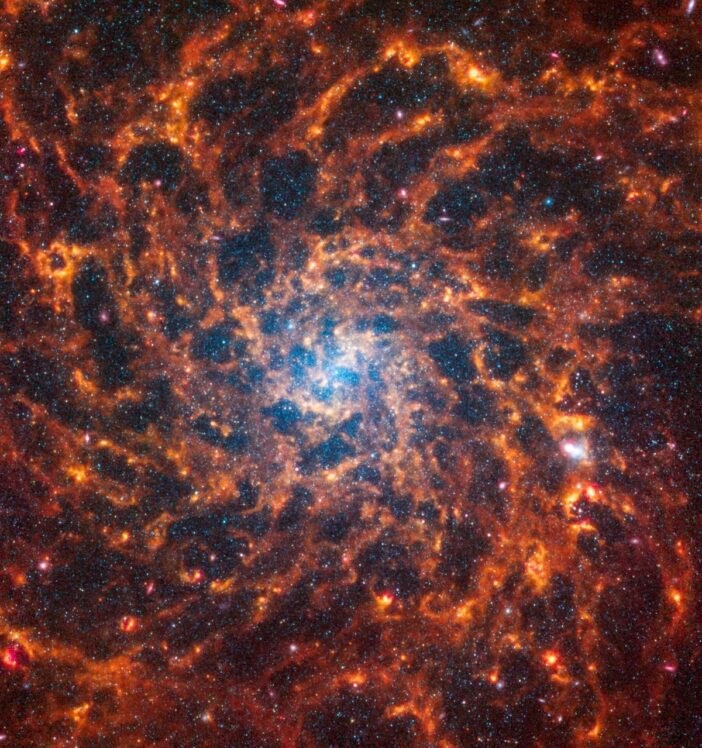
Astrobites reports on JWST observations of dust that has survived being expelled from a galaxy into the circumgalactic medium.
The post Hitchhiking PAHs Caught Catching a Ride on Galactic Winds appeared first on AAS Nova.
]]>Editor’s Note: Astrobites is a graduate-student-run organization that digests astrophysical literature for undergraduate students. As part of the partnership between the AAS and astrobites, we occasionally repost astrobites content here at AAS Nova. We hope you enjoy this post from astrobites; the original can be viewed at astrobites.org.
Title: JWST Discovery of Warm Dust in the Circumgalactic Medium of the Makani Galaxy
Authors: Sylvain Veilleux et al.
First Author’s Institution: University of Maryland
Status: Published in ApJ
The Windy Galaxy
Billions of light-years away lies Makani, a record-breaking galaxy discovered in 2019 by researchers at the Keck Observatory atop Maunakea, Hawaiʻi. The galaxy shows evidence of a large merger event, where two galaxies collided to form a larger galaxy. This event triggered starburst activity, or several waves of intense star formation, that changed the makeup of not just Makani, but the region around it.
There are several processes that can create galactic winds. An active supermassive black hole at the center of the galaxy can slingshot particles out of the galaxy at close to the speed of light, or supernovae leftover from previous starburst activity can help to expel material from the galaxy. Makani, whose name in Hawaiian just so happens to mean “wind,” has both factors contributing to its galactic winds: massive amounts of star formation and a very active black hole in its center.
This contributes to some of the strongest galactic winds discovered to date, stretching approximately 100 kiloparsecs (330,000 light-years) beyond the galaxy, roughly ten times the extent of a typical galactic wind. These galactic winds remove gas from the galaxy and help to enrich the circumgalactic medium around the galaxy. There is still much to discover about how galactic winds change the makeup of such galaxies, and what exactly they take with them on their way out.
Earth’s Favorite Carcinogen: Polycyclic Aromatic Hydrocarbons
Polycyclic aromatic hydrocarbons (PAHs, pronounced P-A-Hs or “paws”) are small flat dust grains scattered into every corner of the universe, from the atmosphere of Earth in the form of exhaust and wildfire smoke to the circumgalactic medium (the mostly empty space between galaxies). These PAHs contribute to regulating the temperature of the interstellar medium, but astronomers have long wondered how they migrate across galaxies.
Even though they are smaller than a human hair, PAHs are still easily observable even in very distant galaxies. These dust grains emit infrared light, and if there are enough PAHs in a region, they are bright enough to be observed with modern telescopes, such as JWST. By combining multiple observations across multiple filters, astronomers can calculate ratios that reveal information about the PAHs’ size, temperature, and charge, allowing reserachers to further discern properties about the regions in which these PAHs reside.
With redshifted galaxies like Makani, the light from PAHs is stretched beyond its usual wavelength, but fortunately for today’s authors, the light was stretched just enough to land known PAH features well within JWST filters, as seen in Figure 1. The authors were then able to use this information to track the distribution of these PAHs across Makani.
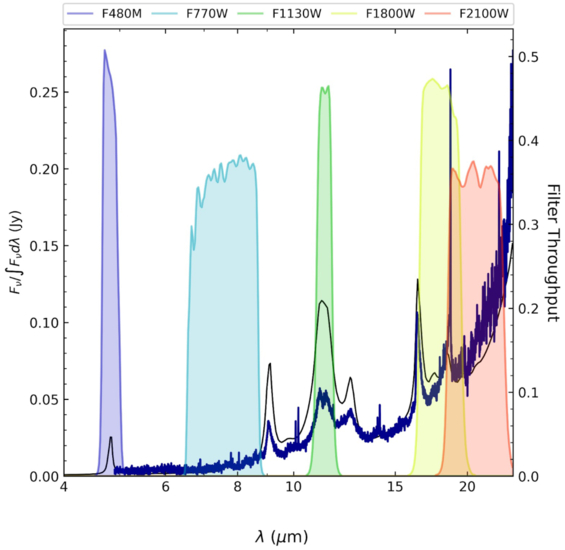
Figure 1: Makani’s spectrum overlaid on top of the JWST filters. The peaks in the spectrum are PAH features that neatly overlap with JWST’s observing bands. [Veilleux et al. 2025]
PAHs Gone Extragalactic
Using JWST, the authors scrutinized Makani for any signs of PAHs. They found that not only did PAHs exist within the galaxy, these molecules were found up to 30 kpc (~100,000 light-years) outside the galaxy. Makani’s strong galactic winds were ejecting the dust grains from the galaxy over an estimated timescale of a billion years.
Previously, astronomers had not expected to find high quantities of dust grains outside the protection of a galaxy. The journey across a galaxy is long and hot, with temperatures in the millions of degrees. A dust grain would likely not survive the trip, as it would be destroyed by high-energy photons. This suggests that the PAHs were somehow shielded from the hotter parts of the interstellar medium and circumgalactic medium in large enough volumes to make it beyond the edge of Makani.
This answered questions about how galaxies enrich the circumgalactic medium, but it also added several more. Since today’s authors were limited by the sensitivity and range of their instruments, they were unable to confirm if there were PAHs along Makani’s entire wind structure, or just the first 35 kpc (114,000 light-years) of it. They also would like to turn their sights towards the intergalactic medium to see if PAHs could make it even farther beyond the reach of their host galaxy.
Original astrobite edited by Chloe Klare.
About the author, Natalie Price:
As a first-year master’s student at Wesleyan University, I study how stellar winds interact with the local interstellar medium. Outside of the observatory, you can find me dancing, with my nose in a book, or running at non-relativistic speeds.
The post Hitchhiking PAHs Caught Catching a Ride on Galactic Winds appeared first on AAS Nova.
]]>The post Smaller Than Earth Habitability Model (STEHM): The Lower Size Limit for Atmosphere Retention in the Habitable Zone appeared first on AAS Nova.
]]>Planets with radii 20% or possibly 30% smaller than Earth’s radius can maintain atmospheres, with initial carbon content, core radius fraction, initial mantle temperature, and other factors playing a role.
The post Smaller Than Earth Habitability Model (STEHM): The Lower Size Limit for Atmosphere Retention in the Habitable Zone appeared first on AAS Nova.
]]>The post JWST-TST High Contrast: First Direct Spectroscopy of GJ 504 b Reveals Clouds and Possible Metal Enrichment appeared first on AAS Nova.
]]>New observations of the coldest directly imaged planetary-mass companion of the pre-JWST era show a potential planetary formation pathway for the 25.2-Jupiter-mass object.
The post JWST-TST High Contrast: First Direct Spectroscopy of GJ 504 b Reveals Clouds and Possible Metal Enrichment appeared first on AAS Nova.
]]>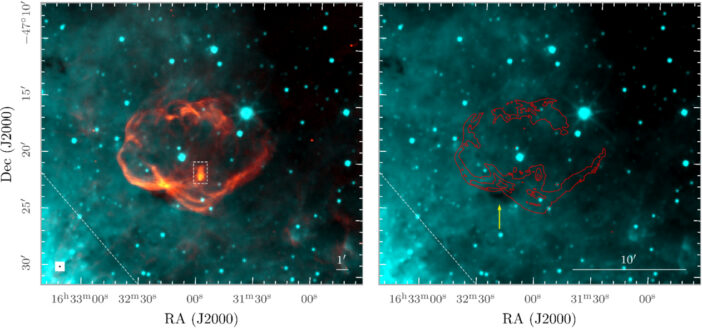
Researchers have discovered a comet-shaped nebula surrounding a pulsar speeding through the remains of its progenitor star.
The post Featured Image: A Pulsar in a Nebula in a Supernova Remnant appeared first on AAS Nova.
]]>When a massive star collapses, the subsequent supernova can leave behind the star’s condensed core in the form of a neutron star. Some neutron stars are also pulsars, which rotate at incredible speeds, emit beamed radio emission, and expel winds of charged particles. A pulsar’s relativistic charged-particle winds billow around the pulsar as it travels through space — often at a few hundreds of kilometers per second or faster, having received a “kick” when its progenitor star exploded. When these winds interact with the surrounding supernova ejecta or the interstellar medium, the interaction creates a detectable pulsar wind nebula. The image above combines data from the Australian Square Kilometre Array Pathfinder (orange) and Wide-field Infrared Survey Explorer (cyan) to show a pulsar wind nebula, indicated with a white rectangle, within a larger supernova remnant. Sanja Lazarević (Western Sydney University) and collaborators discovered this pulsar wind nebula, which they’ve named “Thunder” in a nod to the supernova remnant’s moniker, “Nimbus.” The cometary shape of the pulsar wind nebula suggests that the pulsar is moving quickly, traveling outward from the center of the explosion that occurred some 30,000–45,000 years ago. To learn more about the discovery and characterization of this pulsar wind nebula, check out the article linked below.
Citation
“EMU Discovery of Thunder: A Bow-Shock PWN Powered by PSR J1631–4722 Escaping the Nimbus SNR (G336.7+0.5),” S. Lazarević et al 2026 ApJ 1007 159. doi:10.3847/1538-4357/ae7f11
The post Featured Image: A Pulsar in a Nebula in a Supernova Remnant appeared first on AAS Nova.
]]>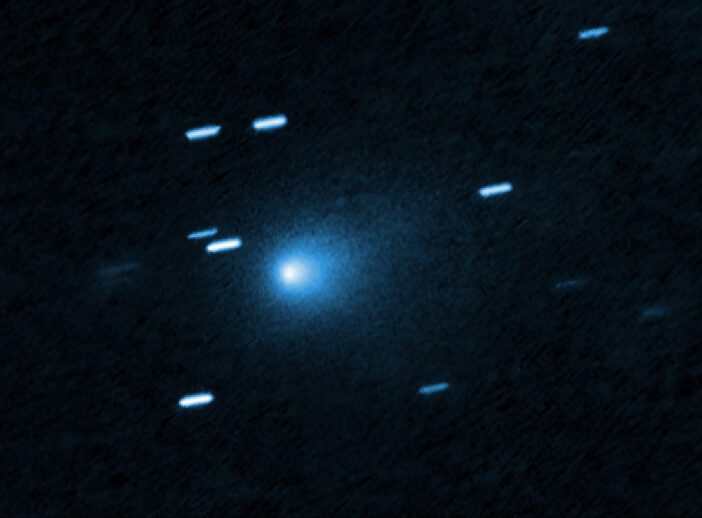
JWST observations of the most recent interstellar visitor reveal a coma dominated not by water, as expected for solar system comets, but instead carbon monoxide.
The post An Interstellar Comet’s Coma Composition appeared first on AAS Nova.
]]>Astronomers have been measuring comets for centuries. But in December of last year, researchers collected a unique set of comet observations: they recorded some of the highest-quality data of one of the weirdest known comets while it was far from the Sun.
Simultaneous Spectra and Images
A few months after the famous interstellar comet 3I/ATLAS rounded the Sun and began its journey back into the space between the stars, a group of astronomers led by Nathan Roth (NASA Goddard Space Flight Center) aimed JWST in the direction of its retreat to watch it fade away. Using a special observing mode that leveraged the Integral Field Unit (IFU) in JWST’s Near Infrared Spectrometer, these observations didn’t result in just a single image of the comet, but a full stack of images, each corresponding to a different wavelength of light.
Using the IFU allowed the observers to combine the best of both regular imaging, which reveals spatial structure, and standard spectroscopy, which reveals wavelength dependencies. As a result, they could make spatially resolved maps of how the emission from the comet’s fuzzy atmosphere of gas and dust, or coma, changed with distance from the comet’s icy nucleus and angle to the Sun. Since different molecules radiate at different wavelengths, these maps in turn reveal the composition and geometry of 3I/ATLAS’s coma.
Mapping the Coma
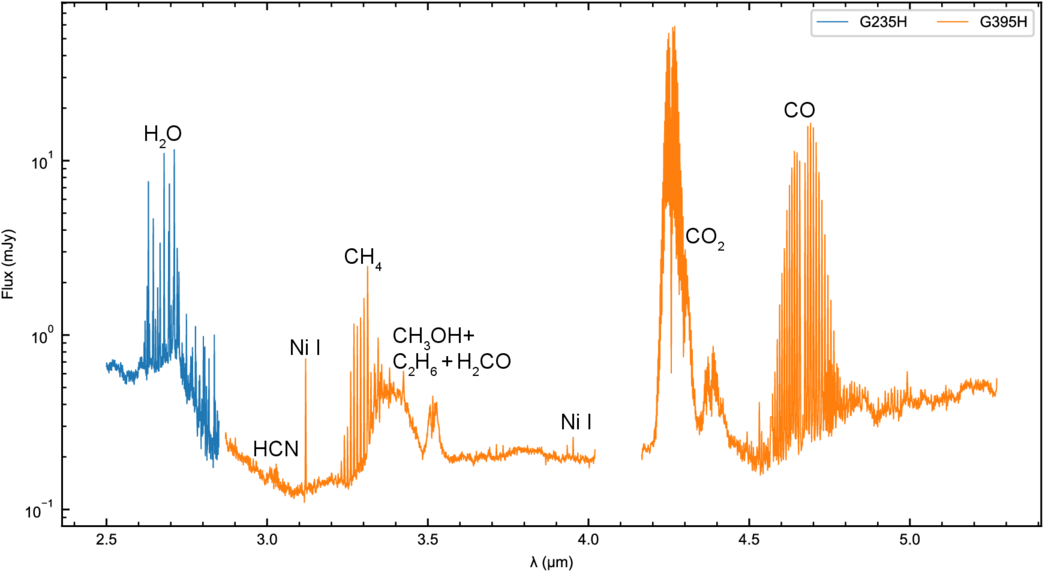
The spectrum of the coma of 3I/ATLAS. Note that this is a real spectrum, not a simulation. The contributions of various molecules are labeled alongside their most prominent emission lines. Click to enlarge. [Roth et al. 2026]
First, in contrast with normal solar system comets where water is the most abundant molecule, water was actually a secondary player here: there was significantly more carbon monoxide, or CO, than water in 3I/ATLAS’s coma. The researchers note that this might not be representative of the true distribution of the two species, but instead be the result of the timing of these observations. When observing a standard solar system comet, astronomers usually examine their targets when the object in question is within 2 au of the Sun. At these close distances, solar radiation is strong enough that water ice dominates the outgassing and activity in a coma.
However, these IFU measurements were taken when 3I/ATLAS was about 2.4 au from the Sun, or right in the transition region where water doesn’t sublimate as easily as CO or carbon dioxide (CO2). It’s likely that as the comet approaches the so-called “ice line” where water will naturally freeze out, CO will only increase its domination of the coma.
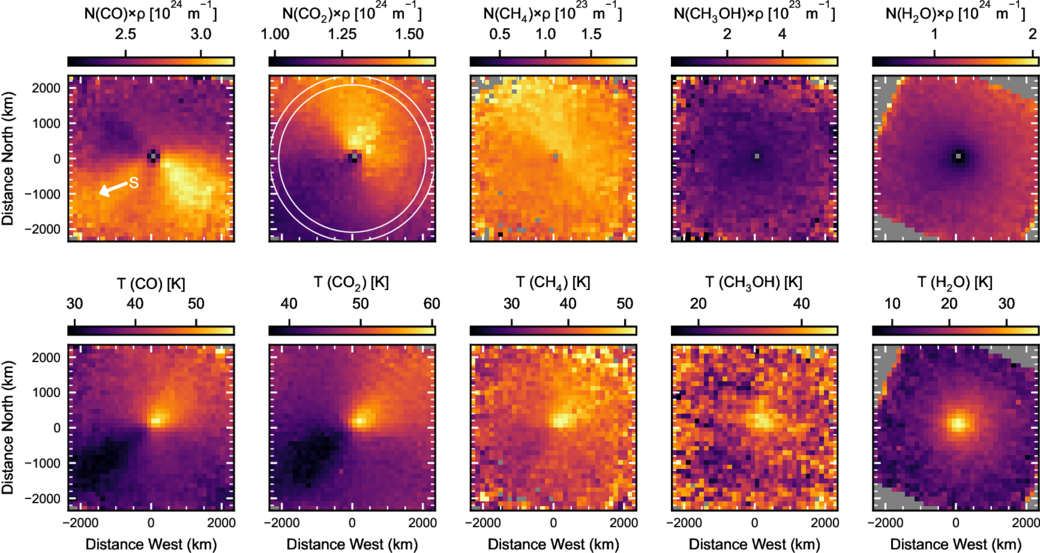
Top row: Maps of the distribution of various molecules in the coma. The white arrow shows the direction toward the Sun. Bottom row: The spatial distribution of the temperature of each species. Click to enlarge. [Roth et al. 2026]
Every Molecule for Itself
Second, each molecule seemed to be outgassing in its own unique direction from the coma. CO is leaving the nucleus in two different jets, one aimed directly back at the Sun and one perpendicular to it; CO2 and methane (CH4) are both leaking away in the anti-Sun direction; and water and methanol (CH3OH) are sublimating in nearly spherically symmetric shells. The authors speculate that these geometries may be caused by different “active sites” on the comet, and that had they observed the comet for one full rotational period, they might have seen these jets pointing in different directions.
Although 3I/ATLAS is now too far and faint for observations like these, this study reveals just how much we can learn in the brief time interstellar visitors spend in our solar system. When the fourth interstellar comet inevitably wanders through the inner solar system, astronomers will doubtless be ready to use this observing mode again.
Citation
The post An Interstellar Comet’s Coma Composition appeared first on AAS Nova.
]]>The post A 14-Yr-Old Mystery: The Peculiar Case of the Engine-Driven SN 2012ap appeared first on AAS Nova.
]]>Recent radio rebrightening of a supernova observed in 2012 suggests that either the progenitor star experienced a past change in mass-loss rate or wind speed, or there is an off-axis relativistic jet present.
The post A 14-Yr-Old Mystery: The Peculiar Case of the Engine-Driven SN 2012ap appeared first on AAS Nova.
]]>The post Gaia21bja: Pre-Main-Sequence Star with Quasiperiodic Bursts appeared first on AAS Nova.
]]>Gaia21bja is a young stellar object that brightens by up to 1.7 magnitudes during its outbursts, with its luminosity and mass-accretion rate increasing by a factor of 5.5–6 during the bursts.
The post Gaia21bja: Pre-Main-Sequence Star with Quasiperiodic Bursts appeared first on AAS Nova.
]]>The post Automatic Detection and Segmentation of Coronal Mass Ejections in LASCO C3 Images appeared first on AAS Nova.
]]>Using more than 50,000 images of coronal mass ejections, researchers have developed a novel machine-learning classification framework applicable to coronal mass ejections.
The post Automatic Detection and Segmentation of Coronal Mass Ejections in LASCO C3 Images appeared first on AAS Nova.
]]>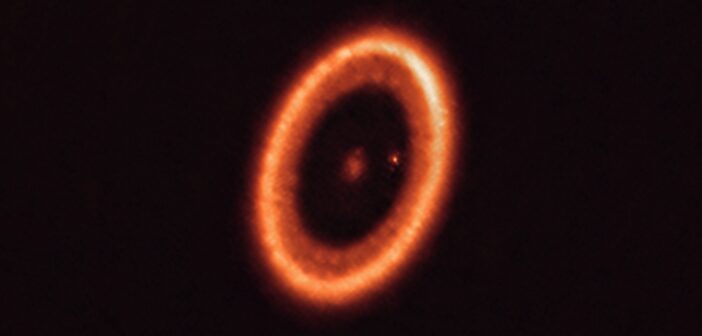
PDS 70c is the first exoplanet known to host a circumplanetary disk, where moons are potentially forming.
The post Probing Dust in the Disk of a Growing Giant Planet appeared first on AAS Nova.
]]>New research suggests that the circumplanetary disk surrounding the exoplanet PDS 70c contains a ring of dense dust, and the conditions within this ring may allow baby moons to form.
A Disk Within a Disk
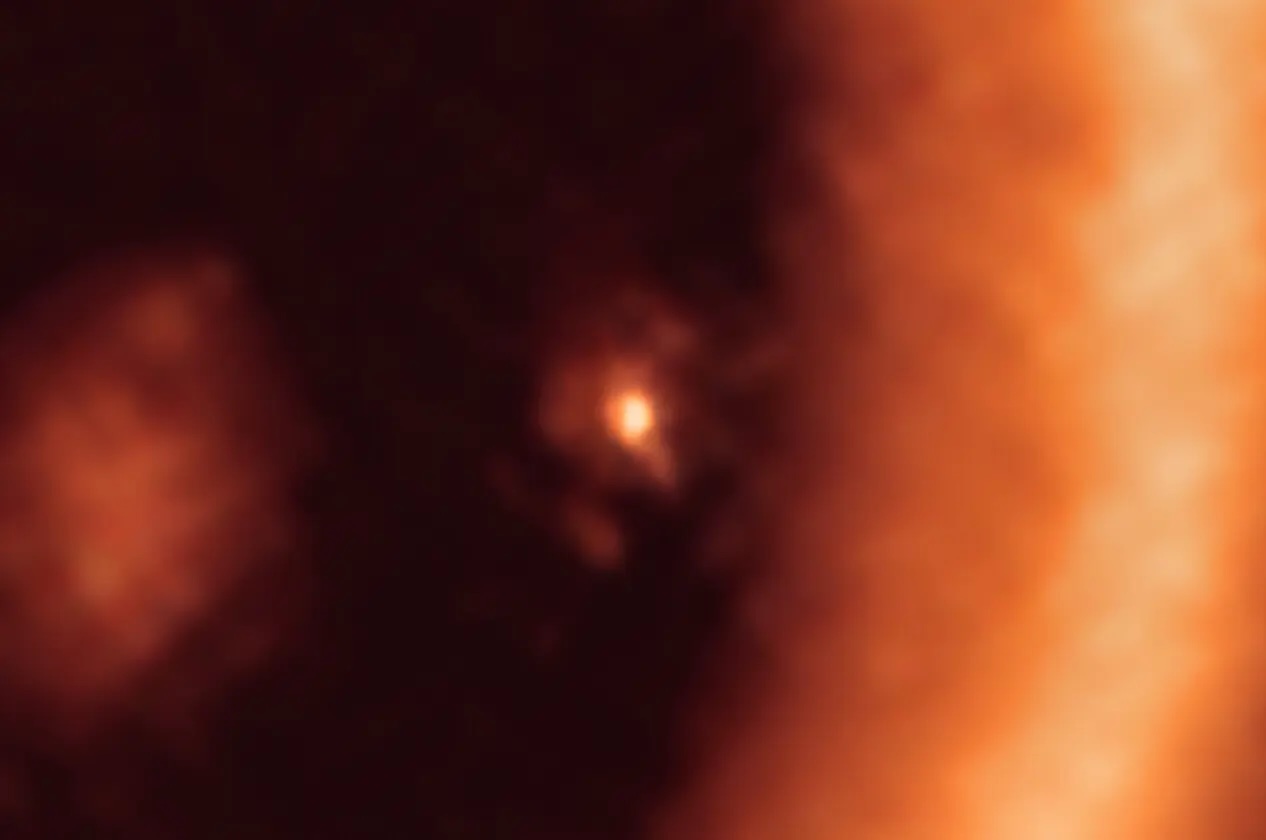
A closeup of PDS 70c’s circumplanetary disk within PDS 70’s protoplanetary disk. [ALMA (ESO/NAOJ/NRAO)/Benisty et al.; CC BY 4.0]
There’s still debate over the exact source of the emission detected by ALMA. Does this emission come from dust, and if so, how is the dust distributed? Is the disk optically thick or optically thin? Does the emission even come from dust, or could it instead be free–free emission from unbound electrons navigating a charged-particle maze?
Dust Diagnosis
Yuhito Shibaike (Kagoshima University) and collaborators recently examined the hypothesis that the emission from PDS 70c’s circumplanetary disk arises from dust distributed in an optically thick ring. To test this hypothesis, the team explored two possible dust distributions, which they call “drift” and “ring.” In the drift model, dust grains within the circumplanetary disk migrate inward toward the planet, leaving much of the disk optically thin. Modeling suggests that this migration is typical in protoplanetary disks, and it might be common in circumplanetary disks as well.
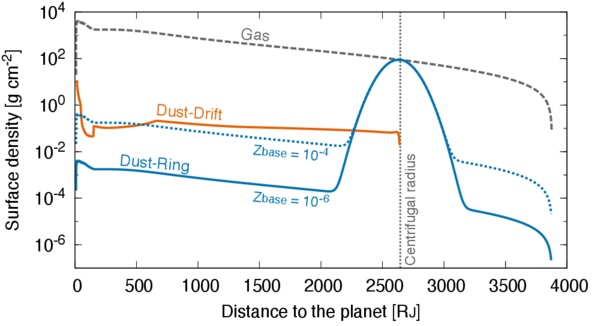
Dust and gas surface density for the modeled disks in the drift (orange) and ring (blue) models. Click to enlarge. [Adapted from Shibaike et al. 2026]
Shibaike and coauthors found that the ring model naturally reproduced the observed spectral energy distribution for a range of reasonable parameters. The drift model, on the other hand, required an unrealistically high dust-to-gas ratio for the material accreted onto the circumplanetary disk from the parent protoplanetary disk to reproduce the observed spectral index.
Future Prospects and Moon-Making Possibilities
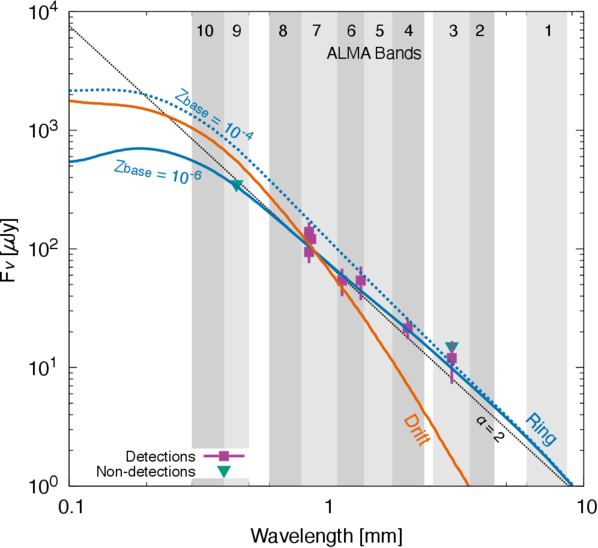
Comparison of ALMA observations (colored symbols) and model predictions (colored lines) from the drift (orange) and ring (blue) models. Click to enlarge. [Adapted from Shibaike et al. 2026]
Luckily, this likely won’t remain a mystery forever: the next-generation Very Large Array, which is anticipated to begin full science operations in the mid-2030s, should be able to resolve the location of the dust within the circumplanetary disk and illuminate the source of emission.
Finally, if the dust surrounding PDS 70c is concentrated within a ring, what does that mean for the possibility of moons forming within the disk? Shibaike and collaborators found that the conditions within the ring likely satisfy the requirements of both the streaming instability and the gravitational instability, which are required for dust grains to clump together and form the rocky building blocks of baby moons. Perhaps the PDS 70 system will one day be the site of not only a circumplanetary disk, but an exomoon as well!
Citation
“Interpreting ALMA Multiwavelength Continuum Observations of PDS 70 c: An Optically Thick Dust Ring in the Circumplanetary Disk,” Yuhito Shibaike et al 2026 ApJL 1006 L26. doi:10.3847/2041-8213/ae86f5
The post Probing Dust in the Disk of a Growing Giant Planet appeared first on AAS Nova.
]]>The post Source Surface Height Optimization for Improved Solar Wind Velocity Forecasting Across Solar Cycles 23, 24, and 25 appeared first on AAS Nova.
]]>By combining ground-based and space-based solar observations, researchers found that solar minimum solar wind predictions require higher source-surface heights than solar maximum predictions.
The post Source Surface Height Optimization for Improved Solar Wind Velocity Forecasting Across Solar Cycles 23, 24, and 25 appeared first on AAS Nova.
]]>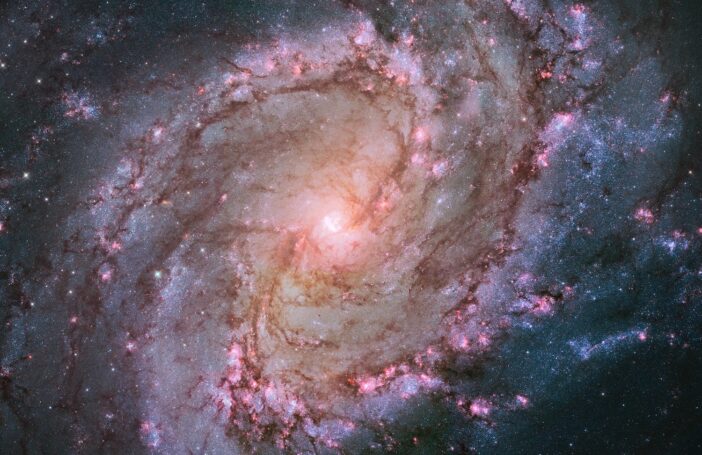
Astrobites reports on whether our methods for weighing galaxies can help save cosmology from JWST’s universe-breaking galaxies.
The post Galaxies of Many Colors appeared first on AAS Nova.
]]>Editor’s Note: Astrobites is a graduate-student-run organization that digests astrophysical literature for undergraduate students. As part of the partnership between the AAS and astrobites, we occasionally repost astrobites content here at AAS Nova. We hope you enjoy this post from astrobites; the original can be viewed at astrobites.org.
Title: Unbreaking the Universe: MINERVA Measurements of Color Gradients in Massive Quiescent Galaxies Can Help Ease Too-Early Star Formation Tensions
Authors: Sam E. Cutler et al.
First Author’s Institution: Tufts University
Status: Published in ApJL
Universe Breakers
JWST launched in 2021, and one of its key goals was to observe the first galaxies as they formed. Early results from JWST found something surprising: extremely massive galaxies in the early universe that had “quenched,” or stopped making new stars, much faster than was expected. These early results led some to believe that our understanding of how quickly massive galaxies can form and quench was fundamentally wrong.
Before concluding that our understanding of the universe is broken, it’s important to find other reasons why we might see very massive galaxies in the early universe. One theory is that these galaxies are actually less massive than we think. To “weigh” a galaxy, astronomers first measure the amount of light being emitted by that galaxy. If all the light in a galaxy comes from stars (which should be true in the early universe, though active black holes can contribute a lot of light in some galaxies), you can infer the total number of stars by accounting for the average amount of light emitted per star of a certain mass; this is called the “mass-to-light ratio.” Since massive stars emit a lot more light than low-mass stars, and high-mass stars die out faster than low-mass stars, the mass-to-light ratio is higher for older stellar populations. To accurately “weigh” a galaxy, scientists therefore need both a good measurement of the total amount of light in the galaxy and how old its stellar population is. The authors of today’s article suggest that the uncertainty in these measurements might be leading to overestimates of galaxy masses and underestimates of galaxy star formation rates, possibly explaining the existence of the earliest massive quiescent (non-star-forming) galaxies.
The Impact of Color Gradients
Previous works about the massive quiescent galaxies in this study used spectroscopy to determine the galaxies’ masses and star formation rates. These spectra were taken with a “slit,” which introduces a source of error: if the slit is smaller than the image of the galaxy, some of the galaxy’s light will be missed in the spectrum. Astronomers usually correct for this by checking how much of the total light of a galaxy image is covered by the slit and scaling up the spectrum to account for the missing light, but this correction assumes that the spectrum is basically the same across the entire galaxy.
However, this assumption is rarely correct. In the local universe, star-forming spiral galaxies like the Milky Way tend to be made of a central “bulge” surrounded by a “disk” (see Figure 1). The bulge is no longer actively forming new stars, leading to a red-to-blue color gradient as you move out from the center of the galaxy. In astronomy, this is considered a “negative” color gradient. A slit that only covers the galaxy center would lead to an overall overestimate of the stellar mass and underestimate of the star formation rate. If the galaxies instead had a positive color gradient, with more star formation in the center of the galaxy, the mass would be underestimated and the star formation rate would be overestimated. Galaxies with both positive and negative color gradients have been found in the distant universe. By measuring the color gradient for each individual galaxy in their sample, the authors can correct the mass and star formation rate calculations from spectra taken with a slit spectrograph.
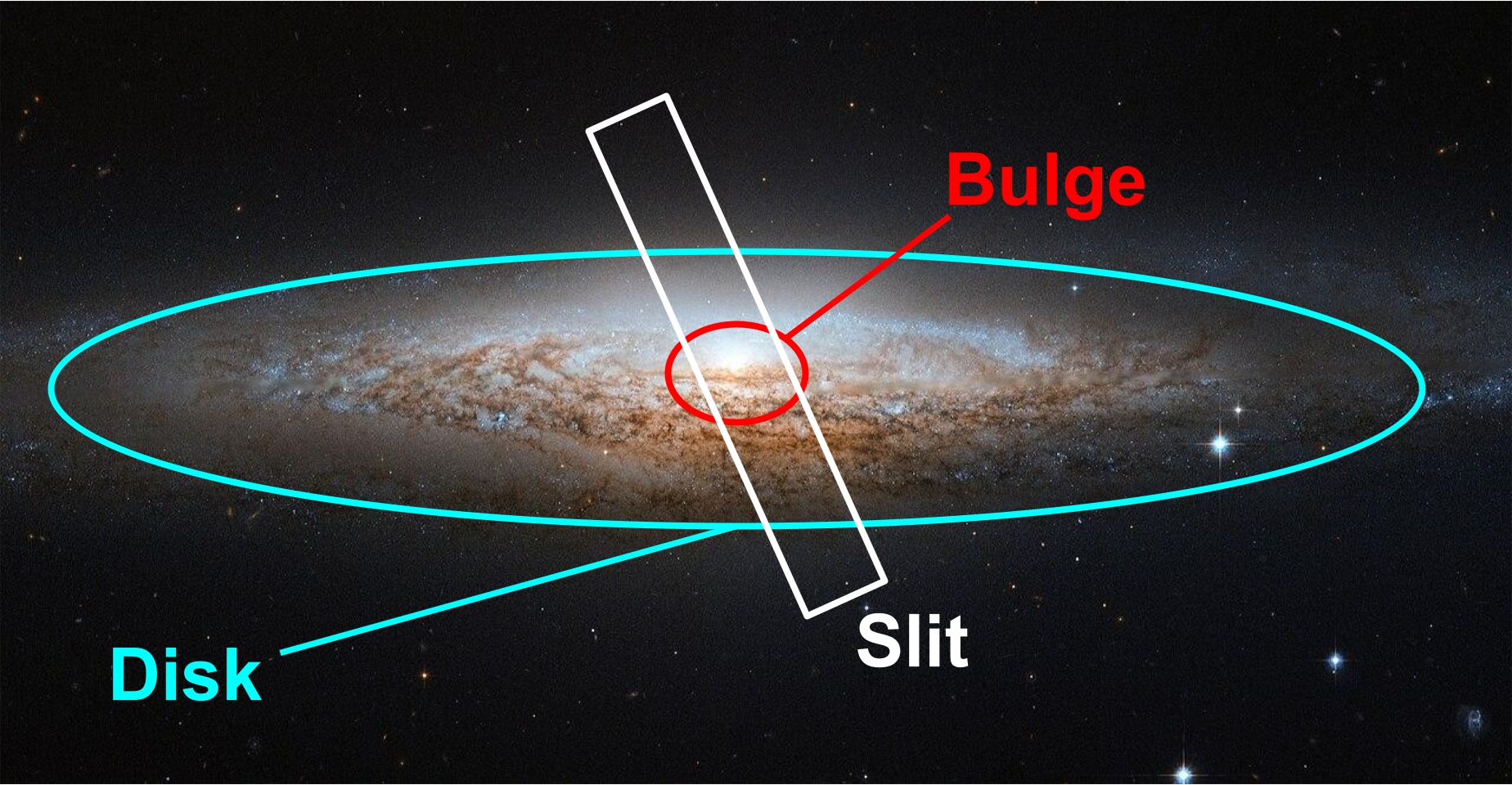
Figure 1: The spiral galaxy NGC 2683 with its bulge and disk labeled. The inner part of the galaxy (“bulge”) contains older, redder stars; the outer part of the galaxy (“disk”) contains bright blue stars that indicate that star formation is ongoing. Here, the slit spectrograph only covers the galaxy’s bulge, leading to incorrect mass and star formation rate measurements. [ESA/Hubble & NASA (CC BY 4.0) with annotations by Margaret Verrico]
Results
Instead of using spectra, the authors of today’s article use imaging in different filters to measure color gradients for a sample of four galaxies in the early universe that had previously been found to be extremely massive and no longer forming stars. They use medium-band filters, or filters that let in only a small part of a galaxy’s spectrum, to produce a spectral energy distribution at each radius. This spectral energy distribution is less informative than a spectrum (think a handprint versus a fingerprint), but it’s detailed enough to model the likely stellar population at each radius to determine whether the galaxies have positive, negative, or no color gradients, allowing for better corrections to the properties measured from the galaxies’ centers. They also model the stellar population from the central part of the galaxy that would normally be covered by a slit, as well as from the actual spectrum, to test whether any differences in their results come from their choice of modeling techniques.
The authors find that three of the four galaxies have a negative color gradient in at least some areas. The fourth galaxy has a relatively flat color gradient, though this measurement is less certain due to the object’s redshift. When the authors plot the galaxies’ colors on a diagnostic diagram that separates red and old galaxies from young and blue galaxies, they find that three of the four galaxies have centers that appear red and old but outskirts that appear young and blue (Figure 2). This means previous measurements of the mass may have been overestimated, and previous measurements of the star formation rate may have been underestimated.
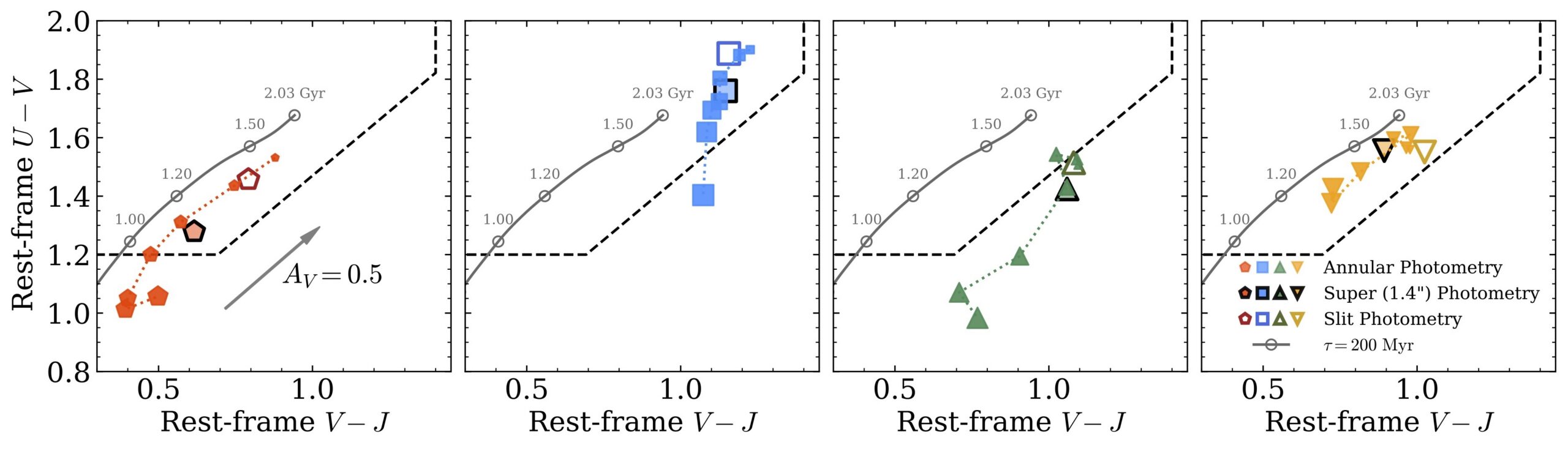
Figure 2: The location of each of the four galaxies on a color–color diagram that separates red galaxies (above/to the left of the dashed lines) from blue galaxies (below/to the right of the dashed lines). The open markers indicate the galaxy color as measured from the center of the galaxy; the filled-in markers show the color at different radii from the galaxy center. For all but one galaxy, the color at several radii is bluer than at the center, indicating that the galaxy might have younger stars at least at some radii. [Adapted from Cutler et al. 2026]
Is the Universe Broken?
To determine whether these galaxies still count as “universe breakers,” the authors use a cosmological model to predict the largest expected galaxy mass in the observed area at different periods in cosmic time. The previous results had less than a 0.3% chance of occurring under current cosmological models; with their updated numbers and stellar population models, the authors find that the observed galaxies sometimes have more than a 5% chance of occurring, though there is still tension. They point out that their analysis ignores processes that could help galaxies grow and quench in the early universe, like galaxy mergers; still, the existence of these massive galaxies with such low star formation rates remains a puzzle.
Original astrobite edited by Ansh Gupta.
About the author, Margaret Verrico:
I am a fourth-year graduate student at the University of Illinois Urbana-Champaign. I study the connection between supermassive black hole transients and their host galaxies. I am also an avid knitter and reader, and I am passionate about opening up STEM opportunities for people of all backgrounds.
The post Galaxies of Many Colors appeared first on AAS Nova.
]]>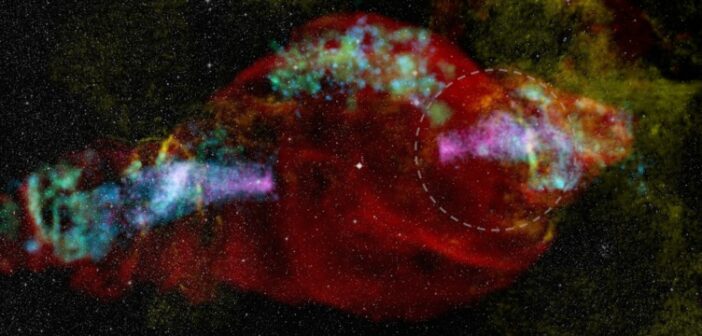
An accreting stellar-mass black hole embedded in a supernova remnant is potentially a powerful cosmic particle accelerator.
The post Featured Image: The Microquasar and the Manatee appeared first on AAS Nova.
]]>The supernova remnant W50 — nicknamed “the Manatee” because its blobby radio emission resembles an aquatic mammal floating through starry waters — harbors an extreme system at its heart. Near the center of the remnant, the microquasar SS 433 exhibits an immense pair of relativistic jets, likely powered by a stellar-mass black hole accreting material from a companion star. In the image of W50/SS 433 above, radio emission is in red, optical light is in yellow, and soft, medium, and hard X-ray emission are in green, cyan, and magenta, respectively. Brydyn Mac Intyre (University of Manitoba) and collaborators focused on the region circled above, using NuSTAR and XMM-Newton to understand the source of the X-ray emission in that region and the potential for SS 433 to accelerate particles to relativistic velocities. These observations suggest that W50/SS 433 accelerates electrons up to energies of more than 100 teraelectronvolts, and it may launch other particles into the highly sought-after petaelectronvolt range. To learn more about the particle-acceleration possibilities in this remarkable region, be sure to check out the full research article linked below.
Citation
“The Western Jet of SS 433/W50: Hard X-Ray Emission, Spectral Evolution, and Comparison to the Eastern Jet,” Brydyn Mac Intyre et al 2026 ApJ 1006 69. doi:10.3847/1538-4357/ae7a47
The post Featured Image: The Microquasar and the Manatee appeared first on AAS Nova.
]]>The post A Falsifiable Timing Test for the Double-White-Dwarf Model of Long-Period Transients appeared first on AAS Nova.
]]>The combination of gravitational wave emission, magnetic dissipation, and tidal interactions should cause the beat clock period of the CHIME/ILT J1634+44 system to change by tens of seconds per year.
The post A Falsifiable Timing Test for the Double-White-Dwarf Model of Long-Period Transients appeared first on AAS Nova.
]]>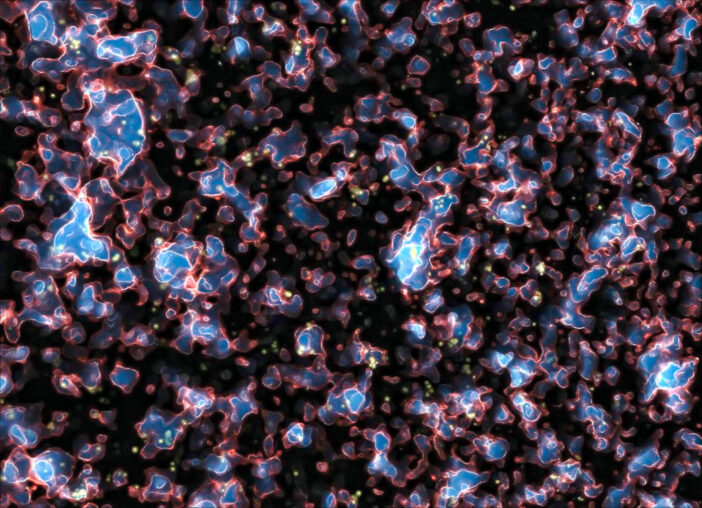
When two galaxies collide, they spark new star formation that can emit tons of powerful radiation. A recent study observes such a system and connects this process to the reionization of the universe.
The post A Lyman-Leaking Galaxy Merger Confirmed with JWST appeared first on AAS Nova.
]]>Exactly how the universe became reionized after cooling to form stars and galaxies remains an open question. A recent study investigates how a merging set of galaxies may have spurred an onslaught of ionizing photons into the intergalactic medium.
Lyman Continuum Leakers and Merging Galaxies
After its chaotic and blistering beginning, the universe cooled and began to coalesce, stars and galaxies flickering on to set the universe alight. From a few hundred million to about a billion years after the Big Bang, galaxies pumped high-energy ionizing Lyman continuum (LyC) photons into the intergalactic medium during what is known as the epoch of reionization. The exact mechanisms that produced and allowed LyC emission to escape galaxies during this era remain elusive.
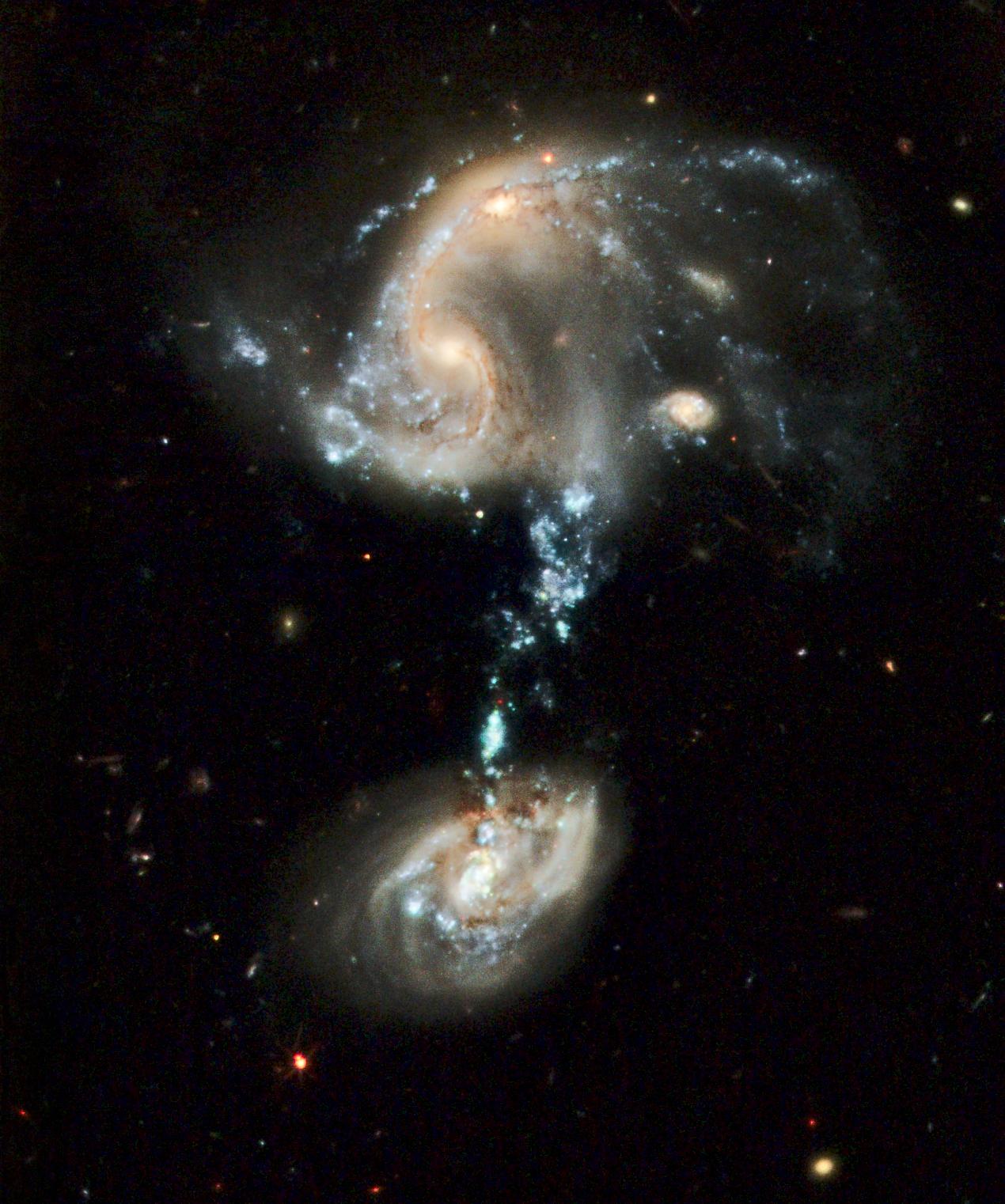
Hubble Space Telescope image of the interacting galaxy group Arp 194. The blue stream connecting the galaxies is where tidally stripped gas formed millions of new stars. [NASA, ESA, and the Hubble Heritage Team (STScI/AURA)]
While observational studies have increasingly pointed to galaxy mergers as considerable drivers of LyC escape, only a small number have explicitly considered the role of mergers in the epoch of reionization due to spectral and spatial resolution limitations. Leveraging the high-resolution capabilities of JWST, Shengzhe Wang (University of Chinese Academy of Sciences; National Astronomical Observatories, Chinese Academy of Sciences) and collaborators performed detailed analyses of two LyC-leaker candidates to better understand the role of galaxy mergers in heating up the universe.
Confirming (and Refuting) Merger-Driven Leaks with JWST
Using candidate LyC leakers first identified in the LymAn Continuum Escape Survey (LACES) carried out with the Hubble Space Telescope, Wang and team obtained high-resolution JWST spectroscopy for two galaxies at redshift z = 3.1 (about 2 billion years after the Big Bang), LACES94460 and LACES104037. After carefully identifying and measuring emission lines in each candidate, the authors confirmed LACES104037 as a merger-driven LyC leaker. However, the apparent LyC emission from LACES94460 was determined to be contamination from a low-redshift object.
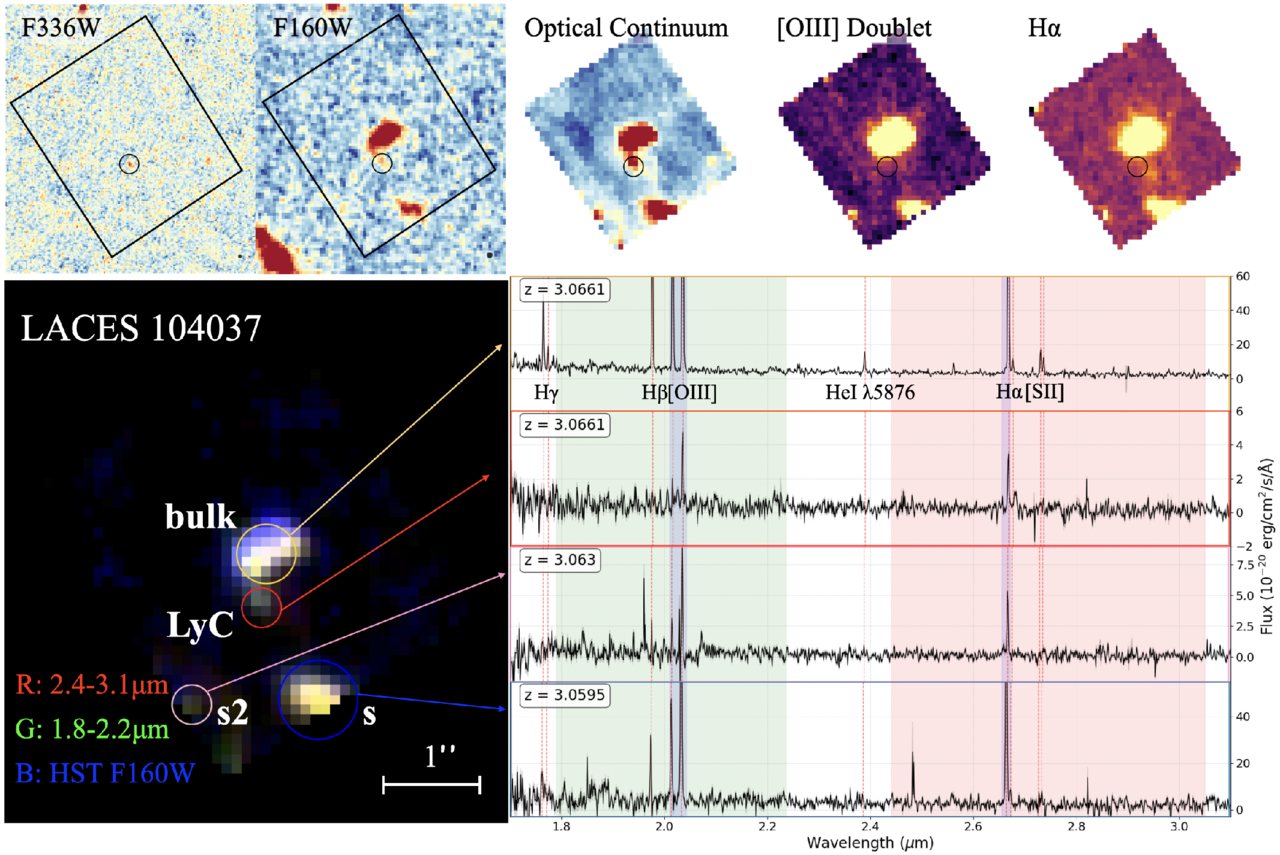
Hubble and JWST observations of LACES104037. The top panels show the Hubble images (first two panels) and the JWST spectral observations (last three panels). The bottom panel shows a composite three-color image marking the location of two primary interacting galaxies and the LyC emission along with the associated spectra. Click to enlarge. [Wang et al 2026]
LACES104037-LyC represents the first confirmed LyC leaker of its kind: an external clump of star formation in a tidal tail. This discovery aids in our understanding of how mergers can drive high-energy photon emission, and highlights the critical role galaxy mergers may play in the epoch of reionization. Future high-resolution observations will hopefully reveal more knots of LyC-leaking stars within merging galaxies and provide a deeper understanding of this important evolutionary phase of the universe.
Citation
“Confirmation and Refutation of Lyman Continuum Leakers at z ~ 3 with JWST NIRSpec IFU,” Shengzhe Wang et al 2026 ApJL 1006 L17. doi:10.3847/2041-8213/ae8523
The post A Lyman-Leaking Galaxy Merger Confirmed with JWST appeared first on AAS Nova.
]]>The post Feasibility Analysis of a Hypothetical Kinetic-Impact Deflection of 2024 YR4 Using In-Space Hayabusa2 for Earth-Impact Risk Reduction appeared first on AAS Nova.
]]>The Hayabusa2 spacecraft could be rerouted to collide with asteroid 2024 YR4 and impart a velocity change of a few centimeters per second (though thankfully, such an intervention is not necessary!).
The post Feasibility Analysis of a Hypothetical Kinetic-Impact Deflection of 2024 YR4 Using In-Space Hayabusa2 for Earth-Impact Risk Reduction appeared first on AAS Nova.
]]>The post ALMA-QUARKS View of W49N: Multipolar Episodic Outflow Associated with the Most Energetic Galactic Water Maser appeared first on AAS Nova.
]]>New millimeter-wavelength observations reveal four new outflow lobes in addition to a previously known central bipolar jet; the new lobes have chains of knots, which are a sign of episodic ejection.
The post ALMA-QUARKS View of W49N: Multipolar Episodic Outflow Associated with the Most Energetic Galactic Water Maser appeared first on AAS Nova.
]]>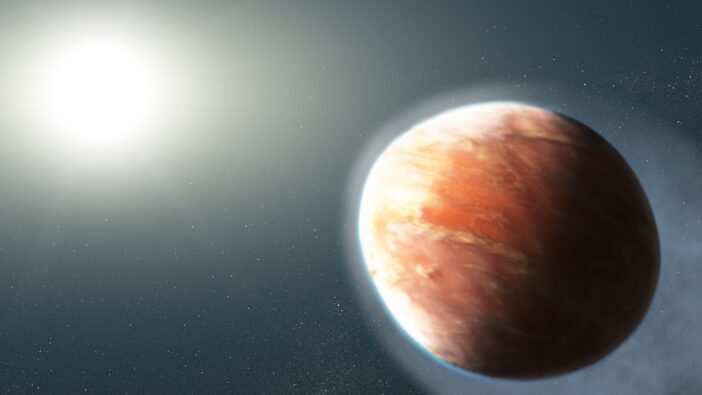
What do the latest JWST data say about the notable ultra-hot Jupiter WASP-121b?
The post Complexities and Mysteries in the Atmosphere of Ultra-Hot Jupiter WASP-121b appeared first on AAS Nova.
]]>Ultra-hot Jupiter WASP-121b is once again puzzling astronomers. New JWST observations have revealed aspects of this superheated planet’s atmosphere that models cannot yet explain.
An Extreme Planet
Among the more than 6,000 known exoplanets, there are many types of worlds that aren’t represented in our solar system. The most exotic and unfamiliar planets might be the ultra-hot Jupiters: giant planets nestled so close to their host stars that they are tidally locked, with temperatures on their permanently starlit sides climbing to thousands of degrees.
WASP-121b, which circles its F-dwarf host star every 30.5 hours, is one of the best-studied ultra-hot Jupiters. Previous work has started to reveal the complexity of its atmosphere, and now, data from JWST have opened a new window onto WASP-121b’s behavior.
New View from JWST
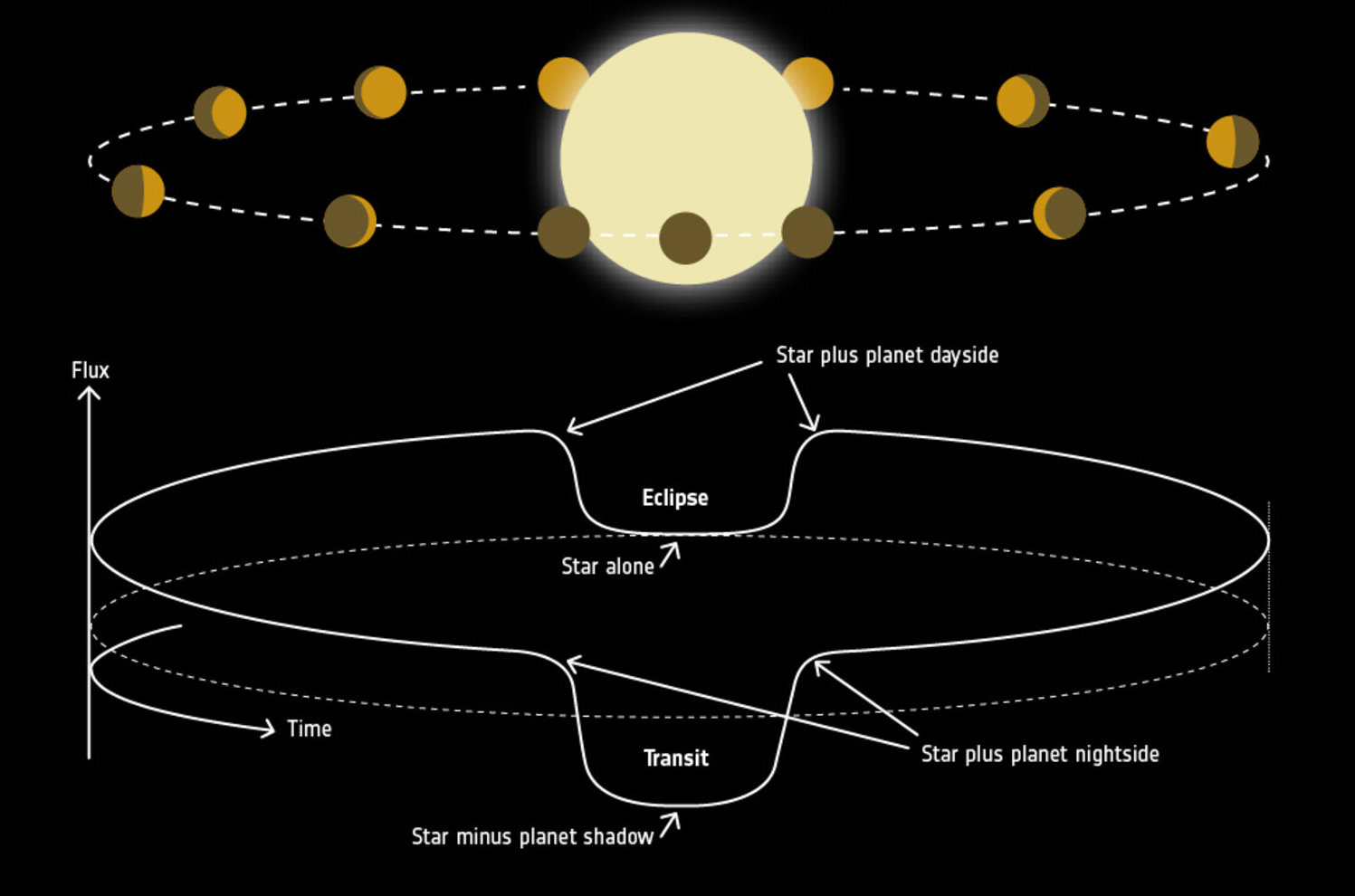
A representation of an exoplanet’s phase curve. Click to enlarge. [ESA]
The team used two 3D general circulation models to predict the planet’s atmospheric structure and extract synthetic spectra and phase curves to compare against the JWST observations. Using nine model configurations in total, the team varied several inputs, including sources of atmospheric opacity, sources of atmospheric drag, and assumptions about whether clouds are able to form on the planet’s cooler nightside.
Left with a Mystery
Frazier and collaborators found two aspects of WASP-121b’s phase curve that their models couldn’t explain: the planet emits less light overall than predicted, and the location of its phase-curve offset changes with wavelength.
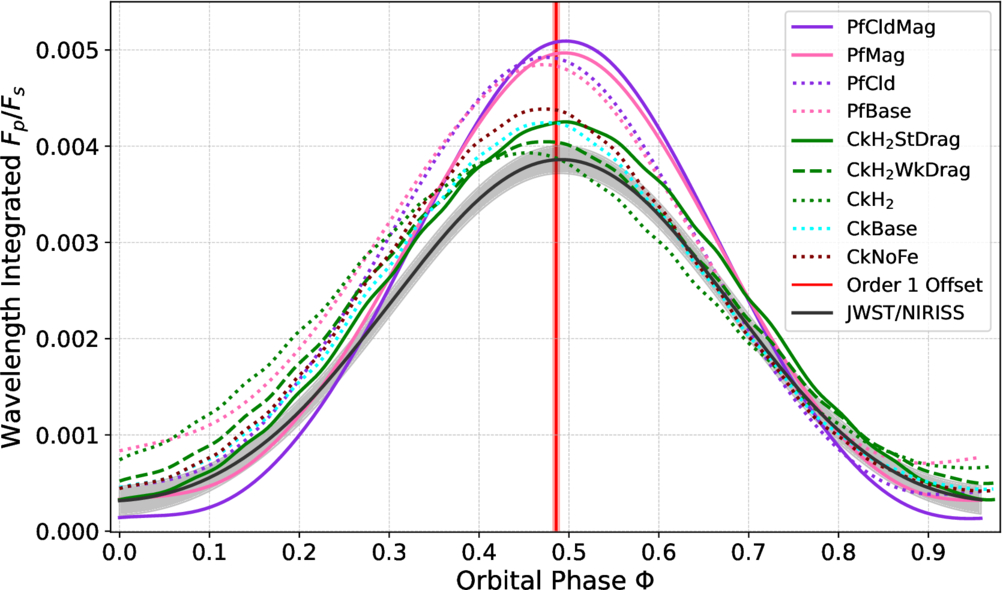
Modeled phase curves, shown as the flux of the planet divided by the flux of the star, for WASP-121b (colored solid and dotted lines) compared to the best fit to the JWST observations (black line). Click to enlarge. [Frazier et al. 2026]
The phase-curve offset is the difference between a planet’s sub-stellar point (where the star is directly overhead) and the brightest point in the planet’s atmosphere. In general, some degree of offset is expected because planetary winds tend to whisk heat away from the sub-stellar point, placing the brightest point somewhere to the east (usually). For WASP-121b, the offset is unexpectedly small — suggesting a source of drag in the atmosphere that prevents winds from transporting heat away from the sub-stellar point — and it’s larger at shorter wavelengths. This wavelength dependence isn’t predicted by any of the models, and it’s not clear what causes it.
These results demonstrate something remarkable: that our observations of a planet nearly 900 light-years away have become so precise that they’re pushing our already complex models to include more physics — an exceptionally exciting motivation for model improvement!
Citation
“The Days Drag On on WASP-121 b: Interpreting Its NIRISS Spectroscopic Phase Curve with General Circulation Models,” Robert C. Frazier et al 2026 ApJ 1004 102. doi:10.3847/1538-4357/ae69ca
The post Complexities and Mysteries in the Atmosphere of Ultra-Hot Jupiter WASP-121b appeared first on AAS Nova.
]]>The post X-Ray Spectroscopy Mass Constraints on V1674 Her: The Fastest Nova Does Not have a Near-Chandrasekhar White Dwarf appeared first on AAS Nova.
]]>New constraints on the mass of V1674 Herculis from X-ray observations place the white dwarf around 1.09 solar masses, well below the near-Chandrasekhar mass proposed in previous works.
The post X-Ray Spectroscopy Mass Constraints on V1674 Her: The Fastest Nova Does Not have a Near-Chandrasekhar White Dwarf appeared first on AAS Nova.
]]>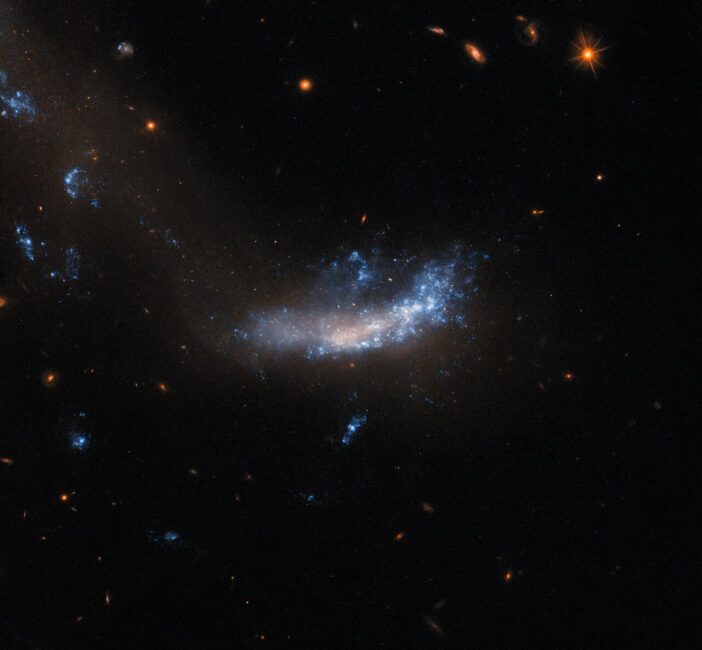
A supernova discovered in 2010 appears to have created tens of thousands of Earth masses of dust.
The post A Seriously Dusty Supernova appeared first on AAS Nova.
]]>In 2010, the supernova SN 2010jl illuminated a corner of a small, irregular galaxy 150 million light-years away. More than a decade later, researchers have found evidence that this collapsing massive star has created a significant amount of cosmic dust.
Superluminous Supernova
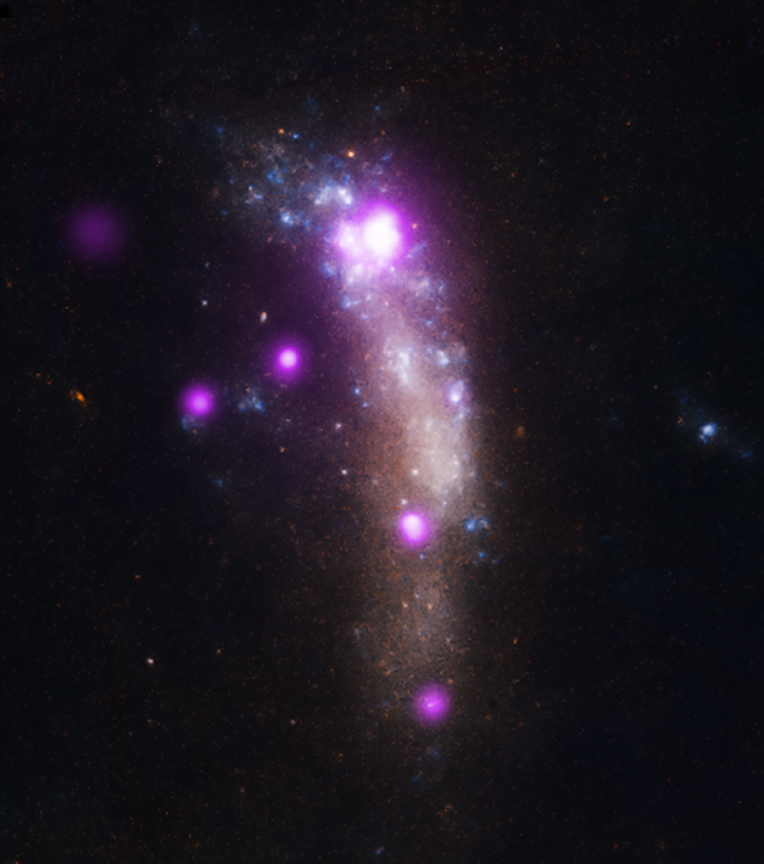
This X-ray and optical image shows SN 2010jl in its host galaxy. The supernova is the brightest X-ray source, near the top of the galaxy. [X-ray: NASA/CXC/Royal Military College of Canada/P.Chandra et al); Optical: NASA/STScI]
SN 2010jl offers an excellent chance to study the dust-forming potential of core-collapse supernovae. This supernova was unusually luminous because of intense interactions between the expanding supernova shock and the dense material surrounding the exploding star, and it’s possible that these types of interactions spur the creation of dust. In the first few years after the supernova was discovered, researchers found evidence that it had produced new dust. What has it been up to since?
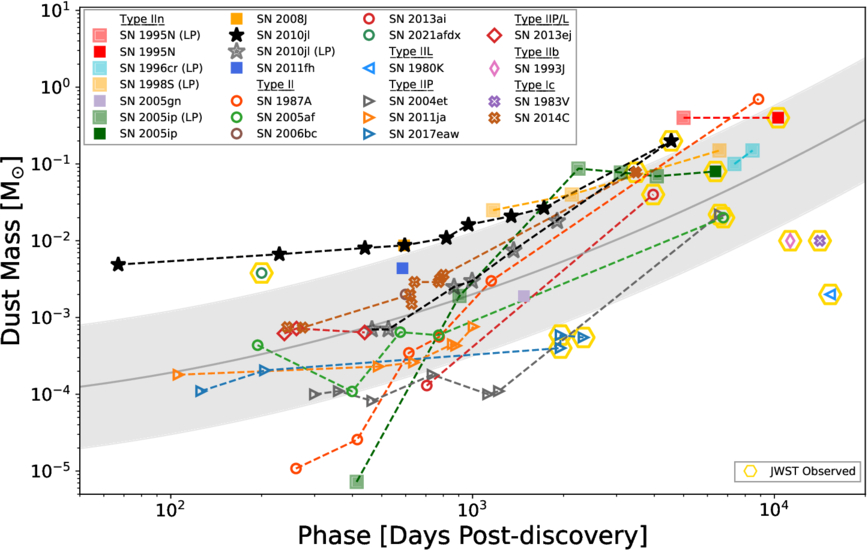
SN 2010jl’s inferred dust mass over time (black stars) compared to other supernovae. Click to enlarge. [Smith et al. 2026]
Checking Back In
Thirteen years after SN 2010jl was discovered, Nathan Smith (Steward Observatory) and collaborators checked in on its dust production. The team collected new ground-based optical spectra from the Keck I telescope and the MMT Observatory and mid-infrared spectra from JWST. The optical spectra — among the latest collected for any superluminous supernova — show numerous narrow emission lines that indicate that the expanding supernova continues to interact with its surroundings.
In the JWST observations, SN 2010jl is the brightest mid-infrared point source in its host galaxy. Through spectral energy distribution modeling, Smith and coauthors found that the brilliant infrared emission is likely due to a shroud of warm dust totaling roughly 20% of the mass of the Sun. This is about 80 times more dust than inferred from observations made a decade earlier.
Where’s the Dust?
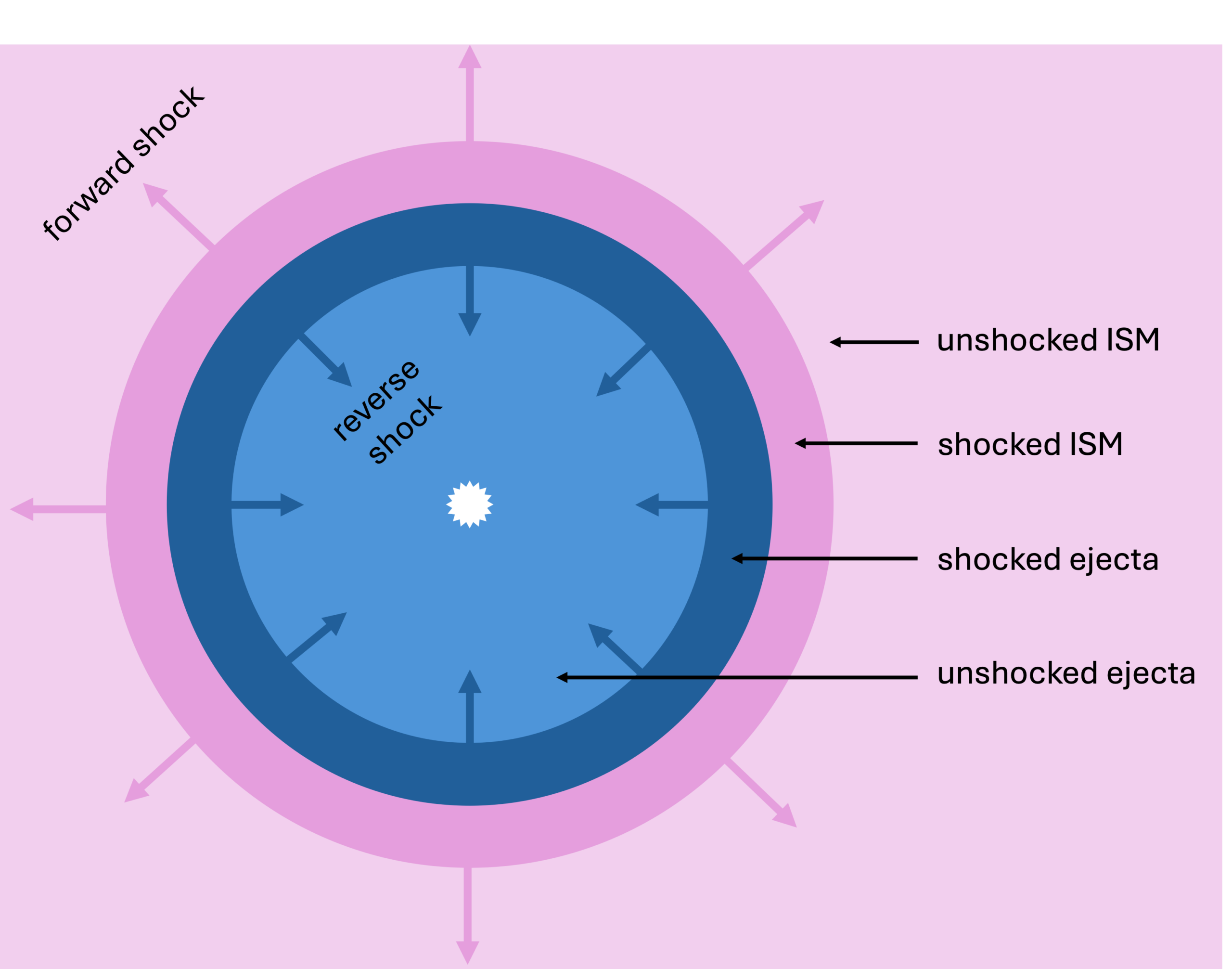
Diagram showing the outward-moving forward shock and inward-moving reverse shock of a supernova that is interacting with the interstellar medium (ISM). The post-shock region is located between the two shocks and contains shocked ejecta as well as shocked interstellar material. Click to enlarge. [AAS Nova/Kerry Hensley]
While it’s not possible to rule out the other options entirely, Smith and collaborators argue that at least some of the dust can be traced to new growth in the post-shock region. Because post-shock dust grains are likely to reach the interstellar medium, this suggests that superluminous, strongly interacting supernovae like SN 2010jl are a viable source of dust in the present-day universe and in high-redshift galaxies alike.
Citation
“JWST Spectra Indicate a Large Mass of Postshock Dust Formed by SN 2010jl,” Nathan Smith et al 2026 ApJ 1006 224. doi:10.3847/1538-4357/ae74c5
The post A Seriously Dusty Supernova appeared first on AAS Nova.
]]>The post High-Sensitivity Methodologies to Detect Radio-Band Gravitational Waves appeared first on AAS Nova.
]]>Resonance between gravitational waves and magnetic fields may produce a faint radio signal in pulsar magnetospheres; current searches are approaching the sensitivity necessary to detect this signal.
The post High-Sensitivity Methodologies to Detect Radio-Band Gravitational Waves appeared first on AAS Nova.
]]>The post Smoking-Gun Signatures of Bounce Cosmology from Echoes of Relic Gravitational Waves appeared first on AAS Nova.
]]>In a cosmology framework that proposes the universe began with a period of contraction before the Big Bang, researchers find that high-frequency gravitational waves oscillate in a way that is potentially detectable.
The post Smoking-Gun Signatures of Bounce Cosmology from Echoes of Relic Gravitational Waves appeared first on AAS Nova.
]]>
Astrobites reports on whether the correlation between galactic radio, infrared, and gamma-ray emission is truly a sign that cosmic-ray electrons deposit all their energy before they can escape to intergalactic space.
The post Do Galaxies Really Glow in Sync — or Are We Just Tilting Our Heads? appeared first on AAS Nova.
]]>Editor’s Note: Astrobites is a graduate-student-run organization that digests astrophysical literature for undergraduate students. As part of the partnership between the AAS and astrobites, we occasionally repost astrobites content here at AAS Nova. We hope you enjoy this post from astrobites; the original can be viewed at astrobites.org.
Title: Geometry, Not Calorimetry, Drives the Radio–Infrared–γ Ray Correlation
Authors: T. A. Porter, I. V. Moskalenko, and G. Jóhannesson
First Author’s Institution: Stanford University
Status: Published in ApJ
Galaxies emit light not only in the visible band, but also across other wavelengths via different physical mechanisms. Finding correlations between emissions at different wavelengths is a powerful tool for astrophysicists to explore the underlying mechanisms of galaxy formation. One of the most famous examples is the infrared–radio continuum correlation, which holds across several orders of magnitude in luminosity.
The typical explanation for this correlation is that both infrared light and radio synchrotron emission share the same energetic origin: star formation. Young stars emit ultraviolet radiation, which is absorbed by interstellar dust and re-radiated in the infrared. When these stars end their lives in core-collapse supernovae, the resulting shock waves accelerate cosmic-ray electrons, which then interact with the magnetic field to produce synchrotron emission.
For this correlation to hold, cosmic-ray electrons must radiate away all their energy within the galaxy, unable to escape and carry away some of their energy. Otherwise, the amount of radio emission would depend on how quickly cosmic rays escape and would no longer correlate with the infrared emission. This assumption is called the “electron calorimeter” model, which assumes that electrons lose all their energy due to radiation without escaping the galaxy. However, observations show that the infrared–radio correlation persists even in low-density galaxies where cosmic rays can easily escape, suggesting that the calorimeter model may not be the full story. To reconcile this, previous studies proposed “conspiracy-like” scenarios in which cosmic-ray injection, transport, magnetic-field amplification, and gas density are all coupled in a finely self-regulating way to maintain the correlation across diverse galactic environments — a somewhat awkward explanation that requires multiple unrelated physical processes to conveniently work together.
With the increased sensitivity of the Fermi Large Area Telescope, high-energy gamma-ray (or γ-ray) detections add new information to this picture. A galaxy’s γ-ray emission is produced by two different sources: cosmic-ray protons interacting with the interstellar medium gas, and cosmic-ray electrons inverse-Compton scattering off of nearby starlight or photons from the cosmic microwave background. Since both processes involve cosmic rays, the total γ-ray emission should also reflect the amount of star formation and therefore correlate with infrared and radio emission.
Because all three wavelengths trace different pieces of the same cosmic-ray population, studying them together reveals how the galaxy’s total cosmic-ray energy budget is distributed across its multi-wavelength emission.
The infrared–radio correlation has been established not only at the scale of entire galaxies, but also locally, down to patches roughly 100 parsecs across. Think of it like the relationship between a city’s electricity consumption and its population: we have long known they track each other city-wide, but it turns out the same relationship holds block by block. The infrared–radio correlation works the same way: zoom into any 100-pc region within a galaxy, and the correlation is still there. Unfortunately, the resolution of γ-ray observations is still stuck at around the kiloparsec scale. It is therefore unclear whether the local infrared–radio correlation reflects a genuine local physical coupling, one that would extend to γ-rays if we had sufficient resolution, or whether it is simply a spatial average of the emission, smoothed out by insufficient resolution. The answer determines whether radio and γ-ray emission can be used as reliable tracers of star formation, or whether they are just smeared out by cosmic-ray propagation over kiloparsec scales.
In this study, the authors numerically model galactic cosmic-ray transport, building a suite of physically motivated three-dimensional models of the Milky Way. They consider two variants for each of the four key inputs: 1) the cosmic-ray source distribution, 2) the interstellar gas, 3) the amount of starlight within the galaxy (the interstellar radiation field), and 4) the galactic magnetic field. Crucially, every model is normalized to reproduce the locally observed cosmic-ray data to within 5%, so that any differences in the predicted emission come purely from the large-scale geometry of each input, rather than from variations in the total cosmic-ray budget.
After evolving cosmic-ray transport for these realistic models, the authors then compute synthetic observations at radio, infrared, and γ-ray bands from various viewing inclinations to investigate how the underlying galactic model and the viewing angle affect the correlations between these emissions.
Surprisingly, inclination plays the most important role — more so than the cosmic-ray source distribution, the radiation field, or the magnetic field. Figure 1 shows the correlation plots between the radio and γ-ray emission (left two columns) and between infrared and γ-ray emission (right two columns) when viewing the galaxy face-on (i.e., viewing the galaxy from directly above the disk). Different colors represent γ-ray emission components from different physical mechanisms, with orange showing the total γ-ray emission. For both sets of correlation plots, starting from the upper-left panel, each panel modifies one physical input and recomputes the emission. Although there is some variation, one can see that the γ-ray emission correlates with both the radio and the infrared emission over several orders of magnitude, regardless of the underlying input model.
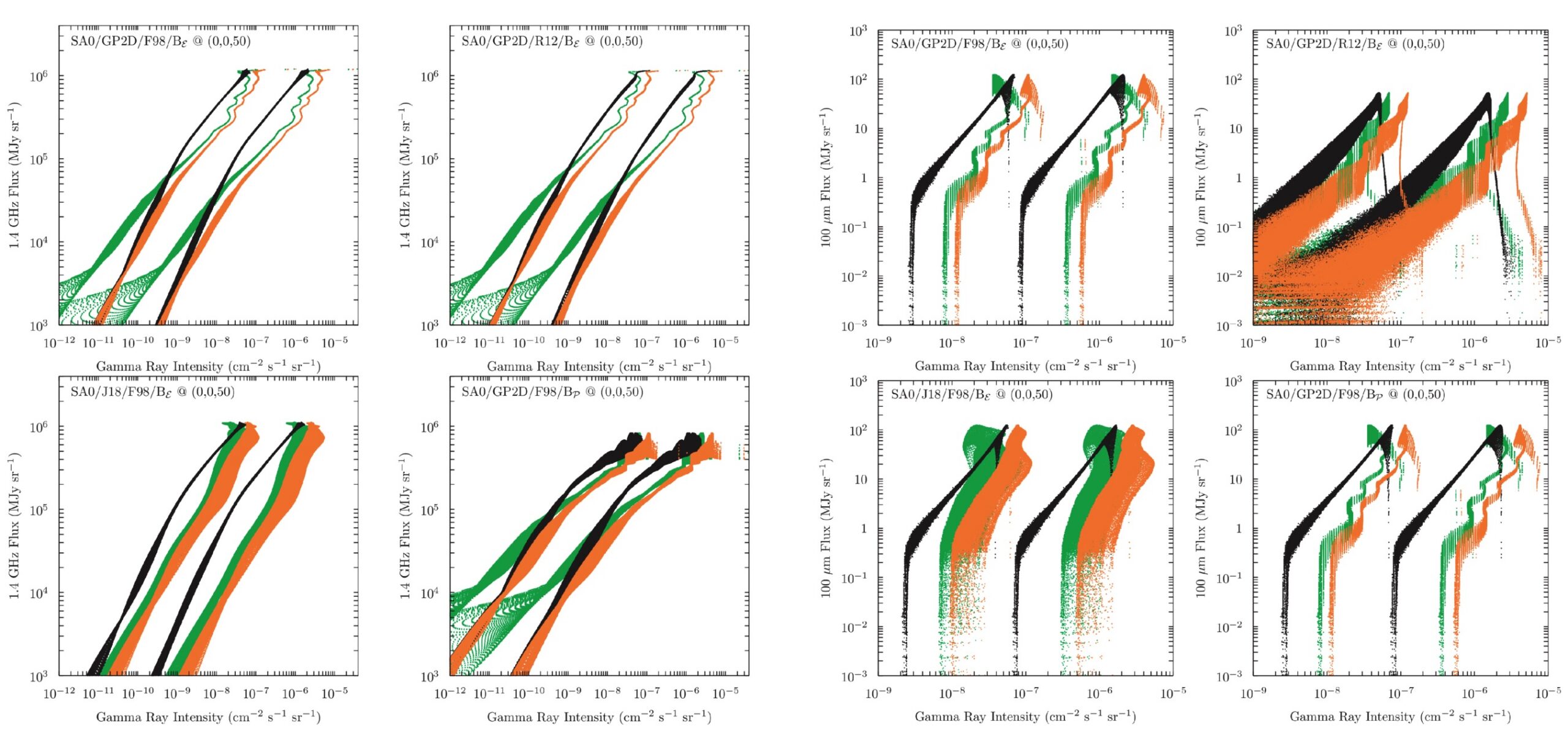
Figure 1: Radio (left two columns) and infrared (right two columns) vs. γ-ray correlation plots for a galaxy viewed face-on from 50 kpc. Each panel modifies one input — the cosmic-ray source distribution, gas, radiation field within the galaxy, or magnetic field — relative to a baseline model. Colors indicate γ-ray production mechanisms (green: proton–gas; black: inverse-Compton; orange: total). Across all variations, both the radio–γ-ray and infrared–γ-ray correlations remain quasi-linear over several orders of magnitude, showing that the correlations are robust to the choice of underlying galactic model. [Adapted from Porter et al. 2026]
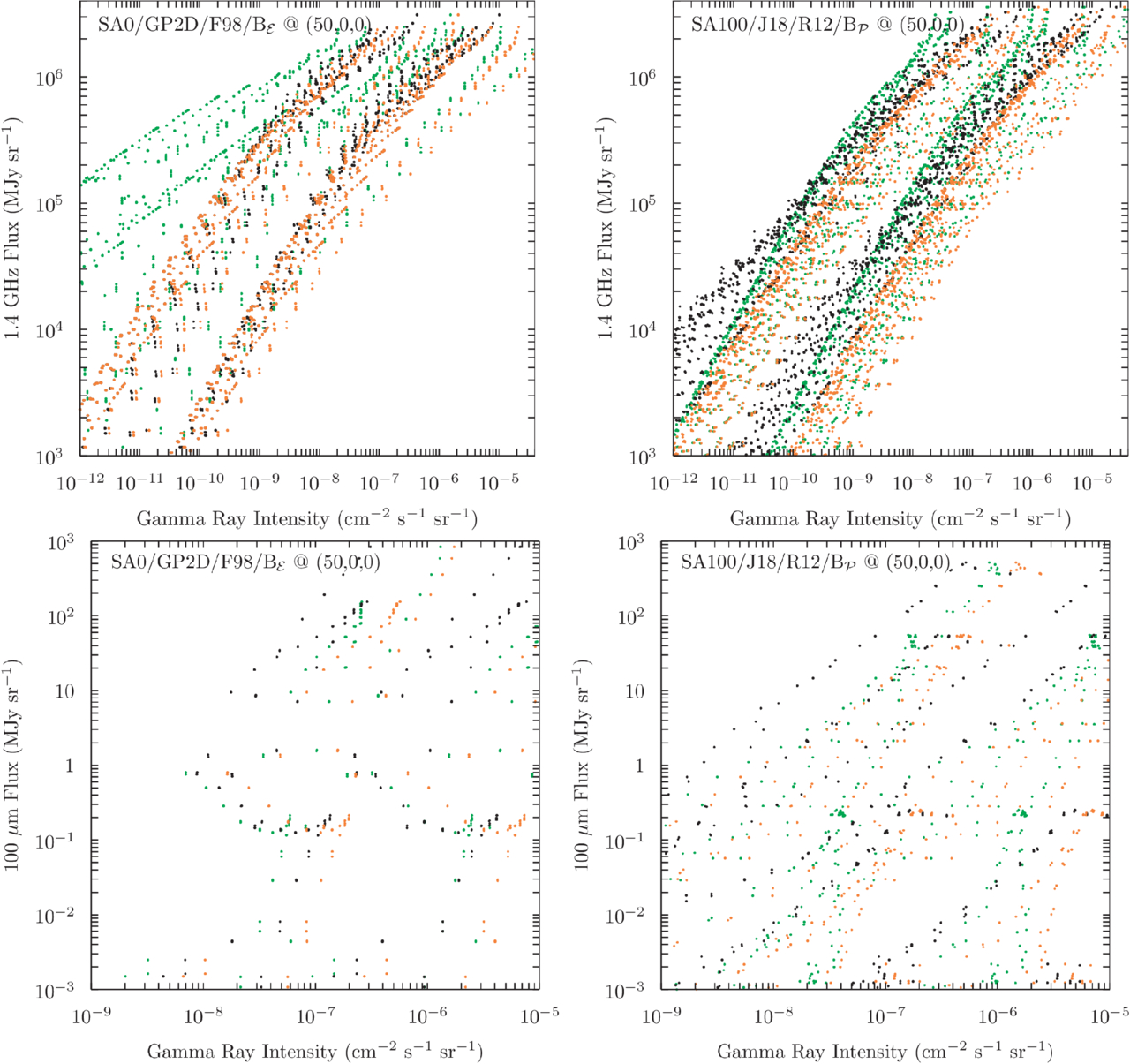
Figure 2: Correlation plots for two galaxy models viewed edge-on from 50 kpc — simple axisymmetric (left) and complex with spiral arms (right). Top: radio vs. γ-ray; bottom: infrared vs. γ-ray. Colors indicate γ-ray production mechanisms (green: proton–gas; black: inverse-Compton; orange: total). The infrared–γ-ray correlation breaks down, while the radio–γ-ray correlation is broadened but partially preserved. [Porter et al. 2026]
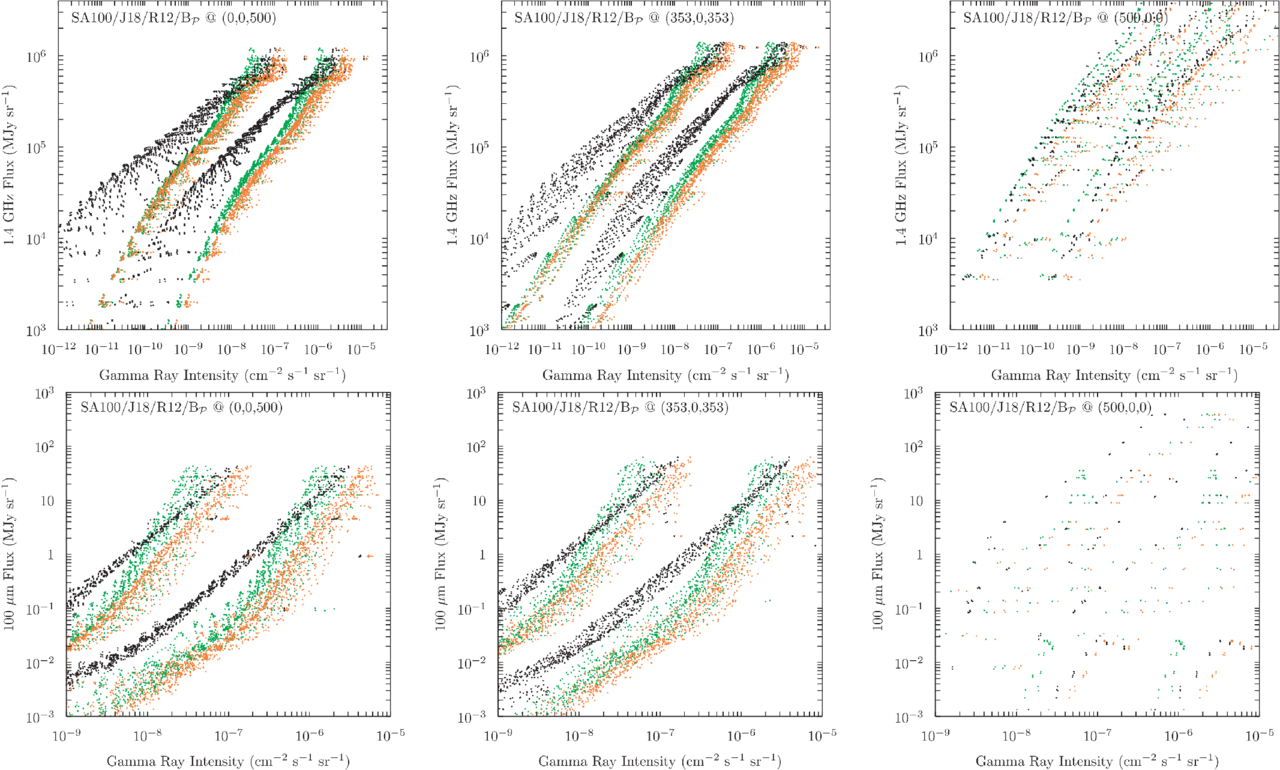
Figure 3: Correlation plots from a complex galaxy model viewed from 500 kpc, at three different inclinations (face-on, 45°, edge-on). Top row: radio vs. γ-ray; bottom row: infrared vs. γ-ray. Colors indicate different γ-ray production mechanisms (green: proton–gas; black: inverse-Compton; orange: total). At this distance, the blurring effect of large pixels restores a tight correlation even in the edge-on view. [Porter et al. 2026]
Original astrobite edited by Kelsie Taylor.
About the author, Sandy Chiu:
I’m a PhD candidate at the University of Michigan, Ann Arbor. I’m interested in numerical simulations of cosmic rays feedback in galaxies and their comparison with observation.
The post Do Galaxies Really Glow in Sync — or Are We Just Tilting Our Heads? appeared first on AAS Nova.
]]>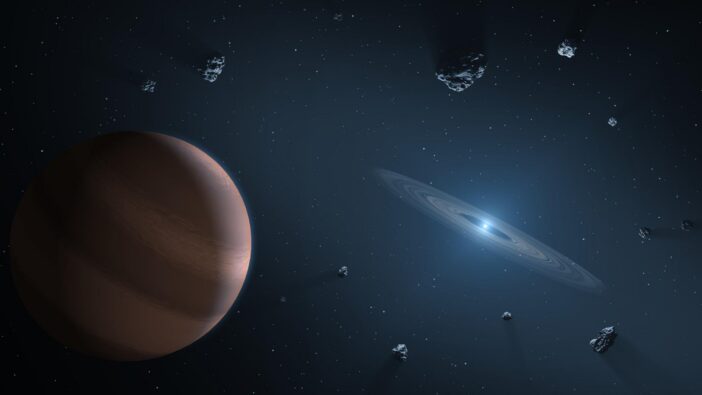
Astronomers may have spotted the crumbs of a recently eaten asteroid around a white dwarf star.
The post Finishing Off an Asteroid appeared first on AAS Nova.
]]>Only one white dwarf star has ever been caught eating an asteroid. Recently, however, astronomers may have found another that just finished its meal.
Eating Asteroids
Although stars like our Sun don’t explode in violent supernovae like their massive counterparts, they don’t slink quietly into a peaceful old age either. When a solar-mass star reaches the end of its main sequence life, it first swells dramatically (the Sun may eventually grow so large that it consumes Earth and the device you’re reading this on), then shrinks down to a tiny but incredibly hot ember known as a white dwarf.
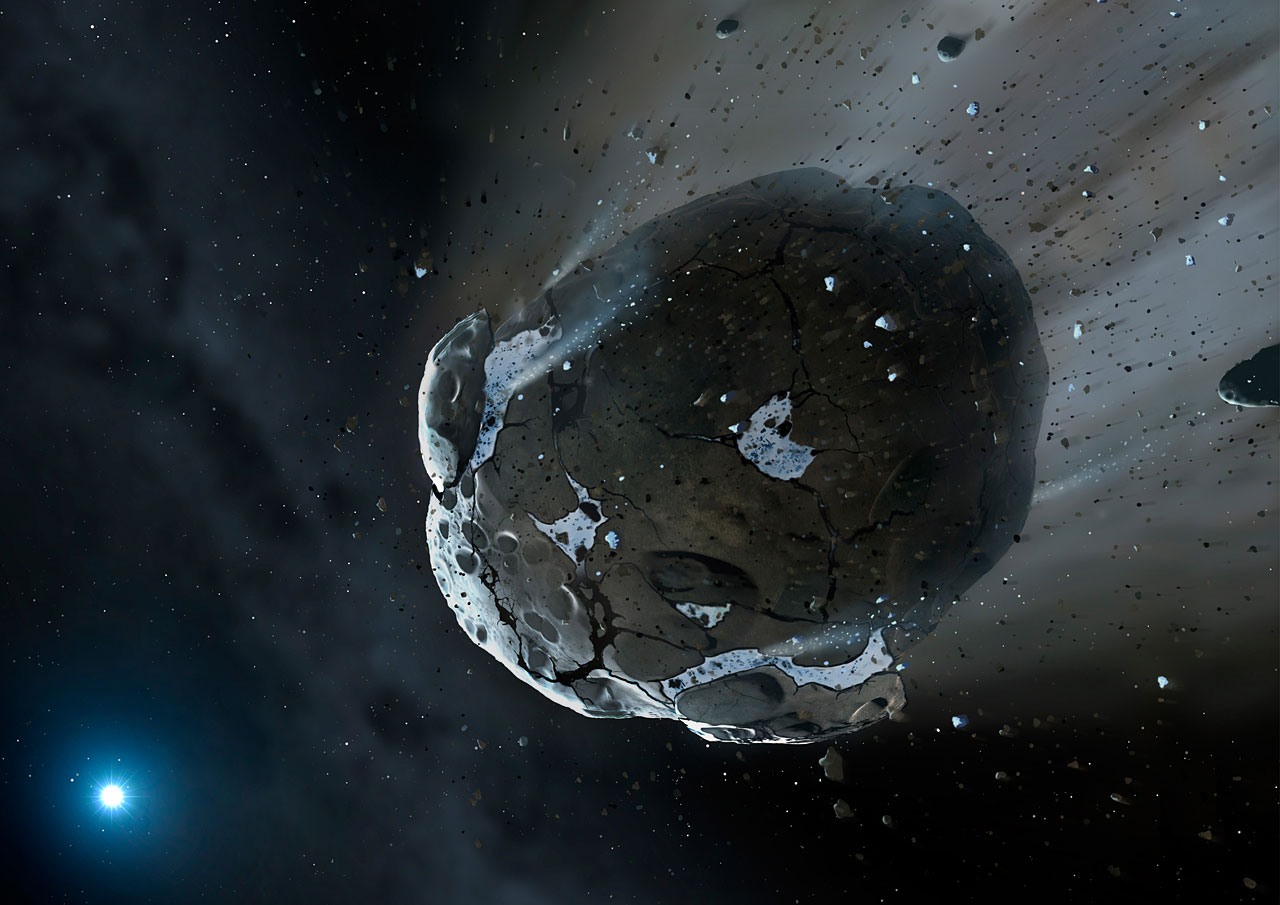
An artist’s impression of an asteroid breaking up near a white dwarf star. [NASA, ESA, M.A. Garlick (space-art.co.uk), University of Warwick, and University of Cambridge]
However, although researchers have found these stains in over a quarter of white dwarfs and consequently have reasoned that asteroid snacking must be common, they’ve only ever caught one star mid-meal. Recently, Ben Zuckerman (University of California, Los Angeles) and a team of collaborators may have found another, though it may have just finished dining.
Leftover Crumbs
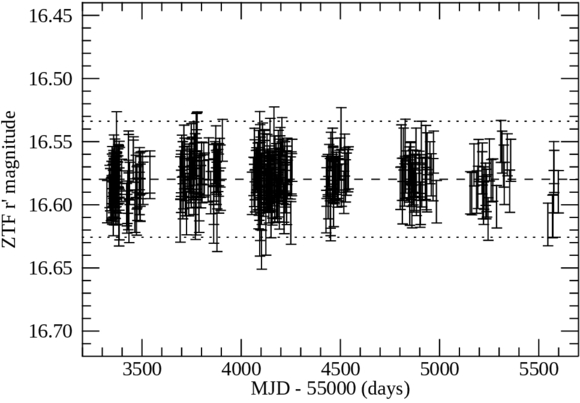
The light curve of WD J0234-0406 measured by the Zwicky Transient Facility. Unlike WD 1145+017, which frequently changes brightness, this white dwarf appears remarkably steady despite the high-velocity gas surrounding it. [B. Zuckerman et al. 2026]
The researchers suggest that this relative quiet is a matter of timing. While asteroids are actively breaking up around WD 1145+017, the parent bodies that supplied the gas and dust around WD J0234-0406 may have shattered long ago and have already been either vaporized or ground down into smaller particles. All that is left over are the crumbs slowly spiraling toward the star.
Although WD J0234-0406’s meal may not be as dramatic as WD 1145+017’s feast, it’s still exciting to expand the sample of known white dwarf-asteroid interactions. And, with the upcoming release of data from the DESI survey poised to reveal the spectra of tens of thousands of white dwarfs, the sample is likely to grow again soon.
Citation
“High-velocity Circumstellar Gas Orbiting a White Dwarf Star,” B. Zuckerman et al 2026 ApJ 1004 254. doi:10.3847/1538-4357/ae23c4
The post Finishing Off an Asteroid appeared first on AAS Nova.
]]>The post The Cocoon from a Massive Star’s Death: VLA Radio Polarization Study of Possible Historical Supernova Remnant G7.7–3.7 appeared first on AAS Nova.
]]>Polarization measurements show evidence of shock compression and possible interaction between a supernova remnant and previously formed circumstellar shells from the progenitor’s mass loss.
The post The Cocoon from a Massive Star’s Death: VLA Radio Polarization Study of Possible Historical Supernova Remnant G7.7–3.7 appeared first on AAS Nova.
]]>The post A Massive Hot-Jupiter Companion that Disfavors Giant Planet Formation beyond the Water-Ice Line appeared first on AAS Nova.
]]>The presence of a 34-solar-mass brown dwarf companion to an ultra-hot Jupiter suggests that the hot Jupiter must have formed within 1.5 au of its host star to remain dynamically stable.
The post A Massive Hot-Jupiter Companion that Disfavors Giant Planet Formation beyond the Water-Ice Line appeared first on AAS Nova.
]]>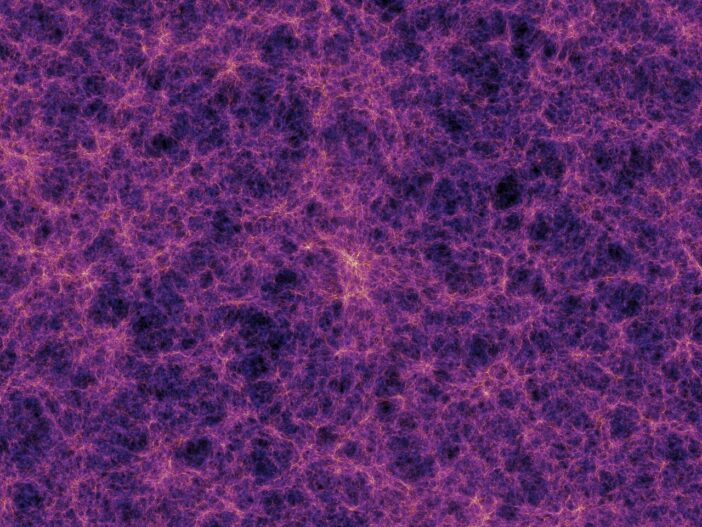
Using fast radio bursts, researchers have measured just how empty cosmic voids truly are.
The post Diving into the Darkest Corners of the Universe with Fast Radio Bursts appeared first on AAS Nova.
]]>Even the darkest corners of the universe are not completely empty. A recent study has used fast radio bursts to provide the first estimate of the baryon content in cosmic voids.
What’s in a Void?
Cosmological studies have revealed the large-scale filamentary structure of the universe known as the cosmic web. Chains of galaxies and galaxy clusters fall into spindly strands (or filaments) of matter overdensities, opening up cavernous cosmic voids that comprise the darkest corners of the universe. These seemingly vacant voids serve as critical test beds for cosmology, allowing researchers to constrain things like the nature of dark energy and the matter density of the universe.
Despite their name, voids are not completely empty but are instead underdensities with considerably less matter compared to the bustling filaments they border. The baryon (normal matter) content of cosmic voids has important implications for cosmological models and large-scale galactic feedback processes, but assessing how many baryons actually occupy voids has only recently become observationally accessible.
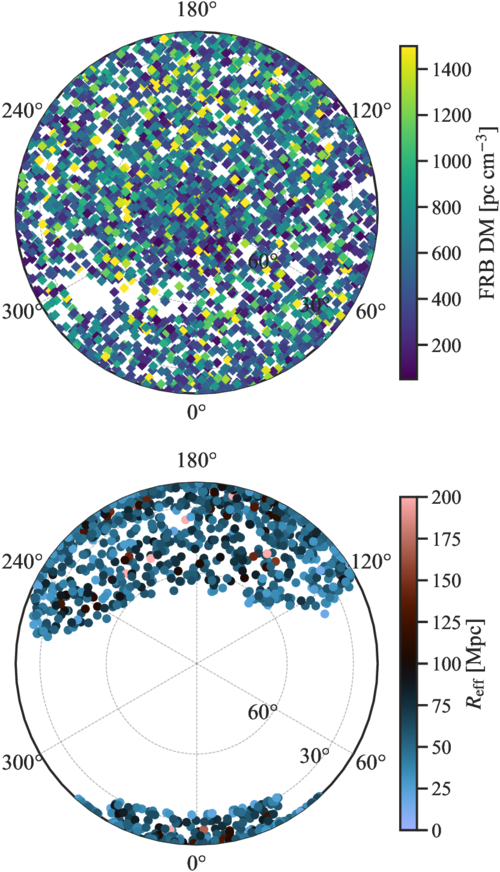
Sky maps centered on the north celestial pole showing the CHIME fast radio burst sample (top) and the SDSS void catalog (bottom). [Sharma et al 2026]
Chiming In on the Baryon Search
In concept, directly stacking fast radio burst sight lines that coincide with the positions of known cosmic voids provides a direct measurement of the baryon underdensity inside voids. With no previous observational exploration of this quantity, Kritti Sharma (California Institute of Technology) and collaborators leveraged the second catalog of the Canadian Hydrogen Intensity Mapping Experiment Fast Radio Bursts (CHIME/FRB) sample in conjunction with the Sloan Digital Sky Survey (SDSS) Baryon Oscillation Spectroscopic Survey (BOSS) void catalog to provide the first observational assessment of the baryon underdensity in cosmic voids.
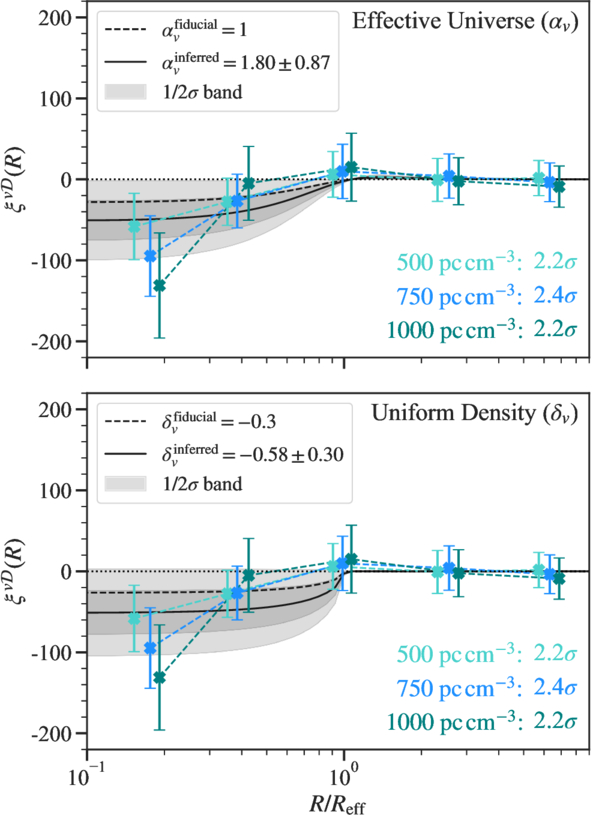
Anticorrelations between fast radio burst dispersion measures and void positions. There is a clear dispersion measure deficit closer to voids centers. [Sharma et al 2026]
This study provides a unique approach to baryon mapping and opens up the door for future investigation of cosmic voids. While not physically containing much, voids hold vast astrophysical and cosmological significance. With the astronomical stage primed with galaxy-mapping powerhouses like the Dark Energy Spectroscopic Instrument, Vera Rubin Observatory, Nancy Grace Roman Space Telescope, and Euclid Space Telescope, cosmic voids will become a cornerstone of cosmological studies.
Citation
“Baryons in the Darkest Sites of the Universe,” Kritti Sharma et al 2026 ApJL 1006 L3. doi:10.3847/2041-8213/ae81ac
The post Diving into the Darkest Corners of the Universe with Fast Radio Bursts appeared first on AAS Nova.
]]>The post The Large Smooth Patch on Comet 9P/Tempel 1: Remnant of a Recent Past Event appeared first on AAS Nova.
]]>Using gravitational flow simulations, researchers link smooth areas on the face of a comet to a single event 600–1,200 years ago, possibly connected to multiple close encounters with Jupiter.
The post The Large Smooth Patch on Comet 9P/Tempel 1: Remnant of a Recent Past Event appeared first on AAS Nova.
]]>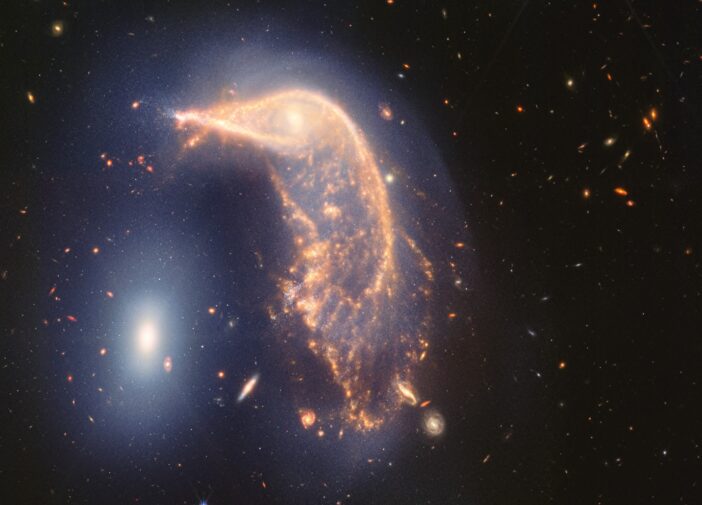
Astrobites reports on a whodunit of cosmic significance: who killed star formation in massive elliptical galaxies?
The post EXCELlent Work, Detectives! Solving the Murder of Star Formation in Galaxies with JWST appeared first on AAS Nova.
]]>Editor’s Note: Astrobites is a graduate-student-run organization that digests astrophysical literature for undergraduate students. As part of the partnership between the AAS and astrobites, we occasionally repost astrobites content here at AAS Nova. We hope you enjoy this post from astrobites; the original can be viewed at astrobites.org.
Title: The JWST EXCELS Survey: Insights into the Nature of Quenching at Cosmic Noon
Authors: Maya Skarbinski et al.
First Author’s Institution: Johns Hopkins University
Status: Published in ApJ
How to Quench a Galaxy
Look at an image of the sky taken with a sufficiently sensitive telescope, and you’ll quickly notice that galaxies tend to cluster into two main types: blue spiral galaxies, which have flat disk shapes with a central bulge, and red elliptical galaxies, which look like spherical or elliptical balls of red stars. Blue spiral galaxies can form tens to hundreds of stars every year, while elliptical galaxies have completely stopped forming stars, meaning that some process has to transform star-forming spirals into non-star-forming, or “quiescent,” elliptical galaxies. To form the current population of massive elliptical galaxies, this process had to be common about 2–3 billion years after the Big Bang at “cosmic noon,” the period when star formation in the universe peaked. The processes that “quench” star formation in massive galaxies are still being studied, and one of the best ways to study them is to find galaxies that recently quenched and look for clues about the processes that quenched them.
Post-starburst galaxies are galaxies that have rapidly quenched after a short burst of star formation. Because these galaxies quenched so quickly and so recently, it’s often possible to find signs of whatever quenched them, like the signatures of past galaxy mergers, feedback from supermassive black hole accretion, or the shutoff of gas flowing into the galaxy. Rapid quenching is pretty uncommon now, but it was a much more common way for galaxies to quench at cosmic noon. Understanding post-starburst galaxies at cosmic noon is therefore critical for understanding the formation of massive elliptical galaxies in the local universe.
The Quest for Quenched Galaxies
Today’s article uses data from the JWST Early eXtragalactic Continuum and Emission Line Survey (EXCELS) to identify post-starburst galaxies at cosmic noon and try to determine why they quenched. EXCELS is a spectroscopic survey, so the authors get a spectrum for every galaxy. The spectrum encodes information about the galaxy’s stellar population, including the mass of stars in the galaxy, the number of stars forming every year, and the history of star formation throughout the galaxy’s life.
The authors use a technique called principal component analysis to further divide the sample into young and old post-starbursts. Principal component analysis is a machine-learning technique that learns the most important features of a data set. This technique is used for “dimension reduction,” or reducing the number of data points needed to learn something about the object. A typical spectrum has hundreds or even thousands of data points, which means performing data analysis on a spectrum can be very computationally expensive. Principal component analysis takes these thousands of data points and learns broad patterns that correlate with each other. These patterns are called “supercolors” in the context of spectral data, and they encode things like the overall shape and color of the spectrum as well as the spectral shape around key features (see Figure 1 for a visualization). Since the overall shape, color, and emission/absorption line features of a spectrum come from the galaxy’s stellar population, this method can be used to identify galaxies with lots of star formation a billion years ago but very little star formation today — in other words, post-starburst galaxies.
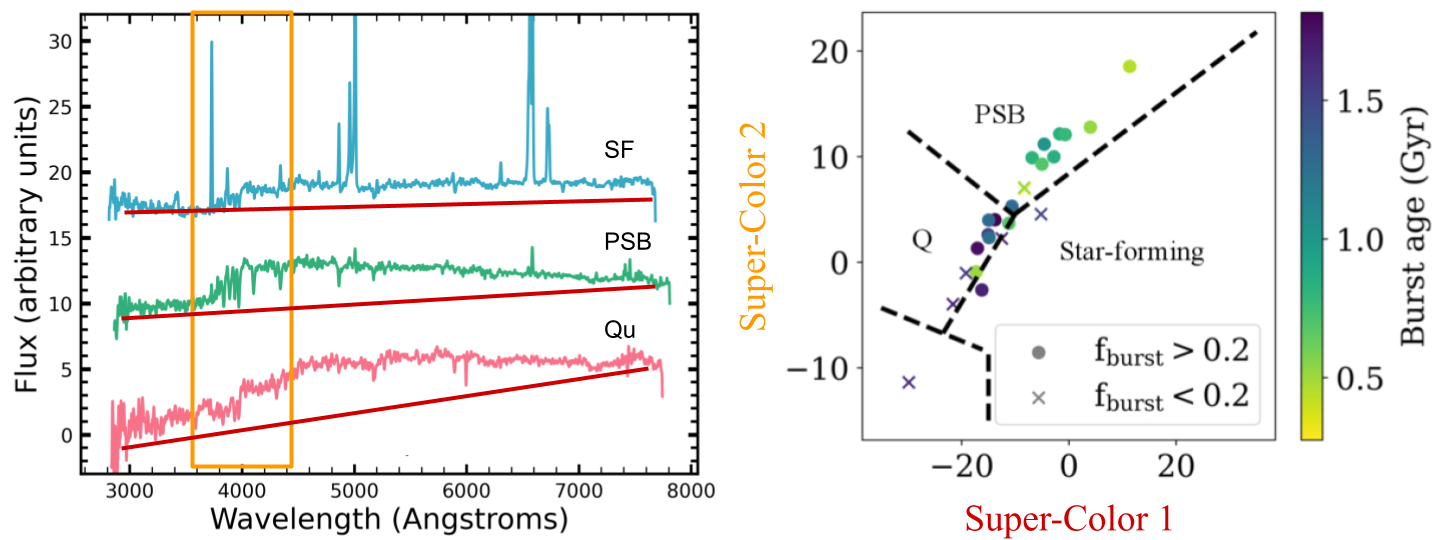
Figure 1: An example of principal component analysis for sample star-forming (SF), quiescent (Qu), and post-starburst (PSB) galaxy spectra (left-hand side). Principal component analysis simplifies a many-dimensional data set (for example, spectra) into fewer dimensions. In this case, Super-Color 1 measures the overall color of the spectrum (shown on the left-hand side as the slope of the spectra, marked with red lines), while Super-Color 2 measures the shape of the spectrum around 4,000 angstroms (orange box). The authors use principal component analysis to identify post-starburst galaxies for further analysis (right-hand side). [Adapted from Skarbinski et al. 2026]
How Quickly Do Post-Starbursts Quench?
First, the authors measure something called a “quenching timescale,” which they define as the length of time between when the galaxy’s star formation rate peaked and when it fell low enough that the galaxy was quenched. The quenching timescale depends on which process shut down star formation in the galaxy — feedback from black hole accretion or star formation should cause fast quenching, while galaxies that are starved of gas from the intergalactic medium should quench more slowly. The authors find that 15 of their galaxies quenched in under 500 million years, 6 took between 500 million and 1 billion years, and 3 took longer than 1 billion years to quench. The galaxies that had the highest peak star formation rates quenched the fastest, suggesting that feedback from star formation could have played a role in quenching these galaxies.
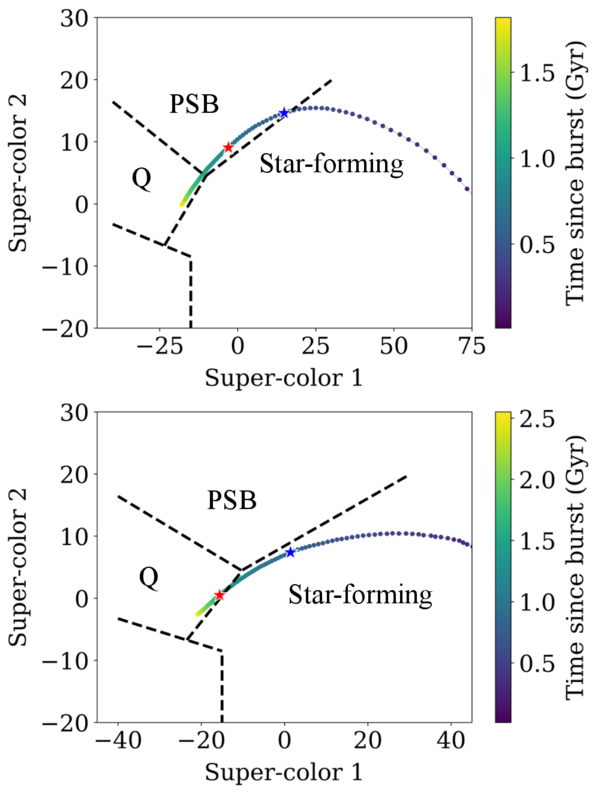
Figure 2: Possible evolutionary tracks in supercolor for two example galaxies as they quench. The galaxy in the top panel quenches quickly and has post-starburst supercolors for about a billion years, while the galaxy in the bottom panel quenches without ever going through the post-starburst phase. The authors use these tracks to determine how important the post-starburst phase is for quenching massive galaxies. [Skarbinski et al. 2026]
While the post-starburst phase is important, the different quenching timescales present across the sample suggest that multiple pathways existed to quench galaxies at cosmic noon, similar to what has been found in less-distant galaxies and at cosmic noon in other samples. This is also supported by the fact that four of the five galaxies with sufficient data show evidence of an actively accreting supermassive black hole that may help shut down star formation in many (but perhaps not all) massive galaxies. While the precise processes that quench massive galaxies are still uncertain, one thing is clear: JWST EXCELS at solving the mystery!
Original astrobite edited by Anavi Uppal.
About the author, Margaret Verrico:
I am a fourth-year graduate student at the University of Illinois Urbana-Champaign. I study the connection between supermassive black hole transients and their host galaxies. I am also an avid knitter and reader, and I am passionate about opening up STEM opportunities for people of all backgrounds.
The post EXCELlent Work, Detectives! Solving the Murder of Star Formation in Galaxies with JWST appeared first on AAS Nova.
]]>The post Isolating Sgr A East: The First Uncontaminated X-Ray Maps of a Galactic Center Supernova Remnant appeared first on AAS Nova.
]]>Sgr A East strongly overlaps with plasma associated with the Milky Way’s central supermassive black hole, but new efforts to disentangle this emission have successfully isolated the remnant’s emission.
The post Isolating Sgr A East: The First Uncontaminated X-Ray Maps of a Galactic Center Supernova Remnant appeared first on AAS Nova.
]]>The post TOI-2155 b: A Massive Brown Dwarf or a Very Low-Mass Star? appeared first on AAS Nova.
]]>Slightly smaller than Jupiter but roughly 80 times as massive, TOI-2155b can provide a valuable test for models of stellar-mass objects near the hydrogen-burning mass limit.
The post TOI-2155 b: A Massive Brown Dwarf or a Very Low-Mass Star? appeared first on AAS Nova.
]]>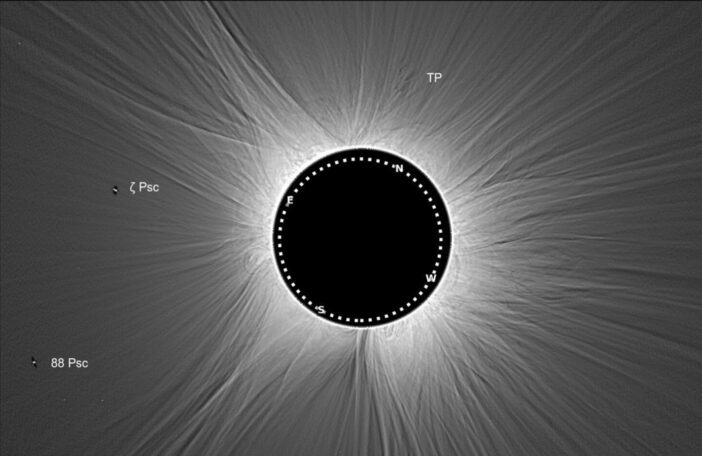
Citizen scientists from the Dynamic Eclipse Broadcast Initiative recorded nearly an hour of coronal behavior during the 8 April 2024 solar eclipse.
The post Featured Image: Citizen Science and Solar Structure appeared first on AAS Nova.
]]>During the 8 April 2024 solar eclipse, the path of totality swept across North America, dazzling millions of skygazers. Scattered along this path were 82 viewing sites of the Dynamic Eclipse Broadcast Initiative citizen science project, which aimed to observe the dynamics of the tenuous solar corona. Though poor weather dashed many observers’ hopes, the project managed to collect data at 11 sites spanning 2,700 kilometers, capturing 49 minutes of coronal behavior. The image above shows the solar corona as seen during totality from one of the DEB Initiative sites. In a recent research article, Matthew J. Penn (Southern Illinois University Carbondale; Tucson Amateur Astronomy Association) and collaborators described the results of the Initiative’s viewing efforts, including identification of downflows and outflows, plumes, coronal loops, and apparent motion of background stars. To learn more about these observations of the solar corona, be sure to check out the full article linked below.
Citation
“Structure and Dynamics of the Inner Corona Measured from the DEB Initiative 2024 Eclipse Image Sequence,” Matthew J Penn et al 2026 ApJL 1006 L25. doi:10.3847/2041-8213/ae8797
The post Featured Image: Citizen Science and Solar Structure appeared first on AAS Nova.
]]>The post Discovery of a Featureless Tidal Disruption Event at <em>z</em> ∼ 1 with the Wide Field Survey Telescope appeared first on AAS Nova.
]]>Discovered just 6 billion years after the Big Bang, AT2025wet is the highest-redshift non-jetted tidal disruption event known, allowing researchers to probe the missing-energy puzzle.
The post Discovery of a Featureless Tidal Disruption Event at <em>z</em> ∼ 1 with the Wide Field Survey Telescope appeared first on AAS Nova.
]]>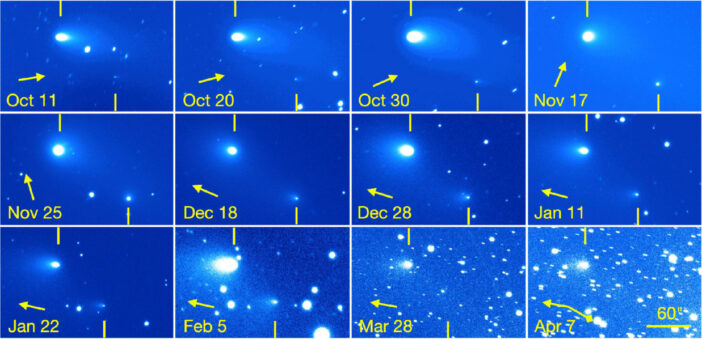
A recent study investigated the possible mechanisms that caused a known Jupiter-family comet to split in two.
The post Spying on a Split Comet appeared first on AAS Nova.
]]>Traversing through the solar system, a comet split in two, and a recent study used six months of observations to investigate when and why.
A Split Comet
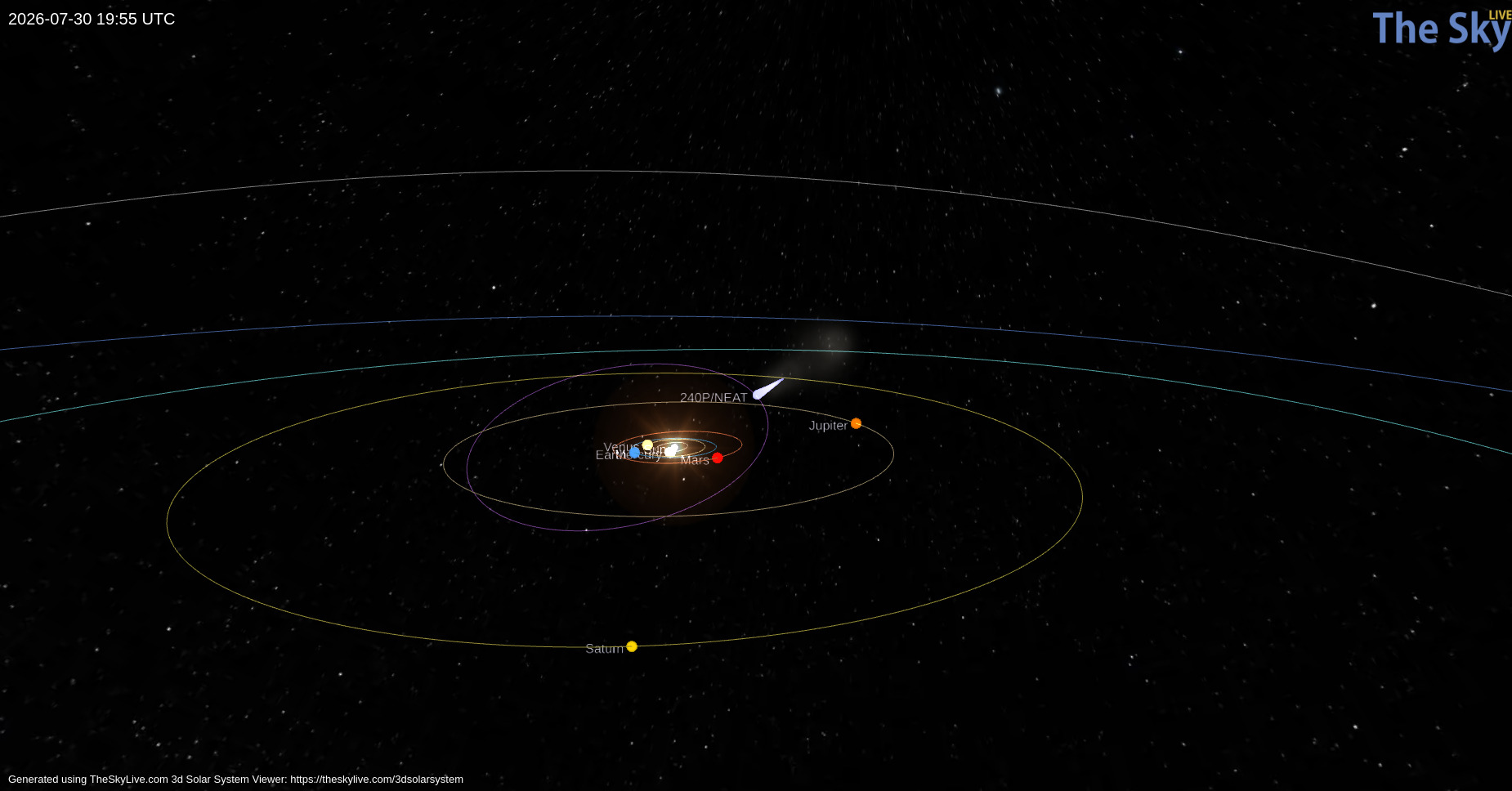
Orbital path of 240P/NEAT (purple) and the position of the comet on 30 July 2026 (light blue teardrop). Click to enlarge. [TheSkyLive]
Most recently, 240P swept closest to Jupiter in July 2007, shifting the comet’s perihelion distance (closest approach to the Sun) from 2.5 to 2.1 au, and several long-lived bursts in brightness in 2018/2019 could have been spurred by this orbital shift. Excitingly, a fainter comoving object, 240P-B, was first reported in June 2025 as the comet headed toward perihelion — at some point recently, 240P had split in two!
Over the last century, numerous split comets have been recorded, but detailed physical studies of these objects are rare. With growing evidence suggesting splitting and disintegration are the primary mechanisms of comet destruction, understanding the properties and cause of 240P’s split is imperative.
Observing 240P
With 240P on the move to perihelion, David Jewitt (University of California, Los Angeles) and collaborators monitored the comet from October 2025 to April 2026 to establish the likely cause of its split. Employing the Alhambra Faint Object Spectrograph and Camera on the 2.56-meter Nordic Optical Telescope, the authors obtained detailed imaging of the comet from two months before to four months after perihelion to characterize both components.
Tracking both photometric and morphological changes across their observations, the authors estimated the dust-loss rates, physical sizes, and separation speed of 240P-A and 240P-B. The brighter component, 240P-A, has an estimated radius between 400 and 600 meters and a dust-loss rate almost four times higher than 240P-B. Because 240P-B is fainter, its radius is harder to constrain observationally. From its lower dust-loss rate and lower brightness, the authors estimated a radius around 300 meters (and no smaller than 50). Based on how the separation of the two comet pieces changes over time, the authors determined that the split of 240P occurred at least three years before their observations.
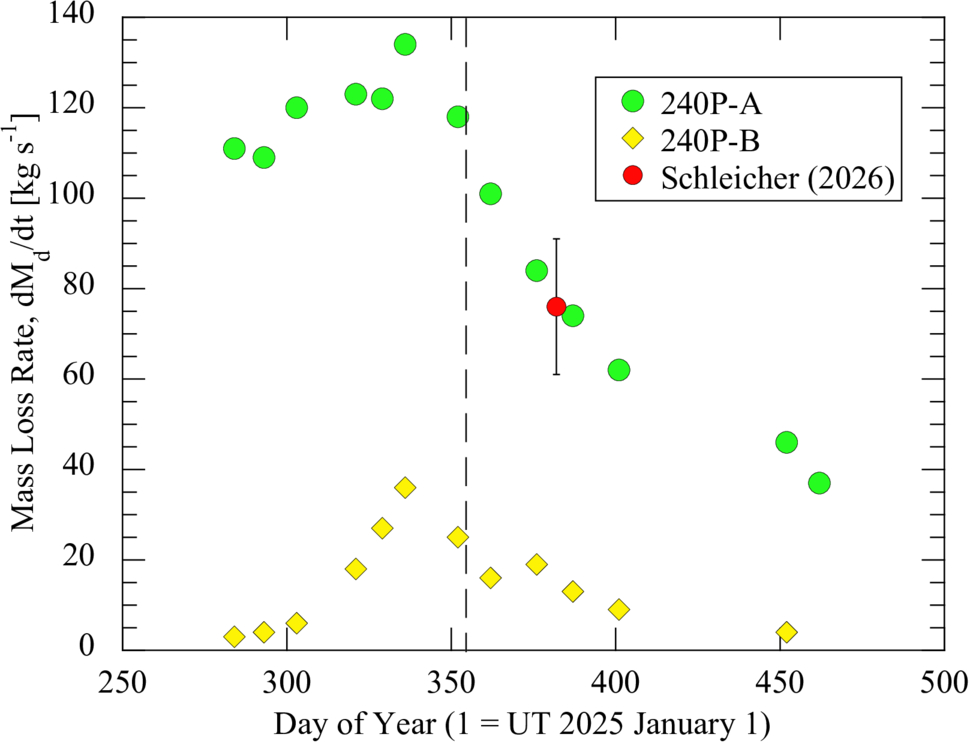
Dust mass-loss rates for 240P-A (green circles) and 240P-B (yellow diamonds) over the course of the observations. Both components peak shortly before perihelion (dashed vertical line). Click to enlarge. [Jewitt et al 2026]
Source of the Split
How exactly did this fragmented comet get this way? The authors considered a number of comet-splitting mechanisms: tidal forces, asteroid impact, pressure buildup below the comet’s surface, thermal stresses, and rotational instability. Given the comet’s orbit, it has not had close enough encounters with the Sun or other planets for tidal forces to be the culprit, and it traverses well above the asteroid belt, avoiding collisions. Pressure buildup and thermal stresses can fracture comets, but both are unlikely to launch such a large fragment as seen in this system.
This leaves rotational instability as the likely source of 240P’s split. Outgassing torques lead to rotational instability, especially in subkilometer comets like 240P, and 240P has exhibited recent outgassing. In addition, the separation speed between the 240P components is comparable to the escape speed of the primary comet, which is expected for rotational breakup. To confirm this hypothesis, future observations measuring the rotation period of 240P are necessary, but this study adds to the small number of split-comet observations that aid in understanding comet destruction.
Citation
“Investigation of Split Comet 240P/NEAT,” David Jewitt et al AJ 172 113. doi:10.3847/1538-3881/ae83ac
The post Spying on a Split Comet appeared first on AAS Nova.
]]>The post Disk Lifetime Distribution as a Function of the Mass of Host Star appeared first on AAS Nova.
]]>The disks around young high-mass stars survive for roughly 3.72 million years, and those around low-mass stars survive for 7.20 million years, though the distributions for both populations are quite broad.
The post Disk Lifetime Distribution as a Function of the Mass of Host Star appeared first on AAS Nova.
]]>
A recent Focus Issue of the Astrophysical Journal Letters introduces the fourth version of the gravitational wave transient catalog from the LIGO, Virgo, and KAGRA collaborations.
The post Monthly Roundup: The Fourth Catalog of Gravitational Wave Events from LIGO, Virgo, and KAGRA appeared first on AAS Nova.
]]>A recent Focus Issue of the Astrophysical Journal Letters describes the fourth version of the catalog of gravitational wave events (GWTC-4.0) from the Laser Interferometer Gravitational Wave Observatory (LIGO), the Virgo interferometer, and the Kamioka Gravitational Wave Detector (KAGRA).
This catalog contains transient gravitational wave events recorded through January 2024, during the observatories’ fourth observing run, which concluded in November 2025. GWTC-4.0 displays the results of significant improvements to our suite of gravitational wave detectors, including higher-powered lasers and reduced quantum noise. A fifth catalog of gravitational wave events was released in Spring 2026, with the accompanying scientific articles being submitted to the Astrophysical Journal and the Astrophysical Journal Letters.
This Monthly Roundup consists of short descriptions of each of the currently published research articles in the LIGO–Virgo–KAGRA Gravitational Wave Transient Catalog (GWTC): Release 4 Focus Issue. Each snippet links to the corresponding research article, and the Focus Issue landing page is linked at the bottom of this post. Be sure to revisit the landing page to catch new articles as they’re published!
Introducing GWTC-4.0
A timeline showing observing runs between 2015 and 2024. Click to enlarge. [LVK Collaboration 2025]
After these detectors record subtle spacetime squiggles from compact objects colliding millions to billions of light-years away, the collaboration converts the raw signals into the data contained in catalogs like GWTC-4.0. This process involves modeling the gravitational wave signals, filtering them to identify candidate transients, and pinpointing the most significant events.
After collecting and cleaning the signals, the collaboration undertakes a critical step: making their data accessible to researchers and the public. The data are available through the Gravitational Wave Open Science Center, and the Focus Issue article on open data describes how to navigate the online portal, how the datasets archived online are structured, and how the data were calibrated.
Science Results
This fourth version of the gravitational wave transient catalog greatly expands the sample of gravitational wave transients recorded by detectors across the globe. Including events from previous catalogs, GWTC-4.0 brings us to 218 events for which the probability of the source being astrophysical in nature is more than 50% and for which there is little chance of the signal being an instrumental artifact. This represents a more than 100% increase in the number of recorded gravitational wave events fulfilling this criterion, broadening our understanding of colliding compact object pairs. This release also includes some superlative signals, such as the most massive black hole binary with a low false-alarm rate and the highest signal-to-noise ratio for a gravitational wave event thus far.
Detected in November 2023 by both LIGO Hanford and LIGO Livingston, GW231123 is in many ways an exceptional gravitational wave transient. The total mass of the merging components appears to be between 190 and 265 solar masses, and the false-alarm rate for this signal is less than one per year. This makes it the most massive merger event with such a low false-alarm probability. The two components also appear to have high spins, which complicates the interpretation of the signal with existing models. A binary black hole merger in which one or more components lies within the pair-instability mass gap is the likeliest explanation for this signal, but the authors also present alternative scenarios, such as a core-collapse supernova or a gravitationally lensed gravitational wave signal.
Representations of the GW230814 gravitational wave signal. Click to enlarge. [LVK Collaboration 2026]
Plot of the differential merger rate as a function of the mass of the more massive of the two merger components. This shows overdensities at 10, 35, and possibly 20 solar masses. Click to enlarge. [LVK Collaboration 2026]
The full list of articles in the GWTC-4.0 Focus Issue can be found here.
Citation
“GWTC-4.0: An Introduction to Version 4.0 of the Gravitational-Wave Transient Catalog,” A. G. Abac et al 2025 ApJL 995 L18. doi:10.3847/2041-8213/ae0c06
“GWTC-4.0: Methods for Identifying and Characterizing Gravitational-Wave Transients,” A. G. Abac et al 2026 ApJL 1004 L21. doi:10.3847/2041-8213/ae447b
“Open Data from LIGO, Virgo, and KAGRA Through the First Part of the Fourth Observing Run,” A. G. Abac et al 2026 ApJ 1004 232. doi:10.3847/1538-4357/ae211e
“GWTC-4.0: Updating the Gravitational-Wave Transient Catalog with Observations from the First Part of the Fourth LIGO–Virgo–KAGRA Observing Run,” A. G. Abac et al 2026 ApJL 1004 L22. doi:10.3847/2041-8213/ae2c74
“GW231123: A Binary Black Hole Merger with Total Mass 190–265 M⊙,” A. G. Abac et al 2025 ApJL993 L25. doi:10.3847/2041-8213/ae0c9c
“GW230814: Investigation of a Loud Gravitational-Wave Signal Observed with a Single Detector,” A. G. Abac et al 2026 ApJL 1004 L23. doi:10.3847/2041-8213/ae2ad3
“GWTC-4.0: Population Properties of Merging Compact Binaries,” A. G. Abac et al 2026 ApJL 1005 L51. doi:10.3847/2041-8213/ae771e
The post Monthly Roundup: The Fourth Catalog of Gravitational Wave Events from LIGO, Virgo, and KAGRA appeared first on AAS Nova.
]]>The post A Natural ≳100× Telescope: Discovery of the Strongly Lensed Type II SN 2025mkn at <em>z</em> = 1.37 appeared first on AAS Nova.
]]>Researchers have discovered a supernova that occurred when the universe was roughly 5 billion years old; if the supernova’s luminosity is similar to that of nearby events, it must have been magnified by a factor of 250.
The post A Natural ≳100× Telescope: Discovery of the Strongly Lensed Type II SN 2025mkn at <em>z</em> = 1.37 appeared first on AAS Nova.
]]>The post Magnetic Activity in X-Ray Stars from eROSITA: Insights from the TESS and LAMOST Surveys appeared first on AAS Nova.
]]>Of 7,229 flares from 1,430 stars, most came from stars with temperatures below 4000K and rotation periods shorter than 4 days; most flares lasted less than 2 hours.
The post Magnetic Activity in X-Ray Stars from eROSITA: Insights from the TESS and LAMOST Surveys appeared first on AAS Nova.
]]>
Astrobites reports on the interplay between the interstellar medium and star formation in simulated galaxies.
The post The “Rhythm” of the Interstellar Medium appeared first on AAS Nova.
]]>Editor’s Note: Astrobites is a graduate-student-run organization that digests astrophysical literature for undergraduate students. As part of the partnership between the AAS and astrobites, we occasionally repost astrobites content here at AAS Nova. We hope you enjoy this post from astrobites; the original can be viewed at astrobites.org.
Title: The Rhythm of the ISM: Tracing the Timescales of Gas Evolution and Star Formation Across Galactic Environments
Authors: Zuzanna Kocjan and Vadim A. Semenov
First Author’s Institution: University of Maryland
Status: Published in ApJ
The Connection Between Gas and Star Formation in Galaxies
Stars are born in the interstellar medium (ISM) when cold, dense clouds of gas become unstable and collapse under gravity. Despite their plentiful reservoirs of gas, galaxies convert only a small fraction of this material into stars, making star formation a surprisingly inefficient process. A key factor behind this inefficiency is stellar feedback: radiation, stellar winds, and supernova explosions from young stars can inject energy and momentum into the surrounding gas, heating, stirring, and dispersing it. In this way, stellar feedback shapes future star formation across scales ranging from individual regions in the ISM to whole galaxies.
An important tool astronomers use to study star formation is the Kennicutt–Schmidt relation, which links the amount of gas in a galaxy to the rate at which stars form. More specifically, it relates the gas surface density, Σgas, to the star formation rate surface density, ΣSFR. (For more on this relation, see this Astrobites article on a classic research article.) However, this law is underpinned by a crucial ingredient: timescales. In particular, the pace of star formation depends both on how quickly galactic gas is cycled into star-forming material and on how rapidly those regions convert gas into stars once they form. Today’s article investigates the physical origin of star-formation scaling relations behind the Kennicutt–Schmidt law by building on a simple theoretical framework for the ISM.
Consider a Kettle of Boiling Water…
In a given region of a galaxy, the ISM consists of gas in either an actively star-forming state or an inert, non-star-forming state, depending on whether it is dense and unstable enough to collapse (as illustrated in Figure 1). The transition of non-star-forming gas into the star-forming state occurs on the supply timescale, τ+. Conversely, the dispersal of star-forming gas back into a non-star-forming state is characterized by the removal timescale, τ–. As a helpful analogy, the authors compare this process to water boiling in a kettle: the ISM is continuously “boiling,” with gas moving between active and inactive states. Meanwhile, the total gas reservoir gradually decreases, analogous to water slowly evaporating as the kettle boils. The gas depletion time, τ*, therefore represents the timescale over which the available gas would be exhausted by star formation.

Figure 1: Schematic of the gas cycling framework used in the authors’ theoretical model for how gas is converted into stars, which takes into account a supply, removal, and depletion timescale. [Adapted from Kocjan and Semenov 2026]
The Timescales of the Interstellar Medium
To explore how gas and star formation are connected across different galactic environments, the authors analyze three simulated systems: a dwarf galaxy, a Milky Way–like galaxy, and a gas-rich starburst galaxy, as shown in Figure 2. Despite spanning very different physical regimes, the galaxies exhibit remarkably similar trends in the fraction of gas actively forming stars as a function of Σgas. This suggests that the amount of star-forming gas is governed primarily by local interstellar conditions, since regions with higher gas surface densities tend to contain denser, more strongly self-gravitating gas.

Figure 2: Using simulations (left to right) of an isolated intermediate-mass dwarf galaxy, Milky Way–like galaxy, and gas-rich galaxy, the authors measure the star-forming gas fraction versus the gas surface density (right). [Adapted from Kocjan and Semenov 2026]

Figure 3: Scaling relations between the supply (left), depletion (middle), and removal (right) times in kiloparsec-scale regions of the simulated galaxies (shown in different colors). Based on the measurements from the simulations, the authors introduce a parameterized model for the gas cycling framework, as defined in the equations. [Adapted from Kocjan and Semenov 2026]
Original astrobite edited by Jayde Willingham.
About the author, Shalini Kurinchi-Vendhan:
After studying astrophysics and literature at Caltech, I moved onto a Fulbright Fellowship in Heidelberg, Germany. I’m passionate about using computer simulations to explore supermassive black holes and galaxy evolution — but I also love poetry and traveling.
The post The “Rhythm” of the Interstellar Medium appeared first on AAS Nova.
]]>
What powers the prominent helium emission from Hebe, a gas clump seen just 450 million years after the Big Bang?
The post First-Generation Stars Provide Better Fit than a Black Hole for Early-Universe Gas Clump appeared first on AAS Nova.
]]>An unusual clump of gas 450 million years after the Big Bang may contain stars hailing from the universe’s elusive first generation of stars. New research examines an alternative explanation involving an accreting black hole.
Meet Hebe
Hebe is visible in the image on the left as a prominent blob of helium emission up and to the left from GN-z11, a luminous galaxy hosting an accreting supermassive black hole. On the right is an infrared image of the same region, in which Hebe is not visible. Click to enlarge. [Adapted from NASA, ESA, CSA, Ralf Crawford (STScI)]
Before the community settles on this exciting explanation, however, the hypothesis must withstand all the tests astronomers can throw at it. In a recent research article, Junehyoung Jeon, Tae Bong Jeong, and Saiyang Zhang (The University of Texas at Austin) along with Volker Bromm (The University of Texas at Austin) attempted to explain Hebe’s properties in another way.
Considering Alternatives
Hebe glows with distinctive helium emission that requires a source of high-energy radiation. This radiation could be provided by a cluster of Pop III stars, but it could also, in theory, arise from an accreting supermassive black hole embedded within the gas clump.
Predicted total mass of Hebe’s Pop III stars as a function of the Lyman–Werner flux from the nearby galaxy GN-z11. Click to enlarge. [Jeon et al. 2026]
Still a Leading Explanation
While the black hole scenario could, with reasonable black hole masses, gas densities, and accretion rates, reproduce individual flux measurements drawn from JWST observations, this hypothesis struggled to simultaneously match multiple measurements. The Pop III star cluster scenario, with a cluster mass of a few hundred thousand solar masses, provided the best fit to the JWST data.
Modeled spectral energy distributions (lines) and predicted line flux densities (open symbols) for the accreting black hole, Pop III star, and Pop II (second-generation) star hypotheses. The observed JWST line fluxes are shown as filled circles. Click to enlarge. [Jeon et al. 2026]
While a cluster of Pop III stars is still the leading explanation for Hebe’s properties, the team noted that the Pop III star and black hole hypotheses aren’t mutually exclusive; Hebe could very well harbor a primordial black hole and a smattering of Pop III stars. Regardless of what powers its characteristic helium emission, Hebe offers an enticing glimpse into the early universe, and more work is needed to understand this intriguing object.
Citation
“What Is Powering the Enigmatic He II Emitter Hebe: The First Stars or Black Holes?” Junehyoung Jeon et al 2026 ApJ 1006 27. doi:10.3847/1538-4357/ae7bea
The post First-Generation Stars Provide Better Fit than a Black Hole for Early-Universe Gas Clump appeared first on AAS Nova.
]]>The post Trends in the Population of Binary Black Holes Following the Fourth Gravitational-Wave Transient Catalog: A Data-Driven Analysis appeared first on AAS Nova.
]]>An analysis of the fourth gravitational wave catalog supports the existence of a gap at 45 solar masses in the secondary black hole mass distribution, among other findings.
The post Trends in the Population of Binary Black Holes Following the Fourth Gravitational-Wave Transient Catalog: A Data-Driven Analysis appeared first on AAS Nova.
]]>The post An Enhanced Formation Channel for Galactic Dual-Line Gravitational-Wave Sources: von Zeipel–Lidov–Kozai Effect in Triples Involving Sgr A* appeared first on AAS Nova.
]]>According to calculations, in a 4-year period researchers may detect of order one compact binary system in which the binary’s inspiral and the spin of its neutron star component both produce gravitational waves.
The post An Enhanced Formation Channel for Galactic Dual-Line Gravitational-Wave Sources: von Zeipel–Lidov–Kozai Effect in Triples Involving Sgr A* appeared first on AAS Nova.
]]>
How did neon end up inside Earth's mantle, and what does that tell us about how our planet formed?
The post Noble Gases Along for the Ride appeared first on AAS Nova.
]]>What can some neon trapped in a chunk of rock tell us about Earth’s formation and the protosolar nebula? Quite a lot, as detailed in a recent study in The Planetary Science Journal.
Noble Mysteries
By analyzing rocks pulled from mid-ocean ridges, geologists have concluded that there are tiny amounts of noble gases in the deep interior of Earth. That’s a strange statement upon reflection: how did these gases, which are famously apathetic to essentially all other elements, end up embedded within rocks thousands of kilometers underground? Since their passivity rules out the potential of a chemical reaction that formed them in place, they must have been in the mantle since the very beginning of Earth’s history.
A map illustrating the age of the seafloor. Mid-ocean ridges stand out clearly in red. By sampling material from these ridges, planetary scientists can infer the composition of Earth’s deep interior. Click to enlarge. [Mr. Elliot Lim, CIRES and NOAA/NCEI]
That last option is especially exciting to present-day planetary scientists interested in constraining Earth’s formation history because it requires some very specific conditions. Since light noble gases like neon don’t dissolve well in seawater, they must have dissolved into a magma ocean — meaning the nebula was still around when Earth was large enough to have a molten surface. That already restricts us to a very specific time in the solar system’s history, but it doesn’t say much about the specific size of the proto-Earth other than “big,” and it doesn’t say much about the state of the nebula other than “it existed.” Recently, Vincent Savignac and Eve Lee (University of California, San Diego; McGill University) successfully refined these constraints to pin down information about both the early Earth and the nebula that surrounded it.
Infant Earths
Savignac and Lee began by growing a grid of infant Earths on their computers via models of gas accretion and atmosphere–magma interactions. Each simulation started with a different proto-Earth mass and nebular density, and each one yielded a different amount of neon in Earth’s deep interior. Excitingly, only a small handful of the scenarios tested ended up with values similar to those observed.
A schematic of Earth’s formation via embryo formation (when the noble gases enter the mantle) followed by mergers. Click to enlarge. [Savignac & Lee 2026]
Savignac and Lee demonstrated that these constraints are robust against the later stages of Earth’s evolution. In its later years, Earth either suffered or benefited from a giant impact, depending on your feelings about the Moon, but the researchers showed that this event doesn’t pose a problem for their models. Overall, this study builds a delightful link between rocks from our deep oceans and the particulars of Earth’s formation, demonstrating the unique power of planetary science to tie together different scientific fields.
Citation
“Constructing the Earth’s Formation History Using Deep Mantle Noble Gas Reservoirs,” Vincent Savignac and Eve J. Lee 2026 Planet Sci. J. 7 135. doi:10.3847/PSJ/ae64f7
The post Noble Gases Along for the Ride appeared first on AAS Nova.
]]>The post Trajectory-Agnostic Asteroid Detection in TESS with Deep Learning appeared first on AAS Nova.
]]>Unlike traditional “shift and stack” algorithms, a newly developed asteroid-detection method requires no assumptions on speed or direction; this method can be applied to upcoming time-domain surveys.
The post Trajectory-Agnostic Asteroid Detection in TESS with Deep Learning appeared first on AAS Nova.
]]>
Hydrocarbons keep turning up in surprising places. This time, they've been found near a pair of accreting supermassive black holes 3 billion years after the Big Bang.
The post Researchers Spot Hydrocarbons Surprisingly Close to a Quasar Pair appeared first on AAS Nova.
]]>Researchers have detected molecules containing rings and chains of carbon atoms in the vicinity of a rare pair of quasars. The trends in the distribution of these molecules are unexpected, suggesting that more work is needed to understand the conditions surrounding active supermassive black holes.
Infrared Eyes on Molecules in Space
Examples of aromatic and aliphatic hydrocarbons. Benzene (top left) is the simplest aromatic molecule. Propane (top right) is a simple aliphatic molecule. Propylbenzene (bottom) is an aromatic molecule with an aliphatic chain branching off of it. In these “skeletal” formulae, there is a carbon atom at each vertex, and the remaining atoms (not depicted) are all hydrogens. Single lines indicate single chemical bonds, and double lines indicate double bonds. [Wikipedia; Public Domain]
JWST’s sensitive infrared eyes have allowed researchers to study the distribution, creation, and destruction of both aromatic (containing one or more rings of carbon atoms in which certain electrons spread out within the ring) and aliphatic (containing chains of carbon atoms) hydrocarbons. These molecules have been spotted in a wide array of environments, and now, astronomers are finding them in more distant and more extreme environments than ever before.
Distant Discovery
SDSS J074922.96+225511.7, or J0749+2255 for short, is a quasar pair seen 3 billion years after the Big Bang. The two feasting supermassive black holes are roughly 12,000 light-years apart, giving researchers a glimpse into the late stages of a galaxy merger and a harsh environment in which to study the survival and destruction of molecules.
Researchers studying J0749+2255 with JWST have previously reported the detection of a 3.3-μm emission feature from aromatic molecules. Now, C. E. Mentzer (University of Missouri), Aigen Li (University of Missouri), and Xuejuan Yang (Xiangtan University) have analyzed JWST spectra of J0749+2255 and found not just widespread aromatic emission at a rest-frame wavelength of 3.3 μm, but also aliphatic emission at 3.4 μm, which they attribute to carbon chains branching off from the aromatic molecules. This likely makes J0749+2255 the most distant galaxy in which both aromatic and aliphatic emission has been detected.
Aliphatic fractions in the bright central region surrounding the two quasars (top) and in the outer regions (bottom). [Mentzer et al. 2026]
Unexpected Trends
Mentzer, Li, and Yang subdivided the observations into 47 regions and measured the strength of the 3.3- and 3.4-μm features in each region. This analysis found strong aromatic emission nearest the quasars and showed that the fraction of carbon atoms bound up in aliphatic chains is highest close to the quasars.
Both of these findings are unexpected: the harsh radiation environment near the two active black holes is thought to break apart chains of carbon atoms attached to aromatic rings (which should decrease the 3.4-μm emission) and possibly destroy small aromatic molecules (which should decrease the 3.3-μm emission) — yet both of these features are strongest near the quasar cores where the radiation should be most capable of molecular destruction.
The authors speculated that the analysis regions centered on the quasars are large enough that they contain gas that hasn’t been pummeled by the quasars’ intense radiation and outflows, leaving molecules intact and able to produce the observed emission. However, this doesn’t explain the trend of stronger 3.3- and 3.4-μm emission closer to the quasars — necessitating further research into the emitting behavior of aromatic and aliphatic molecules under the extreme conditions of a dual quasar’s neighborhood.
Citation
“Widespread Detection of Aromatic and Aliphatic Emission in the Dual Quasar J0749+2255 at Cosmic Noon,” C. E. Mentzer et al 2026 ApJL 1005 L38. doi:10.3847/2041-8213/ae7e86
The post Researchers Spot Hydrocarbons Surprisingly Close to a Quasar Pair appeared first on AAS Nova.
]]>The post Turbulence-Coupled Electrodynamics of the Martian Year 34 Global Dust Storm on Mars appeared first on AAS Nova.
]]>Researchers show that the global martian dust storm in Mars year 34 warmed the lower atmosphere and led to greater electrical charging and stronger electric fields compared to a dust-free atmosphere.
The post Turbulence-Coupled Electrodynamics of the Martian Year 34 Global Dust Storm on Mars appeared first on AAS Nova.
]]>
Astrobites reports on whether we'd even know what we were looking at if our familiar red neighbor were a stranger light-years away.
The post What if Mars Were a Stranger (Thing)? appeared first on AAS Nova.
]]>Editor’s Note: Astrobites is a graduate-student-run organization that digests astrophysical literature for undergraduate students. As part of the partnership between the AAS and astrobites, we occasionally repost astrobites content here at AAS Nova. We hope you enjoy this post from astrobites; the original can be viewed at astrobites.org.
Title: Mars as an Exoplanet: Lessons from a Planet at the Edge of Habitability
Authors: Stephen R. Kane et al.
First Author’s Institution: University of California, Riverside
Status: Published in PSJ
Mars in the Upside Down
If you’re a fan of Stranger Things like me, you’ll know of the Upside Down: a mirror world similar to our own, but with very different rules. Imagine Mars in the Upside Down, where it is no longer our next-door neighbor but a planet hundreds of light-years away. An astronomer on this Upside Down Earth would be looking at a distant speck with a transit signal barely distinguishable from noise. In this world, Mars would no longer be familiar but completely foreign, with unknown properties. Kane et al. suggest that treating Mars as if it were a stranger is a useful way to think about exoplanet science today.
JWST is hunting for atmospheres on small rocky planets around other stars. However, only a select few Mars-like exoplanets have been discovered (Figure 1). This is because sub-Earth planets are small and hard to detect, testing the bounds of current technology. The ones that have been discovered, such as TRAPPIST-1h and Kepler-138b, were detected due to favorable geometry. They happen to orbit very close to a low-mass star or sit in resonant multi-planet systems, which amplify the signal we are looking for. True Mars analogs with low flux and moderate orbital periods remain out of reach. This is precisely what makes Mars itself so important scientifically — it is the only planet of this type we can study up close.
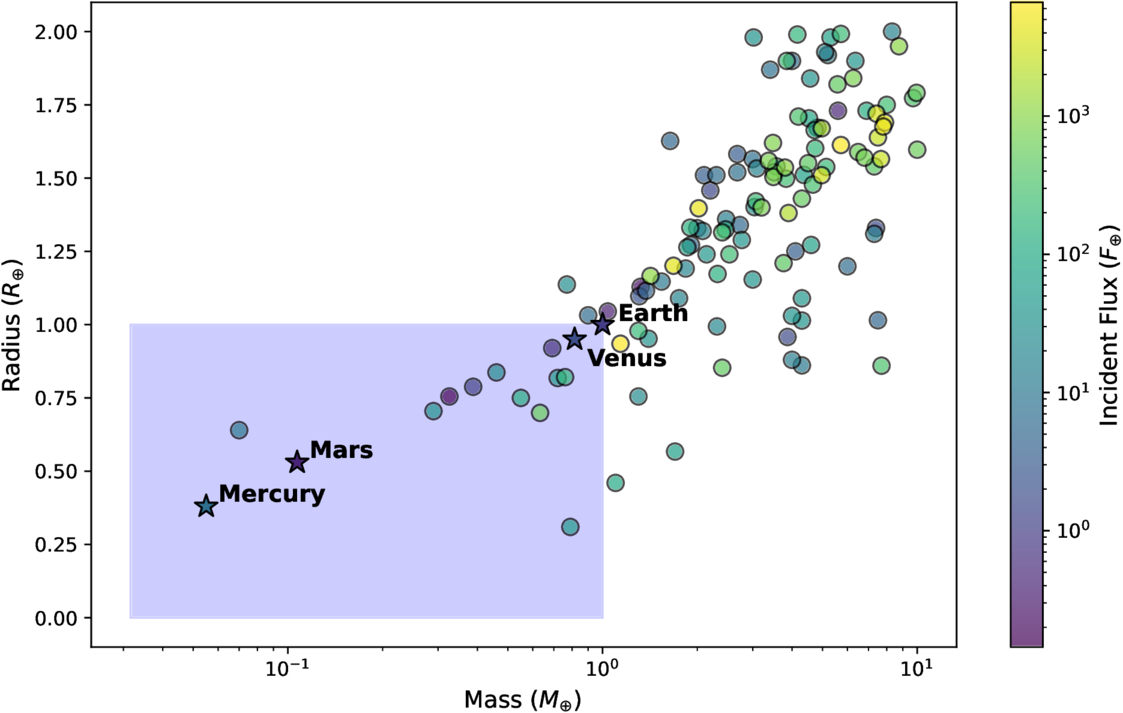
Figure 1: A plot of confirmed exoplanets by mass and radius. Most confirmed exoplanets are larger and more massive than Earth. Mars-like planets (dots in the blue box) are rare in confirmed exoplanet detections. [Kane et al. 2026]
Getting to Know Mars, Getting to Know All About Mars
We know a lot about Mars in comparison to other planets thanks to rovers (such as Curiosity and Perseverance), atmospheric orbiters (such as Mars Atmosphere and Volatile EvolutioN and the Mars Orbiter Mission), and other science missions (Figure 2). We know it once had water features with neutral pH and favorable chemistry for life from sedimentary evidence at the Gale and Jezero craters. We know its atmosphere is 95% CO2 with a surface pressure less than 1% of Earth’s. We know it once had an active magnetic dynamo, but the dynamo died out about 4 billion years ago, leading to solar wind steadily stripping away Mars’s atmosphere over time.
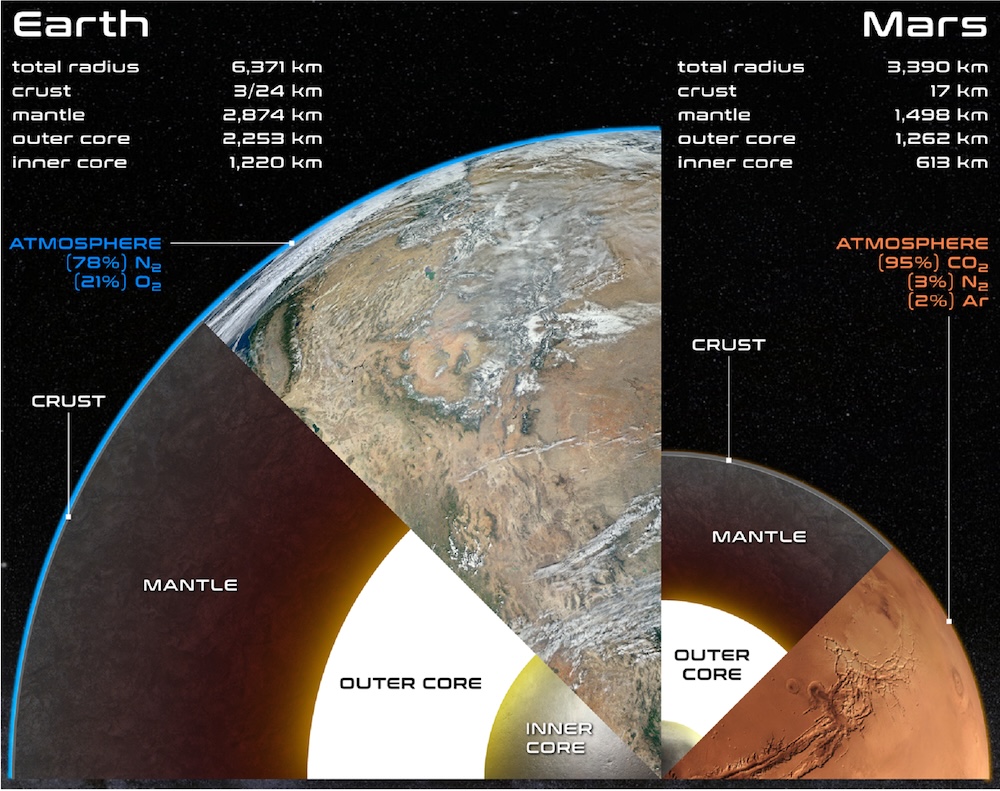
Figure 2: Earth and Mars to scale, showing their internal structures and atmospheres. Despite being neighbors, Mars is dramatically smaller with a thin CO2 atmosphere, similar to the planets JWST is struggling to characterize. [Kane et al. 2026]
Beyond Our Backyard
JWST is currently studying the small rocky TRAPPIST-1 planets and is finding little evidence of atmospheres. The authors of today’s article explore the idea that these exoplanets are similar to Mars and perhaps are undergoing processes that strip away their atmospheres and create optimal conditions for life only for short durations. Using Mars as a blueprint, the authors show how we can better understand exoplanet processes, including volatile delivery and loss, photochemistry, climate evolution, obliquity forcing, planetary architecture, and intrinsic magnetism. For example, measurements of noble gases directly fingerprint Mars’s atmospheric escape process, and the authors argue these give us a calibration framework for interpreting future exoplanet spectra.
The upcoming Nancy Grace Roman Space Telescope’s microlensing survey will start revealing how common true Mars analogs actually are throughout the galaxy, while the future Habitable Worlds Observatory will attempt direct imaging of nearby candidates with unprecedented precision. Together, these missions will tell us whether Mars-like outcomes (brief habitability, catastrophic atmospheric loss, barren surfaces, etc.) are the default fate for small rocky planets. Interpreting that data will require the exact framework this article builds: one grounded in the only Mars analog we can study in detail.
Original astrobite edited by Sandy Chiu.
About the author, Ben Sherwin:
I am a physics PhD student and a National Science Foundation Graduate Research Fellow at Stanford University, working with Josh Frieman. I am interested in theoretical and observational cosmology, specifically in cross-correlations between the cosmic microwave background and tracers of large-scale structure.
The post What if Mars Were a Stranger (Thing)? appeared first on AAS Nova.
]]>The post Nonthermal X-Ray Emission Associated with Supra-Arcade Downflows in the Late Decay Phase of a Solar Flare appeared first on AAS Nova.
]]>Researchers show a connection between non-thermal hard X-ray emission and a tadpole-shaped downflow, strengthening the association between these flows and magnetic reconnection.
The post Nonthermal X-Ray Emission Associated with Supra-Arcade Downflows in the Late Decay Phase of a Solar Flare appeared first on AAS Nova.
]]>The post Postperihelion Optical Low-Resolution Spectroscopy of Interstellar Comet 3I/ATLAS appeared first on AAS Nova.
]]>Spectra of 3I/ATLAS as it retreated from its encounter with the Sun show that the comet’s mixing ratios of CN, C3, and C2 with respect to water are similar to those of solar system comets, while NH2 is depleted.
The post Postperihelion Optical Low-Resolution Spectroscopy of Interstellar Comet 3I/ATLAS appeared first on AAS Nova.
]]>
The galaxies FCC 224 and FCC 240 appear to be a rare example of a dark-matter-poor, globular-cluster-rich pair formed via colliding dwarf galaxies.
The post Featured Image: A Rare Pair of Galaxies Lacking Dark Matter appeared first on AAS Nova.
]]>This image, which combines a background view from the Dark Energy Camera Legacy Survey with two inset images from the Very Large Telescope, shows an unusual pair of galaxies in the Fornax Cluster. The galaxies FCC 224 and FCC 240 are under scrutiny because they may have formed via a high-velocity collision between dwarf galaxies — the so-called “bullet-dwarf” model. Using new spectroscopy from the Very Large Telescope, Maria Luísa Buzzo (Yale University) and collaborators analyzed the ages and kinematics of the galaxies’ stars as well as the unusually bright globular clusters swirling around each galaxy. These data suggest that both galaxies are deficient in dark matter, and their stellar populations and globular clusters are all roughly 10 billion years old. The lack of dark matter and the uniform stellar ages are both consistent with the bullet-dwarf model, in which the collision strips away dark matter and ignites a burst of star formation. Since this type of collision can create more than two remnants, the team suggests searching along the trajectory defined by FCC 224 and FCC 240 for more fragments from the collision, some of which may contain the galaxies’ lost dark matter. To learn more about these galaxies and what they might mean for the bullet-dwarf mechanism, be sure to check out the full research article linked below.
Citation
“Dark-Matter-Deficient Twins: FCC 224 and FCC 240 as Possible Analogs of NGC 1052-DF2 and DF4,” Maria Luísa Buzzo et al 2026 ApJ 1005 15. doi:10.3847/1538-4357/ae7349
The post Featured Image: A Rare Pair of Galaxies Lacking Dark Matter appeared first on AAS Nova.
]]>
A recent study used the kinematics, chemical composition, and ages of thousands of stars to determine when the Milky Way settled into the spiral disk we know it as today.
The post Dating the Dawn of the Milky Way Disk appeared first on AAS Nova.
]]>The iconic disks of spiral galaxies are well known across the local universe and now far beyond. A recent study looks at the Milky Way to determine when its own disk emerged.
Spinning into Spirals
The Milky Way, a grand spiral galaxy with stars and gas rotating in a disk, did not always look this way. Galaxies begin as chaotic clumps of gas and stars inside a knot of dark matter, and at some point in time, spiral galaxies must transform into the flat rotating disks we observe them as today. Recent JWST observations have uncovered disk galaxies emerging much earlier in the universe than previously thought, shifting our understanding of how quickly spiral galaxies come together and settle into disks. While we cannot study the detailed assembly history of these very distant galaxies, we can dissect galaxies in the local universe to build a better timeline of galaxy evolution.
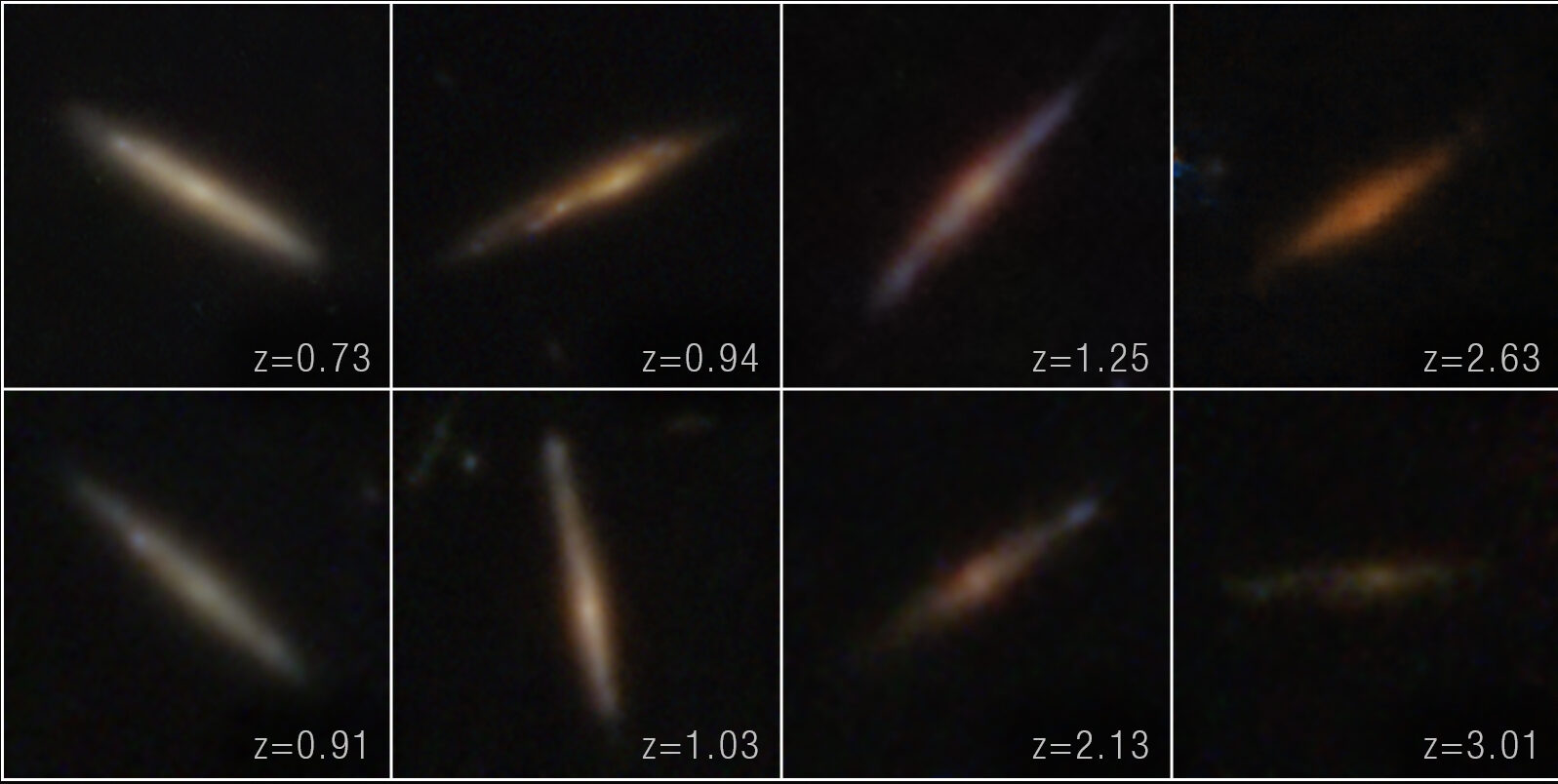
JWST images of distant edge-on galaxy disks [NASA, ESA, CSA, STScI, Takafumi Tsukui (ANU)]
Stars hold on to the kinematic and chemical information they are born with, so stars of different ages and metallicities across the galaxy should trace the development of the disk. Because stellar ages have been difficult to constrain observationally, studies of galactic spin-up have typically relied on readily available metallicity measurements as a proxy for age; however, metallicity is not a clear-cut age indicator, making it difficult to truly distinguish different stellar populations across the Milky Way’s disk. Luckily, new major surveys have recently provided stellar databases adding the stellar age measurements necessary to pin down when the Milky Way spun up.
Dawn of the Galactic Disk

Plots showing stellar age and rotational velocity (Vϕ) versus metallicity, [Fe/H]. The metallicity range where the age–[Fe/H] relation stalls coincides with the point when the Vϕ–[Fe/H] relation rapidly increases, indicating the age of the spin-up in the Milky Way. Click to enlarge. [Modified from Feltzing et al 2026]
With these star samples, Feltzing and team analyzed how both stellar rotational velocity and age varied with metallicity to determine when the Milky Way spun up. They found that high-α stars clearly move from having random motions to being rotationally supported over a short range of metallicities about 12.5 billion years ago, while the low-α stars seem to begin in a rotating disk and stay there. When varying their selection criteria and looking at the full sample, the authors determined that the Milky Way spin-up happened between 12.1 to 12.5 billion years ago — the first time Milky Way spin-up has been age-dated in this way.
These results imply a rapid chemical evolution and change in kinematic properties as stars went from randomly orbiting to rotating in an ordered disk in the Milky Way. The authors suggest that future studies should focus on lower-metallicity stars to better disentangle stars in the disk from stars in the halo, which will lead to a more precise determination of the Milky Way’s spin-up. Upcoming large-scale surveys will make this possible and allow astronomers to build a better picture of galaxy formation in the early universe.
Citation
“Dawn of the Milky Way Disk: Determination of When a Rotationally Supported Disk Appears and Dating the Spin-up of the Disk,” Sofia Feltzing et al 2026 ApJL 1004 L28. doi:10.3847/2041-8213/ae6f14
The post Dating the Dawn of the Milky Way Disk appeared first on AAS Nova.
]]>The post Quantifying the Impact of Starspot-Crossing Events on Retrieved Parameters from Transit Lightcurves appeared first on AAS Nova.
]]>An analysis of synthetic starspot-crossing events suggests that while starspot longitudes are tightly constrained in high signal-to-noise data, other properties are more loosely determined.
The post Quantifying the Impact of Starspot-Crossing Events on Retrieved Parameters from Transit Lightcurves appeared first on AAS Nova.
]]>The post A Study of HH 270 with the James Webb Space Telescope appeared first on AAS Nova.
]]>Using data from JWST, the Subaru Telescope, and the Atacama Large Millimeter/submillimeter Array, researchers have identified a previously unseen collimated protostellar jet in a Herbig–Haro object.
The post A Study of HH 270 with the James Webb Space Telescope appeared first on AAS Nova.
]]>
White dwarfs with metals in their spectra preserve a record of planets that once orbited them. New research examines these spectra for signs that the metals underwent technological processing.
The post Seeking Technosignatures in Polluted White Dwarfs appeared first on AAS Nova.
]]>White dwarfs often show signs of metals in their spectra, providing evidence that these evolved stars have accreted planetary material. Could white dwarf spectra also provide evidence for technological activity in these star systems?
A Record of Planets Past
When a Sun-like star reaches the end of its hydrogen-burning lifetime, it first puffs up into a red giant before exposing its white-hot core, which evolves into a white dwarf. This dramatic transition shakes up any planets that happened to be orbiting the star, and some close-in planets may end up crumbling apart, their rubbly remains peppering the surface of the white dwarf.
So far, astronomers have found hundreds of white dwarfs that appear to be polluted with heavy elements from their destroyed planets. These observations provide a valuable look into the bulk compositions of planetary materials outside our solar system. They may also provide a way to detect patterns of chemical abundances that are not natural, resulting from technological processes like industrial refining or the creation of alloys — in other words, a technosignature that is evidence of not just life, but technologically advanced life.
Seeking Signs of Technology
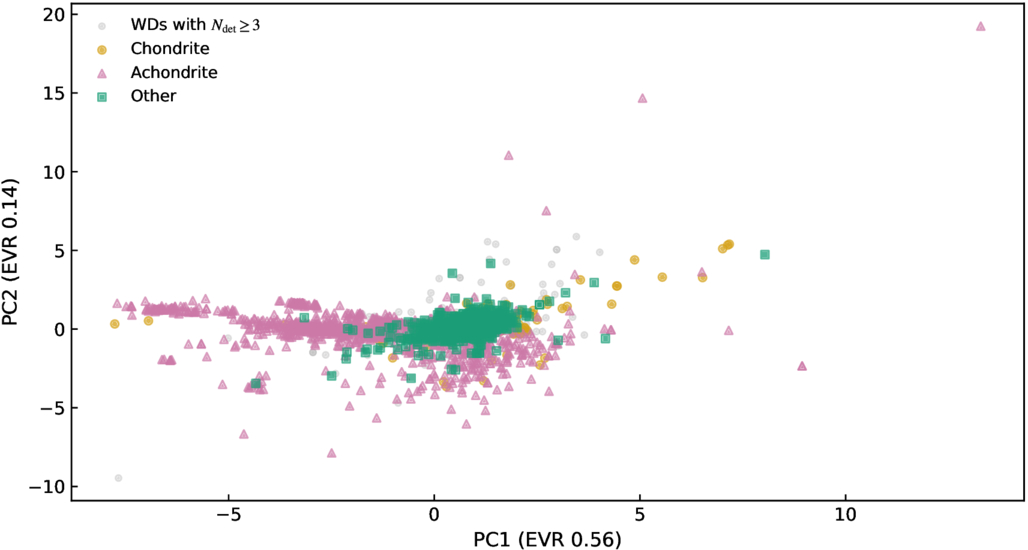
Representation of the chemical abundances of meteorites (pink, orange, and green) and white dwarfs (gray). Most white dwarf abundances overlap with the parameter space defined by the meteorite sample. Click to enlarge. [Huang et al. 2026]
The team used thousands of chemical abundance measurements from meteorites as a reference for the natural bulk composition of planetary material. For the mixture of natural and processed material, they combined the meteorite reference material with a template that is metal-rich and silicate-poor, with enhanced amounts of iron, nickel, chromium, and manganese.
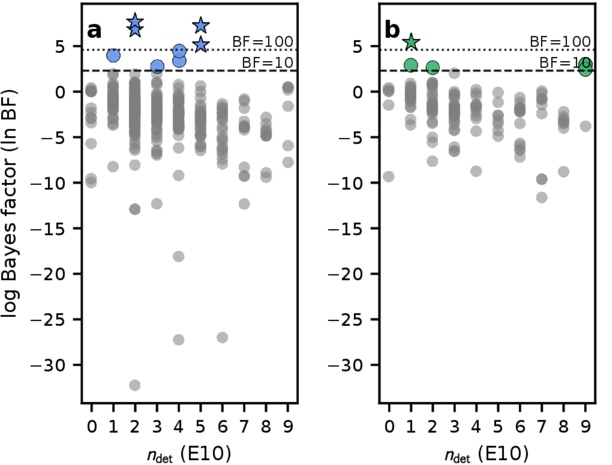
Evidence for a model including technologically processed material relative to a purely natural model, as a function of the number of elements detected in the white dwarf. ndet = 0 indicates that only upper limits were obtained on elemental abundances. Higher Bayes factors indicate stronger evidence. The left-hand plot is based on abundances measured from the white dwarfs’ photospheres, while the right-hand plot uses abundances adjusted for diffusion within the white dwarf. Click to enlarge. [Adapted from Huang et al. 2026]
No Strong Evidence, but a Path Forward
Ultimately, Huang’s team found that strong statistical support for the existence of technological processes was uncommon, though there were certain measurements in their sample of white dwarfs that were difficult to reconcile with a solely natural model.
Perhaps unsurprisingly, the team also found that the quality of the chemical abundance measurements affected the constraining power of the observation; some white dwarfs had upper limits for just a few elements, while others had definitive detections of many elements. They found that the most discerning observations recorded iron, magnesium, chromium, and titanium, plus either nickel, silicon, or sodium.
While this work didn’t dredge up firm evidence for technological activity, it provides a jumping-off point for future searches. The handful of white dwarfs in this sample that were fit poorly by a purely natural model could be compared against other technosignature models or targeted with high-resolution spectroscopy. Future measurements of iron and magnesium in polluted white dwarfs may be useful as a preliminary screening tool, helping to pick out intriguing targets for follow-up observations.
Citation
“A Calibrated Bayesian Search for Potential Chemical Technosignatures in Polluted White Dwarfs,” Bo-Lun Huang et al 2026 ApJ 1006 9. doi:10.3847/1538-4357/ae742c
The post Seeking Technosignatures in Polluted White Dwarfs appeared first on AAS Nova.
]]>The post Chemical Fingerprints of Accreted Ultrafaint Dwarf Galaxies in the Milky Way Halo appeared first on AAS Nova.
]]>Researchers have discovered two chemically distinct populations in a sample of 97 metal-poor stars in the Milky Way halo, potentially providing a way to identify accreted halo stars.
The post Chemical Fingerprints of Accreted Ultrafaint Dwarf Galaxies in the Milky Way Halo appeared first on AAS Nova.
]]>
Astrobites reports on why dry planets may be missing the critical thermostat of the geologic carbon cycle, which has helped to stabilize Earth's climate over billions of years.
The post Can Arid Planets Keep Their Cool? appeared first on AAS Nova.
]]>Editor’s Note: Astrobites is a graduate-student-run organization that digests astrophysical literature for undergraduate students. As part of the partnership between the AAS and astrobites, we occasionally repost astrobites content here at AAS Nova. We hope you enjoy this post from astrobites; the original can be viewed at astrobites.org.
Title: Carbon Cycle Imbalances on Arid Terrestrial Planets with Implications for Venus
Authors: Haskelle T. White-Gianella and Joshua Krissansen-Totton
Authors’ Institution: University of Washington
Status: Published in PSJ
The Carbon-Cycle Thermostat
When discussing the habitability of planets, we usually focus on the habitable zone, the region around a star where a planet can host a temperature suitable for supporting liquid water on its surface. Yet, being in the right place doesn’t necessarily guarantee that a planet will be habitable.
A planet also needs the right atmospheric composition to sustain the necessary temperatures for hosting liquid water. A key mechanism found on Earth for maintaining this composition is the geologic carbon cycle, which acts as a built-in climate control system. This cycle begins with volcanic eruptions releasing carbon dioxide (CO2), which then dissolves in rainwater and forms a weak acid that weathers rocks on continents. The weathering products wash into oceans, where they form carbonate rocks, locking carbon away. Eventually, plate tectonics recycles some of that carbon back to volcanoes. The weathering process works faster when the planet is warmer, thus regulating the amount of CO2 and stabilizing the climate over long periods of time (but it should be noted that it can take up to a few hundred thousand years to rebalance this slow carbon cycle through the weathering process).
An important caveat is that the weathering process requires sufficient liquid water on the planet’s surface, so what happens in the case for planets with shallower oceans? Low-mass M dwarfs, the most common type of star found in the galaxy, are expected to host less-massive disks and therefore lower water inventories for forming planets. If more “dry” planets are indeed a more likely outcome of planet formation, we’d want to know how their arid conditions influence their long-term evolution and habitability.
Creating Carbon-Tracking Models
The authors built a model that tracks how water and CO2 move between a planet’s interior, oceans, and atmosphere over 4.5 billion years. The model notably includes the following:
- A sophisticated weathering model that accounts for how runoff can limit rock weathering, improving upon previous models that only included a temperature dependence on weathering
- Wind-driven evaporation limits that influence the amount of water evaporation in addition to sunlight-driven evaporation
- Multiple deep water cycle parameterizations that explore how water moves between the interior and the surface
The model tests for four initial surface water inventories (0.1%, 1%, 10%, and 100% of Earth’s oceans) and then simulates how the surface water, atmosphere, and climate evolve over time.
A Critical Water Threshold
The models reveal that planets require at least 20–50% of Earth’s ocean mass to maintain a balanced carbon cycle. Below this threshold, the carbon cycle becomes unbalanced, leading to devastating consequences for habitability (Figure 1).
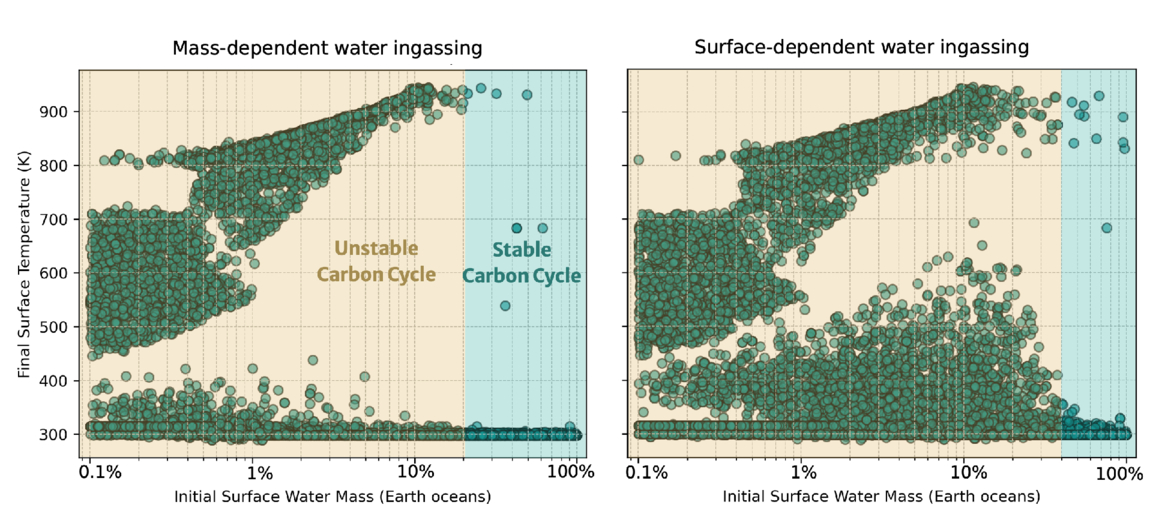
Figure 1: Final surface temperature after simulating 4.5 billion years of evolution as a function of initial water inventory for Earth-like planets. Each dot represents a model run with different assumptions (total carbon inventory, temperature dependence of weathering, soil age, etc.). The yellow region shows where most simulations result in uninhabitable surface temperatures from an unbalanced carbon cycle, and the cyan region shows where most simulations result in habitable surface temperatures and a balanced carbon cycle. The left and right plots show the results for two different parameterizations of the deep water cycle implemented in the model. [White-Gianella & Krissansen-Totton 2026]
Important Implications (Within and Outside Our Solar System)
Looking within the solar system, the results offer an explanation for how a potentially habitable Venus could have transitioned into its current inhospitable state. If Venus had formed with an initial water inventory below this critical threshold of 20–50% of Earth’s ocean mass, then its carbon cycle would have become unbalanced, creating the CO2 inferno seen on Venus today.
In future exoplanet studies, telescopes like the Habitable Worlds Observatory might detect ocean glint (specular reflection from liquid water) or measure land fraction from light curves. Finding a planet in the habitable zone but with limited ocean coverage would likely be bad news, as the planet could be quietly losing its grip on habitability. Astronomers may want to be more careful when looking at seemingly promising planets within their habitable zones.
Original astrobite edited by Natalie Price.
About the author, Jared Bull:
I am a 2nd-year PhD student at Johns Hopkins University. I study brown-dwarf variability and am interested in using time-series observations to uncover dynamic processes within their atmospheres. In my free time I like to read, cook, and do astrophotography.
The post Can Arid Planets Keep Their Cool? appeared first on AAS Nova.
]]>The post Revisiting the Evidence for Double Sequences of Blue Straggler Stars in Globular Clusters appeared first on AAS Nova.
]]>Analysis of blue straggler stars in 56 Milky Way globular clusters finds no evidence for a bimodal distribution in color–magnitude space due to differing formation pathways.
The post Revisiting the Evidence for Double Sequences of Blue Straggler Stars in Globular Clusters appeared first on AAS Nova.
]]>The post Warped and Hooked: Mapping the Magellanic Clouds in Three Dimensions Using Red Clump Stars appeared first on AAS Nova.
]]>By constructing a detailed distance map to the Magellanic Clouds, researchers have revealed substructures within this interacting galaxy pair, including an azimuthal warp in the Large Magellanic Cloud.
The post Warped and Hooked: Mapping the Magellanic Clouds in Three Dimensions Using Red Clump Stars appeared first on AAS Nova.
]]>
When a powerful solar flare saturates a detector, the information about the flare is lost — or is it? New research validates a technique for extracting knowledge from saturated images of solar flares.
The post When the Spacecraft Align: Rescuing Saturated Images of Solar Flares appeared first on AAS Nova.
]]>Many observations of solar flares suffer from saturation and blooming, causing crucial information to be lost. Researchers recently validated a technique for retrieving information from saturated flare images, unlocking a treasure trove of powerful solar flares for examination.
Solutions for Saturation
Since 2010, the Atmospheric Imaging Assembly (AIA) on the Solar Dynamics Observatory (SDO) has been capturing nearly continuous extreme-ultraviolet images of the Sun’s disk, revealing our star’s dramatic high-energy behavior. Though SDO/AIA’s observations have transformed our understanding of the Sun’s activity, they have limitations: powerful solar flares can saturate the detector, spilling charge into nearby pixels.
This saturation and overflow compromises our ability to study the most energetic solar flares — but the “lost” information may actually be recoverable. When light from an intense flare enters SDO’s instruments, not all of it pools in the saturated region of the detector: some of the light is diffracted by the optics, and by mathematically inverting this pattern of diffracted light, researchers can attempt to extract the encoded information about the saturated region. Researchers have used this technique for more than a decade, but options for validating the results were limited until now.
Solar Orbiter Lends a Hand
Launched almost 10 years to the day after SDO, the Solar Orbiter spacecraft provides an excellent opportunity to test inversion techniques for recovering information from saturated solar images. Solar Orbiter’s Extreme Ultraviolet Imager snaps brief photos of the Sun at a rapid cadence, and its images remain unsaturated even when faced with energetic solar flares.
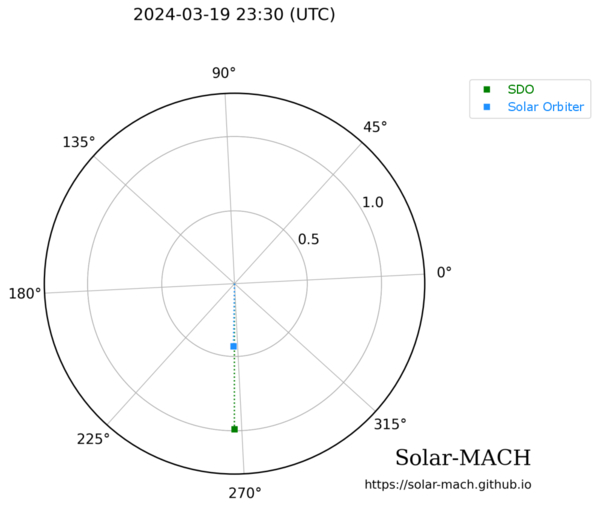
Positions of SDO (green) and Solar Orbiter (blue) during a solar flare on 19 March 2024. Click to enlarge. [Guastavino et al. 2026]
Guastavino’s team aligned and reprojected the data, accounting for the slightly different viewing angles of the two spacecraft, then applied an algorithm called Adaptive SE-DESAT to reconstruct the flux within the saturated portion of the SDO image. The team compared the desaturated SDO images to the unsaturated Solar Orbiter images over the course of the flare, finding the same flare morphology and similar time evolution between the two data sets.
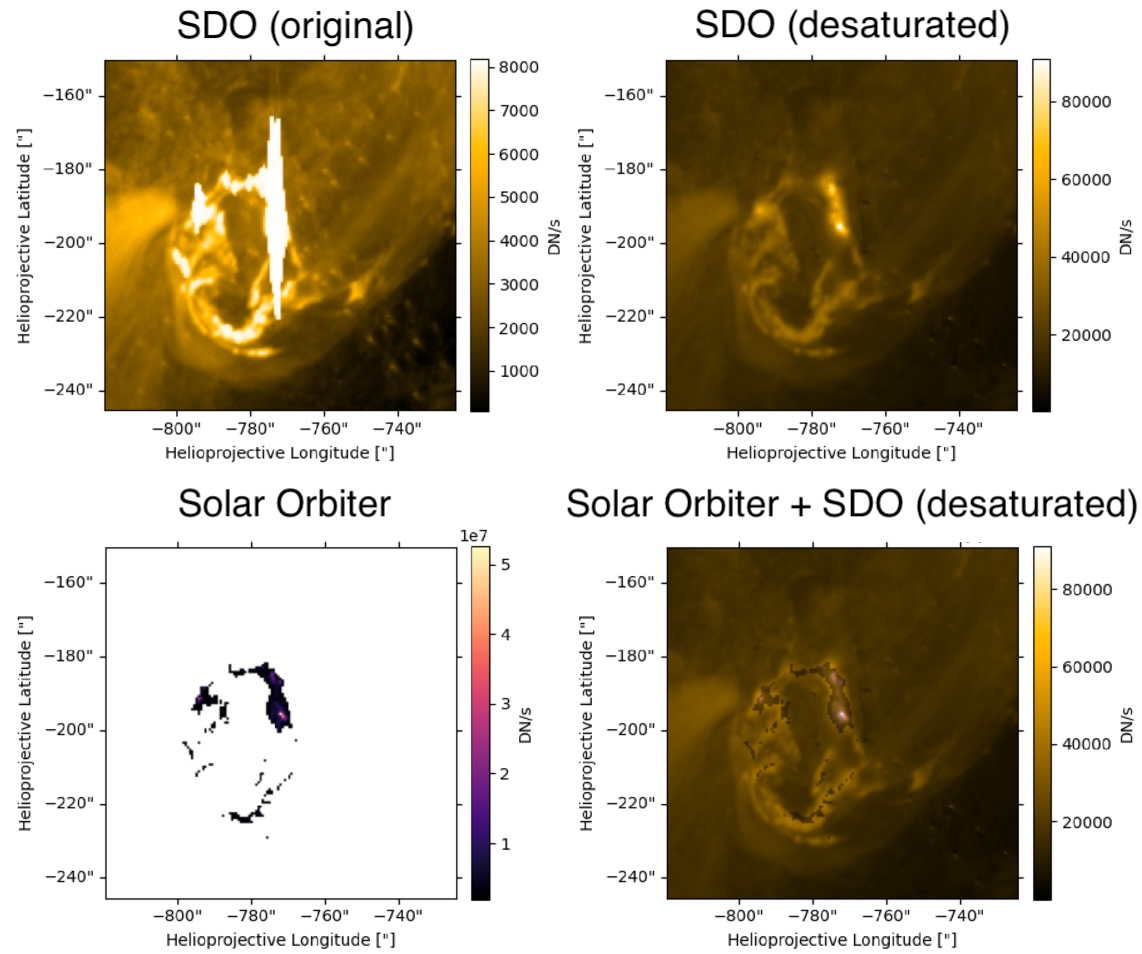
Example of unprocessed SDO data (top left), desaturated SDO data (top right), Solar Orbiter data (bottom left), and a combination of the two data sources (bottom right). Note that the Solar Orbiter observations have been clipped so that only the highest flare intensities were recorded. Click to enlarge. [Adapted from Guastavino et al. 2026]
A Treasure Trove of Desaturated Data
Overall, these results demonstrate the effectiveness of the inversion technique, though Guastavino and coauthors noted that improvements could be made during the impulsive phase of the flare, when the emission is increasing. The team identified several reasons why the results may not match during this phase, including rapid evolution of the flare during individual exposures.
Despite these areas that require further attention, the validation of this technique unlocks 16 years of solar flare observations from SDO. This especially enhances our sample of powerful solar flares, increasing the available records of the most energetic solar flares by orders of magnitude.
Citation
“Validation of an Extreme-Ultraviolet Desaturation Technique for the Atmospheric Imaging Assembly on Board the Solar Dynamics Observatory Using Observations from the Extreme Ultraviolet Imager on Board Solar Orbiter,” Sabrina Guastavino et al 2026 ApJL 1005 L50. doi:10.3847/2041-8213/ae7d2e
The post When the Spacecraft Align: Rescuing Saturated Images of Solar Flares appeared first on AAS Nova.
]]>The post Potential Interaction of 99942 Apophis with the High Earth Orbit Population During the 2029 Close Approach appeared first on AAS Nova.
]]>Though the asteroid Apophis will not collide with Earth in 2029, there is a slim but present possibility that it will strike an artificial object orbiting Earth, potentially compromising future missions to the asteroid.
The post Potential Interaction of 99942 Apophis with the High Earth Orbit Population During the 2029 Close Approach appeared first on AAS Nova.
]]>
How do you pick a landing site before you know how you're going to land? The scientists behind NASA's latest Moon missions are working on just that.
The post Putting the Landing Site Before the Lander appeared first on AAS Nova.
]]>NASA is once again sending scientific missions to the Moon. But under the new commercial framework for getting there, researchers need to invent a new method for how to pick where to land.
A New Process for Picking Sites
NASA’s Commercial Lunar Payload Services program is a bold innovation in organizing robotic missions to the Moon. Under this model, rather than keeping the mission process entirely in-house, the agency selects the scientific mission they want to support then simply buys a ride to the lunar surface from a commercial vendor. But, how do you pick a landing site before you know exactly how you’re getting there?
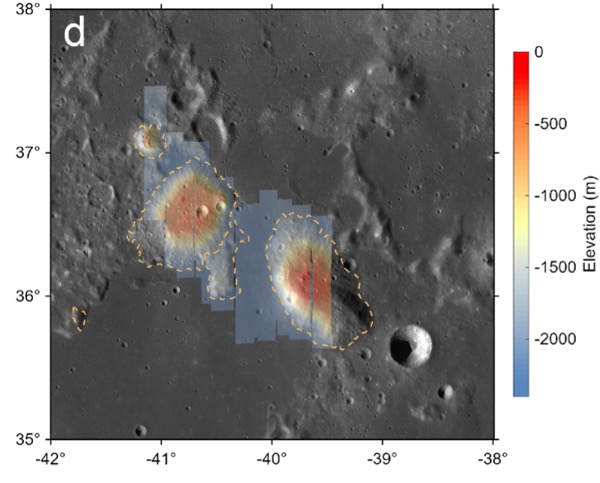
The Gruithuisen domes region, the broad area the Lunar-VISE team searched for potential landing sites. Click to enlarge. [Adapted from Williams et al. 2026]
No Parking Lots on the Moon
Picking a landing site is no small task: for context, selecting the landing sites for each of the most recent Mars rovers took five years and multiple community workshops. The Lunar-VISE team therefore took a streamlined and logic-driven approach. They started by explicitly laying out their science objectives: Lunar-VISE’s purpose is to investigate some strangely silicate-rich volcanic formations called the Gruithuisen domes, so they had to land either on or near those. They also had to have access to boulders that were excavated from deep within the domes during a crater formation event, so they had to pick a spot with boulders relatively nearby.
In addition to objectives, they also laid out a slew of constraints. Although they needed boulders nearby, they couldn’t have too many boulders, or any particularly large boulders, since those could pose hazards for landing. There also couldn’t be any steep slopes in the field. Most of the area had to maintain a line of sight with a supporting orbiter for communications, so they couldn’t set down near any ridges. Also, they had to consider how the terrain would cast shadows as the lunar day progressed, since they didn’t want their mission cut short by freezing temperatures and a lack of solar power. As the team quipped, “many interesting, high-science value locations on the Moon may not be in proverbial ‘parking lots.'”
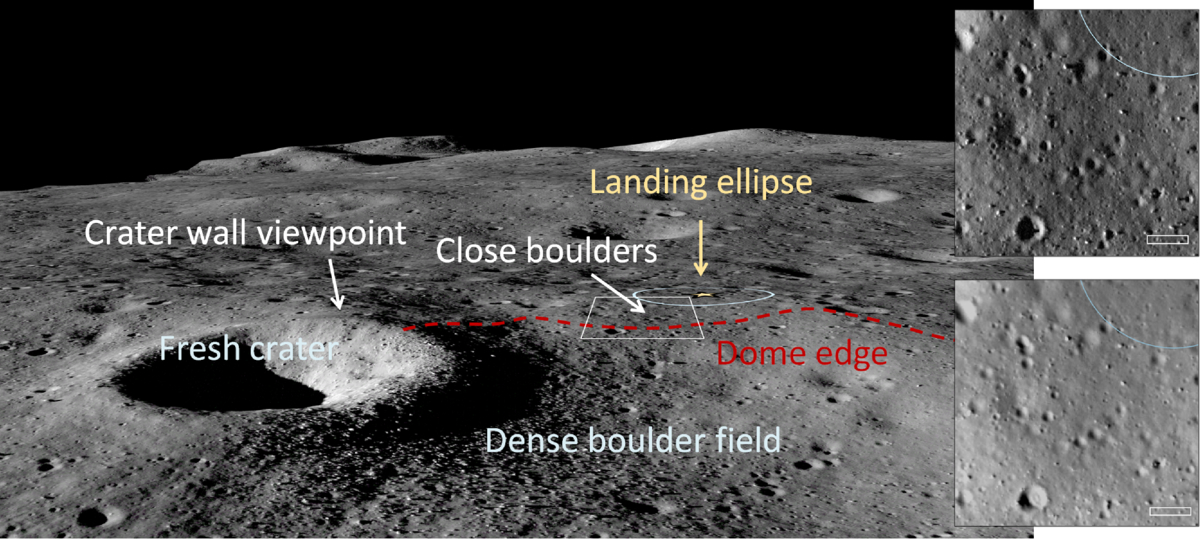
An image from the Lunar Reconnaissance Orbiter overlaid onto a terrain model of the final landing site. Click to enlarge. [Williams et al. 2026]
In addition to presenting their landing site, the researchers offered a handful of lessons to others who may someday be in the fortunate and thrilling position of needing to pick a landing spot on the Moon. For one, they urged teams to coordinate with the Lunar Reconnaissance Orbiter specialists as early as possible, since processing the imaging data for lander-quality maps is a specialized and intensive task. For another, they recommended that all of the software tools used be made publicly available so that future missions don’t need to duplicate their work.
As this article laid out, the Commercial Lunar Payload Services program and Lunar-VISE take us one step closer to making missions to the Moon routine — but we’re still figuring out exactly how to do that.
Citation
“Lunar-VISE Landing Site Selection and Characterization at Mons Gruithuisen Gamma,” Jean-Pierre Williams et al 2026 Planet. Sci. J. 7 161. doi:10.3847/PSJ/ae7d2c
The post Putting the Landing Site Before the Lander appeared first on AAS Nova.
]]>The post The First Systematic Survey of Stellar Halos in High-Inclination Galaxies Reveals Unusually Quiescent Merger Histories of Nearby Galaxies appeared first on AAS Nova.
]]>Analysis of 93 stellar halos detected in a sample of 169 high-inclination galaxies showed that high-mass galaxies have more extended halos and more active merger histories, among other findings.
The post The First Systematic Survey of Stellar Halos in High-Inclination Galaxies Reveals Unusually Quiescent Merger Histories of Nearby Galaxies appeared first on AAS Nova.
]]>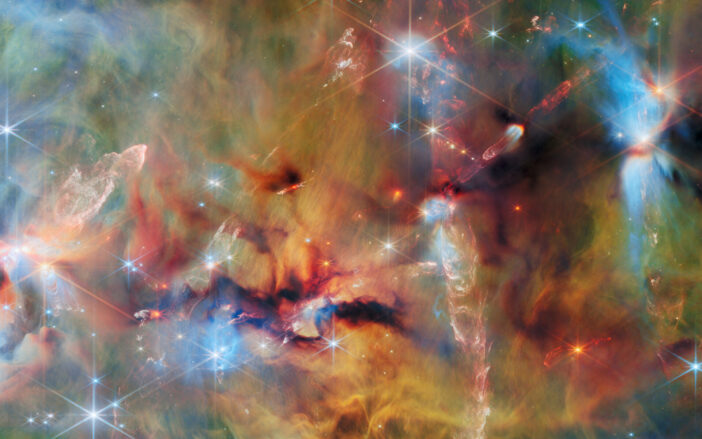
Do all clusters form stars with the same distribution of masses? Researchers have demonstrated that the initial mass function, often assumed to be universal, varies across Milky Way clusters.
The post Gaia Data Show That the Initial Mass Function Is Not Universal appeared first on AAS Nova.
]]>Do all star-forming regions birth stars with the same distribution of masses? Theory suggests that they do not, but researchers often assume they do for simplicity. Now, ultra-precise observations from Gaia have demonstrated that the initial mass function varies across star clusters in the Milky Way.
A Universal Initial Mass Function?
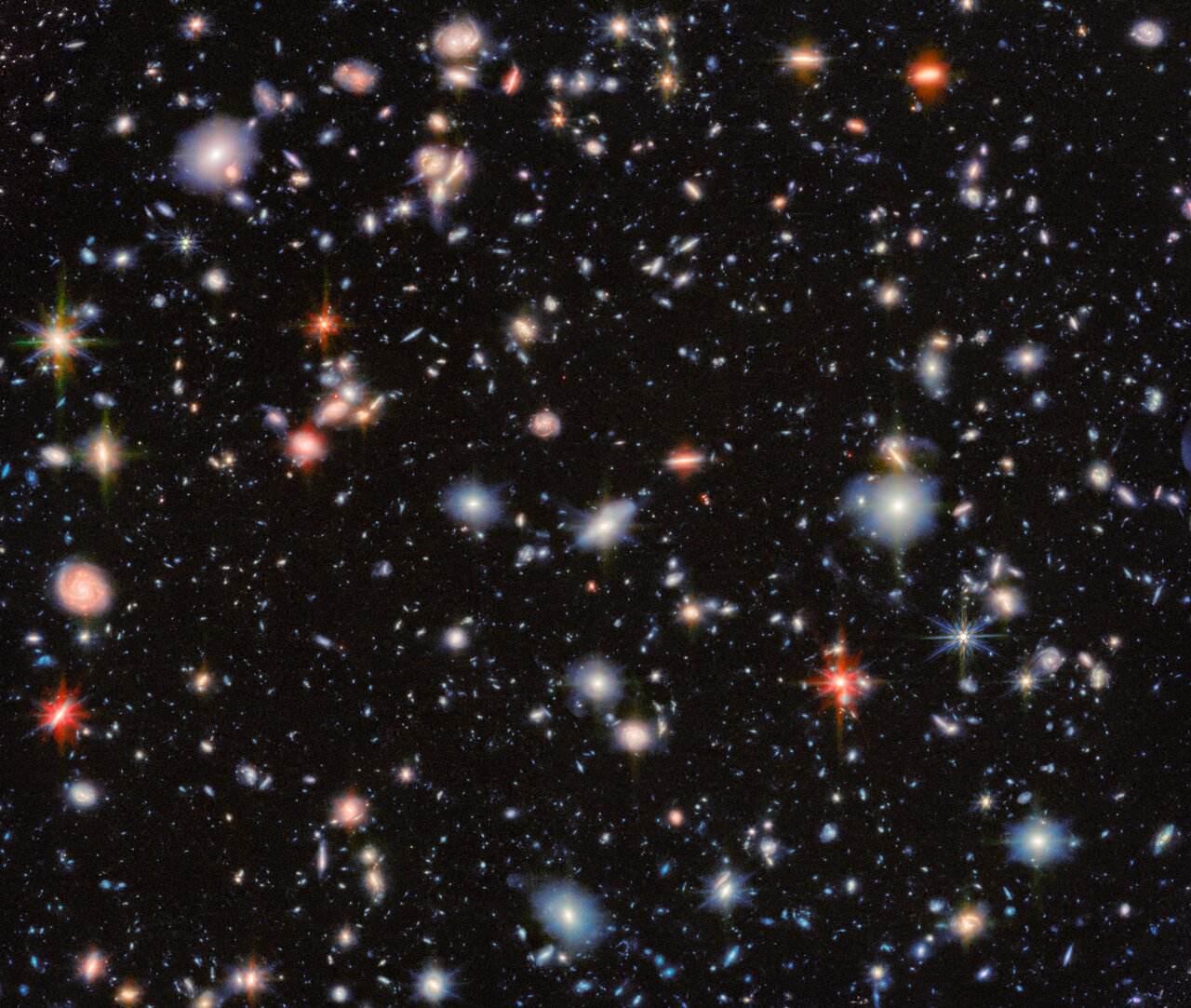
The light from distant galaxies is dominated by high-mass stars, requiring the use of the IMF to estimate the stellar mass of a galaxy. [ESA/Webb, NASA & CSA, G. Östlin, P. G. Perez-Gonzalez, J. Melinder, the JADES Collaboration, the MIDIS collaboration, M. Zamani (ESA/Webb); CC BY 4.0]
The IMF is important in many areas of astronomy, and it’s relied on especially heavily in studies of distant galaxies. The light from these galaxies is dominated by high-mass stars, with the emission from lower-mass stars lost in the glare, so astronomers must use the IMF to reconstruct the stellar populations of these far-off locales.
Though theory suggests that the IMF should vary with factors like temperature and metallicity, demonstrating these variations has been difficult, even within our own galaxy. Because of this, researchers often adopt a universal IMF drawn from observations of star clusters in the Milky Way. But is the IMF truly universal?
The More the Slope Changes, the More the Break Mass Stays the Same
Determining whether the IMF is universal is more complicated than simply comparing the stars in one cluster to those in another. That’s because what astronomers measure in present-day star clusters is not the initial mass function, but a version of the IMF that has been skewed by millions to billions of years of evolution; over time, high-mass stars die and low-mass stars get ejected, warping the shape of the mass function.
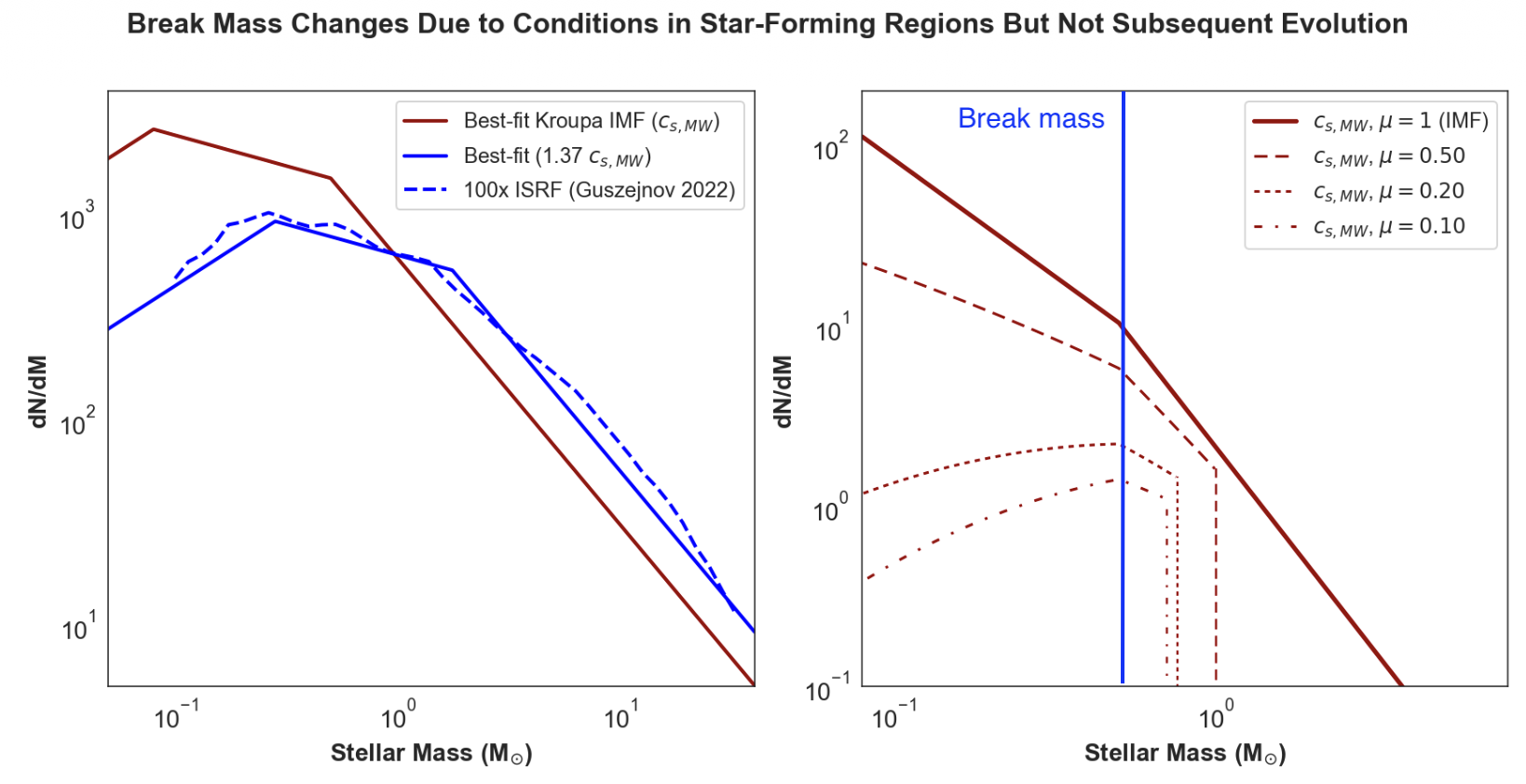
Left: Different break masses arise for different properties (here, the sound speed) of a given star-forming cloud. Right: Evolution of the mass function over time for a single star cluster. Over time, high-mass stars die and low-mass stars are ejected from the cluster, resulting in a decrease in the remaining mass fraction, μ, from 1 to 0.1. The slopes change, but the break mass does not. Click to enlarge. [Adapted from Steinhardt et al. 2026]
Insights from Gaia
Thanks to the Gaia spacecraft, which made precise observations of more than 2 billion stars in the Milky Way and beyond, it’s now possible to measure and compare the break masses of individual star clusters. Out of an initial catalog of 7,167 Milky Way clusters observed with Gaia, Steinhardt’s team selected just 110 that were of high enough quality and contained a sufficient number of stars to measure cluster break masses accurately.
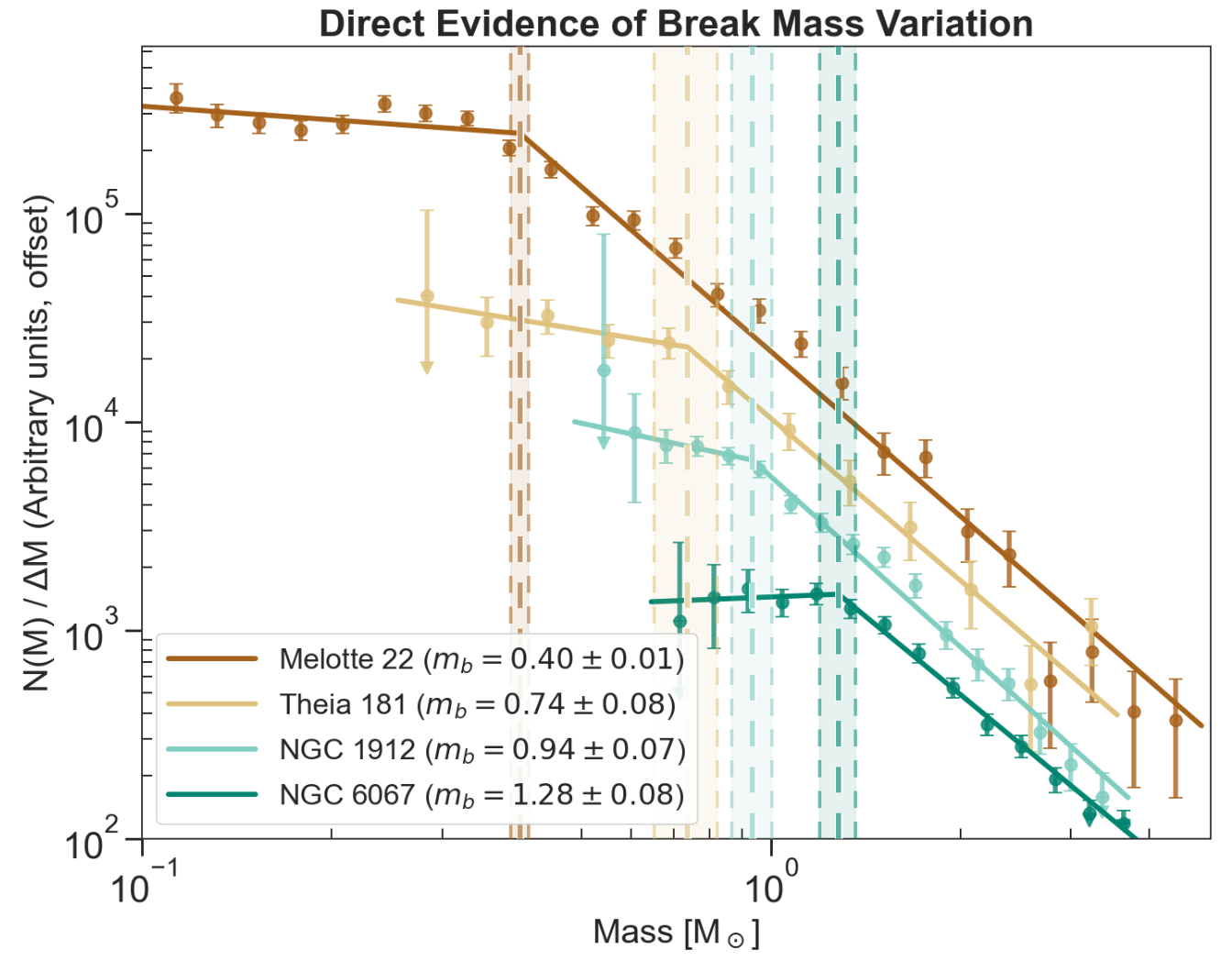
Observed mass functions of four Milky Way star clusters. The break masses are clearly different, showing that the IMF must vary from cluster to cluster. Click to enlarge. [Steinhardt et al. 2026]
This finding has implications for studies of high-redshift galaxies, where the properties of star-forming clouds are markedly different from those in the Milky Way. Going forward, Steinhardt and coauthors recommend developing a flexible parameterization of the IMF to capture how this critical function behaves in environments vastly different from our own.
Citation
“Direct Evidence for Stellar Initial Mass Function Variation in the Milky Way,” Charles L. Steinhardt et al 2026 ApJL 1005 L40. doi:10.3847/2041-8213/ae7444
The post Gaia Data Show That the Initial Mass Function Is Not Universal appeared first on AAS Nova.
]]>The post Spectroscopic Confirmation of a Large and Luminous Galaxy with Weak Emission Lines at <em>z</em> = 13.53 appeared first on AAS Nova.
]]>PAN-z14-1 is the fourth most distant galaxy known to date, and its properties are consistent with the emerging picture of two separate galaxy populations at redshifts greater than 10.
The post Spectroscopic Confirmation of a Large and Luminous Galaxy with Weak Emission Lines at <em>z</em> = 13.53 appeared first on AAS Nova.
]]>The post Twinkle Twinkle Little Star, Roman Sees Where You Are: Predicting Exoplanet Transit Yields in the Rosette Nebula with the Nancy Grace Roman Space Telescope appeared first on AAS Nova.
]]>Simulations predict that the Roman Space Telescope will discover 33 ± 9 young exoplanets in a one-month survey, expanding our understanding of the properties of planets around very young stars.
The post Twinkle Twinkle Little Star, Roman Sees Where You Are: Predicting Exoplanet Transit Yields in the Rosette Nebula with the Nancy Grace Roman Space Telescope appeared first on AAS Nova.
]]>
Astrobites reports on whether some of the most massive galaxies in the early universe are truly quenched, or if they're just hiding their star formation behind dust.
The post Distant Galaxies: Dead or in Disguise? appeared first on AAS Nova.
]]>Editor’s Note: Astrobites is a graduate-student-run organization that digests astrophysical literature for undergraduate students. As part of the partnership between the AAS and astrobites, we occasionally repost astrobites content here at AAS Nova. We hope you enjoy this post from astrobites; the original can be viewed at astrobites.org.
Title: MAGAZ3NE: Confirming Dust Deficiency and Quiescent Nature of Ultramassive Galaxies at 3 < z < 4 with ALMA Observations
Authors: Wenjun Chang et al.
First Author’s Institution: University of California, Riverside
Status: Published in ApJ
Distant galaxies offer a unique window into how stars, gas, and dust evolve over cosmic time. Tracing this evolution requires understanding not only how galaxies form, but also how and when they stop forming stars, a process known as quenching. Understanding how, when, and why galaxies quench is a fundamental question in astrophysics, and one that requires observations of star-forming, quenching, and fully quenched galaxies alike. Unfortunately, one complication is that identifying truly quenched galaxies is challenging: galaxies that appear “dead” may instead be actively forming stars, hidden behind a thick veil of dust.
In today’s article, the authors use observations from the Atacama Large Millimetre/submillimetre Array (ALMA) to investigate five ultramassive galaxies at redshifts, z, between 3 and 4, and ask a deceptively simple question: are these massive red galaxies genuinely quenched, or are they secretly forming stars behind the scenes?
Meet the Suspects: Ultramassive Galaxies at the Edge of Cosmic Noon
The five galaxies in this study are drawn from the Massive Ancient Galaxies at z > 3 NEar-infrared (MAGAZ3NE) survey, which targets some of the most massive galaxies known at early cosmic times. All five have stellar masses exceeding 100 billion solar masses and have been confirmed at z > 3. At these redshifts, we are observing the galaxies as they were when the universe was less than 2 billion years old. This is just before an epoch known as cosmic noon, when star formation across the universe reached its peak.
These galaxies also benefit from extensive multiwavelength observations from a range of observatories, including the ground-based Visible and Infrared Survey Telescope for Astronomy and the Spitzer Space Telescope. By combining imaging across wavelengths from the ultraviolet to the near-infrared, astronomers can measure the “colours” of galaxies and use these colours to infer the galaxies’ star-forming activity.
Galaxies that have quenched their star formation are dominated by older stellar populations, which makes them appear red (hence why they are often referred to as “red and dead” galaxies). However, dust can redden galaxies in a similar way by absorbing blue light and re-emitting it at longer wavelengths — meaning that a dusty, star-forming galaxy can easily masquerade as a quenched one. To uncover any hidden star formation, the authors turn to ALMA to search for far-infrared dust emission. The sample of galaxies investigated with ALMA is shown in Figure 1.
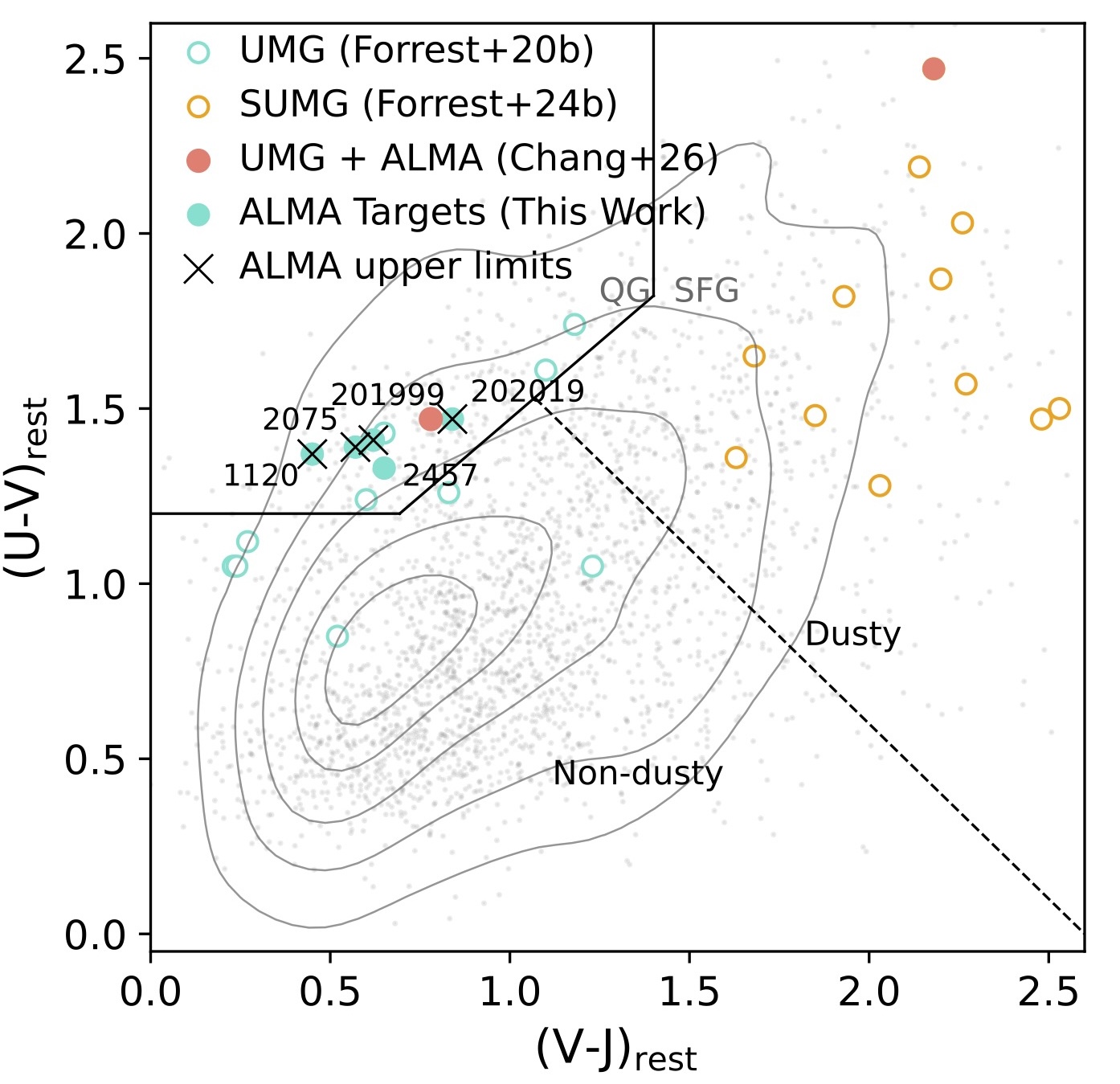
Figure 1: UVJ colour–colour diagram, which uses galaxy colours in the ultraviolet (U), visible (V), and near-infrared (J) to identify quenched galaxies. The five ultramassive galaxies (UMGs) studied here (filled cyan circles) lie firmly in the quenched region (QG), consistent with a lack of ongoing star formation. Crosses indicate galaxies undetected in ALMA dust emission, while other massive galaxies at similar redshifts are shown in grey for comparison. [Chang et al. 2026]
ALMA on the Scene
ALMA observes light at sub-millimetre wavelengths, which at these redshifts traces emission from star-forming regions that are obscured by dust. Of the five ultramassive galaxies in this sample, only one is detected with ALMA. Even when the remaining four galaxies are stacked together, no dust emission is recovered, indicating that if any dust is present, it must be extremely faint.
To better quantify what these ALMA non-detections imply, the authors perform spectral energy distribution fitting (see a recent overview bite on spectral energy distribution fitting) using the Code Investigating GALaxy Emission, or CIGALE, a code that enforces energy balance between absorbed starlight and dust emission to estimate physical properties such as a galaxy’s star formation rate and dust content. With the ALMA constraints included, all five galaxies are found to lie more than 10 times below the star-forming main sequence. Even the single ALMA-detected galaxy remains formally quenched, showing only weak residual star formation.
In other words, these galaxies really are dead (or at least extremely dormant).
Extremely Dust-Poor Galaxies
The spectral energy distribution fitting also allows the authors to measure how much dust these galaxies contain relative to their stellar mass. This ratio provides a simple but powerful way to assess how much interstellar material remains in a galaxy — and therefore how much fuel is left for future star formation.
Three of the five ultramassive galaxies have ratios of Mdust/Mstar < 10-4 (Figure 2), placing them among the most dust-poor quenched galaxies confirmed at z > 3. The lone galaxy detected by ALMA contains slightly more dust, with Mdust/Mstar = 10-3, but even this is far below what would be expected for an actively star-forming galaxy. For comparison, typical star-forming galaxies at similar stellar masses host more than 100 times more dust.
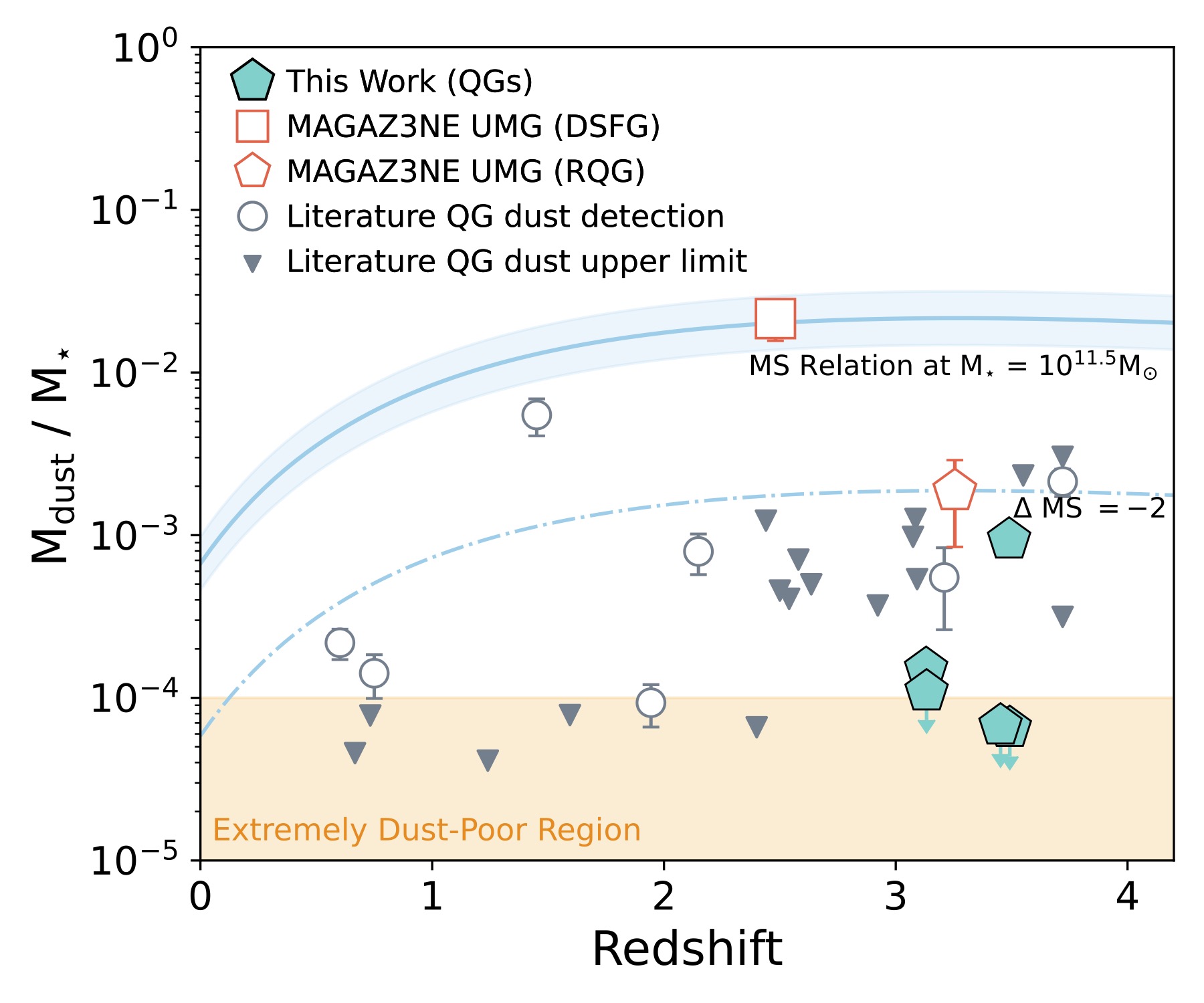
Figure 2: The ratio of dust mass to stellar mass versus redshift for massive quenched galaxies (QGs). This quantity measures how dust rich a galaxy is compared to its stellar mass. The ultramassive galaxies in this study (cyan pentagons) fall well below the dust content expected for star-forming galaxies (solid blue line), highlighting their extreme dust deficiency. [Adapted from Chang et al. 2026]
For now, ALMA has delivered a clear answer to the question of “dead or in disguise?”: at least some candidate ultramassive galaxies in the early universe really are quenched, and they are strikingly dust poor. By ruling out the dusty impostor scenario, this study shows that deep ALMA observations can cleanly distinguish genuinely quenched galaxies from dusty star-forming ones, even at the highest stellar masses and earliest cosmic times. How these galaxies lost their dust remains an open question, but one thing is clear: by the time cosmic noon arrived, some galaxies had already finished forming stars and quietly faded into dormancy.
Original astrobite edited by Viviana Cáceres.
About the author, Lucie Rowland:
I’m a fourth (and final!) year PhD student at Leiden Observatory in the Netherlands, studying massive, star forming galaxies in the early universe with ALMA and JWST. It’s a really exciting time to be interested in astronomy, so I hope to make groundbreaking new research more accessible!
The post Distant Galaxies: Dead or in Disguise? appeared first on AAS Nova.
]]>
Using data from JWST and the Dark Energy Camera, researchers have revisited a long-standing issue with measurements of the famous Bullet Cluster.
The post Featured Image: A Mass Mystery in the Bullet Cluster appeared first on AAS Nova.
]]>The Bullet Cluster is best known for being considered a “smoking gun” for the existence of dark matter, but even a famous galaxy cluster like this one has its secrets. For more than two decades, different measurements of the merging clusters’ dynamical mass ratio have yielded vastly different results. In a recent research article, Boseong Young Cho (Yonsei University) and collaborators used data from JWST and the Dark Energy Camera to revisit the Bullet Cluster and measure its mass ratio using new data. The image above shows a near-infrared view of the Bullet Cluster from JWST, with an overlay of mass contours derived from gravitational-lensing measurements. The team’s analysis assigned a mass of 1.5 quadrillion solar masses for the main cluster (on the left side of the image above), and a mass of 150 trillion solar masses for the subcluster. This suggests a mass ratio of roughly 10, which matches the value supported by hydrodynamical simulations and cements the event as a minor merger. The team also identified three distinct cluster halos (two in the main cluster and one in the subcluster), providing an important constraint on the cluster configuration for future modeling. To learn more about this investigation of the Bullet Cluster, be sure to check out the full research article linked below!
Citation
“Joint JWST–DECam Lensing Reveals that the Bullet Cluster Is a Minor Merger,” Boseong Young Cho et al 2026 ApJ 1005 28. doi:10.3847/1538-4357/ae6a90
The post Featured Image: A Mass Mystery in the Bullet Cluster appeared first on AAS Nova.
]]>The post Traces of Helium Detected in Type Ic Supernova 2014L appeared first on AAS Nova.
]]>Though Type Ic supernovae are classified in part by the lack of helium lines in their spectra, recent modeling of a near-infrared supernova spectrum suggests that helium is present but undetectable in the optical.
The post Traces of Helium Detected in Type Ic Supernova 2014L appeared first on AAS Nova.
]]>The post UGC 2369S: A Kiloparsec-Scale Triple Merger Candidate Identified in a Nearby Luminous Infrared Galaxy appeared first on AAS Nova.
]]>Researchers present the first high-resolution multi-wavelength observations of a triple-nucleus merger, showing one black hole with mass of order 100 million solar masses and two with evidence of tidal disruption.
The post UGC 2369S: A Kiloparsec-Scale Triple Merger Candidate Identified in a Nearby Luminous Infrared Galaxy appeared first on AAS Nova.
]]>
A recent study has leveraged TESS's full-sky coverage to build a catalog of stellar rotation periods for over a million stars.
The post A New Catalog of Stellar Rotation Periods for Over a Million Stars appeared first on AAS Nova.
]]>Stellar rotation is a crucial aspect of not only stellar evolution but also exoplanet science, and a recent study has built the largest catalog of stellar rotation periods to date.
Stellar Opportunities with TESS
Since its launch in 2018, the Transiting Exoplanet Survey Satellite (TESS) has scoured the sky, searching for the signature recurring dip in starlight caused by planetary companions. While the primary goal of TESS is to discover exoplanets, the satellite’s mapping of the entire sky has created a rich database of high-quality photometry for millions of stars. These observations offer ample opportunity for scientists to study stellar properties and behavior across the Milky Way.
In particular, stellar rotation is a key property that traces a star’s age, magnetic activity, and internal structure. For exoplanet science, stellar rotation is both a help and a hindrance: it allows us to study how exoplanets may evolve over time with their host stars, but stellar activity can mimic or drown out planet signals, making them harder to detect. A few studies have investigated stellar rotation periods with TESS, looking at specific star clusters and known planet hosts. To date, however, no existing study has produced a larger catalog of TESS rotation periods — a product that would provide a wealth of information for both exoplanet and stellar evolution science.
Creating a Catalog
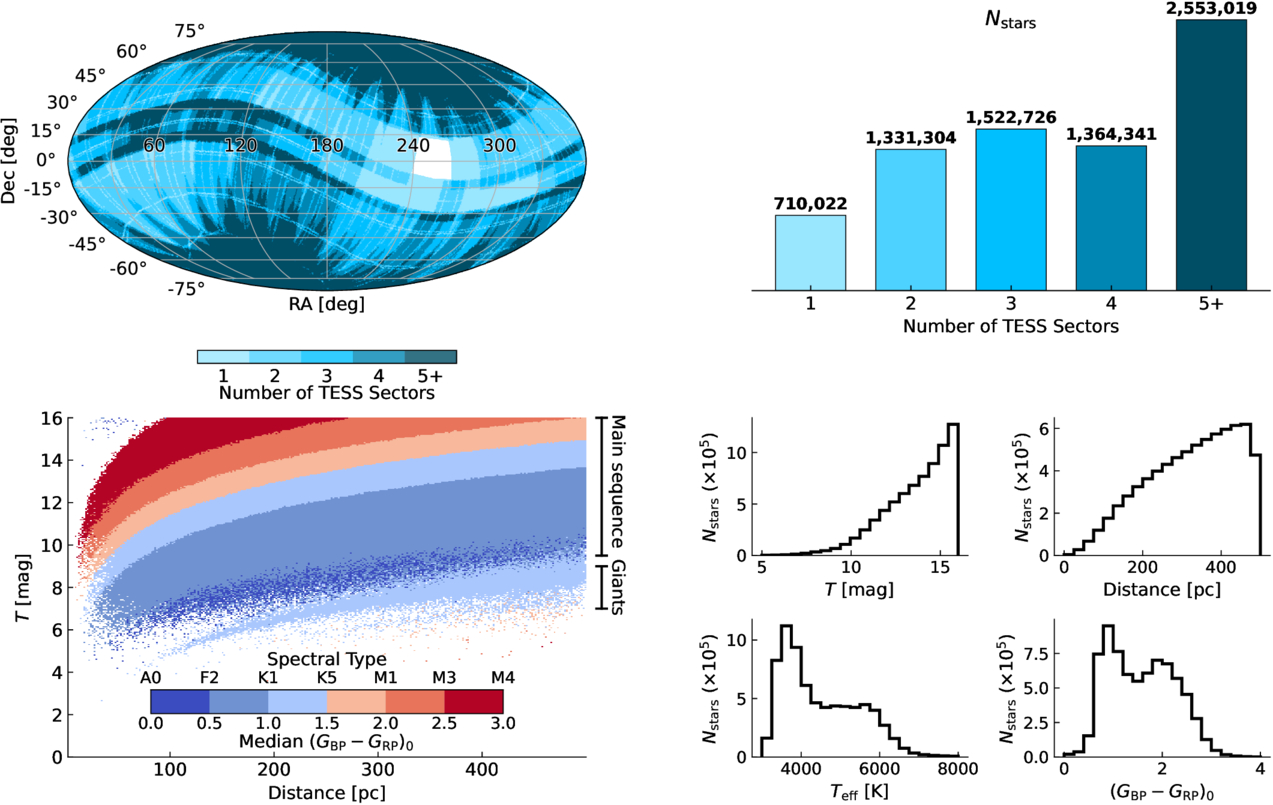
Target sample summary showing the TESS sky coverage (top left), histogram of number of TESS observations per star (top right), TESS magnitude as a function of distance to the star (bottom left), and histograms of magnitude, distance, temperature, and color across the sample (bottom right). Click to enlarge. [Boyle et al 2026]
Not all brightness variations present in a star’s light curve are due to stellar variability — instrumental systematics and artifacts from the spacecraft’s orbital period can produce periodic variability. To combat this, the authors created a classification algorithm to select sources whose periodicity is most likely due to true stellar variability rather than instrumental or observational effects. Pairing this classification with some additional validation criteria, the authors built the TESS All-Sky Rotation Survey (TARS), a catalog of periods for 1,046,317 stars within about 1,600 light-years of our Sun.
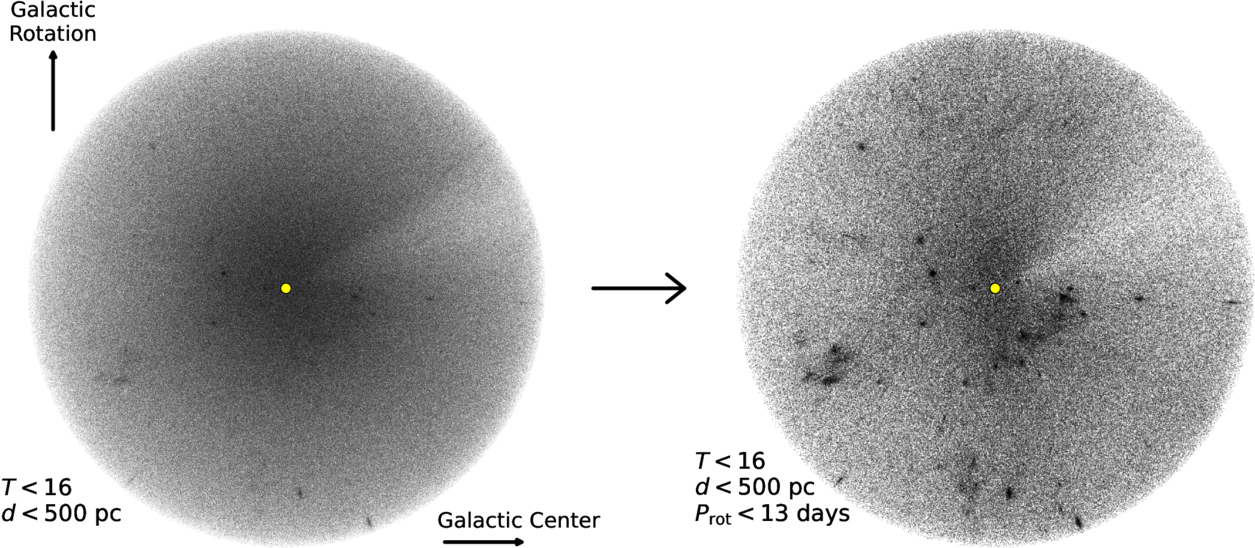
Map of all TARS stars within about 1,600 light-years of the Sun (left) and only the fast-rotating stars in the survey, highlighting clustered populations (right). Click to enlarge. [Boyle et al 2026]
Implications of TARS
Looking more finely at the TARS catalog, the authors provided additional quality cuts to remove other potential sources of stellar variability like binary companions or pulsations. The authors estimated that roughly 93% of their measured periods are due to stellar rotation, which expands the number of stars with known rotation periods by a factor of 2.3 within about 325 light-years and by a factor of 4.0 within about 1,600 light-years. As the largest homogeneous catalog of stellar rotation periods to date, TARS lays the groundwork for studies of stellar evolution, exoplanet discovery and evolution, and even Milky Way structure. For example, the authors found that when mapping the fast-rotating, typically younger stars in TARS, the location of young stellar associations in the local neighborhood became significantly clearer. This underscores the importance of this catalog for a range of science goals, and future work will only improve upon the data provided by TARS.
Citation
“The TESS All-Sky Rotation Survey: Periods for 1,046,317 Stars within 500 pc,” Andrew W. Boyle et al 2026 ApJS 284 75. doi:10.3847/1538-4365/ae6657
The post A New Catalog of Stellar Rotation Periods for Over a Million Stars appeared first on AAS Nova.
]]>The post Radar-Derived Compositional Diversity of the Youngest Martian Volcanics: An Exploratory Study appeared first on AAS Nova.
]]>Using the SHAllow RADar split-chirp technique, researchers showed how orbital radar loss estimates could be used to map the composition of Mars’s volcanics on a global scale.
The post Radar-Derived Compositional Diversity of the Youngest Martian Volcanics: An Exploratory Study appeared first on AAS Nova.
]]>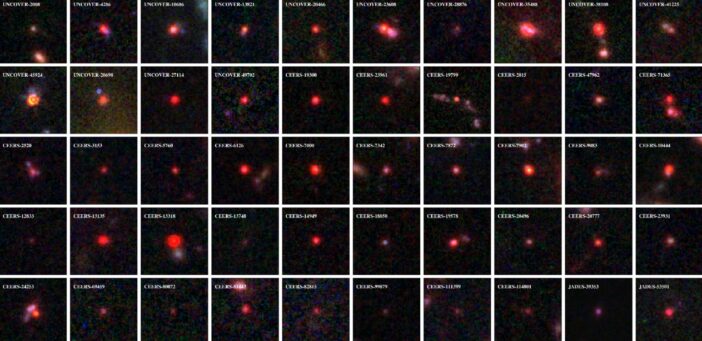
What's behind the population of compact, reddish objects spotted by JWST? Two recent research articles have explored theories involving young globular clusters and little red dots with little blue companions.
The post Two More Thoughts on Little Red Dots appeared first on AAS Nova.
]]>One of the biggest discoveries from JWST’s tenure is a population of compact reddish objects nicknamed “little red dots.” Numerous theories have been proposed to explain the small sizes, high luminosities, and characteristic “V”-shaped spectra of these objects, and today we’ll examine two recent research articles that have explored the identity of the universe’s most mysterious inhabitants.
Red Dot, Blue Dot
You can tell a lot about a person by looking at their friends — and the same might be true for little red dots. A team led by Josephine Baggen (Yale University) examined a sample of 83 little red dots imaged with JWST. They found that 43% of the little red dots in this sample had a little blue companion: an ultraviolet-bright object within a projected separation of 1,630–16,300 light-years. The brightest little red dots were even more likely to have a blue companion; 80% of the brightest objects in the sample were paired up.
Baggen’s team set out to test the hypothesis that these red–blue pairs are fundamentally linked rather than coincidental. Under this hypothesis, the ultraviolet-bright blue companions were assembled first. The ultraviolet radiation from these objects suppressed the cooling of molecular hydrogen in pristine gas clouds in the early universe, causing the gas to skip the usual star-forming process and instead form a massive compact object such as a black hole star, supermassive star, or quasi-star — which we see as a little red dot.
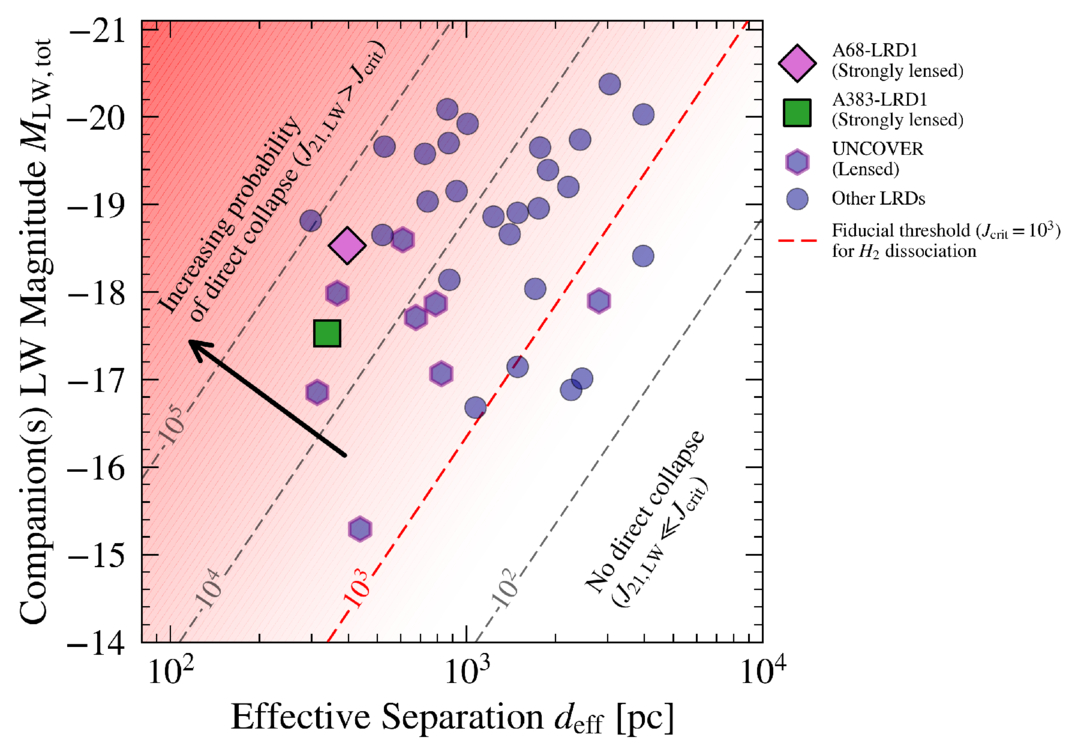
The companion’s mean flux density from 91.2 to 111 nm versus projected separation between the blue companion and the little red dot. The red dashed line shows the estimated values necessary for gas clouds to collapse. Click to enlarge. [Baggen et al. 2026]
If little red dots form thanks to their little blue companions, that would imply that every little red dot has or had such a companion. Though little blue companions weren’t so universal in the sample used in this work, the team noted that their analysis techniques, combined with observational limitations and other factors, likely yielded a smaller number of blue companions than are actually present. Further simulations exploring the collapse of pristine gas clouds into massive compact objects and high-resolution spectroscopic observations of little red dots can illuminate the potential link between these objects.
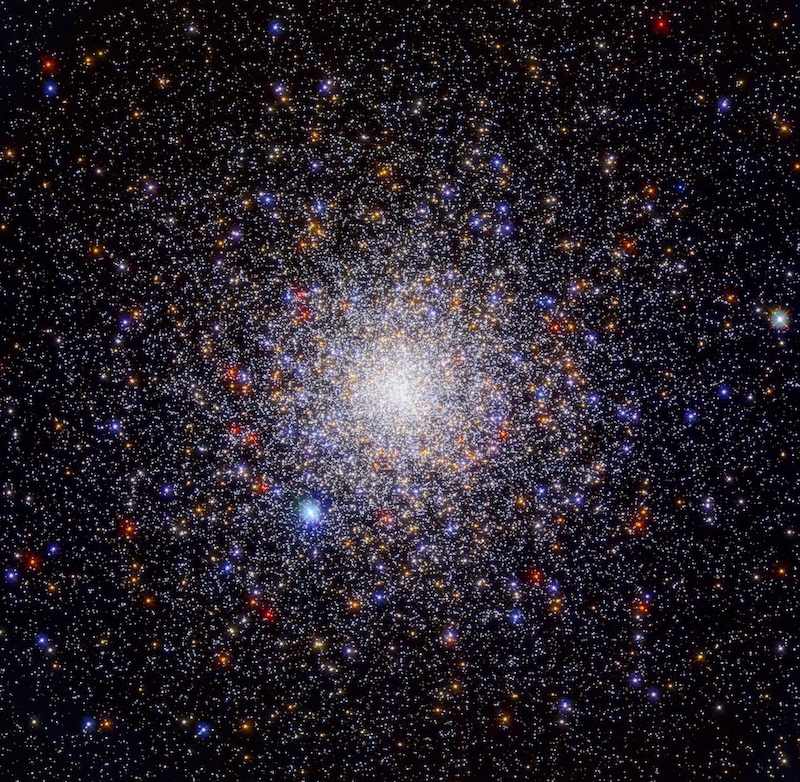
The densely packed globular cluster NGC 1851, as seen by the Hubble Space Telescope. [NASA, ESA, and G. Piotto (Università degli Studi di Padova); Processing: Gladys Kober (NASA/Catholic University of America)]
Little Red Dots as Young Globular Clusters
John Chisholm (The University of Texas at Austin) and collaborators hypothesized that little red dots represent a brief phase in the formation of globular clusters. In this hypothesis, the rest-frame ultraviolet emission of little red dots comes from the hot young stars of the newborn cluster, while the rest-frame optical emission comes from a single supermassive star at the cluster’s heart. Thus, in this framework, the little red dot phase lasts only as long as the fleeting lifespan of the supermassive star.
Chisholm’s team first showed that the spectrum of a young globular cluster with a supermassive star at its center is similar to the observed spectrum of a little red dot. But showing that the emission properties of globular clusters in formation and little red dots are similar is not enough — it’s also necessary to investigate whether the numbers and masses of these objects line up.
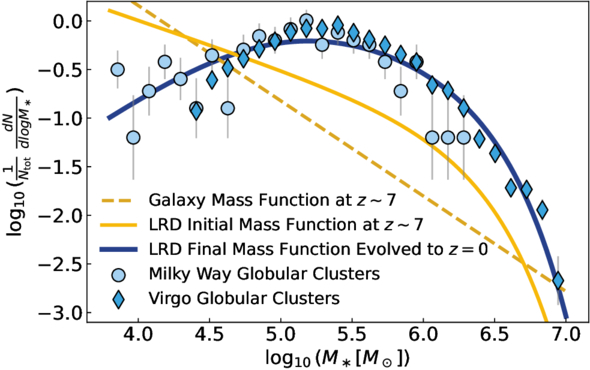
Comparison of the mass functions of little red dots evolved forward to the present day (blue line) and globular clusters in the Milky Way and Virgo (blue symbols). The results for both populations have been normalized to emphasize the shape of the distributions. Click to enlarge. [Chisholm et al. 2026]
In addition to describing how the properties of globular clusters in formation match those of little red dots, Chisholm’s team outlined some testable predictions for this scenario, including formation timescales and chemical abundance patterns. If this hypothesis withstands further scrutiny, little red dots may provide a valuable look at the early years of some of our universe’s oldest star clusters.
Citation
“Connecting the Dots: UV-Bright Companions of Little Red Dots as Lyman–Werner Sources Enabling Direct-Collapse Black Hole Formation,” Josephine F. W. Baggen et al 2026 ApJL 1002 L4. doi:10.3847/2041-8213/ae58a5
“Little Red Dots as Globular Clusters in Formation,” John Chisholm et al 2026 ApJL 1004 L4. doi:10.3847/2041-8213/ae6dae
The post Two More Thoughts on Little Red Dots appeared first on AAS Nova.
]]>The post Excavating the Ruins: An Ancient <em>z</em> = 2.675 Galaxy Which Formed in the First 500 Myr appeared first on AAS Nova.
]]>Analysis of JWST and Hubble Space Telescope observations of the galaxy “Eridu” suggests that the galaxy formed within 300 million years of the Big Bang and was quenched by a redshift of z ~ 10.
The post Excavating the Ruins: An Ancient <em>z</em> = 2.675 Galaxy Which Formed in the First 500 Myr appeared first on AAS Nova.
]]>
Astrobites reports on the first case of a supermassive black hole discovered away from its galaxy’s center, exposed when it tore apart a star in a tidal disruption event.
The post A Wandering Supermassive Black Hole Eating a Star appeared first on AAS Nova.
]]>Editor’s Note: Astrobites is a graduate-student-run organization that digests astrophysical literature for undergraduate students. As part of the partnership between the AAS and astrobites, we occasionally repost astrobites content here at AAS Nova. We hope you enjoy this post from astrobites; the original can be viewed at astrobites.org.
Title: The Wandering Supermassive Black Hole Powering the Off-Nuclear Tidal Disruption Event AT2024tvd
Authors: M. Guolo et al.
First Author’s Institution: Johns Hopkins University
Status: Published in ApJL
A Star Gets Eaten in the Wrong Neighborhood
We find supermassive black holes at the centers of most large galaxies. They end up there because of how galaxies form: as matter collapses and merges over time, material sinks to the gravitational center, and the black hole settles in.
So, what happens when we catch a star being ripped apart by a supermassive black hole that is not at the center of its galaxy?
That is exactly the puzzle posed by AT2024tvd, a tidal disruption event (TDE) spotted roughly 2,600 light-years from the center of a massive galaxy located 600 million light-years away from us (see Figure 1).
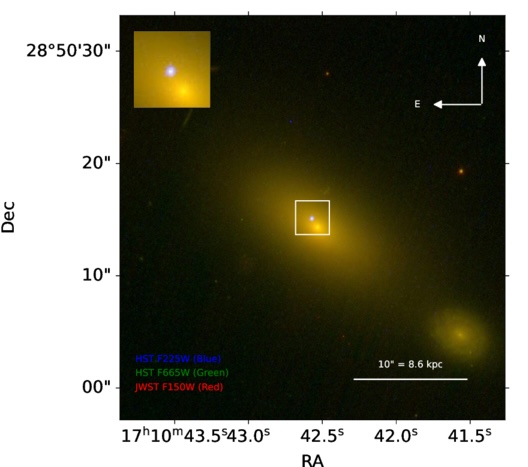
Figure 1: A color image of AT2024tvd from the Hubble Space Telescope and JWST. The yellow dot inside the square marks the galaxy’s center, while the TDE is the white dot, which is visibly offset to the upper left, about 2,600 light-years away. [Adapted from Guolo et al. 2026]
Measuring Mass Using Light
To figure out the mass of the black hole responsible for AT2024tvd, the authors needed to get creative. You cannot weigh a black hole directly, so astronomers have to work backward from what they can see. The key idea is that a black hole’s mass controls how its accretion disk behaves. A more massive black hole produces a larger, cooler disk, while a less massive one produces a smaller, hotter disk. By measuring how bright the disk is at different wavelengths and how hot it gets, you can figure out how massive the black hole must be.
The authors did this by modeling the light the event produced across many wavelengths. They combined data from several telescopes: the Zwicky Transient Facility, the Neil Gehrels Swift Observatory, Pan-STARRS, and two rounds of high-quality X-ray data from XMM-Newton. TDE light curves go through different phases. The early flare in visible and ultraviolet light is bright but complicated, and the physical processes behind it are not fully understood. But after a few hundred days, TDEs settle into a quieter “plateau phase,” where the ultraviolet and visible light come directly from the accretion disk. At this stage, the emission follows well-understood physics, and astronomers can model it reliably.
The authors used a model called kerrSED, which describes the spectral energy distribution (SED) of a spinning black hole’s accretion disk (kerr). It accounts for the disk’s temperature, its physical size, the black hole’s spin (how fast it rotates), and the angle at which we are viewing the system. It also accounts for a process called Comptonization, where hot electrons near the black hole boost lower-energy photons (particles of light) up to X-ray energies. By fitting this model to the observed light at multiple wavelengths simultaneously, the authors could pin down the disk properties and extract the black hole mass. The result was a clean fit: the disk model alone could explain all the observed light during the plateau phase, with nothing significant left over (see Figure 2).
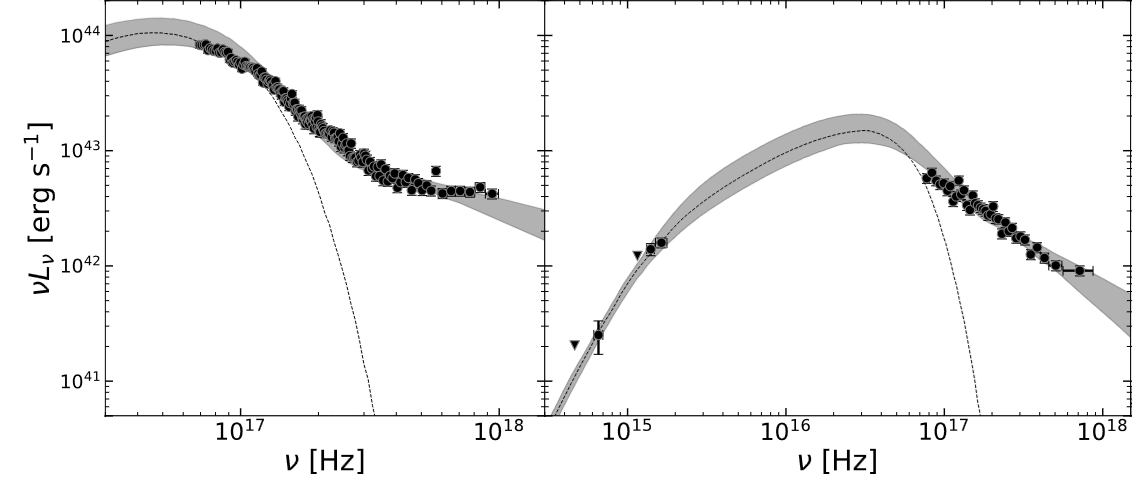
Figure 2: The brightness of AT2024tvd measured across a wide range of wavelengths, after correcting for absorption and the galaxy’s motion. The symbols show individual measurements from different telescopes, while the shaded contours represent the best-fit disk model and its uncertainty. Left: The early X-ray data, which is well explained by emission from the hot inner accretion disk. Right: The later data covering both visible/ultraviolet light and X-rays, all consistently explained by the same disk model. [Adapted from Guolo et al. 2026]
Not an Intermediate, but a Supermassive Black Hole
From their fit, the authors found a black hole mass of about one million solar masses. Black holes above about 100,000 solar masses are considered supermassive, while those below that threshold but above about 100 solar masses are called intermediate-mass black holes. So, this puts AT2024tvd in the supermassive category. This matters because the two previously known off-nuclear TDEs, called 3XMM J2150-05 and EP240222a, were both powered by intermediate-mass black holes. Those black holes were found inside small, dense collections of stars called ultra-compact dwarf galaxies that were orbiting larger host galaxies.
AT2024tvd is different. When the authors looked at deep images of the location where the TDE happened, they found no star cluster or small galaxy there. Whatever group of stars once surrounded this black hole has been almost entirely pulled apart by the gravity of the much larger parent galaxy. The ratio of the black hole’s mass to the mass of any remaining stars around it is extreme: greater than 3%, which is far above what we normally see. This is the signature of a “wandering” supermassive black hole, one that was brought in during a past galaxy merger and has been slowly sinking toward the center of its new host ever since, losing its surrounding stars along the way.
The authors compared AT2024tvd to other TDEs using established relationships between accretion disk properties and black hole mass (Figure 3). In terms of its disk temperature, luminosity, and inferred mass, AT2024tvd behaves like a typical nuclear TDE powered by a supermassive black hole. However, when placed on the black hole mass versus host stellar mass relation, it stands out as a strong outlier. The black hole mass is far too large for the small amount of surrounding stellar mass detected at its location.
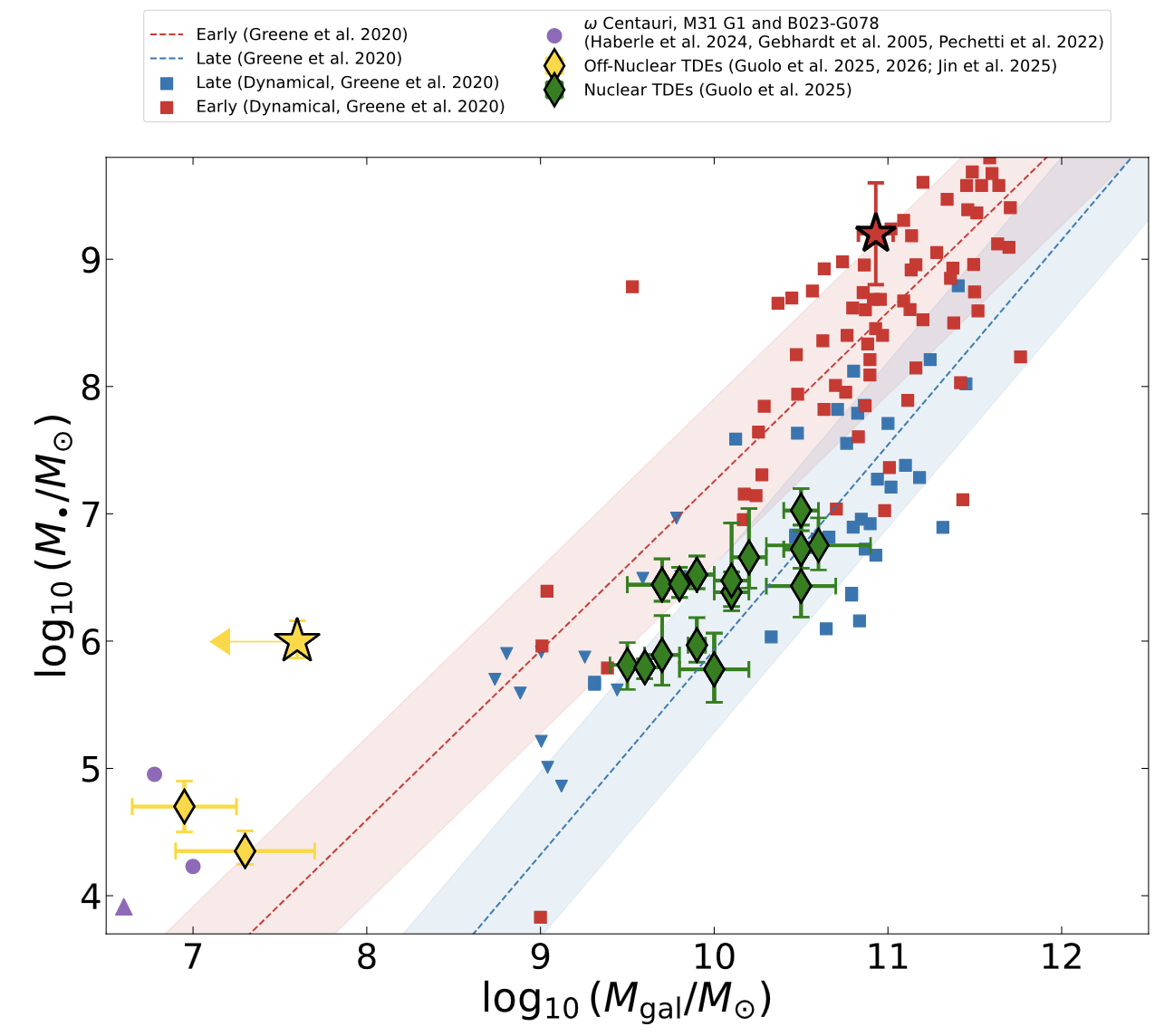
Figure 3: AT2024tvd (yellow star) plotted on the relationship between black hole mass and host galaxy stellar mass. Red squares show nearby galaxies with dynamically measured black hole masses plotted against galaxy bulge stellar mass, while blue squares show the relation using total galaxy stellar mass. Purple points and green diamonds represent nuclear TDE host galaxies with black hole masses inferred from different TDE modeling techniques. Yellow diamonds mark the two previously known off-nuclear TDEs. AT2024tvd stands out as a clear outlier, with a very high black hole mass compared to the upper limit on any surrounding stellar mass. [Guolo et al. 2026]
The Big Picture
This discovery matters for several reasons. It shows that off-nuclear TDEs are not limited to intermediate-mass black holes sitting in small satellite galaxies. Some are powered by fully supermassive black holes that have been displaced from their original galactic centers. It also shows that TDE modeling, when done carefully during the plateau phase of the light curve (when the emission is dominated by well-understood accretion disk physics), can provide reliable black hole masses on its own, without assuming any relationship between the black hole and its host galaxy. This is particularly important for wandering black holes, where those relationships do not apply.
Looking ahead, upcoming surveys like Vera C. Rubin Observatory’s Legacy Survey of Space and Time are expected to find many more off-nuclear TDEs. Combined with X-ray follow-up from telescopes like XMM-Newton, these events could become our main tool for mapping out the population of displaced black holes in the nearby universe. One disrupted star at a time, we are starting to find black holes that theory told us should exist but that had, until now, stayed hidden.
Original astrobite edited by Kelsie Taylor and Veronika Dornan.
About the author, Serat Saad:
Serat is a first-year PhD student in astronomy at The Ohio State University. His research is on stellar and galactic dynamics, where he uses observational data to understand gravity. He also has interests in active galactic nuclei and tidal disruption events.
The post A Wandering Supermassive Black Hole Eating a Star appeared first on AAS Nova.
]]>The post Probing the Origin of the Kilonova Candidate GRB 230307A: Analysis of Host Galaxy and Offset appeared first on AAS Nova.
]]>The combination of data and binary neutron star merger simulations shows that the source of GRB 230307A is unlikely to be a globular cluster; a disk origin is possible but requires finely tuned conditions.
The post Probing the Origin of the Kilonova Candidate GRB 230307A: Analysis of Host Galaxy and Offset appeared first on AAS Nova.
]]>
The galaxy seems to be full of free-range Neptunes, but a closer look reveals some complicated family dynamics in planetary systems.
The post Detached but Not Alone appeared first on AAS Nova.
]]>Microlensing surveys have discovered plenty of regular exoplanets, but more surprisingly, they’ve also turned up many solo Neptunes with no star nearby. New research suggests that first impressions might be deceiving, however, and that at least some of these planets might not be so alone: they just have a complicated family history.
An Abundance of Exo-Neptunes
There are simply too many Neptune-like exoplanets in our galaxy. Or at least that’s the current feeling astronomers get from gravitational microlensing surveys, which look for exoplanets during short-lived magnification events caused by chance alignments between stars. These surveys have now found about a dozen so-called “free-floating” planets, and while this doesn’t sound like that many, running the numbers reveals that this tiny sample implies that there are about two free-floating Neptune-size planets for every star in the galaxy.
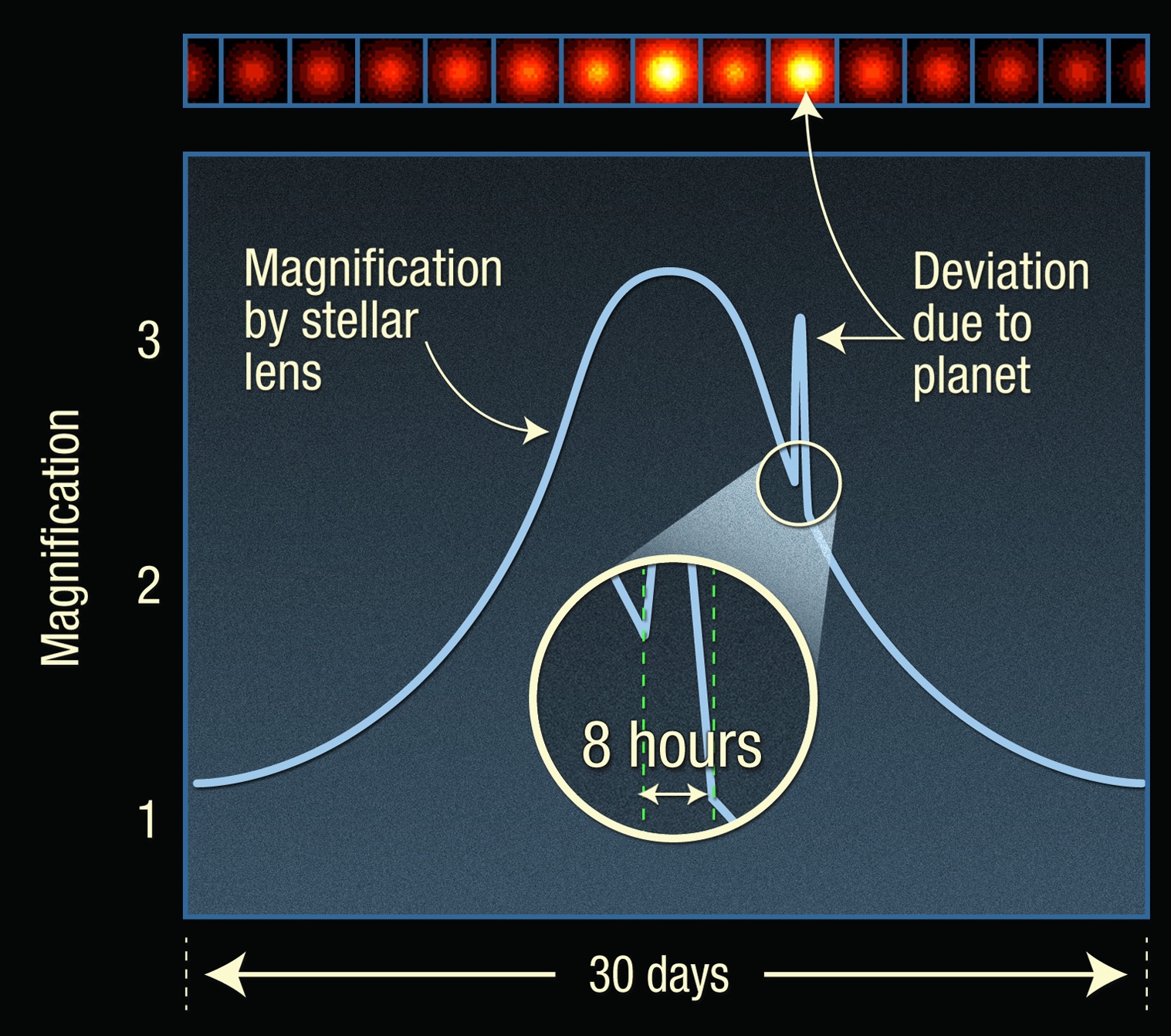
An illustration of how exoplanets are found via microlensing. The broad first bump is caused by the host star magnifying the light from a background star; the narrow second bump is caused by the planet acting as a lens as well. “Free-floating” planets create only one bump. [Adapted from NASA, ESA, and A. Feild (STScI)]
However, new research by Sam Hadden (Canadian Institute for Theoretical Astrophysics) and Yanqin Wu (University of Toronto) presents an alternative idea: what if at least some of these free-floating planets aren’t fully on their own, but instead remain estranged but weakly bound to their parent stars?
Simulated Scattering
Two celestial objects need to align nearly perfectly in order to create a microlensing pulse that we can detect. For an exoplanet orbiting a star, we should observe two of these pulses: one when the host star drifts in and out of alignment with a background star, and one when the nearby bound planet does the same. In the case of a free-floating planet, there’s only one pulse, and we therefore assume that there is no host star. Hadden and Wu noticed that since the alignment has to be so precise for microlensing to occur, it’s possible that a seemingly free-floating planet is simply widely separated from its host star, and the star managed to dodge the magnification effect. In other words, these planets might not be free floating at all, just on wide and eccentric orbits.
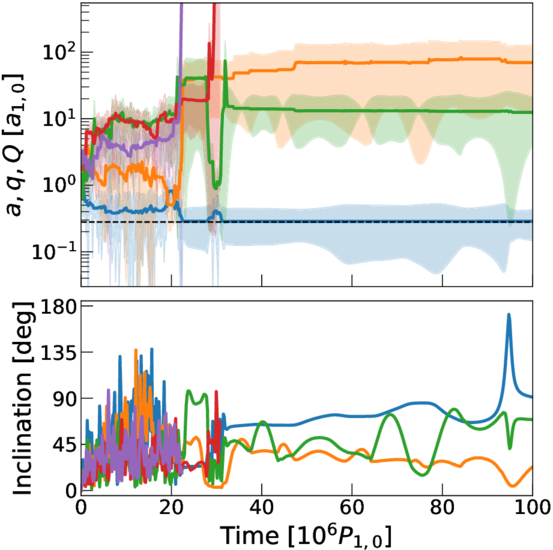
The orbital evolution of a five-planet system that undergoes planet–planet scattering. Each line represents one planet; note that in the end two are ejected, two end up on wide detached orbits, and the fifth ends up on a tightly bound inner orbit. Click to enlarge. [Hadden & Yu 2026]
They found that both types of simulations readily created the “detached” objects needed to mimic free-floating planets. In fact, the most common outcome was for two or three planets to be bullied into far-out orbits by a planet that then plunges onto a tight inner orbit extremely close to the star.
Though the authors caution that this process likely doesn’t explain all of the free-floating planets observed to date, this is an exciting model that would dramatically lower our estimates of the number of Neptunes roaming alone between the stars.
Citation
“Free Floating or Merely Detached?,” Sam Hadden and Yanqin Wu 2026 ApJ 1000 70. doi:10.3847/1538-4357/ae6508
The post Detached but Not Alone appeared first on AAS Nova.
]]>The post Searching for Extragalactic Exoplanets: A Survey of the Sagittarius Dwarf Galaxy Stream with TESS appeared first on AAS Nova.
]]>A search for extragalactic exoplanets in data from the Transiting Exoplanet Survey Satellite detected none, but the analysis suggested that investigations of additional stellar streams may find these sought-after worlds.
The post Searching for Extragalactic Exoplanets: A Survey of the Sagittarius Dwarf Galaxy Stream with TESS appeared first on AAS Nova.
]]>The post JWST Edge-On Disk Ice (JEDIce): Program Overview and Ice Survey Results appeared first on AAS Nova.
]]>In a survey of five protoplanetary disks, researchers find ice features, CO:CO2 mixtures, micron-sized dust, atomic and molecular gas, polycyclic aromatic hydrocarbons, and more.
The post JWST Edge-On Disk Ice (JEDIce): Program Overview and Ice Survey Results appeared first on AAS Nova.
]]>
JWST observations serendipitously revealed new emission features from fullerenes, the largest molecules definitively detected in space.
The post New Spectral Signs of Buckyballs Discovered in Planetary Nebula appeared first on AAS Nova.
]]>Fullerenes — a class of molecules composed entirely of interconnected carbon atoms — are the largest molecules definitively detected in space. Researchers using JWST to study a planetary nebula have found new spectral features from a fullerene composed of 60 carbon atoms, offering another way to study how these molecules form and survive in space.
Full of Fullerenes
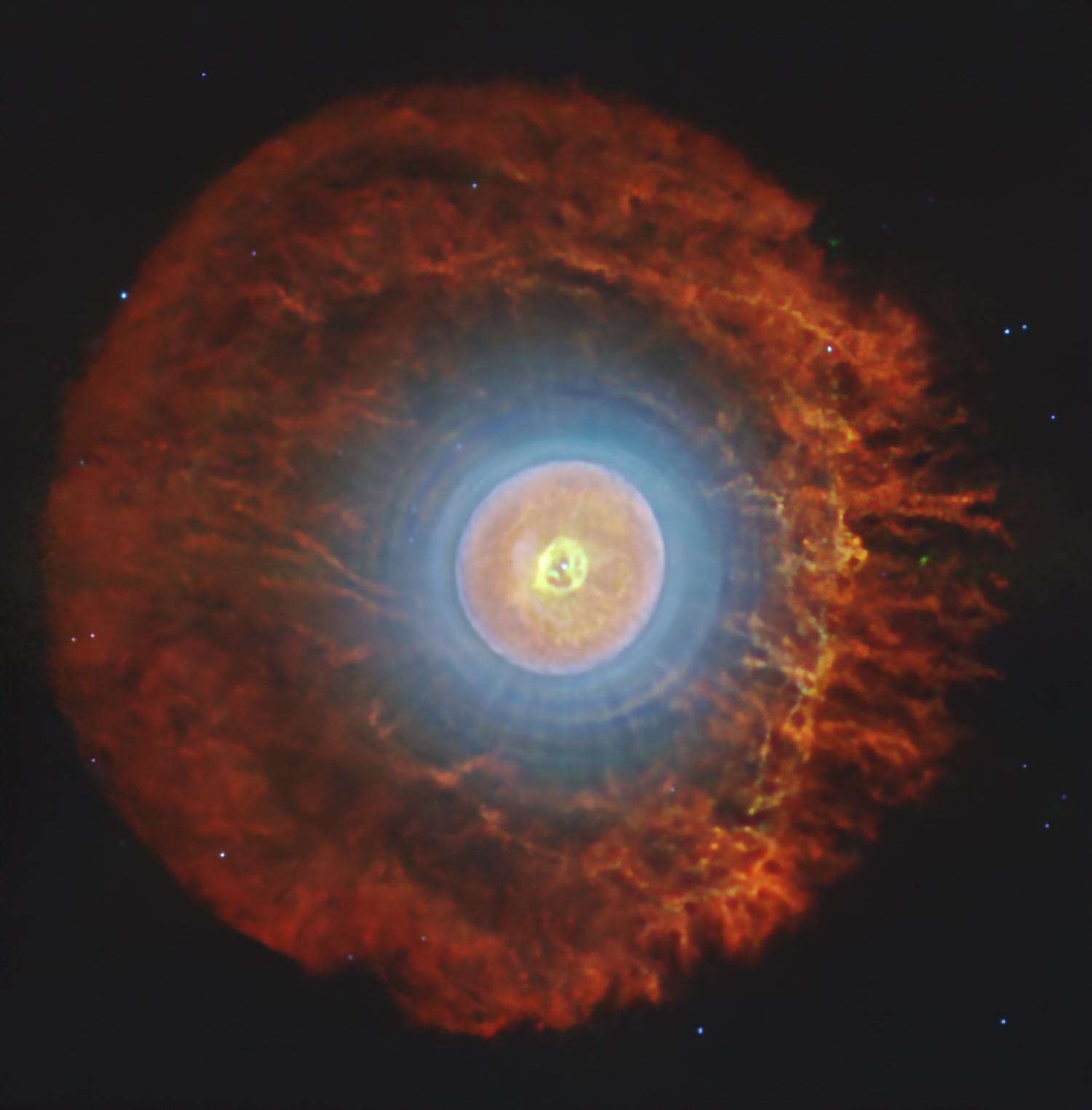
Planetary nebula Tc 1 as seen by JWST. [NASA / ESA / CSA / Western University, J. Cami]
Since that discovery, Tc 1 has been a hot spot for studies of buckyballs. However, researchers are still puzzling over how these large molecules form and survive in harsh space environments.
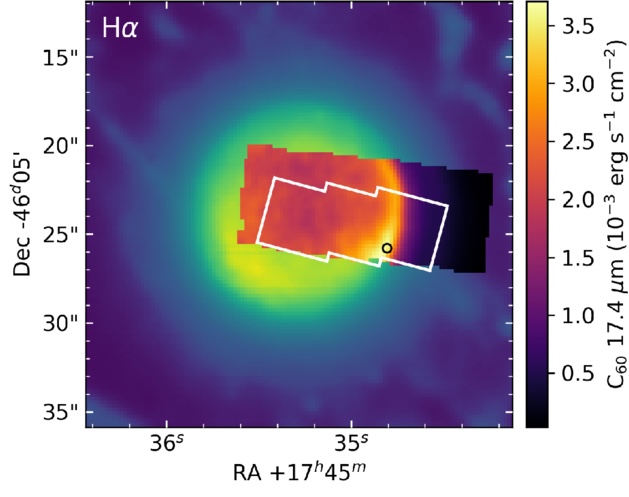
A closeup of the center of Tc 1, showing the region observed with JWST’s Mid-Infrared Instrument (black-to-yellow color scale) and Near-Infrared Spectrograph (white outline). The background color scale shows the nebula’s H-alpha emission as seen by the Very Large Telescope. [Adapted from Giese et al. 2026]
From Spitzer to JWST
Morgan Giese (The University of Western Ontario) and collaborators recently reported on the results of a JWST observing program that aimed to understand how fullerenes respond to changes in their environment. The team mapped the distribution of C60 molecules at varying distances from the powerful ionizing radiation of Tc 1’s central star.
The team successfully spotted the emission features from the fullerene C60 seen in earlier observations, but they also turned up something unexpected: a handful of prominent emission features from 3.5 to 5.2 microns that had not been reported previously.
Feature Presentation
What’s the source of these emission features? The distribution of the emission provides a strong clue: known spectral features from fullerenes C60 and C70 are concentrated in a narrow, bright ring around the center of the nebula, with diffuse emission suffusing the rest of the nebula — and the newfound spectral features follow the same distribution.
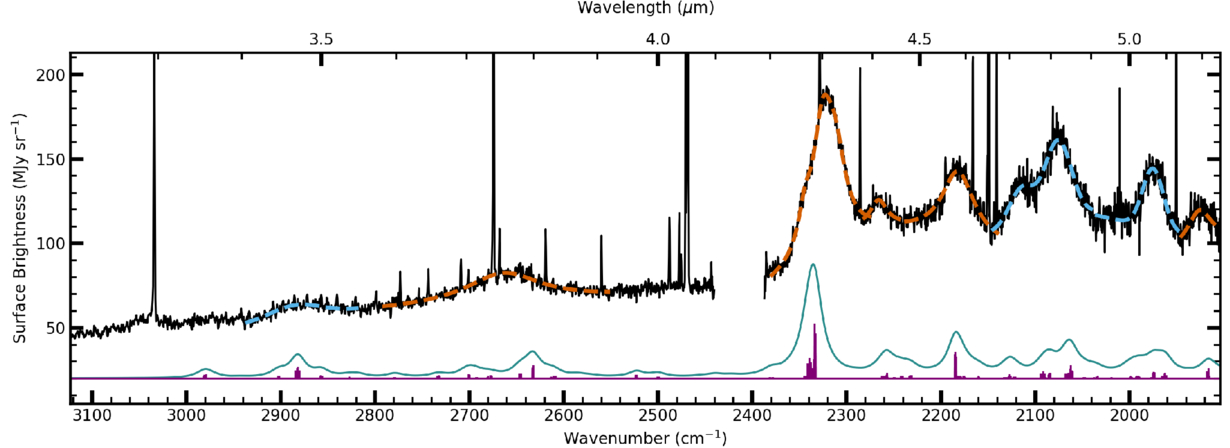
JWST spectrum of Tc 1 (black line) extracted from the area indicated by a black circle in the previous image. The orange and blue dashed lines show fits to the newfound emission bands, and the results of the anharmonic calculations are shown as the teal line below the JWST spectrum. Click to enlarge. [Giese et al. 2026]
Giese and coauthors found that 17% of the energy emitted by the C60 molecules in Tc 1 is released in these combination bands, suggesting that these features must be taken into account when modeling the cooling of C60 molecules. The discovery of new fullerene spectral features also has implications for future studies of these molecules: since these features appear in a wavelength range where features from other complex molecules like polycyclic aromatic hydrocarbons are weak, these newly identified bands provide a promising way to spot and study fullerenes across space environments.
Citation
“Detection of C60 Combination Bands in the Near-IR Spectrum of Tc 1,” Morgan M. Giese et al 2026 ApJL 1004 L32. doi:10.3847/2041-8213/ae76d5
The post New Spectral Signs of Buckyballs Discovered in Planetary Nebula appeared first on AAS Nova.
]]>The post Raman Spectroscopy of Salt Deposits from the Simulated Subsurface Ocean of Enceladus appeared first on AAS Nova.
]]>Using weakly and strongly alkaline materials frozen under vacuum conditions similar to those on Enceladus, researchers have shown that Raman spectroscopy can distinguish between critical mineral phases.
The post Raman Spectroscopy of Salt Deposits from the Simulated Subsurface Ocean of Enceladus appeared first on AAS Nova.
]]>The post Kinematics and Untwisting Motion of an Intriguing Jet-Like Prominence Eruption appeared first on AAS Nova.
]]>Detailed imaging and spectroscopy have revealed the behavior of a prominence eruption, showing evidence of transverse motions that are consistent with Alfvén waves.
The post Kinematics and Untwisting Motion of an Intriguing Jet-Like Prominence Eruption appeared first on AAS Nova.
]]>
Astrobites reports on the potential detection of intermediate-mass black holes in the early universe — signs of black holes seeded by direct collapse.
The post Black Holes Reveal Their Seeds appeared first on AAS Nova.
]]>Editor’s Note: Astrobites is a graduate-student-run organization that digests astrophysical literature for undergraduate students. As part of the partnership between the AAS and astrobites, we occasionally repost astrobites content here at AAS Nova. We hope you enjoy this post from astrobites; the original can be viewed at astrobites.org.
Title: A GLIMPSE of Intermediate Mass Black Holes in the Epoch of Reionization: Witnessing the Descendants of Direct Collapse?
Authors: Qinyue Fei et al.
First Author’s Institution: University of Toronto
Status: Published in ApJ
In the late 2010s, astronomers were getting hints of something strange going on in the early universe. Using the most powerful telescopes on the ground, we were able to find black holes in the centers of some of the most distant galaxies. The light from these active galactic nuclei (AGNs) was emitted over 12 billion years ago, revealing conditions close to the beginning of cosmic time.
To an astronomer, that’s the mundane part. I’m only half joking — thousands of AGNs had already been identified in the previous half century. However, the most distant of these sources were startling because their central black holes appeared much more massive than expected. To be specific, we know how much mass black holes can start with, and we can write down equations to predict how quickly they should grow. The AGNs we observed seemed to violate these predictions. This raised some serious questions and was highlighted as a major point of inquiry to focus on going into the 2020s.
Then JWST launched, and the mystery grew deeper. No matter where we looked, enormous black holes kept cropping up in astonishing numbers. Astronomers who model the universe with equations and computer simulations have tried to explain these results, but this has been a serious challenge. Some researchers have broken the emergency glass and reached for a highly theoretical tool: the direct-collapse black hole. Unlike the normal pathway for forming black holes (the deaths of massive stars), this model suggests that an enormous cloud of gas could directly collapse into a black hole without forming a star at all. The resulting black holes could have as much mass as a hundred thousand Suns put together — orders of magnitude more than a “normal” black hole. Although this pathway can explain the presence of huge black holes so early in the universe’s history, we’ve never directly seen this happen, so for now it remains just a theoretical possibility.
However, if direct-collapse black holes were widespread at early times, there is one indirect signature we might be able to detect: a large population of intermediate-mass black holes with masses between a hundred thousand and a million times that of the Sun. If we can find such a population, we’ll have strong evidence for the direct-collapse model. Let’s go looking!
Intermediate Mass, Impossible Difficulty
Identifying intermediate-mass black holes requires a tricky combination of spectral resolution and sensitivity. Light from an object must be examined very finely in order to detect the telltale features of an intermediate-mass black hole. However, these sources are already quite faint, so spreading their emission this thin means that any potential signal is very likely to get lost in the noise.
The authors of today’s article use an unprecedented set of observations to leap over this hurdle and directly probe intermediate-mass black holes. They not only use the most sensitive spectroscopic instrument (NIRSpec) on the most powerful space telescope (JWST), but they take advantage of a phenomenon known as gravitational lensing.
According to Einstein’s general theory of relativity, gravity is the result of matter curving spacetime. Areas with more concentrated matter will experience stronger curvature. When an object traveling in a completely straight line moves through curved space, its path appears bent. This same effect happens to light. Intriguingly, a large concentration of matter can redirect diverging rays of light to a focus, acting like an enormous magnifying glass.
Astronomers take advantage of gravitational lensing by pointing telescopes at massive clusters of galaxies. The intense gravity of these regions can magnify sources in the background by tens or even hundreds of times. Galaxies that would be impossibly faint to see under normal conditions can thus be observed if they are strongly lensed, making this a powerful technique to examine otherwise hidden objects.
Putting Faint AGNs Under a Lens
The Galactic Legacy Infrared Mid-Plane Survey Extraordinaire (GLIMPSE) program took extremely powerful observations of a galaxy cluster called Abell S1063 using JWST. The long exposure time, combined with the lensing power of the cluster, allows extremely faint sources in the background to be seen in unprecedented detail. The researchers scoured the data to search for signs of active black hole growth in the observed galaxies. Specifically, they carefully studied the emission lines in the spectrum of each object.
Normally, emission lines appear narrow. However, gas surrounding a massive black hole circulates at rapid speeds. A phenomenon known as the Doppler effect then comes into play. This is the same effect responsible for the characteristic rise and fall in the pitch of a siren from an emergency vehicle passing by. Emission from gas moving toward our line of sight appears bluer than it otherwise would, and gas moving away from us appears redshifted. The net effect is that a single emission line is widened, and we see characteristic “broad wings.” The width of the emission line can be used to estimate the mass of the central black hole, where broader wings imply a more massive black hole.
The researchers uncover 10 AGNs that display broadened Balmer series lines. Strikingly, they estimate that these galaxies have central black holes with masses as low as 400,000 times that of the Sun. While that might sound like a lot, it’s practically nothing compared to the monstrous 100-million-solar-mass black holes that JWST consistently turns up in other studies. Detecting such lightweight black holes, pushing into the realm of intermediate-mass black holes, is only possible due to the incredible sensitivity of these observations.
The researchers also compute what’s known as the black hole mass function. This is a measure of how many black holes exist at each mass. In other words, the black hole mass function measures how common lightweight black holes are compared to heavy ones. The mass function computed in this work and several other points of comparison are shown in Figure 1.
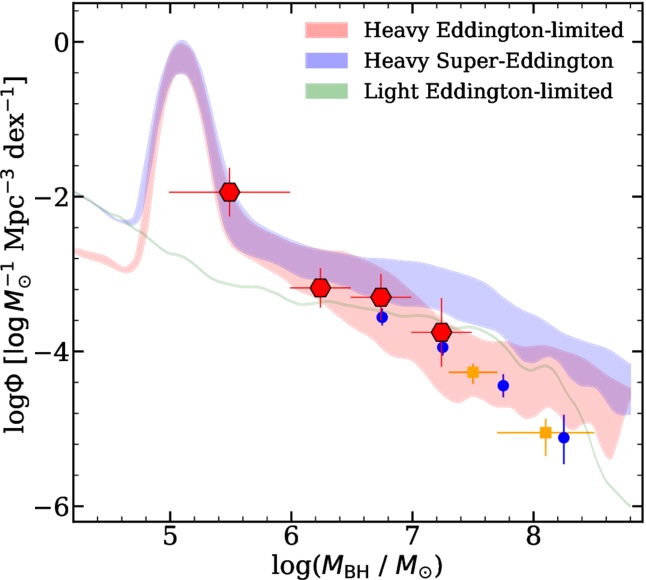
Figure 1: A comparison of black hole mass functions from various previous works and today’s article. The red hexagons are data points computed using the AGNs observed in this work, while blue circles and yellow squares are measurements computed using AGNs observed in previous articles. The red, green, and blue shaded areas represent the expected black hole mass function from various theoretical models. [Adapted from Fei et al. 2026]
Amazingly, this is exactly the measurement you would get if direct-collapse black holes (the hypothetical kind of massive black holes mentioned earlier in this article) were common in the early universe. If you scatter huge seeds across a large field, then you shouldn’t be surprised to see a sea of barely larger plants a few months later. Likewise, since these black holes start off so massive, they only need to grow a tiny bit to reach the threshold of that first red hexagon.
So is this proof that the early universe was filled with direct-collapse black holes, with this study probing the tip of an astonishing iceberg? It’s too early to tell for sure. While this is certainly an exciting result that sheds light on a previously unexplored population of objects, one can only do so much with a sample size of 10. More follow-up observations will be needed to measure the black hole mass function more precisely. Still, it’s amazing to think how much has changed in just a few years. JWST continues to provide unprecedented insight into some of the most breathtaking questions in all of astronomy.
Original astrobite edited by Tori Bonidie.
About the author, Ansh Gupta:
I’m an astronomy graduate student at the University of Texas at Austin working with Steven Finkelstein. I use data from JWST to study the formation and growth of the first galaxies and black holes in the universe. In my spare time, I enjoy playing piano, reading, and making YouTube videos.
The post Black Holes Reveal Their Seeds appeared first on AAS Nova.
]]>
A newly discovered molecular cloud in the Milky Way displays a surprising spiral structure.
The post Featured Image: A Spiral Cloud in the Milky Way appeared first on AAS Nova.
]]>The image above shows a newly discovered molecular cloud. This cloud was discovered through the Milky Way Imaging Scroll Painting project, which uses a 13.7-meter millimeter telescope to survey molecular clouds in our galaxy. Xuepeng Chen (Purple Mountain Observatory; University of Science and Technology of China) and collaborators came upon this cloud in survey data from a region of the Milky Way opposite the galactic center. The newfound cloud is roughly 5,400 light-years away, spans an area of 245 by 294 light-years, and contains an estimated 80,000 solar masses. The most remarkable feature of the cloud is its structure: it appears to have a central cavity, an elliptical disk-like body, and spiral arms. Chen’s team has suggested that the cloud owes its surprising structure to density wave theory — the same process thought to govern the formation of spiral arms in galaxies — but other possibilities such as collisions between molecular clouds can’t yet be ruled out. To learn more about the properties of this unusual molecular cloud, be sure to check out the full research article linked below.
Citation
“Discovery of a Giant Spiral Molecular Cloud in the Galactic Anticenter,” Xuepeng Chen et al 2026 AJ 172 4. doi:10.3847/1538-3881/ae6800
The post Featured Image: A Spiral Cloud in the Milky Way appeared first on AAS Nova.
]]>The post The Fate of the Milky Way–Andromeda System: To Merge or Not? appeared first on AAS Nova.
]]>The ultimate fates of the Milky Way and its neighbor Andromeda remain uncertain, with proper motion measurements with uncertainty less than 2 microarcseconds per year needed to reach a firm conclusion.
The post The Fate of the Milky Way–Andromeda System: To Merge or Not? appeared first on AAS Nova.
]]>
On the final day of AAS 248, we heard about how ultraviolet spectroscopy can transform our understanding of the origin of the elements.
The post AAS 248: Day 4 appeared first on AAS Nova.
]]>Editor’s Note: This week we’re at the 248th AAS meeting in Pasadena, CA. Along with a team of authors from Astrobites, we will be writing updates on selected events at the meeting and posting each day. Follow along here or at astrobites.com for daily summaries, or follow @astrobites.bsky.social on Bluesky for more coverage. The usual posting schedule for AAS Nova will resume on 22 June
Table of Contents:
Plenary Lecture: Ian Roederer, The Ultraviolet Path to the Origin of the Elements (by Susanna Kohler)
When the universe first formed, the only elements present were the three lightest — hydrogen, helium, and lithium. Today, there are 118 confirmed chemical elements that make up the periodic table. So where did the heavier elements come from, when were they first created, and what can they tell us about the first stars that formed in the universe? In the final plenary of AAS 248, Ian Roederer (North Carolina State University) walked us through how ultraviolet observations are the key to understanding the origin of the elements.
We know that hydrogen, helium, and lithium were cycled through the earliest stars in the universe, where fusion and other processes produced the first heavy elements that were spit back out into the cosmos when these stars ended their lives as supernovae. According to Roederer, within just the first two or three generations of stars, every element with stable or long-lived isotopes had already been created. For the heaviest of these elements, the dominant source is likely a process called r-process nucleosynthesis, in which a rapid burst of neutrons bombards atomic nuclei, resulting in the quick capture of the neutrons to form very massive nuclei that subsequently decay to stable isotopes.
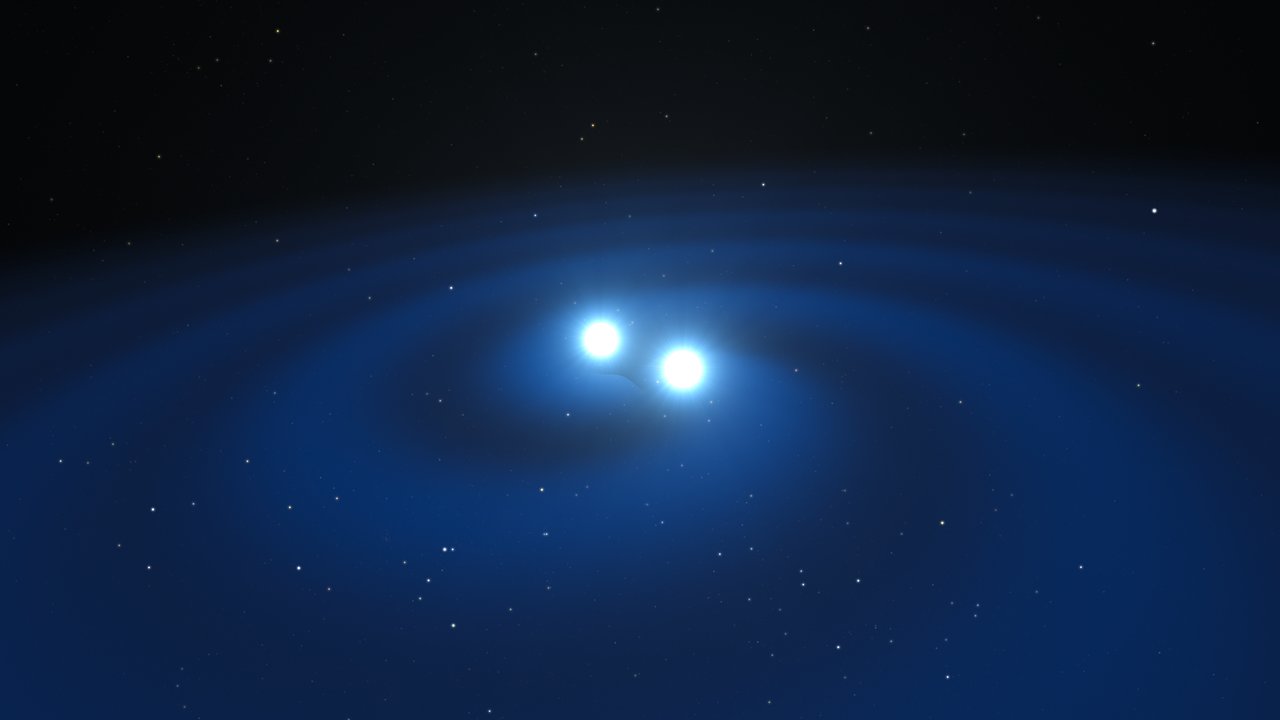
Illustration of two neutron stars approaching a merger, emitting gravitational waves as they draw closer together. [ESO/L. Calçada/M. Kornmesser; CC BY 4.0]
But remember all those news headlines about how binary neutron star mergers produce gold and platinum? Roederer points out that these were all inferred results — we didn’t actually observe direct evidence of gold and platinum in the aftermath of this explosion. That’s because it’s very difficult to detect the spectroscopic emission lines of heavy elements. To do so effectively, Roederer argues, requires high-resolution ultraviolet (UV) spectroscopy. He showed that in a cool star, high-resolution UV spectra provide a 50% increase in the number of elements you can detect. The heaviest of elements are only detectable with spectra in the UV range.
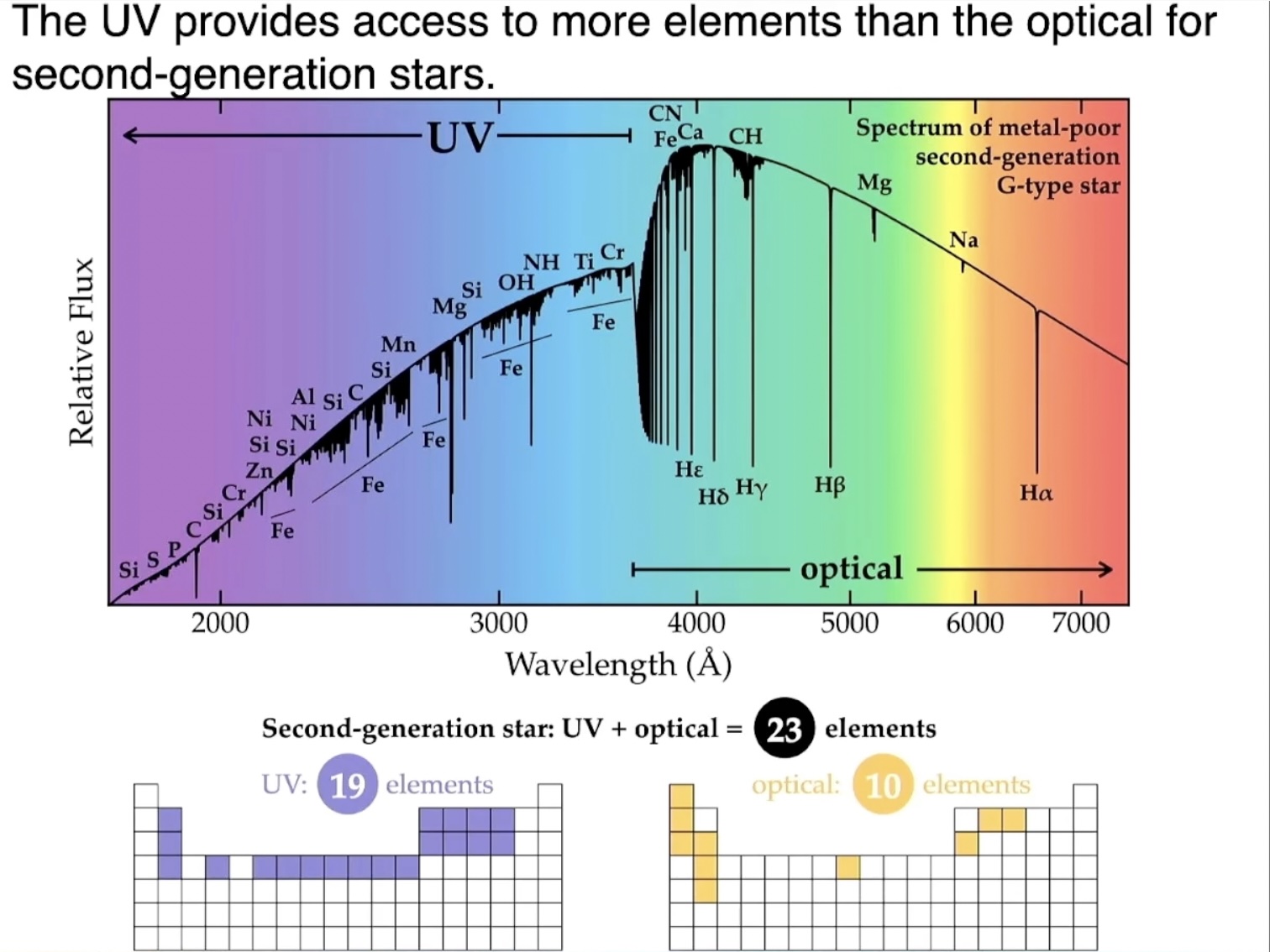
An example spectrum for a second-generation star shows how the UV is critical for identifying a broad range of elements. [Roederer 2026]
Roederer ended his talk with a look ahead at the future of UV spectroscopy and the path to the universe’s first stars. Right now, the only mission we have that produces high-resolution UV spectroscopy is Hubble. NASA’s next big flagship mission with a high-resolution spectrograph, the Habitable Worlds Observatory (HWO), will be transformational in the ability to detect — or verify the absence of — heavy elements in stellar atmospheres. An observatory like HWO will provide our best shot at identifying low-mass, metal-free stars that survive from the first generation of stars in our universe. As Roederer concluded, “The future of studying the origin of the elements is bright in the UV.”
You can read Astrobites’s interview with Ian Roederer here.
The post AAS 248: Day 4 appeared first on AAS Nova.
]]>
A glimpse into the world of high energy density laboratory astrophysics, 40 years of infrared astronomy, the discovery of twin supernova remnants, and more on Day 3 of AAS 248.
The post AAS 248: Day 3 appeared first on AAS Nova.
]]>Editor’s Note: This week we’re at the 248th AAS meeting in Pasadena, CA. Along with a team of authors from Astrobites, we will be writing updates on selected events at the meeting and posting each day. Follow along here or at astrobites.com for daily summaries, or follow @astrobites.bsky.social on Bluesky for more coverage. The usual posting schedule for AAS Nova will resume on 22 June.
Table of Contents:
- Plenary Lecture: Eliza Kempton, Common Worlds, Uncommon Complexity: Sub-Neptune and Super-Earth Atmospheres in the JWST Era
- Press Conference: Stars Reshaping Galaxies: Clusters, Feedback, and Explosive Aftermaths
- Plenary Lecture: George Helou, The Cosmic Infrared Window: Photons, Technology, and People
- Plenary Lecture: Carolyn Kuranz, Creating Astrophysical Conditions at High Energy Density Facilities
- Plenary Lecture: Cara Battersby, Our Galaxy’s Dynamic Center
Plenary Lecture: Eliza Kempton, Common Worlds, Uncommon Complexity: Sub-Neptune and Super-Earth Atmospheres in the JWST Era (by Lexi Gault)
Eliza Kempton began her talk addressing the undergraduates in the room, showing the meeting website from AAS 200, which she attended as an undergraduate in 2002. Searching this page, there were no presentations on exoplanets — a stark difference from the boom of exoplanet science that we see 24 years later at AAS 248, marking how significantly a field can transform from the start of your career.
Situating us outside of the solar system, Kempton showed the quintessential mass–period plot of all 6,000+ detected exoplanets thus far. Strikingly, we have discovered new types of planets that are not seen in our own solar system, but uncovering exoplanet populations is heavily skewed due to detection limits. While it is much easier to find large planets closely orbiting their stars, occurrence rate studies have shown that small planets on close-in orbits are much more common and typically come in two sizes: gas-rich sub-Neptunes and rocky super-Earths. However, actually deciphering their compositions relies on detailed studies of their atmospheres, which is the primary research work Kempton dove into.
How do we study exoplanet atmospheres? Thankfully, JWST provides the wavelength range and collecting area necessary for observing the minute details in exoplanet atmospheres. Beginning with sub-Neptunes, Kempton laid out four important takeaways from recent work coming from her team:
- Sub-Neptune atmospheres composed of heavier elements and molecules are common.
- Clouds and hazes are pervasive for planets that get a moderate amount of light from their host star. Early JWST observations showed signatures that may point to soot formation in sub-Neptune inner atmospheres; this soot can rise, making the upper atmosphere we observe hazy.
- Sub-Neptune atmospheres may provide a window into their interiors. Observed atmosphere compositions may indicate no solid planetary surface, but rather magma, water, and/or gas that can mix more readily with the upper atmosphere.
- Tying atmospheric observations to formation scenarios is still a challenge. Constraints on planets’ bulk composition has not provided clear answers.
Moving down to super-Earths, Kempton introduced the idea of the cosmic shoreline — the empirical relationship between planetary escape velocity and stellar irradiation shows a stark dividing line between planets with and without atmospheres in our solar system. Does this concept of a cosmic shoreline exist for exoplanets? Kempton highlighted three takeaways for the study of super-Earth atmospheres:
- Spectroscopy of super-Earth atmospheres presents degeneracies in determining their characteristics. A featureless spectrum could be due to the presence of heavy molecules and clouds, or it could just mean the planet has no atmosphere.
- Thermal emission is a powerful tool for identifying candidate atmospheres. The eclipse depth of a transiting planet is directly related to the day-side temperature of the planet. Planets with and without atmospheres will have different day-side temperatures — hotter without an atmosphere, cooler with an atmosphere.
- Many (but not all) transiting super-Earths are bare rocks.
Clearly, JWST has allowed astronomers to make significant progress in understanding exoplanet composition and subsequently their possible formation and evolutionary histories. Kempton ended with reminding us where we came from 24 years ago — the field of exoplanet science has boomed, and we can wonder how much we’ll continue to uncover in the next 24 years.
Press Conference: Stars Reshaping Galaxies: Clusters, Feedback, and Explosive Aftermaths (Briefing video) (by Niloofar Sharei)
This press conference brought together four very different views of star-forming environments: the most distant galaxy cluster caught strongly lensing a background galaxy, the dense young star clusters tucked inside the rings of nearby galaxies, the extreme feedback physics inside the closest luminous infrared galaxy merger, and the first known pair of supernova remnants born from a binary star system.
A New Era of Galaxy Cluster Analysis at Cosmic Noon: JWST’s View of a Distant Galaxy Cluster
Kyle Finner (IPAC/Caltech), presented the discovery of strong gravitational lensing in XLSSC 122, the most distant known galaxy cluster, seen as it was about 10.3 billion years ago. When the team got their JWST imaging back, they noticed bright blue arcs around the brightest cluster galaxy, a clear signature of strong lensing from a background galaxy sitting in just the right place behind the cluster. Using those arcs, the team measured the radial dark matter profile and found that XLSSC 122 is much more centrally concentrated than cosmological simulations predict. To check whether the cluster itself is unusual, they combined the JWST result with multiwavelength data. All of those tracers show an elongated structure pointing the same way as the dark matter, which is a strong sign that XLSSC 122 is a merging cluster. But mergers usually lower concentration rather than boost it, so the question of why this early cluster looks so concentrated is still open. The team plans to follow up with more strong-lensing measurements. | Press release
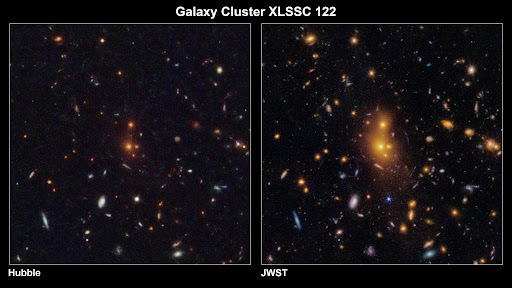
This two-panel image shows a distant galaxy cluster as it has been observed by NASA’s Hubble Space Telescope and JWST. [NASA, ESA, CSA; Kyle Finner (Caltech/IPAC) Image processing: Robert Hurt (Caltech/IPAC-SELab)]
Sajia Shahrin Neha (University of Kentucky) presented a study of young massive clusters in the circumnuclear rings of two nearby galaxies: NGC 3351, a normal spiral, and NGC 1097, which hosts an active galactic nucleus. Young massive clusters are extreme star-forming systems that pack hundreds of thousands to millions of stars into a small region, and the ring-shaped star-forming zones around these galactic nuclei provide exactly the kind of dense gas and dust reservoir these clusters need. Because the clusters are heavily obscured, optical, ultraviolet, and infrared light cannot pass through cleanly, so Neha and collaborators turned to radio continuum imaging with the Atacama Large Millimeter/submillimeter Array and the Very Large Array, which can see through the dust. Their team identified 53 young massive cluster sources across the two rings. They also placed them on an evolutionary sequence: heavily embedded “starless” clumps, newborn clusters that are just starting to become visible, and older “exposed” clusters that have already burned through much of their gas. All evolutionary stages are present in both galaxies, regardless of whether the host has an active nucleus. | NRAO press release | U. Kentucky press release
Dusty and Over-Pressured: Measuring Stellar Feedback in the Closest Luminous Infrared Galaxy
Deb/Debosmita Pathak (The Ohio State University/IPAC) presented new measurements of pre-supernova stellar feedback in NGC 3256, the closest luminous infrared galaxy and a merger between two roughly Milky Way–mass galaxies. NGC 3256 forms stars about 60 times faster than the Milky Way, which makes it a useful nearby laboratory for the intense, clumpy star formation that dominated the early universe. Using JWST plus multiwavelength data, the team measured feedback pressures around roughly 1,700 young star clusters and compared them with what we see in quieter, normal star-forming galaxies. The results break the standard picture in two ways. First, the feedback and interstellar medium pressures in NGC 3256 are about a hundred times higher than what is typical in normal star-forming galaxies. Second, the dominant feedback mode is different: instead of warm ionized gas pressure doing most of the work, ultraviolet and infrared radiation pressure on dust dominates in these much dustier environments. Even at these much higher pressures, most clusters are still over pressured relative to their surroundings, meaning radiation is strong enough to drive expansion against a dense ambient interstellar medium. | NRAO press release | OSU press release
Unveiling the First Binary-System Supernovae
Miltiadis Michailidis (Kavli Institute for Particle Astrophysics and Cosmology (KIPAC)/Stanford University/SLAC National Accelerator Laboratory) closed the session with the discovery of what appears to be the first known supernova remnant pair born from a binary star system. The starting point is IC 443, one of the best-studied supernova remnants and one of the brightest gamma-ray sources in the sky, thanks to its interaction with a dense nearby molecular cloud. Recent eROSITA observations showed that the faint X-ray “shell” long noticed next to IC 443 is in fact a second, overlapping supernova remnant. The question was whether the two are physically related or just a chance alignment on the sky. They used 15 years of Fermi gamma-ray data and modeled and subtracted IC 443’s contribution and uncovered a distinct, hidden gamma-ray source associated with the new remnant.
The gamma-ray emission is strongly spatially segregated: its northern boundary, where it overlaps the same molecular cloud that IC 443 illuminates, is dominated by accelerated protons colliding with dense gas, while its southern boundary is dominated by accelerated electrons. The team also showed that the optical filament along the northern boundary is a radiative shock that has cooled past the point of efficient particle acceleration. Combined with the fact that both remnants sit at the same distance (about 6,000 light-years), and that a population-synthesis run with a million massive binaries reproduces the observed separation and age difference, the team argues that the two remnants are the remains of a true binary pair. | Press release
Plenary Lecture: George Helou, The Cosmic Infrared Window: Photons, Technology, and People (by Kerry Hensley)
George Helou (Caltech) gave a sweeping overview of infrared astronomy over the past 40 years, including the impressive role of the Infrared Analysis and Processing Center, or IPAC, which is celebrating its 40th anniversary.
The infrared portion of the electromagnetic spectrum is broad, encompassing wavelengths from 1 to 1,000 microns. In that wavelength range, there’s a lot going on in our universe: redshifted emission from distant galaxies, stars revealed by the drop in dust extinction, rotational and fine structure lines, molecular transitions, and fully half of the radiation density in the universe.
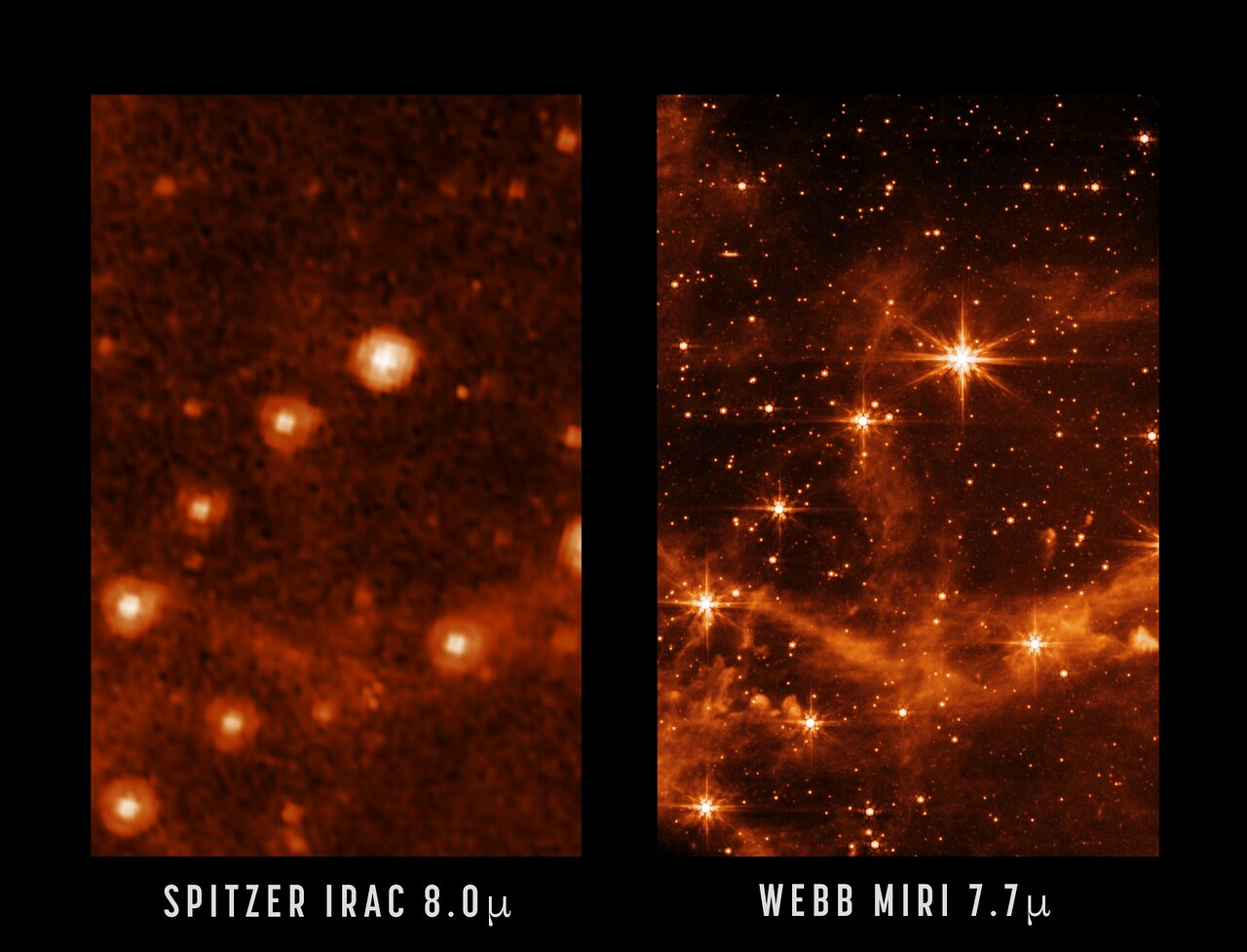
An example of how infrared capabilities have improved over time. [NASA/JPL-Caltech; MIRI: NASA/ESA/CSA/STScI]
Helou introduced a few science areas in which infrared missions have contributed greatly. First was the study of polycyclic aromatic hydrocarbons (PAHs), which are a class of molecules containing interconnected rings of carbon atoms. Thanks to infrared instruments, astronomers showed that various unassigned spectral features arose due to PAHs and that these molecules were important for the heating and cooling of the interstellar medium. As infrared instruments became more capable, observations showed how the fraction of carbon that is locked up in PAHs changes with metallicity and revealed novel species like deuterated hydrocarbon nanoparticles.
In the field of exoplanets, IRAS found evidence of excess infrared emission around Vega, hinting at a disk of debris that was later confirmed. (IPAC was instrumental in this discovery; the star Vega was being used for calibration, and the calibration wouldn’t converge because of the unexpected infrared excess.) Later, ISO used spectroscopy to investigate stellar debris disks and showed that they were similar in properties to solar system comets. Though Spitzer wasn’t initially expected to be used for exoplanet studies, the telescope made the first detection of photons from the surface of a planet and helped to discover several planets in the TRAPPIST-1 system. (Here, IPAC played an integral role again; instrument teams and flight engineers worked to ready the spacecraft for exoplanet observations by modifying the heaters on the spacecraft for pointing stability and finding “sweet spots” for photometric stability.) Today, JWST continues to advance the field with sensitive measurements of exoplanet atmospheres.
Finally, Helou touched on the work that IPAC has done to archive data. IPAC maintains the NASA/IPAC Extragalactic Database, or NED, which receives at least three queries per second. It’s also responsible for the Infrared Science Archive, data from which is used in more than 50% of research articles. IPAC also manages the NASA Exoplanet Archive, showing that the center isn’t limited to infrared astronomy!
As for the future of IPAC and infrared astronomy, it’s clear that there is much left to explore and lots of exciting work to be done; the Roman Space Telescope is scheduled to launch in a few months, and within a few years the Near-Earth Object Surveyor will follow. The Ultraviolet Explorer, for which IPAC will provide the UVEX Science Data Center, is slated to launch in 2030, and the PRobe far-Infrared Mission for Astrophysics (PRIMA) is under final review.
Read Astrobites’s interview with George Helou.
Plenary Lecture: Carolyn Kuranz, Creating Astrophysical Conditions at High Energy Density Facilities (by Lucas Brown)
While astronomy and astrophysics are often considered primarily observational sciences, with most targets of interest being millions to trillions of miles away from us — Carolyn Kuranz’s plenary talk helped to challenge this idea, demonstrating how we can sometimes bring the heavens down to Earth with high energy density (HED) facilities. The basic idea behind Kuranz’s work, and the field of HED laboratory astrophysics more broadly, is that some extreme astrophysical environments, particularly plasmas, can indeed be studied in the lab by producing smaller-scale analogs — so long as we choose the right types of experiments.
Kuranz structured her talk around three big questions she commonly gets asked about her field: firstly, why would astronomers want to do laboratory experiments? Then, what defines the “high energy density” in HED astrophysics? And finally, how do we actually do these experiments in practice? Starting with the why, Kuranz notes that studying systems in astrophysics is inherently difficult as a result of the fact that they are far away, and theoretical models can suffer from a lack of data or missing physics. Experiments can bridge the gap here, providing the ability to collect more data on specific systems of interest, complementing both theoretical models and observations.
While this philosophy can apply to a variety of laboratory astrophysics areas, such as laboratory-based studies of the chemistry of planetary atmospheres, Kuranz focused specifically on the emerging role of HED laboratory astrophysics. Typically, high energy density refers to systems with more than 1 million atmospheres of pressure and temperatures above 1 million K. Generally, this means we’re in plasma territory. In some ways, it’s only natural that studies of these sorts of environments would eventually help astrophysicists, given that around 99.9% of the matter in the universe is in plasma form. Despite this, the laboratory astrophysics side of HED physics has really only emerged over the past 30 years, with its origins being traced to work out of Lawrence Livermore National Lab, the current site of the National Ignition Facility (NIF).
Today, the NIF is only one of a few dozen facilities in which HED laboratory astrophysics experiments are conducted. This is because the type of equipment needed to reproduce environments analogous to various astrophysical systems can vary greatly. This gets to Kuranz’s third question of how these experiments are conducted. The process begins by answering a set of questions, including: do the astrophysical and proposed laboratory environments obey the same governing equations (conservation of mass, momentum, etc.)? Is one able to re-scale the physical parameters in each system (timescale, size, density, pressure, etc.) in a way that retains relevant dynamics like viscosity, Reynolds number, and so on? Once these details have been nailed down, a researcher can assess what types of facilities they may need. For example, the NIF, which uses symmetrical arrangements of lasers to compress and heat up millimeter-scale pellets containing gases that can undergo nuclear fusion, provides a fairly natural environment for studying processes in the cores of stars, which are also hot, dense, and neutron-rich environments where fusion is actively occurring.
As for the future, things look promising for HED laboratory astrophysics — since the NIF achieved “ignition” in 2022, producing a net gain of energy from one of these pellet-crushings for the first time, a huge amount of interest and investment has been flowing into facilities studying HED physics. These facilities range from private companies working to achieve sustained nuclear fusion power generation to longstanding federal research centers working on understanding nuclear weapons and stockpile management, but they all provide astronomers with the opportunity to do what was once unthinkable: bring the universe’s most extreme environments down to Earth.
Plenary Lecture: Cara Battersby, Our Galaxy’s Dynamic Center (by Niloofar Sharei)
Cara Battersby (University of Connecticut) used her plenary to walk us through her group’s ongoing effort to understand one of the most extreme environments in our own galaxy: the central molecular zone (CMZ), which is a dense, turbulent gas reservoir at the heart of the Milky Way. Her talk pulled together large surveys, new high-resolution zoom simulations, and machine-learning methods designed to bridge between the two.
She opened with the PRobe far-Infrared Mission for Astrophysics (PRIMA), the far-infrared probe mission concept she is a co-investigator on. This mission concept was developed in response to NASA’s recent billion-dollar probe mission call, and selection is expected later this year. PRIMA covers roughly 1.8–25 microns with imaging and spectroscopy, and galactic ecosystems make up about a quarter of its science case.
Battersby paused mid-talk to speak directly to early-career people in the audience about work-life balance, including bringing her daughter and sister with her to the meeting, and the SPARK program at UConn that supports women and underrepresented groups in physics. Her message: astronomy should be done from a place of joy, and visible work-life balance is something the community should be more open about.
Battersby framed the Milky Way as the natural laboratory for star formation across a huge range of environments, and briefly reviewed the ALMAGAL survey, which observed roughly 1,000 high-mass star-forming regions across the disk. But her main focus was the CMZ, which she argued is essentially a different kind of galaxy embedded inside our own. About 80% of all the dense molecular gas in the Milky Way sits in the CMZ, and its gas properties — density, turbulence, temperature, and pressure — are extreme compared to the rest of the disk. Because nearby starburst and high-redshift environments share many of these properties, the CMZ is the closest place we can actually resolve individual star-forming cores under conditions that resemble the early universe.
She showed that gas in the CMZ is extremely filamentary across all scales, and that the relationship between dense gas and star formation rate is unusual: when individual clouds in the CMZ actually form stars, they form them much like clouds elsewhere in the galaxy, but a large fraction of the dense gas in the CMZ never engages in star formation at all. Battersby argued that this is likely because so much of that gas is being shaped by flows toward the black hole and the strong turbulence and dynamics of the central environment, and it never cools and collapses into stars.
She closed with the simulation and machine-learning side of the program. Her group runs zoom simulations that can follow individual star-forming regions and can resolve down to CMZ scales while still capturing the full ~5 kpc bar driving gas inward. To extract more from these simulations than just side-by-side image comparisons, the team built a GPU-accelerated radiative transfer code that runs roughly 10,000 times faster than existing codes. They generate hundreds of thousands of synthetic observations and use them to train an encoder–decoder convolutional neural network that learns to predict the top-down structure of a region from the side-on view we actually observe. Applied to the CMZ, the network produces 3D reconstructions that are physically plausible and broadly consistent across independent training runs.
Read Astrobites’s interview with Cara Battersby.
The post AAS 248: Day 3 appeared first on AAS Nova.
]]>The post Observations of the Fermi Bubbles and the Galactic Center Excess with the Dark Matter Particle Explorer appeared first on AAS Nova.
]]>In the first 102 months of data from the Dark Matter Particle Explorer, researchers have independently confirmed the detection of the Fermi bubbles and identified a GeV excess toward the galactic center.
The post Observations of the Fermi Bubbles and the Galactic Center Excess with the Dark Matter Particle Explorer appeared first on AAS Nova.
]]>
On Day 2 of AAS 248: roasted exoplanets, globular clusters, the cost of losing our dark night skies, and more.
The post AAS 248: Day 2 appeared first on AAS Nova.
]]>Editor’s Note: This week we’re at the 248th AAS meeting in Pasadena, CA. Along with a team of authors from Astrobites, we will be writing updates on selected events at the meeting and posting each day. Follow along here or at astrobites.com for daily summaries, or follow @astrobites.bsky.social on Bluesky for more coverage. The usual posting schedule for AAS Nova will resume on 22 June.
Table of Contents:
- Helen B. Warner Prize Lecture: Kyle Kremer, Globular Clusters: Astronomical Factories of Gravitational-wave and Electromagnetic Transients
- Press Conference: Our Changing Galaxy and the Skies We See
- High Energy Astrophysics Division Early Career Prize Lecture: Carolyn Kierans, Developing Next-Generation MeV Telescopes
- Press Conference: Fire and Ice in Planetary Systems Near and Far
- Solar Physics Division George Ellery Hale Prize Lecture: Yi-Ming Wang, The Sun as a Laboratory for Astrophysical Magnetic Fields
- Plenary Lecture: David Jewitt, The Interstellar Interlopers
Helen B. Warner Prize Lecture: Kyle Kremer, Globular Clusters: Astronomical Factories of Gravitational-Wave and Electromagnetic Transients (by Lucas Brown)
Kyler Kremer (University of California, San Diego) kicked off day two of AAS 248 with a “dynamic” talk on the complex interactions and environments that exist within globular clusters — the most massive category of stellar clusters, which can contain upwards of one billion stars. Because of the extreme stellar density of these environments, they are thought to be good factories of systems ranging from accreting white dwarfs to millisecond pulsars, which are often spun up to high speeds via accretion from companion stars. Such accretion, whether onto pulsars or other compact objects, can often generate bright X-rays, and as Kremer noted early on in his talk, it was in fact these X-ray sources that provided some of the earliest evidence of the abundance of exotic systems within globular clusters. By the early 2000s, hundreds of X-ray sources had been identified in globular clusters.
Along with these brightly emitting compact binary systems, we expect globular clusters to be home to a vast population of darker, more elusive objects — black holes. Kremer noted that because about one out of every thousand stars is thought to be massive enough to evolve into a black hole, older globular clusters are thought to produce tens or hundreds of thousands of black holes over time. These black holes are then expected to gradually sink towards the centers of the clusters through dynamical friction, where they will increasingly find themselves in the company of other black holes, or black hole binaries. As these massive objects swing by each other, they can occasionally merge or eject black holes out of clusters entirely. This leads to a complex evolutionary history, leaving many open questions in regards to how many black holes should persist in globular clusters today and with what properties.
Luckily, strong evidence for the presence of black holes in globular clusters began to come in around the early 2000s as a result of the direct measurements of stellar orbits around an invisible, at least 4-solar-mass object in NGC 3201. Since this discovery, multiple others have been made via similar techniques. The role of black holes in shaping our observation of globular clusters may go well beyond these isolated systems, however. Theoretical work has also shown that the presence of black hole binaries in the centers of globular clusters may contribute to dynamical heating of the overall cluster. This suggests that globular clusters that have not undergone core collapse, which represents over 80% of clusters, should retain significant black hole populations today.
While individual black holes can often be hard to spot, black hole binaries are becoming increasingly easy to hear, thanks to the advent of gravitational wave astronomy. At facilities like LIGO, Virgo, and KAGRA, merging black hole binaries are now regularly detected, creating a population-level catalog of black hole binary properties. While many of these systems can be well explained by black holes formed in the “isolated” channel, meaning originating from a preexisting binary star system, some mergers show signs of a “dynamical” formation history, which can arise in the sort of dense environments globular clusters provide. As one example, there seems to be more black holes in the 40-solar-mass and above range than many models predicted. At these high masses, more potential progenitor stars actually become too large to form black holes thanks to a phenomenon called pair instability. However, such massive black holes could be formed from the repeated mergers of smaller black holes — a hierarchical process that simulations have consistently shown can be highly efficient in globular clusters, especially the most massive ones. On top of this, Kremer noted that individual gravitational wave signals have recently shown other telltale signs of hierarchically formed binary black holes, such as asymmetric masses and spin–orbit misalignment.
Finally, Kremer turned to another class of exotic astrophysical objects to explore other ways globular clusters can generate interesting phenomena: pulsars. Pulsars, like black holes, form from the collapse of massive stars. This rapidly rotating sub-category of neutron stars beams radiation from their poles, which gradually slows them down and depletes the strength of their radio emission over millions or billions of years. Because of this, one would expect older globular clusters to have a slowly rotating and mostly invisible population of pulsars. Instead, we see many rapidly rotating millisecond pulsars in these environments, suggesting that the dense cluster environment allows for many of these systems to be spun back up through accretion from other stars. In contrast, we also see young globular clusters which contain slowly rotating pulsars — another puzzle, yet one that may again be explained by the dense environment. Some researchers believe that these pulsars are formed via the direct merger of multiple white dwarfs, rather than from the collapse of a massive star. Such systems may also be the source of some fast radio bursts; the first fast radio burst associated with a globular cluster was discovered in 2020. It seems like globular clusters may be the gift that just keeps on giving!
Press Conference: Our Changing Galaxy and the Skies We See (Briefing video) (by Niloofar Sharei)
This press conference walked through four very different ways our view of the Milky Way and our skies are changing right now — from extreme gas physics at the Galactic Center, to the hidden stellar populations of a cluster, to the rapid flickers of dying stars, and finally, to a very practical question: what are dark night skies actually worth to the public?
Resolving the Supersonic-to-Subsonic Gas Transition in the Galactic Center for the First Time
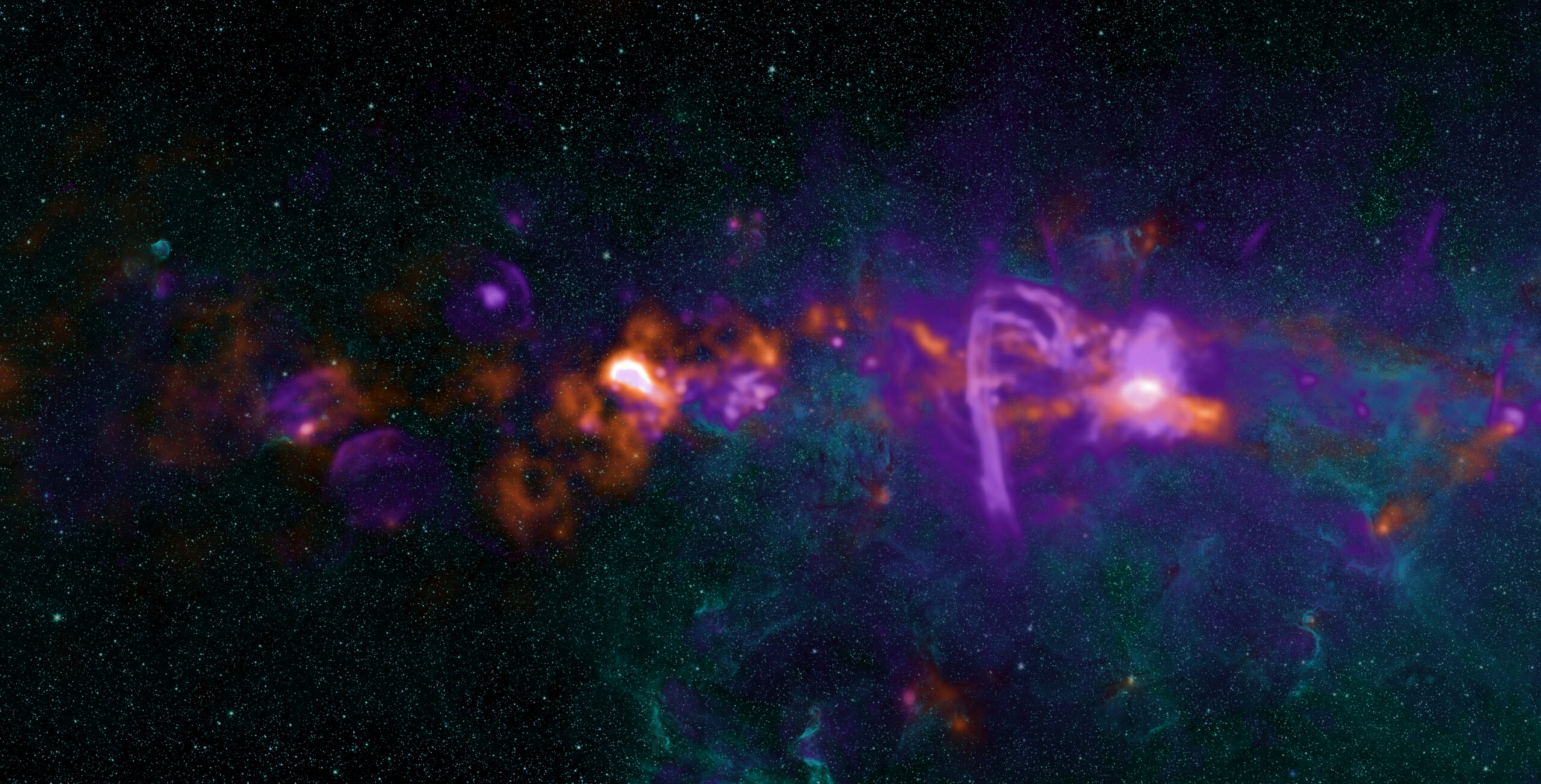
The galactic center and the surrounding central molecular zone make up the most active star formation region in the Milky Way. [NRAO/AUI/NSF; CC BY 4.0]
Buddhacharya mapped how gas transitions from highly turbulent, supersonic motion to calmer, subsonic motion across a region in the CMZ. This transition is well known in nearby clouds, where it usually precedes gravitational collapse, but it had never been clearly resolved in the CMZ before. Their team found a “calm island” of subsonic gas embedded in the otherwise turbulent sea. This is the first observation of its kind in the galactic center.
The Multi-Age Stellar Populations of Terzan 5 as Revealed by JWST
R. Michael Rich (University of California, Los Angeles) presented new JWST and Hubble Space Telescope observations of Terzan 5, an unusual stellar system near the center of the Milky Way that looks like a globular cluster but doesn’t act like one. Earlier work had already shown that Terzan 5 hosts at least two distinct stellar populations with very different ages and chemical abundances, which is unusual for a typical globular cluster.
Because Terzan 5 sits behind a thick screen of foreground stars and dust, separating real cluster members from contamination is one of the hardest parts of the analysis. The team combined JWST and Hubble imaging to measure stellar proper motions, then used a vector point diagram to isolate the stars that move together with the cluster. They identified two additional stellar populations beyond the two already known. Rich argued that Terzan 5 may be a “fossil fragment,” possibly the leftover core of a small galaxy or early bulge structure that was accreted long ago.
Sub-Day Periodic Variability of Two Central Stars of Planetary Nebulae
Gaoyang Du (Dalian University of Technology) reported the discovery of new short-period signals in the central stars of two planetary nebulae. These central stars are the hot, exposed cores left behind by Sun-like stars at the end of their lives, and finding rapid brightness variations in them tells us about their interior structure and pulsation physics.
Short-period signals well under a day are very hard to recover from the ground because Earth’s rotation introduces strong one-day aliasing, so the team turned to the Transiting Exoplanet Survey Satellite, which observes continuously from space. Using a neural-network pipeline designed to handle the crowded, contaminated backgrounds these stars sit in, they recovered the previously known variability in NGC 1501 and detected a new signal at roughly half an hour. Follow-up spectroscopy will be needed to pin down whether the signals come from pulsations, rotation, or something else, but the result opens a new window on the rapid variability of dying-star cores.
Artificial Light at Night Significantly Degrades the Value of Public Lands
Jordan Smith (Utah State University) closed the press conference with a very different kind of measurement: the economic value of dark night skies. While astronomers usually treat light pollution as an observing problem, Smith and his collaborators are asking what the public is actually losing and what people would pay to keep dark skies on public lands. The team surveyed 634 visitors across International Dark Sky-certified parks, asking detailed questions about visitation behavior, motivations, and willingness to pay. Combining those surveys with satellite-based sky-brightness data, they estimated how the actual darkness of a site translates into the value visitors place on a trip. Based on the survey results, they found that visitors were willing to pay $45 more per visit to go to a park with skies one level darker on the Bortle scale. That sounds small per visitor, but scaled across all visits to all dark-sky public lands, it represents a very large economic value tied to a public good that current policy frameworks rarely account for.
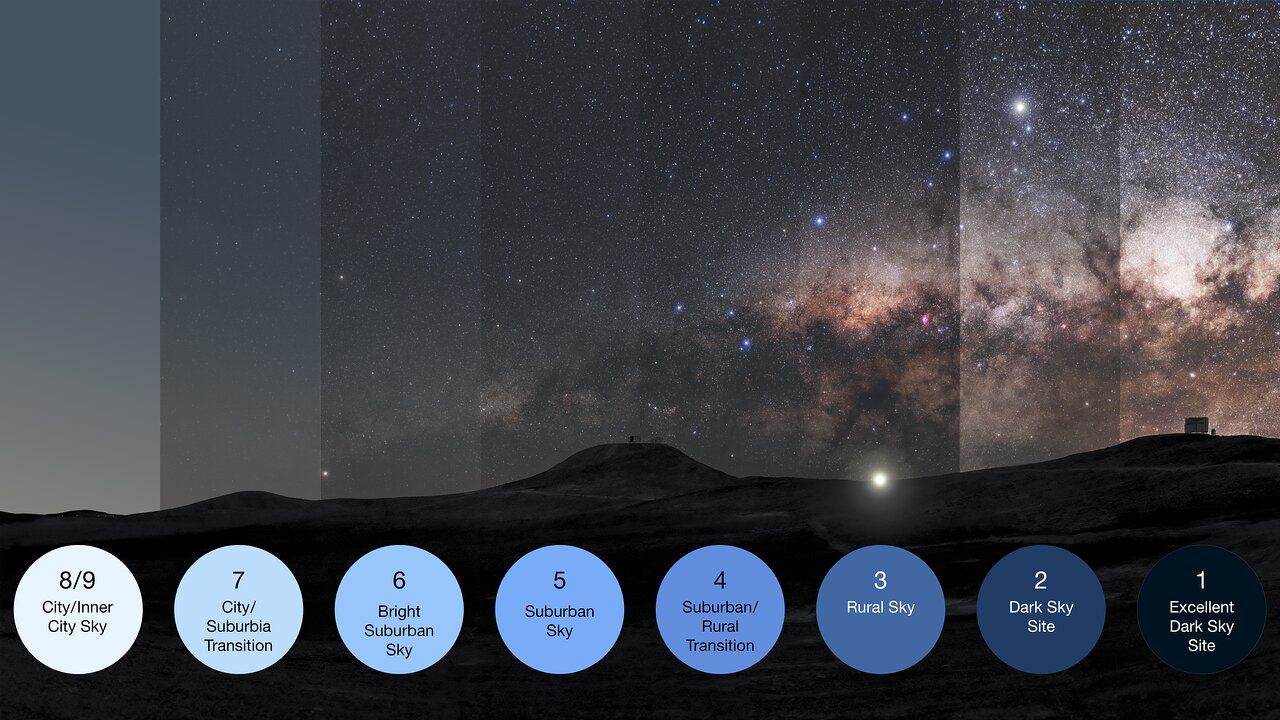
An illustration of the Bortle scale, which quantifies the degree of light pollution at a given location. [ESO/P. Horálek, M. Wallner; CC BY 4.0]
High Energy Astrophysics Division Early Career Prize Lecture: Carolyn Kierans, Developing Next-Generation MeV Telescopes (by Niloofar Sharei)
Carolyn Kierans (NASA Goddard Space Flight Center) was awarded the AAS High Energy Astrophysics Division Early Career Prize for her work on developing the next generation of megaelectronvolt (MeV) gamma-ray telescopes. Her talk laid out why the MeV band is so valuable (it contains nuclear emission lines like the 511 keV positron-annihilation line that traces high-energy processes in our galaxy) and why it has been so technologically difficult to observe well, since photons at these energies do not focus easily and the dominant interaction in the detector is Compton scattering. She walked through her work using balloon-borne Compton telescopes to mature the technology, the tools her team has developed in recent years to improve event reconstruction, and the broader roadmap for the next generation of MeV instruments.
Read Astrobites’s interview with Carolyn Kierans.
Press Conference: Fire and Ice in Planetary Systems Near and Far (Briefing video) (by Kerry Hensley)
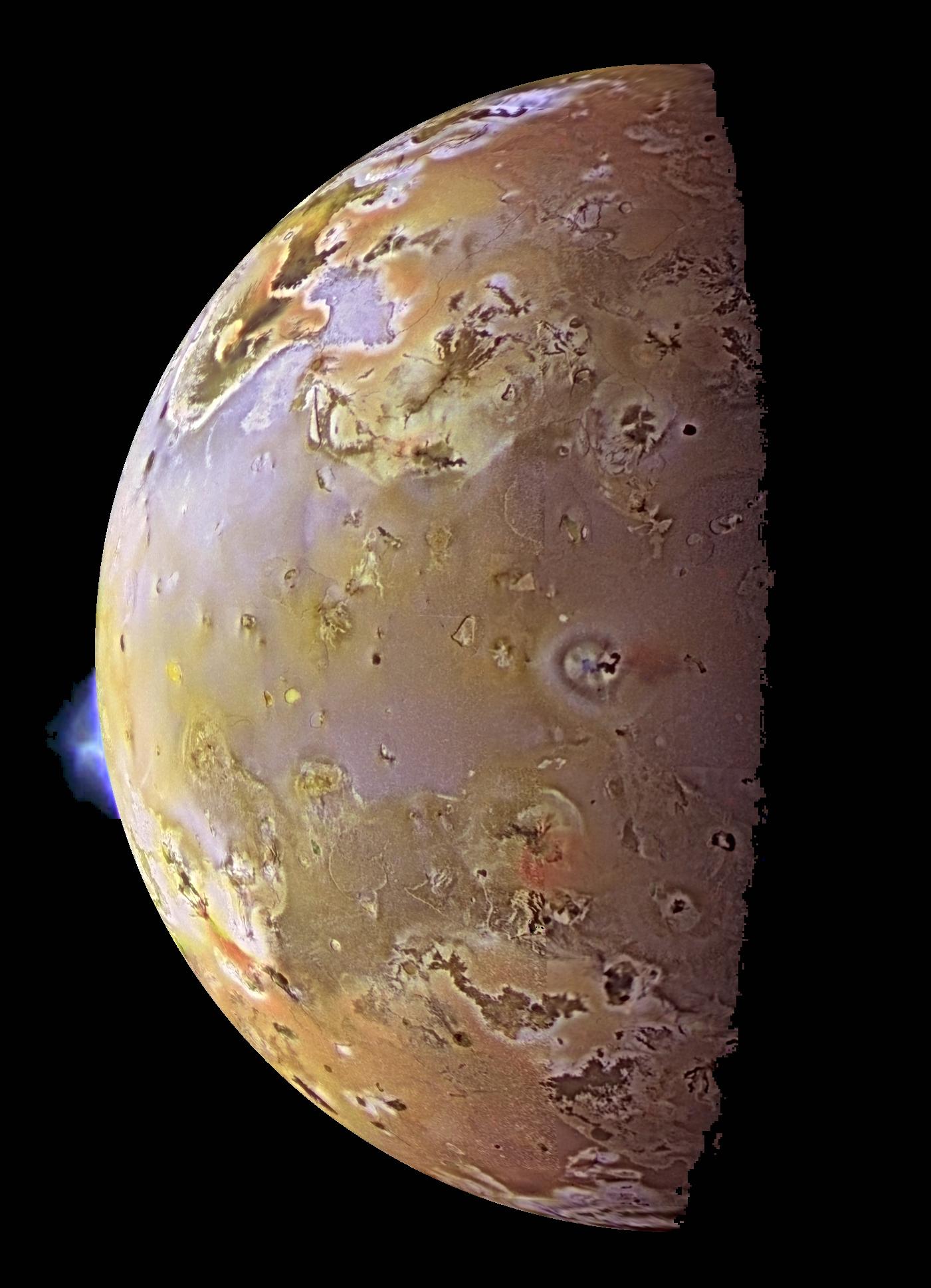
An image from the Galileo spacecraft of a volcanic plume on Jupiter’s moon Io. [NASA/JPL/University of Arizona]
The team modeled Io’s plumes in order to explain the moon’s lack of impact craters, understand how certain plumes have persisted on Io for more than 45 years, and motivate a possible mission concept that includes a plume flythrough and sample return. They modeled the formation of ash as magma rises in a volcanic vent as well as the trajectory of the ash once it’s ejected into the plume, aiming to 1) match the plume observations from the Galileo spacecraft and 2) understand how an ash-filled plume might look different from one filled only with sulfur dioxide. While Turner found that Galileo data couldn’t discern between the two scenarios, ash makes a dramatic difference at the sub-millimeter wavelengths accessible to the Atacama Large Millimeter/submillimeter Array, which the team hopes to use to test this prediction. Finally, returning to the development of the mission concept, Turner proposed using a probe to first fly through the shadow of a plume to assess the particle size before sending the spacecraft through to collect a sample.
Up next, Tunhui Xie (University of California, Los Angeles) turned to Io’s neighbor, Europa. Europa and the other large icy moons of Jupiter are of interest to researchers because they might have subsurface oceans. Observations of Europa from ~30 years ago show that the moon has strange radar properties: its radar albedo is large, and the return signal retains the strong circular polarization of the outgoing signal.
To investigate the moon’s radar weirdness further, Xie’s team observed Europa from 2011 to 2024 and showed that the moon’s albedo (fraction of light reflected from its surface) is roughly constant with longitude. There is some evidence of differences between Europa’s hemispheres, which could be a sign of spiky ice structures called penitentes protruding from the frosty surface; Europa’s trailing hemisphere might be subjected to more particles from Jupiter’s magnetosphere, which could suppress the growth of penitentes in that region and cause a difference in the albedo. Xie also addressed the polarization behavior of the radar signal, showing that this is likely due to the coherent backscatter opposition effect. Finally, Xie showed how observations helped to place an upper bound of 32 meters for the penetration depth of X-band radar photons into Europa’s icy shell.
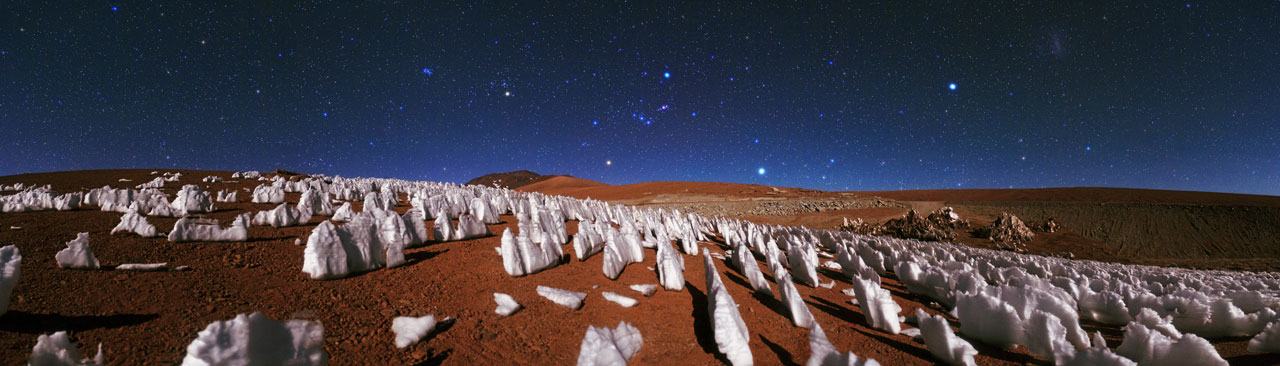
Penitentes in the Atacama Desert. [ESO/B. Tafreshi (twanight.org); CC BY 4.0]
In some of the earliest spectroscopy taken by a large-aperture telescope, Bolin’s team found cometary volatiles like CN, but not C2 or C3, which are common in comets, giving them a green color. These missing species emerged a couple of months later, which coincided with the comet taking on a greener appearance. As the comet retreated from its encounter with the Sun, these emission features faded. This presentation by Bolin showed how early and continuing monitoring of an interstellar object by a large-aperture telescope can reveal how these objects are affected by their journeys through our solar system.
Moving out of the solar system entirely, Tiffany Kataria (NASA JPL/Caltech) turned the discussion toward exoplanets. Kataria discussed HD 80606b, a 4.1-Jupiter-mass planet on an extremely eccentric (e = 0.93) orbit with a period of 111 days around a solar-type star. Kataria used JWST to observe HD 80606b’s phase curve, which revealed different parts of the planet as it travels along its orbit. Each time the planet makes its extremely close approach to its host star, it gets “flash roasted” and experiences a rapid increase in temperature. This rapid heating event is complex, depending on factors like the planet’s atmospheric chemistry and winds. The JWST data revealed that HD 80606b’s temperature skyrockets an incredible 1,100℉ over the course of its orbit. There’s still much more to learn from the rich spectroscopic dataset from JWST, so keep an eye out for more findings about this flash-roasted exoplanet in the future!
Finally, Aurora Kesseli (IPAC/Caltech) discussed another toasty exoplanet called CoRoT-2b, which is a hot Jupiter on a 1.7-day orbit around its star. Because hot Jupiters orbit their hosts so closely, astronomers expect all of these extreme exoplanets to be tidally locked, with one side of the planet perpetually facing the star and the other side in perpetual darkness. However, CoRoT-2b might be breaking that trend. In 2018, researchers reported that CoRoT-2b had winds that blew in the opposite direction from all other known hot Jupiters. They drew this conclusion from the location of the hottest point on CoRoT-2b, which appeared just after the planet ducked behind its star, rather than just before — unlike all other hot Jupiters studied so far. At the time, researchers hypothesized that the unusual location of the hotspot was due to clouds on one side of the planet, a magnetically induced westward wind, or a lack of tidal locking.
Using new data from the Very Large Telescope and Gemini South, Kesseli found that the planet’s strange properties can be explained best by a lack of tidal locking. CoRoT-2b appears to rotate at 2.24 km/s — far slower than the 4.37 km/s expected if the planet were tidally locked. There are no theories yet that explain why CoRoT-2b wouldn’t be tidally locked, so it remains a mystery for now!
Solar Physics Division George Ellery Hale Prize Lecture: Yi-Ming Wang, The Sun as a Laboratory for Astrophysical Magnetic Fields (by Kerry Hensley)
Yi-Ming Wang (Naval Research Laboratory) gave the AAS Solar Physics Division’s George Ellery Hale Prize Lecture for “sustained, foundational contributions to understanding solar magnetism, the solar cycle, and the solar wind.” Wang is perhaps most known for the Wang–Sheeley–Arge solar wind model, which is widely used in space weather forecasting.
Wang began by musing on how his winding career path brought him to solar physics. Initially a theorist who modeled neutron stars, Wang was later hired to do radio astronomy but arrived for the position later than expected, so he was roped into working on solar physics instead — where he learned many things about magnetic fields that he wished he’d known when working on neutron stars!
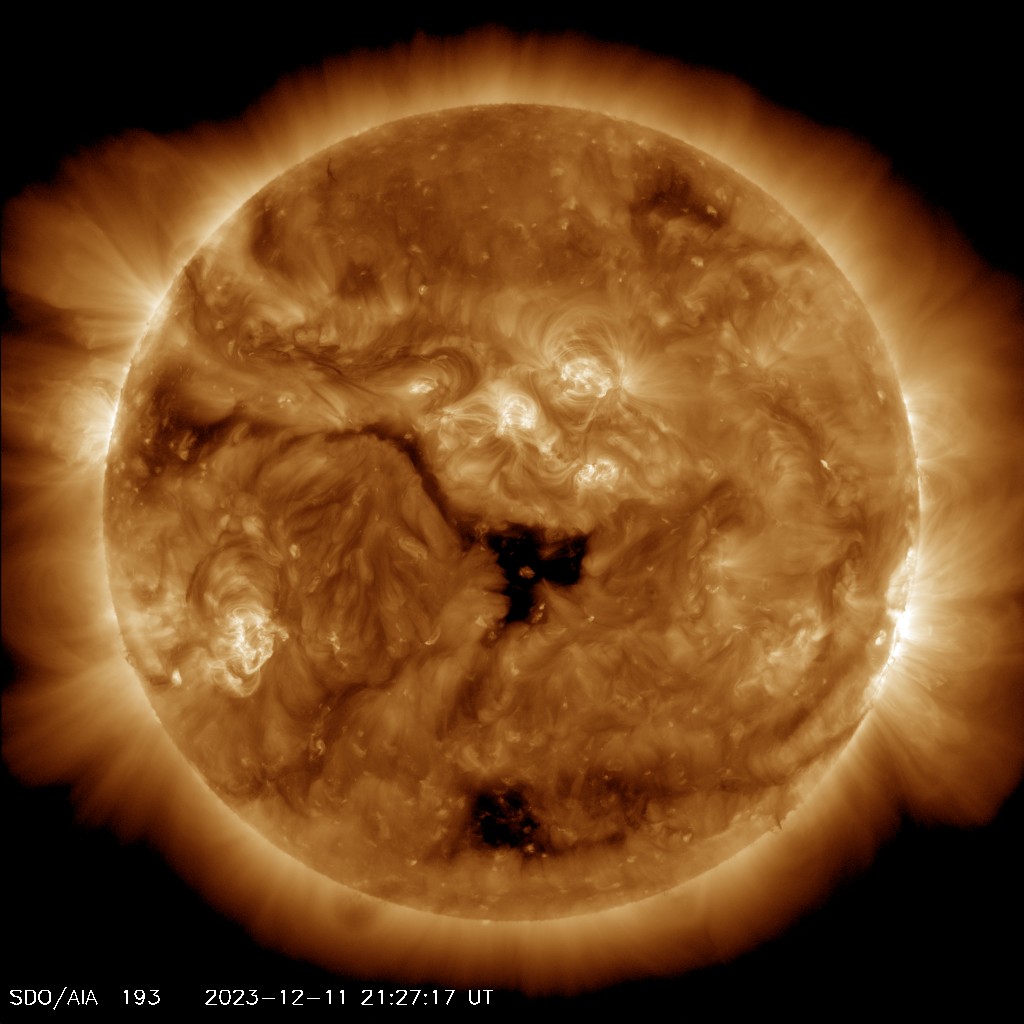
This 19.3-nanometer image, taken by the Solar Dynamics Observatory on 11 December 2023, shows at the center of the Sun’s disk the remnant of a large coronal hole. [NASA/SDO and the AIA, EVE, and HMI science teams]
Next, Wang discussed the source of coronal heating. The solar corona is famously extremely hot, running at a few million degrees compared to the ~6000K solar photosphere. For decades, the Parker nanoflare model has been the leading explanation for how the corona gets so hot. In this model, the places where coronal loops touch down in the solar photosphere are continually wiggled around by random motions of the photosphere, which tangles up the magnetic field lines in the coronal loop. When the current sheets in this system dissipate, the corona is heated. Instead, Wang favors an observationally based model in which the heating comes from magnetic reconnection with underlying small-scale fields.
Finally, Wang briefly touched on the connection between the Sun’s magnetic field and the speed of the solar wind. The solar wind has been measured at Earth since the 1960s, and these measurements have shown that the mass and energy flux density of the solar wind scales with the strength of the footprint magnetic field strength, but the observed solar wind speed is independent of the footprint field strength. Instead, the speed scales inversely with the rate of magnetic flux-tube expansion in the corona. Thus, the solar wind speed at Earth can be calculated from the rate of flux-tube expansion along open magnetic field lines using maps of the photospheric magnetic field.
In the end, Wang’s work on the solar magnetic field did connect back to his earlier work in high-energy astrophysics, with relevance to period changes in binary pulsar systems and other areas. Magnetic fields really do connect all parts of astrophysics!
Read Astrobites’s interview with Yi-Ming Wang.
Plenary Lecture: David Jewitt, The Interstellar Interlopers (by Niloofar Sharei)
David Jewitt focused his plenary talk on a rare kind of small body: the three confirmed interstellar objects that have passed through the solar system so far. He opened with the Oort cloud as a framing device. Comets in the Oort cloud did not form there — they formed near the giant planets and were scattered out by gravitational interactions. The same process leaks comets to interstellar space very efficiently: only about 1–10% are trapped into a star’s own Oort cloud. Across the galaxy, that implies a free-floating population on the order of 1024–1025 objects. Seeing some of them pass through our solar system is exactly what we should expect.
Artist’s impression of the first known interstellar object to visit our solar system. ʻOumuamua. [ESO/M. Kornmesser; CC BY 4.0]
Jewitt then turned to what the three objects tell us as a population. The strongest constraint comes from ʻOumuamua, precisely because its discovery was such a near miss: catching one in that brief visibility window implies roughly 1,000 similar objects crossing the solar system per year. The three objects look very different in size, activity, and composition, which is consistent with sampling a broad galactic population, and their velocity dispersion lines up with the disk-heating picture, in which older galactic populations are kinematically hotter. The leading origin story is the same one he set up at the start: scattering from the protoplanetary disks of giant planets around other stars.
Read Astrobites’s interview with David Jewitt.
The post AAS 248: Day 2 appeared first on AAS Nova.
]]>The post Hidden in Plain Sight: Searching for Globular Clusters within JWST Observations of the PLCK G165.7+67.0 Galaxy Cluster appeared first on AAS Nova.
]]>By subtracting the light from gas between the galaxies of a cluster roughly 4 billion light-years away, researchers uncovered more than 900 candidate globular clusters in data from JWST.
The post Hidden in Plain Sight: Searching for Globular Clusters within JWST Observations of the PLCK G165.7+67.0 Galaxy Cluster appeared first on AAS Nova.
]]>
Day 1 of AAS 248 in Pasadena, CA: cosmology, early results from Rubin Observatory, a discussion of AI in astronomy, and much more!
The post AAS 248: Day 1 appeared first on AAS Nova.
]]>Editor’s Note: This week we’re at the 248th AAS meeting in Pasadena, CA. Along with a team of authors from Astrobites, we will be writing updates on selected events at the meeting and posting each day. Follow along here or at astrobites.com for daily summaries, or follow @astrobites.bsky.social on Bluesky for more coverage. The usual posting schedule for AAS Nova will resume on 22 June.
Table of Contents:
- Fred Kavli Plenary Lecture: Richard Teague, Revealing the Dynamics of Planet Formation
- Press Conference: The Science of Stellar Remnants
- Plenary Lecture: Sanmi (Oluwasanmi) Koyejo, The Measurement Gap: What AI Can Get Wrong and Why Astronomers Are the Fix
- Press Conference: Variable, Windy, and Disruptive: The Behavior of Supermassive Black Holes
- Plenary Lecture: Mario Juric, Early Results from the Rubin Observatory: Mapping the Solar System and Beyond
- Plenary Lecture: Esra Bulbul, Cosmology and Baryons Across Scales: Probing Halo Mass Function to Cosmic Filaments with eROSITA
Fred Kavli Plenary Lecture: Richard Teague, Revealing the Dynamics of Planet Formation (by Lexi Gault)
Richard Teague (Massachusetts Institute of Technology) gave the Fred Kavli Plenary Lecture on his groundbreaking work in the dynamics of planet formation. The study of planet formation, as Teague introduced, has advanced significantly in the last two decades with the discovery of thousands of exoplanets and the launch of cutting-edge instruments. While planets are found everywhere orbiting a wide variety of stars, not all planetary systems look the same. Our solar system looks very different from other exoplanetary systems, challenging our understanding of planet formation and requiring us to build a picture that works across the board.
Where do we look to build a better understanding of planet formation? Planets are inherently the byproduct of star formation, forming in protoplanetary disks around new stars. These disks are filled with gas and dust, concentrating mass into rings that then eventually form planets. Exactly how this process proceeds is variable, and the resulting planetary system depends on how the material in the protoplanetary disk mixes and combines into planets. Teague compared planets to bread: we know the simple list of ingredients that it takes to make them, but what you end up with depends on how you bring those same ingredients together. We need to study what is happening in the planetary mixing bowls to understand how planets form.
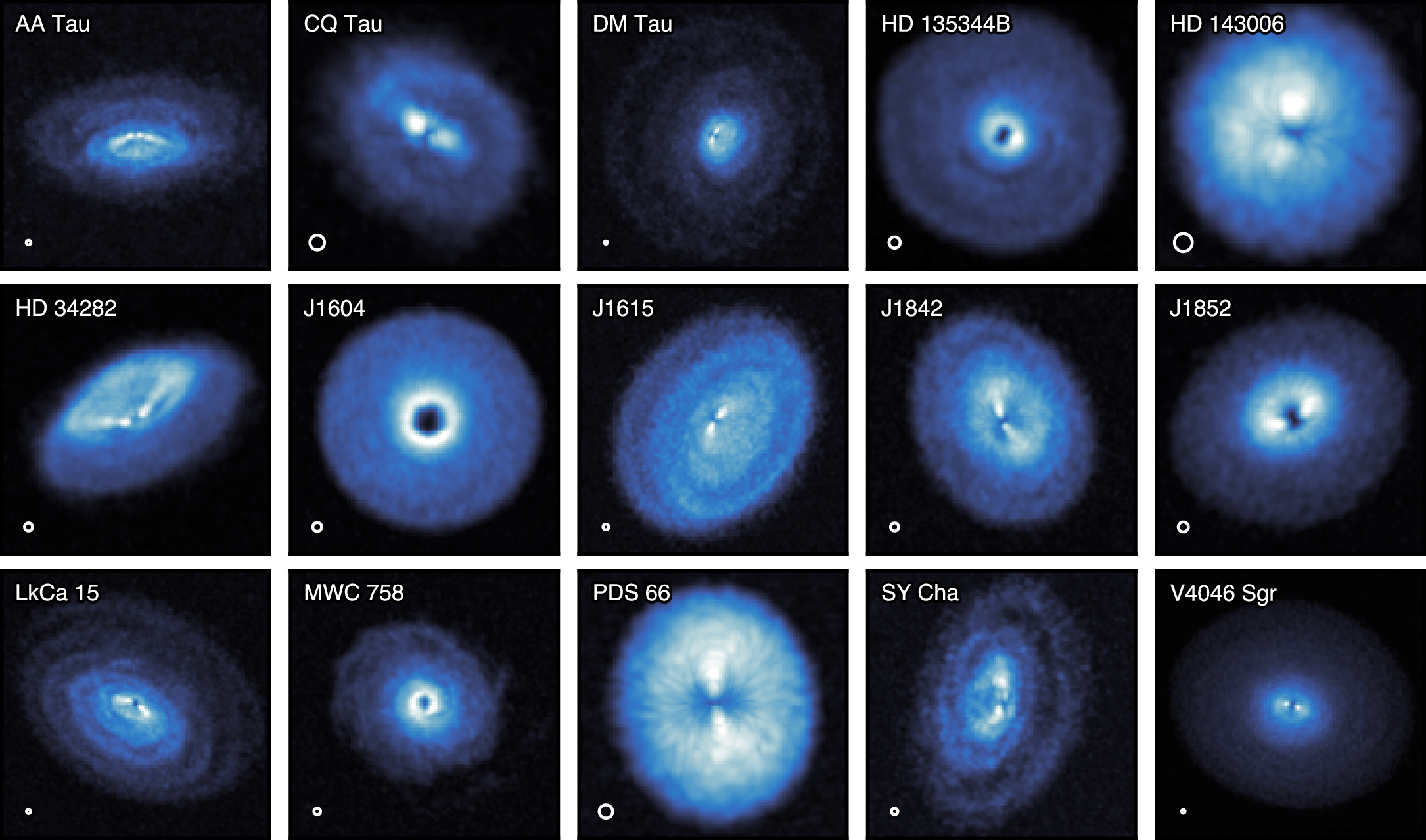
The full exoALMA sample. All 15 disks show evidence of substructure in their gas emission. [Teague et al. 2025]
The first science results from exoALMA have started to reveal that the planet formation process is highly dynamical — precise kinematic measurements uncover dynamical perturbations within protoplanetary disks across their sample. These perturbations point to the impacts protoplanets have on disk kinematics and mass distributions as they continue to form, and the high resolution of ALMA observations unlocks the inner workings of protoplanetary disks.
Looking forward, Teague emphasized that the future is broad for planet formation science. The upcoming Wideband Sensitivity Upgrade on ALMA will enable even more detailed maps of protoplanetary disks, unlocking the mysteries of planet formation while it happens.
Press Conference: The Science of Stellar Remnants (Briefing video) (by Lucas Brown)
In AAS 248’s very first press conference session, we heard from a variety of scientists and research teams on all sorts of stellar remnants: white dwarfs, supernovae, pulsars, and beyond. Basically, if it came from a dying star, it was fair game for this session.
Boron and Beryllium as Unlikely Probes of Extrasolar Planets
First up was Ben Zuckerman (University of California, Los Angeles), who updated us on ongoing research into the presence of boron and beryllium in certain white dwarf systems. For some context, there exist many white dwarf systems in which a companion object — sometimes a planet — can have its material accreted onto the surface of the white dwarf due to tidal disruption during close approaches in its orbit. This deposition of material can then be detected via spectral signatures in observations of the white dwarf.
In 2021, evidence was first presented for two white dwarfs being “polluted” with trace amounts of beryllium, which is a particularly rare element, cosmically speaking. This raises the question of how so much beryllium ended up in these systems. In the hunt for answers, however, another mystery has emerged: missing boron. As Zuckerman went on to describe, boron was also recently discovered in some of these white dwarf systems, but at an abundance roughly equal to that of the beryllium. This is despite boron being about a hundred times more common in the universe, further muddying the waters of what exactly is causing such a strange pattern of heavy metals in these systems. Work remains ongoing to find a physical model that can reconcile these observations.
White Dwarf Kicks via Episodic Mass Ejection from Red Giant Stars
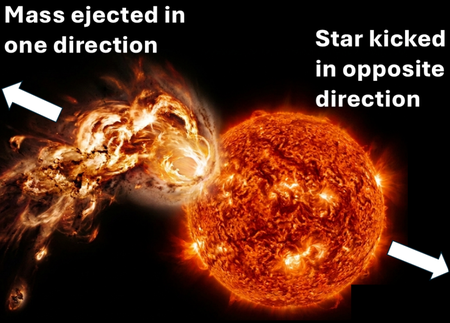
In the model explored by Jim Fuller and collaborators, repeated mass-ejection events can cause red giant stars to be “kicked” up to a relatively high velocity before they collapse to form white dwarfs, explaining the high velocities many white dwarfs are observed to have. [Jim Fuller]
Additionally, this random ejection process predicts that red giants in binary systems will experience a sort of “random walk” in their orbital parameters, not just their overall velocity. This can lead to the complete dissociation of binaries, or to the direct collision of a red giant with its companion — leading to predictions about how many widely spaced white dwarf binary systems should exist. | Press release
Probing Intrabinary Material in a New Spider Millisecond Pulsar
Rebecca Kyer (Michigan State University) gave an update on research into so-called “spider” millisecond pulsars. These rapidly rotating neutron stars are a sub-class of pulsar characterized by their very high spin rate and the presence of a companion from which the pulsar is accreting material. Such systems are further sub-classified as either “Black Widows,” which have very low-mass companions (~3% solar mass), “Redbacks,” which have larger companions at ~10-80% solar mass, and “Huntsmans,” which have more massive red-giant companions. These Huntsman pulsars are the newest category, with only two known cases — until now!
Kyer presented evidence collected by their team that may indicate the discovery of a third Huntsman pulsar. The evidence involves radial velocity measurements of the companion star, which shows an orbital period of 3.64 days and variable H-alpha emission. In these systems, the radio emission typically associated with the pulsar can be blocked from our view for unpredictable amounts of time due to clouds of hot gas and dust that emerges from the complex interaction between the pulsar and red giant winds. Despite this, Kyer hopes that with enough targeted observations with the Green Bank Telescope, a radio signal will eventually be detected, confirming the pulsar’s presence.
Image of Messier 83 in both X-ray and optical light. Prominent X-ray sources can be seen as small colorful blobs strewn throughout the galaxy. Some of these X-ray sources are supernova remnants, a subset of which have recently been found to show variability in their brightness. [X-ray: NASA/CXC/SAO; Optical: NASA/ESA/AURA/STScI, Hubble Heritage Team, W. Blair (STScI/Johns Hopkins University) and R. O’Connell (University of Virginia); Image Processing: NASA/CXC/SAO/A. Jubett, L. Frattare and P. Edmonds]
Finally, we heard from a team of three researchers — Andrea Prestwich (Catholic University of America / NASA Goddard SFC), Roy Kilgard (Wesleyan University), and Zoe Hoiland (Vassar College) — on an unexpected supernova discovery. Traditionally, supernovae are modeled as having a relatively constant or slightly decreasing luminosity, at least after their initial explosion. As the stellar material is blasted away from the progenitor’s core, it interacts with the surrounding interstellar medium and a blob of hot, shocked gas is left over. This blob will eventually cool and dim, but often over a long time period, leading to the aforementioned prediction of constant or slightly decreasing brightness.
However, in 14-year Chandra observations of a supernova remnant in Messier 83, Prestwich and her collaborators actually found significant X-ray variability, with the remnant occasionally even increasing in brightness. In a follow-up study, it was found that supernova remnants in Messier 51 likewise show this up-and-down variability. In contrast, an analysis of remnants in Messier 101 showed zero variable remnants. Notably, the former two galaxies are very actively star-forming, while the latter is not. Some possible theoretical models to explain this variability include the possibility of stellar material falling back on the compact object leftover by the supernova, creating an accretion disk that can generate variable emission. Alternatively, it has been proposed that there could be a neighboring star to the remnant object, forming an accreting X-ray binary system that could also induce variability. | Press release
Plenary Lecture: Sanmi (Oluwasanmi) Koyejo, The Measurement Gap: What AI Can Get Wrong and Why Astronomers Are the Fix (by Lexi Gault)
Sanmi (Oluwasanmi) Koyejo, a professor of computer science at Stanford University, focused this plenary talk on the limitations of AI as it becomes more integrated with science and how astronomers can help solve these problems. Koyejo began by addressing the question of why an AI researcher is talking to astronomers. His research explores how to set AI standards and how to best assess the performance of an AI model, which becomes particularly important when these models are used to do science.
Evaluating the performance of an AI model relies on benchmarks, a fixed set of questions with known answers that are used to score the AI. These benchmarks are simple, reproducible, and comparable, but passing a benchmark does not equate to getting a meaningful scientific result. Benchmarks assume cheap checks, fast feedback, and fixed questions, but science is none of those things; answering astronomy questions relies on telescope time, and ground truth cannot be found quickly.
Much like telescopes, AI benchmarks are measuring instruments with noise that can compound. If you run an AI model many times, the goal is often convergence on an agreed-upon answer, but getting to an agreed-upon answer does not mean that the answer is correct. Koyejo’s recent research found that AI models more often agreed with each other than they did with the actual truth. This is made worse when AI is used to evaluate itself. For example, Koyejo notes the rising number of academic paper submissions due to AI-written papers greatly exceeds the capacity of human reviewers. If AI tools are used to evaluate AI-generated paper submissions, the AI will tend to favor AI-written materials, ignoring the actual scientific merit. Making evaluation of AI an AI problem compounds its failures, straying further from a correct answer.
This is where astronomers come in. Having the expert knowledge of what “correct” looks like, being able to judge which errors matter, access to expensive ground truth (telescope time), and a culture of blind analysis (not knowing exactly what the answer should be), astronomers are well equipped to build standards for AI evaluation. We can define what good AI is for astronomy and use our expertise to help build the standards. Koyejo left the audience with the charge to engage with AI (engagement does not mean endorsement), so that astronomers can help set the standards for appropriate AI use in science.
Read Astrobites’s interview with Sanmi Koyejo.
Press Conference: Variable, Windy, and Disruptive: The Behavior of Supermassive Black Holes (Briefing video) (by Niloofar Sharei)
This press conference focused on what supermassive black holes do to the world around them, from relativistic jets of the most famous black hole, to the multi-phase winds launched from active galactic nuclei, to temperature-shifting coronae, and even the radio burps that are produced years after a black hole tears apart stars.
Chandra Tracks the Evolving Jet from Messier 87’s Black Hole:
Camille Poitras (Laval University) presented the largest Chandra X-ray movie of jet evolution in the famous supermassive black hole Messier 87 (M87). M87 has been studied across the electromagnetic spectrum, but X-ray observations of its jet have always suffered from blur because high-energy photons are hard to focus. Using improved Chandra calibrations and deconvolution techniques, the team produced a 13-year X-ray movie of M87’s jet from 2012 to 2025. Tracking a bright knot within the jet, Poitras’s team saw it split into two components in 2023, with one component moving at an apparent five times the speed of light (which is a known illusion called superluminal motion). That allowed the team to look into where and how the particles are being accelerated to extreme energies along the jet. | Press release
Watching a Black Hole Wind Grow: Chandra and Hubble Reveal the Early Stages of Galaxy
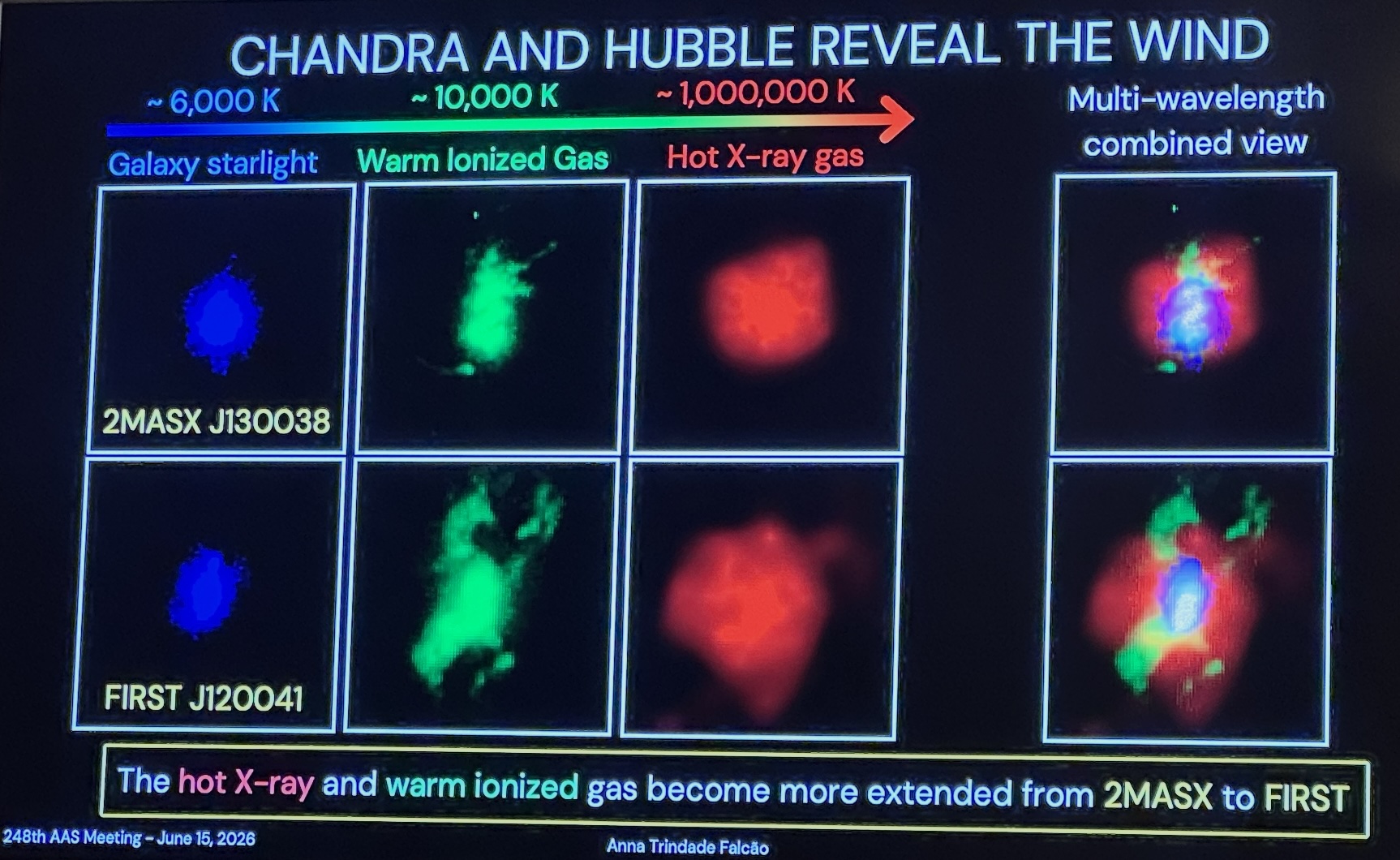
Multiwavelength images of two nearby quasars show that the hot X-ray (red) and warm ionized (green) gas are far more extended in the bottom system. Click to enlarge. [Anna Trindade Falcao]
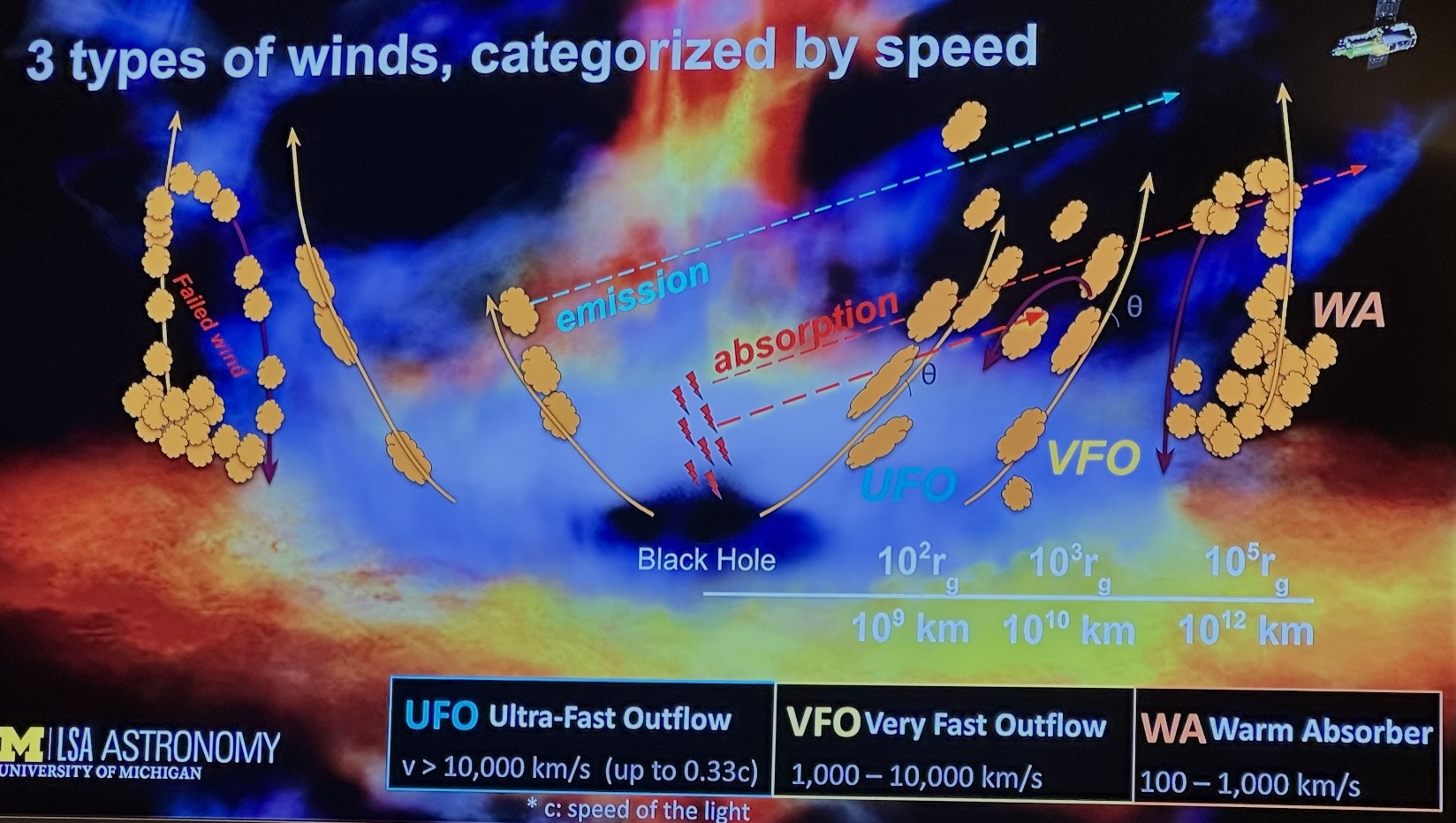
The three types of wind launched from an accreting supermassive black hole. Click to enlarge. [Xin Xiang]
Xin Xiang (University of Michigan) presented the most detailed X-ray portrait of the winds flowing out of NGC 4151, an active galaxy roughly 16 million light-years away with a 30-million-solar-mass black hole. Every major X-ray observatory has observed this galaxy before, but earlier instruments could not separate its multiple wind components. With the high-resolution X-Ray Imaging and Spectroscopy Mission (XRISM) spectrometer, Xiang resolved three wind populations by velocity: warm absorbers (100–1,000 km/s), very fast outflows (1,000–10,000 km/s), and ultra-fast outflows (over 10,000 km/s). Across 14 XRISM observations over a year, they found that the fast winds turn on three hours after each bright X-ray flare, matching the predicted timescale for magnetically driven wind. | Press release
NuSTAR Reveals a Significantly Variable Active Galactic Nucleus Corona
Xiurui Zhao (Caltech) presented the first observational evidence of significant temperature variation in the corona of an AGN. The corona produces about 90% of all X-ray photons from an AGN, but its temperature can only be measured with X-ray missions sensitive to high-energy spectral curvature like NASA’s NuSTAR. They compared NuSTAR’s observations across multiple years and found that despite having the same luminosity in 2015 and 2024, the 2024 corona was significantly cooler than the 2015 corona. In follow-up observations in 2025, it was back at its earlier temperature. This is the first clear observation of coronal temperature variability in an AGN. | Press release
New Surprises from Radio Observations of Tidal Disruption Event Outflows
Kate Alexander (University of Arizona) presented new radio observations of tidal disruption events (TDEs). TDEs occur roughly once every 100,000 years in a given galaxy. It happens when a star drifts too close to the black hole, is stretched and squeezed into a long stream of debris (a process astronomers call spaghettification) and some of that debris falls onto the black hole while the rest is thrown outward and lights up in radio. Alexander and her team used six years of Very Large Array monitoring of several dozen nearby TDEs. They found that many TDEs unexpectedly turn on in the radio years after the original event, even long after their optical light has faded. Their team combined radio data with X-ray and optical accretion-rate measurements and found that these late-time radio flares appear when the black hole is eating either very quickly or very slowly, but not at moderate rates! This pattern matched what is seen in stellar-mass black holes and this suggests that accretion physics may operate similarly across many orders of magnitude in black hole mass. | Press release
Plenary Lecture: Mario Jurić, Early Results from the Rubin Observatory: Mapping the Solar System and Beyond (by Kerry Hensley)
Mario Jurić (University of Washington; PI of the University of Washington Rubin operations element) began by remarking on how our collective concept of what an astronomer is has been transformed over the past 25 years. While a Google image search for “astronomer” yields an array of people pointing small telescopes at the night sky, today’s version of professional astronomy looks quite different: huge telescopes with enormous cameras covering vast swaths of the sky, with analysis aided by software and data deposited in massive databases.
This rapid transition was first spurred by enterprises like the Sloan Digital Sky Survey, which collected 20 terabytes of raw data from 1.2 billion observations. Now, digital sky surveys are common, and they’re becoming ever larger. The next massive digital sky survey will be the Legacy Survey of Space and Time from the NSF–DOE Vera C. Rubin Observatory — an observatory that can “download the universe” and is poised to transform our understanding of everything from asteroids to dark energy.
Rubin released its first images on 23 June 2025, and among these stunning images is a broad view that contains thousands of galaxies in the Virgo cluster, a golden tangle of four colliding galaxies, a nearby galaxy cluster, a distant galaxy cluster, and a handful of nearby spiral galaxies bursting with star formation. As fantastic as this image is, Jurić emphasized that it’s just one still image in a movie: as Rubin returns to the same fields of view time and time again, it’ll spot things that change brightness (like variable stars and transients) and things that move (like asteroids).
Jurić highlighted four areas in which Rubin has already contributed greatly, focusing on discoveries within our solar system:
-
- Asteroid variability: Rubin has already collected hundreds of thousands of observations of asteroids, resulting in the discovery of extremely fast rotators like 2025 MN45, which must have an extremely high tensile strength not to fly apart.
- Observations of interstellar object 3I/ATLAS: During the observatory’s commissioning survey, the Rubin team realized that they had observed 3I/ATLAS before it was discovered — but in observations that were technically under embargo. Recognizing the high impact of the data, the team found a way to share their findings, leading the 150-person collaboration to write a paper on their findings in a mere three days.
- High-precision asteroid photometry: While analyzing the commissioning data, the Rubin team discovered systematic offsets in the positions of asteroids — but no other types of objects. They found that this effect varied across the sky and was worse in the south. They eventually discovered that because most asteroids are observed from the north, that catalogs of asteroid orbits are systematically biased at a level of 20-40 milliarcseconds. Luckily, Rubin will provide the much-needed southerly data necessary to clean up these catalogs within about a year.
- Outer solar system studies: Researchers discovered 380 new trans-Neptunian objects in Rubin’s commissioning data. (Compare that to just 5,000 known trans-Neptunian objects in total!) In the time since the commissioning data were collected, hundreds more candidate objects were discovered.
With such enormous data yields from Rubin, how do we efficiently turn data into science? Jurić outlined strategies for handling massive datasets using well-crafted data formats, computing tools, and AI. In particular, Jurić highlighted the Astronomical Catalog Inference Driver, or ACID, which he built in four weeks on his phone using Claude. The tool is comparable to “a product developed in >3 years by extremely capable human professionals” and can rapidly handle immense data tables, showing how AI can accelerate the development of tools to handle tomorrow’s datasets.
Read Astrobites’s interview with Mario Jurić.
Plenary Lecture: Esra Bulbul, Cosmology and Baryons Across Scales: Probing Halo Mass Function to Cosmic Filaments with eROSITA (by Lexi Gault)
Esra Bulbul (Max Planck Institute for Extraterrestrial Physics) began her plenary talk at the beginning of time — the Big Bang marked the start of the universe, and from there we attempt to constrain cosmological parameters in order to understand how the universe was born and how it has evolved. Bulbul notes that a lot of work has been done to constrain cosmology from the cosmic microwave background (CMB), and we must compare those early time measurements to those from later times to build a full picture. In cosmology, tensions have arisen between early-time and late-time probes. CMB measurements of the Hubble constant and S8, the “clumpiness” parameter of the universe, do not agree with late time probes that find that the universe is accelerating faster with smaller fluctuations than the CMB predictions. How do we work toward resolving this tension?
The extended ROentgen Survey with an Imaging Telescope Array (eROSITA) is a space telescope that has performed the first imaging all-sky survey in the medium X-ray range, seeking to map the large-scale structures of the universe to better constrain cosmological constants. eROSITA focuses on finding galaxy groups and clusters via the hot X-ray gas within and between them across the last 5-7 billion years of the universe. Since its launch in 2019, eROSITA has completed more than four full-sky surveys. Of the million X-ray sources detected by eROSITA, only 12,247 (1%) are galaxy clusters and groups.
From the observed X-ray emission from the galaxy clusters and groups, the eROSITA team has been able to measure the temperature of the intercluster medium within the sample. Working with weak gravitational lensing surveys, they have been able to measure the masses of the newly discovered clusters and groups. These measurements show that eROSITA has detected sources across three orders of magnitude in mass, reaching from the galaxy level to large-scale clusters.
The galaxy cluster and group observations allow them to constrain a few cosmological parameters including S8 (density fluctuations), Ωm (matter density), and w0 (dark energy). From the impressive eROSITA data, Bulbul showed that they could constrain S8 and Ωm to five times better precision than ever before! These late-time results are fully consistent with what has been measured from the early-time CMB measurements. Additionally, the dark energy measurements agree with what has been measured thus far from the Dark Energy Spectroscopic Instrument survey.
Bulbul then switched us from the exciting cosmological results to those regarding baryon detection. A striking result from eROSITA was the detection of hot gas well beyond what is typically considered the gravitational extent of a galaxy cluster — reaching out to 16 million light-years, often larger than the galaxy cluster itself. This underscores the importance of X-ray surveys in detecting the very extended gas encapsulating the largest-scale structures of the universe.
Looking forward, Bulbul discussed the future work planned for eROSITA. Transitioning now to working with the deepest data of the survey, the team expects to find about 40,000 galaxy clusters with about half of those being used for cosmology. They anticipate obtaining even higher precision on cosmological parameter measurements, comparable to that obtained from CMB observations. The work of eROSITA is revolutionizing cosmology at later times in the universe, and the future is exciting.
Read Astrobites’s interview with Esra Bulbul.
The post AAS 248: Day 1 appeared first on AAS Nova.
]]>The post ALMA Band 9 CO(6–5) Reveals a Warm Ring Structure Associated with the Embedded Protostar in the Cold Dense Core MC 27/L1521F appeared first on AAS Nova.
]]>A newly discovered distribution of dense, warm gas around a protostar, roughly in the shape of the number “9,” is unlikely to be solely due to outflows and instead may be caused by magnetic flux redistribution.
The post ALMA Band 9 CO(6–5) Reveals a Warm Ring Structure Associated with the Embedded Protostar in the Cold Dense Core MC 27/L1521F appeared first on AAS Nova.
]]>The post NASA’s Pandora SmallSat Mission: Simulated Modeling and Retrieval of Near-Infrared Exoplanet Transmission Spectra appeared first on AAS Nova.
]]>During its year-long prime mission in 2026-2027, Pandora will likely constrain the abundance of water and methane to ~1.0 dex for the atmospheres of sub-Neptune and hot-Jupiter exoplanets.
The post NASA’s Pandora SmallSat Mission: Simulated Modeling and Retrieval of Near-Infrared Exoplanet Transmission Spectra appeared first on AAS Nova.
]]>
AAS 248 in Pasadena, CA, is underway! Here are some education, outreach, and related sessions that you might want to check out at the meeting.
The post AAS 248: Welcome! appeared first on AAS Nova.
]]>This week, AAS Nova and Astrobites are attending the American Astronomical Society (AAS) summer meeting in Pasadena, CA.
AAS Nova Editors Kerry Hensley and Susanna Kohler and AAS Media Fellow Lexi Gault will join Astrobites Media Intern Niloofar Sharei and Astrobiter Lucas Brown to live-blog the meeting for all those who aren’t attending or can’t make it to all the sessions they’d like. We plan to cover all of the plenaries and press conferences, so follow along here on aasnova.org or on astrobites.org! You can also follow Astrobites on Bluesky at astrobites.bsky.social for more meeting content.
Where can you find us during the meeting? We’ll be at the Astrobites booth in the Exhibit Hall all week — stop by and say hello! You can also find Susanna, Kerry, and Lexi at the press conferences in Ballroom H Monday and Tuesday at 10:15 am and 2:15 pm PDT and Wednesday at 10:15 am PDT. AAS press conferences are open to all attendees, and they can also be found on the AAS Press Office YouTube channel for anyone not attending the meeting.
In addition to the usual press conferences, the AAS Press team has collaborated with Los Angeles’s own Griffith Observatory to arrange a special live recording of the Observatory’s acclaimed astronomy program, All Space Considered. This event is open to all AAS 248 attendees and will take place Wednesday, 17 June, at 2:15 pm PDT in Ballroom H. We hope to see you there!
Finally, you can read the currently published AAS 248 keynote speaker interviews, which were conducted by Astrobiters Niloofar Sharei, Amaya Sinha, Sowkhya Shanbhog, Katya Gozman, and Natalie Price. Be sure to check back all week as the remainder are released!
Education, Outreach, and More at AAS 248
AAS 248 features a broad range of sessions related to education and outreach. For a comprehensive and curated list of sessions, check out this post from AAS Director of Education Programs Tom Rice. Here are a few highlights (all times PDT; must be logged in to aas.org for links to work correctly); note that times and locations are subject to change:
On Monday, kick off the meeting with the Astronomy Education, Outreach, and Night-Sky Stewardship iPoster session, 9:00–10:00 am in Exhibit Hall A. Wrap up your day by attending the Reception for Astronomy Educators from 6:30 to 8:00 pm in Room 107.
Tuesday morning, hear about pressing issues relating to climate change at the Special Session What Astronomers Can Do About Climate Change: Infrastructure, Education, and Communication, from 10:00 to 11:30 am in Ballroom G. That afternoon from 2:00 to 3:30 pm, tune in to the Pathways into Modern Space Science oral session in Ballroom C.
On Wednesday, learn how to Make Your Voice Heard as an Advocate for Science in a Special Session co-sponsored by the AAS and the American Institute of Physics from 10:00 to 11:30 am in Ballroom G. Throughout the week, check in with the League of Women Voters in the Exhibit Hall — they’ll be conducting a voter registration drive during the meeting.
Thursday, the final day of the meeting, closes with a look at a local institution in the 40 Years of Community Engagement at IPAC: Lessons Learned Special Session from 2:00 to 3:30 pm in Ballroom F.
If you’re sticking around Pasadena after the meeting, consider heading to Griffith Observatory for their open house on Saturday, 20 June, 2:00–10:00 pm, which will showcase accessible observing techniques like tactile images, 3D models, live camera feeds, and sonification.
And remember, you can find a longer curated list of education-related sessions here!
The post AAS 248: Welcome! appeared first on AAS Nova.
]]>
AAS Publishing will be attending the upcoming AAS meeting in Pasadena. Here's where you can find the publishing team during the conference.
The post AAS Publishing at AAS 248 in Pasadena appeared first on AAS Nova.
]]>The 248th meeting of the American Astronomical Society, to be held in Pasadena, CA, 14–18 June, is nearly here. The AAS Publishing team looks forward to connecting with meeting attendees, and you can find representatives from the publishing and journals’ editorial staff at the AAS booth in the Exhibit Hall in the Pasadena Convention Center. AAS Director of Scholarly Publishing Kerry Kroffe will be available at the AAS Publishing booth, so be sure to stop by to say hello, chat about the journals, and pick up some swag!
AAS Nova Editors Kerry Hensley and Susanna Kohler, AAS Media Fellow Lexi Gault, Astrobites Media Intern Niloofar Sharei, and the rest of the Astrobites team will also be available periodically at the Astrobites booth in the Exhibit Hall. We look forward to seeing you there!
AAS Peer Review Workshop
This workshop led by the scientific editors of the AAS journals will teach participants about the peer review process, give them the opportunity to see both poor and exemplary referee reports, and provide them with hands-on experience in writing a peer review report. Participants will receive a graduation certificate. While signups for the AAS 248 peer review workshop are closed, more workshops are planned for future AAS meetings, so keep an eye out for more information about upcoming opportunities!
Open Science, Data, and AI in Astronomy: Sessions to Look for at AAS 248
Note: The links in this section take you to the corresponding entries in the AAS 248 block schedule. You must be logged in for the links to work correctly; otherwise, they will take you to the main block schedule page. Note that times and locations are subject to change.
The upcoming AAS meeting has a number of sessions, workshops, and lectures for those interested in open-source tools, data management strategies, and AI’s role in astronomy. Sunday, 14 June, will feature a trio of data-related workshops. (Note that these workshops require an additional fee and can be added to your registration.) The “Euclid Data in the Cloud: Access, Analysis, and Science Opportunities” workshop (10:00 am – 11:30 pm PDT in Room 101) will introduce participants to accessing and analyzing data from Euclid, a European Space Agency mission with NASA participation. The overlapping workshop “High Energy Science Analysis with HEASARC Services” (10:00 am – 12:00 pm PDT in Room 102), organized by the High Energy Astrophysics Science Archive Research Center (HEASARC), is targeted toward early-career scientists and anyone curious about HEASARC services. The workshop will begin with an overview of available services before transitioning into hands-on experimentation with these tools. Finally, “An Introduction to Fornax: Scalable Data and Compute for Scientific Analysis” (2:00–4:00 pm PDT in Room 101) will introduce attendees to NASA’s new Astrophysics Science Platform through live demonstrations and guided exercises.
Of particular interest regarding AI in astronomy is Monday morning’s plenary lecture from Sanmi (Oluwasanmi) Koyejo titled “The Measurement Gap: What AI Can Get Wrong and Why Astronomers Are the Fix.” This session will take place from 11:40 am to 12:30 pm PDT in Ballroom DE.
The “AI-Driven Science in the Survey Era” Special Session will take place on Tuesday, 16 June, from 2:00 pm to 3:30 pm in Ballroom F. This session will highlight recent breakthroughs in a broad range of astronomical sub-fields that have greatly benefited from the use of AI and machine-learning techniques. Also on Tuesday, check out recent work on imaging and data-handling methods at the “Observational Imaging Methods and Data Pipelines” iPoster session from 5:00 pm to 6:00 pm in the Exhibit Hall.
The post AAS Publishing at AAS 248 in Pasadena appeared first on AAS Nova.
]]>The post The Spatially Resolved Hot Gas Properties of NGC 1266’s Active Galactic Nucleus–Driven Outflow appeared first on AAS Nova.
]]>Archival data from the Chandra X-ray Observatory and the Very Large Telescope reveal the temperature, density, and thermal energy of the wind from a low-luminosity active galactic nucleus.
The post The Spatially Resolved Hot Gas Properties of NGC 1266’s Active Galactic Nucleus–Driven Outflow appeared first on AAS Nova.
]]>The post The Impact of Strong Lensing on Hubble Constant Measurements with Gravitational-Wave Dark Sirens appeared first on AAS Nova.
]]>Combining strongly lensed gravitational wave signals with luminosity distances from their host galaxies, the Hubble constant could be measured in a way that is complementary to electromagnetic methods.
The post The Impact of Strong Lensing on Hubble Constant Measurements with Gravitational-Wave Dark Sirens appeared first on AAS Nova.
]]>
A recent study presents the first strong evidence of an old, low-mass hypervelocity star flung from the galactic center.
The post Shot from the Heart of the Milky Way: Discovery of an Old Hypervelocity Star appeared first on AAS Nova.
]]>Zooming through the galaxy faster than they should, hypervelocity stars are a curious population of stars whose origins are often difficult to determine. A recent study presents the first evidence of an old, low-mass hypervelocity star launched from the Milky Way’s center, providing clues into this elusive set of fast-moving stars.
Flinging Fast Stars
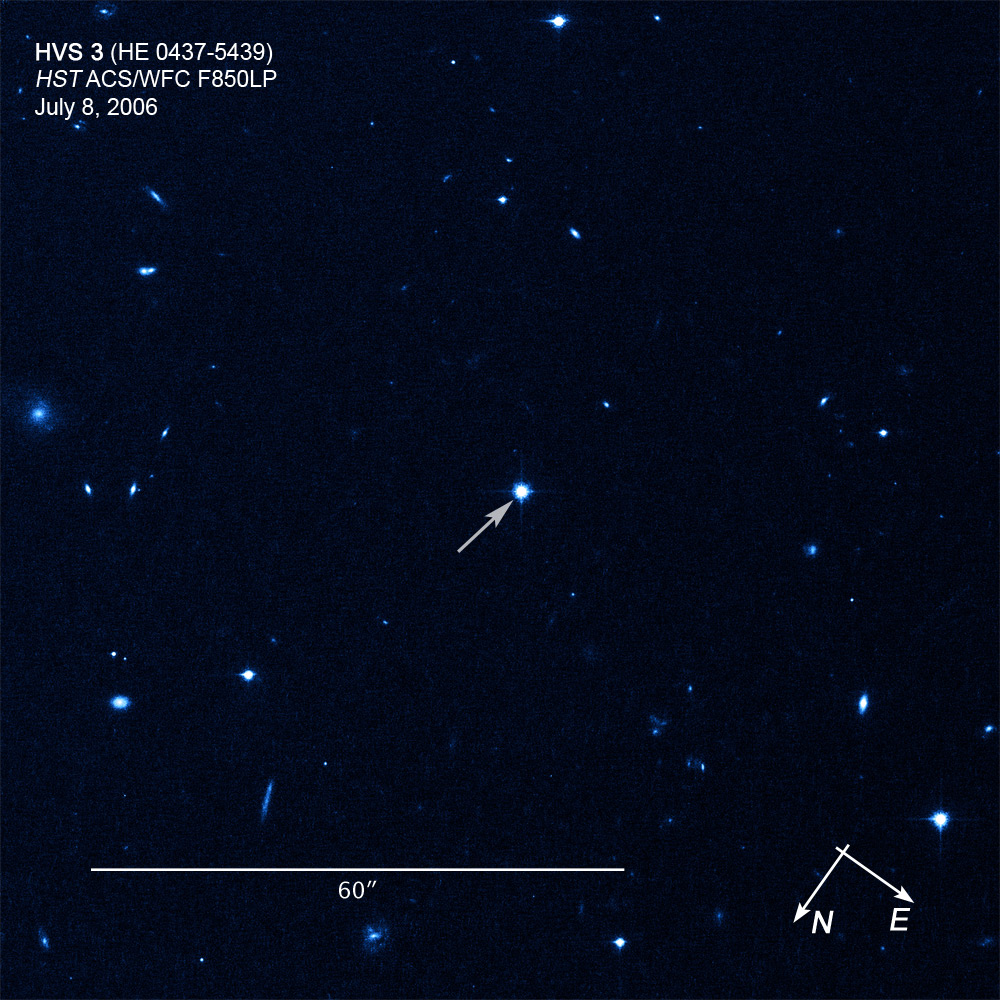
Image of the hypervelocity star HE 0437-5439 that was launched from the Milky Way’s core. [Illustration: NASA, ESA, and Z. Levay (STScI); Science: NASA, ESA, O. Gnedin (University of Michigan, Ann Arbor), and W. Brown (Harvard-Smithsonian Center for Astrophysics, Cambridge, Mass.)]
However, constraining a hypervelocity star’s origin to the galactic center is limited by uncertainties in distances and proper motions, muddling how well researchers have been able to trace their orbits backward. Among a number of candidate galactic center–origin hypervelocity stars, only one has been confidently identified as having been kicked from the galaxy’s center. Intriguingly, this hypervelocity star and most galactic center–origin candidates are young, massive stars — old, low-mass hypervelocity stars from the galactic center have yet to be identified.
What does this dearth of old, low-mass zooming stars mean? Either stars in the galactic center are preferentially young and massive, with fewer than expected old and small stars, or low-mass hypervelocity stars are missed by selection effects, challenging to detect in current surveys. Searching for hypervelocity stars with higher precision and sensitivity may allow astronomers to tease out this missing population and trace back more zooming stars to a Hills mechanism origin.
Discovering An Old Hypervelocity Star
Leveraging high-quality spectra from the Dark Energy Spectroscopic Instrument (DESI) survey and precise astrometry from Gaia, Shunhong Deng (University of Chinese Academy of Sciences; China West Normal University) and collaborators reported the discovery of the hypervelocity star DESI-HVS1. From the spectroscopic and astrometric analyses, the authors determined that DESI-HSV1 is a ~14-billion-year-old low-metallicity star with a mass about 80% that of the Sun’s, moving through the galaxy at 523 km/s.
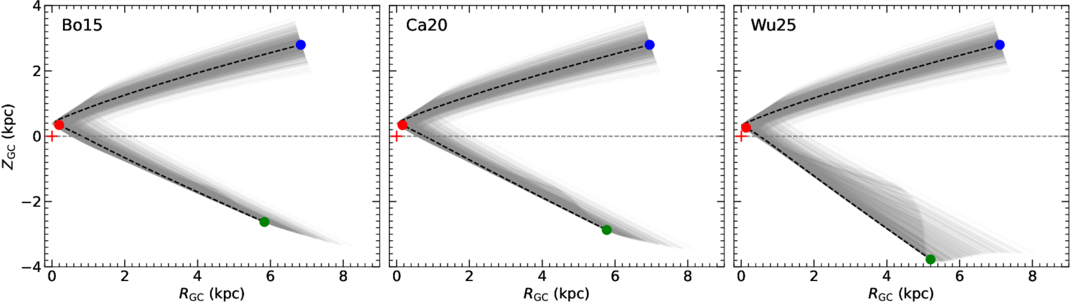
Backward-integrated orbits of DESI-HVS1 for three different galactic potential models. The blue, red, and green points show the star’s current position, closest approach to the galactic center, and position 50 million years ago, respectively. Click to enlarge. [Deng et al 2026]
While more refined galaxy models and comparison to other candidate galactic center–origin hypervelocity stars are necessary to fully confirm its origins, DESI-HVS1 provides the first compelling evidence for an old, low-mass hypervelocity star candidate consistent with a galactic center launch. This suggests that the observed lack of such stars is likely not a reflection of the Milky Way’s central stellar population, but rather a consequence of observational constraints making such small hypervelocity stars particularly difficult to detect. As large spectroscopic and astrometric surveys continue to advance, the sample of galactic-center hypervelocity star candidates will grow, enabling further exploration of the stellar environment and dynamical processes at the Milky Way’s core.
Citation
“An Old, Low-mass, Metal-poor Hypervelocity Star Candidate Consistent with Galactic Center Origin,” Shunhong Deng et al 2026 ApJL 1003 L9. doi:10.3847/2041-8213/ae6505
The post Shot from the Heart of the Milky Way: Discovery of an Old Hypervelocity Star appeared first on AAS Nova.
]]>The post Carbon Cycle Imbalances on Arid Terrestrial Planets with Implications for Venus appeared first on AAS Nova.
]]>Modeling suggests that even planets within their stars’ habitable zones may become uninhabitable if they do not have a sufficient water inventory to balance their carbon cycle.
The post Carbon Cycle Imbalances on Arid Terrestrial Planets with Implications for Venus appeared first on AAS Nova.
]]>
The gamma-ray burst GRB 250702B displayed several unusual behaviors that researchers are still finding ways to explain.
The post Could a White Dwarf–Black Hole Pair Explain the Longest Gamma-Ray Burst Ever Seen? appeared first on AAS Nova.
]]>What’s the story behind the longest gamma-ray burst ever observed? Researchers explore how repeated interactions between a white dwarf and an intermediate-mass black hole could explain GRB 250702B’s unusual properties.
An Exceptional Gamma-Ray Burst
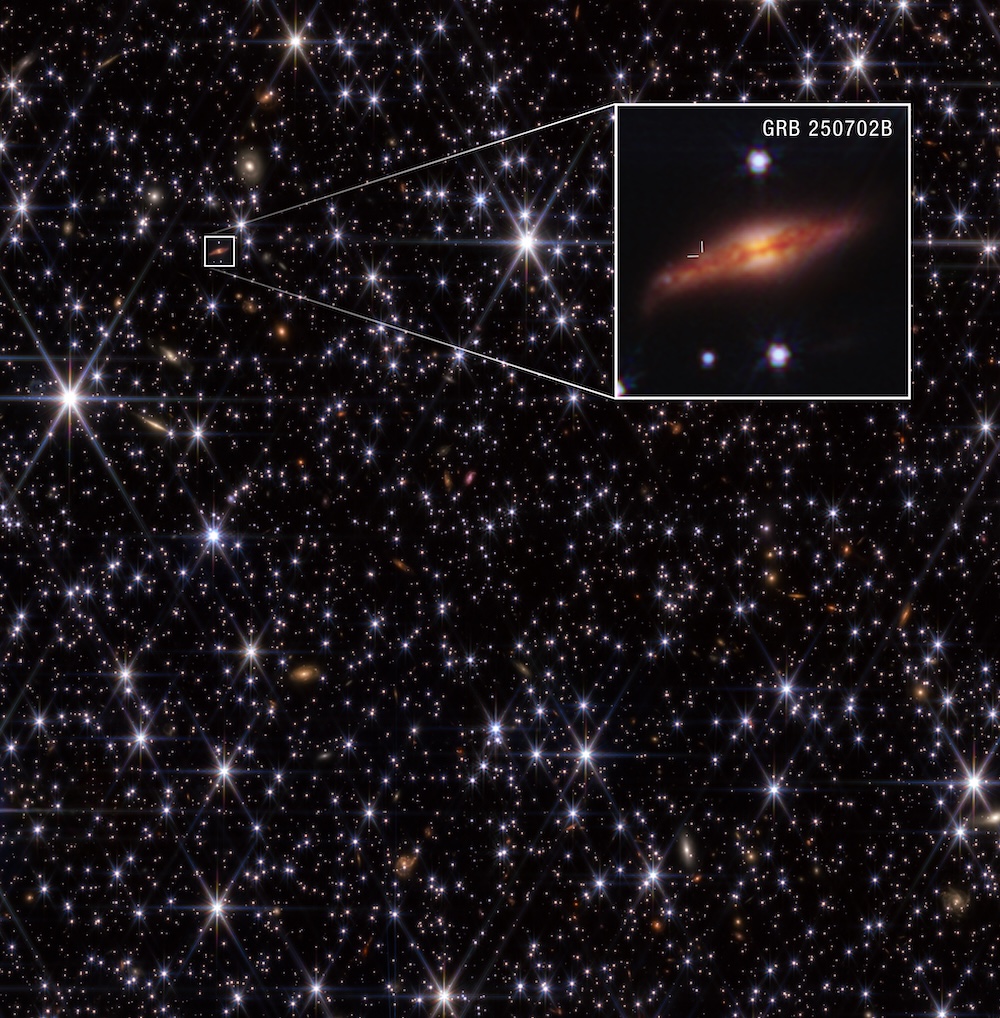
An image of GRB 250702B’s location within its host galaxy. [NASA, ESA, CSA, H. Sears (Rutgers). Image Processing: A. Pagan (STScI)]
These characteristics have been challenging to explain with typical models of long gamma-ray burst formation, such as collapsing massive stars, but researchers have developed numerous promising alternatives. In a new research article, astronomers have shown how GRB 250702B’s behavior might be explained by repeated close encounters between a white dwarf and an intermediate-mass black hole.
Eccentric Close Encounters
Yuri Sato (Tohoku University) and collaborators modeled the source of GRB 250702B as a white dwarf that has been captured into orbit around an intermediate-mass black hole. In their model, the white dwarf travels on an extremely eccentric orbit, drawing close to the black hole roughly once an hour. Each time the white dwarf ventures close, the black hole’s tidal forces strip away part of the star until, after about 40 such encounters, the white dwarf is completely destroyed.
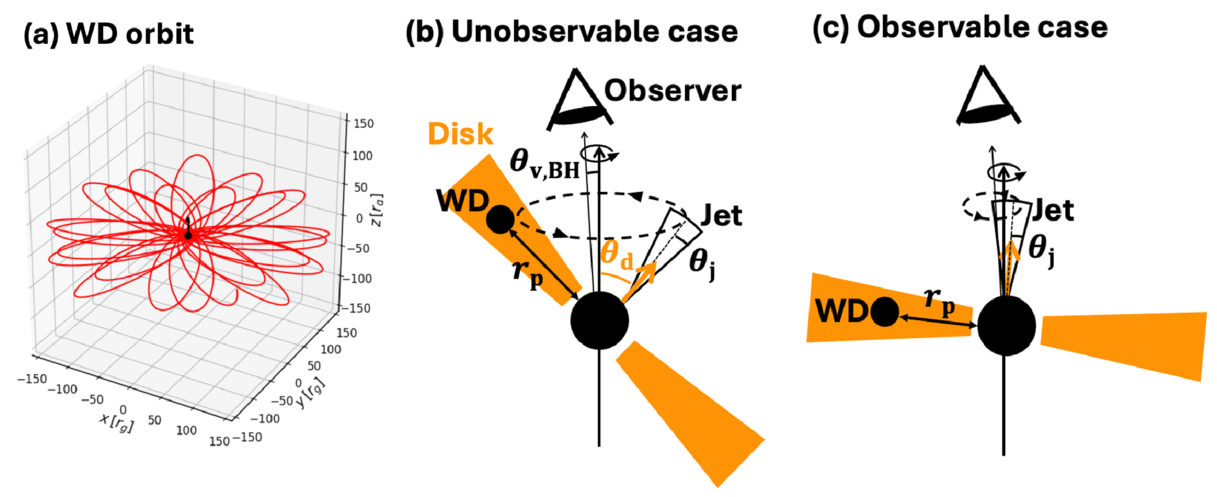
Schematics showing the orbit of the white dwarf (WD; left) and the geometries that produce observable and unobservable jets. Click to enlarge. [Sato et al. 2026]
Jet Precession and Model Predictions
The discrepancy can be resolved if the angle between the jet and the black hole’s spin axis precesses over time so that only some of the jets are pointed toward us. This can occur if the accretion disk is misaligned relative to the black hole’s spin. As an alternative, disk instabilities or other processes could keep all but a few of the expected jets from being launched.
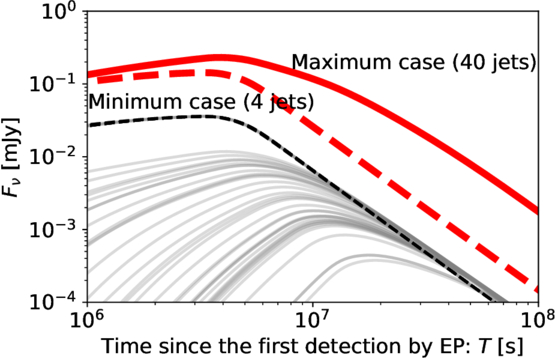
Predicted strength of the radio afterglow for the jet precession case (maximum case) and the case in which only four jets were launched due to disk instabilities or jet choking (minimum case). The x-axis shows the time since the burst was detected in X-rays by the Einstein Probe (EP). [Sato et al. 2026]
This work by Sato and collaborators demonstrates how the repeated partial tidal disruption of a white dwarf by an intermediate-mass black hole can match the properties of one of the most remarkable recent transient sources — one that has pushed astronomers to consider new ways of producing gamma-ray bursts.
Citation
“Successive Partial Disruptions with Orbital Precession in a White Dwarf–Black Hole System for Repeating GRB 250702B,” Yuri Sato et al 2026 ApJL 1003 L44. doi:10.3847/2041-8213/ae6a8f
The post Could a White Dwarf–Black Hole Pair Explain the Longest Gamma-Ray Burst Ever Seen? appeared first on AAS Nova.
]]>The post Evidence for a Delayed Ultraviolet Counterpart to X-Ray Quasiperiodic Eruptions in Ansky appeared first on AAS Nova.
]]>ZTF19acnskyy may be the first X-ray quasiperiodic eruption source to display correlated ultraviolet emission — another strange behavior that researchers must explain for this already unique source.
The post Evidence for a Delayed Ultraviolet Counterpart to X-Ray Quasiperiodic Eruptions in Ansky appeared first on AAS Nova.
]]>
Astrobites reports on an explanation for the appearance of Saturn's A ring.
The post Shining a Light on the Shadowy Movements in Saturn’s Rings appeared first on AAS Nova.
]]>Editor’s Note: Astrobites is a graduate-student-run organization that digests astrophysical literature for undergraduate students. As part of the partnership between the AAS and astrobites, we occasionally repost astrobites content here at AAS Nova. We hope you enjoy this post from astrobites; the original can be viewed at astrobites.org.
Title: Dynamics of Planetary Rings Under Thermal Forces
Authors: Wen-Han Zhou et al.
First Author’s Institution: The University of Tokyo
Status: Published in ApJL
If you ask anyone what their favourite planet is, the answer you’ll most likely hear is Saturn. Why? Why else than the beautiful and intricate ring system surrounding the gas giant. The other gas and ice giants in our solar system — Jupiter, Uranus, and Neptune — have ring systems themselves but none quite as striking as Saturn’s. Would it surprise you to learn that astronomers’ best models have not yet totally explained why Saturn’s rings look the way they do?

In contrast, it may not surprise you to hear that people have been trying to explain the rings for as long as we have seen them with telescopes. We now know that planetary rings are collections of relatively small particles (think micrometre up to metre sized), most likely having once been the material of a larger body that was disrupted either by collisions or tidal forces. This material, due to the gravity of its local planet, is sculpted into a flat disc where more subtle interactions then lead to substructure forming within the disc such as gaps and ringlets. Many of these substructures are explained by well-understood physics — for example gaps being carved by embedded moonlets or resonances sculpting ring edges — though there remain some outstanding problems in our understanding.
The authors of today’s article set their sights on the problematic inner edge of Saturn’s A ring (Figure 1). They describe some mechanisms — namely the collisions of micrometeoroids within the rings — by which a sharp ring edge can be maintained, but there exists a gap in the understanding of how such an edge can form in the first place. All hope is not lost, though, as today’s authors reintroduce a physical process they call the “eclipse–Yarkovsky” effect, which seems to explain these phenomena.

Figure 1: A horizontally sliced image of Saturn’s rings shows the rich substructure and gaps within the various rings. Saturn, which is not shown here, would be to the left of the image. The authors of today’s article are particularly concerned with the bright and sharp inner (left side) edges of the A and B rings. Click to enlarge. [NASA/JPL/Space Science Institute]
Billions of Rocket-Powered Bumper Cars
The idea behind this process revolves entirely around light. When sunlight hits a particle within a planetary ring, non-absorbed sunlight imparts a little “bump” onto a particle, ever so slightly altering its trajectory. At the same time, some of the sunlight is absorbed into the particle, which heats it up; light is soon re-emitted via thermal radiation, which, again, can slightly change the trajectory of these tiny particles. From a point on the surface of each ring particle (see rightmost side of Figure 2), the photons from this thermal radiation are all emitted in random directions; however, across the whole surface of the particle there is a net force! These tiny particles are spinning, and so the side just near “sunset” is hottest and emitting the most thermal photons. In this way, the pressure from the sunlight plus the thermal radiation of each particle imparts a net torque on the ring itself which changes the angular momentum of the ring.
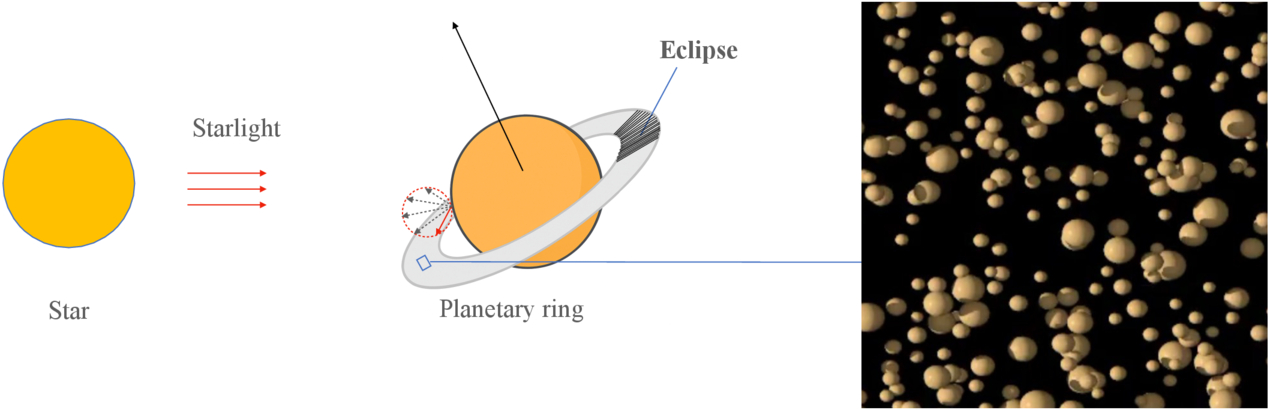
Figure 2: Starlight is the main source of light onto the particles that make up a planetary ring (right panel) though reflected light from the planet’s surface hits it too. This light “heats up” the ring and forms an asymmetry as the ring is eclipsed by the planet, which produces a net force. [Zhou et al. 2026]
After today’s authors detailed all of the math involved in this process (and there is a lot), they put it into practice to try to help explain Saturn’s curious rings. Including the eclipse–Yarkovsky effect together with other known effects that drive ring evolution allowed them to reproduce the optical depth profile (how thick the ring looks) of Saturn’s A ring better than ever before (notably the sharp inner edge in Figure 3). On top of this, the effect provides another avenue for moonlet formation in the outer edges of ring systems as the positive torque from the effect drives material out toward and away from the Roche limit.
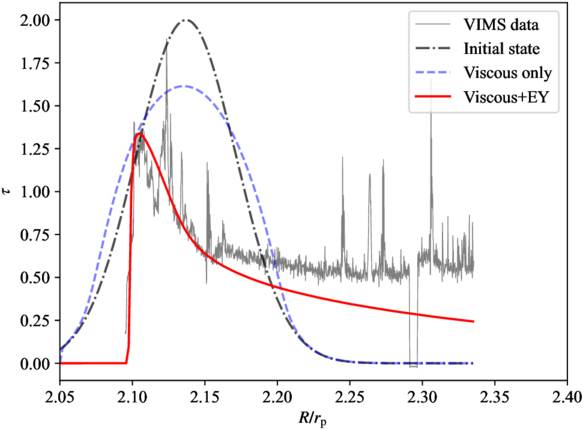
Figure 3: The authors try to explain the current structure of Saturn’s A ring by initialising it with a Gaussian profile of optical thickness versus radius (black dot-dashed line) and evolving it for 81 million years under different effects. When viscous effects are included (blue dashed line), the ring spreads out, but it’s only when the eclipse–Yarkovsky (EY) effect is included (red line) that the model closely matches the observed data (grey line). [Zhou et al. 2026]
Original astrobite edited by Wasi Naqvi.
About the author, Ryan White:
I am a first-year PhD student at Macquarie University in Australia, working mainly on binary/multiple systems with massive stars (Wolf–Rayets in particular!). Outside of study, I’m probably drinking coffee, baking, reading, or going for a run. You can also find me procrastinating on Bluesky @astroryan.bsky.social.
The post Shining a Light on the Shadowy Movements in Saturn’s Rings appeared first on AAS Nova.
]]>The post The Response of Planetary Atmospheres to the Impact of Icy Comets. III. Impact Driven Atmospheric Escape appeared first on AAS Nova.
]]>Simulations suggest that tidally locked planets have similar atmospheric escape rates to Earth analogs despite having cooler and drier atmospheres near their surfaces.
The post The Response of Planetary Atmospheres to the Impact of Icy Comets. III. Impact Driven Atmospheric Escape appeared first on AAS Nova.
]]>The post Mass Measurements of the Double Neutron Star System PSR J0641+0448 appeared first on AAS Nova.
]]>Using the Five-hundred-meter Aperture Spherical radio Telescope, researchers have discovered and measured the spins and masses of a pair of neutron stars using the pulsar timing method.
The post Mass Measurements of the Double Neutron Star System PSR J0641+0448 appeared first on AAS Nova.
]]>
Although 3I/ATLAS stayed clear of Earth during its passage through the solar system, astronomers repurposed a spacecraft around Mars for a good look as it flew by.
The post Courtside Seats on Mars appeared first on AAS Nova.
]]>When the third known object from the galactic space beyond our Sun barreled through the solar system last year, Earth was in a terrible spot to view its flyby. Thankfully, however, a spacecraft that was previously busy mapping Mars took advantage of much better positioning for a closer look.
Cheap Seats
Astronomers have now observed three interstellar objects as they’ve flown through the solar system: 1I/ʻOumuamua, which shocked astronomers in 2017; 2I/Borisov, which followed in 2019 and behaved almost identically to a solar system comet; and now 3I/ATLAS, which was found buzzing toward the Sun in July 2025. As soon as 3I/ATLAS was spotted, pretty much every telescope on the planet took a look. The data swiftly revealed much that intrigued astronomers: while 3I/ATLAS was behaving essentially like a standard comet, its chemistry was nothing like its solar system counterparts, and its coma and dust outflow were strangely shaped. Among other oddities, it seemed to counterintuitively have a dust tail that pointed toward the Sun.
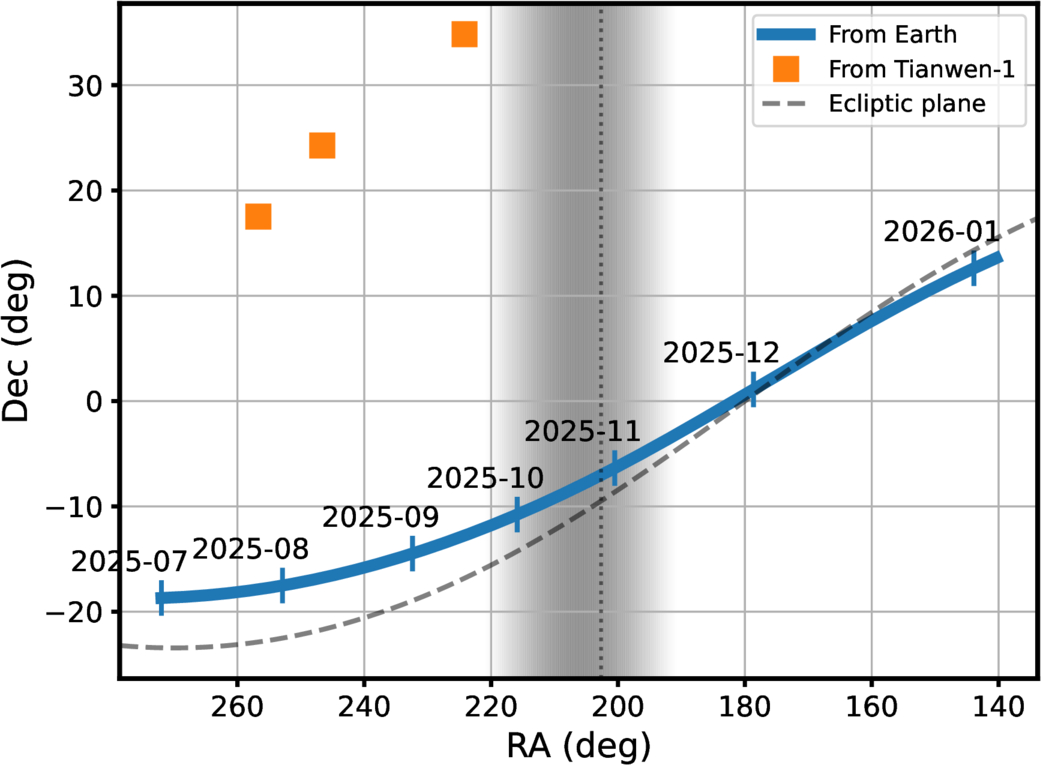
3I/ATLAS’s path across the sky as seen from Earth versus the clearer line of sight from Mars. The shaded region represents the times where the comet was too close to the Sun for viewing. [Xin Ren et al. 2026]
Better View from Mars
The Tianwen-1 spacecraft, which entered Martian orbit in early 2021 and has been diligently mapping the Red Planet ever since, has a high-resolution camera that’s normally pointed at the planet’s surface. By spinning the spacecraft around, a team of researchers led by Xin Ren (National Astronomical Observatories, Chinese Academy of Sciences) repurposed the camera to act as a small telescope when 3I/ATLAS flew by. In another cosmic coincidence, 3I/ATLAS happened to pass very near Mars last fall, and this close approach gave Tianwen-1 a great out-of-plane view of the coma. The orbiter managed to capture 57 images of 3I/ATLAS over three days last fall, representing China’s first-ever observations of an object from an asset in deep space.
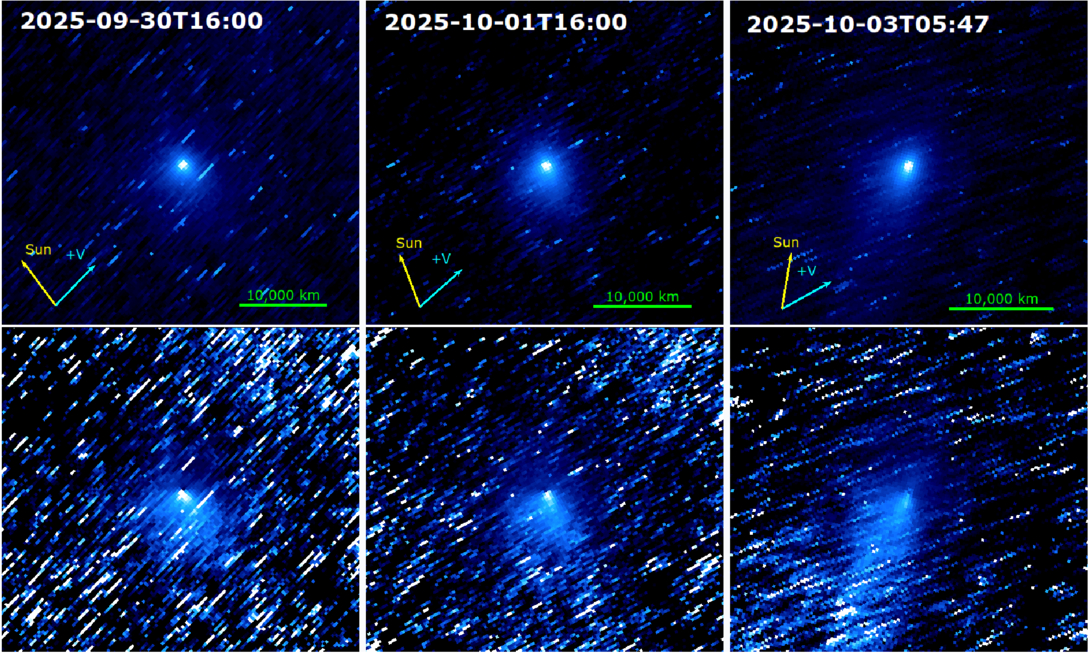
Stacked images of 3I/ATLAS from the Tianwen-1 orbiter across three epochs; the tail’s apparent shape shifts as the viewing geometry changes. Click to enlarge. [Xin Ren et al. 2026]
As new surveys begin to turn up interstellar interlopers more often, this improvised observation makes a tidy point: the spacecraft already scattered across the solar system can double as a fleet of opportunistic comet-watchers, each offering a view we simply can’t get from home.
Citation
“Interstellar Object 3I/ATLAS Observed from Mars by China’s Tianwen-1 Spacecraft,” Xin Ren et al 2026 ApJL 1003 L10. doi:10.3847/2041-8213/ae61b3
The post Courtside Seats on Mars appeared first on AAS Nova.
]]>The post The First Dedicated Survey of Atmospheric Escape from Planets Orbiting F Stars appeared first on AAS Nova.
]]>A survey of six gas giants orbiting F-type stars suggests that atmospheric escape of these planets is determined by the X-ray and extreme-ultraviolet output of their host stars as well as the Roche filling factor.
The post The First Dedicated Survey of Atmospheric Escape from Planets Orbiting F Stars appeared first on AAS Nova.
]]>
Stars gobbling up their close-in planets is likely common throughout the universe. Researchers explore the chemical signatures of these events and where they're most likely to be seen.
The post Now That’s Metal: How to Spot Stars That Have Swallowed Their Planets appeared first on AAS Nova.
]]>Planets that get too close to their host stars are liable to be engulfed and consumed. New research explores how to identify stars that have had a planetary snack.
It’s Snack Time
Being a planet that closely orbits its star is dangerous, and various dynamical processes can draw a planet inward past the point of no return. When a planet vanishes beneath the surface of its host, it eventually disintegrates within the star, its atoms mixing into the blazing stellar soup.
This outcome is likely extremely common across the universe, and researchers have begun to see evidence for it: stars that appear to have absorbed angular momentum from their planets, white dwarfs with uncanny metals in their spectra, and stars with chemical abundances that don’t match those of their siblings. Now, in a recent publication led by Kaitlyn Lane (Vanderbilt University), researchers seek to find observational signatures of planetary engulfment of rocky exoplanets by main-sequence stars.
Modeling Engulfment
Lane’s team focused on main-sequence stars in the range of 0.5 to 1.4 solar masses, using one-dimensional analytical models to determine which of these stars will most readily display signs of having engulfed a planet. They simulated the stars as they consumed either an Earth-like planet or a super-Earth with the same composition as Earth but 15 times its mass.
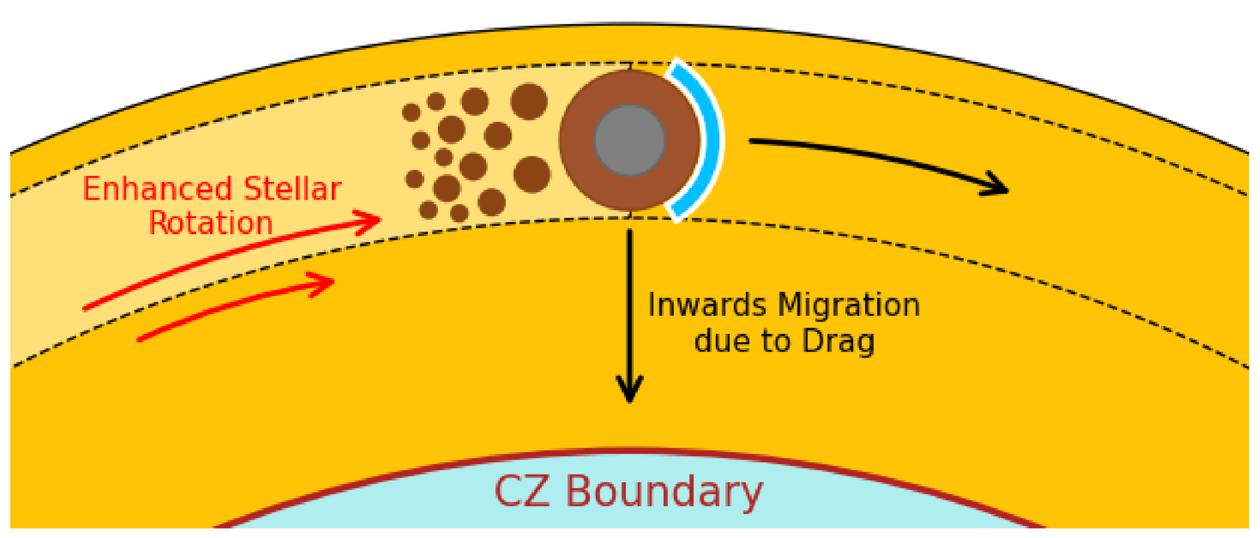
Diagram showing a planet being engulfed by its star and beginning to disintegrate before migrating inward. The boundary between the star’s outer convective zone (CZ) and inner radiative zone is shown. Click to enlarge. [Lane et al. 2026]
After that relatively lengthy phase, the process proceeds rapidly: as the planet inches deeper into its star, the drag forces grow stronger and the planet’s demise accelerates, with the planet disintegrating over the course of hours. In the last phase, the planet makes its final plunge and is destroyed in a half hour.
Signs of Planets Past
Lane’s team found that the planets tended to be destroyed fully within the outer convective layer of their stars, except in the case of the most massive stars studied here. For more massive stars, the outer convective zone is shallower than it is for the less massive stars, allowing a chunk of each planet to survive the passage through the convective zone to reach the radiative zone below.
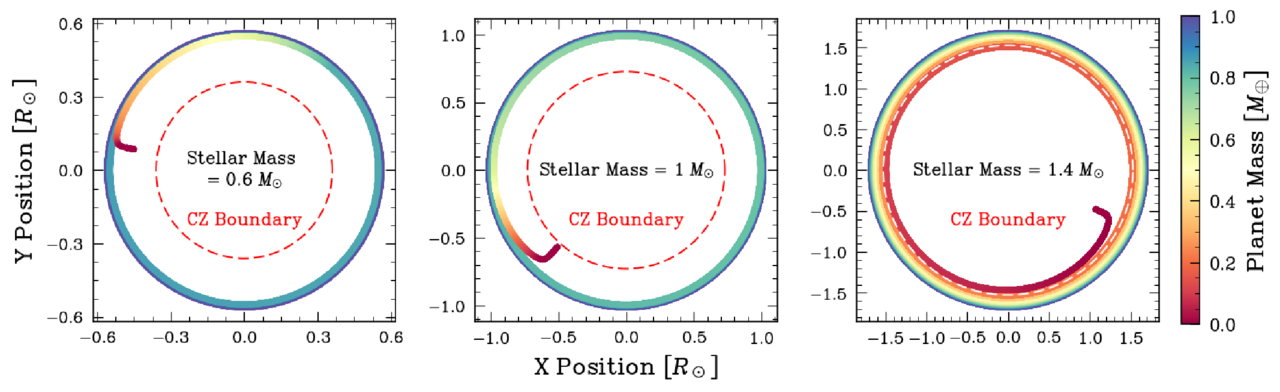
The trajectories of three example cases, showing how the planet loses mass as it spirals inward. In the 1.4-solar-mass case, part of the planet survives to reach the radiative zone, but the shallowness of the star’s convective zone means that the disintegrated planetary material is easier to observe. Click to enlarge. [Lane et al. 2026]
While the authors acknowledge that there’s more work to be done — they plan to investigate the impacts of planetary engulfment on stellar structure more closely, for example — this work represents an important foray into identifying targets for future studies of stars that have eaten their planets.
Citation
“Observable Metal Pollution in Main-Sequence Stars: Simulations of Rocky Planets Engulfed by Stars in the 0.5 to 1.4 M⊙ Range,” Kaitlyn T. Lane et al 2026 ApJ 1003 67. doi:10.3847/1538-4357/ae5b9a
The post Now That’s Metal: How to Spot Stars That Have Swallowed Their Planets appeared first on AAS Nova.
]]>The post Measuring the Distances to Asteroids from One Observatory in One Night with Upcoming All-Sky Telescopes appeared first on AAS Nova.
]]>Using simulations of 20 asteroids from 0.05 to 2.4 au away, researchers demonstrate how the technique of topocentric parallax could be used to determine the distance to an asteroid in a single night.
The post Measuring the Distances to Asteroids from One Observatory in One Night with Upcoming All-Sky Telescopes appeared first on AAS Nova.
]]>
Astrobites reports on how researchers have taken advantage of the unique TOI-3884 system to directly probe a starspot with JWST.
The post The First Starspot Spectrum Revealed by JWST appeared first on AAS Nova.
]]>Editor’s Note: Astrobites is a graduate-student-run organization that digests astrophysical literature for undergraduate students. As part of the partnership between the AAS and astrobites, we occasionally repost astrobites content here at AAS Nova. We hope you enjoy this post from astrobites; the original can be viewed at astrobites.org.
Title: A Panchromatic JWST Spectrum of a Giant Starspot on the Fully Convective M Dwarf TOI-3884
Authors: C. A. Murray et al.
First Author’s Institution: University of Colorado Boulder
Status: Published in ApJ
We often picture stars as smooth, glowing spheres, as if they’ve been run through an Instagram filter. But real stars have spots: cooler, darker regions on a star’s surface caused by strong magnetic fields.
Annoyingly, these spots can seriously interfere with how we study exoplanet atmospheres.
How to Probe a Planetary Atmosphere
Planetary atmospheres are often probed through transmission spectroscopy. When a planet transits its star, some starlight passes through the planet’s atmosphere before reaching us. We can distinguish the light that has passed through the planet’s atmosphere by comparing the star’s light in transit versus out of transit. In doing so, we can isolate the atmospheric spectrum and look for absorption features of species like water or oxygen.
Easy, right?
How Starspots Get in the Way
Things get more complicated once we stop thinking of the star as if it’s been smoothed out by an Instagram filter. Starspots are cooler than the surrounding stellar surface, which means they emit a different spectrum. They are also constantly changing: new spots can form, old ones can disappear, and the star’s rotation carries them in and out of view. This changes things.
First of all, your star’s spectrum changes over time, which could mean that the star’s spectrum out of transit is not the same as the star’s spectrum during transit. On the other hand, the planet may transit across a starspot instead of a “normal” stellar region. In this case, the light we measure during the transit is affected by the spot, and it is no longer accurate to directly compare it with the overall stellar light outside the transit.
Ultimately, absorption features that we thought were from the planetary atmosphere could actually be coming from starspot contamination instead.
Starspot Models: Our Solution?
To deal with this, astronomers build starspot models, where they vary the spots in terms of the following:
- The surface covering fraction: this parameter tells us how much of the stellar surface is covered in spots
- The temperature contrast: this parameter tells us how much cooler (in ratio) the spot is compared to the rest of the stellar surface, and by proxy how much dimmer
These models are promising, but how do we know that we have chosen the right parameters?
A Unique Laboratory: TOI-3884
The TOI-3884 system is a unique laboratory for testing our starspot models. As seen in Figure 1, it has very convenient starspot geometry, with a large starspot located close to its pole. On top of that, we observe this star almost completely pole-on, which means that we always see this starspot, no matter how much the star rotates. To top this all off, the star hosts a close-in planet, which orbits the star from pole to pole.
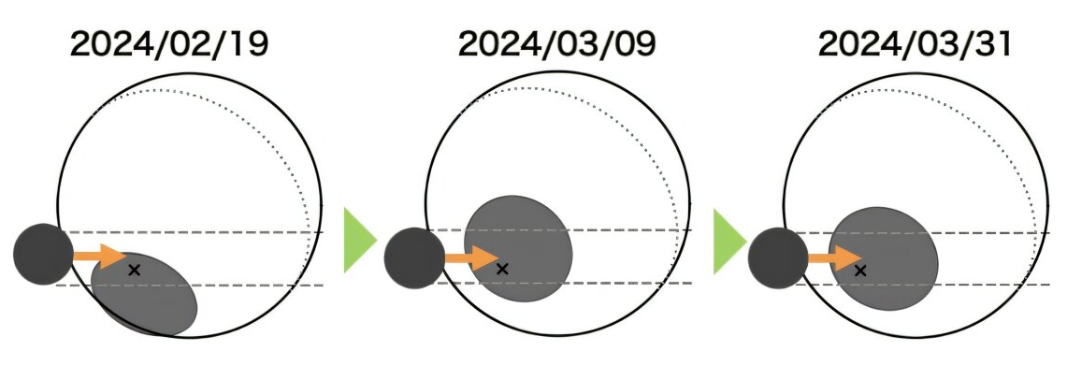
Figure 1: Illustration of the TOI-3884 system. The pole (and rotation axis) of the star is indicated with a black “x,” indicating that we see the star almost pole-on. The polar starspot is indicated in grey, and the transiting planet TOI-3884b is indicated in black. Different dates are shown, illustrating how the system evolves over the span of a few weeks. [Adapted from Mori et al. 2025]
So… How Good Are Our Models?
From the JWST observations, the authors extract a starspot spectrum for the first time. Figure 2 shows this as the spot contrast (how much dimmer the spot is than the surrounding stellar surface) plotted across different wavelengths. To see how well our models are doing, they compare this observed spectrum to two commonly used starspot models. The difference between the data and the models (the residual) is plotted in the lower panel.
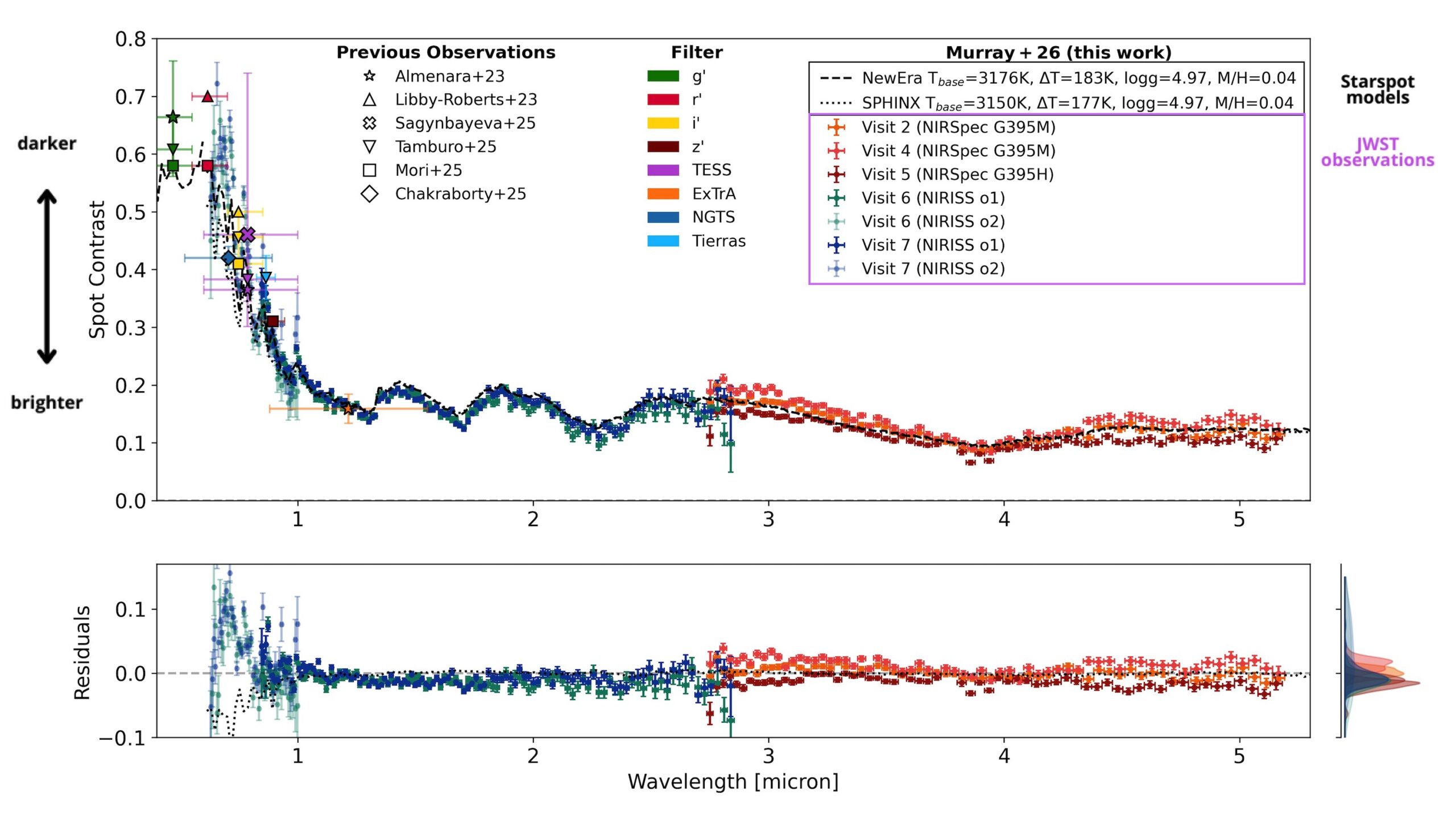
Figure 2: The spectrum of TOI-3884’s starspot. The y-axis in the upper panel, the spot contrast, indicates how much dimmer the starspot is compared to the “normal” stellar surface. Different observations taken with JWST are indicated in different colored crosses, and other previous observations are overplotted in various other shapes. Model starspot spectra are shown in dashed or dotted black lines. The residuals between the model spectra and the JWST observations are shown in the bottom panel. [Adapted from Murray et al. 2026]
There’s still work to be done before we can confidently probe planetary atmospheres at optical wavelengths without worrying about stellar contamination, and this observed starspot spectrum provides a unique benchmark to test future starspot models. For now, the near-infrared remains a safer and more reliable window for planet atmosphere studies.
Original astrobite edited by Natalie Price.
About the author, Elise Koo:
I’m a PhD student at the University of Amsterdam, working to detect magnetic interactions between stars and their planets using radio and spectroscopic observations. Outside of research, I like to try out a variety of sports.
The post The First Starspot Spectrum Revealed by JWST appeared first on AAS Nova.
]]>The post Predictions of Imminent Earth Impactors Discovered by LSST appeared first on AAS Nova.
]]>Simulations suggest that Rubin Observatory will discover 1–2 meter-size or larger imminent impactors each year, nearly doubling the discovery rate and providing an important set of eyes in the Southern Hemisphere.
The post Predictions of Imminent Earth Impactors Discovered by LSST appeared first on AAS Nova.
]]>The post Blue Straggler in the Making: An X-Ray Active Binary in Algol Configuration appeared first on AAS Nova.
]]>Researchers have found a rare example of a blue straggler star in the process of formation, providing direct evidence for the formation of these puzzling stars through ongoing mass transfer in a binary system.
The post Blue Straggler in the Making: An X-Ray Active Binary in Algol Configuration appeared first on AAS Nova.
]]>
JWST peers through dusty, knotted gas to uncover young star clusters in the interacting Antennae galaxies.
The post Featured Image: Massive Young Star Clusters, Revealed appeared first on AAS Nova.
]]>The Antennae galaxies are a nearby pair of interacting galaxies, shown in optical light from the Hubble Space Telescope (left) and in infrared light from JWST (right) in the image above. Between the two galaxies’ bright nuclei, there is a vast and dusty molecular cloud complex that harbors a large number of massive young star clusters — and in a recent article led by Rupali Chandar (University of Toledo), researchers have worked to pin down exactly how many clusters are embedded within the dusty whorls of the Antennae galaxies. The team used JWST to search for emission from star clusters too thickly blanketed with dust to be visible in previous observations by Hubble. They ultimately identified 45 sources, 40 of which were seen for the first time in this study. These star clusters mostly inhabit the overlap region between the two galaxies, are less than 2.5 million years old, and each contain roughly 104–106 solar masses. To learn more about how JWST’s infrared capabilities unveiled young star clusters in these interacting galaxies, be sure to check out the full article linked below.
Citation
“Nowhere Left to Hide: Uncovering All of the Massive Young Embedded Star Clusters in the Antennae with JWST,” Rupali Chandar et al 2026 ApJ 1002 64. doi:10.3847/1538-4357/ae56e8
The post Featured Image: Massive Young Star Clusters, Revealed appeared first on AAS Nova.
]]>The post Dual Active Galactic Nuclei on 100 kpc Scales from the Million Quasar Catalog appeared first on AAS Nova.
]]>In a sample of 171 new dual active galactic nuclei, four triplets, and one quadruplet drawn from a catalog of nearly a million quasars, researchers find that roughly 16% of targets exhibit tidal features.
The post Dual Active Galactic Nuclei on 100 kpc Scales from the Million Quasar Catalog appeared first on AAS Nova.
]]>
Researchers have discovered six faint millisecond pulsars by stacking FAST radio observations.
The post Stacking Up the Discovery of Six Millisecond Pulsars appeared first on AAS Nova.
]]>The fastest spinning pulsars in the universe are often quite difficult to detect. Leveraging multiple observations from the largest single-dish telescope in the world, researchers have discovered six previously undetected pulsars.
Millisecond Pulsars in Globular Clusters
Globular clusters, compact collections of tens of thousands to millions of stars, are highly dense and rife with dynamical interactions. These active environments are ideal factories for the formation of millisecond pulsars — the extremely fast-spinning cores of once-massive stars, shining beams of radio emission from their poles. One way millisecond pulsars are thought to form is when a pulsar in a binary system steals mass from its companion star, transferring angular momentum and causing the pulsar to spin up. The densely packed environment in a globular cluster provides ample opportunity for a pulsar to acquire a companion to siphon.
However, millisecond pulsars in distant globular clusters are notoriously difficult to detect. Traditional pulsar searches that rely on a single observation tend to miss millisecond pulsars, many of which have signals too faint to be distinguished from noise or radio interference. Instead, researchers must rely on a different method to find these fast-spinning pulsars.
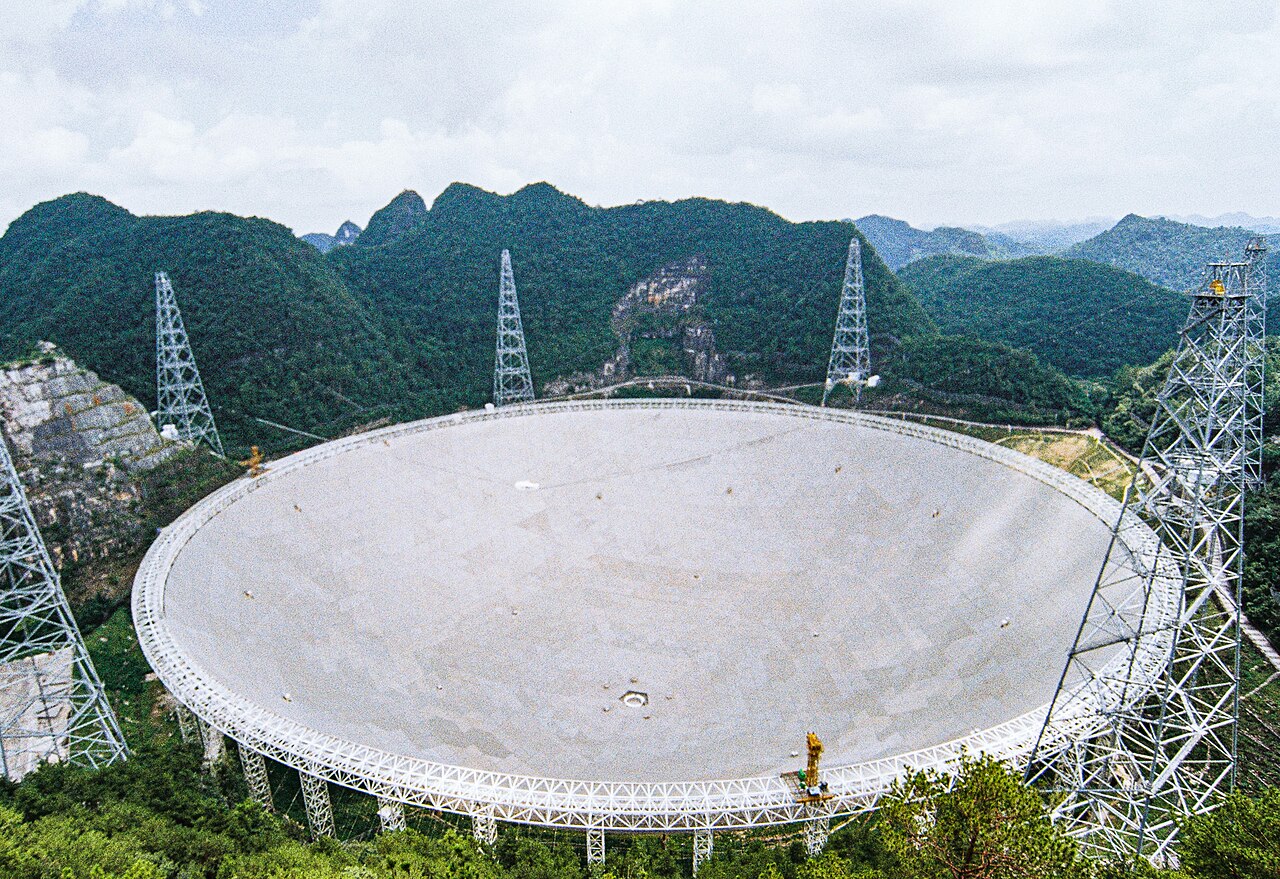
FAST, the 500-meter single-dish radio telescope located in southwestern China. [Wikipedia user SCJiang; CC BY 4.0]

Stack Search Success
To find faint millisecond pulsars, researchers have developed the stack search method, in which multiple radio observations are combined to tease out faint signals and decrease noise. Reliably stacking observations across epochs requires stability; isolated millisecond pulsars, now no longer spinning up after losing their companion, have very stable rotation periods, making them ideal targets for the stack search method. To date, the stack search method has successfully identified nine isolated globular cluster millisecond pulsars using data from the Arecibo, Parkes, and Green Bank radio telescopes.
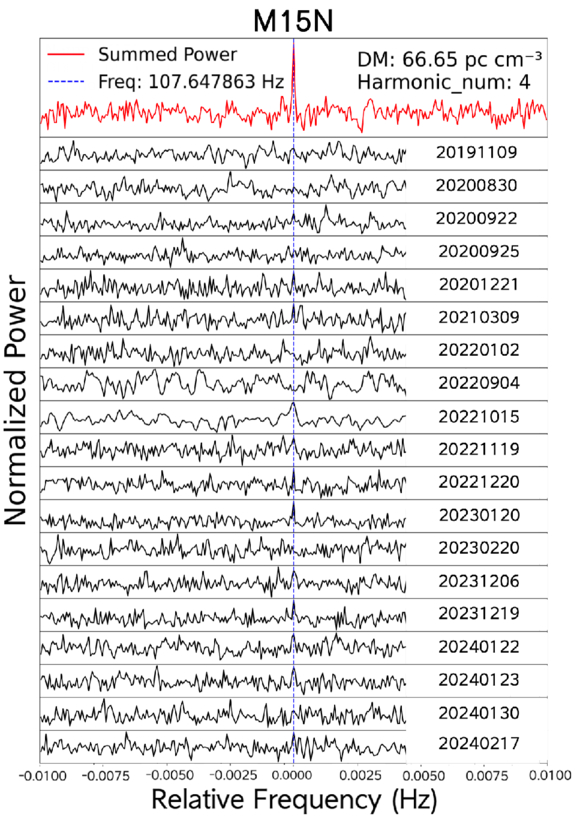
Power spectra from a discovered millisecond pulsar M15N. The black solid lines show the 19 individual observations of the pulsar, and the red solid line in the top panel shows the stacked spectrum. The stack search method pulls out a clear pulsar signal. [Dai et al. 2026]
While previous studies identified brighter pulsars in the targeted globular clusters, the authors confirmed that all six newly discovered pulsars are too weak to be reliably recovered from single-epoch searches, underscoring the importance of the stack search method. In particular, this search increased the known pulsar populations of NGC 6517 and M15 by 27% and 18%, respectively, suggesting that a meaningful fraction of globular cluster pulsars are easily missed in traditional pulsar searches. Future studies employing this stack search method will continue to detect faint millisecond pulsars, unlocking this elusive population for further exploration.
Citation
“The Stack Search Tests on FAST Data: Discovery of Six Faint Isolated Millisecond Pulsars in NGC 6517 and NGC 7078 (M15),” Yinfeng Dai et al 2026 ApJL 1002 L31. doi:10.3847/2041-8213/ae5dbb
The post Stacking Up the Discovery of Six Millisecond Pulsars appeared first on AAS Nova.
]]>The post Can the Dust Eclipses in WR 104 Provide Constraints on the System’s Inclination? appeared first on AAS Nova.
]]>Researchers find a system inclination of 41.8 degrees for WR 104; this result is at odds with previous interpretations of the system’s dust plume, but a new geometric model reconciles these results.
The post Can the Dust Eclipses in WR 104 Provide Constraints on the System’s Inclination? appeared first on AAS Nova.
]]>The post The Cosmic-Ray Knee as a Local Signature of Nearby PeVatrons appeared first on AAS Nova.
]]>The observed steepening of the cosmic-ray spectrum at ~4 PeV could be a global or local feature; a local feature could be explained by sources located ~1 kpc away with ages of 0.1–1 million years.
The post The Cosmic-Ray Knee as a Local Signature of Nearby PeVatrons appeared first on AAS Nova.
]]>
With hundreds of pairs of merging black holes now detected via gravitational waves, researchers can investigate the sites of black hole mergers across the universe.
The post Third Star’s the Charm: Most Merging Black Holes Might Be in Triple Systems appeared first on AAS Nova.
]]>Where do black hole mergers happen? Recent research finds evidence that most black hole mergers occur in triple systems containing a close inner binary and a more distant third party.
Assembling Merging Black Holes
Thanks to the combined efforts of the LIGO, Virgo, and KAGRA gravitational wave detectors, we’ve now collected the subtle signals from several hundred pairs of merging stellar-mass black holes. As this collection of spacetime ripples continues to grow, researchers are seeking to understand how these merging black hole pairs were assembled.
In the simplest scenario, pairs of high-mass stars independently evolve into black holes, lose momentum by emitting gravitational waves, and meld into one another. But the population of merging black holes likely contains contributions from multiple sources, including multiple-star systems, the disks surrounding accreting supermassive black holes, and black holes that have already experienced a merger. Which of these merging populations is reflected in our catalog of gravitational wave events?
Modeling Challenges
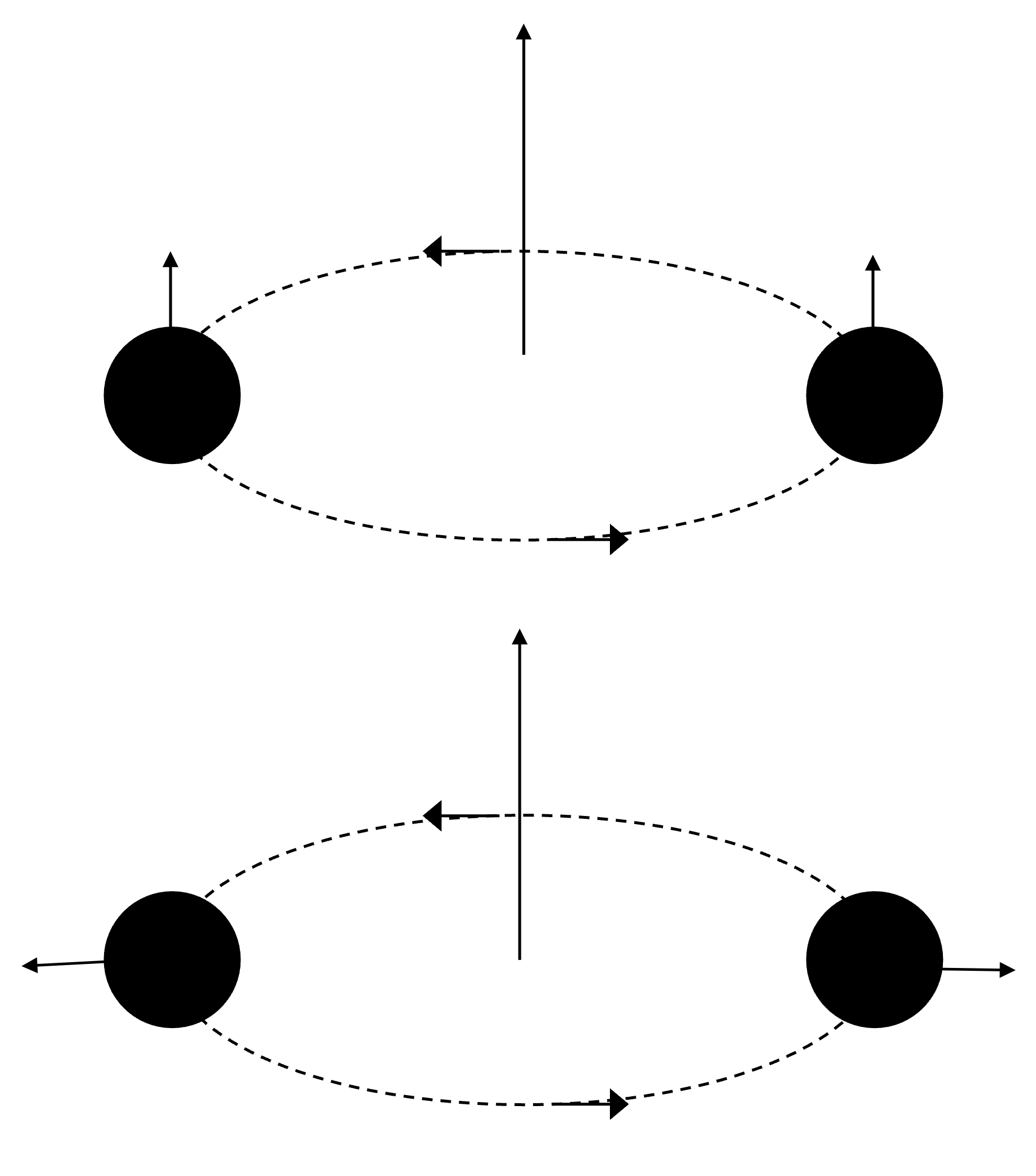
A black hole binary system with aligned spins and orbit (top) and a binary with spins tilted by 90 degrees (bottom). [AAS Nova/Kerry Hensley]
So far, the increasingly large pool of gravitational wave detections tentatively points to a feature that could illuminate the sites of black hole mergers: a peak in the spin–orbit tilt distribution around 90 degrees. This feature has been most confidently extracted from nonparametric analyses, which do not make assumptions about the population of merging black holes, but it has also been hinted at in parametric analyses, which do make population-level assumptions.
Triple-System Feature
To investigate this feature further, a team led by Jakob Stegmann (Max Planck Institute for Astrophysics) performed a new, astrophysically motivated parametric analysis of the most recent catalog of gravitational wave detections from LIGO, Virgo, and KAGRA.
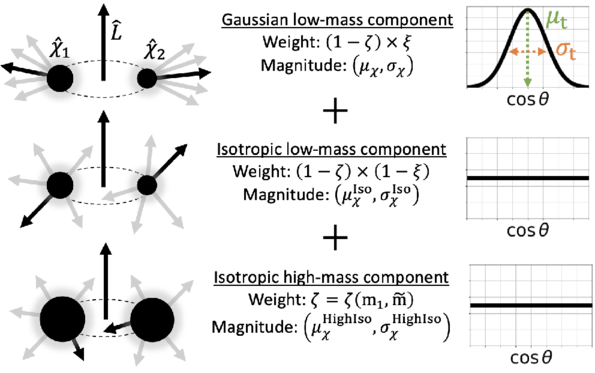
The three populations in the team’s modeling. [Stegmann et al. 2026]
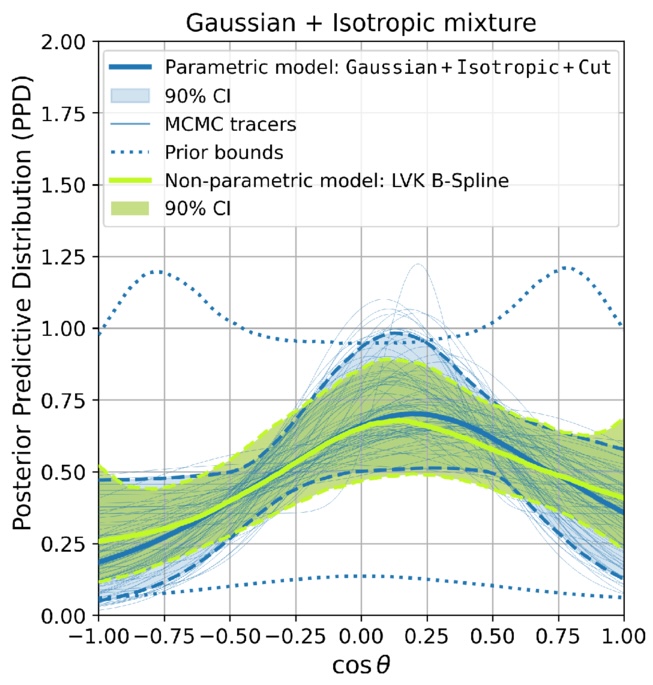
Posterior predictive distribution of black hole spin–orbit tilts. Both the authors’ modeling (solid blue line) and the nonparametric modeling performed by the LIGO–Virgo–KAGRA collaboration (solid green line) find evidence for a peak in the spin–orbit tilt distribution near cosθ = 0. [Adapted from Stegmann et al. 2026]
Stegmann and collaborators pointed out that the triple-system scenario aligns well with other properties of the observed population of black hole mergers, such as the mass and effective spin distributions. This scenario may also be necessary to explain certain merging pairs that might have had slightly eccentric orbits at the moment of merging. If future gravitational wave observations strengthen the evidence for a peak in the spin–orbit tilt distribution near 90 degrees, it will have profound implications for how and where black holes merge in our universe.
Citation
“Gravitational-Wave Observations Suggest Most Black Hole Mergers Form in Triples,” Jakob Stegmann et al 2026 ApJL 1000 L59. doi:10.3847/2041-8213/ae52ec
The post Third Star’s the Charm: Most Merging Black Holes Might Be in Triple Systems appeared first on AAS Nova.
]]>
Astrobites reports on a surface biosignature called the vegetation red edge and how we might find it on other worlds.
The post Life on the (Red) Edge appeared first on AAS Nova.
]]>Editor’s Note: Astrobites is a graduate-student-run organization that digests astrophysical literature for undergraduate students. As part of the partnership between the AAS and astrobites, we occasionally repost astrobites content here at AAS Nova. We hope you enjoy this post from astrobites; the original can be viewed at astrobites.org.
Title: Retrieving the Red Edge on Earth-Like Planets with Heterogeneous Clouds and Surfaces
Authors: Zachary Burr et al.
First Author’s Institution: Jet Propulsion Laboratory; ETH Zurich
Status: Published in ApJ
In the next 25 years, astronomers could find signs of life on other planets with the launch of the Habitable Worlds Observatory. Atmospheric signs of life, known as atmospheric biosignatures, are how astronomers currently search for life on other planets. Figure 1 shows examples of atmospheric biosignatures with pictures of each chemical’s origin on Earth. Before E.T. can phone home, though, we have to understand what chemicals make up a planet’s atmosphere. To do this, astronomers can use spectroscopy to observe a planet’s atmosphere in different wavelengths and measure the types and quantities of chemicals present.
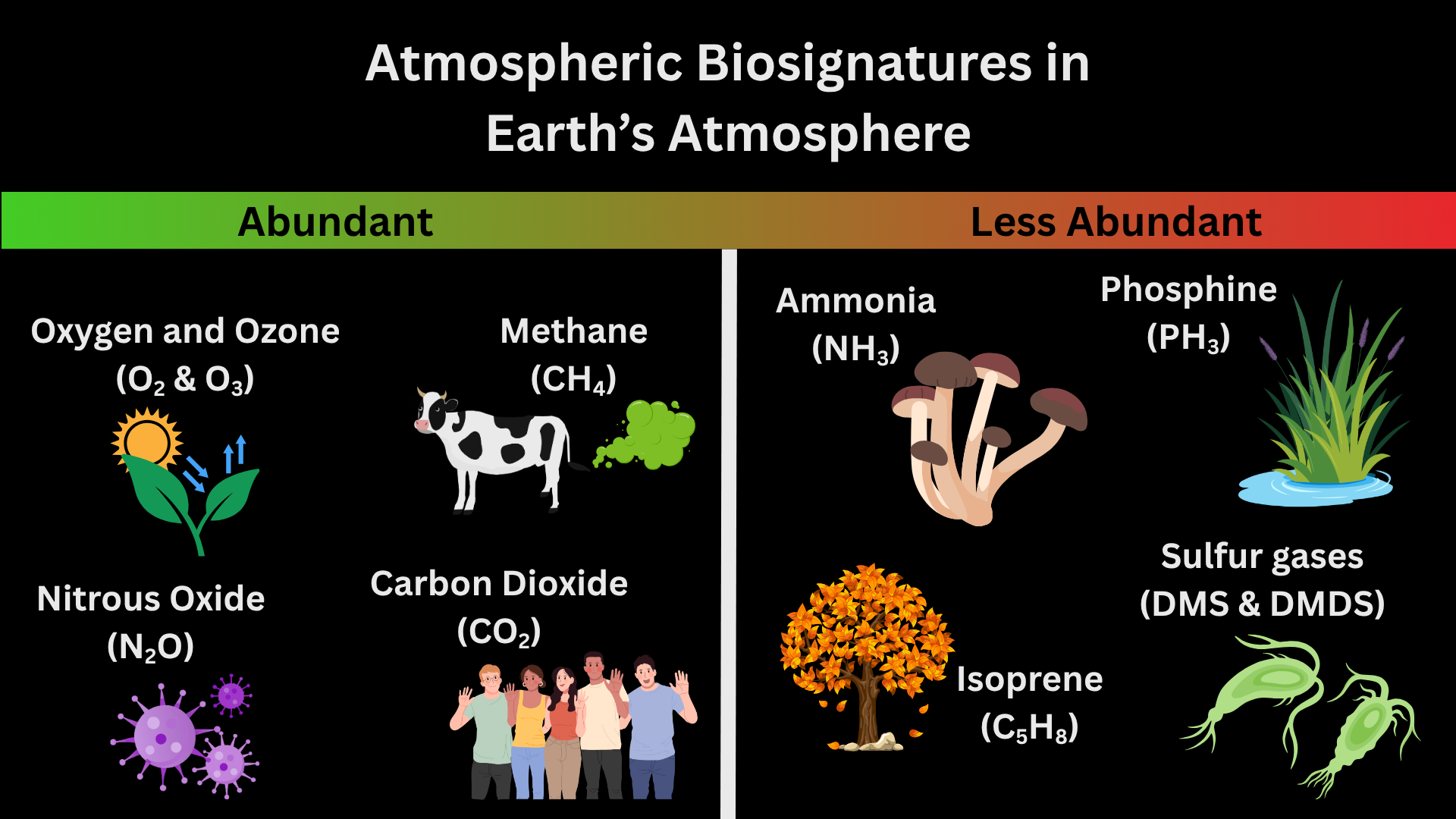
Figure 1: Atmospheric biosignatures present in Earth’s atmosphere. More abundant biosignatures include oxygen and ozone (byproducts of photosynthesis in plants and bacteria) and nitrous oxide (byproduct of bacteria that don’t need oxygen to survive). Less abundant biosignatures include isoprene (released from the breakdown of leaves that have fallen from trees) and sulfur gases (byproducts of cyanobacteria). [Kaz Gary]
But are atmospheric biosignatures the only way to tell if life exists on other planets? Short answer: absolutely not. Let’s take Earth as an example. If we imagine Earth as a directly imaged exoplanet and take spectra of the light it reflects, you’ll find that around near-infrared wavelengths (~700 nanometers or just past the red part of the visible light spectrum), the light reflected off of Earth increases sharply. This sharp increase is called the vegetation red edge and is caused by plant and ocean life on Earth’s surface as shown in Figure 2. This is made possible because chlorophyll (the thing that makes plants green) absorbs nearly all visible light but reflects near-infrared light. The vegetation red edge is an example of a surface biosignature. In today’s article, the authors determine if the vegetation red edge will be visible in spectra of Earth-like exoplanets!
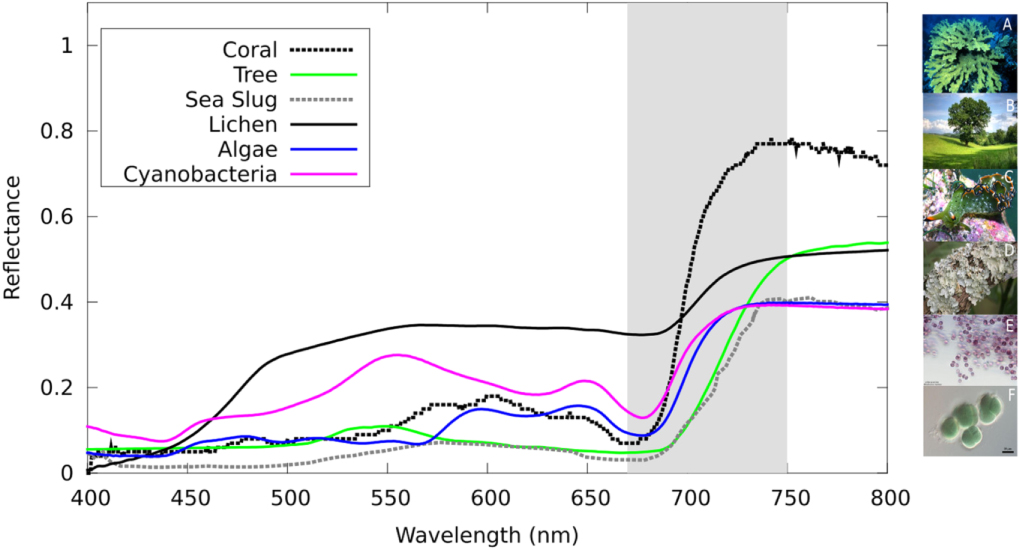
Figure 2: Spectra of different sources of the vegetation red edge on Earth. The vegetation red edge is highlighted in gray where the spectra rapidly increase and then level off beyond the visible light part of the spectrum. Each color represents a different source with pictures of each source on the right-hand side of the plot. [O’Malley-James and Kaltenegger 2019]
Snapshots
Planets rotate; that’s how we have morning, noon, and night in 24 hours guaranteed. This means that different parts of the surface will be visible at different times when we take spectra. Sometimes, we may see more ocean than land, other times not. To determine if the vegetation red edge would be visible at all points in Earth’s day, the authors simulated nine different spectra of modern-day Earth representing nine snapshots of Earth’s rotation. Additionally, they also simulated a time-averaged spectrum that shows an entire Earth day in one snapshot without the time variability. These spectra are shown in Figure 3.
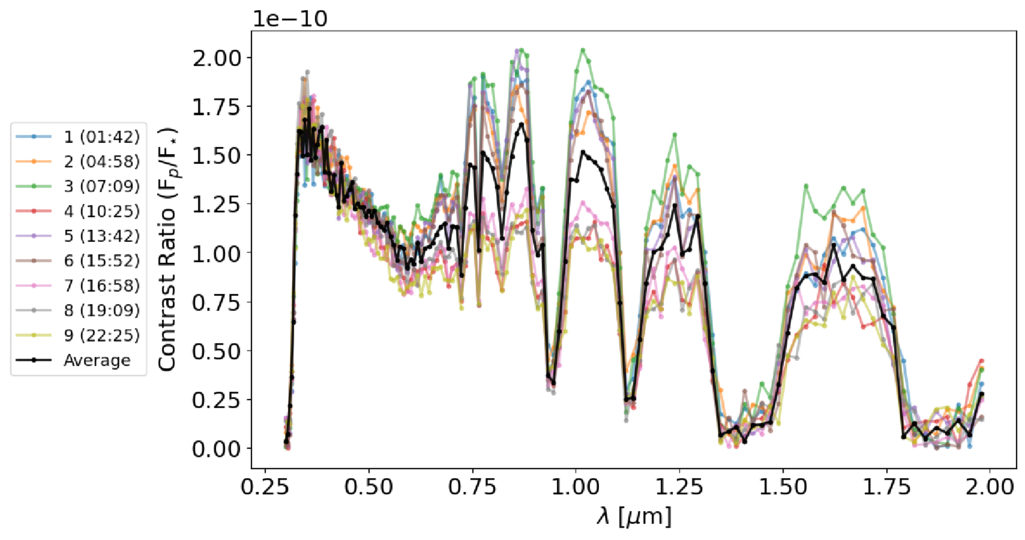
Figure 3: Spectra of a directly imaged modern-day Earth at nine different times in its rotation. The y-axis is the ratio of the planet’s signal to the star’s signal and the x-axis is wavelength in microns. Each color represents a time in UTC and the black curve represents the time-averaged spectrum. [Burr et al. 2026]
Arr! There Be… Vegetables?
After running the models, the authors were able to detect a sharp increase in the surface albedo value in every spectrum, including the time-averaged one. This result is shown in Figure 4. The authors take this result one step further in order to validate that the vegetation red edge is actually a result of surface variation of vegetation. They re-run models on each of their spectra but instead include a constant surface albedo instead of a time-varying one. This resulted in incorrectly measured radii, chemicals, and surface gravity in nearly all of the models. Without the vegetation red edge and surface features, the models could not accurately determine if life was present on Earth.
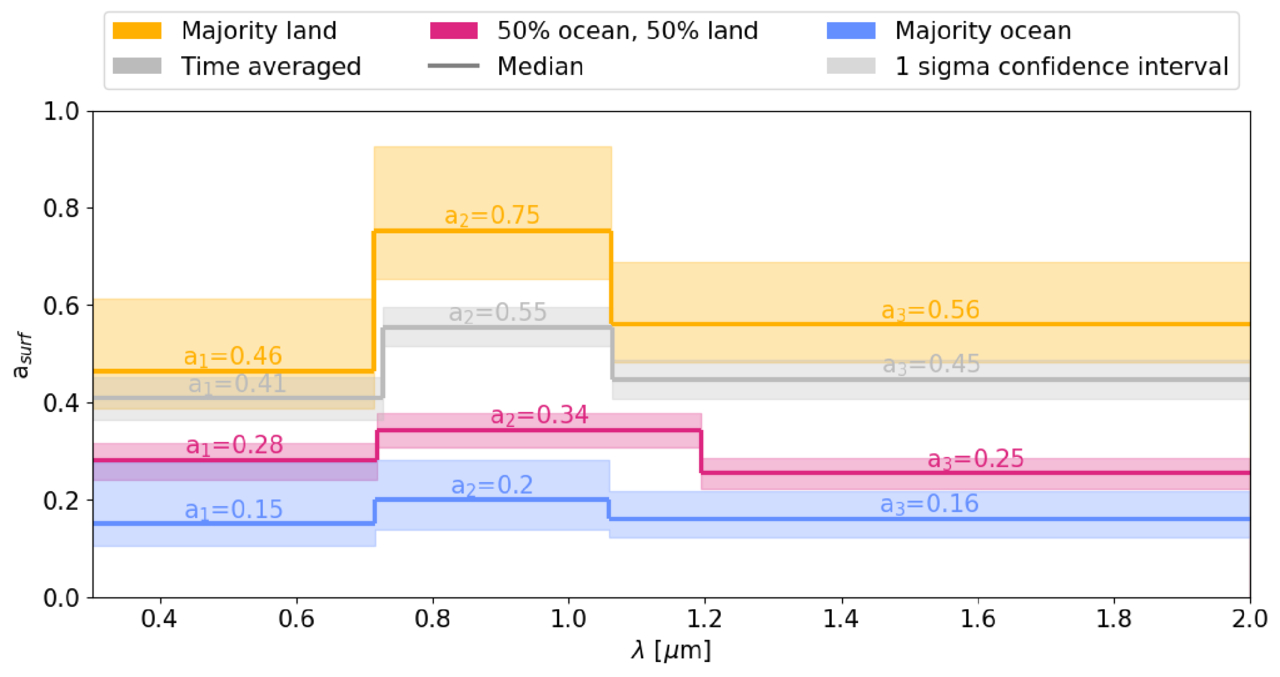
Figure 4: Retrieved surface albedos for the nine time-varying spectra. The surface albedo is broken down into three different values (a₁, a₂, a₃). Each of these values represents a change in the surface albedo at different wavelengths (i.e., how reflective the surface is at three different wavelengths). The nine spectra were broken down by the amount of surface that was visible at that time and color-coded for each category. The time-averaged spectrum is shown in gray. Each category of spectra was able to retrieve an increase in reflected light from the surface at vegetation red edge wavelengths. The spectra that had the majority land visible have the biggest increase in the surface albedo. This makes sense since the amount of visible vegetation is the largest with majority-land planets. [Burr et al. 2026]
Original astrobite edited by Madison VanWyngarden.
About the author, Kaz Gary:
I am a fourth-year PhD candidate at The Ohio State University with a passion for planets. My current work focuses on modeling exoplanet observations for the Habitable Worlds Observatory and understanding planetary atmospheres. Outside of research, I help develop planetarium shows and love all forms of science communication. In my free time, I enjoy playing tabletop RPGs, painting, watching terrible reality TV, and hanging out with my pet hedgehog.
The post Life on the (Red) Edge appeared first on AAS Nova.
]]>The post Optical Survey for Cislunar Moving Objects Using Image Stacking appeared first on AAS Nova.
]]>Using three dedicated telescopes and two spacecraft in the Earth–Moon environment, researchers demonstrate the abilities of an image stacking method to detect space debris.
The post Optical Survey for Cislunar Moving Objects Using Image Stacking appeared first on AAS Nova.
]]>The post Variability of Europa’s Optical Aurora on Orbital and Multiyear Timescales appeared first on AAS Nova.
]]>Analysis of 10 nights of observations of Europa’s auroral emission suggests that optical auroral brightness may be a proxy for electron density variations, assuming a stable atmospheric composition and density.
The post Variability of Europa’s Optical Aurora on Orbital and Multiyear Timescales appeared first on AAS Nova.
]]>
A new study suggests that warm and hot Jupiters, despite looking different today, underwent the same dynamical evolution when they were younger.
The post Playing Pool with Planets appeared first on AAS Nova.
]]>Each Jupiter-size planet in the galaxy falls into one of three distinct categories: hot, warm, or cold. A new study suggests that despite the apparent differences between these populations, they may have all formed from the same underlying dynamical process: a game of pool played at planetary scales.
A Diversity of Jupiters
Though our solar system has only one Jupiter-size planet, elsewhere in the galaxy we have found three different species of these massive gas giants. Cold Jupiters closely resemble their namesake and orbit far from their host stars; hot Jupiters are the opposite and are found whipping around their stars on extremely close-in orbits. In between these are the warm Jupiters, which tend to orbit in the intermediate space between 0.1 and 1.0 au.
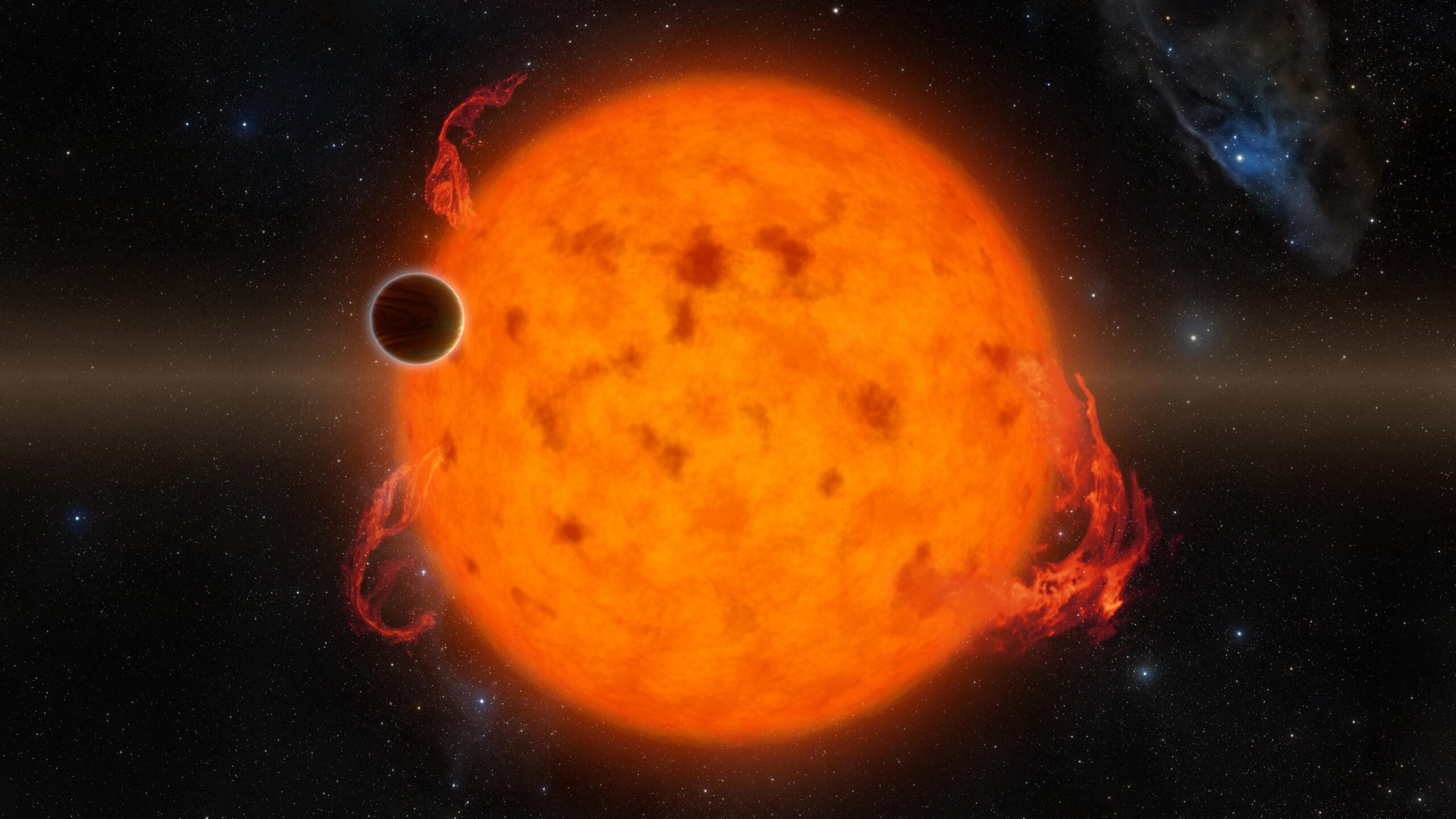
An artist’s depiction of a hot Jupiter. These planets orbit extremely close to their host stars, but likely got to their locations by scattering inward from more distant orbits. [NASA/JPL-Caltech]
Given these differences, it’s often thought that each of these populations arrived at its current location through different dynamical processes and that the history of the warm Jupiters is likely quite different from the history of the hot Jupiters. However, a new study led by Julia Esposito (Georgia Institute of Technology) has proposed an alternative view. Maybe these populations, though they appear different now, were all created by the same process: planet–planet scattering.
Virtual Planetary Billiards
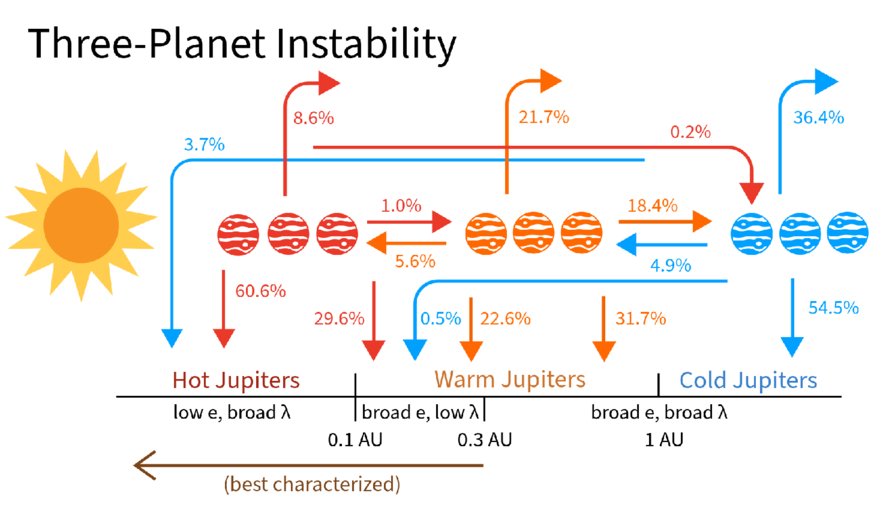
A schematic showing where different planets ended up as a function of where they scattered from during their evolution. Click to enlarge. [Esposito et al. 2026]
At the end of the simulation, the team surveyed the digital carnage. Almost every virtual system ended with only two planets after either ejecting one away from the star or having two planets collide. But, remarkably, the remaining two-planet systems looked tantalizingly similar to what we actually observe, with a mix of hot, warm, and cold Jupiters. Even more exciting, the end populations were highly correlated to where the violent scattering event took place.
For example, the warm Jupiters were almost all produced by “warm scattering” simulations, where the scattering took place between 0.1 and 1.0 au. The planets that survived the simulations and ended up as warm Jupiters matched all of the properties of the real warm Jupiter population: they had nearby companions, were moderately eccentric, and were mostly aligned with their stars. The hot Jupiters, meanwhile, were almost all produced by “cold scattering” events where the flybys happened far from the star and resulted in one planet hurtling inwards. These also matched all of the observed properties of real hot Jupiters.
The researchers concluded that planet–planet scattering can produce both the warm and hot Jupiter populations so long as you let the planets scatter from a variety of different distances. This exciting theoretical insight, if correct, would mean that astronomers could stop searching for different pathways to create each population. Happily, this model also provides testable predictions, and the authors lay out how the theory could be supported or disproven with additional data. Through virtual experiments like these, astronomers continue to build up an understanding of how the wide range of planetary architectures observed across the galaxy came to be.
Citation
“Unified Formation Channel of Hot and Warm Jupiters via Planet–Planet Scattering,” Julia Esposito et al 2026 ApJL 1003 L3. doi:10.3847/2041-8213/ae61b0
The post Playing Pool with Planets appeared first on AAS Nova.
]]>The post Late-Blooming Magnetars: Awakening as Long-Period Transients After a Dormant Cooling Epoch appeared first on AAS Nova.
]]>Magnetothermal modeling suggests that neutron stars may remain “silent” at radio frequencies for approximately 100,000 years before activating, potentially as long-period radio transients.
The post Late-Blooming Magnetars: Awakening as Long-Period Transients After a Dormant Cooling Epoch appeared first on AAS Nova.
]]>The post HD 164604 c: A Second Giant Planet on a 15 Yr Orbit and Constraints on the Planet–Planet Mutual Inclination appeared first on AAS Nova.
]]>A newly discovered massive giant planet likely has a retrograde orbit relative to the other known planet in the system, pointing to a potentially violent dynamical history.
The post HD 164604 c: A Second Giant Planet on a 15 Yr Orbit and Constraints on the Planet–Planet Mutual Inclination appeared first on AAS Nova.
]]>
The new observations show that the asteroid will safely pass by the Moon at a distance of more than 20,000 kilometers.
The post Asteroid 2024 YR4 Won’t Hit the Moon, New JWST Observations Show appeared first on AAS Nova.
]]>Discovered in December 2024, the roughly 60-meter-wide asteroid 2024 YR4 was initially thought to have a slim chance of striking Earth in 2032. Further observations ruled out an Earth impact but left open the possibility of a Moon impact. New JWST observations show that 2024 YR4 will speed past both Earth and the Moon without a collision.
Another Update on 2024 YR4
In April 2025, we featured a Research Note that described March 2025 JWST observations of 2024 YR4 and characterized the asteroid’s size and albedo. At the close of that article, the authors suggested that further JWST observations in early 2026 could help to refine our understanding of the asteroid’s trajectory and determine whether it would strike the Moon.
On 18 and 26 February 2026, JWST carried out those critical observations. In this dataset, the asteroid is bright enough to be detected confidently, and the background is peppered with a sufficient number of reference stars — two factors necessary to determine the precise track of the asteroid as it zipped through space.
Trajectory Refinement
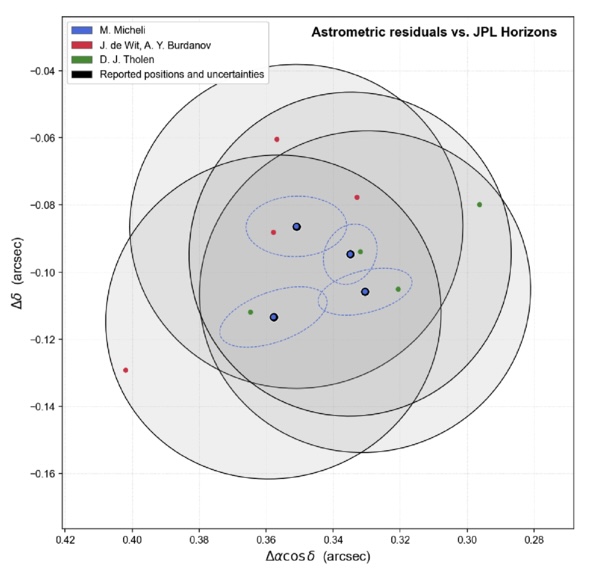
Difference between the position of 2024 YR4 determined in this work using three different reduction methods (red, blue, and green circles) and the position drawn from the existing orbit from the JPL Horizons database. The different analysis methods yielded consistent results. [Adapted from De Wit et al. 2026]
Combining the latest JWST observations with existing data stretching back to the asteroid’s discovery, de Wit and coauthors determined a new, highly precise orbit for the object — one that definitively shows that the asteroid will safely pass by the Moon at a distance of 22,900 ± 800 km in 2032. In addition to ruling out the upcoming lunar impact, the team also ruled out any collisions with Earth in the next 100 years. Phew!
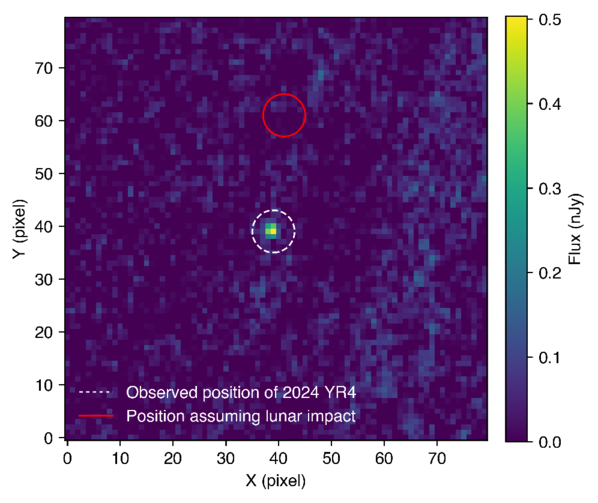
Position of 2024 YR4 as seen by JWST in February 2026 (white dashed circle) compared to the asteroid’s location estimated from existing data (red circle). [De Wit et al. 2026]
High-Impact Science
This work highlights JWST’s potential as a tool for planetary defense. The February 2026 observations detailed here represent the faintest-ever detection of a near-Earth object, and JWST can detect objects far fainter than ground-based telescopes can. This ability allows JWST to observe potentially hazardous asteroids over a larger swath of their orbits, which translates to earlier trajectory estimation — JWST pinned down 2024 YR4’s orbit two years before the asteroid would have become bright enough for ground-based telescopes to do so.
JWST’s role may be even more important for smaller objects that rapidly become undetectable after discovery. De Wit’s team demonstrated this for a 10-meter-diameter 2024 YR4 clone on the same trajectory; for an object of this size, JWST would be able to rule out an Earth impact before the asteroid became undetectable, but ground-based telescopes could not. With surveys from facilities like Vera C. Rubin Observatory and Near-Earth Object Surveyor set to discover hundreds of thousands of new near-Earth objects, JWST’s role as a hazard assessor will likely be in high demand.
Citation
“JWST Observations of Asteroid 2024 YR4 Rule Out a 2032 Lunar Impact and Demonstrate a New Regime for Planetary Defense Follow-Up,” Julien de Wit et al 2026 ApJL 1003 L21. doi:10.3847/2041-8213/ae6a95
The post Asteroid 2024 YR4 Won’t Hit the Moon, New JWST Observations Show appeared first on AAS Nova.
]]>The post IRS 9: The Case for a Dynamically Ejected Star from the Galactic Center appeared first on AAS Nova.
]]>The galactic center star IRS 9 is locally unbound and was likely placed on its current trajectory by binary supernova disruption, two-body interactions, or stellar collisions.
The post IRS 9: The Case for a Dynamically Ejected Star from the Galactic Center appeared first on AAS Nova.
]]>
Astrobites reports on new mid-infrared observations that allow researchers to probe the structure of active galactic nuclei.
The post I Spy with My Large Binocular Eyes: A Dusty Torus Around a Supermassive Black Hole? appeared first on AAS Nova.
]]>Editor’s Note: Astrobites is a graduate-student-run organization that digests astrophysical literature for undergraduate students. As part of the partnership between the AAS and astrobites, we occasionally repost astrobites content here at AAS Nova. We hope you enjoy this post from astrobites; the original can be viewed at astrobites.org.
Title: Shocks, Winds, and a Torus: The Large Binocular Telescope Interferometer (LBTI) Resolves the Active Nucleus of NGC 4151
Authors: Jacob W. Isbell et al.
First Author’s Institution: University of Arizona
Status: Published in ApJ
At the centre of nearly every galaxy lies a supermassive black hole that dominates this innermost region. Not only is there this millions-of-solar-masses dark beast, but usually too a whole bunch of stuff — stars, gas, dust, and more — which is often quite bright! When there is plenty of this material quite close to the black hole, we believe physics takes control to flatten it into a family of disk and toroidal structures in what we call the unified model of active galactic nuclei (AGNs; see Figure 1).
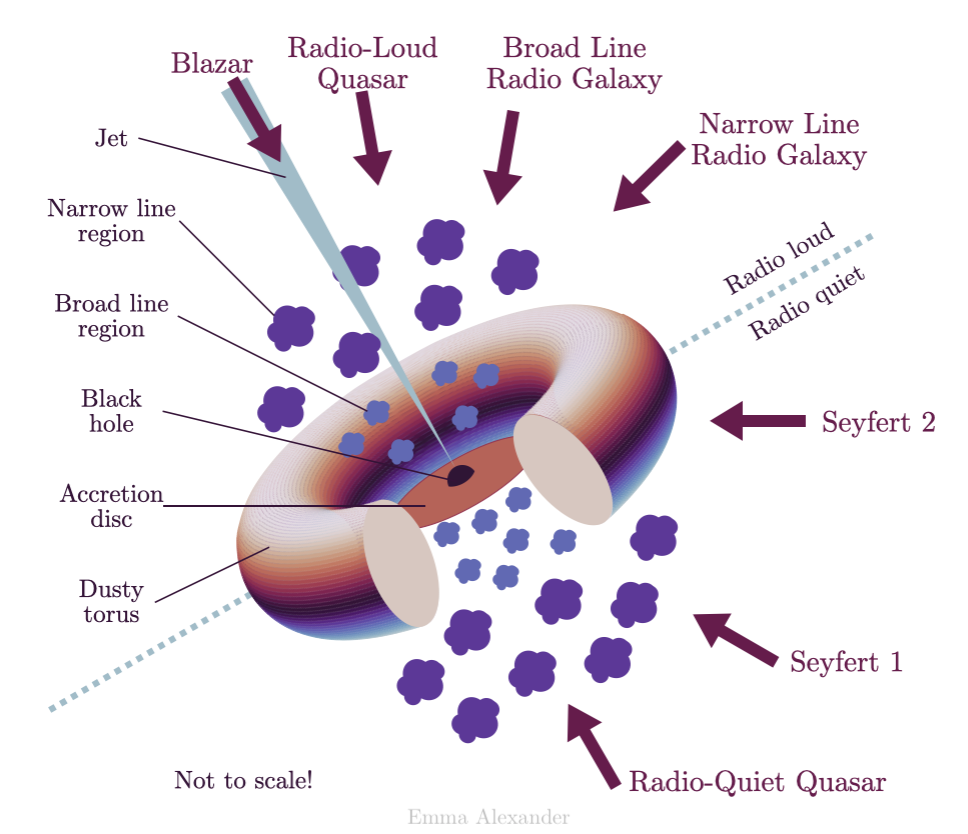
Figure 1: The unified model of AGNs asserts that there is an inner accretion disk, surrounded by a dusty torus that cohabitates with clouds moving at different velocities (the so-called broad and narrow line regions), and sometimes even relativistic jets extending from the accretion disk to galactic scales; you can read more about AGN structure in this Astrobites guide. [Emma Alexander; CC BY 4.0]

The cores of AGNs are often imaged at the smallest scales (e.g., their accretion disks, viewed with interferometers like the Very Large Telescope Interferometer) and the largest scales (e.g., their relativistic jets, viewed with radio interferometers), but comparatively less effort has gone to directly observing the predicted dusty tori in the mid-infrared. That is exactly what today’s authors set out to do using the Large Binocular Telescope Interferometer (LBTI) — a pair of 8.4-metre-aperture mirrors separated by just over 14 metres and combined to simulate a telescope effectively 29 metres wide. This lets astronomers take direct images at a much higher resolution than a smaller-aperture telescope, and hence directly peer into the region around AGNs where this dusty torus should lie.
Today’s authors turn the LBTI towards NGC 4151, a medium-luminosity AGN. With the large effective aperture of the LBTI, they were able to resolve scales in the AGN region as small as 4.4–9.1 pc, about 14–30 light-years depending on the wavelength (see Figure 2), in the mid-infrared. These observations revealed warm dust emission in a complex structure around the central supermassive black hole. The authors note a central bar at all wavelengths, with a significant extension of cool dust arcing to the west (right in the image) and warmer dust localised to the centre (as evident by 3.7- and 4.8-micron emission only nearest to the supermassive black hole and its accretion disk).
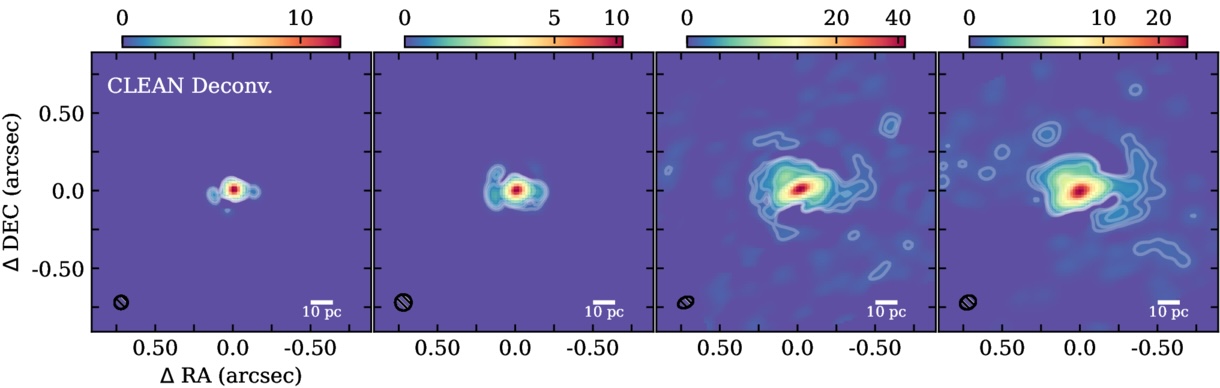
Figure 2: The deconvolved images of the AGN core of NGC 4151 show a very bright central source (the innermost region around the supermassive black hole), as well as some complex surrounding structure particularly at long wavelengths. The interpreted morphology is described in Figure 3. These images are deconvolved, meaning that known optical effects are corrected for on the raw data to produce a sharper image. [Adapted from Isbell et al. 2026]
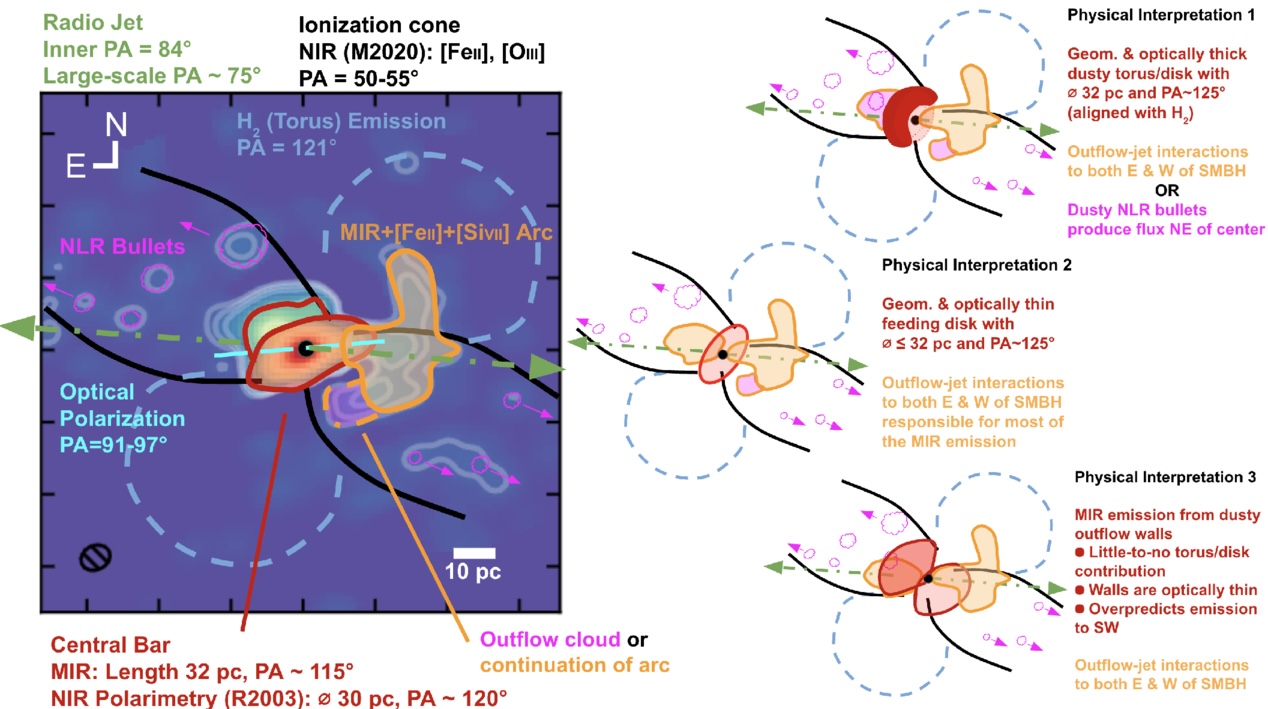
Figure 3: Three interpretations of the observed morphology are presented by the authors. The left panel illustrates the different regions surrounding the supermassive black hole (together with the results of other studies cited in the article). The right panel shows the suggested interpretations explaining the morphology. [Isbell et al. 2026]
The second interpretation aligns with a different version of the unified model: one in which a geometrically thin disk replaces a thick torus around the AGN core. Provided the disk is optically thin too, the authors favour this approach as it is consistent with the geometry of ionised emission that worked against the first interpretation. While other studies suggest that this thin disk should be optically thick, this morphology is at least better aligned with what we see in other AGNs.
The third interpretation suggests that the emission comes from only the radiation pressure–driven wind emanating from the AGN core. The authors disfavour this explanation, citing previous radiative transfer simulations that show that the flux should fall off with distance from the core too quickly to be consistent with the observations.
No matter the interpretation, these LBTI observations are an important glimpse into the future of mid-infrared AGN studies that will be done with 30-metre-class telescopes (such as the European Southern Observatory’s Extremely Large Telescope). This article, together with the group’s similar study on NGC 1068, is challenging and refining an accepted view of AGN morphology — the consequences of which apply to galaxies near and far — and poses new questions perfect for sophisticated hydrodynamic and radiative simulations.
Original astrobite edited by Margaret Verrico.
About the author, Ryan White:
I am a first-year PhD student at Macquarie University in Australia, working mainly on binary/multiple systems with massive stars (Wolf–Rayets in particular!). Outside of study, I’m probably drinking coffee, baking, reading, or going for a run. You can also find me procrastinating on Bluesky @astroryan.bsky.social.
The post I Spy with My Large Binocular Eyes: A Dusty Torus Around a Supermassive Black Hole? appeared first on AAS Nova.
]]>The post Magnetic Activity in M-Type Stars Based on LAMOST DR11 and TESS Observations appeared first on AAS Nova.
]]>Chromospheric and photospheric activity in M dwarfs appear to be correlated, with stellar rotation influencing both types of activity and metallicity impacting the intensity of chromospheric activity.
The post Magnetic Activity in M-Type Stars Based on LAMOST DR11 and TESS Observations appeared first on AAS Nova.
]]>
Researchers observed Weywot, the largest moon of the dwarf planet Quaoar, as it briefly blotted out the light from a star.
The post Featured Image: Chasing Weywot’s Shadow appeared first on AAS Nova.
]]>The outer solar system is inhabited by swarms of small objects that are challenging to observe and characterize. When one of these objects travels in front of a star, from our perspective, the passage provides a brief chance to study these distant, icy denizens of our solar system. In a recent article, Estela Fernández-Valenzuela (University of Central Florida) and coauthors described how they predicted and observed stellar crossings by Weywot, the largest moon of the dwarf planet Quaoar, which lies roughly 44 au from the Sun. In the image above, the black dashed lines indicate the areas where Weywot was predicted to briefly blot out the light from a star, and the blue lines show the updated regions based on Hubble Space Telescope observations. In each panel, the green squares and red circles show where the occultation was and was not detected, respectively. There were five successful detections of Weywot’s passage across a star, allowing the team to constrain Weywot’s diameter to 116–172 km. The team also found that Weywot is much darker than the body it orbits, which has important implications for how the system formed. To learn more about the planning process for and results of these observations, be sure to check out the full research article linked below.
Citation
“Weywot, an Unusually Low-Albedo Satellite in the Trans-Neptunian Region,” Estela Fernández-Valenzuela et al 2026 ApJL 1002 L37. doi:10.3847/2041-8213/ae6076
The post Featured Image: Chasing Weywot’s Shadow appeared first on AAS Nova.
]]>
A recent study looks at the star and dust morphologies across samples of massive galaxies to understand how dusty star-forming galaxies fit into the picture of massive galaxy evolution.
The post Hints for Massive Galaxy Evolution from Dusty Star-Forming Galaxies appeared first on AAS Nova.
]]>How do massive galaxies form and evolve? A recent study traces the stellar and dust distributions across evolutionary phases of massive galaxies to better understand how massive dusty star-forming galaxies fit into the picture.
Dusty Massive Galaxies
Massive galaxies, like the Milky Way or even larger, undergo phases of active star formation and quiescent phases of inactivity, but exactly how these galaxies evolve through these stages is not yet fully understood. Dusty star-forming galaxies, which are undergoing a period of intense star formation and shrouded in dust, might be the missing evolutionary step between star-forming and quiescent phases of massive galaxy evolution.
Currently, the leading explanation for massive galaxy formation and evolution is inside-out growth — star formation and quenching start in the inner regions of a galaxy and progress outward. However, it’s not clear whether dusty star-forming galaxies also follow the favored inside-out pathway, or if they instead proceed outside-in, first growing their disks and then assembling a central bulge.
Example of JWST NIRCam images with ALMA contour lines overlaid for select dusty star-forming galaxies in the sample. [Modified from Bodansky et al 2026]
Multiwavelength Morphological Comparisons
To directly compare the star and dust morphologies across massive galaxies, Sarah Bodansky (University of Massachusetts, Amherst) and collaborators selected a sample of 33 dusty star-forming galaxies from the GOODS-ALMA 2.0 survey that searched the sky for 1.1-mm dust emission as well as star-forming and quiescent comparison samples drawn from JWST observations. Combining the ALMA survey data with JWST imaging, the authors studied the rest-frame optical (stars) and rest-frame near-infrared (dust) morphologies of dusty, star-forming, and quiescent galaxies at redshifts around cosmic noon (a few billion years after the Big Bang).
When comparing optical morphologies, the authors found that dusty star-forming galaxies and typical star-forming galaxies had similar distributions, but their near-infrared morphologies showed clear differences. Dusty galaxies tended to show more compact near-infrared emission, with dust tracing their stellar populations and more concentrated in the galaxies’ central regions. Though clearly different from star-forming galaxies, the authors noted striking similarities between the near-infrared morphologies of the dusty star-forming and quiescent galaxies, especially within their centers.
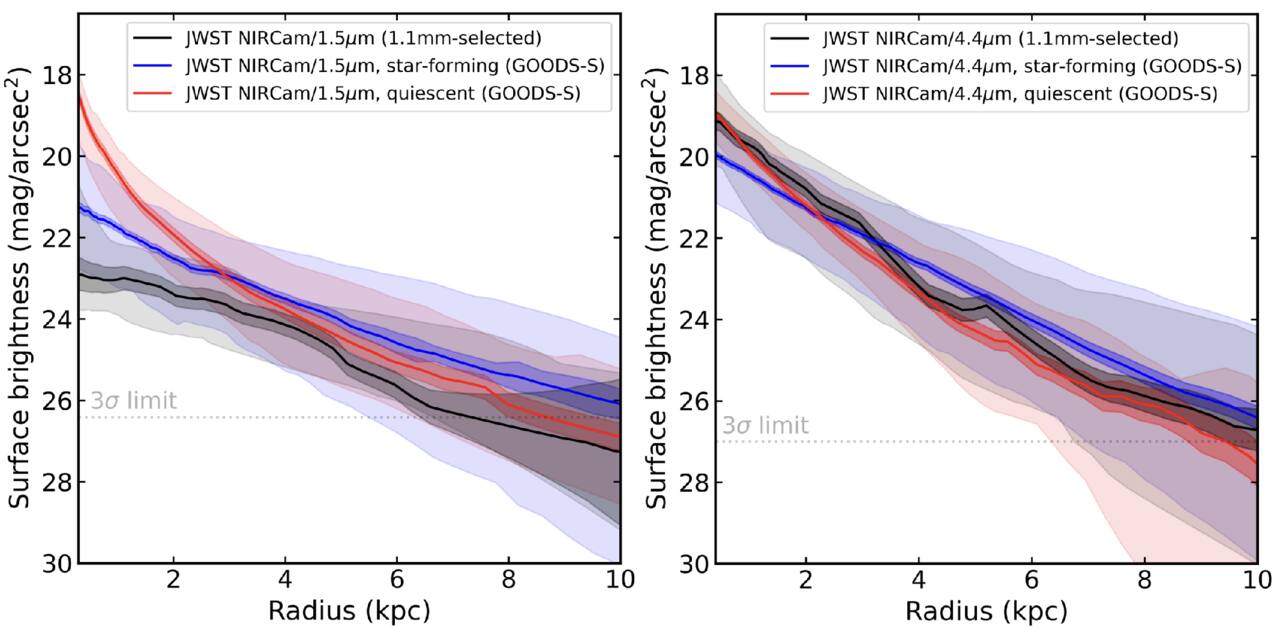
Average surface brightness profiles for the rest-optical (left) and rest-near-infrared (right) for the dusty (black), star-forming (blue), and quiescent (red) galaxies. In the near-infrared, the dusty star-forming galaxy profile appears very similar to the quiescent galaxy profile. [Bodansky et al 2026]
Citation
“JWST+ALMA Reveal the Buildup of Stellar Mass in the Cores of Dusty Star-forming Galaxies at Cosmic Noon,” Sarah Bodansky et al 2026 ApJ 1001 235. doi:10.3847/1538-4357/ae4f64
The post Hints for Massive Galaxy Evolution from Dusty Star-Forming Galaxies appeared first on AAS Nova.
]]>The post Ultra-Faint Milky Way Satellites Discovered in Carina, Phoenix, and Telescopium with DELVE Data Release 3 appeared first on AAS Nova.
]]>By cross-matching results from two different search algorithms, researchers have discovered three new Milky Way satellites, two of which appear to be dwarf galaxies and one of which is likely a star cluster.
The post Ultra-Faint Milky Way Satellites Discovered in Carina, Phoenix, and Telescopium with DELVE Data Release 3 appeared first on AAS Nova.
]]>The post Emergence of a Lithium Dip in ∼35 Myr “Snake” Open Clusters appeared first on AAS Nova.
]]>New observations of a young star cluster challenge the view that lithium depletion only occurs after 150 million years; the team also uncovered a correlation between stellar rotation rate and lithium depletion.
The post Emergence of a Lithium Dip in ∼35 Myr “Snake” Open Clusters appeared first on AAS Nova.
]]>
During its commissioning phase, the highly anticipated Vera C. Rubin Observatory serendipitously spotted the third known interstellar object.
The post Interstellar Comet 3I/ATLAS Through the Eyes of Rubin Observatory appeared first on AAS Nova.
]]>The NSF–DOE Vera C. Rubin Observatory has yet to begin its 10-year Legacy Survey of Space and Time, but it’s already keeping an eye on the sky. Astronomers recently described Rubin’s serendipitous spotting of 3I/ATLAS days before the interstellar object’s discovery.
Interstellar comet 3I/ATLAS as seen by the Hubble Space Telescope on 30 November 2025. [NASA, ESA, STScI, D. Jewitt (UCLA), M.-T. Hui (Shanghai Astronomical Observatory). Image Processing: J. DePasquale (STScI)]
Welcome, 3I/ATLAS
Our solar system has been playing host to a rare interstellar tourist: 3I/ATLAS. Just the third known interstellar object to have passed through our star system, 3I/ATLAS was discovered on 1 July 2025 by the robotic telescope network of the Asteroid Terrestrial-impact Last Alert System (ATLAS). After making its closest approach to the Sun in October 2025, 3I/ATLAS is now journeying out of the solar system and is currently located beyond the orbit of Jupiter.
While astronomers would likely grumble about hosting a human guest for nearly a year, they’ve been thrilled with 3I/ATLAS’s lengthy visit and have turned countless telescopes toward the rare interstellar object. They’ve also turned to the archives, searching for pre-discovery sightings of the object — and finding them in the commissioning data from one of the most highly anticipated observatories on the planet: Rubin Observatory.
A Serendipitous Sight
3I/ATLAS as seen by Rubin Observatory on 3 July 2025. [Chandler et al. 2026]
For most of 2025, Rubin was in its commissioning phase, carrying out science validation observations — a critical period during which instruments, procedures, and pipelines are fine tuned, and the quality and quantity of data collection can vary. On 20 June 2025, the very first night of its science validation survey, Rubin happened to turn toward the small patch of sky containing the as-yet undiscovered 3I/ATLAS.
More to Come
In a recent article, Colin Orion Chandler (LSST Interdisciplinary Network for Collaboration and Computing Frameworks; University of Washington) and collaborators described how they tracked down 3I/ATLAS in Rubin’s commissioning data after the object’s discovery was announced. In total, the observatory serendipitously spotted 3I/ATLAS nine times between 21 June and 2 July, then several more times — some on purpose, some by chance — between 3 and 20 July.
Serendipitous observations of 3I/ATLAS by Rubin. [Chandler et al. 2026]
In their analysis of Rubin’s observations of 3I/ATLAS, Chandler and collaborators found that had the science validation survey started sooner, and had the analysis pipelines been operational, Rubin might have been the first to welcome humanity’s third interstellar visitor. Findings like these heighten the anticipation for the start of the Legacy Survey of Space and Time, during which Rubin will surely build upon its already impressive record of interstellar object observations.
Citation
“NSF-DOE Vera C. Rubin Observatory Observations of Interstellar Comet 3I/ATLAS (C/2025 N1),” Colin Orion Chandler et al 2026 ApJL 1001 L35. doi:10.3847/2041-8213/ae4b3a
The post Interstellar Comet 3I/ATLAS Through the Eyes of Rubin Observatory appeared first on AAS Nova.
]]>The post Evolution of the Mercurian Crust as Recorded in Carbon appeared first on AAS Nova.
]]>Combining data from Mariner 10 and MESSENGER, researchers find that space weathering processes mix graphite into the surface material in Mercury, which potentially alters the material’s phase.
The post Evolution of the Mercurian Crust as Recorded in Carbon appeared first on AAS Nova.
]]>
Astrobites reports on how JWST may be the key to finding moons around planets beyond our solar system.
The post Hunting for Exomoons Around a Lonely Planet appeared first on AAS Nova.
]]>Editor’s Note: Astrobites is a graduate-student-run organization that digests astrophysical literature for undergraduate students. As part of the partnership between the AAS and astrobites, we occasionally repost astrobites content here at AAS Nova. We hope you enjoy this post from astrobites; the original can be viewed at astrobites.org.
Title: A Deep Search for Exomoons Around WISE 0855 with JWST
Authors: Mikayla J. Wilson et al.
First Author’s Institution: University of California, Santa Cruz
Status: Published in AJ
The “Moon”-umental Question
The solar system hosts hundreds of moons, ranging from volcanic worlds like Io around Jupiter, to icy objects like Enceladus around Saturn, to captured objects like Neptune’s retrograde moon Triton. Moons are essential to our model of how the solar system formed and also offer some of the best chances we have for finding life beyond Earth.
Astronomers also expect exomoons, or moons orbiting planets outside the solar system, to be abundant around other giant exoplanets. But how common are exomoons? How do they compare to the moons in our solar system?
In order to begin answering those questions, we must first detect an exomoon, which has proved difficult despite decades of searching by astronomers. Fortunately, JWST presents a new opportunity to uncover the exomoon population by looking at lonely free-floating planets as they drift through space.
Why Free-Floating Planets?
One proposed method for searching for exomoons is by looking for their transits in front of their host planets, characterized by the dips in brightness of the planet as the moon passes in front, blocking the planet’s light. Looking for exomoon transits around planets orbiting stars is quite difficult, as the bright starlight can easily drown out the small signals of exomoon transits. Free-floating planets solve this issue by removing the star entirely, increasing our sensitivity to such detections. (See this bite for a good review.)
The authors of today’s article directed the exomoon hunt towards the free-floating WISE J085510.83-071442.5 (or WISE 0855). It has the prestige of being the coldest known brown dwarf (250–285K) while also sitting at a relatively low mass (3–10 Jupiter masses). Notably, it is also one of our closest neighbors at a distance of only 7.4 light-years, making it ideal for high-precision observations despite its faintness. Even though brown dwarfs are technically distinct from planets, the authors opt to refer to companions around WISE 0855 as moons given WISE 0855’s “planetary-mass” status. (It’s complicated…)
Repurposing JWST Data… for Moons!
The JWST observations used in this study contain 11 hours of near-infrared (2.87–5.27 microns) time-series spectra originally intended to study water clouds and weather on WISE 0855. Time-series brightness monitoring can also be used for transit searches, which the authors take advantage of.
One complication is that WISE 0855 is variable, meaning its intrinsic brightness changes over time. Variability is likely driven by clouds and other dynamic processes within its atmosphere. So how do the authors distinguish between a passing moon and a turbulent atmosphere? The key idea is that variability is wavelength dependent, meaning that the brightness of WISE 0855 will fluctuate differently depending on the observed wavelength. In contrast, transits are “gray,” meaning that the same amount of light is blocked at all wavelengths, producing a consistent feature across the entire spectrum.
Finding Moons with Statistics!
The authors apply this idea and pick out two wavelength regions of WISE 0855’s spectrum that contain two distinct variability patterns, which should both contain an identical moon transit signal (if present). They then generate a light curve (how brightness changes over time) for these two regions (see Fig. 1).
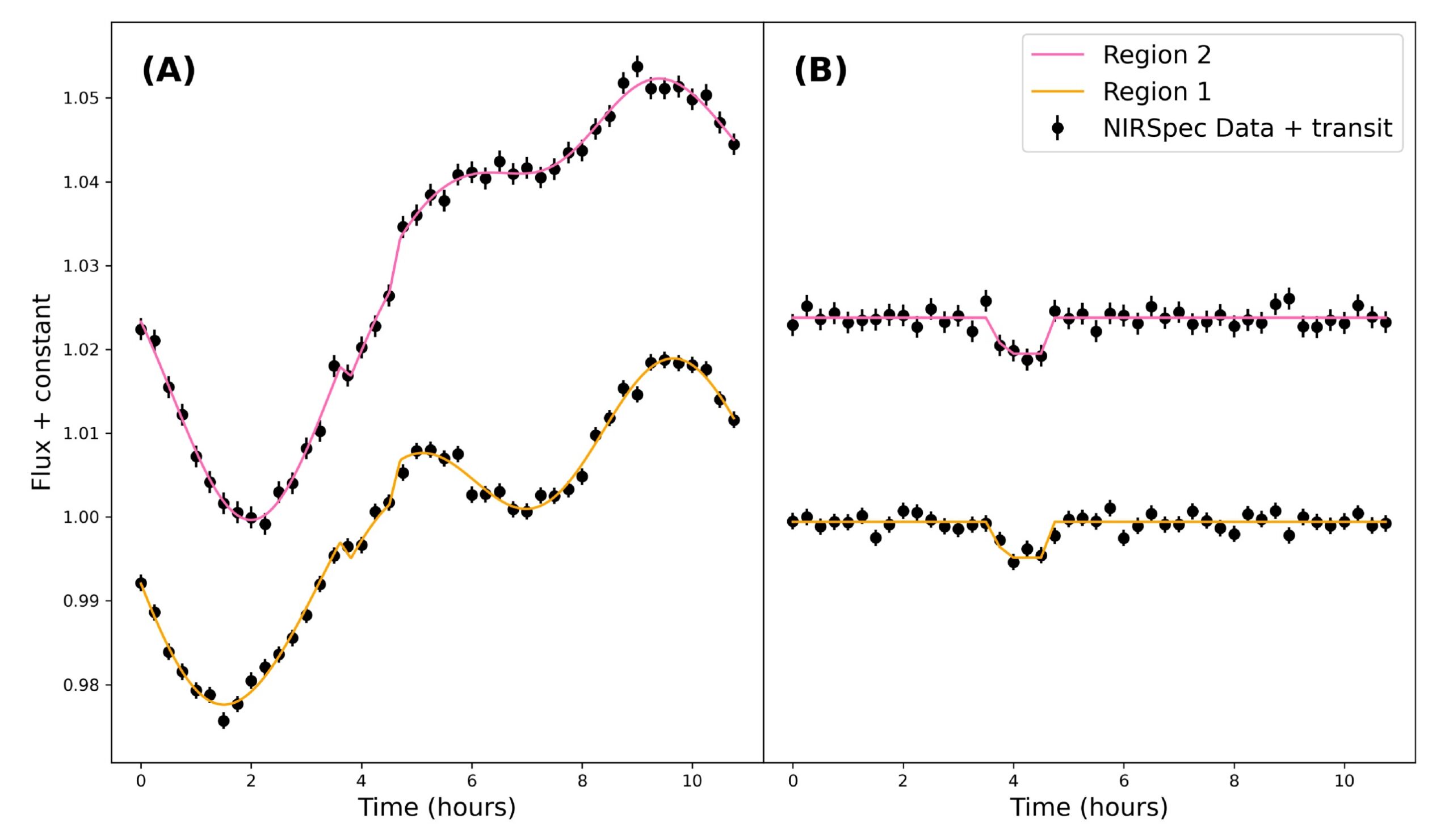
Figure 1: (A) Light curves from two selected wavelength regions of WISE 0855’s spectrum with injected transit signals. Also plotted is the best-fit Gaussian processes + transit model for the two light curves. (B) Light curve data after subtracting the Gaussian processes portion of the best-fit model, revealing the example injected transit signals. [Wilson et al. 2025]
- Gaussian processes–only model: Assumes that all observed variability is intrinsic to the planet itself
- Gaussian processes + transit model: Includes a simple trapezoidal exomoon transit signal that is simultaneously fit in both light curves
Using Bayesian evidence (a measure of how well each model explains the data), they determined which model was favored. So, what do they find?
The Bad News and the Good News
Based on Bayesian evidence, the authors conclude that there are no statistically significant detections of exomoons in the data. The results suggest very weak evidence for a ~0.53-Earth-radius moon at a wide separation from WISE 0855 — an unlikely scenario given that transit probability decreases at greater separations (and therefore longer orbital periods).
Yet, the study goes further: What kinds of moons is JWST able to detect, if any? To answer this, the authors performed injection and recovery tests, where they injected artificial transit signals of varying depths (exomoon sizes) into the data and tested how well their models were able to recover them (results shown in Fig. 2). They find that JWST is capable of detecting 96% of transits with depths ≥0.5%, equivalent to a Titan-like moon. Smaller Io-like moons were also detectable more than half of the time. This means that if a Titan analog had actually transited during these observations, we would almost certainly have seen it!
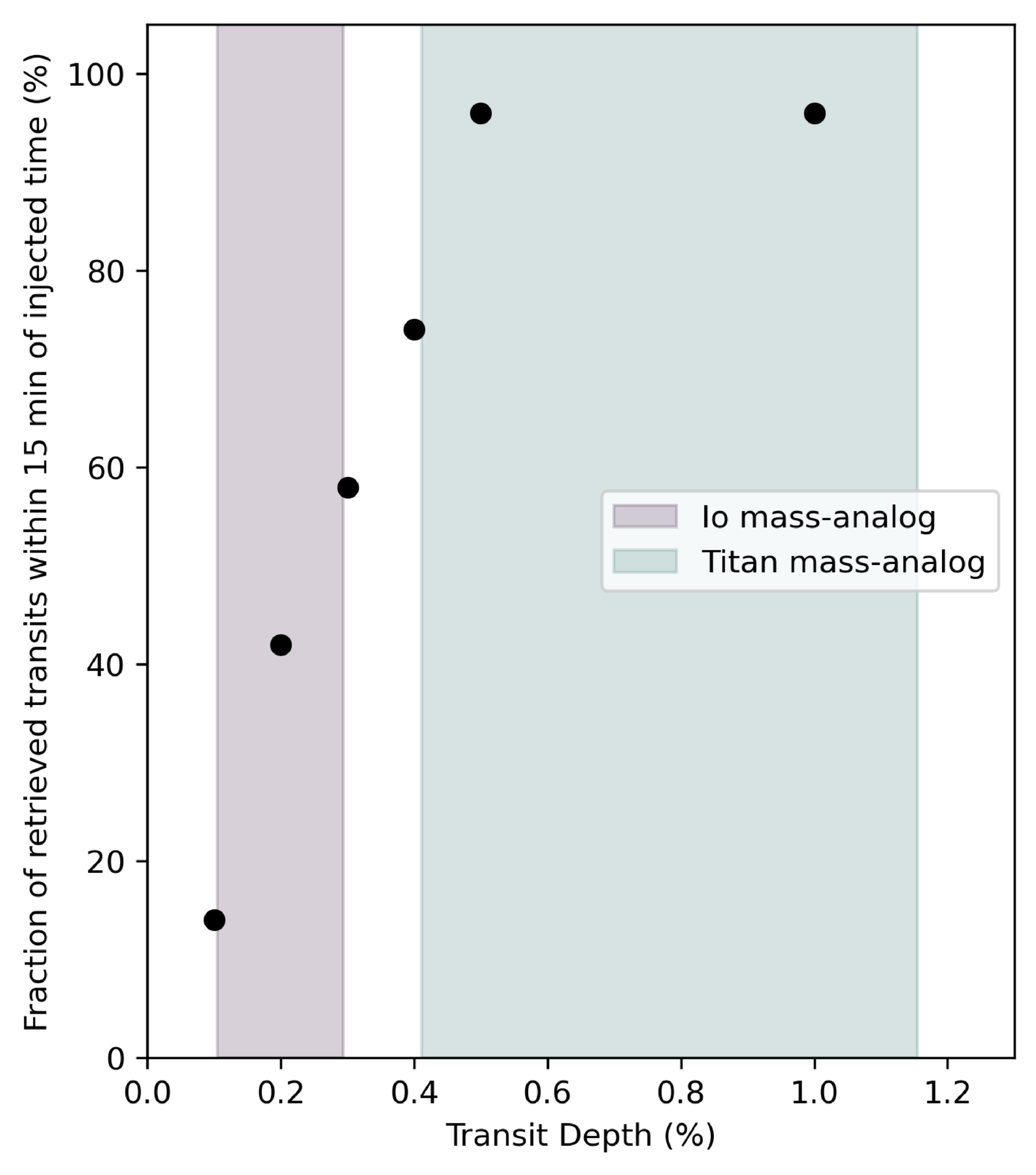
Figure 2: Results showing the number of successful detections for the transit injection and recovery tests. Fifty transit injections are done for transit depths of 1%, 0.5%, 0.4%, 0.3%, 0.2%, and 0.1%. The transit depths represent different exomoon sizes, with the shaded regions representing Io-like and Titan-like moons. [Wilson et al. 2025]
Original astrobite edited by Kelsie Taylor.
About the author, Jared Bull:
I am a 2nd-year PhD student at Johns Hopkins University. I study brown dwarf variability and am interested in using time-series observations to uncover dynamic processes within their atmospheres. In my free time I like to read, cook, and do astrophotography.
The post Hunting for Exomoons Around a Lonely Planet appeared first on AAS Nova.
]]>The post COSI Short Gamma-Ray Burst Localization Using BGO Shield Data appeared first on AAS Nova.
]]>Researchers analyze localization tools that may be used to pinpoint the sources of short gamma-ray bursts in light curves from the Anticoincidence Subsystem on the Compton Spectrometer and Imager (COSI).
The post COSI Short Gamma-Ray Burst Localization Using BGO Shield Data appeared first on AAS Nova.
]]>
New observations from JWST and the Very Large Telescope illuminate the dark feature at the center of a galaxy cluster's brightest occupant.
The post Into the Void: Investigating the Heart of a Giant Elliptical Galaxy appeared first on AAS Nova.
]]>The core of the brightest galaxy in the cluster Abell 402 contains a curious void. New observations suggest that an ultra-massive black hole could have excavated this feature.
At the Center of the Center of a Cluster
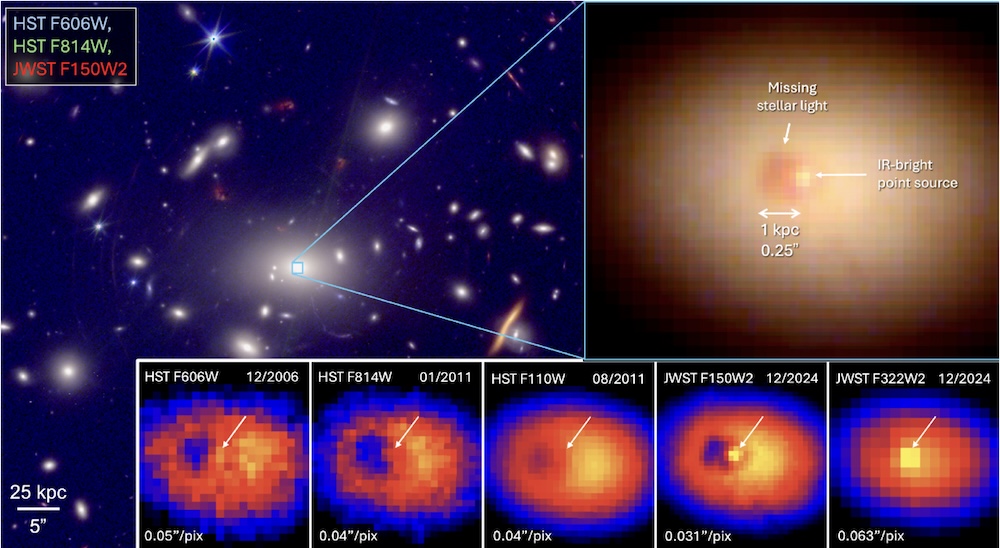
JWST and Hubble observations of A402-BCG. In addition to the dark cavity previously seen by Hubble, the galaxy’s center hosts an infrared-bright source. Click to enlarge. [McDonald et al. 2026]
In a recent research article, a team led by Michael McDonald (Massachusetts Institute of Technology) investigated this dark region to test the dust-cloud hypothesis and explore other explanations.
McDonald’s team compiled new JWST Near-Infrared Camera data, archival Hubble imaging, and spectroscopy from the Multi Unit Spectroscopic Explorer (MUSE) on the Very Large Telescope. The new JWST images show a prominent dark feature at the center of A402-BCG, plus a bright source directly beside it.
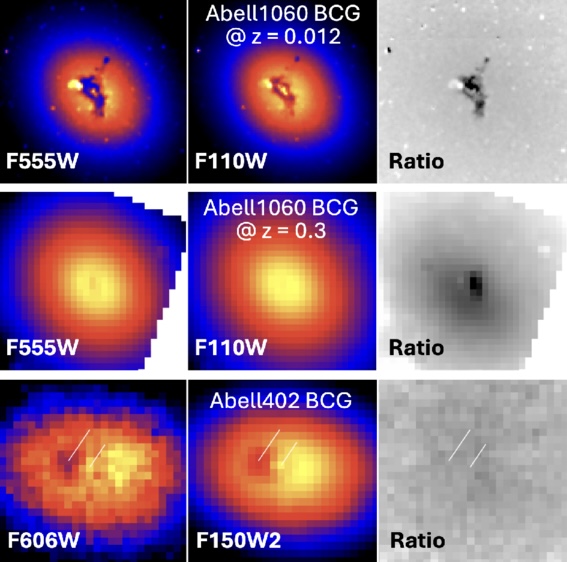
Comparison of the cavity in A402-BCG (bottom row) to the dust ring in Abell 1060’s central galaxy (top row). In the middle row, simulated observations show Abell 1060’s central galaxy at A402-BCG’s redshift. The appearance of the dust ring is wavelength dependent, but the appearance of A402-BCG’s cavity is not. [Adapted from McDonald et al. 2026]
Not Hidden, but Missing
If the dark feature at the center of A402-BCG is a dust cloud, the cloud would be less obscuring at the near-infrared wavelengths captured by JWST than at the optical wavelengths sampled by Hubble. However, the feature was equally dark in the JWST images, leading the team to rule out the dust-cloud hypothesis.
Instead, they favor a scenario in which the dark feature is due to an absence of stars rather than the presence of obscuring dust. The team estimated that 2 billion solar masses of stars are missing — equivalent to 1% of the stellar mass of the galaxy. What’s more, the cavity is situated in a larger region of constant surface brightness called a core, in which there are fewer stars than expected.
The Dynamical History of A402-BCG
McDonald and coauthors suggested that the missing stars in A402-BCG’s core and cavity were ejected by at least one supermassive black hole binary. They estimated that the core region, which is roughly 6,500 light-years across, was excavated by a 50 billion solar mass black hole. This epic black hole may be the result of a past merger and is likely located at the infrared-bright spot on the border of the cavity, as this source’s spectral energy distribution resembles that of an actively accreting black hole.
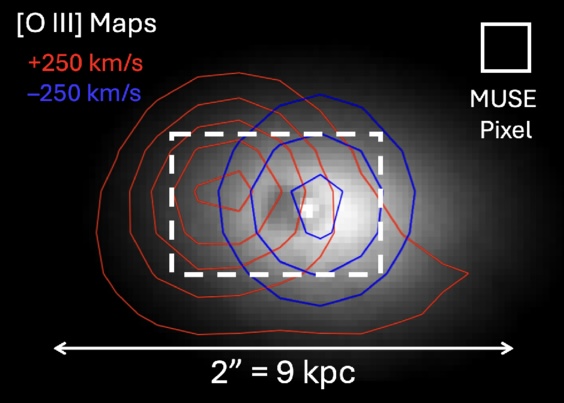
MUSE observations of highly ionized gas in A402-BCG. The blueshifted source on the right coincides with the infrared-bright source, while the redshifted source on the left appears to be embedded within a larger ionized envelope. [Adapted from McDonald et al. 2026]
The team favors a scenario in which these black holes are slowly spiraling toward one another, ejecting stars from the galaxy’s center as they move and carving out a deep deficit of stars. This stellar cavity sits within a larger region of stellar scarcity that was scooped out by a past supermassive black hole merger that created the ultra-massive black hole present in the galaxy today. Simulations suggest that only about 0.5% of massive galaxies are in this phase of evolution at a time, so we may have caught A402-BCG in a fascinating moment — one that provides new clues about how to search for ongoing black hole mergers in other galaxies.
Citation
“A Kiloparsec-Scale Stellar Cavity in the Center of A402-BCG May Be Caused by Dynamic Interactions with an Ultramassive Black Hole,” Michael McDonald et al 2026 ApJL 1002 L19. doi:10.3847/2041-8213/ae5bbe
The post Into the Void: Investigating the Heart of a Giant Elliptical Galaxy appeared first on AAS Nova.
]]>The post Exomoons and Exorings with the Habitable Worlds Observatory. II. Finding “Endor” with Lunar Eclipses appeared first on AAS Nova.
]]>Researchers lay out a path to finding Earth-sized moons around Jupiter-sized planets by detecting when the moon ducks behind the planet from our point of view.
The post Exomoons and Exorings with the Habitable Worlds Observatory. II. Finding “Endor” with Lunar Eclipses appeared first on AAS Nova.
]]>The post A Protoplanet Candidate in the PDS 66 Disk Indicated by Silicon Sulfide Isotopologues appeared first on AAS Nova.
]]>A circumplanetary envelope surrounding a low-mass planet may be the cause of a source with emitting radius of 0.5–4 au embedded within the larger PDS 66 protoplanetary disk.
The post A Protoplanet Candidate in the PDS 66 Disk Indicated by Silicon Sulfide Isotopologues appeared first on AAS Nova.
]]>
More than a quarter century ago, the Sloan Digital Sky Survey fundamentally changed the way modern astronomy research is done. The collaboration recently released their summary of the fifth generation of their landmark survey.
The post A New View of the Spectroscopic Universe appeared first on AAS Nova.
]]>The Sloan Digital Sky Survey (SDSS) fundamentally changed the way modern astronomy research is done. This “grand and bold thing” is not frozen in a museum exhibit, however: instead, the SDSS telescopes and team have continued to iterate. The collaboration recently described the fifth generation of this groundbreaking survey in The Astronomical Journal.
Roots in History
Astronomy is now without question a “big data” science. While a lucky few researchers still occasionally travel to distant mountaintops to sojourn with the stars, most astronomers who can describe their work as “observational” rarely ever leave their laptops. Petabytes of historical data, including images, spectra, enormous simulation archives, and more, are available the instant one’s fingers touch a keyboard. As a result, the speed of discovery has increased exponentially, and the barriers to cutting-edge research have dramatically shrunk.
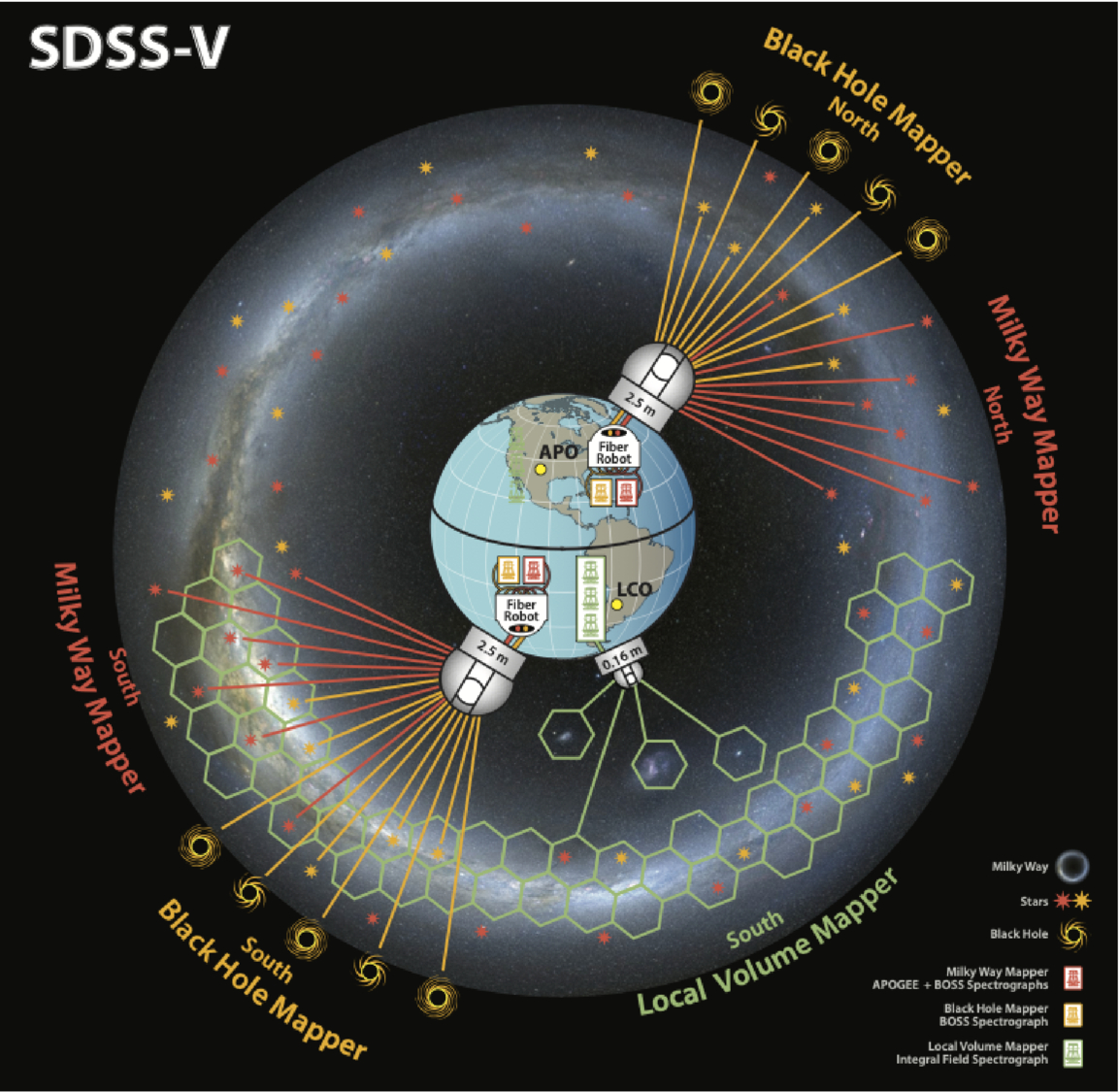
A schematic of the SDSS-V survey facilities and targets. Click to enlarge. [Kollmeier et al. 2026]
While SDSS’s twin 2.5-meter telescopes (one in New Mexico and one in Chile, allowing the survey to observe the entire sky) are dwarfed by Rubin’s 8-meter mirror, there is still thrilling science to be done with these moderate-sized observatories. This is especially true after a series of upgrades to the spectrographs and thanks to a deep expertise in not only survey-style science, but also in project management and survey planning. In 2021, in the middle of COVID-19 delays and distancing requirements, the team began upgrades to their existing facilities and construction of a brand new telescope to kick off the latest survey, SDSS-V.
The Next Generation
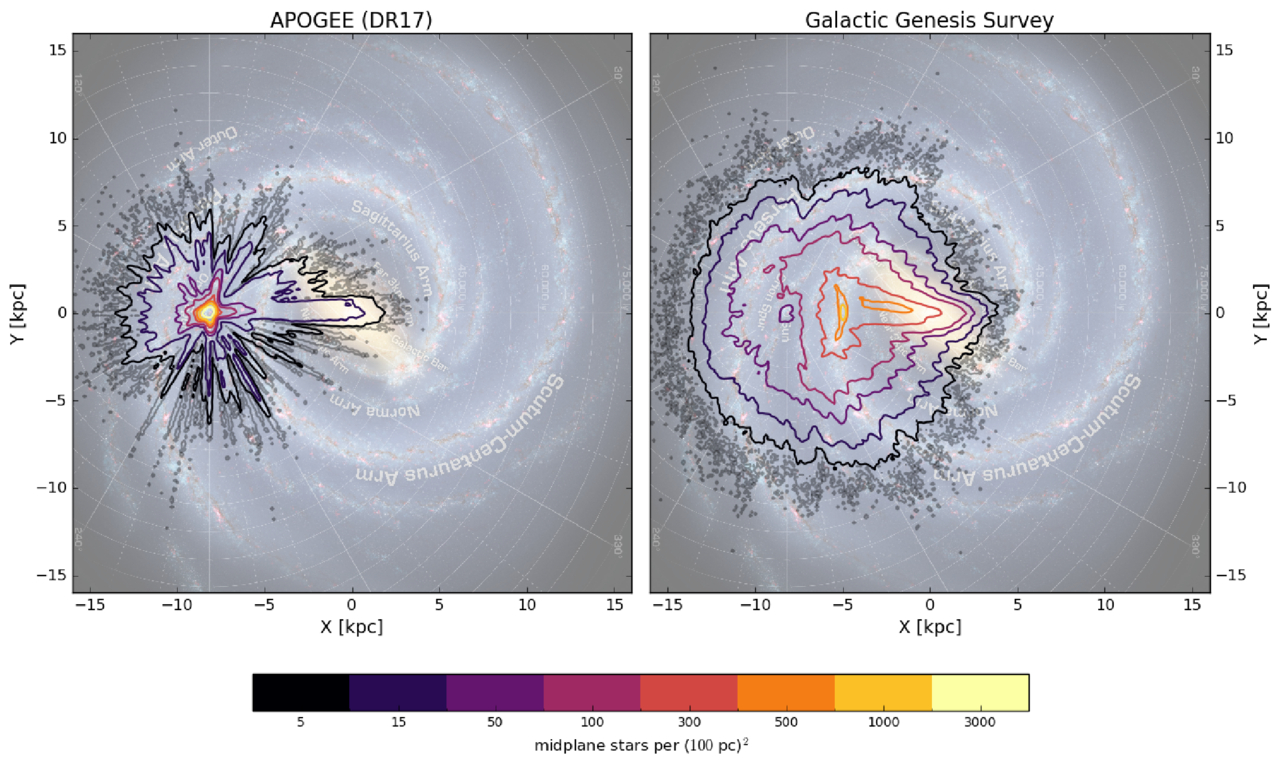
The density of target stars for the SDSS-V survey compared to a previous spectroscopic survey. Click to enlarge. [Kollmeier et al. 2026]
By the end of the survey, SDSS-V will have collected optical and near-infrared spectra for roughly 6 million objects spread across the whole sky, as well as time-series spectra from about a million of these sources. This dataset, which is unprecedented in both its spatial and temporal coverage, will allow researchers to probe questions ranging from how quasars evolve over time to how commonly young stars have brown-dwarf companions. Long since SDSS initiated the era of industrial survey astronomy, this latest publication shows how the survey continues to lead the way.
Citation
“Sloan Digital Sky Survey. V. Pioneering Panoptic Spectroscopy,” Juna A. Kollmeier et al 2026 AJ 171 52. doi:10.3847/1538-3881/ae0576
The post A New View of the Spectroscopic Universe appeared first on AAS Nova.
]]>The post StarStream on Gaia: Stream Discovery and Mass-Loss Rate of Globular Clusters appeared first on AAS Nova.
]]>Using an automatic stellar stream detection algorithm, researchers have discovered 87 stellar streams associated with globular clusters in our galaxy, doubling the number of known stellar streams.
The post StarStream on Gaia: Stream Discovery and Mass-Loss Rate of Globular Clusters appeared first on AAS Nova.
]]>The post White Dwarf Merger Remnants with Cooling Delays on the Q Branch Lack Strong Magnetism appeared first on AAS Nova.
]]>A survey of ultramassive white dwarfs suggests that these objects form either in a way that induces no strong magnetism, or that the magnetic fields dissipate rapidly.
The post White Dwarf Merger Remnants with Cooling Delays on the Q Branch Lack Strong Magnetism appeared first on AAS Nova.
]]>
Recent work explores whether a commonly assumed source of data–model disagreement in simulations of stellar interiors is really to blame.
The post Simulations of Turbulent Mixing Close One Gap but Open Another appeared first on AAS Nova.
]]>Nature sometimes behaves in ways that are difficult to recreate in simulations. New research tackles the computational challenge of turbulent mixing and rules out a commonly assumed source of data–model disagreement.
Mixing Up Stellar Interiors
What do Earth’s oceans, red giant stars, and white dwarfs have in common? These are all sites of thermohaline mixing, a form of turbulent mixing that takes place when there is a vertical gradient in both temperature and chemical composition. For example, in Earth’s oceans, water near the surface is warmer and saltier than water in the depths below, setting up an unstable situation prone to mixing.
Examples of simulated thermohaline convection. These snapshots show the vertical velocity across a slice through the simulation volume. Click to enlarge. [Fraser 2026]
One of the most important parameters for modeling mixing is the Prandtl number, Pr, which is the ratio of viscosity to thermal diffusivity (in other words, a way of describing whether momentum or heat diffuses more quickly within a fluid). For stellar interiors, Pr is around 10−6, but computational limitations have prevented modelers from setting this value lower than around 10−2. When tensions between models and reality arise, this gap between simulated and realistic Pr values is often assumed to be the source of the mismatch.
Bridging the Prandtl Number Gap
In a recent research article, Adrian Fraser (University of Colorado Boulder) aimed to test this assumption. Fraser carried out 3D simulations of thermohaline mixing, using a semi-implicit modeling technique that lowered the computational cost and allowed the simulations to probe Pr values of 10−1, 10−2, 10−3, 10−6, and 0.
Turbulent compositional flux as a function of reduced density ratio for the simulations from this work (DNS) and the benchmark model of thermohaline convection (BGS13). Click to enlarge. [Adapted from Fraser 2026]
Recreating Reality
Where does this leave modelers attempting to recreate the reality of stellar interiors? First, a silver lining of this investigation: Fraser found that setting Pr = 0 delivered nearly identical results to Pr = 10−6. This suggests that valid results can be attained in a much less computationally intensive way, since setting Pr = 0 lowers the complexity of the simulation. While simulations with Pr = 0 may not be appropriate for all scenarios, including systems with strong magnetic fields, it may provide a way forward in certain situations.
For modeling of red giants and white dwarfs, Fraser suggested that incorporating magnetic fields, stellar rotation, or additional sources of mixing may resolve the current discrepancies. In fact, some modeling work has shown that magnetic fields could entirely close the gap between observations and models for red giant surface abundances — suggesting that bringing models and observations into agreement may be within reach.
Citation
“Bridging the Prandtl Number Gap: 3D Simulations of Thermohaline Convection in Astrophysical Regimes,” Adrian E. Fraser 2026 ApJL 1001 L22. doi:10.3847/2041-8213/ae5796
The post Simulations of Turbulent Mixing Close One Gap but Open Another appeared first on AAS Nova.
]]>The post Evidence of 5-Minute Oscillations from Parker Solar Probe appeared first on AAS Nova.
]]>Using observations from the Parker Solar Probe’s three closest approaches to the Sun, researchers have found the first firm evidence that the Sun’s 5-minute oscillations stretch into the solar wind.
The post Evidence of 5-Minute Oscillations from Parker Solar Probe appeared first on AAS Nova.
]]>
Astrobites reports on whether cosmic clumps are "homegrown" or fueled by fresh inflows.
The post Feed the Fire, Fade the Metals appeared first on AAS Nova.
]]>Editor’s Note: Astrobites is a graduate-student-run organization that digests astrophysical literature for undergraduate students. As part of the partnership between the AAS and astrobites, we occasionally repost astrobites content here at AAS Nova. We hope you enjoy this post from astrobites; the original can be viewed at astrobites.org.
Title: Metal-Poor Star-Forming Clumps in Cosmic Noon Galaxies: Evidence for Gas Inflow and Chemical Dilution Using JWST NIRISS
Authors: et al.
First Author’s Institution: Arizona State University
Status: Published in ApJ
If you want to reconstruct a galaxy’s life story, one of the best “fossil records” is its metallicity. In astronomy this refers to the abundance of elements heavier than helium, which are made in stars and returned to a galaxy’s gas through winds and supernovae. Over time, more star formation usually means more metals mixed into the gas.
Now zoom to Cosmic Noon (roughly when the universe was most actively forming stars). Many galaxies in this epoch look “clumpy”; their star formation is concentrated in several bright knots scattered across the disk. The big question is where those clumps come from. Do they form from the galaxy’s own gas via internal disk instabilities, or do they light up when fresh, metal-poor gas flows in and both fuels star formation and dilutes the local metallicity?
The authors try to answer that question with JWST by measuring the metallicity of each clump relative to its immediate surroundings, rather than comparing clumps to a single galaxy-wide number (which can be misleading if the galaxy has a metallicity gradient).
They use JWST/Near Infrared Imager and Slitless Spectrograph (NIRISS) slitless grism spectroscopy from the CAnadian NIRISS Unbiased Cluster Survey (CANUCS) to study 20 lensed galaxies at redshift 0.6 < z < 1.35. (Lensing effectively acts like a zoom lens, helping to resolve smaller structures.) They focus on emission lines that trace star-forming gas, especially Hα (a star formation tracer) and sulfur lines [SII] and [SIII] (needed for their metallicity method).
Slitless spectra come with a headache: because there is no slit, different parts of a galaxy can overlap in the dispersed image. To make reliable emission-line maps from slitless data, the authors use a forward-modeling code called Sleuth, which allows the continuum to vary across the galaxy.
The authors identify clumps using the Hα map together with rest-frame ultraviolet imaging because these tracers are sensitive to star formation on different timescales: Hα highlights gas ionized by the youngest massive stars, while ultraviolet light traces young stellar light over longer periods. As a result a clump can be bright in one and not the other, especially if dust is involved.
To estimate gas-phase metallicity, they use the “strong-line” method, which infers metallicity from ratios of bright emission lines calibrated using models and empirical samples. Their main diagnostic is S23 = ([SIII] + [SII]) / Hα. Because some line ratios also depend on the ionization state (how strongly the gas is being ionized by young stars), they also use the sulfur ratio S32 = [SIII]/[SII] as a check and iterate to a self-consistent solution.
So, Are Clumps Really Chemically Different from Their Surroundings?
For each clump, the authors measure the metallicity inside the clump and compare it to an annulus just outside the clump (masking neighboring clumps to avoid mixing). When they plot “clump metallicity” versus “local disk metallicity,” most points fall below the 1-to-1 line, meaning the clumps are more metal poor than their surroundings (Figure 1). The mean offset is about 0.1 dex, which corresponds to roughly 20% dilution in the clump gas.
Figure 1: Each point compares a star-forming clump’s gas-phase metallicity to the metallicity of the nearby disk region immediately surrounding it. If clumps and disks had the same metallicity, they would lie on the dashed 1-to-1 line. Instead, most clumps sit below it, showing a typical ∼0.1 dex metallicity deficit, consistent with local chemical dilution. (The solid red line shows a best-fit linear trend to the clump measurement.) [Adapted from Estrada-Carpenter et al. 2025]
If inflow is really the driver, you should expect a link: the more strongly a clump is forming stars relative to its surroundings, the more diluted its metallicity should be. That is exactly what the authors find. The clumps that are most boosted in star formation are also the most metal diluted.
The article also emphasizes that clumps are not chemically uniform blobs. In at least one detailed example, the peaks in Hα (highest star formation) coincide with local minima in metallicity along a cut through the galaxy (Figure 2), suggesting internal star formation rate and metallicity gradients that reinforce the same story, intense star formation goes hand in hand with lower metallicity in the clump regions.
Figure 2: Example galaxy from this study illustrating the clump-scale link between star formation and metallicity. The color image shows the galaxy with a rectangular strip marking the region used for a 1D cut. In the bottom panel, the turquoise line shows the Hα flux (a tracer of recent star formation), while the white line shows the metallicity along the same cut. Peaks in Hα flux line up with local dips in metallicity, showing that the brightest star-forming clumps are also the most chemically diluted compared to nearby regions. [Adapted from Estrada-Carpenter et al. 2025]
Are These Clumps Really “In Situ,” or Could They Be Small Satellites?
A reasonable alternative is that some clumps are actually small companion galaxies projected onto the disk. These could also look metal poor, because low-mass galaxies tend to be low metallicity. The authors look for evidence using face-on systems and find that more massive clumps tend to sit closer to galaxy centers, which is consistent with in-situ clumps that form in the disk and migrate inward, though it does not rule out satellites. They argue that kinematics from JWST/NIRSpec IFU will be needed for a definitive separation.
Why This Matters
Gas inflow, star formation, and feedback, together known as the baryon cycle, are key drivers of how galaxies grow. What this article adds is a spatially resolved view that compares each clump to its local environment, showing that regions of elevated star formation also tend to be locally metal poor. That pairing is hard to explain as a simple metallicity gradient or a galaxy-wide averaging effect, and it is exactly what you would expect if at least some clumps are being fueled by relatively metal-poor inflows. In short, these clumps may be snapshots of galaxies refueling in real time.
Original astrobite edited by Ryan White.
About the author, Niloofar Sharei:
I’m an astronomy PhD candidate at UC Riverside studying how galaxies grow through star-forming clumps. I track how these clumps emerge, evolve, and sometimes survive long enough to reshape their galaxies. When I’m not thinking about cosmic blobs, I’m reading, hiking, or listening to Bach.
The post Feed the Fire, Fade the Metals appeared first on AAS Nova.
]]>
Are galaxies that travel through space in groups any different from those that fly solo? A new look at local galaxies provides clues.
The post Featured Image: Galaxies Caught in Transition appeared first on AAS Nova.
]]>How does environment shape a galaxy’s growth and evolution? This is the question explored in a recent study led by Gissel Montaguth (University of São Paulo). Montaguth’s team examined nearly 4,000 galaxies in low-mass, high-mass, and compact galaxy groups, as well as galaxies adrift in the field without belonging to a group. The sampled galaxies were classified as early-type, late-type, transition (generally disk galaxies with quenched star formation), or other (generally elliptical but with lingering star formation). The image above shows six transition galaxies from the sample, three of which show signs of past disturbances (top row). The team found that early-type and “other” galaxies were resilient to changes in environment, but late-type and transition galaxies could be affected by life in close groups. Late-type galaxies in compact groups tended to be somewhat smaller than their loosely grouped or field galaxy counterparts, while transition galaxies showed a significantly steeper stellar mass–size relation in group environments and smaller sizes in groups than in the field. This suggests that transition galaxies are strongly influenced by interactions, mergers, and processes like disk truncation. To learn more about the impact of environment on galaxy properties, be sure to check out the full article linked below.
Citation
“Galaxies Caught in Transition: The Role of Group Environment in Shaping the Mass–Size Relation in the Local Universe,” Gissel P. Montaguth et al 2026 ApJ 999 160. doi:10.3847/1538-4357/ae42ca
The post Featured Image: Galaxies Caught in Transition appeared first on AAS Nova.
]]>The post Col-OSSOS: Investigating the Origins of Different Surfaces in the Primordial Kuiper Belt appeared first on AAS Nova.
]]>Based on a recent survey of trans-Neptunian objects, researchers have proposed a new surface classification scheme that divides objects based on their infrared brightness.
The post Col-OSSOS: Investigating the Origins of Different Surfaces in the Primordial Kuiper Belt appeared first on AAS Nova.
]]>
Gas flowing into a galaxy is hard to detect, but a recent study simulated a dusty galaxy to understand how we might be able to uncover inflows with emission line ratios.
The post In or Out? Using Balmer Emission to Distinguish Inflows from Outflows appeared first on AAS Nova.
]]>Galaxies pull in and pump out gas as they form and evolve, but distinguishing between the two directions is tricky. A recent study used emission lines and dust absorption to try to pin it down.
Inflow or Outflow?
Throughout their lives, galaxies churn gas into stars, stars fuse new metals, supernovae blow enriched material back out, and the cycle repeats. To maintain this process and sustain star formation, a galaxy must fuel up by accreting gas from its surroundings. However, catching galactic gas accretion has proven difficult — both emission from gas falling into the galaxy (inflows) and gas blown out by supernovae (outflows) can appear blueshifted or redshifted along an observer’s sight line, depending on if the flowing material is in front of or behind the galaxy.
While direct evidence of inflows has been identified in the Milky Way, only a few direct detections of inflowing gas in other galaxies exist due to the degeneracy of inflow and outflow emission-line features. Relying on additional absorption measurements, some studies have teased out inflows in other galaxies, but these star formation fuel pumps remain overwhelmingly evasive. The angle at which we observe a galaxy also limits our ability to detect both inflows and outflows, with face-on galaxies best oriented to detect these shifted spectral features. How then do we uncover this critical component of a galaxy’s evolution?
Breaking Through with the Balmer Decrement
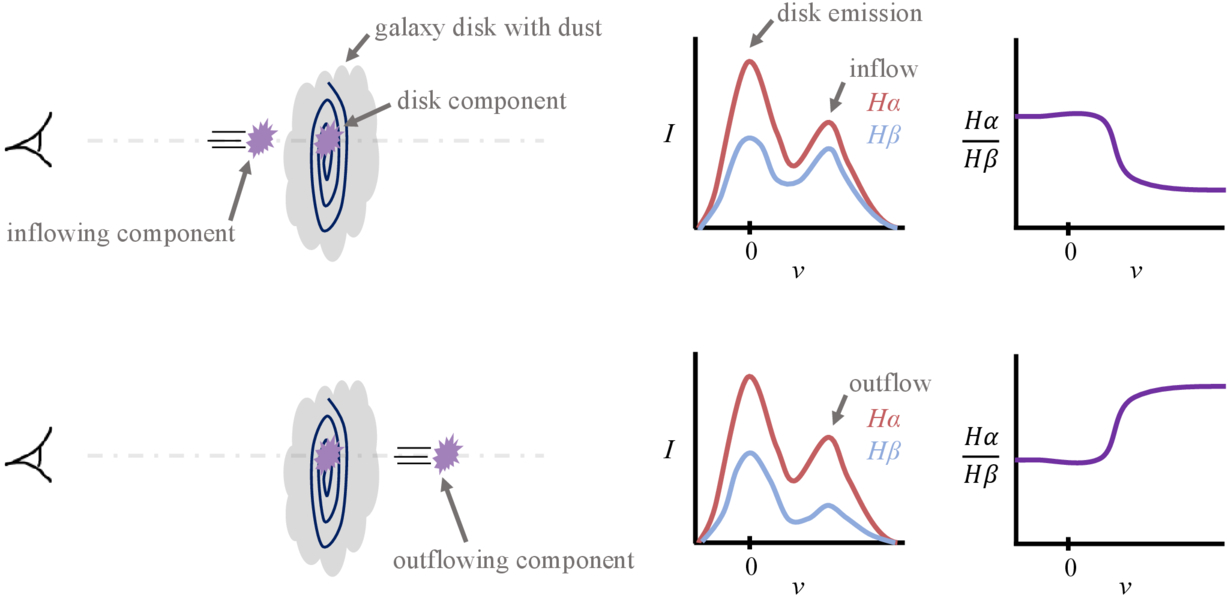
A diagram illustrating the degeneracy in emission spectra of galaxies, with the top panel showing an inflowing component and the bottom panel showing an outflowing component. While the Hα emission is similar, the Hβ emission is more affected by extinction due to dust in the galaxy’s disk, making it possible to identify inflow versus outflow based on the Balmer decrement. Click to enlarge. [Sitaram et al 2026]
Testing this idea, the authors performed a hydrodynamic simulation of an isolated, face-on Milky Way–like galaxy and tracked inflows and outflows over a billion years. From the simulation, they extracted mock spectral observations to measure the ionized gas motions and Hα and Hꞵ emission lines along different sight lines throughout the galaxy. Separating gas components into three categories — inflow, outflow, and in the disk — the authors found that dust extinction does cause noticeable differences in the Balmer decrement depending on a component’s location with respect to the disk.
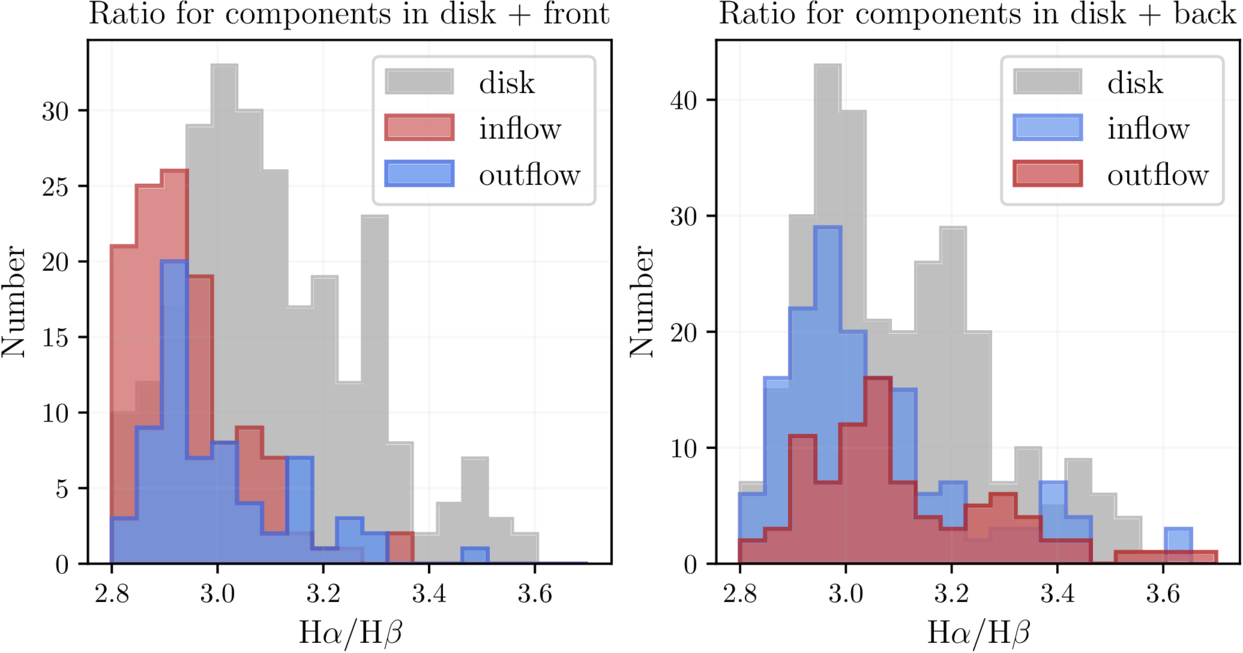
The distribution of Balmer ratios between different components in the interstellar medium and in front of the galaxy (left) and behind the galaxy (right). Material in front of the galaxy shows lower Hα/Hβ ratios. Click to enlarge. [Sitaram et al 2026]
Front Inflow Finds
What does this mean for identifying the inflows that provide galaxies with star-forming fuel? The authors reported that components in front of the galaxy — redshifted inflows and blueshifted outflows — tend to exhibit lower Hα/Hꞵ ratios compared to components behind the disk, aligning with the expectation that dust in the disk absorbs Hꞵ. In particular, these front inflows appear to be the most readily distinguished from gas in and behind the galaxy’s disk.
However, things get more complicated for gas behind the galaxy. Because the dust in the simulation is distributed nonuniformly in small clumps throughout the galaxy, it is difficult to distinguish between disk gas and gas behind the galaxy. While future simulations with improved dust modeling are necessary to resolve this issue, this study offers a useful method to distinguish inflow and outflow in dusty face-on galaxies.
Citation
“Identifying Signatures of Inflow onto Face-On Galaxies Using Balmer Decrement,” Meghna Sitaram et al 2026 ApJ 1001 87. doi:10.3847/1538-4357/ae5222
The post In or Out? Using Balmer Emission to Distinguish Inflows from Outflows appeared first on AAS Nova.
]]>The post Hot Springs and Dust Reservoirs: JWST Reveals the Dusty, Molecular Aftermath of Extragalactic Stellar Mergers appeared first on AAS Nova.
]]>Luminous red novae are estimated to contribute roughly 25% as much dust as core-collapse supernovae do, and the lower expansion velocities of luminous red novae may result in less dust destruction by shocks.
The post Hot Springs and Dust Reservoirs: JWST Reveals the Dusty, Molecular Aftermath of Extragalactic Stellar Mergers appeared first on AAS Nova.
]]>The post A Super-Eddington, Lensing-Magnified Quasar at z = 5.07 Observed with JWST appeared first on AAS Nova.
]]>Using JWST’s exceptionally fine resolution, astronomers have ruled out the presence of multiple lensed images of J0025–0145 and estimated an intrinsic Eddington ratio of 4.9 for the quasar.
The post A Super-Eddington, Lensing-Magnified Quasar at z = 5.07 Observed with JWST appeared first on AAS Nova.
]]>The post The Milky Way Bulge Extratidal Star Survey: NGC 6569 appeared first on AAS Nova.
]]>New spectroscopic evidence suggests that the globular cluster NGC 6569 is actively losing stars through tidal stripping; these stars will become part of the galactic bulge field population.
The post The Milky Way Bulge Extratidal Star Survey: NGC 6569 appeared first on AAS Nova.
]]>
A supermassive black hole awakened seven years ago, and it's now behaving in a way astronomers can't explain.
The post A Black Hole’s Puzzling X-Ray Bursts appeared first on AAS Nova.
]]>In 2019, a supermassive black hole in a galaxy 300 million light-years away woke up. Now, it’s puzzling astronomers with an unexpected slowdown in its X-ray bursts.
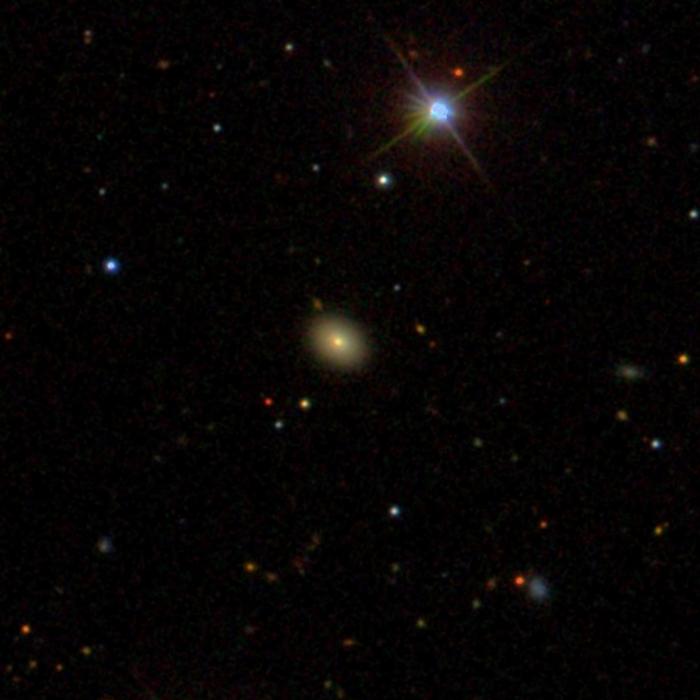
The fuzzy yellow galaxy at the center of this image is home to ZTF19acnskyy. [Sloan Digital Sky Survey]
Ansky Awakens
Nearly seven years ago, the Zwicky Transient Facility saw the galaxy SDSS J133519.91+072807.4 suddenly brighten at optical wavelengths, with the source given the moniker ZTF19acnskyy or “Ansky.” Within the next few years, Ansky brightened at other wavelengths, possibly signaling the first recorded case of a slumbering supermassive black hole grumbling to alertness.
In 2024, Ansky entered a new phase of behavior, exhibiting a series of semi-regular X-ray flares called quasi-periodic eruptions. The leading explanations for these flares, which have been detected from several nearby galaxies, involve a star-sized object spiraling toward a supermassive black hole. The repeating X-ray flares arise when the object crashes through an accretion disk around the black hole, or when the object loses mass each time it passes closest to the black hole. In either scenario, the time between flares is expected to decrease over time — but as new work shows, Ansky is behaving in ways that fail to fit existing theories of quasi-periodic eruptions.
An Unexpected Slowdown
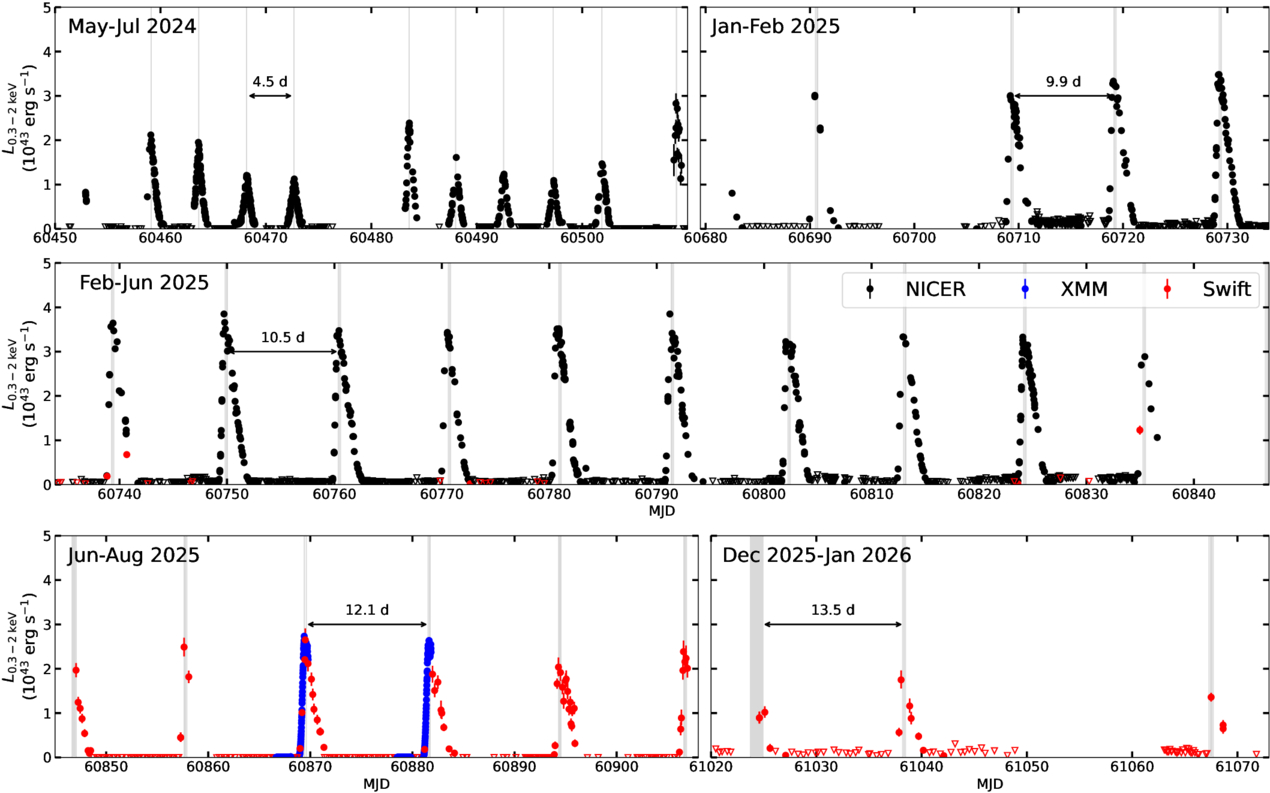
Soft X-ray observations of Ansky’s bursts from 2024 to 2026. These plots clearly show that in 2025 and 2026, the peak luminosities of the bursts have remained roughly constant while the time between bursts has increased. Click to enlarge. [Chakraborty et al. 2026]
This X-ray monitoring campaign spanned from January 2025 to January 2026 and captured 23 bursts, including 19 consecutive bursts — the most seen from a quasi-periodic eruption source to date. The bursts each lasted about three days, and the burst luminosity and total energy remained roughly constant, but the time between bursts increased smoothly from 9.9 days in January 2025 to 13.5 days in January 2026.
Possible Explanations
What physical process can produce X-ray bursts that are roughly consistent in energy and peak luminosity, last for approximately three days, and become more spaced out over time? The team considered five possibilities:
- A star orbiting a black hole could transfer a bit of mass to the black hole each time it draws close… but it’s not clear whether the energy of each burst would remain the same as the star loses mass, nor is it clear how a three-day eruption duration could be achieved.
- A star partially disrupted by a black hole could be kicked progressively farther from the black hole due to asymmetric mass loss or the reformation of its core… but this scenario cannot explain the bursts’ consistent energies and luminosities.
- An object orbiting a black hole with an accretion disk could be experiencing general relativistic precession… but no combination of known sources of precession can reproduce Ansky’s behavior.
- A second supermassive black hole could cause reflex motion of the inner black hole, changing how far the signal must travel… but even though this scenario can increase the time between bursts, the rate of increase is three orders of magnitude too small.
- Instabilities in the black hole’s accretion disk could trigger recurrent bursts of accretion… but it’s not yet clear how an instability scenario could produce such predictable behavior.
While none of these models can fully solve the mystery of Ansky’s slackening X-ray flares, this work provides new avenues for exploration. In the meantime, we may get new clues simply from waiting to see what this source does next!
Citation
“A Positive Period Derivative in the Quasiperiodic Eruptions of ZTF19acnskyy,” Joheen Chakraborty et al 2026 ApJL 1001 L6. doi:10.3847/2041-8213/ae548b
The post A Black Hole’s Puzzling X-Ray Bursts appeared first on AAS Nova.
]]>The post HST Observations of HD 166620 and τ Ceti: First UV Spectra of a Magnetic Grand Minimum Star and the Extent of τ Ceti’s Astrosphere appeared first on AAS Nova.
]]>The star HD 166620 is experiencing a magnetic activity lull similar to the Sun’s Maunder minimum; its Lyman-alpha surface flux is about a factor of two lower than fluxes observed during solar minimum.
The post HST Observations of HD 166620 and τ Ceti: First UV Spectra of a Magnetic Grand Minimum Star and the Extent of τ Ceti’s Astrosphere appeared first on AAS Nova.
]]>
Astrobites reports on whether JWST's most extreme high-redshift galaxy candidates aren’t galaxies at all, but the explosive deaths of the very first stars.
The post The Oldest Starlight appeared first on AAS Nova.
]]>Editor’s Note: Astrobites is a graduate-student-run organization that digests astrophysical literature for undergraduate students. As part of the partnership between the AAS and astrobites, we occasionally repost astrobites content here at AAS Nova. We hope you enjoy this post from astrobites; the original can be viewed at astrobites.org.
Title: Hunting for the First Explosions at the High-Redshift Frontier
Authors: Junehyoung Jeon et al.
First Author’s Institution: The University of Texas at Austin
Status: Published in ApJ
Back in the 1920s, astronomers discovered that we live within just one of many, many galaxies in the big, wide universe. Since then, we’ve been racing to search for the most distant galaxy that can be observed — in other words, searching for the oldest starlight we can see, since the light from these distant sources has been travelling towards us for most of the age of the universe. (Remember: more distant = higher redshift = longer lookback time.)
This race to the redshift frontier has had a pretty eventful history (see a great overview video here), which became even more eventful with the launch of JWST. JWST rapidly smashed the previous redshift (z) record of z = 10.6 by discovering a galaxy at z = 13.2, and then it broke its own record twice more. The current title holder sits at z = 14.4, observed less than 300 million years after the Big Bang.
Several galaxy candidates (to date unconfirmed) have now even been proposed at z ~ 25–32 (e.g., Capotauro), only 100 million years after the Big Bang! If real, these sources would pose a serious challenge to our understanding of the formation of the first galaxies, as galaxies shouldn’t really be observable at such early times. In today’s article, the authors put forward an intriguing alternative: what if some of these ultra-high-redshift candidates aren’t galaxies at all, but transient explosions from the universe’s first stars?
The First Stars and Their Explosive Endings
The earliest generation of stars (Population III; see my previous bite on these here) formed from pristine hydrogen and helium gas. Without metals to cool the gas efficiently, theory predicts that these stars were extremely massive, often exceeding 100 solar masses. While such stars would be short-lived, their deaths could be spectacular.
Population III stars of sufficient mass are predicted to end their lives as hyper-energetic pair-instability supernovae (PISNe). This is a long-winded name for a rapid, intensely hot explosion that leaves no remnant behind — not even a trace of the pre-existing star. Whilst nothing would remain of the star, the light emitted in that explosion could be bright enough to masquerade as a high-redshift galaxy candidate in current JWST surveys, but only if three key conditions are met:
- JWST must observe a sufficiently overdense region, where lots of Population III stars can form very early.
- A PISN must occur while JWST is “watching.”
- The explosion must be bright enough to rise above JWST’s detection limits.
Simulating a (Biased) Universe
To address the likelihood of these conditions having already been met by existing JWST observations, the authors turn to cosmological simulations. Rather than simulating an “average” patch of the universe, they focus on an extremely overdense region (Fig. 1). This creates a rare but important environment where structures collapse earlier than usual. These regions are exactly where large numbers of Population III stars are expected to form at the highest redshifts.
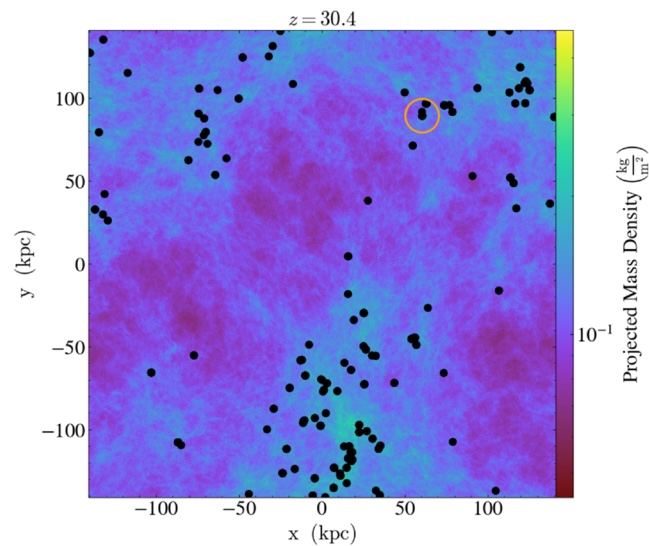
Figure 1: A projection of the gas density in the simulated overdense region at z = 30.4. The densest structures stand out clearly, tracing the locations where the first stars are able to form. Black dots mark newly formed groups of stars, while the most massive dark matter halo in the region is highlighted with an orange circle. The figure illustrates that in such an unusually dense patch of the early universe, star formation can already be underway just 100 million years after the Big Bang, creating the conditions needed for early Population III stars and their explosive deaths. [Adapted from Jeon et al. 2026]
Catching a Cosmic Explosion in the Act
So, we can tick off condition #1: it’s possible that a sufficiently overdense region has already been observed by JWST. Next up, how lucky do we have to be to catch an explosion in the act (condition #2), so to speak? For this condition, cosmic time dilation actually works in our favour. A PISN explosion at z > 20 that lasts only months in its own rest frame can last for decades in the observed frame. (This whole time-being-relative thing sounds wacky because it is — please join me, Neil deGrasse Tyson, and countless others in struggling to imagine this.)
But would any such explosion be bright enough (condition #3)? Using theoretical PISN spectra, the authors show that these explosions could reach observed magnitudes of ~28–29 at z ~ 30 — right at the depth of current JWST deep surveys (Fig. 2). In fact, the predicted brightness and colours are somewhat comparable to those of some proposed z ~ 30 candidates (Fig. 3), raising the possibility that these objects could be PISNe rather than galaxies.
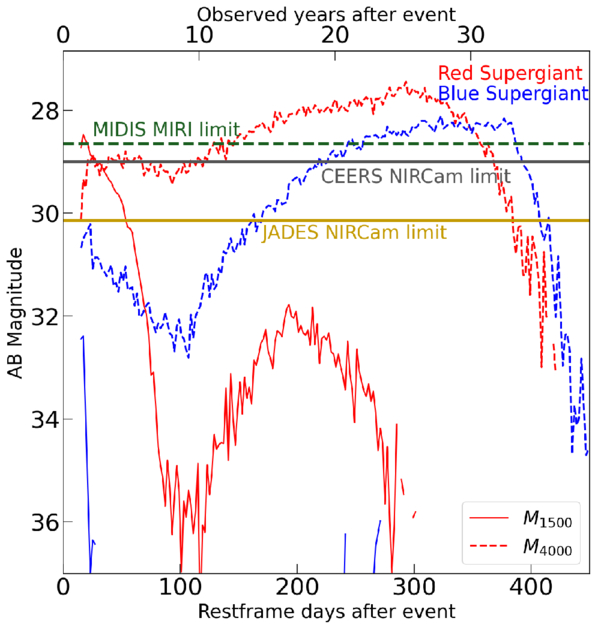
Figure 2: This plot compares the predicted brightness of PISNe originating from different types of extremely massive stars to the depth reached by existing JWST surveys, showing that these explosions could remain detectable for ~20 years at peak brightness in the observed frame. [Jeon et al. 2026]
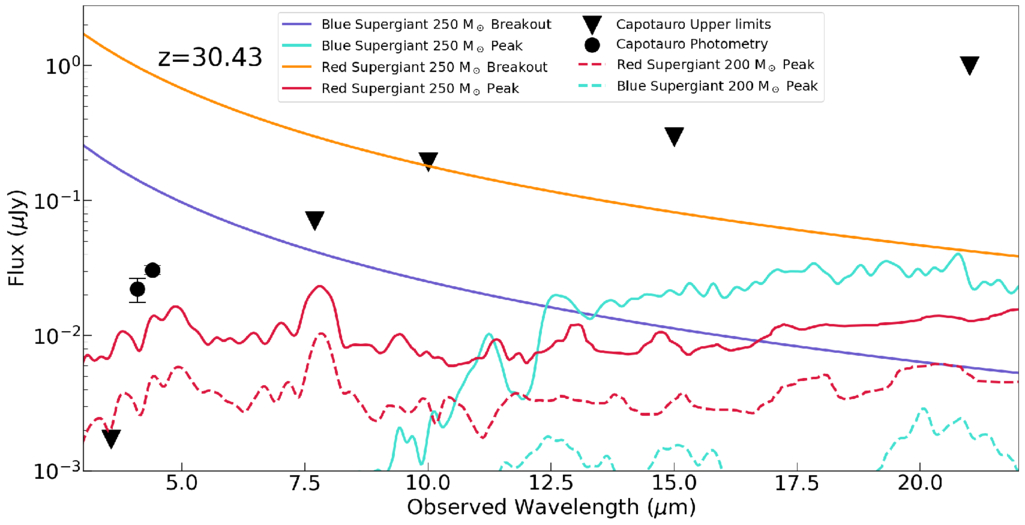
Figure 3: A comparison of theoretical PISNe spectra with the observed photometry of one proposed z ≈ 32 source (Capotauro). The coloured curves show model spectra for PISNe originating from extremely massive stars, at different stages of the explosion, while the data points represent the observed brightness of the high-redshift candidate across multiple JWST filters. [Jeon et al. 2026]
So… Are We Seeing the First Stars Die?
It’s not time to throw a party just yet. The authors note there are several caveats and uncertainties. The nature of Population III stars is still highly uncertain, JWST does not continuously monitor the same patch of sky, and identifying a PISN at such high redshift would be extremely challenging. Thanks to time dilation, these explosions would fade very slowly, making them hard to distinguish from steady sources using photometry alone. Alternatively, there are other plausible explanations for these ultra-high-redshift candidates: lower-redshift interlopers (a rather infamous example is CEERS-93316), local brown dwarfs, or even nearby exoplanets.
Still, the idea is exciting. If JWST were to detect a genuine PISN at z > 20, it would represent a direct glimpse of the very first stars, pushing observational astronomy into truly uncharted territory. For now, the most distant explosions in the universe may already be hiding in JWST images; we just have to learn how to recognise them.
Original astrobite edited by Nathalie Korhonen Cuestas.
About the author, Lucie Rowland:
I’m a fourth (and final!) year PhD student at Leiden Observatory in the Netherlands, studying massive, star forming galaxies in the early universe with ALMA and JWST. It’s a really exciting time to be interested in astronomy, so I hope to make groundbreaking new research more accessible!
The post The Oldest Starlight appeared first on AAS Nova.
]]>
Researchers search for the tiniest coronal jets, explore the Sun's behavior from centuries ago, and examine space weather forecasts in this month's Roundup.
The post Monthly Roundup: Science of the Sun appeared first on AAS Nova.
]]>The Sun’s activity history, the sources of tiny jets, and how magnetic fields might impact space weather forecasts: today’s Monthly Roundup introduces a trio of recent research articles from the Astrophysical Journal that tackle hot topics in solar physics.
From 1755 to 2020: Reconstructing Centuries of Solar Activity
Since the 1970s, regular monitoring of the Sun’s magnetic field has allowed researchers to decipher the Sun’s behavior as it cycles through periods of low and high activity. But what resources exist for studying the Sun’s past behavior? To investigate the long-term behavior of the Sun, researchers reach for historical records of sunspots, which stretch back to the 1700s.
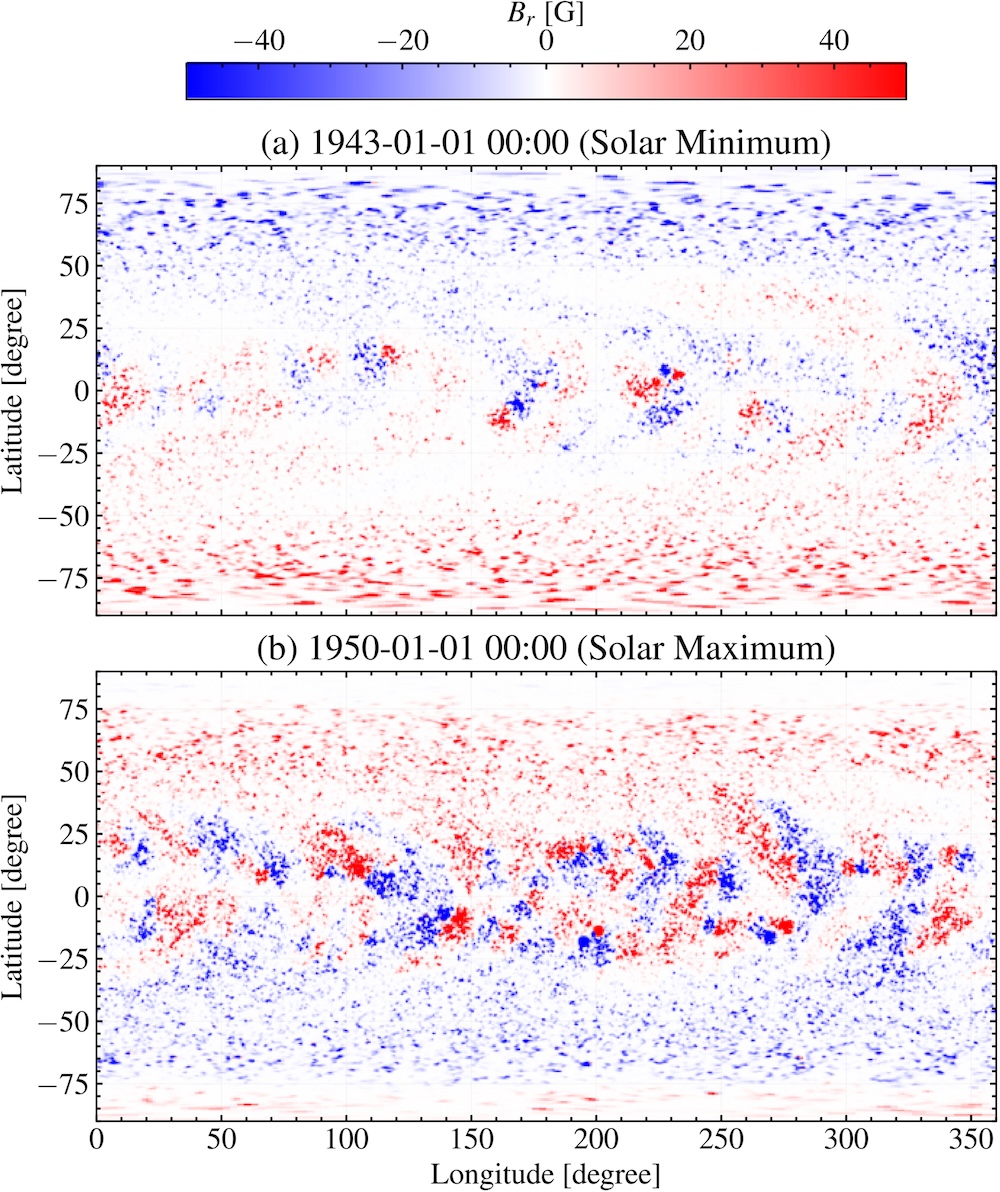
Example maps of the simulated photospheric radial magnetic field during a period of low (top) and high (bottom) solar activity. Click to enlarge. [Jha et al. 2026]
Jha and coauthors found that this method successfully reproduced the expected large-scale behavior of the Sun’s magnetic field across multiple solar cycles, such as the reversal of the polarity of the solar magnetic field near the peak of the activity cycle. While this work highlights the impressive results obtained from combining historical sunspot records with modern sunspot statistics, the team pointed out that this method cannot accurately reproduce all quantities because of the nonlinear nature of the underlying physics. Future work will refine the model further, and in the meantime, the team’s simulated historical magnetic field maps will be made publicly available.
Where Do the Tiniest Coronal Jets Come From?
The Sun’s atmosphere is filled with an ever-shifting maze of magnetic field lines, which reconfigure and release pent-up magnetic energy in a process called magnetic reconnection. Magnetic reconnection can launch particles and heat plasma, and it’s thought to be responsible for driving jets on a variety of scales in the Sun’s tenuous outer atmosphere, or corona. Annu Bura (Indian Institute of Astrophysics; Pondicherry University) and coauthors investigated the physical origins of the smallest of these reconnection driven jets, picoflare jets, using data from the Extreme Ultraviolet Imager on board Solar Orbiter. Solar Orbiter has ventured within 0.3 au of the Sun, and its Extreme Ultraviolet Imager has returned exceptionally precise high-energy images of our home star.
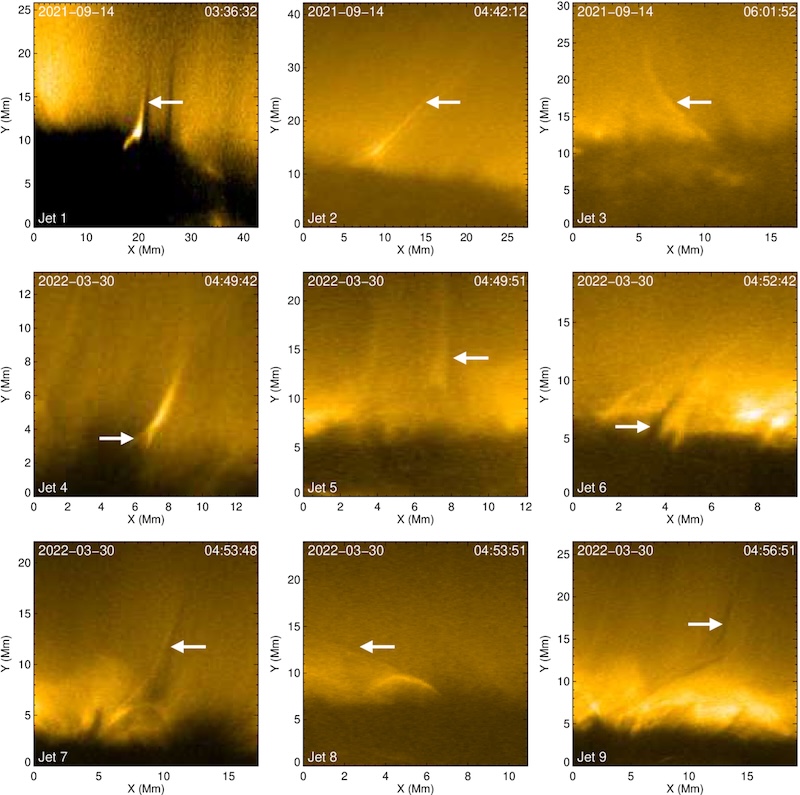
Examples of jets identified in this study. You can see an animation of this figure. [Bura et al. 2026]
Using radiation magnetohydrodynamics simulations, the team explored the origins of their sample of jets. The simulations suggested that the bright features arose from hot, tenuous coronal plasma, while the accompanying dark features were due to cooler, denser plasma venturing upward from deeper in the Sun’s atmosphere, in the chromosphere. Overall, the simulations and observations support a picture in which picoflare-scale jets are driven by magnetic reconnection after magnetic flux emerges through the Sun’s surface. This echoes the formation route of larger coronal jets, suggesting that this process may apply to a wide range of physical scales.
Investigating the Influence of the Solar Polar Magnetic Field
The vast majority of our observations of the Sun have come from within a few degrees of the ecliptic plane, either from telescopes situated on Earth’s surface or from spacecraft that stuck close to the plane of our solar system. With rare but notable exceptions — the Ulysses spacecraft, which measured the Sun’s magnetic field and plasma environment from a near-polar orbit, and Solar Orbiter, which took the first-ever image of the Sun’s poles in November 2025 — the Sun’s poles have remained hidden from our instruments.
Our limited knowledge of the Sun’s polar magnetic field has consequences for our ability to model space weather events like coronal mass ejections. A team led by Xiao Zhang (Chinese Academy of Sciences; University of Chinese Academy of Sciences) has used numerical simulations to investigate how solar polar magnetic field conditions influence the propagation of a coronal mass ejection (CME) through the solar system.
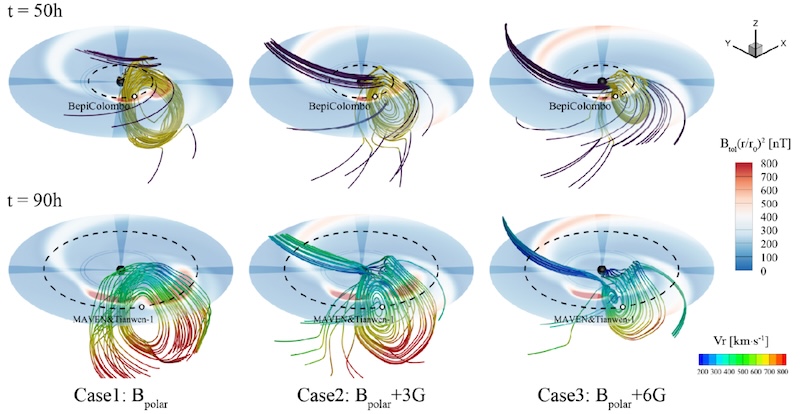
Simulation results showing how the propagation and expansion of a CME are affected by the polar magnetic field strength. Click to enlarge. [Zhang et al. 2026]
Citation
“Historical Reconstruction of Solar Surface Magnetism from Cycles 1–24 Using the Synthetic Active Region Generator and the Advective Flux Transport Model,” Bibhuti Kumar Jha et al 2026 ApJ 997 279. doi:10.3847/1538-4357/ae279a
“On the Origin of Coronal Picoflare Jets,” Annu Bura et al 2026 ApJ 1000 94. doi:10.3847/1538-4357/ae48e6
“Influence of Solar Polar Magnetic Fields on the Propagation of Coronal Mass Ejections,” Xiao Zhang et al 2026 ApJ 1000 200. doi:10.3847/1538-4357/ae4c54
The post Monthly Roundup: Science of the Sun appeared first on AAS Nova.
]]>The post Diversity in Evolutionary Status and Magnetic Activity Among Solar-Type Twin Detached Eclipsing Binaries appeared first on AAS Nova.
]]>Examining four binary systems in which the masses of the binary members are nearly equal, researchers find that the binary components show significant differences in magnetic activity and evolutionary stage.
The post Diversity in Evolutionary Status and Magnetic Activity Among Solar-Type Twin Detached Eclipsing Binaries appeared first on AAS Nova.
]]>
A massive survey of images collected by JWST is shedding light on how galaxies grow and evolve.
The post How Galaxies Grow Up appeared first on AAS Nova.
]]>How do galaxies grow? A massive survey from JWST can help astronomers answer that fundamental question about galaxy evolution.
Time Machines
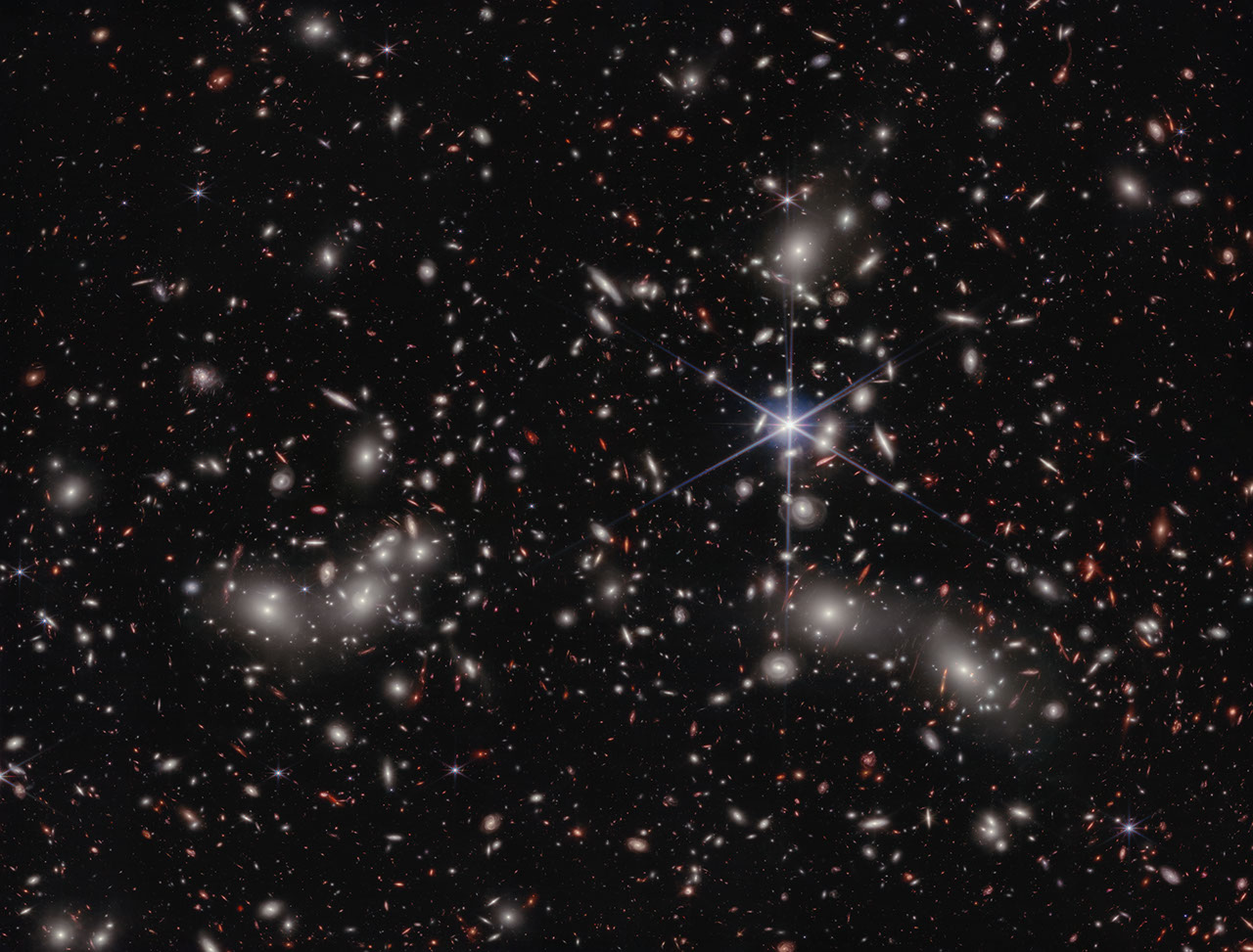
An image taken by JWST’s NIRCam instrument, the primary instrument behind the COSMOS-Web survey, of Pandora’s Cluster. Click to enlarge. [NASA, ESA, CSA, Ivo Labbe (Swinburne), Rachel Bezanson (University of Pittsburgh); Image Processing: Alyssa Pagan (STScI)]
One way astronomers could go about answering these deep, fundamental questions in galaxy evolution would be to look at many galaxies spread across different distances. Famously, since the speed of light is fairly slow (cosmically speaking), we can only see distant objects as they appeared in the past. (This is why any aliens looking toward Earth from 65 million light-years away — from within the Virgo Cluster, perhaps — would see our planet as it was when dinosaurs roamed free.) In principle, then, by looking at a progression of galaxies farther and farther away, astronomers could convert these still images into a sort of movie of how typical galaxies look moving further and further back in time.
Seeing Red
There is a complication to this strategy, however. The farther away an object is, the more the light it emits is stretched towards redder wavelengths. As a consequence, any telescope designed to detect visible light won’t see anything; to take pictures of these galaxies, we need to build detectors that are specifically sensitive to stretched-out, near-infrared light.
This is one of the primary reasons that JWST was designed, constructed, and flung into space. It was purpose-built to collect and analyze near-infrared light from distant galaxies, and now after several years of observations and data crunching, astronomers are finally getting some answers to those fundamental questions.
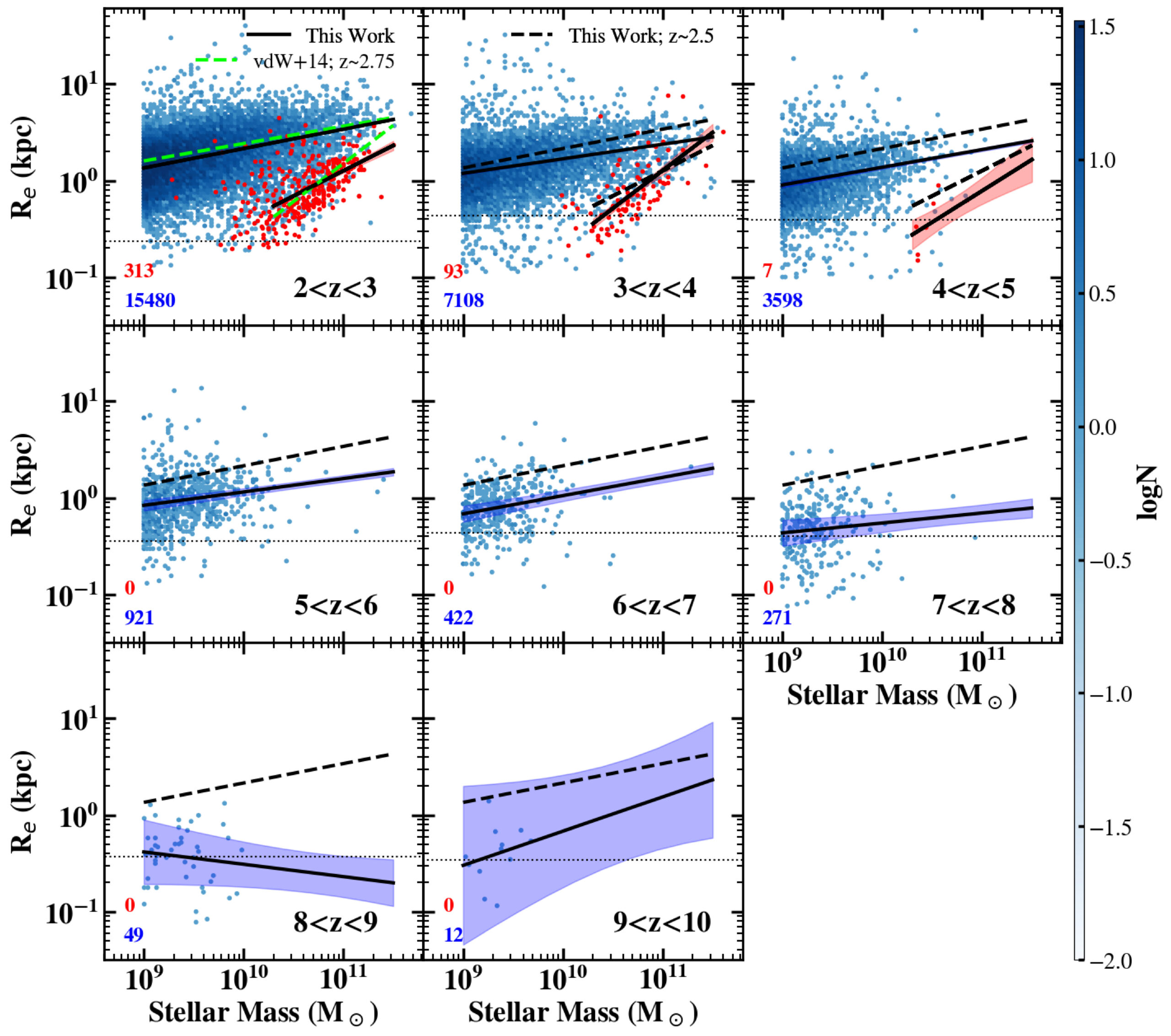
The results of how galaxies’ masses relate to their total size in different redshift bins. Click to enlarge. [Yang et al. 2025]
A Massive Survey
Recently, a team led by Lilan Yang, Rochester Institute of Technology, released their analysis of one of the earliest and largest surveys JWST has undertaken, a program called COSMOS-Web. The researchers mined a patch of sky about the size of the full Moon and extracted more than 30,000 distant galaxies, most of which had never before been seen by human eyes. They measured the brightness and size of each one and grouped them according to their redshift (a proxy for their distance) and whether they were actively forming stars or not.
The team found that, unsurprisingly, galaxies tend to grow over time. Excitingly, however, they also found that for star-forming galaxies, the relationship between a galaxy’s mass and its size is fairly constant for redshifts of z = 2–8. The scaling law between them also nicely matches up with measurements taken by the Hubble Space Telescope at smaller redshifts. Beyond that, though, for redshifts of z = 8–10, it’s possible that the scaling changes, though the authors emphasize that their sample is much smaller in these distant bins.
While more data are needed to confirm whether the youngest of these galaxies grow at a different pace than their later counterparts, we can be comforted that studies like this represent just our very first peek into a whole new era of galactic evolution, and that many more insights are sure to come as JWST keeps snapping images.
Editor’s Note: This article previously contained an error relating to the distance at which aliens would see Earth as it was when inhabited by dinosaurs. This error was corrected on 4 May 2026.
Citation
“COSMOS-Web: Unraveling the Evolution of Galaxy Size and Related Properties at 2 < z < 10,” Lilan Yang et al 2025 ApJS 281 68. doi:10.3847/1538-4365/ae0e1b
The post How Galaxies Grow Up appeared first on AAS Nova.
]]>The post The Sesquinary Catastrophe on Deimos Can Reconcile Its Excited Past with Its Dynamically Cool Present appeared first on AAS Nova.
]]>Using numerical simulations, researchers show the viability of a formation pathway for Deimos that involves a catastrophic fragmentation and subsequent reaccretion into a dynamically cold orbit.
The post The Sesquinary Catastrophe on Deimos Can Reconcile Its Excited Past with Its Dynamically Cool Present appeared first on AAS Nova.
]]>The post Discovery of a Dwarf Planet Candidate in an Extremely Wide Orbit: 2017 OF201 appeared first on AAS Nova.
]]>In archival data from the Dark Energy Camera Legacy Survey, researchers have discovered a possible dwarf planet with an orbit that brings it as close as 45 au to the Sun and also extends out into the Oort cloud.
The post Discovery of a Dwarf Planet Candidate in an Extremely Wide Orbit: 2017 OF201 appeared first on AAS Nova.
]]>The post MINDS. Anatomy of a Water-Rich, Inclined, Brown Dwarf Disk: Lack of Abundant Hydrocarbons appeared first on AAS Nova.
]]>JWST observations of a highly inclined disk around a young brown dwarf reveal the disk to be similar to those around hotter, more massive stars; the observations also suggest ongoing inflows and outflows.
The post MINDS. Anatomy of a Water-Rich, Inclined, Brown Dwarf Disk: Lack of Abundant Hydrocarbons appeared first on AAS Nova.
]]>
Researchers explore how the tilt of merging galaxies can impact the eventual collision of their supermassive black holes.
The post How Tilted Orbits Impact Supermassive Black Hole Collisions appeared first on AAS Nova.
]]>What factors impact how long it takes for a supermassive black hole binary to merge? New research investigates the influence of orbital inclination on the population of merging black holes in our universe.
One Merger Leads to Another
This image from the Hubble Space Telescope shows NGC 6240, the result of a three-galaxy merger that contains three nuclei, two of which appear to have active supermassive black holes. [NASA, ESA, the Hubble Heritage (STScI/AURA)-ESA/Hubble Collaboration, and A. Evans (University of Virginia, Charlottesville/NRAO/Stony Brook University)]
With observational evidence for supermassive black hole mergers taking shape, theorists are exploring the details of these mergers. One aspect of this process that hasn’t yet been examined fully is how the relative inclination of the merging galaxies impacts the time it takes for their central black holes to merge — a factor that has the potential to shape the demographics of merging supermassive black holes across our universe.
Ready, Set, Spiral
Sena Ghobadi (Georgia Institute of Technology) and collaborators used 3D dynamical models to explore how the angle at which galaxies collide — and therefore how the black holes’ orbits are tilted relative to one another — impacts the time it takes the supermassive black holes at their centers to merge.
In the simulations, Ghobadi’s team placed a 106–108-solar-mass black hole at the center of a disk galaxy. Then, they sent a second, smaller black hole spiraling toward it from a distance of 1 kiloparsec (3,300 light-years).
The team varied the inclination of the incoming black hole’s orbit relative to the disk of the target galaxy from 0 to 75 degrees. They also explored the impact of changing the black hole masses and the galaxy’s central gas density, disk rotation speed, and gas mass fraction. For each simulation, they recorded how long it took for the incoming smaller black hole to get within 10 parsecs of the larger black hole.
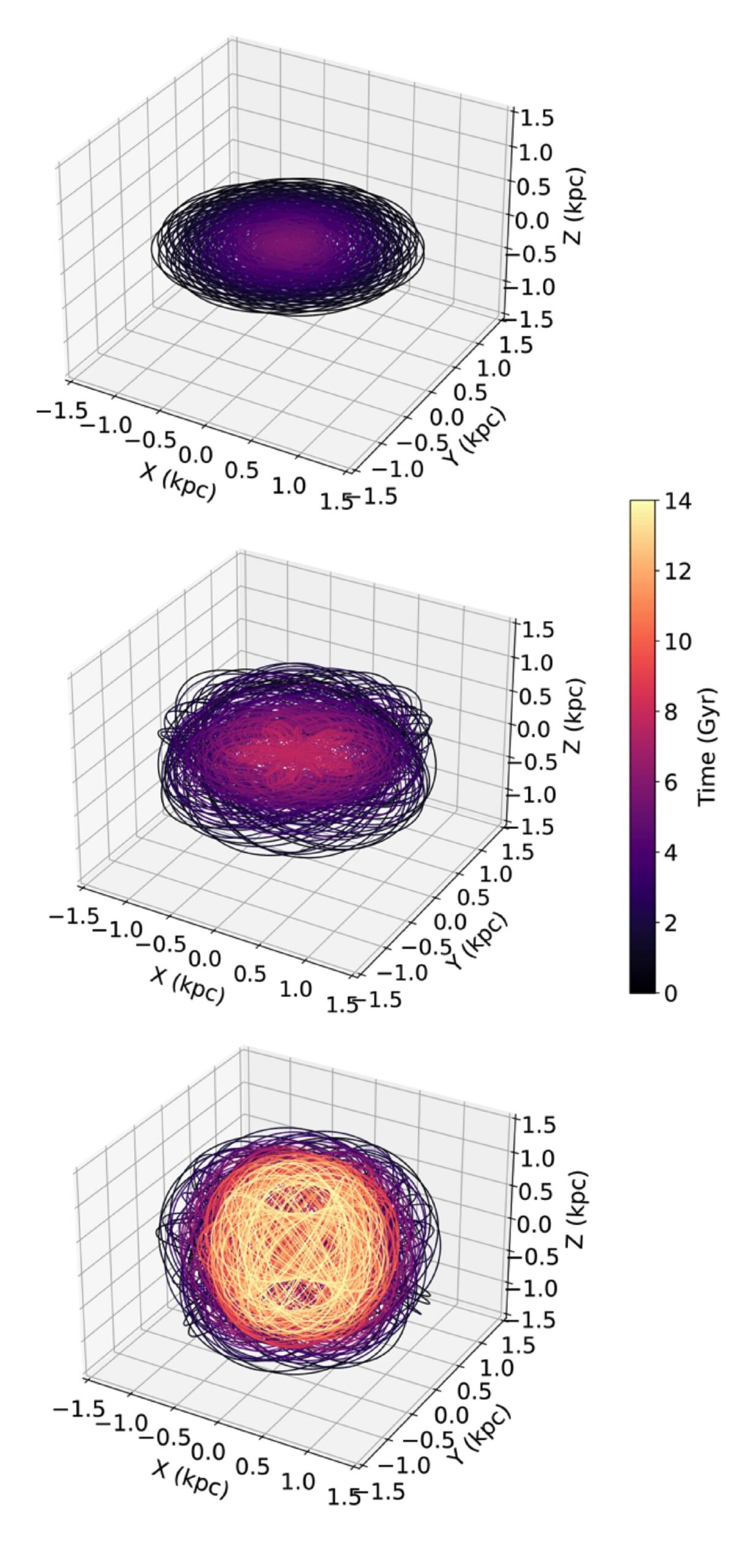
Simulated orbits of black holes with initial inclinations of 0 (top), 25 (center), and 45 (bottom) degrees. For the 0-degree simulation, the black holes merge in 5.75 billion years. For the 25-degree simulation, the merger occurs at 7.90 billion years. The 45-degree simulation fails to merge within the lifetime of the universe. [Adapted from Ghobadi et al. 2026]
(Dis)inclined to Merge
The simulations showed a clear trend with changing inclination: a black hole with an orbital inclination greater than 20 degrees took longer to merge than those with inclinations of 0–20 degrees. For black holes approaching the merger on slightly inclined orbits, dynamical friction between the black hole and the stars and gas of the galaxy worked to drag the black hole down into the disk, decreasing its inclination over time and guiding it toward a merger. Aside from the influence of inclination, the team also found that higher-mass supermassive black holes and more rapidly rotating galactic disks tended to lead to faster mergers.
For inclinations greater than roughly 45 degrees, a dramatic transition took place, with the orbits of the incoming black holes becoming more inclined over time rather than settling down into the disk. These simulated black holes failed to merge in the allotted time of 14 billion years.
With highly inclined binaries failing to merge within the lifetime of the universe, this suggests that the dual active galactic nuclei and the supermassive black hole binaries that produce gravitational waves in the universe today are the result of binaries with initial inclinations of 20 degrees or less.
Citation
“Evolution of Supermassive Black Hole Pairs on Inclined Orbits in Postmerger Galaxies,” Sena Ghobadi et al 2026 ApJ 999 131. doi:10.3847/1538-4357/ae40bc
The post How Tilted Orbits Impact Supermassive Black Hole Collisions appeared first on AAS Nova.
]]>The post Intertwined Birth and Death: A Herbig–Haro Outflow Resolves the Distance to Vela Junior appeared first on AAS Nova.
]]>Researchers identified a physical connection between a supernova remnant and the outflows of a young star, allowing them to pinpoint the remnant’s distance at 1.41 kiloparsecs and its age at 1,600–3,300 years.
The post Intertwined Birth and Death: A Herbig–Haro Outflow Resolves the Distance to Vela Junior appeared first on AAS Nova.
]]>
Astrobites reports on a new method to find the galaxies hosting the universe’s first generation of stars.
The post A Possible GLIMPSE of the Universe’s First Stars appeared first on AAS Nova.
]]>Editor’s Note: Astrobites is a graduate-student-run organization that digests astrophysical literature for undergraduate students. As part of the partnership between the AAS and astrobites, we occasionally repost astrobites content here at AAS Nova. We hope you enjoy this post from astrobites; the original can be viewed at astrobites.org.
Title: GLIMPSE: An Ultrafaint ≃105 M⊙ Pop III Galaxy Candidate and First Constraints on the Pop III UV Luminosity Function at z ≃ 6–7
Authors: Seiji Fujimoto et al.
First Author’s Institution: University of Toronto; The University of Texas at Austin
Status: Published in ApJ
You, me, your laptop, my $8 matcha, and just about everything else on Earth was forged in the fiery bellies of dying stars. Generations of stars had to live and die before the universe became enriched with any elements heavier than helium (what astronomers call “metals”). The first stars to undergo this cosmic cycle are known as Population III (Pop III) stars. Though their existence has been hypothesized since the 1960s, astronomers have failed to observe these distant metal-free stars or the faint, low-mass galaxies that host them.
The first Pop III stars likely formed around 100 million years after the Big Bang in pristine pockets of hydrogen gas. Although these are too distant for us to observe, we expect that as the universe started to become metal enriched, there were still existing pockets of gas introverted enough to survive unpolluted and form metal-free Pop III stars up to a redshift of z ~ 6–7 (when the universe was around 900 million years old)!
JWST is the perfect instrument to search for these systems. You can read other astrobites on the search for possible Pop III systems with JWST here and here. The authors of today’s article seek to develop the most efficient way of using JWST’s Near-Infrared Camera (NIRCam) to find the galaxies hosting Pop III stars. Using their selection method on existing NIRCam data, the authors identified one promising Pop III galaxy candidate.
I’m Not Like Other Galaxies
In order to find a Pop III galaxy, we need to take a look at galaxies’ spectral energy distributions (SEDs). These are graphs that show the energy emitted by a galaxy at different wavelengths of light. Pop III galaxies are expected to have SEDs that differ from your everyday, metal-enriched galaxy. NIRCam will be especially sensitive to three key spectral features that show up in the SEDs of Pop III galaxies: an absent [O III] line (light emitted by doubly ionized oxygen atoms), a strong H-alpha line (light emitted when a hydrogen atom transitions from its third to its second energy level), and a significant Balmer jump (light absorbed to ionize electrons in the second energy level of a hydrogen atom). To identify these key SED characteristics, the authors use SED fitting and color–color diagrams to execute an efficient Pop III search with NIRCam.
The first selection method involves SED fitting. Astronomers create template SEDs that represent different types of galaxies and then compare these templates to the observed SEDs to see which one matches best. In this work, the authors use metal-rich galaxy templates and Pop III templates to fit the galaxies observed with NIRCam. They then calculate the chi-squared χ2 (a statistical measure of best fit) between the data and all the SED templates. A galaxy is selected as a Pop III candidate if the Pop III model provides a good fit (χ2 < 10) to the photometry and is significantly better than any metal-rich model. It’s kind of like looking for Cinderella by making every woman in the kingdom try on the glass slipper.
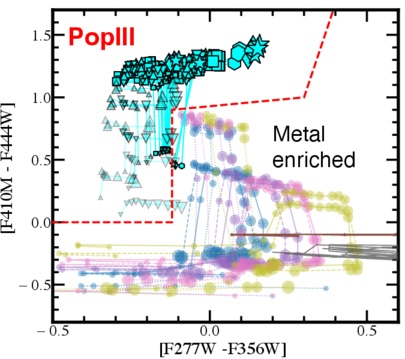
Figure 1: Color–color diagram for selecting Pop III galaxies where the x and y-axes show the different NIRCam filters being subtracted. The cyan symbols are different Pop III models while the other colored dots are different metal-rich galaxy models. [Adapted from Fujimoto et al. 2025]
O Pop III, Pop III, Wherefore Art Thou?
The authors apply their fresh new selection criteria to publicly available NIRCam data from large surveys. And (drum roll please) the slipper fits! The Pop III galaxy candidate GLIMPSE-16043 is an ultra-faint galaxy at z = 6.5. It was imaged in the GLIMPSE survey, which uses the technique of gravitational lensing to observe faint and distant galaxies.
The GLIMPSE survey targeted a massive galaxy cluster, Abell S1063. The cluster bends the light from distant galaxies and, like a giant lens, magnifies faraway objects, providing some of the deepest JWST imaging to date. The Pop III candidate passes both tests: it resides in the Pop III region of the color–color diagram, and its SED is best fit by a Pop III model, not a metal-rich galaxy model (see Figure 2). Next, spectroscopic follow-up is needed to ensure that this galaxy is truly metal free and not just extremely metal poor.
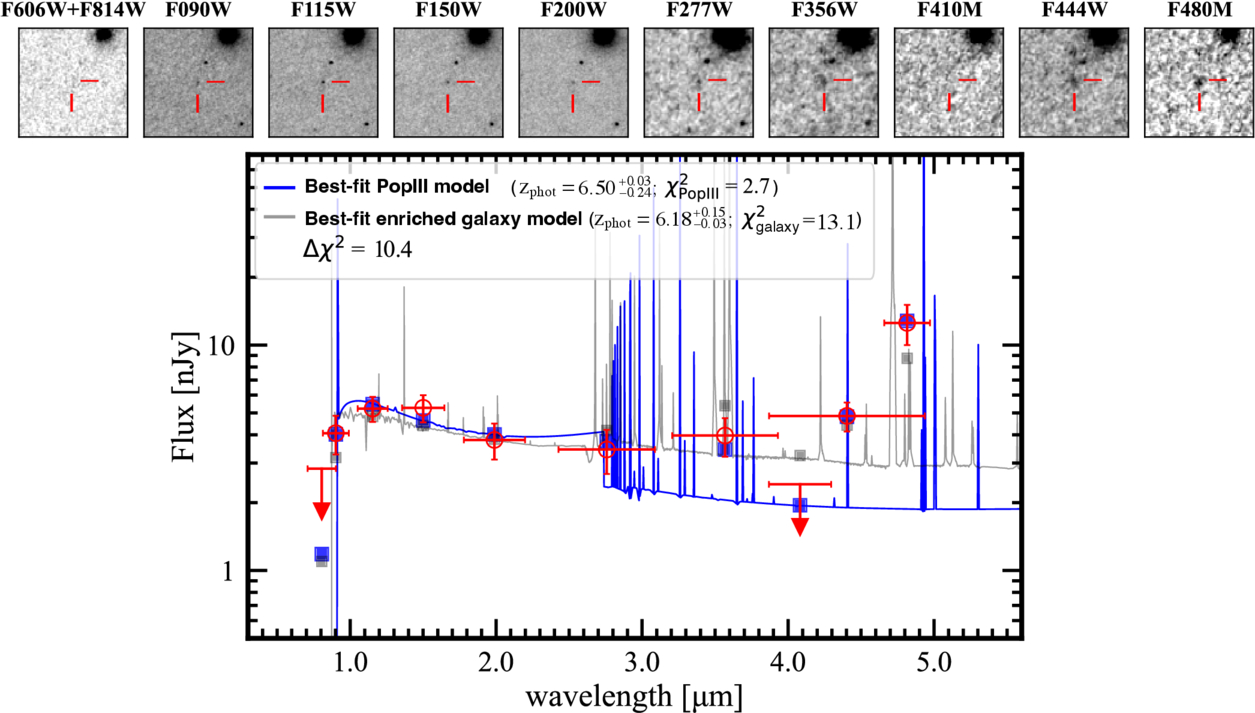
Figure 2: SED of GLIMPSE-16043 with the best-fit Pop III template (blue) and best-fit metal-enriched template (gray). The top panel is the galaxy imaged in different filters from NIRCam and the Hubble Space Telescope. [Fujimoto et al. 2025]
Original astrobite edited by Chris Layden and Margaret Verrico.
About the author, Madison VanWyngarden:
I am a first-year PhD student in astronomy and NSF Graduate Research Fellow at the University of Arizona. I study galaxy formation and evolution in the distant universe and am particularly interested in dusty star-forming galaxies. In my free time, I love reading, hiking, and baking bread!
The post A Possible GLIMPSE of the Universe’s First Stars appeared first on AAS Nova.
]]>The post JWST TRAPPIST-1 e/b Program: Motivation and First Observations appeared first on AAS Nova.
]]>Simulations suggest that close transits of TRAPPIST-1 b and e should allow for removal of stellar contamination and determination of TRAPPIST-1 e’s atmosphere, though in practice difficulties remain.
The post JWST TRAPPIST-1 e/b Program: Motivation and First Observations appeared first on AAS Nova.
]]>
Interacting galaxies, sparkling starbursts, and strange structures abound in new images from the Hubble Arp Galaxy Survey.
The post Featured Image: Disequilibrium on Display appeared first on AAS Nova.
]]>Notice anything unusual about these galaxies? Each of the scenes above is crafted from observations from the Hubble Arp Galaxy Survey, which turned the talents of the Hubble Space Telescope toward 216 targets in the Arp and Arp–Madore catalogs. These catalogs contain galaxies that are visibly out of equilibrium, either caught in the middle of an interaction with another galaxy, sporting strange structures, or illuminated by brilliant starbursts. Julianne Dalcanton (Flatiron Institute; University of Washington), Meredith Durbin (University of Washington; University of California, Berkeley), and Benjamin Williams (University of Washington) designed the survey to create an archive of previously unobserved sources in these catalogs of peculiar galaxies. In addition to providing a new high-resolution view of these sources, the team hopes that the survey will serve as a launchpad for new investigations and complementary observations from facilities like JWST and the Atacama Large Millimeter/submillimeter Array. To learn more about the Hubble Arp Galaxy Survey and see more of the new images, be sure to check out the full article linked below.
Citation
“The Hubble Arp Galaxy Survey,” Julianne J. Dalcanton et al 2026 ApJS 283 25. doi:10.3847/1538-4365/adfc67
The post Featured Image: Disequilibrium on Display appeared first on AAS Nova.
]]>The post From Dawn till Dusk: How Light Reduces Martian Granular Slope Angles appeared first on AAS Nova.
]]>Under simulated Martian conditions, researchers find that the presence of sunlight decreases the maximum slope of granular surfaces from 35 degrees to 10 degrees.
The post From Dawn till Dusk: How Light Reduces Martian Granular Slope Angles appeared first on AAS Nova.
]]>
Researchers have detected water vapor around a B[e] supergiant star for the first time, indicating a likely binary companion for LHA 115-S 18.
The post Water Vapor Around a Sizzling Supergiant: High-Resolution Spectroscopy of B[e] Supergiant LHA 115-S 18 appeared first on AAS Nova.
]]>Prior to exploding, massive stars advance through action-packed evolutionary stages that are exciting but often difficult to fully decipher. A recent study focuses on a unique late-stage star to better understand its properties and evolution.
To B[e] a Supergiant
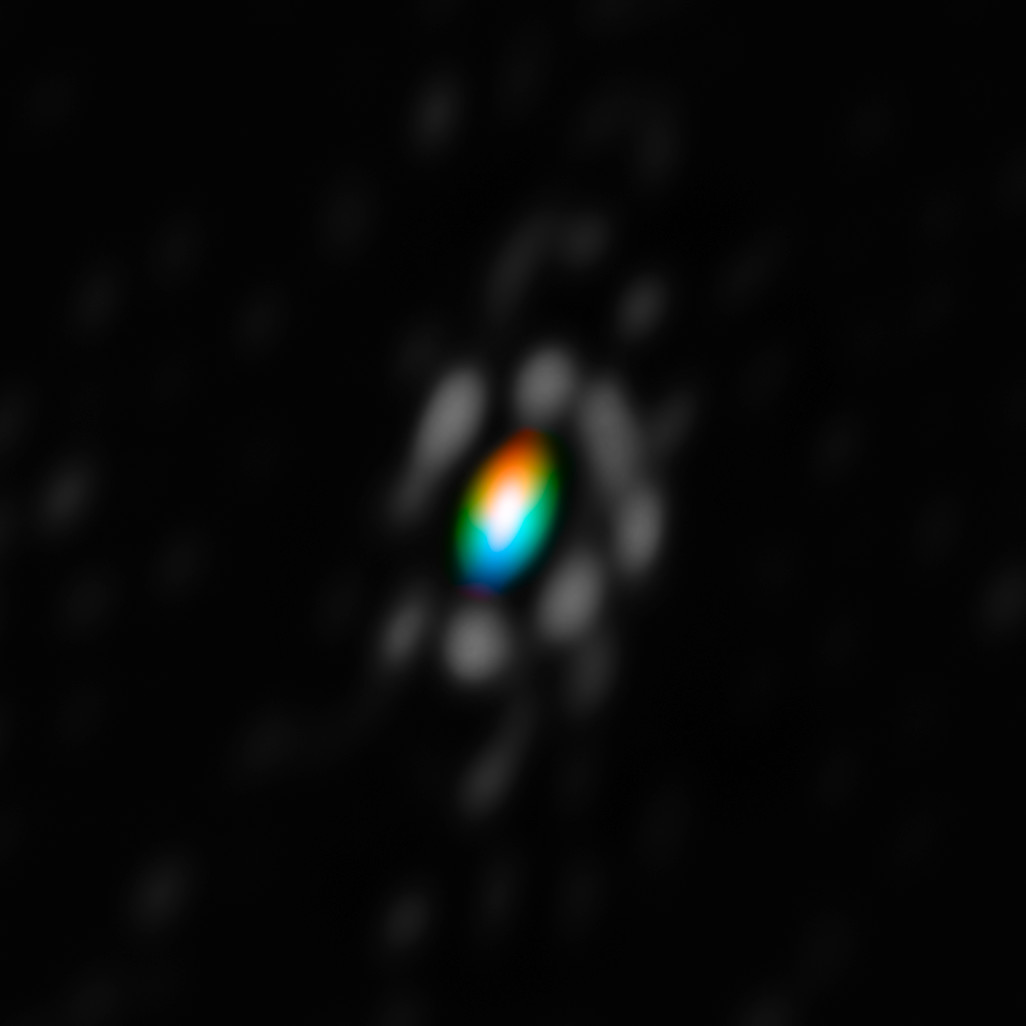
Very Large Telescope Interferometer image of the circumstellar disk around the B[e] supergiant star HD 62623. The colors indicate the rotation of the disk with blue coming toward us and red going away. [ESO/F. Millour; CC BY 4.0]
One particularly interesting B[e] supergiant, LHA 115-S 18, has been the subject of numerous studies but remains poorly constrained. The star exhibits significant variability both in brightness and emission features on timescales of days to years, and previous works have suggested that the star may have an as-yet unconfirmed binary companion. Molecular line emission from CO and TiO have been identified in LHA 115-S 18, indicating a circumstellar disk, but to date, water vapor emission has not been identified in any B[e] supergiant. Identifying more complex oxygen-bearing molecules like water will further reveal the physical properties and possible binary companion of LHA 115-S 18.
Identifying Emission in LHA 115-S 18
To characterize the emission around LHA 115-S 18, María Laura Arias (Institute of Astrophysics La Plata; National University of La Plata) and collaborators obtained high-resolution near-infrared spectroscopy of the star using the Immersion Grating Infrared Spectrometer on the Gemini South telescope. From the high-resolution spectra, the team identified several atomic emission lines indicative of the star’s gaseous envelope, revealing the structure of material around the star: an inner hot disk of ionized material and an outer cool disk of neutral material. Looking at molecular emission from carbon monoxide — a tracer of both gas motions and stellar age — the authors confirmed the presence of a rotating ring of gas around LHA 115-S 18 and determined that the star is an evolved, post–red supergiant object.
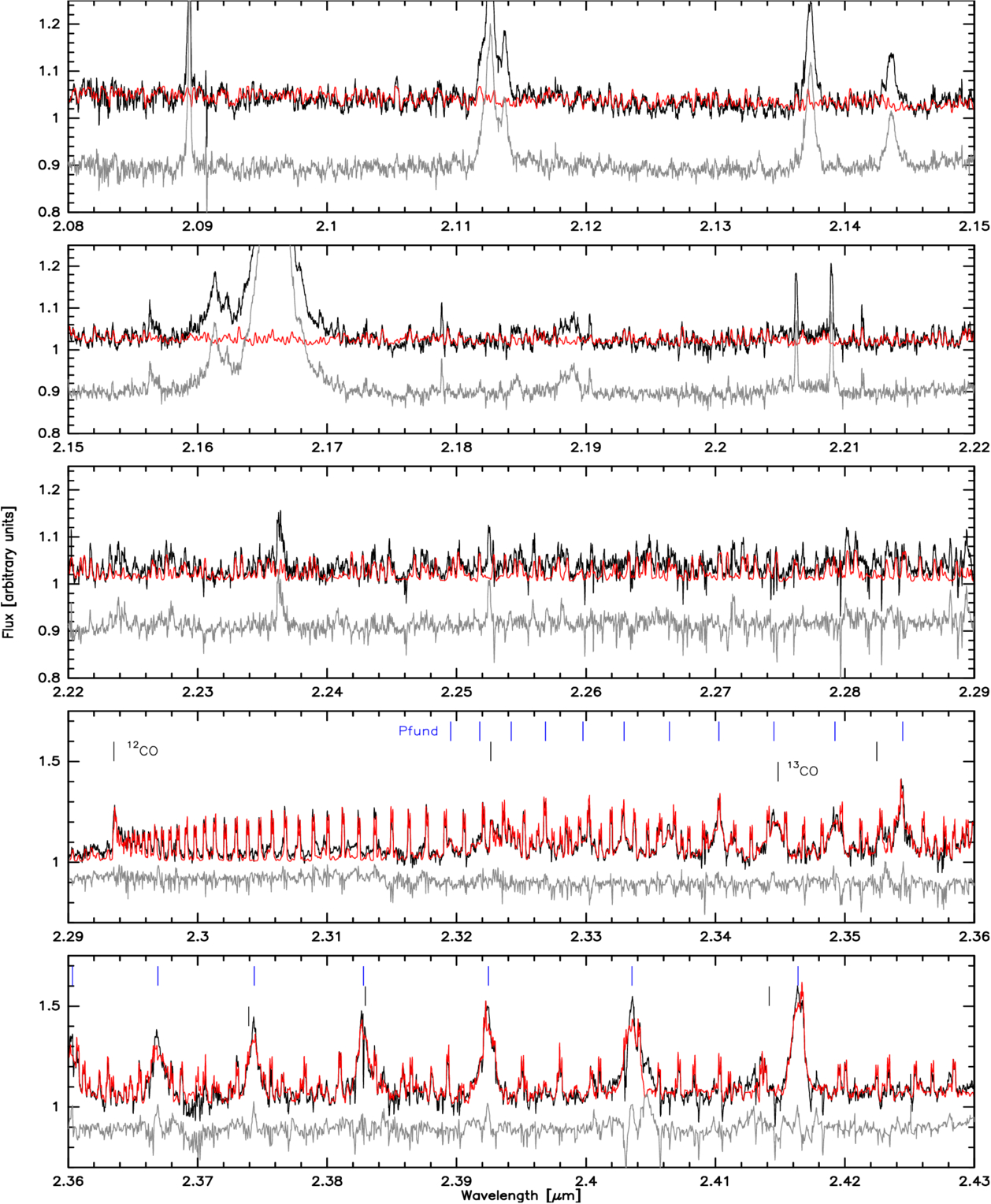
Spectrum of LHA 115-S 18 (black) with the model spectrum composed of water vapor (red, top three panels) and water vapor, CO, and hydrogen emission (red, bottom two panels) overplotted as well as residuals (gray). [Arias et al 2026]
Sustaining a cool disk around such a hot star indicates that the circumstellar environment around LHA 115-S 18 is complex and likely shaped by binary interaction. With emission features characteristic of both cool and hot evolved stars, this particular B[e] supergiant presents itself as a unique object holding critical insights into the late-stage evolution of massive stars. Further multiwavelength observations of LHA 115-S 18 will constrain its potential binarity and reveal a possible evolutionary link between B[e] supergiants and other late-stage evolutionary phases of massive stars.
Citation
“High-resolution Near-Infrared Spectroscopy of the B[e] Supergiant LHA 115-S 18: Discovery of Hot Water Vapor Emission,” María Laura Arias et al 2026 ApJL 1000 L49. doi:10.3847/2041-8213/ae524a
The post Water Vapor Around a Sizzling Supergiant: High-Resolution Spectroscopy of B[e] Supergiant LHA 115-S 18 appeared first on AAS Nova.
]]>The post Early Evidence for Polar Orbits of Sub-Saturns Around Hot Stars appeared first on AAS Nova.
]]>Analysis of a sub-Saturn exoplanet around an F-type star provides clues that the near-polar alignment observed for these planets around cool stars is also present around hotter stars.
The post Early Evidence for Polar Orbits of Sub-Saturns Around Hot Stars appeared first on AAS Nova.
]]>
Event Horizon Telescope images are already some of the sharpest in all of astronomy. A new algorithm might be able to squeeze even more information out of them with complex statistical modeling.
The post Enhancing the Sharpest Images appeared first on AAS Nova.
]]>The Event Horizon Telescope (EHT), the facility that delivered humanity’s first-ever picture of a black hole, can produce some of the sharpest images in all of astronomy. But turning the EHT’s raw data into images is a complex process involving messy statistics and powerful algorithms. Recent work presents a potential upgrade to that process: for the first time in long-baseline interferometry, it may be possible to model everything everywhere all at once.
The Hardest Eye Test
The EHT has some of the sharpest eyes in all of astronomy. With its effective resolution of just 20 microarcseconds, in principle you could use it to read a newspaper in New York while sitting at a cafe in Paris. But this planet-spanning instrument (it relies on data from radio telescopes on four continents) doesn’t snap pictures like an ordinary camera. Instead, each pair of telescopes measures something called an “interferometric visibility,” which is related to a single Fourier component of the actual underlying image.
The first image of a black hole, constructed from Event Horizon Telescope data taken in 2017. [EHT Collaboration; CC BY 4.0]
Typically researchers break the problem down into several stages: first calibrate the data, then regularize and construct the best-fitting image, then analyze that image to constrain the actual physics you care about like the width of the ring surrounding a black hole. This is how the original EHT publications went about their groundbreaking work on the now-iconic glowing ring around the supermassive black hole in the galaxy Messier 87 (M87*).
A New Approach
Recent work led by Paul Tiede (Black Hole Initiative at Harvard University) suggests an alternative process. Instead of separating the stages of analysis as described above, the team demonstrated that one could fit everything simultaneously in a framework they call hierarchical interferometric Bayesian imaging, or HIBI.
A comparison of the new HIBI technique (referred to as “Comrade” here) and a traditional algorithm called CLEAN. Click to enlarge. [Tiede et al. 2026]
Even more exciting, the team demonstrated that it’s possible to skip the image construction step altogether and go straight to the science. By fitting parameters describing the physics underlying a scene, the team was able to constrain the width of the ring around M87* without any reference to a picture. They predict that this technique could be crucial for extracting information when future instruments like the Next Generation Event Horizon Telescope observe more distant black holes that are only marginally resolved. Though we’ll likely have to wait years for these next-generation telescopes, work like this ensures that astronomers will be able to squeeze as much science from them as possible once these new facilities are ready.
Citation
“Hierarchical Interferometric Bayesian Imaging,” Paul Tiede et al 2026 ApJ 997 262. doi:10.3847/1538-4357/ae2749
The post Enhancing the Sharpest Images appeared first on AAS Nova.
]]>The post HST Confirms Sub-5 kpc Dual Quasar Pairs at Cosmic Noon appeared first on AAS Nova.
]]>Using a novel combination of direct imaging and grism spectroscopy, researchers have resolved and spectroscopically confirmed the two components of a close pair of active galactic nuclei.
The post HST Confirms Sub-5 kpc Dual Quasar Pairs at Cosmic Noon appeared first on AAS Nova.
]]>
Astrobites reports on a study of galaxies that are on the brink of entering their "quiet" phase.
The post Observing the End of Star Formation in Galaxies appeared first on AAS Nova.
]]>Editor’s Note: Astrobites is a graduate-student-run organization that digests astrophysical literature for undergraduate students. As part of the partnership between the AAS and astrobites, we occasionally repost astrobites content here at AAS Nova. We hope you enjoy this post from astrobites; the original can be viewed at astrobites.org.
Title: Searching Within Galaxies for the Earliest Signs of Quenching With Spatially Resolved Star Formation Histories in UVCANDELS
Authors: Charlotte Olsen et al.
First Author’s Institution: New York City College of Technology
Status: Published in ApJ
How and Why Do Galaxies Stop Forming Stars?
Galaxies serve as important laboratories for many subfields of astrophysics. As such, astrophysicists are interested in the full galactic life cycle, from how galaxies are born to the end of their formation. Whereas young galaxies in the distant universe are actively forming stars, many nearby galaxies are much quieter, with little or no ongoing star formation. Astronomers like to describe these galaxies as “red and dead” because their stars are older and therefore appear redder in color. The process by which galaxies shut down their star formation is known as quenching, and it causes galaxies to become quiescent. Understanding the origin of quiescent galaxies is a fundamental question in galaxy evolution. Studying this process is challenging, however, because star formation is intertwined with many other factors that shape galaxies, including their environments and supermassive black holes.
Star formation occurs on scales that are much smaller and over timescales much shorter than the global properties and overall lifetime of a galaxy. By observing star formation on these smaller scales over time, astronomers can gain a clearer picture of how star formation ceases in a galaxy, and they can determine whether this process is driven from the inside out — starting with the supermassive black hole in the galactic center — or from the outside in, influenced by environmental effects. In today’s article, the authors use the Cosmic Assembly Near-Infrared Deep Extragalactic Legacy Survey with high-resolution ultraviolet coverage (UVCANDELS) to examine eight “golden” galaxies, shown in Figure 1. They then reconstruct the star formation histories within small regions of each galaxy to detect the “earliest signs of quenching.”
Figure 1: Images of the eight galaxies in the “Golden Sample” of galaxies studied in this work (right). These galaxies were chosen because of their clear detection, and they show a range of edge-on to face-on views as well as shapes. The authors divided each galaxy into small, resolved regions in which they measured the star formation (example shown on left). [Adapted from Olsen et al. 2026]
Characterizing the Star Formation Histories
To trace a galaxy’s star formation over cosmic time, today’s authors model its integrated light — which encodes the many episodes of past star formation — using spectral energy distribution (SED) fitting. By comparing a galaxy’s light across many wavelengths to computer models, SED fitting can estimate the ages of its stars and when they formed. This approach allows astronomers to study how a galaxy’s star formation rate evolves as a function of its stellar mass, known as the SFR – Mstellar relation. Note that the article considers the star formation rate and stellar mass in individual regions of each galaxy, so it analyzes these properties as surface densities, ΣSFR and ΣMstellar, instead of the total values.
Using SED fitting, the authors determine the expected star formation rate and stellar mass of the regions from 250 million to 1 billion years before the time of observation. Figure 2 shows the line of best fit for the SFR – Mstellar relation of the regions for each galaxy, before and at the time of observation. The SFR – Mstellar relations are very similar across the sample 1 billion years before the observations; however, by the time of observation, the overall star formation rates have decreased slightly, indicating that the galaxies are beginning to quench. They also exhibit increased variation suggesting that each galaxy is quenching in a different way.
Figure 2: The best-fit SFR – Mstellar relation of the regions for each galaxy, represented by the different colored lines, 1 billion years (1 Gyr) before and at the time of observation (left and right panels, respectively). At 1 billion years before the observation, the galaxies appear to have the same relation, but their variation at the time of observation suggests that the galaxies have begun quenching in different ways. [Olsen et al. 2026]
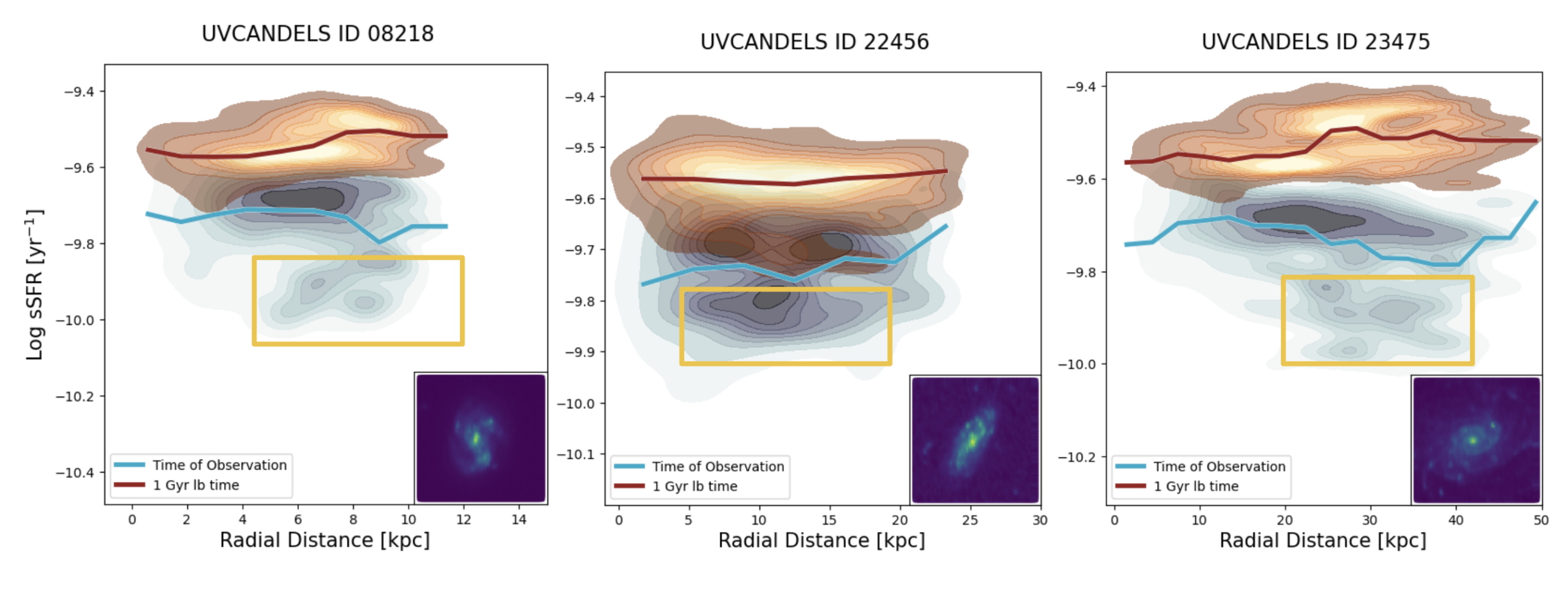
Figure 3: The specific star formation rate of the regions as a function of their distance from the center for three of the galaxies in the sample. Overall, the star formation rate decreases from 1 billion years before the observation (red) to the time of observation (blue). However, the regions where the star formation decreases most significantly (indicated with the yellow boxes) vary from galaxy to galaxy. [Olsen et al. 2026]
Detecting the Earliest Signs of Quenching
It should be noted that all of the galaxies in this study are still forming stars. However, they are on the verge of having their star formation suppressed, offering valuable insight into how quenching begins and how diverse the process can be. New telescopes are pushing the boundaries of what we can observe. On one hand, JWST can capture galaxies at exceptionally high resolution; on the other, the Vera C. Rubin Observatory and the Nancy Grace Roman Space Telescope will deliver vast datasets containing billions of galaxies. Future investigations leveraging these facilities could reveal more about the physical processes that quench galaxies on small scales, shedding light on the mechanisms that drive galaxy evolution.
Original astrobite edited by Catherine Slaughter.
About the author, Shalini Kurinchi-Vendhan:
After studying astrophysics and literature at Caltech, I moved onto a Fulbright Fellowship in Heidelberg, Germany. I’m passionate about using computer simulations to explore supermassive black holes and galaxy evolution — but I also love poetry and traveling.
The post Observing the End of Star Formation in Galaxies appeared first on AAS Nova.
]]>The post Asteroseismically Inferred Ages of 132,000 Red Giants with TESS appeared first on AAS Nova.
]]>The Transiting Exoplanet Survey Satellite (TESS) identified at least 158,000 oscillating red giants, resulting in a nearly order-of-magnitude increase in the number of known stars of this type.
The post Asteroseismically Inferred Ages of 132,000 Red Giants with TESS appeared first on AAS Nova.
]]>
A comet tangled with a coronal mass ejection and lost part of its tail in the process.
The post Comets Are Lizards: Watching C/2023 P1 Regrow Its Tail appeared first on AAS Nova.
]]>Researchers tracked the tail of comet C/2023 P1 (Nishimura) as it interacted with a string of coronal mass ejections, leading to the first-ever quantitative analysis of a cometary tail detachment event.
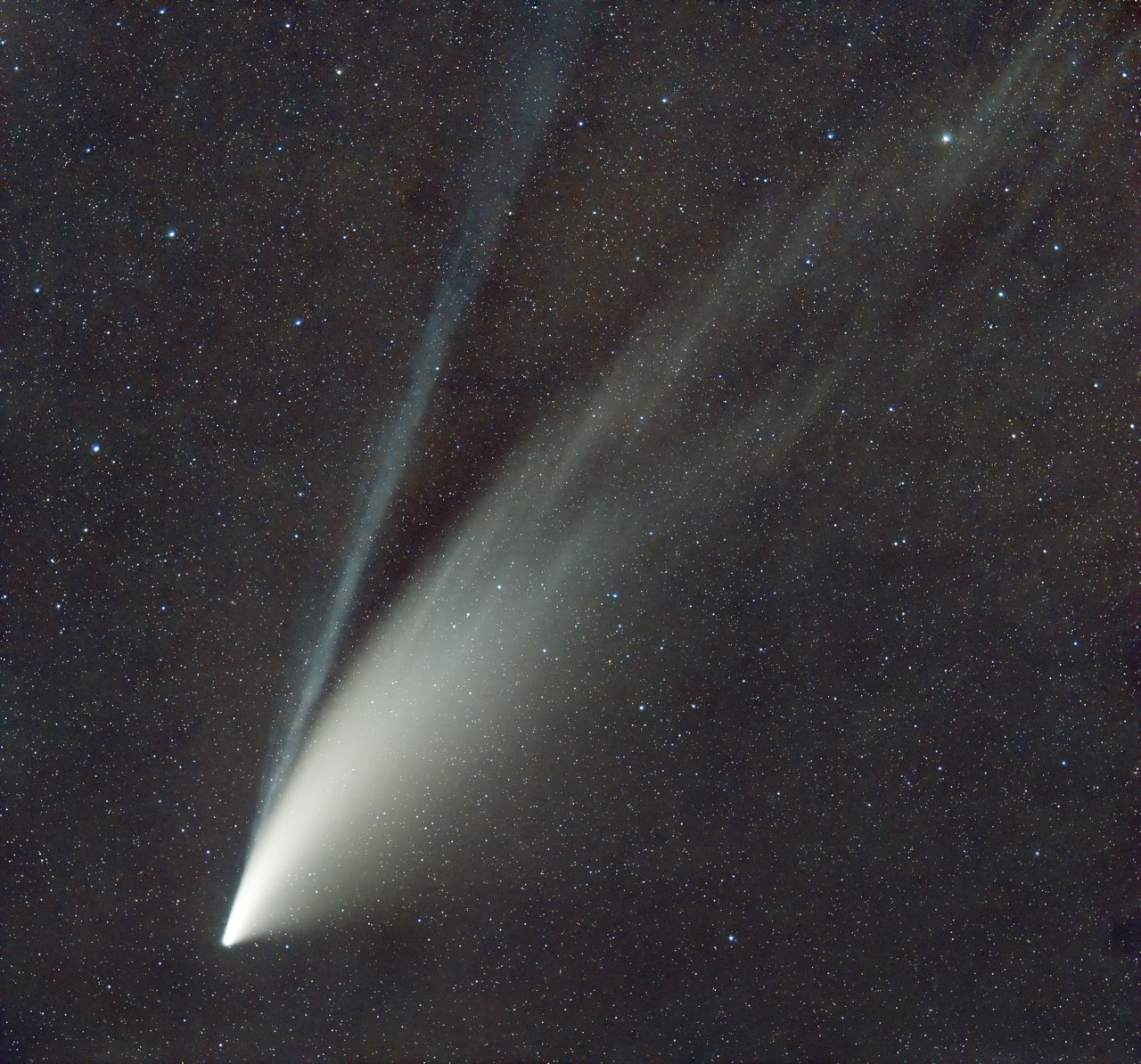
A photo of comet C/2020 F3 (NEOWISE) showing its narrow bluish ion tail and broader white dust tail. [Juan lacruz; CC BY-SA 4.0]

A Comet’s Journey
When comets journey into the inner solar system, they tend to do so sporting two tails: a dust tail that sweeps back from the comet along its curved trajectory and an ion tail that points away from the Sun, in the direction of the interplanetary magnetic field.
The ion tail, which forms when ultraviolet light from the Sun ionizes gas in a comet’s fuzzy coma, interacts with structures in the solar wind, causing it to shift, sputter, and sometimes even disconnect entirely. Now, for the first time, researchers have quantified the timescales involved when a comet loses — and regrows — its tail.
The Tale of a Tail
Shaheda Begum Shaik (George Mason University; US Naval Research Laboratory) and collaborators studied this phenomenon in observations of the comet C/2023 P1 (Nishimura) from 1 to 14 September 2023. In high-resolution images from the Solar Orbiter Heliospheric Imager, Shaik’s team analyzed the dynamics of C/2023 P1’s tail as the comet braved blustery solar wind conditions in the inner solar system.
In a two-week period, the comet underwent four separate tail disconnection events, in which the connection between the ion tail and the comet was severed. Each of these events coincided with the passage of a coronal mass ejection: a tangled mass of solar plasma and magnetic fields ejected from the Sun’s outer atmosphere.
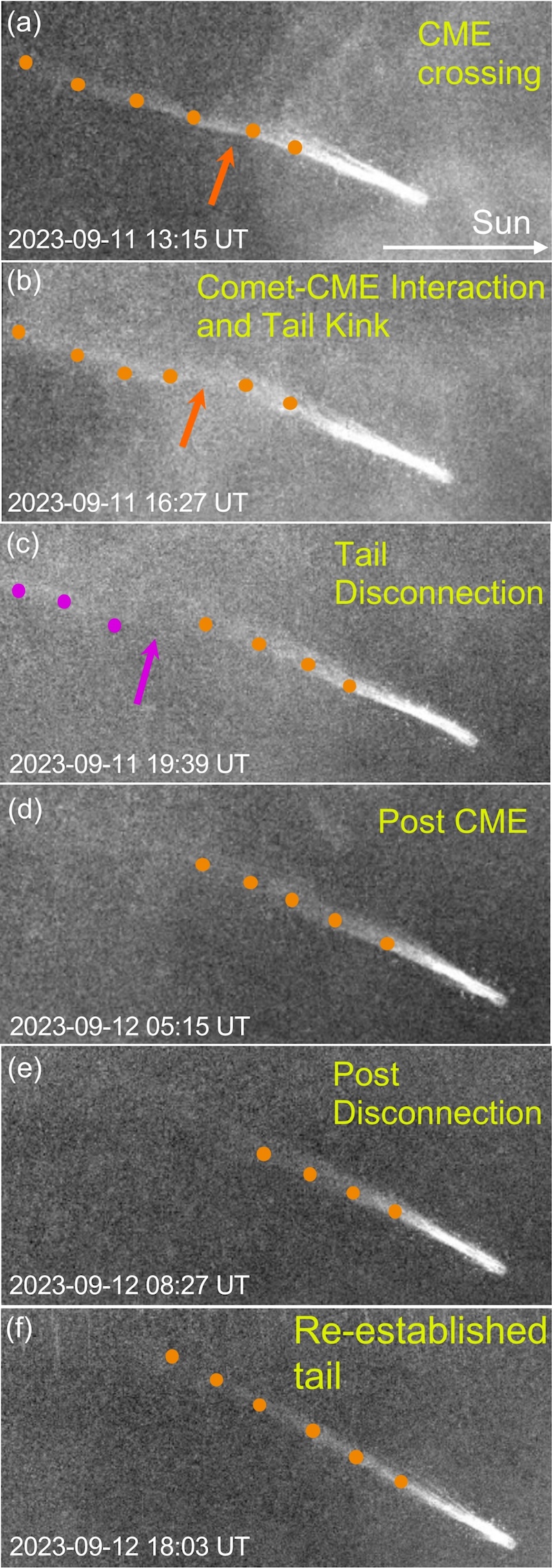
Solar Orbiter Heliospheric Imager observations of the 11 September 2023 tail disconnection event, which was driven by a passing coronal mass ejection (CME). [Shaik et al. 2026]
Lizard-Like Regrowth
Focusing on the tail disconnection event with the highest-resolution and highest-cadence data, Shaik’s team observed constant small-scale fluttering of the ion tail, reflecting the buffeting of the tail by the solar wind. The tail then developed a kink, which the team speculated is due to compressed solar wind plasma piling up in front of an oncoming coronal mass ejection. The wide-field images show the coronal mass ejection advancing upon the comet and the comet’s tail seemingly being sliced in two.
The free-floating tail segment sped away from the comet at roughly 295 km/s, likely indicating that the tail became caught up in and was transported by the flank of the coronal mass ejection as it barreled past the comet. The timescale and geometry of the event suggest that the interaction of the coronal mass ejection’s magnetic field with the comet’s tail was responsible for the disconnection.
Over the following 24 hours, the comet’s tail slowly regrew at a rate of 86 km/s to its original length of 1.9 million kilometers. The rate of regrowth is likely determined by several factors, such as the rate at which the comet produces ions and the local magnetic field configuration. This work represents a first look at the quantitative behavior of a tail disconnection event, paving the way for future investigations of cometary behavior and a greater understanding of the complex magnetic and plasma environment of the inner solar system.
Citation
“The First Quantitative Study of Cometary Tail Regrowth Following a Coronal Mass Ejection-Driven Disconnection Event,” Shaheda Begum Shaik et al 2026 ApJ 999 60. doi:10.3847/1538-4357/ae3bdb
The post Comets Are Lizards: Watching C/2023 P1 Regrow Its Tail appeared first on AAS Nova.
]]>The post GW231123: A Binary Black Hole Merger with Total Mass 190–265 M<sub>⊙</sub> appeared first on AAS Nova.
]]>The LIGO collaboration has discovered a remarkable pair of merging black holes; with estimated masses of 137 and 101 solar masses, these black holes appear to lie within or span the black hole mass gap.
The post GW231123: A Binary Black Hole Merger with Total Mass 190–265 M<sub>⊙</sub> appeared first on AAS Nova.
]]>The post Planetary Habitability Under the Light of a Rapidly Changing Star appeared first on AAS Nova.
]]>For a sample of nine variable stars, stellar variability appears to have little impact on exoplanet equilibrium temperature or water retention, though more extreme variability may have a greater impact.
The post Planetary Habitability Under the Light of a Rapidly Changing Star appeared first on AAS Nova.
]]>
JWST examines one of the most active star-forming regions in the Milky Way, where two massive protoclusters are shaping 10,000 solar masses of gas into new stars.
The post Featured Image: Massive Stars in the Making appeared first on AAS Nova.
]]>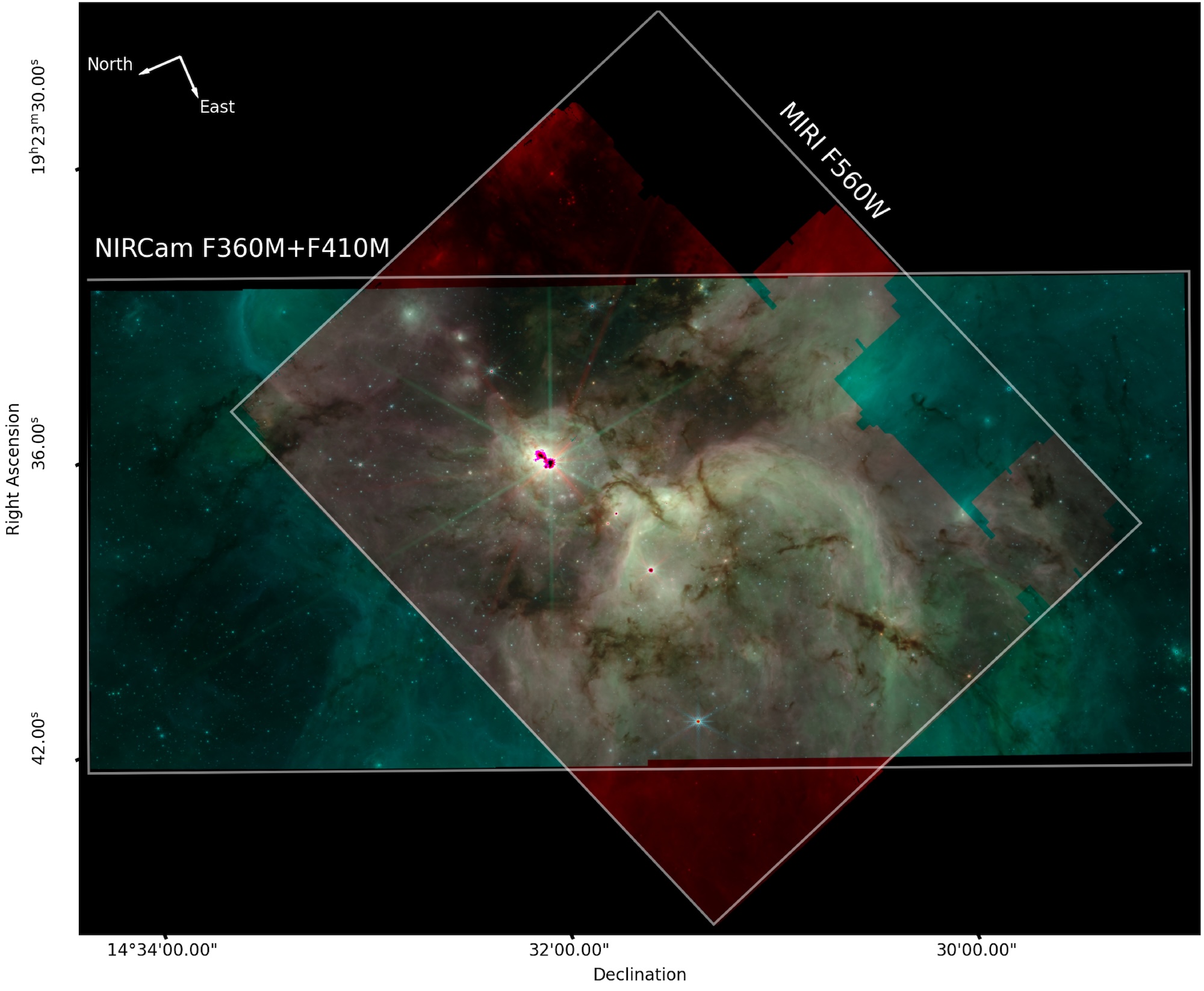
The full view of the study region, showing the NIRCam and MIRI footprints. [Yoo et al. 2026]
Citation
“A JWST NIRCam/MIRI View of the W51A High-Mass Star-Forming Region,” Taehwa Yoo et al 2026 AJ 171 208. doi:10.3847/1538-3881/ae40b7
The post Featured Image: Massive Stars in the Making appeared first on AAS Nova.
]]>The post An Analysis of Active Galactic Nucleus Feedback in the Compact Galaxy Group Stephan’s Quintet appeared first on AAS Nova.
]]>Modeling of outflows from the galaxies of Stephan’s Quintet shows the transition from active galactic nucleus–powered outflows at small radii to tidal flow powered outflows at larger radii.
The post An Analysis of Active Galactic Nucleus Feedback in the Compact Galaxy Group Stephan’s Quintet appeared first on AAS Nova.
]]>
Are you an astronomy graduate student who’s interested in science communication? Apply for the AAS Media Fellowship by June 26!
The post AAS Media Fellowship Now Open for Applications appeared first on AAS Nova.
]]>Are you an astronomy graduate student who’s interested in science communication? Do you wish you had the opportunity to explore that interest and gain professional development without having to take time off from your graduate studies? Do you want to write for AAS Nova, report on astronomy meetings, help organize and run press conferences, and learn the ins and outs of academic publishing?
Then the AAS Media Fellowship might be for you! This position was developed in 2017 by the American Astronomical Society to provide training and experience for graduate students in the astronomical sciences who are interested in science communication. The fellowship is a remote, quarter-time, one-year (with the possibility of extension to two years) position intended to be filled by current graduate students at US institutions. This year, for the first time, we intend to hire two Media Fellows. The new AAS Media Fellowship term will begin in Fall 2026.
If this sounds like a good fit for you, you can get more information below or at the job register posting. Apply by 26 June 2026 by submitting your contact information, a cover letter, and a short CV to personnel@aas.org. See the job register posting for the full application details.
Essential Duties & Responsibilities
The AAS Media Fellow(s) will report to the AAS Communications Manager. The Fellow(s) will work the equivalent of one day per week (on a schedule that will be jointly developed and agreed upon by the Fellow(s), the AAS Director of Communications & Media Relations, and the AAS Communications Manager) and be responsible for a wide range of duties. The Fellow(s) will be expected to do the following:
- Assist in sharing astronomy press releases via AAS press office channels.
- Regularly (nominally 2–3 times per month) write and publish articles for AAS Nova.
- Occasionally help to prepare other written communications such as AAS or Division press releases.
- Assist in managing AAS communications such as social media accounts, postings to the AAS website, and emails to members or authors.
- Serve as backup to the AAS Director of Communications & Media Relations or the AAS Communications Manager during absences for daily tasks like distributing press releases and publishing AAS Nova posts.
- In the lead-up to and at the AAS winter and summer meetings, help the AAS Director of Communications & Media Relations plan and run press conferences; help represent AAS Nova; and help organize and participate in the live-blogging coverage of the meeting by Astrobites and AAS Nova.
Qualifications
Each Fellow must:
- Be a graduate student in good standing in the astronomical sciences or a related field at a US institution.
- Receive the approval of their advisor or department chair to apply.
- Receive their primary support from their home institution.
- Have a keen eye for detail and accuracy.
- Have the ability to absorb complex material, synthesize information, and write short articles that concisely reflect key points of the material to a target audience.
- Have good working knowledge of, and/or ability to quickly master, tools such as WordPress, Drupal, Microsoft Office, and Adobe Creative Suite.
Compensation
The stipend for this position is $7,500 per year for the equivalent of one day of work per week, payable on a quarterly basis. Travel support will also be provided for travel to one AAS meeting each year.
The post AAS Media Fellowship Now Open for Applications appeared first on AAS Nova.
]]>The post A Characterization of JWST MIRI Detector Persistence and Implications for High-Contrast Imaging appeared first on AAS Nova.
]]>When a bright star saturates the detector on JWST’s Mid-Infrared Instrument, the flux deficit that follows could produce false-positive exoplanet signals and degrade point-spread function subtraction.
The post A Characterization of JWST MIRI Detector Persistence and Implications for High-Contrast Imaging appeared first on AAS Nova.
]]>
Astrobites reports on an intriguing new object that may be an early universe supermassive black hole shedding its gas cocoon.
The post A Potential New Piece of the “Little Red Dot” Puzzle appeared first on AAS Nova.
]]>Editor’s Note: Astrobites is a graduate-student-run organization that digests astrophysical literature for undergraduate students. As part of the partnership between the AAS and astrobites, we occasionally repost astrobites content here at AAS Nova. We hope you enjoy this post from astrobites; the original can be viewed at astrobites.org.
Title: The X-Ray Dot: Exotic Dust or a Late-Stage Little Red Dot?
Authors: Raphael E. Hviding et al.
First Author’s Institution: Max Planck Institute for Astronomy
Status: Published in ApJL
What Are Little Red Dots?
One of the most intriguing results produced by JWST was the serendipitous discovery of a new class of object: “little red dots” (LRDs). These objects started popping up everywhere in our early universe observations. Surprisingly, they look like compact (little) red dots in imaging data (astronomers are an incredibly creative bunch). The number of LRDs we observe drops drastically at redshifts less than about z = 4 (about 12 billion years ago), implying that LRDs are likely evolving into something else entirely. The luminous, compact nature of LRDs, paired with their disappearance from the cosmic stage, has continuously puzzled astronomers in recent years.
At least part of the LRD population has routinely been explained as a new class of active galactic nuclei (AGN). AGN are the central engines of many galaxies — luminous regions powered by actively accreting supermassive black holes. Recent evidence has increasingly pointed towards LRDs being a new class of AGN: black hole stars, or black holes surrounded by dense cocoons of gas. Naturally, this raises questions surrounding the placement of LRDs in our understanding of supermassive black hole and galaxy evolution across cosmic time.
A hallmark of typical AGNs is their X-ray brightness. X-rays are one of the most energetic types of electromagnetic radiation, and they are primarily produced by the most extreme astrophysical situations (think neutron star mergers). One of the key challenges in explaining the nature of LRDs has been their lack of X-ray emission. Their lack of emission in this regime is a piece of evidence pointing towards a black hole star scenario — dense gas can block the X-rays being produced by the black hole. However, the lack of LRDs in the present-day universe implies that they likely shed their cocoons at some point. Catching an LRD in the act of shedding its cocoon would thus provide an important piece of evidence surrounding their nature and evolution. Thankfully, today’s authors may have done exactly that! They report the discovery of what they call the “X-ray dot” (XRD): an LRD-like object that is also X-ray luminous at a redshift of approximately z = 3.28.
New JWST Observations of the XRD
While archival observations of the XRD with the Hubble Space Telescope, the Canada France Hawaii Telescope, the Spitzer Space Telescope, and the Chandra X-ray Observatory existed, new spectral data from JWST were needed to study the system in depth. Spectral data have a huge advantage over photometric observations when it comes to modeling the system. With a good quality spectrum, astronomers can use sophisticated modeling tools to try and pin down the physical nature of the emission we’re observing, and thus understand its intrinsic nature.
Figure 1 showcases the archival data from Hubble, Spitzer, and Chandra, along with the XRD’s spectrum from JWST (black curve, bottom panel). Photometric observations of the source indicate that it is incredibly compact (radius ≲ 250 pc, about 100 times more compact than the Milky Way) and shows similarities to LRD spectra, but with some key differences. (An example LRD spectrum is shown as the red curve in Figure 1.) The impressive X-ray luminosity of the XRD — typical of standard AGNs — is another key difference between it and standard LRDs.
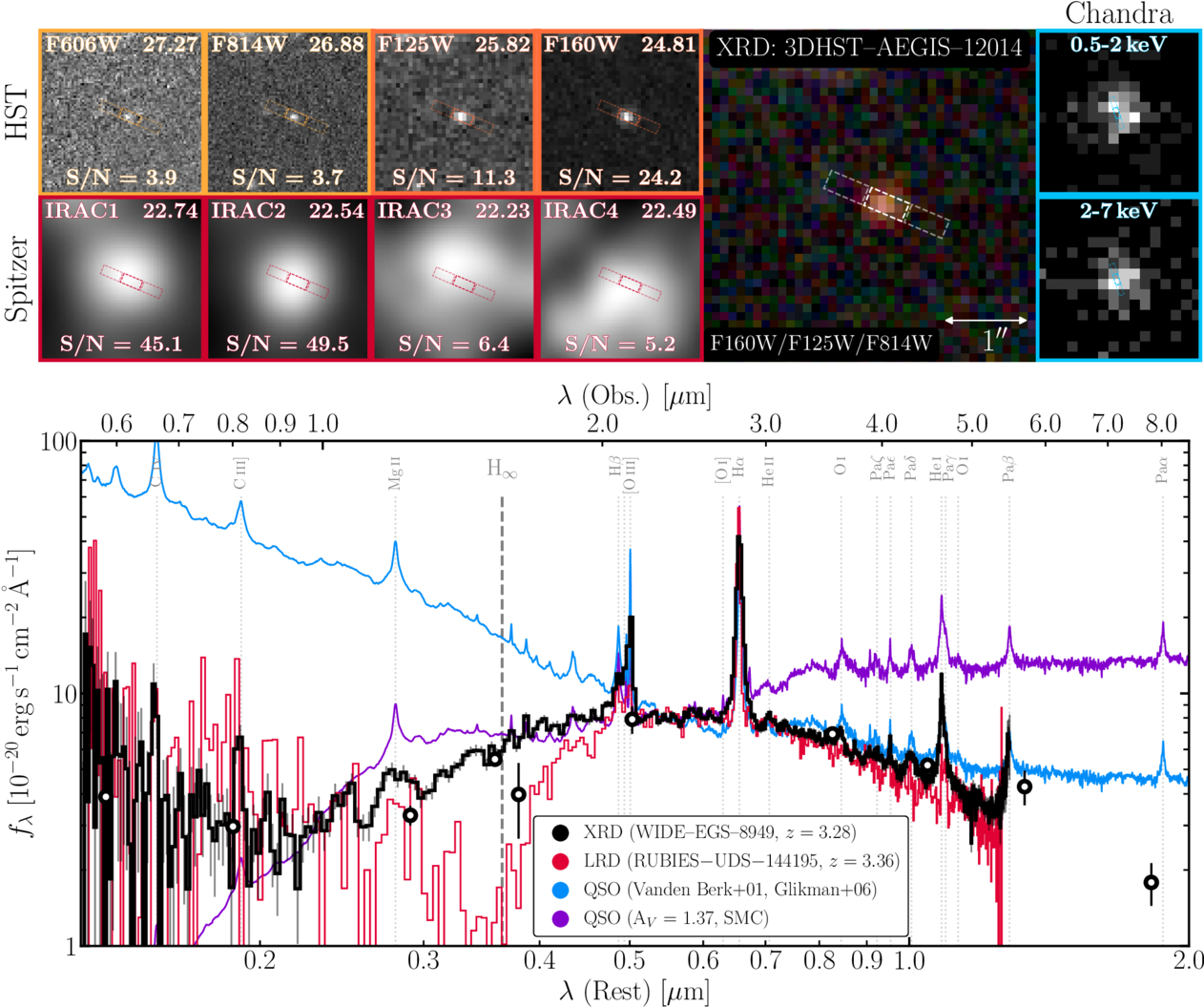
Figure 1: Top: Image cutouts from various Hubble, Spitzer, and Chandra observations of the XRD. Bottom: The spectrum of the XRD (black) shown alongside a similar LRD spectrum (red) and two quasar spectra (blue and purple), one of which has been reddened due to the presence of dust (purple). [Hviding et al. 2026]
So…What’s the Deal with the XRD?
To understand the nature of the XRD, the authors fit a variety of models describing a wide range of physical systems to the available data. Surprisingly, their best-fit models indicate that if the XRD is simply a typical AGN heavily obscured by astrophysical dust, its dust properties are drastically different from those of typical galaxies and AGN. Instead, trying to explain the system as an AGN embedded in a cocoon of gas (the black hole star model) provides better results (more aligned with observed LRDs), but it still isn’t perfect.
Notably, the emission in the ultraviolet-to-optical regime of the electromagnetic spectrum differs greatly from that of LRDs. In LRDs, this emission is indicative of a single dense gas component around the supermassive black hole, while in the XRD the authors find evidence suggestive of a patchier, less uniform distribution of gas. However, in order for this explanation to match the data, physical conditions of the model must be finely tuned, suggesting that this model may need to be refined further. These factors seem to suggest that the XRD is poorly understood in the context of our current paradigm of models describing AGNs and LRDs. The potentially patchy nature of the XRD’s gas envelope could suggest that this object is an LRD in the process of shedding its outer envelope, evolving into a typical AGN.
Regardless of its true nature, the XRD opens up new doors in our understanding of AGNs and LRDs. It provides an exciting glimpse at AGN evolution in action — a transitional fossil for early universe black holes. With a new piece of the puzzle slotted into our picture of AGN evolution, it’s only a matter of time before astronomers fully contextualize the stubbornly enigmatic LRDs.
Original astrobite edited by Ansh R. Gupta.
About the author, Drew Lapeer:
Drew is a first-year PhD student at the University of Massachusetts Amherst. They are broadly interested in the evolution of galaxies, with a focus on the impact of cosmic feedback on the galactic ecosystem. In their free time, they enjoy reading, rock climbing, hiking, and baking!
The post A Potential New Piece of the “Little Red Dot” Puzzle appeared first on AAS Nova.
]]>The post Neural Enhancement of the Traditional Wang–Sheeley–Arge Solar Wind Relation appeared first on AAS Nova.
]]>The addition of a neural network to a foundational model used in solar wind forecasting enhances the flexibility of the model, allowing it to adapt to varying solar wind conditions.
The post Neural Enhancement of the Traditional Wang–Sheeley–Arge Solar Wind Relation appeared first on AAS Nova.
]]>
Researchers investigate the possibility that the off-center black hole and double nucleus of NGC 4486B can be traced to a recent supermassive black hole merger.
The post Signs of a Supermassive Black Hole Merger in NGC 4486B appeared first on AAS Nova.
]]>The galaxy NGC 4486B appears calm and collected, but its center may have been roiled by a recent merger of supermassive black holes. New modeling explores the stellar dynamics that support this hypothesis.
Strange Center
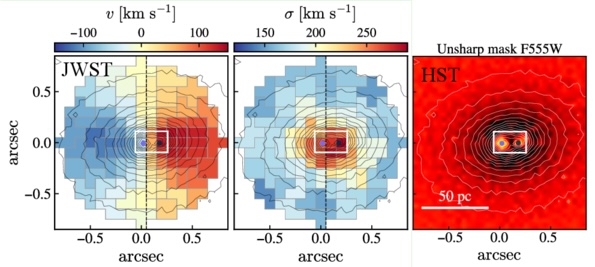
Kinematic maps of NGC 4486B showing the locations of the two peaks of its double nucleus. Click to enlarge. [Adapted from Tahmasebzadeh et al. 2026]
Now, a team led by Behzad Tahmasebzadeh (University of Michigan; Villanova University) has investigated the possibility that NGC 4486B’s double nucleus and off-center black hole can be traced to the aftermath of a supermassive black hole merger.
Simulating Kinematics
In this scenario, the black hole is displaced from the galaxy’s center because of a “kick” it received when it underwent a merger. The double nucleus is a sign of an eccentric nuclear disk: a central disk of stars on aligned elliptical orbits created when merging supermassive black holes disturb an initially orderly disk of stars.
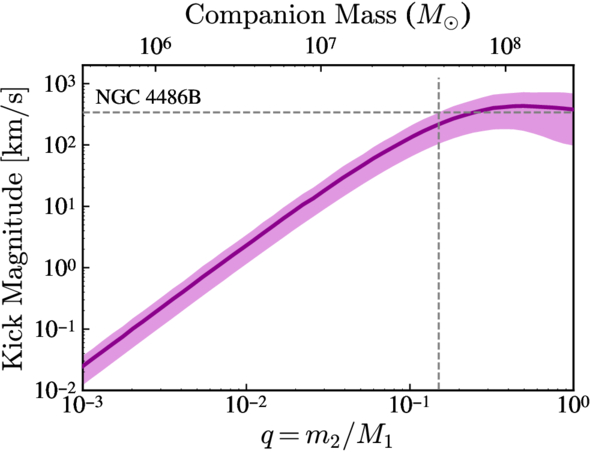
Estimated black hole kick magnitude as a function of the initial mass ratio of the black hole binary. Click to enlarge. [Tahmasebzadeh et al. 2026]
To explore this scenario further, the team carried out N-body simulations of the post-merger black hole’s behavior. These simulations showed that after being booted from the galactic center by the post-merger kick, the black hole returns to the center quickly — within 10–80 million years, depending on the kick strength. Because NGC 4486B’s supermassive black hole is notably off center, this suggests that the merger occurred recently.
Galaxy Merger Versus Black Hole Merger
Tahmasebzadeh’s team tested two other theories that could explain the appearance of NGC 4486B’s nucleus: dynamical buoyancy and a pre-merger supermassive black hole binary. Neither of these scenarios could reproduce the offsets seen in the center of the galaxy.
The team noted that NGC 4486B appears to be in equilibrium, with no sign of a recent merger that could have plunked a second supermassive black hole into the galaxy. How can this fact be reconciled with the evidence for a recent black hole merger? Turning again to simulations, the team found that if the black hole binary’s orbit was aligned with the galaxy’s rotation, the binary could have become trapped in a resonance that greatly delayed the merger of the black holes. This makes it possible that NGC 4486B underwent a galaxy merger in the distant past, but its central black hole merged only recently, leaving signs of a long-ago merger that has otherwise faded from view.
Citation
“JWST Observations of the Double Nucleus in NGC 4486B: Possible Evidence for a Recent Binary SMBH Merger and Recoil,” Behzad Tahmasebzadeh et al 2026 ApJL 1001 L14. doi:10.3847/2041-8213/ae52ef
The post Signs of a Supermassive Black Hole Merger in NGC 4486B appeared first on AAS Nova.
]]>The post Spatiotemporal Evolution of the 2022 March Interplanetary Coronal Mass Ejection Revealed by Multipoint Observations of Forbush Decreases appeared first on AAS Nova.
]]>Observations from multiple spacecraft stationed around our solar system revealed the longitudinal behavior of galactic cosmic ray flux decreases associated with a passing coronal mass ejection.
The post Spatiotemporal Evolution of the 2022 March Interplanetary Coronal Mass Ejection Revealed by Multipoint Observations of Forbush Decreases appeared first on AAS Nova.
]]>
A recent study uses high-resolution JWST observations to perform an atmospheric analysis of a rare exoplanet orbiting a dead star.
The post Characterizing the Atmosphere of Exoplanet WD 0806b with JWST appeared first on AAS Nova.
]]>Orbiting a white dwarf, the exoplanet WD 0806b is the subject of a recent study using JWST to measure the atmospheric conditions governing the planet.
Directly Imaged Exoplanet WD 0806b
Most of the 6,000 and counting exoplanets discovered thus far have been detected due to their impacts on their host star — passing in front of the star and causing it to dim, or gravitationally tugging on the star and causing it to wobble. On rare occasions, though, astronomers have been able to catch the exoplanet itself through direct imaging. Directly imaged exoplanets offer key insights that cannot be obtained through indirect detection methods. Luminosity measurements and spectral emission features allow astronomers to more directly measure planet mass, radius, and composition otherwise inferred from the host star.

NIRCam image showing host star WD 0806 circled in orange and the location of exoplanet WD 0806b marked by the orange arrow. [Lew et al 2026]
WD 0806b’s Atmospheric Abundances from JWST
Aiming to characterize the physical properties and atmospheric composition of WD 0806b, Ben W.P. Lew (Bay Area Environmental Research Institute; NASA Ames Research Center) and collaborators used JWST’s Near-Infrared Camera (NIRCam) and Near-Infrared Spectrograph (NIRSpec) to obtain high-resolution imaging and spectroscopy of the exoplanet. Combining these observations, prior lower-resolution observations, and evolutionary planet models, the authors estimated the physical properties of WD 0806b including mass, radius, surface gravity, and effective temperature.

NIRSpec spectrum of WD 0806b with best-fit model spectra overlaid. [Lew et al 2026]
This study highlights how high-precision JWST data can reveal a rich collection of atmospheric conditions, chemical composition, and physical processes occurring in cold giant planets. With such a wide orbit from its host white dwarf, WD 0806b serves as an interesting case study for how giant planet composition may reflect the formation and evolutionary history of the overall system. Future observations of and comparisons to similarly cold giant planets will further uncover how atmospheric characterization may fit into our understanding of exoplanets and their histories.
Citation
“JWST Spectral Retrieval of Cold Directly Imaged Planet WD 0806b and the First Measurement of Altitude-dependent Kzz in Exoplanet Atmospheres,” Ben W.P. Lew et al 2026 AJ 171 227. doi:10.3847/1538-3881/ae4747
The post Characterizing the Atmosphere of Exoplanet WD 0806b with JWST appeared first on AAS Nova.
]]>The post Impact-Induced Contamination of Ganymede’s Deep Ice Shell appeared first on AAS Nova.
]]>Microwave observations by the Juno spacecraft and modeling of impact-induced dirtiness place strong constraints on the degree of contamination of Ganymede’s surface as well as the total impact flux.
The post Impact-Induced Contamination of Ganymede’s Deep Ice Shell appeared first on AAS Nova.
]]>The post High-Resolution Modeling of Coronae and Winds in Solar-Type Stars with Varying Rotation Rates. I. X-Ray Coronae appeared first on AAS Nova.
]]>New modeling provides insight into the coronae of solar-type stars that rotate far more rapidly than the Sun, yielding X-ray spectra and luminosities for these dense and ultra-hot coronae.
The post High-Resolution Modeling of Coronae and Winds in Solar-Type Stars with Varying Rotation Rates. I. X-Ray Coronae appeared first on AAS Nova.
]]>The post Energetic Protons in the Inner Heliosphere Exhibit Consistent ∼1 MeV Temperatures appeared first on AAS Nova.
]]>An analysis of the solar energetic particle proton population suggests that the temperature of this population hovers around 1 MeV while the density spans several orders of magnitude.
The post Energetic Protons in the Inner Heliosphere Exhibit Consistent ∼1 MeV Temperatures appeared first on AAS Nova.
]]>
Neutron stars contain some of the most extreme matter in the universe, and researchers are exploring a promising but challenging way to probe their interiors.
The post A Mysterious Spectral Feature Could Help Crack the Case of Neutron Star Structure appeared first on AAS Nova.
]]>Neutron stars are composed of some of the most extreme material in the universe, and their internal properties are challenging to determine. Recently, researchers investigated an unusual spectral feature that may help to probe the interiors of neutron stars.
Examining Extreme Matter
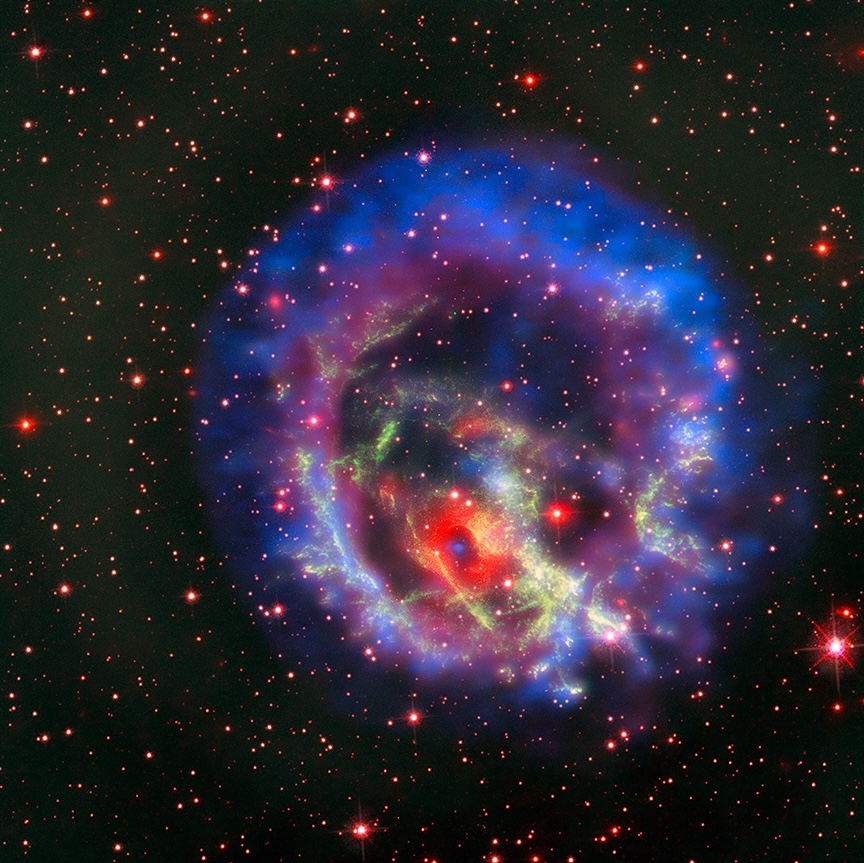
This composite X-ray and optical image shows the supernova remnant 1E 0102.2-7219. The blue source at the center of the bright red ring inside the remnant is a neutron star that was created in the supernova explosion. [X-ray (NASA/CXC/ESO/F.Vogt et al); Optical (ESO/VLT/MUSE & NASA/STScI)]
By observing neutron stars, astronomers attempt to pin down their equation of state, or the relationship between their interior density and pressure. In a recent research article led by Rosario Iaria (University of Palermo) described a promising way to probe the interior of a neutron star.
This method relies on measurements of a spectral line that originates near the neutron star’s surface and is gravitationally redshifted as it escapes from the intense gravitational pull of the star. The gravitational redshift provides a direct measurement of the compactness of the neutron star, or the ratio of its radius to its mass. Despite the promise of this method, definitive identification of gravitationally redshifted absorption lines has been challenging.
Directly Measuring Compactness
Iaria’s team identified potential evidence of this phenomenon in Neutron star Interior Composition Explorer (NICER) observations of 4U 1820-30, a close binary system containing a neutron star that is accreting matter from a white dwarf companion. (4U 1820-30 is famous for having one of the most rapidly rotating neutron stars known, with a blistering rate of 716 rotations per second.)
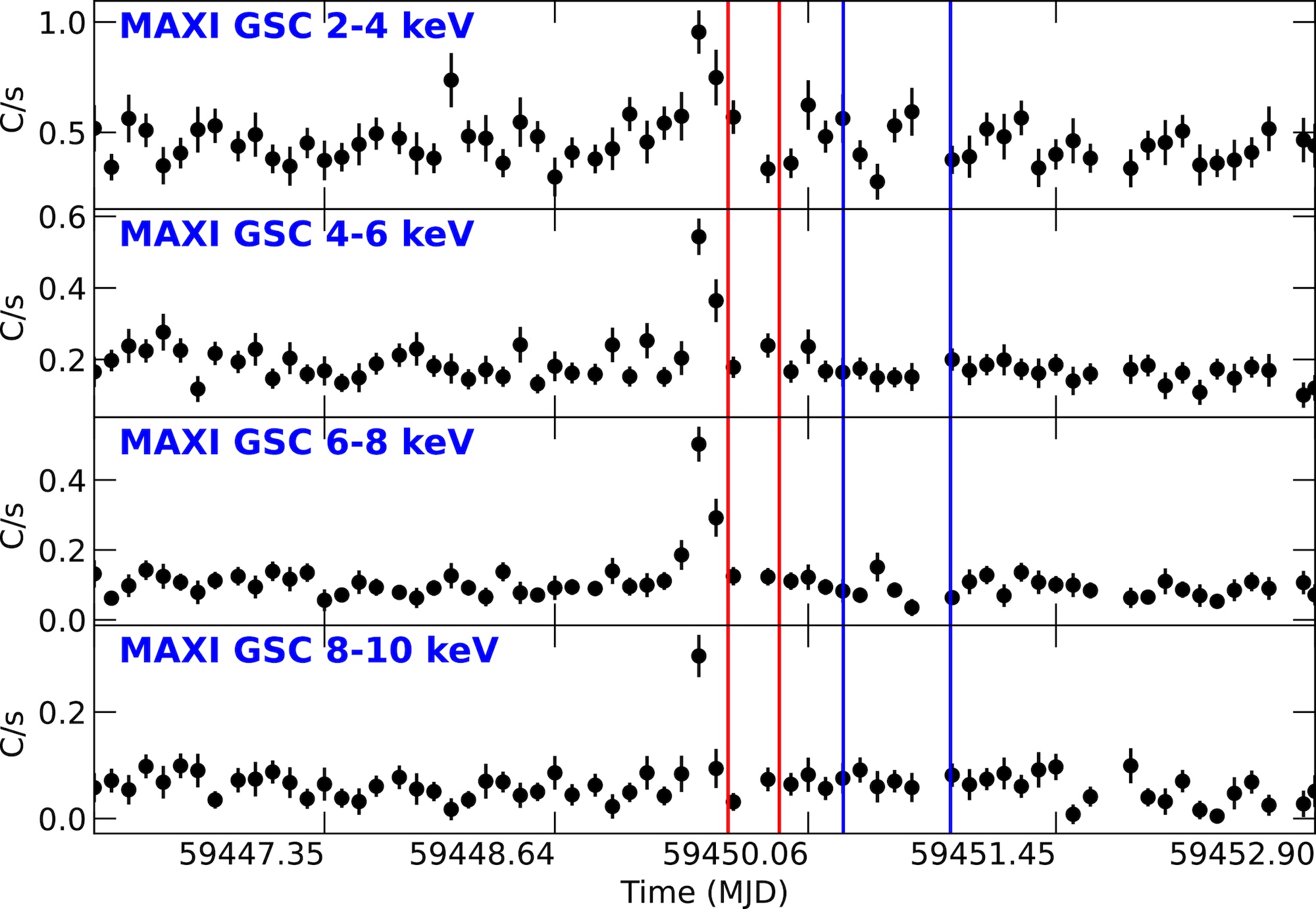
Observations of 4U 1820-30 from the Monitor of All-Sky X-ray Image (MAXI) showing the sudden increase in counts during the superburst, which was followed by two observing epochs by NICER, marked with red and blue vertical lines. Click to enlarge. [Iaria et al. 2026]
The team proposed that the rare superburst paved the way for the gravitationally redshifted absorption line to appear. During the superburst, a powerful radiation-driven wind swept away most or all of the neutron star’s corona, a diffuse cloud of plasma floating above and below the accretion disk. After the superburst ended and the wind subsided, but before the obscuring corona reformed, the tell-tale absorption line was visible for a short time.
Cracking the Mystery of Neutron Star Structure
By interpreting the 3.8 keV absorption feature as a gravitationally redshifted spectral line arising near the neutron star’s surface, Iaria and collaborators measured a redshift of 1 + z ≅ 1.72. This corresponds to a compactness of 4.46 kilometers per solar mass, which translates to a radius of 6.4 km for a typical mass of 1.4 solar masses or a mass of 2.2 solar masses for a typical radius of 10 km.
The interpretation of the 3.8 keV absorption line as a gravitationally redshifted iron line is still tentative. Further measurements with NICER, or with future facilities like the Advanced Telescope for High-ENergy Astrophysics (Athena) X-ray observatory (planned launch in 2037) or the enhanced X-ray Timing and Polarimetry (eXTP) mission (planned launch in 2030), may help to advance the study of neutron star interiors using this technique.
Citation
“A Mysterious Feature in the NICER Spectrum of 4U 1820-30: A Gravitationally Redshifted Absorption Line?” R. Iaria et al 2026 ApJ 998 58. doi:10.3847/1538-4357/ae2758
The post A Mysterious Spectral Feature Could Help Crack the Case of Neutron Star Structure appeared first on AAS Nova.
]]>The post A Late-Time Radio Survey of Type Ia-CSM Supernovae with the Very Large Array appeared first on AAS Nova.
]]>No radio emission was detected from a sample of old (>1 year) supernovae, despite the expectation that these supernovae exploded into dense circumstellar material.
The post A Late-Time Radio Survey of Type Ia-CSM Supernovae with the Very Large Array appeared first on AAS Nova.
]]>
Astrobites reports on the detection of complex molecules around a protostar in the Large Magellanic Cloud.
The post Detecting New Icy Molecules Around a Newly Forming Star with JWST appeared first on AAS Nova.
]]>Editor’s Note: Astrobites is a graduate-student-run organization that digests astrophysical literature for undergraduate students. As part of the partnership between the AAS and astrobites, we occasionally repost astrobites content here at AAS Nova. We hope you enjoy this post from astrobites; the original can be viewed at astrobites.org.
Title: Protostars at Subsolar Metallicity: First Detection of Large Solid-State Complex Organic Molecules in the Large Magellanic Cloud
Authors: Marta Sewiło et al.
First Author’s Institution: NASA Goddard Space Flight Center
Status: Published in ApJL
Stars and planets form when clouds of molecules collapse in on themselves due to the overwhelming force of gravity (which, relatable). This process is quite mysterious, as these clouds will only live for a couple million years before collapsing, and the newly forming protostars only live for about half a million years before becoming main-sequence stars.
But we are able to find some protostars in the Milky Way and in the Small and Large Magellanic Clouds near us, and observing the molecules around these protostars can help us understand how protostars form.
To look for molecules around protostars, astronomers take spectra of the protostars in the infrared, which is a wavelength region where molecules emit a lot of light. As better instruments are being built, astronomers are more often able to look for what are called complex organic molecules, which are carbon-bearing molecules with at least six atoms.
These complex organic molecules can be detected in different states: most detections have been of gaseous molecules in and around protostars or planet-forming disks, but they can also be found in a solid state on the surfaces of dust grains in the interstellar medium in a galaxy. In this state, they are called complex organic molecule “ices.” These “ices” were rarely found pre-JWST, but since its launch, detections have been more numerous, mainly in the Milky Way. Observing these complex molecules on the surfaces of dust grains tells us more about protostellar dust chemistry, which is an important but still mysterious aspect of star formation.
In this study, researchers look outside of our own galaxy to explore the complex organic molecules in the Large Magellanic Cloud (LMC). The LMC is an interesting place to look for these molecules because it has lower metal content (i.e., elements heavier than hydrogen and helium) than the Milky Way, as well as a harder radiation field. This means photons flying around in the LMC generally have higher energies than photons flying around in the Milky Way, and elements like carbon, oxygen, and nitrogen are less abundant. This is important because these conditions are more similar to what typical galaxies were like in the early universe. Thus the LMC is a better test bed to look at protostars than the Milky Way if we want to understand how stars formed in the early universe.
The authors of this study have found signatures of complex organic molecules in protostars forming in the LMC. They focus on the protostar ST6 in the LMC, shown in the right image in Figure 1. They used JWST’s Mid-Infrared Instrument to take spectra of the region around ST6.

Figure 1: The LMC (left) and a zoomed-in view of region N158 (right) containing protostar ST6, the focus of this study. In the inset panel of the right picture, contours of carbon monoxide emission are shown. [Sewiło et al. 2025]
Spectroscopic Signatures of Molecules on Dust Grains
The researchers used the Python tool called dEcompositioN of Infrared Ice features using Genetic Modelling Algorithms (ENIIGMA) to fit the spectroscopy. This code compares the spectra to laboratory data of these complex organic molecules at the temperatures we see in the LMC. The authors fit for complex organic molecules they might expect to see, and they detect methanol (CH3OH), acetaldehyde (CH3CHO), ethanol (CH3CH2OH), methyl formate (HCOOCH3), and acetic acid (CH3COOH); of these, acetaldehyde, ethanol, and methyl formate have never before been detected outside of the Milky Way. Interestingly, this is the first time acetic acid has been definitively detected in any astrophysical environment. The spectral contribution from each molecule is shown in Figure 2; all the individual contributions added together make up the observed spectrum.

Figure 2: Model fits to the spectrum of the protostar ST6 using the code ENIIGMA. Molecules and their fitted emission are given in the legend. [Sewiło et al. 2025]
When the authors compared the abundances of these ices to other protostars in the Milky Way galaxy, they found that the abundances are slightly lower around the LMC protostar. This may happen because the dust temperatures are generally higher in the LMC due to the higher-energy photons, which affect the chemistry happening on the dust. Some species they found, however, do have similar abundances to the Milky Way protostars, indicating that the harder radiation field of the LMC does not affect how these species form. Finding more complex organic molecules in the Magellanic Clouds will help us understand further how these compounds form on dust grains and how the galactic environment may affect their formation.
Original astrobite edited by Shalini Kurinchi-Vendhan.
About the author, Caroline von Raesfeld:
I’m a third-year PhD student at Northwestern University. My research explores how we can better understand high-redshift galaxy spectra using observations and modeling. In my free time, I love to read, write, and learn about history.
The post Detecting New Icy Molecules Around a Newly Forming Star with JWST appeared first on AAS Nova.
]]>
Jets, variability, and neutrinos: dive into three recent investigations of active galactic nuclei.
The post Monthly Roundup: Investigating Active Galactic Nuclei appeared first on AAS Nova.
]]>Many galaxies, including our own, have a central supermassive black hole. In certain galaxies, gas becomes ensnared in the black hole’s gravitational pull and collects in a disk that feeds the black hole, forming an active galactic nucleus (AGN). An AGN can feast on this disk of gas and dust for millions to billions of years — glowing across the electromagnetic spectrum, brandishing relativistic jets, and creating a brilliant, variable light show visible from billions of light-years away.
Today’s Monthly Roundup investigates the connection between AGNs and neutrinos, considers the question of AGN variability, and explores modeling techniques for relativistic environments.
A Search for Neutrinos from X-Ray-Bright AGNs
Where do neutrinos — neutral, nearly massless elementary particles — come from? AGNs have emerged as one likely source; in 2022, the IceCube collaboration reported evidence for neutrinos from the nearby galaxy Messier 77, which hosts an X-ray-bright AGN, and earlier observations potentially linked a neutrino to the blazar TXS 0506+056.
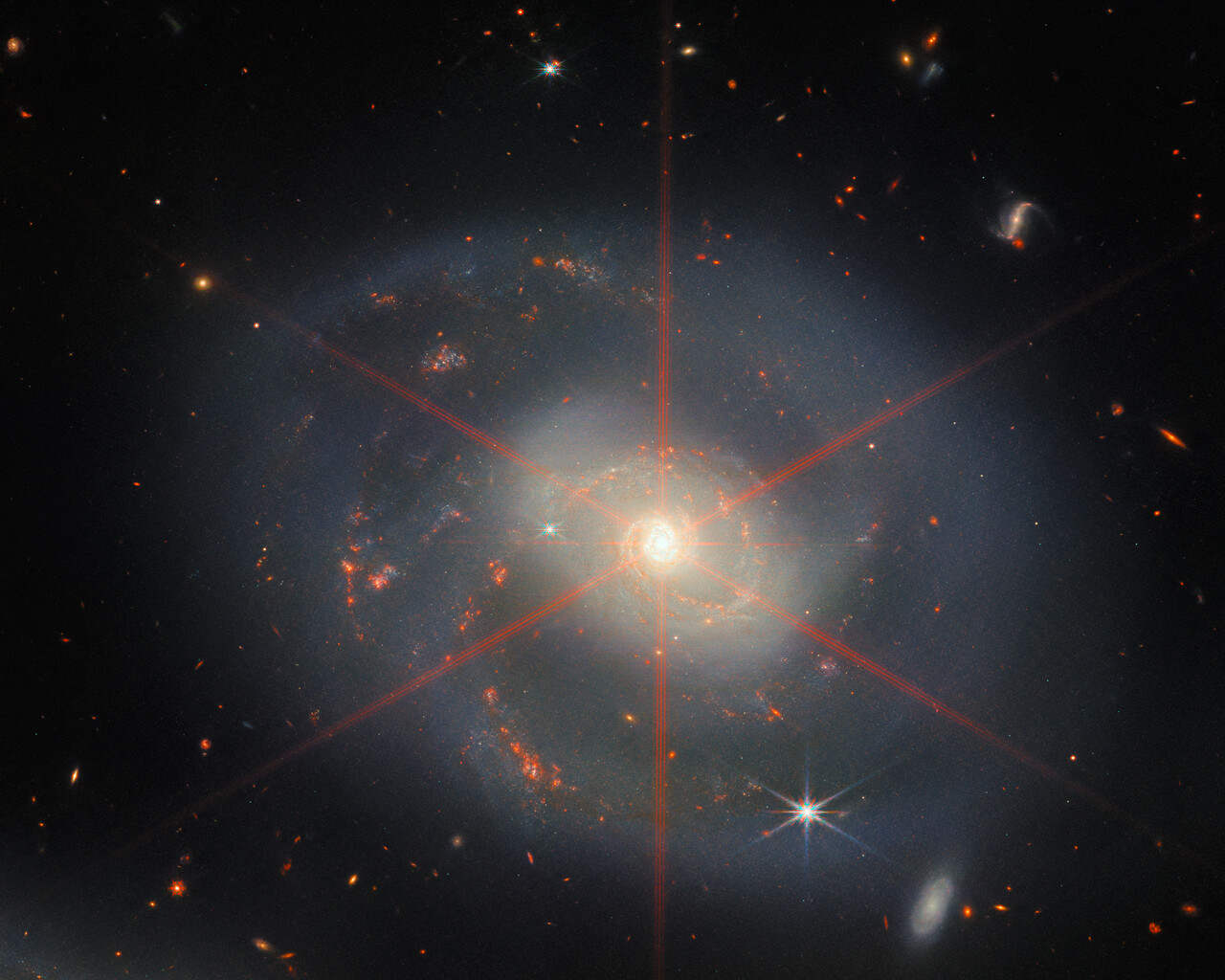
The spiral galaxy NGC 7469, shown here in this JWST image, contains an AGN that may be a source of neutrinos. [ESA/Webb, NASA & CSA, L. Armus, A. S. Evans; CC BY 4.0]
This result suggests that X-ray-bright AGNs are indeed a plausible source of neutrinos. As for the specific physical origin of these AGN-generated neutrinos, the data provide a few clues. The X-ray emission of an AGN is thought to arise from a billion-degree cloud of plasma called the corona. The interaction of coronal X-rays with high-energy protons is thought to produce neutrinos in the energy range of 1–10 teraelectronvolts — roughly the energies of the neutrinos associated with Messier 77 in this study. However, NGC 7469 was associated with neutrinos more energetic than this range, suggesting that not all AGN-produced neutrinos have a coronal origin. Thus, though the body of evidence suggesting that X-ray-bright AGN are a source of neutrinos, the precise mechanism through which these neutrinos are produced remains unknown.
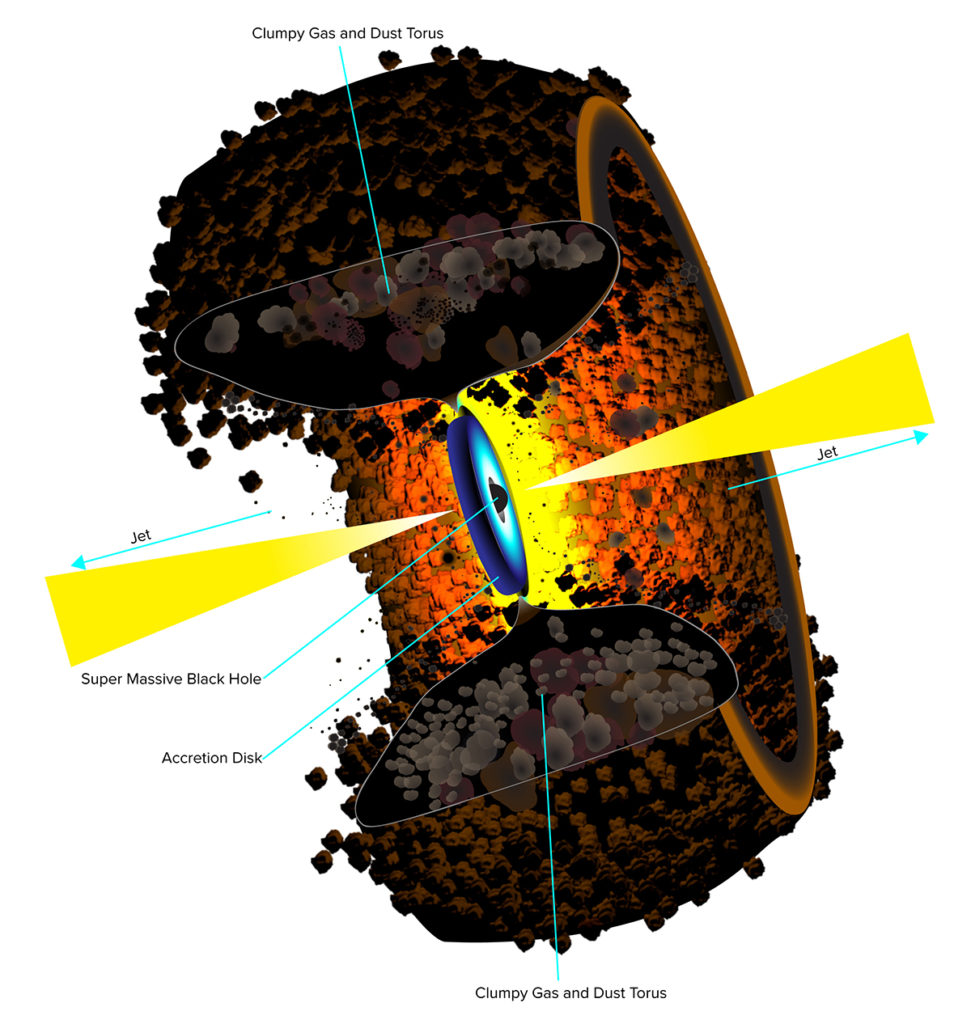
A diagram of the unified model of active galactic nuclei, showing an accretion disk, dusty torus, and jets. Click to enlarge. [B. Saxton NRAO/AUI/NSF; CC BY 4.0]
Disk or Jet: Which Varies More?
If there’s one constant when it comes to AGNs, it’s change; observations show that the emission from active galaxies varies on timescales from minutes to decades. Though both the accretion disk and the jet contribute to the overall multiwavelength behavior of an AGN, it’s not yet clear which of these structures is a greater contributor to an AGN’s variability.
Vineet Ojha (Peking University) and coauthors considered AGN variability at optical and mid-infrared wavelengths. Ojha’s team collected a sample of AGN that lie at similar redshifts and fall into one of three categories: narrow-line Seyfert 1 galaxies detected in gamma rays, narrow-line Seyfert 1 galaxies not detected in gamma rays, and broad-line Seyfert 1 galaxies detected in gamma rays. These three classes are distinguished by the presence or absence of relativistic jets as well as their accretion rate; gamma-ray-detected Seyfert 1s likely host jets, and narrow-line Seyfert 1s likely have higher accretion rates than broad-line Seyfert 1s.
Using optical data from the Zwicky Transient Facility and mid-infrared data from the Wide-field Infrared Survey Explorer, the team separated statistical wiggles from true variability and determined which sample of AGNs was most variable. They found that broad-line AGNs detected in gamma rays are the most variable, suggesting that jets are major contributors to AGN variability. Narrow-line AGNs detected in gamma rays are next in line, likely because these AGNs have jets but also have a strong thermal emission component from their accretion disks due to their high rate of accretion. Narrow-line AGNs not detected in gamma rays are the least variable, lacking a jet and dominated by thermal emission. Taken together, these results suggest that AGN variability is mostly jet driven, with some contribution from accretion disk instabilities.
More on AGN Jets: The Slow-Light Effect
The galaxy Messier 87 (M87) hosts one of the most studied AGN jets. M87’s jet is visibly structured, and it exhibits superluminal motion, in which the relativistic plasma appears to move faster than the speed of light. Because the plasma accelerated by an AGN moves so quickly, researchers attempting to model this plasma may opt to use the slow-light approach, in which the evolution of the ambient plasma is modeled simultaneously with the propagation of light through the medium. Though more computationally intensive than the fast-light approach, in which photons zip through a static medium, slow-light techniques are needed in regions of relativistic flows or strong acceleration.
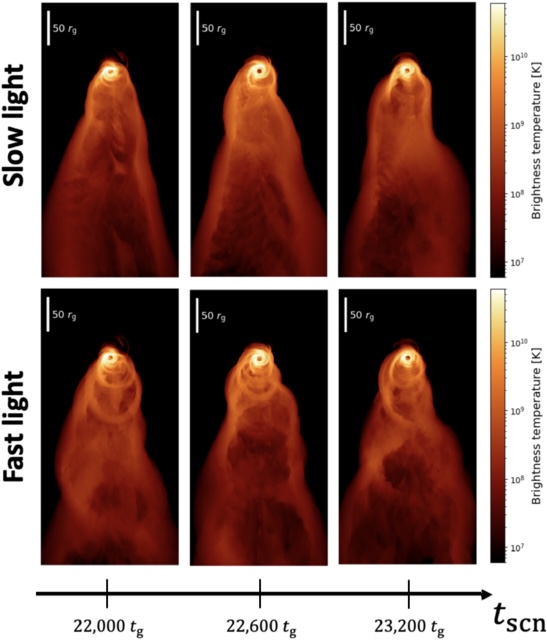
Comparison of the jet morphology from the slow-light (top row) and fast-light (bottom row) methods. [Adapted from Tsunetoe et al. 2026]
The team found that slow-light images tended to be smoother, lacking the looping, helical structures within the jet seen in fast-light images. Slow-light images show more evidence for the superluminal motion that is observed in relativistic jets like M87’s, as well as greater limb brightening and less wobbling motion. The team also investigated the effects of changing the black hole spin, finding greater wobbling in the jet for slow black hole spins and a straighter, wider jet for rapid black hole spins. Overall, Tsunetoe and coauthors found that the slow-light approach generated images that are more consistent with the properties of M87’s jet, demonstrating that the slow-light approach is necessary to capture the behavior of relativistic jets.
Citation
“Evidence for Neutrino Emission from X-Ray-Bright Active Galactic Nuclei with IceCube,” R. Abbasi et al 2026 ApJL 1000 L26. doi:10.3847/2041-8213/ae4aad
“The Relative Contributions of Accretion Disk Versus Jet to the Optical and Mid-Infrared Variability of Seyfert Galaxies,” Vineet Ojha et al 2025 ApJ 994 84. doi:10.3847/1538-4357/ae0a38
“Slow-Light Effect in the Jet-Launching Region of M87,” Yuh Tsunetoe et al 2026 ApJ 1000 29. doi:10.3847/1538-4357/ae43e7
The post Monthly Roundup: Investigating Active Galactic Nuclei appeared first on AAS Nova.
]]>The post A Scatter of Light from a Polarized World appeared first on AAS Nova.
]]>Researchers have discovered linearly polarized scattered light from a hot Jupiter exoplanet, best explained by the presence of silicate particles with effective radii of 0.038 micron.
The post A Scatter of Light from a Polarized World appeared first on AAS Nova.
]]>
Hoping to find the second kilonova to be detected in both gravitational waves and light, astronomers ended up with a supernova instead.
The post An Impostor Explosion appeared first on AAS Nova.
]]>Over many centuries of observing the night sky, astronomers have found only a single visible afterglow of a collision between neutron stars. For a few days in the summer of 2025, it seemed like observers may have found another of these treasured but elusive prizes; unfortunately, the promising candidate turned out to be a supernova in disguise.
A Rare Prize
These images from the Hubble Space Telescope show the fading light of the kilonova associated with the gravitational wave event GW170817. [NASA and ESA Acknowledgment: A. Levan (U. Warwick), N. Tanvir (U. Leicester), and A. Fruchter and O. Fox (STScI)]
That one kilonova, found back in 2017, taught astronomers much about how heavy elements are formed and left the scientific community hungry for more data. Since then, each time a gravitational wave detector like LIGO reports that it may have spotted a neutron star merger, telescopes across the world scramble to look in the probable region of the sky, hoping to find the short-lived electromagnetic counterpart.
Too Good to Be True
On 18 August 2025, the LIGO/Virgo/KAGRA collaboration sent out an alert that it may have detected a neutron star–neutron star merger. The odds that their signal was real weren’t great, and the researchers gave it just a 29% chance of being a genuine astrophysical signal. Still, given the potential payoff of finding the next kilonova, several telescopes quickly began searches for the optical counterpart. The gravitational wave signal suggested that the event likely came from a curved patch of sky delightfully referred to as the “northern banana,” and after trawling that region for a few nights, astronomers hauled in 47 new transients. Any one of these could have been the kilonova, and all of them received extensive follow-up observations.
A team led by James Gillanders (University of Oxford) recently summarized some of these follow-up observations carried out with the Pan-STARRS and ATLAS telescopes. In the initial exciting few days after the alert went out, one candidate transient stood out as the most promising. Named AT2025ulz, it was first spotted by the Zwicky Transient Facility and initially started fading rapidly and changing colors, just as models of kilonovae predict. For four days, it seemed like the world may have witnessed its second-ever kilonova. But then the telescopes began their fifth night of observations.
Supernova Unmasked

The light curve of SN2025ulz. Note that the source appeared to grow brighter again after about 5 days. Click to enlarge. [Gillanders et al. 2025]
Frustrating as this particular result may be, the effort was far from wasted. The team could use their non-detection of the true kilonova to place limits on its timing and peak magnitude, assuming it existed in the first place. And, as gravitational wave detectors grow more sensitive and alerts like this more common, hindsight will likely frame this scramble as a dress rehearsal for an ultimately successful kilonova recovery effort. Until then, astronomers will keep searching, and will keep their guard up against cosmic impostors.
Citation
“Pan-STARRS Follow-Up of the Gravitational-Wave Event S250818k and the Light Curve of SN2025ulz,” J. H. Gillanders et al 2025 ApJL 995 L27. doi:10.3847/2041-8213/ae2125
The post An Impostor Explosion appeared first on AAS Nova.
]]>The post Dependency of the Bar Formation Timescale on the Halo Spin appeared first on AAS Nova.
]]>When galactic bars form rapidly, the galaxy’s dark matter halo spin appears to have little impact, but when the process takes longer, halo spin can hasten or delay bar formation, depending on the direction of the halo’s spin.
The post Dependency of the Bar Formation Timescale on the Halo Spin appeared first on AAS Nova.
]]>The post Evolution of the ZTF SLRN-2020 Star-Planet Merger appeared first on AAS Nova.
]]>Long-term observations and modeling of a transient likely associated with a a star–planet merger suggest that the star was on the brink of joining the main sequence and the planet was at least several times as massive as Jupiter.
The post Evolution of the ZTF SLRN-2020 Star-Planet Merger appeared first on AAS Nova.
]]>
JWST's mysterious little red dots may be evidence of black hole stars in the early universe.
The post Starring in the Early Universe: Black Hole Stars and Little Red Dots appeared first on AAS Nova.
]]>JWST has uncovered a peculiar population of very distant objects known as “little red dots.” The mechanisms powering these objects’ peculiar properties — high luminosities, compact radii, and “V”-shaped spectra — remain uncertain. Could little red dots be the result of supermassive stars, galaxy mergers, or, as a recent study explores, black hole stars?
Direct-Collapse Black Holes and Little Red Dots
Since their discovery, little red dots have been the subject of many studies, but a complete explanation for their unique combination of properties remains elusive. Multiple studies have explored the growing population of peculiar dots, with some postulating that they are the result of stars thousands of times the mass of the Sun, supermassive stars entrenched in gas from a galaxy merger, or black holes embedded in dense accretion disks.
Even more recently, studies have proposed that little red dots may be the remnants of direct-collapse black holes. In this scenario, a large cloud of gas in the early universe directly collapses into a stellar-mass black hole, and the remaining gas envelops the black hole, forming what is known as a quasi-star (or black hole star). Researchers have suggested that little red dots may be the late stage of this process when the black hole has accreted at least 10% of the total mass of the system. Direct comparisons between quasi-star evolutionary models and JWST observations of little red dots have yet to be explored but are necessary to confirm the potential of quasi-star origins.
Evolutionary Models of Quasi-Stars
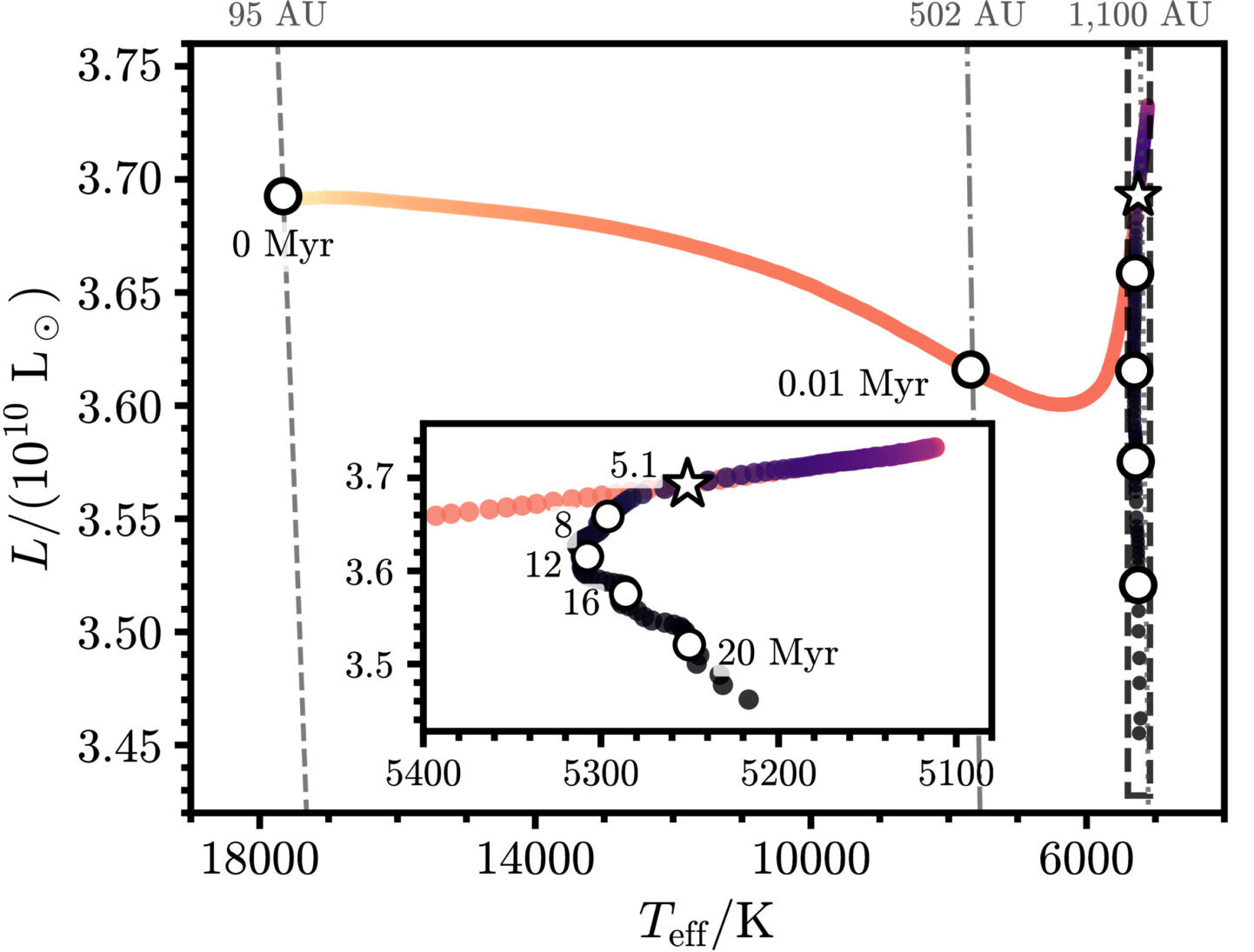
Evolution of a theoretical quasi-star model on a Hertzsprung–Russell diagram. [Modified from Santarelli et al 2026]
After a short initial phase of contraction lasting around 10,000 years, the quasi-star spends the rest of its approximately 20–40-million-year lifetime in the “late stage” as the central black hole continues to eat up the surrounding envelope. In the end, the quasi-star becomes a supermassive black hole a million times the mass of the Sun.
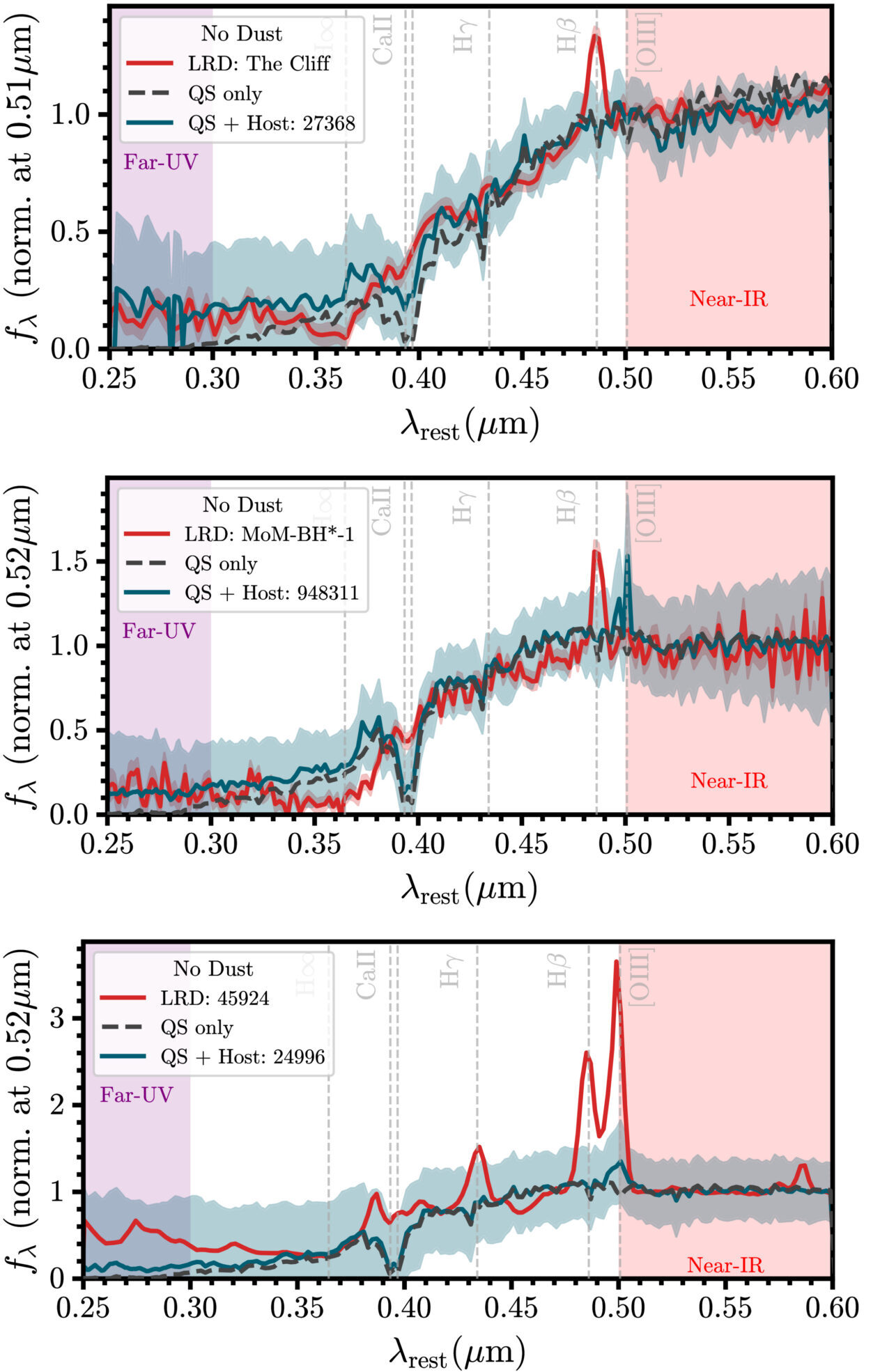
Predicted spectral energy distributions of 1 million solar mass, late-stage quasi-stars both alone (black dashed line) and embedded in a host galaxy (solid blue line). Each panel compares the quasi-star to a little red dot observed by JWST. [Modified from Santarelli 2026]
Plausible Progenitors
The results of this study indicate that late-stage quasi-stars can naturally produce the defining continuum features of little red dot spectra. While further modeling is required to trace specific emission line features, the initial modeling presented in this study establishes quasi-stars as plausible progenitors of not only little red dots but also the universe’s first supermassive black holes.
As the authors noted, the short lifetimes of quasi-stars shown in their models in conjunction with the observed number density of little red dots implies that a significant fraction of supermassive black holes formed through this mechanism. Continued observations of little red dots and advanced modeling of direct-collapse black holes will aid in determining if these peculiar dots are showing off the birth of supermassive black holes in the universe.
Citation
“Evolutionary Tracks and Spectral Properties of Quasi-stars and Their Correlation with Little Red Dots,” Andrew D. Santarelli et al 2026 ApJL 998 L4. doi:10.3847/2041-8213/ae3713
The post Starring in the Early Universe: Black Hole Stars and Little Red Dots appeared first on AAS Nova.
]]>The post Expanding the Ice Inventory of NGC 1333 IRAS 2A with INDRA Using JWST Observations: Tracing Organic Refractories and Beyond appeared first on AAS Nova.
]]>Researchers have applied a new Python-based spectral fitting tool to JWST spectra of the young protostar NGC 1333 IRAS 2A, identifying previously noted and new ice species and complex organic molecules.
The post Expanding the Ice Inventory of NGC 1333 IRAS 2A with INDRA Using JWST Observations: Tracing Organic Refractories and Beyond appeared first on AAS Nova.
]]>The post A Multiarc Approach to Detecting Uranus’s Normal Modes via Doppler Tracking of a Planetary Orbiter appeared first on AAS Nova.
]]>If Uranus’s oscillations are comparable to Saturn’s, a low-flying orbiter could detect modes with low angular degree after only a few close passes, while higher-degree modes would require at least eight passes.
The post A Multiarc Approach to Detecting Uranus’s Normal Modes via Doppler Tracking of a Planetary Orbiter appeared first on AAS Nova.
]]>
Astrobites reports on whether a distant companion in a triple-star system could push the inner binary toward merging into a remnant object that emits fast radio bursts.
The post Triple Double: Do Merging White Dwarfs Produce Fast Radio Burst–Emitting Remnants? appeared first on AAS Nova.
]]>Editor’s Note: Astrobites is a graduate-student-run organization that digests astrophysical literature for undergraduate students. As part of the partnership between the AAS and astrobites, we occasionally repost astrobites content here at AAS Nova. We hope you enjoy this post from astrobites; the original can be viewed at astrobites.org.
Title: Fast Radio Bursts from White Dwarf Binary Mergers: Isolated and Triple-Induced Channels
Authors: Cheyanne Shariat et al.
First Author’s Institution: California Institute of Technology
Status: Published in ApJL
The History of Fast Radio Bursts
Since the discovery of the Lorimer Burst in 2007, astronomers have studied fast radio bursts (FRBs) in extreme detail. However, these extragalactic millisecond-duration radio transients have remained an enigma. Like many astrophysical phenomena, their discovery was serendipitous. The most prolific FRB-discovery instrument, CHIME, was not originally built to study them; the acronym stands for “Canadian Hydrogen Intensity Mapping Experiment,” reflecting its original (and ongoing) mission to map the cosmological distribution of hydrogen in the primordial universe. Since its construction, CHIME has discovered several thousand FRBs and even identified a smaller fraction that are known to repeat, some with consistent periods and others that are sporadic and seemingly random. (Check out their live catalog of repeating sources.)
Despite having thousands of sources to study, the only thing we know fairly confidently about FRBs is that many of them are extragalactic, and some others are even at cosmological distances. If we don’t understand how FRBs are produced, how can we know their distance? FRBs display a unique signature in their radio spectra, where higher frequencies arrive at the telescope first and lower frequencies arrive later, delayed by an inverse frequency-squared relationship. In a “dynamic spectrum,” this makes the pulse actually appear like a sweep from high to low frequency that follows the shape of a parabola; for example, the brightest pixels in Figure 1 of this Bite display this sweeping shape. This effect results from the FRB propagating through an ionized plasma with a specific density. Since the FRB is ultimately an electromagnetic wave, this slows down the speed of the FRB as a function of frequency. Measuring this effect, called dispersion, allows us to infer that the FRB signal passed through more plasma than can be accounted for within our own Milky Way galaxy, indicating that the FRB must have originated from much farther away. So far, there is only one example of an FRB from within our own galaxy, which was identified as originating from a magnetar, a highly magnetic pulsar.
FRB Progenitor Candidates
Although we know that most FRBs are located at extragalactic or even cosmological distances, it’s still not clear what objects that can generate them. Since magnetars and other compact objects are often considered reliable progenitors of FRBs, understanding their populations and comparing them with observed FRBs may reveal the origin of FRBs. Candidate FRB progenitor systems are usually divided into “prompt” channels — like the collapse of a star into a magnetar during a core-collapse supernova — and “delayed” channels where the FRB engine is formed on longer timescales, like accretion-induced collapse of white dwarfs or compact-object mergers. Figure 1 displays several of these channels, particularly those considered in today’s article, in which stellar evolution results in the transfer of material from one star to another (accretion-induced collapse) or gravitational radiation allows two objects to inspiral and merge. These events could create highly magnetized white dwarfs or magnetars that may produce FRBs.

Figure 1: Three different pathways and their associated fractions for producing an FRB candidate. Depending on the mass and composition of the merging objects, an FRB candidate may be produced instead of causing the white dwarf to explode in a Type Ia supernova. These are the systems of interest in today’s article. [Shariat et al. 2026]
Simulating Hierarchical Triples
In today’s article, we’re considering the role of hierarchical triple star systems in producing FRB-emitting objects. A hierarchical triple consists of an inner binary and a distant, tertiary star; see the first panel of Figure 1. These systems may play an important role because many stars that become white dwarfs of at least 0.8 solar mass exist in hierarchical triples: 35% of 2-solar-mass stars and 50% of 8-solar-mass stars are in triples. Stars of both masses will end their lives as white dwarfs.
The tertiary star plays an essential role in increasing the likelihood of the inner binary interacting: the eccentric Kozai–Lidov (EKL) mechanism causes the inner orbit to oscillate between highly inclined (with respect to the orbit of the tertiary star) and highly eccentric. Unlike isolated binaries that aren’t excited in this way, the eccentric orbit phase causes the inner stars to pass much closer to each other, increasing the likelihood of interaction or even a merger that could produce an FRB-emitting remnant.
The authors of today’s article produced a realistic population of triple systems by sampling from empirically measured distributions of masses, periods, and orbital eccentricities. These distributions were derived from observations collected by the Gaia satellite, an all-sky optical telescope that has now observed more than one billion stars in the Milky Way. The authors also created a “control” sample of isolated binaries by removing the tertiary star from the same sample of systems. The systems were then evolved for an age randomly selected between 0 and 12.5 billion years to simulate “constant” star formation similar to that in the Milky Way. Finally, they reapply these simulations at three different “metallicities” — the fraction of elements other than hydrogen or helium relative to that of the Sun.
Figure 2 displays these two populations: the isolated binaries are shown as filled histograms, and the hierarchical triples are shown as histograms with dashed lines. Each column represents the three different progenitor classes considered in Figure 1. At solar metallicity, the delays to merging are greater in triples than in secular binaries, leading to more mergers overall (top left panel). At lower metallicities, there are fewer mergers in all progenitor pathways in triples than in isolated binaries due to changes in stellar evolution attributed to weaker winds and larger pre-white dwarf masses.

Figure 2: The number of mergers as a function of time from the hierarchical triple’s formation, given different three metallicities (rows) and the three primary formation pathways for FRB-emitting merged remnants considered in Figure 1. Filled histograms are isolated binaries, dashed histograms are triples. [Shariat et al. 2026]
A Cosmic Population of FRBs
Since we can’t realistically track individual star systems from their formation to the end, we need to convert the delay-time distributions shown in Figure 2 to an observable. To do this, the authors combine the results of their simulations with measurements of the cosmic star formation rate — how many stars form per unit time as a function of the universe’s age — and the evolution of the universe’s metallicity as stars fuse hydrogen into heavier elements and return this material to the interstellar medium as these stars end their lives in shedding red giants or supernovae. This analysis produces the number of FRBs that should be observed as a function of distance or lookback time into the universe’s history, which is displayed in Figure 3.
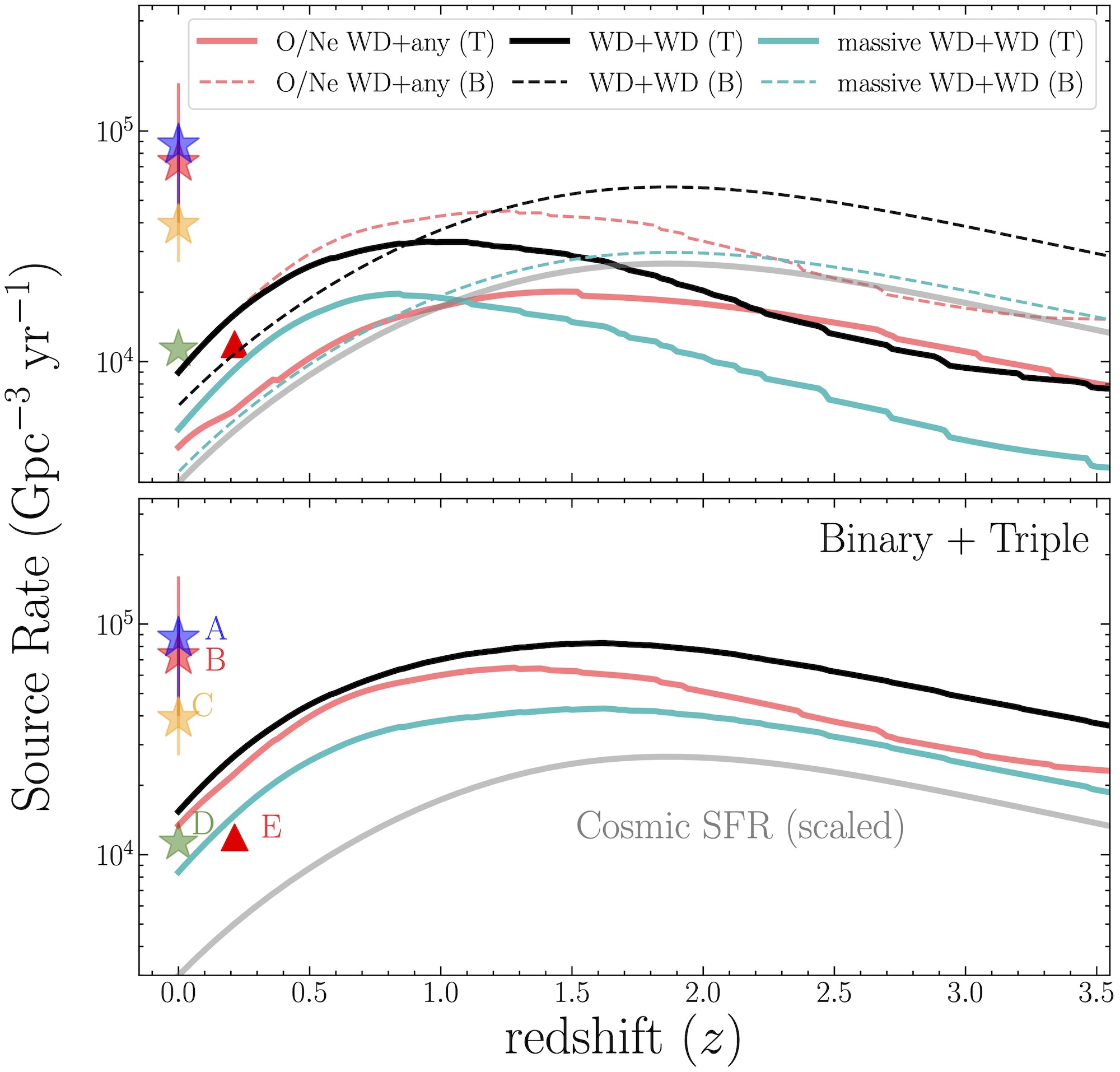
Figure 3: The number of FRBs expected as a function of cosmological redshift. The present is to the left, the distant and early universe is on the right. The top panel shows the three formation channels, with binary and triple systems separated. The bottom panel displays the composite rate and compares it with empirical estimates from existing FRB observations. [Shariat et al. 2026]
Original astrobite edited by Catherine Slaughter.
About the author, Will Golay:
I am a graduate student in the Department of Astronomy at Harvard University and the Center for Astrophysics | Harvard & Smithsonian, advised by Edo Berger. I study radio emission from transient astrophysical objects like tidal disruption events.
The post Triple Double: Do Merging White Dwarfs Produce Fast Radio Burst–Emitting Remnants? appeared first on AAS Nova.
]]>The post Earliest Galaxy Evolution in the CANUCS+Technicolor Fields: Galaxy Properties at z ∼ 10–16 Seen with the Full NIRCam Medium- and Broadband Filters appeared first on AAS Nova.
]]>A deep search for high-redshift galaxies in some of the richest JWST imaging to date emphasizes the importance of medium-band filters in excluding low-redshift interlopers and maximizing completeness.
The post Earliest Galaxy Evolution in the CANUCS+Technicolor Fields: Galaxy Properties at z ∼ 10–16 Seen with the Full NIRCam Medium- and Broadband Filters appeared first on AAS Nova.
]]>
Observations of a galaxy cluster during the universe's star-formation heyday give clues to the cluster's history.
The post Featured Image: An Active Galaxy Cluster Merger at Cosmic Noon appeared first on AAS Nova.
]]>This image from JWST shows the galaxy cluster XLSSU J021744.1-034536. The cluster is at a redshift of z = 1.98, placing it at cosmic noon, when the universe’s star formation was at its peak. To study the formation and evolution of this cluster, Zachary Scofield (Yonsei University) and collaborators collected wide-ranging clues, including signs of weak gravitational lensing, the glow of gas in between the galaxies of the cluster, and an analysis of the cluster members. The image above (click for the full view) indicates the galaxies that are members of the cluster. The brightest galaxy in the cluster is marked with a yellow square, and the remaining cluster members are circled, with the color indicating whether the galaxy’s cluster membership was assigned photometrically (magenta) or spectroscopically (green). Combining all available lines of evidence, Scofield’s team found that XLSSU J021744.1-034536 is undergoing a merger, giving a rare glimpse into this stage of cluster formation. To learn more about this work and what it tells us about galaxy clusters at cosmic noon, be sure to check out the full article linked below.
Citation
“An Active Galaxy Cluster Merger at Cosmic Noon Revealed by JWST Weak Lensing and Multiwavelength Probes,” Zachary P. Scofield et al 2026 ApJL 999 L1. doi:10.3847/2041-8213/ae447a
The post Featured Image: An Active Galaxy Cluster Merger at Cosmic Noon appeared first on AAS Nova.
]]>The post Shadow-Induced Warps in Protoplanetary Disks appeared first on AAS Nova.
]]>In simulations featuring an inner disk tilted by 30 degrees, the outer disk develops a thermally driven warp due to launching of bending waves, which drives a tilting response in the outer disk.
The post Shadow-Induced Warps in Protoplanetary Disks appeared first on AAS Nova.
]]>
The Lucy mission has provided insights into the craters, boulders, and other surface features of the asteroid Dinkinesh and its small satellite, Selam.
The post Details on Dinkinesh and Its Surprise Satellite from the Lucy Mission appeared first on AAS Nova.
]]>The Lucy spacecraft, en route to its primary mission targets, zipped past the main-belt asteroid Dinkinesh and revealed its tiny satellite, Selam. New research examines the surfaces and histories of these small rocky worlds.
A Stop Along the Way
In 2021, the Lucy spacecraft embarked on a 12-year mission to study several Jupiter trojan asteroids, which share Jupiter’s orbit. The spacecraft won’t have its first encounter with a Jupiter trojan until 2027, but it hasn’t been idle during its long journey. In November 2023, Lucy performed a dress rehearsal of its trojan-encounter maneuvers during a flyby of a 738-meter-wide main-belt asteroid called (152830) Dinkinesh.
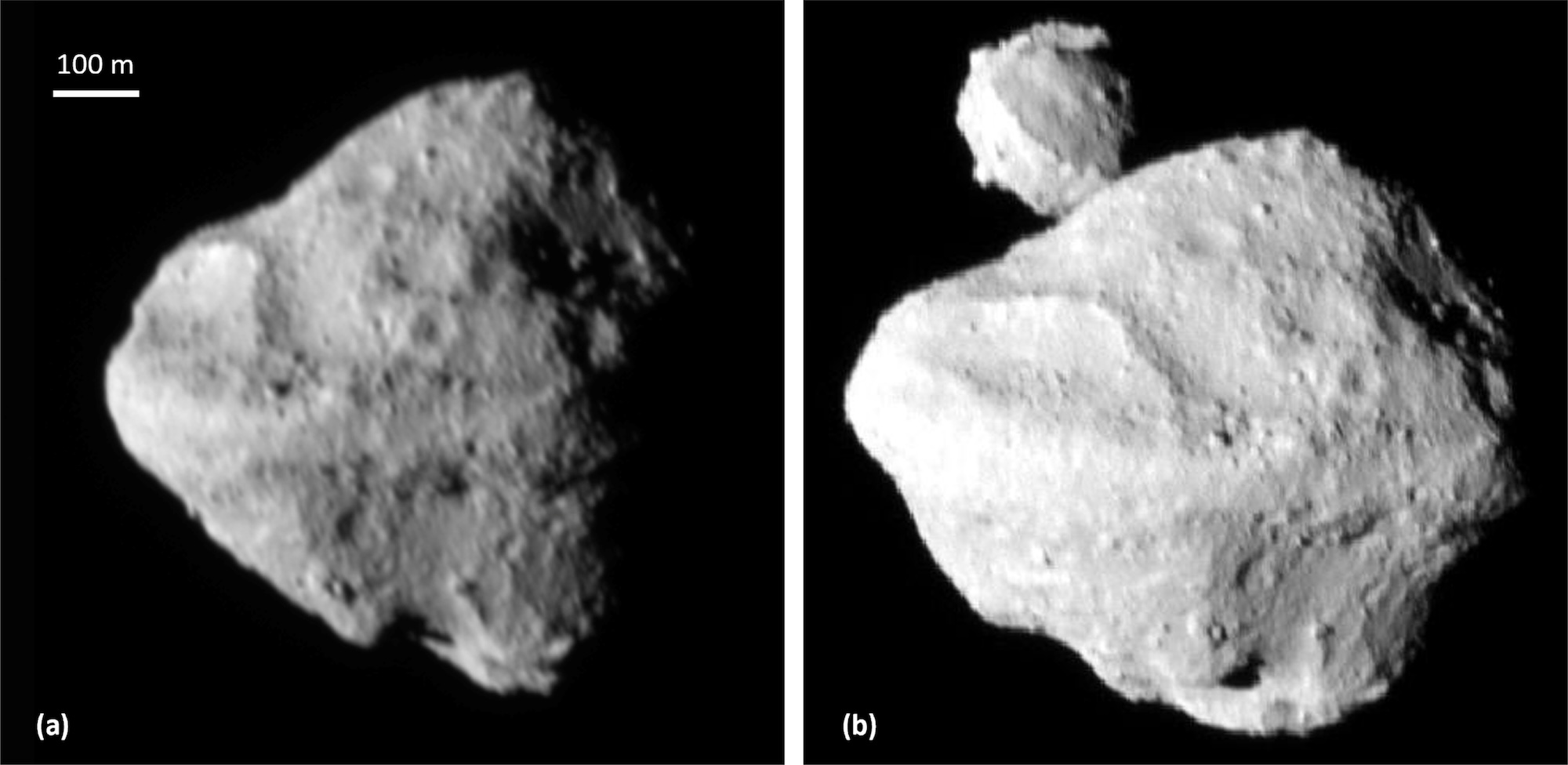
Two images of Dinkinesh from the Lucy mission. The second image features its satellite, Selam. [Bierhaus et al. 2025]
Craters and Boulders
In a recent research article, Edward Bierhaus (Lockheed Martin Space) and collaborators analyzed Lucy flyby images to study the surfaces of Dinkinesh and Selam. The team analyzed global features like troughs and ridges and measured visible craters and boulders.
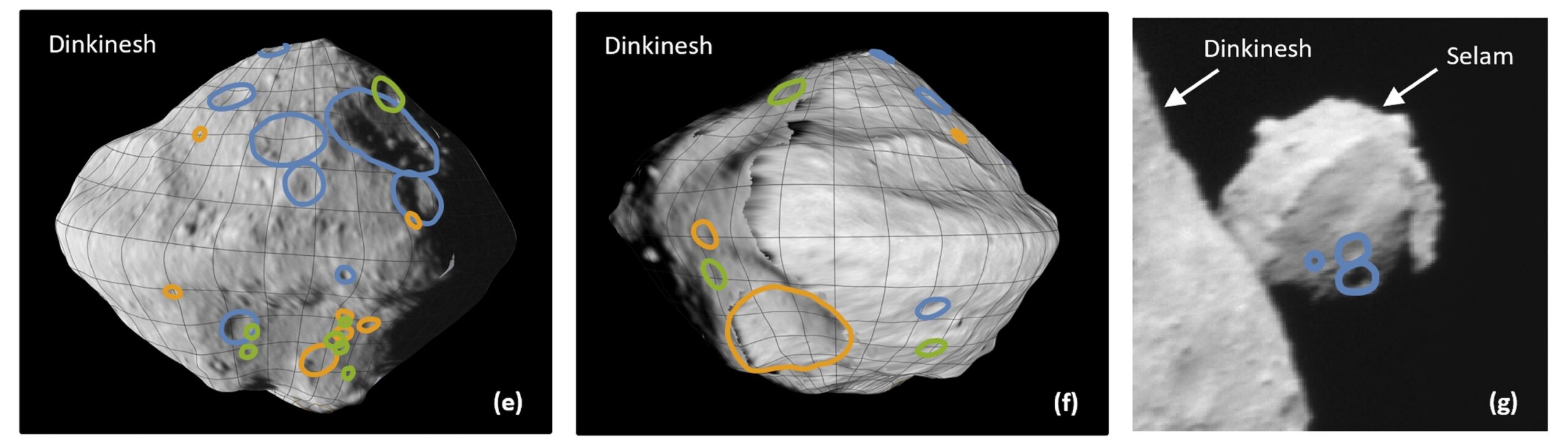
Locations of craters on Dinkinesh and Selam. The blue lines indicate the most confidently identified craters; orange and green lines mark craters identified less confidently. Click to enlarge. [Bierhaus et al. 2025]
The size–frequency distribution of Dinkinesh’s boulders, on the other hand, is somewhat steeper. This discovery may mean that S-type (stony) asteroids like Dinkinesh have different boulder size distributions than C-type (carbonaceous) asteroids.
Possible Histories
An analysis of the collisional timescales in the main asteroid belt suggests that Dinkinesh is a fragment of a larger asteroid that was split apart at least once, though it’s not yet possible to say which parent body it might have come from. After splitting off from its parent asteroid, Dinkinesh appears to have been subjected to the Yarkovsky–O’Keefe–Radzievskii–Paddack (YORP) effect. This effect arises when sunlight falls on a small asymmetric asteroid, creating a torque that can alter its spin rate. In extreme cases, the YORP effect can crank up an asteroid’s spin rate so much that it sheds some of its surface material or flies apart altogether.
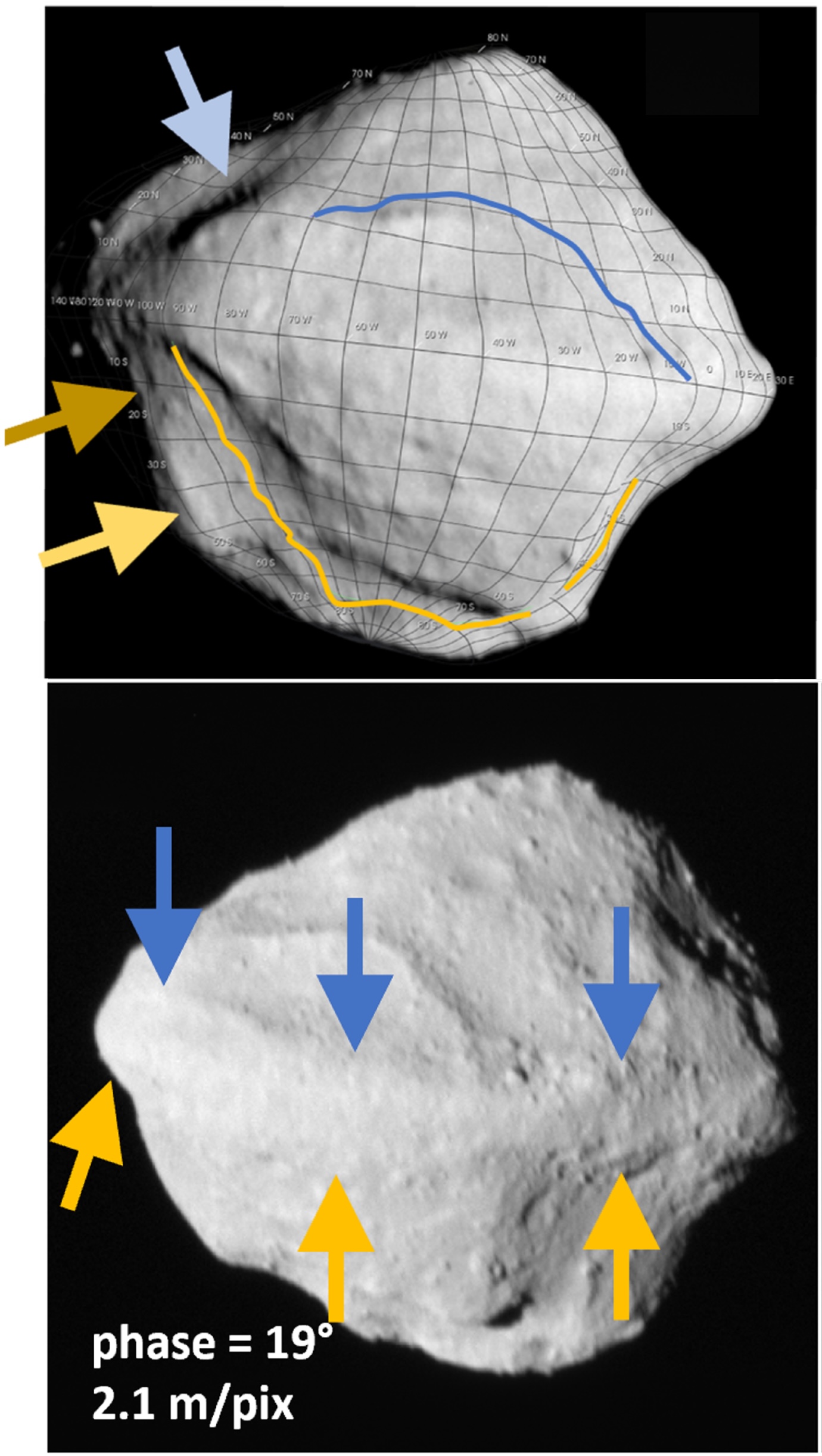
Locations of Sumak Fossa (top) and Fab Dorsum (bottom) indicated with arrows. [Adapted from Bierhaus et al. 2025]
With Lucy en route to its primary objective, there’s still much for us to learn from this mission about the small bodies of our solar system. In the meantime, be sure to check out the full article linked below, as there are far more details about Dinkinesh and Selam than could be included in this short summary!
Citation
“The Geology of a Small Main-Belt S-Class Binary Asteroid System: Dinkinesh and Its Contact Binary Satellite Selam as Observed by the Lucy Mission,” E. B. Bierhaus et al 2025 Planet. Sci. J. 6 299. doi:10.3847/PSJ/ae1968
The post Details on Dinkinesh and Its Surprise Satellite from the Lucy Mission appeared first on AAS Nova.
]]>The post An Oasis in the Brown Dwarf Desert: Confirmation of Two Low-Mass Transiting Brown Dwarfs Discovered by TESS appeared first on AAS Nova.
]]>Two newly discovered brown dwarfs occupy an underpopulated region of the brown dwarf mass–period parameter space; one brown dwarf appears to be under luminous, which is rare among brown dwarfs.
The post An Oasis in the Brown Dwarf Desert: Confirmation of Two Low-Mass Transiting Brown Dwarfs Discovered by TESS appeared first on AAS Nova.
]]>The post Do Little Red Dots Vary? appeared first on AAS Nova.
]]>New modeling shows that super-Eddington accretion can account for the lack of observed variability in little red dots; if their accretion is sub-Eddington, photometric variability should have been detected by now.
The post Do Little Red Dots Vary? appeared first on AAS Nova.
]]>
Astronomers search for spacetime ripples from a possible supermassive black hole binary at the heart of the elliptical galaxy 3C 66B.
The post A Search for a Supermassive Black Hole Binary appeared first on AAS Nova.
]]>Researchers have undertaken a new search for a supermassive black hole binary, placing limits on its properties and exploring a promising technique for simultaneously analyzing electromagnetic and gravitational wave data.
Narrowing the Search for Supermassive Black Hole Binaries
In 2023, astronomers announced the discovery of compelling evidence for the gravitational wave background: the collective murmurs and rumblings of distant supermassive black hole binaries. The time may now be ripe for the natural next phase of discovery: the detection of gravitational waves from an individual supermassive black hole binary.
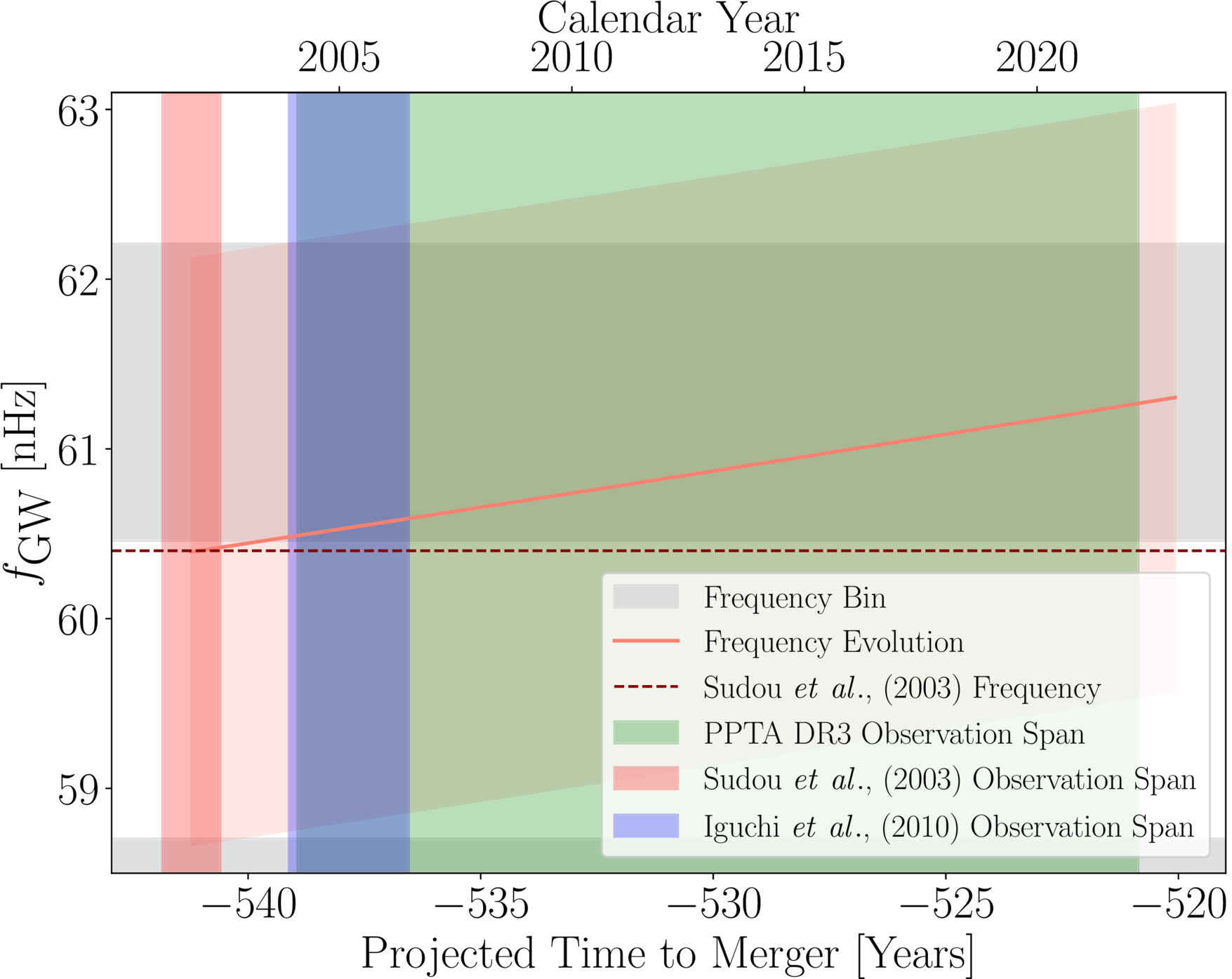
The predicted frequency evolution of gravitational waves from the black hole binary candidate in 3C 66B. Click to enlarge. [Cardinal Tremblay et al. 2026]
Pulsar Timing Array
Jacob Cardinal Tremblay (Max Planck Institute for Gravitational Physics and Leibniz University Hannover) and collaborators conducted a search for gravitational waves from the candidate supermassive black hole binary in 3C 66B using the Parkes Pulsar Timing Array (PPTA).
Artist’s impression of a supermassive black hole binary generating gravitational waves that sweep across an array of pulsars. [Aurore Simonnet / NANOGrav; CC BY 4.0]
Researchers have previously searched for gravitational waves from 3C 66B in data from other pulsar timing arrays, such as the North American Nanohertz Observatory for Gravitational Waves, and no black hole binary has been detected. This is the first search of the third PPTA data release, which contains measurements of 32 pulsars over 18 years, providing a long baseline to search for the slow undulations of low-frequency gravitational waves.
Placing Limits
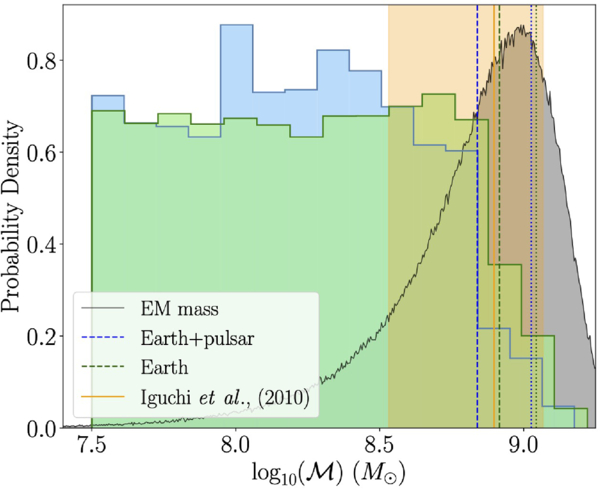
Constraints placed on the chirp mass by this work (blue and green histograms) compared to constraints from electromagnetic observations (gray and peach shaded areas). Click to enlarge. [Cardinal Tremblay et al. 2026]
While this analysis didn’t result in the first-ever detection of gravitational waves from a single supermassive black hole binary, it did allow the team to test a new method that could someday play a role in precision cosmology. This method simultaneously analyzes electromagnetic and gravitational wave data from known supermassive black hole binaries, establishing these sources as “standard sirens” that can complement standard candles like Type Ia supernovae for measurements of the expansion rate of the universe.
Citation
“A Multimessenger Search for the Supermassive Black Hole Binary in 3C 66B with the Parkes Pulsar Timing Array,” Jacob Cardinal Tremblay et al 2026 ApJL 998 L42. doi:10.3847/2041-8213/ae3c98
The post A Search for a Supermassive Black Hole Binary appeared first on AAS Nova.
]]>The post A Large Sample of JWST/NIRSpec Brown Dwarfs: New Distant Discoveries appeared first on AAS Nova.
]]>Of the 68 brown dwarfs identified in a recent study, 12 are newly discovered and two are more than 5 kiloparsecs away, making them the most distant known brown dwarfs in our galaxy.
The post A Large Sample of JWST/NIRSpec Brown Dwarfs: New Distant Discoveries appeared first on AAS Nova.
]]>
Astrobites reports on an investigation of a runaway star that may have survived its companion going supernova.
The post I Survived a Type Ia Supernova, and All I Got Was This Kick Velocity appeared first on AAS Nova.
]]>Editor’s Note: Astrobites is a graduate-student-run organization that digests astrophysical literature for undergraduate students. As part of the partnership between the AAS and astrobites, we occasionally repost astrobites content here at AAS Nova. We hope you enjoy this post from astrobites; the original can be viewed at astrobites.org.
Title: Supernova Ia Remnants with M-Dwarf Surviving Companions
Authors: Kuo-Chuan Pan (潘國全), Pilar Ruiz-Lapuente, and Jonay I. González Hernández
First Author’s Institution: National Tsing Hua University
Status: Published in ApJ
Type Ia supernovae are important tools astronomers use to measure distances in space. Despite their important role as “standardizable candles,” their origins remain hotly debated. It’s long been theorized that a Type Ia supernova can develop from one of two pathways: the single-degenerate channel or the double-degenerate channel. In the single-degenerate channel, a white dwarf and a non-degenerate star (such as a red giant or main-sequence star like our Sun) orbit each other in a close binary system. The white dwarf accretes material from the outer surface of the non-degenerate star until it reaches a critical mass and explodes. The double-degenerate channel begins instead with two white dwarfs orbiting each other. Most explosion mechanisms from this channel result in the complete obliteration of the secondary, less-massive white dwarf. However, one theoretical explosion mechanism, called the dynamically driven double-degenerate double-detonation (D6) channel, might allow the secondary companion star to survive an explosion from a double-degenerate Type Ia supernova.
Generally, due to the immense energy from a supernova explosion, we expect these surviving companion stars to be “kicked” away from the blasts at high velocities. Fortunately, astronomers have found evidence of these surviving companion stars. As covered in a previous Astrobite, three hypervelocity white dwarfs have been found in Gaia data and traced back to the locations of double-degenerate Type Ia supernovae. Given the prevalence of Type Ia supernovae, however, astronomers are led to question why we haven’t seen many more of these candidates. It’s additionally important to wonder what similar “runaway” companions might look like for the single-degenerate channel.
Recent observations by the Gaia spacecraft near the supernova remnant G272.2-3.2 show an M-dwarf star, MV-G272, with an unusually high velocity around 240 km/s and a trajectory tracing back to the center of the supernova remnant. Is it possible for this M dwarf to be the runaway companion to the remnant’s original supernova? The authors of today’s article look at simulations of potential companion stars from single-degenerate Type Ia supernovae and compare their results to this observed potential companion candidate.
Because this work focuses on the potential for M-dwarf companions, the authors explored a range of simulated companion-star masses and radii characteristic of M dwarfs: 0.5, 0.6, and 0.7 solar mass and 0.396, 0.454, and 0.483 solar radius, respectively. To make these models, they used the stellar evolution code Modules for Experiments in Stellar Astrophysics (MESA) to construct and evolve a number of simulated stars with these specifications.
After setting up the models in MESA, they used the magnetohydrodynamics code FLASH to perform 2D and 3D simulations of the supernova explosion and the subsequent impact of the exploding star’s ejecta (or hot material) on its M-dwarf companion. After the explosion and impact were modeled, the companion star’s evolution was further followed in MESA.
Figure 1 shows the density of the supernova’s ejecta, or exploding material, as it impacts the companion star. (You can think of this figure as if you were looking at the companion star out in space.) After roughly 100 seconds, you can see a bow shock develop around the top of the companion (or the “front” of the star) as it wraps around the companion. This impact causes significant compression of the companion star and rips away upwards of 50% the companion’s mass. The impact of this shock is what gives the companion star its “kick,” sending it hurtling through space.
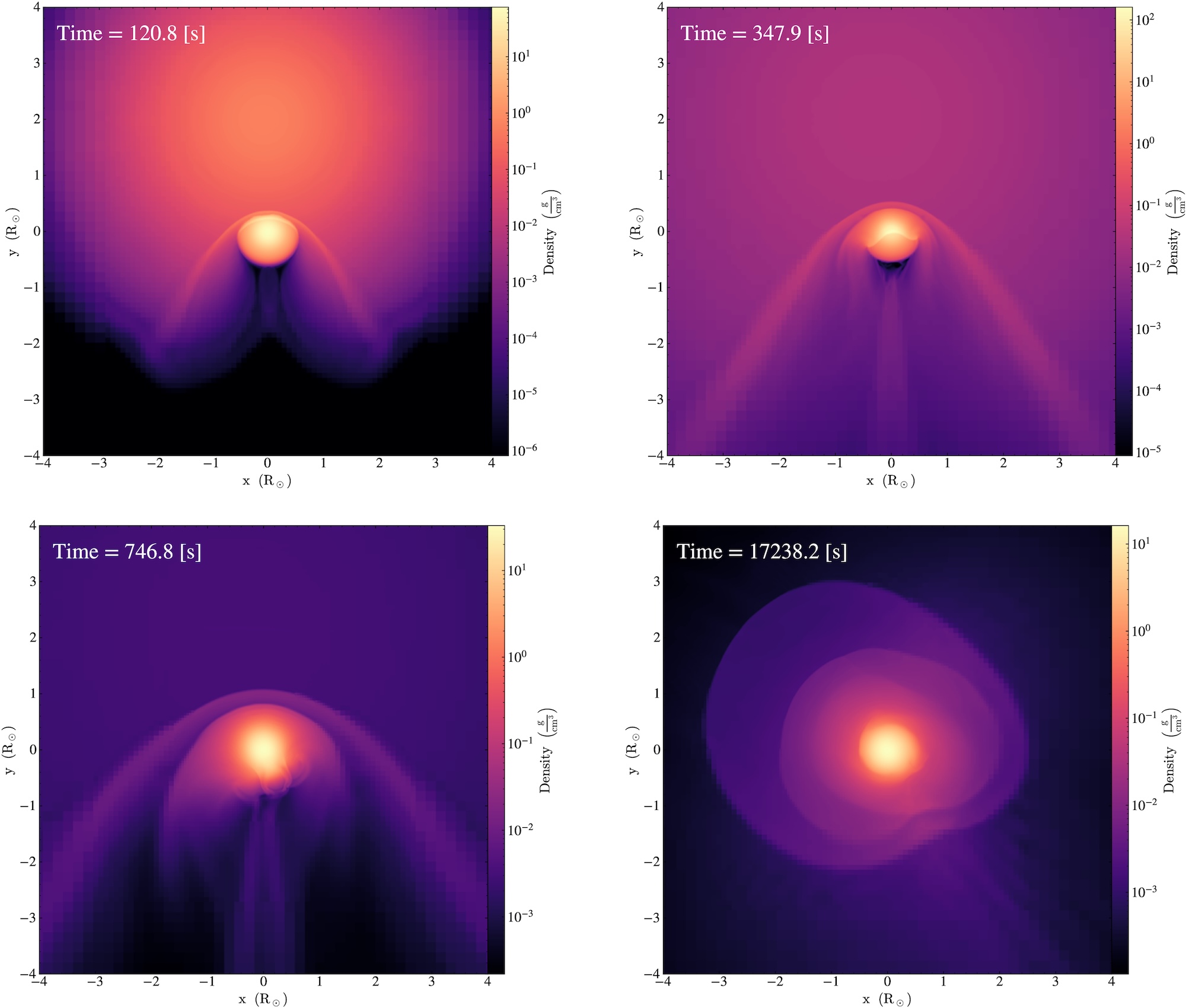
Figure 1: Visual of the density of the companion star (center of each plot) and the supernova ejecta over time. In the top row of plots and the bottom-left plot, you can see the higher-density bow shock bent around the top (or front) of the companion star. In the bottom-right plot, you can see some of the supernova ejecta and unbound mass from the companion star settling around the companion star. [Pan et al. 2025]
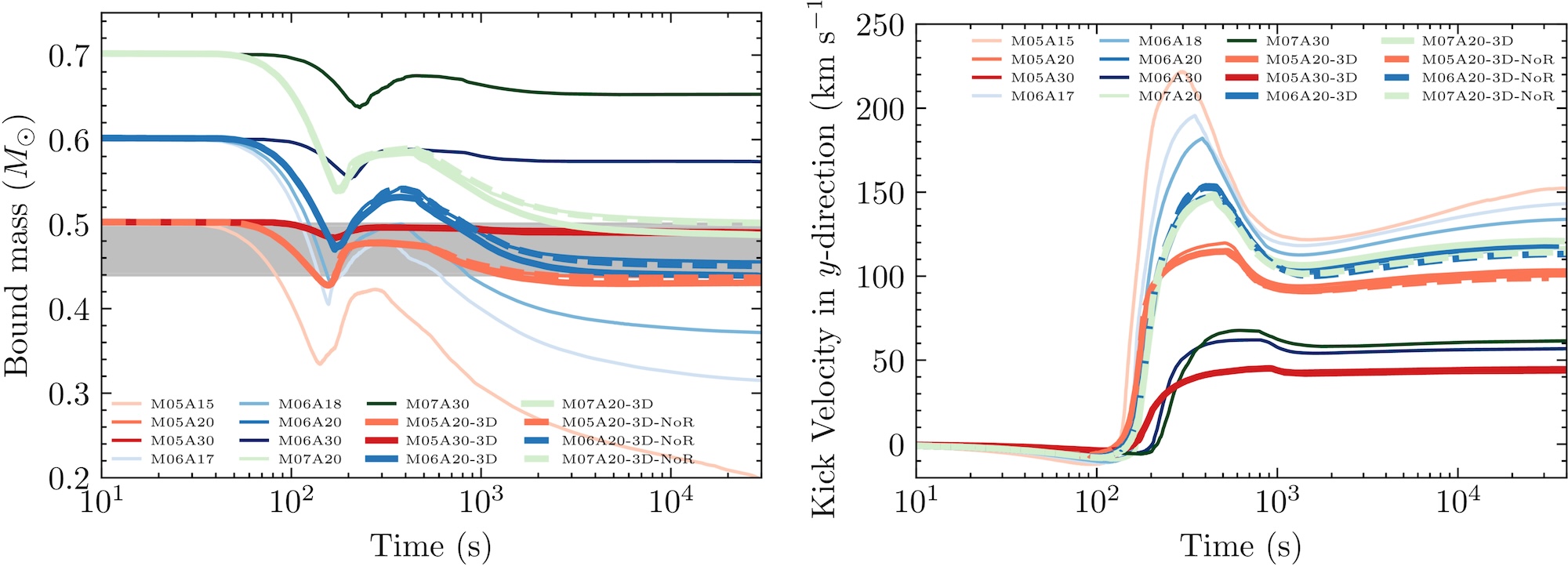
Figure 2: The different models shown in both plots indicate different initial masses and separation distances between the companion and the exploding star. Left: how the companion’s gravitationally bound mass evolves over time. The plot can be read left to right. The dip around 102 seconds indicates the impact of the supernova shock, which unbinds layers of the companion’s mass. Some of that mass becomes bound again to the companion after the shock passes. Right: how the companion star’s kick velocity changes based on initial mass and separation distance between companion and exploding star. The peak in values between 102 and 103 seconds indicates the impact, or “kick,” from the supernova. [Pan et al. 2025]
Notably, runaway companion stars of these Type Ia supernovae seem to retain information from the initial explosion. Given the final velocities of these companions, astronomers might be able to figure out the companion’s initial mass and trace back its trajectory to the system it originated from. Overall, the fact that MV-G272 has a trajectory that tracks back to the center of a supernova remnant makes it a good companion candidate. These results support the feasibility of M-dwarf runaway companions from single-degenerate Type Ia supernova systems. Now that we know what these companions might look like — and how fast they can be going — astronomers can hopefully better search for these high-velocity stars in the future.
Original astrobite edited by Catherine Slaughter.
About the author, Mckenzie Ferrari:
I’m currently a PhD student in the geophysical sciences program at the University of Chicago. While I now study the atmosphere and oceans of Earth, most of my previous research focused on simulations of Type Ia supernovae and galaxy formation and evolution. In my free time, I foster cats for a local organization, enjoy cooking, and can often be found running along Lake Michigan.
The post I Survived a Type Ia Supernova, and All I Got Was This Kick Velocity appeared first on AAS Nova.
]]>The post Multiple Shells in Supernova 2023ixf Support the Jittering Jets Explosion Mechanism appeared first on AAS Nova.
]]>Examination of SN 2023ixf’s light curve has led to the identification of 2–3 potential ejecta shells, which the authors attribute to stochastic jet launching by the newborn neutron star.
The post Multiple Shells in Supernova 2023ixf Support the Jittering Jets Explosion Mechanism appeared first on AAS Nova.
]]>
Could a recent collision between the two largest satellites of the Milky Way explain the disrupted state of the Small Magellanic Cloud?
The post Disrupted Dwarf Galaxy: Investigating the History of the Small Magellanic Cloud appeared first on AAS Nova.
]]>Researchers show that the highly disrupted state of the Small Magellanic Cloud can be attributed to a long history of interactions with its neighbor, the Large Magellanic Cloud.
A Disrupted Dwarf Galaxy?
The Small Magellanic Cloud (SMC) is one of the largest and nearest satellites of the Milky Way. At a distance of just 200,000 light-years, the SMC has long been used as an accessible analog for low-metallicity star-forming galaxies in the early universe.
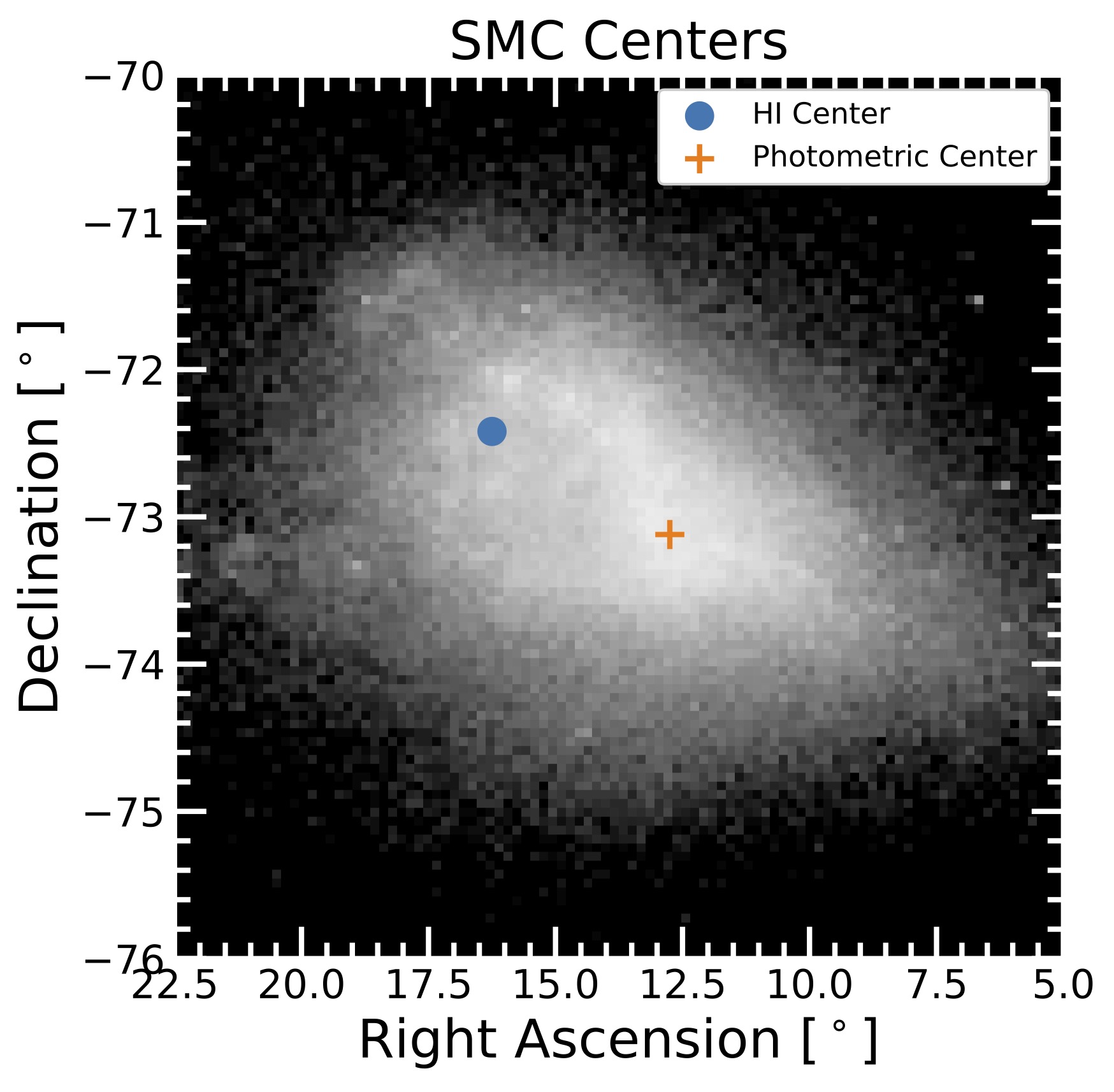
Locations of the SMC’s photometric center and hydrogen gas kinematic center. The two locations are separated by several thousand light-years. [Adapted from Rathore et al. 2026]
The source of this disequilibrium might be the Milky Way’s largest satellite, the Large Magellanic Cloud (LMC). As the SMC inches along its orbit around the Milky Way, it also engages in a gravitational dance with the LMC. These galaxies may be clumsy dance partners, with data suggesting a potential direct collision between the SMC and LMC within the past 200 million years.
Modeling the Magellanic Clouds
To understand how a potential collision between the Magellanic Clouds might have impacted the present-day properties of the SMC, Himansh Rathore (University of Arizona) and collaborators used hydrodynamical simulations to explore the interconnected histories of the SMC, the LMC, and the Milky Way.
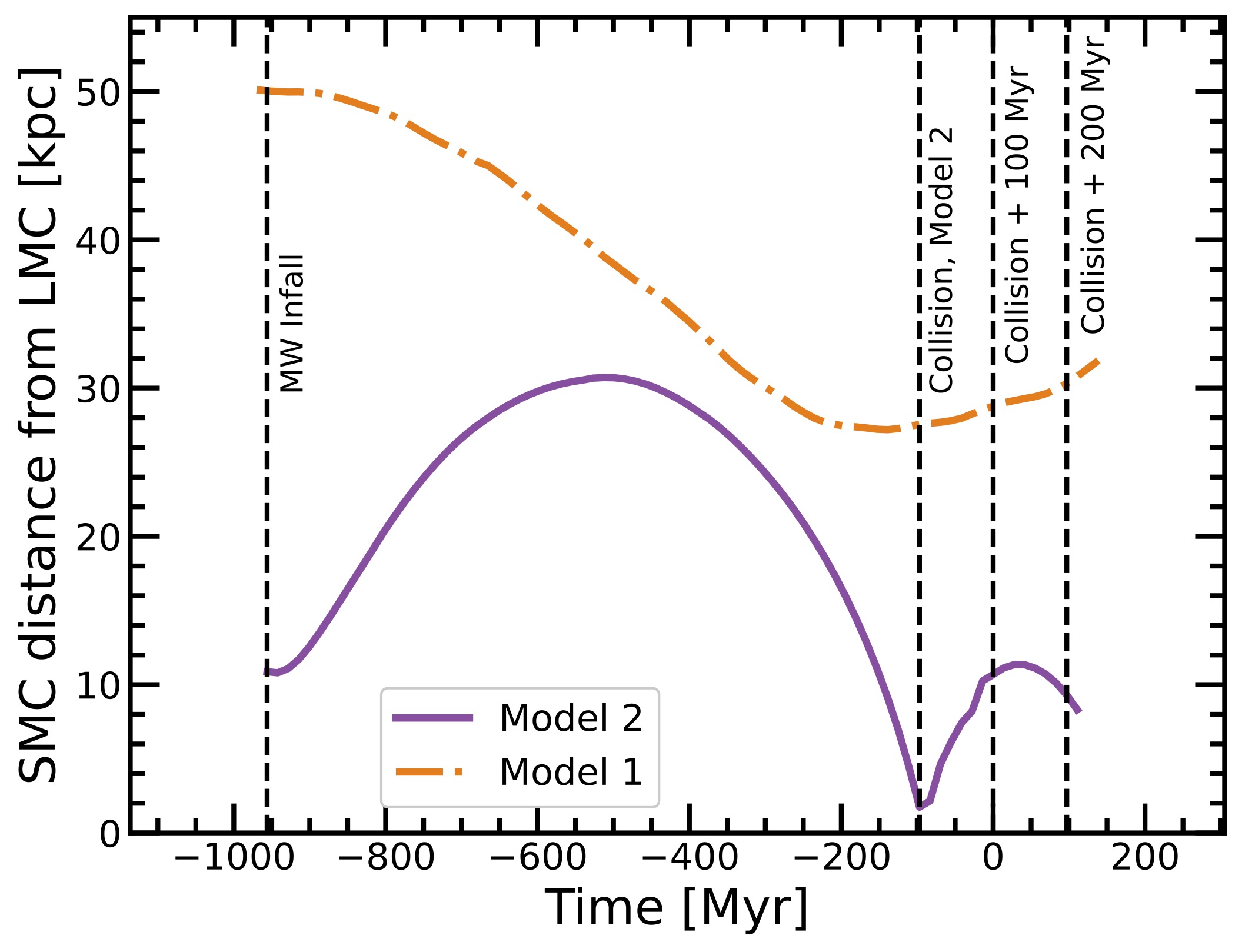
SMC–LMC separation over time in the control model (orange dot-dashed line) and the collision model (purple solid line). Click to enlarge. [Rathore et al. 2026]
Both of these model scenarios reproduced certain features of the SMC–LMC system, such as the bridge of gas that spans the distance between them. Only the collision scenario, though, can explain the apparent discrepancy between the SMC’s stars and gas.
An Impactful Collision
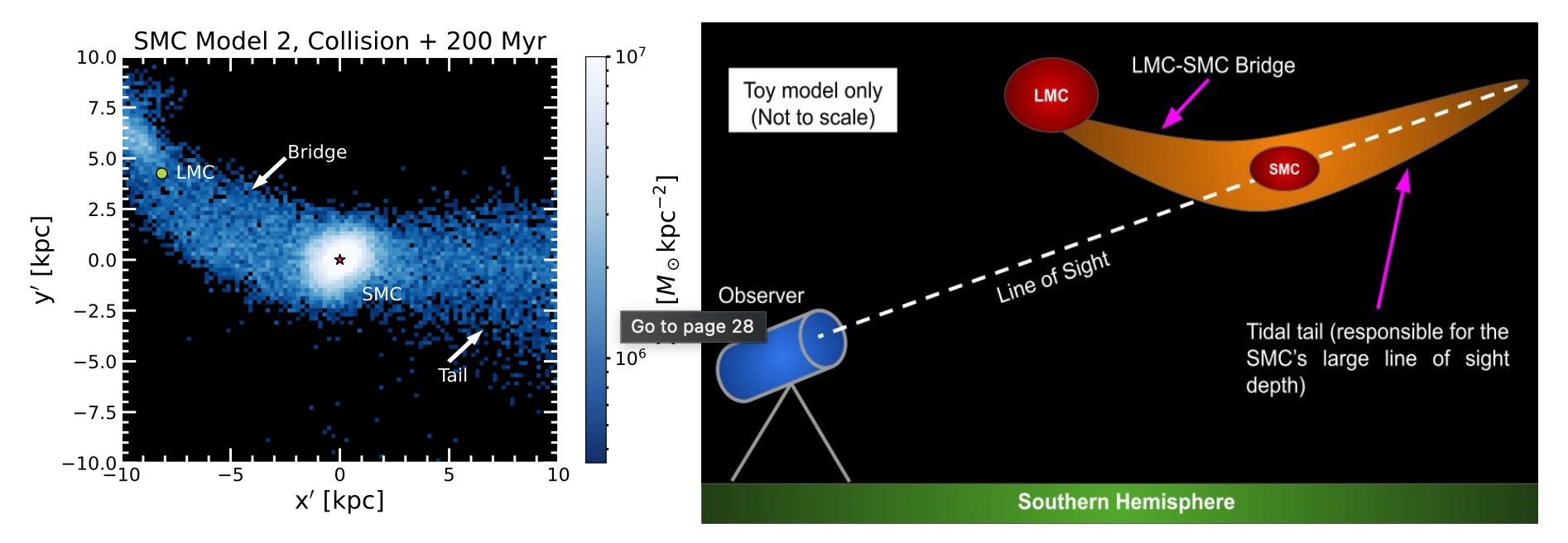
Left: Simulated stellar density 200 million years post-collision. Right: A schematic of our likely perspective on the post-collision SMC–LMC system. Click to enlarge. [Rathore et al. 2026]
In terms of the galaxy’s rotation, only the stars nearest the SMC’s center rotate, while the rest move radially outward, swayed by the tidal pull of the LMC. This radial motion is also present in the galaxy’s gas. While previous work has interpreted the observed velocity dispersion of the SMC’s gas as a sign of rotation, Rathore’s team showed that radial expansion, viewed from an inclined angle, can mimic a rotational signature.
The team also showed that the gas is far more disturbed than the stars, reflecting the pressure exerted by the LMC’s gas when the two galaxies collided. This type of interaction can transform an irregular dwarf galaxy into an ellipsoidal or spheroidal dwarf galaxy — a transition that Rathore’s team argues is underway for the SMC.
Ultimately, these simulations demonstrate that the SMC is a profoundly disrupted galaxy, likely still reeling from a recent collision with its larger neighbor. Viewing the SMC through this lens is critical to understanding its role as an analog to early universe galaxies.
Citation
“A Galactic Transformation — Understanding the SMC’s Structural and Kinematic Disequilibrium,” Himansh Rathore et al 2026 ApJ 1000 50. doi:10.3847/1538-4357/ae4507
The post Disrupted Dwarf Galaxy: Investigating the History of the Small Magellanic Cloud appeared first on AAS Nova.
]]>The post How Invisible Stellar Halos Bias Our Understanding of Ultrafaint Galaxies appeared first on AAS Nova.
]]>Excluding the low-surface-brightness outskirts of low-mass galaxies due to surface-brightness detection limits leads to overestimates of central dark matter densities and virial masses.
The post How Invisible Stellar Halos Bias Our Understanding of Ultrafaint Galaxies appeared first on AAS Nova.
]]>
Astronomers knew that Jupiter's upper atmosphere could be strangely warm, but only now do they have global maps showing just where those hot spots are and how long they last.
The post Jupiter’s Atmosphere Holds Steady appeared first on AAS Nova.
]]>Jupiter’s upper atmosphere is hundreds of degrees hotter than it has any right to be, and for decades astronomers could only study it in brief, seemingly chaotic glimpses. New global maps built from years of observations have finally revealed the big picture — and it is surprisingly calm.
Order from Chaos
Although we’re well acquainted with Jupiter, having sent eight spacecraft on close passages and lived with it dominating the night sky for millennia, some of its simplest characteristics continue to puzzle us. For example, high above Jupiter’s cloud bands, temperatures exceed 800 K — far hotter than we’d expect given the meager sunlight that reaches that distance. Astronomers have long suspected that this excess is deposited by energy from the planet’s brilliant polar auroras, but previous observations provided only localized, sporadic snapshots that collectively painted a confusing picture of an ever-changing landscape.
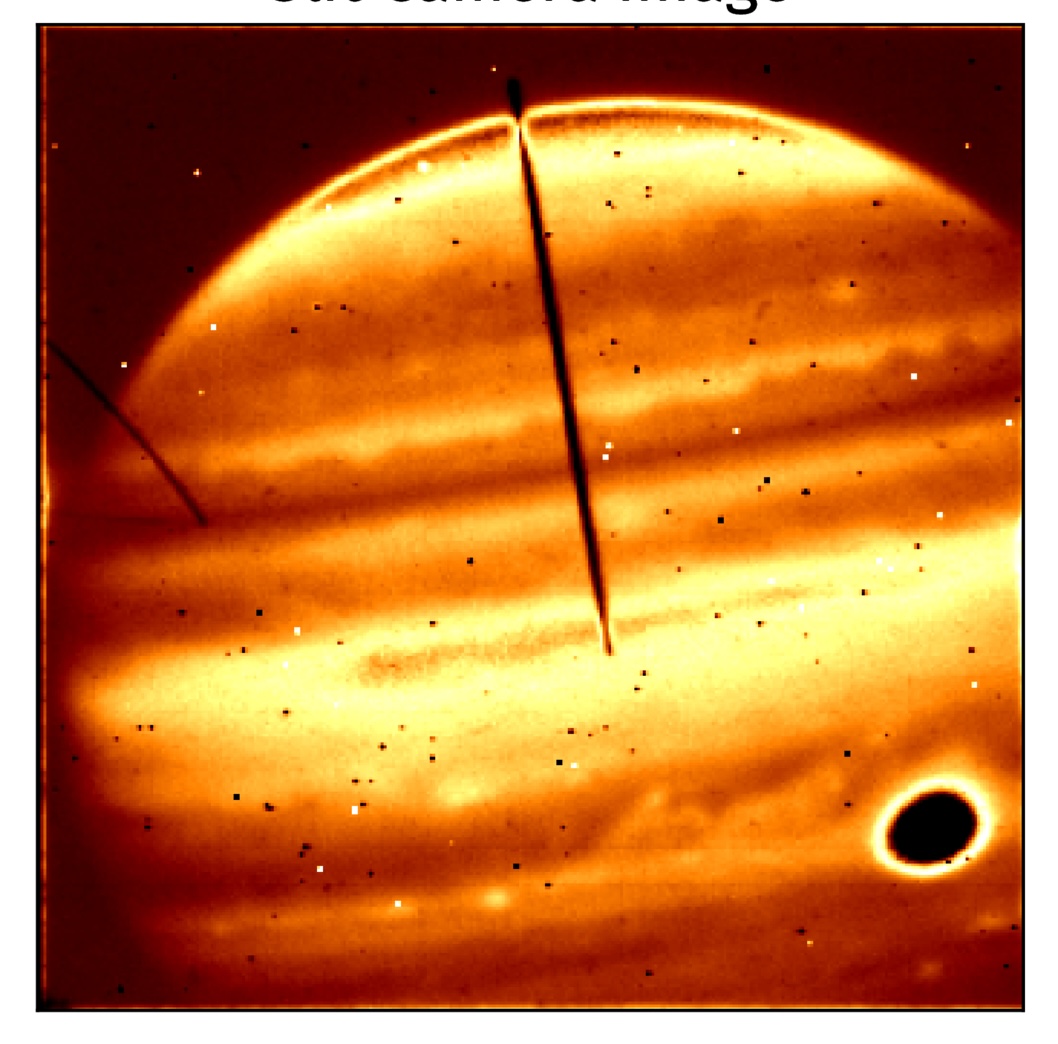
Jupiter as seen by the slit camera on the Keck telescope during one of the team’s observations. The spectrograph slit is the dark vertical band stretching from the equator to the north pole, and the Great Red Spot appears in black at the lower right. [Adapted from Roberts et al. 2026]
Consistency is Key
A look at how the maps evolved over time revealed striking order: the spatial patterns remained nearly constant, and the temperatures barely changed even over years. In general, the team noted that temperature decreases smoothly from the auroral regions near the poles (~1,150 K) to the equator (~750 K) at every longitude, and that although there is some night-to-night temperature variation, things stay remarkably steady over the years-long baseline.
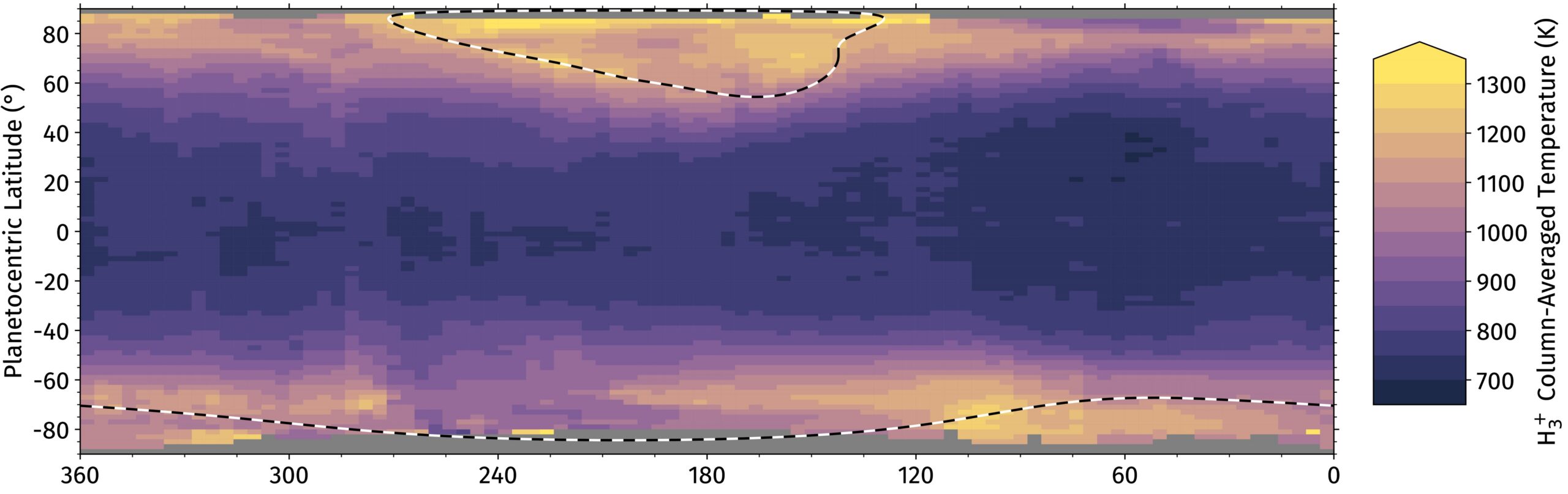
A map of the average temperature of Jupiter’s upper atmosphere, as measured by the new Keck NIRSPEC data. Click to enlarge. [Adapted from Roberts et al. 2026]
The conclusion that the upper atmosphere is complex but steady has implications beyond just Jupiter, as the team notes that JWST has already observed spatial patterns in the temperatures of the upper atmospheres of both Uranus and Neptune. As Roberts and colleagues note, “similar physical mechanisms could give rise to comparably stable structures” on those distant ice giants, meaning this analysis could ground our understanding of the upper atmospheres of giant worlds across the solar system.
Citation
“A Global View of Jupiter’s Upper Atmosphere Through H3+,” Kate Roberts et al 2026 ApJL 998 L13. doi:10.3847/2041-8213/ae3c9b
The post Jupiter’s Atmosphere Holds Steady appeared first on AAS Nova.
]]>The post Retrograde Predominance of Small Saturnian Moons Reiterates a Recent Retrograde Collisional Disruption appeared first on AAS Nova.
]]>Sixty-four new irregular moons of Saturn have been discovered, and analysis of all 122 irregular moons supports the theory that the Mundilfari subgroup was formed by a collision less than 100 million years ago.
The post Retrograde Predominance of Small Saturnian Moons Reiterates a Recent Retrograde Collisional Disruption appeared first on AAS Nova.
]]>
Thanks to increasingly high-resolution images of the Sun, researchers are catching magnetic reconnection as it happens.
The post Astronomers See Braided Magnetic Fields Above a Sunspot appeared first on AAS Nova.
]]>Revealed in high resolution, researchers have spotted complex twisting and braiding motions in fine threads of plasma suspended above a sunspot. The flow of material that followed this braiding provides evidence for magnetic reconnection.
Heating Up the Corona
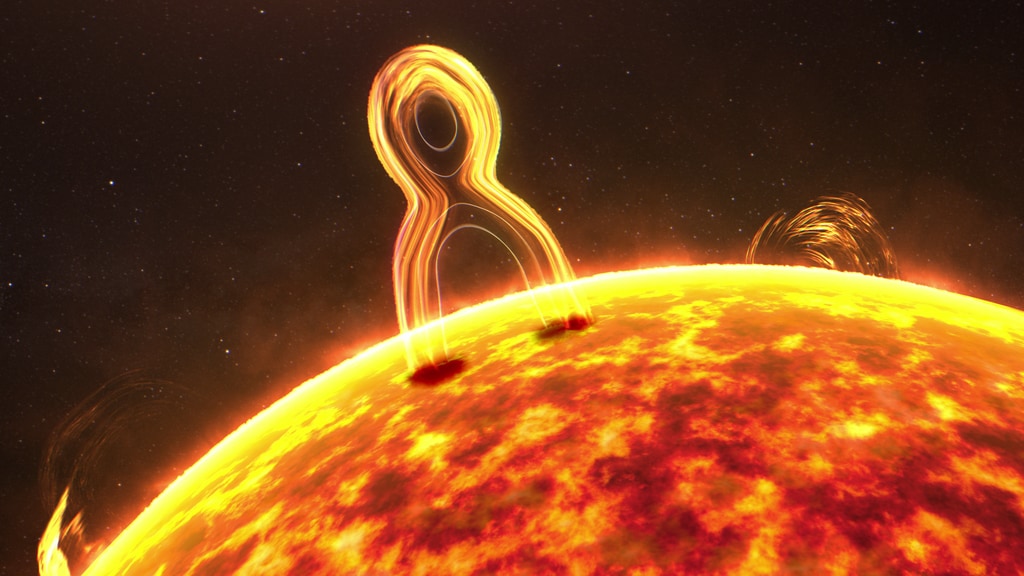
Magnetic reconnection is common throughout the universe, from Earth’s magnetic field to the jets of supermassive black holes. This illustration shows magnetic reconnection happening on the Sun. [NASA’s Conceptual Image Laboratory]
One way for magnetic reconnection to heat the corona is along magnetic fields that loop up into the corona and are anchored to the solar photosphere. The footprints of these field lines — the spots where they land in the photosphere — wiggle around in random ways. As this happens, the arcing magnetic field lines become braided together, and the twisted magnetic field can then undergo magnetic reconnection, heating the corona.
Braiding and Unbraiding
This process has been explored theoretically, but it’s been challenging to observe directly. As increasingly capable Sun-studying instruments have come online, though, researchers have been able to attain the high resolution needed to see this process at work.
Recently, Hechao Chen (Yunnan University; Peking University; Yunnan Key Laboratory of Solar Physics and Space Science) used data from the New Vacuum Solar Telescope, the Interface Region Imaging Spectrograph, and the Solar Dynamics Observatory to study the braiding and unbraiding of fine magnetic structures above a sunspot.
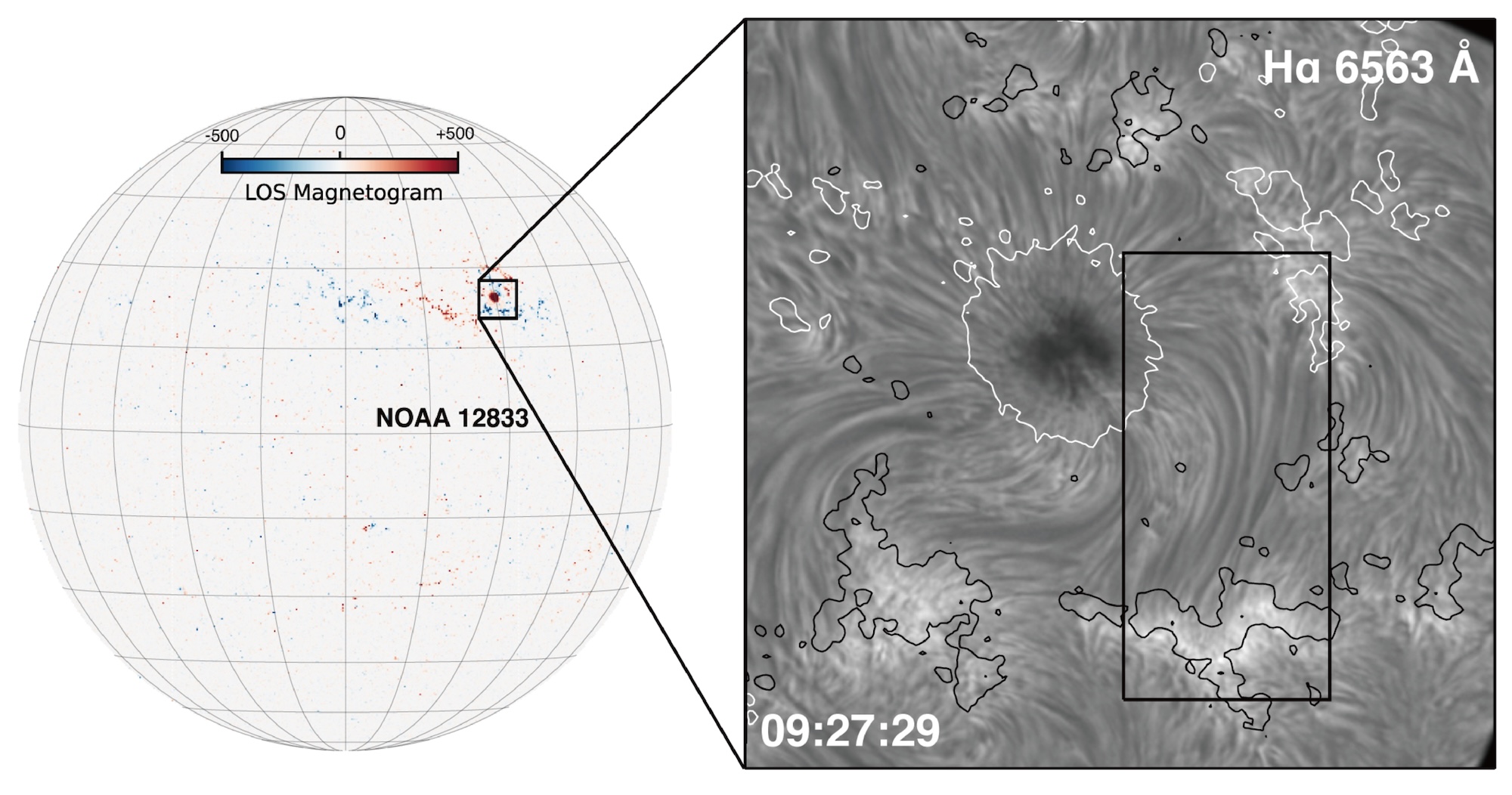
Location of the sunspot featured in this study, plus a closeup of the strands of plasma around the sunspot. Click to enlarge. [Adapted from Chen et al. 2025]
Driven by Reconnection
The plasma threads appear to lie nearly parallel to one another at the beginning of the observation. Images from all three facilities showed the plasma threads intertwining, providing evidence for the twisting of magnetic field lines predicted to happen when their footprints move around. (As further evidence for this footprint motion, the team also observed complicated flow patterns near one of the footprints.) This intertwining was followed by a sudden brightening where the threads were most tightly knotted, creating two bright “blobs” that traveled outward toward the footprints. Afterward, the threads resumed their nearly parallel state.
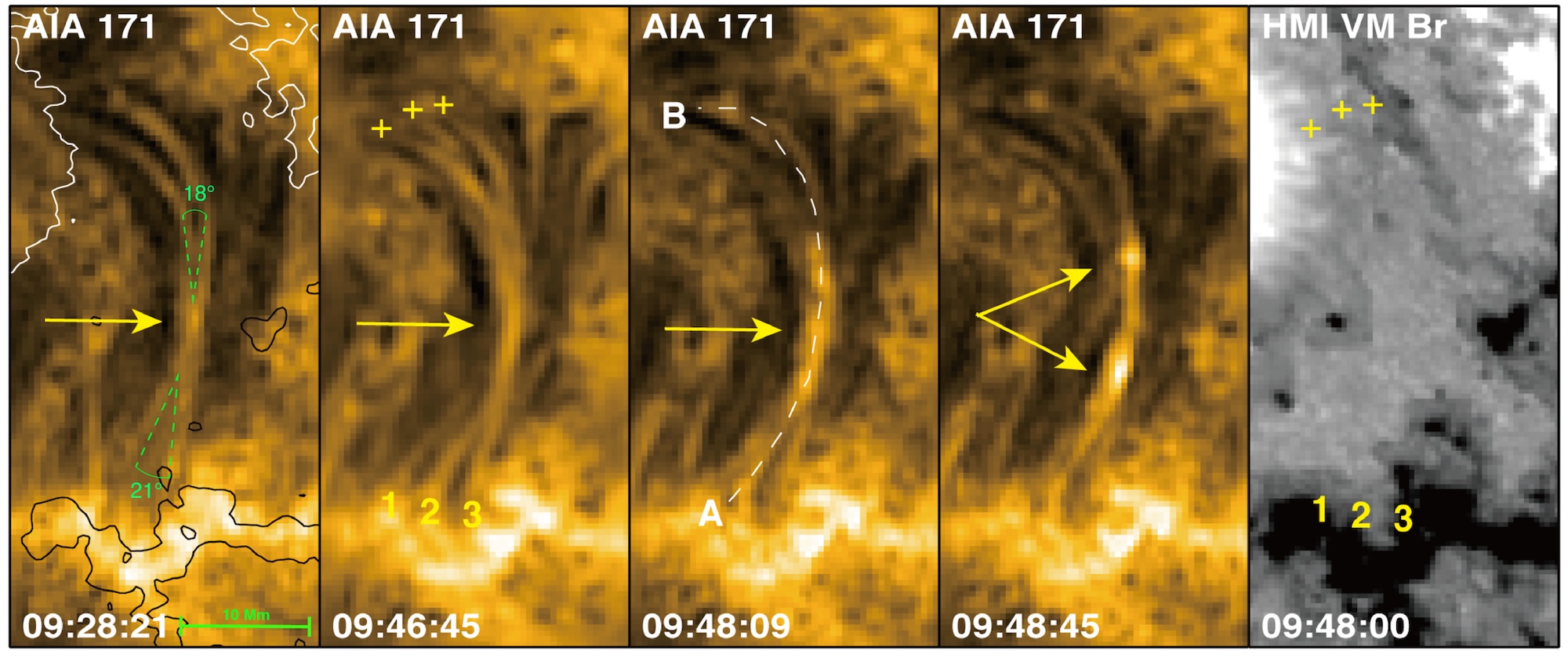
Images from Solar Dynamics Observatory. The first four images show the Sun at a wavelength of 17.1 nanometers, and the final image shows the radial magnetic field. The arrows indicate the location of the magnetic field braiding and the plasma “blobs.” Click to enlarge. [Adapted from Chen et al. 2025]
This work beautifully illustrates the process of magnetic reconnection on the Sun, showing how random motions can set the stage for the buildup of magnetic tension. The heating and acceleration of plasma that follows demonstrates how small-scale reconnection events like the ones shown here can provide the energy needed to heat the solar corona.
Citation
“Witnessing Magnetic Reconnection in Tangled Superpenumbral Fibrils Around a Sunspot,” Hechao Chen et al 2025 ApJ 995 94. doi:10.3847/1538-4357/ae12e9
The post Astronomers See Braided Magnetic Fields Above a Sunspot appeared first on AAS Nova.
]]>The post Where Are the Population III Star Relics in the Simulated Milky Way Analogs? appeared first on AAS Nova.
]]>Simulated Population III star relics residing in the Milky Way formed from z = 22 to z = 4 and make up about 1 in every 50,000 stars, with the galactic halo hosting the largest fraction of this population.
The post Where Are the Population III Star Relics in the Simulated Milky Way Analogs? appeared first on AAS Nova.
]]>The post Analyses of the Ancient Chinese Report on the Total Solar Eclipse in 709 BCE: Implications for the Contemporaneous Earth’s Rotation Speed and Solar Cycles appeared first on AAS Nova.
]]>Archaeology and astronomy combine in this study of the earliest datable account of a solar eclipse, which took place in Qūfù and includes a report of a yellowish structure that is likely the solar K-corona.
The post Analyses of the Ancient Chinese Report on the Total Solar Eclipse in 709 BCE: Implications for the Contemporaneous Earth’s Rotation Speed and Solar Cycles appeared first on AAS Nova.
]]>
Astrobites reports on a black hole that's far too massive for its host galaxy, and whether this system could ever reach "normal" proportions.
The post Forever Alone: A Black Hole Destined to Stay Too Big appeared first on AAS Nova.
]]>Editor’s Note: Astrobites is a graduate-student-run organization that digests astrophysical literature for undergraduate students. As part of the partnership between the AAS and astrobites, we occasionally repost astrobites content here at AAS Nova. We hope you enjoy this post from astrobites; the original can be viewed at astrobites.org.
Title: The z = 7.08 quasar ULAS J1120+0641 May Never Reach a “Normal” Black Hole to Stellar Mass Ratio
Authors: Meredith A. Stone et al.
First Author’s Institution: University of Arizona
Status: Published in ApJ
The first galaxies in the universe emerged out of an archaic age of darkness. Like luminous factories, they started rapidly churning out stars, spilling light into the cosmos. This process of star formation continues to the present day. In some galaxies, it occurred at astonishing rates, with the equivalent of thousands of times the mass of the Sun being assembled into stars in a single year. At other times, it came to a slow crawl, with all fresh reserves of star-building gas seemingly exhausted. Yet when the gears of star formation ground to a halt, certain events were able to send them spinning again.
One of the most spectacular of these is a merger, a train-wreck collision between two galaxies. Images of these events are often breathtaking, showing arms of light twisting together and vast stellar streams being violently cast away. Mergers directly increase the stellar mass (the mass of all stars) of galaxies by combining two into one. The intense gravitational interactions between the galaxies involved can also disrupt stagnant pools of gas, igniting a new burst of star formation. Thus, interactions between galaxies can be a significant driver of their growth.
Sometimes, a reservoir of matter is driven toward the center of a galaxy due to a “secular” process (one that occurs without external intervention) or from a merger. At the galactic nucleus, the infalling streams of matter encounter a supermassive black hole. The matter falls into a swirling accretion disk, heating to extreme temperatures and furiously glowing. If the black hole is massive enough and the gas falls in quickly enough, the accretion disk can outshine all of the stars in the galaxy, and we call such a source a quasar. The intense radiation produced by a quasar can impact the entire rest of the galaxy, either suppressing the formation of new stars or sometimes igniting it.
Thus, a galaxy has an important role in the growth of its central supermassive black hole, and vice versa. This connection manifests in complicated ways. Most strikingly, it is thought to be the cause of the correlation between a galaxy’s stellar mass and its central black hole mass. In the nearby universe, galaxies have stellar masses around a thousand times greater than their black hole masses. JWST, our most powerful tool for investigating early galaxies, has given us unprecedented insight into whether this holds up in the distant universe. Though the jury is still out, many researchers are convinced that the answer is a resounding no. We’ve found distant black holes that appear to be nearly equal in mass to their host galaxies, something that’s unfathomable in the local universe.
However, this raises a key question. Black holes and their galaxies grow together, and they started on nearly equal footing. So why do all of the galaxies in the nearby universe appear so much more massive than their black holes? Today’s article underscores this puzzle, pushing it to the breaking point. The authors examine a well-studied quasar, ULAS J1120+0641 (hereafter J1120), which we see as it appeared just 750 million years after the Big Bang. This source has a supermassive black hole containing an astounding 20% the mass of its host galaxy. The shocking part is that, even after carefully accounting for all of the ways this galaxy could grow in the future, there appears to be no way for J1120 ever to reach “normal” proportions.
Through the Looking Glass, ULAS J1120
First, the authors analyze the key observations of J1120 obtained to date. In addition to observations from JWST, this source has been targeted by some of the most powerful astronomical facilities, including the Hubble Space Telescope (optical and near-ultraviolet), the Chandra and XMM-Newton observatories (X-rays), the Atacama Large Millimeter/submillimeter Array (radio/millimeter), and numerous other ground-based telescopes. This incredible dataset provides a detailed picture of J1120 across the electromagnetic spectrum, spanning X-rays to radio emission.
The authors compare various measurements of the black hole’s mass and find that multiple methods yield a similar result of about a billion and a half times the mass of the Sun. Turning to the host galaxy, they estimate the mass of the visible stars, which is more complicated than it sounds — you can’t exactly count them, since the enormous distance between us and J1120 causes it to appear as just a fuzzy blob. They combine this mass with the mass of newly forming stars that are buried in dust and obscured from our view. The mass of a nearby galaxy that’s actively merging with J1120 is added to this sum. Finally, the authors compute how many stars could form in the future from all of the gas left in the galaxy, and they throw this into the total.
Even with all of these components, the host galaxy would only be 10 times more massive than the black hole at the center. This ratio is a far cry from the factor of a thousand we expect for normal galaxies in the local universe!
A Train Wreck of Train Wrecks
Well, if one merging galaxy won’t do it, what if J1120 merges with literally every single other nearby galaxy? The authors use new JWST data to count all sources near the quasar (Figure 1) and measure their stellar masses. Going further, they estimate how many galaxies their technique may have missed and add all of these to the pile. Not done yet, they finally conclude by making a rough approximation of how much loose gas is in these nearby galaxies, and compute how much extra mass could exist in stars born from this fresh material. Assuming that J1120 survives the full-frontal assault, being battered by mergers from each of its neighbors in turn, its total stellar mass would grow by quite a large factor.
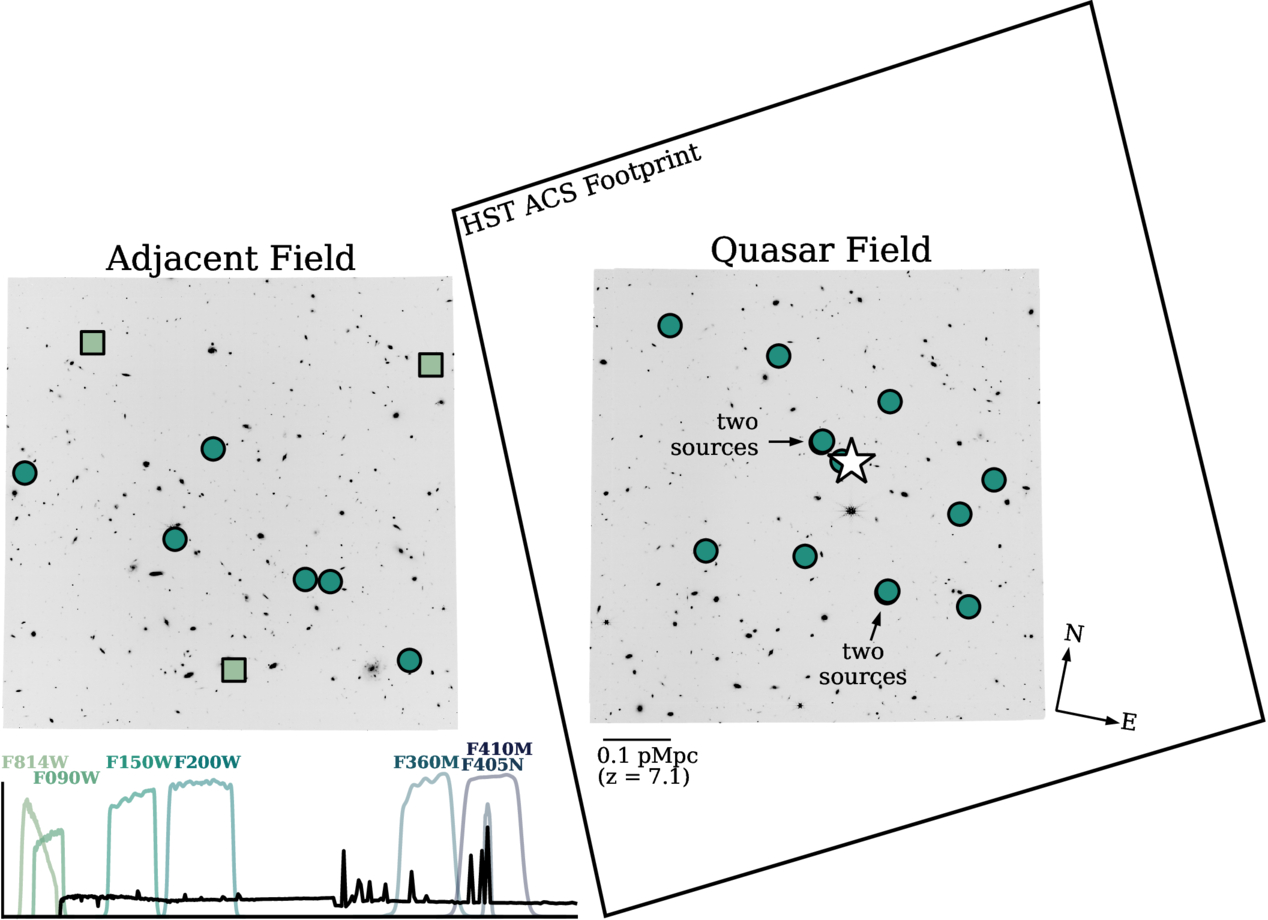
Figure 1: All of the galaxies found by JWST that are close enough to J1120 to potentially merge with it in the future. The circles mark confident detections, whereas the squares represent galaxies for which the exact distances couldn’t be measured confidently. What would happen if all of these galaxies crashed into J1120? [Stone et al. 2025]
A fascinating final possibility is that galaxies like this one do exist in the nearby universe. With their black hole switched off, all we would be able to see is a relatively small package of stars. Place such an object far enough away, and we might miss it entirely! Whether galaxies like J1120 achieved normal proportions through unknown mechanisms or are lurking in the far fringes of the local universe, studies like this one shine light on the amazing connection between black holes and their host galaxies. In the future, they will be one key piece in the puzzle of the endlessly complicated past of our own galaxy and the universe at large.
Original astrobite edited by Will Golay.
About the author, Ansh Gupta:
I’m an astronomy graduate student at the University of Texas at Austin working with Steven Finkelstein. I use data from JWST to study the formation and growth of the first galaxies and black holes in the universe. In my spare time, I enjoy playing piano, reading, and making YouTube videos.
The post Forever Alone: A Black Hole Destined to Stay Too Big appeared first on AAS Nova.
]]>The post Enhanced Pebble Drift Across Planet-Opened Gaps in Windy Protoplanetary Disks appeared first on AAS Nova.
]]>The inward gas flow in protoplanetary disks can cause dust to tumble into a planet-induced gap, potentially significantly impacting pebble drift and planet formation in the inner disk.
The post Enhanced Pebble Drift Across Planet-Opened Gaps in Windy Protoplanetary Disks appeared first on AAS Nova.
]]>
Using a neural network, researchers have discovered 3,500 candidate strong gravitational lenses in data from the Dark Energy Spectroscopic Instrument.
The post Featured Image: A Treasure Trove of Strong Lenses appeared first on AAS Nova.
]]>The seemingly warped and stretched galaxies in the image above show the work of gravitational lensing, in which the powerful gravitational pull of galaxies or galaxy clusters bends the light from background objects. Xiaosheng Huang (University of San Francisco and Lawrence Berkeley National Laboratory) and coauthors have used a neural network to amass a sample of 3,500 gravitational lensing candidates in data from the Dark Energy Spectroscopic Instrument (DESI) Legacy Surveys. Now, the team has used the Hubble Space Telescope to confirm some of the most promising candidates. Four of the newly confirmed systems are presented in the image above, with the DESI data shown in color and the higher-resolution Hubble data in black and white. Huang and collaborators also demonstrated the ability of their forward-modeling pipeline, GIGA-Lens, to constrain lens properties rapidly, even for large images like those from Hubble. Ultimately, Huang and coauthors hope to identify lensing systems that can be used to search for low-mass dark matter halos and test our theories of cosmology, as well as those that can be monitored for signs of lensed supernovae — providing a way to measure the expansion rate of the universe. To learn more about this sample of gravitational lenses and what the team plans to do next, be sure to check out the full research article linked below.
Citation
“DESI Strong Lens Foundry. I. HST Observations and Modeling with GIGA-Lens,” Xiaosheng Huang et al 2026 ApJ 998 69. doi:10.3847/1538-4357/ae22d2
The post Featured Image: A Treasure Trove of Strong Lenses appeared first on AAS Nova.
]]>
After the DART spacecraft smashed into Dimorphos, a cloud of ejecta expanded outward. A recent study builds a 3D reconstruction of the ejecta and determines that it's more complex than previous models considered.
The post Pulling Back the Curtain on DART Ejecta appeared first on AAS Nova.
]]>In September 2022, the Double Asteroid Redirection Test (DART) mission served as the first attempt at redirecting a near-Earth asteroid — an experiment testing humanity’s ability to fend off any threatening Earth-bound asteroids. A recent study presents the first 3D reconstruction of the impact ejecta, suggesting that the blown-out material is more complex than previous models considered.
DART-ing into Dimorphos
The DART spacecraft intentionally smashed into Dimorphos, the small and unassuming moon of the larger asteroid Didymos. This space-based crash test aimed to determine if kinetic impactors like DART could successfully change an asteroid’s course through the solar system. Dimorphos’s orbit was indeed shortened by roughly 30 minutes, confirming that ramming an asteroid with a spacecraft could be a viable method of planetary defense. However, determining exactly how much an asteroid’s path will be altered is not necessarily straightforward. When a spacecraft collides with an asteroid, the impactor imparts momentum to the target, and any material excavated from the impact site can also alter the asteroid’s course.
DART’s impact launched a significant spray of rubble, or what researchers call an ejecta curtain. The ejecta curtain is typically modeled as a cone, using a simple geometry to determine its contribution to momentum transfer. However, when looking closely at imaging taken soon after the collision, the real physical structure of the ejecta appears to be more complex. Untangling the true 3D distribution of the ejecta is necessary to understand how momentum was actually distributed among escaping ejecta, better estimate the total mass ejected from Dimorphos, and improve modeling of the Didymos system’s orbit after impact.
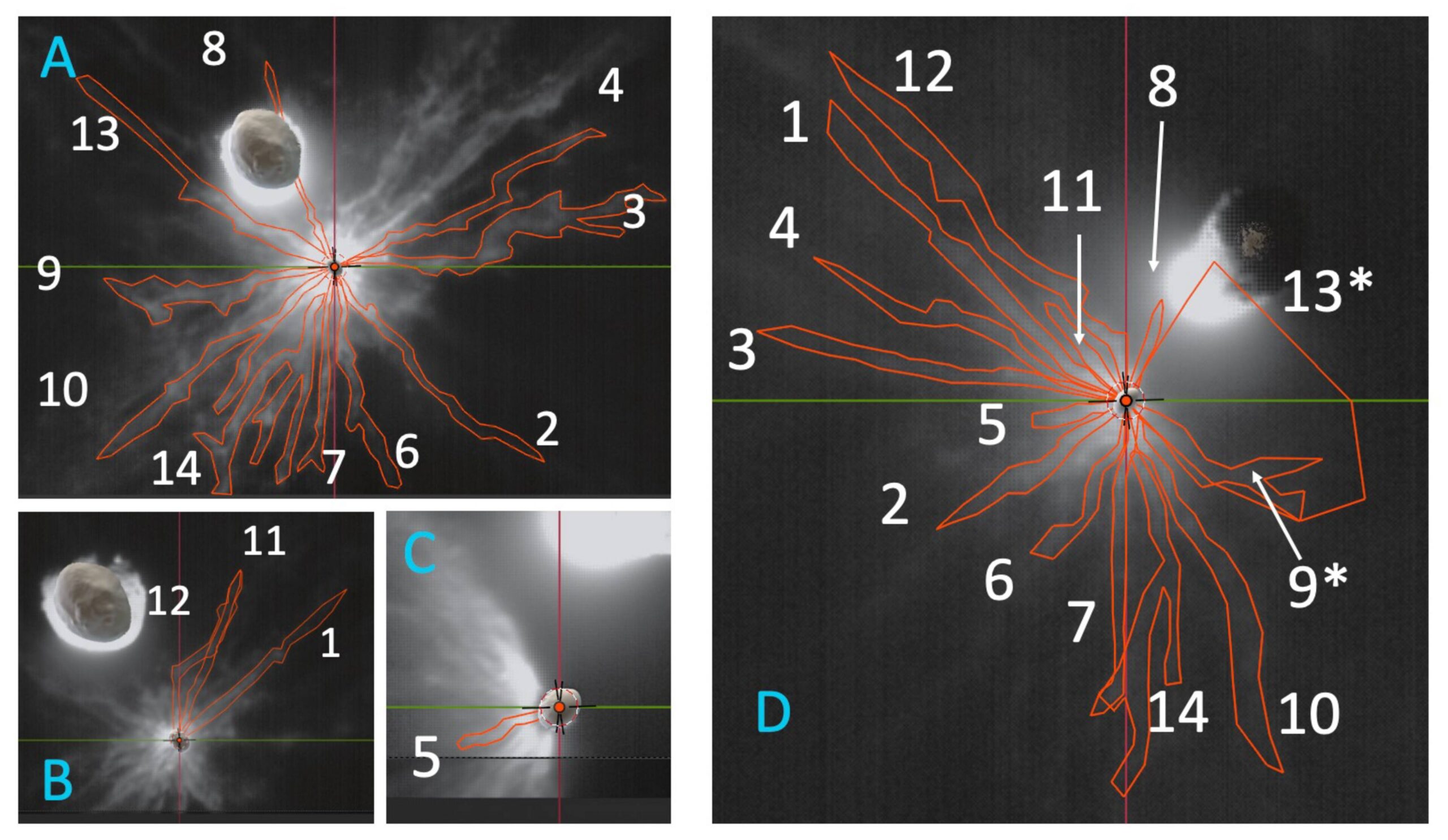
LICIACube images of the DART ejecta curtain with the 14 distinct features identified in this study outlined in red. Click to enlarge. [Deshapriya et al 2026]
Determining Debris Distribution
Seeking to better characterize the ejecta curtain, a team led by J. D. P. Deshapriya from Italy’s National Institute for Astrophysics used data from the Light Italian CubeSat for Imaging of Asteroids (LICIACube) that flew behind the DART spacecraft to capture images of the system shortly after the impact. After careful image handling to bring out diffuse and faint material, the researchers identified 14 distinct ejecta features across the flyby imaging. LICIACube viewed the aftermath both side on and face on, providing valuable 3D information about the distribution and motion of the ejecta.
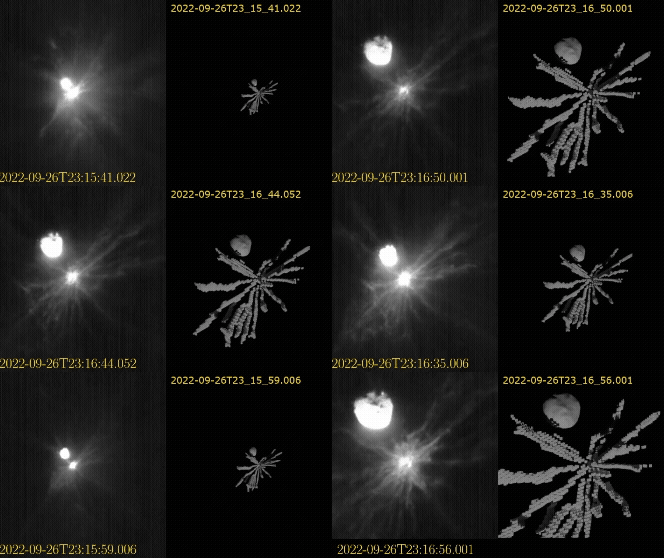
Animation of the DART ejecta as the LICIACube spacecraft approached the impact. The left shows the images taken by the spacecraft, and the right shows the 3D model produced for the ejecta. Click to play animation. [Deshapriya et al 2026]
Planetary Defense
What does this mean for planetary defense? While simplified symmetric cone models provide helpful approximations for kinetic impactor missions, they do not fully capture the true complexity of the impact. This study shows that local variations in an asteroid’s surface and interior properties can directly influence the resulting ejecta distribution and motion. The true momentum imparted to the target asteroid depends heavily on the specific ejecta material, and these details inform how effective planetary defense missions can be in redirecting asteroids. Incorporating realistic, observation-driven ejecta distributions into modeling frameworks is essential to achieve reliable predictions for future planetary defense missions.
Citation
“3D Reconstruction of DART Ejecta at Dimorphos Reveals an Anisotropic, Filamentary Structure,” J. D. P Deshapriya et al 2026 Planet. Sci. J. 7 4. doi:10.3847/PSJ/ae2c64
The post Pulling Back the Curtain on DART Ejecta appeared first on AAS Nova.
]]>The post Influence of Magnetic Complexity of Active Regions on Solar Wind Properties During Solar Cycles 23 and 24 appeared first on AAS Nova.
]]>The magnetic complexity of a solar active region appears to influence the solar wind magnetic field strength, charge state, helium abundance, and other factors; complex active regions excel at generating solar wind.
The post Influence of Magnetic Complexity of Active Regions on Solar Wind Properties During Solar Cycles 23 and 24 appeared first on AAS Nova.
]]>The post Resolving the Nuclear Environments of Tidal Disruption Event Host Galaxies Within 45 pc appeared first on AAS Nova.
]]>Using the Hubble Space Telescope, researchers have closely examined tidal disruption event host galaxies, finding that minor mergers may enhance tidal disruption event rates in post-starburst galaxies.
The post Resolving the Nuclear Environments of Tidal Disruption Event Host Galaxies Within 45 pc appeared first on AAS Nova.
]]>
Did the disappearance of a star in the Andromeda Galaxy signal the creation of a black hole? New infrared and X-ray data help to discern what remained after the star disappeared.
The post Black Hole Baby Photos: JWST and Chandra Observe M31-2014-DS1 appeared first on AAS Nova.
]]>One of the most luminous supergiant stars in the Andromeda Galaxy, M31-2014-DS1, has disappeared, potentially leaving behind a black hole shrouded in dusty gas. What do new infrared and X-ray observations tell us about this event?
Failure to Explode?
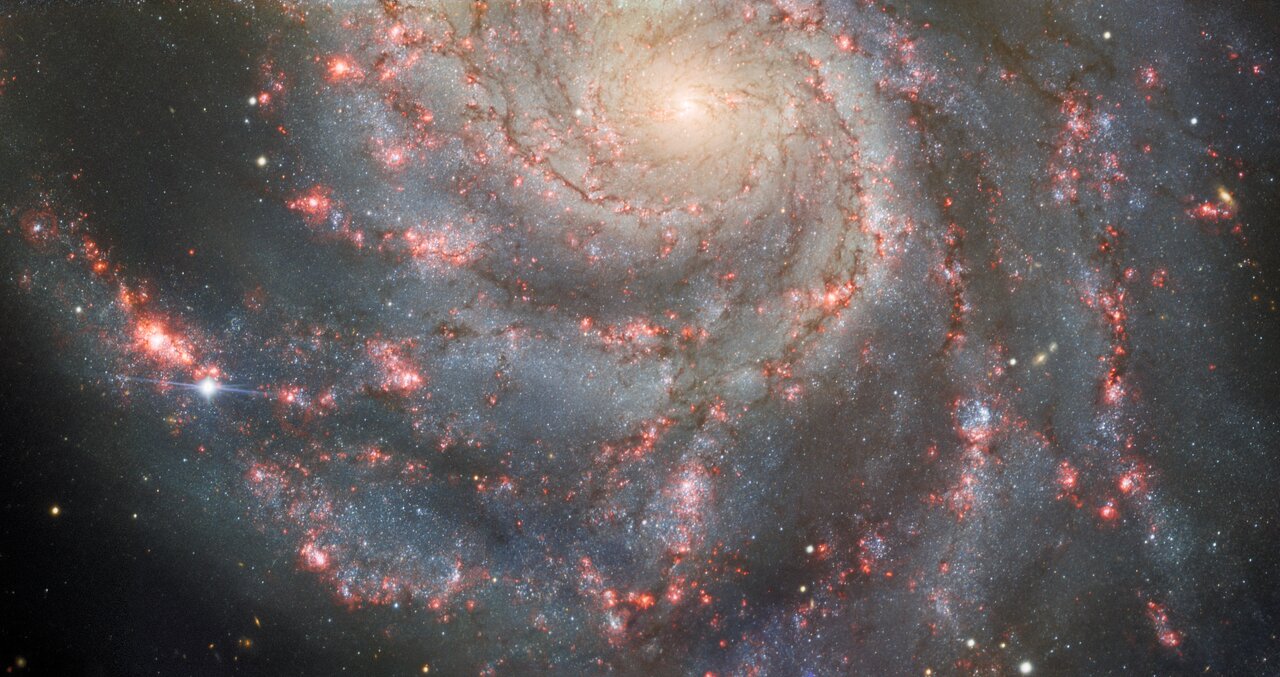
This image from Gemini North shows the supernova SN 2023ixf along one of the spiral arms of Messier 101. Though less showy than core-collapse supernovae, “failed” supernovae may be another way to form stellar-mass black holes. [International Gemini Observatory/NOIRLab/NSF/AURA; CC BY 4.0]
But a splashy supernova explosion may not be the only way for a massive star to go out. As observations have begun to suggest, some massive stars may — for reasons not yet fully understood — quietly collapse in upon themselves, going out with a whimper rather than a bang. Though less spectacular and far harder to spot, these “failed” supernovae highlight a possible pathway for the formation of stellar-mass black holes.
A Newborn Black Hole in a Dense, Dusty Blanket
Just last month, researchers reported their discovery of a potential failed supernova. The supergiant M31-2014-DS1 suddenly brightened in 2014 before fading to obscurity, leading researchers to suspect that the star had experienced a failed supernova and created a black hole. The event shared similarities with another failed supernova candidate, NGC6946-BH1.
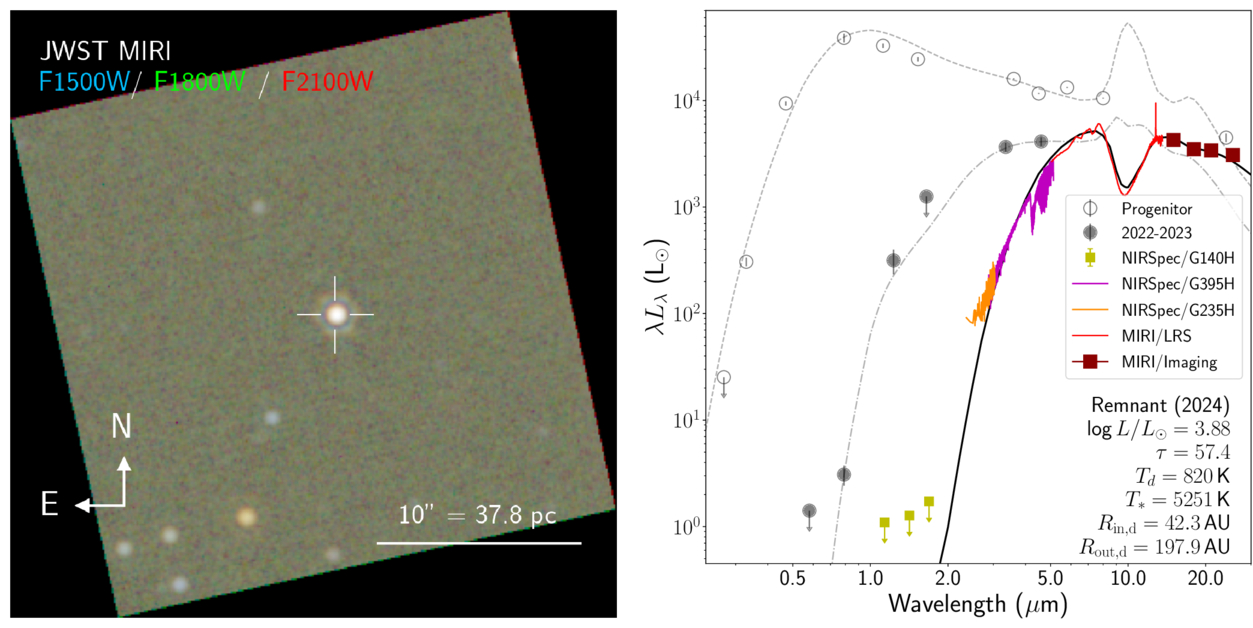
Left: A JWST image of M31-2014-DS 1. Right: Spectral energy distributions of the progenitor star/the remnant using data from 2005 to 2012 (empty circles), 2022 to 2023 (filled circles), and 2024 (colored lines). Click to enlarge. [De et al. 2026]
Together, these observations support a model in which the collapsing star ejected its outer layers in a relatively low-energy event (somewhere in the broad ballpark of one hundred-millionth to one ten-thousandth the energy of a typical core-collapse supernova) and formed a black hole. Some of the ejected material fell backward and fed the newborn black hole, while the remainder created a dense blanket that blocked the light from the accreting black hole from view.
Continued Evolution
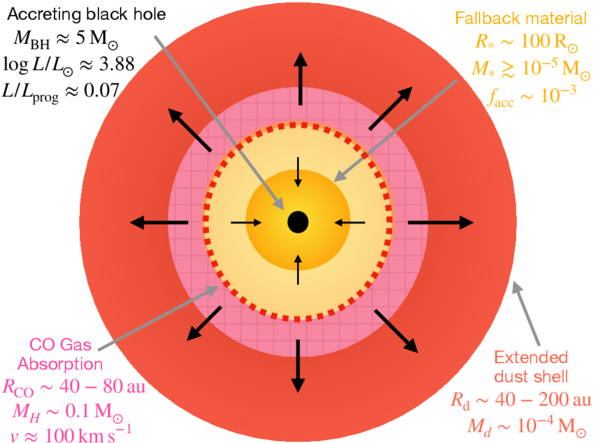
Cartoon showing the authors’ model and the model parameters inferred from the observations. Click to enlarge. [De et al. 2026]
Thanks to its location in a neighboring galaxy, M31-2014-DS1 has granted astronomers a front-row seat to a poorly understood pathway for black hole formation. Going forward, we can expect further insights into M31-2014-DS1 and, hopefully, the discovery of many more sources like it.
Citation
“Fading into Darkness: A Weak Mass Ejection and Low-Efficiency Fallback Accompanying Black Hole Formation in M31-2014-DS1,” Kishalay De et al 2026 ApJL 999 L25. doi:10.3847/2041-8213/ae468d
The post Black Hole Baby Photos: JWST and Chandra Observe M31-2014-DS1 appeared first on AAS Nova.
]]>The post Ringed Versus Ringless Worlds: How Poynting–Robertson Drag Shapes Rings Across the Solar System appeared first on AAS Nova.
]]>Modeling suggests that drag due to solar flux acting on isolated particles is able to explain the distribution of ringed and ringless worlds in our solar system, even in the absence of additional factors.
The post Ringed Versus Ringless Worlds: How Poynting–Robertson Drag Shapes Rings Across the Solar System appeared first on AAS Nova.
]]>
Astrobites reports on how astronomers are using JWST to figure out if star clusters are really as old as they seem.
The post Astronomers Hate Them! This Star Formation Ingredient Makes Clusters Look 300 Million Years Older appeared first on AAS Nova.
]]>Editor’s Note: Astrobites is a graduate-student-run organization that digests astrophysical literature for undergraduate students. As part of the partnership between the AAS and astrobites, we occasionally repost astrobites content here at AAS Nova. We hope you enjoy this post from astrobites; the original can be viewed at astrobites.org.
Title: Characterizing The Star Cluster Populations in Stephan’s Quintet Using HST and JWST Observations
Authors: P. Aromal et al.
First Author’s Institution: University of Western Ontario
Status: Published in ApJ
On 12 July 2022, the first images taken with JWST were released to the public. All of the astronomers in my department gathered together to watch the images be revealed in real time. It was exciting for everyone, from graduate students getting to see a glimpse into the future possibilities of their fields, to retired professors getting to see the fruits of their decades-long labor in advocating for the telescope to be built.
One image that was showcased was of Stephan’s Quintet (Figure 1), an actively interacting galaxy group. We were all immediately impressed by the clarity of the star-forming regions in the dense gas between the galaxies in the image. Now, more than three years later, the authors of today’s article lay out a comprehensive study of the star clusters in those same regions, taking advantage of JWST’s multi-wavelength imaging capabilities.
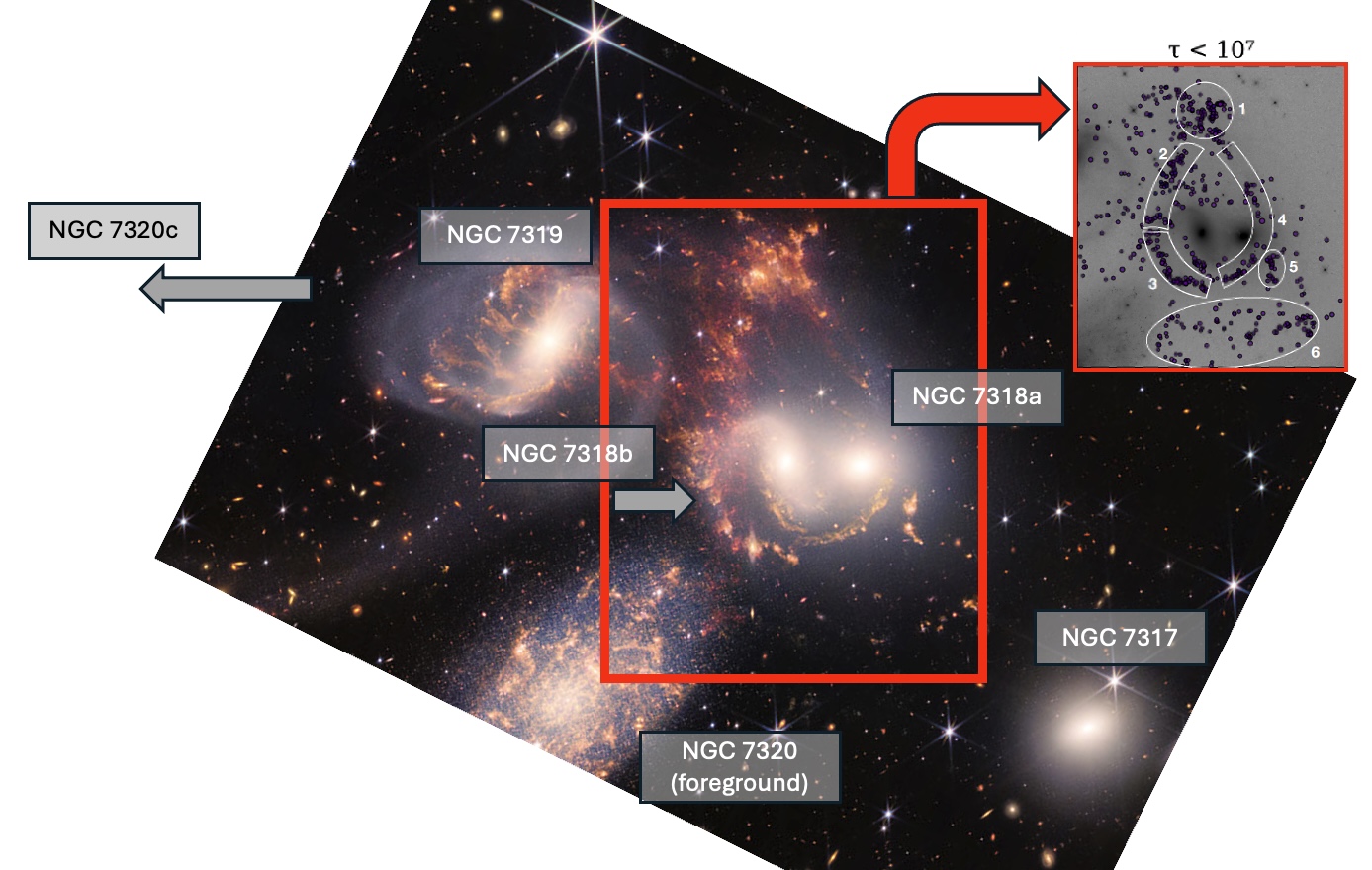
Figure 1: The JWST imaging of Stephan’s Quintet with member galaxies labeled (including NGC 7320C, which is outside of the field of view). Gray arrows indicate the direction the associated galaxy is moving. The inlaid image shows the distribution of young star clusters in relation to the six main tidal features in the group. [Inset image: Adapted from Aromal et al. 2025; Background image: NASA, ESA, CSA, STScI]
HST + JWST = OMG!
While JWST’s depth and resolution are exciting for those studying high-redshift galaxies, for local-universe astronomers JWST really shines when used in combination with the Hubble Space Telescope (HST). The star clusters in Stephan’s Quintet were already cataloged in 2015 using HST, but the filters used in the imaging only captured optical and very-near-infrared wavelengths. If you want to get enough data to be able to accurately estimate the ages of these star clusters, especially accounting for reddening caused by surrounding dust, you need to push your imaging further into the infrared.
Unlike HST, JWST can take images in two wavelength filters at once, meaning you can get more data with roughly the same observing time. Here the authors imaged the same star clusters that HST looked at with five new JWST filters, all at longer infrared wavelengths than HST. Together, the authors had flux measurements at 10 different wavelengths across the optical and infrared spectrum for each star cluster, meaning they could perform spectral energy distribution fitting.
Go Ahead, Guess My Age
The best way to estimate an unresolved star cluster’s age is to get its full spectrum of light and fit spectroscopic models with varying ages to it until the model matches the observations. But, if you have individual brightness measurements at many different, spread-out wavelengths, you can still fit spectral models to the measurements and make a best guess despite the gaps in your full spectrum. Here the authors compare their multi-wavelength data to Code Investigating GALaxy Emission (CIGALE) spectral energy distribution models, allowing both the cluster ages and amount of dust extinction to vary.
This is where the long-wavelength JWST imaging is most necessary, because it is sometimes difficult to determine a cluster’s age with this method. For instance, is the light a cluster is giving off mostly red because its stars are very old, or is it because its stars are actually bluer and younger and the cluster just appears red due to foreground dust?
Infrared imaging can “see through” any dust and break this age–extinction degeneracy. For most of the clusters, the authors found that the original HST-only age estimates were accurate, but for 121 clusters in the sample (about 8% of the total), the JWST imaging made a significant change in the age estimates, shifting them to younger ages.
Where Do the Hip, Young Star Clusters Hang Out?
Once the authors had their updated ages for the clusters, they then mapped out where the clusters were located in Stephan’s Quintet and how these clusters traced the known tidal structures in the group. Tidal structures are structures, usually consisting of gas, dust, and stars, that are formed from the tidal forces galaxies exert on one another as they interact and merge. The authors found that throughout all tidal regions of Stephan’s Quintet, there were many young, low-mass star clusters, all about 3–5 million years old. This timescale lines up with previous studies’ estimates of when NGC 7318B was thought to first fall into Stephan’s Quintet, compressing the gas in the group and creating tidal shocks that would trigger star formation.
Additionally, the authors’ star cluster age distribution for the group (see Figure 2) has a second, broader peak of higher-mass clusters with ages around 200 million years. This would correspond to when the most recent encounter between NGC 7320C (which has now passed through the group and is out of frame in Figure 1) and NGC 7319 is estimated to have occurred.
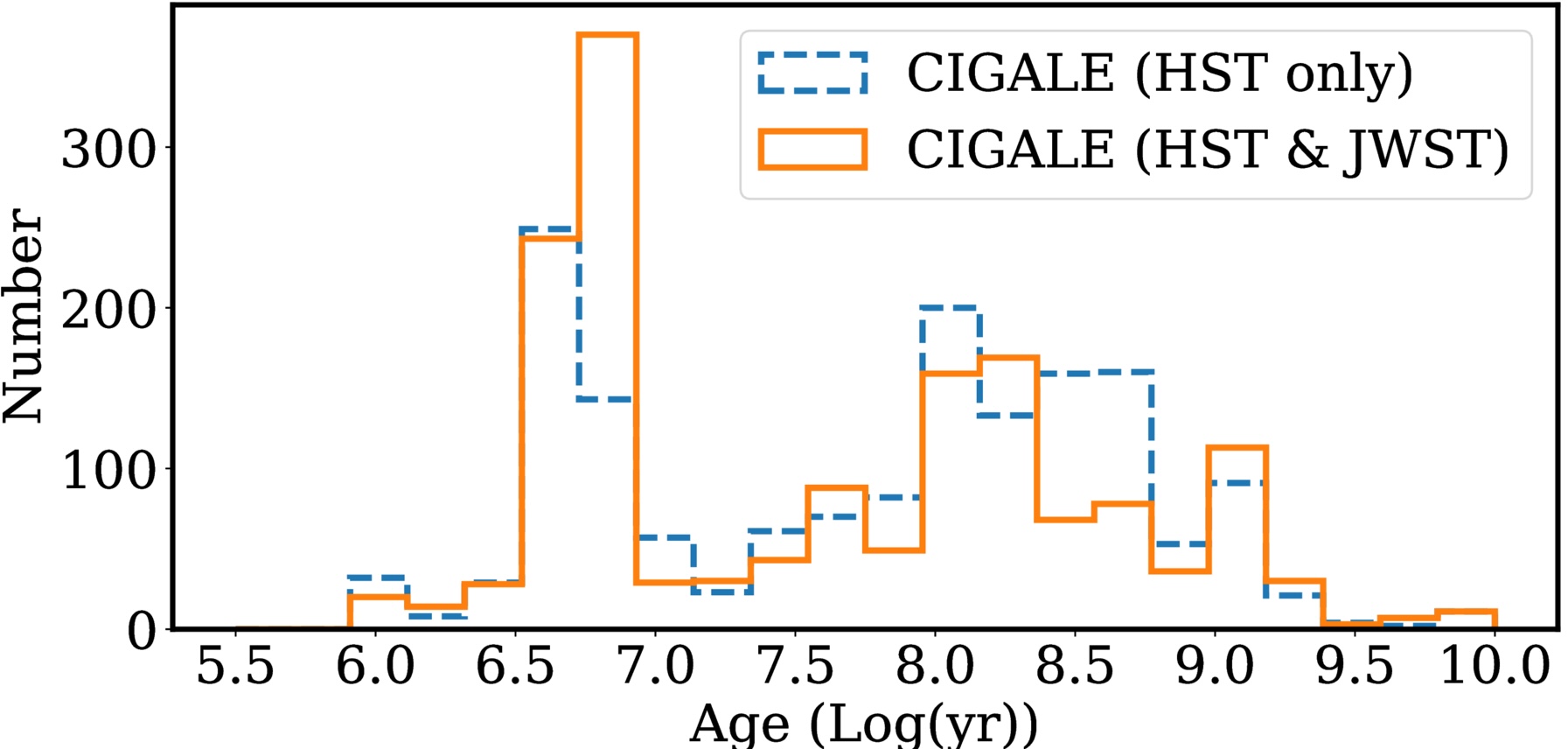
Figure 2: A histogram of the ages of all the star clusters in Stephan’s Quintet. The blue dashed line shows the estimates using only the HST data, and the orange solid line shows the estimates using both HST and JWST together. Notice how a lot of the clusters around 108 years old turned out to be less than 107 years old. [Adapted from Aromal et al. 2025]
Taken together, the updated age measurements of the star clusters in Stephan’s Quintet provide not only a study of star formation history, but also of the galaxy–galaxy interaction history in the system!
Looking Ahead
While the authors have improved the age estimates of the clusters in Stephan’s Quintet, there are still limitations to their analysis. Their estimated star formation rate for the group is much lower than that estimated with other tracers, such as H-alpha emission, meaning this study may still be missing a fraction of very young star clusters. The most likely culprits are embedded clusters that haven’t had enough time to expel the surrounding gas from the massive clouds they formed within.
Future work will attempt to identify these embedded clusters using near-infrared JWST imaging, since in this study the authors focused only on the previously HST-identified clusters. In addition, combining their JWST data with high-resolution radio observations taken with the Atacama Large Millimeter/submillimeter Array will allow them to study the gas in the group more closely and understand how it influences the star formation.
This work highlights JWST’s excellent application to star cluster observations, building on the data we already have from decades of HST use, and it looks like we’re only just getting started!
Original astrobite edited by Skylar Grayson.
About the author, Veronika Dornan:
Veronika is a postdoctoral research associate at the University of Edinburgh. Her research is in observations of globular star clusters and how they can be used to study the evolution of their host galaxies.
The post Astronomers Hate Them! This Star Formation Ingredient Makes Clusters Look 300 Million Years Older appeared first on AAS Nova.
]]>The post Lake Stars as an Earth Analog for Europa’s Manannán Crater Spider Feature appeared first on AAS Nova.
]]>An asterisk-shaped feature at the center of a crater on Jupiter’s moon Europa may have similar origins to “lake stars” on Earth; lab experiments show that these patterns can form in Europan ice simulant.
The post Lake Stars as an Earth Analog for Europa’s Manannán Crater Spider Feature appeared first on AAS Nova.
]]>The post Surprise Nondetection of Upsilon Andromedae b with MIRC-X and MYSTIC at the CHARA Array appeared first on AAS Nova.
]]>Using the CHARA array, researchers did not detect the hot Jupiter exoplanet Upsilon Andromedae b, despite probing planet-to-star contrast values lower than what is predicted for this planetary system.
The post Surprise Nondetection of Upsilon Andromedae b with MIRC-X and MYSTIC at the CHARA Array appeared first on AAS Nova.
]]>
Researchers investigate whether the Milky Way's smallest known satellite is a tiny dwarf galaxy or a star cluster.
The post Ursa Major III/UNIONS 1: Dwarf Galaxy or Star Cluster? appeared first on AAS Nova.
]]>The smallest satellite of the Milky Way, Ursa Major III/UNIONS 1, has posed a mystery since its discovery. Is this smattering of stars a dwarf galaxy or a star cluster?
The Milky Way’s Mysterious Companion
In 2024, researchers discovered a small group of stars orbiting the Milky Way at a distance of about 33,000 light-years in data from the Ultraviolet Near Infrared Optical Northern Survey (UNIONS). This collection of stars amounts to just 16 solar masses and shines with only 11 times the Sun’s luminosity, making it 4–5 times less massive than the next faintest Milky Way satellite.
Considering its small stellar population and small size (its half-light radius is 10 light-years, which is typical for a globular cluster), this satellite appeared at first glance to be an ordinary star cluster. But early data also suggested that the stars had an unusually high velocity dispersion, which could mean that they are nestled within a dense and massive dark matter halo — making the satellite not a star cluster but a dwarf galaxy.
Reflecting this uncertainty, the satellite has two names: Ursa Major III (its dwarf galaxy designation) and UNIONS 1 (its star cluster classification). Can new data clear up the confusion?
New Dispersion Data
In a recent research article, William Cerny (Yale University) and collaborators described new observations of 16 stars in Ursa Major III/UNIONS 1 with the Keck II telescope.
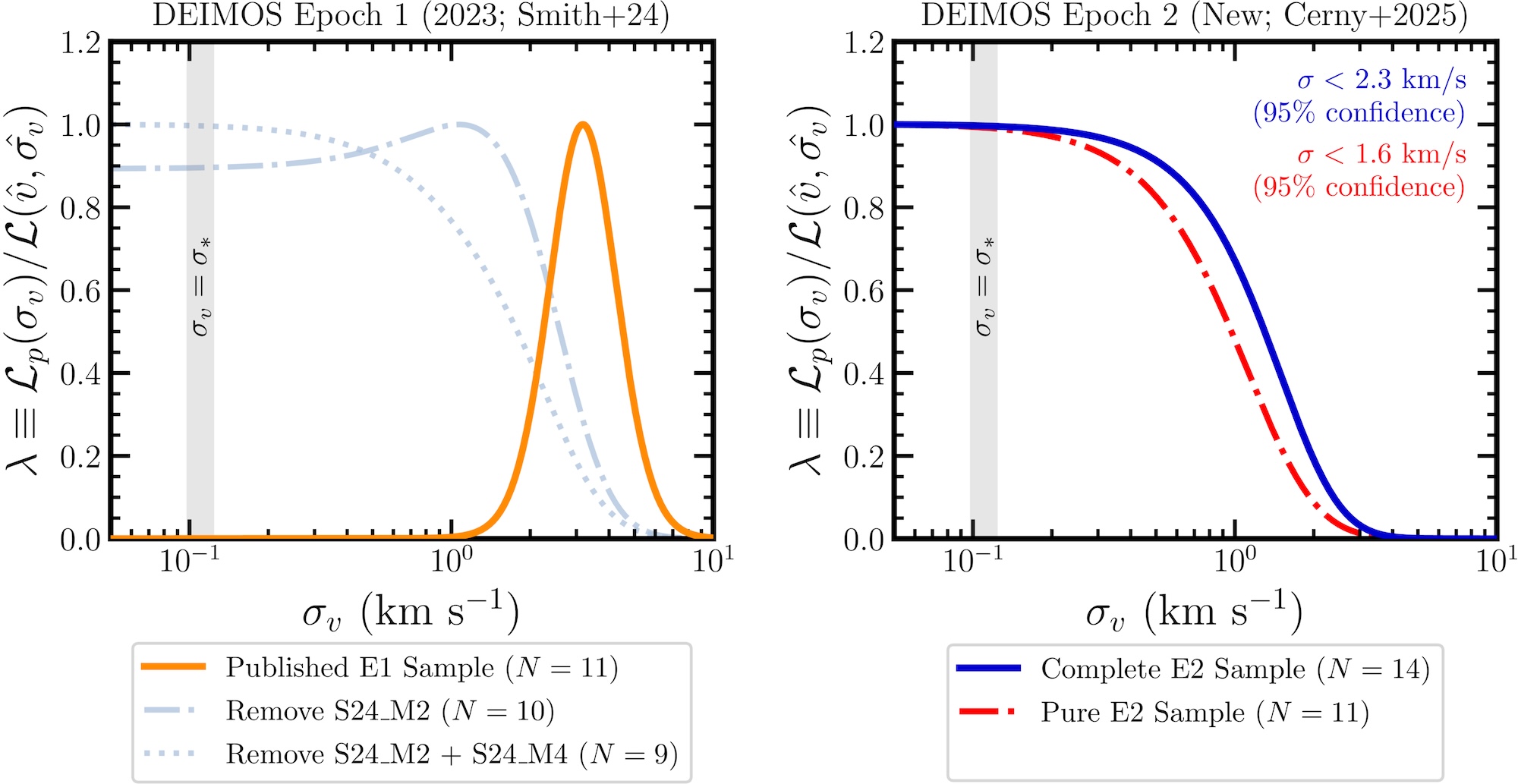
Normalized likelihoods for the velocity dispersion based on the initial data (left) and the new data (right). The initial velocity dispersion measurement of 3.7 km/s is ruled out by the new measurements. Click to enlarge. [Cerny et al. 2026]
These observations also helped to confirm one candidate binary pair and identify three new binary candidates. (This large binary fraction, though interesting, isn’t diagnostic, as both star clusters and dwarf galaxies are known to host high proportions of binary stars.)
Further Evidence
Cerny’s team conducted a further test of the Ursa Major III/UNIONS 1’s identity by measuring the metallicities of its 12 brightest stars. They found that the stars are metal poor and have little metallicity dispersion. This finding again points to a star cluster, in which stars form in a single epoch, rather than a dwarf galaxy, which may feature multiple generations of stars with different degrees of chemical enrichment.
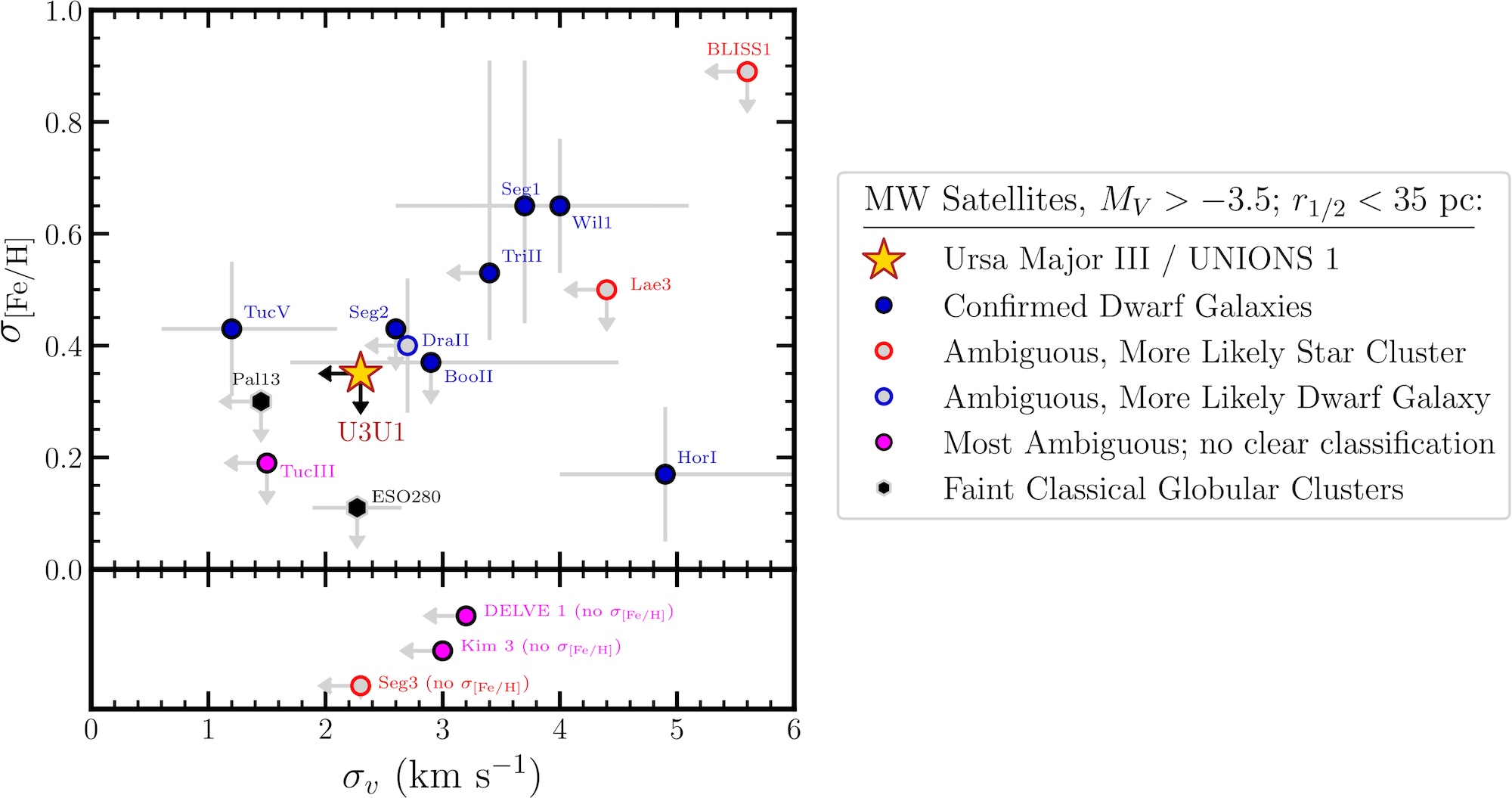
Upper limits on velocity dispersion and metallicity dispersion for Ursa Major III/UNIONS 1 compared to other faint Milky Way satellites. There are no confirmed dwarf galaxies for which the metallicity dispersion and velocity dispersion are both lower than for Ursa Major III/UNIONS 1. Click to enlarge. [Cerny et al. 2026]
Going forward, further chemical abundance measurements of Ursa Major III/UNIONS 1 may still sway the argument one way or another. And as facilities like the Vera C. Rubin Observatory and the Euclid space telescope continue to collect data, other extreme Milky Way satellites may come to light.
Citation
“No Observational Evidence for Dark Matter Nor a Large Metallicity Spread in the Extreme Milky Way Satellite Ursa Major III/UNIONS 1,” William Cerny et al 2026 ApJL 999 L8. doi:10.3847/2041-8213/ae29b8
The post Ursa Major III/UNIONS 1: Dwarf Galaxy or Star Cluster? appeared first on AAS Nova.
]]>
What's new with AT 2024wpp, GRB 250702B, and GW231123? Get updates on these three exceptional astrophysical transients in today's Monthly Roundup.
The post Monthly Roundup: Updates on Three Notable Transients appeared first on AAS Nova.
]]>Across the universe and across the electromagnetic spectrum, flares, bursts, and waves are making their mark on the sky. Today, we’re giving an update on three exceptional transients that have been discussed previously on AAS Nova: AT 2024wpp, GRB 250702B, and GW231123.
The Most Luminous Known Fast Blue Optical Transient, AT 2024wpp
Discovered in September 2024, AT 2024wpp burst onto the scene as the most luminous example of a fast blue optical transient (FBOT) — a growing class of events that are more luminous, more rapidly evolving, and bluer than supernovae. In October 2025, astronomers published their findings on AT 2024wpp’s X-ray and radio evolution. Just last month, a research team led by Natalie LeBaron (University of California, Berkeley) described the results of a complementary investigation of the transient’s ultraviolet, optical, and near-infrared behavior.
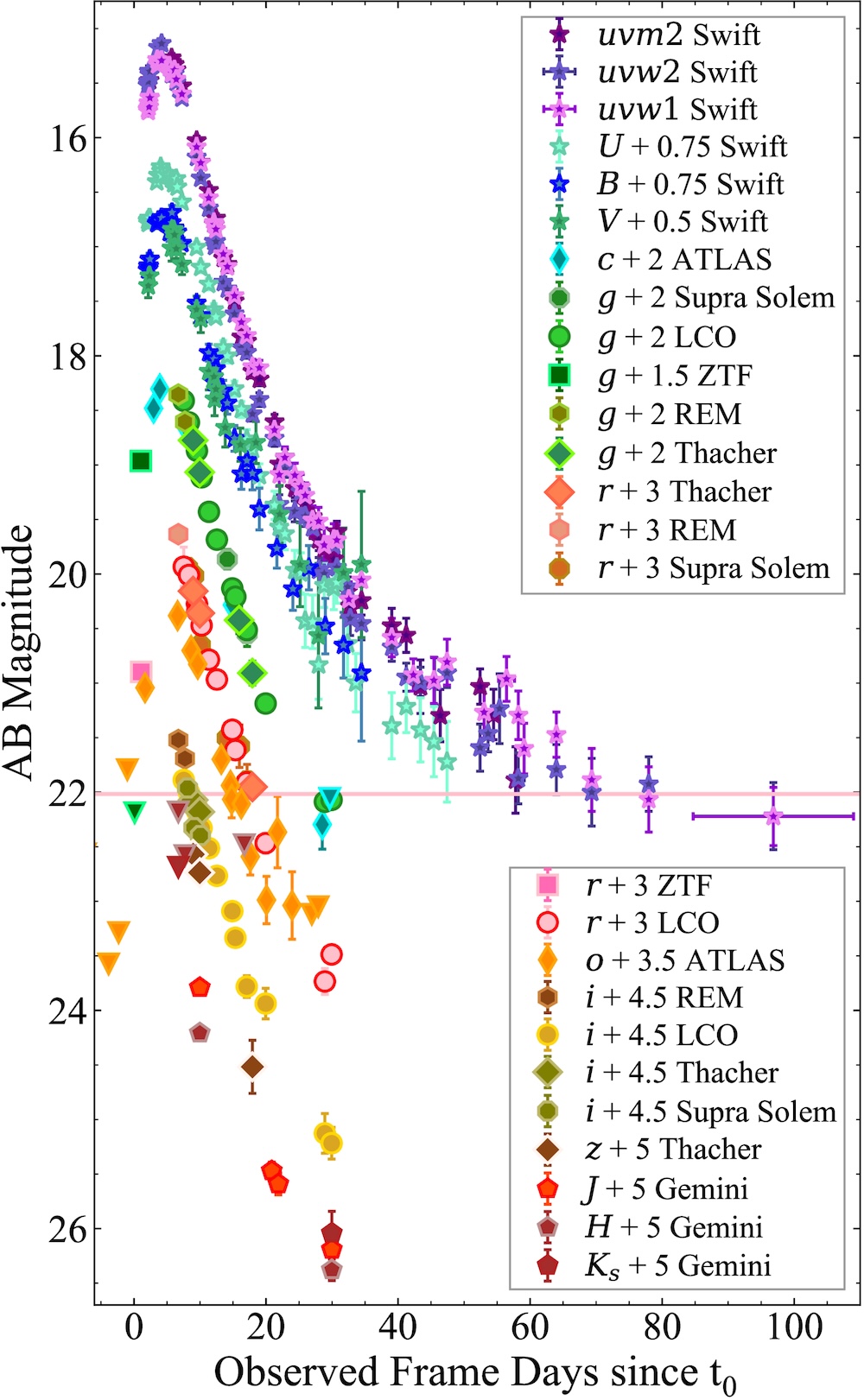
The ultraviolet through infrared light curve of AT 2024wpp. Results from different filters are offset vertically for clarity. [LeBaron et al. 2026]
The observations point to a luminous central energy source that continuously injects energy into its surroundings, powers multiple outflows, and ionizes the ejected material. These features can be explained by the rapid accretion of material by a neutron star or a black hole, in which the accreted material forms a disk and is ejected in both a fast-moving polar outflow and a slower-moving equatorial outflow.
Though the exact nature of the central object powering AT 2024wpp’s intense radiation isn’t known — the extreme luminosity of this event points to a stellar-mass black hole as the central object, but a neutron star cannot be ruled out — the overall picture of this event matches what has been found for previous FBOTs. Upcoming instruments and surveys will discover more FBOTs and spot them earlier in their evolution, transforming our understanding of these rare transients.
An Ultra-Long X-Ray and Gamma-Ray Transient, GRB 250702B
GRB 250702B is an exceptional gamma-ray burst: an intense flash of gamma rays lasting anywhere from a few milliseconds to several hours. GRB 250702B is unprecedented among events in this class because it features several bursts arising over the course of roughly 7 hours, plus X-ray precursor emission going back 24 hours before discovery. We’ve previously covered JWST follow-up observations of GRB 250702B, and today we’re taking a look at its high-energy evolution.

Swift (black circles) and Chandra (blue circles) observations of GRB 250702B. Click to enlarge. [Adapted from O’Connor et al. 2025]
O’Connor’s team found that GRB 250702B didn’t fit neatly into either category. While many of the event’s properties closely resembled those of ultra-long gamma-ray bursts, the hours-long gamma-ray emission and the precursor X-ray emission were outliers. Certain features are more easily reconciled with the tidal disruption of a main-sequence star by an intermediate-mass black hole, but others are similarly hard to account for. Finding the smoking gun for a tidal disruption event — an abrupt shutoff to the X-ray emission — will require long-term X-ray monitoring.
Because GRB 250702B has features that align with both ultra-long gamma-ray bursts and tidal disruption events, O’Connor and coauthors proposed scenarios that combine aspects of both possibilities: either a stellar-mass black hole tidally disrupting a star or the merger of a helium star with a stellar-mass black hole.
The Most Massive Gravitational Wave Source, GW231123
When compact objects like neutron stars and black holes merge, their collisions produce ripples in spacetime that are accessible to detectors on Earth. One of the most exciting events so far from the fourth gravitational wave transient catalog is GW231123, which appears to be caused by the merger of two black holes, each at least 100 times the mass of the Sun. The LIGO, Virgo, and KAGRA (LVK) collaborations reported a total mass of 238 solar masses for the event, which would make it the most massive binary black hole merger yet observed.
In a recent article, Ilya Mandel (Monash University and OzGrav) urged caution when interpreting seemingly extreme events like GW231123. Mandel’s argument is a statistical one, highlighting how certain aspects of the Bayesian techniques used to estimate GW231123’s mass could have skewed that estimate toward an artificially high value.
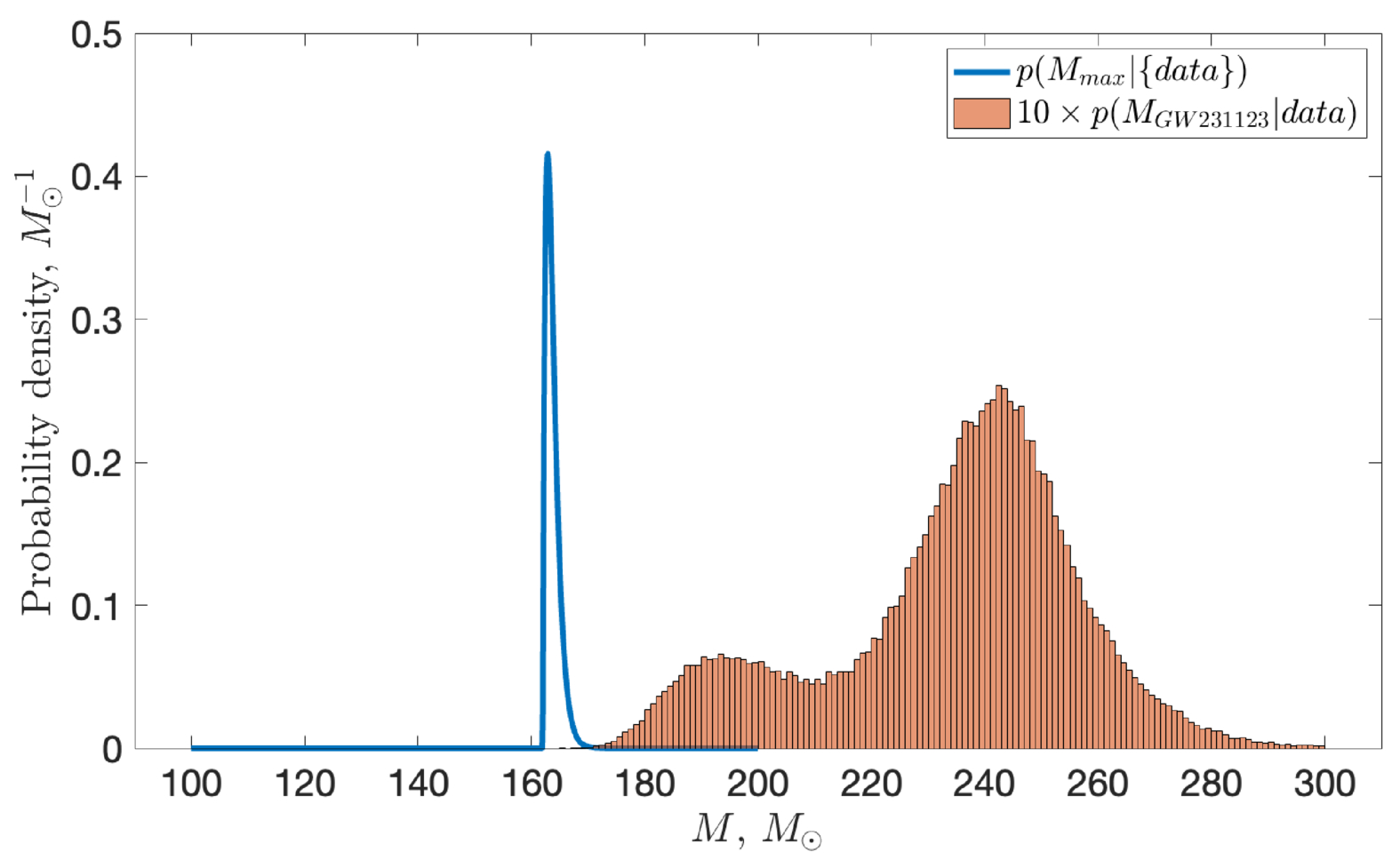
The posterior probability distribution on the maximum mass as derived from the total LVK catalog (blue), compared to the posterior for GW231123 (orange; multiplied by 10 for visibility). Click to enlarge. [Mandel 2026]
Mandel also demonstrated how considering the population of black hole mergers detected by LVK as a whole can provide a different perspective on GW231123’s likely mass. By analyzing this entire sample together, Mandel showed that the maximum mass for the population of merging black holes appears to be considerably lower than the mass estimated for GW231123, again raising the possibility that the true mass of the event is lower than the current estimate.
Ultimately, Mandel pointed out that at present it’s impossible to distinguish between three possibilities: that GW231123 is a true outlier among the population of merging black holes, representing a member of a new, unexplored population; that it’s a member of the same population as other black hole mergers seen by LVK but inhabits an extreme high-mass tail; or its high mass estimate is a statistical artifact.
Citation
“The Most Luminous Known Fast Blue Optical Transient AT 2024wpp: Unprecedented Evolution and Properties in the Ultraviolet to the Near-Infrared,” Natalie LeBaron et al 2026 ApJL 997 L10. doi:10.3847/2041-8213/ae2910
“Comprehensive X-Ray Observations of the Exceptional Ultralong X-Ray and Gamma-Ray Transient GRB 250702B with Swift, NuSTAR, and Chandra: Insights from the X-Ray Afterglow Properties,” Brendan O’Connor et al 2025 ApJL 994 L17. doi:10.3847/2041-8213/ae1741
“What Is the Most Massive Gravitational-Wave Source?” Ilya Mandel 2026 ApJL 996 L4. doi:10.3847/2041-8213/ae278d
The post Monthly Roundup: Updates on Three Notable Transients appeared first on AAS Nova.
]]>The post On the Sensitivity of Different Galaxy Properties to Warm Dark Matter appeared first on AAS Nova.
]]>Based on the results of 1,024 cosmological hydrodynamical simulations, the galactic subhalo gas mass appears to be the galaxy property most sensitive to the warm dark matter particle mass.
The post On the Sensitivity of Different Galaxy Properties to Warm Dark Matter appeared first on AAS Nova.
]]>The post Coronal Mass Ejection Arrival Forecasting with the Drag-Based Assimilation of Satellite Observations appeared first on AAS Nova.
]]>Researchers introduce a next-generation framework that combines a drag-based model with in situ spacecraft measurements to predict the arrival time of coronal mass ejections to within 1 hour.
The post Coronal Mass Ejection Arrival Forecasting with the Drag-Based Assimilation of Satellite Observations appeared first on AAS Nova.
]]>
Researchers search for a connection between short-lived black hole accretion events and neutrinos — elusive, neutral, nearly massless particles.
The post Do Black Hole Flares Generate Neutrinos? appeared first on AAS Nova.
]]>Where do the mysterious cosmic messengers called neutrinos come from? Researchers search for a connection between neutrinos and accretion flares from black holes.
Seeking Connections
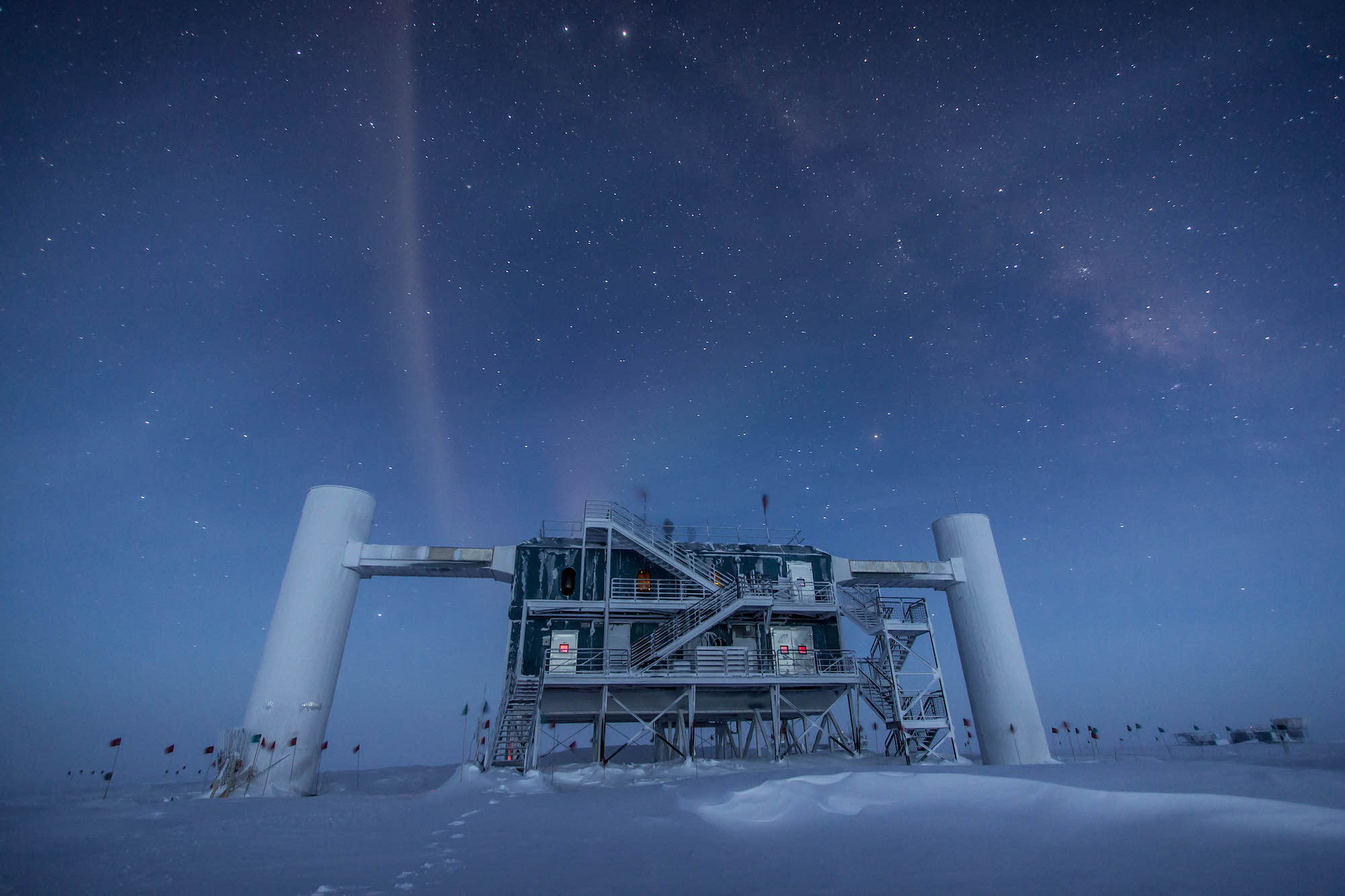
The IceCube Laboratory at the Amundsen-Scott South Pole Station in Antarctica. [Felipe Pedreros, IceCube/NSF]
Thus far, researchers have discovered a compelling connection between neutrinos and distant active galactic nuclei, which are powered by the accretion of gas onto supermassive black holes. The active galactic nucleus phase of a black hole tends to be long lived, with activity lasting hundreds of thousands of years or more, making these nuclei lasting sources of neutrinos.
Sampling Flares
Recently, researchers have found tentative evidence for coincident neutrinos from short-lived accretion events like tidal disruption events, in which a star is torn apart and accreted by a black hole. These studies have uncovered a potential connection between neutrinos and tidal disruption events with mid-infrared echoes, signaling the presence of obscuring dust.
A map of the locations of the neutrinos (yellow diamonds) and black hole flares (blue circles) on the sky. Click to enlarge. [Wang et al. 2026]
For the neutrino side of the equation, Wang’s team turned to IceCube’s most recent catalog of neutrino events from astrophysical sources. In total, they compiled a sample of 68 events for which the odds of the source being astrophysical was greater than 50%, and for which the directional uncertainty was below 50.
No Coincidences
For a flare and a neutrino to be considered spatially and temporally coincident, the neutrino must arrive within one year of the flare, and the flare must fall within the 90% certainty contours of the neutrino. Ultimately, Wang’s team found no neutrinos that fulfilled both criteria and only one that was spatially but not temporally coincident with a black hole flare.
This result appears to be at odds with previous studies that found several neutrinos that were coincident with tidal disruption events. Wang and collaborators noted that while this work finds no association between neutrinos and black hole flares, it’s possible that the team is studying a different population of accretion events.
Infrared fluxes of the flares sampled in this study (magenta), optically identified flares (gray), and the tidal disruption events thought to have coincided with neutrino detections (green and gold dashed lines). [Wang et al. 2026]
Future work, including studies that leverage upcoming datasets from the Vera C. Rubin Observatory, the Roman Space Telescope, and the NEO Surveyor, can address this question further and search for connections with specific populations of black hole flares.
Citation
“Testing the Association of Supermassive Black Hole Infrared Flares and High-Energy Neutrinos,” Megan Wang et al 2026 ApJL 998 L29. doi:10.3847/2041-8213/ae3f90
The post Do Black Hole Flares Generate Neutrinos? appeared first on AAS Nova.
]]>The post The Landscape of Collapsar Outflows: Structure, Signatures, and Origins of Einstein Probe Relativistic Supernova Transients appeared first on AAS Nova.
]]>A novel multi-component outflow structure featuring jets embedded within a global cocoon and disk ejecta provides a unified explanation for phenomena seen in transients observed with the Einstein Probe.
The post The Landscape of Collapsar Outflows: Structure, Signatures, and Origins of Einstein Probe Relativistic Supernova Transients appeared first on AAS Nova.
]]>The post Learning to Estimate Photospheric Vector Fields from Line-of-Sight Magnetograms appeared first on AAS Nova.
]]>A new method to estimate the full solar magnetic field vector from line-of-sight measurements performs well, allowing for new insights into old data, but does not replace the need for vector-field observing facilities.
The post Learning to Estimate Photospheric Vector Fields from Line-of-Sight Magnetograms appeared first on AAS Nova.
]]>
Astrobites reports on simulations that might help astronomers identify double-detonation supernovae early in their evolution.
The post Ia’m Just Getting Started: A Type Ia Supernova’s First Day appeared first on AAS Nova.
]]>Editor’s Note: Astrobites is a graduate-student-run organization that digests astrophysical literature for undergraduate students. As part of the partnership between the AAS and astrobites, we occasionally repost astrobites content here at AAS Nova. We hope you enjoy this post from astrobites; the original can be viewed at astrobites.org.
Title: The First Day of a Type Ia Supernova from a Double-Degenerate Binary
Authors: Gabriel Kumar, Logan J. Prust, and Lars Bildsten
First Author’s Institution: University of California, Santa Barbara
Status: Published in ApJ
Much like distance markers along the highway, Type Ia supernovae have long been used as distance indicators in space. These supernovae were originally theorized to form in binary systems. In this system, a white dwarf (a dense, collapsed remnant of a star) steals surface material from a non-degenerate star like our Sun and then explodes. Because of the initial conditions and properties of those two stars, the explosion would shine with the same intrinsic brightness regardless of the binary system’s location in space.
Research and observations, however, show that this is not entirely true; not all Type Ia supernovae are equally luminous. There are various theories regarding the different formation scenarios and explosion mechanisms that might create a Type Ia supernova. Developing ways to sleuth out the origins of these systems can be useful because it may tell us more about their luminosity.
One emerging theory of formation is the “double-detonation scenario.” In this case, two white dwarfs exist in a binary system. The more massive primary (the “accretor”) steals material from the less massive white dwarf secondary (the “donor”). After the primary steals the donor’s outer thin shell of helium, the helium surrounding the accretor detonates. This explosion induces a shock wave that travels into the dense core of the accretor and causes another detonation. The two detonations — one on the surface and one in the core — produce enough energy to explode the star into a supernova, a powerful stellar explosion. When the material from the exploding star reaches its companion star, it forms a mysterious, conical wake within the gaseous material, or “ejecta,” expelled from the accretor. This wake might be an important clue for distinguishing a supernova’s origins.
Since these explosions are incredibly powerful and would be difficult (and dangerous!) to perform in a lab, astronomers turn to computer simulations to model these events. Hydrodynamical simulations, in particular, are helpful for researchers because they model how fluids “flow” by solving complex equations that are too tricky to do by hand. (Remember that stars are just balls of gas, and hence fluid!) The authors of today’s article ran hydrodynamical simulations of the explosion and subsequent evolution of the ejecta from a double-detonation scenario.
In the diagram of the team’s setup (see Fig. 1), you can see a “bow shock.” This shock is from the wave produced in the accretor’s detonation and is bowed since it bends around the donor star. This shock moves quickly through the cone of ejecta, modifies its structure, and leaves clues within the ejecta as it settles.
Figure 1: A visual schematic of the simulation setup. The accretor is the exploding star, which produces a “bow shock” from the detonation. The bow shock and recompression shock modify the structure of the ejecta, which fills the space between rout and rin. The ejecta is full of gaseous stellar material. [Kumar et al. 2025]
Figure 2: A visual “slice” of the ejecta surrounding the donor star just 200 seconds after detonation. The bottom-left corner (r = 0) has a faint white spot, indicating the donor. The density (top) and temperature (bottom) of the ejecta are shown. The faint line marked by the red arrow indicates the secondary shock from the explosion, highlighting changes in both density and pressure. [Kumar et al. 2025]

Figure 3: A slice of the simulation taken later, at 2 hours of simulation time. The ejecta in the shocked region has flown out farther than the ejecta in the unshocked region. Note that the horizontal scale has changed from Figure 2. [Kumar et al. 2025]
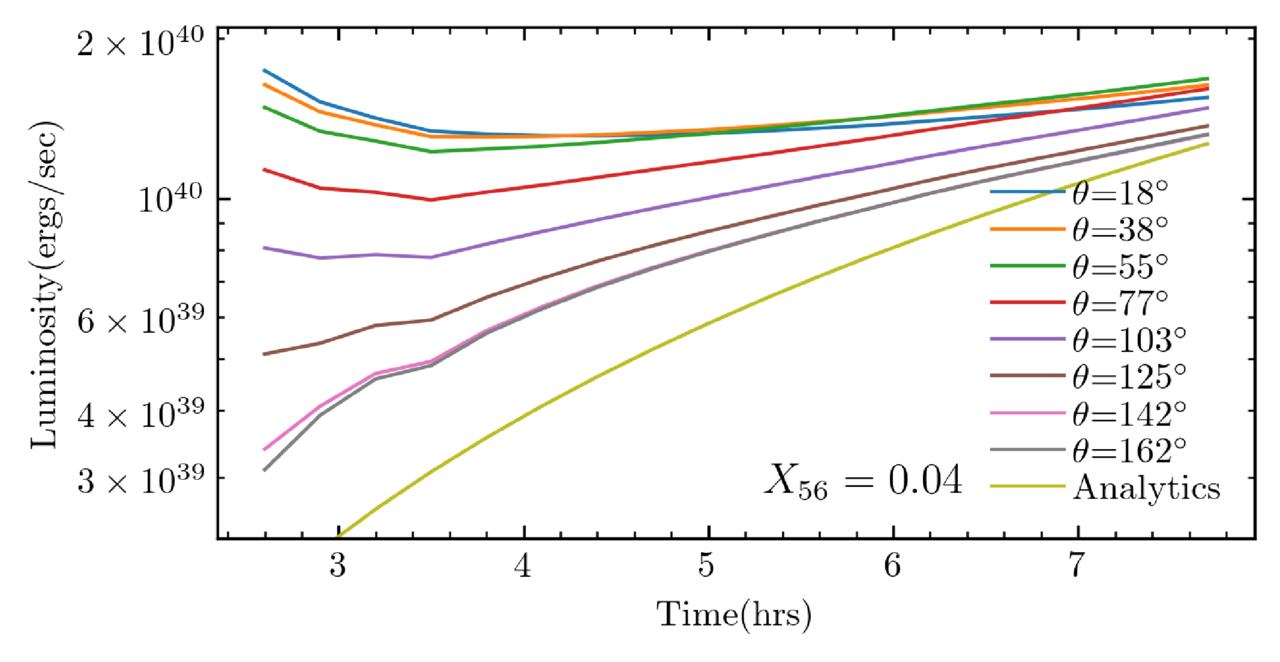
Figure 4: A comparison of luminosity vs. time over the course of 6 hours shortly after detonation. The different lines indicate different viewing angles from the axis of explosion. The line “Analytics” describes a light-curve prediction by Piro (2012) for a supernova that was not shock-heated. The luminosities for this model span almost one order of magnitude. [Kumar et al. 2025]
While there is always more work to be done, this work presents a first step at identifying double-detonation Type Ia supernovae from early observations. With an influx of observations from new observatories, like the Vera C. Rubin Observatory, we should expect to see many more early supernova detections.
Original astrobite edited by Ansh Gupta.
About the author, Mckenzie Ferrari:
I’m currently a PhD student in the geophysical sciences program at the University of Chicago. While I now study the atmosphere and oceans of Earth, most of my previous research focused on simulations of Type Ia supernovae and galaxy formation and evolution. In my free time, I foster cats for a local organization, enjoy cooking, and can often be found running along Lake Michigan.
The post Ia’m Just Getting Started: A Type Ia Supernova’s First Day appeared first on AAS Nova.
]]>The post Neural Networks as Surrogate Solvers for Time-Dependent Accretion Disk Dynamics appeared first on AAS Nova.
]]>Researchers have applied a physics-informed neural network to the problem of accretion disks, successfully reproducing key features like spiral density waves while solving problems faced by numerical models.
The post Neural Networks as Surrogate Solvers for Time-Dependent Accretion Disk Dynamics appeared first on AAS Nova.
]]>
How do giant low-surface-brightness galaxies form? New research investigates two galactic specimens to search for clues.
The post Featured Image: Rare Giant Galaxies appeared first on AAS Nova.
]]>Giant low-surface-brightness galaxies are rare and unusual members of the galactic menagerie. They host the largest galactic disks currently known, have baryonic masses of order 100 billion solar masses, and sport narrow, tightly wound spiral structures. The origins of these vast galaxies — they can be up to 10 times larger than the Milky Way — are unknown, though various theories involving mergers, accretion, and strange dark matter halos exist. Research also suggests that there may be a connection between these galaxies and compact ellipticals, which are small, dense, and contain old stars. In a recent article, a team led by Anna Saburova (Sternberg Astronomical Institute) investigated two giant low-surface-brightness galaxies with compact elliptical companions. In the image above, the colored circles represent the oxygen abundance at each location in AGC 192040 (left) and UGC 1382 (right). The red arrows point to the compact elliptical companions. Using the chemical abundance information to investigate possible formation mechanisms, Saburova and collaborators found that the two galaxies likely formed in different ways. UGC 1382 appears to be the result of multiple mergers, while AGC 192040 may have accreted gas from its halo or a galactic filament before undergoing a merger of its own. To learn more about this study of two rare galaxies, be sure to check out the full research article linked below!
Citation
“MUSE Study of Two Giant Low-Surface-Brightness Galaxies with Compact Satellites,” Anna S. Saburova et al 2026 ApJ 998 19. doi:10.3847/1538-4357/ae3139
The post Featured Image: Rare Giant Galaxies appeared first on AAS Nova.
]]>The post JWST Spectroscopy of a Blue Binary Cold Classical Kuiper Belt Object appeared first on AAS Nova.
]]>The binary Kuiper Belt object 2016 BP81 appears to belong to a small and newly identified group of objects that differs from other water-type Kuiper Belt objects, hinting at a different formation environment.
The post JWST Spectroscopy of a Blue Binary Cold Classical Kuiper Belt Object appeared first on AAS Nova.
]]>
A satellite-rich dwarf galaxy poses a potential problem for current cosmological models.
The post Satellite Surplus Around Dwarf Galaxy DDO 161 appeared first on AAS Nova.
]]>Small galaxies are expected to have even smaller companion galaxies, according to current cosmological models. A recent study takes a look at one dwarf galaxy and finds more tiny companions than anticipated.
Cosmology Predicts Satellite Galaxies
Critical to our understanding of dark matter and galaxy formation, satellite galaxies are small, faint galaxies surrounding a larger host galaxy. The leading cosmological model, known as lambda cold dark matter (ΛCDM), predicts dark matter halos of all masses to host smaller dark matter subhalos whose luminous counterparts make up satellite galaxies.
While the satellite systems of Milky Way-like galaxies are well characterized, the companions of dwarf galaxies are less well studied. Despite being significantly smaller, dwarf galaxies should also host even smaller satellites galaxies around them. These satellites push the limits of observations — extremely faint and hard to distinguish from background sources, dwarf galaxy satellites require innovative imaging techniques to discover.
In recent years, new surveys have identified a number of satellites around dwarf galaxies that appear broadly consistent with ΛCDM predictions, though the sample size is still small. Continuing the search for little galaxies’ little galaxies is critical to testing the ΛCDM framework and will further our understanding of galaxy formation on the smallest scales.
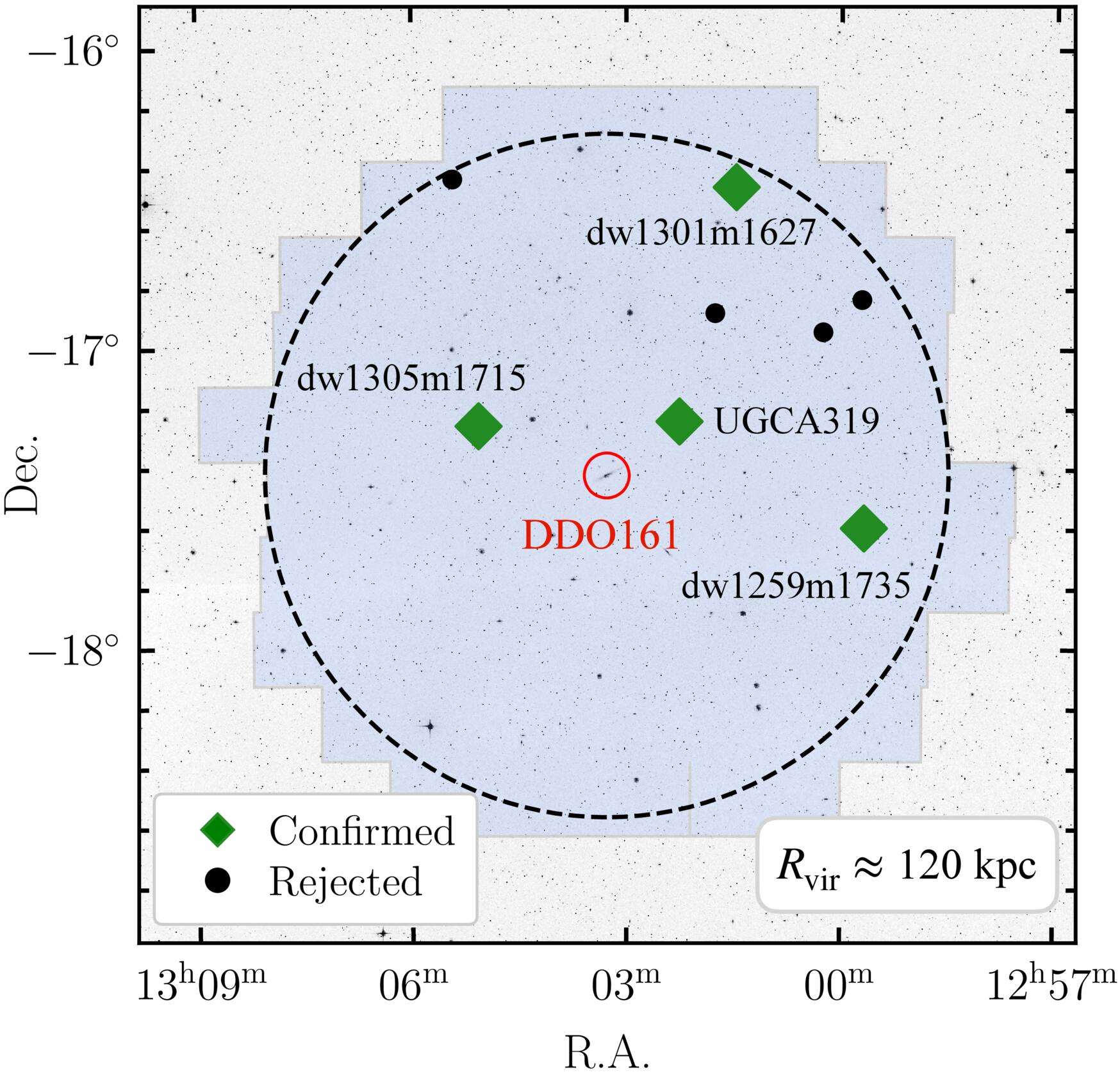
Satellite candidates around DDO 161 as they appear on the sky. Click to enlarge. [Li et al 2026]
Searching for Satellites Around DDO 161
Diving into a specific system, a team led by Jiaxuan Li (李嘉轩) from Princeton University began an in-depth search for satellites around the dwarf galaxy DDO 161. Prior to this study, DDO 161 was known to have one companion, UGCA 319, that is about 10 times smaller than its host.
The authors used data from the Legacy Surveys to search for satellites within about 400,000 light-years of DDO 161 — the expected reach of DDO 161’s gravitational influence. After removing bright sources and smoothing the image to bring out very faint objects, they found eight satellite galaxy candidates including UGCA 319.
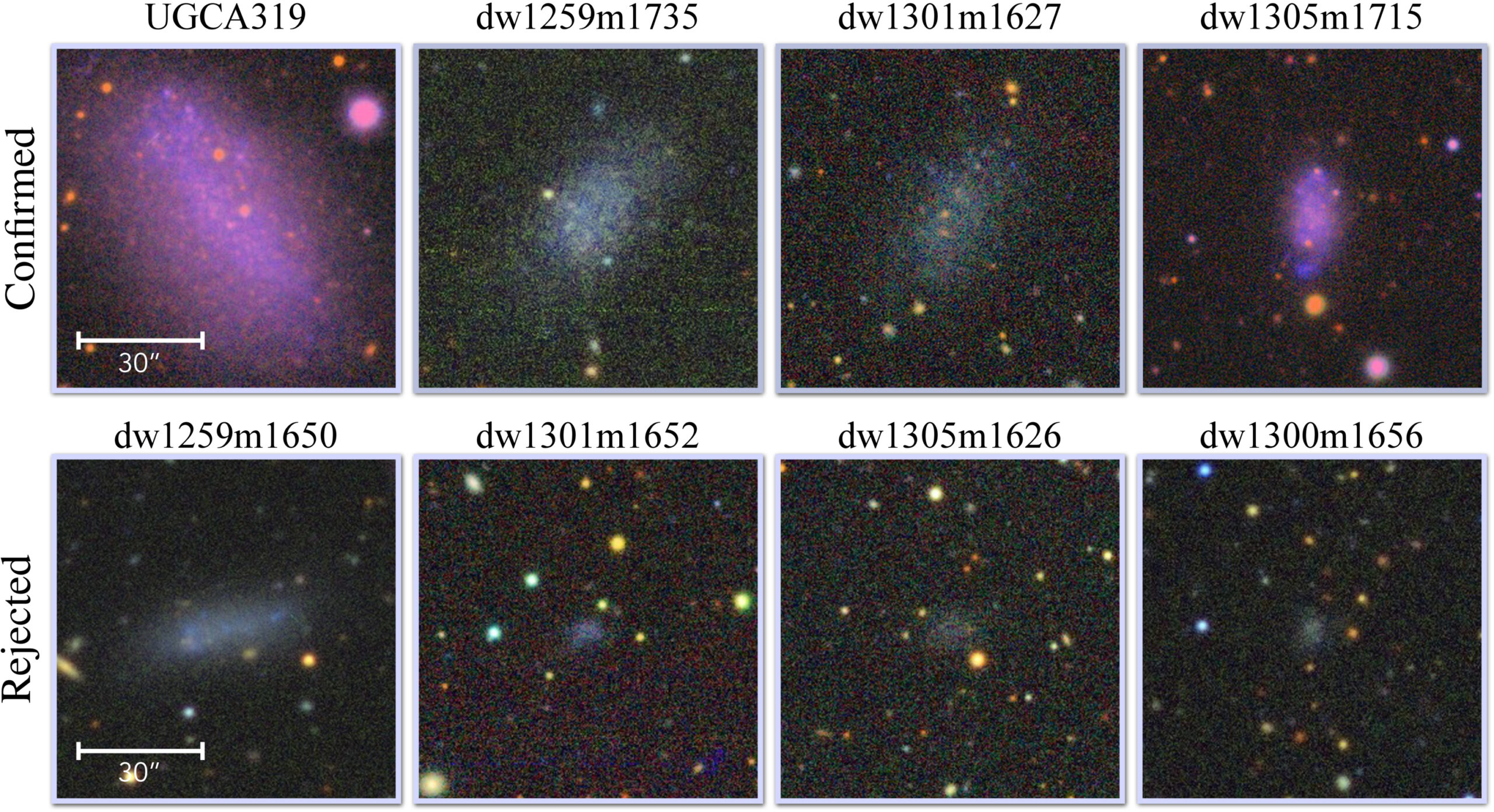
Images of the satellite candidates of DDO 161 from the Legacy Surveys. The top row shows the confirmed satellites, and the bottom row shows the rejected satellites. Click to enlarge. [Li et al 2026]
Too Many Satellites
How does DDO 161 compare to theoretical predictions for galaxies of its size? The authors ran cosmological simulations to quantify the expected satellite populations around galaxies of similar size to DDO 161. Just as it is an outlier observationally, DDO 161 is also an outlier when compared to the simulation results that predicted fewer satellite galaxies in similarly massive host systems.
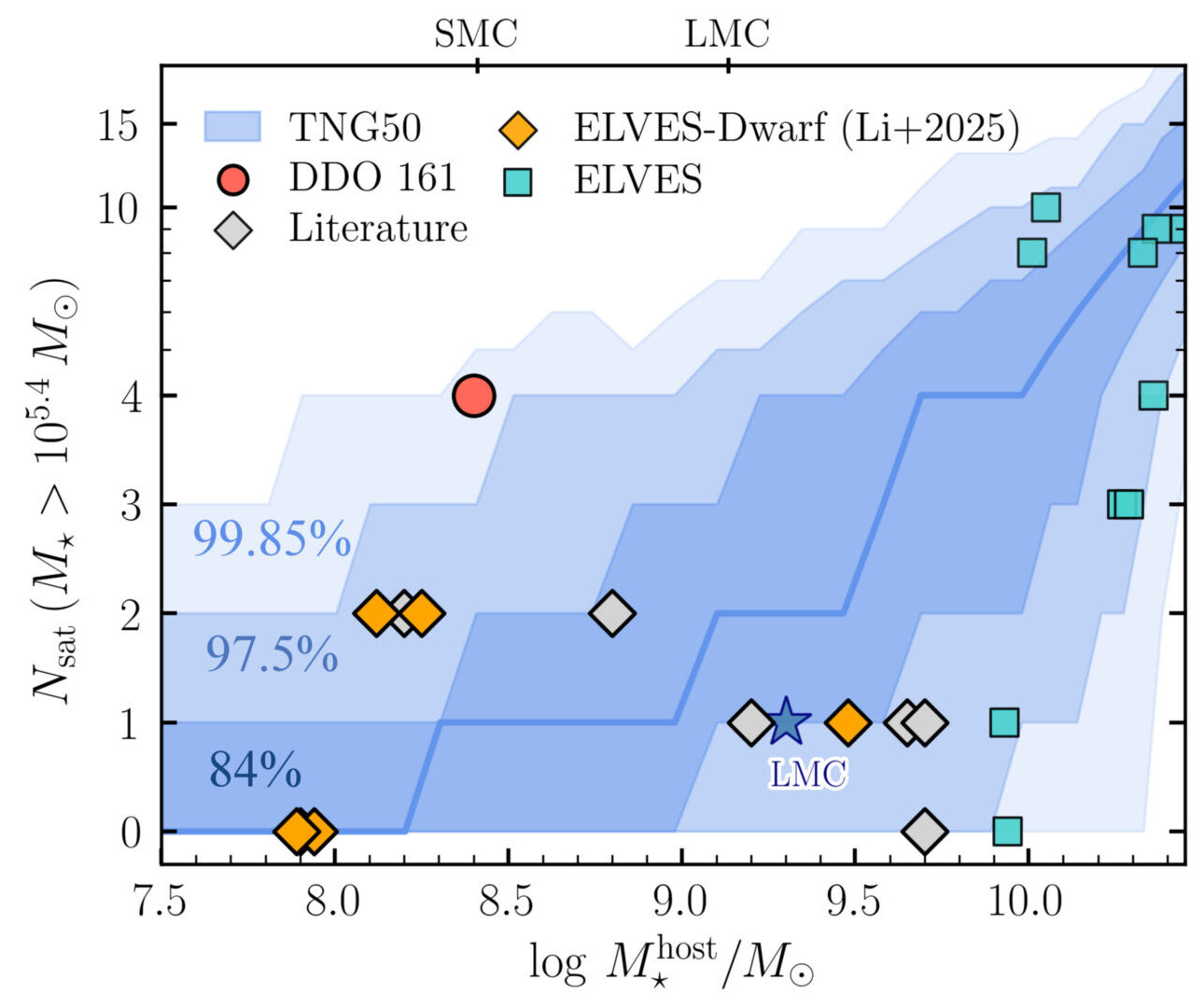
Number of satellites versus host galaxy stellar mass for DDO 161 (red circle) compared to other observed low-mass galaxy satellite systems (data points) and predicted ranges from simulations (blue regions). DDO 161 is a clear outlier, having a high number of satellites for the host galaxy’s stellar mass. Click to enlarge. [Modified from Li et al 2026]
Citation
“A Possible ‘Too-many-satellites’ Problem in the Isolated Dwarf Galaxy DDO 161,” Jiaxuan Li et al 2026 ApJL 998 L24. doi:10.3847/2041-8213/ae3ddd
The post Satellite Surplus Around Dwarf Galaxy DDO 161 appeared first on AAS Nova.
]]>The post Synthetic Ca II 8542 Å Stokes Profile Associated with Chromospheric Magnetic Reconnection in a Simulated Active Region appeared first on AAS Nova.
]]>Using magnetohydrodynamics simulations, researchers predicted the spectral signals of chromospheric magnetic reconnection, which is thought to be responsible for phenomena like ultraviolet bursts and jets.
The post Synthetic Ca II 8542 Å Stokes Profile Associated with Chromospheric Magnetic Reconnection in a Simulated Active Region appeared first on AAS Nova.
]]>
JWST spectra illuminate the composition of the debris disk around GD 362, one of the most polluted white dwarfs known.
The post Investigating a Polluted White Dwarf appeared first on AAS Nova.
]]>Roughly 25–50% of the white dwarfs in the solar neighborhood are “polluted,” showing signs of accretion of metal-rich planetary material. New JWST observations reveal the contents of the debris disk surrounding one of the most polluted white dwarfs in the solar neighborhood.
Heavy-Metal Pollution
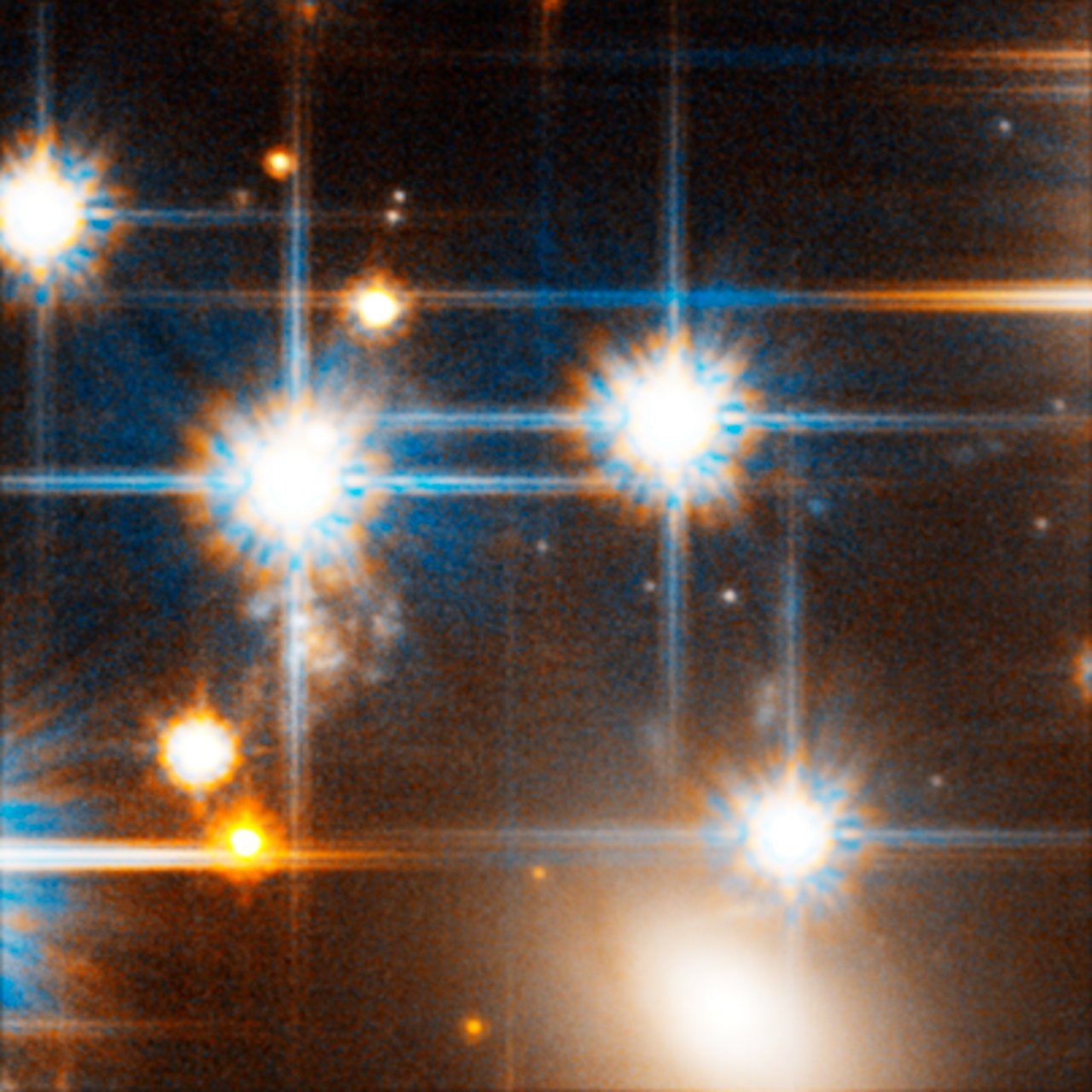
A white dwarf is faintly visible at the center of this Hubble Space Telescope image, tucked between the two brightest stars. [NASA, ESA and H. Richer (University of British Columbia); CC BY 4.0]
One of the most impressively metal-polluted white dwarfs known is GD 362, which is surrounded by a dusty debris disk and shows evidence for at least 16 accreted elements. GD 362 is a helium-atmosphere white dwarf, but previous observations have also shown that it has an unusually large amount of hydrogen in its atmosphere — a possible sign that the star has consumed one or more bodies containing water or ice.
Disk Investigation
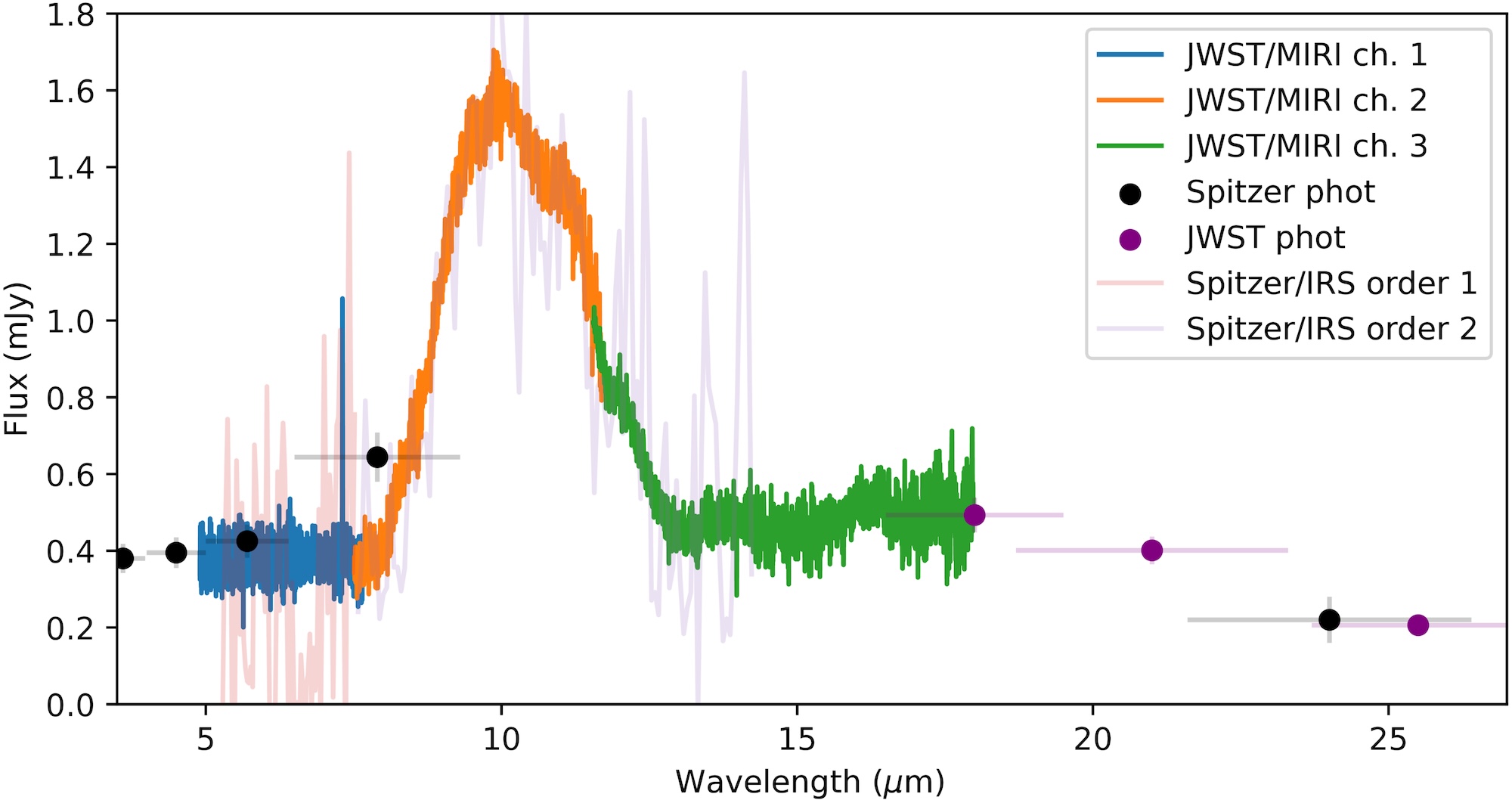
Mid-infrared JWST spectrum and photometry of GD 362, with additional spectral and photometric data from the Spitzer Space Telescope. Click to enlarge. [Reach et al. 2025]
Reach’s team modeled the JWST spectra to constrain the mineralogy of the disk and its physical attributes. They found that the disk likely stretches from 140 to 1,400 times the white dwarf’s radius and contains both silicates and carbon, with the prominent emission feature pointing to olivine and pyroxene silicate minerals. The elements seen in the white dwarf’s atmosphere are generally similar to those observed in the disk, strengthening the connection between accretion from the disk and the metals present in the white dwarf’s spectrum.
Hydrogen Mismatch
The new JWST data furthered the investigation of GD 362’s atmospheric hydrogen and the possibility that it’s accreting water- or ice-rich material. Though water molecules have spectral features in the range studied, none of these features appeared in the JWST spectra of GD 362. This isn’t necessarily a surprise; the team showed that water molecules in the disk would quickly be split apart by GD 362’s high-energy radiation.
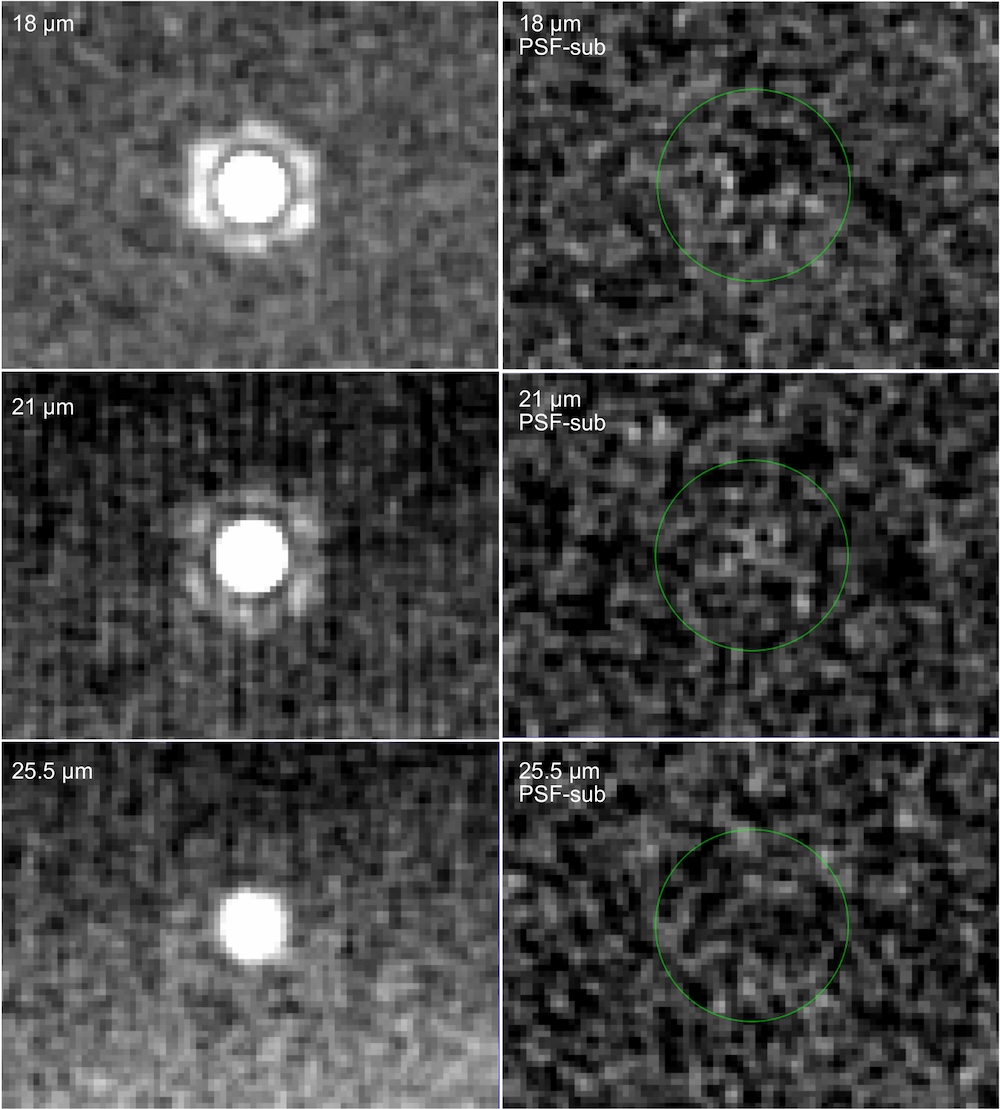
Left column: Three JWST images of GD 362. Right: The same images with the white dwarf’s point spread function subtracted. [Reach et al. 2025]
In addition to investigating GD 362’s disk, Reach and collaborators searched for planets orbiting the white dwarf. Though they found none, they were able to rule out the presence of companions with masses greater than 25 times the mass of Jupiter.
Citation
“Composition of Planetary Debris Around the White Dwarf GD 362,” William T. Reach et al 2025 ApJ 994 195. doi:10.3847/1538-4357/ae11a9
The post Investigating a Polluted White Dwarf appeared first on AAS Nova.
]]>The post Tidally Torn: Why the Most Common Stars May Lack Large, Habitable-Zone Moons appeared first on AAS Nova.
]]>Large moons orbiting habitable-zone planets around M-dwarf stars appear to be unstable; if large moons enhance the habitability of their planets, this result has implications of the potential number of habitable planets in the galaxy.
The post Tidally Torn: Why the Most Common Stars May Lack Large, Habitable-Zone Moons appeared first on AAS Nova.
]]>The post On the Universality of Energy Extraction from Black Hole Spacetimes appeared first on AAS Nova.
]]>Using three-dimensional covariant magnetohydrodynamics simulations to track the accretion of magnetized gas onto black holes, researchers have probed how black hole jets extract spin energy.
The post On the Universality of Energy Extraction from Black Hole Spacetimes appeared first on AAS Nova.
]]>
Astrobites reports on a cosmic drama in action: three active black holes, tangled jets, and fading light.
The post A Triple Black Hole System Caught in the Act of Self-Quenching appeared first on AAS Nova.
]]>Editor’s Note: Astrobites is a graduate-student-run organization that digests astrophysical literature for undergraduate students. As part of the partnership between the AAS and astrobites, we occasionally repost astrobites content here at AAS Nova. We hope you enjoy this post from astrobites; the original can be viewed at astrobites.org.
Title: Episodic Feedback in Triple Active Galactic Nucleus Candidate SDSS J0849+1114 Revealed by Extended Ionized Gas
Authors: Xiaoyu Xu (许啸宇) et al.
First Author’s Institution: Nanjing University
Status: Published in ApJ
When Galaxies Collide
Galaxies are social creatures; they interact and merge (more astrobites talking about this are here and here)! When galaxies collide, the gravitational chaos acts like a funnel, driving massive amounts of cold gas toward the center. This gas rush has two major consequences: it triggers intense bursts of star formation (known as starbursts), and it feeds the central supermassive black holes, activating them as active galactic nuclei (AGNs).
But the story doesn’t end there. These powerful AGNs don’t just sit and feast on the gas. They launch high-velocity winds or jets that push back against the incoming gas, a process known as AGN feedback. (Read more about it in Astrobites here and here.) This feedback is thought to be the key mechanism by which supermassive black holes regulate their host galaxies, either by heating and expelling the gas (negative feedback, which starves star formation) or, in some cases, by compressing it (positive feedback, which promotes star formation).
While binary AGNs (two AGNs in one merging system) are rare, finding systems with three AGNs in one system is fascinatingly rare. The galaxy SDSS J0849+1114 (J0849+1114) is one such system, featuring three Seyfert 2 AGNs, a type of active galaxy with a bright, compact nucleus whose spectrum shows only narrow emission lines, within a tight region of about 5 kiloparsecs (kpc) or 16,000 light-years. Studying this system gives us a front-row seat to how multiple black holes interact and regulate their host environment during a complex merger. Very Large Array observations reveal that nucleus A (see Figure 1) contains two jets, inner and outer. In contrast, nucleus C has one jet, providing further evidence for the presence of an AGN.
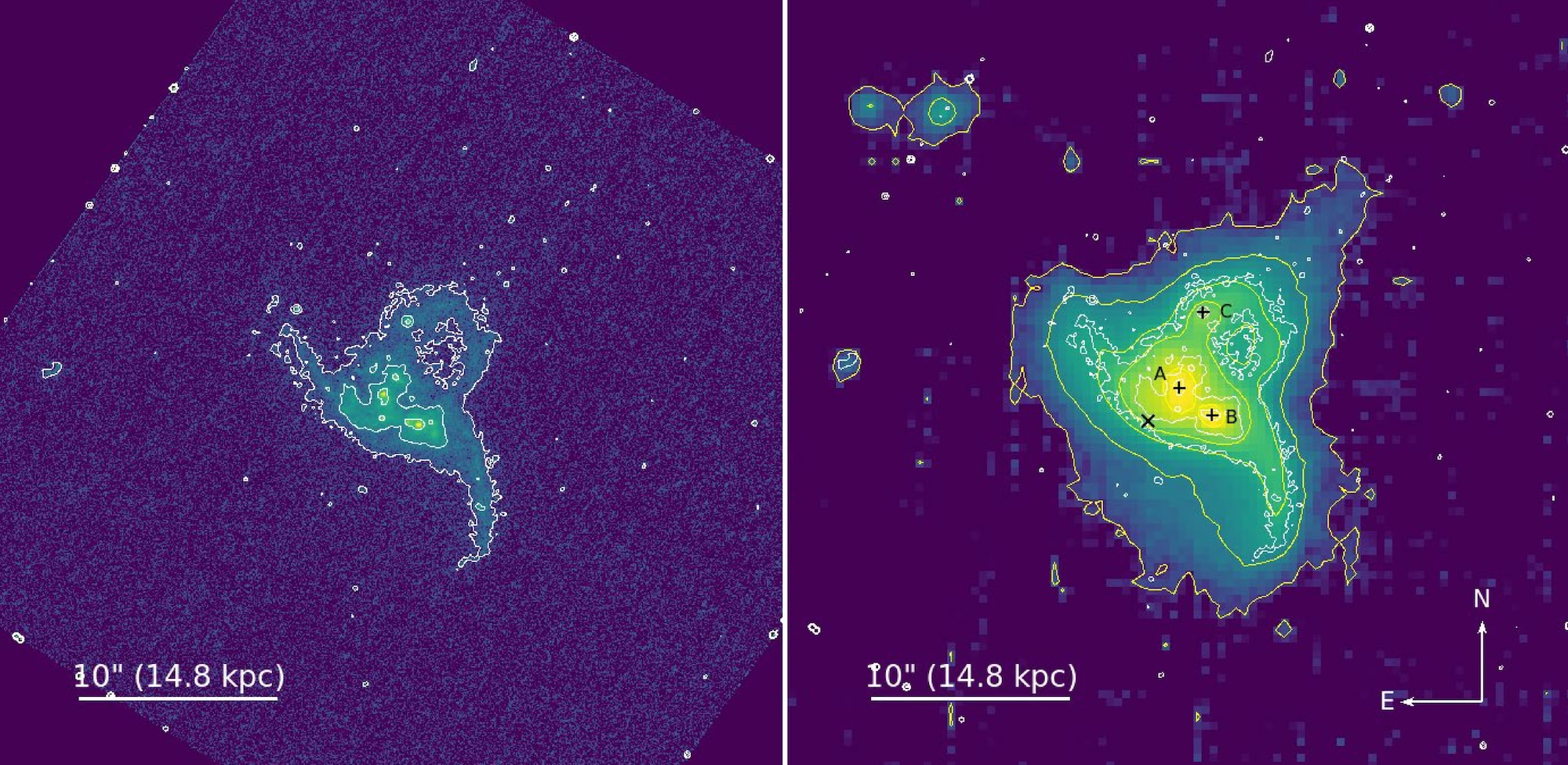
Figure 1: Left: Hubble Space Telescope image taken in ultraviolet light. Right: Optical image from the VLT/MUSE instrument. The three black holes, nuclei A, B, and C, are marked with black crosses. The white contours are from Hubble, like on the left, and the yellow contours are of the MUSE instrument. We can observe the complex and disturbed morphology resulting from the ongoing merger. [Adapted from Xu et al. 2025]
Peering into the Triple Core with VLT/MUSE
To understand the gas dynamics in J0849+1114, the authors used the Very Large Telescope (VLT) and its Multi-Unit Spectroscopic Explorer (MUSE) instrument. MUSE is an integral-field spectrograph, meaning it provides spectra for every single spatial pixel (or “spaxel”) across the field of view. This allows astronomers to map not just where the light is coming from, but how the gas is moving and what is causing it to glow, all resolved spatially across the galaxy.
The main technique employed was two-component Gaussian fitting of key emission lines like hydrogen alpha (Hα) and ionized oxygen ([O III]λλ4959,5007), which can be seen in Figure 2. The width of a Gaussian line (or its velocity dispersion) in a spectrum tells us how fast the gas is moving. A narrow line means the gas is relatively calm, with most of it moving at similar speeds. A broader line, on the other hand, means the gas velocities are more spread out — some parts are racing toward us, others away — indicating turbulence or outflows. By comparing the widths of different components, astronomers can separate quiet, rotating gas from the high-speed winds launched by the active black holes.

Figure 2: Zoomed-in spectra showing the Hβ and [O III] (left) and Hα, [N II], and [S II] (right) emission lines from the spot marked with an “X” in the MUSE image in Figure 1. The blue line shows the observed data, the orange line shows the best-fit model, and the two colored curves (light blue and red) represent the two components of the gas. The pink line shows the leftover differences between the data and the model. The First Component is narrow, representing gas that is relatively settled, often showing signs of rotation or slow movements associated with gravitational disturbances, like tidal tails (low velocity dispersion, σ1 ≤ 50 km/s). The Second Component is broad, representing highly turbulent or fast-moving gas, characteristic of powerful outflows or winds driven by the central AGNs (high velocity dispersion, σ2 > σ1). [Adapted from Xu et al. 2025]
What They Found: Gas Tails and Outflows
The VLT/MUSE observations successfully characterized both the undisturbed (First Component) and turbulent (Second Component) gas across the system.
1. Galactic-Scale Tidal Tails
The slow-moving gas (First Component) revealed extended structures of ionized gas stretching over 10 kpc (33,000 light-years), and in some directions, even more than 15 kpc (49,000 light-years) away from nucleus A. These large, low-velocity gas clouds align well with features known as tidal tails: the stretched-out arms of gas and stars pulled away by the violent gravitational forces of the merger.
2. Two Distinct Outflows Driven by Radio Jets
The fast-moving gas (Second Component) clearly showed two distinct sites: outflows originating from nucleus A and nucleus C.
- Outflow A: This outflow extends over 5 kpc (16,000 light-years) around nucleus A. The gas kinematics and geometry strongly suggest that this outflow is being driven by nucleus A’s radio jet. This finding is key, as the measured kinetic power of the outflow is about 10 times stronger than what star formation alone could supply, and the current luminosity of the AGN is also insufficient to power it.
- Outflow C: A smaller but detectable outflow extends about 5.9 kpc (19,000 light-years) around nucleus C, with a lower kinetic power compared to Outflow A. But, like Outflow A, the energetics and velocity gradients suggest this outflow is also linked to nucleus C’s radio jet.
A Black Hole That’s Recently Gone Quiet
The most striking implication of this study relates to the timing of nucleus A’s activity. The presence of extended ionized gas far from the nucleus (in the tidal tails, >10 kpc or 33,000 light-years away) provides a fascinating glimpse into the AGN’s recent past.
The physical conditions of this distant gas were determined using emission line ratios ([O III]/Hα and [N II]/Hα) on the Baldwin, Phillips, and Terlevich (BPT) diagram. A BPT diagram uses emission line ratios to diagnose the energy source that ionizes the gas: star formation, AGN, or shocks. The BPT diagram of J0849+1114 indicates that an AGN currently photoionizes the gas.
By running sophisticated photoionization models, the scientists calculated how luminous nucleus A must have been to ionize the gas currently found 10–15 kpc (33,000–49,000 light-years) away. They discovered that this required nucleus A to be 20–100 times more luminous than it currently is! Since light takes time to travel, and the ionized gas quickly recombines (on timescales of less than 100 years for this gas), this luminous phase must have ended very recently, approximately 30,000–50,000 years ago. This is a long time for us, but just a blink of an eye on cosmic timescales.
The Episode of Self-Regulation
By integrating the findings across different wavelengths and timescales, the current faint luminosity state, the past luminous state inferred from the distant gas, and the presence of radio jets of different ages, the authors propose a model of episodic AGN feedback in nucleus A:
- Past Activity (150,000 years ago): An active phase likely launched an outer radio jet, which subsequently drove the large-scale ionized gas outflow observed today.
- Peak Ionization (30,000–50,000 years ago): A subsequent burst of high accretion reached its peak, ionizing the distant tidal tails.
- Fading and Quenching (Today): The energy released by the jet and/or outflow during the active phase likely expelled or heated the surrounding gas (negative feedback), causing the central accretion disk to run out of fuel. The AGN has since faded rapidly to its current low-accretion state, marked by the appearance of a young inner radio jet.
A Quiet Ending After a Loud Beginning
J0849+1114 is not just a statistical anomaly as a triple AGN candidate; it serves as a crucial case study demonstrating the powerful and rapid effects of AGN feedback. High-resolution observations confirm that violent galaxy mergers trigger both powerful outflows and episodic bursts of extreme luminosity. Crucially, these outflows clear the gas and cause the central supermassive black hole to quickly fade from a luminous quasar phase to a quiet, low-accretion state within tens of thousands of years. This system provides strong, spatially resolved evidence that AGN feedback rapidly suppresses accretion onto the supermassive black hole and shapes the host galaxy on kiloparsec scales during the chaotic drama of galactic mergers.
Original astrobite edited by Lindsey Gordon.
About the author, Sowkhya Shanbhog:
I am currently a first-year PhD student at Scuola Normale Superiore in Pisa, Italy, where I am focusing on studying high-redshift quasars. Prior to this, I completed a dual BS-MS degree at the Indian Institute of Science Education and Research in Pune, India. Now, I am eager to expand my involvement in science communication and outreach initiatives. I have recently developed an interest in cooking, particularly since moving to a new city. I find solace in listening to music during my leisure time.
The post A Triple Black Hole System Caught in the Act of Self-Quenching appeared first on AAS Nova.
]]>The post High-Resolution Simulations of the Interaction Between the Nova/Supernova Ejecta and the Accretion Disk appeared first on AAS Nova.
]]>Simulations show that the accretion disks that form in nova and Type Ia supernova progenitor systems are partially or totally destroyed by an explosion, which will impact subsequent explosions.
The post High-Resolution Simulations of the Interaction Between the Nova/Supernova Ejecta and the Accretion Disk appeared first on AAS Nova.
]]>
Astronomers search for a simple organic molecule in Lynds 1544, a cold, dense clump of gas that will one day become a star.
The post Mapping a Molecular Building Block in a Pre-Stellar Core appeared first on AAS Nova.
]]>To probe the chemistry of cold pre-stellar cores, researchers investigated Lynds 1544 and made the first-ever spatially resolved map of methanimine — a simple molecule that may be involved in the formation of amino acids in space — in this environment.
Astrochemistry at Work

The chemical structure of methanimine, CH2NH. [Ben Mills]

Today’s research article, led by Yuxin Lin (Max Planck Institute for Extraterrestrial Physics), focuses on a molecule called methanimine (CH2NH). CH2NH is the simplest molecule in a class of nitrogen-containing compounds called imines, and it’s thought to be an important stepping-stone in the creation of amino acids.
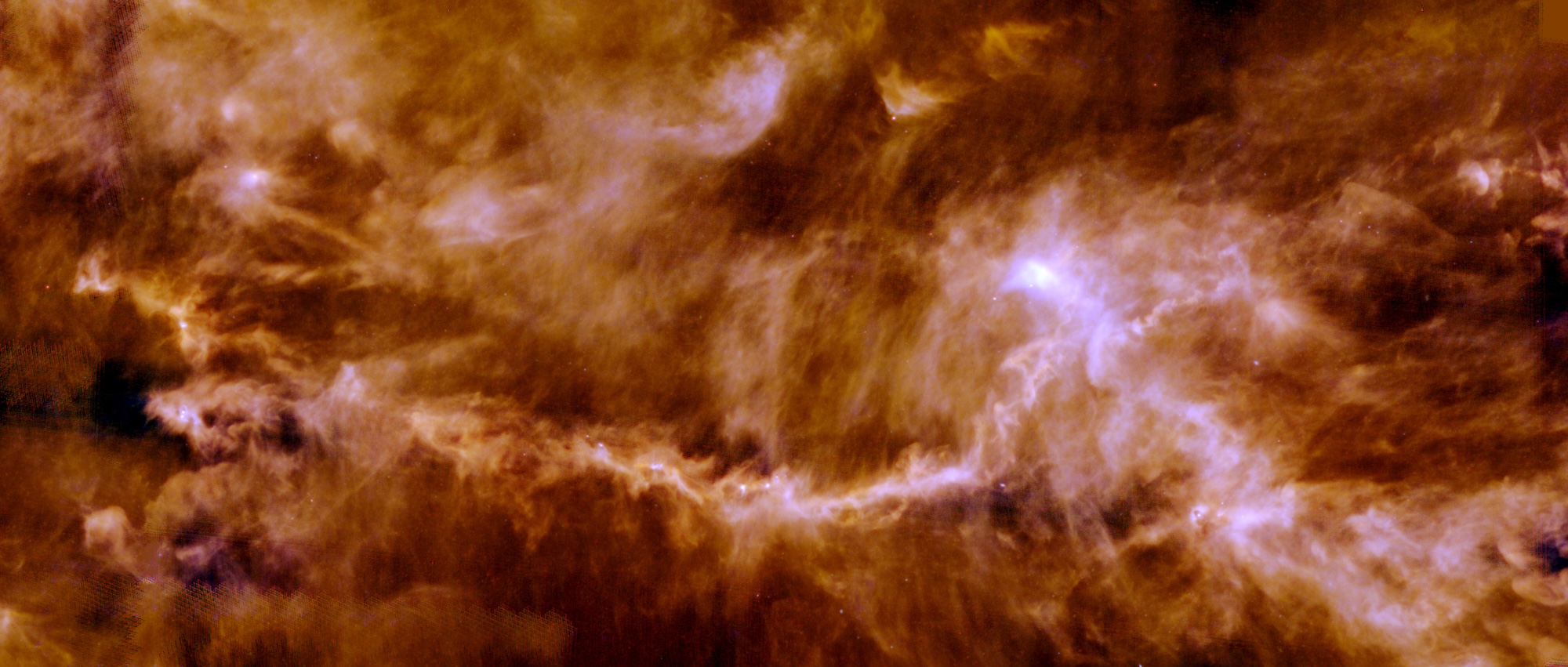
A Herschel Space Observatory view of the Taurus Molecular Cloud, where L1544 resides. This star-forming region is about 450 light-years away. [ESA/Herschel/PACS, SPIRE/Gould Belt survey Key Programme/Palmeirim et al. 2013]
First Spatially Resolved Map
Lin and collaborators searched for CH2NH within Lynds 1544 (L1544), a pre-stellar core in the nearby Taurus Molecular Cloud. Pre-stellar cores — condensed, gravitationally bound clumps of cold gas within a molecular cloud — represent an early stage in the process of star formation, just before the gas collapses to form a protostar.
L1544 has been the subject of many astrochemical investigations, and previous studies have revealed that it contains a complex, chemically differentiated envelope surrounding a dense core in which many chemical species have frozen out onto dust grains, leaving the gas depleted of these species.
Using the Institute for Radio Astronomy in the Millimetre Range 30-meter radio telescope, Lin’s team mapped the distribution of CH2NH across L1544. This isn’t the first time that CH2NH has been detected in a cold pre-stellar core, but it’s the first time that the molecule has been mapped in a spatially resolved way in such an environment. This allows researchers to compare the distribution of CH2NH to other molecules in the core and build an understanding of the chemistry behind its formation.
The Chemistry of CH2NH
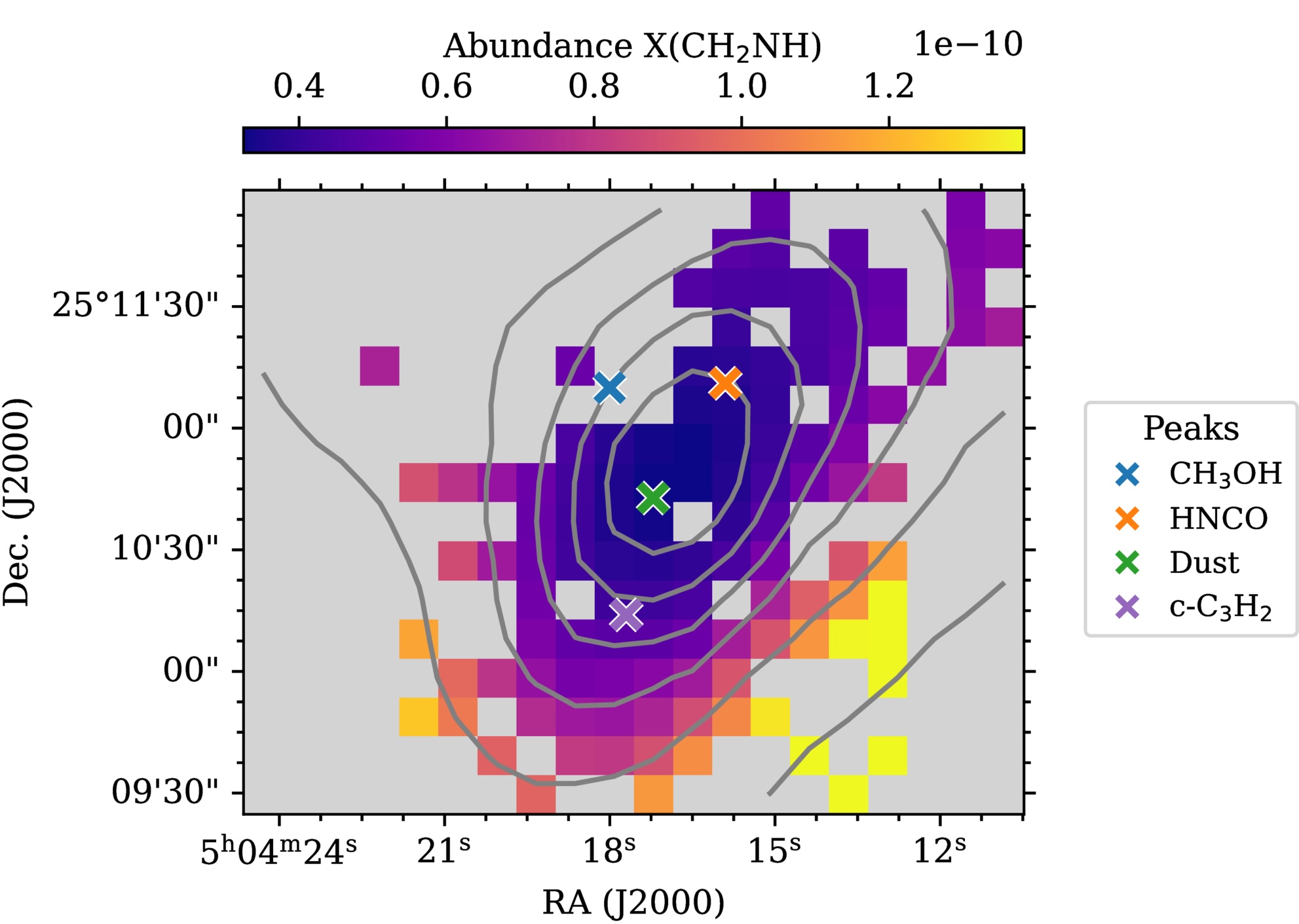
Abundance of CH2NH in L1544. The contours indicate the column density of molecular hydrogen. The crosses show where the emission from other chemical species is at its peak. Click to enlarge. [Adapted from Lin et al. 2026]
In the outer layers of the core, where the gas is less dense, ultraviolet light creates reactive chemical species called radicals that can spur the formation of CH2NH. In the interior of the core, dense gas prevents the incursion of ultraviolet light. This means that few radicals are created that can help form CH2NH molecules, and the molecules that do form tend to freeze out onto dust grains, disappearing from the gas.
The discovery of CH2NH throughout L1544 suggests that the precursors to complex organic molecules can form during the cold, calm pre-stellar core phase of star formation, allowing these molecules to be inherited by nascent planetary systems.
Citation
“First Mapping of Prebiotic Molecule CH2NH in a Prestellar Core,” Yuxin Lin et al 2026 ApJL 996 L32. doi:10.3847/2041-8213/ae2c76
The post Mapping a Molecular Building Block in a Pre-Stellar Core appeared first on AAS Nova.
]]>The post Cosmogenic Origin of KM3-230213A: Delayed Gamma-Ray Emission from a Cosmic-Ray Transient appeared first on AAS Nova.
]]>Rather than originating from within a distant source, the neutrino parent of an extremely high-energy muon detected in 2023 may have arisen from the interaction of a cosmic ray and the cosmic background radiation.
The post Cosmogenic Origin of KM3-230213A: Delayed Gamma-Ray Emission from a Cosmic-Ray Transient appeared first on AAS Nova.
]]>The post Smart Source Detection Framework for Lobster Eye Telescopes appeared first on AAS Nova.
]]>A novel source detection framework employing neural networks resulted in a 27% increase in the number of detected sources compared to existing pipelines when applied to simulated data.
The post Smart Source Detection Framework for Lobster Eye Telescopes appeared first on AAS Nova.
]]>
A chance alignment between galaxies allows astronomers to study a single star system as it was when the universe was just 6 billion years old.
The post JWST Spies a Potential Microlensed Massive Binary Star System appeared first on AAS Nova.
]]>JWST images of galaxy clusters are rich with gravitationally lensed galaxies. Recent work examines a source in a lensed galaxy that may offer a glimpse into the lives of massive stars billions of years ago.
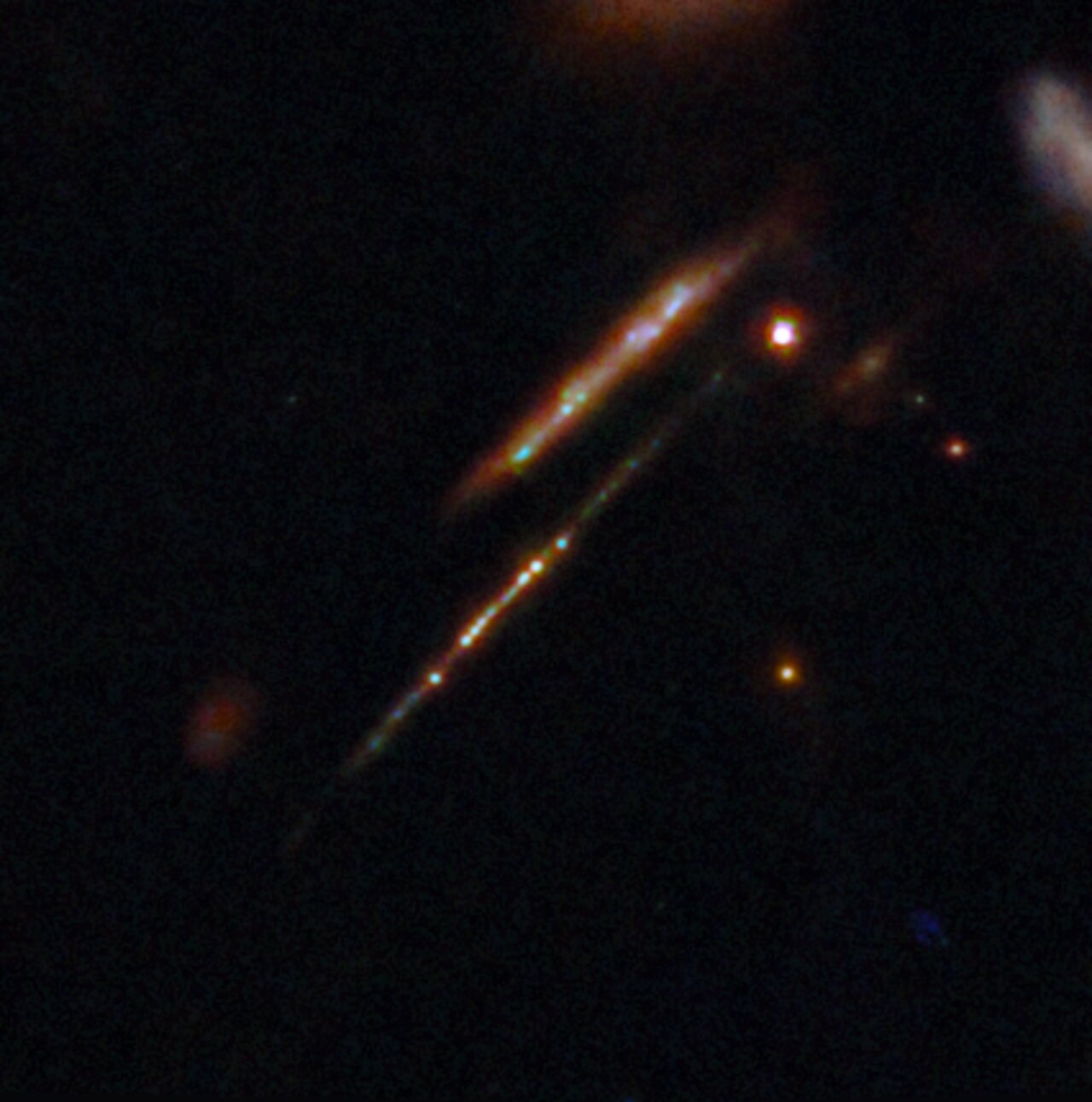
JWST image of the gravitationally lensed Cosmic Gems arc, in which multiple individual star clusters are visible. [ESA/Webb, NASA & CSA, L. Bradley (STScI), A. Adamo (Stockholm University) and the Cosmic Spring collaboration; CC BY 4.0]
Glimpses of Single Stars
Galaxy clusters, the largest gravitationally bound structures in the universe, create the conditions necessary for astronomers to perform an extraordinary feat: examine individual massive stars and star clusters at far greater distances than our telescopes can typically achieve. This is possible thanks to gravitational lensing, the bending of spacetime by an immense mass, which warps and magnifies the light from more distant objects.
These glimpses of single stars and star clusters offer a rare chance to study massive stars in our universe’s distant past directly. In particular, these observations allow us to probe whether factors like the multiplicity fraction — how many massive stars are in binary or multiple systems — have changed over cosmic time.
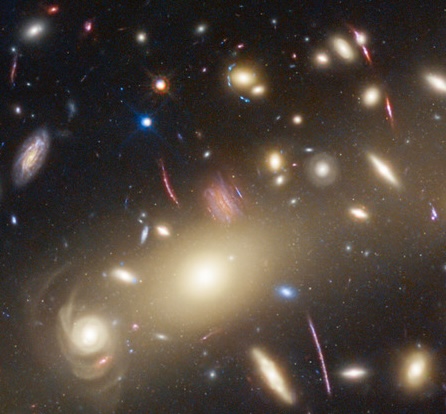
The Warhol arc is the pinkish galaxy at the center of this image. [Adapted from NASA, ESA, CSA, STScI, Jose Diego (IFCA), Jordan D’Silva (UWA), Anton Koekemoer (STScI), Jake Summers (ASU), Rogier Windhorst (ASU), Haojing Yan (University of Missouri); Image Processing: Joseph DePasquale (STScI)]
Peering Through a Gravitational Lens
In a recent research article, a team led by Hayley Williams (University of Minnesota) reported on their examination of an intriguing source in a gravitationally lensed galaxy called the “Warhol arc.” This galaxy, located at a redshift of z = 0.94 (when the universe was roughly 6 billion years old), is gravitationally lensed by the massive galaxy cluster MACS J0416.1−2403. The cluster is located at a redshift of z = 0.396, corresponding to when the universe was about 9.4 billion years old.
Using data from the JWST Prime Extragalactic Areas for Reionization and Lensing Science (PEARLS) program and the Canadian NIRISS Unbiased Cluster Survey (CANUCS), Williams’s team analyzed a source in the Warhol arc called W2, which previous work suggests is either a binary star system or a small star cluster.
Multiplicity and Microlensing
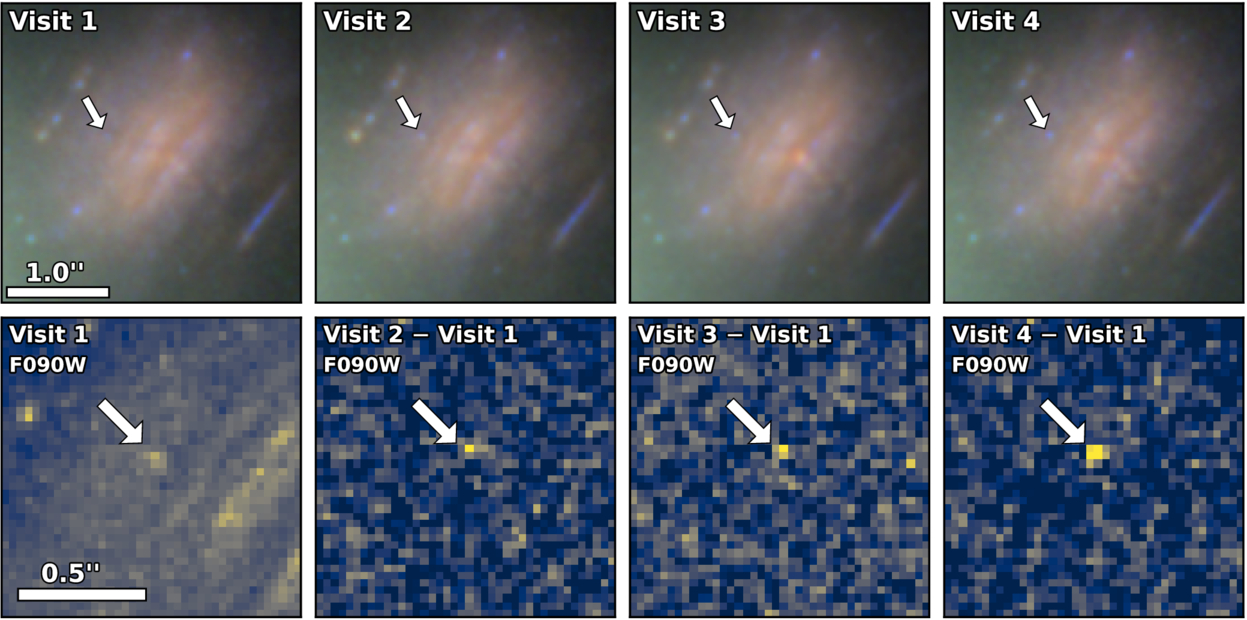
Top row: The Warhol arc during four epochs of JWST observations. Bottom row: On the left, a magnified image of W2 during the first epoch. The remaining images show the difference in brightness between subsequent epochs and the first epoch. Click to enlarge. [Williams et al. 2026]
W2 varies between observations in both brightness and color, a fact that the authors suggested is due to microlensing by a star within the lensing galaxy cluster, rather than variability within the binary system itself. Under this hypothesis, the orbital motions of the binary bring the stars across the microlensing caustic — a region in which the magnification is exceptionally high — and the brightness and color of W2 vary as the components of the binary approach and recede from the caustic.
Williams and collaborators also performed stellar population modeling to explore the binary configurations that could match the observations. They found that the stars likely have masses of 21–24 solar masses, with one being a cool red supergiant and the other a hot, main-sequence companion. Depending on the precise evolutionary stage of the binary, it’s possible that one of the stars is nearing a supernova explosion. Lending more support to the binary system hypothesis, the microlensing measurements constrain W2 to be no larger than 90 au — too small for even a compact star cluster.
The team closed by proposing further observations of W2’s position to rule out the possibility that the microlensing rate there is unusually high, an outcome that may suggest that microlensing of two unrelated stars, rather than a binary system, is responsible for these observations.
Citation
“JWST’s PEARLS: A Candidate Massive Binary Star System in a Lensed Galaxy at Redshift 0.94,” Hayley Williams et al 2026 ApJ 997 292. doi:10.3847/1538-4357/ae2003
The post JWST Spies a Potential Microlensed Massive Binary Star System appeared first on AAS Nova.
]]>The post Energy Conversion and Electron Acceleration and Transport in 3D Simulations of Solar Flares appeared first on AAS Nova.
]]>Tackling the question of how electrons are accelerated to high energies in solar flares, researchers find that no one mechanism is solely responsible; instead, a variety of mechanisms work in concert.
The post Energy Conversion and Electron Acceleration and Transport in 3D Simulations of Solar Flares appeared first on AAS Nova.
]]>
Astrobites reports on the potential habitability of Teegarden’s Star b, a promising Earth-like planet.
The post Teegarden’s Star b: (Almost) Too Hot to Handle? appeared first on AAS Nova.
]]>Editor’s Note: Astrobites is a graduate-student-run organization that digests astrophysical literature for undergraduate students. As part of the partnership between the AAS and astrobites, we occasionally repost astrobites content here at AAS Nova. We hope you enjoy this post from astrobites; the original can be viewed at astrobites.org.
Title: Near the Runaway: The Climate and Habitability of Teegarden’s Star b
Authors: Ryan Boukrouche, Rodrigo Caballero, and Neil T. Lewis
First Author’s Institution: Stockholm University
Status: Published in ApJL
To find life on other planets, we start our search for planets like Earth. (It’s the best example of a habitable planet that we know of!) Earth’s distance from the Sun allows for liquid water to exist on the surface, which is vital for life as we know it. This region, called the “habitable zone,” describes the right atmospheric conditions and proximity to its host star that a planet can have to support liquid water. Earth is also special because of its atmosphere, which contains greenhouse gases such as water vapor and carbon dioxide (CO2); these help keep the average global temperature moderate enough for life to exist.
A few factors govern the habitable zone for a given planetary system: for example, the strength of a star’s radiation, the composition of the planet’s atmosphere, and a planet’s orbital period around its star. This is because a planet’s “energy budget” is dictated by these factors. For a planet to have a “stable” climate, the energy it receives from its star must balance the energy it re-emits. For instance, in a given planetary system, the closer a planet’s orbit is to its host star, the more sunlight it receives and therefore the more energy it must radiate away. This balance is between outgoing longwave radiation, which is heat emitted by the planet, and absorbed/incoming shortwave radiation, which is the sunlight the planet receives from its host star.
Some Earth-like analog planets have piqued the interest of astronomers because observations suggest that they lie within the habitable zones of their respective stars. One system, named after its discoverer, Bonnard Teegarden, features an M-dwarf star with three orbiting Earth-mass planets. It exists about 12.5 light-years away, making it one of the closest planetary systems to us. One of the planets, Teegarden’s Star b, is believed to have very similar characteristics to Earth: a radius of 1.02 REarth and a mass of 1.16 MEarth. Because the planet orbits an M-dwarf star, which is much cooler (temperature-wise) and less massive than our Sun, the planet’s orbit is much, much smaller than Earth’s, with a semimajor axis of 0.0259 au (compared to 1 au for Earth) and an orbital period of 4.9 days (compared to 365 days for Earth).
The authors of today’s article explore how close Teegarden’s Star b is to its habitable zone based on current observations, and how future observations could lead to vastly different interpretations of its habitability.
Exoplanets are small and faint, making it difficult for current technology to study their atmospheres accurately. Modern simulations, known as general circulation models, can model how a planet’s atmosphere might behave under various assumptions. Isca, the climate and atmospheric dynamics model used in this article, has been used to model exoplanetary atmospheres in previous studies. Modeling a planet around an M-dwarf, the authors tried matching the planet’s properties as closely as possible to Earth, using a simple cloud model (which is challenging to model), moist physics (since our atmosphere contains water vapor), and a radiative transfer scheme. In their simulation, the authors also assumed that Teegarden’s Star b is tidally locked, meaning its dayside always faces its sun. For example, our Moon always shows the same side to us on Earth and is considered tidally locked.
They also assigned Teegarden’s Star b a similar atmospheric composition to Earth: 78% nitrogen (N2), 28% oxygen (O2), and a CO2 concentration of 400 parts per million by volume (ppmv). Unlike Earth, they did not include an ozone layer; however, they state that including one did not significantly change the results. Combinations of these different factors were run for 8–41 Earth years, until the Teegarden’s Star b model either reached a stable state (where the energy balance equals 0 W/m²), or it exceeded the runaway greenhouse gas threshold — the point at which the energy balance exceeds zero, and the planet’s surface temperature increases uncontrollably.
The average amount of radiation that a planet receives is called its instellation, or sometimes “insolation” when talking about our Sun. For reference, Earth has an insolation value of around 1365 W/m². Different studies of Teegarden’s Star b suggest an instellation of 1481 W/m² or 1565 W/m², so the authors multiple values in that range (see Fig. 1).
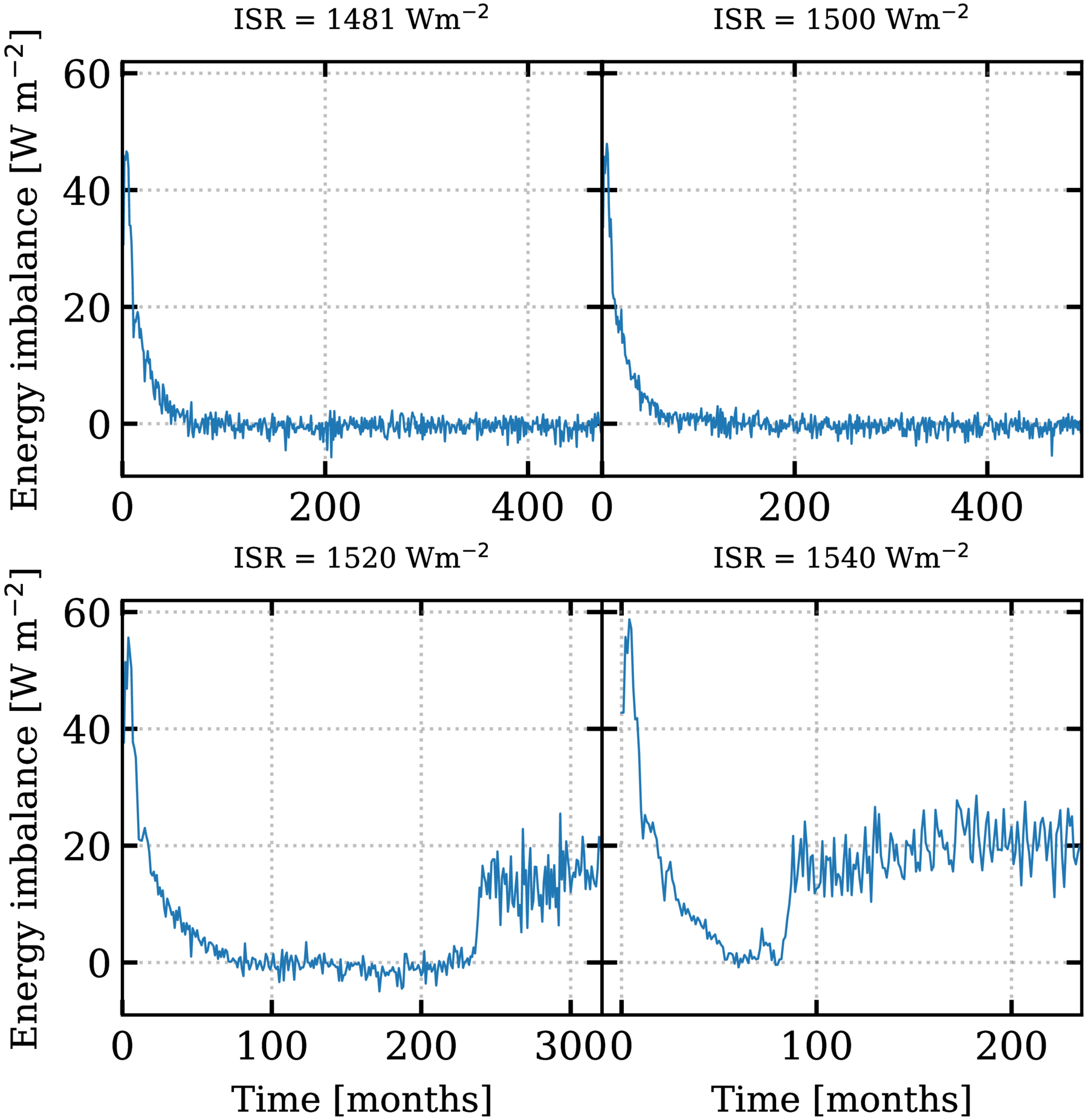
Figure 1: For a surface albedo of 0.07 (ocean-dominated), the energy balance for each tested instellation (ISR; 1481–1540 W/m²) is shown. As time increases, a stable atmosphere would consistently reach an energy imbalance value of 0 W/m². In contrast, an unstable (runaway greenhouse) atmosphere would have a value greater than 0 W/m², indicating that it is receiving more energy than emitting. [Boukrouche et al. 2025]

Figure 2: The global mean surface temperature (top) and planetary albedo (bottom) of Teegarden’s Star b are shown with various instellation values. The filled markers represent models that reached an equilibrium, or stable, state, whereas the empty markers are models that reached a runaway, uninhabitable state. The two vertical black lines represent the two main instellation estimates of 1481 and 1565 W/m². Once the models exceed the ~1520 W/m² instellation value, they start to fail and reach a runaway greenhouse effect. [Boukrouche et al. 2025]
Original astrobite edited by Joe Williams.
About the author, Mckenzie Ferrari:
I’m currently a PhD student in the geophysical sciences program at the University of Chicago. While I now study the atmosphere and oceans of Earth, most of my previous research focused on simulations of Type Ia supernovae and galaxy formation and evolution. In my free time, I foster cats for a local organization, enjoy cooking, and can often be found running along Lake Michigan.
The post Teegarden’s Star b: (Almost) Too Hot to Handle? appeared first on AAS Nova.
]]>The post Gravitational Instability and Fragmentation in Collapsar Disks Supports the Formation of Subsolar Neutron Stars appeared first on AAS Nova.
]]>Simulations suggests that the outer regions of neutrino-cooled disks could be a potential birthplace for neutron stars with masses of 0.01–1.0 solar mass — a population otherwise difficult to form through core collapse.
The post Gravitational Instability and Fragmentation in Collapsar Disks Supports the Formation of Subsolar Neutron Stars appeared first on AAS Nova.
]]>
How has the Crab Nebula supernova remnant changed since the Hubble Space Telescope observed it in 1999–2000?
The post Featured Image: Hubble Revisits the Crab Nebula appeared first on AAS Nova.
]]>In 1999–2000, the Hubble Space Telescope captured what was then the most detailed image ever taken of the Crab Nebula. In the quarter-century since the release of that image, the nebula — the remnant of a star observed to explode as a supernova in July 1054 — has been slowly unfurling and changing as the ejected stellar material expands into space. Now, as reported in a research article by William Blair (Johns Hopkins University) and collaborators, astronomers have turned Hubble’s inquisitive eye toward the Crab Nebula once again. One of the new images is shown above (click for the full view!). By comparing the new and old Hubble images, Blair’s team uncovered dramatic changes in the nebula’s intricate filamentary structure. These changes are due to the nebula’s three-dimensional expansion as well as evolution in the density of its knots and filaments. To learn more about the new Hubble portrait of the Crab Nebula, be sure to check out the full article linked below.
Citation
“The Crab Nebula Revisited Using HST/WFC3,” William P. Blair et al 2026 ApJ 997 81. doi:10.3847/1538-4357/ae2adc
The post Featured Image: Hubble Revisits the Crab Nebula appeared first on AAS Nova.
]]>The post The Dynamical Environment Within the Habitable Zone of the Gaia-4 and Gaia-5 Planetary Systems appeared first on AAS Nova.
]]>The known planets in the Gaia-4 and Gaia-5 systems mostly exclude the possibility of planets in the habitable zones of these stars; giant planets on eccentric orbits may disrupt other planets via a “wrecking ball” mechanism.
The post The Dynamical Environment Within the Habitable Zone of the Gaia-4 and Gaia-5 Planetary Systems appeared first on AAS Nova.
]]>
A recent study looks to the nearest rubble-ridden systems for the potential origins of interstellar objects that have visited our solar system.
The post We Have Visitors: Interstellar Material from Nearby Debris Disks appeared first on AAS Nova.
]]>Traversing the galaxy from places yet known, a few interstellar objects have taken a quick dip into our solar system. These objects have inspired a frenzy of questions regarding their origins and paths that led them here. A recent study took to nearby planet-forming stellar systems as possible launching posts.
Interstellar Object Origins
As 3I/ATLAS was first spotted entering the solar system in July 2025, all eyes turned to the curious interstellar visitor. Just the third interstellar object astronomers have observed, 3I/ATLAS joins 1I/ʻOumuamua (2017) and 2I/Borisov (2019) in capturing our attention and igniting many questions regarding their origins and journeys to our corner of the Milky Way. While astronomers have characterized these objects’ compositions, sizes, and paths through the solar system, the mechanisms by which these objects leave their origin systems and travel the galaxy before arriving here are not well constrained.
These three large bodies are just part of the interstellar material visiting the solar system — spacecraft have detected an influx of small interstellar dust particles, and while not yet directly confirmed, interstellar meteoroids burning up in Earth’s atmosphere are possible. This loose material likely originates in dusty, planet-forming disks (debris disks) around stars — rubble kicked out into interstellar space, sending chemicals, organic compounds, and perhaps even the precursors of life to other nearby systems. Understanding the origins and trajectories of such material will allow us to investigate planet formation and how developing systems may impact their environments.
Deliveries from Debris Disks
Debris disks offer ideal testbeds for tracing small bodies and dusty material through the galaxy. Interactions with large planets in debris disks can launch loose material like planetesimals and dust into interstellar space. To explore how debris disks may drive interstellar visitors to our solar system, Cole R. Gregg and Paul A. Wiegert (The University of Western Ontario) simulated how much material the 20 nearest debris disks would contribute to the interstellar object population of our solar system.

Arrival direction on the sky for particles that reach the solar system from the 20 debris disks studied here. The arrival locations for 1I/ʻOumuamua, 2I/Borisov, and 3I/ATLAS are shown for comparison. Click to enlarge. [Gregg and Wiegert 2025]
Trickier to spot, smaller meteoroids (≥200 microns) that would appear as meteors in Earth’s atmosphere are also expected. The only way to observationally confirm interstellar origins for meteors is based on how fast they are moving relative to the material in our solar system, or their excess velocities. Based on the simulations, many of these smaller particles have low excess velocities, making them observationally difficult to distinguish from bound solar system objects.
Observational Connections and Expectations

Zoomed-in view focusing on the direction where 1I/ʻOumuamua entered the solar system. The interstellar object falls near the arrival directions of particles from HD 38858 and HD 166. Click to enlarge. [Gregg and Wiegert 2025]
Where are the expected interstellar meteoroids? Current meteor detectors including the Canadian Meteor Orbit Radar (CMOR) and the Global Meteor Network (GMN) search the sky for incoming material. While the simulations predict hundreds of meteoroid-sized particles from each debris disk currently in the inner solar system, the small collecting area of CMOR and the limiting size of grains detectable by GMN statistically require decades of observations to detect even a single interstellar meteoroid. Thus, the lack of detections thus far is not surprising, but with advanced instrumentation, discoveries of more interstellar particles and objects are imminent.
Citation
“A Catalogue of Interstellar Material Delivery from Nearby Debris Disks,” Cole R. Gregg and Paul A. Wiegert 2025 PSJ 6 309. doi:10.3847/PSJ/ae284f
The post We Have Visitors: Interstellar Material from Nearby Debris Disks appeared first on AAS Nova.
]]>The post The Influence of Internal Structure on Physical Outcomes of the 2029 Apophis Close Approach with Earth appeared first on AAS Nova.
]]>Modeling shows how Apophis’s response to a cloud encounter with Earth depends on the object’s particle size distribution, particle shapes, packing configurations, and interior structure.
The post The Influence of Internal Structure on Physical Outcomes of the 2029 Apophis Close Approach with Earth appeared first on AAS Nova.
]]>The post γ-Ray Pulsar Emission is Mostly Stable on Timescales from Minutes to Years appeared first on AAS Nova.
]]>Using a new method to detect and characterize random, rapid changes in the flux from gamma-ray pulsars, researchers found no evidence for changes above the 10% level, with certain cases ruling out changes above 1%.
The post γ-Ray Pulsar Emission is Mostly Stable on Timescales from Minutes to Years appeared first on AAS Nova.
]]>
The upcoming Vera C. Rubin Observatory Legacy Survey of Space and Time will detect an astonishing number of transients — including kilonovae from colliding neutron stars.
The post How Many Kilonovae Will Rubin Observatory Help Us Spot? appeared first on AAS Nova.
]]>The detection of gravitational waves and light from a single source was one of the most important discoveries of the gravitational wave era. Can upcoming data from Vera C. Rubin Observatory help astronomers repeat that feat?
These images from the Hubble Space Telescope show the fading light of the kilonova associated with the gravitational wave event GW170817. [NASA and ESA Acknowledgment: A. Levan (U. Warwick), N. Tanvir (U. Leicester), and A. Fruchter and O. Fox (STScI)]
Not Yet Repeated
When two neutron stars merge, the collision sends ripples through spacetime and generates an electromagnetic signal called a kilonova. In 2017, researchers detected gravitational waves and kilonova emission from colliding neutron stars — the first and, to date, only electromagnetic signal definitively associated with a gravitational wave event.
In a research article published this week, a team led by Simon Stevenson (Swinburne University of Technology; OzGrav) considered how the much-anticipated Legacy Survey of Space and Time (LSST), carried out by Rubin Observatory, can enhance our ability to detect kilonovae and pair them with their gravitational wave counterparts.
Survey Simulations
When a new gravitational wave signal is detected, researchers rush to search for an electromagnetic counterpart to the signal. While Rubin Observatory can aid this type of reactive search, Stevenson’s team focused on a different strategy: spotting kilonovae during routine survey operations and using these detections to trigger a targeted hunt through gravitational wave data, searching for signals missed by automated detection algorithms.
Over the 10-year course of LSST, Rubin will scan the visible southern sky every few days, uncovering a wide variety of transient sources such as supernovae, novae, and tidal disruption events. Because Rubin will amass a huge amount of data each night, astronomers worldwide will use data brokers to pass along the most promising signals. Stevenson’s team used for their analysis a bespoke and modular data broker called Fink. Fink currently handles 200,000 alerts per night from the Zwicky Transient Facility and will be scaled up to handle 10 million alerts per night as Rubin requires.
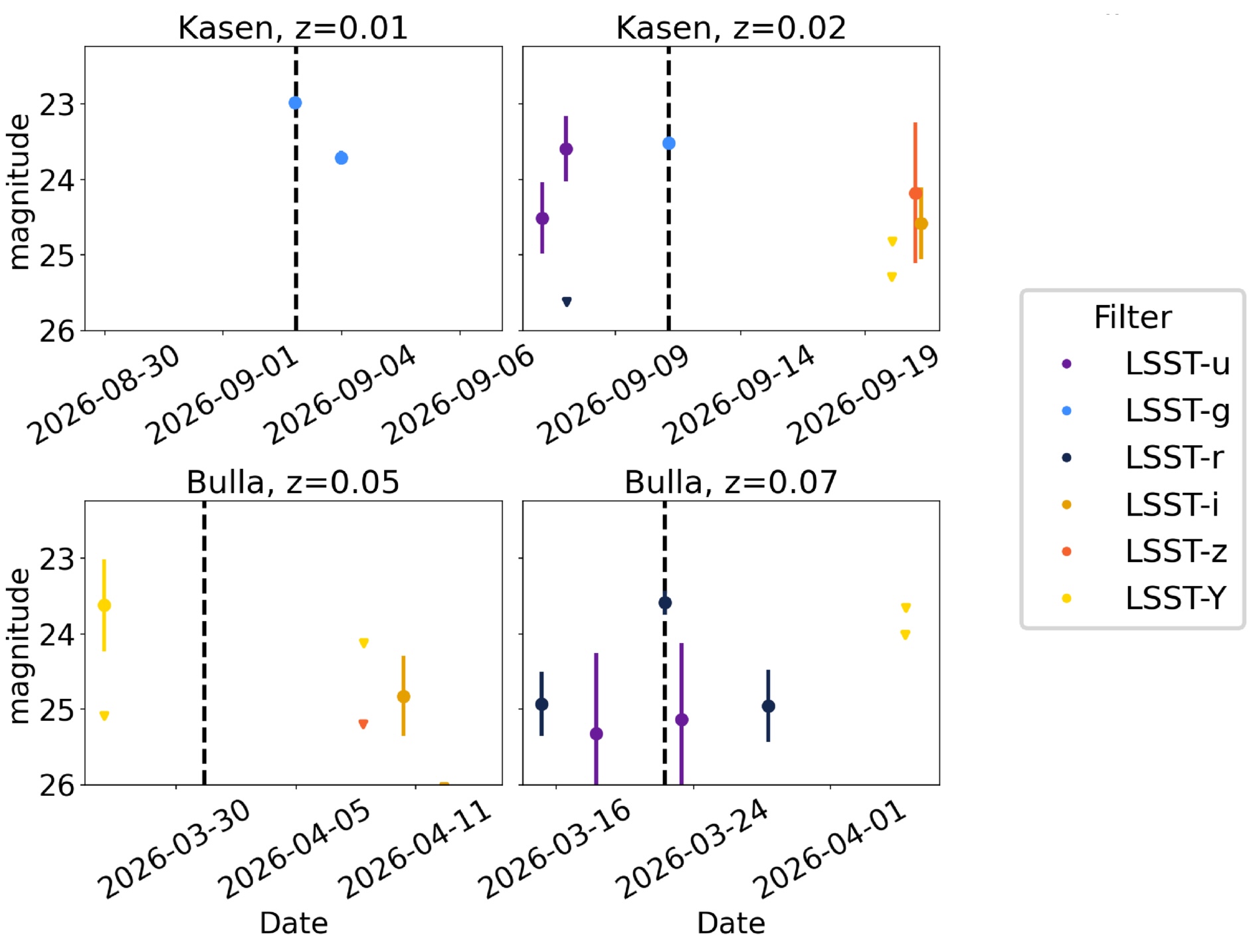
Examples of simulated kilonova light curves for different redshifts and models (Kasen and Bulla). Click to enlarge. [Adapted from Stevenson et al. 2026]
Searching for Signals
Though Rubin is a transient-tracking powerhouse, it’s not ideally suited to discovering kilonovae specifically; these events evolve so rapidly that Rubin may only be able to collect a few data points before the event fades from its view. To gauge Rubin’s efficacy as a kilonova detector, Stevenson and collaborators simulated kilonova light curves and identified detections with a signal-to-noise ratio greater than 5; these detections will be passed to the data broker. They found that Rubin will detect about 42 kilonovae per year, but only a few will have a strong enough signal to be passed to the broker.
For the handful of detections that are passed to the broker, what are the prospects for tracking down the associated gravitational wave signals? Due to the survey cadence, most kilonova detections occurred 1–2 days after the gravitational waves from the neutron star collision would have reached Earth, but delays of up to 5 days were possible. This means that searches for gravitational wave signals must sift through multiple days of data — a computationally intensive prospect that might require the development of new search techniques. The computational requirements of this search are increased by the possibility of contaminants (signals misclassified as kilonovae and passed on by the data broker), which will require additional followup.
Despite these challenges, it’s clear that Rubin’s upcoming detections of kilonovae will advance our study of these rare events. With LSST expected to get underway early this year, the next multi-messenger signal may be just around the corner.
Citation
“Strategy for Identifying Vera C. Rubin Observatory Kilonova Candidates for Targeted Gravitational-Wave Searches,” Simon Stevenson et al 2026 ApJ 998 8. doi:10.3847/1538-4357/ae244e
The post How Many Kilonovae Will Rubin Observatory Help Us Spot? appeared first on AAS Nova.
]]>
Astrobites reports on RACS J0320−35, a quasar that appears to be breaking a cosmic limit by consuming matter faster than theory should allow.
The post The Winner of the Cosmic Speed-Eating Contest appeared first on AAS Nova.
]]>Editor’s Note: Astrobites is a graduate-student-run organization that digests astrophysical literature for undergraduate students. As part of the partnership between the AAS and astrobites, we occasionally repost astrobites content here at AAS Nova. We hope you enjoy this post from astrobites; the original can be viewed at astrobites.org.
Title: X-Ray Investigation of Possible Super-Eddington Accretion in a Radio-Loud Quasar at z = 6.13
Authors: Luca Ighina et al.
First Author’s Institution: Harvard–Smithsonian Center for Astrophysics and Italian National Institute for Astrophysics
Status: Published in ApJL
Quasars are some of the most extreme objects in the entire universe. Despite being as far as tens of billions of light-years away, they nonetheless can appear as bright as some stars in our own Milky Way. To put their brightness in perspective, one just has to consider the Sun. Compared to puny human scales, our star is a truly gargantuan object. It’s a fully functional fusion reactor, churning hydrogen into helium in its core and outputting an unfathomable amount of energy in the process. This glowing furnace is so bright that it can cook us with the heat of an oven during the day, even at a distance of more than 90 million miles (about 8 light-minutes). That distance dramatically dilutes the radiation of the Sun by the time it reaches us, as we only receive a small sliver of its total output, and yet we can still feel its heat pounding down on us when we stand beneath a clear summer sky.
However, if one were to move the Sun about 30 light-years away, it would appear completely unremarkable. You’d need to be under relatively dark skies to even spot it! The vastness of space would simply crush the output of our solar engine; however, if you place a luminous quasar at that same 30 light-year distance, its searing radiation would seem to effortlessly cross the cosmic gulf looming between the stars, scorching us relentlessly with the same heat as the Sun does today. The power of a quasar simply puts our star to shame.
Still, even quasars have limits. The source of power for these objects is a supermassive black hole. The supermassive black hole that lives at the center of our Milky Way is currently dormant. However, many supermassive black holes (especially in the early universe) actively gulp down matter, releasing tremendous energy that escapes in the form of radiation across the electromagnetic spectrum. The escaping photons bump into particles on their way out, exerting an outward pressure. If enough light is unleashed by the quasar, this pressure will actually balance against the pull of gravity, cutting off the food supply for the black hole. This negative feedback loop means that a given quasar has an upper limit to its brightness, called the Eddington luminosity, and to the speed at which it accretes matter, called the Eddington rate. The authors of today’s bite examine a particularly misbehaved quasar that seems to violate even these extreme limits.
It’s a Bird! It’s a Plane! It’s a Jet?
The authors observed the quasar RACS J032021.44−352104.1 (RACS J0320−35 for short) with several radio observatories, including the Giant Metrewave Radio Telescope, the Australia Telescope Compact Array, and the Australian Large Baseline Array. Combining this data with publicly available observations, they find that the source is “radio-loud,” or bright at very long wavelengths. Typically, this kind of emission is expected to be generated by powerful jets that are ejected from the poles of a quasar. For example, the authors compare this radio-loud quasar to similar sources, which show significant variability in the X-ray part of the spectrum. This is a tell-tale sign that the X-ray emission is also generated by these jets (which might come out in fits and spurts and thus cause fluctuations in brightness over time).
However, when the authors examine X-ray data of RACS J0320−35 taken by the Chandra X-ray Observatory, they find surprising results. The quasar is extremely luminous in X-rays, making it one of the brightest in the early universe. But despite the fact that it pumps out a huge number of these energetic photons, it seems to preferentially emit only the lower-energy band of X-rays and completely lacks the highest-energy emission that characterizes similar sources. In technical terms, the X-ray spectrum of RACS J0320−35 is incredibly “soft.” Moreover, this X-ray emission seems to be constant on the timescale of months, though further observations will be required to test if it varies on longer timescales. Still, the softness of the spectrum and weak variability of this system mean that its X-ray emission is unlikely to be produced by a jet.
The authors carefully consider a particular variety of jet — one that is sharply angled towards us. Since quasar jets often travel at incredible speeds, the special theory of relativity kicks in and causes strange behaviors. In particular, an effect called relativistic beaming can cause a source to appear much brighter if traveling towards the observer at extremely high speeds. However, they find that although relativistic beaming can explain the mysterious X-ray properties of RACS J0320−35, such a scenario is incompatible with its observed radio emission. Moreover, a lack of gamma-ray emission and weak variability are further pieces of evidence against the jet origin of the X-ray emission.
Limits Are Meant to Be Broken
The article presents one more fascinating possibility for the origin of the X-rays in this source. Some theoretical work and simulations show that if a black hole breaks the Eddington limit and starts accreting matter at “super-Eddington rates,” the X-ray spectrum that results can be incredibly soft. The authors find excellent agreement between the observations and the predictions from a particular model that simulates a very slowly spinning black hole (see Figure 1). This scenario seems to be a promising explanation for the X-ray emission in RACS J0320−35, which is extremely exciting for several reasons.
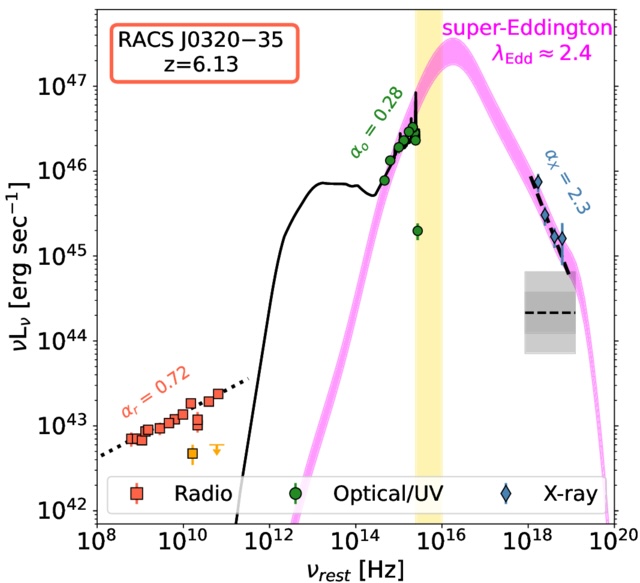
Figure 1: A plot showing the observed energy spectrum of RACS J0320−35 and the theoretical spectra predicted by several models. In particular, the green circles (visible light and ultraviolet (UV) emission), blue diamonds (X-ray emission), and red squares (radio emission) represent the real observations. The shaded pink region represents the predictions of a model that simulates a black hole spinning very slowly and accreting at super-Eddington rates. The model seems to match the observed X-ray and visible/UV emission excellently. However, explaining the observed radio emission might require conditions that violate the assumptions behind this scenario. [Adapted from Ighina et al. 2025]
Despite the promising initial results of this model, there are a few caveats to the results presented in today’s article. For example, the radio jets observed from this source require a rapidly spinning black hole, which conflicts with the model assumptions. The authors note that a radio jet can be very far from a black hole, tracing its past activity. In fact, this jet may have actually spun down the central supermassive black hole by extracting energy from it, a fascinating possibility that will require both further observations and simulations to explore. Today’s bite shines a brilliant light on this possibility by analyzing RACS J0320−35, a fascinating quasar in the early universe and a stunning example that cosmic limits are meant to be broken.
Original astrobite edited by Veronika Dornan.
About the author, Ansh Gupta:
I’m an astronomy graduate student at the University of Texas at Austin working with Steven Finkelstein. I use data from JWST to study the formation and growth of the first galaxies and black holes in the universe. In my spare time, I enjoy playing piano, reading, and making YouTube videos.
The post The Winner of the Cosmic Speed-Eating Contest appeared first on AAS Nova.
]]>The post Weakened Magnetic Braking Signals the Collapse of the Global Stellar Dynamo appeared first on AAS Nova.
]]>A reanalysis of a stellar sample confirms that standard models of how stars spin down over time are sufficient for active stars, but weakened magnetic braking is needed to explain abrupt decreases in torque.
The post Weakened Magnetic Braking Signals the Collapse of the Global Stellar Dynamo appeared first on AAS Nova.
]]>The post MOA-2010-BLG-328: Keck and HST Expose the Limits of Occam’s Razor in Microlensing appeared first on AAS Nova.
]]>Analysis of a particular microlensing signal suggests that there’s no simple model of the event; instead, it requires microlensing parallax, lens orbital motion, and a magnified binary companion to the host, with xallarap.
The post MOA-2010-BLG-328: Keck and HST Expose the Limits of Occam’s Razor in Microlensing appeared first on AAS Nova.
]]>
Researchers examine whether the black holes at the centers of little red dots could have been born in the collapse of dark matter halos.
The post A Dark Matter Origin for Little Red Dots appeared first on AAS Nova.
]]>New research suggests that the mysterious “little red dots” spotted in the early universe could be supermassive black holes birthed in the collapse of dark matter halos.
Another Theory for Little Red Dots
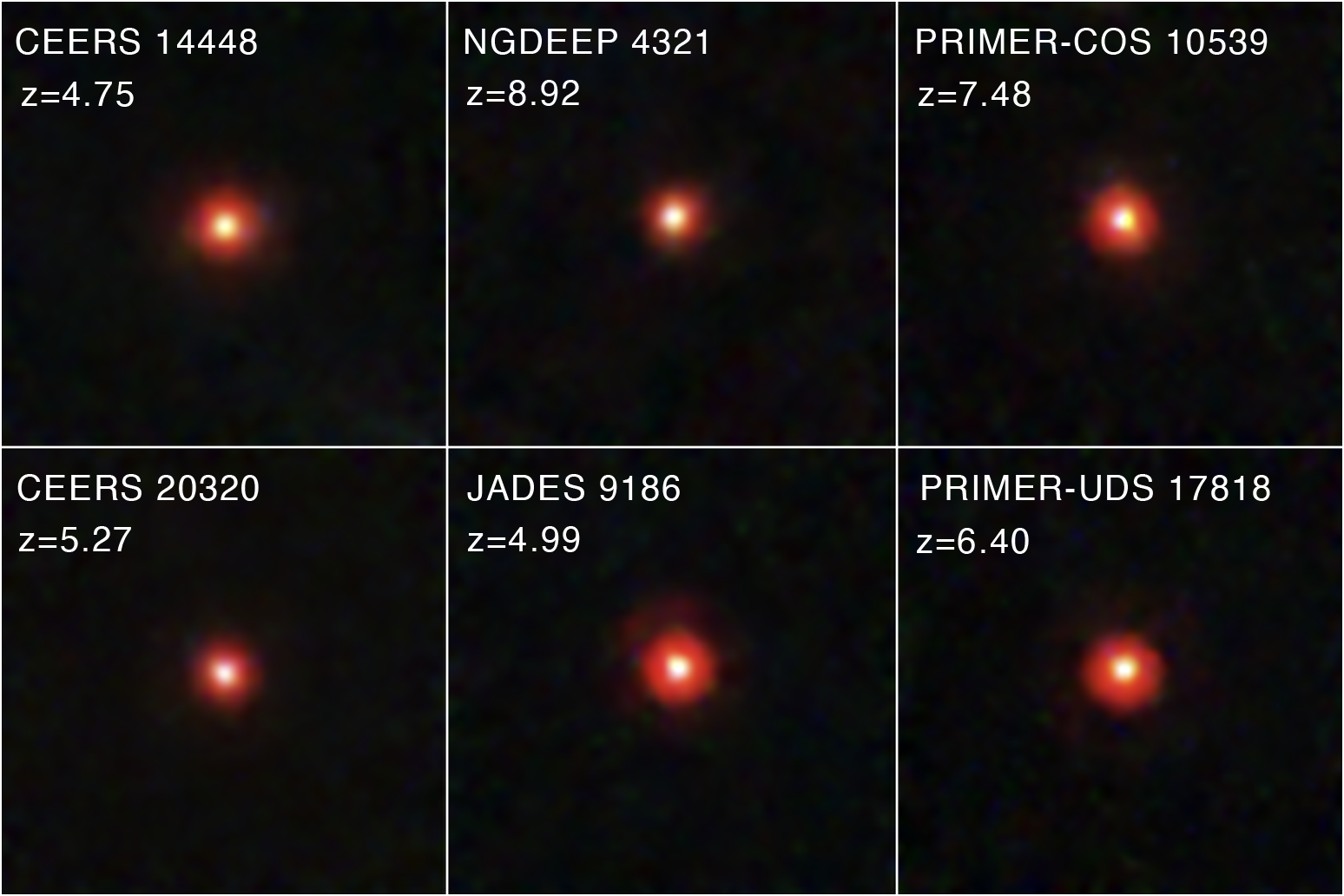
JWST images of six very distant galaxies dubbed “little red dots.” [NASA, ESA, CSA, STScI, Dale Kocevski (Colby College)]
A recent research article explores that theory, with a twist: that the black holes at the heart of little red dots were born not out of regular, baryonic matter, but out of dark matter.
A Dark (Matter) Past
In the early days of the universe, tiny fluctuations in the density of dark matter began to grow, eventually collapsing into vast spheroidal structures called dark matter halos. In the leading theory of cosmology, ΛCDM, dark matter interacts with itself and normal matter only through gravity. This leads to the creation of stable dark matter halos that act as the invisible scaffolding within which the first stars and galaxies grow.
In today’s article, Fangzhou Jiang (Peking University) and collaborators investigated the evolution of halos containing self-interacting dark matter. Particles of self-interacting dark matter, as the name suggests, can interact with one another through collisions and exchange heat. This small adjustment, sometimes invoked in alternatives to ΛCDM to explain the properties of dwarf galaxies, can lead to the collapse of dark matter halos into black holes.
Seeding Black Holes
Jiang and coauthors examined whether this process could explain the observed population of little red dots. First, the team examined whether the timescales are feasible: is it possible for dark matter to assemble itself into massive halos and collapse into black holes, all within the first billion years of the universe?
The answer appears to be yes — in this framework, dark matter halos with masses between 106.5 and 108.5 solar masses were able to form black holes between 104.5 and 106.5 solar masses by a redshift of z = 8.5, when the universe was just 600 million years old.
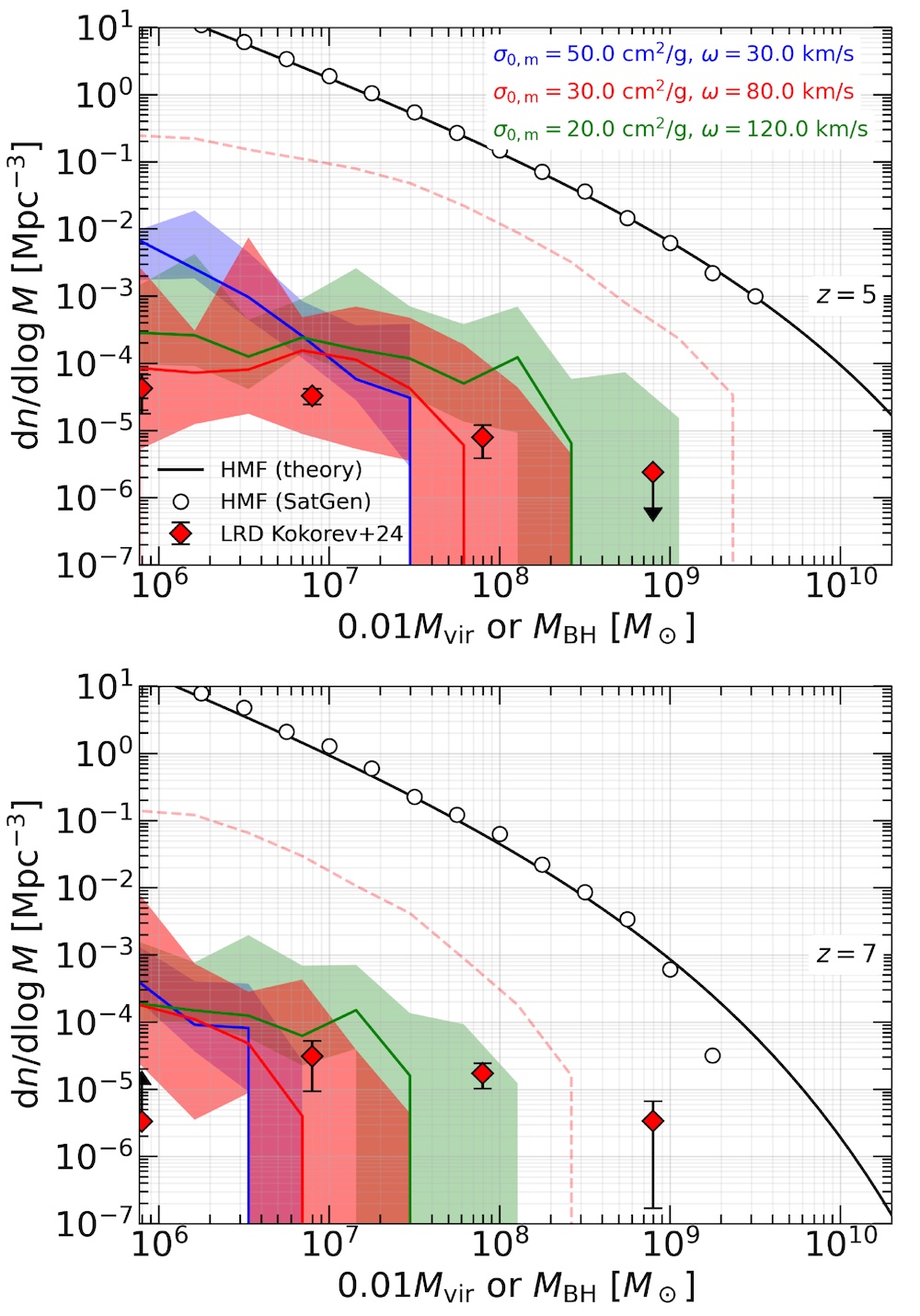
Comparison of the inferred black hole population in little red dots (red diamonds) to models of black holes formed in dark matter halo collapse (shaded areas) at two redshifts. The red area shows the fiducial model, while the blue and green areas show the effects of changing the dark matter self-interaction cross-section. The dashed red lines show an extreme case in which the presence of baryons accelerates halo collapse. Click to enlarge. [Jiang et al. 2026]
To close, Jiang and collaborators noted that this process is not mutually exclusive with other black hole seeding mechanisms, and as studies of self-interacting dark matter continue, its ability to create black holes in the early universe should be examined further.
Citation
“Formation of the Little Red Dots from the Core Collapse of Self-Interacting Dark Matter Halos,” Fangzhou Jiang et al 2026 ApJL 996 L19. doi:10.3847/2041-8213/ae247a
The post A Dark Matter Origin for Little Red Dots appeared first on AAS Nova.
]]>The post Variability in Black Hole Accretion: Dependence on Rotational and Magnetic Energy Balance appeared first on AAS Nova.
]]>Modeling of accretion onto black holes of varying spins suggests that all hot accretion flows will develop intermittent jets if allowed to evolve for long enough.
The post Variability in Black Hole Accretion: Dependence on Rotational and Magnetic Energy Balance appeared first on AAS Nova.
]]>
Researchers use an unlikely tool — distant beacons called quasars — to study the constant inflow and outflow of gas to and from our galaxy.
The post Fueling Up: How Does the Milky Way Get Its Star-Forming Gas? appeared first on AAS Nova.
]]>New research uses distant sources to investigate a question close to home: how the Milky Way replenishes its supply of star-forming gas.
Dynamic Galaxies

This Hubble Space Telescope image shows UGC 12158, a barred spiral galaxy that is likely very similar to the Milky Way. This image also features an asteroid streaking across the top of the galaxy. [NASA, ESA, Pablo García Martín (UAM)]
This interplay of inflowing and outflowing gas has important implications for a galaxy’s ability to form stars; without a way to resupply, galaxies would soon run out of star-forming gas. In a research article published this week, astronomers investigate one channel through which our own galaxy maintains its supply of star-formation fuel.
Quasars Lend a Hand
To learn more about how the Milky Way collects and incorporates new star-forming material, a team led by Hannah Bish (Space Telescope Science Institute; University of Washington) studied the low-velocity gas flowing into and out of our galaxy at the disk–halo interface. This interface is a transitional region in which gas from the Milky Way’s expansive, diffuse halo is incorporated into the disk, where it can condense into stars.
This Hubble image shows the quasar 3C 273. [ESA/Hubble & NASA; CC BY 4.0]
Complex Inflows and Outflows
The team used spectra of 132 quasars and ground-based measurements of neutral hydrogen to identify and disentangle the motions of gases with different temperatures and compositions. Along 67% of the lines of sight, Bish and collaborators found evidence for both inflowing and outflowing gas, suggesting that these processes occur simultaneously.

Infall velocities for the northern (top) and southern (bottom) hemispheres of the Milky Way. The infall velocities in the southern hemisphere are roughly equal regardless of direction, denoted by color, or the ionization energy of the ion being studied. By contrast, the northern hemisphere shows dramatically different behavior with direction and ionization energy. Click to enlarge. [Bish et al. 2026]
Bish’s team explored these results using a simple model of the Milky Way, which they found could largely reproduce the behavior in the southern hemisphere, but not the more complicated findings from the northern hemisphere. They suggested that the difference in behavior between the cooler and warmer gas could be evidence that accretion in the northern hemisphere occurs in patches, and that warm inflowing gas is piling up and cooling where it collides with denser gas at the disk–halo interface.
Looking forward, Bish’s team anticipates that high-resolution models — and more quasar observations to constrain those models — will be key to uncovering the causes of this curious behavior.
Citation
“Differential Accretion of Ionized Low-Velocity Gas at the Milky Way’s Disk–Halo Interface,” Hannah V. Bish et al 2026 ApJ 997 230. doi:10.3847/1538-4357/ae2741
The post Fueling Up: How Does the Milky Way Get Its Star-Forming Gas? appeared first on AAS Nova.
]]>The post Spectral Characteristics of Interstellar Object 3I/ATLAS from SOAR Observations appeared first on AAS Nova.
]]>At a distance of 4.4 au from the Sun, interstellar object 3I/ATLAS showed no signs of emission from typical cometary species, in agreement with models that predict activity to start at smaller heliocentric distances.
The post Spectral Characteristics of Interstellar Object 3I/ATLAS from SOAR Observations appeared first on AAS Nova.
]]>The post LAMOST Medium-Resolution Spectroscopic Survey of the Rosette Nebula appeared first on AAS Nova.
]]>Detailed spectroscopy has revealed a bow-shaped feature in the radial-velocity structure of the Rosette Nebula, suggesting a possible interaction between the Rosette and a nearby supernova remnant.
The post LAMOST Medium-Resolution Spectroscopic Survey of the Rosette Nebula appeared first on AAS Nova.
]]>
The discovery of interstellar comet 3I/ATLAS was one of the top astronomy stories of 2025. Though the comet is now heading back to interstellar space, research into its properties and origins continues.
The post Monthly Roundup: Interstellar Visitor 3I/ATLAS appeared first on AAS Nova.
]]>Editor’s Note: After a short hiatus, the Monthly Roundup is back! This series of articles, which began in 2023, examines multiple perspectives or findings on a single topic.
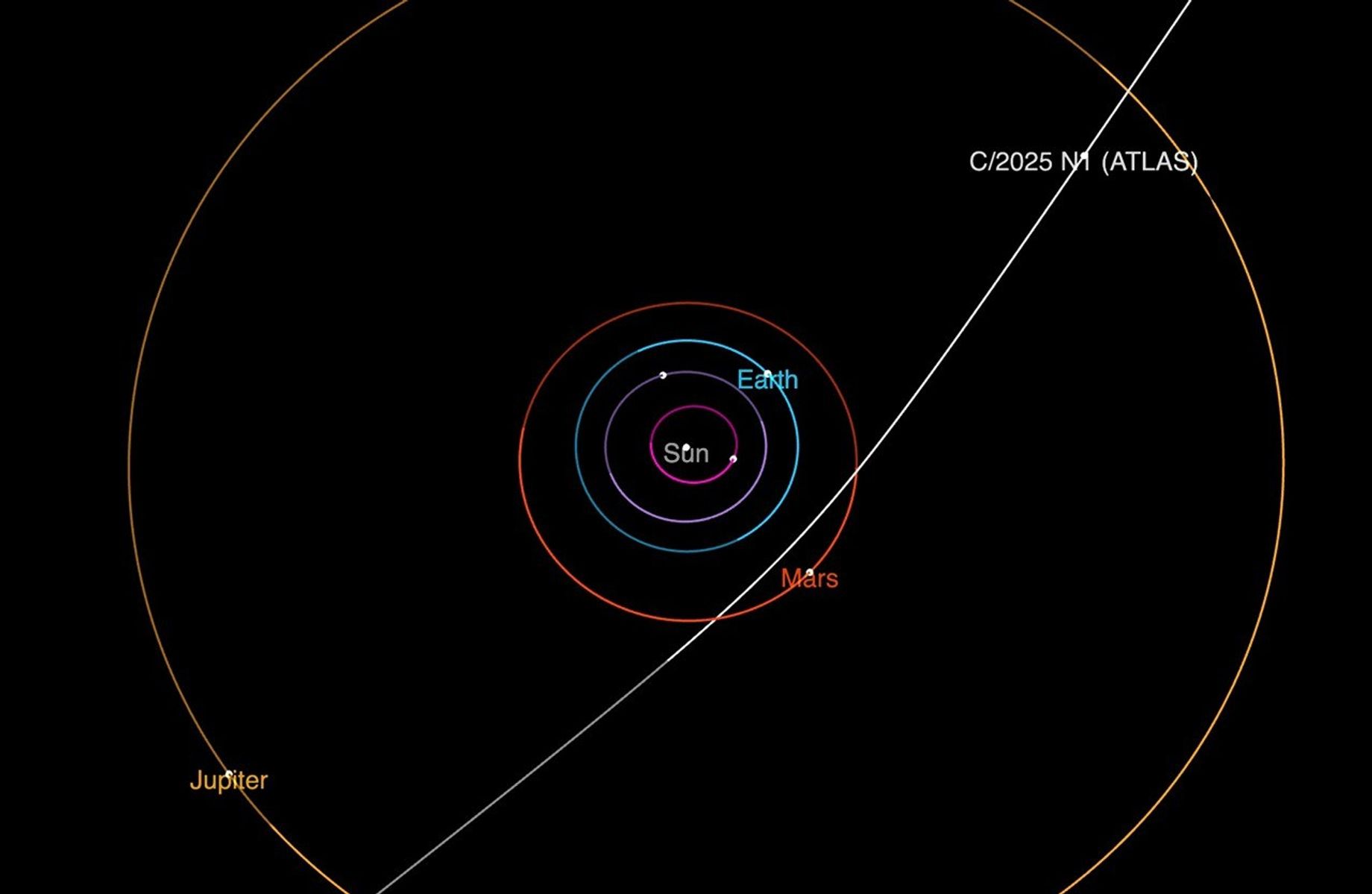
Interstellar object 3I/ATLAS’s trajectory through the solar system. Click to enlarge. [NASA/JPL-Caltech]
Last summer, professional and amateur astronomers worldwide rolled out the red carpet in 3I/ATLAS’s honor, enlisting a pack of ground-based and spacefaring paparazzi to capture its every move. Observations in the first few months after 3I/ATLAS’s discovery revealed cometary features, including a fuzzy coma of gas and dust, a tail that trailed behind the object, and a plume of dust on the side facing the Sun.
With 3I/ATLAS having now made its closest approach to the Sun, venturing within 1.36 au of our star on 29 October 2025, the comet is wrapping up its tour of the solar system and heading back out to interstellar space — but the research continues. Today, we’re taking a look at five of the more than three dozen research articles published in the AAS journals that have examined 3I/ATLAS and its journey through our solar system. As always, this Monthly Roundup contains only a short summary of each article, so be sure to check out the full research articles linked at the bottom of this post!
Early Spectra of 3I/ATLAS
Bin Yang (Diego Portales University and the Planetary Science Institute) and collaborators obtained spectra of 3I/ATLAS less than two weeks after it was discovered, when it was 4.0–4.4 au from the Sun. Using the Gemini South telescope and the Infrared Telescope Facility (IRTF), Yang’s team sought to characterize its coma, the dusty envelope of gas that puffs out from the icy nucleus as the comet warms up.
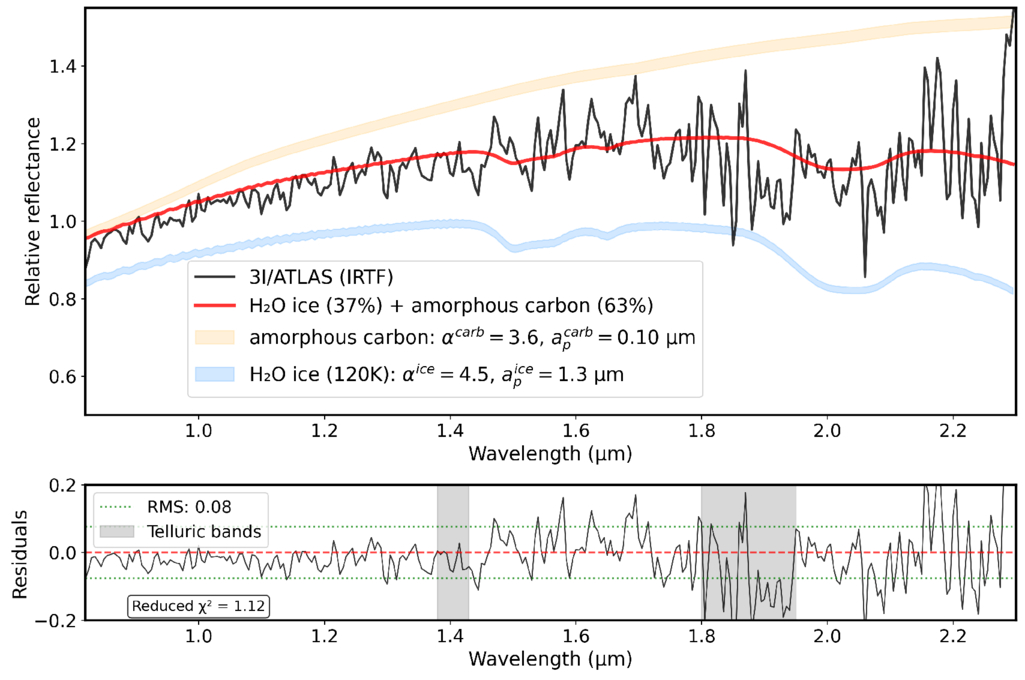
IRTF spectrum of 3I/ATLAS (black line) with the best-fitting model (red line). Click to enlarge. [Yang et al. 2025]
Yang and coauthors found that the near-infrared spectrum was well fit by a model including a blend of amorphous carbon and water ice (63% carbon and 37% water ice by volume) at a temperature of 120K. 3I/ATLAS’s spectrum bears certain similarities to well-studied solar system comets like C/2006 W3 and 6P/d’Arrest, which suggests that the particles in these objects’ comae are similar in size or composition. Ultimately, the discovery of abundant water ice in 3I/ATLAS’s coma, along with the carbon dioxide spotted in other studies, suggests that the comet formed in the cold, volatile-rich outer regions of its home system.
Unique Polarization Properties
3I/ATLAS is the second interstellar object for which astronomers have obtained polarization information. The first, 2I/Borisov, showed a high degree of positive polarization, comparable to the exceptional solar system comet Hale–Bopp.
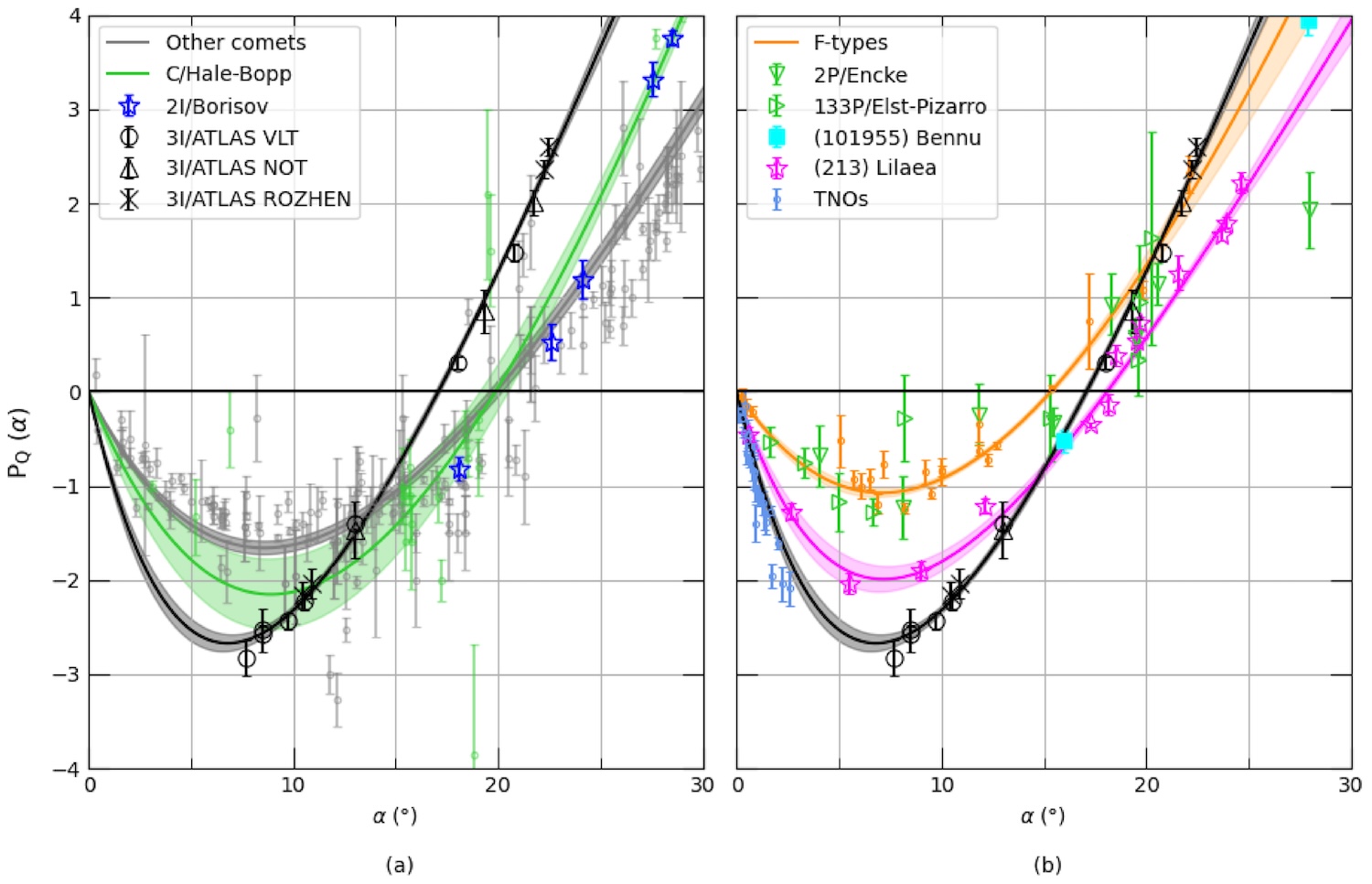
Comparison of 3I/ATLAS’s polarization (black) to measurements of 2I/Borisov (blue) as well as solar system comets and asteroids. Click to enlarge. [Gray et al. 2025]
Gray’s team suggested that 3I/ATLAS’s extreme polarization behavior could be evidence for a mixture of large icy and dark particles in its coma. It’s also possible that it’s the first identified member of a new class of comets, distinct from both solar system comets and interstellar comet 2I/Borisov.
Is 3I/ATLAS Truly a Pristine Relic of the Star System It Came From?
Interstellar objects like 3I/ATLAS have been hailed as pristine beacons that grant us a rare glimpse into the conditions of other star systems. But as new work by Romain Maggiolo (Royal Belgian Institute for Space Aeronomy) and collaborators shows, 3I/ATLAS was likely greatly altered by its journey through interstellar space.
Spectroscopic measurements from JWST suggest that 3I/ATLAS has extremely high abundance of carbon dioxide and carbon monoxide compared to water. A comet’s chemical abundance ratios can be either inherited from the material from which the comet formed, or they can be due to processing after its formation. The team finds that comet 3I/ATLAS’s extreme abundance ratios can be attributed to the comet being pummeled by galactic cosmic rays — high-energy charged particles — as it cruised through interstellar space.
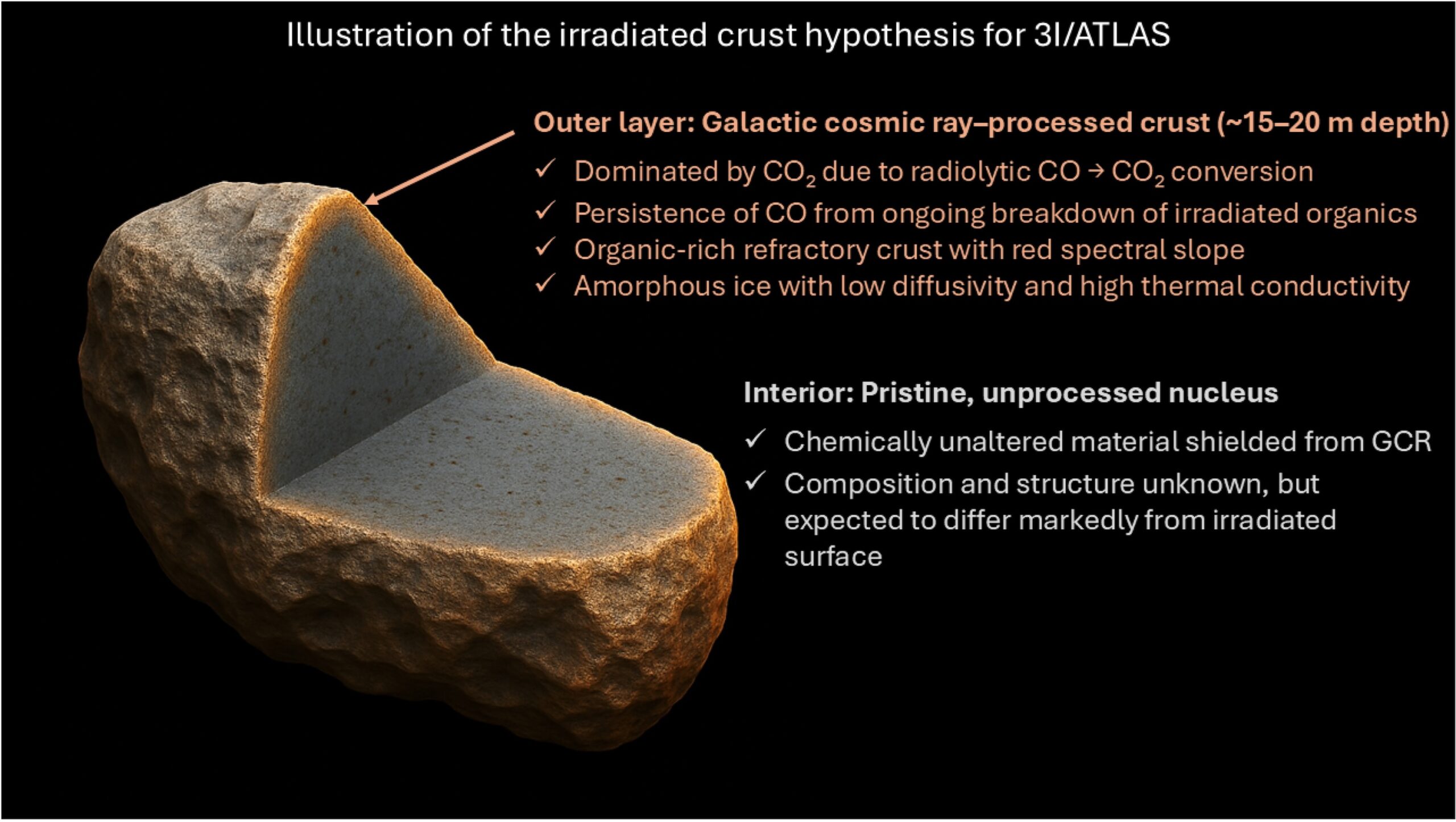
Illustration of the nucleus of 3I/ATLAS, featuring a pristine core encased in a crust that has been irradiated by cosmic rays. Click to enlarge. [Maggiolo et al. 2026]
3I/ATLAS as a Template for Future Encounters: Planning a Potential Rendezvous
It’s only a matter of time before the next interstellar object pays our solar system a visit, and researchers are already thinking about how they’ll study the next visitor. One of the best ways to learn about an interstellar interloper would be to send a spacecraft to rendezvous with it and collect data from up close.
To plan for possible future rendezvous, Atsuhiro Yaginuma (Michigan State University) and collaborators considered what it would have taken for an existing spacecraft to meet up with 3I/ATLAS shortly after it was discovered. The team considered ready-to-launch spacecraft on Earth as well as operational spacecraft currently orbiting Mars.
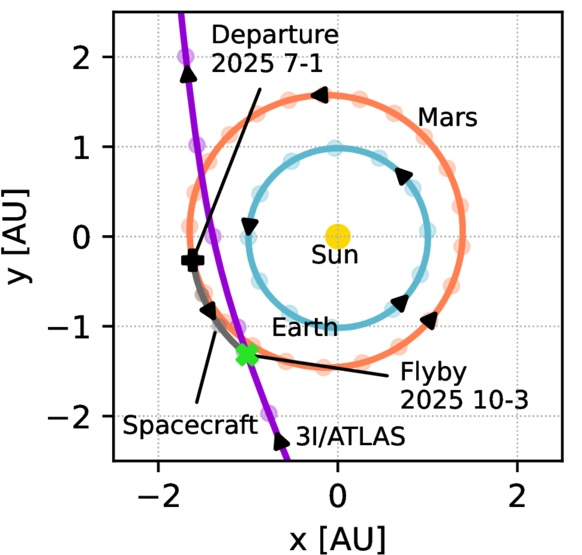
Illustration of the trajectory for the minimum-energy rendezvous with 3I/ATLAS launched from Mars on the day the comet was discovered. [Adapted from Yaginuma et al. 2025]
This highlights the importance of detecting interstellar objects as early as possible, as well as the advantage of stationing well-fueled spacecraft at key locations around the solar system; these spacecraft could be deployed rapidly after an interstellar object is discovered, enabling the collection of valuable data. (This is similar to the premise of the European Space Agency’s Comet Interceptor mission, which will wait at one of the Sun–Earth Lagrange points for the arrival of a long-period comet; such a mission could be repurposed to track down an interstellar comet.)
So, About Those Aliens…
Like its predecessor 1I/ʻOumuamua, 3I/ATLAS prompted speculation that it’s not a natural object, though there’s no compelling evidence that it’s anything but a comet. If 3I/ATLAS were an interstellar probe, we might be able to unmask it as such by intercepting its radio communications. In a recent Research Note, Ben Jacobson-Bell (University of California, Berkeley) and coauthors described their search for narrow-band radio signals — the communication medium for all spacecraft in our solar system — from 3I/ATLAS.
The Breakthrough Listen project pointed the 100-meter Green Bank Telescope in 3I/ATLAS’s direction, just one day before the object made its closest approach to Earth at a distance of 1.8 au. The team identified nine possible “events” in their data, all of which were ruled to be radio-frequency interference. Based on this non-detection, Jacobson-Bell and collaborators ruled out the presence of isotropic, continuously outputting radio transmitters with power greater than 0.1 watt. (For comparison, a cellphone puts out approximately 1 watt, and spacecraft radios tend to put out a few dozen watts.) Other searches for radio transmissions from 3I/ATLAS have similarly detected no signals.
Citation
“Spectroscopic Characterization of Interstellar Object 3I/ATLAS: Water Ice in the Coma,” Bin Yang et al 2025 ApJL 992 L9. doi:10.3847/2041-8213/ae08a7
“Extreme Negative Polarization of New Interstellar Comet 3I/ATLAS,” Zuri Gray et al 2025 ApJL 992 L29. doi:10.3847/2041-8213/ae0c08
“Interstellar Comet 3I/ATLAS: Evidence for Galactic Cosmic-Ray Processing,” Romain Maggiolo et al 2026 ApJL 996 L34. doi:10.3847/2041-8213/ae2fff
“The Feasibility of a Spacecraft Flyby with the Third Interstellar Object 3I/ATLAS from Earth or Mars,” Atsuhiro Yaginuma et al 2025 ApJ 995 64. doi:10.3847/1538-4357/ae11b2
“Breakthrough Listen Observations of 3I/ATLAS with the Green Bank Telescope at 1–12 GHz,” Ben Jacobson-Bell et al 2025 Res. Notes AAS 9 351. doi:10.3847/2515-5172/ae3083
The post Monthly Roundup: Interstellar Visitor 3I/ATLAS appeared first on AAS Nova.
]]>The post Numerical Approach to Compressible Shallow-Water Dynamics of Neutron-Star Spreading Layers appeared first on AAS Nova.
]]>A new two-dimensional hydrodynamics code, SPLASH, has been developed to model the early stages of constant-rate accretion onto a spherical neutron star, during which a convective instability is triggered.
The post Numerical Approach to Compressible Shallow-Water Dynamics of Neutron-Star Spreading Layers appeared first on AAS Nova.
]]>
Astrobites reports on how active galactic nucleus disks might connect black holes across the mass spectrum, setting the stage for extreme-mass-ratio and intermediate-mass-ratio inspirals in the same system.
The post The Black Hole Meetup: EMRIs and IMRIs in the Same Active Galactic Nucleus Disk appeared first on AAS Nova.
]]>Editor’s Note: Astrobites is a graduate-student-run organization that digests astrophysical literature for undergraduate students. As part of the partnership between the AAS and astrobites, we occasionally repost astrobites content here at AAS Nova. We hope you enjoy this post from astrobites; the original can be viewed at astrobites.org.
Title: The Fate of EMRI-IMRI Pairs in Active Galactic Nucleus Accretion Disks: Hydrodynamical and Three-body Simulations
Authors: Peng Peng et al.
First Author’s Institution: Peking University
Status: Published in ApJ
Active galactic nuclei (AGNs) are the extremely luminous central regions of some galaxies, powered by gas accreting onto their supermassive black holes and often outshining the entire galaxy in which they reside. One reason they are so studied in astronomy is that they connect many pieces of physics and astronomy in one cosmic place. This is especially true for AGNs as potential gravitational wave sources. Gravitational waves are observed when two compact objects, usually black holes, orbit each other. Black holes span a massive range of masses, but they are typically categorized into one of three categories: stellar-mass black holes, or sBHs (tens to hundreds of times the mass of the Sun), intermediate-mass black holes or IMBHs (hundreds to thousands of times the mass of the Sun), and supermassive black holes or SMBHs (millions to billions of times the mass of the Sun). AGNs are special because they are among the very few places where black holes across this entire mass spectrum might be found in the same place at the same time. Not only do they host SMBHs at their centers, but their gas disks are ideal nurseries for capturing and growing sBHs and IMBHs.
Current-generation gravitational wave detectors like the LIGO–Virgo–KAGRA (LVK) network can observe stellar-mass to lite-IMBH black hole mergers. Future detectors like the Laser Interferometer Space Antenna (LISA) will be able to observe black holes in the intermediate-mass to supermassive mass range. In addition to the mass range a detector can detect, it is also valuable to know the mass ratio (usually denoted by q) that a detector might detect. Unequal-mass-ratio mergers can tell us a lot about general relativity that more equal-mass mergers cannot because the smaller object orbits the more massive one many times right before the merger, essentially providing a gravitational wave measurement of spacetime around the larger black hole. (See this video for an example of black hole orbits with a large mass ratio, and imagine the spacetime observations around the larger black hole that could be possible with orbits like that.)
One of the most promising advances in gravitational wave detection with LISA will come with the observation of extreme-mass-ratio inspirals (EMRIs), usually defined as involving a smaller black hole that is at least 10,000 times less massive than the massive black hole it orbits (though the exact mass ratio defining an EMRI is a matter of convention and may vary somewhat). In addition, LISA will be able to observe intermediate-mass-ratio inspirals (IMRIs), usually defined as when the smaller black hole is 100–10,000 times less massive than the larger one.
This article uses multiple techniques to address the question of what happens when an AGN disk hosts both an IMBH and an sBH at the same time. The authors began with a hydrodynamic simulation of an AGN gas disk around a 106-solar-mass SMBH. They add a 103-solar-mass IMBH into the gas disk. Because the IMBH orbits within a gas disk, the gas exerts a force on it, causing its orbit to shrink toward the SMBH (a process called migration). Additionally, the IMBH carves out a path through the gas. Once the IMBH carves out enough of a path in the gas, the authors add an sBH of 20 solar masses into the simulation near the IMBH.
The authors test the sBH outcome for two initial conditions of the gas disk. The first, which I will refer to as “InnerDisk,” is when gas already exists inside the IMBH’s orbit (see Figure 1). The other, which I will refer to as “NoInnerDisk,” is when the simulation begins with gas only outside the IMBHs orbit, with no gas initially between the IMBH and SMBH. In this case, gas crosses the IMBH’s gap after the simulation starts. In the InnerDisk case, the sBH initially gets pushed inward from the presence of the inner gas, but that gas steadily drains into the SMBH and is only partly refilled, so the gas’s push on the sBH weakens over time. In the NoInnerDisk case, the IMBH’s direct pull on the sBH becomes more important. The amount of gas that leaks across the IMBH orbit into the inner disk gradually settles into a steady state that is less dense than the InnerDisk case. With a weaker gas push, the sBH stays closely tied to the IMBH and migrates inward at nearly the same rate. In both setups, the IMBH carves a gap in the gas and keeps moving inward, but the presence and evolution of inner gas chiefly determine how closely the sBH can keep up.
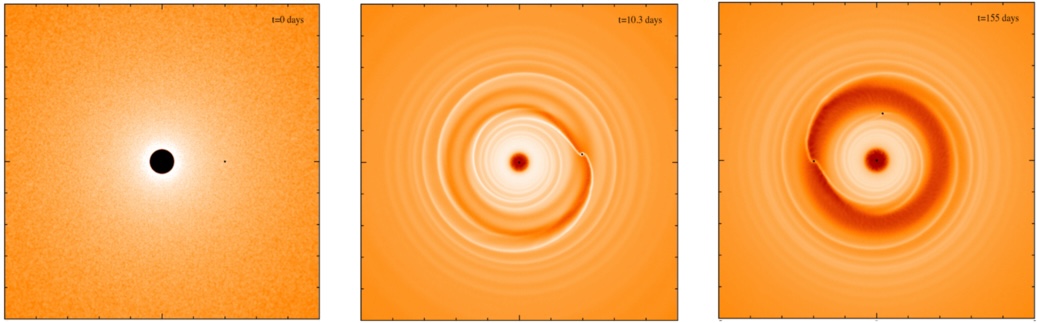
Figure 1: Simulated gas disk around an SMBH with an implanted IMBH at 0 days (left), 10.3 days (middle), and 155 days (right). Brighter orange indicates higher gas density, and darker orange/red indicates lower gas density. An sBH was added at 100 days and is seen in the right panel. These three panels represent the “InnerDisk” scenario. [Adapted from Peng et al. 2025]
Once the IMBH and sBH were in the gravitational regime, their outcomes became much more chaotic. As seen in Figure 2, a slight change in the initial phase angle of the sBH can lead to drastically different consequences for the system. In some cases, the sBH is ejected entirely. In other instances, it merges with the IMBH soon after the simulation begins. Yet in others, it first merges with the SMBH. This leads to one overall message of this article: the orbits of the IMBH and sBH tend to be regular with some gentle variation when they are farther out in the gas disk, but they become highly chaotic once they shrink into the gravitational wave regime closer to the central SMBH.

Figure 2: Post-Newtonian simulation outcomes for different values of sBH initial phase angle from 0 to 2π in increments of 0.02π, while all other initial conditions were kept fixed. Green (binary formation) represents a merger of the IMBH and sBH before reaching the SMBH; red (EMRI after ejection) represents the sBH being ejected from the system, but not before some of its orbits can be observed as an EMRI event; EMRI-IMRI (orange) represents the sBH merging with the SMBH, followed by the merger of the IMBH with the SMBH; and blue (ejection) represents the sBH being ejected from the system entirely before entering a gravitational wave EMRI regime. [Peng et al. 2025]
Original astrobite edited by Maggie Verrico.
About the author, William Smith:
Bill is a graduate student in the astrophysics program at Vanderbilt University. He studies gravitational wave populations with a focus on how these populations can help inform cosmology as part of the LIGO Scientific Collaboration. Outside of astrophysics, he also enjoys swimming semi-competitively, music and dancing, cooking, and making the academy a better place for people to live and work.
The post The Black Hole Meetup: EMRIs and IMRIs in the Same Active Galactic Nucleus Disk appeared first on AAS Nova.
]]>
Hubble has revealed new features in Dracula's Chivito, the largest known protoplanetary disk.
The post Featured Image: Hubble Samples a Dusty Cosmic Sandwich appeared first on AAS Nova.
]]>
Hubble Space Telescope image of Dracula’s Chivito. [Monsch et al 2026]
Citation
“Hubble Reveals Complex Multiscale Structure in the Edge-On Protoplanetary Disk IRAS23077+6707,” Kristina Monsch et al 2026 ApJ 996 45. doi:10.3847/1538-4357/ae247f
The post Featured Image: Hubble Samples a Dusty Cosmic Sandwich appeared first on AAS Nova.
]]>The post Role of Natron in Delaying the Retreat of Buried Ice Tables on Ceres appeared first on AAS Nova.
]]>The presence of hydrated salts in the rocky surface material on a body like Ceres is thought to slow the retreat of the ice table; Ceres’s average equatorial temperatures show delays of a few to tens of millions of years.
The post Role of Natron in Delaying the Retreat of Buried Ice Tables on Ceres appeared first on AAS Nova.
]]>The post An Iterative, Deep Learning Approach for Switchback Classification in Parker Solar Probe Data appeared first on AAS Nova.
]]>The neural network model ParkerNet demonstrated strong performance in identifying and characterizing switchbacks even with only 12% of data labeled as such, providing a way to detect future switchbacks.
The post An Iterative, Deep Learning Approach for Switchback Classification in Parker Solar Probe Data appeared first on AAS Nova.
]]>
A mountain top in the Arizona desert scattered with telescopes, the Kitt Peak National Observatory is home to cutting-edge research and cultural connections.
The post Getting a Peek of Kitt Peak National Observatory appeared first on AAS Nova.
]]>After AAS 247 in Phoenix, Arizona, AAS Nova Editor Kerry Hensley and I had the chance to travel about 150 miles south for a tour of Kitt Peak National Observatory.
A Window into Kitt Peak
Located 60 miles southwest of Tucson, Kitt Peak National Observatory (KPNO) resides on a mountain top within the Tohono O’odham Nation reservation. Founded in 1958, Kitt Peak is home to nearly two dozen active telescopes ranging in wavelength coverage and scientific objectives. Ronald Proctor, Lori Allen, and Jacelle Ramon-Sauberan, all serving in crucial roles for the observatory, led our tour around the mountain.

The Windows On the Universe Center’s lobby exhibit displaying the Tohono O’odham language with words describing the land and astronomy. Jacelle Ramon-Sauberan, the Tohono O’odham Nation Education Liaison, is seen to the left. [KPNO/NOIRLab/NSF/AURA/R. Proctor; CC BY 4.0]
The center’s lobby introduced visitors to the beautiful land KPNO calls home. Working with Tohono O’odham linguists, Jacelle, the observatory’s Tohono O’odham Nation Education Liaison, curated the lobby exhibit that features the native language and the Nation’s connection to astronomy and the observatory. The science center serves as an educational resource and place of cultural exchange, expanding the relationship between the observatory and the Tohono O’odham Nation.

Apollo astronauts in the control room of the McMath-Pierce Solar Telescope in 1964. [United States Geological Survey; CC BY 4.0]
At the end of the Windows Center is a Science On a Sphere Theater — a spherical display system that allows visitors to see planets, stars, moons, and even large-scale structures of the universe in 3D. Featuring multiple programs, the theater takes visitors through the universe and displays data collected right there on the mountain!
The WIYN 3.5-meter telescope at sunset. [KPNO/NOIRLab/NSF/AURA/P. Marenfeld; CC BY 4.0]
A WIYN for Exoplanetary Science
Though not typically open to the public for tours, our next stop took us to the WIYN 3.5-meter telescope. This telescope is operated and owned by the WIYN Consortium, a partnership between the University of Wisconsin, Indiana University, NSF’s NOIRLab (National Optical-Infrared Astronomy Research Laboratory; formerly NOAO), Pennsylvania State University, and Princeton University. Operating since 1994 with a strong collection of instruments, WIYN has observed galaxies near and far, stars across their lifetimes, and exoplanets tugging on their host stars.

Me, Lexi Gault (AAS Media Fellow), in front of the WIYN 3.5-meter telescope. I have used WIYN’s SparsePak spectrograph to collect data for my dissertation research! [AAS Nova/Kerry Hensley]
The partnership between public and private universities and a government institution was the first of its kind. Through this consortium, hundreds of undergraduate and graduate students have conducted research with WIYN, and the telescope’s suite of instruments have enabled early career astronomers to explore the universe both near and far.
Mysteries of Dark Energy at Mayall
We concluded our tour at the Mayall 4-meter Telescope, the tallest telescope dome on the mountain at a staggering 18 stories high. This iconic telescope saw first light in 1973, and at the time, was the second-largest (in diameter) telescope in the world. Originally built for wide-field optical and infrared studies of the universe, the Mayall has enabled decades of critical scientific research.
The Mayall dome across the mountain as seen from inside the WIYN dome. [AAS Nova/Lexi Gault]
From the telescope’s massive dome, to the busy DESI control room, to the gallery floor with a nearly 360 degree view of the surrounding desert, the Mayall offers visitors a unique glimpse into Kitt Peak’s history and its future. While WIYN is a hidden gem, the Mayall 4-meter Telescope is open to the public for tours daily, so you can experience the exciting era of research and discovery at KPNO.
Visit Kitt Peak
Interested in getting a peek yourself? KPNO is open to the public daily with multiple tour types to choose from, including both daytime and nighttime visits! Plan your visit to Kitt Peak here.
The post Getting a Peek of Kitt Peak National Observatory appeared first on AAS Nova.
]]>The post A Time-Domain Study of Repeat and Nonrepeat Fast Radio Bursts appeared first on AAS Nova.
]]>Repeating and non-repeating fast radio bursts appear to originate from different progenitors, environments, or emission mechanisms — but intriguingly, both appear to be consistent with a magnetar origin.
The post A Time-Domain Study of Repeat and Nonrepeat Fast Radio Bursts appeared first on AAS Nova.
]]>The post Direct Imaging Explorations for Companions from the Subaru/IRD Strategic Program II; Discovery of a Brown-Dwarf Companion around a Nearby Mid-M-Dwarf LSPM J1446+4633 appeared first on AAS Nova.
]]>A newly discovered brown dwarf companion to an M-dwarf star is estimated to have a mass just shy of 60 Jupiter masses; the object is accessible to many investigative methods and is likely to be a useful benchmark.
The post Direct Imaging Explorations for Companions from the Subaru/IRD Strategic Program II; Discovery of a Brown-Dwarf Companion around a Nearby Mid-M-Dwarf LSPM J1446+4633 appeared first on AAS Nova.
]]>
Lasting multiple hours and featuring several bursts, GRB 250702B is a rare, powerful, and unusual gamma-ray burst. What do JWST observations tell us about the host galaxy and origins of this event?
The post JWST Follows Up on a Rare Gamma-Ray Burst appeared first on AAS Nova.
]]>Discovered in July 2025, GRB 250702B is unlike any other gamma-ray burst astronomers have seen. New follow-up observations of the burst’s location have underscored the strangeness of this event.
Not Like Other GRBs
Gamma-ray bursts (GRBs) are intense flashes of gamma rays lasting anywhere from milliseconds to hours. The shortest of these bursts are thought to come from colliding neutron stars, while bursts lasting longer than a few seconds tend to come from collapsing massive stars, though notable exceptions have been discovered.
Even with known GRBs spanning such a broad range of timescales and arising from different sources, some bursts are truly exceptional. Such is the case for GRB 250702B, which was discovered on 2 July 2025 by the Fermi Gamma-Ray Burst Monitor. This event featured three separate bursts spread across several hours, as well as never-before-seen X-ray emission in the day leading up to the gamma-ray emission.
JWST on the Case
Rest-frame spectrum of GRB 250702B (blue) with the host galaxy spectrum of another burst, GRB 240825A, for comparison (orange). Click to enlarge. [Adapted from Gompertz et al. 2026]
This precisely measured redshift allowed the team to estimate the burst’s energy; in gamma rays alone, the event released at least 2.2 × 1054 ergs. This places GRB 250702B in the top 20 most energetic GRBs known, and the team estimates that events of this kind are 1,000 times less common than other long-duration GRBs and more than 100,000 times less common than typical core-collapse supernovae.
The burst’s host galaxy is also unusual. It’s larger, brighter, and dustier than other galaxies of similar redshift, and it’s unusually massive among GRB host galaxies. In the wavelength range studied here, it also appears to be the most luminous galaxy known to host a GRB.
What Caused GRB 250702B?
Now, to the cause of this unusual burst: is GRB 250702B just a very strange example of a long-duration burst arising from the collapse of a massive star into a black hole, or could it have an entirely different cause, like a star being ripped apart by a black hole?
The team placed limits on the supernova emission by subtracting a spectrum of the host galaxy from the event. The green lines show this subtracted spectrum under two different normalization conditions. The black lines show for comparison the emission from the bright supernova SN 2023lcr using two possible extinction values. Click to enlarge. [Adapted from Gompertz et al. 2026]
The observations also place constraints on a tidal disruption event scenario, in which a star is ripped apart by a black hole. The data strongly favor a jetted, relativistic tidal disruption event, which makes it difficult to pin down the mass of the black hole involved. The timescales are consistent with a white dwarf spiraling around an intermediate-mass black hole, and other factors suggest that the black hole could be no more than a million solar masses, placing it firmly in the intermediate-mass regime, should this explanation prevail.
With GRB 250702B’s source still unsettled, astronomers will continue to study the burst and its unusual host galaxy. Gompertz and collaborators anticipate that follow-up spectroscopy will provide more clues in this case.
Citation
“JWST Spectroscopy of GRB 250702B: An Extremely Rare and Exceptionally Energetic Burst in a Dusty, Massive Galaxy at z = 1.036,” Benjamin P. Gompertz et al 2026 ApJL 997 L4. doi:10.3847/2041-8213/ae2ed9
The post JWST Follows Up on a Rare Gamma-Ray Burst appeared first on AAS Nova.
]]>
Astrobites reports on whether the low-density planets that keep popping up in our growing collection of exoplanets are really the water worlds that we imagine them to be.
The post Are Water Worlds Just Made of Soot? appeared first on AAS Nova.
]]>Editor’s Note: Astrobites is a graduate-student-run organization that digests astrophysical literature for undergraduate students. As part of the partnership between the AAS and astrobites, we occasionally repost astrobites content here at AAS Nova. We hope you enjoy this post from astrobites; the original can be viewed at astrobites.org.
Title: Soot Planets Instead of Water Worlds
Authors: Jie Li et al.
First Author’s Institution: University of Michigan
Status: Published in ApJL
They Might Be Planets with a Lot of Water…
Since the discovery of PSR B1257+12 c and d in 1992 and 51 Pegasi b in 1995, we have found evidence for thousands of planets in other star systems. One of the most striking things (aside from how common planets seem to be) is how many of them are so unlike anything we had imagined we would find. Our growing list of exoplanets includes a truly remarkable variety of types, from cold rocky planets smaller than Earth to scorching hot giants bigger than Jupiter.
However, one category of planets is particularly interesting: the sub-Neptunes. These planets, smaller than Neptune but larger than Earth, are characterized by their low densities, which suggests they could be dominated by water or volatile-rich atmospheres. What makes sub-Neptunes so intriguing is that we don’t have a clear counterpart for them in our own solar system. As such, we don’t really know a lot about them other than there seem to be a lot of them out there.
Although these planets are sometimes theorised to be rocky worlds with large hydrogen–helium envelopes, they have alternatively been considered as water worlds, i.e., worlds with giant planet-wide oceans thousands of kilometres deep. The thinking goes that since water ice appears to be abundant beyond the snow line, water worlds would be a natural consequence of planet formation. And if these planets exist, some might host a temperate liquid ocean with the conditions for life.
…or They May Just Be CHON(ky)
However, today’s article suggests that these supposed water worlds may not be as wet as we think they are. They may instead be rich in what are called refractory carbonaceous materials. This term describes solids rich in carbon, hydrogen, oxygen, and nitrogen, or CHON. It is a bit of a mouthful and is often just referred to as “soot,” but it is important to remember that it is different from the black stuff you would find in ye old chimney. Soot, in this case, is a major component of comets. We know that this type of material is present around planet formation, as protoplanetary dust contains not just silicates (rock) and water ice but also a significant amount of CHON, and comets are leftovers from this dust.
Soot is stable and remains in the solid state to much greater temperatures (∼500K) than water ice (∼160K), so the authors argue that there should be regions in the protoplanetary disk where planets accrete both rock and soot but little water. They define a “soot line” akin to the snow line and look at three archetypical planets that may form, shown in Figure 1.
Figure 1: Illustration of a protoplanetary disk and three chemically distinct planet types that may form as the distance from the host star increases. Close in, the temperature in the disk is too high for volatiles to exist in the solid state, but farther out, the temperature drops to allow for water to freeze into ice beyond the water ice line, also known as the snow line. Between the two regions lies another where it’s cool enough for carbonaceous materials or “soot” to avoid destruction via thermally driven reactions. Depending on where planets form, they may contain a varying amount of astrophysical soot. [Li et al. 2026]
What Do the Models Say?
The authors got down to modelling planet compositions based on both observations of protoplanetary disks and the distribution of solid materials found in comets.
They considered two model planets. One is fully stratified, i.e., with a metallic core enclosed in a silicate mantle overlain by a hydrocarbon-rich layer and then a water-ice surface layer. The other, a single-layer mixed planet, is a hypothesised scenario where iron, silicate, soot, and water are fully mixed throughout the planet as a result of exotic chemistry from the high temperature inside the sub-Neptune planet. They expect any potential real planets to lie somewhere between the two extremes. The mass–radius relations for these models can be seen in Figure 2, where they are also compared to a number of known exoplanets, of which several fall within the models’ parameter spaces.
Figure 2: Mass–radius relations for model Earth-like rocky planets (black curves), soot planets (gray bands), and soot-water worlds (blue bands). On the left are multi-layer planets, while on the right are single-layer planets. Overlaid are a number of exoplanets along with their respective uncertainties. Also shown as dashed lines are models for Earth-like planets with 50% rock and 50% water. These fall squarely within the same region as soot-water worlds, making the two indistinguishable from each other. [Li et al. 2026
We Might Have a Telescope That Can Help
How might we break through this impasse? Well, because significant fractions of methane and other simple hydrocarbons are expected to be released from the interior, the soot-rich planets may feature methane-rich atmospheres. These may naturally lead to the formation of hydrocarbon hazes, akin to the tholins in Titan’s atmosphere.
Looking at the atmospheres of exoplanets is one of the main mission goals of JWST. Many of the spectra from sub-Neptunes have so far been featureless, which may indicate the presence of clouds or photochemical haze. The telescope also has the ability to detect carbon-bearing species in the atmospheres of other sub-Neptunes, like with the discovery of CO2 and CH4 in the atmospheres of K2-18b and TOI-270d. Although these planets currently orbit interior to the soot lines of their respective stars, they may have originally formed farther out and later migrated inward during their evolution. Of particular interest is TOI-270d. Aside from also showing signs of water, it has a carbon-to-oxygen ratio that is moderately high for the planet, hinting that it could be a world with a considerable amount of soot.
The presence of soot may have significant implications when it comes to habitability. The planet’s core may be rich in diamond, which would impede the movement of volatiles in the mantle. This would make it challenging for the planet to generate a magnetic field and thus leaving any potential life vulnerable to cosmic radiation. However, they could also be abundant in methane and other volatile organic compounds, substances thought to be crucial for the development of prebiotic chemistry. Regardless, it is interesting that there might be something out there that is not so unlike something we know from our own solar system, a hazy supersized Titan. While the frigid moon is unlikely to show signs of life, a temperate soot-water world might be one place to look in the future.
Original astrobite edited by Sowkhya Shanbhog.
About the author, Kasper Zoellner:
I have a Master of Science in astronomy and I am currently working towards a PhD in physics and educational science. My greatest passion is the search for exoplanets and how stellar variability may influence the possibility of life. I am also interested in science outreach, education and discussing what sci-fi novel to read next!
The post Are Water Worlds Just Made of Soot? appeared first on AAS Nova.
]]>The post Discovery and Preliminary Characterization of a Third Interstellar Object: 3I/ATLAS appeared first on AAS Nova.
]]>Early observations of interstellar interloper 3I/ATLAS revealed a compact coma, minimal light-curve variation, and a similar visible-light/near-infrared spectral slope to other interstellar objects.
The post Discovery and Preliminary Characterization of a Third Interstellar Object: 3I/ATLAS appeared first on AAS Nova.
]]>The post The Caltech Mission to Apophis: Accelerating Planetary Science and Planetary Defense appeared first on AAS Nova.
]]>A proposed mission would shepherd the asteroid Apophis through its close approach of Earth in 2029, seeking to study the asteroid’s interior and understand how its surface is altered by the encounter.
The post The Caltech Mission to Apophis: Accelerating Planetary Science and Planetary Defense appeared first on AAS Nova.
]]>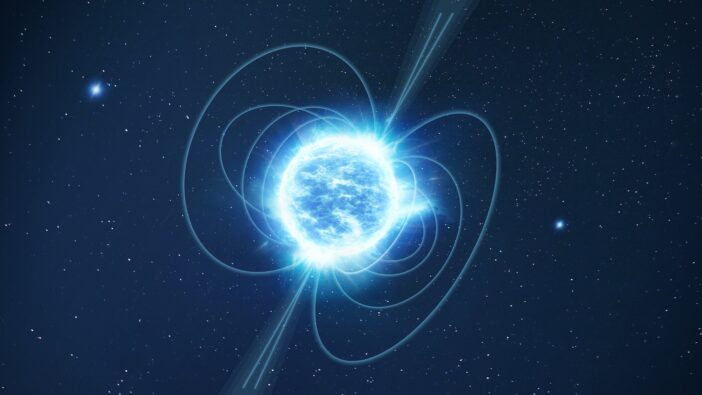
New research suggests that ultra-long-period pulsars might begin their lives as massive stars in close binary systems.
The post Supernovae, Shocks, and Spindown: A Possible Origin Story for Ultra-Long-Period Pulsars appeared first on AAS Nova.
]]>Researchers have recently discovered a number of ultra-long-period pulsars that are difficult to explain with typical pulsar models. A new article explains how these pulsars might arise from massive stars in close binary systems.
Strangely Slow Sources
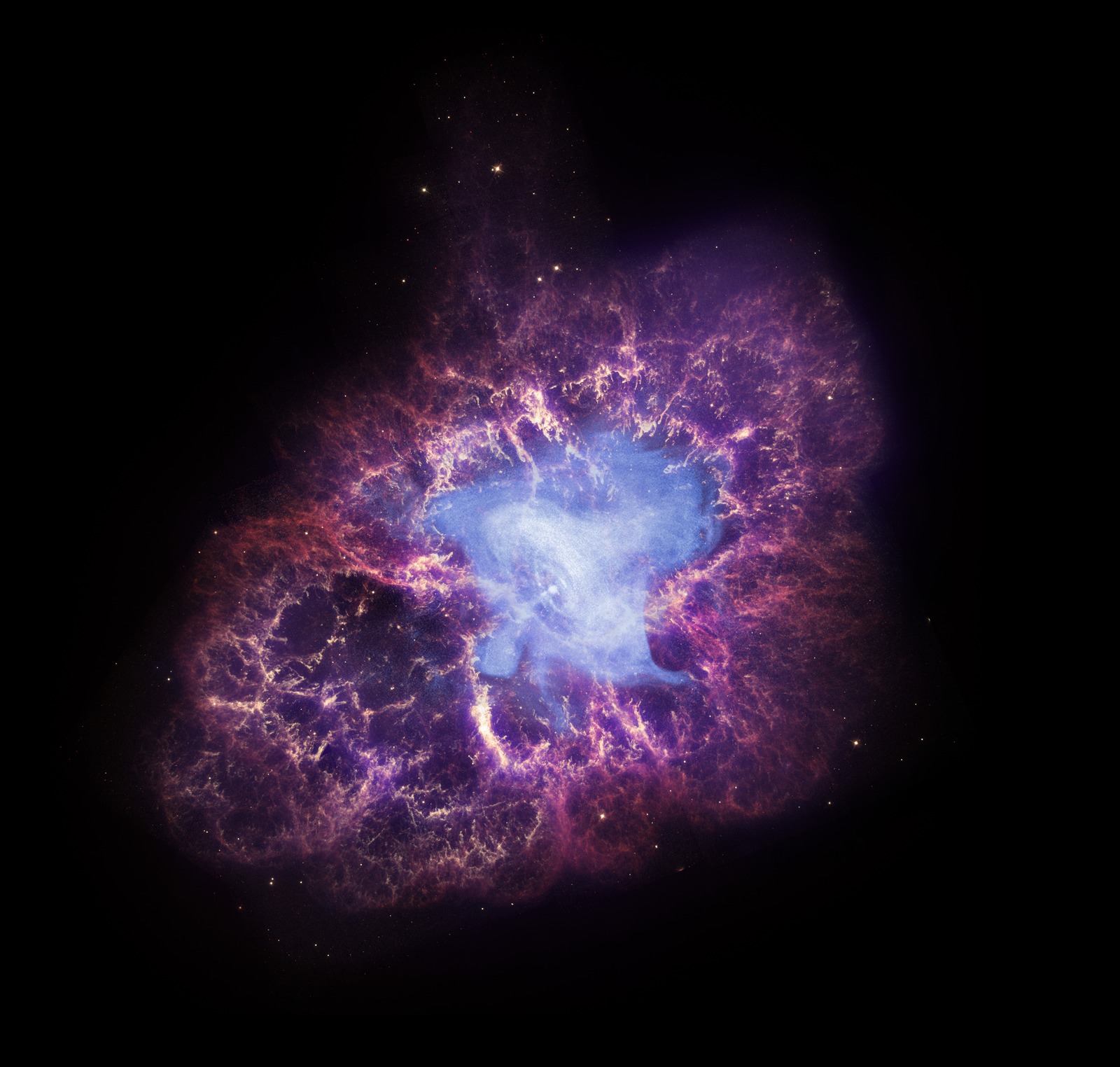
A multi-wavelength view of the Crab Nebula, the remnant of a supernova that birthed a neutron star. The neutron star powers a pulsar wind nebula, shown in blue. [X-Ray: NASA/CXC/J.Hester (ASU); Optical: NASA/ESA/J.Hester & A.Loll (ASU); Infrared: NASA/JPL-Caltech/R.Gehrz (Univ. Minn.)]
Until not too long ago, pulsars appeared to have periods no longer than 12 seconds. Above that “sluggish” rotation rate, researchers suggested, pulsars could no longer produce electron–positron pairs and channel them along polar magnetic field lines to generate their characteristic radio signals.
So it seemed, until unexpectedly slow pulsars began to crop up. The first trend-breaking pulsars had periods of a few dozen seconds, and objects with pulse periods of minutes or hours have now been found. What could these strange objects be?
Neutron Star Origin Story
In a recent article led by Savannah Cary (University of California, Berkeley), researchers proposed that these strange radio sources are pulsars, but pulsars that rotate slowly and have magnetically powered (rather than rotationally powered) radio emission.
The proposed origin story for these ultra-long-period pulsars begins with a binary system containing a massive star and a close stellar companion. As the massive star evolves, it transfers its outer layers to the companion and expires as a stripped-envelope supernova that births a rapidly spinning neutron star. As the supernova ejecta crashes into the companion star, the star heats up and expands to 5–100 times its original radius.
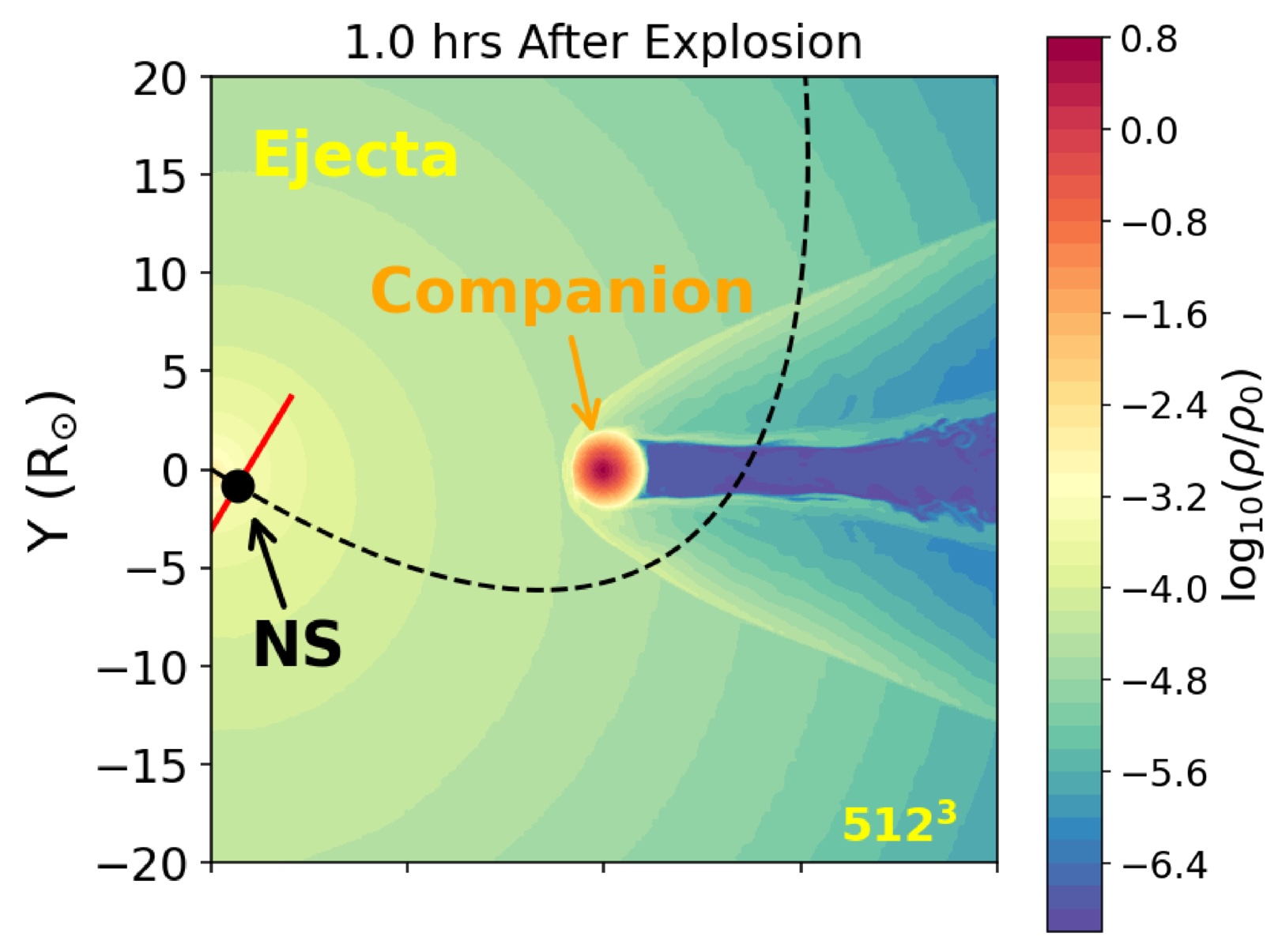
Simulation snapshot taken one hour after the supernova explosion. The black dashed line shows the path the neutron star (NS) will take through the companion star’s outer layers. Click to enlarge. [Adapted from Cary et al. 2026]
Slowing Down
Cary’s team explored the outcomes of this scenario with a trio of simulations: hydrodynamical models for the shock heating of the companion star, numerical models for the formation of the disk around the neutron star, and analytical models for the interaction between the disk and the neutron star.
For a binary system containing stars of 6.4 and 4.0 solar masses and a separation of 20 solar radii — values drawn from observations and simulations — the resulting unbound neutron star collects a disk in 8–10% of cases. The neutron star’s mass, radius, rotation rate, and magnetic field strength determine whether the neutron star and the disk will interact. If they don’t, the neutron star remains rotating rapidly like a typical pulsar. If they do, the neutron star’s rotation will slow to a relative crawl over about a million years. For modest magnetic fields between 1013 and 1014 Gauss, this means rotation periods in the realm of 102 seconds, whereas stronger magnetic fields, above 1015 Gauss, yield periods of roughly a day.
This work suggests that close binary systems could be the source of ultra-long-period pulsars, of which Cary’s team estimates there may be 10–1,000 in the Milky Way. Future work will explore this possibility further, examining broader swaths of parameter space to learn more about how this scenario could contribute to the population of ultra-long-period pulsars in our galaxy.
Citation
“Accretion from a Shock-Inflated Companion: Spinning Down Neutron Stars to Hour-Long Periods,” Savannah Cary et al 2026 ApJ 996 141. doi:10.3847/1538-4357/ae1d43
The post Supernovae, Shocks, and Spindown: A Possible Origin Story for Ultra-Long-Period Pulsars appeared first on AAS Nova.
]]>The post The 6 yr Radio Light Curve of the Tidal Disruption Event AT2019azh appeared first on AAS Nova.
]]>A long-term radio study finds that a Sedov–Taylor model can describe the evolution of a tidal disruption event without late-time rebrightening; this event is likely to be detectable for decades in the future.
The post The 6 yr Radio Light Curve of the Tidal Disruption Event AT2019azh appeared first on AAS Nova.
]]>The post A Quest for Sulfur-Bearing Refractory Species: Identification of CaS in the Interstellar Medium appeared first on AAS Nova.
]]>For the first time, researchers have convincingly identified CaS and tentatively identified KS and KSH in the interstellar medium, advancing our understanding of how refractory molecules form in the gas phase.
The post A Quest for Sulfur-Bearing Refractory Species: Identification of CaS in the Interstellar Medium appeared first on AAS Nova.
]]>
Though less destructive than coronal mass ejections, moderate space weather events like stream interaction regions can still cause geomagnetic storms. Researchers have used machine learning to investigate the drivers behind these events.
The post When Winds Collide: Predicting the Effects of Stream Interaction Regions appeared first on AAS Nova.
]]>What happens when pileups of solar wind plasma collide with Earth’s protective magnetosphere? New work uses machine learning to examine how strongly these events affect our planet’s magnetic field.
Plasma Pileups
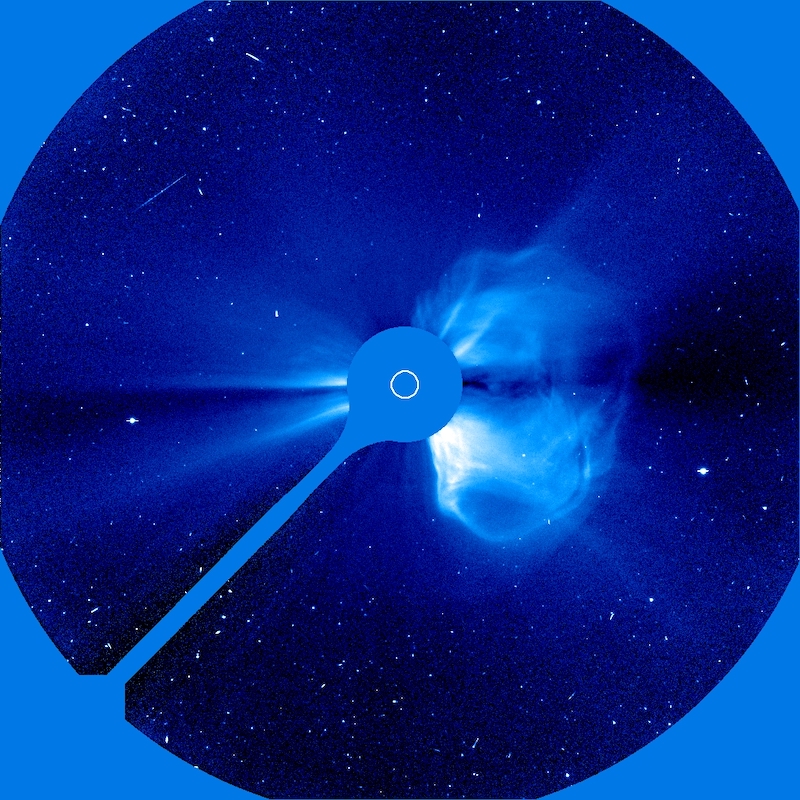
The Solar & Heliospheric Observatory (SOHO) took this coronagraphic image of a coronal mass ejection on 20 April 1998. [SOHO (ESA & NASA)]
Stream interaction regions arise when slow-moving solar wind is struck from behind by faster-moving solar wind emitted later. The collision of the two solar wind streams creates a tangle of compressed plasma and strong magnetic fields capable of peeling back Earth’s protective magnetosphere and dumping in high-energy charged particles, with beautiful yet harmful results.
Machine Learning Method
Though stream interaction regions are less disruptive than coronal mass ejections, they’re far more common; they frequently needle Earth’s magnetosphere, especially during the calmer years of the Sun’s activity cycle. Predicting how strongly a stream interaction region will influence Earth’s magnetosphere — in other words, how geoeffective it is — is challenging, however. When two streams of solar wind collide, their properties combine in complex and nonlinear ways that traditional statistical investigations have struggled to pin down.
Now, Ye and collaborators have used machine learning to study the properties and impact of stream interaction regions in a physically meaningful way. They performed their study on a sample of 879 stream interaction events for which there is abundant information, such as temperature, magnetic field strength and direction, and solar wind conditions before and after the event.
Illustration of the authors’ support vector machine framework. The optimal hyperplane is the boundary that best divides the data by maximizing the distance between the boundary and the data points nearest to it; these points are called support vectors. Square and triangle symbols represent two classes of data. Click to enlarge. [Ye et al. 2025]
A Physical Interpretation
The team first reined in the model’s complexity by identifying the most important features in the dataset. They then determined which features or combination of features had the largest contribution to the output — in other words, which physical parameters most strongly determined the geoeffectiveness of the event.
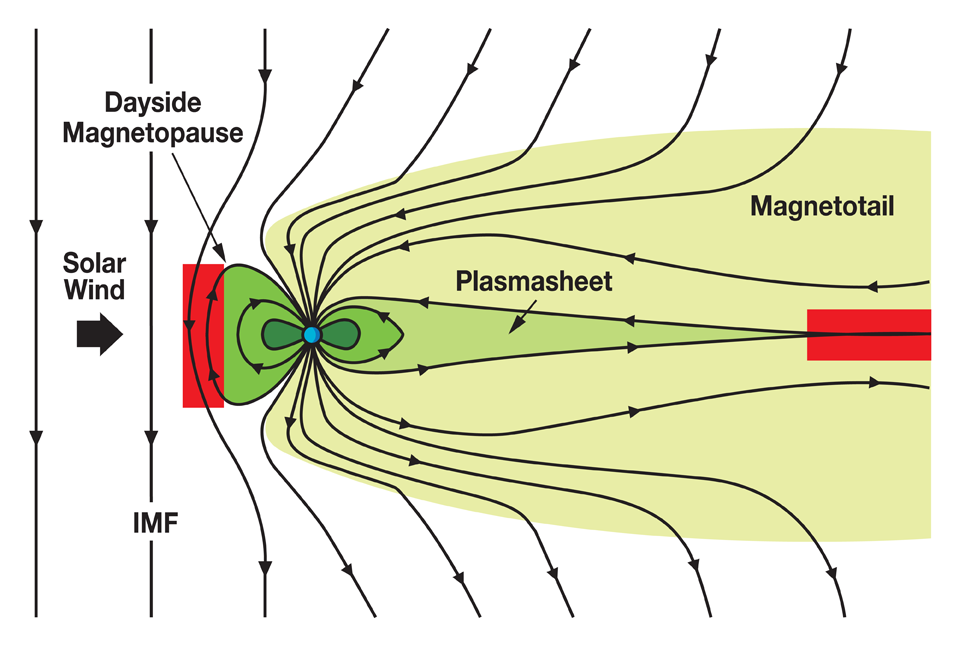
Illustration of how the interplanetary magnetic field (IMF) interacts with Earth’s magnetosphere. When the IMF points southward, as it does in this diagram, the impact on Earth’s magnetosphere is increased, with magnetic reconnection occurring in the red areas. Click to enlarge. [NASA]
Citation
“Assessing the Geoeffectiveness of Stream Interaction Regions Through Physically Interpretable Machine Learning,” Yudong Ye et al 2025 ApJ 993 10. doi:10.3847/1538-4357/ae0454
The post When Winds Collide: Predicting the Effects of Stream Interaction Regions appeared first on AAS Nova.
]]>The post Characterizing Temperatures of Flares on the M Dwarf Wolf 359 from Simultaneous Multiband Optical Observations appeared first on AAS Nova.
]]>A study of a well-known active M-dwarf star shows that the temperatures of its stellar flares are significantly lower than the canonical flare temperature of 10000K.
The post Characterizing Temperatures of Flares on the M Dwarf Wolf 359 from Simultaneous Multiband Optical Observations appeared first on AAS Nova.
]]>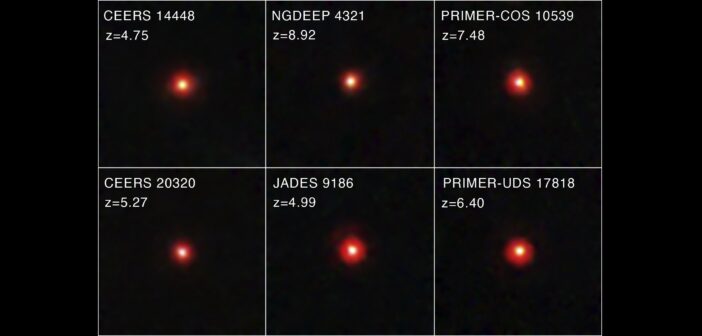
Astrobites reports on how astronomers got a closer view of the distant and mysterious little red dots.
The post A Black Hole Egg That Forgot to Hatch appeared first on AAS Nova.
]]>Editor’s Note: Astrobites is a graduate-student-run organization that digests astrophysical literature for undergraduate students. As part of the partnership between the AAS and astrobites, we occasionally repost astrobites content here at AAS Nova. We hope you enjoy this post from astrobites; the original can be viewed at astrobites.org.
Title: The Discovery of Little Red Dots in the Local Universe: Signatures of Cool Gas Envelopes
Authors: Xiaojing Lin et al.
First Author’s Institution: Tsinghua University and University of Arizona
Status: Published in ApJ
Astronomers are using JWST to search the early universe for strange and captivating objects, and the results so far have exceeded all expectations. For every question we definitively answer, several deeper ones seem to emerge. The study of active galactic nuclei (AGNs), black holes that are actively consuming matter at the centers of galaxies across the universe, is no exception. Our pre-JWST understanding of AGNs has been completely shattered by the discovery of an astounding population of objects called little red dots (LRDs).
We know these objects host active black holes for several reasons. For one, they’re incredibly small despite being extremely energetic (that’s the “little” in their name). The smallest LRD we’ve seen appears to be less than 100 light-years across — for reference, the nearest star to the Sun is 4 light-years away — and yet is still as bright as a galaxy. The most plausible explanation for such brightness and compactness is a supermassive black hole that’s actively consuming matter. As further evidence for this hypothesis, we observe broad Balmer emission lines, spectral features that serve as a clear signature of AGN activity, in the vast majority of LRDs.
However, that’s where the similarities between LRDs and more typical AGNs seem to end. First off, astronomers have been unable to detect any significant X-ray emission from LRDs. This is shocking, since X-rays are a telltale signature of previously known AGNs. Another classic way to identify AGNs is by looking for changes in their brightness over time, since they can show drastic variability in their emission on the scale of years or even days. LRDs buck the trend by showing little to no fluctuation. Other classic AGN signatures that LRDs lack include radio emission and an abundance of hot dust. Explaining all of these unusual features has been incredibly challenging; nevertheless, coming up with a solution is crucial because there appear to be orders of magnitude more LRDs than any other kind of AGN in the early universe!
Wishing on a Star
One leading explanation for LRDs has recently gained significant traction. The hypothesis suggests that early black holes may have been cocooned in shrouds of extremely dense gas. This scenario helps explain the absence of many typical AGN signatures in LRDs. For example, this dense gas could absorb the X-rays generated by the central black hole. The gas-enshrouded model also explains a particular feature in the spectra of many LRDs known as a Balmer break. This feature is usually interpreted as coming from old stars with relatively cool atmospheres. The cocooned AGN hypothesis implies that Balmer breaks could actually be made by a black hole embedded in a cloud of gas, which somewhat resembles an enormous star!
This model helps explain the properties of some puzzling LRDs, including the most distant one we currently know of. However, their enormous distance makes them difficult to study in detail. It would be much easier to examine LRDs if they existed in the nearby universe, since they would appear much brighter and we could probe them on small spatial scales. Unfortunately, previous studies with JWST suggest that LRDs started becoming a lot less common around 12 billion years ago (corresponding to a redshift of about z = 4).
Luckily, less common doesn’t mean extinct! The authors of today’s article leverage data from the Sloan Digital Sky Survey (SDSS), which has taken millions of spectra of objects across the night sky over the past few decades. By mining this rich and diverse dataset, they identify a handful of LRDs in the nearby universe. Although they’re still far beyond our own Local Group, they’re practically in our backyard compared to the distant LRDs we’ve seen before. The authors followed up the new sources with some of the most powerful ground-based telescopes, enabling a detailed study of their properties.
A Chick That Forgot to Hatch
The first major result is that these local LRDs really do resemble many of the distant ones identified by JWST. They show a characteristic “V”-shaped spectrum in the ultraviolet and visible, a key feature in the definition of LRDs. They’re also quite compact. Using existing data from the Hubble Space Telescope, the authors measured the size of one source and found a tiny core embedded within a galaxy only a few thousand light-years across. For comparison, the Milky Way spans about 100,000 light-years.
Using spectroscopy from the Large Binocular Telescope, one of the Magellan Telescopes, and the MMT (formerly Multiple Mirror Telescope), the authors of this article find a rich variety of spectral features. This is where the proximity of these objects is extremely important. Taking spectra of the distant LRDs in this astounding level of detail would be at best prohibitively expensive (multiple full days of JWST observations) and at worst be completely impossible. In contrast, the nearby LRDs appear much brighter than their distant cousins. Their spectra are like intricate tapestries, with each thread revealing new details about their properties.
The authors find numerous broadened emission lines, signaling the presence of an active black hole. They also detect several intriguing absorption lines. These are most striking in one source, J1025+1402, nicknamed “The Egg.” In this object, there are clear absorption features from sodium, potassium, iron, and calcium. These elements appear in the observed states only under specific physical conditions. The authors interpret these findings as implying the presence of an envelope of cool gas surrounding the central black hole (see Figure 1). Such a scenario closely resembles the gas-cocooned AGN model proposed to explain distant LRDs!
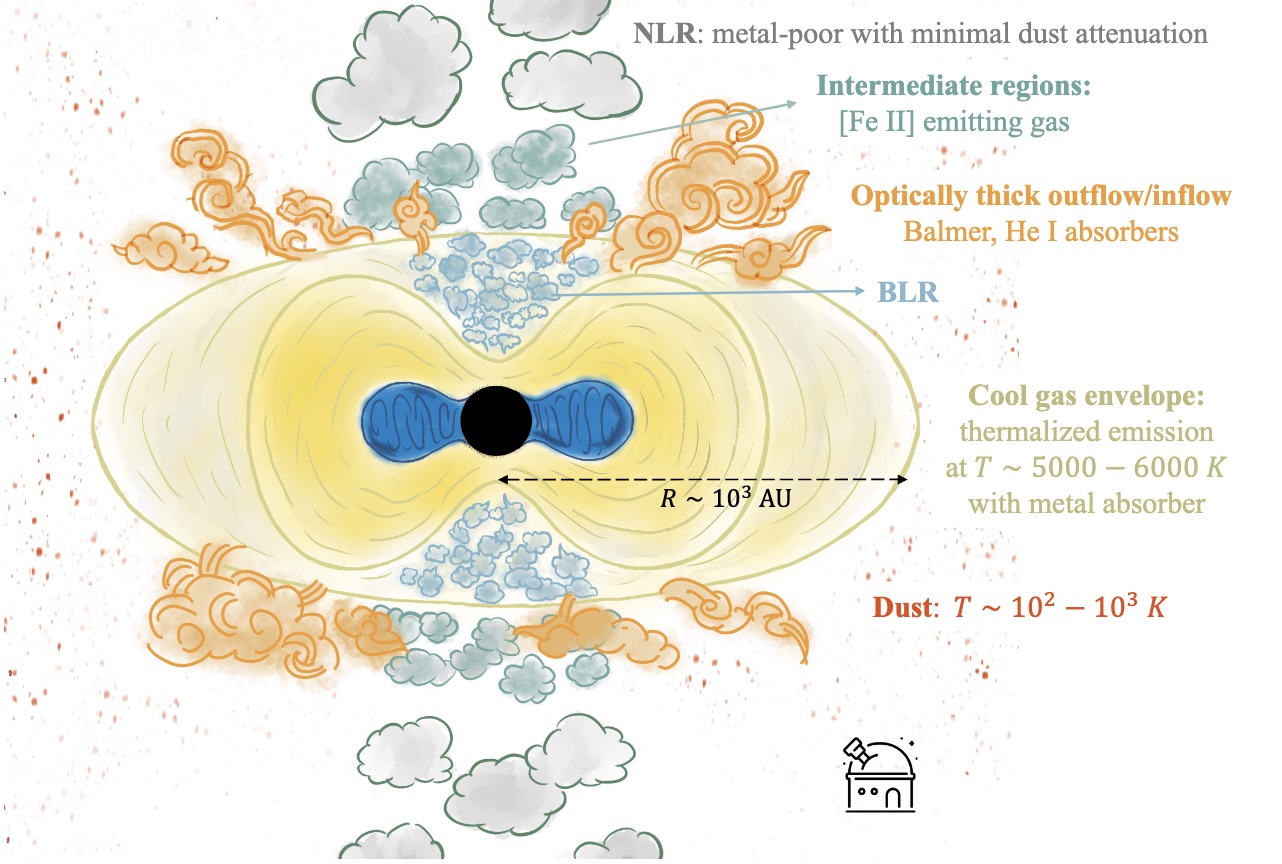
Figure 1: A schematic showing the authors’ interpretation of the nature of LRDs. This scenario is built up based on spectroscopic observations from several ground-based telescopes. Although the local sources differ slightly from the ones in the early universe, this model is strikingly similar to the ones invoked to explain some of the most extreme LRDs. The fact that such objects exist in the nearby universe is intriguing and raises further questions as to how black holes enter such a phase. [Lin et al. 2026]
Original astrobite edited by Niloofar Sharei.
About the author, Ansh Gupta:
I’m an astronomy graduate student at the University of Texas at Austin working with Steven Finkelstein. I use data from JWST to study the formation and growth of the first galaxies and black holes in the universe. In my spare time, I enjoy playing piano, reading, and making YouTube videos.
The post A Black Hole Egg That Forgot to Hatch appeared first on AAS Nova.
]]>
The CANUCS survey brought five galaxy clusters into focus, painting a portrait of galactic life in the early universe.
The post Featured Image: Galaxy Cluster in Technicolor appeared first on AAS Nova.
]]>The expansive collection of galaxies pictured here is MACS J0416, a galaxy cluster located about 4.3 billion light-years away. (Click the image for the full view!) MACS J0416 is one of five clusters targeted by the Canadian NIRISS Unbiased Cluster Survey (CANUCS). This survey takes advantage of the spacetime-bending abilities of massive galaxy clusters and uses JWST’s Near-Infrared Imager and Slitless Spectrograph (NIRISS) and Near-Infrared Camera (NIRCam) to paint a detailed multi-wavelength portrait of galaxies in the early universe. Three of the CANUCS galaxy clusters, including MACS J0416, were investigated even more closely in the follow-up JWST in Technicolor program, which added precise spectroscopic redshifts and broadened the wavelength coverage of parallel fields of view. In a recent publication led by Ghassan Sarrouh (York University), the CANUCS team outlined the design of these programs and their data products, which enabled the study of roughly 53,000 galaxies within the galaxy cluster fields and an additional 44,000 galaxies in adjacent fields. To learn more about the CANUCS and JWST in Technicolor programs, be sure to check out the full research article linked below.
Citation
“CANUCS/Technicolor Data Release 1: Imaging, Photometry, Slit Spectroscopy, and Stellar Population Parameters,” Ghassan T. E. Sarrouh et al 2026 ApJS 282 3. doi:10.3847/1538-4365/ae1611
The post Featured Image: Galaxy Cluster in Technicolor appeared first on AAS Nova.
]]>The post A Theoretical Study of Carbon Nanotube Formation: Carriers of the Diffuse Interstellar Bands? appeared first on AAS Nova.
]]>Using density functional theory calculations, researchers have shown that five of the six strongest diffuse interstellar bands can be attributed to carbon nanotubes that form in shocked circumstellar gas.
The post A Theoretical Study of Carbon Nanotube Formation: Carriers of the Diffuse Interstellar Bands? appeared first on AAS Nova.
]]>
On the final day of AAS 247, researchers described early signs of spiral galaxy structures, gravitational wave astronomy performed with pulsars, and measurements of baryon acoustic oscillations.
The post AAS 247: Day 4 appeared first on AAS Nova.
]]>Editor’s Note: This week we’re at the 247th AAS meeting in Phoenix, AZ. Along with a team of authors from Astrobites, we will be writing updates on selected events at the meeting and posting each day. Follow along here or at astrobites.com for daily summaries, or follow @astrobites.bsky.social on Bluesky for more coverage. The usual posting schedule for AAS Nova will resume on 12 January.
Table of Contents:
- 2025 Annie Jump Cannon Award Lecture: Gravitational Waves from the Stellar Graveyard, Maya Fishbach (University of Toronto)
- Press Conference: High Redshifts and High Energies
- Bruno Rossi Prize Plenary: The Dawn of Low-Frequency Gravitational Wave Astronomy, Maura McLaughlin (West Virginia University) & Xavier Siemens (University of Wisconsin, Milwaukee), on behalf of the NANOGrav Collaboration
- Press Conference: Active Galactic Nuclei Across the Universe
- From CubeSats to Flagships: Innovation Through Exoplanet Exploration, Evgenya Shkolnik (Arizona State University)
- Lancelot M. Berkeley – New York Community Trust Prize Lecture: Measuring Cosmic Sound with DESI, Daniel Eisenstein (Harvard University), on behalf of the DESI collaboration
2025 Annie Jump Cannon Award Lecture: Gravitational Waves from the Stellar Graveyard, Maya Fishbach (University of Toronto) (by Bill Smith)
Maya Fishbach delivered her Annie Jump Cannon Award plenary on what we have learned about binary black holes from the LIGO, Virgo, and KAGRA (LVK) detectors. She began by explaining that gravitational waves are tiny ripples in spacetime created when massive, compact objects orbit and merge. LVK detects these ripples with laser interferometers that measure minute changes in the length of kilometer-scale arms. After several observing runs and hundreds of detections, the field has evolved from studying just individual events to analyzing the full population of binary black hole mergers.
To understand this population, we first ask how these black holes form astrophysically. Fishbach outlined multiple formation channels. The most well known channel is stellar binary evolution: two massive stars in a binary orbit live and die together, eventually becoming binary black holes that later merge. Another channel is dynamical formation in dense star clusters, where black holes can pair up and merge simply because the environment is crowded. Crucially, key properties of a merger are encoded in the gravitational waveform, especially the masses and spins of the black holes, and these can offer clues about which channel produced a given event.
Fishbach then described how population models fit these properties across many events. For example, the mass distribution, as a first-order approximation, can be approximated by a power law. LVK models incorporate measurement uncertainties and selection effects, recognizing that the detectors are more sensitive to some signals than others. They also include more complex models than simple power laws. A central component of this story is the pair-instability mass gap, a theoretically predicted mass range in which normal stellar evolution should not produce black holes. Early LVK population studies found black holes in this gap, prompting new ideas about how black holes could exist there. The leading explanation is hierarchical mergers: two black holes merge to form a heavier remnant, which later merges with a third black hole. LVK researchers refer to first-generation black holes as 1g, second-generation as 2g, and label events accordingly, for example a “1g+1g merger” or “1g+2g merger.”
She highlighted several recent results from population studies. Work by Claire Shi Ye shows a small subpopulation where both merging black holes lie in the mass gap. Hui Tong’s analysis focuses on the distribution of the lighter mass (also called the secondary mass) in the pair. Events with primary masses in the gap tend to have higher spins, a pattern consistent with hierarchical formation scenarios.
She concluded with additional evidence of generational mixing in the population, including work suggesting a population of 2g+1g mergers at lower masses, and newer analyses that are increasingly confident in separating the mass distributions of first- and second-generation black holes. Research by Amanda Farah and Aditya Vijaykumar indicates that 2g+1g mergers are more common at higher redshifts.
Fishbach concluded by thanking her LVK collaborators, the University of Toronto/CITA, and the Compact Objects and Other Loosely Related Stuff (COOLS) group.
You can read Astrobites’s interview with Maya Fishbach here.
Press Conference: High Redshifts and High Energies (Briefing video) (by Drew Lapeer)
An Unlensed Barred Spiral Before Cosmic Noon
The barred spiral galaxy COSMOS-74706, seen as it was just 2 billion years after the Big Bang. [Daniel Ivanov]
At this morning’s press conference, Daniel Ivanov (University of Pittsburgh) presented results on a barred spiral galaxy in the early universe. At a redshift of z = 3.1591, or just 2 billion years after the Big Bang, this is the most distant barred spiral galaxy ever detected without gravitational lensing. Ivanov and collaborators confirmed the presence of the bar feature using three independent analysis methods. They hope to get further observation time with JWST to further understand the distant galaxy, placing it in a cosmological context to better understand galaxy evolution. | Pitt Press Release | UMass Press Release
A Precessing Radio Jet Drives Super-Heated Gas Outflows from a Disk Galaxy
Thursday morning, Vivian U (Caltech/IPAC) presented new multi-wavelength results studying the active supermassive black hole (SMBH) in nearby galaxy VV340a. Active SMBHs rapidly accrete gas from their surroundings, and they can drastically influence their host galaxy by injecting some of that gas into the surrounding environment.
JWST observations revealed an extended jet of heated gas emerging from the galaxy’s central region. While such features are common in galaxies with active SMBHs, VV340a’s jet is unique due to its size and orientation. The jet is significantly longer than other examples, stretching at least 20 light-years outward from the galaxy’s center (typically, jets are ~10x smaller). In addition, the jet isn’t perpendicular to the galaxy disk, suggesting that the jet is shifting its orientation over time.
Archival data from the Very Large Array (VLA) radio telescope revealed a colder, older, more extended component of the jet, providing a “fossil record” to study the system. From the data, Vivian U and collaborators estimated the speed at which the jet is moving, finding a precession period of ~820,000 years. Using data from Keck, they also estimated the rate at which the jet is depleting the galaxy’s gas reservoir. The deduced mass outflow rate of 19 solar masses per year suggests that the galaxy is using up its reservoir quickly, unless an additional inflow of gas is present to sustain the loss. Several scenarios could produce this wobbly jet — such as two SMBHs in the center of VV340a or an instability in the disk of material surrounding the SMBH. More data is needed to fully confirm the nature of the system. While this is a benchmark case for synergetic observations of active SMBHs, more data is needed to fully understand the system. | Keck Press Release | NRAO Press Release
A Close Quasar Pair in a Massive Galaxy Merger at z = 5.7
Quasars, some of the most luminous objects in the universe, are powered by rapidly accreting supermassive black holes (SMBHs). When two galaxies merge, dormant SMBHs in one, or both, of the galaxies can be triggered, with the latter being exceptionally rare. Such systems are called “quasar pairs.” In Thursday’s press conference, Minghao Yue (University of Arizona) presented new results showcasing a new close quasar pair in two merging galaxies at a redshift of z = 5.7.
The two sources, named J2037-4537, were initially found in 2021 and marked as the first double quasar candidate at z > 5. Dedicated follow up observations from the ALMA radio telescope confirmed that the pair were indeed two individual, physically close galaxies with quasars in their center. Such a system at z > 5 places important constraints on galaxy evolution models, with the search for similar systems still ongoing. Yue and collaborators are hoping to obtain follow up observations with JWST to further understand the groundbreaking system.
An Ultra-Luminous Fast Transient Powered by Rapid Accretion of a Star onto a Black Hole
In 2018, a new enigmatic transient event was detected. These so-called Luminous Fast Blue Optical Transient events are as bright as, or brighter than, supernova explosions, but they disappear much faster. Initial work proposed many models to explain observations of these events, such as stars being destroyed by massive black holes. Since 2018, several other events have been detected, but follow-up observations always occurred too late to constrain the physical origin of the emission.
Daniel Perley (Liverpool John Moores University) announced Thursday that a new event had been detected, named AT2024wpp. The event was originally detected in data from the Zwicky Transient Facility, with follow up observations from Keck. AT2024wpp is one of the most luminous cosmic explosions ever detected, with a peak brightness of 100 billion times that of our Sun. Follow-up observations failed to reveal an expected abundance of spectral lines, challenging theories on the origin of these events. Follow up data from the VLA and ALMA revealed an extremely powerful shock wave passing through a zone of dense gas, moving ~20% the speed of light. To explain this event, Perley and collaborators posited that it was produced by a massive star being eaten by a black hole companion. Future observations obtaining spectra of similar events before they dim can further constrain the nature of these mysterious events. | Summary | LJMU Press Release | NRAO Press Release
Bruno Rossi Prize Plenary: The Dawn of Low-Frequency Gravitational Wave Astronomy, Maura McLaughlin (West Virginia University) & Xavier Siemens (University of Wisconsin, Milwaukee), on behalf of the NANOGrav Collaboration (by Neev Shah)
Maura McLaughlin delivered the Bruno Rossi Prize Plenary Lecture on behalf of the NANOGrav Collaboration. She mentions that Xavier Siemens, who was also going to be there to deliver the plenary, but could not make it due to travel difficulties. Her lecture is on how we use giant radio telescopes across the world to look at extremely precise pulsar clocks to search for gravitational waves. NANOGrav was started in 2007 and is now a NSF Physics Frontier Center with more than 200 members. It is also part of the International Pulsar Timing Array, which consists of a worldwide collaboration of different teams with a common goal, searching for nanohertz gravitational waves.
She starts by talking about how electromagnetic observations over decades have shown us that galaxies grow and evolve through mergers. Most galaxies contain a central supermassive black hole (SMBH). When two galaxies merge, their respective central SMBHs can come close to each other and form a SMBH binary (SMBHB). However, she mentions that we don’t understand the behaviour of SMBHB at close separations very well, commonly referred to as the “final parsec problem.” We also cannot easily study SMBHB through electromagnetic observations, which is where gravitational waves enter the picture.
Locations of pulsars (blue stars) in the NANOGrav pulsar timing array relative to the location of the Sun (yellow star). Some pulsar locations are approximate. Click to enlarge. [Ross Jennings / NANOGrav; CC BY 4.0]
Speaking about the dataset, she highlights that NANOGrav observed 68 millisecond pulsars with various radio telescopes such as GBT, Arecibo (rip!), VLA and CHIME. She mentions that a key step in studying pulsars is fitting the arrival times of their pulses with a timing model, which takes into account all the effects that can cause changes in their arrival times. The next step is to search for gravitational waves by cross-correlating the residuals in the timing data of all the pulsars, where the residuals are what is left in the data after subtracting out the timing model. As the stochastic background has a red noise, they search for such a spectrum in their timing residuals as well.
However, she cautions that there could be many other sources of noise, as pulsars are not perfect rotators; there are pulse jitters and various other effects that need to be carefully accounted for. However, all these noise sources have different signatures, and the gravitational wave background has a unique noise signature that can be teased out in the data.
After decades of accumulating data, in June 2023, NANOGrav, along with various other pulsar timing array collaborations across the world announced the discovery of the stochastic gravitational wave background. She emphasizes that finding the background is just the initial step. But more importantly, what do we learn from it? They find that the slope of the spectrum is consistent with what is expected of SMBHBs, but the signal is also in agreement with many other exotic scenarios. They also perform searches for gravitational waves from individual SMBHBs, and although they do not find any evidence for a signal, they are able to place constraints that will significantly improve in the future.
Speaking about the future, she highlights that NANOGrav is currently working on their 20-year-long dataset. She also shows a preliminary Hellings–Downs curve, which is now much more tightly constrained than in the original discovery paper. The worldwide collaboration of various pulsar timing arrays, called the IPTA, is working on their third data release, which will be the most sensitive dataset in the world for searchers for nanohertz gravitational waves. She also mentions that with improved radio instrumentation and new telescopes such as the Deep Synoptic Array, they will be able to detect and study many more pulsars. With an amazing sensitivity, they expect that many tens of SMBHBs could be detected, and there could also be synergy with electromagnetically identified sources for targeted searches, embarking on a new era in multimessenger astronomy.
You can also read Astrobites’s interviews with Maura McLaughlin and Xavier Siemens.
Press Conference: Active Galactic Nuclei Across the Universe (Briefing video) (by Lexi Gault)
Hidden Hearts: The Central Galactic Structures That Grow Black Holes
Sky surveys have revolutionized our understanding of galaxy-wide morphologies — observations of galaxies across the sky reveal various structures and shapes that can clue us in to what may be happening inside these galaxies. Michael Koss (Eureka Scientific, Inc.) presented the importance of high-resolution imaging of nearby galaxies. Sometimes missed in shallower surveys, higher resolution observations from the Hubble Space Telescope and Keck often reveal detailed internal structures like nuclear dust lanes, spiral arms, and clumpy structures. These features, Koss pointed out, could provide fuel for active supermassive black holes within these galaxies. With planned missions like Euclid and Roman, these telescopes will be able to see through obscured galaxy light and reveal things like mergers and detailed structures that provide better insights into the internal structures and mechanisms of galaxies. Given the volumes of these surveys, citizen scientists can help through Galaxy Zoo to classify galaxies with these types of structures, supporting community engagement while pushing a science goal forward.
From Dwarfs to Giants: A Complete Census of Active Galactic Nuclei
How common are active supermassive black holes? Mugdha Polimera (Center for Astrophysics | Harvard & Smithsonian) presented a census of active galactic nuclei in galaxies across a range of masses. Using different search methods for different galaxy types, the team was able to decipher active black hole light from the glare of star formation. This study included 8,000 galaxies and found that only 2–5% of dwarf galaxies house an active black hole. While this value is up from previous studies estimating only about 1% for dwarfs, this fraction is still far below what Polimera’s team measured for medium and large galaxies, 16–27% and 20–48%, respectively. Looking further into galaxy properties, the dwarf population tends to have little dust, high star formation activity, and high gas content. Despite having ample fuel for hungry black holes, dwarf galaxies rarely house an accreting central black hole. Further investigation is necessary to determine if this is driven by detection limitations or physical properties in dwarf galaxies suppressing supermassive black hole accretion. | Press release
Monsters and Misalignment: Do Active Galactic Nuclei Influence Counter-Rotation in Low-Mass Galaxies?
Within galaxies, we anticipate the gas and stars to generally orbit the galactic center together, but this is not always the case. Low-mass galaxies, which are more susceptible to mass loss from multiple avenues, are sometimes observed to have misaligned gas and stellar rotation. Dominic Schwein (Colorado College) and team were curious if active galactic nuclei could be the culprit of this phenomenon. Using Sloan Digital Sky Survey MaNGA spectroscopy, they were able to map the velocities of the stars and gas in detail for 94 small galaxies with active galactic nuclei (AGN). Through their analysis, they found that counter rotation — when the stars and gas rotate in opposite directions — is much more common in galaxies with AGN, with 52% counter rotating. This analysis provides clues to how AGN can impact their host galaxies, with AGN feedback likely redistributing the gas content leading to counter rotation. Comparing the 94 galaxies to a broader sample of 3,000 galaxies, they find that galaxies with misaligned stars and gas are more likely to host AGN. This study is helping to improve the understanding of AGN and their influence on their host galaxies. | Press release
Galactic Rain: Cool Gas Inflows in Red Geyser Galaxies
One of the important questions in galaxy evolution is how galaxies stop forming stars. Theory predicts that supermassive black holes can suppress star formation in their hosts by heating up the gas, preventing it from collapsing into new stars. However, observations have revealed that some AGN inhabit star-forming galaxies, meaning their impacts on star formation may be a bit more complicated. Looking at a rare galaxy class, red geysers, Arian Moghni (University of California, Santa Cruz) and collaborators sought to understand how some AGN still appear star-forming. The ionized gas in red geysers appears to be outflowing and does not indicate star formation, which is assumed to be the impact of the AGN. However, if gas is being pumped out, what is keeping the AGN active? Moghni looked into the cold gas using specific chemical tracers that can reveal the location and motions of the cool gas in the galaxy. Through this analysis, they found that the cool gas seems to be inflowing into the red geysers, keeping their supermassive black holes active. The exact origins of this cool inflowing gas are not yet fully understood, but it could be accreted from the local environment or from interactions with nearby galaxies. From their analysis, the team found that interactions are the likely culprit, maintaining the AGN activity and keeping star formation in red geysers suppressed. | Press release
From CubeSats to Flagships: Innovation Through Exoplanet Exploration, Evgenya Shkolnik (Arizona State University) (by Lexi Gault)
A professor at Arizona State University, Evgenya Shkolnik presented this afternoon’s plenary on the interconnection between the smallest satellites and the largest flagship missions in the context of exoplanetary science. In order to understand the missions we need, she took us back to the basics, starting with a big science question. For Dr. Shkolnik, a big science question is one that takes many people and often multiple generations to get to the answer. This requires us to break these large-scale questions into more manageable objectives and needed measurements in order to reach the broader science goals.
In exoplanetary science, one of the big driving questions is, “are we alone?” This question, though only three words, is massive in scope scientifically. To search for life, we need to understand exoplanet populations, atmospheric biosignatures, and how a planet’s host star shapes its atmosphere and environment. No single instrument or mission can target every science objective at once; thus, we need an ecosystem of tools to solve big science questions. For example, the first exoplanet discoveries required a variety of telescopes and teams of people to achieve these breakthroughs.
To date, there have been more than 6,000 exoplanets discovered through a variety of methods, with a combination of on-ground and in-space telescopes. From these discoveries, we have learned that exoplanets are everywhere, and they are extremely diverse. Excitingly, it has been estimated that about 25% of all stars have rocky planets in the habitable zone — the atmospheres of these planets are the keys to keep them habitable. However, as we experience solar flares and weather from the Sun here on Earth, the stellar environment a planet is exposed to regulates its atmosphere and subsequent habitability. Therefore, understanding stellar activity and the high energy photon emission at an exoplanet’s orbit is critical in the search for life.
Launching in the early hours on Sunday, 11 January, SPARCS, the Star–Planet Activity Research CubeSat, is a small telescope that will stare at 20 stars for a month each in order to catch ultraviolet flares. This little but significant telescope will collect a wealth of stellar activity data, providing insights into the environments in which potentially habitable planets reside. Not only does SPARCS enable important observations, but it will also test technology that may be employed on future flagships like the Habitable Worlds Observatory.
SPARCS is an example of a small instrument that is part of a larger ecosystem of astronomical tools to explore the universe. Dr. Shkolnik provides a framework for us to consider when thinking about building our science: scaling up, laddering up, and pairing up. Scaling up allows us to build better instruments that provide better measurements. Laddering up connects smaller projects that contribute science results and instrument testing to multiple larger missions that come after them. Pairing up allows us to pull together multiple missions that work simultaneously to address the same big science questions. As we move forward, thinking about these aspects will improve both small- and large-scale missions, making science goals ambitious and achievable.
Lancelot M. Berkeley – New York Community Trust Prize Lecture: Measuring Cosmic Sound with DESI, Daniel Eisenstein (Harvard University), on behalf of the DESI collaboration (by Bill Smith)
Daniel Eisenstein accepted the Lancelot M. Berkeley – New York Community Trust Prize for Meritorious Work in Astronomy on behalf of the DESI collaboration. His plenary talk, Measuring Cosmic Sound with the Dark Energy Spectroscopic Instrument DESI, focused on the physics of baryon acoustic oscillations, the DESI instrument, the latest cosmological results, and what those results mean for the future of cosmology.
He began with the hot Big Bang model, which posits that the very early universe was hot, dense, and nearly smooth, and that it cooled and developed structure over time. This framework has been remarkably successful, explaining much of cosmology with a small set of parameters and well-understood physics. In this model, small inhomogeneities in the early universe grew through gravity into the web of galaxy clusters we see today, and measuring this large scale structure has been one of the most powerful tests of the Big Bang model. A key component of this picture is dark energy, the somewhat recently discovered phenomenon driving the accelerated expansion of the universe.
This is where baryon acoustic oscillations, or BAO, come in. BAO are sound waves from the very early universe, roughly 400,000 years after the Big Bang. Before that time, the universe was hotter and ionized, and photons exerted large pressure and restoring forces on baryons. Overdensities in this matter distribution generated spherical sound waves that propagated at approximately 57% of the speed of light. At the epoch of recombination, the baryons cooled, became neutral, and photons began to travel freely. The sound speed then dropped rapidly, freezing in the pattern of those waves. The result is a faint but measurable statistical imprint in the clustering of matter that persists through cosmic time. Because the expected separation scale of this imprint depends only on the sound speed and the propagation time, it can be used as a standard ruler for measuring distances across the universe.
After outlining the BAO theory, Eisenstein turned to DESI, which was designed to map cosmic expansion and the growth of structure through BAO. Building on the legacy of the Sloan Digital Sky Survey, DESI has mapped about 40% of the sky from redshift z = 0 to z = 3.5. Over four and a half years, through spectra, DESI has measured 45 million extragalactic redshifts and observed 18 million stars.
He then presented the BAO constraints from DESI Data Release 2, which are the tightest to date. He presented correlation functions for several galaxy samples, each revealing a clear BAO signal at the expected separation distance, and he added independent BAO evidence from the Lyman-alpha forest. In the final part of the talk, Eisenstein discussed the implications of these and other DESI results for LambdaCDM cosmology. He emphasized the strong synergy between BAO and Type Ia supernovae as complementary distance probes. When used independently, the BAO-based estimate of the Hubble constant differs from the value inferred from supernovae, further reinforcing the growing issues of the “Hubble tension.” He also presented analyses showing that DESI’s results favor models with evolving dark energy over a simple constant dark energy, and that this preference strengthens when cosmic microwave background and supernova data are included.
He closed by touching on other DESI measurements, including the Alcock Paczynski effect and measurements of gravitational lensing of the cosmic microwave background. Together, these results point to a rapidly improving picture of cosmic history and highlight how DESI’s precise mapping of structure can sharpen our understanding of the universe’s contents and evolution.
The post AAS 247: Day 4 appeared first on AAS Nova.
]]>The post Stellar CoRGI in MaNGA: Stellar Counterrotating Galaxies Identified in the MaNGA Survey appeared first on AAS Nova.
]]>Galaxies containing two stellar disk components rotating in opposite directions appear not to have a single cause; the gas that creates the counterrotating component can come from mergers or accretion.
The post Stellar CoRGI in MaNGA: Stellar Counterrotating Galaxies Identified in the MaNGA Survey appeared first on AAS Nova.
]]>
On Day 3 of AAS 247: a record-breaking asteroid, a discussion of science policy, and a supernova that we might hear about again at AAS 367!
The post AAS 247: Day 3 appeared first on AAS Nova.
]]>Editor’s Note: This week we’re at the 247th AAS meeting in Phoenix, AZ. Along with a team of authors from Astrobites, we will be writing updates on selected events at the meeting and posting each day. Follow along here or at astrobites.com for daily summaries, or follow @astrobites.bsky.social on Bluesky for more coverage. The usual posting schedule for AAS Nova will resume on 12 January.
Table of Contents:
- Plenary Lecture: Sharp New Views of the Interstellar Medium of Nearby Galaxies, Adam Leroy (Ohio State University)
- Press Conference: Asteroids, Low-Mass Stars, and a Mystery from History
- Plenary Lecture: Partisan Disparities in the Use, Funding, and Production of Science, Alexander Furnas (Northwestern University)
- Press Conference: Cosmology and Galaxy Clusters
- 2025 Dannie Heineman Prize Lecture: Unveiling the First Black Holes in the Universe, Priyamvada Natarajan (Yale University)
- Plenary Lecture: Probing the Accretion History of AGN using X-Ray and Multi-Wavelength Surveys, Tonima Tasnim Ananna (Wayne State University)
Plenary Lecture: Sharp New Views of the Interstellar Medium of Nearby Galaxies, Adam Leroy (Ohio State University) (by Niloofar Sharei)
Adam Leroy’s plenary talk showed how new high-resolution surveys are transforming our view of the interstellar medium (ISM) in nearby galaxies. He framed the ISM as the gas and dust between stars, the raw material for star formation and a key link between small-scale physics and galaxy-wide evolution.
He began by showing how different wavelengths trace different phases of the ISM. Optical and ultraviolet light reveal stars, optical emission lines trace ionized gas around young stars, ALMA observations of CO trace cold molecular gas where stars form, and JWST infrared images reveal dust, polycyclic aromatic hydrocarbons, and deeply embedded young regions. Taken together, these views place star-forming regions along an evolutionary sequence from molecular clouds to exposed star clusters. He explained about PHANGS surveys, which combine ALMA, JWST, Hubble Space Telescope, Very Large Telescope, and other facilities to study the nearest star-forming galaxies at cloud-scale resolution. Using these data, Leroy showed that molecular gas properties vary across galaxies. Lower-mass galaxies and outer disks have lower gas surface densities and narrower line widths, while massive galaxies and galaxy centers show denser gas and more energetic motions. By averaging cloud-scale measurements within regions, their team found strong correlations between molecular cloud properties and large-scale disk structure, such as stellar surface densities. This may suggest that molecular clouds are shaped by their galactic environment rather than being universal objects. He argued that these trends are consistent with molecular clouds being moderately over-pressurized relative to their surroundings.
Finally, he turned to the origin of molecular clouds from atomic gas. New Very Large Array surveys of the closest galaxies now resolve atomic hydrogen into filaments and clouds at scales comparable to molecular data. He concluded that resolved, multi-wavelength observations now allow galaxies to be dissected into individual star-forming regions which shows how gas, stars, and feedback interact across environments, with ALMA and JWST leading the way and future facilities promising even deeper insights soon.
You can read Astrobites’s interview with Adam Leroy here.
Press Conference: Asteroids, Low-Mass Stars, and a Mystery from History (Briefing video) (by Amaya Sinha)
NSF–DOE Vera C. Rubin Observatory Spots Record-Breaking Asteroid in Pre-Survey Observations
A one-of-a-kind observatory in terms of size, speed, and resolving power, the Vera C. Rubin Observatory will construct an astronomical movie of the night sky like never before over the next few decades. One of the key advances it will bring is a better understanding of the objects in our own solar system, particularly of small asteroids. And yet, it has already been blowing our minds with the first photons it received in 2025 during commission. Sarah Greenstreet (NOIRLab) presented asteroid findings from the telescope’s commissioning data, which involved taking more than 1,000 pictures of the Virgo cluster, located near the ecliptic plane. In these commissioning pictures, it identified more than 2,000 solar system objects, approximately 1,900 of which had never been observed before. Furthermore, due to the large number of images, Rubin scientists were able to create light curves for each object to determine what they were, what they were composed of, and even whether they were rotating or not. One of the most exciting discoveries from this analysis was the discovery of MN45 — an asteroid more than 500 meters across — which shattered all previous asteroid records for rotation for an asteroid of its size, with a rotation period of 1.88 minutes. In summary, we’ve not even begun to show science data from the Rubin Observatory, and it is already changing our understanding of the universe. You can read a press release about this research here.
It’s Not Complicated: Life Is Simple on Cool-Star Planets
Does life exist elsewhere in the universe? If so, where is it? And what does it look like? These are all questions that are at the heart of modern astronomy. Fortunately for us, William Welch of San Diego State University has answers for us! He took a novel approach to answering this question by looking at how life on Earth would have evolved around late-type M dwarfs. These stars comprise over 75% of all stars in the galaxy, and due to their extremely low masses, we can reliably detect exoplanets around them, such as in the TRAPPIST-1 system. So what are the chances of life on these worlds? Unfortunately, not great. See, life (as it exists on Earth) thrives on visible light between 400 and 900 nanometers, as that’s the region most useful for oxygenic photosynthesis. However, TRAPPIST-1 emits relatively little light in that wavelength range, having a much larger contribution from the infrared sections of its spectral energy distribution. This means that — in an Earth-analog scenario — oxygen-breathing life that forms the basis for our life wouldn’t exist, it would have been outcompeted by bacteria that can perform anaerobic photosynthesis. The results of this would drastically change the course of evolution. They likely wouldn’t result in the Cambrian evolution that brought so much of life into existence. You can read a press release about this research here.
Naturally Occurring “Space Weather Station” Elucidates New Way to Study Habitability of Planets Orbiting M-Dwarf Stars
One of the great joys of the modern world is our ability to predict the weather. While this is typically limited to knowing if it’ll rain tomorrow, it’s also essential to understand space weather, or how the Sun’s activity affects our delicate little planet. This is not limited to Earth, though; understanding the interactions between stars and planets is crucial to determining whether life exists there. While astronomers are familiar with studying light from stars and planets, it is generally more challenging to study particle interactions between them; however, these are the interactions that can strip planets of their atmospheres. To overcome this issue, Luke Bouma at Carnegie Science conceived the idea of using a special class of M dwarfs: complex periodic variables. These stars have complexly varying lightcurves that reflect the structure and interactions between the star and its circumstellar hydrogen. From this, Bouma was able to study not just light from the star, but the actual localized space weather around it. Therefore, it would be possible to use objects like these complex variables in the future to identify which kinds of worlds could be potentially habitable and which have been stripped barren by stellar winds. You can read a press release about this work here.
E. E. Barnard’s Star Near Venus — A 130-Year-Old Mystery Solved?
If you’ve been in astronomy, you’ve likely heard of Barnard’s Star, one of the closest stars to the solar system. However, that is not the only notable star associated with the famous E. E. Barnard. In 1892, when he was first starting out at the Mount Lick Observatory, he observed a 7th-magnitude star near Venus that didn’t appear on any existing almanacs or star charts. Certainly, no one could have misplaced a star that bright, right? Well, yes, and yet no matter what he did, he couldn’t figure out what the object in question was! This question remained unanswered for decades and was still unsolved when Barnard passed away in 1923. However, in 2025, over a century later, it appears we have an answer. William Sheehan, a preeminent historian and author of Barnard’s biography, led a team in an attempt to identify the mystery star in question. After trying every classification under the Sun — from nebulae to RR Lyrae stars — they found an answer so simple and yet so hidden: Barnard had likely just misclassified the star’s brightness. See, at the time he observed it, he was still new to using the 36-inch refractor and significantly overestimated the star’s actual brightness, because the human eye is notoriously poor at judging absolute scales. But when the team took a measurement in 2025 to confirm this, the star was right where it should be, right at the magnitude it should have been.
Plenary Lecture: Partisan Disparities in the Use, Funding, and Production of Science, Alexander Furnas (Northwestern University) (by Bill Smith)
The relationship between science and politics has been on the minds of many astronomers this past year, so it was not surprising that Dr. Alexander Furnas, a political scientist who studies science policymaking, drew a dense crowd of astronomers for his plenary talk. He began by unequivocally rebuking the myth that science is apolitical, with astronomy being no exception. Given the long time horizons required to answer fundamental scientific questions, the substantial public investments that support both research missions and researchers’ salaries, and national security concerns, he argued that scientists must now, more than ever, understand the science policy process as part of their professional development and for career success. He then challenged the way that most scientists think about how science policy is crafted — in which scientists make discoveries, gain recognition for their work, policy is created around their new knowledge, and then scientists go back to work creating new knowledge. Instead, he proposed a model in which science policy is a political system, and one in which intermediary organizations, such as think tanks, professional societies, and others, mediate the process between knowledge creation and policy creation, often with incentives beyond supporting science for science’s sake at play.
One of his main points was that there are four main areas in which politics always enters science: funding, evaluation, translation, and uptake. For each of these areas, he showed evidence from his research. Regarding science funding, he presented evidence suggesting that, at least until 2020, both Democratic and Republican lawmakers tended to fund science at the same level, counter to the intuitions of many in the science community, and that the current administration represents a stark departure from even historical Republican administrations.
For translation, his main point to the scientific community is that “intermediaries matter.” Congressional staffers are not trained to read journal articles or to understand how rigorous methodologies are applied across fields, so they rely on intermediary organizations, most notably think tanks, to translate basic science into policy recommendations. These think tanks, Furnas explained, are highly polarized, and this polarization has been increasing over time. He went on to explain that, in this context, polarization has multiple meanings. First, very few scientific and policy studies are cited by both parties. Second, the two parties draw from different “clusters” of research at different rates and for different purposes. Democrats, on average, cite scientific research about 1.8 times more than Republicans across topics, and left-of-center think tanks cite scientific papers roughly five times more than right-leaning institutions. Third, there are systematic differences in how research is framed and used, in that citations are often selective to pre-existing agendas. Furnas also noted that political elites and decision-makers tend to have higher trust in science than the general voting public, which shapes both evaluation and uptake even when the broader public is skeptical.
He emphasized that how scientific work “travels,” who translates it, how it’s framed, and which networks pick it up, can matter as much as the findings themselves. He showed data from an experiment in which congressional staffers were given information from a hypothetical petitioner in their district, and showed that staffers were more likely to act on a recommendation when it came from an ideologically aligned intermediary, a pattern that held for both parties.
Turning to geopolitics, Furnas argued that international collaboration is now heavily politicized, with security concerns often dominating decisions. He described evidence from an NSF evaluation experiment that the political context around countries of those on a proposal (e.g., China versus Germany) influences how proposals are judged. Expecting scientific excellence alone to overcome these pressures, he warned, asks too much of scientists working within the realities of the system.
Furnas closed by underscoring that institutions matter more than individuals. Professional societies, advisory bodies, and other collective organizations play a crucial role in building credibility and continuity in science policy. His caution to the scientific community, including astronomers, was clear: while science remains vital, it is not neutral, but overt partisanship can make institutions less trustworthy. Astronomers will strengthen their impact by becoming policy literate, engaging thoughtfully with credible intermediaries, and framing their work for translation and uptake across polarized institutions. Understanding the politics of science, he argued, isn’t a distraction from doing science, it is increasingly part of doing science well.
You can read Astrobites’s interview with Dr. Furnas here.
Press Conference: Cosmology and Galaxy Clusters (Briefing video) (by Skylar Grayson)
The Strongly Lensed Supernova Pantheon as Revealed by JWST
Massive galaxy clusters warp spacetime, creating a lens that can impact our view of background galaxies. Lensed galaxies appear warped, magnified, or can even show up multiple times. When one of these multiply-imaged galaxies has a supernova go off in it, it provides a great opportunity to measure the expansion of the universe. Conor Larison from the Space Telescope Science Institute presented the discovery of two supernovae in lensed galaxies, one that happened when the universe was half its current age, and one at an even greater distance, when the universe was only as third as old as it is now. Each of these supernovae happened in galaxies that appear multiple times due to lensing, but the supernova itself only shows up in one image. That’s because of an effect called time delay, where because the light from the galaxy is taking a different path, with a different length, to make each image, we’re actually seeing it at different times. Which means that while only one image shows the supernova right now, we will see them again! One will reappear in 1–2 years, while the other won’t be seen for over 60 years. But once we have those observations, we can use them to measure how fast the universe is expanding, quantified by the Hubble constant, H0. This technique gives us a new way to measure H0 and could help shed some light on the current tension in its value that arises from different ways of measuring it. (For more on this idea check out this Astrobite.) You can find the full press release for these results here.
The Discovery of a Strongly Lensed Protocluster Core Candidate at Cosmic Noon
Galaxy clusters are some of the most massive structures in the universe, but currently most galaxies in clusters are not actively forming new stars. Understanding how they built up their mass requires peering back in time, looking for the “protoclusters” that are the early stages of clusters as we see them in today’s universe. Nicholas Foo, a graduate student at Arizona State University, presented observations of one such protocluster, seen when the universe was only a few billion years old. This protocluster is being gravitationally lensed, giving us a magnified glimpse of 11 dusty star-forming galaxies in its core. These galaxies showcase some of the most extreme star-forming environments in the universe, producing new stars at a rate 5,000 times higher than what we see in the Milky Way. Thanks to the strong lensing caused by a fully formed cluster closer to us, we are able to get a glimpse of this early moment of stellar build up, helping uncover how galaxy clusters came to grow so large and what early stages of their lives could have looked like. You can find the full press release here.
ODIN: Mapping the High-Redshift Cosmic Web via Protoclusters and Filaments at Cosmic Noon
Protoclusters, the infant stages of the massive galaxy clusters we see in today’s universe, provide crucial information about structure formation and galaxy evolution. Vandana Ramakrishnan from Purdue University presented results from a survey called ODIN, which hunted for these protoclusters in the early universe. She shared two unique objects they discovered, both of which were extremely massive. One of them is actually a proto-supercluster containing the mass of 5,000 Milky Ways and located at the highest redshift of any proto-supercluster found to date. Using spectroscopic follow-up of these baby clusters, they were able to generate 3D maps of their structure. These maps revealed clumpy and irregular shapes, subgroups, and filamentary structures that feed material into cluster cores. These structures are well aligned with what’s predicted from our models of cluster evolution, and showcase many of the features seen in cosmological simulations.
Scorching Hot Intracluster Gas in a Baby Galaxy Cluster 12 Billion Years Ago
Galaxy clusters are the most massive structures in the universe, but most of their baryonic mass is not actually in the galaxies themselves. Instead, it’s found in the diffuse gas between galaxies known as the intracluster medium, which plays a big role in shaping galaxy evolution and can provide key information about the mass of dark matter halos. But observing this gas, especially at large distances, is quite difficult. Dazhi Zhou from the University of British Columbia presented results from an attempt to observe this gas in a protocluster seen when the universe was only 1.4 billion years old. He utilized the thermal Sunyaev–Zeldovich (SZ) effect, which happens when hot gas scatters with light from the cosmic microwave background. Using the ALMA telescope, he detected a hot intracluster medium using the SZ effect at high significance, the earliest detection of this gas to date. And the detection showed something weird; the gas is hot. Over five times hotter than what we would expect based on observations of nearby clusters and some of our cosmological simulations. Most likely, the extra heating is coming from active galactic nuclei in the protocluster, which drive jets that can deposit energy in the intracluster medium. This is the first such observation of the hot intracluster medium in the early universe, and opens up some exciting questions about the accuracy of our models when it comes to capturing the early stages of cluster growth. You can read the full press release here.
2025 Dannie Heineman Prize Lecture: Unveiling the First Black Holes in the Universe, Priyamvada Natarajan (Yale University) (by Drew Lapeer)
This year’s Dannie Heineman Prize Lecture was given by Dr. Priyamvada Natarajan, professor of astronomy and physics at Yale University. Her talk focused on some of the earliest drivers of galaxy formation and evolution — supermassive black holes (SMBHs) in the early universe. Professor Natarajan’s work in this field has been revolutionary, with much of her theoretical work laying the groundwork for interpreting cutting-edge JWST observations.
She began by giving an overview of two recent leaps in our understanding of SMBHs in the early universe. First is JWST, opening up the door to high-redshift (z > 10) studies of individual SMBHs, just a few hundred million years after the Big Bang. Many of the individual SMBH candidate sources detected with JWST — such as UHZ1 — challenge our understanding of SMBH formation and evolution due to their large masses. More recently, the detection of the gravitational wave background has shed light on the broader population of SMBHs across cosmic time.
Natarajan went on to outline the theoretical models which can produce the population of SMBHs detected by JWST and provided an overview of how we can test these models. Various sources can produce SMBHs as we see them in the local universe. Such models include the direct collapse of massive gas clouds in the early universe, rapid growth of less massive black holes in dense star clusters, and primordial black holes formed very shortly after the Big Bang. Growing evidence points towards the possibility of multiple seeding channels, says Natarajan, but formation of SMBHs via “heavy seeds,” through processes like the direct collapse of gas clouds, is likely a key driver. Moving forward, Natarjan discusses how important it is to understand which of these channels is the most efficient, thus being most likely to produce the current-day SMBH population.

A slide from Priyamvada Natarajan’s plenary talk at AAS. [Priyamvada Natarajan]
The plenary closed with an overview of the future prospects of the field. The Laser Interferometer Space Antenna (LISA) is a next-generation gravitational wave director that’s set to start operations in the 2030s. With LISA, astronomers can pinpoint merging massive black holes. The frequency of these mergers, and follow up with other observatories, will open a new door into SMBH evolution science.
You can find our interview with Professor Natarajan here.
Plenary Lecture: Probing the Accretion History of AGN using X-Ray and Multi-Wavelength Surveys, Tonima Tasnim Ananna (Wayne State University) (by Neev Shah)

Dr. Tonima Tasnim Ananna delivering her plenary lecture at AAS 247.
Dr. Tonima Tasnim Ananna, a faculty member at Wayne State University delivered her plenary lecture on the multiwavelength view of accretion history in active galactic nuclei (AGN). She emphasizes that understanding the behaviour of supermassive black holes (SMBHs) is extremely vital as they are located at the centers of most galaxies. As matter falls into them, it can form an accretion disk around the SMBH, which emits radiation in the ultraviolet and optical. They also have an X-ray corona around them, as well as a torus that absorbs the ultraviolet and optical radiation, re-radiating it in the infrared. She describes the unified model of AGN, which explains their different properties with the help of a simple geometric viewing-angle effect. She highlights that observing them in different wavelengths is crucial as they all provide complementary information. Dr. Ananna describes the key questions in the field, which are:
- How are the first black holes (BHs) seeded?
- How and when do these black holes grow?
- Are AGN driven mostly through mergers or secular evolution?
- How is matter regulated around an AGN?
She mentions that the two ways to answer these questions are through either studying individual objects, or using large datasets to produce statistical functions. Although she primarily focuses on the latter, she emphasizes the importance of the former as well, with the example of how UHZ1 demonstrated the heavy seed scenario for forming the first black holes. Next, she discusses the curious case of the little red dots (LRDs) and mentions that although JWST has found numerous LRDs, they are surprisingly not seen in X-rays or are poor X-ray emitters. She finds that LRDs also contain overmassive BHs. A possible explanation for the lack of X-rays in LRDs could be that we see the SMBHs through lots of obscuration. Another possibility is that the SMBHs are accreting matter at a super-Eddington rate, as that can trap photons and stop the production of X-rays. She describes the receding torus model, which occurs as the AGN has a high luminosity, which makes the torus smaller, and increases the viewing probability. In such a scenario, the obscured fraction should drop with luminosity. She mentions that this can be tested with the help of Swift data, as it provides an unbiased sample of obscured and unobscured sources.
However, Dr. Ananna suggests that perhaps it is not the luminosity that controls the matter around an AGN, but the Eddington ratio, which accounts for the counteracting forces of gravity and radiation pressure. She finds that this model, called the “radiation regulation unification model,” is more accurate than the receding torus model. To summarise, she highlights that at low Eddington ratios, a geometric unification provides a good solution, but at high Eddington ratios, the sources can start to get obscured and show temporal evolution. With that, Dr. Ananna has answered the questions 1) and 4), and concludes with her thoughts on how to tackle questions 2) and 3).
You can find our interview with Dr. Tonima Tasnim Ananna here.
The post AAS 247: Day 3 appeared first on AAS Nova.
]]>The post Surface Changes on Io Observed by Large Binocular Telescope/SHARK in Early 2025 appeared first on AAS Nova.
]]>Ground-based imaging shows how individual volcanic plumes interact as they are deposited on Io’s surface, creating measurable changes on this dynamic moon.
The post Surface Changes on Io Observed by Large Binocular Telescope/SHARK in Early 2025 appeared first on AAS Nova.
]]>The post A Dense Molecular Ringlike Structure in Gaseous CO Depletion Region G34.74−0.12 appeared first on AAS Nova.
]]>A newly discovered dense molecular ring in a young, cold star forming region gives a detailed glimpse into the inner workings of the regions in which massive stars form.
The post A Dense Molecular Ringlike Structure in Gaseous CO Depletion Region G34.74−0.12 appeared first on AAS Nova.
]]>
A supernova movie 25 years in the making, a discussion of little red dots, the joy of an unplanned career, and more — all on Day 2 of AAS 247.
The post AAS 247: Day 2 appeared first on AAS Nova.
]]>Editor’s Note: This week we’re at the 247th AAS meeting in Phoenix, AZ. Along with a team of authors from Astrobites, we will be writing updates on selected events at the meeting and posting each day. Follow along here or at astrobites.com for daily summaries, or follow @astrobites.bsky.social on Bluesky for more coverage. The usual posting schedule for AAS Nova will resume on 12 January.
Table of Contents:
- Historical Astronomy Division LeRoy E. Doggett Prize Plenary: Don’t Let Anybody Tell You to Plan Your Career, Thomas Hockey (University of Northern Iowa)
- Press Conference: News from the High-Redshift Universe
- 2025 Newton Lacy Pierce Prize Plenary: What Happens to Planets After Their Stars Die?, Andrew Vanderburg (Harvard University)
- Press Conference: The Milky Way and Stellar Explosions
- Plenary Lecture: The Creating Equity in STEAM (CrEST) Experiential Learning Programs, Raja GuhaThakurta (University of California, Santa Cruz)
- Henry Norris Russell Lecture: Finding the Most Distant Galaxies Using the James Webb Space Telescope, Marcia Rieke (University of Arizona)
Historical Astronomy Division LeRoy E. Doggett Prize Plenary: Don’t Let Anybody Tell You to Plan Your Career, Thomas Hockey (University of Northern Iowa) (by Niloofar Sharei)
Thomas A. Hockey receives the AAS Historical Astronomy Division’s Doggett Prize at AAS 247 in Phoenix.
Today’s awards session for the Historical Astronomy Division’s Doggett Prize featured a lecture by prizewinner Thomas A. Hockey, who used his own winding career path to argue for staying open to unexpected opportunities. He described how early interests in planetary observing gradually led him toward the history of astronomy, with side projects that became central, from untangling long-standing myths about Jupiter’s Great Red Spot to preserving oral histories from figures such as Clyde Tombaugh. A recurring theme he went back to was that historical observations can meaningfully inform modern astrophysics, but only when their limitations are carefully respected. He closed by returning to eclipse-chasing and long-baseline sky watching, emphasizing how real celestial events, rather than rigid plans, ultimately shaped his career, encouraging all young astronomers to be open to opportunities that come along.
You can read Astrobites’s interview with Thomas Hockey here.
Press Conference: News from the High-Redshift Universe (Briefing video) (by Niloofar Sharei)
Today’s press conference highlighted how JWST, together with ALMA and Hubble, is sharpening our view of galaxy growth in the universe’s first billion years, while nearby low-metallicity “analogs” help us test the physics we cannot resolve at high redshift.
The ALPINE-CRISTAL-JWST Survey: A New Multi-Wavelegth Survey Reveals Early Galaxies Grow Up Fast
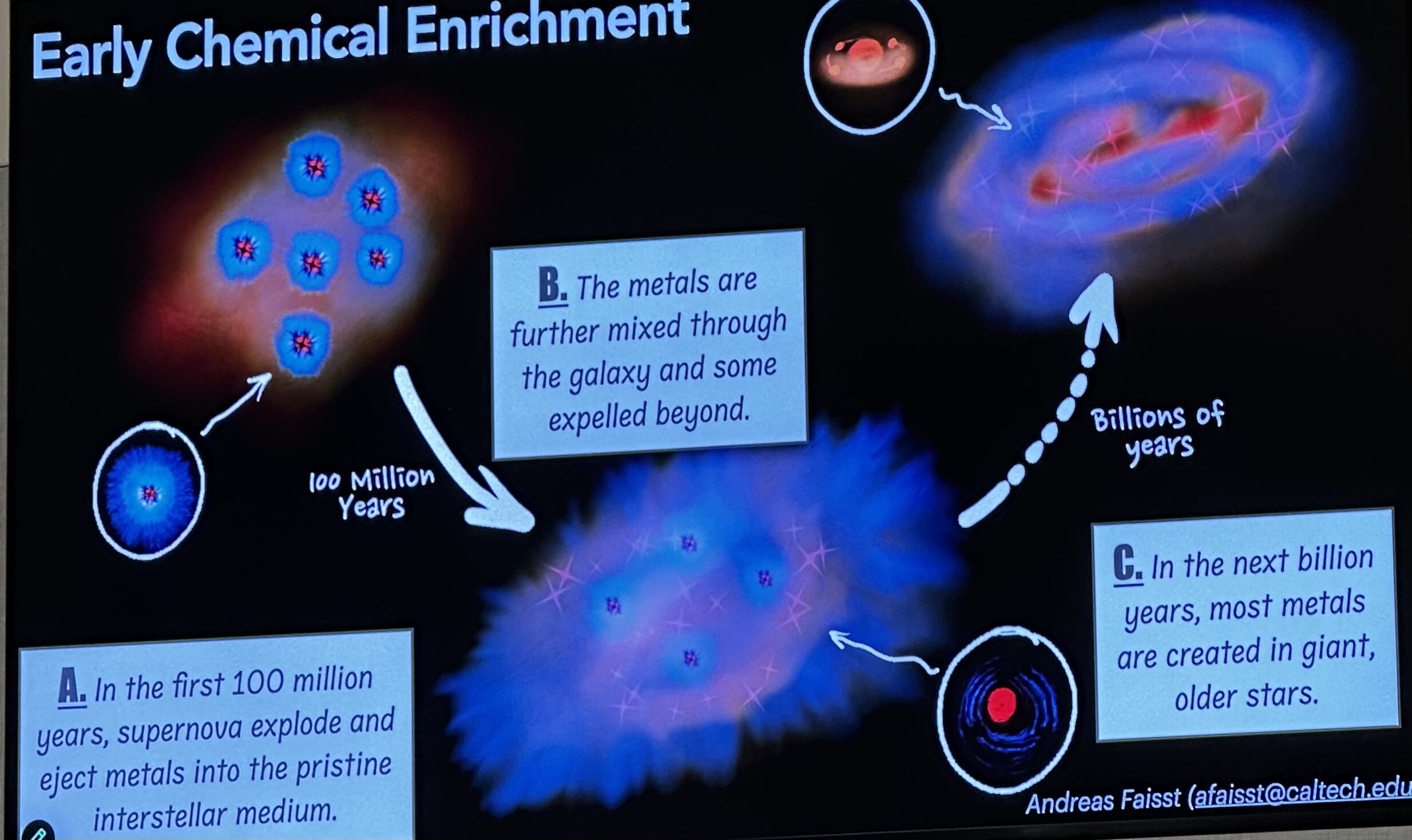
Schematic overview of early chemical enrichment in galaxies. Supernova explosions rapidly enrich the interstellar medium within the first 100 million years, metals are mixed and then driven into surrounding gas, and later generations of stars continue metal production over billions of years. Click to enlarge. [Andreas Faisst, Caltech]
A New Population of Point-Like Narrow-Line Objects Revealed by the James Webb Space Telescope
Haojing Yan and Bangzheng Sun (University of Missouri – Columbia) introduced a small but fascinating set of JWST sources that look almost like point sources in images but show narrow emission lines when you look at their spectra. Yan described them as the “platypuses of the universe.” On their own, none of their properties are especially strange, but when you put everything together, they do not fit neatly into any familiar category. Normally, unresolved sources turn out to be either stars or quasars. Yan showed that these objects are not stars based on their colors and spectra. They also do not behave like typical quasars: although they are compact, they are less luminous and lack the broad emission lines that come from fast-moving gas around a supermassive black hole.
Because of this, the team argued that these sources are not standard quasars. Two possibilities remain. They could be a previously unknown type of narrow-line active galactic nucleus, where a compact central engine dominates over an extremely faint host galaxy, or they could be very young, compact star-forming galaxies, probably younger than about 200 million years, whose early growth kept them unusually small and smooth. Either way, the speakers emphasized that this appears to be a new population, and that deeper and more detailed JWST spectroscopy will be needed to figure out what these objects really are. | University of Missouri press release; STScI press release
Supermassive Stars as the Engines Behind Little Red Dots
Devesh Nandal (Center for Astrophysics | Harvard & Smithsonian) proposed an alternative explanation for at least some little red dots: instead of being compact galaxies powered by active black holes, their light might come mainly from a single, extremely massive star growing through rapid accretion. A key motivation for this idea is what these objects don’t show: they lack detectable X-ray emission, which would normally be expected if an actively accreting black hole were present. At the same time, their very compact unresolved appearance makes them hard to explain as normal galaxies, and their spectra do not look like those of typical stellar populations either. In this picture, a supermassive star forms out of nearly pristine gas and accretes fast to push past the limits of classical stellar evolution. As long as the accretion rate stays above a critical threshold, the star remains bloated and relatively cool, giving it a red appearance even as it continues to gain mass. In theory, such a star could grow to around a million times the mass of the Sun before becoming unstable and collapsing directly into a black hole, offering a natural route to forming massive black hole seeds.
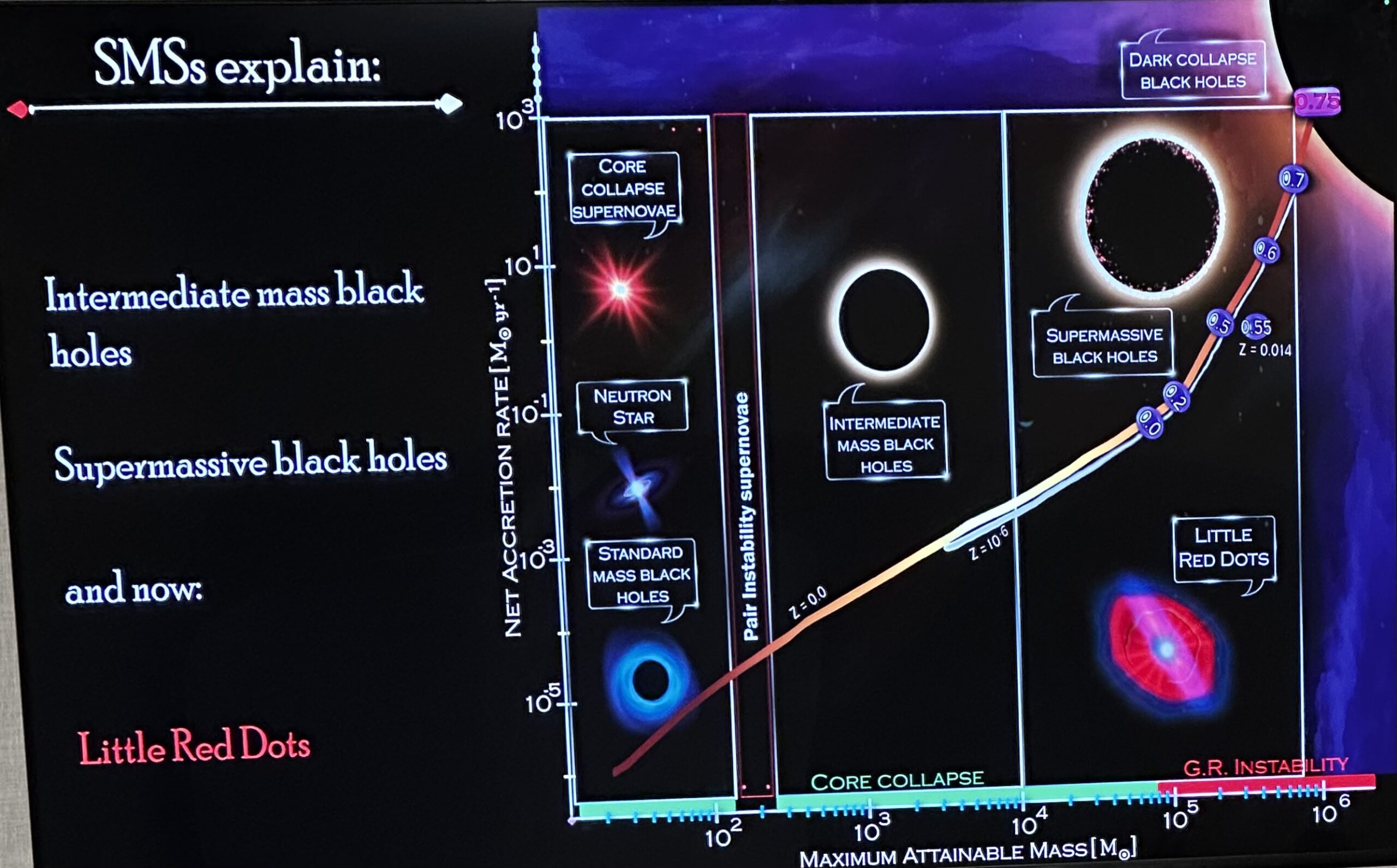
Schematic showing where JWST’s little red dots fall in a mass–accretion framework, illustrating how rapidly accreting supermassive stars could grow to extreme masses and collapse directly into massive black holes. Click to enlarge. [Devesh Nandal]
Webb Reveals Early-Universe Analog’s Unexpected Talent for Making Dust
Elizabeth Tarantino (Space Telescope Science Institute) focused on Sextans A, a nearby metal-poor dwarf galaxy used as a local analog of early galaxies, which are otherwise too distant to study in detail. Using JWST spectroscopy of a massive asymptotic giant branch star, the team found clear evidence for dust production, but not in the usual Milky Way form. The spectrum lacked the classic 10 μm silicate feature and instead pointed to iron-rich dust, showing that asymptotic giant branch stars at low metallicity can still be efficient dust producers, just with different chemistry. JWST imaging also revealed weak, clumpy polycyclic aromatic hydrocarbon emission, suggesting small dust grains survive only in protected pockets. The results show that even metal-poor galaxies can host substantial stellar and interstellar dust, reshaping how we interpret dust in the early universe. | Press release
2025 Newton Lacy Pierce Prize Plenary: What Happens to Planets After Their Stars Die?, Andrew Vanderburg (Harvard University) (by Skylar Grayson)
Andrew Vanderburg delivered a plenary centered on using white dwarfs, the leftover cores of dead stars (and a glimpse into the future of our own sun) to study exoplanets. We’re currently entering a crucial time for exoplanet astronomy, with the number of known exoplanets rapidly increasing and sophisticated techniques and instrumentation allowing us to push to more extreme and smaller systems, including those that could host life. However, there are still many open questions around habitability, what is and is not a biosignature, and our understanding of the systems life could exist in.
His talk was focused on two core questions in exoplanet research that white dwarfs can help us answer. First up: what elements are rocky exoplanets made of? This is relevant for considerations of magnetic fields and plate tectonics, the elements available for chemical processes, and (crucially) identifying geology that could produce false positives for biosignatures. Determining the composition of rocky planets with our current tools is extremely difficult, but his group has explored using the spectra of white dwarfs to uncover planetary composition. The extreme gravity of white dwarfs makes them chemically stratified, meaning the surface is almost entirely hydrogen and a little bit of helium, offering a blank slate for spectroscopic study. Planets around a white dwarf can be tidally disrupted and torn apart, and that debris can then fall onto the surface of the white dwarf, adding interesting fingerprints to the stellar remnant’s spectrum. Vanderburg’s team has been developing new methods of generating mock spectra to compare to white dwarf observations, and they are laying the groundwork for quick analysis of upcoming spectral surveys in order to efficiently hunt for chemical signatures that could be traced back to exoplanets.
The second half of Vanderburg’s talk was focused on using dead stars to understand life. When the Sun becomes a red giant, then eventually loses its outer atmosphere and becomes a white dwarf, the solar system will completely change. The inner planets will likely be swallowed up, and planets will move around in their orbits, adjusting to the changed gravity of the much smaller white dwarf remnant. But, as he explained, just because planets are orbiting a dead star doesn’t mean they themselves are dead. White dwarfs still have a habitable zone (where liquid water could exist on a planet’s surface), but it’s very, very near to the stellar remnant, in a region where any planets would have been destroyed in the death of the progenitor star.
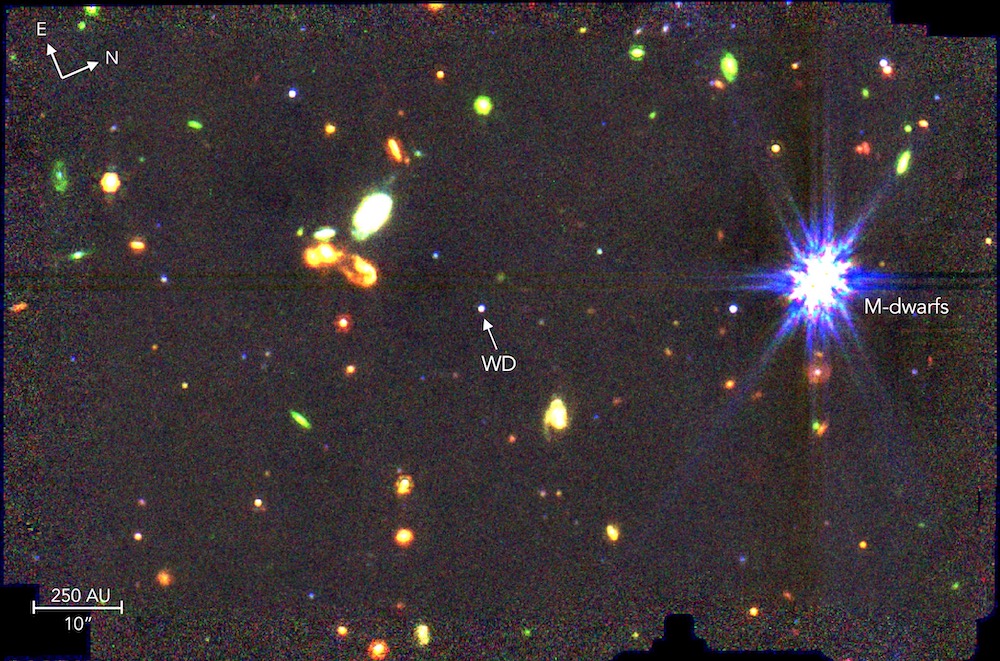
The white dwarf WD 1856+534, shown at the center of this image, hosts an exoplanet at an orbital distance of just 0.02 au. [Limbach et al. 2025]
Overall, the work presented in this plenary sets the stage for the next generation of exoplanet research. Finding planets in unique environments such as near white dwarfs, understanding the conditions under which life could be sustained, and exploring new ways to determine the composition of exoplanets will help prepare for upcoming missions like the Habitable Worlds Observatory and play a big part in the hunt for life beyond Earth.
You can also read our interview with Dr. Vanderburg here.
Press Conference: The Milky Way and Stellar Explosions (Briefing video) (by Skylar Grayson)
Resolving Iron Doublets for Galactic Center Molecular Clouds with XRISM
XRISM (the X-ray Imaging and Spectroscopy Mission) is providing higher resolution X-ray spectroscopy than anything we’ve seen before, and it’s allowing us to study components of the universe in a whole new way. Stephen DiKerby, a researcher at Michigan State University, has been using XRISM to look at molecular clouds in the center of the Milky Way. Iron in these clouds emits X-rays, and the high spectral resolution of XRISM has allowed us to study that emission in detail. One particular line, called Fe Kɑ, was revealed with XRISM to actually be a doublet, and the redshift of the iron-emitting gas could be constrained to within 10 km/s, an unparalleled precision in X-ray spectroscopy. The XRISM results have also shed some light on where the iron emission is coming from, as the lack of certain spectral features can rule out certain emission pathways. The XRISM data prefer a process called X-ray reflection, wherein material around the supermassive black hole in the center of the Milky Way produced a lot of X-ray emission that travelled to the molecular cloud over the course of 100 years, eventually exciting the gas and generating the observed Fe Kɑ. In order to produce the emission observed in the molecular cloud, the supermassive black hole would have needed to be thousands of times brighter than it is today! This work highlights how novel observations, such as high-resolution spectroscopy, can be used to constrain the underlying physics of the interstellar medium. | Press release
Continued Monitoring with Chandra of Kepler’s Supernova Remnant over 25 Years
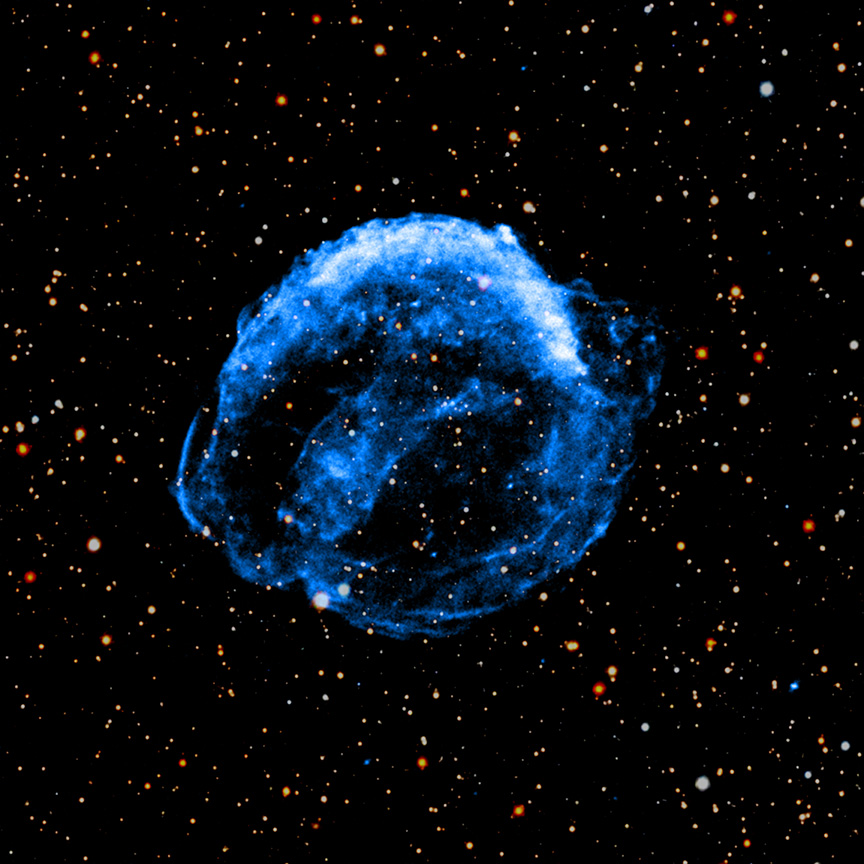
X-ray and optical image of Kepler’s supernova remnant. [X-ray: NASA/CXC/SAO; Optical: Pan-STARRS]
Where Do Stars Explode in the Interstellar Medium?
Supernovae play a major role in galaxy evolution, shaping the interstellar medium, regulating future star formation, impacting baryon cycles, and more. Understanding where supernovae happen is a key part of understanding their impacts, whether they’re embedded in dense clouds of gas and dust that they blow apart, or are located outside of dense regions and can drive winds that compress material and trigger more star formation. In order to unpack this, Sumit Sarbadhicary, a research scientist at Johns Hopkins University, has generated the first detailed census of stellar explosions in the nearby galaxy Messier 33. He looked at massive stars that are near the end of their lives (i.e., future supernovae) and compared their locations to that of atomic and molecular gas clouds as observed by the Atacama Large Millimeter/submillimeter Array and the Very Large Array. This has provided the first measurement of the correlation between massive stars and dense gas clouds. Overall, a majority of the stars won’t explode in dense gas regions, but the results did depend on the mass of the star. More massive stars were more likely to be in dense gas, which could have interesting implications for what types of stars shape cavities in the interstellar medium or trigger future star formation. Overall, these results will be important in the development of simulations moving forward, in order to ensure that we are accurately capturing the physics of stellar evolution and supernovae. | Press release
Plenary Lecture: The Creating Equity in STEAM (CrEST) Experiential Learning Programs, Raja GuhaThakurta (University of California, Santa Cruz) (by Neev Shah)
Prof. Raja GuhaThakurta delivering his 2025 AAS Education Prize Plenary Lecture at AAS 247. [Neev Shah]
Shadow the Scientists (Dipping your toes in the water): GuhaThakurta mentions that StS started in November 2020, in the middle of the pandemic when many telescopes were shut down and were being operated remotely. It started at the Keck and Lick observatories, where school students participated in remote observing sessions with the help of live translations into many languages. He also recalled a particular instance where a school consisting of Israeli and Palestinian students shadowed scientists for a project, with simultaneous live translations from English to Hebrew and Arabic. Now supported by a grant from the Heising-Simons foundation, StS has expanded to include students from Africa, Asia, Latin America, and the Middle East. He mentioned numerous examples of projects where students could shadow scientists in their work, with one of them being exploring the famous comet 3I/ATLAS. He also highlighted that StS has now expanded to several other telescopes such as Subaru, Gemini, Las Cumbres Observatory, CHARA, and CFHT, and is also in conversations with DESI at the Mayall Telescope and LIGO Hanford. To highlight the large impact of this program, he also mentioned that StS has also gone beyond astronomy to include many other projects in stem cell biology, ecology, and even volcanology
Python and Research (Learning swim strokes): GuhaThakurta next spoke about the PyaR, started in November 2018. This program, which runs every few months, develops free online tutorials for students to learn about research through coding and data analysis. He credited his former graduate students Claire Dorman, Emily Cunningham, and Amanda Quirk, who have contributed significantly to the development of these tutorials. It was initially started in an all girls high school in the Bay Area, but it has since expanded and has served a few thousand students since its beginning. He also highlighted that it has been adapted to create tutorials in computational biology, and will soon also have a new module to explore particle physics with the help of data collected at the Large Hadron Collider in CERN.
Science Internship Program (Taking a deep dive): Next, GuhaThakurta spoke about the first program that he started in 2009, SIP, which is a research internship for high school students. It is divided into a week-long online component, followed by 7 weeks in person, where they are mentored by UCSC researchers, which include graduate students, postdocs, research staff, and faculty members. Although originally started in astronomy, SIP has now expanded to all the academic divisions in UCSC. He mentions that high school students get the opportunity to be closely mentored on open-ended real research projects, which generally includes a carved-out piece of research being done by the mentors, and has a shallow learning curve through which mentors can also teach the students about the broader context of the work that they are doing. Although SIP originally started with just three students from one school, it has grown significantly and had 300 students last summer from across the world. Since 2009, SIP has also had students from 750 high schools. In fact, he highlighted that many students return to do SIP multiple times, and the program has had about 2,500 unique students. He also mentions that about a third of SIP students have had to overcome serious obstacles in their life, and the program strongly focuses on BIPOC, low-income, and first-generation students. He highlighted a study done by psychology researchers on the impact of SIP. They found a strong increase in students’ interest and confidence in STEM. He also mentioned that SIP is beneficial not just for the students, but also for the mentors as they gain leadership, project management, pedagogical experience and are also paid a stipend. Mentors are also able to advance their own research with the help of the students, and broaden the impact and awareness of their work to other communities
GuhaThakurta mentions that the CrEST programs have now reached many communities in the US, and also various countries in Africa, South America, Europe, and Asia. CrEST has an annual budget of three million dollars, with 72% of it coming from the fees paid by the students participating in the SIP program, 20% via philanthropic contributions from individuals, families and even corporate gifts. The remaining 8% comes from the StS grant funded by the Heising-Simons Foundation. He emphasizes that a third of SIP students are provided need-based scholarships as well.
GuhaThakurta recalls several other outreach initiatives that he is involved with, such as teaching courses to prison inmates at the SC county jail. He is also involved with a UC-wide program called COSMOS, which is a four-week research camp for high school students.
He emphasizes the need for more mentors and appeals to the AAS community to contact people involved with CrEST to learn more about the programs, as well as to host StS sessions. He also appeals to the audience to spread the word about CrEST programs to their network of researchers, and also to potential participants who may benefit from them. To increase impact, he also recommends others to start new programs, or even modifying the existing experiential learning programs at our own home institutions.
He ended his plenary lecture by sharing a link to a document that includes his slides and many other related resources to learn more about him as well as the programs that he spoke about.
You can also read our interview with Prof. GuhaThakurta here.
Henry Norris Russell Lecture: Finding the Most Distant Galaxies Using the James Webb Space Telescope, Marcia Rieke (University of Arizona) (by Niloofar Sharei)
This Henry Norris Russell Lecture was a mix of personal history, instrument-building, and science results. Marcia Rieke used her own career story, from early hands-on observing to leading roles on major infrared missions, to show how decades of technical progress steadily removed the practical barriers to finding the first galaxies.
She began by describing what high-redshift galaxy work looked like when she started, when infrared observations were done from the ground using single-aperture photometers. Galaxies were often not directly visible, and positions were measured by offsetting from nearby guide stars. At that time, the main motivation was cosmology rather than galaxy evolution, with the hope that distant galaxies, especially ellipticals, could act as standard candles to constrain the geometry of the universe.
She then walked us through the missions that built up the way to JWST. NICMOS marked the transition from single-pixel measurements to infrared imaging from space and revealed how powerful arrays could be. Spitzer pushed sensitivity much further, but its small mirror led to confusion-limited images. Combining Hubble and Spitzer data showed how features like the Balmer break could be identified at high redshift and revealed that extreme emission lines can strongly bias broadband colors. Another limitation was that hydrogen absorption wipes out light shortward of the Lyman break, meaning Hubble can only reach to about z ~ 10 before redshift estimates rely on a single filter.
More than 45,000 galaxies appear in this image from the JWST Advanced Deep Extragalactic Survey, or JADES, program. [Image: NASA, ESA, CSA, Brant Robertson (UC Santa Cruz), Ben Johnson (CfA), Sandro Tacchella (Cambridge), Marcia Rieke (University of Arizona), Daniel Eisenstein (CfA) ; Image processing: Alyssa Pagan (STScI)]
You can read our interview with Dr. Rieke here.
The post AAS 247: Day 2 appeared first on AAS Nova.
]]>The post Central Massive Black Holes Are Not Ubiquitous in Local Low-Mass Galaxies appeared first on AAS Nova.
]]>Though nearly all high-mass galaxies harbor massive central black holes, the black hole occupation fraction decreases to 66% for middling galaxies and just 33% for dwarf galaxies.
The post Central Massive Black Holes Are Not Ubiquitous in Local Low-Mass Galaxies appeared first on AAS Nova.
]]>
Day 1 of AAS 247: brown dwarfs, starburst galaxies, missions to asteroids, and more!
The post AAS 247: Day 1 appeared first on AAS Nova.
]]>Editor’s Note: This week we’re at the 247th AAS meeting in Phoenix, AZ. Along with a team of authors from Astrobites, we will be writing updates on selected events at the meeting and posting each day. Follow along here or at astrobites.com for daily summaries, or follow @astrobites.bsky.social on Bluesky for more coverage. The usual posting schedule for AAS Nova will resume on 12 January.
Table of Contents:
- Welcome Address, Dara Norman
- Fred Kavli Plenary Lecture: From Launch to Legacy: How OSIRIS-REx Changed Our Understanding of Asteroids, Daniella DellaGiustina (University of Arizona)
- Press Conference: Galaxies Big and Small
- 2025 Royal Astronomical Society Gold Medal in Astronomy Lecture: Understanding Galaxies, James Binney
- Press Conference: Stars and Their Behavior
- Plenary Lecture: The Brown Dwarf-Milky Way Connection: How Failed Stars Play a Unique Role in Galactic Archaeology, Adam Burgasser (University of California, San Diego)
- Plenary Lecture: A New Era of Planetary Astrophysics with JWST and High-Resolution Spectrographs, Björn Benneke (University of Montreal)
Welcome Address, Dara Norman (by Lindsey Gordon)
AAS President Dara Norman opened up this year’s winter AAS meeting in Phoenix, AZ, by acknowledging what a weird year it’s been in scientific funding and politics. She thanked the community for their work with the AAS policy office in pushing for action in Congress and with their representatives to advocate for science funding. President Norman led a land acknowledgement to the Akimel O’odham and the 22 Tribal Nations in Arizona. She then ceded the stage to John Davis for a performance of two songs from local Indigenous cultures, followed by a video message from US senator and former astronaut Mark Kelly.
Fred Kavli Plenary Lecture: From Launch to Legacy: How OSIRIS-REx Changed Our Understanding of Asteroids, Daniella DellaGiustina (University of Arizona) (by Lindsey Gordon)
Dr. DellaGiustina gave the Fred Kavli Plenary Lecture for her work on groundbreaking insights into the origins of Earth and other bodies as part of the OSIRIS-REx team. OSIRIS-REx was the first US mission to collect and return a sample from an asteroid — Bennu — and has become the OSIRIS-APEX mission, traveling to the asteroid Apophis.
This sample mission was incredibly significant because of the gap in our understanding of asteroids between telescope observations, like those from the Hubble Space Telescope, and meteorites that have gone through Earth’s atmosphere. Understanding the nature of asteroids in space is essential for understanding their formation, the early solar system, and the formation of planets including Earth. The OSIRIS-REx mission went to observe Bennu, a nearby carbon-rich asteroid, taking observations of it up close and then retrieving a sample that could be returned to Earth without contamination by that pesky Earth atmosphere.
The team was in for a surprise when the mission arrived at Bennu, which did not look like what they had expected based on their existing data. They had designed the sample retrieval expecting centimeter-scale dust grains, and instead found a much larger, rugged rocky object. In 2019, Bennu also began ejecting material from its surface, a kind of active geology no one had expected or seen on such a small asteroid before. In 2020, they found a spot in this “rubble pile” of an asteroid that they could take a sample from, and in 2023 the mission returned with 121.6 grams of material, more than twice the amount the mission had defined as a successful retrieval.
After a very careful contamination control protocol to make sure the sample stayed clean, they began analysis and the results are still forthcoming today. They found indications of rock–water interactions and an origin beyond the major snow lines of the disk. The material contains lots of pre-solar dust, with a factor of six enrichment of carbon not seen in meteorites. They found that the presence of melting ice can enable abiotic organic molecule synthesis, and a bias of left-handed chirality that suggests it might be a general property of molecules and not just a unique feature of Earth. Just this year they published their findings of ribose, a molecule used in RNA, and the first-ever discovery of glucose. They know their sample control was strong, and that these molecules aren’t just contaminants from being on Earth. This suggests that complex chemistry doesn’t require full planets or massive oceans, and molecules could have started forming in the very early solar system.
Up next: Apophis, an asteroid infamous for previously having been predicted to have an Earth-impact trajectory. We know now it’s not going to hit us in the next 100 years at least, but it is going to get super close to us (10 times closer than the Moon!), and it’s not clear what that interaction will cause for the asteroid. OSIRIS-APEX will study the asteroid after its close approach and then use its thrusters to stir up the asteroid’s surface, allowing the team to study the sub-layers of the asteroid.
You can also check out our interview with Dr. DellaGiustina here.
Press Conference: Galaxies Big and Small (Briefing video) (by Niloofar Sharei)
This press conference highlighted how galaxies evolve across a large range of scales, from the resolved stellar populations of a nearby starburst, to rare galaxy morphologies mapped in huge surveys, to galaxies that shut down star formation early, and even a “failed galaxy” that never managed to form stars.
JWST image of the starburst galaxy M82 demonstrating how infrared observations pierce the dusty, crowded disk and resolve individual stars across the galaxy. [Adam Smercina / JWST]
Adam Smercina (STScI) presented a new JWST imaging survey of the nearby starburst galaxy Messier 82 (M82). M82 is forming stars at roughly 10 times the Milky Way’s total rate, but heavy dust has long made it difficult to reconstruct its detailed star formation history. With JWST’s sensitivity and resolution, the team can now resolve individual stars across the system, including about 16.5 million stars across the face of M82, enabling a much more direct, population-by-population view of when and where stars formed during the starburst.
Revealing Polar-Structure Galaxies Across Cosmic Time with DESI and Euclid
Jacob Guerrette (Brigham Young University) described “polar structure galaxies,” systems with rings, disks, or other stellar and gaseous structures oriented roughly perpendicular to the main galaxy body. Because these orthogonal structures likely arise from environmental events like mergers or accretion, building large samples is key to learning how often these interactions happen and what they do to galaxies. Earlier catalogs contained only a few hundred objects (about 150 identified in 1990, then a few hundred more in later Sloan-based work), but combining modern wide surveys produces an order-of-magnitude jump. The new DESI-based catalog and early Euclid imaging suggest that the full Euclid survey could yield thousands of strong candidates, including rarer subtypes that were previously underrepresented.
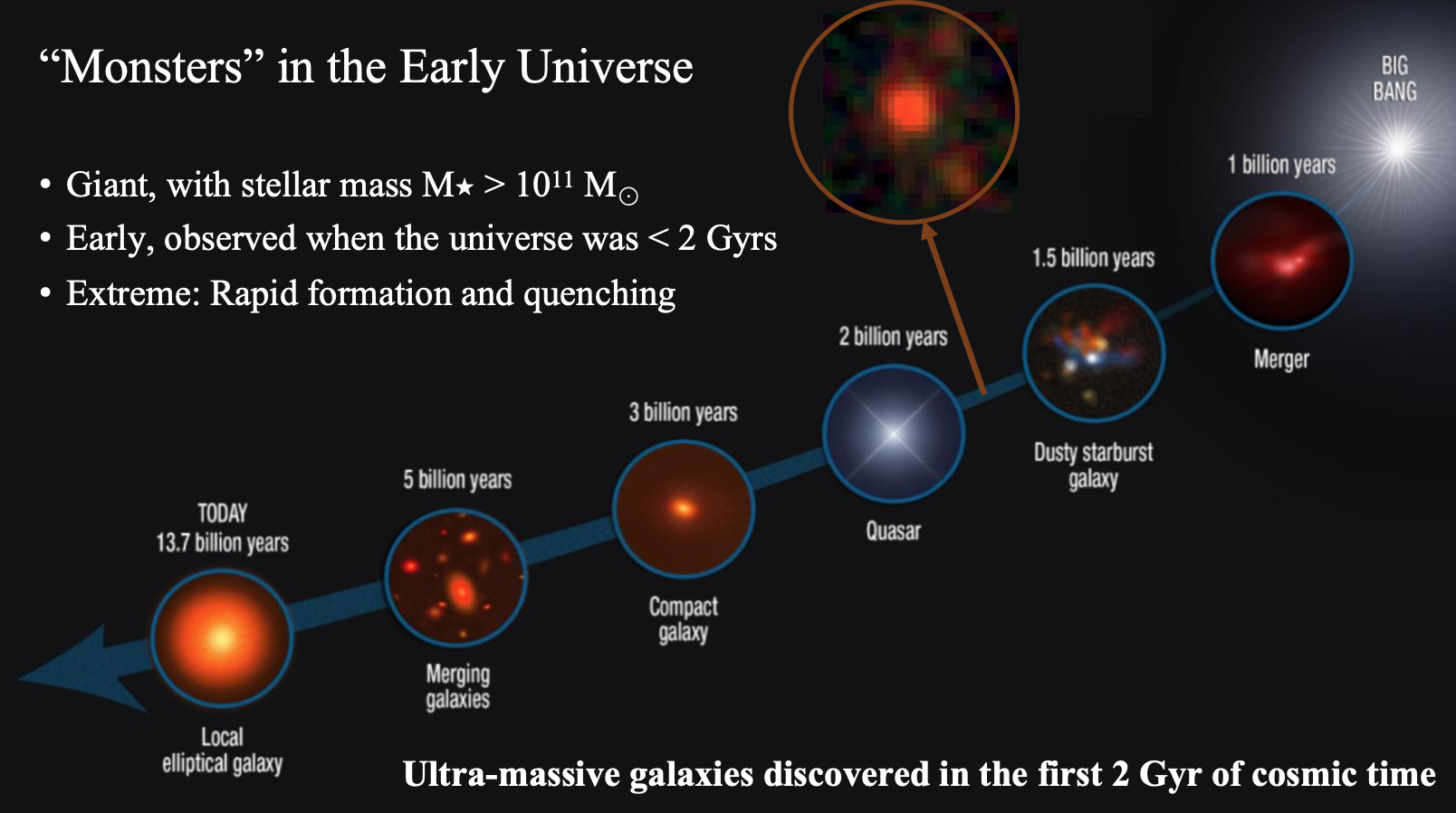
Slide illustrating ultra-massive (“monster”) galaxies in the early universe, with stellar masses exceeding 1011solar masses and rapid formation and quenching within the first 2 billion years of cosmic time. Click to enlarge. [Wenjun Chang]
Wenjun Chang (UC Riverside) presented results from the MAGAZ3NE survey, which uses more than 30 nights of Keck/MOSFIRE spectroscopy, plus far-infrared and radio data from ALMA and the Very Large Array to study the most massive galaxies at redshifts around z ≈ 3 to 4. A central goal is to clarify whether these systems are genuinely “dead” or simply dusty and star-forming. The multi-wavelength view shows a diverse set of evolutionary states at a fixed epoch: while many ultramassive galaxies are truly quiescent, others show residual dust emission or signs of obscured star formation, and some are in intermediate phases of shutting down. You can find the related press releases here and here.
The First RELHIC? Cloud-9 Is a Starless Gas Cloud
Rachael Beaton (STScI) discussed “Cloud-9,” a compact neutral hydrogen cloud that appears to be a convincing example of a galaxy that never formed a normal stellar population. Cloud-9 was first identified in a FAST radio telescope survey as a reionization-limited H I cloud, and follow-up searches in the DESI imaging survey found no associated stellar system. Subsequent observations with the Green Bank Telescope confirmed the H I detection. Radio observations reveal roughly a million solar masses of hydrogen, consistent with a dark matter halo of order 100 million solar masses, but deep follow-up with the Hubble Space Telescope (8 orbits) reveals at most a single candidate star, allowing the team to rule out any stellar population more massive than about 103.5 solar masses. Despite being near thermal equilibrium with the universe and massive enough that it should have formed stars, Cloud-9 appears to have remained starless. This makes it the most convincing observational example to date of a “failed galaxy” predicted by ΛCDM, a halo that acquired gas but never converted it into stars. You can find the press release here.
2025 Royal Astronomical Society Gold Medal in Astronomy Lecture: Understanding Galaxies, James Binney (by Bill Smith)
James Binney’s lecture focused on methods for turning the flood of stellar measurements into a physical understanding of how galaxies work. “We are drowning in amazing data,” Binney opened. With Gaia delivering astrometry for more than a billion stars (and radial velocities for a substantial fraction), complemented by MUSE integral-field spectroscopy, ground-based surveys like RAVE and APOGEE, and missions like Kepler, Binney argues the question is no longer how to get data, it’s how to synthesize that data into models that reveal how galaxies are structured and how they came to be that way. A central point of his plenary address was the relationship between galaxy structures and galactic history, about which he said that “discussion of history is pointless until structure has been established.”
One of his core methodological messages was that modern dynamical modeling must live in phase space (x, v), not just real space. While galaxies are not strictly in equilibrium, Binney emphasized that they are near equilibrium, a crucial simplification that lets us use equilibrium models as scaffolding and then study departures by perturbing them. The goal for understanding galaxies, he said, is to synthesize the data into a self-consistent “chemo-dynamical” model in which orbits (dynamics) are labeled and weighted in concert with stellar ages and abundances (chemistry), and then gently perturbed to interpret disequilibria from bars, spirals, accretion, and galactic mergers. Binney reviewed why some familiar tools struggle in the data-rich era. N-body simulations, though powerful, he argued, are specified by uncertain initial conditions, are difficult to steer toward specific observational constraints, can be expensive to run, and often hide the “why” behind emergent structure.
Binney then advocated a methodology based on actions and angles using torus machinery, in which one computes orbital actions, which can be thought of as embeddable constants of motion, and uses them to label orbits in a way that’s physically meaningful and robust to slow evolution. To do this, however, requires using the Hamilton–Jacobi equation, which is solvable only for a few potentials. Binney advocated using torus generators, fast “plug-in replacements” that return positions and velocities for a given set of inputs, and argued that they should largely replace brute-force integration. One sticking point, however, is the inverse map (finding the action given x and v). For that, practitioners still rely on the “Stackel fudge,” a fast, approximate method Binney dubbed “cheap and cheerful.”
He then turned to what the Milky Way’s actions reveal about its formation. The local stellar sample shows that essentially all stars co-rotate with the disk. Binney stressed that more than 99% of the stars we see were born in the rotating disk from gas already moving in the same direction, consistent with a formation scenario dominated by quiescent gas accretion rather than mergers. This is a cautionary note for merger-driven narratives: in the Milky Way, at least, the bulk stellar population does not look like a debris field.
Binney’s prescription for the next decade is to build chemo-dynamical models that synthesize data into a coherent distribution function for stars and dark matter, include quiescent gas accretion and mergers as perturbations rather than starting points, and use torus-based perturbation theory to interpret disequilibria. Do this, and we will not only map structure, we will have a firm foundation for credible histories of how galaxies, including our own, were made.
You can read Astrobites’s interview with James Binney here.
Press Conference: Stars and Their Behavior (Briefing video) (by Neev Shah)
Discovery of the Wake Caused by Siwarha — the Betelgeuse Companion
Betelguese, a red supergiant seen on the shoulder of the constellation Orion, is one of the brightest stars in the night sky. It also shows a variability in brightness over a timescale of about 6 years, called its long secondary period. Recently, a couple of papers proposed that the best explanation for its long secondary period is that Betelguese has a buddy, a faint companion orbiting it. Andrea Dupree (Center for Astrophysics | Harvard & Smithsonian) and collaborators presented one of the first observations that suggest that they have found evidence for a companion, Siwarha. They utilized optical and chromospheric spectra from ground based telescopes as well as the Hubble Space Telescope. They observed changes in the spectra that are characteristic of a ”wake” left by a companion within the atmosphere of Betelguese, similar to how a boat moving through water leaves a wake behind it. These observations suggest that Betelguese indeed might have a companion around it, and future observations will be crucial to confirm this discovery. Press releases: NASA; Center for Astrophysics | Harvard & Smithsonian
A Volume-Complete All-Sky Spectroscopic Census of More Than 2,100 Nearby K Dwarfs: Insights from the RKSTAR Project
K dwarfs are some of the most common stars in the Milky Way, comprising approximately 11% of all stars in the solar neighborhood. They also have long life times, which makes them an excellent tracer of abundances and star formation history in a stellar population. However, they are often neglected in exoplanet studies, and we do not know much about their intrinsic population. To mitigate this, Sebastian Carrazco-Gaxiola, a graduate student at Georgia State University, and collaborators started the RKSTAR project. They created a volume-complete sample of over 2,100 K dwarfs within 40 parsecs of the Sun. They also used several spectrographs to obtain high resolution spectra for these stars, which can be used to estimate their ages. Combining this information with Gaia astrometry, they have found that many K dwarfs are young, active and some of them are also part of young moving associations. This provides the first such complete catalog of nearby K dwarfs that will be extremely useful to study their properties and will aid in future studies exploring the habitability of exoplanets around these stars.
A Previously Unknown Binary Star System in the Eagle Nebula
Steven Cromwell and Tyler Peters, undergraduate students at San Diego State University, had just started working on a research project through the STARTastro program. Their aim was to try finding exoplanets around eclipsing binary systems. As part of this program, they were learning how to code and access public astronomical data for the first time. They started with analyzing some test data in the Eagle Nebula, home to the famous Pillars of Creation. During this, they found that one of the stars had a TESS light curve that showed periodic brightness variations, a key indicator for the system being an eclipsing binary in a ~3.5-day orbit. Interestingly, as they searched through public catalogs, they found that this star had never been categorized as a binary — they had discovered a new eclipsing binary system! Such systems are extremely useful as they provide direct measurements of the masses and radii of the stars, which can be used to calibrate stellar evolution models and to help estimate the age of the Eagle Nebula. They also highlighted that their serendipitous discovery was done using data and tools that are openly accessible to everyone, demonstrating the benefit of having such resources available to the community.
Compact Objects and the Physics of Accretion Survey (COPAS)
White dwarfs are often found to be accreting matter from companions in binary systems. The accretion processes can lead to outbursts as matter builds up in a disk around them. Such systems are called cataclysmic variables (CV) if the donor star is on the main sequence, and are called AM CVn if the donor star is also a white dwarf or a helium star. TESS, a satellite built to search for exoplanets, has a cadence of just 2 minutes, which is extremely useful in identifying systems that show outbursts. Wendy Mendoza, a graduate student at the University of Texas Rio Grande Valley, and collaborators utilized transient alerts from the Zwicky Transient Facility, Gaia, and data from thousands of TESS light curves to identify CV and AM CVn systems. They found several new systems and obtained a better characterization for the known ones. In the future, they plan to expand their analysis to the rest of the vast TESS data set and conduct follow up observations of their candidates to better characterize them. They also highlight the benefit of TESS in overcoming gaps in data, which prevents misclassification and provides a unique opportunity to study outbursts in accreting white dwarfs.
Witnessing Giant Planet Formation in the Act
Disks are a natural product of the process of star formation, and are also the sites where planets form. Such disks, when viewed edge on, provide a direct view of the radial and vertical distribution of gas and dust within it. Charles Law, a NASA Sagan Fellow at the University of Virginia used ALMA to study such an edge-on system, called Gomez’s Hamburger (GoHam), due to its hamburger-like shape. GoHam is also one of the most massive disks that we know of, and has enough material to form a multi-planetary system in the future. With the help of ALMA’s extremely high resolution, they were able to set unique constraints on the size of the dust grains, and also measure the distribution of various molecules such as CO and CS. Interestingly, they also detected emission from the molecule SO on just one side of the disk. When matter in a disk collapses, it increases in temperature and density, which can change the disk chemistry, and also increase the abundance of SO, which is exactly what they find. This hints that they have found evidence for a fragment in the disk, called GoHam b. This discovery provides the first evidence for one of the earliest stages of giant planet formation. The full press release can be found here.
Plenary Lecture: The Brown Dwarf–Milky Way Connection: How Failed Stars Play a Unique Role in Galactic Archaeology, Adam Burgasser (University of California, San Diego) (by Niloofar Sharei)
Adam Burgasser’s plenary talk focused on how brown dwarfs, objects too low in mass to sustain hydrogen fusion, can be used as powerful tracers of the Milky Way’s formation history. The big idea is that, while many classic stellar tracers tangle age and metallicity in ways that are hard to disentangle, brown dwarfs give a cleaner “evolutionary clock.”
Brown dwarfs are born hot and then cool continuously over time. Their luminosities, temperatures, and spectra change in predictable ways, so their observed properties carry direct information about age. Because they are fully convective and never undergo sustained fusion, their atmospheres retain the chemical composition of the gas from which they formed, making them valuable “chemical clocks” as well as age tracers.
Burgasser also emphasized that brown dwarfs are extremely common. Roughly one in every five objects in the Milky Way is a brown dwarf. Their wide mass range also makes them sensitive probes of dynamical processes that depend on mass, making them have a different perspective on galactic evolution than higher mass stars alone.
The main challenge, historically, has been that brown dwarfs are faint, especially for “ancient” populations far from the Galactic disk. Burgasser showed how this is now being overcome by three approaches. First, local populations can be isolated using kinematics, like proper motion cuts, with major contributions from citizen science projects such as Backyard Worlds. Second, deep surveys with JWST are pushing brown dwarf detections out to kiloparsec scales, sometimes revealing brown dwarfs misidentified at first as high-redshift galaxies. Third, globular clusters provide clean, single-age environments where the cooling of brown dwarfs can be used to constrain cluster ages and test evolutionary models.
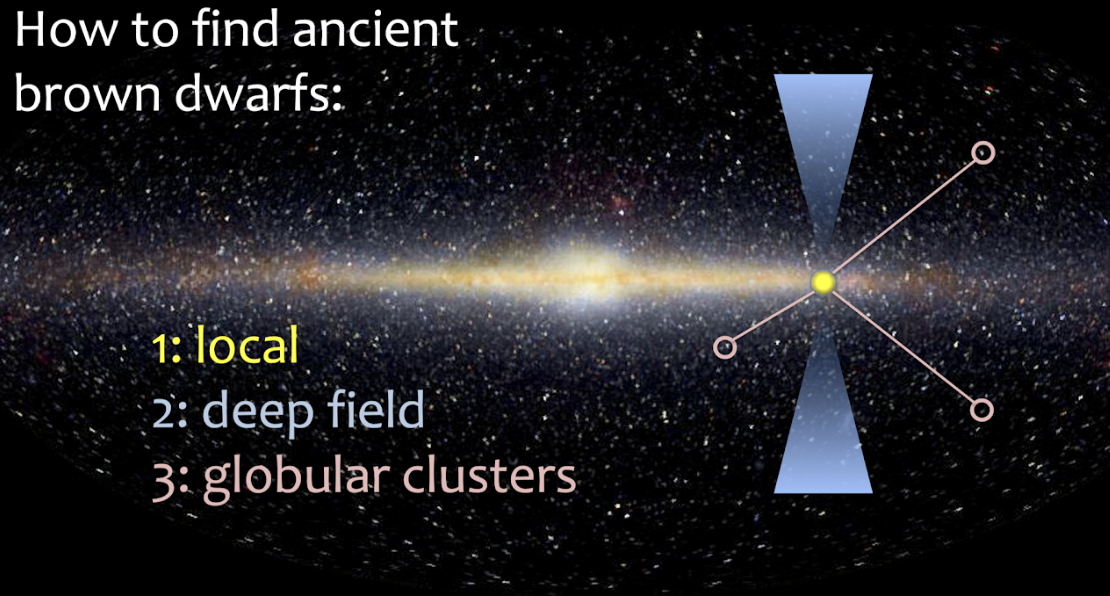
Three complementary approaches to identifying ancient brown dwarfs in the Milky Way: nearby local samples selected by kinematics, deep-field observations that probe distant populations, and brown dwarfs in old globular clusters. [Adam Burgasser, Cool Star Lab]
You can also check out our interview with Dr. Burgasser here.
Plenary Lecture: A New Era of Planetary Astrophysics with JWST and High-Resolution Spectrographs, Björn Benneke (University of Montreal) (by Lindsey Gordon)
Dr. Benneke’s plenary covered his work on big questions in the field of exoplanet physics and chemistry. He focused on three major questions in the field.
The first is the elemental abundances in giant planets and how they may differ from system to system. There are three big building blocks of element types: gases (H, He), refractories (Fe, Mg, Si, Ni), and ice forming / volatiles (C, O, N). Understanding the ratios of these different groups is essential for understanding the formation and evolution of the planet.
For giant planets in our own solar system, these measurements are quite hard to do. Jupiter only has 8–9 elements measured, and Uranus and Neptune are even worse because they’re colder. But with exoplanets, we have a much larger population to pick from and the ability to observe from a distance. It’s actually easier to study elemental composition when you can see the planet in the context of the light of its star through spectroscopy. His team works with JWST spectra of hot gas giants to estimate the chemical abundances in the planets, allowing them to begin to sequence and classify the planets by their abundances.
The second is understanding sub-Neptune worlds, and the ratio of the three building blocks of element types within them. We can measure the mass and the radius, but there’s a lot of degeneracy as to how that mass is split up. By using JWST to measure the atmospheres of these planets, you can get an estimate of the metallicity of the atmosphere. They found that the atmospheres were mixed gas envelopes, not stratified or layered models as many people predicted. A paper in 2015 (Soubiran & Militzer) actually predicted this, but the result went largely unnoticed until these measurements. The team also found that there’s not a clear temperature dependence for the presence of clouds in the atmospheres. Seemingly similar planets in terms of mass and radius, but with different temperatures, don’t have a clear scaling law as to how cloudy they are. This could be due to the different chemical compositions or their formation locations in their systems, and this result needs more follow-up observations and theoretical models.
Finally, he discussed the atmospheres of rocky planets. More specifically: whether or not they have them. You need a really big ratio of star to planet size to be able to see a very compact, CO2-based atmosphere, which means we need planets around very tiny stars. The TRAPPIST-1 system is a great example of this, and JWST has studied many of the planets in this system in detail. A study of TRAPPIST-1d — likely in the habitable zone — found no evidence for a compact CO2-based atmosphere or larger hydrogen-based atmosphere, but if there had been one they would have found it. This rules out an atmosphere similar to that of Venus, Mars, or Earth for this planet. More studies of similar targets are underway in the JWST Rocky Worlds program to get data on eclipses of favorable targets to study their atmospheres.
The post AAS 247: Day 1 appeared first on AAS Nova.
]]>The post A Disk-Originated 329 Day Quasiperiodic Oscillation in the Seyfert 1 Galaxy J1626+5120 appeared first on AAS Nova.
]]>Optical, ultraviolet, and X-ray observations may provide the key needed to link quasi-periodic oscillations in jets to Lense–Thirring precession of the accretion flow in a Seyfert galaxy.
The post A Disk-Originated 329 Day Quasiperiodic Oscillation in the Seyfert 1 Galaxy J1626+5120 appeared first on AAS Nova.
]]>
Welcome to the 247th AAS meeting in Phoenix, AZ! Here's an overview of some of the education and outreach sessions you might want to check out at the meeting.
The post AAS 247: Welcome! appeared first on AAS Nova.
]]>This week, AAS Nova and Astrobites are attending the American Astronomical Society (AAS) winter meeting in Phoenix, AZ.
AAS Nova Editors Kerry Hensley and Susanna Kohler and AAS Media Fellow Lexi Gault will join Astrobites Media Intern Amaya Sinha along with Astrobiters Neev Shah, Drew Lapeer, Skylar Grayson, Lindsey Gordon, Bill Smith, and Niloofar Sharei to live-blog the meeting for all those who aren’t attending or can’t make it to all the sessions they’d like. We plan to cover all of the plenaries and press conferences, so follow along here on aasnova.org or on astrobites.org! You can also follow Astrobites on Bluesky at astrobites.bsky.social for more meeting content.
Where can you find us during the meeting? We’ll be at the Astrobites booth in the Exhibit Hall all week — stop by and say hello! You can also find Susanna, Kerry, and Lexi at the press conferences Monday through Thursday at 10:15 am and 2:15 pm MST. AAS press conferences are open to all attendees, and they can also be viewed on the AAS Press Office YouTube channel for anyone not attending the meeting.
Finally, you can read the currently published AAS 247 keynote speaker interviews, which were conducted by Astrobiters Neev Shah, Sowkhya Shanbhog, Sarah Stevenson, Skylar Grayson, Nathalie Korhonen Cuestas, Lindsey Gordon, Katherine Lee, and Bill Smith. Be sure to check back all week as the remainder are released!
Education, Outreach, and More at AAS 247
AAS 247 features a broad range of sessions related to education and outreach. For a comprehensive and curated list of sessions, check out this post from AAS Education Program Manager Tom Rice. Here are a few highlights (all times MST; must be logged in to aas.org for links to work correctly):
Start things off on Monday with education-related poster sessions at 9:00–10:00 am in the Exhibit Hall, then check out The National Landscape of Undergraduate Astronomy Majors session from 2:00 to 3:30 pm (organized by the AAS Education Committee). Wrap up the day with a Reception for Astronomy Educators from 7:30 to 9:00 pm.
On Tuesday, check out a panel and discussion from the AAS Working Group on Graduate Admissions, happening from 10:00 to 11:30 am. After lunch, join the special session on Disability and Accessibility in Education/Outreach from 2:00 to 3:30 pm, or hear from notable amateur astronomers in the 2:00–3:30 Promoting Professional–Amateur Collaboration in Astronomy splinter session. Be sure not to miss the 2025 AAS Education Prize Winner’s talk, “The Creating Equity in STEAM (CrEST) Experiential Learning Programs” from 3:40 to 4:30 pm. Finally, take a break from the convention center to join the public star party that the AAS Education Committee is organizing from 3:00 to 8:00 pm; don’t forget to sign up if you want to attend or help out!
Wednesday kicks off with the Bridging AAS Outreach Efforts into the 2020s and Beyond: Eclipse Efforts, Shapley Lectures, and More splinter session from 10:00 to 11:30 am. In the afternoon, from 2:00 to 3:30 pm, check out a special session on Transforming Astronomy Classrooms: Active Learning in Practice by APS/AAS/AAPT Faculty Teaching Institute Alumni, or hear about astronomy-adjacent careers at the Beyond Academe: Exploring Astronomy-Powered Career Paths splinter session. End your day by learning about how to Get Involved with NASA Citizen Science during an iPoster session from 5:30 to 6:30 pm in the Exhibit Hall.
Finally, on Thursday, the 9:00–10:00 am poster session in the Exhibit Hall will feature a number of education-related sessions. Immediately following the poster session is the Non-Federal Funding Mechanisms for Undergraduate Research Programs special session, organized by the AAS Education Committee.
And remember, you can find a longer curated list of education-related sessions here!
The post AAS 247: Welcome! appeared first on AAS Nova.
]]>
AAS Publishing will be attending the upcoming AAS meeting in Phoenix. Here's where you can find the publishing team during the conference.
The post AAS Publishing at AAS 247 in Phoenix appeared first on AAS Nova.
]]>The 247th meeting of the American Astronomical Society, to be held in Phoenix, AZ, 4–8 January, is nearly here. The AAS Publishing team looks forward to connecting with meeting attendees, and you can find representatives from the publishing and journals’ editorial staff at the AAS booth in the Exhibit Hall in the Phoenix Convention Center. AAS Director of Scholarly Publishing Kerry Kroffe, AAS Editorial Operations Manager Alex Andrews, and AAS Journals Data Editors Greg Schwarz and Gus Muench will all be available at the AAS Publishing booth, so be sure to stop by to say hello, chat about the journals, and pick up some swag!
AAS Nova Editors Kerry Hensley and Susanna Kohler, AAS Media Fellow Lexi Gault, Astrobites Media Intern Amaya Sinha, and the rest of the Astrobites team will also be available periodically at the Astrobites booth in the Exhibit Hall. We look forward to seeing you there!
Open Science, Data, and AI in Astronomy: Sessions to Look for at AAS 247
Note: The links in this section take you to the corresponding entries in the AAS 247 block schedule. You must be logged in for the links to work correctly; otherwise, they will take you to the main block schedule page. Note that times and locations are subject to change.
If you’re interested in open-source software and its uses in astronomy, be sure to check out the “Open-Source Tools for Scalable Astronomical Data Analysis” iPoster session on Monday, 5 January, 9:00–10:00 am in the Exhibit Hall.
Dive into data issues on Tuesday, 6 January, at the “Data Roundtable” splinter session, which will run from 10:30 am to 3:00 pm in Room 121C. This session will be split into a moderated discussion with several short talks and an opportunity for attendees to engage with specific problems that they’re interested in.
Ever wondered why the AAS journals ask you to select five keywords to accompany your research article, or how to pick the best keywords? Join the “5 Keywords and Me” splinter session on Wednesday, 7 January, from 9:00 am to 12:00 pm in Room 121C to learn about the Unified Astronomy Thesaurus and how it makes your work more discoverable.
AAS 247 will include several sessions relating to the use of AI in astronomy. Of note: join the “Advancing AI Infrastructure for Large Astronomy Datasets” special session on Tuesday, 6 January, 2:00–3:30 pm in Room 232A to learn how AI tools can benefit upcoming large astronomical surveys. Wednesday, 7 January, will feature two sessions related to AI: a splinter session from the NASA Artificial Intelligence Science and Technology Interest Group from 10:00 am to 11:30 am in Room 231ABC, and the “AI and Foundation Models for Astronomical Inference” oral session from 2:00 to 3:30 pm in Room 228B. Finally, on Thursday, 8 January, the special session “AI Meets Stars: Advancing Our Understanding of Stellar Lives and Fates with Machine Learning” will take place 10:00–11:30 am in Room 226A.
The post AAS Publishing at AAS 247 in Phoenix appeared first on AAS Nova.
]]>The post On the Detection of Exorings in Reflected Light with JWST NIRCam appeared first on AAS Nova.
]]>Simulations suggest that JWST’s Near-Infrared Camera should be able to detect ring systems around exoplanets, provided that the rings stretch to substantially larger radii than that of Saturn’s A ring.
The post On the Detection of Exorings in Reflected Light with JWST NIRCam appeared first on AAS Nova.
]]>
Explore the most popular topics on AAS Nova in 2025 — from nearby rocky planets to distant little red dots.
The post Looking Back on Astronomy in 2025 with AAS Nova appeared first on AAS Nova.
]]>2025 has been a year of discovery and challenge for astronomers worldwide. In the US, even as researchers celebrated big scientific and operational wins — reveling in long-awaited first-light images from Vera C. Rubin Observatory, examining the third interstellar object to enter our solar system, and diving into a treasure trove of new gravitational wave detections, to name just a few — scientists faced existential threats to funding, and our community mobilized to advocate for our field. Here at AAS Nova, this was a big year for us, as we celebrated our 10th anniversary. Now, we’ll bring the year to a close by taking a look back at the top posts of 2025:
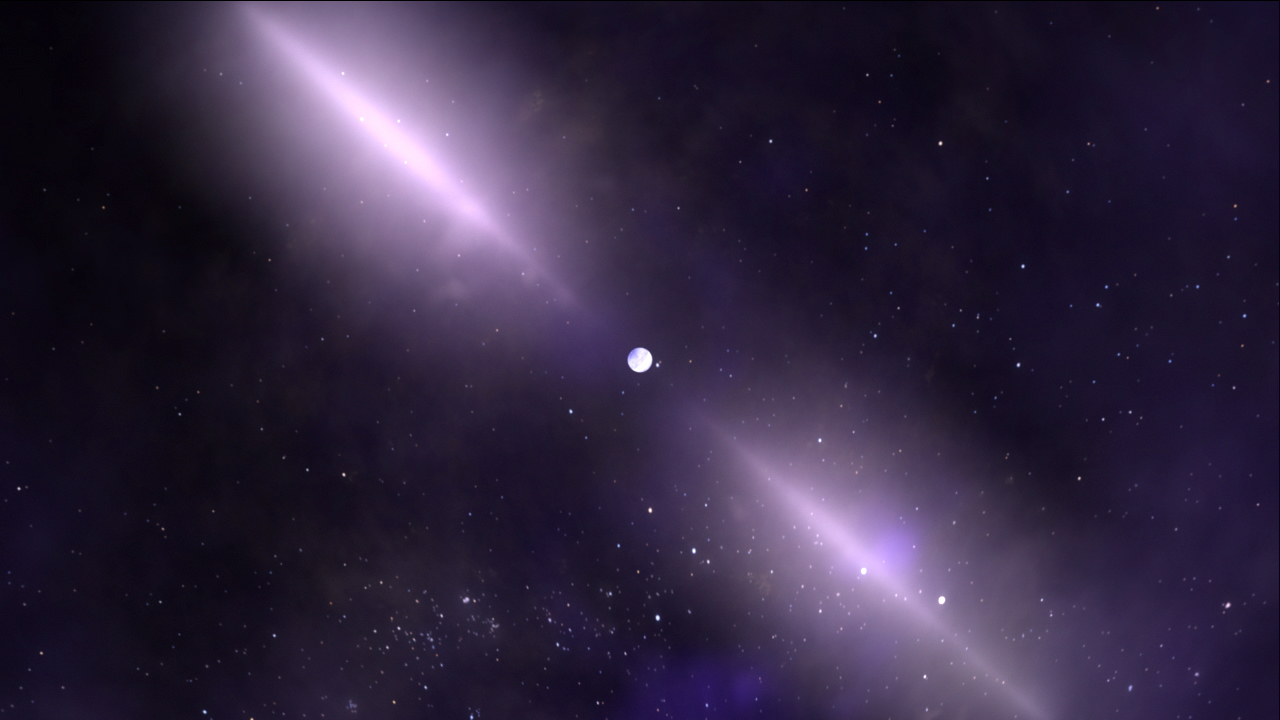
An artist’s impression of a pulsar — a rapidly spinning neutron star. [NASA’s Goddard Space Flight Center]
10. A Slowly Spinning Pulsar Below the Death Line
When Yuanming Wang and collaborators serendipitously discovered radio pulses from PSR J0311+1402, the object’s identity was a mystery. Its pulses were too widely spaced to come from a pulsar — an extremely dense remnant of a dead massive star — but they were also too frequent to come from a long-period radio transient. Though the object remains somewhat mysterious, several of its properties indicate that it’s an unusually sluggish pulsar.
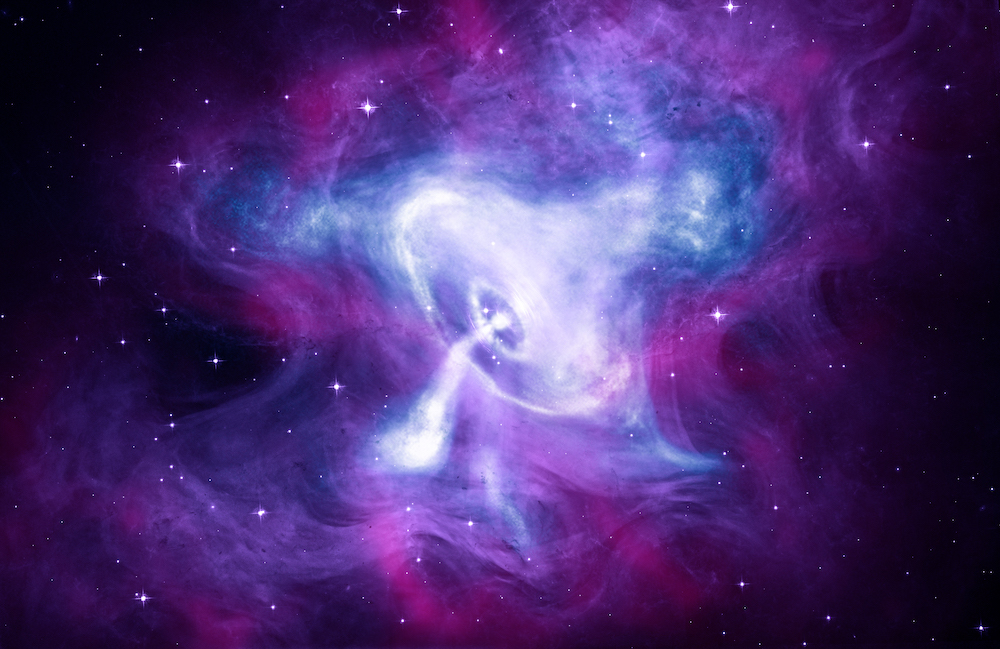
Composite X-ray, optical, and infrared image of the Crab Nebula, which houses a pulsar at its center. [X-ray: NASA/CXC/SAO; Optical: NASA/STScI; Infrared: NASA-JPL-Caltech]
9. Cracking Crusts Might Set a Neutron Star Speed Limit
Neutron stars spin incredibly fast, often hundreds of times per second — but they only spin about half as fast as they could before being ripped apart by their rotation. Why don’t they spin faster? That’s the question investigated by Jorge Morales and Charles Horowitz. Morales and Horowitz hypothesized that neutron star crust (the strongest material in the universe) cracks when these stars spin at about half of their breakup rate, and once the crust splits, the star begins to emit gravitational waves and can spin no faster.
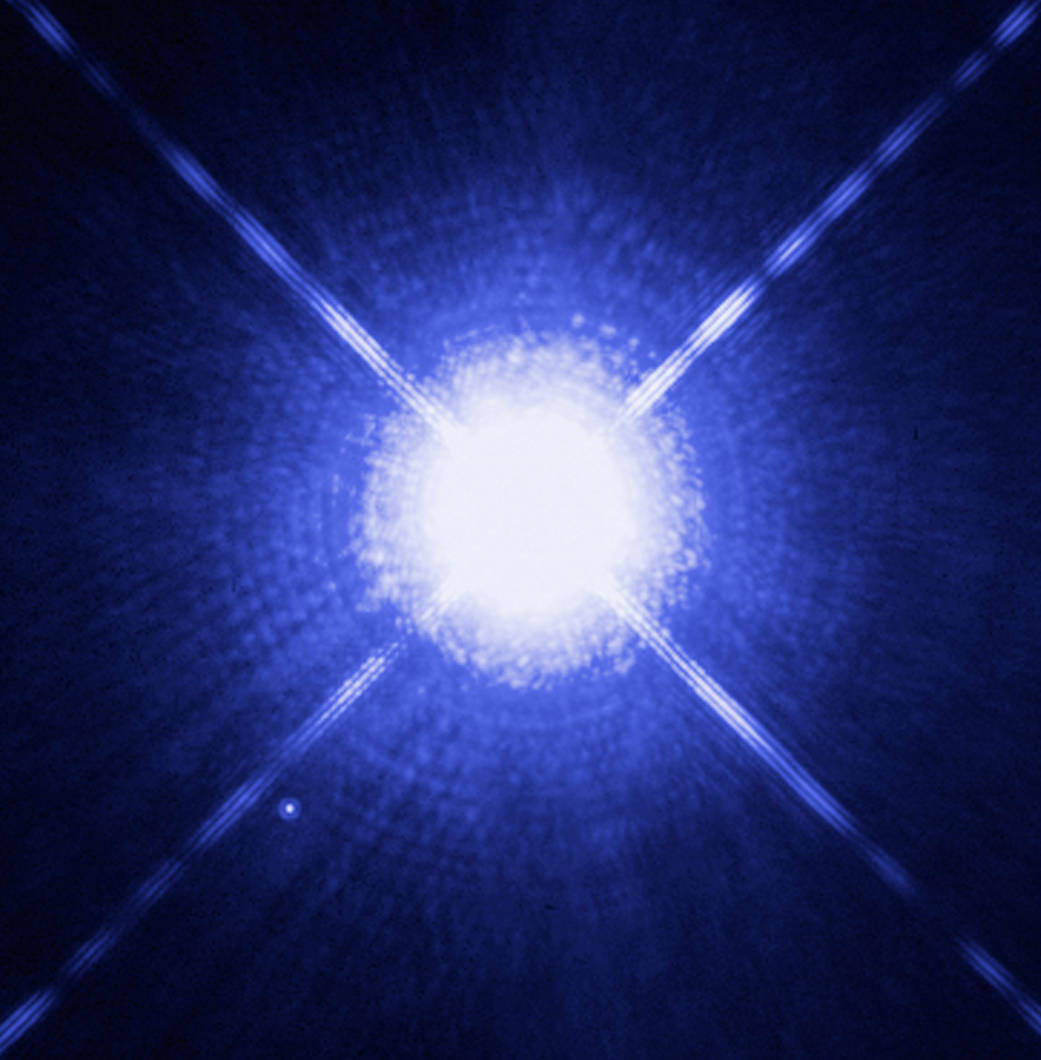
The tiny white dwarf Sirius B hides in the glare of its larger and brighter companion, Sirius A. [NASA, ESA, H. Bond (STScI) and M. Barstow (University of Leicester)]
8. Record-Breaking Pulsating White Dwarf Discovered
The evolution of a low- or intermediate-mass star eventually leaves behind a crystallized, compressed stellar core called a white dwarf. As white dwarfs slowly cool from initial temperatures of more than a million degrees, they pass through the instability strip and begin to pulsate. These pulsations allow astronomers to peer into white dwarfs’ crystalline interiors, potentially illuminating the origins of ultra-massive white dwarfs. A team led by Francisco De Gerónimo searched for pulsating white dwarfs and discovered a record-breaking 19 pulsation modes in one ultra-massive specimen called WD J0135+5722.
JWST images of six very distant galaxies dubbed “little red dots.” [NASA, ESA, CSA, STScI, Dale Kocevski (Colby College)]
7. Distant Little Red Dot Hosts a Huge (and Growing) Black Hole
Anthony Taylor and collaborators reported their findings on CAPERS-LRD-z9, a little red dot seen by JWST as it was when the universe was just a billion years old. Using JWST, the team spotted a broad emission line characteristic of hydrogen gas moving at thousands of kilometers per second. This is a tell-tale sign of an accreting supermassive black hole, making CAPERS-LRD-z9 the earliest galaxy to show this signature.
Optical image of supernova remnant N132D in the nearby Large Magellanic Cloud. [NASA, ESA, and the Hubble SM4 ERO Team]
6. Chandra Spies a Supernova Shock Front Speeding Along
N132D is a 2,500-year-old supernova remnant that holds the distinction of being the most X-ray luminous supernova remnant in the Local Group. Xi Long and collaborators turned the sensitive instruments of the Chandra X-ray Observatory toward N132D to measure the velocity of its expanding shock. Using two sets of measurements separated by 14.5 years, the team directly measured the remnant’s expansion, obtaining a much more precise measurement than previous efforts have achieved with other methods like X-ray spectroscopy and revealing differences in the expansion velocity around the remnant.
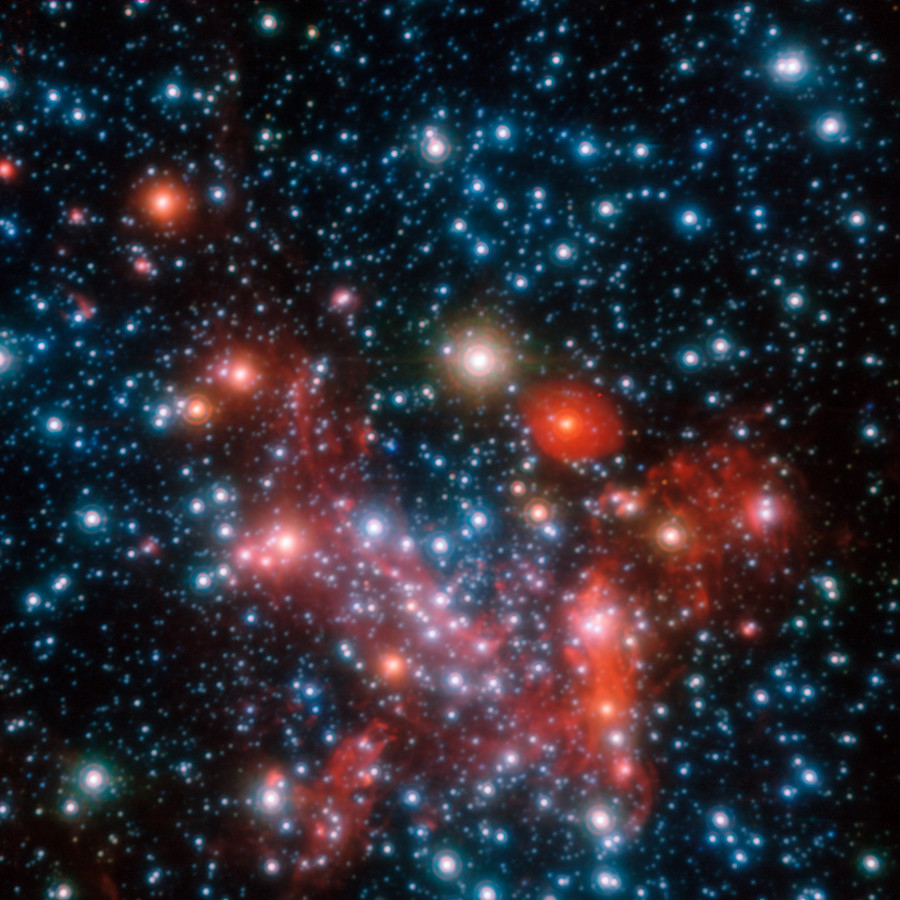
Stars at the center of the Milky Way, as seen by the Very Large Telescope. [ESO/S. Gillessen et al.; CC BY 4.0]
5. Our Galaxy’s Supermassive Black Hole May Have Had a Companion in the Past
At the center of our galaxy, a supermassive black hole 4 million times the mass of the Sun holds court. Though today Sagittarius A* is a solo act, Chunyang Cao and collaborators explored the possibility that our galaxy’s supermassive black hole had a companion millions to billions of years ago. If an intermediate-black hole entered our galaxy when the Milky Way absorbed a neighboring dwarf galaxy, the presence of the smaller black hole could explain the present-day properties of the hypervelocity stars that inhabit the center of our galaxy. The two black holes likely merged 10 million years ago.
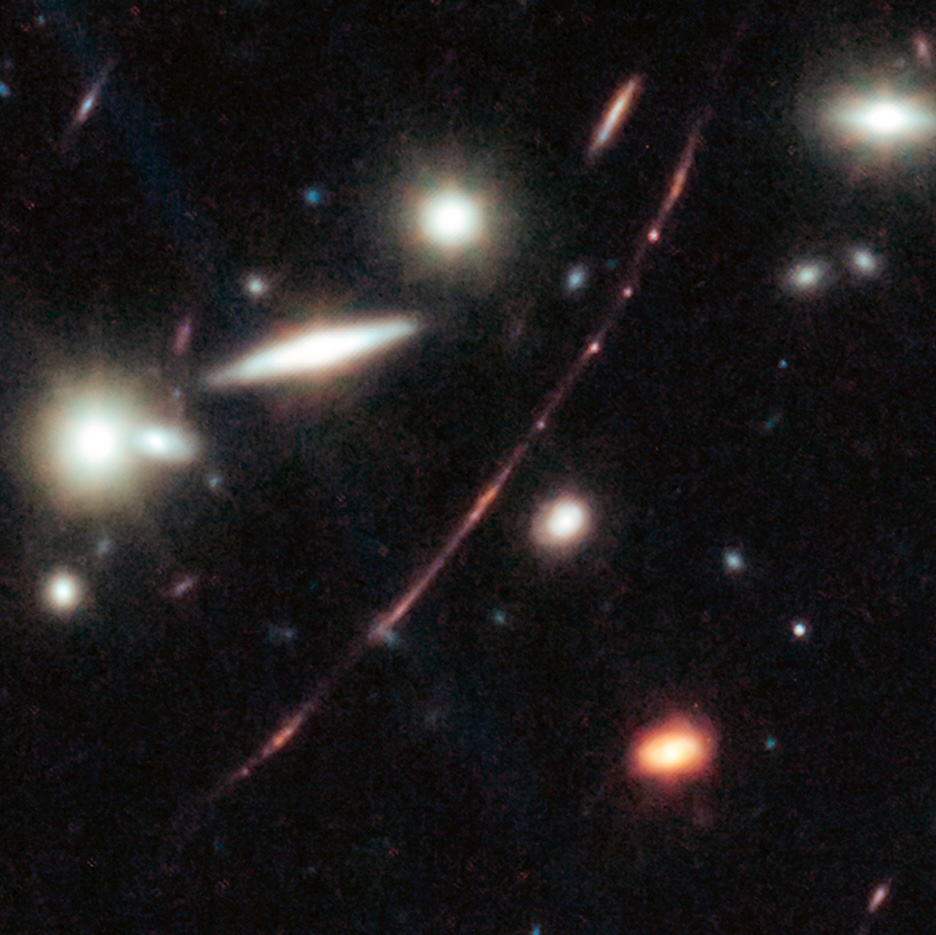
JWST image of the Sunrise Arc containing Earendel. [NASA, ESA, CSA; Science: Dan Coe (STScI/AURA for ESA, JHU), Brian Welch (NASA-GSFC, UMD); Image Processing: Zoltan Levay]
4. Examining Earendel: Is the Most Distant Lensed Star Actually a Cluster?
In 2022, researchers using the Hubble Space Telescope discovered a gravitationally lensed single-star candidate at a redshift of z = 5.926, corresponding to less than a billion years after the Big Bang. However, distinguishing between one gravitationally lensed star and many is challenging. A team led by Massimo Pascale used simple stellar population models to investigate Earendel’s identity, finding that the object’s spectrum is fit well by a variety of star cluster models. Based on this analysis, Earendel certainly could be many stars rather than one, but a single star cannot be ruled out. Variability due to stellar winds would be a smoking gun for the single-star hypothesis, but no such variability has been discovered to date.
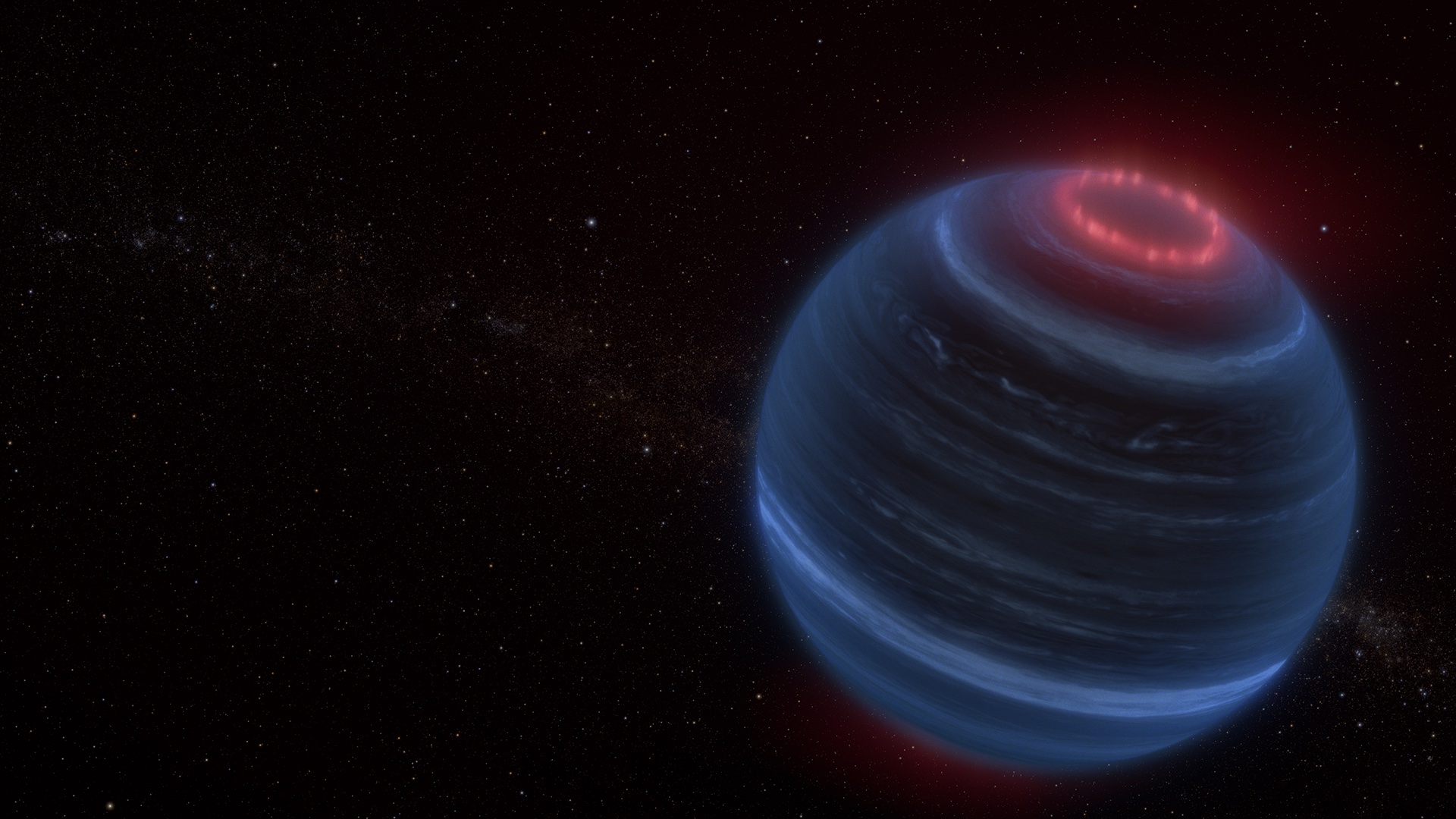
Artist’s impression of auroral emission on the brown dwarf W1935. [NASA, ESA, CSA, Leah Hustak (STScI)]
3. A Strange Brown Dwarf Gets Stranger
The brown dwarf W1935 made headlines in 2024 when researchers discovered methane emission from its atmosphere, a potential sign of auroral emission. In 2025, W1935 was back in the news after Matthew de Furio and collaborators reported that the brown dwarf was actually two brown dwarfs that were closely locked into 16–28 year orbits. What delightful weirdness will we discover about W1935 next?
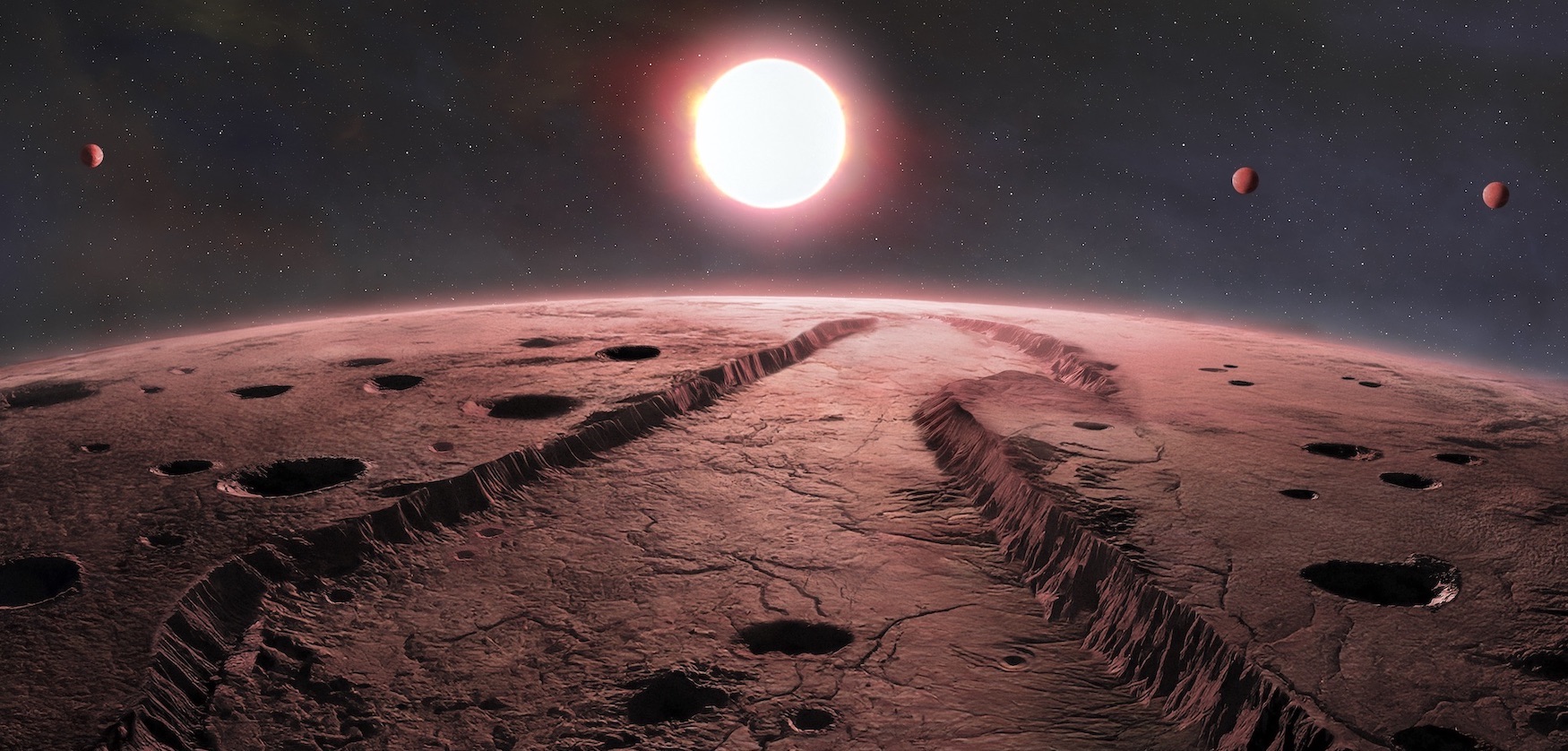
Artist’s impression of the view from one of the planets orbiting Barnard’s Star. [International Gemini Observatory/NOIRLab/NSF/AURA/R. Proctor/J. Pollard; CC BY 4.0]
2. Confirmed at Last: Barnard’s Star Hosts Four Tiny Planets
Claims of planets orbiting Barnard’s Star have been made and disproven since the 1960s — but now, the claim has finally stuck. In 2024, researchers reported the discovery of one planet and three planet candidates around Barnard’s Star. In 2025, Ritvik Basant and collaborators confirmed the presence of all four of these planets, which appear to have minimum masses between 19% and 34% of Earth’s mass.

Illustration of stellar-mass black holes embedded within the accretion disk of a supermassive black hole. [Caltech/R. Hurt (IPAC)]
1. Gravitationally Lensed Gravitational Waves from Black Holes Around Black Holes
Discoveries featuring black holes and gravitational waves often occupy the top spots on AAS Nova’s year-end list. This year, the most-read article features both of those topics! Samson Leong’s team explored the gravitational waves that would be produced by merging stellar-mass black holes orbiting within the disk surrounding supermassive black holes.
We wish you a safe, warm, and happy New Year, and we hope to see you in 2026 for more news from our universe!
The post Looking Back on Astronomy in 2025 with AAS Nova appeared first on AAS Nova.
]]>The post Powerful Lightning on Venus Constrained by Atmospheric NO appeared first on AAS Nova.
]]>For lightning to be responsible for the level of nitric oxide estimated to be present in Venus’s atmosphere, it must release more energy per strike or strike more frequently than it does on Earth.
The post Powerful Lightning on Venus Constrained by Atmospheric NO appeared first on AAS Nova.
]]>The post A New Search Pipeline for Short Gamma-Ray Bursts in Fermi/GBM Data — A 50% Increase in the Number of Detections appeared first on AAS Nova.
]]>A new pipeline increases the signal-to-noise ratio of detected gamma-ray bursts, increasing the detectable volume for these bursts and leading to the detection of hundreds of soft gamma-ray flares in our galaxy.
The post A New Search Pipeline for Short Gamma-Ray Bursts in Fermi/GBM Data — A 50% Increase in the Number of Detections appeared first on AAS Nova.
]]>
Researchers explored the reaches of humanity's technological signatures to determine if intelligent life like that on Earth could detect Earth.
The post Selections from 2025: Could Earth Detect Earth? appeared first on AAS Nova.
]]>Editor’s Note: For the remainder of 2025, we’ll be looking at a few selections that we haven’t yet discussed on AAS Nova from among the most-downloaded articles published in AAS journals this year. The usual posting schedule will resume January 2nd.
Earth Detecting Earth: At What Distance Could Earth’s Constellation of Technosignatures Be Detected with Present-day Technology?
Published February 2025
Main takeaway:
In a collaborative effort between the Search for Extraterrestrial Intelligence (SETI) Institute and the Penn State Extraterrestrial Intelligence Center, Sofia Sheikh (SETI Institute) and team turned inward to expand the search for intelligent life in the universe. Right here on Earth, humans have created a laboratory of technological signatures that can be detected from space — if another Earth-like civilization is out there, could they detect us? Using theoretical modeling, the authors determined the reaches of various human technosignatures such as radio transmissions, optical and infrared emission, satellites, and other probes sent into space. They found humanity’s strongest signals, radio transmissions, could be detected as far as 12,000 light-years away.
Why it’s interesting:
Scientists search for intelligent civilizations by hunting for signs of technology — signals or patterns that natural phenomena cannot explain. While we cannot expect other intelligent life to look exactly like Earth’s, many SETI projects have surveyed the skies for hypothetical signals far exceeding humanity’s own technological advancements. Taking a step back, Sheikh and collaborators considered where human technology is currently and what present-day instrumentation could pick up on if we were to search for ourselves. This “Earth detecting Earth” paradigm recenters the search for intelligent life and provides a multiwavelength framework for understanding the detectability of technology on far-away worlds.

Maximum distances that Earth’s technosignatures could be detected by current technology. Click to enlarge. [Sheikh et al 2025]
Earth’s constellation of technosignatures:
What exactly are Earth’s many technosignatures, and how far could our current technology detect them? The most prominent and farthest detectable signal comes from radio transmissions. As the authors noted, these signals come from multiple sources: targeted radar transmissions used to characterize planets and asteroids, radio transmissions used to communicate between space probes and ground stations (e.g., space telescopes, Mars rovers, etc.), and radio leakage from Earth’s communication systems like cell towers and broadcasting stations. Additionally, there are atmospheric technosignatures from air-polluting compounds, optical and infrared emission from cities, targeted lasers from telescopes, and interplanetary and interstellar probes sent into space. All of these combined create a constellation of technosignatures detectable across a range of distances from Earth. This study underscores the importance of assessing Earth’s technology and detection capabilities, and repeating this type of study as technological advancements continue will enhance the search for intelligent life.
Citation
Sofia Z. Sheikh et al 2025 AJ 169 118. doi:10.3847/1538-3881/ada3c7
The post Selections from 2025: Could Earth Detect Earth? appeared first on AAS Nova.
]]>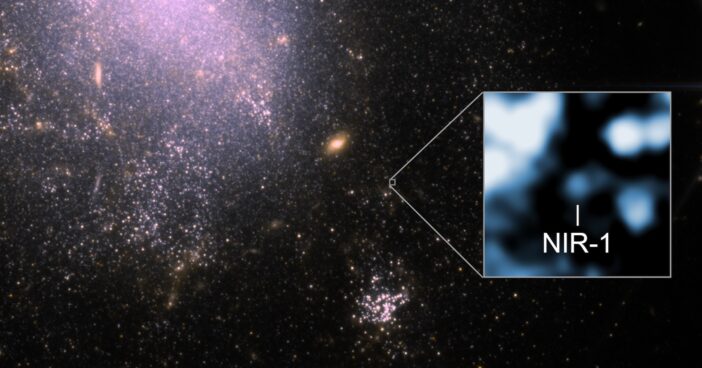
Astronomers have traced a bright, seemingly one-off fast radio burst to a galaxy 130 million light-years away.
The post Selections from 2025: Pinpointing a Bright Fast Radio Burst with CHIME appeared first on AAS Nova.
]]>Editor’s Note: For the remainder of 2025, we’ll be looking at a few selections that we haven’t yet discussed on AAS Nova from among the most-downloaded articles published in AAS journals this year. The usual posting schedule will resume January 2nd.
FRB 20250316A: A Brilliant and Nearby One-Off Fast Radio Burst Localized to 13 pc Precision
Published August 2025
Main takeaway:
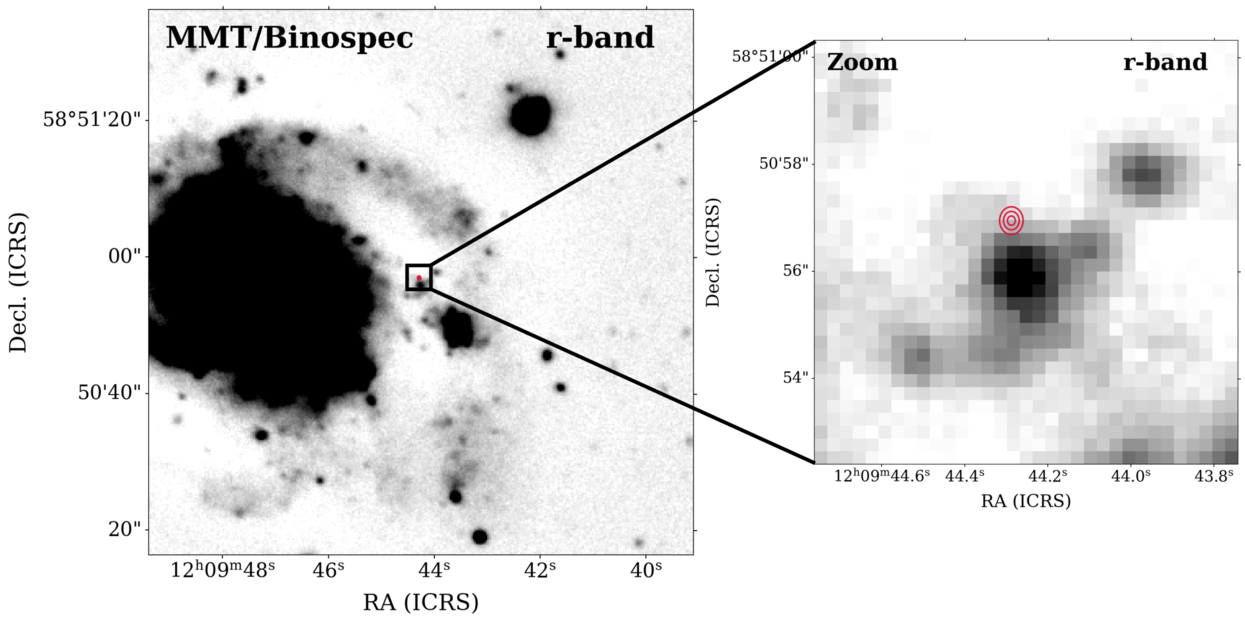
MMT observation of NGC 4141 (left) and zoomed-in on FRB 20250316A’s location. The red lines show the 1-, 2-, and 3-sigma localization ellipses of the burst. Click to enlarge. [CHIME Collaboration 2025]
Why it’s interesting:
The origins of fast radio bursts — bright flashes of radio waves lasting on the order of milliseconds — are mysterious, despite several thousand bursts having been cataloged. Among the many questions that remain is whether one-off bursts and repeating bursts arise from the same population of objects, or if they have entirely different origins. So far, FRB 20250316A appears to be a one-off burst; while it’s still possible that the source could emit another burst, the team noted that the burst’s properties don’t mesh with those of known repeating bursts. This makes the discovery and localization of FRB 20250316A an excellent opportunity to investigate the sources of one-off fast radio bursts.
More about the potential source of this burst, and prospects for pinpointing future sources:
After homing in on FRB 20250316A’s location, the CHIME collaboration embarked on a multi-wavelength follow-up campaign to learn more about where the burst came from. This campaign placed constraints on the metallicity and gas density near the source, which lies about 600 light-years from the center of the nearest star-forming region. A separate research article, published the same day as this work from the CHIME collaboration, described the discovery of a red giant star in the FRB 20250316A source region. This star may be located near FRB 20250316A’s source by chance, or it could be in a binary system with the source. With the main CHIME array in British Columbia continuing to scan for new bursts and three newly built outrigger telescopes in British Columbia, West Virginia, and California now online, we can expect many more precise localizations in the future!
Citation
The CHIME/FRB Collaboration: et al 2025 ApJL 989 L48. doi:10.3847/2041-8213/adf62f
The post Selections from 2025: Pinpointing a Bright Fast Radio Burst with CHIME appeared first on AAS Nova.
]]>The post White Dwarfs with Infrared Excess in the HET Dark Energy Experiment appeared first on AAS Nova.
]]>The characterization of 30 white dwarfs with excess infrared emission suggesting the presence of a cool stellar companion will advance our understanding of white dwarf evolution in binary systems.
The post White Dwarfs with Infrared Excess in the HET Dark Energy Experiment appeared first on AAS Nova.
]]>The post Brown Dwarf Formation Through Gravitational Collapse: Insights from 3D Numerical Simulations appeared first on AAS Nova.
]]>The first three-dimensional radiation–magnetohydrodynamics simulations of brown dwarf formation support the hypothesis that these objects form in a star-like way.
The post Brown Dwarf Formation Through Gravitational Collapse: Insights from 3D Numerical Simulations appeared first on AAS Nova.
]]>
What did JWST see when it examined TRAPPIST-1e, a nearby habitable-zone exoplanet orbiting a cool red star?
The post Selections from 2025: JWST Searches for an Atmosphere on TRAPPIST-1e appeared first on AAS Nova.
]]>Editor’s Note: For the remainder of 2025, we’ll be looking at a few selections that we haven’t yet discussed on AAS Nova from among the most-downloaded articles published in AAS journals this year. The usual posting schedule will resume January 2nd.
JWST-TST DREAMS: Secondary Atmosphere Constraints for the Habitable Zone Planet TRAPPIST-1 e
Published September 2025
Main takeaway:
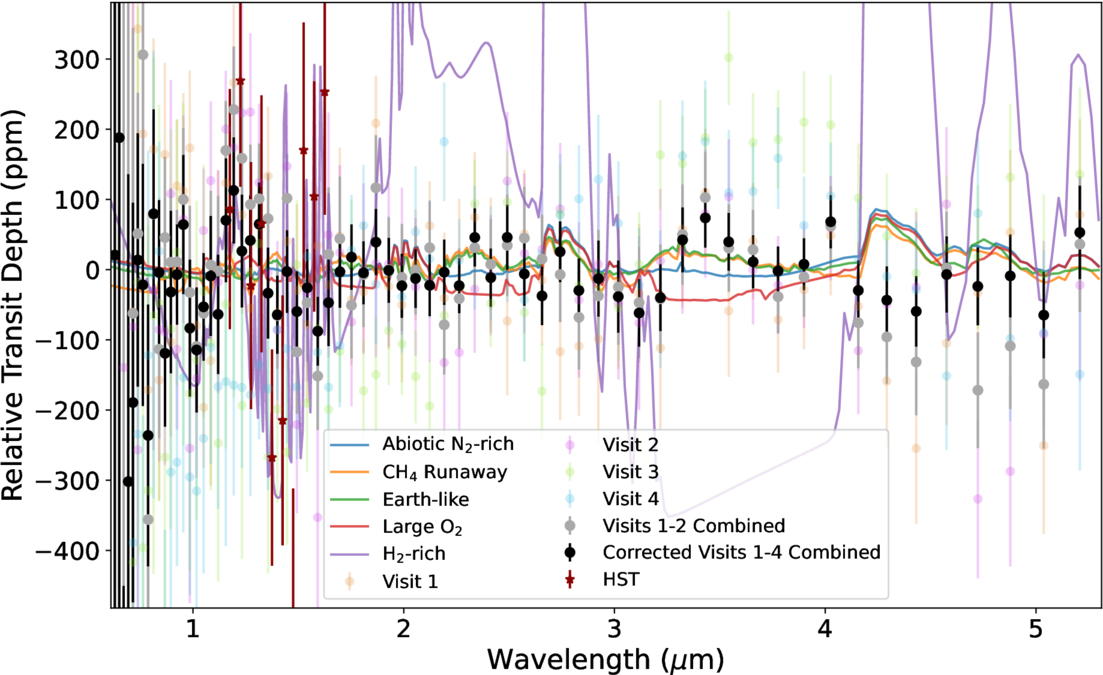
JWST spectra of TRAPPIST-1e (circles) and model outputs for several different atmospheric compositions and pressures (lines). Click to enlarge. [Glidden et al. 2025]
Why it’s interesting:
TRAPPIST-1e is one of seven confirmed planets orbiting TRAPPIST-1, a cool M-dwarf star that is just larger than Jupiter and only 41 light-years away. All of these planets are roughly the size and mass of Earth, and as many as four of them — planets d through h — are thought to lie within the tiny star’s habitable zone. Thus, this system offers an excellent opportunity for powerful observatories like JWST to characterize the atmospheres of several potentially habitable planets. This study by Glidden’s team presents JWST’s first look at TRAPPIST-1e’s atmosphere through transmission spectroscopy.
How TRAPPIST-1 complicated the observations:
When examining an exoplanet that closely orbits its host star, special care must be taken to separate the signals from the planet and the star. This is especially tricky for active stars like TRAPPIST-1, whose surfaces are peppered with dark starspots and bright faculae. TRAPPIST-1’s surface features have contaminated observations of other planets in the system, as described in previous research, and these observations of TRAPPIST-1e were not exempt from the star’s meddling. Luckily, researchers are conducting further JWST observations that should help disentangle the star’s impact; an ongoing program will capture closely spaced transits of TRAPPIST-1e and TRAPPIST-1b, which trace nearly the same track across the star’s disk. Since TRAPPIST-1b appears to be a bare rock, any features that are shared between its spectrum and TRAPPIST-1e’s are likely to come from the star. Identifying these features will allow for better characterization of TRAPPIST-1e’s spectrum and atmosphere.
Citation
Ana Glidden et al 2025 ApJL 990 L53. doi:10.3847/2041-8213/adf62e
The post Selections from 2025: JWST Searches for an Atmosphere on TRAPPIST-1e appeared first on AAS Nova.
]]>
Researchers discovered a record-breaking giant nine-ringed galaxy that provides critical insight into galaxy formation and evolution.
The post Selections from 2025: The Nine-Ringed Bullseye Galaxy appeared first on AAS Nova.
]]>Editor’s Note: For the remainder of 2025, we’ll be looking at a few selections that we haven’t yet discussed on AAS Nova from among the most-downloaded articles published in AAS journals this year. The usual posting schedule will resume January 2nd.
The Bullseye: HST, Keck/KCWI, and Dragonfly Characterization of a Giant Nine-ringed Galaxy
Published February 2025
Main takeaway:

Red ellipses overplotted on the first eight rings identified with Hubble in the Bullseye galaxy. Click to enlarge. [Pasha et al 2025]
Why it’s interesting:
Galaxy mergers and interactions are commonplace in the universe, but it is very rare for a dwarf galaxy to strike right through a large galaxy’s core. When this does happen, the collision sends shock waves through the impaled galaxy, sweeping gas and dust outward and forming rings where star formation can occur (hence the name, collisional ring galaxy). These galaxies are valuable sites to explore galactic structure and evolution as well as provide a unique case to study galaxy mergers and interactions. Previously discovered collisional ring galaxies have at most two or three rings, so when Pasha and collaborators found the stunning nine in the Bullseye, it was clear they caught something significant.
Catching the Bullseye at a lucky time in its evolution:
Why does the Bullseye have so many rings? Theoretical studies of these head-on collisions predict that many rings will form and travel outward after the initial crash; however, the rings tend to dissolve after only a few hundred million years. Catching this collision only 50 million years after it happened means we are witnessing the earlier stages of the Bullseye’s evolution. This lucky discovery not only confirms theoretical predictions for collisional ring galaxies, it also may be a clue to how another unique galaxy type, giant low-surface brightness galaxies, originate. Given the wispy ring material found at very large radii from the Bullseye, the authors suggested that collisional ring galaxies may evolve into giant low-surface brightness galaxies as they expand outward and fade. Further investigation and a larger sample of collisional ring galaxies are necessary to confirm this hypothesis, but the Bullseye provides interesting and critical observational evidence of these predictions for the first time.
Citation
Imad Pasha et al 2025 ApJL 980 L3. doi:10.3847/2041-8213/ad9f5c
The post Selections from 2025: The Nine-Ringed Bullseye Galaxy appeared first on AAS Nova.
]]>The post The BlueDOG at Cosmic Noon: A Possible Analog to Little Red Dots? appeared first on AAS Nova.
]]>An extremely luminous and massive galaxy with excess blue emission in the rest-frame ultraviolet may provide an example of what the mysterious “little red dot” galaxies evolve into.
The post The BlueDOG at Cosmic Noon: A Possible Analog to Little Red Dots? appeared first on AAS Nova.
]]>
Researchers used an airborne telescope to find out more about the origins of massive stars in our galaxy.
The post Selections from 2025: The Formation of Massive Stars appeared first on AAS Nova.
]]>Editor’s Note: For the remainder of 2025, we’ll be looking at a few selections that we haven’t yet discussed on AAS Nova from among the most-downloaded articles published in AAS journals this year. The usual posting schedule will resume January 2nd.
The SOFIA Massive (SOMA) Star Formation Survey. V. Clustered Protostars
Published June 2025
Main takeaway:
A team led by Zoie Telkamp (University of Virginia) used the Stratospheric Observatory for Infrared Astronomy, SOFIA, to study massive protostars and test theories of high-mass star formation. Contrary to the predictions of some star-formation models, the team found no evidence that massive protostars require a certain surface mass density to form. Formation in a cluster environment, however, may limit the formation of the most massive protostars.
Why it’s interesting:
Massive stars are rare, short-lived, and luminous. They influence their environments across a vast range of spatial and temporal scales, from advancing the epoch of reionization in the early universe to impacting the formation of individual planetary systems in the present-day universe. The fundamental question of how high-mass stars form is still unsettled. Theories of high-mass star formation range from scaled-up versions of low-mass star formation to scenarios involving collisions between protostars.
More about this massive-star study and the potential impact of a cluster environment:
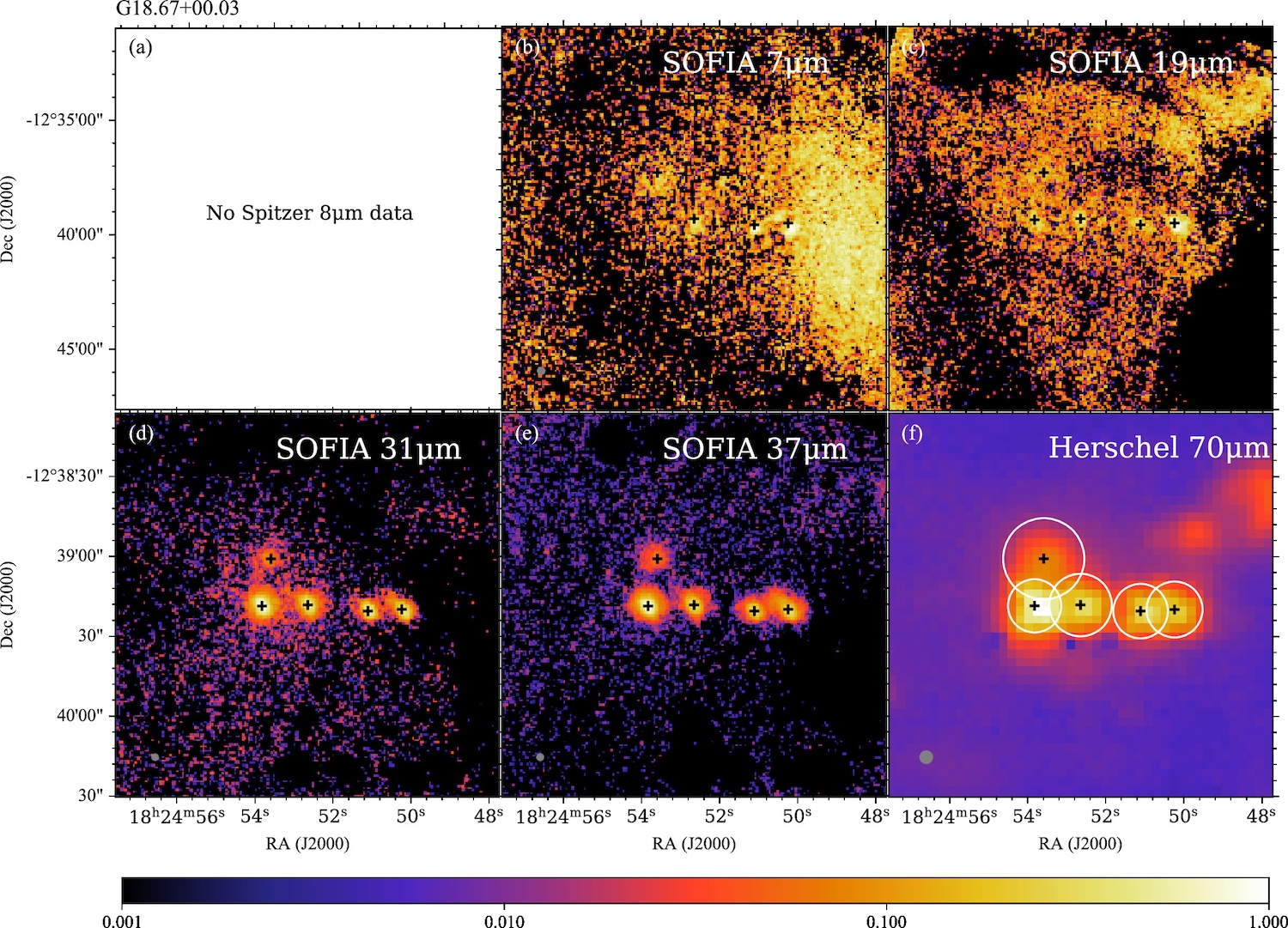
SOFIA FORCAST and Herschel Space Observatory images of protostars in the G18.67+0.03 star-forming region. Click to enlarge. [Telkamp et al. 2025]
Citation
Zoie Telkamp et al 2025 ApJ 986 15. doi:10.3847/1538-4357/adcd79
The post Selections from 2025: The Formation of Massive Stars appeared first on AAS Nova.
]]>The post High Proper Motion Discoveries from the UKIRT Hemisphere Survey appeared first on AAS Nova.
]]>Low-metallicity M-type subdwarfs, late M dwarfs, and what appear to be L and T dwarfs make up the 127 newly discovered high-proper-motion objects from the United Kingdom Infrared Telescope Hemisphere Survey.
The post High Proper Motion Discoveries from the UKIRT Hemisphere Survey appeared first on AAS Nova.
]]>The post Roles of Supernova and Active Galactic Nucleus Feedback in Shaping the Baryonic Content in a Wide Range of Dark Matter Halo Masses appeared first on AAS Nova.
]]>Simulation results suggest that supernova feedback dominates in galaxies with relatively low-mass halos, while active galactic nucleus feedback plays a larger role in galaxies with higher-mass halos.
The post Roles of Supernova and Active Galactic Nucleus Feedback in Shaping the Baryonic Content in a Wide Range of Dark Matter Halo Masses appeared first on AAS Nova.
]]>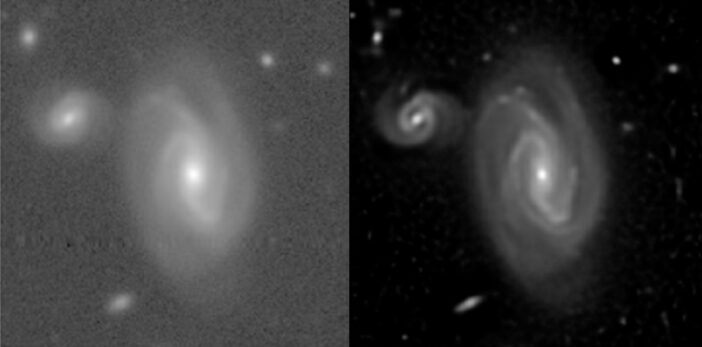
With immense amounts of data headed our way from ground-based facilities like the Vera C. Rubin Observatory, new methods are needed to rapidly and effectively process high-resolution images.
The post Selections from 2025: A New Way to Combine Ground-Based Images appeared first on AAS Nova.
]]>Editor’s Note: For the remainder of 2025, we’ll be looking at a few selections that we haven’t yet discussed on AAS Nova from among the most-downloaded articles published in AAS journals this year. The usual posting schedule will resume January 2nd.
ImageMM: Joint Multi-Frame Image Restoration and Super-Resolution
Published September 2025
Main takeaway:
A team led by Yashil Sukurdeep (Johns Hopkins University) developed a new method for processing and combining ground-based astronomical images. The authors’ algorithm, called ImageMM because it leverages a method called majorization–minimization, yielded greater detail in bright sources and distinguished more faint sources from the background than existing methods.
Why it’s interesting:
As ground-based telescopes grow larger and their cameras grow more sensitive, they must still contend with one unfortunate fact: they are trapped beneath Earth’s atmosphere, which blurs fine details in astronomical images. To extract as much information as possible from beneath Earth’s blurry, ever-shifting atmosphere, researchers have developed numerous strategies for cleaning, combining, and sharpening astronomical images. From simple averaging of multiple exposures to complex statistical techniques, each of these methods has unique strengths and weaknesses. ImageMM succeeds in quieting background noise and sharpening images of both extended and point-like sources while avoiding many of the pitfalls of statistical methods.
How they tested the new method:
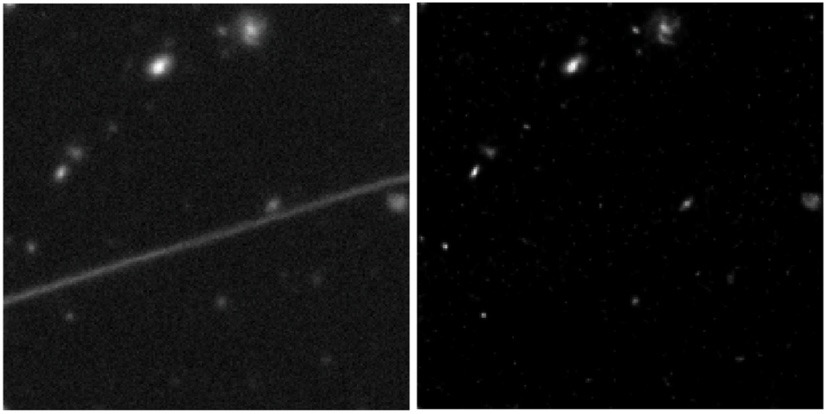
An example of satellite-trail removal by ImageMM. Click to enlarge. [Adapted from Sukurdeep et al. 2025]
Citation
Yashil Sukurdeep et al 2025 AJ 170 233. doi:10.3847/1538-3881/adfb72
The post Selections from 2025: A New Way to Combine Ground-Based Images appeared first on AAS Nova.
]]>The post Impact of Magnetic-Field-Driven Anisotropies on the Equation of State Probed in Neutron Star Mergers appeared first on AAS Nova.
]]>When two neutron stars merge, the merger remnant can have a strong enough magnetic field to affect the properties of the matter and change the mechanisms of jet and wind launching.
The post Impact of Magnetic-Field-Driven Anisotropies on the Equation of State Probed in Neutron Star Mergers appeared first on AAS Nova.
]]>
During the exceptionally deep solar minimum of 2008, researchers thought the Sun might be entering a prolonged period of low solar activity — but the Sun had other plans.
The post Selections from 2025: The Sun Changed Course in 2008 appeared first on AAS Nova.
]]>Editor’s Note: For the remainder of 2025, we’ll be looking at a few selections that we haven’t yet discussed on AAS Nova from among the most-downloaded articles published in AAS journals this year. The usual posting schedule will resume January 2nd.
The Sun Reversed Its Decades-Long Weakening Trend in 2008
Published September 2025
Main takeaway:
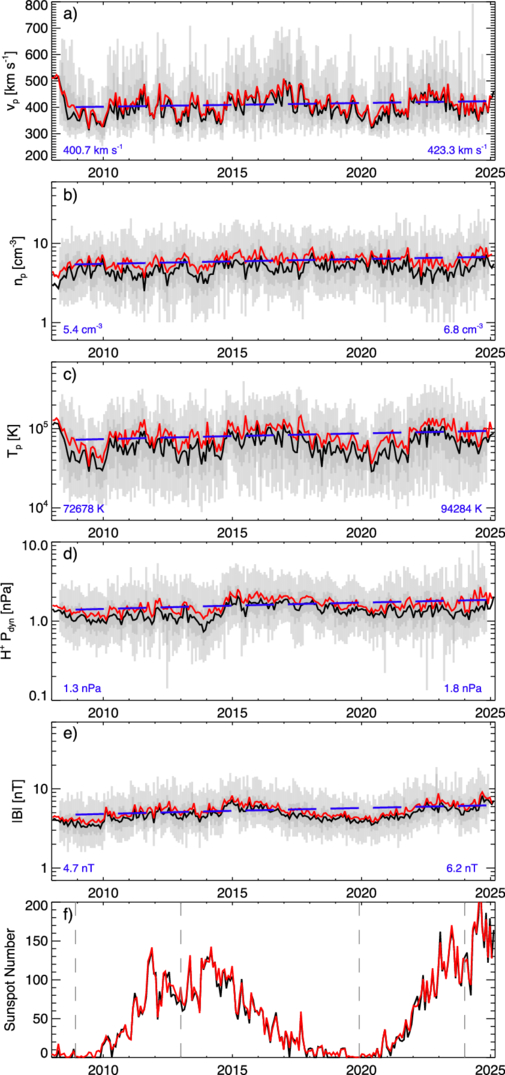
Various solar wind parameters measured at Earth’s orbital distance from 2008 to 2025. [Jasinski and Velli 2025]
Why it’s interesting:
The Sun undergoes an 11-year activity cycle that is driven by a change in its internal magnetic field structure. As the Sun’s magnetic activity changes, the number of sunspots, the frequency of solar flares and coronal mass ejections, and the intensity of the solar wind vary as well. Atop these mostly regular 11-year changes are longer-term variations. A recent example of this longer-term behavior began in the 1980s, when an overall weakening trend was stamped upon the usual 11-year cycle. This decline led to an exceptionally deep solar minimum in 2008, leading researchers to suspect that the Sun’s activity level might remain low for decades.
The historical context for a prolonged weak period:
Though the Sun reversed its weakening activity trend in 2008, a prolonged period with little solar activity wouldn’t have been unprecedented. Astronomers have monitored and counted sunspots for centuries, allowing modern-day researchers to investigate the Sun’s behavior long before spacecraft began to study our home star. In the historical record, there are two instances of weak solar activity spanning multiple decades: the Maunder minimum in 1645–1715 and the Dalton minimum in 1790–1830. Compared to the 11-year solar cycle, these longer-term behaviors are more difficult to predict, and their causes are uncertain.
Citation
Jamie M. Jasinski and Marco Velli 2025 ApJL 990 L55. doi:10.3847/2041-8213/adf3a6
The post Selections from 2025: The Sun Changed Course in 2008 appeared first on AAS Nova.
]]>The post Barnard Crater, Mars: Evidence of Glaciofluvial Activity in a Large, High-Latitude Impact Crater in Southern Hellas appeared first on AAS Nova.
]]>Barnard Crater on Mars appears to have formed about 3.8 billion years ago and shows signs of sustained periods of infill, resulting in an infilled thickness of 1 kilometer on the crater floor.
The post Barnard Crater, Mars: Evidence of Glaciofluvial Activity in a Large, High-Latitude Impact Crater in Southern Hellas appeared first on AAS Nova.
]]>
The repeating fast radio burst source FRB 20240209A is the only known repeating burst to come from a quiescent galaxy.
The post Selections from 2025: A Repeating Fast Radio Burst in a Quiescent Galaxy appeared first on AAS Nova.
]]>Editor’s Note: For the remainder of 2025, we’ll be looking at a few selections that we haven’t yet discussed on AAS Nova from among the most-downloaded articles published in AAS journals this year. The usual posting schedule will resume January 2nd.
A Repeating Fast Radio Burst Source in the Outskirts of a Quiescent Galaxy
Published January 2025
Main takeaway:
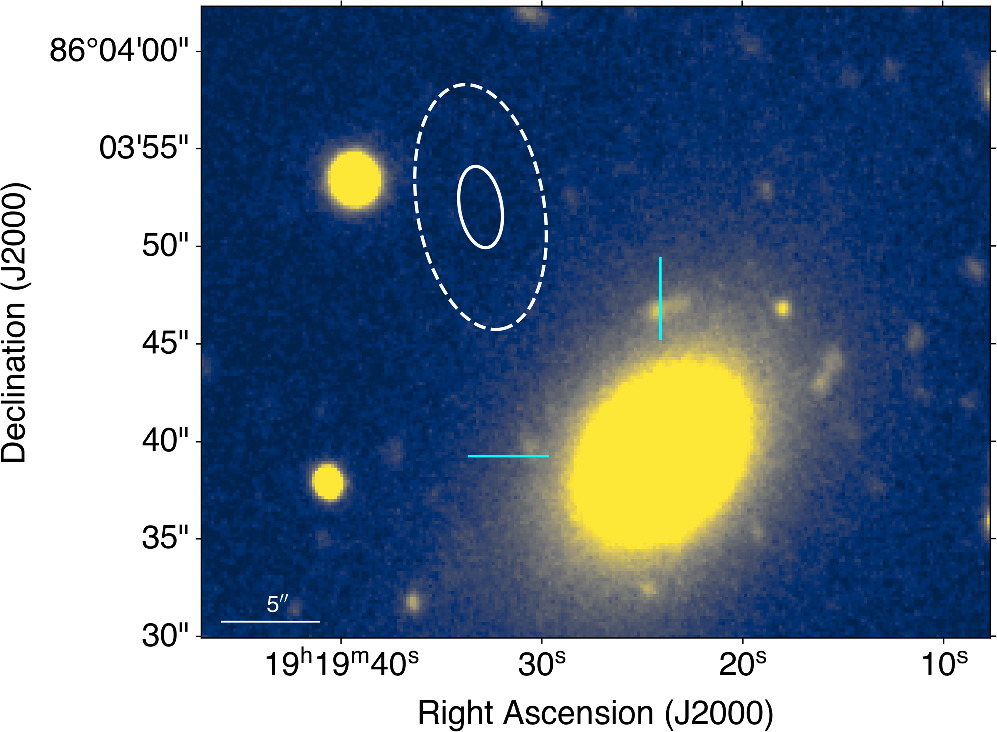
Gemini-North image of the FRB 20240209A localization region (white lines) and the source’s likely host galaxy (cyan crosshairs). [Shah et al. 2025]
Why it’s interesting:
Fast radio bursts are brief, intense flashes of radio waves from sources across the universe. Aside from one fast radio burst that has been associated with a magnetar within our own Milky Way, the source of these outbursts remains mysterious, and precise localization of these bursts is key to pinning down their origins; fast radio bursts that come from galaxies with active star formation may be linked to “prompt” formation channels like core-collapse supernovae or young magnetars, while bursts that arise in quiescent galaxies might be due to “delayed” formation pathways such as neutron stars that are born from merging white dwarfs.
How FRB 20240209A compares to other fast radio bursts, and what may have caused it:
FRB 20240209A is similar to other repeating fast radio bursts in terms of the shape of its individual bursts as well as its tendency to undergo periods of high and low bursting activity. Its location makes it quite unusual, though: it’s the only repeating fast radio burst known to come from a quiescent galaxy, and it’s the only burst — repeating or not — that has been found in an elliptical galaxy. If confirmed to originate from a globular cluster, FRB 20240209A would also be only the second known fast radio burst source to come from this type of environment. Shah’s team explored multiple possible origin stories for FRB 20240209A, including the possibility that the source was ejected from its host galaxy. The team favors an origin involving a magnetar formed through the collapse or merger of a compact object.
Citation
Vishwangi Shah et al 2025 ApJL 979 L21. doi:10.3847/2041-8213/ad9ddc
The post Selections from 2025: A Repeating Fast Radio Burst in a Quiescent Galaxy appeared first on AAS Nova.
]]>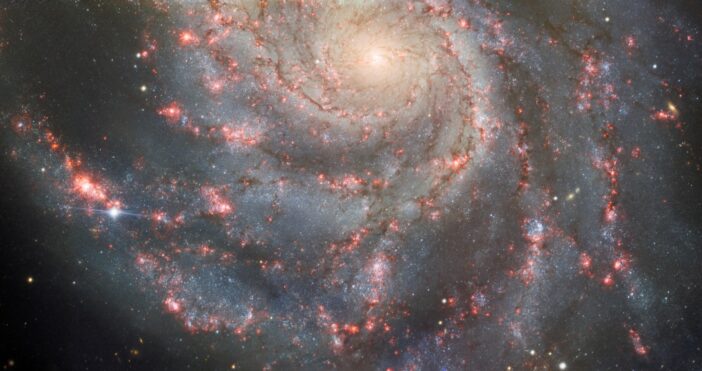
SN 2023ixf is the closest supernova in a decade. Did researchers detect gravitational waves from the explosion?
The post Selections from 2025: A Search for Gravitational Waves from SN 2023ixf appeared first on AAS Nova.
]]>Editor’s Note: For the remainder of 2025, we’ll be looking at a few selections that we haven’t yet discussed on AAS Nova from among the most-downloaded articles published in AAS journals this year. The usual posting schedule will resume January 2nd.
Search for Gravitational Waves Emitted from SN 2023ixf
Published May 2025
Main takeaway:
The LIGO, Virgo, and KAGRA collaborations searched for gravitational waves from the core-collapse supernova SN 2023ixf. Though no significant gravitational wave events were detected during times when two or more gravitational wave detectors were online, the non-detection of gravitational waves from this nearby supernova places constraints on the amount of energy emitted by the explosion in the form of gravitational waves, the shape of the proto-neutron star produced in the collapse, and more.
Why it’s interesting:
When a massive star expires in a core-collapse supernova, the collapse of the stellar core into a neutron star or black hole produces gravitational waves. These gravitational waves, along with a stream of neutrinos, should arrive at Earth before the light from the explosion does; gravitational waves and neutrinos can easily escape the dense, roiling ejecta from the explosion, but photons take some time to claw their way through the debris. Gravitational waves from a supernova have never been detected, but the nearby supernova SN 2023ixf, which occurred in a galaxy about 20 million light-years away, offered the best recent opportunity to detect these waves.
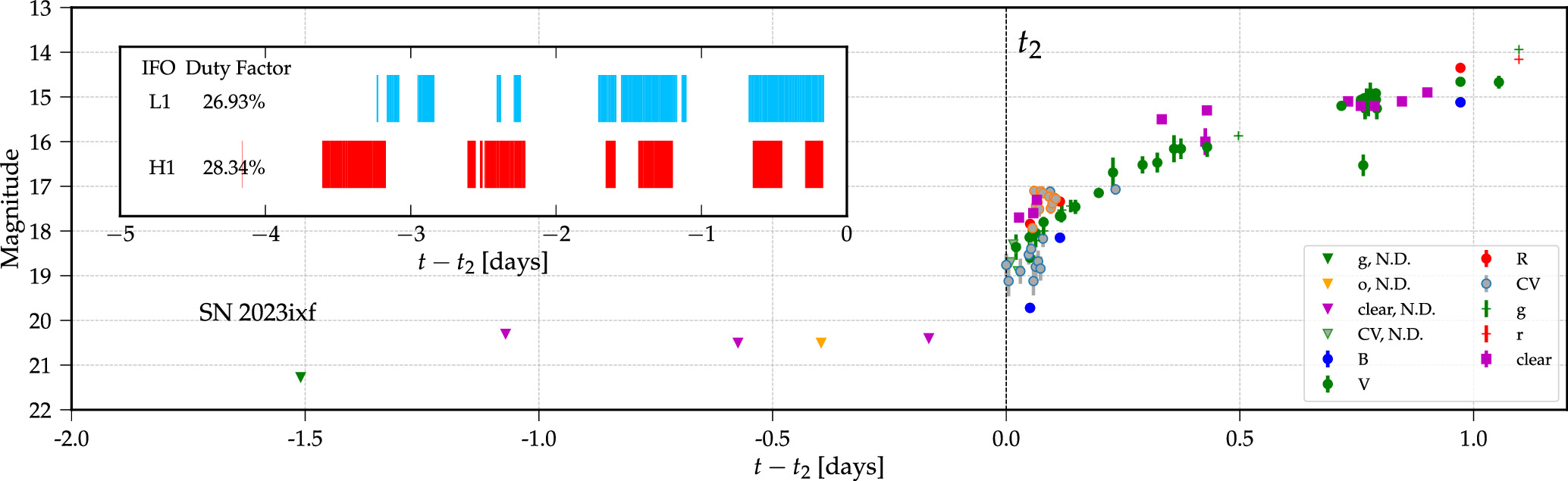
Photometric evolution of SN 2023ixf in its early days and gravitational wave coverage leading up to the supernova’s discovery (inset image). [LIGO-Virgo-KAGRA Collaborations 2025]
What we learned from this non-detection:
Using the non-detection of SN 2023ixf, researchers placed stringent constraints on the gravitational wave energy and luminosity of a supernova explosion, but an even closer supernova is still needed to begin to rule out model predictions for these quantities. To estimate the distance out to which we can expect to detect gravitational waves from collapsing stars, the collaboration members injected synthetic supernova signals into their data. The majority of non-rotating explosions can be detected out to about 22,000 light-years — meaning events on the far side of our galaxy remain inaccessible to current detectors — while rapidly rotating explosions should be detectable out to nearly 100,000 light-years, pushing the detection horizon beyond the borders of the Milky Way.
Citation
A. G. Abac et al 2025 ApJ 985 183. doi:10.3847/1538-4357/adc681
The post Selections from 2025: A Search for Gravitational Waves from SN 2023ixf appeared first on AAS Nova.
]]>The post A Systematic Search for MeV–GeV Pulsar Wind Nebulae Without Gamma-Ray Detected Pulsars appeared first on AAS Nova.
]]>Nine unidentified Fermi–Large Area Telescope sources are likely pulsar wind nebulae; if verified, these discoveries will bring the number of known Fermi-detected pulsar wind nebulae from 12 to 21.
The post A Systematic Search for MeV–GeV Pulsar Wind Nebulae Without Gamma-Ray Detected Pulsars appeared first on AAS Nova.
]]>The post K2-18b Does Not Meet the Standards of Evidence for Life appeared first on AAS Nova.
]]>Diving deep into various instrumental systematics and data analysis options, a research team has found that the purported detection of biosignature gases in the atmosphere of K2-18b is disfavored.
The post K2-18b Does Not Meet the Standards of Evidence for Life appeared first on AAS Nova.
]]>
The third interstellar object to enter our solar system, 3I/ATLAS, is without a doubt one of the most fascinating astronomical discoveries of this year.
The post Selections from 2025: Hubble Observes 3I/ATLAS appeared first on AAS Nova.
]]>Editor’s Note: For the remainder of 2025, we’ll be looking at a few selections that we haven’t yet discussed on AAS Nova from among the most-downloaded articles published in AAS journals this year. The usual posting schedule will resume January 2nd.
Hubble Space Telescope Observations of the Interstellar Interloper 3I/ATLAS
Published August 2025
Main takeaway:
3I/ATLAS as seen by Hubble on 21 July 2025, when the comet was 3.83 au from the Sun. [Adapted from Jewitt et al. 2025]
Why it’s interesting:
3I/ATLAS is just the third known object to visit our solar system from another planetary system. With such a small sample size, every interstellar object discovered is a source of fascination. Are these objects more like comets or asteroids? How many of them roam the space between the stars? What, exactly, launches them into interstellar space? Using all available tools, including powerful observatories like Hubble, researchers can extract as much information as possible when interstellar objects make their brief journeys through our solar system, and get us closer to answering these key questions.
How these observations were planned, and what happened afterward:
After interstellar objects 1I/ʻOumuamua and 2I/Borisov zipped through the solar system in 2017 and 2019, respectively, researchers knew it was only a matter of time before the next interstellar interloper paid a visit. In preparation for the next arrival, Jewitt’s team proposed a target-of-opportunity observation with Hubble. This allowed them to disrupt the telescope’s planned observing schedule once 3I/ATLAS was discovered, getting an early high-resolution look that could guide further observations. Since then, researchers have published more than 30 articles in the AAS journals alone about 3I/ATLAS. In these articles, researchers have sought to understand where 3I/ATLAS came from, investigated its polarization properties, collected JWST data of the object, found it in pre-discovery data, and much more, crafting a comprehensive view of a rare visitor to our neighborhood.
Citation
David Jewitt et al 2025 ApJL 990 L2. doi:10.3847/2041-8213/adf8d8
The post Selections from 2025: Hubble Observes 3I/ATLAS appeared first on AAS Nova.
]]>The post Cosmological Evolution of Fast Radio Bursts and the Star Formation Rate appeared first on AAS Nova.
]]>An investigation of the evolution of fast radio bursts with redshift found similarities in the properties of fast radio bursts and short gamma-ray bursts, suggesting that fast radio bursts might arise from magnetars.
The post Cosmological Evolution of Fast Radio Bursts and the Star Formation Rate appeared first on AAS Nova.
]]>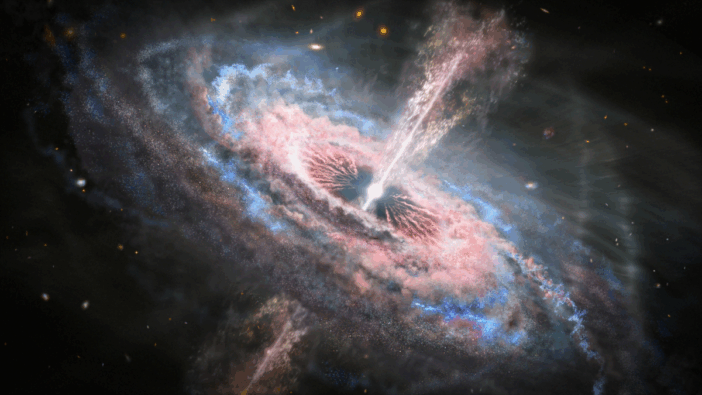
A recent study with JWST has unveiled how a reionization-era quasar has suppressed star formation in its galactic neighbors.
The post Intergalactic Impacts of Quasars During the Epoch of Reionization appeared first on AAS Nova.
]]>Emitting powerful radiation into their surroundings, quasars had the ability to significantly influence their local environments. A recent study using JWST observations focuses in on one of the most powerful known quasars to determine its intergalactic impact.
Quasar Questions
Beacons of light from the very distant universe, quasars are incredibly luminous galactic cores powered by active supermassive black holes. During the first few billion years after the Big Bang, quasars pumped radiation not only into their host galaxies but also out into intergalactic space and subsequently into nearby galaxies. This radiation was strong enough to ionize any intervening material and even break up (or photodissociate) molecular hydrogen gas. With their star formation fuel evaporated, a quasar’s unsuspecting galactic neighbors were stymied from growth.
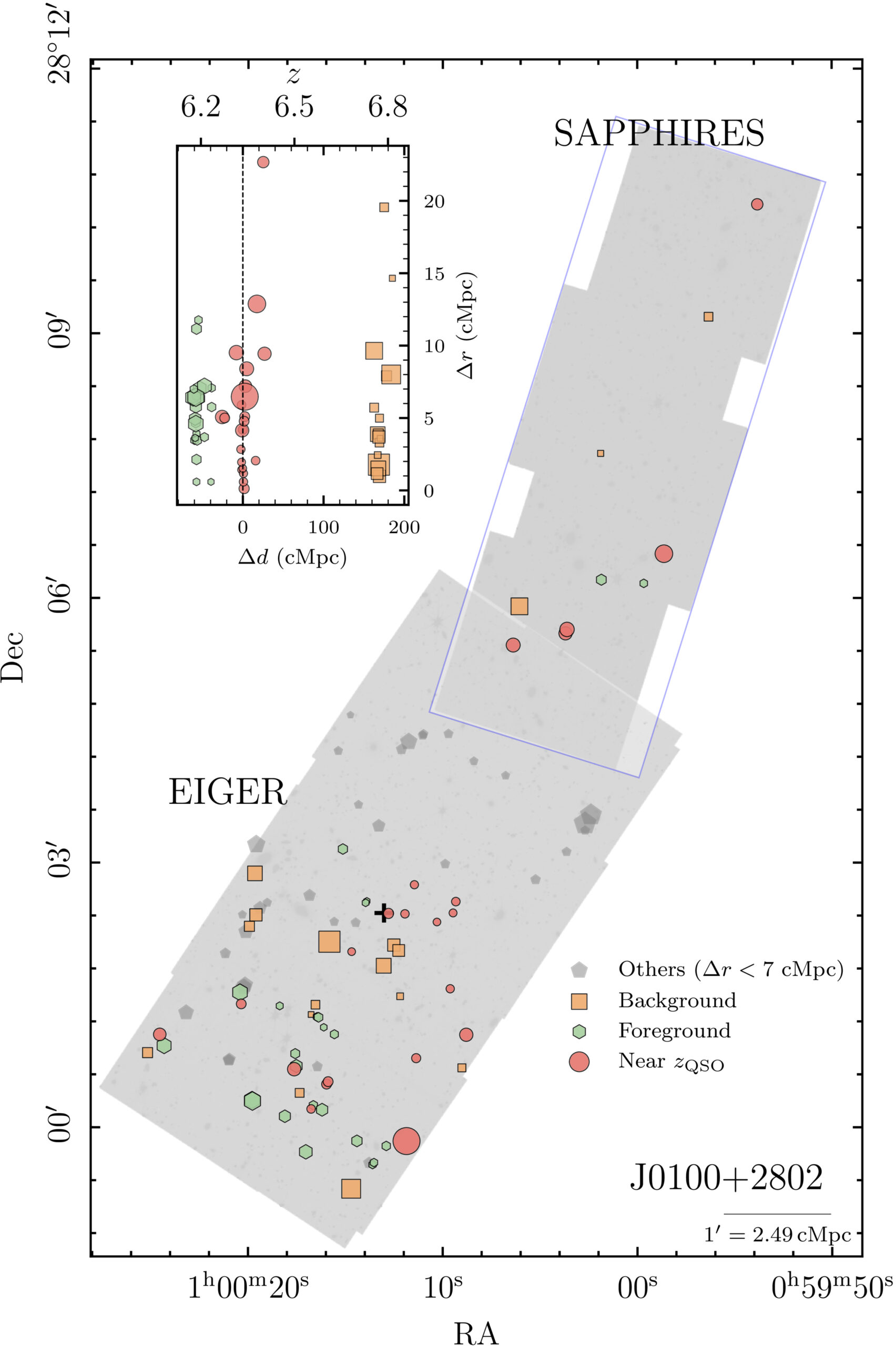
Sky map showing the location of quasar J0100+2802 (marked with black cross) and the [OIII]-emitting galaxies detected in the field. The red points are within the same redshift window as J0100+2802, and the green and orange points show foreground and background galaxies respectively. Click to enlarge. [Zhu et al 2025]
Searching for Suppressed Star Formation
To investigate how quasars may impact their environments, Yongda Zhu (University of Arizona) and collaborators set their gazes on J0100+2802 — the most ultraviolet-luminous quasar known at redshift z > 6. This powerful quasar lies in an overdensity, surrounded by galaxies filled with hot, young stars, making it an ideal candidate to test the impacts of luminous quasars on their neighbors. The authors used spectroscopy and photometry obtained from JWST to explore the space around J0100+2802.
Searching within the expected reach of the quasar’s radiation field, the authors identified galaxies with doubly ionized oxygen emission ([OIII] λ5008), which traces a galaxy’s recent star formation activity. After carefully separating background and foreground galaxies from galaxies at the same redshift as J0100+2802, the authors measured the total [OIII] emission and compared it to the overall ultraviolet stellar emission. From their sample, galaxies closer to J0100+2802 tend to exhibit lower [OIII]/UV ratios than those farther away, indicating that the powerful quasar may be suppressing star formation activity in nearby galaxies.

[OIII]/UV ratio versus distance from quasar J0100+2802. There is a clear positive correlation indicating that closer to the powerful quasar, [OIII] emission declines. The dashed line shows the expected radiation field of J0100+2802. Click to enlarge. [Modified from Zhu et al 2025]
Confirming the Culprit
To verify that the quasar is truly responsible for this declining trend, other environmental factors and intrinsic galaxy properties must be ruled out. Could the galaxies nearby J0100+2802 just happen to have elevated ultraviolet stellar continuum? Or could the overdense environment itself drive this trend? The authors performed additional analysis to control for these variables and found no strong global factors that could explain the decline in [OIII] emission — radiation from the quasar is likely the driver.
To further bolster their results and determine whether this behavior is more widespread, the authors investigated the environments around three other quasars at the same redshift as J0100+2802. Though these quasars are not as powerful as J0100+2802, a similar trend is uncovered for galaxies within the radiation field of these quasars. From this study, radiative feedback from quasars appears to disrupt the star formation activity in nearby galaxies, suppressing their growth and changing the way early galaxy formation progresses.
Further wide-field studies are necessary to understand the full extent to which reionization-era quasars can impact their environments, but this study provides a clear path forward with JWST.
Citation
“Quasar Radiative Feedback May Suppress Growth on Intergalactic Scales at z = 6.3,” Yongda Zhu et al 2025 ApJL 995 L5. doi:10.3847/2041-8213/ae1f8e
The post Intergalactic Impacts of Quasars During the Epoch of Reionization appeared first on AAS Nova.
]]>The post Discovery of Giant Bubbles in the Hot Gaseous Halo of the Massive Disk Galaxy NGC 6286 appeared first on AAS Nova.
]]>A galactic superwind appears to be the source of two giant bubbles stretching thousands of light-years from the center of a starburst galaxy, though an active galactic nucleus could also be the cause.
The post Discovery of Giant Bubbles in the Hot Gaseous Halo of the Massive Disk Galaxy NGC 6286 appeared first on AAS Nova.
]]>The post Identifying Dust-Lane Spheroidal Galaxies in DESI Legacy Imaging Surveys Using Semisupervised Methods appeared first on AAS Nova.
]]>A new catalog of 9,482 dust-lane spheroidal galaxies reveals that these galaxies are significantly redder and have higher specific star-forming rates than non-dust-lane spheroidal galaxies
The post Identifying Dust-Lane Spheroidal Galaxies in DESI Legacy Imaging Surveys Using Semisupervised Methods appeared first on AAS Nova.
]]>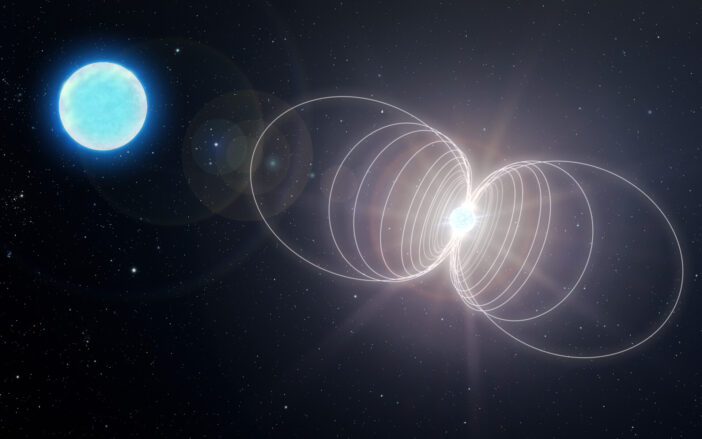
Researchers examine the possibility that one-off and repeating fast radio bursts could both arise from magnetars.
The post A Unified Explanation for Fast Radio Bursts appeared first on AAS Nova.
]]>A discovery that linked a fast radio burst to a magnetar in the Milky Way showed that certain fast radio bursts come from magnetars. A new study explores whether all fast radio bursts could have magnetar origins.
Varied Bursts
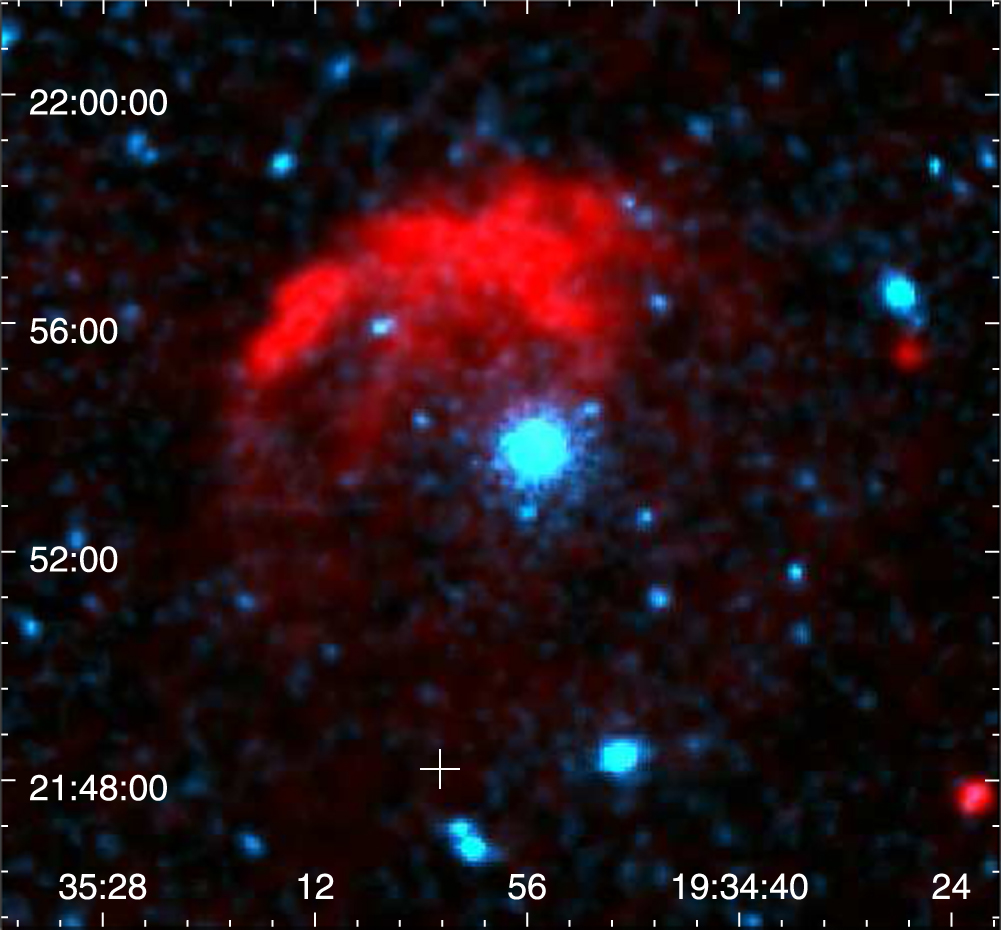
The bright blue source at the center of this X-ray image is SGR 1935+2154, the first magnetar to be associated with a fast radio burst. [Zhou et al. 2020]
In July 2020, astronomers reported the discovery of a fast radio burst likely associated with a magnetar in the Milky Way. This discovery suggested that at least some fast radio bursts come from magnetars, the rapidly spinning, intensely magnetized remnants of certain massive stars. However, it’s still not known whether all fast radio bursts share this origin, or if their varied behaviors can be traced to equally varied origins.
Mystery Solved by Magnetars?
In a recent research article, Bing Zhang (University of Hong Kong; University of Nevada) and Rui-Chong Hu (University of Nevada) set out to explore the possibility that all fast radio bursts have magnetar origins.
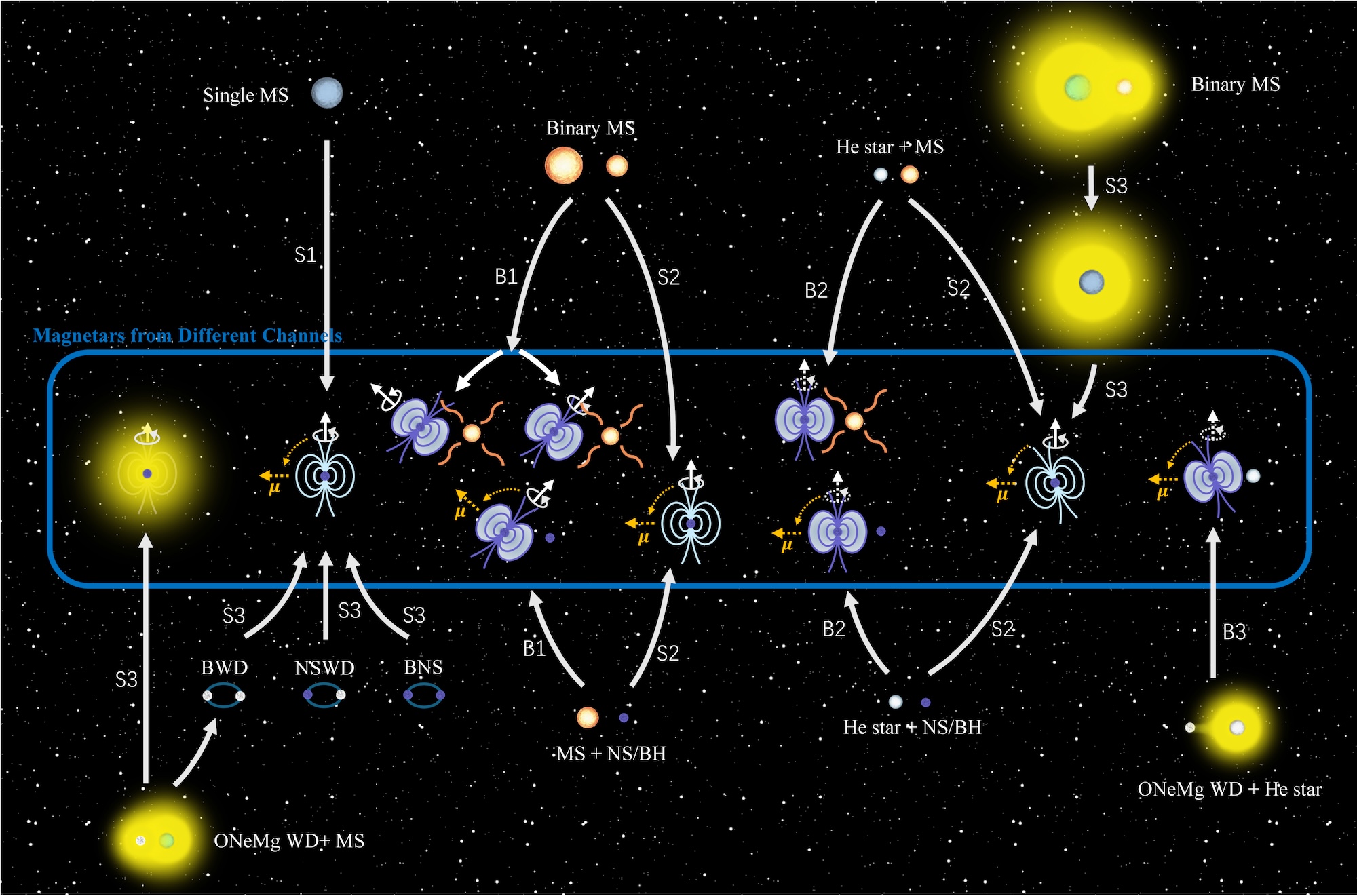
Magnetar formation pathways. The magnetic field lines of isolated magnetars have a black background, while the field lines of magnetars in binary systems have a white background. Click to enlarge. [Zhang & Hu 2025]
The remaining few percent of magnetars reside in binary systems. These coupled-up magnetars largely have companions more than twice as massive as the Sun, though some are paired with helium stars or compact objects.
Multiple Possible Arrangements
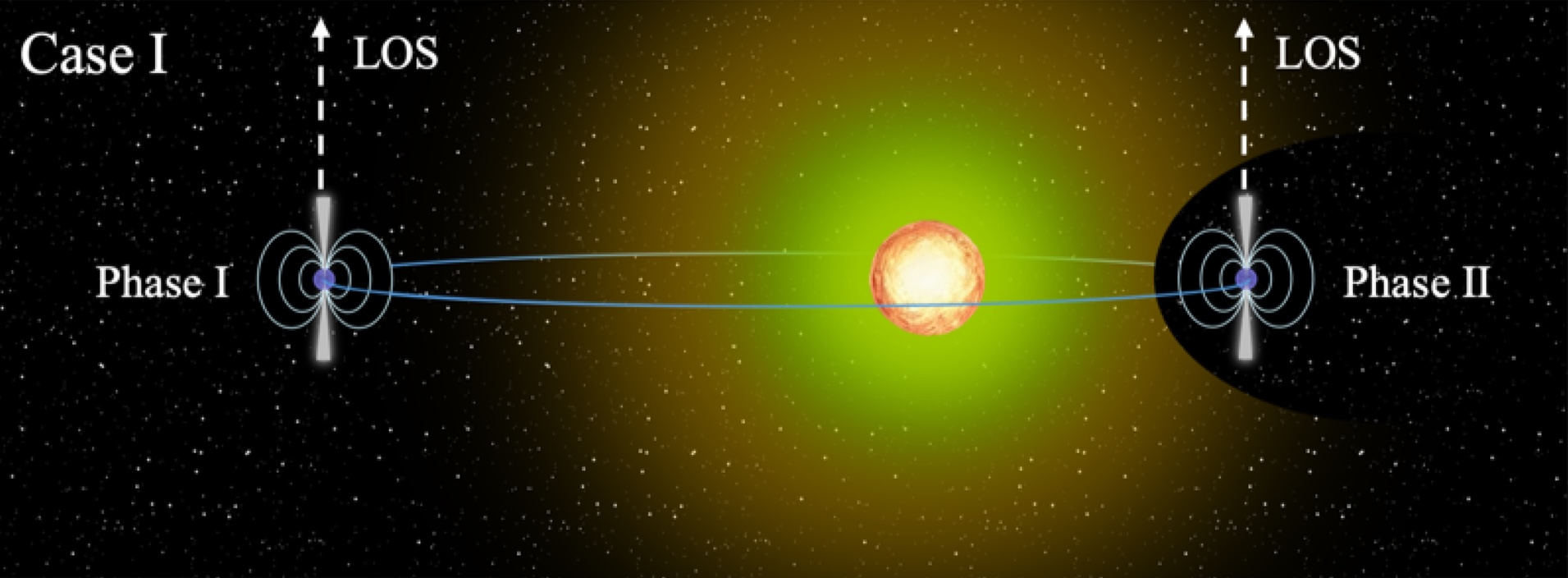
Illustration of a magnetar in a binary system with a star with a stellar wind. As the magnetar moves along its orbit, it encounters differing amounts of stellar wind. This affects the polarization angle of the bursts. Click to enlarge. [Adapted from Zhang & Hu 2025]
In this framework, actively repeating fast radio bursts arise from aligned magnetars in binary systems, while one-off or infrequently repeating bursts come from isolated magnetars or misaligned magnetars in binary systems. Isolated magnetars could also be responsible for some actively repeating bursts, though this ability is likely short lived.
Though this work demonstrates that magnetars could be the source of all fast radio bursts, it doesn’t rule out the possibility that fast radio bursts have diverse origins instead. Further work is needed to explore other pathways and make even more headway on the mystery of fast radio bursts.
Citation
“Magnetars in Binaries as the Engine of Actively Repeating Fast Radio Bursts,” Bing Zhang and Rui-Chong Hu 2025 ApJL 994 L20. doi:10.3847/2041-8213/ae1023
The post A Unified Explanation for Fast Radio Bursts appeared first on AAS Nova.
]]>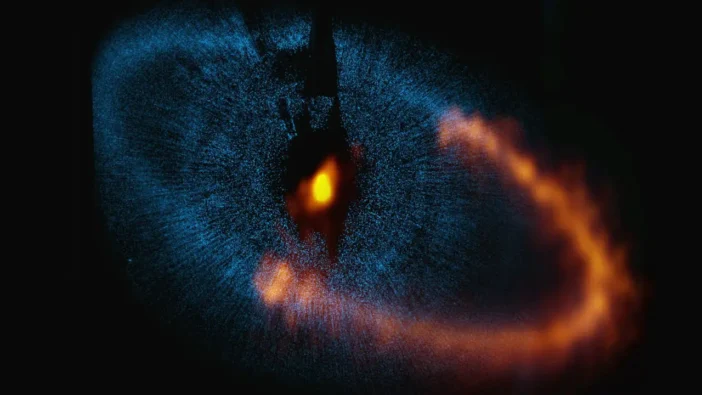
Astrobites reports on the Fomalhaut debris disk, which is well studied but may contain a hidden planet we haven’t seen yet.
The post Michelangelo in Space: A Planet Carving the Fomalhaut Debris Disk? appeared first on AAS Nova.
]]>Editor’s Note: Astrobites is a graduate-student-run organization that digests astrophysical literature for undergraduate students. As part of the partnership between the AAS and astrobites, we occasionally repost astrobites content here at AAS Nova. We hope you enjoy this post from astrobites; the original can be viewed at astrobites.org.
Title: ALMA Reveals an Eccentricity Gradient in the Fomalhaut Debris Disk
Authors: Joshua B. Lovell et al.
First Author’s Institution: Center for Astrophysics | Harvard & Smithsonian
Status: Published in ApJ
Step 1: Understanding How to Carve Your Debris Disk
Let’s start with our solar system: the Kuiper belt, a large ring of icy asteroids, is believed to have been sculpted into its current shape by Neptune. Neptune may have previously scattered objects in the Kuiper Belt through gravitational interactions, but some of them (like Pluto) remain in an orbital resonance with Neptune. In the same way that Neptune shapes the Kuiper Belt, today’s authors believe a planet could be shaping an exo-Kuiper Belt around the star Fomalhaut.
What on Neptune is an orbital resonance, though? A planet orbiting a star has an orbital period, and the gravitational forces between nearby (astronomically speaking) objects can push these objects into a state where their orbital periods are multiples of each other. For example, Pluto and Neptune have a 2:3 orbital resonance, meaning Pluto completes two orbits for every three that Neptune does. The same can happen for the asteroids and planetesimals in the Kuiper Belt, so the same should happen in other star systems!
Step 2: Make Your Observations
If we understand how debris disks carved by exoplanets look — and we think we do — then we should be able to infer the existence of exoplanets! Today’s authors have used observations from the Atacama Large Millimeter/submillimeter Array (ALMA) of the debris disk around Fomalhaut and made some very clever calculations. We’ve known about this disk for a while, which is why today’s authors have studied it with a new analysis technique they developed.
Planeteismals — basically big rocks from a few to hundreds of kilometers across — that orbit in this disk do so with a certain eccentricity, and typically things in the same orbit would have the same eccentricity. But today’s authors were clever — they checked if there was an eccentricity gradient, meaning the planetesimals’ eccentricities depend on their semi-major axis (i.e., the mean orbit radius); we would typically not expect any eccentricity gradient for bodies orbiting a star unperturbed. The authors discovered that the gradient for planetesimals around Fomalhaut is negative, which implies the presence of a planet when you look at the maths behind gravitational interactions between planets and planetesimals.
A negative eccentricity gradient means the planetesimals gather up at the point on the orbit farthest from the star (the apocenter), and since there are more planetesimals in that region, they appear brighter in the ALMA data (see Fig. 1 left); the ring also appears slightly wider. If the eccentricity gradient were positive, the same thing would happen at the point on the orbit closest to the star (the pericenter). The authors term this phenomenon the “eccentric velocity divergence.”
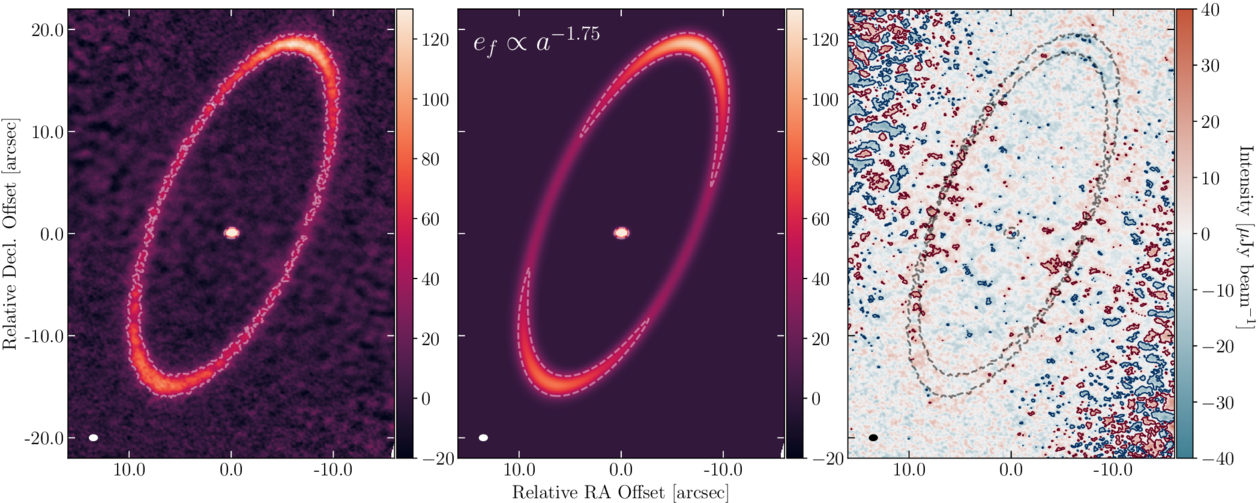
Figure 1: Left: The observed intensity of the Fomalhaut debris disk with ALMA. Middle: the authors’ model that fits the ALMA data the best. Right: The residual (data – model) between model and data. White means there is a close match to the data (which is better). [Lovell et al. 2025]
The authors tested other scenarios with different gradients and allowed for the planetesimals to oscillate their eccentricity around their orbit, but they didn’t find a better-fitting scenario.
Step 3: Find a Carving Planet
Okay, so those were the details. The authors investigated a few scenarios to see what could be causing the observed debris disk and its negative eccentricity gradient, as well as an intermediate ring sitting between the main disk and the star that recently was seen with JWST. The authors tested two scenarios: one where a planet sits between the rings and evacuates the nearby region, and another where a planet is interior to the inner ring and clears the gap through orbital resonances (kind of like Neptune!). An illustration can be seen in Figure 2.
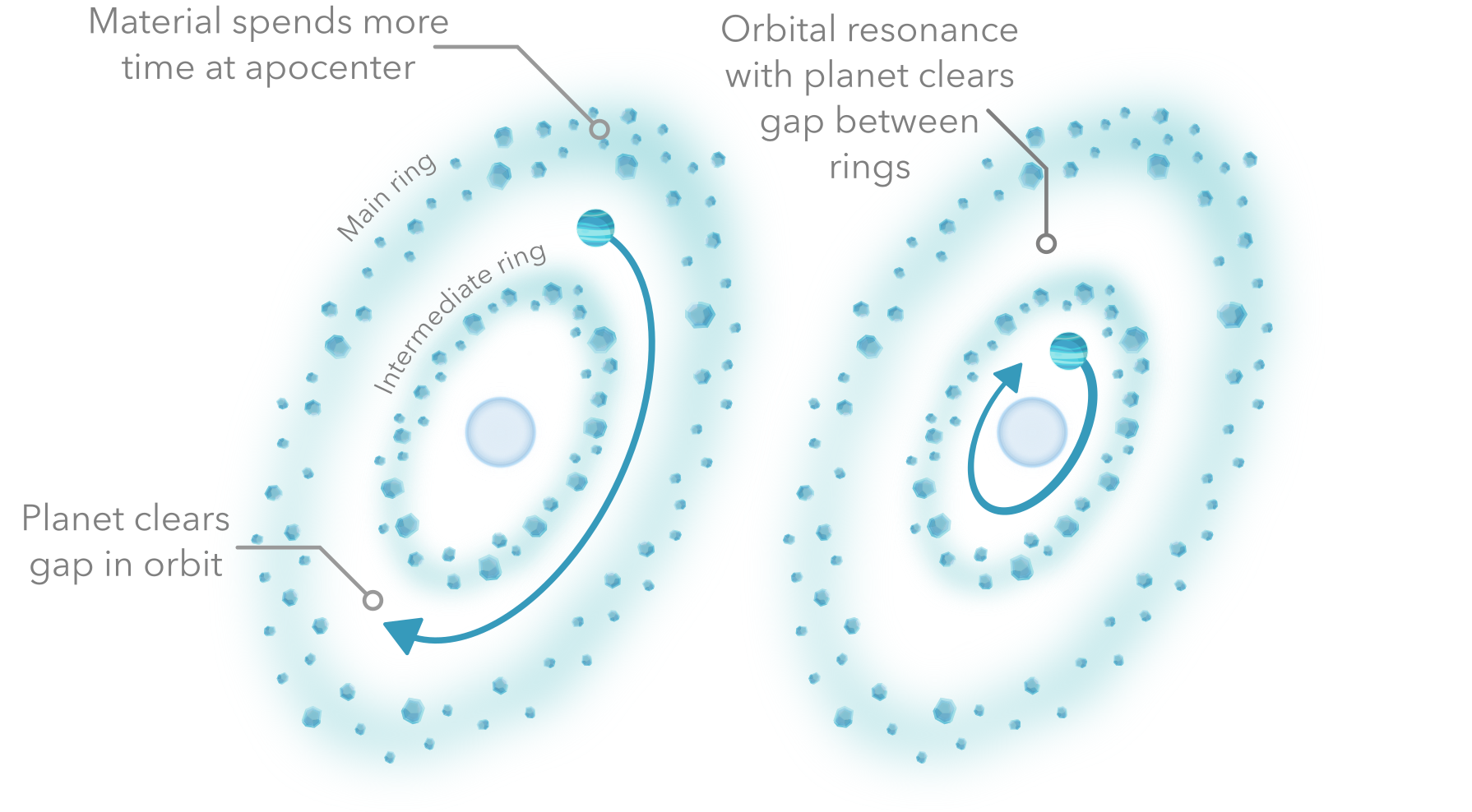
Figure 2: Illustration of possible planet-based scenarios that could create the observed debris disk around Fomalhaut. One features a planet between the observed debris disk rings, and another is where the planet is interior to both and carves the gap with orbital resonances. [J. Williams]
Finally, the authors stress, however, that it might not be a planet causing the observed structure — it could instead be the gravity of the planetesimals in the disk. Unfortunately, existing models are not equipped to explore this scenario, which is why the authors are planning to develop tools to investigate this next.
Original astrobite edited by Sandy Chiu.
About the author, Joe Williams:
I’m a third-year PhD student at the University of Exeter in the UK, and I study protoplanetary discs — mainly the tiny dust grains and their ices! In my spare time, I’m a climber, crocheter, and reader of sci-fi and fantasy books. My favourite sci-fi series is The Expanse!
The post Michelangelo in Space: A Planet Carving the Fomalhaut Debris Disk? appeared first on AAS Nova.
]]>The post EP250108a/SN 2025kg: A Jet-Driven Stellar Explosion Interacting with Circumstellar Material appeared first on AAS Nova.
]]>Researchers find that a shocked cocoon of a collapsar-driven jet choked in an extended circumstellar medium is the most plausible model to explain a supernova that was associated with a fast X-ray transient.
The post EP250108a/SN 2025kg: A Jet-Driven Stellar Explosion Interacting with Circumstellar Material appeared first on AAS Nova.
]]>
An ongoing survey aims to detect bursts of radio emission associated with flares and coronal mass ejections from young Sun-like stars.
The post Featured Image: Studying the Space Weather of Young Suns appeared first on AAS Nova.
]]>This image shows the Owens Valley Radio Observatory Long Wavelength Array (OVRO-LWA), a recently upgraded collection of 352 antennas spanning 2.4 kilometers east of the Sierra Nevada mountain range in California. A research team led by Ivey Davis (California Institute of Technology) recently outlined their survey that uses OVRO-LWA to study space weather on young Sun-like stars. The Study of Space Weather Around Young Suns (SWAYS) uses both OVRO-LWA and a 0.5-meter optical telescope to observe white-light stellar flares and any accompanying low-frequency radio emission from five stars with temperatures of 5000–6000K and ages of 100–800 million years. Though detections of stellar flares are common, the bursts of radio emission associated with flares and coronal mass ejections have yet to be identified conclusively on other stars. Previous studies have focused on M-dwarf stars, whose strong magnetic fields and plasma environments might limit the production of radio bursts, and have lacked the dedicated monitoring needed to detect transient bursts — problems that SWAYS has solved. To learn more about the instrumentation and design behind SWAYS, be sure to check out the research article linked below.
Citation
“A Dedicated System for Coordinated Radio and Optical Monitoring of the Space Weather of Young, Solar-Type Stars,” Ivey Davis et al 2025 ApJ 993 82. doi:10.3847/1538-4357/adfbe9
The post Featured Image: Studying the Space Weather of Young Suns appeared first on AAS Nova.
]]>The post A Galactic Interloper: A Study of the Camelopardis OB1 Association’s Clusters and Its Visitor from the Perseus Arm appeared first on AAS Nova.
]]>What at first appeared to be single group of stars with similar origins is now known to be three separate groups of stars that have converged at the same location from very different areas in our galaxy.
The post A Galactic Interloper: A Study of the Camelopardis OB1 Association’s Clusters and Its Visitor from the Perseus Arm appeared first on AAS Nova.
]]>The post Neutron Star–White Dwarf Merger as One Possible Optional Source of Kilonova-Like Emission: Implications for GRB 211211A appeared first on AAS Nova.
]]>GRB 211211A is a long-duration gamma-ray burst without an associated supernova; its cause is still unknown, and now researchers have shown that a white dwarf–neutron star merger is a possible source.
The post Neutron Star–White Dwarf Merger as One Possible Optional Source of Kilonova-Like Emission: Implications for GRB 211211A appeared first on AAS Nova.
]]>
AT2024wpp is the most powerful fast blue optical transient spotted so far. What do extensive X-ray and radio observations tell us about this event?
The post Investigating the Most Luminous Known Fast Blue Optical Transient appeared first on AAS Nova.
]]>Fast blue optical transients are a rare class of emerging transients, the source of which is not yet known. A recent study of the most luminous known object in this class, AT2024wpp, reveals clues about their identity.
A New Class of Transients
In 2018, a network of robotic survey telescopes spotted a new transient source toward a galaxy 200 million light-years away. It was bright and getting brighter rapidly, rising in just a few days to become 10–100 times brighter than the brightest supernovae.
That transient, AT2018cow, was the first of now tens of known sources like it that are too blue, too rapidly evolving, and too luminous to be ordinary supernovae. Despite the growing number of luminous fast blue optical transients (FBOTs) discovered, exactly what causes them is still up for debate.
Brightest of the Bright
Enter AT2024wpp: the most luminous known fast blue optical transient to date. In about a month and a half, this record-breaking event radiated away more than 1044 Joules — which is roughly equivalent to the Sun’s radiative output over 8 billion years. Nayana A. J. (University of California, Berkeley) and collaborators carried out an extensive multi-wavelength observing campaign to track the behavior of AT2024wpp from 2 to 280 days after it was first discovered, making it only the second FBOT to undergo such detailed study. This research article describes the team’s findings at radio and X-ray wavelengths.
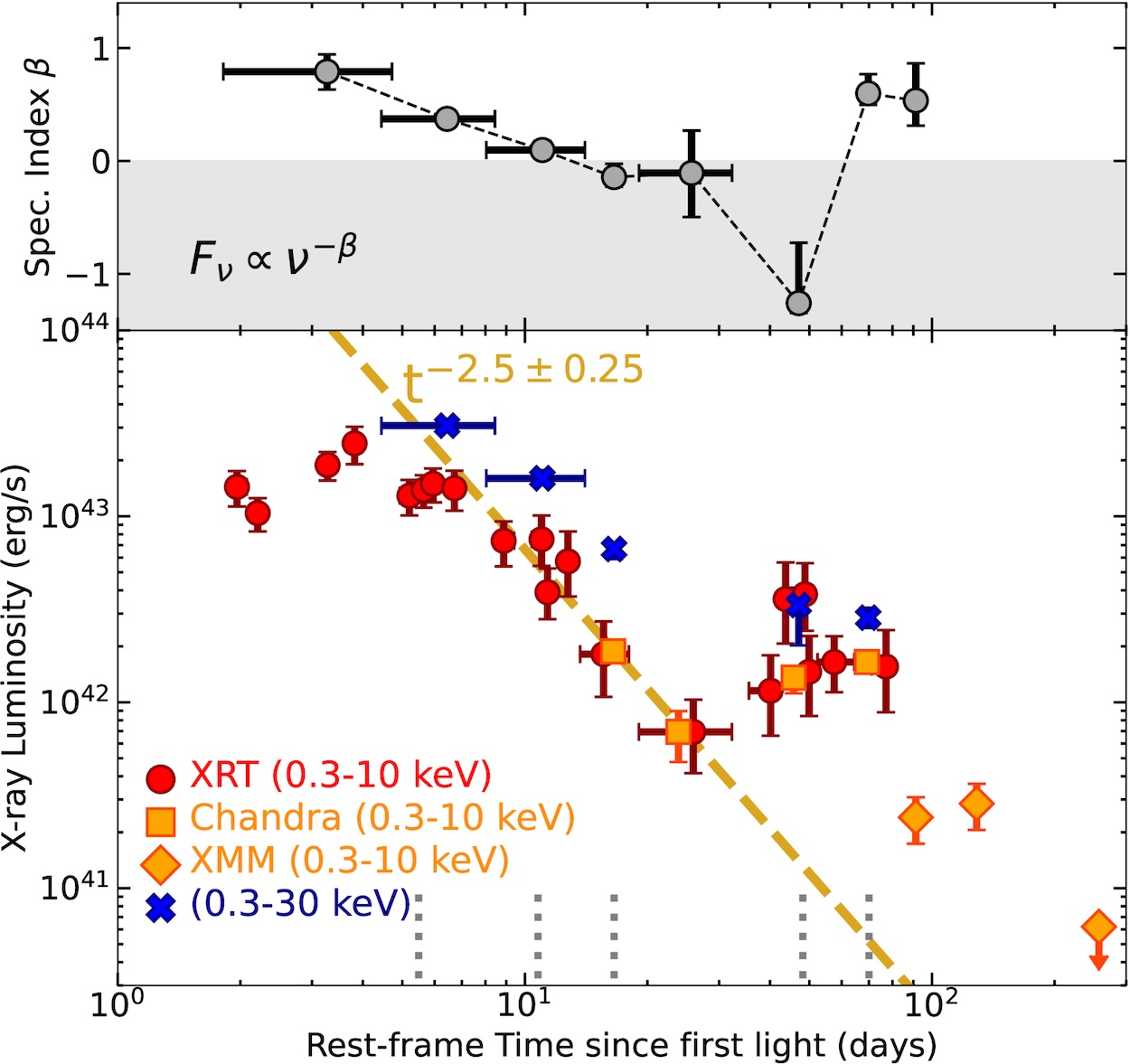
X-ray behavior of AT2024wpp. The top plot demonstrates the hardening of the spectral index (i.e., shifting toward higher energies) around the peak at 50 days. Click to enlarge. [Nayana A. J. et al. 2025]
These observations revealed that AT2024wpp’s X-ray emission remained bright and constant for 7 days before plummeting until day 30. The emission then rocketed up again, peaking at day 50, and shifted toward higher energies. Finally, things settled down to a lower brightness around day 75. In the radio, AT2024wpp’s behavior was complex, showing a never-before-seen meteoric rise at millimeter wavelengths around 17–32 days.
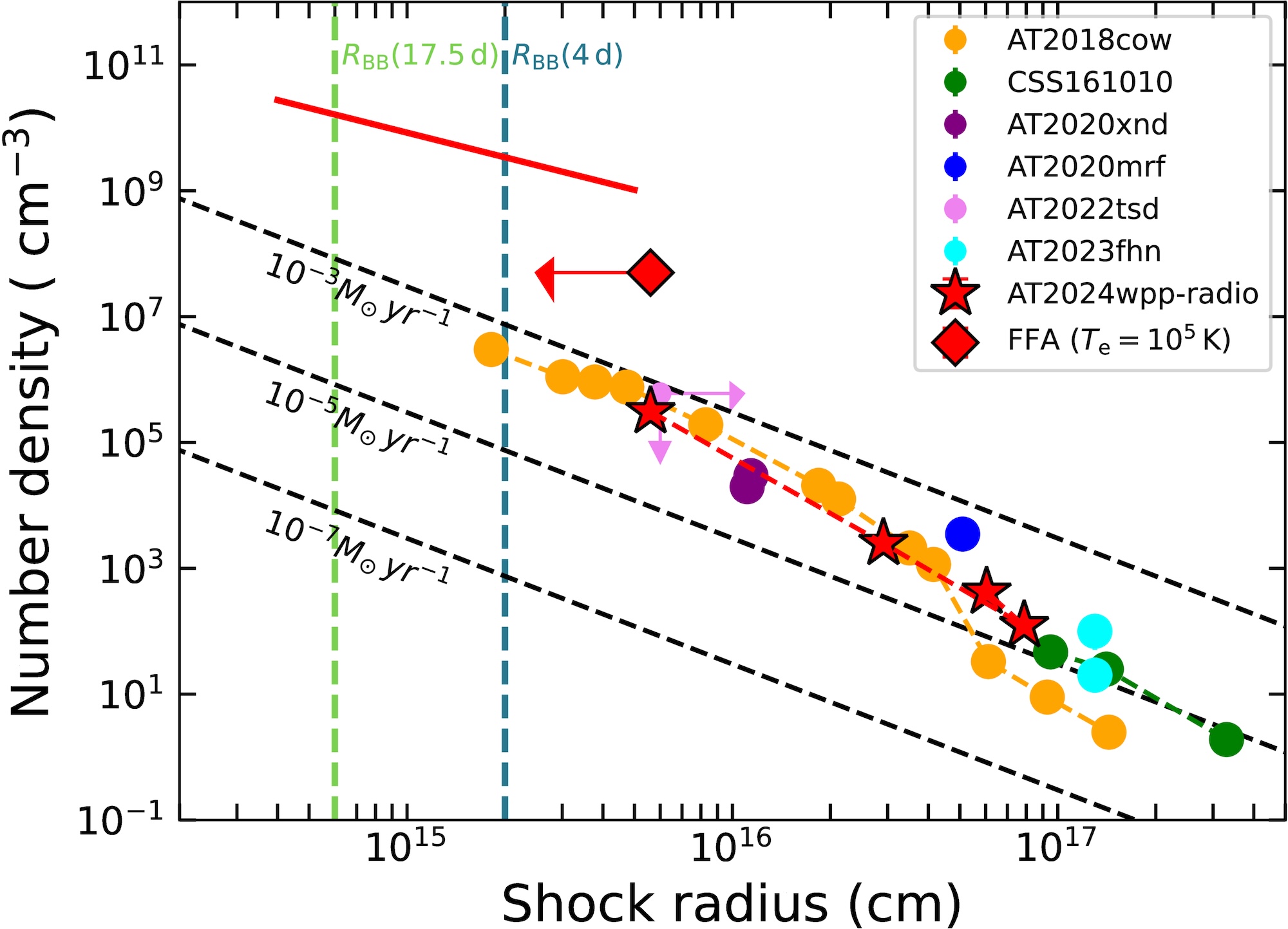
Comparison of the density of the material surrounding AT2024wpp (red stars) and other FBOTs. Click to enlarge. [Nayana A. J. et al. 2025]
Possible Scenarios
Based on these observations, the team favors a scenario involving a central compact object — a black hole or a neutron star — that is rapidly accreting matter from its surroundings. This accretion powers outflows that accelerate to more than 40% the speed of light and send a shock through dense material around the system. Notably, the team found that the density of the surrounding material is similar among FBOTs that have bright radio emission, including AT2024wpp. This suggests that similar processes are responsible for setting up these events.
The team pointed to two scenarios from the literature that are compatible with their data. In the first, a newborn neutron star or black hole collides with a stellar companion, ripping the star apart and accreting its remains. In the second, a Wolf–Rayet star (a massive star that has shed much of its atmosphere and is nearing its eventual end as a supernova) is tidally disrupted by a neutron star or a black hole. Though it’s not possible to narrow the possibilities further, the immense energies involved tilt things in favor of a black hole rather than a neutron star.
Though FBOTs remain mysterious, additional multi-wavelength studies like this one can help to illuminate their origins. And with the Ultraviolet Transient Astronomy Satellite (ULTRASAT) and UltraViolet EXplorer (UVEX) missions slated to launch within the next five years, we can expect many more FBOT discoveries in the near future.
Citation
“The Most Luminous Known Fast Blue Optical Transient AT 2024wpp: Unprecedented Evolution and Properties in the X-Rays and Radio,” Nayana A. J. et al 2025 ApJL 993 L6. doi:10.3847/2041-8213/ae0b4d
The post Investigating the Most Luminous Known Fast Blue Optical Transient appeared first on AAS Nova.
]]>The post The Ongoing Decline in Activity of Comet 103P/Hartley 2 appeared first on AAS Nova.
]]>Comet 103P/Hartley 2’s brightness has been in decline since 1991, and researchers have inferred that the comet’s active fraction has decreased by an order of magnitude in that time.
The post The Ongoing Decline in Activity of Comet 103P/Hartley 2 appeared first on AAS Nova.
]]>The post A 13 Billion Year View of Galaxy Growth: Metallicity Gradient Evolution from the Local Universe to <em>z</em> = 9 with JWST and Archival Surveys appeared first on AAS Nova.
]]>Analysis of metallicity gradients out to a redshift of z = 9 suggests that galaxy growth proceeded “inside out” during cosmic dawn, then shifted to enhanced gas mixing during cosmic noon.
The post A 13 Billion Year View of Galaxy Growth: Metallicity Gradient Evolution from the Local Universe to <em>z</em> = 9 with JWST and Archival Surveys appeared first on AAS Nova.
]]>
Researchers show how preferential accretion in a merging pair of supermassive black holes can explain the unexpectedly large amplitude of the gravitational wave background.
The post Boosting the Gravitational Wave Background appeared first on AAS Nova.
]]>The gravitational wave background — the constant, low-frequency hum of colliding supermassive black holes across the universe — seems to have a larger amplitude than expected. Can preferential accretion explain why?
Larger than Expected
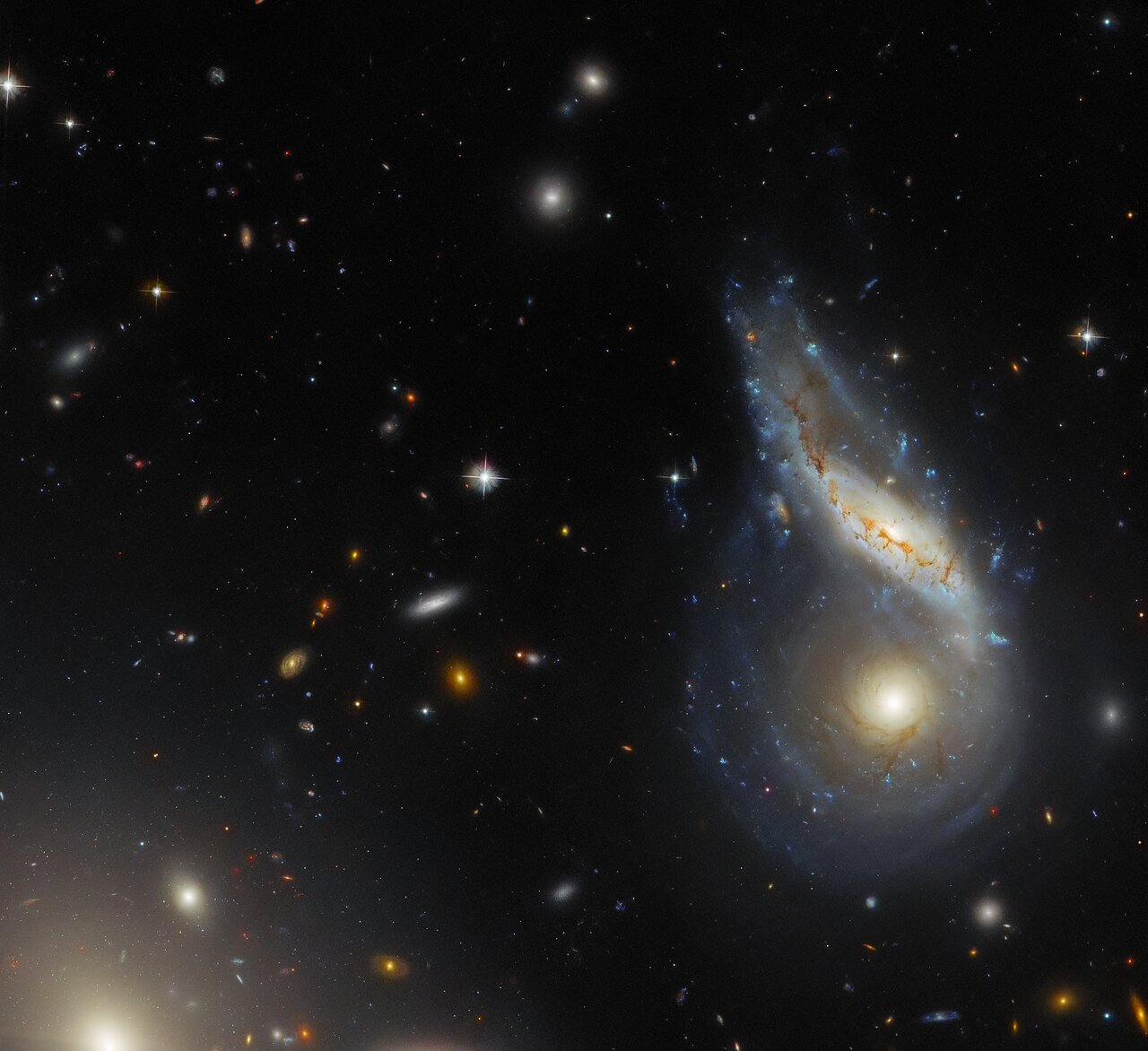
The peculiar galaxy Arp 122, shown here in a Hubble Space Telescope image, is in the process of merging. When two galaxies merge, the supermassive black holes at their centers eventually merge as well. [ESA/Hubble & NASA, J. Dalcanton, Dark Energy Survey/DOE/FNAL/DECam/CTIO/NOIRLab/NSF/AURA; Acknowledgement: L. Shatz; CC BY 4.0]
Though some researchers have invoked new physics to explain this discrepancy, all that may be required is an adjustment to our understanding of the supermassive black hole binary population in our universe. In a recent research article, Julia Comerford (University of Colorado Boulder) and Joseph Simon (University of Colorado Boulder; Oregon State University) tackled one of the underlying assumptions about the masses of merging supermassive black holes.
Preferential Accretion Pathway
When supermassive black holes merge, the strength of the gravitational wave signal depends on how similar the black holes were in mass; merging equal-mass black holes produce stronger signals than mismatched black holes do. What if, Comerford and Simon proposed, the masses of merging supermassive black holes scattered across the universe are more similar than previously thought?
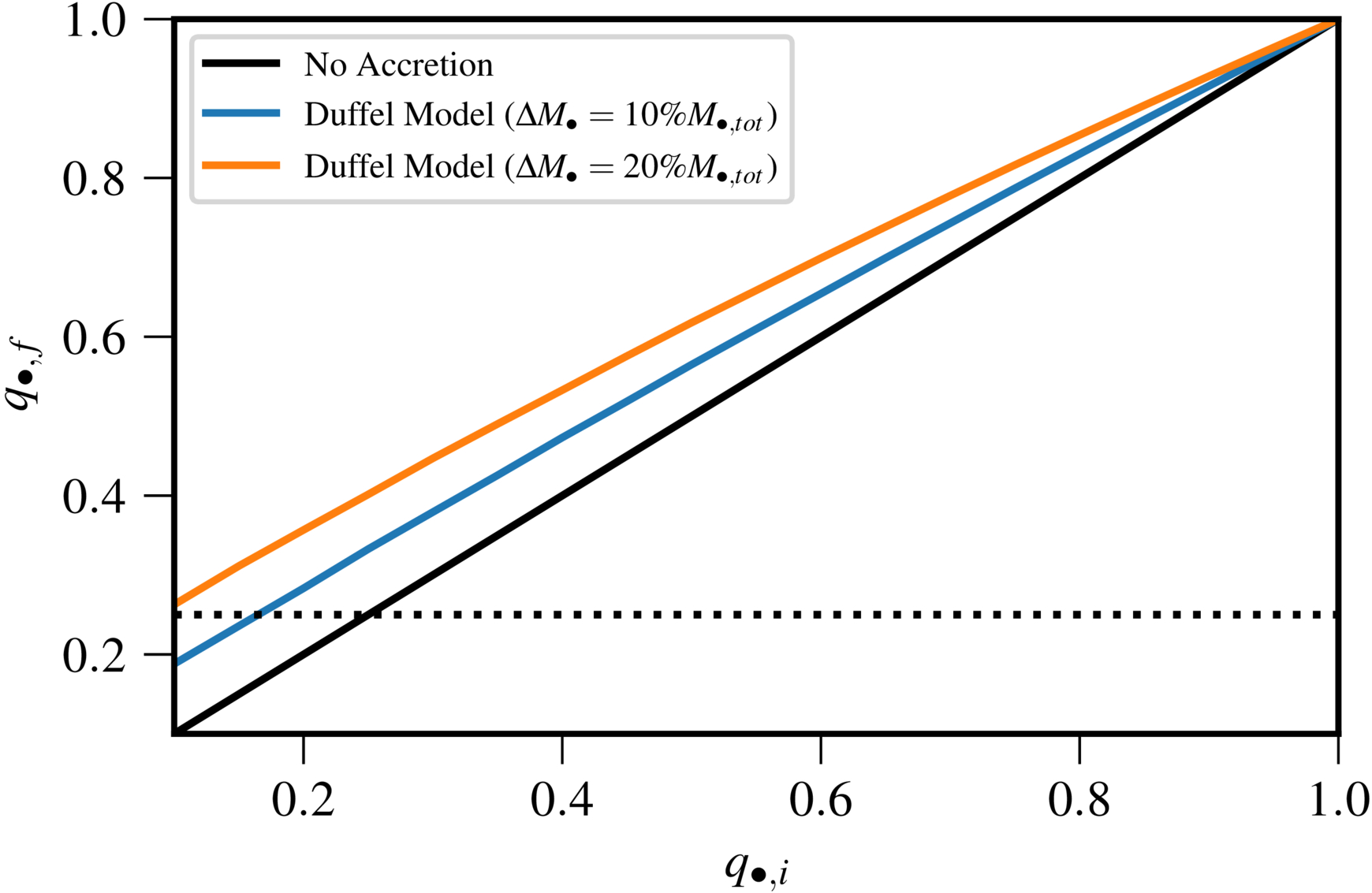
The initial and final black hole mass ratio, q. The blue and orange lines show a 10% and 20% increase in the total mass of the binary, respectively. The dotted line divides major mergers (q ≥ 0.25) and minor mergers. [Comerford & Simon 2025]
What’s more, it appears that the smaller of the two black holes tends to pack on more mass, meaning that the masses of the black holes grow more similar as they wind toward a merger. (This somewhat counterintuitive result arises because the smaller of the two black holes encounters more gas as it spirals inward.)
Boosting the Signal
If accretion tends to even out the masses of the binary members, is the resulting increase in signal strength large enough to explain the observed amplitude of the gravitational wave background?
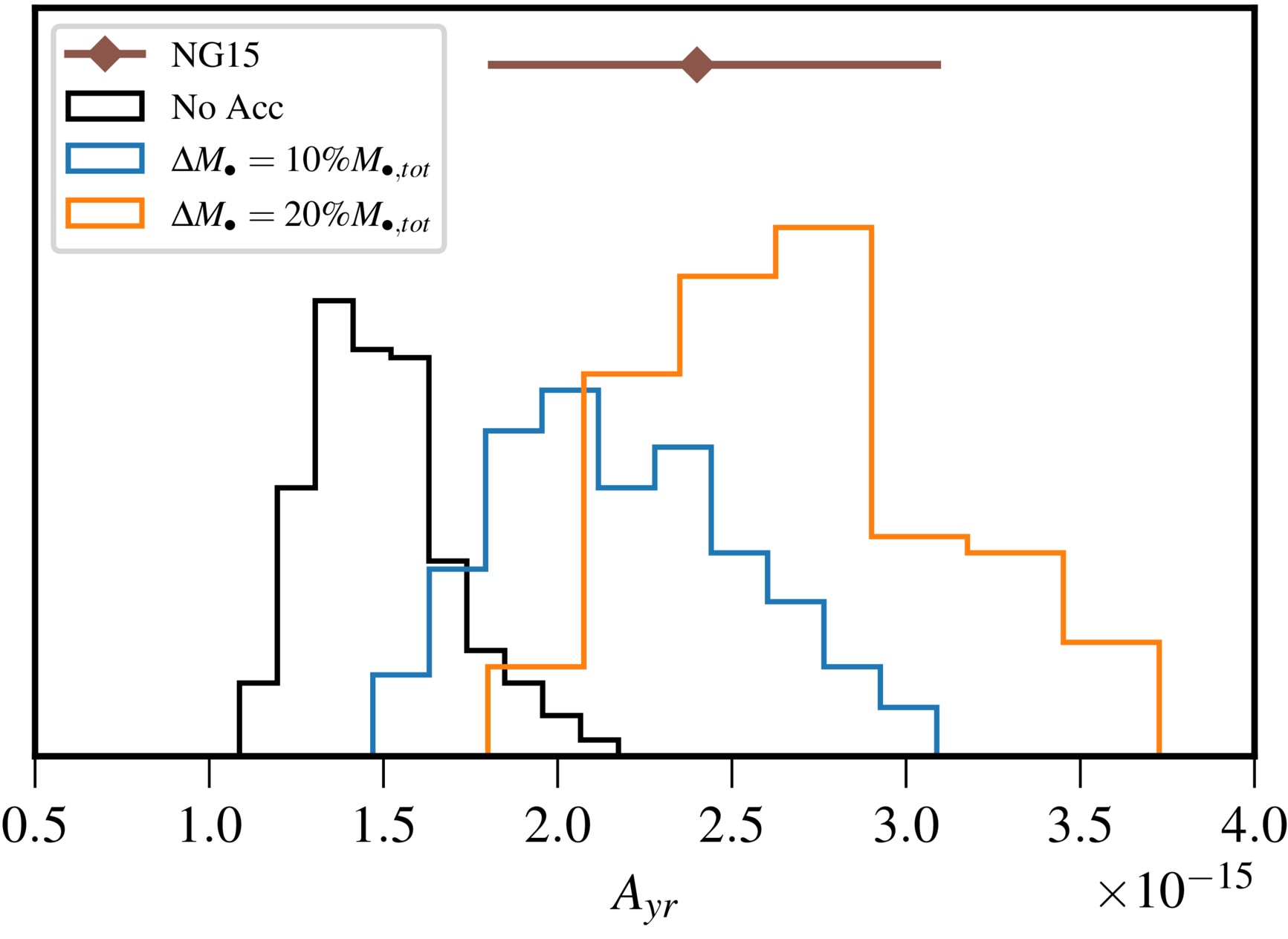
Probability distribution functions for the calculated gravitational wave background amplitude for different accretion conditions. The brown diamond shows the median amplitude from the NANOGrav data set. [Adapted from Comerford & Simon 2025]
The signal-boosting effect from preferential accretion may be especially important if the binary evolution timescale — the time it takes for black holes approaching a merger to reach a separation at which their gravitational waves become accessible to pulsar timing arrays — is longer than the estimated 1.8 billion years. At longer timescales, models without this accretion become entirely inconsistent with observations. Future research that examines the masses and accretion rates of supermassive black holes as they approach make their way toward a merger can provide further clues to the role of preferential accretion.
Citation
“Preferential Accretion onto the Secondary Black Hole Strengthens Gravitational-Wave Signals,” Julia M. Comerford and Joseph Simon 2025 ApJ 994 168. doi:10.3847/1538-4357/ae1133
The post Boosting the Gravitational Wave Background appeared first on AAS Nova.
]]>The post The Unexplored Dusty Nova LMCN 2009-05a in the Large Magellanic Cloud appeared first on AAS Nova.
]]>Using detailed spectra and photometry, researchers determine that LMCN 2009-05a is a moderately fast D-class nova, signaling the formation of dust during its outburst.
The post The Unexplored Dusty Nova LMCN 2009-05a in the Large Magellanic Cloud appeared first on AAS Nova.
]]>
Astrobites reports on simulations that explore whether a baby neutron star repeatedly diving into the envelope of its inflated companion star could be the cause of bumpy supernova light curves.
The post Bumpy Road Ahead: Can Binary Interactions Make Supernovae Periodically Brighter? appeared first on AAS Nova.
]]>Editor’s Note: Astrobites is a graduate-student-run organization that digests astrophysical literature for undergraduate students. As part of the partnership between the AAS and astrobites, we occasionally repost astrobites content here at AAS Nova. We hope you enjoy this post from astrobites; the original can be viewed at astrobites.org.
Title: Supernova-Induced Binary-Interaction-Powered Supernovae: A Model for SN2022jli
Authors: Ryosuke Hirai (平井遼介) et al.
First Author’s Institution: RIKEN Pioneering Research Institute, Monash University, OzGrav: The ARC Centre of Excellence for Gravitational Wave Discovery
Status: Published in ApJ
There are thousands of dying stars that go bang in the night. These explosions are known as supernovae, and they are classified primarily on what spectral lines they show in the days and weeks following their initial explosion. Most broadly, they are separated into Type I (spectra that show little or no evidence of hydrogen) and Type II (spectra that show hydrogen). The physics leading to each type of supernova is different, and astronomers use all of the information at their disposal to learn about these cosmic fireworks.
One of the most useful tools for monitoring and learning about a supernovae is its light curve — the plot of the explosion’s brightness over time. This light curve usually appears as a steep incline up to a peak in brightness several days after the initial detonation, and then a shallow decline in brightness over the following weeks. There are, however, a few examples of supernovae that break this mould.
Today’s article seeks to understand the curious case of supernova SN2022jli. Unlike the typical gradual fade in brightness, the light curve of this supernova shows a periodic bump of brightness every 12.5 days (see Figure 1). The proposed mechanisms to explain this include the blown-apart supernova material interacting with concentric and regularly spaced shells of circumstellar matter, or a binary companion that interacts with the supernova remnant each orbital period. The authors of today’s article investigate the latter scenario by running 3D hydrodynamical simulations of an interacting, post-supernova binary to try to recover SN2022jli’s periodic light curve and constrain the orbital characteristics of the system.
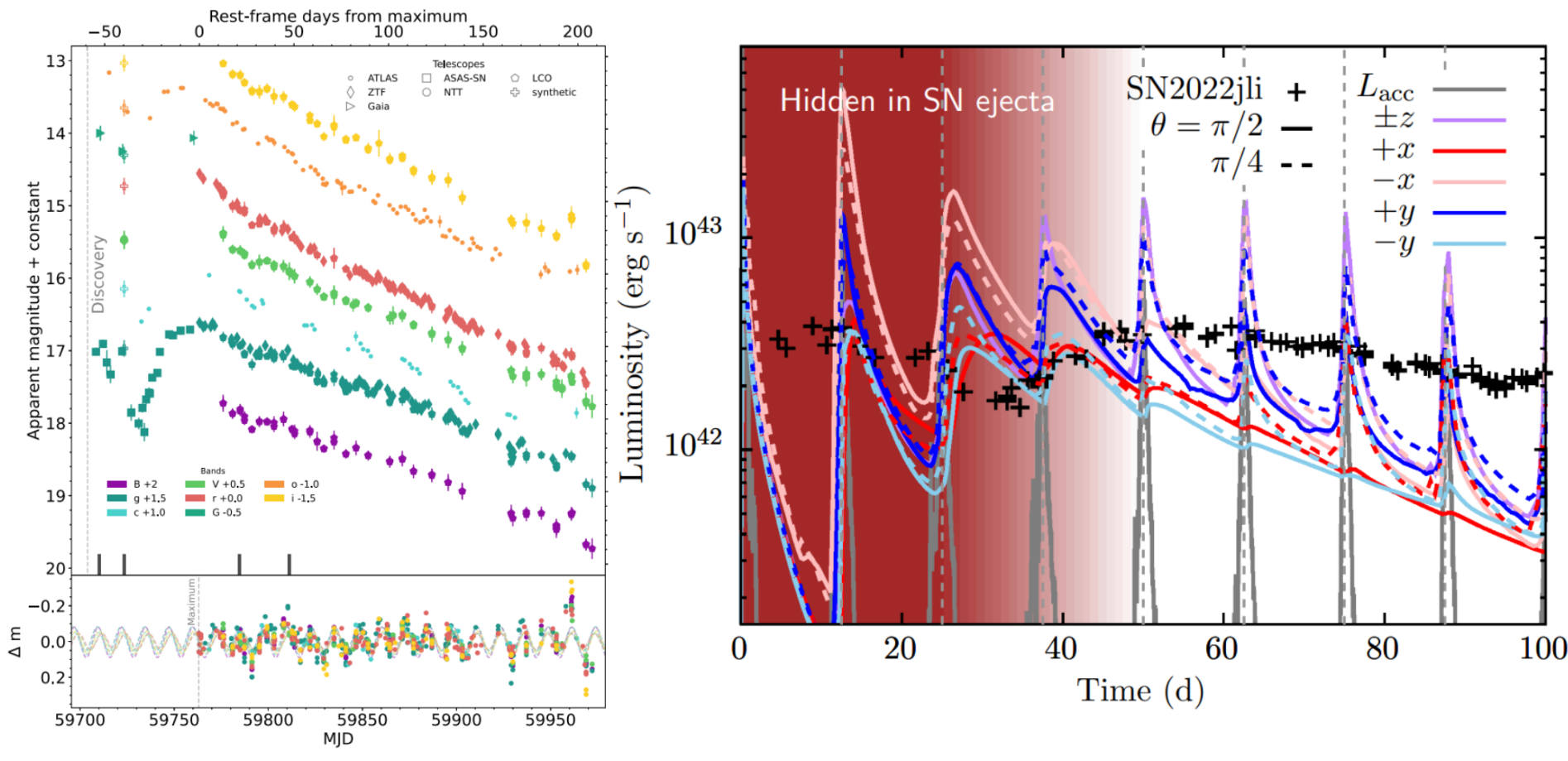
Figure 1: The light curve of SN2022jli shows periodic oscillations in the brightness, superimposed on top of the typical fading luminosity of a supernova. The left plot shows the light curve across various colours, and the associated bottom panel shows the oscillations with the typical fading supernova signal subtracted. The right plot shows the light curve of the authors’ proposed mechanism, where the different coloured lines are for different viewing angles on the system at the heart of the supernova. [Moore et al 2023 (left) and Hirai et al. 2025 (right)]
Why a neutron star? SN2022jli is a sub-class of Type I supernovae involving a “stripped” massive star which has lost its hydrogen — most likely through interactions with a close companion. These interactions typically circularise the pre-supernova orbit, and the subsequent explosion most commonly yields neutron stars. To explain the necessarily highly eccentric post-supernova orbit that may cause the periodic oscillation in SN2022jli, there was most likely a “natal kick” — a sudden and asymmetric burst during the supernova that rockets the neutron star in a random direction — which widened the orbit and de-circularised it, giving further evidence for a neutron star remnant.
Immediately following the supernova explosion, ejecta interacting with the main-sequence companion star would heat the star and cause it to swell up. This inflated companion then feeds matter to the orbiting dense neutron star, and the accretion is most intense when the stars are closest in their orbit (called the periastron). During accretion, however, mass is not perfectly absorbed onto the neutron star, and there is some feedback onto the surrounding gas due to the complex thermal and magnetic physics around the neutron star. In this study, the authors model cases where there is no feedback, feedback from thermal radiation due to accretion, or feedback from bipolar outflows via jets or disk winds. Snapshots from the simulation involving a 5-solar-mass companion on an orbit with eccentricity of 0.5 and bipolar feedback is shown in Figure 2.
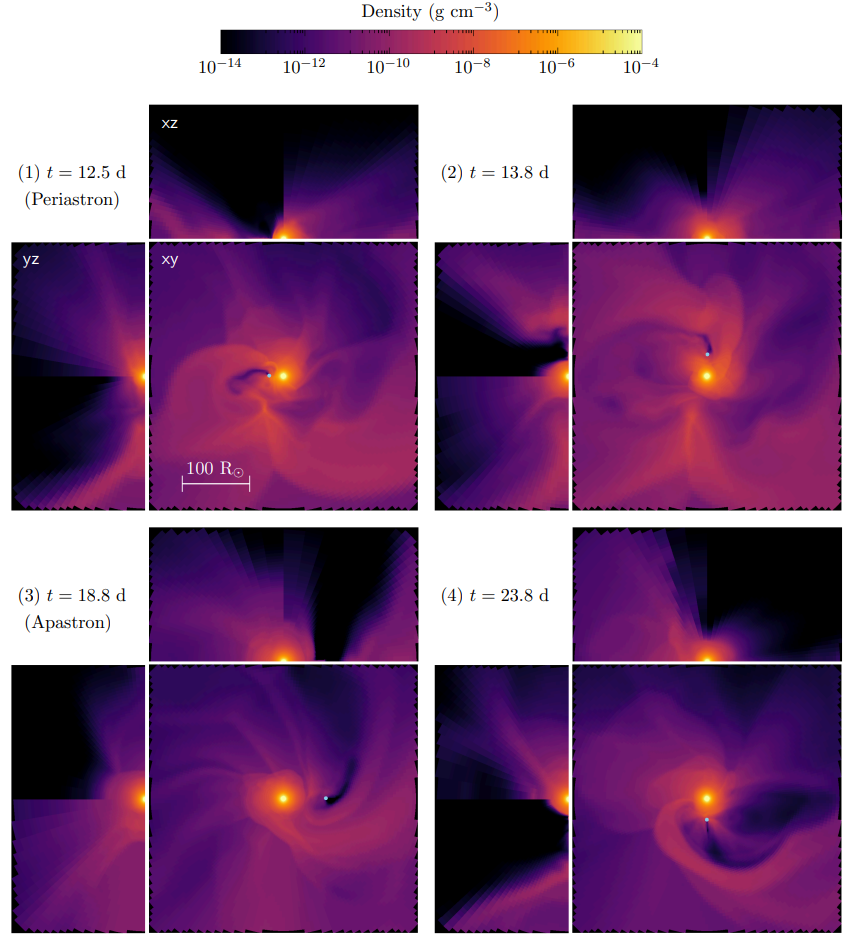
Figure 2: Several density snapshots of the 3D hydrodynamic simulations show how the neutron star (blue point) in the binary accretes and sculpts matter from the inflated main-sequence companion star (bright diffuse blob in the centre of each panel). The xy panels are a top-down look onto the orbital plane, while the xz and yz panels show a cross section through the plane. [Hirai et al. 2025]
SN2022jli is just one of an emerging class of oscillatory supernovae, with more and more being discovered with highly sensitive modern all-sky surveys. Today’s authors rigorously modelled one proposed scenario to explain this periodic oscillation in brightness and showed that it is viable. More modelling using this interacting-binary mechanism on other oscillating supernova light curves — those with longer periods and different supernova classifications — will show whether this explanation is ubiquitous, or if the population of dancing supernova light curves is due to some other process!
Original astrobite edited by Anavi Uppal.
About the author, Ryan White:
I am a masters student at Macquarie University in Australia, working mainly on binary/multiple systems with massive stars (Wolf–Rayets in particular!). Outside of study, I’m a novice film buff, baking sourdough all the time, probably drinking coffee, and trying to get more into reading and frisbee/squash. You can also find me procrastinating on Bluesky @astroryan.bsky.social.
The post Bumpy Road Ahead: Can Binary Interactions Make Supernovae Periodically Brighter? appeared first on AAS Nova.
]]>The post Understanding the Magnetic Field and Plasma-β Along Umbral Fan Loops Traced Using 3 Minute Slow Waves appeared first on AAS Nova.
]]>Researchers demonstrate that 3-minute slow waves could be used to probe isolated loops and determine the plasma beta — the balance between magnetic and thermal pressure — along these loops.
The post Understanding the Magnetic Field and Plasma-β Along Umbral Fan Loops Traced Using 3 Minute Slow Waves appeared first on AAS Nova.
]]>
Researchers have investigated how solar flares might signal that they're about to occur and whether they'll be accompanied by an explosion of plasma.
The post How Solar Flares Hint That They’re About to Happen appeared first on AAS Nova.
]]>Forecasting solar flares is one of the major challenges facing solar physicists today. New research finds that non-thermal emission can precede a solar flare by more than an hour, and this early emission may signal whether the flare will be accompanied by an explosion of plasma.
Flare Flavors
The Solar & Heliospheric Observatory (SOHO) took this coronagraphic image of a coronal mass ejection on 20 April 1998. [SOHO (ESA & NASA)]
Both solar flares and coronal mass ejections can disrupt everyday life on Earth, with flares knocking out radio communications and coronal mass ejections threatening spacecraft electronics and power grids. Given these real-life risks, as well as the potential for probing the physics behind the activity on the Sun and other stars, it’s critical to be able to identify signs of upcoming flares.
Looking at the Lead-Up
Luckily, there’s growing evidence that the Sun sends out subtle signals that a flare is soon to happen. One early sign of an impending flare is an increase in the non-thermal velocity of the plasma at the flare’s location. This phenomenon has been spotted in individual flares, but it hasn’t been studied and characterized for a large sample of flares — until now.
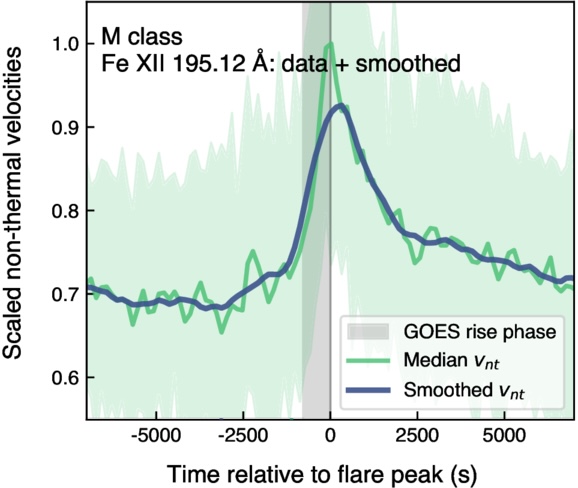
Demonstration of the increase in non-thermal velocity seen in an M-class flare compared to the onset and rise time of the soft X-ray flux (gray shaded area). [Adapted from To et al. 2025]
Of the flares in the sample, 83% were moderately powerful C-class flares, 18% were stronger M-class flares, and 1% were the most powerful X-class flares. To’s team identified a clear trend across all types of flares: the non-thermal velocity increases 4–25 minutes before the flare’s X-ray emission begins to rise, peaks when the X-ray emission peaks, and decays as the flare decays. The team found some evidence that for smaller flares, the velocity increase begins in spectral lines that trace cooler plasma before spreading to lines probing hotter plasma, but more work is needed to confirm this trend.
More Details
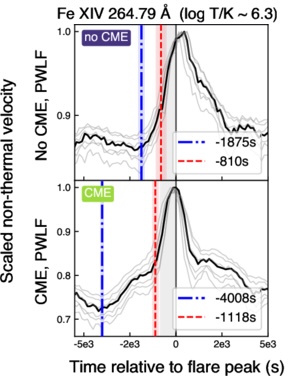
Examples of flares with and without coronal mass ejections. [Adapted from To et al. 2025]
These results suggest that changes in the non-thermal velocity of solar plasma can not only signal when and where a flare is likely to arise, but also whether the flare will be accompanied by a potentially destructive coronal mass ejection. Upcoming missions like the Multi-slit Solar Explorer and SOLAR-C will give an even better view of the early stages of solar flares, helping to illuminate the physics behind them and enhancing our ability to forecast them.
Citation
“Systematic Nonthermal Velocity Increase Preceding Soft X-Ray Flare Onset: A Large-Scale Hinode/EIS Study,” Andy S. H. To et al 2025 ApJ 993 102. doi:10.3847/1538-4357/ae07de
The post How Solar Flares Hint That They’re About to Happen appeared first on AAS Nova.
]]>
Astrobites reports on efforts to understand how the variability of certain variable stars changes over time.
The post The Times They Are A-Changin’: Searching for Shifts in Variable Star Light Curves appeared first on AAS Nova.
]]>Editor’s Note: Astrobites is a graduate-student-run organization that digests astrophysical literature for undergraduate students. As part of the partnership between the AAS and astrobites, we occasionally repost astrobites content here at AAS Nova. We hope you enjoy this post from astrobites; the original can be viewed at astrobites.org.
Title: Search for the Blazhko Effect in Field RR Lyrae Stars Using LINEAR and ZTF Light Curves
Authors: Ema Donev and Željko Ivezić
First Author’s Institution: XV. Gymnasium (MIOC)
Status: Published in AJ
RR Lyrae stars are a class of pulsating variable stars — similar to better-known Cepheid variables — that sit on the horizontal branch of the Hertzsprung–Russell diagram. Because of the regularity with which they pulsate, these stars are useful for a number of scientific applications, including standard-candle distancing (helping astronomers set the scale of distances in the universe) and as probes of very old star formation in nearby populations (because most RR Lyrae stars are at least 10 billion years old).
Today’s article studies the Blazhko effect in RR Lyrae stars. Simply put, the Blazhko effect is a long-term change of the duration (period) or strength (amplitude) of pulsation in some RR Lyrae variables. Fig. 1 shows an example from today’s article. While this effect was first observed as early as 1907, the physical mechanism for Blazhko modulation is still formally unknown, as is the percentage of RR Lyrae stars that exhibit it. Broadly speaking, there are three explanations for this effect: 1) nonlinear resonance between a star’s primary pulsation mode and some higher-level pulsation, 2) magnetic influence, or 3) cycles in the convection activity.
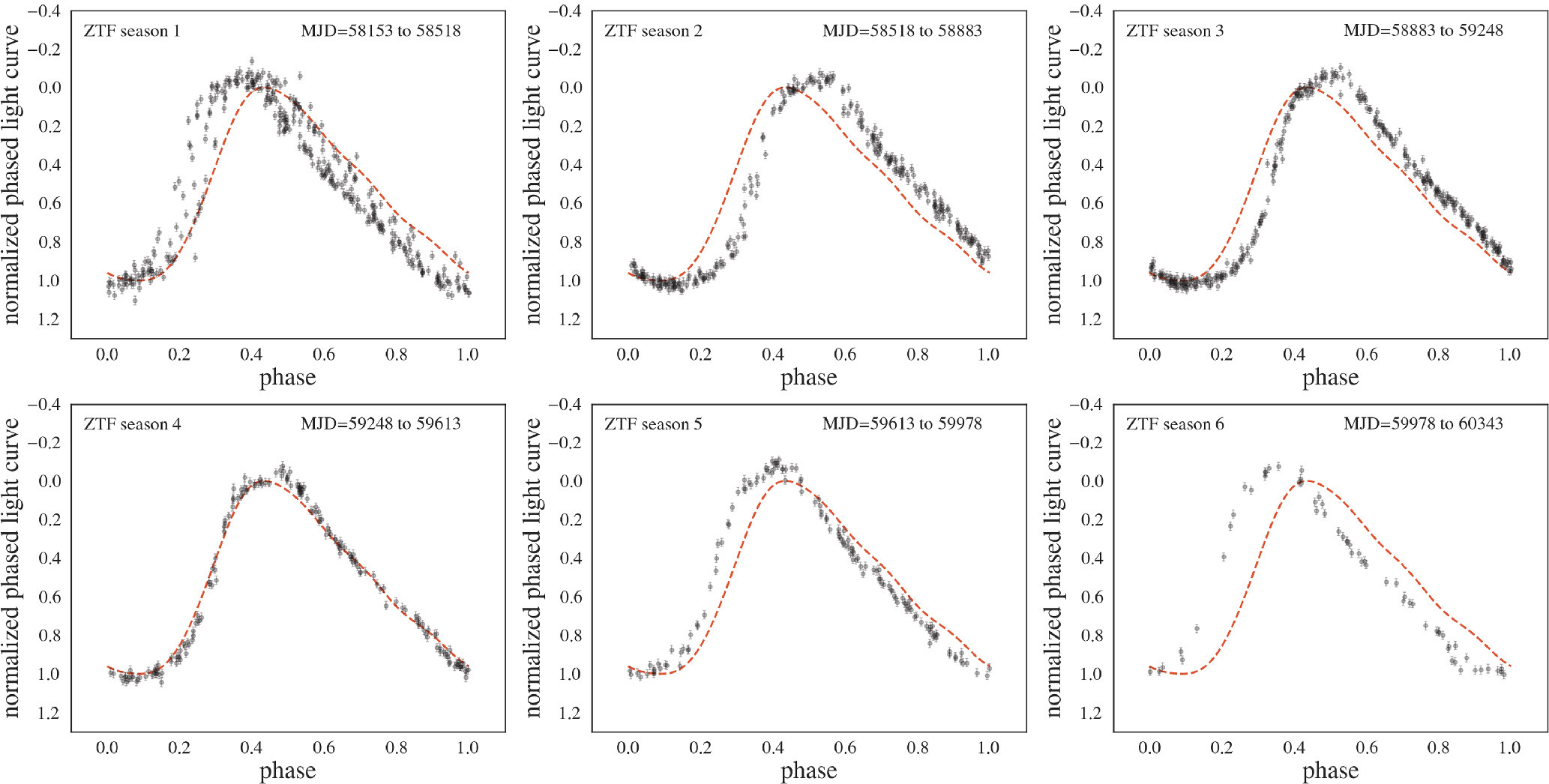
Figure 1: An example of the Blazhko effect. Each panel shows data from ZTF for the same source for different seasons (at different times). The best-fit pulsation model for the total data set is shown in red. Over time, the actual pulsation of the source (black data) varies significantly from the average best fit due to Blazhko modulation. [Adapted from Donev and Ivezić 2025]
From this initial set of RR Lyrae stars, today’s article identifies 531 potential Blazhko star candidates that are moved on to a visual inspection step. In order to identify the candidates for visual inspection, the authors establish two pre-selection methods based on the direct light curve and periodogram for each source:
- Light curve selection works by algorithmically assigning a score to each source, with higher scores indicating a greater expectation that the source is a Blazhko RR Lyrae star. The scores are associated with best-fit pulsation models. One way a given source could earn points was by having a very high reduced χ2 statistic in one or both data sets. Blazhko modulation changes the characteristics of the pulsations over time, meaning the best-fit model will be a poor fit to many of the pulsations within one or both data sets. Generally, poorer fits mean higher reduced χ2 values. In addition, candidates could earn points by having a moderately high reduced χ2 statistic in one or both data sets, as well as a significant change in pulsation characteristics of the best fit model from one data set to the next. Such a change between data sets is an indication of long-term Blazhko modulation. From this 479 of the 531 candidates are identified.
- Periodogram selection works by looking for interactions between the primary pulsation and Blazhko frequencies. First, the authors create a periodogram for the time-series data. In short, a periodogram plots a number of possible frequencies (or periods) of variability in the data versus the “power” associated with that frequency (or period), where higher power means the data vary more strongly at that frequency. When periodic data have only one associated frequency, the periodogram will show a single peak with high power. In the case where there are two effects of variation (in this case, the pulsation of the star and the Blazhko modulation) with disparate frequencies, a single, large peak will occur at the average frequency, with a smaller peak appearing to either side. Fig. 2 shows an example using simulated data. By identifying the location and strength of these side peaks, the authors are able to identify a handful of additional Blazhko sources (29), as well as estimate the frequencies of Blazhko modulation.
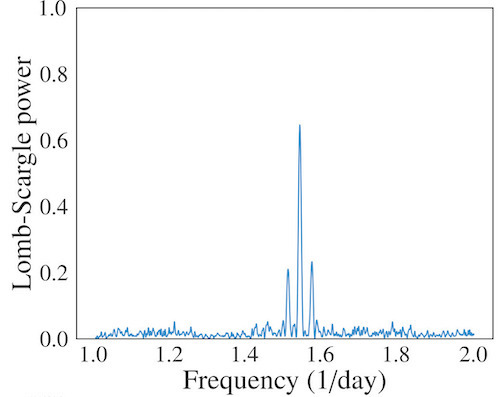
Figure 2: A simulated Lomb–Scargle periodogram made using the sum of two sine functions with similar, but different, frequencies. Note the primary peak at the frequencies’ mean, and the smaller side peaks indicating the difference. [Adapted from Donev and Ivezić 2025]
Original astrobite edited by Kylee Carden.
About the author, Catherine Slaughter:
Catherine is a PhD candidate in astrophysics at the University of Minnesota. Her research primarily deals with stellar population astrophysics in local dwarf galaxies, with particular focus on the intersection between computational and observational research methods. Prior to moving to Minnesota, she completed her BA in Physics and Astronomy, and MSc in Astronomy Research at Leiden University.
The post The Times They Are A-Changin’: Searching for Shifts in Variable Star Light Curves appeared first on AAS Nova.
]]>The post Contribution of Globular Clusters to Diffuse Gamma-Ray Emission from the Galactic Plane appeared first on AAS Nova.
]]>Though gamma rays have been detected from a subset of globular clusters, these clusters likely only account for about 2% of the diffuse galactic gamma-ray emission.
The post Contribution of Globular Clusters to Diffuse Gamma-Ray Emission from the Galactic Plane appeared first on AAS Nova.
]]>The post Cosmic Clues from Amaterasu: Blazar-Driven Ultrahigh-Energy Cosmic Rays? appeared first on AAS Nova.
]]>Researchers have found evidence that the 244 EeV Amaterasu event could have originated from the nearby blazar PKS 1717+177, provided that there is a strong extragalactic magnetic field.
The post Cosmic Clues from Amaterasu: Blazar-Driven Ultrahigh-Energy Cosmic Rays? appeared first on AAS Nova.
]]>The post Ramparts Around Lakes on Titan Impact Winds and Methane Evaporation appeared first on AAS Nova.
]]>The presence of hills around lakes on Titan decreases the rate of methane evaporation from the lakes and creates a thicker marine layer — a cold, stable layer of methane that forms above and around a lake.
The post Ramparts Around Lakes on Titan Impact Winds and Methane Evaporation appeared first on AAS Nova.
]]>
What can ultraviolet observations from Hubble tell us about the identity of Betelgeuse's likely companion star?
The post Hubble on the Hunt: A Spectroscopic Search for Betelbuddy appeared first on AAS Nova.
]]>Multiple research teams have turned to the famous red supergiant Betelgeuse in search of a possible companion star hiding in its glare. A carefully designed spectroscopic search has placed new constraints on the identity of Betelgeuse’s stellar buddy.
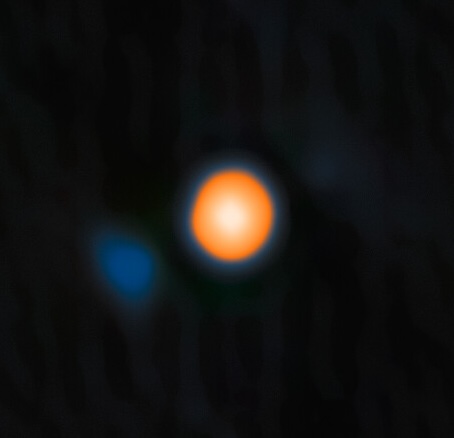
An image of Betelgeuse and its probable companion star from the ‘Alopeke instrument on the Gemini North telescope. [International Gemini Observatory/NOIRLab/NSF/AURA; Image Processing: M. Zamani (NSF NOIRLab); CC BY 4.0]
Betelgeuse and Its Buddy
Betelgeuse, a nearby red supergiant, is a variable star with a 400-day primary pulsation period and a 2,100-day secondary variation period. Recent studies have speculated that this secondary period is due to the presence of an 0.5–2.0-solar-mass companion star (often nicknamed “Betelbuddy”), and researchers using a speckle imaging technique likely spotted this companion earlier this year.
As is often the case when there’s an intriguing astronomical possibility, multiple research teams have sought out Betelgeuse’s purported stellar companion in different ways. One avenue recently described in a published paper was spectroscopic, searching for signs of ultraviolet emission lines from a growing young star.
Spectroscopic Search
In just 10 million years, Betelgeuse has sped through its main-sequence lifetime and taken on a new starring role as a red supergiant. In contrast, a 0.5–2.0-solar-mass companion star would not have even reached the main sequence in the same span of time. How is it possible to spot a tiny young stellar object next to a much brighter supergiant?
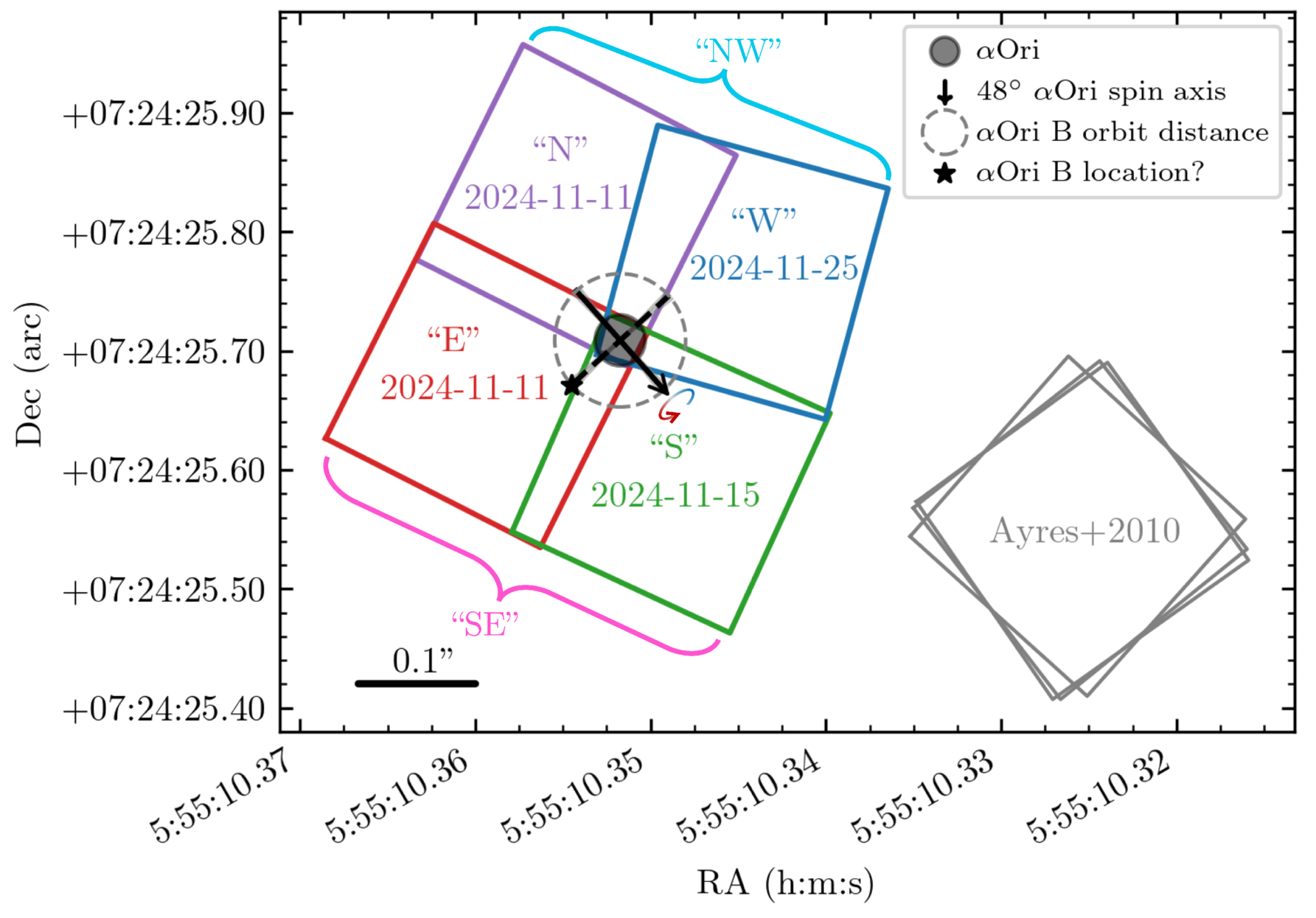
Hubble observing pattern, showing how the quadrants are arrayed around Betelgeuse. Click to enlarge. [Goldberg et al. 2025]
The search is on: Goldberg and collaborators observed Betelgeuse with the Hubble Space Telescope in November 2024, timed to when the companion star’s emission lines would be shifted relative to Betelgeuse. The observations split Betelgeuse’s disk into quadrants, only one or two of which should contain the companion, helping the team tease out the signal from the smaller star, if present. Ultimately, though, no statistically significant signals were found.
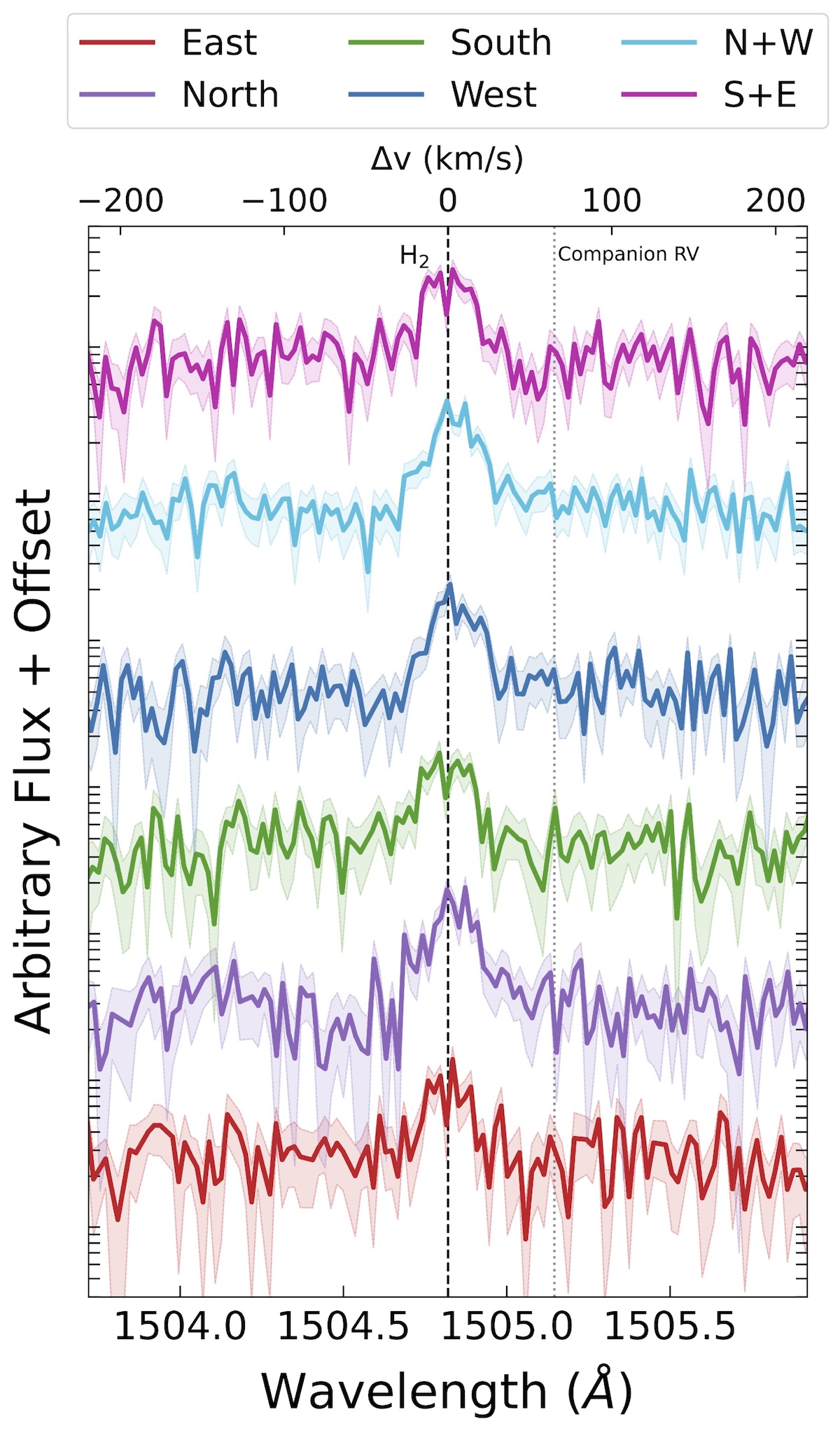
Emission around Betelgeuse’s 1504.82 Angstrom H2 line from each of the four observed quadrants as well as combinations of two quadrants. No significant signals were detected at the expected radial velocity of the companion star. [Goldberg et al. 2025]
When Finding Nothing Tells You Something
A lack of a significant detection doesn’t mean that the companion isn’t there, but it does place constraints on its identity. The data confidently rule out a companion star twice as massive as the Sun, marginally permit a star in the 1.1–1.5-solar-mass range, and favor a star lower than 1.1 solar masses.
Researchers assigned a likely mass of about 1.5 solar masses to the probable companion star imaged earlier this year. Though this is at the limit of what’s permitted by the ultraviolet observations, Goldberg and coauthors note that the companion star’s ultraviolet output could be suppressed due to tidal coupling with Betelgeuse or other processes. If the star’s ultraviolet emission is lower than expected, a 1.5-solar-mass companion remains consistent with Hubble’s non-detection of the star.
This is a fantastic example of how multiple lines of inquiry can converge on similar solutions. With the companion star expected to swing around to a favorable observing position again in 2027, this is certainly not the last chapter in the tale of Betelgeuse and Betelbuddy.
Citation
“Betelgeuse, Betelgeuse, Betelgeuse, Betel-buddy? Constraints on the Dynamical Companion to α Orionis from HST,” Jared A. Goldberg et al 2025 ApJ 994 101. doi:10.3847/1538-4357/ae0c0c
The post Hubble on the Hunt: A Spectroscopic Search for Betelbuddy appeared first on AAS Nova.
]]>The post Polarized Multiwavelength Emission from Pulsar Wind–Accretion Disk Interaction in a Transitional Millisecond Pulsar appeared first on AAS Nova.
]]>Researchers find evidence that the polarized and pulsed emission from the pulsar PSR J1023+0038 are both due to synchrotron radiation arising from where the pulsar wind interacts with the accretion disk.
The post Polarized Multiwavelength Emission from Pulsar Wind–Accretion Disk Interaction in a Transitional Millisecond Pulsar appeared first on AAS Nova.
]]>
JWST discovered a distant galaxy with too much nitrogen, which has led to evidence of the universe's first stars.
The post Too Much Nitrogen Pops Open the Search for the Universe’s First Stars appeared first on AAS Nova.
]]>Astronomers have long sought evidence of the universe’s first generation of stars, and as more distant galaxies come into view, it seems these stars may finally be within reach.
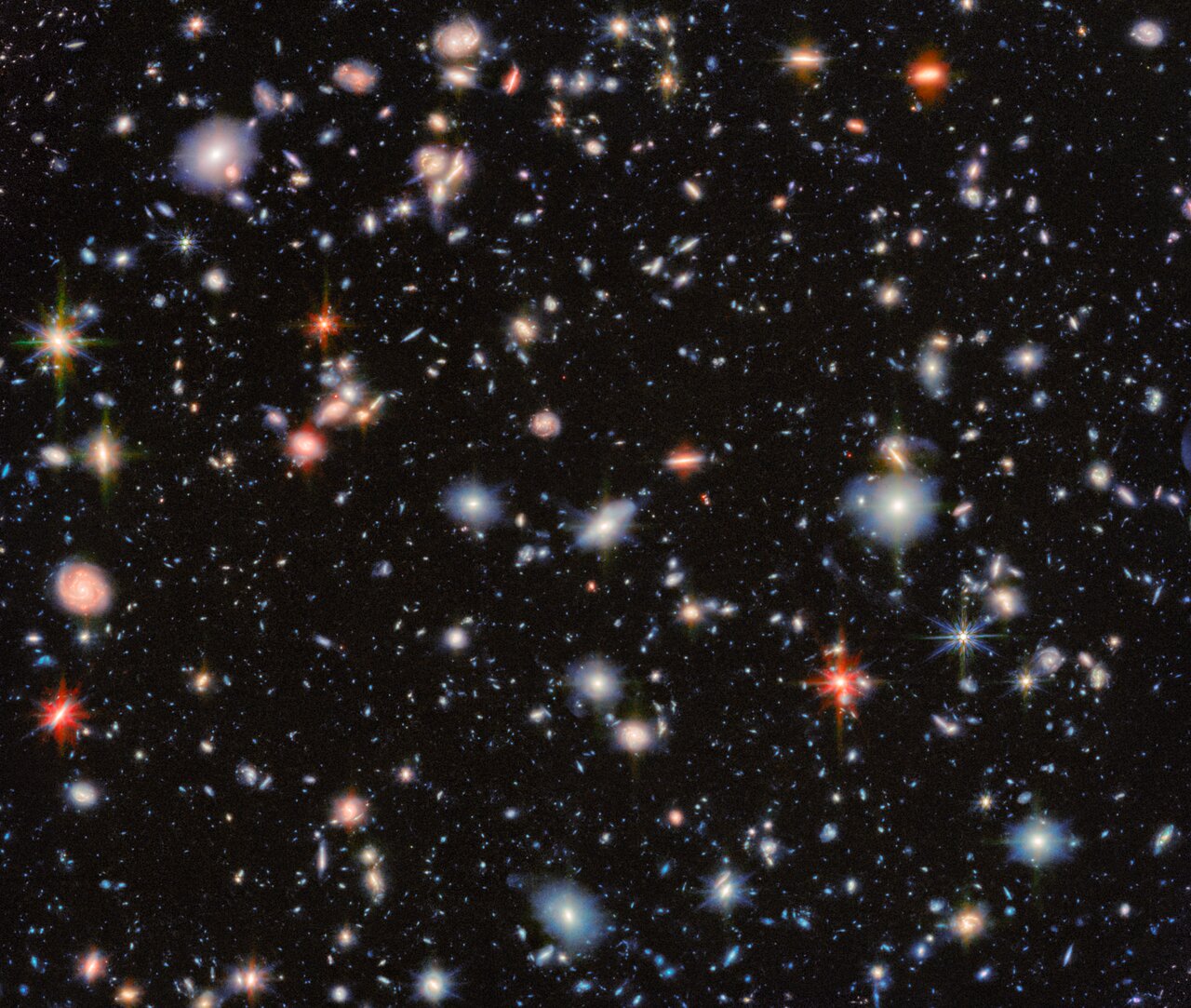
JWST spies thousands of distant galaxies in the classic Hubble Deep Field — many galaxies being uncovered for the first time with the space telescope’s powerful instruments. [ESA/Webb, NASA & CSA, G. Östlin, P. G. Perez-Gonzalez, J. Melinder, the JADES Collaboration, the MIDIS collaboration, M. Zamani (ESA/Webb); CC BY 4.0]
Excess Metals Popping Up
Since its 2021 launch, JWST has given astronomers eyes to peer into the distant past, discovering many galaxies whose light reveals the universe’s early stages of star and galaxy formation. Within the population of newly discovered galaxies are a few with bizarre chemical properties that, upon first pass, seem to be too enriched to exist so early in the universe. These hard-to-reconcile abundances may be a sign of the universe’s first stars.
Known as Population III (Pop III) stars, the first stars in the universe were born out of giant clouds of pristine gas (hydrogen, helium, and a little lithium) and were able to form at masses hundreds to thousands of times the mass of our Sun. Though they burned bright, they did not burn for very long, ending their lives in violent supernovae and chucking their newly enriched guts back into their surroundings. While these stars are long dead, the chemical imprints they left on their host galaxies can persist — and understanding how Pop III stars create and distribute metals could clue us in to the odd chemical signatures recently found with JWST.
Too Much Nitrogen in GS 3073
Researchers have identified a few galaxies exhibiting high nitrogen-to-oxygen (N/O) ratios that cannot be explained by stars similar to those in the universe today. A couple of these galaxies could be explained through multiple stellar populations, rapidly rotating stars, massive explosions, or the early stages of globular cluster formation. However, GS 3073, a galaxy with a redshift of z = 5.55 (about one billion years after the Big Bang), has an N/O excess so high that is has, so far, defied explanation.
Aiming to make sense of this bizarre phenomenon, Devesh Nandal (University of Virginia; Center for Astrophysics | Harvard & Smithsonian) and collaborators used stellar evolution models to see if Pop III stars could be the culprit. Modeling stars with masses 1,000–10,000 times the mass of our Sun, the authors traced the elemental yields of these supermassive stars as they go through the various stages of nuclear burning. The analysis takes into account mixing within the stars, mass loss throughout their lifetimes, and how the eventual supernova ejecta mixes within the interstellar medium.
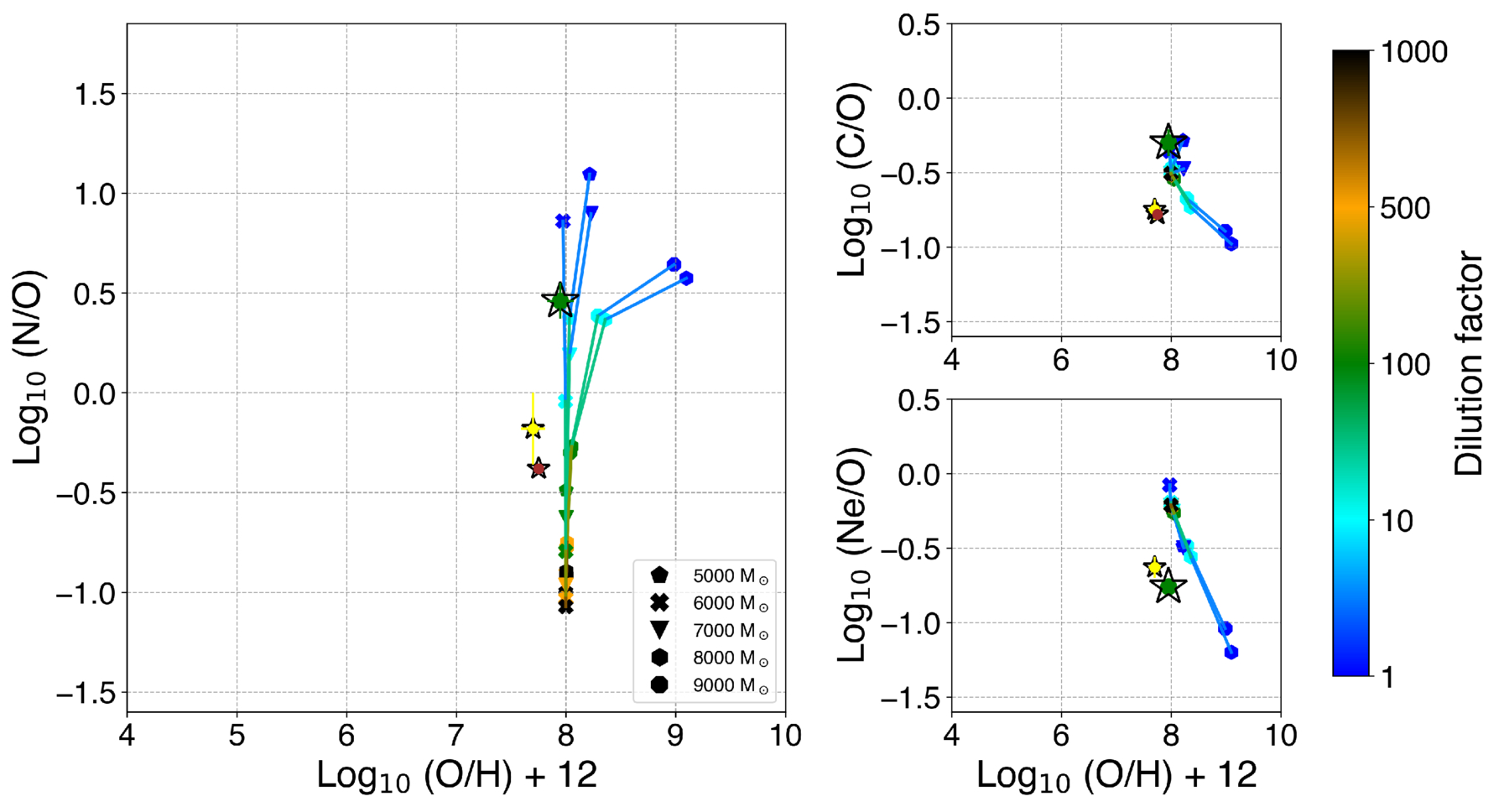
N/O, C/O, and Ne/O abundance ratios of five modeled supermassive Pop III stars taking into account the contribution from other stars in the galaxy and the Pop III star losing 10% of its mass over its lifetime. The green star indicates the observed ratios of GS 3073. Click to enlarge. [Nandal et al 2025]
Finally Evidence of Pop III Stars?
This study of GS 3073 is the first of its kind to confirm the chemical imprints of Pop III stars on their host galaxy at this redshift. The unique nitrogen abundance can only be produced through the evolutionary phases of Pop III stars that burn quickly enough to produce and release an excess amount of nitrogen while other elements stay consistent. From their modeling, the authors suggest that galaxies with even higher nitrogen excess could exist, and further observations with JWST may just find them.
The search for Pop III stars is booming — another recent study (Visbal et al 2025) examines the galaxy LAP1-B. While GS 3073 shows evidence of Pop III stars through chemical abundances, the study of LAP1-B finds that the galaxy matches theoretical predictions for the formation environments and mass distributions of Pop III stars. Both of these recent research works are laying the groundwork for the wealth of discovery possible with JWST, and the universe’s first stars are no longer out of reach.
Citation
“1000–10,000 M⊙ Primordial Stars Created the Nitrogen Excess in GS 3073 at z = 5.55,” Devesh Nandal et al 2025 ApJL 994 L11. doi:10.3847/2041-8213/ae1a63
The post Too Much Nitrogen Pops Open the Search for the Universe’s First Stars appeared first on AAS Nova.
]]>The post The Vela Pulsar and Its Pulsar Wind Nebula Vela-X Using 13 Yr of Fermi-LAT Observations appeared first on AAS Nova.
]]>Long-term monitoring of the Vela pulsar finds a large Gaussian structure and a compact radial disk, both of which may be due to the pulsar’s wind; a supernova remnant could also be a possible source of the disk.
The post The Vela Pulsar and Its Pulsar Wind Nebula Vela-X Using 13 Yr of Fermi-LAT Observations appeared first on AAS Nova.
]]>
New research suggests that triplet stars might be able to evolve into every observable type of stellar-mass black hole system.
The post Black Holes with a Shared Background appeared first on AAS Nova.
]]>What if there was one process capable of creating every type of detectable stellar-mass black hole system? Recent research suggests there might be, and that it involves a triple-star system.
Three Separate Contexts
Stellar-mass black holes, or black holes that are at most a few hundred times the mass of the Sun, pop up in a number of different environments in the Milky Way. Astronomers have known since the 1960s that these black holes are the engines behind accreting low-mass X-ray binaries; more recently, researchers at gravitational wave observatories such as LIGO have found pairs of black holes orbiting each other just prior to merging; and, in just the past few years, scientists using the Gaia spacecraft have found black holes on wide, prowling orbits around still-burning stars.
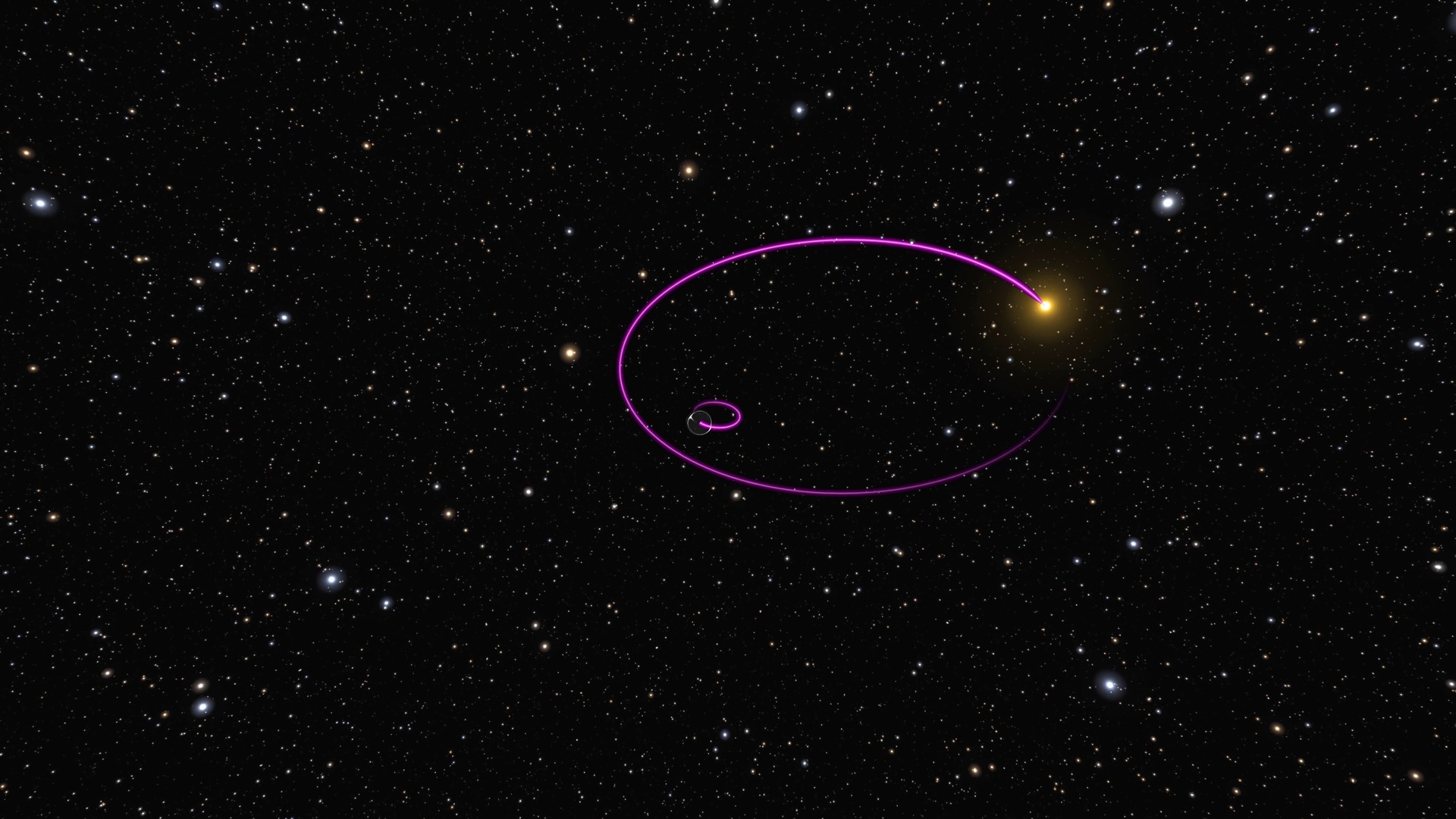
An illustration of the first black hole discovered with a star on a wide orbit. The black hole moves along the smaller inner ellipse, while its companion star orbits along the wider outer one. [ESA/Gaia/DPAC]
Recent research led by Smadar Naoz (University of California, Los Angeles) offers a potential answer to this question of relatedness — that each of these situations forms through the same underlying process.
Triples Systems
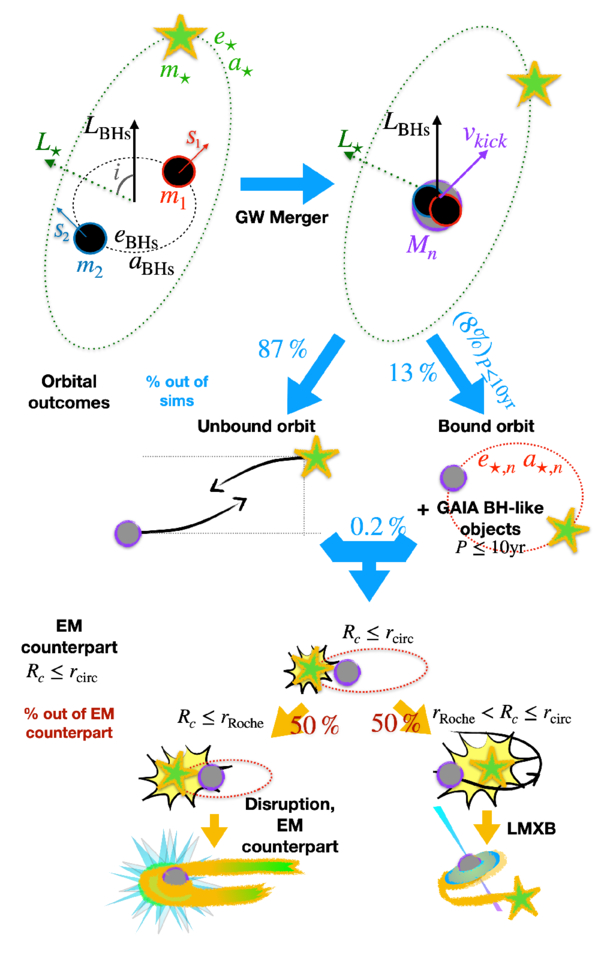
A schematic illustration of how triple-star systems can produce all three types of observable stellar-mass black hole systems. Click to enlarge. [Naoz et al. 2025]
What happens next depends on the geometry of the system and the direction of the kick. If the remnant black hole gets shot away from the third star, it might just drift off on its own and leave the star behind. If the kick isn’t too strong, the remnant will remain gravitationally bound to that third star, and the system will eventually look like the star–black hole pairs observed by Gaia. Finally, if the kick sends the remnant toward the third star, some dramatic outcomes become possible: either the black hole starts nibbling on the star and the system becomes a low-mass X-ray binary, or the black hole simply smashes into the star, destroying it completely in a large, flashy explosion paired with a gravitational wave signal.
The authors stress that this mechanism is almost certainly not the only way that these three stellar-mass black hole systems form. However, it is exciting to consider a common thread underlying such seemingly different scenarios, and with upgrades coming to gravitational wave observatories, we can hope for tests of its feasibility in the near future.
Citation
“Triples as Links Between Binary Black Hole Mergers, Their Electromagnetic Counterparts, and Galactic Black Holes,” Smadar Naoz et al 2025 ApJL 992 L12. doi:10.3847/2041-8213/ae0a20
The post Black Holes with a Shared Background appeared first on AAS Nova.
]]>The post Orbits and Masses for 156 Companions from Combined Astrometry and Radial Velocities, and a Validation of Gaia Non-Single-Star Solutions appeared first on AAS Nova.
]]>Using precise astrometry from Hipparcos and Gaia, researchers derived masses and orbits for 111 stellar, 12 brown dwarf, and 33 planetary companions around main-sequence stars.
The post Orbits and Masses for 156 Companions from Combined Astrometry and Radial Velocities, and a Validation of Gaia Non-Single-Star Solutions appeared first on AAS Nova.
]]>The post Radiation and Magnetic Pressure Support in Accretion Disks Around Supermassive Black Holes and the Physical Origin of the Extreme-Ultraviolet to Soft X-Ray Spectrum appeared first on AAS Nova.
]]>Simulated black-hole disks with accretion rates between 0.03 and 4 times the Eddington rate are capable of reproducing the spectra seen from real disks, yielding insights into the physical structures of these disks.
The post Radiation and Magnetic Pressure Support in Accretion Disks Around Supermassive Black Holes and the Physical Origin of the Extreme-Ultraviolet to Soft X-Ray Spectrum appeared first on AAS Nova.
]]>
Astrobites reports on how X-rays influenced the formation of the first massive black holes in the universe.
The post Do X-Rays Help or Hurt Massive Black Hole Formation? appeared first on AAS Nova.
]]>Editor’s Note: Astrobites is a graduate-student-run organization that digests astrophysical literature for undergraduate students. As part of the partnership between the AAS and astrobites, we occasionally repost astrobites content here at AAS Nova. We hope you enjoy this post from astrobites; the original can be viewed at astrobites.org.
Title: Massive Black Hole Seed Formation in Strong X-Ray Environments at High Redshift
Authors: Kazutaka Kimura, Kohei Inayoshi, and Kazuyuki Omukai
First Author’s Institution: Tohoku University
Status: Published in ApJ
Environments of Massive Black Holes
Astronomers have found that nearly every observable galaxy hosts a central supermassive black hole (SMBH) — a black hole more than a million times more massive than the Sun. Using JWST, they have peered back into the early universe to observe some of the earliest galaxies, and these early galaxies also contain SMBHs. In fact, many of these galaxies seem to contain SMBHs that are more massive than we expected them to be this early in the universe.
We believe that most black holes form at the ends of the lives of massive stars, which collapse under their own gravity when they run out of fuel. We expect that this happened to the first stars too, forming “light” (as in “lightweight”) seeds of SMBHs with masses up to about 100 solar masses. Astronomers also think that the right conditions in the early universe could lead to the formation of a “heavy” seed with a mass on the order of 104 solar masses or more; this kind of black hole is called a direct-collapse black hole (DCBH).
In order to form a DCBH, a gas cloud needs to collapse without fragmenting to form star clusters and stars — if stars form, there won’t be enough mass funneled to the center of the cloud to form the DCBH. One important criterion for this to happen is the absence of coolants, like metals and molecular hydrogen (H2), which cause fragmentation. One way to eliminate H2 is with a particular type of ultraviolet light called Lyman-Werner radiation, which can destroy H2 molecules. However, recent results from the Hydrogen Epoch of Reionization Array (HERA) suggest that early galaxies emitted more X-rays than expected, which would increase the amount of H2 and make it less likely for DCBHs to occur. Today’s authors investigate the feasibility of forming DCBHs in these X-ray-bright environments.
Modeling Black Hole Formation
Today’s authors model the collapse of gas in dark-matter halos that have a nearby neighboring halo. This neighboring halo emits radiation like ultraviolet light and X-rays that impact the formation of molecules like H2, which affects the gas chemistry. This radiation is typically emitted by hot gas in star-forming regions. The authors also track quantities like the gas density and temperature as the gas collapses. Once the gas collapses enough, a star forms at the center and continues to accrete surrounding material. Once this star evolves and reaches the end of its life, it becomes a black hole.
The authors considered different intensities of X-ray radiation relative to a critical value of Lyman-Werner radiation believed to destroy enough H2 to form a DCBH, which is called J21. They explore values of the X-ray intensity Jx relative to J21, considering ratios of 0, 10-6, 10-5, and 10-4.
Another important consideration was the baryonic streaming velocity. This is the relative bulk velocity between baryonic (i.e., “normal”) matter and dark matter in the early universe. Higher streaming velocities can delay the collapse of gas in dark-matter halos, which affect gas properties like density, temperature, and chemistry. The streaming velocity depends on the redshift, z, which is given by σbsm = 30 km/s (1+z)/(1+z0), where z0 = 1,100. This “standard” relationship has been calibrated with measurements from observations. The authors consider two cases for the streaming velocity: vbsm = 0 and vbsm = 1σbsm, which are denoted in the figures below.
X-Rays and Seed Suppression
The first main results are shown in Figure 1. The authors find that a large number of intermediate-mass seeds form from H2 cooling, shown in blue, regardless of the X-ray intensity. A smaller number of higher-mass seeds form from H–H2 and H–H cooling, but these cooling processes become suppressed as the X-ray intensity increases. This is because the increased X-ray intensity converts more H to H2. Interestingly, accounting for the streaming velocity all but wipes out black hole formation via H2 cooling except at very high X-ray intensities.
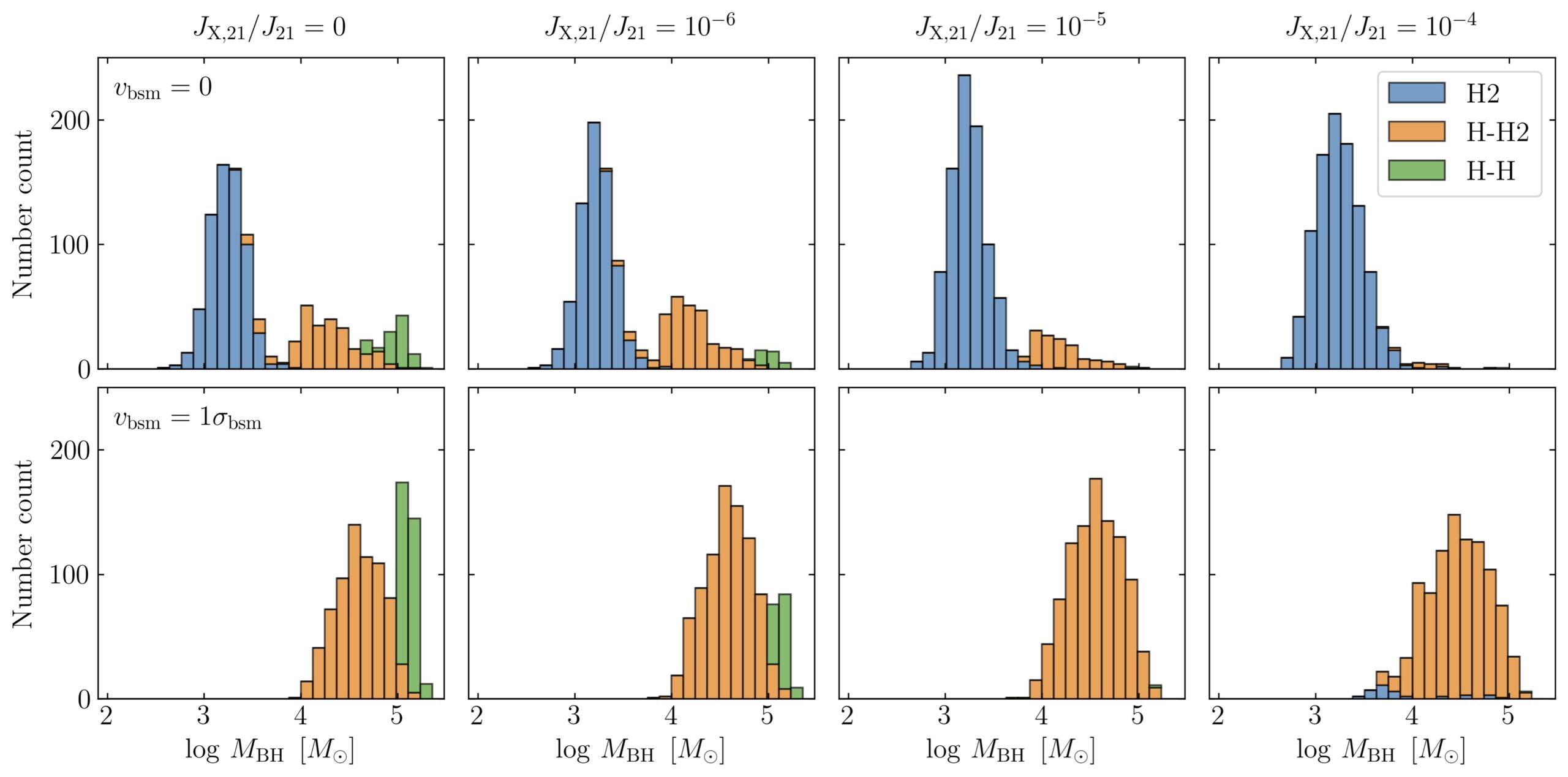
Figure 1: Mass distributions of seed black holes. The top row uses a baryonic streaming velocity of 0 and the bottom row uses the standard streaming velocity. Columns represent increasing X-ray intensities (left to right). Colors represent the dominant cooling mechanisms: H2 (blue), atomic hydrogen H transitioning to H2 (orange), and solely H (green). [Kimura et al. 2025]

Figure 2: Seed black hole mass functions for low and high X-ray intensities (left and right columns, respectively). Rows are the same as in Figure 1. [Kimura et al. 2025]
Original astrobite edited by Sparrow Roch.
About the author, Brandon Pries:
I am a graduate student in physics at Georgia Institute of Technology (Georgia Tech). I do research in computational astrophysics with John Wise, using machine learning to study the formation and evolution of supermassive black holes in the early universe. I’ve also done extensive research with the IceCube Collaboration as an undergraduate at Michigan State University, studying applications of neural networks to event reconstructions and searching for signals of neutrinos from dark matter annihilation.
The post Do X-Rays Help or Hurt Massive Black Hole Formation? appeared first on AAS Nova.
]]>The post The Role of Tectonic Luck in Long-Term Habitability of Abiotic Earth-Like Planets appeared first on AAS Nova.
]]>Models suggest that collisions between continents that drive tectonic uplift cannot be the only source of weatherable minerals if an Earth-like planet without life is to have a stable climate.
The post The Role of Tectonic Luck in Long-Term Habitability of Abiotic Earth-Like Planets appeared first on AAS Nova.
]]>The post A New Determination of the Mass of NGC 3603-A1: The Most Massive Binary Known? appeared first on AAS Nova.
]]>New and archival Hubble observations show that the components of NGC 3603-A1 have masses of 93 and 70 solar masses, and these two enormous stars orbit one another every 3.8 days.
The post A New Determination of the Mass of NGC 3603-A1: The Most Massive Binary Known? appeared first on AAS Nova.
]]>
By studying the orbits of rare outer solar system objects, astronomers have estimated how long it took for the Sun to leave its birth cluster.
The post The Sun Left Home in a Hurry appeared first on AAS Nova.
]]>By simulating how the orbits of distant solar system objects were altered by close encounters with other stars early in the Sun’s life, astronomers have placed tight constraints on how long our home star stuck around its siblings after birth.
Born in Batches
Though our Sun currently travels on a solitary trajectory through the galaxy, its earliest childhood was not spent so lonely. Instead, the Sun was likely born as part of a litter of many other stars all collapsing out of the same cloud of precursor gas and dust. As a consequence, its early adolescence was spent in the company of dozens of other young stars, all zipping along on their own paths, destined to drift apart but initially packed close together.
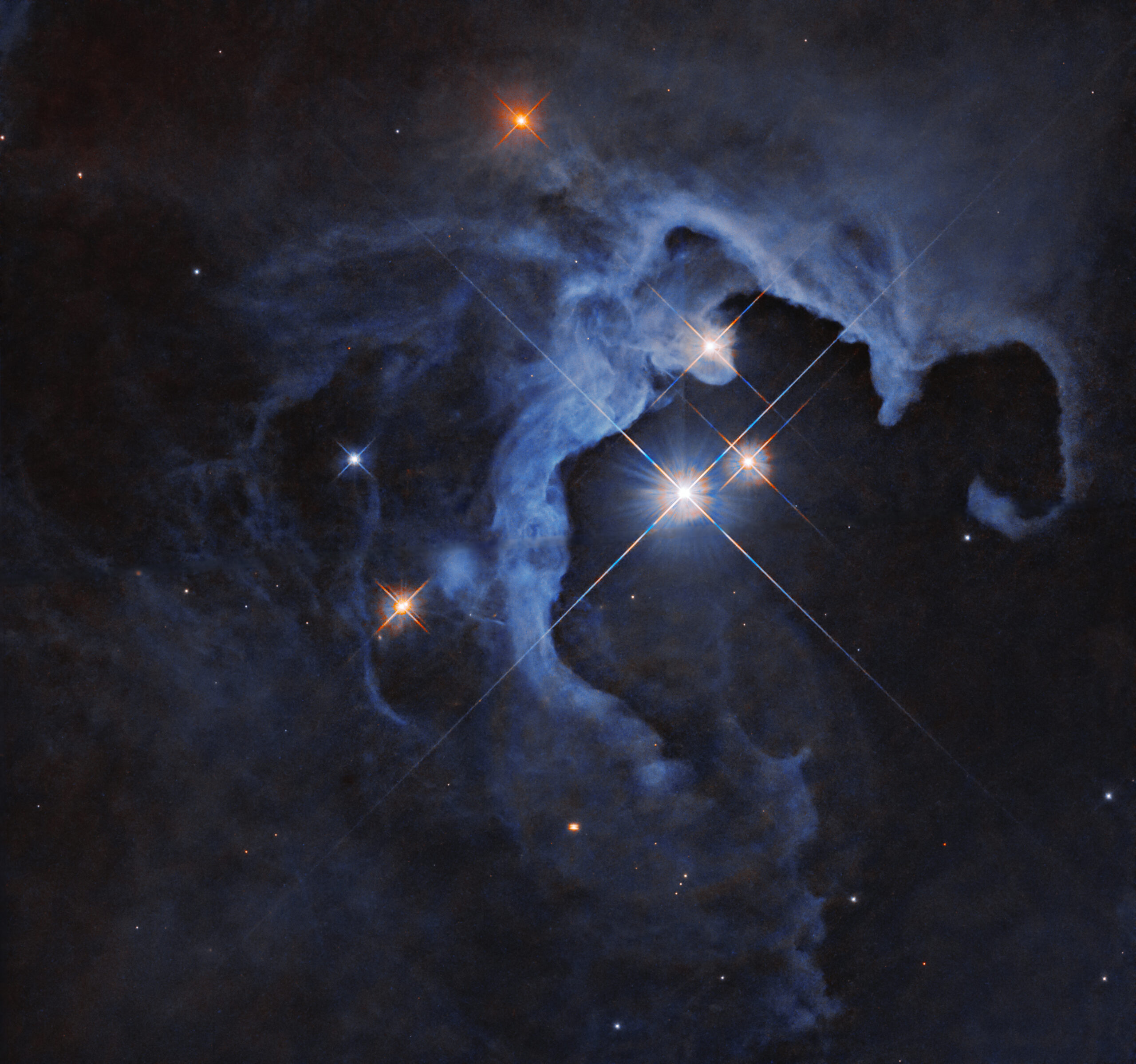
The Hubble Space Telescope’s view of a collection of young stars still embedded within their natal nebula. [NASA, ESA, G. Duchene (Universite de Grenoble I); Image Processing: Gladys Kober (NASA/Catholic University of America)]
Recent research led by Amir Siraj, Princeton University, leverages these scars or their apparent absence to ask the question: given the structure we observe in the outer solar system today, what limits can we place on the number of stars born near the Sun and the amount of time the Sun spent in its birth cluster?
Distance is Power
Several authors have asked this question over the past several decades, but Siraj and collaborators added a new twist: instead of studying either the giant planets or the cold classical Kuiper Belt, they instead focused exclusively on the “distant sednoids.” This rarefied collection of only nine known objects includes only the most distant minor planets in our solar system: the sednoids never come within 40 au of the Sun, and they spend much of their orbits beyond 400 au. Interestingly, however, all of them orbit on planes that are fairly aligned with that of the planets, and none ever strays farther than 20° from the ecliptic.
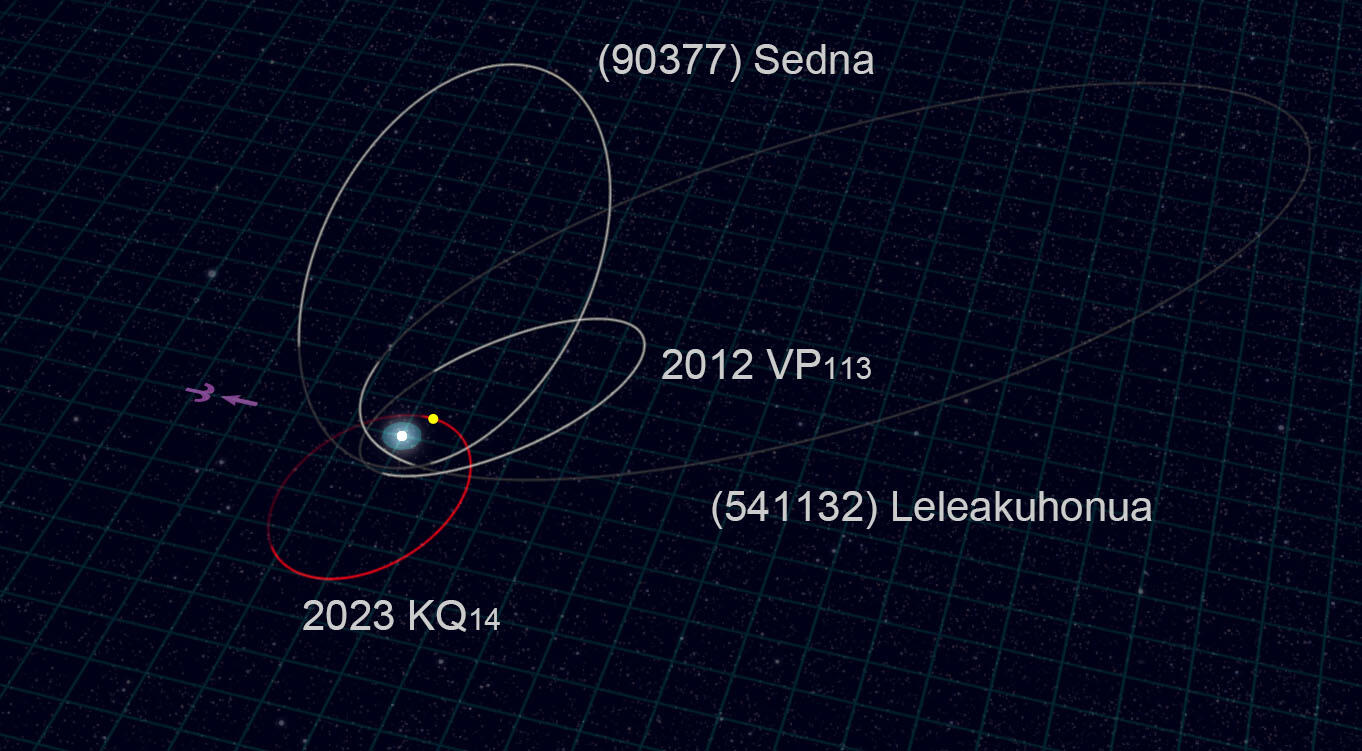
An illustration of the orbits for some of the distant sednoids considered in this study. Click to enlarge. [NAOJ]
The authors stress that this conclusion leans on the assumption that the distant sednoids arrived on their extreme orbits essentially immediately, though in fact astronomers aren’t sure exactly how and when these objects ended up on the outskirts of the solar system. If the sednoids were in fact implanted onto their orbits early on, this limit on how long it took the Sun to leave its siblings is by far the strongest to date. With the Vera C. Rubin Observatory poised to discover thousands of new distant solar system objects, it’s likely that the bound will grow even more stringent in the next few years.
Citation
“Limits on Stellar Flybys in the Solar Birth Cluster,” Amir Siraj et al 2025 ApJL 993 L4. doi:10.3847/2041-8213/ae1025
The post The Sun Left Home in a Hurry appeared first on AAS Nova.
]]>The post Magnetic Field of a Ring-Like Molecular Cloud appeared first on AAS Nova.
]]>Using interstellar dust polarization measurements from Planck, researchers have demonstrated that the magnetic field structures in the G111 molecular cloud are aligned with density structures.
The post Magnetic Field of a Ring-Like Molecular Cloud appeared first on AAS Nova.
]]>
Astrobites reports on the discovery of the faintest galaxy in the Andromeda system, Pegasus VII.
The post Do You Have This Andromeda Galaxy in Extra-Extra-Extra Small? appeared first on AAS Nova.
]]>Editor’s Note: Astrobites is a graduate-student-run organization that digests astrophysical literature for undergraduate students. As part of the partnership between the AAS and astrobites, we occasionally repost astrobites content here at AAS Nova. We hope you enjoy this post from astrobites; the original can be viewed at astrobites.org.
Title: Deep in the Fields of the Andromeda Halo: Discovery of the Pegasus VII Dwarf Galaxy in UNIONS
Authors: Simon E. T. Smith et al.
First Author’s Institution: University of Victoria
Status: Published in ApJ
Picture a galaxy. It’s big, right? Unfathomably big, huge even! But galaxies aren’t all extremely massive; they come in a variety of sizes and luminosities, and some galaxies are so small and so dim that astronomers may not even know they’re there, even when they’re basically in our backyard. The hunt for the smallest galaxies is an important one, as these systems give us extreme environments where we can test theories of dark matter and galaxy evolution. The authors of this article present a newly discovered ultra-faint dwarf galaxy dubbed Pegasus VII (Peg VII), found next to our nearest major galactic neighbour: Andromeda.
How Do You Find a Dwarf Galaxy?
Finding ultra-faint dwarf galaxies requires deep, long-exposure imaging across wide swaths of the night sky, something that is only possible through observational surveys. Some telescopes, like JWST, require astronomers to submit an application to point the telescope at a specific, known target and, if approved, will have some amount of “telescope time” to do their imaging. Others, like the Euclid space telescope, are part of large surveys in which an area of the sky is selected and systematically imaged over several years, regardless of if there are known objects there or not. Because of this, surveys are our best bet to discover faint systems like ultra-faint dwarf galaxies.
The survey these authors used is UNIONS (Ultraviolet Near Infrared Optical Northern Survey), which covers the same area of the sky as the Euclid space telescope but is done with three ground-based telescopes: the Canada-France-Hawaii Telescope, Pan-STARRS, and Subaru, all located on Maunakea in Hawaiʻi. The authors were originally focused on finding satellite galaxies in the outskirts of Andromeda’s gravitational influence and during their search were able to identify an overdensity of bright stars. They then applied for and were awarded telescope time with both the Canada-France-Hawaii Telescope and the Gemini Observatory to perform deeper follow-up imaging of the system to figure out what exactly it was.
Optical Illusion or Optical Observation?
With this deeper follow-up imaging they could confirm if these stars were really one coherent system or if they just appeared to be clumped together on the sky. When they plotted the stars on a colour–magnitude diagram (Figure 1) they were able to identify a main sequence, horizontal branch, and red giant branch, as would be expected if these stars all formed at roughly the same time and were allowed to evolve over billions of years. Congratulations, it’s a dwarf galaxy!

Figure 1: Left: The colour–magnitude diagram for all stars within 2 half-light radii of Peg VII. Those inside the orange dashed lines are identified members of Peg VII, and the red lines are the best-fit isochrones. The vertical red line is the main sequence, the curve at the top is the red giant branch, and the horizontal line is the horizontal branch. Below the black dashed lines are stars that are too dim to be reliably used in the analysis. Right: The colour–magnitude diagram for stars that appear to be around Peg VII that are not actually members. These stars don’t follow the main sequence at all. [Adapted from Smith et al. 2025]
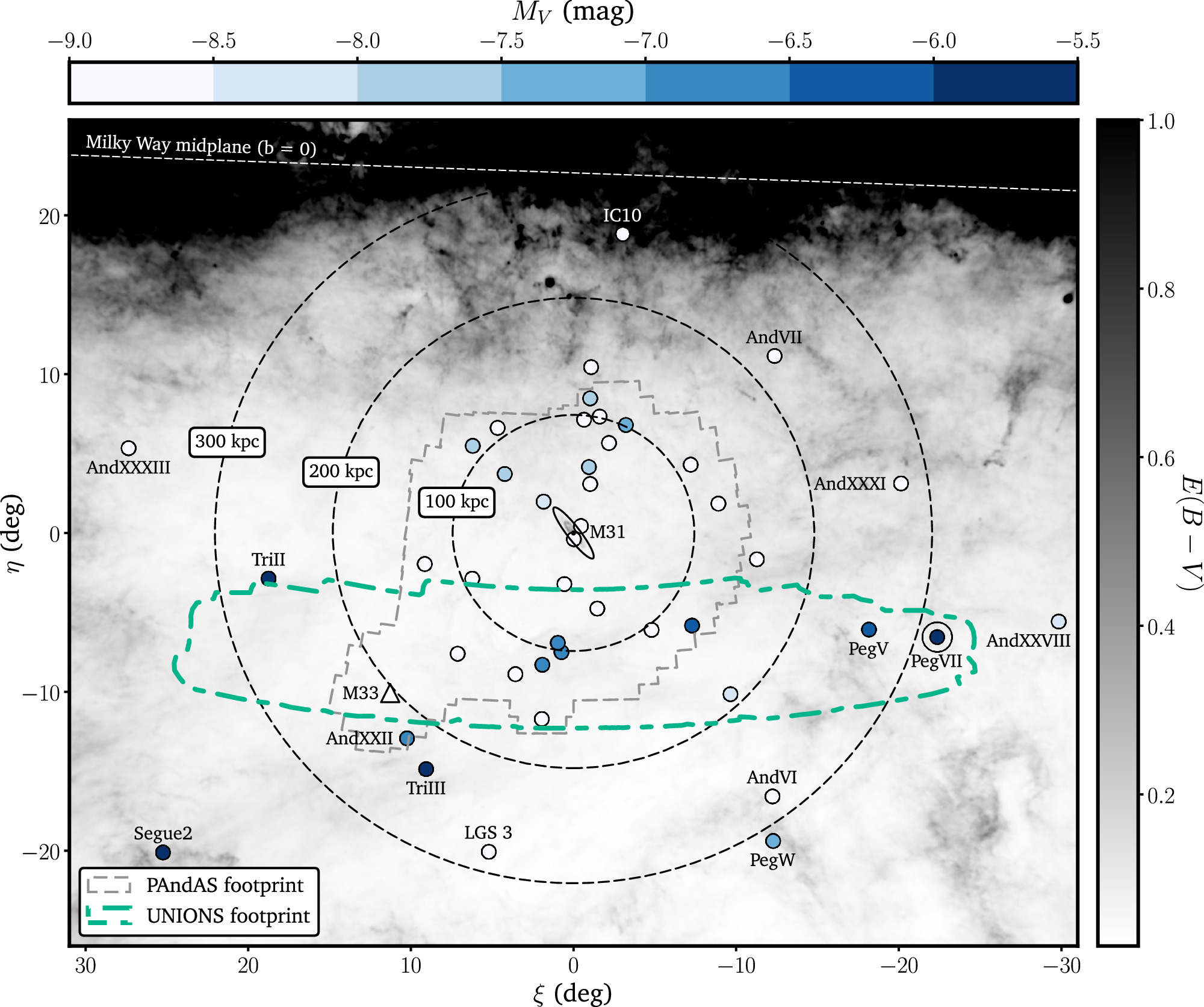
Figure 2: The spatial distribution of the Andromeda (M31) satellite galaxy system. Galaxies are coloured based on how bright they are (darker means dimmer). The dashed grey line denotes the area covered by PAndAS, a survey focused on Andromeda satellites that are more centrally concentrated. The dashed green line denotes the area covered by the UNIONS survey, with Peg VII on the right-hand side, more than 978,000 light-years from Andromeda. [Smith et al. 2025]
How Are Baby Dwarf Galaxies Made?
The big question surrounding Peg VII is how exactly it got like this. Did it originally form with so few stars, or was it originally bigger and has since had stars stripped away due to tidal forces exerted on it by Andromeda? It’s difficult to answer this right now because the imaging the authors obtained doesn’t allow them to determine Peg VII’s orbital path and speed around Andromeda. But, they can look for indicators of tidal disruption, like spatial elongation of the stars’ distribution, or how “stretched out” the galaxy is.
They found that Peg VII is quite elliptical (oval-like) and its major axis is roughly pointed at Andromeda (Figure 3). This could indicate that Peg VII has interacted with Andromeda in the past, and this could have affected its mass and size. However, there are lots of other possibilities for Peg VII’s shape that wouldn’t involve Andromeda at all. Peg VII could have naturally formed like this in isolation and has only just recently been brought into Andromeda’s orbit. It’s also possible Peg VII is the byproduct of a merger between two even smaller dwarf galaxies, which has been shown to result in elliptical distributions.
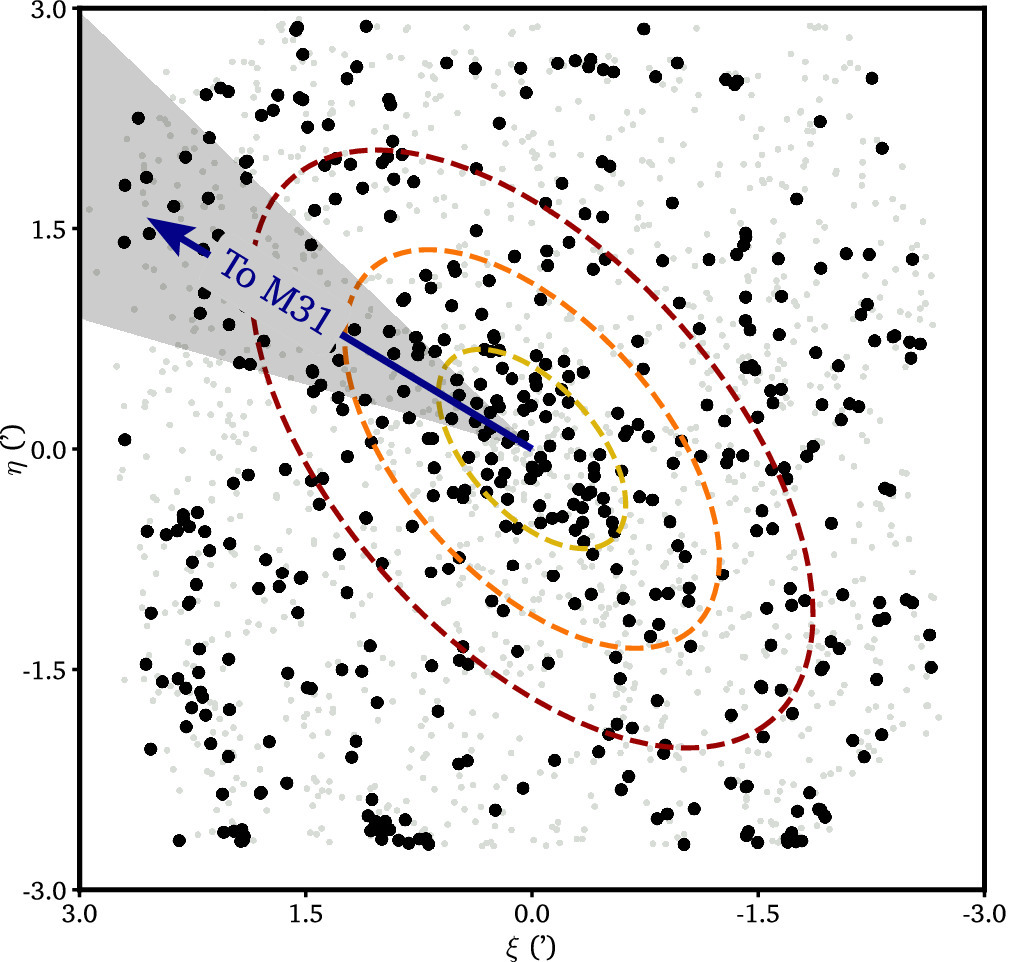
Figure 3: The spatial distribution of Peg VII member stars (dark black dots). The dashed lines show where 1, 2, and 3 half-light radii are, showing how elliptical Peg VII is. The blue arrow shows the direction Andromeda is in, which roughly lines up with Peg VII’s major axis. [Adapted from Smith et al. 2025]
In the meantime, keep your eye on the sky for more news about Peg VII and its other ultra-faint dwarf galaxy buddies. As big surveys designed for finding faint systems like these start to ramp up, like the Euclid space telescope and the Vera C. Rubin Observatory, we may be hearing more big things about these little galaxies.
Original astrobite edited by Caroline Von Raesfeld.
About the author, Veronika Dornan:
Veronika is a postdoctoral research associate at the University of Edinburgh. Her research is in observations of globular star clusters and how they can be used to study the evolution of their host galaxies.
The post Do You Have This Andromeda Galaxy in Extra-Extra-Extra Small? appeared first on AAS Nova.
]]>The post Precovery Observations of 3I/ATLAS from TESS Suggest Possible Distant Activity appeared first on AAS Nova.
]]>A trip through the archives of the Transiting Exoplanet Survey Satellite (TESS) revealed images of 3I/ATLAS going back to 7 May 2025; these images showed that the object may have been active out to ~6 au.
The post Precovery Observations of 3I/ATLAS from TESS Suggest Possible Distant Activity appeared first on AAS Nova.
]]>The post Born to Be Starless: Revisiting the Missing Satellite Problem appeared first on AAS Nova.
]]>Starless subhalos may trace their origins back to the epoch of reionization, when regions of tenuous gas wouldn’t have been able to shield themselves from ultraviolet radiation and thus could not form stars.
The post Born to Be Starless: Revisiting the Missing Satellite Problem appeared first on AAS Nova.
]]>
Recent research shows how fractal properties can help distinguish between grand-design and flocculent spiral galaxies.
The post Featured Image: Fractals and Flocculence appeared first on AAS Nova.
]]>Displayed above are eight galaxies imaged by the Sloan Digital Sky Survey. Although all of these galaxies are spiral galaxies, there are large differences between them: the top row shows grand-design spirals, which feature well-defined arms, and the bottom row shows flocculent spirals, which have feathery or patchy arms. Recently, a team led by Biju Saha (Indian Institute of Science, Education and Research) explored whether grand-design and flocculent spirals could be classified by their fractal dimension. With intricate structures on scales large and small, spiral galaxies are fractal-like, and fractal dimension is a way of quantifying the complexity of their structure. Saha and collaborators found a statistically significant difference in the median fractal dimension of their samples of grand-design and flocculent spirals, suggesting that this mathematical method can help distinguish between the two types of spirals. To learn more about how fractal dimension is calculated from galaxy images, and what these results might mean for how spiral arms form, be sure to check out the full research article linked below.
Citation
“Can Fractal Dimension Distinguish Between Grand-Design and Flocculent Spiral Arms?” Biju Saha et al 2025 ApJ 991 63. doi:10.3847/1538-4357/adf840
The post Featured Image: Fractals and Flocculence appeared first on AAS Nova.
]]>
When supernovae explode, they send a fast-moving shock wave into the interstellar medium, changing the local landscape significantly. A recent publication hones in on one supernova remnant to determine how fast it's expanding and where it may have come from.
The post Chandra Spies a Supernova Shock Front Speeding Along appeared first on AAS Nova.
]]>Beautiful bubbles of hot ionized gas, supernova remnants trace the dying days of massive stars. A recent study uses the Chandra X-ray Observatory to detail the motion and understand the origins of one supernova remnant.
Retracing Supernova Remnants
Massive stars, about 8 solar masses or larger, will end their short lives in violent core-collapse supernovae. These explosions barrel into any surrounding interstellar medium, carving out low-density cavities and blowing material outward. Appearing as a bubble or shell of hot gas, a supernova remnant carries the signatures of the type of star that produced it and the ways that star shaped its environment throughout its life.
Nearby, in the Large Magellanic Cloud, is the 2,500-year-old supernova remnant N132D — the most X-ray luminous supernova remnant within the Local Group. Though N132D’s size, likely progenitor mass, and chemical composition are well constrained, astronomers have yet to nail down the velocity of the X-ray shock front — the outer edge of the supernova remnant that rams into the interstellar medium. This measurement is critical to understanding the local conditions the supernova first encountered and how its expansion will continue to impact the interstellar medium over time.
Chandra Observations of N132D
Determining the shock front velocity requires astronomers to focus on the thin outer edge of the soaring supernova remnant — how do we measure the motion of such a narrow strip of gas? X-ray spectroscopy of N132D yields a measurement from a single epoch of observations, but it cannot isolate the narrow shock front, making a reliable velocity measurement difficult to attain.
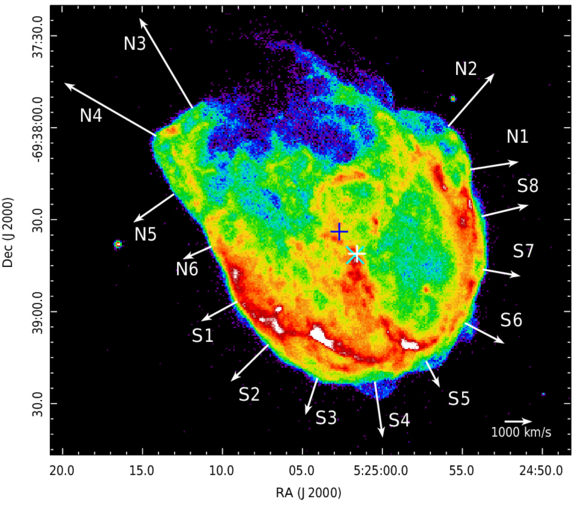
The expansion of supernova remnant N132D around the rim for each of the regions analyzed in this study. The arrow lengths are proportional to their estimated expansion velocities. Click to enlarge. [Long et al 2025]
The authors focus on small regions on the very edge of the supernova shock front, six northern and eight southern, to carefully measure the motion of the shock between the two sets of observations. In separating the shock front into smaller regions, the authors can determine any variations in speed along the shock front. The southern edge of N132D moves with the same expansion rate of 1,620 km/s. The northern edge has an average expansion rate of 3,820 km/s, but its speed is more varied, which isn’t unexpected given its blown-out appearance.
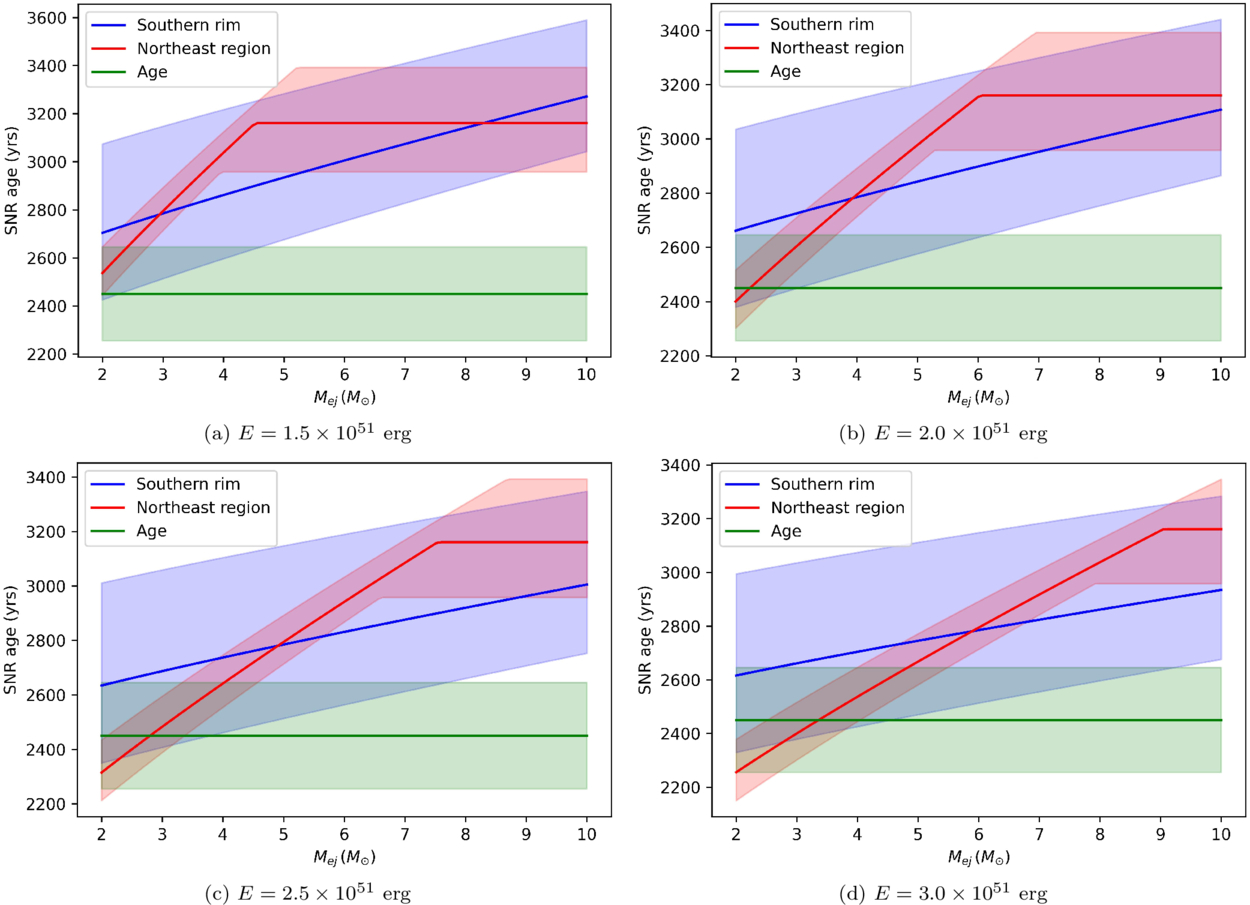
Modeling results showing the supernova age versus ejecta mass for the northern (red) and southern (blue) regions compared to the age estimate from an optical study of N132D. For the explosion energies and estimated ejecta masses between 2 and 6 solar masses, the models are consistent for all three. Click to enlarge. [Long et al 2025]
Comparing to Prior Studies
In addition to determining the velocity of the forward shock, the authors model the evolution of the supernova remnant to estimate the initial conditions of N132D including progenitor star mass, explosion energy, and ejecta mass. Their results agree with other studies that suggested N132D originated from a roughly 15-solar-mass star that exploded 2,500 years ago into a low-density cavity.
This study showcases the unique ability of Chandra’s high-resolution instruments to carefully measure the evolution of supernova remnants, and further studies will continue to determine the detailed characteristics of supernova remnants across the Local Group.
Citation
“Chandra Large Project Observations of the Supernova Remnant N132D: Measuring the Expansion of the Forward Shock,” Xi Long et al 2025 ApJ 993 136. doi:10.3847/1538-4357/ae07c7
The post Chandra Spies a Supernova Shock Front Speeding Along appeared first on AAS Nova.
]]>The post Imaging the Solar Corona from “Within”: A Cutting-Edge Approach to Enhance PSP/WISPR Imagery appeared first on AAS Nova.
]]>Researchers have developed a new way to subtract the F-coronal background from certain Parker Solar Probe images to reveal the large-scale dynamics of the K-corona.
The post Imaging the Solar Corona from “Within”: A Cutting-Edge Approach to Enhance PSP/WISPR Imagery appeared first on AAS Nova.
]]>The post Topographic Relaxation of Complex Impact Craters in a Clathrate Crust on Titan appeared first on AAS Nova.
]]>Simulations suggest that a 5–10 km thick clathrate crust can explain the appearance of Titan’s craters, with erosion and infill explaining the lack of central features in these craters.
The post Topographic Relaxation of Complex Impact Craters in a Clathrate Crust on Titan appeared first on AAS Nova.
]]>The post A New LISA-Detectable Type Ia Supernova Progenitor in the Southern Sky: SMSS J1138−5139 appeared first on AAS Nova.
]]>A white dwarf and a pre-white dwarf, orbiting one another every 28 minutes, will someday cause a supernova through either a merger or the dynamically driven double-degenerate double-detonation channel.
The post A New LISA-Detectable Type Ia Supernova Progenitor in the Southern Sky: SMSS J1138−5139 appeared first on AAS Nova.
]]>
If you were standing on a sub-Neptune exoplanet, would you be standing on a rocky surface or in a magma ocean?
The post Standing on a Sub-Neptune appeared first on AAS Nova.
]]>Astronomers often assume that sub-Neptune exoplanets have magma oceans hiding beneath their atmospheres. New research suggests that this might not always be the case.
Puzzling Type of Planet
In the 30 years since the discovery of the first exoplanet, astronomers have come to appreciate that many of the most common planets in our galaxy look nothing like the worlds in our solar system. One type of planet in particular appears to be ubiquitous despite not appearing in our own cosmic neighborhood: sub-Neptunes. As their name suggests these planets are slightly smaller than Neptune, but still much larger than Earth or what we’d expect from a planet composed mostly of rock.
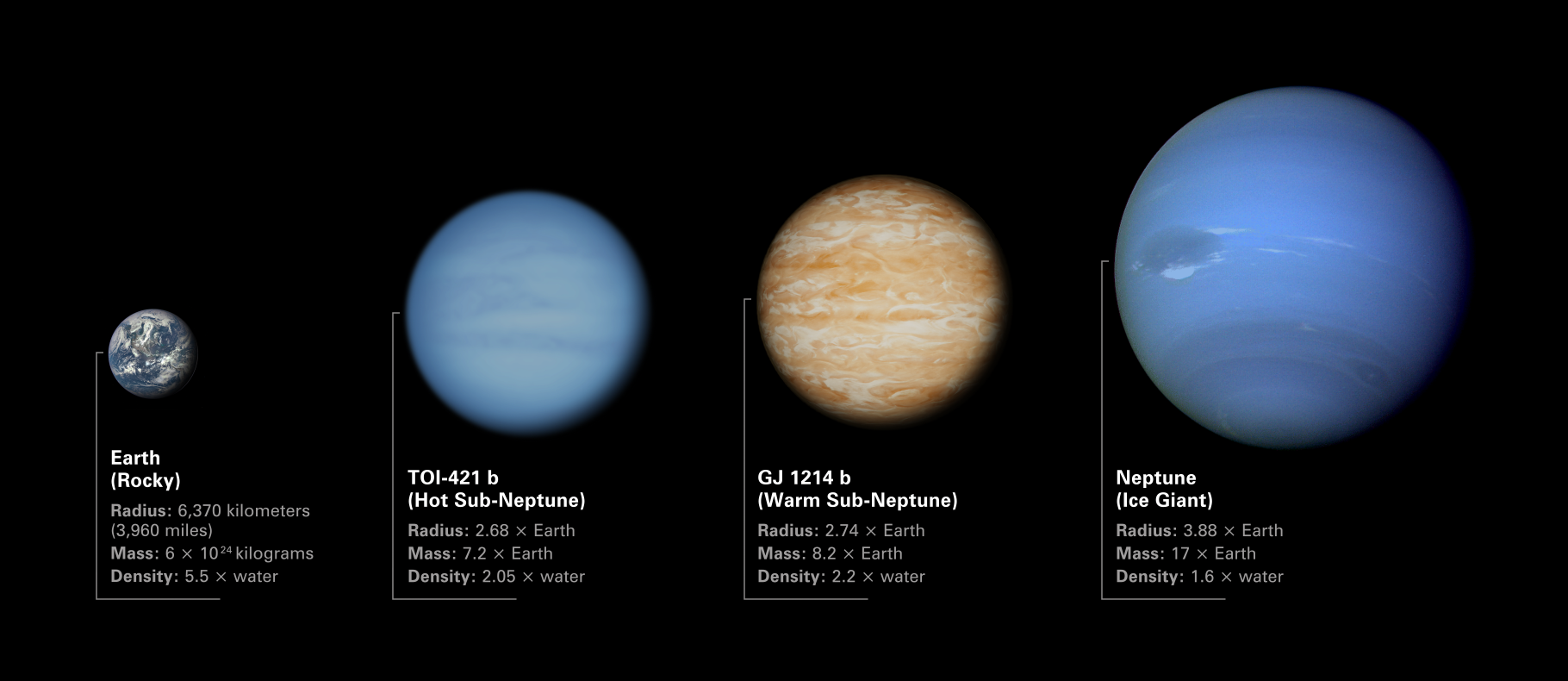
An illustration of how two sub-Neptunes mentioned in this study (TOI-421b and GJ 1214b) compare with planets in our solar system. Click to enlarge. [NASA, ESA, CSA, Dani Player (STScI)]
This key assumption that there’s no solid surface to stand on influences our models about how these planets cool and evolve over time. However, new research led by Bodie Breza (University of Maryland) suggests that this premise might not always be appropriate.
Solid Ground
To test the assumption that every sub-Neptune has a magma ocean, Breza and collaborators simulated hundreds of thousands of feasible exoplanet interiors and atmospheres. Each simulation slightly tweaked various characteristics, like the surface temperature or the planet’s total mass, then checked whether the temperature and pressure conditions at the planet’s surface would leave any rocks in solid or liquid form.
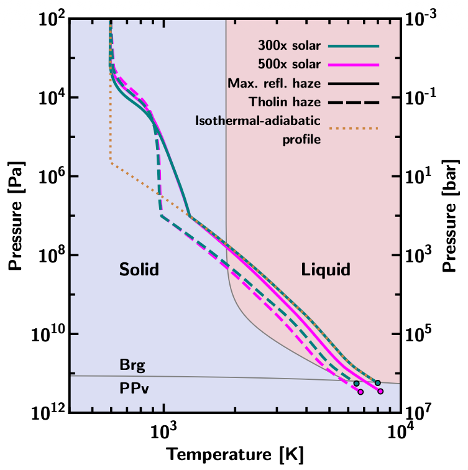
A phase diagram for a common rocky material MgSiO3. The various lines show different model pressure–temperature profiles for the sub-Neptune GJ 1214b, while the circles indicate the location of the atmosphere/surface boundary. All circles fall into the “solid” part of the phase diagram, indicating that GJ 1214b likely has a solid surface. [Breza et al. 2025]
This latter result is particularly insightful in light of recent JWST observations that suggest many sub-Neptunes have heavy atmospheres. These new models suggest that these worlds might have solid surfaces, and that models attempting to explain their compositions should be tweaked to account for this finding. In these early days where astronomers are still puzzling out the most basic properties of these strange worlds, research like this demonstrates the power of using advanced theoretical modeling to help interpret our cutting-edge observations.
Citation
“Not All Sub-Neptune Exoplanets Have Magma Oceans,” Bodie Breza et al 2025 ApJL 993 L46. doi:10.3847/2041-8213/ae0c07
The post Standing on a Sub-Neptune appeared first on AAS Nova.
]]>
Astrobites reports on the consequences of shooting an asteroid with a spacecraft.
The post Shot by the DART and We’re to Blame! Now That Space Rock Won’t Be the Same appeared first on AAS Nova.
]]>Editor’s Note: Astrobites is a graduate-student-run organization that digests astrophysical literature for undergraduate students. As part of the partnership between the AAS and astrobites, we occasionally repost astrobites content here at AAS Nova. We hope you enjoy this post from astrobites; the original can be viewed at astrobites.org.
Title: High-Speed Boulders and the Debris Field in DART Ejecta
Authors: Tony L. Farnham et al.
First Author’s Institution: University of Maryland
Status: Published in PSJ
The DART Mission: A First Step in Planetary Defense
In a groundbreaking experiment, NASA’s Double Asteroid Redirection Test (DART) became the first mission to intentionally crash a spacecraft into an asteroid to test whether such an impact could change the asteroid’s path. The target was Dimorphos, a small companion orbiting a larger asteroid called Didymos, located about 11 million kilometers from Earth.
Luckily, neither Dimorphos nor Didymos was ever on any sort of collision course with anything (and they’re still not). But by impacting an object orbiting another, the effect of the collision could more easily be measured and so Dimorphos was chosen as the target. You see, the goal wasn’t destruction, but deflection. The scientists wanted to see if a spacecraft could alter an asteroid’s orbit by striking it — and if so, by how much. When DART slammed into Dimorphos at over 22,500 kilometers per hour, it successfully shortened the asteroid’s roughly 12-hour orbit by about 33 minutes. This confirmed that hitting an asteroid with a spacecraft — in this case scientifically called a kinetic impactor — could be a viable method to redirect a potentially hazardous object in space.
But the change in momentum didn’t just come from the spacecraft itself. Much of the momentum transfer came from the plume of debris — called ejecta — that blasted out from the impact site. This debris, spreading out in multiple directions, added to the total push on the asteroid. Understanding how this ejecta moved exactly is key to calculating the full effect of the impact and was one of the primary goals for the DART mission.
With this exact purpose in mind, a small companion spacecraft called LICIACube (Light Italian Cubesat for Imaging of Asteroids), released by DART two weeks before the crash, flew past moments after the collision. It snapped several images of the debris cloud, as seen in Figure 1, as it raced past. It is with a reanalysis of these images that today’s authors have managed to track a number of boulders in the ejected material.
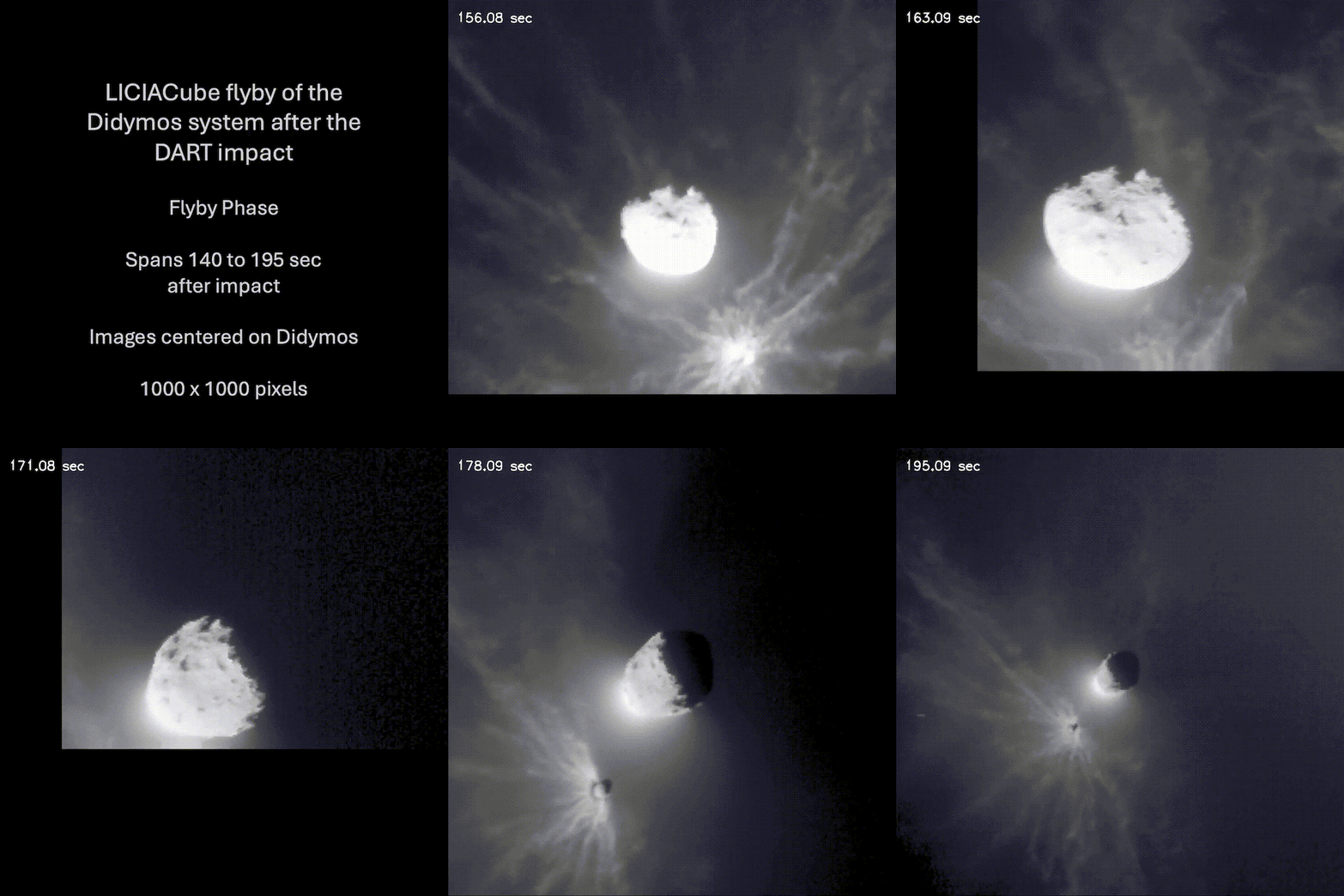
Figure 1: Animated sequence of images taken by LICIACube as it flew past Didymos and Dimorphos a few minutes after impact by the DART spacecraft. The image is centered on Didymos with the smaller Dimorphos visible for most of the flyby. Large plumes of ejected material are visible, radiating out from the impact site where a very deep crater likely formed. Video provided by the author and subsequently converted to GIF and slowed for use in this bite. [Farnham et al. 2025]
Boulders, Boulders Everywhere!
You can say that DART really made an impact — pun intended. It kicked up a lot of material as it struck Dimorphos. In some parts the ejecta plumes are dense enough to block sunlight and even cast shadows on Dimorphos. In the images, like the one seen in Figure 2, the authors were able to make out more than 100 boulders, some as big as 3.6 meters in radius. Tracking the boulders allowed them to calculate velocities and their contribution to the momentum budget. Some of the boulders were ejected at speeds up to nearly 200 kilometers per hour and carried almost as much momentum as the DART craft itself.

Figure 2: The image shows part of the ejected material from the DART impact on Dimorphos at 2 minutes and 40 seconds after impact. A number of boulders are highlighted as they are tracked through the sequence of images from the LICIACube. The boulders are not uniformly distributed but mostly clustered in two distinct populations, with the South Cluster containing around 70% of the measured objects. [Farnham et al. 2025]
The authors also found that the boulders are clustered, suggesting that they were ejected in preferred directions. They conclude that this non-uniform distribution likely changed Dimorphos’s orbital plane. Additionally, the momentum imparted by boulder ejection also likely altered the rotational state of the asteroid, making it tumble around in its orbit.
So what happened? Although there are no constraints on their actual points of origin, the authors suggest that a likely scenario might be that the ejected rocks are the shattered pieces of two large boulders that were seen in some of the last images from the DART spacecraft itself. The two boulders on the surface — named Bodhran and Atabaque after their drum-like shapes — were likely struck by the solar panels as seen in Figure 3.
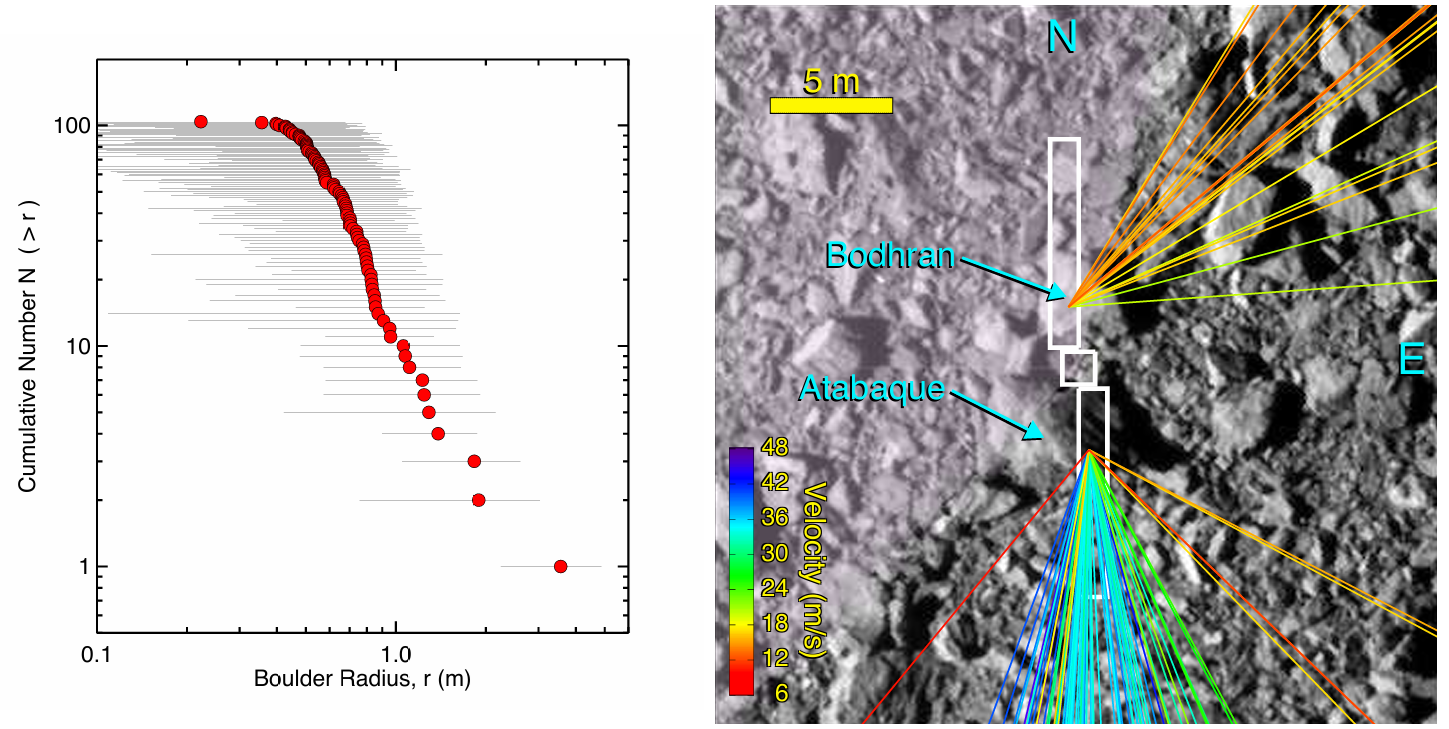
Figure 3: The right side of the figure shows the impact site for the DART spacecraft just before it hit the surface. The outline of the craft is superimposed on top with the main bus of the craft and with two extended solar panels. Also shown are the authors’ estimated paths for the 104 boulders tracked. They may be the remains of two surface rocks that were shattered upon impact. To the left is the radius distribution for the boulders that were tracked in the study. [Farnham et al. 2025]
The European Space Agency’s Hera mission, now en route and arriving in 2026, aims to carry out an in-depth post-impact analysis. It could determine if Dimorphos is tumbling in its slightly modified orbit and help assess the momentum transfer from the impact debris. All this will contribute to a better understanding of just how much the impact changed the asteroid’s orbit and how much more momentum came from the ejected material than was contributed by the DART spacecraft to Dimorphos. These data will be key to refining asteroid deflection strategies in the case that we might need them in the future. After all, the dinosaurs didn’t have any, and look where it got them!
Original astrobite edited by Chloe Klare.
About the author, Kasper Zoellner:
I have a Master of Science in astronomy and I am currently working towards a PhD in physics and educational science. My greatest passion is the search for exoplanets and how stellar variability may influence the possibility of life. I am also interested in science outreach, education and discussing what sci-fi novel to read next!
The post Shot by the DART and We’re to Blame! Now That Space Rock Won’t Be the Same appeared first on AAS Nova.
]]>The post An Upper Limit of 10<sup>6</sup> M<sub>⊙</sub> in Dust from ALMA Observations in 60 Little Red Dots appeared first on AAS Nova.
]]>Deep millimeter-wavelength observations did not detect dust emission from 60 little red dots, suggesting that these enigmatic objects are either only modestly dusty or contain extremely dense gas.
The post An Upper Limit of 10<sup>6</sup> M<sub>⊙</sub> in Dust from ALMA Observations in 60 Little Red Dots appeared first on AAS Nova.
]]>
Researchers may have untangled the complex origins of the two black holes involved in a recent massive collision.
The post A Black Hole Family Tree appeared first on AAS Nova.
]]>Black holes can have messy family histories, and a recent massive merger challenged astronomers to sort out just how many generations of black holes were involved in the event. Recent research, however, may have untangled the lineages of the two progenitors.
A Massive Collision
Earlier this year, the Laser Interferometer Gravitational-Wave Observatory (LIGO) detected the ripples in spacetime caused by the merger of two black holes somewhere in the distant universe. Though these detections have become increasingly common, this one in particular stood out among the more than 200 reported over the last decade. Named GW231123, this event must have caused more of a splash than a ripple since the two black holes that slammed together were unusually massive; both likely weighed more than 100 times the mass of the Sun. Not only that, each was also spinning unusually rapidly prior to the collision.
LIGO Livingston, one of the two LIGO detectors. [Caltech/MIT/LIGO Lab]
Merger Mystery
This result was celebrated as evidence of so-called “hierarchical formation,” in which black holes formed in dense environments swarm throughout their star clusters, merging with other black holes they encounter and growing ever larger.
However, there were a couple of complications with this picture. For one, theory predicts that it is challenging to form such rapidly spinning black holes from randomly oriented progenitors, since usually the spins wash out and leave the remnant rotating slowly. For another, the merging process tends to give the final black hole a “kick” that sends it flying rapidly away from the site of the impact, occasionally fast enough to leave the star cluster altogether, meaning second-generation black holes might not be able to merge into subsequent generations.
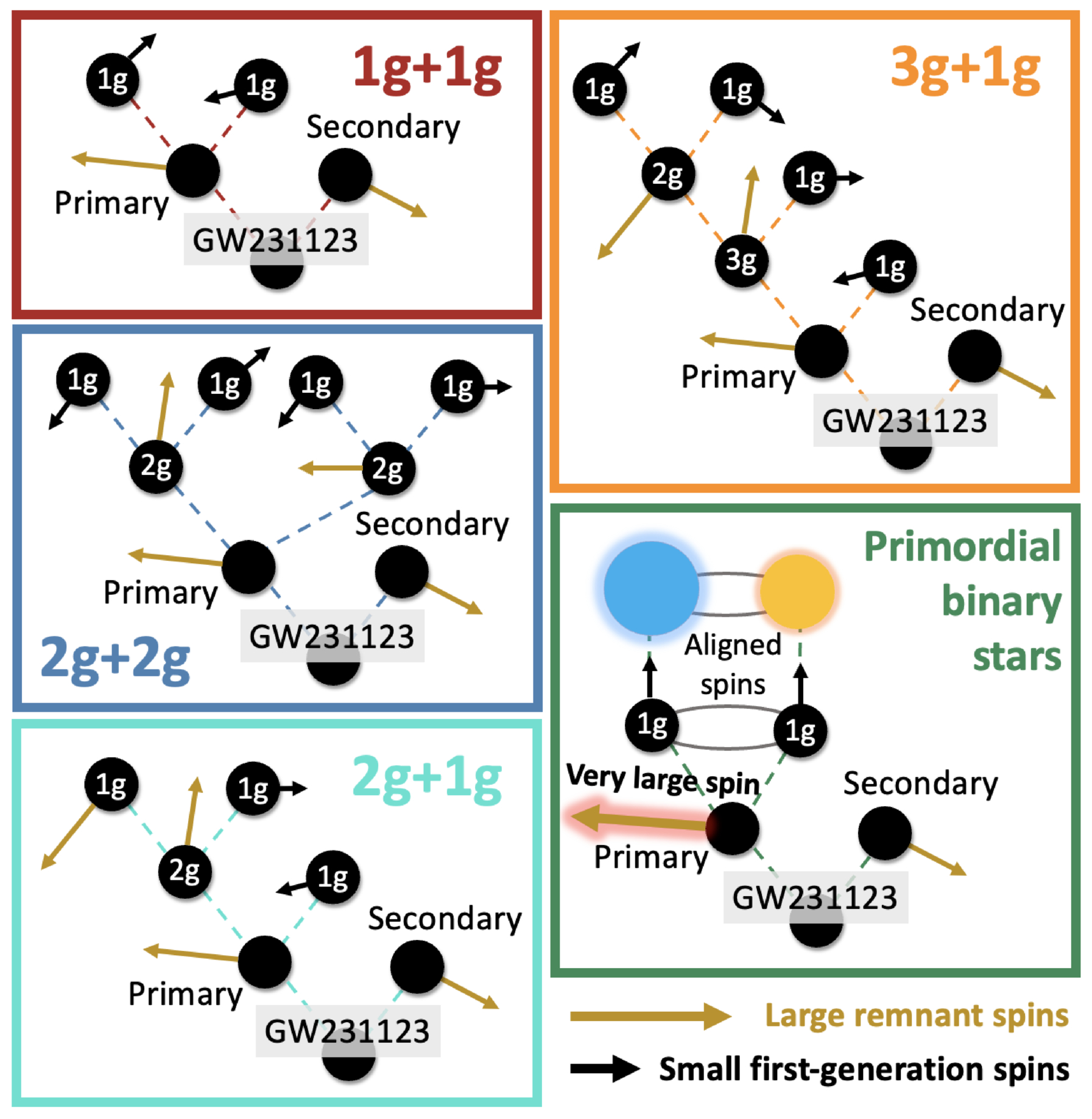
A schematic of various potential black hole family trees. The binary-star origin scenario is shown in the green box. Click to enlarge. [Stegmann et al. 2025]
Born as a Pair
New research led by Jakob Stegmann, Max Planck Institute for Astrophysics, suggests a way around each of these problems. In the team’s model, the two black holes involved in the GW231123 merger didn’t form from isolated black holes in a cluster, but rather from binary stars embedded within that cluster. In this picture, two massive stars were born bound together, orbiting one another within a larger cluster of stars. Crucially for this scenario, the massive primordial stars have aligned spins — an expected outcome of massive binary star evolution.
After both stars in the binary collapsed into black holes, these black holes merged to form a rapidly spinning second-generation black hole. This second-generation black hole eventually encountered another black hole within the cluster and merged to produce the ripples in spacetime we observed as GW231123.
Since black holes born within binary systems are expected to have smaller kicks and faster spins, this scenario neatly explains the properties observed in GW231123. As LIGO keeps listening for more black hole mergers, hopefully similar events will provide more chances to untangle their complex family trees.
Citation
“Resolving Black Hole Family Issues Among the Massive Ancestors of Very High-Spin Gravitational-Wave Events like GW231123,” Jakob Stegmann et al 2025 ApJL 992 L226. doi:10.3847/2041-8213/ae0e5f
The post A Black Hole Family Tree appeared first on AAS Nova.
]]>The post Down But Not Out: The Case of Long-Period Comet C/2021 O3 (Panstarrs) appeared first on AAS Nova.
]]>Rumors of comet C/2021 O3 (PanSTARRS)’s death may have been exaggerated: according to research, the comet likely emerged from perihelion with its nucleus no larger than 3.4 km across.
The post Down But Not Out: The Case of Long-Period Comet C/2021 O3 (Panstarrs) appeared first on AAS Nova.
]]>The post A Decrease in Slope Angles on Insolated Martian Slopes: Ground-Based Experiments appeared first on AAS Nova.
]]>Laboratory experiments show that illumination causes erosion on the sides of dusty slopes, reducing the angle of the slope; when the light is turned off, the slope can be reduced further due to amplified emission.
The post A Decrease in Slope Angles on Insolated Martian Slopes: Ground-Based Experiments appeared first on AAS Nova.
]]>The post Carbon-Rich Dust Injected into the Interstellar Medium by Galactic WC Binaries Survives for Hundreds of Years appeared first on AAS Nova.
]]>Analysis of JWST imaging of Wolf–Rayet stars shows that dust produced by these stars is long lived, surviving at least 130 years and up to more than 300 years, suggesting that this source could contribute significant dust to our galaxy.
The post Carbon-Rich Dust Injected into the Interstellar Medium by Galactic WC Binaries Survives for Hundreds of Years appeared first on AAS Nova.
]]>The post An Extremely Deep Rubin Survey to Explore the Extended Kuiper Belt and Identify Objects Observable by New Horizons appeared first on AAS Nova.
]]>A survey planned to begin in summer 2026 will characterize the size distribution of Kuiper Belt objects as well as identify potential imaging targets for the New Horizons spacecraft.
The post An Extremely Deep Rubin Survey to Explore the Extended Kuiper Belt and Identify Objects Observable by New Horizons appeared first on AAS Nova.
]]>
The gravitational wave events GW241011 and GW241110 provide strong evidence for the growth of black holes through successive mergers.
The post Not Their First Rodeo: Gravitational Wave Detectors Spot Merging Black Holes That Have Merged Before appeared first on AAS Nova.
]]>Meet GW241011 and GW241101, two events from the fourth observing run of the LIGO, Virgo, and KAGRA (LVK) gravitational wave detectors. With rapid spins and mismatched black hole masses, both events provide strong evidence for black hole growth through hierarchical mergers.
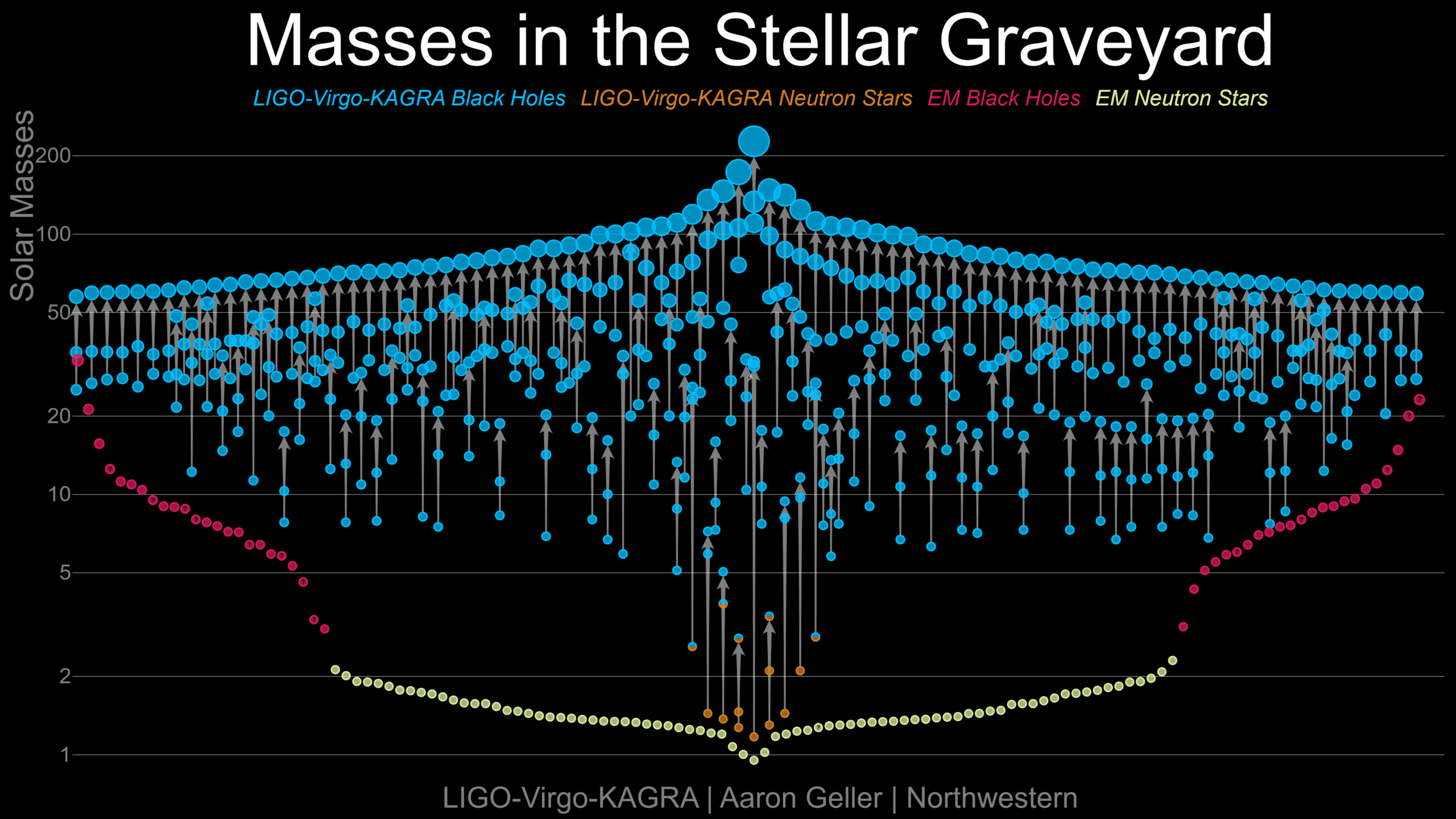
Masses of black holes and neutron stars discovered via gravitational waves (blue and orange circles). The red and yellow circles show the black holes and neutron stars detected through electromagnetic means. Click to enlarge. [LVK/A. Geller/Northwestern]
A Decade of Discovery
Humanity is 10 years into its study of the gravitational wave universe, and detectors across the globe are about to wrap up their fourth observing run. The recently released fourth catalog of gravitational wave transients, GWTC-4.0, more than doubles the number of recorded events.
Today, we’re taking a look at two of the fourth observing run’s gravitational wave events, both of which point to black holes born in dense environments.
Two Detections in the Spotlight
GW241011 and GW241101 are gravitational wave signals that reached Earth in late 2024. Using Bayesian parameter estimation, members of the LVK collaboration determined that each of these two signals arose from the merger of a pair of black holes.
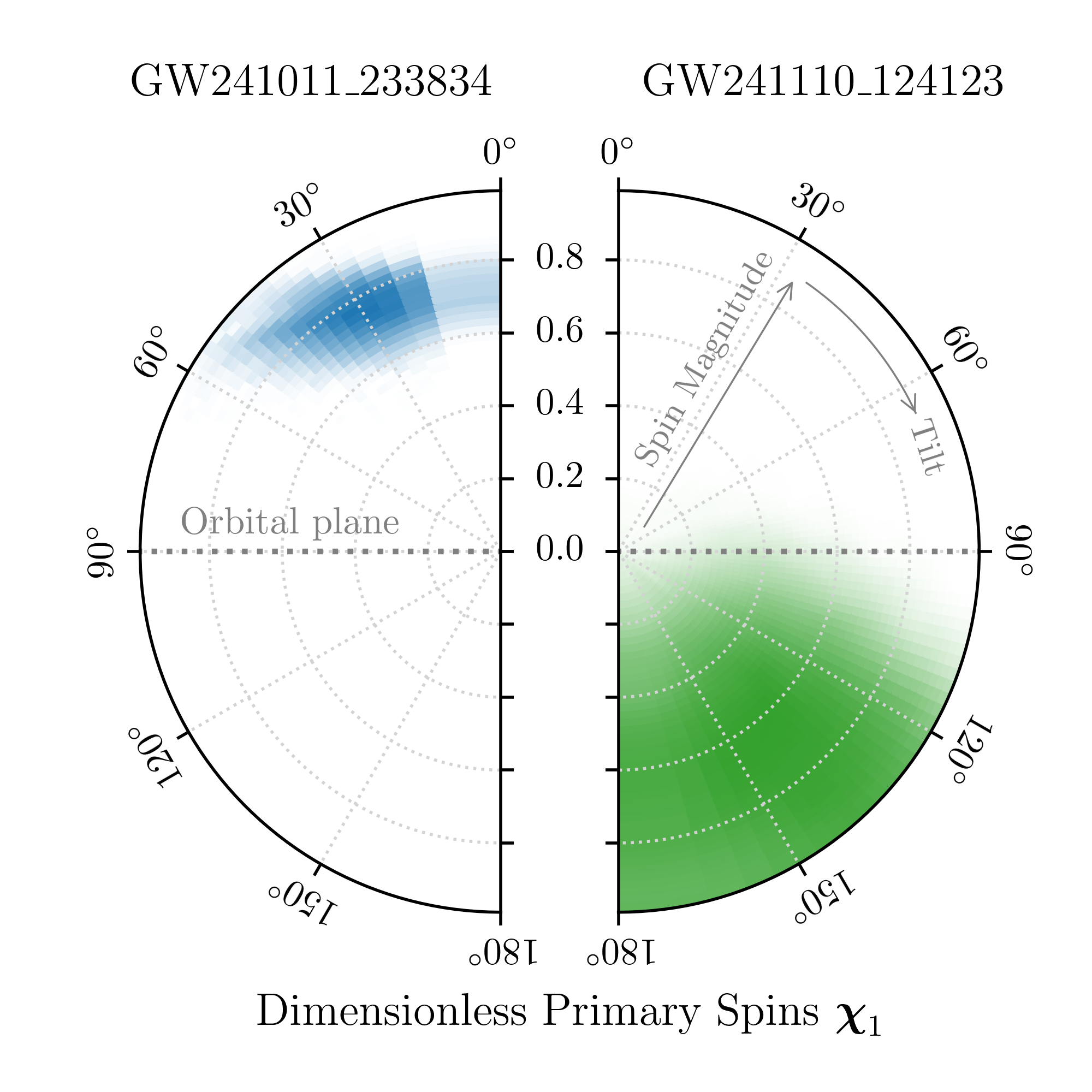
Posterior distributions for the primary black hole’s spin magnitude for GW241011 (left) and GW241101 (right). [LIGO, Virgo, and KAGRA Collaborations 2025]
GW241101 flips the script: its primary black hole also spins rapidly, but it appears to do so in a direction opposite from the direction in which the black holes orbit. Though its spin isn’t measured as precisely as that of the primary black hole in GW241011, this event still provides the best evidence so far that the spins of some merging black holes are misaligned with their orbital motion.
In addition to their standout spin parameters, these events are also remarkable for the masses involved. In both cases, the larger black hole has a mass of 15–20 solar masses, and the smaller black hole is significantly smaller — about 6 solar masses for GW241011 and 8 solar masses for GW241101.
A Black Hole Genealogy Project
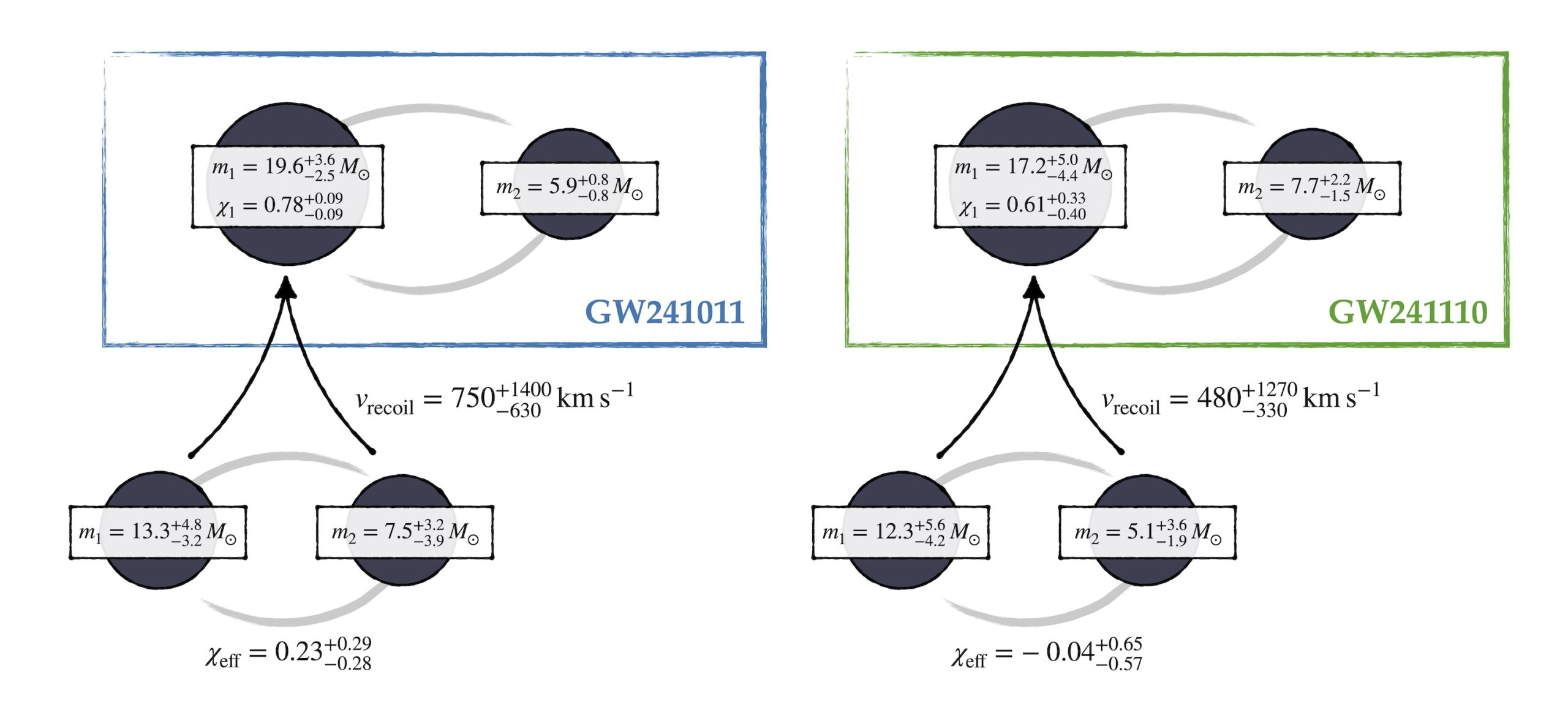
Inferred masses and spins of the ancestors of the primary black holes of GW241011 and GW241101. Click to enlarge. [LIGO, Virgo, and KAGRA Collaborations 2025]
If these signals arose from hierarchical mergers, that tells us something about the environment in which the black holes lived. When two black holes merge, the product is expected to spin rapidly and receive a “kick.” For a black hole pair in a loose grouping of stars, this kick would likely boot the merger product out of the group, preventing it from encountering other black holes and merging again.
But in dense environments like compact star clusters, even a good strong kick isn’t enough to overcome the cluster’s escape velocity and launch the resulting black hole on a lonely journey through space. Instead, these black holes are retained in the dense cluster environments of their birth, where they may dance and merge with another black hole partner. While it’s not possible to entirely rule out other origins, such as an isolated pair of massive binary stars, the data strongly support the hierarchical merger scenario.
This discovery yet again demonstrates the ability of our gravitational wave detectors to reveal the lives and histories of black holes throughout our universe. Stay tuned for even more black hole news from the current observing run!
Citation
GW241011 and GW241110: Exploring Binary Formation and Fundamental Physics with Asymmetric, High-Spin Black Hole Coalescences,” A. G. Abac et al 2025 ApJL 993 L21. doi:10.3847/2041-8213/ae0d54
The post Not Their First Rodeo: Gravitational Wave Detectors Spot Merging Black Holes That Have Merged Before appeared first on AAS Nova.
]]>The post The Potential Danger to Satellites Due to Ejecta from a 2032 Lunar Impact by Asteroid 2024 YR4 appeared first on AAS Nova.
]]>Seven years from now, 2024 YR4 will have a few percent chance of impacting the Moon and carving out a 1-km-diameter crater; such an impact has a 1% chance of directing at least 10% of the ejecta to be accreted by Earth.
The post The Potential Danger to Satellites Due to Ejecta from a 2032 Lunar Impact by Asteroid 2024 YR4 appeared first on AAS Nova.
]]>
Astrobites reports on the impact of galactic outflows on the formation of stars in the local starburst galaxy Messier 82.
The post Outflows, Shocks, and Star Formation in Messier 82 appeared first on AAS Nova.
]]>Editor’s Note: Astrobites is a graduate-student-run organization that digests astrophysical literature for undergraduate students. As part of the partnership between the AAS and astrobites, we occasionally repost astrobites content here at AAS Nova. We hope you enjoy this post from astrobites; the original can be viewed at astrobites.org.
Title: Stars Born in the Wind: M82’s Outflow and Halo Star Formation
Authors: Vaishnav V. Rao et al.
First Author’s Institution: University of Michigan
Status: Published in ApJ
Outflows and Star Formation
Some galaxies, known as starburst galaxies, form stars at exceptionally high rates. High star formation rates mean, you guessed it, lots of new stars! The most massive stars live comparatively short lives and can die in a brilliant cosmic explosion known as a supernova. So, when you have a starburst galaxy, you get lots of young stars, a fraction of which produce supernovae. While these stellar explosions occur on relatively small scales, they can collectively drive galactic-scale expulsions of gas and dust known as outflows.
Outflows expel gas laden with metals out of the galaxy, playing a pivotal role in the evolution of galaxies. They can also drive additional star formation in the areas surrounding the galaxy, which is exactly what today’s authors are interested in. Messier 82 (M82), a quintessential local starburst galaxy, is the focus of today’s article (see Figure 1). M82’s proximity makes its spectacular outflows a prime testing ground for studying the impact of outflows on a galaxy and its surroundings.

Figure 1: An image of the local starburst galaxy M82, taken by the Subaru Telescope. The Hubble Space Telescope field encompassing the Southern Arcs is highlighted as a green box. [Rao et al. 2025]
The Southern Arcs of M82
The main focus of today’s article are arc-like groups of stars called the Southern Arcs that are located near M82’s southern outflow. Using photometry from the Hubble Space Telescope, today’s authors derive star formation histories for the Southern Arcs, with the goal of understanding the impact that M82’s outflows have had on star formation in its halo. Figure 1 shows the Southern Arcs region of M82 highlighted in green alongside an image of M82.
Star Formation Histories
If you’ve ever taken an astronomy class, you’re probably familiar with the Hertzsprung–Russell (HR) diagram. HR diagrams are one of the most powerful tools available to astronomers, as they encode a ton of information regarding populations of stars and their formation. In practice, astronomers can construct HR diagrams using resolved stellar populations. That is, if you can resolve individual stars in a galaxy, you can construct a color–magnitude diagram, which is essentially the HR diagram you may be familiar with, but uses observed properties as a proxy for temperature (color) and luminosity (magnitude).
Today’s authors use the color–magnitude diagrams of the Southern Arc to derive star formation histories for the region. Star formation histories describe the star formation rate as a function of time, providing an insight into when and how stellar populations formed. To derive the Southern Arc star formation histories, the authors use the MATCH color–magnitude diagram fitting code, which determines the combination of stellar populations that reproduce the observed color–magnitude diagram, accounting for observational biases along the way. Figure 2 shows the star formation histories obtained using three different stellar evolution models. The authors find that about 85% of the stellar mass in the Southern Arc field formed sometime between 70 and 150 million years ago before star formation slowed down. About 30 million years ago, star formation picked up again, producing the rest of the stellar mass in the Southern Arc field.

Figure 2: The star formation history (left) and cumulative star formation history (right) of the Southern Arc region. Different stellar evolutionary models are marked in different colors. The star formation history shows the star formation rate as a function of time, while the cumulative star formation history shows the buildup of the stellar mass as a fraction of the total mass observed now. [Rao et al. 2025]
So, What’s the Deal with the Southern Arcs?
The authors explore two mechanisms that could explain the star formation histories. In the first scenario, M82’s outflows trigger star formation when impacting the cooler circumgalactic gas. When the outflow shocks collide with the cooler gas, it causes it to collapse and form stars. In the second scenario, star formation is occurring within the outflows themselves. Figure 3 is a schematic of the two proposed mechanisms.

Figure 3: A schematic outlining the two possible mechanisms for the formation of the Southern Arcs. The left panel shows the scenario in which shocks produced by the outflow collide with gas in the circumgalactic medium, triggering star formation. The right panel shows the scenario in which star formation is triggered within the outflow itself. [Rao et al. 2025]
Original astrobite edited by Jessie Thwaites.
About the author, Drew Lapeer:
Drew is a first-year PhD student at the University of Massachusetts Amherst. They are broadly interested in the evolution of galaxies, with a focus on the impact of cosmic feedback on the galactic ecosystem. In their free time, they enjoy reading, rock climbing, hiking, and baking!
The post Outflows, Shocks, and Star Formation in Messier 82 appeared first on AAS Nova.
]]>
New research suggests that giant planets likely ring like bells after they collide with other worlds.
The post Planets Can Be Bells: The Aftermath of Major Mergers appeared first on AAS Nova.
]]>What would happen to a gaseous exoplanet if it was struck by a protoplanet? Recent research suggests that it would ring like a bell, and that just maybe, we’d be able to observe this ringing back on Earth.
Heavy Metal Mystery
Previous studies have hinted that giant planets have more heavy elements in their cores than we’d expect if they had formed from the exact same stew of gas and dust as their host stars. How exactly they end up with these enriched compositions is something of a mystery, though. Astronomers have proposed two potential theories: one somewhat dull, and one that involves dramatic collisions between the massive protoplanets.
In the first case, perhaps growing giant planets clear out the gas along their orbits, then steadily and quietly accrete the dust that spills over into the gaps. In the latter case, theorists have conjured a model in which growing gas giant planets repeatedly collide and merge with large and somewhat rocky protoplanets. Both of these mechanisms would produce the enhanced heavy element contents observed today, so how can we tell these two paths apart? Recent work by a team led by J.J. Zanazzi (University of California, Berkeley) proposes one such test.
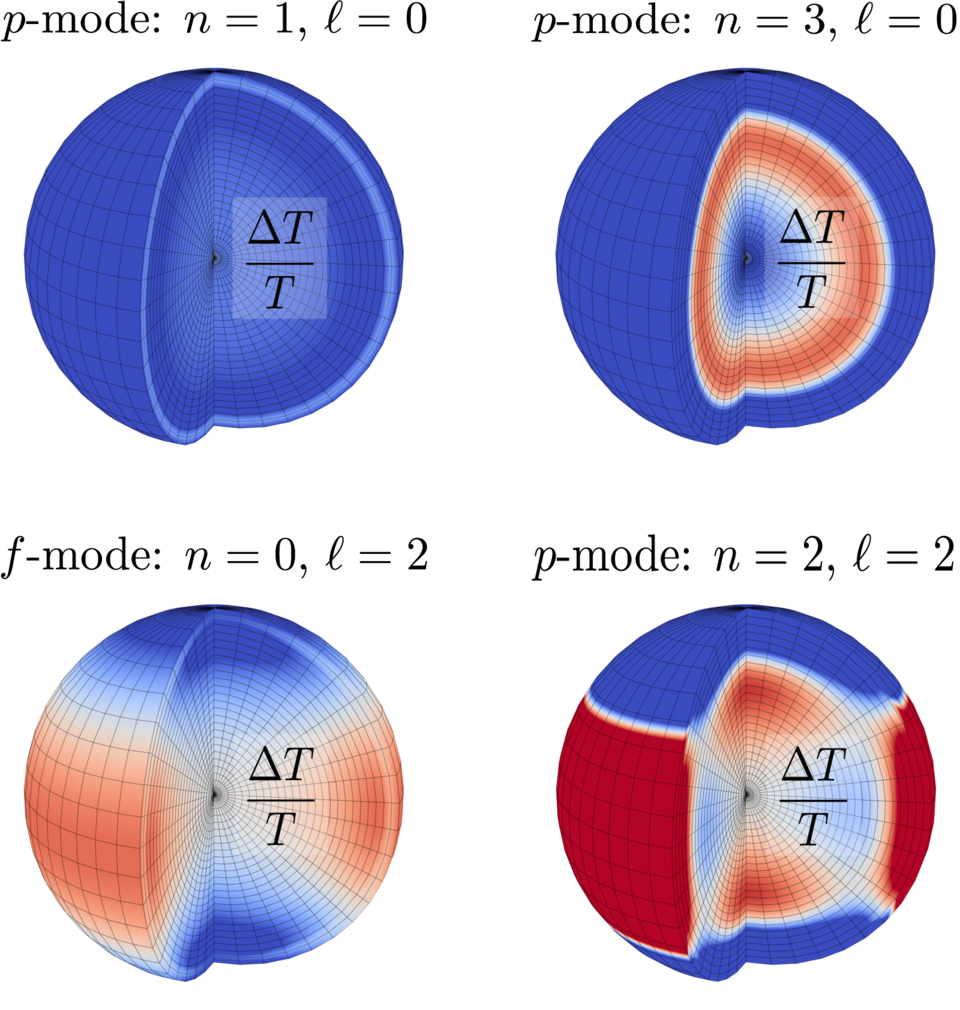
An illustration of the different oscillation modes within a gas giant after it’s struck by a protoplanet. [Zanazzi et al. 2025]
Ringing Planets
Through mathematical derivations, the researchers demonstrate that if a gas giant were to collide with a protoplanet, the impact would cause the planet’s surface to physically oscillate inwards and outwards, and for its surface temperature to vary. In other words, the planet would “ring” like a bell struck with a hammer, and as it physically convulses in the aftermath of the merger it would grow brighter and fainter in a repeating, periodic pattern. In principle, if the ringing lasts for long enough and the oscillations in brightness were large enough, observers back on Earth could record the amplitude and period of the changes and back out some constraints on what had happened and when.
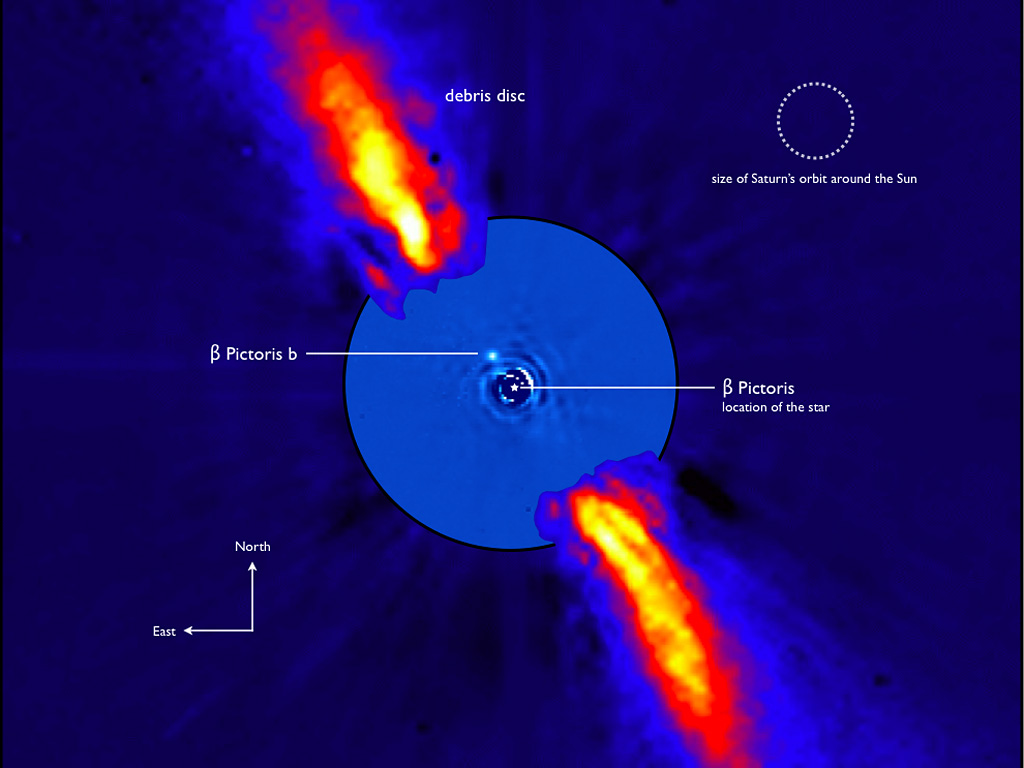
An image of Beta Pictoris, including the young gas giant Beta Pictoris b and the surrounding debris disk. Click to enlarge. [ESO/A.-M. Lagrange et al.; CC BY 4.0]
Beta Pictoris b is a young planet in a system that’s still forming, and it orbits its host star on an eccentric path that takes it through dense regions of the disk. Hopefully, future observations will test whether this treacherous path produced any massive collisions in the relatively recent past. Until then, though, we can all enjoy charming visions of massive planets colliding with one another and ringing through the night.
Citation
“Seismic Oscillations Excited by Giant Impacts in Directly Imaged Giant Planets,” J. J. Zanazzi et al 2025 ApJ 993 3. doi:10.3847/1538-4357/ae04ec
The post Planets Can Be Bells: The Aftermath of Major Mergers appeared first on AAS Nova.
]]>The post Exploring the Future of Soft X-Ray Polarimetry: The Capabilities of the REDSoX Instrument for X-Ray Dim Isolated Neutron Star and Magnetar Studies appeared first on AAS Nova.
]]>A sounding rocket will carry for the first time an instrument capable of detecting polarized X-rays below 1 kiloelectronvolt; this work explores the possible outcomes of a dedicated mission with such an instrument.
The post Exploring the Future of Soft X-Ray Polarimetry: The Capabilities of the REDSoX Instrument for X-Ray Dim Isolated Neutron Star and Magnetar Studies appeared first on AAS Nova.
]]>The post On Dust Devil Diameters, Occurrence Rates, and Activity appeared first on AAS Nova.
]]>Reported diameters of dust devils on Mars appear to follow a simple power-law distribution; dust devil diameters are important because the amount of dust injected into the atmosphere scales with the diameter.
The post On Dust Devil Diameters, Occurrence Rates, and Activity appeared first on AAS Nova.
]]>The post Signature of a Dark Ultracompact Dwarf Galaxy Transiting the Milky Way Disk appeared first on AAS Nova.
]]>A vertical velocity anomaly in the stellar disk of the Milky Way and spatially coincident gaseous disturbances support the hypothesis that a dark or failed ultra-compact dwarf galaxy has passed through the Milky Way.
The post Signature of a Dark Ultracompact Dwarf Galaxy Transiting the Milky Way Disk appeared first on AAS Nova.
]]>
Gaia19bxc appears to contain a magnetic white dwarf and a metal-poor star in theory-defying close quarters — a configuration seen for the first time in a cataclysmic variable system.
The post Shortest-Period Polar Cataclysmic Variable Discovered appeared first on AAS Nova.
]]>Astronomers have discovered the most compact cataclysmic variable system containing a strongly magnetized white dwarf. The extreme closeness of the system suggests that the companion may be a metal-poor star — the first time such a star has been paired with a strongly magnetized white dwarf.
Meet the Cataclysmic Variable
Cataclysmic variables are binary star systems that contain a white dwarf and a companion star in uncomfortably close quarters. In these systems, the companion star transfers gas to the white dwarf, resulting in sudden, irregular, and often repeated outbursts as the stolen gas ignites on the scorching surface of the white dwarf.
These bound-together stars typically orbit one another on orbits ranging from about 80 minutes to 10 hours. Though theorists place the minimum orbital period around 76 minutes, a handful of cataclysmic variable systems have cropped up with periods below this limit. The systems that have limboed under the limit are thought to have stellar companions that are more compact than typical main-sequence stars, allowing the white dwarf to nestle in closer.
Exploring Below the Limit
Discovered in 2019 by the Gaia spacecraft, Gaia19bxc is a cataclysmic variable that fluctuates with a period of 64.42 minutes. If this variability is linked to the orbital period of the system, that would place it well below the theoretical minimum period. Adding to the intrigue, early observations also hinted that Gaia19bxc’s white dwarf is strongly magnetic, making the system what’s called a polar. In polar systems, the white dwarf’s magnetic field diverts the accreted matter toward the white dwarf’s poles as it is collected, rather than into a disk around the white dwarf’s equator.
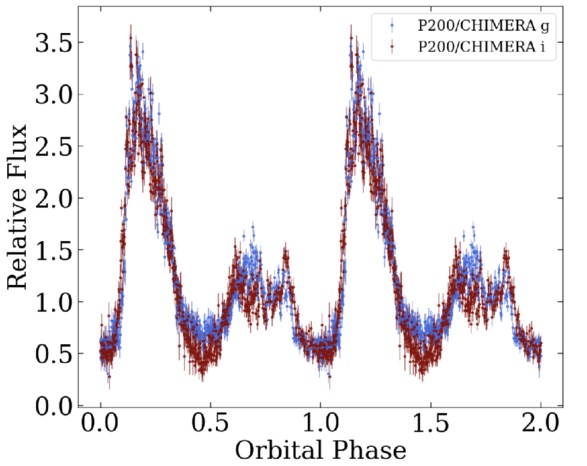
Phase-folded light curves for Gaia19bxc from the Caltech HIgh-speed Multi-colour camERA (CHIMERA) on the Hale Telescope. The double-peaked light curve is evidence for cyclotron beaming, which occurs in strongly magnetized white dwarfs. [Adapted from Galiullin et al. 2025]
The team’s analysis confirmed that the stars of Gaia19bxc orbit one another every 64.42 minutes, cementing the system’s place below the period minimum for typical cataclysmic variables. The system’s double-peaked light curves and evidence for an accretion stream — rather than an accretion disk — confirm the system’s polar nature, implying a magnetic field strength greater than 10 million Gauss. This makes Gaia19bxc the most closely orbiting system to contain a strongly magnetized white dwarf.
A Sign of Discoveries to Come
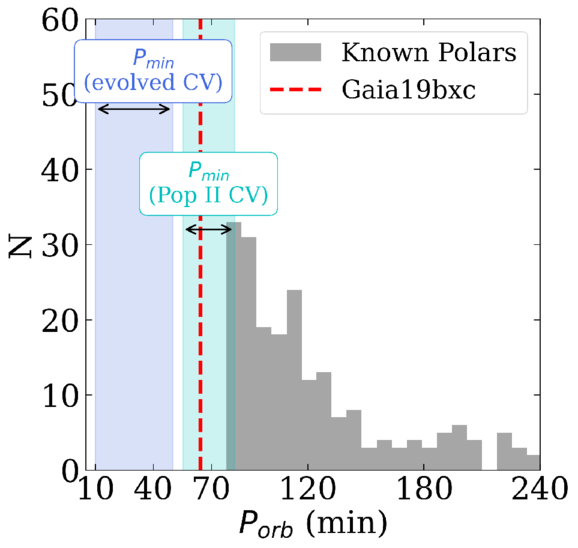
Gaia19bxc’s orbital period compared to known polar cataclysmic variables (gray) as well as the theorized minimum periods for systems containing a metal-poor (Pop II) companion (cyan) and an evolved companion (blue). [Galiullin et al. 2025]
Galiullin and coauthors saw no evidence for metal lines in Gaia19bxc’s spectrum, nor did they see spectral features arising from a hot companion star. These findings suggest that the companion is an old, cool, compact, metal-poor star, which would make Gaia19bxc the first known polar to contain a metal-poor star. It’s also one of only a handful of cataclysmic variables to contain a metal-poor star and be below the theoretical period minimum.
Though Gaia19bxc is currently in a class of its own, it may not be for long; with the start of the Vera C. Rubin Observatory’s Legacy Survey of Space and Time rapidly approaching, many more cataclysmic variable systems as faint as or fainter than Gaia19bxc may soon be discovered.
Citation
“Optical Spectroscopy of the Most Compact Accreting Binary Harboring a Magnetic White Dwarf and a Hydrogen-Rich Donor,” Ilkham Galiullin et al 2025 ApJL 990 L57. doi:10.3847/2041-8213/adff82
The post Shortest-Period Polar Cataclysmic Variable Discovered appeared first on AAS Nova.
]]>The post Discovery of Faint Nebulosity Around a Z Camelopardalis–Type Cataclysmic Variable in Antlia: Nova Shell or Ancient Planetary Nebula? appeared first on AAS Nova.
]]>A newly discovered faint nebula surrounding a cataclysmic variable star could either be the remnant of a nova outburst from several centuries ago or a long-ago planetary nebula; it’s not yet possible to say which.
The post Discovery of Faint Nebulosity Around a Z Camelopardalis–Type Cataclysmic Variable in Antlia: Nova Shell or Ancient Planetary Nebula? appeared first on AAS Nova.
]]>The post Detection Prospects of Electromagnetic Signatures from OGLE-2011-BLG-0462 appeared first on AAS Nova.
]]>Observations of a free-floating black hole could discern between accretion modes; the magnetically arrested disk mode may result in detectable emission, while a radiatively inefficient accretion flow may not.
The post Detection Prospects of Electromagnetic Signatures from OGLE-2011-BLG-0462 appeared first on AAS Nova.
]]>
Astrobites reports on the possibility of merging black holes producing flares within the accretion disks surrounding active supermassive black holes.
The post Following Up on Flares: Can We Spot Black Hole Mergers in Active Galactic Nucleus Disks? appeared first on AAS Nova.
]]>Editor’s Note: Astrobites is a graduate-student-run organization that digests astrophysical literature for undergraduate students. As part of the partnership between the AAS and astrobites, we occasionally repost astrobites content here at AAS Nova. We hope you enjoy this post from astrobites; the original can be viewed at astrobites.org.
Title: Tracing the Light: Identification for the Optical Counterpart Candidates of Binary Black Holes During O3
Authors: Lei He et al.
First Author’s Institution: University of Science and Technology of China
Status: Published in ApJ
Since the first detection of gravitational waves about a decade ago, gravitational wave science has been the gift that keeps on giving (for example, check out GW231123, announced earlier this year). It is also a field where more questions with unknown answers just keep coming. A key question at the forefront of gravitational wave science is about formation channels: how does the population of black holes seen through the LIGO–Virgo–KAGRA (LVK) detectors form? The two most popular of these formation channels are the “isolated binary” channel, wherein two stars of a binary stellar system each form black holes that then merge, and the “dynamical” formation channel, wherein two stars in a dense stellar cluster (usually a nuclear star cluster) become black holes and merge just through chance and the denseness of the environment they are in.
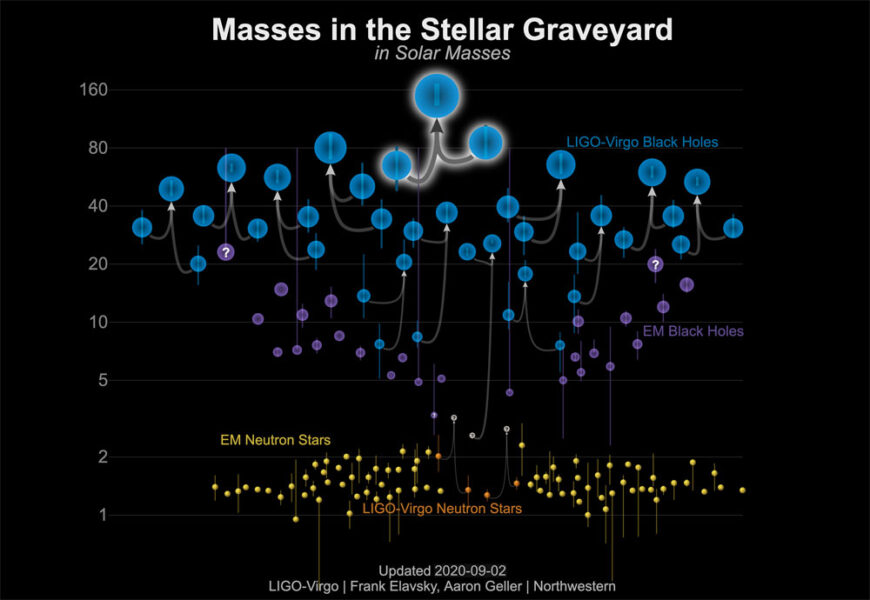
More recently, a third channel has been gaining popularity: the active galactic nucleus (AGN) disk channel. An AGN disk is a large disk of hot gas that surrounds a supermassive black hole in the center of a galaxy. The disk helps address two potential issues with stellar-mass binary black hole mergers that could pose a problem for the other two formation channels: delay time and mass. The delay time is the time between when the binary system forms and when the two black holes merge. By putting the system into the denser gaseous environment of an AGN disk, the orbits of the black holes decay faster, allowing the merger to happen on a quicker timescale. Regarding mass, the LVK detectors have detected mergers with masses above what would be expected from stellar-mass black holes alone, the so-called “lite” intermediate-mass black holes. One potential avenue through which these “lite” intermediate-mass black holes may form is in the gaseous disks of AGNs, where they can accrete material and gain mass before merging.
One potential astronomical benefit of a binary black hole merger happening inside the gaseous disk of an AGN is that the merger could disturb this disk and spark a flare of light. If we could spot such a flare and tie it to a gravitational wave event, we would then have both gravitational wave and electromagnetic observations of the same event. Prior research has suggested that some AGN flares detected by the Zwicky Transient Facility (ZTF) might be linked to binary black hole mergers observed during LIGO–Virgo’s third observing run. Today’s authors revisit this possibility by using additional years of data from ZTF combined with the public data through the third observing run.
The authors re-analyzed seven candidate flare–gravitational wave pairs originally flagged during the third observing run (see Figure 1). They examined each AGN’s long-term light curve from data from ZTF, looking for repeated flaring that might indicate a variable AGN rather than a one-time merger-driven flare. Using a Bayesian framework and an approach called Gaussian processes, they calculated the probability that each optical flare was physically connected to a specific gravitational wave event, considering both the spatial and temporal alignment of each of the two signals. Their framework allowed them to calculate a value they dub pflare, which is the probability that a given flare is indeed a genuine flare rather than a characteristic of the variability intrinsic to the AGN itself.
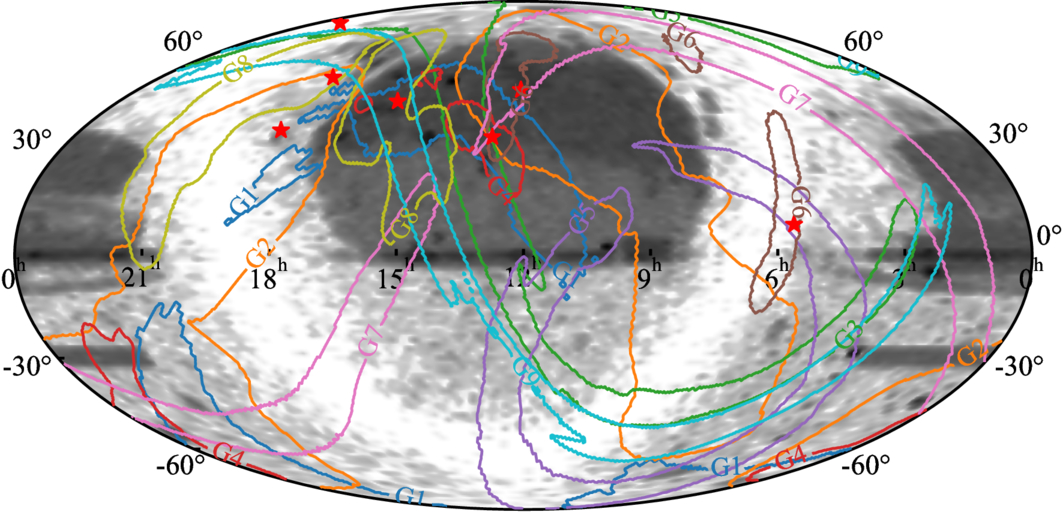
Figure 1: Sky localization of the seven AGN systems analyzed in this work. Red stars represent the locations of the AGNs with suspected flares, and colored lines represent the nine potential gravitational wave events that may be associated with each AGN flare. The white/black background represents the density of the distribution of AGNs in the Million Quasar Catalog. [He et al. 2025]
The authors take this result one step further. One primary application of combining gravitational wave and electromagnetic signals is an independent measurement of the Hubble constant. The most straightforward way to measure the Hubble constant is to measure both the recessional velocity and the distance to a single source. Multi-messenger astronomy provides a straightforward approach to this, as the redshift can be determined from electromagnetic observations and the distance from gravitational wave observations. (GW170817 is a notable example of this.)
The authors show how this could be applied to their data using flares. They use the two most promising flare–gravitational wave associations to derive a new estimate of the Hubble constant. By combining the distance inferred from the gravitational wave signal with the redshift of the AGN host galaxy, they obtained a value of the Hubble constant of about 72 kilometers per second per megaparsec (roughly the peak of the green dotted curve on the bottom of Figure 2). This result is consistent with other measurements of the Hubble constant, which are the local distance-ladder measurements from supernovae and the cosmic microwave background estimates from Planck (the two measurements that are often cited as being in tension). The uncertainty from the author’s analysis is still quite large, but it provides a proof of concept. When they included the well-known GW170817 neutron star merger, they obtained a result that is slightly more informative and slightly greater than the result from GW170817 alone.
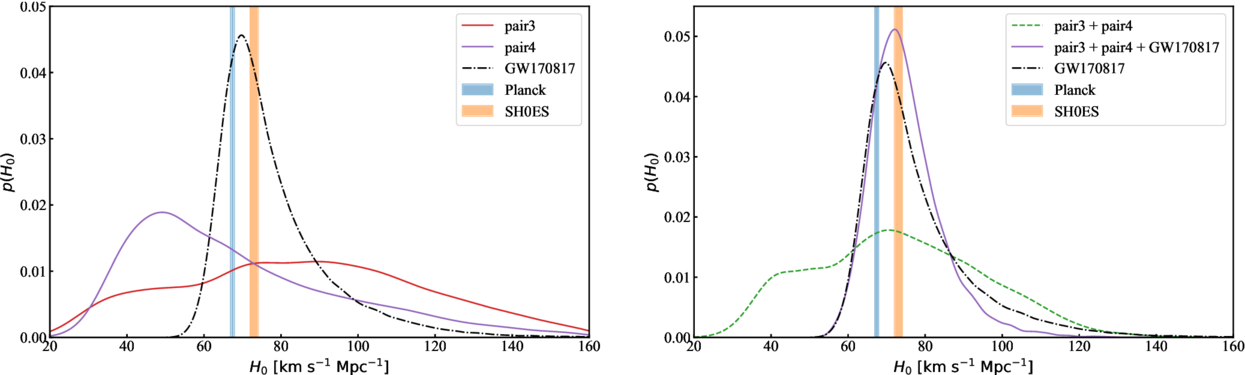
Figure 2: Constraints on the Hubble constant using multiple methods. For both figures, the x-axis represents the inferred value of the Hubble constant, and the y-axis represents the posterior probability of that value using hierarchical Bayesian analyses (for gravitational wave analyses). The vertical orange bands represent the measured value of the Hubble constant with five standard deviations of certainty using the “distance ladder” method as reported by the SH0ES collaboration. The vertical blue bands represent the measured value of the Hubble constant with five standard deviations of certainty by using measurements of the cosmic microwave background with the Planck spacecraft. The dotted black curve (both left and right) represents the posterior distribution of the Hubble constant as measured by the LVK collaboration from the first binary neutron star multi-messenger source, GW170817 (which peaks directly between the other two measurements). The purple and red curves (left) represent the posterior distributions of the two confident AGN/binary black hole pairs in this work, the green curve (right) represents the combined posterior distribution of the two confident AGN/binary black hole pairs in this work, and the solid purple curve (bottom) represents the combined posterior distribution of the two confident AGN/binary black hole pairs with GW170817. [He et al. 2025]
Original astrobite edited by Amaya Sinha.
About the author, William Smith:
Bill is a graduate student in the astrophysics program at Vanderbilt University. He studies gravitational wave populations with a focus on how these populations can help inform cosmology as part of the LIGO Scientific Collaboration. Outside of astrophysics, he also enjoys swimming semi-competitively, music and dancing, cooking, and making the academy a better place for people to live and work.
The post Following Up on Flares: Can We Spot Black Hole Mergers in Active Galactic Nucleus Disks? appeared first on AAS Nova.
]]>
A brown dwarf that made headlines for showing signs of auroral activity is back in JWST's sights — and it's now doubly interesting.
The post A Strange Brown Dwarf Gets Stranger appeared first on AAS Nova.
]]>Isolated brown dwarfs are some of the rarest and hardest to study objects in our stellar neighborhood. Recently, astronomers revealed that one of the most famous isolated brown dwarfs, W1935, is not actually one brown dwarf but two.
Challenging but Fascinating
Astronomers know of only 50 free-floating brown dwarfs within the nearest 200 light-years or so, and even the ones we know about are poorly understood. Since brown dwarfs are frigid compared to their stellar cousins, they consequently shine much less brightly and at longer wavelengths of light. Even taking a picture of these ~500K objects requires long stares with specialized telescopes, and these facilities already have their schedules full supporting a wide range of other areas of research from distant galaxies to exploding supernovae.
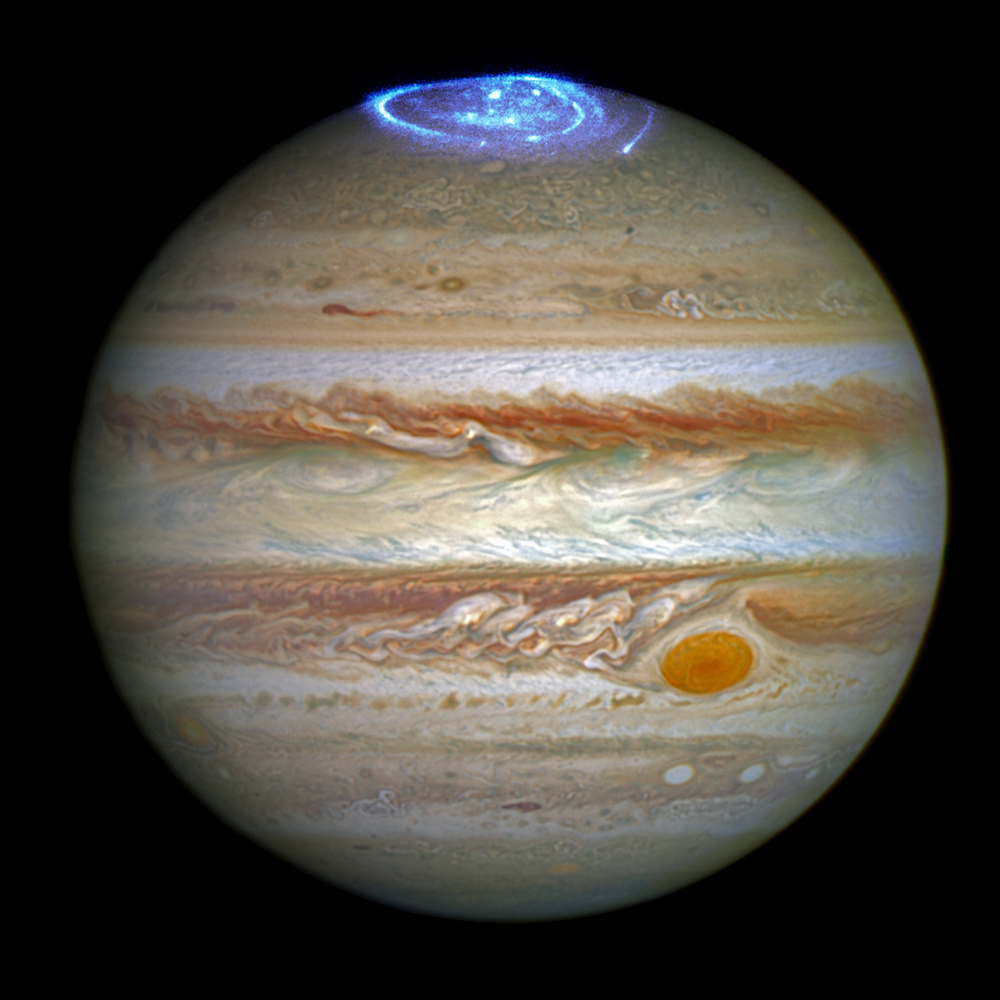
An image of Jupiter and its prominent aurora taken with the Hubble Space Telescope. [NASA, ESA, and J. Nichols (University of Leicester); Acknowledgment: A. Simon (NASA/GSFC) and the OPAL team]
Recently, JWST continued its pattern of discovery: the telescope took another look at the brown dwarf W1935, where methane emission was detected for the first time, and again found something surprising.
A New Binary
When JWST first took a look at this brown dwarf, it used its Near Infrared Spectrograph (NIRSpec) to record a spectrum of the object. These data revealed a large spike near 3 microns that perfectly lined up with methane emission from an aurora, similar to what we observe on Jupiter in the solar system. This was a thrilling find, since it hinted at an exciting possibility: Jupiter’s aurora is powered by its nearby moon Io, so the researchers cautiously wondered if W1935’s aurora could be evidence of a companion satellite as well.
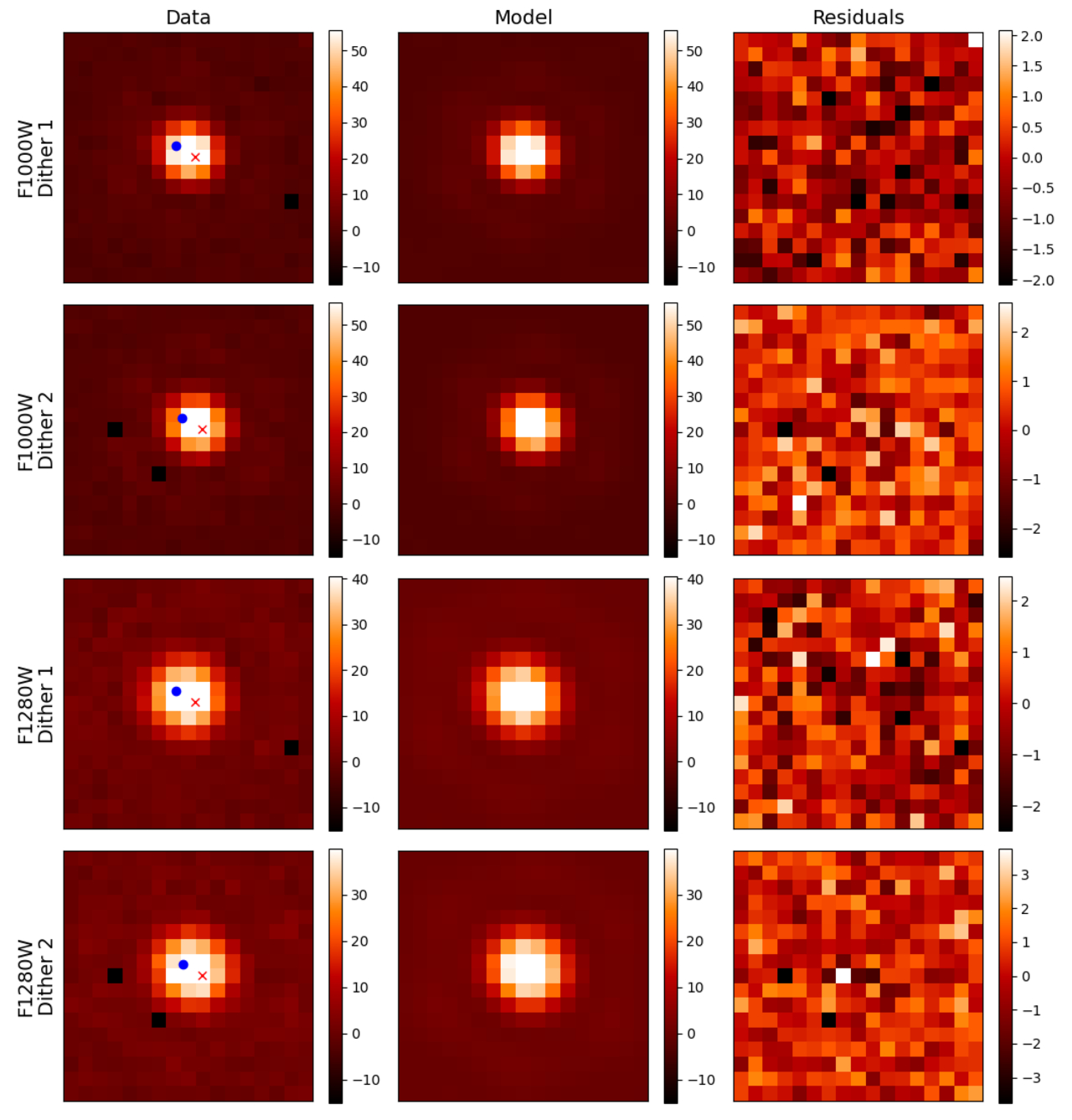
Images of W1935 taken with MIRI (left column), the author’s model for those images (center column), and the residuals (right column). The model includes two nearby point sources that are so close together they appear as one slightly elongated source. Click to enlarge. [De Furio et al. 2025]
Doubly Interesting
This makes W1935 just the second-ever known Y+Y dwarf binary and cements its status as one of the most interesting brown dwarf systems discovered to date. So far, it’s not clear which object is responsible for the auroral signal since the objects are so close together that their images blur together without careful modeling and image processing.
De Furio’s team pointed out that JWST has yet another instrument that could prove useful here: its Integral Field Unit spectrometer within NIRSpec. Should JWST revisit this fascinating system, it could study the aurora’s variability over time, pin it to one specific object within the binary, and hopefully shed some light on whether any moons play a role in the methane emission. Given all we have learned each time JWST has turned to these strange worlds, we can only hope that it will do so again soon.
Citation
“Discovery of the Second Y+Y Dwarf Binary System: CWISEP J193518.59-154620.3,” Matthew De Furio et al 2025 ApJL 990 L63. doi:10.3847/2041-8213/adfee1
The post A Strange Brown Dwarf Gets Stranger appeared first on AAS Nova.
]]>The post A JWST Study of Polycyclic Aromatic Hydrocarbon Emission in a Region of 30 Doradus appeared first on AAS Nova.
]]>A comparison of polycyclic aromatic hydrocarbon emission in low- and high-metallicity environments suggests that the growth of these molecules is inhibited in low-metallicity environments, resulting in lower emission.
The post A JWST Study of Polycyclic Aromatic Hydrocarbon Emission in a Region of 30 Doradus appeared first on AAS Nova.
]]>The post X-Ray Polarization in SN 1006 Southwest Shows Spatial Variations and Differences in the Radio Band appeared first on AAS Nova.
]]>The supernova remnant SN 1006 shows a high degree of X-ray polarization, and the degree of polarization varies with location; the polarization is lower where the shell is thought to interact with an interstellar cloud.
The post X-Ray Polarization in SN 1006 Southwest Shows Spatial Variations and Differences in the Radio Band appeared first on AAS Nova.
]]>The post FRB 20250316A: A Brilliant and Nearby One-Off Fast Radio Burst Localized to 13 pc Precision appeared first on AAS Nova.
]]>Using the interferometric capabilities of the Canadian Hydrogen Intensity Mapping Experiment, astronomers have localized a seemingly non-repeating fast radio burst to a galaxy just 130 million light-years away.
The post FRB 20250316A: A Brilliant and Nearby One-Off Fast Radio Burst Localized to 13 pc Precision appeared first on AAS Nova.
]]>
The tidal disruption event AT 2024tvd happened outside the nucleus of its host galaxy, indicating the presence of a wandering or recoiling massive black hole. What can radio observations tell us about this unusual event?
The post Investigation of the First Radio-Bright Off-Nuclear Tidal Disruption Event appeared first on AAS Nova.
]]>Catastrophic encounters between stars and massive black holes usually take place in the nuclei of galaxies, but not always. Researchers recently reported on the brightest-ever radio emission from an off-nuclear tidal disruption event caused by a wandering or recoiling black hole.
Signature of a Roaming Black Hole
Tidal disruption events occur when a star ventures too close to a massive black hole. The tidal forces of the black hole stretch the star until it’s partially or entirely disrupted, sometimes causing jets or outflows to spray from the shredded star. One thing that often distinguishes a tidal disruption event from the sea of other possible transients is the location, close to the nucleus of a galaxy.
But not all tidal disruption events happen in the center of a galaxy. In rare cases, a massive black hole roaming elsewhere in a galaxy may encounter a star, sending out a tell-tale signal in an unexpected location.
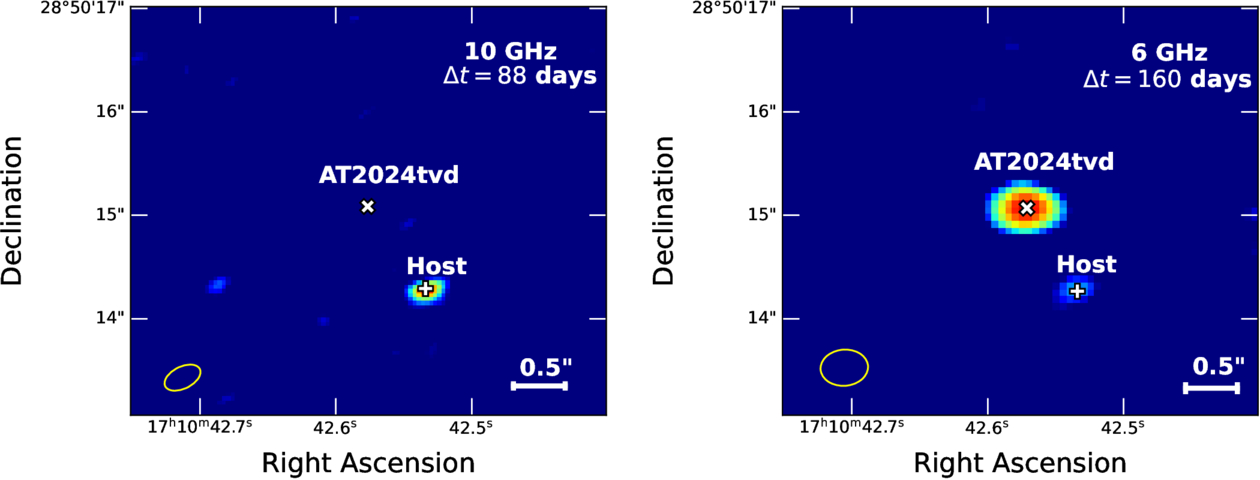
Radio observations of AT 2024tvd on two dates after its optical discovery. The tidal disruption event was not detected at 88 days post-discovery (left) and outshone the center of its host galaxy on 160 days post-discovery (right). Click to enlarge. [Sfaradi et al. 2025]
Radio Reconnaissance
Less than three months after AT 2024tvd was discovered, Itai Sfaradi (University of California, Berkeley) and collaborators launched a months-long radio-wavelength observing campaign using the Very Large Array, the Atacama Large Millimeter/submillimeter Array, the Arcminute Microkelvin Imager Large Array, the Allen Telescope Array, and the Submillimeter Array. Radio observations are critical for investigating jets and outflows from tidal disruption events.
The observations, which spanned centimeter and millimeter wavelengths, revealed two emission peaks from the tidal disruption event. The first peak occurred roughly 131 days after the event was discovered, and the second followed at day 194.
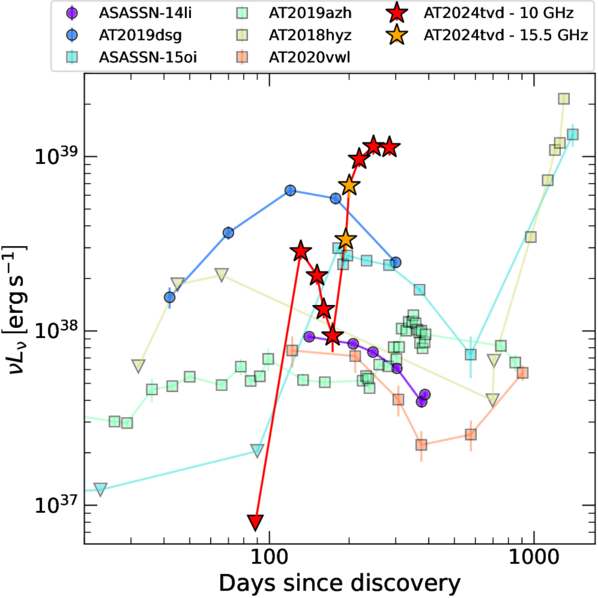
Demonstration of the fast evolution of AT 2024tvd’s radio emission (red and orange stars) compared to other radio-bright tidal disruption events (other symbols). [Sfaradi et al. 2025]
Prompt or Delayed, Outflow or Jet?
To understand the origin of the fast-evolving, extremely bright radio emission from AT 2024tvd, Sfaradi’s team modeled the emission that would arise from outflows and jets. For both wide-angle outflows and narrow jets, the team considered both prompt — arising simultaneously with the event’s optical detection — and delayed sources.
The team’s modeling highlighted several possible scenarios. In the first, both bright radio peaks arose from a single outflow that was launched about 84 days after the star met its doom. The double-peaked behavior is due to the outflow interacting with a complex distribution of material surrounding the black hole. It’s also possible for the two peaks to arise from separate outflows or jets, one launched around 84 days and the other around either 170 or 190 days, depending on whether the second source is a mildly relativistic outflow or a relativistic jet.
Sfaradi and collaborators posited that AT 2024tvd’s unusual radio behavior could be due to its off-nuclear location, but they acknowledged that this event might simply occupy a region of tidal disruption event parameter space that had yet to be explored. Sensitive interferometric or polarimetric observations may reveal more about how AT 2024tvd interacts with its environment, helping to illuminate the nature of this rare event.
Citation
“The First Radio-Bright Off-Nuclear TDE 2024tvd Reveals the Fastest-Evolving Double-Peaked Radio Emission,” Itai Sfaradi et al 2025 ApJL 992 L18. doi:10.3847/2041-8213/ae0a26
The post Investigation of the First Radio-Bright Off-Nuclear Tidal Disruption Event appeared first on AAS Nova.
]]>The post Plume Activity on Europa: Current Knowledge and Search Strategy for Europa Clipper appeared first on AAS Nova.
]]>Researchers describe the current state of knowledge regarding Europa’s plumes and the Europa Clipper search strategy, which involves an initial global search that will be used to guide later observations.
The post Plume Activity on Europa: Current Knowledge and Search Strategy for Europa Clipper appeared first on AAS Nova.
]]>
Astrobites reports on the explosive origins of hyper-velocity survivor stars.
The post Kickin’ It into Overdrive with Stellar Escapees appeared first on AAS Nova.
]]>Editor’s Note: Astrobites is a graduate-student-run organization that digests astrophysical literature for undergraduate students. As part of the partnership between the AAS and astrobites, we occasionally repost astrobites content here at AAS Nova. We hope you enjoy this post from astrobites; the original can be viewed at astrobites.org.
Title: The Evolution of Hypervelocity Supernova Survivors and the Outcomes of Interacting Double White Dwarf Binaries
Author: Ken J. Shen
Author’s Institution: University of California, Berkeley
Status: Published in ApJ
Even stars get kicked around sometimes. When a white dwarf — a dense stellar corpse that’s run out of its nuclear fuel — gets pushed past its limit, the result is a spectacular thermonuclear explosion called a Type Ia supernova. Two stars are needed to trigger a Type Ia supernova explosion. In a binary system that gives rise to a Type Ia supernova, the more massive star, called the primary, steals mass from the less massive companion star. As the primary gains mass, it undergoes a runaway thermonuclear reaction and explodes. Despite the violent nature of the blast, it doesn’t always destroy everything in sight. While the primary star is obliterated, the companion star might survive the explosion by being launched, or “kicked,” into space at incredibly high speeds.
A few of these hyper-velocity survivors have been detected in surveys, particularly from the Gaia mission. Understanding how these stars survived a supernova provides important clues about how a supernova forms and explodes in the first place.
The D6 Model: (Double the Trouble) + (Double the Double the Trouble)
In today’s post, we explore the “dynamically driven double-degenerate double-detonation” model, fortunately shortened to the D6 model. (Try to say that ten times fast!) The D6 model describes a binary star system of two white dwarfs, each of which is generally composed of an even mix of carbon and oxygen. (Sometimes white dwarfs composed of helium or a mix of oxygen and neon are also possible.) As the white dwarfs spiral toward each other, the more massive primary star steals material, often helium, from the less massive companion star’s outer shell. If this mass transfer is violent enough, it can trigger a detonation within the helium shell of the primary star. This detonation then triggers an explosion deep within the core of the primary star, causing a supernova.
For a Type Ia supernova, it takes two stars to tango. What happens to the secondary (donor) star? One theory suggests that it can be blasted away from the scene of the crime at speeds ranging from approximately 1,000 to 3,000 km/s, becoming a so-called hyper-velocity star. Of these observed “survivors,” the hottest of the bunch have been theorized to be heated by the supernova explosion itself. But some of these survivors have been cooler (in temperature). If these companion stars were in the vicinity of the blast, how could they not be heated by the explosion? What can their temperature tell us about their origin?
Defining the Model
To explore the origins of these cool hyper-velocity stars, today’s author used the stellar evolution code MESA to model the evolution of different types of white dwarf companion stars after (presumably) surviving a Type Ia supernova. A key focus was on the Kelvin–Helmholtz mechanism, which is the process by which a star cools and therefore contracts over long periods as it radiates away its internal heat.
Because white dwarfs come in many flavors, they explored a range of possible elemental compositions for the companion white dwarf: helium-rich (He-rich), carbon/oxygen-rich (C/O-rich), and oxygen/neon-rich (O/Ne-rich).
One important detail of these models is that the stars were assumed to be fully convective, which is a common property of low-mass stars with masses less than around 0.4 M☉. (You can think of a fully convective star almost like a massive lava lamp where the heat source is at the center of the sphere.) Extensive mass loss can cause a more massive non-convective star to become less massive and convective, which in turn makes it susceptible to cooling quickly and avoiding a fiery death as a supernova. (Hotter gas rises to the surface, where the particles lose kinetic energy by doing work, gradually slowing down and cooling off.) This is key if we want to produce cool, fast-moving stars.
Detonate First, Simulate Later
For helium-rich survivors, the simulations suggest that if the companion star loses enough mass either before or during the explosion, the star’s natural Kelvin–Helmholtz evolution can potentially explain why we observe some cool hyper-velocity survivors. In the case of a star called D6-2, the simulations reproduced its low temperature and luminosity, assuming that it began its life as a helium white dwarf that was shredded but not entirely destroyed. This produces a tiny, convective, hyper-velocity supernova survivor.
D6-2 is an interesting object, however, because it has a fairly low velocity for a potential hyper-velocity survivor. Its velocity is estimated to be about 1,050 km/s, which simulations suggest should be higher based on its estimated mass. It’s likely that either the simulations and models need refining or D6-2 had an altogether different origin.
What About the Others?
So far, we’ve mainly talked about He-rich stars, but what about those C/O-rich ones? These stars would likely appear cooler and redder since they evolve at a nearly constant temperature before moving onto the standard white-dwarf cooling track. (This is called the Hayashi track.)
Red objects are harder for telescopes to detect and often get mistaken for other stars or objects, partially due to a pesky phenomenon called dust extinction, or interstellar reddening. To expand the search for these hyper-velocity candidates, surveys like Gaia might benefit by expanding their search limits to include redder stars, although this opens up the possibility of increasing the number of false positives.
A different class of fast-moving, faint stars — like LP 40-365 — could be related to this population. They are theorized to be remnants of white dwarfs around 1.4 M☉ that only partially exploded. Low-mass, O/Ne-rich survivors might match the observed temperatures and luminosities of LP 40-365, but the ages don’t line up as well as one might hope. (More work will be needed to figure out this particular puzzle.)
The Odds of Stellar Survival
Based on these simulations, it’s estimated that about 2% of Type Ia supernovae might leave behind a He-rich hypervelocity star like D6-2 (see Fig. 1). If we consider C/O-rich survivors (like D6-2’s cousins D6-1 and D6-3), the rate drops to about 0.2%, which is intriguingly close to the estimated rate of SN 2003fg-like events: unusually bright, slowly evolving Type Ia supernovae that often display tell-tale signs of unburned carbon and oxygen in their spectra.
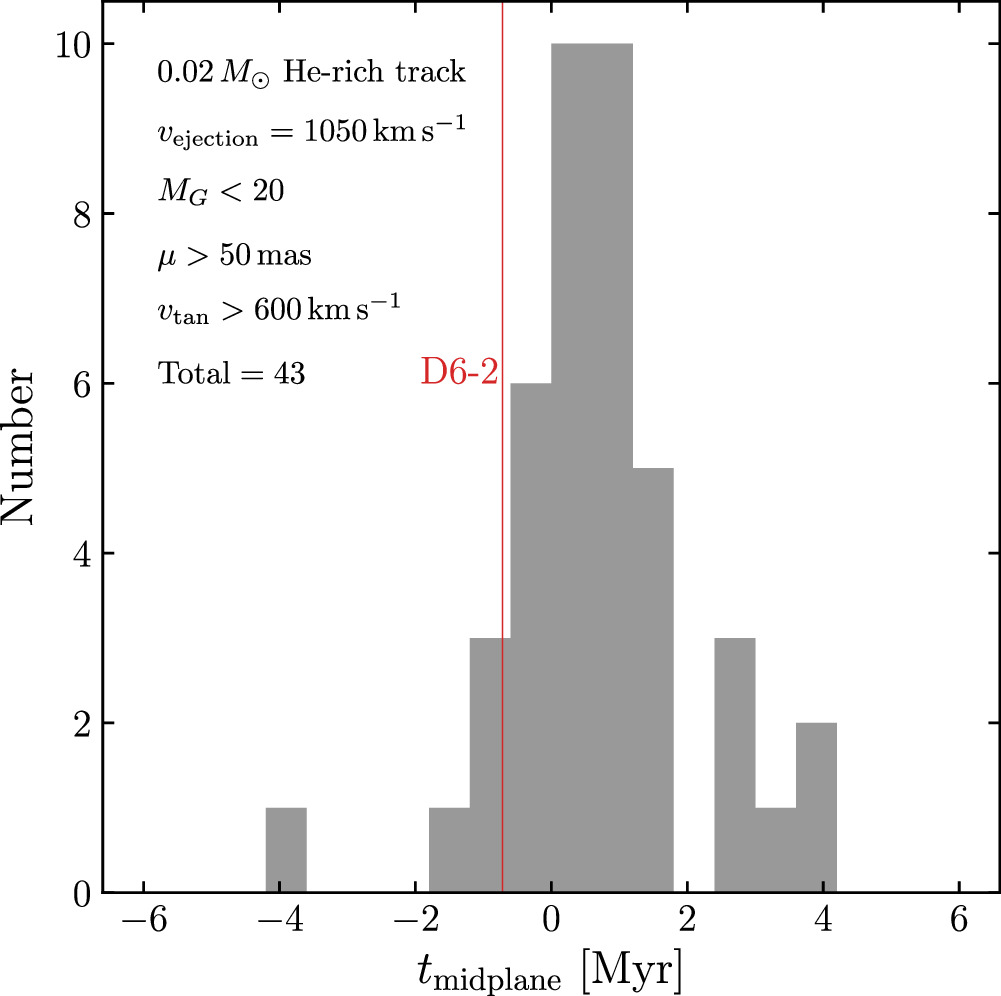
Figure 1: A histogram of detectable hyper-velocity survivors from the He-rich track assuming every Type Ia supernova produces a companion with a mass of 0.02 solar mass. These survivors are assumed to be ejected from their Type Ia supernovae at a velocity of 1,050 km/s, matching D6-2. The x-axis, tmidplane, describes the apparent travel time from the midplane of the simulation’s galaxy. A negative value means the survivor was observed before it passed through the plane. A total count of 43 hyper-velocity survivors from every Type Ia supernova yields an estimated survival rate of about 2%. [Shen 2025]
Choose Your Own (Stellar) Adventure
This article suggests different evolutionary paths for how binary white dwarfs might evolve. Depending on the properties of the merger, the system might do any of the following:
- Trigger nuclear reactions within the outer shell of the primary without detonating the primary’s core
- Become a normal Type Ia supernova
- Leave behind a hyper-velocity remnant
- Become a SN 2002es-like supernova, which is a fainter type of Type Ia supernova
There are lots of potential outcomes for these types of binaries, and hyper-velocity survivors indicate just a tiny fraction of a particular configuration of binary white dwarfs (see Fig. 2).
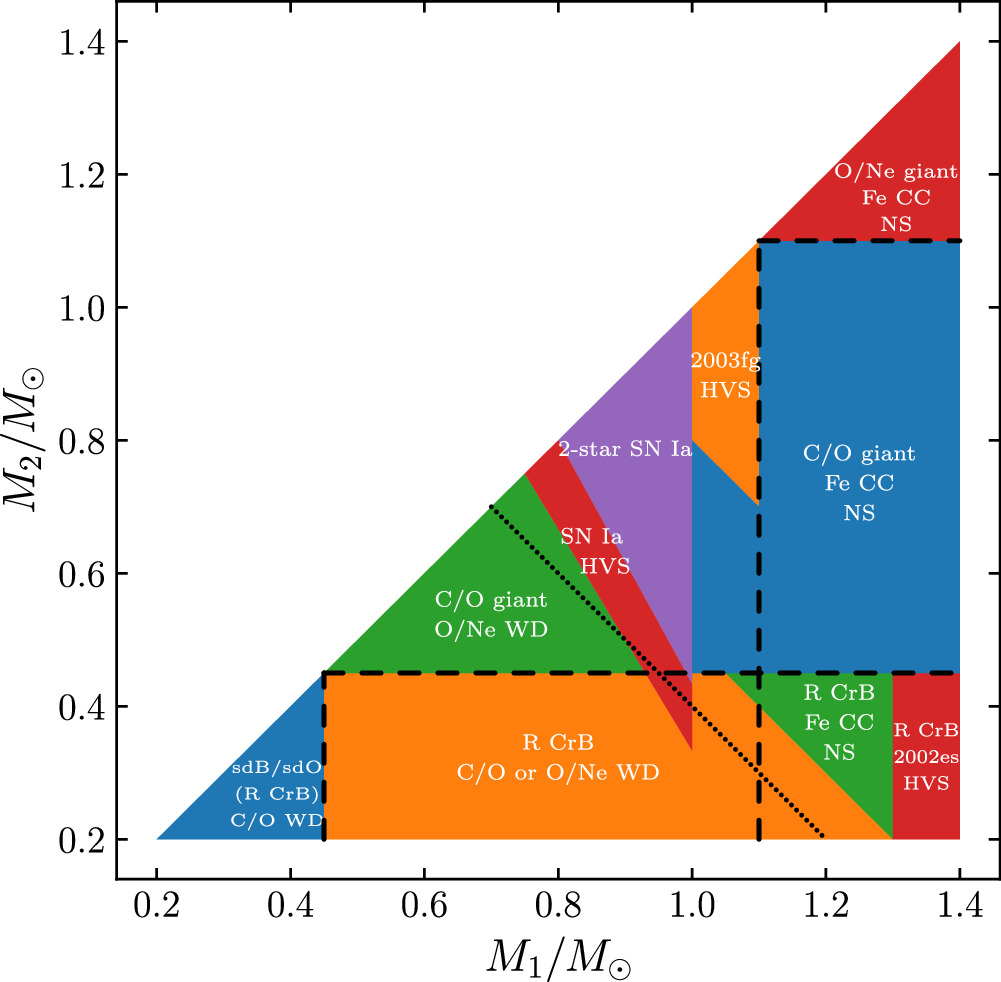
Figure 2: A diagram of the speculative outcomes for a white dwarf–white dwarf binary. The y-axis shows the secondary’s initial mass, whereas the x-axis shows the primary’s initial mass. The dashed lines indicate where the combined white dwarf mass is 1.4 M☉. The plot illustrates the wide variety of outcomes of white dwarf–white dwarf binaries, of which hyper-velocity survivors (HVS) are rare. sdB/sdO = subdwarf B/O stars; R CrB = R Coronae Borealis, variable star; Fe CC = iron core-collapse supernovae; HVS = hyper-velocity survivor; NS = neutron star. [Shen 2025]
Original astrobite edited by Chloe Klare.
About the author, Mckenzie Ferrari:
I’m currently a PhD grad student in the Geophysical Sciences program at the University of Chicago. While I now study the atmosphere and oceans of Earth, most of my previous undergrad and grad research focused on simulations of Type Ia supernovae and galaxy formation and evolution. In my free time, I foster cats for a local organization, enjoy cooking, and can often be found running along Lake Michigan.
The post Kickin’ It into Overdrive with Stellar Escapees appeared first on AAS Nova.
]]>The post IRAS 16475–4609: A Young Compact H II Region Sculpting Its Molecular Environment appeared first on AAS Nova.
]]>Near-infrared spectra and images have revealed that the central source of the H II region is an early B-type star, and that stellar feedback is actively shaping the environment of the star-forming region.
The post IRAS 16475–4609: A Young Compact H II Region Sculpting Its Molecular Environment appeared first on AAS Nova.
]]>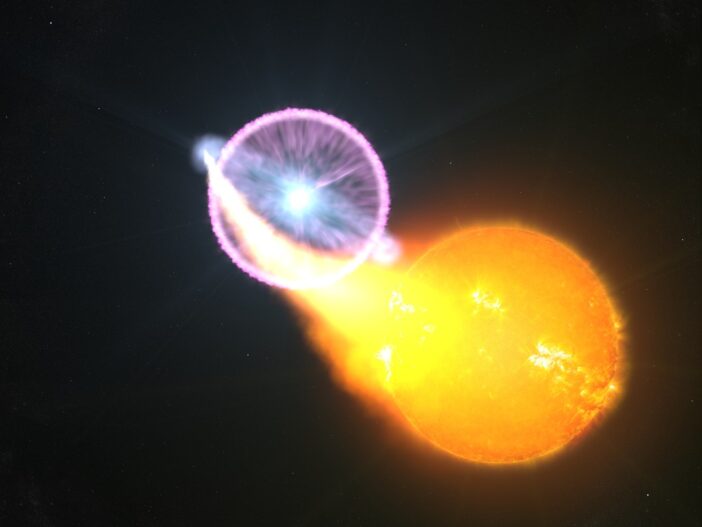
A recent study finds that a recurrent nova may be powered by a rare Be star–white dwarf binary system, broadening the scope of possible novae origins.
The post Rapid Recurrent Nova May Be Challenging Perceptions appeared first on AAS Nova.
]]>Flashing on and fading quickly, recurrent novae are captivating astronomical phenomena. A recent study identifies one system that challenges our current understanding.
Rapid Recurrent Novae
When a white dwarf — the white-hot remnant of a dead star — has a close binary companion, the white dwarf can pull material from the companion star onto its boiling surface. Ignited in a bright flash, the accreted material is blown out from the white dwarf in a nova explosion that gradually expands and fades over time. Some novae, known as recurrent novae, repeat on observable timescales, creating a “new” star in the sky on periods ranging from one to one hundred years.
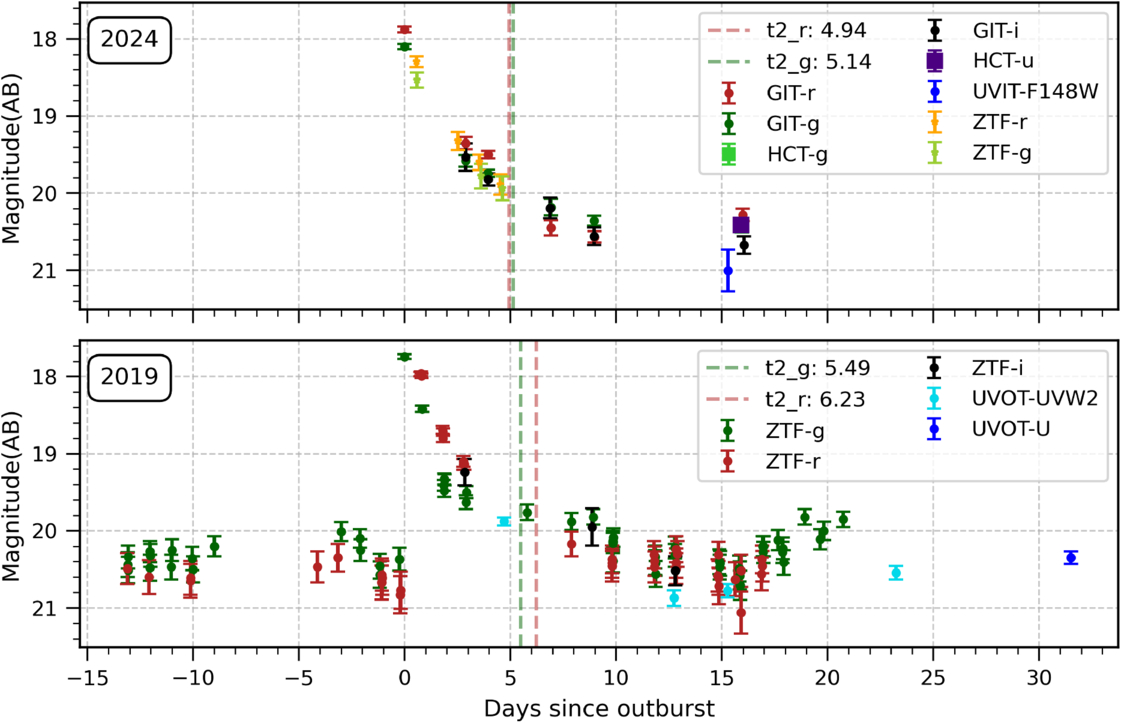
Two light curves of M31N 2017-01e outbursts from 2024 (top) and 2019 (bottom) showing how the light evolves over time. Click to enlarge. [Chamoli et al 2025]
Discovered in 2017, the second-shortest-period nova M31N 2017-01e has an outburst about every 2.5 years. This nova has sparked intrigue among researchers due to its low-amplitude outbursts and rapid evolution compared to other recurrent novae. While M31N 2017-01e exhibits some emission features typical for recurrent novae, recent studies have suggested that the system’s companion star may be a moderately young, blue B-type star. Most novae occur in systems where the white dwarf’s companion is a late-type main-sequence, subgiant, or giant star, making M31N 2017-01e an unusual case requiring further investigation.
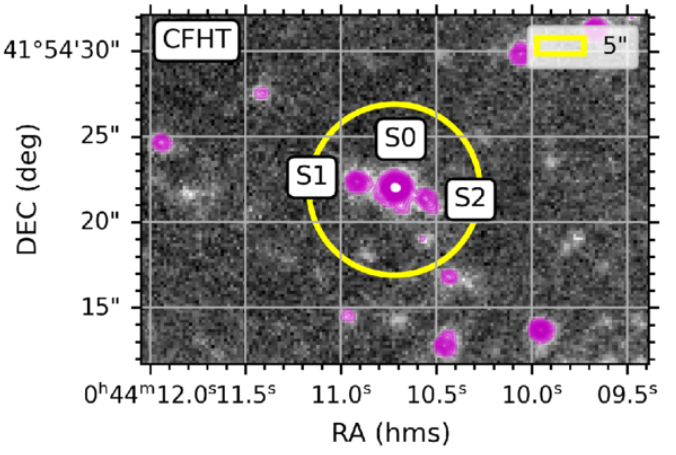
Optical image showing the location of sources near the location of M31N 2017-01e. The yellow circle corresponds to a radius of 5 arcseconds and is centered on the nova. Labeled S0, the source coincides with the location of the nova with sub-arcsecond resolution. Click to enlarge. [Modified from Chamoli et al 2025]
Dialing In on M31N 2017-01e
Aiming to constrain the nature and companion star of the nova, Shatakshi Chamoli (Indian Institute of Astrophysics and Pondicherry University) and collaborators performed a multiwavelength analysis using ultraviolet and optical observations of M31N 2017-01e.
In monitoring the nova during and in between outbursts, the authors identified a source at the reported location of M31N 2017-01e that exhibited variability and color consistent with previous observations of the system. Through a detailed photometric analysis, the authors found that the color and emission properties of the source are consistent with a hot, early-type star as was previously suggested. Though all the observational signs point toward a B-type companion, there’s one glaring obstacle to that scenario: such a massive star would typically be unable to transfer the amount of mass necessary to fuel the nova’s frequent eruptions without the accretion becoming unstable.
Be a Companion
What else, then, could the companion be? The authors considered another stellar companion known as a Be star — a rapidly rotating, early-type star that occasionally hosts a disk of loose stellar material. With a blue color and spectral features similar to B-type stars, a Be star could match the observational properties of the nova’s companion while solving the problem of its accretion. Outbursts of M31N 2017-01e likely arise due to the white dwarf lying very near or within the Be star’s circumstellar disk, siphoning material and adequately fueling the system’s recurring eruptions. To confirm this hypothesis, researchers will need to perform follow-up infrared observations to search for the tell-tale signs of a dusty disk around the companion star.
This system is rare and challenges the assumed properties of recurrent novae. From this study, it is clear that nova progenitors are potentially quite diverse and require further multiwavelength observational programs to identify more systems like M31N 2017-01e.
Citation
“Challenging Classical Paradigms: Recurrent Nova M31N 2017-01e, a BeWD System in M31?” Shatakshi Chamoli et al 2025 ApJ 991 174. doi:10.3847/1538-4357/adf843
The post Rapid Recurrent Nova May Be Challenging Perceptions appeared first on AAS Nova.
]]>The post Simultaneous Construction of Fast Equator, Poleward Meridional Flow, and Near-Surface Shear Layer in Solar Magnetohydrodynamic Calculation appeared first on AAS Nova.
]]>Using a high-resolution simulation, a researcher has reproduced the Sun’s near-surface shear layer for the first time, leading to improved understanding of how the layer is constructed.
The post Simultaneous Construction of Fast Equator, Poleward Meridional Flow, and Near-Surface Shear Layer in Solar Magnetohydrodynamic Calculation appeared first on AAS Nova.
]]>The post Searching for Dark Galaxies with H I Detection from the Arecibo Legacy Fast ALFA (ALFALFA) Survey appeared first on AAS Nova.
]]>Researchers have cataloged 142 candidate dark galaxies that appear to have smaller dynamical masses and are located in less dense regions of space compared to luminous galaxies.
The post Searching for Dark Galaxies with H I Detection from the Arecibo Legacy Fast ALFA (ALFALFA) Survey appeared first on AAS Nova.
]]>
Growing planets need to eat, and astronomers just found one snacking on gas in between the rings of a protoplanetary disk.
The post Researchers Spot a Rare Glowing, Growing Planet appeared first on AAS Nova.
]]>Have you ever eaten a meal so quickly that you started to glow? Although this behavior likely isn’t relatable for most humans, astronomers are beginning to find more and more baby planets doing just that.
Planetary Glow Up
Planets are, famously, quite large. But astronomers know that they don’t start out that way, and that instead, stars and planetary systems start as wispy collections of dust and gas. This raw material eventually compresses itself into stars and planets and life capable of contemplating such things, but how exactly that happens is not perfectly understood.
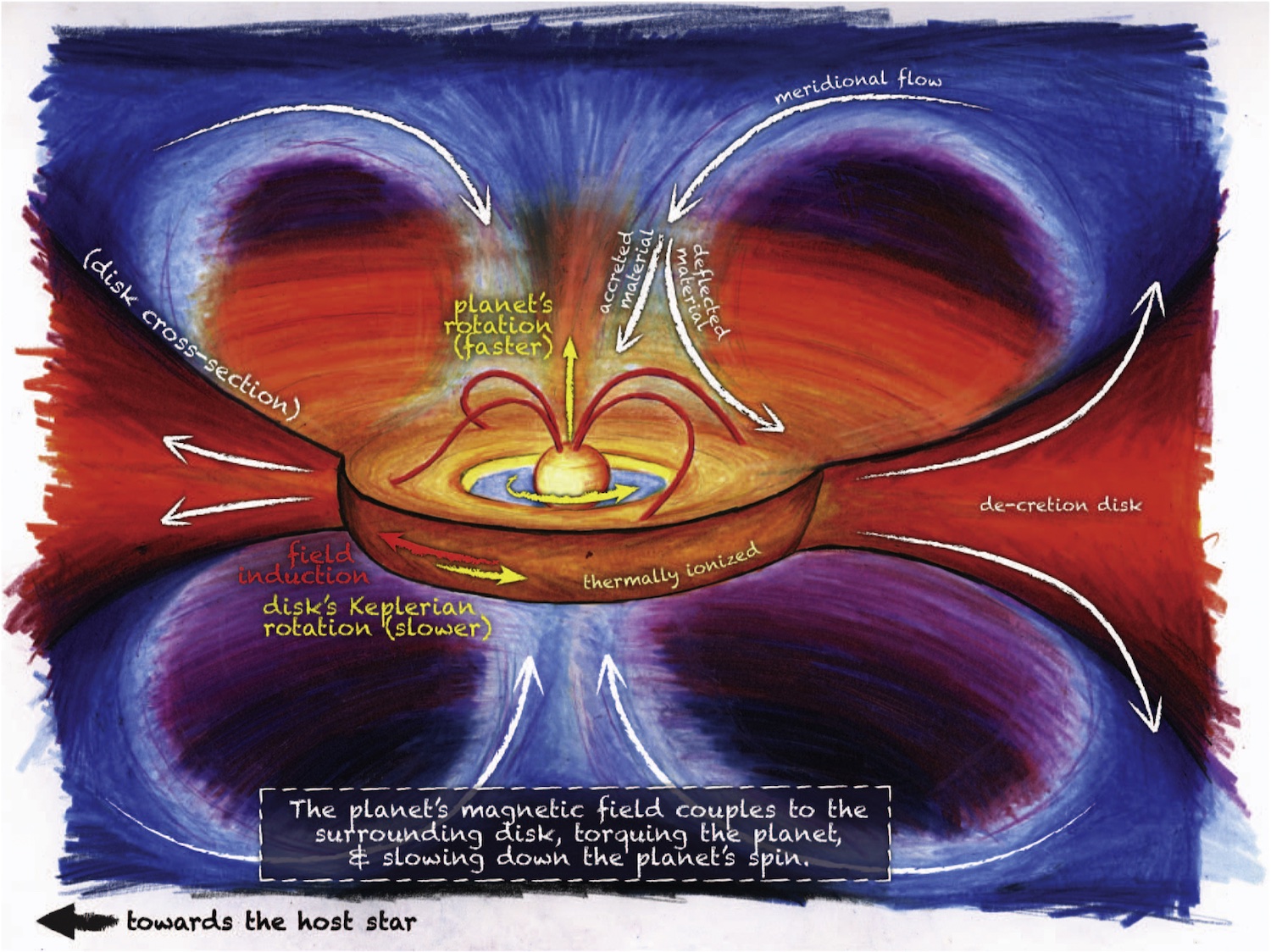
A schematic of some of the processes involved during giant planet formation. Click to enlarge. [Batygin 2018]
A number of different mechanisms predict that during this process, the protoplanet should emit light at a certain frequency associated with electrons jumping between energy levels in hydrogen atoms — what astronomers call Hα emission. In other words, they should glow at that specific wavelength only when they are accreting, though how strongly and consistently will depend on exactly what is happening around the planet.
These ideas existed only on paper until 2019, when a team first observed two glowing, growing planets around the star PDS 70. Recently, however, a powerful new instrument has begun collecting data, and astronomers just announced it has found another similar protoplanet: WISPIT-2b.
A New Discovery
A team of researchers led by Laird Close (University of Arizona) announced the discovery of this new world after analyzing images taken with the powerful new MagAO-X instrument on one of the 6.5-meter Magellan telescopes in Chile. The team outfitted the camera with a narrow filter that only admitted the Hα emission associated with accretion, then collected thousands of images over about two hours in April 2025. After stacking and post-processing their data, a faint dot jumped out beside the central star, right in the gap between two bright rings in the star’s disk.

A follow-up image of WISPIT-2b taken with a broader filter. [Laird et al. 2025]
This remarkable find is only the third protoplanet unambiguously found to be embedded within a disk, and the first to be found in the gap between rings in a disk. With MagAO-X collecting data and the WISPIT survey underway, we’re likely in store for many other discoveries in the coming years. With enough observations and examples of these growing worlds, astronomers will fill in their models of how exactly giant planets as we know them are formed.
Citation
“Wide Separation Planets in Time (WISPIT): Discovery of a Gap Hα Protoplanet WISPIT 2b with MagAO-X,” Laird M. Close et al 2025 ApJL 990 L9. doi:10.3847/2041-8213/adf7a5
The post Researchers Spot a Rare Glowing, Growing Planet appeared first on AAS Nova.
]]>The post Localizing Dynamically Formed Black Hole Binaries in Milky Way Globular Clusters with LISA appeared first on AAS Nova.
]]>Simulations demonstrate that the Laser Interferometer Space Antenna (LISA) may be able to connect binary black holes to individual globular clusters; even one localized binary would be immensely scientifically useful.
The post Localizing Dynamically Formed Black Hole Binaries in Milky Way Globular Clusters with LISA appeared first on AAS Nova.
]]>The post Data-Constrained Magnetohydrodynamic Simulation of a Filament Eruption in the Decaying Active Region 13079 on a Global Scale appeared first on AAS Nova.
]]>A quantitative description and diagnosis of a filament eruption is within reach using a data-constrained magnetohydrodynamics simulation that can be applied to weak active regions in spherical coordinates.
The post Data-Constrained Magnetohydrodynamic Simulation of a Filament Eruption in the Decaying Active Region 13079 on a Global Scale appeared first on AAS Nova.
]]>
Astrobites reports on how we might someday detect moons around planets outside our solar system by precisely tracking the positions of a star and a planet.
The post Finding Avatar’s Pandora: Exomoons with Astrometry appeared first on AAS Nova.
]]>Editor’s Note: Astrobites is a graduate-student-run organization that digests astrophysical literature for undergraduate students. As part of the partnership between the AAS and astrobites, we occasionally repost astrobites content here at AAS Nova. We hope you enjoy this post from astrobites; the original can be viewed at astrobites.org.
Title: Astrometric Methods for Detecting Exomoons Orbiting Imaged Exoplanets: Prospects for Detecting Moons Orbiting a Giant Planet in α Centauri A’s Habitable Zone
Authors: Kevin Wagner et al.
First Author’s Institution: University of Arizona
Status: Published in ApJL
Six of the eight planets in our solar system host at least one moon; the innermost planets Mercury and Venus are the exceptions. The origins of these moons are widely studied and hotly debated. Earth’s very own moon seems to have formed in the aftermath of a collision between the young Earth and another protoplanet. Mars seems to have captured two asteroids as its moons, Phobos and Deimos, a process thought to have produced many of the irregular satellites orbiting the gas giants as well. Using our solar system as a model, the presence of moons seems like a natural outcome of planet formation.
Why then don’t we observe exomoons, moons orbiting any of the ~6,000 known exoplanets? Well, the largest moon in our solar system, Ganymede, is 2.5% as massive as Earth and has 40% of the radius, making it marginally larger than Mercury but still less massive. You might have heard how difficult it is to find Earth-like exoplanets, and finding exomoons is even harder. A few exomoon candidates have been announced via microlensing and transits, but the authors of today’s article investigate whether a different technique, astrometry, could help find moons.
Astrometry involves precisely tracking the positions of objects like stars or planets on the sky. In a simple star–planet system, the star and planet trace out ellipses around their shared center of mass. With a moon present, there is an additional deviation, as the planet wobbles to and fro due to the gravitational tug of the moon. The authors of today’s article check whether moons can be detected by tracking such wobbles exhibited by directly imaged planets.
To start, the authors consider whether any known planets are promising targets for astrometric moon searches. There just so happens to be a giant planet candidate in Alpha Centauri, and if there were a massive moon orbiting this large planet around this nearby star, it would be as good as it gets. The authors simulate orbits of this system (a Saturn-like planet in a 1.8 au orbit around a Sun-like star at a distance of 4.2 light-years) with a 30-Earth-mass moon injected. They simulate observing such a system with a space-based 6.5-meter telescope (similar to the planned Habitable Worlds Observatory) with realistic noise over a 3-year observing campaign. The simulated and modeled orbits are shown in Figure 1. After the authors subtract the best-fit planet orbit, they are left with what is shown in Figure 2, where a clear periodic perturbation from the moon as it orbits is visible.
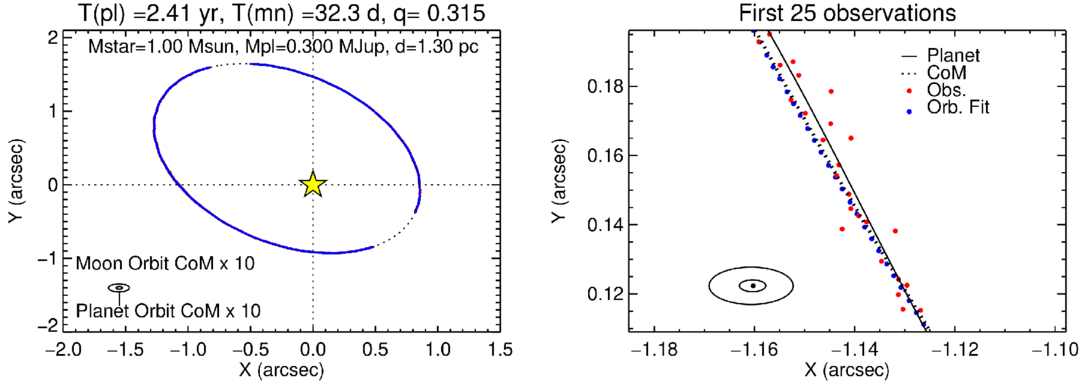
Figure 1: Left: The zoomed-out orbit of the hypothetical Alpha Centauri star–planet–moon system. The blue curve shows the Keplerian orbital fit. Right: The zoomed-in orbit. The red points are the simulated observations, showing deviations caused by the moon. [Wagner et al. 2025]

Figure 2: Left: Deviations in position of the planet’s orbit over time. The red points show the simulated observations, and the black curve shows the data smoothed. Right: Zoom-in showing the moon’s effect on the planet’s motion. [Adapted from Wagner et al. 2025]
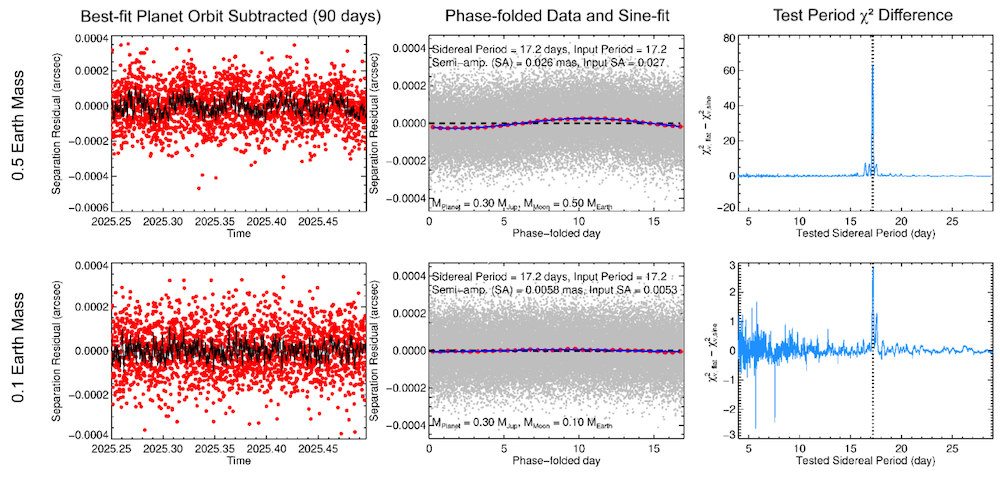
Figure 3: Left: Moon-induced planet position deviations over the first 90 observing days. Middle: Deviations from the entire 5-year observing baseline folded around the best-fit moon orbital period. Right: χ2 difference as a function of period, showing a peak in the signal at the moon’s orbital period. [Adapted from Wagner et al. 2025]
All of this is great news for fans of the hit movie (and still the highest-grossing movie of all time) Avatar, which features a habitable exomoon in the Alpha Centauri system. Searching for moons will help us understand their properties and formation, probe whether our solar system is unique, and even look for life on rocky moons orbiting gas giants in the habitable zones of their stars.
Original astrobite edited by Ryan White.
About the author, Kylee Carden:
I am a PhD student at Johns Hopkins University, where I am an observer of planets outside the solar system. I’m interested in dynamics, disks, demographics, the Roman Space Telescope. I am a huge fan of my cat Piccadilly, cycling, and visiting underappreciated tourist sites.
The post Finding Avatar’s Pandora: Exomoons with Astrometry appeared first on AAS Nova.
]]>The post Characterization of the Visual Binary TOI-6883AB and Its Dynamical Implications for the Planetary Companion TOI-6883Ab appeared first on AAS Nova.
]]>What was once thought to be a single exoplanet-hosting star has now been revealed to be a binary system containing two Sun-like stars; despite this change, the planet’s orbit still appears to be stable long term.
The post Characterization of the Visual Binary TOI-6883AB and Its Dynamical Implications for the Planetary Companion TOI-6883Ab appeared first on AAS Nova.
]]>The post Europa’s Sodium and Potassium Exosphere During Juno’s Flyby appeared first on AAS Nova.
]]>Ground-based observations of Jupiter’s moon Europa suggest that sodium and potassium are ejected from Europa’s surface by a high-energy process such as ion sputtering.
The post Europa’s Sodium and Potassium Exosphere During Juno’s Flyby appeared first on AAS Nova.
]]>
AAS Nova turned 10 this year! For our 2,000th post, we're looking back on the past decade of astronomy research.
The post AAS Nova Celebrates 10 Years of Astronomy Research News appeared first on AAS Nova.
]]>AAS Nova launched in 2015, and what has followed since is a remarkable encapsulation of 10 years of astronomy. Today, for our 2,000th post, we’re looking back on some of the discoveries we shared in the first year of AAS Nova and how far the astronomical community has come since then.
The Solar System, Exoplanets, and Astrobiology

The protoplanetary disk surrounding the young star HL Tauri has numerous visible rings and gaps in this image from the Atacama Large Millimeter/submillimeter Array. [ALMA (ESO/NAOJ/NRAO); C. Brogan, B. Saxton (NRAO/AUI/NSF); CC BY 4.0]
Exoplanets are by far the most frequently featured topic on AAS Nova, with more than 300 posts mentioning these distant worlds. Almost exactly 10 years ago, NASA reported that the number of known exoplanets was over 1,800 — and now that number has surpassed 6,000. Researchers continue to discover planets that are smaller, colder, and found in more extreme locations than ever before (even right next door). On the habitability side of the equation, researchers continue to make headway on critical questions, such as whether the multitude of small, rocky exoplanets around M-dwarf stars are likely to have atmospheres.
Back in our solar system, the past decade has brought a bevy of firsts, such as the first measurement of the wind speed on another planet using an aircraft and the first definitive detection of water on an asteroid. Though controversial, researchers reported the first detection of phosphine in the atmosphere of Venus, a possibility that could have implications for life on our planetary neighbor but is complicated by many factors including the possible existence of active volcanoes on Venus. The search for life beyond Earth goes on, with researchers continuing to devise new ways to detect it, if it exists.
High-Energy Phenomena and Fundamental Physics
Gravitational wave astronomy started with a bang 10 years ago when the Laser Interferometer Gravitational-Wave Observatory (LIGO) first detected colliding black holes (a discovery that we covered in our first year!). Since then, LIGO, the Virgo interferometer, and the Kamioka Gravitational Wave Detector (KAGRA) have detected about 300 black hole mergers, and the explosion of gravitational wave data has enabled population-level studies of compact objects across the universe. This era also brought about the first detection of merging neutron stars, which was also studied across the electromagnetic spectrum; the first detection of a merger between a black hole and a neutron star; and the detection of mysterious objects in the “mass gap” between the lightest black holes and the heaviest neutron stars. New techniques for detecting gravitational waves have been demonstrated since they were first recorded in 2015; in 2023, international pulsar-timing collaborations around the globe announced that they’d found significant evidence for the gravitational wave background.

The first Event Horizon Telescope image of the Milky Way’s supermassive black hole. [EHT Collaboration; CC BY 4.0]
In other high-energy astrophysics news, our ability to detect fleeting astronomical events has never been better, thanks to facilities like the Canadian Hydrogen Intensity Mapping Experiment, the Zwicky Transient Facility, and, most recently, the Vera C. Rubin Observatory. Astronomers have caught flares from stars totally, partially, and repeatedly torn apart by black holes, homed in on the host galaxies of fast radio bursts, explored the sources of gamma-ray bursts, and even discovered entirely new classes of transients. (And as a little preview of what you can expect in the next 10 years, here’s a refresher on just how much Rubin will reveal about the transient sky.)
The Sun and the Heliosphere
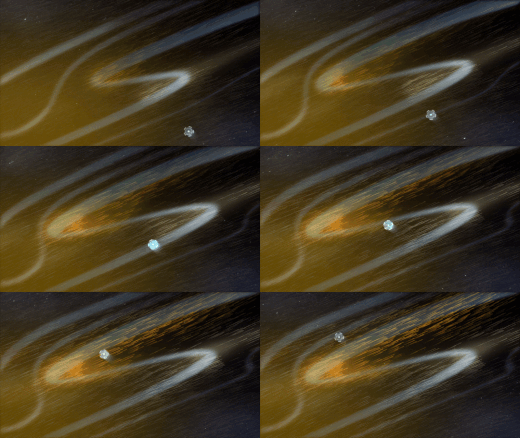
An animation showing the Parker Solar Probe traversing a solar switchback. [NASA’s Goddard Space Flight Center/Conceptual Image Lab/Adriana Manrique Gutierrez]
Ten years ago, solar physicists were tackling the tricky problem of how to forecast damaging space weather events like solar flares and coronal mass ejections. Today, that work continues, increasingly aided by machine-learning techniques that make handling mountains of solar data more tractable. (The growth of machine learning in astronomy isn’t limited to solar physics; there were only 468 peer-reviewed astronomy research articles published in 2015 that mentioned machine learning, and more than 3,400 articles mentioning machine learning were published in 2024 alone.)
Researchers have also made headway on other persistent challenges like the open flux problem, the coronal heating problem, and how to handle sparse solar data sets.
Stars and Stellar Physics
An early AAS Nova post asked if we’ve finally found Population III stars, the first stars to light up the universe. Through observations and simulations, astronomers are still asking that question, probing whether Population III stars with masses lower than 0.8 solar mass could have formed, as these low-mass stars would still be present in the universe today; whether JWST could detect Population III stars during the epoch of reionization; and whether the first stars were solely massive stars that formed alone. While the first stars themselves may still elude detection, astronomers are gaining confidence that they’ve discovered stars born from the gas enriched by just a single member of the first stellar generation, getting us closer to understanding the first stars in the universe.

An image of Betelgeuse and its probable companion star from the ‘Alopeke instrument on the Gemini North telescope. Click to enlarge. [International Gemini Observatory/NOIRLab/NSF/AURA; Image Processing: M. Zamani (NSF NOIRLab); CC BY 4.0]
This decade also brought the discovery of double-faced white dwarfs, a turnover of the initial mass function of a star cluster, and strange brown dwarfs like “The Accident.”

JWST image of the star cluster IC 348. A discovery of the amino acid tryptophan was reported in the gas of this cluster, though further research called that discovery into question. [NASA, ESA, CSA, STScI, Kevin Luhman (PSU), Catarina Alves de Oliveira (ESA)]
Interstellar Matter and the Local Universe
There’s been plenty to learn in our cosmic backyard: researchers have discovered a potential “feather” in the Milky Way, tracked the rapid evolution of a gas cloud in the galactic center, found the faintest known satellite of our galaxy, and found evidence for structures within our galaxy that existed before it gained its disk or spiral arms. They’ve even solved the 50-year mystery of the Milky Way’s unexpectedly slow star formation.
In the space between the stars, we’ve seen many interstellar molecular firsts, like the first detection of an isomer of glycine, the simplest of the amino acids necessary for life on Earth, the first detection of ionized buckyballs, and the detection of complex organic molecules in the Large Magellanic Cloud. At the same time, other molecular breakthroughs were called into question. In addition to interstellar molecules, humanity has now also confirmed the first interstellar objects that have roamed into our solar system: 1I/ʻOumuamua in 2017, 2I/Borisov in 2019, and 3I/ATLAS in 2025.
Laboratory Astrophysics, Instrumentation, Software, and Data
Not all of astronomy happens at a telescope: lab work on Earth has shown how laboratory studies can help identify mystery spectral lines in the interstellar medium, explored how magnetic fields affect the formation of planets, and even examined the possibility of growing crops in asteroid soils.

Stars and satellites as seen by the Dark Energy Camera [CTIO/NOIRLab/NSF/AURA/DECam DELVE Survey, CC BY 4.0]
Astronomers are concerned not just with the outcomes of their research, but also how outside factors affect their ability to do research in the first place. As the number of Earth-orbiting satellites has exploded and the sources of light pollution have continued to grow, researchers have investigated the effects of light pollution on dark-sky sites and sought to understand the impact of satellite trails and space debris on astronomical observations.
Galaxies and Cosmology
In the broader universe, researchers continue to discover galaxies that are fainter and farther away than ever before. Both ultra-diffuse galaxies and ultra-faint dwarf galaxies have been in the spotlight. JWST, which finally began observations in 2022, has provided an incredible amount of data on galaxies both near and far. JWST revealed surprisingly massive galaxies in the first few hundred million years of the universe, creating challenges for models of galaxy formation and evolution. In 2015, the record holder for most distant known object was the galaxy EGSY8p7 at a redshift of z = 8.68. A decade later, that honor goes to the galaxy MoM-z14, at a redshift of z = 14.44 — an enormous leap that demonstrates how our view of the universe has expanded.
JWST images of six very distant galaxies dubbed “little red dots.” [NASA, ESA, CSA, STScI, Dale Kocevski (Colby College)]
On the cosmology side of things, the Hubble tension — the apparent disagreement between the universe’s expansion rate measured in the local universe and the rate extrapolated forward from early universe measurements — continues to grow. Another less-well-known tension, in measurements of the S8 or “clumpiness” parameter, has also inspired scientists to propose tweaks to our leading cosmological model. On top of all this tension, measurements from the Dark Energy Spectroscopic Instrument have provided mounting evidence that dark energy, the largest chunk of the mass–energy budget of the universe, changes over time.
Here’s to 10 More Years
In addition to sharing a curated selection of astronomy news, AAS Nova has also brought you summaries of 30 AAS, Division, and topical meetings over the past decade. When the AAS and the Astrobites collaboration formalized their partnership in 2016, we expanded our coverage of astronomy news by sharing Astrobites articles on AAS Nova. In 2017, we launched the AAS Media Fellowship, a quarter-time position that enables an astronomy graduate student to build a portfolio of writing and gain experience working in the press office. Since then, we’ve featured nearly 180 articles written by our five Media Fellows, several of whom have gone on to careers in science writing and policy. We’ve also shared news and updates from the AAS journals, including the transition to open access, the release of new versions of AASTeX, interviews with publishing staff, and the celebration of the Astronomical Journal‘s 175th anniversary.
We hope you’ll join us as we continue our efforts to bring you short, approachable summaries of recent research in astrophysics and planetary science, amplifying the reach of researchers worldwide who continue to discover what’s new in the universe.
The post AAS Nova Celebrates 10 Years of Astronomy Research News appeared first on AAS Nova.
]]>The post The Detectability of Coronal Mass Ejections in the Low Corona Using Multislit Extreme-Ultraviolet Spectroscopy appeared first on AAS Nova.
]]>Pairing a five-slit spectrometer with a new decomposition method, researchers demonstrate techniques to study coronal mass ejections while they’re still in the low corona, enhancing space weather forecasting.
The post The Detectability of Coronal Mass Ejections in the Low Corona Using Multislit Extreme-Ultraviolet Spectroscopy appeared first on AAS Nova.
]]>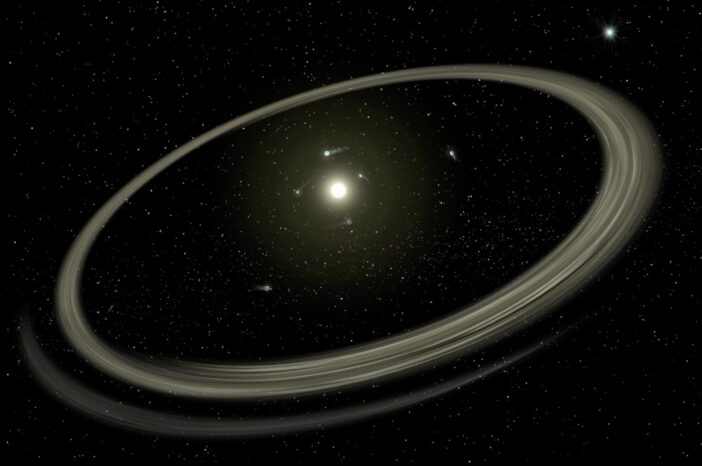
Astrobites reports on a study that explores whether there are planets hiding from us inside the gaps of multi-planet systems.
The post Planetary Hide and Seek appeared first on AAS Nova.
]]>Editor’s Note: Astrobites is a graduate-student-run organization that digests astrophysical literature for undergraduate students. As part of the partnership between the AAS and astrobites, we occasionally repost astrobites content here at AAS Nova. We hope you enjoy this post from astrobites; the original can be viewed at astrobites.org.
Title: The Gap–Giant Association: Are Planets Hiding in the Gaps?
Authors: Caleb Lammers and Joshua Winn
Authors’ Institutions: Princeton University
Status: Published in ApJ
The Kepler space telescope played an almost decade-long game of hide-and-seek. After nine and a half years of operation, Kepler detected more than 2,700 planets outside of our solar system primarily by using the transit method, which is particularly efficient at detecting planets that orbit close to their host stars. Astronomers have also been detecting planets with the radial velocity technique, which is better at finding larger planets at longer orbital periods. By looking for planets with both the transit and radial velocity techniques, astronomers can look for both close-in and far-out planets to paint a more complete picture of other solar systems in our galaxy.
Using the Kepler Giant Planet Survey, the authors of today’s article found that among the 26 systems with three or more transiting planets, four were found to also have an outer giant planet. They quickly noticed that instead of an evenly spaced out inner system of planets, every single one of these four systems with the outer giant planets revealed a notable gap between two of their inner planets. They dubbed this phenomenon the “gap–giant association” — in other words, when an outer giant planet exists in a planetary system, there is evidence of a large gap between two of the inner planets, as shown in Figure 1. This pattern has been observed before, but there has been little theoretical work to explain the effects of outer giants on orbital spacings. In today’s article, the authors ask the question: are there planets inside the gap hiding from us? To address this, they conduct simulations to see if (a) these systems can host a hiding planet in their gaps without becoming dynamically unstable and (b) if such a planet can remain hidden when looked for with the transit method.
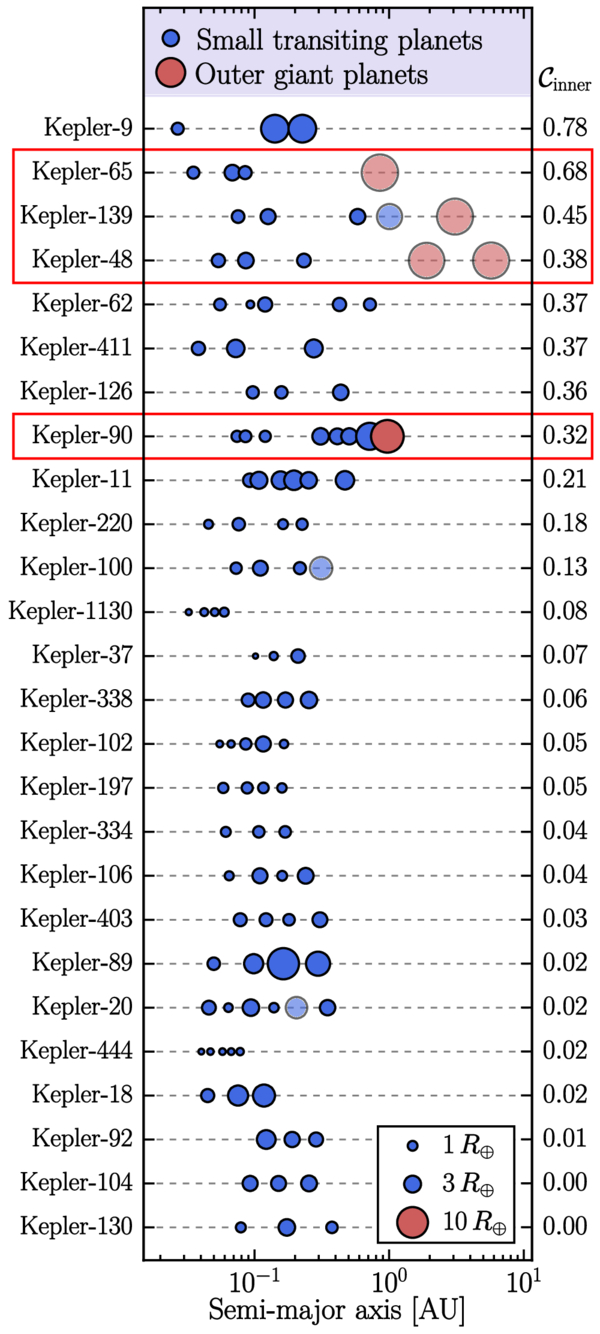
Figure 1: Orbital spacings of systems in the Kepler Giant Planet Survey with three or more transiting planets in the inner planetary system. The parameter C is a metric denoting the regularity of orbital spacings, where a smaller value would indicate a more uniform spacing. The four systems of interest all have large orbital gaps between two adjacent inner planets, and therefore high values of C. [Lammers & Winn 2025]
Close Your Eyes and Count to N
The authors of today’s article model these four systems (Kepler-48, Kepler-65, Kepler-90, and Kepler-139) with a planet added to their gaps and use an N-body simulation (i.e., fancy physics calculations that track how planets gravitationally interact) to evolve the systems over time and evaluate their long-term stability. They find that each of these injected planets has a high survival rate, which means that each of these four systems could stably host an additional ~2–20 Earth-mass planet in its gap for billions of years without falling apart. The authors then calculated whether the outer giants could “hide” these theoretical gap planets by tilting the planets’ orbits enough so that they would not be detectable with the transit method. In order to do this, the outer giant would have to exert a large enough gravitational force on the gap planet to cause it to precess at a rate independent of its neighbors, allowing its orbital inclination to grow. However, they found that the outer giant planets are either too far away or not massive enough to do the job.
Only one system, Kepler-90, has an outer giant that could potentially tilt the gap planet’s orbit enough for it to fly under the radar if the giant were also on a modestly inclined orbit. However, previous detections of Kepler-90’s outer giant suggest that its orbit is well-aligned with those of the inner system, making this hypothesis implausible. They therefore concluded that it is unlikely that planets between ~2 and 20 Earth masses are hiding within these gaps.
Seeking Out Another Option
Before completely abandoning this hypothesis, the authors propose that maybe the gaps do contain planets, but they’re just too small for Kepler to detect. They calculate the detection efficiencies as a function of planet radius and orbital period for each of the four systems and find that planets smaller than about ~0.5–1 Earth radius could have gone unnoticed (as shown in Figure 2). While this would make these systems slightly unusual (most multiplanetary systems have relatively uniform planet sizes), it’s not completely impossible. However, they don’t rule out the possibility that these gaps are truly empty, and that the presence of an outer giant could prevent planets from forming in certain regions or disrupt their orbits after formation. While it is hard to draw any firm conclusions with a sample size of four systems, this study highlights how much we still don’t understand about planetary system architecture, and therefore planetary formation and evolution.
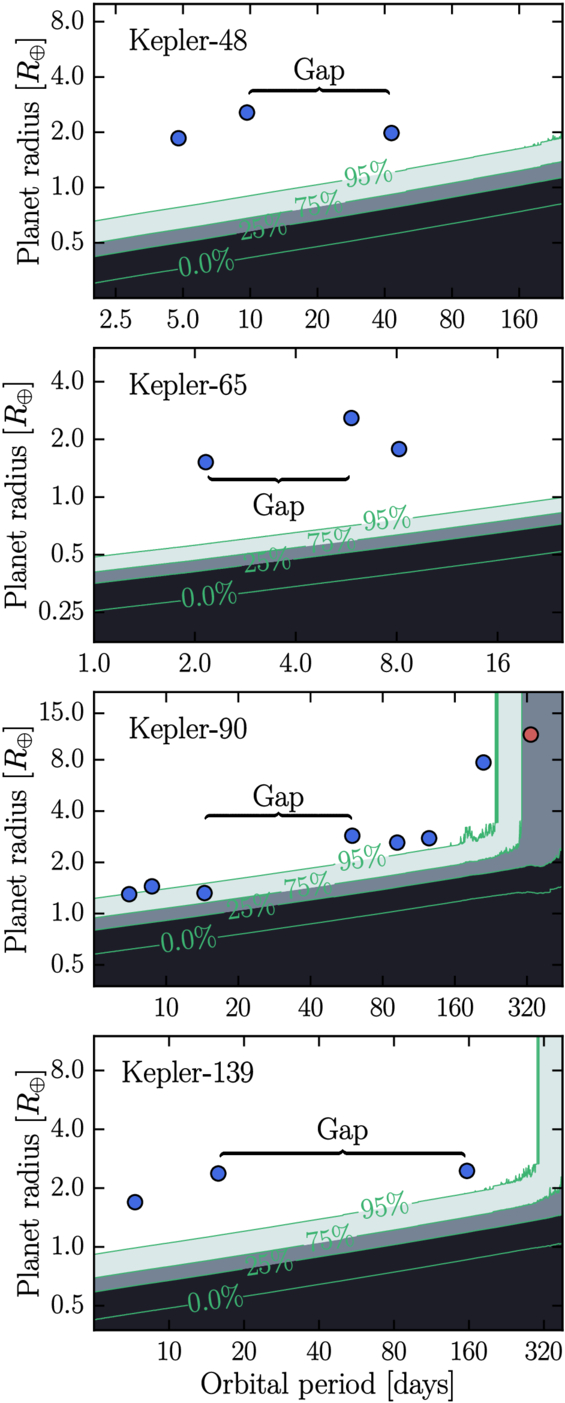
Figure 2: Transit detection efficiency as a function of planetary radius and orbital period for each planetary system. The inner planets and location of the gap are overplotted. The darker contours show regions where Kepler is not sensitive to detecting planets. In order to avoid detection, the planets in each of these systems would have to be much smaller relative to their neighbors, except for the Kepler-90 system, where a hidden planet would only have to be marginally smaller. This suggests that there could exist a demographic of exoplanets that are evading detection within these gaps. [Lammers & Winn 2025]
Original astrobite edited by Annelia Anderson.
About the author, Tori Bonidie:
I am a 5th-year PhD candidate studying exoplanet atmospheres at the University of Pittsburgh. Prior to this, I earned my BA in astrophysics at Franklin and Marshall College where I worked on pulsar detection as a member of NANOGrav. In my free time you can find me cooking, napping with my cat, or reading STEMinist romcoms!
The post Planetary Hide and Seek appeared first on AAS Nova.
]]>The post Seasonal Changes in the Atmosphere of HD 80606b Observed with JWST’s NIRSpec/G395H appeared first on AAS Nova.
]]>As the hot Jupiter HD 80606b passes within 0.03 au of its host star, its spectrum transforms from a featureless blackbody to one with visible spectral features of water, methane, and other molecules.
The post Seasonal Changes in the Atmosphere of HD 80606b Observed with JWST’s NIRSpec/G395H appeared first on AAS Nova.
]]>The post PINN ME: A Physics-Informed Neural Network Framework for Accurate Milne–Eddington Inversions of Solar Magnetic Fields appeared first on AAS Nova.
]]>A new framework successfully mitigates observational noise, inverts even large fields of view in a memory-efficient way, and can resolve small-scale features in regions with strong or weak magnetic fields.
The post PINN ME: A Physics-Informed Neural Network Framework for Accurate Milne–Eddington Inversions of Solar Magnetic Fields appeared first on AAS Nova.
]]>
Infrared studies of resolved supernova remnants beyond the Milky Way and the Magellanic Clouds are now within reach.
The post Featured Image: JWST Expands the Search for Extragalactic Supernova Remnants appeared first on AAS Nova.
]]>Out to what distance can we resolve the structure of a supernova remnant in the infrared? Until recently, it was only possible to do so for remnants in the Milky Way and the Magellanic Clouds, but JWST has now extended that capability to other nearby galaxies. In a recent research article, Sumit Sarbadhicary (The Ohio State University) and collaborators used JWST to study supernova remnants in the Triangulum Galaxy (Messier 33), a small spiral galaxy that is 2.7 million light-years away. The study area contained 40 supernova remnants that were previously identified at other wavelengths. The image above shows a portion of the galaxy’s southern spiral arm, where each white circle indicates a known supernova remnant. Infrared observations of supernova remnants are critical for understanding the physics of the interstellar medium and the composition, formation, and destruction of dust. To learn more about how JWST has pushed the limits of our search for extragalactic supernova remnants, and for details on each of the remnants detected by JWST in the Triangulum Galaxy, be sure to check out the full research article linked below.
Citation
“A First Look at Spatially Resolved Infrared Supernova Remnants in M33 with JWST,” Sumit K. Sarbadhicary et al 2025 ApJ 989 138. doi:10.3847/1538-4357/adec7a
The post Featured Image: JWST Expands the Search for Extragalactic Supernova Remnants appeared first on AAS Nova.
]]>The post High-Energy Gamma-Ray and Neutrino Emissions from Interacting Supernovae Based on Radiation Hydrodynamic Simulations: A Case of SN 2023ixf appeared first on AAS Nova.
]]>Using a recent nearby supernova as an example, researchers have shown that cosmic rays can be produced as the supernova collides with dense circumstellar material, with a production efficiency of 10%.
The post High-Energy Gamma-Ray and Neutrino Emissions from Interacting Supernovae Based on Radiation Hydrodynamic Simulations: A Case of SN 2023ixf appeared first on AAS Nova.
]]>
Using high-resolution JWST observations, a recent study has found a supermassive black hole at the center of an ultracompact dwarf galaxy.
The post Supermassive Black Hole in a Super Tiny Galaxy Found with JWST appeared first on AAS Nova.
]]>With very small stellar masses and tiny radii, ultracompact dwarf galaxies raise questions about the dividing line between the highest-mass star clusters and the lowest-mass galaxies. A recently published article leverages JWST’s high resolution to target one tiny galaxy and investigate its origins.
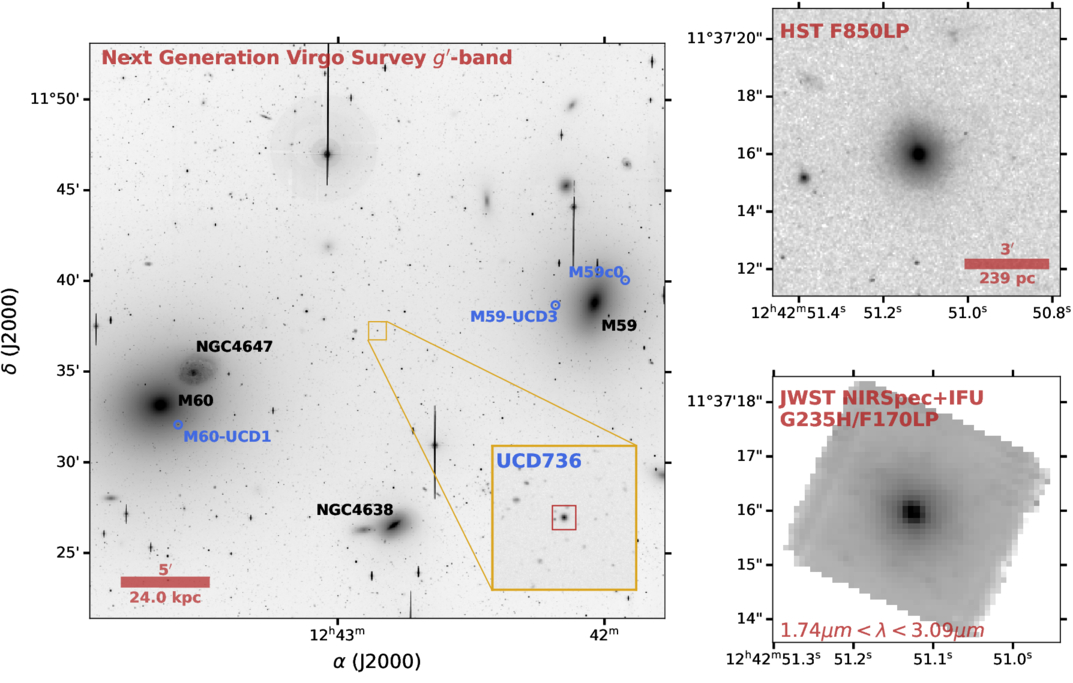
Location of UCD 736 in the Virgo Cluster with the other ultracompact dwarf galaxies with supermassive black hole detections labeled. Click to enlarge. [Taylor et al 2025]
Origins of Ultracompact Dwarf Galaxies
How tiny can a galaxy get? Discovered 20 years ago among the dense environments of the Virgo and Fornax clusters, ultracompact dwarf galaxies walk the line between the largest globular clusters and the smallest galaxies. Determining if these dwarfs are stellar in nature or actually of galactic origin is complex, but one sure way to get at this question is to determine if an ultracompact dwarf galaxy houses a supermassive central black hole.
While astronomers have identified hundreds of these tiny dense galaxies, supermassive black holes have been detected in only five. Hoping to extend this sample, Matthew Taylor (University of Calgary) and collaborators targeted UCD 736, an ultracompact dwarf galaxy located in the Virgo galaxy cluster. If a massive black hole is found in this galaxy, it will be the smallest and least luminous ultracompact dwarf to have such a detection. Exploring galaxies at such small sizes will allow researchers to determine what fraction of ultracompact dwarfs have galactic or star cluster origins, which can provide insights into massive black hole seeding mechanisms in the early universe.
Modeling Black Hole Mass
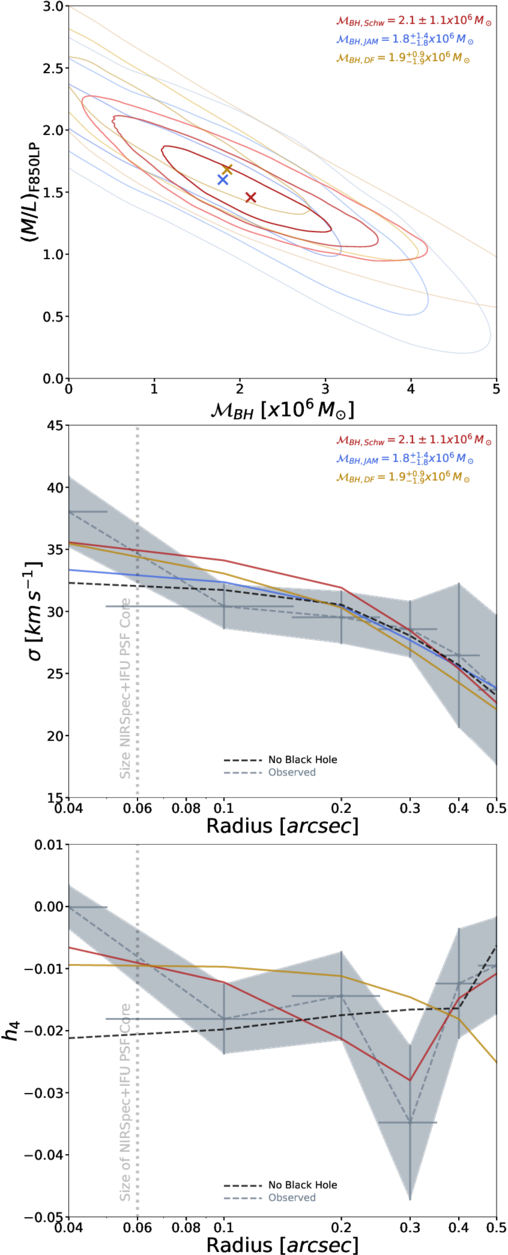
Summary of results for the three black hole modeling methods for UCD 736, indicating the quality of the models and how the observed velocity dispersion and spatial distribution of the galaxy fit with the models. Click to enlarge. [Taylor et al 2025]
However, the authors noted that the three models do not provide equivalent confidence levels in this estimate — while one model confidently rules out the possibility of no central black hole at 3σ significance, the other two models were less constraining, ruling out the possibility of there not being a black hole to only 1σ. Despite these differences, all three models agree on the central black hole mass within the first confidence interval, indicating a positive detection of a black hole in UCD 736.
Progenitor of UCD 736
From their observations and modeling, the authors presented the fifth positive detection of an ultracompact dwarf galaxy with a central supermassive black hole within the Virgo Cluster. Given the presence of this black hole, UCD 736 likely originated as a more massive galaxy that was tidally stripped as it interacted with other nearby cluster galaxies. Interestingly, though, other ultracompact dwarf galaxies with black hole detections in the Virgo Cluster are much closer to the massive galaxy that likely stripped them. UCD 736 sits about 160,000 light-years outside of the nearest giant galaxy Messier 59’s tidal radius, which does not rule out interactions but could indicate that Messier 59 is particularly good at stripping material from smaller galaxies.
Continued searches for black holes in ultracompact dwarfs will further probe the differences between the highest-mass globular clusters and the lowest-mass galaxies. Revealing more within this parameter space will allow astronomers to test black hole seeding and galaxy formation theories.
Citation
“A Supermassive Black Hole in a Diminutive Ultracompact Dwarf Galaxy Discovered with JWST/NIRSpec+IFU,” Matthew A. Taylor et al 2025 ApJ 991 L24. doi:10.3847/2041-8213/ae028e
The post Supermassive Black Hole in a Super Tiny Galaxy Found with JWST appeared first on AAS Nova.
]]>The post On the Potential Cosmogenic Origin of the Ultra-High-Energy Event KM3-230213A appeared first on AAS Nova.
]]>If KM3-230213A arose from the interaction of an ultra-high-energy cosmic ray with the photon or matter background, the discovery is in (potentially resolvable) tension with existing cosmic-ray observations.
The post On the Potential Cosmogenic Origin of the Ultra-High-Energy Event KM3-230213A appeared first on AAS Nova.
]]>The post Observational Parameters of Blue Large-Amplitude Pulsators appeared first on AAS Nova.
]]>New information revealed about a new class of variable stars: they are evolved objects with periods of 3–75 minutes, with similar surface gravities and effective temperatures, but some differences in helium abundance.
The post Observational Parameters of Blue Large-Amplitude Pulsators appeared first on AAS Nova.
]]>
Neutron stars are born running, and recent research explores just how fast they start off.
The post Kicking Neutron Stars from the Nest appeared first on AAS Nova.
]]>Neutron stars don’t stick around for long after they’re born. Recent research has now uncovered just how fast they flee.
They Grow Up So Fast
Human beings require many years of care and support from their parents before they’re able to venture forth into the world. This is an embarrassingly long process compared to the standard for animals like deer and horses, whose offspring are ready to walk mere minutes after birth. However, baby neutron stars, some of the densest objects in the known universe, put all life on Earth to shame with their immediate self-reliance: after a fiery birth from a supernova explosion, these stars flee the site of their creation at hundreds of kilometers per second.
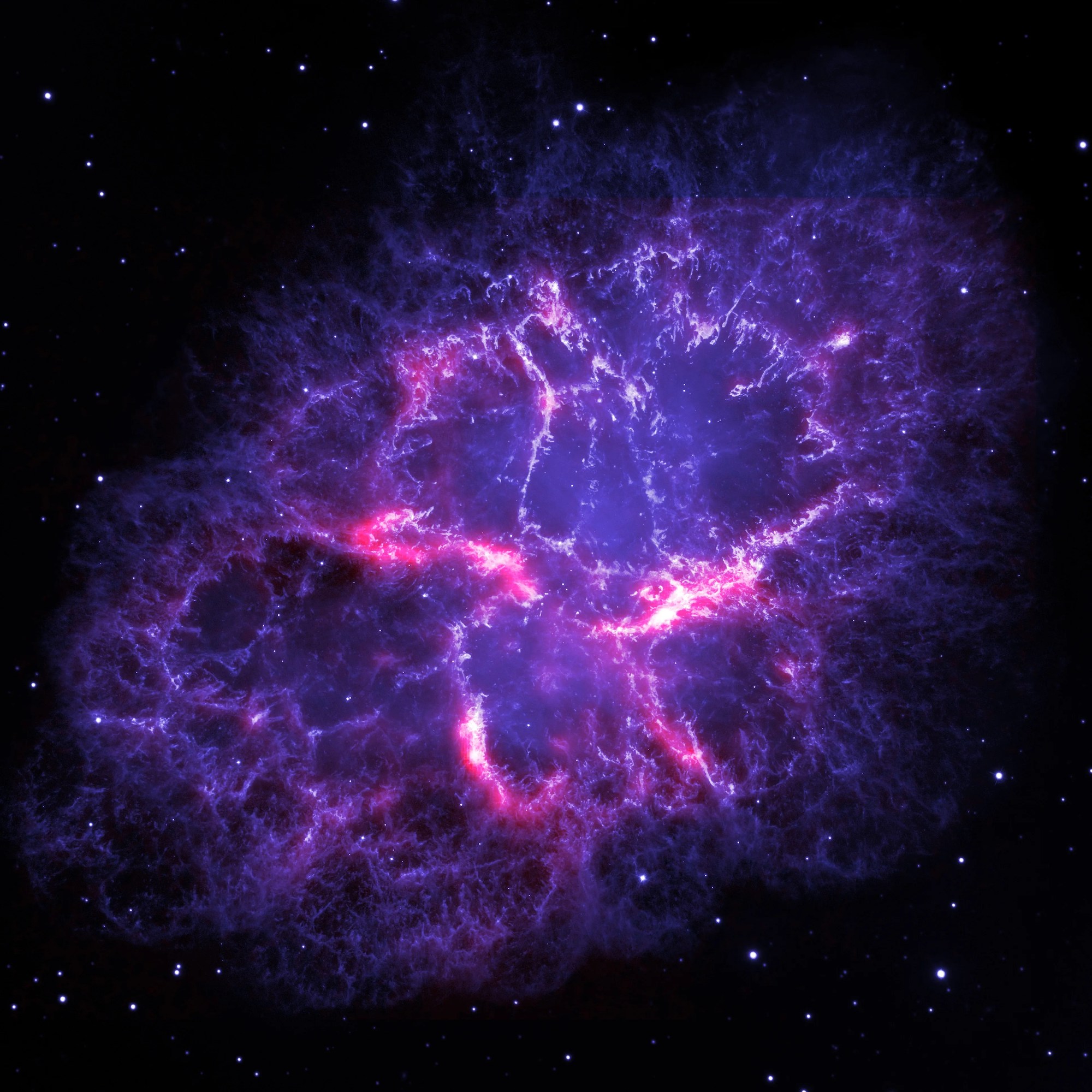
Hubble Space Telescope and Herschel Space Observatory image of the Crab Nebula, which is the remnant of a supernova explosion. [ESA/Herschel/PACS/MESS Key Programme Supernova Remnant Team; NASA, ESA and Allison Loll/Jeff Hester (Arizona State University)]
By measuring the characteristic speeds of these “kicks,” astronomers can deduce how asymmetric the preceding collapse must have been, along with other information about the earliest moments of the supernova. Though measuring the speed of something so small from the other side of the galaxy is no easy task, Disberg and Mandel’s recent publication in The Astrophysical Journal Letters takes on the challenge.
Quantifying the Kicks
The pair first began by examining measurements of neutron stars known to be less than 10 million years old, which is extremely young in an astronomical context. Since these objects haven’t had time to be slowed down or altered from their course by passing stars or the galactic tide, their present-day speeds should be the same as their natal kicks. The researchers found that while every neutron star had its own unique kick velocity, the distribution of all the velocities followed a log-normal pattern with a peak near 150–200 km/s.
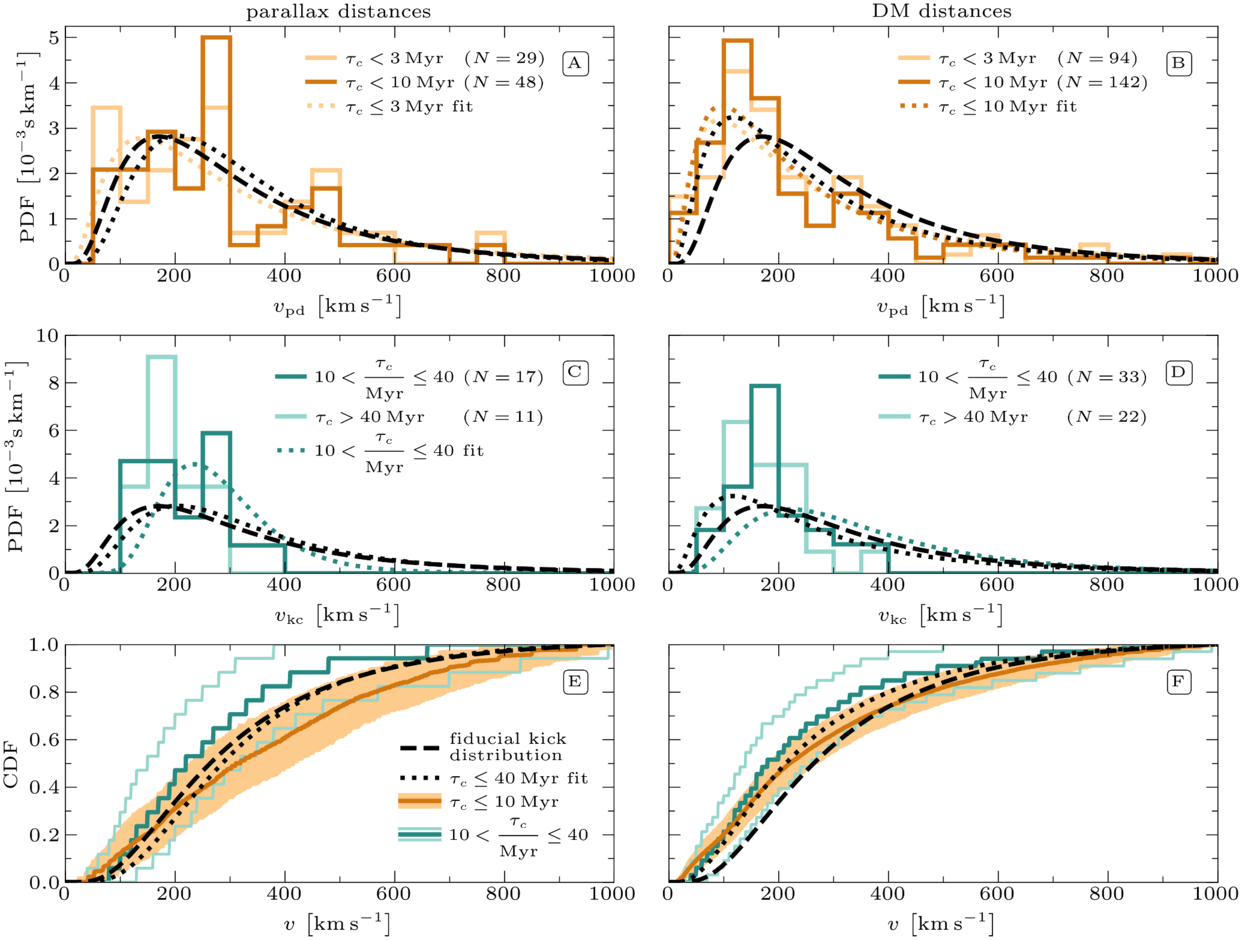
Measured kick velocities (histograms) and fit distributions (curves) for different subsamples. Click to enlarge. [Disberg & Mandel 2025]
Going forward, other astronomers focused on modeling supernovae, orbits within the galaxy, and binary-star evolution can use this distribution either to sanity check their models or as inputs to other simulations. Through slow accumulation of studies like this, each with its own quantified measurement of some property in the galaxy, we come to understand our universe more fully and unlock our ability to make ever more models and predictions.
Citation
“The Kick Velocity Distribution of Isolated Neutron Stars,” Paul Disberg and Ilya Mandel 2025 ApJL 989 L8. doi:10.3847/2041-8213/adf286
The post Kicking Neutron Stars from the Nest appeared first on AAS Nova.
]]>The post Oligarchic Growth of Protoplanets in Planetesimal Rings appeared first on AAS Nova.
]]>Using N-body simulations, researchers examine the outcomes of planetesimal growth in protoplanetary disks in which planetesimals are clustered within rings rather than distributed evenly throughout the disk.
The post Oligarchic Growth of Protoplanets in Planetesimal Rings appeared first on AAS Nova.
]]>The post Discovery of a Radio Megahalo in the Cluster PLCKG287.0+32.9 Using the uGMRT appeared first on AAS Nova.
]]>A radio megahalo surrounding a merging galaxy cluster has been observed at a frequency higher than 144 megahertz for the first time, opening up the possibility of performing spectral studies of these objects.
The post Discovery of a Radio Megahalo in the Cluster PLCKG287.0+32.9 Using the uGMRT appeared first on AAS Nova.
]]>
Astrobites reports on supermassive black holes in the early universe that may have been hiding phases of their growth.
The post Are Quasars Growing in Secret? appeared first on AAS Nova.
]]>Editor’s Note: Astrobites is a graduate-student-run organization that digests astrophysical literature for undergraduate students. As part of the partnership between the AAS and astrobites, we occasionally repost astrobites content here at AAS Nova. We hope you enjoy this post from astrobites; the original can be viewed at astrobites.org.
Title: Quasar Lifetime Measurements from Extended Lyα Nebulae at z∼6
Authors: Dominika Ďurovčíková et al.
First Author’s Institution: MIT Kavli Institute for Astrophysics and Space Research
Status: Published in ApJ
Observations have shown that galaxies, from our own Milky Way to far out into the distant universe, often host supermassive black holes at their centres. While the exact growth history of supermassive black holes is still uncertain, astronomers think that they likely begin as much less massive black holes, which grow primarily by eating up gas in a process known as accretion. As gas falls into the black hole, it releases a huge amount of energy, allowing astronomers to observe accreting black holes even when they’re billions of light-years away from us. The most luminous accreting supermassive black holes are known as quasars.
A supermassive black hole pulls gas in towards itself due to the force of gravity, but light emitted by the gas simultaneously exerts an outward pressure known as radiation pressure. The faster gas is being pulled into the black hole, the more light is emitted by the gas, and the stronger the pressure becomes. Eventually, the pressure will win out over gravity, preventing the black hole from accreting more gas. The theoretical maximum rate at which a black hole could accrete gas, without the gas being blown out by radiation pressure, is known as the Eddington rate.
If you took a black hole that initially weighed about 100 times the mass of our Sun and consistently fed it at the Eddington rate, it would take about 1 billion years to grow to the size of a supermassive black hole. However, measurements of quasar lifetimes suggest that black holes don’t continuously accrete at the Eddington rate, and instead, black holes go through phases of accretion. As a result, we should not expect to find supermassive black holes within the first billion years of the universe’s history.
But the universe loves to throw astronomers curveballs. Indeed, we have observed quasars less than 1 billion years after the Big Bang, suggesting that this simple picture of supermassive black hole growth is not quite right. Many mechanisms have been proposed as ways to speed up black hole growth, including accretion rates higher than the Eddington rate, mergers between two black holes, and phases of obscured growth during which the black hole accretes at the Eddington rate, but most of the light released in this process is hidden from view.
Today’s authors tackle the question of whether black holes have substantial phases of obscured growth by measuring the lifetimes of early universe quasars. Previous measurements have suggested that these quasars have only been active for less than 1 million years. However, the method that was previously used could be underestimating quasar lifetimes if there was a period of obscured growth. To determine whether this is the case, today’s authors use a different, independent method of measuring the quasar’s lifetime; if there’s a significant mismatch between the two age estimates, then it’s likely that the quasar has had significant periods of obscured growth.
The key to the methods used by today’s authors is that they probe different lines of sight to the quasar. Previous methods quantified the effect of a quasar’s light on the intergalactic medium (the diffuse gas in between galaxies) along the line of sight from the quasar to us. The method used in today’s article measures the size of a nebula of ionised gas, in the plane of the sky, at a right angle to the line of sight. While light from the quasar may have been obscured along our line of sight, it’s unlikely to have also been obscured at a different angle at the exact same time.
A quasar emits a lot of photons capable of ionising hydrogen, and as a result, a quasar can carve out bubbles of ionised gas in the otherwise neutral circumgalactic medium. The size of the ionised gas bubble, or nebula, grows at the speed of light, so if you know the size of the nebula, you can estimate the time since quasar activity began. Today’s authors looked for ionised gas in the circumgalactic medium of six early universe quasars, all of which are estimated to have very short lifetimes based on line-of-sight measurements.
To observe ionised nebulae in the circumgalactic medium, today’s authors use observations from the Very Large Telescope’s Multi-Unit Spectroscopic Explorer (MUSE). The first three panels of Figure 1 show you (left to right) the quasar; the point-spread function (PSF), or a model of how the quasar’s light diffracts as it’s observed by MUSE; and the image of the region surrounding the quasar once you subtract the PSF from the image. Each pixel is colour-coded by brightness. The last two panels also show the PSF-subtracted image, but are instead colour-coded by the ratio of signal to noise in each pixel. In the last panel, the signal has been smoothed out, and you can see the structure of a nebula (outlined in red) emerge from the image.
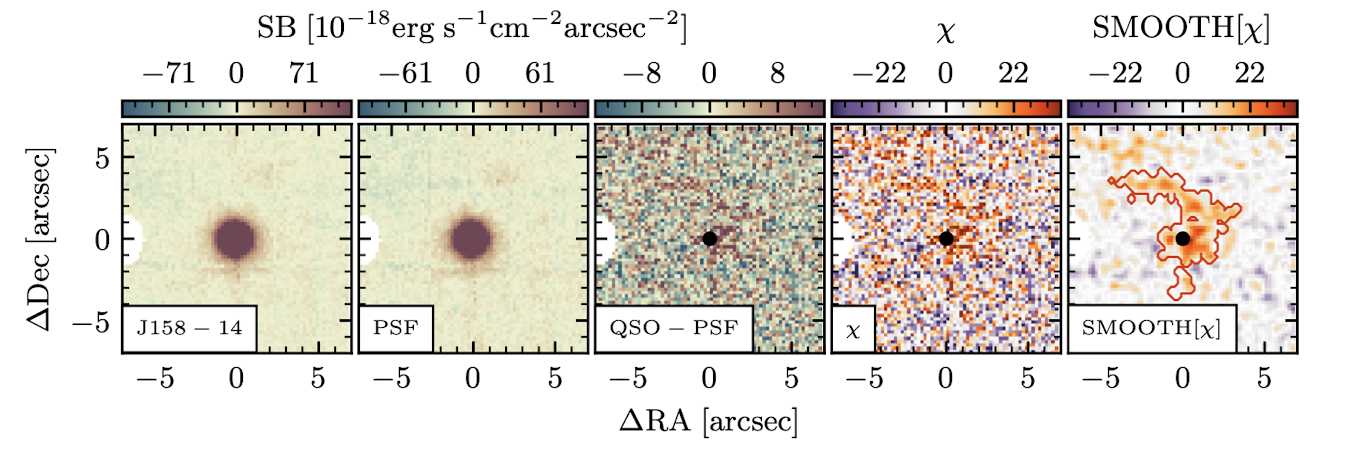
Figure 1: To observe the nebula (red outlined region in the rightmost panel), you have to subtract out the light coming from the quasar (leftmost panel). [Adapted from Ďurovčíková et al. 2025]
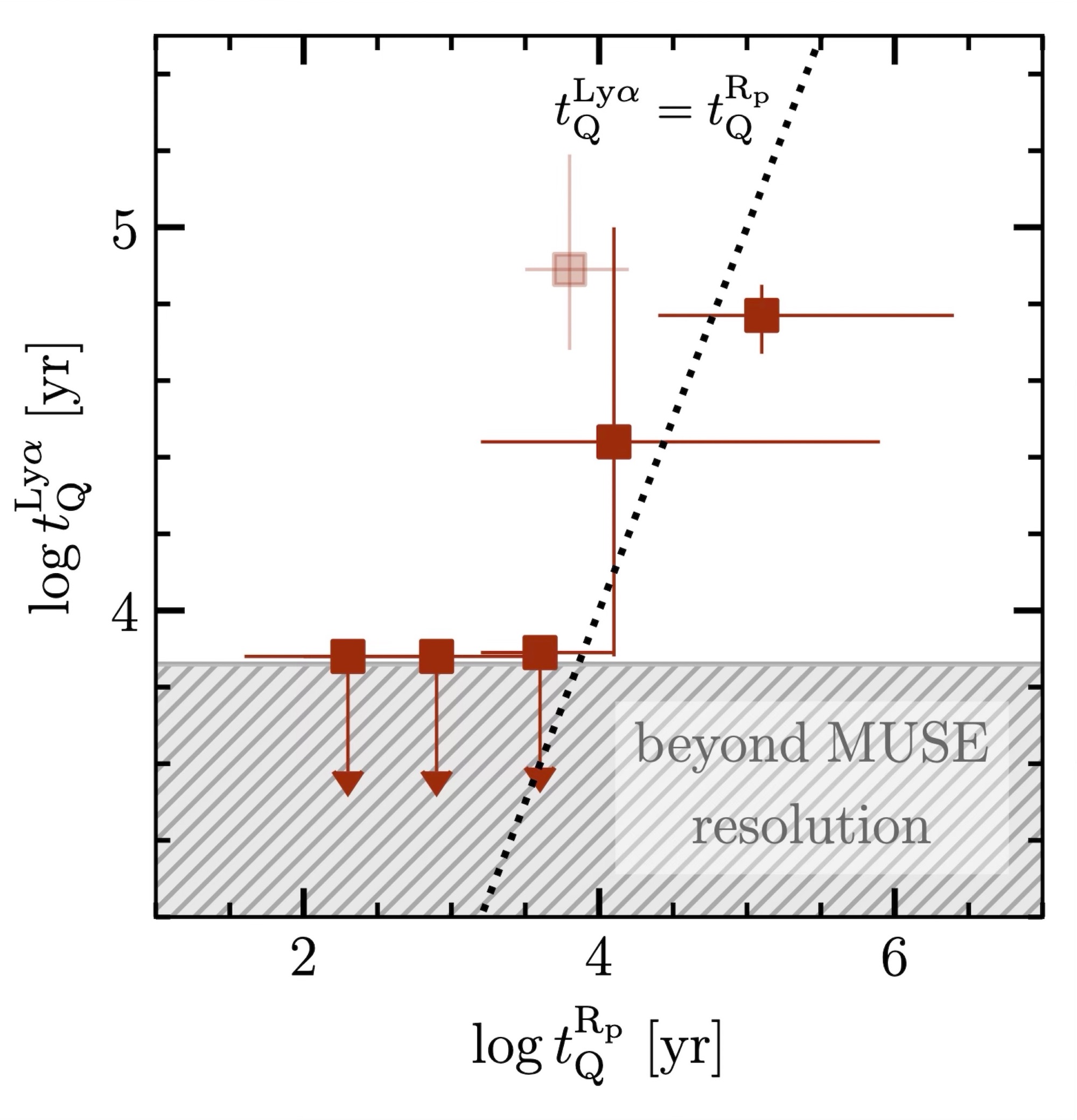
Figure 2: The age estimates derived by today’s authors (y-axis) are similar to the line-of-sight age estimates (x-axis), and generally follow a one-to-one relationship, suggesting that line-of-sight obscuration effects are not leading astronomers to underestimate the age of a quasar. [Adapted from Ďurovčíková et al. 2025]
Age estimates from the two methods are broadly pretty consistent, suggesting that obscuration effects are not causing one method to be severely underestimating the lifetime of a quasar. Therefore, for these six quasars, it seems unlikely that their growth can be primarily explained by phases of obscured growth. Instead, some other mechanism must have allowed these black holes to grow rapidly during the early universe and reach their supermassive sizes.
The mystery of how supermassive black holes can grow so quickly is still to be solved, but today’s article shows us that we haven’t been missing phases of obscured growth. The results of today’s article provide an independent measurement of quasar lifetimes, which models of supermassive black hole growth should be able to explain.
Original astrobite edited by Cesily King.
About the author, Nathalie Korhonen Cuestas:
Nathalie Korhonen Cuestas is a second-year PhD student at Northwestern University, where her research focuses on the chemical evolution of galaxies.
The post Are Quasars Growing in Secret? appeared first on AAS Nova.
]]>The post A Massive Yellow Supergiant in the Far Outer Disk of M31: Evidence for in Situ Massive Star Formation Beyond the Optical Radius appeared first on AAS Nova.
]]>The discovery of an 18-solar-mass star at 34 kiloparsecs from the center of the Andromeda Galaxy, along with a wispy arm of hydrogen gas, suggest that massive stars can form in tenuous gas environments.
The post A Massive Yellow Supergiant in the Far Outer Disk of M31: Evidence for in Situ Massive Star Formation Beyond the Optical Radius appeared first on AAS Nova.
]]>
To push the limits of high-precision pulsar measurements, astronomers have reconsidered their approach to data stacking.
The post Cluster Before Stack: A New Algorithm for Pulsar Timing appeared first on AAS Nova.
]]>To measure properties of a pulsar accurately, astronomers have to stack many individual observations together to boost the signal above the noise. But what if there was a more clever, more effective way to add observations than simple stacking?
Weak Cosmic Lighthouses
Pulsars, or rapidly spinning neutron stars that emit narrow cones of radio waves, are often referred to as the galaxy’s lighthouses. Just like a sailor looking to shore might see a periodic flash when a lighthouse’s beacon sweeps over their ship, so too would radio telescopes aimed at a pulsar detect a “pulse” when its beam sweeps across Earth. However, although this comparison to lighthouses is a powerful analogy, it starts to break down when considering the speed and strength of these flashes.
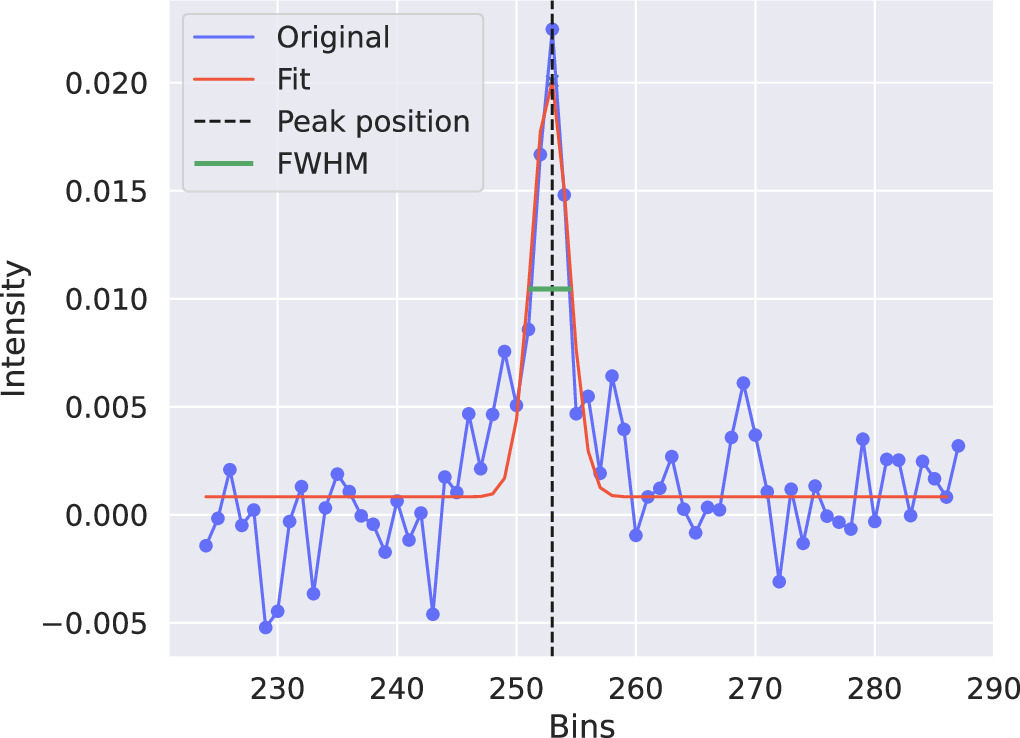
An example of one noisy individual pulse. Click to enlarge. [Sosa Fiscella et al. 2025]
This practice rests of the subtle assertion that every individual pulse is just a noisy variation of the same unchanging pulse profile. But is that safe to assume? And can we improve the precision of our measurements by doing something more complex than simple stacking? These are the questions recently tackled by a team of astronomers led by Sofia V. Sosa Fiscella (Rochester Institute of Technology) in research published in The Astrophysical Journal.
Squeezing the Data
The researchers focused on one particularly bright source named PSR J2145−0750 that was observed by the Green Bank Telescope for two hours in 2017. This pulsar is so bright that it’s possible to measure quantities like the pulse width, height, center, and total energy of individual pulses, not just the final stack. The team did just that for each of the more than 200,000 pulses in their dataset and assigned each one a vector of four numbers. When they next sorted the pulses into distinct groups, they found that there were indeed correlations among these variables: for example, pulses with higher maximum heights tended to arrive earlier and be narrower than the overall average.
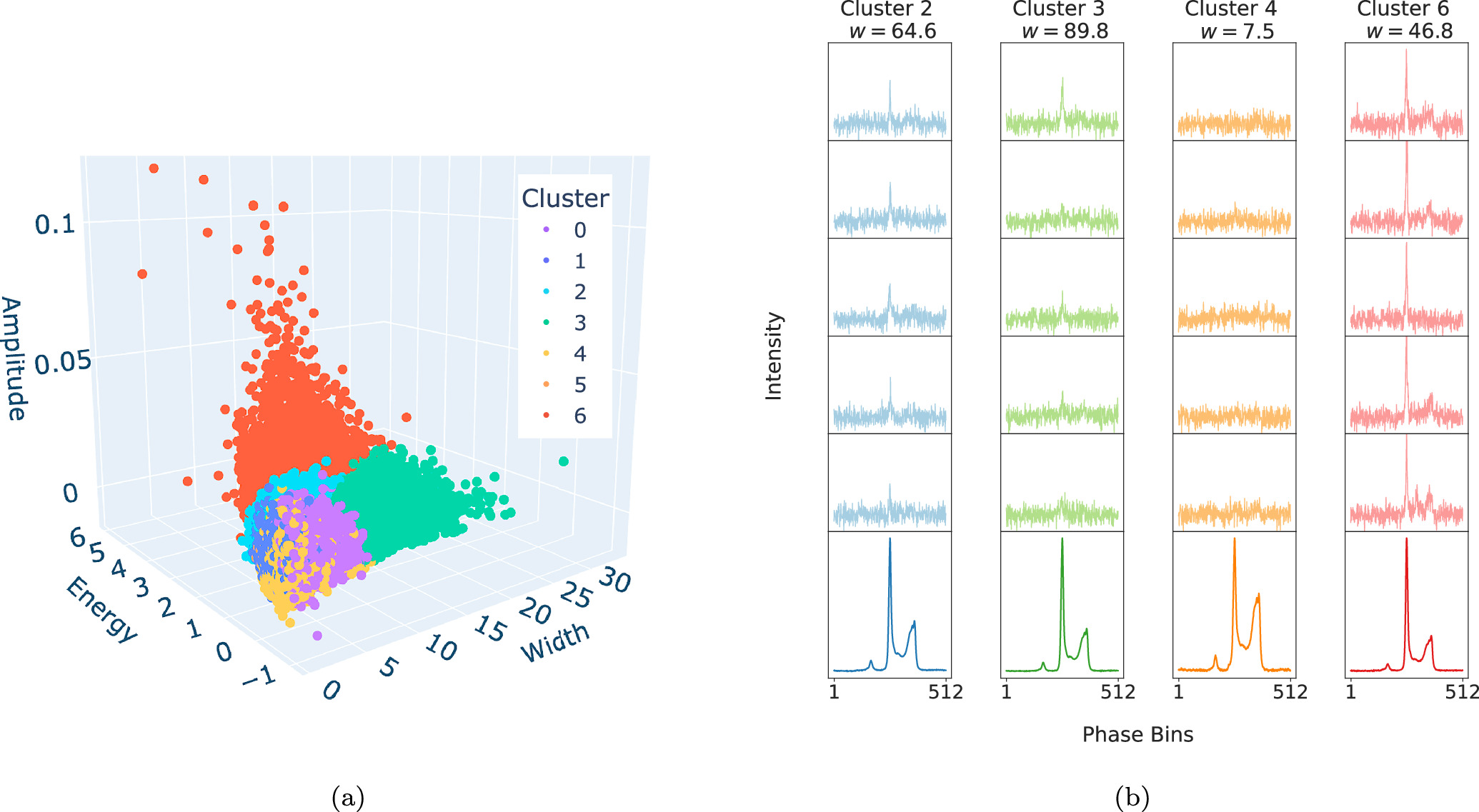
A visual representation of the different pulse clusters. Each point corresponds to one pulse. Click to enlarge. [Sosa Fiscella et al. 2025]
Though the team cautions that this new method will likely only be relevant for the pulsars for which we can measure individual pulses, they also point out that as better telescopes come online, we’ll be able to do that for more pulsars. In the meantime, astronomers can take comfort in the fact that as our technological abilities improve, so do our abilities to squeeze as much from our data as possible.
Citation
“Improving Pulsar Timing Precision with Single Pulse Fluence Clustering,” Sofia V. Sosa Fiscella et al 2025 ApJ 984 111. doi:10.3847/1538-4357/adc1c2
The post Cluster Before Stack: A New Algorithm for Pulsar Timing appeared first on AAS Nova.
]]>The post Lunar Crustal Magnetization Sourced via the Delivery of Iron-Rich Ejecta from Basin-Forming Impacts appeared first on AAS Nova.
]]>Simulations show that impacts can produce deposits of iron-rich material thick enough to account for lunar magnetic anomalies, but the predicted distribution of material doesn’t match observations.
The post Lunar Crustal Magnetization Sourced via the Delivery of Iron-Rich Ejecta from Basin-Forming Impacts appeared first on AAS Nova.
]]>The post Constraining the Mass of a Hypothetical Secondary Black Hole in M87 with the NANOGrav 15 yr Data Set appeared first on AAS Nova.
]]>If caused by a second black hole, the 11-year and 0.9-year periodic behaviors seen in Messier 87’s jet would be due to a black hole with a mass between a few million and a few billion solar masses.
The post Constraining the Mass of a Hypothetical Secondary Black Hole in M87 with the NANOGrav 15 yr Data Set appeared first on AAS Nova.
]]>The post The Sulfur Plume in the Horsehead Nebula: New Detections of S<sub>2</sub>H, SH<sup>+</sup>, and CO<sup>+</sup> appeared first on AAS Nova.
]]>Using the Atacama Large Millimeter/submillimeter Array, researchers have detected multiple sulfur-containing species; the data support a formation pathway for S2H molecules on the surfaces of dust grains.
The post The Sulfur Plume in the Horsehead Nebula: New Detections of S<sub>2</sub>H, SH<sup>+</sup>, and CO<sup>+</sup> appeared first on AAS Nova.
]]>
Astrobites reports on research that explores if we’ll be able to find a star that has formed from the gas enriched by only one stellar predecessor.
The post Looking for a Single Stellar Ancestor: Mono-Enriched Stars in Zoom-In Simulations appeared first on AAS Nova.
]]>Editor’s Note: Astrobites is a graduate-student-run organization that digests astrophysical literature for undergraduate students. As part of the partnership between the AAS and astrobites, we occasionally repost astrobites content here at AAS Nova. We hope you enjoy this post from astrobites; the original can be viewed at astrobites.org.
Title: SIRIUS: Identifying Metal-Poor Stars Enriched by a Single Supernova in a Dwarf Galaxy Cosmological Zoom-In Simulation Resolving Individual Massive Stars
Authors: Yutaka Hirai et al.
First Author’s Institution: Tohoku University
Status: Published in ApJL
All of the elements in stars come from, well, other stars. Each star has its own unique makeup of elements, kind of like our own DNA. Just like genes passing down generation after generation, elements in stars can be passed down to newly forming stars after the previous generation has died. So, if you’re looking at the chemical makeup of a particular star, what you’re really seeing is all the elements that were created after another star in the region exploded (went supernova) and enriched the gas (that the new star formed from) around it with elements like oxygen, nitrogen, iron, and more.
Like genealogy for stars, astronomers can use stellar enrichment to work their way back from a star they observe to its potential predecessors. It’s a bit trickier for stars that have a lot of elements, dubbed “metal-rich” stars, because there’s no way to tell which star contributed what mixture of elements at what point in time. However, scientists have recently been observing “extremely metal-poor” stars, which are stars with only small amounts of elements like oxygen, nitrogen, or carbon. Because there are so few of these elements, it’s safe to assume that these stars formed out of gas that didn’t have many predecessor stars enriching it — in fact, astronomers are hoping to find stars that only ever had one ancestor, calling them “mono-enriched” stars. Finding a mono-enriched star would tell us exactly what elements were produced in the supernova — aka in supernova nucleosynthesis.
However, how many of these metal-poor stars are mono-enriched is unknown. Estimating this fraction could help researchers identify more of them. The authors of this study tackle this problem by examining how many might exist in dwarf galaxies and what kind of chemical signatures they could produce.
Simulating Mono-Enriched Stars
To do this, they simulate a dwarf galaxy with the hydrodynamic code ASURA and model the gas physics in the galaxy with CLOUDY. In this method, stars form once the density of hydrogen gas in a region exceeds a certain threshold at a temperature that is cool enough for the gas to clump together. Pockets of this simulated region are then randomly assigned a stellar mass from the initial mass function, and eventually explode, diffusing elements into the gas particles around it.
Finding Mono-Enriched Stars in the Simulated Stellar Haystack
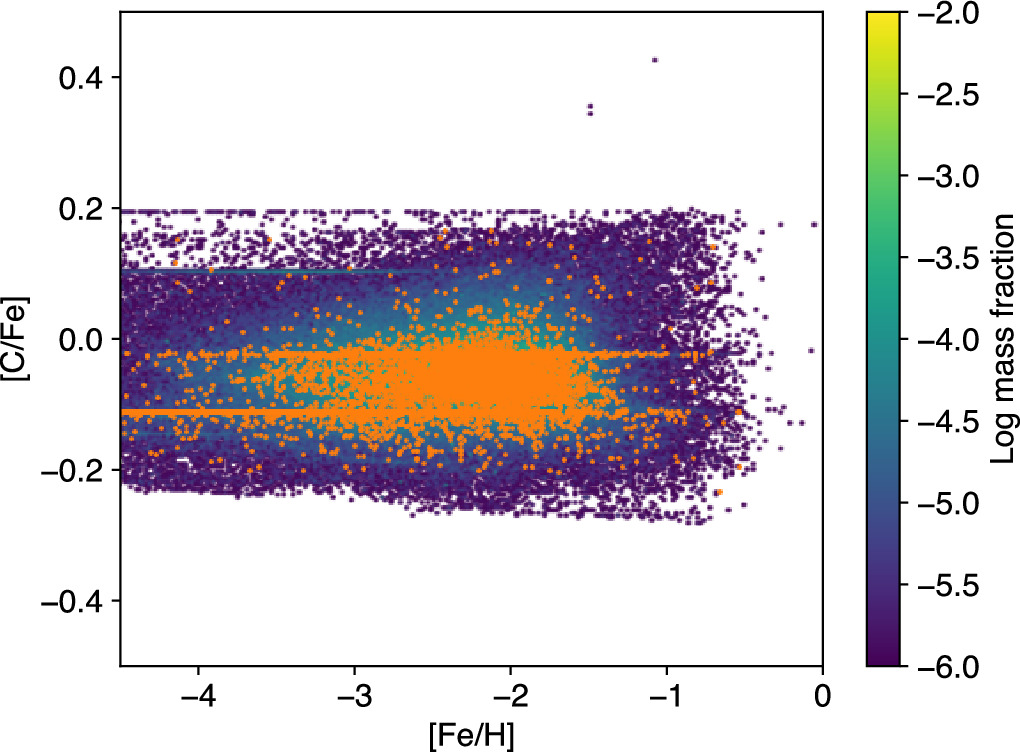
Figure 1: Every simulated star in the dwarf galaxy, shown as a function of their stellar metallicity, [Fe/H], carbon enhancement, [C/Fe], and their mass. Orange points are identified as mono-enriched stars. Click to enlarge. [Hirai et al. 2025]
Once these data points are collected, the authors investigate the fraction of mono-enriched stars at different metallicities. The authors essentially ask, are mono-enriched stars more likely to occur at lower metallicities? They find that, indeed, stars that are lower metallicity (and thus have lower [Fe/H]) are more likely to be mono-enriched (Figure 2). For stars with exceedingly low metallicities, [Fe/H] < −5, about 11% of them in this simulated dwarf galaxy have formed out of gas enriched by only one supernova.

Figure 2: Fraction of mono-enriched stars in the stellar population depending on the stellar metallicity ([Fe/H]) of the population. Stars with much lower metallicities ([Fe/H] < 2.5) are more likely to be mono-enriched. [Hirai et al. 2025]
Finding Mono-Enriched Stars in the Observed Stellar Haystack
These theoretical predictions help observers prepare what to look for when they want to find a mono-enriched star. These predictions seem to suggest that astronomers should keep looking for these extremely metal-poor stars if we want to find these unique stars that tell us about what elements are made in core-collapse supernovae. There is currently a decently large database of extremely metal-poor stars found with photometry, and if observers could follow up with the most ideal candidates spectroscopically we could really test what kind of elements are in these stars. Further, the upcoming Subaru Prime Focus Spectrograph will take many spectroscopic observations of close-by dwarf galaxies, which may contain more extremely metal-poor stars.
The authors note there is more work to be done in simulations, as they are interested in testing how extremely metal-poor stars, specifically ones with enhanced carbon, form. All of this will hopefully lead to a better understanding of how elements are made when stars explode, perhaps leading us to how some of the earliest elements formed in the early universe.
Original astrobite edited by Diana Solano-Oropeza.
About the author, Caroline von Raesfeld:
I’m a third-year PhD student at Northwestern University. My research explores how we can better understand high-redshift galaxy spectra using observations and modeling. In my free time, I love to read, write, and learn about history.
The post Looking for a Single Stellar Ancestor: Mono-Enriched Stars in Zoom-In Simulations appeared first on AAS Nova.
]]>The post Ultradeep Imaging of Nearby Dwarf Irregular Galaxies: Young Objects in the Far Outer Disk appeared first on AAS Nova.
]]>A search for young objects on the outskirts of noninteracting dwarf galaxies raises questions about how star-forming gas clouds can form in the extreme environment of these galaxies’ outer stellar disks.
The post Ultradeep Imaging of Nearby Dwarf Irregular Galaxies: Young Objects in the Far Outer Disk appeared first on AAS Nova.
]]>The post Evidence for a Catastrophically Disrupted Open Cluster appeared first on AAS Nova.
]]>Gaia data support a scenario in which an open cluster was unbound by a nearly head-on collision with a massive giant molecular cloud; this may be the first known catastrophically disrupted open cluster.
The post Evidence for a Catastrophically Disrupted Open Cluster appeared first on AAS Nova.
]]>
Our galaxy likely contains far more supernova remnants than we've found so far. What progress have recent radio surveys made in the hunt for supernova remnants?
The post Featured Image: Hunting for Missing Supernova Remnants with EMU and POSSUM appeared first on AAS Nova.
]]>Researchers estimate that there are at least 1,000 supernova remnants in our galaxy that should be visible at radio wavelengths today — but so far, only a few hundred have been confirmed. Embarking on a search for the missing supernova remnants, Brianna Ball (University of Alberta) and collaborators used radio observations from the Evolutionary Map of the Universe (EMU) and Polarization Sky Survey of the Universe’s Magnetism (POSSUM) surveys. The image above presents a portion of that search, overlaying the positions of various objects of interest atop a background of radio continuum emission from EMU. Several types of objects are indicated: previously known supernova remnants (red), previously identified candidate remnants (orange), new candidates (white), known H II regions (cyan), and young pulsars (green stars). So far, the team has newly confirmed 14 supernova remnants, six of which were identified for the first time thanks to EMU and POSSUM, and 37 new candidate remnants. As the EMU and POSSUM surveys continue, the authors expect that as many as 400 candidate supernova remnants may be spotted. If these candidates are confirmed, it would nearly close the gap between expected and observed numbers of supernova remnants in the regions covered by these surveys. To learn more about this search for supernova remnants, be sure to check out the full research article linked below.
Citation
“A Catalog of Galactic Supernova Remnants and Supernova Remnant Candidates from the EMU/POSSUM Radio Sky Surveys. I.,” B. D. Ball et al 2025 ApJ 988 75. doi:10.3847/1538-4357/addc63
The post Featured Image: Hunting for Missing Supernova Remnants with EMU and POSSUM appeared first on AAS Nova.
]]>
Using CHIME, a new collaboration has embarked on a journey to discover pulsars across the northern sky.
The post Chiming In on the Pulsar Search: Searching for Pulsars with CHIME appeared first on AAS Nova.
]]>Pulsars, the best timekeepers in the universe, are key to many fields within astronomy. A new survey searching for pulsars has come online and is already making discoveries.
Searching for Pulsars
Pulsars, the extremely dense cores left over from some massive stars’ deaths, act as astronomical lighthouses — spinning fast and emitting jets of light from their magnetic poles, they send steady pulses of light to observers on Earth. Pulsars are particularly intriguing sources, providing insights into multiple areas of astrophysics like gravitational waves, general relativity, and high-density matter properties. While more than 3,700 pulsars have been discovered to date, increasing this number will enable further exciting science.
Multiple pulsar surveys have utilized single-dish radio telescopes to cover portions of the sky, and to date, these surveys have primarily focused on finding pulsars near the dense stellar population in the Milky Way’s galactic plane. While these surveys have detected many pulsars, they are limited by their small fields of view, taking longer to cover large portions of the sky, and they miss the population of pulsars that must lie within globular clusters orbiting in the galactic halo. Some low-frequency detectors address these limitations but require intense computational resources to sift through the raw data to find pulsars. How can we search for pulsars efficiently across the sky?
Introducing CHAMPSS
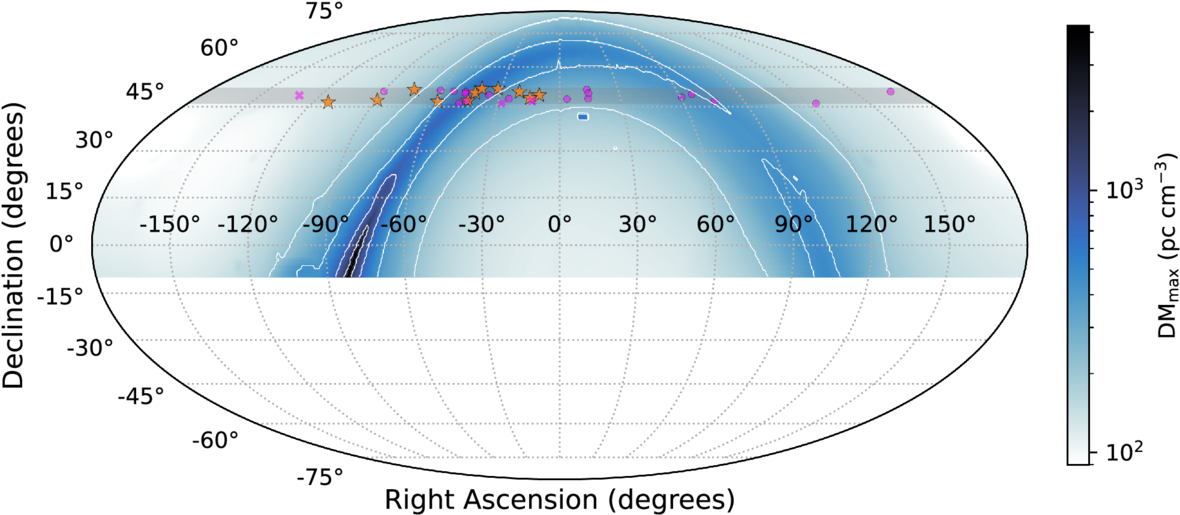
CHAMPSS pointing map showing the survey’s planned sky coverage. The orange stars correspond to the newly discovered pulsar, and the pink points denote known pulsars within the commissioning surveys. Click to enlarge. [Andrade et al 2025]
With a clear opportunity to advance the pulsar search, a group of scientists developed the CHIME All-sky Multiday Pulsar Stacking Search (CHAMPSS) — a radio pulsar survey that covers the full northern sky daily and uses long-term data stacking to detect irregular and faint sources. Through stacking observations across multiple days, CHAMPSS builds up signals to find faint sources that would otherwise go undetected. The data processing pipeline searches in real time for strong peaks that signify a transient radio event, and follow-up analysis determines if the event is a pulsar candidate. A strong candidate then moves through further stages to confirm it as a pulsar and determine its properties.
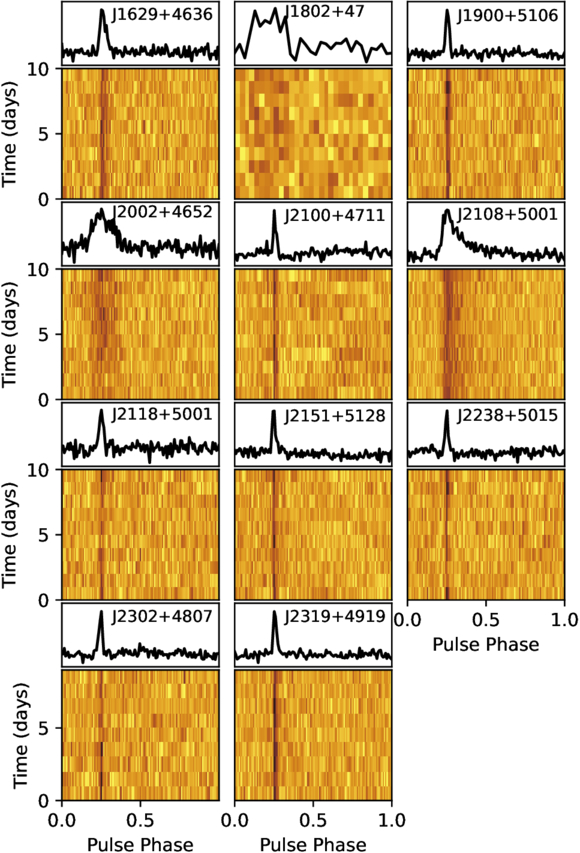
The 11 pulsars discovered with CHAMPSS. Click to enlarge. [Andrade et al 2025]
First Discoveries and Looking Forward
What has CHAMPSS uncovered thus far? In testing the system through multiple commissioning surveys on a small subset of the sky, the CHAMPSS collaboration has discovered 11 new pulsars with periods ranging from 0.2 to 1.5 seconds. Additionally, the collaboration tested the sensitivity of their survey by searching for known pulsars within the observed area, and they found that their predicted and detected signal-to-noise ratios for known pulsars agree well. This confirmation allows the team to advance to the next phase of the survey, and it will soon be in full swing.
CHAMPSS complements and expands upon other radio pulsar searches, discovering faint and irregular sources that are missed without repeated observations. The future of pulsar astronomy is promising, and with the advent of this survey, a new collection of pulsars will be discovered.
Citation
“CHIME All-sky Multiday Pulsar Stacking Search (CHAMPSS): System Overview and First Discoveries,” Christopher Andrade et al 2025 ApJ 990 50. doi:10.3847/1538-4357/adeb51
The post Chiming In on the Pulsar Search: Searching for Pulsars with CHIME appeared first on AAS Nova.
]]>The post Hints of Disk Substructure in the First Brown Dwarf with a Dynamical Mass Constraint appeared first on AAS Nova.
]]>High-resolution observations with ALMA display possible substructure in the disk surrounding a brown dwarf, yielding new insights into planet formation in the very low-mass regime.
The post Hints of Disk Substructure in the First Brown Dwarf with a Dynamical Mass Constraint appeared first on AAS Nova.
]]>The post Five New Sirius-Like White Dwarf–Main-Sequence Star Systems with MagAO-X appeared first on AAS Nova.
]]>Astronomers used an extreme adaptive optics instrument to discern the presence of tiny white-dwarf companions next to main-sequence stars; a survey of 18 stars yielded seven candidates, five of which are confirmed.
The post Five New Sirius-Like White Dwarf–Main-Sequence Star Systems with MagAO-X appeared first on AAS Nova.
]]>The post Constraints on the Evolution of an Overluminous Blue Supergiant from Its Parent Open Cluster, vdBH 245 appeared first on AAS Nova.
]]>A new age estimate for a blue supergiant suggests that the star could be the product of a merger 5–21 million years after its cluster’s formation, involving stars with masses of 8.5–12 and 1.1–10.8 solar masses.
The post Constraints on the Evolution of an Overluminous Blue Supergiant from Its Parent Open Cluster, vdBH 245 appeared first on AAS Nova.
]]>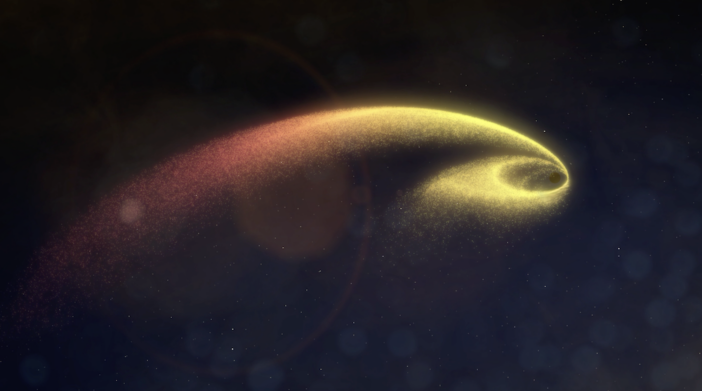
Say a star wandered close enough to a black hole to be partially ripped apart, but lived to tell the tale. What does the rest of its life look like?
The post Scars from a Black Hole appeared first on AAS Nova.
]]>Simulations suggest that there should be a million stars in our galaxy that once wandered so close to a supermassive black hole that they were nearly destroyed. What are the long-term effects of this encounter, and could astronomers observe the scars of these near-death experiences?
Moths to a Flame
This infrared and X-ray image of the Milky Way’s center shows a swirl of hot gas surrounding Sagittarius A*, our galaxy’s central supermassive black hole. [NASA, ESA, SSC, CXC, STScI]
Simulations suggest that most of the time, these hapless stars are not completely destroyed by their close encounters with the black hole. In principle, then, there should be about a million “survivor” stars wandering near the center of our galaxy. But, what would these survivors look like? And with careful measurements, could we tell them apart from their regular, unscathed counterparts?
Simulating a Star’s Worst Day
Recently, a team of astronomers led by Rewa Clark Bush (University of California Santa Cruz, Cabrillo College, Wesleyan University) tackled this question. First, the team needed to simulate a terrible day for a hypothetical star: the day it passes closest to the black hole. To compute what happens to the star in those intense couple of hours, they used an open-source hydrodynamic code called FLASH to track the state of the star in granular detail.
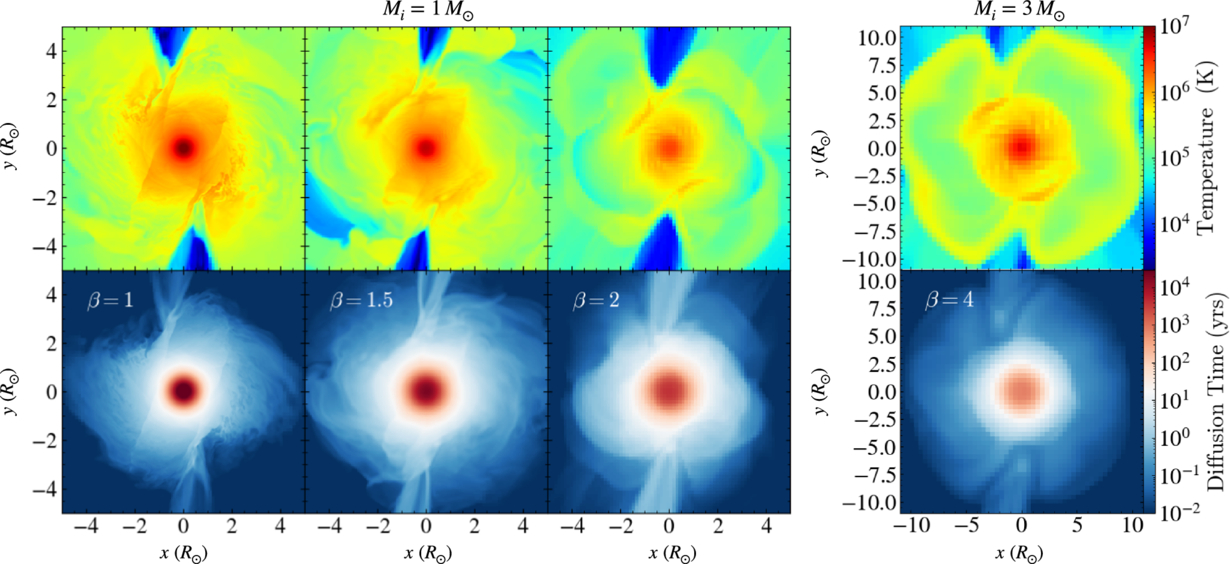
Temperatures (top row) and diffusion timescales (bottom row) of four stars soon after their closest approach to the black hole. Click to enlarge. [Bush et al. 2025]
Back on Track
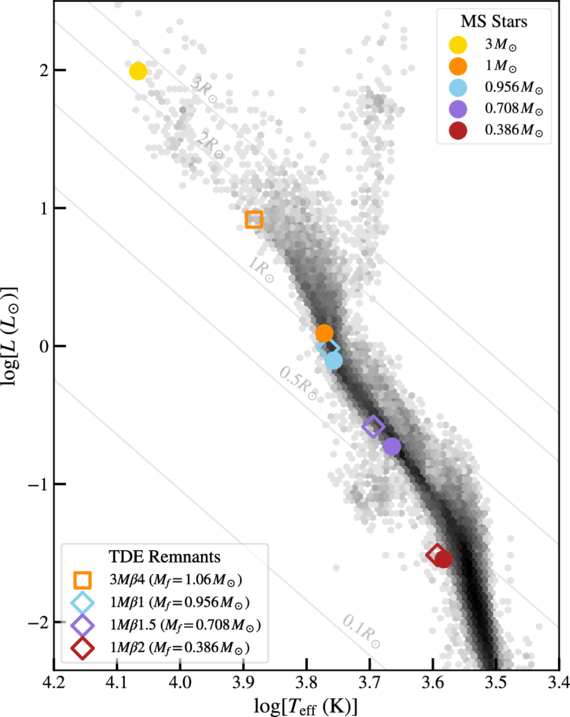
Comparison of the original undisturbed stars (filled circles), the stars after a black hole encounter (open symbols), and other stars with different initial masses (black points). Click to enlarge. [Bush et al. 2025].
Eventually, though, these stars pretty much return to a new normal. Though these stars would have had slightly different colors and luminosities had they not encountered the black hole, they end up looking similar to undisturbed stars with the same final mass.
Although detailed spectroscopic measurements of these remnants might reveal a strange composition thanks to all the stirring that happened during the flyby, it’d be hard to tell anything happened to these stars otherwise. Ultimately, life goes on, even for stars that were nearly destroyed by the most massive creature in the galaxy.
Citation
“Black Hole Survival Guide: Searching for Stars in the Galactic Center that Endure Partial Tidal Disruption,” Rewa Clark Bush et al 2025 ApJL 990 L7. doi:10.3847/2041-8213/adefde
The post Scars from a Black Hole appeared first on AAS Nova.
]]>The post Constraints on Quaoar’s Rings and Atmosphere from JWST/NIRCam Observations of a Stellar Occultation appeared first on AAS Nova.
]]>JWST observations show substantial azimuthal variations of both the inner and outer rings of the trans-Neptunian object Quaoar, and modeling shows that resonances with Weywot play a role in the stability of the rings.
The post Constraints on Quaoar’s Rings and Atmosphere from JWST/NIRCam Observations of a Stellar Occultation appeared first on AAS Nova.
]]>
Astobites reports on a surprising dust curve in a distant galaxy that challenges what we know about cosmic dust.
The post A Dust Curve That Breaks the Mold appeared first on AAS Nova.
]]>Editor’s Note: Astrobites is a graduate-student-run organization that digests astrophysical literature for undergraduate students. As part of the partnership between the AAS and astrobites, we occasionally repost astrobites content here at AAS Nova. We hope you enjoy this post from astrobites; the original can be viewed at astrobites.org.
Title: The AURORA Survey: The Nebular Attenuation Curve of a Galaxy at z = 4.41 from Ultraviolet to Near-Infrared Wavelengths
Authors: Ryan L. Sanders et al.
First Author’s Institution: University of Kentucky
Status: Published in ApJ
Imagine a galaxy from 13 billion years ago, long before the Milky Way took its current form. Now picture trying to uncover the secrets of that ancient galaxy. How quickly did it create stars and evolve? Here’s the tricky part: its light has journeyed across an unimaginable distance to get here. On its journey, cosmic dust — tiny grains of carbon and silicates — has scattered and dimmed the light, making the task harder.
Dust doesn’t just block light — it changes it. Ultraviolet (UV) light gets scattered much more than light at longer wavelengths, which is why galaxies seem redder and dimmer than they truly are. This dual nature can be seen in the “Pillars of Creation,” in Figure 1. A new near-infrared image from NASA’s JWST, shown in the right panel below, helps us peer through more of the dust in this star-forming region. The thick, dusty brown pillars are no longer as opaque, and many more red stars that are still forming come into view.
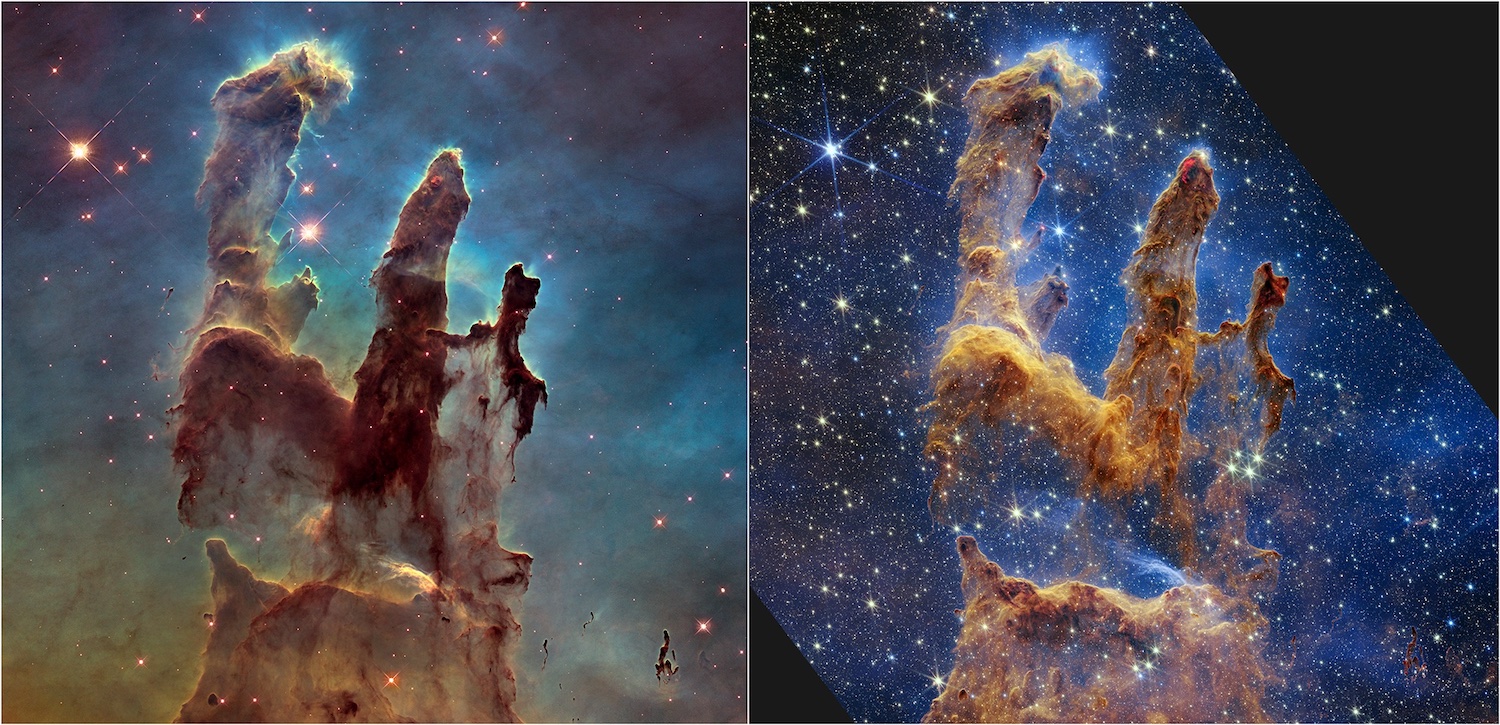
Figure 1: On the left, NASA’s Hubble Space Telescope captures the iconic Pillars of Creation in stunning visible light (2014). On the right, JWST unveils a breathtaking infrared view, revealing even more details hidden within the cosmic dust. [NASA, ESA, CSA, STScI; Joseph DePasquale (STScI), Anton M. Koekemoer (STScI), Alyssa Pagan (STScI)]
But here’s the catch: most of the dust curves we have were designed for galaxies much closer to us, like the Milky Way or the SMC, so they may not apply in the exact same way to distant galaxies. Whether those same curves work for the much younger, chaotic galaxies of the early universe is an open question. The dust in nearby galaxies is well studied and relatively predictable, but does dust behave the same way in galaxies billions of years in the past?
This question drove Ryan Sanders and collaborators to study GOODSN-17940, a starburst galaxy located at a redshift of z = 4.41, when the universe was just 1.36 billion years old. Observed as part of the Assembly of Ultradeep Rest-optical Observations Revealing Astrophysics (AURORA) survey using JWST, this galaxy provided an unprecedented opportunity to investigate how dust behaved in the distant past. Using JWST’s NIRSpec instrument, the team constructed a unique dust curve by studying 11 hydrogen emission lines from Hα to H12 (the twelfth line in the rest-frame optical Balmer series), shown in Figure 2. These lines act like lighthouses, their brightness giving away how much light is being absorbed by dust at each wavelength. By comparing the observed brightnesses of these lines, the researchers created a detailed dust curve tailored to GOODSN-17940.
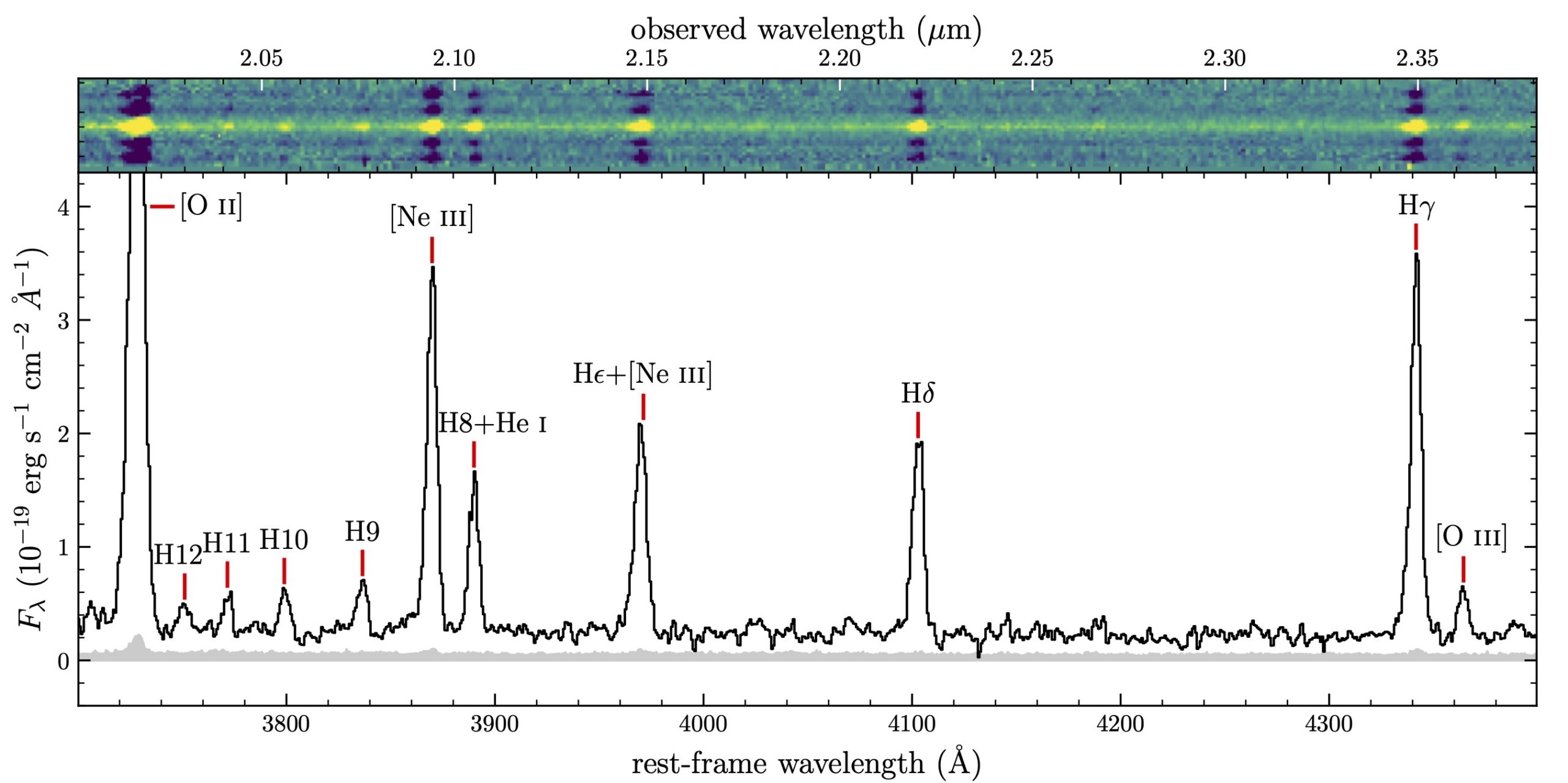
Figure 2: Spectrum of GOODSN-17940 from the AURORA survey, showing hydrogen Balmer lines. These features help estimate the galaxy’s dust and ionization conditions. The top panel presents the 2D spectrum, showing spatially resolved emission that traces the galaxy’s structure, while the bottom panel shows the corresponding 1D spectrum. [Adapted from Sanders et al. 2025]
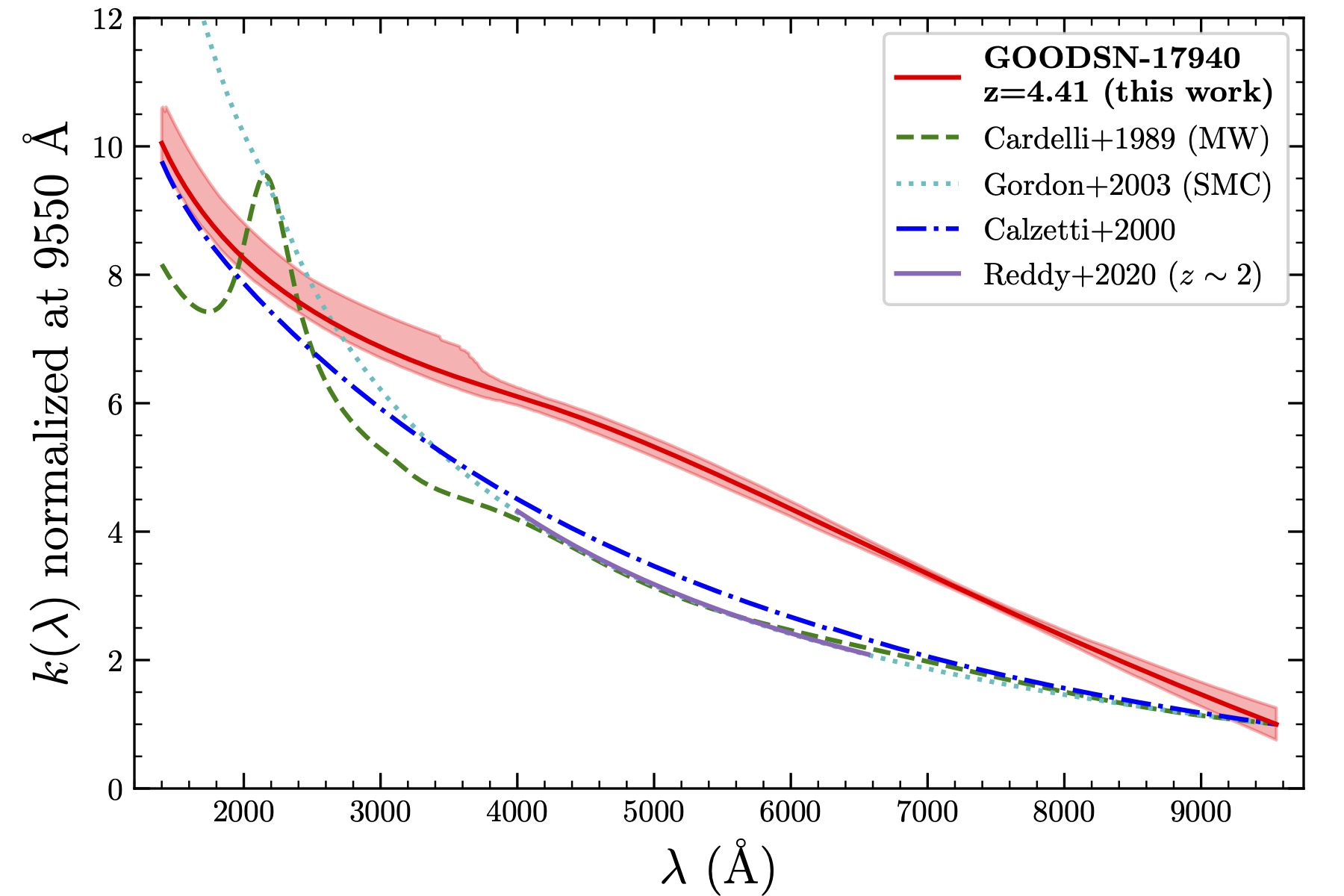
Figure 3: The dust curve of GOODSN-17940 (solid red line) at z = 4.41, derived in this work, compared to established curves for the Milky Way (green dashed), Small Magellanic Cloud (SMC, dotted cyan), Calzetti et al. (blue dot-dashed), and Reddy et al. z ~ 2 galaxies (purple solid). This curve is steeper in the near-infrared and flatter in the UV, highlighting unique dust properties in this galaxy. [Sanders et al. 2025]
So, why does this even matter? If you used the Milky Way’s dust curve to adjust for the dust in a galaxy like GOODSN-17940, you’d be way off. In fact, you’d underestimate its star formation rate by up to 50%! This isn’t just a minor detail — it could explain why star formation rates derived from Hα don’t always match those derived from UV luminosity. Such details can completely change how we interpret a galaxy. It’s the difference between a galaxy steadily forming stars and one caught in a dramatic starburst phase. That’s why astronomers focus on creating dust curves tailored to individual galaxies. This study isn’t just about one galaxy — it’s about rethinking how we interpret dust, star formation, and galaxy evolution in the early universe. Before JWST, isolating individual emission lines from distant galaxies was challenging, but it has become much more efficient now. As more galaxies like GOODSN-17940 are studied, we might find that many early galaxies had dust curves breaking the mold, forcing us to refine how we measure star formation and understand cosmic history.
Original astrobite edited by Hilary Diane Andales and Delaney Dunne.
About the author, Niloofar Sharei:
I’m a third-year Astronomy PhD student at University of California, Riverside, where I study bursty star formation histories and how galaxies take shape. When I’m not busy exploring the universe, you can usually find me curled up with a good book, hiking somewhere peaceful, trying astrophotography, or getting lost in Bach’s music and art.
The post A Dust Curve That Breaks the Mold appeared first on AAS Nova.
]]>The post The 2023 Flight of the Faint Intergalactic-Medium Redshifted Emission Balloon appeared first on AAS Nova.
]]>The multi-object ultraviolet spectrograph FIREBall-2, designed to detect emission from the low-redshift circumgalactic and circumquasar medium, is the second iteration of a balloon-borne instrument.
The post The 2023 Flight of the Faint Intergalactic-Medium Redshifted Emission Balloon appeared first on AAS Nova.
]]>
Researchers present the first-ever millimeter-wavelength map of Callisto, the coldest and most weather-worn of Jupiter's major moons.
The post A Close Look at an Ancient Moon appeared first on AAS Nova.
]]>By piecing together observations from dozens of radio telescopes in Chile, planetary scientists recently completed the first-ever map of Callisto’s emission at millimeter wavelengths.
Old and Cold
In striking contrast to Io’s frenzied volcanism and Europa’s cracking ice shell, Jupiter’s moon Callisto is much quieter and colder than its Galilean siblings. Though a liquid water ocean hypothetically sloshes beneath its frigid surface, it’d be hard to infer that just by looking at the moon. Callisto’s terrain is ancient, static, and bears the scars of the millennia of exposure to space. There are no volcanoes, plate tectonics, or any other features to disturb what researchers call “evolved ruins” of the numerous craters. These have names like Valhalla, Asgard, and Lofn, since Callisto’s geologic features are named after settings and characters in Norse mythology to further reinforce their freezing existence.
This never-reset canvas makes Callisto an ideal laboratory for studying the long-term effects of asteroid impacts, dust accumulation from nearby natural satellites, and other processes that modify a planetary surface over time. One way to infer the composition and structure of the first few meters of material is to observe the way the temperature changes over the course of a day. For example, ice and rock respond differently to temperature changes; similarly, small-grains of either material warm up and cool down at different speeds than their larger-grain counterparts.
The residuals from one of ALMA’s observations of Callisto. [Adapted from Camarca et al. 2025]
Mapping from Afar
A team led by Maria Camarca, California Institute of Technology, just finished churning through all of the data and assembling their map of Callisto’s temperature residuals. Though the final spatial resolution was at best a few hundred kilometers, meaning a comparable map of Earth would blur all of New England together, this represents the most detailed thermal map of Callisto yet. The map was detailed enough to easily spot the largest craters, and several impact craters including Valhalla stood out as being 3–5K colder than all of the surrounding terrain. The team spotted another anomalously cold region that coincides with the location of maximum carbon dioxide gas density recently seen with JWST.
A map of Callisto’s thermal emission (red/blue) overlaid atop visible images of the surface collected by spacecraft. Click to enlarge. [Camarca et al. 2025]
Citation
“A Multifrequency Global View of Callisto’s Thermal Properties from ALMA,” Maria Camarca et al 2025 Planet. Sci. J. 6 183. doi:10.3847/PSJ/ade7ee
The post A Close Look at an Ancient Moon appeared first on AAS Nova.
]]>The post Discovery of Small-Scale Flows in the Void of a Coronal Mass Ejection with High-Cadence Images Acquired by the Metis Coronagraph on Board Solar Orbiter appeared first on AAS Nova.
]]>Observations from Solar Orbiter show for the first time plasma motions within the void of a coronal mass ejection, demonstrating the conversion of magnetic writhe into twist.
The post Discovery of Small-Scale Flows in the Void of a Coronal Mass Ejection with High-Cadence Images Acquired by the Metis Coronagraph on Board Solar Orbiter appeared first on AAS Nova.
]]>The post A 70 pc Diameter Nova Superremnant Surrounding the Recurrent Nova RS Ophiuchi appeared first on AAS Nova.
]]>Recurrent novae are predicted to be surrounded by vast superremnants, but few are known; this article brings the number of known superremnants to four and helps illuminate why so few have been discovered.
The post A 70 pc Diameter Nova Superremnant Surrounding the Recurrent Nova RS Ophiuchi appeared first on AAS Nova.
]]>
Astrobites reports on how clouds might actually be a good thing when it comes to detecting biosignatures with NASA's proposed next-generation space telescope, the Habitable Worlds Observatory.
The post Weather Forecast for the Habitable Worlds Observatory: Cloudy with a Chance of Biosignatures appeared first on AAS Nova.
]]>Editor’s Note: Astrobites is a graduate-student-run organization that digests astrophysical literature for undergraduate students. As part of the partnership between the AAS and astrobites, we occasionally repost astrobites content here at AAS Nova. We hope you enjoy this post from astrobites; the original can be viewed at astrobites.org.
Title: Clouds Can Enhance Direct-Imaging Detection of O2 and O3 on Terrestrial Exoplanets
Authors: Huanzhou Yang, Michelle Hu, and Dorian S. Abbot
First Author’s Institution: University of Chicago
Status: Published in ApJ
In the hunt for life beyond Earth, studying exoplanet atmospheres is one of our most powerful tools. The atmosphere of an exoplanet acts as a window into its environment and allows astronomers to take a guess at what processes are shaping the planet’s climate, chemistry, and thus, its potential for habitability. The gases present in the planet’s atmosphere impart a unique spectral fingerprint on the light that passes through the atmosphere and allows us to identify what gases might be present and look for possible signs of life.
JWST is already hard at work looking at distant worlds and gathering spectroscopic data for us to analyse. It has already observed several exoplanets and recorded the light that passed through their atmospheres. This has not only sparked a debate over what could be interpreted as the first possible signs of biological activity, but has also given us a glimpse of worlds that are remarkably different from our own.
However, JWST is mostly limited to observing the atmospheres of transiting exoplanets. That means planets that orbit close to their host star and are more or less directly edge-on, as viewed from us, so that they transit across the face of the star. The only planets that the telescope is able to observe directly are big, young, and hot planets farther from their host star, at distances more resembling those of the outer planets in our solar system, like Saturn or Uranus. If only we had a telescope powerful enough to image a potentially habitable planet directly and analyse the light reflected from it.
The Habitable Worlds Observatory
This is where the Habitable Worlds Observatory (HWO) will come in. Now, I know what you are thinking. Why must astronomers always look towards greener pastures bigger telescopes when we already have perfectly functional space telescopes in orbit or practically on the launch pad? Well, it is true that the next flagship space telescope from NASA, the Nancy Grace Roman Space Telescope, is designed to directly image exoplanets and analyse their atmospheres. But space telescopes can take decades to plan and are often built on lessons learned from previous missions. Roman, with its 2.4-meter primary mirror and coronagraph, will be able to observe planets similar in size and orbital distance to Jupiter and will get us some of the way, for sure, but not all the way. At three times the mirror size, HWO, NASA’s proposed successor to Roman that is planned for the 2040s, will carry the torch even further and be able to directly image Earth-like planets in the habitable zone, where liquid water can exist on the planet’s surface.
But It Might Be Cloudy Tomorrow
This brings us to today’s article. If the HWO is going to potentially observe Earth analogues, we might expect it to run into the same issue that plagues everyone living in the UK for most of the year — clouds. Clouds in the atmosphere of an exoplanet can sometimes cause trouble when trying to analyse the light. Cloud particles scatter different wavelengths of light differently, and cloud variability creates dynamic changes in the observed brightness that can make it hard to know what exactly you are looking at. Clouds can also mean varying levels of opacity to look through depending on cloud composition, and they can hide underlying atmospheric properties such as water content beneath a thick cloud layer. For transmission spectroscopy, even a thin layer of clouds can disrupt the measurements as the light has to travel a long distance through the atmosphere. However, for direct imaging, the effect of clouds is perhaps more nuanced. While a thick cloud deck will block the signal from whatever gas lies beneath it, it will also increase the overall albedo of the planet and make it easier to detect the gas above. This means that cloud height and type are both critical variables in understanding atmospheric properties of exoplanets, which is what the authors of today’s article set out to investigate.
To understand how clouds affect the ability to detect signs of life on distant Earth-like planets, the authors used computer simulations. They focused on two gases, molecular oxygen (O2) and ozone (O3). Both gases are often regarded as biosignatures, although their astrobiological significance has been debated. The authors first used a tool that simulates how a telescope like the HWO might observe an Earth-like planet around a star 15 parsecs away. This tool predicts how light bounces off a planet’s surface and atmosphere, and whether the two gases would show up clearly in the reflected light. Next, they created realistic cloud conditions using a cloud microphysics model. This model calculates how clouds might form and behave depending on factors like surface pressure or how much sunlight the planet gets. With this they were able to change things like cloud height and particle size. They then combined the two tools by adding the simulated clouds into the observations model and building a mathematical model to help explain what they saw in the simulations. The sketch for their model can be seen in Figure 1.
Figure 1: Clouds can affect the amount of reflected light (albedo) from the imaged planet. Depending on the cloud height and particle size, this can have a big impact on the observability of different species of gas in the atmosphere. Here the blue arrows indicate the amount of light entering the atmosphere and being reflected. The arrows get thinner from tail to head, representing absorption in the atmosphere. Depending on the presence of clouds, a varying amount is reflected back. The red colour indicates the assumed distribution of ozone, O3, which is concentrated at a high altitude. [Yang et al. 2025]
A Cloudy Sky Can Actually Be a Good Thing
The researchers discovered that low clouds can actually make gases like oxygen and ozone easier to detect, because these clouds reflect more light without blocking the gases above them. On the other hand, high clouds can make it harder since they can hide the gases from view. They tested different cloud types using real data from Earth as seen in Figure 2. They looked at five common cloud types, like stratus (flat and low), cirrus (high and wispy), and deep convective clouds (tall, thunderstorm-like), and compared them to their model clouds (labelled as CARMA in the figure).
Figure 2: The figure shows how different types of clouds affect our ability to detect oxygen (blue) and ozone (red) on an Earth-like planet. The dashed lines show the results without clouds, while the bars show what happens when clouds are present. Solid bars represent larger cloud droplets, and striped bars represent smaller ones, which reflect more light. The figure shows that most cloud types — especially low clouds like stratus and thick storm clouds — actually make it easier to detect these gases, particularly when droplets are small. Only high, thin clouds (cirrus) slightly reduce oxygen detection, and even then, the effect is small. This is the article’s main finding: while clouds can block light in some observation methods, for direct imaging of reflected light, they often help us see signs of life better. The cloud types are based on real Earth data while the authors’ simulated cloud model is labelled as CARMA. [Yang et al. 2025]
Original astrobite edited by Maria Vincent.
About the author, Kasper Zoellner:
I have a Master of Science in astronomy and I am currently working towards a PhD in physics and educational science. My greatest passion is the search for exoplanets and how stellar variability may influence the possibility of life. I am also interested in science outreach, education, and discussing what sci-fi novel to read next!
The post Weather Forecast for the Habitable Worlds Observatory: Cloudy with a Chance of Biosignatures appeared first on AAS Nova.
]]>The post Starspot Area Coverage: Correlation with Age and Spectral Type in FGK and M Stars appeared first on AAS Nova.
]]>Analysis of 11 stars suggests that starspot coverage decreases with age, potentially creating the opportunity to incorporate starspot coverage into isochrone models to improve stellar age estimates.
The post Starspot Area Coverage: Correlation with Age and Spectral Type in FGK and M Stars appeared first on AAS Nova.
]]>The post Potential Landing Sites: A Comprehensive Reconnaissance Assessment of the Europa Clipper Trajectory appeared first on AAS Nova.
]]>Twelve of the 49 prime-mission flybys of Europa Clipper are “reconable,” meaning they at least partially meet the requirements for collecting terrain data critical for future spacecraft landing.
The post Potential Landing Sites: A Comprehensive Reconnaissance Assessment of the Europa Clipper Trajectory appeared first on AAS Nova.
]]>
Small in size and glowing red, little red dots have been confusing astronomers since their discovery by JWST. What are the origins of these distant galaxies, and what have researchers learned so far?
The post All Alone With No AGN to Call Home? New Results for Little Red Dots appeared first on AAS Nova.
]]>Among the discoveries JWST has made since its 2021 launch, “little red dots” are one of the most perplexing. Named for their compact size and red color, the origins of these distant galaxies remain unknown. A recent article explores some little red dots’ spectral energy distributions and local environments to better understand what may be lighting up these tiny torches.
Little Red Dot Dilemma
Along with their size and color, little red dots exhibit “V”-shaped spectral energy distributions (how they emit light across wavelengths), broad hydrogen emission lines, and no observed X-ray emission. These properties land them in an untapped parameter space with some similarities to both active galactic nuclei (AGNs) and stellar populations. Some previous investigations have suggested that little red dots contain AGNs, reddened by a dusty accretion disk scattering or blocking AGN light. Other studies have found that models for stellar populations can also fit certain little red dot spectra well.
Adding to the ambiguity, observations and theory predict AGNs to show broad spectral lines, which are present in little red dots — but if little red dots are AGNs, this implies a much higher density of AGNs in the early universe than previously predicted by ground-based surveys. Furthermore, AGNs are expected to emit in the X-ray and show photometric variability, but neither property has been detected definitively thus far for a little red dot. With a clear dilemma arising for the origins of little red dots, astronomers are still prodding at these curious sources.
AGN or Not?
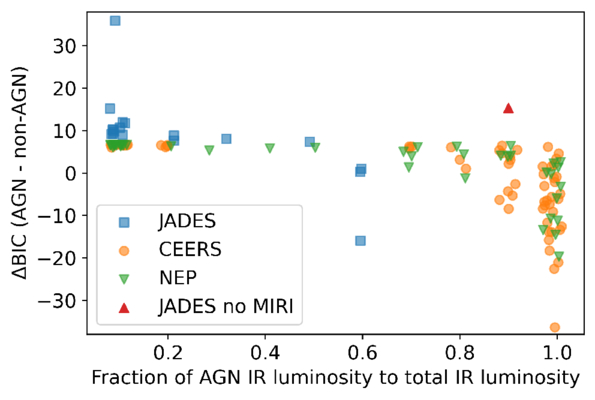
Comparison of AGN versus non-AGN fits using the Bayesian information criterion (BIC). Positive values of ΔBIC favor a non-AGN fit, and ~70% of little red dots have positive ΔBIC. Click to enlarge. [Carranza-Escudero et al 2025]
Using a robust statistical analysis, the authors found that AGN models tend to “overfit” the data — with more free parameters, an AGN model can be tweaked in a way that may not actually be physical (e.g., fitting for extremely high dust extinction that would not be possible). Instead, models without AGN components appear to be more appropriate for about 70% of the little red dots in their sample, suggesting that these peculiar objects may have a significant star-forming component powering their emission.
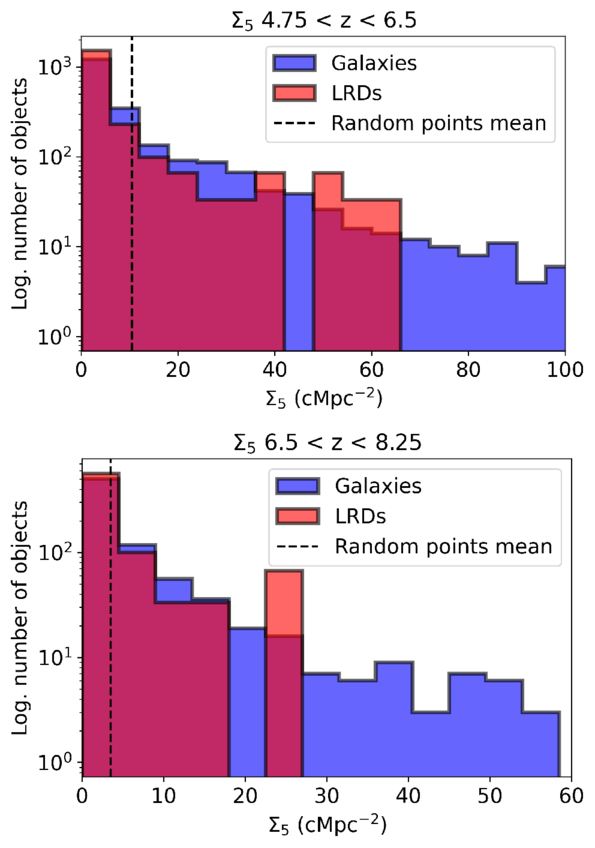
Histograms for two redshift windows showing that little red dots (red) tend to be found in less dense environments than other galaxies (blue) in the same redshift window. Click to enlarge. [Carranza-Escudero et al 2025]
Lonely Neighborhoods
In addition to characterizing little red dots’ emission, the authors analyzed the local environments to compare to other galaxies at similar redshifts. From their analysis, they found that little red dots tend to be found in sparser environments, generally isolated from other galaxies. One explanation for this could be that little red dots in higher-density environments evolve past this peculiar stage faster, which is supported by observations of high-density environments accelerating the evolution of other galaxy types at similar redshifts. However, further investigation is required to better understand the connection between the local environment and little red dot properties.
More little red dots are yet to be discovered, and continued analysis of their emission and environments will uncover more intriguing characteristics. For now, it seems as though little red dots are still a mystery.
Citation
“Lonely Little Red Dots: Challenges to the Active Galactic Nucleus Nature of Little Red Dots through Their Clustering and Spectral Energy Distributions,” María Carranza-Escudero et al 2025 ApJL 989 L50. doi:10.3847/2041-8213/adf73d
The post All Alone With No AGN to Call Home? New Results for Little Red Dots appeared first on AAS Nova.
]]>The post Bullet Shooting Cloud–Cloud Collision in MIR Bubble N65 appeared first on AAS Nova.
]]>The twin-bubble system of N65 and N65b exhibits tell-tale signs of cloud–cloud collision: a bridge, a U-shaped cavity, and a complementary distribution with displacement.
The post Bullet Shooting Cloud–Cloud Collision in MIR Bubble N65 appeared first on AAS Nova.
]]>The post Nonlinear and Non-Monotonic Effect of Ocean Tidal Mixing on Exoplanet Climates and Habitability appeared first on AAS Nova.
]]>Tidal mixing may play an important role in exoplanetary habitability, especially for planets orbiting close to low-mass stars; tidal mixing equal to 100 times that of Earth’s oceans may be a sweet spot.
The post Nonlinear and Non-Monotonic Effect of Ocean Tidal Mixing on Exoplanet Climates and Habitability appeared first on AAS Nova.
]]>
Rings and gaps in TWA 7's debris disk suggested a planet might be lurking nearby. JWST observations may have revealed the hidden world.
The post A Dusty Disk Points to a Potential Planet appeared first on AAS Nova.
]]>JWST observations of a nearby star’s debris disk recently revealed what may be one of the lowest-mass planets ever imaged.
How to Find a Small Planet
Though it remains a formidable technical challenge, astronomers have gotten fairly good at taking images of planets around other stars by carefully blocking the light of the host and searching for the small points of light that remain. However, though this technique is well-suited for discovering large, bright, high-mass planets, their lower-mass cousins below the size of Jupiter remain challenging to detect. To get pictures of these smaller worlds, astronomers must resort to detective work and search for signs of their presence through indirect means.
One promising approach is to look not for the planet itself, but rather its effect on the dusty disk of material around the star. These structures, called debris disks, are constantly replenished by planetesimals colliding and grinding one another to dust. If a planet happens to orbit within this disk, it will “stir” the dust into distinctive patterns including rings and spiral arms. If astronomers observe that a star has a debris disk with gaps or spirals, they can analyze those substructures and deduce where a planet might be hiding.
The Star of this Show: TWA 7

A mid-infrared image of TWA 7’s debris disk and candidate planet. [ESA/Webb, NASA, CSA, A.M. Lagrange, M. Zamani (ESA/Webb); CC BY 4.0]
This prediction led to a search with JWST last summer. Initial observations taken at mid-infrared wavelengths revealed a bright dot sitting near the predicted location of the planet. However, with just these observations, it was hard to confidently say that this source wasn’t just a distant background galaxy that happened to appear there by chance. To help settle the matter, JWST took another look in two different near-infrared wavelength bands a few weeks later.
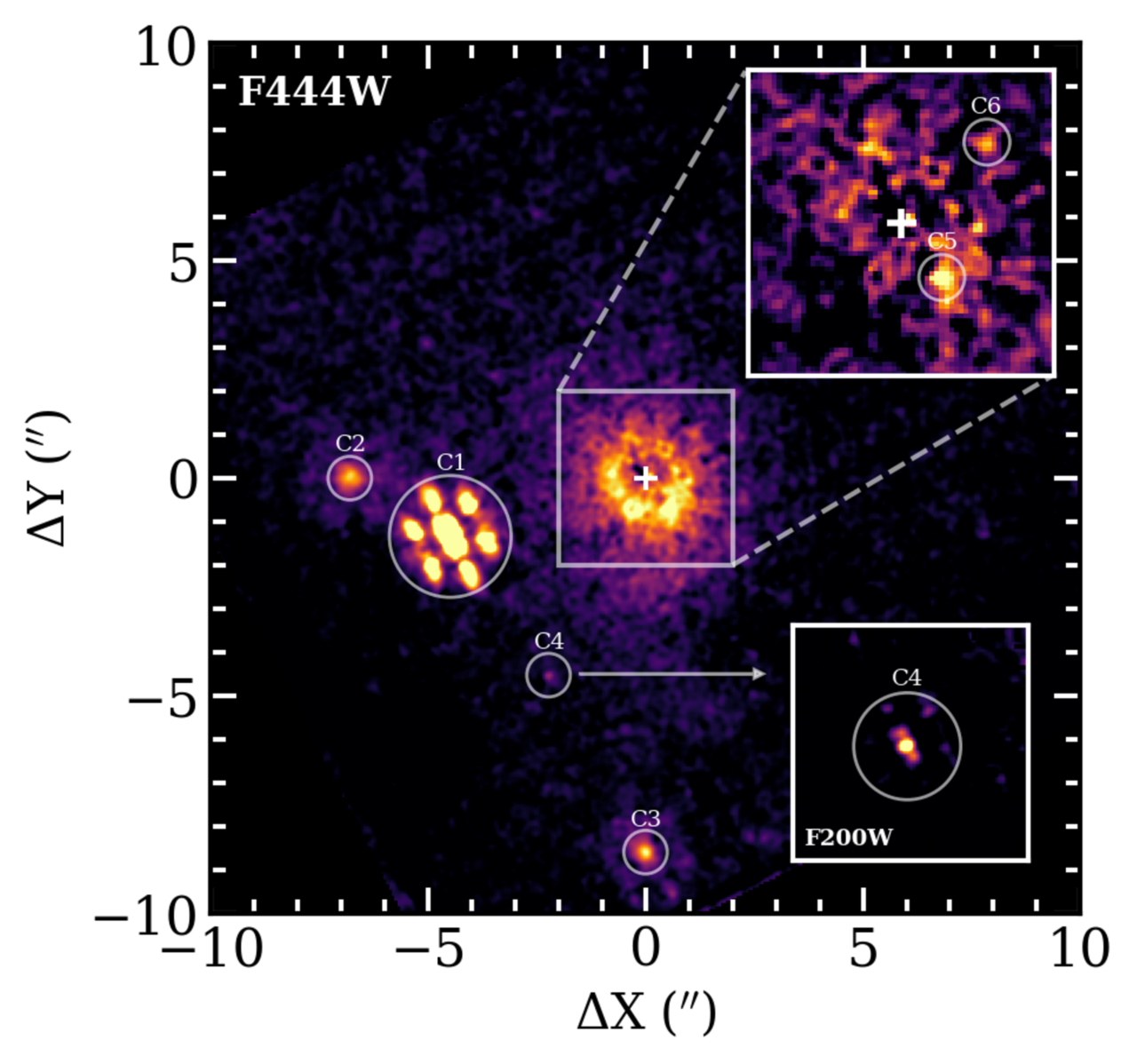
New JWST observations of TWA 7. The sources labeled C5 and C6 are planet candidates. C6 is located at the same place as the planet candidate identified in mid-infrared observations, making it a strong candidate. C5 requires further observations to understand if it is real or an artifact. Click to enlarge. [Crotts et al. 2025]
Revisiting TWA 7
A team led by Katie Crotts (Space Telescope Science Institute) recently published these later observations. These new data show a dot in the exact same place as before, and with a color that’s much more planet-like than galaxy-like.
While this adds plenty of evidence to the planetary interpretation, the team cautions that one more set of follow-up observations is needed to be confident that this is, in fact, a planet. Assuming future observations back up these first hints, however, this would be the lowest-mass planet ever imaged, and a happy conclusion to a detective story that started with dust.
Citation
“Follow-Up Exploration of the TWA 7 Planet–Disk System with JWST NIRCam,” Katie Crotts et al 2025 ApJL 987 L41. doi:10.3847/2041-8213/ade798
The post A Dusty Disk Points to a Potential Planet appeared first on AAS Nova.
]]>The post Polar Circumtriple Planets and Disks Around Misaligned Hierarchical Triple Stars appeared first on AAS Nova.
]]>Computer simulations reveal the dynamics of planets and gas disks orbiting three-star systems, especially as pertains to planets and disks arranged in a polar rather than equatorial orbit.
The post Polar Circumtriple Planets and Disks Around Misaligned Hierarchical Triple Stars appeared first on AAS Nova.
]]>The post The Milky Way as Seen by Classical Cepheids. I. Distances Based on Mid-Infrared Photometry appeared first on AAS Nova.
]]>Using data from the Wide-field Infrared Survey Explorer, researchers have devised a minimally extincted way to map and measure distances within the Milky Way using Cepheid variable stars.
The post The Milky Way as Seen by Classical Cepheids. I. Distances Based on Mid-Infrared Photometry appeared first on AAS Nova.
]]>The post Producing Dust Through Simulated Glacial Abrasion of Basalt Clasts with Implications for Mars appeared first on AAS Nova.
]]>If Mars’s dust was produced via rock-on-rock grinding of basalt, as may happen at the base of a glacier, the fine dust created this way would have influenced the red planet’s climate.
The post Producing Dust Through Simulated Glacial Abrasion of Basalt Clasts with Implications for Mars appeared first on AAS Nova.
]]>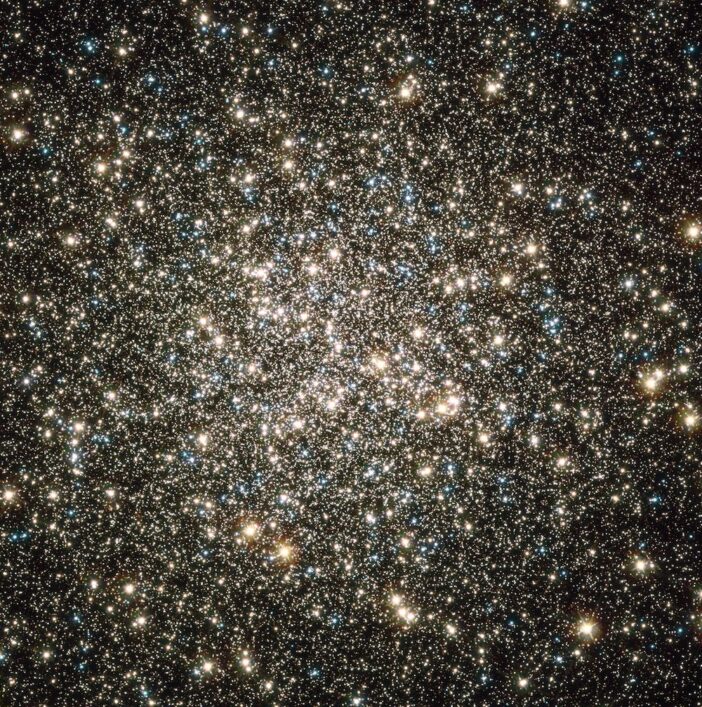
Astrobites reports on how we might be able to observe gravitational wave signals from intermediate-mass black holes in binary systems with stellar-mass black holes.
The post From Globs to Gravitational Waves: A Simulated Cosmic Choreography appeared first on AAS Nova.
]]>Editor’s Note: Astrobites is a graduate-student-run organization that digests astrophysical literature for undergraduate students. As part of the partnership between the AAS and astrobites, we occasionally repost astrobites content here at AAS Nova. We hope you enjoy this post from astrobites; the original can be viewed at astrobites.org.
Title: Formation and Evolution of Compact Binaries Containing Intermediate-Mass Black Holes in Dense Star Clusters
Authors: Seungjae Lee et al.
First Author’s Institution: Seoul National University
Status: Published in ApJ
A delicate dance goes on in astronomy between theory and observation. Most astronomy research, by and large, fits into one of two categories. In one category, you start with a theory, model, or simulation, and attempt to figure out what observations you might expect given those initial assumptions. The other approach begins with raw data and attempts to determine what kinds of theories, models, and fundamental astrophysical assumptions might give rise to it. Accepted knowledge usually happens when these two approaches agree and reinforce each other, but a lot of the actual science occurs when one side dances ahead of the other — either we have theories and models that make predictions that cannot yet be observationally tested, or we have data that defy attempts at fitting underlying models.
Another dynamical dance goes on in globular clusters between binary black holes. Today’s article investigates intermediate-mass black holes, or IMBHs, a pristine example of an astronomical topic in which theory has danced ahead of observations. IMBHs fill the gap between stellar mass and supermassive black holes. We can observe black holes in multiple ways, usually from the electromagnetic radiation of the gas disks surrounding some black holes (either stellar or supermassive), or the gravitational waves of two orbiting or merging black holes. Unfortunately, each method requires some extra component — either gas to accrete or a companion to orbit — and IMBHs are far more challenging to observe through these methods. Hence, we have a lot of ideas about how they might form, and scarce observational evidence for their existence.
That hasn’t stopped many researchers from trying to make better models and predictions. One of the most commonly proposed mechanisms for forming IMBHs is in dense globular or nuclear star clusters (up to a million times denser than our region of the Milky Way). In these dense environments, stars and the black holes they produce might have a chance to find and run into each other often enough to reach the masses of the IMBH regime through mergers. Today’s authors use a series of N-body simulations to study these dense stellar clusters, into which they embed IMBHs. Their study investigates the detectability of gravitational waves from intermediate-mass-ratio inspirals (IMRIs). Because so many mergers occur in dense clusters, it allows for more mergers between objects with greater mass differences. The mass ratio between the two objects (usually denoted as ‘q’) is one of the most important parameters for characterizing a merger, and a high q value creates a gravitational wave signature that is different from a low q, even if the total mass of the system is the same.
To investigate the formation and detectability of IMRIs, the authors conducted a suite of direct N-body simulations of star clusters with total masses between 5×10⁴ and 105 solar masses, containing ~105 particles. They include initial conditions for how densely packed the particles should be, given how far they are from the cluster’s center (called a Plummer profile). They also include a rule for how the initial masses of the stars are distributed (called a Kroupa initial mass function). Then, they use a code called Stellar EVolution for N-body (SEVN) to follow the evolution of the stars in the system for 100 million years.
In that time, massive stars in the simulation can evolve into neutron stars and stellar-mass black holes. In addition to simulating the clusters’ stars, the authors embed an IMBH of 300–5,000 solar masses into the clusters. The key to this article is that some of the stellar-mass binary black holes will interact with the IMBH, creating an IMRI, which gives off gravitational waves. This article’s primary goal is to characterize these IMRIs and to test how well current and future gravitational wave detectors will measure them.
In the simulation, when a stellar-mass binary black hole and an IMBH come close, the authors must create a “merger criterion” — essentially, how it is decided whether the two objects merge, and what the subsequent “gravitational wave” would look like. Once they model the wave itself, they turn to five current or future detectors to see how well they will measure those waves if they were at particular astronomical distances from Earth.
One of the primary relationships the authors look at in the cluster is the half-mass radius velocity dispersion of the cluster and the number of IMRI encounters between the IMBH and stellar-mass objects. One can think of the velocity dispersion as a more complicated “average velocity” of the stars in the cluster (a high velocity dispersion means, on average, the stars are moving faster, the half-mass radius is the distance from center that separates the inner half of the stars and outer half of the stars, and we use it because it is more representative of stellar motion in the overall cluster than the packed center or the mellow edge). Figure 1 shows the relationship between the number of IMRI events (y-axis) vs. the velocity dispersion (x-axis) of the cluster where the IMBH sits. Note that the y-axis is logarithmic, so a small increase in velocity dispersion actually results in a large increase in the number of IMRIs. This tells us that the number of events is much more dependent on the properties of the larger cluster than the IMBH itself.
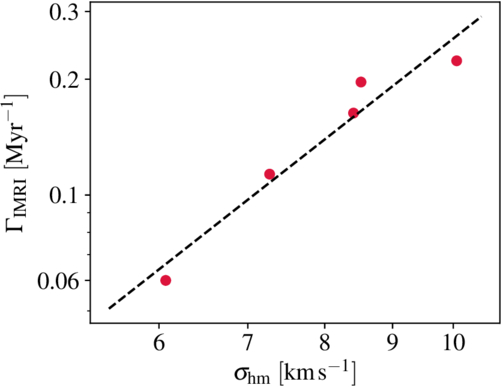
Figure 1: IMRI event rate as a function of cluster half-mass velocity dispersion (σhm) for 1,000-solar-mass IMBHs in the simulations. The IMRI merger rate is highly sensitive to the velocity dispersion of the cluster as a whole, making it a key observable of how efficiently IMRIs can form and merge in a given cluster. [Lee et al. 2025]
How do the authors translate the gravitational wave signal from the IMRI into what might be observed on Earth? First, they must pick a signal-to-noise ratio threshold, which is the ratio of the gravitational wave signal to the background noise in the detector. In this case, they chose a signal-to-noise ratio of 8, a commonly chosen threshold in the gravitational wave literature. From the signal-to-noise ratio, the authors can calculate a horizon distance. The horizon distance is the distance that a detector can measure a specific gravitational wave event with a given set of properties at or above the threshold chosen. Figure 2 shows the horizon distances (y-axis) for each detector for sets of gravitational wave sources with different properties vs. the mass of the IMBH generating the gravitational wave (x-axis). The solid and dotted lines represent two chosen masses of the IMBH’s stellar-mass companion. The figure shows that aLIGO (blue circles) can detect only low-mass IMBHs (≲ 300 solar masses) at a redshift of z ≲ 0.05. ET (red triangles) is sensitive to lower-mass IMBHs, and LISA (green diamonds) excels at detecting higher-mass IMBHs. aSORGO (purple triangles) covers a broad mass range but at lower redshifts. DECIGO (yellow Xs) offers the broadest mass range at the highest redshift.
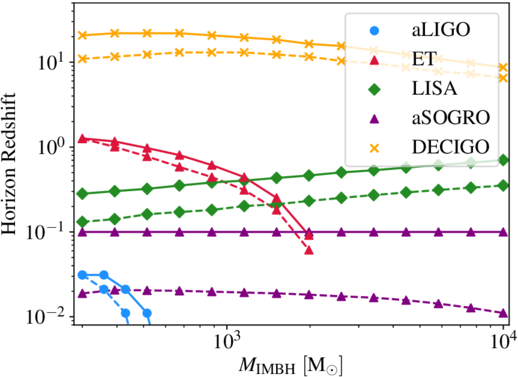
Figure 2: Horizon redshift vs. IMBH mass for several gravitational wave observatories (aLIGo represented by blue circles, ET by red triangles, LISA by green diamonds, aSOGRO by purple triangles, and DECIGO by yellow x‘s). Solid vs. dotted lines represent the mass of the stellar-mass black hole interacting with the IMBH, with the dashed line representing a 10-solar-mass companion and the solid lines representing a 60-solar-mass companion. [Lee et al. 2025]
Original astrobite edited by Kasper Zoellner.
About the author, William Smith:
Bill is a graduate student in the astrophysics program at Vanderbilt University. He studies gravitational wave populations with a focus on how these populations can help inform cosmology as part of the LIGO Scientific Collaboration. Outside of astrophysics, he also enjoys swimming semi-competitively, music and dancing, cooking, and making the academy a better place for people to live and work.
The post From Globs to Gravitational Waves: A Simulated Cosmic Choreography appeared first on AAS Nova.
]]>The post TOI-6324 b: An Earth-Mass Ultra-Short-Period Planet Transiting a Nearby M Dwarf appeared first on AAS Nova.
]]>Now confirmed, TOI-6324b is an ultra-short-period planet with a mass and estimated core fraction similar to Earth; JWST could reveal its surface mineralogy and possible tidal deformation.
The post TOI-6324 b: An Earth-Mass Ultra-Short-Period Planet Transiting a Nearby M Dwarf appeared first on AAS Nova.
]]>
An incredible beacon from the first billion years of the universe, Earendel has been touted as the most distant single star ever seen — but it might not be a single star at all.
The post Examining Earendel: Is the Most Distant Lensed Star Actually a Cluster? appeared first on AAS Nova.
]]>What’s the nature of the distant source Earendel, which appears as a point of light in a dramatically gravitationally lensed galaxy?
Record-Breaking Discovery
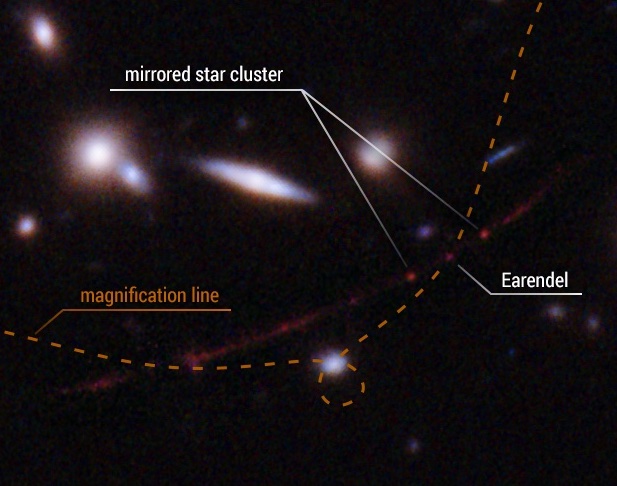
Hubble image zooming in on the Sunrise Arc and Earendel. The two images of the mirrored star cluster are called 1a and 1b. [NASA, ESA, Brian Welch (JHU), Dan Coe (STScI); Image Processing: Alyssa Pagan (STScI)]
But there’s a catch — at the distances involved, distinguishing between one star and many isn’t easy, and Earendel might not actually be just one star. New research uses stellar population modeling to explore the possibility that what has been touted as a single star is really a cluster.
The Light of Earendel, Our Most Beloved Star… Cluster?
The question sounds simple: does the light from Earendel resemble that of one star, or does it more closely align with the emission from a collection of many stars? What complicates matters is that Earendel’s light has been warped and magnified by an intervening galaxy cluster in a process called gravitational lensing. Because the degree of magnification isn’t known precisely, it’s not clear exactly how large the source is — leaving wiggle room for Earendel to be one or many stars.
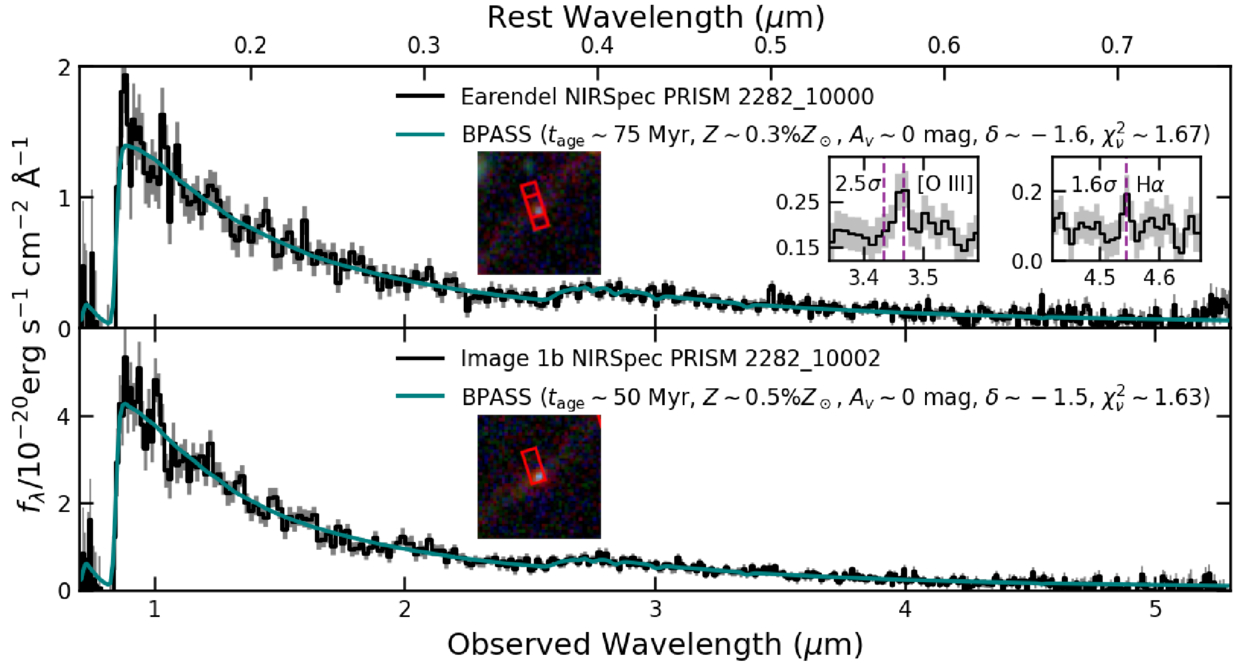
JWST spectra of Earendel (top) and 1b (bottom), along with the best-fitting models. Click to enlarge. [Pascale et al. 2025]
Both Earendel and 1b were well fit by all three stellar population models, supporting the hypothesis that Earendel is a cluster. Earendel and 1b share certain similarities, such as metallicity (less than 10% of the Sun’s), stellar surface density (high, rivaling the maximum density seen in the local universe), and age (more than 30 million years old).
Cluster Comparison
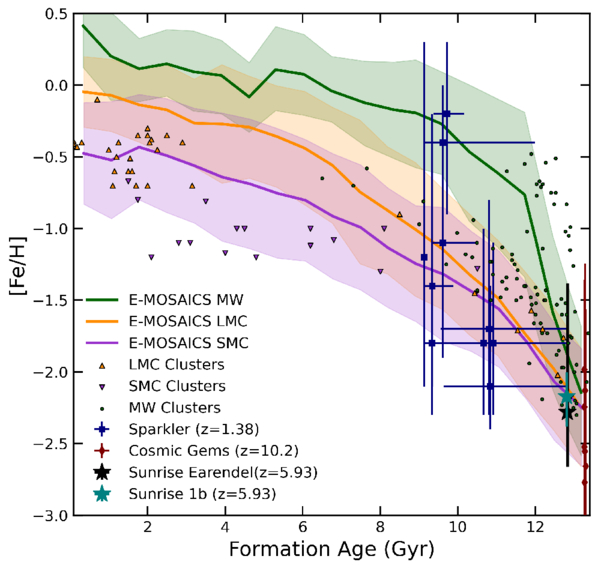
Metallicity and formation age of star clusters in the local universe, in the Milky Way and Magellanic Clouds, and at high redshifts. Click to enlarge. [Pascale et al. 2025]
While this work demonstrates that Earendel could be a cluster, it doesn’t prove that it is. Doing so is challenging, especially since certain features predicted to exist for a single star might be beyond our observational capabilities, or they could be reproduced by clusters with certain properties. The authors pointed to one smoking-gun signal for Earendel being a single, massive star: brightness fluctuations due to microlensing by stellar winds. So far, no such variability has been found, and the cluster hypothesis remains viable.
Citation
“Is Earendel a Star Cluster?: Metal-Poor Globular Cluster Progenitors at z ∼ 6,” Massimo Pascale et al 2025 ApJL 988 L76. doi:10.3847/2041-8213/aded93
The post Examining Earendel: Is the Most Distant Lensed Star Actually a Cluster? appeared first on AAS Nova.
]]>The post Virgo Filaments. V. Disrupting the Baryon Cycle in the NGC 5364 Galaxy Group appeared first on AAS Nova.
]]>A narrowband imaging survey of more than 600 galaxies has demonstrated that tidal interactions, ram pressure stripping, and starvation are at play for galaxies situated within a filament environment.
The post Virgo Filaments. V. Disrupting the Baryon Cycle in the NGC 5364 Galaxy Group appeared first on AAS Nova.
]]>The post The Cosmic Evolution Early Release Science Survey (CEERS) appeared first on AAS Nova.
]]>A survey overview and science highlights are presented for CEERS, which has contributed significantly to JWST’s “First Light” and “Galaxy Assembly” core science drivers.
The post The Cosmic Evolution Early Release Science Survey (CEERS) appeared first on AAS Nova.
]]>
Astrobites reports on the three galactic suspects in the case of an ultra-high-energy neutrino.
The post Ultra-High-Energy Neutrino Emission on the Extragalactic Express: A Mystery appeared first on AAS Nova.
]]>Editor’s Note: Astrobites is a graduate-student-run organization that digests astrophysical literature for undergraduate students. As part of the partnership between the AAS and astrobites, we occasionally repost astrobites content here at AAS Nova. We hope you enjoy this post from astrobites; the original can be viewed at astrobites.org.
Title: ASKAP and VLASS Search for a Radio-Continuum Counterpart of Ultra-High-Energy Neutrino Event KM3–230213A
Authors: M. D. Filipović et al.
First Author’s Institution: Western Sydney University
Status: Published in ApJL
The Scene of the Crime
On Galentine’s Day this year, an ultra-high-energy neutrino attempted to sneak through the Mediterranean Sea, likely expecting she wouldn’t be caught. The odds were in her favor; neutrinos, ghostly particles with no electric charge and infinitesimal mass, only very rarely interact with matter. However, what she failed to account for was the awaiting undersea neutrino detector, KM3NeT, and the clever lepton within who would finally notice her. She slammed into the lepton, spewing charged particles everywhere at speeds greater than the speed of light in the water. While no particle can outrun a photon in a vacuum, water slows light down, giving us the familiar effect of refraction; similar to supersonic jets creating a boom when they break the sound barrier, these charged particles produced a distinctive blue light, known as Cherenkov light, exposing the neutrino’s position to astronomers and physicists everywhere. Busted.
The Investigation Begins
However, the neutrino was only the messenger; of even more interest is the astrophysical object that produced her. It’s not easy to generate such a high-energy particle, and no one can create a neutrino from thermal emission alone, indicating that wherever she originated, something extreme was going on. To date, only three astrophysical sources have been caught emitting neutrinos at all, and none of them are extragalactic: the Sun, although this is old news (in the 1960s, detections of solar neutrinos showed definitively that the Sun is powered by nuclear fusion, resolving the issue of how the Sun has burned long enough for life to evolve on Earth); the nearest core-collapse supernova to our galaxy in modern times, SN 1987A; and the galactic plane.
Theoretical models predict a much wider variety of objects, including extragalactic sources, to produce neutrinos, usually via cosmic-ray production: supernova remnants, star-forming galaxies, gamma-ray bursts, supermassive black holes (which are found at the centers of most galaxies), active galactic nuclei (a particularly fussy subset of supermassive black holes that are eating their host galaxies), and blazars (an extreme subset of active galactic nuclei that emit jets of radio light directly at Earth). The reason we have not detected their predicted neutrino emission is that neutrino astronomy is a new field, extragalactic sources are super far away, and neutrinos are both difficult to detect and difficult to trace back to their origin.
Rounding Up Suspects
With this in mind, today’s authors embark on a quest to catch the culprit, starting in the radio band. Radio emission, like neutrino emission, is usually an indicator of non-thermal radiative processes, and one such process, synchrotron radiation (emitted by relativistic electrons getting spun around in powerful magnetic fields), can be distinguished from other types of radiation based on its radio characteristics. Conveniently, the region our neutrino hails from is spanned by multiple radio surveys conducted with the Very Large Array (VLA) and the Australian Sub-Kilometer Compact Array Pathfinder (ASKAP), and so our authors use these surveys to round up all the radio riffraff. Unfortunately, the long wavelengths of radio photons and the scarcity of neutrinos result in reduced resolution for both compared to traditional optical telescopes, and our authors find over a thousand radio emitters in the region. Of course, no one can question that many sources, so our authors limit their investigation to objects with at least two radio brightness measurements, which can be used to calculate the brightness as a function of radio wavelength (the spectral energy distribution, which tells us about what type of radiation we see) and/or as a function of time (a light curve, which tells us if our source is variable). Our authors settle on a lineup of 10 likely blazars, any of whom could have emitted our ultra-high-energy neutrino, as well as a shortlist of prime suspects warranting further investigation: Phaedra, a spiral galaxy; Hebe, a radio galaxy; and Narcissus, an unusual compact radio emitter (see Figure 1).
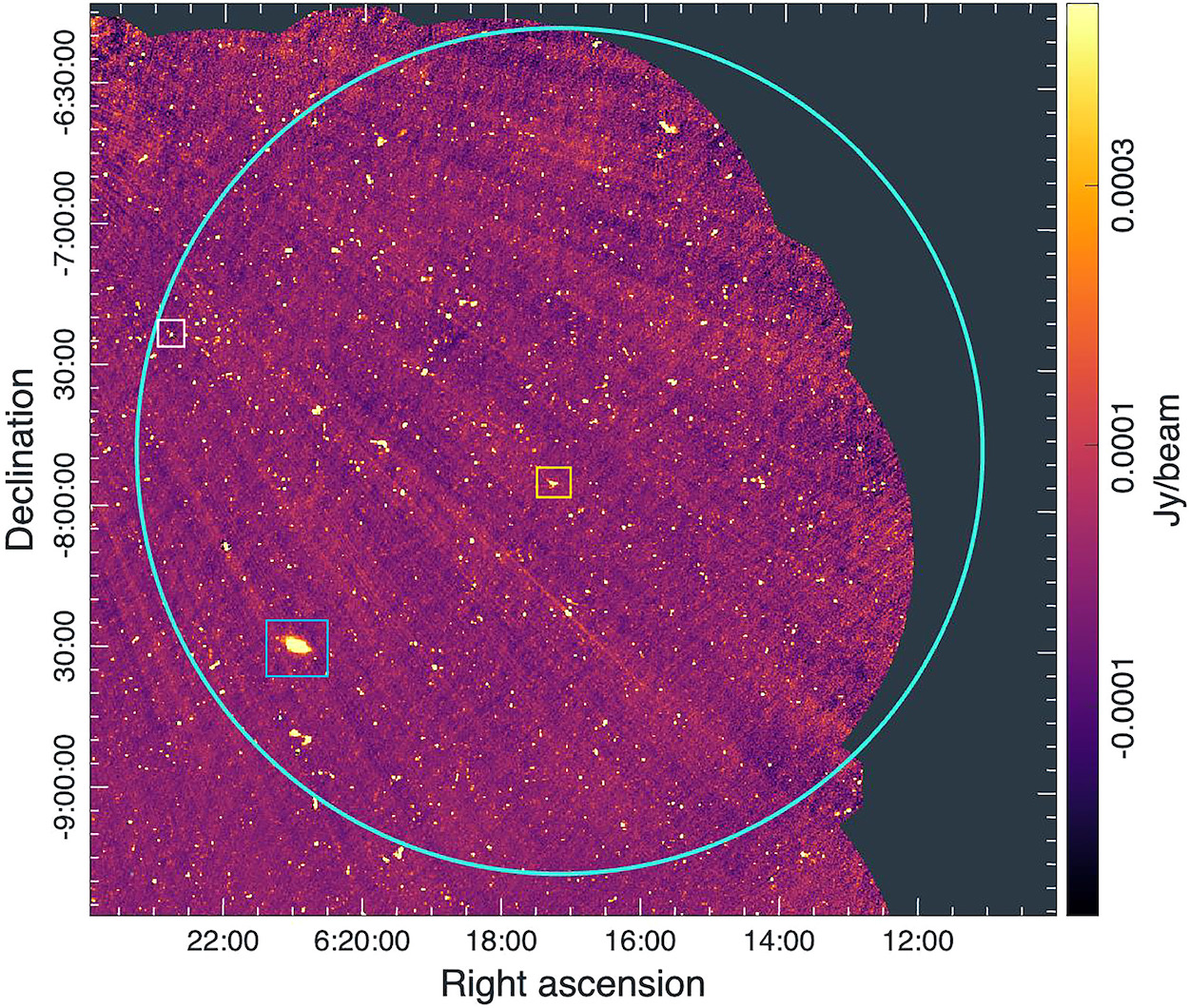
Figure 1: Radio emission detected by ASKAP in the region of the sky in which the neutrino originated. Every yellow dot should be considered suspect, but the three colored squares identify the primary guilty parties: Phaedra (in blue), Hebe (in yellow), and Narcissus (in pink). [Filipović et al. 2025]
Phaedra: A Spiral Galaxy with a Secret?
Phaedra (Figure 2), the most radio-luminous in the area, exhibits plenty of behavior typical of a galaxy guilty of neutrino emission. For starters, she has two regions of highly concentrated radio emission, and these regions are offset from her center, making them look suspiciously like active galactic nucleus jets, which are excellent particle accelerators. Furthermore, infrared observations suggest she is a starburst galaxy, churning out stars faster than a bestselling author with a team of ghostwriters churns out books. This intense star formation could have easily been triggered by jet activity. Even more suspiciously, she is closely associated with an X-ray binary, and where there are high-energy photons, there are likely to be other high-energy particles like neutrinos and cosmic rays. Phaedra’s prospects of beating the neutrino emission allegations are not looking good; these high-energy phenomena produce buckets of high-energy particles, and even if they produce only cosmic rays, the cosmic rays are bound to crash into the surrounding dense gas and photons, creating neutrinos anyway.
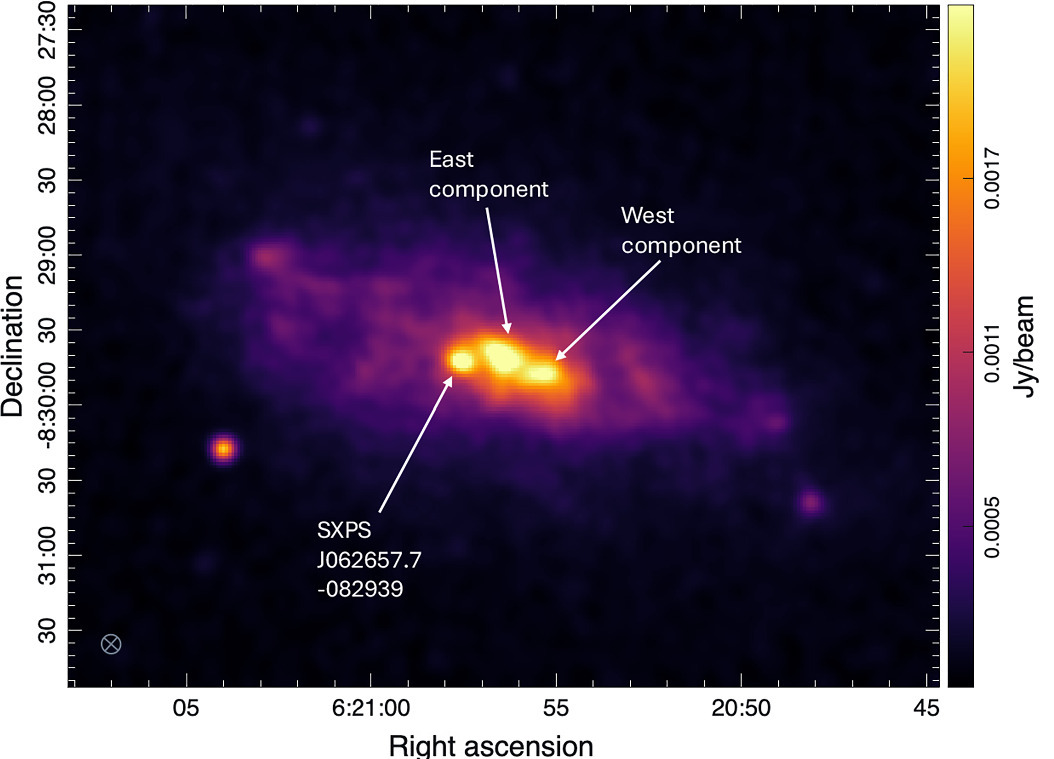
Figure 2: Radio image of Phaedra, one of our suspects. The east and west components are the likely radio jets, and the third bright blob is the radio counterpart to the X-ray binary, SXPS J062657.7-082939. [Adapted from Filipović et al. 2025]
Hebe: A Simple Radio Galaxy, or Something More?
Hebe (Figure 3), the nearest extended radio source, isn’t exactly innocent-looking either. She is one of a triplet of galaxies sharing a common envelope, like peas in an extragalactic pod. Galaxies, unlike peas, however, are so massive that they can’t help but interact dynamically in such close quarters, causing a commotion that could totally produce ultra-high-energy neutrinos. She likely also has an active galactic nucleus jet, giving her the same neutrino-wielding powers as Phaedra.
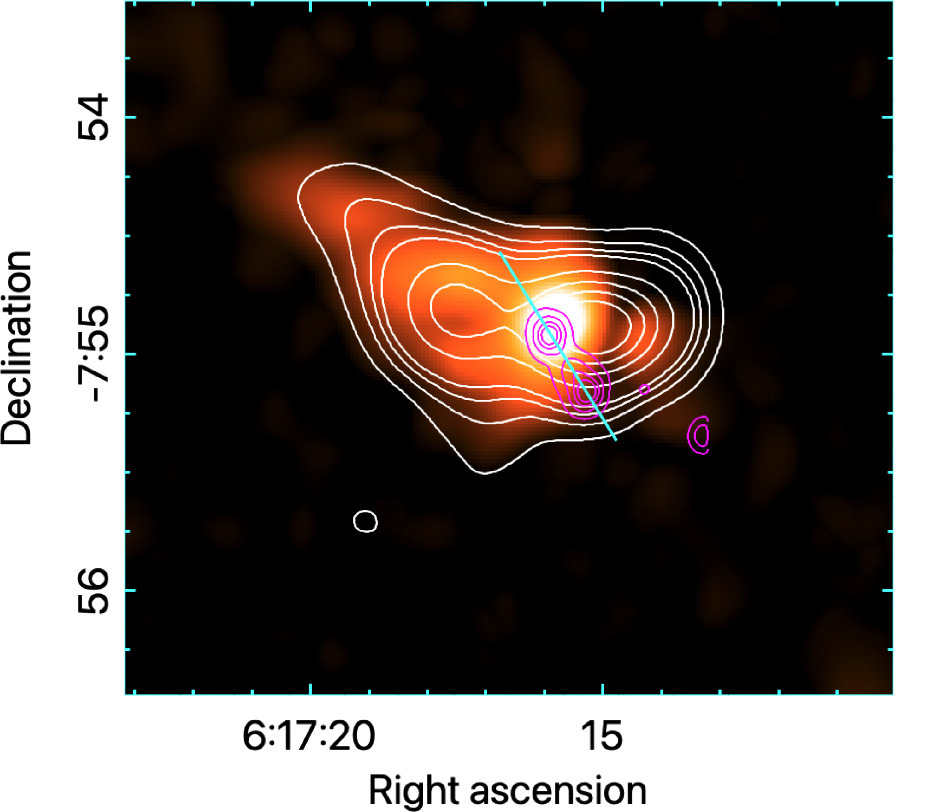
Figure 3: An infrared image of Hebe that clearly shows the common envelope surrounding the triplets. The white contour lines denote levels of polarized intensity, which indicate the presence of a magnetic field. [Adapted from Filipović et al. 2025]
Narcissus: Double Active Galactic Nucleus?
Our final suspect, Narcissus (Figure 4), consists of not one, but two active galactic nuclei. One appears to exhibit the classic synchrotron spectral energy distribution, and the other is likely a blazar, based on his notable radio variability and infrared observations.
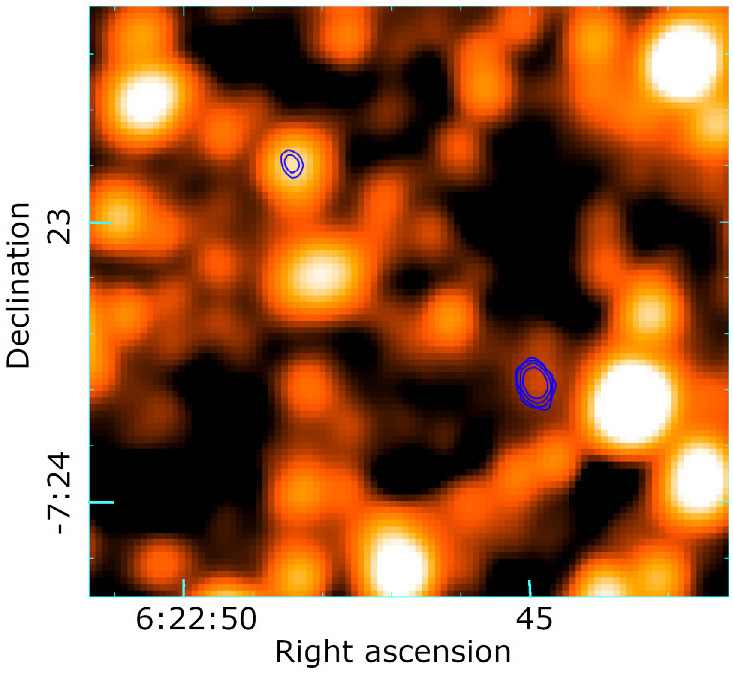
Figure 4: Infrared image of Narcissus, with the purple contours outlining the two radio sources that are likely active galactic nuclei. [Adapted from Filipović et al. 2025]
Solving the Mystery
So, who really emitted the ultra-high-energy neutrino? For now, our authors can’t jump to any firm conclusions — they’d never risk condemning an innocent galaxy — but they will continue to closely monitor the suspects and gather more evidence. In the meantime, Phaedra, Hebe, and Narcissus should find themselves a good defense attorney experienced in neutrino emission cases.
Original astrobite edited by Sandy Chiu.
About the author, Chloe Klare:
I’m a PhD student in astronomy and astrophysics at Penn State (with a physics minor, so I get to use my semester spent in QFT for something!). I study active galactic nuclei (in the radio!), and I’m currently looking for baby synchrotron jets in active galactic nuclei.
The post Ultra-High-Energy Neutrino Emission on the Extragalactic Express: A Mystery appeared first on AAS Nova.
]]>The post Deep Synoptic Array Science: A 50 Mpc Fast Radio Burst Constrains the Mass of the Milky Way Circumgalactic Medium appeared first on AAS Nova.
]]>The upper limit on the dispersion measure calculated for a fast radio burst implies that the Milky Way’s circumgalactic medium contains less that 100 billion solar masses of material.
The post Deep Synoptic Array Science: A 50 Mpc Fast Radio Burst Constrains the Mass of the Milky Way Circumgalactic Medium appeared first on AAS Nova.
]]>
JWST provides new evidence that one of our nearest neighbor stars, Alpha Centauri A, might host a giant planet in its habitable zone.
The post Potential Discovery of a World Next Door appeared first on AAS Nova.
]]>By pushing JWST to its limits, astronomers may have just spotted a planet around the nearest Sun-like star, Alpha Centauri A. Though another look at the star is needed next year to confirm the finding, if the detection holds up, this discovery easily earns several superlatives: the planet would be the nearest, oldest, coldest, and lowest-mass world ever directly imaged beyond our solar system.
Hi, Neighbor!
The scale of our Milky Way galaxy is hard to comprehend with our Earth-bound minds that are more attuned to measuring distances in miles than in light-years. However, even though our suburban stellar neighborhood is tens of thousands of light-years from the galactic downtown, it is not empty: there are a handful of nearby systems that offer unique opportunities to study stars and their potential planet children “up close.”
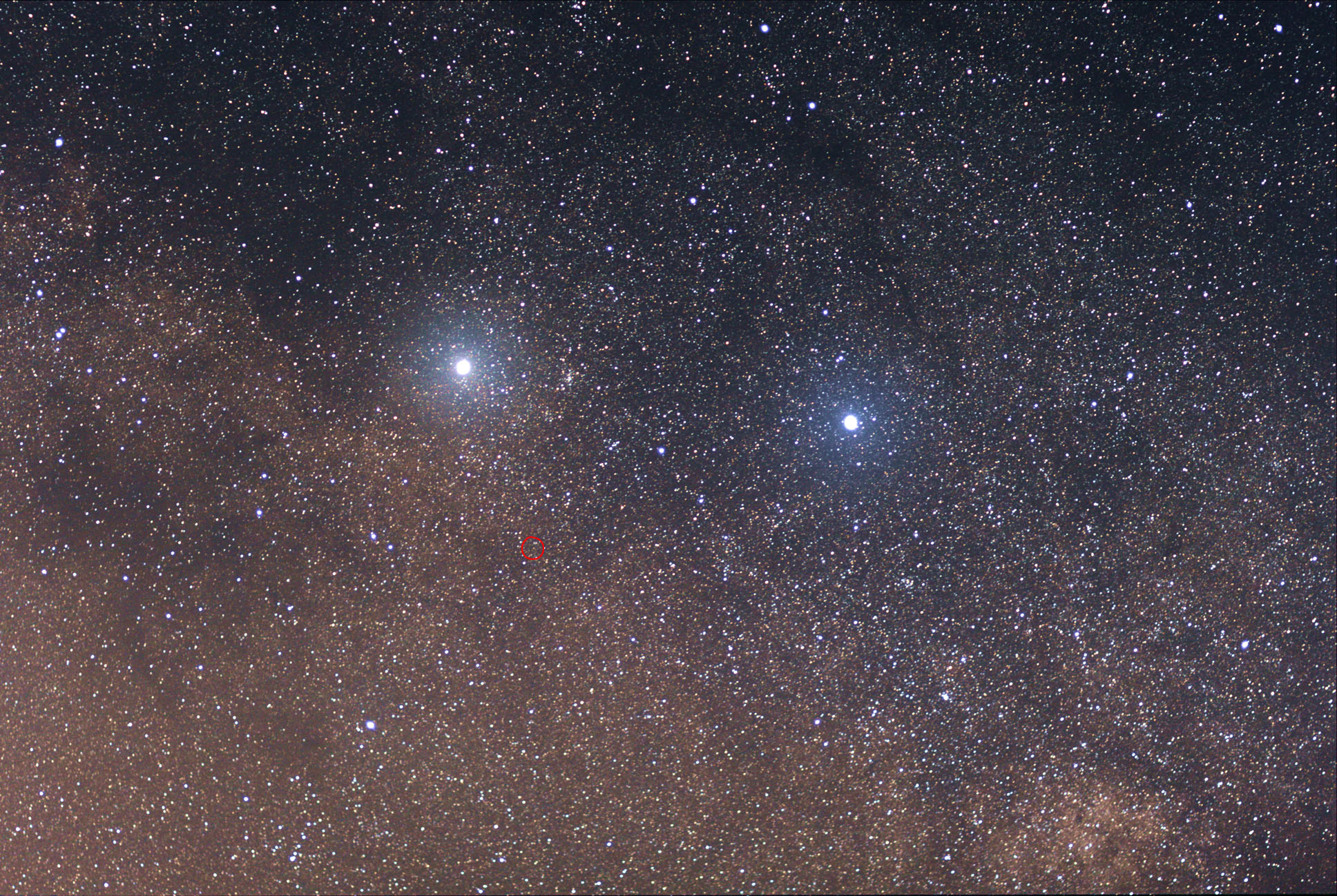
Alpha Centauri A and B (bright stars), along with Proxima Centauri, circled in red. [Wikipedia; CC BY-SA 3.0]

Though Proxima Centauri is the most famous of the trio, since it’s technically the closest star to the Sun, its larger siblings are arguably better targets for searching for planets. Since these stars are more massive, their habitable zones are large enough that astronomers can block out the star itself and search the surrounding area for planets using a tool called a coronagraph.
Challenging Observations
Back in 2019, a team of astronomers using a coronagraph on the Very Large Telescope uncovered tantalizing evidence of a giant planet orbiting Alpha Centauri A. However, confirming or rejecting this initial peek using telescopes on Earth’s surface was challenging. When JWST finally launched in 2021, following up on this hint was a top priority. Astronomers first attempted to point JWST toward the Alpha Centauri system in 2023, but unfortunately, the observations from that attempt were unusable.
Though one might think aiming a telescope at a nearby star is easier than taking a look at something more distant, this is unfortunately not the case. For one thing, the stars of the Alpha Centauri system are bright enough to overwhelm JWST’s sensitive detectors without careful calibration. For another, keeping the telescope locked on target and the star behind the coronagraph requires continuous tweaks to account for the Sun’s motion relative to Alpha Centauri, JWST’s motion relative to the Sun, and Alpha Centauri A’s motion relative to Alpha Centauri B. The team regrouped, tested a new observing strategy in mid-2024, then took three long observations in August 2024, February 2025, and April 2025.
A Planet Candidate

JWST coronagraph image of the Alpha Centauri system. Alpha Centauri B is the bright labeled star at the top, while Alpha Centauri A is labeled but hidden behind the coronagraph. The inset shows the region around Alpha Centauri A during the three different observations. The planet candidate, labeled S1, is only visible in the August 2024 observation. Click to enlarge. [Beichman & Sanghi et al. 2025]
The authors estimated that the source is a 1–1.1 Jupiter radius planet with a mass of 90–150 Earth masses (0.28–0.47 Jupiter mass) on a 2–3-year orbit. The team stressed that with just one detection, this should still be regarded as a planet candidate, not a confirmed discovery. If the planet is eventually verified, however, it stands out among its peers as the first mature, cold planet ever imaged within its star’s habitable zone. Future detectors may be able to collect spectra of the planet itself, unlocking new insights into giant planet evolution and composition in multiple-star systems with nested orbits, like the Alpha Centauri system.
Now that JWST has a proven strategy for observing this challenging system, it should be possible to take follow-up images. If the planet is real and traveling on its expected orbit, it should reappear beside Alpha Centauri A in August 2026. Hopefully, JWST will be looking when it does, and we can finally confirm that we have a planetary neighbor next door.
Citation
“Worlds Next Door: A Candidate Giant Planet Imaged in the Habitable Zone of α Cen A. I. Observations, Orbital and Physical Properties, and Exozodi Upper Limits,” Charles Beichman et al 2025 ApJL 989 L22. doi:10.3847/2041-8213/adf53f
“Worlds Next Door: A Candidate Giant Planet Imaged in the Habitable Zone of α Cen A. II. Binary Star Modeling, Planet and Exozodi Search, and Sensitivity Analysis,” Aniket Sanghi et al 2025 ApJL 989 L23. doi:10.3847/2041-8213/adf53e
The post Potential Discovery of a World Next Door appeared first on AAS Nova.
]]>The post Effects of the 2018 Martian Global Dust Storm on Boundary Positions in the Induced Magnetosphere appeared first on AAS Nova.
]]>Global dust storms on Mars increase the variability in the location of the bow shock and induced magnetospheric boundary, even after storm has subsided.
The post Effects of the 2018 Martian Global Dust Storm on Boundary Positions in the Induced Magnetosphere appeared first on AAS Nova.
]]>
When a supermassive black hole captures a significantly smaller object, the interaction could produce gravitational waves that have not yet been detected. A new study explores such events and how future gravitational wave detectors may be able to feel them for years to come.
The post Supermassive Black Holes and Stripped Subgiants: Significant Signals for Future Gravitational Wave Detectors appeared first on AAS Nova.
]]>Current gravitational wave detectors are primarily sensitive to powerful sources like black hole–black hole mergers — what types of events may next-generation gravitational wave detectors reveal? A recent study explores stripped subgiant stars around supermassive black holes and how their gravitational waves may be detected in next-generation missions.
Inspiraling Stars and Gravitational Waves
The immense gravity of supermassive black holes at the centers of galaxies drives complicated dynamics that could generate so far undetected gravitational wave signals. One predicted source of gravitational waves is a rare event known as an extreme-mass-ratio inspiral (EMRI) — a prolonged inspiraling of a stellar-mass object around a supermassive black hole, driven inward by gravitational waves. EMRIs are thought to arise when a stellar-mass object is captured into a close-in nearly circular orbit around a supermassive black hole, emitting gravitational waves due to the object’s proximity to the black hole.
To date, most studies have explored EMRIs involving compact objects like black holes, but an EMRI with an inspiraling star is possible, though not yet well explored nor understood. In addition to generating gravitational waves, a stellar EMRI will also emit light as the supermassive black hole rips up siphoned material from the star. These events may explain recent observations of peculiar X-ray transients, but their gravitational wave counterparts remain undetected as EMRIs’ predicted signals fall outside the sensitivity range of current ground-based gravitational wave detectors. However, the Laser Interferometer Space Antenna (LISA), a space-based gravitational wave detector expected to launch in the mid-2030s, will be sensitive to the gravitational waves of EMRIs. In order to properly identify them, we must better understand what to expect.
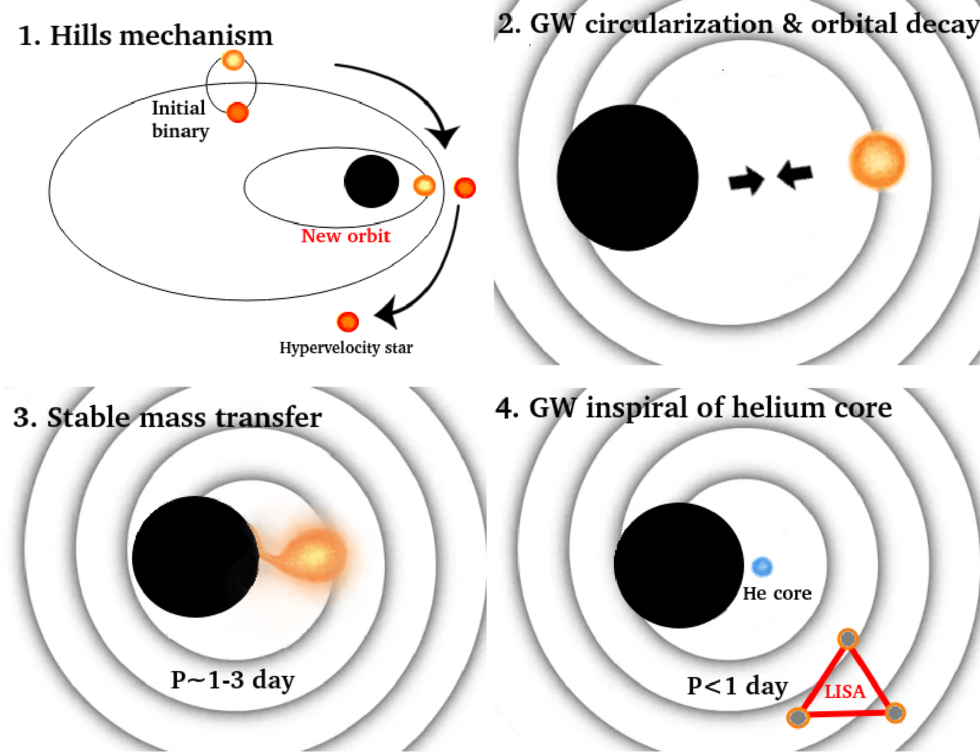
Diagram showing the evolutionary steps of a supermassive black hole capturing a subgiant star that subsequently undergoes mass transfer and gravitational wave-driven inspiral. Click to enlarge. [Olejak et al 2025]
Modeling a Subgiant Inspiral
Seeking to better predict what the gravitational waves of stellar EMRIs may look like and what LISA may detect, Aleksandra Olejak (Max Planck Institute for Astrophysics) and collaborators used stellar evolution code to simulate the evolution of a subgiant star as it transfers mass to a supermassive black hole and gravitational waves draw in its orbit. In their models, the supermassive black hole captures the star through scattering between stars or tidal interactions with a stellar binary in which the black hole catches one star and ejects the other.
Once the star is captured, its orbit becomes circularized around the black hole, pulled in closer over time until mass transfer of the star’s outer envelope begins. During this stage, the gravitational wave signal remains too weak to be detected. However, as the star is stripped down to just a helium core, it contracts and experiences an extended gravitational wave–driven orbital decay.
Possible Detections with LISA
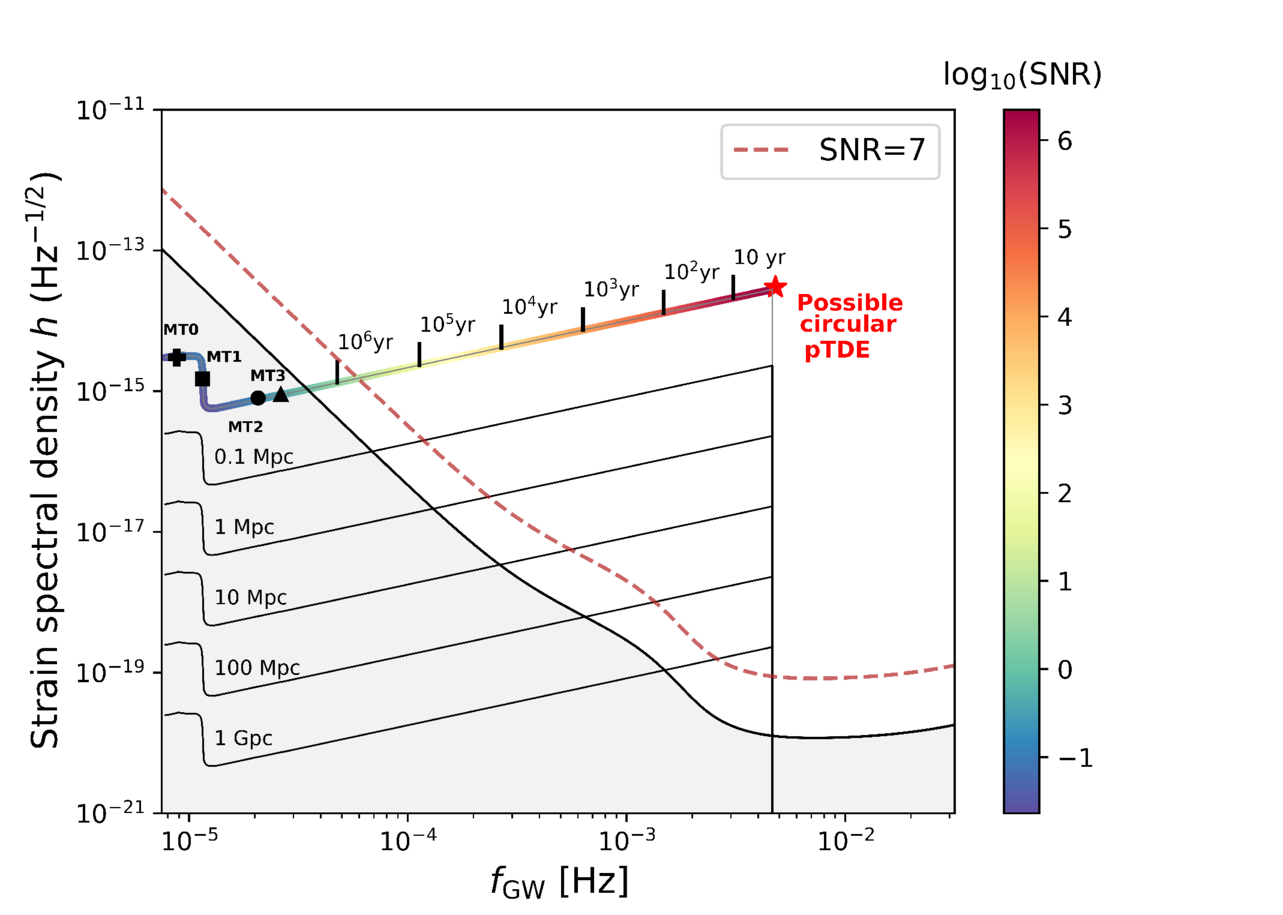
The strain spectral density as a function of the detected frequency of the gravitational wave. The colorful line indicates the signal from a stripped subgiant at the Milky Way’s center, and the gray lines are what would be observed at greater distances. LISA’s sensitivity to gravitational wave signals is shown with the black and red lines with detectable sources falling to the right of or above the line. Click to enlarge. [Olejak et al 2025]
This study provides exciting potential for what is possible with LISA, and future detections of gravitational waves will shine further light onto the complicated dynamics of galactic centers and the evolution of stars around supermassive black holes.
Citation
“Supermassive Black Holes Stripping a Subgiant Star Down to Its Helium Core: A New Type of Multimessenger Source for LISA,” Aleksandra Olejak et al 2025 ApJL 987 L11. doi:10.3847/2041-8213/ade432
The post Supermassive Black Holes and Stripped Subgiants: Significant Signals for Future Gravitational Wave Detectors appeared first on AAS Nova.
]]>The post Exoplanets in the Antarctic Sky. V. The Second Data Release of AST3-II/CHESPA and Newly Found Variables within the Southern Continuous Viewing Zone of TESS appeared first on AAS Nova.
]]>Data for more than 85,000 bright stars have been released from the AST3-II telescope, which is positioned on Dome A, the highest point on the Antarctic plateau.
The post Exoplanets in the Antarctic Sky. V. The Second Data Release of AST3-II/CHESPA and Newly Found Variables within the Southern Continuous Viewing Zone of TESS appeared first on AAS Nova.
]]>The post Flipping of the Tidal Tails of the Ophiuchus Stream due to the Decelerating Galactic Bar appeared first on AAS Nova.
]]>Researchers investigate the Ophiuchus stellar stream, which displays substructure perpendicular to its main direction, a broadened tail, and a smaller angular extent than expected.
The post Flipping of the Tidal Tails of the Ophiuchus Stream due to the Decelerating Galactic Bar appeared first on AAS Nova.
]]>
The "little red dot" CAPERS-LRD-z9 is the most distant object to show the characteristic broad emission lines of fast-moving gas around a black hole.
The post Distant Little Red Dot Hosts a Huge (and Growing) Black Hole appeared first on AAS Nova.
]]>Astronomers have confirmed the discovery of a little red dot galaxy from when the universe was roughly half a billion years old. The galaxy, CAPERS-LRD-z9, is the most distant object to show the tell-tale broad emission lines of gas spiraling around a black hole, opening a new window onto black hole growth in the early universe.
Little Red Dots in the Spotlight
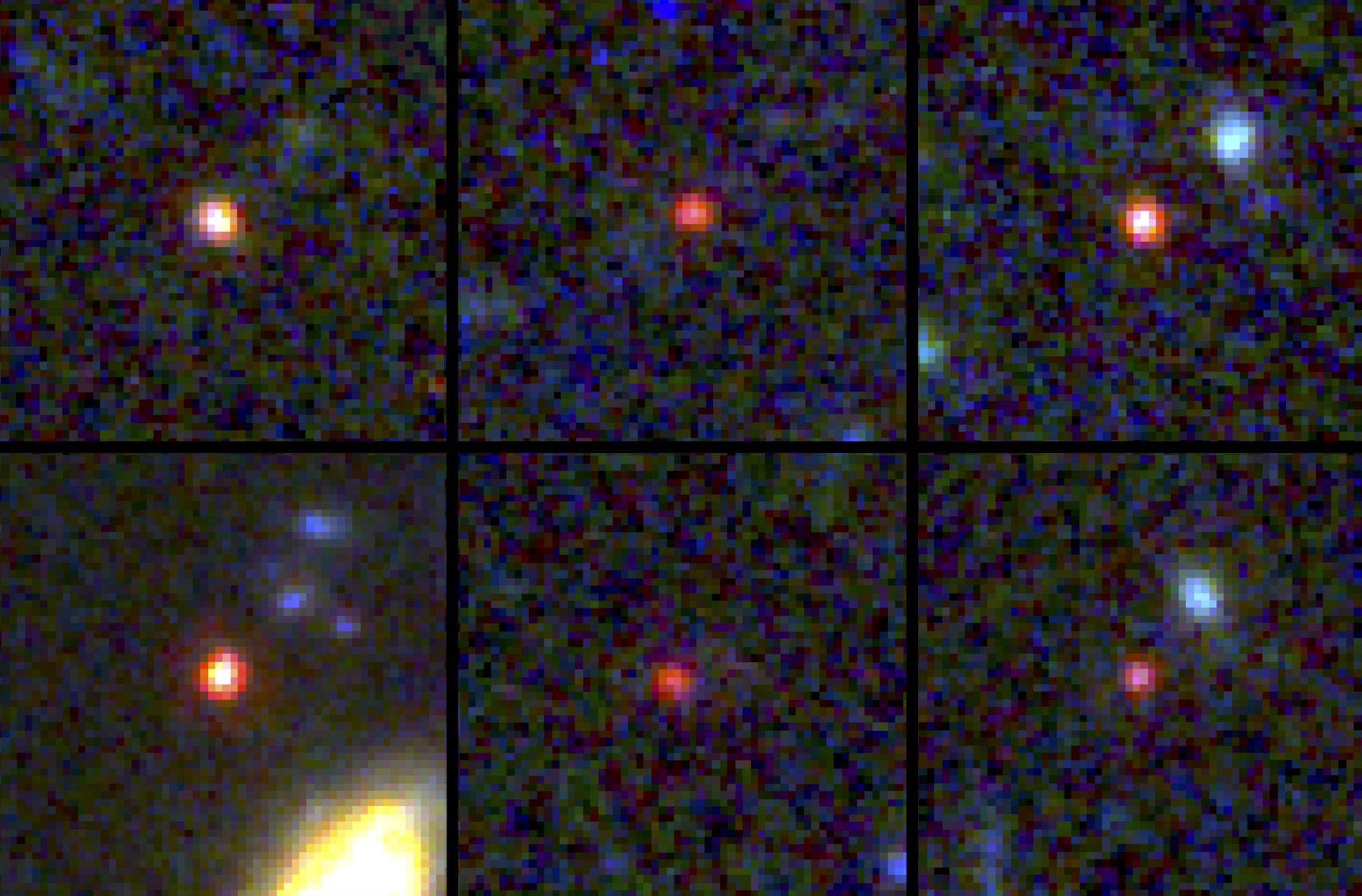
Images of six “little red dot” galaxies from JWST. [NASA/ESA/CSA/I. Labbe]
But what are little red dots? Are they growing supermassive black holes busily amassing gas? Compact collections of old stars? Shredded stars spoon-feeding baby black holes? As reported today in the Astrophysical Journal Letters, new JWST data provide answers for one particularly distant dot.
JWST Takes Another Look
CAPERS-LRD-z9 was first identified as a possible high-redshift little red dot when it was observed by the Public Release IMaging for Extragalactic Research (PRIMER) survey with JWST’s Near-Infrared Camera (NIRCam). Anthony Taylor (The University of Texas at Austin) and collaborators followed up on the discovery with JWST Near-Infrared Spectrograph (NIRSpec) observations from the CANDELS-Area Prism Epoch of Reionization Survey (CAPERS). This spectrum pinned the object’s redshift at z = 9.288, corresponding to when the universe was only about half a billion years old.
With CAPERS-LRD-z9 placed along the cosmic timeline, Taylor and coauthors turned to the question of its identity. The JWST spectra revealed a broad emission line from hydrogen gas moving at thousands of kilometers per second — evidence that CAPERS-LRD-z9 harbors an accreting supermassive black hole (an active galactic nucleus or AGN) that is spinning gas into a frenzy around it. CAPERS-LRD-z9 is the most distant object known to show this characteristic signature of a growing black hole.
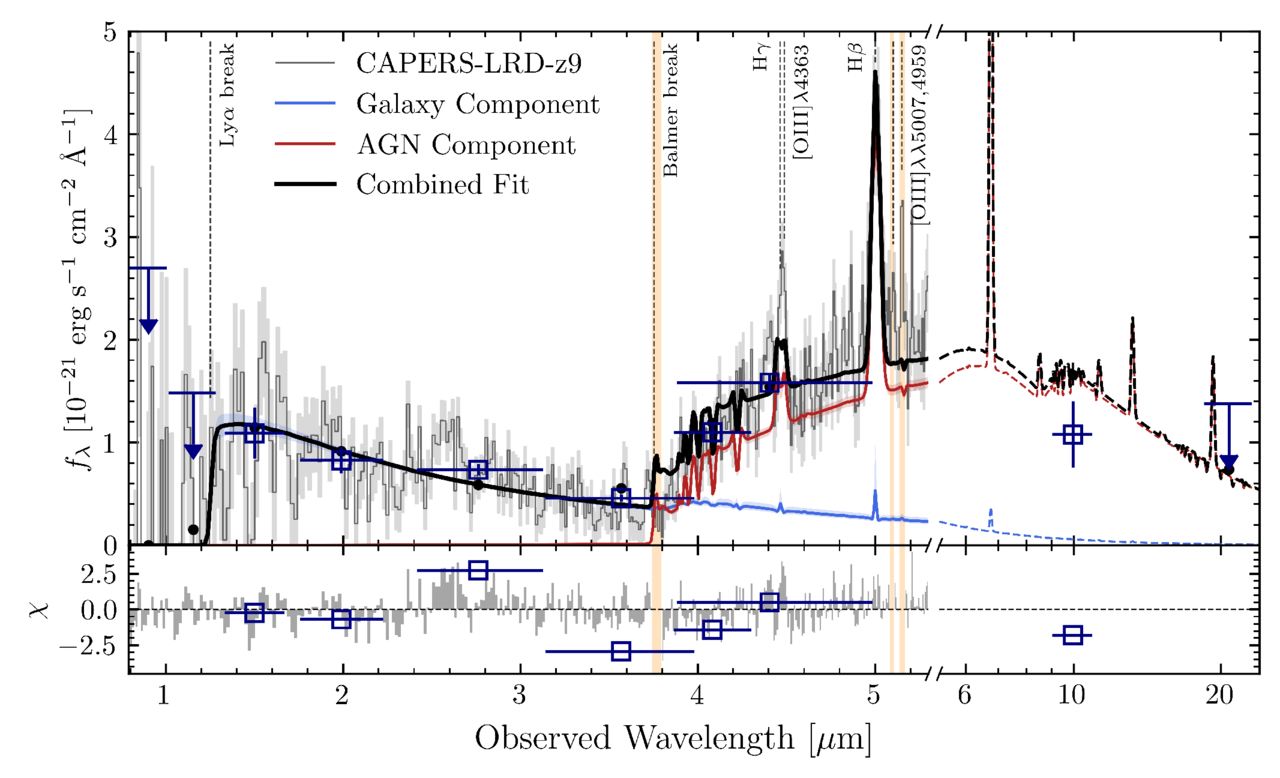
JWST NIRSpec spectrum of CAPERS-LRD-z9 with the fit from the AGN (red) plus stars (blue) model. Click to enlarge. [Taylor et al. 2025]
Seeding a Black Hole
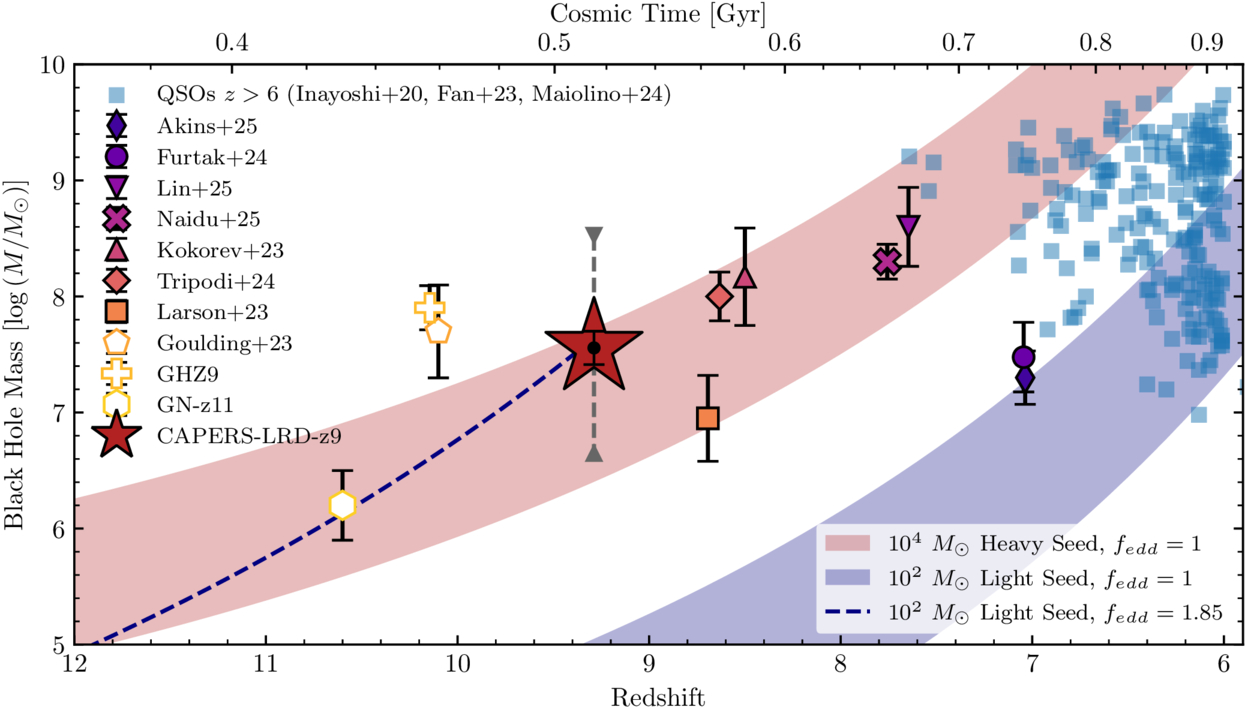
Observed black hole masses and redshifts of several sources, including CAPERS-LRD-z9 (large red star), quasars at redshifts of z > 6 (blue squares), massive spectroscopically confirmed AGN with broad emission lines (filled symbols), and the highest-redshift AGN detected to date via X-ray or ultraviolet emission. The shaded areas show the black hole masses achievable through accretion at the Eddington rate onto a massive (red) or stellar-mass (purple) seed. Click to enlarge. [Taylor et al. 2025]
This finding raises the question of how a black hole can grow to millions of solar masses in just 500 million years. The authors showed that this is possible in two scenarios: either the black hole began as a >10,000-solar-mass “seed” that grew at the Eddington rate — the hypothetical limit at which a black hole can accrete matter — or it started out as a smaller, ~100-solar-mass seed that grew at a super-Eddington rate. The observations rule out the possibility that the black hole grew from a ~100-solar-mass seed accreting at or below the Eddington rate.
In addition to setting the record for most distant broad-line AGN known, CAPERS-LRD-z9 gives new intel on the lives of black holes in the early universe. This won’t be the last we hear about this little red dot!
Citation
“CAPERS-LRD-z9: A Gas Enshrouded Little Red Dot Hosting a Broad-Line AGN at z = 9.288,” Anthony J. Taylor et al 2025 ApJL 989 L7. doi:10.3847/2041-8213/ade789
The post Distant Little Red Dot Hosts a Huge (and Growing) Black Hole appeared first on AAS Nova.
]]>The post Multipoint Observations of Magnetic Reconnection in the Martian Magnetotail Triggered by an Interplanetary Magnetic Field Rotation appeared first on AAS Nova.
]]>With the MAVEN spacecraft positioned in Mars’s magnetotail and Tianwen-1 in the upstream solar wind, researchers showed how interplanetary magnetic field rotation drives plasma processes in the magnetotail.
The post Multipoint Observations of Magnetic Reconnection in the Martian Magnetotail Triggered by an Interplanetary Magnetic Field Rotation appeared first on AAS Nova.
]]>The post Spectral Analysis of the X-Ray Flares in the 2023 Outburst of the New Black Binary Transient Swift J1727.8–1613 Observed with Insight-HXMT appeared first on AAS Nova.
]]>X-ray spectra suggest that a new black hole transient was caught in the process of transitioning from the hard intermediate state to the very high state, and continued in the very high state during later flare periods.
The post Spectral Analysis of the X-Ray Flares in the 2023 Outburst of the New Black Binary Transient Swift J1727.8–1613 Observed with Insight-HXMT appeared first on AAS Nova.
]]>
Astrobites reports on a warm, rocky exoplanet and what might be hidden beneath its atmosphere.
The post What’s Going On Inside GJ 486b? appeared first on AAS Nova.
]]>Editor’s Note: Astrobites is a graduate-student-run organization that digests astrophysical literature for undergraduate students. As part of the partnership between the AAS and astrobites, we occasionally repost astrobites content here at AAS Nova. We hope you enjoy this post from astrobites; the original can be viewed at astrobites.org.
Title: Unveiling the Interior Structure and Thermal Evolution of Super-Earth GJ 486b
Authors: Chandan K. Sahu et al.
First Author’s Institution: National Institute of Science Education and Research, India
Status: Published in ApJ
Planets between the sizes of Neptune and Earth, known as super-Earths, are the most frequently found planets in the galaxy. With no analog in our solar system, these worlds can offer a unique look at planet formation and evolution, and potentially life in the universe. To truly understand a planet’s environment and assess its potential for habitability, we must look at every part of it. This includes not just the atmosphere, but also the interior. Rocky planets, such as the inner solar system planets, typically don’t have enough gravitational pull to retain their primary atmospheres. Thus, only their secondary atmospheres remain. These secondary atmospheres are directly linked to the interior of the planet and are usually formed by volcanic outgassing, material from impacts on the planet’s surface, and other interior processes. By observing a rocky planet’s atmosphere and determining its composition, we can learn something about the interior of the planet as well.
The subject of today’s article, GJ 486b, is a warm super-Earth orbiting an M-dwarf star every 1.5 days. The transmission spectrum of the planet was recently observed by JWST, and when the data were analyzed, a potential water-rich atmosphere was discovered! Today’s authors take these recent discoveries of GJ 486b’s atmosphere and use them to model the interior of the planet.
One Model to Rule Them All
The interiors of rocky planets are not very well known. This is because the best way to understand what’s inside a rocky planet is through seismology. In order to do this, one must put a seismograph on a planet’s surface and measure how seismic waves move through the material inside the planet. Only three bodies have had seismographs landed on them: Earth, the Moon, and Mars. Rocky exoplanet interiors are even harder to understand when the only properties we know are the planet’s mass, radius, and certain aspects of its atmosphere. To understand exoplanet interiors, we have to use modeling to infer properties of the inside of the planet.
The authors of today’s article use the 1-D modeling package SERPINT (“structure and evolution model for rocky planet interiors”) to model GJ 486b’s interior based upon JWST observations of its atmosphere and assumptions made about rocky planets. Their model is broken down into four different parts, as illustrated in Figure 1.
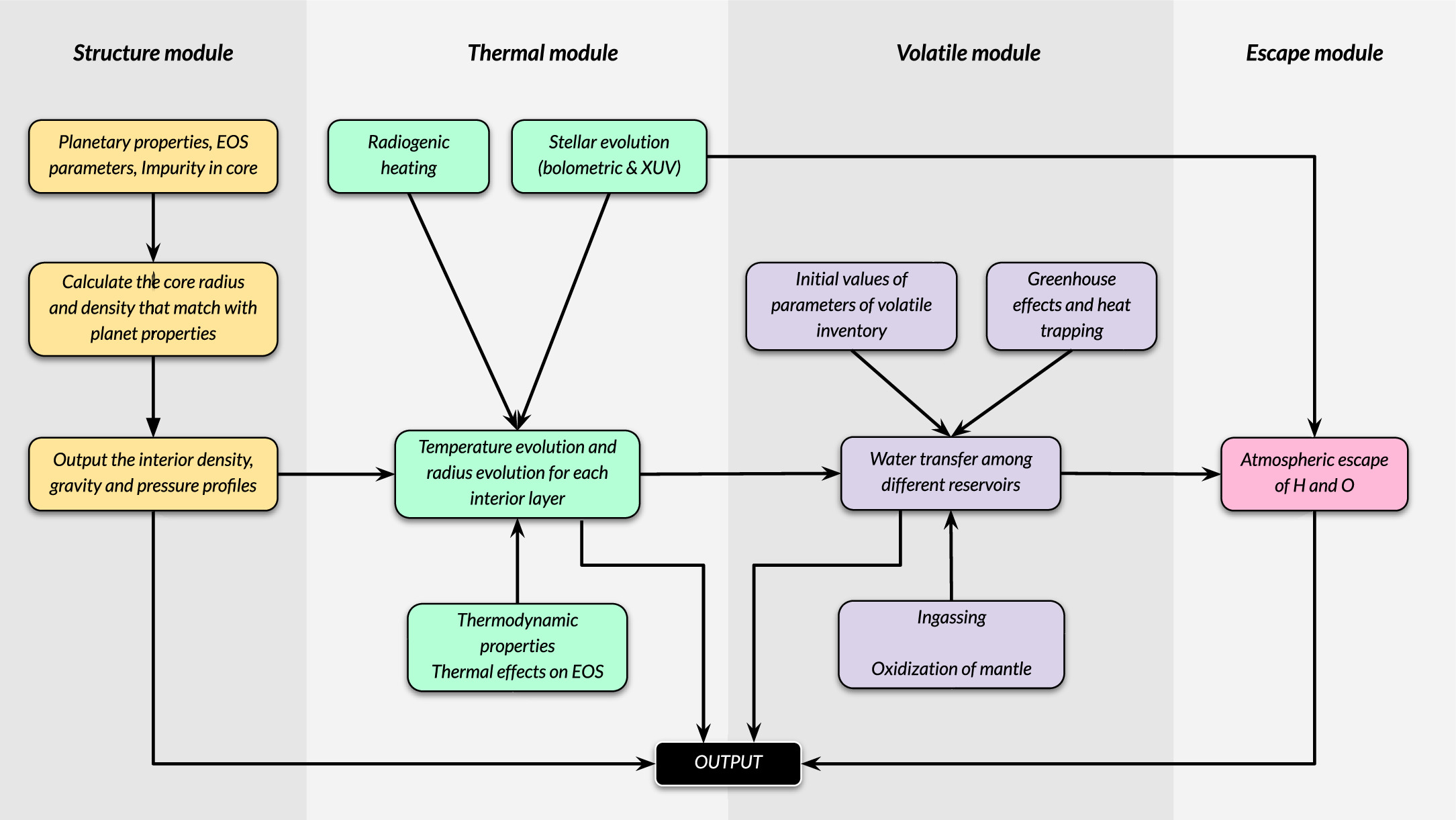
Figure 1: Flowchart of SERPINT and the four different modules used in the overall model of GJ 486b’s interior. Arrows between each property indicate that they’re dependent on one another. [Sahu et al. 2025]
Taking all of these factors into account is important when creating a comprehensive picture of a planet. Each module models different processes that influence the planet’s interior, surface, and atmosphere, making sure that we’re taking all of these things into account when trying to understand the planet. It truly is one model to rule them all.
Outgassing and Photolysis and Escape, Oh My!
The authors start the model for the planet and star together and allow them both to evolve for 10 billion years. The planet starts with a mantle temperature of 5000K, which ensures the surface is molten, creating a magma ocean. This is typically how we think all rocky planets, including Earth, started their formation. Figure 2 illustrates how the mantle solidifies over time, influencing the overall structure of GJ 486b. Both layers of the mantle start to cool after the start of the simulation, and the lower mantle cools and solidifies first, followed by the upper mantle. This is due to the different composition in each layer and thus, a different temperature at which they will solidify. Cooling is delayed for a while due to internal heating from radioactive decay of the elements. This can be seen in Figure 2b with the shallow slope of the orange line. The orange line represents the mantle’s equilibrium temperature, and the yellow shaded region is the time in which the mantle has not yet solidified. As the mantle cools, it turns into a thick mush and then eventually into solid rock (as shown in Figure 2d). This indicates the mantle has solidified, and we move from the yellow shaded region on the graphs into the orange shaded region.
Figure 2: Evolution of different parameters associated with the modeling of the mantle (outer layer) of GJ 846b. Plot (a) shows how the host star changes its total luminosity (blue) and X-ray and ultraviolet luminosity (red) over time. Plot (b) shows how the mantle equilibrium temperature (orange) evolves towards the planet’s equilibrium temperature (blue). The red dashed line indicates the temperature at which the mantle completely solidifies. Plot (c) shows how the boundary between the mantle and other layers shifts over time as the mantle solidifies. This is shown in green. The magenta line in this plot shows the evolution of the radius at which the mantle is solidified. Plot (d) shows how the mantle viscosity changes over time as the mantle solidifies. The yellow shaded region indicates a time in which the mantle is not solid while the orange shaded region indicates a time after the mantle has solidified. [Sahu et al. 2025]
Figure 3: Evolution of the sources of water on GJ 486b. The blue line shows the mass of water in the solid part of the mantle. The orange line shows the mass of water in the melting part of the mantle. The green line shows the mass of atmospheric water, and the red line shows the escaping atmospheric water. Each of these sources of water is crucial to understanding the life cycle of water on this planet. [Adapted from Sahu et al. 2025]
Original astrobite edited by Tori Bonidie.
About the author, Kaz Gary:
I am a third-year PhD student at The Ohio State University with a focus in exoplanetary science. My current work focuses on modeling exoplanet observations for two upcoming space-based telescope missions: the Twinkle satellite and Habitable Worlds Observatory. Outside of research, I help develop exoplanet-focused shows for the Arne Sletteback Planetarium at OSU. In my free time, I enjoy playing tabletop RPGs, painting, watching terrible reality TV, and hanging out with my pet hedgehog.
The post What’s Going On Inside GJ 486b? appeared first on AAS Nova.
]]>
New observations from the X-Ray Imaging and Spectroscopy Mission (XRISM) show the multilayered winds of NGC 4151 in a whole new light.
The post Blown Away by the Winds of NGC 4151 appeared first on AAS Nova.
]]>Astronomers have known about NGC 4151’s X-ray-emitting active galactic nucleus since the 1970s. Now, observations from the X-Ray Imaging and Spectroscopy Mission (XRISM) show it in a whole new light.
Getting Feedback
Illustration of the winds and accretion disk of an active galactic nucleus. [NASA, and M. Weiss (Chandra X -ray Center)]
AGN feedback can dramatically reshape a galaxy’s star formation and evolution. One of the most powerful ways an accreting supermassive black hole can influence its host galaxy is through ionized winds, which can scour the surrounding galactic bulge clear of star-forming material. There is much still to learn about these winds, including how they are structured and what physical processes drive them.
New Insights from XRISM
NGC 4151 provides an excellent opportunity to learn about active galactic nucleus winds. Only about 60 million light-years away, NGC 4151 hosts an accreting 34-million-solar-mass black hole that is luminous, highly variable, and shows a complex absorption spectrum that suggests that the AGN’s intense radiation is filtering through outflowing winds.
XRISM spectrum of NGC 4151, showing the multi-component model fit. Click to enlarge. [Xiang et al. 2025]
Xiang’s team modeled the array of absorption and emission lines in the XRISM spectra to tease out the properties of NGC 4151’s winds. They found that the best match to the spectra required up to six layers of absorbing material, showing that NGC 4151’s winds are highly structured. These absorbing layers took the form of slow warm absorbers (velocities between 100 and 1,000 km/s), very fast outflows (1,000–10,000 km/s), and ultra-fast outflows (10,000–100,000 km/s; up to one-third of the speed of light). While most of these components carry away mass as fast as or faster than the black hole accretes, some appeared to lack the oomph to escape the oncoming accretion flow, suggesting that they might be “failed” winds that curl back toward the AGN.
Being Blown Away
The data showed that the winds are likely magnetocentrifugally driven, meaning that material is lifted and accelerated from the surface of the disk along magnetic field lines as the disk rotates. For some of the wind components, especially warm absorbers emerging farther from the black hole, radiation pressure may be a driver as well.
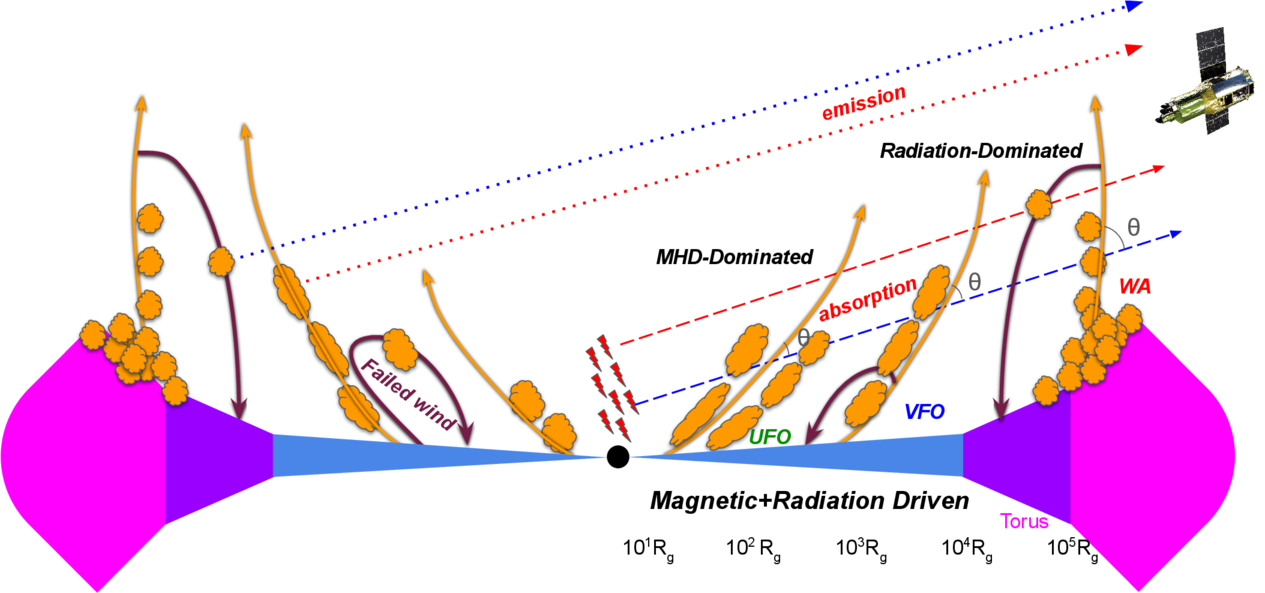
Diagram of the wind components of NGC 4151, including ultra-fast outflows (UFOs), very fast outflows (VFOs), and warm absorbers (WAs). [Xiang et al. 2025]
Citation
“XRISM Spectroscopy of Accretion-Driven Wind Feedback in NGC 4151,” Xin Xiang et al 2025 ApJL 988 L54. doi:10.3847/2041-8213/adee9b
The post Blown Away by the Winds of NGC 4151 appeared first on AAS Nova.
]]>The post OGLE-2016-BLG-1195Lb: A Sub-Neptune Beyond the Snow Line of an M-Dwarf Confirmed by Keck Adaptive Optics appeared first on AAS Nova.
]]>Follow-up observations of a gravitational microlensing event show the source to be a 10-Earth-mass exoplanet orbiting an M-dwarf star, consistent with the discovery article.
The post OGLE-2016-BLG-1195Lb: A Sub-Neptune Beyond the Snow Line of an M-Dwarf Confirmed by Keck Adaptive Optics appeared first on AAS Nova.
]]>
Worth the wait: using observations separated by 15 years, researchers have clocked the speed of a neutron star flying through space and shed light on how these stellar remnants are launched by supernova explosions.
The post Get a Kick Out of This: Researchers Waited 15 Years to Measure a Neutron Star’s Journey appeared first on AAS Nova.
]]>With a measurement 15 years in the making, astronomers have pinned down the path of a neutron star launched by a collapsing star. This finding helps to explain how neutron stars are “kicked” into space by supernovae.
Just for Kicks
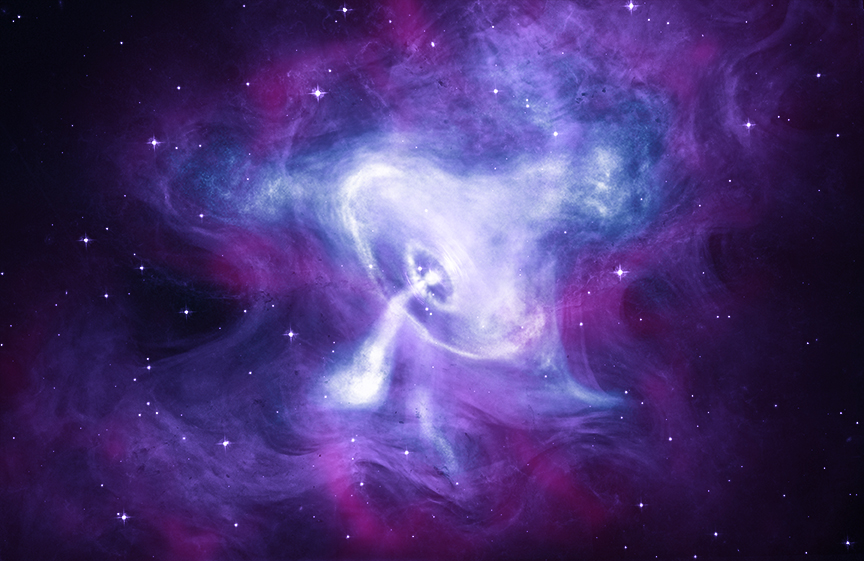
This multiwavelength image shows the pulsar — a type of neutron star — at the center of the Crab Nebula supernova remnant. [X-ray: NASA/CXC/SAO; Optical: NASA/STScI; Infrared: NASA-JPL-Caltech]
Many neutron stars have been observed to zip through space at hundreds of kilometers per second, which suggests that these stars get a “kick” when they’re born in a supernova. However, the details of this kick are not yet clear. Are neutron stars launched into space in the opposite direction from the material ejected in the explosion, as some studies suggest? Or is the neutron star’s motion determined by the burst of neutrinos that carries off most of the supernova’s energy, as other studies hint?
Worth the Wait
To answer these questions, astronomers must compare the velocities of young neutron stars to the movement of their associated supernova remnants. In a recent research article, Tyler Holland-Ashford (NASA Goddard Space Flight Center) and collaborators measured the motion of the neutron star affiliated with the G18.9–1.1 supernova remnant, using Chandra observations made 15 years apart in September 2009 and July 2024.
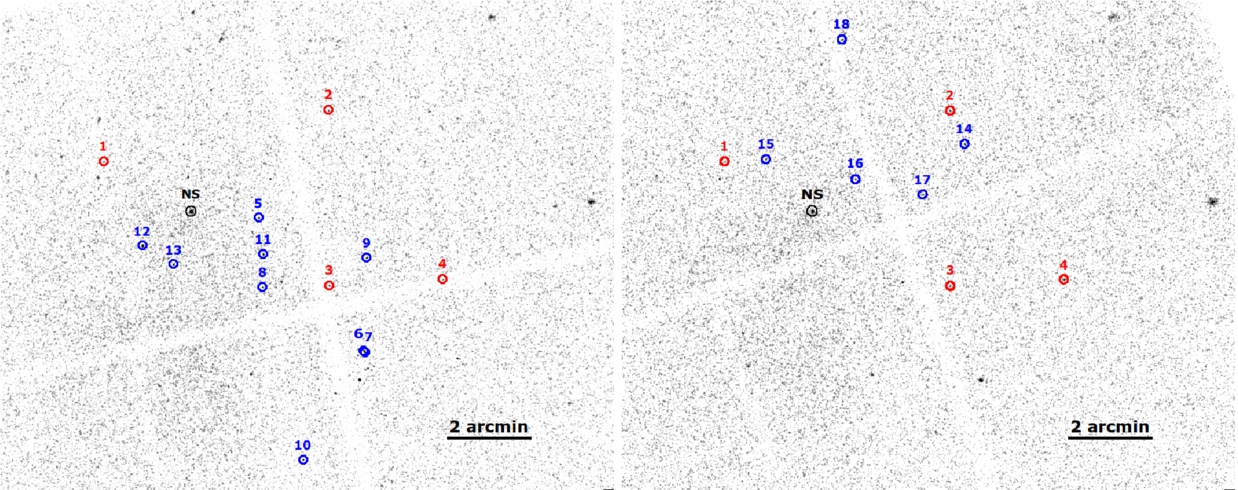
Chandra images from 2009 (left) and 2024 (right; this image is the merged product of two observations). The neutron star is shown in black. Blue and red sources were used for astrometric correction. The red sources were present in both observations. Click to enlarge. [Holland-Ashford et al. 2025]
Because the distance to the supernova remnant is uncertain, this proper motion could correspond to a range of transverse velocities. For distance estimates of 6,800 and 12,400 light-years, this puts the neutron star’s transverse velocity at 264 or 474 km/s, respectively.
A Distinct Offset
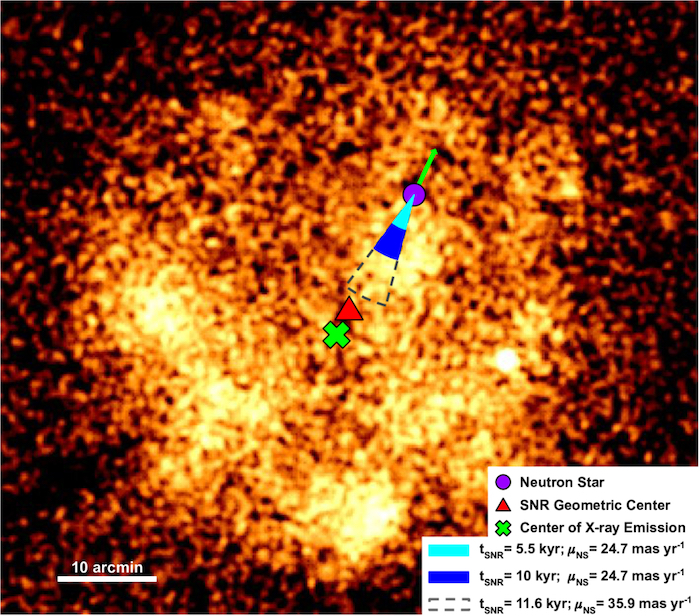
Current location of the neutron star (purple) compared to the geometric center of the supernova remnant (red) and the center of its X-ray emission (green). Even assuming the oldest reasonable age for the supernova remnant, there is a distinct offset between the neutron star’s birthplace and the center of the remnant. Click to enlarge. [Holland-Ashford et al. 2025]
Currently, Chandra is the only X-ray observatory with fine enough resolution to make the kind of measurement needed in this study. Luckily, Chandra’s observations of neutron stars stretch back to 1999, and combining this wealth of data with sensitive measurements from future high-resolution X-ray instruments should provide the long time baselines needed to trace the trajectories of more neutron stars and further explore the origins of neutron star kicks.
Citation
“Proper Motion of the Neutron Star in the Supernova Remnant G18.9–1.1,” Tyler Holland-Ashford et al 2025 ApJ 988 218. doi:10.3847/1538-4357/adeb7e
The post Get a Kick Out of This: Researchers Waited 15 Years to Measure a Neutron Star’s Journey appeared first on AAS Nova.
]]>The post Evolution of Solar Wind Turbulence During Radial Alignment of Parker Solar Probe and Solar Orbiter in 2022 December appeared first on AAS Nova.
]]>A chance alignment between the Parker Solar Probe and Solar Orbiter at 0.11 and 0.88 au from the Sun allowed researchers a rare glimpse into how solar wind turbulence evolves with distance from the Sun.
The post Evolution of Solar Wind Turbulence During Radial Alignment of Parker Solar Probe and Solar Orbiter in 2022 December appeared first on AAS Nova.
]]>The post Fast Transients from Magnetic Disks around Nonspinning Collapsar Black Holes appeared first on AAS Nova.
]]>Disk outflows from a newly formed black hole are shown to produce a bright signal that could power the first peak of certain double-peaked supernova light curves or another kind of transient altogether.
The post Fast Transients from Magnetic Disks around Nonspinning Collapsar Black Holes appeared first on AAS Nova.
]]>
Catch up on recent astronomy news: a stellar navigation experiment, a doomed planet, an icy protostar, and a mysterious radio source.
The post Monthly Roundup: Astronomy in the News appeared first on AAS Nova.
]]>There’s been a lot of astronomy in the news lately! Many recent news stories have featured research published in the AAS journals, so today we’re taking a look at four research articles that have recently gotten attention from the media.
New Horizons Navigates by the Stars
Starting closest to home, the first article describes a technological demonstration that took place on the edge of our solar system. In the nearly 20 years since its launch, the New Horizons spacecraft has ventured from Cape Canaveral to its current berth in the Kuiper Belt, roughly 61 au (5.7 billion miles or 9.1 billion kilometers) from Earth. In that time, New Horizons became the first spacecraft to venture close to Pluto and its moons as well as a second Kuiper Belt object called Arrokoth.
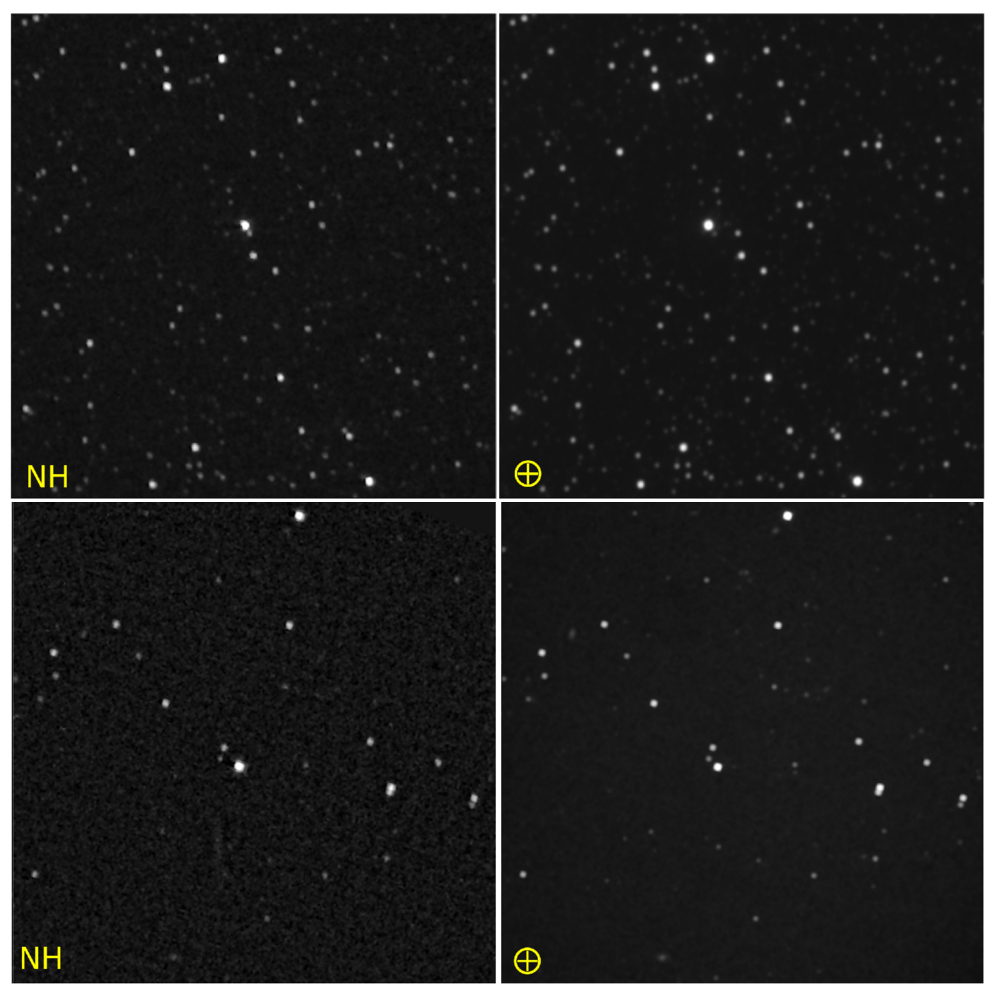
The difference in the position of Proxima Centauri (top row) and Wolf 359 (bottom row) as seen from New Horizons (left column) and Earth (right column) is evident by eye. [Adapted from Lauer et al. 2025]
From the apparent shift in position of the two stars, the team determined the location of the spacecraft in space as well as the error in their measurement. They were able to ascertain the position of the spacecraft to within 0.44 au of its true position.
Though this measurement is far less accurate than localization with the Deep Space Network, it’s still an important step toward understanding the future prospects for autonomous spacecraft navigation via the stars. Looking ahead to future interstellar navigation systems, the team showed that measurements of a few nearby stars (Proxima Centauri and Barnard’s Star are the best bets for journeys within tens of thousands of astronomical units of the Sun) are more useful than measurements of a larger number of more distant stars. Basing measurements on a larger number of images to cut down on random scatter in the position of the star would also improve the results, as would simply using newer instruments. Ultimately, other types of navigation systems, such as those based on measurements of pulsars, are more likely to reach the precision necessary for autonomous spacecraft navigation. However, this method remains interesting, given that the straightforward nature of the imaging and analysis is already well within the capabilities of modern spacecraft systems.
First Detection of Semiheavy Water Ice Around a Low-Mass Protostar
Next up is a discovery from 457 light-years away in the Taurus molecular cloud. With a mass of 0.3–0.5 solar mass, a disk spanning 75–125 au, and a surrounding envelope of 0.9 solar mass, the isolated low-mass protostar L1527 is likely to grow into a star of similar mass to the Sun. That makes it an excellent target for investigating how planetary systems like our own acquire critical molecules like water.
Katerina Slavicinska (Leiden Observatory) and coauthors used JWST to search L1527 for semiheavy water (HDO) — a water molecule in which one of the hydrogen atoms is replaced with a deuterium atom. HDO has been detected in many locations throughout our solar system, including in Earth’s oceans, and water in our solar system tends to contain a high abundance of HDO molecules. A high deuterium abundance can be linked to formation in a cold environment, suggesting that our solar system’s water may have formed in the icy clouds out of which the Sun and the planets were born.
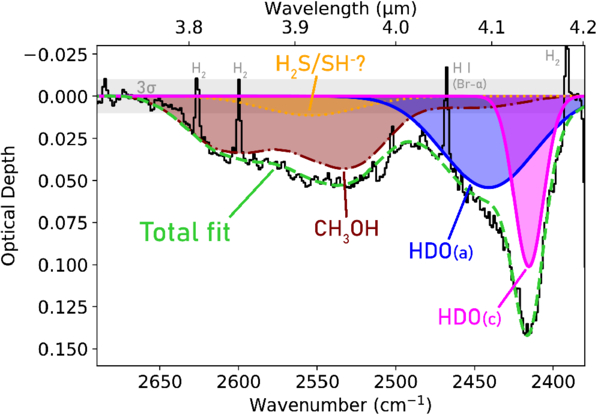
JWST spectrum of L1527. [Slavicinska et al. 2025]
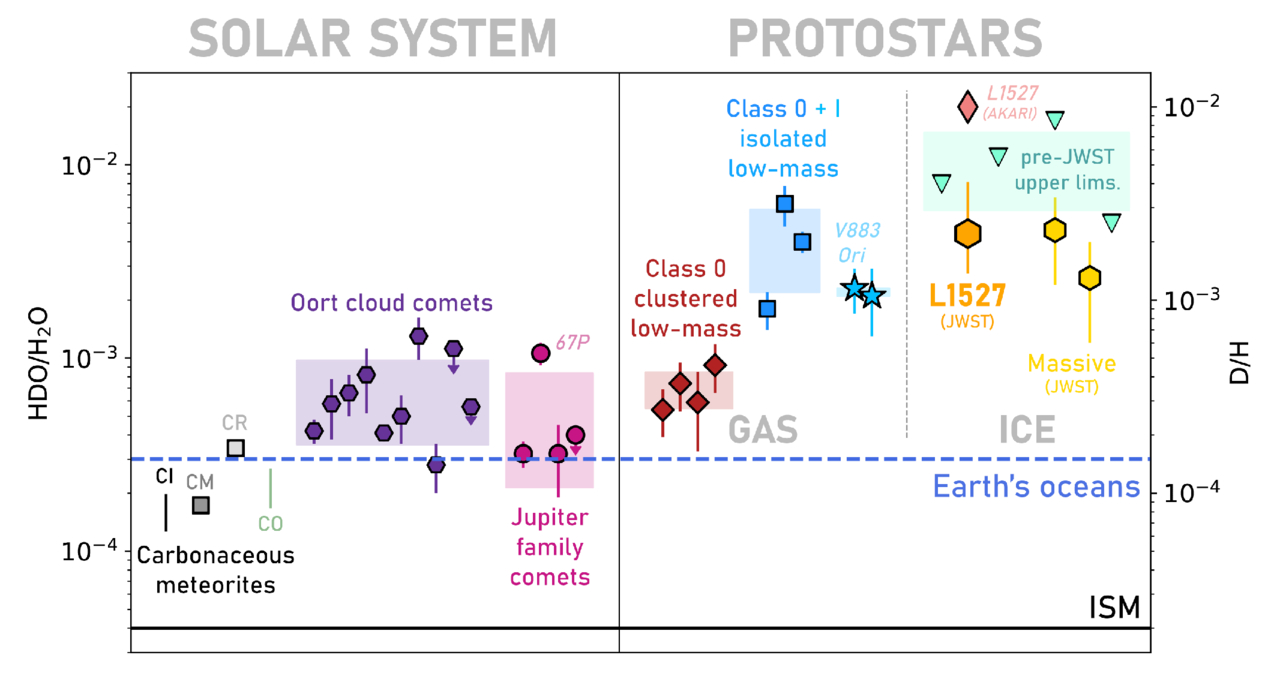
HDO/H2O ratios for various solar system objects and protostars. Click to enlarge. [Slavicinska et al. 2025]
This study demonstrates JWST’s ability to investigate the chemistry of young stars and probe the chemical evolution of protostars and planetary systems. Slavicinska and coauthors identified two important next steps to advance our understanding of the chemistry of star- and planet-forming environments: 1) measuring gas-phase and ice-phase HDO/H2O ratios in the same object to understand how gas-phase chemistry alters water around protostars and 2) measuring the HDO/H2O ratios of larger samples of isolated and clustered protostars in order to understand the impact of environmental factors.
A Massive Planet Approaches Its Doom
TOI-2109b is an ultra-hot Jupiter exoplanet that orbits its host star every 16 hours, giving it the shortest period of any known hot Jupiter. Orbiting its host star so closely, TOI-2109b is susceptible to powerful tidal forces that can lead to an exchange of angular momentum between the planet and its home star, potentially causing the planet to spiral inward and be engulfed by its star.
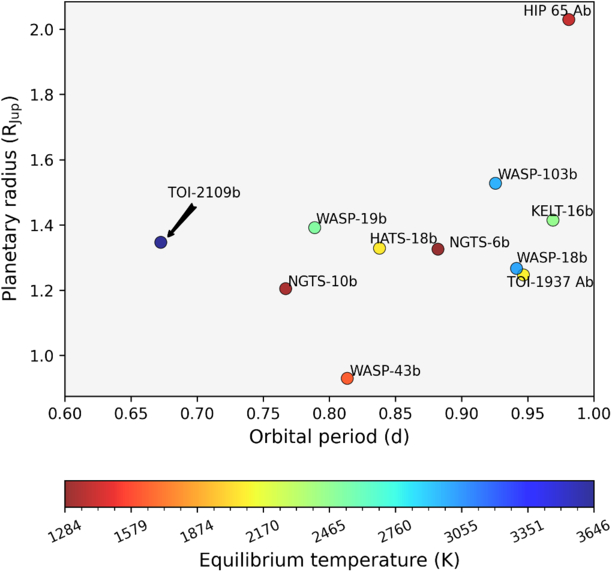
Comparison of the orbital period, temperature, and radius of TOI-2109b to other ultra-short-period Jupiters. [Alvarado-Montes et al. 2025]
Alvarado-Montes and coauthors used data from the Transiting Exoplanet Survey Satellite (TESS), the CHaracterising ExOPlanet Satellite (CHEOPS), and multiple ground-based telescopes to constrain the rate of change of TOI-2109b’s orbital period. Taking into account changes in transit timing due to an outer planet candidate in the system, deviations from spherical symmetry, and other factors, the authors find a likely orbital decay rate of just 2.6 milliseconds per year. This is consistent with the rate predicted for a “young” host star, and it’s expected to shift TOI-2109b’s mid-transit time by a few seconds over a three-year period. This change is potentially detectable with high-cadence observations, helping to understand not just the fate of TOI-2109b, but of ultra-short-period planets as a whole.
Discovery of a Mysterious Long-Period Transient
Finally, Fengqiu Adam Dong (National Radio Astronomy Observatory; Green Bank Observatory) and coauthors recently described their discovery of an unusual long-period transient radio signal. Long-period radio transients exhibit signals that repeat with periods ranging from 10 seconds to multiple hours. While the exact origin of these signals remains unknown, researchers suspect that magnetic white dwarfs and neutron stars are the cause, with the two sources perhaps representing different classes under the long-period radio transient umbrella.
The signal was detected by the Canadian Hydrogen Intensity Mapping Experiment (CHIME) radio telescope, which was searching for bursts of radio emission from pulsars within our galaxy. The newly discovered radio signal, which comes from a source named CHIME J1634+44, has a primary period of 841 seconds and a secondary period of 4,206 seconds, making it decidedly un-pulsar-like. Dong’s team performed follow-up observations of CHIME J1634+44 with the Very Large Array, the Neil Gehrels Swift Observatory, and the Green Bank Telescope. The Very Large Array and the Green Bank Telescope each detected two bursts from the source, bringing the total number of bursts reported in this study to 89.
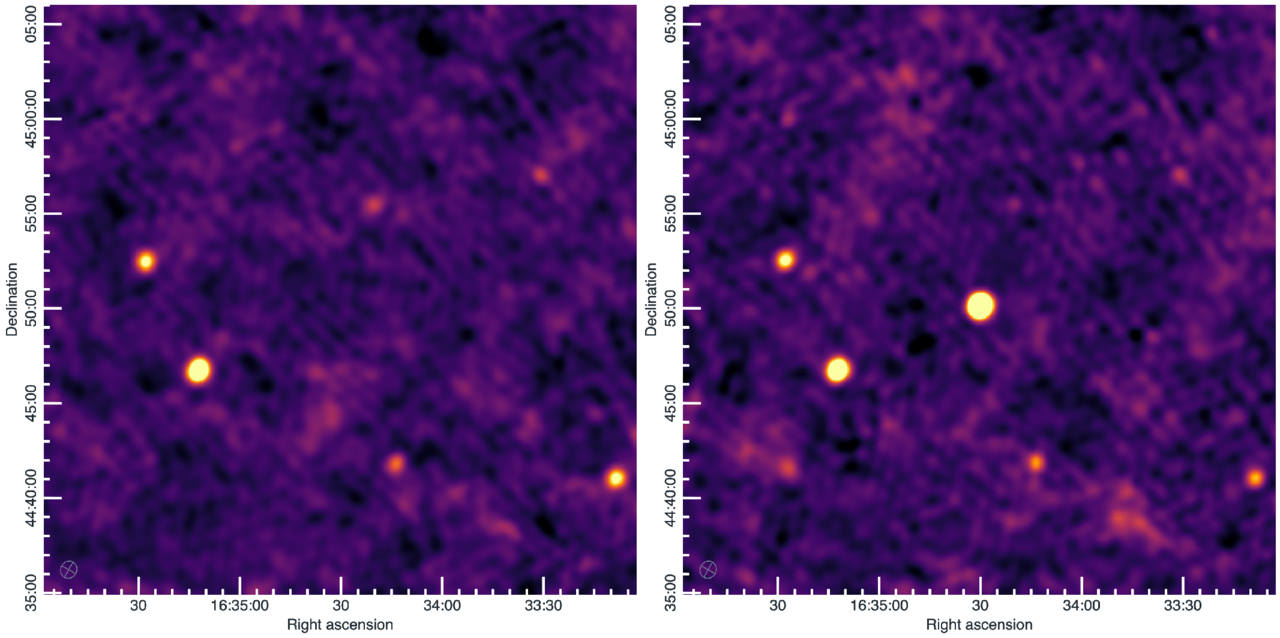
Continuum images of CHIME J1634+44 from the Very Large Array. The two panels show the autocorrelation function of the left-hand (left) and right-hand (right) circularly polarized components of the signal. CHIME J1634+44 is only detected in one of these two images, which suggests a 100% circularly polarized signal. [Dong et al. 2025]
What kind of object could produce this signal? Dong and coauthors considered binary systems containing either a white dwarf or a neutron star. Neither scenario perfectly fits the available evidence, but the team concluded that a binary system containing a neutron star is the likeliest source of the long-period, highly polarized, steadily accelerating pulses of CHIME J1634+44. The strongest evidence in favor of this scenario is that neutron stars are known to exhibit strongly polarized pulses of similar luminosity to those from CHIME J1634+44. Dong’s team expects that CHIME J1634+44 will remain an important test of theories of long-period radio transients — and as new information emerges about its identity, CHIME J1634+44 might just find its way into the news again!
Citation
“A Demonstration of Interstellar Navigation Using New Horizons,” Tod R. Lauer et al 2025 AJ 170 22. doi:10.3847/1538-3881/addabe
“HDO Ice Detected Toward an Isolated Low-Mass Protostar with JWST,” Katerina Slavicinska et al 2025 ApJL 986 L19. doi:10.3847/2041-8213/addb45
“Orbital Decay of the Ultra-Hot Jupiter TOI-2109b: Tidal Constraints and Transit-Timing Analysis,” Jaime A. Alvarado-Montes et al 2025 ApJ 988 66. doi:10.3847/1538-4357/ade057
“CHIME/Fast Radio Burst Discovery of an Unusual Circularly Polarized Long-Period Radio Transient with an Accelerating Spin Period,” Fengqiu Adam Dong et al 2025 ApJL 988 L29. doi:10.3847/2041-8213/adeaab
The post Monthly Roundup: Astronomy in the News appeared first on AAS Nova.
]]>The post VLASS Tidal Disruption Events with Optical Flares. II. Discovery of Two TDEs with Intermediate Width Balmer Emission Lines and Connections to the Ambiguous Extreme Coronal Line Emitters appeared first on AAS Nova.
]]>Researchers have performed in an in-depth study of two tidal disruption events that were selected via their radio emission and are visible at optical wavelengths, showing unprecedented intermediate-width spectral lines.
The post VLASS Tidal Disruption Events with Optical Flares. II. Discovery of Two TDEs with Intermediate Width Balmer Emission Lines and Connections to the Ambiguous Extreme Coronal Line Emitters appeared first on AAS Nova.
]]>The post Planetesimal Impact Vapor Plumes and Nebular Shocks Form Chondritic Mixtures appeared first on AAS Nova.
]]>Simulations suggest that impacts between planetesimals can produce chondrules — round inclusions of once-melted silicates — similar to what is seen in meteorites.
The post Planetesimal Impact Vapor Plumes and Nebular Shocks Form Chondritic Mixtures appeared first on AAS Nova.
]]>
Astrobites reports on the intricate spin distributions created by recoil kicks from merging black holes.
The post The Black Hole Tango: Kicks and Spins in Hierarchical Mergers appeared first on AAS Nova.
]]>Editor’s Note: Astrobites is a graduate-student-run organization that digests astrophysical literature for undergraduate students. As part of the partnership between the AAS and astrobites, we occasionally repost astrobites content here at AAS Nova. We hope you enjoy this post from astrobites; the original can be viewed at astrobites.org.
Title: Gravitational-Wave Kicks Impact Spins of Black Holes from Hierarchical Mergers
Authors: Angela Borchers, Claire S. Ye, and Maya Fishbach
First Author’s Institution: Max Planck Institute for Gravitational Physics
Status: Published in ApJ
The room is large and densely packed. As you twirl across the floor, someone extends their hand, inviting you to dance. The two of you spin around each other, the tension building with every step. As you draw closer and closer, you realize this isn’t a ballroom, and you’re not people. This is outer space, and you and your partner are black holes, spiraling toward one another in one of the most energetic events in the universe: a black hole merger.
In this cosmic dance, black holes in a binary system orbit each other while also spinning around their own axes. Their spins are inherited from the angular momentum of the massive stars that collapsed to form them. After the two black holes merge, the remnant black hole also spins. The final spin depends on the spins of the two merging black holes and the ratio of the mass of the larger black hole to that of the smaller one. The higher the mass ratio, the more the larger black hole dominates the final spin. To quantify how fast black holes spin, physicists use a dimensionless spin parameter that ranges from 0 (not spinning at all) to 1, the maximum allowed by general relativity.
Observing the distribution of black hole spins helps us understand how binary systems form. For example, binaries formed through isolated channels, where the black holes are born and evolve together, are likely to have similar spin magnitudes, and the directions of their spins tend to align with their orbital motion. In contrast, black holes that form separately and later become a pair through dynamic encounters in dense environments typically have randomly oriented spins (see Figure 1). To determine which formation channels are more common, we need accurate predictions of the expected spin distributions for each scenario to compare them directly to merger observations from detectors like LIGO/Virgo or future gravitational-wave observatories.
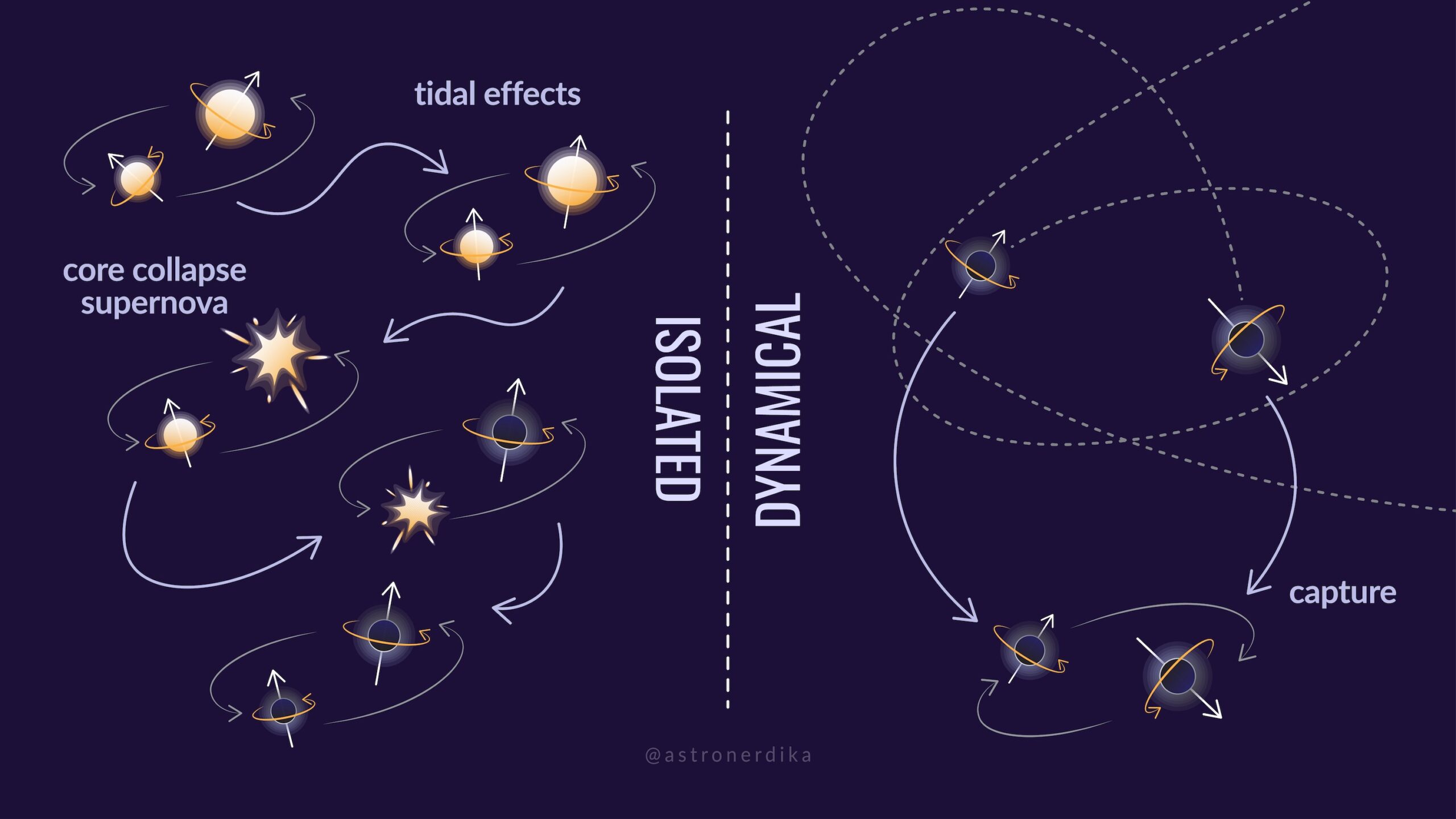
Figure 1: Graphic showing two main formation channels of black hole binaries. [Reproduced with permission from Shanika Galaudage/Space Australia]
After a merger, the newly formed black hole receives a “kick” velocity — a shove that sends it moving through space. This happens because gravitational waves carry away linear momentum asymmetrically during the merger, and to conserve momentum, the remnant black hole recoils in the opposite direction. If its kick exceeds the escape velocity of its cluster, the remnant is ejected, making it unlikely to merge again. However, remnants that receive smaller kicks are retained and can go on to merge again, contributing to the spin distribution over multiple generations. The authors of this article study the final spin distribution of black holes that remain within a cluster after forming from hierarchical mergers.
Simulating Binaries in a Globular Cluster
The authors simulate a first-generation population of one million black holes that are assumed to all have the same initial spin, labeled ai. The authors use data from globular cluster simulations to determine the properties of binaries found in dense environments. The final spin, af, and kick velocity of the black holes are calculated using a high-accuracy model of black hole merger remnants. Only black holes with kick velocities less than the escape velocity of typical globular clusters are kept in the population for future mergers. For their analysis across multiple merger generations, the authors test escape velocities of 50, 100, and 200 km/s.
Some initial binary configurations are more likely to produce high kick velocities that could eject the remnant from the cluster. Figure 2 shows that binaries with isotropic (randomly oriented) spins tend to produce larger kicks than those with spins aligned with the orbital motion.
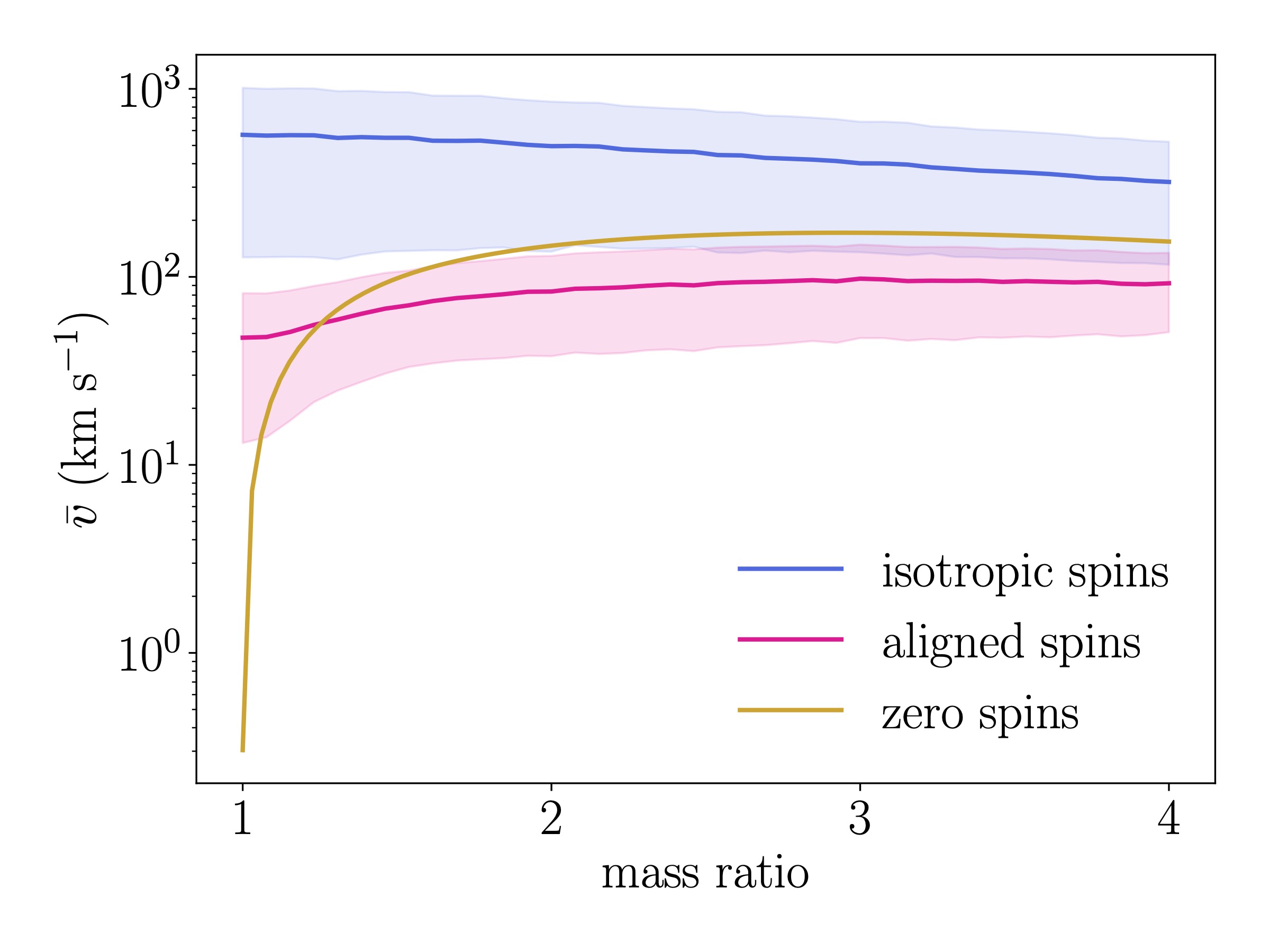
Figure 2: Kick velocity as a function of mass ratio for three types of black hole binaries: ones with random spin directions (blue), ones with spins aligned with the orbital motion (pink), and ones with zero spin (yellow). Each point shows the average from 10,000 simulated binaries, with spin magnitudes up to 0.8. Solid lines show the average kick velocity; shaded regions show the spread. [Borchers et al. 2025]
Spin Distribution of 1G + 1G Mergers
Figure 3 shows the final spin distribution from mergers between two first-generation black holes for different initial spin values. It compares all merger remnants (global population) to those that stay in the cluster (retained population). As expected, the distribution peaks around 0.7 for the global population. However, the peak shifts to higher spin values when only retained remnants are considered.
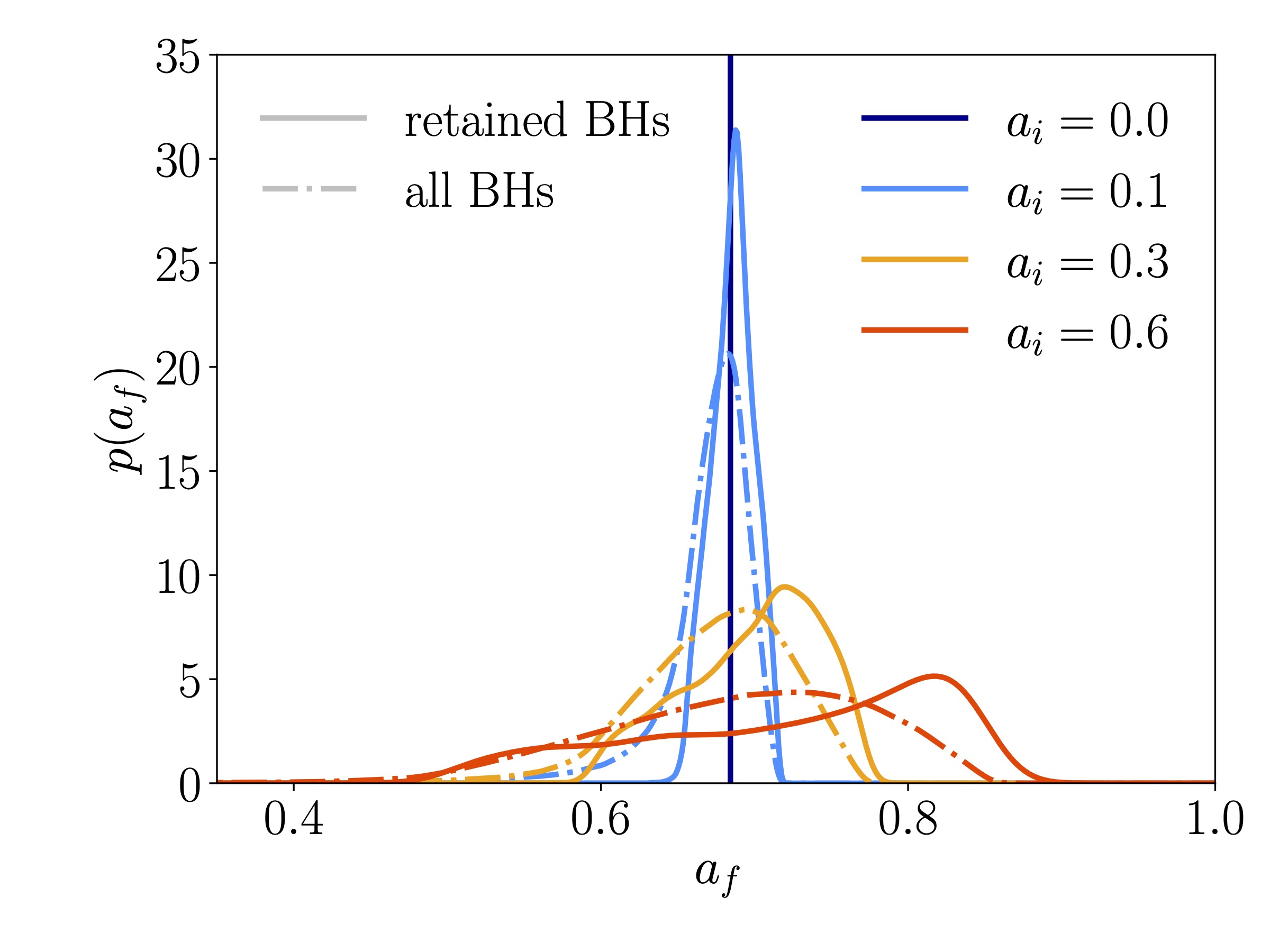
Figure 3: Spin distribution of 1G+1G merger remnants with different initial spin magnitudes and randomly oriented spins. The dashed lines show the distribution for all remnants, while the solid lines show the distribution for those that remain in the cluster. For the ai = 0.0 case, the vertical line is centered at af = 0.69. [Borchers et al. 2025]
The authors also examine the effect of escape velocity on the spin distribution. Higher escape velocities make the distribution more similar to the global population, while lower escape velocities lead to broader distributions with more support at higher and lower spins.
Spin Distributions of Higher-Generation Mergers
Figure 4 shows how the spin distribution changes over several generations of black hole mergers. As more generations pass, the spin distribution of the retained black holes starts to look quite different from the global one. In particular, it spreads out and shows a broader range of spin values.

Figure 4: Final spin distribution for different merger generations. The dashed lines show the distribution for all remnants, while the solid lines show the distribution for those that remain in the cluster. [Adapted from Borchers et al. 2025]
Hierarchical mergers are considered a pathway to forming intermediate-mass black holes, potentially explaining events like GW190521. Current gravitational-wave detectors are observing more and more black hole mergers, and future detectors will measure their spins more precisely. Accounting for the spin distributions of black holes that remain in clusters rather than the universal distribution will help us better understand and measure how hierarchical mergers contribute to the gravitational-wave population.
Original astrobite edited by Ryan White.
Authored by Viviana Cáceres.
The post The Black Hole Tango: Kicks and Spins in Hierarchical Mergers appeared first on AAS Nova.
]]>
In May 2024, the Sun put on a powerful display of solar storms, and researchers have examined the source of all this activity to understand why.
The post Featured Image: Mother’s Day Superstorms appeared first on AAS Nova.
]]>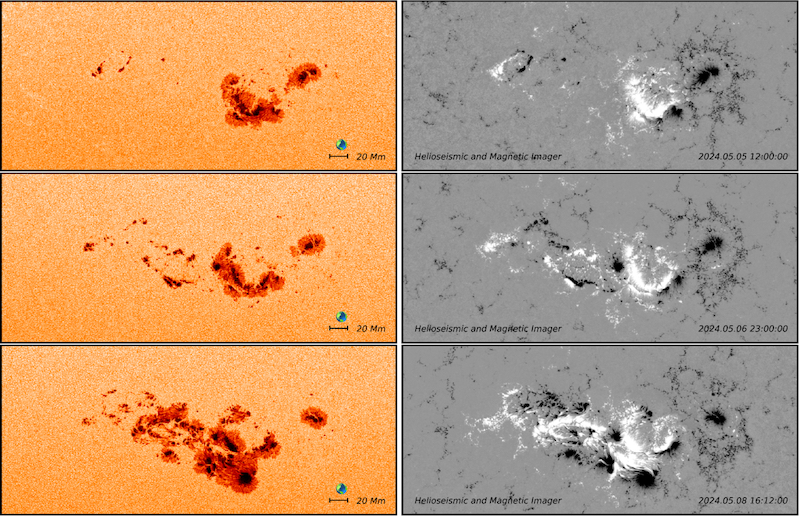
Evolution of a cluster of active regions as seen in continuum emission (left column) and radial magnetic field (right column). Click to enlarge. [Dikpati et al. 2025]
Citation
“Mother’s Day Superstorms: Pre- and Post-Storm Evolutionary Patterns of ARs 13664/8,” Mausumi Dikpati et al 2025 ApJ 988 108. doi:10.3847/1538-4357/addd09
The post Featured Image: Mother’s Day Superstorms appeared first on AAS Nova.
]]>The post Expected Impact of Rubin Observatory LSST on NEO Follow-Up appeared first on AAS Nova.
]]>The Vera C. Rubin Observatory will discover ~129 candidate near-Earth objects each night, necessitating careful consideration of which objects should be followed up on with other facilities.
The post Expected Impact of Rubin Observatory LSST on NEO Follow-Up appeared first on AAS Nova.
]]>
The dust in protoplanetary disks is subject to complicated dynamical processes that impact planet formation. Recent simulations suggest that dust may be more freely moving within disks with planets than previously thought.
The post Escaping the Dust Trap: Simulations of Dust Dynamics in Protoplanetary Disks appeared first on AAS Nova.
]]>Through detailed simulations of gas and dust, a recent study revealed that the behavior of dust within protoplanetary disks is a bit more complex than previously assumed.
Dust Traps in Protoplanetary Disks
As a planet forms within a protoplanetary disk — dust and gas orbiting a new star — tidal interactions between the budding body and the dusty material surrounding it can create pressure bumps where dust builds up. These dust traps appear as rings in observations of protoplanetary disks.
Dust traps are thought to play a critical role in the disk’s evolution and the early stages of planet formation. Dust traps may prevent solid material from migrating inward, starving the inner disk and impeding planet growth interior to the trap. These reservoirs may also serve as a chemical barrier, keeping volatile materials like water from moving to the inner regions of a disk.
While a perfect dust trap completely isolates material from the rest of the disk, recent observations and 2D simulations have shown that dust traps may be a bit more permeable — leaking smaller sized grains, mixing material, and changing the disk’s appearance. However, these results only account for two dimensions of the complex three-dimensional environment in which dust traps reside. Thus, 3D hydrodynamical simulations are necessary to provide more realistic details of dust dynamics within planet-hosting protoplanetary disks.
Dusty Simulations

Z-axis averaged dust–gas density ratios (top) and dust–gas surface density ratios for the 3D simulations after 1,500 orbits. For the simulations with higher diffusion and lower planet mass, there is clear leaking of dust beyond the dust trap ring (edges marked with dotted red lines). Click to enlarge. [Huang et al 2025]
The simulations showed that the embedded planet will perturb the gas and dust, producing density shocks that create gaps and, subsequently, pressure bumps where dust traps coalesce. From their analysis, the authors found that dust traps become leakier at higher levels of diffusion and when the embedded planet is lower in mass. Essentially, if the gas flows and mixes more efficiently, the perturbations of the planet are erased more quickly, and if the planet is sufficiently small, its ability to disrupt the disk is much weaker. Dust remains coupled to the gas, flowing through these weak traps without becoming stuck. Additionally, the 3D simulations show higher amounts of leakage compared to the 2D simulations, which the authors attributed to the asymmetric and complex vertical geometry of the disk.

Flux-trapping ratio (left) and mass-trapping ratio (right) as a function of time for the 2D (top) and 3D (bottom) simulations. The higher-mass planet in Model A causes more flux and mass-trapping than the lower-mass planets and more turbulent systems. Additionally, the 3D simulations show significantly lower flux and mass-trapping than the 2D simulations. Click to enlarge. [Huang et al 2025]
Implications and Comparison to Observations
What then are the consequences of leaky dust traps? In planet formation theory, dust traps determine the mass at which a planet creates a sufficient pressure bump that isolates small pebbles and dust exterior to its orbit. For perfect dust traps, this isolation of material from the planet and inner disk creates a clear chemical distinction between the inner and outer disk. However, as shown by the 3D simulations, dust traps are imperfect, allowing small particles to filter through; the authors suggest this may mean that the growing planet slows but does not stop the migration of solid materials in a disk.
Recent observations of protoplanetary disks reveal the presence of larger volatiles within the inner disk. Specifically, the disk PDS 70 shows water emission in its inner disk despite having two confirmed giant planets orbiting in the outer disk. Without leaky dust traps, volatiles like water would be trapped in the pressure bumps created by these planets. However, as the authors have shown, the complex reality of dust dynamics within protoplanetary disks allows heavier elements to leak through, enriching the inner disk. Further observations and detailed 3D simulations will allow astronomers to understand the extent of leaky dust traps and reveal the realistic conditions driving early planet formation.
Citation
“Leaky Dust Traps in Planet-Embedded Protoplanetary Disks,” Pinghui Huang et al 2025 ApJ 988 94. doi:10.3847/1538-4357/addd1f
The post Escaping the Dust Trap: Simulations of Dust Dynamics in Protoplanetary Disks appeared first on AAS Nova.
]]>The post The Einstein Probe Transient EP240414a: Linking Fast X-Ray Transients, Gamma-Ray Bursts, and Luminous Fast Blue Optical Transients appeared first on AAS Nova.
]]>A recent fast X-ray transient may have been due to a supernova that developed within a dense envelope of material, providing evidence that could link several types of high-energy transients.
The post The Einstein Probe Transient EP240414a: Linking Fast X-Ray Transients, Gamma-Ray Bursts, and Luminous Fast Blue Optical Transients appeared first on AAS Nova.
]]>The post A Multifrequency Census of 100 Pulsars below 100 MHz with LWA: A Systematic Study of Flux Density, Spectra, Timing, Dispersion, Polarization, and Its Variation from a Decade of Observations appeared first on AAS Nova.
]]>A detailed census of 100 pulsars, including six millisecond pulsars, yields sensitive measurements of dispersion and rotation measures, polarization, timing solutions, and more.
The post A Multifrequency Census of 100 Pulsars below 100 MHz with LWA: A Systematic Study of Flux Density, Spectra, Timing, Dispersion, Polarization, and Its Variation from a Decade of Observations appeared first on AAS Nova.
]]>The post A Morphological Identification and Study of Radio Galaxies from LoTSS DR2. I. The “Winged” Radio Galaxies appeared first on AAS Nova.
]]>Researchers report the discovery of 621 “winged” radio galaxies, 382 of which are “X” shaped and 239 of which are “Z” shaped, with a further 403 candidates awaiting confirmation.
The post A Morphological Identification and Study of Radio Galaxies from LoTSS DR2. I. The “Winged” Radio Galaxies appeared first on AAS Nova.
]]>
Finally found: using speckle imaging, researchers have spotted what is likely the predicted 1.6-solar-mass companion to the red supergiant Betelgeuse.
The post Betelgeuse’s Companion Star May Have Been Seen at Last appeared first on AAS Nova.
]]>Astronomers may have directly imaged a companion star to the famous red supergiant Betelgeuse at last. Though the tentative detection only loosely constrains the star’s physical properties, it appears to be a 1.6-solar-mass pre-main-sequence star. The discoverers suggest the name Siwarha, Arabic for “Her Bracelet,” given that the star circles Betelgeuse, “Hand of the Giant.”
Betelgeuse in the Spotlight

A photograph of the constellation Orion. Betelgeuse is the bright yellow star located left of center. [E. Slawik/NOIRLab/NSF/AURA/M. Zamani; CC BY 4.0]
Betelgeuse is a variable star. On top of its well-constrained 400-day pulsation period, the star has exhibited two behaviors that have drawn interest in recent years: a deep, prolonged dimming episode in 2019–2022 that is thought to be due to an immense ejection of mass from the star’s surface, and a 6-year variation in the star’s photometry, astrometry, and radial velocity.
Multiple studies have attributed the 6-year variability to one or more companion stars. In general, these studies predict that the companion star circles Betelgeuse on a tight, 6-year, nearly edge-on orbit. As reported in a new article published in the Astrophysical Journal Letters, observations have likely proved these predictions correct.
Speckle Detection
Steve Howell (NASA Ames Research Center) and collaborators searched for Betelgeuse’s predicted companion star using the 8.1-meter Gemini North telescope. The team used the ‘Alopeke instrument in speckle imaging mode, which involves taking thousands of milliseconds-long snapshots to avoid smearing due to atmospheric fluctuations.
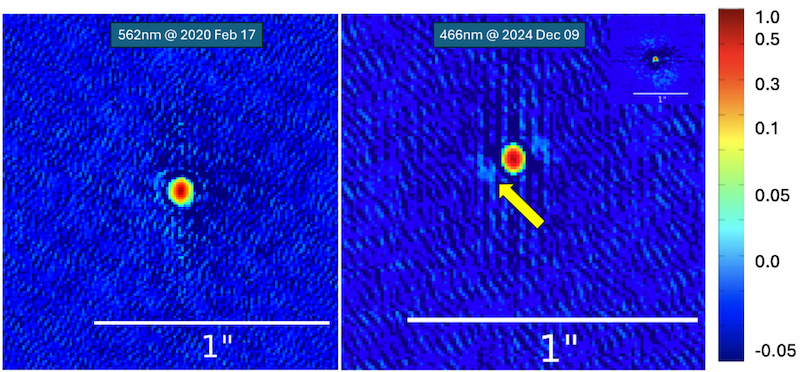
Observations of Betelgeuse from 2020 (left) and 2024 (right). An arrow points to the companion. Note that the image processing introduces a 180º ambiguity in the location of the companion, which is resolved by analyzing phase information. [Howell et al. 2025]
More to Learn
Howell and coauthors performed additional analyses to rule out interference from hot pixels, cosmic rays, or atmospheric diffraction. They also considered that the star could lie in the background or foreground, but they found both possibilities unlikely. After further calculations, the team estimated that the companion is six magnitudes fainter than Betelgeuse and separated by just 52 milliarcseconds at an angle of 115º. These quantities agree well with predictions for the companion’s position.

The on-sky proper motion of Betelgeuse from 2020 to 20204. The companion is shown as the small black circle. This shows that if the companion star were actually a background star, it would have been plainly visible in the 2020 observations. [Howell et al. 2025]
The team closed with a call to the community to turn their instruments toward Betelgeuse on 26 November 2027, when the companion will once again be at its greatest angular separation. Our exploration of this long-sought-after star has just begun!
Citation
“Probable Direct Imaging Discovery of the Stellar Companion to Betelgeuse,” Steve B. Howell et al 2025 ApJL 988 L47. doi:10.3847/2041-8213/adeaaf
The post Betelgeuse’s Companion Star May Have Been Seen at Last appeared first on AAS Nova.
]]>
Astrobites reports on very deep JWST observations and the hunt for the first galaxies in the universe.
The post A GLIMPSE of the First Galaxies? appeared first on AAS Nova.
]]>Editor’s Note: Astrobites is a graduate-student-run organization that digests astrophysical literature for undergraduate students. As part of the partnership between the AAS and astrobites, we occasionally repost astrobites content here at AAS Nova. We hope you enjoy this post from astrobites; the original can be viewed at astrobites.org.
Title: A Glimpse of the New Redshift Frontier Through Abell S1063
Authors: Vasily Kokorev et al.
First Author’s Institution: The University of Texas at Austin
Status: Published in ApJL
JWST has opened up a new era of early universe astronomy. Of particular interest is the hunt for the first galaxies, which are thought to have formed just a couple hundred million years after the Big Bang. But finding these early galaxies has proved to be somewhat of a challenge. While there have been many bright galaxies discovered by JWST at a redshift (z) greater than 10, no galaxies at z > 15 have been confirmed to date. Today’s article goes hunting for these very high-redshift galaxies in the GLIMPSE field, which is home to the strong lensing cluster Abell S1063, shown in Figure 1.

Figure 1: JWST image of the field used for this study. [Kokorev et al. 2025]
Step 1: Cut Galaxies by Color
Cutting galaxies by color involves finding the Lyman break. High-energy light is absorbed by neutral hydrogen in the galaxy and in the space between the galaxy and us. Thus, when you look at a galaxy’s spectral energy distribution, there is a drop-off at short wavelengths called a “break.” For distant galaxies, the location of this drop-off gets redshifted, allowing for an estimation of a galaxy’s distance. By comparing how bright sources are between two filters that are adjacent in wavelength, we can look for steep drop-offs that are caused by the Lyman break. Figure 2 shows a color–color plot (showing the difference in brightness between different filters), where the dashed line shows the region galaxies must be in to be considered Lyman-break galaxies at these high redshifts. In the whole field, the authors detect 38 objects in this region.
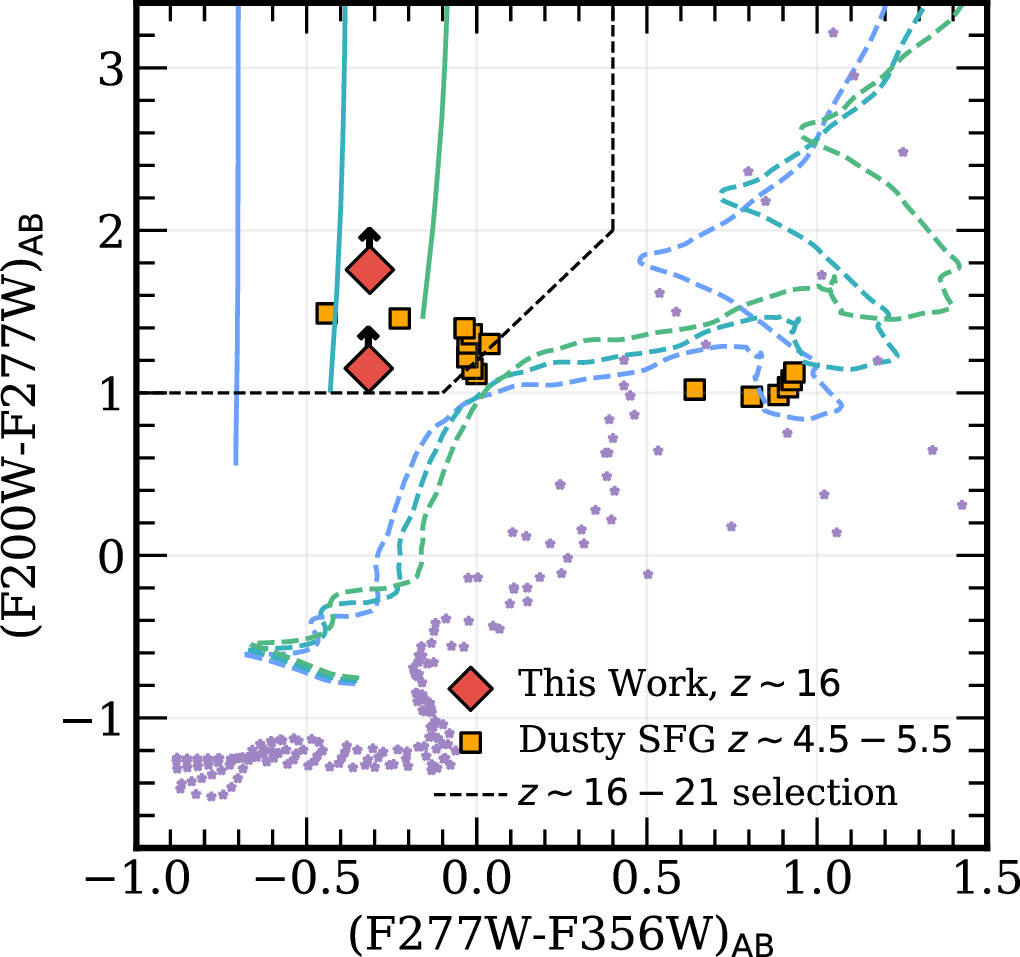
Figure 2: Color–color plot showing the selection criteria for high-redshift galaxies due to Lyman break. The upper-left region enclosed by the black dashed line represents the region that satisfies the high-redshift criteria. The various lines show properties of different populations. Solid are potential tracks for starburst galaxies at z = 16, dashed are lower-redshift quiescent galaxies, and dotted are cool stars and brown dwarfs, which can look like high-redshift galaxies in some situations. The two red diamonds show the final two high-redshift candidates in this work. [Kokorev et al. 2025]
Step 2: Calculate Redshift
However, this isn’t the end of the story. Color isn’t the only way to estimate distances to galaxies, as we can also use photometric fitting codes. These codes compare observations to templates of what we would expect galaxies to look like at different redshifts and see which templates fit best. This allows for an estimation of the redshift of each source identified in the field. All sources that the photometric fitting codes thought were at z > 16 were cross-referenced against the 38 color-identified objects, which narrowed the list to eight high-redshift candidates.
Step 3: Hunt for Imposters
But wait, there’s more! Both of these methods (looking at colors and calculating redshift photometrically) are susceptible to false positives. Lower-redshift galaxies, particularly star-forming dusty galaxies, can look just like high-redshift sources. This is apparent in Figure 2, where z ~ 4.5–5.5 dusty galaxies can also be found in the color-selected Lyman-break region. Thus, we need to explore the possibility that the sources might not be at high redshift at all. In this article, the authors do this by fitting their eight sources with a lower-redshift dusty starburst template, finding only five galaxies that match the high-redshift template better than the starburst template.
Step 4: Keep Significant Detections
The authors make one final cut to the last five sources, only keeping those that aren’t at the edges of the observation and thus have strong signals, where they can be confident we’re actually detecting something and it’s not just a hot pixel or noise. So, after all of that, they are left with only two z > 16 candidates in this field.
Figure 3 shows the images and spectral energy distributions of each of these candidates, given the wonderfully poetic names of 70467 and 72839. While there is still a lot to learn about these candidates, with the JWST data presented in this article we can uncover some things about the galaxy properties. Both sources appear to be compact, but still resolved, with effective radii of roughly 650 light-years. These observations can also tell us about the ultraviolet brightness of the two candidates, finding that they are most likely dominated by extended stellar emission, as opposed to active galactic nucleus activity. In general, these galaxy candidates are not very ultraviolet-bright, which is somewhat surprising, as JWST has found many bright galaxies at z ~ 12–14. However, it is not out of the question that galaxies at this slightly earlier epoch are just fainter than we expected, and then formed stars and increased in brightness relatively quickly.

Figure 3: Cutouts and spectral energy distributions for the two high-redshift candidates in this work. Squares show images in nine JWST filters, as well as an image of several filters combined, with a cutout width of 1.5″. Spectral energy distribution plots show different template galaxies for high-redshift (orange and red) and low-redshift dusty star-forming galaxy interlopers (blue and green). You can see how these sources are only strongly detected in a few filters, with many detections being just upper limits. [Kokorev et al. 2025]
Original astrobite edited by Bill Smith.
About the author, Skylar Grayson:
Skylar Grayson is an Astrophysics PhD Candidate and NSF Graduate Research Fellow at Arizona State University. Her primary research focuses on AGN feedback processes in cosmological simulations. She also works in astronomy education research, studying online learners in both undergraduate and free-choice environments. In her free time, Skylar keeps herself busy doing science communication on social media, playing drums and guitar, and crocheting!
The post A GLIMPSE of the First Galaxies? appeared first on AAS Nova.
]]>The post Eccentricities of Close Stellar Binaries appeared first on AAS Nova.
]]>The eccentricities of binary stars that orbit one another within a few astronomical units follow a simple Rayleigh distribution, an outcome that may be traceable back to excitation by circumbinary disks.
The post Eccentricities of Close Stellar Binaries appeared first on AAS Nova.
]]>
What's responsible for the haphazard orbits of the stars closest to our galaxy's supermassive black hole? A second black hole, perhaps.
The post How a Black Hole Collision Could Explain the Milky Way’s S-Stars appeared first on AAS Nova.
]]>New research shows that a past collision between the Milky Way’s central black hole and a smaller black hole could explain the dynamics of the S-stars, a group of stars that orbit precariously close to our galaxy’s supermassive black hole.
Journey to the Center of the Milky Way
The center of the Milky Way harbors a supermassive black hole (Sagittarius A* or Sgr A*) with a mass of 4 million Suns. The nearest neighbors of this behemoth are a compact disk of massive young stars and a collection of stars called the S-stars, which inhabit the innermost 48 light-days of our galaxy.
While the stars in the disk are orderly, arranged on orbits with moderate eccentricities and low inclinations, the S-stars orbit Sgr A* every which way, careening around the black hole with a wide range of eccentricities and inclinations. So far, the cause of this unusual distribution of stars is unknown.
When Black Holes Collide
Past research has struggled to explain the S-stars’ orbits. A successful theory of S-star origins must account for the stars’ eccentric orbits (e = 0.61, on average) and high orbital inclinations (i = 79º, on average), and it must produce these characteristics within the 15-million-year lifetime of the stars.

Schematic showing the proposed formation pathway for the Milky Way’s S-star population. Click to enlarge. [Akiba et al. 2025]
The premise is not far-fetched: at the ripe old age of nearly 14 billion years, the Milky Way has likely gulped down neighboring dwarf galaxies and globular clusters multiple times. When a black hole embedded within one of these meals of stars and gas merges with the Milky Way’s central black hole, the collision causes Sgr A* to recoil — potentially rearranging the stars in its vicinity in the process.
Radical Reorganization
Akiba and collaborators used N-body simulations to explore the outcomes of such a collision. In their simulations, Sgr A* is situated within an axisymmetric disk of stars or gas. A smaller black hole falls toward Sgr A*, spirals inward, and merges with the larger black hole. The asymmetric emission of gravitational waves causes Sgr A* to recoil, warping the surrounding collection of stars and gas into an eccentric disk. For the eccentricity of the disk to match what is seen in the disk of stars surrounding Sgr A* today, the incoming black hole must have a mass of roughly 200,000 solar masses.
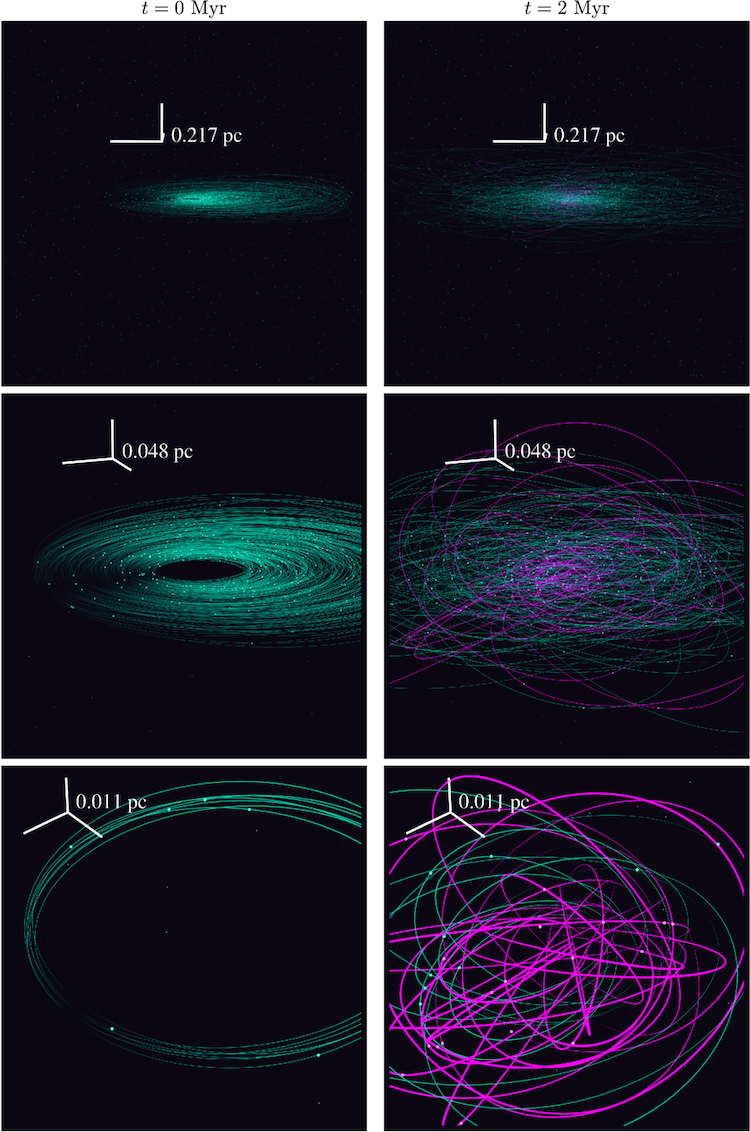
Simulation snapshots taken at the simulation onset (left column) and after 2 million years (right column). Orbits with inclination greater than 30 degrees are shown in magenta. Note the difference in scale between the rows. [Akiba et al. 2025]
While the properties of the modeled S-stars don’t exactly match the properties of the real deal — the simulated stars have, on average, lower inclinations and eccentricities — the authors noted that this work represents a first foray into their hypothesis. Modeling that explores a broader range of parameter space is needed to fully understand the origins of the stars at the center of the Milky Way.
Citation
“On the Formation of S Stars from a Recent Massive Black Hole Merger in the Galactic Center,” Tatsuya Akiba et al 2025 ApJL 987 L27. doi:10.3847/2041-8213/addc5d
The post How a Black Hole Collision Could Explain the Milky Way’s S-Stars appeared first on AAS Nova.
]]>The post Insights into Galaxy Evolution from Interpretable Sparse Feature Networks appeared first on AAS Nova.
]]>A novel neural network architecture produces interpretable features that can be combined to estimate galaxy properties such as metallicity from pixel-level features.
The post Insights into Galaxy Evolution from Interpretable Sparse Feature Networks appeared first on AAS Nova.
]]>
Astrobites reports on the origins of the unusual green structure surrounding the active galaxy NGC 5972.
The post Written in the Gas: Jet Feedback in a Voorwerp Galaxy appeared first on AAS Nova.
]]>Editor’s Note: Astrobites is a graduate-student-run organization that digests astrophysical literature for undergraduate students. As part of the partnership between the AAS and astrobites, we occasionally repost astrobites content here at AAS Nova. We hope you enjoy this post from astrobites; the original can be viewed at astrobites.org.
Title: Jet-Mode Feedback in NGC 5972: Insights from Resolved MUSE, GMRT, and VLA Observations
Authors: Arshi Ali et al.
First Author’s Institution: Savitribai Phule Pune University
Status: Published in ApJ
Voorwerp Galaxies as Laboratories for Active Galactic Nuclei
Supermassive black holes are believed to reside at the centers of nearly all massive galaxies. As supermassive black holes accrete matter, they can release enormous amounts of energy in the form of radiation, winds, and relativistic jets — powering active galactic nuclei and influencing their host galaxies. This process, known as active galactic nucleus feedback, can regulate star formation and the properties of the gas in the interstellar medium, making it a key mechanism for shaping how galaxies form and evolve over cosmic time.
Of the many diverse manifestations of active galactic nuclei, radio “loud” galaxies stand out as powerful laboratories for studying feedback in action. Not only do these galaxies have characteristic [O III] emission lines, but they also host intense radio-emitting lobes of gas that extend well beyond the structure of the galaxy, indicative of jets. (Today’s article refers to these lobes as the extended emission-line region or EELR.)
Originally discovered by a schoolteacher, Voorwerp galaxies are a special category of radio galaxies that are candidate sites of active galactic nucleus activity in terms of their emission-line signatures. Moreover, they exhibit intriguing clouds of ionized gas that may have originated from jets. Figure 1 shows some examples of Voorwerp galaxies. Exploring these galaxies can shed light on how jets interact with the interstellar medium, a major player in active galactic nucleus feedback.

Figure 1: Voorwerp galaxies are compelling laboratories for exploring the interaction between jets and the interstellar medium. Examples are Hanny’s Voorwerp (left), NGC 5972 (middle), and the Teacup Quasar (right). [NASA, ESA, W. Keel (University of Alabama), and the Galaxy Zoo Team; NASA, ESA, and W. Keel (University of Alabama, Tuscaloosa); NASA, ESA, and W. Keel (University of Alabama, Tuscaloosa)]
Evidence for Relativistic Jets in NGC 5972
To study the interstellar medium of the Voorwerp galaxy, the authors combined observations from multiple instruments that probe different phases of the galaxy’s gas. Specifically, they used data from the Very Large Telescope (VLT), the Giant Metrewave Radio Telescope (GMRT), and the Very Large Array (VLA) to create maps of the ionized gas emission, allowing them to trace the structures and movement of the gas and jet material. Together, these datasets offer a comprehensive, multi-wavelength view of how the radio jet shaped the surrounding interstellar medium. The maps of NGC 5972, shown in Figure 2, display an impressive spiraling structure that could be the result of prolonged active galactic nucleus activity.
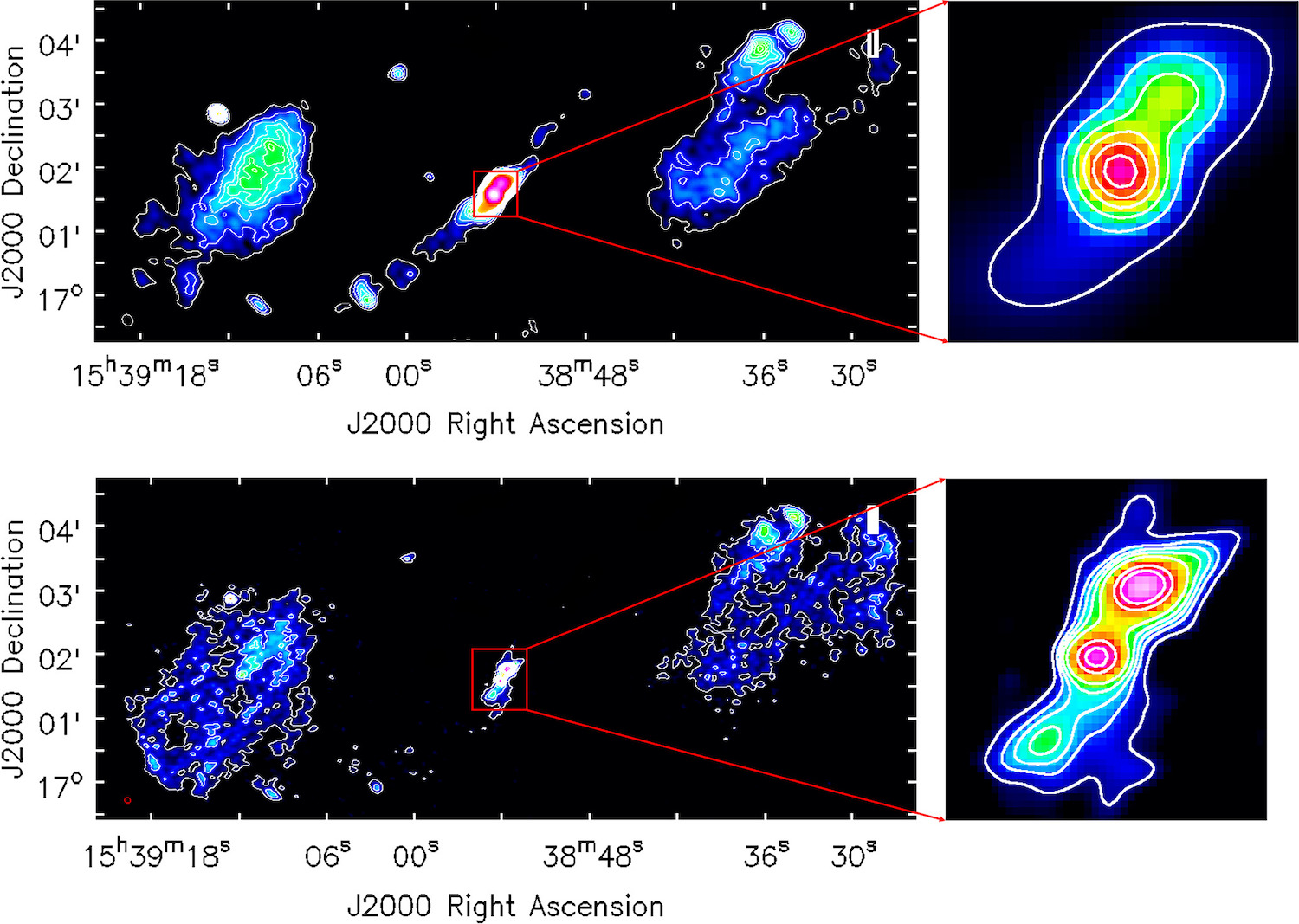
Figure 2: The radio emission of NGC 5972 reveals the extended helical, spiral structure of the ionized gas, where the inner jets are connected to the outer lobes (top: VLA, bottom: GMRT). This suggests that the intriguing shape of NGC 5972 could have originated from active galactic nucleus jets. [Ali et al. 2025]
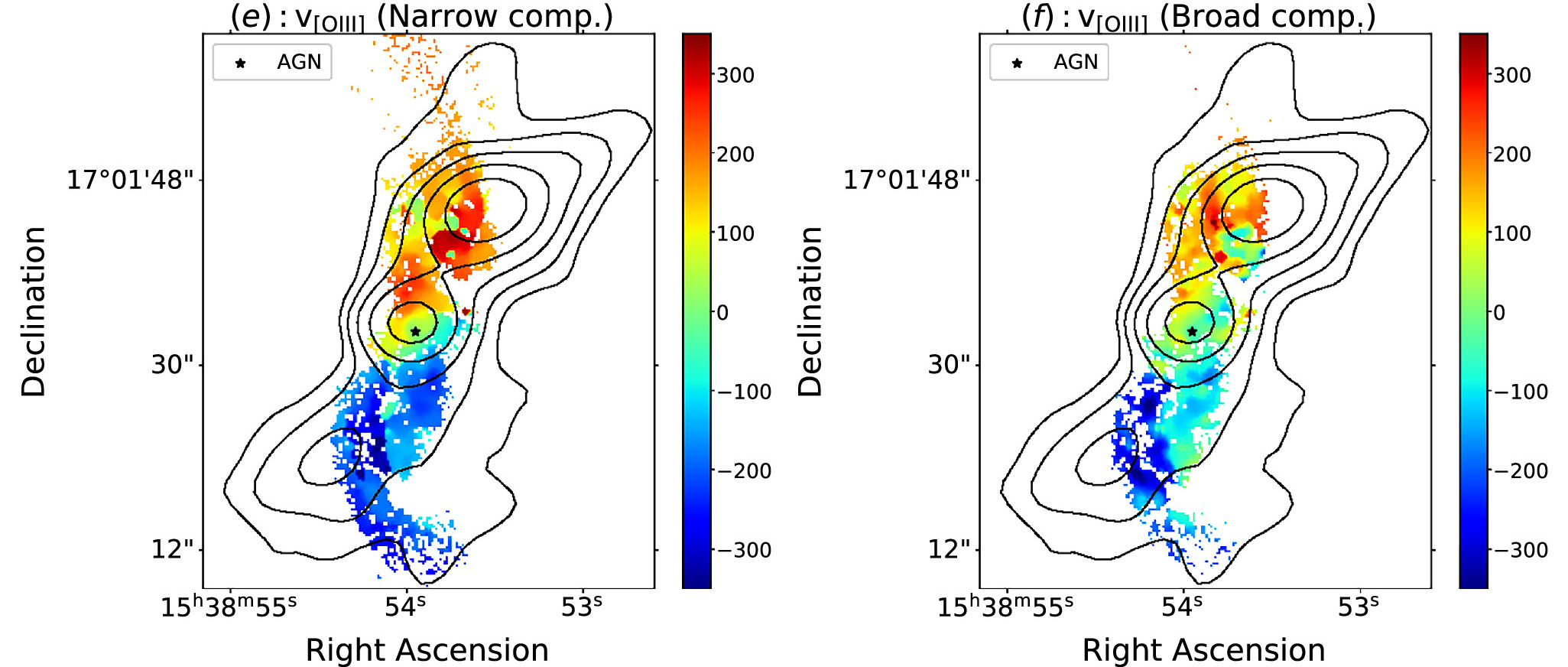
Figure 3: The velocity profiles of NGC 5972’s [O III] emission lines, a characteristic signature of the active galactic nucleus’s extended emission-line region. The velocities are aligned and enhanced along the jet axis, indicating that active galactic nucleus feedback influenced the gas by powering jets and outflows. [Adapted from Ali et al. 2025]

Figure 4: The left panel shows the ionizing sources of the gas in NGC 5972. While the gas along the jet axis is ionized by radiation from the active galactic nucleus (orange in the diagram), the regions transverse to the jet are ionized by shock waves (blue). Moreover, the gas in the jet regions is more turbulent, as shown in the right panel. [Adapted from Ali et al. 2025]
Putting the Story of NGC 5972 Together
These findings suggest that jet-driven feedback plays a crucial role in shaping the extended emission-line region of NGC 5972 (see Figure 5 for a summary). The interaction between the radio jet and the surrounding gas not only sustains ionization but also influences the gas structure. To further unravel the jet’s impact, future high-resolution radio observations will be essential, providing deeper insights into how active galactic nucleus–driven jets function.
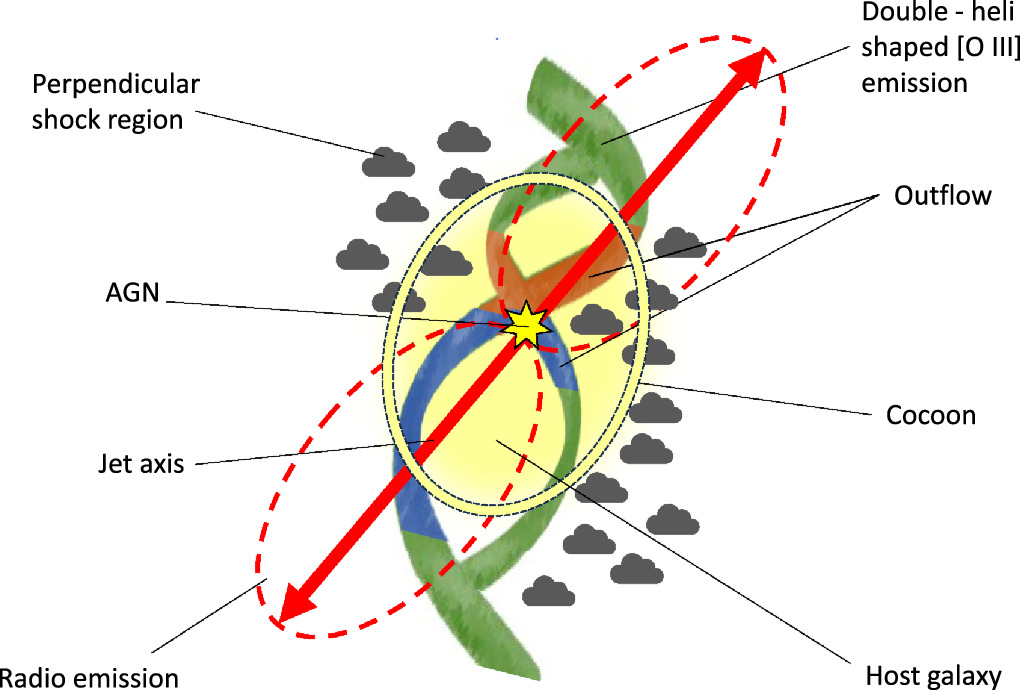
Figure 5: Cartoon schematic diagram showing various mechanisms at play in NGC 5972, including the active galactic nucleus jets, shocks, and outflows. [Ali et al. 2025]
Original astrobite edited by Alexandra Masegian.
About the author, Shalini Kurinchi-Vendhan:
After studying astrophysics and literature at Caltech, I moved onto a Fulbright Fellowship in Heidelberg, Germany. I’m passionate about using computer simulations to explore supermassive black holes and galaxy evolution—but I also love poetry and traveling.
The post Written in the Gas: Jet Feedback in a Voorwerp Galaxy appeared first on AAS Nova.
]]>The post Stellar Population and Energy Feedback in the Supergiant Shell LMC 1 appeared first on AAS Nova.
]]>Combining data from multiple sources, astronomers show that the stellar energy feedback from the OB association LH15 is powerful enough to have created the surrounding supergiant shell.
The post Stellar Population and Energy Feedback in the Supergiant Shell LMC 1 appeared first on AAS Nova.
]]>The post In Search of the Potentially Hazardous Asteroids in the Taurid Resonant Swarm appeared first on AAS Nova.
]]>A dedicated telescopic search for potentially hazardous asteroids in the Taurid swarm yielded no detections, suggesting that there are no more than 9–14 objects with diameters larger than 100 meters in the swarm.
The post In Search of the Potentially Hazardous Asteroids in the Taurid Resonant Swarm appeared first on AAS Nova.
]]>
One of the first-look images from the Vera C. Rubin Observatory contained a rare find: a candidate circumstellar or protoplanetary disk in a region where few such disks have been discovered.
The post Astronomers Spot Possible Disk in Rubin Observatory First-Look Image appeared first on AAS Nova.
]]>Editor’s Note: Shortly after the publication of this article, we became aware that the disk described in this work was previously discovered by Wei-Hao Wang, as reported in the Astronomer’s Telegram in July 2024.
On 23 June 2025, the public got its first look at images from the NSF–DOE Vera C. Rubin Observatory — and the discoveries are already starting to roll in.
Trifid and Lagoon
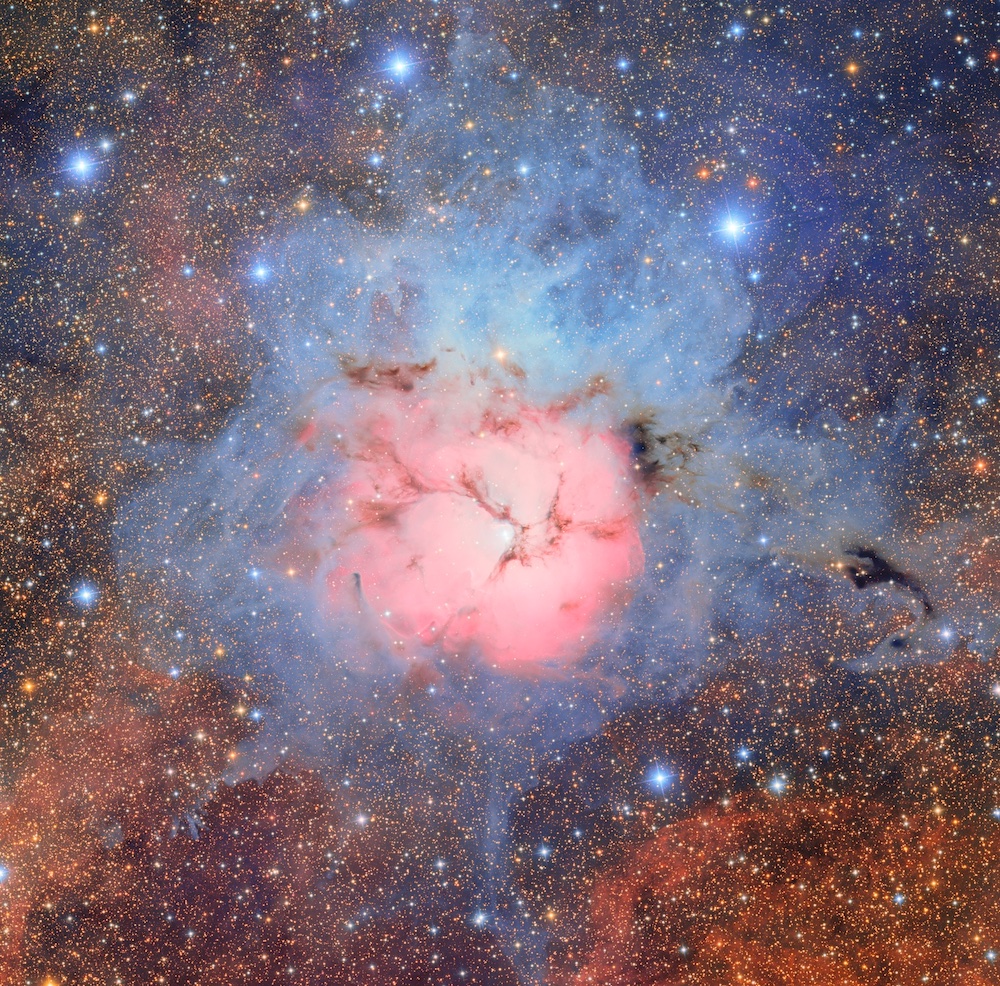
A closeup of the Trifid Nebula from one of the Rubin Observatory first-look images. [Adapted from NSF–DOE Vera C. Rubin Observatory; CC BY 4.0]
The Trifid and Lagoon nebulae are both HII regions, making them ideal places to search for circumstellar and protoplanetary disks, as well as proplyds — protoplanetary disks that are in the process of being evaporated by the intense radiation from nearby massive stars. The glowing gas of an HII region provides the background illumination needed to pick out the silhouettes of dark and dusty disks.
The Trifid Nebula disk candidate identified in this work. [Adapted from Zamani & Rector 2025]
Disk Detected
Published today in the Research Notes of the AAS, Mahdi Zamani (Zamani Scientific Visualizations & Imaging) and Travis Rector (University of Alaska Anchorage) reported the results of their search for proplyds in the Rubin image of the Trifid and Lagoon nebulae. The team detected one candidate circumstellar or protoplanetary disk on the edge of the Trifid Nebula, surrounded by tenuous, filamentary clouds of gas and dust.
The Rubin data don’t show evidence for ionized gas surrounding the disk, so it’s not yet clear if the object should be classified as a proplyd. The disk has a projected distance of 7.5 light-years from HD 164492A, the O-type star whose intense radiation is responsible for energizing the surrounding nebula, and may also be capable of ionizing the disk studied here.
Disk Detected
The Orion molecular cloud complex is among the most active star-forming regions in the Milky Way, home to hundreds of protostars and thousands of pre-main-sequence stars. [ESO/H. Drass et al.; CC BY 4.0]
Researchers have searched the Trifid Nebula previously for signs of protoplanetary disks, but while those searches found evidence for disks around hot stars near the center of the cluster, this particular disk candidate went undetected. Previous searches likely didn’t cover a large enough area of the nebula, or perhaps lacked the resolution needed to differentiate between the dusty disk and the nearby filamentary gas clouds. With Rubin’s broad field of view and precise resolution, the observatory was well-positioned to spot this disk candidate.
Citation
“The Potential Discovery of a Circumstellar Disk in M20 from Rubin First Look,” Mahdi Zamani and T. A. Rector 2025 Res. Notes AAS 9 172. doi:10.3847/2515-5172/ade982
The post Astronomers Spot Possible Disk in Rubin Observatory First-Look Image appeared first on AAS Nova.
]]>The post Dark Galactic Subhalos and the Gaia Snail appeared first on AAS Nova.
]]>Probabilistic modeling shows that perturbations from dark subhalos can’t account for the Gaia “snail,” a spiral feature in the vertical phase-space distribution in the solar neighborhood.
The post Dark Galactic Subhalos and the Gaia Snail appeared first on AAS Nova.
]]>The post A 22 Billion M⊙ Black Hole in Holmberg 15A with Keck KCWI Spectroscopy and Triaxial Orbit Modeling appeared first on AAS Nova.
]]>The kinematics of stars in the central region of the massive elliptical galaxy Holmberg 15A reveal the galaxy’s central supermassive black hole to be one of the most massive in the local universe.
The post A 22 Billion M⊙ Black Hole in Holmberg 15A with Keck KCWI Spectroscopy and Triaxial Orbit Modeling appeared first on AAS Nova.
]]>
A search for oddities in archival JWST data has turned up something remarkable: a rare pair of collisional ring galaxies that may have birthed a supermassive black hole during their clash.
The post A Candidate Direct-Collapse Black Hole in the Infinity Galaxy appeared first on AAS Nova.
]]>Researchers have discovered a rare ring-galaxy duo that appears to harbor a supermassive black hole formed through direct collapse — a process similar to what may have jump-started the growth of the first supermassive black holes in the universe.
Searching for Oddballs
A portion of the COSMOS-Web field. [ESA/Webb, NASA & CSA, G. Gozaliasl, A. Koekemoer, M. Franco, and the COSMOS-Web team; CC BY 4.0]
Van Dokkum and coauthors searched for interesting objects in publicly available images from COSMOS-Web, a JWST program dedicated to understanding how galaxies have evolved over the course of cosmic history. Having already published their discovery of a complete Einstein ring in the COSMOS-Web field, the team is now revealing a second finding: a galaxy featuring two bright, compact nuclei, two starry rings, and an unexpected inhabitant right in the center.
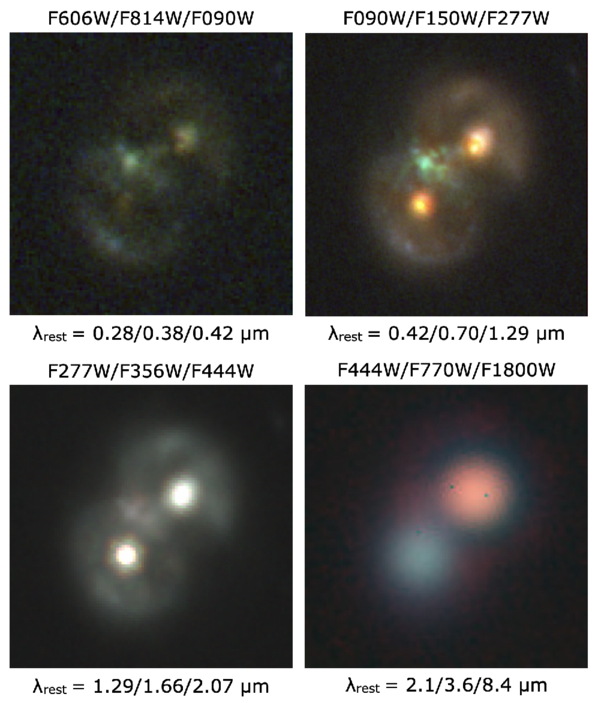
Four views of the Infinity Galaxy from Hubble and JWST. [van Dokkum et al. 2025]
Gathering Data
To learn more about this strange object, named the Infinity Galaxy for its resemblance to the infinity symbol, the team gathered data from the Hubble Space Telescope, the Keck I telescope, the Chandra X-ray Observatory, and the Very Large Array. The resulting multiwavelength portrait allowed the team to weigh the two nuclei, showing them to be massive — containing 80 billion and 180 billion solar masses of stars — and extremely compact. The new data also revealed that the cloud of gas between the nuclei contains a 1-million-solar-mass black hole.
The nuclei, the rings, and the gas between them appear to be the result of two disk galaxies that shot through one another, forming a pair of collisional ring galaxies. To achieve the infinity-symbol shape, the galaxies must have met one another face on, forming two parallel nucleus–ring systems that we see from an angle of about 40º. As the galaxies collided, some of their gas would have been torn away, left tangled together in the void between the two nuclei.
To the Infinity Galaxy and Beyond
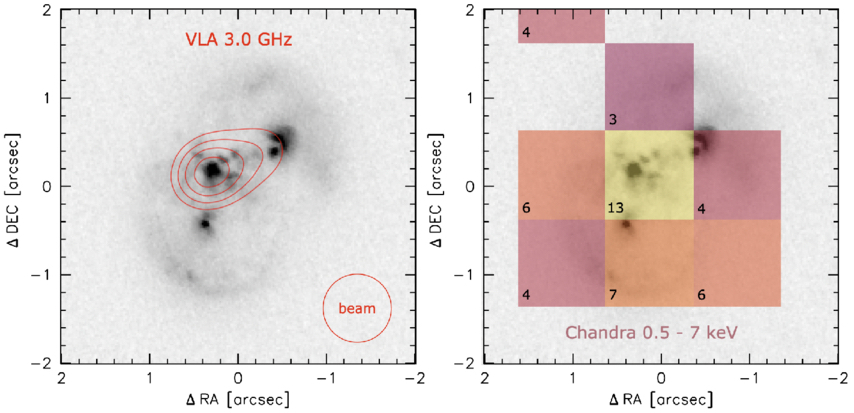
Radio (left) and X-ray (right) observations of the Infinity Galaxy, demonstrating that the black hole candidate is a strong radio and X-ray source. Click to enlarge. [Adapted from van Dokkum et al. 2025]
The authors favor a different explanation, in which the location of the black hole is no coincidence. In this scenario, the colliding galaxies crushed a gas cloud between them so forcefully that the condensed gas collapsed directly into a black hole. The authors estimated that the collision happened 50 million years ago and created a 300,000-solar-mass black hole that subsequently grew to its current mass of 1 million solar masses. Direct collapse has been proposed to be a source of the seeds of supermassive black holes in the early universe, though there are some differences between the proposed process in the early universe and what may be happening in the Infinity Galaxy.
Van Dokkum and collaborators concluded their article by saying that future observations could clarify whether the black hole is truly associated with the Infinity Galaxy — and as reported in a press release today, preliminary analysis of follow-up observations with JWST show just that. With the black hole now definitively placed within the Infinity Galaxy, the evidence for direct collapse is strengthened, though more work is needed to probe this possibility.
Citation
“The ∞ Galaxy: A Candidate Direct-Collapse Supermassive Black Hole Between Two Massive, Ringed Nuclei,” Pieter van Dokkum et al 2025 ApJL 988 L6. doi:10.3847/2041-8213/addcfe
The post A Candidate Direct-Collapse Black Hole in the Infinity Galaxy appeared first on AAS Nova.
]]>The post A Glimpse of the New Redshift Frontier through AS1063 appeared first on AAS Nova.
]]>Using JWST, researchers have detected two candidate galaxies at redshifts of 15.7 < z < 16.4 — galaxies that may be the ultraviolet-bright precursors to other bright galaxies spotted at slightly lower redshifts.
The post A Glimpse of the New Redshift Frontier through AS1063 appeared first on AAS Nova.
]]>
JWST observations of the young star cluster IC 348 revealed extremely low-mass brown dwarfs with signatures of hydrocarbons in their spectra: meet the members of the proposed "H" spectral class.
The post Featured Image: Low-Mass Brown Dwarfs in a Class of Their Own? appeared first on AAS Nova.
]]>The glowing green nebula in this JWST image surrounds the star cluster IC 348, which is the subject of a recent study by Kevin Luhman (Penn State University) and Catarina Alves de Oliveira (European Space Agency). Using JWST’s Near-Infrared Camera, Luhman and Alves de Oliveira searched the cluster’s young stellar population for free-floating brown dwarfs — objects that are less massive than stars but more massive than most planets — and discovered multiple candidates with masses down to just twice the mass of Jupiter. Follow-up JWST spectroscopy confirmed the masses of these objects, making them the lowest-mass brown dwarfs known to date. In addition to their mass, these newly discovered brown dwarfs are remarkable because their spectra show evidence of hydrocarbon molecules, the exact identities of which are not yet known. Luhman and Alves de Oliveira proposed that low-mass brown dwarfs bearing this chemical signature be inducted into a new spectral class called “H” for “hydrocarbon.” To add to the intrigue of these objects, the authors also discovered signs of circumstellar disks around two of them, suggesting that they may be capable of forming and harboring planets. To learn more about the low-mass brown dwarfs in IC 348, be sure to check out the full research article linked below.
Citation
“A New Spectral Class of Brown Dwarfs at the Bottom of the IMF in IC 348,” K. L. Luhman and C. Alves de Oliveira 2025 ApJL 986 L14. doi:10.3847/2041-8213/addc55
The post Featured Image: Low-Mass Brown Dwarfs in a Class of Their Own? appeared first on AAS Nova.
]]>The post Size Constraint on Hayabusa2 Extended Mission Rendezvous Target 1998 KY26 via VLT/VISIR Nondetection appeared first on AAS Nova.
]]>Thermal infrared observations from the Very Large Telescope yield an upper limit of 17 meters for the diameter of the asteroid 1998 KY26, which Hayabusa2 will reach in 2031.
The post Size Constraint on Hayabusa2 Extended Mission Rendezvous Target 1998 KY26 via VLT/VISIR Nondetection appeared first on AAS Nova.
]]>
A recently discovered tidal disruption event has astronomers investigating new ways in which stars may be ripped apart by supermassive black holes.
The post Double Disruption Dilemma: Exploring the Tidal Disruption Events of AT 2022dbl appeared first on AAS Nova.
]]>Falling into a supermassive black hole will leave a star mangled and destroyed but not without a fiery end. A recent study explores an intriguing case, uncovering new possibilities for stars lost to black hole bites.
Tidal Disruption Events
Invisible in light but strong in gravitational influence, some supermassive black holes reveal themselves when a star comes close enough to be ripped apart by the black hole’s tidal forces. This violent encounter produces a flare of radiation known as a tidal disruption event, allowing astronomers to explore the otherwise hidden properties of supermassive black holes and their influence on the material around them.
Tidal disruption events vary depending on the properties of the host galaxy, the supermassive black hole, and the star itself. These events often appear as X-ray flares, but over the past decade, researchers have discovered a new class of optical-ultraviolet tidal disruption events. Emitting primarily in ultraviolet and optical wavelengths, these flares are significantly less energetic than predicted, leaving researchers wondering — what drives these disruptions?
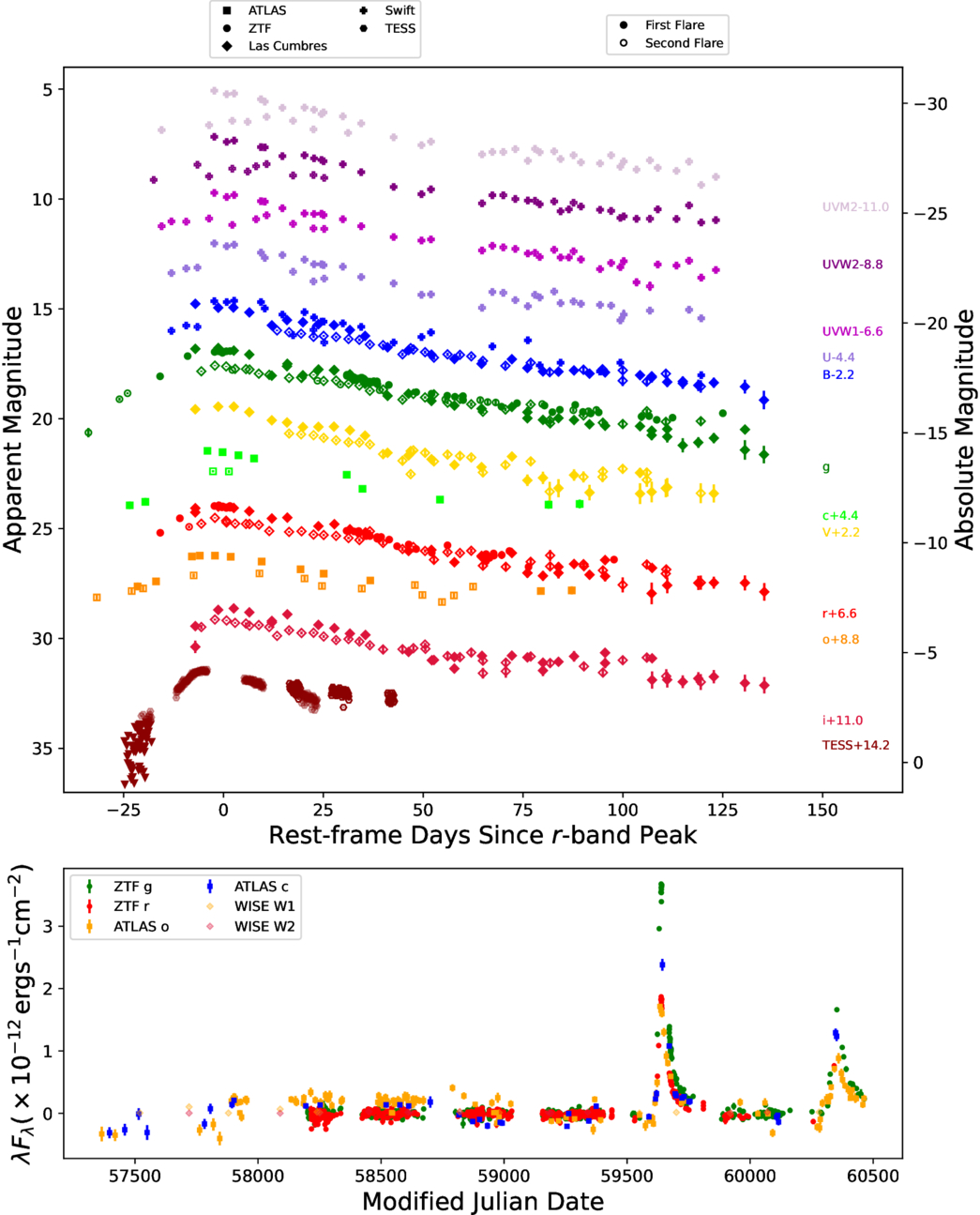
Optical and ultraviolet light curves for the two observed flares of AT 2022dbl. The flares have very similar light curves across wavelengths. Click to enlarge. [Makrygianni et al 2025]
Origins of AT 2022dbl
New detections of optical-ultraviolet tidal disruption events can provide insights into their origins, and one such discovery is particularly intriguing. AT 2022dbl first flared in 2022 and emitted a second, nearly identical flare 700 days later in 2024 — behavior uncommon among this class of tidal disruption events — raising many questions about AT 2022dbl’s origins. Did this supermassive black hole perhaps capture two unrelated stars? Is this actually the same flare seen twice due to gravitational lensing? Could a single star have survived the first flare only to be disrupted again?
Lydia Makrygianni (Lancaster University) and collaborators performed follow-up imaging and spectroscopy of AT 2022dbl to probe how the two flares compare to each other and to other observations of optical-ultraviolet tidal disruption events. With these observations and detailed analysis, the team determined that gravitational lensing, the tidal disruption of two separate stars, and even the possibility of a hidden binary companion to the supermassive black hole slurping up some stellar crumbs each cannot account for the two flares of AT 2022dbl.
Ultimately, the authors concluded that the two flares of AT 2022dbl are related to the same star, leaving two possibilities. First, loose debris from the initial flare bound to a tidal tail around the black hole could have ignited the second flare; however, the authors found that there would not be enough loose material bound to the black hole to produce the bright second flare. Rather, the second and likeliest explanation is two repeated disruptions of the same star.
Disrupting Expectations
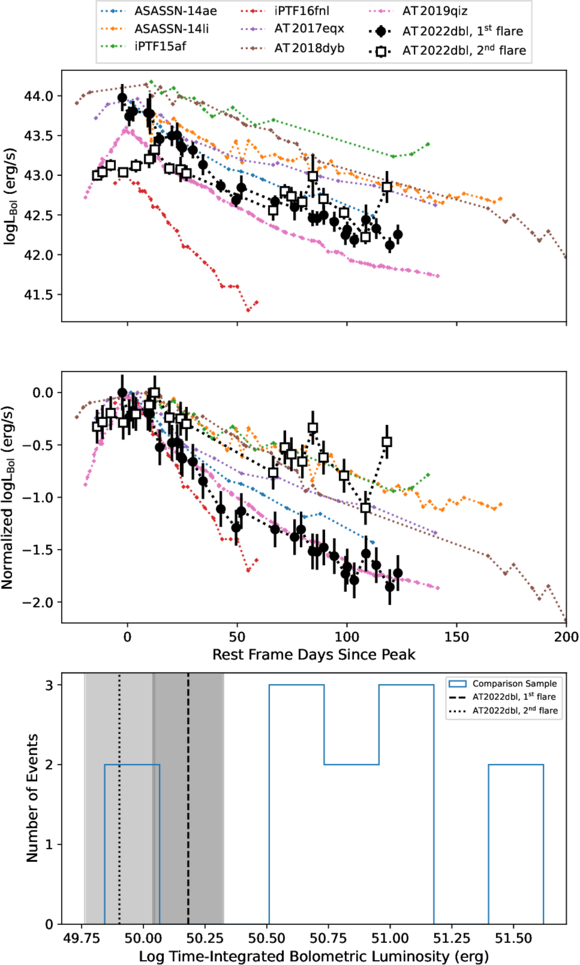
Light curves of AT 2022dbl flares compared to other optical-ultraviolet tidal disruption events. Both flares show similar peak luminosities and decline rates to other events. Click to enlarge. [Makrygianni et al 2025]
Other optical-ultraviolet tidal disruption events appear similar to the flares of AT 2022dbl, and these have generally been assumed to be complete disruptions. With the discovery and classification of AT 2022dbl, the similar optical-ultraviolet tidal disruption events could also be partial disruptions, with their second flares on longer timescales yet to be observed. Future observations of optical-ultraviolet tidal disruption events are required to further understand the mechanisms driving them, and this study opens up new possibilities to consider.
Citation
“The Double Tidal Disruption Event AT 2022dbl Implies that at Least Some ‘Standard’ Optical Tidal Disruption Events Are Partial Disruptions,” Lydia Makrygianni et al 2025 ApJL 987 L20. doi:10.3847/2041-8213/ade155
The post Double Disruption Dilemma: Exploring the Tidal Disruption Events of AT 2022dbl appeared first on AAS Nova.
]]>The post Rare Occasions: Tidal Disruption Events Rarely Power the AGNs Observed in Dwarf Galaxies appeared first on AAS Nova.
]]>Using 16 years of observations from the Chandra X-ray Observatory to assess X-ray variability of 78 active galactic nuclei in dwarf galaxies, researchers find few instances of tidal disruption events.
The post Rare Occasions: Tidal Disruption Events Rarely Power the AGNs Observed in Dwarf Galaxies appeared first on AAS Nova.
]]>
A new method for handling data with significant gaps can be applied to extremely sparse datasets, such as Voyager data from the outer heliosphere.
The post Minding the Gaps in Solar Wind Data appeared first on AAS Nova.
]]>Spacecraft scattered throughout the solar system keep tabs on the solar wind, but the measurements are dotted with data gaps. How can scientists prevent these gaps from biasing their studies of the solar wind?
Sampling the Solar Wind
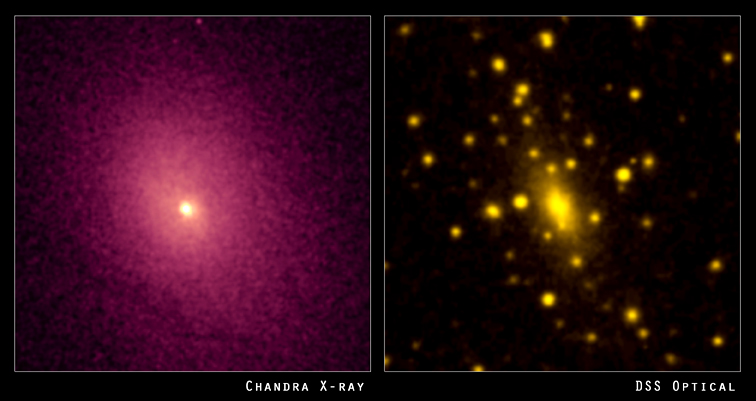
Left: the distribution of hot gas between the galaxies in the cluster Abell 2029. Right: the visible light from the galaxies in the cluster. [X-ray: NASA/CXC/UCI/A.Lewis et al. Optical: Pal.Obs. DSS]
Luckily, there are many spacecraft that sample the solar wind from various locations within our solar system. Unluckily, many of these spacecraft do not continuously monitor the solar wind. For example, when a spacecraft orbiting a planet dips into the planet’s atmosphere, this detour creates an hours-long gap in solar wind monitoring.
The Impact of Data Gaps
How do these data gaps affect studies of the solar wind? In a recent research article, Daniel Wrench and Tulasi Parashar (Victoria University of Wellington) approached this question in terms of how gaps affect the structure function: a mathematical description of how the solar wind fluctuates over different length or time scales.
Wrench and Parashar introduced random artificial gaps into data from the Parker Solar Probe, which monitors the solar wind continuously, and compared the structure functions calculated from the continuous and interrupted data sets. They used the difference between the true structure function — calculated from the continuous data set — and the structure functions from the artificially gapped data sets to develop a correction factor.
Performance of the correction factor method (black) compared to the uncorrected, gapped data (red) or gaps filled using linear interpolation (blue). MAPE is the mean absolute percentage error. [Wrench & Parashar 2025]
Structure function calculated from uncorrected Voyager 1 data (red), linearly interpolated data (blue), and corrected data (black). Both the linear interpolation method and the correction factor method remove the artifact around a lag of 3×10⁴ seconds, but the correction factor method does not suppress the signal like the linear interpolation method does. [Adapted from Wrench & Parashar 2025]
Correcting Voyager 1
Finally, the authors applied their validated method to data from Voyager 1. Data from the two Voyager spacecraft are extremely scientifically valuable — no other spacecraft have ventured as far from the Sun and can measure the solar wind at such large distances. The data are also extremely sparse; one segment used in this work was missing 85% of the data. This means that an effective method of correcting these data has potentially huge scientific significance.
Wrench and Parashar applied their correction factor to the Voyager 1 data, showing that this method handily removes artifacts while avoiding the underestimation introduced by linear interpolation. While the authors saved the interpretation of the newly corrected Voyager 1 data for future research, this study makes it clear that even large data gaps needn’t hinder studies of the solar wind.
Citation
“Debiasing Structure Function Estimates from Sparse Time Series of the Solar Wind: A Data-Driven Approach,” Daniel Wrench and Tulasi N. Parashar 2025 ApJ 987 28. doi:10.3847/1538-4357/addc6a
The post Minding the Gaps in Solar Wind Data appeared first on AAS Nova.
]]>The post Minute-Cadence Observations of the Galactic Plane with the Wide Field Survey Telescope (WFST): Overview, Methodology, and Early Results appeared first on AAS Nova.
]]>During its commissioning and pilot phases, the Wide Field Survey Telescope stared at the galactic plane for 13 hours, leading to the discovery of a variable hot white dwarf and an ellipsoidal white dwarf binary.
The post Minute-Cadence Observations of the Galactic Plane with the Wide Field Survey Telescope (WFST): Overview, Methodology, and Early Results appeared first on AAS Nova.
]]>The post The First Chemical Census of the Milky Way’s Nuclear Star Cluster appeared first on AAS Nova.
]]>New high-resolution near-infrared spectra of nine stars reveal the chemical abundance trends for more than a dozen elements, providing clues to the formation history of the Milky Way’s nuclear star cluster.
The post The First Chemical Census of the Milky Way’s Nuclear Star Cluster appeared first on AAS Nova.
]]>
Astrobites reports on simulations that improve our understanding of how jets from active galactic nuclei interact with the interstellar medium.
The post You Shall Not Pass! Active Galactic Nucleus Jets Through the Interstellar Medium appeared first on AAS Nova.
]]>Editor’s Note: Astrobites is a graduate-student-run organization that digests astrophysical literature for undergraduate students. As part of the partnership between the AAS and astrobites, we occasionally repost astrobites content here at AAS Nova. We hope you enjoy this post from astrobites; the original can be viewed at astrobites.org.
Title: You Shall Not Pass! The Propagation of Low-/Moderate-Powered Jets Through a Turbulent Interstellar Medium
Authors: Olga Borodina et al.
First Author’s Institution: Center for Astrophysics | Harvard & Smithsonian
Status: Published in ApJ
The central black holes of some galaxies are surrounded by accretion disks of hot infalling gas. In cases when the accretion disk is massive and highly energetic, this central system forms an active galactic nucleus that outshines the rest of the galaxy. Active galactic nucleus feedback is the process of energetic interactions between the central supermassive black hole and its surroundings. Active galactic nuclei are essential for galaxy quenching, and correctly modeling their contribution is important for accurate cosmological simulations.
Active galactic nuclei release the energy from their accretion via winds, which are widespread outflows, and jets. Jets are collimated, fast outflows of baryonic matter that can spread out from hundreds to tens of thousands of parsecs from their origin. There’s a big range in power for jets, ranging from a low end of around 1038 erg/s to a high end of 1046 erg/s. For context, our Sun emits at about 1033 erg/s.
As jets pass through their host galaxy, they interact with the gas and dust of the interstellar medium. There isn’t a lot of observational evidence for what goes on in that interaction, as the scale of resolution needed is so small — on the order of parsecs within the galaxy. Cosmological simulations don’t model scales small enough to accurately simulate these interactions, and they instead rely on feedback models that implement the macroscale effects. This means we could be missing part of the picture. Today’s article considers galaxy-scale numeric models for jets passing through a turbulent interstellar medium to study how the jet is affected by the gas and dust.
To do this, the authors used the Arepo code, which has an adaptive mesh setup that improves the resolution in areas that need it. They set up a 2-kiloparsec-cubed box full of gas with properties based on real galaxies’ interstellar media. This study is unique compared to other works because the authors use a filamentary structure for the interstellar medium, while previous studies used a clumpy structure. This filamentary structure reflects our actual Milky Way’s interstellar medium and creates more low-density cavities for the jet to interact with. The authors studied three jet powers on the low to intermediate end, of 1038, 1040, and 1043 erg/s. This is also unique to the study, as many works look at higher-powered jets, which produce large-scale radio galaxies, despite lower powers being more common. The jets were launched along the x-axis and had a tracer set up to track their positions through time.
Figure 1: From top to bottom, the high to low power jets, which are traced in color against the background interstellar medium density in grayscale. The lower power jets are stalled by the interstellar medium and do not make it as far out in the simulation space. [Adapted from Borodina et al. 2025]
The highest-power jets, 1043 erg/s, were easily able to pass through the turbulent environment and reach the outer boundary of the simulation. They mostly traveled along the axis that the jet was launched along, with some lateral expansion.
The intermediate-power jets, 1040 erg/s, were highly disrupted and redirected from the axis they were launched along. The jets bent, filled the low-density cavities between the filaments, and produced bubble-like shapes. These jets did make it all the way to the simulation boundary, but at later times and not along the axis they were initialized on. These intermediate-power jets don’t have enough ram pressure — the pressure against the gas due to the jet’s motion — to push through the turbulent structure of the interstellar medium, and they have to fill pre-existing cavities rather than plowing their own. The authors developed an analytic model for the minimum energy needed for jets to be able to plow through the interstellar medium, at approximately 1041 erg/s.
The jets in the lowest-power case, 1038 erg/s, were stalled out by the interstellar medium within the first kiloparsec of travel. They couldn’t penetrate the higher-density regions of the interstellar medium the way the 1040 erg/s case could, and they couldn’t make it to lower-density cavities to expand into.
All three of these cases were slower and shorter than the same power of jets run in a non-turbulent simulation, with the most significant disruption in the lowest-powered jets. This work demonstrates that a turbulent interstellar medium–jet interaction can be the sole cause of observed asymmetric and bent active galactic nucleus jets. By improving our understanding of this small-scale interaction, the authors are contributing to making better active galactic nucleus feedback models in cosmological simulations.
Original astrobite edited by Ansh Gupta.
About the author, Lindsey Gordon:
Lindsey Gordon is a fourth-year PhD candidate at the University of Minnesota. She works on active galactic nucleus jets, radio relics, magnetohydrodynamics simulations, and how to use AI to study all those things better.
The post You Shall Not Pass! Active Galactic Nucleus Jets Through the Interstellar Medium appeared first on AAS Nova.
]]>
New research suggests that JWST is capable of directly imaging planets that resemble the gas giants in our solar system, provided they orbit nearby stars.
The post Exo-Saturns and Exo-Jupiters Are Within JWST’s Reach appeared first on AAS Nova.
]]>Of the nearly 6,000 currently known exoplanets, few closely resemble any of the planets in our solar system. New research suggests that JWST is capable of directly imaging exoplanets with temperatures and orbital distances similar to Jupiter and Saturn, placing truly familiar exoplanets within our observational grasp.
Increasingly Cold Discoveries
A JWST image of the exoplanet Epsilon Indi Ab, one of the coldest exoplanets to be directly imaged. The planet’s temperature is estimated to be just 275K (35℉/2℃). [NASA, ESA, CSA, STScI, Elisabeth Matthews (MPIA)]
Answering this question requires a deep dive into the abilities of JWST’s instruments. The current go-to method for directly imaging planets with JWST is coronagraphy with its Near-Infrared Camera (NIRCam). In this observing mode, the instrument blocks the light from the star, allowing the fainter thermal glow of the planet to shine through.
But as Rachel Bowens-Rubin (University of Michigan and Eureka Scientific) and collaborators note in a recent research article, this may not be the best way to detect cold giant planets. Models suggest that these planets have cloudy atmospheres, which means that they wouldn’t be bright at NIRCam’s preferred near-infrared wavelengths, and would instead be detected more easily in the mid-infrared, where JWST’s Mid-Infrared Instrument (MIRI) reigns.
Combining Data and Models
To examine the capabilities of both of these instruments, Bowens-Rubin’s team analyzed JWST observations from the Cool Kids on the Block program, which targets cold, low-mass giant planets around nearby low-mass stars with NIRCam coronagraphy and MIRI imaging. The team used observations of nearby M-dwarf stars Wolf 359 and EV Lac to construct constrast curves: the level of planet–star flux contrast that is detectable by each instrument as a function of distance from each star. These curves depend on the flux of the star and the planet as well as the limitations of the instrument — the detector noise and background noise.
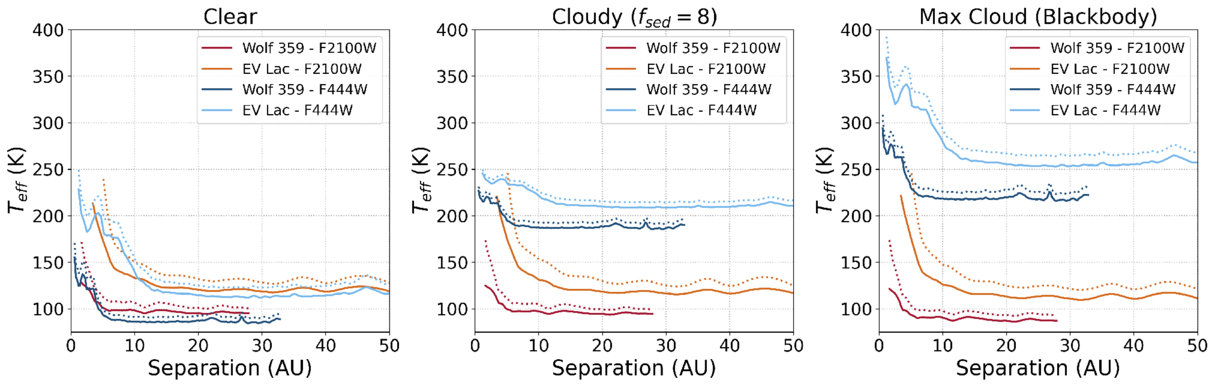
Temperatures of coldest detectable planets as a function of separation from the host star for Wolf 350 and EV Lac. Results are shown for MIRI F2100W imaging and NIRCam F444W coronagraphy. Click to enlarge. [Bowens-Rubin et al. 2025]
NIRCam vs. MIRI
This analysis showed that MIRI is the best choice for directly imaging cold planets around nearby stars (within 65 light-years). MIRI should be able to detect giant planets with temperatures down to 94K around Wolf 359 and 114K around EV Lac — about the temperature of Saturn and slightly colder than Jupiter, respectively. For Wolf 359, sub-100K planets are detectable at orbital distances of at least 4.8 au, meaning these planets could also have similar orbital separations to Jupiter and Saturn.
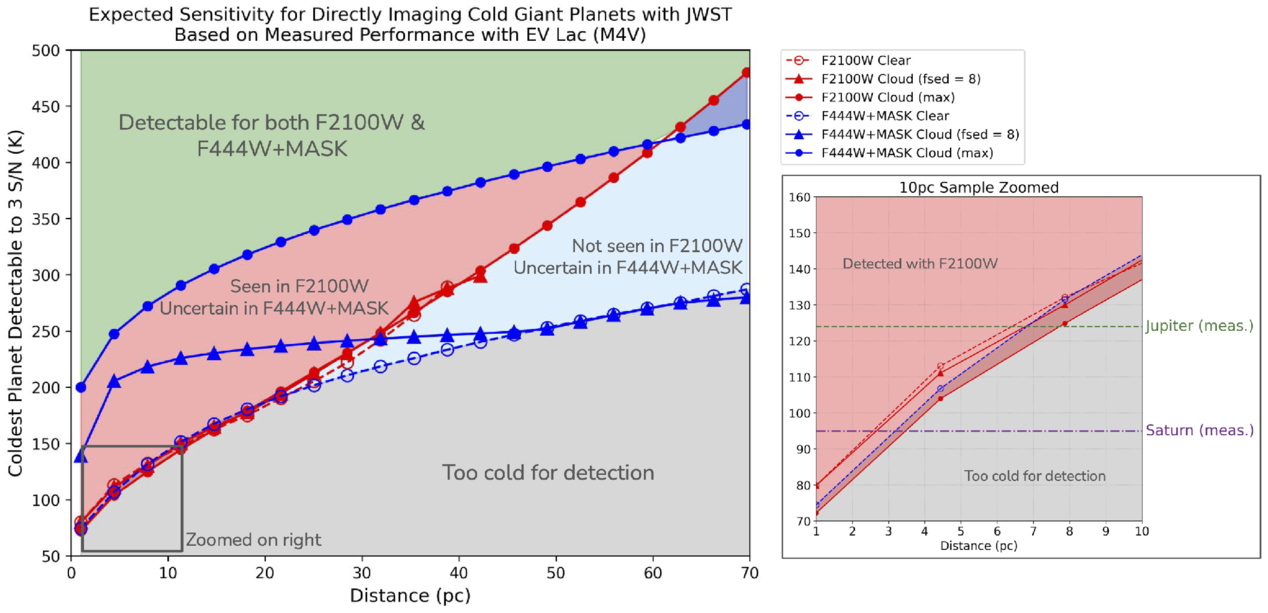
Temperatures of planets detectable to a signal-to-noise ratio of 3 as a function of distance from Earth. Detection limits for MIRI and NIRCam are shown as red and blue lines, respectively. Click to enlarge. [Bowens-Rubin et al. 2025]
As impressive as these results are already, Bowens-Rubin and coauthors noted that future work, such as developing strategies to mitigate MIRI’s “brighter-fatter effect” that limits sensitivity at small angular separations from the host star, could enhance the search for exo-Saturns and exo-Jupiters even further.
Citation
“NIRCam Yells at Cloud: JWST MIRI Imaging Can Directly Detect Exoplanets of the Same Temperature, Mass, Age, and Orbital Separation as Saturn and Jupiter,” Rachel Bowens-Rubin et al 2025 ApJL 986 L26. doi:10.3847/2041-8213/addbde
The post Exo-Saturns and Exo-Jupiters Are Within JWST’s Reach appeared first on AAS Nova.
]]>The post Deep Neural Emulation of the Supermassive Black Hole Binary Population appeared first on AAS Nova.
]]>Using a normalizing flow emulator, researchers predict the gravitational wave strain distribution due to supermassive black hole binaries; this method outperforms Gaussian process methods.
The post Deep Neural Emulation of the Supermassive Black Hole Binary Population appeared first on AAS Nova.
]]>The post Two Possible Orbital Histories of Phobos appeared first on AAS Nova.
]]>The current orbit of Mars’s larger and closer-in moon, Phobos, is consistent with either formation in the early solar system and inward migration, or production in an ongoing ring–moon cycle.
The post Two Possible Orbital Histories of Phobos appeared first on AAS Nova.
]]>The post Potential Subsurface Lava Tube Skylight on the Western Flank of Elysium Mons, Mars appeared first on AAS Nova.
]]>High-resolution imagery, thermal observations, topographic, geological, and mineralogical analyses suggest that a previously identified cave candidate is connected to the subsurface cave environment.
The post Potential Subsurface Lava Tube Skylight on the Western Flank of Elysium Mons, Mars appeared first on AAS Nova.
]]>
A team of citizen scientists compared 5.4 million pairs of astronomical images, helping researchers create a database of image similarity information that can be used to test image-search algorithms.
The post Citizen Science Born in the Pandemic: The Hubble Image Similarity Project appeared first on AAS Nova.
]]>Motivated by a desire to support community members financially during the coronavirus pandemic, researchers employed 30 local citizen scientists in the Hubble Image Similarity Project. This project quantified the similarities between astronomical images, providing a way to test the results of image-search algorithms.
Seeking Similarities

The Eagle Nebula, pictured here in an image from Kitt Peak National Observatory, is a star-forming region in the Milky Way. [T.A.Rector (NRAO/AUI/NSF and NOIRLab/NSF/AURA) and B.A.Wolpa (NOIRLab/NSF/AURA); CC BY 4.0]
You might start your search with an astronomical image database, using filters for object type or instrument to sift through thousands and thousands of options. But even filtering out everything but star-forming regions might yield vastly different results, given the widely varying shapes, colors, and sizes of these regions.
Or maybe you’ll feed your image into a neural network that has been trained to spot similar images. The results may seem promising, but how can you tell whether the algorithm has found the images that are the most similar? Would another algorithm do better?
The Hubble Image Similarity Project
Astronomical image collections rarely contain information about similarities between images in their metadata, and while neural networks appear to excel at gathering similar images, the results of these models are generally unverified. The Hubble Image Similarity Project, led by Richard White (Space Telescope Science Institute) and Josh Peek (Space Telescope Science Institute and Johns Hopkins University), addressed these issues with a team of citizen scientists who generated similarity information for astronomical images, providing a quantitative means to test the results of neural networks.
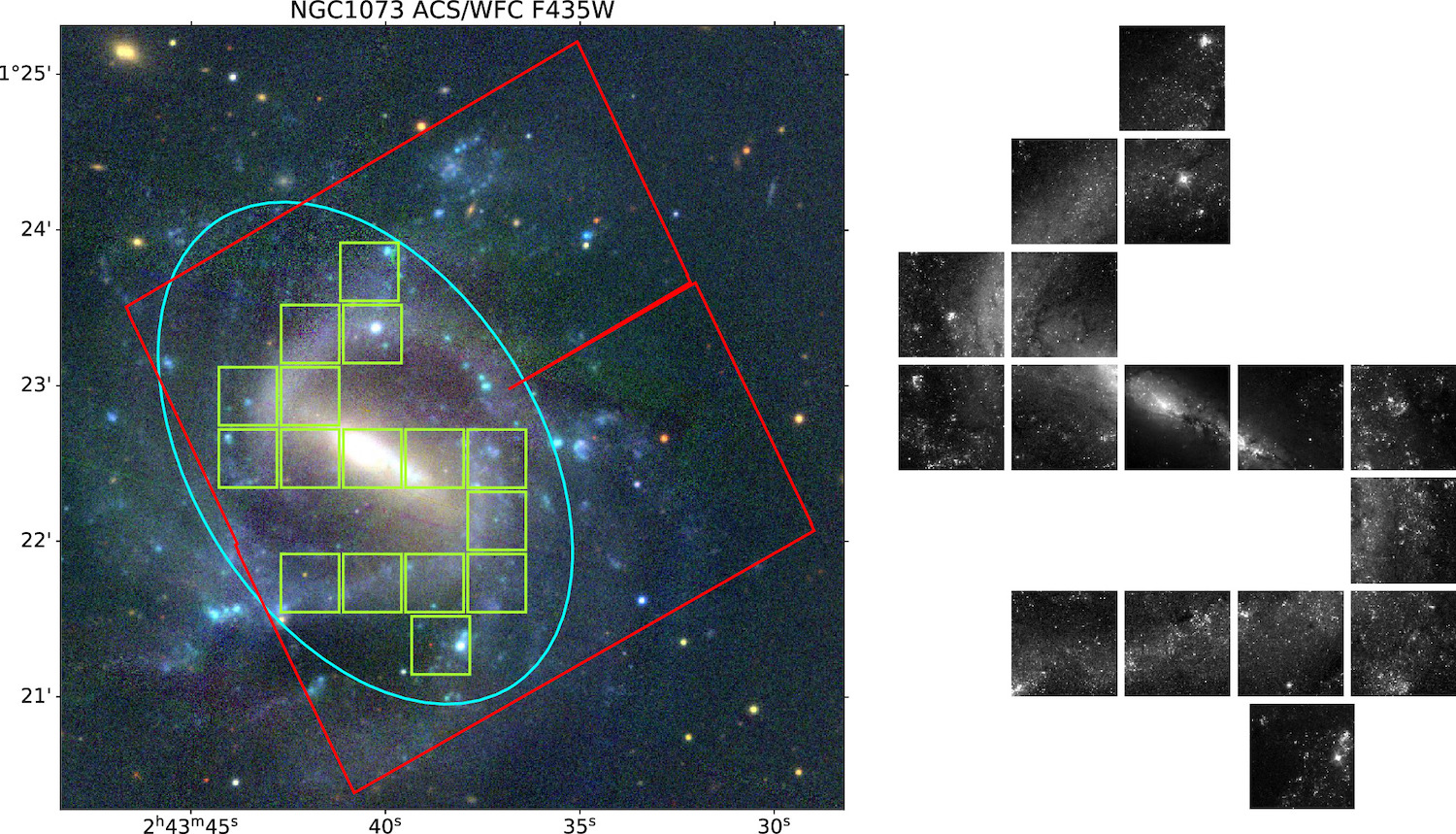
An example of individual test images (green squares) extracted from a Hubble Legacy Archive image (red square). Low-contrast areas have been excluded, leaving the galaxy’s spiral arms for analysis. Click to enlarge. [White & Peek 2025]
Citizen Scientists, Assemble
White and Peek recruited 30 members of the community within walking distance of the Space Telescope Science Institute to identify similar astronomical images, and the reviewers were paid for their work. In the three phases of the project, reviewers considered test images one at a time and 1) selected all similar images from a set of 15 comparison images, 2) selected the most similar image from a narrowed-down set of 6 comparison images, and finally 3) selected the most similar image from a set of 3 comparison images.
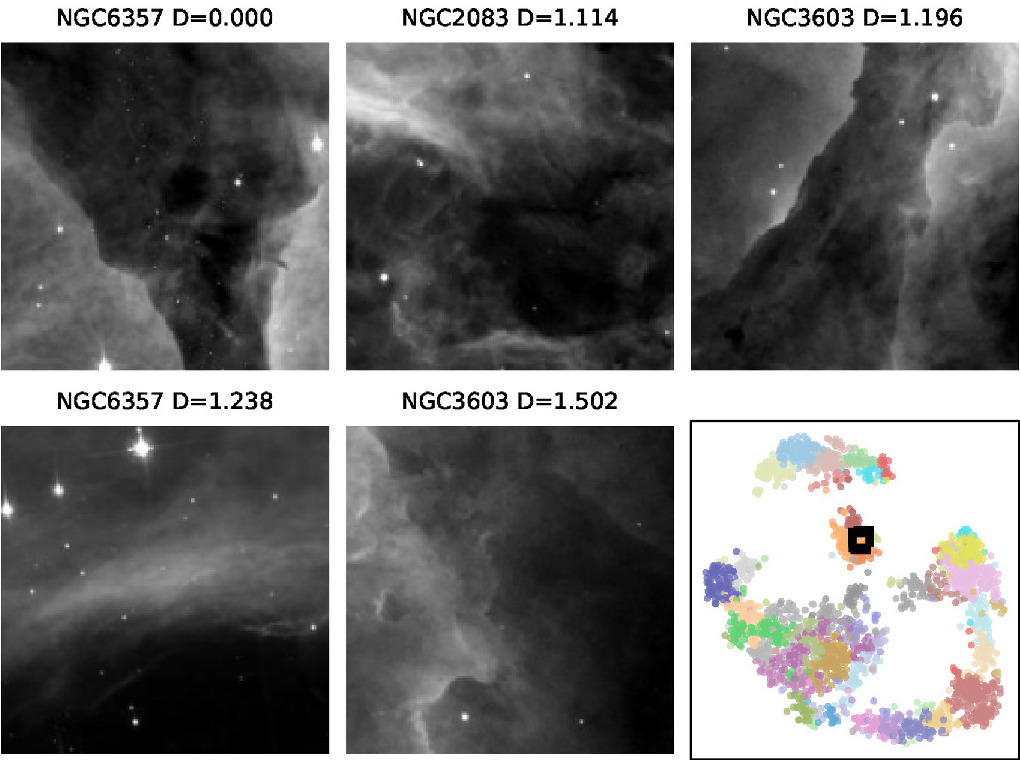
Examples of similar images according to the image similarity matrix. In the lower-right corner is a visualization of the similarity data. The semicircle of data points in the bottom half of this visualization represents galaxies, while star clusters occupy the small arc near the top and nebulae sit in the island in the center of the plot. Click to enlarge. [Adapted from White & Peek 2025]
Similar images resemble one another in terms of structure, texture, and other factors that White and Peek say are “difficult even to describe in words” — for example, the diffuse glow of a galaxy interrupted by a bright star with diffraction spikes, or a nebula speckled with stars and dense dusty clumps. The similarity data from this study are available online and can be used to test the performance of image-search algorithms. In future work, the authors plan to carry out a similar project using images of the Martian landscape.
Citation
“The Hubble Image Similarity Project,” Richard L. White and J. E. G. Peek 2025 AJ 169 306. doi:10.3847/1538-3881/adcb43
The post Citizen Science Born in the Pandemic: The Hubble Image Similarity Project appeared first on AAS Nova.
]]>The post How to Escape from a Trap: Outcomes of Repeated Black Hole Mergers in Active Galactic Nuclei appeared first on AAS Nova.
]]>Stellar-mass black holes may become ensnared in gravitational traps in the disks around accreting black holes, but simulations show how binary black holes may be able to escape or remove the traps.
The post How to Escape from a Trap: Outcomes of Repeated Black Hole Mergers in Active Galactic Nuclei appeared first on AAS Nova.
]]>
Astrobites reports on how researchers are preparing for future detections of merging supermassive and intermediate-mass black holes.
The post Giving Justice to Intermediate-Mass Black Hole Mergers appeared first on AAS Nova.
]]>Editor’s Note: Astrobites is a graduate-student-run organization that digests astrophysical literature for undergraduate students. As part of the partnership between the AAS and astrobites, we occasionally repost astrobites content here at AAS Nova. We hope you enjoy this post from astrobites; the original can be viewed at astrobites.org.
Title: Intermediate Mass Ratio Inspirals in Milky Way Galaxies
Authors: Jillian Bellovary et al.
First Author’s Institution: Queensborough Community College
Status: Published in ApJ
Galaxies like our Milky Way are not just serene places hosting stars, gas, and dark matter. They also undergo a host of violent activities. Evidence strongly suggests that our Milky Way interacts with nearby dwarf galaxies, pulling them in entirely or tearing them apart through tidal forces. Dwarf galaxies, though small, often host black holes with masses between 103 and 105 solar masses (intermediate-mass black holes). When these dwarfs fall into the Milky Way’s gravitational pull, tidal forces strip them of stars and gas, leaving their black holes to roam the galaxy halo. Some of these “wandering” black holes spiral toward the central supermassive black hole. This leads to an event called inspiral, where black holes slowly spiral together before merging.
Mergers between an intermediate-mass black hole and a supermassive black hole are called intermediate mass ratio inspirals or IMRIs. They represent an intermediate case between major mergers involving equal-mass black holes and extreme mass ratio inspirals (EMRIs), where a stellar-mass black hole merges with a supermassive black hole. IMRIs are expected to generate gravitational waves that are detectable by the next-generation space-based gravitational wave detector, the Laser Interferometer Space Antenna (LISA). However, their waveforms remain challenging to model as the origins and development of these IMRIs are not fully understood.
Tracking IMRIs with Simulations
In today’s article, the authors use high-resolution simulations to study how IMRIs form and evolve, offering critical insights for the upcoming LISA mission. They used the DC Justice League simulation suite (the individual simulations are all named after women who have served on the US Supreme Court: Sandra, Ruth, Sonia, and Elena!) to model four Milky Way–like galaxies at high resolution to trace the origins of IMRIs. These simulations track the formation and evolution of massive black holes in dwarf galaxies that eventually merge into larger galactic systems.
What Did the Simulations Reveal?
The study uncovered key features of IMRIs in Milky Way–like galaxies:
-
- Prevalence: About half of all massive black hole mergers were IMRIs, emphasizing their importance in galaxy evolution.
- Timing of mergers: Most IMRI events occur early in the universe, approximately 3 billion years after the Big Bang, when galaxy mergers and interactions were more frequent (Figure 1).
- Inspiral timescales: The duration of the inspiral process depends heavily on the compactness of the dwarf galaxy. Dense, compact dwarfs have faster inspiral times, whereas diffuse dwarfs slow down the process. A more compact galaxy can plunge deeper into the galaxy before being disrupted, resulting in a massive black hole that is closer to the center and will inspiral more quickly (Figure 2).
- Orbital evolution: While some IMRIs become more circular over time, others maintain eccentric orbits until the merger.
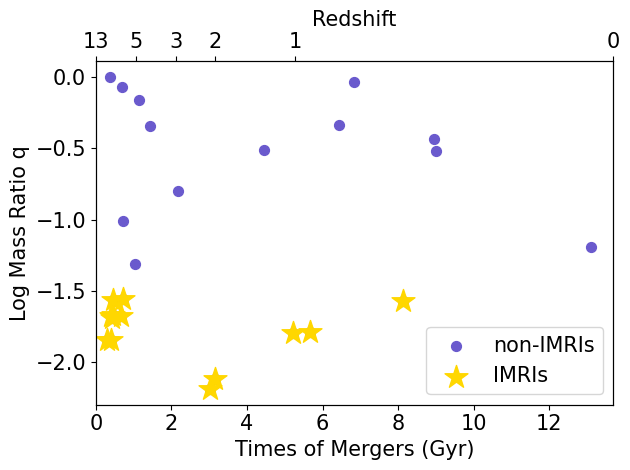
Figure 1: The yellow stars represent the merger times for IMRIs, while the purple circles show other types of black hole mergers, such as EMRIs and major mergers. Most IMRIs occurred in the early universe when black holes were smaller and mergers between galaxies were more frequent. [Bellovary et al. 2025]
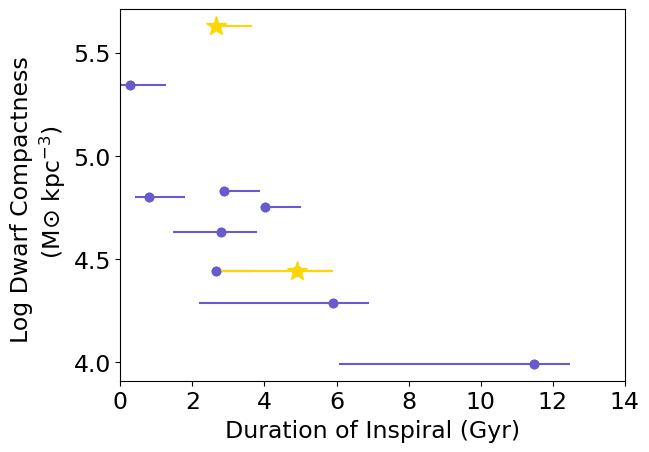
Figure 2: The correlation between the compactness of the dwarf galaxy (y-axis) and the inspiral time (x-axis). More compact dwarf galaxies (indicated by larger values on the y-axis) have shorter inspiral times. Here, the IMRIs are indicated by the yellow stars. [Bellovary et al. 2025]
Why Does This Matter?
IMRIs offer a unique opportunity to study black hole demographics and galaxy assembly. The mass ratios and orbital eccentricities of these events are sensitive to the early conditions of black hole formation and the dynamics of galaxy mergers. However, IMRIs present challenges for gravitational wave detection. Unlike major mergers or EMRIs, their waveforms cannot be easily modeled using existing methods. The authors stress the need for a hybrid approach that combines post-Newtonian (commonly used for major mergers) and perturbative techniques (widely used for EMRIs) to simulate IMRI signals effectively.
The study also highlights the importance of preparing for LISA, slated to launch in the 2030s. As a space-based gravitational wave observatory, LISA will be sensitive to low-frequency waves produced by IMRIs at unprecedented distances. Accurate waveform models are essential for detecting these signals and extracting their astrophysical information. LISA’s detections of IMRIs could constrain the masses of black holes in dwarf galaxies, shed light on supermassive black hole seed formation mechanisms, and enhance our understanding of galaxy evolution across cosmic time.
Looking Ahead
While the authors of today’s article provide a detailed glimpse into the dynamics of IMRIs, they also highlight limitations. The small sample size and simplified black hole merger models call for broader studies using more comprehensive simulations. Future work must refine the physics of inspirals and develop robust waveform libraries to maximize LISA’s scientific return.
IMRIs are not just a niche class of black hole mergers; they are a treasure trove of information about the cosmic past. With LISA on the horizon, our ability to unlock these secrets is closer than ever!
Original astrobite edited by Tori Bonidie.
About the author, Archana Aravindan:
I am a PhD candidate at the University of California, Riverside, where I study black hole activity in small galaxies. When I am not looking through some incredible telescopes, you can usually find me reading, thinking about policy, or learning a cool language!
The post Giving Justice to Intermediate-Mass Black Hole Mergers appeared first on AAS Nova.
]]>The post Discovery of an RRAT-Like Pulsar via Its Single Pulses in a Murchison Widefield Array Imaging Survey appeared first on AAS Nova.
]]>A newly discovered pulsar exhibits both persistent dim pulses as well as sporadic bright pulses similar to what is seen from rotating radio transients.
The post Discovery of an RRAT-Like Pulsar via Its Single Pulses in a Murchison Widefield Array Imaging Survey appeared first on AAS Nova.
]]>
Two powerful telescopes examined the brightest gamma-ray burst ever observed by humans, hundreds of days after the burst was first detected. What did they see?
The post Featured Image: Hubble and JWST Check Up on the BOAT Gamma-Ray Burst appeared first on AAS Nova.
]]>The bright spot visible within its fuzzy host galaxy in the image above is the optical and infrared light from a superlative gamma-ray burst. Discovered in October 2022, GRB 221009A was the brightest gamma-ray burst ever observed by humans, and likely a once-in-ten-millennia event, earning it the nickname “the Brightest of All Time” or BOAT gamma-ray burst. This image shows the afterglow of this burst nearly a year after it exploded onto the scene. In a recent article, Huei Sears (Rutgers University) and collaborators analyzed Hubble and JWST observations made 185–345 days after the discovery of the burst. These observations captured the burst’s fading light and showed a distinct shift in the rate at which the light dimmed at around 50 days. This shift is evidence of powerful jets from the source of the burst. Sears’s team also discovered a blue component to the afterglow emission. This blue component may be due to the burst’s afterglow echoing off of dust in the host galaxy — if confirmed, this will mark the first time this feature has been detected. To learn more about what astronomers have discovered in the years since GRB 221009A was first spotted, be sure to check out the full research article linked below!
Citation
“Late-Time HST and JWST Observations of GRB 221009A: Evidence for a Break in the Light Curve at 50 Days,” Huei Sears et al 2025 ApJ 984 196. doi:10.3847/1538-4357/adc306
The post Featured Image: Hubble and JWST Check Up on the BOAT Gamma-Ray Burst appeared first on AAS Nova.
]]>The post Solar Cycle Variation of the Mass-Loss Rate of Coronal Mass Ejections appeared first on AAS Nova.
]]>An analysis of coronal mass ejections during solar cycles 23 and 24 shows that the mass-loss rate of these events changes with the solar cycle, with certain latitudinal dependencies also present.
The post Solar Cycle Variation of the Mass-Loss Rate of Coronal Mass Ejections appeared first on AAS Nova.
]]>
With their extremely low surface brightness, ultra-diffuse galaxies are very difficult to detect, but a recent study has spotted one by searching for its globular clusters.
The post Finding Galaxies in the Dark: Using Globular Clusters to Identify Ultra-Diffuse Galaxies appeared first on AAS Nova.
]]>While classic spiral and elliptical galaxies shine brightly, another class of galaxy flies under the radar. A recent study uses a new technique to search for galaxies so faint they are nearly completely dark.
Ultra-Diffuse Galaxies
Hard to see and harder to understand, ultra-diffuse galaxies are a galaxy class with extremely low surface brightness. With low luminosities but large physical extents, these galaxies appear as barely visible smudges, making them difficult to detect. Historically, astronomers have searched for ultra-diffuse galaxies using methods that search for diffuse stellar light; however, this method only catches those bright enough to spot — if even darker galaxies exist, they will not be found this way. Is there another way to discover these elusive galaxies?
Recent studies have shown that ultra-diffuse galaxies tend to have more globular clusters on average than typical galaxies. While this raises questions surrounding their formation and evolution, the abundance of globular clusters provides another way to search for ultra-diffuse galaxies. In general, globular clusters do not clump together in space unless there is additional mass, like dark matter, pulling them together. Thus, searching for overdensities of globular clusters could reveal a hidden population of ultra-diffuse galaxies.
Candidate Confirmation
Discovered as an overdensity of three globular clusters, Candidate Dark Galaxy-2 (CDG-2) was found in data from a Hubble Space Telescope (HST) program aimed at imaging the Perseus galaxy cluster. With an updated globular cluster catalog and improved statistical method for detecting overdensities, Dayi (David) Li (University of Toronto) and collaborators perform a follow-up search and analysis to confirm CDG-2 as a galaxy. Their method searches for clustering of globular clusters that do not appear to belong to any bright galaxy and are unlikely to be randomly grouped so closely in the intergalactic medium.
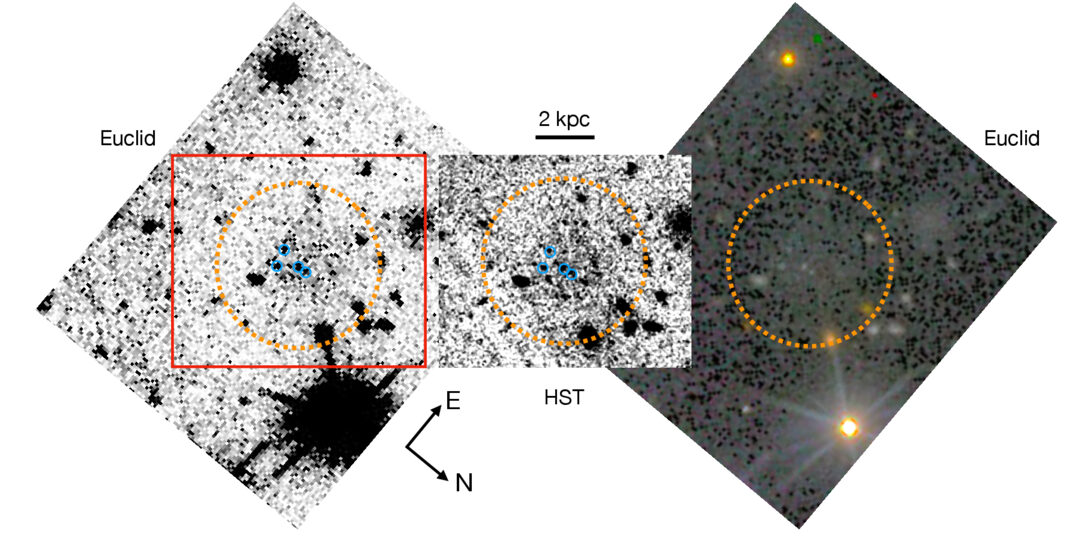
Euclid images of CDG-2 showing the four identified globular clusters (blue circles) and the faint diffuse emission (orange circles) associated with the galaxy. Click to enlarge. [Modified from Li et al 2025]
Globular Cluster and Dark Matter Dominated
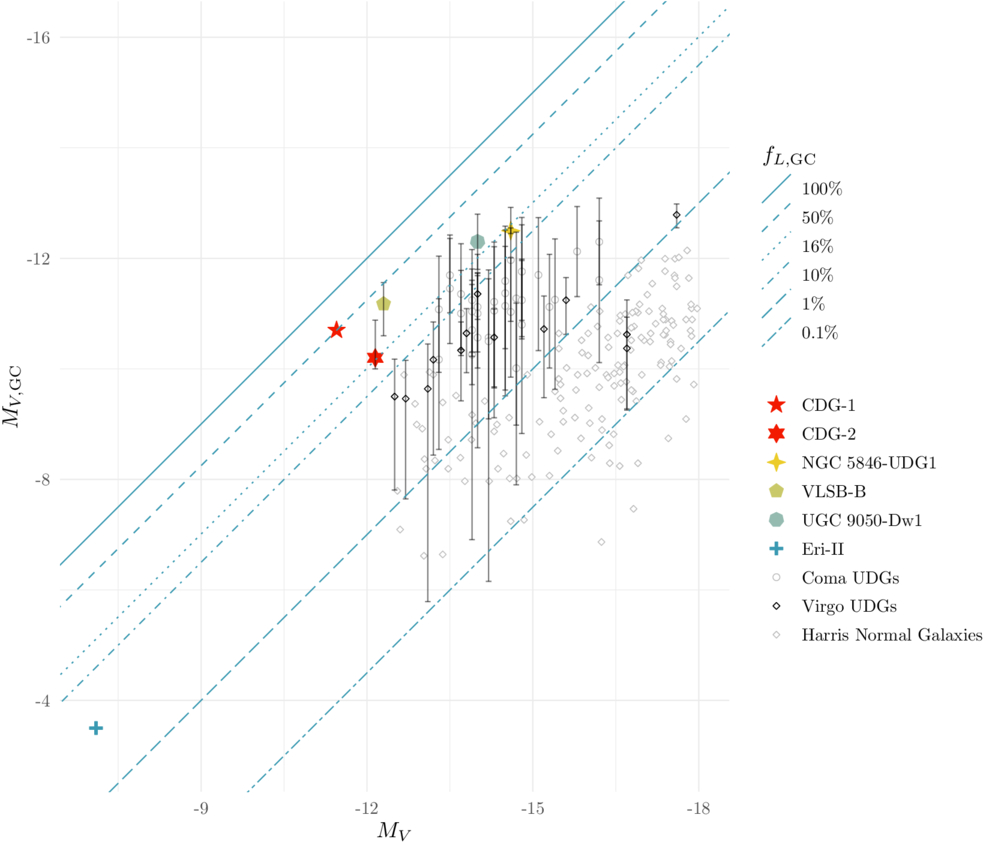
Plot showing globular cluster total luminosity versus total galaxy luminosity for multiple galaxies. CDG-2 falls along the line corresponding to 16% of the total galaxy light coming from globular clusters. Click to enlarge. [Li et al 2025]
Through this study, the authors have confirmed the first galaxy ever detected solely through its globular cluster population. This technique opens a promising avenue to discovering more galaxies hiding out in the dark.
Citation
“Candidate Dark Galaxy-2: Validation and Analysis of an Almost Dark Galaxy in the Perseus Cluster,” Dayi (David) Li et al 2025 ApJL 986 L18. doi:10.3847/2041-8213/adddab
The post Finding Galaxies in the Dark: Using Globular Clusters to Identify Ultra-Diffuse Galaxies appeared first on AAS Nova.
]]>The post X-Ray Spectra from General Relativistic Radiation Magnetohydrodynamic Simulations of Thin Disks appeared first on AAS Nova.
]]>A comparison of several simulations of thin black hole accretion disk models finds general agreement, with features in common such as increasing inverse Compton scattering with increasing black hole spin.
The post X-Ray Spectra from General Relativistic Radiation Magnetohydrodynamic Simulations of Thin Disks appeared first on AAS Nova.
]]>
The massive nearby elliptical galaxy Messier 87 hosts one of the most-studied supermassive black holes in the universe. What have researchers recently learned about this black hole's spin, jets, and flares?
The post Monthly Roundup: The Supermassive Black Hole of Messier 87 appeared first on AAS Nova.
]]>
The first detailed image of a black hole, M87*, taken with the Event Horizon Telescope. [Adapted from EHT Collaboration et al. 2019]
Today’s Monthly Roundup explores three aspects of this supermassive black hole: how fast it spins, the properties of its relativistic jet, and the source of its powerful flares.
Taking M87’s Black Hole for a Spin
Spin is one of the fundamental parameters describing a black hole, along with mass and electric charge, and it’s a challenging quantity to measure. In a recent research article, Michael Drew (University of Central Lancashire) and collaborators used data from the Event Horizon Telescope from 2017 and 2018 to measure the spin of M87*. Their goal was to measure the angular momentum of the innermost region of the disk of material swirling around the black hole. For a 10-billion-year-old black hole like M87’s, the angular momentum of the inner reaches of the accretion disk is fundamentally linked to the spin of the black hole.
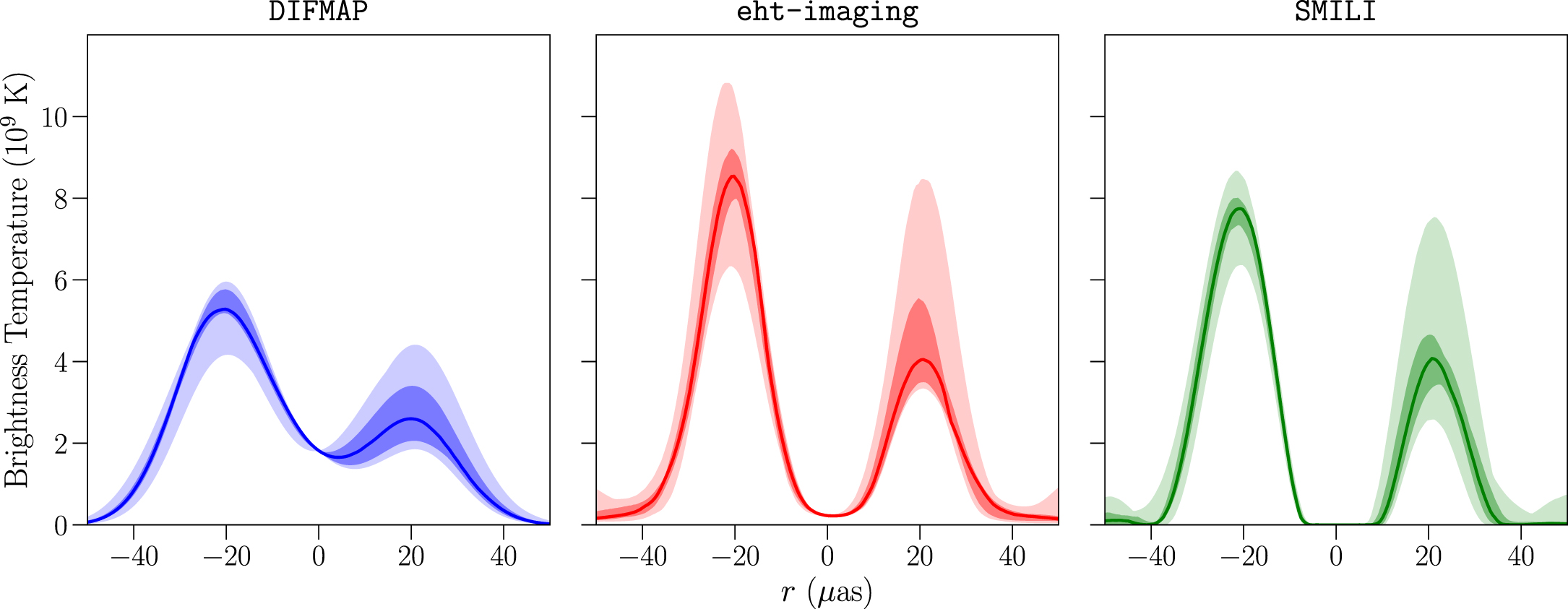
Radial brightness profiles of the Event Horizon Telescope images of M87*. The variation of the brightness of the ring is due in part to Doppler beaming. Click to enlarge. [Event Horizon Telescope Collaboration 2019]
This method returned a spin parameter of 0.8, which is within the broad range of previous estimates for M87*’s spin (0.1–0.98). Given certain assumptions made in this work, the team expects that this spin measurement is a lower limit on the black hole’s spin.
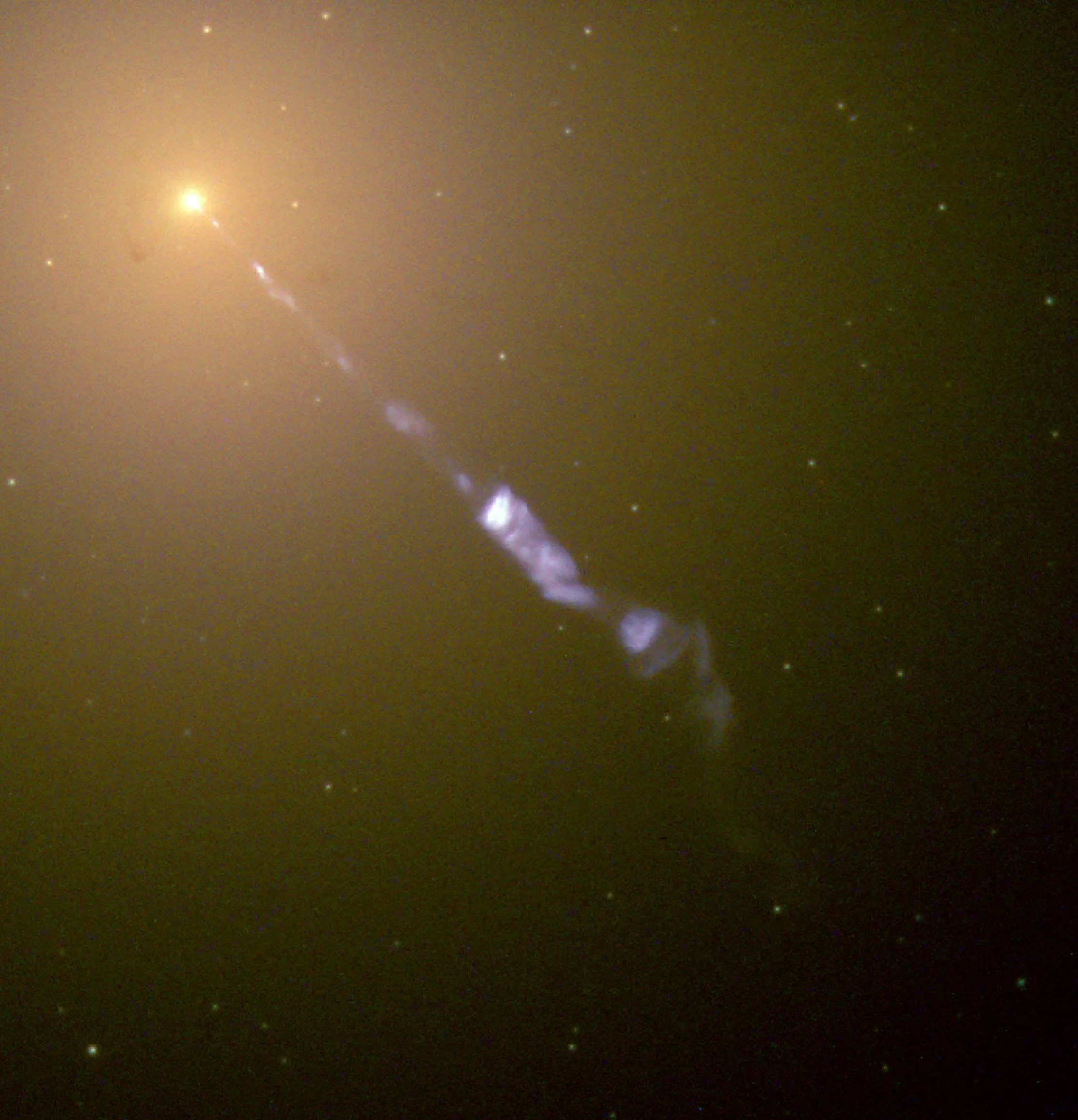
Closeup of Messier 87’s relativistic jet. [NASA and the Hubble Heritage Team (STScI/AURA)]
A New Model for Bright-Edged Jets
One of the most dramatic features of Messier 87 is its prominent jet. Researchers have noted that M87*’s jet exhibits limb brightening, meaning that the jet appears brighter along its edges than in its center. This characteristic is present throughout M87*’s jet, from close to the point at which it’s launched to far down its length, and is also seen in other black hole jets.
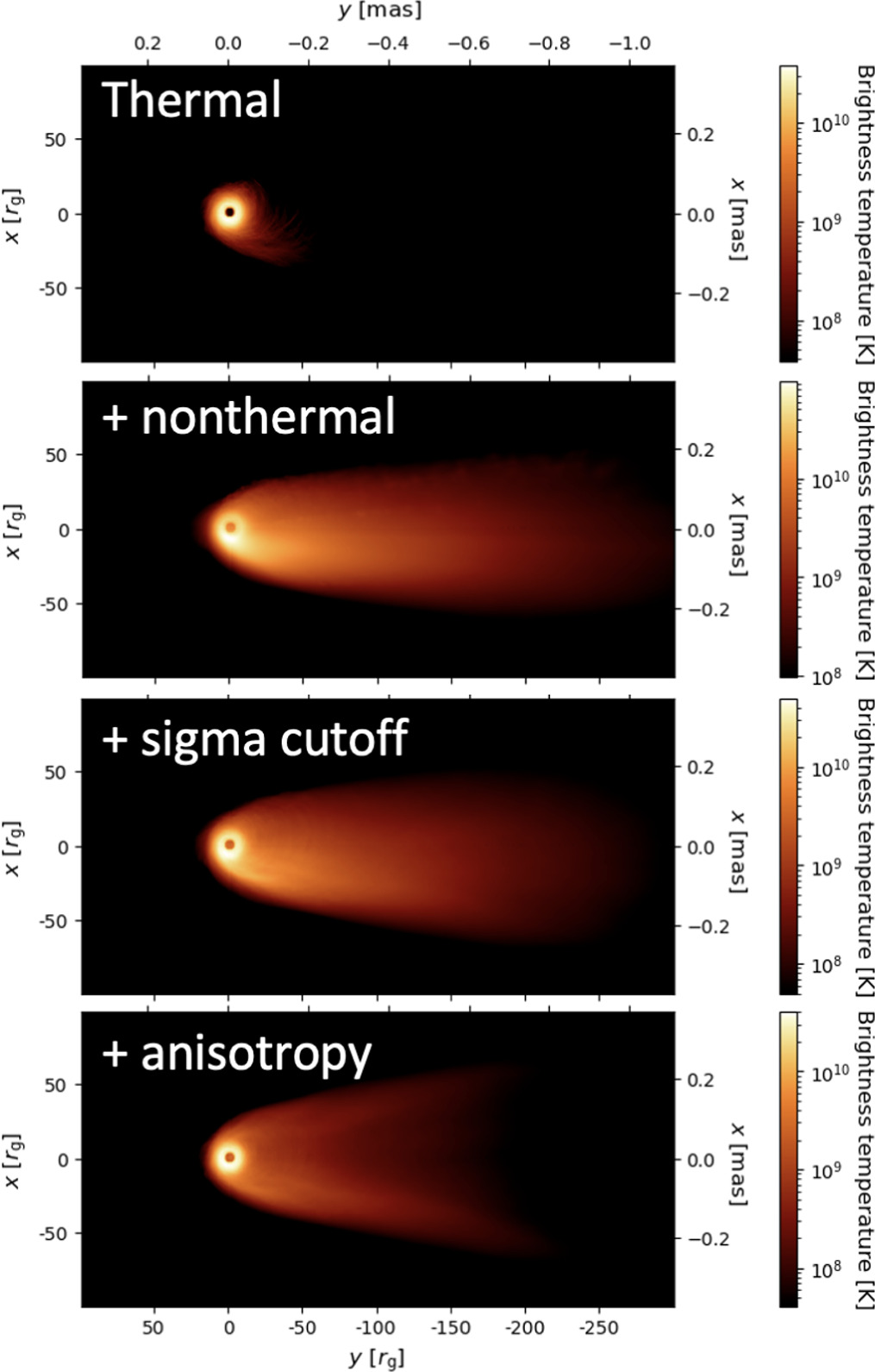
Demonstration of limb brightening in models that include an anisotropic electron distribution. [Tsunetoe et al. 2025]
Tsunetoe’s team used both general relativistic magnetohydrodynamics (GRMHD) and general relativistic force-free electrodynamics (GRFFE) in their modeling. These two modeling techniques have different strengths and weaknesses: GRMHD allows time variations to be studied, but is only effective close to the black hole, while GRFFE applies at a large distance from the black hole, but can only give a time-averaged result. By combining these two methods, the authors were able to generate synthetic radio-frequency images of M87*’s jet and compare them to observations.
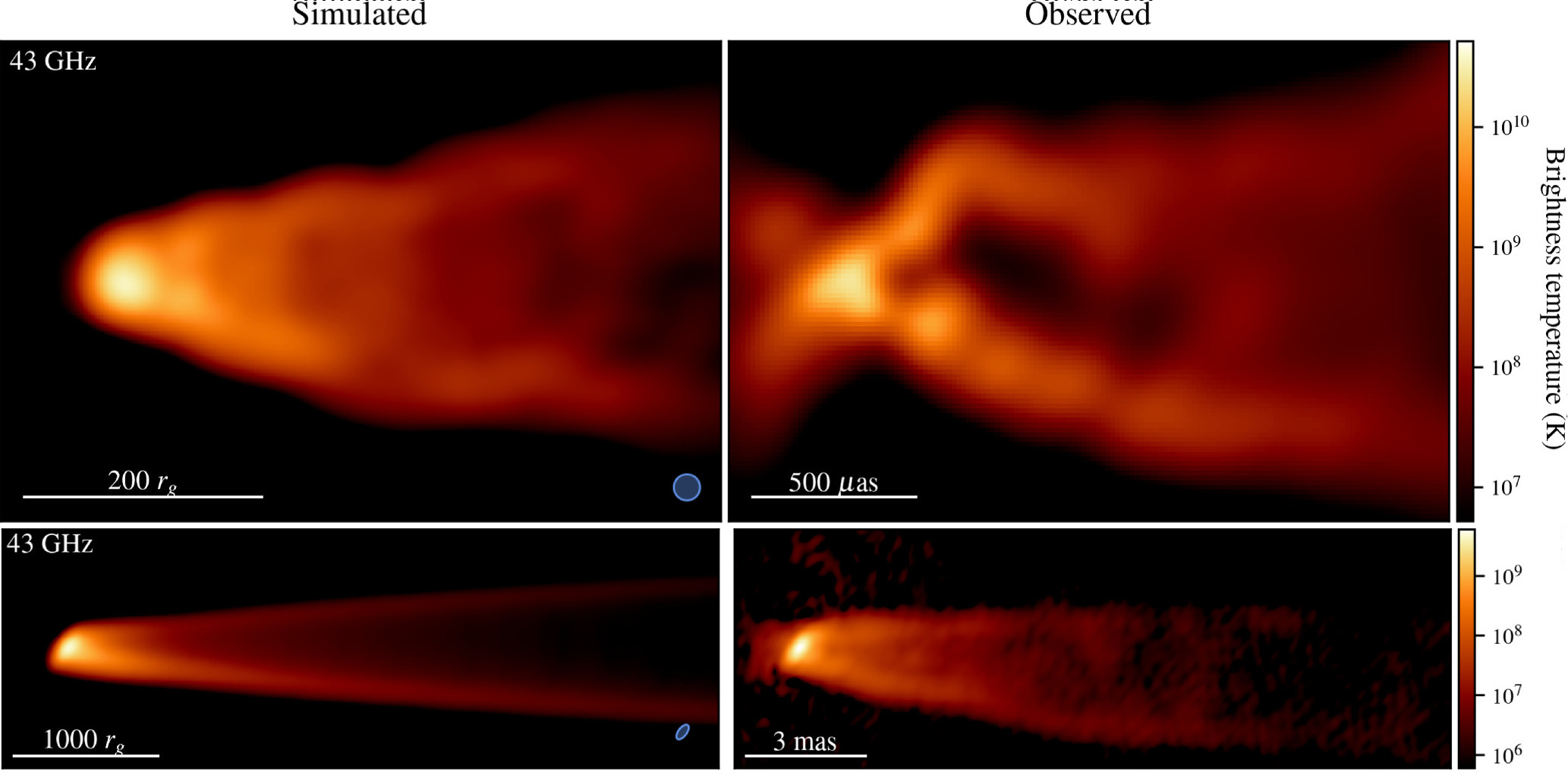
Simulated (left column) and observed (right column) jets. The top left shows the result from the GRMHD simulation and the bottom left shows the result from the GRFFE simulation. Note the difference in scale between the two simulations. Click to enlarge. [Adapted from Tsunetoe et al. 2025]
Investigating a Potential Source of Flares
Like many accreting supermassive black holes, M87* exhibits flares of high-energy radiation. These flares are highly variable, sometimes lasting only a couple of days, which suggests that they arise very close to the black hole’s event horizon. Precisely how these flares are generated is still unknown, though magnetic reconnection, in which magnetic fields rearrange and release pent-up magnetic energy, is a strong candidate.
Recently, Siddhant Solanki (University of Maryland) and collaborators investigated the source of M87*’s flares by tracing the paths of photons through a general relativistic magnetohydrodynamics simulation of an accreting spinning supermassive black hole. The simulation captured the region close to the black hole where magnetic reconnection is thought to occur, potentially launching electron–positron pairs that kick background photons up to high energies, powering a flare.
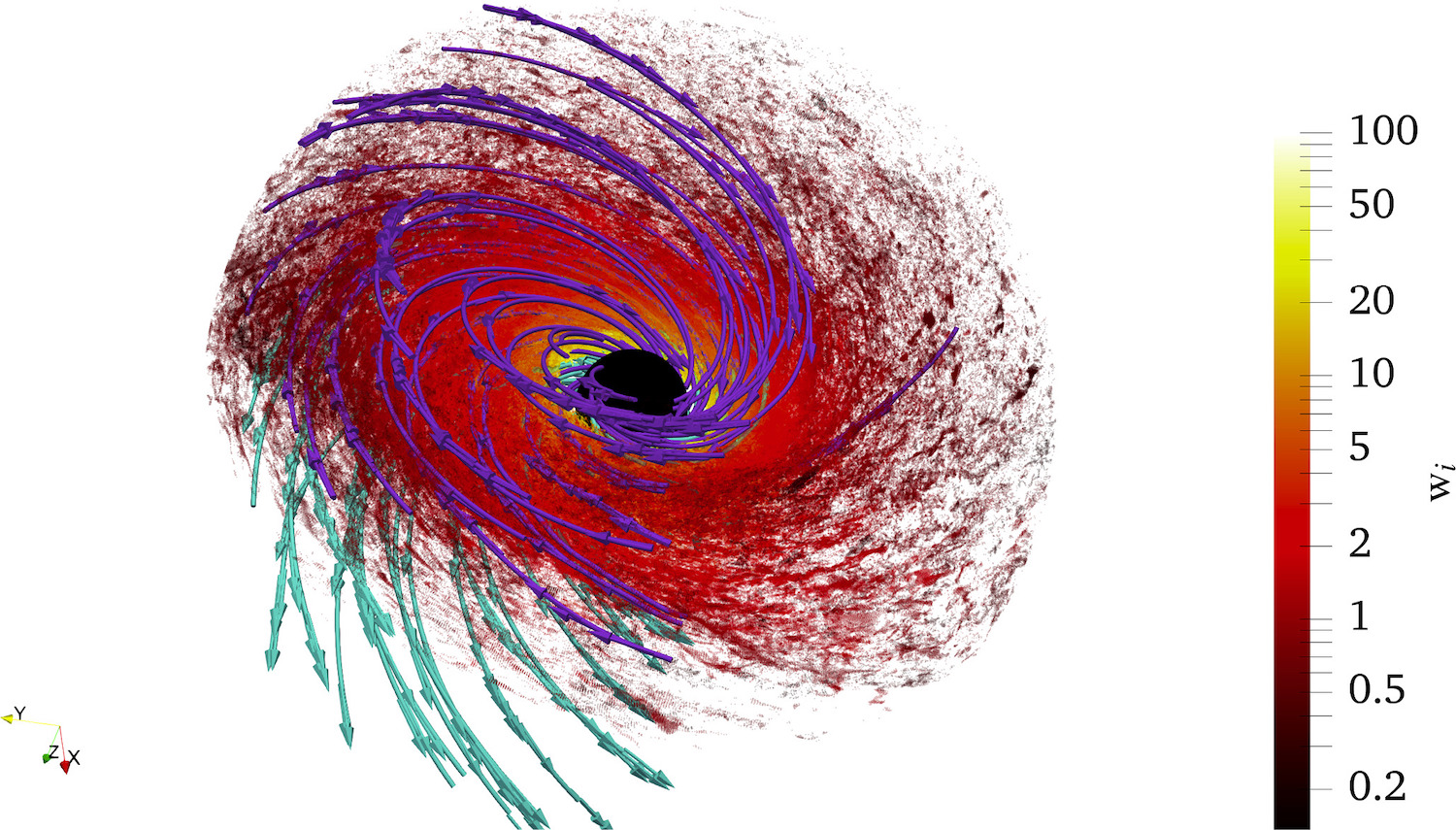
Illustration of the origin of the simulated flare emission. The majority of the emission arises from very close to the black hole. The purple and cyan curves indicate magnetic field lines. [Solanki et al. 2025]
The timescales of the simulated flares were also instructive. While the simulated flares tended to last about 130 days, each flare was composed of multiple smaller subflares, which lasted roughly as long as the rapid, ~2-day flares seen from M87*. If these flares are truly subflares arrayed within a longer-duration flare, Solanki and collaborators noted, they should have different time variability at long and short wavelengths. This suggests a need for long-term, multiwavelength monitoring of M87* to clarify the source of its flares.
Citation
“New Estimates of the Spin and Accretion Rate of the Black Hole M87*,” Michael Drew et al 2025 ApJL 984 L31. doi:10.3847/2041-8213/adc90e
“Limb-Brightened Jet in M87 from Anisotropic Nonthermal Electrons,” Yuh Tsunetoe et al 2025 ApJ 984 35. doi:10.3847/1538-4357/adc37a
“Modeling of Lightcurves from Reconnection-Powered Very High-Energy Flares from M87*,” Siddhant Solanki et al 2025 ApJ 985 147. doi:10.3847/1538-4357/adcba9
The post Monthly Roundup: The Supermassive Black Hole of Messier 87 appeared first on AAS Nova.
]]>The post PSR J1922+37: a 1.9 s Pulsar Discovered in the Direction of the Old Open Cluster NGC 6791 appeared first on AAS Nova.
]]>Though many pulsars have been found in globular clusters, no pulsars have been discovered in open clusters; a new radio search may have changed that, though the pulsar candidate has not yet been confirmed.
The post PSR J1922+37: a 1.9 s Pulsar Discovered in the Direction of the Old Open Cluster NGC 6791 appeared first on AAS Nova.
]]>
Astrobites reports on JWST observations of a mysterious binary quasar system from cosmic noon.
The post Duel of the Dual: The Mystery of a Quasar Pair appeared first on AAS Nova.
]]>Editor’s Note: Astrobites is a graduate-student-run organization that digests astrophysical literature for undergraduate students. As part of the partnership between the AAS and astrobites, we occasionally repost astrobites content here at AAS Nova. We hope you enjoy this post from astrobites; the original can be viewed at astrobites.org.
Title: VODKA-JWST: Synchronized Growth of Two Supermassive Black Holes in a Massive Gas Disk? A 3.8 kpc Separation Dual Quasar at Cosmic Noon with the NIRSpec Integral Field Unit
Authors: Yuzo Ishikawa et al.
First Author’s Institution: Johns Hopkins University and MIT Kavli Institute for Astrophysics and Space Research
Status: Published in ApJ
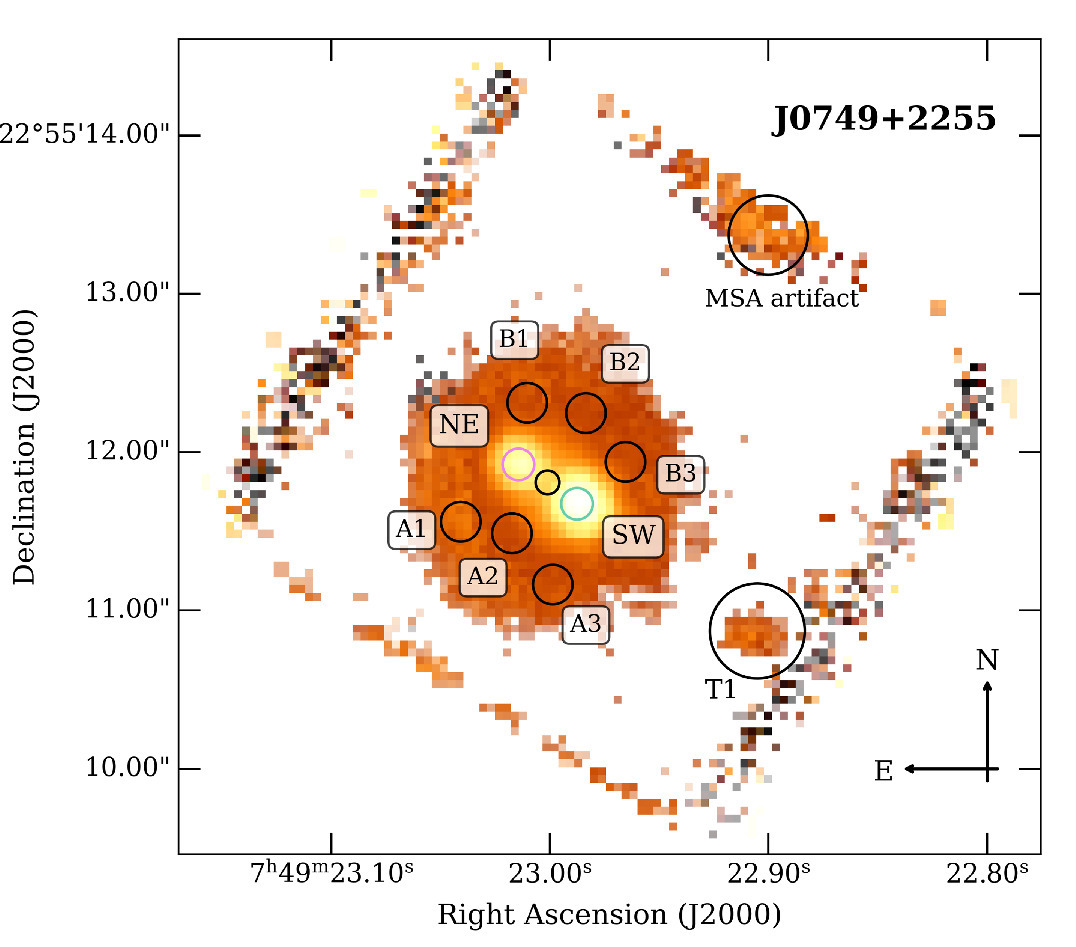
Figure 1: A map of the flux detected around the Hɑ and [NII] lines in the J0749+2255 system. The two quasars are found in the central region, denoted with “NE” and “SW.” [Adapted from Ishikawa et al. 2025]
Seeing Double?
Figure 2 shows the spectra for the SW and NE quasars, and the first thing that is impossible to ignore is just how similar they are. There are some small differences; for example, the NE quasar is slightly redder than the SW quasar, and some emission lines have different shapes and are a smidge offset from one another. But the general similarity brings up the possibility that what we’re looking at isn’t two separate quasars, but rather one object that’s being gravitationally lensed! The small differences in the spectra could be consistent with a lensing scenario, as they could be explained by time delays in the lensing or foreground contamination. A major problem with this idea, however, is that no observations of this system have provided evidence for a lens: we have not seen the massive foreground object that would actually be causing the gravitational lensing. While it’s possible that the lens is just incredibly faint, there’s no smoking gun for lensing happening here.
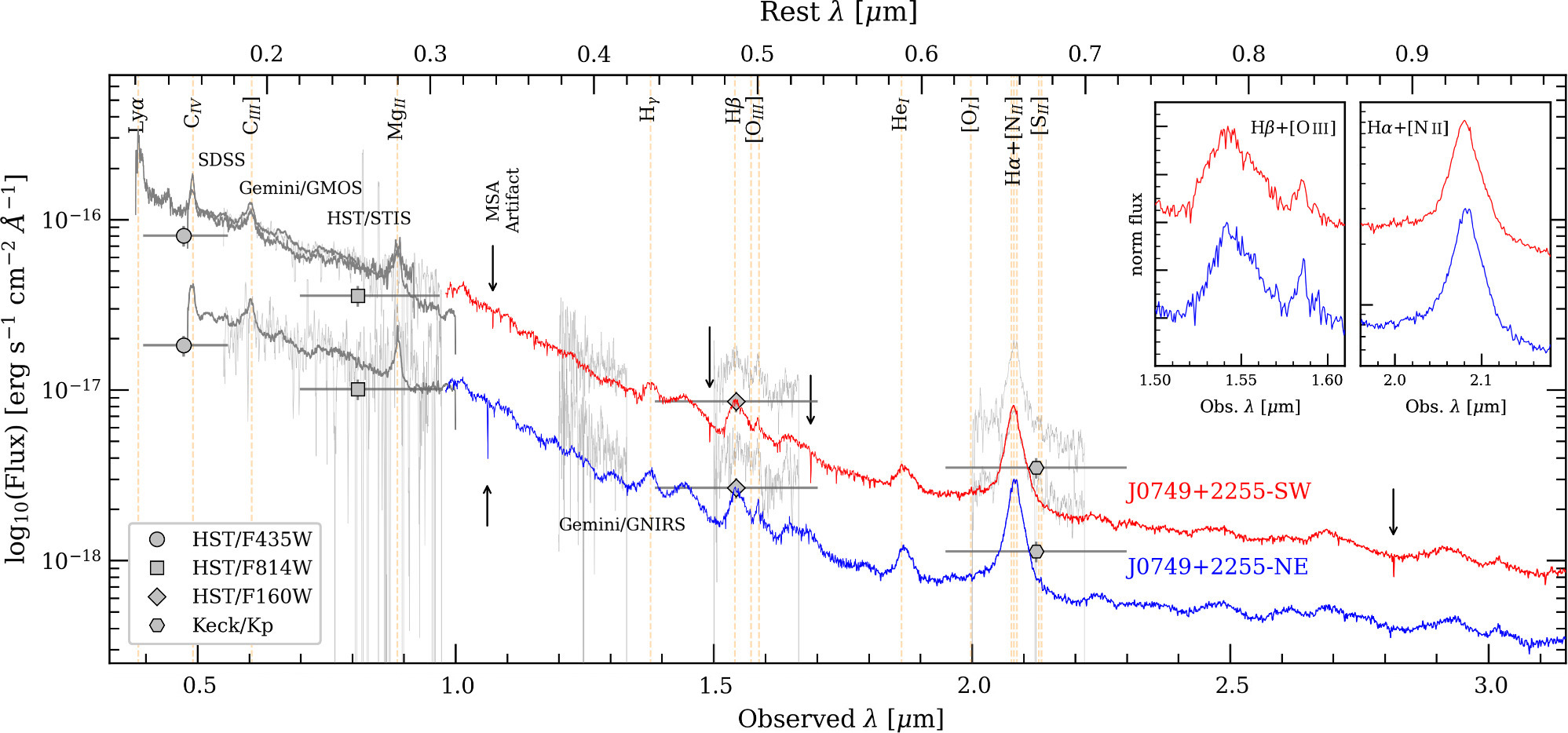
Figure 2: Spectral observations of the two quasars, vertically offset for clarity. The blue and red curves represent JWST observations, with the gray lines representing observations from previous works with other telescopes. The JWST results shown here demonstrate the remarkable similarity between the two quasars. [Adapted from Ishikawa et al. 2025]
Disk Gas Enters the Chat
The story becomes even more complicated when you look beyond the quasars, as JWST observations also detected diffuse emission from gas as shown in Figure 3. This gas is at the same redshift as the quasars, and can thus be associated with their host galaxy. And crucially, this gas doesn’t show any signs of lensing, such as the distinct arcs or symmetry you find in other lensed systems. This, coupled with the differences in the quasar spectra, suggests that this is not a lensed system, and that in fact we are looking at two different quasars.
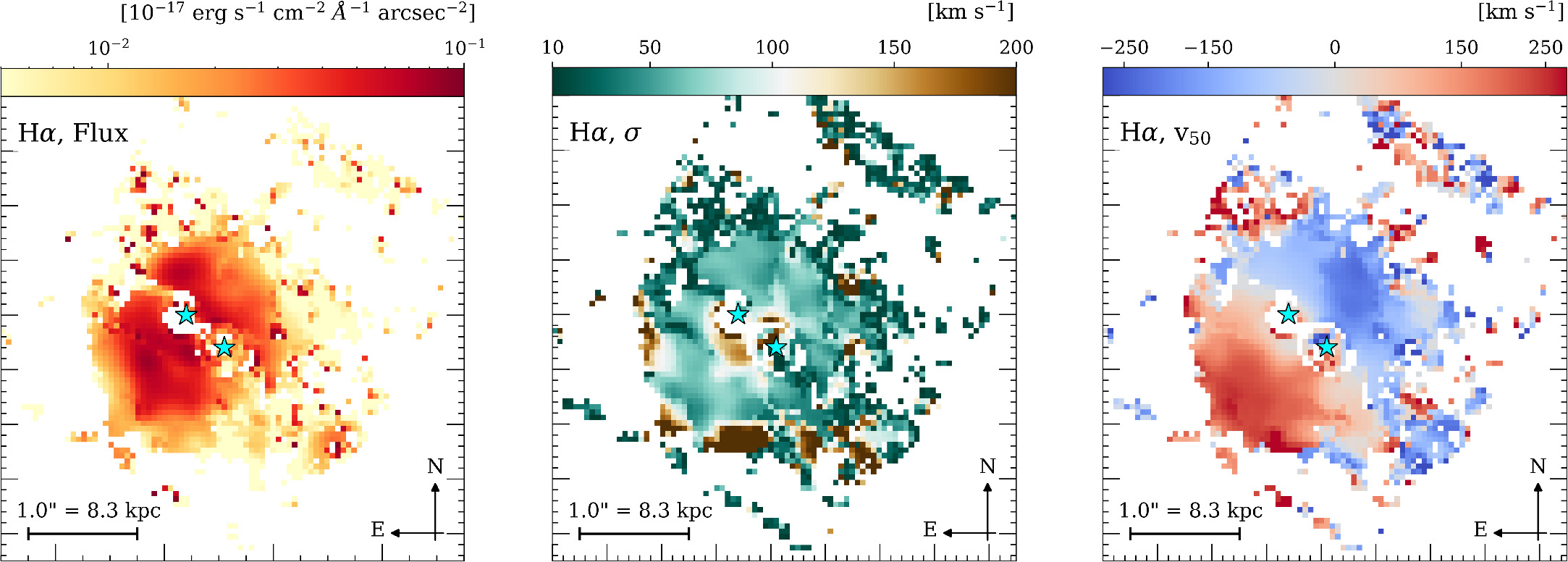
Figure 3: Maps of Hɑ emission with the quasar contributions removed. Left panel shows the flux, middle shows the velocity dispersion, and right the radial velocity. The radial velocity measurements provide strong evidence for a disk with gas rotation and relatively little disturbance, which is not usually the case for merger environments. [Ishikawa et al. 2025]
However, this story is complicated by the dynamics within the gas surrounding the quasars. As shown in the rightmost panel of Figure 3, the quasars are embedded in a gas disk that’s rotating, with one half of the gas being redshifted and the other half blue shifted. The quasars aren’t separated into these two regions, but are rather both found at the center of the disk. And the gas is showing none of the kinematic disturbance we would expect during a major merger, as the disk seems to be relatively stable. So maybe we’re not witnessing a merger in progress, but rather a disk galaxy that is playing host to two quasars! Based on simulations, one way this could happen is if a major merger takes place at an earlier time, and two black holes form from the resulting instabilities. This is another possible explanation for why the quasars are so similar.
Overall, this work points to the complicated nature of dual quasar systems. Is this one quasar being lensed or two different quasars? If they are distinct objects, are we witnessing a merger of galaxies, or did they both form in one galaxy? Future observations may be the key to answering these questions, but for now it remains a very interesting system.
Original astrobite edited by Hillary Andales.
About the author, Skylar Grayson:
Skylar Grayson is an astrophysics PhD candidate and NSF Graduate Research Fellow at Arizona State University. Her primary research focuses on active galactic nucleus feedback processes in cosmological simulations. She also works in astronomy education research, studying online learners in both undergraduate and free-choice environments. In her free time, Skylar keeps herself busy doing science communication on social media, playing drums and guitar, and crocheting!
The post Duel of the Dual: The Mystery of a Quasar Pair appeared first on AAS Nova.
]]>The post Hot Spot Detections and Volcanic Changes on Io During the Juno Epoch: Orbits PJ5 to PJ55 appeared first on AAS Nova.
]]>With several spacecraft having flown by or taken up temporary residence in the Jupiter system over the past few decades, researchers can now study changes in volcanism on Jupiter’s moon Io.
The post Hot Spot Detections and Volcanic Changes on Io During the Juno Epoch: Orbits PJ5 to PJ55 appeared first on AAS Nova.
]]>The post What If We Find Nothing? Bayesian Analysis of the Statistical Information of Null Results in Future Exoplanet Habitability and Biosignature Surveys appeared first on AAS Nova.
]]>Using Bayesian statistical methods, researchers determine the number of “perfect” and imperfect observations necessary to draw conclusions about the frequency of habitable planets in the universe.
The post What If We Find Nothing? Bayesian Analysis of the Statistical Information of Null Results in Future Exoplanet Habitability and Biosignature Surveys appeared first on AAS Nova.
]]>
The troubles continue for planets around the smallest and coolest stars: new research suggests that it's even harder than previously suspected for these planets to hold on to their atmospheres.
The post Planets Around Small Stars Even Less Likely to Have Atmospheres Than Previously Thought appeared first on AAS Nova.
]]>Which of the nearly 6,000 known exoplanets have atmospheres? New research suggests that small, rocky planets around the smallest and coolest stars are even less likely to hang on to their atmospheres than suggested by previous research. This result will help to guide the selection of target exoplanets for atmospheric characterization.
Approaching a Milestone
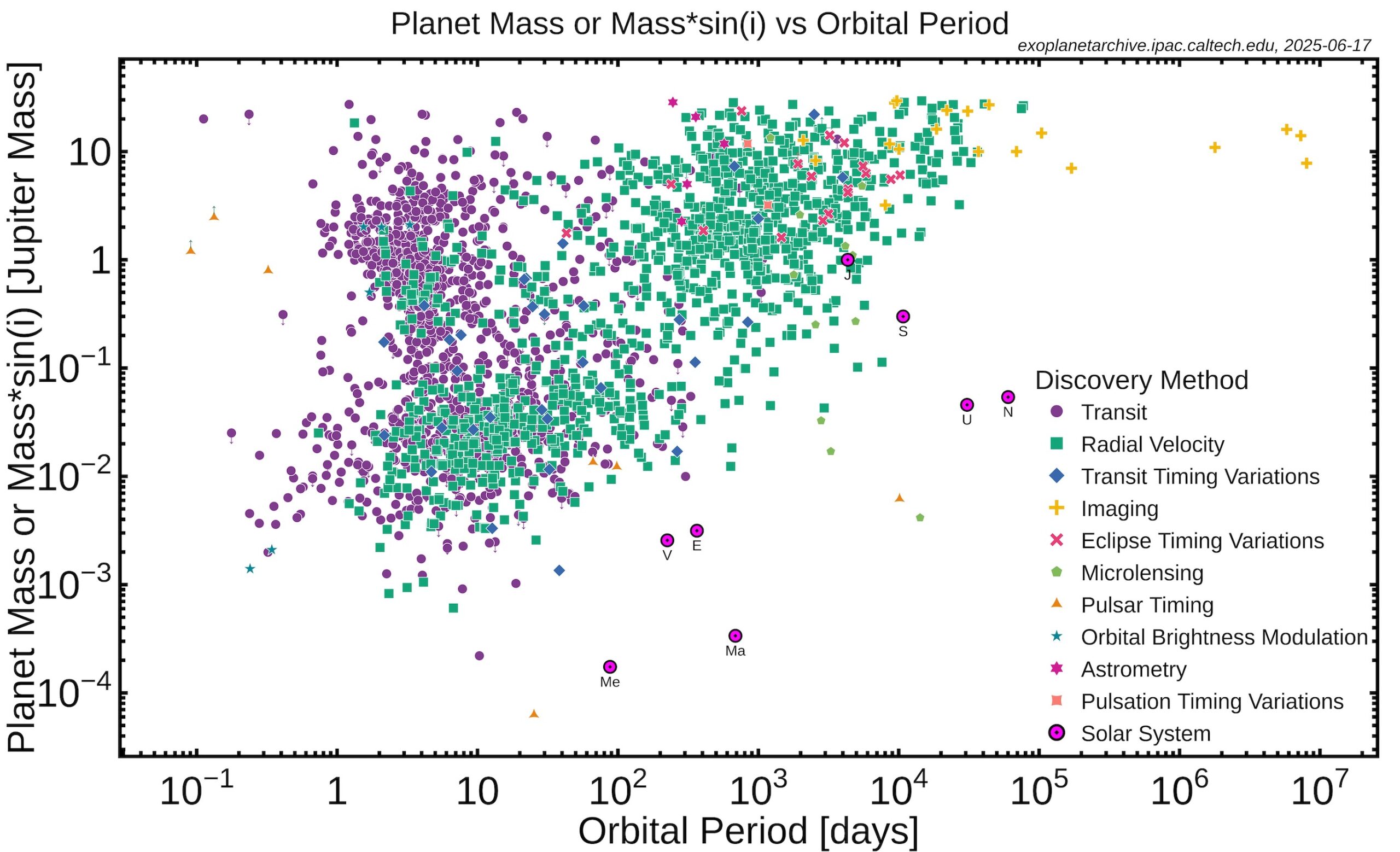
Mass, period, and detection method for confirmed exoplanets as of 17 June 2025. Click to enlarge. [Exoplanet Archive/Caltech/NASA]
When seeking planets with atmospheres, researchers must consider how a planet has fared in its lifelong battle between gravity and radiation. Massive planets orbiting calm stars are more likely to have atmospheres than lightweight planets around active stars. Astronomers define the cosmic shoreline as the dividing line between planets with atmospheres and planets without, in terms of escape velocity and the extreme-ultraviolet flux of the star.
Charting the Cosmic Shoreline
To predict on which side of the cosmic shoreline a particular planet lies, it’s not enough to know the current extreme-ultraviolet flux of its host star. A star’s extreme-ultraviolet flux changes over time, and integrating these changes over the lifetime of a planet yields its position along the shoreline. In a new research article, Emily Pass (Massachusetts Institute of Technology) and collaborators have suggested that this integration hasn’t been performed correctly for certain planets.
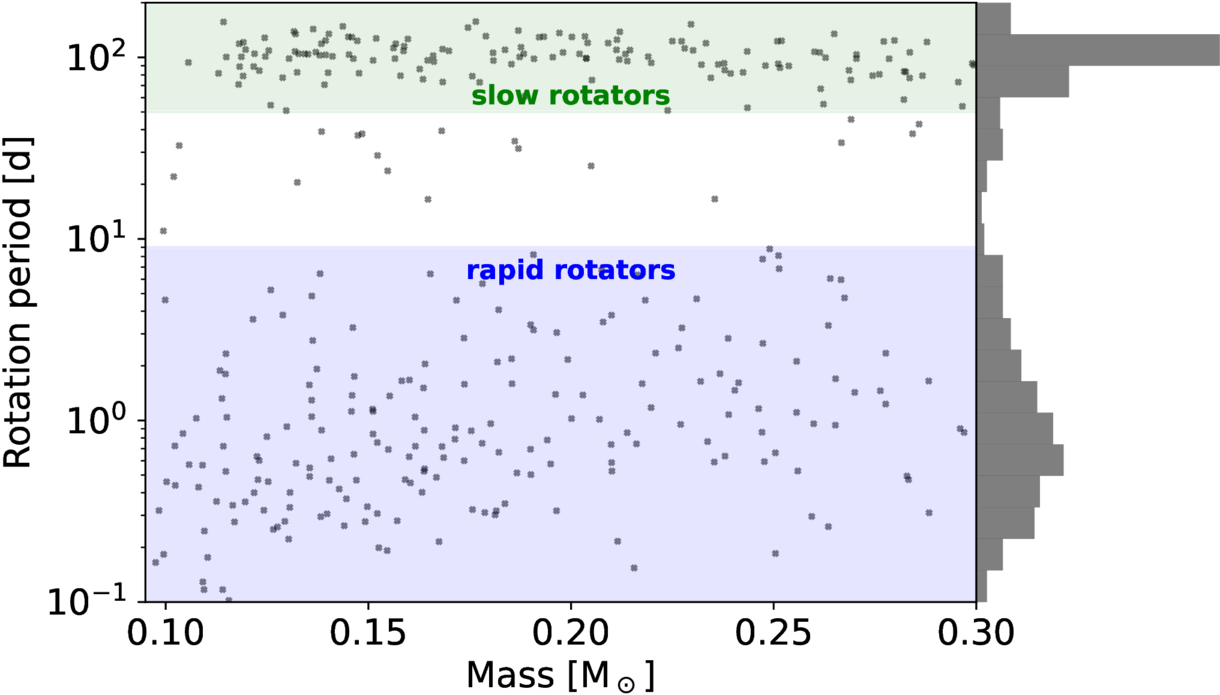
Rotation periods of M dwarfs with masses less than 0.3 solar mass. The lack of M dwarfs with rotation periods between 9 and 50 days suggests a rapid transition between the two regimes. Click to enlarge. [Pass et al. 2025]
Crossing the Line
Pass’s team estimated the flux of mid-to-late M dwarfs during two phases of their lives: the “saturated” phase, during which the stars rotate rapidly and their high-energy flux does not scale with their rotation rate, and the “unsaturated” phase, during which the high-energy flux declines as the rotation rate slows. The team consulted the literature to find the X-ray flux of M dwarfs during the two phases, then used a statistical approach to estimate how long the stars spend in each of these phases. The team also considered the impact of stellar flares as well as the stars’ lengthy pre-main-sequence phase, during which their overall luminosity is higher than it is once the star has fully contracted and begun its main-sequence lifetime.
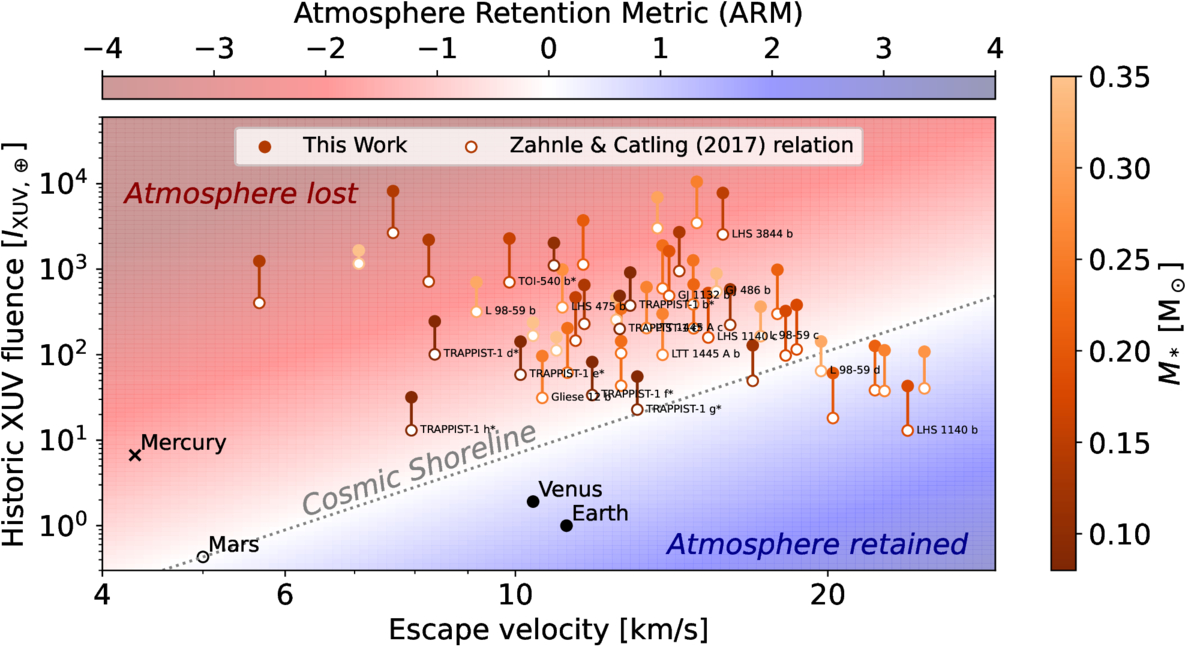
Previous and new positions of known exoplanets orbiting mid-to-late M dwarfs relative to the cosmic shoreline. Click to enlarge. [Pass et al. 2025]
Citation
“The Receding Cosmic Shoreline of Mid-to-Late M Dwarfs: Measurements of Active Lifetimes Worsen Challenges for Atmosphere Retention by Rocky Exoplanets,” Emily K. Pass et al 2025 ApJL 986 L3. doi:10.3847/2041-8213/adda39
The post Planets Around Small Stars Even Less Likely to Have Atmospheres Than Previously Thought appeared first on AAS Nova.
]]>The post Neutrinos from Carbon-Burning Red Supergiants and Their Detectability appeared first on AAS Nova.
]]>Detecting neutrinos from supergiant stars in the carbon-burning phase would provide valuable insights into the details of stellar evolution, but detecting these neutrinos is challenging with current technology.
The post Neutrinos from Carbon-Burning Red Supergiants and Their Detectability appeared first on AAS Nova.
]]>
Astrobites reports on the famous Bullet Cluster — what JWST observations reveal about its complex merger history and the constraints these observations place on self-interacting dark matter.
The post NCIS JWST: Analyzing the Aftermath of the Bullet Cluster’s Collision appeared first on AAS Nova.
]]>Editor’s Note: Astrobites is a graduate-student-run organization that digests astrophysical literature for undergraduate students. As part of the partnership between the AAS and astrobites, we occasionally repost astrobites content here at AAS Nova. We hope you enjoy this post from astrobites; the original can be viewed at astrobites.org.
Title: A High-Caliber View of the Bullet Cluster Through JWST Strong and Weak Lensing Analyses
Authors: Sangjun Cha et al.
First Author’s Institution: Yonsei University
Status: Published in ApJL
Despite the extreme depth and resolution of JWST observations, there’s still no smoking gun to be found in the hunt for dark matter. Yet, the extremely high-velocity collision in today’s article might aid in the search for what this mysterious material is made of. The target of today’s article is the Bullet Cluster (Figure 1). Despite its name, the Bullet Cluster is not one, but actually two massive clusters of galaxies gravitationally interacting with one another. Due to the high speed with which the smaller “bullet” subcluster collided and passed through the larger one, a strong bow shock caused the gas in the system to compress and heat to millions of degrees. Typically, this alone would make this system interesting to astronomers, but the real kicker here is that this collision was powerful enough to separate the dark matter from the normal, luminous matter. This has made the Bullet Cluster an important testing ground for theories on the nature of dark matter and is exactly what the authors of today’s article attempt to use it for.
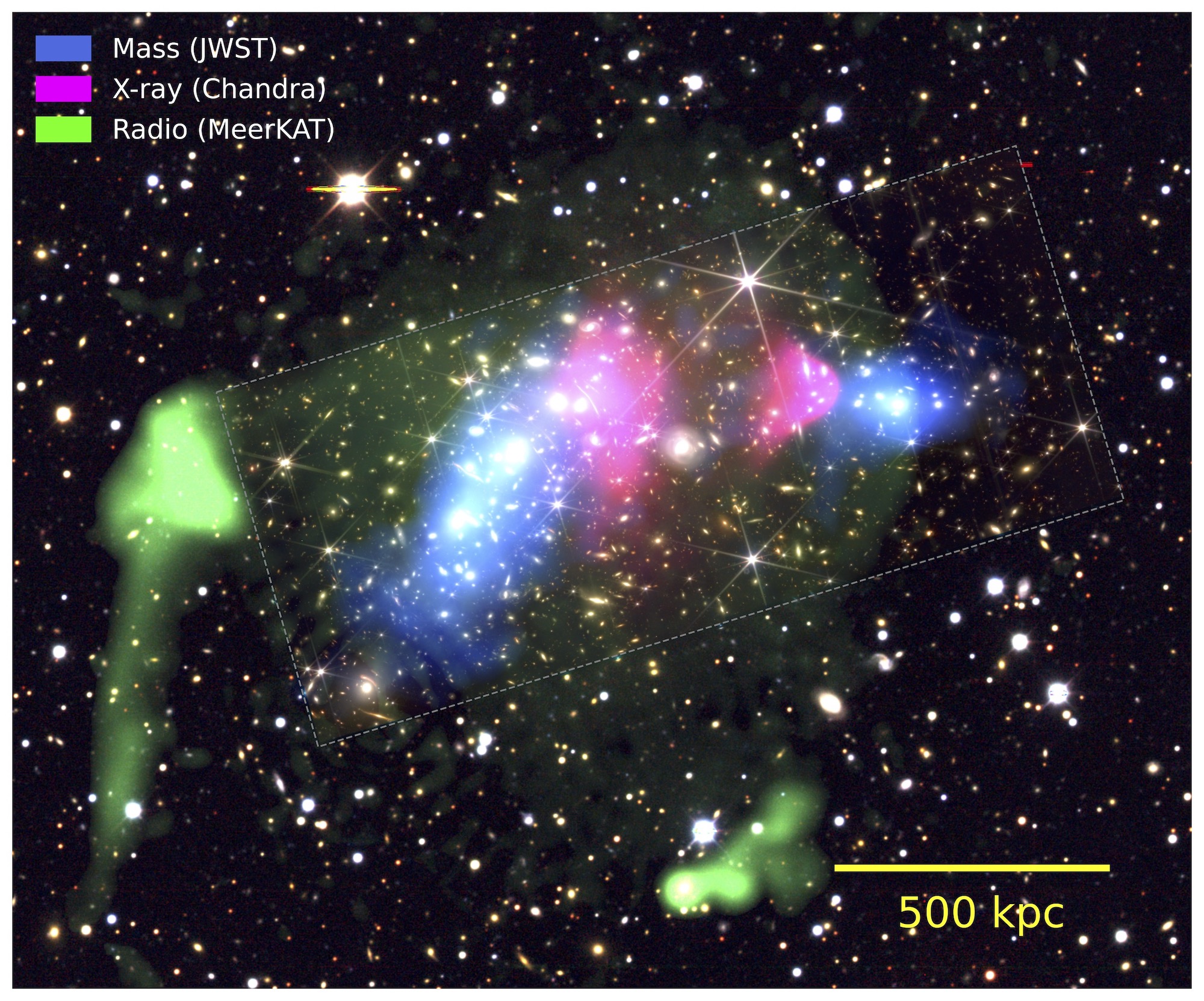
Figure 1: The Bullet Cluster, colour coded based on the strong and weak lensing–based mass reconstruction (blue/JWST), X-ray intensity (pink/Chandra), and radio intensity (green/MeerKAT) using three different telescopes. The dashed rectangle indicates JWST’s smaller field of view compared to Chandra and MeerKAT. [Cha et al., in press]
Mapping Hidden Mass
The authors used JWST imaging of the majority of the Bullet Cluster system to obtain high-resolution, multi-wavelength data. They then identified over 146 areas in the image subject to strong lensing, which is when the light from a background galaxy is bent around mass in the foreground Bullet Cluster system, since that mass distorts spacetime. They also obtained a weak lensing model for the image through statistical analysis, since the effects of weak lensing, while similar, are much more subtle than strong lensing. They then created a mass map for the system by feeding their strong lensing and weak lensing model into a reconstruction algorithm. Essentially, this algorithm creates the most likely distribution of mass, both dark matter and normal matter, that would re-create all the lensing that they observed.
What’s special about the algorithm that they used here is that it does not assume that light traces mass. In general, this assumption is correct, so other algorithms use it to get the most accurate mass estimate. But the authors here wanted to confirm that even in extreme environments like the Bullet Cluster that this is still the case, so they sent their algorithm in “blind.”
Comparing How the Light Traces the Dark
Once they had their mass map, which is dominated mostly by the dark matter in the system, they could compare it to the optical light between the system’s galaxies, referred to as the intracluster light (ICL). They used a statistical test called the modified Hausdorff distance to determine how similar the distribution of ICL and dark matter were to each other. They found that, despite the extreme gravitational interactions going on in the Bullet Cluster, the ICL still does an excellent job overall of tracing the system’s mass (see Figure 2).
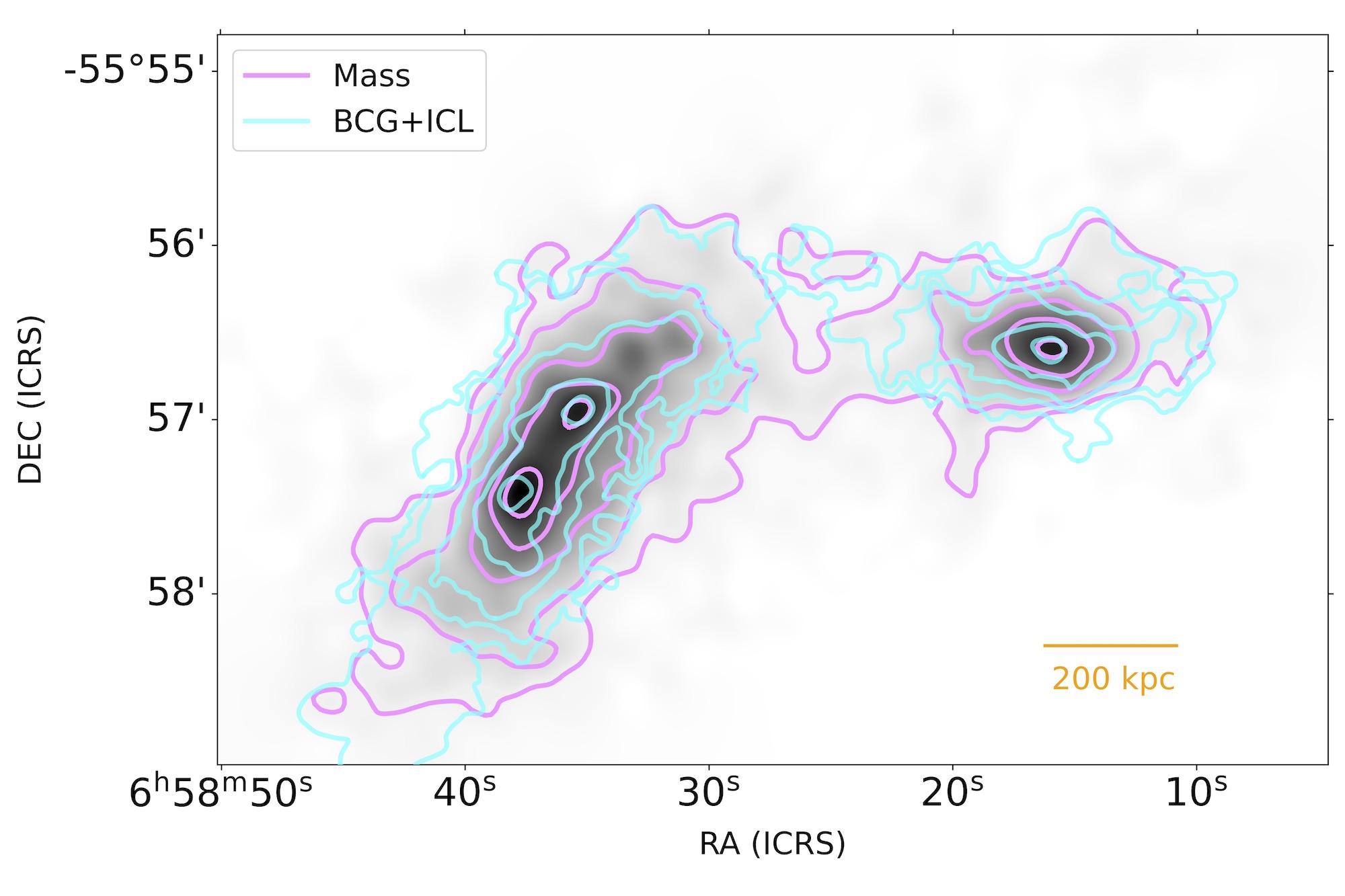
Figure 2: Comparison of the dark matter mass map from the strong and weak lensing data (pink) and the distribution of light from the ICL and the most massive galaxy, also known as the brightest cluster galaxy (BCG), combined (blue). Note how the bottom-most centroid’s dark matter and ICL contours are offset from one another. [Cha et al., in press]
What a Massive Cluster Tells Us About a Tiny Particle
Finally, the authors were able to use their mass map to put some constraints on one of the theories of dark matter: self-interacting dark matter. If dark matter particles interact with each other, then they have a cross section that can be calculated. Here, the authors calculate it from the offset between the position of the most massive galaxy in the Bullet Cluster and the position of the highest density of dark matter, which is about 60,000 light-years (see Figure 2). They were able to determine that the upper limit of this cross section is 0.5 cm2/g. This is the tightest constraint on self-interacting dark matter’s cross section to date, but we still have that pesky “per gram” in our units since we don’t know the mass of a dark matter particle (but this is being studied!).
This cross section is near the lower limit of what is thought to be a reasonable range for self-interacting dark matter theories (about 0.5–2 cm2/g), but it certainly doesn’t rule anything out. For further context, when dividing by mass, the cross section of a hydrogen atom is about 1.7×107 cm2/g, which is much bigger, but we would expect that when comparing an atom to a potential subatomic dark matter particle.
Altogether, the authors of this article were able to use both the precision of JWST and the impartiality of their mass-reconstruction algorithm to learn new things about both the structure of the Bullet Cluster and the nature of dark matter. Although there are still some open questions that will need to be answered, this study certainly is not just a shot in the dark!
Original astrobite edited by Maggie Verrico.
About the author, Veronika Dornan:
Veronika is a final-year PhD candidate at McMaster University. Her research is in observations of extragalactic globular star clusters and what they can tell us about galaxy evolution and dark matter distribution in the universe.
The post NCIS JWST: Analyzing the Aftermath of the Bullet Cluster’s Collision appeared first on AAS Nova.
]]>The post Kite-Borne Spectroscopic Observations of the Corona During the 2023 April 20 Total Solar Eclipse appeared first on AAS Nova.
]]>For the first time, researchers have used a kite, soaring to a height of 450 meters, as an airborne platform to study the solar corona during a total solar eclipse.
The post Kite-Borne Spectroscopic Observations of the Corona During the 2023 April 20 Total Solar Eclipse appeared first on AAS Nova.
]]>
Recent observations of a well-studied but confounding galaxy provide new insights into the structure of low-luminosity active galactic nuclei.
The post XRISM Spies the Remains of a Galactic Donut appeared first on AAS Nova.
]]>New X-ray observations reveal the potential remnant of a dusty torus in the galaxy Messier 81. These observations help to advance our knowledge of low-luminosity active galactic nuclei, a population of accreting black holes that is still poorly understood.
Understanding Accretion
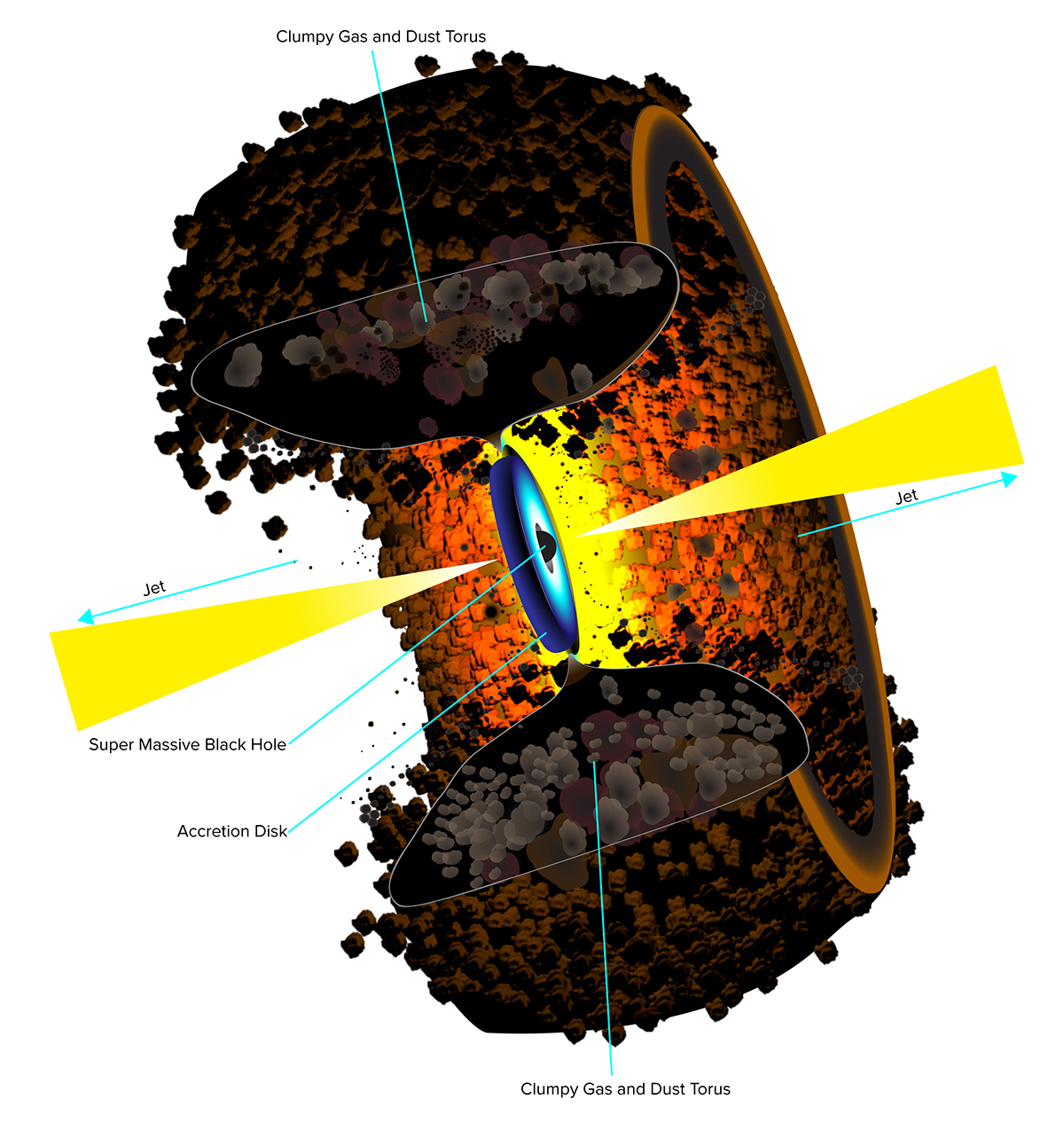
A diagram of the unified model of active galactic nuclei, showing an accretion disk, dusty torus, and jets. It’s not yet clear if LLAGNs conform to this model. [B. Saxton NRAO/AUI/NSF; CC BY 4.0]
Given how common it is for black holes to occupy this low-luminosity state, it’s critical to understand whether these systems are structured according to the typical picture of an active galactic nucleus, with a compact accretion disk surrounded by a dusty, donut-shaped torus. To probe the details of the LLAGN state, a team led by Jon Miller (University of Michigan) has turned to one of the best-studied — but still poorly understood — objects in this class.
Meet Messier 81
Just 12 million light-years away, the spiral galaxy Messier 81 is home to the nearest and brightest LLAGN. Messier 81’s central black hole was selected for observation during the 6-month Performance Verification phase of the X-ray Imaging and Spectroscopy Mission (XRISM), which launched in 2023. Messier 81 is the first LLAGN to be observed with a microcalorimeter, a type of instrument that detects photons by measuring minuscule changes in the temperature of the detector.
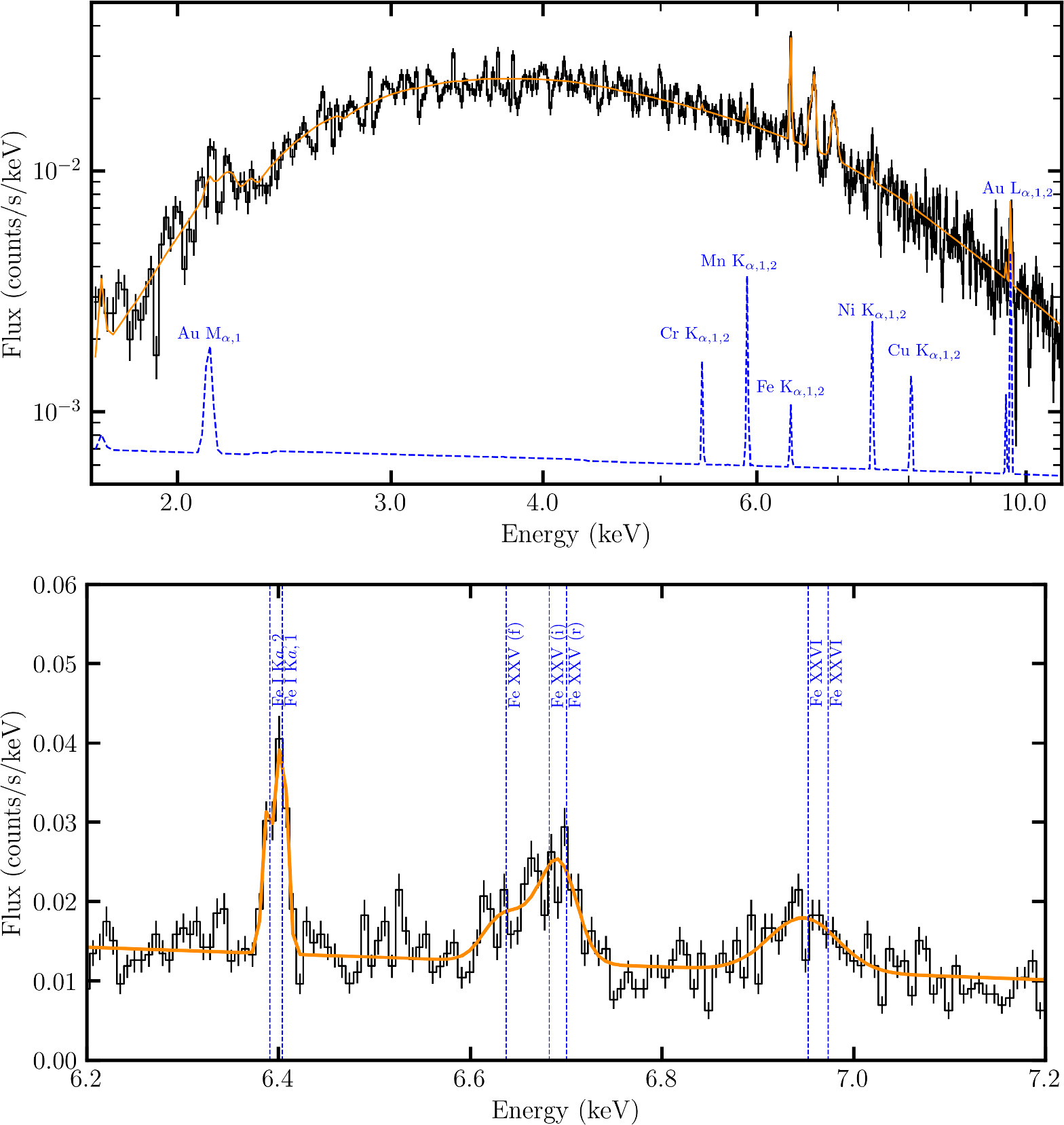
XRISM spectrum of Messier 81’s nucleus (black line). The blue line shows the expected non-X-ray background. The bottom panel zooms in on the iron Kα line and several lines from highly ionized iron. Click to enlarge. [Miller et al. 2025]
Investigating a Diagnostic Line
The iron Kα line appears in the spectra of many active galactic nuclei, and it’s key to understanding whether LLAGNs like this one have the same accretion disk and torus structure as more vigorously accreting active galactic nuclei.
Modeling of the XRISM data suggests that the iron Kα line arises from material no closer than 27,000 gravitational radii from the black hole — a large distance compared to a typical compact accretion disk that closely rings the black hole. Miller and collaborators suggest that the likeliest explanation for the origin of the iron Kα emission is the remnant of a dusty torus that is only lightly obscuring the central accretion disk. This is in line with the hypothesis that LLAGNs are winding down from a higher-luminosity state, and that they maintain certain structures (i.e., a torus) from that highly active state as their accretion rate slows.
The team found that it’s also possible for the emission to arise from an accretion disk whose inner edge lies far from the black hole, in agreement with the predictions of an accretion model called radiatively inefficient accretion flow. The XRISM data didn’t place strong constraints on another possible accretion model, the magnetically arrested disk model. Future observations that either probe more deeply or attempt to detect variability could better illuminate the structure surrounding the black hole.
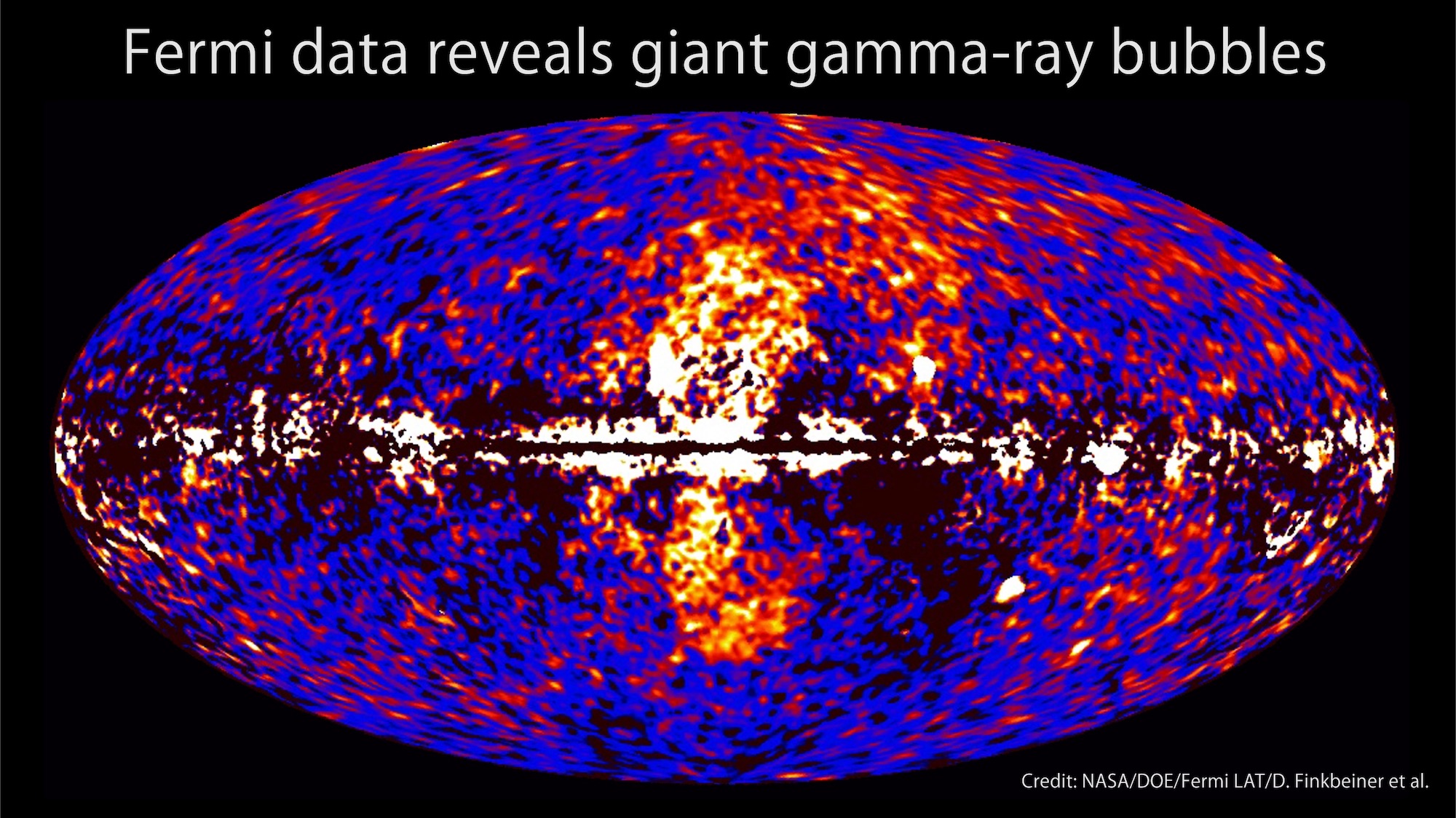
Processing of data from the Fermi Gamma-ray Space Telescope reveals a dumbbell-shaped structure emerging from the center of the Milky Way. [NASA/DOE/Fermi LAT/D. Finkbeiner et al.]
Citation
“XRISM Reveals a Remnant Torus in the Low-Luminosity AGN M81*,” Jon M. Miller et al 2025 ApJL 985 L41. doi:10.3847/2041-8213/add262
The post XRISM Spies the Remains of a Galactic Donut appeared first on AAS Nova.
]]>The post Effects of Subhalos on Interpreting Highly Magnified Sources Near Lensing Caustics appeared first on AAS Nova.
]]>Taking the gravitationally lensed redshift z = 6.2 star Earendel as an example, researchers show that the presence of sub-galactic dark matter subhalos can change the interpretation of a lensed source.
The post Effects of Subhalos on Interpreting Highly Magnified Sources Near Lensing Caustics appeared first on AAS Nova.
]]>
Astrobites reports on research that explores the possibility of impacts delivering organics to the ocean worlds in our solar system.
The post Seeding Life in the Oceans of Moons appeared first on AAS Nova.
]]>Editor’s Note: Astrobites is a graduate-student-run organization that digests astrophysical literature for undergraduate students. As part of the partnership between the AAS and astrobites, we occasionally repost astrobites content here at AAS Nova. We hope you enjoy this post from astrobites; the original can be viewed at astrobites.org.
Title: Impacts on Ocean Worlds Are Sufficiently Frequent and Energetic to Be of Astrobiological Importance
Authors: Shannon M. MacKenzie et al.
First Author’s Institution: Johns Hopkins University Applied Physics Laboratory
Status: Published in PSJ
Asteroids and meteorites are usually associated with doom and destruction (rest easy, dinosaurs), but they may have also been essential for the emergence of life on Earth. It is popularly theorized that some of the base building blocks of life, like volatiles and organics, were delivered here by meteorites and that the energy of these impacts synthesized even more, like HCN and amino acids. Expectedly, the same should be true for other planets. Today’s article explores this possibility using nearby analogies for potentially habitable exoplanets: our solar system’s ocean worlds.
Why Do Meteorites Carry Organics?
The solar system formed from one massive cloud of gas and dust, so the composition everywhere is approximately the same. However, early Earth was an extremely hot ball of magma that destroyed its organic matter. Luckily, organics were able to survive in objects like meteorites in the cold outskirts of the solar system.
Ocean Worlds in Our Neighborhood
In the search for extraterrestrial life, we start by looking for the basic necessities — and water is a big one. Though Earth is the only planet in our solar system with liquid water, several moons of Jupiter and Saturn have it as well. These moons are beyond the balmy habitable zone, so their surfaces are covered in icy crusts, but beneath those crusts are subsurface oceans of liquid water, making these moons “ocean worlds” (see Figure 1). On their own, the presence of water makes these moons astrobiologically interesting, and they will also elucidate ocean worlds that are further away.
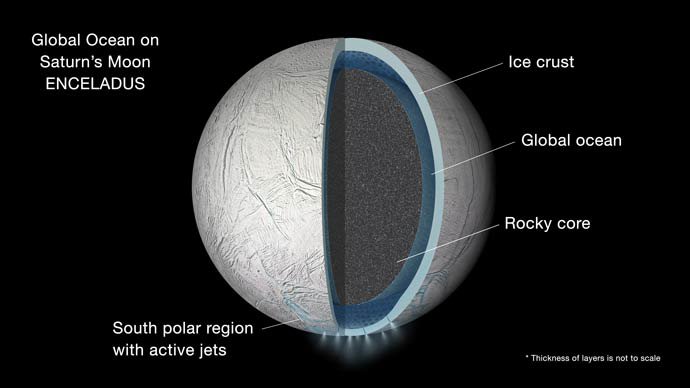
Figure 1: Saturn’s moon Enceladus with a liquid water ocean beneath the icy crust. Jets on the surface are strong indicators of hydrothermal vents on the ocean floor. [JPL]
Surviving the Impact
To evaluate survivability, the authors modeled the maximum pressure of an impact on an ocean world’s ice crust for a range of impact velocities and angles. Around Jupiter and Saturn, most impactors are either icy or rocky objects that originate from the Kuiper Belt or Oort cloud, so the authors modeled both types of impactors. Rocky impactors create higher pressures (shown in gray in Figure 2) than icy impactors (shown in black in Figure 2). From the sizes of observed craters on the ocean world moons, previous works determined the velocities and pressures of impacts, which are shown by the colored boxes in Figure 2. Finally, a number of other works have estimated the ranges of survivable pressures for biota and biologically important molecules, which are shown by the green and black bars on the right of Figure 2. Impressively, the survivable pressure ranges are within the observed and modeled pressures of impacts! So these life building blocks can be, and likely have been, deposited on the ocean world moons.
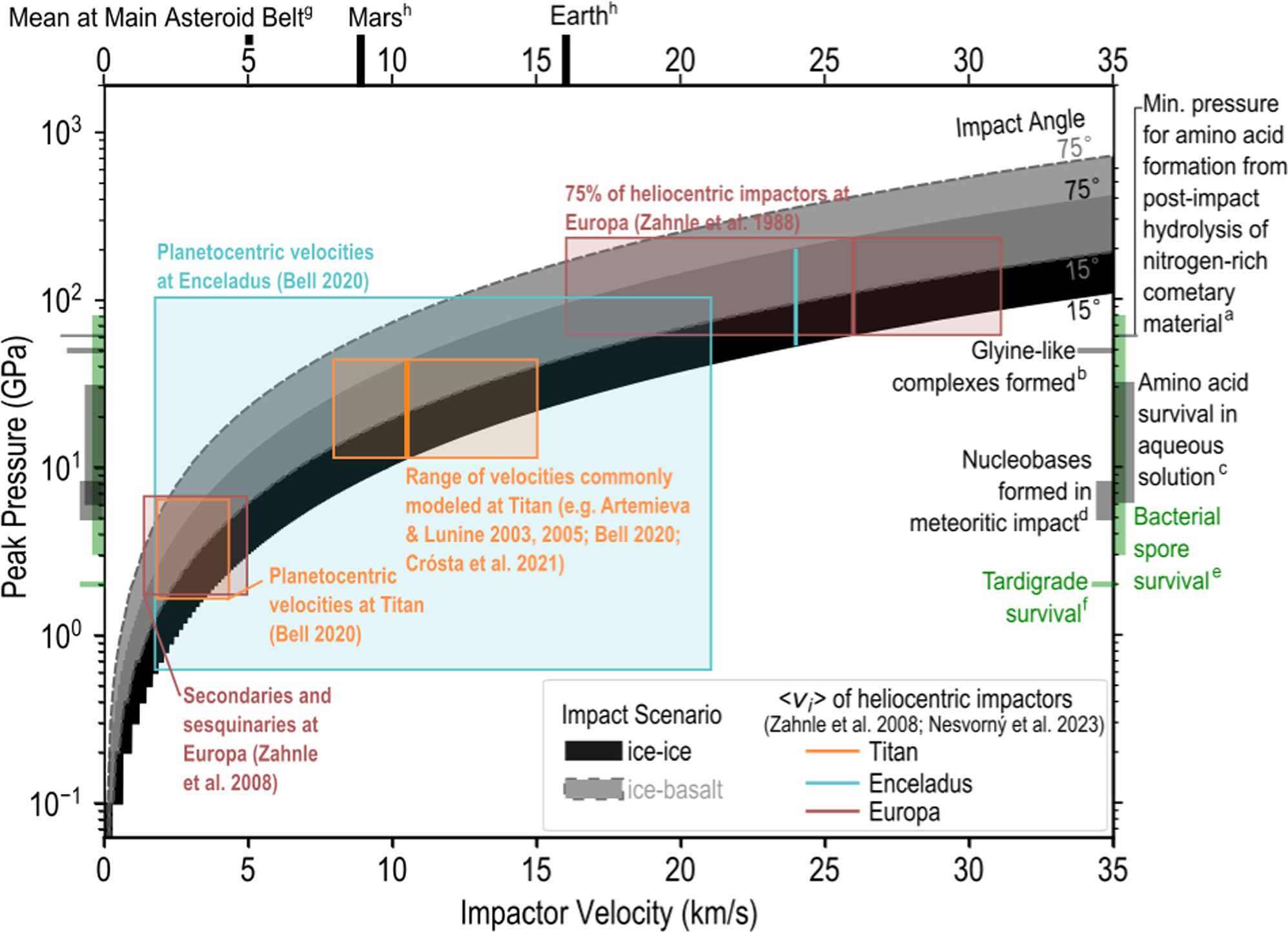
Figure 2: The modeled impact velocities and maximum pressures for icy (black) and rocky (gray) impactors. Survivable pressures of various organics (green and gray colored bars on the y-axis) are within the range of observed velocities and pressures from craters on each ocean world moon (colored boxes). [MacKenzie et al. 2024]
Crater Melt Pools
When an impactor hits the icy crust, some of the ice will melt. The deposited organics will end up in a pool of liquid water in the crater, which is an ample environment for prebiotic chemistry until the pool freezes. From the observed crater sizes and modeled velocities, the authors estimated how much liquid water could remain in a crater and how long it would take to freeze. Freeze times ranged from a few Earth years for the smallest craters (<4 kilometers in diameter) to thousands of years for the largest craters (hundreds of kilometers). In labs on Earth mimicking the crater conditions, amino acids have been synthesized in as short as a few months to a few years, so synthesis is possible in the melt pools.
The pools eventually freeze, trapping any deposited or synthesized material on the icy surface. Other processes, like future impacts, are required to break through the icy crust and transport material to the subsurface oceans where theorized hydrothermal vents could allow more complex development.
Tangible Evidence
In summary, survivable impacts on the ocean world moons are common, and each provides an opportunity for prebiotic chemistry to arise. Unlike most objects astronomers study, the proximity of these ocean worlds means that we can thoroughly understand them through physical samples. NASA’s Cassini detected organic compounds in the plumes that burst off the surface of Enceladus, and the Dragonfly mission is set to head for Titan in 2028 to collect and analyze samples once it arrives in 2034. In the coming decades, we may witness the discovery of more precursors to life or microbial life itself in the subsurface oceans of moons in our solar system, and gain radical insight into the ocean worlds beyond.
Original astrobite edited by Sonja Panjkov.
About the author, Annelia Anderson:
I’m an Astrophysics PhD candidate at the University of Alabama, using simulations to study the circumgalactic medium. Beyond research, I’m interested in historical astronomy, and hope to someday write astronomy children’s books. Beyond astronomy, I enjoy making music, cooking, and my cat.
The post Seeding Life in the Oceans of Moons appeared first on AAS Nova.
]]>The post Subtle and Spectacular: Diverse White Dwarf Debris Disks Revealed by JWST appeared first on AAS Nova.
]]>JWST collected a dozen new spectra of warm circumstellar dust circling white dwarfs with metal-polluted spectra, showing evidence for replenishment of dust grains on year or decade timescales.
The post Subtle and Spectacular: Diverse White Dwarf Debris Disks Revealed by JWST appeared first on AAS Nova.
]]>
A new fast and flexible ray-tracing algorithm aims to make the complex world of general relativistic magnetohydrodynamics simulations more approachable.
The post Featured Image: Following Photons Through Curved Spacetimes appeared first on AAS Nova.
]]>Today’s featured image is a beautiful representation of how simulated images of active black holes are made. In a recent research article, a team led by Aniket Sharma (Indian Institute of Science Education and Research Mohali) introduced Mahakala, a new ray-tracing algorithm that expertly tracks photons as they navigate the warped spacetimes surrounding black holes. Mahakala is named for the Egyptian deity who, as Sharma and collaborators describe, is “believed to be the depiction of absolute black, and the one who has the power to dissolve time and space into himself.” The image above shows a simulated accreting black hole at a wavelength of 1.3 millimeters, which is the same wavelength used by the Event Horizon Telescope to view the supermassive black holes at the center of the Milky Way and the galaxy Messier 87. The dotted lines streaming off to the right represent the paths that photons took on their way to the viewer as they curved around the black hole, which is visible among the forest of lines. In this representation, the color of each dot shows the synchrotron emission generated at that point in three-dimensional space. The team hopes that Mahakala, which can be run quickly and easily from a Python Jupyter notebook, helps make the complex world of general relativistic magnetohydrodynamics simulations more accessible. You can try it for yourself or learn more from the article linked below.
Citation
“Mahakala: A Python-Based Modular Ray-Tracing and Radiative Transfer Algorithm for Curved Spacetimes,” Aniket Sharma et al 2025 ApJ 985 40. doi:10.3847/1538-4357/adc104
The post Featured Image: Following Photons Through Curved Spacetimes appeared first on AAS Nova.
]]>
The final day of AAS 246 included discussions about solar cycle research and the current landscape for science policy and advocacy.
The post AAS 246: Day 4 appeared first on AAS Nova.
]]>Editor’s Note: This week we’re at the 246th AAS meeting in Anchorage, AK, and online. Along with a team of authors from Astrobites, we will be writing updates on selected events at the meeting and posting each day. Follow along here or at astrobites.com for daily summaries, or follow @astrobites.bsky.social on Bluesky for more coverage. The usual posting schedule for AAS Nova will resume on June 16th.
Table of Contents:
- Solar Physics Division Plenary: Karen Harvey Prize Lecture: Building Connections in Heliophysics with Surface Flux Transport Modeling, Lisa Upton
- Public Policy Plenary: The Current Landscape for Science Policy and How YOU Can Make a Difference
Solar Physics Division Plenary: Karen Harvey Prize Lecture: Building Connections in Heliophysics with Surface Flux Transport Modeling, Lisa Upton (by Kerry Hensley)
The 2025 Karen Harvey Prize, “awarded in recognition of a significant contribution to the study of the Sun early in a person’s professional career,” went to Lisa Upton (Southwest Research Institute) for her work on large-scale solar flows and magnetic flux transport. Upton began by honoring Karen Harvey, with whom she shares many scientific interests. Harvey’s interest in solar physics began as a teenager observing sunspots with a small telescope, which led to her first scientific paper. She is remembered for her service to the solar physics community, her spirit of collaboration, and her education and public outreach efforts.
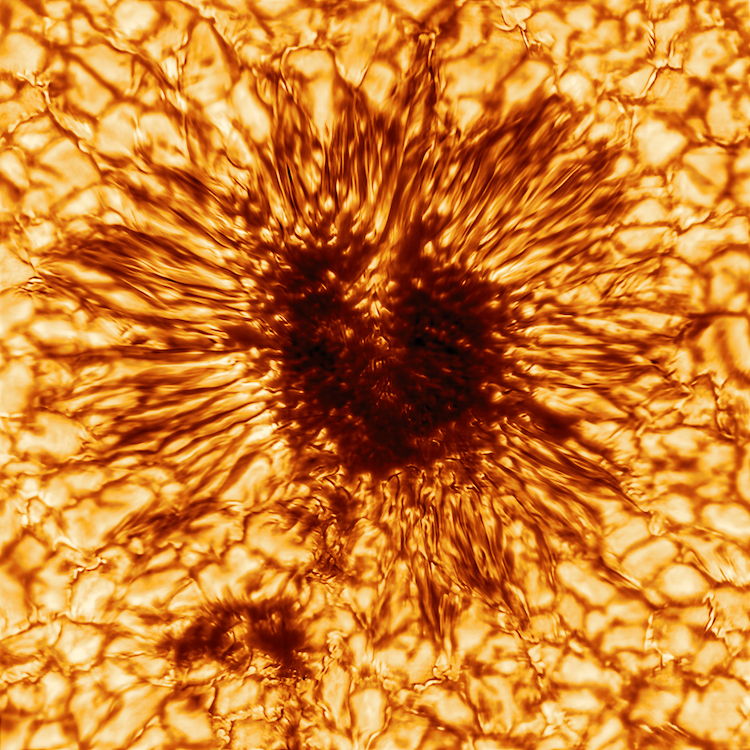
An extreme close-up of a sunspot taken by the Daniel K. Inouye Solar Telescope in Hawai’i. [NSO/AURA/NSF; CC BY 4.0]
How the Sun’s magnetic field explains the existence of the solar cycle is described by the Babcock dynamo model. In this model, the differential rotation of the Sun — the faster rotation of the Sun at its equator than at its poles — stretches the submerged magnetic field and makes it stronger. The field then becomes buoyant and causes sunspots to emerge at the Sun’s surface. The turbulent convective motion of the Sun that cycles material from the interior to the surface causes the surface magnetic flux to spread out, eventually being transported to the poles, where it cancels out the old magnetic field and creates a new field pointing in the opposite direction. This starts the solar cycle anew.
Upton described her research, which has covered a remarkably broad range of topics within solar physics. For example, she has studied large-scale flows, leading to the discovery of the long-sought-after giant cells. She also described her work on surface flux transport modeling, simulating the emergence and decay of magnetic flux through the solar surface. By incorporating observations of extreme-ultraviolet light from the far side of the Sun, Upton and collaborators greatly improved models of solar active regions emerging on the far side. More recently, Upton has been working to connect phenomena on the solar surface to the solar corona and beyond, working to predict the appearance of the solar corona during a solar eclipse, among other projects. She has also worked to generate realistic synthetic solar active regions, enabling both predictions of active region behavior as well as historical reproductions of the Sun’s appearance going back 200 years. Looking forward, she hopes to extend her research to the study of activity on other stars, where we see starspots far larger than anything on the Sun.
To close, Upton emphasized the need to remain united, support each other, and advocate for science as we navigate the challenging conditions in the world today.
Public Policy Plenary: The Current Landscape for Science Policy and How YOU Can Make a Difference (by Lucas Brown)
To finish out a wonderful week at AAS 246, we heard from a panel of AAS leadership and participants in the recent AAS Congressional Visits Day on ways to make a difference in today’s current science policy landscape. First, we heard from AAS Deputy Chief Executive Officer and Director of External Affairs and Public Policy Joel Parriott, who provided an overview of what AAS’s stated science policy priorities are — focusing on the Society’s top priority of addressing the significant global issues that affect astronomy. A common theme that echoed throughout the plenary was that the advancement of these goals requires the advocacy and voices of as many people as possible.
Next, AAS Deputy Director of Public Policy Roohi Dalal spoke about the current state of science policy — from the large amount of proposed budget cuts we have seen come from the federal government over the past six months to the actions of the AAS in advocating for funding astronomy research. Specifically, AAS launched a “share your story” campaign to highlight the human impact of these cuts and has interfaced directly with representatives and their staff through initiatives like Congressional Visits Day. Dalal’s talk once again returned to the idea that the AAS needs everyone’s voice to make change.
AAS President Dara Norman then took the stage to explain in greater detail what actions people can take in supporting the policy goals of the Society and astronomy more broadly. Her top recommendation was to pay attention to AAS action alerts, which provide detailed instructions as to what actions will have the most impact at any given moment. Right now one of those top actions is to get in contact with local elected officials either via email, phone, or through an in-person meeting.
After Norman’s speech, the plenary transformed into a panel discussion featuring Lori Porter from Columbia University, Becka Phillipson from Villanova University, and Marcel Agüeros also from Columbia University, all of whom participated in this year’s Congressional Visits Day program. They spoke about the real impact that these sort of one-on-one visits with congressional staff or representatives can have, and shared tips on how to approach communicating effectively during such a visit. Their words of advice once again underscored the power of people’s voices in ensuring the future of astronomy remains bright.

Photo of the participants in AAS’s 2025 Congressional Visits Day posing in front of the US Capitol Building. [AAS]
The post AAS 246: Day 4 appeared first on AAS Nova.
]]>The post Discovery of Extraterrestrial 244Pu in 2 Million Year Old Fossilized Stromatolites appeared first on AAS Nova.
]]>Analysis of rapid-neutron-capture elements in fossilized stromatolites — layered deposits of cyanobacteria — leave open the possibility of multiple isotopic transport mechanisms in the cosmos.
The post Discovery of Extraterrestrial 244Pu in 2 Million Year Old Fossilized Stromatolites appeared first on AAS Nova.
]]>
The bunny ears of a jellyfish galaxy, the journey of a 14th-century monk, and 35 years of the Hubble Space Telescope: all this and more on Day 3 of AAS 246.
The post AAS 246: Day 3 appeared first on AAS Nova.
]]>Editor’s Note: This week we’re at the 246th AAS meeting in Anchorage, AK, and online. Along with a team of authors from Astrobites, we will be writing updates on selected events at the meeting and posting each day. Follow along here or at astrobites.com for daily summaries, or follow @astrobites.bsky.social on Bluesky for more coverage. The usual posting schedule for AAS Nova will resume on June 16th.
Table of Contents:
-
- Plenary Lecture: The Hubble Space Telescope at 35: Eyeing the Future, Jennifer Wiseman (Goddard Space Flight Center)
- Press Conference: Recent and Upcoming Discoveries in the Broader Universe
- Plenary Lecture: Advancing Exoplanet Characterization: Five Years of High-Resolution Spectroscopy with KPIC, Dimitri Mawet (California Institute of Technology)
- Donald E. Osterbrock Book Prize Lecture: Where Are We? How Past Astronomers Found Their Place in the Universe — and on Earth, Seb Falk (University of Cambridge)
- Plenary Lecture: Things in Disks: Towards a New Understanding of Galactic Nuclei, K.E. Saavik Ford (CUNY Borough of Manhattan Community College/American Museum of Natural History)
Plenary Lecture: The Hubble Space Telescope at 35: Eyeing the Future, Jennifer Wiseman (Goddard Space Flight Center) (by Margaret Verrico)

Hubble image of the spots where the fragments of comet Shoemaker–Levy 9 impacted Jupiter. [Hubble Space Telescope Comet Team and NASA]
Dr. Wiseman began by describing how our science community has been transformed by Hubble’s impact. She highlighted Hubble’s multiple science instruments and ultraviolet–optical capabilities, which cover a crucial part of the electromagnetic spectrum that is not covered by other flagship observatories like JWST. She described the evolution of Hubble, from the first description of a space telescope by Dr. Lyman Spitzer in 1946 to its announcement by Nancy Grace Roman in 1977 and eventually its launch on the space shuttle in 1990. Its key science drivers originally included measurements of the expansion rate of the universe, understanding how galaxies have evolved throughout the history of the universe, determining whether supermassive black holes really exist at the centers of massive galaxies (only a theory at the time of launch), and studying planets in our solar system. Over the past 35 years, Hubble’s ~1.7 million observations of over 100 million objects have revolutionized our understanding of the solar system, star formation, and the evolution of the universe, leading to the discovery of the accelerating expansion of the universe, confirmation of the existence of supermassive black holes, and an understanding of a dynamic and evolving solar system.
Dr. Wiseman described how Hubble is a crucial part of the suite of Great Observatories in operation today. She emphasized its importance as a follow-up telescope for transient events like supernovae, its decades-long archive for long-term monitoring of solar system planet atmospheres, and its ultraviolet coverage that complements the infrared range of JWST. She promoted new support services for Hubble data, including the Hubble Spectroscopic Legacy Archive (HSLA) — a publicly available database of archival Hubble spectra — and the upcoming Hubble Advanced Spectral Products (HASP) database, which will be public later this summer. Dr. Wiseman cited Hubble’s continually improving user support and data archives as a crucial piece of the observatory’s future while warning that continued budget cuts have impacted their ability to fund new research and threaten the facility’s ability to support new science through the end of the 2020s.
Dr. Wiseman closed with a hope that the audience would leave her talk and the AAS meeting inspired to join the celebration of Hubble’s 35 years of discoveries. She expressed excitement for the new discoveries that will be enabled by Hubble through the early 2030s and its essential part in the suite of Great Observatories over the next half decade.
Read an interview with Jennifer Wiseman here.
Press Conference: Recent and Upcoming Discoveries in the Broader Universe (by Lucas Brown) (Briefing video)

HST imagery of NGC 4858, a “jellyfish” galaxy that exhibits long tails of gas and stars extending outwards from the disk. These tails are expected to form as the result of drag forces as the galaxy moves through a gas-dense region of intergalactic space. [HST/ALMA/H. Souchereau]
Next, in “In the Belly of the Beast: Massive Clump Formation in the Hearts of Major Mergers,” we heard from Sean Linden of University of Arizona about new insights from JWST into the dense star-forming clumps found in many major galaxy mergers. These clumps are unlike anything seen in typical, non-merging galaxies in the universe today, and they’re thought to be the “building blocks” of galaxies in the early universe. Thanks to the space telescope’s increased resolution and sensitivity to infrared light, it has been able to peer through the obscuring dust found within some of the universe’s biggest mergers to identify the presence and characteristics of such clumps. These new observations confirm many predictions about clump formation made in prior simulations. The full press release can be found here.
Third, we were briefed on “UNCOVERing the Drivers of Reionization with JWST” from Isak Wold of NASA and The Catholic University of America. Reionization was a period of a few hundred million years in the very early universe wherein the neutral hydrogen that permeated the cosmos at the time was nearly completely ionized. The exact origin of the necessary radiation to set off this reionization has long been a source of speculation. In Wold’s talk, new evidence was presented advancing the idea that a class of young, star-forming, and oxygen-III-emitting galaxies could completely source this ionizing ultraviolet light. Wold’s team draws on new JWST observations of such galaxies, which indicate that the galaxies are numerous, largely dust-free and metal-poor, and indeed emit abundant ultraviolet light—all the ingredients needed for a strong candidate to explain the epoch of reionization. The full press release can be found here.
Fourth, in “The ‘Dark-Matter Dominated’ Galaxy Segue 1 Modeled with a Black Hole and No Dark Halo” presented by Nathaniel Lujan of The University of Texas San Antonio, we heard about a new model for the structure of the dwarf galaxy known as Segue 1. Previous observations of the galaxy, which has few stars but a large amount of mass, suggested that the galaxy contains a large amount of dark matter. In order to derive the new model, Lujan and his collaborators compared observations of stellar motion against a set of 100,000 simulations of stellar motion given different underlying parameters describing the distribution of mass in the galaxy. The team found that a model including a central black hole with the mass of 500,000 suns and only minimal dark matter fits better than a dark matter–dominated model, challenging previous assumptions about the system, the prevalence of dark matter in dwarf galaxies, and the abundance of supermassive black holes in our universe. The full press release can be found here.

One of the very first images taken by the SPHEREx mission. The color gradient present across the frame is the result of linear variable filters that cause different parts of each image to be sensitive to different wavelengths of light. By taking many images while panning over a patch of sky, this filtering allows each pixel in the image to be spectroscopically characterized. [SPHEREx]
Plenary Lecture: Advancing Exoplanet Characterization: Five Years of High-Resolution Spectroscopy with KPIC, Dimitri Mawet (California Institute of Technology) (by Margaret Verrico)
The next plenary lecture was given by Professor Dimitri Mawet, the David Morrisroe Professor of Astronomy at Caltech and a Senior Research Scientist at NASA’s Jet Propulsion Laboratory. Professor Mawet talked about the importance of ground-based observatories and high-resolution spectroscopy for exoplanet science.

An artist’s impression of the planet K2-18b orbiting its host star. [ESA/Hubble, M. Kornmesser; CC BY 4.0]
Professor Mawet highlighted several works by his students on KPIC exoplanets. Mawet’s student Jason Wang directly imaged HR 8977, a four-planet system, and obtained spin measurements for all four planets, which can be used to study the relationship between the planets and their magnetic fields. Another one of his students, Chih-Chun (Dino) Hsu, will be giving a talk later today on the differences in the spin properties between giant planets and brown dwarfs. Using KPIC’s high-resolution spectrometer, Professor Mawet’s group has made groundbreaking discoveries in exoplanet formation science, paving the way for future work with ground-based and space-based observatories.
To wrap up the talk, Professor Mawet talked about the future of ground-based exoplanet science with the High resolution Infrared Spectrograph for Exoplanet Characterization (HISPEC) and Multi-Objective Diffraction-limited High-resolution Infrared Spectrograph (MODHIS). In particular, HISPEC is expected to nearly double the number of directly imaged planets and brown dwarfs when it comes online in 2027.
Read an interview with Dimitri Mawet here.
Donald E. Osterbrock Book Prize Lecture: Where Are We? How Past Astronomers Found Their Place in the Universe — and on Earth, Seb Falk (University of Cambridge) (by Olivia Cooper)

Figure 1: Seb Falk giving his plenary talk, pictured with the astronomical chart that is the cover image for his book. [Seb Falk / Olivia Cooper]
Throughout the talk, Falk shared a handful of lessons he has taken from the history of astronomy, about how to do astronomy in a changing world. First, everyone has a contribution to make: there are countless unknown, unnamed, historically-unrecognized people taking measurements, developing knowledge, and constructing instruments. Next, motivations matter, for better or worse. Our motivations for doing science (and for the way we conduct science) can provide momentum, and can also create biases and limit our scientific understanding. Further, astronomy is never pointless: though our work often seems abstract, the implications are quite grounded, and have led to the development of mathematical techniques, new technologies, art, storytelling, and more. Regarding the practice of astronomy, Falk reminds us that it is most impactful through physical experience, when we contextualize the act of doing astronomy by the experience of looking at the night sky. Upon these experiences, he notes that modeling matters; how we encode, distill, and distribute knowledge in turn impacts our collective interpretation of the cosmos.
Towards the end of the talk, Falk remarked that the pre-modern world was a time of amazing creativity, teamwork, patience, and interdisciplinarity. Although there were certainly misconceptions about the Universe and our place in it, he notes the importance of giving dead ends and disappointments a chance to pan out, and reminds us to persevere through times of political unrest and threat to scientific pursuit, as did astronomers of the past worldwide.
Read an interview with Seb Falk here.
Plenary Lecture: Things in Disks: Towards a New Understanding of Galactic Nuclei, K.E. Saavik Ford (CUNY Borough of Manhattan Community College/American Museum of Natural History) (by Margaret Verrico)
The final plenary of the day was given by K.E. Saavik Ford, a Professor in the Science Department at CUNY Borough of Manhattan Community College, Professor of Physics at the CUNY Graduate Center, research associate at the American Museum of Natural History, and a visiting scientist at the Flatiron Institute’s Center for Computational Astrophysics. She discussed her work understanding “things in disks,” particularly stellar- and intermediate-mass black holes in active galactic nucleus disks.

Simulation of black holes approaching a merger. [SXS, the Simulating eXtreme Spacetimes (SXS) project (http://www.black-holes.org); CC BY-NC 4.0]
Professor Ford spent most of her talk advertising McFACTS, a Monte Carlo simulation code for stellar-mass black holes embedded in AGN disks. She highlighted a few results from collaborators and students who have used the code, including her student Vera Delfavero’s modeling of the supermassive black hole mass peak at 108 solar masses (ADS link here) and predictions by Harrison Cook for the gravitational wave signatures of the AGN channel (ADS link here). She also discussed ongoing and future work to improve the software’s ability to model stars, electromagnetic signatures of black hole mergers in AGN disks, and transient events like tidal disruption events, changing-look AGN, and quasi-periodic eruptions that might result from those mergers.
Professor Ford closed out the talk with several pieces of advice. She advised working with kind people and being kind in return. She reminded the audience to control what they could control and to work sustainably. She emphasized the importance of doing research, building community, having hobbies, having a plan B, and wearing sunscreen. To close out today’s series of talks, she remarked that no one knows what the future holds, whether for good or for bad.
Read an interview with Saavik Ford here.
The post AAS 246: Day 3 appeared first on AAS Nova.
]]>The post Thermal Spectra of Warped and Broken Accretion Disks appeared first on AAS Nova.
]]>Models of accretion disk spectra show that warped and broken disks do not radiate like the multicolor blackbodies used to model accreting stellar-mass black holes, unless the disks break at large radii.
The post Thermal Spectra of Warped and Broken Accretion Disks appeared first on AAS Nova.
]]>
On Day 2 of AAS 246, we heard about active galactic nucleus feedback, learned how planets fare in systems with multiple stars, and saw fantastic new images of the Sun.
The post AAS 246: Day 2 appeared first on AAS Nova.
]]>Editor’s Note: This week we’re at the 246th AAS meeting in Anchorage, AK, and online. Along with a team of authors from Astrobites, we will be writing updates on selected events at the meeting and posting each day. Follow along here or at astrobites.com for daily summaries, or follow @astrobites.bsky.social on Bluesky for more coverage. The usual posting schedule for AAS Nova will resume on June 16th.
Table of Contents:
- Laboratory Astrophysics Division Plenary Lecture: Icy Ocean Worlds, Europa Clipper, and the Search for a Second Genesis, William McKinnon (Washington University in St. Louis)
- Press Conference: Planets, Exoplanets, and Brown Dwarfs
- Plenary Lecture: The Missing Link: Planet Formation from Millions to Billions of Years, Meredith Hughes (Wesleyan University)
- Press Conference: New Views and Insights into the Sun and Its Surroundings
- Plenary Lecture: Exoplanets in Multi-Star Systems, David Ciardi (NASA Exoplanet Science Institute-Caltech-IPAC)
- Plenary Lecture: Unraveling AGN Feeding and Feedback: JWST, ALMA, and Integral Field Spectrometers to the Rescue, Erin Hicks (University of Alaska Anchorage)
- SPD Plenary: González Hernández Prize Lecture: Solar Connections: Reflecting and Leaning Forward, Holly R. Gilbert High Altitude Observatory/NCAR
Laboratory Astrophysics Division Plenary Lecture: Icy Ocean Worlds, Europa Clipper, and the Search for a Second Genesis, William McKinnon (Washington University in St. Louis) (by Karthik Yadavalli)
In this talk, Dr. William McKinnon gave a detailed overview of the Europa Clipper mission and the science that is expected from this mission. The mission will fly by Europa, a moon of Jupiter. Dr. McKinnon started by comparing the Europa Clipper mission to the Cassini mission. The Cassini mission flew by Saturn during 2004–2017, learning about both Saturn and its many moons.
Europa is somewhat like a “smaller Earth,” with a large ocean and a cooler (~100 Kelvin) surface. JWST has found solid carbon dioxide on its surface. The clipper is meant to be a comprehensive mission that studies the ice, composition of the moon, and geology of the moon. Europa is expected to have many of the ingredients for life:
- Water: Europa has much more water than all of Earth’s oceans
- Essential elements: Elements like hydrogen, carbon, nitrogen, and oxygen would have been present from formation and were likely also added to Europa from impacts and collisions
- Chemical energy: Though the surface is likely too cold for life, there would be sources of energy both from Jupiter’s emission and from deep-sea vents.

Figure 1: A schematic of Europa Clipper and all of its instruments. [Slide by William McKinnon]
Dr. McKinnon then went on to describe the Clipper mission in detail. It launched in October 2024 and will enter Jupiter orbit in early 2031. During that period, it will orbit around Jupiter for several years. The Clipper already has flown past Mars and taken a thermal image of the surface of Mars (see Figure 2).

Figure 2: Thermal image of Mars taken by Europa Clipper (left) compared to a detailed thermal image of Mars by TES (right), a dedicated instrument for that task. The two images agree with each other very well, showing that the Europa Thermal Emission Imaging System works extremely well. [Slide by William McKinnon]
Dr. McKinnon finished by emphasizing that planned future exploration of the Jupiter systems is going to be very exciting. Three of Jupiter’s moons, Europa, Ganymede, and Callisto, will in particular be well-studied by the three planned missions.
Press Conference: Planets, Exoplanets, and Brown Dwarfs (by Lexi Gault) (Briefing video)
Revealing the Classical Uranian Satellites in Ultraviolet — Christian Soto (Space Telescope Science Institute)
With the Hubble Space Telescope, Christian Soto and collaborators obtained ultraviolet spectroscopy of four moons of Uranus — Ariel, Titania, Umbriel, and Oberon — to investigate how Uranus’s magnetosphere affects the surfaces of the moons. This system is particularly interesting to study because Uranus’s axis of rotation is tilted 98 degrees from the plane in which its moons orbit. This extreme tilt causes the magnetic field lines to sweep past the moons frequently, causing charged particles moving along the field lines to interact with the moons. Soto and team hypothesized that since these four moons are tidally locked, meaning that one side of the moon always faces Uranus (“leading” side) and the other always faces away (“trailing” side), interactions with the charged particles trapped in the magnetosphere would primarily hit the trailing sides, causing them to darken. However, their observations revealed that the leading sides of the two outer moons, Titania and Oberon, show evidence of darkening — the opposite of their hypothesis. Instead, the group suggests that dust from irregular satellites orbiting Uranus is hitting the leading sides of these moons, causing them to darken, and interactions with the magnetosphere are actually less influential than previously thought. Upcoming JWST observations of the system will help us to further understand this interesting result. The full press release can be found here.
Off-Polar Hint: Hottest-Star Sub-Saturn Obliquity — Emma Dugan (Indiana University)
The planets in our solar system orbit the Sun in the same direction that it spins, however, in many exoplanet systems, this is not always the case. In particular, Jupiter-mass planets orbiting hot stars tend to be misaligned, while Jupiters around cooler stars tend to be more well aligned. However, recent observations show that smaller sub-Saturn-type planets can be misaligned around cool stars, often with polar orbits — but few observations exist for sub-Saturns around hot stars, limiting our understanding of sub-Saturn formation. Aiming to add to the picture, Emma Dugan and collaborators investigated the spin–orbit alignment of the sub-Saturn TOI-1135 b, which orbits the hottest star with such measurements to date. Using observations obtained with NEID on the WIYN 3.5-meter telescope, the team found that TOI-1135 b has a near-polar orbit, unlike the polar orbits of sub-Saturns around cooler stars. This observation suggests that sub-Saturns orbiting cooler stars may be more misaligned than sub-Saturns orbiting hot stars, the opposite of what is observed for Jupiter-mass planets. Further observations of sub-Saturns will aid in filling out this dataset and understanding the formation mechanism governing sub-Saturns.

The new image of the exoplanet 14 Herculis c from JWST. The white star marks the location of the host star, which is blocked from view by a coronagraph. [NASA, ESA, CSA, STScI, W. Balmer (JHU), D. Bardalez Gagliuffi (Amherst College)]
When studying exoplanets, astronomers want to understand how planetary systems form and evolve over time. One of the best ways to understand and characterize exoplanets is through directly imaging them, but this is a difficult task when these planets, especially cold ones, are so faint next to their host stars, hidden within the overpowering bright stellar light. However, with JWST’s great sensitivity to longer wavelengths where cold planets appear brighter, direct imaging becomes a possibility. William Balmer and Mark Giovinazzi presented the first JWST direct image of the cold giant planet 14 Her c, which was one of two planets previously detected through radial velocity measurements of the system. Their observations reveal that 14 Her c was fainter than anticipated based on modeling, which is likely due to updrafts and water-ice clouds in its atmosphere. Additionally, the team refit the orbits of the two planets and determined that 14 Her c was likely scattered out to its current, far-out orbit due to dynamics and interactions with the other planet in the system. See the full press release here.
Detailed JWST Observations of a Multi-Planet System Around a Sun-Like Star — Kielan Hoch (Space Telescope Science Institute)
YSES-1 is an exoplanetary system with multiple planets orbiting a young Sun-like star, only ~16 million years old, that was originally directly imaged in the Young Suns Exoplanet Survey. This system is interesting because it has two planets that are both orbiting very far from the central star — YSES-1 b at 160 times the distance of Earth to the Sun and YSES-1 c at 320 times the distance of Earth to the Sun. With the launch of JWST, Kielan Hoch and her collaborators wanted to directly image these planets again with the high-resolution spectroscopy and imaging of JWST. From their observations, the team was able to detect different molecules in the atmospheres of the two planets. For YSES-1 c, the spectra show evidence of silicate clouds in its atmosphere, demonstrating the strongest absorption feature observed in an exoplanet to date. For YSES-1 b, the team observed a disk around the planet that is likely material that will feed onto the planet. However, such disk-like features are typically only present for planets younger than YSES-1 b, so the team suggests that this may be a second-generation disk of material that is involved in forming a moon. Further observations and modeling will reveal more information and clues into the formation history of these planets. See the full press release here.
Plenary Lecture: The Missing Link: Planet Formation from Millions to Billions of Years, Meredith Hughes (Wesleyan University) (by Karthik Yadavalli)
In her talk, Dr. Meredith Hughes (Wesleyan University) presented results from the ALMA survey to resolve exoKuiper belt structure (ARKS). She started by emphasizing how rapidly the field of exoplanet observations has evolved in the past two decades, and that we now know that on average every star in the galaxy likely has at least one planet. As such, it is now possible to ask detailed questions about how planets are formed around stars. When a star forms from a large dust cloud, a protoplanetary disk also forms alongside it. Planets will eventually form in this disk. Protoplanetary disks only last about ~10 million years after the star forms, whereas the planets we detect are expected to have ages of ~billions of years. As such, the evolution stages in between the protoplanetary disk and the full-fledged planet have not been observationally mapped out.
Dr. Hughes focuses on trying to find systems that are in between these two stages. With ALMA, Dr. Hughes has been able to take very detailed images of the “debris disk,” the intermediate stage between the protoplanetary disk and fully formed planets. The solar system’s Kuiper Belt is the analog of a debris disk. ALMA is now sensitive enough to take detailed images of debris disks. In particular, the ARKS survey has obtained 18 new high-resolution observations of previously not observed debris disks.

Figure 1: Vertical structure in a debris disk can reveal the mass of the planet living in the disk. More massive planets will cause the disk to flare up, whereas lower-mass planets will keep the disk quite flat. [Slide by Meredith Hughes]
Dr. Hughes concluded by briefly describing the institution at which she works, Wesleyan University. Wesleyan is primarily an undergraduate institution and therefore the research at the university is primarily done by younger students rather than by postdocs and PhD students. It also offers a path to an astronomy PhD for nontraditional students, including those who have not started their academic careers in astronomy (see Figure 2).

Figure 2: Wesleyan University offers a path into astronomy academia for nontraditional students and primarily focuses on undergraduate studies. [Slide by Meredith Hughes]
Press Conference: New Views and Insights into the Sun and Its Surroundings (by Lucas Brown) (Briefing video)

[An image from the Narrow Field Imager (NFI) camera on board a spacecraft that is part of the PUNCH mission. PUNCH enables extremely wide field-of-view observation of the Sun’s corona. [SwRI]
Second, in “The Coronal Diagnostic Experiment (CODEX): First Light,” Nicholeen Viall of NASA Goddard Space Flight Center presented on another new solar physics experiment that has recently been initiated. Whereas PUNCH focused on achieving a wide field of view of the Sun, Viall explained that CODEX is all about getting up close and personal with the dynamics of the corona closer to the solar surface. The experiment is mounted on the International Space Station and uses occulting disks to create an artificial eclipse, blocking out light from the disk of the Sun in order to view the corona. CODEX features numerous innovative technologies that allow it to measure temperatures and velocities of coronal material better than previous experiments, which will hopefully improve our understanding of the intricate dynamics and flow of energy that occurs within the solar corona. The full press release can be found here.
Third, we heard a briefing on “Cracking the Solar Code: Hybrid Machine Learning for Predicting Hemispheric Bursts and Cycle Trends,” given by Juie Shetye of New Mexico State University & Armagh Observatory and Planetarium and Mausumi Dikpati of High Altitude Observatory/NSF-NCAR. Their work focuses on trying to employ mathematical modeling, statistics, and machine-learning methods to better predict individual “bursts” of solar activity. Whereas solar cycles are periodic and fairly predictable, understanding when solar activity is going to suddenly rise on short timescales to produce things like coronal mass ejections is very difficult. Their team hopes that through synthesizing physics-informed models and advanced machine learning techniques, they can improve our ability to predict these events and therefore minimize the damage they cause here on Earth.

Simulated and real imagery of the solar corona during the April 2024 total solar eclipse. The image on the left is simulated using software from Predictive Science Inc., relying on solar magnetic field data taken in the days leading up the eclipse. The central image shows an actual image of the solar corona on the day of the eclipse. The final image shows a further-updated simulation. The simulations share many of the major structural features of the real image. [Jon Linker/Predictive Science Inc.]
Plenary Lecture: Exoplanets in Multi-Star Systems, David Ciardi (NASA Exoplanet Science Institute-Caltech-IPAC) (by Kerry Hensley)
The first of three back-to-back plenary sessions was given by David Ciardi, the deputy director of the NASA Exoplanet Science Institute. Ciardi described what we’ve learned about the properties of planets in multi-star systems and compared them to single-star systems.
Though our solar system contains only one star, many stars have companions: essentially all stars with spectral types O, B, and A have companions, as do 50% of F, G, and K stars and 25% of M stars. On average, every star also has a planet, which means that a rather large number of planets must occupy systems with more than one star.
As Ciardi explained, the presence of stellar companions affects how we detect and characterize planets. Many exoplanets are discovered via the transit method, in which a planet blocks some of the light from its host star as seen from our perspective. If the host star has an unknown companion, the planet radius derived from the transit method can be underestimated by a factor of two or more — and the planet might even orbit the unseen star instead of the star that’s being studied!
Using transit fitting, researchers have developed ways to determine which star in a binary or multiple system a planet is orbiting. These methods suggest that most planets orbit the primary star in the system. This is likely a result of observational bias, because primary stars are typically brighter, and it’s easier to detect a planet around a brighter star. However, a nonzero fraction of planets have been found to orbit the secondary stars of their systems, with more waiting to be found.
In terms of how binarity affects the likelihood of a star hosting planets, studies have shown that roughly 20% of single stars host giant planets, compared to just 10–12% of binary stars. However, wide binaries (orbital separations greater than 100 au) host giant planets at essentially the same rate as single stars, while close binaries host giant planets at a greatly reduced rate. In contrast, research suggests that wide and close binaries might host small planets at approximately the same rate.
Researchers have also discovered a small but growing number of planets in extremely close binary systems that are orbiting both stars at once. Estimates suggest that 10–40% of close binaries might have circumbinary planets, but this number is still uncertain. Recent findings suggest that essentially all of these systems are aligned, with the orbit of the planet in the same plane as the orbits of the stars.
Finally, Ciardi noted that while finding small planets is already difficult, the presence of a stellar companion makes it even more difficult. Research shows that we’re likely sensitive to only about 50% of Neptune-size planets in binary systems and scarcely any Earth-size planets. Combining this information with existing observations suggests that there are likely 10–30% more small planets in our galaxy than previous estimates that don’t account for binarity have suggested.
Plenary Lecture: Unraveling AGN Feeding and Feedback: JWST, ALMA, and Integral Field Spectrometers to the Rescue, Erin Hicks (University of Alaska Anchorage) (by Maggie Verrico)
Professor Erin Hicks from the University of Alaska Anchorage gave the second plenary talk of the session. She highlighted several recent results by the Galaxy Activity, Torus, and Outflow Survey (GATOS) collaboration on active galactic nucleus fueling and feedback mechanisms which were made possible by high-resolution instruments like the Atacama Large Millimeter/submillimeter Array (ALMA) and JWST.
A diagram of the unified model of active galactic nuclei, showing an accretion disk, dusty torus, and jets. [B. Saxton NRAO/AUI/NSF; CC BY 4.0]
Professor Hicks first highlighted several studies of individual active galactic nucleus hosts in the nearby universe to demonstrate that active black holes can have very different relationships with their host galaxies, even when they are similar in luminosity. In particular, she discussed how the relative orientation between the torus and the host galaxy is crucial for understanding active galactic nucleus feedback. When the torus is aligned with the host galaxy, the active galactic nucleus drives outflows perpendicular to the plane of the galactic disk, sometimes inducing star formation outside the galactic disk (so-called “positive active galactic nucleus feedback”; seen in this work by GATOS collaborator Laura Hermosa Muñoz). On the other hand, when the torus is perpendicular to the plane of the disk, the active galactic nucleus drives outflows that deplete the molecular gas in the central region of the galaxy. In theory, this should drive “negative active galactic nucleus feedback,” a process by which the active black hole limits star formation in its host.
Professor Hicks hinted at future work regarding this active galactic nucleus–host galaxy coupling, particularly in finding ways to test how well-coupled the black hole system is with the host galaxy molecular gas reservoir. She highlighted a recently submitted work by her graduate student Lulu Zhang studying different ionized emission lines as a tracer of the chemical and physical qualities of gas in the nucleus around active black holes. She also discussed the need for population studies which can reveal larger patterns in behavior, like this article by Santiago Garcia-Burillo that uses decades of ALMA observations to find evidence of feedback in the central 50 parsecs of high-luminosity active galactic nucleus hosts. These high-resolution datasets will be crucial for understanding the complex relationship between active galactic nuclei, their dusty tori, and the galaxies in which they live.
SPD Plenary: González Hernández Prize Lecture: Solar Connections: Reflecting and Leaning Forward, Holly R. Gilbert (High Altitude Observatory/NCAR) (by Lexi Gault)
Dr. Holly R. Gilbert was awarded the inaugural Irene González Hernández Prize, which recognizes mid-career scientists for their outstanding contributions to the field of solar physics. This award, as Dr. Gilbert began her talk acknowledging, honors the memory of Irene González Hernández, a solar physicist remembered for her significant contributions and dedication to the solar physics community.
Following this recognition, Dr. Gilbert provided an overview of her career path that she fondly referred to as a “random walk.” Having originally planned to become a concert cellist, Gilbert was drawn to astronomy and decided to pursue a career as a solar physicist. Interested and inspired by images of the Sun, she wanted to understand how it worked and what mechanisms were behind this extremely close star.

An example of a solar prominence. If this prominence were viewed against the Sun’s disk, the relatively cool plasma would appear dark against the solar surface. [NASA/STEREO]
From here, Dr. Gilbert discussed the importance of continuing to study the Sun’s magnetic field and how understanding the corona and solar surface will allow for better predictions and monitoring of solar weather. She highlighted a number of proposed missions including the Chromospheric Magnetism Explorer (CMEx), the Coronal Solar Magnetism Observatory (COSMO), and the Next Generation Global Oscillations Network Group (ngGONG), which would all aid in understanding space weather, unlocking huge discoveries and advancing the field of solar physics. However, Gilbert acknowledged that looking toward the future in the current climate is hard. All of these planned missions and hopes for advanced science are at risk, but she charged the community to stay resilient and work together in order to continue doing the impactful and critical science we are passionate about.
The post AAS 246: Day 2 appeared first on AAS Nova.
]]>The post The Infrared-Bright SW Knots in the Complex Ejecta of VY CMa appeared first on AAS Nova.
]]>Researchers have shown that the bright knots of gas from the red hypergiant star VY CMa amount to 0.02 solar mass of gas ejected 200 years ago in an active period lasting 30 years.
The post The Infrared-Bright SW Knots in the Complex Ejecta of VY CMa appeared first on AAS Nova.
]]>
Day 1 of AAS 246 in Anchorage, AK, brought us jets, winds, super-heated stellar coronae, and stunning images of supernovae.
The post AAS 246: Day 1 appeared first on AAS Nova.
]]>Editor’s Note: This week we’re at the 246th AAS meeting in Anchorage, AK, and online. Along with a team of authors from Astrobites, we will be writing updates on selected events at the meeting and posting each day. Follow along here or at astrobites.com for daily summaries, or follow @astrobites.bsky.social on Bluesky for more coverage. The usual posting schedule for AAS Nova will resume on June 16th.
Table of Contents:
- Fred Kavli Plenary Lecture: Unveiling the First 500 Myr of the Universe with CEERS, Steven Finkelstein (University of Texas, Austin)
- Press Conference: Cosmic Accelerators and Active Black Holes
- Helen B. Warner Prize Lecture: Magnetism and Morphology: Decoding the Interstellar Medium, Susan Clark (Stanford University)
- Press Conference: From Molecules to Molecular Clouds: Discoveries in the Milky Way
- George Ellery Hale Prize Lecture: Why are the Coronae of the Sun and Other Stars so Darned Hot?, James Klimchuk (NASA GSFC)
- Plenary Lecture: Supernovae: The Ultimate Laboratories of Extreme Astrophysics, Danny “Dan” Milisavljevic (Purdue University)
Fred Kavli Plenary Lecture: Unveiling the First 500 Myr of the Universe with CEERS, Steven Finkelstein (University of Texas, Austin) (by Olivia Cooper)
Kicking off Day 1 of AAS 246, Professor Steve Finkelstein (UT Austin) gave his prize plenary titled “Unveiling the First 500 Myr of the Universe with CEERS.” In it, he shared the stories and surprises of CEERS (Cosmic Evolution Early Release Science Survey), one of the earliest programs with JWST, comprised of an international team of extragalactic astronomers led by Prof. Finkelstein. Though he admittedly “suffered from a lack of imagination” at first and supposed the survey would merely confirm past assumptions about galaxy evolution, instead CEERS has uncovered new mysteries about galaxies in the very early universe.
Prof. Finkelstein’s main scientific goal is to find out when the lights first turned on, or when galaxies formed out of the cosmic dark ages. To understand this beginning of everything, Finkelstein and his team work to observe galaxies at earlier and earlier times, count them up, and investigate what they look like. With the longer wavelength coverage and sensitivity of JWST, we can push this galaxy counting technique to even earlier times, within the first few 100 million years (of about 14 billion years from the Big Bang to now). Even in the first few days after receiving the first data from CEERS (see Figure 1), the team found a few surprises, all of which have since held up: the early universe is full of (1) too many unexpectedly bright galaxies, (2) galaxies that are too massive, and (3) lots of accreting supermassive black holes. With more detailed data coming in from spectroscopic follow-up programs, the team is now working towards confirming these galaxy puzzles, and eventually determining the physical origins of the seemingly rapidly evolving early universe.

A few team members looking at some of the first data from CEERS at the TACC visualization lab at UT Austin. The image is full of galaxies, and is displayed over multiple screens spanning the room, with the scientists’ silhouettes appearing over the image. [R. Larson]
Press Conference: Cosmic Accelerators and Active Black Holes (by Lucas Brown) (Briefing video)
This press conference session marked the very first of the meeting, and featured five presentations covering various exciting developments in the study of our universe’s biggest and brightest natural particle accelerators.
The first of these presentations, “Multimessenger Probes of Galactic PeVatrons,” was given by Shuo Zhang from Michigan State University. PeVatrons are, broadly speaking, any astrophysical source that is able to accelerate particles to PeV-scale energies. These are thought to include pulsar wind nebulae, supernova remnants, molecular cloud interactions, star-forming regions, and various black hole systems. Zhang shared that her team recently identified a pulsar wind nebula candidate that was spatially associated with an energetic cosmic-ray event detected by the Large High Altitude Air Shower Observatory (LHASSO) known as J0343+5254u. They believe this system could be the source of this particular high-energy event. Additionally, Zhang shared that her team has launched new searches for PeVatron star-forming regions using the IceCube neutrino detector. The full press release can be found here.

A composite image of the galaxy cluster PLCK G287.0+32.9 shown in radio and X-ray emission is displayed. The X-ray signal shines strongest in a central spherical region, while the radio is offset and in the form of two large arcs. [X-ray: NASA/CXC/CfA/K. Rajpurohit et al.; Optical: PanSTARRS; Radio: SARAO/MeerKAT; Image processing: NASA/CXC/SAO/N. Wolk]
Third, in “Chandra Reveals Two Distant Quasars Transforming Universe’s First Light into High-Energy X-Ray Jets,” Jaya Maithil from the Center for Astrophysics | Harvard & Smithsonian talked about quasars, which are the brightest objects in the entire universe. She shared that her team identified two quasars in the early universe (with the light from them originating only 3 billion years after the Big Bang). Quasars from this era are important to understand because this cosmic epoch is when star formation and quasar activity is thought to have peaked. These quasars were detectable thanks to the exceptional power of the Chandra X-ray Observatory and the quasars’ ability to boost cosmic microwave background photons to X-ray energies due to their strong jets. In one of the quasars, the team found that the jet contributed a whopping half of the quasar’s entire energy output, the equivalent of 10 trillion suns! This discovery will hopefully shed light (literally) on the role of quasars in shaping galactic environments in the early universe. The full press release can be found here.
Finally, in “Multi-Phase Shocks and Feedback in a Nearby Spiral Galaxy Revealed by JWST Imaging,” Travis Fischer from the Space Telescope Science Institute informed us on JWST’s new insights into the role of shocks and active galactic nucleus feedback within galaxies. This work focused specifically on a nearby galaxy NGC 4258. While radio emission features in this galaxy have long been assumed to result from active galactic nucleus jets, JWST’s high-resolution observations of substructure in the galaxy for various different materials like iron or dust grains makes the jet-origin scenario less likely. Instead, Fischer’s team believes that a slower-moving active galactic nucleus wind provides a better explanation for the distribution of materials along the regions where radio emission is observed, supporting the idea that extended radio features in galaxies may not always be the result of jets as previously assumed.

This collage features three views of Messier 106, also known as NGC 4258. The first two images show the target in visible light as seen by Kitt Peak National Observatory and the Hubble Space Telescope. The image on the right is from JWST in the infrared. [ESA/Webb, NASA & CSA, J. Glenn, KPNO/NOIRLab/NSF/AURA, the Hubble Heritage Team (STScI/AURA), R. Gendler, M.T. Patterso, T.A. Rector, D. de Martin & M. Zamani; CC BY 4.0]
Helen B. Warner Prize Lecture: Magnetism and Morphology: Decoding the Interstellar Medium, Susan Clark (Stanford University) (by Karthik Yadavalli)
This session, chaired by Grant Tremblay, was the lecture given by Dr. Susan Clark after receiving the Helen B. Warner Prize Lecture. Dr. Clark gave a detailed overview of the interstellar medium (ISM) and how the galactic magnetic field permeates through it. She detailed how the magnetic field can be probed through Faraday rotation, synchrotron radiation polarization of starlight, and polarization of dust emission. One of the key findings presented by Dr. Clark is that the distribution of the magnetic field in the ISM is correlated with the distribution of neutral hydrogen in the ISM. It turns out that even though the neutral hydrogen component isn’t charged, a very small fraction (~10-4) of that hydrogen is actually ionized, allowing the magnetic field to couple to the gas. Therefore, Dr. Clark and her group are able to learn about dust polarization from observations of the neutral hydrogen density and velocity fields.

The velocity field of neutral hydrogen overlaid with the direction of the magnetic field. Color gives the observed line-of-sight velocity and the contours give the direction of the magnetic field. The two are correlated over this patch of the sky. [Adapted from Ade et al. 2023]

A decomposition of the interstellar material into a cold component (top), warm component (middle), and residual noise (bottom) using an autoencoder. [Adapted from Lei et al. 2025]
Press Conference: From Molecules to Molecular Clouds: Discoveries in the Milky Way (by Olivia Cooper) (Briefing video)
This press conference covered recent findings within our home Milky Way galaxy, from the detection of complex dust molecules, to the emergence of elusive stellar activity, to advances in techniques for mapping the galaxy’s gaseous disk.

Artist’s rendition of the cyanocoronene molecule, which has seven interconnected benzene rings and a cyano group. [NSF/AUI/NSF NRAO/P.Vosteen; CC BY 4.0]
Next, in “Discovery of the Elusive Radio Burst Indicators of Massive Eruptions in a Young Active Star,” Atul Mohan (NASA-GSFC/The Catholic University of America) presented the first detection of coronal mass ejection–associated radio bursts in an active star. He noted that though these bursts of radio emission are expected alongside these energetic stellar eruptions, they have not yet been detected in a decades-long search until now, primarily due to line-of-sight effects given that the radio emission is localized.
In “The Spotty Surface of the Blue Giant Xi Persei,” Tahina Ramiaramanantsoa (Arizona State University) showed the second case of bright spots discovered on a massive star. These spots are unexpected for massive stars as they have fundamentally different structures than the Sun, where such spots are typically seen. Through time–frequency analysis of 13 years of space-based observations from small and large satellites, the team found that the spots come and go, but their origin remains unknown.
Peter Craig (Michigan State University) took us from individual molecules and stars to the larger structure of the Milky Way in “A Map of the Outer Gas Disk of the Galaxy with Direct Distances from Young Stars.” Given our viewpoint from within the galaxy, it is challenging to construct a complete map of the gaseous disk of the Milky Way, which we know must have a complex structure. In the past, astronomers have used the motions of the gas relative to our position to infer the structure from a top-down view. However, it is prohibitively challenging to measure the distance to each parcel of gas, meaning these conversions can suffer from inaccuracies. In their recent work, Craig and team demonstrated a new technique to map the disk more accurately and completely: first, they measure the motion of the gas, then, assuming young stars remain near their natal gaseous clouds, measure distances to the stars to estimate the distance to the gas. This has resulted in more accurate maps, which reveal fluffy spiral structures in the galaxy’s gas disk. See the full press release here.

Infrared images of the galactic center, showing gas and dust clouds illuminated in red and blue with a few bright red or blue stars embedded in the clouds. Two star forming regions that were studied are shown as zoomed-in insets, where hot, blue massive stars are seen causing the gas clouds to glow. [J. De Buizer (SETI) / SOFIA / Spitzer / Herschel]
George Ellery Hale Prize Lecture: Why are the Coronae of the Sun and Other Stars so Darned Hot?, James Klimchuk (NASA GSFC) (by Karthik Yadavalli)
This session, chaired by Dawn Gelino, was the lecture given by Dr. James Klimchuk after receiving the George Ellery Hale Prize Lecture. In this talk, Dr. Klimchuk specifically wanted to present about three different studies he did recently, each on three different approaches: observational, theoretical, computational. The guiding question about his research is why the Sun’s corona is so hot. Dr. Klimchuk presented what must be the story of how the corona is structured and heated in this way. Magnetic field lines travel through the solar photosphere, loop through the corona, and loop back into the photosphere. Dynamics of the plasma in the photosphere move around the “foot points” of the magnetic field lines, causing the field lines to get twisted with each other. This twisting causes the field lines to suddenly “snap,” releasing a burst of energy. This energy is thought to heat the corona.

Left: A representative ultraviolet image of the Sun, showing the magnetic field loops in the corona. Right: A zoom in on one active region where a lot of energy can be emitted into the corona. [Slide by James Klimchuk]

Left: A schematic of the simulation, showing the field tube. Right: The flux emitted along one cross section of the field tube as it “snaps.” This flux heats the solar corona. [Slide by James Klimchuk]
Plenary Lecture: Supernovae: The Ultimate Laboratories of Extreme Astrophysics, Danny “Dan” Milisavljevic (Purdue University) (by Lucas Brown)

JWST NIRCam image of the supernova remnant Cassiopeia A. [NASA, ESA, CSA, STScI, Danny Milisavljevic (Purdue University), Ilse De Looze (UGhent), Tea Temim (Princeton University)]

Dan Milisavljevic speaks at AAS 246. [Lucas Brown]
The post AAS 246: Day 1 appeared first on AAS Nova.
]]>The post Thirty-Five Years of Timing of M53A with Arecibo and FAST appeared first on AAS Nova.
]]>Long-term observations of the pulsar PSR B1310+18A reveal it to be 700–850 million years old, with a helium white dwarf companion weighing 0.39 solar mass.
The post Thirty-Five Years of Timing of M53A with Arecibo and FAST appeared first on AAS Nova.
]]>
This week we’ll be bringing you updates from the 246th AAS meeting happening in Anchorage, AK.
The post AAS 246: Welcome! appeared first on AAS Nova.
]]>This week, AAS Nova and Astrobites are attending the American Astronomical Society (AAS) summer meeting in Anchorage, AK.
AAS Nova Editor Kerry Hensley and AAS Media Fellow Lexi Gault will join Astrobites Media Interns Lucas Brown and Maggie Verrico along with Astrobiters Olivia Cooper and Karthik Yadavalli to live-blog the meeting for all those who aren’t attending or can’t make it to all the sessions they’d like. We plan to cover all of the plenaries and press conferences, so follow along here on aasnova.org or on astrobites.org! You can also follow Astrobites on Bluesky at astrobites.bsky.social for more meeting content.
Where can you find us during the meeting? We’ll be at the Astrobites booth in the Exhibit Hall all week — stop by and say hello! You can also find Kerry and Lexi at the press conferences Monday through Wednesday, with AAS Nova Editor Susanna Kohler assisting online. AAS press conferences are open to all in-person and virtual meeting attendees, and they can also be viewed on the AAS Press Office YouTube channel for anyone not attending the meeting.
Finally, you can read the currently published AAS 246 keynote speaker interviews, which were conducted by Astrobiters Neev Shah, Lucas Brown, Maria Vincent, Sowkhya Shanbhog, Maggie Verrico, and Karthik Yadavalli. Be sure to check back all week as the remainder are released!
Education, Outreach, and More at AAS 246
AAS 246 features a broad range of sessions related to education and outreach. For a comprehensive and curated list of sessions, check out this post from AAS Education Program Manager Tom Rice. Here are a few highlights (all times AKDT; must be logged in to aas.org for links to work correctly):
Monday will kick things off with multiple education-related poster sessions in the Exhibit Hall from 9:00 to 10:00 am. This poster session will immediately be followed by the Education and Public Engagement oral session from 10:00 to 11:30 am, and there will be an eclipse-related special session from 2:00 to 3:30 pm. Close out your day at 49th State Brewing with an informal gathering of astronomy educators starting at 7:30 pm; RSVP here (optional but encouraged).
Tuesday begins with an education-related special session, Sharing Astronomy with Blind and Low Vision Audiences, from 10:00 to 11:30 am, immediately followed by an outreach event at the Anchorage Museum from 11:30 am to 1:30 pm. This event will feature a Sun observation table, solar telescopes, live music, and more; learn more about the event here. In the afternoon, check out the education-related parallel oral sessions Undergraduate Research with the Rubin Observatory and Moving Toward Mutuality in Astronomy Today from 2:00 to 3:30 pm.
On Wednesday, you can take your pick of six education-related parallel sessions, three in the morning from 10:00 to 11:30 am and three in the afternoon from 2:00 to 3:30 pm.
Thursday begins with three education-related poster sessions, Education and Public Outreach, Education Research, and Community and Profession, from 9:00 to 10:00 am in the Exhibit Hall. Finally, be sure to stick around for the closing plenary from 11:40 am to 12:30 pm, “The Current Landscape for Science Policy and How YOU Can Make a Difference.”
The post AAS 246: Welcome! appeared first on AAS Nova.
]]>The post Late-Time Optical and X-Ray Emission Evolution of the Oxygen-Rich SN 1996cr appeared first on AAS Nova.
]]>Observations of a supernova taken 18 and 22 years after the explosion was initially detected suggest that the supernova’s forward shock has broken through any circumstellar shell or torus that was present.
The post Late-Time Optical and X-Ray Emission Evolution of the Oxygen-Rich SN 1996cr appeared first on AAS Nova.
]]>The post Black Hole Supernovae, Their Equation of State Dependence, and Ejecta Composition appeared first on AAS Nova.
]]>A collapsing star can evolve into a black hole while still generating a supernova, and simulations have explored the energies of these explosions and the ejecta they spread through the interstellar medium.
The post Black Hole Supernovae, Their Equation of State Dependence, and Ejecta Composition appeared first on AAS Nova.
]]>
The AAS Publishing team looks forward to engaging with attendees at the upcoming summer meeting of the AAS. Here's what they'll be up to at the meeting.
The post AAS Publishing at AAS 246 in Anchorage appeared first on AAS Nova.
]]>Hundreds of astronomers are soon to assemble in Anchorage, AK, for the 246th meeting of the American Astronomical Society. The AAS Publishing team looks forward to connecting with meeting attendees, and you can find various members of the publishing and journals’ editorial staff at the AAS booth in the Exhibit Hall in the Dena’ina Civic & Convention Center. Ethan Vishniac (AAS Journals Editor in Chief) and Frank Timmes (Associate Editor in Chief and Lead Editor of the High Energy Phenomena and Fundamental Physics research corridor) will be available at the booth throughout the week, and Kerry Kroffe (AAS Director of Scholarly Publishing) will be staffing the booth on Wednesday and Thursday. Be sure to stop by the AAS booth in the Exhibit Hall to say hello, chat about the journals, and pick up some swag! While the trio of AAS data editors won’t be present at this meeting, they’re just an email away; reach out to data-editors@aas.org to have your data questions answered.
AAS Nova Editor Kerry Hensley, AAS Media Fellow Lexi Gault, Astrobites Media Interns Lucas Brown and Maggie Verrico, and the rest of the Astrobites team will also be available periodically at the Astrobites booth in the Exhibit Hall, while AAS Nova Editor Susanna Kohler will be available via the AAS 246 Slack workspace. We look forward to seeing you there!
Open Science at AAS 246
Note: The links in this section take you to the corresponding entries in the AAS 246 block schedule. You must be logged in for the links to work correctly; otherwise, they will take you to the main block schedule page.
Looking to learn more about open science? Here are a few sessions to get you acquainted. On Tuesday, the oral session “Open Science & Computation, Data Handling, and Image Analysis” will be held from 10:00 to 11:30 am AKDT in the Dena’ina Civic & Convention Center, Tubughnenq’ 4. This session will cover everything from the sonification of galaxy images to enable aural classification of galaxies to a spectroscopic data reduction pipeline that is being tuned to process JWST data.
Wednesday’s oral session “Community and Profession,” held from 10:00 to 11:30 AKDT in Dena’ina Civic & Convention Center, Tubughnenq’ 4, will also cover a broad range of topics. Of particular interest are a discussion of the past successes and future plans of the multi-institution Solar wind with Hydrogen Ion charge Exchange and Large-Scale Dynamics (SHIELD) DRIVE Science Center, which aims to advance our understanding of the heliosphere while broadening the heliospheric community; a presentation about the LightSound project, which continues to make solar eclipses more accessible to the blind and low-vision community; and an exploration of how the principles of architectural Universal Design can be used to make astronomy more accessible. This talk will include a description of how these principles can be applied to academic departments, conferences, and outreach and will offer guiding questions for departments wanting to become more accessible to those with disabilities.
Finally, on Thursday from 1:00 to 2:00 pm AKDT in the Dena’ina Civic & Convention Center Exhibit Hall, there will be a poster session on “Computation, Data Handling, Image Analysis.” These posters will focus on improving astronomical search algorithms, tools for background subtraction, high-precision image alignment, and more.
The post AAS Publishing at AAS 246 in Anchorage appeared first on AAS Nova.
]]>The post Evidence of Galactic Interaction in the Small Magellanic Cloud Probed by Gaia-Selected Massive Star Candidates appeared first on AAS Nova.
]]>A survey of massive stars in the Small Magellanic Cloud, one of the Milky Way’s satellite galaxies, suggests that the small galaxy is being tidally stretched by another satellite, the Large Magellanic Cloud.
The post Evidence of Galactic Interaction in the Small Magellanic Cloud Probed by Gaia-Selected Massive Star Candidates appeared first on AAS Nova.
]]>The post Revisiting Near-Infrared Features of Kilonovae: The Importance of Gadolinium appeared first on AAS Nova.
]]>Researchers confirm that gadolinium contributes to a feature seen in the spectrum of AT2017gfo, helping to advance our understanding of nucleosynthesis in the aftermath of neutron star mergers.
The post Revisiting Near-Infrared Features of Kilonovae: The Importance of Gadolinium appeared first on AAS Nova.
]]>
If you measure the age of a star using two different methods, do those ages agree? New research shows where our age estimates might be mismatched and what this disagreement could mean.
The post Star-Crossed Clusters: When Ages Are at Odds appeared first on AAS Nova.
]]>There’s more than one way to measure the age of a star in a cluster. But do different age-assigning methods agree?
Assessing Ages
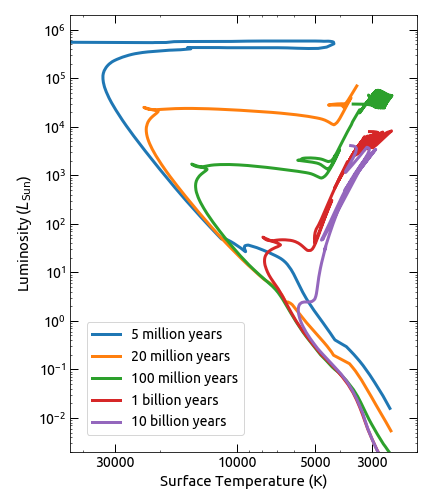
Examples of isochrones for star clusters of various ages. [Ivan Ramirez; CC BY 4.0]

However, most stars do not reside in clusters, and to measure the ages of stars that roam the galaxy solo or in small groups, astronomers must use other methods. One method is asteroseismology, in which researchers measure the changes in a star’s brightness or the motion of its surface due to sound waves bouncing around in its interior. Asteroseismology can reveal critical information about a star’s interior structure, composition, and age, but it’s not yet clear how asteroseismic age estimates compare to well-established isochrone-fitting methods for star clusters.
Measurement Matchup
To investigate how these methods compare, Jamie Tayar (University of Florida) and Meridith Joyce (University of Wyoming) compared the age estimates from asteroseismology and isochrone-fitting methods for seven well-studied open and globular clusters. The team scoured the literature for asteroseismic measurements of red giant stars, which are commonly used to calibrate studies of the Milky Way’s history and evolution, and selected a representative age for each cluster from isochrone-fitting methods from the literature.
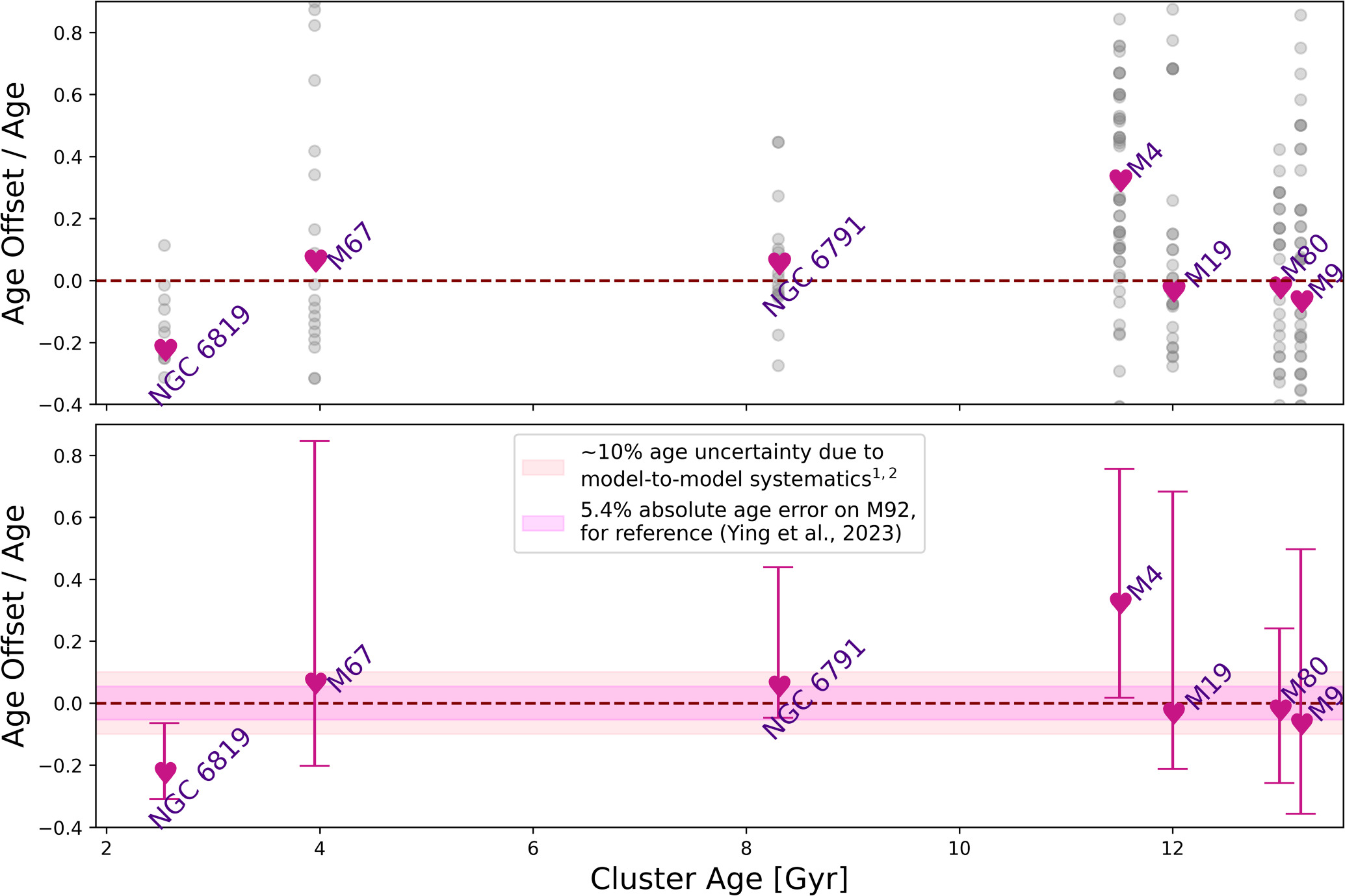
Offsets between asteroseismic ages and cluster ages for seven well-studied clusters. Asteroseismic measurements of individual stars are shown as gray circles, with the median values indicated by the pink hearts. The bottom panel shows the asymmetric dispersion of the asteroseismic data. [Tayar & Joyce 2025]
In addition, two of the seven samples had median ages far from the isochrone-fitting cluster age. For these two clusters, especially the well-constrained open cluster NGC 6819, it’s possible that the asteroseismic ages and cluster age are systematically offset from one another — a possibility that would require a dedicated asteroseismic search with a single observatory and a single analysis pipeline to investigate further.
Ages at Odds
Asteroseismic stellar ages are increasingly used to probe the history of the Milky Way and calibrate other age determination methods — so what does it mean for the asteroseismic results to be so varied and potentially offset from the cluster fitting method?
It may mean that asteroseismic measurements require further investigation and calibration before they can achieve the accuracy necessary for galactic archaeology. Part of this endeavor may involve an investigation of binary processes such as accretion or mergers that could alter the masses of individual stars, affecting their inferred ages. These efforts could potentially unlock hundreds of thousands of stellar age measurements from past, present, and future datasets, aiding studies that explore everything from individual stars and their planets to the histories of entire galaxies.
Citation
“Star-Crossed Clusters: Asteroseismic Ages for Individual Stars Are in Tension with the Ages of Their Host Clusters,” Jamie Tayar and Meridith Joyce 2025 ApJL 984 L56. doi:10.3847/2041-8213/adcd6f
The post Star-Crossed Clusters: When Ages Are at Odds appeared first on AAS Nova.
]]>
Astrobites reports on a new method being used to explore the relationship between the mass of a supermassive black hole and the properties of the galaxy it inhabits.
The post Jumping Through Hoops: A New Way to Explore the Black Hole–Galaxy Connection appeared first on AAS Nova.
]]>Editor’s Note: Astrobites is a graduate-student-run organization that digests astrophysical literature for undergraduate students. As part of the partnership between the AAS and astrobites, we occasionally repost astrobites content here at AAS Nova. We hope you enjoy this post from astrobites; the original can be viewed at astrobites.org.
Title: A Novel Approach to Understanding the Link Between Supermassive Black Holes and Host Galaxies
Authors: Gabriel Sasseville et al.
First Author’s Institutions: University of Montreal; Ciela—Montreal Institute for Astrophysical Data Analysis and Machine Learning; Center for Research in Astrophysics of Québec
Status: Published in ApJ
Most galaxies are thought to host a central supermassive black hole, and these black holes play a crucial role in shaping how galaxies evolve. There is a strong connection found between the properties of a galaxy and its central black hole. One of the most well-known examples is the relationship between the black hole’s mass and the random motions of stars near the galaxy’s center, measured by a quantity called stellar velocity dispersion (denoted as σ). This connection, known as the M–σ relationship, has been studied for decades and is often used to estimate the mass of a galaxy’s central black hole.
Interestingly, some galaxies appear to lack a central black hole. In many cases, observations only provide an upper limit on the possible mass of any black hole that might be there. In today’s article, the authors study the M–σ relationship with a new statistical approach to account for galaxies that might not have a central black hole and improve the calculation of this relationship.
Hurdle Up, the Bayesian Way
The authors use a statistical method called the Bayesian hurdle model. To update our understanding, Bayesian modeling combines prior beliefs or initial guesses with new evidence. The Bayesian hurdle model approach tackles two key questions: first, whether a galaxy is likely to host a central black hole, and second, if it does, how the black hole’s mass relates to the galaxy’s velocity dispersion (σ). The model works in two stages. In the first step, called the “hurdle,” a logistic regression determines the probability that a galaxy has a central black hole. If the galaxy clears this hurdle (i.e., is likely to host a black hole), the second step uses linear regression to establish the relationship between the black hole’s mass and the galaxy’s velocity dispersion, analyzed on a logarithmic scale.
The study examines a sample of 244 galaxies where either the central black hole mass has been measured directly or an upper limit has been estimated. From the logistic regression step, the authors find that galaxies with σ > 126 km/s have a 99% probability of hosting a central black hole. This result suggests that while massive galaxies are almost certain to have black holes, smaller dwarf galaxies are much less likely to host them.
A Steeper Correlation
The hurdle model reveals a relationship of M ∝ σ5.8 between black hole mass and velocity dispersion, as shown in Figure 1 (solid black line). This result is steeper than the correlations found in previous studies. The difference likely arises from the authors’ inclusion of upper limits on black hole masses in their hurdle model analysis. The hurdle model also predicts several under-massive black holes in the range of 101–105 solar masses compared to other linear model studies. This downward shift in the lower mass range compared to other models is seen in Figure 1. Also, the breakpoint between under-massive and over-massive black holes occurs at a lower mass than previously reported. This shift is due to the hurdle model’s handling of upper limits in the logistic regression step, which pulls the curve downward.
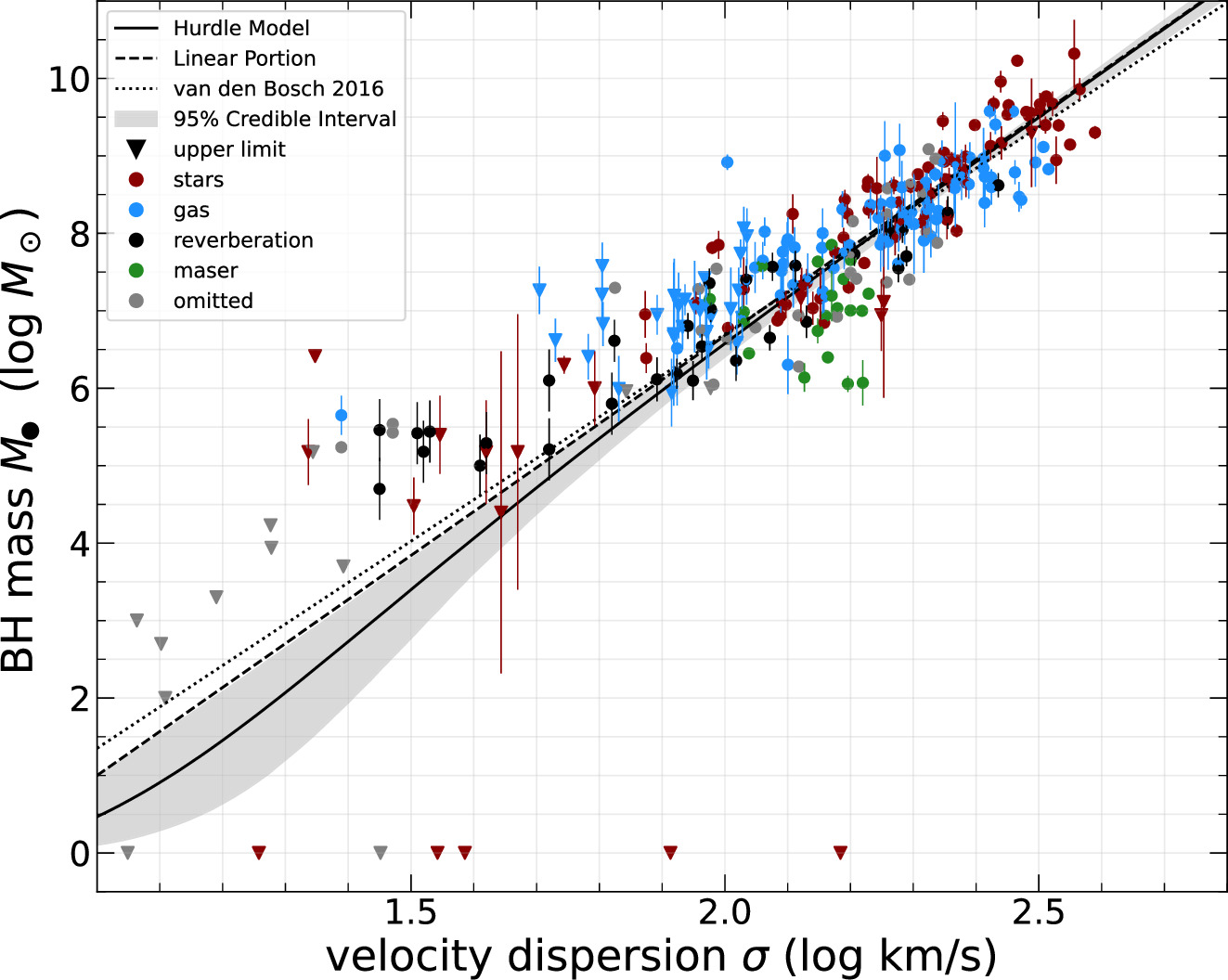
Figure 1: Relationship between the black hole mass and velocity dispersion (σ). The upper limits on the black hole masses are plotted in triangles while the circles indicate more precise measurements. The dotted black line shows the linear fit obtained in a previous study of this correlation. The hurdle model fit is shown as a solid black line while the dashed black line is the linear portion of the fit. Notice that the slope of the hurdle model fit (solid black line) is steeper than the fit from the previous study (dotted black line). [Sasseville et al. 2025]
Original astrobite edited by Cole Meldorf.
About the author, Pranav Satheesh:
I am a graduate student in physics at the University of Florida. My research focuses on studying supermassive binary and triple black hole dynamics using cosmological simulations. In my free time, I love drawing, watching movies, cooking, and playing board games with my friends.
The post Jumping Through Hoops: A New Way to Explore the Black Hole–Galaxy Connection appeared first on AAS Nova.
]]>The post The Cold Jupiter Eccentricity Distribution is Consistent with EKL Driven by Stellar Companions appeared first on AAS Nova.
]]>Introducing nonzero initial orbital eccentricities into simulations brings the predictions of the eccentric Kozai–Lidov mechanism into alignment with observations.
The post The Cold Jupiter Eccentricity Distribution is Consistent with EKL Driven by Stellar Companions appeared first on AAS Nova.
]]>The post First Daytime Near-Infrared Photometric Observations at Antarctic Dome A appeared first on AAS Nova.
]]>The Antarctic Plateau is a great place for observing — even during the day; preliminary observations suggest that bright transients like nearby supernovae can be spotted from the site during the daytime.
The post First Daytime Near-Infrared Photometric Observations at Antarctic Dome A appeared first on AAS Nova.
]]>
New JWST images of the Ring Nebula reveal a dusty disk around the nebula's central star — just the second resolved disk known around a planetary nebula's central star.
The post Featured Image: JWST Examines the Ring Nebula appeared first on AAS Nova.
]]>The iconic and widely photographed Ring Nebula is one of the most recognizable planetary nebulae: short-lived, often brilliantly colored nebulae that form when low- to intermediate-mass stars shed their outer layers. The three images above show the central region of the Ring Nebula through the eyes of JWST’s Mid Infrared Instrument. The leftmost image clearly shows the Ring Nebula’s central star: a hot, crystallized stellar core called a white dwarf. In a recent research article, Raghvendra Sahai (Jet Propulsion Laboratory) and collaborators analyzed these JWST observations, leading to the discovery of a dusty disk around the Ring Nebula’s central star. This is just the second time that a resolved disk has been discovered around the central star of a planetary nebula. Disks with radii from 0.01 to 1,000 au have been found around evolved stars in the asymptotic giant branch phase through the planetary nebula phase, but it’s not yet clear how these disks form and how long they last. Most intriguingly, the presence of disks around highly evolved stars raises the possibility of a second phase of planet formation. To learn more about the JWST observations of the Ring Nebula, and what they tell us about the properties of the central star and its disk, be sure to check out the full research article linked below.
Citation
“JWST Observations of the Ring Nebula (NGC 6720). III. A Dusty Disk Around Its Central Star,” Raghvendra Sahai et al 2025 ApJ 985 101. doi:10.3847/1538-4357/adc91c
The post Featured Image: JWST Examines the Ring Nebula appeared first on AAS Nova.
]]>
Sub-Neptunes may be the most abundant planet type in the galaxy, but they are not yet well understood. A recent study uses JWST to characterize the atmosphere of the sub-Neptune GJ 3090b to aid in the study of these planets.
The post Abundant but Ambiguous: Understanding the Atmospheres of Sub-Neptunes with JWST appeared first on AAS Nova.
]]>Recent JWST observations of exoplanet GJ 3090b reveal intriguing qualities of one of the galaxy’s most abundant planet types.
Many Sub-Neptunes, Many Mysteries
Over the past 30 years, astronomers have discovered thousands of distant worlds. Within the growing exoplanet population, the sub-Neptune — a planet with a mass and radius between Earth’s and Neptune’s — has emerged as the most common planet type in the Milky Way. However, the composition and structure of these planets are not yet well understood. While sub-Neptunes orbiting Sun-like stars seem to separate into a small, rocky population and a larger, gaseous population, sub-Neptunes around cooler, lower-mass stars do not show such a clear division.
For sub-Neptunes around Sun-like stars, the population separation between rocky and gaseous planets is inferred from a dearth of planets with radii between 1.8 and 2 times the Earth’s radius (a gap dubbed the “radius valley”). This gap provides hints to the formation and evolutionary processes that shaped the planet, but with a murkier radius valley for sub-Neptunes around lower-mass stars, their origins are more unclear. Recent observations of sub-Neptunes have revealed a diverse range of atmospheric compositions, further bolstering the need to continue exploring the galaxy’s most prevalent planet type.
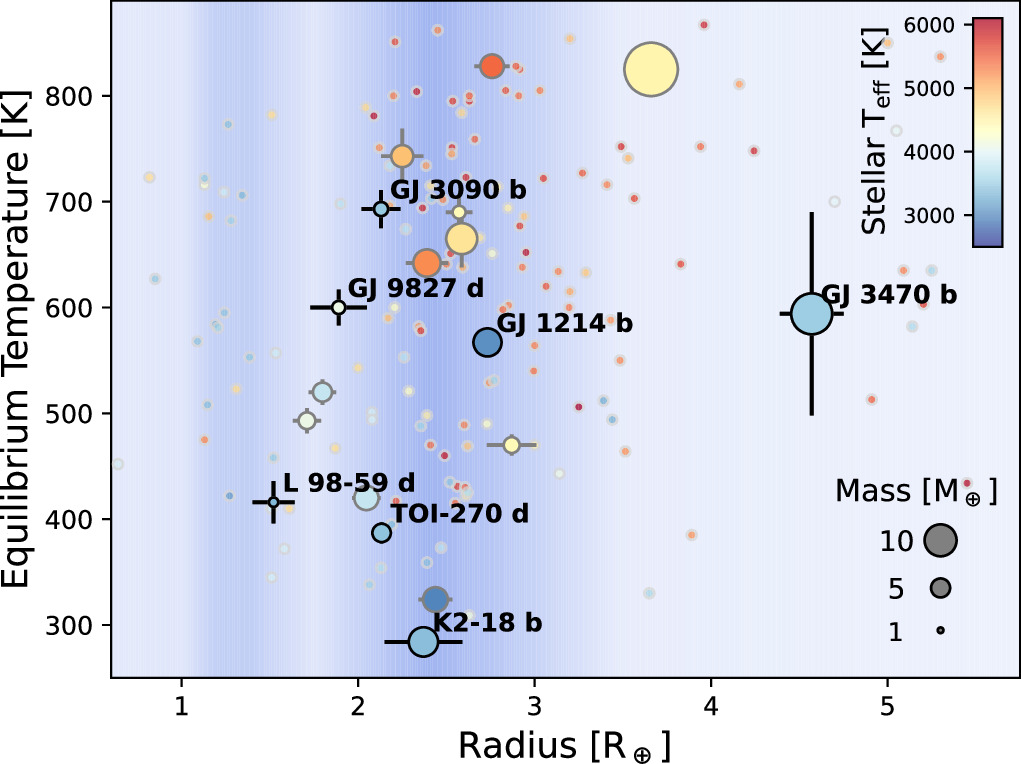
Planet equilibrium temperature versus planet radius plot showing where GJ 3090b falls with respect to the general sub-Neptune population. Click to enlarge. [Ahrer et al 2025]
JWST Observations of GJ 3090b
Aiming to add to the sample of well-characterized sub-Neptune atmospheres, Eva-Maria Ahrer (Max Planck Institute for Astronomy) and collaborators collected JWST spectroscopy of the sub-Neptune GJ 3090b. Previously discovered with the Transiting Exoplanet Survey Satellite (TESS), GJ 3090b orbits a late-type, low-mass star and has a radius that places it at the outer edge of the radius valley.
With the JWST spectroscopy, the authors search for a helium signature that traces how hydrogen and helium may be escaping the planet’s atmosphere. The authors detect a low-amplitude helium signature that suggests GJ 3090b has a metal-enriched atmosphere that slows down mass loss and weakens the helium feature. Additionally, the spectrum reveals the presence of heavy molecules like water, carbon dioxide, and sulfur dioxide, which points again to the planet’s atmosphere being metal enriched. What does this composition tell us about the planet?
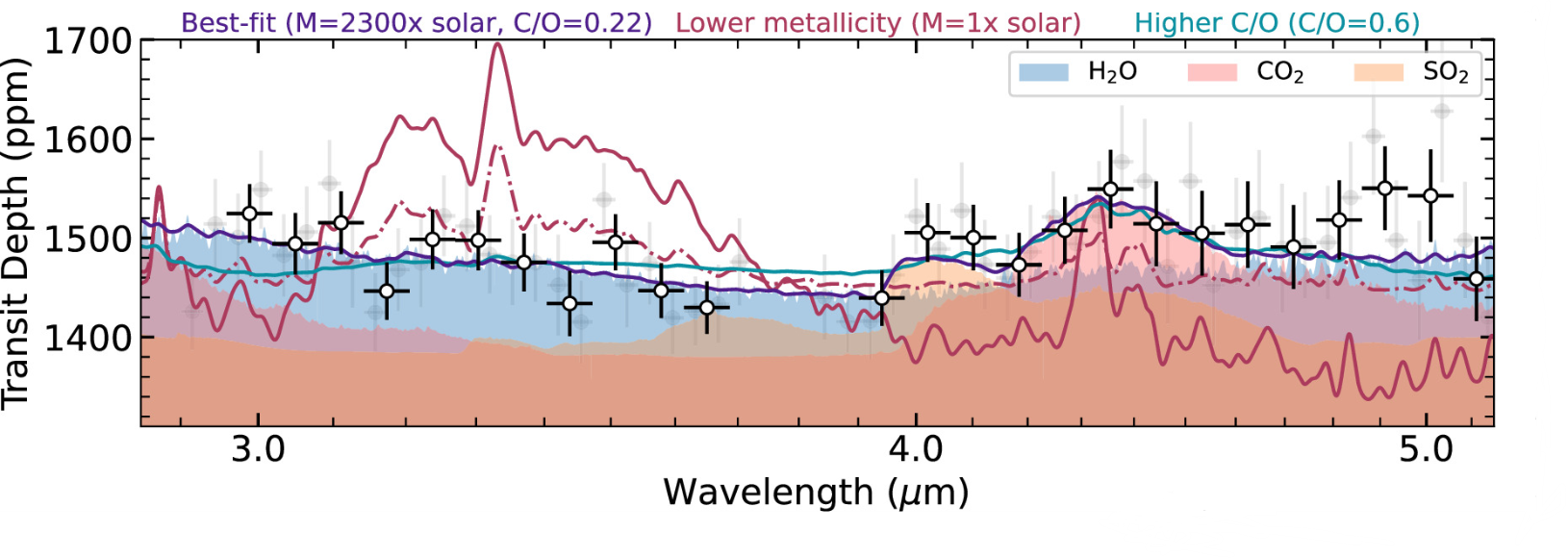
JWST spectrum of GJ 3090b’s atmosphere. The spectrum is best fit with a high-metallicity model. Click to enlarge. [Modified from Ahrer et al 2025]
Exploring Metal Enrichment and Planet Structure
Given the makeup of GJ 3090b’s atmosphere, the authors explore various theoretical models to understand why this planet may have a high-metallicity atmosphere. If the planet formed past its system’s snow line, where it is cool enough for water to freeze, the planet could have accreted water ice laced with enriched material. As the planet migrated inwards, the heat from the star melted the ice, allowing the enriched material to escape into the atmosphere.
Alternatively, sub-Neptunes close to their host stars are expected to lose significant amounts of hydrogen and helium due to hydrodynamic effects. When these light elements escape the atmosphere, the remaining gas contains a higher fraction of metals as it is now less diluted with hydrogen and helium. Additionally, using structure models, the authors predict that GJ 3090b has a well-mixed core of rock and ice, further supporting the idea that it formed farther out where water could freeze and then migrated inward.
However, further high-resolution observations are needed to better constrain the true abundances of the metals in GJ 3090b’s atmosphere, which leaves the planet’s history and structure still a little hazy. With JWST opening the window for detailed atmospheric studies of exoplanets, more observations will allow astronomers to understand and characterize planets across the Milky Way.
Citation
“Escaping Helium and a Highly Muted Spectrum Suggest a Metal-enriched Atmosphere on Sub-Neptune GJ3090b from JWST Transit Spectroscopy,” Eva-Maria Ahrer et al 2025 ApJL 985 L10. doi:10.3847/2041-8213/add010
The post Abundant but Ambiguous: Understanding the Atmospheres of Sub-Neptunes with JWST appeared first on AAS Nova.
]]>The post Glycine Partitioning in Frozen Putative Europan Brines appeared first on AAS Nova.
]]>Laboratory experiments show that the amino acid glycine preferentially associates with salt phases rather than water ice, suggesting that salt-rich ices could be targeted in a search for organic molecules.
The post Glycine Partitioning in Frozen Putative Europan Brines appeared first on AAS Nova.
]]>The post EPOCHS. IV. SED Modeling Assumptions and Their Impact on the Stellar Mass Function at 6.5 ≤ z ≤ 13.5 Using PEARLS and Public JWST Observations appeared first on AAS Nova.
]]>The masses of 1,120 galaxy candidates at redshifts of 6.5 < z < 13.5 are consistent with existing cosmological models, though some of the most massive galaxies may require a high star-formation efficiency.
The post EPOCHS. IV. SED Modeling Assumptions and Their Impact on the Stellar Mass Function at 6.5 ≤ z ≤ 13.5 Using PEARLS and Public JWST Observations appeared first on AAS Nova.
]]>The post The Formation of a Multifilament System Driven by Photospheric Converging Motions in a Bipolar Sunspot appeared first on AAS Nova.
]]>A detailed study of the eruption of a multifilament system on the Sun shows how three filaments in different configurations combined to form one long filament and a double-decker configuration.
The post The Formation of a Multifilament System Driven by Photospheric Converging Motions in a Bipolar Sunspot appeared first on AAS Nova.
]]>