November is upon us: the days are growing shorter and it's time for a new batch of short stories. You can check out last month's (newly updated!) installment here, and the prior installments here.
In case you missed it, I recently did a deeper dive into the history of Clarkesworld Magazine:
Here are the short stories coming out this month:
Amazing Stories (November 2026)
Fiction
- "Charlie and the Theory of Everything" by Deborah Sale-Butler
Apex Magazine (November 2026, Issue 155)
Subscribe here.
Fiction
- "One Two Three" by Hannya Kay
- "The Zen of Godzilla" by Ed Grabianowski
Nonfiction
- Musings from Maryland by Lesley Connor
- Interview with Author Rachel Alm by Marissa van Uden
Analog Science Fact and Fiction (November 2026, Vol. XCVI No. 9 & 10)
Subscribe here.
Fiction
- "Murder" by Nick Wolven
- "Derailed" by Hûw Steer
- "Hundred-handed" by John Markley
- "Elder" by James Dick
- "Xmas In Derbtown" by M.T. Reiten
- "Built To Last" by Clancy Weeks
- "A Grove Of Binding" by Tom R. Pike
- "When It Came Time To Disband The Dragon Corps" by Eric Del Carlo
- "Orders Of Magnitude" by Jerry Oltion
- "The Day Before" by Shane Tourtellotte
- "Blue Dot And The Unmoving Red Oval" by Jeff Dasteel
- "A Question Of Focus" by Craig Kenworthy
- "Do Not Ship" by Ted Kosmatka
- "A Eulogy For Pandora" by Donald Raymond
- "Jumal’s Drift" by Hayden Trenholm
- "Father Of The Year" by Brandon Keaton
- "What’s A Douglas Fir?" by James Van Pelt
Nonfiction
- Wormholes, Warp Drives, Unidentified Anomalous Phenomena,
And Congress by Tony Rothman - Beyond The Sonic Screwdriver, Part I by Richard A. Lovett
- Editorial: Rewriting The Inevitable by David Ebenbach
- In Times To Come
- Alternate View by John G. Cramer
- Unknowns: Dave’s Final Message by Alec Nevala-lee
- The Reference Library by Rosemary Claire Smith
Asimov's Science Fiction (November/December 2026)
Subscribe here.
Fiction
- "Cicada" by Will McIntosh & Matt Mikalatos
- "How to Write a Suicide Note" by Leah Cypress
- "Remnant" by William Preston
- "Nothing I Like to do Pays Well" by Peter Wood
- “…Even Kings” by John Richard Tre
- "Sort" by Alice Towey
- "A Soul Unearthed" by Gregory Marlow
- "The Water Gods’ Treasure" by Anya Ow
- "Rocket Jock" by Nick Wolven
- "Night Beach" by Mercurio D.Rivera
Poetry
- "Recovery" by Larina Warnock
- "Moon Over the Wasteland" by Kristian Macaron
- "Body as Archive" by Sheree Renée Thomas
- "NASCAD Needs Your Help on Giving Tuesday" by Timons Esaias
- "Betelgeuse" by Michael Meyerhofer
- "Every Atom of Your Flesh is as Dear" by Marisca Pichette
Nonfiction
- Editorial: Approaching a Milestone by Emily Hockaday
- Reflections: The Pleasure of Calculus by Robert Silverberg
- On the Net: 2 + 2 =5 by James Patrick Kelly
- On Books by Peter Heck
Aurealis (November 2026, Issue 196)
Subscribe here.
Fiction
- "1up" by Scott Steensma
- "We of the Zom" by Greg Foyster
- "Alacrity (For Glenda)" by Stephen Higgins
Nonfiction
- The Subtle Magic Realism of Barbara Comyns by Lynne Lumsden Green
- Is Ozploitation Dead? by Lachlan Walter
- Sinners: Why the True Horror is not the Vampires by Louise Zedda-Sampson.
Clarkesworld Magazine (November 2026, Issue 242)
Subscribe here.
Fiction
- "Twenty-Two Steps to Become Us" by Hannah Yang
- "The Meat Market" by Isabel J. Kim
- "The Exchange Service" by R.T. Ester
- "Trimmed From The Night" by Raahem Alvi
- "Black Ice Burning" by Rati Mehrotra
- "Then Is the Ghosts' High Noon" by Eric Del Carlo
- "Twenty-Nine Days Before Remaking the World" by Mimi Mondal
Nonfiction
- Building a Better World Through Participatory Science by W. L. Bolm
- The Future Folding Into the Past: A Conversation with Xueting C. Ni by Arley Sorg
- Thirty-Five Years and Into the Future: Diane L. Walton, Edward Willett, and the Legacy of On Spec Magazine by Arley Sorg
- Editor's Desk: Tonight the Stars Are Shining Bright by Neil Clarke
Cosmic Horror Monthly (November 2026)
Subscribe here.
Fiction
- "Golden Dawn Foundation: Never Tempt Fate When It Comes To Your Teeth" by K. A. Sweitzer
The Dark (November 2026, Issue 138)
Subscribe here.
Fiction
- "Last Season" by R.L. Summerling
- "The Grinning Woman" by Michael Kelly
- "Jimmy James Jim" by Sam J. Miller
- "A Procession of Brides" by Carina Bissett
Diabolical Plots (November 2026)
Support here.
Fiction
- “Five Accounts of the Story-Woman" by Diana Dima
Fiyah: Magazine of Black Speculative Fiction (Fall 2026, Issue 40)
Subscribe here.
Fiction
- “Squirrels on Palm Trees” by Melissa A Watkins
- “A Crude Awakening” by Victor Pope
- “In The Father’s Footsteps” by Brienne Guirantes
- “The Call of John Crows” by Nadine Tomlinson
- “Saint Yaa Academy Walks at Night” by Aishatu Ado
- “Deus Ex Fabulae (And Both Feet in the Door)” by LA Knight
Poetry
- The Department of Beautiful Failures” by GLORIA OGO
- “Enter: Heads” by Chiwenite Onyekwelu
Flash Fiction Online (November 2026, Issue 158)
Donate here.
Fiction
- "The Wolf Who Swallowed a Star" by Em Harriett
- "Egg Song" by Mandy Lange
- "Osedax" by H.V. Patterson
- "What the Bone’s Edge Sings" by H. Marin
- "Conversations with the Dead Deer My Brother Has Strung Up in the Garden" by Janel Comeau
- "Afternoon Tea Over Innsmouth" by Lena Ng
Nonfiction
- Editorial: Quietly Surviving Another Day by Rebecca Halsey
Forever Magazine (November 2026, 142)
Subscribe here.
Fiction
- “Barbarians” by Rich Larson
- “I Am Not the One Who Gets Left Behind” by Eric Smith
- “The Last Cathedral on Earth” by Tobias S. Buckell
GigaNotoSaurus (November 2026)
Fiction
- "The Books / The Sisters / The Books" by D. Matthew Urban
Lightspeed Magazine (November 2026, Issue 198)
Subscribe here.
Fiction
- "Selected Case Notes from the Judicial Oversight Council of the Gatarn Empire" by Ian Li
- "The Oracle at Ikeja" by Tobi Ogundiran
- "Repentance in Blue" by Phoenix Alexander
- "The Tongue That Makes the Mountain Sing" by Nibedita Sen
- "A Map to Sideways Places" by Jenn Reese
- "Choke, Writhe Perish: A Recipe for Forging a Virgin Sacrifice to Feed the Dragon" by Merc Fenn Wolfmoor
- "On the Thermodynamics of a Perfect Cup" by Georgina Kamsika
- "The Means" by Christopher Rowe
Nonfiction
- Editorial: November 2026 by John Joseph Adams
- Author Spotlight: Tobi Ogundiran by Robin Jeffrey
- Author Spotlight: Phoenix Alexander by Delia Cullity
- Author Spotlight: Nibedita Sen by Phoebe Barton
- Book Review: Chimera Skin by Johnny Compton by Melissa A Watkins
- Author Spotlight: Jenn Reese by A Humphrey Lanham
- Book Review: It Looks like You in the Dark by Mathilda Zeller by Arley Sorg
- Author Spotlight: Georgina Kamsika by Phoebe Barton
- Author Spotlight: Christopher Rowe by Phoebe Barton
- Book Review: The Years of Apocalypse: A Progression Fantasy Epic (Book 1) by Uranium Phoenix by Chris Kluwe
Nature Futures (November 2026)
Subscribe here.
Fiction
Nightmare Magazine (November 2026, Issue 170)
Subscribe here.
Fiction
- "Horse Girls" by Lyndsie Manusos
- Pricks" by Laura Garrison
- The Warehouse of Exiled Things" by Shiwei Zhou
- "what wears the flesh" by Rukman Ragas
Nonfiction
- Editorial: November 2026 by Wendy N. Wagner
- Author Spotlight: Lyndsie Manusos by Devin Marcus
- The H Word: Everything Old Is New Again by Alexandra Heller-Nicholas
- Author Spotlight: Shiwei Zhou by Clay Vermulm
- Plumbing the Depths: Against the New Weird by Zachary Gillan
Reactor (November 2026)
Fiction
- "The Best of all Possible Solar Systems" by Dominica Phetteplace
Small Wonders Magazine (November 2026, Issue 41)
Donate here.
Fiction
- "The Last Missus" by J.A. Bryson
- "The Pyre" by P. Anthony Ramanauskas
Solarpunk Magazine (November/December 2026, Issue 30)
Support here.
Fiction
- “The Unrooted Sea” by Seiba Rosario
- “Bottles, Bones, Skein” by Marisca Pichette
- “A Sweetness On The Breeze” by John Leahy
- “Blood of the Town, Veins of the Earth” by Katharine Tyndall
Poetry
- “Beneath the Absorbent City” by Joy Donnell
- “Bombarding Bloom of Another Disintegration” by CP Nwankwo
- “I Carry My Hauntings Into a Stranger’s House” by Sarah Titus
- “The Kingdom of Rot Is Within You” by Josh Pearce
Nonfiction
- “The Monsters Have Entered the Garden” by Justine Norton-Kertson
- “The Ordinary Was Extraordinary All Along: A reflection on loss, appreciation, and radical hope from Gaza” by Aya Al-Hattab
Strange Horizons (November 2026)
Donate here.
Fiction
- "The Ghost Station" by Adam Fell
Poetry
- "Post-Traumatic Syntax of a Massacre" by Ismail Yusuf Olumoh
- "Notes on the Identification and Preparation of Faery for Human Consumption" by Courtney Floyd
Nonfiction
- Stories From The Radio: by Kuzhali Manickavel
Reviews
- Monday: Horde of the Counterwind by Alain Damasio, translated by Alexander Dickow by Rachel Cordasco
- Wednesday: Seasons of Glass and Iron by Amal El-Mohtar by Kyle R. Garton
- Friday: Exploring the Horror of Supernatural Fiction: Ray Bradbury’s Elliot Family edited by Miranda Corcoran & Steve Ellerhoff by Thomas E. Simmons
The Sunday Morning Transport (November 2026)
Fiction
- "The Lacemakers of Szentkatarina" by Theodora Goss
Uncanny Magazine (November / December 2026, Issue 73)
Subscribe here.
Fiction
- "WAG Queen Bella Batista Looks Better than Ever at Super Bowl CLX" by Juliet Kahn
- "Time Is What Stops Everything" by Kristiana Willsey
- "The Godless" by Lavie Tidhar
Poetry
- "The Big Bad" by Brit Graham
- "Fallen Feathers" by Mari Ness
Nonfiction
- "The Uncanny Valley" by Michael Damian Thomas
- "So Wrong It’s Right" by Yoon Ha Lee
- "Gender Is a Constructicon: Transformers as an Allegory of Queer Liberation" by Amanda Wakaruk and Olav Rokne
That's it for now: check back later in the month for an updated list.
]]>How is it November already? It feels like the summer has flown by, and each passing day reminds me how woefully behind I am on my reading list. As the end of the year approaches, I've been taking stock of the books that I really want to read, and I'm starting to plan out an overly ambitious pile to work through.
But the flood of books doesn't stop: after a packed October, we've got a ton of new books coming in November. It's not quite as busy this time around (I've got two lists, not three), but there's still a lot of great-looking ones to look forward to reading!
Here are 22 new SF/F books to check out:
Cello's Gate by Maurice Africh (November 3rd)
Captain Grey commands a group of sky pirates who're known for taking on the toughest jobs – they've broken into research facilities and conned the rich, but their next job might be their toughest yet: after coming back from a heist, a woman named Dalia comes to them with an offer. She's an immortal daughter of the ArchGovernor and wants them to steal the seven legendary Stones of Indigo, which are scattered all over the place and protected by formidable defenses. The crew will each get a million credits for each one they can recover.
There's a problem though: the stones are mere legends and the subject of stories that are recounted to children. Grey is also sure that Dalia is hiding something, and they have to figure out what's behind the racket in order to survive.
Kirkus Reviews says that "readers should enjoy this thinly veiled literary love letter to pop-culture SF."
Hooch Tuesday by Jack Cady (November 10th)
Jack Cady was a speculative fiction author who earned acclaim for stories like "The Night We Buried Road Dog". He died in 2004, and Fairwood Press has acquired a never-before-published novel of his, Hooch Tuesday. It's a satirical work that includes a millennia-old business manager, a truck driver, a witchy DAR member and guy who communes with his bulldozer. There's also thousands of ghosts, a haunted truck, and quite a bit more.
There Used to Be People Here by Kennedy Cole (November 3rd)
Set in the 1970s in Mississippi, a Black detective named Samuel Barkley and his new partner Harvey Wilkins contend with a puzzling case: a man went into a local gay bar and was found dead on the floor, with no clue as to how he met his end. Samuel's just trying to advance in the force without making too many waves.
As they investigate, they run into a strange happenings: a coverup with a crashed plane that isn't a plane is part of the picture, and what they discover is enough to upend their tiny town and the world.
Chimera Skin by Johnny Compton (November 3rd)
In the nearish future, the world has been transformed after first contact: an alien civilization tried to uplift humanity, and everything went wrong. We're introduced to a man named Swanson, who had been mutated in the incident and who has figured out a way to fight back, even if it means that he might be forced to escape from Earth.
The Wolves of War by John Gwynne (November 3rd)
John Gwynne kicks off a new series, The Wolfheart Chronicles. In this land, the clans once lived peacefully, only to be conquered by their northern neighbors. One member, Ivan, doesn't care about anything but the safety of his family, especially his daughter, Halia. For her entire life, she's been trapped in her body, but at night, she has vivid dreams about running with wolves and speaking with the forest's supernatural creatures.
While their neighbors think that she's cursed, her powers might be the only way for them to find freedom. At the same time, a war is looming: two princes are engaged in a brutal fight, while a witch hunts the shadows of the forests. As she works to figure out the nature of her powers, Halia has to contend with the notion that in order to save her family and community, she might need to embrace the darkness to do so.
Nordic Nightmares: The Best of Nordic Speculative Fiction edited by Margrét Helgadottir (November 3rd)
A couple of years ago, Margrét Helgadottir edited the anthology Nordic Visions: The Best of Nordic Speculative Fiction, and now she's back with a new one: Nordic Nightmares: The Best of Nordic Horror. This anthology brings together 20 stories from Finland to Greenland, featuring stories that incorporate folklore, horrifying creatures, volcanoes, or uncanny new neighbors or strangers who aren't what they appear to be. This sounds like a fantastic anthology for the coming winter months.
Dune Messiah: The Graphic Novel Book 1 by Frank Herbert, adapted by Brian Herbert and Kevin J. Anderson, illustrated by Michael Shelfer (November 3rd)
With Dune: Part 3 just a little over a month away from hitting theaters, Frank Herbert's son Brian and co-author Kevin J. Anderson have adapted the second installment in the series, Dune Messiah (the basis for the film) as a graphic novel. They had previously adapted Dune as a three-part graphic novel series, Book 1: Dune, Book 2: Muad'dib, and Book 3: The Prophet.
This edition (the first of two) brings in artist Michael Shelfer for the artwork, and it picks up years after the events of Dune, in which Paul Atreides has ascended to power as the galactic Emperor and who is seen as the messiah by the Fremen people. As Paul has gained power, he's also become the target of a variety of forces in the galaxy who're looking to topple him.
The John Persons Files by Cassandra Khaw (November 10th)
Horror author Cassandra Khaw wrote a couple of shorter Lovecraftian stories, Hammers on Bone and A Song for Quiet. Tordotcom has packaged both of the novellas together into a single volume, along with a new short story, "You Were Always Mine". In the first story, PI John Parsons is hired by a ten year old to kill his abusive stepfather, who's also a monster, only to realize that the man is harboring something much darker. In the second, a musician named Deacon James encounters trouble on a train ride to Arkham, and encounters Parsons, who tells him that he's carrying a seed in his head, and that it can't be permitted to hatch.
These sound like some pretty gripping stories, and this new volume is a good opportunity to introduce new readers to Khaw and her characters.
The Black Hole Whisky Gang: An Alternate History of Modern Detroit by Christian Klaver (November 10th)
A decade ago, Earth was invaded by an alien civilization called the Nightwalkers, which have been working to put down any last bits of revolution from humanity. They've brought in another alien species, Angels, who have a particular, addictive effect on humans.
One of the human survivors is Hansa, who had bonded with Angel Wren, and escaped into a post-apocalyptic wasteland that was once the American midwest. It was an experience that nearly killed him, and now he's etching out a living by working for the Nightwalkers. He soon gets a message for Wren asking for his help, all while a group of Nightwalkers are asking the same, and it sets him off on a journey to the Nightwalker's base on Earth, where he'll uncover a secret that could change everything.
Haunted Space: Paradise for Extinction by Adam Kovac (November 16th)
An astronaut named Auggie has fallen on hard times, along with the crew of the ship King Bat. When they're chartered by a wealthy official and his sister for a trip across a couple of solar systems, they jump at the chance for an easy ride and a good payday.
Things quickly go wrong, however: the pair have them make a quick stop at a science vessel to retrieve something, and that easy job got considerably more difficult, and it's going to take the crew everything they can muster to survive.
The Queen's Witch by Nancy Kress (November 1st)
A woman named Alysoun Rowe has a family history of healers and witches – their powers are fully unlocked when they bond with a destined familiar. Alysoun is undertaking the ritual when something goes wrong: it's not an object or animal that's fated to bond with her, but Anne Boleyn, of King Henry VIII's court.
Anne is ambitious herself and the two of them will go to great lengths to achieve what they most want. As King Henry goes on his own obsessive pursuit and witch hunt, the two have to form an alliance to succeed.
Publishers Weekly gave the book a starred review, saying "With lavishly described Tudor revels, masterfully shaded characters, and a wealth of historical lore, Kress brings to life a witch-hunting England torn by controversy. It’s a feast."
Quantum Dawn by Derek Künsken (November 3rd)
Derek Künsken brings out a fourth installment of his Quantum Evolutions series, Quantum Dawn (preceded by The Quantum Magician, The Quantum Garden, and The Quantum War), in which the Quantum War had come to an end, and Belisarius vanished into a wormhole, believed to be gone forever.
But that doesn't seem to have been the case: priestess Rosalie Johns-10 has begun experiencing nightmares, which Belisarius’s former partner Cassandra and AI Saint Matthew realize are signals from another dimension. They set off to move through time to find him, a quest that will take them to the foundations of the quantum network.
The Trial of Madgalena Overmorrow by Caitríona Moran (November 10th)
Magdalena Overmorrow is known for a lot of things: a sex worker, a scholar, and a healer. She's worked to protect the women for Astoleyn, and when she's betrayed by a friend and accused of being a witch, she's banished to a northern city to await punishment. Her overseer is Lord Proctor of Cair Gramora, who has a reputation for his humorless nature.
When she arrives, she finds that that isn't the case: he's a handsome and mysterious figure, and she finds that her life is in his hands. She's drawn to him for his scholarly nature and secrets, and as her trial nears and new dangers emerge, the two have to form a partnership that could save or ruin them.
Star Trek: The Original Voyages: A Visual History by Kyle Newman and Jeff Bond (November 10th)
2026 marked the 60th anniversary of the Star Trek franchise, and to celebrate, Kyle Newman and Jeff Bond have put together a new visual history of the series. This book takes a behind the scenes look at the series and its creator, Gene Roddenberry, featuring interviews and hundreds of photographs that follow the world through not just the show, but the books, comics, games, merch, and other touchstones. It also comes with a foreword by Captain Kirk himself, William Shatner.
Halo: The Master Chief Omnibus by Eric Nylund and William C. Dietz (November 10th)
The Halo franchise extends far beyond the video games that most folks are familiar with: there's a huge line of novels and comics that have regularly expanded the story and world. This is an omnibus edition that brings together three of the earlier novels, The Fall of Reach and First Strike by Eric Nylund and The Flood by William C. Dietz. This edition also includes a new foreword and additional material.
Exoplanet by Benjamin Percy (November 5th)
Benjamin Percy's next project is a new audio drama from Audible, Exoplanet. Produced by Andy Weir, it follows the crew of a spaceship named Wild Blue Yonder that encounters an anomaly and crash-lands on a distant exoplanet. The crew crashes down, but instead of trying to find one another across the planet's terrain, they've all scattered through time, and have to figure out what's happened to their crewmates, but also figure out how to communicate with one another across the centuries in order to survive.
The Eagle in the Mountain by Caskey Russell (November 3rd)
In The Door on the Sea, Elān found his life changed forever when he was chosen by a Raven to go on a quest to save his people. He's returned, but he's a different person, and refuses to use the weapon that he was destined to use. Raven tries to convince him – the weapon has to be used to send the Koosh back to their own world, and Raven turns to Kwa, Elān’s companion.
Kwa wants to become her people's warrior leader, and aided by a wolf named Chetdyl, she begins preparing to attack the Koosh. But she needs the weapon, and if Elān won't use it, she might have to listen to Raven and take some drastic measures.
Writing in the Ancillary Review of Books, Aidan Bunker says "Russell’s writing sharpens Kwa’s determined voice, the pressure of leadership, and her preoccupation with the opinions of others. At the philosophical heart of the book is the conflict between Elān, the pacifist who refuses to use the Koosh weapon, and Kwa, the realist who sees no other choice, especially after she witnesses the death of half her warriors on Samish Island."
Monsters of Ohio by John Scalzi (November 3rd)
I’m a big fan of John’s books, and this one looks like it’ll be both fun and topical. The residents of a small Ohio town have have been dealing with the stresses that come with modern life in the U.S.A former USDA worker named Mike Boyd was laid off and ended up returning home after many years away, and he comes at a tense time: the local meat processing plant is closing down.
Other strange things begin happening: animals and people begin to turn into monsters. Mike and his friend Dave (the town's only police officer) and Andi (an events coordinator) have to figure out what's going on.
Kirkus Reviews gave the book a starred review, saying "the focus here is the effect those forces have on a small town with one industry, a situation that’s playing out in many places."
Vaster Than Empires: Speculative Fiction of the Eternal and the Ephemeral edited by Jonathan Strahan (November 3rd)
The MIT Press has produced a lot of excellent science fiction over the years, from their Twelve Tomorrows series to the Radium Age series, to anthologies like this one: Vaster than Empires, which is edited by Jonathan Strahan.
This looks like it'll be a fascinating read: a collection of original stories that look at everything from biology to climate change, interstellar travel and artificial intelligence and includes a powerhouse table of contents featuring the likes of Aliette de Bodard, Greg Egan, Saad Z. Hossain, Tochi Onyebuchi, Chen Qiufan (translated by Emily Jin), Karl Schroeder, Wole Talabi, Adrian Tchaikovsky, Karin Tidbeck, and many others.
Publishers Weekly says that the authors "find fascinating ways to explore the impact—or lack thereof—that individual humans can have on the universe."
The Art of Star Wars: The Mandalorian and Grogu by Phil Szostak (November 3rd)
I'm a big fan of Phil Szostak's Star Wars art books. He's published two for the first and second seasons of The Mandalorian, a spectacular one for Andor's entire run, and ones for the other entries in the sequel trilogy. This volume packages up the wealth of concept art and interviews with various members of the cast, crew, and other creatives involved in making The Mandalorian & Grogu. I might not have been the biggest fan of the film, but I always find these books fascinating to page through.
Blue Fire by Molly Tanzer (November 10th)
Fans of science fiction and fantasy's pulp era should know the name C.L. Moore: she was a pioneering author who began publishing short stories in the 1930s in magazines like Weird Tales. One of her best-known figures is Jirel of Joiry, a proud and headstrong warrior who fought in medieval France.
Moore only wrote a handful of stories featuring the character, but she's back, thanks to author Molly Tanzer. She's written a novella called Blue Fire (authorized by Moore's estate) in which Jirel faces off against a formidable threat: an illness that nobody can explain or heal, and it sends her off on a quest to find a cure.
Infinite Wisdom by Thomas R. Weaver (November 10th)
Thomas R. Weaver picks up the story that he began in last year's Artificial Wisdom. Five years after a journalist named Marcus Tully pushed a global election towards the world's first artificial intelligence, believing that it would be the only entity capable of leading humanity through a climate crisis.
But humanity's new leader, Solomon, is far more ruthless than Tully imagined, and while it's been making some progress, people are chafing under its strict rules. A revolution is brewing and Solomon offers humanity a choice: upgrade by merging with AI to fundamentally change human nature, or reduce themselves back to a pre-digital age. It's set up one key election that could go either way.
As always, thanks for reading. Let me know what catches your eye and what you've got on your TBR.
]]>When I first began immersing myself in the world of science fiction fandom and as an aspiring writer after college, one of the places that I'd see the most was Clarkesworld Magazine. Since its founding in October 2006, the publication has produced hundreds of outstanding short stories across 241 issues, which it's published on its website, in print copies, and on its podcast feed. Over the years, I've discovered some of my favorite authors and their works through its pages, and when I've gotten around to finishing a short story, their submission form is usually the first place I take it.
This month, Clarkesworld celebrated its 20th anniversary. Big, round numbers are always worth a bit of introspection, and I've long wanted to take a look at the longer story behind Neil Clarke's publication and to see why it's endured. I spoke with him briefly at this year's WorldCon, and again on the phone after the fact to do that. I wanted to get a good sense of what work goes into the publication, and how it's fit into the larger short fiction world.
This is the type of reporting that I strive to do more of: in-depth conversations with folks within the SF/F world to provide readers with better idea of the world that produces and supports the stories they love. This work takes time to produce. For a piece like this, it's involved a good amount of background research and reading about Clarkesworld Magazine, time to interview Clarke, and of course write it.
Transfer Orbit is supported by its readers, and if you find this work valuable and informative, please consider signing up as a supporting subscriber.
Two notes about this piece: Clarke and I had about an hour-long conversation, but fifteen minutes into our chat, the recording stopped, and I'm relying on my notes for his account of Clarkesworld's recent years. I had planned to write about the magazine's publication of Isabel Fall's "I Sexually Identify as an Attack Helicopter" and the controversy that followed, but I'm only touching on it briefly because of the sensitive nature of the situation and I don't want to rely just on my notes.
Secondly, a disclosure: I've contributed a handful of nonfiction pieces to Clarkesworld over the years on a freelance basis, but I've approached this as I would any other piece of reporting.
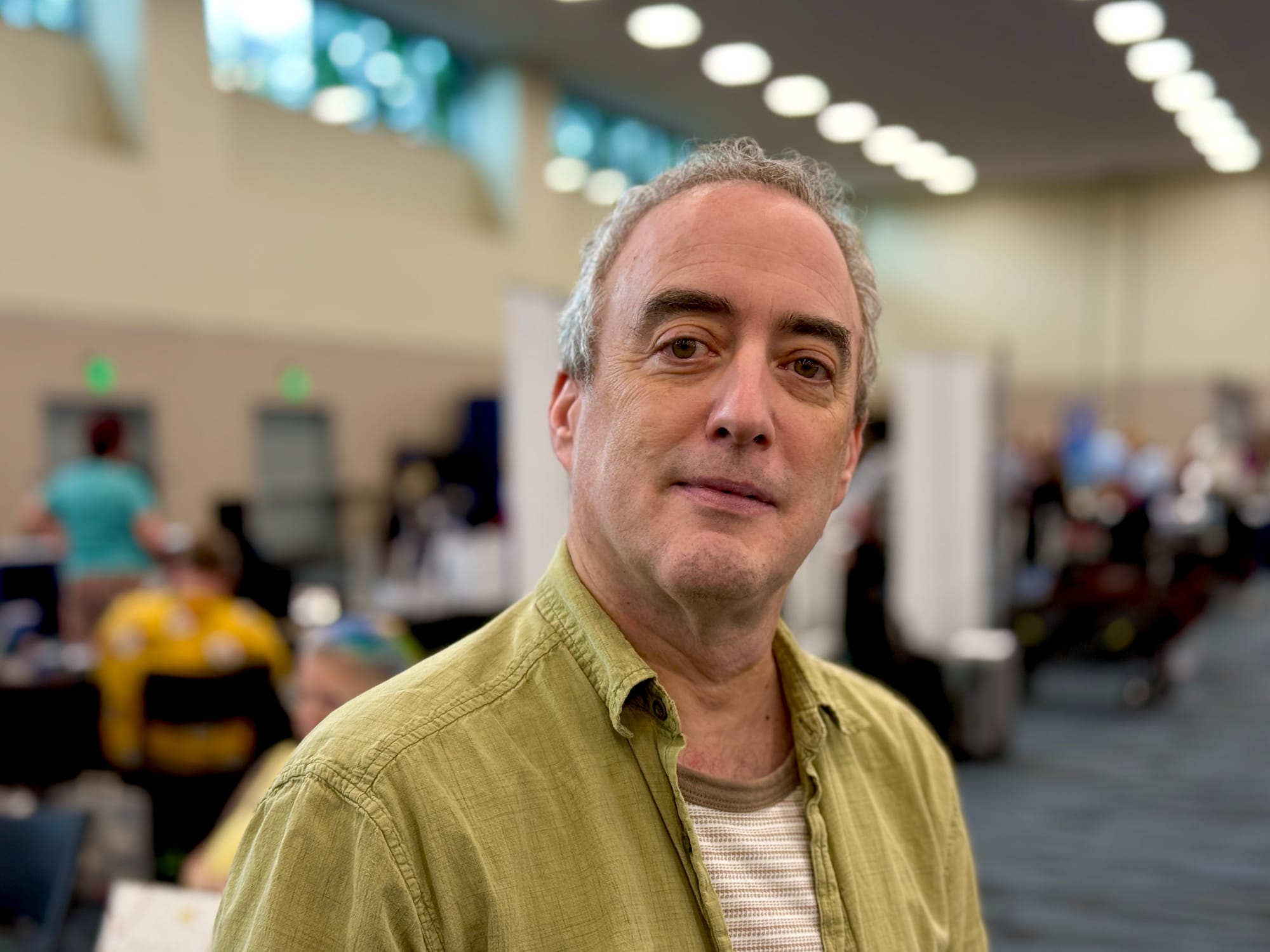
Clarke first discovered science fiction at the age of 5, in the form of CBS's series Lost in Space, and later, thanks to a cousin. "My cousin gave me three books books because he knew I'd probably be interested in them," he told me in a phone call. One was "an anthology called Adventures in Time and Space by Raymond J. Healy and J. Francis McComas, which is this massive, Golden Age retrospective anthology. He also gave me The Hobbit [by J.R.R. Tolkien] and Stranger In A Strange Land [by Robert Heinlein]. I will not judge giving those books to a 10 year old. The anthology was eye opening, [because] it gave me a wide range of authors to hunt down."
Clarke lived within walking distance to his local library, and it wasn't long before he worked his way through its small science fiction selection. From there, he moved on to a used bookstore a town over, riding his bike over to pick through their selection. "I just kept reading voraciously throughout school and into college," he explained. It was there that he was introduced to the larger science fiction community and began attending conventions. " I developed this really bad habit of collecting authors that were harder to find, someone like Philip K. Dick, whose novels at the time were ones you'd have to actually dig to find."
It was that search that set him down the path of collecting and bookselling. He started "initially on eBay and then with a storefront, which was Clarkesworld Books. It started as a subdirectory on my family's domain [and eventually] got its own domain, but by then the damage was done and the name stuck."
In 2006, Clarke attended the Massachusetts-based ReaderCon, which would prove to be the start of an entirely new chapter for Clarke. "I'd been reading short fiction for a long time [and] it's always been my first love," he explained. he had begun amassing a large collection of science fiction magazines and had begun importing them from all over the world. "One of the things that struck me was that as an [online] bookstore, we weren't able to give [readers] the browsing experience. So I reached out to some of the magazines and offered to host sample stories in the bookstore in hopes of selling more copies or subscriptions for those magazines. Sean Wallace was one of them."
Wallace had been running Fantasy Magazine at the time, and at ReaderCon, the two struck up a conversation. "This is around the time that Sci Fiction announced that they were closing, [and] conversation drifted into that and why online magazines hadn't done so well: how come no one managed to find a – or even try to build a business model that could work in that environment?" Clarke recounted. "I was coming from an experience [and education in the technology field], so the bookstore was really a side project. Sean had the publishing experience and we were bouncing ideas back and forth, and came up with, 'this might work'. Somehow it turned from this might work into 'we should do this.' He talked me into it and by the end of the weekend we were fully staffed and three months later we had an issue out."
They recruited another writer and editor who was attending the convention, Nick Mamatas, and set to work. Through their conversation, Clarke noted that he had specific experience designing online courses and was familiar with academic work on reading online, and noted that online magazines at the time just didn't provide "a good reading experience," while others "hadn't tried to monetize anything. They were just sort of like build it and they will come models. We knew that we needed a product to be able to sell [in order] to do that."
This was a point long before most of the infrastructure that's now familiar today, with established file formats and distribution systems existed. There was also considerable resistance to reading fiction online, something that the trio would have to contend with as they began working on their first issue. "When you'd ask an established author, if they'd, see you were online, they would say 'oh, online publishing is for newbies, and my work would be pirated.'" Online publications were also seen as being fleeting, publishing a couple of issues before shutting down, "because they would either underestimate the amount of time it took or, they would have overly optimistic theories about where their money would come from," Clarke explained.
They decided to produce a print edition of the first issue to make sure "that those stories would be seen by more authors." Their initial plans were modest. "We don't want to go bankrupt quickly, so we're going to start small and grow, so we did two, 4000 word stories. One of them would be from an author that was more known at the time and one of them would be an author who was less known." They were also working to ensure some sort of connection to the online bookstore, with the idea being that if one of the authors had a book on sale, they could promote it at the same time."
The trio released their first issue in October 2006. It featured two stories: "A Light in Troy" by Sarah Monette and "304 Adolph Hitler Strasse" by Lavie Tidhar, with cover art by Tomasz Pietrzyk. From there, they continued in the same model and featured work by an impressive slate of authors, including Elizabeth Bear, Caitlin R. Kiernan, Jay Lake, Cat Rambo, Paul Tremblay, Catherynne M. Valente, Jeff VanderMeer, and more. Clarke pointed out that they paid a rate of 10 cents a word, "which was unheard of at the time. We made a splash with that and it was a statement that 'Hey, we we take this seriously. We regard the work highly enough to to pay a premium for it.' We could have doubled the issue size and done four stories [per issue] but to us, it seemed more important that we didn't want to pay minimum wage."
Initially, Clarke left the editing to his partners, but eventually began to take more of a hand in that work. "I refused to even call myself an editor at that point. I just didn't feel like I was experienced enough to, to call myself an editor." After a year, Clarke shut down the bookstore in favor of the magazine, and at the end of the first year, they produced a print anthology that collected the year's stories, which "paid entirely" the first year of the magazine, and which introduced the stories to a wider audience that wasn't reading fiction online. "We wanted to make sure we had a lot of different ways to bring in revenue and attention," he told me.
The second year brought some additional changes: they began publishing nonfiction articles (initially edited by Mamatas, then by Ekaterina Sedia in 2008, Cheryl Morgan from 2007 through 2011, Jason Heller in 2012, and Kate Baker starting in 2013), then alongside the stories, bringing in authors like VanderMeer and Sedia to provide their insights into the genre, while also conducting interviews with other authors. But they continued to face resistance from readers and the larger science fiction and fantasy fandom at large. "SFWA wouldn't consider us," he explained. "I mean, we were one of the first online magazines to get into SFWA's qualifying market list, [along with Strange Horizons.] I think were the first two to get in and we had some people who were lobbying on our behalf. But at the time, you had a lot of places where various awards were like 'well, I don't know, if it's online, maybe it doesn't count."
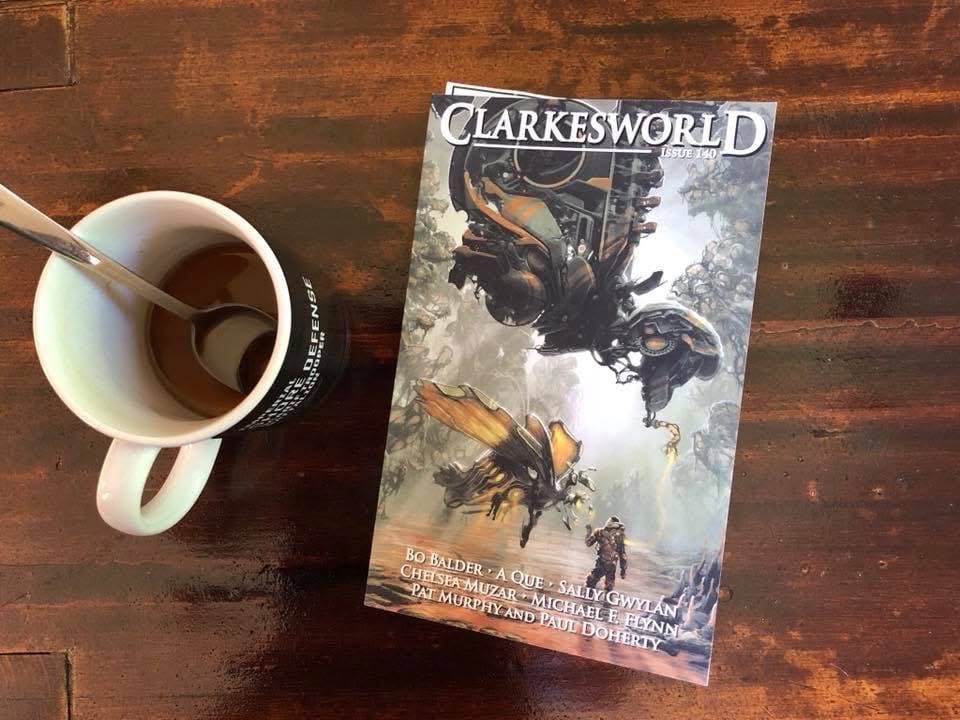
But the tide was beginning to shift as readers began to recognize that the magazine was producing high-quality stories. In 2008, the publication was a finalist for the 2007 Locus Award for Best Magazine, a category that they would continue to be nominated in for several years, and in 2009, they earned a nomination for a Hugo Award in the Semiprozine category, as well as a nomination for Non-professional for that year's World Fantasy Awards. In 2010, the magazine won its first Hugo Award for Best Semiprozine, the first of many that followed. Its stories were also beginning to receiving acclaim through nominations and wins throughout the genre's award circles.
And there would be a larger changes to the media landscape that would have a profound effect on the publishing landscape. On November 19th, 2007, Amazon announced its first eReader device, the Kindle. Founded in 1994 by Jeff Bezos, Amazon began as an online bookstore, before eventually expanding into a much wider range of products, eventually going public in 1997. In the mid-2000s, as internet access became more widespread, momentum was building for the development of digital books and readers. A handful of companies, like Sony, had begun producing eBook readers, but the infrastructure was still uneven. Amazon, now quickly becoming one of the dominant online booksellers, realized that it had the connections and ability to close that gap by producing both the device and the storefront through which to provide the books.
At the same time, Amazon also provided the infrastructure for magazines to sell subscriptions to readers through its store. This was a major opportunity for magazine publishers – while magazines had been a dominant medium for science fiction writers and fans, subscription revenue for the major print publications had been falling for years. In 2008, Clarke noted in an editorial that while alarms were ringing amongst fans that the short fiction market was in danger because of declining print subscriptions, the internet offered the opportunity for plenty of additional experiments, all while the tastes and habits of fans and readers was changing.
Amazon's subscription model was one such opportunity for the field. In June 2011, Clarke revealed that Clarkesworld Magazine was the third publication – after Asimov's and Analog – to join the program. He set out an ambitious goal: if they could build a subscriber base of 500 subscriptions through the platform by October 2011, they would be able to publish an additional story each month. By the next month, they were well on their way toward that number, and Clarke took the opportunity to dispel some of the criticisms about eReaders and eBooks, revealing a continued bias against those forms that remained.
That fifth year brought an unexpected challenge for Clarkesworld: Clarke suffered a major heart attack while at ReaderCon that July. He was rushed to the hospital, where he received a pair of stents, and later that year, announced that he had become a cyborg with the implantation of an implantable defibrillator. He continued to make light of his situation in 2014 with an anthology about cyborgs, Upgraded.) Clarke also began the work to pay his staff, who had largely been working as volunteers up to that point, and in his October editorial, reminded readers that subscriptions through Amazon and Weightless Books "are responsible for the bulk of our income."
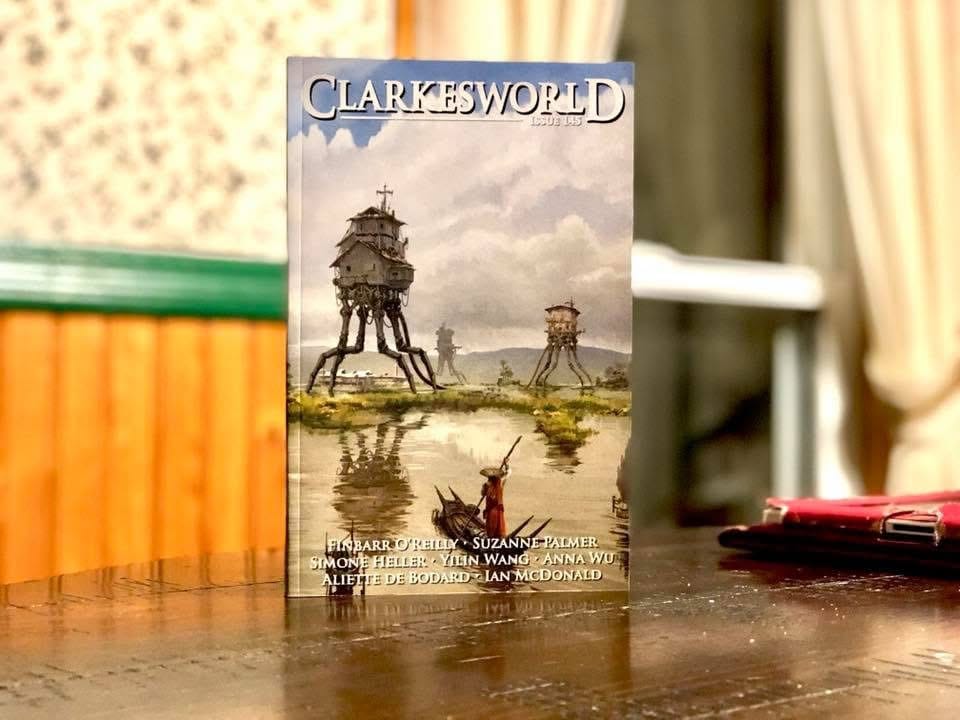
By this point, Clarkesworld had become a well-established publication in the science fiction community. Clarke's heart attack prompted him to begin taking the steps to focus on the magazine full time, and they continued to acquire a line of excellent short stories. Scanning through the tables of contents of its back issues shows off a rich collection of some of the genre's best-known storytellers, alongside entire generation's worth of up-and-coming talent.
Clarke and his team were also continually finding ways to add new features and initiatives to the magazine. In June 2008, Baker began narrating the occasional story (a practice which would eventually expand to encompass all of the publication's fiction), while in April 2013, editor Gardner Dozois joined the team to oversee each issue's reprints. Clarke would also bring the magazine to the Patron publishing platform in December 2013 as a way to connect with their readers and subscribers. Clarke also quietly launched a new publication in 2015, Forever Magazine, devoted to reprinting science fiction stories.
Another project came in 2014, when Clarke signed an agreement with a Chinese company called Storycom. It's goal was to provide a bridge from the country's science fiction community to western markets by providing money for translators. Aided by a Kickstarter project, his goal was to bring at least one story from China to each issue of Clarkesworld, with the funds going to paying the authors and some of the additional costs that came with it. He remained interested in publishing fiction from overseas, and in 2019, began publishing translations from Korea with the help of a grant from Literature Translation Institute of Korea.
Clarke explained to me that he didn't have much of a formula or approach to how he and his team selected the short fiction that they published: it was often whatever stories grabbed their attention and which they felt were of a high quality. The magazine has acquired a reputation for its quick turnarounds from its submissions pile – something Clarke explained as just coming down to making it a priority; if you're keeping up with a two-month submissions window, you're still keeping up with the pace, just two months behind.)
His selections were also sometimes controversial. He pointed to the publication of Kij Johnson's 2009 story "Spar" as one that was particularly polarizing. It generated a considerable amount of controversy over its prose and graphic imagery, but would eventually earn nominations for that year's Hugo and Locus Awards, and earned the 2009 Nebula Award for Best Short Story. Another story, 2020's "I Sexually Identify as an Attack Helicopter" by Isabel Fall also generated a considerable amount of controversy. Following a character who was gender was switched to become an attack helicopter, it ignited a firestorm online, with critics accusing the author and magazine of transphobia. Fall – a closeted trans woman – asked Clarke to remove the story from the site after the barrage and checked herself into a hospital. (Emily St. James has a good overview of the situation over on Vox.com.)
2022 would provide two new, existential challenges for Clarkesworld and the wider science fiction magazine industry. In November, a tech company called OpenAI launched a new product, ChatGPT, a chatbot based on its large language models that could generate responses to questions or prompts. The tech industry and companies like OpenAI had been experimenting with Large Language Models for several years, and some authors and entrepreneurs had begun experimenting with their utility.
Companies like Sudowrite, developed products and platforms that could incorporate these types of artificial intelligence into the writing process – a writer could ask it to generate text in a certain style, arrange notes or outlines, or help with suggestions for tone or voice. ChatGPT provided a much wider audience and attention to the nature of these products. Shortly after its announcement, it went viral as the wider public kicked the tires to see what it could do. Others followed: both Claude (created by Anthropic) and Gemini (created by Google) were released in March 2023.
Clarke explained to me that he and his team began to see signs of the technology by the end of 2022. In a blog post, he wrote that there was a constant, low-level hum of plagiarism that he and his team would detect in the submissions pile, but after the release of ChatGPT, they began to receive hundreds of stories to consider. Initially, the flood of stories were ones that they realized were generated by prompts, and Clarke made the decision to shut down submissions until they could get a handle on their processes. "The generated works were among the worst submissions we’ve ever received and sometimes bad in entirely new ways," he wrote in his April 2023 editorial. They would eventually reopen submissions and established a clear policy towards AI – "We will not consider any submissions translated, written, developed, or assisted by these tools. Attempting to submit these works may result in being banned from submitting works in the future." – but Clarke noted that they still receive submissions of stories wholly generated by AI, and instances where authors have incorporated elements of it into their works.
He pointed out that it's a wide-spread issue: while there are new authors who're trying their hand at writing and submitting for the first time, there are other established authors that they've caught trying to utilize it.
The presence of AI in fiction does more than clog up their submissions process, Clark noted: it undermines the trust that readers have in the author, the publication, and the industry as a whole that the stories that they're reading are original and the product of human creativity. In his editorial, Clarke wrote that it has enormous consequences for authors and creators: the reputational hazard of publishing AI-generated stories makes editors and slush readers wary of the stories that they're reading and creates barriers for submissions that disadvantages authors.
The flood of stories came at the same time that other changes were afoot: in December 2022, Amazon announced changes to its Newsstand program: in 2023, it would no longer sell dedicated subscriptions for periodicals, and instead encouraged readers to follow select publications through the company's Kindle Unlimited program, which would allow readers to read from a much wider pool of publications for one price – but in which publications were subjected to onerous terms and diminishing revenue.
The change had a devastating effect on science fiction publications. Clarke wrote that the program had been the magazine's single largest source of revenue, and that moving their publication to the Kindle Unlimited program would halve their income from the platform. Even worse, Amazon treated those with subscriptions at its customers, rather than each individual publication, and wouldn't provide Clarke with a list of customers who subscribed, which he estimated was around 2800 customers.
Clarkesworld isn't the only publication affected by these changes: editors at Apex, Lightspeed, and Uncanny magazines have outlined the challenges that the program's closure have posed, and in other instances, the closure has led to the publication's closure, as in the case with Fantasy Magazine.
While there are genre magazines that have remained in print for decades, like Analog, Asimov's, The Magazine of Fantasy and Science Fiction, two decades is a significant achievement in the world of genre publishing. Clarkesworld – and others – have faced continual challenges in that time, from declining subscriber counts to an explosion of other forms of media to technological problems to an online fandom that's easy to rile.
In that time, there have been a number of outlets devoted to short fiction that have come and gone – publications like Daily Science Fiction, Electric Velocipede, Fantasy Magazine, Fireside, Future Science Fiction, Galaxy's Edge, Realms of Fantasy, and many others. These outlets rarely close because of the quality of their material: it's often the immense work, difficulty in retaining readers, and capturing a sustainable amount of revenue to keep going. That Clarkesworld remains standing after this time is a testament to Clarke's stubbornness and enthusiasm for the stories that he and his team publishes each month.
There are lessons to draw from Clarkesworld: it started small and was profitable early on, building and expanding as it could, with Clarke often making the case to his readers for the value in supporting their work in an age where content is often free.
Most importantly, the magazine's insistence on a simple metric, to publish good stories, is what I think has allowed it to persist in the last two decades. I've often come away from issues (and I've read far too few of them) with an appreciation for the worlds and words of the authors that they've decided to publish. In a moment where someone can generate a story from a prompt or publish it themselves on any number of sites, the taste and discernment of experienced editors and publishers is more important than ever, something that I've gone to Clarkesworld for many times over the years. I hope that I'll be able to do the same in the years and decades to come.
]]>
Here's the full list of winners (I've marked them
]]>Over the weekend, the World Fantasy Convention held its annual (52nd) event Oakland, California, a four-day celebration of all things fantasy. As part of the programming, the convention announced the winners of the World Fantasy Award.
Here's the full list of winners (I've marked them in bold) and nominees:
Best Novel
- Audition for the Fox by Martin Cahill
- Once Was Willem by M.R. Carey
- The Secret Market of the Dead by Giovanni De Feo
- The Everlasting by Alix E. Harrow
- The Adventures of Mary Darling by Pat Murphy
Best Long Fiction
- The River Has Roots by Amal El-Mohtar
- “The Secret Diary of Mina Harker" by Theodora Goss (Letters from an Imaginary Country)
- “Uncertain Sons” by Thomas Ha (Uncertain Sons and Other Stories)
- The Death of Mountains by Jordan Kurella
- “The Spotter” by Josh Malerman (You, Human: An Anthology of Dark Science Fiction, Vol. 2)
- Psychopomp & Circumstance by Eden Royce
- A Mouthful of Dust by Nghi Vo
Best Short Fiction
- “The Hungry Mouth at the Edge of Space and the Goddess Knitting at Home” by Renan Bernardo (Reactor 8/27/25)
- “In My Country” by Thomas Ha (Clarkesworld 4/25)
- “10 Visions of the Future; or, Self-Care for the End of Days” by Samantha Mills (Uncanny 3-4/25)
- “St. Dymphna’s School for Borderland Girls” by Jocelyn Szczepaniak-Gillece (Weird Horror Spring ‘25)
- “Unfinished Architectures of the Human-Fae War" by Caroline M. Yoachim (Uncanny 5-6/25)
Best Anthology
- Night & Day edited by Ellen Datlow
- Storyteller: A Tanith Lee Tribute Anthology edited by Julie C. Day, Carina Bissett and Craig Laurance Gidney
- The Best Weird Fiction of the Year: Volume 1, edited by Michael Kelly
- Year’s Best Canadian Fantasy & Science Fiction: Volume Three edited by Stephen Kotowych
- Bog People: A Working-Class Anthology of Folk Horror edited by Hollie Starling
Best Collection
- Letters from an Imaginary Country by Theodora Goss
- Uncertain Sons and Other Stories by Thomas Ha
- The Essential Patricia A. McKillip by Patricia A. McKillip
- The Eleventh Hour: A Quintet of Stories by Salman Rushdie
- Black Hole Heart and Other Stories by K.A. Teryna and translated by Alex Shvartsman
Best Artist
- Galen Dara
- Kathleen Jennings
- Daniele Serra
- Rachel Smythe
- Charles Vess
Special Award – Professional
- Clive Bloom, for London Uncanny: A Gothic Guide to the Capital in Weird History and Fiction
- Jaymee Goh, Jill Roberts & Jacob Weisman, for Tachyon Publications
- Tim Lucas, for Succubus
- Blumhouse & Dave Schilling, for Horror’s New Wave: 15 Years of Blumhouse
- Becky Siegel Spratford, for Why I Love Horror: Essays on Horror Literature
- Richard Wolinsky, for Space Ships! Ray Guns! Martian Octopods!: Interviews with Science Fiction Legends
Special Award – Non-Professional
- Scott H. Andrews, for Beneath Ceaseless Skies
- Andy Cox, for Remains
- Patrick Swenson, for Fairwood Press and for the Rainforest Writers Village Retreat
- Elise C. Tobler, for The Deadlands
- Wendy Wagner, for Nightmare
Congratulations to all of the winners – what did you read on the list?
]]>With just a couple of weeks before it debuts, Amazon's Prime Video has released a new trailer for the upcoming third season of The Lord of the Rings: The Rings of Power, teasing a tense period of Middle-earth's Second Age, and a pivotal moment in the history of the world, the forging of the Ring of Power.
The series is set thousands of years before the events of The Lord of the Rings, and has been adapting some of the supplemental chapters from author J.R.R. Tolkien's novels.
The first season takes place after another monumental battle for power that saw the defeat of the Dark Lord Morgoth and introduced viewers to a younger Galadriel (played by Morfydd Clark) as she obsessed over tracking down Morgoth's mysterious agent, Sauron (played by Charlie Vickers), and as the people of Middle-earth contend with the rise of evil forces throughout the land. The second season deals mostly with Sauron's work to deceive the elves into helping him forge the titular Rings of Power as darkness continues to sweep across the land.
For this third season, the action will jump a couple of years, putting the action right into the middle of the war between the Elves and Sauron, who's been working to forge a ring for himself that will allow him to control the other rings and solidify his hold over Middle-earth. The trailer shows off Sauron working on the One Ring in Mount Doom, hosts of orcs and Balrogs, and the Nazgûl (the nine kings that Sauron corrupted through the Rings he gave them), while the elves, dwarves, and men are working to counter them.
Here's the trailer:
It all looks dark and grim and exciting, and it'll be interesting to see how this season will be received, now that they've presumably had some time to really sink into the world and find their footing.
I've generally liked the series, despite some of the liberties that they've taken with the source material (I'm far from a purist). It took me a little while to get through the second season, but it'll be good to sink back into the world for another batch of episodes.
The streaming service also released a behind-the-scenes featurette:
This new season will kick off with the first half of the season on November 11th over on Prime Video, with two more episodes on November 18th, and a final two on November 25th. After that, we'll wait and see what the future brings.
Amazon originally announced the series way back in 2017, and then put it into production in 2019, and debuted the first season in September 2022 and the second season in August 2024. While Amazon has touted that more than 150 million viewers have watched the first season, it hasn't quite been the monumental cultural hit that Peter Jackson's adaptation has been, it took a decent amount of time to officially renew the show for a third season.
I don't find that terribly surprising, given that the entertainment world of 2026 is in a vastly different place than it was a decade ago. Just after Amazon renewed the show for season three, it cancelled its other big fantasy series, The Wheel of Time, after it concluded its third season, despite nearly universal praise for how good the series had become over its run. At the height of the streaming wars when the key metric was subscriber growth (and in no small part because of an economy defined by unnaturally low interest rates), companies could afford to throw hundreds of millions of dollars at a production and hope that it was enough to entice new subscriber signups.
That's really no longer the case: various streaming services have consolidated (Warner Bros. and Paramount the latest), and it's just more expensive to produce these huge shows. That said, those super-expensive projects haven't entirely vanished. The production studio behind the upcoming Harry Potter recently issued filings that suggest that the series is on track to become one of the more expensive ever made. Deadline did some back-of-the-envelope guesswork and is guessing that the series could run around $25 million per episode, or around $200 million per season.
Amazon's venture into Middle-earth has already been an expensive venture: just acquiring the rights reportedly ran them $250 million – before production even started – for a five-season commitment, while the first season reportedly cost somewhere in the range of $465 million. Despite those costs, it seems that the company is already working on a fourth season (with production apparently starting in early 2027), and all indications have been that they'll continue through their five-year plan.
Either way, the franchise isn't going away: Warner Bros. is currently in the midst of production on a new prequel film, The Lord of the Rings: The Hunt for Gollum (fittingly, Andy Serkis is directing), while they've also been working with Stephen Colbert on an intriguing-sounding film called Lord of the Rings: Shadow of the Past, which will be set during some of the moments that weren't depicted in Jackson's trilogy and years after it. There had been some reports that the project was being put on hold amidst the merger between Paramount and Warner Bros., but Jackson recently said that they're still working on the script.
]]>October has been fully loaded with new books: it's been a very good month for readers. In case you missed it, here's the first and second lists. Now we've arrived at the final couple of weeks of the month, and one last batch of 22 books titles to check out that caught my eye.
You can also check out past installments of this book list series by hitting up the Book List tag.
Tyrant Lizard Queen: The Love, Life, and Terror of Earth’s Greatest Carnivore by Riley Black (October 27th)
What creature that's ever existed on Earth has captured our collective imagination more than the Tyrannosaurus Rex? I can't think of one, and paleontologist and science writer Riley Black's latest book is devoted to this majestic creature. In it, she follows the life of a T-Rex called Snaggletooth from birth to adulthood, drawing from the latest scientific discoveries to explore how the animal lived, hunted, played, and more.
Publishers Weekly says "Combining evocative storytelling with meticulous science, Black offers a captivating and intimate portrait of Earth’s most famous carnivore."
Star Wars Icons: Darth Vader by Anthony Breznican (October 20th)
Anthony Breznican is one of my favorite entertainment journalists. He's worked for places like Entertainment Weekly, Vanity Fair, and Esquire, and I make it a point to check out any of his in-depth features about new films and TV shows.
His next project is a new book about the legacy of Darth Vader, in which he's interviewed a number of people involved in the character's creation, and looking at how he evolved over time. It looks like it'll be a really intriguing read.
Grim Folk Tale by James J. Butcher (October 20th)
James Butcher adds on another installment of his Unorthodox Chronicles (Dead Man's Hand, Long Past Dues, and Cold Iron Task) series, which follows a junior Auditor in the magical Department of Unorthodox Affairs, Grimshaw Griswald Grimsby, who's responsible for helping to keep order in the world.
A magical affliction has begun to spread in Boston, and Gimsby has been tasked with finding the source, along with his partner, Huntsman Mayflower. It's straightforward enough, but things become more complicated when they encounter some ancient beings, and they have to travel below the streets of Boston and into another reality known as Elsewhere to find what's causing the illness and put an end to it.
The Bishop of Durham Attempts to Surrender the City by Susanna Clarke (October 20th)
Susanna Collins has returned to the world of her best-known novel, Jonathan Strange and Mr Norrell, with a new novella, The Bishop of Durham Attempts to Surrender the City. 700 years before the events of that story, England was being invaded from the North, fairies had spread across the countryside, and the city of Durham was surrounded by a strange forest. The Bishop of Durham, Ranulf, realized that he needed to find a way for both humans and fairies to coexist, and set off to find the king of the fairies – reportedly a 14-year-old boy – to find a way to make peace.
Kirkus Reviews says "anyone who has ever read a fairy tale retelling that falls flat will understand how difficult it is to achieve the balance Clarke—and Sawdon—achieve here."
When the Night Comes by Knocking by Katherine Daniel (October 20th)
Jane and her brother Thomas haven't spoken since they were involved in an accident that nearly killed them. Reunited for a car ride on the way home from college, they're still not speaking until they stop at a store and encounter a man who stumbles in dragging a body and claiming to have been attacked by a monster.
At first, nobody believes him, but when someone leaves the store and is quickly killed, they begin to realize that the stories about a local creature might be true, and that someone has enticed it from its mountain lair so that it can feed on their guilt.
The siblings and their companions all have their own secrets, and as the monster tears through town, they have to confront their pasts and try and overcome their issues to survive.
The Night Parade by Stephanie Feldman (October 27th)
This is a collection of Feldman's short fiction, which includes stories about a teenager girl who finds that her friends are being enticed by a supernatural force, another who's dealing with two versions of her boyfriend, a mother who thinks that her kid's best friend is a witch, and a widow who's contemplating drastic measures to bring her husband back.
Lost on Paradise by Alan Dean Foster (October 20th)
Alan Dean Foster's latest novel is set in the distant future where Earth has become overcrowded and polluted, and where only the wealthiest can escape to another world known as Paradise. Jonos and Liina have dreamed of saving up to journey to the world, where humanity lives alongside two other alien species, the Eiquan and the Lusanata. After they go on the run after committing a crime, they find their way to Paradise, only to find that it lives up to their expectations – until something goes horribly wrong.
The Financial Times says "Foster’s story starts out as science fiction before segueing into space fantasy, and is the assured work of a master of his craft.
The Porcelain Sisters by Daryl Gregory (October 27th)
I've enjoyed reading Daryl Gregory's books, and this sounds like an intriguing one: a woman named Ruth Winslow has been saving for her education while caring for her sister Isabel - a haunted doll.
When Isabel is damaged, she has to track down a witch known as the the Dollmaker, La Fabricante. The pair head off to France and tangle with an assassin, a group of angry, haunted dolls, demons, and humans, learning along the way that their entire lives have been a life - their mother was an enforcer for the Le Clan des Sorcières.
Kirkus Reviews says "the plot is completely bananas, of course, but Gregory is such an engaging writer, the reader has little choice to buy in—and that’s a good thing. This novel is creepy, hilarious, and just a lot of fun."
The Slantwise Histories by Alix E. Harrow (October 20th)
Alix E. Harrow recently earned the Hugo Award for Best Novel earlier this summer, and now there's another book from her to check out: The Slantwise Histories, a collection of some of her short fiction, including "A Witch's Guide to Escape: A Practical Compendium of Portal Fantasies" as well as updated ("author's preferred text") versions of a number of her other shorter works, in addition to another five previously-unpublished ones.
Writing in Locus Magazine, Gary K. Wolfe says that "it reflects Harrow’s Emily Dickinson-like approach to telling the truth, but telling it slant. Again, there are sidewise looks at fairy tales, history, witches, and ghosts, along with a couple of cool librarians and even a wry nod to O. Henry."
The Bookshop Book by Mark Lawrence (October 20th)
Back in 2022, Mark Lawrence published The Book That Wouldn't Burn, the first installment of his Library trilogy, about a kid named Evar, who is trapped in an ancient library while trying to unravel its mysteries when he's joined by a girl named Livira, He followed it up with The Book That Broke the World and last year's The Book That Held Her Heart.
Turns out, he isn't quite done with this world: The Bookshop Book is a standalone adventure set in the same world, following Frederick Archer, a young man who ends up in a bookshop and finds himself encountering Rose Penrose, a woman who's been transported into the world of a novel and ends up in the same bookshop.
Library Journal says "fans of that series will enjoy how it fits, while new readers will find this ode to books, bookshops, and libraries a delightful novel that can be read on its own."
Code and Codex by Yoon Ha Lee (October 27th)
Yoon Ha Lee has a new space opera novel, set in the distant future in which an galaxy is ruled by the Censorate republic, which has banned all languages other than its own, the lingua rubra, through which its ruler, Aurelia (her title is Peacock), who has worked to control the information that flows through the galaxy and who can control her subjects with their language.
The empire also works to stamp out any unauthorized texts, and when rumors of on turns up, she dispatches her agent and lover, Val / Valentina (known as the Swan), to investigate and retrieve it. Val had been enslaved by the royal family as a child and ends up finding more, setting into motion a series of events that will threaten the stability of Aurelia's rule.
This sounds like a trippy novel, and Chris Kluwe over at Lightspeed Magazine says "Yoon Ha Lee has crafted something thornily transcendent, an embrace of letters and literacy that cannot be fully comprehended in a single reading. This is a book that rewards the patient excavation of meaning, a statue chiseled piece by agonizing piece from building blocks we all have access to, and it is absolutely worth the time spent uncovering its manifold depths."
Dead Batteries by Kate Maupin (October 27th)
May and her autistic son Davis have been on their own since their husband/father walked out, and they had to come to terms with a difficult road ahead of them. Then a pandemic swept across the planet, killing 99.9% of the human population. May and Davis only survived because they'd gotten very good at staying away from people.
When May is out searching for batteries to keep Davis's Game Boy going, she encounters a stranger who calls himself Bird, and he offers up some information about some survivors that might be nearby. In exchange for pretending to be his wife and child, they might be able to get into the community. She agrees – they probably have batteries – and while they've now upended their stable lives for a new chance at survival, she's going to find out how far she'll go to protect Davis.
Publishers Weekly says "Maupin doesn’t sugarcoat the gory fallout of the virus or the everyday demands of holding the world together as a single parent of a high-needs child, making for an emotionally challenging but grounded and satisfying trek, enhanced by May’s anxious narration."
Savage Lake by Nick Medina (October 27th)
When her estranged father dies, Nell Marin is prompted to return to her family's cabin on Torchlight Lake with her son, Oscar. There, she's forced to confront some lingering, horrific memories as they both work to fix up the place to get it ready to sell, and then they can put it behind them.
But their trip is soon prolonged: the roads are barricaded by members of a local tribe, and the pair begin to experience strange things. They hear screams and see a mysterious figure watching them at night, and Oscar watches as Nell seems to be coming less of the mother he knows. As he learns more about his family's horrific past, she has to figure out how to confront those secrets, before his mother is gone forever.
From the Library of Jurgen Leitner (The Magnus Archives) by Premee Mohamed and Jonathan Sims (October 27th)
A librarian named Jurgen Leitner maintains an unusual collection of books: they're all magical and deadly, which he Lsays that he's keeping the world safe from them. Two of his employees think that he's a bit odd – research assistant Hugh Franklin believes that he's found where he truly belongs, while Sebastian Everett, an acquisitions specialist, sees it as a place where he can practice a bit of magic.
Both worked at the library at different points in time, but their stories are connected in unexpected ways. It's spun off from Sims' horror anthology podcast The Magnus Archives.
There and Back Again: The Unofficial Oral History of The Lord of the Rings Films by Sam Moore (October 20th)
Peter Jackson's Lord of the Rings trilogy has a very special place in my heart. He not only did the impossible – adapting J.R.R. Tolkien's epic fantasy trilogy – but also pulled off the unheard-of production of three films at the same time. There are some outstanding books about the trilogy's production (I highly recommend Ian Nathan's Anything You Can Imagine: Peter Jackson and the Making of Middle-earth) but Sam Moore's latest looks like another worthy read.
It's an oral history of the trilogy's production, which features a ton of interviews with the cast and crew, just in time for the 25th anniversary of the release of Fellowship of the Ring.
This Is Why You Love LEGO by Jess Rahbek (October 13th)
LEGO is more popular than ever, and this new book by Jess Rahbek explores why the toy system has become so beloved. After spending three years researching the company, exploring how they conceptualize and design their kits, and how they embed storytelling and the experience of play in each one. It looks like an excellent behind-the-scenes look for anyone who's still building the sets.
The Asterist by A.T. Sayre (October 20th)
Bill Jeffries is an asteroid station commander – an Asterist – who's enduring a boring deployment at the far end of the galaxy. Everything changes when he's alerted that a spaceship has crashed not far from the station. He sets off to investigate the wreckage and finds an alien inside, a four foot-long spider-like creature, and now Bill and his distant overseers have to figure out if it's friendly or a threat. As he studies the alien, he becomes fond of it, and soon finds himself in a face against the clock to figure out the alien's origins and intentions before his superiors do.
Kirkus Reviews says that "the novel’s big hook isn’t the wonder-inspiring SF backdrop or the strange structure of the aliens (although both are impressive); it’s the intimate relationship that evolves between human and alien."
Gothic Tales by Mary Shelley, edited by Daniel Cook (October 13th)
Penguin Classics brings together ten of Mary Shelley's shorter fiction that should introduce readers to her literary canon beyond Frankenstein. It comes with an introduction by Daniel Cook.
Tropes by Sharon Shinn (October 27th)
This is a new collection of short fiction from Sharon Shinn, with stories following a man who can shift shapes, a reincarnated woman, unicorns, a magical city, and quite a few more.
Angel Country by Alex T. Singer (October 20th)
Set in an alternate 1900s, a scientist named Ada Franklin works to track down her ex-research partner after he buried her alive and stole her research: a prototype device that would allow people to communicate with angels.
Angels have prevented the American colonists from expanding beyond their original 13 colonies, but the pressure to move westward has reached a breaking point, and Ada's invention might allow humans to not only communicate with the angels, but maybe command them. To recover the machine, Ada resurrects her former lover, who's been horrifically transformed by the angels, and they have to confront human impulses and what they might unleash with their work.
The Fist of Memory by Wole Talabi (October 27th)
In this first contact novel, an alien spaceship arrives, upending the established order of the world. It's an opportunity for a Nigerian assassin named Tope, who's employed by a witchdoctor called "Baba" and whose latest job has just gone sideways. In the aftermath, he's caught up in the scramble for power that the world finds itself in, and along with a South African astronomer named Itumeleng, they have to figure out how they're connected to his mysterious dreams and the alien ship that's coming for them.
Publishers Weekly gave it a starred review, saying "Talabi pours a heady cocktail of gripping action, fraught moral and philosophical dilemmas, mysticism, and hard science. It’s a knockout."
Thrawn (Deluxe Edition) by Timothy Zahn (October 27th)
When Disney acquired Lucasfilm back in 2012, they wiped the existing Star Wars canon that had built up over the decades through books, comics, and games. One of the greatest losses in that move was Grand Admiral Thrawn, a master strategist that rivaled the links of Darth Vader and Emperor Palpatine when it came to challenging the New Republic
In 2016, the announcement came down that Dave Filoni would be bringing the character back in the animated series Rebels. What's more, Lucasfilm brought Zahn back to write a new novel about the character, Thrawn. I said in my review at the time that it was a fantastic read, because if you squinted a little, it could serve as an origin for those now non-canon stories.
Now, Random House Worlds is reissuing the book as a deluxe edition hardcover: it's got a snazzy slipcase cover, sprayed edges, new endpapers, and a ribbon bookmark.
That's all for this month: let me know what caught your eye, and what you've got on your TBR!
]]>
First we got the adventures of Murderbot in book form (novellas and then novels). Then we got some snazzy, full-cast audio adaptations. Then a TV series (with a second season on the way!) Now, we're getting a graphic novel adaptation of Murderbot thanks to the folks at Cosmic Lighthouse, which is launching a Kickstarter for the project earlier this week.
This graphic novel will adapt the first book in the series, All Systems Red. In an email, Wells explained to me that this particular project came after another project fell through "due to some unavoidable circumstances." This time around, "author Paul Cornell had asked me about doing a Murderbot graphic novel through his company Cosmic Lighthouse Comics. I was still hoping to get one done, so we (me and my agent Jennifer Jackson) started talking about it with Paul and editor Lee Harris."
Wells also noted that writing for graphic novels "is a whole different skill set which I don’t have!" Instead, she's turned to Erica Schultz (who's worked on comics like Daredevil, Moon Knight, and Rogue) to adapt the novella. Art for the project is being done by by Gary Erskine (Dan Dare, JSA Strange Adventures, and Hellblazer), cover art by Jaime Jones, colors by Yel Zamor, and lettering by Simon Bowland. The book will also come with a brand new Murderbot short story, as well as an introduction by comic writer and actor David Dastmalchian (who plays Gurathin in Apple's adaptation).
The project launched earlier this week and has already blown away its original funding goal of $87,000: it's currently at just over $152,000 at the moment, and will end on November 15th. Backers can get a PDF copy for just £9 (~$12), a trade paperback edition for £20 (~$27), and a hardcover edition for £30 (~$40).
If you're looking for something a little fancier, there are also a bunch of other tiers with some variant covers:
- An Enhanced Hardcover edition with a dust jacket, an illustration to accompany the short story, and some additional pages, which cost £75 (~$100)
- A Deluxe Hardcover edition of the book with a cover by artist Tommy Arnold (signed by Schultz and Erskine), which'll run you £250 (~$334)
- A Premium Limited Numbered Edition with cover art by John Picacio (signed by Schultz, Erskine, Picacio, and Wells) for £600 (~$800)
- A Premium Limited Lettered Edition with cover art by Francesa Myman (and signed by Erskine, Zamore, Bowland, Cornell, Myman, and Wells) for £2,000 (~$2,666)
The project is expected to begin filling orders in November 2027. As always with crowdfunding projects, there's the possibility that those dates and deliverables can shift.
This looks like a fun project: I'll be interested in seeing how it turns out.
]]>When I was in high school, the school's librarian and a mentor of mine gave me an advanced copy a new novel from Kevin J. Anderson: Hidden Empire, the first of his long-running Saga of the Seven Suns series. I've hung onto it for years because it's a great memory of Mrs. Allen, and it's been one of those books that I'd like to dip into again at some point.
There might be a good opportunity for others to do the same: earlier this week, Anderson launched an ambitious crowdfunding campaign to bring out a reprint of the entire series. He originally kicked off in 2002 with Hidden Empire, which he followed up with another six novels, A Forest of Stars, Horizon Storms, Scattered Suns, Of Fire and Night, Metal Swarm, and The Ashes of Worlds. He then added on another trilogy, The Saga of Shadows, which included The Dark Between the Stars, Blood of the Cosmos, and Eternity's Mind.
The series is set in the distant future in which humanity has colonized our corner of our galaxy, aided by another alien civilization called the Ildirans. When humans accidentally piss off an alien civilization known as the hydrogues, it kicks off a massive war, one that spreads to other civilizations around the galaxy who have their own issues with the hydrogues.
This campaign is pretty big: Anderson will be republishing all 13 novels in the series through his own press, complete with updated art, and all the bells and whistles that you see in deluxe editions these days. The complete series set has already sold out, but there is a limited, deluxe edition of the first, seven-book series, as well as regular hardcovers, eBooks, trade paperbacks and some bonus novels. Newcomers will also be able to purchase the first installment, Hidden Empire, and Anderson says that the rest will eventually be available on regular bookselling platforms. The project has blown past its initial goal of $20,000 (it's nearly at $186,000 at the time of writing this), and rewards are expected to ship in February 2027.
As with all crowdfunding projects, there's always room for some slippage in delivery dates.
I was intrigued in recent weeks when Anderson announced the crowdfunding campaign. He's a prolific author that I first encountered with his Star Wars novels, and I wanted to get a better idea of his approach to republishing his back catalog and how he's been steadily carving out a niche in a time when publishing and bookselling is facing considerable challenges.
This interview has been lightly edited for clarity and formatting.
To start, can you introduce the Saga of the Seven Suns series? What was some of the inspiration behind it?
The Saga of Seven Suns is my magnum opus, a science fiction epic that spans 13 volumes, 6200 pages, two million words. I have been working on it for 25 years. This giant story is my love letter to the genre, pulling together everything I adore about science fiction from galactic empires, strange planets, intrepid explorers, exotic alien creatures, space battles, ancient ruins, even killer robots. I think it’s like War and Peace across the galaxy.
Oh, AND IT’S FINISHED! A selling point, to be sure.
I first came to your writing through your Star Wars novels, and then your work on Dune with Brian Herbert. You began publishing this series back in 2002, and I'm wondering what playing in those big space opera universes taught you that you incorporated into this series and world.
When you have a fictional universe that spans many planets and races, you want a story that can run with that…rather than a small creative-writing-class story of a couple’s relationship breaking up over Sunday brunch. For my work in both Star Wars and Dune, I chased the stories across star systems and had my characters explore exotic places, fight dramatic space battles.
I used all the skills from working in those two huge and popular universes to create something even bigger. After all, I had an unlimited special effects budget! Now, thirteen books later, I have played with a cast of characters that grew and grew. And I brought it all to a satisfying resolution.
You've launched a campaign on BackerKit to republish the entire series. It's not the first crowdfunding campaign that you've done: what is it about this publishing strategy that you've found so appealing, and what has it allowed you to do that traditional publishing hasn't?
Crowdfunding has truly been a game changer for creatives. With the money raised from each campaign, I can put together the book or books exactly the way I envisioned it.
I have a lot of experience in design and art direction; I teach a Masters degree in Publishing for Western Colorado University, so I know the production end of the process as well as the creative end of writing the books. This series came out from three different publishers over the years, with editions that didn’t match, and nothing that approached the beautiful deluxe editions that every writer imagines. I have spent so many years meeting fans and drawing them into my circle that I had the platform and resources to find my audience.
Let me give you two examples. My very first Kickstarter was for a new novel in my Dan Shamble, Zombie P.I. series, Double Booked. I loved that series, but the original publisher had given up on it after four books. I published a couple of short story collections featuring Dan Shamble, and I got the rights back and republished the original four books, but the fans wanted new novels.
So, I ran a Kickstarter, basically to see if they would support it (and to see if it would be worth doing). Boy, did they ever! The campaign for the one new novel raised six times as much as the previous publisher paid for the last novel. I have since run several more campaigns for Dan Shamble books, and the series is now up to 12 volumes. And, because of the obvious, demonstrated support of the enthusiastic fan base, I have just sold Dan Shamble as a TV series, which should start filming next year.
The publishing industry is undergoing a number of consolidations and faces any number of problems: what role do you see crowdfunding playing for authors in the near future? Longer term?
Actually, I see crowdfunding along with the entire indie writing and publishing explosion as a perfect alternative to the giant publishers consolidating and consolidating.
Some might look at the Big 5 (all that remains) publishers as limiting your options as an author, but I see the direct creator-audience connection made possible through crowdfunding as giving us limitless options.
Something stood out for me in your introduction for the project: you spent years working to get the rights to the books back. Can you tell me about that process? What was involved in getting those rights back, and why was it important to you to publish these yourself, rather than going to another publisher?
One publisher had released the original seven book series, and another publisher released the sequel trilogy, and then my own WordFire Press did a prequel novel, Veiled Alliances and a connector novel between the two series, Whistling Past the Graveyard.
Remember, I published the first book in 2002, so almost a quarter century has passed, and some of the volumes were unavailable, even impossible to find, so readers couldn’t pick up the whole series without searching eBay or used bookstores. With the books out of print, I wanted to get the rights back so I could redo them, just as I had done with Terra Incognita (though this was a MUCH bigger undertaking).
The publisher of the sequel trilogy graciously reverted the rights on my request. The publisher of the original seven ignored my requests for the better part of a year, and then refused without explanation, even though three of the seven books (Horizon Storms, Of Fire and Night, and Metal Swarm) were clearly out of print.
We appealed, again to no effect, and finally I had to bring my agent into the mix, and he pressed harder, showing them the terms of the contract they were violating, and finally after more than two years, they relented. It was frustrating; there was no reason they needed to hold on to rights to books they weren’t keeping in print.
But now I finally had the rights back and we could plan the campaign. But if you have a look at it, you can see it is not a quick and easy thing to set up. My team worked for a year and a half just to get the pieces ready for launch.
There are a lot of authors out there whose books have fallen out of print: is crowdfunding a viable option? What needs to be taken into consideration if someone decides to go that route?
Very good question, one I’m dealing with right now. I have a lot of old, out-of-print titles that I am reissuing myself at WordFire Press.
We have quite a few data points. While the reissuing process gives the books a fresh look and a new audience via regular channels, they aren’t huge sellers. I have two dark fantasy books coming up, Stake and Tucker's Grove. We were just going to re-release them in the normal publishing catalog, but now I see that a crowdfunding campaign can give them a significant boost and lots of publicity.
We are planning to run a “dark fantasy by KJA” campaign to release both books together as a Kickstarter or BackerKit campaign, and I think we would raise significantly more money than if we just republished them. There is an entire audience of readers who only get their books by crowdfunding campaigns and don’t normally shop on Amazon or other online bookstores.
This will certainly be much smaller than the Seven Suns campaign, but probably much more than if we had just published them. And then we’ll put the books up for sale on normal channels afterward anyway. Win-win.
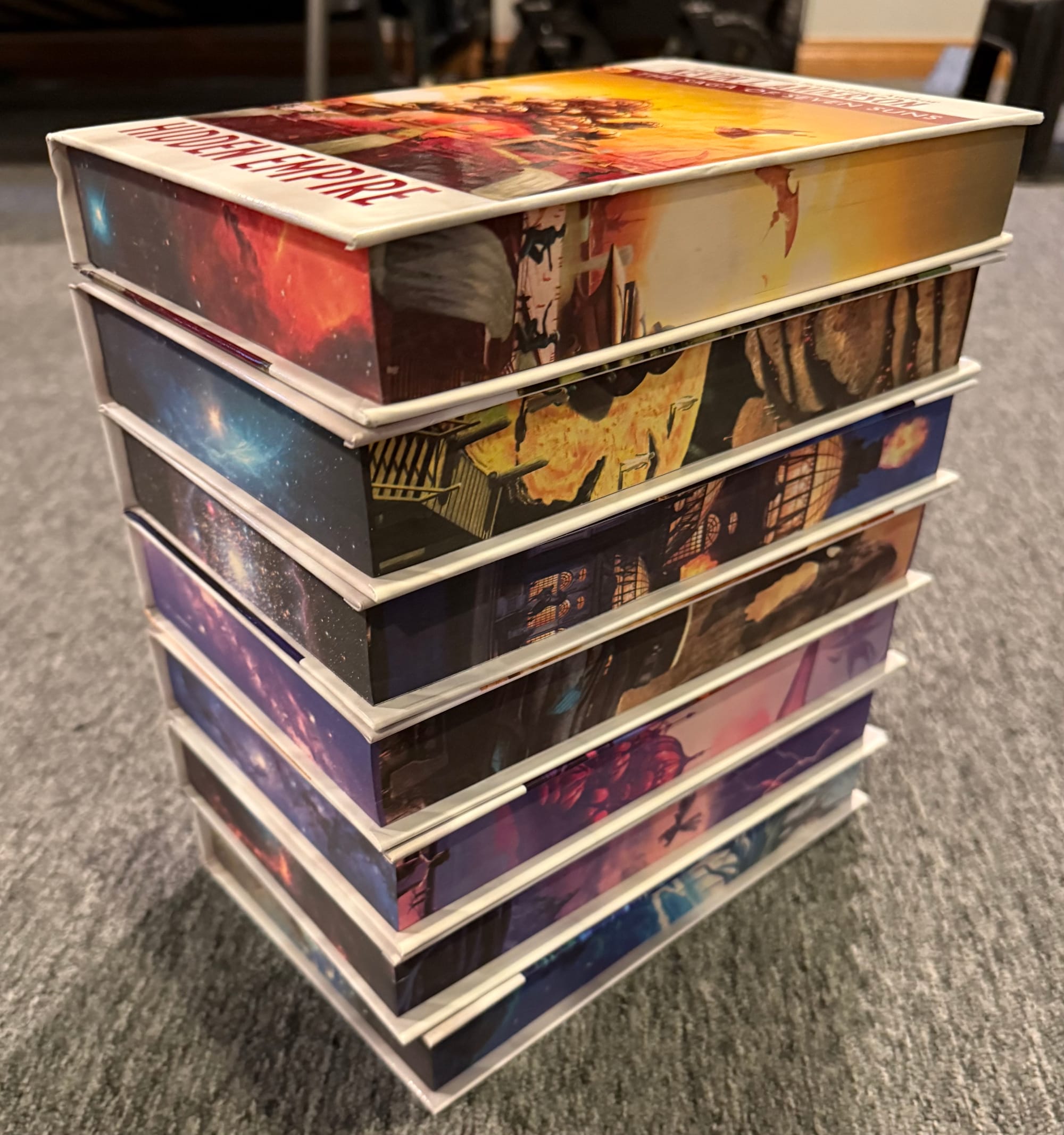
These new editions look really nice: can you walk me through the design process?
Hugo-Award winning artist Stephen Youll had painted the covers for the sequel trilogy and the first five books of the original series, before they just changed the design. The fans were always frustrated not to have the covers match (and so were Stephen and I!). So I commissioned the missing two paintings from him (and they are amazing).
Next, I wanted clean, expansive cover designs that would showcase the amazing art, rather than covering it all up with type. I came up with a good, consistent design idea and then worked with my wonderful designer, Janet McDonald, to develop the set. I have a satiny white background for the original Saga of Seven Suns books, then pewter for the connector volume, then oily obsidian black for the sequel trilogy, The Saga of Shadows.
I even wrote a new book for the series, Roamers Wrath, which is a real bonus for this campaign. So now, all thirteen books look like a beautiful matched set. We did deluxe editions with astronomical endpapers, striking sprayed edges, spot color printing in the interior. I designed the interior pages myself and laid all the books out. We created 150 signed/numbered limited deluxe sets of all 13 books (and those sold out within 12 hours of launch), and a similar deluxe set of just the original seven novels.
You've got new covers, interior illustrations, and sprayed edges. I've written about how these have become popular features with readers: why do you think readers are drawn to these?
We also have regular hardcovers and trade paperbacks (which look very nice, too) and eBooks for those who really just want to read the story. But there’s a high-end set of fans/readers who want a gorgeous edition to show off on their shelves.
Some of them even shelve the books backward to show off the sprayed edges instead of the spines! They enjoy the lavish reading experience, and want to hold a work of art instead of a disposable paperback book. I produced a range of editions to appeal to every reader.
What are you hoping that fans and new readers will discover with the books in these new editions?
The Saga of Seven Suns is really my masterpiece, and it’s been beloved by fans for many years. I hope a lot of them will want to come back and get a matching set for the first time ever, but I have been building my readership for years and years, and a lot of my newer fans might not have read this series. (And it was especially hard because even finding the books was hit or miss). I hope this campaign brings both new readers and established fans back.
Anderson's campaign will run through November 5th.
]]>Have you ever thought about what your life might be like had you made one consequential decision? That's the underlying premise of Isabel J. Kim's debut novel, Sublimation (expanded from her 2021 short story "Homecoming is Just Another Word for the Sublimation of the Self"): how do the choices that we make inform who we are, and if we know the impact of those choices, will we still make them?
The novel is set in a world much like ours, but with one wild difference: if you cross a border and don't intend to return home, you duplicate. One of you stays behind, and your copy – called an "instance" – continues forward. They have identical bodies and memories up to that moment, and diverge from there. If one's instance returns, they'll reintegrate into the same body if they make contact, the memories of two lives blending together.
Spoilers ahead for the novel.
Kim has established a thought-provoking concept, one shepherded along by a young South Korean woman named Soyoung and her instance, Rose. They instanced at the age of 10, when their mother left for the United States, and haven't spoken to one another in two decades. When their grandfather passes away, Rose is compelled to return – he left her his house and expressed his wishes that the two would reintegrate. With her own life and career in the United States, Rose isn't interested in reintegrating and finds her reunion with Soyoung to be less than ideal. She'd rather not think about the counterpart she left behind, and doesn't really know how to speak with her. They might look alike, but they have little in common. Soyoung, for her part, is curious about Rose and carries some resentment for the life that she hasn't experienced.
Soyoung was also friends with a boy, Yujin, who eventually also moved to the United States and he and his instance (YJ) keep in touch regularly as the two worked to optimize their chances in life: getting dual US citizenship while working in the tech industry before eventually reintegrating, equipped with the skills and tools to succeed in the world, and maybe avoid military service in Korea.
Shortly after arriving, Soyoung makes a rash decision: she grabs Rose's wrist and the pair integrate, their minds and shared experiences intertwining. The new Soyoung-Rose quickly realizes that they'd made a mistake: reintegrating isn't what either of them really wanted or needed, and she jumps at a slim chance of undoing the action: she now knows about Yujin and YJ's lives, particularly the latter's work at a slick tech company called Mergebreak.
The company has come up with a useful innovation for the world: a bracelet that interrupts the reintegration process. It's a gamechanger for the world, allowing instances to freely travel back and forth to their homeland without the risk of accidentally reintegrating with their duplicate. The company has ambitions beyond that technology: they've acquired a company that developed a new form of technology: one that allows them to undo a reintegrated person, and it's a lifeline that Soyoung-Rose desperately clings to after learning about it.
This is an ambitious technothriller that manages the delicate balancing act of being breezy and thoughtful at the same time. Kim juggles a number of heavy topics that deftly weaving them together in a narrative that zips along without getting overly bogged down in the scenery or technological window dressing.
At the core of the novel is the idea of how expectations weigh on a person, particularly those who leave their homes and families for the better opportunities. There's a wide array of complications in the foreground here: There's Soyung and her mother in Korea and their somewhat estranged counterparts in the United States, who have to contend with what almost feels like betrayal at the departure and reluctance to look back at where they came from. Then there's Yujin and YJ – they're in regular touch with one another, coordinating their lives for what they hope will be a successful future. But while they're largely on the same page, they're each struggling with which future they really want for themselves: who are they living for, and as they've lived their own lives apart, how do they prioritize one over the other – and even if they want to reintegrate when all is said and done?
In and of itself, that's more than enough drama for a novel, but Kim has more to talk about: Mergebreak's technology represents a profound inflection point for the world. They've figured out how to prevent people from reintegrating with their bracelet, but with their new technology, Soyoung-Rose and YJ are alarmed at the implications that it represents. Deployed at airports or border crossings, the technology (and company) would be able to control migration and even forcibly reinstance people if they want to cross borders.
It's a notable point to examine, especially in a world in which we're surrounded by technology that can often shape our social lives and society in unexpected and unseen ways. Should governments – or enormous tech companies – be trusted with deploying and utilizing these technologies? As we watch the rapid deployment of artificial intelligence systems and social and advertising media platforms buffer the nature of our political systems to the entertainment we consume and everything in between.
The result is an engrossing read that explores these relationships and thinks deeply about the world that surrounds us. Sublimation works so spectacularly well because Kim understands that these disparate elements are actually related and interact with one another. She digs deep into the humanities of her world with examples from the mythology and storytelling that's arisen around instancing and how it's shaped its culture, while also looking at how the tech media in the world talks about these technologies that surround them.
The introduction of any new technology will trickle down to shape how people live in unexpected ways, and the way people live and see the world will shape how they utilize the tools and policies at their disposal. It's a story that both skewers the tendencies and attitudes of Silicon Valley, while also recognizing its importance in the modern world. It's a demonstration that the humanities and sciences aren't diametrically opposed to one another: they're both essential, even if they sometimes have a strained relationship and expectations between one another.
]]>Quick announcement in case you missed it earlier: if you're in the Burlington, Vermont area, there are two events at Phoenix Books that you should come to! The first is tonight (October 14th): Chuck Wendig and Delilah Dawson will be speaking at 7PM (I'll be introducing them), while Annalee Newitz and myself will be speaking about their new book, A Wall Is Also A Road. That's also at 7PM. You should come!
Okay: new books. October is packed, so I've split this month's list into three parts. In case you missed it, here is the first list for the month:
There's another huge pile dropping this month, and here's what caught my eye:
Lucky Starr and the Rings of Saturn by Isaac Asimov (October 13th)
Blackstone Publishing has reached the final installment of their reprint series of Isaac Asimov's Lucky Starr series (they started earlier this year with David Starr, Space Ranger, Lucky Starr and the Pirates of the Asteroids, Lucky Starr and the Oceans of Venus, Lucky Starr and the Big Sun of Mercury, and Lucky Starr and the Moons of Jupiter.)
Asimov originally published the series in 1952 as the basis for a proposed TV series and it's set in the distant future in our solar system, where it's controlled by the Council of Science, which utilizes agents to keep everything in order. Over the series, one agent, David Starr, tangles with space pirates and conspiracies that have threatened various settlements throughout the solar system, and in this adventure, he's headed after a Sirian spy known as Agent X, who's stolen a spaceship and jettisoned some important documents into Saturn's rings. Now Starr and his allies have to find them before the Sirian war fleet does.
The Forever Dead by John Birmingham (October 13th)
Birmingham finishes up his Cruel Stars trilogy (which includes The Cruel Stars and The Shattered Skies) with The Forever Dead. The Sturm have returned – they're on a quest to rid the galaxy of anyone who's been cybernetically or genetically enhanced, and they've been winning in their war against humanity.
A small force of humans have been continuing the fight. Commander Lucinda Hardy, Admiral Fraser McLennan, Sephina L’trel, Booker3 and Princess Alessia have been battered and face terrible odds, but they're persisting, gathering up what few allies and weapons they can, and to win, they're going to have to force a confrontation with the Sturm – a confrontation that will cost them dearly.
The Thrice-Bound Fool by Christopher Buehlman (October 13th)
I've heard lots of good things about this series (it's preceded by The Daughters' War and The Blacktongue Thief). This installment is set after The Blacktongue Thief, and follows a criminal named Kinch Na Shannack, who loves to read, but has to figure out a sentient book that tries to kill him anytime he opens it.
He's guarded by Galva, a veteran of the Goblin Wars and has vowed to protect Kinch as he tries to figure out the book, which might hold the key to keeping the people who're trying to kill the queen she loves and serves.
I've had these books on my TBR, and this sounds like a really fun read.
As You Wake, Break the Shell by Becky Chambers (October 13th)
A new Becky Chambers novel is always a reason to celebrate. As You Wake, Break the Shell is the first of a two-parter, and it starts off on a planet called Fortune, which has few resources of its own. Two inhabitants, Signy (a botanist) and Cora (a pilot) have decided to leave their home for better harbors
The two come together when Cora begins experiencing a condition known as "mindbleed" – the result of her bond with her rorqual ship Colibri, and when she arrives in Signy's shop, it puts her in danger and threatens to upend their lives.
Publishers Weekly gave the book a starred review, saying "Chambers’s clear-eyed cultural critique pairs beautifully with the palpable tenderness between her characters, who are animated by rage and grief at the thought of a better world being so possible yet so far away. Infuriating and inspiring in equal measure, this is Chambers at her best."
The Three-Body Problem by Liu Cixin (October 13th)
Earlier this summer, the Folio Society released a special omnibus edition of Liu Cixin's phenomenal Remembrance of Earth's Past trilogy – The Three Body Problem, The Dark Forest, and Death's End – which sold out quickly. For their Christmas release, the publisher is releasing a standard edition of the volume. It featured 15 illustrations by Matt Griffin and a new introduction by Liu. It looks like a really beautiful edition of the entire trilogy.
Truth to Power: A Luke Cage Marvel Crime Novel by S. A. Cosby (October 13th)
I've really loved S.A. Cosby's crime novels Blacktop Wasteland, Razorblade Tears, All the Sinners Bleed, and King of Ashes, and I was excited and intriguing to see that he's dipping his toes into the tie-in world with a new novel set in the Marvel universe. It's part of a lineup of superhero crime novels (it's following the Jessica Jones-led Breaking the Dark by Lisa Jewell and Daredevil-led Enemy of My Enemy by Alex Segura) and features Luke Cage.
In this adventure, Luke is hired to check out a company that's building medical devices in Virginia, and soon finds that his cousin, who was watching the plant, has turned up dead. While the official report says it was an accident, Luke believes differently, and works on finding out what happened. He ends up finding a conspiracy that goes far beyond the rural Virginia factory.
Horde of the Counterwind: An Epic Voyage to the Upper Reaches: The Cult Classic That Inspired Clair Obscur: Expedition 33 by Alain Damasio (October 13th)
The video game Clair Obscur: Expedition 33 came out last year and has earned a number of awards and acclaim and won this year's Hugo Award for Best Game or Interactive Work, as well as the Nebula for Best Game Writing. The game is inspired in part on a French novel, Horde of the Counterwind, which is being published in English for the first time.
It follows 23 adventurers who've been trained in specific skills since their birth to fight against the wind that has overcome their homeland, climbing against it to find the source. Over the centuries, 33 hordes have attempted the journey, and all have failed.
Monstera by Delilah S. Dawson (October 13th)
Delilah Dawson's latest follows Lucy McClintock, who's moved into a Victorian-era home in Savannah, Georgia, escaping from years of oppression living with her grandfather. She's elated at the freedom, but now has to contend with a creepy landlord. The house also has a mysterious green space in the backyard, and when she asks her neighbor Saskia, about it, she finds that she's drawn to her in unexpected ways.
Writing for SFF World, Rob H. Bedford called it "another page-turning, character driven, thrilling, dark story" from Dawson.
Japanese Supernatural Tales: Encounters with Yokai, Ghosts, Demons, and Other Strange Phenomena, from the Kojiki and The Tale of Genji to Dazai and Murakami edited by Michael Dylan Foster (October 13th)
Just in time for Halloween: Michael Dylan Foster brings together a handful of stories about demons, spirits, shapeshifters, ghosts, and other monsters that have appeared throughout Japanese folklore – including 24 that have never before been published in English.
Unspeakable Things by Elizabeth Hand (October 13th)
Set in the 1920s, Olivia and Tamsin are two women who've been living a quiet life in the English countryside. They're an odd-couple: Tamsin comes from a working-class family, while Olivia comes from society's upper classes. When a body turns up along with an unexpected visitor, the pair are forced to go on the run, where they find safety at an estate called The Ledges, owned by a mysterious Rex de Voil. At first, they're relieved to find a new place to stay, but soon find that their new host extracts a cost from everyone around him.
Kirkus Reviews says that it's "a slow-to-simmer but glimmering gothic pleasure."
The End of Everything by M. John Harrison (October 13th)
M. John Harrison's latest has already earned some considerable acclaim: it was shortlisted for this year's Booker Prize, an enormous honor. It follows Phillip Tennent, who searches the coastline for artifacts that wash up with the tide. The world has been affected by a mysterious crises: entities known as iGhetti (they may or may not be aliens) have arrived, prompting the widespread collapse of the world's governments, a continent has gone missing, and the oceans are full of new, strange creatures. (It's expanded from a shorter story he wrote, "The Crisis")
When he discovers a new artifact – a shapeshifting creature, he has to take it inland before it upend everything in his world.
Writing in The Guardian, Michael Faber says "All of which indicates that despite its SF elements, The End of Everything, as its title suggests, is about everything. Unlike most novels with such ambitions, it ticks no hot-topic boxes and appears uninterested in our daily news feeds."
Heretics of Dune by Frank Herbert (October 13th)
The Folio Society continues its run of Frank Herbert's Dune novels with the fifth installment, Heretics of Dune (It's already released Dune, Dune Messiah, Children of Dune, and God Emperor of Dune).
This one is set in the distant future (1500 years) after the events of God Emperor of Dune, with Leto Atreides long since dead, and the empire he built collapsed across known space. Arrakis, once a lush paradise, has reverted back to a desert, and the sandworms that inhabited it are dying. This edition comes with seven color illustrations by Matt Griffith.
Redwall: The Collector's Edition by Brian Jacques (October 13th)
One of the most formative books for me as a younger reader was Brian Jacques' Redwall series. I devoured these novels, and have plenty of fond memories of them, decades later. This month marks the 40th anniversary of the first installment's publication, and to commemorate it, Philomel Books is releasing a special edition. This hardcover has a cloth-bound, foil-stamped cover, gilded edges, and a ribbon bookmark, as well as a new foreword from Jacques' longtime editor, Patti Gauch.
Off the Reservation by Stephen Graham Jones (October 13th)
Stephen Graham Jones follows up his 2020 novel The Only Good Indians with Off the Reservation. I really enjoyed that that novel, four kids from a Blackfoot reservation kill a elk, and are haunted by its ghost, which lashes out in revenge. One of the survivors, Nathan Yellow Tail, survived, only to find himself in a hospital years later after an accident that nearly killed him and a friend, Sebby.
To try and find some balance in his life, and maybe a fresh start, he sets off in a broken-down van along with three friends to try and find the remains of a Blackfeet boy who was killed at the Carlisle Indian Industrial School, and bring them home. They find the bones, but they've brought something back with them.
The Forest Bleeds by Rachel Kitch (October 13th)
Arcane Bioengineering student and witch, Saige Chambers, is overworked and constantly anxious about it, and she's been planning for a conference along with her fellow doctoral candidates for ages. Everything's going smoothly until things take a turn – literally. While traveling to the conference, their bus takes a turn and drops them off at a mansion in the Appalachian, where they're greeted by Arius Medea with a demand: help fix his leg, or he'll kill them.
It's a gruesome injury: his flesh is peeling off the bone, emitting some sort of magic that's messing with Saige. Her colleagues want to fight and escape, but she'd rather deal with the issue quickly and get out. All the while, she's been dealing with her feelings towards a poison witch named Vaishnavi Sri, and soon, their companions start vanishing, and they have to figure out what's going on, and quickly.
The Complete Earthsea, Volume One and Volume Two / Boxed Set by Ursula K. Le Guin (October 20th)
Library of America has been collecting a number of Ursula K. Le Guin's works for its series of great American literature, including Always Coming Home, Annals of the Western Shore, her Collected Poems, Five Novels, and Hainish Novels & Stories Volume One, and Volume Two.
Now, another major part of her work is joining the collection: The Complete Earthsea, her epic fantasy series. This is a two-volume set: the first volume contains the original three novels, A Wizard of Earthsea, The Tombs of Atuan, The Farthest Shore, and two stories, while the second volume contains the second three novels, Tehanu, Tales from Earthsea, The Other Wind, as well as two stories and six essays. While these are a whole bunch of editions of this series out there from publishers like Saga Press and The Folio Society, these two volumes are fantastic: they're compact, have some beautiful art in the endpapers, and bring together all of the novels in a nice, compact package.
The Death and Birth of Iliana Marek by David Liss (October 13th)
Dan Gibson once had a promising future, but everything fell apart after a woman named Faye Kristic committed suicide, something he was blamed for but can't remember a decade later. He's now living in an apartment owned by his estranged parents, is addicted to pills, and has to deal with an abusive boss.
When a mysterious woman named Iliana Marek shows up, she believes that he wasn't responsible, and some bad people in the town start ending up dead. To figure things out, he has to remember what happened to Faye and learn just who – and what Iliana really is.
Publishers Weekly says that "the ensuing tale, fast-paced if somewhat over-the-top, runs a bloody gamut of police interrogations, death threats, and pistol battles, and is helmed by a winning human-android sleuth duo."
The Blood of the Vampire by Florence Marryat (October 13th)
Bram Stoker's Dracula gets most of the credit when it comes to literary vampires, but he was far from the only author utilizing them. Florence Marryat published The Blood of the Vampire around the same time in 1897, featuring a biracial and bisexual vampire named Harriet Brandt, who feeds off of one's life force rather than their blood.
In it, Harriet arrives in Europe from a Jamaican convent and tries to find her place in European society. This new edition from Penguin Classics features an introduction by Rachel Stewart.
As We Fall Through Time by Claire North (October 13th)
A time traveled named Cal ends up observing the French Revolution, and ends up falling for a soldier – he knows that this man will die, and ends up saving his life, even at the risk of the enormous paradoxes in time that he could create. Meanwhile, in 2018, Cal's coworker Fadimatu discovers her own mummy and sets off on a quest to figure out who killed her. Another rupture in time further complicates their lives, and together, they have to untangle the paradoxes and reckon with love, loss, and fate.
Library Journal gave the book a starred review, saying "North’s writing feels like sinking into a dream, fully immersing readers in Cal’s race to save his lover, outrun grief, and stop a growing paradox from obliterating a massive chunk of time and space."
Frankenstein Rex by Adam Roberts (October 15th)
I'm a big fan of Adam Roberts' writing: he's a scholar of the genre and his fiction often explores and interrogates its tropes and works in interesting ways. His latest takes on Frankenstein's monster. It's been designed and created to be superior to humanity, and it's stature and appearance exude power. It's used that to its advantage, and it's quickly taken over Europe and the rest of the world.
Over the years as generations come and go, the creature has begun to realize that it's dying, and has begun delving into the secrets of its creation to try and figure out how to prolong its life, but also create an heir.
Serling: A Journey into the Twilight Zone with TV’s First Visionary by Alan Sepinwall (October 13th)
This is a new biography of Rod Serling and the role he played in shaping some of television's greatest stories. Sepinwall goes back through Serling's life to look at his childhood, his experiences during World War II, his entry into the television industry and his work on The Twilight Zone. He also examines how his work was influential amongst today's best-known creators like J.J. Abrams, Jordan Peele, and Guillermo del Toro.
It looks like a fascinating read for anyone who's interested in television history. Kirkus Reviews says that it's "thorough, illuminating, and above all deeply empathetic."
D: Heavy Water by Neal Stephenson (October 13th)
This is the next installment of Stephenson's Bomb Light series (it follows Polostan), a historical fiction series about the construction of the atomic bomb during the Second World War. In 1943 in Europe, a British journalist named Owen Crisp-Upjohn is assigned to Moscow, where he finds himself in the midst of a spy campaign. He soon finds that there's a plot underway for the Soviets to take control of a supply of heavy water (deuterium), before Germany can. It's a mission that takes him and others throughout Europe, from a war-torn Barcelona to London and to Norway.
Kirkus Reviews gave the book a starred review, saying "Stephenson gives his readers credit for being smart enough to follow his robust prose style and, as always, those readers are in for something truly remarkable."
The Gates of Midnight: A Novel of the Golem and the Jinni by Helene Wecker (September 15th)
Somehow, this completely slipped past my radar last month. I really loved Helene Wecker's The Golem and the Jinni when I read it back in 2013, and I've had a copy of her followup, The Hidden Palace, on my longer to-read list. Now, she's got a third (and final installment of the trilogy), The Gates of Midnight.
In The Hidden Palace Ahmad the Jinni traveled to Syria and defeated the wizard Yehudah Schaalman, trapping him in a copper flask and burying him in the desert. By 1930, Ahmad has returned to the United States and settled in Chicago, while the golem Chava remains in Brooklyn where she's been working to create a refuge for other magical creatures.
Someone has discovered Schaalman's flask, who's been possessing the people who come into its possession, and he's arrived in America, hoping to get Chava to free him. At the same time, all is not well in the country: the economy has plunged into the great depression, and Ahmad has lost his job. Soon, everybody in their lives have begun to converge on the city.
Kirkus Reviews says "there’s a lot of cat-and-mouse here, to say nothing of spirit possession, metempsychosis, and eldritch spells. Wecker’s story is more mystery than fantasy, though, with some gently delivered theology to boot."
Thanks for reading. The month is still packed: I'll have a third and final list for you in the next week or so. Let me know in the comments what caught your eye and what you're currently reading.
]]>
Way back in 2021, Amazon acquired entertainment studio MGM for its vast catalog of films and television shows. Back when it happened, I mused that one opportunity before the company was revitalizing the Stargate franchise, which had been largely dormant after Stargate Universe went off the air in 2011.
There had been some chatter over the years about efforts to revive the long-running franchise, which included Stargate SG-1, Stargate: Atlantis, and Stargate Universe, but nothing had really panned out until last November, when MGM announced that it had ordered a new series from creator Martin Gero, which would be set in the same continuity as its predecessors. It was an exciting development, because it reportedly wouldn't jettison the entire past canon of stories that a core group of fans were still devoted to, and because it retained a number of the same creatives who had brought it about.
It wasn't to be: in June, word came down that Amazon had canceled the project and closed down the writer's room over concerns that the series "would not have broad appeal beyond the franchise’s already dedicated fanbase." (SG-1/Atlantis/Universe showrunner Joseph Mallozzi pushed back on this). There's been a lot of outcry ever since, with a fan petition racking up nearly 125,000 signatures appealing for the show to be reinstated.
At the time, Variety reported that despite that cancellation, "Amazon is still exploring new ways to further the franchise." It seems that they have been actively looking: in September, Gateworld noted that Amazon was looking for a writer on the project, and this week, word broke that the studio had tapped WandaVision and Agatha All Along creator Jac Schaeffer to develop a new series.
Schaeffer will be setting up a writer's room for the series, which will have Safehouse Pictures's Joby Harold and Tory Tunnell attached as executive producers, who've written on projects like King Arthur: Legend of the Sword, Army of the Dead, Obi-Wan Kenobi (Harold) and produced things like Atlas and Monarch: Legacy of Monsters (Tunnell). Safehouse was also attached to Gero's attempt. On Twitter, Mallozzi noted that he had no involvement in this iteration of the project and that he was "moving on."
Schaeffer's bio on Wikipedia has an interesting factoid: her senior thesis from Princeton was titled "Splinter in the Mind: The Dilemma of the Political Dystopian Protagonist and the Cyberpunk Hero" which sounds all sorts of fascinating, and she's also worked on various projects like Captain Marvel and Black Widow and directed an indie science fiction film called Timer in 2009.
I point that out because there's already been something of a backlash brewing over the news. That's to be expected: Stargate ran for hundreds of episodes over a span of more than a decade, and while it's been off for years, it's still a franchise that's retained its fans and attracted new ones. But as of yet, there's no indication of what Schaeffer's series will be about, how it would hypothetically compare to Gero's work, and how it will relate to the existing shows. She strikes me as someone who's pretty familiar with science fiction media, and while I'm not thrilled at seeing the first attempt go nowhere, I'll be interested in seeing what this attempt will look like – if it gets to that point.
We've had some details leak out about the revival that Gero had been working on: it would have seen Michael Shanks reprising his role as Dr. Daniel Jackson jumping to a parallel Earth, were he'd continue his adventures in a timeline that had some familiar trappings.
That continuity is no small issue to overcome, and it's something that all long-running franchises have to contend with one way or another. Continuity and canon are inherently restrictive constructs for stories: if you want to maintain a coherent world, you try and ensure that you don't have too many things that contradict one another. There are a bunch of ways to address it: Star Trek has opted to set its various shows all out of the way of one another in different eras, with some notable crossovers and nods to one another. Star Wars maintained a strict continuity with its Expanded Universe, only to render all of the non-film entries non-canon to make way for the sequel trilogy. Gero's approach seems like it would take that into account: you wouldn't wipe away that continuity, but you also wouldn't need to strictly adhere to the established continuity of those hundreds of episodes.
There's no indication what Schaeffer will put together with her writer's room, although presumably, Amazon's concerns about appealing beyond the established franchise will loom over their work, and from an occasional scan through social media and Reddit makes me think that folks are feeling burned after this first attempt and are pretty much assuming that this round will be something along the lines of a complete reboot.
I'm of two minds here. Amazon would do well by somehow acknowledging the existing continuity and franchise that's already amassed a fanbase that's willing to put down 125k signatures on a petition. Established IP is a hot property because... people already like it. When it comes to Stargate, they have a ready-built mechanism for doing that: just set the thing in a parallel universe and go from there.
I don't have a sense of what Gero's series might have looked like, but it's entirely possible that Amazon's executives felt that the series leaned too far into the older shows, and while Mallozzi noted that they'd accounted for it, it just might have been too far outside of what Amazon's current priorities are for their streaming projects, especially given that the company's streaming executives have shifted around quite a bit.
But at the same time, while I'm sure that I'd enjoy Stargate SG-1 2.0, with a core group of characters going out to explore new worlds, I appreciate when a franchise tries something new and different. Where Atlantis largely followed SG-1's model in a new galaxy, Universe was something pretty different from those two. It was a bit darker and a bit more serious, following a group of Stargate Command personnel who found themselves stranded on an alien ship across the universe, and with no way back. It felt like an attempt to capture some of the feeling and of Syfy's critically-acclaimed series, Battlestar Galactica and adjust somewhat to the new model of serialized television that was becoming the norm on broadcast and cable networks. I thought it worked really well, even if it didn't catch on or have the same longevity as its predecessors.
The model that the original SG-1 came up under really doesn't exist these days: I think outside of procedurals like The Rookie or Law & Order SVU, it's rare to see those 22 adventure-of-the-week shows. Even long-standing franchises like Star Trek are more focused on the season-long storylines, and then, they're only running for around 10 episodes per season.
If I were asked to pitch a Stargate in this environment, I'd point back to what I suggested in 2021. In SG-1, you'd see the team visiting a planet and within 40 minutes, figure out their language, the big issue confronting that civilization, jerry-rigging a solution, and coming home safely. Take ten episodes and spend that time on a single planet, where you can really dig into the challenges that they'd face: have those characters really struggle with the complications of language, culture, weird alien technologies, colonization. Told in the right way, you can have a fascinating story that touches on these issues that aren't boring and academic or patronizing, and you wouldn't have to jettison the established continuity. The established franchise left behind a lot to play with. Amazon, MGM, or whoever, give me a call.
Like any project that's just been announced – or even greenlit, it's worth pointing out that it's futile to really get worked up over the possibilities, good or bad. A show in development is a long way from going into production, and at this stage, it doesn't really exist beyond a concept and pitch deck. I'll get more interested in the question of whether it's good or not when we have more concrete details, images, trailers – or better yet, the finished product – to go on. Hopefully, it'll be good and worth watching – if it's made.
]]>It looks like we'll soon know what direction Lucasfilm will be taking Star Wars. Deadline and other trades have reported that the studio has tapped director Jon Watts for Episode X, which is being billed as a continuation of what's now become known as the Skywalker Saga – the mainline storyline that began with George Lucas's Star Wars in 1977, and which came to an end with J.J. Abram's The Rise of Skywalker in 2019.
While there are a whole bunch of projects in the pipeline, we've known that there was a new trilogy in the works for the franchise: Simon Kinberg, who's worked on everything from the X-Men franchise to The Martian to creating Star Wars: Rebels, was tapped in 2024 to develop a new trilogy of films, which at the time were said to be thought of as Episodes 10, 11, and 12.
That now seems to be the case and Watts coming onboard feels like a notable development, in that a) it's moved along far enough in the developmental pipeline to warrant getting a film up and running and 2) he seems like an ideal choice for this sort of thing, even if we've been down this road before.
Let me take the second part first: Watts has a resume that feels ideal to helm a story in an established franchise. He helmed the first three Spider-man films in the MCU (Homecoming, Far From Home, and No Way Home, all of which did really well at the box office) and he's done some other non-IP films in the form of Clown, Cop Car, and AppleTV's Wolfs (a perfectly serviceable streaming thriller). He's not what I'd call a splashy director – certainly not someone who stands out with a unique look like prior SW directors like Gareth Edwards or Rian Johnson, (or other genre directors like Neill Blomkamp or Denis Villeneuve), but his work is perfectly serviceable for conveying not only legible action on a screen, but the regular human moments that crop up between them.
Most importantly for this development, he's got a lot of experience with the franchise: he was the showrunner and director for the streaming series Skeleton Crew, which can be summed up as "Goonies meets Star Wars." The show earned a good amount of acclaim and appreciation for for its use of stop motion and other traditional techniques that made it feel like a classic Star Wars story, and it probably wasn't helped by arriving at the tail end of the glut of other shows.
As a result, it didn't break out in the way that the first seasons of The Mandalorian did and wasn't as visionary or transformative as Andor was, but also wasn't lacking in quality as The Book of Boba Fett or The Mandalorian's third season were and wasn't out there enough to earn the ire of trollish viewers like The Acolyte did. It's somewhere in the middle: a perfectly serviceable entry in the series and will probably get some periodic revisits and reevaluations as time goes on.
Back in 2025, I wrote up some impressions about the announcements that came out of Celebration Japan: with films like The Mandalorian & Grogu and Star Wars: Starfighter on the way, it felt as though Lucasfilm's immediate priority was to hit that safe middle of the road where they'd hit the classic beats for the older fans, while also not trying anything too out there to piss them off.
The Mandalorian & Grogu turned out to be just that: a safe adventure with some familiar characters that ultimately didn't have much to say or do in the bigger scheme of things. We'll find out next year how Star Wars: Starfighter will measure up. That's being directed by Shawn Levy, who's also got a string of crowd-pleasing, self-aware, and high-earning blockbusters in his resume, and I'm setting my expectations around the level of "it won't do anything mind blowing, but it'll be fun to watch."
Kathleen Kennedy recently sat for an interview and was asked about her tenure as Lucasfilm's president. She noted it was a relief to step down, in part because of the challenge that a Star Wars film brings: “I think that that’s the challenge that all franchises [face], certainly something that’s been around now for 50 years. You’ve got people where this means a lot to them. But at the same time, the challenge is to try to create something new, something original. So finding that balance is really the toughest thing.”
A long-running franchise is an unenviable balancing act: fandoms can be vocal and their displeasure can taint a project before it gets up off the ground. I can understand the desire to take a slightly safer path: throughout the entire Disney era, Lucasfilm produced a lot of material and some of those lofty, transformational, or introspective attempts fell short, weren't realized, or were prohibitively expensive, all drawing down the goodwill or benefit of doubt that the Star Wars logo has long since promised.
I think that helps to explain why we haven't really seen much of an overall direction since The Rise of Skywalker hit theaters: when you have a literal blank slate where you can take the franchise in any different direction you'd like, it's hard to strike that balance between what fandom wants and really taking advantage of the creativity of your filmmakers and storytellers. Where do you go from there?
Watts feels like a solid but safe choice for relaunching the franchise: someone who's adept at working in an existing environment and who won't rock the boat too much, but can push it just enough that it feels fresh. We've been down this road that we've been down before when J.J. Abrams helmed The Force Awakens. It was a familiar-but-different revival that had the right beats and fan-pleasing moments with an updated coat of paint, and which handed off the baton to another team of filmmakers who could have built on that new environment – if only they'd taken out the time to figure out the bigger, overarching story.
Hopefully, with Kinberg developing the longer arc, we'll see what Lucasfilm wasn't able to do the first time around: build a grand story that has something to say and takes the world in interesting new places. If it materializes, we'll have to figure out what to to call this one: Prequel, Original, Sequel.... the Successor trilogy?
]]>Here's a quick announcement for those of you in the Vermont area: I'll be interviewing Annalee Newitz at Phoenix Books in Burlington when they stop by on their book tour for their new book A Wall is Also A Road (more on that below) on October 15th. I'd love to see you if you're able to make it, and you can find the details about that here.
I'll also note: I use affiliate links through Bookshop.org, and apparently they're running a site-wide promotion: through midnight on October 7th, you can get free shipping on your order.
Okay: as always, you can also check out past installments of this book list series by hitting up the Book List tag. Here are 24 new books that you should check out this month:
Atomic Coffin by Benedict Anning (October 6th)
At the tail end of the Cold War, a British spy named Heidi Sperling escaped from East Berlin with an intriguing piece of information: a critical piece of intelligence about a previously-unknown Soviet submarine, known as TK-15. It seems that for the past three years, it's been sitting on the ocean floor between Scotland and Iceland, but it's just sent a message.
Heidi is thrust into a new covert mission: find the submarine and neutralize it. She's picked up by a British sub, the HMS Viking and is brought to TK-15, where she finds that it's inhabited by something otherworldly, and that the Soviets were trying to figure out some way to get an edge in the ongoing nuclear conflict. However, whatever's onboard threatens far more than the crew of the Viking.
Publishers Weekly says "Anning infuses the narrative with 1980s nostalgia, from cassette tapes played on a Walkman to nuclear war jitters, but keeps the focus on more timeless fears of loss of memory and dissociation from reality."
Tales from the Territory by Travis Baldree (October)
Fans of Travis Baldree's cozy Legends & Lattes, Bookshops & Bonedust, and Brigands & Breadknives should be interested in this new collection: Tales from the Territory, which brings together five shorter stories set in the same world (three of which are original to this book): "Goblins & Greatcoats", "Just a Thimbleful", "Pages to Fill", "Mirograph", and "Cavaliers & Coffees".
It also comes with illustrations from Leesha Hannigan and is printed in two colors. Tales will be printed in two colors throughout, with a full-page illustration for each story. This is being published by Subterranean Press, so it's signed but also limited to 1500 copies.
Publishers Weekly says "Baldree’s stories, tinged with humor, heart, and subtle social commentary, remain as comforting and refreshing as ever."
But wait, there's more: Baldree is also releasing a graphic novel edition of Legends & Lattes, which has been adapted by Samuel Sattin and illustrated by Shanti Rittgers and Sarah Webb.
American Crow by Ryan Burruss (October 6th)
Set in a post-World War II suburb in Maryland, a veteran has settled with his family, hoping to find some peace after the traumatic experience he and his neighbors went through. There's a dark force that's settled along with them, feeding off of their anger and trauma. Things begin to come undone when a stranger arrives: a bookbinder who's been leaving behind small handmade books around. He's formed a bond with a girl in the town, and they find that his past is tied up with the dangers lurking in their quiet backyards.
This sounds like a really intriguing and grim story: I love these sorts of "darkness hidden away in a quiet community" type of stories.
The House Built on Alligator Bones by Sophia Huneycutt (October 6th)
When Dartrine Beaumont's mother dies, some long-lost relatives in Florida reach out. At first, she's warmed by the prospect: they're wealthy and she feels a little less alone in the world. When she heads down for a visit, she finds what the family business really is: alligator farming.
These distant relatives also aren't what she expected: she finds herself in competition with her arrogant family members, and is disturbed by her grandmother's belief that the family is cursed – that one particular alligator has hunted her family for generations. She has to work to find out the truth behind the family's legacy, and then figure out if she should stay or find a new direction for her life.
Free to Play: A Video Games Anthology edited by Adan Jimenez, Daryl Lim, Joses Ho, and Natalie Wang (October 6th)
This is a pretty cool-looking project, one that examines games as a form of literature. It examines games such as Animal Crossing, Fortnite, God of War, Pokémon, Skyrim, Super Mario Bros, Venba, and World of Warcraft, through essays, comics, poetry and more, from authors such as , Erica Eng, Wen-yi Lim, Ken Liu, Alvin Pang, Meihan Boey, Gabriela Lee, and Myle Yan Tay.
Star Wars: Star Pilots by Chris Kempshall (October 6th)
Has there ever been a book that's perfectly tailored for me? Chris Kempshall follows up 2024's Star Wars: The Rise and Fall of the Galactic Empire with another in-universe history, one that examines the role that X-Wing pilot Wedge Antilles played in the Galactic Civil War in a sort of oral history that explores the battles and tactics that the Rebels used against the Empire, but also the quiet moments in between, looking at the bonds that he formed with his fellow pilots, and the despair that he felt at their losses.
I'm really excited to dig into this: not only because I've got a background in military history (and might as well in Star Wars) but some of my favorite stories from the entire franchise revolve around the pilots and how they won the war.
Other Worlds Than These by Stephen King and Peter Straub (October 6th)
Stephen King and Peter Straub teamed up way back in 1984 and again in 2001 for a pair of epic horror novels: The Talisman and Black House. Straub died in 2022, leaving the story that they'd started unfinished. King has finally completed the novel, continuing the story of Jack Sawyer, who discovered the Territories (a series of alternate worlds) as a child and who eventually worked to forget his experiences and went on to become an officer in the LAPD, only to be drawn back by a serial killer.
In this third and final installment (which is being billed as working as a standalone), Sawyer has to stop a gang of infected teenagers and a threat from Mid-World that could destroy the entire multiverse.
Anthony Breznican says in his review over on Esquire that "the new novel itself isn’t melancholy or ponderous. It’s a roller-coaster ride, but among its stomach-dropping powers is the ability to make the world of the past reach out its hand to the present."
Find Me Where It Ends by Cassandra Khaw (October 6th)
A woman named Antigone has long known about death: it's arrived in the shape of a black dog for the various women in her life, and now it's arrived for her. She isn't afraid of it, and as she lives with it, she reflects on the life that she's lived. She finally has permission to rest, but death still comes at a price.
Writing for the Skiffy and Fanty show, Trish Matson says that "part of the depression in Find Me Where It Ends is about harsh self-criticism, and brutal verbal exchanges, and lacking empathy for each other’s struggles; part is about the weight of unrelenting exhaustion; and part is about withdrawing from life, and the self-acceleration toward destruction that doing so can encourage."
The Angel at the Gates by Karen Lord (October 6th)
A man named Malachi works to bring a family heirloom back to his ancestral homeland, hoping to come to terms with the trauma that haunted his grandfather. When he arrives, he finds the priory, only to find that it's reluctant to let him go. The priory, its people, and the Angel that resides there have played their own roles in the conflicts that have plagued the region, and Malachi has to try and find a way to escape before he's overcome.
At the Mountains of Madness: And Other Tales of Weird Science by H.P. Lovecraft, edited by Leslie S. Klinger (October 6th)
There's no shortage of collections of H.P. Lovecraft's works, but every now and again, there's a new edition that's worth checking out. That's the case with this one, which features an introduction by Gideon the Ninth author Tamsyn Muir and accompanied by a foreword and notes by noted genre scholar Leslie S. Klinger.
This collection features nine of Lovecraft's stories: “Polaris,” “Beyond the Wall of Sleep,” “The Temple,” “From Beyond,” “Herbert West: Reanimator,” “The Shunned House,” “Cool Air,” “The Whisperer in Darkness,” and At the Mountains of Madness. They're accompanied by 19 illustrations and Klinger's annotations and notes for each story. This volume also follows four prior anthologies edited by Klinger: The Call of Cthulhu and Other Stories, The New Annotated H. P. Lovecraft, and The New Annotated H.P. Lovecraft: Beyond Arkham.
Lucas Museum of Narrative Art
The Lucas Museum of Narrative Art just opened in Los Angeles, and in the grand tradition of most museums, it's published a spectacular-looking museum catalog with TASCHEN. The museum draws from George Lucas's personal archive of artwork, and has a particular focus on popular artwork, the types of stuff you see in comics, films, television shows, photography and quite a bit more.
I'm dying to visit this museum, but this might be the next best thing if I can't make it for a while.
A Compendium of Supernatural Entities Found in the Government Girls Higher Secondary School by Kuzhali Manickavel (October 6th)
In a small Tamil Nadu town, a local school is packed with supernatural entities, including Thamarai, who's an outsider amongst her peers. She hates her English teacher and how he treats the other girls in her grade, and when she discovers a notebook that identifies the entities inhabiting the school, she thinks she might have a way to escape.
The New Dark Ages: The Death of Reading and the Dawn of the Post-Literate Society by James Marriott (October 6th)
This looks like a .... not entirely fun read, but it's a topic that I try and keep an eye on: the state of reading in America. In it, Marriott takes a look at how reading established itself as a widespread and important past time, and looking at its impact on the world at large, before looking at why literacy is declining around the world.
Michael O’Donnell writes in the LA Review of Books that "the key contribution of The New Dark Ages is to tie literacy to the Enlightenment. Marriott asserts that the written word’s receding influence has something to do with the steady disappearance of values like reason, scientific inquiry, political liberalism, and religious skepticism."
A Wall Is Also a Road by Annalee Newitz (October 6th)
This is one of my most anticipated books of the year: Annalee Newitz is one of those authors that I'll pick up everything with their name on it. Their new novel follows a sentient slime mold named Gardenpath who's working on a graduate degree and ends up in Pompei. There, it meets a brothel worker named Murtis, who takes Gardenpath under her wing and introduces it to their wonderful and vibrant city. It's a friendship that puts Gardenpath on a very different track for their life, and they begin to wonder if there's more to life than academic achievement.
I've started reading it and it's a fascinating story so far. I can't wait to finish it.
China + 100 edited by Xueting C. Ni (October 8th)
Comma Press continues their series that examines the near future of various nations around the world (prior installments include Iraq + 100, Iran+100, Egypt + 100, Kurdistan +100, and Palestine +100) with a new nation: China.
Edited by Xueting C. Ni, it brings together 10 Chinese writers who were tasked with imagining what their home might look like in the year 2119, a century after the initial outbreak of COVID-19. Authors include Lu Hang, Zhou Dedong, Ling Chen , Dan Shi , He Zun, He Xi, Anna Wu, Tang Fei, Zhao Haihong , Yimei Tangguo, and Chen Qiufan, who focus on stories about superfungi, outbreaks in deep space, social issues, viruses, and quite a bit more.
Life Out of Order by Audrey Niffenegger (October 6th)
Audrey Niffenegger is best known for her novel The Time Traveler's Wife, and she's back with a new novel set in the same world: Henry DeTramble's daughter Alba has the same condition as he does: Chrono-Displacement Disorder, and she finds that she too has been falling back in time unexpectedly. She's been trying to maintain a safe connection with Zach, and has made friends who've formed a tight-knit community to form some level of safety in a chaotic world.
Charlie Jane Anders just reviewed it on her newsletter, saying "The word that kept coming to mind as I read Life Out of Order is "humanist," or perhaps "humane." This is a book that treats its characters with immense tenderness and care, while still showing how they deal with all the disasters and problems that arise through their lives."
The Sixth Faction by Veronica Roth (October 6th)
Veronica Roth returns to the world of her Divergent series (Divergent, Insurgent, Allegiant, and Four.) with an interesting new entry – it's not a sequel or prequel, but a sort of alternate story. It follows Beatrice Prior and in much the same way as Divergent began but when she heads to the Choosing Ceremony, she's diverted off into an alternate reality where she finds herself in the aim of a revolution and where she encounters a boy with his own secrets, and who might be the only person she can trust to survive.
Kirkus Reviews gave the book a starred review, saying that "r eturning fans and those new to this world will appreciate the witty banter, slow-burn romance, and heartache stemming from betrayal and complicated familial love."
Victorious by V.E. Schwab (October 6th)
Victoria Schwab finishes out her Villains series (which started with Vicious and Vengeful) with Victorious. In the first, we were introduced to Victor and Eli, who found they could develop certain special abilities, only for things to go terribly wrong.
The pair have long been opposites and mortal enemies, and they're now set up against one another one last time, pawns in a greater game that will see only one victor.
Fitcher's Bird by A.G. Slatter (October 6th)
Years ago, three sisters – Chloe, Dido, and Zoe – were sent off to live with their doctor's family when their father died and their mother couldn't take care of them anymore. Tragedy struck again when their new home burned down, leaving them as the only survivors.
As they grew older, they learned to deal with this traumatic past, but when Chloe and Zoe disappear, Dido has to figure out what happened in their past in order to find out what happened to them all those years ago.
The Book of the Dead: An Anthology by Jonathan Strahan (October 6th)
Jonathan Strahan brings together a new anthology just in time for spooky season: it's full of stories about death: how, what happens, what do we find, and what do we leave behind? It features a powerhouse table of contents with stories from the likes of Paolo Bacigalupi, Elizabeth Bear, Andy Duncan, Daryl Gregory, Jeffrey Ford, Stephen Graham Jones, Cassandra Khaw, Isabel J Kim, Samantha Mills, Premee Mohamed, Kelly Robson, Wole Talabi, Cadwell Turnbull, Paul Tremblay, and many others.
The Forest Year: Finding Hope in a World Worth Saving by Ethan Tapper (October 6th)
Ethan Tapper was the headliner at this year's Green Mountain Book Festival, and he provided some amazing insights into his work as a forester and how he sees the field and the health of our forests. We had him in just ahead of the release of his next book (following the excellent How to Love a Forest: The Bittersweet Work of Tending a Changing World), The Forest Year.
In this book, Tapper continues to explore our relationship with our forests and ecosystems as he spends a year on his property in Vermont, Bear Island. As he spends that time in one place, he looks at the interconnected nature of the animals and plants that he's coexisting with, and reflects on our responsibilities we have to nature.
Publishers Weekly says "his lyrical, empathetic explanations result in a moving testament to how ecosystems can be restored to 'their true capacity for life.'”
The Hobbit: Illustrated by Tove Jansson by J.R.R. Tolkien (October 6th)
This looks like a fun addition to one's Tolkien shelf. (What, you don't have a shelf of Tolkien books?) This edition comes with illustrations from Swedish illustrator Tove Jansson, which had been published in Sweden in 1962, and which hasn't really been reprinted often since. They look beautiful, and something a little different from some of the other editions that are out there.
Night of the Mallrats by Nicolina Torres (October 6th)
Colleen's never quite been able to move on from her life in the 1990s, and when her high school friends come back, they decide to go out and relive those fond memories by revisiting the abandon Beechnut Mall where they all used to hang out. What they don't know is that something is hiding in the mall, and the group finds themselves pulled back in time to 1994 when one of their classmates went missing. It's up to them to figure out what has been lurking in the place and solving this mystery might allow them to move on with their lives.
Publishers Weekly says "the exciting mystery and impressive scene-setting are sure to suck readers in."
The Scarlet Ball by Nghi Vo (October 6th)
It's about Judith Ban, who's lived in a convent, as a courtesan, and a thief, and she's looking for her next identity. She's arrived in New York, and she's a little overwhelmed by the place: it's secrets, and the women who've built up power through a series of ritualistic marriages.
She strikes up a deal that will get her enough money to forget her past. She'll pretend to be a missing granddaughter from a powerful family, and takes on her face and role in society. If she can succeed, she'll be well off, just she has to first survive the Scarlet Ball, where women are wedded off to demons.
As always, thanks for reading. Let me know what catches your eye on this list, and what you might have on your TBR at the moment.
]]>It's a new month and a new crop of short stories are here for you to check out! You can check out last month's (newly updated!) installment here, and the prior installments here.
Here's what you can read this October:
Adventitious (October/November 2026, Issue 5)
Subscribe here.
Fiction
- “Burnt Sage and Bygones” by Em Harriett
- “How to Understand Each Other” by Emmie Christie
- “God in the Vacuum” by Tehnuka
- “Sensitive Ice” by Keyan Bowes
- “Organs of Mortal Obstruction” by H. Marin
- “The Gorilla Fighters Under Texas, or: Derek King, Age 8, Shares His Take on the Salvadoran Civil War With Classmates at Sam Houston Elementary Based on a Viewing of ABC World News Tonight with Peter Jennings on January 19, 1988 (Confederate Heroes Day)” by Chris Baker
- “Starfall” by V.M. Ayala
- “The Adventures of Zakar Hussani, Boy Oracle” by Amanda Ilozumba
- “Cordyceps crystal” by Sarah Grace Tuttle
- “Last Farewell of the Emperatrix” by Daniel Ausema
- “Puddlejumping” by Parker M. O’Neill
- “In The Gardens of Allster Hall” by Rebecca Halsey
- “New Game Plus” by Abhijeet Sathe
- “Ruby Tips To Her Feathers” by Ash Vale
- “The Big, Cushy Cutie” by Jennifer Lesh Fleck
Nonfiction
Amazing Stories (October 2026)
Fiction
- "Obsidian" by Phillip Taylor
- "Part-Time Mercenary" by Marco Falcucci
- "Penitence" by Paul Booth
- "The Werewolf of Jackson Heights" by Fred Nadis
Apex Magazine (September/October 2026, Issue 154)
Subscribe here.
Fiction
- "It Starts With Teeth" by Stefan Alcalá Slater
- "The Once-girl Made of Mycellium" by Shingai Njeri Kagunda
- "The Light Below" by C.M. Sullivan
- "N-raptured" by Justin C. Key
Nonfiction
- Reality, Exhaustion, and AI by Lesley Conner
Aurealis (October 2026, Issue #194)
Subscribe here.
Fiction
- "Boy Leaves Girl Inside a Giant Octopus" by Cameron Semmens
- "Form a Shape, Besides Yourself" by C.H. Pearce
- "The Vineman of Nancy" by Benjamin George Coles
Nonfiction
- From the Cloud
- How Pop Culture and A.I. Interacted from 2000 to 2025 by Lynne Lumsden Green
- Who put all these tentacles in my eldritch horror story? by Annie Mills
- Conservative Mythology in Weapons (2025) by Ani White
Baffling Magazine (October 2026, Issue 25)
Support here.
Fiction
- "The Importance of Magical Hygiene" by Joelle Killian
- "Splinters" by Mae Tang
- "No Wrong Turtles" by Rodrigo Culagovski
- "Ticket to a New Body" by Malcolm MacDougall
- "Minor Miracles of the Pastoral Life / Minor Woes of a Project Manager" by Wren Douglas
- "The Tides That Drink the Daughters" by Aishatu Ado
- "Ankara" by Brendan Bowles
- "Wicker Charm" by M. S. Dean
Nonfiction
- Editorial by dave ring
Beneath Ceaseless Skies (October 2026, Issues 468 and 469)
Subscribe here.
Fiction
- "A Series of Accounts Surrounding the Risen Lady of the Orun-Alai and Other Alleged Miracles in the Final Days of the Riverlands War" by Aimee Ogden
- "A True and Faithful Chronicle of the Anglo-Saxon Voyage to the Moon in the Year of Our Lord 1261" by Jordon Jones
- "Islands in the Styx" by James Morrow
- "Another Tide" by Will Greatwich
- "Aspect of the Moth" by Jonathan Olfert
- "No Requiem Will Be Sung for the White Dahlia Movement" by Claire Jia-Wen
Clarkesworld Magazine (October 2026, Issue 241)
Subscribe here.
Fiction
- "A Vintage Kind of Death" by Alex T. Singer
- "The Mari Lwyd" by Fiona Moore
- "How Does One Person Kill a Mountain?" by Shi Heiyao, translated by Andy Dudak
- "The Job" by Elizabeth Bear
- "Five Bottles in Memory of the Winemaker Petronius Finch" by Louis Inglis Hall
- "Roams the Planet of Our Grief" by Natalia Theodoridou
- "The Rice Paper Bleed" by Tia Tashiro
Nonfiction
- Dragonflies and Spaceship Design by Gunnar De Winter
- Afrocommunitarian Philosophy and Aliens: A Conversation with Wole Talabi by Arley Sorg
- Unlearning Helplessness: A Conversation with Yoon Ha Lee by Arley Sorg
- Editor's Desk: In Our Twenties by Neil Clarke
Cosmic Horror Monthly (October 2026)
Subscribe here.
Fiction
- "Baroness Dragmire’s Hell Crawler" by Jonathan Mitchell
- "Violet Storms and Iris Petals" by A. Katherine Black
- "The Jelly-Fish" by Francis Flagg
- "Golden Dawn Foundation: Never Tempt Fate When It Comes To Your Teeth" by K. A. Sweitzer
The Dark (October 2026, Issue 137)
Subscribe here.
Fiction
- “Tarantula” by Seán Padraic Birnie
- “Matters of the Heart” by Eric Schaller
- “The Night of the Grandmothers” by Malena Salazar Maciá
- “Falling” by Steve Rasnic Tem
Diabolical Plots (October 2026, Issue 140)
Support here.
- “Nine Truths About the Yrsul" by Imogen Crowe
- “She Buries You on Tuesday" by AM Sutter
Flash Fiction Online (October 2026, Issue #157)
Donate here.
Fiction
- "A Face Slipped Off Its Skull" by Ashlee Lhamon
- "Really and truly dead" by Emma Burnett
- "下楼 – Next Floor" by Crystal Leung
- "They’ve Got Your Number" by Aeryn Rudel
- "You/we/us" by Beth Goder
- "In the Garden of Death" by Chris Clemens
- "The Shit Thing About Being a Werewolf on the Moon" by Eliza Pry
- "right here, on this spot" by Parker M. O’Neill
Nonfiction
- Introduction: A Genre of Losers by Jacob Baugher
Flash Point SF (October 2026, Issue 5)
Subscribe here.
Fiction
- "Thought Process of the Average Kite-Flying Human" by Beth Goder
- "You Only Go Back Burdened" by Jared Oliver Adams
- "Young Woman from Divinolândia Accused of Eating the Moon" by Vólia Simões
- "Class Action" by MM Schreier
- "And In The Lowlands Howling" by Laura Duerr
Forever Magazine (October 2026, Issue #141)
Subscribe here.
Fiction
- “Wyatt Earp 2.0” by Wil McCarthy
- “Cuttlefish” by Anil Menon
- “Encore” by Wole Talabi
Fusion Fragment (October 2026, Issue 29)
Support here.
Fiction
- “Giant” by Escher McDonell-Maulsby
- “Graftage” by Sarah M. Saif
- “May It Please the Profit” by Bree Wernicke
- “Parthenogenesis” by Natasha Ali
- “The Children of Cadmus” by Louis Inglis Hall
- “The Rocket Equation” by Chloe N. Clark
- “The Stone Garden” by Elliott Gish
Future Tense Fiction (October 2026)
Fiction
- "Critical Functions" by Troy L. Wiggins
Nonfiction
- "The Danger of Intelligence Without Trust" by Lena Trabucco
GigaNotoSaurus (October 2026)
Fiction
- "People Like Us" by Grace F. Hopkins
Kaleidotrope (Autumn 2026)
Subscribe here.
Fiction
- “The Bargain” by Mari Ness
- “Soul Food” by Rob Gillham
- “Rain” by Emily O’Malley Liu
- “Boxed In” by Stuart Docherty
- “The Sea Calls” by Jennifer Skogen
- “A Brief History of the Doorway Program” by Damian Stockli
- “Monsters in the World” by Jenny Rae Rappaport
- “The Beasts of Altain” by Jay Kang Romanus
- “Unsought Books” by Corey Farrenkopf
- “The Commodore’s Dreams” by Jake Stein
- “Something in the Air” by Chris Barnham
Poetry
- “Good Morning Forgetfulness” by Kit MacAllister
- “Bluebeard at Midnight” by Faith Allington
- “Spellbound” by Robert Borski
- “The Old Vagabond Club” by Marisca Pichette
- “Field Notes from a Failing Simulation” by David Anson Lee
- “Takoyaki Tuesday” by K.M. Praschak
- “And Yet” by Neile Graham
Lightspeed Magazine (October 2026, Issue 197)
Subscribe here.
Fiction
- "The Raspberry Manifesto of Professor Warana" by Adam-Troy Castro
- "Congratulations on your Magic Sword™" by John Wiswell
- "Guidance" by Martin Cahill
- "Until the Cure" by Marissa Lingen
- "Master/Slave Couple Seeking Physicist to Feed to a Black Hole" by Arden Powell
- "Uncanny Jack" by Susan Palwick
- "Ice Like Honey" by Rob Cameron
- "All the Shapes We Have Ever Been" by Kehkashan Khalid
Nonfiction
- Editorial: October 2026 by John Joseph Adams
- Author Spotlight: Marissa Lingen by Phoebe Barton
- Book Review: Strange Lights by Mira González by Chris Kluwe
- Author Spotlight: Arden Powel by Erik Grove
- Book Review: Lo que nos siguió a casa; Something Followed Us Home: Tales of Latiné Horror by Cynthia Pelayo, ed. by Arley Sorg
- Author Spotlight: Rob Cameron by Robin Jeffrey
- Author Spotlight: Kehkashan Khalid by Delia Cullity
- Book Review: Where We Go at Night by Ikwo Ntekim by Melissa A Watkins
Many Worlds Forum
Fiction
- "Oddly Comforting Destruction by A.M. Lomuscio
MIT Technology Review (October 2026)
Fiction
- "Love is Infrastructure" by Charlie Jane Anders
Mythmaxis (Autumn 2026, Issue 47)
Support here.
Fiction
- "There's Always One" by C. J. Peterson
- "Missing Person 459, female, Merle Gap, West Virginia" by Marina Favila
- "Blue-Hole Bully Boy" by K. Meera
- "So Magnificent a Canvas" by J. M. J. Brewer
- "Just To Hold You" by Daniel Burnbridge
- "Zero-Shot Romance" by Sylvie Soul
Nonfiction
- The Immeasurable Heaven, by Caspar Geon by Mattia Ravasi
- Short Reviews – July to September, 2026 by Andrew Leon Hudson
Nature Futures (October 2026)
Subscribe here.
Fiction
- "Von Neumann’s party" by Jeffrey Dennis Martin
- "Blend" by E. J. Kavounas
- "Five movements from the edge of the singularity" by D. Thomas Minton
- "Becoming real" by Dadui Yao
- "The pianist who never played" by Ian Li
- "The Bursar" by Marissa Lingen
- "Rebody" by Eric Fomley
- "Where have all the saucers flown?" by Jeff Hecht
- "Somewhere over the transcontinental burrito tunnel" by Elitsa Dermendzhiyska
Nightmare Magazine (October 2026, Issue 169)
Subscribe here.
Fiction
- "An Unavoidable Consequence of . . ." by Kurt Fawver
- 'The Taker" by Mari Ness
- "Shambling Groaning Brain-Dead Endocannibal on Exeter Street" by Ferdison Cayetano
- "There Is Blood Coming Through the Ceiling of My House" by Natalie Wang
Nonfiction
- Editorial: October 2026 by Wendy N. Wagner
- Author Spotlight: Kurt Fawver by Devin Marcus
- The H Word–The Final Girl Fifty Years Later by Tanya Pell
- Author Spotlight: Ferdison Cayetano by Alex Puncekar
- Feature Interview: Michael Wehunt by Erik Grove
Penumbric Speculative Fiction Magazine (October 2026, Vol X, Issue 3)
Fiction
- "All the versions of myself there ever were" by Amy Xiang Zhang
- "How We Fray, What We Slay" by Amy Power Jansen
- "In the Smile" by John Leahy
- "Unbroken Beams of Light" by Nick Porisch
- "A Glitch in the Sky" by J.F. Sebastian
- "Iggy Crane and the Headless Horse Girl" by Patrick Barb
- "The Small One" by Veronica Reinhart
- "I Become Lamassu" by L. Fox
- "Into the Gentle Night" by Rina Song
Poetry
- "The Flight of Swans" by Mary Soon Lee
- "Titania" by Christina Sng
- "Her Final Exchange" by Lora Gray
- "Chromatic Melting Pot" by Dustin P Brown
- "LIFE // CRAFT" by Nicholas De Marino
- "The Cat Sith" by Deborah L. Davitt
- "What Is Pale?" by Gerri Leen
- "Bone of timber" by Richard Magahiz
Reactor (October 2026)
Fiction
- "The Monster Hunter’s Bargain" by Genoveva Dimova
- "Tomas the Castaway" by Michael Swanwick
- "The Date" Ian McDonald
- "An Eye for Property" by Tania Fordwalker
Small Wonders Magazine (October 2026, Issue 40)
Donate here.
Fiction
- "Mess" by Rose Maxwell
- "a sea witch stole my voice today" by Elis Montgomery
- "The Dermoid" by Rebecca Halsey
- "Tomorrow Night" by Marie Brennan
- "The Field Where Things That Leave Go" by Pravy Jha
- "Jimmy. Fucking. Bang." by Myna Chang
- "Mrs. Virginia Tuttle" by Julie Reeser
- "Untangled" by Katherine Garrison
- "Five Stages of Shedding a Skin" by Audrey Zhou
Strange Horizons (October 2026)
Donate here.
Fiction
- "138 Express Inbound" by Caleb Astey
- "Endless Requiem" by Y. M. Pang
- "Every Day I Feed Mother" by Imogen Ma
Poetry
- "Fable No. 4 — Goliath Feels" by Noah Drauschak
- "How to Cook for an Alien Tourist" by Lee Hallison
- "The rapture is scheduled for 2pm this Tuesday but the nuns are playing basketball in the snow" by Molly Knox
- "The House Keeps One Thing" by Ben Blye
- "Subjected to Secondary Use" by Hannan Khan
Reviews
- Monday: Dooneen by Keith Ridgway by Paul Kincaid
- Wednesday: Palaces of the Crow by Ray Nayler by Alex Kingsley
- Friday: The Stars My Destination by Alfred Bester by Paul March-Russell
- Monday: Ink Honey Blossom by Liza Losada by Ursula Pflug
- Wednesday: The Recollections by Christopher Priest by Aran Ward Sell
- Friday: Children of Strife by Adrian Tchaikovsky by A. Bristow-Smith
- Monday: The Sixth Faction by Veronica Roth by Mikaela Saverona
- Wednesday: From the Library of Jurgen Leitner by Premee Mohamed with Jonathan Sims by Luna Gray
- Friday: A Logic Named Joe by Luke Renner
The Sunday Morning Transport (November 2026)
Fiction
- "Carbon Dating" by E.C. Myers
- "The Three Paths You Take Upon the Death of Your Beloved Sister" by Emma Osborne
- "John and the Cosmos" by John Morrow
- "Remember a Trash Can" by Mur Lafferty
Uncanny Magazine (September / October 2026, Issue #72)
Subscribe here.
Fiction
- "Dragon Pearl" by Emily Y. Teng
- "Children of Calliope" by Seanan McGuire
- "Home/Body" by P. H. Low
Poetry
- "Recollection" by Marvellous Mmesomachi Igwe
- "Butterfly Effect" by Angela Liu
Nonfiction
- Magic Mirror: Folklore and Fairy Tales for Writing the Self by Kristiana Willsey
- When the Book Wasn’t Better or: How I Learned to Stop Worrying and Love the Adaptation by Luke Elliott and James Bailey
- Interview: Emily Y. Teng by Caroline M. Yoachim
As always, thanks for reading. Check back at the end of the month for the next round of updates, and let me know in the comments what you read!
]]>A number of years ago, Robert Jackson Bennett released Foundryside, a novel that I described at the time as "a cyberpunk adventure wrapped in an epic fantasy novel." It's set in a fantastical world that runs on a type of industrialized magic, scriving, where objects and items can be imbued with a sort of programming language that alters the state of their existence in the world. Scrive an arrow that convinces it that it's lighter than it really is, it'll fly faster and further through the air to its target.
The novel and its sequels, Locklands and Shorefall (my review), followed a thief named Sancia who comes across a strange, enchanted key called Clef, something that a powerful and long absent entity has been trying to acquire to carry out their plans to remake the world.
What I appreciated the most about the Founders trilogy wasn't just the characters and stakes that Bennett introduced, but the sophistication of the world he constructed.
As a broad marketing category, epic fantasy often invokes images of the fat, medieval-styled worlds imagined by the likes of Terry Brooks, Robert Jordan, George R.R. Martin, Patrick Rothfuss, and J.R.R. Tolkien, and while other practitioners have drawn inspiration from other historical eras, it's rare to find an author that not only builds a novel setting, but also tackles and imagines the underlying societal and cultural in fine detail. Throughout the trilogy, Bennett feels like he's weaving a story that addresses the anxieties and sensibilities of the world we live in today. He's now done it again with his latest series, Shadow of the Leviathan.
In 2024, Bennett introduced readers to a vivid new world with The Tainted Cup. It's an ambitious book that's underpinned by a high concept: two investigators in a fantastical empire take crimes that on their face seem impossible, but which turn out to have earthshattering ramifications for the entire world.
Those two investigators are Dinios "Din" Kol, who's been assigned as an assistant to investigator Anagosa "Ana" Dolabra. They're each officers in the Empire of Khanum, which rules over a continent of smaller states and a land that had once hosted a far more advanced – almost alien – civilization. The Empire faces a major threat: massive leviathans that emerge from the Eastern seas and which work their way inland, leaving behind a trail of destruction in their wake, before they perish and leave behind mountainous bodies full of substances and chemicals with strange, transformative properties. But the as important as those giant monsters are in shaping the fabric of the world, it's clear that they're not the only thing that challenges the stability of an empire.
This is a world with many strange and transformative properties, including Din. He's an engraver, someone who's brain has been altered to perfectly retain everything he sees and hears, useful traits for an investigator. His superior is no less strange – although in very different ways. Ana is irascible, impatient, and a brilliant mind: someone who absorbs information like a sponge, but who gets bored and frustrated with something as trivial as your baseline murder. Think Dr. Gregory House, with a few additional quirks.
For their first outing, Din has been dispatched to a seaside canton where an Imperial engineer, Taqtasa Blas, has met a gristly end: he's been killed in a bath by a fast-growing plant called dappleglass has erupted from his lungs. Ana and Din quickly surmise was a deliberate act, and they begin working out how it could have happened and who was behind it. They quickly find a handful of other engineers who've been killed in the same fashion, and piece together an elaborate plot of revenge that centered on an incident that occurred in another canton, Oypat, which had been taken over by the fast-moving dappleglass and sealed off, but not before the plant and Imperial officials left behind quite a bit of human wreckage in its wake.
In his follow-up, A Drop of Corruption, Bennett brings out another implausible and gruesome murder. Where the first novel was something of an introduction to the world through the logistics and engineering that underpins this world, this one is something of a biotech and geopolitical thriller. An Imperial Treasury official named Sujedo has gone missing from a locked room in an independent kingdom called Yarrowdale, located at the edge of the Khanum Empire. It's become something of a hub of bio-research, thanks to the presence of a floating laboratory called The Shroud, off its coast, where teams of scientists have been experimenting with the properties of the Leviathan's blood to unlock all sorts of technologies and substances that enhance and inform life throughout the Empire.
As they search, the hunt for the killer and their motives expands dramatically: the body they discovered was someone else, replaced to look like Sujedo. As they follow a series of clues, their trail leads them to outlaws and smugglers and even more horribly-deformed bodies that leads them to The Shroud and to the royal court, where they begin to untangle a complicated plot involving the royal family, succession, and the nature of independence for the kingdom itself.
The third and most recent installment is A Trade of Blood, in which Ana and Din have been summoned to another corner of the Empire to another grim crime scene. Zansay Burav, a young woman from a prominent family has been brutally murdered by her lover, Castus Armenta, a boy from a rival clan. Despite being covered in blood, being present at the scene, and holding the weapon, he's unable to account for his crimes or even a motive.
As has been the case, the two investigators find that there's more than meets the eye. The murder has the Buravs up in arms, and it's a potentially catastrophic situation for the Empire: both clans are responsible for the nation's agricultural output, aided by the advances in leviathan biotechnology. There's something off about the killing, and the pair soon discover that there's some sort of mind control at play, thanks to a quirk of the region's farming practices: they employ a type of fungus to control a cat-like creature to handle a bulk of their harvesting. It's a different strange of this fungus that's been deployed here, and as the investigation mounts, they're plagued by the activation of additional sleeper agents as someone works to eliminate their other targets.
I've always liked crime procedurals: there's something comforting in the slow unraveling of clues and evidence and circumstance through a series of deductive steps that eventually lead the clever detectives to their culprit. But beyond the day-in-day-out appeal of each installment, these long-running or open-ended projects give creators more latitude to explore their worlds and characters in a great amount of depth. Bennett has wasted little time in that department: planting seeds for the bigger things at play in the world, from a ticking clock over Din's engraved head as his augmentations begin play a toll on his psyche to Ana's frequent hints and clues about the degrading nature of the Empire's inner workings.
Those developments hint at a much larger story that's unfolding. Bennett's noted that he's got plans for a number of additional books in the series (he published a shorter story, "The Lion’s Tusk" as part of the Magic & Mystery collection edited by John Joseph Adams this summer and recently finished the fourth installment) and it feels as though we've only begun to scratch the surface of this world.
While this is a series that's brought a trio of genuinely intriguing mysteries, shocking body horror, and outstanding character beats, it's really an engrossing story about how an Empire begins to degrade and collapse under its own weight. There's corruption that comes on every level: institutional (the Empire is barely hanging on while the Emperor has been locked away, unseen, for centuries), infrastructure level (sound judgement has given way to system-wide venality), class (there's no shortage of commentary about the gulf between the ultra wealthy and the regular workers), and biological (as its citizens have the means to further augment themselves).
These are themes that feel all too relevant in 2026 and as the United States crosses the 250 year mark. The events of the last quarter century sometimes lend the feeling that we're speed-running through the phases of a nation's twilight years, and they're events that are echoed in Bennett's novels. His Imperial investigators are the ones tracking down some of the strangest of crimes, which often seem to turn out to be the most consequential towards the stability of the Empire. These crimes are like a worker tapping out the few remaining bricks on a massive tower: the first couple might not lead to results, but it's that last one that takes the entire structure down.
In lesser hands, these acts might be something more on the nose: the theft of vital plans for troop movements, a terrorist attack against the government, plots to assassinate a prominent politician. These sorts of incidents do tend to crop up during times of instability and cultural chaos, but Bennett understands that civilizations are complex, and accordingly, his protagonists are combatting crimes that have an impact on the underlying fabric of society. At its core, The Tainted Cup's originating murder has much to do with discontent that spirals into revenge. A Drop of Corruption? The complex politics of annexation and succession. A Trade of Blood? A bloody family rivalry that reveals some ancient technologies and practices that were weaponized in some very nasty ways.
Taken individually, Ana and Din are like workers fixing leaks in a dam. It's only when they step back and take in the bigger picture do they find that it isn't a coordinated, arch-villain plot taking it down, but the weight and shoddy workmanship that's undermining the entire experiment. In each novel, we see plenty of examples of how the Empire's been struggling to take care of its subjects. Its population is experiencing a plunging birthrate as its citizens continually alter themselves for their jobs or in more superficial ways, while the reliance on the leviathan-derived technologies and automations are slowly carving out pieces of work and life for everything and everyone in unsustainable ways.
Most authors will say that they're just there to entertain their readers, but I often think that the stories that last are the ones that move with purpose, that have a viewpoint, and something to say about the state of the world. He might have shrouded his series in the trappings of weird, bio-tech fantasy, but Bennett's novels are chock-full of observations about the state of the world around us.
It's one thing to see or use fiction as a way to relate to the real world, but that only works so long as people recognize and heed the warnings that these artists calling out. This is why I find Bennett's novels so compelling: they're amazing character studies that delve into their character's motivations and aspirations and decisions – and not just those of his protagonists, but his villains as well. As he lays bare the basic human impulses that drives both crime and investigation, we're treated to a series of recognizable, dramatic spectacles.
As the series progresses – and we'll see if this holds true for the installments to come – it's clear that it's these human flaws rather than the weird technologies and monsters that are carrying out this ongoing destruction. And as Din finds himself in investigation after investigation, it's clear that he's beginning to recognize something of a pattern: if their troubled civilization is made up of the actions of a multitude of brilliant, corrupt, flawed, incompetent, noble, and well-intentioned people, is it worth salvaging or breaking it down and starting over?
Time will tell, but if the rest of the series is anything like these first three installments, it'll be a complicated, nuanced, and thought-provoking exploration of the state of the world, accompanied by several more rounds of twisted, body horror-involved crimes that'll keep me at the edge of my seat.
Thanks for reading. If you've read these, let me know what you thought of them in the comments: I'd love to hear and chat a bit more about these books, because they've been on my mind ever since I've finished each of them!
I'll have a bit more to say when I send out the next roundup, but I see this newsletter as a form of curation that's badly needed at a time when the internet is awash in AI slop and clickbait "articles". My goal, as always, is to steer you to what's interesting and worth reading. This is a reader-supported newsletter, and that if you enjoyed this, were moved to read these, or if you'd like to see more of these types of reviews and commentaries, consider signing up as a supporting subscriber.