The post Growing a Fictional Family Tree appeared first on David O. Stewart.
]]>I didn’t think of it until we were finishing corrections for Book 2 of the Overstreet Saga, The Burning Land, which will launch on April 4, 2023. Happily, the ever-helpful production whizzes at Knox Press have accommodated my late brainstorm in time for Book 2, The Burning Land (Thanks, Aleigha!). They also dressed it up with slick headings and a spiffy family crest (see illustration). Though the fictional Overstreets are a pretty scruffy lot (inspired by my mother’s family) with no possible claim to a family crest, I kept it. I like how it looks.
The New Land was the trilogy’s first volume, telling the story of desperate German immigrants arriving on the Maine coast in the 1750s, where they confront a harsh climate, unforgiving soil, cheating Anglos and angry Indians and Frenchmen. The story covers two generations, through the battle of Bunker Hill, which are pretty easy to keep track of. The need for a family tree didn’t become clear until Book 2.
The Burning Land jumps ahead to the bloody 1860s, four score years later. The family is still in coastal Maine when Henry Overstreet goes to war with the semi-legendary 20th Maine Infantry Regiment and then drags his family to raw-boned, postwar Chicago. This is when the family tree idea took root. (Sorry; I’m a sucker for annoying wordplay.)
After the two generations of Overstreets in The New Land, it takes two more to get up to the era of The Burning Land; the Civil War Overstreets and their offspring bring the total to six generations. That’s enough Overstreets to confuse even a careful reader, and Book Three is coming. When The Resolute Land issues in October 2023, it will vault readers another seventy years ahead, adding three more generations as the Overstreets careen through World War II.

The voice in my head came from a friend in a writing group I hung out with for ten years. He repeatedly urged us to “remember the lazy reader” who gropes to recall names and relationships unless you repeatedly remind him/her/them. I can’t keep nine generations of my own family straight, so why would I expect readers to memorize the Overstreets’ line of descent? Something had to be done.
Wait. Some of you are thinking “Why not add a Dramatis Personae” section? Excellent question. I like “Dramatis Personae” for a single-generation tale with lots of personae. It can work for fiction or non-fiction and I have used the device several times. But it has no temporal element. It’s just a listing of names in alphabetical order. For the Overstreet Saga, it would produce a snarling knot of Overstreets in a muddle, none of them in anything like temporal sequence. The family tree was invented to show connections over time.
The Overstreet family tree started, logically enough, with those characters who appear in the novels. I knew their names. I knew how old they were in what years. I knew who they married, when they married, and who their children were and when they were born.
But then, for a lot of them, I now had to create death dates, which proved awkward. Killing off a fictional character is always a wrench, but this was a particularly bloodless way to do it. No death scene. No cause of death. No grieving. Just BLAMMO, you’re gone.
A corollary spasm of Author Playing God involved deciding which characters had long lives (see Lewis Overstreet; I always liked him) and which didn’t (poor Thomas Overstreet and Elizabeth Waltz).
A larger challenge, though, was imagining new characters in intervening generations, who appeared in none of the books. Who the heck were they? I couldn’t give them names without knowing why they carried those names, why they lived long or checked out early. Who were they?
And then there were the figures who appear in the novels but had to be omitted from the tree. The First Migrant, Johann Oberstrasse (who anglicized his name to John Overstreet) had a passel of kids with two different wives. That generation could fill a family tree all by itself. So out went all of Johann’s children save the lad (Franklin) whose descendants populate Books Two and Three. And Katie Nash Overstreet’s second husband? He, too, hit the cutting room floor, next to the children of The Resolute Land protagonists (my generation!). Sigh.
So will this family tree help the lazy reader (this is, quite a few readers)? I’ll be interested to find out. Even if it doesn’t, the exercise forced me to think more about relationships and patterns and, well, the Overstreets’ history. I recommend it.
The post Growing a Fictional Family Tree appeared first on David O. Stewart.
]]>The post Coming April 4: THE BURNING LAND! appeared first on David O. Stewart.
]]>
|


The post Coming April 4: THE BURNING LAND! appeared first on David O. Stewart.
]]>The post Interview about GEORGE WASHINGTON and THE NEW LAND appeared first on David O. Stewart.
]]>MEMBER INTERVIEW
Seven Questions with David O. Stewart

What person would you most like to write about?
I just wrote about him—in George Washington: The Political Rise of America’s Founding Father. I wanted to show Washington’s lifelong development into a consummate politician, which is not how we ordinarily think of him. Of course, the gigantic, nearly mythical Washington presents the prototypical “big life” about whom there are an endless supply of sources to study. Showing him as a flesh-and-blood person—simultaneously self-effacing, insecure, wildly ambitious, deeply emotional yet mostly buttoned-up—was a tremendous challenge. As was keeping the text below 500 pages. I’m inappropriately happy with it.
Who is your favorite biographer or what is your favorite biography?
The Five of Hearts: An Intimate Portrait of Henry Adams and His Friends, 1880–1918, by Patricia O’Toole, and Pulitzer: A Life in Politics, Print, and Power, by James McGrath Morris. Both capture the human core of complicated, off-putting figures of immense talent.
What have been your most satisfying moments as a biographer?
When a stranger, ordinarily at some public event, tells me that she or he enjoyed a previous book and wants to talk about it. As I’m ordinarily confined to my own company, trying to piece together sketchy evidence of what happened and why in days long ago, it’s easy to feel detached from readers. I love connecting with them.
What have been your most frustrating moments?
Each book has presented annoying questions that I can’t definitively answer. In George Washington, one was whether the 26-year-old George put the moves on his best friend’s wife, Sally Fairfax. He wrote a couple of very dodgy letters to Mrs. Fairfax from the western frontier that bear that interpretation. Yet a serious flirtation not only would have been a betrayal of a friend (seriously not his style), but also supremely stupid (the friend was very powerful). Then again, who knows the secrets of the heart? I try to tell readers what I really think about such puzzles, even when I’m not entirely sure. With the Sally Fairfax episode, I laid out my considerations and conclusion that Washington wrote two dopey letters weighted down with labored efforts at wit and charm, but he wasn’t coming on to her. I also had to admit that I might be wrong.
One research/marketing/attitudinal tip to share?
I try to tell myself that no one asked me to write that book. I wanted to write it. If it’s hard to get the work into print, or doesn’t sell too well after it’s in print, I should just accept that morons run the world and move on. I don’t always listen to that advice, but I believe in it.
If you weren’t a biographer, what dream profession would you be in, and why?
Having started as a newspaper reporter and then having spent 30 years in law practice, I’ve covered some professional ground. My “dream profession” beyond writing history and biography has been to write fiction, and I’m doing it, with three historical mysteries in print. I have recently written a new trilogy—the Overstreet Saga—which will begin to roll out in November. Inspired by the experiences of my mother’s family, this trilogy covers much of the American history I have spent so much time studying. Book one, The New Land, follows a family of German immigrants who land on the Maine coast in the 1750s. The second, The Burning Land, takes their descendants through the Civil War and westward migration. The final volume, The Resolute Land, picks up further descendants during World War II. The novels have been wonderful fun to write and are a bit of an homage to my mother, who was a great storyteller never confined to facts. The beauty part of writing fiction, of course, is that I don’t have to be either.
What genre, besides biography, do you read for pleasure and who are some of your favorite writers?
I love spy and crime novels with wit. No one has ever been better than John le Carré, except sometimes Elmore Leonard. New enthusiasms (for me): on the spy side, Mick Herron; for crime, Tana French.
The post Interview about GEORGE WASHINGTON and THE NEW LAND appeared first on David O. Stewart.
]]>The post Echoes of George Washington in Joe Biden? appeared first on David O. Stewart.
]]>
Both took office in times of crisis. The economic condition of the United States in 1789 was dire. Real incomes of Americans had declined up to thirty percent over the preceding years – likely a worse depression than that of the 1930s. Thousands of armed men had recently attacked an arsenal in Massachusetts, rebelling against the state government.
Biden leads a nation still mired in the mourning and upheaval of a vicious pandemic that has blasted routines and shrunk our daily lives. The January 6 attack on the Capitol, fueled by the outgoing president’s lies, threatened to shake the republic’s foundations.
Each president had to restore confidence that government would be a force for good. In the drift years of the 1780s, the national government under the Articles of Confederation was, in Washington’s words, “little more than the shadow without the substance.” Taking office under the new Constitution, Washington had to figure out how to pay the nation’s massive war debts, defend its frontiers, and revive its commercial life.
Biden similarly must restore confidence in a government that has been reviled for forty years as a cause of America’s problems, never a solution to them. Toxic partisanship has paralyzed action on infrastructure, climate, and immigration. Missteps in the pandemic response further undermined the government’s standing. Biden now benefits from welcome spasms of competence in the vaccine rollout and the early stages of the American Rescue Plan.
Strikingly, both presidents confronted challenges with immigration and infrastructure. Delivering his First Annual Address, Washington asked Congress to smooth the naturalization of immigrants, improve the post office and post roads, and create a national university. Biden, too, is seeking an improved immigration system, modernized physical infrastructure, and public support for education.
Both presidents pledged to raise taxes. Washington needed revenue to repay those war debts, while Biden aims to shift tax burdens onto the rich and corporations, producing revenue to support other ambitious plans.
Congress balked at the programs proposed by both presidents. After months of maneuvering and horse-trading, slender majorities approved Washington’s proposal to restore the nation’s credit and place the government’s residence on the Potomac River. Funding for the Jay Treaty of 1795, which preserved peace for the infant nation, squeaked narrowly through Congress.
Biden held a whisker-thin majority together for his American Rescue Plan, funding economic relief from pandemic-inflicted losses. His proposals for infrastructure, immigration, and climate action face challenging legislative arithmetic.
Perhaps more unexpectedly, both presidents share personal qualities. Neither Washington nor Biden won reputation as an orator. Both men were affable and comfortable in their own skins, able to connect quickly and meaningfully with other people. Neither sported gaudy education credentials. Biden is the first president in more than thirty years without an Ivy League degree, while Washington had but a few years of formal education.
Both endured tragic personal losses. Washington was eleven when his father died, barely twenty when a favorite brother died; another favorite brother died shortly before Washington became president. He lost both of his young stepchildren. Biden’s first wife and daughter died in a tragic car crash; his son Beau died of cancer in 2015.
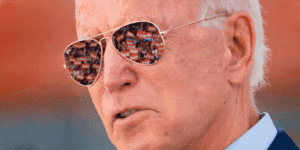
Tempered by those experiences, both presidents demonstrated deep empathy for the suffering of others, plus an unpretentious personal style.
One Washington intimate applauded the Virginian for his practice of strolling the streets of the capital. People, he wrote, “form their judgments of characters more from such slight occurrences, and perhaps they are right, as the heart is more immediately consulted” about simple habits, “and an error of judgment is more easily pardoned than one of the heart.” Biden’s aviator shades are goofy but genuine, as is his broad grin.
For all these parallels, though, the Biden presidency will turn on the question this essay began with: Can he reclaim the people’s confidence for the government? In his first inaugural address, Washington recognized that his duty was “the preservation of the sacred fire of liberty, and . . . the Republican model of Government.”
He did. Now it’s Biden’s turn.
The post Echoes of George Washington in Joe Biden? appeared first on David O. Stewart.
]]>The post Two Peas in a Pod: Trump and Andrew Johnson appeared first on David O. Stewart.
]]>With the announcement that he will not attend the inauguration of President Joseph Biden, outgoing President Donald Trump cemented the connection between himself and another one-term president who refused to attend the inauguration of his successor: Andrew Johnson.
For a century and a half, no president has cherished the goal of resembling Johnson, who succeeded the assassinated Abraham Lincoln after the Civil War. Johnson faced the first presidential impeachment after nearly four years of rubbing salt in the nation’s wounds from that bitter conflict.
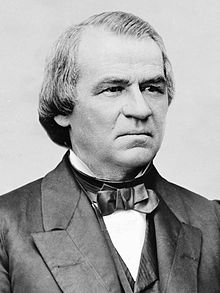
From early days in the Trump term, the parallels between the two men were striking: both exhibited choleric dispositions, an inability to admit error, and a need for enemies to smite. Johnson’s bodyguard described him as the best hater he ever knew, while a fellow Tennessean, President James K. Polk, called him “vindictive and perverse.” Johnson accused his adversaries of aiming to behead him.
Trump has gloried in his rage, denouncing enemies in tumultuous rallies that feature insults and incitements to violence. He decries not only those who oppose him but also his own secretaries of state and defense (Rex Tillerson and James Mattis), attorney general (Jeff Sessions), and national security adviser (John Bolton). In an echo of totalitarian dictators of the twentieth century, Trump excoriates the media as “the true enemy of the people.”
Both Johnson and Trump aligned themselves with White Supremacists.

In 2017, Trump defended as “very fine people” the rioters in Nazi regalia in Charlottesville, Virginia. In recent months, he has embraced the violent White Supremacist group The Proud Boys. During a presidential debate, he urged them to “stand by.”
In expressing his commitment to white supremacy, Johnson did not need code phrases or dog whistles. He dismissed Blacks as incapable of participating in government without “relaps[ing] into barbarism,” and warned Americans that the greatest danger the United States had ever faced was that people of color would win political power and “Africanize” whole regions.
Trump and Johnson, of course, have parallel impeachment histories. Each man was impeached by the House of Representatives for “high crimes and misdemeanors,” then tried and acquitted by the Senate.
The unprecedented second Trump impeachment last week has moved Trump ahead of Johnson in the history of ignominy, yet Johnson does not fall far behind. He, too, was the target of two impeachment proceedings.
In December 1867, the Judiciary Committee of the House of Representatives reported impeachment articles against Johnson for his failure to enforce the post-Civil War Reconstructions statutes, though those articles failed in a vote before the full House. Two months later, a second impeachment resolution against Johnson sailed through the House by a 3-1 margin.
That second resolution, like the most recent impeachment resolution against Trump, involved occupation of a critical federal building
The invasion of the U.S. Capitol by Trump-incited rioters is too recent in memory to require further discussion. Johnson’s impeachment trial focused on his attempt to remove his Secretary of War, Edwin Stanton, who barricaded himself for nearly three months in the War Department building. Stanton refused to leave the building or relinquish his job to Johnson’s initial replacement, General Lorenzo Thomas, who attended Cabinet meetings but had no access to the inner workings of the national military.
When it comes to speed of impeachment, the two men again are neck-and-neck, though Johnson noses ahead. The House in 1868 approved its impeachment resolution against Johnson three days after the president’s attempt to fire Stanton. The second effort to impeach Trump was concluded after a comparatively leisurely seven days following the attack on the Capitol.
The two presidents will share one other characteristic. For as long as the United States is remembered, they will occupy the bottom rankings of the nation’s chief executives. It is impossible to project which will sink lowest. Every contest, after all, must have a loser.
The post Two Peas in a Pod: Trump and Andrew Johnson appeared first on David O. Stewart.
]]>The post Madness at the U.S. Capitol appeared first on David O. Stewart.
]]>- What is your view of what happened at the Capitol yesterday? Was this an attempted coup d’etat, or peaceful demonstration gone wrong?
Neither. The attack on the Capitol was not a true coup d’etat, which ordinarily involves applying concentrated force and the determined pursuit of a goal. Rather, it was a poorly organized and ill-thought-out attempt to  strongarm Congress into refusing to accept the results of the election, an action that Congress has no constitutional power to take. Donald Trump is, in fact, a dangerous figure with delusions of becoming a totalitarian leader, but we should not overlook how inept he is at forming any plan of action and pursuing it. Sending to Congress a bunch of yahoos recruited on social media was not a serious attempt at a coup. Nor, however, was it a peaceful demonstration. The rioters were recruited with promises of violence and were stirred to rage by the president and Rudy Giuliani. We are simply fortunate that they were no more competent than Trump is. The failure of law enforcement to anticipate and control the rioters suggests a disturbing stupidity, rot and lack of will among congressional leaders.
2. Is this a turning point in our history or a sign of things to come with such a divided nation?
This question reminds me of a saying in economic theory that the stock market has predicted eleven out of the last four recessions.  Turning points seem to be thick on the ground as we live life, but in retrospect there are not so many. A turning point requires, at least, that President-Elect Biden win the support of more Americans than voted for him, that the media stop parroting Trump lies, and that our political leaders start treating each other with respect. Even after the violence at the Capitol, more than 100 Republican congressional representatives voted to “investigate” the integrity of the 2020 presidential election in several states, something they have no power to do. That is an appalling fact that suggests the attack on the Capitol was not a turning point for one-fourth of the members of the House of Representatives.
3. Who is to blame? Trump? The media?
Blaming Trump and the media is like blaming nature for a snowstorm. Trump will always be a lying blowhard and the media will forever chase after every shiny, insubstantial headline that may increase their clicks and viewers. Neither can change their natures. The true culprits are the intelligent leaders of the Republican Party who made a deal with the devil when they embraced Trump. They got their tax cuts, their right-wing judges, and the savaging of the planet through reduced regulations. The price they paid was normalizing a congenital, vicious liar and giving him immense power to inject toxic venom into our political culture. They have much to atone for.
4. How has this reflected on American democracy around the world?
We are revealed.
5. What are your thoughts on the lasting meaning of the Trump Presidency?
In the formulation by Abraham Lincoln, you can fool some of the people all of the time. Trump has done that with his “base,” feeding them a relentless diet of lies which they unthinkingly swallow. The unhappy wake-up call is that we are no better than any other nation on the planet. We are not exceptional. Our Constitution and our political culture can be reduced to rubble if we give power to the wrong people. James Madison wrote that the nation would not survive, whatever the strengths or defects of the Constitution, unless the people retained “virtue.” Still true.
The post Madness at the U.S. Capitol appeared first on David O. Stewart.
]]>The post It Matters How You Leave! appeared first on David O. Stewart.
]]>Thirteen years before, Washington had established his gift for relinquishing power. Then, he resigned as commander-in-chief of the Continental Army. Thunderstruck at the retirement of America’s principal leader, King George III observed that if the report was true (the monarch found it hard to believe), then Washington was the greatest man in the world.
Called back into public life as the first president of the United States, by 1796 Washington again ached to leave office. He had wanted to retire after his first presidential term, but an avalanche of entreaties from friends persuaded him that his duty to the infant republic required four more years of service. B
y 1796, however, Washington was adamant. He was going home when his term in office ended.
American politics had grown poisonous. A Philadelphia newspaper had called for Washington’s impeachment. A New York mob stoned former Treasury Secretary Alexander Hamilton when he defended a treaty with Britain. A political cartoon portrayed Washington mounting the steps to the guillotine for execution, an image that sent the president into a private rage.
Washington pleaded with the leader of the opposition, his former Secretary of State Thomas Jefferson, for restraint in political discourse. Jefferson deflected the overture. The political scene, he insisted, involved a choice between “honest men and rogues.” Jefferson was certain he knew which was which.
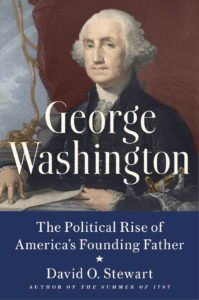
The president framed his concerns in an appeal to all Americans, one that still resonates. His Farewell Address observed that partisanship is inevitable in popular governments, but it can impose terrible costs.
As political rivalry grows bitter, he warned, it nurtures “a spirit of revenge,” which through history has bred “the most horrid enormities.” The greatest risk, Washington added, is that factional battles “gradually incline the minds of men to seek security and repose in the absolute power of an individual.”
Eventually, “the chief of some prevailing faction more able or more fortunate than his competitors turns this disposition to the purposes of his own elevation, on the ruins of public liberty.” In short, a cult of personality, and tyranny. Sound familiar?
Though Washington thought partisanship was unavoidable, he advised Americans to exercise “a uniform vigilance to prevent its bursting into flame.” To that end, they must divide power among branches of government, ensuring popular control and individual liberty. America’s courts and election officials have been playing that role in our current drama. The president also warned against those who fostered factionalism with lies about other Americans. His prescience is striking.
At the inaugural ceremony for his successor, John Adams, on March 4, 1797, Washington was joyful. His expression, according to Adams, was “as serene and unclouded as the day. . .. Methought I heard him think Ay! I am fairly out and you fairly in! see which of us will be happiest.” Adams assured his wife that weeping onlookers were not moved by their joy over his ascension to the presidency. The tears, he sighed, reflected “grief for the loss of their beloved.”
As Washington strode from the ceremony, spectators rushed after him for a last view. In the street, he waved his hat to cheering onlookers. The crowd, falling quiet, followed him to the president’s residence. Reaching the door, Washington turned to the now-silent crowd, his face grave, tears on his cheeks. Unable to speak, he gestured his thanks and farewell.
The contrast to our current situation is stark. Our departing incumbent does not exhort the nation to pull together. Rather, he feverishly fans the flames of partisanship while conducting a months-long campaign to destroy public confidence in our electoral system.
Imagine the inauguration spectacle that looms in a few short weeks. Should the departing president manage to control his fury sufficiently to attend, he will doubtless scowl through the ceremony, tapping out false and incendiary tweets before, during, and after.
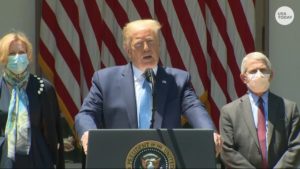
The inaugural crowd will not watch him depart in awestruck silence and gratitude, as Philadelphians viewed Washington in March 1797. More likely they will chant, with gusto, one of the outgoing president’s signature phrases: “Lock him up.”
Were he here to see it, President Washington might well weep.
(My study of Washington political genius, George Washington: The Political Rise of America’s Founding Father, which will be released on February 9, 2021.)
The post It Matters How You Leave! appeared first on David O. Stewart.
]]>The post The Virtual Author Talk: How to, and How Not To appeared first on David O. Stewart.
]]>
The Good Old Days
The basics are the same as for your Zoom meetings and virtual cocktail hours: (i) bust out a a decent item of clothing for your upper body (you can change out of it as soon as the talk is over); (ii) Place the camera a little above your face, shooting down, which is ALWAYS more flattering than a closeup of your double chins; (iii) light yourself, or do our really live in a cave?; (iv) reinforce your message with background props, including your own books, whiskey bottles, or whatever is important to your public and self images.
But, on to thoughts specially for the virtual book talk:
- A single talking head gets old/dull pretty quick. A Q&A format is livelier and easier to watch. When I’m in front of a live audience, I can gesture and point. Even walk around. The people in the audience can shift their gaze from me to the screen where I’m showing an image, and back. But the virtual environment doesn’t allow any range of activity for the single speaker and not so much the chance for shifting views (more on this below). Also, a conversation can be engaging to listen in on. Two voices! And overhearing others is sort of a guilty pleasure. Finally, the Q&A format allows for audience questions (submitted through the “chat” function), which helps engage the audience.
- I love using Powerpoint images in talks to live audiences, but I find them less helpful in the virtual space. Most images, because they’re static, become boring very quickly. In a live talk, folks usually look at the image on the screen, but their eyes quickly come back to me. I can see it. In the virtual space, viewers can get stuck with the image onscreen and this disembodied voice yammering away, maybe from planet Neptune. I am okay with showing a couple of images through a virtual talk so long as they are of particular importance, and so long as the view quickly returns to the speaker.
- The audience can be larger (infinite?) online. My church has found that at its online services are better attended than when they were in-person. But because people have less invested in attending the virtual event, not having had to travel or even get out of their sweatpants, they may bail out quickly if the event starts slow, or glitchily. Start strong. Don’t be dull.
- That lower-audience-investment factor also may contribute to the widely-reported phenomenon that book sales at virtual events are lower. You can do a buy-the-book button for Amazon, or for Bookshop.org,, or any other vendor, but you can’t make peoplespend. Some folks are experimenting with requiring a book purchase to attend the talk, or requiring an upfront payment. Not every author can impose those conditions. If you can, mazel tov!
- It’s important to have a “shakedown cruise” between the sponsor and the program participants before the event happens. Technical screw-ups are extremely annoying and may sink the whole effort.
- Preserve your book talks on YouTube, or on the host organization’s website, which gives them a longer life. I did one event that had nearly 200 viewers, which was great. After being posted online, the viewership rose to more than 300. It’s the ultimate convenience to watch whenever you like, in your underwear, from home.
Are virtual events sub-optimal? Oh, yeah. It’s one more piece of our workaround life. I miss the buzz of a live audience — my author talks are not usually confused with Game 7 of the World Series, but they’re still EVENTS. I miss the chance to gauge the response of the audience by their posture or laughter or (worst case) snoring. I miss the chance to chat with old and new friends afterward. But it’s what we’ve got.
So, what do you like, or not like, about the virtual events? How can we all get better at them?
The post The Virtual Author Talk: How to, and How Not To appeared first on David O. Stewart.
]]>The post What Happens When the President Gets Sick? appeared first on David O. Stewart.
]]>President Trump refuses to wear protective mask even when his aides wear them.
Under the Constitution’s Twenty-fifth Amendment, the president may certify in writing that he cannot perform his office, allowing the Vice President to assume his powers and duties as “Acting President” (not, it bears noting, as president). President George W. Bush did this twice before routine colonoscopies; each time, his certification expired after a couple of hours.
Without a presidential declaration, the president’s disability can be declared by the vice president and a majority of “the principal officers of the executive department” – an undefined term that likely means Cabinet officers. The vice president becomes Acting President unless the president responds in writing that he is able. If the vice president and a majority of top executive officers still deny the president’s ability to do his job, they must convince two-thirds of Congress that they are correct. Unless Congress agrees, the president resumes his powers.
This process aims to avoid drift and indecision during presidential incapacity, though a disagreement between the president and top advisers would create massive uncertainty. The question is not academic. Presidential incapacity has occurred several times, and foreseeably will again. In no instance has any stricken president taken steps to delegate his authority.
In the republic’s first eighteen months, President George Washington suffered from two grave illnesses that doctors expected to kill him. Through the critical phases of each, and through many weeks of recuperation thereafter, Washington took no step to cede any power to his vice president, John Adams.
Over the next sixty years, Presidents William Henry Harrison and Zachary Taylor contracted fatal illnesses in office. Since each expired in less than ten days, however, healthy successors took office before serious drift could set in. Other presidents who died soon after becoming disabled include three who were shot by assailants (Abraham Lincoln, William McKinley, and John F. Kennedy), and one who suffered a fatal heart attack (Warren Harding).
More problematic, though, were the three weeks in late 1863 when Lincoln staggered from apparent smallpox, or the ten weeks in 1881 when James Garfield slowly died from an assassin’s bullet. Following a 1955 heart attack, Dwight Eisenhower was largely incapacitated during six weeks in the hospital.
Woodrow Wilson provides the most striking example of lingering presidential disability (which I wrote about in my soon-to-be-reiussued novel, The Paris Deception). During the Paris Peace Conference after World War I, Wilson endured a bout of the Spanish flu, then suffered an apparent stroke. A few months after rallying from those afflictions, a massive stroke left Wilson bedridden for the last seventeen months of his presidency.
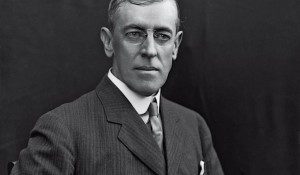
President Woodrow Wilson, the poster child for presidential incapacity in office.
During those long months, the weak and suffering Wilson clung tenaciously to his office, seeing almost no one. His vice president, Thomas Marshall, chaired Cabinet meetings and his staff submitted issues to Wilson’s sickroom for decision. Wilson returned most decisions through his wife, Edith, which has led some to proclaim her the nation’s first woman president.
Given the acceleration of political and economic events since 1790, prolonged presidential incapacity has become far more dangerous. Yet, with the exception of George W. Bush and his colonoscopies, no president has voluntarily relinquished the powers of the office that he labored so hard to acquire.
Indeed, the qualities that drive a person to seek high office will not always include a willingness to walk away from power. Certainly nothing in President Trump’s career suggests that he possesses that quality. A prolonged presidential illness today seems likely to include a high risk of government paralysis and uncertainty that would test the Twenty-Fifth Amendment, and the government, as never before.
The post What Happens When the President Gets Sick? appeared first on David O. Stewart.
]]>The post April 24, 8 p.m.: DC Virtual Noir at the Bar appeared first on David O. Stewart.
]]>
In many cities, like Washington, DC, “Noir at the Bar” has swiftly become an institution. The elements are predictable, atmospheric:
- Crime, mystery and thriller writers take over the back room of a bar, preferably a seedy one in an iffy neighborhood.
- Someone arranges for a scratchy sound system.
- Recognized and not-yet-recognized writers read short-ish passages of their stuff.
- You can buy their books by. Or not. No pressure.
They’re a hoot. For aging suburbanites like me, it’s a dip into the writing community. A chance to discover some writers I want to read, and a few I don’t.
But, in the time of coronavirus, Noir at the Bar is one more entry on the ever-lengthening list of verboten activities, right?
Not so fast. The irrepressible E.A. (“Ed”) Aymar has organized DC’s “Virtual Noir at the Bar.” The first one — on April 10 — was a hoot. There were headliners reading (led by DC’s own Condor man, James Grady). Ed introduced us to things that can be done while wearing a horse head. (You’ll have to read his book; this is a family website.) Sara Jones, a smooth jazz singer, provided bluesy breaks from the torrent of words. The tech didn’t break down. A couple of hundred people streamed in!
So it’s happening again this Friday, the 24th. I’ll be reading from The Lincoln Deception, my novel, though I’m not sure which part. If you want your crime fiction with a sci fi spin, Nik Korpon will be there. Gothic, spooky stuff — try Tara Laskowski. Detectives start your engine? Austin Camacho‘s too. And four more writers.
The event also aims to help DC’s indie bookstores in this strange time. For the first one, One More Page Books of Arlington sold books; this Friday, it’ll be Kramerbooks. So you can help out folks who deserve some help. Like, all of us.
It’ll happen live on Friday night, 8:00 p.m. sharp. Well, pretty sharp. Check it out. You’ll have fun. And, hey, what else do you have to do?
The post April 24, 8 p.m.: DC Virtual Noir at the Bar appeared first on David O. Stewart.
]]>