The post Saturday Academy Events – 2015 appeared first on Saturday Science Academy.
]]>Contact Nathanael Davis 360.420.1387 or ndavis@nwic.edu
January 24th – Astronomy & Physics
February 21st – Food Forest & Berry Demo
March 21st – Planting A Food Forest
April 25th – Horticulture & Ethnobotany
May 17th – Geology of the Pacific Northwest
The post Saturday Academy Events – 2015 appeared first on Saturday Science Academy.
]]>The post Spring Saturday Science Academy appeared first on Saturday Science Academy.
]]>Contact Nathanael Davis 360.420.1387 or ndavis@nwic.edu

The post Spring Saturday Science Academy appeared first on Saturday Science Academy.
]]>The post Physics & Rocket Science appeared first on Saturday Science Academy.
]]> 
Each student watched intently as Gary demonstrated the overall flight of an aircraft, modeling the action of the four forces acting on that aircraft to allow it to fly. The first was weight (gravity) which pulls the aircraft down back toward the earth which is counter acted by the force of lift. The third and fourth forces of thrust and drag examined the propellant that helped push the aircraft forward and the competing forces like wind that would divert the aircraft from its intended destination.


Using simple 2-liter bottles as the body of the rocket and political signs as the fins, participants created their own unique rocket design. Some student’s rockets were tall and thin and others were short and squat. When it came time to launch, despite the rain, students filled their rockets with water (propellant), strapped them to the PVC pipe launcher and with some added pressure, exploded their rocket to life. Each rocket had a flight path as unique as its design. Student approximated and recorded the height and distance each rocket flew. Some rockets went as high as 10 feet; others flew as high as 300+ feet into the air.


In the afternoon, students got dry and warm with a good lunch and settled in to watch video of the Spitzer Telescope Launch and the amazing pictures (like the Hubble Telescope) taken of the universe of stars, planets, nebula and moons. Additionally, the students watched another video of the final NASA Endeavour Space Shuttle mission and the work that astronauts were completing on the International Space Station before the end of the NASA astronaut program.


Finally, participants began building their final paper rocket project with the goal of mapping out the trajectory of the rocket toward a target at a distance of 50ft. Again, different designs (nose cone shape, number of fins, body length, etc) all contributed to unique launch outcomes. Some went into the ceiling rafters, others blew apart under the high pressure, and still others shot across the room, nearly striking the target by inches. The day ended with lots of keen excitement and desire to continue shooting off rockets.
The post Physics & Rocket Science appeared first on Saturday Science Academy.
]]>The post Water Chemistry & Stream Ecology appeared first on Saturday Science Academy.
]]> 

Along with adaptations to salinity, salmon species, Jeff explained, must also endure challenges to finding adequate food supply (macro-invertebrates) in changing habitats throughout the long salmon life cycle. Moving from freshwater stream to salty open ocean beaches, students began collecting more macro-invertebrate samples. They quickly found that macro-invertebrates along the beach was more scarce, however the diversity of alternate food sources were bountiful and higher in protein (muscle-building) content, such as small vertebrate fish and shrimp species.


Following the morning activities and a hearty lunch, students returned to the labs to examine their semi-permeable membranous eggs for changes in weight. Students quickly found that two of the eggs changed their weight dramatically (one heavier & one lighter) while the third remained generally the same. After learning about what osmosis is and how the process of fluids moving across solutions from lower to higher concentration, they came to understand how it was that one egg became larger and heavier and one became smaller and lighter. This same process of osmosis effects salmon as they move from low salt concentrations in fresh water streams to higher salt concentrations of the open ocean.


Students realized the important need for habitats of brackish water (part salty part fresh) in which salmon may life and adapt their body physiologically before entring the open ocean or returning to their natal streams. The day ended with new understanding and exhuberant smiles.

The post Water Chemistry & Stream Ecology appeared first on Saturday Science Academy.
]]>The post Salmon Education & Habitat Restoration appeared first on Saturday Science Academy.
]]> 
Activities for the day included meeting two partner youth programs (North Cascades Wild and Western Washington University College Students) to help with stream habitat restoration and salmon life-cycle/habitat education. Students were loaded up into vans to leave the Northwest Indian College campus for the work party site at the north end of Terrell Lake and the headwaters of Terrell Creek.


The facilitating partners from NSEA gathered all of the students together along the banks of Terrell Creek and initiated discussion among the students about healthy salmon habitat and the on-going county improvement efforts to restore Terrell Creek to salmon bearing conditions. The youth discovered that the stream had once been damned (now removed) to compound the existing lake. In order to restore the stream, the WCCD re-graveled & graded the stream bed with new cobble and added woody debris to help revitalize the physical parameters of the former creek. Today, students would be helping to replant the stream banks in order to provide stability to hold the soil on the banks, shade to cool the stream, and woody vegetation as food for macro-invertebrate organisms living in the stream.


After a brief introduction to the diversity of trees and shrubs to be planted and a demonstration of proper planting technique, students broke up into teams with adult leaders to begin work. In total, more than 2500 trees and shrubs lined both sides of the stream bank waiting to be planted. While students worked diligently to plant, educators from NSEA shared with groups about the complex life-cycle of local salmon and the need for projects like this one to restore disturbed creeks to salmon bearing condition.


Lunch was provided following the morning work and students joined in games for a period of reprieve. The afternoon continued with more tree and shrub planting, educational walks and a follow-up discussion when students arrived back on the Northwest Indian College Campus. Pacific Northwest salmon species are significant cultural, spiritual and subsistence organisms for Coast Salish peoples and today’s service-learning allowed these native youth to take full perspective of the science and traditional values of sustaining healthy environmental practices for the benefit of all creatures. The day’s activities were full and engaging and I am very excited to the students return for the next Saturday Science Academy.

The post Salmon Education & Habitat Restoration appeared first on Saturday Science Academy.
]]>The post Service-Learning at Horseshoe Bend Trail – Mt. Baker appeared first on Saturday Science Academy.
]]>

Once students were satisfied with their introduction to beautiful forested landscape, they were off to start their work to maintain and restore trail access of a local trail. Justin Paglia and his USFS trail crew initiated the students to the various tools and equipment used to clear brush and trim tree hedges from overgrowing the trail boundary. Each student was paired up with a staff member, practiced a few times with their tools, quickly donned their hard hats and gloves, and were off down the trail to do some hard work. The trail snaked its way along the edge of the Nooksack River, which provided beautiful scenery of wet, mossy river rock, bubbling currents of rushing water, and the music of morning birds on their way to feed their young.


After about a half mile of hiking, students divided up their tasks and went straight to work removing low vegetation climbing its way across the edges of the trail, to trimming low hanging branches that snag hikers as they pass, and to removing leaf and twig litter that had fallen in a recent storm. The students were eager to be busy working as the cool air from the river and the little sunshine that came through the over cast skies drew many to shiver and bundle up in their loose spring sweatshirts. The work seemed to finish up quickly along a quarter mile after three hours of labor and the students found themselves hungry. After hiking back down the trail, thanking our trail crew leaders and jumping in the van, the students were off again to the next stop at Douglas Fir Campground for lunch.


After lunch, students went for a short hike and lessons about local native plants and their uses by native peoples of the Pacific Northwest. The students enjoyed finding salmonberries, Oregon grape, bracken fern and so many others. Once the short lessons were over, the students played a few games of “Searching for Sasquatch.” Students hurried themselves around in search of Sasquatch and then quickly finding partners when a number is called out to start a different activity. Those students without a partner were then called out of the game and the game continued until only two students remained. After the games, students were engaged with instruction from Sean Martin of the Nooksack Salmon Enhancement Association. He brought students down to the river’s edge to examine small invertebrate insects caught in a net after kicking up rocks in the current. These insect form the foundation of the diet of local salmon and are vital to the success of the river ecosystem to allow runs of salmon to return each year. The day finished with discussions the salmon life cycle and a big wave goodbye to the park as we cranked up the heater for the long ride down the mountain back home. 

The post Service-Learning at Horseshoe Bend Trail – Mt. Baker appeared first on Saturday Science Academy.
]]>The post Live Rockets and Physics appeared first on Saturday Science Academy.
]]>
In the morning, the students partnered up with a fellow participant to examine the necessary components of a live rocket: fuselage, nose cone, fins & fuel cell. Each part was introduced, built and discussed in terms of shape and the influence of acting forces on each part such as drag, gravity and thrust. With new understanding of rocket development, each team worked together to construct a rocket that was viable for flight and recovery.


After building their rockets, teams examined the flight path of a standard rocket in phases from take-off to coast to apogee to parachute release to final decent and recovery. Each phase introduced its own challenges such as the take-off, where total thrust provided by the fuel cell must exceed the total pull of gravity on the body of the rocket, etc.


Finally, students raced off to a designated live-rocket launch site in the tidal flats of the Lummi reservation and in turn, each team launched off their rocket. Ray and his partner were successful in both launching a recovering their rocket which ascended approximately 250+ ft into the air. What a beautiful warm and educational day…I am looking forward to the next Saturday Science Academy! J
The post Live Rockets and Physics appeared first on Saturday Science Academy.
]]>The post Coast Salish Traditional Plant Harvest appeared first on Saturday Science Academy.
]]>

Students harvested along the Lummi Shore Rd and Kwina Rd. island right outside the main campus grounds and within a few minutes’ walk of the Cooperative Extension building. Students were taught by Vanessa Cooper who explained the significance of each plant as we harvested in groups of four. Several students would be cutting and several students held bags to hold the harvested goods. Students harvested the young early shoots of stinging nettle and learned about other plants such as skunk cabbage, salmon berry, and red elderberry.

Once students finished harvesting, they had the opportunity to cook the plants into a sausage and vegetable soup to be eaten during lunch. Students prepared each plant carefully, chopped up extra vegetables like onions, garlic, carrots and potatoes and followed a traditional recipe for cooking a stinging nettle soup.


In the late afternoon, students finished up the day by helping Vanessa and the Cooperative Extension Dept. plant the healing herb garden that was created to look like the traditional medicine wheel. This garden was prepared to help the community both harvest healthy food and learn about healthy food choices for a diet of better living.
The post Coast Salish Traditional Plant Harvest appeared first on Saturday Science Academy.
]]>The post Environmental Chemistry on the Rez! :) appeared first on Saturday Science Academy.
]]>The morning began with the usual games and welcoming of students and participating instructors. Students and faculty had to work together to untie themselves from a human knot using collaborative suggestions and laughter. After the games, Jeff Campbell introduced the students to the day’s topic and proceeded to display just how important understanding the chemistry of water could be.


Once students were familiar with the topic of water quality, they loaded up in vans to drive the first sampling site on the Nooksack River. Charlotte Clausing helped students understand the field equipment used to test each sample of water and how to calculate for each parameter of temperature, pH, dissolved oxygen, etc. The students enjoyed getting wet in order to get their samples and discovered the fun & easy process of using data loggers to gather measurements over a longer period of time.


After the morning of sample taking and a hearty lunch, students were taking to the NWIC chemistry lab to learn how to compare their results from the morning with those measured in the lab. Charlotte Clausing handed out white lab coats, taught students how to use lab equipment and students paired up to measure dissolved oxygen of their water sample. Once students were familiar with the lab format, students began their experiment and watched colored water samples turn back to clear with the addition of reagents during the titration of their sample. Jeff Campbell explained the chemistry that was occurring and helped students manage the calculations of dissolved oxygen. The day was exciting and I am curious to see the fun that will come from our next event on May 19th.

The post Environmental Chemistry on the Rez! :) appeared first on Saturday Science Academy.
]]>The post A Chilly Winter Night Sky (The Science of Astronomy) appeared first on Saturday Science Academy.
]]> 

Very quickly, the conversation was turned to the topic at hand. December 10th, 2011 was a curious and unique day in astrological history. That morning, between 3:30-6:30am, the moon was eclipsed by the Earth’s shadow in a brilliant display of shimmering colors of orange and red. The Pacific Northwest had a particularly nice view of the moon that morning and NASA just happened to have a great video which described exactly just what happened and how an eclipse works (As a side note, another solar eclipse won’t occur until April 2014). After the brief video, the students were then engaged in a virtual tour of our solar system via a “free flyer” computer program developed by NASA. This hands-on and interactive tour of the solar system not only allowed students to soar from planet to planet, but also inform students with astonishing and intriguing facts about the many celestial bodies represented in our galaxy. The interactive tour of the galaxy lasted for about 30 minutes and led into a lecture on human space travel and rocketry. Fascinated by the extraordinary efforts and resources it takes to get a man to space, participants dived right into a two-person group project to create their own paper rockets. The lecture explored unmanned spacecrafts, manned missions to the moon and the phases of a rocket’s flight while gaining an understanding of the many forces acting on that rocket.


After the rocket project was complete, students stopped for a break of lunch and then returned to complete their paper rocket projects by launching them off outside. Using a simple tire pump, PVC canister and valve release, students watched their rockets burst into the air and fall back to the earth. Some students, whose tail fins were large or rocket bodies light, found their rocket flights to be lower to the ground and a more gentle descent. Conversely, students, whose tail fins were smaller and rocket bodies heavier, found that their flight was fast and high and with just as fast and hard return to the ground.


Once, students completed their rocket launches, they were loaded up into vehicles for a trip over to the Western Washington University (WWU) Planetarium to see a constellation and planetary show. After a 15 min walk across the WWU campus, students arrived and marveled at the planetarium dome and theatre seating. However, the true awe and wonder was yet still to come. Mr. Brad Snowder, the planetarium manager and astronomy lecturer at WWU introduced the students to the many constellations of the winter night sky projected above on the dome on the dome. He also gave the students a flight-like tour of the massive Milky Way Galaxy and tour of beautiful nebulae of new stars forming millions of miles away.


After the planetarium show, the students hiked back across the WWU campus talking lively of the many grand adventures and discoveries that await mankind as we continue to explore the possibilities of the great unknown of “outer space.”

The post A Chilly Winter Night Sky (The Science of Astronomy) appeared first on Saturday Science Academy.
]]>The post Encountering Horticulture: Yesterday and Today appeared first on Saturday Science Academy.
]]>

Once I had finished with the sequence of plant slides, the students were split up into teams of 3-4 and given excerpts from the book: Wild Rose and Western Redcedar: the gifts of the Northwest plants. Using these excerpts about individual plants, each team would read together the literature and become “experts” on that plant. They would take a picture of the plant and a marker and develop a poster board presentation of what they discovered. After a half hour of reading, discussing and writing, each team took a turn to present their plant and the unique value it had with native peoples. Individuals would describe where the plant could be found, which parts of the plant were used, how the parts were used, and finally, share any further information they thought was interesting about the plant. In this way, each individual, team and the group as a whole would become quite knowledgeable about these wonderful plants and they usefulness they had for the native peoples of the Pacific Northwest.


Following the final presentation, students loaded up into a van for a hike through the nearby Smuggler’s Slough. Along the hike, students were able to tangible see, touch and feel the plants they had learned about on paper now in the wild. The hike also included instruction on habitat ecology and the value of these plants to wildlife such as birds, salmon and forage mammals. After the hike the students bustled back indoors for a warm lunch and catch their breath before the afternoon outing.


In the afternoon students were back in the vans and off to the BelleWood Acres Apple Orchard to tour a farm where modern practices in horticulture were present and productive. Once at the farm, the students were given blankets and ushered 4 to a golf cart for a tour of the rows of apple trees and the large farmstead barns. Dori, wife and co-owner of the farm quickly introduced the students to the many different varieties of apples, the process for raising them and the unique methods for keeping them warm during the frost autumn and late winter. The students quickly moved through the farm with raised hands and questions and eventually a stop by the Ten Mile Creek which bordered the farm. Here they learned of the importance of maintaining a good agricultural relationship with the stream habitat so that both the wildlife using the stream and the apple trees using the water are productive. Finally, students raced ahead to the apple cider pressing room and the taste-testing site to try some of the rich and sweet treats produced on the farm. The day ended with smiles on a short ride home and an excited fervor for everything apple- like apple pie. Yum!


The post Encountering Horticulture: Yesterday and Today appeared first on Saturday Science Academy.
]]>The post Wonders at Whatcom Creek appeared first on Saturday Science Academy.
]]>This was the fourth of six Saturday Science Academy (SSA) events to be hosted by the Science Program of Northwest Indian College (NWIC) for the Fall Quarter 2011. The day began with students engaging in a round-robin game of writing and guessing. Students were given a sheet of paper to write down their thoughts about what they are thankful for on one side and an animal that they thought best described them on the other side. The papers were collected, scrambled and then re-distributed. Each student read aloud what there person was thankful for and then as a group tried to figure out who described themselves as what animal. Great fun! Afterward the students loaded up in vans for a 15 min drive downtown to the Maritime Heritage Park.


Once at the park, students were gathered up and welcomed by Maggie Long of NSEA to talk about the community work already in progress to clean up the park. The students grabbed gloves and boots and formed two teams that would join other students from Western Washington University, Bellingham Technical College, Whatcom Community College and individual adult community members. The SSA students used tools such as rakes, loppers, and buckets to remove invasive ivy and blackberry bramble from the park landscape and then spread mulch as a natural weed suppressor on to the ground they just cleared.
Despite the cold temperature (38°F), the students worked very diligently and warmed up along with the sun that morning. After a long 1 ½ hr work party, the students set up for lunch on the picnic tables along the creek for a well deserved break.
After lunch, the students walked the creek shoreline watching the large returning salmon and the fishermen trying to catch them. Their walk eventually led them a short way to the Whatcom Creek Fish Hatchery where they greeted students of the BTC Fisheries Technology program. These students were putting on wet-suits for the cold, wet work of counting salmon caught in the large hatchery trough to be used for rearing a new generation of salmon.


The SSA students were able to watch the Fisheries Specialists round up the salmon in a lead-line and buoy fish net, pick them up, measure, count and determine sex of each fish and even touch the large live salmon. This experience was phenomenal and the SSA students learned a great deal about what it takes to work in a fish hatchery and why the work is important. Following this grand experience, the students were taken on a tour of the Whatcom Creek Hatchery facilities to see how eggs are collected, fertilized, incubated and raised until ready for release.


After the tour, the students headed indoors for instruction by Maggie Long regarding the salmon lifecycle, identification of 5 indigenous, Pacific salmon and a healthy salmon habitat. Students were asked questions of deduction regarding healthy streams and pollution and other topics related to salmon identification. Once the students became familiar with the basic needs of a healthy salmon habitat (water is cool, clean, clear and consistent, plenty of oxygen in the water, neutral water pH, low turbidity, and plenty of clean gravel and stream pools and shrubby debris for protection) it was time to test the water quality of Whatcom Creek.


Finally, the day completed with student’s asking more questions than time allowed and a lively ride back to campus to finish out the day. The success of this day came from the hands-on inquisitive nature of every young individual who discovers that there is more to know than they ever thought possible.
What a great day!
The post Wonders at Whatcom Creek appeared first on Saturday Science Academy.
]]>The post Safe & Sound: A Study of the Salish Sea appeared first on Saturday Science Academy.
]]> 
After games, students put on boots and were shuttled into vans to meet with Jeff Campbell down at the Portage Spit Beach Access. Once at the beach, we were fortunate to have the rain stop and the clouds break with sunshine. Jeff quickly engaged students in a discussion about local water ways including streams, rivers and the bay. While students worked hard to answer questions about sources of potential pollution and benefits of healthy water, Jeff engaged students with pictures and stories regarding the Salish Sea and the importance of a clean intertidal zone for wildlife remain healthy. Students were also encouraged to close their eyes and to take time to smell the air and listen to the sounds around the bay to help engage their senses to the tangible and beautiful environment of the ocean around them.


After awhile, students were gathered up into pairs to put on gloves and take trash bags out for gathering up debris on the beach. Teams of students were then encouraged to spread out and find old, loose trash to remove from the beach in order to affect a less polluted intertidal habitat. Students quickly scoured the beach and quickly found trash both on the beach and in the intertidal marsh grasses and the streets just above the beach. Students gathered trash for 1 ½ hrs.

Students loaded back in to the vans for lunch at the Log Building and a video about “Shallow Seas” around the world from the BBC-Discovery Planet Earth Series. Students were mesmerized by the beautiful images of coral and colorful wildlife and the ferocity of waves and sharks chasing seals. After the video and lunch, students loaded up in the vans once again to head down to the Marine Life Center to see and touch some of the local wildlife they had heard about that morning with Jeff.
The youth were quickly immersed in the fascinating and beautiful creatures of the Marine Center’s aquariums. The students were placed into teams of 4 and given a worksheet of factoid-like questions for the students to answer by reading poster of information beside each aquarium. The team that answered completed the worksheet first won candy from the Marine Center staff. Additionally, students were able to hold a crab and sea cumber, feed a native octopus and feel the spines of a purple sea urchin. After 1 hr at the center, students finished up their time listening to a traditional Native story about Raven and Octopus and the gathering of food at low tide. Reluctantly, students were gathered back up to head home and just before the last of the student hopped into the van, the rain began to fall to the ground once again.


What a great day!
The post Safe & Sound: A Study of the Salish Sea appeared first on Saturday Science Academy.
]]>The post A Day at the Dairy – Electrifying!!! appeared first on Saturday Science Academy.
]]>

Participants were also engaged in hands-on electricity labs by exploring and building their own Simple Electric Motor. Each student examined the forces of magnetism on an electric current running through a series of loops in a copper wire. Check out it for yourself !

Video – Simple Electric Motor in Action

The post A Day at the Dairy – Electrifying!!! appeared first on Saturday Science Academy.
]]>The post Saturday Science Academy – Fall 2011 appeared first on Saturday Science Academy.
]]>Nathanael Davis, Science Outreach Coordinator
Northwest Indian College – Check us out on our Facebook Page and become a fan!
ndavis@nwic.edu, Office: 360.392.4271 or Cell: 360.420.1387
The post Saturday Science Academy – Fall 2011 appeared first on Saturday Science Academy.
]]>The post North Cascades National Park – National Public Lands Day appeared first on Saturday Science Academy.
]]>After long summer reprive— the Saturday Science Academy is back in full swing. This was the first of seven Saturday Science Academy (SSA) events to be hosted by the Science Program of Northwest Indian College (NWIC) for the Fall Quarter 2011. The day began early, but promised warm fair weather and the beautiful escape to an autumn-colored landscape. Students arrived and checked early around 8am and then gathered to travel 1 ½ hrs to the North Cascades Institute (NCI). Because of travel restrictions we forfeited starting games before leaving on our journey. Along the way, we met up with youth from the Sauk-Suiattle Tribe at Rockport, WA who would be joining the other youth in the day’s activities. Eventually, we arrived at our first destination at the Newhalem North Cascades National Park Visitor’s Center. There students met Mike Brondi and his assistant named Echo, as well as guest interns from the Student Conservation Association (SCA) who welcomed and introduced the youth to the National Park. Students gravitated to the mountainscape model of the park where buttons and lights named each major peak, valley and river system. Mike and his crew also led students through the hands-on learning center for a quick park video and brief introduction to the biological diversity of the North Cascade Mts.
We left from the visitor’s center around 11am to travel east to Diablo Lake. As we arrived at Diablo Lake we followed a road path across the great expanse of the Diablo Lake Dam nearly 400 ft above the valley floor. At the end of the path we arrived at the North Cascades Institute to join the National Public Lands Day Celebration. Students began with a short hike into the woods to examine a recent rock and debris flow that changed the growing forest dynamics around the trail. Students learned how to tell the age of a young evergreen tree by its annual whorl of branches as well as how to identify various native trees, shrubs and herbs of the forest ecosystem. After the hike students gathered at the lake for a BBQ lunch and rest from the morning hike and discussions.
After lunch students gathered around the lake beach for discussions with Mike Brondi and the SCA interns about public lands: who the land belongs to, how it is managed and what they can do as teens to help care/ encourage Park health and sustainability. These discussions were followed by introductions to high school students engaged in the NC Wild program led by NCI during the summer. The NC Wild program encourages outdoor environmental learning and recreation as well as public lands service and youth leadership. Eight students from high schools in Skagit, Whatcom, Snohomish and King Counties shared their personal stories of two weeks working, learning and relationship building in the wilderness. Each shared how the program changed their outlook on the need for and care of public lands. Afterward, the SSA students learned about the work NC Wild and National Park Staff completed in re-building degraded trail and removing invasive plant species. The day ended with students walking across the dam and looking in awe out over the sunny valley before heading out on the long journey home.
The post North Cascades National Park – National Public Lands Day appeared first on Saturday Science Academy.
]]>The post REZRiders Are At It Again! appeared first on Saturday Science Academy.
]]>The post REZRiders Are At It Again! appeared first on Saturday Science Academy.
]]>The post Mt. Baker Snoqualmie National Forest (Service-Learning) appeared first on Saturday Science Academy.
]]>
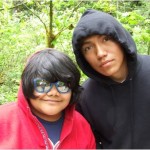
This was the seventh of seven events with 12 youth attending from diverse tribal backgrounds (Swinomish, Lummi, Nooksack, etc) along with several NWIC student volunteers to help lead and guide youth. The day began with the arrival of a busload of students from Swinomish followed quickly by morning games. The game this week was called “Shark Out of Water”, a variation of a popular swimming pool game known as “Sharks and Minnows.” One student would be the shark and all other students would be trying to avoid being eaten (tagged) by running back and forth between safety zones away from the shark. The shark would yell “Go” and players would run from one safety zone to the next and as they were tagged they would have to sit down right where they were tagged and would subsequently become baby sharks. These baby sharks could also tag players, but could not run like the larger shark. Players would continue to run between the zones avoiding the sharks or being tagged until finally there was one player left. This player is the winner and also becomes the next shark for the following new game.
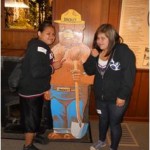
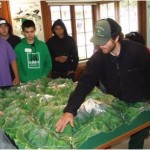
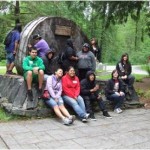
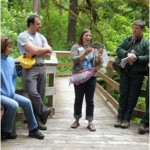
After the games, students loaded up into the van and headed off to Glacier WA and the Mt. Baker-Snoqualmie National Forest. We made a quick stop at the Nooksack River Casino parking lot to pick up two students from Mt. Baker HS who were to join us during the service learning event. Within an hour students were piling out of the van as we arrived at the Forest Service Public Service Station and Educational Center. Students were immediately drawn to the large Douglas Fir tree cut that standing upright to demonstrate both the large size and age of the tree. Students gathered by the tree cut and listened to two seasoned USFS staff and Stella Torres, and AmeriCorps intern welcome them to the forest and the grandeur of Mt. Baker. Next, students were ushered inside to the public service station where they were greeted by figures like Smokey the Bear, small stuffed wildlife, and the fresh wood and earth smells of a log cabin. Forest Staff guided students to a large table-sized model of the mountains and surrounding landscape to help identify where the students were currently located, some of the major landmarks like rivers and lakes, and to showcase the snow-capped Mt. Baker and Mt. Shuksan.
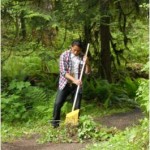
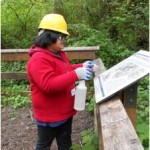
After a brief discussion and short questions, students piled back into the vans and headed off to Boyd Creek Interpretive Trail. Once there, students hiked the trail and watched in awe the bubbling creek and cascading falls from the mountain valley trickle beside the trail they walked. Once back at the trailhead students were instructed on the value of service-learning and volunteerism, the importance of trail maintenance, and proper tool safety. Students were divided up into teams of three and given a task (washing interpretive signs, brushing debris off the boardwalk, trimming limbs encroaching on the trail, or cutting back weeds alongside the trail). The students quickly set themselves to work and diligently worked to restore the overgrown and weathered trail. By the time lunch came along, the students had nearly finished the boardwalk and several piles of debris were stacked.
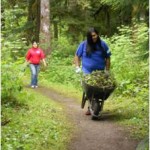
Throughout the day’s activities in the National Forest, a staff member of the Forest Service’s public relations department (Kelly Sprute) interviewed and photographed students as they worked and rested. Students enjoyed the conversations and welcomed his questions which would be published in the monthly Forest Service magazine and local newspapers. After lunch students used teamwork, a wheelbarrow, and several rakes to remove the debris piles and clean up the trail with final touches. The youth were worn out, but satisfied with the changes and better look of the beautiful trail.
Finally, students were treated to a break and reflection lesson with Lindsay Taylor of NSEA, who helped students envision the journey adult salmon make as they venture back to their homes in the National Forest and eventually spawn the next generation of young fish to migrate back again to the ocean. Boyd Creek was one such stream in the National Forest that salmon migrated to for spawning and by caring for this trail and the surrounding habitat, these students were caring for the health of the stream which supported the life of young salmon. At last, the day finished with goodbyes and a long journey back home to the bay. Students left for home recognizing their ability to support their community while also caring for the wildlife and environment they cherished.
The post Mt. Baker Snoqualmie National Forest (Service-Learning) appeared first on Saturday Science Academy.
]]>The post Marine Science Day appeared first on Saturday Science Academy.
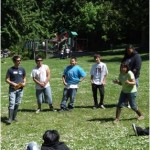
]]>Once the vans arrived at the state park, students assembled at the park green to listen to the Rachel and Ryan teach. Before students were introduced basic principles of understanding of the intertidal zone, they participated in an interactive Tilingit traditional story of how tides came to be. Several students took up character roles and became the voices of creatures such as Raven, Great Mother and Everyman.
After the interactive play, students were introduced to the working forces of gravity that drive the movement of tides: primarily the sun, the moon, and earth’s own gravity. Each of these sources of gravitational pull work together to influence when and how strong tidal action is within a given area. As these forces oppose each other tides are weak and generally shallow to neutral in change, but when these forces are aligned, tides can be extremely low or high. On this day, forces were aligned and were expressed in a very low tide that would expose tide pools and hidden intertidal habitat. Students were also introduced to the various sub-intertidal zones in which different marine species live like the spray zone, the high tide zone, and the low tide zone. Several students volunteered to be representative models of each sub-zone in order to help other students understand the differences and challenges marine life face in each sub-zone.
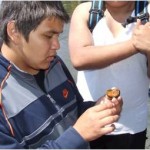
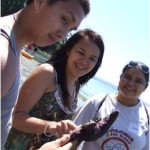
Following the engaging instruction of intertidal marine life, students eagerly devoured lunch under a hot mid-day sun. And once sunscreen was applied, students raced down to the beach at Wildcat Cove. Students were given three sheets of information: 1) a factsheet about various marine life, 2) a laminated picture ID of various marine creatures and 3) a BINGO game style worksheet for students to draw and identify the plants and animals they found. Students worked together in teams of 4 & 5 to fill out their BINGO worksheets and once completed, earned a reward (a small candy bar) for their hard work in discovery and curiosity. Ryan and Rachel worked throughout the afternoon to help students identify and locate hard to find marine life under small cobble and between rock crevices.
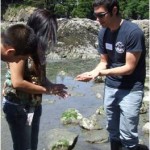
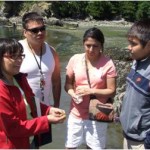
Students laughed and “ahhed” at the astounding sizes, shapes, colors and forms of each creature living among the rocks, pools and algal grasses. As the afternoon quickly moved on, so also rose the ocean tide once more and students were gathered again for a final reflection and sharing time of all that they had discovered. The day ended with lively discussions on the van ride home and a circle of student celebration in the log building where the day began.
The post Marine Science Day appeared first on Saturday Science Academy.
]]>The post Geology of the Chuckanut Mts. appeared first on Saturday Science Academy.
]]>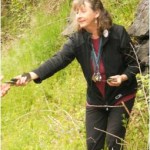

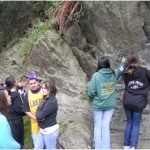
The first stop of the day was outside of Chuckanut Manor to examine the bedrock foundation of the Chuckanut Mts. This bedrock, called Phyllite, was formed before and supports the most exposed upper rock layer of Chuckanut Sandstone that is most prevalent along the scenic drive. The students looked at the shimmery layered flakes of mica and minerals that composed the Phyllite. The next stop was at a car turnout where Terri talked about the historical glaciations which carved out the basin and hills that are the Puget Sound. Today this turnout provides a beautiful view of ocean filled troughs and verdant hills of vegetation. Along with great views of the Puget Sound, across the street from the turnout was an exposed outcrop of fossil laden shale. Terri had the students identify the types of fossils. They quickly recognized the fossils as leaves and twigs and palm branches. Each student quickly snapped pictures with cell phone cameras and oohed and awed over the amazing shapes and patterns and sizes of the fossils.

After the second stop was lunch at the Larrabee State Park under a designated pavilion. At lunch time, I introduced students the outdoor ethics of “leave-no-trace” practices. These ethics speak to caring for the environment by observing practices such as planning ahead, disposing of waste properly, leaving natural objects as you find them, minimizing campfire impacts, respecting wildlife and being considerate to other hikers and visitors. These principles are adhered to and promoted by the National Park and National Forest Service and a more complete list of practices can be found at the Center for Outdoor Ethic’s educational outreach website: (http://www.lnt.org/programs/principles.php).
In addition to “leave-no-trace” practices, I introduced the idea of civic responsibility to environmental stewardship. Larrabee State Park was having their annual volunteer park cleanup day at the same time of our visit. This volunteer work was hosted by the WA State Park Service and the North Sound Conservancy (NSC), a non-profit organization seeking to help care for and manage public lands in Whatcom and Skagit Counties. A representative of NSC visited with our youth, explained the work being done in the park and the value such volunteer work has for the community which enjoys the park. Park staffs are limited in their personnel and have a large piece of land to manage. Thus, it is a welcomed event where many volunteers and extra hands tackle a long list of cleanup and management jobs. NSC brings the volunteers, hard work is done, projects are completed, and the greater community enjoys the recreational facilities and trails of the park. This is a collaborative partnership and effective effort which benefits everyone involved.
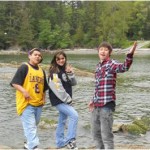
We arrived at the third stop of the day, after a short hike from the pavilion to Wildcat Cove. Students were quickly drawn into the beautiful ocean beach and large boulders for climbing. It was a perfect natural setting for learning that offered first-hand examples of beach erosion by wind, rain and tidal action. Students examined honeycomb weathering in the sandstone and the small pebbles and sediment which made up the beach. The students recognized the differences in the composition of the beach pebbles and that of the common sandstone cliffs that surrounded the cove. Terri helped students connect glacial activity to the introduction of granitic rocks…how glaciers plowed and hauled harder granite rocks down through the Puget Sound and left them behind when the glaciers melted. During this stop at the beach students were paired up and asked to take time to reflect and answer questions about the future of the beach and the many uses humans have for rocks and minerals.

Finally the last stop of the day concluded with a thorough examination of a topographic map of Larrabee State Park. Students were introduced to the various features of a map such as the compass rose, contour intervals, magnetic declination, township-range grid system, etc. Each feature gave insight on how better to understand human influences on geography, location and placement, and elevation. After learning map features, students were introduced compasses, how they are used and their practical use for hikers and geologist. By the time teaching lessons were finished and students had arrived back at NWIC, there was only time enough for a closing ceremony circle to congratulate students on their success as learners of geology. Though it was a busy day, students enjoyed the scenery free of rain and were intimately familiar with how the Puget sound was formed and earth processes that shape the landscape where they live.
The post Geology of the Chuckanut Mts. appeared first on Saturday Science Academy.
]]>The post May 14 – Larrabee State Park appeared first on Saturday Science Academy.
]]>Reminder for everyone….
Saturday, May 14th is the next Saturday Science Academy and activities run from 10am -3:30pm. We will meet at the NWIC Log Building where we will be leaving on an all-day field trip to Larrabee State Park.


In the morning, we will be examining the bedrock geology of the Chuckanut Mts., shale fossil beds, and the glacial history of the Puget Sound. In the afternoon, students will hike and explore Wildcat Cove to examine tidal erosion and weathering, glacial scarring, and finally practice map and compass skills. Saturday will be a full day and will be about 1 hour longer than usual due to driving time getting to and from Larrabee State Park.
It is not too late to sign up! Just shoot me an email or give me a call. I’m hoping for sunshine!!
___________________________________________________________
Nathanael P. Davis │ Science Outreach Coordinator │Northwest Indian College
360.392.4271 │ ndavis@nwic.edu │ Saturday Science Academy
The post May 14 – Larrabee State Park appeared first on Saturday Science Academy.
]]>The post First Nations Launch Competition appeared first on Saturday Science Academy.
]]>NWIC Space Center News 5/9/11 – Narrated by NWIC Instructor, Gary Brandt
We came, we saw, we had lots of fun and we came home with a First Place in the Altitude Prediction portion of the First Nations Launch Competition and Mariya earned her National Association of Rocketry Level 2 certification, a feat not accomplished by many.
Getting up and organized for the 5:00 am flight on Thursday was an exciting event in itself. We stopped at Seatac, Chicago, and finally arrived in Milwaukee at 6:30 Central time. The team did a quick run through of their presentation that was to take place on Friday about 1:30.
Friday saw some opening introductions and the presentations by the eight teams. We were second to present. Needless to say, the team did an outstanding job. They knew the topic, they presented the information in a relaxed, yet professional manner, and they covered all of the items that the reviewers and judges wanted covered. I am certain that we were the best of the bunch.

Our rocket, Sad Tibbers, was examined for the required safety inspection and passed with flying colors. Several teams were still completing their rockets. A pizza dinner was followed by the team heading off to do various activities, swimming, hanging out, or whatever. Several helped the other teams get their rockets ready.
Saturday was cold, a bit breezy, and mostly overcast. We had volunteered to launch first as part of our game plan to set the bar high for the rest of the participants. We were quite confident of our rocket and its abilities. The rocket was assembled, the science experiments setup and turned on, the parachutes packed, the altimeters set, the explosive charges built and installed, and the motor installed.
Then the looooong walk out to the launch pad. Sad Tibbers was placed on the launch pad, Kyle removed the altimeter safety interlocks and armed the altimeters, and Mariya installed the igniter.

We then took the walk back to the safe area and watched as the Launch Control Officer announced our flight and did the countdown. Sad Tibbers rose into the sky on a tail of red flame and flew to an altitude of 3024 feet.
We predicted 3330 feet and were within 91% of our estimate. That was good enough for us to place first in the altitude prediction portion of the competition. Our rocket performed flawlessly; its drogue parachute ejected at apogee and the main parachute ejected 700 feet above ground to bring it safely and slowly to ground.
We have a GPS tracker in the rocket which helps us locate it when it’s on the ground and out of sight. Sad Tibbers landed about 650 yards from the launch area and as we were where walking to it, the GPS unit showed it moving!?! When we reached it, there were several hunters who had picked it up and moved it to the road so that we could find it easier. Thanks to them.
A great adventure! A great opportunity to meet other Tribal College Students and seven other teams from Navajo Technical College (2 teams), Haskel Indians Nation University, Fon Du Lac Technical Community College, and three AISES teams, University of Minnesota, Azusa Pacific University, and a second Haskel AISES team, eight teams in all.
We all feel that we should place quite highly in this event. We won’t know until early June because we have one more report to write and turn in and get evaluated.
The post First Nations Launch Competition appeared first on Saturday Science Academy.
]]>The post Rocket Launch Day: NASA (Huntsville, AL) appeared first on Saturday Science Academy.
]]>Whew! We’re back after an exciting adventure. First off, I could not be prouder of these folks! They were second to none. Oh, sure, there were those that knew more, but it was because they had the facilities such as wind tunnels, engineering departments, materials design labs, etc. not because they were any smarter. We looked very good in every category ranging from politeness, to timeliness, (“Of course NWIC is always first on the bus with everyone present”, Julie Clift, director) to knowledge of our rocket’s physics, to our science experiments, and to everything else. We did very well!
Our airplane left at 5:00am which meant very early wake up times. All made it in a timely fashion with varying degrees of enthusiasm. Only issue was that Kiya and Kiyen had their names submitted by Bellingham Travel somewhat incorrectly and that took some time to get straightened out. Hours of travel with stops in Seattle and Dallas got us to Huntsville, AL at 4:30 Central Standard Time. Our fifteen fit in nicely with the remaining 400 plus students from 25 different states. Our plane left at 5:00 on Sunday, the 17th.

Thursday saw introductions and tours. We did very very well. Our understanding is that we were the only team that had absolutely nothing to fix or modify after the very extensive safety inspection on Thursday evening. The external reviewers that interviewed Mariya, Thomas, and Gordon all commented on the high quality of their interviews. They were confident, knowledgeable and articulate.


On Friday, under a tornado watch, we presented our rocket at the rocket fair. Each team had a table/booth to display the rocket as well as any supportive posters, items, etc. We, of course, didn’t bring anything; however, several of the folks headed by Krissy and Nick, obtained a nice table cloth, a big bowl of candy and a, go figure, a bubble machine! Our booth attracted many, it looked good, and the students really not only knew what they were talking about, but presented it in a very informative and relaxed manner. Much pizza was consumed during that time.

The organizers postponed Saturday’s launch because of the weather. That evening we had a talking circle and worked on prepping rocket for Sunday’s launch.
Saturday was basically a free day until the banquet that evening. The banquet was held in the US Space & Rocket Center, beneath 300 foot long Saturn V rocket that was suspended over our heads. This is the rocket that took the Apollo astronauts to the moon. The food was excellent and plentiful. Several awards were given out, best web site, most innovative technology experiment (MIT), most outreach, and prettiest rocket.

Sunday we were on the first bus to leave at 5:30 am to go to the launch site, third to get our rocket prepared and inspected and fourth to get it launched. Mariya and Gordon were interviewed live over the Internet and the launches were also broadcast live. There was quite a long delay from setting the rocket on the pad until the actual launch time, in fact, over an hour, because of the usual “thank yous”, speeches by politicians and words by other dignitaries. This delay played a key role in some of our data collection.
Gordon and Mariya were interviewed prior to the launch. Here is the url and approximate start time on the video time line: http://www.ustream.tv/recorded/14092424 about 40:00. We finally got going and started the countdown for our rocket, Frankenstein II. The motor lit and off it shot. Unfortunately, the supplied launch pad collapsed and threw our rocket into an unstable trajectory that resulted in the rocket breaking in two. A collective “Ohhhhhh nooooo” came from the crowd of onlookers. Needless to say, we didn’t reach the target altitude of 5,280 feet, but more like 2,352 feet. Our rocket and team was totally exonerated from any fault as examination of the launch pad found two of the three cross braces had broken.
Here is the launch: http://www.ustream.tv/recorded/14093612 about 40 minutes on the time line. After the remaining fifteen launches our recovery team retrieved the rocket and we took it to the inspection folks and Frankenstein was examined. Again the conclusion was that it was the result of a faulty launch pad and the rocket broke in two because of the extraordinary stress placed longitudinally whereas rockets main strength is along the vertical axis. We were reassured that the launch itself was relatively minor, point wise. I asked if we could get extra points for style and entertainment. Krissy and Justin were interviewed about the flight. The URL and approximate start time on the video time line: http://www.ustream.tv/recorded/14097263 about 41:25.
We went back to the motel prior to all of the rockets launching because check out time was 1:00 and our flight left at 5:00. A bunch of tired folks arrived at Bellingham International at 11:40 pm. Whew!
– Gary Brandt, Instructor of Computer Technology
The post Rocket Launch Day: NASA (Huntsville, AL) appeared first on Saturday Science Academy.
]]>The post Ethnobotany Camp; Earth Day Excitment appeared first on Saturday Science Academy.
]]>


Students participated in a game called “Tribal Gathering,” where skills such attentive listening and team collaboration were key to successfully winning the game. The teens were asked to spread out among a preset grassy area, where they would stay until given a specific command. One leader would yell out commands, or numbers, which corresponded with a specific action. For instance, if the number 1 was called, students would stand still with hands to the sky like a totem pole. If the number 2 was called, students would have to find a partner and ling hands over their heads to form a teepee. If the number 3 was called, students would form up into groups of three in a tandem line and row as if in a canoe. If the number 4 was called, students would have to gather up into a group of four in a circle to form a drum circle, etc. In order to win the game students would have to be in a correct grouping and not left standing without the correct number in a group. This game involved plenty of running, acting, and laughing.
After several games were played, students gathered back in the Log Building to listen to Lora Boome speak about plants that were important to Native Peoples of the Pacific Northwest. As Lora introduced each species of plant she also identified the plant’s significance, value and use (medicinal, nutritional, material and spiritual). The plants that Lora introduced were the Western Red Cedar, Black Cottonwood, Douglas Fir, Frog Leaf Plantain, Skunk Cabbage, Wild Onion, Yarrow, Mountain Huckleberry, Stinging Nettle, Evergreen Violet, and Beaked Hazelnut. After examining each plant and its respective utility, students were challenged with a fun, fill-in-the-blank survival game. Students separated into teams of four and worked together to solve the story puzzle, filling the name of each plant as it would be used by the people in each narrative. The team with the most correct answers won various products such as a healing salve, ointments, lip balm, and others made from native plants harvested by Lora. Finally, the morning finished with the making of stinging nettle tea. Lora taught students how to take the dried leaves of stinging nettles and mint and mix them into small bags to be steeped under hot water for tea.

The afternoon began with a made-for-high-school lunch of pizza, salad, chips, soda and cookies. During lunch, students were introduced to the concepts of Traditional Ecological Knowledge (TEK). Students were read an excerpt from an article, Weaving Traditional Ecological Knowledge into Biological Education: A Call to Action by Dr. Robin W. Kimmerer, a Potawatomi Indian and Associate Professor of Environmental and Forest Biology at the State University of New York College of Environmental Science and Forestry. The students learned the meaning of TEK and the value it has as an educational resource. Additionally, students were encouraged to consider their own understanding of TEK and how it plays a role in their daily lives. Students came up with thoughts such as knowing when (the exact time of season) the salmon run so as to be ready for fishing or that knowing that when the frogs stop croaking, winter has begun, etc.
After discussions concluded, students loaded into vans and were driven to Birch Bay State Park for a hike through the woods. The hike began at the Terrell Marsh Trailhead where students closed their eyes and quietly attuned their senses to the forest environment (the wind, birds chirping, rustle of leaves, the smell fresh flowers and earth, etc.). It is important to note that several restroom breaks were taken by students before and after arriving at Birch Bay State Park. Nathanael Davis led the students in a plant identification exercise hike walking past trees, shrubs and herbs and teaching students how each plant worked together or competed to live and thrive in the same habitat. He pointed out fallen trees that had become nutrient sources (nurse logs) for a new generation of plants, located standing dead trees (snags) that had become homes for wildlife such as squirrels and woodpeckers, and marveled at the rich diversity of plant life adorning the forest floor.

By the end of the hike, students hands were full with leaves and twigs and flowers to take back home to show their families. The drive back to campus was lively as students basked in the smell of flowers and rays of sunshine pouring in through van windows. The day concluded with the traditional feedback reflection and awards ceremony. While some students expressed the desire to do other activities in the sunshine and a general boredom with learning about plants, many participants displayed high appreciation of the hike through the woods and their new found familiarity with plants they had never know before.
The post Ethnobotany Camp; Earth Day Excitment appeared first on Saturday Science Academy.
]]>The post Earth Day! – Traditional Ecological Knowledge appeared first on Saturday Science Academy.
]]>The next SSA event will include a field trip to Birch Bay State Park and a hike along the Terrell Marsh Trail where students will use their new understanding to identify native plants. their cultural uses, and their value and relationship to the overall ecosystem of the Pacifc Northwest lowland rainforest.
The event is free of cost to all participants (lunch included)To sign up contact Nathanael Davis at ndavis@nwic.edu or 360.392.4271!
Check It Out!! : Earth Day Ethnobotany Event
The post Earth Day! – Traditional Ecological Knowledge appeared first on Saturday Science Academy.
]]>The post Touring the Stars at Western Washington University appeared first on Saturday Science Academy.
]]>Before leaving NWIC, youth were divided into teams of 6 and 7 and given identifying bandanas of blue, green, yellow, or red. These bandanas were a way to keep track of students as they walked across the large WWU campus as well as to help develop team comradery for games and discussions later in the day. Each team came up with their own team name. The green team called themselves the “Lime”borghini’s modeled after the famous Italian car maker, Lamborghini. The blue team named themselves the Blue Dolphins (after great insistence from the females of the team). And finally, the red and yellow teams combined forces to call themselves the Oranges and Bananas.

"Lime"-Borghini's
The van ride to WWU was approximately 30 min long and youth were primarily engaged in their cell phones, ipod’s or sleeping. Once at WWU, I and the team leads (TCUP-NES Mentors) led the youth on a 15 min trek to the Planetarium located at Haggard Hall.

WWU Planetarium
Mr. Brad Snowder, astronomy instructor, planetarium curator and accomplished physicist met our youth at the Planetarium entrance and quickly seated the youth. He proceeded to engage the youth in discussion of their own knowledge of constellations, Native American star lore, and many other topics. Following these discussions the lights were turned off and Brad brilliantly and often comically narrated a presentation of the stars, galaxy, and planets. The youth traveled the Pacific Northwest night sky and followed changes in constellations from season to season. The appearance of strange outlined figures (warriors, bears, lions, and others) appeared in the night, they were greeted expectantly by Oohs! and Ahs! from the rapt attention of the young audience. When the show ended, it was 12:10pm and the youth were eager for lunch. Lunch was held down in the lower levels of the Viking Union in a private room for hosting guests and an amazing view of the Bellingham Bay.
After an hour lunch, all of the youth were gathered up and guided back across campus to the university’s Red Square and water fountain. Teams were again separated to play a tournament of games before heading to the next half of the day’s adventure. The tournament was a team effort Rock, Paper, Scissors competition where teams would decide on one of the three choices, face off with the opposing team, and act out their choice of Rock, Paper or Scissors. The outcome was an uproar of laughter and wild commotion that caught even the attention of the many other visitors to the campus who were not part of our group. In the end, the “Lime”borghini’s took highest honors as tournament champion followed closely by the Oranges and Bananas and Blue Dolphins.

After quick group pictures by the fountain, the youth made their way once more across campus to the Communications Facility to meet up with two bright and intelligent Western students, Andrew Zachary and Briana Ponzer. Andrew is a Junior studying Physics and Astronomy and is a Teacher’s Assistant and Lab Instructor. Briana is also a Junior and is studying to become a Physics and Astronomy Educator for high school youth who helps manage/oversee the use of the physics and astronomy labs. Our first steps with the tour guides, was a walk through some of the department’s cavernous labs to meet current students to talk about their research work (laser field generation, kinetic energy dynamics, etc). The youth were also asked to identify and be familiarized with the many instruments used by physicists and astronomers in those labs. Andrew then guided the youth through an entry level physics lab regarding friction and frictionless environments using cars on a track moving and stopping at varied speeds. The tour ended with a quick visit to the “Astro Lounge” where the larger telescopes are stored and a brief encouragement to the youth to work hard in high school and to continue the pursuit of their dreams into college.

Physics Labs

At the end of the day, the youth loaded back into the vans and, unlike the morning ride, there developed a very inquisitive discussion regarding the day’s events and the many new subjects learned. It was a joy to hear great questions raised and interests peaked by the teen’s curiosity to know more. As usual, our day ended with all the youth gathered together for an achievement ceremony and reflection of the day’s events. Despite the logistical rigors of trekking across long distances and keeping to a tight timetable, I could not have asked for a more enthusiastic group of students or a more wonderful day!
The post Touring the Stars at Western Washington University appeared first on Saturday Science Academy.
]]>The post Stargazing at the Planetarium (April 2nd)!!! :) appeared first on Saturday Science Academy.
]]>For more details check out the SSA flyer: Exlporing the Galaxy
Sign up soon!! We would love to have you there
The post Stargazing at the Planetarium (April 2nd)!!! :) appeared first on Saturday Science Academy.
]]>The post Students Served Up Science At Smuggler’s Slough appeared first on Saturday Science Academy.
]]> Welcoming Students To March 12 SSA
The day began like all SSA events with students arriving, registering, and conversing with one another. This was the first event where NWIC’s program TCUP-NES mentors were able to co-mingle and assist participants and instructors. After initial registration, students were gathered in a tight circle, given instruction about the day’s events, and then prompted to join in a “get-to-know-you-game” called “Never Have I Ever.” After games in the morning, the youth changed their shoes into boots, put on their jackets and were shuttled down Marine Dr. to Smuggler’s Slough.
 Walk to Smuggler’s Slough
At Smuggler’s Slough, the youth were gathered under a tent erected by NSEA and greeted by NSEA’s Lindsay Taylor and Frank Bob of Lummi Natural Resources. Frank engaged youth with conversation of the enormous task undertaken by the Lummi Tribe to restore the natural wetland forest that once thrived where students were going to be planting trees. Frank described the intricate work involved in removing invasive shrubs that consumed the slough and the current work to prepare the ground for native vegetation as well as the importance of such native plants for the health of the streams. He related the health of these streams then to the health of the salmon which the Lummi people have utilized as a food resource for many generations.
 Tree Planting Demonstration
 Youth Planting Douglas Fir Tree
- Finally, Lindsay Taylor of NSEA provided a demonstration to students of proper tree planting technique and the location of where students would be planting. The youth spent 1 hr planting trees along the wide, flat banks of the slough alongside 50 other members of the community who had come to join the work party that morning. The weather was cool (40°F) and wet with constant light showers of rain. While some students were cold and wet at times, everyone was able to stay warm with consistent movement, changes of pace, and hot beverages provided by NSEA. The morning concluded with Monica Blanchard leading students by the slough streamside to take up water samples, test turbidity and temperature, and talk about the 4 C’s of healthy salmon stream water (Cool, Clean, Clear and Consistent).
 Taking Water Samples at Streamside
The students were shuttled back to the Log Building at NWIC where they cleaned their boots outside and changed back into their normal wear. Participants enjoyed a nice lunch for the next hour, during which was read a short excerpt from Lummi Indians of Northwest Washington by Bernhard Stern about “Gathering Food in Season: The Importance of the Sockeye Salmon.” After lunch, participants gathered their notebooks for the afternoon lesson and Monica Blanchard began teaching students on what characteristics are necessary for a healthy stream, the process of the salmon lifecycle, and restoration techniques used today. Finally the students, paired up with partners to test their samples of stream water collected at the slough. Monica instructed the youth on proper lab safety with goggles and gloves as well as proper handling over water testing chemicals. The youth then tested their samples, with the aid of TCUP-NES mentors, for levels of dissolved oxygen and balance of pH. The information gathered in their samples along with the streamside data taken down at the slough were used together to analyze the health of the stream as potential habitat for salmon. It was determined that the stream was moderately healthy with cold, well balanced pH (near 7), and moderate levels of dissolved oxygen, while rain was attributed to the high turbidity found in the stream.
 Monica Blanchard of NSEA
 Testing Dissolved Oxygen
The day finished with students taking time for a brief feedback survey of the day’s activities, followed quickly by a pop-quiz review of what was taught (youth receiving candy bars for correct answers) and an award ceremony congratulating participants as having achieved the status of “Youth Restoration Biologist.”

As students left to go home, smiles, laughter and much conversation with parents and friends was a confirmation of another successful SSA event!
The post Students Served Up Science At Smuggler’s Slough appeared first on Saturday Science Academy.
]]>The post NWIC’s Space Center Blasts Off in the News appeared first on Saturday Science Academy.
]]>


The post NWIC’s Space Center Blasts Off in the News appeared first on Saturday Science Academy.
]]>The post Dates appeared first on Saturday Science Academy.
]]>The dates for the Saturday Science Academy events are:
March 12
April 2 & 23
May 14 & 28
June 4 & 11th
If you are interested in signing up contact Nathanael Davis by email at ndavis@nwic.edu or by phone 360.392.4271. Remember, the next Saturday Science Academy is almost here, so sign up soon!!!
[mappress mapid=”1″]
The post Dates appeared first on Saturday Science Academy.
]]>Northwest Indian College
The post Science Academy a Success!!! appeared first on Saturday Science Academy.
]]>
The first event of the season was a success!! The event was held at NWIC’s main campus and activities highlighted the basic science, technology, engineering and mathematics of rocketry. Mr. Gary Brandt, professor of computer technology, taught participants that getting a rocket to fly successfully takes more understanding and experimentation than just having a fuel cell and a tube. Participants watched, discussed and learned how hollow paper tubes could fly higher, faster and straighter with a cone nose and a set of fins for direction. Participants also learned of the various phases and forces acting on a rocket in flight, while adding new vocabulary to their understanding of rocketry.
At lunch time, the animated telling of the Lummi Indian legend of the origin of fire helped participants associate the same energy that helps cook their food and heat their homes as the same energy that can explosively propel a rocket into space and beyond. Each participant personally discovered the ability to construct, arrange and successfully launch their own paper and water-bottle rocket. Additionally, all participants celebrated in the cooperative learning achievement through understanding a branch of science they had never known before. The day finished with a group ceremony of individual achievement as Rocket Scientists.
Check Out the Northwest Indian College Space Center:
http://blogs.nwic.edu/spacecenter/
The post Science Academy a Success!!! appeared first on Saturday Science Academy.
]]>The post Feb.5 – Saturday Science Academy appeared first on Saturday Science Academy.
]]>
Have you ever wondered about a rocket blasting off and surging to great heights?
JOIN US! This Saturday, FEBRUARY 5th, 2011 from 10AM-3PM for PHYSICS IN MOTION (the science of rocketry and lift-off)
This year, the NWIC Science Dept. will be hosting a new exciting series of hands-on, active-learning science programs called the Saturday Science Academy. This opportunity is offered with grant funding, with no charge to those who attend. Lunch will be provided and any special dietary needs will be accomodated. These programs will run on select Saturdays throughout the winter and spring quarters of 2011 and will host Native American high school teens interested in understanding more about science and Native American culture.
These events will include topics like:
- Marine Science (beach combing, shellfish & sea tides)
- River Ecology (salmon life-cycle, habitat restoration, & hatcheries)
- Physics in Motion (the science of rocketry and lift-off)
- Today’s Latest Techs (new gadgets by local inventors)
- Ethnobotany (Native American foods, tools and shelter)
- Forest Ecology (visit to the Mt. Baker-Snoqualmie NF)
- Shannon Point Marine Center
- Friday Harbor Laboratories
- Bellingham Fish Hatchery
If you are interested in signing up contact Nathanael Davis by email at ndavis@nwic.edu or by phone 360.392.4271. Remember, the first Saturday Science Academy is almost here, so sign up soon!!!
The post Feb.5 – Saturday Science Academy appeared first on Saturday Science Academy.
]]>