The post Bird Friendly Certification: 8 Requirements Coffee Farms Need to Satisify appeared first on Bird Watching HQ.
]]>The Smithsonian Bird Friendly certification is the gold standard when it comes to protecting our feathered friends and other wildlife while ensuring your coffee is both delicious and environmentally responsible.
But what does it take for a coffee farm to earn this prestigious certification from the Smithsonian Migratory Bird Center (SMBC)?
Well, as you will see, they don’t just hand out certifications to anyone with a few trees on their farm. It’s incredibly difficult to meet all their standards, with less than 1% of coffee farms worldwide earning it.
Here are 8 requirements coffee farms need to satisfy:
#1. Shade-Grown or Bust
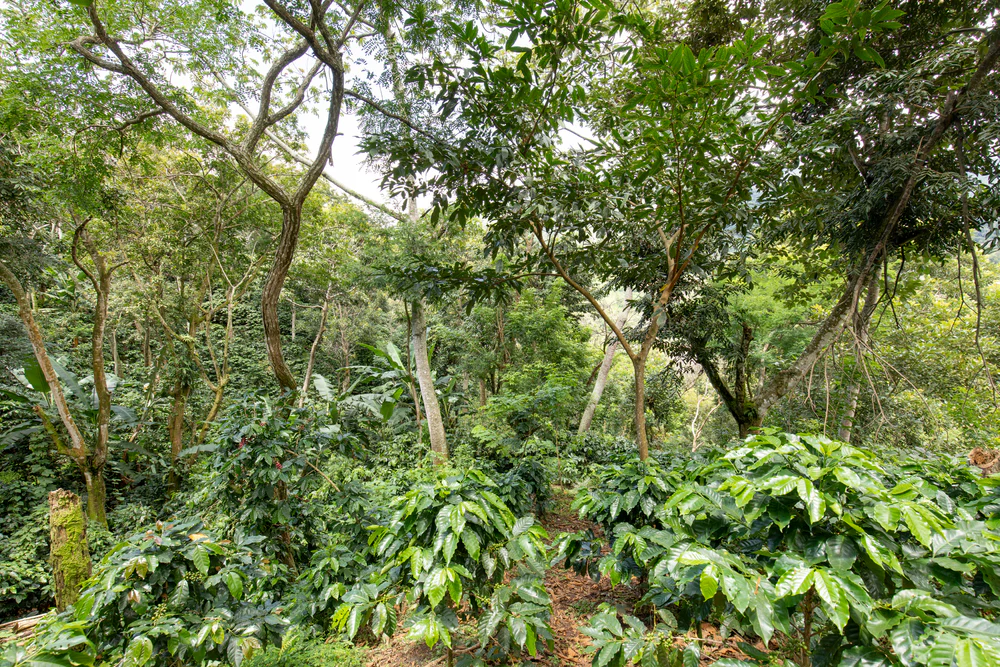
The first major requirement? Shade!
Unlike conventional coffee farms that clear large areas of land, Bird Friendly coffee must be grown under a lush, diverse canopy of trees.
In fact, Smithsonian-certified farms must maintain a minimum of 40% shade cover, which is measured during the dry season AFTER pruning.
Shade-grown coffee has many benefits, both for wildlife AND the taste of your coffee. 
#2. The height of the canopy matters!
To obtain Bird Friendly certification, the main canopy that provides shade to the coffee beans has to be at least 12 feet (4m) high.
And as it’s worded by the Smithsonian, the canopy must be “made by a native ‘backbone’ species’ to the region.
#3. Diversity is Key
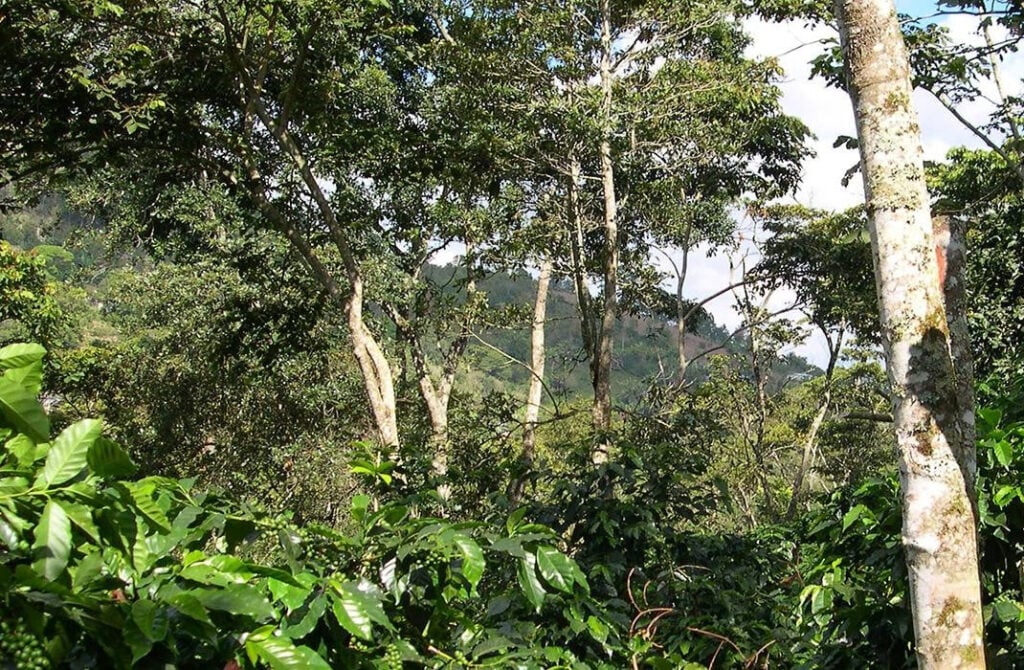
As we have learned so far, a coffee farm must have 40% foliage cover provided by a canopy at least 12 feet (4m) high.
But another requirement is both the diversity of the tree species and strata (layers of the trees).
Floristic diversity of trees and woody shrubs:
To obtain Bird Friendly certification, a coffee farm must have at least ten other woody species present in addition to the native backbone species mentioned above.
The Smithsonian also notes that at least ten of these species need to represent MORE than 1% of all individuals sampled AND be scattered across their land. This requirement is important, so a farm doesn’t plant a bunch of different trees in a corner of the property just to meet the requirement of tree diversity.
Structural diversity of the trees:
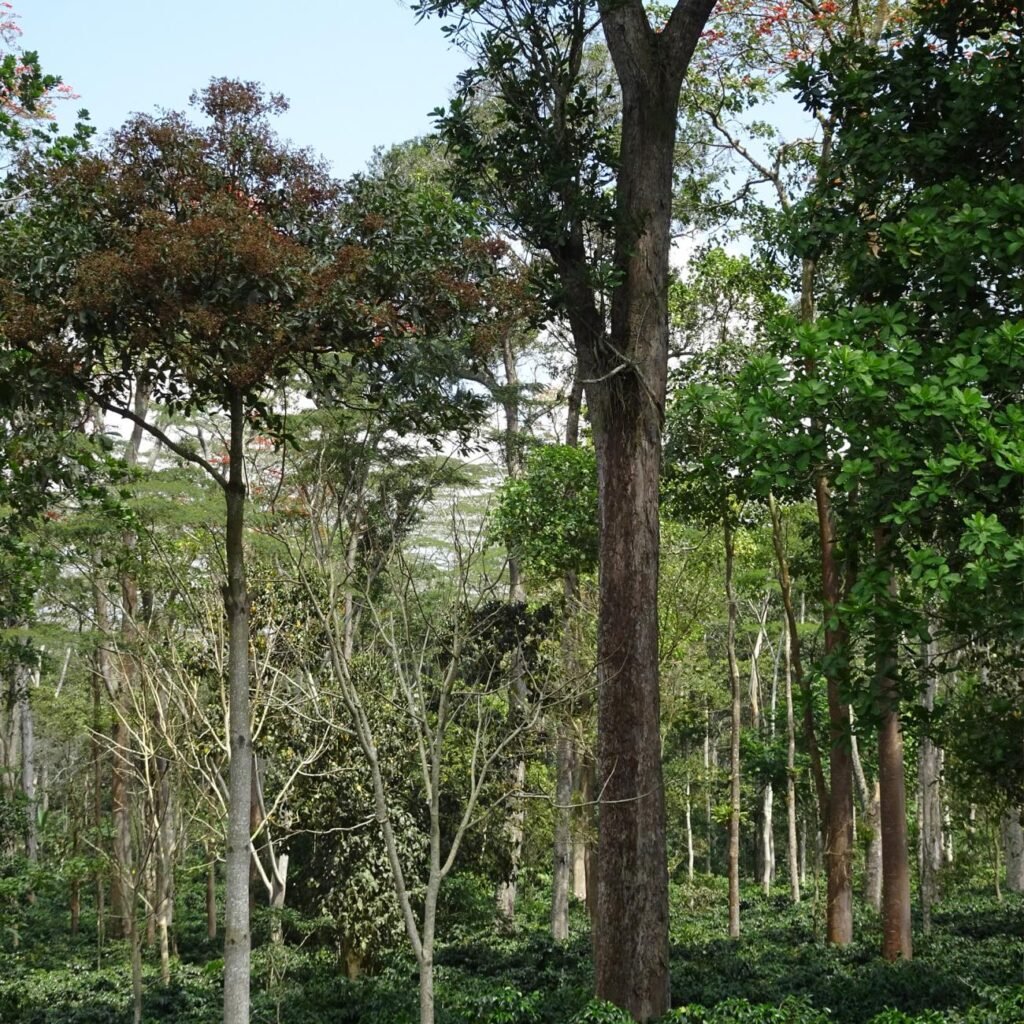
To obtain certification, the Smithsonian likes to see different layers of trees, preferably three.
- First, they look at the canopy layer formed by the native backbone species and other trees of that size, which need to be at least 12 feet (4m) in height.
- Next, they look at the stratum of taller, emergent species, comprised of native trees. This is the topmost layer, made up of trees that rise above the canopy.
- Lastly, below the canopy of the backbone species is the sub-canopy and understory. These layers are made up of smaller trees, shrubs, and other plants.
Ideally, the emergent layer and the sub-canopy/understory should each account for 20% of the total foliage present. The principal canopy made of the backbone species and other trees should represent the remaining foliage (~60%).
#4. Buffer zones around waterways
The Smithsonian finds it very important to provide buffer zones, comprised of native vegetation, around any streams or rivers on the property.
- Streams need a minimum of a 16-foot (5m) buffer zone on both sides.
- Rivers require at least 33 feet (10m) on both sides.
Waterways need buffer zones to protect water quality by filtering pollutants from runoff, preventing erosion of the shoreline, providing habitat for wildlife, and mitigating flooding by slowing down water flow.
#5. Leaf litter!
There is no specific percentage required by the Smithsonian, but leaf litter needs to be present. The reason for leaf litter is that it helps protect the soil!
#6. Living fences should be present
A living fence is a barrier made of living plants, such as trees, shrubs, and vines, rather than traditional wooden or wire fencing.
They also offer a range of ecological and economic benefits, such as:
- Protecting the coffee plants from the wind and acting as a barrier to soil erosion.
- Providing shelter and food sources for birds and pollinators.
- Offering extra income for farmers. Some trees and shrubs used in these fences grow fruit, nuts, or medicinal plants, while others can be used for firewood or building materials.
#7. Must have organic certification

Pesticides and synthetic fertilizers may boost yields, but they can also wreak havoc on birds, insects, and soil health.
That’s why to qualify to be Bird Friendly, a coffee farm must have current organic certification by a USDA-accredited certification agency.
But getting certified organic is no joke. The USDA has its own set of requirements that need to be met. There are also fees for the inspection and application that need to be paid, in addition to ongoing compliance costs. The exact amount varies between the size and complexity of each farm, but it usually runs several thousand dollars.
#8. Lastly, get certified as Bird Friendly by a coffee certification agency
Finally, we have reached the last step to becoming Bird Friendly.
Once a coffee farm thinks it has met all of the requirements above, it can apply for certification to a qualified agency. After receiving the application, the agency will send out an inspector who has been trained by the Smithsonian Migratory Bird Center on how to evaluate their standards.
If the farm passes inspection, it is issued the Bird Friendly certificate! Moving forward, an inspector will visit once a year to verify whether the SMBC criteria for shade-grown coffee is still being met.
Of course, there are significant costs the coffee farm has to pay to the certification agency, including application fees, inspection fees, and certification fees, along with transportation and travel costs to the inspector that visits.
The Science Behind the Seal
The Smithsonian Migratory Bird Center doesn’t just hand out certifications to anyone with a few trees on their farm.
As you can see, to earn the Bird Friendly seal, farms undergo rigorous inspections by trained scientists and conservationists who measure shade cover, plant diversity, and overall ecosystem health.
There are also significant costs and fees involved. There are many farms out there that meet the environmental standards but don’t want to pay to get certified, either because they can’t afford it or don’t think it’s worth the cost.
It’s not an easy certification to achieve. Less than 1% of coffee produced is certified, but for those who do, it’s a badge of honor.
Why It Matters (and Why Your Morning Coffee Choice Counts)
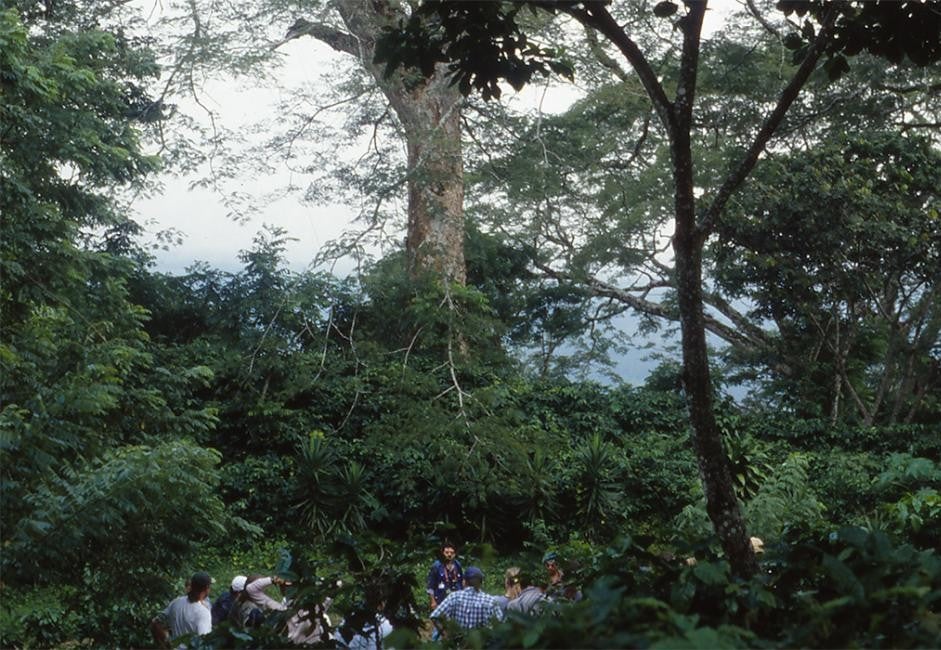
By choosing Bird Friendly coffee, you’re voting with your wallet for a future where coffee and conservation go hand in hand. It means supporting farmers who are dedicated to sustainable practices, protecting habitats for countless species, and ensuring that future generations can continue to enjoy the sight and sound of birds in our forests and backyards.
So, next time you’re shopping for coffee, look for the Smithsonian Bird-Friendly seal. Not only will you be getting a superior, shade-grown brew, but you’ll also be making a real difference for the birds, the forests, and the planet.
The post Bird Friendly Certification: 8 Requirements Coffee Farms Need to Satisify appeared first on Bird Watching HQ.
]]>The post Harpy Eagles: 17 Fascinating Facts About the Canopy’s King appeared first on Bird Watching HQ.
]]>Keep reading, and you will learn some incredible facts about these powerful raptors.
#1. Harpy Eagles are well known for their unique look
Both males and females sport a double crest of feathers on their heads.
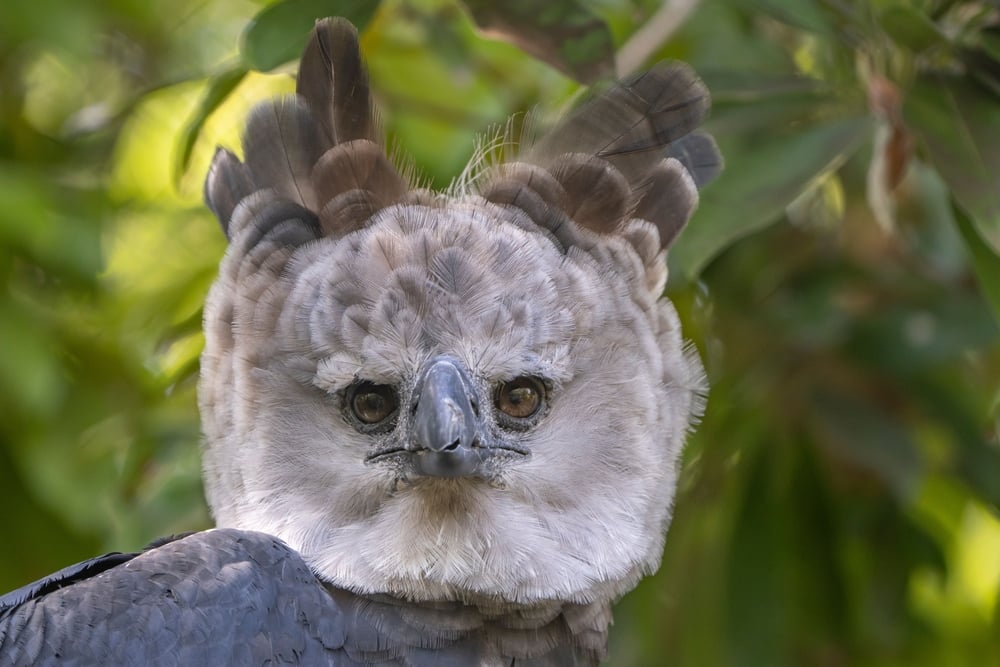
Interestingly, they are able to raise and lower these feathers like a dramatic actor adjusting their crown.
#2. Talons a dinosaur would be proud of
The talons on a Harpy Eagle are huge! They can grow up to 5 inches long.

To put that in perspective, that is larger than the average Grizzly Bear (4 inches). It’s also longer than a Velociraptor (3 inches).
The talons are not only large, but incredibly strong. They can exert several hundred pounds of pressure, crushing the bones and instantly killing their prey.
#3. Apex predators
Harpy Eagles are at the top of the food chain in the rainforest. Think of them as the unchallenged rulers of the jungle gym.
Their status as apex predators makes them important in the rainforest ecosystem, helping to preserve the delicate balance.
#4. Heavyweight champs
Harpy Eagles can weigh up to 20 pounds, making them one of the largest eagles in the world.

Let’s put that in perspective:
The largest Bald Eagles top out at around 14 pounds. Red-tailed Hawks can only get up to 4 pounds.
If there were an avian Olympics, Harpy Eagles would need their own division!
#5. Feathered giants
Harpy Eagles aren’t just heavy, they also have a large wingspan. The biggest females measure over 7 feet from tip to tip.
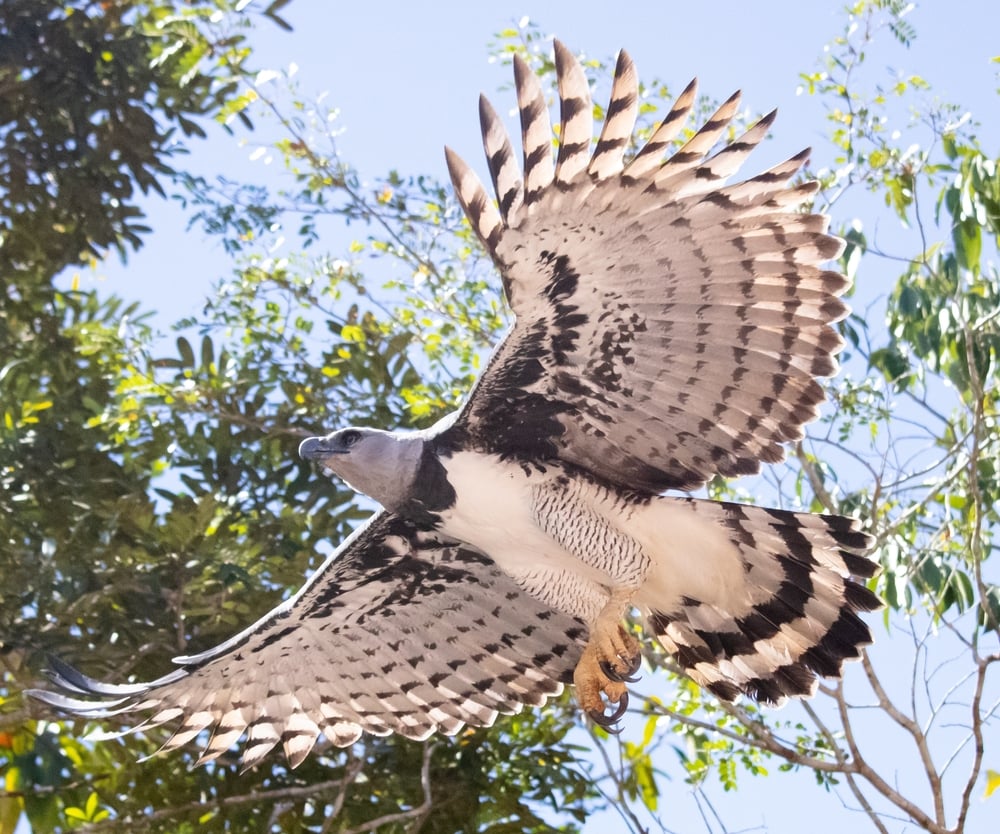
Honestly, I think it’s amazing they can navigate so easily through the dense rainforest with wings like that!
It’s even more impressive they can reach speeds of up to 50 mph while chasing their prey in cluttered environments.
#6. Their call isn’t what you would expect
Harpy Eagles are mostly silent, especially when they are away from the nest.
But, if you are lucky enough to hear one, their calls are surprisingly soft and whistling. For such an intimidating bird, their voice is more lullaby than battle cry.
#7. They like a room with a view
Harpy Eagles spend the majority of their time in the upper canopy of rainforests. They need the emergent layer, where the tallest trees rise above the main canopy, to scout for prey and build their nests. These magnificent raptors rarely come to the ground.
It’s vitally important to save the largest trees that the Harpy Eagle depends on. Once they are cut down, it can take HUNDREDS of years for them to regrow to the proper heights.
#8. One chick at a time, please
Harpy Eagles have fairly slow breeding cycles. A mated pair typically only raises one chick every two to three years.

This is another reason they need protection. If their populations continue to diminish, it will take a LONG time to increase their numbers.
#9. Their nests are huge!
Despite only raising one chick at a time, Harpy Eagles give their baby lots of space.
The stick nests they build are massive—sometimes over 5 feet across. Chicks got space to stretch those baby wings!
#10. Almost nothing is safe from their talons
Harpy Eagles have a unique and varied diet, as they can lift prey up to half their own weight! As long as they can carry it, it can be eaten.
Across most of their range, tree-dwelling mammals are their favorite food source. Different species of sloths and monkeys tend to make up the majority of their diet.
But one study using camera traps listed a total of 116 different species! Everything from porcupines to kinkajous to macaws are fair game.
#11. A patient but powerful hunter
The Harpy Eagle’s hunting style combines patience, stealth, and brute force.
Often, it perches high in the trees, surveying the forest below with intense focus. They will sit silently, waiting for hours (up to a day!) for a victim to appear.
Once a target is identified, it launches into a silent glide, using its speed and strength to ambush its prey before it can react.
The combination of quick acceleration and crushing power ensures a lethal outcome, often in a single strike.
#12. Rainforest recluses
Harpy Eagles are rarely seen by humans. Due to their love of the upper canopy of the rainforest, it’s incredibly hard to spot them in the dense jungle.
Think of them as the celebrities of the avian world—elusive and exclusive.
#13. Harry Potter fans will rejoice!
The Harpy Eagle was the inspiration behind the design of Fawkes the Phoenix in the Harry Potter movies.

Upon closer review, the feathered head looks incredibly similar!
#14. You won’t believe how they got their name
The word “harpy” comes from Ancient Greek mythology. It refers to the “harpies”, wind spirits who flew the dead to Hades in the underworld.
Harpies were said to have the lower body and talons of a raptor, but the head of a woman.

But other accounts depict the creatures as having an eagle-like body with a giant wingspan, but the head of a sharp-toothed, grotesque, mutant eagle. Think of a goblin with wings!
#15. They have a huge range (with a catch)
Historically, Harpy Eagles could be found from southern Mexico down through Brazil.

Unfortunately, due to deforestation, they are not commonly found throughout their range anymore. In fact, Harpy Eagles have almost been completely eliminated from Central America. In most countries, it is listed as endangered or threatened.
It’s incredibly important we conserve the remaining rainforest. Harpy Eagles depend on the largest trees. Once these are cut down, it will take potentially hundreds of years until the habitat is suitable for them again.
#16. A true symbol of majesty

The Harpy Eagle embodies the raw power and speed of nature’s top predators.
Revered in many cultures and often associated with deities, it is a symbol of untamed wilderness and the delicate balance of the ecosystems it rules.
#17. Harpy Eagles benefit from coffee that has been certified as Bird Friendly!
The survival of the Harpy Eagle depends on the protection of its rainforest habitat, underscoring the need for conservation efforts to preserve one of the most extraordinary avian hunters on Earth.
Unfortunately, these critical habitats are increasingly threatened by deforestation, often driven by agricultural practices such as sun-grown coffee farming, which replaces forests with open plantations.
Shade-grown coffee, on the other hand, is cultivated beneath a canopy of native trees, preserving the layered structure of the forest and maintaining vital ecosystems. This traditional method of farming helps provide ideal habitat for Harpy Eagles.

Certifications like the Smithsonian’s Bird Friendly ensure that coffee is grown in a way that supports biodiversity by protecting habitats for a wide variety of species. Choosing Bird Friendly coffee not only helps conserve forests but also provides a sustainable livelihood for coffee farmers (and a delicious cup of coffee for you).
The post Harpy Eagles: 17 Fascinating Facts About the Canopy’s King appeared first on Bird Watching HQ.
]]>The post 10 Things You Can Do to Help Birds appeared first on Bird Watching HQ.
]]>Since 1970, 2.9 billion birds have disappeared from North America.
Yes, you read that correctly. Almost 25% of the total number of birds have vanished in less than a single lifetime.
And it’s not just rare birds whose numbers are down. Most of our common and beloved birds are plummeting. For example:
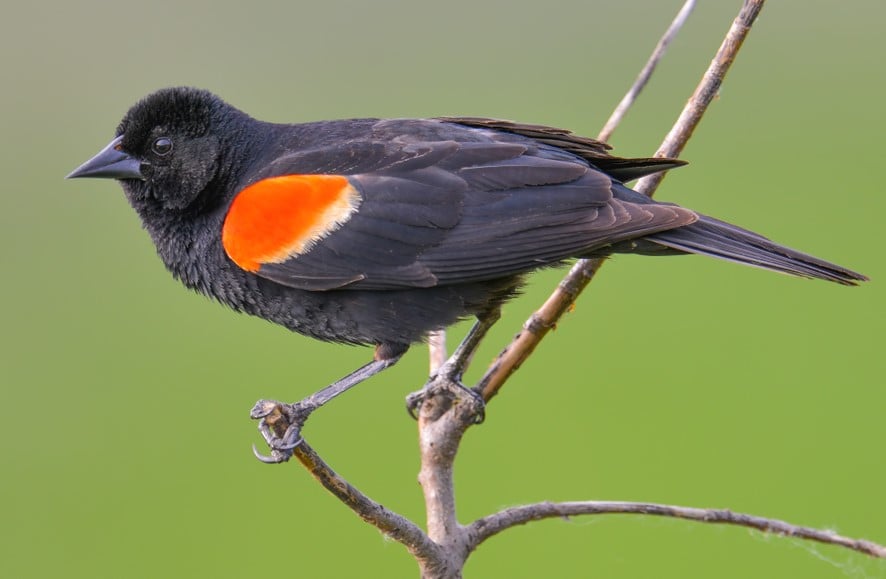
- Red-winged Blackbirds have declined by 92 million.
- Dark-eyed Juncos are down 168 million.
- White-throated Sparrows have lost 93 million individuals.
I hate to think of what will happen to the birds we love and their ecosystems if we keep going at this pace.
The reasons for the decline are varied and include many factors. But one thing is for sure, the problem is not going to get better unless we start changing our behaviors.
Below is a list of 10 easy things you can do to help birds:
#1. Help birds avoid your windows.
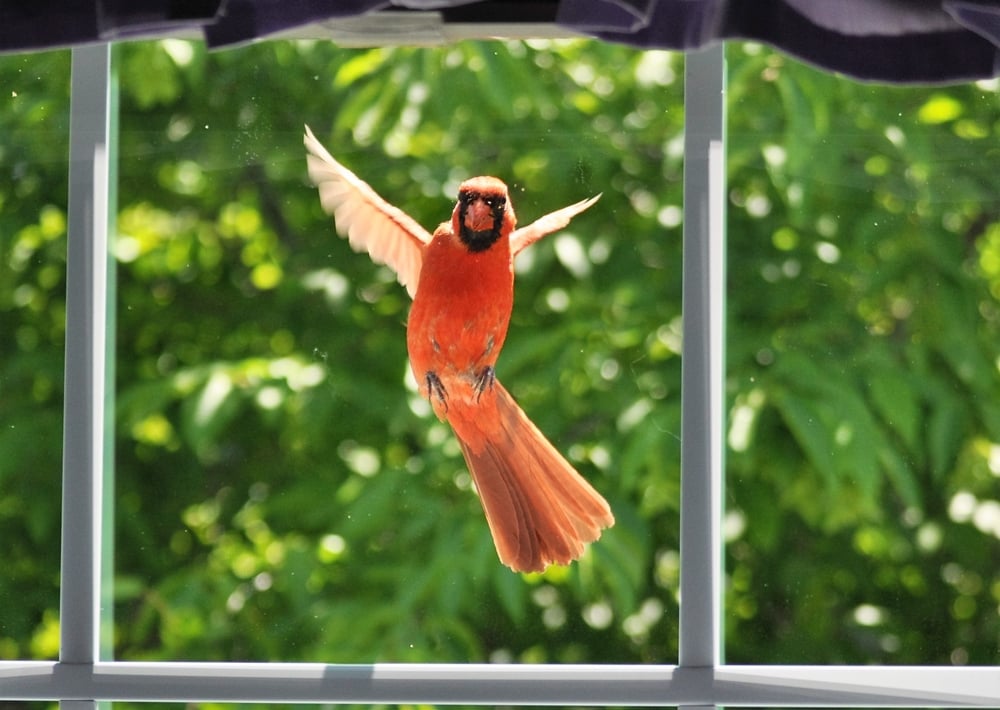
Birds crashing into windows is a BIG problem. It’s estimated that up to ONE billion birds die each year from window collisions! Not only is this having an impact on local populations, but it’s also incredibly sad to find a dead bird that has been a victim.
Birds hit windows because they don’t even realize they’re there! Typically, the window reflects vegetation, the sky, or trees, so a bird thinks it’s part of the environment.
Here’s how you can help:
- Make sure that you break up the reflection of your windows, especially ones that have had birds hit them in the past. You can read this article for more information on how to stop birds from hitting your windows.
- A huge problem for birds is tall buildings during migration, especially ones with lots of glass. Contact your U.S. Representative or Sentator using this form to encourage them to support bird-safe building legislation.
#2. Keep your cats indoors.
Our family has a cat named Tigger. We love Tigger very much, just like anyone who has a cat.
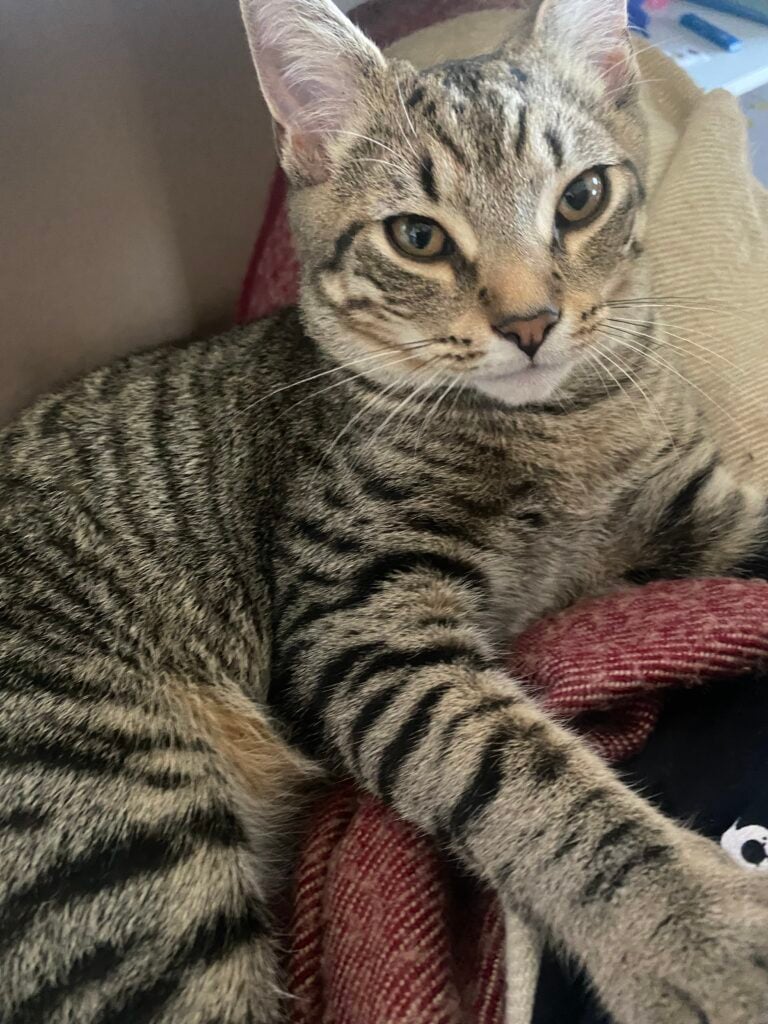
But we NEVER let Tigger go outside (unless he is on a leash with us), both for his protection and for the birds in our yard.
It’s estimated that outdoor cats kill anywhere between 1.3 to 4 billion birds per year, along with over 6 billion small mammals. That impacts ecosystems greatly, especially since domestic cats are not supposed to be there.
Second, it’s incredibly dangerous for cats to live outside. They face numerous threats, including getting hit by cars, being attacked by coyotes and other animals, contracting diseases from other cats, exposure to parasites, ingestion of poisons and toxic substances, extreme weather conditions, and the potential to get lost or separated from their owner.
Do the birds and your cat a favor and keep them inside.
#3. Drink coffee that protects habitats.

Many of the birds that live in the United States and Canada are migratory. These species only spend the breeding season here. As the weather starts to cool, they migrate to the tropics of Central and South America.
These migrating birds, such as tanagers, orioles, and warblers, need appropriate habitats to spend their winters, or they won’t survive. Unfortunately, these critical habitats are increasingly threatened by deforestation, often driven by agricultural practices such as sun-grown coffee farming, which replaces forests with open plantations.
Shade-grown coffee, on the other hand, is cultivated beneath a canopy of native trees, preserving the layered structure of the forest and maintaining vital ecosystems. This traditional method of farming allows birds to find food, shelter, and safe resting places during their stay in the tropics.
#4. Avoid anything that ends with “cide.”
I’m talking about pesticides, which include herbicides, fungicides, insecticides, rodenticides, etc. These poisons are marketed as being easy ways to keep your yard free of bugs and other pests, but there is a HUGE hidden cost to them.
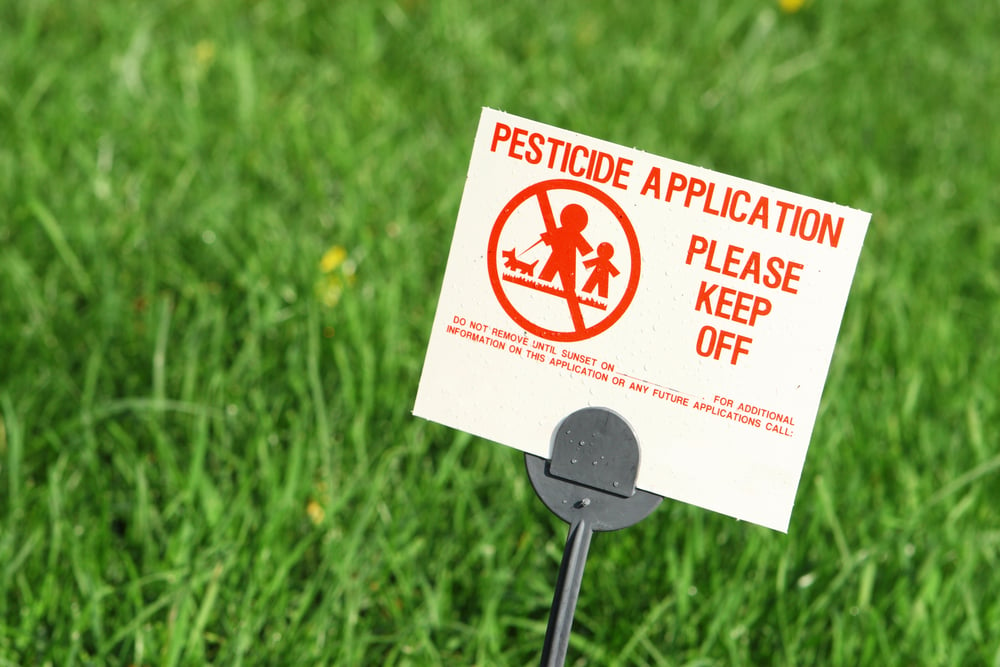
Here are just a few ways pesticides are harming birds:
- Pesticides kill off insects, a primary food source for many birds, especially during nesting season.
- Herbicides destroy native plants and flowers, reducing food availability for seed-eating and nectar-feeding birds. Birds also ingest pesticide-contaminated seeds, insects, or water, leading to acute poisoning.
- Pesticides run off into lakes, rivers, and wetlands, poisoning aquatic ecosystems.
- Raptors that eat poisoned rodents can accumulate toxic residues, leading to illness or death.
The bottom line is that no matter where you spray a pesticide, it has the potential to be dangerous. So the safest option (and cheapest) is to keep your yard pesticide-free!
#5. Use NATIVE plants in your yard.
Native plants are crucial for protecting birds because they provide food, shelter, and nesting sites that non-native plants often cannot.
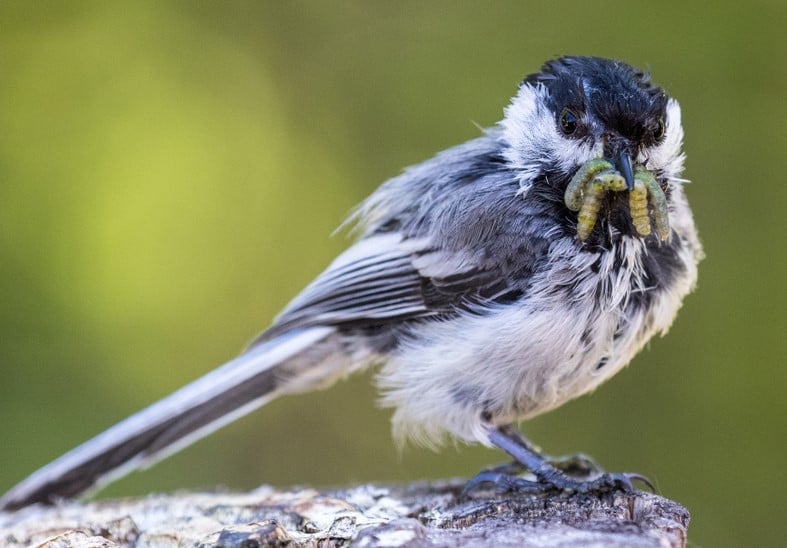
Most songbirds feed their young insects, especially caterpillars. Native plants host far more insects and pollinators than non-native species. For example, an oak tree can support over 500 species of caterpillars, while a non-native ginkgo tree may support fewer than 5.
In addition, native plants and trees provide food, such as berries, that birds have evolved to eat, provide suitable nesting sites, and don’t require harmful chemicals to grow, which further eliminates pesticides from the environment.
#6. Reduce your lawn size.
Seriously, this tip is a huge Win-Win.
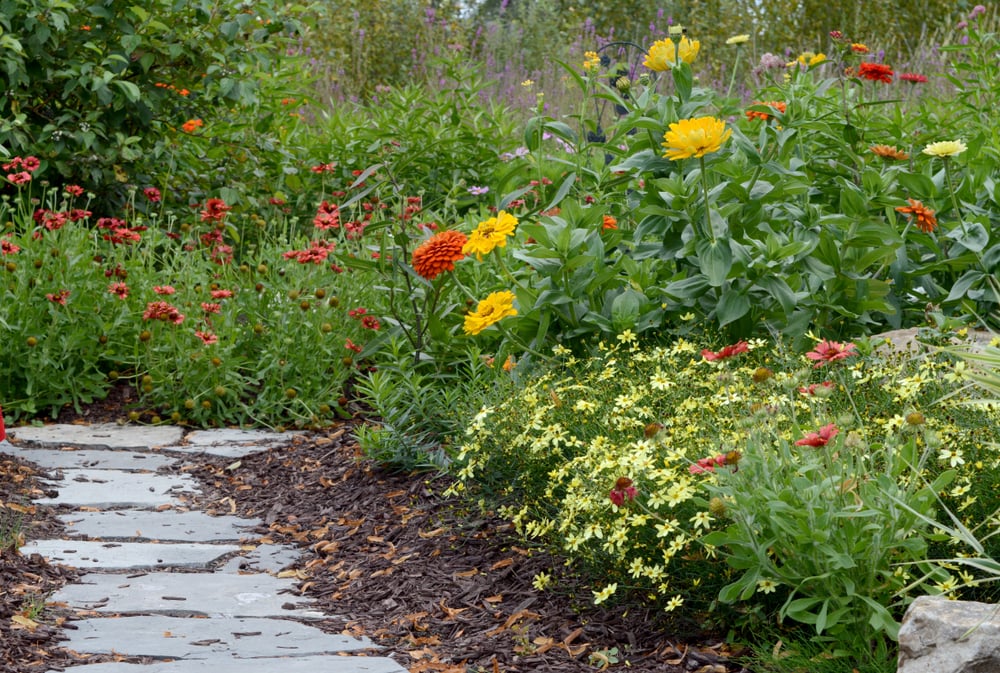
First, reducing your lawn size helps birds by creating a more diverse, natural habitat that supports insects, provides food, eliminates pesticides, and offers better shelter and nesting sites.
Second, you have less of a lawn to mow!
Here are a few ideas for reducing the size of your lawn:
- Replace part of your lawn with native plants—trees, shrubs, wildflowers, or native grasses.
- Create an area with flowering plants that attract insects and birds.
- Leave some leaf litter and natural debris—it provides insects for birds to eat and material for nests.
- Leave dead trees standing – snags provide nesting and foraging spots for woodpeckers and other birds.
#7. Recycle.
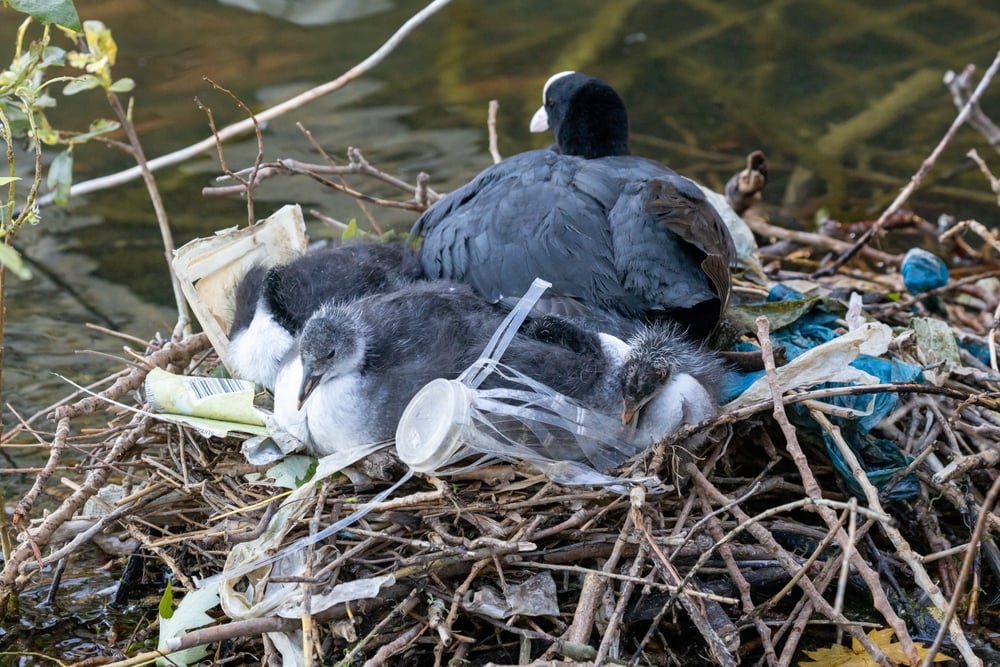
Seriously, I hope that you are recycling by now. Recycling helps bird populations in many different ways:
- Reduces Plastic Pollution
- Birds often mistake plastic waste for food, leading to choking, poisoning, or starvation.
- Prevents Habitat Destruction
- Recycling reduces the need for raw materials like trees, metals, and petroleum-based plastics.
- Decreases Toxic Chemical Pollution
- Manufacturing new materials releases toxic chemicals into the air, soil, and water, harming birds.
- Lowers Carbon Emissions & Slows Climate Change
- Extracting, transporting, and processing new materials burns fossil fuels, accelerating climate change.
#8. Speak out against habitat destruction.
Have you heard of this quote from Will Rogers?
“Buy land. They ain’t making any more of the stuff.”
Unfortunately, it also applies to birds, but in a negative way. Every year, more and more forests, grasslands, and wetlands are destroyed to make way for human development.
It doesn’t take a genius to figure out that if there are fewer spaces for birds to live, their population is going to decrease.
You can help by advocating for the protection of forests, wetlands, and other critical habitats.
#9. Report the birds you see.

Reporting bird sightings—through citizen science projects like eBird, iNaturalist, the Great Backyard Bird Count, and Audubon’s Christmas Bird Count—is a powerful way to help birds.
By documenting what you see, you help scientists track bird populations and trends, identify threatened and endangered species, and help understand migration patterns. Having this information provides the critical data needed for conservation policies.
#10. Educate others about birds.
My recommendation is to share this article with as many people as you can!
Protecting birds isn’t just for scientists or conservationists—it’s something everyone can do.
By making small, intentional choices, you can help create a safer, healthier world for birds and other wildlife. Whether it’s planting native plants, reducing lawn size, or buying bird friendly coffee, each action adds up to a big impact.
The post 10 Things You Can Do to Help Birds appeared first on Bird Watching HQ.
]]>The post Scarlet Tanager Species Spotlight: 10 Interesting Facts! appeared first on Bird Watching HQ.
]]>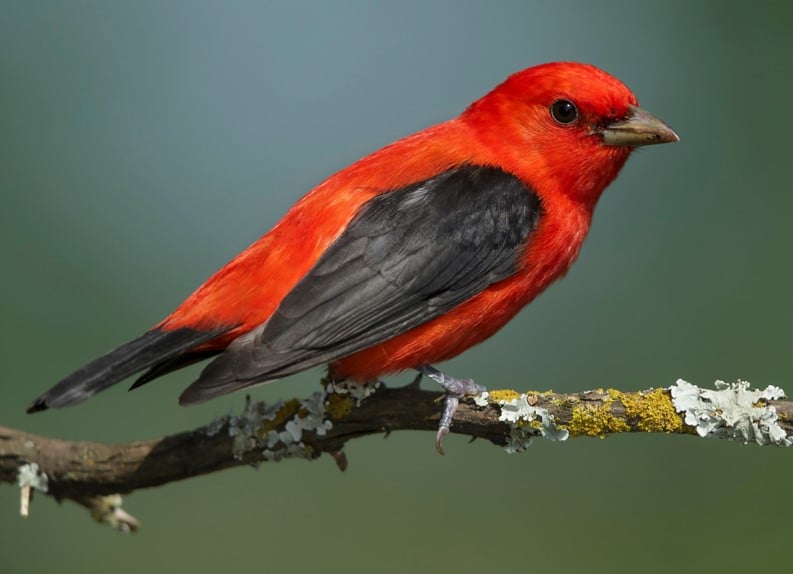
Many people find it surprising that these BEAUTIFUL birds spend their summers breeding in North America. Once the weather starts to turn cooler, they migrate thousands of miles to Central and South America to spend the winter.
During these winter months, Scarlet Tanagers commonly live on or near coffee farms that practice sustainable growing methods. They can be found flitting around in the shade trees above the coffee plants, eating both insects and fruit.
Here are TEN fun facts about these gorgeous birds:
#1. Scarlet Tanagers can be hard to spot.
Even though they are quite common, Scarlet Tangers are rarely seen, unless you know where to look. That’s because they spend their time high in the canopy of mature forests.
They are found across the entire eastern half of North America during the breeding season and in Central and South America in winter.
To find one, it’s highly recommended to take some binoculars and then be prepared to spend lots of time pointing them upwards. Just a warning that looking for Scarlet Tanagers has given me a neckache on more than one occasion.
#2. You won’t see a Scarlet Tanager at your bird feeder.
Unfortunately, these gorgeous birds won’t ever join the other birds at your feeding station.
That’s because Scarlet Tanagers don’t eat seeds, nuts, or grains, which are the main foods offered at most bird feeders.
Scarlet Tanagers eat mainly insects and other invertebrates. They aren’t picky and have no problem consuming almost anything they can find high in the canopy. When they do come to the ground, it’s to look through leaf litter for a snack.
They also supplement their diet with fresh fruit.
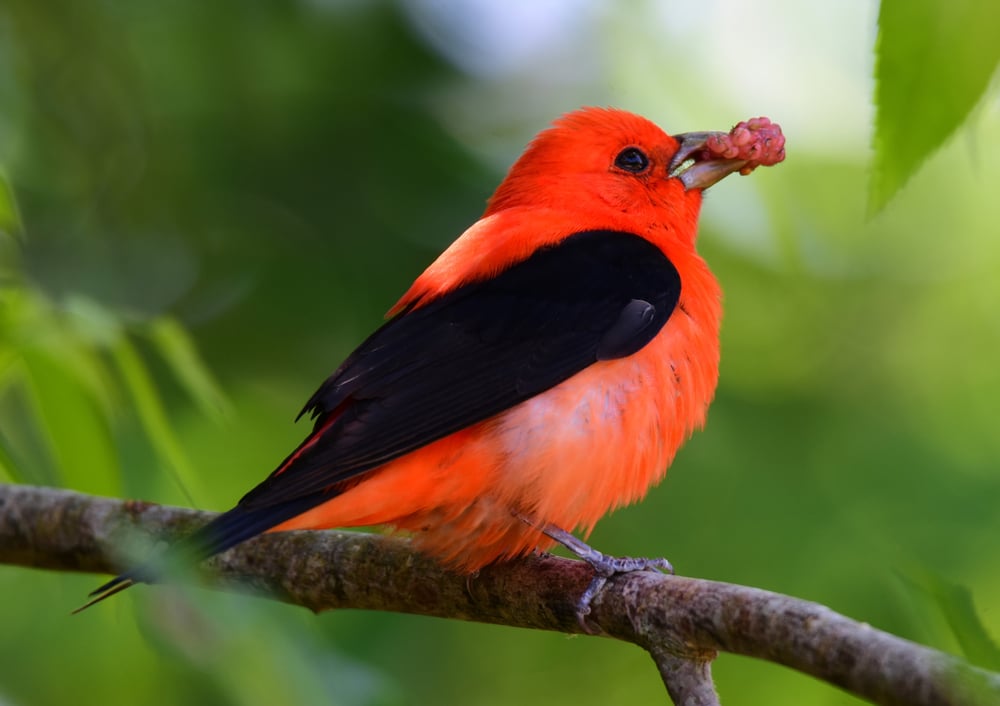
In fact, one of the only ways of attracting Scarlet Tanagers to your yard is with fruit plants. Their favorite foods include blackberries, raspberries, huckleberries, serviceberries, mulberries, strawberries, and chokeberries. If your house is located in or near a forest of mature deciduous trees, you may have a shot!
#3. They have a distinctive song and call.
Because they can be hard to see, one of the best ways to find a Scarlet Tanager is to use your ears.
During the breeding season, males are commonly heard singing in mature deciduous forests. Their song sounds similar to an American Robin who has a sore throat.
But the most distinctive sound to listen for is their energetic “chick-burr” call, given by both males and females. Personally, hearing “chick-burr” in the forest is how I am able to figure out if a Scarlet Tanager is near!
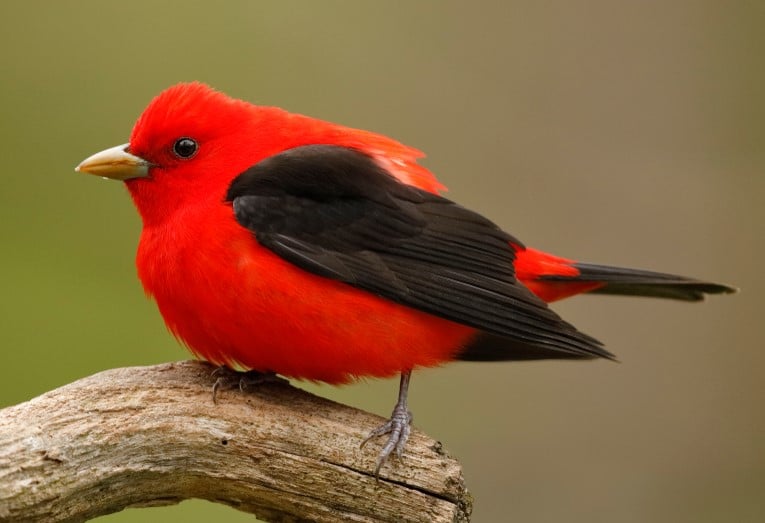
#4. Males are one of the most beautiful birds around!
Male Scarlet Tanagers have a striking appearance with a vibrant red body, jet-black wings, and tail.
Females are olive-yellow with darker wings. I think they have a subtle beauty.
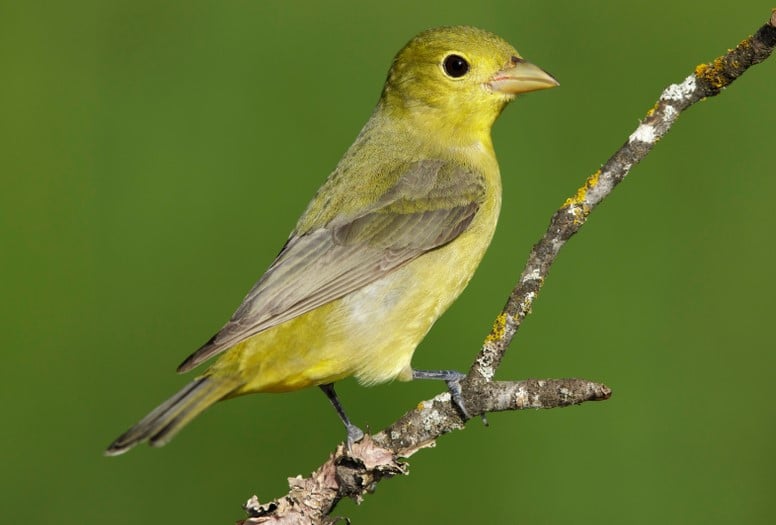
Interestingly, the males’ red plumage only lasts for a few months during the breeding season. As they begin their migration to the tropics, their feathers become yellow-green and look similar to females.
#5. They have no natural defense against the Brown-headed Cowbird.
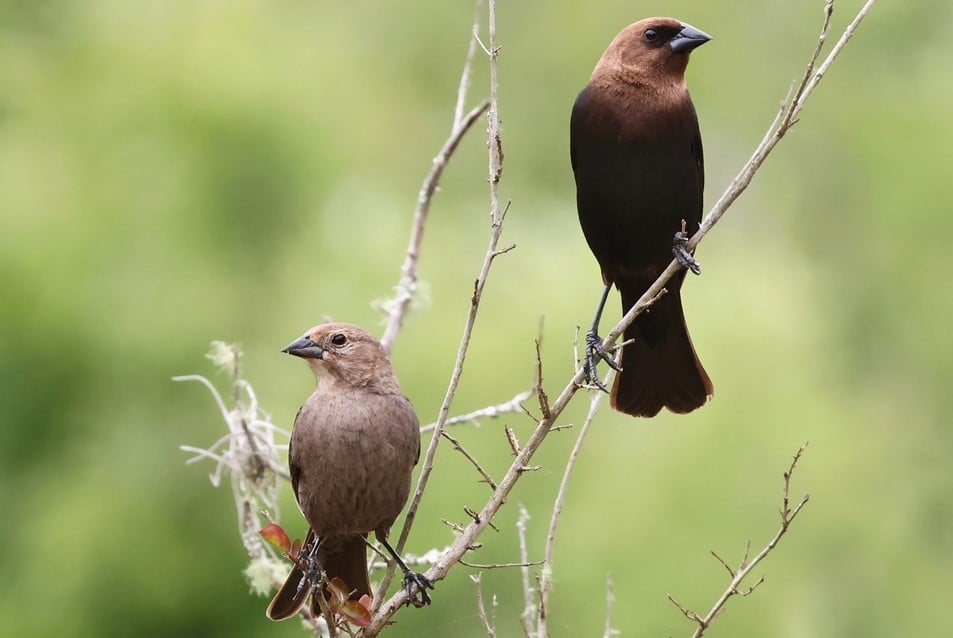
Brood parasitism is a reproductive strategy used by certain bird species, such as the Brown-headed Cowbird (Molothrus ater), to outsource the care of their young. Instead of building their own nests, cowbirds lay their eggs in the nests of other bird species, like the Scarlet Tanager.
If a pair of tanagers notices a cowbird approaching, they aggressively drive her away. But if they don’t notice, the cowbird gets rid of a tanager egg and replaces it with one of her own. Unfortunately, the tanagers can’t tell the difference.
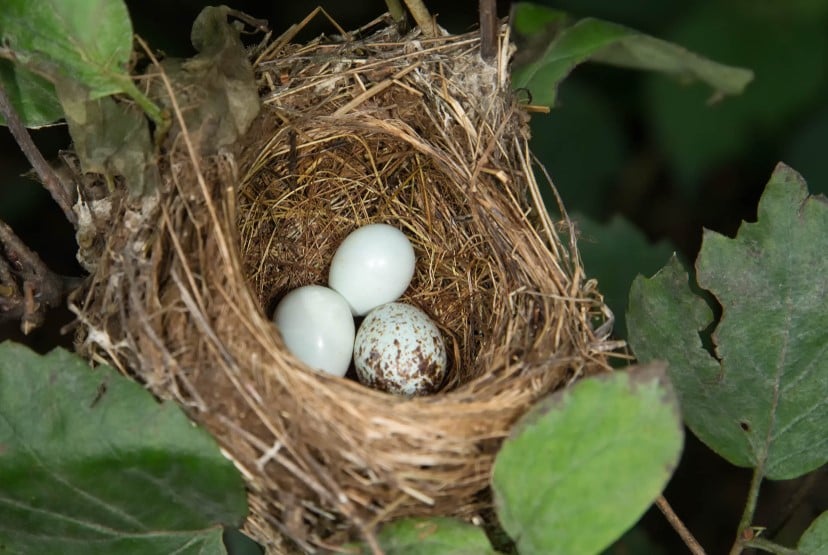
Instead of devoting all their energy and resources to raising their own chicks, Scarlet Tanagers have to provide for the young Brown-headed Cowbird, which grow faster and are more demanding. Unfortunately, the tanager chicks may starve because their parents can’t keep up with the feeding demands.
Due to forest fragmentation, Scarlet Tanagers have become more exposed to the detrimental effects of brood parasitism from Brown-headed Cowbirds. Tanagers do best in large, unbroken tracts of mature deciduous forest.
#6. Tanager nests also face threats from predators.
Unfortunately, studies have shown that over 50% of nests are preyed upon. Common predators include Blue Jays, Common Grackles, American Crows, snakes, squirrels, raccoons, and domestic cats.
Predation increases the closer the nest is to the forest’s edge. Scarlet Tanagers have the most breeding success the farther into the woods the nest is located.
#7. New research shows they aren’t really tanagers.
I found this incredibly surprising. Recent research has shown that instead of being in the tanager family (Thraupidae), Scarlet Tanagers belong in the cardinal family (Cardinalidae).
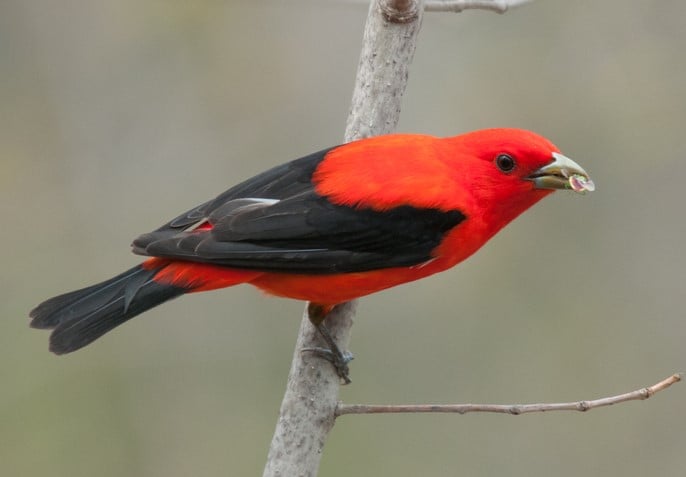
The biggest difference is their beaks. Scarlet Tanagers lack the thick conical beak that Northern Cardinals require for eating seeds and nuts. Instead, the beak of the Scarlet Tanager is adapted to eat insects.
#8. Eating bees, wasps, and hornets is no problem!
Scarlet Tangers love eating flying insects, and ones that sting are no exception.
To avoid getting stung by bees, wasps, and hornets, they rake them against a branch to remove the stinger before consuming them.
#9. Scarlet Tanagers were my “spark bird.”
A spark bird is a term used by birders to describe the bird species that ignites or deepens their interest in birdwatching or ornithology. It’s often the first bird that captures someone’s attention in a meaningful way, sparking a lifelong fascination with birds and the natural world.
For me, this bird was the Scarlet Tanager.
In my early twenties, I was gifted a field guide to the birds that lived in my area, which also included a CD of audio recordings of songs and calls.
When I found a picture of a Scalet Tanager, I could hardly believe that this bird existed in Ohio. So I memorized the sounds and headed off into the forest, praying that I could find one.
I will never forget when I heard the distinctive “chick-burr” of a Scarlet Tanager. I could barely believe my eyes when I looked up and saw the bright red of a male singing from a high-up branch!
#10. Scarlet Tanagers benefit from coffee that has been certified as Bird Friendly!
Scarlet Tanagers, like many migratory birds, depend on tropical forests in Central and South America for survival during the winter months. Unfortunately, these critical habitats are increasingly threatened by deforestation, often driven by agricultural practices such as sun-grown coffee farming, which replaces forests with open plantations.
Shade-grown coffee, on the other hand, is cultivated beneath a canopy of native trees, preserving the layered structure of the forest and maintaining vital ecosystems. This traditional method of farming allows Scarlet Tanagers and other migratory birds to find food, shelter, and safe resting places during their stay in the tropics.
Certifications like Smithsonian’s Bird Friendly ensure that coffee is grown in a way that supports biodiversity by protecting habitats for a wide variety of bird species, including Scarlet Tanagers. Choosing Bird Friendly coffee not only helps conserve forests but also provides a sustainable livelihood for coffee farmers.
The post Scarlet Tanager Species Spotlight: 10 Interesting Facts! appeared first on Bird Watching HQ.
]]>The post Gray Catbird Species Spotlight: 10 Interesting Facts! appeared first on Bird Watching HQ.
]]>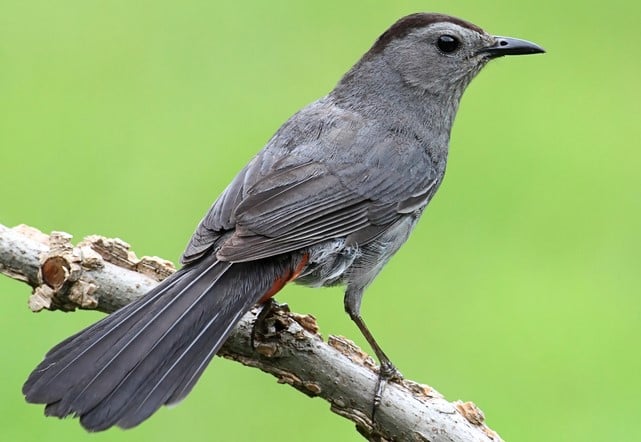
Equal parts mysterious and entertaining, these feathered wonders are common but not often seen.
Here are TEN interesting facts about Gray Catbirds:
#1. Named for Their “Mew-sical” Call
Grey Catbirds are famous for their signature “mew” call, which sounds remarkably like a cat (hence the name). The next time you are near some shrubbery and hear a cat-like sound, it’s most likely a Gray Catbird hiding inside.
Listen below. What do you think?
#2. Mimic Extraordinaire
Gray Catbirds don’t just sound like cats! In fact, they are one of the most accomplished singers of all North American birds, stringing together long series of squeaks, whistles, whines, and other nasally tones. Sometimes they don’t stop singing for over 10 minutes straight.
But the most interesting thing about a Gray Catbird’s song is they often mimic other birds! And they don’t stop with birds, sometimes mimicking frogs or mechanical noises like car alarms.
Each catbird’s song is unique, and they rarely sing the same sequence twice. Originality is their forte.
Move over, mockingbirds—catbirds are here to steal the show!
#3. Dressed to Impress
Their sleek, slate-grey plumage and black cap are the avian equivalent of a tailored suit.

But, upon closer examination, the Gray Catbird offers a hint of flair. Look underneath their tail to see rusty to cinnamon plumage.
Lastly, both males and females look the same. To tell the difference, you will have to look for different behaviors during the breeding season.
#4. Secretive Shy Guys
You’re VERY unlikely to find a catbird in an open field, as they are not fans of open spaces.
Gray Catbirds prefer the cover of dense shrubs and thickets. They can be hard to see, even when you can hear them nearby.
They are definitely one of the introverts of the bird world!
#5. Berry and Insect Connoisseurs
You won’t find Gray Catbirds eating bird seed. Their palate prefers the tastes of both insects and fruit, with each option composing roughly 50% of their diet.

Some backyard gardeners get annoyed with catbirds due to them consuming their raspberries, cherries, grapes, or strawberries.
Likewise, some gardeners readily accept catbirds. By eating insects, they act as natural pest control, keeping gardens healthy and thriving.
#6. You can attract them to bird feeders!
But wait, didn’t you just say that Gray Catbirds don’t eat bird seed?
Yes, that is true, but let me tell you a secret:
Gray Catbirds LOVE eating grape jelly.

I discovered this while trying to attract orioles to my feeders. While I was able to persuade a few orioles to the grape jelly, it was my local Gray Catbirds that visited the most!
#7. Long-Distance Fliers
Most Gray Catbirds are migratory, spending the breeding season in North America before migrating south for the winter. But, interestingly, the catbirds that live along the Atlantic Coast don’t migrate.
During the non-breeding season, Gray Catbirds can be found in a wide range of warmer areas. Some stay in Florida and other states along the Gulf of Mexico, while others travel to the Caribbean and Central America.

Some catbirds travel up to 3,000 miles during migration. Talk about a workout!
#8. Move over robin egg blue!
I’m sure you are familiar with the beautiful blue coloring of an American Robin egg. I’ve included a picture below:

But, check out the gorgeous blue of a Gray Catbird egg. I love the deep color even more than the robin.

And sometimes the catbird eggs even have red spots on them!
#9. Urban Adapters
Catbirds have adapted well to suburban environments, thriving in backyards and parks as long as there’s plenty of shrubbery.

But most people don’t even know they are around, due to their secretive nature. So keep a close eye out, and make sure to listen for their distintive sounds.
#10. Gray Catbirds benefit from Bird Friendly certified coffee!
Gray Catbirds, like many migratory birds, depend on tropical forests in Central America for survival during the winter months. Unfortunately, these critical habitats are increasingly threatened by deforestation, often driven by agricultural practices such as sun-grown coffee farming, which replaces forests with open plantations.
Shade-grown coffee, on the other hand, is cultivated beneath a canopy of native trees, preserving the layered structure of the forest and maintaining vital ecosystems. This traditional method of farming allows Gray Catbirds and other wildlife to find food, shelter, and safe resting places.
The Smithsonian’s “Bird Friendly” certification ensures that coffee is grown in a way that supports biodiversity by protecting habitats for a wide variety of bird species, including Gray Catbirds.
Choosing Bird Friendly coffee not only helps conserve forests but also provides a sustainable livelihood for coffee farmers.
The post Gray Catbird Species Spotlight: 10 Interesting Facts! appeared first on Bird Watching HQ.
]]>The post 15 Birds You’re Helping Protect by Drinking Shade-Grown Coffee appeared first on Bird Watching HQ.
]]>Shade-grown coffee farms are a lifeline for birds that depend on forest-like environments to survive. These farms preserve canopy cover, native trees, and layered vegetation, which provide food and shelter.
Here are 15 migratory birds that thrive during the non-breeding season, thanks to shade-grown coffee farms in Central and South America.
During the warmer months, you can find these species across North America.
#1. Scarlet Tanager
Bright red with black wings, this migratory bird breeds in North America and winters in Central and South America. It relies on shade-grown coffee farms for food (insects and fruit) and safe resting areas during migration.
- Breeding Range: Eastern North America
- Non-breeding Range: Northwestern South America (Colombia, Venezuela, Ecuador, Peru)
#2. Wood Thrush
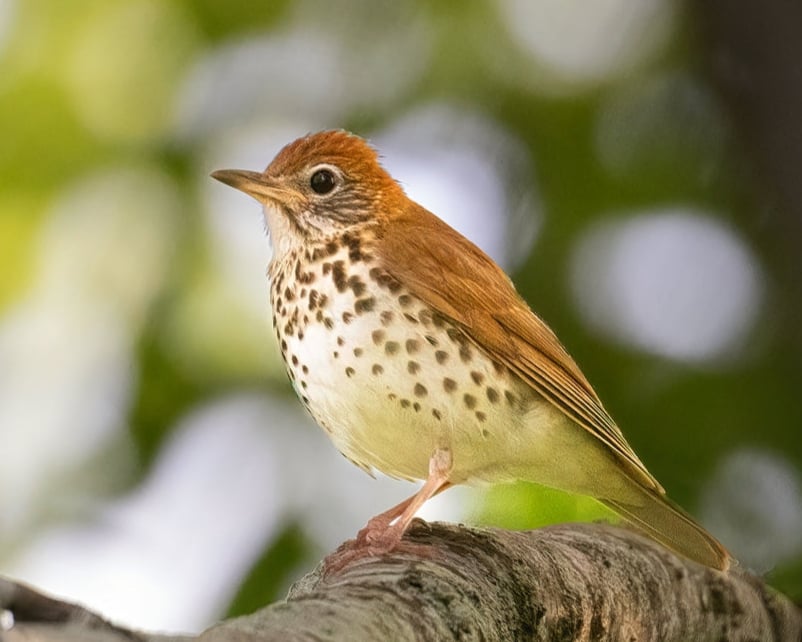
Famous for its flute-like song, the Wood Thrush depends on forested areas in Central America during winter. It uses the leaf litter of shade coffee farms to forage for insects.
- Breeding Range: Eastern North America
- Non-breeding Range: Central America
#3. Baltimore Oriole

These vivid orange-and-black birds benefit from the native fruit-bearing trees in shade farms. They forage for nectar, insects, and ripe fruit in the canopy.
- Breeding Range: Eastern North America
- Non-breeding Range: Central America & Northwest South America
#4. Black-throated Green Warbler
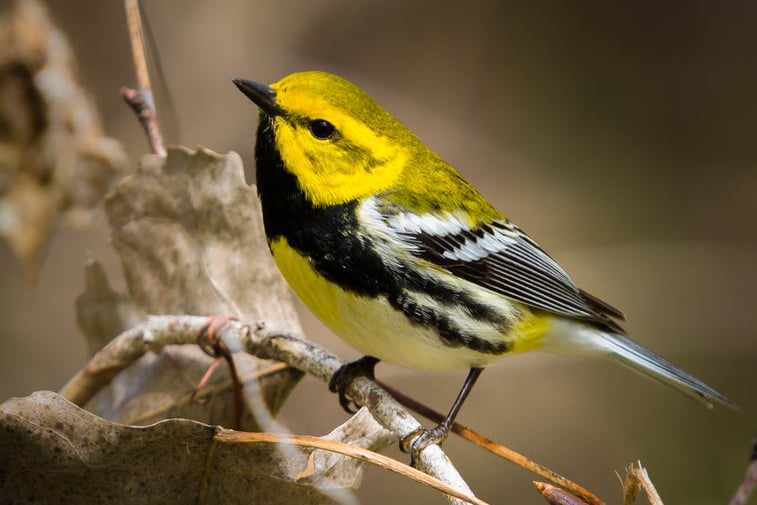
This small warbler migrates to Central America, using the protective cover of shade coffee farms to forage for insects in the mid and upper canopy.
- Breeding Range: Eastern North America
- Non-breeding Range: Central America & Northwest South America
#5. Ruby-throated Hummingbird
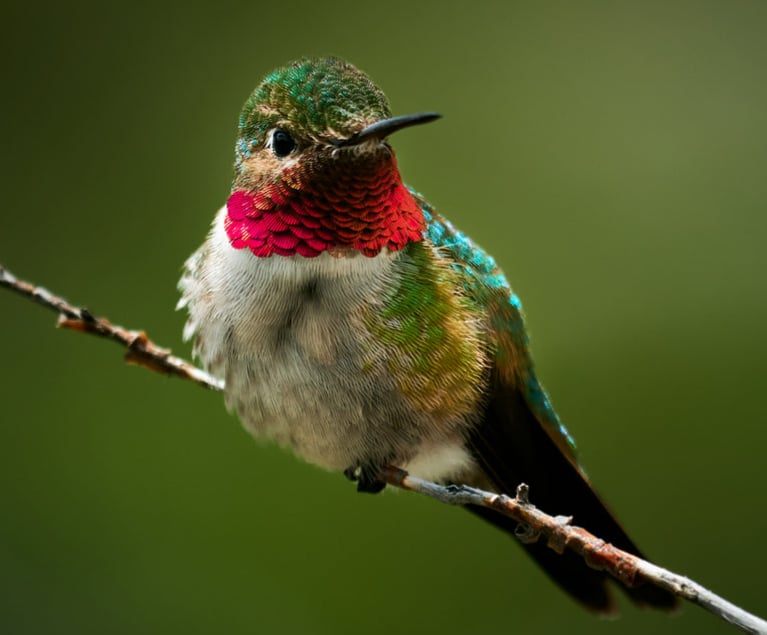
These tiny, iridescent birds feed on nectar and small insects. Shade-grown farms often have native flowering plants and a steady supply of insects to sustain them.
- Breeding Range: Eastern North America
- Non-breeding Range: Central America
#6. Yellow Warbler
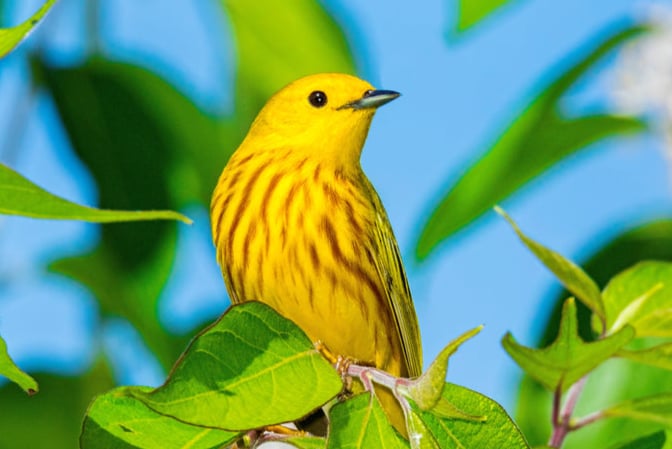
Often seen flitting through shrubs and trees, this bright yellow warbler feeds on insects and benefits from the natural diversity of shade farms.
- Breeding Range: All of North America
- Non-breeding Range: Central America & Northwest South America
#7. Summer Tanager
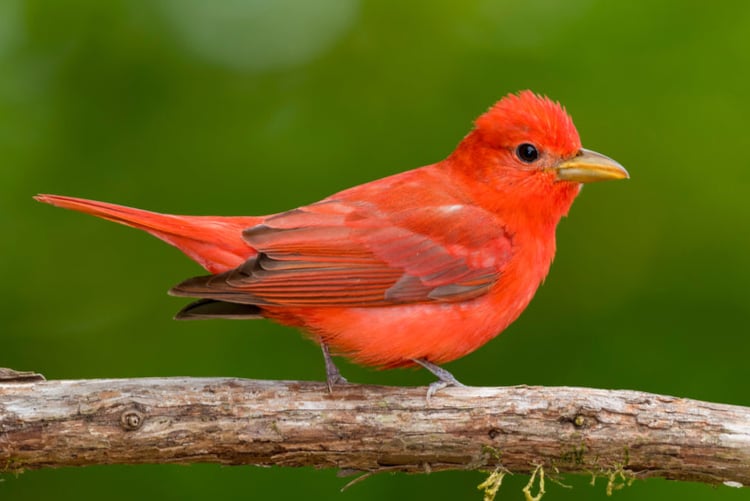
This all-red songbird is an insect specialist, especially fond of bees and wasps. It thrives in shade-grown environments with complex tree layers.
- Breeding Range: Southwest USA to Eastern USA
- Non-breeding Range: Central America & Northwest South America
#8. Gray Catbird
Recognizable by its cat-like calls and slate-gray plumage, the Gray Catbird thrives in dense thickets. Shade coffee farms provide ample shrub cover and insect prey during its winter stay.
- Breeding Range: Most of North America
- Non-breeding Range: Central America & Colombia
#9. Rose-breasted Grosbeak
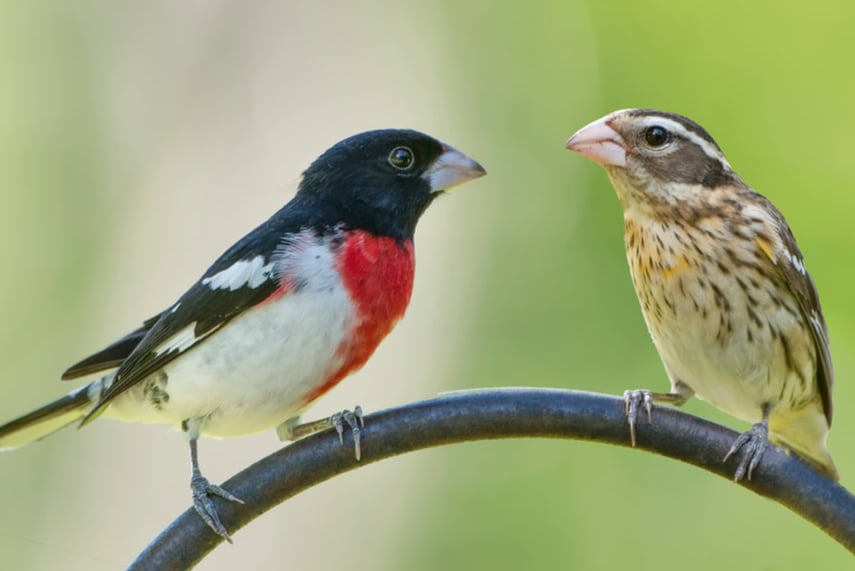
With its bold red chest patch and thick bill, this grosbeak feasts on fruit, seeds, and insects. Shade coffee farms offer ideal foraging and shelter along their migratory route.
- Breeding Range: Central to Eastern North America
- Non-breeding Range: Central America & Northwest South America
#10. Tennessee Warbler
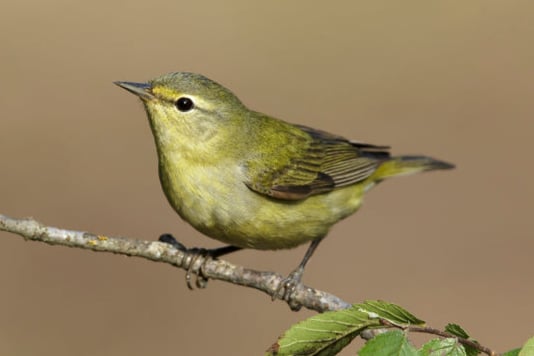
Despite its name, this warbler winters in Central America. It forages for insects and nectar in coffee farms that mimic natural forests.
- Breeding Range: Across all of Canada. Migrates through USA.
- Non-breeding Range: Central America & Northwest South America
#11. Western Tanager
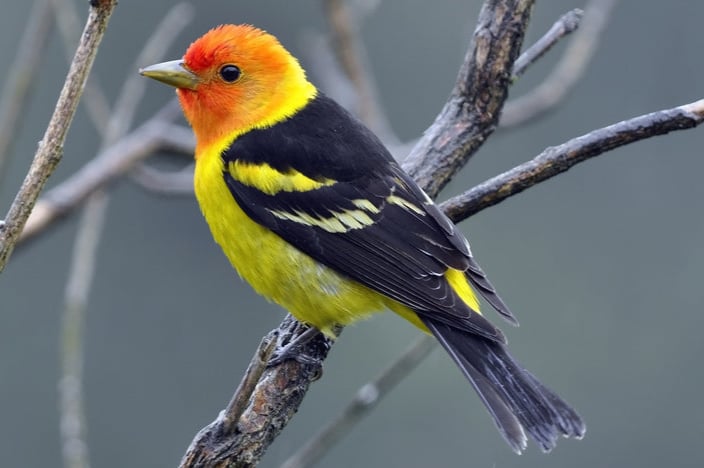
These striking yellow and red birds migrate from western North America to Central America and find vital shelter and food in shade-grown areas.
- Breeding Range: Western North America
- Non-breeding Range: Central America
#12. Ovenbird
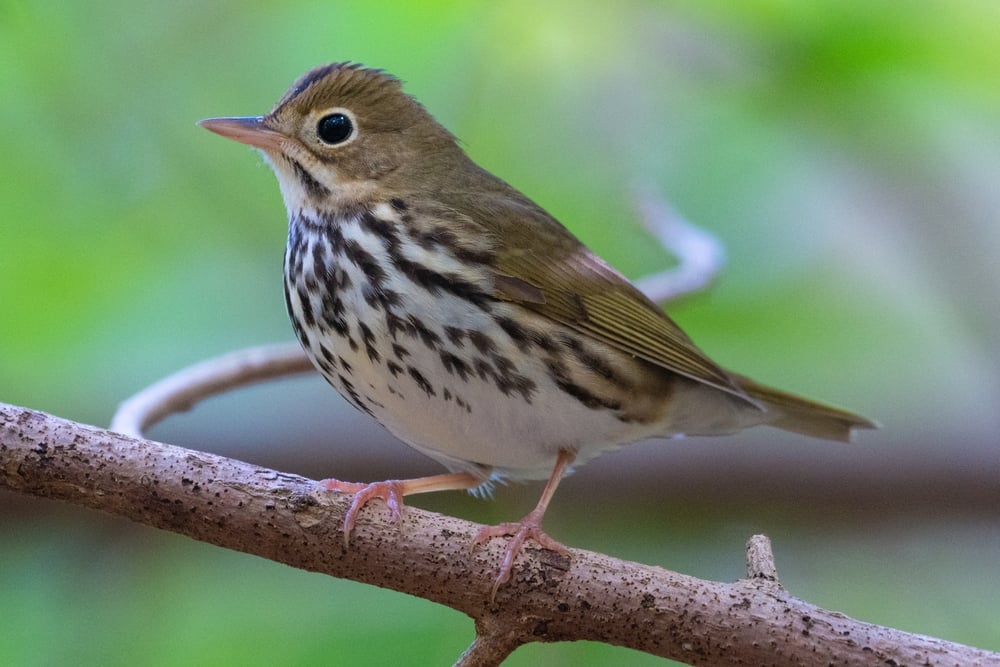
Named for its nest shape, the Ovenbird uses the leaf litter on the forest floor of shade coffee farms to forage for insects.
- Breeding Range: Central to Eastern North America
- Non-breeding Range: Central America, Colombia, Venezuela & Florida.
#13. Chestnut-sided Warbler
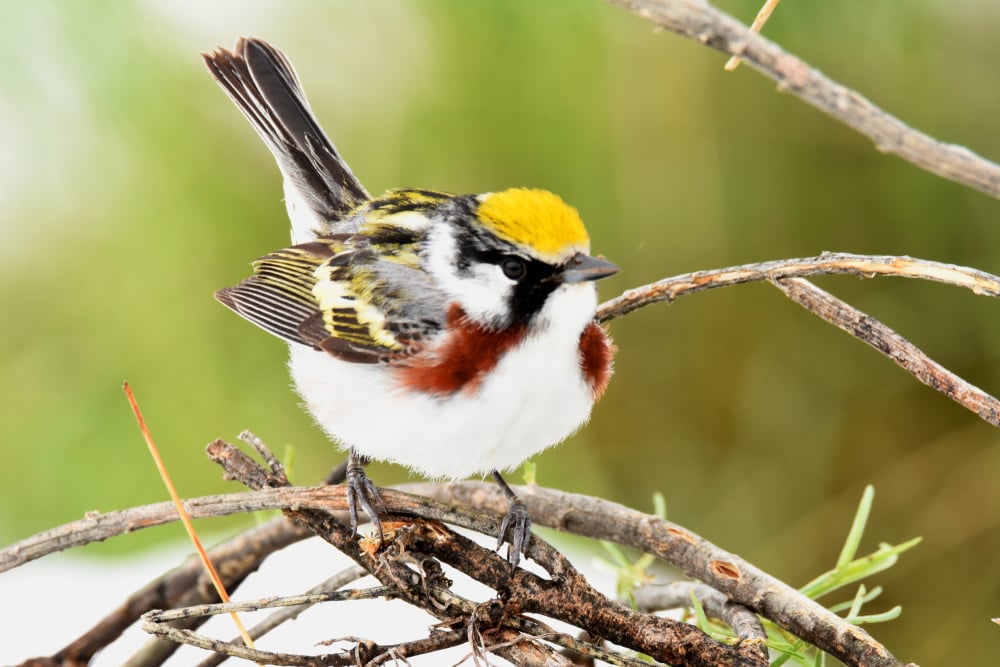
Prefers early successional forests and finds insect-rich foliage and shrubs in shade-grown environments during winter migration.
- Breeding Range: Central to Eastern North America
- Non-breeding Range: Central America, Caribbean islands, & Northwest South America
#14. Common Yellowthroat
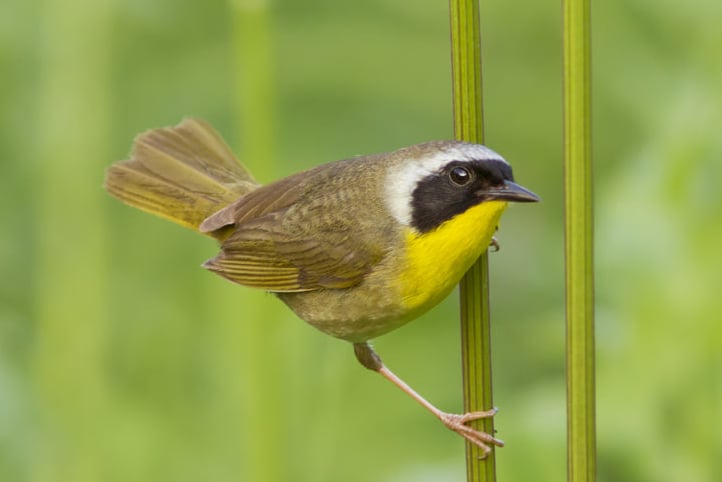
This small warbler, with a distinctive black mask, favors low, dense vegetation. The understory and moist edges of shade farms provide it with excellent cover and abundant insect life.
- Breeding Range: Across North America
- Non-breeding Range: Central America
#15. Black-and-white Warbler
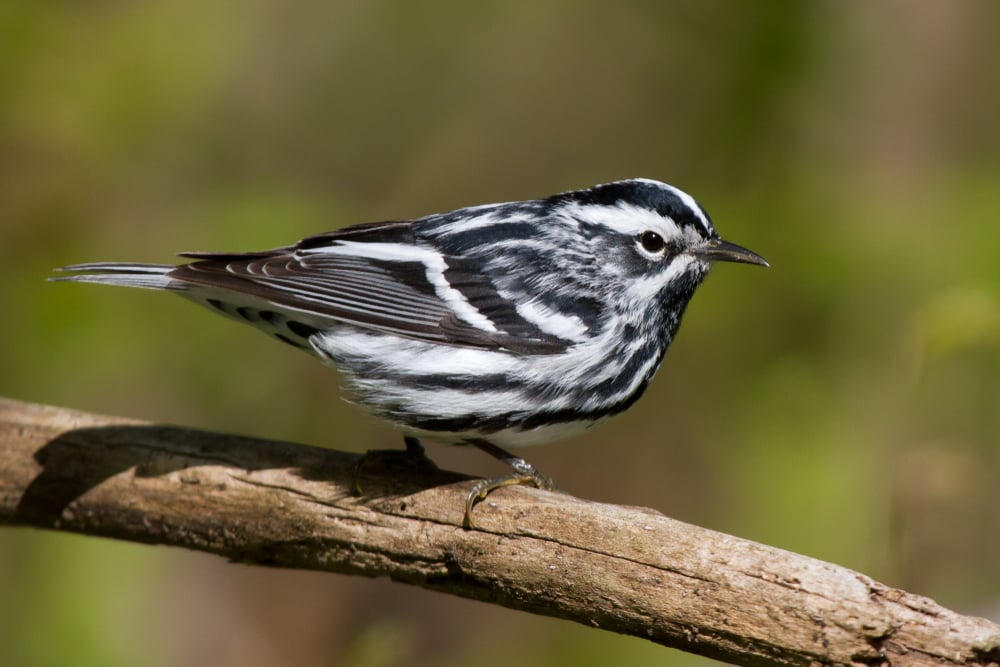
Known for creeping along tree trunks like a nuthatch, this species needs older, mature trees, which are often preserved in shade coffee systems.
- Breeding Range: Central to Eastern North America
- Non-breeding Range: Central America & Northwest South America
Why Shade-Grown Coffee Farms Matter:
Shade-grown coffee farms mimic natural ecosystems and provide critical habitat for hundreds of bird species, many of which are declining due to habitat loss.
By choosing coffee grown under the shade and certified as Bird Friendly, you support conservation and biodiversity with every cup.
The post 15 Birds You’re Helping Protect by Drinking Shade-Grown Coffee appeared first on Bird Watching HQ.
]]>The post 17 FUN Facts About Hummingbirds! (that will make you hum) appeared first on Bird Watching HQ.
]]>
Seriously, these tiny birds are some of the most interesting creatures in the world. And today, I’m listing some of the neatest things to know about them.
Keep reading to learn the most exciting facts about hummingbirds, from their insatiable appetite to their tenacious migration habits.
Here are 17 FUN Facts About Hummingbirds!
#1. Hummingbirds love the color red.
Hummingbirds are naturally attracted to things that are red. While it’s not entirely understood why, many people believe that hummingbirds like red flowers because they typically have the most nectar!

There are plenty of ways to add a pop of red to your garden if you want to attract hummingbirds. Flowers like the red cardinal flower and trumpet honeysuckle are two of their favorite red blossoms.
You can also buy a nectar feeder with red accents on the feeding ports or base. However, resist the temptation to add red dye to your hummingbird nectar! It isn’t necessary to attract hummingbirds, and it can make them sick.

This 8 oz Jewel Box Window Hummingbird Feeder is one of my favorite red hummingbird feeders. It attaches to your window, so you can watch hummingbirds while you have your morning coffee!
#2. They eat more than just nectar.
Although hummingbirds eat lots of nectar to stay active and keep their energy up, they also need additional food sources for protein and other nutrition. There are three main foods that hummers eat besides nectar:

A. Insects
Hummingbirds eat insects for protein and other nutrients that nectar doesn’t provide. So the next time you have some fruit that’s getting old, instead of throwing it away, put it outside! The reason is that rotting fruit attracts lots of fruit flies, which is a favorite food of most hummingbird species!
B. Spiders
Many species of hummingbirds also eat small spiders. They will pluck these arachnids right off their webs or while hiding on a plant. If you want to provide a buffet of fresh spiders for your local birds, my recommendation is to fill your yard with native flowers, shrubs, and trees! In addition, many hummer species use spider silk to build their nests!
C. Tree Sap
Believe it or not, many hummingbird species rely greatly on sugary tree sap at certain times of the year. When hummingbirds migrate north, they arrive before many flowers have started to bloom, which creates a big problem. Hummingbirds need sugar constantly to support their high-energy lifestyle.
To ensure they have adequate nutrition, hummingbirds will time their northward migration to follow sapsuckers. These woodpeckers drill large holes into trees to release their sap. Once the woodpeckers drill a well into a tree, hummingbirds follow to drink the sugary sap!
The coolest fact about hummingbirds eating sap is that they prefer maple tree sap. Of course, pancake-loving humans have this in common with hummingbirds!
#3. Hummingbirds are tiny!

Two of the most common hummingbirds in North America are the Ruby-Throated Hummingbird and Rufous Hummingbird. They measure just 2.8-3.5 inches (7-9 cm) long! Despite their small size, they migrate enormous distances each year and pollinate thousands of flowers along their route.
Even among other birds, which are some of the lightest animals for their size, hummingbirds are incredibly lightweight. Fully grown Ruby-Throated and Rufous Hummingbirds only weigh about three grams, which is the same as a single penny!
#4. Their nests are impossibly small.
These tiny birds make equally tiny nests. Their size varies slightly from species to species, but on average nests are only 1-2 inches wide and an inch deep!
Although the size of their nests is amazing, I think the coolest fact about hummingbird nests is how they’re made.
Like most other birds, hummingbirds start with a base of leaves, twigs, and grasses. But once the base is constructed, the rest of the nest is made from spiderweb silk!

Hummingbirds take the silk from webs and weave it into a soft, springy nest for their young. While they’re collecting the silk, they sometimes even pluck a fruit fly from the web for a snack!
After the nest is created, hummingbirds lay eggs that are 0.5-0.6 in (1.2-1.5 cm), about the size of a small jellybean. Ruby-throats lay one to three eggs at a time, and as you can imagine, the eggs completely fill the inside of the nest!
#5. Hummingbirds are aggressive and territorial.
If you have a particularly territorial hummer, you may need to hang more than one feeder!
Despite their small size (or perhaps because of it), hummingbirds are one of the most territorial backyard birds. It’s not uncommon to see fights between hummingbirds near the feeders in your backyard. Hummingbirds will even dive-bomb and zip toward much larger birds to let them know who’s boss!
The most aggressive behavior happens in spring when male hummingbirds are claiming new territory to breed. Males claim territory by discouraging other birds from staying too long, which means they will target intruders at feeders and resting spots.
#6. They aren’t able to walk or hop.

Although they use their legs to perch while they rest and drink nectar, hummingbirds don’t walk or hop like most birds.
They can scoot sideways but prefer to hover or fly to get around.
Even though they can’t walk, their legs are small for a very good reason. Their small limbs help hummingbirds fly faster by making them more aerodynamic and reducing the amount of energy they use while flying.
#7. Hummingbirds eat a ton of food!
Hummingbirds need to consume enormous amounts to maintain their energy levels.
They eat every 15-20 minutes and consume half their body weight in nectar and insects each day! However, hummingbirds can eat much more than that during migration and times of heavy travel. Some estimates show hummingbirds can eat up to eight TIMES their body weight in a single day!
To help sustain their energy requirements, hummingbirds can visit up to 2,000 flowers per day, searching for nectar. All that traveling from flower to flower is one of the main reasons hummingbirds are such important pollinators.
#8. Hummingbird flocks have fun names.
One of my favorite facts about hummingbirds is the different names people call their flocks. Some of these include a “bouquet”, a “glittering”, a “hover”, or my personal favorite, a “shimmer”. I think this last name describes the beautiful iridescence of their feathers perfectly!
Although hummingbirds are solitary migrators, they will visit nectar feeders in large flocks. This hummingbird feeding station in California is a great example!
#9. Hummingbirds are FAST!
You might think that because hummingbirds are so tiny, they aren’t powerful. But the undeniable fact about hummingbirds is that they are athletic powerhouses!
The fastest species, Anna’s Hummingbird, can fly up to 50 mph (80 kph) and reach diving speeds of 61mph (98 kph). Imagine something the size of a ping pong ball hurtling past you at highway speed, all under its own power. It’s amazing to think about!
And it’s not just their speed that makes hummingbirds impressive. They flap their wings an incredible 80 times per second, completely blurring their wings to the human eye. When they hover in the air, it can sometimes look like they don’t have wings at all!
#10. Hummingbird migrations are unbelievable feats.
Hummingbirds are some of the toughest travelers around! Especially when you consider how SMALL they are.
Rufous Hummingbird Range Map

The Rufous hummingbird makes the longest migratory trip, traveling up to 3,900 miles (6,276 km) from Mexico to Washington State! If we look at that distance from the hummingbird’s perspective, it’s about 78.4 MILLION body lengths!
This distance is even more astounding when you consider that Rufous hummingbirds complete the journey in only three short months. And then, they repeat it only a couple of months later! Most Rufous hummingbirds begin migrating south in August, after arriving at their summer home in May.
#11. Hummingbirds benefit from shade-grown coffee!

#12. They go dormant in cold weather to survive.
Torpor is a state of near-hibernation that hummingbirds can enter during cold weather. They slow their heart rate and breathing to conserve energy and can appear to be deeply asleep or even dead while they’re in this state.
Hummingbirds use this survival mechanism during migration when unseasonably cool nights make for harsh conditions. Their body temperature, which normally hovers around 102-104 degrees F (40 degrees C), can drop to 50 degrees F (10 degrees C). As a result, their heart rate drops, and they become incredibly still.

The most unsettling part of torpor is that hummingbirds in this state tend to hang upside down! It can look like the hummingbird has died, which is scary for any bird lover. If you notice a hummingbird hanging upside down, wait for the weather to warm up and see if the hummingbird starts to become active again.
#13. Hummingbirds can fly backward.
Without a doubt, the coolest fact about hummingbirds is that they can fly backward!
Their powerful wings allow them to hover, change direction, and stop in midair in the blink of an eye. If you have hummingbirds in your yard, you’ve probably seen them doing acrobatic tricks.
One of my favorite things to watch is a hummingbird hovering at a flower while it takes a drink of nectar!
#14. Hummingbirds love moving water.
One strategy to get more hummingbirds to visit your yard is to give them a MOVING water source. Although bird baths are fantastic, most hummingbirds will ignore them unless a bubbler or mister is agitating the water.

Having a fountain is a great way to get the attention of hummingbirds. Many decorative outdoor fountains are available, which will look great in your flower garden.
Or you can purchase an inexpensive solar fountain that should fit inside an existing birdbath. The best part about a solar fountain is you won’t have any annoying cords to deal with.
Hummingbirds LOVE flying through mist. The light spray is perfect for their tiny bodies. Not to mention, having a mister around is great for human enjoyment too! If you need a recommendation, here is an inexpensive, highly-rated misting system on Amazon.
Getting water movement can be as simple as having a dripper. And it’s easy to make your own by filling a used milk jug with water and creating a tiny hole at the bottom. Then, hang the jug over a plant so the water will slowly drip out and soak the leaves, leaving an excellent place for hummingbirds to get a drink. You can also purchase a dripper, which are made for pet reptiles!
#15. Hummingbirds don’t have a sense of smell.
Although we associate them with flowers and sweet nectar, hummingbirds don’t have any sense of smell at all. Instead, they primarily use their eyesight to find their way to food and shelter.
This is why it’s so effective to use the color red and sparkling, bubbling water to attract hummingbirds. When they see something they like, they can’t help but investigate!
#16. They have excellent eyesight!

One of the most important facts about hummingbirds is their incredible eyesight! Thinking about how they use their vision will help you decide the best way to attract hummingbirds to your yard.
If a hummingbird wants a drink of water, it will look for sparkly bubbles or a fine mist and head straight for it. A bright flower garden or fiery red feeding port will draw their attention if it’s time for a meal. Make sure to include these eye-catching elements to see the most hummingbirds!
In addition to seeing well, hummingbirds can see colors humans can’t see at all! It’s hard to imagine colors besides the ones we can see, but hummingbirds can perceive colors outside our color spectrum. Their world is truly technicolor!
#17. Hummingbirds ONLY live in the western hemisphere!

An incredible fact about hummingbirds is just how many species there are – over 330! And every single one lives in the western hemisphere, either in North, South, or Central America.
What’s more, most of these species will never travel more than 700 miles from the equator, preferring to stay in the warmest part of the globe.
Only 8 species of hummingbird are commonly seen in the United States. The rest spend all their time closer to the equator, particularly in Central and South America.
- RELATED: 15 MOST Common Hummingbird Species in the USA and Canada! (ID Guide)
What are your favorite facts about hummingbirds?
Let us know in the comments!
The post 17 FUN Facts About Hummingbirds! (that will make you hum) appeared first on Bird Watching HQ.
]]>The post 28 Common ANTS in North America! (2026) appeared first on Bird Watching HQ.
]]>Trying to list them all would be impossible.
Below are the most common and abundant types of ants, which are part of the insect family Formicidae.
28 ANT SPECIES in North America:
#1. Eastern Black Carpenter Ant
- Camponotus pennsylvanicus

- Adults are dull black and have distinctive white or yellowish hairs on their abdomens.
- The largest workers are 0.2-0.6 inches (0.5-1.6 cm) long.
- Non-worker reproductive males and females have wings.
Black Carpenter Ants are the most common ants in eastern and central North America.
You can find them in grasslands, deciduous forests, and urban and suburban areas. As their name suggests, they prefer to build their nests in wood, often using decaying logs, deciduous trees, or wood structures.
Eastern Black Carpenter Ants aren’t picky eaters and feed on other insects, trash, nectar, fruit, and fungi.
These ants are surprisingly long-lived! While reproductive males usually die shortly after mating, workers may live for seven or more years. Queens can live for over ten years.
#2. American Winter Ant
- Prenolepis imparis

- Adults range from light to dark brown, often with a darker abdomen.
- When viewed from the side, they have an hourglass or peanut shape.
- The abdomen of worker ants is often large and swollen from reserves when foraging.
The American Winter Ant earned its name for its unique ability to move about and forage in temperatures that send other ants into their nests for shelter. When other ants are foraging in the summer, they usually seal themselves into their nests and enter a hibernation-like state.
They may seem insignificant, but these insects are essential to our forests. Many native wildflowers like bloodroot, trillium, and violets depend on this ant for survival. The plants have a calorie-dense appendage attached to each seed, encouraging the ants to harvest and transport them to a new location.
American Winter Ants can also withstand invasive ant species in North America!
This is partially because of their ability to forage at cool temperatures and their defensive capabilities. They are aggressive with other ants and produce abdominal secretions that are lethal to many other ant species, including the invasive Argentine ant (Linepithema humile).
#3. Immigrant Pavement Ant
- Tetramorium immigrans

- Workers are dark brown to blackish.
- They have longitudinal, parallel ridges on their head and thorax.
Immigrant Pavement Ants thrive in urban areas of North America. These European natives like building underground nests in areas with little vegetation. Consequently, you’ll often see them nesting near sidewalks, patios, foundations, and pavement.
Each of about 1000 ants defends a territory of around 460 square feet (43 m2). It’s common to see colonies battling for territory boundaries, especially in spring, as new colonies are established. The workers also forage for honeydew excreted by aphids, seeds, insects, fruit, and human food like bread and cheese.
Gardeners may be happy to see immigrant pavement ants around their property since they are significant predators of coddling moth larvae, a major agricultural pest in North America.
#4. Odorous House Ant
- Tapinoma sessile

- Adult workers are usually a uniform color ranging from brown to black.
- They have a distinct rotten odor when crushed.
Odorous house ants are incredibly widespread because they can adapt to nearly any habitat in North America. They tolerate various habitats from sea level to 13,000 feet (4000 m) of elevation and occupy urban areas, forests, grasslands, bogs, and sandy coastal areas.
These ants are also commonly seen in homes in North America.
And they aren’t just searching for a comfortable place to live; odorous house ants love sweets! In the wild, they tend to feed on aphid honeydew and flower nectar, but they will gladly take advantage of human food when available.
They often nest outside on stumps, rocks, matted grass, and other debris but use cracks and termite-damaged wood found in homes. Interestingly, these nests aren’t stationary.
Odorous house ants tend to move their nests about every 21 days. They also tend to coexist peacefully with other ant species rather than strictly defend a territory.
#5. Dark Rover Ant
- Brachymyrmex patagonicus

- Adult workers are very small and uniformly brown.
- Their antennae have nine segments.
- They have relatively large eyes and long hairs on their backs.
Native to South America, the dark rover ant made its way north in the 1970s. Dark rover ants are often considered a nuisance species because they build nests in gardens or homes. In urban areas, it’s common for them to use mulch and manufactured structures to build nests. In hot, dry climates, these ants tend to be drawn to the moisture in kitchens and bathrooms. Thankfully, they don’t bite, sting, or carry any diseases.
These ants have spread into North America because they sometimes form “supercolonies.”
Rather than have a single nest with one queen, occasionally, a colony will form multiple nests, sometimes with hundreds of reproductive queens.
Additionally, dark rover ants peaceably coexist with other native and introduced species, including those usually intolerant of other ants. They also help control another invasive species, the cactus moth (Cactoblastis cactorum).
#6. Chestnut Carpenter Ant
- Camponotus castaneus

- Adult workers are glossy and mostly orangish-red, with darker heads.
- They have smooth thoraxes, square heads, and abdomens separated by a single node.
Chestnut carpenter ants are one of the easiest ants in North America to identify.
They’re called chestnut or red hazelnut carpenter ants for their rich, orangish-red coloration.
Unlike some ants, chestnut carpenter ants don’t tend to be a nuisance to humans. This is partially because they tend to live in forests and other less populated areas.
These ants like it warm! In the winter, they go into a hibernation-like state in their nest called diapause. They tend to enter this state during the first cool days of fall, much earlier than other ant species. Interestingly, colonies may still go into diapause in the southern parts of their range, like Florida, where it stays relatively warm year-round.
Chestnut carpenter ants have long lifespans once a colony is established. Individual workers can live for several years, and queens can live for over a decade!
#7. Ferruginous Carpenter Ant
- Camponotus chromaiodes

- Adult workers are relatively large.
- They have black abdomens and heads with deep red legs and midsections.
- They have short, gold hairs on their bodies, making them appear shiny.
These ants are primarily active at night in North America.
The workers spend the nighttime hours foraging for food. They feed mainly on sweet foods like nectar, the honeydew secreted by aphids, juice from berries and fruit, and sap from certain plants.
Ferruginous carpenter ants got their name from their preference for making nests under the bark of decaying trees or in rotting stumps and logs, sometimes tunneling into the wood.
Though other carpenter ant species sometimes damage houses, ferruginous carpenter ants aren’t usually a significant nuisance for humans. While they are occasionally found in urban areas, these bi-colored ants are forest dwellers. They thrive in mixed, hardwood, and pine forests where they can find plenty of suitable nesting sites.
#8. Florida Carpenter Ant
- Camponotus floridanus

- Large adult workers may reach up to 1/2 inch (13 mm) long.
- They are bi-colored with a black abdomen and a reddish-orange forebody.
- Their antennae have 12 segments.
Florida carpenter ants are among the largest ants in North America.
They tend to live in relatively large colonies, often reaching 8,000 or more individual ants after just two to three years.
Within the colony, the workers are divided into castes, with workers of different sizes performing different tasks. For example, the smallest often care for the queen and brood, while the largest ants, the major workers, defend the nest.
Many mid-sized workers spend most of their time foraging, usually at night or in heavy shade. They’re omnivorous and will feed on other insects and sweet food like flower nectar and the honeydew secreted by aphids. Interestingly, these ants often defend the aphids so they keep producing honeydew.
If you spot a Florida carpenter ant nest, know they don’t take intruders lightly. These fast-moving, large, aggressive ants quickly swarm anything that disturbs their nest. Using their large mandibles, they can break the skin and will also spray toxic formic acid.
#9. Graceful Twig Ant
- Pseudomyrmex gracilis

- Workers are slender, wasp-like, and up to 0.4 inches (10mm) long.
- They are dark colored on the head and abdomen, while their legs, body, mouth, and antennae are dull orange with dark shading.
- Their midsection or petiole has two segments, and their antennae have 12 segments.
These ants in North America are well known for their painful sting.
The graceful twig ant’s appearance is wasp-like, and its bi-colored pattern may serve as a warning to would-be predators.
These intimidating ants thrive in many habitats, including rainforests, mangroves, fields, and dry forests. Their diet is similarly varied and includes live insects, fungal spores, and honeydew secreted by aphids. They sometimes tend or farm the aphids, keeping them safe so that they continue to produce honeydew.
Graceful twig ants usually nest in existing cavities. They use hollows in plant stalks, dead branches, or twigs. Often, these hollows have been created by other insects like long-horned beetles. Be careful if you come across one. Graceful twig ants quickly swarm and sting anyone who disturbs their nest.
#10. Texas Leafcutter Ant
- Atta texana

- Workers are rust-brown and up to 1/2 inch (12mm) long.
- They have three prominent pairs of spines on their backs.
Texas leafcutter ants are considered major agricultural pests. The workers collect leaves and buds from various plants, including weeds, grasses, and, most notably, citrus trees.
A single colony of these ants in North America can defoliate a tree in less than 24 hours!
You might think the ants eat the leaves themselves, but the truth is much more interesting. Instead, worker ants chew them into a fine paste, which is used to grow massive underground fungus gardens. They carefully manage and tend these fungus gardens so that all members of the colony can feed on the fungus.
It may sound like an odd strategy, but these ants are highly successful. A single mature colony can contain over two million ants! Their nests can reach 15 to 20 feet deep and contain numerous chambers and interconnected passageways.
These colonies are generally easy to find. They’re particularly common in well-drained, sandy, or loamy soil. On the surface of the ground, you’ll find many 5 to 14-inch tall, 1 to 1-1/2 foot diameter dirt or sand mounds with central openings.
#11. Common Citronella Ant
- Lasius claviger

- Workers are typically yellow and less than 0.15 inches (4 mm) long.
- When threatened or crushed, they emit a citronella odor.
- They have 12 segmented antennae, sparse hairs on their heads and bodies, and a single node connecting their upper body and abdomen.
Common citronella ants look and smell like the larger citronella ant (Lasius interjectus), another ant species in North America. Their only real variation is their slight size difference. Larger citronella ants may reach 0.2 inches (4.5 mm) long.
Interestingly, these ants don’t usually build nests themselves. The queens infiltrate the nest of a different ant species, kill the queen, and use the workers to care for the initial brood of eggs. This takes an enormous burden off the queen and gives the colony a jump start. Because of this “shortcut,” colonies can quickly become enormous and spread over large sections of forest.
You can find colonies of common citronella ants in gardens, lawns, open woodlands, pastures, and near house foundations. The nests are often positioned under an object like a stone, log, or stump for cover.
#12. Bearded Carpenter Ant
- Camponotus subbarbatus

- They have a dark reddish-brown head, body, and legs.
- They have a distinctly striped abdomen with light and dark bands.
- Workers are relatively small for carpenter ant species.
These ants usually live in woodlands in North America.
Here, they can find ample places to nest with lots of protection from predators and weather. Like many carpenter ants, they prefer to build nests in decaying stumps, logs, and dead trees. They don’t eat the wood; they tunnel into it. They will also build nests in the ground, usually near stumps or trees.
Since they don’t inhabit or damage homes and other buildings, these colorful creatures are not considered a pest to homeowners.
Bearded carpenter ants are easy to identify by their beautiful banded abdomens. They have alternating lines of light tan or yellowish and dark brown.
#13. Buren’s Pyramid Ant
- Dorymyrmex bureni

- Workers are generally orangish and may have a darker abdomen.
- They have a pyramid-shaped projection on their back and 12-segmented antennae.
- These ants emit a foul smell when crushed. It’s often compared to coconut.
Buren’s Pyramid Ants are partial to recently disturbed habitats. Look for them in areas such as lawns, roadsides, sandhills, dunes, fields, pastures, and scrubland.
It’s also common to spot them near other ant species in North America.
Buren’s Pyramid Ants like to construct their nests in open clearings with sandy soil, so they often place their nest entrance in the cleared zone around a nest of harvester ants. The excavated dirt forms a circular pile around their entrance hole.
If you have fire ants or other undesirable species, these are the ants you want around. Researchers have observed Buren’s Pyramid Ants attacking individual fire ant workers and newly mated fire ant queens. They even leave “bone piles” of their victims outside their nests!
They’re fast-moving and orange-colored, which can be intimidating to those who aren’t big ant fans. Thankfully, these ants aren’t aggressive towards humans.
#14. Longhorn Crazy Ant
- Paratrechina longicornis

- The workers are grayish-black or brownish-black.
- They have pale brown legs and long, 12-segmented antennae.
- They have numerous coarse hairs on their body and a small circle of hair on the tip of their abdomen.
This may be the most widespread ant species in North America and even the world!
Longhorn crazy ants are originally native to the tropics but easily adapt and make themselves at home in disturbed areas, urban areas, and inside buildings.
They are called crazy ants because of their erratic movement patterns. Rather than traveling in straight lines like many ant species, these ants rush around with seemingly no pattern or direction.
Part of their success in spreading worldwide may be due to their varied omnivorous diet. Longhorn crazy ants will feed on seeds, plant sap, fruit, dead insects, honeydew secretions from aphids and other insects, and human household scraps and waste.
Thankfully, these ants don’t pose any threat to humans. However, they can bite enemies to defend the colony and bend their abdomens to aim and shoot formic acid at them.
#15. Large Imported Big-headed Ant
- Pheidole obscurithorax

- Workers are very large, dark ants.
- They have noticeably enlarged heads, and the first piece of their antennae is long and thick.
- The different colony members have a vast size disparity, with major workers nearly double the size of minor workers.
This ant was first introduced to North America in the 1950s.
It has been much slower to expand its range than other invasive ant species. Large imported big-headed ants typically nest in open, disturbed habitats. Their nests are usually easy to spot, with a large, conspicuous crater of excavated soil around the entrance.
Despite their slow expansion, these ants are tough! Unlike many species, they readily attack fire ants (Solenopsis invicta) and often outcompete them to win food. They’re also voracious predators that will team up to attack and carry large prey like caterpillars back to their nest. There are even some reports that they may try to eat nestling birds!
Despite these aggressive tendencies, large imported big-headed ants are omnivores. In addition to live prey, they also seek seeds and honeydew secreted from insects. If available, they will also feed on fruit, human scraps, and carrion.
#16. Northern Fungus-farming Ant
- Trachymyrmex septentrionalis

- Workers are relatively small and brownish-yellow to medium reddish-brown.
- Their heads are slightly broader than they are long.
- They have rounded abdomens.
Northern forest fungus-farming ants live in open oak and pine woodlands in North America. One of the easiest ways to recognize these ants is to look for their nest. When they excavate soil, they make a pile that forms a crescent shape around half of the nest rather than a circle around the whole nest like most other ants.
Their nest is even more interesting on the inside! This is where the ants do much of their work. Foraging workers bring back pieces of leaves and other plant material, which the ants chew into a paste to feed and maintain a fungus garden.
All of the ants in the colony rely on the fungus as their sole food source.
Scientists believe that these ants play an important role in our forests. Their excavation and fungus farming process brings minerals and nutrients in the soil to the surface, making them accessible to plants, other fungi, and bacteria.
#17. New York Carpenter Ant
- Camponotus novaeboracensis

- Workers are large and may grow up to 0.62 inches (16 mm) long.
- Their abdomens and heads are black, while their thorax or body is red or reddish-brown.
- Their legs are a dark reddish-brown.
New York carpenter ants may be the fastest-growing ant species in North America! They occur in moist woodlands, on the edges of bogs, and in wetlands. As their name suggests, they prefer to build their nests in wood. Usually, they create tunnels in stumps, logs, or old houses.
While they don’t eat wood, only tunnel and nest in it, they have voracious appetites! New York carpenter ants will feed on almost anything they find, including carrion, beetle larvae, honeydew, flower nectar, human scraps, and other insects like roaches and fruit flies.
Watch the video below to see them collect honeydew from aphids!
#18. Allegheny Mound Ant
- Formica exsectoides

- Workers’ heads and thoraxes or bodies are reddish-orange, while their abdomens are brownish-black.
- The rear margins of their heads are concave.
- Workers are relatively small but may reach 0.25 inches (6.4 mm) long.
Allegheny mound ants build some of the largest mounds of any ant in North America!
These impressive mounds of soil can reach 3-9 ft (0.9-2.7 m) in diameter and about 2 ft (0.6 m) tall, though some historical records indicate even larger mounds.
These mounds serve primarily as protection for the queens and an incubating chamber for eggs and larvae. They have tunnels that may also extend about four feet into the ground.
Allegheny mound ants show a strong preference for open, sunny habitats. They tend to nest on strip mines and ridge tops. They also work hard to keep their territory open and free of brush or other plants.
These ants inject formic acid into trees and shrubs, killing any vegetation within 40-50 ft (12-15 m) of their mounds.
They sometimes form supercolonies in ideal habitats with interconnected mounds spread over a fairly large territory. These supercolonies can contain millions of ants and may persist for decades!
#19. Argentine Ant
- Linepithema humile

- Workers are reddish-brown, occasionally darkening to black at the tips of their abdomens.
- They have a single node or petiole between their body and abdomen and heads that are longer than wide.
- Workers are small and relatively hairless.
According to the Global Invasive Species Database, Argentine ants are among the world’s 100 worst invasive animals. Native to South America, these ants are now found on every continent except Antarctica!
A crucial reason for their success is their ability to create what scientists call “megacolonies.” Unlike many other ant species, Argentine ants aren’t aggressive or competitive with other ants of the same species. Instead, they form extensive networks of interrelated colonies, and each colony has multiple queens. Studies have shown that these super colonies may extend for hundreds of miles! Their cooperation means they spend less time and resources defending nests and more time foraging.
While Argentine ants aren’t aggressive and don’t directly harm humans like fire ants, they have some significant negative impacts. These ants farm pests like aphids, mealybugs, and scale insects and eat the larvae of many essential pollinators. Both these factors decrease crop yields.
#20. Red Harvester Ant
- Pogonomyrmex barbatus

- Workers vary from light to dark red.
- They have broad, boxy heads with hairs on their undersides and 12-segmented antennae.
- Their waists are divided into two parts.
Red harvester ants are often mistaken for fire ants in North America.
And although they are a different species, they still have a painful sting, so you’re smart to stay away from them. However, unlike carnivorous fire ants, their diet is 90% seeds and grains.
They return these to the nest, make them into a bread-like substance using their mandibles, and store them in the colony’s granary. They also consume other insects for protein.
In natural settings, they can be incredibly beneficial. They help disperse plant seeds, improve soil fertility, and feed on other pests, such as termites, ticks, screwworm larvae, and crop pests. Unfortunately, their habit of eating seeds can also spell trouble for farmers when they feed on pasture grasses and crops like corn and oats.
Unfortunately, their nesting habits are also detrimental to plant life. Red harvester ants prefer to nest in open areas, so they kill all the vegetation around the mound, leaving a bare patch of earth up to 110 square feet (10 square meters).
#21. Rough Harvester Ant
- Pogonomyrmex rugosus

- Workers vary from dark red to brown or black but are uniformly darker than other harvester ants.
- They have many lines and punctures on their heads and bodies, giving them a rough texture.
- Their antennae have twelve segments.
Also known as the desert harvester ant, this ant mainly inhabits dry landscapes in North America. You can find them in grasslands, deserts, and scrublands.
Rough harvester ants form large, crater-like mounds at the entrance to their nest.
Their colonies grow large and may include up to 15,000 workers. These workers use the same trails when leaving the nest, creating noticeable, permanent pathways.
Like other harvester ant species, they primarily feed on grains and seeds. However, unlike other harvester ants, rough harvesters usually aren’t agricultural pests. This is partly due to their habitat, which isn’t ideal for growing crops.
#22. Black Harvester Ant
- Veromessor pergandei

- Workers are shiny, dark brown, or black.
- Their heads are as wide as they are long and have large, conspicuous mandibles.
- They have short white or yellow hairs on their heads, bodies, and legs.
Black harvester ants thrive in the hottest, most arid regions in North America.
One of the easiest ways to find them is to look for their huge chaff piles. These chaff piles are made from husks and extra material from processing grains and seeds, which are the ants’ primary food source.
Harvester ants are often viewed negatively. However, they do have some incredible benefits. Their chaff piles and “trash dumps” frequently provide homes for other insects like beetles that scavenge them.
Additionally, the outer rings of their nest areas are also some of the most fertile land in their harsh habitat. The extra nutrients and decreased competition that result from the ants’ activity give vegetation in this area an advantage. For example, after a wildfire, the nest rim vegetation is often the first to recover and helps recolonize the rest of the area.
Black harvester ants also don’t tend to be major crop pests. They feed primarily on wild plants like perennial shrubs, creosote bush (Larrea tridentata), and burro weed (Ambrosia dumosa).
#23. Western Harvester Ant
- Pogonomyrmex occidentalis

- Workers are dark red and slightly shiny.
- They display significant texture on their heads and thoraxes.
- They have boxy heads with 12 segmented antennae.
Western harvester ant colonies in North America may last up to 40 years!
They inhabit arid regions like high-elevation grasslands, sagebrush, and forests and always select nest sites in open areas.
One feature that sets western harvester ants apart is their conspicuous nests. These ants construct large gravel mounds and remove the vegetation around them. You can spot the nests from aerial photographs! And these hills aren’t just for looks: choosing sites in open areas and removing the vegetation around the nest keeps them from burning during wildfires.
Don’t get too close, though. Mature colonies contain about 20,000 workers and will aggressively defend the nest, delivering painful stings.
#24. Western Black Carpenter Ant
- Camponotus modoc

- Workers are dull black with dark red legs.
- Workers may be up to 0.5 inches long (13 mm).
- They have golden hairs that are most abundant on their abdomens.
Western black carpenter ants are usually found in forested areas in North America.
They seem especially fond of coniferous forests but will also use aspen and hardwood forests.
They’re called carpenter ants because they usually make their nests in dead wood, such as stumps and rotting logs, especially those with some bark attached.
Unfortunately for humans, this predisposition to wood means they may damage homes in forested areas, especially log or wood homes. They can be especially troublesome because they form massive colonies, sometimes containing 50,000 workers. That many ants can certainly cause damage to a cabin or house!
#25. Western Thatching Ant
- Formica obscuripes

- Most workers typically have reddish-orange heads, reddish-orange or black chests, and black abdomens.
- Small workers may be all black or dark brown.
- They have one node between their upper body and abdomen.
These are the only ants in North America that build thatched roofs for themselves!
Western thatching ants create huge dirt mounds, but rather than leaving them bare like many species, they cover them with a layer of twigs, grasses, and other small pieces of plant material. Precisely what they use depends on their location.
These thatched roofs allow them to survive a wide variety of temperature, humidity, and weather conditions. The size of the colony’s mound generally depends on its age. Those of mature colonies regularly reach 18 inches (45 cm) tall, but even taller mounds aren’t uncommon!
Take a closer look at this astonishing species in the video below.
#26. Red Imported Fire Ant (RIFA)
- Solenopsis invicta
Also known as fire ants or red ants.

- Adults are usually dark reddish brown.
- Workers measure 0.13 to 0.25 inches (0.32 to 0.64 cm) long.
- They have two nodes at the petiole (waist) and two segmented antennal clubs.
Red Imported Fire Ants are troublesome insects in eastern North America.
A single fire ant can sting repeatedly, and the colony will attack anything that disturbs their nest or food source.
These ants have venom with toxic alkaloids and proteins that can cause burning and swelling. If you are stung by a swarm over a large portion of your body, or if you are allergic or acutely sensitive to RIFA venom, you should seek medical attention as soon as you are stung.
Unsurprisingly, this invasive species is also considered an agricultural and home pest. Colonies can damage crops, injure livestock, and even damage sidewalks. Although they rarely nest indoors, you should call a pest control specialist if you find a colony on your property. Don’t try to eliminate the ants yourself; you will likely be stung!
Although they are mostly a nuisance, Red Imported Fire Ants also have incredible survival skills. For example, they have been observed building rafts as nearby water levels rise to avoid drowning.
#27. Southern Fire Ant
- Solenopsis xyloni

- Workers typically have a red head and upper body and a black abdomen, but occasionally, they may be uniformly dark brown.
- Workers may be up to 0.25 inches long (6 mm).
Historically, southern fire ants were the most common fire ant species in North America.
However, the spread of red imported fire ants (Solenopsis invicta) has significantly reduced their populations. This is unfortunate for humans as the red imported fire ant has a much more painful sting.
Southern fire ants build smaller, inconspicuous mounds that you may not notice. However, don’t mistake these for harmless ant nests. Southern fire ant workers will swarm out of the nest to defend the colony if disturbed.
They grab their attackers by biting them before delivering a painful sting. There’s a lot of them, too. Mature colonies can contain thousands of workers.
#28. Western Velvety Tree Ant
- Liometopum occidentale

- Their heads and thoraces are reddish-brown, and they have velvety black abdomens.
- Workers may be up to 0.25 inches long (6 mm).
These ants prefer to nest under bark or in the crevices of trees in North America.
They prefer oaks, alders, elms, and creosote bushes. Like carpenter ants, their preference for wood nests can make them an issue for homeowners. They prefer moist conditions and are often found near windows and in bathrooms.
It can be hard to eliminate this species because western velvety tree ants are adaptable. They regularly prey on other insects and carefully tend and farm honey-dew-producing insects. Additionally, they will eat sugary foods that humans have left out. It’s common to spot massive lines of these foraging ants extending almost 200 feet (60 meters) from their nest sites.
Did you like learning about the ants that live in North America?
Check out these ID guides focusing specifically on different North American insects and arachnids.
- MOST Common Insects
- Butterflies
- Wasps & Hornets
- Dragonflies
- Bees
- Ladybugs
- Moths
- Stink Bugs
- Cockroaches
- Caterpillars
- Spiders
- Millipedes & Centipedes
- Scorpions
- Ticks
- Grasshoppers
Do you need additional help identifying ants in North America?
If so, check out this excellent ID guide!
Which of these ants have you seen in North America?
Leave a comment below!
The post 28 Common ANTS in North America! (2026) appeared first on Bird Watching HQ.
]]>The post 27 Grasshopper Species in North America! (2026) appeared first on Bird Watching HQ.
]]>
Trying to list them all would be impossible.
So below, you will find the most common and abundant insects found in the order Orthoptera. This includes not only grasshoppers but also crickets and katydids.
27 Grasshoppers in North America:
#1. Two-striped Grasshopper
- Melanoplus bivittatus

- Adults are typically 1.2-2 inches (3-5 cm) long.
- They are usually green or tan, with two pale yellow stripes running along the top of their bodies from above their eyes to the hind tips of their wings.
- They have green or buff hind tibia with black spines.
These grasshoppers are well adapted to various habitats in North America!
They can call so many areas home because of their diet. Two-striped Grasshoppers aren’t picky and will feed on grasses, herbaceous or woody plants, seed pods, flowers, and crops.
When food is scarce, Two-striped Grasshoppers scavenge on dead plants and animals. They also occasionally resort to cannibalism!
These grasshoppers can be a lot of fun to find and catch. However, many insect lovers have found out the hard way that Two-striped Grasshoppers are quick to bite when handled.
#2. Green-striped Grasshopper
- Chortophaga viridifasciata

- Adults are bright, grassy green with some pinkish brown on the legs and head.
- They range in length from 1-1.5 in (25-38 mm)
- Their wings are long and slender and usually a dull brown color.
Look for Green-striped Grasshoppers in moist areas of North America.
These insects are easiest to find in early summer when the adult females lay eggs. As the summer progresses, the grasshoppers move through the five stages of their life cycle. Because Green-striped Grasshoppers survive over winter and emerge as adults, they’re usually the first to appear in backyards!
You’re almost guaranteed to find these critters if you have a large yard or garden. They love to eat grass and other succulent plants, including many garden favorites!
#3. Carolina Grasshopper
- Dissosteira carolina

- Adults grow from 1.2-2.3 in (32–58 mm) in length.
- Their coloring is a light brown to tan or gray, which allows them to hide in their environment.
- They have large wings that flap dramatically in flight, and people often confuse them with butterflies.
Carolina Grasshoppers are found all over North America.
Their range includes many climates, and their diet varies depending on their habitat. For example, in pastureland or open fields, they primarily eat grasses. However, these grasshoppers will consume weeds and other less desirable plants in less fertile areas.
These grasshoppers are diurnal, meaning they are primarily active during the day and rest at night. However, don’t be surprised to find one near a light source in the late evening. They’re very attracted to lights! They live mostly on the ground and rarely climb or fly into trees.
#4. Obscure Bird Grasshopper
- Schistocerca obscura

- Adults are 1.4-2.5 in (36-65 mm) long.
- They are grass-green to yellow-green with a bright yellow stripe on the back.
- The wings are long, slender, and brownish-green in color.
Look for Obscure Bird Grasshoppers in fields and open forests in North America.
This insect is active from August to October, so look for them as summer turns to fall and the weather turns cool. Although usually smaller in size, this grasshopper shares many similarities with the American Bird Grasshopper, which is a close relative. They spend their time on the ground, eating grasses and young shoots on other plants.
#5. American Bird Grasshopper
- Schistocerca americana

- Adults are 1.8-2.2 in (4.5-5.5 cm) long.
- They are light brown or tan with a mottled pattern of black spots. Some individuals look like they have a cheetah print!
- Their long and slender wings and legs give them a delicate appearance.
American Bird Grasshoppers are native to North America.
However, that doesn’t mean they aren’t sometimes considered pests. They can damage crops extensively if they have a particularly large population boom. In particular, American Bird Grasshoppers are known to cause severe damage to citrus groves in Florida.
You may also know this insect as a locust, although technically, locusts are a different family of grasshoppers. Due to their occasional population booms and tendency to swarm, American Bird Grasshoppers have earned the title among farmers and backyard gardeners.
#6. Differential Grasshopper
- Melanoplus differentialis

- Adults are usually shiny and yellow-brown.
- They have brownish-yellow or brownish-red antennae and brown eyes with light spots.
- Their upper hind legs are yellow with a black herringbone pattern, and their lower hind legs are yellow with black spines.
You may remember Differential Grasshoppers from hot summer days spent playing outside. They are one of the classic summer grasshoppers.
The best places to find these grasshoppers in North America are grasslands, but they will also inhabit vacant lots, open woodlands, roadsides, and croplands.
Their broad appetite helps them adapt to different areas. These grasshoppers feed on grasses, fruit trees, and crops.
If you’ve ever tried to catch one, you’ve probably noticed that Differential Grasshoppers are talented fliers. They can travel up to 100 yards (91 m) in a single flight!
#7. Red-legged Grasshopper
- Melanoplus femurrubrum

- Adults typically range from 0.67-1.2 inches (1.7-3 cm) long.
- Their color varies from reddish-brown to yellow, dark brown, green, or olive green. Their bright red or yellowish hindlegs feature a black herringbone pattern.
- Their wings typically extend beyond the tip of their abdomen.
You may have spotted these grasshoppers in North America flying away as you walk through open habitats like yards, croplands, open floodplains, vacant lots, meadows, and prairies. When startled, they can fly distances of 40 feet (12.2 m)!
These grasshoppers have to be quick to stay alive. They’re an important food source for wildlife like turkeys and quail.
Red-legged Grasshoppers feed on various grasses and other plants, including goldenrod, dandelion, clover, and vetch. But interestingly, when food is scarce, Red-legged Grasshoppers develop longer wings, allowing them to fly to new areas searching for food.
#8. Fork-tailed Bush Katydid
- Scudderia furcata

- Adults usually range from 1.5-1.75 inches (3.8-4.4 cm) long.
- They are leafy-green with long green antennae but may have pinkish, brownish, or rusty tinges, especially in autumn.
- Females have a brownish or purplish ovipositor, a sword-like appendage at the tip of their abdomen.
These katydids make one of the classic sounds of the night in North America.
Fork-tailed Bush Katydids are one of about 250 species of katydids or “bush crickets” found in North America. Unlike true grasshoppers, they spend most of their time in trees and shrubs and rarely descend to the ground.
These bright green insects are nocturnal. They spend their nights feeding on the flowers, foliage, and fruit of the trees and shrubs they call home. Don’t worry, gardeners; they rarely cause significant damage.
Katydids can be incredibly hard to spot because they blend perfectly with the leaves. If you get lucky, you may spot one on a tree trunk or around an outdoor light at night.
If you find a katydid, you should handle them with care. While not aggressive, they can give a good pinch if handled roughly.
#9. Red-headed Bush Cricket
- Phyllopalpus pulchellus

- Adults average 0.2-0.3 in (5–8mm) long.
- This insect’s wings are black, with a reddish head and yellow legs.
- Their back legs are much longer than the front and stick out behind their bodies.
Red-headed Bush Crickets are found in brushy areas in North America.
This cricket species has a loud, rattle-like song that’s easily recognizable. However, you’re much less likely to see one of these tiny creatures since they spend most of their time hidden among leaves!
These crickets are omnivorous and will eat almost any plant they inhabit. Additionally, they also hunt smaller insects and even insect eggs.
#10. Common True Katydid
- Pterophylla camellifolia

- Adults grow up to 2 in (50 mm) long.
- They are bright green, which allows them to blend into their habitat.
- Their wings are rounded at the end and narrow where they meet the body, and they have vein-like structures that give them the appearance of leaves.
The Common True Katydid lives in deciduous forests in North America.
This insect got its name from the sound it makes, which is a raspy call that sounds like someone whispering “kay-tee-did.” It’s often quite loud and very recognizable on a summer evening.
Although Common True Katydids have wings, they seldom fly. Instead, these bugs walk or hop from branch to branch in the trees where they live. They eat the leaves of the deciduous trees where they make their homes.
#11. Pine Tree Spur-throat Grasshopper
- Melanoplus punctulatus

- Adults are 1-1.7 in (27-45 mm) long.
- Their coloring is light tan or gray with black, brown, or greenish-mottled spots.
- They have large eyes, relatively short legs, and slender wings.
Pine Tree Spur-Throat Grasshoppers are sometimes found in their namesake trees but also inhabit many other trees in North America. They eat the leaves of the trees where they live. Look for them in open forests from July to September.
This species is primarily nocturnal, meaning it is most active at night.
However, they are attracted to light sources, so if you have a light on in the evening, you might see some.
#12. Fall Field Cricket
- Gryllus pennsylvanicus

- Adults are 0.6–1.0 in (15–25 mm) long.
- Their coloring is dark brown to black, sometimes with a reddish tint.
- They have very long antennae and short wings.
This species is one of the most widespread crickets in North America.
Fall Field Crickets are relatively large and easy to spot because of their dark color. As their name suggests, they live in open fields and yards with plenty of grass, their preferred food source. They also eat small invertebrates and insect eggs.
If you’ve heard these crickets chirping on a late summer evening, you know their call can be extremely loud! The males perform their call to attract females so that they can reproduce.
#13. Short-winged Meadow Katydid
- Conocephalus brevipennis

- Adults are 0.4-0.6 in (12-16 mm) long.
- They have bright green bodies with brown wings and legs.
- Their eyes are large, and their antennae and legs are very long.
Look for these Katydids in late summer through fall, when they are active and reproducing. They make a call similar to other Katydids, which sounds like someone saying their name.
You can recognize this particular insect by its short wings, which are often only a fraction of its body length. In contrast, its legs are very long and stick out quite a bit from its body.
#14. Slender Meadow Katydid
- Conocephalus fasciatus

- Adults are 0.7-1 in (18–26 mm) long.
- Their coloring is a combination of brown and green.
- These insects have a slender body and long wings.
You can find Slender Meadow Katydids in various habitats in North America.
These insects prefer grassy or weedy land in pastures, open woods, and backyards. Unlike many of their relatives, this species has a soft call. It sounds like a series of clicks and buzzing, and each call lasts 1-20 seconds.
Slender Meadow Katydids eat grass and grass seeds, so anywhere with overgrown grasses is a good place to start searching for these bugs.
#15. Greenhouse Camel Cricket
- Tachycines asynamorus

- Adults are 0.4–0.6 in (11–14 mm) long.
- They are yellowish-brown to reddish-brown, with dark brown patterns.
- Their bodies are curved, and they have extremely long limbs and antennae.
Greenhouse Camel Crickets look more like an alien species than crickets as we think of them! These interesting creatures usually live in caves in humid, tropical environments. Introduced populations find greenhouses a good replacement, which is how they got their name!
If you find them in your greenhouse, don’t worry. Unlike many grasshoppers in North America, these crickets are carnivorous! They eat smaller insects and invertebrates, so your plants will be safe from these insects.
#16. Tropical House Cricket
- Gryllodes sigillatus

- Adults are 0.51–0.71 in (13–18 mm) long.
- They are light brown or yellowish-tan with two thick black bands around the body.
- Their antennae and legs are long, and their wings are short.
Tropical House Crickets might be the most recognizable species of cricket. These insects are often sold as live pet food for reptiles, amphibians, and birds. They are easy to care for and nutritious for most insect-eating pets.
You’re likely to find these crickets in warm, humid, tropical climates in the wild. They don’t cause agricultural damage, so they aren’t considered a pest, although the males’ loud singing can be disruptive at night!
#17. Narrow-winged Tree Cricket
- Oecanthus niveus

- Adults are 0.5-0.6 in (13-16 mm) long.
- They are light green with orange on the top of the head.
- Their wings are thin, narrow, and translucent, with the appearance of plastic wrap.
Look for these crickets in broad-leaf trees in North America.
They spend most of their time in man-made orchards, deciduous forests, and shrubbery. They can live their entire lives within the foliage, eating leaves there.
Like other crickets, Narrow-winged Tree Crickets seem able to tell the weather! Their call is faster and higher-pitched during warmer weather. In comparison, their call is slower and lower in pitch during cooler nights.
#18. Tawny Mole Cricket
- Neoscapteriscus vicinus

- Adults are 0.9-1.2 in (24-33 mm) long.
- Their coloring is mottled brown and tan with reddish joints.
- These crickets have a coating of fine hairs across their bodies.
Tawny Mole Crickets are not native to North America.
They were introduced in cargo shipments from South America and are considered a pest here. They primarily damage turf and grass, making them particularly troublesome on golf courses. However, they also damage crops, including sugarcane, vegetable gardens, and ornamental plants.
You’re not likely to spot a Tawny Mole Cricket above ground because this is a burrowing species. In fact, a portion of the damage they do to crops is from their burrowing activity in addition to eating the plants’ roots.
#19. Short-winged Green Grasshopper
- Dichromorpha viridis

- Adults are 0.5-1 in (14-25 mm) long.
- They are green above with brown or tan heads and undersides, although some individuals are brown all over.
- These grasshoppers have the typical shape you may think of, with a slender body, very long hind legs, and an angular face.
These grasshoppers are active during summer and fall in North America.
Short-winged green grasshoppers prefer areas with short grass, so you’ll likely see them in your backyard! They eat new grass shoots and seed heads.
If you find an all-brown specimen, it’s likely a female. This is especially true if it’s larger than average, as females are usually much bigger than males.
#20. Broad-tipped Conehead
- Neoconocephalus triops

- Adults are 1.7-2.6 in (43-67 mm) long.
- Their coloring is variable; some are bright green, while others are tan with black markings.
- They have long, slender bodies and wings with a distinctive cone-shaped head.
These katydids are easily recognizable because of their long, cone-shaped heads. The head comes to a point between the eyes, which are small, beady, and close together.
Broad-tipped Coneheads are most active in the fall, and you can hear their call from low brush or high above in the tree canopy. It sounds like a low, humming trill in about 1-second intervals.
#21. Mormon Cricket
- Anabrus simplex

- Adults grow up to 3 inches (8 cm) long.
- Most individuals are dark brown to black, although some females are bright green.
- They have large, stocky bodies and relatively short legs.
Mormon Crickets are one of the largest crickets in North America!
Although their common name suggests they are crickets and look similar to grasshoppers, they are actually members of the shield-backed katydid family. You can see this hard outer shell in close-up pictures. Just look for the plate extending from the back of the head to the abdomen.
Although their population is usually rather low, swarms of Mormon Crickets do occur occasionally. These swarms form bands of thousands of crickets, posing safety risks. For example, if a band of crickets crosses a highway, drivers can become distracted. Crickets crushed on roadways can even cause slippery conditions similar to ice!
#22. Greater Anglewing
- Microcentrum rhombifolium

- Adults are 2.0–2.6 in (50–65 mm) long.
- They are bright green to yellowish.
- Their broad and leaf-like wings come to a sharp peak above their bodies.
You can find Greater Anglewings among shrubs and trees in North America, but picking them out can be difficult! These katydids are masters of camouflage, with wings that mimic leaves and coloring that helps them blend right in.
Adults are active in late summer through fall. Listen for their call, which is a series of clicks in an even pattern, repeated 10-20 times in a row.
#23. Crackling Forest Grasshopper
- Trimerotropis verruculata

- Adults are 1-1.5 in (28-38 mm) long.
- Their coloring is a dull grayish-brown with light gray markings. It resembles granite.
- They have stout, compact bodies and very short legs.
Crackling Forest Grasshoppers are found in mountainous forests in North America.
Their common name comes from the cracking noise they make in flight.
Their coloring is particularly useful as camouflage against their normal habitat, which includes rocky slopes, mountain ledges, and open mountain forests. They primarily eat grasses and forbs.
#24. Pallid-winged Grasshopper
- Trimerotropis pallidipennis

- Adults may grow to 1.5 inches (3.8 cm) long.
- Adults are variable in color but are primarily gray or gray-brown with dark bands on their forewings and yellowish hind tibiae.
- Their hind wings are long, narrow, and pale yellow with greenish or bluish at the base and a narrow dark band.
These drably colored grasshoppers typically live in deserts or dry areas in North America.
They like areas with sparse vegetation and bare ground, such as roadsides, vacant lots, and fields. Their coloring helps them blend in with the ground.
Some of the Pallid-winged Grasshopper’s behavior is dependent on the temperature. They tend to spend time foraging when temperatures are 75–90 °F (24–32 °C) and breed when they are 86–104 °F (30–40 °C).
Occasionally, Pallid-winged Grasshoppers will have localized population booms that can cause severe damage to vegetation and crops. These outbreaks may last a year or two.
Rainfall is a major factor in the survival of Pallid-winged Grasshopper eggs. The large outbreaks of these grasshoppers are associated with above-average rainfall levels in the previous fall, winter, and early spring.
#25. Eastern Lubber Grasshopper
- Romalea microptera
Also called Florida Lubber, Florida Lubber Grasshopper, or Georgia Thumper.

- Adults range from 1.5-4 inches (3.8-10 cm) long.
- The coloration may vary, but they are usually bright yellow with black and orange accents.
- Their forewings extend about 2/3 of the way down their abdomen, and they have short hindwings.
The Eastern Lubber is one of the largest grasshoppers in North America!
But their looks can be deceiving. Despite having wings, they are incapable of flight, and they don’t hop very well despite having robust legs.
These heavy-bodied grasshoppers get around mostly by walking. In fact, their name, “lubber,” most likely comes from an Old English word, “lobre,” which means lazy or clumsy.
However, they do deserve a little credit. Despite being bulky, Eastern Lubbers are skillful climbers and make their way up into plants and trees to feed on foliage.
Occasionally, local populations boom and can cause severe damage to gardens, crops, and citrus groves. Eastern Lubber Grasshoppers have an appetite to match their impressive size.
#26. Gray Bird Grasshopper
- Schistocerca nitens

- Adults are typically 1.6-2.8 inches (4-7 cm) long.
- Adults have variable coloration but are usually patches of gray and brown.
- They have dark bars on the tops of their hind femora.
Also called Vagrant Grasshoppers, these large insects are skilled travelers. They look a bit clumsy, but looks can be deceiving. These grasshoppers are strong fliers, sometimes migrating hundreds of miles.
Gray Bird Grasshoppers aren’t tied to moist habitats in North America like many other grasshopper species. You’ll find them in mountainous areas, deserts, and woodlands, and they often congregate around bright outdoor lights at night.
These grasshoppers adapt to different habitats by feeding on various plants, including crops and ornamental plants. The Gray Bird Grasshopper can be a troublesome pest, especially outside its native range. For example, in 2004, a swarm on the Hawaiian island Nihoa wiped out 90% of the vegetation!
#27. Painted Meadow Grasshopper
- Chimarocephala pacifica

- Adults are 0.4-1 in (12-25 mm) long.
- They come in a variety of colors, ranging from all green to all brown. Some individuals even have pinkish-brown markings.
- These grasshoppers are long and narrow-bodied with long wings and limbs.
Painted Meadow Grasshoppers might be the prettiest species in North America!
This widely varied insect can be difficult to identify because its coloring is not uniform. However, it is easy to find in its range. You can find it on roadsides, in open fields, and even in vacant lots.
If you find a particularly large or colorful specimen, it’s probably female. The males tend to be smaller and more subdued in color but have longer wings.
Did you like learning about the grasshoppers that live in North America?
Check out these ID guides that focus specifically on different insects and arachnids in North America.
- MOST Common Insects
- Butterflies
- Wasps & Hornets
- Dragonflies
- Bees
- Ladybugs
- Moths
- Stink Bugs
- Cockroaches
- Caterpillars
- Spiders
- Millipedes & Centipedes
- Scorpions
- Ticks
Do you need additional help identifying grasshoppers in North America?
If so, check out this excellent ID guide!
Which of these grasshoppers have you seen in North America?
Leave a comment below!
The post 27 Grasshopper Species in North America! (2026) appeared first on Bird Watching HQ.
]]>The post 40 Types of Rabbit-Resistant Plants You Can Grow (2026) appeared first on Bird Watching HQ.
]]>
I’ve asked myself this question more than once, and usually, the answer can be summed up with one word -> rabbits!
These creatures are adorable but voracious, and some of their favorite foods are the flowers we work so hard on in our gardens. If you want to plant flowers that rabbits don’t love eating, keep reading!
40 rabbit-resistant plants:
Please keep in mind that it’s possible that rabbits will much on these plants to try them. But, in our experience, they don’t go crazy with the plants listed below.
#1. Allium
- Allium spp.

If you’re a plant enthusiast or gardener, you may be familiar with Alliums. They’re a genus of plants that include tasty vegetables like onions, chives, garlic, leeks, chives, and shallots.
While we humans enjoy the intense flavors these plants bring to our meals, most rabbits find them unpalatable and leave them alone. For that reason, they are one of the most popular rabbit-resistant plants! Alliums may be best known for their flavors, but various ornamental cultivars are also available.
Ornamental alliums have tall stalks with large globe-shaped blooms.
While these ornamental cultivars won’t help in the kitchen, they make a statement in the garden! Like their culinary counterparts, ornamental alliums are generally safe from hungry rabbits. You can find them in shades of purple, green, and white.
#2. Anise Hyssop
- Agastache foeniculum

There’s a lot to love about this little rabbit-resistant herb! Anise Hyssop has a delightful fragrance, tolerates drought, and is resistant to rabbits, deer, pests, and disease.
Anise Hyssop produces showy upright flower spikes that are a favorite with hummingbirds and bumblebees. The color of the flowers varies from deep purple to lavender.
Their long bloom period is attractive for gardeners and pollinators.
And this plant has more than good looks going for it! Anise Hyssop has a sweet licorice-like flavor with hints of citrus and mint. You can add it to salads, desserts, or make a soothing tea.
#3. Bee Balm
- Monarda spp.

Bee balm is a fun plant to grow in the garden because of its wild-looking flowers. These spherical blooms come in many colors, including red, pink, white, or light purple.
It’s also known as bergamot, horsemint, or Oswego tea. The name bergamot was inspired by the leaf’s fragrance, reminiscent of the bergamot orange often used in Earl Gray tea. The flowers can be many colors, including red, pink, white, or light purple.
Thankfully, while many humans find the fragrance pleasant, rabbits don’t.
Bee balm is generally easy to grow and is a perennial flower that will bloom year after year with little work on your part. It’s also an attractive plant for pollinators like hummingbirds and butterflies.
#4. Baptisia
- Baptisia australis

Also called blue wild indigo or blue false indigo, this plant’s showy purple flowers create a riot of color in a summer garden. It’s an excellent, colorful choice if you need something deer and rabbit-resistant. Baptisia’s shrub-like growth pattern makes it a perfect backdrop for shorter flowers.
In addition to its beauty, Baptisia has plenty of other benefits.
It’s native to North America and is an excellent choice for attracting pollinators like bees, hummingbirds, and butterflies.
This plant is also a nitrogen fixer, meaning that it pulls nitrogen out of the air and absorbs it into its roots. Then, bacteria that colonize its roots extract the nitrogen and transfer it back into the soil. Finally, the Baptisia can absorb the nitrogen-rich soil for the nutrients, eliminating the need for fertilizer or plant food. It’s also drought-resistant once established, making for a great low-maintenance plant!
#5. Catmint
- Nepeta cataria

This plant is rabbit-resistant in two ways.
First, rabbits (and deer) are put off by its fragrance, which is spicy and minty. Second, cats are attracted to it, so rabbits will avoid the area if a feline is lurking around!
You may be more familiar with this fragrant plant’s other name, catnip. It’s estimated that about 2/3 of all cats are attracted to it. Many of the other plants in the mint family are rabbit-resistant, too. If this one isn’t for you, try planting lemon balm, peppermint, oregano, or thyme.
In addition to its pleasant aroma, Catmint is also beautiful! Butterflies will find it particularly attractive. It’s a short-lived perennial that produces spikes of fragrant pink or white flowers featuring tiny purple spots.
You can also use catmint in herbal tea. Herbalists attribute the plant with mild relaxing and sedative properties.
#6. Daffodil
- Narcissus spp.

Not many people know that these iconic spring flowers are rabbit-resistant! Daffodils are beautiful to look at, but they contain a bitter, toxic substance called Lycorine that renders them inedible to rabbits, deer, and rodents.
Orchardists sometimes plant them around fruit trees to deter rodents from damaging the trees’ roots.
Thankfully, these cute flowers are beginner gardener-friendly. They’re easily planted by the bulb in the fall. Mix them into other beds or create mass plantings for a bigger impact.
If you like daffodils, you’ll have many to choose from. There are 36 species of daffodils and over 26,000 cultivated varieties! Some cultivars will even spread naturally, giving you more garden for less effort.
#7. Lamb’s Ear
- Stachys byzantina

Lamb’s Ear is a fun plant to grow, especially if you have children.
Deer and rabbits leave them alone because of the soft, fuzzy leaves that give the plant its name.
This furry little plant is a perennial, meaning it will return year after year. It’s easy to grow and will tolerate full sun or partial shade.
It’s primarily grown for its foliage, which creates an attractive ground cover. Depending on the variety, it may also send up flower spikes with tiny purple flowers. Some gardeners choose to prune the flowers because Lamb’s Ear can self-seed and spread aggressively.
#8. Lavender
- Lavandula spp.

Lavender is sometimes used in natural animal-repellent products for gardens.
Instead of buying the products, though, you can plant some for the same benefit! This fragrant plant does best in warm areas with well-drained soil and full sun. Lavender makes lovely plantings in the garden and potted plants on patios or balconies.
Lavender is more than just a pretty flower, though. You can use lavender in baked goods, tea, as a cut flower, or as a natural air freshener. Its pleasant, clean scent makes it a popular choice for soaps, cosmetics, and bath products. This usage is where lavender got its name. Lavender comes from the Latin verb “lavare,” which means “to wash.”
#9. Salvia
- Salvia spp.

Salvias are lovely perennials that bloom from summer to fall.
They are rabbit-resistant, and their pungent odor is believed to help deter garden pests. While deer, rabbits, and other grazers tend to avoid salvia, pollinators like hummingbirds and butterflies adore their tubular flowers.
You may also hear salvia called sage. One salvia species is the common sage (Salvia officinalis), which can be grown for culinary use. Other species tend to be primarily ornamental.
The flowers grow from the end of the plant in groups of densely packed spikes. You can find salvia in various colors, including red, white, purple, pink, and blue. The seeds they form after flowering also make an excellent snack for songbirds.
Salvia thrives in full sun and well-drained soil. It’s a budget-friendly choice because it may self-seed, and you can divide older salvia plants to increase your plantings.
#10. Joe Pye Weed
- Eutrochium spp.

Joe Pye Weed is an excellent choice for anyone trying to create a sustainable flower garden or wildlife planting. These perennial flowers are beautiful, low-maintenance, and deer and rabbit-resistant.
Native to North America, they also provide an essential food source for pollinator species. You may find hummingbirds, bumble bees, butterflies, and more visiting their towering blooms.
Joe Pye Weed thrives in fertile, moist soil, so it’s perfect for any wetter areas on your property. In drier conditions, you’ll need to water it more often. Its large size makes it an excellent backdrop for other flowers. However, if you’d prefer something shorter, there are a few compact cultivars.
#11. Milkweed
- Asclepias spp.

Milkweeds generally aren’t a favorite for grazing animals like rabbits and deer, but they are a critical plant for certain species like Monarch Butterflies.
Monarch caterpillars feed on the plant’s leaves, while adult butterflies feed on the nectar.
While we usually spot these plants growing in the wild, we can help support Monarchs and other pollinators by adding them to our flower gardens or fields. There are many milkweed species to choose from, and these easy-to-grow perennials are virtually maintenance-free once established.
You may think milkweed flowers aren’t that exciting, but you’d be wrong! Depending on the species, they may have dusty pink, blue, orange, purple, reddish, or green blooms.
You can grow milkweed by sowing seed in the fall or early spring. Their exact needs depend on the species. Some, like Clasping Milkweed (Asclepias amplexicaulis), prefer dry, sandy conditions, while others, like Fewflower Milkweed (Asclepias lanceolata), prefer seasonally wet soils.
#12. Kniphofia or Red Hot Poker
- Kniphofia spp.

These striking rabbit-resistant perennials are a beautiful combination of red, yellow, and orange.
Their flower spikes have given the plant its common names: red hot poker, torch lily, or torch flower. Hummingbirds, butterflies, and bees appreciate the show, too!
Kniphofia grows best in full sun and well-drained soil. It’s easy to grow from seed or by division, so you can spread your plants and share them with friends.
It’s a repeat bloomer, giving you plenty of time to enjoy its flowers. For small gardens, you can find dwarf cultivars that only grow one to two feet tall or enjoy the impact of large cultivars that reach three to four feet tall.
#13. Larkspurs
- Delphinium spp.

Larkspurs are an easy choice for anyone who struggles with deer, rabbits, and other garden visitors. These rabbit-resistant flowers contain alkaloids that render them toxic to wildlife, livestock, and humans alike. However, pollinators aren’t bothered by these compounds.
Larkspur’s name comes from its oddly shaped flowers. Their long, claw-like blooms resemble the talons of a meadowlark in shades of blue, purple, red, pink, yellow, or white.
Larkspurs thrive in moist, well-drained soil in full sun. They make stunning cut-flower arrangements or tall, vibrant backdrops for flower beds.
#14. Ferns

Rabbit-resistant ferns may seem dull, but these lush beauties have a lot going for them.
Ferns grow well in the shade, require almost no maintenance, and last many years. They’re a wonderful way to add texture to the garden and bring a rich, jungle-like feel.
Some species, like the Christmas fern (Polystichum acrostichoides), are evergreen. Others, like lady fern (Athyrium filix-femina), are deciduous and drop their leaves in the fall.
Ferns are easy to grow. As they mature, you can divide them and create borders for pathways and beds. Just remember they don’t like full sun, so choose an area with plenty of shade.
#15. Ornamental Grasses

There’s a rabbit-resistant ornamental grass to fit every gardener’s needs.
From tall and airy to low and mounding, ornamental grass cultivars are a perfect way to add texture and interest to any space without struggling with rabbits or deer.
Taller varieties make excellent backdrops and privacy screens, while smaller varieties can be used to add texture to flower beds and container gardeners.
You can also add a pop of color with cultivars! Look for varieties like Purple Fountain Grass (Pennisetum setaceum ‘Purpureum’), which retains a deep shade of burgundy all season, or the prairie native Little Bluestem (Schizachyrium scoparium), which turns shades of orange, red, and purple in the fall.
#16. Lady’s-Mantle
- Alchemilla spp.

This rabbit-resistant perennial plant makes an attractive ground cover in gardens. The large scalloped-edged leaves and chartreuse blooms complement other flowers and plants.
Lady’s Mantle leaves are soft and velvety. Their dense hairs catch and collect water droplets, giving the plant a jeweled look after heavy dew or rain.
Lady’s Mantle is easy to grow and has virtually no pest or disease issues.
It can spread through underground rhizomes and seeds. It is a particularly aggressive self-seeder, so some gardeners deadhead their flowers to keep the plant in check. Due to this spreading nature, Lady’s Mantle is invasive in some regions.
#17. Wild Ginger
- Asarum spp.

“Wild Ginger” is a blanket name for 60-70 woodland perennials in the Asarum genus. These beautiful, rabbit-resistant plants make excellent ground covers in shady areas.
These interesting little flowers are usually pollinated when ants and other small insects crawl into them.
The pendulous flowers often go unnoticed because they hang down under the plant. Depending on the species, wild ginger may have heart-shaped, triangular, or rounded leaves. Some species are entirely green, while others have silver patterns. In mild climates, they’re often evergreen.
While they have an aroma similar to the familiar culinary ginger (Zingiber officinale), you can’t eat wild ginger. It contains toxic compounds and is only for ornamental use.
Wild ginger is easy to grow from seed or rhizome divisions. It does best in partial to full shade and moist, well-drained soil.
#18. Yucca
- Yucca spp.

Yuccas include about 40 to 50 species of rabbit-resistant perennial plants, shrubs, and trees. Their tough sword-shaped leaves have thorns on the tips, and deep roots keep them safe from browsing herbivores and drought.
In summer and early fall, yuccas send up tall flower spikes packed with white, cream, or pink blooms.
Some yuccas offer additional color in their foliage. A great example is the Spanish dagger (Yucca gloriosa ‘Variegata’), with blue-green leaves outlined in creamy yellow.
Yuccas generally thrive in well-drained soil and full sun. They are hardy and easy to grow, but keep in mind that they are highly sensitive to overwatering. In addition, don’t plant yuccas too close to your house. Their extensive root systems can damage foundations, pipes, and pathways.
#19. Sedum
- Sedum spp. and Hylotelephium spp.

There are few rabbit-resistant plants as easy to grow as sedum.
The group of plants generally called sedums or stonecrops by gardeners actually encompasses two plant genera. They’re all perennials with fleshy stems and succulent leaves that grow in similar conditions.
The Sedum genus includes low-growing succulents that creep along the ground. These sedums are ideal for rock gardens, stone walls, and ground cover along pathways.
Plants from the Hylotelephium genus grow in taller, upright clumps, but gardeners still refer to these plants as sedum. They produce large flowerheads with crowded masses of tiny reddish-pink flowers.
Both types of sedum thrive in full sun but will tolerate partial shade, especially in warm climates. They enjoy well-drained soil and will thrive even in poor, sandy conditions.
#20. Snapdragons
- Antirrhinum spp.

Snapdragons are among the prettiest rabbit-resistant plants.
They get their name from their bloom’s resemblance to a dragon’s face. These fanciful flowers are sure to enchant adults and children alike. Pressing gently on each side of a bloom opens the dragon’s snout!
Snapdragons are a playful addition to any flower bed or garden. They also make excellent cut flowers for fresh bouquets, help attract bumble bees and hummingbirds, and the edible blooms can be used as an attractive natural garnish.
Snapdragons do best when the weather is cool and can tolerate light frost. They thrive in moist, well-drained soil and full sun.
No matter what you’re looking for, there’s a snapdragon for you. Cultivars range from dwarf 6-inch tall flowers to towering 48-inch tall flowers, and feature an incredible range of colors.
#21. Tomatoes
- Solanum lycopersicum

Rabbits aren’t fussy eaters and enjoy most common vegetable plants. However, there is one rabbit-resistant crop for your vegetable patch: tomatoes.
Tomatoes are ideal crops for beginner and experienced gardeners.
They’re easy to grow from seed or transplants.
There are many tomato cultivars available to suit everyone’s tastes and growing space. For snacking and salads, try small cherry or grape tomatoes. Alternatively, you can plant big beefsteaks for the ultimate sandwich. Plum or Roma tomatoes are ideal for making your favorite sauce, salsa, and soup recipes.
Tomatoes thrive in well-drained, moist, fertile soil in full sun. You can grow these veggies in your garden, containers, or greenhouses.
#22. Columbine
- Aquilegia spp.

Columbine is known for its delicate appearance and drought tolerance, but it deserves recognition for being incredibly rabbit-resistant.
It has attractive clover-like leaves and unique flowers with talon-like petals, which give the plant its Latin name, which comes from the word “aquila,” meaning eagle.
You can find Columbines with white, cream, yellow, red, purplish, or blue flowers.
Growing native columbine species helps support pollinator species like hummingbirds, bees, and hawk moths. Some columbine species are specially adapted to specific pollinators. For example, hawk moths will always visit Sierra Columbine (Aquilegia pubescens) when given the option.
Columbine is generally easy to grow and has low maintenance. It’s a hardy perennial with the tendency to self-seed. It does best in well-drained, fertile soil and enjoys full sun in cool climates and dappled shade in hot climates.
#23. Coreopsis
- Coreopsis spp.

These long-blooming native wildflowers are incredibly rabbit-resistant!
Coreopsis offers an abundance of repeat blooms in shades of red, orange, yellow, pink, and white. The plants form upright clumps and may be perennial or biennial, depending on the species.
While rabbits tend to ignore coreopsis, it’s great for supporting other wildlife. Pollinators like butterflies, moths, and bees will visit the brightly colored blooms.
You might know this plant by its other name, tickseed. It’s called this because its seed resembles the little parasitic insect. Thankfully, these seeds don’t bite and are great to have around! Songbirds like cardinals, chickadees, goldfinches, and sparrows love to feed on coreopsis seeds!
Coreopsis doesn’t need much care, especially once it’s established. Plant this native flower somewhere it will get plenty of sun and good drainage.
#24. Zinnias
- Zinnia spp.

Zinnias are one of the easiest ways to add long-lasting color to your garden.
These rabbit-resistant annuals will flower through the summer. They come in a range of colors, including yellow, red, pink, orange, white, and purple. Their blooms come in different shapes, including “cactus,” “beehive,” and “button.” They may be single, double, or semi-double flowered, referring to the number of rows of petals they have.
Zinnias are native to South America and were first cultivated by the Aztecs. They’re easy to start from seed and are adaptable to a wide range of soil conditions. To get abundant blooms, plant your zinnias somewhere that they will receive full sun.
They’re suitable for gardens, wildflower plantings, or cut-flower gardens. Deadheading and cutting flowers will encourage them to continue blooming.
#25. Spider Flower
- Cleome spp.

Spider flower, cleome, grandfather’s whiskers, or spider’s legs, are all common names for these unusual flowers. They are striking, rabbit-resistant additions to any garden.
Spider flowers are large plants, sometimes reaching 6 feet tall, with attractive foliage. They usually have white, pink, or purple flowers that bloom from early summer until the first frost.
These flowers may help attract hummingbirds, bees, and butterflies to your garden, though bats are believed to be their primary pollinator in their native tropical habitat.
Spider flowers are generally easy to grow and free from pest and disease issues. You can start them from seed or purchase transplants and plant them somewhere with full sun and moist, well-drained soil.
#26. Verbena
- Verbena spp.

Verbenas are cheerful, long-blooming, rabbit-resistant plants.
You can use verbena in mass plantings, butterfly gardens, hanging baskets, or borders.
Verbenas’ citrusy fragrance and small, rough leaves protect them from browsers like rabbits and deer. They produce abundant open clusters of white, pink, purple, red, or blue flowers.
These flowers are great for butterfly gardens and support species like pipevine swallowtails, hummingbird hawk-moths, and chocolate albatrosses.
In most areas, they’re grown as annuals, but they’re well worth the effort. These low-maintenance flowers are drought tolerant and do well in full sun to partial shade and well-drained, average soil.
#27. Foxgloves
- Digitalis spp.

Foxgloves have a unique, alluring beauty, but beware, all parts of foxglove plants are toxic to rabbits, deer, and other mammals, including humans.
Foxglove’s toxicity contributed to its reputation for being associated with faeries and witches.
Some believe their name comes from “folk’s glove,” as faeries were sometimes called “the folk.” However, in Norwegian folklore, faeries taught foxes to ring the “bells” or flowers of foxglove to warn others of hunters.
Historically, herbalists and doctors have also used the plant for more benign purposes. Foxglove was one of the first known heart stimulants for treating edema.
In the wild, foxgloves are typically found growing in the forest. In your garden, they will prefer habitats that mimic their natural conditions. They’re ideal for beds that receive dappled shade and thrive in moist loam.
#28. Peony
- Paeonia spp.

These long-lived perennials are both stunning and rabbit-resistant. They produce large, fragrant blooms year after year.
Peonies may last for generations; some plants have been known to live for over a century!
They vary widely in size, shape, color, and fragrance, so you’ll have plenty to choose from. The plants are generally bushy or shrub-like with glossy green leaves.
Peonies make excellent borders, garden features, or additions to cut flower gardens. Unlike many flowers, peonies are best planted in the fall. You can grow peonies from seeds or by purchasing roots. The roots generally allow you to get flowers faster.
They generally do best in full sun, though partial shade can be helpful in the deep south. They thrive in neutral, well-drained, fertile soil.
#29. Lungwort
- Pulmonaria spp.

Lungwort is an attractive rabbit-resistant addition to any shade garden.
These little plants appear and flower in early spring, often just as other plants are starting to emerge.
They produce fuzzy speckled leaves and bell-shaped flowers that mature from pink to violet blue. The flowers are short-lived, but the foliage remains attractive all season long. The plant spreads unground through rhizomatous roots and gradually colonizes an area, making it an excellent ground cover for shaded gardens.
Plant your lungwort somewhere with neutral or alkaline, moist, well-drained soil. It will thrive in full to partial shade. You may need to water your lungwort in dry periods especially if it is competing with trees or other plants for moisture.
#30. Monkshood
- Aconitum spp.

Monkshood is a tall, herbaceous, rabbit-resistant perennial.
Its deeply lobed foliage and yellow, blue, purple, white, and pink flowers offer a lot to love.
Monkshood is also known by a host of other names. It’s sometimes called wolfsbane, leopard’s bane, aconite, devil’s helmet, or blue rocket. Some etymologists believe that the names wolfsbane and leopard’s bane indicate that the Greeks used the plant’s juice to poison arrows and bait.
Today, we can appreciate the plant for its beauty. Monkshood does best in moist, well-drained, acidic to neutral soil. It will grow in full sun or partial shade.
#31. Hellebore
- Helleborus spp.

Rabbit-resistant hellebores are among the earliest perennial flowers to bloom.
Depending on your zone, hellebores may bloom in winter, too, and you may see flowers anytime from November through April. While they’re not closely related to roses, you may hear these unique flowers called Christmas roses, Lenten roses, or winter roses.
Hellebores like full to partial shade in the summer but need almost full sun during the winter. This feature makes them great for planting beneath deciduous trees, which lose their leaves in the fall.
Hellebores need neutral to alkaline, moist, well-drained soil. While they like moist soil, they don’t like sitting in water. Wet areas and overwarting can cause them to rot.
Note that many hellebore species are as toxic to humans and other mammals as to rabbits.
#32. Astilbe
- Astilbe spp.

Astilbe is a versatile perennial plant that’s both deer and rabbit-resistant.
They have beautiful, fern-like foliage and plumes of feathery flowers, giving them a delicate appearance. However, these plants are anything but delicate. Depending on the variety, astilbe will tolerate full sun to almost full shade, and they can be grown even in very cold climates.
While it’s pretty easy to grow, astilbe does prefer consistently moist, well-drained soil. Adding a good layer of compost to your soil can help. Add astilbe to your shaded gardens for a pop of color; it comes in pink, red, white, purple, peach, and lavender. This flower also makes a terrific addition to fresh and dried bouquets.
#33. Geraniums
- Geranium spp.

Geraniums are a rabbit-resistant garden classic.
There are many species in the Geranium genus. However, most gardeners opt for low-growing hardy or cranesbill geraniums, which are hardy perennial flowers.
Their creeping, carpet-like growth pattern makes them a great choice for rock gardens and ground covers in perennial beds. Depending on the species, you can enjoy geranium blooms in various colors, including pink, purple, blue, and white. They may bloom in spring, summer, or fall.
Geraniums generally do best in moist, well-drained soil with a neutral to slightly acidic pH. For the best flowering, plant your geraniums in full sun. Generally, it is best to purchase potted geraniums from a nursery or get a division from a friend. Plants grown from seed may take several years to flower.
#34. Marigolds
- Tagetes spp.

Marigolds are one of the easiest rabbit-resistant plants to grow.
These cheerful annuals add bright yellow, orange, red, and copper pops to the garden. Their strongly scented foliage makes them a gardener’s best friend. They’re great for mixing with other flowers and vegetable crops as companion plants.
Studies have found that some marigold varieties may provide more effective pest control than commercial pesticides. A particular variety, ‘Golden Guardian’ marigolds, have become renowned for controlling root-knot nematodes more effectively than chemical solutions.
Marigolds aren’t particular about soil conditions, but you’ll get the best blooms if you plant them in a spot with full sun. Deadheading the spent flowers can help encourage repeat blooming.
#35. Ornamental Evergreens

Add texture and height to your garden year-round with rabbit-resistant evergreen plants.
Depending on your taste and space, there are many evergreen species to choose from. Popular options include juniper, cypress, arbovitae, cedar, spruce, fir, holly, boxwood, and yew.
While rabbits usually ignore these evergreens, they will help draw some wildlife to your garden. Songbirds often enjoy perching and nesting in the sheltered spaces these evergreens provide.
Dwarf varieties of many of your favorite evergreens are available for small spaces. You can also prune many ornamental evergreens to fit your space and style. Some, like the Hinoki Cypress, make excellent topiaries. Alternatively, look for weeping varieties like Green Arrow Weeping Alaska Cedar, whose draping branches add beauty and whimsy to even small spaces.
Ornamental evergreens thrive in a wide range of growing conditions. Research the ideal species for your garden depending on what soil, light, and moisture you can provide.
#36. Goldenrod
- Solidago spp.

Adorn your garden with the bright yellow spikes of this rabbit-resistant plant.
Goldenrod is a cheerful, native plant and an excellent choice for pollinator plants and wildlife habitats.
Goldenrod is perennial, so you’ll only need to plant it once. It thrives in sunny areas and will tolerate average or even poor soil.
You can grow goldenrod from divisions or seeds. When growing from seed, goldenrod must go through a 60-day cold period to germinate, so it’s best to sow it in the fall.
#37. Rhododendron
- Rhododendron spp.

Rhododendrons’ deep, glossy green leaves and showy blooms make them an excellent plant for adding color to a shady area. It’s easy to find a rhododendron to suit your taste, too.
There are over 1,000 species of this rabbit-resistant plant.
Rhododendrons may be deciduous or evergreen with large or small leaves. Some have fragrant flowers, while others do not. The flowers may be tube, bell, or funnel-shaped and come in shades of red, pink, orange, yellow, purple, or white.
While there is an incredible range of rhododendrons, most enjoy a few key features. Plant your rhododendron somewhere with acidic, moist soil and dappled shade.
#38. Peppers
- Capsicum spp.

Peppers are a good rabbit-resistant plant for vegetable gardeners.
They’re generally easy to grow, especially in warm climates. You can grow sweet peppers, hot peppers, or spice peppers for drying and making seasoning.
They’re good for you, too. One ripe bell pepper has about twice the vitamin C as an orange!
Pepper plants can be found in the spring at your local garden center or you can start your own indoors from seed. After the danger of frost has passed, plant your peppers in a sunny location with moist, fertile soil.
#39. Wax Begonias
- Begonia spp.

Wax begonias are easy to grow, deer and rabbit-resistant plants that add rich color to any garden. They have cute red, pink, or white flowers with vibrant yellow stamens.
Their waxy foliage, which may be green, bronze, or maroon, is part of the show, too. In warm climates, wax begonias can be grown as perennials. In cold climates, you can grow them as annuals or bring them indoors for the winter to enjoy as house plants.
Wax begonias will generally thrive in full sun to partial shade, depending on where you live. If you live in a colder climate, wax begonias thrive in full sun, but they appreciate a bit of shade in hot climates.
Plant your wax begonias in moist, well-drained soil and water consistently, but avoid making the soil soggy. Deadheading your begonias will encourage repeat blooming.
#40. Pelargoniums (or Geraniums)
- Pelargonium spp.

Despite their common name, many of the rabbit-resistant plants that gardeners call geraniums are in the Pelargonium genus. These are easy-to-grow, attractive annuals.
They’re known for their fragrant foliage, which may smell like rose, eucalyptus, peppermint, lemon, orange, balsam, or apple. While humans may enjoy this perfumed scent, rabbits and deer find it unpalatable.
Most varieties also have showy, bicolored flowers in shades of red, pink, and purple. You can grow pelargoniums in hanging planters, pots, window boxes, or flower beds. They thrive in neutral to slightly acidic, slightly dry soil. Most pelargoniums do well in full sun, but a little afternoon shade is a good idea in hot climates.
Learn more about other plants:
- 75 Common Mushrooms Found in the USA!
- 61 Common WILDFLOWERS Found in the United States!
- 33 Types of NATIVE Milkweed You Can Plant in North America
What questions do you have about rabbit-resistant plants?
What’s your favorite one? Leave a comment below!
The post 40 Types of Rabbit-Resistant Plants You Can Grow (2026) appeared first on Bird Watching HQ.
]]>