The post Year One of the Stono River Project is Complete! appeared first on Charleston Waterkeeper.
]]>The Stono River Project couldn’t be happening at a more important time. As the region continues to grow, the Stono River is facing increasing pressure from erosion and development. By restoring vulnerable areas of the marsh now, we’re helping give the river a better shot at staying healthy and doing what it does best while withstanding the expansion of Johns Island.
So far, 294 manufactured wire reefs have been deployed and 5,000 Spartina grass plantings are taking root, thanks to the hard work of more than 300 volunteers this summer! Together, Cummins, Charleston Waterkeeper, DNR SCORE, and community members are making a positive impact on the Stono River for years to come.
The post Year One of the Stono River Project is Complete! appeared first on Charleston Waterkeeper.
]]>The post INTERVIEW WITH THE FIELD INVESTIGATORS appeared first on Charleston Waterkeeper.
]]>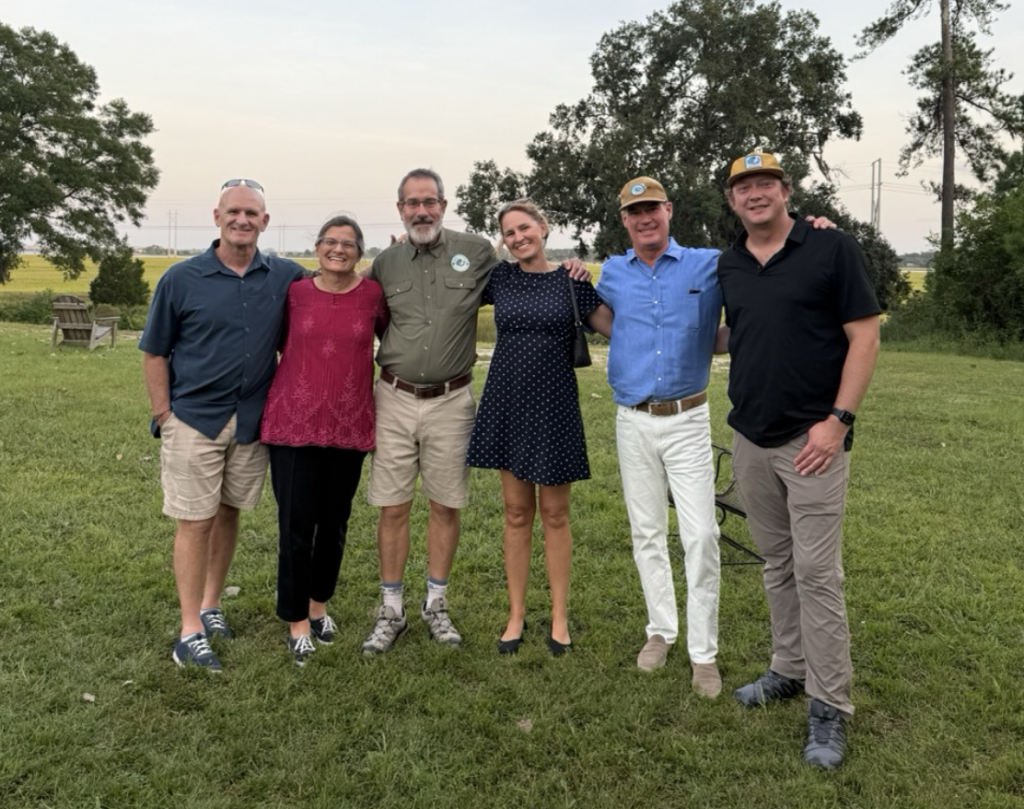
From left to right: John Maraia, Pam Ferguson, Scott Glass, Linda Parlo, Malcolm Crosland, Andrew Pagels
Not pictured: Mike Marcell, Bill Donaldson
Why do you choose to support Charleston Waterkeeper? How did you get started with us?
SCOTT GLASS: Before I retired at the end of 2024, I looked into various local organizations in the local conservation space that I may be interested in volunteering for. I knew about Charleston Waterkeeper, and after researching further, I was impressed with the work that they do. Andrew Wunderley graciously agreed to meet up for coffee to talk about opportunities, and after that conversation, I knew that this was an organization I wanted to be a part of. My template for volunteering was to work with organizations that created positive impacts in the local conservation community, and CWK fits this perfectly!
LINDA PARLO: Why I support Charleston Waterkeeper is because you make a real, hands-on difference for our local waters, by protecting it through involvement of the community and advocating for healthier water. I first connected with the team at the Sewee Exposition 2015. We talked about ways I could help protect local creeks and rivers and I have loved every minute of volunteering ever since!
JOHN MARAIA: I support Charleston Waterkeeper because it is the best way for me to protect the things that I love most about the Lowcountry; our marshes, rivers and beaches. I was first introduced to Charleston Waterkeeper when my wife Debbie and I took part in a clean-up in Francis Marion National Forest in early 2021.
BILL DONALDSON: I volunteered at an oyster trash clean up shortly after I moved here in 2020. Now, I volunteer for almost every aspect of Waterkeeper because of their partnerships I get access to things I could never do and have even greater impact.
MALCOLM CROSLAND: Helping maintain the health of our tidal estuaries is important to me. CWK is the perfect opportunity for me to help ensure our marsh ecosystem is protected.
How long have you been involved with the Swim Alert program and why did you want to become a community scientist? What’s your favorite part about being a Field Investigator?
BILL DONALDSON: Besides helping clean our waterways, it’s the people at Waterkeeper that keeps me coming back and doing different events. Cheryl makes picking smelly trash from piles of oyster shells on blistering hot asphalt a fun day.
JOHN MARAIA: My involvement with the Swim Alert program began in the spring of 2023. Debbie and I were already creek watchers for Charleston Waterkeeper and the Swim Alert program sounded like a great way to expand my service as a community scientist, collecting samples that are critical to monitoring the health of the Lowcountry’s waterways. My favorite part of being a Field Investigator is serving on the Boat Crew on a calm Wednesday morning, collecting samples in a beautiful setting.
PAM FERGUSON: I started about a year ago and I love data! Data helps us learn the truth about our environment, and what helps and what hurts it.
SCOTT GLASS: I participated in the April 2025 Swim Alert training and started conducting field investigations the following month, so I have now been part of the Swim Alert Team for almost a year and a half. I spent 20 years of my career as an Environmental Engineer for the Navy, and I was interested in getting back into the Environmental, Conservation and Natural Resource space in retirement. I enjoy the technical aspects of field work, and the precision and accuracy required while collecting samples to ensure consistency and sample integrity. However, I would say my favorite part of being a Field Investigator is when I have the opportunity to talk to the public about what we’re doing and the important data that is generated from our samples that helps keep them safe!
MALCOLM CROSLAND: I’ve been involved since the 2026 sampling season started. I got involved to learn more about the program and contribute to its success. My favorite part of being a field investigator is being on the water (when the weather is good)!
LINDA PARLO: I have been involved for a few years now. I joined because working with CWK is a great way to give back and make a difference for our local waters. Being a Field Investigator allows me to combine my passion for nature with a meaningful cause. I love getting out to enjoy our beautiful waterways while meeting wonderful, like-minded people along the way.
What is your favorite way to enjoy clean water?
PAM FERGUSON: Playing in ocean waves and stand up paddleboarding.
JOHN MARAIA: I love to kayak and stand-up paddle board on the Wando River and nearby creeks.
BILL DONALDSON: Watching the sunset over the Wando River then turning my kayak around to see the moonrise.
LINDA PARLO: My favorite way to enjoy clean water is by boating, kayaking, snorkeling, or just being out on, by, under, above or in the water. It does not really matter to me how, as long as I get to be around water.
SCOTT GLASS: My favorite way to enjoy clean water is being out on my boat, up in a random creek, far away from any development just appreciating the sheer beauty and grander of a healthy estuarial system, where clean water is the foundation of these healthy habitats.
MALCOLM CROSLAND: Fishing, sailing, surfing.
Do you have a favorite waterway in Charleston or a memorable experience on the water?
LINDA PARLO: The Cape Romain area, heading our from McClellanville, is probably my favorite waterway around here, but the upper Ashley river is also really beautiful, passing the historic plantations. Of all my memories on the water, snorkeling with Orcas (Killer Whales) in a crystal-clear fjord in Northern Norway is the most unforgettable memory. A mother and her calf dove right beneath me and I could watch them glide through the depths.
MALCOLM CROSLAND: Exploring Bull Bay and its many creeks.
JOHN MARAIA: My favorite waterways are the Wando River, Ralston Creek and Nowell Creek. I have two very memorable experiences on local waters. I remember kayaking near the mouth of Ralston Creek and happening upon a couple of manatee grazing on sea grass. Until then, I didn’t realize manatees came this far north, let alone up the Wando! I remember taking my SUP out on a foggy morning on the Wando when the water was smooth as glass. While I was out, I could hear dolphins breaching ahead of me. I sat down on my SUP as they passed by and I captured a photo of a mom hoisting a baby dolphin out of the water just off the side of my SUP.
BILL DONALDSON: Kayaking down Cuckold creek to the Combahee River. You pass by scenes from Forrest Gump, enter rice fields, paddle under nesting Bald Eagle and Ospreys, and end at the site where Harriet Tubman led a raid by African American soldiers of the 2nd South Carolina Infantry in June 1863.
SCOTT GLASS: I truly love so many of the waterways in the Charleston area, but my favorite is probably making the run up the Folly River, through the flats and up to Morris Island. My most memorable experiences are when I explore a remote creek and experience the new views for the first time.
Why is environmental stewardship important to you and why should others become a waterway steward like you?
MALCOLM CROSLAND: Our saltwater estuaries are the nursery grounds for a vast number of interconnected species. The lynchpin for the continuation of those species is having clean water that can support the reproductive process. If water quality deteriorates, the reproductive process will collapse, and the entire interconnected ecosystem will not survive.
It’s everyone’s responsibility to help protect our ecosystem. If for no other reason, for self-survival.
SCOTT GLASS: Environmental stewardship is critical to ensuring we have the natural resources we love for generations to come. Collecting the data needed to understand where and what the stressors to our waterbodies are is critical to being able to potentially implement change to better protect these resources. If everyone did just a little bit to help protect and conserve our waterways and other natural resources, just imagine the impact that would have!
PAM FERGUSON: Destroying our waterways impacts almost all life on earth.
JOHN MARAIA: Environmental stewardship is important to me because it is inherent in my obligation to care for God’s creation for my children, grandchildren and future generations. Others should become waterway stewards because our local waters are what make the Lowcountry so very special.
BILL DONALDSON: I love sharing our waterways and low country wildlife with my four year old grandson. And someday, if he has grandchildren, I hope they will be blessed to have that same experience as we do today. That’s why I volunteer, because the water and wildlife we enjoy isn’t just something to enjoy today; it’s something we owe our future generations.
LINDA PARLO: Because we are all dependent on nature, it is up to us to protect it for ourselves, future generations and all living things. Growing up by the ocean shaped me and inspired me to become a marine biologist. Since then, I have been privileged to work directly with water through fishery science, environmental monitoring and shoreline protection. I became a steward to protect these essential resources, and you should join as a waterway steward to make a difference, too!
Tell us something interesting about yourself that we might not know!
JOHN MARAIA: Our family has always been active in the outdoors, kayaking, biking, hiking, camping, etc. However, I credit our daughter Meghan for my interest in environmental stewardship. Her work as a marine scientist and coastal ecologist has highlighted the challenges facing our environment. Her passion for protecting the natural world has inspired me.
BILL DONALDSON: I was “in” the 1979 U.S. Women’s Open golf tournament. Well, I actually worked for ABC Sports as a spotter, tracking where the players’ shots landed and relaying that information to the producers for the broadcast team. It was a pretty unique way to experience a major golf tournament and see how live television works.
PAM FERGUSON: I’ve been to Yemen, which is a beautiful, fascinating place with warm and friendly people.
SCOTT GLASS: When I was working as an Environmental Engineer for the Navy earlier in my career, I was assigned to a project north of St Paul Minnesota, where an old World War II era dump site was leaching chlorinated solvents into the Mississippi River, just above a potable water intake for the City of St Paul. I was part of the team to develop the strategy to cut off the contaminated groundwater flowing into the river, and treating the contamination sources. For our efforts, I, along with the State and EPA regulatory representatives on the team, received a Certificate of Accommodation!
MALCOLM CROSLAND: I can eat an entire bag of Med -Del Ginger Snap Cookies in one go. Some might say that’s gluttonous; I say it’s a talent.
LINDA PARLO: You might not know that I have lived in five different countries across North, South, and Central Europe, Asia, and now on the US East Coast. Originally from Sweden, my family lived in the Charleston area from 2014 to 2017. We returned to Sweden in 2018, but we missed this beautiful place so much that we made the leap to move back here in 2024. When I am not working with water, enjoying the outdoors or hanging out with family and friends, you can find me practicing Capoeira. It´s a Brazilian martial art that combines music, dance-like movements, acrobatics, and self-defense.
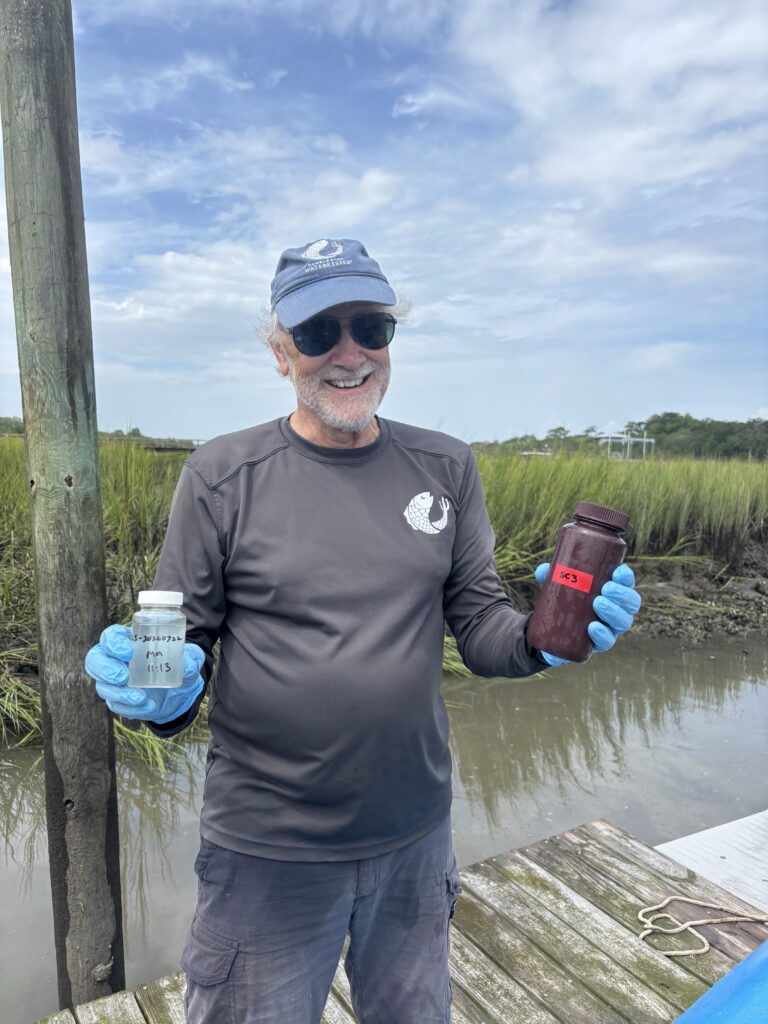
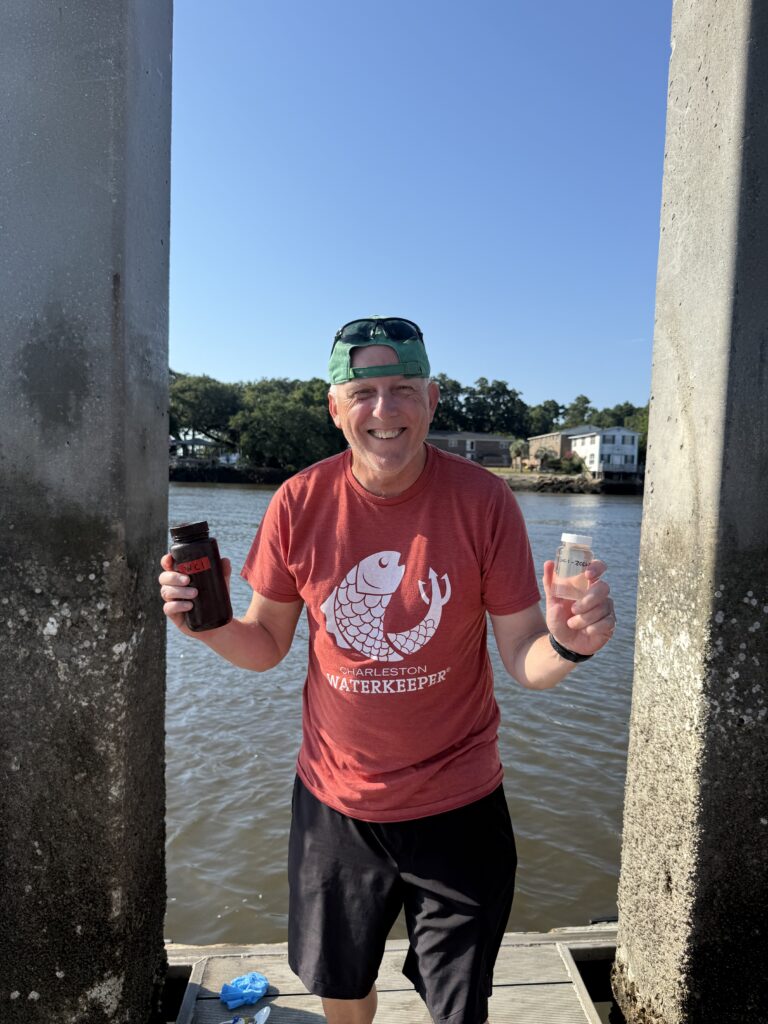
Mike Marcell Bill Donaldson
The post INTERVIEW WITH THE FIELD INVESTIGATORS appeared first on Charleston Waterkeeper.
]]>The post What’s new in the fight for clean water? Check out these advocacy wins so far this year. appeared first on Charleston Waterkeeper.
]]>Stopping Sewage Overflows
In February we celebrated a big win for your Ashley River. Represented by the Southern Environmental Law Center (SELC), we reached an enforceable settlement agreement with Charleston Water System, that addresses years of chronic sewage overflows in West Ashley. The agreement fixes longstanding inflow and infiltration problems, improves public communication and accountability, and creates a funding source for homeowners to help fix leaky sewer laterals. These actions are long overdue and we’re glad to see Charleston Water System implementing fixes. We’ll keep a close eye on their progress for the Ashley River. You can help keep an eye on Charleston Water System’s progress too by checking out their quarterly reports posted here: Quarterly SSO Progress Report.
Holding Plastic Pellet Polluters Accountable
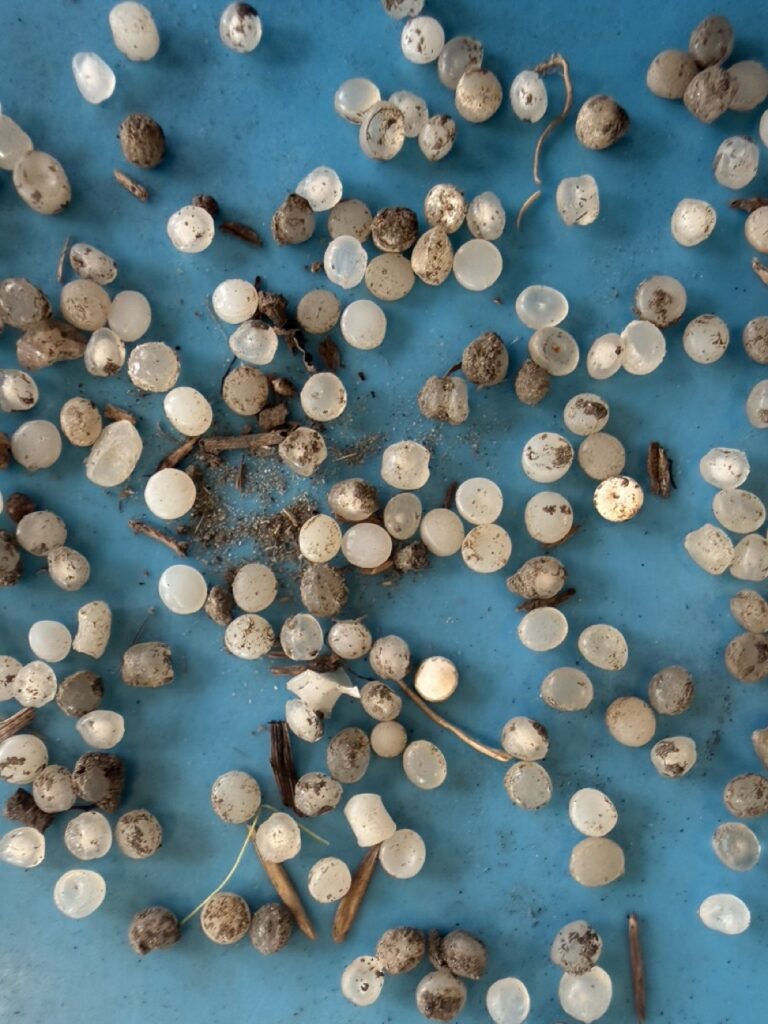
In June, represented by the SELC, we sent a formal Notice of Intent to Agru America, Frontier Logistics, Ray-Mont Logistics, and the South Carolina Ports Authority to notify them of our intent to pursue legal action if they fail to stop polluting your waterways with plastic pellets. Our sampling work since 2021 has documented persistent plastic pellet pollution in the Cooper River. This isn’t a one-time spill. It’s chronic, ongoing pollution that is 100% preventable. After documenting more than 30,000 nurdles in the Cooper River downstream from these facilities during our investigation, we’ve seen enough. We’ve held nurdle polluters accountable before and this action starts the clock on stopping the pollution. Learn more in this editorial from the Post & Courier.
Partnering to Help Repair Septic Tanks
Over the years we’ve been a persistent and vocal advocate for stopping and cleaning up bacteria and pathogen pollution from septic tanks. We need proactive local action to provide relief for communities now while our state policy plays catch up. We’re proud to be part of that action. This summer, we are kicking off a partnership with Mount Pleasant Waterworks on a septic repair and replacement program thanks to funding from the Healthy Harbor Grant Program, awarded by the Coastal Community Foundation.
Adding Another Strong Voice: Riley Egger joins the team!
The threats to your waterways are growing and our commitment to protecting them is unwavering. That’s why this summer, we welcomed Riley Egger as our first ever Advocacy and Policy Director. Riley joins Charleston Waterkeeper with nearly a decade of experience advocating not just for your natural resources, but also for the people and wildlife that depend on them. Riley has worked alongside Charleston Waterkeeper since 2018 in her roles with the Southern Environmental Law Center and Coastal Conservation League, and we’re thrilled to have her on our team. We’re not kidding when we said she’s been right alongside us. Check out this OpEd co-authored by Riley and Andrew in the Post and Courier from 2023. Commentary: Best time to prevent pollution is before the tank is installed.
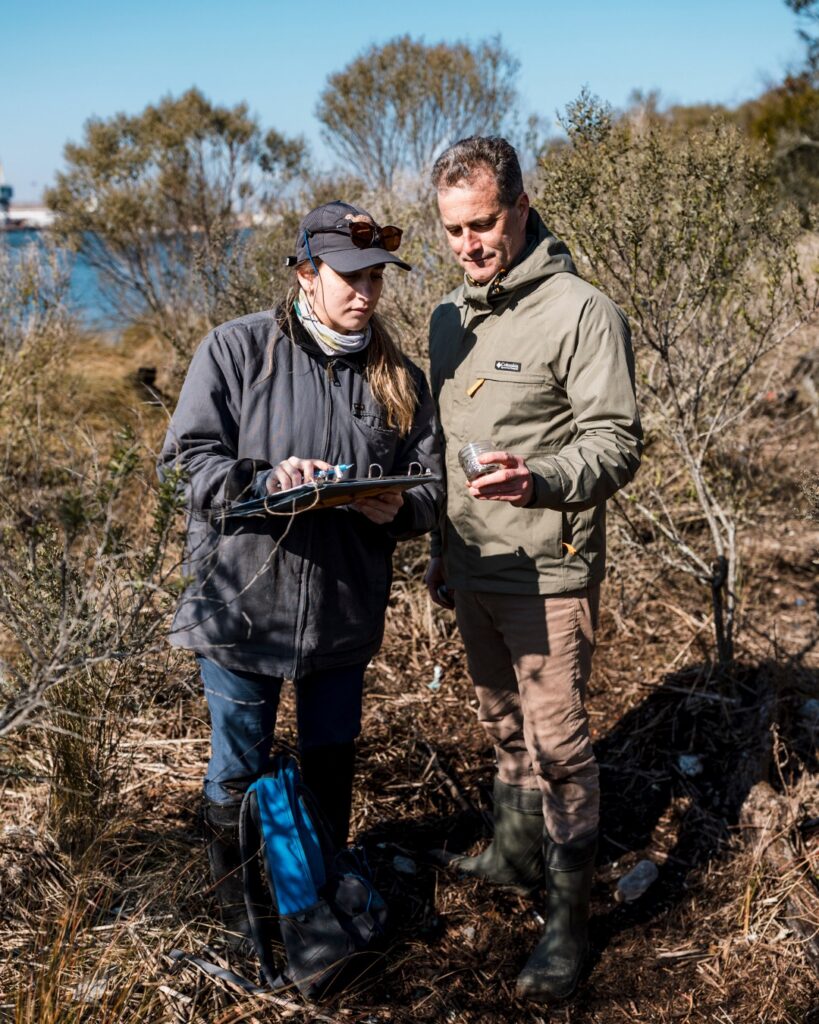
Riley and Andrew documenting plastic pellet pollution / Joel Caldwell
Working for your Wetlands
Wetlands work for us 24/7/365. They provide unmatched storm and floodwater storage, enhance water quality by filtering out pollutants, act as habitat and nursery grounds. And, they do it all for free (but only if we’re smart enough to protect them). Recent rollbacks remove federal protections and leave your wetlands vulnerable to fill-and-build style development. Without any state protections in place it’s up to local municipalities to step in. In Mount Pleasant, we advocated alongside our partners at the Southern Environmental Law Center for an ordinance to add commonsense protections for critical isolated wetlands. The ordinance passed unanimously on April 14, 2026 (read more here!). But this is just the beginning. We’re working with a host of partners to expand protections in other municipalities across the Lowcountry.
The post What’s new in the fight for clean water? Check out these advocacy wins so far this year. appeared first on Charleston Waterkeeper.
]]>The post INTERVIEW WITH GUINN WALLOVER appeared first on Charleston Waterkeeper.
]]>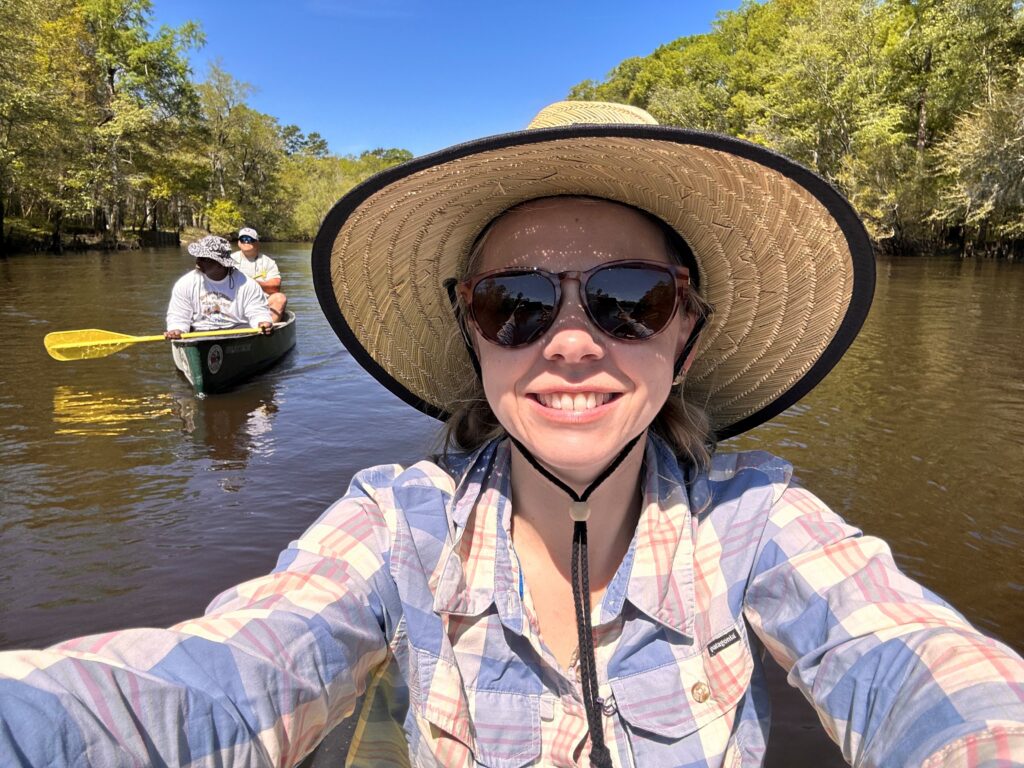
Guinn Wallover is the Water Quality & Environmental Program Specialist at Mount Pleasant Waterworks.
Why do you choose to support Charleston Waterkeeper? How did you get started with us?
We (Mount Pleasant Waterworks) share a mission with Charleston Waterkeeper to help protect clean water and public health in our community. Charleston Waterkeeper has been a leader in bringing people together to safeguard and protect our local waterways for today and the future. I first got started with Charleston Waterkeeper back in 2021, when I began working with Cheryl to co-teach Adopt-A-Stream saltwater volunteer certification workshops. It’s been so much fun working alongside Cheryl and Britney to teach and inspire volunteers in Charleston and Mount Pleasant.
What is your favorite way to enjoy clean water?
I love exploring the beach with my kids on a beach walk. Watching their excitement as they discover jellyfish, shark teeth, shorebirds, and everything else we find along the way makes those walks really special.
Do you have a favorite waterway in Charleston or a memorable experience on the water?
The Cape Romain National Wildlife Refuge is one of my favorite places. I love its sense of remoteness, and it’s an incredible spot for birdwatching.
Why is environmental stewardship important to you and why should others become a waterway steward like you?
I am passionate about the connection we have between each other and the natural world. When we protect our environment, we protect our communities, too. I want my kids, and future generations in Charleston, to have the same opportunities, safe and clean waterways, and quality of life that we have today.
Tell us about your role in the septic repair financial assistance program supported by the Healthy Harbor Fund and how that program is going to support the local community.
Mount Pleasant Waterworks is so excited to partner with Charleston Waterkeeper on this initiative! I help coordinate MPW’s efforts for this project as we help repair or replace failing septic systems for low-income families in our service area. Failing septic systems threaten community and waterway health, and all families deserve access to adequate wastewater treatment for their homes. In areas where community sewer is not available, we’re grateful to be able to help those most in need protect their homes, their health, and their family’s future.
What’s something else you’re working on at Mount Pleasant Waterworks or a recent project that you’re excited to share?
We are passionate about being good stewards of both our water and our land. Over the past few years, we’ve been transforming portions of our properties and easements into native plant habitats. These projects give us opportunities to connect with volunteers around our mission while also building resilient landscapes that benefit the environment and our community’s well-being.
Tell us something interesting about yourself that we might not know!
I have been a lifelong runner, but this fall I’m training for my first triathlon! Wish me luck!
The post INTERVIEW WITH GUINN WALLOVER appeared first on Charleston Waterkeeper.
]]>The post INTERVIEW WITH DARBY REED appeared first on Charleston Waterkeeper.
]]>Why do you choose to support Charleston Waterkeeper? How did you get started with us?
Charleston is a coastal community, meaning that water is central to our lives. Water shapes our environment, economy, recreation, and overall quality of life. I choose to support Charleston Waterkeeper because they are an ambassador for the waterways that connect and sustain our community. Through their work in education, advocacy, monitoring, and community engagement, they empower our residents to become active stewards of our waterways.
I began volunteering with Charleston Waterkeeper shortly after moving to the Charleston area in March 2023. Since April 2025, I’ve had the privilege to partner with Charleston Waterkeeper on a variety of projects and cleanup initiatives through my work with Keep Charleston Beautiful. These experiences have reinforced the importance of collaboration in environmental stewardship, and I am proud to work alongside the organization dedicated to protecting and preserving the waters that make Charleston such a special place.
What is your favorite way to enjoy clean water?
My favorite way to enjoy clean water is to be completely immersed in it. I grew up at the beach and learned at a young age how to read a wave: Do I float over, dive under, or ride it in? I’d stay in the water until the pruning in my fingers felt permanent, only coming out for food or red flags. Having access to clean water makes these core experiences of growing up near a beach possible and serves as a constant reminder of why this work matters.
Do you have a favorite waterway in Charleston or a memorable experience on the water?
It’s hard to pinpoint one favorite waterway or experience as being better than the others. As my Nana always says, “Any day on a boat is a good day”. Every time I’m on the water I think about how fortunate we are to live in a place where nature, water, and wildlife are so intertwined with our daily lives. Whether I’m in a kayak, on a jon boat, aboard a catamaran, a charter boat, or SCDNR’s EV Discovery, I’m reminded of why I chose to pursue the work that I do.
Why is environmental stewardship important to you and why should others become a waterway steward like you?
Environmental stewardship has always been a priority of mine and is reflected in both my actions and my career. From the Appalachian Mountains to the Lowcountry, I have worked to protect natural spaces through sustainable trail development and invasive species removal, to advocate for outdoor stewardship through expanding access to opportunities and community engagement, to enhance water quality through stormwater best management practices, oyster reef building, and water quality monitoring, and now to keep Charleston beautiful.
Litter isn’t just an eyesore, it’s a growing threat to our wildlife, our waterways, and the natural beauty that defines our home. When litter is left on roads, sidewalks, and green spaces it does not stay there. It gets carried by wind and stormwater, ultimately ending up in our rivers then the ocean. Along the way, wildlife can mistake trash for food or become entangled in it, often resulting in injury or death. Birds, turtles, and fish are especially vulnerable to plastic pollution, which can persist in our environment for decades. Beyond its impact on wildlife, litter diminishes the places we live, work, and play. It can discourage waterway recreation, clog our drainage systems, contribute to flooding, and create breeding grounds for bacteria that spreads disease.
When the community comes together to clean up our home, we are doing more than just picking up litter. We are protecting our diverse ecosystem, reducing environmental health risks, and preserving the natural beauty that makes Charleston so special. This is why stewardship matters to me and why I believe that everyone has a role to play in keeping our community and waterways clean and healthy for generations to come.
Tell us about a volunteer opportunity or event that you participated in/partnered on with Charleston Waterkeeper that was impactful to you and why.
Marshes play a vital role to our home by providing critical habitat, stabilizing shorelines, and protecting us from storm surges. However, these ecosystems cannot function as intended when they are inundated with litter and plastic. Charleston Waterkeeper and Keep Charleston Beautiful have worked together on multiple marsh cleanup events throughout the Charleston peninsula. These events provide a meaningful opportunity for residents and visitors alike to immerse themselves in one of Charleston’s most iconic landscapes while giving back by helping keep these ecosystems clean and resilient, protecting life for all inhabitants – BIG and small.
What’s something you’re working on at Keep Charleston Beautiful or a recent project that you’re excited to share?
We just wrapped up the greatest cleanup effort Charleston has ever seen!
As a program affiliate of Keep America Beautiful, Keep Charleston Beautiful joined the Greatest American Cleanup call-to-action initiative in recognition of America’s 250th birthday. The national goal was to remove 25 billion pieces of litter from parks, waterways, and public spaces by July 4, 2026. It’s an ambitious goal, but when communities work together, greatness is possible.
The Greatest Charleston Cleanup consisted of five large-scale community-wide cleanups across Charleston, including Johns Island, James Island, West Ashley, Daniel Island, and Downtown. Each event brought together different local organizations, businesses, and community leaders to ensure safe and impactful efforts. Together, we rolled up our sleeves, worked side-by-side, and showed what Charleston pride can accomplish!
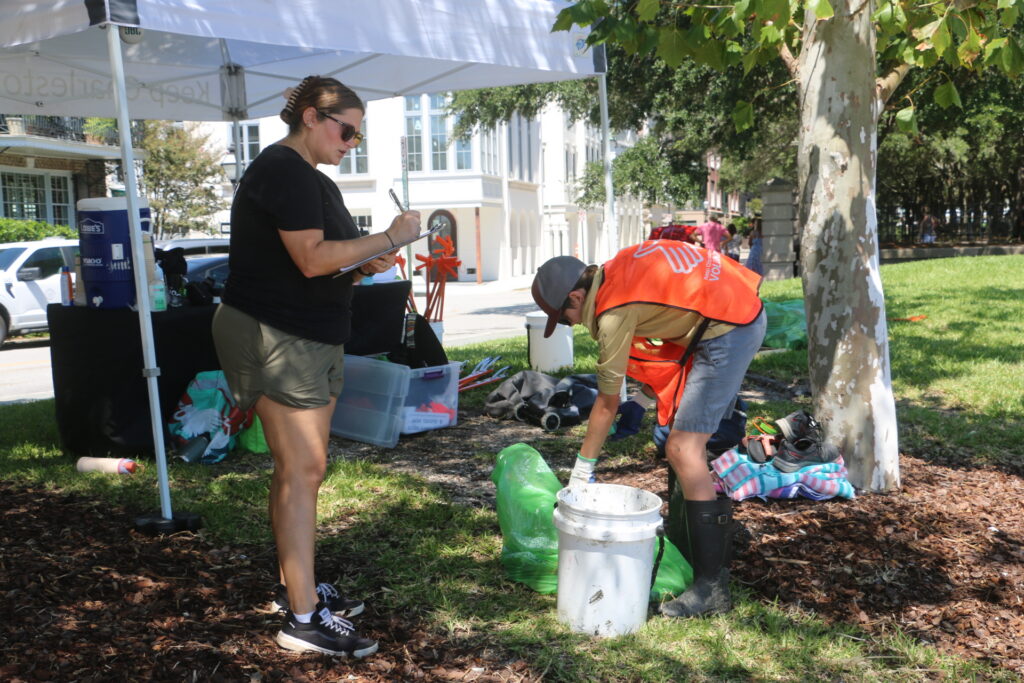
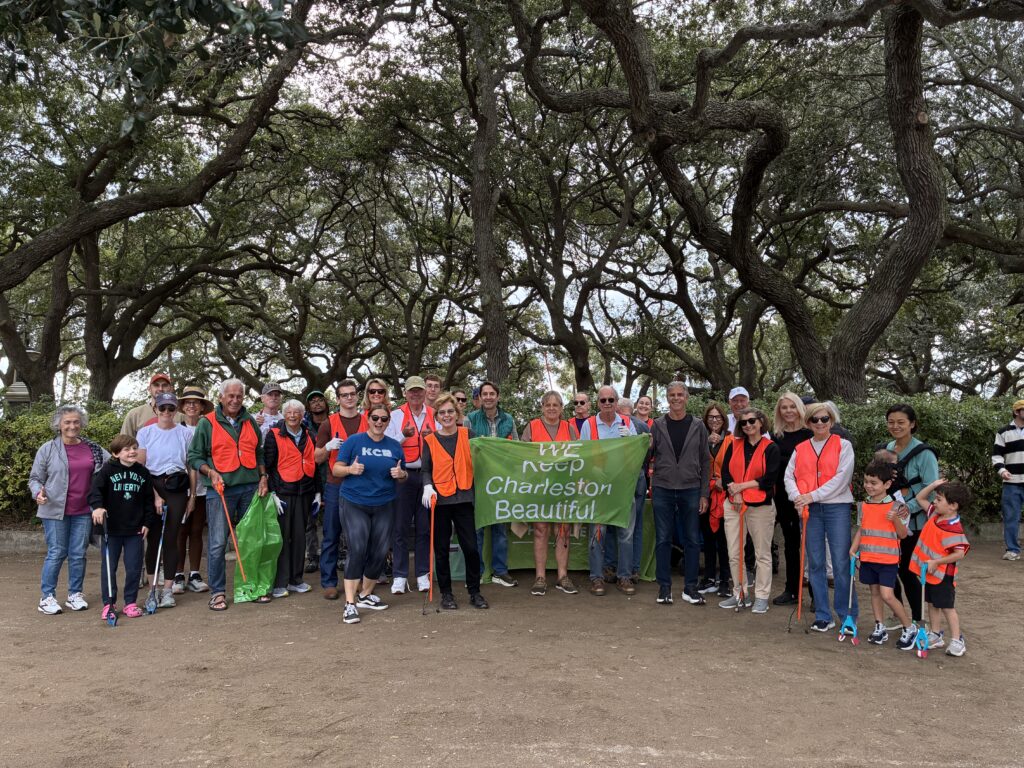
Charleston Waterkeeper was a partner in our final event of the series, the Downtown Community Cleanup. In this event alone, we cleaned up 7 locations within the peninsula, collaborated with 11 community partners, engaged with 125 volunteers, and removed approximately 1450 pounds of litter! We’re now compiling the final results from the full series and look forward to sharing the total impact soon!
Tell us something interesting about yourself that we might not know!
While technically my first job was leading ecotours and assisting with retail at a surf shop, my family likes to say that my first job was handing out colored golf balls at my family’s mini-golf course. When I was young, my grandfather owned a putt-putt in Sandbridge Beach. During the summers, my mom worked the front desk, my uncle worked the parking lot, and I ruled the greens. My favorite pastime was sneaking out through the back of the property to the marsh, where I would play in the water and try to catch toads. If I caught one, it was allowed to come home with me as my “24-hour pet”. My grandfather sold that property to developers many years ago, and condos now stand where the mini-golf course once was. Though that marsh access is long gone, the memories of those childhood days spent escaping to the water have stayed with me, ultimately becoming my “why.”
The post INTERVIEW WITH DARBY REED appeared first on Charleston Waterkeeper.
]]>The post Stop polluting nurdles or face legal action appeared first on Charleston Waterkeeper.
]]>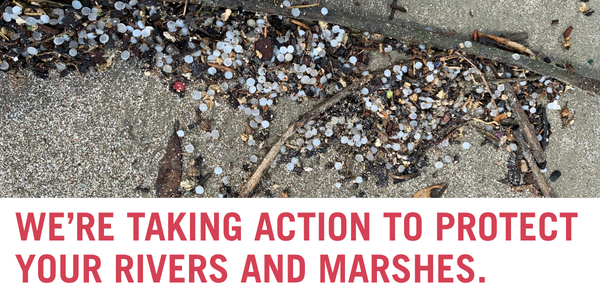
Last week, we sent a letter explaining our intent to pursue legal action in federal court against three industrial facilities and South Carolina Ports Authority officials for polluting your waterways with plastic pellets.
Evidence collected over the past six years reveals the Cooper River is a major hotspot for plastic pellet pollution. Our team documented more than 25,000 plastic pellets during recent sampling. These alarming numbers indicate our area has one of the worst nurdle pollution problems in the country.
Agru America, Frontier Logistics, Ray-Mont Logistics, and the SC Ports Authority all operate facilities that handle large volumes of microplastic pellets, known as nurdles, on the banks of the Cooper River. Represented by the Southern Environmental Law Center, we have formally notified these facilities and officials that if they don’t stop polluting, we are prepared to take legal action to hold them accountable.
The message is simple: stop polluting our estuary.
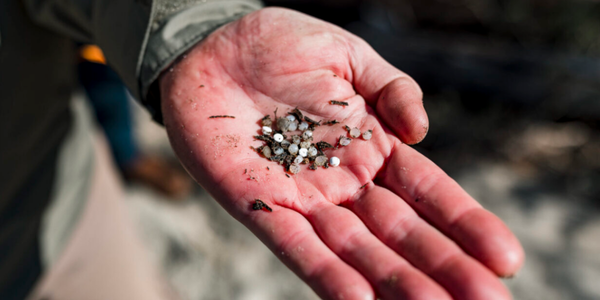
Photo credit to Joel Caldwell
See more about what we’re finding in the Post & Courier and ABC 4.
Sound familiar? We’ve been here before. When massive amounts of nurdles washed up on Sullivans Island back in 2019, the Department of Environmental Services failed to enforce clean water laws, so we took legal action. Along with the Coastal Conservation League and Southern Environmental Law Center, we filed a lawsuit against those responsible and successfully reached a $1 million settlement. But it’s clear the problem persists.
The plastic pellet pollution washing up on your beaches and in your marshes is not the result of a one-off spill; it’s a chronic, consistent, problem that has gone unaddressed.
Bottom line–this problem is 100% preventable. This action starts the clock on fixing this problem once and for all. The notice reminds these facilities and officials that they have a responsibility to clean up their operations. Accountability isn’t optional. Microplastic pellets don’t belong in your rivers and marshes.
The post Stop polluting nurdles or face legal action appeared first on Charleston Waterkeeper.
]]>The post INTERVIEW WITH NAYELI LARA appeared first on Charleston Waterkeeper.
]]>I volunteered with prairie conservation in my hometown in the Chicago suburbs, so I was looking for something similar when I moved here. Charleston Waterkeeper does a great job planning so many volunteer events throughout the year. With so much going on, it’s easy for anyone to find something they will find fulfilling and fun.
What is your favorite way to enjoy clean water?
Paddle boarding on Shem Creek is a great way to spend a day!
Do you have a favorite waterway in Charleston or a memorable experience on the water?
For the last five years, I’ve worked in the Cooper River. Literally in the river on a decommissioned submarine. Walking down the pier every day has always been a moment of peace before going underwater and I’ve encountered so much wildlife looking out across the brow. My favorite was after a night shift, seeing a river otter for the first time gracefully gliding across a perfectly smooth river at sunrise. That experience reminds me how integral nature is to my line of work and how important it is to safeguard our waterways.
Why is environmental stewardship important to you and why should others become a waterway steward like you?
So much of our lives are tied to the resources we get from nature, yet it seems like more of our world is negatively impacted by pollution and habitat loss every year. In his book A Sand County Almanac (my favorite book), Aldo Leopold discusses the land ethic – an idea that humanity has a moral responsibility to care for our natural world. Even though his book was published in 1949, not much has changed in the way of stewardship. I hope that more people get to experience clean waterways in Charleston for years to come, but that means people need to be aware of the challenges our land faces and how to protect it.
Tell us about a volunteer opportunity or event that you participated in with Charleston Waterkeeper that was impactful to you and why.
Excavating a tidal creek in Maryville by hand was an unforgettable volunteer project. Getting covered head to toe in mud is always fun, especially doing it with other people who are so passionate about making a place better. This project also introduced me to Maryville, a primarily Black town that is often overlooked when people think of Charleston. Years of volunteering have made me more knowledgeable about the Gullah Geechee people and Native Americans whose way of life revolved around these waterways. As Charleston continues to grow, I think the environmental conservation goes alongside historical conservation.
Tell us something interesting about yourself that we might not know!
I’m (unfortunately) leaving Charleston after six amazing years, but I will always look back fondly on my time in the Lowcountry. Next, I’ll pursue my master’s degree in nuclear engineering at MIT. I’m a huge proponent for nuclear power as a clean carbon-free energy source that is essential for our country’s growing energy needs. I’m hoping to use my experience with Charleston Waterkeeper for perspective on how nuclear power and our environment can work together.
Give to support clean water and have your gift matched up to $10,000 by Nayeli: charlestonwaterkeeper.org/give

The post INTERVIEW WITH NAYELI LARA appeared first on Charleston Waterkeeper.
]]>The post INTERVIEW WITH MATT WILLIAMS appeared first on Charleston Waterkeeper.
]]>One of the most important things we can do in conservation is connect people with nature, and we need to provide as many opportunities as we can for folks to get out and experience our natural places. When you take your kids or family into nature, it needs to be in a safe way. Clean water that we can swim in, catch fish in, or pick oysters in is really important to our overall livelihoods and supportive to our sense of place, and clean water makes Charleston a livable place. It’s really important to support groups like Charleston Waterkeeper that are making sure we know when and where we’re experiencing clean and safe water.
What is your favorite way to enjoy clean water?
I love to recreate in the waters around Charleston County on the weekends with my kids. We like to fish and to swim, so it’s nice to recreate in places where I know the water is clean. If I catch a fish and I decide I want to keep it for supper–which isn’t often–but when I do, I like to catch that fish and know that it’s coming from an estuary with high water quality. And that’s one of the reasons why Charleston Waterkeeper’s work is so important–you let us know where the safe places are to recreate.
Do you have a favorite waterway in Charleston or a memorable experience on the water?
I’m going to go north to talk about my favorite place because I grew up on the Santee Delta, and Charleston County’s and Georgetown County’s line is the South Santee River. I’ve spent all my life recreating and spending time fishing, swimming, and hunting on the Santee Delta. So my absolute favorite waterway in the County is the South Santee River, but I also really enjoy spending time on the Stono River, the Kiawah River, and in the North Edisto River, and I love spending time at Botany Island.
Why is environmental stewardship important to you and why should others become a waterway steward like you?
I have devoted my life to conservation and to protecting the last great places of the South Carolina lowcountry. I live it, I breathe it, and I do this work because I want my kids and future generations of the Lowcountry to have a place where they can connect with nature. I truly believe that time spent in nature with people that you love is the best medicine we can possibly give ourselves.
Tell us about what you’ve been working on or a recent project you’re excited to share.
Lowcountry Land Trust has well over a dozen projects in the pipeline, and these are projects to permanently protect land with either conservation easements or through what we call a fee-simple acquisition, which will then be transferred to a county, state, or federal partner. We have projects from the Savannah River all the way up to Georgetown County in various stages of completion. We are really excited about getting those finished this year. On average, we close about 12-15 projects per year and we average about 3,500 acres of protected land each year.
Tell us something interesting about yourself that we might not know!
I love spending time in nature, but I think my peanut butter and chocolate combination is when I’m in nature with people that I love but also listening to really good music. And just as I love to find new and special places in nature, I also love to find new songs that pique my imagination and make me have a new experience with music that I’ve never had. I’m also a musician and I love to play music, and I play in a band with my brother called Solid Country Gold.
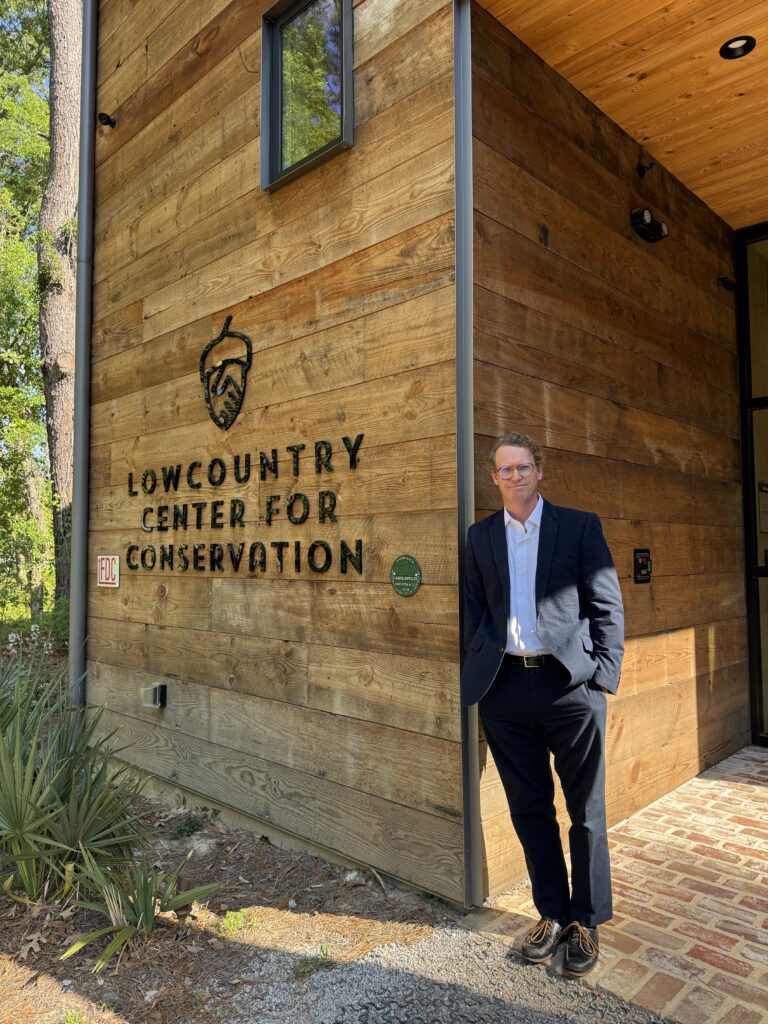
Matt Williams is the President and CEO of Lowcountry Land Trust.
The post INTERVIEW WITH MATT WILLIAMS appeared first on Charleston Waterkeeper.
]]>The post INTERVIEW WITH SCOTT SAUM appeared first on Charleston Waterkeeper.
]]>SS: Cummins has partnered with Charleston Waterkeeper for many years, creating meaningful opportunities for our employees to volunteer and support their local communities. Our shared values and commitment to water stewardship have made this partnership a great fit.
What is your favorite way to enjoy clean water?
SS: I enjoy spending time on the water with friends and family. Canoeing, kayaking, and waterskiing are some of my favorite ways to appreciate clean, healthy waterways.
Do you have a favorite waterway in Charleston or a memorable experience on the water?
SS: During my most recent visit to Charleston, the Charleston Waterkeeper team took us on a tour of Charleston harbor. Seeing the city from the water was memorable, and it was powerful to witness firsthand the impact the organization has made through water quality testing, habitat restoration, and strong advocacy for clean water across the region.
Why is environmental stewardship important to you and your team, and how does it show up in your work?
SS: Environmental stewardship is an integral part of Cummins’ Corporate Responsibility initiatives and to ensuring the communities where our employees work and live are better because Cummins is there. As a Corporate Responsibility leader, I have the privilege of leading Cummins Water Works, a strategic program focused on strengthening communities through sustainable water solutions and addressing the global water crisis. Through partnerships with local organizations, the program supports large-scale, high-impact water projects around the world. Cummins Water Works is also a key part of Cummins’ Destination Zero strategy, supporting our company’s goal to be net water positive in every region where we operate by 2030.
Tell us about the Stono River Project and what excites you most about the partnership.
SS: The Stono River Project is exciting because it creates meaningful opportunities to engage more Cummins employees while expanding the positive impact we can make in the surrounding community. Together with our partners, we are restoring shoreline, improving water quality, and enhancing habitat for multiple species.
What impact do you hope this project will have on the Stono River and surrounding community?
SS: I hope this project serves as a positive example of what’s possible through collaboration, and the tremendous impact that can be achieved when like‑minded organizations come together to support the surrounding community.
Tell us something interesting about yourself we might not know.
SS: People may not realize how global our work is. We currently have active water projects in 21 countries, and I recently traveled to China to visit partners and experience firsthand the impact these projects are having in local communities.
Scott Saum is the Corporate Responsibility Leader for Cummins Inc. and leads the Cummins Water Works initiative.

The post INTERVIEW WITH SCOTT SAUM appeared first on Charleston Waterkeeper.
]]>The post Welcome to the Community Science Lab! appeared first on Charleston Waterkeeper.
]]>Since 2023, volunteer community scientists have been analyzing microplastics samples with microscopes right here in our office…all 300 square feet of it. After setting up and breaking down our lab equipment one too many times for the sake of table space, we knew it was time to level up. Last fall, we had the opportunity to expand into an empty space next to our office on Shem Creek. It took a lot of imagination, but we had big plans for what it could become.
In just a few months, we’ve completely transformed the space into a first-of-its-kind Community Science Lab. From painting and building lab benches to setting up shelves and turning on the microscopes, we’ve put a lot of work into the space and we’re ready to welcome you in to see it for yourself!
This is community science in action. Here, you can actively participate in local water quality monitoring and microplastic research through our Creek Watcher and Microplastic Monitoring projects, and connect with other volunteers passionate about what’s going on in our watershed. The community scientists involved in these programs serve as Charleston Waterkeeper’s eyes and ears on the water, monitoring the health of Charleston’s estuaries to detect pollution, identify water quality trends, and inform action.
  |
| For years, these community science projects have generated actionable data on water quality and microplastic pollution in our waterways. We know data drives change, and our community science monitoring projects allow us to generate the data needed to inform stormwater management, plastic reduction strategies, and local policy change for a cleaner, healthier estuary.Huge thank you to the Bosch Community Fund, Volvo Community Grants Program, and the Healthy Harbor Fund for supporting the microplastic monitoring program and helping us bring the lab to life. Because of the generous support of these funders, we can keep expanding important datasets and engaging new waterway stewards ready to become community scientists! Want to make a difference for our estuary? Join us in the lab and help protect your waterways. Learn more about becoming a community scientist and sign up here. |
 |  |
The post Welcome to the Community Science Lab! appeared first on Charleston Waterkeeper.
]]>