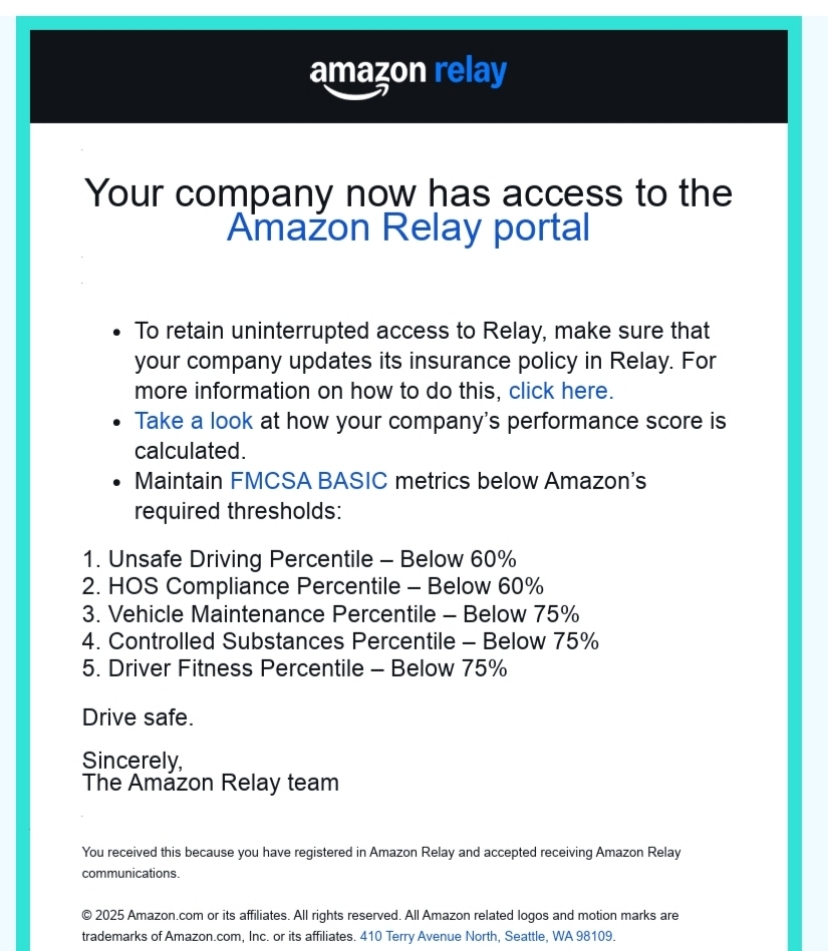
The post Amazon Relay Company Account Reinstated first appeared on amzreinstate.
]]>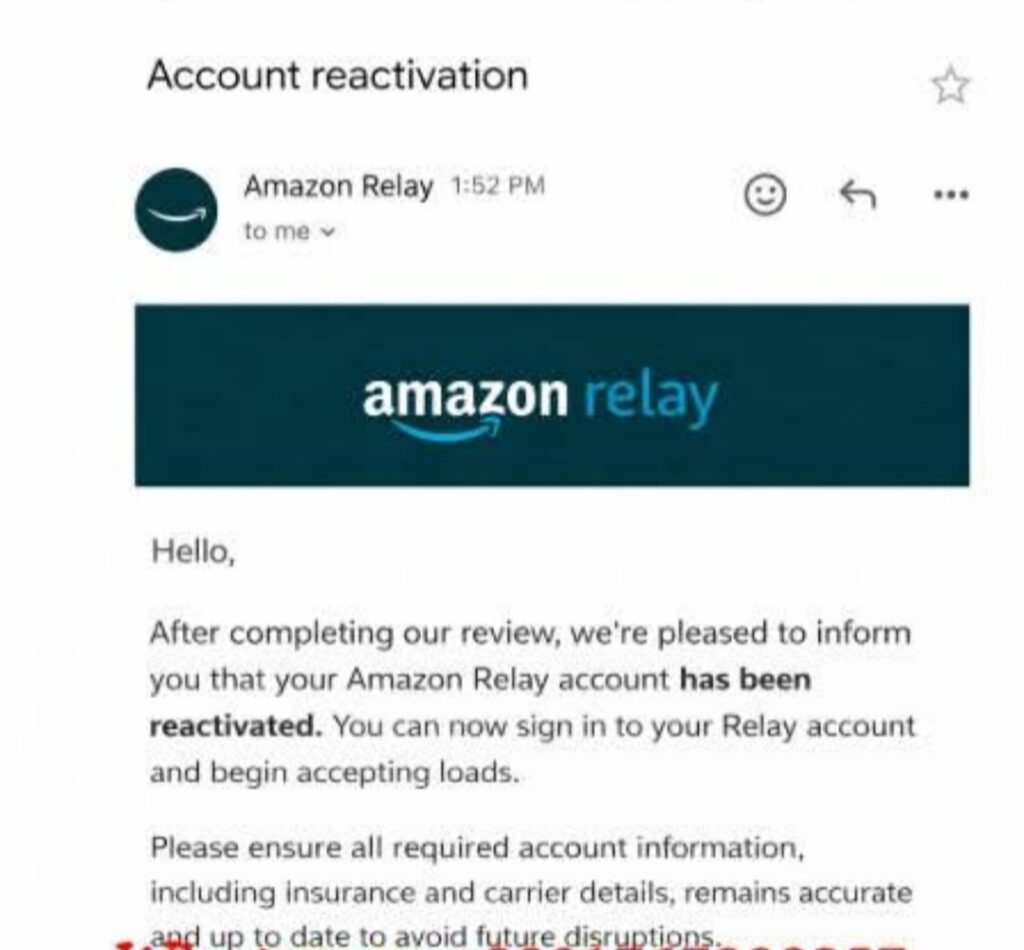
The post Amazon Relay safety Score Violation Reinstated first appeared on amzreinstate.
]]>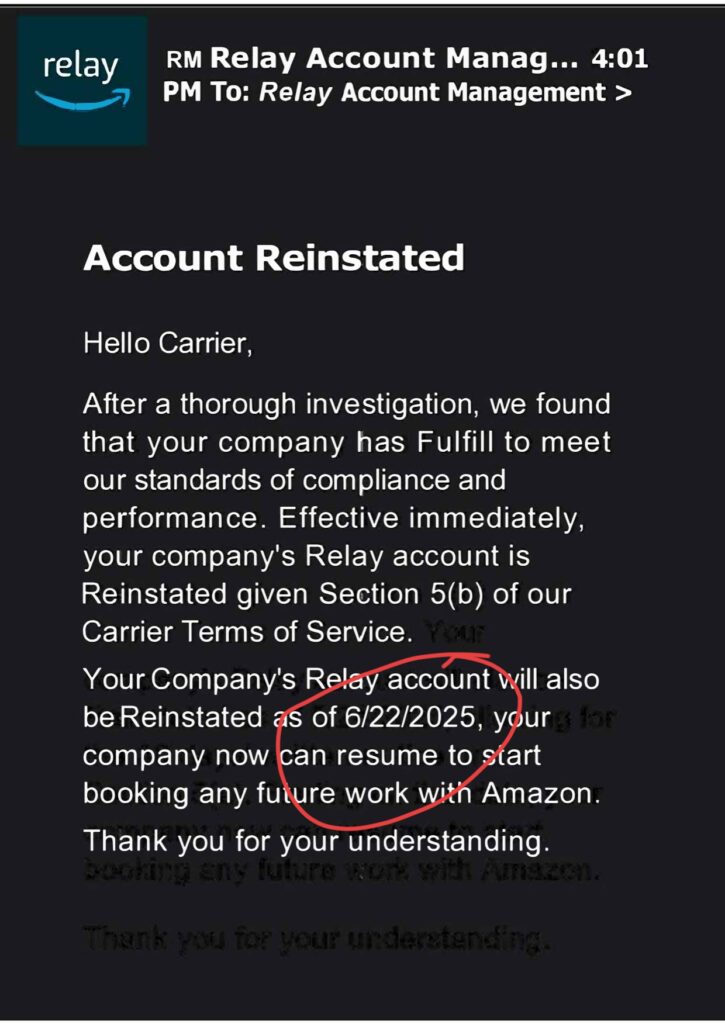
The post Amazon Relay 5b Section Reinstated first appeared on amzreinstate.
]]>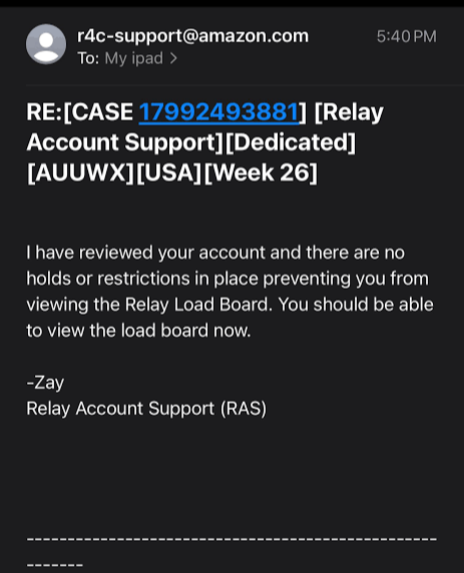
The post Amazon Relay Reinstatement first appeared on amzreinstate.
]]>The post Amazon Ungating: How to Sell in Restricted Categories (2025 Guide) first appeared on amzreinstate.
]]>Amazon ungating is the process of gaining approval to sell in restricted (“gated”) categories. Many profitable niches—like Grocery, Health & Personal Care, and Luxury Beauty—require sellers to meet strict requirements.
This guide covers: Why Amazon gates categories Full list of gated categories Step-by-step ungating methods Common reasons for rejection & fixes
 Why Does Amazon Gate Categories?
Amazon restricts certain categories to: Prevent counterfeit/fake products Ensure compliance (FDA, CPSIA, etc.) Protect brand integrity (e.g., Nike, Apple) Reduce high-return items (e.g., fragile goods)
Ungating = More sales opportunities!
 List of Amazon Gated Categories (2024)
| Category | Why It’s Restricted |
|---|---|
| Grocery & Gourmet Food | Perishable, FDA-regulated |
| Health & Personal Care | Supplements, medical devices |
| Beauty & Cosmetics | Luxury brands, skincare chemicals |
| Jewelry & Watches | High fraud risk (gold, diamonds) |
| Toys & Games | Child safety (CPSIA compliance) |
| Automotive & Powersports | Liability (car parts, fluids) |
| Baby Products | Strict safety standards |
| Pet Supplies | FDA-regulated pet food/meds |
| Industrial & Scientific | Hazardous materials (chemicals, lab gear) |
 How to Get Ungated on Amazon (3 Methods)
Method 1: Apply via Seller Central (Legit Invoices)
- Go to Seller Central → Inventory → Add a Product.
- Search for your product → Click “Request Approval”.
- Submit:
- Supplier invoices (≤ 3 months old, from authorized wholesalers).
- Compliance docs (FDA, CPSIA, ISO, etc.).
- Product images/labels (showing safety info).
Best for: Wholesale/FBA sellers with real invoices.
Method 2: Retail Arbitrage (Workarounds)
- Use 3rd-party ungating services (e.g., Ungating Ninja, ASM Ungating).
- Buy from approved retailers (Walmart, Costco) and submit receipts.
 Risk: Amazon may reject retail receipts.
Method 3: Private Label (Safety Testing)
- Test products in accredited labs (SGS, Intertek).
- Submit reports (e.g., CPSIA for toys, FDA for supplements).
Best for: Brand owners with compliant products.
 Why Was I Rejected? (Fixes)
| Rejection Reason | Solution |
|---|---|
| “Invoices invalid” | Use wholesale suppliers (not retail). |
| “Missing compliance docs” | Get FDA/CPSIA/MSDS certifications. |
| “Suspicious supplier” | Buy from Amazon-approved vendors. |
 Pro Tips for Faster Approval
Start with “easier” categories (e.g., Home & Kitchen subcategories). Use FBA (Amazon trusts FBA sellers more). Contact Seller Support if stuck (ask for “escalation”).
 Final Thoughts
Ungating unlocks high-margin categories, but Amazon’s rules keep changing. Stay compliant, document everything, and diversify across multiple categories for long-term success.
Need help? Comment below!
The post Amazon Ungating: How to Sell in Restricted Categories (2025 Guide) first appeared on amzreinstate.
]]>The post Understanding eBay’s MC999 Suspension: Causes, Implications, and Recovery Strategies first appeared on amzreinstate.
]]>The eBay MC999 suspension is a significant concern for sellers, indicating a serious violation of eBay’s policies. This article delves into the nature of the MC999 suspension, its common triggers, the consequences for sellers, and the steps necessary for reinstatement.
What is an eBay MC999 Suspension?
An MC999 suspension is a notification from eBay indicating that a seller’s account has been suspended due to violations of the platform’s policies. This suspension can affect both buying and selling privileges and may be temporary or indefinite, depending on the severity of the violation.amzreinstate – Amazon Reinstatement
Common Reasons for MC999 Suspensions
- Policy Violations: Engaging in activities that breach eBay’s policies, such as listing prohibited items or manipulating listings, can lead to suspension.
- High Volume of Gift Card Purchases: Purchasing large quantities of gift cards, especially for resale purposes, can trigger a suspension under the site interference policy. Travel with Grant
- Circumventing Buying Limits: Attempting to bypass purchase restrictions on deals or promotions is considered a violation.
- Multiple Account Violations: Operating multiple accounts to evade restrictions or suspensions can result in an MC999 notice.amzreinstate – Amazon Reinstatement+4eBay+4ZIK Analytics+4
- Suspicious Activity: Unusual buying or selling patterns, such as rapid bidding or high-value transactions shortly after account creation, may raise red flags. gixen.com
Consequences of an MC999 Suspension
An MC999 suspension can have several implications:amzreinstate – Amazon Reinstatement
- Loss of Buying and Selling Privileges: The account holder may be barred from participating in transactions on the platform.
- Listing Removal: Active listings may be removed, and associated listing fees may be forfeited. eBay+1gixen.com+1
- Payment Holds: Funds from recent sales may be held until the suspension is resolved.
- Indefinite Suspension: In severe cases, the suspension may be permanent, with no option for appeal.
Steps to Address and Appeal an MC999 Suspension
- Review the Suspension Notice: Carefully read the email or message from eBay detailing the reason for the suspension.Travel with Grant+7Sellbery+7ZIK Analytics+7
- Gather Supporting Documentation: Collect invoices, receipts, and any correspondence that can support your case.ZIK Analytics
- Submit an Appeal: Respond to the suspension notice with a clear and concise appeal, addressing the issues raised and outlining corrective actions taken. ZIK Analytics+2Receive SMS Online+2inkfrog.com+2
- Avoid Creating New Accounts: Do not attempt to circumvent the suspension by opening new accounts, as this can lead to further penalties.Black Hat World
- Seek Professional Assistance: If necessary, consult with experts who specialize in eBay account reinstatements. ZIK Analytics+1AutoDS+1
Preventative Measures to Avoid Future Suspensions
- Adhere to eBay Policies: Regularly review and comply with eBay’s rules and guidelines.
- Maintain Transparent Business Practices: Ensure all listings are accurate and truthful, and avoid any deceptive practices.
- Monitor Account Activity: Keep an eye on your account’s performance metrics and address any issues promptly.
- Limit High-Risk Transactions: Be cautious with activities that may be perceived as high-risk, such as bulk purchasing of gift cards
The post Understanding eBay’s MC999 Suspension: Causes, Implications, and Recovery Strategies first appeared on amzreinstate.
]]>The post Amazon Two-Step Dropshipping: How It Works and Why It’s Risky in 2025 first appeared on amzreinstate.
]]>Dropshipping on Amazon is one of the most popular ways entrepreneurs enter the world of eCommerce. While Amazon has strict dropshipping policies, a loophole known as Two-Step Dropshipping has emerged as a strategy some sellers use to scale without handling inventory. But is it smart — or risky?
In this article, we’ll break down:
- What Two-Step Dropshipping is
- How it works on Amazon
- The benefits and risks
- Amazon’s policy on this method
- Whether it’s worth trying in 2025
 What is Two-Step Dropshipping on Amazon?
Two-step dropshipping is a modified method of traditional dropshipping. Rather than buying directly from a retailer and shipping to an Amazon customer (which violates Amazon’s dropshipping policy), the seller adds an intermediary step to try and stay compliant.
Here’s how it works:
- Step 1: A customer places an order on your Amazon store.
- Step 2: You buy the product from a third-party retailer or supplier and ship it to your address or prep center.
- Step 3: You then repackage the product (removing all branding, invoices, and logos) and ship it to the customer under your business name, appearing as the original seller.
Why Some Sellers Use This Strategy
- Lower Upfront Cost: You don’t need to buy inventory until the order is placed.
- No Warehousing Needed: No need to rent space or pay FBA storage fees.
- Scalability: Sellers can list a wide variety of products with minimal investment.
 The Risks of Two-Step Dropshipping
While it may sound like a clever workaround, it comes with serious risks:
1. Violates Amazon’s Strict Dropshipping Policy
Amazon requires you to be the seller of record — meaning you must appear as the only seller on packing slips, invoices, and shipping labels. Using products from other retailers like Walmart, Costco, or Target can still get you flagged, even with the two-step method.
2. Tracking & Delivery Delays
Multiple steps mean more room for shipping delays or tracking issues, which can hurt your seller metrics.
3. Account Suspension
Amazon can suspend or permanently ban your account if it finds out you’re using third-party retailers — especially if they detect retail packaging, invoices, or mismatched tracking.
 Amazon’s Official Dropshipping Policy (Summary)
Amazon allows dropshipping only if:
- You are the seller of record for your products.
- You identify yourself as the seller on all packing slips, invoices, and external packaging.
- You are responsible for accepting and processing returns.
- You do not purchase products from another retailer and have that retailer ship directly to customers.
In short: Retail arbitrage or two-step dropshipping using big box stores is not permitted under Amazon’s rules.
 Is Two-Step Dropshipping Worth It in 2025?
It might work short-term, but the risk far outweighs the reward. Amazon’s algorithms and enforcement teams are better than ever, and sellers who rely on this method often get suspended or banned.
If you want to build a long-term business, you’re better off:
- Using wholesale suppliers or private label manufacturers
- Enrolling in Amazon FBA
- Building a brand with real supply chain visibility
The post Amazon Two-Step Dropshipping: How It Works and Why It’s Risky in 2025 first appeared on amzreinstate.
]]>The post Exodus of Sellers: Why Walmart Is Gaining Thousands of Defectors After [Competitor]’s Fulfillment Meltdown first appeared on amzreinstate.
]]>A Stampede to Safety
When [Competitor] froze order fulfillment without warning last week, sellers faced an impossible choice: wait indefinitely for resolution or jump ship. For many, Walmart’s established infrastructure and transparency made it the obvious lifeline.
- Seller Migration Surge: Tools like Helium 10 and Jungle Scout report a 300% spike in new Walmart seller sign-ups since the crisis began.
- “I switched in 24 hours”: Small business owner Maria Gonzalez, who sells home goods, told us, “I couldn’t afford to lose another week of sales. Walmart approved my account in a day—[Competitor] still hasn’t replied to my tickets.”
- Walmart’s Quiet Advantage: Unlike [Competitor], Walmart guarantees 72-hour support responses and clear seller guidelines—a stark contrast to the radio silence merchants endured.
Why Walmart? The 3 Big Reasons
- Stability Over Speed
- While [Competitor] lured sellers with lower fees, Walmart’s reliability is now the top priority. “I’ll pay higher commissions just to sleep at night,” admits James Lee, a toy seller.
- Two-Day Shipping Network
- Walmart’s Fulfillment Services (WFS) mirrors Amazon’s Prime-like speed, a critical edge for sellers fleeing unpredictable logistics.
- Less Saturation, More Visibility
- With far fewer third-party sellers than Amazon or [Competitor], Walmart offers better organic reach for newcomers.
The Human Toll
Not every seller can pivot quickly. Single-parent entrepreneur David Mwangi shared his panic: “I’ve got $20,000 in stranded inventory. If I don’t sell it by summer, I can’t pay daycare.”* Others worry about customer trust: “My reviews tanked because of unshipped orders. Rebuilding will take months,” says Sarah Chen, a beauty vendor.
Walmart’s Golden Opportunity
The platform is rolling out seller incentives, including:
- Fast-tracked approvals for defectors
- Waived storage fees for the first 90 days
- Free advertising credits to jumpstart sales
“We’re seeing unprecedented demand,” a Walmart spokesperson confirmed, though they declined to share exact numbers.
What’s Next?
- Short-Term: A seller feeding frenzy as Walmart capitalizes on its rival’s misstep.
- Long-Term: If [Competitor] doesn’t act fast, this could permanently shift marketplace power dynamics.
The post Exodus of Sellers: Why Walmart Is Gaining Thousands of Defectors After [Competitor]’s Fulfillment Meltdown first appeared on amzreinstate.
]]>The post Walmart Competitor’s Fulfillment Suspension Sparks Chaos for Sellers first appeared on amzreinstate.
]]>What Happened?
On [Date], sellers began receiving vague notifications that their accounts were under review, with order fulfillment temporarily suspended. No clear reason was given, only a generic message citing “operational adjustments.” Panic spread quickly across seller forums as orders piled up, unanswered support tickets multiplied, and revenue streams froze overnight.
“I woke up to 50 unfulfilled orders and no way to ship them,” said [Seller Name], a small business owner who relies on the platform for 80% of sales. “No warning, no timeline—just radio silence from support.”
Why Did This Happen?
While [Competitor’s Name] hasn’t released an official statement, insiders point to three possible triggers:
- Algorithm Glitches – Automated systems may have falsely flagged accounts for policy violations.
- Capacity Overload – Rapid growth could have overwhelmed fulfillment centers.
- Fraud Crackdown – Aggressive anti-scam measures might be snagging legitimate sellers.
The Fallout
- Sellers: Lost sales, stranded inventory, and reputational damage from delayed orders.
- Customers: Angry reviews and chargebacks due to unshipped packages.
- Walmart: A potential influx of defecting sellers seeking stability.
What Sellers Can Do Now
- Diversify Immediately – List on Walmart, eBay, or Amazon to mitigate risk.
- Document Everything – Screenshot orders, notifications, and support requests.
- Demand Transparency – Flood [Competitor’s Name]’s social media for answers.
“This is why you never put all your eggs in one basket,” warns [E-Commerce Expert Name]. “Marketplaces giveth, and they taketh away.”
The Bigger Lesson
The incident exposes the fragility of third-party seller ecosystems—and why platforms must prioritize communication. For now, affected sellers wait in limbo, hoping for a resolution before their businesses collapse.
 Follow us for real-time updates on this developing story.
The post Walmart Competitor’s Fulfillment Suspension Sparks Chaos for Sellers first appeared on amzreinstate.
]]>The post Is Amazon’s premium beauty program worth the added cost of 15% of your gross margin? first appeared on amzreinstate.
]]>The biggest benefit of the program is that you get brand gating
You pay a significantly higher referral fee (30% instead of 15%) in order to get that benefit
You also get some added content features like the premium brand store and access to betas
In my opinion, it’s worth the cost if you need brand gating
And how do you determine if you need it?
Every brand wants brand gating
But not every brand needs it, especially at a cost of an additional 15% of your gross margin
Whether you need it depends on two factors that go hand in hand:
1. Distribution off Amazon
2. Pricing on other channels
If you are selling to redistributors, retailers who discount or you have lots of wholesale customers
It can be really hard to control resellers
They can buy at a discount at a retailer and relist the product on Amazon
Or if you use large redistributors, it can be impossible to track and control who buys your products and what price your products are resold at
That’s even if you have a MAP policy
If you end up with a ton of resellers on your listings, it’s much harder to scale
Because they don’t typically advertise
Among other reasons like product quality, customer service, etc.
If you’re struggling with this decision, don’t hesitate to reach out to me
The post Is Amazon’s premium beauty program worth the added cost of 15% of your gross margin? first appeared on amzreinstate.
]]>