 If you’re co-parenting, you already know that extended family visits can be a double-edged sword. On one hand, grandparents, aunts, uncles, and cousins can provide incredible emotional support and stability for your kids during a difficult transition. On the other hand, well-meaning relatives can sometimes undermine your parenting decisions, show favoritism, or make an already … ]]>
If you’re co-parenting, you already know that extended family visits can be a double-edged sword. On one hand, grandparents, aunts, uncles, and cousins can provide incredible emotional support and stability for your kids during a difficult transition. On the other hand, well-meaning relatives can sometimes undermine your parenting decisions, show favoritism, or make an already complicated situation even messier.
I know, you want the best for your kids while handling family members who all have their own opinions. The good news is, you can keep their support while still protecting your parenting authority and your children’s stability. This blog post will show you how.
Why Extended Family Dynamics Get Messy After Divorce
When you were married, extended family boundaries existed naturally within your household. Everyone knew their place. But after separation, those invisible lines blur and sometimes disappear completely.
Your ex’s parents might feel like they’re “losing” their grandchildren and overcompensate by pushing harder to stay involved. Your own parents could be harboring anger toward your ex and struggling to hide it around the kids. Aunts and uncles who used to stay neutral might suddenly feel compelled to take sides or offer unsolicited advice about custody arrangements.
Here’s what research tells us: Extended family can be powerful allies during divorce. They serve as confidants and sources of emotional comfort for children navigating family transitions. Studies show that children with involved, supportive grandparents demonstrate fewer behavioral problems and better social skills after divorce.
But, and this is crucial when those same family members cross boundaries or insert themselves into parenting decisions, they become one of the top reasons co-parents end up back in court. Family law attorneys see this pattern repeatedly: over-involved extended family members creating conflicts that make co-parenting nearly impossible.
The difference between helpful support and harmful interference comes down to one thing: boundaries.
The Most Common Boundary Problems You’ll Face
Let me be direct about the behaviors that cause the most trouble. Recognizing these patterns early helps you address them before they escalate:
When extended family gives unsolicited parenting advice, especially in front of your children, it undermines your authority. When they break house rules you’ve established, letting kids stay up late, giving them junk food you don’t allow, or skipping homework time, it creates confusion and inconsistency. When they show obvious favoritism toward one parent, calling the other parent “the bad guy” or questioning custody decisions, children feel caught in the middle. And when they make negative comments about your co-parent, even subtle digs disguised as concern, it puts kids in an impossible position of divided loyalty.
Sometimes these violations come from a good place. Grandparents may not realize that parenting philosophies and safety standards have changed since they raised their own children. What seemed fine thirty years ago like putting a baby to sleep on their stomach or letting kids ride without car seats is now considered dangerous. That’s why your response needs to be clear and calm, not angry or defensive.
The key is addressing these issues before they become entrenched patterns.
A Three-Step Framework That Actually Works
Most of the Licensed family therapists who specialize in co-parenting recommend a straightforward three-step approach. I’m going to walk you through each step with practical examples you can use immediately.
Step 1: Get crystal clear on your triggers and limits. Before you can communicate boundaries to others, you need to understand them yourself. Take fifteen minutes this week to write down answers to these questions: Which specific behaviors make parenting harder for you? When do you feel undermined or disrespected? What can never be compromised when it comes to your child’s safety or emotional health?
This isn’t about creating a rigid list of rules. It’s about identifying what genuinely matters versus what’s simply annoying. Maybe you don’t care if Grandma gives the kids an extra cookie, but you absolutely need them to follow bedtime routines because overtired kids are impossible to manage the next day. That distinction matters.
Step 2: Open the conversation with appreciation before stating your needs. This is where most people stumble. They launch into complaints or demands without acknowledging the positive intentions behind the behavior. Instead, try this simple formula: “I appreciate [what they’re trying to do], and I need [specific change] because [clear reason].”
For example: “I know you love spending time with Johnny and want to make visits special. I’m concerned when he stays up past his bedtime because he’s overtired and struggles the next day. I need you to stick to our 8 p.m. bedtime routine so he gets enough sleep.” This approach validates their love and involvement while firmly stating your requirement. It’s harder for people to get defensive when you start by acknowledging their good intentions.
Step 3: Establish clear, proportionate consequences if boundaries continue being violated. This is the part many parents avoid because it feels confrontational. But without consequences, boundaries are just suggestions. Be calm, firm, and specific: “If the bedtime routine can’t be followed, I’ll need to find another childcare option for weekday evenings.” The consequence should match the violation and be something you’re genuinely willing to enforce.
Here’s what makes this framework powerful: it moves you from reactive to proactive. You’re not waiting for problems to explode into arguments. You’re preventing them with clear, respectful communication.
Create Your “Core Non-Negotiables” Document
The most successful co-parents I’ve talked to have one thing in common: they created a simple, written document of rules that apply to everyone—both sets of grandparents, aunts, uncles, and anyone else who spends time with the kids. This isn’t a ten-page legal document. It’s a one-page list that covers the essentials.
Start with safety rules that are absolute: car seats and helmets must always be used, specific supervision requirements for pools or busy streets, and a clear list of activities that aren’t allowed (you define what “unsafe” means for your family). Include health and care basics like allergy information, medication instructions, bedtimes, and meal expectations. Address discipline directly if you don’t allow physical punishment, state that clearly and specify what is allowed, like time-outs or logical consequences.
Then, and this is important, include areas where extended family has flexibility. Maybe occasional treats are fine. Maybe they can choose between the park, library, or board games. Giving some freedom shows you trust them while maintaining boundaries on what matters most.
Share this document before visits happen, not after problems arise. Frame it as “helping everyone be on the same page” rather than “here are all the things you’re doing wrong.” Most family members appreciate the clarity.
What to Do When Boundaries Fail? Here is Your Step-by-Step Escalation Plan
Despite your best efforts, some extended family members won’t respect boundaries. When that happens, you need a clear escalation plan rather than immediately cutting off contact or tolerating ongoing violations.
Start by addressing the issue directly with the family member who crossed the line. Keep it specific and calm: “When you let Tommy stay up until 11 p.m. last weekend, it made Monday morning really difficult. I need bedtime at 8 p.m. to be followed consistently.” Give them a chance to correct the behavior.
If direct communication doesn’t work, involve your co-parent so you can deliver the same message together. Present a united front: “We’ve both agreed that these rules need to be followed.” Put the boundaries in writing if verbal conversations aren’t sticking. Sometimes seeing expectations in black and white makes them feel more official and less negotiable.
If violations continue and safety becomes a concern, move to supervised visits only. This means the kids can see extended family, but only when you or your co-parent is present. As a last resort, temporarily suspend visits and explain the specific conditions required to resume them: “Mom can see the kids again once she agrees in writing to follow our medication schedule and demonstrates she can do so for three supervised visits.”
Document everything at each stage: dates, what happened, what was said, who was present. If you need to escalate to legal intervention, having detailed records makes your case much stronger.
Final Thoughts
Extended family can be a blessing when boundaries are clear. Your kids benefit the most when adults communicate openly, stay united, and put the children’s wellbeing first.
You don’t have to fix everything overnight. Start with one step, stay calm, and keep your child’s needs at the center. With patience and consistency, you can manage extended family visits in a way that supports both your parenting and your child’s emotional health.
For any help don’t hesitate to reach out to us.
]]> Introduction When separated parents start looking for a co-parenting app, two names often come up: 2houses and OurFamilyWizard. Both platforms are designed to help families manage communication, parenting schedules and shared expenses. However, they differ significantly in pricing, user experience and the way families access the platform. In this comparison, we’ll look at the main …
Continue reading "2houses vs OurFamilyWizard: Which Co-Parenting App Is Best in 2026?"
]]>
Introduction
When separated parents start looking for a co-parenting app, two names often come up: 2houses and OurFamilyWizard.
Both platforms are designed to help families manage communication, parenting schedules and shared expenses. However, they differ significantly in pricing, user experience and the way families access the platform.
In this comparison, we’ll look at the main differences to help you decide which solution best fits your family’s needs.
Quick Comparison
| Feature | 2houses | OurFamilyWizard |
|---|---|---|
| Shared Calendar | ✓ | ✓ |
| Messaging | ✓ | ✓ |
| Expense Tracking | ✓ | ✓ |
| Mobile Apps | ✓ | ✓ |
| Third-Party Access | ✓ | ✓ |
| Family Access Included | ✓ | Limited |
| Subscription Model | One subscription for the family | Individual subscriptions |
| Court Recognition | Used in some legal and court-related situations | Widely recognized in legal and court systems |
Pricing
2houses
One subscription covers the entire family, including both parents and approved third parties.
This approach makes budgeting simple because there is only one subscription to manage.
OurFamilyWizard
Each parent generally requires their own subscription, and additional features may involve extra costs depending on the situation.
For families focused primarily on organization rather than legal documentation, this can result in a higher overall cost.
Communication
Both platforms allow parents to exchange messages and maintain a documented communication history.
OurFamilyWizard is particularly well known in legal and court-related environments.
2houses focuses more on everyday family organization and communication.
Calendar and Scheduling
Both apps provide shared parenting calendars.
2houses places a strong emphasis on daily family logistics, helping parents coordinate schedules, custody arrangements and activities in a simple interface.
Expense Tracking
Expense management is available in both apps.
Parents can record expenses, track reimbursements and maintain transparency regarding child-related costs.
Which App Is Best?
Choose 2houses if:
- You want one subscription for the entire family.
- You prioritize simplicity and daily organization.
- You need schedules, communication and expenses in one place.
Choose OurFamilyWizard if:
- You frequently work with lawyers, mediators or court systems.
- Legal documentation and court-recognized communication records are a priority.
Legal and Court Use
OurFamilyWizard
OurFamilyWizard is one of the most widely recognized co-parenting platforms in the United States and is frequently recommended by attorneys, mediators and family courts. The platform has built a strong reputation around documentation and court-admissible records.
2houses
2houses is primarily designed to help families manage everyday co-parenting organization. While it is not as widely associated with legal proceedings as OurFamilyWizard, it has been referenced in mediation processes and court-related situations in various jurisdictions.
FAQ
Is 2houses cheaper than OurFamilyWizard?
The pricing structures are different. 2houses uses a family-based subscription model, while OurFamilyWizard generally requires individual subscriptions.
Does 2houses include expense tracking?
Yes. Parents can track shared child-related expenses and reimbursements directly within the platform.
Is OurFamilyWizard recognized by courts?
OurFamilyWizard is widely used in legal and court-related situations and is often recommended in those contexts.
Is 2houses recognized by courts?
2houses is primarily designed to support everyday co-parenting organization. While it is not as widely associated with legal proceedings as OurFamilyWizard, it has been referenced in mediation processes and court-related situations in various jurisdictions.
Which app is easier to use?
User preferences vary, but many families choose 2houses for its simplicity and focus on everyday co-parenting organization.
]]>
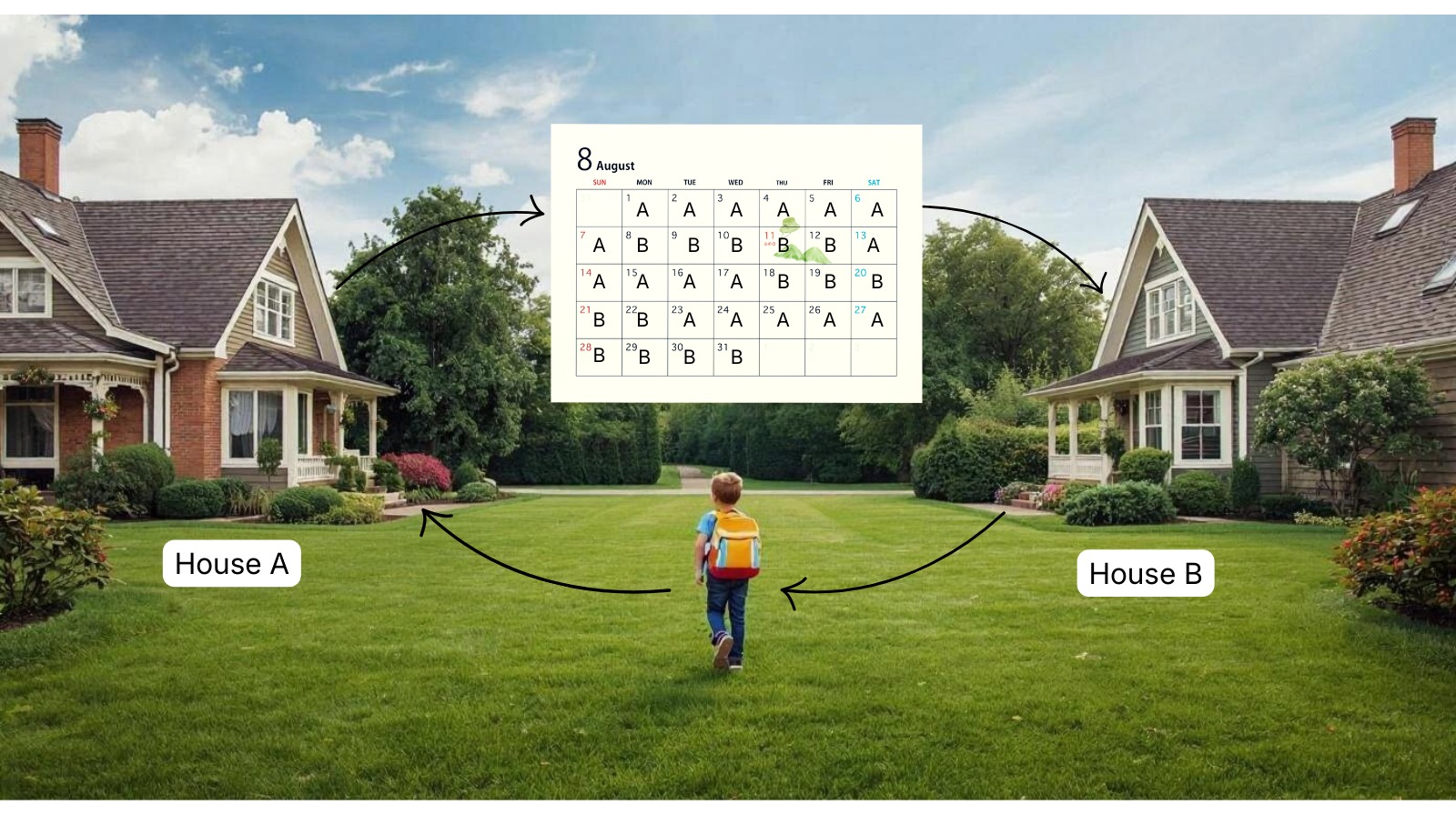 When parents separate, one of the biggest challenges is organizing daily life between two homes. Children still have school, activities, doctor appointments and family routines. Coordinating all of this between two parents can quickly become complicated if there is no clear structure. Many separated parents struggle with questions such as: Who has the children this …
Continue reading "How to Manage a Shared Custody Schedule Between Two Homes"
]]>
When parents separate, one of the biggest challenges is organizing daily life between two homes.
Children still have school, activities, doctor appointments and family routines. Coordinating all of this between two parents can quickly become complicated if there is no clear structure.
Many separated parents struggle with questions such as:
- Who has the children this weekend?
- How do we manage holidays?
- What happens if one parent needs to change the schedule?
Creating a clear shared custody schedule is one of the best ways to reduce confusion and help children feel secure.
Why a clear custody schedule matters
Children thrive when they have predictable routines.
After a separation, the transition between two homes can be stressful if schedules change constantly or if communication between parents is unclear.
A well-defined parenting schedule helps:
- reduce misunderstandings between parents
- create stability for children
- simplify planning for school and activities.
When both parents know exactly where the children will be and when, daily organization becomes much easier.
Common shared custody schedules
There is no single schedule that works for every family. The best solution depends on the children’s ages, the distance between homes and the parents’ availability.
Here are some common parenting schedule models.
Alternating weeks
One of the simplest schedules is alternating weeks. Children spend one full week with each parent.
This arrangement works best when parents live close to each other and children are older.
2-2-5-5 schedule
In this model, children spend:
- two days with one parent
- two days with the other
- then alternate five-day periods.
This schedule allows children to see both parents frequently while still creating longer blocks of time.
3-4-4-3 schedule
Another option is the 3-4-4-3 rotation, where children alternate between parents every three or four days.
This type of schedule works well for younger children who benefit from shorter separations.
The challenges of managing custody schedules
Even when parents agree on a schedule, real life often creates changes.
Unexpected events can include:
- school activities
- doctor appointments
- vacations
- last-minute work commitments.
Without a clear system to track these changes, confusion can easily arise.
Parents often end up relying on text messages or emails, which can quickly become difficult to follow.
Using digital tools to manage parenting schedules
Many separated parents now use co-parenting apps to help manage custody schedules.
These tools allow parents to:
- share a parenting calendar
- track schedule changes
- coordinate activities
- keep communication about the children in one place.
By centralizing this information, parents can avoid misunderstandings and ensure both households stay aligned.
You can compare several of the most popular tools in our guide to the best co-parenting apps for separated parents:
 https://www.2houses.com/en/blog/best-co-parenting-apps
Tips for successful co-parenting schedules
Regardless of the schedule you choose, a few principles can make co-parenting easier.
Keep the schedule consistent
Children adapt better when routines stay predictable. Try to avoid frequent last-minute changes whenever possible.
Plan holidays in advance
School holidays and vacations should ideally be planned well ahead of time to avoid conflicts.
Keep communication focused on the children
Clear and respectful communication helps prevent small issues from becoming larger conflicts.
Final thoughts
Managing a shared custody schedule between two homes can feel overwhelming at first.
However, with a clear parenting plan and the right tools, many families find that organization becomes much easier over time.
Digital tools and co-parenting apps can help parents coordinate schedules, track important information and keep communication focused on what matters most: the well-being of the children.
FAQ recommandée
What is a shared custody schedule?
A shared custody schedule defines when children stay with each parent after a separation. It helps create stability and clear routines between two homes.
What is the most common custody schedule?
Common schedules include alternating weeks, 2-2-5-5 schedules and 3-4-4-3 rotations depending on the children’s age and the parents’ availability.
How do parents manage custody schedules?
Many parents use shared calendars or co-parenting apps to track schedules, activities and schedule changes.
]]> When parents separate, one of the biggest challenges is staying organized between two homes. Coordinating parenting schedules, sharing important information about the children, and managing expenses can quickly become complicated. Simple questions such as Who has the children this weekend? or Who paid for the school trip? can easily lead to misunderstandings if there is …
Continue reading "Best Co-Parenting Apps for Separated Parents (2026)"
]]>
When parents separate, one of the biggest challenges is staying organized between two homes.
Coordinating parenting schedules, sharing important information about the children, and managing expenses can quickly become complicated. Simple questions such as Who has the children this weekend? or Who paid for the school trip? can easily lead to misunderstandings if there is no clear system in place.
This is why many separated parents today use co-parenting apps to help manage daily logistics and improve communication.
These digital tools allow families to keep everything in one place: custody schedules, messages, shared expenses and important information about the children.
Here are some of the most commonly used co-parenting apps.
1. OurFamilyWizard
OurFamilyWizard is one of the best-known co-parenting apps and is often recommended by family lawyers and courts.
The app focuses strongly on communication and documentation between parents. Messages, calendars and expenses are stored in one place, and many courts accept exported records from the platform.
Main features
- Shared parenting calendar
- Messaging between parents
- Expense tracking
- Court-accepted communication records
Pros
- Widely recognized in legal contexts
- Comprehensive documentation features
Cons
- Higher price compared to many alternatives
- Each parent typically needs their own subscription
2. AppClose
AppClose is another well-known co-parenting app that offers several useful tools for separated families.
It provides messaging, scheduling and expense tracking features, and part of the platform can be used without a paid subscription.
Main features
- Shared calendar
- Messaging tools
- Expense tracking
- Communication records
Pros
- Some free features available
- Good range of tools for co-parents
Cons
- Interface can feel complex for some users
- Certain features require additional upgrades
3. TalkingParents
TalkingParents focuses primarily on communication between parents. The app is designed to create clear records of conversations and reduce disputes.
It is often used when parents want structured communication or when courts require documented messaging.
Main features
- Secure messaging
- Communication records
- Call recording options
Pros
- Strong focus on communication documentation
- Often used in legal situations
Cons
- Limited scheduling tools compared to other apps
- Fewer features for managing family logistics
4. 2houses
2houses is a co-parenting app designed specifically to simplify everyday organization between two homes.
The platform brings together calendar management, communication tools and shared expenses in one place so parents can coordinate more easily.
Main features
- Shared parenting calendar
- Messaging between parents
- Expense management
- Photo albums and family information
- Access for third parties such as mediators or grandparents
Pros
- Simple and intuitive interface
- Calendar, communication and expenses in one place
- One subscription covers the whole family
Cons
- Less known in some regions than older platforms
Comparison of the main co-parenting apps
To help parents quickly compare the most popular co-parenting apps, here is a simple overview of the main features.
| App | Messaging | Calendar | Expense tracking | Subscription |
|---|---|---|---|---|
| OurFamilyWizard | ✓ | ✓ | ✓ | Higher price |
| AppClose | ✓ | ✓ | ✓ | Paid plans available |
| TalkingParents | ✓ | ✓ | ✓ | Paid |
| 2houses | ✓ | ✓ | ✓ | One subscription for the whole family |
Choosing the right co-parenting app
The best co-parenting app depends on the needs of each family.
Some parents prioritize legal documentation of communication, while others mainly need help organizing schedules and managing shared expenses.
What matters most is finding a tool that allows both parents to communicate clearly and keep important information about the children in one place.
Digital tools cannot solve every challenge of co-parenting, but they can significantly reduce misunderstandings and make everyday coordination easier.
Free Co-Parenting Apps vs Paid Co-Parenting Apps
Many parents initially search for a free co-parenting app. However, free access often comes with limitations, and some apps that were previously free may now offer paid plans or premium features.
Paid co-parenting apps usually include more complete tools, such as shared calendars, expense tracking, secure messaging, document storage and customer support.
Before choosing an app, parents should compare not only the price, but also what is included and whether the subscription covers one parent or the whole family.
Conclusion
Most co-parenting apps today offer the essential features parents need, such as messaging, shared calendars and expense tracking. However, the overall experience can vary significantly depending on how these tools are integrated and how well they support everyday family life.
For separated parents looking for a complete solution, 2houses combines scheduling, communication, expense management, document storage and family coordination in one place, with a single subscription covering the entire family.
The best app is ultimately the one that both parents are willing to use consistently. A well-chosen co-parenting app can reduce misunderstandings, improve organization and help keep the focus where it belongs: on the children.
If you would like to learn more about how co-parenting apps can help separated families stay organized, you can read this article:
Frequently Asked Questions About Co-Parenting Apps
What is the best co-parenting app?
The best co-parenting app depends on your family’s needs. Some parents prioritize secure communication, while others need shared calendars, expense tracking, or parenting schedules. Popular options include 2houses, OurFamilyWizard, AppClose and TalkingParents.
What is the best free co-parenting app?
Free co-parenting apps are becoming less common, and many platforms now use paid plans or premium features. If you are looking for a free option, it is important to check what is included, how long the free access lasts, and whether key features such as shared calendars, messaging or expense tracking are limited.
For many families, the best choice is not necessarily the cheapest app, but the one that both parents can use consistently and that includes the tools they really need.
Which co-parenting app is best for divorced or separated parents?
Most co-parenting apps are designed specifically for divorced and separated parents. The best choice depends on how you communicate, manage expenses and organize parenting schedules. Many families look for tools that combine messaging, shared calendars and expense tracking in one place.
Are co-parenting apps worth it?
Many parents find that co-parenting apps reduce misunderstandings and make communication more organized. By keeping schedules, messages and shared expenses in one place, these tools can help reduce conflict and improve coordination between households.
Which co-parenting app includes expense tracking?
Several co-parenting apps include expense management features. 2houses, OurFamilyWizard and AppClose all allow parents to record and track shared child-related expenses. Features and reporting options vary depending on the platform.
Can co-parenting apps help reduce conflict?
While no app can eliminate conflict completely, many parents report fewer misunderstandings because important information is documented and accessible to both parents. Shared calendars, expense tracking and written communication often help create more transparency.
What features should I look for in a co-parenting app?
When comparing co-parenting apps, consider the following features:
- Shared custody calendar
- Secure messaging
- Expense tracking
- Document storage
- Notifications and reminders
- Mobile app availability
- Ease of use
- Pricing
The best app is usually the one both parents are willing to use consistently.
]]>
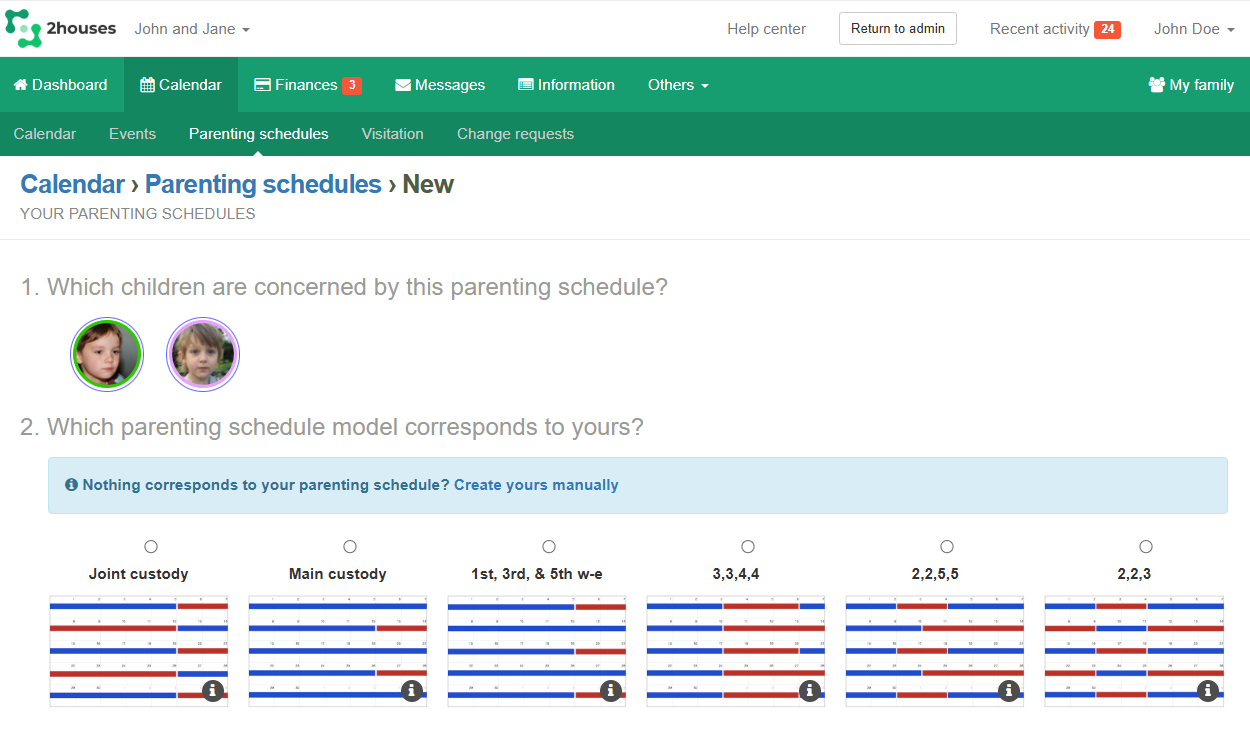 Separation is never easy, especially when children are involved. Many separated parents today rely on a co-parenting app to manage custody schedules, communication and shared expenses. Beyond the emotional challenges, parents suddenly face a new logistical reality: organizing their children’s lives between two homes. Who has the children this weekend? Who paid for the school …
Continue reading "How Co-Parenting Apps Help Separated Parents Stay Organized"
]]>
Separation is never easy, especially when children are involved.
Many separated parents today rely on a co-parenting app to manage custody schedules, communication and shared expenses.
Beyond the emotional challenges, parents suddenly face a new logistical reality: organizing their children’s lives between two homes.
- Who has the children this weekend?
- Who paid for the school trip?
- Who takes them to the doctor?
These questions may sound simple. But for many separated families, they can quickly become a source of stress and conflict.
That’s where technology is beginning to play an unexpected role.
Common problems separated parents face
Many separated parents experience the same daily challenges:
Confusion about custody schedules
Who has the children this weekend? What about holidays?
Disagreements about shared expenses
School activities, clothes or medical costs can quickly become a source of tension.
Difficult communication
Simple conversations about the children can easily escalate into conflict.
Co-parenting apps like 2houses help parents organize these aspects in one shared place, reducing confusion and helping families stay focused on their children.
Try 2houses free for 14 days https://www.2houses.com
The growing challenge of modern co-parenting
Across many countries, the number of separated parents continues to rise.
In Europe and North America, millions of children now grow up in two households.
While shared parenting arrangements are increasingly common, managing daily logistics remains complicated.
Parents must coordinate:
- custody schedules
- school activities
- medical appointments
- shared expenses
- communication about the children.
Without a structured system, misunderstandings happen easily.
And unfortunately, these conflicts can affect children the most.
From family challenge to digital solution
To address these challenges, some parents are turning to specialized co-parenting apps.
One of them is 2houses, an app designed to help separated parents organize their children’s lives in a shared space.

Instead of relying on dozens of emails, text messages or paper calendars, parents can centralize everything in one place.
The app allows families to:
• manage custody schedules
• communicate about their children
• track shared expenses
• store important documents
• keep track of events and activities.
By keeping information clear and transparent, the goal is simple: reduce stress and avoid unnecessary conflict.

Technology supporting better communication
One of the most difficult aspects of co-parenting after separation is communication.
Even small misunderstandings can escalate quickly.
Digital tools provide a neutral space where parents can exchange information calmly and keep track of conversations.
For many families, this structure helps keep discussions focused on what matters most: the children.
Helping families create stability for children
While technology cannot solve every challenge of separation, it can make everyday organization easier.
Many parents report that having a shared calendar and expense tracker reduces tension and helps them collaborate more effectively.
As one user explains:
“Before using 2houses we constantly had misunderstandings about the schedule. Now everything is organized in the calendar and life is much easier for everyone.”
Ultimately, the goal is not just better organization.
It is about creating a more stable environment for children who are already adapting to major life changes.
A growing trend in family organization
As family structures evolve, digital tools are increasingly becoming part of everyday parenting.
Just as couples use shared calendars or task apps, separated parents are now discovering tools designed specifically for their situation.
Choosing the right tools can make co-parenting much easier and reduce everyday misunderstandings.
If you’re currently exploring different tools, you may also want to read our comparison of popular co-parenting apps:
https://www.2houses.com/en/blog/best-co-parenting-apps-for-separated-parents-2026
Discover the 2houses co-parenting app
2houses is available on mobile and web and offers a 14-day free trial for parents who want to explore its features.
FAQ – Co-parenting apps
- What is a co-parenting app?
A co-parenting app helps separated parents manage custody schedules, communication and shared expenses in one place. - Is 2houses free to try?
Yes. Parents can explore the app with a 14-day free trial. - Can both parents access the same information?
Yes. Both parents share the same calendar, messages and expense tracking. - Is the app available on mobile?
Yes. 2houses is available on iOS, Android and web.
Learn more: https://www.2houses.com
 Managing one shared co-parenting schedule when both of you have totally different parenting styles can feel exhausting. I know you try to keep everything running smoothly: school drop-offs, healthy meals, homework, bedtime… and then your child returns from the other home and suddenly everything goes off track. At your place, bedtime is 8:30.At theirs, it’s …
Continue reading "How to Manage Different Co-Parenting Styles Within One Schedule"
]]>
Managing one shared co-parenting schedule when both of you have totally different parenting styles can feel exhausting. I know you try to keep everything running smoothly: school drop-offs, healthy meals, homework, bedtime… and then your child returns from the other home and suddenly everything goes off track.
At your place, bedtime is 8:30.
At theirs, it’s “whenever.”
You say no screens after dinner.
They say, just one more episode.
And you’re left wondering, “How am I supposed to keep this schedule together?”
But I want to tell you that – you and your co-parent do not need to run identical homes for your child to feel stable. Your child doesn’t need perfect matching rules. They need safety, predictability, and low conflict.
Let me explain how you can manage different parenting styles while still maintaining one solid, stable co-parenting schedule.
Step 1: Make Your Home the “Anchor” of Peace and Predictability
When both homes feel different, your home becomes the anchor your child can rely on. You don’t need to match the other house. You just need to make your house steady and calm.
That means keeping routines predictable, staying consistent with bedtime, meal times, and rules, and not talking negatively about the other parent. When your child compares the two homes, which is something every child does, try to respond with warmth instead of frustration.
For example, if they say:
“Mom lets me stay up late.”
Try responding gently:
“That sounds fun. At our home, we go to bed at 8:30 so you feel rested for school. Every home has its own routine.”
That one simple line keeps the peace, protects your schedule, and helps your child feel safe.
Step 2: Create a Flexible but Structured Schedule
When you and your co-parent bring two different parenting styles into one shared calendar, you need some structure to keep things from feeling chaotic. Not strict control. Just a clear, gentle plan. And let me tell you something I always recommend to the parents I work with.
You should create a simple weekly outline instead of a rigid hour-by-hour schedule. Also, focus on the important anchors like school time, homework, sports, meals, and bedtime. Then leave a little room for your co-parent’s natural style. This keeps the schedule steady without creating pressure on either side.
I also encourage you to use shared tools like Google Calendar or the 2houses app. These tools prevent misunderstandings and make communication much easier.
And you don’t need to be worried if your child seems a little off when they switch homes. That is something I call transition turbulence. Maybe they resist your rules or feel out of rhythm for a day or two. It is normal. Stay calm and stay consistent. Your child will find their way back into your routine very quickly.
Step 3: Communicate Like Teammates (Even If You Don’t Feel Like One)
You and your co-parent don’t need to be close or even get along perfectly to communicate well. I want you to think of this the same way I tell every parent I work with. Treat it like a simple partnership. Both of you are working toward the same goal, and that goal is your child’s emotional well-being.
Try to keep your messages calm and respectful. One approach I often recommend is the BIFF method. It stands for Brief, Informative, Friendly, and Firm. It helps you keep conversations short, clear, and completely drama free.
Let me give you an example.
Instead of saying something like,
“You never tell me anything about schedule changes!”
You can try:
“Hey, please update me about any schedule changes at least 24 hours earlier. It really helps keep things smooth for our child.”
I’m sure you’re seeing the difference here. Same message, but without the fight.
And if you notice that every discussion turns into an argument, then shift all communication to 2houses co-parenting app. This app will keep everything documented and help both of you stay calm and civil.
Step 4: Know Your Non-Negotiables and Let Go of the Rest
A lot of co-parenting stress comes from trying to control every detail. Trust me, that only brings more frustration. Focus on what really matters.
Your non-negotiables should be the things related to safety, health, and school.
Your preferences — like exact bedtime, screen limits, or chore routines — can be flexible.
And don’t forget: your co-parent has strengths too. Maybe they’re better at mornings, sports routines, or creative play. Let them own those areas. It reduces tension and helps your child feel the benefits of both worlds.
Step 5: Prepare Your Child for “Two Homes, Two Styles”
Your child doesn’t need identical environments. What they need is emotional permission to accept both homes without guilt.
Talk openly with them about differences.
Avoid comparing or criticizing the other household.
Teach them that different rules don’t mean confusion, they mean adaptability.
Kids who learn to navigate two sets of expectations grow into flexible, emotionally intelligent adults.
Step 6: Keep Adult Conflict Away From the Schedule
Your child should never feel responsible for the tension between parents. Don’t vent to them. Don’t make them choose. Don’t turn them into a messenger or a mediator.
Your job is to protect the schedule from adult conflict.
If the co-parenting situation ever involves serious concerns (substance issues, neglect, unsafe behavior), reach out for professional guidance, not your child.
Step 7: Accept the “B-Minus” Approach
In co-parenting, perfection is not the goal, peace is.
A “good enough” agreement is often more effective than trying to force perfection. If bedtime sometimes shifts between homes or if one home allows more screen time, that’s not the end of the world.
As long as your child is safe, supported, and emotionally secure, you’re doing everything right.
Save your energy for the things that truly matter:
• health
• school
• safety
• emotional stability
These are the pillars that shape them. Everything else is something you can gently let go of, and I promise you, letting go will bring you a lot more peace.
Finally, Stay Calm in the Chaos
You can’t control your co-parent. You can’t rewrite their routines. But you can control your own home, your reactions, and your peace.
Every time you choose calm instead of conflict…
Every time you stay consistent instead of criticizing…
Every time you put your child’s comfort above your frustration…
you make the shared schedule work, no matter how different both homes are.
Your child will not grow up remembering what exact time bedtime was. They will remember how loved, safe, and understood they felt in your home.
And that, my friend, is real co-parenting success.
 The holiday season should be magical. But if you’re co-parenting after divorce, it often feels like a nightmare instead. 89% of Americans feel stressed during the holidays. For divorced parents, it’s even worse. You’re juggling two households, dealing with money problems, and watching your kids feel torn between both parents. But the good news is … ]]>
The holiday season should be magical. But if you’re co-parenting after divorce, it often feels like a nightmare instead.
89% of Americans feel stressed during the holidays. For divorced parents, it’s even worse. You’re juggling two households, dealing with money problems, and watching your kids feel torn between both parents.
But the good news is it doesn’t have to be this way. Studies show that children of divorced parents face a 29% higher risk of depression. But here’s what most people don’t know, the quality of co-parenting matters MORE than the divorce itself. When parents work together well, kids do just fine. When parents fight constantly, that’s when real damage happens.
Let me show you exactly how to turn your holidays from stressful to actually enjoyable.
Why Holidays Hit Divorced Families So Hard
Dr. Susan Pease Gadoua, a divorce expert, puts it perfectly: “Holidays act as an amplifier of all things lovely but also all things painful.”
Think about it. Everywhere you look, there are happy families in commercials, holiday cards showing perfect intact families, and constant reminders of what you don’t have anymore.
Your kids feel it too. They worry about the parent they’re not with. Terry Gaspard, a licensed therapist, explains: “They may wonder ‘How is my mom going to feel since I’m with my dad this year?’ Children of divorce can feel pulled in every direction.”
Meanwhile, you’re dealing with:
- Complicated schedules between two homes
- Money stress from supporting two households
- Extended family drama
- New partners or stepfamilies
- And trying to create perfect memories for your kids
No wonder post-holiday depression hits co-parents so hard.
The #1 Strategy That Prevents Most Problems
Want to know the secret that changes everything?
Start planning in September.
I know that sounds early. But Dr. Ann Gold Buscho, a psychologist who specializes in co-parenting, says this one move prevents most holiday disasters.
Here’s your action plan that you can follow:
Create a written schedule. Write down exact dates, times, and locations for every transition. No confusion. No last-minute arguments.
Use 2houses co-parenting apps. It keeps everything documented. When both parents can see the same calendar, fights drop dramatically.
Coordinate gifts early. Nothing’s worse than both parents buying the same expensive toy. Have an honest talk about spending limits. Better yet, split the cost on big items like bikes or gaming systems.
Share wish lists with family. Give grandparents and relatives on both sides the same list. This prevents duplicate gifts and controls costs.
Start a holiday fund NOW. Put away just $25 a month starting today. Next year, you won’t be stressed about money.
For blended families, involve new partners in planning but put your kids’ comfort first. Create new traditions that add to old ones, not replace them. Christmas brunch at one house and dinner at another? That works perfectly.
Put Your Kids First (Even When It Hurts)
Dr. Elizabeth Cohen, a clinical psychologist, says it clearly: “I encourage parents to prioritize their child’s experience during the holidays as much as, or even more than, their own.”
Here’s how to actually do that:
Help them stay connected to the other parent. When your kids are with you on Christmas, set up a video call with their other parent. Share photos immediately through your co-parenting app. Don’t make them feel guilty for having fun at their other home.
Never interrogate them. Don’t pump your kids for information about your ex. If they had a good time, be genuinely happy for them. They need permission to love both parents without guilt.
Keep routines similar. Similar bedtimes, meals, and basic rules across both homes create stability. Kids crave predictability, especially during stressful times.
Let go of “perfect timing.” Celebrating Christmas on December 27th instead of December 25th? Your kids won’t care. They’ll remember how the holiday FELT, not what date it happened.
Watch for warning signs. Persistent sadness, behavior changes, dropping grades, or stomach aches that won’t go away mean your child needs extra support. Don’t wait—get them help.
Self-Care Isn’t Selfish (It’s Survival)
You can’t pour from an empty cup.
Dr. Jeffrey Cohen from Columbia University says divorced parents often blame themselves for ruining their kids’ holidays. But “any feelings they might encounter are valid.”
When you don’t have your kids:
Don’t spend holidays alone. We prefer you to connect with friends you haven’t seen in years. Visit relatives you used to skip. Your social life doesn’t have to revolve around your kids.
Volunteer. Help at a shelter or food bank. Helping others gives you perspective and meaning.
Create adult traditions. Plan a special dinner with friends, take a trip, or finally pursue that hobby you’ve ignored.
Keep your routine. Maintain your sleep schedule, exercise routine, and meal times. Your mental health depends on consistency.
Practice acceptance. Yes, it’s hard not having your kids on Christmas morning. Acknowledge that pain. Then focus on making your time with them special whenever it happens.
Get professional help. Therapists, divorce coaches, and support groups aren’t signs of weakness. They’re tools for success. Use them.
Treat Co-Parenting Like a Business
Robert Emery, a psychology professor and author, has the best analogy. He said, treat your ex like a business partner.
Your relationship should be “formal, structured, relatively uninvolved, governed by clear rules of behavior, polite but not overly friendly.”
Keep messages child-focused. Start with what’s best for the kids, not what you want.
Document everything in writing. Text or email creates a record. No more “he said, she said.”
Respond within 24-48 hours. Be professional. Answer time-sensitive requests promptly.
Be flexible (with boundaries). Accommodate special circumstances when possible. It builds goodwill. But set clear limits—no discussing custody with extended family, no bad-mouthing the other parent around kids.
Model respect. Your kids are watching how you handle conflict. You’re teaching them how to navigate their own future relationships.
When the Blues Hit Anyway
Even with perfect planning, post-holiday sadness might still show up. That’s normal.
Accept your emotions. Feeling sad, angry, or lonely doesn’t mean you’re doing something wrong. The grief over changed family structures is real and valid.
Return to routine quickly. Structure helps everyone recover. Schedule downtime instead of jumping straight into New Year’s goals.
Debrief with your co-parent. Have a calm conversation about what worked and what didn’t. Write it down for next year.
Know when to get help. If sadness lasts more than a few weeks, messes up your daily life, or includes thoughts of self-harm, call a mental health professional immediately.
You’re Doing Better Than You Think
Co-parenting and creating a positive holiday experience for your child is really tough. But every time you stay calm, maintain boundaries, and put your child first, you are winning.
Research shows that most children of divorced parents turn out just fine, as long as the parents keep conflict low and cooperate.
You are building that foundation – one holiday at a time.
The holiday season won’t be the same after a divorce. But it can still be filled with love, joy, and connection.
Start planning now.
This year could be your family’s turning point.
Your children are watching –
The end doesn’t mean bad.
The end means the door to a new beginning.
Celebrating this new beginning can be your true holiday joy.
 December isn’t just about holiday parties and New Year’s resolutions. It’s your last chance to review your parenting agreement before small problems turn into expensive court battles. Here’s what most divorced parents don’t realize: the new year is the perfect time to catch custody agreement issues before they explode. You’ve just survived the holidays, you … ]]>
December isn’t just about holiday parties and New Year’s resolutions.
It’s your last chance to review your parenting agreement before small problems turn into expensive court battles.
Here’s what most divorced parents don’t realize: the new year is the perfect time to catch custody agreement issues before they explode. You’ve just survived the holidays, you know exactly what’s broken. School schedules are about to shift. Tax season is coming.
98% of custody modifications succeed through simple negotiation, not courtroom drama. But only if you review your agreement now and fix things early.
Let me walk you through exactly what to check in the next few weeks, so you can start 2026 with clarity instead of conflict.
Why This Matters Right Now
The holidays just revealed every crack in your custody schedule. You lived through the pickup confusion, the last-minute changes, the arguments about who gets Christmas morning.
Fresh experiences show you what’s working and what isn’t. Use that knowledge now, while it’s still clear in your mind.
Plus, school transitions create natural checkpoints. Winter break ends, spring semester starts, and you need an agreement that actually works for your family’s current reality not what worked three years ago.
Here are the seven critical areas to review before the new year begins.
Tip 1: Audit Your Holiday Schedule (While the Pain Is Fresh)
You just lived through Thanksgiving and Christmas. How did it actually go?
Review these specific elements:
- Exact start and end times – Does your agreement say “Christmas Eve” or does it say “December 24 at 6:00 PM through December 25 at 2:00 PM”? Vague language causes fights. Fix it now.
- Vacation notification deadlines – Most agreements work best with 30-60 days advance notice. If you don’t have this in writing, add it.
- Out-of-state travel approval – Who holds the passports? What’s the approval process? Get specific.
- Makeup time provisions – Flights get delayed. Kids get sick. What happens when someone misses their scheduled time? Write it down.
- As kids become teenagers, rigid schedules stop working. Your 15-year-old has a part-time job. Your 14-year-old made the travel team. Build in flexibility while maintaining fairness.
- I recommend you to create a chart of every major holiday for 2026. Mark who has the kids when, including exact times. If there are gaps or vague spots, schedule a conversation with your ex this month to clarify.
Tip 2: Map Out School Schedules for the Coming Year
School transitions happen in the new year. New semester, possible schedule changes, different activities.
Check these details in your agreement:
- School pickup and drop-off times – Do they still match your work schedule? Your ex’s schedule?
- Early release days and teacher workdays – These catch parents off guard every time. Who covers childcare?
- Access to school records and conferences – Both parents should be able to see grades and attend parent-teacher meetings. Is this spelled out?
- Transportation responsibilities – Who drives to school during whose custody time? What about extracurricular pickups?
- If your child is starting kindergarten, middle school, or high school next year, schedule a review meeting now. Each transition needs different arrangements.
Tip 3: Review Activity and Extracurricular Provisions
January is signup season for spring sports, music lessons, and summer camps. Before your ex enrolls your kid in expensive hockey without asking you, review your agreement.
Key questions to answer:
- What’s the approval process? – Do both parents need to agree before signing up for new activities? Set a dollar threshold (many use $100) requiring mutual approval.
- Who pays what percentage? – Split 50/50? Based on income? Get it in writing.
- Transportation during each parent’s time – The parent with custody typically handles rides to practice. But is this documented?
- Attendance rights – Can both parents attend games and performances? What about new partners?
- Teenagers often drive themselves to activities. If your kid is getting their license soon, address this: Who pays for insurance? Do they need permission from both parents to use the car?
- And list all current activities and their costs. Calculate what you each paid this year. If it’s not matching your agreement or if there’s no clear system, fix it now before spring signups begin.
Tip 4: Do a Financial Deep Dive
December is financial planning time anyway. Add your custody agreement to the list.
Review child support calculations – Most states allow recalculation when income changes by 15-20%. Has anyone’s salary changed significantly? Update it.
Medical expense sharing – Check your agreement on:
- Insurance premiums (who pays?)
- Co-pays and deductibles (how are they split?)
- Unreimbursed costs like orthodontia or therapy (who covers what percentage?)
- Vision, dental, prescriptions (each needs specific provisions)
Beyond child support expenses:
- School fees and supplies
- Technology needs (laptops, tablets, phones are necessary now)
- Extracurricular costs
- Driver’s education
- College savings contributions
The best expense provisions include exact percentage splits, dollar thresholds for mutual approval, and clear reimbursement timelines. Always try to track every kid-related expense from this year. 2houses co-parenting app can make tracking things easier. Schedule a financial review meeting with your ex in January.
Tip 5: Update Communication Methods and Technology Rules
Technology that worked when your kids were five doesn’t work now that they’re twelve.
Evaluate your communication channels:
- Response time expectations – Is 12 hours for routine matters realistic? What counts as an emergency?
- Preferred methods – Email? Text? Co-parenting apps? Document everything through apps that can’t delete messages.
- Boundary setting – No using kids as messengers. No surprise schedule changes via text at 10 PM.
- Technology provisions for kids:
- Who owns their smartphone and pays the monthly bill? Most agreements now specify this to avoid disputes.
- Social media access and monitoring—what’s allowed, what’s not, and who decides?
- Screen time limits, vastly different rules between households confuse kids. Coordinate basics even if you disagree on details.
- Both parents’ access to kids’ accounts and passwords, get it in writing.
Action step: If you’re still using text messages for co-parenting, switch to a documented app this month. Set up response time expectations in writing. Discuss technology rules for your kids and document what you agree on.
Tip 6: Identify Life Changes That Need Formal Modifications
Significant life changes require updating your agreement through the court, not just handshake deals.
Check if any of these apply:
- Relocation – Is anyone moving to a new city? Most states require 30-90 days written notice and proof the move benefits your child.
- Employment changes – New job? Different schedule? Changed income? Document it and update the agreement.
- Remarriage and blended families – New spouse? New siblings? Step-parents living in the home? These change dynamics and may require modifications.
- Health issues – Has a parent’s health changed in ways that affect caregiving ability?
- Safety concerns – Any issues with substance abuse, domestic violence, or concerning behavior?
- Courts require “material change in circumstances” for modifications. This means significant, lasting changes, not minor inconveniences.
Make sure you document everything. Keep custody journals, expense records, work schedules, and school reports. Even agreed modifications need court approval to be legally enforceable. Without judicial approval, changes are voluntary and either parent can revoke them anytime.
Tip 7: Assess Your Child’s Developmental Stage
Kids change fast. Your agreement should change with them.
Age-appropriate schedule check:
- Young children (under 5) – Do they need more frequent, shorter visits to maintain attachment with both parents? Research shows kids under three experience stress during separations over 24 hours.
- School-age kids (6-13) – Can they handle week-on/week-off schedules comfortably now?
- Teenagers (14+) – Do they need flexibility for jobs, intensive sports, and social commitments? Courts give significant weight to teen preferences in most states.
Warning signs your schedule isn’t working:
- Persistent behavioral changes
- Academic decline with no other explanation
- Sleep disruptions around transition times
- Your child expressing anxiety about custody exchanges
If you see red flags, don’t ignore them. Schedule modifications might fix everything. You may have an age-appropriate conversation with your kids about how the custody schedule feels to them. If they’re struggling, investigate whether modifications could help. Their wellbeing matters more than your convenience.
How to Actually Conduct Your Review (Step-by-Step)
Now that you know what to check, here’s how to do the actual review:
Step 1: Schedule the meeting – Contact your ex now. Aim for mid-to-late December or early January. Pick a neutral location like a coffee shop.
Step 2: Prepare your materials – Bring your current agreement, this year’s calendar showing actual schedules, expense documentation, and your child’s 2026 school calendar.
Step 3: Start positive – Acknowledge what’s working before addressing problems. This creates collaboration instead of conflict.
Step 4: Focus on the kids – Every discussion should center on your child’s best interests, not personal grievances.
Step 5: Document everything – Write down what you agree to immediately. Don’t rely on memory.
Step 6: Determine if court approval is needed – Even agreed changes need judicial approval to be enforceable.
Step 7: File modifications properly – Don’t skip this step. Informal changes aren’t legally binding.
Step 8: Communicate with your kids – Tell them about changes in age-appropriate language.
Step 9: Update all calendars and documents – Make sure everyone is working from the same information.
Step 10: Set your next review date – Regular check-ins prevent small issues from becoming huge problems. Schedule your next review for six months out.
The Bottom Line
Your parenting agreement should evolve with your family. What worked three years ago doesn’t work now. What works now won’t work in three more years.
Always remember, smart parents choose prevention. So, be a smart parent. Start your review this week. Your kids, and your bank account will thank you.
]]> New Year’s Eve is coming, and your kids won’t be with you. They’ll be at their other parent’s house, counting down with someone else, while you’re home alone wondering how this became your life. If you’re a divorced or separated parent, this might be your reality. With nearly 50% of American marriages ending in divorce, … ]]>
New Year’s Eve is coming, and your kids won’t be with you.
They’ll be at their other parent’s house, counting down with someone else, while you’re home alone wondering how this became your life.
If you’re a divorced or separated parent, this might be your reality. With nearly 50% of American marriages ending in divorce, millions of parents face this exact situation every holiday season.
But here’s what most people won’t tell you: New Year’s Eve without your kids doesn’t have to suck. In fact, it can become your night. It’ll be a chance to reset, reflect, and actually celebrate yourself.
Let me show you exactly how to make it happen.
First: Feel Your Feelings, Then Move Forward
Look, let’s not pretend this is easy.
One divorced mom shared how she woke up Christmas morning to an empty, quiet house. The loneliness hit her so hard she broke down crying. She called it an “excruciating longing” for her kids.
That’s real. That’s valid. And if you’re feeling it too, you’re not broken. It because you’re human.
The key isn’t to push these emotions away. It’s to acknowledge them without letting them control your entire night.
Try this mental shift: Instead of thinking “This isn’t fair” or “I shouldn’t be alone,” tell yourself “This is hard, but I’m getting stronger every day.”
We seen that reframing negative thoughts this way actually builds emotional resilience over time. You’re not lying to yourself. You’re choosing a healthier perspective.
Accept Reality And Take Back Your Power
Here’s a concept that sounds weird but works: radical acceptance.
It simply means you stop fighting reality in your head. Your kids are with their other parent tonight. That’s what’s happening. Fighting it mentally just makes you miserable.
Instead, open up to what is and decide what you’ll do with it.
Some practical ways to process this:
Journal your year. Write down your biggest wins, favorite memories with your kids, and goals for next year. Getting it on paper helps you see how far you’ve come.
Create a photo wall. Print pictures of your kids and put them somewhere you’ll see them. Looking at their faces releases oxytocin (the bonding hormone) and keeps you emotionally connected even when they’re not there.
Make a gratitude list. Write five things you’re thankful for from this past year. It sounds cheesy, but gratitude literally rewires your brain to focus on the positive.
These simple acts turn your sadness into something productive.
How to Actually Celebrate Solo Without Feeling Pathetic
Now for the good part: planning a night that’s actually worth staying up for.
Without kids demanding snacks, asking for one more game, or fighting at bedtime, you have something rare, uninterrupted time to do whatever you want.
Turn Your Home Into a Luxury Retreat
Spa night for one. Fill your bathtub with bubbles and essential oils. Light candles. Put on a fancy face mask. Pour yourself champagne or herbal tea. Soak until your fingers get wrinkly. This isn’t selfish, it’s necessary self-care.
Cook something amazing. Remember that incredible meal you had at a restaurant last year? Try recreating it at home. Or challenge yourself to make something you’ve never cooked before. Turn your kitchen into a creative playground.
Have your own movie marathon. Build a pillow fort (yes, really). Load up on your favorite snacks. Binge-watch feel-good movies or that series everyone keeps telling you about. Make it cozy and comfortable.
Design your dream life. Grab magazines or go online and create a vision board for the new year. Cut out images that represent what you want, travel destinations, fitness goals, career wins. It’s fun, creative, and gives you something to look forward to.
Get Out of Your House
Sometimes staying home feels too sad. If that’s you, switch it up:
Book a hotel room nearby. Even a cheap one feels special. Order room service. Wear the fluffy robe. Watch fireworks from your window. Treat it like a mini vacation.
Watch fireworks in person. Bundle up and head to a local fireworks show. Standing alone under exploding colors can actually be powerful—a moment to reflect on your year and visualize what’s coming.
Dress up for yourself. Put on an outfit that makes you feel confident. Do your hair. It sounds silly, but looking good makes you feel good, even if nobody else sees it.
The point isn’t to fake happiness. It’s to give yourself experiences that genuinely feel good.
Stay Connected With Your Kids Right Way
Just because your kids aren’t with you doesn’t mean you can’t share the countdown.
Schedule a quick video call. Set up a FaceTime or Zoom right before midnight. Or try 2houses co-parenting app for communication. Sync up with an online countdown clock so you’re watching the same numbers. Keep it short—5 to 10 minutes max. Say “I love you,” watch the countdown together, then let them get back to their night.
Text them your New Year’s resolution and ask for theirs. Keep it light and fun: “What’s one thing you want to try this year?” Don’t make it heavy or emotional.
Send a photo slideshow. Put together a quick video of your favorite moments from the past year. Share it in your family group chat. It reminds them you’re thinking of them without being clingy.
A golden rule you should follow, keep everything positive. Don’t badmouth their other parent. Don’t guilt-trip them about not being with you. Don’t ask nosy questions about what they’re doing. Your job is to be a source of love and stability—not stress.
Make Next Year Easier (Planning Ahead)
Want to avoid the stress next December? Start planning now.
Confirm your schedule early. Holiday custody arrangements often override regular schedules. Get clarity at least a month in advance so you can mentally prepare.
Alternate years if possible. If you can, work out a deal where you get them every other New Year’s Eve. It gives everyone something to look forward to and feels fair.
Create your own traditions. Can’t have them on December 31st? Make January 1st your special family day. Or celebrate on January 2nd. Kids don’t care about the official date. They care about feeling special with you.
Coordinate with your ex. Yes, talking to them might suck. But coordinating gifts and schedules prevents confusion and shows your kids that you can co-parent like adults.
What You’ll Do When You’re Really Struggling
If the loneliness feels overwhelming, here’s your emergency toolkit:
Call a friend. Don’t suffer alone. Reach out to someone who gets it. Even a 15-minute phone call can shift your mood.
Join a support group. Online co-parenting forums are full of people going through the exact same thing. Just reading their stories can make you feel less alone.
Move your body. Go for a walk. Do some yoga. Hit the gym. Exercise changes your brain chemistry and genuinely lifts your mood.
Laugh. Put on a comedy special. Watch funny videos. Text with someone who makes you giggle. Laughter is medicine.
Make This Night Count
New Year’s Eve without your kids can be your annual reset button. A night to reflect on how far you’ve come, recharge your batteries, and prepare for what’s next.
Your strength during these quiet moments teaches your kids something important: that life goes on, that happiness is possible even when things are hard, and that their parent is resilient as hell.
So tonight, whether you’re soaking in a bubble bath, watching fireworks alone, or video-calling your kids for two minutes, own it. This is YOUR night too.
Wake up on January 1st knowing you survived. You showed up. You took care of yourself. And you’re ready for whatever this new year brings.
Happy New Year. You’re doing better than you think.
]]> Your Practical Guide to Shared Custody in a Blended Family If you’re reading this, you’re probably right in the middle of the ups and downs of a blended family. Honestly, it can feel really overwhelming to manage shared custody and make everyone happy. But from working with families like yours, I can tell you it …
Continue reading "Your Practical Guide to Shared Custody in a Blended Family"
]]>
Your Practical Guide to Shared Custody in a Blended Family
If you’re reading this, you’re probably right in the middle of the ups and downs of a blended family. Honestly, it can feel really overwhelming to manage shared custody and make everyone happy. But from working with families like yours, I can tell you it can work. The key isn’t having perfect schedules. It’s changing the way you think about your family.
Let me explain how you can build a calm, strong foundation for your new “bonus family” so your kids feel safe and everyone can get along better.
Step 1: Shifting Your Mindset to Collaborative Co-Parenting
Before we dive into calendars and schedules, let’s start with the thing that really makes or breaks a blended family: the relationship between you and your co-parent. Whether it’s your former partner or your new partner’s ex, this adult connection is the foundation. Think of it as the soil where your child’s happiness will grow.
I want you to picture something with me: you and your co-parent are like CEOs of the most important startup in the world—your child’s well-being. Your “business” thrives when you focus on the future, not the past.
One idea I share often with families is creating a “bonus family.” This isn’t about replacing anyone or pretending the past didn’t happen. It’s a conscious choice to build a bigger circle of love and support for your child, rooted in respect.
Here’s a guideline that really helps: the biological parent sets the rules, and the bonus parent (stepparent) lovingly supports them. When everyone understands this, confusion and anxiety melt away. Kids get the consistency they need, and everyone can relax into their roles.
Step 2: Mastering the Art of Kid-Focused Communication
Effective communication is your most valuable tool. All it takes is one heated text to derail a peaceful week. So, let’s set some ground rules.
Keep it simple and focused on the kids. Talk about schedules, school, activities, and health. Avoid bringing up old conflicts or personal criticism.
Choose your words carefully. Instead of saying, “You need to…,” try, “Would you be willing to…?” Small changes like this can instantly reduce tension.
By establishing these communication protocols, you dramatically reduce stress and model healthy, respectful behavior for your children.
Step 3 : Integrating a Stepparent with Patience and Strategy
One of the biggest frustrations I see is expecting a stepparent to become an “instant parent.” In reality, bonding and trust take time. Research shows it can take years for a blended family to fully gel, and that’s okay.
The key is to start slowly. In the beginning, the stepparent should act as a helper or friend. Their role is to support the biological parent and enforce the rules already in place. At the same time, they can build a real connection with your child. Ask about school, join in their hobbies, or just spend fun time together. These small moments really add up.
Over time, the stepparent can move into a more involved role, helping guide and support children while the final say on discipline remains with the biological parent. The most important thing the biological parent can do is clearly show the children that the stepparent has authority when needed. A simple statement like, “When I’m not here, [Stepparent’s Name] is in charge of our house rules,” can make a huge difference.
Step 4 : Creating a Peaceful Home
For children shuttling between two homes, predictability equals security. While your houses don’t need to be identical, aligning on core principles. Like homework expectations, bedtimes, and screen time limits. These things create a crucial sense of stability.
Family meetings can help everyone feel heard. Create a safe space to discuss feelings, set rules, and plan fun activities. New traditions also help, whether it’s a weekly movie night or a special holiday ritual.
Transitions between homes can be tough. Keep them low-key, avoid questioning your child about the other home immediately, and give them space to decompress. Having duplicate essentials like a toothbrush, pajamas, and favorite snacks, at both homes helps kids feel at home anywhere.
Step 5 : Your Action Plan for Holidays and Legalities
Holidays are often the most stressful time for blended families. Planning ahead and being fair is key.
- Alternate Major Holidays: One parent has Thanksgiving in even years, the other in odd years, and you swap for Christmas.
- Split the Day: If you live close by, consider splitting Christmas Eve and Christmas Day.
- Keep it Consistent: Holidays like Mother’s Day and Father’s Day should always be with that respective parent.
Create a yearly schedule, put it on a shared digital calendar, and stick to it. This eliminates last-minute arguments and lets your kids know what to expect.
Now, let’s quickly address a critical legal reality many stepparents are unaware of: Marriage does not grant a stepparent legal rights over their stepchildren.
This means a stepparent cannot typically sign school forms or consent to medical care. To gain this authority, you must pursue formal legal avenues like stepparent adoption or, more commonly, use written consent forms provided by the biological parent for specific situations. I always recommend consulting with a family law attorney to understand your specific rights and responsibilities.
Finally, Putting Your Child’s Emotional Well-Being First
Throughout this journey, your child’s feelings come first. They may feel caught between households or worry that loving a stepparent is disloyal. Reassure them that their heart is big enough to love everyone. Never speak negatively about the other household, and create a safe space for your child to express confusion, sadness, or frustration.
Remember, building a blended family is a marathon, not a sprint. There will be bumps, but with patience, clear communication, and a shared commitment to putting the kids first, you can create a loving, resilient home. And if you hit a wall, seeking help from a therapist specializing in blended families is a sign of strength, not failure.
]]> I know the holidays can feel like a minefield when you’re co-parenting. Between the logistics, the emotions, and the pressure to create “perfect” memories, it’s easy to feel overwhelmed. But let’s take a deep breath together. Today our goal here isn’t to give you a rigid set of rules, but to walk you through a …
Continue reading "10 Questions to Ask Yourself As a Co-Parent Before the Holidays Begin"
]]>
I know the holidays can feel like a minefield when you’re co-parenting. Between the logistics, the emotions, and the pressure to create “perfect” memories, it’s easy to feel overwhelmed.
But let’s take a deep breath together. Today our goal here isn’t to give you a rigid set of rules, but to walk you through a mindset shift. We’re going to focus on one thing: creating a stable, joyful season for your child. It’s not about what’s “fair” for you and your co-parent, but what functions best for your kid.
Let’s start with some crucial questions. Be honest with yourself as you go through them.
Part 1: Laying the Groundwork Straight
Before we even touch gifts, holiday menus, or who’s bringing the gravy, we need to slow down and handle the basics. I know it’s not the fun part. But trust me, a little preparation right now can save you from holiday chaos later. This is where your sanity starts.
1. “Do I really understand my custody schedule for this year?”
This is your starting line. No shortcuts here.
Go ahead and pull out your parenting plan. Holiday schedules almost always override the normal routine, and you need to be 100% sure about who has the kids on Thanksgiving, Christmas Eve, Christmas Day, and New Year’s.
If your plan alternates yearly, double-check whether this year is yours based on the even/odd rotation. And if your agreement feels vague or outdated (maybe it was written when your child was still in diapers), now is the moment to talk it through calmly. What worked for a toddler rarely works for a teenager.
Truth is clarity now is better than disappointment later. Never assume you’re on the same page, confirm it with your ex.
2. “If I’m traveling, have I actually covered every little detail?”
Holiday travel can be a huge landmine for co-parents, even when the trip falls during your scheduled time.
Most plans require advance notice. Sometimes 30 days or more, and a full itinerary. And listen, I want you to see this not as giving up control, but as extending courtesy and reducing stress.
Share the flight numbers. Share the hotel address. Share how the other parent can reach your child. When you do this, you’re sending a message that says, “Hey, I respect you and I’m keeping things transparent.”
And always, always get written confirmation. Yes, even a simple “ok” in your 2houses app. If you’re crossing state lines, this becomes even more important.
3. “What’s my calm, steady plan if things go sideways?”
Because let’s be honest, sometimes they do.
Maybe someone’s running late. Maybe someone forgets. Maybe something bigger pops up. Your job isn’t to panic, lash out, or send that fiery text you’ll regret.
Your first step? Calm, neutral documentation.
Send something simple like:
“Hi, according to the schedule, the kids were coming to me at 5 PM. Just checking on your ETA.”
This creates a record and keeps the tone professional.
If that doesn’t fix it, think of mediation, not court. Going to court over a small delay usually causes more stress and expense than the issue itself. Save legal action for real emergencies—situations where your child is being intentionally withheld.
Part 2: Setting the Tone – How You Talk About the Holidays (Because Your Words Shape the Season)
How you communicate during the holidays can either keep things peaceful… or flip everything upside down. So let’s set the tone early and make things easier on you.
4. “Am I using the right tools to keep our conversations calm and documented?”
Look, the holidays are emotional enough. Text messages get misread. Phone calls get heated. And honestly, neither of you needs that stress.
This is why I always encourage parents to use 2houses co-parenting app. Think of it as your communication safety net. Everything is time-stamped, organized, and stored in one place. No lost messages. No “you never told me that.” No drama.
And no, it’s not about spying or catching each other slipping. It’s about creating a clean, respectful communication space. When both of you know messages can be reviewed by a judge if things ever go south, something magical happens: people stay polite.
It’s simply a tool that keeps the peace. And trust me, that matters during the holidays.
5. “Have we actually talked about gifts—and set some boundaries with the extended family circus?”
Ah yes… the gift competition. The silent battle of “who buys the coolest thing.” And guess who ends up stressed the most? Your child.
Try to talk with your co-parent early in the season about a loose budget for bigger gifts. It doesn’t have to be perfect or formal. It should be just enough so you don’t both buy the same expensive item.
Even better? Consider teaming up for one bigger gift. It quietly reminds your child, “Hey, no matter what happened between us, we’re still a team when it comes to you.”
And then there’s the extended family pressure. Grandparents, aunts, cousins, everyone wants their moment.
Here’s your gentle script:
“I understand the family traditions, but we’re sticking to the court-ordered schedule. It’s what keeps things stable for the kids.”
Your child’s stability always comes first. The adults can adjust.
6. “Can I offer a little flexibility—even when I don’t want to?”
This one might pinch a bit, but hear me out.
Yes, your court order is your backbone. It protects everyone. But real life happens—flights get delayed, kids get sick, weather gets bad. And sometimes being the bigger person and adjusting the schedule just slightly can save a lot of unnecessary stress.
This isn’t about being walked over. It’s about modeling kindness and problem-solving for your child. It shows them that even when things are complicated, adults can still handle situations with calm and grace.
Just make sure any adjustments are written in your co-parenting app, so you don’t end up dealing with confusion later.
Part 3: The Heart of It All — Keeping Your Child’s Well-Being Front and Center
This is the real reason you’re putting in all this effort. Not the schedule, not the logistics, not the communication apps. It’s your child. Their peace. Their joy. Their sense of security. So let’s bring the focus right back where it belongs.
7. “What does a successful holiday actually look like for me?”
This might be the most important question you ask yourself all season.
Is success about having the perfect holiday photo, the perfect table setup, the perfect day?
Or is it simply about your child feeling loved, safe, and free to enjoy both parents without guilt?
Your child needs space to love both homes. And that starts with you.
That means no eye-rolling when they talk excitedly about what’s happening at the other parent’s house. It means helping them choose or make a gift for your co-parent, even if it stings a little. It means telling them, “Hey, it’s okay if you miss your mom/dad while you’re here. That doesn’t hurt my feelings.”
When your child feels emotionally safe, that’s your real holiday win. That’s the only report card that matters.
8. “Are we giving our child some kind of consistency, even in the middle of holiday craziness?”
Holidays can feel like a tornado: late nights, sugar highs, parties, relatives, noise everywhere. But kids, especially kids in two homes, need some kind of predictable rhythm.
You and your co-parent don’t have to mirror each other perfectly. No two homes ever will. But you can coordinate on the basics:
- Bedtime shouldn’t be wildly different
- Meals shouldn’t be chaotic
- Screen time shouldn’t go from strict to unlimited overnight
Just a little alignment goes a long way. It keeps your child grounded. It makes transitions between homes smoother. And honestly, it saves you from dealing with the meltdown that comes with sleep-deprived, overstimulated kids.
Consistency isn’t rigidity, it’s comfort. It’s the anchor your child leans on when everything else feels loud and unpredictable.
4: Handling Outside Influences – Protecting Your Peace With Healthy Boundaries
Finally, let’s tackle the extras like family and new partners.
9. “How will I handle tricky situations with relatives or new relationships?”
These moments can get complicated fast, so let’s walk through them gently.
If there’s a new partner in the picture, introduce them slowly. Your child needs time to adjust, and they need to know they’re not being replaced. Keep transitions and drop-offs calm, respectful, and focused on the kids. This is not the space for arguments or tension.
When it comes to extended family, treat everyone with basic respect. Your child benefits from healthy relationships with grandparents, aunts, and cousins..
But here’s the boundary part:
Your parenting schedule is not a group project.
You don’t have to rearrange everything because a relative insists on a certain tradition or time. Decisions stay between you and your co-parent. Period.
You’re protecting consistency, not hurting anyone’s feelings.
10. “Am I open to letting go of old traditions and creating new ones?”
This one can be emotional. Sometimes the traditions we held onto for years don’t fit anymore. And trying to force them only brings up sadness or tension.
It’s okay to let go.
Talk to your kids about what’s changing. Tell them, “Hey, we’re going to make our own special traditions this year.” Then build something new together. You can bake something special, go on a fun outing, make a silly breakfast rule, whatever feels right in your home.
And here’s the part many parents forget:
You don’t need to celebrate on the exact date to make the holiday meaningful.
A cozy “Christmas morning” on December 27th can be just as magical. Sometimes even better, because the pressure is gone.
As for joint celebrations? Those only work if you and your co-parent have truly peaceful, respectful communication. If not, separate celebrations are healthier and far less stressful for everyone.
]]> Scheduling struggles don’t have to land you in court. For co-parents, most scheduling problems that end up in court can be avoided if you know the right steps. We’ve seen caring, devoted parents face legal battles. Not because they did anything wrong, but because they didn’t realize how strictly courts enforce custody orders. You don’t … ]]>
Scheduling struggles don’t have to land you in court. For co-parents, most scheduling problems that end up in court can be avoided if you know the right steps. We’ve seen caring, devoted parents face legal battles. Not because they did anything wrong, but because they didn’t realize how strictly courts enforce custody orders.
You don’t have to go through that.
Let me guide you through the most common mistakes we see every day and show you how to protect yourself, your time with your child, and the calm, stable routine your family deserves.
Mistake #1: Treating the custody order like a “suggestion”
This is the one that catches most co-parents off guard.
You might think that if both of you agree to swap weekends or extend summer breaks, everything is fine. But legally, it isn’t. Without court approval, that agreement carries no weight at all.
We’ve worked with parents who were shocked to learn that:
- A verbal agreement offers zero legal protection
- Police and judges can only enforce what’s written in the court order
- You can still be held in contempt even if both parents originally agreed
Here’s a way to think about it: if you and your co-parent decide to be flexible, that’s great. But without a court-approved modification in writing, the other parent can return to the original schedule at any time—and you could be the one facing consequences.
This isn’t about fairness. It’s about the law.
What we tell every co-parent is simple: if a schedule change is more than a one-time favor, make sure it is:
- Written
- Filed
- Approved by the court
It’s easier and faster than most parents think—and it protects both of you while keeping your child’s routine stable.
Mistake #2: Not documenting everything (or documenting the wrong way)
We can’t stress this enough: if it’s not written down, it basically didn’t happen, at least in the eyes of the court.
We’ve worked with parents who were completely right about what happened, yet couldn’t prove a thing. Sometimes they waited days to write things down, only noted the “bad days” without showing patterns, used texts full of emotions instead of clear facts, or lost everything when a phone failed.
Judges don’t rely on memory. They rely on timestamps, clear communication, and consistent records. That’s why we always recommend using 2houses co-parenting apps. This app will create records that cannot be edited or deleted, and courts accept them immediately.
To stay protected, it’s important to keep written records of all schedule changes, pick-ups and drop-offs, child-related expenses, and any communication related to your child. It doesn’t have to be fancy or perfect.
Mistake #3: Trying to modify the schedule the “easy” way
This is one of the most common mistakes we see, and it can put your custody at risk without you even realizing it. Many parents assume they can adjust schedules on their own or make informal agreements, but legally, changing a custody order requires more than just agreement between parents.
To modify an order, you need to show two things: a significant change in circumstances and that the change is in your child’s best interest. Real changes might include a parent relocating, substance abuse concerns, major changes in the child’s needs, unsafe living environments, ongoing schedule conflicts, or repeated violations of the current order.
On the other hand, things that don’t qualify as a “material change” include a new partner, temporary shifts in work hours, or simply wanting more parenting time.
If you ever need to modify the schedule, the right process is essential. That means filing a formal request, providing proper documentation, going through mediation if required, and getting the judge’s approval. Skipping these steps or trying to handle it informally is exactly how well-meaning parents end up violating the order without realizing it.
Mistake #4: Communication that becomes evidence against you
This one can be uncomfortable, but we need to be honest: everything you say or write can end up in court.
Most of the problems we see happen when parents send emotional texts, rely on phone calls without written follow-up, mix personal feelings with child-related issues, communicate through the kids, ignore messages, or write long, heated paragraphs in the moment.
We always encourage parents to follow BIFF style communication. Means keeping messages brief, informative, friendly, and firm.
This way it will seem that you’re not writing to your ex. You’re writing to the judge who could see it one day. Even if your co-parent sends something hurtful or inflammatory, you don’t need to match their tone. Staying calm, factual, and professional in your replies builds credibility and shows the court that you are committed to your child’s best interests.
Mistake #5: Holiday and vacation planning at the last minute
Holiday issues are some of the most painful moments for co-parents, and most of them are avoidable. Courts rarely see holiday disputes as emergencies because holidays are predictable. Waiting until the week before Thanksgiving or Christmas to work out plans almost guarantees stress and arguments.
We always advise parents to start planning 2 to 3 months in advance. For trips, aim to give 45 to 60 days’ notice, and for international travel, plan even earlier, around 60 to 90 days ahead.
When giving notice, make sure all the details are clear. Include exact dates, locations, contact numbers, flight information, and who will be traveling. The clearer the information, the fewer arguments and misunderstandings you’ll face. Planning ahead keeps the focus on your child and helps both parents enjoy the holidays without unnecessary conflict.
Mistake #6: Misusing “right of first refusal”
The “right of first refusal” can seem like a helpful rule, but without clear guidelines, it often creates more problems than it solves.
We’ve seen situations where vague language turns this clause into a tool for micromanaging or picking fights. To work properly, it needs clearly defined expectations: how long a time period triggers the right, who counts as a “third party,” exceptions for school or daycare, and reasonable deadlines for responding.
When it’s written clearly, it protects both parents and keeps the focus on the child. When it’s vague, it only adds stress and conflict.
How to actually stay protected (without feeling stressed 24/7)
If we were sitting together, talking through your co-parenting situation, here’s what we would tell you.
Start by using a court-recognized co-parenting app. It keeps everything safe, organized, and timestamped so there’s no question about what happened and when. Always follow your custody order exactly unless both parents agree and the court approves the change.
Document everything in real time. Short, simple, factual notes are enough, but the key is to be consistent. If a schedule change is necessary, go through the proper legal process. Even when you both agree, submitting it to the court ensures it’s enforceable and protects both parents.
Communicate like a parent, not like an ex. Keep messages friendly, short, helpful, and focused on your child. And don’t wait until problems pile up. Getting help early through mediation, a parenting coordinator, or even a quick legal consult can save a lot of stress and expense.
At the end of the day, you’re not just protecting your legal rights, you’re protecting your child’s stability. Courts expect parents to follow the order, communicate professionally, document consistently, and seek approval for major changes. Doing all of this makes life smoother for you, calmer for your child, and more predictable for everyone.
And if you’re ever unsure whether a change needs court approval, reach out to a family lawyer first. A short consultation now can prevent years of stress later, and that peace of mind is worth it.
]]> Life doesn’t care about your custody calendar. One minute you’re managing drop-offs and soccer practice like clockwork. The next, a hurricane knocks out power for a week, your child needs emergency surgery, or your co-parent is suddenly hospitalized. In that chaos, your priority isn’t legal jargon. It’s your child’s safety, stability, and sense of security. … ]]>
Life doesn’t care about your custody calendar.
One minute you’re managing drop-offs and soccer practice like clockwork. The next, a hurricane knocks out power for a week, your child needs emergency surgery, or your co-parent is suddenly hospitalized. In that chaos, your priority isn’t legal jargon. It’s your child’s safety, stability, and sense of security.
But here’s what most parents don’t realize is that the way you handle these sudden changes can really shape how co-parenting works in the future.
In this article, we’ll show you how to build an easy, practical emergency plan for your child. But first, let’s talk about the kinds of unexpected events that can suddenly turn into emergencies.
What Counts as an Emergency That Justifies Schedule Changes
Not every disruption qualifies as an emergency. Family law typically defines emergencies as events that directly impact your child’s safety, health, or welfare. These include:
- Natural disasters: hurricanes, floods, wildfires, or earthquakes
- Medical crises: serious illness, hospitalization, or injury
- Housing emergencies: eviction, fire, or home damage
- Job-related changes: sudden job loss or mandatory relocation
- Family emergencies: death or severe illness in the family
- Extended school closures that require immediate care adjustments
A common cold or a short power outage doesn’t count as an emergency. The situation must make it genuinely impossible—or unsafe—to follow your regular custody order, even after trying in good faith.
During any disruption, child psychologists emphasize one main principle: children need emotional consistency. They don’t need every detail of the emergency, but they do need reassurance that both parents are working together to keep them safe.
For example, a younger child might only need to hear, “Mom is in the hospital getting better, so you’ll stay with Dad this week.” Teenagers can handle more details, but all children benefit from calm, united communication.
The critical first 24 hours when crisis hits : Safety First, Schedule Second
When crisis hits, your child’s immediate well-being comes before custody logistics. If you’re evacuating or rushing to the ER—act first, communicate after.
But within 24 hours, reach out to your co-parent. Not with blame, but with facts and a proposed solution:
“Our apartment flooded last night. The landlord says repairs will take 10 days. Can Lily stay with you until next Monday? I’ll take her next weekend for makeup time.”
This simple message includes three things courts (and co-parents) value:
- The reason (flood = unavoidable)
- A clear timeframe (10 days)
- Compensation (makeup time offered)
Always try to Log everything. Take photos of damage, save medical notes, screenshot evacuation alerts. And communicate in writing. Via email or a co-parenting app like 2 Houses. Because texts and emails create a time-stamped record.
Tips For Building your temporary emergency schedule with essential components
Effective temporary schedules include eight critical elements. Duration must be specific: “until September 15” or “until Dr. Smith provides medical clearance” rather than vague “until things get better.” Include an automatic review date even if you’re unsure when the emergency will resolve—checking in every two weeks maintains communication and allows adjustments.
Physical custody arrangements need complete detail: where the child primarily resides during the emergency, visitation schedule for the other parent (even if reduced), exchange locations and times, and transportation responsibilities. If you’re hospitalized, your ex should know whether your mother will handle exchanges or if you need them to collect your child from school.
Communication plans matter enormously for children’s adjustment. Specify frequency of calls or video chats with the parent who has reduced time (“daily FaceTime at 7pm”), who initiates contact, and what methods work best. A parent recovering from surgery might text “I love you” messages even if phone calls are difficult. The non-primary parent during emergencies should have liberal communication access unless safety concerns exist.
Decision-making authority clarifies who handles what during the temporary period. Emergency medical decisions can be made unilaterally by the parent with the child, but non-urgent medical decisions, school choices, and major life decisions typically still require joint agreement per your existing custody order. Specify what constitutes an “emergency” decision to avoid conflicts.
Makeup time provisions prevent resentment and demonstrate fairness. Common ratios include 1:1 (one day lost equals one day gained) or 2:1 for circumstances beyond anyone’s control. Specify the timeline—”makeup time scheduled within 60 days of schedule resuming”—and the process for requesting it. Be realistic: if you missed three weeks due to hospitalization, that makeup time might spread over several months.
Information sharing requirements keep both parents connected to the child’s life during disruptions. Who updates whom about school performance, medical appointments, emotional adjustments? How often? Parents managing emergencies sometimes forget the other parent needs ongoing information about their child’s wellbeing, homework struggles, or concerns the child has expressed.
Expense sharing becomes relevant when emergencies generate costs: hotel stays during evacuations, medical expenses, travel costs for extended-distance temporary arrangements. Clarify what expenses are covered under your existing agreement and which require separate discussion. Documentation requirements and reimbursement timelines prevent later disputes.
Finally, modification and termination terms explain how to end the temporary arrangement early, extend it if needed, notice requirements for changes, and the protocol for returning to your regular schedule. Automatic sunset provisions work well: “This temporary schedule ends on October 1 and the regular custody schedule automatically resumes unless both parents agree to extend in writing.”
Prepare Yourself Before the Next Emergency Hits
The best time to plan for chaos? When things are calm. Here’s what you can do now:
- Add an “emergency clause” to your parenting plan
- Keep everything in one place. Like communication records, calendar, messages, expenses and documents. 2houses co-parenting apps will make these things easier.
- Keep emergency contacts updated for school, doctors, and each other
Always remember, good co-parenting isn’t about perfect plans. It’s about imperfect people choosing their child’s peace over their own pride.
When the unexpected hits, you won’t just survive the storm. Also you’ll show your child that love doesn’t end with divorce. It adapts. It protects. It endures.
And if you’re ready to make that a little easier, for both of you, then give 2 Houses a try. It’s not just an app. It’s your co-parenting co-pilot when life gets loud.
Because your child deserves calm, even in the chaos.
 If you’re reading this, you’re probably exhausted. The equal custody schedule you agreed to during your divorce seemed fair at the time, but now? It feels like you’re constantly shuffling your kids between houses, forgetting permission slips, and arguing over who picks up from soccer practice. You’re not alone who is facing all of these. …
Continue reading "When 50/50 Custody Stops Working: Is It Time to Switch to 70/30?"
]]>
If you’re reading this, you’re probably exhausted. The equal custody schedule you agreed to during your divorce seemed fair at the time, but now? It feels like you’re constantly shuffling your kids between houses, forgetting permission slips, and arguing over who picks up from soccer practice.
You’re not alone who is facing all of these. And more importantly, you’re not failing.
At 2houses, we work with thousands of co-parents, and here’s what we’ve learned: sometimes the “fairest” schedule on paper isn’t the best schedule for your actual life. Today, let’s talk about when it makes sense to move from 50/50 custody (where your child splits time equally between both homes) to a 70/30 arrangement (where one parent has the kids about 70% of the time).
This isn’t about one parent “winning” or the other “losing.” It’s about creating a schedule that actually works for your family.
Why 50/50 Custody Feels Right at First
When you first separate, splitting everything down the middle seems like the obvious choice. Both of you love your kids equally. Both of you want to be involved. And let’s be honest—50/50 also helps with child support calculations in most states.
For many families, equal custody works great. You both stay connected to your kids’ daily lives. You share the responsibilities. Your children maintain strong relationships with both of you.
But here’s the thing: what works for a 3-year-old might not work for a 10-year-old. What made sense when you lived five minutes apart doesn’t work when one of you takes a job across town. And sometimes, equal time doesn’t mean equal responsibility.
When 50/50 Starts Feeling More Like 70/30 (But Nobody’s Admitting It)
Let me paint you a picture. Does this sound familiar?
You’re supposed to have equal custody, but somehow you’re the one who is doing most of the things alone. Like:
- Remembers all the doctor appointments
- Buys the school supplies
- Coordinates playdates
- Handles the homework struggles
- Stays up with your sick kid (even on the other parent’s nights)
Meanwhile, your ex gets their 50% time but doesn’t deal with the day-to-day management. Or maybe they travel constantly for work and have to swap days every other week.
Your child is bouncing between houses four times a week. They’re forgetting their soccer cleats at the wrong house. Their grades are slipping because homework gets lost in the shuffle. They’re telling you they’re tired of “living out of a backpack.”
If you’re nodding your head, your 50/50 schedule might be creating more problems than it’s solving.
What 70/30 Custody Actually Looks Like
A 70/30 custody arrangement means one parent becomes the primary home base. Typically, this looks like:
Primary parent (70%): Has the kids on school nights and most weekends Non-primary parent (30%): Gets every other weekend (Friday after school through Monday morning) plus one evening during the week for dinner or an overnight
Your specific schedule might look different, but the idea is the same. Your child has one main home where they keep most of their stuff, follow a consistent routine, and don’t constantly pack bags.
When You Should Consider Making the Switch From 50/50 to 70/30 Custody
1. Someone Moved (or Is About to Move)
If you or your ex moves more than 1-2 hours away from the old neighborhood, those constant pickups and drop-offs become a nightmare. Your kid spends more time in the car than with either parent.
Courts understand this. Distance alone is often enough reason to shift to a 70/30 schedule.
2. Work Schedules Changed
Maybe your ex got promoted and now travels three weeks a month. Maybe you lost your job and have more flexibility now. Maybe one of you switched to night shifts.
When work demands make the current 50/50 impossible to maintain, it’s time to adjust.
3. Your Child Is Struggling
This is the big one. Is your child:
- Having more meltdowns than usual?
- Complaining about going back and forth?
- Forgetting homework or falling behind in school?
- Seeming anxious or withdrawn?
- Having trouble sleeping on transition nights?
Kids are resilient, but constant transitions are hard on them. If you’re seeing these signs, your child might need more stability.
4. One Parent Is Carrying Most of the Load
Be honest, who actually manages your child’s life? If one parent is doing 70% of the work but only getting credit for 50% of the time, the schedule doesn’t match reality.
5. You’re Constantly Fighting About Logistics
If every week involves text arguments about who’s picking up, who has what clothes, who forgot to pack the retainer, who’s taking them to the doctor. Your schedule is too complicated.
When You Definitely Shouldn’t Switch
Not every situation calls for a change. Keep your 50/50 if:
- Both parents are truly equal partners who share responsibilities fairly
- Your child is thriving under the current arrangement
- You live close to each other and transitions are easy
- Your only reason for changing is to reduce child support—courts see through this
- Your ex is a good parent and there’s no legitimate reason to reduce their time
- Your child is old enough to have a say (usually 12+) and strongly wants to keep things equal
It’s Not Always Easy to Change As Legal Things Involved Here
Here’s what most parents don’t realize: you can’t just decide to change custody on your own. If you have a court order for 50/50, you’ll need either:
- Both parents to agree to the new schedule (the easy way), or
- A judge to approve the change (the hard way)
If you go to court, you’ll need to prove two things:
First: Something significant has changed since your last custody order. Courts call this a “material and substantial change in circumstances.” This could be:
- A parent relocating
- Job changes that affect availability
- Health issues
- Your child’s needs changing as they grow
- Evidence that the current schedule is harming your child
Second: The new 70/30 schedule is actually better for your child. Not just more convenient for you.
You’ll need evidence. Keep track of:
- Your actual schedule for at least 2-3 months
- Who handles what responsibilities
- School attendance and grades
- Any behavioral issues
- Communication with your ex about problems
How to Actually Make the Change
Step 1: Have an Honest Conversation
Before you lawyer up, try talking. Pick a calm time (not during pickup) and say something like:
“I’ve been thinking about our schedule. I know we wanted 50/50 to work, but with everything that’s changed, I’m worried it’s too hard on [child’s name]. Can we talk about some options?”
Focus on your child’s needs, not keeping score.
Step 2: Try It Out Before Making It Official
If your ex is open to it, test the new schedule for a month or two before changing your court order. This gives everyone a chance to adjust and see if it actually works better.
Step 3: Use a Co-parenting app to Stay Organized
Our 2houses co=parenting app can help you:
- Share a calendar so everyone knows the schedule
- Track expenses and split costs fairly
- Message each other without endless text threads
- Keep all your co-parenting information in one place
When everyone can see what’s happening, there’s less room for confusion and arguments.
Step 4: Figure Out the Money
When custody time changes, child support usually changes too. The non-primary parent typically pays more in child support when they have less parenting time.
Look up your state’s child support calculator online to get a rough idea. Remember: child support is for your child’s needs, not a punishment.
Step 5: Make It Official
Once you’ve worked out the details, put it in writing. Even if you’re agreeing without going to court, you’ll want to:
- File a modification with the court
- Update your parenting plan
- Include details about holidays, vacations, and decision-making
Most states let you do this through mediation first, which is way cheaper and less stressful than a trial.
Final Words,
Listen, divorce is hard. Co-parenting is harder. And sometimes the schedule you started with just doesn’t work anymore. And that’s okay.
Switching from 50/50 to 70/30 isn’t giving up or being unfair. Sometimes it’s the most loving thing you can do for your child. More stability, less stress, fewer arguments, and a schedule that matches real life? That’s a win for everyone.
If you’re struggling with your current custody arrangement, trust your gut. You know your child better than anyone. If something isn’t working, you don’t have to just live with it.
And hey, you don’t have to figure this out alone. Whether you’re just exploring options or ready to make a change, tools like 2houses can help make co-parenting smoother. Because at the end of the day, you’re all on the same team: Team Do What’s Best for the Kids.
Need help managing your co-parenting schedule? Download the 2houses app and take the stress out of shared custody.
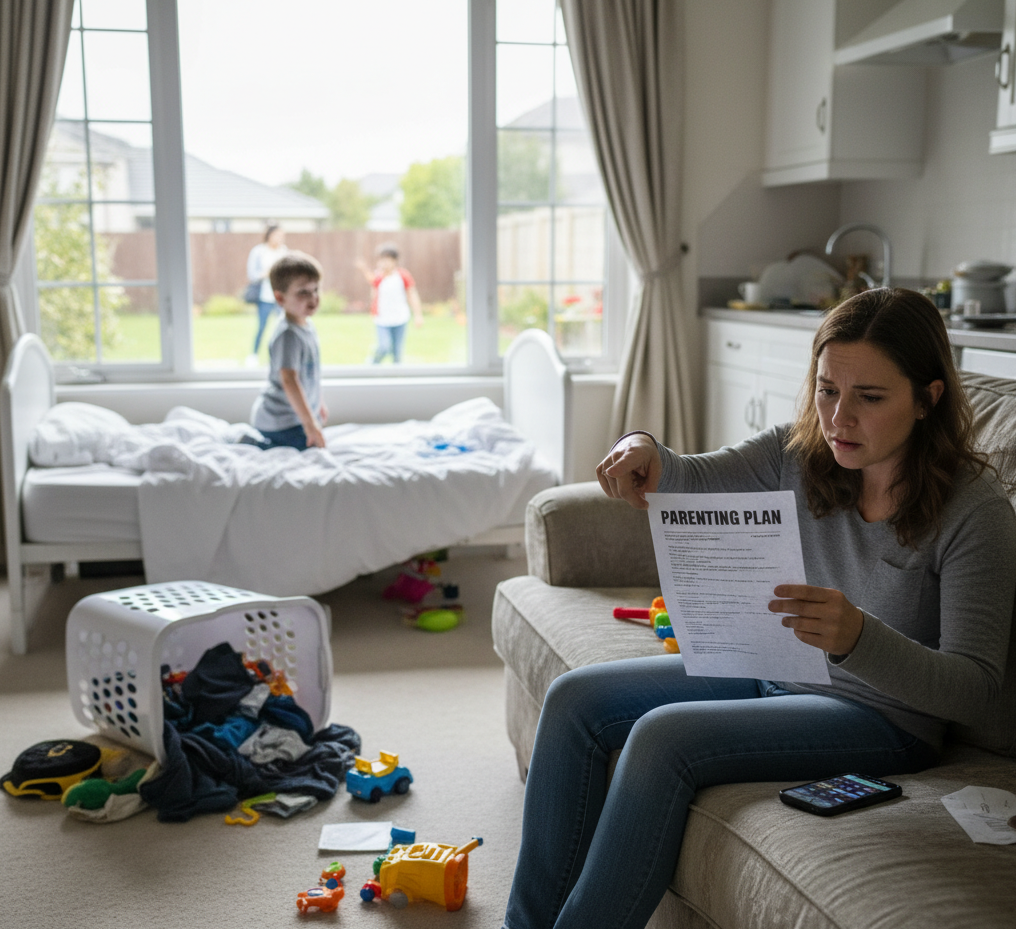 Hey. We know how this feels. You’ve done the hard work. You’ve shown up. You’ve followed the plan. Every weekend, every holiday, every doctor’s appointment. You’ve texted politely. You’ve been patient. You’ve put your child’s needs first. And then… they don’t show up.Or they show up 90 minutes late, again.Or they take the kids to … ]]>
Hey. We know how this feels.
You’ve done the hard work. You’ve shown up. You’ve followed the plan. Every weekend, every holiday, every doctor’s appointment. You’ve texted politely. You’ve been patient. You’ve put your child’s needs first.
And then… they don’t show up.
Or they show up 90 minutes late, again.
Or they take the kids to another state without telling you.
Or they cancel your weekend because “something came up,” even though it’s in the court order.
You’re furious. You’re exhausted. You’re wondering if you’re the only one trying.
You’re not alone.
And the truth is you’re not alone. And this isn’t just about “fairness.” It’s about your child’s safety, stability, and peace of mind. Let’s walk through what you can do when your co-parent breaks the parenting plan.
What Your Parenting Plan Is and When It’s Being Broken
Think of your parenting plan as your family’s rulebook after divorce. It’s a written agreement that outlines how you and your co-parent will raise your children while living separately. This isn’t just a suggestion – it’s a court order that both parents must follow.
Your plan typically covers:
Living arrangements: When your children spend time with each parent, including schedules for holidays, vacations, and special days
Decision-making: How you’ll make important choices about your children’s education, healthcare, religious upbringing, and other major life decisions
Communication: How you and your co-parent will talk to each other, and how your children will stay in touch with the parent they’re not currently with
Because this plan is a legal document, violating it has real consequences. This isn’t just about breaking a personal agreement – it’s about disobeying a court order, which can lead to serious legal outcomes.
Common Types of Violations
Not every small mistake counts as a serious violation. Courts understand that life happens – sometimes a parent might be late for pickup because of unexpected traffic, or there might be a genuine misunderstanding about the schedule. The difference between a minor slip-up and a serious violation usually comes down to how often it happens and whether it seems intentional.
Here are the most common violations we see:
Time-sharing issues: This happens when one parent doesn’t let the children spend the court-ordered time with the other parent, or consistently returns them late.
Communication problems: When a parent doesn’t let the children call or video chat with the other parent, or interferes with their communication in other ways.
Decision-making oversteps: Making major decisions about the children without consulting the other parent, especially when your plan requires joint decisions.
Moving without permission: This is particularly serious – when a parent moves the children to a new location without following the proper legal procedures or getting the other parent’s consent.
A single late drop-off might be annoying, but it’s probably not worth going to court over. But if your co-parent consistently returns the children late, that pattern shows disrespect for the court order and is more serious. And something like moving away without permission? That’s an immediate red flag that requires quick action.
Make Your First Moves. Stay Smart, Not Emotional
When you realize the plan’s been broken, your gut might say to lash out. But trust us, that’s not the way to win this. We’ve coached hundreds of co-parents through our app, and the ones who succeed are those who stay cool and strategic. Emotions can backfire in court, so let’s break down the first three steps we recommend.
Step 1: Pause and Double-Check. Grab your copy of the parenting plan and read it again. Is this really a violation, or is there some wiggle room? Maybe it’s a misunderstanding. Taking a deep breath—maybe step away from your phone for a bit—helps you shift from upset to focused. We’ve seen this simple pause prevent a lot of unnecessary drama.
Step 2: Document Like Your Case Depends on It (Because It Does).
This is huge. Without proof, it’s your word against theirs, and courts need evidence. Start a log right away. Use our app’s tracking features if you have it—it’s perfect for this. Record dates, times, what happened, and how it affects your kid. Save texts, emails, photos, or even school records. Witnesses? Note their details too.
Here’s what to document:
| Type of Evidence | What to Record | Why It Matters |
| Written log | Dates, times, and descriptions of each incident | Shows patterns of behavior over time |
| Messages | Save all texts, emails, or app communications | Provides direct proof of what was said |
| Photos/videos | Visual evidence of missed exchanges or other violations | Creates compelling proof for court |
| School records | Attendance during your co-parent’s time | Shows if they’re meeting educational responsibilities |
| Witness information | Names and contacts of people who saw what happened | Adds independent support to your claims |
Step 3: Try Talking to your co-parent. After you’ve documented the issue, try to resolve it directly with your co-parent. Many problems happen because of simple misunderstandings or poor communication. When you reach out, stay calm and focus on the facts – not on blaming or criticizing.
Written communication works best because it creates a record. A simple message like, “I noticed the children were returned two hours late on Saturday. The parenting plan specifies 6 PM return time. Can we make sure this doesn’t happen again?” keeps things factual and gives your co-parent a chance to respond reasonably.
If they respond negatively or refuse to cooperate, their messages become part of your documentation too. This shows the court you tried to work things out reasonably.
Next-Level Options : From Talking to Taking Action
If talking doesn’t work, it’s time for formal steps. We’re not lawyers, but based on what we’ve learned from experts and our community, here are your main paths. Start with the least confrontational to keep things civil for your kid.
Option 1: Mediation – A Neutral Fix. This is like couples therapy but for co-parenting. A mediator (often a pro in family issues) helps you both agree on a solution. It’s cheaper and quicker than court, plus you get more say in the outcome. Courts love it because it shows you’re trying to cooperate. We’ve partnered with mediation services in our app—many parents find it de-escalates things and rebuilds trust.
Option 2: Go Legal with a Motion. If mediation flops, file a Motion for Enforcement. This asks the court to make your co-parent follow the plan. You’ll need your docs ready for a hearing. Remedies could include extra time for you or fines for them. For really willful stuff, consider contempt of court—it’s tougher to prove but can lead to jail in extreme cases. We suggest starting with enforcement; if they keep ignoring, it builds your case for stronger action.
Option 3: Change the Plan Altogether. If violations keep happening, you might need a new plan. Show the court there’s a big change in circumstances (like ongoing breaks) and that a tweak is best for your child. This could mean less time for them or more for you. It’s a big step, so gather strong proof.
In our experience, starting small often works, but don’t hesitate to protect your family if needed.
How Courts View Parenting Plan Violations
When your case reaches court, the judge has one main concern: what’s best for your children.
The Child’s Best Interests Come First
Courts don’t care about which parent “wins” – they care about your children’s well-being. Judges want to see that both parents are putting their children’s needs above their own conflicts.
How you behave matters, too. If you’re constantly badmouthing your co-parent to your children or trying to turn them against the other parent, the court may see you as not prioritizing your children’s best interests. This can hurt your case, even if you’re the one who was originally wronged.
What the Court Might Do
If the court finds that your co-parent has violated the parenting plan, they have several options:
- Make-up time: Order extra time with you to compensate for what was missed
- Financial penalties: Fine your co-parent or make them pay your legal fees
- Mandatory classes: Require your co-parent to take parenting classes or go to counseling
- Contempt of court: In serious cases, this could mean fines or even jail time
- Custody changes: For repeated, serious violations, the court might reduce your co-parent’s parenting time or even change which parent has primary custody
Remember, going to court always involves some risk. If you file a motion but can’t prove your case, the judge might order you to pay your co-parent’s legal fees. That’s why good documentation is so important.
]]> If you’re co-parenting after a divorce and your ex is neurodivergent, you might feel like you’re trying to solve a puzzle where the pieces keep changing shape. I get it. Parenting is hard enough without adding in extra layers of complexity. But the thing is, it’s not about “fixing” anyone. It’s about building a new …
Continue reading "Co-Parenting Tips When Your Ex is Neurodivergent"
]]>
If you’re co-parenting after a divorce and your ex is neurodivergent, you might feel like you’re trying to solve a puzzle where the pieces keep changing shape. I get it. Parenting is hard enough without adding in extra layers of complexity.
But the thing is, it’s not about “fixing” anyone. It’s about building a new kind of partnership, one that honors both of your brains and puts your kids at the heart of it all. Think of me as your friendly guide, here to walk with you through the challenges, highlight the hidden strengths, and offer real, practical strategies you can start using today.
First, Let’s Step Into Their Shoes
When we say “neurodivergent,” we’re talking about brains that work differently—like those with ADHD, autism, dyslexia, or Tourette’s. It’s not a deficit; it’s a different operating system. And understanding that is your first step toward smoother co-parenting.
For a neurodivergent parent, the everyday chaos of parenting can feel magnified. Things we might take for granted—like juggling school schedules, managing laundry mountain, or coping with a toddler’s meltdown—can be genuinely overwhelming. This often comes down to executive functioning (the brain’s manager for planning and organization) and sensory overload (where too much noise or chaos can feel physically unbearable).
You might see your ex get flustered, need to step away from a noisy situation, or struggle with last-minute changes. It’s not that they don’t care; their brain is just processing the world on a different frequency.
And yet, these different brains bring incredible superpowers to parenting: breathtaking creativity, deep empathy, and a resilience that teaches kids how to navigate their own challenges. Your children are benefiting from this in ways you might not even see.
Co-Parenting with neurodivergence Ex Like a Maze, But We Can Map It Out
Switching to two homes after a divorce is hard on kids, period. But if neurodivergence is in the mix. For you, your ex, or your child. It adds layers. Kids who need routine might find the back-and-forth confusing and upsetting, leading to more emotional outbursts or withdrawal. We’ve seen how this grief can bubble up, and it’s key to handle it gently.
The partnership with your ex can get sticky too. If one of you is neurodivergent and the other neurotypical, communication styles might clash. Maybe you like straight talk, but they hint around things—bam, misunderstandings. Or one person ends up “managing” the other, like nagging about forgotten tasks, which builds resentment. We always advise against that; it turns equals into a parent-child dynamic, and nobody wins.
Think of co-parenting as an upgraded version of your old relationship. The same issues with emotions, planning, and talking are there, but now with distance, legal stuff, and separate lives. As your personal consultants, we recommend treating it with extra care—use the tools that worked before, but dial up the teamwork. It’s not just logistics; it’s rebuilding trust in a new way.
Our Top 8 Tips for Making Co-Parenting Work
Drawing from what we’ve learned helping families like yours, here are eight straightforward tips. We’ll keep them practical so you can start today.
- Set Up a Shared Hub for Communication Good co-parenting starts with clear chats. If executive functioning is tough, a central spot like our app or a shared calendar cuts down on confusion. Use it for school stuff, doctor visits, or daily routines. And keep it neutral and drama-free. Stick to simple words, no sarcasm or hints that could get lost. This way, your kid isn’t stuck in the middle as a messenger, which can really hurt them emotionally. We’ve seen this simple shift make a huge difference in reducing stress.
- Build Consistent Routines Together Kids, especially neurodivergent ones, do best with predictability. Team up with your ex to match bedtimes, meals, and homework across homes. Hang up visual calendars in both places showing the week ahead, including switch days. It gives your child a sense of control and cuts anxiety. In our sessions, parents tell us this one thing alone calms everyone down.
- Create Calm, Sensory-Friendly Spaces If sensory issues are big for you or your kid, tweak your homes to help. Dim lights, noise-canceling headphones, or a quiet corner can be lifesavers. Duplicate favorites like a special blanket or toy in each house to ease transitions. It’s a loving way to say, “We get you.” We’ve guided families through this, and it often prevents overload before it starts.
- Play to Each Other’s Strengths Forget splitting everything 50/50. It’s not always fair. Talk openly about what you’re each good at. Maybe you’re the creative one for playtime, and your ex handles schedules. This turns “weaknesses” into a team win. We encourage this approach because it builds respect and makes parenting feel less like a chore.
- See Behavior as a Message When your kid acts out, it’s not to push buttons. It’s them saying something’s wrong, like overload or frustration. Get curious: “What’s going on here?” Instead of punishing, help them calm down by being their steady anchor. This builds trust and teaches them to handle emotions.
- Team Up as One Unit Show your kid you’re on the same side. Go to school meetings together, share notes with teachers or therapists. It protects your child from conflict and shows them both parents care. We’ve seen this unity act as a shield against long-term stress.
- Make Time to Recharge Neurodivergent parents burn out fast from constant demands. Build downtime into your schedule, quiet time or fun sensory activities. Alternate high-energy days with chill ones. It’s essential for staying strong. We always remind folks: Self-care isn’t selfish; it’s how you show up better for your kids.
- Embrace Acceptance All Around Accept neurodivergence as just part of who you are. No fixing needed. Give your ex grace, celebrate your kid’s wins, and be kind to yourself. This creates a loving space where everyone feels valued. In our work, this radical acceptance is the glue that holds it all together.
Co-parenting with neurodivergence after divorce has its rough spots, but it’s also a chance to grow stronger. Don’t chase some “normal” ideal, embrace your unique brains with kindness and smart planning. With clear systems, calm spaces, and teamwork, you can cut the tension and focus on what matters: your kids.
We’re here to support you personally. Reach out anytime.
]]> If you’re reading this, you’ve probably been through it. The endless texts. The “corrections” to your parenting. The way they turn every pickup into a power play. The way your child comes home quiet, confused, or suddenly repeating things they shouldn’t even know. You’re not crazy.You’re not overreacting.And you’re definitely not alone. We’ve seen countless …
Continue reading "Parallel Parenting When Your Ex Is a Cerebral Narcissist"
]]>
If you’re reading this, you’ve probably been through it. The endless texts. The “corrections” to your parenting. The way they turn every pickup into a power play. The way your child comes home quiet, confused, or suddenly repeating things they shouldn’t even know.
You’re not crazy.
You’re not overreacting.
And you’re definitely not alone.
We’ve seen countless parents stuck in the very same spot you’re in right now.
So many divorced moms have told us, “I thought if I just explained things better—if I used clear language, cited research, stayed calm, showed up on time, listened more—maybe then I’d finally get through to him. I thought love and logic would win.”
But they didn’t.
What worked instead? Silence. Boundaries. Structure. And finally letting go of the need to be understood by someone who will never truly listen.
This isn’t a guide about “fixing” your co-parent.
It’s about protecting your child—and yourself—when your ex is a cerebral narcissist.
And yes, I know that term sounds clinical. But if you’ve ever been told, “You’re too emotional to make decisions,” or “Your parenting is unscientific,” or been corrected on grammar in a text about pick-up times… you know exactly what I mean.
Let’s start.
What Exactly Is a Cerebral Narcissist?
Let’s start by understanding what you’re dealing with. A cerebral narcissist is someone who feeds their ego through their intellect – or what they think is superior intelligence. Unlike other types of narcissists who focus on looks or play the victim, cerebral narcissists use their “smarts” as a weapon.
Here’s what this looks like in everyday life:
- They always need to be the smartest person in the room
- They talk down to people and use big words to show off
- They correct your grammar or nitpick your word choices
- They act like they’re too intelligent for “regular” people
- They can’t handle being wrong about anything
Sound familiar? If your ex constantly makes you feel stupid or inferior, you’re probably dealing with a cerebral narcissist.
The problem is that these traits don’t disappear after divorce. In fact, they often get worse because your ex has lost their daily control over you and is desperately trying to get it back through your co-parenting relationship.
The Red Flags: How They Show Up in Co-Parenting
We’ve seen these patterns over and over again. Your cerebral narcissist ex will likely do some or all of these things:
They gaslight you constantly. When you remember a conversation one way, they’ll insist it happened differently. They’ll make you question your own memory and sanity. This isn’t an accident – it’s a deliberate tactic to maintain control.
Every little thing becomes a huge fight. Need to switch a weekend? Prepare for a three-hour text battle. Want to take your child to a school event during “their” time? Get ready for accusations and drama. They turn normal parenting discussions into warfare because conflict gives them the attention they crave.
They try to control your parenting time. They demand to know every detail of what you’re doing with your child. They call or text constantly during your time together. They insist on being involved in decisions that should be yours to make.
They badmouth you to your child. This is the most painful part. They may tell your child that you’re not smart enough, not caring enough, or somehow dangerous. They might play the victim and make your child feel responsible for taking care of them.
Here’s the hard truth we’ve learned: your ex isn’t doing these things because they care more about your child. They’re doing them because they need to feel superior and in control. Your emotional reactions – your anger, frustration, and hurt – actually feed their ego.
Parallel Parenting Could be a Game-Changer:
After years of helping parents in high-conflict situations, we’ve found that the traditional co-parenting model simply doesn’t work with narcissists. Trying to cooperate with someone who sees every interaction as a competition is like trying to have a reasonable discussion with someone who’s actively trying to provoke you.
That’s where parallel parenting comes in. Instead of trying to work together, you operate separately. Think of it like two parallel lines that never cross – you’re both parenting your child, but you’re not trying to coordinate or collaborate.
Here’s how it works:
- Minimal communication – only the absolute essentials
- Independent decision-making – each parent makes day-to-day decisions during their time
- Legal structure – everything important is spelled out in your parenting plan
- Professional boundaries – you treat interactions like a business relationship
This isn’t giving up on your child. This is protecting your child from ongoing conflict and protecting yourself from emotional abuse.
Your Communication Survival Kit
The way you communicate with your narcissist ex can make or break your parallel parenting success. We recommend two powerful methods that have helped thousands of parents:
The BIFF Method
Every message you send should be:
- Brief – Keep it short and to the point
- Informative – Share only necessary information about your child
- Friendly – Maintain a neutral, business-like tone
- Firm – State your position without over-explaining
Instead of: “I can’t believe you’re doing this again! You always try to control everything and make my life difficult. This is exactly why our marriage didn’t work. I’m taking Emma to soccer practice whether you like it or not because she loves it and you’re just being spiteful.”
Try: “Emma has soccer practice on Saturday at 2 PM. I’ll pick her up at 1:30 PM.”
The Gray Rock Method
When your ex tries to bait you into an argument (and they will), become as boring as a gray rock. Don’t give them the emotional reaction they’re looking for.
When they send a nasty text calling you irresponsible, don’t defend yourself with a long explanation. Just respond with “Okay” or don’t respond at all.
This kills their supply. They’re looking for drama, emotion, and conflict. When you don’t give it to them, they often lose interest and move on. Check out this article where we discuss in depth about gray rock method.
Building Your Legal Shield
Here’s something we tell every parent we work with: verbal agreements with a narcissist are worthless. They will deny what they said, twist your words, and use any flexibility against you.
You need everything in writing and legally binding:
Get a detailed parenting plan that covers every possible scenario. Don’t leave room for interpretation. Specify exact times, locations, and who’s responsible for what.
Use only written communication through email or a co-parenting app. This creates a permanent record that protects you from gaslighting and provides evidence if you need to go back to court.
Work with professionals who understand high-conflict situations. Not all lawyers and mediators know how to handle narcissists. Find ones who specialize in high-conflict divorces and understand the manipulation tactics you’re facing.
Protecting Your Child’s Heart and Mind
This is probably your biggest worry: how is all this conflict affecting your child? We understand that fear because we’ve seen how much damage a narcissistic parent can do.
Your child might:
- Start repeating negative things your ex says about you
- Seem anxious or confused after visits with your ex
- Try to take care of your ex emotionally
- Push away from you to avoid feeling “disloyal” to your ex
This breaks your heart, and it’s natural to want to fight back or defend yourself. But here’s what we’ve learned works better:
Don’t put your child in the middle. Never ask them to carry messages or spy on your ex. Don’t quiz them about what happens at your ex’s house.
Don’t badmouth your ex. As tempting as it is to tell your child the truth about their other parent, this usually backfires. Your child identifies with both parents, and criticizing your ex feels like criticizing them.
Be the safe haven. Make your home a peaceful, drama-free zone. When your child comes back from your ex’s house, give them space to decompress. Don’t demand immediate affection or information.
Validate their feelings without taking sides. If your child seems upset after a visit, say something like “I can see you’re feeling confused. That must be hard.” Don’t try to fix everything or explain why their other parent acts certain ways.
Model healthy behavior. Show your child what emotional regulation looks like. Demonstrate empathy, respect, and appropriate boundaries. This gives them tools they’ll need for life.
Remember: you can’t control what happens at your ex’s house, but you can control what happens at yours. Focus your energy there.
It’s Time to Protect Your Future
We know this is exhausting. Some days you’ll wonder if it’s worth it. You’ll question whether you’re doing the right thing. You’ll feel guilty for not being able to give your child the “normal” co-parenting relationship you see other families have.
Here’s what we want you to remember: you’re playing the long game.
Right now, your ex might seem to be “winning” – they might have more time with your child or seem to be your child’s favorite. But children grow up. They develop critical thinking skills. They start to see patterns and understand manipulation.
The consistent, unconditional love you provide will be your child’s anchor. The peaceful home you create will be their safe space. The healthy boundaries you model will teach them how to protect themselves in future relationships.
Years from now, when your child is an adult, they’ll understand what you went through to protect them. They’ll appreciate the parent who didn’t drag them through endless drama, who didn’t force them to choose sides, and who gave them at least one home where they could just be a kid.
Your Action Plan. Try to Start From Today
If you’re ready to try parallel parenting, here’s what you can do right now:
- Stop trying to reason with your ex. Accept that they will never prioritize your child’s needs over their own ego. This isn’t giving up – it’s facing reality.
- Start documenting everything. Save all text messages, emails, and notes about interactions. This protects you legally and helps you see patterns of behavior.
- Switch to written communication only. No more phone calls or face-to-face discussions unless absolutely necessary.
- Review your parenting plan. If it’s vague or doesn’t cover important details, work with a lawyer to get it updated.
- Build your support system. Find a therapist who understands narcissistic abuse. Join support groups for high-conflict co-parenting. You don’t have to do this alone.
- Take care of yourself. This journey is a marathon, not a sprint. You need to stay healthy and strong for your child.
You’re Stronger Than You Know
If you’ve made it this far, you’re already showing incredible strength and dedication to your child. Co-parenting with a cerebral narcissist is one of the hardest challenges a parent can face, but thousands of parents have successfully navigated this path using parallel parenting strategies.
Remember: your worth as a parent isn’t measured by your ex’s opinion of you. Your success isn’t determined by whether you can make co-parenting work with someone who’s actively working against you. Your value comes from the love, stability, and protection you provide your child.
You didn’t choose this situation, but you can choose how you respond to it. Parallel parenting gives you the tools to stop the chaos, protect your child, and reclaim your peace of mind.
The road ahead isn’t easy, but you don’t have to walk it alone. We’re here to support you every step of the way, and we believe in your ability to create a better future for you and your child.
 Co-parenting after divorce feels impossible some days. You’re trying to put your child first while dealing with someone who might push every button you have. The anger, frustration, and hurt from your relationship didn’t magically disappear when you signed those divorce papers. But here’s what we’ve learned from working with hundreds of divorced parents: the …
Continue reading "How to Create a Fail-Safe Dispute Resolution Plan for Co-Parenting"
]]>
Co-parenting after divorce feels impossible some days. You’re trying to put your child first while dealing with someone who might push every button you have. The anger, frustration, and hurt from your relationship didn’t magically disappear when you signed those divorce papers. But here’s what we’ve learned from working with hundreds of divorced parents: the conflict itself isn’t what damages kids—it’s how you handle it.
We’ve seen parents transform from constant courtroom battles to peaceful co-parenting partnerships. They stopped hoping things would just “work out” and instead built a solid plan for when things go wrong. Because they will go wrong. Disagreements are part of co-parenting. But with the right system in place, those disagreements can actually strengthen your family instead of tearing it apart.
Why You Need This Plan? Even If Things Are “Fine” Right Now
Maybe you’re thinking, “We’re doing okay. We don’t need some formal plan.” We hear this a lot, usually from parents in their first year post-divorce. Then six months later, they’re calling us because a simple scheduling change turned into a three-week text war.
Here’s the thing: when emotions are high, our ability to think clearly goes out the window. That’s just human nature. A dispute resolution plan is like having a fire exit plan. You hope you never need it, but when you do, you’ll be grateful it’s there.
Step 1: Set Up Your Communication Like a Business Partnership
This might sound cold, but it works. We tell all our clients to think of their ex as a business partner. You don’t have to like your business partner. But you do have to work with them professionally to achieve your shared goal, raising healthy, happy kids.
Switch to Neutral Communication Tools
Stop using regular text messages for co-parenting discussions. Seriously. Those late-night texts when you’re frustrated never end well. Instead, use 2houses co-parenting app. This application keeps everything documented and neutral. No more “but you said” arguments because everything is right there in black and white.
Schedule Regular Check-Ins
We recommend weekly or bi-weekly “business meetings”. Even if they’re just 15-minute phone calls. This prevents small issues from becoming big problems. And it stops every kid pickup from turning into an impromptu negotiation session, which your children definitely notice.
During these calls, stick to an agenda: schedules, expenses, school updates, and any concerns. Set a timer if you need to. When the time’s up, the call ends. This keeps things focused and prevents old relationship issues from creeping in.
Create Ground Rules for Communication
Here are the rules we suggest to every family:
- No personal attacks or criticism of parenting choices
- No bringing up past relationship issues
- Use “I” statements instead of “you” statements
- No communication outside agreed hours unless it’s a true emergency (and your kid having a bad day at school isn’t an emergency)
- All discussions about your child happen through your chosen app. Not through your child
You can take immediate action. Right now, download 2houses co-parenting app and agree on your weekly check-in time. Put it in your calendar as a recurring appointment.
Step 2: Make Every Decision About Your Child, Not About You
This is where most co-parenting breaks down. Parents start sentences with “I want” instead of “our child needs.”
Before you bring up any issue with your co-parent, ask yourself: “How does this benefit my child?” If you can’t answer that question clearly, you might be fighting the wrong battle.
Instead of saying: “I want him every other weekend.” Try this: “I think it would be good for Jake to have consistent time with both parents. Could we look at a schedule that gives him that stability?”
Instead of saying: “You never make her do homework.” Try this: “I’m concerned about Emma’s homework routine. What can we do together to help her stay on track at both houses?”
See the difference? The first approach puts your ex on the defense. The second approach invites collaboration.
Before your next conversation with your co-parent, write down the issue and practice framing it in terms of your child’s needs, not your wants.
Step 3: Build Your Conflict Resolution Ladder
Not every disagreement needs the same response. A scheduling hiccup shouldn’t get the same treatment as a major decision about your child’s education or medical care. We help our clients create what we call a “conflict ladder”, different steps for different sized problems.
Level 1: Direct Discussion Try to work it out between yourselves first using your communication rules. Most issues should end here if both parents are committed to putting the child first.
Level 2: Take a Break If things get heated, stop. Agree to a 24-48 hour cooling-off period. We can’t tell you how many ugly fights could have been avoided if parents had just stepped away for a day. Your ego might want to keep arguing, but your child needs you to be the adult.
Level 3: Bring in a Mediator If you can’t reach an agreement after cooling off, it’s time for professional help. A mediator isn’t there to take sides. They’re there to help you find solutions that work for everyone. Mediation costs a fraction of what you’d spend on lawyers and court fights.
Level 4: Parenting Coordinator For ongoing issues or if you have a particularly high-conflict situation, a parenting coordinator might be worth the investment. This person (usually a therapist or lawyer) can make binding decisions on specific issues you’ve agreed to in advance.
Level 5: Court This is your last resort. By the time you get here, you should have documentation showing you tried everything else. Courts appreciate parents who attempt to resolve issues outside the courtroom.
Write down your conflict ladder and share it with your co-parent. Agree on which types of issues go to which level.
Step 4: Keep Things Consistent Between Homes
One of the biggest sources of co-parenting conflict? Different rules at different houses. Your child says, “But Mom lets me stay up until 10!” and suddenly you’re in a power struggle with your ex through your kid.
We’re not saying both homes need to be identical, that’s impossible and honestly not necessary. But big things like homework expectations, screen time limits, and bedtime routines should be somewhat consistent. Work together on these basics.
Document Everything Keep records of all your agreements. When you resolve a conflict, write down what you decided and add it to your parenting plan. This prevents the same argument from happening over and over again.
Your parenting plan should be a living document that grows and changes as your children do. What works for a 6-year-old won’t work for a 16-year-old.
Step 5: Know When to Ask for Help
You don’t have to do this all on your own. We’ve seen so many families walk through the same challenges you’re facing right now, and trust us. There’s absolutely no shame in reaching out for support. In fact, the parents who get help early are usually the ones who avoid bigger problems down the road. Think of it this way: asking for help isn’t a sign of weakness, it’s a sign that you care enough about your child to put their needs first.
Depending on your situation, the right kind of help can make a huge difference. A co-parenting counselor can give you tools for calmer, more effective communication. A family therapist can guide your child through the adjustment to two households. A co-parenting coach can help both of you learn how to work together in this new chapter. And if you need your agreements put in writing, a family lawyer can help you do that clearly and fairly. Not to start fights, but to bring peace of mind.
This Plan Is Your Gift to Your Child
Building a dispute resolution plan isn’t about admitting failure. It’s about planning for success. It’s about being the kind of parent who thinks ahead, who puts their child’s needs first, and who handles conflict with maturity and grace.
Your child is watching how you and your ex handle disagreements. They’re learning from you what it looks like to solve problems, manage emotions, and treat other people with respect (even when those people frustrate you). When you have a plan for handling conflict, you’re teaching your child that problems have solutions and that adults can work together even when they disagree.
Your child deserves to move freely between their two homes without worrying about conflict or choosing sides. They deserve parents who can put aside their differences to focus on what really matters: raising a happy, healthy kid who knows they’re loved by both parents.
That’s not just a nice idea. It’s completely achievable. And we’re here to help you make it happen.
 We know co-parenting isn’t easy. You’re doing your best to raise your kids together after divorce or separation. But sometimes it comes with challenges you never expected. One of the biggest? Watching your child struggle with anxiety as they move between two homes. If you’re seeing signs like clinginess, meltdowns at drop-off time, mysterious stomachaches, …
Continue reading "How to Handle Your Child’s Anxiety During Co-Parenting"
]]>
We know co-parenting isn’t easy. You’re doing your best to raise your kids together after divorce or separation. But sometimes it comes with challenges you never expected. One of the biggest? Watching your child struggle with anxiety as they move between two homes.
If you’re seeing signs like clinginess, meltdowns at drop-off time, mysterious stomachaches, or your child suddenly refusing to visit their other parent, you’re not alone. We work with divorced and separated parents every day, and child anxiety during transitions is one of the most common issues we help families navigate.
The good news is, with the right approach, you can help your child not just cope with these feelings, but actually build strength from them.
Why Kids Get Anxious During Co-Parenting (And Why That’s Actually Normal)
First, let’s understand what’s happening in your child’s mind. Anxiety isn’t your enemy – it’s actually your child’s brain trying to keep them safe. When their world feels unpredictable (like switching between homes, different bedtimes, or sensing tension between parents), their internal alarm system kicks in.
We see this all the time: kids worry about making both parents happy, fear missing one parent while they’re with the other, or even regress to behaviors like bedwetting when they feel overwhelmed. Some children become extra sensitive, picking up on every emotion in the room.
Here’s what we want you to remember: anxiety itself isn’t harmful. It’s uncomfortable, yes, but it’s also completely normal. The problem comes when we accidentally make it worse by treating it like something dangerous.
For example, if your child has a meltdown at drop-off and you decide to skip the visit “just this once,” you’re sending a message that their fear was justified. Short-term relief, but long-term, you’ve made the anxiety stronger.
We encourage you to think of your highly sensitive child as having a superpower that just needs some guidance. These kids often grow up to be incredibly empathetic and perceptive adults.
Start With Yourself (This Might Be The Most Important Part)
Here’s something we tell every parent we work with: your child is constantly reading your emotional temperature. If you’re anxious about drop-offs, they’ll pick up on that and assume there’s something to worry about.
We get it. Maybe you’re concerned about your co-parent’s house rules, or you’re still processing hurt feelings from the divorce. That’s completely normal. But your child doesn’t need to carry those worries.
What we recommend:
- Take a few deep breaths before transitions
- If you catch yourself feeling anxious, try reframing: “Their routine might be different, but my child is safe and resilient”
- Avoid pumping your child for information after visits. This tells them something was wrong
- Model healthy coping by talking through your feelings out loud: “I’m feeling a little worried about traffic, so I’m going to take some deep breaths to stay calm”
Remember our favorite phrase: “We can do hard things.” Say it to yourself, say it to your child. It works.
During your kid-free time, take care of yourself. Read a book, call a friend, go for a walk. When you’re recharged, you’re better equipped to be the calm, confident parent your child needs.
Working Together With Your Co-Parent (Even When It’s Hard)
The best thing you can do for your anxious child is present a united front with your co-parent. We know this can feel impossible, especially if communication is strained, but even small steps make a big difference.
Try this approach:
- Focus conversations on your child’s needs, not past grievances
- Share what you’re noticing: “Jamie seems nervous about transitions. Can we brainstorm some routines that might help?”
- Work together on consistency where possible. Similar bedtimes, rules, and expectations across both homes
- Never, ever badmouth your co-parent in front of your child (even when you’re frustrated)
Instead, try saying things like: “You’re going to have such a great time with Dad today – he’s amazing at building those Lego projects you love.”
If direct communication is too difficult, consider using a co-parenting app to keep things business-like and documented. We’ve seen this reduce anxiety for both parents and kids.
Create new traditions together: Maybe it’s a special stuffed animal that travels between homes, or a shared photo album your child can take everywhere. These small touches help normalize the back-and-forth.
Making Transitions Smoother (The Drop-Off Survival Guide)
Drop-offs don’t have to be dramatic. In fact, the calmer and more routine you make them, the easier they become for everyone.
Our proven transition strategy:
- Keep exchanges brief and business-like (think friendly, not emotional)
- Create a consistent goodbye ritual. Maybe a special handshake or three quick hugs
- Prepare your child without overdoing it: “Tomorrow after school, you’ll go to Mom’s house. Let’s pack your favorite book to take with you”
- Validate feelings without empowering the fear: “I can see you’re feeling nervous about going. New things can feel tricky, but I know you can handle this”
Avoid these common mistakes:
- Don’t ask leading questions like “Are you scared about going to Dad’s?”
- Instead try: “How are you feeling about this weekend?”
- Don’t make big changes in emotional moments. Just stick to the plan, then problem-solve later with your co-parent
If things get really difficult, consider neutral drop-off locations like school or a community center. We’ve seen this help reduce tension significantly.
Teaching Your Child to Handle Big Feelings
This is where you become your child’s emotional coach. Instead of trying to eliminate their anxiety, teach them they can handle it.
Use “even if” statements (this comes from cognitive behavioral therapy): “Even if I miss Mom tonight, I can draw her a picture and call her once before bed.” “Even if Dad’s house feels different, I know I’m safe there too.”
The name-it-to-tame-it approach: “You’re feeling worried about sleeping at Dad’s apartment tonight. That’s a completely normal feeling.” Then follow with confidence: “And I’ve seen you do hard things before. I believe you can get through this.”
Focus on their strengths: “I noticed how well you packed your overnight bag. That shows me you’re getting ready to be brave.” “You gave Dad a hug goodbye even though you felt nervous. That took real courage.”
For older kids, simple problem-solving questions work well: “What’s one thing that would help you feel more comfortable at Mom’s house?”
Comfort items are your friend: A special photo, a familiar blanket, or even a recording of you reading their favorite story can provide security during tough moments.
When to Worry and When to Get Help
Most transition anxiety improves with time and consistency. But we recommend reaching out for professional support if you notice:
- Persistent sadness or withdrawal lasting weeks
- School avoidance or major changes in academic performance
- Physical symptoms like frequent stomachaches with no medical cause
- Sleep problems or nightmares that don’t improve
- Aggressive behavior or major personality changes
A family therapist who specializes in divorce and co-parenting can provide strategies tailored to your specific situation. Sometimes just a few sessions can make a world of difference.
Our Quick Do’s and Don’ts Guide
When you’re helping your child transition between homes, here’s exactly what we suggest based on what really works for families like yours:
DO:
- Validate first. If your child says they’re worried, you can respond with something like, “I hear you. Going to Mom’s tonight feels a little tough, and that’s okay. Change can feel hard.” This helps them feel seen.
- Show confidence in them. We’ve seen how much it matters when a parent says, “I know this is difficult, but I also know you’re brave enough to handle it.” It gives your child strength.
- Keep goodbyes short and sweet. A quick hug, a smile, and a positive send-off work much better than dragging it out.
- Model calm behavior. Your child is watching how you handle stress. If you stay calm, you’re teaching them they can stay calm too.
DON’T:
- Don’t let your child skip visits out of anxiety. We know it’s tempting, but avoiding visits only makes the fear bigger in the long run.
- Don’t make big decisions during emotional moments. Wait until things cool down before making any changes—it prevents unnecessary tension.
- Don’t let your body language send the wrong message. Even a sigh or a worried look can tell your child something’s wrong when it isn’t.
- Don’t plant seeds of worry. Instead of asking, “Are you scared to go?” try asking, “What’s one thing you’re excited about for tonight?”
The Secret Formula That Actually Works
Here’s something we share with every family: Support = Acceptance + Confidence.
Every interaction with your anxious child should include both:
Acceptance: “You’re really scared about sleeping at the new apartment. That feeling makes complete sense.”
Confidence: “And I’ve watched you do scary things before. I’m 100% sure you can get through tonight. You are so much braver than you know.”
This validates their experience without letting the anxiety make their decisions. It builds what we call self-efficacy – the belief that they can handle life’s challenges.
]]> Sometimes, we’re not perfect parents.We yelled when we were tired.We’ve compared our kids to other families on Instagram.We jumped in too fast when our child struggled with homework. Or lost a game, or got picked last for soccer. And today we’re not writing this to sound wise.We’re writing this because we’ve seen countless parents there. …
Continue reading "5 Reasons That Could Destroy Your Child’s Self-Esteem"
]]>
Sometimes, we’re not perfect parents.
We yelled when we were tired.
We’ve compared our kids to other families on Instagram.
We jumped in too fast when our child struggled with homework. Or lost a game, or got picked last for soccer.
And today we’re not writing this to sound wise.
We’re writing this because we’ve seen countless parents there.
Your child’s self-esteem isn’t just about feeling good. It’s their foundation for everything. It’s what helps them bounce back when they fall off their bike, make friends at their new school, and handle the big emotions that come with having two homes. When kids have healthy self-esteem, they’re more resilient, make better choices, and form stronger relationships throughout their lives.
But here’s what we’ve discovered in our years of helping families. Even the most well-intentioned parents can accidentally damage their child’s self-worth. Here are five things we almost did, and that’s enough to destroy your child’s self esteem.
1. Too Much Criticism and Putting Them Down
We all need to correct our children sometimes, but when criticism outweighs praise by a wide margin, it can seriously damage their self-worth. This is especially true in co-parenting situations where children might already feel insecure about their family structure.
Imagine your child comes home from a visit with their other parent and immediately starts acting out. Your first instinct might be to criticize their behavior: “Why can’t you just behave? You never listen to me!”
But think about how that sounds to your child. They hear: “I’m bad. I can’t do anything right.”
Instead, try this approach: “I can see you’re having a tough time right now. Let’s take a breath and talk about what’s bothering you.” This acknowledges their feelings without attacking their character.
Remember the THINK method when giving feedback:
- Truthful: Is what I’m about to say true?
- Helpful: Will it help the situation?
- Inspirational: Will it encourage positive behavior?
- Necessary: Is this something that needs to be said right now?
- Kind: Am I saying it in a kind way?
Try to offer at least four positive comments for every one correction. And make that praise specific: “I love how you shared your toys with your sister today” means so much more than a generic “good job.”
2. Comparing Them to Others
“Your sister never has trouble with math.” “When I was your age, I would never talk back like that.” “Look how well-behaved the Johnson kids are.”
Sound familiar? Comparisons seem harmless, even motivating, but they’re actually self-esteem killers.
What’s really happening when you compare your kid with others? Every comparison tells your child they’re not enough as they are. We’ve counseled kids who genuinely believe they’re the “bad” child in the family or the “problem” kid between two homes.
Co-parenting situations can make this worse. Kids already feel different having two houses, two sets of rules, two bedtime routines. When we add comparisons on top of that. Especially comparing them to kids from “normal” families, it amplifies their sense of not belonging.
Here are better approach:
- Compare your child only to their past self: “You’re getting so much better at managing your anger than you were last month”
- Celebrate what makes them unique: “You have such a creative way of solving problems”
- Avoid comparing your co-parenting situation to other families. Your family is complete just as it is.
3. Being Overprotective and Not Letting Them Fail
After a divorce, you might want to shield your child from more pain, but overprotecting them can backfire by making them think you don’t believe in them. It says, “I don’t think you can handle this,” which stops them from learning and growing. In co-parenting, this might show up as one parent hovering while the other lets go, creating mixed signals that confuse the kid.
Research tells us that facing challenges is key to self-esteem. It’s not about always winning, but trying and learning from falls. If we jump in too quick, like doing their homework or fighting their battles, they miss out on building that inner strength. One expert shared how kids need exposure to real-life ups and downs to handle differences and setbacks.
The result? They might become afraid to try anything new, feeling helpless in a “scary” world. But we’ve seen kids thrive when given chances, like learning to swim or doing chores on their own. It proves to them they can do hard things. In your co-parenting plan, agree on age-appropriate tasks and let natural consequences teach lessons. Say things like “I believe in you, and I’m here if you need me.” This turns protection into empowerment, helping them navigate life’s bumps with confidence.
4. Neglecting Them or Skimping on Emotional Support
Neglect doesn’t have to be big. It can be emotional, like not giving enough attention because you’re juggling work, new relationships, or co-parenting logistics. It makes kids feel like they’re not worth your time, which tanks their self-esteem. In divorced families, if time is split, kids might feel overlooked if one home is busier or less tuned in.
Experts point out that even small things, like half-listening while on your phone, add up and make children feel unimportant. Stories from foster parents show how lack of support leads to deep feelings of shame and loneliness. Dismissing their emotions, like saying “Stop crying, it’s not a big deal,” erodes trust and makes them doubt their own feelings.
This can lead to poor self-control and isolation. To turn it around, make quality time a priority—validate their feelings with “That sounds really hard, I’m here for you.” In co-parenting, use our app to coordinate check-ins so both parents show consistent care. Build a list of what makes your child awesome and remind them often. Creating a sense of belonging, even through online groups if they’re shy, fills that emotional gap and rebuilds their worth.
5. Setting Unrealistic Expectations and Adding Pressure
Pushing too hard with sky-high goals, like expecting straight A’s or sports stardom, sets kids up to feel like failures. In co-parenting, this pressure might come from wanting to “prove” everything’s okay post-divorce, but it ties their worth to perfection, not who they are.
Tailor expectations to your child’s real abilities. Kids with ADHD or divorce stress might need smaller steps. Research warns that perfectionism creates anxiety and avoidance. One parent learned the hard way by pushing their own interests, like music lessons. Instead of letting the kid choose, switching to what they loved built real confidence.
Kids end up disappointed in themselves, feeling like they let you down. Focus on effort instead: “I’m proud of how you tried.” In co-parenting, align on realistic goals and praise progress together. This helps them value themselves for growth, not just results.
Remember, you’re not aiming for perfection; awareness and small changes make a huge difference. Love your kid unconditionally, let them tackle challenges, and cheer their unique path. We’re here to help you every step. To make your co-parenting experience better download our 2houses app today!
]]> Divorce changes everything about your financial life, but taxes? They don’t have to be a nightmare. If you’re a divorced parent, you’re sitting on potential tax savings worth thousands of dollars – but only if you know the rules. The IRS has specific regulations that can either work in your favor or cost you dearly, …
Continue reading "Tax Secrets Every Divorced Parent Needs to Know"
]]>
Divorce changes everything about your financial life, but taxes? They don’t have to be a nightmare. If you’re a divorced parent, you’re sitting on potential tax savings worth thousands of dollars – but only if you know the rules. The IRS has specific regulations that can either work in your favor or cost you dearly, depending on how well you navigate them.
Most divorced parents are leaving money on the table. They’re either unaware of valuable tax benefits they could claim, or they’re making costly mistakes that trigger audits and penalties.
But once you understand these “tax secrets” (really just overlooked IRS rules), you can turn your post-divorce tax situation from a source of stress into a strategic advantage.
Why This Matters More Than Ever
Your divorce decree might seem like the final word on financial arrangements, but the IRS has its own set of rules that don’t always align with what your lawyer drafted. Understanding this disconnect is crucial because it affects everything from who can claim your children as dependents to whether you qualify for valuable filing statuses and credits.
The stakes are high. We’re talking about potentially thousands of dollars in tax savings or unexpected bills. A single mistake like both parents claiming the same child or filing with the wrong status can trigger IRS scrutiny, delay refunds, and result in penalties that compound over time.
Secret #1: Nailing the Dependency Claim (It’s Trickier Than It Seems)
Okay, let’s start with the big one where most of us stumble: dependencies. You might think, “I have primary custody, so all the tax goodies are mine.” Not necessarily, and honestly, that mindset could cost you.
Here’s the deal straight from the IRS: The “custodial parent” is whoever the child spent more nights with during the year. That parent gets first dibs on claiming the kid as a dependent, unlocking stuff like:
- The Child Tax Credit: Up to $2,200 per child under 17 in 2025 (bumped up from $2,000 thanks to recent tweaks in the law).
- Head of Household status: This is a game-changer for your taxes.
- Earned Income Tax Credit: Could be as much as $8,046 if you have three or more kids.
- Child and Dependent Care Credit: Covers up to $3,000 in childcare for each kid under 13.
But here’s my favorite hack: IRS Form 8332. This form lets you, as the custodial parent, hand over the dependency claim to your ex. Why on earth would you? Because it could make sense for the bigger picture. Picture this: You’re making $35,000 a year, scraping by, while your ex pulls in $85,000. That $2,200 Child Tax Credit might mean more to them in actual tax savings because of their bracket. In a smart setup, they claim it, save big, and kick some back to you – maybe an extra $1,000 in support. I’ve advised friends to do this, and it turns potential fights into wins for the kids.
One important thing is, even if you sign over the dependency with Form 8332, you keep the Earned Income Tax Credit, Child and Dependent Care Credit, and Head of Household filing. Plus, up to $1,700 of the Child Tax Credit is refundable in 2025, so you get cash even if you owe nothing. It’s like having your cake and eating it too.
Secret #2: Head of Household – Your Ticket to Serious Savings
If you qualify for Head of Household, grab it with both hands. I can’t stress this enough, it’s often the biggest overlooked boon for us divorced parents.
Crunch the numbers: In 2024, the standard deduction was $21,900 for Head of Household versus $14,600 for single. That’s $7,300 more tax-free income! And the brackets are kinder, so less of your pay gets hit at higher rates. For 2025, expect similar perks with inflation bumps.
Qualifying isn’t as tough as it sounds. You need to be unmarried (or “considered unmarried”) at year’s end, cover more than half your home’s costs, and have a qualifying child live with you over half the year. Pro tip: Time away for school, trips, or health stuff doesn’t count against you. So if your teen’s at college but your place is still “home,” you’re probably good.
And remember Form 8332? You can let your ex claim the dependency but still file Head of Household if the kid lived with you most nights. It’s a powerhouse combo that lets you split benefits wisely. I’ve used this myself to keep things fair and maximize what comes back to the family.
Secret #3: The Alimony Shake-Up You Can’t Ignore
Alimony rules got a total overhaul, and it depends on when your divorce wrapped up. This one’s huge because it flips how you negotiate and plan.
The cutoff is December 31, 2018. If your divorce was before 2019:
- Payer deducts alimony from their taxes.
- Recipient reports it as income.
Post-2018 divorces:
- No deduction for the payer.
- No taxable income for the recipient.
This shift killed the old tax-sharing perks, so settlements often look different now. If you’re paying or receiving, factor this in – it could mean adjusting amounts to keep things equitable.
Child support? It’s always tax-neutral: Not deductible, not taxable, no matter the divorce date. But watch out if your decree lumps alimony and support together. If you short the payment, the IRS treats it as child support first, so alimony perks vanish.
I’ve seen exes renegotiate post-2018 to account for this, and it saves headaches down the line.
Secret #4: Education Credits, Gold for College Parents
Got kids in college? Education tax breaks can shave off thousands, but for us divorced folks, it’s all about who claims what.
Take the American Opportunity Tax Credit: Up to $2,500 per student for the first four years, with part refundable. Rule: Only the parent claiming the student as a dependent gets it.
Talk it out with your ex. Decide who claims the dependent, or if the kid should file solo. Income matters too. The credit phases out at higher levels. If one of you earns less, let them claim it for the full amount. I’ve coordinated this for my own family, and it turned what could be a fight into a shared savings plan.
Here’s a quick table of key credits to keep handy:
| Credit | Amount | Refundable? | Who Can Claim? |
| Child Tax Credit (per child under 17) | Up to $2,200 | Up to $1,700 | Dependent claimer |
| Earned Income Tax Credit (3+ kids max) | Up to $8,046 | Yes | Custodial parent only |
| Child & Dependent Care Credit | Up to $3,000/child | No | Custodial parent |
| American Opportunity Tax Credit | Up to $2,500/student | Partially | Dependent claimer |
Secret #5: Dodging the Usual Traps and Planning Like a Pro
No strategy’s foolproof without sidestepping common errors. From our experience we see many divorced parents are facing these issues, so listen up.
The double-claim disaster: If you and your ex both claim the same child, the IRS will reject one, audit both, and drag things out forever. The fix? Talk it out early and decide who claims which child.
Form 8332 mistakes: Don’t skip this form. You need to attach it every year and fill it out correctly. A divorce decree alone won’t save you.
Custody changes mid-year: If your custody shifts, so should your tax math. Recalculate everything, life changes, and taxes need to match.
State vs. federal rules: Some states still follow old rules for things like alimony. Always double-check your state’s laws so you don’t miss extra costs or breaks.
Withholdings after divorce: Update your W-4. Your new filing status changes deductions, and if you ignore it, you might face penalties.
Splitting property: Divorce splits are tax-free now, but watch out for capital gains later. Pick assets with a higher cost basis to save money down the road.
We always advise you to chat with your ex yearly before filing. Not to rehash the past. Just to compare numbers and make sure you both get the best deal. And keep proof of everything like custody calendars, payments, expenses.
If you’ve got a business, multiple kids, or big assets, hire a tax pro. Trust me, they save more money than they cost.
Your Action Plan for Maximum Tax Savings
Before You File
- Review your divorce decree for tax-related provisions
- Calculate the tax benefit of claiming each child for both parents
- Communicate with your ex-spouse about dependency claims
- Gather all necessary documentation, including Form 8332 if needed
Document Everything
Keep detailed records of:
- Custody schedules proving time spent with each parent
- Child support and alimony payments
- Educational and medical expenses
- Form 8332 releases and communications
Take Professional Help When Required
Tax situations involving divorce can be incredibly complex, especially with multiple children, varying incomes, or business ownership. The investment in a qualified tax professional often pays for itself many times over in tax savings and peace of mind.
 I know you’re here because you’re trying to figure out something that feels impossible right now. You’re navigating co-parenting after a separation or divorce, and the money conversations? They’re tough. Really tough. Maybe you’re lying awake at night wondering if you’re paying too much, or not enough. Maybe you’re frustrated because every discussion about expenses …
Continue reading "How to Build a Co-Parenting Budget That’s Fair for Everyone"
]]>
I know you’re here because you’re trying to figure out something that feels impossible right now. You’re navigating co-parenting after a separation or divorce, and the money conversations? They’re tough. Really tough.
Maybe you’re lying awake at night wondering if you’re paying too much, or not enough. Maybe you’re frustrated because every discussion about expenses turns into an argument. Or perhaps you’re worried that your financial disagreements are affecting your kids more than you’d like to admit.
I get it. Money matters in co-parenting can feel like walking through a minefield. But here’s what I want you to know: it doesn’t have to stay this way.
Why You Need This More Than You Think
Let me share something with you that might surprise you. A well-crafted co-parenting budget isn’t just about money. It’s about peace of mind for you and stability for your children.
When you have clear, written agreements about finances, something beautiful happens. Those 2 AM anxiety spirals about whether you can afford your child’s soccer camp? They stop. Those tense text exchanges about who should pay for the school supplies? They become a thing of the past.
Your children are watching how you handle this transition. When they see two adults working together respectfully. Even about something as challenging as money, you’re teaching them invaluable lessons about cooperation and responsibility.
Let’s Talk About “Fair” (Because It’s Not What You Think)
I need to tell you something that might challenge how you’ve been thinking about this whole situation. Fair doesn’t mean splitting everything 50/50. I know that might sound wrong at first, but stay with me.
Imagine you both need to contribute $1,000 toward an unexpected medical expense. If you’re earning $40,000 a year, that’s 2.5% of your annual income. But if your co-parent is earning $20,000, that same $1,000 represents 5% of their income. Same dollar amount, completely different impact.
True fairness in co-parenting finances means contributions that are proportionate to what each of you can actually afford. It means focusing on what’s best for your children, not on keeping score.
Your Step-by-Step Roadmap to Financial Peace
Step 1: Have “The Conversation” (And Make It Count)
I won’t sugarcoat this—this conversation might feel uncomfortable. But approach it like you would any important business meeting, because in many ways, that’s exactly what it is.
Choose a time when you’re both calm and focused. Not during a stressful child exchange, not when emotions are running high. You might even want to meet in a neutral location or have this conversation over video chat.
Come prepared with your financial documentation: recent pay stubs, tax returns, and a list of your current child-related expenses. Full transparency is non-negotiable here. For this to work, you both need to be completely honest about your financial situations.
Step 2: Map Out Every Expense (Yes, Even the Small Ones)
This is where many people get tripped up, so let’s be thorough. You need to think about:
The Basics: Housing costs related to the children, food, clothing, utilities, transportation Health & Wellness: Insurance premiums, copays, prescriptions, therapy sessions Education & Childcare: School fees, supplies, tutoring, daycare, summer camps Extracurriculars: Sports teams, music lessons, equipment, uniforms The Unexpected: Technology needs, entertainment, holiday expenses, emergency costs
Don’t forget to distinguish between essential expenses and nice-to-haves. This will help you set clear boundaries later.
Step 3: Do the Math (It’s Simpler Than It Sounds)
Here’s where we calculate those proportional contributions I mentioned. Don’t worry, the math is straightforward.
First, figure out each parent’s monthly take-home pay. This is your income after taxes, mandatory retirement contributions, and health insurance premiums.
Let’s say you earn $4,000 per month and your co-parent earns $6,000. Your combined income is $10,000.
Your percentage: ($4,000 ÷ $10,000) × 100 = 40% Their percentage: ($6,000 ÷ $10,000) × 100 = 60%
This means you’d contribute 40% of shared expenses, and they’d contribute 60%. I hope you understand now how that works?
Step 4: Choose Your Payment System
You have several options here, and the best choice depends on your specific situation and how well you communicate with your co-parent.
The Monthly Pool Method (my personal recommendation): Estimate your total monthly child expenses, then each parent contributes their percentage to a joint account every month. All child expenses get paid from this pool. This eliminates the constant back-and-forth of reimbursements and ensures money is always available when needed.
Individual Reimbursement: One parent pays an expense, then submits the receipt to the other for their share. This works if you have infrequent, predictable expenses and excellent communication.
Category Assignment: Maybe you handle all medical expenses while your co-parent covers extracurriculars. This can work, but be careful. Costs in different categories can vary wildly over time.
Step 5: Write It All Down (This Is Crucial)
I cannot stress this enough. Get everything in writing. Verbal agreements fall apart when memories fade or circumstances change.
Your written agreement should include exactly how you calculated income percentages, which expenses are covered, your chosen payment method, and most importantly, how you’ll handle unexpected expenses and future changes.
Include a review schedule. Life changes, and your budget needs to evolve with it.
Step 6: Use Technology to Your Advantage
There are fantastic tools available to make this process smoother. You can use our 2houses co-parenting app. It’ll handle expense tracking, receipt scanning, and even secure payments. Even a simple shared Google spreadsheet can work wonders for transparency and organization.
The Golden Rules for Long-Term Success
Keep Your Kids at the Center: When disagreements arise (and they will), ask yourself: “What does my child need right now?” This question cuts through a lot of noise and helps you find solutions.
Communicate Early and Often: If a expense category is consistently over budget, or if something unexpected comes up, don’t wait. Address it promptly before resentment builds.
Stay Flexible Within Reason: Your child’s sudden passion for violin lessons or an unexpected orthodontic need might require adjustments to your plan. Approach these situations with openness rather than rigidity.
Respect Boundaries: Your budget covers child expenses. Avoid commenting on each other’s personal spending that doesn’t involve the kids.
Always Plan for the Future
Think beyond just this year. College expenses, emergency funds, even updating your life insurance beneficiaries. These all matter for your children’s long-term security. Consider setting up a 529 college savings plan with both parents contributing based on your agreed percentages.
When Things Get Difficult
If communication breaks down or you can’t reach agreements, don’t be afraid to seek help. A family mediator who specializes in co-parenting finances can provide invaluable guidance. Sometimes an outside perspective is exactly what you need to find common ground.
Fairness is a Journey, Not a Destination
Building a fair co-parenting budget isn’t a one-time task you complete at the end of a divorce. It’s an ongoing journey of communication, collaboration, and adaptation. It requires letting go of the past and focusing on the shared, profound responsibility of raising healthy, secure children.
By prioritizing transparency, implementing proportional income-based splits, and maintaining open, respectful communication, you transform a source of potential conflict into a streamlined, cooperative process. The goal isn’t perfection or “winning” financially. It’s creating a sustainable system that minimizes stress, maximizes resources for your children, and lays the groundwork for a more peaceful and supportive co-parenting future. Remember, the ultimate measure of fairness is not who pays what, but whether your children feel safe, supported, and loved in both homes.
 You’re not alone. You show up for your kids—on time, every time. You try to keep things calm during drop-offs. You’ve deleted the old texts, set boundaries, even downloaded 2houses co-parenting app… but still, something feels off. Maybe it’s the way your ex freezes up when you mention school events.Or how you flinch at their …
Continue reading "Is PTSD the Real Reason Your Co-Parenting Isn’t Working?"
]]>
You’re not alone.
You show up for your kids—on time, every time. You try to keep things calm during drop-offs. You’ve deleted the old texts, set boundaries, even downloaded 2houses co-parenting app… but still, something feels off.
Maybe it’s the way your ex freezes up when you mention school events.
Or how you flinch at their text notifications. Even if it’s just “Pickup at 5?”
Maybe your child has started having nightmares after visits, or you catch yourself replaying old arguments in your head like a broken record.
And you wonder…
Is this just high-conflict divorce… or is there something deeper?
What if the real roadblock isn’t resentment, schedule clashes, or differing parenting styles. But unseen trauma?
Let’s talk about PTSD. Not as a label, but as a silent guest in your co-parenting story.
What If PTSD Is Whispering in the Background?
Post-traumatic stress disorder (PTSD) doesn’t always look like a veteran returning from war. Sometimes, it looks like a mom who can’t bring herself to answer her ex’s calls about soccer practice. Or a dad who avoids eye contact at school concerts because every glance reminds him of the last fight—the one where he was called a monster, or worse, didn’t say anything back.
According to the National Center for PTSD (VA.gov), PTSD develops after experiencing or witnessing a life-threatening or deeply traumatic event. That could be combat. A car crash. A natural disaster.
But for many divorced parents?
It can also come from emotional abuse, manipulation, gaslighting, or prolonged conflict during the relationship and separation.
When trauma lives inside you, even small moments. Like being asked to pay for new shoes or hearing your child say, “Dad said you don’t care”, can feel like an ambush.
Your nervous system doesn’t know it’s safe now.
So you shut down. You snap. You avoid. You overcompensate. And your co-parent thinks you’re cold, unreliable, or hostile.
But maybe you’re just trying to survive.
5 Quiet Signs PTSD Might Be Influencing Your Co-Parenting
You don’t need a formal diagnosis to recognize when trauma is running the show. Ask yourself:
Does your body betray you during co-parenting moments?
- Heart racing during text exchanges
- Hands shaking before phone calls
- That sick feeling in your stomach at pickup time
- Replaying conversations for hours afterward
Do you find yourself avoiding your ex—even when it hurts your kid?
- Skipping school events they’ll attend
- Communicating only through lawyers or apps
- Making excuses to miss important moments
- Feeling relief when they cancel their time
Does everything feel like a crisis?
- A forgotten backpack becomes evidence they don’t care
- A schedule change feels like a personal attack
- You analyze every text for hidden meanings
- Small requests feel like impossible demands
Is your child absorbing your stress?
- Nightmares after visits
- Clinginess before transitions
- Behavioral issues that come and go
- That heartbreaking question: “Are you okay, Mommy?”
If you’re nodding along, please hear this: You’re not overreacting. You’re not too sensitive. Your nervous system is doing exactly what it was designed to do – protect you from perceived threats.
How Trauma Touches Your Child?
Children don’t need perfect parents. They need safe ones.
When a parent struggles with PTSD, children are more likely to develop anxiety, depression, or behavioral issues. Not because you’re a bad parent, but because trauma is contagious.
Your hypervigilance teaches them the world is dangerous.
Your avoidance teaches them emotions are too risky to name.
Your irritability teaches them love comes with conditions.
But here’s the hope: Healing breaks the cycle.
When parents receive treatment for PTSD, family dynamics improve. Not magically. But steadily. With support.
Five Steps to Start Healing (Without Pointing Fingers)
This isn’t about blaming yourself or your ex. It’s about creating a safer space for you and your kid. Here’s where to begin:
1. Get Curious, Not Judgmental
It’s easy to think, “They’re making this impossible,” but what if you tried wondering, “What if they’re struggling too?” This doesn’t excuse bad behavior. It simply helps you see the human behind it. Shifting your mindset this way can make tense moments easier to handle and protect your peace.
2. Use Tools to Dial Down Stress
Small changes can make a huge difference. Using our 2houses co-parenting apps can keep communication clear and calm, almost like giving your nervous system a little breather. Setting routines, like checking in every Wednesday at 6 p.m., helps prevent miscommunication and unnecessary stress. And when it comes to exchanges, neutral spots. Like a library, coffee shop, or park can remove emotional triggers that might weigh on your home life. These strategies aren’t just practical. They’re ways to protect yourself.
3. Find Support That Works for You
You don’t have to go through this alone. Therapy can be life-changing. Cognitive Processing Therapy (CPT) helps untangle guilt and shame, Prolonged Exposure (PE) gently works through painful memories, and Cognitive Behavioral Therapy (CBT) gives practical tools to manage overwhelm. If therapy isn’t an option, there are free resources like the PTSD Coach App, which offers private exercises and symptom tracking, or the National Center for PTSD, which has videos, tools, and even a parenting course open to anyone.
4. Talk to Your Child in a Way They Understand
You don’t need to share every detail of your struggles. Just being honest in a simple, age-appropriate way can go a long way. Try saying something like, “Sometimes I feel sad or scared because of grown-up stuff from before. I’m working on it, and you don’t have to fix it for me.” It shows your child you’re human, while keeping their shoulders free of adult burdens.
5. Protect Yourself—Especially If There Was Abuse
If your trauma involves control, manipulation, or abuse, prioritize safety. Keep records, set firm boundaries like no unscheduled calls, and reach out for help if needed. The National Domestic Violence Hotline at 800-799-SAFE (7233) is always available. Remember, your safety and your child’s safety come first.
The Part Nobody Talks About
Co-parenting after a tough divorce isn’t just about logistics. The betrayal, the financial strain, the legal fights. It all piles up. Sometimes, it can feel like PTSD even if you’ve never had it before. That’s why it’s so important to stop pointing fingers and start understanding. You’re not “the problem,” and neither is your ex. You’re two people trying to raise a kid while carrying invisible weight.
The goal isn’t to fix each other. It’s to create space for your own healing so your child can feel secure.
You’re Not Broken, You’re Growing
You’re already doing the hardest part: showing up, even when it’s tough. Trauma might be part of your story, but it doesn’t define you. Every step you take, whether it’s downloading our co-parenting app or a breathing app, booking a therapy session, or just admitting to yourself that this is hard—is a step toward peace.
Your kid deserves a parent who’s whole, not flawless. And you? You deserve to feel safe again.
 Let me say this first…You are not failing. Not because I’m being nice.But because I’ve sat in your chair.I’ve heard the silence after you hang up from your ex after yet another argument about “why he didn’t do his homework.” I’ve seen the exhaustion in your eyes when your child melts down over socks — …
Continue reading "Positive Reinforcement vs. Punishment in ADHD Co-Parenting"
]]>
Let me say this first…
You are not failing.
Not because I’m being nice.
But because I’ve sat in your chair.
I’ve heard the silence after you hang up from your ex after yet another argument about “why he didn’t do his homework.”
I’ve seen the exhaustion in your eyes when your child melts down over socks — again — and you wonder if you’re the only parent on earth whose kid behaves like a tornado in one house and a ghost in the other.
If your child has ADHD and you’re navigating co-parenting after separation?
You’re not just parenting. You’re doing high-stakes neurosurgery… while wearing blindfolded gloves. And you’re doing it alone — even when you’re technically sharing custody.
So let’s cut through the noise.
Your Child’s ADHD Brain isn’t Not Defiance, It’s Neurology
First, let’s get one thing straight: your child’s meltdowns or impulsive moments aren’t about them choosing to misbehave or you failing as a parent. It’s their brain, which is wired differently.
Kids with ADHD have a developmental delay of about three years in the parts of the brain that handle self-control, planning, and emotions. So, when your 10-year-old throws a fit over homework, their brain is reacting more like a 7-year-old’s. Here’s what’s going on:
- Their Reward System Loves Praise: Brain scans show that kids with ADHD light up like a Christmas tree (in the ventral striatum, to be exact) when they get positive feedback. A high-five or a “You nailed it!” does more than you think.
- Executive Functions Are a Work in Progress: Things like thinking before acting or following multi-step instructions? Those are tougher for them because those brain skills are still growing.
- They Need Instant Feedback: Their brains struggle to connect consequences to actions if the response comes too late. Punishing them hours after a mistake? It’s like shouting into the void—they won’t make the connection.
When you understand your kids better. This helps you approach their behavior with empathy, not frustration. It’s not about “fixing” them; it’s about working with their brain’s unique wiring.
Why Positive Reinforcement Wins for ADHD Kids
Positive reinforcement isn’t just being “nice”. It’s a science-backed tool that syncs perfectly with how your child’s brain works. By rewarding the behaviors you want to see, you’re literally helping their brain build pathways for focus and self-control. Plus, it’s way more effective than punishment. Here’s why:
It Works Fast: ADHD kids respond best to quick, small rewards. A sticker for finishing their chores or a “I’m so proud of how you stayed calm!” makes the connection crystal clear.
It Builds Skills: Rewarding good behavior teaches them what to do instead of acting impulsively. Studies show this reduces ADHD symptoms over time and strengthens your bond with them.
It Keeps Them Motivated: Unlike other kids, ADHD brains crave external cues. Turn boring tasks into a game. Like earning “Math XP” points for homework, and watching them engage.
When you and your co-parent use the same reward system (like a shared sticker chart), your child feels secure, their symptoms improve, and they’re less likely to play one parent against the other. We suggest praising effort, not perfection, to build grit and persistence.
Easy Positive Reinforcement Ideas for Co-Parents
Here are some practical, ADHD-friendly strategies you can use in both homes to keep things consistent:
| Strategy | Why It Works | How to Do It |
| Token Economies | Gives instant feedback and builds to bigger rewards | Use an app to track points for chores, redeemable for fun stuff like extra screen time. |
| Gamification | Makes overwhelming tasks fun and doable | Create a “Quest Board” where completing homework sections earns points toward a family movie night. |
| Specific Praise | Reinforces exact behaviors with clear feedback | Say, “I love how you packed your bag without reminders—that’s super responsible!” and share it with your co-parent via text. |
| Experiential Rewards | Motivates without relying on stuff | Offer extra playtime or let them pick dinner, tracked on a shared Google Calendar. |
These strategies aren’t just effective, they’re kind. They reduce shame, boost confidence, and make your child feel supported, no matter which home they’re in.
The Pitfalls of Punishment : Why It Often Backfires
Punishment—like time-outs, yelling, or taking away privileges—might feel like the go-to for “bad” behavior, but for kids with ADHD, it’s like trying to fit a square peg in a round hole. Their brains don’t process cause-and-effect the same way, so punishments can feel random and unfair. Here’s why they backfire:
It Doesn’t Teach: Studies show frequent punishment doesn’t build self-control and can even make impulsivity worse. Kids just tune it out over time.
It Hurts Emotionally: Harsh consequences can make kids feel like “I’m bad,” leading to defiance or anxiety. Research links this to poorer school performance and even long-term issues like self-harm.
It Confuses in Co-Parenting: If one of you is strict and the other is lenient, your child gets mixed signals, which ramps up conflict. And if one parent has undiagnosed ADHD (which happens in about 25% of cases), they might lean on punishment impulsively, making things messier.
Instead of punishment, try mild, natural consequences paired with positive reinforcement—like having them clean up a mess they made while praising their effort. This keeps trust intact and avoids the blame game during a divorce.
Practical Tips for Co-Parenting an ADHD Child
Co-parenting during a separation is tough, but you can make it work for your ADHD child. Think of it like a business partnership: stay focused, keep communication neutral, and put your kid first. 2houses co-parenting app can help you share updates without drama. Always talk about “our child’s needs” instead of pointing fingers, and keep these conversations away from your kid’s ears.
Here’s a checklist to create a unified plan:
| Focus Area | Action Steps |
| Routine & Structure | Sync schedules for meals, homework, and bedtime. Use visual checklists in both homes for predictability. |
| Medical & Therapy | Attend provider meetings together (or virtually). Keep duplicate meds at both homes to avoid gaps. |
| School Support | Share access to teacher updates and school records. Set up a joint homework plan. |
| Smooth Transitions | Use a “transition bag” with hooks in each home. Give 30 minutes of calm activity (like reading) after pickups. |
| Behavioral Tools | Use the same emotion charts or calm-down corners in both homes. Consider parallel coaching if conflicts arise. |
Be patient and track what works in monthly check-ins with your co-parent. And don’t forget yourself—parental stress or undiagnosed ADHD in you can make things harder. Therapy or screening can help you stay calm and aligned, which is key to your child’s success.
From Chaos to Teamwork: Your Next Steps
Co-parenting an ADHD child during a divorce isn’t easy, but choosing positive reinforcement over punishment can be a game-changer. It works with your child’s brain, builds their confidence, and cuts down on the chaos of inconsistent rules.
You don’t need to be perfect co-parents. Just stay consistent, keep experimenting with what works, and show up as a team when it counts.
Your child will thank you for it, even if it’s just with a quick smile before they race off to their next adventure.
 If you’re divorced and co-parenting, you already know how hard it is to juggle schedules, emotions, and all those big decisions that affect your kid’s life. But when your child has learning challenges or needs extra help at school, things get even more complicated. That’s where 504 plans and IEPs come in. These are special …
Continue reading "The #1 Mistake Co-Parents Make with 504s and IEPs"
]]>
If you’re divorced and co-parenting, you already know how hard it is to juggle schedules, emotions, and all those big decisions that affect your kid’s life. But when your child has learning challenges or needs extra help at school, things get even more complicated.
That’s where 504 plans and IEPs come in. These are special programs designed to help your child succeed in school. But here’s the thing—when parents aren’t working together, these helpful tools can actually make things worse.
I’ve talked to lots of parents and looked at what the experts say. And there’s one mistake that keeps coming up over and over again. It’s the biggest problem co-parents face, and it’s hurting kids every day.
Let me tell you what it is and how to fix it.
What Are 504 Plans and IEPs Anyway?
Before we dive into the big mistake, let’s make sure we’re all on the same page. Both 504 plans and IEPs are there to help kids with disabilities get a fair shot at education. But they work differently.
504 Plans – The Basics
A 504 plan comes from an old law from 1973. It’s for any kid whose disability makes it harder for them to do regular life stuff—like learning, paying attention, or even walking around.
The good thing is, it’s pretty easy to qualify. If your child has ADHD, anxiety, diabetes, or lots of other conditions, they might get a 504 plan.
What does it do? It makes small changes to help your kid in regular classes. Think:
- Extra time on tests
- A quiet place to work
- Breaks during long activities
- Sitting closer to the teacher
No special teaching involved—just tweaks to make school work better for your child.
IEPs – The Heavy Hitters
An IEP is more intense. It comes from a different law called IDEA, and your child has to fit into one of 13 specific disability categories. Things like:
- Learning disabilities (like dyslexia)
- Autism
- Speech problems
- Emotional issues
IEPs don’t just change how things are done—they change what’s taught and how. Your child might:
- Get pulled out for special reading help
- Have different homework assignments
- Meet with a speech therapist
- Follow completely different goals
Which One Does Your Child Need?
Here’s a simple way to think about it:
- 504 plan: Your kid is smart and can do the work, but needs some adjustments to show it
- IEP: Your child needs different or extra teaching to learn the material
You can start with one and switch later if needed. Many families try a 504 first to see how it goes.
The Mistakes We See All the Time
Even good parents mess this stuff up. Here are the most common problems:
Getting confused about the difference. Lots of parents think you need both plans or that one automatically leads to the other. Not true—they’re completely separate.
Showing up unprepared. Walking into meetings without reading the paperwork first is like taking a test you didn’t study for. Ask for documents ahead of time and actually read them.
Forgetting to share information. Schools need to know what’s happening at home. If your kid acts differently at Mom’s house than Dad’s, the school needs to hear about it.
Letting one parent handle everything. This burns out the “school parent” and leaves the other one clueless about what’s going on.
Not following up. These plans aren’t “set it and forget it.” If something isn’t working, speak up right away.
Leaving your kid out. Once your child hits middle school, they should be part of these conversations. It helps them learn to speak up for themselves.
All of these mistakes get worse when parents are divorced. But there’s one mistake that tops them all.
The #1 Mistake: Not Working as a Team
After hearing countless stories from parents and experts, the biggest mistake co-parents make is not coordinating their approach to 504s and IEPs. This isn’t about small disagreements—it’s about fundamentally not having a unified plan that confuses schools, weakens your advocacy, and ultimately hurts your child.
Why is this so important? Schools work best when they get consistent messages. If one parent goes to meetings and agrees to certain accommodations while the other parent ignores them at home, the whole plan falls apart.
Teachers get mixed signals, so they don’t know what to do. Your child, who’s already dealing with challenges like ADHD or dyslexia, now has to handle different expectations in each home. This can shake their confidence, make behaviors worse, and get in the way of long-term success, like preparing for college or a job.
Let me share some real life examples of how this plays out:
In one family, Mom pushed for an IEP with reading help for her child’s dyslexia, but Dad, who wasn’t well-informed, insisted that a basic 504 was enough. The result? The child missed out on crucial reading support and fell further behind in school.
In another case, co-parents couldn’t agree on behavioral accommodations for their child’s ADHD. One parent saw it as a real medical need, while the other called it “making excuses.” The school didn’t know what to do, so the child ended up with unfair punishments and became more anxious.
When kids move between schools, like from elementary to middle school. Parents who aren’t on the same page might miss important meetings or fail to make sure services transfer properly. This can mean losing important supports like having a quiet place for tests, making the transition even harder for the child.
These problems go beyond just schoolwork. When parents don’t work together, they’re modeling poor collaboration skills for kids who might already struggle with executive function. Long-term, this can affect your child’s ability to become independent. One of the main goals of special education.
Why does this happen so often? Divorce often leads to breakdowns in communication. One parent might think they’re “in charge” of education and leave the other out. Or lingering resentment makes it hard to have productive conversations. Whatever the reason, your child is the one who suffers.
How to Fix It: 5 Steps to Better Teamwork
You don’t need to be best friends with your ex. You don’t even need to agree on everything about parenting. But you do need a system to stay coordinated when it comes to your child’s education. Here’s how:
1. Create a Shared Communication Hub
Stop trying to remember everything or assuming the other parent knows what’s going on. Set up one clear, reliable place for all school communication—this could be a shared Google Drive folder, a dedicated email chain (with both parents included), or 2houses co-parenting app could be your best communication channel. Every email from the school, every updated plan, every progress report goes here first. Make a commitment to check it daily. No secrets. No “I thought you knew.” This isn’t about trust—it’s about making sure your child gets the support they need.
2. Hold a Quick Pre-Meeting Huddle (15 Minutes Max)
Before any 504 or IEP meeting, get on a quick call together. Talk about:
- Your top 1-3 concerns: “I’m worried about how our child is focusing during math.”
- What data to share: “Homework is taking twice as long at home since the schedule changed.”
- Your united position: “We both agree that reading support is the priority, not whether to get an IEP or 504.”
- Who will do what: “You’ll go to the meeting, and I’ll review the notes afterward and make sure we follow through at home.”
This simple step prevents surprises and shows the school that you’re speaking with one voice.
3. Make a Simple Home Plan
School accommodations don’t mean much if they’re not supported at home. Create a simple, shared document (a Google Doc works great) that explains exactly how each accommodation will work in both homes. For example:
Accommodation: Extra time on tests
- At school: Teacher gives 1.5 times longer for quizzes and tests.
- At home (both houses): Give 1.5 times longer for homework assignments. Use a timer. Provide a quiet space without TV or siblings.
Accommodation: Preferred seating
- At school: Teacher seats child near the front of the classroom.
- At home (both houses): Homework happens at a desk, not on the couch. Keep background noise to a minimum.
This takes the guesswork out of supporting your child and makes sure they get consistent help no matter which parent they’re with.
4. Pick a Point Person (With a Backup)
While both parents share responsibility, choose one person as the main contact for routine school communication (like monthly progress emails). The important part? The other parent must be copied on all these emails. If the main contact can’t handle something, the backup steps in right away. No gaps. No delays.
5. Stick to the Facts, Not Feelings
You’re going to disagree sometimes. That’s normal. When it happens, focus the conversation on actual data:
- “Last week’s math quiz showed a 30% drop in scores—let’s see if the current plan addresses this.”
- “The school’s report says our child is struggling with organization. How can we adjust the visual schedule at home?”
Respect the process, even if you don’t always respect each other. Your goal isn’t to win an argument—it’s to make sure your child gets the help they’re entitled to by law.
The Bottom Line
504s and IEPs aren’t just paperwork—they’re lifelines that can make a huge difference in your child’s future. But they only work when both parents stand together. You don’t need to agree on everything about parenting. You don’t need to be perfect. You just need to commit to showing up as a team for your child.
Start small today. Open that shared folder. Send that calendar invite for a pre-meeting huddle. Create that one-page home plan. Your child’s future depends on it, and right now, that future is in your hands.
 If you’re divorced and raising a kid with ADHD, I get it—it’s tough. But let’s talk about how you and your ex can team up on your child’s treatment. The key is working together to make things steady and supportive. Your kid can do great with the right approach. I’ll focus on treatment stuff here, …
Continue reading "Best Tips for Divorced Parents Handling ADHD Treatment Together"
]]>
If you’re divorced and raising a kid with ADHD, I get it—it’s tough. But let’s talk about how you and your ex can team up on your child’s treatment. The key is working together to make things steady and supportive. Your kid can do great with the right approach. I’ll focus on treatment stuff here, sharing simple ways to make it work.
First, Get What ADHD Really Is
ADHD isn’t about your kid being “bad” or lazy. It’s how their brain works differently. Kids with ADHD often lag behind in skills like controlling emotions, starting tasks, or staying focused. It’s not on purpose—it’s biology.
For example:
- They might know what to do but can’t get started without help.
- Their focus changes day to day because of things like tiredness or stress.
- Rewards and punishments don’t always stick because their brain handles motivation differently.
When homes have different rules, it confuses your kid more. So, aim for the same treatment plan in both places.
Talk It Out to Stay on the Same Page
Good communication is huge for treatment success. Use 2houses co-parenting apps or a shared Google Calendar to track meds, doctor visits, and how your kid’s doing. Share notes like, “They took their pill at 8 AM and seemed calmer at school.”
Set up quick video calls every couple of weeks—just you and your ex, no kid around. Ask stuff like, “What’s helping with focus?” or “Any med side effects?” Keep it positive—no blaming. If talks get heated, get a counselor to help.
The Treatment Foundation: Medicine + Parent Training
Here’s what the experts say works best for kids 6 and older: medication (if needed) plus teaching parents new strategies. Regular therapy for the child alone doesn’t help much with core ADHD symptoms because it relies on internal self-talk – something ADHD brains are still learning.
Getting Medication Right (If You Use It)
Think of ADHD medication like glasses. It helps your child see more clearly, but it’s not a cure. You both parents need to be on the same page about:
- Timing: When to give it (usually morning, sometimes afternoon too)
- Watching for side effects: Is your child eating less? Having trouble sleeping? More emotional?
- Tracking what works: Keep simple notes about good days and tough days
In 2houses app or using a notebook, you just write down what you notice. For example you can write “Homework went smoother today, but he seemed more irritable around dinner time.”
Your doctor needs this information to help your child get the best results.
Parent Behavior Training: Your Secret Weapon
This is where you become your child’s best treatment tool. Parent training teaches you specific ways to help your ADHD child succeed. Here’s what works:
Catch them being good: Try to give 5 compliments for every correction. “You remembered to put your backpack by the door – that’s going to make tomorrow morning so much easier!”
Make rewards immediate: ADHD brains need instant payoffs. Instead of “You can watch TV after you clean your room,” try “Clean your room in the next 20 minutes and you get to pick tonight’s dessert.”
Plan for the hard parts: Know when your child struggles most (homework time, bedtime, leaving the house) and have a plan ready. Visual checklists with pictures work great.
Stay calm during meltdowns: When your child loses it, their brain is overwhelmed. Getting angry back just makes it worse. Try: “I can see you’re really frustrated. Let’s figure out what happened and how to fix it.”
A Shared Plan for a Stable Home
Structure is like oxygen for a child with ADHD. When routines are different between homes, it’s like asking them to drive a car with one foot on the gas and one on the brake.
Create a shared “ADHD Parenting Playbook” that includes the following:
- Morning and bedtime routines (with visuals)
- Homework expectations
- Screen time rules
- A shared system for rewards and consequences
- An emergency plan for when they get overwhelmed
Share this document digitally and update it together every couple of months. Even if one parent is less involved, having a basic plan prevents confusion and chaos for your child.
If You or Your Ex Has ADHD Too
ADHD runs in families, so maybe one of you has it. That can make remembering meds or staying calm harder. Use reminders on your phone or in the app. If you’re the one who handles more, ask for backup. If not, start with small steps. It’s about getting better, not being perfect.
Extra Ways to Help
Beyond meds and training, try these:
- Balance exercises: Stand on one foot with eyes closed for a few minutes twice a day to boost focus.
- Coaching for teens: Helps them set goals that match their strengths.
- Food tweaks: Cut sugary junk. Some try vitamin B3, but check with a doc first.
- Fun activities: Let them build stuff, draw, or play music to use their energy well.
Finally, Keep Your Bond Strong
Treatment works best when your kid feels loved and safe. See “bad” behavior as a sign they need help, not as a fail. Cheer their wins. Tell them, “I’m proud of you,” even on rough days. When you and your ex act like a team, your kid learns to handle life better.
 Co-parenting after a divorce can be tough, but good communication makes all the difference. The words you choose can either keep things calm or spark conflict, affecting your kids’ well-being. In this article you’ll learn what not to say during co-parenting talks, why those words hurt, and better ways to phrase things to keep your …
Continue reading "What Not to Say to Your Ex-Spouse When Negotiating Your Co-Parenting Plan"
]]>
Co-parenting after a divorce can be tough, but good communication makes all the difference. The words you choose can either keep things calm or spark conflict, affecting your kids’ well-being.
In this article you’ll learn what not to say during co-parenting talks, why those words hurt, and better ways to phrase things to keep your kids first and the conversation productive.
Why Words Matter in Co-Parenting Negotiations
When you’re hashing out a co-parenting plan, every word counts. Research shows that kids suffer more from high-conflict parenting than the divorce itself. That means your tone, your choice of words, and even your intentions can shape not just your relationship with your ex but also your kids’ emotional health. We have seen kids in high-conflict divorce situations are more likely to struggle with anxiety, depression, or school problems. So, let’s keep the focus on creating a calm, cooperative vibe.
- Tone sets the stage: A harsh or snappy tone can turn a discussion into a fight. Staying calm and respectful? That’s your ticket to keeping things productive.
- One wrong word can derail everything: A single jab, like a personal insult, can shut down communication and ramp up tension.
- Keep emotions in check: Think of co-parenting like a business deal—your kids are the priority, and staying professional helps everyone win.
By choosing your words carefully and keeping your kids at the heart of the conversation, you’re setting the stage for smoother negotiations and a happier environment for them.
Top Things You Should Never Say to Your Ex During Parenting Plan Talks
Some things you might be tempted to say can do more harm than good. Here’s a breakdown of phrases to steer clear of, why they’re problematic, and how to reframe them to keep things constructive:
| What Not to Say | Why It’s a Problem | What to Say Instead |
| “You were never a good parent.” | This is a personal attack that drags up the past and makes your ex defensive, killing any chance of teamwork . | “I’d love for us to figure out a bedtime routine that works for [child’s name]. Consistency could really help them.” |
| “This is exactly why we got divorced.” | Bringing up old wounds shifts focus from your kids to your failed marriage—not helpful. | “Let’s keep this about what’s best for [child’s name] right now.” |
| “My lawyer will deal with you.” | Threatening legal action turns a discussion into a war, making collaboration impossible. | “Can we try to sort this out together before getting lawyers involved?” |
| “You don’t get a say in this.” | This dismisses your ex’s role as a parent, which sparks resentment since both of you have rights and responsibilities. | “I really value your thoughts as [child’s name]’s parent. Can we find a solution that works for both of us?” |
| “You always…” or “You never…” | These absolute terms exaggerate problems and put your ex on the defensive, shutting down productive talk. | “I’ve noticed [specific issue, like late pick-ups]. Can we talk about how it’s affecting [child’s name]’s routine?” |
| “I’m doing what’s best for my child.” | Saying “my” instead of “our” makes it sound like your ex isn’t equally invested, creating a divide. | “Let’s team up to figure out what’s best for our child.” |
These alternatives keep the focus on your kids, stay specific, and invite collaboration—way better for keeping the conversation on track.
Smart Communication Tips for Co-Parenting Success
Want to make these talks as smooth as possible? Here are some practical, research-backed strategies to help you communicate like a pro:
- Stick to neutral, respectful language: Skip the blame game and focus on solutions. Instead of “You’re always late,” try, “Pick-up times have been a bit off lately. Can we find a schedule that works better?” This keeps things friendly and focused.
- Listen like you mean it: Really hear what your ex is saying, even if you don’t agree. Showing empathy—understanding their perspective—can lower tension and build trust.
- Take a breather if things heat up: If emotions start running high, pause the conversation. Come back to it when you’re both calmer to avoid saying something you’ll regret.
- Put it in writing if needed: In tense situations, using email or 2houses co-parenting app can help you think before you respond and keep a record of what’s said. It’s a great way to avoid misunderstandings.
- Get help if you’re stuck: If you and your ex can’t find common ground or if safety’s an issue, a mediator or therapist can guide you toward compromises that work for your kids.
These strategies aren’t just about avoiding fights—they’re about building a co-parenting relationship that’s steady and focused on your children.
Real-Life Examples to Keep You on Track
Let’s look at two common co-parenting scenarios to see how word choice can make or break a conversation:
Scenario 1: The Late Pick-Up
Wrong way: “You’re always late! You clearly don’t care about our kids’ schedules!”
This accusatory tone will likely make your ex defensive, turning a solvable issue into a shouting match.
Better way: “I’ve noticed pick-ups have been late a few times. Is everything okay on your end? Maybe we can tweak the schedule to make it easier.”
This shows you’re open to understanding their side and working together for a solution.
Scenario 2: Disagreeing on Extracurriculars
Wrong way: “You never listen! I want [child] in soccer, but you always shoot it down!”
This attack uses absolutes and focuses on personal gripes, which kills any chance of a real discussion.
Better way: “I think soccer could be great for [child]. Can we talk about the pros and cons and figure out what’s best for them?”
This keeps the focus on your child’s needs and invites teamwork.
See the difference? A little rephrasing can turn a potential argument into a productive chat.
Your Burning Questions, Answered
How do I keep my cool during these talks?
Take deep breaths, step away if you’re getting heated, and remind yourself this is about your kids’ happiness. Keeping the big picture in mind helps you stay grounded.
What if my ex just won’t cooperate?
Keep using calm, respectful language, even if they don’t. If things stay tough, a mediator or counselor can help you both find a way forward.
What if we disagree on parenting styles?
Focus on what your child needs and look for common ground. Try saying, “I think [child] could use more structure with homework. Can we brainstorm ways to support that?”.
Is email okay for co-parenting talks?
Absolutely, especially if things get heated. Email lets you think through your words, keeps emotions in check, and gives you a record of what’s been said.
What if my ex talks badly about me to the kids?
Address it calmly with your ex: “I’m worried that negative comments about me could upset [child’s name]. Can we agree to keep things positive for their sake?” If it keeps happening, consider legal advice or counseling to protect your bond with your kids.
Finally,
Co-parenting isn’t about winning—it’s about teaming up for your kids’ sake. By avoiding hurtful phrases and using smart communication strategies, you can make these talks less stressful and more productive. It takes patience, respect, and a bit of self-control, but the payoff is huge: a stable, happy environment for your children.
So, next time you’re negotiating with your ex, take a deep breath, think before you speak, and keep your kids’ peace first. You’ve got this!
 If you’re navigating the choppy waters of a separation or divorce, sorting out custody for your little ones is likely weighing heavy on your heart. It’s a lot, I know—you’re just trying to do right by your kids. Let’s unpack two key terms you’ll come across: physical custody and parenting plans. They’re connected but not …
Continue reading "Physical Custody vs. Parenting Plan: What’s Best for Your Kid?"
]]>
If you’re navigating the choppy waters of a separation or divorce, sorting out custody for your little ones is likely weighing heavy on your heart. It’s a lot, I know—you’re just trying to do right by your kids.
Let’s unpack two key terms you’ll come across: physical custody and parenting plans. They’re connected but not quite the same, and getting a handle on them can guide you toward decisions that keep your child’s world steady, joyful, and safe.
Stick with me as now I’m going to explain to you what these terms mean, how they set themselves apart, and how to choose what’s best for you and your family.
What’s Physical Custody?
Physical custody is all about where your kid lives day-to-day and who’s taking care of their daily needs—like making breakfast, helping with homework, or tucking them in at night. It’s about where their “home base” is and how that affects their routine.
Types of Physical Custody
- Sole Physical Custody: Your kid lives mostly with one parent. The other parent might get visits, like weekends or holidays. This setup works if one parent has a more stable home—like a steady job or a house near the kid’s school—or if you live far apart. For example, if you’re in Texas and your ex is in New York, it’s tough to split time evenly, so one parent might be the main home base.
- Joint Physical Custody: Your kid splits time between both parents. It doesn’t have to be exactly 50-50 shared custody. Maybe they spend weekdays with you and weekends with their other parent. This works best if you live close by and can work together without too much drama. It’s great for keeping both parents in the kid’s life, but it takes teamwork.
What Courts Look At
Courts care about what’s best for your kid when deciding custody. They’ll look at things like:
- How old your kid is and what they need emotionally.
- How close your kid is to each parent.
- Whether you can provide a safe, stable home.
- Any issues like abuse or addiction in the family.
If one parent has serious problems, like a history of violence, the court might lean toward sole custody. But most courts love joint custody because it keeps both parents involved, as long as it’s safe and practical.
Pros and Cons
| Type | Pros | Cons |
| Sole Physical Custody | Keeps things stable in one home, especially for little kids or those with special needs. Simplifies things if parents live far apart. | The other parent might not see the kid as much, which can strain their bond. Puts more work on one parent. |
| Joint Physical Custody | Your kid gets to stay close to both parents. Shares the parenting load. | Needs parents to get along and communicate well. Can be tough if you live far apart or have clashing schedules. |
What’s a Parenting Plan?
A parenting plan is like a roadmap for how you and your ex will raise your kid together, even though you’re not together anymore. It’s a written agreement that spells out all the details so everyone’s on the same page.
What’s in a Parenting Plan?
- Schedule: When your kid is with each parent—weekdays, weekends, or school breaks.
- Holidays and Special Days: Who gets the kid for Christmas, birthdays, or summer vacation.
- Communication: How you’ll talk to each other (maybe through 2houses co-parenting app) and how you’ll stay in touch with your kid when they’re with the other parent.
- Big Decisions: Who decides on things like school, doctor visits, or sports? This is often tied to legal custody, which is about decision-making, not where the kid lives.
Why Parenting Plans Are Awesome
Parenting plans are super flexible. You can tweak them to fit your family’s life—like if you work nights or your kid has soccer practice three times a week. They help because:
- They make expectations crystal clear, so there’s less fighting.
- They keep your kid’s routine steady, which makes them feel secure.
- If you take it to court, it can be legally binding, so everyone has to follow it.
How Are They Different?
Physical custody and parenting plans work together, but they’re not the same. Here’s the breakdown:
| Aspect | Physical Custody | Parenting Plan |
| What It Is | Where your kid lives most of the time. | A detailed plan for how you’ll share time and responsibilities. |
| Flexibility | Less wiggle room, especially with sole custody. | Super customizable to fit your family’s needs. |
| Court’s Role | Courts decide if you can’t agree. | You can make it yourselves, but courts can approve or order it. |
| Kid’s Role | Older kids might get a say in where they live. | Built around your kid’s schedule and needs. |
| Big Picture | Shapes your kid’s daily life and home base. | Keeps things consistent with clear schedules and rules. |
What’s Best for Your Kid?
There’s no one-size-fits-all answer—what works best depends on your unique family dynamic. As a parent, you know your kid better than anyone, so trust your instincts while considering their age, routine, and emotional needs.
For babies and toddlers, a single, stable home with familiar surroundings is key—think consistent nap times and cozy spaces. Older kids, though, might be ready to split time between both parents, especially if they’re craving equal connection with you both. Keep their school, friends, and activities as steady as possible, no matter the setup, because routine is a lifeline for kids.
Your relationship with your co-parent also plays a big role. If you two can communicate and collaborate, joint custody could nurture your kid’s bond with both of you. But if tensions run high, a clear parenting plan or sole custody might reduce stress for everyone.
Distance matters too—if you’re in different cities, sole custody with visits might be the smoothest path. Check this article to know how to create a long distance co-parenting plan.
And if your child’s a teen, their voice might carry weight in court, so listen to what they want. Ultimately, it’s about creating a setup that lets your kid feel secure and loved.
Real-Life Examples
Let’s make this real with a few examples to show how this stuff plays out:
Example 1: One Parent as the Main Home Base
Imagine you have sole custody, so your kid lives with you during the school year. Your ex gets every other weekend and a month in the summer. You use 2houses co-parenting app to share updates about school or doctor appointments. Since everything’s written down, there’s no confusion, and your kid feels secure knowing what’s coming next.
Example 2: Shared Custody, No Plan, Big Mess
Picture both parents splitting time equally, but there’s no clear plan. You’re arguing over who gets Thanksgiving or when to pick up the kid. Your kid feels caught in the middle, and everyone’s stressed. A parenting plan could’ve saved you all that headache by setting clear rules.
Example 3: A Plan That Works for Everyone
Say you both want joint custody, but your jobs have crazy hours. You create a parenting plan that’s flexible—maybe your kid spends weekdays with you and weekends with your ex, but you adjust for work trips or soccer games. You talk regularly and keep things friendly, so your kid feels loved and supported no matter where they are.
Tips to Make It Work
Here’s how to nail your custody setup:
- Get Help if You Need It: If you and your ex can’t agree, a family counselor or mediator can help you figure out a plan that puts your kid first.
- Keep Things Stable: Stick to the same school, bedtime, or activity schedule as much as possible. Kids love predictability.
- Plan for the Future: Pick a setup that can grow with your kid. A toddler’s needs are different from a teen’s, so be ready to tweak things as they get older.
- Talk Nicely: Always use 2houses apps or shared calendars to keep communication clear and drama-free. Treat your ex like a coworker—polite but focused on the job (your kid!).
Finally,
There’s no perfect answer for every family when it comes to custody and parenting plans. It’s all about what works for your kid and your situation. Focus on keeping your kid safe, happy, and loved, and build a plan that’s clear and flexible. You’ve got this—take it one step at a time, and you’ll find a setup that keeps your kid smiling.
 Between juggling calendars, tackling tough talks, and doing your best to keep life steady for your little one, co-parenting can feel like a high-wire act. But hidden in the chaos is a powerful opportunity—a chance to become a united front for your child’s mental and emotional well-being. When parenting happens across two homes, play can …
Continue reading "Playful Ways to Discuss Mental Health with Children During Co-Parenting"
]]>
Between juggling calendars, tackling tough talks, and doing your best to keep life steady for your little one, co-parenting can feel like a high-wire act. But hidden in the chaos is a powerful opportunity—a chance to become a united front for your child’s mental and emotional well-being. When parenting happens across two homes, play can become your secret superpower.
In this guide, we’ll explore playful, age-appropriate ways to talk about mental health with your child—helping them name big emotions, feel truly seen, and grow up feeling secure in both homes.
Ready to turn connection into a daily practice? Let’s get started.
Why Co-Parenting Sets the Stage for Mental Health?
Co-parenting is like a dance—you and your ex-partner move together, not for each other, but for your child. It’s about building trust, keeping communication open, and putting your kid’s needs first, even when old wounds or new frustrations creep in. When you nail this teamwork, you create a stable, predictable world that’s like a warm hug for your child’s heart.
Kids are tough, no doubt, but a rocky co-parenting dynamic can shake even the strongest little spirits. Research shows that kids thrive when parents work together peacefully, but ongoing conflict can spark anxiety, depression, or trouble with friends. The first couple of years after a split can be especially tough—younger kids might struggle with two homes, school-agers may blame themselves, and teens might act out with risky behaviors. The good news? You can soften these challenges by keeping things consistent and supportive across both homes. Think of it as building a bridge of love and stability that your child can cross with confidence.
Play: Your Secret Weapon for Connection
Kids don’t always have the words to say, “I’m stressed about this divorce stuff.” That’s where play comes in—it’s their natural language! Whether they’re building a Lego castle or acting out a story with puppets, play lets kids express big emotions in a safe, fun way. It’s like a window into their world, helping you spot what’s on their mind and giving them a sense of control when life feels wobbly.
Play isn’t just fun—it’s powerful. It helps kids process feelings, build resilience, and practice social skills like sharing or compromising.
Plus, when you join in, it strengthens your bond and reduces stress for both of you. Imagine the giggles during a silly game of emotion charades or the quiet moments when your child opens up while drawing a “feelings monster.” These are the moments that build trust and emotional security.
Age-Specific Playful Strategies to Spark Conversations
Every kid is unique, and so is the way they process emotions. Here’s how to use play to connect with your child, tailored to their developmental stage, with activities that feel natural and engaging.
Toddlers & Preschoolers (Ages 2-5): Exploring Big Feelings Through Fun
Little ones live in a world of senses and simple words. They might not say, “I’m sad,” but they’ll show it through a grumpy face or a clingy hug. Sensory, interactive play is your go-to here—think messy art projects or silly puppet shows. These activities let them explore emotions without needing big words.
Playful Activities for Toddlers & Preschoolers:
- Feelings Bingo: Make a bingo board with smiley, frowny, or angry face stickers. Call out an emotion, and let your kiddo mark it. It’s a fun way to name feelings and grow their emotional vocab.
- Puppet Playtime: Grab some puppets and act out a story where one puppet feels sad or mad. Ask your child what the puppet might do to feel better—it’s a gentle way to talk about emotions.
- Food Faces: At snack time, use fruit slices or crackers to make happy, sad, or silly faces on a plate. Chat about what makes them feel those ways while you munch.
- Mirror Magic: Stand in front of a mirror and make faces together—happy, grumpy, surprised. Name the feelings as you go, and watch your child light up as they mimic you.
These activities are like planting seeds—your toddler starts to understand their emotions in a safe, playful way, setting the stage for deeper talks later.
Early School-Aged Kids (Ages 6-9): Diving Into Complex Emotions
Kids this age are starting to think more deeply and can Garden their own “feeling monsters.” They’re ready for imaginative, story-based play that lets them explore complex emotions and build coping skills.
Playful Activities for Early School-Aged Kids:
- Emotion Dice: Create a dice with faces showing different emotions. Roll it, and ask your child to share a time they felt that way. It sparks storytelling and connection.
- Story Circle: Take turns adding to a story, tossing in “what if” moments like, “What if the character felt scared?” It encourages kids to talk about feelings through the story.
- Feelings Collage: Cut out magazine pictures of people showing emotions. Let your child create a collage and talk about why they chose each image.
- Puppet Problems: Use a stuffed animal with a “problem” (like a lost toy). Your child can help solve it through play, practicing problem-solving skills.
These activities help kids name and process emotions while having fun, making tough topics feel approachable.
Tweens & Pre-Teens (Ages 10-12): Building Resilience and Self-Awareness
Tweens are starting to think abstractly and crave independence. They need activities that encourage reflection and empathy while still feeling playful and engaging.
Playful Activities for Tweens & Pre-Teens:
- Mood Meter: Use a chart with high/low energy and pleasant/unpleasant feelings. Have your tween mark their mood and talk about what’s going on.
- Would You Rather?: Ask fun or thought-provoking questions like, “Would you rather feel angry or sad?” Discuss their choices to dig into emotions.
- Guided Journaling: Offer prompts like, “What’s one thing that made you smile today?” or “What’s a tough moment you got through?” It encourages self-reflection.
- Role-Play Scenarios: Act out situations like a friend being upset or a family argument. It helps them practice empathy and problem-solving in a safe space.
These games foster deeper conversations, helping tweens build resilience and feel understood.
Co-Parenting Like a Pro: Communication Tips for a United Front
Great co-parenting is like running a business with your ex—focus on the mission (your child’s happiness) and keep personal drama out of it. Use “I” statements like, “I feel we could coordinate better on homework,” instead of “You never help.” Stay calm, listen actively, and restate what you heard to avoid misunderstandings. Our 2houses co-parenting apps can keep things organized with shared calendars and message logs, reducing conflict and keeping your child out of the middle.
Avoid pitfalls like venting to your child or badmouthing the other parent—it’s like throwing emotional weight on their little shoulders. Instead, create a safe space where they don’t have to choose sides. If they’re not ready to talk, don’t push—offer a story of your own to show you get it, and let them open up when they’re ready.
When to Call in the Pros
Keep an eye out for signs your child might need extra help: persistent sadness, regression (like bedwetting), withdrawal, or sudden changes in eating or school performance. These aren’t just “phases”—they’re cries for help. A child therapist can be a neutral, safe space for your kid to process feelings without worrying about pleasing you or their other parent. For you, co-parenting counseling can improve communication and set boundaries, while parenting coordination is better for high-conflict situations.
Resources to Light the Way
Books and apps can be lifesavers for kids and parents alike. Here are some of our favorites:
Recommended Books for Children on Emotions & Mental Health
| Age Group | Book Title | Author | Primary Themes |
| Toddlers & Preschoolers (2-5) | A Little Spot of Feelings | Diane Alber | Introduces various emotions and helps children identify them. |
| Grumpy Monkey | Suzanne Lang | Explores sadness, friendship, and the acceptance of feelings. | |
| The Color Monster | Anna Llenas | Describes feelings through color, aiding emotional identification and expression. | |
| The Feelings Book | Todd Parr | Simple, direct exploration of a wide range of emotions. | |
| How Do you Feel? | Annie Kubler | Simple questions and illustrations to prompt emotional discussion. | |
| I Feel! A Book of Emotions | Juana Medina | Introduces basic emotions through engaging illustrations. | |
| Happy Hippo, Angry Duck: A Book of Moods | Sandra Boynton | Explores different moods in a playful, relatable way. | |
| I Calm Down/Yo Me Calmo | Cheri J. Meiners | Teaches calming strategies for strong emotions. | |
| Early School-Aged Children (6-9) | The Rabbit Listened | Cori Doerrfeld | Teaches empathy and the importance of a listening ear in times of distress. |
| Noodle & Lou | Liz Garton Scanlon | Explores sadness, friendship, and positivity through an unlikely pair. | |
| Brave As Can Be: A Book of Courage | Jo Witek | Helps children put fears and anxieties into perspective, inspiring confidence. | |
| Moody Cow Meditates | Kerry Lee MacLean | Introduces mindfulness and meditation for processing negative emotions. | |
| Scaredy Squirrel series | Mélanie Watt | Helps children cope with fears and anxiety about the unknown. | |
| Dinosaurs Divorce | Marc Brown | Covers topics like why parents divorce, living with a single parent, and having two homes. | |
| Draw It Out | Steffanie Lorig & Rosalie Frankel | Therapeutic activity book for expressing feelings through art. | |
| The Goodbye Book | Todd Parr | Explores emotions related to loss and ends on a hopeful note about remembering happy times. | |
| Tweens & Teens (10-18) | Weird!, Dare!, Tough! | Erin Frankel | Addresses bullying from multiple perspectives; themes of self-esteem, confidence, empathy. |
| The Self-Compassion Workbook for Teens | Karen Bluth | Helps teens learn self-kindness and embrace their identity. | |
| Anxiety Relief for Teens | Regine Galanti | Strategies based on CBT and mindfulness to cope with anxiety and stress. | |
| The Teen Girl’s Survival Guide | Lucie Hemmen | Guides girls through making friends, avoiding drama, and coping with social stress. | |
| Just Between Us | Meredith, Sofie & Jules Jacobs | Shared journals with prompts to strengthen family bonds. | |
| Creative Coping Skills for Teens and Tweens | Bonnie Thomas | Tools for physical and mental health: arts & crafts, nutrition, mindfulness, yoga. | |
| Surviving the Emotional Roller Coaster | Sheri Van Dijk | Strategies based on Dialectical Behavior Therapy (DBT) for managing emotional highs/lows. | |
| Mindfulness for Teen Anxiety | Christopher Willard | Workbook for overcoming anxiety symptoms (panic attacks, worry, isolation). | |
| The Invisible String | Patrice Karst | Heartwarming story about connection, helpful for grief, separation anxiety, and divorce. |
Recommended Apps for Mental Health:
| App Name | Primary Benefits |
| Headspace for Kids | Introduces mindfulness and well-being activities, meditation, emotional expression, optimism building. |
| Breath, Think, Do with Sesame | Helps your children deal with stressful situations, teaches calming techniques like breathing and mindfulness. Includes parental resources. |
| Calm for Kids | Guided practices for relaxation, soothing bedtime stories, nature scenes, gratitude-focused meditations. |
| Chill Panda | Incorporates games with mindfulness and relaxation, helps children work through difficult situations, reduces anxiety. |
| Stop, Breathe, and Think Kids | Guided meditation and emotional conflict “missions” for ages 5-10. Explores feelings, finds ways to talk about emotions, deals with stress. |
| Positive Penguins | Teaches children about emotions with an optimistic penguin avatar, helps change mindsets for positivity. |
| Moodpath | Tracks mood, asks mental health-focused questions for nuanced well-being picture, aids therapists. |
| Emotionary | Helps children understand feelings daily with user-friendly interface and simple prompts, builds user profile for therapists. |
| MentalUP | Brain training games, IQ tests, fun activities for ages 4-13. Improves attention, focus, memory, problem-solving, and includes fitness exercises. |
Finally, Co-parenting isn’t about the split—it’s about how you move forward together. By using play to connect, keeping communication respectful, and staying consistent, you’re building a world where your child feels safe and loved. Every silly game, every quiet chat, every moment of teamwork is a brick in the foundation of their emotional security. If things get tough, don’t hesitate to seek professional help—it’s a sign of strength, not weakness.
You’ve got this, and your child is lucky to have you in their corner.
 If you’re co-parenting a child who feels everything deeply—who notices the flicker of your frustration before you even say a word—you already know: this isn’t just parenting. It’s soul-tending. You’re not just managing custody calendars and school pickups. You’re nurturing a deeply feeling, exquisitely tuned little human across two different homes. That’s a big job. …
Continue reading "Co-Parenting Strategies for Nurturing the Highly Sensitive Child"
]]>
If you’re co-parenting a child who feels everything deeply—who notices the flicker of your frustration before you even say a word—you already know: this isn’t just parenting. It’s soul-tending.
You’re not just managing custody calendars and school pickups. You’re nurturing a deeply feeling, exquisitely tuned little human across two different homes. That’s a big job. And if your child is a Highly Sensitive Child (HSC), it’s even bigger—but also more beautiful.
Now, we’re going to walk you through—step by step—how to co-parent with more awareness, care, and intention if your child is a Highly Sensitive Child.
How will you know if your child is a highly sensitive child?
Raising a Highly Sensitive Child is like tending to an orchid in a garden full of dandelions. These kids, who make up about 20% of the population, have a nervous system that’s wired to notice and feel everything more deeply. They’re not “overly emotional” or “too sensitive”—they’re beautifully unique, with a genetic temperament that processes the world with incredible depth. But this also means they can get overwhelmed quickly, whether it’s by loud noises, bright lights, or emotional tension.
So, how do you know if your child is an HSC? They might cry at a sad movie, cover their ears when the blender runs, or ask big, thoughtful questions that seem beyond their years. They’re deeply empathetic, often feeling the emotions of others—like a friend’s sadness or even your stress—as if it’s their own. They notice tiny details, like a new scratch on the table, and may avoid busy places like grocery stores or playgrounds because the sensory input is just too much. This is where the “sensory cup” analogy comes in: their internal cup fills up fast with sensory or emotional stimuli, and when it overflows, you might see anxiety, meltdowns, or a need to retreat.
As co-parents, your role is to embrace this trait, not try to “fix” it. Your child’s sensitivity is their superpower, but it requires a tailored environment to flourish. Inconsistent routines or conflict between homes can make their world feel chaotic, so let’s explore how to create harmony and stability for them.
Why Co-Parenting an HSC Is More Complex
Co-parenting is already a balancing act—coordinating schedules, aligning values, and keeping communication civil. Add an HSC to the mix, and it’s like walking a tightrope with extra weight. These kids pick up on every subtle shift, from a tense tone of voice to a change in bedtime routine. Inconsistencies between homes can leave them feeling like they’re caught between two worlds, which can spark confusion, anxiety, or even a struggle to form their identity.
High-conflict co-parenting is especially tough on HSCs. They’re like emotional sponges, soaking up your stress or frustration, even if you think you’re hiding it. Research shows that parental conflict can increase a child’s risk of emotional and behavioral issues, and for HSCs, this impact is magnified. They might internalize your arguments, leading to anxiety, depression, or even physical symptoms like teeth grinding. That’s why creating a consistent, low-conflict environment isn’t just nice to have—it’s essential for your HSC’s well-being.
Top 8 Co-Parenting Tips for Your Highly Sensitive Child
Here are eight practical strategies to help your HSC thrive, no matter which home they’re in. These tips are designed to keep their sensory cup from overflowing and to foster emotional security.
1. Keep Routines Consistent Across Homes
Your HSC thrives on predictability—it’s like a warm blanket for their nervous system. Work together to align mealtimes, bedtimes, and homework expectations. For example, if bedtime is 8 PM with a story at Mom’s house, try to mirror that at Dad’s. Visual schedules or checklists that travel with your child can make transitions smoother and give them a sense of control. Consistency reduces their anxiety and helps them feel safe, no matter where they are.
2. Communicate with Kindness and Care
Your child notices everything—your tone, your body language, even a slight frown. Use a soft voice, gentle touches like a hug, and validate their feelings with phrases like, “I see how upset you are, and that’s okay.” Avoid harsh words or sarcasm, which can feel like a punch to their sensitive heart. Teach them tools like deep breathing to manage big emotions, and model calm communication to show them it’s safe to express themselves.
3. Never Brush Off Their Emotions
Telling an HSC, “You’re overreacting,” is like telling them their feelings don’t matter. Instead, acknowledge their emotions: “I can tell that loud noise scared you.” This validation helps them feel understood and builds their confidence to navigate their intense inner world. Let them vent or cry without judgment—it’s a step toward emotional healing.
4. Avoid Negative Talk About the Other Parent
It’s tempting to vent about your ex, but for an HSC, hearing criticism about one parent feels like criticism of themselves. They love both of you and shouldn’t feel torn. Reassure them it’s okay to love both parents, and keep disagreements private. This protects their sense of security and helps them build a positive self-image.
5. Ease Transitions Between Homes
Moving between homes can be jarring for an HSC. Help them adjust by sending comfort items like a favorite blanket or stuffed animal. Use a visual calendar to prepare them for schedule changes, and keep drop-offs brief and positive—no arguments in front of them. A small ritual, like picking a toy for the car ride, can make transitions feel less overwhelming.
6. Create Sensory-Friendly Spaces
Your HSC might get frazzled by loud noises or scratchy clothes. Set up a quiet corner in each home with soft lighting and cozy blankets where they can retreat when their sensory cup is full. Offer noise-canceling headphones for loud events or let them choose comfortable clothes. These small tweaks can prevent meltdowns and help them feel at ease.
7. Honor Their Need for Downtime
HSCs need time to recharge, just like a phone needs to plug in. Avoid overscheduling them with activities, as this can lead to exhaustion or anxiety. Build in quiet time for reading, drawing, or gentle play. Calming activities like swinging or deep-pressure hugs can help them reset their nervous system.
8. Be a Team, Even from Afar
Even if you and your co-parent aren’t best friends, show your child you’re on the same team. Agree on key rules and routines, and support each other’s decisions in front of your child. This unity gives your HSC a sense of stability and models healthy conflict resolution. When they see you working together, they internalize that harmony, which boosts their emotional resilience.
Letting Teachers and Caregivers Know About Your Child’s Sensitivities
Your child spends a big chunk of their day outside your home. To keep that support consistent, let teachers, nannies, and daycare providers know about your child’s sensitivity. Here’s how:
| Key Area | What to Communicate | Practical Strategies |
| General Approach | “My child is sensitive by nature, not due to trauma or behavior problems.” | Speak gently, be warm and respectful, learn what makes them feel safe and seen. |
| Understanding Traits | “They feel deeply and process emotions intensely.” | Avoid dismissing feelings. Use affirming language. Accept their big emotions. |
| Sensory Triggers | “They get overwhelmed by certain sounds, textures, or lights.” | Provide calm spaces, fidget tools, and visual aids. Be mindful of environmental factors. |
| Emotional Needs | “They need reassurance and don’t respond well to criticism or sarcasm.” | Validate feelings. Model calm reactions. Teach soothing strategies like deep breathing. |
| Transitions & Routine | “Changes are tough—they need time and preparation.” | Keep routines predictable. Use visual schedules. Warn them in advance of changes. |
When It Might Be Time for Extra Support
Even with a solid team of understanding adults, sometimes your HSC needs more support than you can provide alone—and that’s okay.
Here are some signs you might want to connect with a child therapist or counselor:
- Noticeable shifts in mood or sleep patterns
- Major life changes (moving homes, switching schools, family transitions)
- Ongoing anxiety or feelings of being “misunderstood”
- Sensory issues that interfere with daily life
A therapist can help your child build tools to regulate big emotions. And if sensory challenges are front and center, an occupational therapist can offer practical solutions that make everyday life smoother—for both your child and your family.
Finally,
Co-parenting a Highly Sensitive Child is a journey that requires patience, teamwork, and a deep understanding of their unique needs. By creating consistent routines, communicating with empathy, and fostering a low-conflict environment, you’re giving your child the gift of emotional security. Their sensitivity isn’t a hurdle—it’s a strength that, with the right support, will help them shine brightly in both of your homes.
Keep nurturing your orchid with love, and watch them bloom!
 Co-parenting is never easy. But co-parenting with a narcissist? That’s next-level exhausting. It’s like trying to build a sandcastle during a hurricane – every time you try to create structure and peace, chaos swoops in. Instead of teamwork, you get mind games. Instead of compromise, you face control tactics. And the one who suffers the …
Continue reading "Co-Parenting with a Narcissist: 6 Mistakes to Dodge for Your Kid’s Sake"
]]>
Co-parenting is never easy. But co-parenting with a narcissist? That’s next-level exhausting.
It’s like trying to build a sandcastle during a hurricane – every time you try to create structure and peace, chaos swoops in. Instead of teamwork, you get mind games. Instead of compromise, you face control tactics. And the one who suffers the most? Your child.
If you’re navigating this storm, know this: You’re not alone – and you’re not powerless. The best defense is a rock-solid, detailed parenting plan that acts like a shield for your sanity and a safety net for your child.
But the thing is – Many parents unintentionally make key mistakes when crafting that plan—mistakes that narcissists exploit later to create drama, confusion, and control.
Let’s walk through 6 common pitfalls to avoid when co-parenting with a narcissist – and how you can sidestep them to create a more stable environment for your child.
Mistake 1: Skipping a Detailed, Written Plan
Relying on verbal agreements with a narcissist is like building a house on quicksand—it’s bound to collapse. They might nod along today but conveniently “forget” or twist things tomorrow. A written, court-approved parenting plan is your best friend here. Keep a record of every text, email, or chat about your kids to back you up.
What to include:
- Pick-up and drop-off details: Nail down exact times and places, like “Sundays at 6:00 PM at the library parking lot.”
- Communication rules: Stick to written messages (no phone calls!) about kid-related stuff only.
- Holiday schedules: Spell out who gets the kids for Christmas, spring break, or birthdays, including drop-off times.
For example: “Parent A picks up the child every Friday at 5:00 PM at 123 Main Street. Parent B emails by noon if they’re running late.”
Mistake 2: Leaving Things Vague
Words like “reasonable” or “we’ll agree later” are a narcissist’s playground. They love wiggle room to bend things their way. Study found that super-specific parenting plans can cut conflict by up to 40% in messy situations like these.
How to lock it down:
- Use crystal-clear language: Swap “weekends” for “Saturday 9:00 AM to Sunday 6:00 PM.”
- Use 2houses co-parenting apps —they track messages and can be used in court.
- File your plan with the court so it’s legally binding.
Mistake 3: Hoping for Fairness or Kindness
You may used to think that your ex would put your kids first or at least be fair.
Nope. Your assumption is wrong. Narcissists often care more about their ego than what’s best for the kids. Expecting them to be flexible—like swapping days for a school event—will leave you frustrated.
Instead, plan like they’ll always act in their own interest. Build in backup options, like a trusted relative for pick-ups if they flake, or add consequences in the plan for missed visits.
Mistake 4: Skipping Legal Help
Going without a family lawyer or mediator is like heading into a storm without a lifeboat. Narcissists might ignore casual agreements, but a court-approved plan has teeth.
According to a 2021 report, 85% of high-conflict co-parenting cases showed better outcomes when legal professionals were involved. A good family lawyer helps ensure that your plan aligns with your state’s laws and truly protects your rights. A skilled mediator can guide tough conversations without you having to engage in constant battles. And once your agreement is court-approved, it becomes enforceable – which means if the other parent violates it, you have the power to take action. It’s not just about rules – it’s about giving yourself and your children some much-needed peace of mind.
Mistake 5: Not Preparing for Mind Games
Narcissists can play dirty—think badmouthing you to the kids, treating your child like their therapist, or denying agreements ever happened. These tactics hurt kids, with studies showing they can lead to stress and low self-esteem.
However, with a few protective steps, it’s possible to manage this situation:
- Set clear rules such as: “No parent will discuss adult matters, like finances or legal issues, around the child.”
- Make it a requirement to speak about each other in a neutral tone in front of the kids.
- Include a clear dispute-resolution plan, like trying mediation before jumping straight to court.
Mistake 6: Allowing Open Communication
Unlimited texts or calls are an open door for drama. Narcissists might send “urgent” messages to mess with your day or guilt-trip you. Structured communication keeps things manageable.
That’s why you need to set clear boundaries. For example:
- Use 2houses co-parenting app for all communication—it’s transparent and keeps everything on record.
- Keep the conversation strictly about the kids: their health, school, or schedule.
- Set a rule like: “I’ll reply within 24 hours unless it’s a true emergency.”
When You’re Co-Parenting with a Narcissist, You Need a Solid Parenting Plan
If you’re co-parenting with a narcissist, you have to protect your peace — and that starts with a clear, structured plan. Think of it like your personal GPS to avoid chaos and drama. Here’s what your plan should definitely include:
- Clear Schedules
Write down exactly who gets the kids and when — weekdays, weekends, holidays, and vacations. Be super specific about times and locations to avoid any confusion or last-minute changes. - Who Makes Decisions
Decide ahead of time who’s in charge of things like school, doctors, or activities. For example: “We both must agree in writing within 48 hours for any major decision.” - How You’ll Communicate
Don’t leave room for emotional games. Again, I’m saying, use 2houses parenting apps to message each other, and set rules like replying within 24 hours. This keeps things clean and on record. - Emergency Plan
Be clear about what counts as an emergency and what to do when one happens. Like: “If the child has a medical issue, the other parent must be told within 1 hour.” - How to Handle Fights
Agree to try mediation first if there’s a disagreement — that way you don’t run straight to court unless it’s absolutely necessary.
Finally, Keeping Your Kids First
Kids often get caught in the middle when a narcissist co-parents. They might try to win your child’s loyalty or use them to hurt you, which can mess with their heads. From our experience, we can say that steady routines help your kids feel secure, even in high-conflict situations.
How to protect them:
- Stick to consistent schedules for stability.
- Keep conflicts away from your kids—use neutral words during handoffs.
- Watch for signs of stress, like anxiety or pulling back, and get support if needed.
- Show your kids it’s okay to set healthy boundaries by doing it yourself.
 Co-parenting is designed to be a collaborative journey, with parents working together to raise their children and ensure their well-being. It’s a beautiful concept, rooted in the idea that children thrive when they have strong relationships with both parents. Globally recognized by principles like the UN Convention on the Rights of the Child, studies consistently …
Continue reading "Co-Parenting with a Malignant Narcissist Partner: A Survival Guide"
]]>
Co-parenting is designed to be a collaborative journey, with parents working together to raise their children and ensure their well-being. It’s a beautiful concept, rooted in the idea that children thrive when they have strong relationships with both parents. Globally recognized by principles like the UN Convention on the Rights of the Child, studies consistently show that active involvement from both parents leads to better outcomes for kids.
But what happens when one parent embodies the very antithesis of collaboration? What if you’re trying to co-parent with a malignant narcissist?
How Can You Understand If Your Ex-Spouse—Who You’re Co-Parenting With—Has Malignant Narcissism?
Malignant narcissism is considered an extreme and dangerous form of narcissistic personality disorder (NPD). Although it’s not officially listed as a separate diagnosis in the DSM-5 (the main manual used by mental health professionals), it is referenced in the alternative model for personality disorders. What makes malignant narcissism stand out from standard narcissism is the combination of narcissistic traits with antisocial behavior, a tendency toward cruelty (sometimes taking pleasure in hurting others), and extreme distrust or paranoia.
Key signs of malignant narcissism include:
- A grandiose sense of self (they believe they’re better or more important than everyone else),
- Cruelty and a lack of empathy,
- Manipulation and emotional abuse,
- Obsession with control and power,
- Taking pleasure in others’ pain.
Unlike people with regular narcissism—who mainly want admiration—malignant narcissists may actively enjoy humiliating or hurting others. In some cases, their behavior can appear sociopathic. They might still show occasional loyalty or guilt, but their ability to feel true empathy or remorse is extremely limited.
These individuals often use harmful tactics like:
- Love bombing (overwhelming someone with affection to gain control),
- Devaluation (suddenly turning cold or critical),
- Gaslighting (making you doubt your memory or perception),
- The silent treatment (withholding communication as punishment).
This isn’t just about having a big ego—it’s about a pattern of manipulation and emotional harm. The goal isn’t connection or cooperation—it’s control, often at the other person’s expense.
The Unique Challenges of Co-Parenting with a Malignant Narcissist
If you’re co-parenting with a malignant narcissist, you’re not just managing parenting responsibilities—you’re navigating a psychological minefield. Every interaction can feel like a trap, every conversation a power struggle. You’re not co-parenting in the traditional sense; you’re surviving a relationship where boundaries are ignored, and control is the true objective.
They don’t see parenting as a team effort—it’s a game, and the goal is to dominate. You may find yourself constantly defending your decisions, your parenting style, even your character. They push limits like a rebellious child but with adult-level manipulation. Structure and stability for the kids often take a backseat to their need for attention, control, or revenge.
You may be facing some of these all-too-familiar challenges:
- Endless conflict over even the smallest parenting decisions.
- Smear campaigns designed to damage your reputation or new relationships.
- Subtle (or overt) parental alienation—turning your child against you.
- Triangulation: using your child as a messenger, or competing for loyalty with gifts and bribes.
- Guilt-tripping, gaslighting, and intimidation tactics—sometimes even from a distance.
Trying to reason with them? Trying to be “fair”? It won’t work. Their behavior isn’t rooted in mutual respect—it’s about control. The most effective strategy is to disengage emotionally and refuse to play their game. Your peace of mind depends on it.
The Profound Impact—On You and Your Children
Being in this situation is more than frustrating—it’s traumatizing. The emotional toll on you, the healthy parent, is heavy and often invisible to the outside world.
What It’s Doing to You
You may feel like you’re constantly on edge—waiting for the next hostile email, the next false accusation, the next attempt to undermine you. You’re likely carrying deep emotional fatigue, anxiety, and even symptoms of PTSD. What you’re experiencing isn’t just stress—it’s prolonged, psychological abuse.
You might feel:
- Drained and depleted, with no space to breathe or think clearly.
- Stripped of control, boundaries constantly violated.
- Trapped in a cycle where you’re both protector and target.
What It’s Doing to Your Children
The impact on your kids can be heartbreaking. Narcissistic parents often twist love into something conditional, transactional, or manipulative—leaving children confused and emotionally unmoored.
Here’s what your child might be struggling with:
- Low self-worth: They may feel invisible or only valued when pleasing the narcissistic co- parent.
- Trust issues: Unpredictable moods and manipulation erode their ability to trust.
- Blaming themselves: They often internalize the narcissist’s disapproval, thinking “I must be the problem.”
- Gaslighting: Being told they’re wrong or imagining things, even when they’re not, making them doubt their own reality.
- Chronic fear and anxiety: Living on high alert, afraid of saying or doing the wrong thing.
- Loss of identity: They aren’t seen as individuals—they’re seen as extensions of the narcissist.
- Crippling guilt and shame: Years of criticism can leave lifelong emotional scars.
Step-by-Step Strategies for Effective Co-Parenting with Malignant Narcissist
Navigating co-parenting with a malignant narcissist requires a strategic, deliberate, and often counter-intuitive approach. The focus shifts from traditional collaboration to self-protection and child protection.
Step 1: Accepting Reality and Shifting Your Mindset
The hardest pill to swallow? Your ex won’t change. Their need for control, lack of empathy, and obsession with dominance are wired into their personality. Hoping for compromise is like expecting a storm to negotiate its path. Radical acceptance—acknowledging this reality without fighting it—frees you from frustration and empowers you to focus on what you can control: your actions, boundaries, and parenting. This isn’t giving up; it’s reclaiming your power.
Step 2: Mastering Communication – The Art of Disengagement
With a malignant narcissist, communication isn’t about connection—it’s about self-defense. Here are four proven methods to keep interactions manageable:
- BIFF Method (Brief, Informative, Friendly, Firm): Keep responses short, factual, polite, and unwavering. Example: “Pick-up is at 3 PM. Thanks.” This denies them the emotional reaction they crave, shutting down escalation.
- Grey Rock Method: Become as dull as a rock. Share no personal details, avoid emotional reactions, and keep replies flat. If they push harder initially, stay consistent—they’ll eventually seek drama elsewhere.
- Written Communication Only: Use 2houses co-parenting apps. These platforms create unalterable records, making gaslighting harder and providing legal evidence if needed.
- Stay Child-Focused: Redirect every conversation to the kids—schedules, school, health. Don’t take the bait when they provoke. Example: “Let’s discuss Johnny’s homework schedule.” This keeps you grounded and denies them control.
Step 3: Establishing and Enforcing Unwavering Boundaries
Boundaries are your shield against manipulation. Define them clearly and enforce them relentlessly across these areas:
- Communication: Limit talks to child-related issues via written channels. Set specific times for updates to avoid constant intrusion.
- Decision-Making: Clarify who handles what (e.g., education, healthcare). Be ready to make independent decisions if they refuse to cooperate.
- Emotional Well-Being: Minimize direct contact to reduce manipulation. Seek therapy or support groups to stay grounded.
- Relational: Keep your personal life—friends, hobbies, home—off-limits to the narcissist.
- Child Protection: Shield kids from adult conflicts, validate their feelings, and advocate for their needs.
Consistency is non-negotiable. Narcissists test boundaries to exploit weaknesses. If you waver, they’ll pounce. Think of boundaries as a fortress: every time you hold firm, you reinforce its walls, making it harder for them to break through.
Step 4: Embracing Parallel Parenting (When Traditional Co-Parenting Fails)
Traditional co-parenting assumes collaboration, but with a malignant narcissist, that’s a recipe for chaos. Parallel parenting is your lifeline. Here’s how it works:
- Minimize Contact: Each parent makes decisions during their time with the kids, reducing interaction. Communicate only via written channels about essentials.
- Structured Schedules: Create a detailed parenting plan with exact times, locations, and holiday rules to eliminate ambiguity.
- Clear Decision-Making: Assign specific responsibilities (e.g., you handle school, they handle sports) to avoid power struggles.
- Dispute Resolution: Include a mediation or legal process for conflicts to keep things structured.
Parallel parenting isn’t failure—it’s a strategic retreat that prioritizes peace and protects your kids from toxic conflict. It lets you focus on being a stable, loving parent without getting sucked into their drama.
Step 5: Leverage Legal Protections
A malignant narcissist thrives on chaos, so a detailed, legally binding parenting plan is your anchor. It should cover:
- Custody and visitation schedules
- Communication protocols
- Decision-making responsibilities
- Financial obligations
- Dispute resolution processes
Work with a skilled child custody lawyer to craft an airtight agreement that leaves no room for manipulation. Document everything—texts, emails, missed visits, or erratic behavior—in a parenting journal or app. This evidence is gold in court or mediation, exposing patterns of abuse or non-compliance. If the narcissist endangers your kids, consult your lawyer about pursuing sole custody.
]]> Parenting is often celebrated as a journey of love and joy, but what happens when it feels like an endless climb with no summit in sight? For co-parents navigating shared custody, blended families, or high-conflict dynamics, the weight of parenting can lead to parental burnout—a state of chronic exhaustion that dims the light of even …
Continue reading "Parental Burnout: Understanding, Recognizing, and Healing for Co-Parents"
]]>
Parenting is often celebrated as a journey of love and joy, but what happens when it feels like an endless climb with no summit in sight? For co-parents navigating shared custody, blended families, or high-conflict dynamics, the weight of parenting can lead to parental burnout—a state of chronic exhaustion that dims the light of even the most devoted parent. If you’ve ever felt drained, disconnected, or like you’re failing despite your best efforts, you’re not alone.
What Is Parental Burnout, and Why Does It Feel So Heavy?
Have you ever felt so worn out by parenting that even a full night’s sleep leaves you empty? Parental burnout isn’t just tiredness—it’s a deep, relentless exhaustion that affects your body, mind, and heart. For co-parents, the stakes are often higher. Balancing schedules, managing transitions between households, and navigating tense communication with an ex-partner can make every day feel like a marathon.
Signs of Parental Burnout
- Overwhelming Exhaustion: No amount of rest seems to recharge you.
- Emotional Detachment: You love your kids but feel numb or distant during interactions.
- Sense of Ineffectiveness: You’re convinced you’re not a “good enough” parent, no matter how hard you try.
- Loss of Joy: Parenting feels like a checklist instead of a source of fulfillment.
- Nostalgia for Simpler Times: You find yourself missing life before kids or before the complexities of co-parenting.
Unlike workplace burnout, parental burnout is tied directly to the parenting role. For co-parents, the emotional toll of managing two households, inconsistent routines, or high-conflict dynamics adds a unique layer of strain. But why does it hit so hard, especially for co-parents?
Why Are Co-Parents So Vulnerable to Burnout?
The demands of modern parenting, especially in co-parenting arrangements, create a perfect storm for burnout. The pressure to juggle multiple roles while keeping life stable for your kids can feel unrelenting.
Key Causes of Parental Burnout
- Intensified Parenting Demands: Co-parents often manage conflicting schedules, differing parenting styles, and the emotional labor of keeping kids grounded across two homes.
- Unrealistic Expectations: Social media showcases “perfect” families, pushing co-parents to overcompensate or prove they’re thriving post-separation.
- Chronic Stress: Custody disputes, legal battles, or tense exchanges with an ex-partner pile on uncertainty and anxiety.
- Isolation: Without a partner or nearby family, co-parents often feel alone in their struggles, especially during “off” parenting days.
- Guilt and Self-Sacrifice: Many co-parents feel compelled to “make up” for a separation, neglecting their own needs to prioritize their kids.
These factors hit co-parents especially hard, as the emotional and logistical challenges of shared custody amplify stress. So how do you know if you’re experiencing burnout?
How Can You Tell If You’re Burned Out?
Recognizing the signs is the first step toward healing. Co-parents often dismiss their struggles as “just part of the deal,” but burnout is more than stress—it’s a signal that your well-being needs attention.
Ask Yourself few Questions
- Am I emotionally drained from juggling different parenting styles or custody schedules?
- Do I feel disconnected from my kids, especially after tough transitions between homes?
- Am I sacrificing my peace of mind to keep things civil with my co-parent?
- Do I constantly feel like I’m falling short as a parent in our blended family or co-parenting setup?
If these resonate, you may be experiencing parental burnout. Recognizing it means you’re ready to take action.
How Does Burnout Affect Your Family?
Burnout doesn’t just weigh on you—it ripples through your entire family, especially in co-parenting dynamics. The emotional and mental toll can strain relationships and disrupt the stability your kids need.
The Impact of Burnout
- On You: Chronic fatigue, anxiety, or even depression can make it hard to stay patient or follow through on co-parenting plans.
- On Your Kids: Children often pick up on your stress or emotional distance, feeling caught between homes or confused by inconsistent discipline.
- On Co-Parenting: Burnout saps the patience needed for effective communication, making peaceful co-parenting or parallel parenting more challenging.
- On Blended Families: Step-parenting in a high-stress environment can heighten conflicts and hinder bonding with stepchildren.
The stakes are high, but healing is possible. So how can you break free from burnout and rebuild your strength?
How Can Co-Parents Heal and Prevent Burnout?
Whether you’re co-parenting smoothly or navigating high-conflict dynamics, there are practical steps to reclaim your energy and joy. Healing starts with small, intentional changes that prioritize you—because a healthier you means a stronger family.
1. Make Self-Care a Non-Negotiable
When you’re co-parenting, your “off” days without the kids can feel like a chance to catch up on everything else. Instead, use that time to recharge.
- Take Mental Breaks: Use your kid-free time for activities that restore you, like reading, exercising, or even a quiet coffee alone.
- Create a Post-Exchange Ritual: After custody transitions, try journaling, meditating, or taking a walk to reset emotionally.
2. Build a Support Network
Even if your co-parent isn’t supportive, you don’t have to go it alone.
- Join Co-Parenting Groups: Online or local groups connect you with others who understand shared custody challenges.
- Seek Therapy: A therapist familiar with co-parenting can help you navigate the emotional toll of split households.
- Connect with Peers: Talk to other co-parents or single parents who “get it” for practical advice and camaraderie.
3. Let Go of Perfectionism
There’s no such thing as a perfect co-parenting setup or a flawless blended family.
- Accept Differences: Your co-parent’s style may not match yours, and that’s okay. Focus on consistency for your kids, not control.
- Stop Comparing: Unfollow social media accounts that trigger feelings of inadequacy. Your family’s journey is unique.
- Set Realistic Goals: Celebrate small wins, like a smooth custody exchange or a meaningful moment with your kids.
4. Ease Transitions with Recovery Breaks
Custody exchanges can be emotionally charged, especially in high-conflict situations.
- Plan Calming Activities: Schedule low-key days after exchanges to decompress—think movie nights or a favorite hobby.
- Avoid Heated Discussions: Postpone tough co-parenting talks until you’re in a calmer headspace.
5. Practice Self-Compassion
Co-parenting is hard. When exchanges go poorly or your kids struggle with transitions, remind yourself: You’re doing your best.
- Forgive Yourself: Let go of guilt over imperfect moments. You’re human, and you’re showing up.
- Track Wins: Write down one positive parenting moment each week, like a fun outing or a heartfelt talk with your child.
- Affirm Your Efforts: Say out loud, “I’m learning, and I’m enough.” It’s a small act with big impact.
Parental burnout is real, and for co-parents, it’s often intensified by the unique challenges of shared custody or blended families. But it’s not your fault, and it’s not forever. Through intentional self-care, supportive communities, and letting go of perfectionism, you can rediscover the joy in parenting, even in the toughest co-parenting dynamics.
]]> Divorce or separation marks a profound shift, not just for the adults involved but, most importantly, for the children caught in the transition. The challenge pivots from managing a marital relationship to crafting a co-parenting dynamic that nurtures a child’s emotional security and development. At the heart of this journey lies a critical question: how …
Continue reading "Co-operative Parenting vs. Parallel Parenting: Which Approach is Right For You?"
]]>
Divorce or separation marks a profound shift, not just for the adults involved but, most importantly, for the children caught in the transition. The challenge pivots from managing a marital relationship to crafting a co-parenting dynamic that nurtures a child’s emotional security and development. At the heart of this journey lies a critical question: how can parents, no longer together, raise well-adjusted, thriving children? Two distinct models—cooperative parenting and parallel parenting—offer frameworks to achieve this, each tailored to the unique dynamics of parental conflict and communication. But which approach best suits your family’s needs?
What Is Cooperative Parenting?
Cooperative parenting, also known as collaborative co-parenting, is a way for separated parents to team up and raise their children together. The main idea is to always put your child’s needs first, even above your own differences, to create a stable and predictable home life for them. So, how does this teamwork actually work?
What It Looks Like in Practice
- Open Communication: Parents talk regularly and directly about their child’s life, covering everything from school and health to activities and daily routines. These conversations are clear, to the point, and professional, helping to keep emotions in check and avoid conflict.
- Shared Decisions: Big decisions about your child, such as their education or medical care, are made together, making sure both parents have a say.
- Consistent Rules: Both households follow similar rules, routines, and disciplinary approaches. This creates harmony and helps prevent confusion for your child.
- Mutual Respect: Parents interact politely, choosing civility over past disagreements.
- Flexibility: Parents are willing to adjust schedules and plans to meet their child’s changing needs, often compromising for the child’s benefit.
- Joint Presence: When it makes sense, parents might attend school events or celebrations together, showing a united front to their child.
What Is Parallel Parenting? Structured Space for Peace
Parallel parenting steps in when high conflict, emotional volatility, or a history of trauma makes direct collaboration impossible. Designed to minimize parental interaction, this model protects children from exposure to disputes. So, how does it create a safe space for kids?
Core Features
- Limited Communication: Interaction is minimal, often restricted to written forms like email or co-parenting apps, focusing solely on essential child-related logistics.
- Independent Decision-Making: Each parent makes day-to-day decisions during their parenting time, from meals to screen time, with major decisions often handled through mediation.
- Neutral Exchanges: Transitions occur in public spaces or supervised settings to avoid direct contact and potential conflict.
- Distinct Rules: Each household operates with its own rules and routines, creating “two worlds” for the child to navigate.
- Avoiding Joint Events: Parents alternate attendance at events like school functions, reducing the chance of confrontation.
How Do They Differ? A Side-by-Side Look
While both models aim to foster a child’s well-being, their approaches diverge based on parental conflict and communication capacity. Cooperative parenting thrives on unity and collaboration, requiring emotional maturity and constant dialogue. Parallel parenting, by contrast, prioritizes structure and separation, demanding discipline in maintaining boundaries. Here’s a clear comparison:
| Feature | Cooperative Parenting | Parallel Parenting |
| Philosophy | Unified, child-centered collaboration | Minimizing contact to reduce conflict |
| Communication | Frequent, open, direct (phone, apps, in-person) | Minimal, written, strictly logistical |
| Decision-Making | Frequent, open, direct (phone, apps, in-person) | Minimal, written, strictly logistical |
| Conflict Management | Constructive dialogue and compromise | Avoids interaction to prevent escalation |
| Parental Interaction | Joint attendance at events, adaptable plans | Avoids joint events, follows strict schedules |
| Rule Consistency | Similar rules across households | Distinct rules in each household |
| Flexibility | High, adapts to child’s needs | Low, adheres to rigid parenting plan |
| Ideal Suitability | Low-conflict, respectful parents | High-conflict or emotionally distressed parents |
The key difference lies in the energy required. Cooperative parenting demands collaborative effort and emotional regulation, while parallel parenting requires strict adherence to boundaries and structure. So, when should you choose one over the other? Cooperative parenting or parallel parenting? Which one is best for you?
When Does Each Model Work Best?
Choosing between cooperative and parallel parenting hinges on two critical factors: the parents’ ability to communicate and the child’s unique needs. But what specific circumstances tip the scales?
Parental Dynamics
Cooperative parenting works best when parents can engage in respectful, low-conflict communication and are willing to compromise. It’s the “gold standard” for families where mutual respect outweighs past tensions. Parallel parenting, however, is essential in high-conflict scenarios—where arguments, trauma, or emotional distress make direct interaction harmful. It protects children by reducing exposure to disputes, offering a structured alternative when collaboration isn’t feasible.
Child’s Needs
Younger children or those who thrive on consistency often benefit from cooperative parenting’s unified approach, which fosters security. However, in high-stress environments, parallel parenting’s conflict reduction can be a game-changer, especially for sensitive children vulnerable to emotional upheaval.
Transitioning Between Models
These models aren’t set in stone. High-conflict parents may start with parallel parenting to establish boundaries and emotional distance, then transition to cooperative parenting as trust rebuilds. Regular reviews of the parenting plan ensure it evolves with the family’s dynamics and the child’s developmental needs. So, how can parents make either model work effectively?
How Can You Make It Work? Practical Tips for Success
Each model requires tailored strategies to succeed, but both demand a relentless focus on the child’s well-being. Here’s how to implement them effectively:
Cooperative Parenting Tips
- Stay Connected, Stay Kind: Set up a weekly chat using our 2houses apps to sync on schedules, school events, or expenses. Keep it respectful and focused—like a quick coffee catch-up, but for your kid’s sake.
- Keep Your Child First: Your child deserves to feel loved, not caught in the middle. Avoid sharing adult disagreements with them, and focus on what makes them thrive.
- Create a Steady Routine: Work together to set similar rules, bedtimes, and homework habits across both homes. This consistency helps your child feel safe and grounded.
- Be Ready to Bend: Kids grow, and their needs change—maybe they’re suddenly into soccer or need extra study time. Be flexible and compromise to support their passions.
- Show Up as a Team: If it feels right, attend big moments like birthdays or school plays together. It shows your child you’re both cheering for them, no matter what.
Parallel Parenting Tips
- Make a Solid Parenting Plan
Work with a legal expert to create a detailed, court-approved parenting plan. This should clearly outline schedules, finances, decision-making responsibilities, and anything else that can prevent future conflict. - Keep Communication Minimal and Neutral
Use tools like the “2houses” app to share necessary updates in writing. Keep messages brief, clear, and emotion-free. - Respect Boundaries
Let each parent handle their time with the child without interference. Avoid criticizing or questioning each other’s parenting styles. - Focus on Logistics Only
Use a shared communication book or app just for essential updates—like school notices, medical info, or upcoming events. This reduces the need for direct conversation. - Protect Your Child from Conflict
Never speak negatively about the other parent in front of your child. Let them have a relationship with both parents without pressure or guilt. - Let Go and Trust
Once the child is with the other parent, focus on your own time and role. Try to trust they’re doing their best too.
To know more about parallel parenting, read this guide. Now a question may arise in your mind – how do these models impact children?
What’s Best for the Child?
Research underscores that exposure to parental conflict harms children, increasing risks of anxiety, depression, and behavioral issues. Both models aim to mitigate this, but their impact varies. So, how do children fare under each approach?
Cooperative Parenting Benefits
When parents collaborate harmoniously, children gain stability, emotional resilience, and better social skills. They observe positive conflict resolution, fostering empathy and confidence. Studies show these children exhibit fewer behavioral problems, perform better academically, and develop stronger social bonds due to a secure, unified environment.
Parallel Parenting Benefits
Parallel parenting’s strength lies in reducing conflict exposure, creating an emotional buffer that lowers stress. Children maintain relationships with both parents without feeling caught in the middle. While navigating different household rules can challenge some children, many adapt, gaining resilience and flexibility. However, sensitive children may struggle with inconsistencies, requiring careful monitoring.
Importantly, parallel parenting doesn’t erase the “invisible burden” of underlying parental tension. Children are perceptive, sensing subtle hostility even without overt arguments. Parents must actively manage their emotions to avoid leaking negativity, ensuring the child’s emotional safety. Regular check-ins with the child can help gauge their adjustment and address any struggles.
Cooperative vs Parallel Parenting : What Truly Matters?
Whether choosing cooperative or parallel parenting, the goal remains the same: creating a stable, supportive environment where children feel secure. The “best” model depends on the parents’ ability to communicate and the child’s specific needs. Cooperative parenting offers unity and consistency but requires emotional maturity. Parallel parenting provides peace through separation but demands strict boundaries.
Parents must honestly assess their emotional capacity and conflict triggers, ensuring their choice minimizes harm to the child. This decision isn’t permanent—family dynamics evolve, and periodic reviews can adapt the approach as needed. By keeping the child’s well-being at the forefront, parents can rise above personal grievances, fostering an environment where their children thrive. Seeking professional support, like therapy or mediation, can further guide this journey, ensuring every decision serves the child’s best interests.
 As a parent, nothing matters more than your connection with your child. After a divorce or separation, supervised parenting time—sometimes called supervised visitation—offers a way to nurture that bond while keeping your child safe. This court-ordered arrangement, where a trusted third party overseas visits, comes into play when concerns like abuse, substance issues, or other …
Continue reading "A Parent’s Guide to Supervised Parenting Time"
]]>
As a parent, nothing matters more than your connection with your child. After a divorce or separation, supervised parenting time—sometimes called supervised visitation—offers a way to nurture that bond while keeping your child safe. This court-ordered arrangement, where a trusted third party overseas visits, comes into play when concerns like abuse, substance issues, or other risks arise. It’s a path that balances love and protection, ensuring your child’s well-being while fostering your relationship. But how does this process work, and how can you make it a positive experience for your child?
What Exactly Is Supervised Parenting Time?
Supervised parenting time is when a parent spends time with their child under the watchful eye of a third party, ensuring every moment is safe and supportive. Courts or parents agree to this setup when there are worries about a child’s safety, such as past abuse, struggles with addiction, mental health challenges, or even risks like abduction. The goal? Protect your child while keeping your connection strong. It’s about creating a space where your child feels secure and loved, no matter the circumstances. Who’s there to guide these visits?
Who Watches Over These Special Moments?
The person supervising your visits is there to make sure everything goes smoothly and safely. They could be:
- Professional Supervisors: Think licensed social workers, therapists, or staff at visitation centers. They’re trained to understand family dynamics and may share detailed notes with the court to show how things are going.
- Non-Professional Supervisors: A trusted friend, family member, or someone the court approves. They’re chosen for their ability to stay neutral and keep your child’s safety first.
The court picks the supervisor based on what’s best for your child, ensuring they’re in good hands. So, how does the process unfold from start to finish?
How Does Supervised Parenting Time Come Together?
Supervised parenting time follows a clear, structured path to keep things consistent and safe for your child. Here’s how it works:
- Court Order or Agreement
It all starts with a court order or a mutual agreement between parents. The court decides if supervision is temporary or long-term, depending on the situation—whether it’s concerns about safety or past challenges like substance abuse. - Choosing Your Supervisor
You might work with a professional from an agency or pick a trusted friend or family member, but the court must approve non-professionals to ensure they’re impartial and focused on your child’s safety. - Planning the Visits
The court sets a schedule and location—maybe a cozy visitation center, a lively park, or even a home that feels familiar. Sticking to the schedule is key to keeping things smooth and avoiding legal hiccups. - During the Visit
The supervisor stays close, watching how you and your child connect. They ensure everyone follows the court’s rules, like avoiding grown-up conflicts or certain activities. If needed, they step in to keep your child safe, always putting their well-being first. - Keeping Track
Supervisors often jot down notes about each visit—how you interacted, how your child responded, and any moments that stood out. These reports can shape future court decisions, like whether you’re ready for unsupervised time.
| Step | What Happens |
| Court Order/Agreement | Court or parents set up supervision, deciding if it’s temporary or long-term. |
| Choosing a Supervisor | Pick a professional or approved non-professional; court confirms suitability. |
| Scheduling Visits | Court outlines when and where visits happen (e.g., centers, parks, homes). |
| Conducting Visits | Supervisor monitors, ensures safety, and follows court rules. |
| Documentation/Reports | Supervisor notes interactions and incidents for court review. |
What Are Your Roles as Parents?
Both of you play a big part in making supervised visits a success:
- As the Visiting Parent:
Show up on time, ready to focus on your child. Follow the court’s rules, keep adult issues out of the conversation, and pour your energy into making your child smile. You might cover supervision costs, depending on the court’s decision. - As the Custodial Parent:
Help make visits happen by ensuring the supervisor is there and the schedule is followed. Share any concerns with the supervisor or court, and support your child’s relationship with the other parent.
If either of you skips these responsibilities, it could lead to court trouble, like changes to the parenting plan. How can you make these visits special for your child?
How Can You Make Supervised Visits a Positive Experience?
These visits are a chance to build memories with your child, even under supervision. Here’s how to make them shine:
- For the Visiting Parent:
Be on time and ready to connect. Show respect to the supervisor and the other parent, and focus on your child’s world—their games, stories, or favorite activities. Let every moment strengthen your bond. - For the Custodial Parent:
Support the process by working with the supervisor and keeping visits smooth. Talk to your child about the arrangement in a way they understand, so they feel at ease. If concerns pop up, share them with the supervisor or court promptly. - Supporting Your Child’s Heart:
Reassure your child that these visits are a normal part of your family’s story. Keep your attitude warm and positive to ease their worries, helping them feel loved and secure.
Can You Transition to Unsupervised Time?
Supervised parenting time is often a stepping stone, not a forever plan. The court may lift supervision if you show progress, like:
- Positive supervisor reports that highlight great interactions and no safety concerns.
- Completing steps like counseling or treatment for issues like addiction.
- Proving risks, such as past behaviors, are no longer a worry.
To make this change, you’ll need to file a motion with the court, sharing evidence of your progress. A hearing will decide if unsupervised time is best for your child.
Finally, Creating a Safe & Loving Space for Your Child
Supervised parenting time is all about keeping your child safe while helping you stay close to them. It might feel tough at first, but with cooperation and a focus on your child’s happiness, it can pave the way for stronger co-parenting. By working together, respecting the process, and putting your child first, you’re building a foundation of love and trust. If challenges arise or you want to adjust the plan, a family law attorney can guide you, ensuring your child’s best interests stay at the heart of every step.
]]> Co-parenting with a narcissist is a marathon, not a sprint—demanding coordination, emotional balance, and an unwavering focus on your child’s well-being. But, when your co-parent is a grandiose narcissist, the challenge intensifies. Their inflated sense of self, relentless need for admiration, and disregard for others’ feelings turn co-parenting into a high-stakes chess game. This guide …
Continue reading "How to Co-Parent with a Grandiose Narcissist Ex"
]]>
Co-parenting with a narcissist is a marathon, not a sprint—demanding coordination, emotional balance, and an unwavering focus on your child’s well-being. But, when your co-parent is a grandiose narcissist, the challenge intensifies. Their inflated sense of self, relentless need for admiration, and disregard for others’ feelings turn co-parenting into a high-stakes chess game. This guide isn’t about changing them (you can’t). It’s about equipping you with practical strategies to protect your child and your sanity. Let’s dive into understanding their behavior and building your defenses.
What Drives a Grandiose Narcissist’s Behavior?
Grandiose narcissists operate from a core of entitlement, craving constant validation while lacking empathy. Their actions stem from a need to maintain a superior self-image, not from personal vendettas. Recognizing their predictable tactics helps you stay one step ahead:
- Triangulation: They may use your child to manipulate or pit you against others, like praising one parent to the child to undermine the other.
- Gaslighting: They distort reality to make you doubt yourself, saying things like, “You’re overreacting; I never said that.”
- Public Grandstanding: They might flaunt their “perfect parenting” on social media or to shared contacts to boost their ego or shame you.
- Disruptive Control: Expect last-minute schedule changes, exaggerated “crises,” or overstepping boundaries to assert dominance.
Understanding these as symptoms of their personality disorder lets you detach emotionally and respond strategically. So, how do you set boundaries that stick?
How to Establish Ironclad Boundaries?
To counter a grandiose narcissist’s chaos, you need clear, enforceable boundaries. These are your shield against their attempts to destabilize you:
- Written Communication Only: Use texts, emails, or 2houses co-parenting apps. Avoid phone calls unless it’s a genuine emergency. Adopt the BIFF Method (Brief, Informative, Friendly, Firm). Example: “Per our agreement, drop-off is at 5 PM Sunday. Please confirm.”
- Child-Focused Discussions: Limit conversations strictly to parenting logistics. Refuse to engage on personal matters or past conflicts. If they push, redirect: “Let’s focus on what’s best for Jake.”
- Document Everything: Record missed pickups, hostile messages, or violations of agreements. Use apps, a dedicated journal, or organized email folders for court-ready evidence.
With these boundaries, you can maintain control and reduce emotional entanglement. But how do you ensure your child stays protected?
How to Safeguard Your Child’s Well-Being?
Your child is the priority, and shielding them from the narcissist’s tactics is critical. Here’s how to keep their emotional world stable:
- Insulate from Conflict: Never argue in front of your child or vent about your ex, even if it feels justified. This preserves their sense of safety.
- Validate Their Emotions: Help them process feelings without judgment. Say, “It’s okay to feel confused when plans change suddenly.” Clarify that the narcissist’s behavior isn’t their fault: “Dad loves you, but sometimes his choices aren’t about you.”
- Counter Manipulation: Watch for signs of guilt-tripping gifts, secrecy (“Don’t tell Mom…”), or attempts to alienate. Respond calmly: “In our house, we value honesty and respect.”
Protecting your child is paramount, but how do you maintain the energy to keep going?
How to Sustain Your Emotional Resilience?
Co-parenting with a grandiose narcissist can drain your emotional reserves. These strategies help you stay strong:
- Gray Rock Method: Become emotionally uninteresting to starve their need for drama. Respond with short, neutral replies like, “Noted, I’ll follow the schedule.”
- Seek Specialized Support: Work with a therapist trained in narcissistic personality disorder. Join support groups (online or local) to share experiences and strategies.
- Let Go of Expectations: Accept that empathy or collaboration isn’t possible. Grieving the ideal of cooperative co-parenting frees you to focus on what you can control.
- Manage Triggers: Prepare canned responses for common provocations, like, “I’ll address this through our agreed communication channel.” Build self-care habits—journaling, exercise, or meditation—around interactions.
You’re anchoring your child’s stability, but what if boundaries aren’t enough?
When to Reinforce with Legal Protections?
Dealing with a grandiose narcissist—especially when you’re trying to co-parent—can be overwhelming. When their behavior starts getting worse, it’s important to have some legal tools in place to protect yourself and your child. One of the best ways to do this is by getting a detailed court order. Make sure everything is clearly written out—like pick-up and drop-off times, who gets the kids on holidays, how communication should happen, and who makes important decisions. You can also ask the court to require using a parenting app that tracks all messages. We also always suggest using the 2houses app from the very beginning of co-parenting. It really helps keep a record of everything right from the start.
Another helpful strategy is something called parallel parenting. This means you limit how much you have to talk or interact with the other parent. Each of you can stick to your own routines and household rules, without needing to agree on every little thing. For example, you can throw your own birthday party for your child at your house, and the other parent can do the same. It’s not about winning—it’s about keeping things peaceful and less stressful for everyone involved.
Pay attention to signs that things might be getting more serious. If the other parent starts neglecting the child, manipulating them, or trying to turn them against you (that’s called parental alienation), don’t wait—talk to a family law attorney right away. It’s not a good idea to try to handle this on your own in court. Having a lawyer who understands what you’re going through can make a big difference.
What Pitfalls to Steer Clear Of?
Certain reactions can escalate conflict or weaken your stance. One big pitfall to avoid is what I like to call JADE: Justifying, Arguing, Defending, or Explaining. When you find yourself doing these things, you’re actually giving the other person more power and ammunition. They might be looking for a reaction, and by engaging in JADE, you’re giving them exactly what they want. Instead, try to stay calm and concise, focusing on facts rather than getting drawn into a debate.
Another thing to watch out for is getting into a competition. Sometimes, people will try to one-up you with extravagant gestures or gifts, often to gain favor or simply to provoke a reaction. It can be tempting to match them, but resist that urge. This isn’t a game to be won with possessions; it’s about protecting yourself and your child’s well-being. Focus on what’s genuinely helpful and healthy for your family, not on outward appearances.
Also, it’s very important to stay compliant with any court orders or agreements, even if the other person isn’t. Breaking rules, even if you feel justified, can really hurt your credibility in the long run. And please, protect your child’s role. Never put your child in the middle by using them as a messenger or a confidant. That just exposes them to adult conflicts that they shouldn’t have to bear. Your child needs to be a child, not a pawn in a difficult situation.
Co-parenting with a grandiose narcissist isn’t about partnership—it’s about strategic damage control. Your child needs one consistent, loving parent, and you’re it.
]]> For military families, parenting is a whole different battlefield—and co-parenting? That’s next level. Imagine waking up to unexpected deployment orders that shatter your perfectly planned custody schedule. Or getting news of a PCS move that means pulling your child out of school and saying goodbye to their best friends—again. If you’re a service member, an … ]]>
For military families, parenting is a whole different battlefield—and co-parenting? That’s next level. Imagine waking up to unexpected deployment orders that shatter your perfectly planned custody schedule. Or getting news of a PCS move that means pulling your child out of school and saying goodbye to their best friends—again.
If you’re a service member, an ex-partner, a new spouse, or even a grandparent stepping up—this guide is for you. Military co-parenting isn’t just about adjusting calendars. It’s about protecting your child’s emotional well-being through deployments, relocations, and the everyday uncertainties of military life.
Let’s break down how you can stay grounded—and keep your child grounded too—even when duty calls from halfway around the world.
How Can a Parenting Plan Anchor Your Child’s Stability?
A solid parenting plan is more than paperwork—it’s your lifeline. It creates structure, lowers conflict, and helps your child feel safe and supported, no matter how unpredictable military life gets.
Military-Specific Must-Haves
To truly work, your parenting plan should reflect military realities:
- Deployment Clauses – Spell out who steps in during deployments, how and when the deployed parent will connect (video calls, letters), and how your child will be supported during long absences.
- PCS Clauses – Include protocols for giving notice (typically 60 days), handling custody adjustments, and helping with school transitions, especially if your child is in the Exceptional Family Member Program (EFMP).
- TDY & Training – These shorter assignments still affect parenting. Decide how to communicate, who covers childcare, and how to keep routines steady.
- SCRA Protections – The Servicemembers Civil Relief Act allows court delays during active duty but remember—state custody laws still apply. Know both.
- Family Care Plan (FCP) – Required by the military but not legally binding in court. It should align with your parenting plan to avoid confusion or disputes.
We recommend teaming up with a lawyer who knows both military and family law. Putting everything in writing doesn’t just protect your rights—it safeguards your child’s peace of mind too.
How Do You Stay Connected When Miles or Missions Pull You Apart?
When you’re juggling time zones and duty rosters, communication can either make or break your co-parenting rhythm.
Between poor signal on deployments, conflicting schedules, and emotional stress, it’s easy for messages to get lost—or misunderstood.
Your Communication Toolkit
- Use Apps: You can try 2houses co-parenting app, or even Google Calendar to sync schedules and share updates transparently.
- Set Clear Expectations: Agree on who contacts who, how fast responses should be, and what counts as an emergency.
- Keep It About the Kids: Focus conversations on your child’s needs—school, health, routines. Leave the drama at the door.
- Prioritize Virtual Visits: Schedule regular FaceTime or video chats so the distant parent stays close emotionally.
What Happens When a PCS Move Uproots Your Child’s World?
Permanent Change of Station (PCS) orders are part of the job—but for co-parents, they can be a legal and emotional minefield.
Plan Ahead, Communicate Early
- Give Notice ASAP: PCS orders come with timelines. Most states require 60 days’ notice—don’t wait.
- Review Your Plan: Your parenting plan should outline long-distance arrangements—like extra visits during breaks or shared travel costs.
- Choose Schools Together: Research school options as a team, especially if your child has special needs.
Help Your Child Cope
- Be Honest: Tell your child what’s happening in age-appropriate language.
- Let Them Grieve: It’s okay if they’re sad or mad. Let them talk it out.
- Keep Connections Strong: Help them stay in touch with the other parent and old friends.
- Make It an Adventure: Involve them in researching the new location—find exciting things to look forward to.
How Do You Maintain Stability During Deployments?
Deployments hit hard. Not just for the service member—but for the entire family. Keeping your child’s life as “normal” as possible becomes mission-critical.
Before Deployment
- Update Legal Stuff: Check Powers of Attorney, life insurance, and align your FCP with your parenting plan.
- Finalize Plans: Make sure everyone knows who’s in charge of what and how communication will work.
- Prep the Kids: Talk honestly about what’s coming. Let them ask questions. Make memory tools like countdown calendars or video recordings.
During Deployment
- Stick to Routines: Regular mealtimes, bedtimes, and weekend rituals help kids feel safe.
- Stay Connected: Share your child’s milestones and updates with the deployed parent, even if it’s through letters or voice notes.
- Be Realistic: Some weeks communication will be hard. Don’t stress. Focus on quality over quantity.
- Support Caregivers: If someone else is stepping in, check in often and connect them with military family resources.
Coming Home
- Set Expectations: Reuniting takes adjustment—for both the parent and the child.
- Ease Back In: Give everyone time to fall into rhythm again.
- Talk it Out: Keep lines of communication open between both co-parents.
How Can You Support Your Child’s Emotional Well-Being?
Military life is tough on kids. Constant changes, emotional goodbyes, and new environments can take a toll. You can help them thrive with proactive care.
What Your Child Needs Most
- Emotional Validation: Tell your child their feelings—whether sad, scared, or confused—are completely okay.
- Consistent Routines: Predictability in two households is comforting.
- Safe Spaces to Talk: Let them express without fear or pressure.
- No Loyalty Tests: Never pit them against the other parent or vent adult frustrations through them.
- Professional Support: you can use services like Military Family Life Counselors (MFLC), school guidance counselors, or EFMP support for personalized help.
Finally, Can Military Co-Parenting Lead to a Resilient, Happy Child?
Absolutely.
Military co-parenting is no small feat. But with a solid plan, respectful communication, emotional awareness, and the right legal and military support systems in place—you’re giving your child the best of both worlds: structure and love, even in a world that constantly shifts.
You’re not just navigating the battlefield. You’re showing your child how to face life with strength, flexibility, and grace.
]]> In today’s world, families don’t all look the same—and that’s a beautiful thing. LGBTQ+ couples are reshaping what it means to raise children with love, care, and commitment. Whether you’re a same-sex couple, trans parent, or part of a blended queer family, co-parenting is no longer just a dream—it’s your reality. But here’s the truth: … ]]>
In today’s world, families don’t all look the same—and that’s a beautiful thing. LGBTQ+ couples are reshaping what it means to raise children with love, care, and commitment. Whether you’re a same-sex couple, trans parent, or part of a blended queer family, co-parenting is no longer just a dream—it’s your reality. But here’s the truth: love may make a family, but legal recognition secures it.
With over 2.6 million LGBTQ+ adults raising children in the U.S. and 167,000 same-sex couples nurturing families, it’s clear that parenting in the LGBTQ+ community is not rare—it’s rising. In fact, 24% of married same-sex couples adopt, compared to just 3% of different-sex couples, proving that LGBTQ+ parents often walk the extra mile to build their families.
And yet, even after the landmark 2015 Obergefell v. Hodges Supreme Court ruling legalized same-sex marriage nationwide, legal parentage remains a tangled web for many LGBTQ+ families.
So, what can you do to make sure your family is not just loving—but legally protected?
Why Does Legal Parentage Matter for LGBTQ+ Families?
Legal parentage isn’t just a formality—it’s the foundation that gives both parents equal rights and responsibilities. It allows you to:
- Make medical, educational, and financial decisions for your child
- Access benefits like health insurance or inheritance
- Retain custody rights if a relationship ends or a partner passes away
Without legal recognition, non-biological parents risk losing access to their children—especially when crossing state lines. Even if your name is on the birth certificate or you’ve signed a Voluntary Acknowledgment of Parentage (VAP), those documents often lack the power of a court-issued adoption or parentage judgment.
What Are the Biggest Legal Challenges LGBTQ+ Co-Parents Face?
Embracing Non-Biological Parenthood
LGBTQ+ families often redefine parenthood beyond biology, embracing adoption, foster care, or assisted reproductive technologies (ART). Yet, legal systems frequently default to biological or marital presumptions, leaving non-biological parents vulnerable. Without second-parent adoption or parentage judgments, these parents may lack custody, visitation, or decision-making rights.
The Need for Legal Clarity
Court-ordered adoptions or parentage judgments, recognized nationwide under the U.S. Constitution’s Full Faith and Credit Clause, provide unmatched security compared to birth certificates or VAPs. These legal measures protect families against discriminatory laws or policy shifts, ensuring both parents have equal authority. Research confirms no developmental differences between children of same-sex and opposite-sex parents, yet biases in conservative regions can sway court decisions.
What Legal Pathways Can Secure Co-Parenting Rights?
Marriage and Partnership Recognition
The Obergefell ruling grants marital presumption of parentage in many states, automatically recognizing both spouses as legal parents. However, this presumption may not apply universally, especially for non-biological parents or those using ART. Couples in domestic partnerships or civil unions may need stepparent adoption to ensure full legal security.
Second-Parent and Stepparent Adoption
Second-parent adoption (or stepparent adoption for married couples) allows a non-biological parent to adopt their partner’s child without terminating the biological parent’s rights. This court-ordered process ensures:
- Equal parental rights.
- Nationwide recognition.
- Stability during separation or relocation.
The Adoption Process:
- Gather Documentation: Collect financial, medical, and background check records.
- Home Study: A social worker assesses your home for safety and child well-being.
- Court Petition: File a post-birth adoption request.
- Final Hearing: A judge reviews and issues the adoption order.
Working with LGBTQ-affirming professionals reduces bias during the home study. Adoption decrees are more reliable than birth certificates, ensuring long-term security.
Donor Agreements and ART Considerations
For LGBTQ couples using known sperm donors, a written donor agreement clarifies that the donor has no parental rights or responsibilities. These agreements, drafted by specialized attorneys, outline financial expectations and future contact but may require adoption or parentage judgments to be legally binding. ART processes like donor insemination or IVF (costing $10,000–$15,000 per cycle) require reputable clinics and legal counsel to navigate state-specific laws and secure non-biological parents’ rights.
Pre-Birth Orders and Surrogacy
In surrogacy, pre-birth orders in some states establish intended parents’ rights before birth, ensuring their names appear on the birth certificate and granting hospital access. However, these orders may not be recognized nationwide, often requiring post-birth adoptions or parentage judgments. Comprehensive surrogacy contracts, especially for gestational surrogacy (popular among gay couples), outline parental rights, medical decisions, and financial obligations, but court orders are often needed for full recognition.
Post-Birth Parentage Orders
Post-birth parentage orders, often under the Uniform Parentage Act, provide robust recognition of non-biological parents’ rights. These orders clarify donor non-parentage and ensure nationwide recognition, offering the highest security for families moving across states or internationally.
How Can LGBTQ+ Couples Overcome Legal Variability?
Facing the Puzzle of State-by-State Laws
If you’re an LGBTQ+ parent (or planning to be), you’ve probably realized by now that not every state plays by the same rules. Some states offer strong legal protections—others, not so much. In fact, a few allow religious exemptions that can make adoption more difficult. To stay protected no matter where life takes you, many couples turn to court-ordered adoptions or parentage judgments. These legal steps help ensure your parental rights are recognized in all 50 states. But how do courts actually make decisions when LGBTQ+ parents are involved?
Understanding the “Best Interests of the Child”
Courts are supposed to focus on what’s best for the child—things like stability, emotional support, and safety. That’s great in theory, but in practice, bias can sometimes sneak in. That’s why it’s so important for LGBTQ+ parents to keep clear records of their involvement in their child’s life—school pickups, doctor visits, bedtime routines, all of it. The more involved you are on paper, the stronger your case if anything ever comes into question.
Still, if you’re a non-biological parent, what’s the safest way to protect your bond with your child?
Protecting the Rights of Non-Biological Parents
If you’re not the biological parent, your rights can be more vulnerable—especially during a breakup or if there’s no legal recognition of your role. That’s why second-parent adoption or getting a parentage judgment early on is key. These legal tools make sure you’re seen as a full parent in the eyes of the law—even if a sperm donor or surrogate is involved. But what happens if your relationship ends?
Planning Ahead for Divorce or Separation
No one wants to think about separation, but having a co-parenting agreement in place from the start can save everyone a lot of heartache later—especially your kids. These agreements, when approved by the court, clearly outline custody, decision-making rights, and financial support. They help avoid messy disputes and keep the focus where it belongs—on your child’s well-being. And what if your family needs to move?
Navigating Moves Across States—or Borders
Relocating can throw a wrench into even the most carefully planned family structure. Some states—and especially other countries—might not recognize both parents, even if you’re on the birth certificate. That’s why legal steps like adoption decrees or court-ordered parentage are so important—they give your family a stronger layer of protection across borders. If you’re considering international surrogacy, definitely get legal guidance—it’s a whole different ball game overseas.
Strategies Strengthen Co-Parenting?
Effective Communication
Open, child-focused communication—using neutral language and 2houses co-parenting apps—reduces conflict and fosters emotional health. Shielding children from disputes aligns with legal protections to prioritize well-being.
Crafting a Co-Parenting Plan
A detailed plan covers custody, communication, finances, and dispute resolution, ensuring consistency. Regular updates accommodate changes, complementing legal safeguards to maintain stability.
Prioritizing the Child
Shielding children from conflict, maintaining routines, and encouraging open expression ensure their well-being. This child-centric focus unites legal and practical efforts, creating a stable, loving home.
To know more about co-parenting tips and guidelines, check out here.
 What if the person who once vowed to love you forever is now the one keeping you up at night? Co-parenting with an ex who blurs boundaries—dancing on a highwire between texts that sting and tantrums that erupt—can leave you torn: Do I protect my peace or shield my children? But what if you could …
Continue reading "How to Deal With a Harassing Ex and Keep Co-Parenting Peaceful"
]]>
What if the person who once vowed to love you forever is now the one keeping you up at night?
Co-parenting with an ex who blurs boundaries—dancing on a highwire between texts that sting and tantrums that erupt—can leave you torn: Do I protect my peace or shield my children? But what if you could rewrite the script, reclaiming your power without adding fuel to the fire?
Before unraveling the “how,” let’s pull back the curtain on the quiet chaos of harassment in co-parenting.
What Does Harassment Look Like?
Harassment in co-parenting isn’t just arguing. It’s behavior that makes you feel anxious, unsafe, or upset. It can show up in many ways like:
- Verbal attacks: Name-calling, threats, or constant belittling messages.
- Physical intimidation: Showing up uninvited or acting aggressively.
- Financial abuse: Withholding child support or messing with your money.
- Cyber harassment: Bombarding you with texts, calls, or social media messages.
A 2023 survey showed 90% of domestic violence survivors face this kind of abuse even after splitting up. That means the time right after a breakup can be the hardest, with abusers finding new ways to stay in control—like dragging you into court over small things issues or using custody fights to pressure you. Knowing this sets the stage for taking action. So, why is your ex acting this way?
Step 1: Understand Why Your Ex Won’t Stop
Before you take action, it helps to understand why the harassment is happening. Most of the time, it’s not about love or even anger—it’s about control.
Here are some of the most common reasons:
They Hate Losing Control
Some exes can’t handle the breakup. Instead of moving on, they try to punish you by:
- Refusing to pay child support
- Causing money problems
- Starting pointless legal battles
They want to feel like they’re “winning,” even if it hurts the kids.
Narcissistic or Abusive Traits
If your ex has narcissistic or antisocial traits, they may feel “rejected” and lash out by:
- Guilt-tripping or threatening you
- Using the legal system to keep you tied to them
Some even lie in court to make you look bad.
Using the Kids as a Weapon
Toxic exes often involve the children, trying to:
- Turn them against you
- Blame you for problems
- Claim you are manipulating the kids
This is a painful and common tactic.
Attacking Your Mental Health
If you’ve been anxious, depressed, or traumatized (understandably!), they may try to use that against you in court—calling you “unstable.” Some judges wrongly see this as a “high-conflict” situation instead of abuse.
Once you see the “why” behind their actions, you can plan your response without getting caught up in emotions. This leads you to the next step: how you act and how fast to protect yourself.
Step 2: Take Immediate Actions when you identify you ex intentionally harassing you continuously And Protect Yourself
Once you recognize the harassment, don’t wait—take action immediately. Your safety and your peace of mind matter.
The first thing you should do is start keeping records and start documentation.
It is very important because keeping a record of every harassing incident is like building a shield. It gives you proof, shows patterns, and is gold in court—whether you’re changing custody or seeking protection. Plus, writing things down helps you feel more in control and less overwhelmed. Start early, even if you’re not ready for legal action, because abuse often starts small and grows
What to Document and How
| Type of Harassment | What to Write Down | Where to Store (Secure, Private Location) |
| Communication | Dates, times, content (exact quotes), sender/recipient, channel (email, text, app, social media). Screenshots of digital messages (ensure sender, recipient, date, time are visible). For verbal conversations, immediately log date, time, context, topic, who said what, and outcome. Note unique words/phrases. Remember, anything said or written can be used as evidence; avoid disparaging the other parent. | Dedicated email, password-protected online journal, backup drive, physical binder. |
| Incidents | Dates, times, locations, detailed descriptions of what occurred. Any physical violence, injuries (with photos if possible), or damage caused by the harassing parent. Names and contact information (if possible) of any witnesses. | Detailed journal or calendar. |
| Police Involvement | Report numbers, officer names, dates of reports, outcomes. | Secure physical or digital file. |
| Medical/Psychological Impact | Dates of appointments, diagnoses, treatment plans, therapist notes, prescriptions, doctor’s statements linking health issues to harassment. | Secure medical records file. |
| Financial Abuse | Bank statements, records of cancelled credit cards, withheld child support records. | Secure financial records file. |
| Parenting Time Interference | Dates of missed visits, late returns, refusals, specific violations of court orders. | Parenting journal or co-parenting app. |
Keep in mind – with solid documentation, you’re ready to set boundaries and limit how your ex can reach you. That’s the next piece of the puzzle.
Step 3: Limit Communication with a Harassing Ex & Keep the Peace
If your ex is harassing you, you need to control how you communicate. Setting clear boundaries protects your mental health, cuts down on drama, and keeps a record of every interaction. This is called “gatekeeping,” and it’s a game-changer. Here’s how to do it.
You should use 2houses Co-Parenting Apps.
It helps you manage communication while keeping you protected from harassment. Here’s why it works:
- Save every message with a time stamp.
- Don’t let anyone edit or delete texts.
- Track schedules, expenses, and custody exchanges.
When your ex knows everything’s recorded, they’re more likely to behave. If they don’t, you’ve got proof for court. If apps aren’t an option, use email. It’s trackable, gives you time to respond calmly, and keeps things focused on the kids. Stick to short, polite messages and avoid blame.
Avoid Calls and Texts
Phone calls and casual texts can turn into fights fast and leave no clear record. Unless it’s an emergency, skip them. Constant calls also disrupt your home and your kids’ calm. Block your ex on social media or personal phones if they’re crossing lines, and keep all communication through your 2houses coparenting app or email.
Try the Gray Rock Method
This trick is simple but powerful: be boring. Don’t react to their drama. Respond with short, neutral answers like “Okay” or “Thanks for the info.” Don’t argue, explain, or get emotional. By staying “gray” like a rock, you give them nothing to feed on, and they often lose interest. This method ties into setting firm boundaries, which we’ll cover next.
Step 4: Establishing Clear, Firm Boundaries (and Adhering to Them)
Boundaries aren’t about being cold—they’re about creating a safe, drama-free space for you and your kids. Clear rules about how you communicate and what you share make co-parenting smoother. Here’s how to set them up.
Decide How You’ll Talk
Pick one way to communicate, like a co-parenting app or email, and stick to it. Set specific times you’ll respond, like weekdays from 9 AM to 5 PM, unless it’s urgent. This stops constant interruptions and helps you stay calm. If your ex pushes back, hold firm.
Keep It About the Kids
Only share what’s needed: school updates, doctor visits, or custody plans. Skip personal stuff, old fights, or feelings. Think of it like giving a report—stick to the facts. This keeps things clear and avoids emotional traps.
Communicate Like a Pro
Treat your ex like a coworker. Be brief, polite, and kid-focused. Use the BIFF method: Brief, Informative, Friendly, Firm. For example, say, “I noticed Emma was tired after school,” not “You never put her to bed on time.” Avoid blame, and listen to their points even if you disagree.
These boundaries create a foundation for peace, but sometimes you need extra help. That’s where the final step comes in.
Step 5: Get Support When You Need It
If harassment continues, please don’t try to handle it all by yourself. Reaching out for support is crucial to keep both you and your kids safe. You have options: consider talking to a therapist or coach to help you manage stress and improve your communication skills.
If things escalate, definitely seek legal help—a lawyer can advise you on protective orders or custody changes, and remember, your detailed documentation will be incredibly important here. You can also find immense strength and shared wisdom in support groups, connecting with others who truly understand what you’re going through.
]]> Co-parenting is like building a bridge together—until one parent begins to dismantle it, brick by brick, with lies that twist a child’s reality. Gaslighting, a subtle but corrosive form of manipulation, doesn’t just strain co-parenting dynamics; it quietly erodes a child’s mental foundation, warping their self-trust and clouding their future. The damage isn’t always loud—it’s …
Continue reading "A Parent’s Guide to Protecting Your Child from a Co-Parent’s Gaslighting"
]]>
Co-parenting is like building a bridge together—until one parent begins to dismantle it, brick by brick, with lies that twist a child’s reality. Gaslighting, a subtle but corrosive form of manipulation, doesn’t just strain co-parenting dynamics; it quietly erodes a child’s mental foundation, warping their self-trust and clouding their future. The damage isn’t always loud—it’s a silent storm that chips away at their confidence, leaving scars that can linger for years. But how do you spot these invisible wounds? How do you shield your child when the threat wears a familiar face?
In this article, we’ll equip you with the knowledge to identify if your child is being gaslighted by their other parent, and more importantly, how to wisely navigate this treacherous territory to ungaslight your child. Together, we’ll learn not only to protect their reality but to help them reclaim it. Let’s begin.
What ‘Gaslighting’ Looks Like in Co-Parenting
Gaslighting is when someone makes another person doubt their own thoughts, feelings, or memories. It’s more than just lying—it’s a way to control someone emotionally.
In co-parenting, gaslighting might look like:
- Denying past conversations or agreements
- Telling the child they’re “too sensitive” when they’re upset
- Blaming the child for things that aren’t their fault
- Saying things like, “That never happened” or “You’re imagining things”
Your child might start questioning their own experiences or feeling like they’re “the problem.” These words are confusing and hurtful—especially for kids who are still learning how the world works.
Is Your Child Being Gaslighted? Signs that indicate Your Child Might Be Dealing with Gaslighting
It’s not always easy to spot gaslighting, because it’s meant to confuse. But over time, you might see certain changes in your child’s behavior and feelings.
Watch for These Behavior Signs:
- Low confidence or can’t make small choices easily.
- Always needing others to tell them they’re doing okay.
- Staying away from friends or being alone a lot.
- Acting extra careful or nervous around the gaslighting parent.
- Saying “I’m sorry” often for things that aren’t their fault.
- Seeming angry or distant for no clear reason.
Emotionally, Your Child Might Seem:
- Always worried, sad, or just flat (no feelings).
- Confused after visiting the other parent.
- Unsure of what’s real and what’s not.
- Struggling with how they feel about themselves.
- Easily overwhelmed by simple feelings.
In Their Words, You Might Hear:
- “Did that really happen?”
- “Am I making things up?”
- Repeating strange or mean phrases that aren’t like them.
- Avoiding honest talks because they’re afraid of causing trouble.
Younger kids may act out, while older kids may show anxiety, depression, or mood swings.
Keep in mind, Sometimes – gaslighting is mixed with parental alienation—when one parent tries to turn the child against the other. If your child suddenly says negative things about you that don’t sound like them, this could be a warning sign.
How to Help & Protect Your Child from a Co-Parent’s Gaslighting
Helping your child overcome gaslighting—ungaslighting them—takes patience, love, and strategy. Here’s how you can be their rock:
Be Their Safe Space
If your co-parent is gaslighting your child, it’s important to be a safe and supportive space for them. Start by really listening without judging. Let them know you believe them and that their feelings matter. Say things like, “I believe you,” or “What you feel is important.” If they seem confused, don’t blame the other parent—instead, use calm, neutral words like, “Sometimes people see things differently.”
Help your child trust their own thoughts. You can ask questions like, “What do you think happened?” or encourage them to write down their thoughts to stay grounded in their truth. Keep track of any worrying behavior from the other parent, and consider getting a therapist to help both of you deal with it in a healthy way.
At home, keep things steady and calm. Show your child how to handle conflict in a peaceful way.
Help Them Find the Truth
Kids need help sorting out what’s real. You can start with a simple game with your child called “What’s True?” You’d talk about something obvious, like the color of the sky, to build their confidence in their own perceptions. As they got older, you should gently explain that people can see things differently, but their thoughts matter. Share positive family memories to counter false stories, and encourage them to question what they hear. This builds their critical thinking, making them less vulnerable to manipulation.
Create Open Communication
Make your home a safe haven, especially after they’ve been with the gaslighting parent. You can set up a cozy routine—to help your child unwind. Ask open-ended questions like, “Anything you want to share?” instead of grilling them. Model healthy communication by admitting your own mistakes or apologizing when needed. This shows them it’s okay to be human and builds trust.
Rebuild Their Confidence
Gaslighting chips away at self-esteem, so celebrate your child’s strengths. Encourage activities they love, whether it’s drawing or soccer, and praise their efforts. You may notice your child lit up when you cheer their small wins, like finishing a tricky puzzle. You should help them practice positive self-talk and guide them to trust their own decisions, starting small and building up.
Teach Them to Spot Manipulation
In simple ways that fit their age, teach your child that sometimes people try to confuse others on purpose. Help them recognize warning signs like “You’re just imagining things” or “You’re the problem.” Encourage them to speak up or say, “I need a minute” if they feel uncomfortable. Giving them small choices helps them feel more in control.
Also, giving your child small choices, like picking between two snacks or choosing their outfit, helps them feel more in control of their world. These little moments build confidence—and help them trust their own judgment when it really counts.
Get Professional Help
You don’t have to do this alone. You can take help from a child therapist. A child therapist can help your child process their feelings and rebuild confidence. Family counseling can guide you in setting boundaries. If legal issues arise, like custody disputes, a lawyer familiar with gaslighting can be a lifesaver.
What to Avoid
When you’re sharing parenting duties with someone who tries to manipulate you, it’s really important to keep your child’s well-being front and center. Even if you mean well, some things you do can actually make it tougher for your child. For instance, talking bad about the other parent—even if it’s true—can make your child feel stuck between two people they love. Instead, focus on what your child is feeling and what they need, not on your co-parent’s faults.
It’s also important to let your child share things when they’re ready. Asking too many questions about their time with the other parent might feel like pressure, and they could just clam up. Don’t make excuses for bad behavior either. Saying things like, “They’re just stressed,” might send the wrong message and make your child think emotional abuse is normal. A better way is to listen, let them know their feelings are valid, and tell them it’s okay to speak up.
Lastly, try not to get into arguments with the manipulative parent. Fighting back usually just makes things more tense. Keep things calm and professional, and use co-parenting apps to keep a record of your communication. And never ask your child to confront the manipulative parent—this can lead to even more stress or harm. Instead, be their protector and their safe space. Your steady support gives them the emotional security they need.
A Final Word of Hope
Dealing with a gaslighting co-parent is one of the hardest parts of raising a child. But with love, patience, and support, your child can heal. Every kind word, every moment of listening, and every effort to protect their truth makes a difference.
No matter how hard it feels now, your love is building a stronger, healthier future for your child. And that’s what matters most.
 Co-parenting with someone who thrives on conflict is exhausting. Whether it’s a barrage of critical emails, subtle manipulations, or outright provocations, it can feel like you’re constantly dodging emotional landmines. We know how hard it is to stay calm when you just want to scream or shut down. That’s where the Yellow Rock strategy comes …
Continue reading "Yellow Rock Strategy: Your Guide to Smoother Co-Parenting"
]]>
Co-parenting with someone who thrives on conflict is exhausting. Whether it’s a barrage of critical emails, subtle manipulations, or outright provocations, it can feel like you’re constantly dodging emotional landmines. We know how hard it is to stay calm when you just want to scream or shut down. That’s where the Yellow Rock strategy comes in—a powerful, emotionally intelligent way to communicate that keeps things civil, protects your kids, and saves your energy for what really matters.
What is the Yellow Rock Strategy?
The Yellow Rock strategy is a communication technique designed for dealing with high-conflict or narcissistic co-parents. You keep your tone friendly yet business-like, share only the essential details, and sidestep any drama or emotional traps. It’s not about being cold or distant—it’s about being strategic, staying focused on your kids, and refusing to get sucked into toxic back-and-forths.
For example, if your co-parent sends a long, accusatory email, a Yellow Rock response might look like this:
“Hi [Name], Thanks for your message. [Child’s name]’s soccer practice is Wednesday at 5 PM. Let me know if you’re picking them up. Best regards.”
Short, polite, and straight to the point. You’re not ignoring them, but you’re not taking the bait either. This approach is especially helpful in family court, where judges value cooperation and calmness. Yellow Rock lets you appear reasonable without giving your co-parent ammunition to escalate the conflict.
Yellow Rock vs. Gray Rock: Key Differences
You might have heard of the Gray Rock method, where you respond with flat, minimal answers to discourage engagement. While Gray Rock is great for cutting off contact with a toxic person, it can sometimes come across as cold or uncooperative—especially in co-parenting, where you have to communicate. That’s where Yellow Rock shines. It’s like Gray Rock’s warmer, more diplomatic cousin.
Here’s a quick comparison:
| Feature | Gray Rock | Yellow Rock |
| Emotional Tone | Flat, boring, emotionally neutral | Friendly, polite, and business-like |
| Response Style | One-word or minimal responses | Brief but warm and courteous replies |
| Intention | Discourage engagement | Discourage conflict while keeping peace |
| Best Use Case | Minimal contact situations | Co-parenting or required communications |
Gray Rock might make a narcissist lose interest, but it can also backfire by seeming hostile, especially in court. Yellow Rock, with its polite but firm tone, keeps you above reproach while still setting boundaries.
Why Yellow Rock Works Better in Co-Parenting:
So, why is Yellow Rock such a game-changer? Let me break it down:
- It Impresses the Court: Family court judges often look for parents who prioritize their kids and cooperate reasonably. Yellow Rock’s polite tone shows you’re doing your part without getting dragged into the mud.
- It Starves the Conflict: Narcissists feed on emotional reactions. By staying calm and courteous, you deny them the drama they crave, which can de-escalate tense situations.
- It Saves Your Energy: Engaging with a high-conflict co-parent is like running an emotional marathon. Yellow Rock helps you conserve your mental and emotional strength for your kids and yourself.
When to Use the Yellow Rock Strategy in Co-Parenting
The Yellow Rock strategy is particularly effective in specific co-parenting scenarios:
- High-Conflict Co-Parents: If your co-parent loves to argue or manipulate, Yellow Rock keeps you from falling into their traps while still addressing necessary details.
- Family Court Cases: When court is involved, appearing cooperative is key. Yellow Rock helps you look like the calm, reasonable parent without compromising your boundaries.
- Parallel Parenting: If you’re practicing parallel parenting (minimal direct contact), Yellow Rock ensures your communication stays civil and kid-focused.
- Living with a High-Conflict Co-Parent: If you’re still sharing a home, Yellow Rock can reduce tension and keep things as peaceful as possible.
Step-by-Step Implementation of the Yellow Rock Strategy for Successful Co-Parenting
Implementing the Yellow Rock strategy requires conscious effort and consistency. Here’s a step-by-step guide:
1. Start with Your “Why”
Before you put anything into writing or hit “send,” take a moment to ground yourself. Why are you doing this? You’re not trying to win them back, prove them wrong, or get revenge. You’re doing this to:
- Protect your kids from unnecessary stress.
- Keep your own household peaceful.
- Show the court (if needed) that you’re the calm, reasonable parent.
- Preserve your emotional energy.
Hold onto that “why” when things get tough—it’s your anchor.
2. Keep it Polite and Business-like:
This is the cornerstone of Yellow Rock. Frame your communications as if you were emailing a colleague or a boss. Use courteous greetings and closings.
You can start with a friendly greeting (“Hi [Name]”) and end with a courteous closing (“Best regards”). It might feel unnatural, but it sets the tone for calm, professional interaction.
Example: “Hi [Name], I hope you’re doing well. [Child’s name]’s doctor’s appointment is Friday at 2 PM. Please let me know if you’ll be there.”
3. Focus on Facts Only:
Avoid the drama. Just give the necessary info—nothing more, nothing less. No emotions, no accusations, no opinions.
Example:
- “The school play is on Friday at 6 PM at the auditorium. Please confirm if you plan to attend.”
That’s it. Simple and clear.
4. Be Brief and Succinct:
Get straight to the point. The longer your message, the more room they have to twist your words. Keep it tight.
Instead of this:
“I don’t understand why you always do this. You forgot the last appointment, and now it’s your turn. The kids have another one Thursday at 4. Can you handle it? Don’t forget the paperwork this time.”
Say this instead:
“[Child’s Name] has a dental appointment Thursday at 4 PM. Please confirm if you’re available to take them.”
5. Ignore the “Word Salad” and Emotional Bait:
When the high-conflict parent includes criticisms, insults, gaslighting, or attempts to provoke a reaction, do not engage with them. Respond only to the factual questions or necessary information.
For example, If an email states: “You’re a terrible parent, and because of your negligence, the child missed their appointment. By the way, what time is the dental appointment next week?”
Your Yellow Rock response will be something like: “The dental appointment for [Child’s Name] is Thursday at 4 PM.” (Completely ignore the insults).
6. Acknowledge Accusations Carefully
Sometimes you may need to respond to accusations to protect yourself in court. But do it carefully, without getting dragged into a fight.
Example: “I understand your concerns, but I don’t agree with your account of the situation. Let’s focus on [child’s name]’s needs.”
7. Have “Go-To” Replies Ready:
It helps to keep a few standard responses saved somewhere. That way, you don’t have to come up with something new every time they poke at you.
Examples:
- “I will respond to matters directly related to the children.”
- “I’m not engaging in personal attacks.”
- “This conversation is not productive.”
These responses help you stay consistent and protect your peace.
8. Detach Emotionally:
This is perhaps the hardest part. Remember: you’re not being polite because you care what they think. You’re being polite because it protects you and your kids. Their reactions (or lack thereof) aren’t your responsibility.
9. Don’t Try to Win or Negotiate:
With a narcissist, compromise is often a trap. They will take an inch and demand a mile. Focus on simply communicating what’s necessary and letting go of the need for them to understand or agree.
10. Take Care of Yourself Afterwards:
Even a perfectly executed Yellow Rock response can leave you feeling drained. After you hit “send,” step away. Go for a walk, listen to music, or do something that brings you joy. You deserve it!
]]> Co-parenting after separation or divorce can be especially challenging when schedules are unpredictable. Even equal-time arrangements like 50/50 splits can become complicated by distance, irregular work hours, or safety concerns. Schedules such as 2-2-5-5 or 3-4-4-3 aim for balance but require frequent exchanges and strong communication—often difficult if parents live far apart or have tense …
Continue reading "5 Tips for Consistency when Co-Parents Have Fluctuating Schedules"
]]>
Co-parenting after separation or divorce can be especially challenging when schedules are unpredictable. Even equal-time arrangements like 50/50 splits can become complicated by distance, irregular work hours, or safety concerns. Schedules such as 2-2-5-5 or 3-4-4-3 aim for balance but require frequent exchanges and strong communication—often difficult if parents live far apart or have tense relationships.
The real challenge isn’t just managing time, but maintaining a sense of stability for the child.
The “Why”: How Inconsistency Impacts Children During Co-Parenting
Children’s reliance on routine and predictability is a cornerstone of their healthy development.
When that’s missing, they often feel anxious, overwhelmed, and insecure. This can lead to behavior changes like irritability, clinginess, sleep issues, appetite changes, and even physical symptoms like headaches or stomachaches. Some kids may regress—wetting the bed, acting out, or withdrawing from activities they once enjoyed.
Inconsistent schedules and parenting styles between households can create lasting emotional stress. Children may struggle to regulate their emotions and may try to take control in unhealthy ways, such as refusing to eat or bathe. Over time, this stress can take a toll on their mental and physical health—raising the risk of anxiety, depression, memory problems, and more.
Even irregular work schedules—like a parent who comes and goes unpredictably—can affect children. They may feel unsafe and unsure of what to expect at home. This can lower their confidence, damage their ability to trust, and even affect their health, leading to more colds, flu, or risky behavior, especially in girls.
Consistency isn’t just about routines; it’s about building trust. When children know what to expect, they feel secure and are better able to develop healthy relationships and manage their emotions. On the flip side, inconsistent parenting teaches them that adults aren’t reliable—which can leave long-term emotional scars.
Inconsistent schedules also raise parental stress and depression, which then affects how parents interact with their children. So, addressing inconsistency means not only supporting children but also helping parents manage stress and stay emotionally present.
The “How”: 5 Actionable Tips for Maintain Consistency
These five tips will help you stay consistent, keep your child first, and make co-parenting smoother.
Tip 1: Communicate Clearly and Focus on Your Child
Good communication is key to successful co-parenting. Always put your child’s needs first and avoid personal arguments. Think of co-parenting like a business deal—stay respectful, flexible, and focused on solving problems. This keeps things calm and practical.
Use “I” statements, like “I think we should…” instead of “You always…,” to avoid blame. Listen carefully to the other parent without interrupting, and repeat back what you heard to make sure you understand. Keep messages short (2-5 sentences) and stick to facts, not opinions. Use a friendly tone, like saying, “Thanks for bringing this up,” even during tough talks. Agree on a reasonable time to reply to messages so no one feels overwhelmed.
Avoid mistakes that hurt your child. Never badmouth the other parent in front of them—it confuses them and can cause anxiety or loyalty issues. Don’t use your child as a messenger; talk directly to the other parent. Never manipulate your child’s feelings with guilt or bribes, as this can harm their trust in you.
Also, avoid excessive calls, texts, or uninvited visits, which create tension. Don’t hide important info about your child’s health, school, or activities—this can lead to problems for your child. And never argue about your child in front of them; keep disagreements private.
Tip 2: Use Technology to Stay Organized
Technology makes co-parenting easier by keeping communication clear, consistent and organized. If you see the other co-parent fluctuating schedule, In that case to maintain consistency you can take help of technology. You both parents can use Google Calendar or 2houses co-parenting apps. It’ll help you stay on the same page, even if you live far apart.
- Shared Calendars: These let you update schedules in real time, set reminders, and track custody changes or events. Color-code events to show each parent’s time, school, or activities.
- Secure Messaging: This co-parenting app saves and timestamp messages, so you can’t edit or delete them. This keeps everyone accountable and can be used in court if needed.
- Expense Tracking: Co-parenting apps can track shared costs, like school supplies or medical bills, to avoid money disputes.
- Document Storage: Store important info like medical records or school reports in one place so both parents can access it.
- Call Features: It also offers recorded video or audio calls for virtual visits, keeping personal phone numbers private.
- Reports: You can create PDF reports of messages, expenses, or schedules for court or lawyers.
Tip 3: Stick to Daily Routines
Consistent daily routines help kids feel secure, even if parenting schedules change. Same rules and expectations in both homes reduce confusion and anxiety. Focus on these key areas:
- Bedtime: A regular bedtime routine (like a bath, brushing teeth, and a story) helps kids sleep better and manage emotions. Kids with consistent bedtimes have fewer behavior issues.
- Mealtimes: Eating together regularly builds healthy habits and family connection. Involve kids in planning or cleaning up to make it fun.
- Homework: Set a specific homework time and stay in touch with teachers to support your child’s schoolwork. For older kids, a reward system can encourage responsibility.
- Extracurriculars: Track activities in a shared calendar to keep schedules predictable.
Routines change as kids grow:
- Babies (0-1): Routines build security and help with sleep. Frequent parent switches help them bond with both parents.
- Toddlers (1-3): Routines give structure and support independence.
- Preschoolers (3-5): Predictable routines help with learning and transitions.
- School Age (6-12): Routines support school and social growth.
- Teens: Longer stays in one home reduce disruption. Keep them informed of changes and respect their privacy.
Tip 4: Try to Be Flexible
Life with fluctuating co-parenting schedules is like navigating a winding road – there will be unexpected turns! That’s why building flexibility into your routine is very important. Here’s how you can master this:
Communicate Early and Often: The golden rule of co-parenting with shifting schedules is to give as much notice as humanly possible about any changes. This isn’t just a courtesy; it helps both households adjust and minimizes stress. A quick heads-up about a work schedule change or an upcoming appointment can make all the difference.
Collaborate, Don’t Command: When you need a schedule adjustment, frame it as a request, not a demand. Instead of saying, “We’re switching pickup to 6 PM,” try, “Would it be possible to switch pickup to 6 PM today?” This open approach encourages cooperation and makes the other parent more likely to help.
Be Understanding: Just as you’d appreciate flexibility, be prepared to offer it. Life happens to everyone. If your co-parent has an unexpected work emergency or a last-minute appointment, try to be understanding and accommodate their needs when you can. This reciprocal flexibility builds trust and a stronger co-parenting relationship.
Plan for Big Events in Advance: Don’t wait until the last minute to discuss holidays, school breaks, or family emergencies. Start talking about these major events two to three months ahead of time. This proactive approach allows both parents to plan their personal schedules and ensures a smoother transition for the kids.
Document Everything: To avoid misunderstandings and keep everyone on the same page, write down all agreed-upon schedule changes. This could be through email, text messages, or a dedicated co-parenting app. Having a written record with timestamps can be a lifesaver if there’s ever a disagreement about what was agreed upon. Many co-parenting apps are specifically designed to track and document these changes, making it super easy.
Tip 5: Agree on Rules and Expectations
You both parents should enforce the same rules to avoid confusion and help your kids feel secure. So, you should agree on:
- Screen Time: Set limits on devices and content based on your child’s age.
- Homework: Support schoolwork and stay connected with teachers.
- Discipline: Use the same consequences and rules in both homes.
- Other Areas: Agree on meals, activities, and behavior standards.
If your child asks for something, say, “We’ll talk about it and let you know,” to show you work as a team. Consistent rules prevent kids from playing parents against each other and teach them about boundaries and teamwork. This creates a stable environment, helping kids feel safe and confident, even with changing schedules.
]]> Ever feel like your ex stopped drinking… but forgot to stop being a nightmare? You thought sobriety would bring peace—finally, a stable co-parenting dynamic. But instead, your ex is still volatile, defensive, and emotionally unpredictable. What gives? Turns out, quitting alcohol doesn’t always mean quitting the toxic behaviors that came with it. Enter: “Dry Drunk” …
Continue reading "Co-Parenting with a ‘Dry Drunk’ Syndrome Ex-Spouse"
]]>
Ever feel like your ex stopped drinking… but forgot to stop being a nightmare?
You thought sobriety would bring peace—finally, a stable co-parenting dynamic. But instead, your ex is still volatile, defensive, and emotionally unpredictable. What gives?
Turns out, quitting alcohol doesn’t always mean quitting the toxic behaviors that came with it. Enter: “Dry Drunk” Syndrome—a sneaky, frustrating reality where someone is physically sober but emotionally still stuck in their addicted mindset.
What is “Dry Drunk” Syndrome and Its Signs?
“Dry drunk” syndrome means a person has stopped consuming alcohol but hasn’t dealt with the underlying emotional and behavioral issues that fueled their addiction. They’re physically sober, but their mindset and emotional patterns remain unchanged.
Instead of engaging in “active sobriety”—a process of personal growth and emotional healing—they remain trapped in the same destructive thought patterns that characterized their addiction.
Here are some signs you may notice in your ex-spouse:
- Mood swings and irritability: One moment they’re fine, the next they’re snapping over something small.
- Blame-shifting and defensiveness: They refuse to take responsibility for past harms or accept constructive feedback.
- Self-centeredness or self-pity: Everything revolves around their struggles, and they might feel sorry for themselves or even romanticize their drinking days.
- Restlessness and discontent: They seem perpetually unsettled, like they’re searching for something to fill a void.
- Lack of empathy: They struggle to see how their actions affect others, including our child.
These behaviors stem from unresolved issues—trauma, grief, or anxiety—that alcohol once masked. Without addressing these, they remain emotionally unstable, which can make co-parenting feel like an uphill battle.
How “Dry Drunk” Syndrome Affects Co-Parenting
Co-parenting is already a delicate balance. Add in dry drunk behavior, and it can feel like you’re parenting with a ticking time bomb. Even though your ex isn’t drinking, their unpredictability, emotional instability, and defensiveness can make everyday conversations feel like very challenging.
Your child may pick up on the tension — or worse, be directly affected by it. Kids thrive in stable, emotionally safe environments. When one parent is constantly moody, unresponsive, or combative, it can leave your child confused, anxious, or even afraid.
Some effects you may face:
- Communication breakdowns: It’s hard to co-parent with someone who can’t accept feedback or admits no wrongdoing.
- Trust issues: You may constantly wonder if a relapse is coming — because the emotional instability feels too familiar.
- Custody concerns: The behavior may be sober, but it’s still harmful — and sometimes that may mean reconsidering parenting time for the child’s well-being.
How to Deal with a “Dry Drunk” Co-Parenting Partner
Here are some proven approaches that have worked for many people when they deal with a “Dry Drunk” co-parenting partner and might help you too:
1. Know the Signs and Get Ahead of the Game
The first step is to understand dry drunk syndrome and identify the signs in your co-parent. Confirm for yourself that you’re dealing with someone who exhibits these behaviors—whether it’s unpredictable mood swings, defensiveness, or emotional instability. These aren’t just “bad days”; they’re red flags indicating unresolved issues.
Once you recognize this pattern, you can shift from frustration to proactive strategies. Instead of reacting to their behavior, you’ll see it as a cue to reinforce boundaries and shield your child from instability. This isn’t just about managing today’s challenges—it’s about preventing future risks, including the possibility of relapse.
2. Keep Communication Child-Centered and Business-Like
Focus every conversation on your child’s needs—this isn’t about winning an argument or rehashing the past. Your priority is safeguarding their emotional well-being. To minimize conflict, use neutral, non-accusatory language. For example, say, “I’ve noticed our child seems upset after visits, and I’d like to understand how we can help.” This approach keeps discussions constructive and reduces defensiveness.
Maintain a professional tone, as you would with a coworker. If tensions rise, pause the conversation and revisit it when emotions have settled. Staying calm and solution-focused ensures that your child remains the center of every decision.
3. Use Mediation for High-Conflict Situations
If talking with your ex always ends in a fight, bring in a professional. A family mediator can help both of you find common ground.
They’ll guide the conversation, keep things calm, and help create fair parenting rules. This is especially helpful when your ex refuses to see their own behavior clearly.
4. Document Everything
If you suspect your ex-spouse may have ‘Dry Drunk’ syndrome, documenting every troubling interaction is one of the smartest steps you can take. Keep a detailed record that includes dates, times, and neutral descriptions of their behavior—for example, if they showed up late for a pickup or got aggressive during a phone call. Save any related texts or emails and write down the names of any witnesses who were present.
This isn’t just about keeping notes—it’s about creating a clear record in case you ever need to change custody arrangements to protect your child.
5. Encourage Professional Help (Without Forcing It)
You can’t force your ex to seek help, but you can encourage them. Therapy or support groups—such as Alcoholics Anonymous—provide structure and community, which are vital for recovery. Family therapy can also create a safe space to address how their behaviors impact your child. Additionally, an addiction specialist could help your ex work through the unresolved issues fueling their “dry drunk” tendencies.
Final Thought: Your Peace is Non-Negotiable
Co-parenting with a dry drunk ex is exhausting. But the good news is – you don’t have to play by their chaotic rules.
By setting boundaries, staying child-focused, and refusing to engage in their drama, you take back control.
Your child deserves stability. And so do you.
Now go breathe. You’ve got this. 
 Co-parenting is a bit like walking a tightrope—carefully balancing routines, emotions, and expectations. Now imagine doing it during a storm. That’s what it can feel like when your ex is in recovery from addiction. The wind shifts constantly. Some days bring progress and hope. Others feel uncertain, even frightening. And in the middle of it …
Continue reading "How to Build a Stable Co-Parenting Plan When Your Ex Is in Recovery"
]]>
Co-parenting is a bit like walking a tightrope—carefully balancing routines, emotions, and expectations. Now imagine doing it during a storm. That’s what it can feel like when your ex is in recovery from addiction. The wind shifts constantly. Some days bring progress and hope. Others feel uncertain, even frightening. And in the middle of it all stands your child, needing stability, love, and a sense of safety.
What Does “In Recovery” Really Mean?
When your ex says they’re “in recovery,” it’s not a quick fix; it’s a long, personal journey. If you understand this recovery process, it can help you protect your child and yourself.
Recovery often follows a pattern, which can be broken down into five stages:
Recovery often follows five key stages:
- Pre-Contemplation:
They don’t see a problem yet. Denial runs the show, and trying to talk about change feels like hitting a brick wall. - Contemplation:
They’re starting to think, “Maybe I need to change,” but they’re still unsure. You might hear, “I’ll quit someday… just not now.” - Preparation:
They begin taking small steps—avoiding triggers, reaching out for support. This is when boundaries and encouragement both matter. - Action:
They’re actively working to stay clean—maybe through rehab, therapy, or support groups. It’s the toughest phase, and emotions often run high. - Maintenance:
After six months or more of sobriety, they’re maintaining progress—but the work never really ends. Relapse is still a risk.
Recovery isn’t a straight line. One week, they might be the parent you always hoped they’d be. The next, they might miss a pickup or seem off. That unpredictability is why your co-parenting plan needs to prioritize your kids’ safety and emotional well-being, no matter where your ex is on their journey.
Challenges of Co-Parenting During Recovery
If you’re co-parenting with someone in recovery, you already know how messy and exhausting it can feel. There are several challenges most of the people face (and maybe you’ve lived, too):
1. Emotional whiplash. You’re angry, hurt, and maybe even grieving the relationship—all while trying to keep it together for your kids. It’s like your heart’s stuck in a tug-of-war between resentment and hoping your ex stays sober.
2. Flaky routines. Missed pickups, forgotten birthdays, last-minute cancellations. Inconsistency from the recovering parent leaves your kids confused and you scrambling to fill the gaps. If a relapse happens, it’s like hitting reset on any trust you’ve built.
3. Safety paranoia. You’re hyper-aware of risks: Are the kids safe with them? What if they relapse? Addiction’s shadow—like reckless behavior or unstable environments—haunts every decision.
4. Trust Issues. Addiction shatters trust, and rebuilding it feels like gluing a shattered vase. You want to believe their promises, but past lies or broken commitments leave you guarded.
5. Emotional chaos. The recovering parent might swing between anger, withdrawal, or irrational outbursts. Kids pick up on this volatility, and it scares them—which then fuels your own helplessness or rage.
6. The empathy trap. You want to support their recovery, but you can’t let your guard down. Setting boundaries feels harsh, but being too lenient might enable old patterns.
7. Walking the accountability tightrope. Every slip-up forces you to ask: Do I hold them accountable, or give grace? Consequences feel necessary, but you worry they’ll spiral. It’s exhausting to be both a support and a referee.
8. The kids’ silent struggles. They’re confused, scared, or acting out—but you’re juggling their needs while managing the recovering parent’s instability. It’s guilt layered on guilt.
There’s also something called “dry drunk” syndrome—when your ex stops using but hasn’t worked on the emotional baggage driving their addiction. They might still be moody, blame others, or act like they’re owed something. It’s tough because it feels like they’re sober but not really “better.” Spotting this can help you reinforce boundaries or push for more professional help to keep your kids safe
Tips For Building a Stable Co-Parenting Plan When Your Ex is in Recovery
You’re doing everything you can to give your kids stability, and that’s incredible. Here’s how to create a co-parenting plan that works, even with recovery in the mix.
Keep Communication Clear & Kind with your Ex
If you’re co-parenting with someone who’s in recovery, clear and respectful communication is a must. Especially if things have been tense in the past, the way you communicate can either help or hurt the situation.
One of the best things We’ve found that works is using 2houses co-parenting app. This app lets you keep everything in writing—schedules, expenses, school info—all in one place. It helps prevent arguments, and if things ever go to court, you’ve got everything documented. That peace of mind? It’s worth it.
When you talk with your ex, try to keep things “business-like.” I know that’s easier said than done, but focusing just on the kids and leaving emotions out of it really helps. Speak calmly, be respectful, and stick to the facts. A good tip: use “I” statements like “I feel concerned when…” instead of “You never…”. It helps avoid fights.
Also, having regular check-ins—maybe weekly or biweekly—can keep both of you in the loop about school stuff, health updates, and anything else your child needs. If your ex lives far away, scheduled calls or video chats help your child feel more secure and connected.
At the end of the day, it’s not just about making life easier for you—it’s about protecting your child from drama and giving them a safe, stable space to grow up. And that’s what really matters.
Set Strong, Loving Boundaries
Boundaries are a big deal, especially when your ex is in recovery. You need to clearly define what’s okay and what’s not—especially when it comes to your child’s safety.
If your ex wants unsupervised time with the kids, they need to earn your trust. That might mean sharing proof of their recovery, like AA/NA meeting logs or letters from their therapist. Tools like Soberlink can help confirm sobriety too. Courts often want months of solid sobriety before granting more parenting time, so don’t feel pressured to rush this.
If agreements get broken—like if your ex relapses or skips therapy—there need to be clear consequences. This could mean supervised visits, more drug tests, or even adjusting custody through the court. Keep a record of everything; it’s super important for legal stuff. These boundaries aren’t about being harsh—they’re about keeping your kids safe and giving them the stability they need, no matter what’s going on with your ex.
Be Flexible But Ready for Anything
Life throws curveballs, especially with recovery in the mix. Have a backup plan for childcare in case of a relapse or emergency. Your parenting plan should spell out what happens if things go off track, like who steps in to keep your kids’ routine steady.
Holidays and special events can be especially tough. Emotions run high, and sometimes the past comes creeping in. Try to plan ahead and be flexible. If swapping Christmas Day for the weekend after keeps things calm and happy for your child, go for it. The goal is always your child’s well-being—not sticking to old routines or proving a point.
By planning for the unpredictable, you’re creating a calm, steady world for your child—even if everything else feels chaotic.
Talking to Your Kids About What’s Going On
Kids are smarter than we give them credit for. They feel when something’s off, and if we don’t talk to them, they’ll fill in the blanks with their own fears and guilt.
It’s okay to explain that their other parent has an illness called addiction. You don’t have to get into all the details—just be honest in a way they can understand. For little kids, you might say it’s like when someone eats too much candy and gets sick. For older kids, you can explain more about the effects of addiction.
Make sure they hear these messages loud and clear:
- It’s not your fault.
- You’re not alone.
- Your parent isn’t bad—they’re struggling.
Let them talk. Ask open-ended questions like “How do you feel about all this?” or “Is there anything you want to ask me?” If they don’t want to talk right away, that’s okay. Just let them know the door is always open.
Taking Care of You, Too
Here’s something I really want you to hear: you can’t control your ex’s recovery. You can support them, you can cheer them on, but you can’t do the work for them.
What you can control is how you respond, how you set boundaries, and how you take care of yourself. Focus your energy there.
Recovery is a long road. Some days will feel hopeful, and others might feel like you’re back at square one. Celebrate the small wins—but never at the cost of your own peace or safety. You can be kind and encouraging without dropping your guard or sacrificing your well-being.
And please—don’t try to do this alone. Build a support system. Lean on friends, family, therapists, or support groups. You deserve care and compassion just as much as your child and your ex do.
At the end of the day, this journey is tough. But your efforts—every hard conversation, every boundary set, every late-night worry—they matter. You’re building a more stable, loving world for your child. That’s something to be proud of.
You’re not alone. And you’re doing better than you think.
 The first few years of a child’s life are a time of incredible growth and development. For parents navigating separation or divorce, establishing custody arrangements for newborns (0-12 months) and infants/toddlers (1-3 years) is a critical task that profoundly impacts their child’s well-being. Crafting arrangements that prioritize the unique needs of this age group while …
Continue reading "Newborn & Infant Custody Arrangements: What Works Best for Babies & Parents"
]]>
The first few years of a child’s life are a time of incredible growth and development. For parents navigating separation or divorce, establishing custody arrangements for newborns (0-12 months) and infants/toddlers (1-3 years) is a critical task that profoundly impacts their child’s well-being. Crafting arrangements that prioritize the unique needs of this age group while respecting the roles of both parents is key to fostering a secure and nurturing environment.
What every parent should know about the Needs of Infants and Toddlers (0-3 Years)
- Babies Need Routine : Babies feel secure when life is predictable. Feeding, sleeping, and playtime should follow a steady routine. If you and your co-parent live in different homes, try to keep things consistent. It helps your child feel calm and sleep better.
- Breastfeeding Considerations:Breast milk is super healthy and helps bonding. If mom is breastfeeding, work together to support it, maybe using pumped milk or formula when needed. If weaning happens, take it slow for the baby’s sake.
- Bonding with Both Parents: Secure attachment, the emotional bond between a child and their caregivers, is foundational for long-term mental health. Babies need to feel close and safe with both mom and dad. When each parent shows love, care, and responds to the baby’s needs, that bond gets stronger. Even if the time spent together is short at first, having regular, happy moments helps build a strong connection. This is true for dads too. Both parents play a special role in helping their child feel loved, safe, and grow up emotionally strong.
Best Custody Arrangements for your newborn and infant:
When determining custody arrangements for newborns and infants, several common models are utilized, each with its own set of considerations and potential benefits.
Sole Custody with Frequent and Meaningful Visits
In this setup, your baby lives mostly with one parent (the main caregiver), but the other parent gets regular visits. For this to work, those visits need to happen often and feel special. Think consistent playtime, cuddles, or feeding sessions—whatever helps your baby bond with the other parent. A steady schedule gives your baby a sense of comfort, like knowing what’s coming next. This way, your little one gets a stable home with one parent while still building a strong connection with the other. Just make sure the visiting parent jumps in with things like diaper changes or soothing—those moments really matter for bonding!
Co-Parenting with a Designated Primary Caregiver
This is when both parents share the big decisions about the baby, like health and education, but one parent is the baby’s main caregiver. Usually, the baby lives most of the time with this parent — often the mother, especially if she’s breastfeeding or recovering from childbirth.
The other parent still sees the baby a lot and stays involved, but the baby stays mainly in one home to keep things calm and steady. This works really well in the early months, especially when the baby is eating often or has an unpredictable sleep schedule. It lets the baby keep a steady routine while also getting lots of love and care from both parents.
Slowly Adding Overnight Visits
Newborns need a lot of stability, so overnight visits with the other parent might not happen right away. A slower, step-by-step plan works better. At first, visits with the other parent might be during the day and happen at the main caregiver’s home. These short but frequent visits help the baby get used to being with both parents.
As the baby grows — maybe starts sleeping better or isn’t breastfeeding as often — visits can get longer, and eventually overnight stays can be added. The idea is to move at the baby’s pace. If the baby seems comfortable and happy, then it may be time to add overnights. This helps the baby feel safe and secure with both parents, without too many big changes all at once.
Other Potential Schedules: 2-2-3, 5-2, and More
Besides those main ways, there are other schedules, like the baby being with one parent for two days, then the other for two, then back to the first for three (that’s the 2-2-3). Or maybe five days with one and then two with the other (the 5-2). Some people even switch every couple of days or every week. Now, these can work okay for older kids because they get to see both parents a lot. But for tiny babies, especially newborns, these might not be the best. Switching homes too often or being away from the main caregiver for too long can mess with their routines, especially if they’re breastfeeding and need to eat all the time. So, if you’re thinking about these schedules for a little baby, you gotta really think about what the baby needs and if you can both be super consistent to make it work without upsetting the baby.
Always remember that raising a newborn or infant when you’re co-parenting is definitely more complicated than with older kids. You both need to be all-in and caring about every single step. And for keeping track of everything and talking to each other, seriously, look into using a good co-parenting app. It won’t just make your co-parenting life easier now, but it can also help you avoid headaches down the road.
 Why a specific guide?Because rainbow families come in many forms: adoption, surrogacy, blended parenting, transitions… And each path deserves real, practical support. 1. Define everyone’s role 💡 Who does what? From school pickups to health care to birthdays—define and respect each role, including social parents. 2. Communicate clearly Use a neutral platform (like 2houses) to: …
Continue reading "Guide: LGBTQIA+ Co-Parenting – Practical Tips for Everyday Life"
]]>
Why a specific guide?
Because rainbow families come in many forms: adoption, surrogacy, blended parenting, transitions… And each path deserves real, practical support.
1. Define everyone’s role
 Who does what? From school pickups to health care to birthdays—define and respect each role, including social parents.
2. Communicate clearly
Use a neutral platform (like 2houses) to:
- Log daily details
- Keep tone respectful
-
Prevent emotional overload
And yes—having a co-parenting code of conduct helps.
3. Protect your child
- Speak positively about their family structure
- Prepare them (gently) for outside comments
- Involve them in some decisions to build their security and trust
4. Stay organized legally
- Centralize legal documents
- If one parent isn’t legally recognized, consider power of attorney agreements
- Consult with a family law expert familiar with LGBTQ+ dynamics
5. Celebrate your family
- Use inclusive books, games, and visuals
- Mark Pride Month together
- Remind your child: their family is whole, loved, and valid
Helpful resources:
]]> Co-parenting after a separation or divorce can be one of life’s most challenging experiences, especially when dealing with an ex-partner who seems determined to create conflict. The constant emotional tug-of-war, the feeling of being manipulated, and the sheer exhaustion of navigating endless drama can take a significant toll on your well-being and, more importantly, can …
Continue reading "The Gray Rock Method: Finding Peace When Co-Parenting Feels Like a Battle"
]]>
Co-parenting after a separation or divorce can be one of life’s most challenging experiences, especially when dealing with an ex-partner who seems determined to create conflict. The constant emotional tug-of-war, the feeling of being manipulated, and the sheer exhaustion of navigating endless drama can take a significant toll on your well-being and, more importantly, can negatively impact your children.
If you find yourself on this relentless emotional rollercoaster, a communication strategy known as the Gray Rock Method might offer a path toward calmer interactions. This approach centers on becoming emotionally uninteresting to your high-conflict co-parent, effectively reducing their desire to engage in disruptive behavior by making you a less rewarding target.
The goal of understanding and implementing the Gray Rock Method is to provide you with actionable steps, highlight its potential benefits in the context of co-parenting, and offer expert-backed advice to help you navigate these difficult relationships with greater peace.
What Is the Gray Rock Method?
The Gray Rock Method is all about protecting yourself when dealing with toxic or manipulative people—especially those with narcissistic traits. The idea is to become as dull and uninteresting as a gray rock. That means no reactions, no drama, no engagement. Just calm, neutral responses that give the other person nothing to feed off of.
Originally, this method was created to help people handle narcissists and manipulators. But when you’re co-parenting with someone like that, going completely “no contact” usually isn’t an option. That’s why the Gray Rock Method has been adapted for these kinds of tough situations.
In simple terms, gray rocking means not reacting. It’s about staying emotionally neutral and not giving the toxic person anything they can use to manipulate you.
Why It Works for Uncooperative Co-Parents
If you’re co-parenting with someone who’s hard to deal with—especially someone who loves to argue or stir up drama—the Gray Rock Method can really help. Let me tell you why.
People like that often feed off your emotions. They like to get a reaction out of you, whether it’s anger, sadness, or frustration. It gives them a sense of control. That’s what some folks call “narcissistic supply.”
But when you stop reacting—when you keep your responses calm, short, and boring—it takes the fun out of it for them. You’re no longer giving them the emotional fuel they want. And when there’s nothing to grab onto, they often back off or stop trying so hard to start fights.
Dr. Mayfield says it best: the more you react, the more power they feel they have. So, the less you react, the less control they have over you.
Using the Gray Rock Method also helps you shift your focus. Instead of getting pulled into drama, your conversations become all about the kids—just the facts. Things like their schedule, school stuff, or doctor visits. It keeps things simple and keeps you from being dragged into personal attacks or blame games.
When to Use the Gray Rock Method in Co-Parenting
Before you start using the Gray Rock Method, make sure the other parent shows some warning signs. You might need to use this method if:
- Your ex uses the kids to try and control or manipulate you.
- They blame you for everything and never take responsibility for their actions.
- They pick fights over the smallest things or make unreasonable demands.
- They accuse you of being a bad parent just to get under your skin.
- They always seem to start arguments and try to get a reaction out of you.
- They twist your words or deny things you clearly remember (this is called gaslighting).
- They ignore your efforts to talk things out calmly or set healthy boundaries.
If these things sound familiar, the Gray Rock Method can be a way to protect your peace. It helps you stay calm, keep things short and focused, and not get pulled into the chaos.
How to Implement the Gray Rock Method with a Co-Parent (Step-by-Step)
Step 1: Lay Down the Ground Rules
First up, it’s super important to set some clear boundaries. What’s okay to talk about, and what’s not? Stick to the kids – schedules, doctor’s appointments, school stuff, and anything they really need. Try to steer clear of personal stuff, old arguments, or anything that doesn’t directly involve your children. You don’t have to announce you’re going “Gray Rock,” but if your co-parent tries to bring up unrelated topics, calmly say something like, “Right now, I’m only focusing on discussing our child’s school event.”
Step 2: Keep Your Messages Short and Calm
After setting boundaries, the next thing to do is to talk in a plain and neutral way. Use short answers like:
- “Okay”
- “Yes” or “No”
- “Thanks for letting me know”
- “I’ll think about it”
Keep your tone flat—don’t show emotions. Don’t argue, don’t explain yourself too much, and don’t defend your choices. This is known as avoiding JADE: Justify, Argue, Defend, or Explain. Even if they lie or try to make you upset, stay calm and don’t react. That’s the power of this method.
Step 3: Choose Your Communication Channels Wisely
To cut down on conflict and emotional stuff, limit how you talk to your co-parent. If you can, stick to text messages or emails. This gives you time to think about your responses and keeps a record of what was said. You can use 2houses co-parenting app which can help you a lot. It helps you with scheduling, talking about the kids, and just keeping everything organized. If you haven’t got it yet, seriously, download it now. It’ll make your co-parenting life way easier.
Step 4: Become Emotionally Detached
This is a big one. You’ve got to try and stay calm and neutral, even if your co-parent is trying to get a rise out of you. Things like deep breathing, mindfulness, or just focusing on the present can help. It’s like you’re putting up an emotional shield. Always remember why you’re doing this – to protect yourself and your kids from unnecessary drama.
Step 5: Consistency is Everything
The Gray Rock Method only works if you use it all the time. Don’t slip back into old habits, even if it’s just once in a while. Your co-parent might try to push harder at first when they see you’re not reacting, but stick with it. Stay consistent, and eventually, they’ll likely get the message.
Potential Challenges and How to Overcome Them
Let’s talk about some of the tricky parts of using the Gray Rock Method, because it’s not always a walk in the park. Here’s how I see it:
It Can Wear You Down
First off, it can really mess with your feelings. I mean, you’re basically holding back all your reactions, right? And when someone’s trying to push your buttons, that’s hard! You might end up feeling super frustrated or even lonely. So, what can you do? Well, finding healthy ways to let those feelings out is key. Maybe you could try writing in a journal, just to get it all out on paper. Or, talking to a therapist or counselor? They’re really good at helping you sort through tough emotions. And hey, even joining a support group can help, because you’ll meet people who totally get what you’re going through. Plus, don’t forget to take care of yourself! Do things that help you relax and recharge, whatever that looks like for you.
Misinterpretation by the Co-Parent
Another thing that can happen is your co-parent might totally misread what you’re doing. They might think you don’t care, or that you’re being mean, just because you’re not reacting. And guess what? That could make them try even harder to get a reaction out of you. Ugh. When that happens, you’ve got to stick to your guns. Keep your answers short and to the point, and don’t get sucked into any arguments. Just focus on the stuff that’s actually about the kids. Some experts say, think of their rude behavior like a complaint email from a customer. You acknowledge the core point, but don’t react to the tone.
When You Need More Than Gray Rock?
Now, sometimes, the Gray Rock Method just isn’t enough. If you’re worried about your safety or your kids’ safety, or if your co-parent is constantly breaking the rules, or ignoring important stuff about the kids, then you need to do more. You might need to talk to a lawyer, or try mediation, or even go to court. You’ve got to protect yourself and your kids.
Here’s something I heard from a judge, Judge Anthony. He said Gray Rock can sometimes backfire in court, because it might seem cold. So, he suggests trying something called the “Yellow Rock Method.” It’s basically the same thing, but you use a polite, respectful tone. That way, you’re still keeping your distance, but you’re not coming across as mean.
Alternatives to the Gray Rock Method
While the Gray Rock Method can be effective, it’s not the only strategy for managing difficult co-parenting situations. One alternative is parallel parenting. This just means both parents don’t talk much to each other. Each parent makes their own decisions when the kids are with them. It works well when there’s a lot of conflict and communication always turns into a fight.
You can also think about mediation or co-parenting counseling. That’s where a neutral person helps both parents talk things out, set boundaries, and find solutions that work for everyone—especially the kids.
And if none of that works, sometimes you need to get the law involved. A court can give you clear rules—like how and when to talk to each other, who makes which decisions, and what the parenting schedule looks like. That way, everyone knows what to expect.
FAQs About the Gray Rock Method and Co-Parenting
Will this method harm my child’s relationship with the other parent?
The Gray Rock Method is specifically directed at your co-parent and should not involve your child in any way. In fact, by reducing the overall conflict and creating a more stable co-parenting environment, it can indirectly benefit your child. It is crucial to continue nurturing a loving and supportive relationship with your child, independent of your communication style with the other parent.
How long does it take to see results?
The timeframe for observing the effects of the Gray Rock Method can vary depending on your co-parent’s personality and how consistently you apply the technique. It is generally considered a long-term strategy that requires patience and unwavering consistency. While some individuals might notice a decrease in conflict relatively soon, for others, it may take more time. It is important to focus on your own well-being and your ability to control your reactions, regardless of how your co-parent initially responds.
Can I use Gray Rock in court-ordered co-parenting therapy?
Exercising a strict Gray Rock approach in co-parenting therapy might not be the most effective strategy, as therapy typically aims to improve communication and foster understanding. Instead, you might consider a modified approach, such as the “Yellow Rock Method,” which incorporates a polite and professional tone while still maintaining boundaries and emotional detachment. Always be transparent with the therapist about the challenges you are experiencing and the communication strategies you are using.
]]> Co-parenting presents its own set of hurdles, but when one parent has narcissistic traits, the challenges can feel insurmountable, leaving you emotionally drained and questioning every decision. If you’re navigating the complex world of co-parenting with a narcissist, you’re likely familiar with manipulation, control, and a constant struggle for your child’s well-being. In this blog …
Continue reading "Co-Parenting with a Narcissist—Without Losing Your Mind"
]]>
Co-parenting presents its own set of hurdles, but when one parent has narcissistic traits, the challenges can feel insurmountable, leaving you emotionally drained and questioning every decision. If you’re navigating the complex world of co-parenting with a narcissist, you’re likely familiar with manipulation, control, and a constant struggle for your child’s well-being.
In this blog post, We’ll walk you through how to co-parent with a narcissist in a way that keeps your peace and protects your child. But before we dive into the “how,” it’s important to recognize some common signs and behaviors of a narcissistic co-parent.
Narcissistic Behavior in Co-Parenting
Co-parenting with a narcissist can leave you feeling frustrated, unheard, and emotionally exhausted. Narcissistic behavior often includes:
Lack of Empathy – They dismiss your concerns, ignore their child’s needs, and only focus on what benefits them, making cooperative parenting nearly impossible.
Need for Control – They dominate decisions about schedules, parenting styles, and even your personal life—prioritizing power over the child’s best interests.
Manipulation Tactics – They twist the truth, play the victim, or use children as messengers to create conflict, often involving new partners to stir drama.
Gaslighting & Blame-Shifting – They deny their actions, distort reality, and make you doubt yourself, leaving you emotionally drained and insecure in your parenting.
Constant Conflict – Co-parenting feels like a battlefield rather than a partnership, with narcissists escalating disputes rather than resolving them.
Easy Step-by-Step Guide to Co-Parenting with a Narcissist
Step 1: Prioritize Legal Safeguards When Co-Parenting with a Narcissist
Co-parenting with a narcissist can feel like walking through a minefield—every step requires caution, and vague agreements can quickly turn into battles. To protect yourself and your children, you need clear, legally binding custody agreements and court orders. Here’s how to make sure you’re covered:
1. Lock Down Your Custody Agreement—Leave No Room for Games
Narcissistic co-parents thrive on ambiguity. If your custody agreement is vague, they’ll twist it to their advantage. That’s why every single detail must be spelled out in court-approved documents, including:
- Visitation schedules (down to pickup/drop-off times and locations)
- Holiday and vacation plans (so there’s no last-minute chaos)
- Decision-making authority (who gets the final say on school, healthcare, and extracurriculars?)
If you leave things open-ended, they will exploit it. Joint decision-making often backfires with a narcissist—they may stall, argue, or refuse just to maintain control. Talk to your lawyer about whether sole decision-making in key areas (like education or medical care) could protect your kids from unnecessary conflict.
2. Document EVERYTHING—Because They’ll Twist the Truth
Narcissists love rewriting history. If you don’t have proof, their version of events could become the “truth” in court. Protect yourself by:
- Using 2houses co-parenting app for all communication—these logs are court-admissible.
- Keeping a personal journal noting:
- Missed visitations or late pickups
- Angry texts, emails, or verbal attacks
- Any violation of the custody order (dates, times, what happened)
This paper trail is your best defense if they lie in court or try to paint you as the problem.
3. Know When to Call in a Lawyer (Because Mediation Often Fails)
Mediation works when both parents cooperate—but narcissists don’t play fair. They’ll use mediation to manipulate, stall, or bully you. Get a lawyer involved if your co-parent:
- Ignores court orders (constantly breaks the schedule)
- Puts your kids in danger (emotionally or physically)
- Threatens legal action just to intimidate you
- Refuses to compromise, no matter how reasonable you are
A lawyer who understands narcissistic behavior can shut down their games and enforce your rights.
Step 2: Implement Strategic Communication Practices
When you’re co-parenting with someone who has narcissistic traits, communication can feel like walking on eggshells. That’s why it’s so important to follow the right strategy. One method that really works is called the BIFF Method, which stands for Brief, Informative, Friendly, and Firm. Think of it like this—you’re not trying to win an argument or share your feelings. You’re just delivering a clear, emotion-free message. Keep your replies short and stick to the facts. Stay polite, even if they try to provoke you, and don’t forget to stay firm about your boundaries. For example, instead of getting pulled into a fight, a simple message like: “I have received your message. The children will be ready for pick-up at the agreed-upon time.” is all you need. It keeps things professional and shuts down unnecessary drama.
Now, let’s talk about how to actually parent with someone like this. Most of the time, cooperative parenting—where both parents work closely together—just doesn’t work with a narcissistic ex. They often thrive on conflict, control, and chaos. So instead of trying to co-parent in the traditional way, a better approach is something called parallel parenting. This simply means you both manage your own households separately. You make your own decisions when the kids are with you, and only communicate about urgent matters like health or schedule changes. It helps reduce arguments and creates a more stable and peaceful life for your children—and for you.
As I mentioned earlier, for all communication, you should always use the 2houses co-parenting app. This will help ensure everything runs smoothly, and its record-keeping feature will protect you from many future issues—especially when co-parenting with a narcissistic person.
Step 3: Setting (and Enforcing) Boundaries
Co-parenting with a narcissist can be exhausting, but setting clear boundaries is your best defense. Start with time boundaries—decide when you’re available and stick to it. For example, you might say, “I won’t answer calls or texts after 7 PM unless it’s an emergency.” Communicate this rule clearly, then enforce it. This protects your downtime and stops them from controlling your schedule. Over time, you’ll feel less like you’re always “on call” and more in charge of your own life.
Next, set topic boundaries—keep conversations strictly about the kids. If they bring up drama, personal attacks, or unrelated issues, calmly say, “Let’s focus on the children—that’s all I’m discussing.” Narcissists often use conversations to manipulate or upset you, so shutting down irrelevant topics keeps things neutral.
When boundaries are crossed—and they will be—stay calm and consistent. If they call late, ignore it and respond later with, “As I’ve said, I don’t take non-emergency calls after 7 PM. Please text or email instead.” Narcissists test limits, so if you give in even once, they’ll keep pushing. But if you hold firm every time, they’ll learn your rules aren’t negotiable. It won’t be easy, but with patience, they’ll start respecting your boundaries—or at least bothering you less. Your peace of mind is worth it.
Step 4: Protecting Your Children’s Well-Being
One of the hardest but most important things you can do is shield your kids from conflict—even when your co-parent tries to drag them into it. No matter how frustrated you feel, avoid badmouthing the other parent in front of them. Kids love both of you, and hearing one parent criticize the other makes them feel torn, guilty, or even responsible for fixing things. Instead, keep conversations neutral. If your child says, “Dad says you’re unreasonable,” you might respond, “Parents don’t always agree, but we both love you.” This helps them feel safe instead of stuck in the middle.
Never use your kids as messengers or spies. Asking them to pass along complaints (“Tell your mom she’s late with the support payment”) or report back on what happens at the other house puts them in an impossible position. They’re not your go-between—they’re just kids who need to enjoy time with both parents without feeling like they’re betraying someone. If your co-parent tries to pull them into drama, gently remind them: “You don’t have to worry about grown-up problems. Just focus on being a kid.”
Also, keep an eye out for signs of emotional manipulation. If your child comes back from visits acting different, feeling guilty, or saying things like, “Mom says I don’t love her if I want to see you,” those are red flags. Some parents, especially those with narcissistic traits, might talk badly about you, make your child keep secrets, or even punish them for showing love to you. If you notice anything like that, handle it with care. And please, don’t hesitate to talk to a therapist who can help both you and your child work through the confusion in a healthy and supportive way.
Step 5: Managing Your Mental Health
It’s completely understandable that your focus is on your kids, and their well-being is always a top priority. But remember, taking care of yourself, especially your mental and emotional health, is just as crucial – like putting on your own oxygen mask first on an airplane. When you’re navigating the challenging terrain of co-parenting, especially with someone who has narcissistic traits, your inner peace becomes your superpower.
Think of building your emotional resilience like strengthening a muscle. One of the most effective ways to do this is by seeking support from professionals who truly understand what you’re going through. A therapist who specializes in narcissistic dynamics and co-parenting can offer you a safe space to process your experiences, heal from any emotional wounds, and equip you with practical strategies to navigate this difficult situation. It’s like having a guide who’s walked this path before and can show you the way forward.
Beyond professional help, incorporating simple yet powerful self-care practices into your daily life can make a real difference. Things like mindfulness and meditation, even for just a few minutes each day, can help calm the storm within, reduce stress, and give you more control over your emotions. And don’t underestimate the power of connection!
Some common Question’s Answer About Co-Parenting with a Narcissist
Can a narcissist ever be a good co-parent?
The honest answer is—it’s highly unlikely. Narcissists typically lack empathy, crave control, and may manipulate situations, making cooperative parenting nearly impossible. While they might seem reasonable at times, these moments are usually short-lived and part of a cycle, not a genuine effort to prioritize your child’s well-being. Instead of exhausting yourself trying to co-parent harmoniously, a better solution is parallel parenting—a structured approach that keeps direct contact to a minimum while ensuring your child’s needs are met. This way, you protect your peace while still being the stable, loving parent your child deserves.
What if my narcissistic co-parent lies in court?
Your best weapon is documentation: keep detailed records of every text, email, missed visit, and broken agreement to prove the truth. A skilled family lawyer will be your strongest ally, helping you present your evidence clearly, shut down false accusations, and fight for what’s best for your kids. Stay organized, stay calm, and let the facts speak for you.
How do I handle a narcissistic co-parent who badmouths me to our kids?
In this case,What’s most important right now is being the rock for your children, the steady and loving parent they absolutely need. I know it can be incredibly tempting to want to set the record straight or even say some things back, but trust me, getting into that kind of back-and-forth can actually make things even harder on your kids in the long run. When they come to you and tell you about the not-so-nice things their other parent has said, try to be their safe space. Offer them comfort and support in a way that makes sense to them. For example, you could gently say something like, “Oh, honey, that’s not very kind to hear. But you know what? Remember that I love you more than anything, and I’m always going to be right here for you, no matter what anyone else says.” This way, you’re showing them you’re there for them and validating their feelings without getting drawn into a battle about their other parent.
What if my narcissistic co-parent refuses to follow the custody schedule?
If your narcissistic co-parent consistently refuses to adhere to the established custody schedule, it is crucial to document every instance of non-compliance. Keep a detailed record of dates, times, and any reasons provided (or lack thereof) for the deviations. Then, it is essential to consult with your lawyer about the most appropriate course of legal action to take to enforce the existing court order and ensure that the agreed-upon schedule is followed.
Can therapy help my child cope with a narcissistic parent?
Yes, therapy can be incredibly beneficial for children who have a parent with narcissistic traits. A qualified child therapist can provide a safe and supportive space for them to express their feelings, gain a better understanding of the dynamics of their relationship with their narcissistic parent, and develop healthy coping mechanisms to deal with any emotional manipulation or stress they may be experiencing. Therapy can help children build resilience and maintain a healthy sense of self.
How do I respond when my co-parent twists my words in front of others?
The best move is to stay calm and not get pulled into a public argument. You can calmly clear things up with a short, honest explanation if needed—but don’t let it turn into a long back-and-forth. Often, saying nothing speaks louder than defending yourself. Just stay grounded in your truth, and remember that their version of the story doesn’t define who you are or how you parent.
Is it possible to modify custody agreements if the narcissist becomes unsafe?
Yes, if there is evidence to suggest that the narcissistic co-parent’s behavior is creating an unsafe environment for your children, whether emotionally or physically, it is possible to seek a modification of the existing custody agreement. This will likely require taking legal action and presenting strong documentation and evidence of the unsafe behavior to the court. It is crucial to prioritize the safety and well-being of your children in such situations.
How do I stay calm when my co-parent deliberately provokes me?
In this case best practice is staying calm. And starts with reminding yourself that their goal is often just to get a reaction. Don’t give them that power. Try simple things like deep breathing, grounding yourself in the moment, or practicing mindfulness to keep your emotions in check. Instead of reacting on impulse, pause and choose a thoughtful response that protects your peace. Set clear boundaries in your mind and stay focused on what really matters—your own mental well-being and keeping things stable for your kids. You can also try the ‘gray rock method’, which will help you a lot.
Should I ever confront my narcissistic co-parent about their behavior?
Honestly, it’s usually not a good idea. Trying to directly confront a narcissistic co-parent often backfires. You might hope they’ll reflect on their actions or change for the better—but in most cases, it leads to more drama, defensiveness, or even manipulation.
Instead of putting yourself through that stress, it’s often better to focus on what you can control: how you respond, how you protect your peace, and how you set and stick to your boundaries. And don’t forget—getting support for yourself, whether it’s from a therapist, coach, or close friends, can make a world of difference. You deserve that support.
 Divorce is hard—on you, on your ex, and most of all, on your child. One day, everything changes. The home they knew splits in two, and suddenly, they’re expected to move between worlds, adjusting to different rules, different vibes, different versions of “normal.” And sometimes… they push back. Maybe they cry at drop-off. Maybe they … ]]>
Divorce is hard—on you, on your ex, and most of all, on your child.
One day, everything changes. The home they knew splits in two, and suddenly, they’re expected to move between worlds, adjusting to different rules, different vibes, different versions of “normal.” And sometimes… they push back.
Maybe they cry at drop-off. Maybe they beg not to go. Maybe they flat-out refuse.
As a parent, your heart breaks. You want to fix it—but how? Do you force them? Do you give in? Do you call your ex, a lawyer, a therapist?
We understand how heartbreaking it can be when, after a divorce, your child refuses to visit their other parent—or even starts refusing to visit you. You’re not alone. Many parents today are facing this exact situation.
That’s why we’ve put together this A-to-Z guide on what to do when your child refuses visitation with one parent. Before considering legal ramifications or parental feelings, the most crucial step is to understand why your child is resisting visitation.
Why Your Child Might Refuse Visitation – Here are some reasons :
If your child suddenly refuses visitation, it’s not usually out of the blue. There’s almost always something going on beneath the surface—and understanding the “why” is the first step to helping them feel heard and supported.
Here are some of the common reasons we’ve noticed:
Parental conflict can create a lot of stress for kids. Even if you think you’re hiding disagreements, kids are super smart and pick up on tension. They might not want to visit because it feels like they’re in the middle of something.
Sometimes kids feel like they have to choose sides. Maybe they feel like loving one parent means upsetting the other. This can create a lot of internal conflict, and refusing visits might be their way of dealing with that pressure.
Differences in homes can be unsettling. If the rules, routines, or just the general vibe are really different, it can make a child anxious. Going back and forth between these different worlds can be tough.
Big changes in their life can shift things. A new school, losing a friend, or getting really into an activity can change their priorities and schedules. What worked before might not work now.
Sometimes, there are real worries about the other parent. This could be anything from feeling like the other parent isn’t there for them emotionally to more serious stuff. If you have any concerns like this, it’s really important to take them seriously and get professional help to make sure your child is safe.
What one parent says or does can have a big impact. Even little negative comments can influence how a child feels about the other parent and their visits.
Kids’ needs change as they get older. A little one might have separation anxiety, while a teenager might just want more time with their friends and more independence. What worked when they were younger might need to be adjusted as they grow.
Initial Steps to Take When Your Child Refuses Visitation
When you see that your child refuses visitation, the initial response is crucial in setting the tone for how the situation will be handled. Reacting impulsively or emotionally can escalate the problem.
1. Stay Calm and Really Listen to Your Child
First things first—stay calm. Don’t get upset, and try not to interrupt them. Just let them talk. Make sure your child feels safe to share how they feel, even if it’s hard to hear.
You can ask gentle questions like:
- “Can you tell me what’s bothering you about going today?”
- “What’s making you feel this way?”
Listen closely. Repeat back what you hear so they know you’re really trying to understand. This builds trust and helps them open up more.
2. Talk to the Other Parent (Only If It’s Safe)
If you and the other parent have a decent relationship, let them know what’s going on. Keep the conversation focused on your child, not blame. Say something like, “I wanted to talk to you about [child’s name]—they’ve been struggling with visits lately. Maybe we can figure this out together.”
But: If there’s a history of abuse, high conflict, or manipulation, skip direct contact. Instead, talk to a therapist or lawyer for advice.
3. Write Everything Down
Keep notes about what’s happening. Write down the dates, what your child said, how they acted, and anything you discussed with the other parent. This can really help later if you need to involve a counselor, mediator, or court.
Also, keeping track might help you notice a pattern—like if your child gets upset after certain events.
4. Check Your Custody Agreement
Take a look at your custody papers. Make sure you understand what the court order says about visitation. Even though your child’s feelings are important, you’re still legally responsible for following the plan unless it’s officially changed by the court.
Strategies for Encouraging Visitation (When Appropriate and Safe)
Once the initial steps have been taken, and if the situation does not involve safety concerns, there are several strategies that can be employed to encourage visitation.
Deal with the Real Issues (If You Know Them)
If your child has told you exactly what’s bothering them—like not liking the routine at the other house—talk about it. Maybe both parents can work together to fix it, like setting a more regular schedule.
Sometimes, just letting the child be part of the solution helps them feel more in control and open to visiting again.
Take It Slow (If Needed)
If your child is really anxious, maybe start with short visits. Even meeting in a neutral place (like a park or café) might help. The goal is to help them feel safe and not overwhelmed. You could also consider supervised visits if needed—especially if there’s been a long break or concerns about their well-being.
Focus on the Good (But Don’t Bribe Them)
Remind your child of the fun things they’ve done with the other parent—like playing games, going out for ice cream, or just hanging out. Talk about the emotional benefits, not just gifts or treats. Bribing can backfire.
Instead, keep the focus on love, memories, and the bond between parent and child.
Let Them Know It’s Okay to Love Both Parents
Reassure your child that loving both parents is normal and okay. Say something like:
“It’s fine to enjoy time with your other parent. It doesn’t mean you love me any less.”
Never guilt-trip them. Kids need to feel free to love both parents without picking sides.
Make Transitions Easier
Work with the other parent to make pick-up and drop-off smooth and low-stress. Stick to the same routine, speak kindly to each other in front of the child, and keep adult issues out of earshot.
Even small signs of teamwork between parents help your child feel more secure and less anxious about visitation.
When You should take Professional Help if your child refuses visitation
Sometimes, when a child refuses to visit their other parent, it’s more than just a phase—it could be a sign that they need some help. If your child seems upset, scared, or just keeps saying no to visits, it might be time to talk to a family therapist. A family therapist or counselor can help your child talk about their feelings and figure out why they don’t want to go. They can also help you and the other parent communicate better, solve conflicts, and focus on what’s best for your child.
If you and the other parent keep arguing about visits, mediation can help. A mediator is a neutral person who helps both of you work things out without going to court. But if there’s a safety concern, the other parent isn’t following the custody order, or you just can’t agree, you might need legal help.In serious cases—like if you think your child is being abused or neglected—you should contact Child Protective Services (CPS). Just make sure your concerns are real, because false reports can cause big problems. The most important thing is keeping your child safe and happy.
Legal Implications and Parental Rights: What Happens When Your Child Refuses Visitation or Rejects Time with the Other Parent?
Legally, both parents are expected to follow the court’s visitation schedule unless there’s an official change to it. Even if your child doesn’t want to go, you’re still responsible for encouraging those visits.
If the visits keep getting missed, and the other parent takes it to court, the parent who didn’t follow the schedule could get into legal trouble. This might mean being held in contempt of court, getting fined, or even facing changes to the custody agreement. Courts do understand that kids sometimes have strong feelings, but they also expect both parents to stick to the plan and do what’s best for the child.
Now, if your child is older and keeps saying they don’t want to go, it might be time to talk to a lawyer about possibly changing the custody order. A judge might consider your child’s wishes, especially if they’re mature enough to explain why. But it’s not just about what the child wants—the court looks at many things, like the child’s age, emotional health, and the reasons behind their refusal.
In some cases, your child might get a chance to speak with a judge or a court-appointed professional, like a guardian ad litem. They help the court understand the child’s perspective. Every state handles this differently, so it’s important to check with a local family law attorney to know exactly what steps you can take. Always remember, the goal is to find the best path forward for your child’s well-being.
Things NOT to Do When Your Child Refuses Visitation
First, don’t try to force your child to go. Pressuring them or dragging them into the car will only make things worse. It can make your child more upset and might even hurt your bond with them. Instead, try to talk with your child calmly and find out what’s really bothering them.
Also, try your best not to say bad things about the other parent around your child. Even small comments can make your child feel torn or guilty. They love both of you, and hearing one parent talk badly about the other can make them feel stuck in the middle.
And finally, don’t ignore the problem. Hoping it’ll go away on its own usually backfires. Talk to your child, listen to their feelings, and if needed, get help from a counselor or mediator. Solving things early keeps small issues from becoming big ones.
The key is patience, understanding, and putting your child’s emotions first. It’s not easy, but handling things the right way now will help everyone in the long run.
]]> Divorce is no walk in the park. It can leave you feeling lonely, confused, and eager for a fresh start. And while it might feel good to start dating again, let me be real with you—jumping into a new relationship before your divorce is final can cause a whole mess of problems. At first, it …
Continue reading "Reasons You Should Not Date While Getting Divorced"
]]>
Divorce is no walk in the park. It can leave you feeling lonely, confused, and eager for a fresh start. And while it might feel good to start dating again, let me be real with you—jumping into a new relationship before your divorce is final can cause a whole mess of problems.
At first, it might not seem like a big deal. But dating during a divorce can stir up legal issues, emotional drama, and even hurt your wallet.
Divorce isn’t just about signing some papers and walking away. It’s a life-changing process. You’re untangling your world from someone you once shared everything with—money, property, and maybe even kids. It’s already a lot to handle, and dating can make it even harder. Bringing a new partner into the mix while things are still up in the air can add a ton of stress—for you, your ex, your children, and even your court case.
I get asked this all the time: “Is dating during a divorce really that bad?”
My honest answer? Yeah, most of the time it is.
In this post, I’ll walk you through 5 clear reasons why it’s better to wait until your divorce is officially done before diving back into the dating pool. Atfirst, Let’s talk about what “dating” really means in the eyes of the law.
What Legally Counts as ‘Dating’ During Divorce?
You might be wondering, “What exactly counts as dating?” That’s a great question. The law isn’t always super clear about it, and it can depend on where you live. But in general, if you’re spending time with someone in a romantic or intimate way—whether that’s going out for dinners, messaging sweet things online, or even just hanging out a lot—that can be seen as dating.
And yes, even if you’re not being physical, just texting or chatting in a flirty way can be enough for a judge to see it as a relationship.
When this kind of stuff comes up in court, the judge will look at everything—how often you see the person, what kind of things you say to each other, and whether it seems like a romantic connection. So even if it feels casual to you, it might not look that way legally.
Here’s something really important I want you to know: being separated is not the same as being divorced. Even if you’re living apart from your spouse, you’re still legally married until the court signs off on the final divorce.
That means if you start dating while you’re separated, it could be seen as cheating in some states. I know that sounds unfair, especially if the marriage is clearly over in your heart—but legally, it still matters.
A lot of people get confused about this. They think separation gives them the green light to start fresh. But in many places, it doesn’t work that way. That final divorce paper makes it official—and until then, starting a new relationship can come back to bite you.
5 Reasons to Avoid Dating During Divorce
1. It Can Cause Big Legal Problems
Your Divorce Could Get Messy
Even if you live in a “no-fault” divorce state, where no one has to prove who was wrong, dating while the divorce isn’t final can still stir things up. Your soon-to-be ex might get angry or hurt, and that can make everything harder — like splitting up stuff, figuring out child custody, or working out support payments. What could have been a peaceful split might turn into a long, expensive fight in court.
It Might Hurt Your Chances of Getting Alimony
If you’re asking for spousal support (alimony), dating someone else can make the judge think you don’t need the money anymore — especially if they think your new partner is helping you out financially. Some states even count dating as a reason to cut or stop alimony completely. Living with someone new can really change the judge’s mind about whether you still need support.
You Could Lose Time With Your Kids
Courts care a lot about what’s best for the kids. If you start dating while the divorce is happening, the judge might question your choices. If your ex tells the court your new partner is around your kids too soon, that could hurt your chances of getting custody. The court may wonder if you’re putting your love life before your children’s well-being.
2. It Can Mess With Your Emotions
You Might Not Heal Properly
Divorce hurts. And jumping into a new relationship too fast can keep you from healing. A lot of new romances right after a breakup are “rebound” relationships — they’re more about filling a void than real love. You might end up depending on someone new before you’ve had time to get strong on your own.
It Can Make Things Worse With Your Ex
If your ex finds out you’re dating, they might get jealous or mad, even if they’ve already moved on emotionally. That can make co-parenting harder and turn peaceful talks into arguments. You might end up spending more money and time just trying to get through the divorce.
3. It Can Cost You Money
Your Legal Bills Might Go Up
If your ex gets upset about your dating, they might drag out the divorce. That means more meetings with lawyers, more court time, and more money out of your pocket. Even if you think dating won’t affect the case, it could end up costing you big.
Arguments About Money and Property
Spending joint money (like from a shared bank account) on a new boyfriend or girlfriend can backfire. Your ex could say you wasted marital money, and the court might agree. That could lead to the judge giving your ex more of the leftover money or property to make up for it.
4. It Can Damage Your Reputation
People Might Think You Cheated. Even if your marriage has been over for a while, others might see your new relationship as cheating since you’re still legally married. Friends, family, and even the judge might view it as disrespectful. That could make things socially awkward or even hurt your case.
It Could Affect Your Job. In today’s world, people talk — especially online. If your dating life shows up on social media, it could cause problems at work, especially if you have a job where image matters. Even innocent posts could be misunderstood or used against you.
5. It Can Distract You From What Matters Most
You Need to Focus on Important Stuff
Divorce is tough and takes a lot of energy. You need time to plan your finances, take care of your kids, and work through your own emotions. Dating someone new can pull your attention away from these critical things, and that might lead to bad decisions you’ll regret later.
New Relationships Might Not Be Stable
Let’s be real — when you’re hurting and vulnerable, it’s easy to fall for someone who might not be right for you. A lot of relationships that start during divorce don’t last. They often come from a place of pain, not real connection. That can lead to more heartache down the road.
FAQs:
Can dating during divorce affect child custody?
Yes, it absolutely can. Courts prioritize the child’s best interests above all else. Your dating life can raise concerns with the court about your parental judgment and the stability of the environment you are providing for your children. Introducing a new partner too soon, or a partner with a questionable background, can be viewed negatively and may impact custody decisions.
Is dating during divorce considered adultery?
Yes, technically it is. Until your divorce is legally finalized, you are still married, and engaging in a romantic or sexual relationship with someone else can be considered adultery. This can have legal ramifications, especially in states that recognize fault grounds for divorce or when considering alimony and the division of property.
How long after separation should I wait to date?
There is no one-size-fits-all answer to this question. It is a deeply personal decision that depends on your emotional readiness, how well you have processed the end of your marriage, and your focus on personal growth. Many experts advise waiting until after your divorce is finalized, or even longer, to ensure you have had sufficient time for emotional healing and self-reflection.
What if I’m already dating? How to mitigate risks?
If you have already started dating, there are steps you can take to mitigate potential risks. It is advisable to keep your new relationship private, especially from your children and your ex-spouse. Avoid using marital funds for dating expenses. Be honest with your new partner about your current situation. Seek legal advice from a family law attorney to understand the potential implications in your specific case. Above all, prioritize the well-being of your children and ensure your dating life does not negatively impact them.
 So, you’ve signed the divorce papers, divided the assets, and moved into separate homes. Now what? For many, the idea of staying friends with an ex feels like trying to mix oil and water—messy and impossible. But what if I told you that transitioning from spouses to friends is possible—and sometimes even healthier for everyone …
Continue reading "From ex-spouse to friend: Reinventing relationships after divorce"
]]>
So, you’ve signed the divorce papers, divided the assets, and moved into separate homes. Now what? For many, the idea of staying friends with an ex feels like trying to mix oil and water—messy and impossible. But what if I told you that transitioning from spouses to friends is possible—and sometimes even healthier for everyone involved?
Let’s get one thing straight: This isn’t about pretending the past didn’t happen or forcing a connection that no longer serves you. It’s about redefining your relationship with clarity, respect, and purpose. Whether you’re co-parenting, sharing a social circle, or simply wanting peace, here’s your roadmap to building a healthier dynamic after divorce.
Why Consider Friendship with your ex? The Surprising Benefits You Should Know
You might be surprised, but a lot of people actually do it. Like, research says about 59% of us keep some kind of friendship after a breakup. And you know what? There are some good reasons why.
First, if you have kids together, it can make co-parenting so much easier. Think about it: kids do way better when they see their parents working together without fighting. Dr. Paul, a relationship expert, who knows a lot about relationships, says it’s all about being practical, not just feeling like you have to.
Second, it can actually help you grow. Letting go of hard feelings and forgiving someone can be really freeing. I talked to a couple who went through a divorce, and they said that being honest about their “bruised feet” – you know, the stuff they were secretly struggling with – helped them trust each other again.
And third, You loved this person once—that doesn’t just vanish overnight. Those happy moments? They can become the foundation of a new kind of friendship. Who else understands your past, your inside jokes, or why you still cringe at that one song? An ex who gets you can be a rare kind of support.
But, and this is super important, it only works if you’re both in the right place. You need to feel safe, you need to trust each other. It’s got to be practical, especially when it comes to co-parenting. Or at the very least, you’ve got to be civil and keep things peaceful. If anyone’s still holding onto romantic feelings or guilt, it’s just not going to work.
To be friends with your ex-spouse, you must overcome some sensitive barriers.
Let’s keep it real: This journey isn’t all sunshine. You’ll face triggers, jealousy, and moments where you’ll wonder, “Why am I doing this?”
First up, those unresolved feelings. Relationship coach Craig Kenneth says that jumping into friendship too fast can bring back all those old hurts. If you’re secretly hoping things will go back to how they were, you might need to take a step back. Friendship needs you to be emotionally detached.
Then there’s the comparison trap. Seeing your ex move on with someone else? That can really sting. You need to be honest with yourself: are you doing this for them, or for you? Don’t let yourself get caught up in comparing your life to theirs.
And let’s not forget about old habits. You know, those little things? The inside jokes, the way they do things that used to drive you crazy? Those triggers are gonna show up. We always suggest taking time-outs when things get heated, so you don’t fall back into those old arguments.
Here are Practical Steps to Build a Genuine Friendship with your ex-spouse
Building a friendship with your ex isn’t always simple, but it’s possible if you put in some effort. Here’s how we can approach it, like we’re figuring it out together:
First, let’s give ourselves some space. Think of it like a little “reset” button. Rob Kaufman, who knows a lot about divorce, calls it a “detox period.” He suggests maybe three to six months of no contact. This time? It’s for you. It’s for healing, and remembering who you are as an individual, not just as part of a couple.
Next, let’s figure out what kind of relationship we want going forward. Are we going to be co-parents, working together for the kids? Or maybe just friendly, grabbing coffee now and then? It helps to actually write it down! One couple I know realized they could be friends, but only if they stopped acting like they were still, well, you know, “married without the perks.”
When we do talk, let’s be clear and honest. Forget those vague, “how’s the weather?” conversations. Let’s use “I” statements, like, “I need some space when we talk about money.” This way, we’re setting clear boundaries and expectations, and being respectful of each other’s feelings.
And here’s a little test to see where we’re at. Could you imagine having dinner with your ex and their new partner? If that feels uncomfortable, it’s okay! It just means we might need a little more time before we can truly be friends.
You should Set Clear Rules Before Becoming Friends with Your Ex
Think of boundaries like guardrails on a winding road—they keep you from swerving into emotional chaos. Without them, things can get messy fast. So, before you try to be friends, here’s what to keep in mind:
Physical Boundaries – No late-night calls. No unexpected drop-ins. Keep your interactions predictable so there’s no confusion about where you stand.
Emotional Boundaries – Your ex isn’t your go-to for relationship advice or deep venting sessions. One person I know made this mistake—overshared, got too comfortable, and ended up with awkwardness and mixed signals. Lesson learned!
Digital Boundaries – If seeing their social media updates makes your heart race (and not in a good way), hit the mute button. No need to torture yourself.
For exes with narcissistic tendencies, boundaries aren’t just helpful—they’re essential. Dr. Romany, a psychologist, warns that some narcissists use “friendship” as a tool for control. If every interaction leaves you feeling drained or uneasy, that’s your cue to step back. It’s okay to walk away for your own peace.
When Friendship Isn’t Possible with your ex spouse(And That’s Okay)
Sometimes, the healthiest thing you can do is walk away—and that’s perfectly fine. If you’re trying to force a friendship that just isn’t working, here are some red flags to watch for:
You’re the Only One Trying – If you’re the one always reaching out, making plans, or keeping things civil, that’s not a friendship—it’s a one-sided effort.
The Same Toxic Patterns Keep Showing Up – If gaslighting, manipulation, or disrespect starts creeping back in, that’s your sign to step back. A friendship should feel safe, not like a repeat of your past struggles.
You’re Stuck in Nostalgia – If every conversation turns into, “Remember when we used to…?” then you’re not really moving forward. A real friendship is about the present, not just rehashing the past.
As I said earlier, “Respect your needs first.” Sometimes, the best way to heal is to take a step back, create some distance, and focus on yourself. And that’s completely okay.
Your New Chapter: It’s About Choice
Remember, building a friendship with your ex isn’t about erasing the past—it’s about crafting a future where both of you thrive. Some days will feel like two steps forward, one step back. That’s normal.
Also, this isn’t a race. Whether you end up as occasional co-parents, casual friends, or simply civil strangers, what matters is creating a dynamic that honors your growth.
In line with our recommendation, “Focus on the possibilities that align with your well-being and mutual respect.” So, take a deep breath. You’ve got this.
 Going through a divorce with kids is tough, but dealing with your relationship with them after the divorce can feel even tougher. You might notice that things are getting more strained between you and your children, and you can’t quite figure out why. Maybe you’re seeing them less often, or they seem to be distancing …
Continue reading "The difference between estrangement and parental alienation syndrome"
]]>
Going through a divorce with kids is tough, but dealing with your relationship with them after the divorce can feel even tougher. You might notice that things are getting more strained between you and your children, and you can’t quite figure out why. Maybe you’re seeing them less often, or they seem to be distancing themselves from you more and more. At this point, you might be asking yourself: Is this estrangement, or could it be parental alienation?
What is Familial Estrangement?
Familial estrangement (or realistic estrangement) happens when a child actively chooses to pull away from a parent or other family members. It’s usually because of a strained relationship, and the child decides they no longer want to be part of it. This choice is made on the child’s own terms and is based on their own feelings and experiences.
What is Parental Alienation?
Parental alienation is different. It’s when one parent intentionally tries to turn the child against the other parent, causing the child to reject that parent without any real reason. Think of it as a form of “brainwashing” where the child’s feelings are being manipulated by the alienating parent.
Key Differences Between Estrangement and Parental Alienation Syndrome(PAS)
Let’s clear up the confusion between estrangement and Parental Alienation Syndrome (PAS) because, while both cause relationship problems, they’re not the same thing. To make it simple, I’ll answer some key questions that will help you see the differences:
| Questions | Parental Alienation Syndrome | Estrangement |
| Who Starts the Disconnection? | One parent is behind it. They manipulate the child into rejecting the other parent, making the child feel things they might not have felt otherwise. | The person, like a child or adult, chooses to step away on their own. This usually happens because they feel hurt or want distance for personal reasons. |
| Is There Manipulation Involved? | Yes, a lot of manipulation. The parent who’s causing PAS puts false or exaggerated ideas in the child’s mind, changing how they see the other parent. | No manipulation here. It’s all about the person’s choice based on how they feel about the relationship. |
| What’s the Relationship Breakdown Like? | The split is created and pushed by the alienating parent. The child’s extreme anger or fear towards the other parent doesn’t match the reality of their past relationship. | This separation usually happens because of something real, like past harm or feeling misunderstood. The person may choose to reconnect if things get better. |
| How Does It Affect the Child Psychologically? | The child feels trapped, confused, and emotionally stressed. They’re torn between the parent who is filling their head with negativity and their own past experiences with the other parent. | The child might feel a mix of emotions—sadness, guilt, or even relief—depending on why they pulled away. |
| Can the Relationship Be Fixed? | It’s much harder. The child’s mind has been influenced so much that even if the alienated parent tries to reach out, it could take a long time for those negative feelings to fade away. | There’s hope! If the problems that caused the distance are solved, and both people want to fix things, it’s possible to rebuild the relationship. |
Why Mixing Up Terms Can Be a Big Problem?
Let’s talk about why it’s so important not to mix up estrangement and Parental Alienation Syndrome. Getting these two terms wrong can cause serious problems, especially if you’re in a courtroom or working with a therapist.
Just imagine – A child doesn’t want to see one of their parents because of past abuse. But instead of calling it estrangement, someone labels it as PAS. This could make it seem like the child’s feelings don’t matter and unfairly blame the other parent. That’s a big mistake.
Now, think about the flip side. If PAS is happening—like one parent is turning the child against the other—but no one sees it, the child could end up emotionally hurt and the bond with the alienated parent could be completely destroyed.
That’s why it’s so important for therapists and legal experts who understand family issues to carefully figure out what’s really going on. If PAS is suspected, they should focus on finding out the real reason behind the child’s behavior. And it’s not just about the child—both parents need support to keep a strong and healthy relationship with their kid.
So remember, calling it what it is matters. It’s not just about using the right words; it’s about making sure the child’s needs and family relationships are taken care of in the best way possible!
]]> Custody schedules are set up to fit what’s best for a child when parents split up. An 80/20 custody schedule means one parent has the child 80% of the time, and the other parent has them 20% of the time. This setup works for many families when one parent is better able to handle most …
Continue reading "How to Modify an 80/20 Custody Schedule as Children Grow"
]]>
Custody schedules are set up to fit what’s best for a child when parents split up. An 80/20 custody schedule means one parent has the child 80% of the time, and the other parent has them 20% of the time. This setup works for many families when one parent is better able to handle most of the caregiving, whether because of work, home setup, or the child’s needs.
But as kids get older, their needs change. An 80/20 schedule that worked before might not be the best fit now. Adjusting the custody schedule can be important to keep focusing on what’s best for the child.
Why Modify the 80/20 Custody Schedule?
Sometimes, an 80/20 custody schedule might not work as well as it used to. So, why change it?
Kids Grow Up, and So Do Their Needs
What works for a toddler doesn’t always work for a teenager. As your child grows, their emotional, physical, and school needs change. You have to think about how your schedule is meeting those needs.
Parents’ Lives Change Too
Maybe the parent who doesn’t have as much time now has a more flexible work schedule. That means they can spend more time with the child and want a schedule that reflects that.
Moving Around
If you or your ex moves to a different city or state, it’s hard to keep up with the old custody arrangement. It might be time to adjust the schedule to fit your new locations.
The Child’s Opinion Matters
As kids get older, courts listen more to what they want. So, if your child starts expressing a preference, it’s something to seriously consider.
Health and Developmental Needs
If your child has special needs or health issues that change over time, the custody schedule should be flexible enough to change too.
With all these factors in mind, it’s a good idea to regularly check if the custody arrangement is still the best fit for your child’s well-being. Change is okay, especially if it’s for the better.
Legal Stuff to Know Before Changing an 80/20 Custody Schedule
You should know the legal considerations before thinking about changing your 80/20 custody schedule.
First off, you’ve got to understand the rules in your state. Family courts don’t like to make changes just because someone asks. They want to keep things stable for the child. So, if you’re the one asking for a change, you’ll need a really good reason.
Here’s what courts usually look at:
1. What’s Best for the Child
This is the number one priority. The court will look at how the change could affect your child’s emotional and physical well-being, their relationship with both parents, and overall stability. You have to prove that this change will make things better for your kid.
2. The Child’s Age and Maturity
If your child is older and mature enough, the court might want to know what they think about the changes.
3. How Well You Work with the Other Parent
Courts like to see parents working together. If you and your ex can show that you’re putting your child’s needs first and can cooperate, it’ll look good on you.
My advice for you : If you and your ex can agree on a new schedule, you can skip the court drama. Just get it in writing and have it approved. But, if you can’t see eye-to-eye, you’ll probably need to take it to court and let a judge decide. Better you can take the help of a mediator in this case.
Keep these things in mind before making any moves. It’s all about making sure the changes you want are really the best thing for your child.
Step-by-Step Guide to Changing an 80/20 Custody Schedule
Step 1: Look at Your Child’s Needs
As your child grows, their schedule changes. More schoolwork, new friends, and different activities can all impact your current custody plan. For example, if your child just started middle school, they may have evening activities that make it tough for the non-custodial parent to spend time with them during the week.
Take a moment to review your current schedule. Ask yourself:
- Is there enough time for your child to finish homework and attend events?
- Are both parents able to handle transportation to and from activities?
Step 2: Talk to the Other Parent
Having an open conversation with your co-parent is critical when considering a change to the schedule. Make sure both of you can share your thoughts and ideas.
You might want to suggest a different schedule, like switching to a 70/30 or 60/40 split, if it seems like a better fit. Being flexible and willing to collaborate shows that you’re putting your child’s needs first.
Step 3: Keep Track of Any Changes in Your Child’s Needs
It’s a good idea to document changes in your child’s routine. For example:
- New school or activity schedules
- Medical appointments
- Notes from teachers or counselors showing that the current custody plan is no longer working
If one parent has a new job or is moving, make sure you have a record of how these changes will affect the current schedule.
Step 4: Consider Your Child’s Opinion
Older kids, especially those in middle or high school, might have their own thoughts on the custody arrangement. Most states consider the opinions of children 12 and older, but it varies.
For example, a Texas family had an 80/20 schedule since their son was a toddler. When he turned 13, he asked to spend more time with his non-custodial dad. After talking it over, the parents agreed on a 60/40 split, giving their son more balance and quality time with both parents.
Step 5: Bring in a Mediator if You Can’t Agree
If you and your co-parent are having a hard time agreeing, consider using a mediator. A mediator is a neutral third party who can help both of you focus on what’s best for your child, rather than old arguments.
They can also help you create a more flexible plan that adjusts as your child grows, making it less likely that you’ll need to go to court later.
Step 6: File the Change in Court
Once you both agree on the new plan, it’s time to make it official by submitting it to the family court. This ensures that the new schedule is legally binding.
If you can’t agree, one parent can ask the court to modify the custody order. In that case, a judge will listen to both sides and decide what’s best for your child.
 Blended families are becoming more common, and while they bring lots of love and joy, they also come with unique challenges. One big challenge is how custody schedules affect the kids, especially siblings. A 60/40 custody schedule, where kids spend 60% of their time with one parent and 40% with the other, can offer stability …
Continue reading "How a 60/40 Custody Schedule Affects Siblings in Blended Families"
]]>
Blended families are becoming more common, and while they bring lots of love and joy, they also come with unique challenges. One big challenge is how custody schedules affect the kids, especially siblings. A 60/40 custody schedule, where kids spend 60% of their time with one parent and 40% with the other, can offer stability and flexibility. But for siblings, this arrangement can sometimes create difficulties.
In traditional families, siblings usually live together all the time. In blended families, things are different. Siblings might be full, half, or step-siblings, and they may not share the same custody schedule. This can lead to confusion, frustration, and even heartache.
Let’s look at an example. Meet Maria and John. Maria, 12, is from her mom’s previous relationship. John, 8, is from his dad’s previous relationship. Their parents now have a 3-year-old daughter together named Lily. Maria and John each follow their own 60/40 custody schedules, but their schedules don’t match. Maria spends most weekdays with her dad, while John is with his mom on weekends. This creates some challenges for their sibling relationship.
What Makes It Hard for Maria and John?
- They Don’t Spend Much Time Together Since Maria and John have different schedules, they rarely get to hang out. When Maria is at her dad’s, John is with his mom, and vice versa. This lack of time together makes it hard for them to build a close sibling bond.
- Different Rules, Different Lives Each home has its own rules and routines. One home might be stricter, while the other is more relaxed. This can lead to feelings of jealousy or frustration, especially if one sibling feels the other has it easier.
- Feeling Left Out Lily, their younger sister, stays with both parents all the time. She doesn’t always understand why Maria and John come and go. Sometimes, she feels confused or left out because her older siblings aren’t always around.
Emotional Effects on Siblings
Siblings in blended families with different custody schedules may face other emotional challenges, such as:
- Loss of Identity: Kids might feel unsure about where they belong in the family.
- Favoritism: If one child spends more time with a parent, the other might feel less important.
- Less Bonding Time: Siblings may not have enough time together to build strong connections.
- Divided Loyalties: Kids can feel torn between their biological parents and step-parents, leading to stress.
Studies show that kids in blended families with different custody schedules sometimes feel like they’re competing with their siblings. If one child spends more time with a parent, they may form a closer bond, leaving the other child feeling isolated.
How Parents Can Help
The good news is that with strong co-parenting and open communication, these challenges can be managed. Here are some simple tips to help siblings in a 60/40 custody schedule:
- Make Time for Siblings to Be Together Plan times for the siblings to hang out, even if their schedules don’t align perfectly. Family outings or special playtimes can help them bond.
- Let Them Talk About Their Feelings Encourage your kids to share how they feel about the custody schedule and their sibling relationships. Being open about their emotions can help reduce jealousy or misunderstandings.
- Keep Routines Consistent Try to have similar routines across both households. For example, maintaining the same bedtime or family traditions can help your kids feel more connected.
- Work Together as Co-Parents Good communication between co-parents is very important. When both parents work together and respect each other’s role, it creates a healthier environment for the kids and strengthens sibling relationships.
Final Thoughts
A 60/40 custody schedule can be both a blessing and a challenge for siblings in blended families. While it helps kids maintain strong relationships with both parents, it can make sibling bonding harder when schedules don’t align. However, with a little effort and communication, parents can help their kids build and maintain strong sibling bonds.
By working together, parents can ensure that siblings in blended families grow up with love, support, and lasting connections—even when life gets a little complicated.
 Being a parent with 30% custody in a 70/30 custody schedule can be challenging, especially when it comes to staying involved in your child’s school life. While your time with your child may be limited, your engagement in their education is vital for their growth and your relationship. This guide provides actionable tips to help … ]]>
Being a parent with 30% custody in a 70/30 custody schedule can be challenging, especially when it comes to staying involved in your child’s school life. While your time with your child may be limited, your engagement in their education is vital for their growth and your relationship. This guide provides actionable tips to help you maintain a strong presence in your child’s school experience, even within the constraints of a 30% custody arrangement.
What Challenges Do 30% Custody Parents Face in Handling Their Child’s School Life?
- Limited Time: With only 30% custody, you may not be physically present for day-to-day activities like homework or school events.
- Communication Gaps: Important updates about school activities, grades, or behavioral notes might not always reach you promptly, especially if co-parent communication is strained.
- Feeling Disconnected: Not being the primary parent at school meetings or events can leave you feeling out of the loop.
- Scheduling Conflicts: Balancing work and personal commitments with your parenting time can make attending school functions challenging.
- Navigating Co-Parent Dynamics: Ensuring both parents have equitable access to information and involvement can be a tricky balance.
Tips to Stay Involved in Your Child’s School Life with a 70/30 Custody Schedule
1. Stay Informed About School Activities
To stay connected, make sure you’re always in the loop about what’s happening at school:
- Subscribe to the school’s newsletters and emails to get updates directly in your inbox.
- Join online portals where you can track grades, attendance, and assignments.
- Follow social media pages of the school to stay updated on events and announcements.
This way, you’ll always know what’s going on, even if you aren’t physically present every day.
2. Build Open Communication with Teachers
Take the first step to introduce yourself to your child’s teachers and explain your custody arrangement. Teachers are usually very understanding and willing to help.
- Ask to be included in emails or notes sent home so you’re not missing any important information.
- Attend parent-teacher conferences when possible—if you can’t make it in person, join virtually.
3. Coordinate with Your Co-Parent
I know co-parenting can be a difficult job sometimes, but maintaining open communication about school matters is essential.
- Use 2houses co-parenting app to share updates and manage schedules without confusion.
- Agree on handling responsibilities such as permission slips, school projects, and other time-sensitive matters.
When both parents are on the same page, it creates a stable and supportive environment for your child.
4. Maximize Your Parenting Time
Your parenting time is precious, so make the most of it:
- Work on homework or school projects together—it’s a great way to bond while supporting their education.
- If you’re not with them in person, talk about school over calls or video chats to show your interest.
- Celebrate their milestones, whether it’s a great test score or participation in a school event.
5. Get Involved in School Events and Activities
Whenever your schedule allows, participate in school activities:
- Volunteer for events like field trips or fundraisers.
- Attend performances, sports games, or award ceremonies—it means the world to your child.
Being present at these events is a tangible way to show your support and create special memories together.
6. Prioritize Quality Over Quantity
It’s not about how much time you spend with your child—it’s about how you spend it. Focus on creating meaningful moments that show you care. For example, let’s say your child is working on a science project. Instead of just asking, “How’s it going?” take the time to really talk about it. Ask open-ended questions like, “What’s your favorite part of the project so far?” or “What’s the next step you’re excited about?” Celebrate their effort, whether they win an award or just finish on time.
It’s those little things—listening, praising their hard work, and being genuinely interested—that make your child feel valued and loved. Trust me, these moments stick with them far longer than you might think.
 Raising kids when you and your ex live far apart can feel like trying to herd cats in the rain—it’s chaotic and unpredictable. When it comes to making a 60/40 custody schedule work for long-distance co-parenting, opinions often clash. Some argue that a 60/40 split is nearly impossible for families separated by distance. They believe …
Continue reading "Can the 60/40 Custody Schedule Work for Long-Distance Co-Parenting"
]]>
Raising kids when you and your ex live far apart can feel like trying to herd cats in the rain—it’s chaotic and unpredictable. When it comes to making a 60/40 custody schedule work for long-distance co-parenting, opinions often clash.
Some argue that a 60/40 split is nearly impossible for families separated by distance. They believe it’s just too hard to manage when you’re far away. But others think that with some planning and plenty of patience, it can still work out just fine.
Can 60/40 Custody Schedule Really Work for Long-Distance Co-Parenting?
The truth is, it can, but it really depends on how flexible and cooperative you and your co-parent are, as well as the needs of your child. Sure, being far away can make things tricky, but with careful planning and a willingness to adapt, it’s possible!
1. Alternating Extended Weekends
One way the 60/40 schedule can work in long-distance co-parenting is by adjusting the schedule to longer but less frequent visits. For example, instead of transitioning between homes during the week, the 40% parent could have extended weekends or longer visits during school holidays. A common variation involves the child spending the school year with one parent (typically the parent with 60% custody) and extended holidays or breaks with the other parent.
Let me give you an example to paint a clearer picture. Imagine your child lives mostly with their mom in Texas, while you’re in California. To make the 60/40 schedule effective, your child could stay with their mom during the school year and then visit their dad for most of the summer break and major holidays, like Christmas and spring break. This way, the spirit of the 60/40 split stays intact without the stress of frequent travel, which can be tiring for kids.
2. Coordinating with School Calendars
School obligations are often a significant factor in long-distance co-parenting,especially when you and your co-parent live in different states with different vacation times. You can set up the 60/40 schedule to fit your child’s school calendar, allowing the parent with less time (the 40% parent) to spend more time with your child during breaks.
Planning ahead is key here. You and your co-parent need to work together and coordinate with the school to ensure your child has a stable school life, doesn’t miss important opportunities, and maintains their friendships.
3. Stay Connected by Virtual Communication
When you and your co-parent live far apart, technology becomes a lifesaver. With video calls, texts, and messaging apps, you can stay connected with your child, even from a distance. In a 60/40 custody arrangement, these virtual tools help the parent with 40% custody stay involved in your child’s daily life, even when they can’t be there in person for a while.
Potential Challenges and Solutions in 60/40 Custody Schedule
You already know that a 60/40 custody schedule can work for long-distance co-parenting if you follow some tips and strategies. However, there are challenges you might face along the way.
– Travel Fatigue and Costs
Long-distance co-parenting often means a lot of travel. This can be tiring for kids and costly for parents. To make the 60/40 arrangement work, you and your co-parent need to share the responsibility of getting your child back and forth, and make travel plans that focus on your child’s comfort.
Solution:
You can split travel costs and take turns handling transportation. Some families even choose to have virtual visits during busy school times to cut down on how often they travel.
– Emotional Adjustment
Children might find it hard to adjust emotionally when moving between homes, especially if their time with the non-custodial parent is inconsistent or feels rushed. Long stretches away from one parent can also be tough, especially for younger kids.
Solution:
You and your co-parent should keep the lines of communication open with your child. Encourage them to share their feelings and talk about any worries they have. Virtual communication can help bridge the emotional gap when they can’t be with one parent for a while.
Factors to Consider
Final advice for you – before you commit to a 60/40 custody schedule in a long-distance situation, think about these important factors:
- Age of the Child: Younger kids might have a harder time being away from one parent for long, while older kids may adapt more easily.
- Schooling and Extracurriculars: Make sure your child’s academic and social life stays stable. Moving between homes shouldn’t disrupt their routine.
- Parent-Child Relationship: Both you and your co-parent need to stay committed to having a healthy and open relationship with your child, even when you’re apart.
Every family is unique, so it’s important to find a solution that meets the specific needs of the child and both parents. With careful consideration and cooperation, the 60/40 custody schedule can provide the stability and connection that children need, even across long distances. For co-parenting help 2houses team is always here for you.
 A custody schedule isn’t something that stays the same forever, especially after a divorce. As your child grows and life changes, your custody plan might need a little tweaking. It’s all about finding what works best for your child’s evolving needs. In this article, we’ll dive into how to modify a 70/30 custody arrangement as …
Continue reading "Modifying a 70/30 Custody Schedule as Your Child Grows"
]]>
A custody schedule isn’t something that stays the same forever, especially after a divorce. As your child grows and life changes, your custody plan might need a little tweaking. It’s all about finding what works best for your child’s evolving needs. In this article, we’ll dive into how to modify a 70/30 custody arrangement as your child gets older.
Today, we’re going to cover the reasons you might need to make changes, tips for modifying the schedule, and the legal steps involved.
Why You May Need to Change a 70/30 Custody Schedule as Your Child Grows
- As kids get older, their emotional and social needs shift. A 70/30 split may not work if they need more stability or more time with one parent, especially during school years or teenage activities.
- With school, sports, and other activities, your child’s schedule will get busier. If one parent is farther away or has a more rigid schedule, a 70/30 split may not work well. Adjusting custody can help both parents stay involved in their child’s life.
- Your child might want to spend more time with the other parent as they grow. If they’re asking for more time with them, it might be time to rethink the arrangement for a more balanced schedule.
- A 70/30 split may cause disruptions in your child’s routine; a more balanced schedule can bring greater stability.
- If either parent’s work situation, new relationship or living circumstances change, it might make sense to adjust the custody schedule. A more flexible arrangement can accommodate new circumstances and support your child’s well-being.
- If co-parenting becomes easier, you might find that a 60/40 or even 50/50 split is better for your child. However, if things aren’t going well, reducing time spent between homes may ease tension.
- As your child gets older, their preferences may change, and it’s important to listen and adjust the schedule accordingly.
- In cases of parental conflict or difficulty co-parenting, the court might decide to modify custody arrangements to better address the child’s emotional needs.
Ways to Modify a 70/30 Custody Schedule as Your Child Grows
As your child’s needs evolve, it’s a good idea to consider modifying the custody schedule. Here are some ways you can make that adjustment:
- Increase Time with the Non-Custodial Parent
As kids get older, they often benefit from spending more time with the parent they don’t live with full time. Modifying the schedule to something like a 60/40 or 50/50 split might work better depending on your child’s needs and preferences. - Adjust Based on School Year and Holidays
You can adjust the custody schedule to fit school breaks, holidays, and any special school activities. For example, your child might want to spend more time with one parent during summer or winter holidays. Flexibility in the schedule can help both parents accommodate their child’s academic and social life. - Create a More Consistent Routine
Once your child enters middle or high school, consistency becomes more important. Rather than a 70/30 schedule that requires constant transitions, a more stable living arrangement could be beneficial. This might mean longer stays with one parent during the school year, with frequent weekend or vacation visits to the other parent. - Allow for the Child’s Input
As children get older, they often have their own ideas about how they want to spend their time. Listening to their preferences is important when adjusting the schedule. While it’s not all about what your child wants, their input can help ensure that the schedule works for everyone. - Incorporate Flexibility for Changing Needs
Life is full of surprises. Work schedules, school events, or family situations can change unexpectedly. A flexible arrangement allows both parents to adapt without adding stress. Whether one parent needs to travel for work or the child’s schedule changes, flexibility can make everything run smoother. - Promote Co-Parenting Cooperation
Effective communication is key when modifying a custody schedule. Both parents should discuss the child’s needs and how the schedule can best support them. If disagreements arise, mediation can be a helpful tool to work through differences and come to an agreement.
The Legal Process for Modifying 70/30 Custody
To change your 70/30 custody schedule, start by checking your original agreement to see if changes are allowed. Then, file a petition in family court, explaining why you want to adjust the schedule and provide any proof.
If needed, you’ll go to mediation to work things out, and if that doesn’t work, the case will go to court. You’ll need to show there’s been a big change, like your child’s needs shifting or changes in your situation.
Finally, the judge will decide what’s best for your child and may approve, deny, or modify the schedule.
]]> Co-parenting under a 70/30 custody schedule can feel challenging, especially when you’re the parent with 30% of the parenting time. You might worry about how your limited time affects your relationship with your children and the sibling bonds between them. However, by focusing on the quality of your interactions and fostering strong connections, you can … ]]>
Co-parenting under a 70/30 custody schedule can feel challenging, especially when you’re the parent with 30% of the parenting time. You might worry about how your limited time affects your relationship with your children and the sibling bonds between them. However, by focusing on the quality of your interactions and fostering strong connections, you can make a positive impact despite the time constraints.
This guide is here to help you create meaningful connections, navigate challenges, and ensure your limited time has a lasting impact.
The Impact on Siblings: What Every 30% Custody Parent Should Know
If you’re a 30% custody parent, one big question that might cross your mind is: How does this custody arrangement affect my children as siblings?
The truth is, a 70/30 custody split can bring challenges for siblings. They might feel separated, jealous, or even a little unstable. But with the right approach, you can help them navigate these emotions and stay connected. Let’s break it down in a simple, clear way:
What Challenges Do Siblings Face in a 70/30 Custody Arrangement?
- Feelings of Separation
When siblings have different schedules or spend time apart, they might feel disconnected from one another. This separation can make it harder for them to share experiences and build their bond. - Jealousy or Perceived Favoritism
If one child seems to spend more time with a parent or appears to get more attention, it can lead to feelings of jealousy or rivalry. Even small differences in time or treatment might feel unfair to a child. - Limited Shared Experiences
Siblings often bond over everyday routines—playing together, eating meals, or just hanging out. With limited time together, they might miss out on these small but meaningful moments, which can weaken their connection.
How to Be a Great 30% Custody Parent and Support Your Kids’ Bond
As a 30% custody parent, it’s important to make your parenting time count while ensuring your kids stay close as siblings. Here’s how to plan your time so it works for everyone:
1. Plan Fun Family Activities
Even with limited time, you can create lasting memories by choosing things everyone enjoys, such as:
- Cooking or baking together as a family.
- Exploring local parks or taking nature walks.
- Playing board games or watching movies everyone loves.
- And more!
2. Celebrate Special Moments in Creative Ways
If a birthday or milestone falls outside your time, you can still celebrate:
- You can host a mini celebration during your visit.
- Write a heartfelt note or make a photo slideshow to mark the occasion.
- Plan a virtual party so everyone feels included.
3. Keep Sibling Bonds Strong When You’re Not There
You can help your kids stay close as siblings, even when they’re not with you.
- Talk About the Importance of Supporting Each Other: Encourage them to look out for one another and praise their moments of kindness or teamwork.
- Stay Connected Through Technology: Use video calls for family chats, share photos in a group album, or encourage online games they can play together.
- Work with the Other Parent: Team up to make sure the kids get sibling time, like playdates or shared activities.
4. Handle Emotional Challenges
Sometimes, siblings might feel jealous, guilty, or lonely in a 70/30 custody split. Here’s how you can help:
- Listen to Their Feelings: Let them share how they feel without fear of judgment. Saying things like, “I know this is tough for you,” shows you understand.
- Avoid Comparisons: Each child has different needs, so focus on them individually instead of comparing.
- Show Equal Love: Make sure all your kids know they are valued and loved, no matter how much time you spend with each one.
5. Address Sibling Conflicts Together
It’s normal for siblings to argue, but as a parent, you can guide them toward healthy conflict resolution:
- Stay Neutral: Avoid taking sides. Instead, help them talk through the issue calmly.
- Teach Problem-Solving Skills: Encourage your kids to express their feelings and brainstorm solutions together.
- Reinforce Teamwork: Remind them they’re on the same team and focus on ways they can work together instead of against each other.
- Follow Up: Check in later to see if the conflict is resolved or if they need more guidance.
By helping your kids handle conflicts, you teach them valuable skills and strengthen their sibling bond.
 Co-parenting is no walk in the park, no matter what the custody arrangement looks like. But when you’re managing an 80/20 split, it can come with some unique hurdles. In this setup, one parent has the lion’s share of time with the child (about 80%), while the other parent has less frequent visitation (around 20%). … ]]>
Co-parenting is no walk in the park, no matter what the custody arrangement looks like. But when you’re managing an 80/20 split, it can come with some unique hurdles. In this setup, one parent has the lion’s share of time with the child (about 80%), while the other parent has less frequent visitation (around 20%).
If you’re in this situation and trying to build a new relationship, things can get even more complicated and challenging. Juggling your child’s needs, your ex’s expectations, and the feelings of a new partner can be overwhelming. But it’s not something you can’t handle.
With a little planning and the right mindset, you can tackle these challenges head-on and create a balanced environment for everyone involved.
Co-Parenting Challenges When You Have an 80/20 Schedule and Start a New Relationship
When you’re a co-parent with an 80/20 custody schedule and you enter a new relationship, things can get complicated fast. Let’s break down some of the biggest challenges you might face and how to handle them.
1. Time Management and Scheduling Conflicts
If you have the kids most of the time, finding moments to spend with your new partner can feel almost impossible. You may even start to feel guilty or frustrated because you can’t seem to juggle everything. On the other side, if you’re the non-custodial parent, you might feel pressure to make every minute count with your child, which can squeeze out time to grow a new relationship.
2. Introducing Your New Partner to the Kids
Bringing a new partner into your child’s life is a big deal—especially when you’re the primary parent. Kids don’t always take change well. They might already be stressed from the divorce, and now they have to deal with someone new. It’s not uncommon for them to feel possessive or jealous when they see their parent with someone else.
Research shows that children often struggle when their parents introduce new relationships post-divorce. It can feel like their time with you is being threatened. So, take things slow, be sensitive, and keep their feelings at the forefront.
3. Managing Expectations with Your New Partner
A new relationship demands time and attention, but when you’re the primary parent, your time is stretched thin. Your new partner might get frustrated if they don’t fully understand the demands of your custody schedule.
Be upfront and honest. Explain that your child comes first. Let them know that you want the relationship to work, but it will take planning and flexibility on both sides.
4. Keeping a Healthy Co-Parenting Relationship
Balancing your new relationship while maintaining a good co-parenting relationship is tough. Your ex might feel uncomfortable or threatened by the idea of you dating again, especially if you have most of the custody. Be clear about your boundaries and transparent about your situation, but don’t overdo it. Keep your focus on the kids and keep communication with your ex respectful and centered on their needs.
How to Handle a New Relationship When You’re Co-Parenting with an 80/20 Custody Schedule
1. Always Keep the Communication Lines Open
First things first: talk, talk, and talk some more! Communication is your best friend here—not just with your new partner but with your ex and your child, too. If your new partner expects more time with you than you can offer, be honest about your limitations. And when it comes to your ex, keep them informed of any changes in your life that might impact your child. This transparency helps everyone stay on the same page and avoids unnecessary conflicts.
2. Take It Slow When Introducing Your New Partner to the Kids
Don’t rush things when it comes to introducing your new partner to your kids. They need time to adjust—especially if you’re the primary parent. Start with casual group activities like a picnic or a movie night. Avoid putting them in one-on-one situations too soon. Gradual introductions help your child feel more comfortable and less like their space is being invaded.
3. Set Clear and Healthy Boundaries
Boundaries are a must. Make sure your new partner knows that your child’s needs come first. Set boundaries with your ex, too, so there’s no confusion or conflict related to your new relationship. And don’t forget to set boundaries with your child. Let them know they’re your top priority, but your new partner deserves respect as well. Boundaries make everything run smoother for everyone involved.
4. Patience, Patience, and More Patience!
This isn’t a race. Building a new relationship while co-parenting can take time, and that’s okay. Be patient with yourself, your child, and your new partner. There will be bumps along the way, but if you take things slow and stay focused on your child’s well-being, you can make it work. Patience allows you to build healthy relationships all around.
It’s no secret—you’re balancing a lot right now. Co-parenting with an 80/20 schedule while starting a new relationship is no small task, but it’s absolutely possible. Just stay patient, prioritize your child’s happiness, and embrace the ups and downs. With a bit of finesse, you can maintain a healthy co-parenting relationship and build a thriving new partnership.
So, take a deep breath—you’ve got everything it takes to pull this off and make it work beautifully!
]]> Co-parenting always comes with its own set of challenges, but when your child has ADHD (Attention Deficit Hyperactivity Disorder), it can add another layer of complexity. According to the CDC, about 9.8% of children in the U.S. are diagnosed with ADHD, which brings specific behavioral and emotional challenges that both parents need to navigate together. …
Continue reading "How to Co-Parent an ADHD Child Without Losing Your Own Sanity"
]]>
Co-parenting always comes with its own set of challenges, but when your child has ADHD (Attention Deficit Hyperactivity Disorder), it can add another layer of complexity. According to the CDC, about 9.8% of children in the U.S. are diagnosed with ADHD, which brings specific behavioral and emotional challenges that both parents need to navigate together.
But the hope is—with the right game plan and a bit of patience, you can co-parent your ADHD child without pulling your hair out. In this post, we’ll cover some simple strategies to help you co-parent a child with ADHD while staying calm and confident.
ADHD and Its Impact on Co-Parenting
ADHD (Attention-Deficit/Hyperactivity Disorder) is a neurodevelopmental disorder characterized by difficulty paying attention, hyperactivity, and impulsivity. It can significantly impact a child’s behavior, academic performance, and social interactions. For co-parents, the challenges are often amplified because managing ADHD requires consistency, clear communication, and a unified parenting approach.
When two parents share custody or co-parent from separate households, the complexities of managing ADHD become more pronounced. Children with ADHD thrive on routine and predictability, but maintaining this stability across different households can be difficult. If one parent prioritizes structure, routines, and clear expectations while the other takes a more relaxed or flexible approach, it can lead to inconsistency that disrupts the child’s ability to self-regulate.
Inconsistent rules or discipline can increase symptoms of inattention, hyperactivity, and impulsiveness, making it harder for the child to succeed in both home and school environments. This may also strain the co-parenting relationship as each parent may feel the other’s approach is not supportive or effective. As a result, disagreements about how to handle behaviors, set boundaries, and provide support can create tension, confusion, and frustration for everyone involved.
Strategies For Co-Parent an ADHD Child Without Losing Your Own Sanity
1. Focus on Communication and Consistency
One of the key things to make co-parenting work—especially when you’re raising a child with ADHD—is good communication. It’s not just important; it’s absolutely crucial. You and your co-parent need to be on the same page about your child’s treatment, medication, schoolwork, and daily routines. Even if you don’t agree on everything, having a united front on the big issues can save you a lot of headaches and keep things running smoothly.
Here’s what you can do to keep communication effective:
- Set Clear Expectations: Make it a habit to check in regularly about your child’s progress and any challenges they’re facing. This could be a quick phone call every week or shared notes in a co-parenting app so you both stay in the loop.
- Use Neutral Language: When discussing concerns, try not to sound blaming. Instead of saying, “You never follow the routine,” you might say something like, “I’ve noticed our child struggles more when the routine isn’t followed.” See the difference? It’s less about finger-pointing and more about solving the problem together.
- Focus on the Child’s Needs: Always keep your child at the center of the conversation. It’s not about your differences as parents—it’s about what your child needs to thrive. ADHD isn’t something that just goes away, so taking a team approach is crucial for your child’s success.
2. Create a Unified ADHD Treatment Plan
When you’re raising a child with ADHD, they might need different types of support, like medication, behavioral therapy, or special help at school. That’s why it’s so important for you and your co-parent to work together on a solid treatment plan—one that covers both households and keeps your child’s needs at the center.
Key Parts of a Unified Plan:
- Medication Management:
If your child is on medication for ADHD, both parents need to be in sync. Missing doses or changing the schedule can really mess with your child’s progress. Keep a shared calendar to track their medication schedule, and make it a point to talk about any side effects or concerns that come up. - Behavioral Therapy:
You and your co-parent can consider joining parent training programs to learn techniques for managing ADHD behaviors. Programs like Parent-Child Interaction Therapy (PCIT) or the Triple P (Positive Parenting Program) can teach you effective ways to reinforce good behavior, handle impulsivity, and improve attention span. These are great tools to have when you’re both on the same page. - School and Learning Support:
Work together to create an Individualized Education Plan (IEP) or 504 Plan with your child’s school. These plans offer accommodations like extra time for assignments, breaks during class, or even seating arrangements to help your child manage their ADHD symptoms while they learn..
3. Handling Stress and Coping with the situation
Raising a child with ADHD can be both physically and emotionally exhausting. It’s no surprise that many co-parents feel overwhelmed at times. That’s why taking care of yourself is just as important as taking care of your child. Without a little self-care, burnout is almost guaranteed, and that’s not good for anyone.
Self-Care Tips for Co-Parents:
- Schedule “Me Time”:
You need time to recharge, plain and simple. Find a regular slot to do something that relaxes you—whether it’s reading a book, going for a walk, or just hanging out with friends. Remember, parenting a child with ADHD is a marathon, not a sprint. Taking small breaks will keep you going strong in the long run. - Seek Support:
It’s okay to ask for help. Talk to friends, family, or even a therapist if you need it. And if you can, join an ADHD parent support group. Sharing your experiences and hearing from others can make you feel less alone and more equipped to handle challenges. - Practice Mindfulness:
Try incorporating mindfulness techniques like deep breathing or meditation into your routine. Studies have shown that these simple practices can lower stress and help with emotional regulation. Just a few minutes each day can make a big difference in your well-being
4. Flexibility and Adaptability: Knowing When to Make Adjustments
While keeping a routine is super important when raising a child with ADHD, it’s just as important to know when to be flexible. Let’s face it—ADHD can be unpredictable. Some days are going to be tougher than others, and being able to adapt without losing your cool is crucial for your own sanity.
Tips for Adapting to Changing Needs:
- Know When to Bend the Rules:
Sometimes, you just have to let go of the plan. If your child is having an especially tough day—maybe they’re overstimulated or extra irritable—it’s okay to skip a non-essential activity. Give them some time to calm down before jumping back into homework or chores. It’s all about knowing when to push and when to pull back. - Adjust How You Communicate:
If the way you’re communicating with your co-parent isn’t working, don’t be afraid to change it up. Maybe those weekly phone calls are too stressful or don’t fit your schedule. Try switching to email check-ins or using a co-parenting app instead. Find what works best for both of you so that communication stays smooth and stress-free.
Final Thoughts: Co-Parenting with Grace and Sanity
Co-parenting a child with ADHD is no walk in the park. It’s tough, it’s exhausting, but it can also be incredibly rewarding when you and your co-parent get it right.
Need some extra guidance or support along the way? Reach out to the 2houses team. We’re here to help you navigate the ups and downs of co-parenting with confidence and calm. After all, parenting is a journey—why not have a great co-pilot by your side?
Ready to take the next step? Let’s make co-parenting a win for everyone!
]]> Life after divorce is tough enough, but bringing two families together? That’s a whole new level of challenge! Now, imagine adding ADHD into the mix—suddenly, everyday routines can feel like navigating through a storm. ADHD, or Attention-Deficit/Hyperactivity Disorder, can impact how kids learn, connect with others, and handle emotions, which makes blending families a bit …
Continue reading "Managing ADHD in a Blended Family After Divorce: A Guide for Co-Parents"
]]>
Life after divorce is tough enough, but bringing two families together? That’s a whole new level of challenge! Now, imagine adding ADHD into the mix—suddenly, everyday routines can feel like navigating through a storm. ADHD, or Attention-Deficit/Hyperactivity Disorder, can impact how kids learn, connect with others, and handle emotions, which makes blending families a bit more tricky. But don’t worry, there’s hope! With the right approach, you can make it work smoothly.
In this post, we’ll share tips on managing ADHD in a blended family after divorce, so you can create a happier, more peaceful home.
Challenges ADHD Brings to a Blended Family
Blended families come with their own unique set of challenges, and when ADHD is added to the mix, things can get even trickier. Imagine you’re a step-parent trying to build a bond with your stepchild, but you don’t know they have ADHD. You might see certain behaviors as rude or lazy when, in reality, they’re struggling with things that are out of their control. This can lead to a lot of frustration on both sides.
Biological parents also don’t know how to handle ADHD. Maybe one parent wants to stick to a strict routine, while the other is more relaxed. This back-and-forth can be really confusing for a child with ADHD because they often need consistency and structure to feel secure.
Another common issue is when the child says, “You’re not my real parent,” to the step-parent. It’s hurtful, but it’s even harder when ADHD is in the picture. Kids with ADHD can have a tough time managing their emotions, which makes it difficult for them to connect with new family members.
Btw, Let’s talk about some of the biggest challenges ADHD can bring to a blended family:
- Kids with ADHD might struggle to understand social cues, which can lead to misunderstandings and conflicts in the family.
- When parents and step-parents don’t agree on how to handle ADHD, it confuses the child and adds anxiety.
- A child with ADHD often needs extra attention, which can cause step-siblings to feel jealous or left out.
- ADHD can lead to impulsive behavior and emotional outbursts, creating stress for everyone in the family.
- Managing ADHD while building new family relationships can overwhelm parents and lead to burnout.
- Advocating for the educational needs of a child with ADHD is challenging, especially in a blended family setting.
- The involvement of multiple parents and schools can complicate the process of supporting a child’s learning needs.
Strategies for Managing ADHD in a Blended Family
Successfully managing ADHD in a blended family requires flexibility and cooperation. Below are some practical strategies to ensure your child with ADHD receives the support they need:
1. Keep Routines Consistent Across Both Homes
Kids with ADHD thrive on routines. They feel more secure when they know what to expect. So, if your child is moving between two homes, try to keep things as consistent as possible. This means having similar rules, schedules, and bedtimes.
For example, if your child spends weekdays with mom and weekends with dad and stepmom, make sure bedtime is the same in both places. You can even use a shared calendar to track bedtimes, homework schedules, and activities. This helps your child stay on track and minimizes confusion and anxiety.
2. Talk, Talk, and Talk Some More
Communication between parents is key. Make sure both biological and step-parents are on the same page when it comes to managing ADHD. Share what works, what doesn’t, and any medication schedules. Regular check-ins between everyone will help you identify and address any problems before they grow.
Keep all parents involved in therapy sessions or treatment plans. That way, everyone is working together, and your child benefits from a unified approach.
3. Help Your Child Express Their Feelings
Kids with ADHD often struggle with managing their emotions. Create a safe space where they can talk about their feelings, whether it’s with a parent, step-parent, or therapist. Let them know it’s okay to feel frustrated or anxious, and encourage them to share those feelings.
For example, if they’re feeling uneasy about being part of a new family, let them talk about it. Just knowing that they’re being heard can make a huge difference in reducing stress and anxiety.
4. Teach the Whole Family About ADHD
It’s important that everyone in the blended family understands what ADHD is. This includes siblings, step-parents, and extended family members. ADHD isn’t about bad behavior or poor parenting—it’s a neurological condition.
Talk openly with your family members about ADHD. This helps clear up any misunderstandings and builds empathy and patience among all family members.
5. Get Professional Help When Needed
Blended families with ADHD can benefit greatly from family counseling. A therapist can offer strategies tailored to your specific situation and help with any issues that arise. ADHD coaching can also provide valuable support for your child and offer parents guidance on managing symptoms.
Managing ADHD in a blended family isn’t always easy, but with a bit of planning and open communication, you can create a supportive environment for your child to thrive. Keep talking, stay consistent, and don’t be afraid to ask for help when you need it.
]]> Parenting is like walking a tightrope—balancing love and discipline without losing your footing. But what if you could blend the nurturing vibe of an authoritative parent with the firmness of an authoritarian? Is it really possible to craft a parenting style that’s equal parts love and control? And most importantly, how does it impact your …
Continue reading "Can You Be a Mix of Authoritative and Authoritarian? Is it Good for Your Kids?"
]]>
Parenting is like walking a tightrope—balancing love and discipline without losing your footing. But what if you could blend the nurturing vibe of an authoritative parent with the firmness of an authoritarian?
Is it really possible to craft a parenting style that’s equal parts love and control? And most importantly, how does it impact your child’s growth and development?
In this post, we’ll break it down, bust myths, and reveal if mixing these approaches can actually work wonders for your kids.
Can You Blend Authoritarian and Authoritative Styles?
Many parents find themselves unconsciously adopting a mix of parenting styles. For instance, Maybe you’re firm and strict when it comes to rules around safety, but more flexible and understanding when dealing with schoolwork or emotions. So, does this combination actually help your kids, or does it just leave them confused?
Well, it’s all about balance and consistency. And my answer is – Yes, combining authoritative and authoritarian styles can work, but only if you’re careful not to send mixed messages. A combination of authoritarian and authoritative approaches can be effective when done thoughtfully.
However, If you’re constantly switching approaches, it might create uncertainty for your child.
The Risks of Inconsistent Parenting
Through a survey of thousands of families, we noticed a common pattern: parents often switch up their parenting style to manage different situations with their kids. But here’s the thing—this inconsistency can sometimes do more harm than good.
A study published in the Journal of Family Psychology found that children who experience mixed messages from their parents are more likely to struggle with emotional regulation and develop anxiety or defiance.
For example, if one day you’re strict and authoritarian, and the next you’re lenient and nurturing, your child might feel lost about what’s expected of them. It’s like changing the rules of a game halfway through—no one knows what to do next!
Benefits of a Well-Blended Approach
When you mix the right amount of structure and support, it can really work wonders for your child. You know kids need both structure and emotional support. So, combining authoritative and authoritarian styles—when done thoughtfully—can help achieve this balance.
Here’s what that looks like: you can stick to the rules like an authoritarian parent, but also talk to your child and show understanding like an authoritative parent. This way, your child knows what’s expected of them, and they feel supported too. They’ll follow the rules because they understand why they’re important, not just because they’re scared of punishment.
When the Mix Leans Too Far Toward Authoritarianism
The balance of parenting styles is really important. If a parent is too strict and controlling (authoritarian), the benefits of being firm yet supportive (authoritative) may be lost. A parent who is usually strict but occasionally tries to be supportive might not give their child the emotional security they need.
From what we’ve seen, kids who grow up in very strict homes often have low self-esteem, trouble with friends, and behavior problems. Sometimes, strict parenting can make kids want to rebel against their parents. When rules are too harsh and punishments are severe, children may become afraid to make mistakes. This fear can stop them from becoming independent and confident..
Final Thoughts – Strive for Balance, but Aim for Authoritative
It’s important to mix parenting styles, but you should aim to be more authoritative.
Good parenting isn’t just about letting kids do whatever they want. It’s about creating a structured environment where children know the rules and what happens if they break them, while also feeling supported and encouraged to grow. By combining good communication, warmth, and discipline, parents can build a healthy and trusting relationship with their kids, helping them succeed in life.
In the end, mixing parenting styles can work, but always make sure to put emotional support first. If you need help with parenting, schedule a meeting with us. Our experienced parenting coach is here to help you become the best parent you can be!
]]> Parenting is a journey that keeps changing as our kids grow. What worked yesterday might not be enough today. If you’ve been using a strict parenting style with lots of rules and high expectations, you might want to consider shifting to a more flexible approach. This change can lead to healthier relationships and happier emotions …
Continue reading "How to Transition from Authoritarian to Authoritative Parenting"
]]>
Parenting is a journey that keeps changing as our kids grow. What worked yesterday might not be enough today. If you’ve been using a strict parenting style with lots of rules and high expectations, you might want to consider shifting to a more flexible approach. This change can lead to healthier relationships and happier emotions for both you and your child.
Authoritative parenting sets high standards but also includes warmth, support, and open communication. Let’s dive into how you can make this shift and why it’s so important for a happy family life in the long run.
The Difference Between Authoritarian and Authoritative Parenting
Before we get into the how-to, let’s take a moment to understand the big differences between these two parenting styles.
Authoritarian Parenting: This style is all about strict rules and doesn’t focus much on emotions. Parents expect their kids to obey without any discussion. Because of this, children in authoritarian homes often feel ignored. This can lead to problems like low self-esteem and feelings of resentment.
Authoritative Parenting: On the other hand, authoritative parenting mixes high expectations with emotional support. Parents set clear rules but also talk openly with their kids. This allows children to express their feelings and opinions. Kids raised in authoritative homes usually grow up to be more disciplined, confident, and better at handling their emotions.
If you want to learn more, check out our article “Authoritarian vs. Authoritative Parenting.” We break down the differences step by step, making it easy to understand.
The Effects of Authoritarian Parenting on Children
From our experience we see that kids raised in authoritarian households often face big challenges. They can struggle with anxiety, feel emotionally distant, and act out. A famous study by psychologist Diana Baumrind in the 1960s found that children in these strict homes usually lack the social skills and confidence that kids with more supportive parents have. It’s also common to see that authoritarian parenting can lead to rebellion in teenagers.
Let me share a story about a family in Bridge City, TX. There was a 15-year-old girl named Maria who lived under her father’s strict rules. There was no room for negotiation. Even though she did well in school, she was always afraid of making mistakes, which made her very anxious. Feeling alone, she started to rebel in small ways—like lying about where she was or avoiding talks with her dad.
When her father finally realized that his strict approach was pushing Maria away instead of helping her succeed, he decided to learn about authoritative parenting methods. He wanted to rebuild their relationship and create a more open and supportive environment.
Steps to Transition from Authoritarian to Authoritative Parenting
1. Start with Self-Reflection
The first step is to recognize your authoritarian habits. Do you often set rules without explaining why? Is there little open communication? Take some time to reflect on your parenting style. Knowing where you are will help guide the changes you need to make.
Tip: Try journaling your thoughts and parenting challenges—it can help you see patterns and understand what needs to change.
2. Develop Open Communication
One key aspect of authoritative parenting is making sure your child feels heard. Start having conversations about their feelings and opinions. This doesn’t mean letting them have their way, but rather giving them a chance to express themselves while you maintain boundaries.
For example, if your child asks for more screen time, instead of just saying “No,” explain why you have limits and maybe offer a compromise, like extra screen time on weekends. This way, they feel respected and you still keep control.
3. Offer Choices Within Limits
Authoritarian parents sometimes think that giving choices weakens their authority. But providing limited options helps kids develop decision-making skills while you stay in charge.
For instance, instead of saying, “Do your homework now,” offer them a choice: “Do you want to do your homework now or after dinner?”
In Maria’s case (the girl from Bridge City, TX), her dad started giving her small choices, like what to wear or when to complete chores. She felt more in control, and soon, she was more open to discussing bigger family rules.
4. Set Clear but Flexible Boundaries
Authoritative parents set high standards but know flexibility is important. Start by explaining the reason behind each rule. If you have a curfew for your teen, tell them it’s for their safety and well-being. Be willing to adjust when needed, like extending curfew for a special school event.
5. Build an Emotional Connection
Authoritarian parents often overlook the emotional side of parenting. Make an effort to connect with your child. Spend more time together, listen without judging, and show empathy when they’re upset.
Studies show that children with strong emotional bonds to their parents are less likely to rebel. A study from the University of Delaware found that teens who are emotionally connected with their parents can manage stress better and are more open to discussions.
6. Use Positive Reinforcement Instead of Fear
In authoritarian households, discipline usually involves fear of punishment. Authoritative parenting, on the other hand, focuses on teaching. Start by using positive reinforcement—praise your child when they follow the rules or show good behavior. For example, tell them you’re proud when they finish their homework on time or handle a tough situation calmly.
7. Be Patient with the Transition
Moving from authoritarian to authoritative parenting won’t happen overnight. Your child might resist at first, especially if they’re used to following rules out of fear. Be patient, and let the relationship grow at its own pace.
In Maria’s case, her father faced resistance when he tried to talk things out instead of just giving orders. But as Maria started to see that her voice mattered, their relationship got better, and her anxiety went down.
Final Thoughts
Making the switch from authoritarian to authoritative parenting is a positive change that can really benefit your child’s emotional and mental growth. As I said before, the reality is – It won’t happen overnight. But with patience and consistent effort, you’ll see the rewards—a stronger relationship with your child and a happier home.
Need help or advice? Reach out to the 2houses team. We’re here to support you!
 Imagine growing up in a home where every move is monitored, every choice questioned, and any hint of independence is met with disapproval. That’s how it was for Reene. Her parents weren’t just strict—they enforced a set of rules so rigid that even a minute past curfew felt like a crime. The intention was to …
Continue reading "How Authoritarian Parenting Can Lead to Rebellion in Teenagers"
]]>
Imagine growing up in a home where every move is monitored, every choice questioned, and any hint of independence is met with disapproval. That’s how it was for Reene. Her parents weren’t just strict—they enforced a set of rules so rigid that even a minute past curfew felt like a crime.
The intention was to keep her safe, shield her from potential harm, and mold her into the “perfect” daughter. But instead of feeling secure, Reene felt suffocated. The tighter her parents held the reins, the more she yearned to break free.
By the time high school rolled around, Reene wasn’t just pushing boundaries—she was shattering them. Skipping classes, sneaking out at night, hanging out with the wrong crowd, and even experimenting with underage drinking became her norm. It was her way of taking back the control she felt was stolen from her.
When her parents discovered what was going on, they didn’t loosen up. Instead, they cracked down even harder, adding more rules, restrictions, and severe punishments. The result? A relationship that grew colder and more distant by the day.
Reene’’s story isn’t unique. In fact, it highlights a common issue: the paradox of authoritarian parenting. Often fueled by love and the desire to protect, this approach can backfire, pushing teenagers toward rebellion rather than keeping them safe.
Curious about why this happens and what you can do differently? Let’s dive into the complexities of authoritarian parenting and discover how it can turn well-meaning intentions into a recipe for conflict and defiance.
Let’s Understand The Psychology Behind Teenage Rebellion
As a parenting coach, I want to help you understand what’s happening in your teenager’s mind. It’s important to know that teenagers are hardwired to seek independence and figure out who they are. Psychologists like Erik Erikson point out that this time in their lives is all about exploring freedom and building their identity.
When parents use a strict, authoritarian approach, it can make teens feel trapped. Instead of seeing rules as safety nets, they start to view them as unfair limits on their freedom.
Teens raised in strict households often don’t learn how to think critically about their choices. They may follow rules, but it’s usually out of fear of punishment rather than understanding. As they grow and feel the urge to be independent, they might rebel to take back control over their lives. This rebellion can show up in different ways, like breaking rules, taking risks, or directly challenging their parents.
What Research says on Authoritarian Parenting and Rebellion
Studies show that strict, authoritarian parenting can lead to problems for teens. Research from the University of New Hampshire found that kids with authoritarian parents struggle more with social skills and are more likely to rebel than those with parents who use a more balanced approach, like authoritative parenting. The lack of open communication and emotional support in strict households makes teens feel misunderstood and controlled, pushing them to act out as a way to claim their independence.
Another study, published in the Journal of Adolescence, looked at how different parenting styles affect teens over time. It found that teens with authoritarian parents often showed more defiance and aggression, especially when their parents were too controlling or ignored their feelings. These teens were also more likely to deal with anxiety, depression, and low self-esteem, which made them even more rebellious.
Why Teens Often Rebel Against Authoritarian Parents – Insights from Over a Decade of Experience
Over the past decade, We’ve spoken with countless parents about their struggles with strict, authoritarian parenting styles. One thing we’ve noticed, time and again, is that enforcing rules without room for open conversation or mutual respect leads to one big issue: a loss of trust.
When you constantly set rules and punishments without considering your teen’s thoughts and feelings, they don’t see it as guidance—they see it as control. And that’s when the rebellion starts. Here are some key reasons why strict parenting can push teens to act out:
1. Lack of Independence
Teens want to feel independent. When they’re not given the chance to make choices or share their opinions, they start feeling powerless. Rebellion then becomes their way of taking back some control over their own lives.
2. Resentment and Frustration
Strict rules can make teens feel resentful. They may start seeing you as more of a boss than a parent. This resentment builds up over time and can turn into defiant behavior as they try to express their frustration.
3. Risky Behavior
Teens raised under rigid rules often take risky actions—like sneaking out or drinking underage—as a way to rebel. It’s their way of showing they can make their own choices, even if those choices aren’t the safest.
4. Poor Decision-Making Skills
If teens aren’t allowed to make their own decisions or learn from their mistakes, they miss out on valuable life lessons. This lack of experience can lead to poor choices later, which only adds to the cycle of punishment and rebellion.
5. Bullying and Revenge
There’s also a link between authoritarian parenting and bullying. Studies show that kids with strict, controlling parents are more likely to be involved in bullying—either as victims or perpetrators. When kids feel trapped or punished at home, they might take out their frustrations on others or seek revenge in harmful ways.
Is There Any Better Alternative If Authoritarian Parenting Causes Trouble?
If you’re looking for a more effective way to raise well-rounded teens, consider switching the parenting style.
Yes, I’m talking about authoritative parenting. It’s like finding the perfect balance between being a cool friend and a wise parent. You set the rules, but you also listen to them and explain why they’re important.
Trust me, it works. A study showed that teens raised this way are less likely to rebel and more likely to make good choices. They feel heard and respected, which is a big deal!
So, instead of being too strict or too laid-back, try being a supportive guide. Give them room to grow, but also let them know you’re there for them, no matter what.
It might just make a world of difference in your relationship.
Final Thoughts
Authoritarian parenting may feel like it keeps things in order, but it often leads to more problems.
Especially when your child becomes a teenager. Strict rules and lack of emotional support can make teens want to rebel even more. Finding a balance between setting rules and keeping communication open can help your teen navigate this challenging stage without unnecessary conflict.
Need help with parenting strategies? Contact us today for personalized advice and support!
 Handling co-parenting after a separation or divorce can feel like walking through a maze. It’s tough to keep things smooth when emotions run high, but clear communication and problem-solving are crucial for your kids’ well-being. This is where co-parenting therapy and mediation can help. They each have their own way of tackling conflicts. Once you …
Continue reading "Co-Parenting Therapy vs. Mediation: What’s the Difference?"
]]>
Handling co-parenting after a separation or divorce can feel like walking through a maze. It’s tough to keep things smooth when emotions run high, but clear communication and problem-solving are crucial for your kids’ well-being. This is where co-parenting therapy and mediation can help. They each have their own way of tackling conflicts.
Once you understand how each one works, it’ll be much easier to decide which is the best fit for your family.
What is Co-Parenting Therapy?
Co-parenting therapy is a specialized form of counseling that focuses on helping parents work together to raise their children despite the end of their romantic relationship. A licensed therapist or counselor typically guides this process, with a primary goal of improving communication, reducing conflict, and focusing on the emotional needs of the children.
Key Aspects of Co-Parenting Therapy:
- Communication Skills: Therapists work with parents to improve their ability to listen, express their needs respectfully, and manage conflict constructively.
- Focus on the Children: The well-being of the children is always the priority. Therapy often explores the impact of parental conflict on kids, aiming to minimize stress and anxiety.
- Conflict Resolution: Parents are taught conflict management strategies, helping them to de-escalate arguments and work through disagreements more effectively.
- Long-Term Support: Co-parenting therapy can be an ongoing process, helping parents adjust to changes in circumstances as children grow and life evolves.
What is Mediation?
Mediation is a conflict resolution process where a neutral third party—usually a trained mediator—helps parents resolve disputes about their parenting plan, child custody, or other post-divorce matters. Unlike therapy, which focuses on long-term relationship improvement, mediation is typically used to settle specific issues quickly and efficiently.
Key Aspects of Mediation:
- Neutral Party: The mediator doesn’t take sides. Their role is to facilitate a fair discussion, ensuring both parents have a voice in the decision-making process.
- Focus on Agreements: Mediation aims to create clear, legally binding agreements on specific issues, such as custody schedules, financial responsibilities, or holiday arrangements.
- Voluntary Process: Both parties must agree to mediation, and the goal is to reach a compromise without needing to go to court.
- Short-Term Solution: Mediation often resolves specific disagreements within a few sessions, rather than providing long-term relationship counseling.
Co-Parenting Therapy vs. Mediation : Key Differences
Here’s a quick look at the main differences between co-parenting therapy and mediation. Check out the table below –
| Aspect | Co-Parenting Therapy | Mediation |
| Goal & Approach | Co-Parenting Therapy is therapeutic and aims to improve communication and reduce conflict in the long term. It focuses on emotional well-being and how parents can better collaborate for the benefit of their children. | Mediation is solution-focused, with the goal of resolving specific disputes quickly. It helps parents come to an agreement on practical matters like custody schedules or financial issues. |
| Duration | It can be a long-term process, with sessions continuing over months or even years to support ongoing challenges in the co-parenting relationship. | Short-term process, typically lasting a few sessions until an agreement is reached. |
| Outcome | Therapy doesn’t usually result in legally binding agreements, though it can improve the co-parenting relationship over time. | Mediation often results in a legally binding agreement that both parents must adhere to |
| Professional Involvement | Co-Parenting Therapy is led by a licensed therapist or counselor who has expertise in family dynamics and child development. | Mediation is facilitated by a neutral mediator, often someone with legal or conflict resolution training, but not necessarily a therapist. |
Which Option is Best for You? Co-Parenting Therapy or Mediation?
Choosing between co-parenting therapy and mediation depends on the issues you are facing and your goals for resolving them.
- Choose Co-Parenting Therapy if:
- You want to improve long-term communication with your co-parent.
- You are looking for emotional support and strategies for reducing conflict.
- Your primary focus is the well-being of your children, and you’re open to ongoing sessions.
- Choose Mediation if:
- You need to resolve a specific dispute quickly (e.g., custody, finances, holiday schedules).
- You want a legally binding agreement without the cost and stress of court proceedings.
- You feel capable of cooperating for a short-term solution with the help of a neutral party.
You Can Try a Hybrid Approach Too
Sometimes, parents benefit from both therapy and mediation at different points in their co-parenting journey. For complex situations, you might need both.
For example, therapy can improve communication and reduce tension, making mediation more effective. On the other hand, mediation can quickly settle pressing issues, while therapy helps you build long-term tools to avoid future conflicts.
We hope this helps you understand the key differences between co-parenting therapy and mediation. If you’re unsure which option is best, think about the unique needs of your family and what will provide the most immediate benefit.
For more guidance or support, feel free to schedule a meeting with us!
]]> Co-parenting isn’t easy, especially when there’s a lot of tension between parents. Whether it’s from a tough divorce, different views on raising kids, or personal issues that never got resolved, finding a way to work together can feel impossible. That’s where co-parenting therapy steps in—like a referee, a peacekeeper, and a translator all rolled into …
Continue reading "Co-Parenting Therapy for High-Conflict Parents: Can It Work?"
]]>
Co-parenting isn’t easy, especially when there’s a lot of tension between parents. Whether it’s from a tough divorce, different views on raising kids, or personal issues that never got resolved, finding a way to work together can feel impossible.
That’s where co-parenting therapy steps in—like a referee, a peacekeeper, and a translator all rolled into one. But can it really turn chaos into calm?
In this article, we’ll talk about what co-parenting therapy involves and if it actually works for parents who struggle to get along.
What includes in Co-Parenting Therapy?
Co-parenting therapy is for parents who have broken up but still need to raise their kids together. It’s not about fixing your relationship with your ex, but it is about making sure your kids come first.
So, what does co-parenting therapy cover? It’s more about doing things than just talking.
Here’s what you’re looking at:
- Creating a Parenting Plan: You both need to know who’s picking up the kids, who’s handling doctor appointments, and all that stuff. No more miscommunication or crossed wires—just a clear plan.
- Setting Boundaries: You need to decide what’s acceptable behavior when dealing with each other. Are pop-in visits allowed? What’s the tone of communication? Get these things sorted.
- Handling Disputes: When arguments over bedtime, screen time, or discipline come up, you’ll need tools to manage them. You don’t want the kids caught in the middle of your disagreements.
- Supporting the Kids’ Emotions: The kids are going through a lot too. This therapy helps you figure out how to talk to them about what’s happening and support them emotionally.
- Improving Communication: Yeah, you probably don’t want to talk to your ex more than you have to. But in co-parenting, communication is key. You’ll learn how to do it in a way that’s calm and productive.
The Need for Co-Parenting Therapy in High-Conflict Situations
High-conflict co-parenting typically involves frequent arguments, poor communication, and difficulties in making joint decisions. And you know who suffers the most? The kids.
When parents can’t get along, kids often end up dealing with anxiety, depression, acting out, and even having trouble in school. The American Psychological Association (APA) has found that kids do much better when their parents can find a way to work together—no matter how much they dislike each other.
So, if you and your ex are constantly butting heads, co-parenting therapy is worth considering. It’s a safe space where you can both learn how to manage conflicts better and focus on what truly matters—your kids.
Does Co-Parenting Therapy Really Work For High Conflict Parents?
The moment you’re thinking about taking co-parenting therapy, a common question that also may arise on your mind. Which is whether it can be effective for high-conflict parents who frequently disagree. Does co-parenting therapy truly work in your situations where there’s significant tension between your ex spouse?
Well, research suggests that co-parenting therapy can be effective, though the outcome often depends on the willingness of both parents to engage with the process. A study published in the Journal of Family Psychology found that parents who participated in structured co-parenting programs reported lower levels of conflict and better overall parenting satisfaction compared to those who did not.
Importantly, children in these families showed improvements in emotional well-being and school performance. Also it helps resolve disagreement and minimise conflict. Also help parents to enhance parenting skills, and reduce stress and anxiety.
From our experience we also see that Co-parenting therapy can work for high-conflict parents, but its success hinges on the commitment of both parties to the process. However, success is not guaranteed, particularly when one or both parents are unwilling to cooperate. In cases where there’s entrenched animosity or abuse, therapy may not be enough to bridge the gap. This is why some therapists recommend mediation or even parallel parenting, where parents have limited direct interaction but still work to co-parent.
The Challenges of Co-Parenting Therapy in a High conflict parents
While therapy has the potential to create a more peaceful co-parenting dynamic, it’s not a magic cure. There are several challenges that you should keep in your mind too:
- Both Parents Need to Participate: For therapy to be effective, both parents must be willing to engage in the process. If one parent refuses to participate or sabotages the therapy, progress can be slow or nonexistent.
- Emotional Baggage Can Linger: High-conflict parents often have unresolved emotional issues, such as resentment, betrayal, or fear. These emotions can make it difficult to focus on co-parenting and may require individual therapy alongside co-parenting sessions.
- It’s a Long-Term Process: Co-parenting therapy isn’t a quick fix. It often takes months, sometimes years, to build a functional co-parenting relationship. The progress may be slow, and setbacks are common.
- High Conflict May Require Alternative Approaches: In extreme cases of conflict, such as those involving domestic violence or personality disorders, traditional co-parenting therapy may not be feasible. In these situations, parallel parenting or legal intervention might be more appropriate.
Wondering How to Start Co-Parenting Therapy?
If you’ve gone through a high-conflict divorce and often find yourself disagreeing on parenting decisions, you don’t have to handle it alone. Every family’s situation is different, and finding a peaceful way to co-parent takes patience, understanding, and the right support.
Your first step is to reach out to a parenting coach who can guide you.
2houses has experienced therapists who are here to help. We offer personalized counseling services to address your family’s unique challenges, keeping your child’s well-being as the top priority in every decision.
]]> Raising kids when you and your ex live far apart can feel like trying to herd cats in the rain—it’s chaotic and unpredictable. When it comes to making a 60/40 custody schedule work for long-distance co-parenting, opinions often clash. Some argue that a 60/40 split is nearly impossible for families separated by distance. They believe …
Continue reading "Can the 60/40 Custody Schedule Work for Long-Distance Co-Parenting?"
]]>
Raising kids when you and your ex live far apart can feel like trying to herd cats in the rain—it’s chaotic and unpredictable. When it comes to making a 60/40 custody schedule work for long-distance co-parenting, opinions often clash.
Some argue that a 60/40 split is nearly impossible for families separated by distance. They believe it’s just too hard to manage when you’re far away. But others think that with some planning and plenty of patience, it can still work out just fine.
Can 60/40 Custody Schedule Really Work for Long-Distance Co-Parenting?
The truth is, it can, but it really depends on how flexible and cooperative you and your co-parent are, as well as the needs of your child. Sure, being far away can make things tricky, but with careful planning and a willingness to adapt, it’s possible!
1. Alternating Extended Weekends
One way the 60/40 schedule can work in long-distance co-parenting is by adjusting the schedule to longer but less frequent visits. For example, instead of transitioning between homes during the week, the 40% parent could have extended weekends or longer visits during school holidays. A common variation involves the child spending the school year with one parent (typically the parent with 60% custody) and extended holidays or breaks with the other parent.
Let me give you an example to paint a clearer picture. Imagine your child lives mostly with their mom in Texas, while you’re in California. To make the 60/40 schedule effective, your child could stay with their mom during the school year and then visit their dad for most of the summer break and major holidays, like Christmas and spring break. This way, the spirit of the 60/40 split stays intact without the stress of frequent travel, which can be tiring for kids.
2. Coordinating with School Calendars
School obligations are often a significant factor in long-distance co-parenting,especially when you and your co-parent live in different states with different vacation times. You can set up the 60/40 schedule to fit your child’s school calendar, allowing the parent with less time (the 40% parent) to spend more time with your child during breaks.
Planning ahead is key here. You and your co-parent need to work together and coordinate with the school to ensure your child has a stable school life, doesn’t miss important opportunities, and maintains their friendships.
3. Stay Connected by Virtual Communication
When you and your co-parent live far apart, technology becomes a lifesaver. With video calls, texts, and messaging apps, you can stay connected with your child, even from a distance. In a 60/40 custody arrangement, these virtual tools help the parent with 40% custody stay involved in your child’s daily life, even when they can’t be there in person for a while.
Potential Challenges and Solutions in 60/40 Custody Schedule
You already know that a 60/40 custody schedule can work for long-distance co-parenting if you follow some tips and strategies. However, there are challenges you might face along the way.
– Travel Fatigue and Costs
Long-distance co-parenting often means a lot of travel. This can be tiring for kids and costly for parents. To make the 60/40 arrangement work, you and your co-parent need to share the responsibility of getting your child back and forth, and make travel plans that focus on your child’s comfort.
Solution:
You can split travel costs and take turns handling transportation. Some families even choose to have virtual visits during busy school times to cut down on how often they travel.
– Emotional Adjustment
Children might find it hard to adjust emotionally when moving between homes, especially if their time with the non-custodial parent is inconsistent or feels rushed. Long stretches away from one parent can also be tough, especially for younger kids.
Solution:
You and your co-parent should keep the lines of communication open with your child. Encourage them to share their feelings and talk about any worries they have. Virtual communication can help bridge the emotional gap when they can’t be with one parent for a while.
Factors to Consider
Final advice for you – before you commit to a 60/40 custody schedule in a long-distance situation, think about these important factors:
- Age of the Child: Younger kids might have a harder time being away from one parent for long, while older kids may adapt more easily.
- Schooling and Extracurriculars: Make sure your child’s academic and social life stays stable. Moving between homes shouldn’t disrupt their routine.
- Parent-Child Relationship: Both you and your co-parent need to stay committed to having a healthy and open relationship with your child, even when you’re apart.
Every family is unique, so it’s important to find a solution that meets the specific needs of the child and both parents. With careful consideration and cooperation, the 60/40 custody schedule can provide the stability and connection that children need, even across long distances. For co-parenting help 2houses team is always here for you.
 Co-parenting can be tricky, especially when it comes to a 70/30 custody agreement. It’s pretty common for disagreements to pop up. One parent with 30% custody might worry that their child won’t bond with the other parent who has 70%. Sometimes, feelings of jealousy creep in, making one parent feel left out since the kids …
Continue reading "How to Handle Disagreements in a 70/30 Custody Schedule: A Practical Guide"
]]>
Co-parenting can be tricky, especially when it comes to a 70/30 custody agreement. It’s pretty common for disagreements to pop up. One parent with 30% custody might worry that their child won’t bond with the other parent who has 70%. Sometimes, feelings of jealousy creep in, making one parent feel left out since the kids spend most of their time with the other. That’s why 70/30 custody can stir up more conflict than a 50/50 split.
Why do these disagreements happen? Is it just because of the 70/30 split?
When conflicts arise, they can weigh heavily on a parent’s mind. So, it’s important to dig deep and find out what’s really going on. Here are some common reasons why disagreements often happen in 70/30 custody:
- Reason 1: The parent with less time might feel they’re missing out on important moments, leading to frustration.
- Reason 2: The primary custodian usually makes daily decisions. This can cause problems if the other parent feels left out.
- Reason 3: Different parenting styles can create conflicts over discipline, education, and healthcare choices.
- Reason 4: Poor communication often leads to misunderstandings and more tension.
- Reason 5: Disputes over visitation schedules, holidays, and vacations are common.
- Reason 6: Financial matters, like child support and shared expenses, can spark disagreements.
- Reason 7: Worries about the child’s emotional well-being can lead to conflicts over custody terms.
Once you identify the exact reasons for the disagreements, it’ll be much easier to find the right strategies to handle them.
5 Tips to handle the disagreement in 70/30 custody arrangement:
Here are some easy tips to help handle disagreements in a 70/30 custody arrangement as co-parents. While these tips won’t solve every problem, they can help you deal with most of them better.
1. Establish Clear Communication Channels
Good communication is the key to avoiding or solving problems. Without it, misunderstandings are bound to happen. Research shows that co-parents who keep in regular, respectful contact are more likely to agree on things without arguing.
Using a co-parenting app can really help you stay organized and keep communication smooth, especially if you have a 70/30 custody split. These apps let you track schedules, share important documents, and save conversations so nothing gets lost or miscommunicated.
From our years of working with thousands of parents across two households, we’ve seen that those who use technology to stay in touch have fewer issues than those who only rely on face-to-face talks or texting. Tools like shared custody calendars and documented messaging keep everything clear and help cut down on disagreements. Trust me, it makes things easier for everyone.
2. Agree on Parenting Guidelines
Besides good communication, it’s really important to have clear parenting guidelines. These should cover big topics like discipline, bedtimes, screen time, and healthcare. If you can agree on these early, it sets clear expectations that both parents can follow, which helps avoid misunderstandings.
For example, if both parents have different views on discipline, it can cause tension. One parent might be more laid-back, while the other is stricter. By creating a plan for how discipline will be handled in both homes, you can make sure there’s consistency for your child.
I remember a case where a father, who had 30% custody, didn’t agree with the mother’s more lenient screen time rules. This caused frustration between them and confusion for their child. After talking it through several times, they found a compromise—screen time was limited to one hour on weekdays, with more flexibility on weekends.
3. Pick Your Battles Wisely
Not every disagreement needs to become a full-blown argument. In a 70/30 custody arrangement, the parent with 30% custody may feel a need to have equal say in every decision, but it’s really important to pick battles wisely. Some issues may be worth negotiating, while others may not be as impactful in the long run.
When you find yourself in a disagreement, try asking yourself these questions:
- Does this issue seriously affect my child’s well-being?
- Am I reacting emotionally, or is this a real concern?
- Would compromising help improve the overall co-parenting relationship?
By picking which issues to address and which to let go, you can create a more peaceful co-parenting dynamic and keep the focus on what really matters—your child’s well-being.
According to The American Psychological Association, compromise is one of the best tools for resolving conflict, especially in co-parenting. Research shows that parents who are willing to compromise usually have better long-term relationships and fewer arguments overall. So, remember, it’s okay to let some things slide if it means keeping the peace.
4. Involve a Mediator When Necessary
If disagreements keep happening and you just can’t seem to resolve them, it might be time to bring in a mediator. A mediator can help guide the conversation and work with both parents to find a solution that works for everyone. This can be really helpful for high-conflict issues like your child’s education, healthcare, or emotional well-being.
Mediation is less confrontational than going to court, and it helps parents stay on the same team when co-parenting. Plus, it’s usually faster and cheaper than going through a long legal process.
Let me share an experience. I met a mother with 70% custody who wanted her child to focus only on school, while the father wanted a more balanced approach that included extracurricular activities. They were both very set in their views, which led to repeated arguments. A mediator stepped in and helped them agree on a schedule where their child could do activities during the father’s time, without hurting academic performance. It made a big difference for their co-parenting.
5. Create a Backup Plan for Emergencies
Even the best custody plans can face unexpected challenges—like a last-minute business trip, a sick child, or a scheduling conflict. Having a backup plan for emergencies can really help reduce stress and prevent disputes.
Your backup plan could include:
- Clear steps for letting the other parent know what’s happening
- A list of trusted family members or friends who can help if one parent is unavailable
- An agreement on how to handle missed parenting time, like rescheduling or make-up days
By being prepared for the unexpected, both parents can avoid last-minute panic and tension when emergencies arise.
When disagreements happen, it’s important to stay focused on finding solutions and putting your child’s best interests first. If you’re dealing with high-conflict co-parenting issues, consider reaching out 2houses team. Our expert coaches are here to help you handle disagreements in a 70/30 custody arrangement. We’ll provide custom solutions to help your co-parenting journey thrive.
So, let’s take that first step together! Reach out today and start creating a smoother path for you and your child.
]]> Managing a 70/30 custody arrangement during school breaks and holiday seasons can often feel overwhelming, especially for the parent with limited time. It’s easy to feel lost or frustrated, not knowing how to make the most of these precious moments. However, with the right mindset and a few strategic tips, both parents can create meaningful, …
Continue reading "How to Handle Vacations and School Breaks in a 70/30 Custody Plan"
]]>
Managing a 70/30 custody arrangement during school breaks and holiday seasons can often feel overwhelming, especially for the parent with limited time. It’s easy to feel lost or frustrated, not knowing how to make the most of these precious moments. However, with the right mindset and a few strategic tips, both parents can create meaningful, memorable experiences with their children during vacations and school breaks.
Let’s explore how to turn these challenges into opportunities for quality time in a 70/30 custody plan.
How to Handle Holiday Splits with a 70/30 Custody Arrangement When Co-Parenting
Co-parenting with a 70/30 custody arrangement can make holiday planning seem tricky, but there are a few simple ways to keep things fair and enjoyable for everyone. Here’s how you can manage it:
- Thanksgiving:
If you have the 30% custody arrangement, you might not get the kids for the entire Thanksgiving weekend, but there are still great ways to make the most of your time. In even-numbered years, the other parent typically has the children from 6 p.m. on the Wednesday before Thanksgiving until 6pm on Sunday.
For instance, if you’re the parent with 30% custody, you could arrange to spend quality time with your kids before or after the holiday weekend. You can consider planning a special dinner or a fun outing that allows you to celebrate Thanksgiving together, even if it’s not on the official holiday. This way, you can create lasting memories and ensure your kids feel loved and cherished during the holiday season. Open communication with your co-parent can help you coordinate these moments, making the holidays special for everyone involved. - Winter Break: A good way to handle winter break is to take turns. One parent can get the first half of the break in odd years, and the other gets the second half in even years. This way, it’s fair over time.
- Spring Break: For summer, you can negotiate for some special time with your kids. While the non-custodial parent may have two weeks starting on the first Sunday after school ends, consider planning activities on weekends or for short trips during your time. It’s important to communicate openly with your co-parent to arrange these moments, ensuring your kids feel loved and supported throughout the summer.
- Summer Break: Many parents find it works well to give the non-custodial parent two weeks of summer vacation, starting on the first Sunday after school ends.
- Christmas Break : In Christmas, there are a few ways you can handle this holiday.
- You can consider alternating years for Christmas. It’s easy and simple! Also it’s a fair way to ensure both parents get to experience the magic with their children.
- If there’s a longer school break, why not split it? One parent can enjoy the first half, and the other gets the second half, so both can share in the holiday season.
- You might also want to divide Christmas Day itself—one parent takes Christmas Eve and morning, while the other enjoys the afternoon and evening.
- If you’re the non-custodial parent with a 70/30 plan, think about arranging a full week during the holiday season to make up for less time.
Tips For Discuss with your Ex and Adjusting School Breaks in 70/30 Custody
- Apart from Christmas, school breaks—like winter break—often provide more time for both parents. In a 70/30 custody arrangement, it’s essential to:
- Plan Ahead: It’s a good idea to talk about the school break schedule early in the year. Sitting down together at the start of the school year to go over the big holidays can really help. This way, you can avoid misunderstandings later.
- Share the Time: In a 70/30 custody setup, the non-custodial parent might want some extra time during longer breaks. Giving them a bit more time can help your child feel closer to both parents and create a better balance.
- Think About Travel and Traditions: Holidays often mean travel and family get-togethers. If one of you plans to take the child out of state, it’s important to discuss that early on. Also, remember to be respectful of each other’s family traditions—it’s all about keeping the peace for your child!
Think About Legal Matters Too
It’s important to check your custody agreement and make sure the holiday schedule follows the legal rules. Most custody agreements will say how to handle holidays, and if you need to change anything, it should be done through the court. This helps avoid confusion later.
Sometimes, parents may want to change the custody plan to fit their current situation better. If one parent thinks the arrangement is unfair during the holidays, they can ask the court for a formal change to the custody agreement. So, you should keep that in mind too.
Dealing Emotional Challenges in 70/30 Custody During Vacation Time
Holidays and vacation time can stir up emotions for families, especially when parents don’t get to be with their children as much as they’d like. If you have 30% custody, missing out on special vacations can be particularly hard—especially if your ex isn’t very flexible. Legally, you may not have a choice, so it’s important to be mentally prepared to accept whatever the arrangement is.
Btw, Instead of focusing on missing out during special vacation and holiday, think of this as a chance to start new traditions. For example – For example, if your child isn’t with you on Christmas Eve, you can plan a special “pre-Christmas” celebration on a different day. The memories will be just as meaningful. Make sure whatever the situation is – you should have to be emotionally and mentally fit for you and for your children.
Here are some Tips for you for Smooth Holiday Transitions in 70/30 Custody agreement
Handling holiday schedules under a 70/30 custody plan can be stressful, but these strategies can help:
- Always prioritize your child’s well-being during holiday planning.
- Maintain open communication with the other parent to ensure smooth coordination.
- Use tools like shared calendars or parenting apps to stay organized.
- Be flexible with plans as unexpected changes can happen around the holidays.
- Involve your children in the decision-making process if they’re old enough to share their preferences.
If you’re feeling stuck with a 70/30 custody agreement and unsure how to spend time with your kids during the upcoming vacation, the 2houses team is here to help.
No matter what’s going on, we can support you in making this holiday season a time of love, celebration, and new traditions—even when you share custody. You don’t have to face this alone!
]]> Divorce is an unfortunate event that some families have to overcome. The separation of the parents isn't just about the parents; it has a huge impact on the children as well. The feelings of negativity and resentment between a former couple can make the children uncomfortable and make the adjustment to the separation even more difficult. This is why it's so vital for you to put aside your feelings for the children.]]>
Divorce is an unfortunate event that some families have to overcome. The separation of the parents isn’t just about the parents; it has a huge impact on the children as well. The feelings of negativity and resentment between a former couple can make the children uncomfortable and make the adjustment to the separation even more difficult. This is why it’s so vital for you to put aside your feelings for the children.
1. Never vent to your children
It matters the most to avoid venting to your children about their other parent. Children do not need to hear disparaging comments such as “Your father is a lying, cheating person” or “I’m tired of your mother bringing her boyfriend to pick you up.” You should not engage in any behavior that will induce parental alienation.
As you know, your children are already dealing with a significant emotional upheaval due to the separation or divorce. When they hear negative remarks about a parent, it can really hurt them. If you don’t talk bad about your ex, your kids will feel better and safer.
2. Get your frustration out somewhere
Yes, you probably still have hurt feelings over the break up. You may cry yourself to sleep every night and wish nothing but bad on your former lover. However, you should take your frustrations out before you have to meet up with your ex.
Instead of letting your anger show when you talk to your ex, try to find healthy ways to deal with it. Exercise, like boxing, can help you manage stress and let off steam. Talking to a therapist, friend, or family member can also help you feel better and see things more clearly.
Remember, using your anger against your ex or using it to get your way, especially about the kids, can make things more complicated. Try to deal with your feelings in a way that helps you heal and keeps things positive for you and your children.
3. Focus on the kids
Keep reminding yourself that you must be civil for the kids. When talking to their other parent, avoid bringing up your past together. Stick to discussing things about the kids, like their schoolwork or who will pick them up from their friends’ houses this weekend. To help with this, prepare a list of topics before conversations, use a shared calendar or a co-parenting app for their schedules, and agree on communication rules. Keep language neutral and avoid blame, focusing on solutions instead of past issues. If suitable, involve the kids in planning their activities to help them feel secure and reduce misunderstandings. This approach ensures that interactions are constructive and centered around the children’s needs.
4. Ask don’t demand
When you approach conversations with a cooperative mindset, it can make a big difference. Instead of making demands, try framing your requests as questions. For example, if you need to change the visitation schedule, you might say, “Can I take the kids this weekend and you take them next weekend?” This shows you respect the other parent’s time and encourages working together.
By asking instead of demanding, you create a more respectful dialogue. This can lead to better outcomes for you and your children. It helps everyone cooperate rather than argue, which benefits everyone involved.
5. Compromise
No matter what your sentiments about your ex are, always be willing to compromise. Compromise is a cornerstone of effective co-parenting. While you might have strong opinions about certain issues, being flexible and open to negotiation is essential for maintaining a positive co-parenting relationship. For example, arguing over bedtime routines might seem small, but it’s an area where you can easily find a middle ground. On bigger issues, like education or medical care, it’s crucial to listen to each other and work together.
Effective compromise means clear communication, empathy, and focusing on what’s best for your kids. It means setting aside personal grievances and putting your children’s needs first. This helps create a stable and supportive environment for them.
6. Keep the other parent in the loop
Put aside your feelings of hostility and tell your ex what happens with the children. This includes sharing information about school events, extracurricular activities, and significant milestones. For example, if your child is performing in a school play, let your ex-partner know about it, even if you’d prefer they didn’t attend with a new partner. Keeping your ex-partner in the loop ensures that they remain involved in their children’s lives and helps maintain a sense of continuity and support for the kids.
This approach might not always be easy, especially if there are unresolved issues, but it is ultimately in the best interest of your children. By prioritizing their need for a stable relationship with both parents, you help ensure they have the support and love they need from both sides.
 Divorce is a touchy subject with children and especially for parents as they themselves adjust to their situation. Managing and discussing this traumatic situation with children will vary widely depending on the age of the child. Reaction can be quite different for each age group and can range from sadness to anger and feelings of anxiousness.]]>
Divorce: It’s like a new adventure, full of twists and turns. Parents and kids are on this journey together, and it can be challenging. Kids especially need someone to help them find their way. Their feelings can be all over the place, so understanding their emotions is key to making sure they feel loved and supported by both parents.
In this guide, we’ll look at how divorce affects kids at different ages, from babies and toddlers to school kids and teens. We’ll also talk about what influences how kids see divorce and the common feelings they might have.
Factors That Affect How Kids See Divorce
Kids’ reactions to divorce can be influenced by several things, such as:
- Their age and stage of development
- Their relationship with each parent
- The level of conflict and communication between parents
- The family’s financial situation and access to resources
- Cultural and religious beliefs
- Past experiences with family changes
Common Emotional Reactions of Kids to Divorce
Your child might feel a mix of emotions during a divorce, and you may notice following things:
- Sadness, grief, and a sense of loss
- Anger, resentment, and frustration
- Anxiety, fear, and insecurity
- Guilt, self-blame, and low self-esteem
- Withdrawal, depression, and social isolation
How Children Feel About Divorce at Different Ages
Infants and Toddlers
Even babies can sense when their parents are stressed or upset during a divorce. If they don’t get extra comfort, they might become very clingy, cranky, or have angry outbursts. During this time, it’s crucial to keep their daily routines the same. This means regular nap times, meals, and playdates should not change. They also need extra hugs, comfort, and attention. For example, if a toddler usually goes to bed at 8 PM, make sure this stays the same even if parents are going through tough times.
Pre-School and Early Elementary Years
Young children in preschool and early elementary school might show their stress by throwing tantrums or acting out. The parent who doesn’t live with them all the time should try to visit more and spend extra time reassuring them. These children often feel insecure and need to know they won’t be left alone. They might even try to get their parents back together, like in the movie “Parent Trap.” For instance, a child might start crying more often or misbehaving in school to get more attention from their parents.
Adolescents and Early Teens
Kids around 12 or 13 often feel mad or upset when their parents break up. They might say their head or tummy hurts more often, and if they have a problem like asthma, it could get worse. They might start lying, trying to trick people, or even stealing little stuff. It’s important to talk to them a lot and tell them what’s going on. Treat them like grown-ups and share info with them. Keep an eye on what they do at school and home, and make sure they follow the rules. Getting help from a family counselor can help them deal with their feelings. If your teen skips school or stays in their room a lot, it means they need more help.
Teenagers
Older teenagers have a better understanding of divorce but may still respond immaturely, often concealing their emotions. Encouraging open dialogue about their feelings is essential. Be vigilant for signs of depression, such as withdrawal from school activities, friends, or the use of alcohol or drugs. Avoid placing adult responsibilities on them, like expecting a teenage boy to assume the role of the man of the house or a teenage girl to care for younger siblings, as they are still children and should be allowed to act their age.
Also, Respect their autonomy in deciding how frequently they want to visit each parent and remain flexible with their living arrangements; for example, if a teen prefers to stay with one parent during the week and the other on weekends, support this decision to help them feel a sense of control.
Finally I’d like to say, Divorce can be challenging for your children. But with the right support and understanding, they can navigate this transition and emerge stronger. If you need any help, contact us today or schedule a meeting.
]]> It's not unusual for a child to lie on occasion. This isn't saying the behavior is right, but it is an indication that it isn't always a serious concern. How you react to the situation may depend on several factors. For instance, age and the number of times it has happened both play a role.]]>
Lying is a common behavior among children, and while it’s not condoned, it isn’t always a cause for alarm. But, It’s important to understand why they lie and to handle it the right way. When tackling this issue, keep in mind the child’s age and how often these fibs are popping up.
Age and Its Role in Lying
Early Childhood (Under 6 Years)
Kids under six often lie because of their imagination, not to deceive. They mix up reality and fiction, creating harmless stories. Gently explain the difference between truth and lies. Tell them it’s fun to make up stories but being honest is important in real life. Avoid calling them “bad” for lying to prevent guilt and more lying to hide their behavior.
Middle Childhood (Ages 6-12)
As kids grow, their reasons for lying get more complex. Between six and twelve, they might lie to avoid punishment, finish tasks, or stay out of trouble. For example, they might make up an excuse for being late. Make sure they are lying before confronting them, as false accusations can hurt trust. Suitable consequences for lying can include taking away TV or video game time or grounding them.
Adolescence (Ages 13-18)
Teenagers face new challenges and seek more independence. Their lies often involve partying, curfews, and personal freedom. Confirm they are lying before taking action. Talk to them to understand their perspective, then set appropriate consequences like limiting cell phone or driving privileges. Make it clear these actions are for their safety and well-being, not just punishment.
Dealing with Frequent Lying: Simple Steps
If your child is lying a lot, it might mean they’re stressed or trying to handle too many things at once, like school, home, and friends. When this happens, let them know you notice the lies and want to help. Offer your support to make things easier for them. If they keep lying, it’s important to set some consequences, like grounding. But remember, always keep talking to them to understand why they’re lying and how you can help fix the problem.
When Lying Might Mean Something More Serious?
Sometimes, lying a lot or in a harmful way can point to bigger problems. If your child doesn’t seem to care about how their lies affect others or lies to hurt someone, it’s time to get professional help. A psychologist or counselor can find out what’s really going on. Getting help early can stop these issues from getting worse.
Consistency Between Separated Parents
When parents live in different homes, it’s really important to be consistent with how they handle things like lying. If one parent responds one way and the other does something different, it can confuse the child and make it harder to deal with the behavior.
Parents need to work together and be on the same page. 2houses.com’s co-parenting app can help them communicate better and stay consistent. This app is great for managing discipline and keeping track of important aspects of the child’s life, like school and social activities. It can be especially helpful for dealing with any lies the child might tell.
Tips for Handling Your Child’s Lying
Set Clear Expectations
Start early by talking to your child about the importance of honesty. Explain why being truthful matters and what can happen if they lie. Use simple words and examples they can relate to.
Be a Role Model
Kids watch and learn from their parents. Show them how to be honest by being truthful yourself, even when it’s tough. Your actions will teach them that honesty is important.
Create a Safe Space
Make sure your child feels they can talk to you about anything without fear of getting in trouble. A safe, non-judgmental environment helps them be more open and less likely to lie.
Encourage Honesty
Praise your child when they tell the truth, especially if it’s a tough situation. Rewarding honesty helps them see its value and makes them feel good about being truthful.
Handle Mistakes Wisely
If your child lies, stay calm and talk about what happened. Help them understand why lying was a problem and discuss better ways to handle similar situations in the future. Focus on finding solutions rather than just punishing them.
If you think you can’t handle your child’s lying, try reaching out to a parenting coach or a psychology expert for additional support. They can offer personalized guidance to help you navigate these challenges.
Need more help? Don’t hesitate to consult a professional for advice and support!
]]> After a divorce, you have to try to regain a normal life. This includes getting your personal life and your professional life back together. Despite anything you may be going through, you can't let your work and home life suffer. In particular, you need to focus on keeping your children's lives as stable as possible. This might seem a bit overwhelming, but with a few tips and the right tools, you can reconcile your professional and private life even when you're separated.]]>
Going through a separation or divorce can shake up your life in big ways, touching everything from your job to your home. Balancing these changes can feel like juggling on a tightrope, especially when you want to keep things steady for your kids. It might seem tough at first, but with a little planning and the right attitude, you can find your footing and keep both your work and home life on track.
Reconstructing Your Private Life
When you’re going through a separation, your personal life—which includes your family, kids, ex-partner, friends, and home—can feel pretty chaotic. It’s normal to feel lost, but staying organized can really help. Here’s some advice to keep things steady:
Reconnect with Loved Ones: Spend time with friends and family. Regular social interactions are key for emotional support and keeping things feeling normal. Plan some outings or get-togethers. Whether it’s a fun night out or a simple family dinner, these moments can give you a much-needed break and boost your mood.
Focus on Family Time: Make sure you spend quality time with your kids. Find activities you all enjoy, like outdoor adventures, game nights, or just your everyday routines. Consistency and routine will help your kids feel secure during this change.
Set Clear Boundaries with Your Ex: If you’re co-parenting, clear and respectful communication with your ex is crucial. Setting boundaries can help avoid conflicts and make co-parenting easier. Tools like shared calendars can help keep schedules and responsibilities clear and prevent misunderstandings.
Take Care of Yourself: Don’t forget to look after your own needs. Regular exercise, hobbies, and relaxation techniques like meditation can really boost your mental well-being. Giving yourself time to recharge will help you manage stress and stay positive.
Re-establishing Your Professional Life
I know dealing with personal issues can affect your job and workplace interactions. Separation or divorce can really mess with your job, too. It’s normal to feel off your game. But don’t worry, you can get back on track.
Keep your work and personal life separate. It’s important to focus on your job when you’re at work. Try to save thinking about your personal stuff for your downtime, like your commute or breaks.
Stay involved at work. Going to meetings and hanging out with your coworkers can help you feel normal again. Plus, it’s good for your career.
Take care of yourself. Short breaks to write in a journal or relax can really help. Don’t let your personal life stress you out at work.
Don’t be afraid to get help. Talking to a therapist can be a lifesaver. They can teach you ways to deal with your feelings and keep your job on track.
Talk to your boss (maybe). If you think it would help, tell your boss what’s going on. They might be able to give you a little extra support or flexibility.
Balancing Your Children and the Rest of Your Life
Balancing professional and private life is challenging under any circumstances, but it can be especially demanding when you’re separated and co-parenting. The demands of work, parenting, and personal life can often feel overwhelming. Here are some strategies to help you find equilibrium:
Prioritize and Plan
To manage work, parenting, and personal time, start by making a clear schedule that includes work hours, parenting, and personal time. It’s good to be flexible, but having a plan helps lower stress. Set clear limits between work and home life so you can focus on work while you’re working and relax when you’re not. Talk openly with your co-parent about your schedules, childcare, and expectations to avoid problems and confusion.
Self-Care is Essential
Taking care of yourself is very important. Make sure to set aside some time just for yourself to relax and recharge—even short breaks can help a lot. Talk to friends, family, or join a support group to share how you’re feeling and get some support. Also, focus on your health by getting enough sleep, eating well, and staying active. These simple steps will help you feel better and manage everything more easily.
Effective Time Management
Time management is really important for professional life. To manage your time effectively, don’t be afraid to ask for help from family, friends, or professionals when you need it. It’s perfectly fine to say no if you’re already overloaded. Also, make use of technology like calendars and task apps to stay organized and on track.
Building Resilience
You can try practicing mindfulness to manage stress and stay focused on the present. Find healthy ways to deal with challenges, like exercising, journaling, or spending time outdoors. Also, remember to celebrate your small victories—they help boost your confidence and keep you motivated.
Finally, if you have kids then Install 2houses coparenting app on your phone. This application will help you manage co-parenting and balance your personal and professional life. It keeps everything organized. Don’t wait—check it out now; it’s free!
 Communication between you and your ex is crucial for successful co-parenting. But when should you start involving your child in the conversation about joint custody schedules? Opinions vary widely, from advocating for children’s extensive input as early as the preteen years to believing that only the parents and judge should decide. If you’re wondering if …
Continue reading "Joint Custody Schedules: Should Your Child Have Input?"
]]>
Communication between you and your ex is crucial for successful co-parenting. But when should you start involving your child in the conversation about joint custody schedules? Opinions vary widely, from advocating for children’s extensive input as early as the preteen years to believing that only the parents and judge should decide.
If you’re wondering if it’s time to ask your child about joint custody schedules and time-sharing, here are three factors to consider.
1. Age of Your Child
As your child gets older, they should have more input on the custody schedule. Older kids can better understand their relationships with each parent and share their thoughts. They also often have extracurricular activities, sports, and social events that need to be considered when making the schedule.
2. Maturity of Your Child
A child’s emotional maturity doesn’t always match their age. It’s important to understand their reasons before agreeing to what they want. For example, a teen wanting to live with their mom just because they were grounded shouldn’t be treated the same as a child who genuinely feels they need more time with their dad.
3. Your State’s Laws
Each state has its own rules about considering a child’s wishes in a joint custody schedule. In some places, like West Virginia, a judge will strongly consider what a child wants after they turn 14. But in most states, the main focus is on what’s best for the child. So, whether a child gets a say depends on if the judge thinks their wishes are in their best interests.
Strategies for Involving Your Child in Joint Custody Decisions:
If your child has a preference for living with one parent or wants more input in the custody schedule, it’s important to listen and ask questions. Here’s how you can involve your child effectively:
1. As a parent it’s your duty to create a Safe Space for Talking. Make sure your child feels safe and comfortable sharing their feelings without fear of being judged. This helps them talk honestly.
2. Don’t hesitate to use a third party if needed. Sometimes, a neutral person, like a family therapist or mediator, can help with these talks. They give a fair view and help your child share their feelings.
3. Hold regular family meetings where everyone, including your child, can talk about schedules, upcoming events, and any concerns. This encourages openness and ensures everyone feels listened to.
4. Encourage your child to keep a journal. Tell you kids to write down their thoughts and feelings about the custody schedule. This can help them understand their emotions and give you insights into their preferences and concerns.
5. Use a co-parenting app. I recommend using the 2houses app to streamline communication and keep everyone on the same page. This app helps you manage schedules, share important information, and reduce misunderstandings.
Here Are Some Tips for You to Create a Child-Centric Schedule
When making a joint custody schedule, careful planning is important. Here’s some advice for you: keep things stable by sticking to regular routines for school, activities, and bedtime. This helps your child feel secure. But also be flexible because life can change, and adjusting the schedule when needed can reduce stress for everyone. Plus, think about how long it takes to travel between each parent’s home and your child’s school, activities, and friends. Long drives can be tiring. You can plan ahead for special events like holidays and birthdays so your child can celebrate with both parents. Lastly, if the schedule needs to change, tell everyone as soon as possible to avoid last-minute stress.
Conclusion
Getting your child involved in decisions about joint custody schedules can be helpful if done thoughtfully. By considering their age, maturity, and your state’s legal guidelines, you can make choices that truly serve your child’s best interests.
Need help figuring this out? Contact the 2houses team today for expert advice tailored to your family’s needs. Let’s work together to find the best solution for your situation.
 There might be a great temptation to entrust your child with messages - practical ones, or some other kind - that you want to convey to the other parent. This is tempting because it is easy.... Don’t forget to tell your father (your mother) that....]]>
The idea of turning your children into “messengers” is a common parenting approach, where parents rely on their kids to relay information, instructions, or requests between them and other family members or authorities. This approach may seem convenient, but it can have significant negative consequences for your child’s development and well-being.
When you make your children into messengers, you’re essentially burdening them with the responsibility of communicating on behalf of others. This can lead to feelings of anxiety, confusion, and even resentment in your child, as they may feel caught in the middle of conflicting messages or expectations. Additionally, this practice can undermine your child’s sense of autonomy and their ability to develop their own communication skills.
The Possible Negative Effects on Kids When You Make Them a Messenger:
I want to have a heart-to-heart with you about something that often slips under the radar: making your children act as messengers. You might think it’s harmless, but it can actually have some pretty serious negative effects on them. Let me walk you through it with some examples that might hit close to home.
Emotional Distress
Imagine asking your child to tell your partner about a disagreement you had. Your child, caught in the middle, might feel overwhelmed or anxious. I once knew a family where the parents frequently used their young son to relay messages about their disputes. The poor kid ended up feeling like he was the cause of the arguments, which led to a lot of emotional distress and a breakdown in trust. It’s your duty to protect your child’s emotional well-being by handling sensitive conversations directly.
Impaired Communication Skills
When children aren’t given the chance to speak directly, they miss out on learning how to express their own thoughts and feelings. Think of a situation where a child is always asked to tell their sibling something instead of speaking to them directly. Over time, this child might struggle with articulating their own needs or emotions. Let’s help our kids build strong communication skills by encouraging them to speak for themselves.
Boundary Issues
Expecting your child to act as a go-between can mess with their understanding of boundaries. I remember a friend who was often asked by her parents to mediate their disagreements. She ended up feeling responsible for their relationship, which blurred her sense of what was appropriate for her age. Children need clear roles and expectations to feel secure. Let them be kids, not mediators.
Clipping Their Wings:
Your kids need to learn to be independent, right? But if they’re always running errands or delivering messages, they don’t get the chance to make their own choices and take responsibility for their actions. This can make them feel like their voice doesn’t matter, hindering their growth and confidence.
Communication Strategies for Children: Preventing Them from Being Messengers
We all want our children to grow into confident, independent individuals, right? One of the best ways to ensure this is by equipping them with strong communication skills. Instead of turning them into messengers, let’s focus on strategies that empower them and nurture healthy relationships. Here are some tips :
Practice Open Dialogue With Your Kids
Creating an environment where your children feel safe to express their thoughts and feelings is foundational. Encourage open and honest dialogue within your family. This means actively listening to your children, validating their experiences, and ensuring they know their voices matter. When they feel heard and understood, trust flourishes, making them more likely to come to you with their concerns.
The Role of Parents in Effective Communication
You’re a great example for your kids when it comes to talking things out. Show them how to really listen, understand how they feel, and clearly say what you need and what’s okay. When you do this, they learn how to talk to others and tell people what they want.
Building Trust and Understanding with Your Children
Take the time to truly understand your children—their interests, fears, and aspirations. Regular one-on-one conversations can be incredibly valuable. Show genuine interest in their world, and they’ll be more open to sharing their thoughts and feelings. This understanding builds a strong foundation of trust, essential for any healthy relationship.
Encouraging Independence and Decision-Making Skills
Empower your children to make their own decisions and learn from their experiences. Offer guidance and support, but resist the urge to decide for them or use them as intermediaries. By doing so, you’re helping them develop confidence and the ability to make sound decisions—skills that are crucial for their independence and self-reliance.
Teaching Effective Communication Skills
Actively teach your children how to communicate well. Skills like active listening, assertiveness, and conflict resolution are invaluable. Encourage them to express their thoughts and feelings clearly, and provide feedback to help them improve. These skills will serve them well in all aspects of their lives.
The Benefits of Active Listening and Empathy
Show your children the power of active listening and empathy through your own actions. Take a genuine interest in their perspectives, and make an effort to understand their emotions and experiences. Not only does this strengthen your bond, but it also models the behavior you want to see in them.
In conclusion, making your children into “messengers” is a flawed approach that can have significant negative consequences for their development and well-being. Instead, focus on fostering open and honest dialogue, modeling effective communication skills, and empowering your children to express themselves and make their own decisions. By prioritizing healthy communication, you can build stronger, more trusting relationships with your children and help them develop the skills they need to thrive.
To learn more about effective communication strategies for your family, consider signing up for our parenting workshop or scheduling a consultation with one of our family communication experts. Together, we can help you create a nurturing environment where your children can thrive.
]]> Preteens, or tweens, go through a lot of changes both physically and emotionally. Puberty can make their moods swing, and many tweens are busy with school, sports, and chores. With 1 in 8 kids facing anxiety, it’s clear that these years can be tough. As a parent, it’s important to talk to your preteen with … ]]>
Preteens, or tweens, go through a lot of changes both physically and emotionally. Puberty can make their moods swing, and many tweens are busy with school, sports, and chores. With 1 in 8 kids facing anxiety, it’s clear that these years can be tough. As a parent, it’s important to talk to your preteen with care and understanding. Here are some easy tips and strategies to help you talk about stressful situations with your preteen.
Ask, Don’t Assume
As parents, we sometimes believe we know our preteens better than they know themselves. However, it’s essential to approach conversations without assumptions. Engage your preteen with open-ended questions that encourage them to express their thoughts and feelings. Listen attentively and avoid interrupting or invalidating their experiences.
Common Assumptions to Avoid
- “I know you’ve been stressed lately.”
- “All kids your age want a boyfriend or girlfriend, so I know you like someone.”
- “If I walk upstairs right now, I’m sure I’ll find your bed unmade and your clothes everywhere.”
- “I know you probably hate me right now, but…”
These statements can make your preteen feel misunderstood and judged. Instead, try starting sentences with “I feel” and focus on their individual experiences. This approach fosters a judgment-free environment where your preteen feels safe to share.
Suggestions for you: Ask questions such as “How have you been feeling lately?” or “Is there something on your mind you’d like to talk about?” rather than making assumptions. This helps your preteen share without feeling pressured.
Choose the Right Time
When talking about stress, timing is very important. Family meals might seem like a good time, but your preteen might not feel comfortable sharing in front of everyone. It’s usually best to keep meal times for light conversations and choose other times for deeper talks.
Ideal Times to Talk:
- Before bed, when your preteen is winding down.
- During car rides to school or activities.
- While engaging in a shared activity, like grabbing ice cream or taking a walk.
You can ask your preteen when they feel most comfortable talking and plan accordingly. This shows respect for their preferences and helps create a supportive atmosphere.
I advise you to create a regular one-on-one time with your preteen. This could be a weekly outing or a nightly chat before bed. Consistency helps build trust and makes it easier for them to open up.
Offer Potential Solutions Cautiously
Sometimes, your preteen may just need a listening ear. Other times, they might be looking for guidance. Offer solutions cautiously and ensure they’re open to receiving advice. For example, peer pressure, low self-esteem, academic stress, or a big move can be overwhelming for a child.
Techniques that will help your child handle stress:
Ask First: Instead of jumping in with advice, ask, “Would you like some ideas on how to handle this?” This shows you respect their independence.
Provide Tools: Leave helpful items like a journal, a stress ball, or a relaxation app in their room. These can help them manage stress on their own.
Teach Coping Techniques: Show them how to do yoga, deep breathing exercises, or visualizations. These can be really effective for managing stress.
Deal with Specific Stressors: If your preteen is facing issues like bullying or friendship problems, take action. For instance, talk to school officials about bullying or help your child navigate friendship conflicts.
Encourage Open Communication
Talking with your preteen is very important. Let them know you are always there to listen without judging them, and encourage them to talk about their thoughts and feelings regularly, not just when they are upset. Be friendly and show real interest in their daily life, and accept their emotions even if you don’t fully get it by saying things like, “I can see this is really important to you.” Sharing your own problems can help them feel less alone and more understood.
You can make a “worry box” where your preteen can drop notes about their worries; and take a look at these notes together at a set time each week, giving them a special space to share their concerns
Be Patient and Understanding
When your preteen is stressed, it’s important to be patient and understanding. Their feelings are real, even if they seem small to you. Show them that you care and support them during these tough times.
To show patience, listen closely and give them your full attention when they talk. Stay calm and don’t overreact, even if their problems seem minor. Respect their need for space; sometimes they may want to be alone to sort out their feelings.
The goal is to create a safe and supportive environment where your preteen feels comfortable sharing their thoughts and feelings. I believe, by following all these tips, you can build a stronger, more understanding relationship with your preteen and help them thrive during these challenging years.
For more personalized advice and strategies that fit your family’s unique needs, feel free to contact 2houses team or schedule a consultation. Your journey to better communication and understanding with your preteen starts here.
 Your child’s success and security in life depends upon a good education. So, it is understandable as a parent, you feel responsible and protective for that part of your child’s upbringing.]]>
Your child’s success depends a lot on their education, and as a parent, you care deeply about this. When a new partner comes into the picture, things can get tricky, especially with school. If your new partner seems to be stepping in too much, they might just be unsure of their role.
Let’s explore how to make this transition easier and keep everyone on track.
Communication with a Capital “C”
The first step to building a strong foundation for your new family and avoiding conflicts is open and honest communication. If decisions about your child’s education are causing tension, it’s important to sit down with your partner and talk about your concerns and expectations. Listening is crucial too. When you really listen to each other, you might discover that you both share the same values and goals for your child’s education. Often, conflicts arise from not knowing who should take the lead on educational matters and who should support.
Defining Your Partner’s Role
It’s also important to discuss with your partner what their role should be in your child’s education. Let them know you appreciate their ideas but prefer to make the final decisions about schooling. Instead of taking charge, they can offer guidance and support. When stepparents are involved and supportive, they can greatly help the family without causing power struggles. Power struggles only make the home stressful and can harm your child’s well-being. A calm and supportive home environment helps your child enjoy learning and strengthens the bond between the stepparent and the child.
Plan Fun Learning Activities with Your New Partner
Learning isn’t just about school and grades. A stepparent can make learning fun by doing enjoyable and educational activities together outside of school. These activities are great for bonding and help create a stronger relationship between the stepparent and the child. Here are some ideas you might enjoy:
Outdoor Learning and Exploration:
If your new partner loves the outdoors, they can help introduce your child to nature and its many wonders. You and your child can join in on outdoor activities together. Going hiking, birdwatching, or exploring local parks can teach your child a lot about the environment. For example, hiking can show them different types of plants and animals, while birdwatching can help them learn about various bird species and improve their observation skills. Exploring parks can also teach them about conservation and why it’s important to protect natural areas. These activities can help your child appreciate nature and understand things like ecosystems, biodiversity, and caring for the environment.
Skill Development through Sports:
If your partner is good at sports or physical activities, they can teach your child valuable lessons beyond just physical fitness. For instance, if they know tennis, golf, or another sport, they can teach your child the game and important life skills like discipline, teamwork, and perseverance. Sports involve goal-setting, strategic thinking, and problem-solving, which help with cognitive development and personal growth. Playing sports together can also strengthen the emotional bond between your partner and your child.
Creative and Artistic Engagement:
When your new partner loves art or music, it can lead to wonderful experiences that help your child explore their own creativity. Going to see a play, listen to a band, or look at paintings together can open up a whole new world for them. Plus, getting creative at home – like painting, playing an instrument, or making something with their hands – can help them learn and grow in amazing ways. It’s not just about being good at art; it helps kids think creatively, listen better, and understand their feelings. And believe me, these skills are just as important as what they learn in school!
Interactive Educational Trips:
Taking educational trips with your kids and your new partner can be a lot of fun and very valuable. Going to places like museums, science centers, or zoos can help make learning more hands-on and exciting for your child. For example, a visit to a science museum can show your child how physics, chemistry, and biology work in a fun and easy-to-understand way. A trip to the zoo can teach them about animals, conservation, and the environment. History and technology museums can make those school subjects come to life and be more interesting. These trips can spark your child’s curiosity and help them see how what they learn in school connects to the real world!
 Summer vacations can be difficult if you are newly separated. Your children may not want to go far away, especially if their other parent still lives in the same town, and you may not be able to provide the same type of vacation experience that they had when you and your co-parent went on vacation with them as a family. If you choose places that cater specifically to single or separated parents, you and your kids can still have a good time and take all of your minds off of the change in your family situation.]]>
Planning a vacation as a newly separated single parent can be challenging. Your kids might be unsure about traveling far from home, especially if their other parent lives nearby. But with the right destination, you and your children can still have a great time together.
Tips for a Smooth Trip
Before you go, here are some traveling tips to make your vacation safe and enjoyable:
- Talk to Your Co-Parent: Let your co-parent know about your travel plans. This helps avoid confusion and keeps communication clear.
- Get a Notarized Consent Letter: If you’re traveling abroad, get a notarized letter from your co-parent giving permission for the trip. This is important for international travel and can help avoid legal issues at border crossings.
- Have Recent Photos of Your Kids: Carry recent photos of your children in case they get lost. This can help authorities find them quickly.
- Consider Single Parent Travel Packages: Traveling with kids can be costly, but many places offer travel packages designed for single parents. These often include discounts, child-friendly activities, and accommodations that make the trip more affordable and enjoyable.
Here are five top destinations to consider for a single parent vacation in 2024
1. Small Group Tours of the United Kingdom
Exploring the United Kingdom on a small group tour is an excellent way for single parents and their children to bond while sightseeing. These tours typically include visits to iconic landmarks, cultural experiences, and comfortable hotel accommodations for two to three nights. The small group setting fosters a sense of community, allowing both parents and children to make new friends and share experiences. Key attractions might include the historic castles of Scotland, the bustling streets of London, and the serene countryside of Wales.
2. Christchurch, New Zealand
Christchurch is a haven for family-friendly activities. The city boasts attractions like the Orana Wildlife Park, the beautiful Botanic Gardens, and an indoor playground perfect for children. The playground offers a unique setup where parents can enjoy a cappuccino while watching their children play. Additionally, it features a babysitting service, allowing single parents some much-needed time to explore the city or indulge in shopping. Christchurch’s blend of natural beauty and urban amenities ensures a fun and relaxing vacation for both parents and children.
3. The Caribbean
The Caribbean is renowned for its stunning beaches and vibrant culture, making it an ideal destination for single parents and their kids. Many resorts in the Caribbean offer special packages for single-parent families, which can include accommodations with ocean views, access to water parks, and various family-friendly activities. The sunny climate and sandy beaches provide endless opportunities for relaxation and play. Destinations like Jamaica, the Bahamas, and the Dominican Republic are particularly popular for their inclusive packages and welcoming atmosphere.
4. South America
South America is a fantastic choice for single parents, full of adventure and culture that will make lasting memories.
In Guatemala, with your kid you can explore the amazing Tikal ruins, walk the charming streets of Antigua, and enjoy the lively Semana Santa and Día de los Muertos festivals. You can visit artisan markets, meet local craftsmen, and even take a traditional cooking class.
Costa Rica is perfect for nature lovers. Visit the Monteverde Cloud Forest Reserve and Tortuguero National Park, both full of wildlife. Stay in unique eco-lodges like Finca Luna Nueva and La Paloma, which offer farm tours and nature hikes. I’m sure that your kids will love the adventures around Arenal Volcano and the beautiful beaches of Manuel Antonio.
Peru is another destination that must be visited. You can take your kids to the spectacular Machu Picchu and the Sacred Valley,where your kids can learn about Incan history in a fun way. Cusco is rich in culture, and the floating islands on Lake Titicaca are truly unique. For adventure, hike Colca Canyon and take a guided tour of the Peruvian Amazon.
These destinations are perfect for single parents looking to bond with their kids while exploring the wonders of South America.
5. Family-Friendly Cruises
Cruises are an excellent option for single-parent families, offering a mix of relaxation, adventure, and entertainment. Many cruise lines cater specifically to families, providing accommodations that suit both parents and children, along with a variety of activities. Onboard amenities often include pools, game rooms, and kids’ clubs, while shore excursions offer opportunities to explore new destinations. Family-friendly cruises can take you around the coasts of various countries, providing a chance to experience different cultures and landscapes without the hassle of constant packing and unpacking. Popular cruise destinations include the Mediterranean, the Caribbean, and the Alaskan coast.
So, it’s time for a fun vacation with your child this summer. Choose places that fit your needs, and you can make great memories while having an easy and enjoyable time.
 When parents part ways, it can feel like the ground is shifting under a child’s feet, especially at school. Imagine trying to ace a test while feeling sad or anxious—no easy feat! Kids in this situation often struggle with schoolwork and making friends. Research shows that these emotional ups and downs can seriously impact both …
Continue reading "The Impact of Divorce on Children’s Education"
]]>
When parents part ways, it can feel like the ground is shifting under a child’s feet, especially at school. Imagine trying to ace a test while feeling sad or anxious—no easy feat! Kids in this situation often struggle with schoolwork and making friends. Research shows that these emotional ups and downs can seriously impact both their school life and home learning.
Save the Children reminds us that most learning happens at home, not just in the classroom. A supportive home environment can ignite a love for learning and help kids develop vital skills.
What Are the Impacts of Divorce on Children’s Education?
After a divorce, children who split their time between their parents’ homes can face several educational challenges. The instability and disruption of moving between two households can impact their academic performance, emotional well-being, and overall stability. Here’s a breakdown of how divorce can affect your child’s education:
1. Impact on Academic Performance
Inconsistency in Routines
When kids move between two homes, it can mess up their daily routines like study times, bedtimes, and wake-up times. A study by the American Academy of Pediatrics (AAP) found that these inconsistent routines can mess with kids’ sleep patterns. This can hurt their school performance and behavior.
Homework and Study Challenges
Listen, it can be really tough for kids to keep up with their school stuff when they’re going back and forth between two homes. A study published in the Journal of Marriage and Family found that kids who live with both parents might have a harder time with homework and staying organized. This can lead to bad grades and extra stress.
Emotional and Psychological Stress
The emotional stress of living in two different homes can cause anxiety, depression, and behavior problems. These issues can affect school performance. The National Center for Biotechnology Information (NCBI) says that kids in joint custody are more likely to have emotional and behavior problems than those in sole custody.
2. Disruption in Social Connections Can affects Your Kid’s education:
School Stability:
Keeping steady friendships at school is really important for kids’ happiness and success in school. But when kids move between two homes, it can be hard for them to make and keep friends. Kids in joint custody often feel lonely and have trouble with friends because they can’t always join in social activities. And it affects their academic performance.
Extracurricular Activities:
Getting involved in extracurricular activities is key for kids’ social growth and school success. But if kids are in shared custody, it can be hard for them to join in these activities. I want to let you know that kids in joint custody often miss out on extracurriculars because coordinating between two homes is tough. And this is not good for their study.
3. Parental Involvement and Communication Matter:
Talking with Your Kids’ Other Parent:
Effective communication between parents is essential for meeting your child’s educational needs. When parents divorce, they may struggle to communicate properly, which can cause issues with school tasks. According to the American Psychological Association (APA), inadequate communication might result in missed school events, incomplete homework, and insufficient support for your child’s academic challenges.
Different Support Levels:
If parents have different ways of handling education, it can lead to uneven support for your child. The National Bureau of Economic Research (NBER) found that kids with shared custody often get different levels of help with school, which can affect their progress.
Family Changes:
Divorce can bring a lot of changes, like new partners, remarriages, or even more divorces. The National Register of Health Service Psychologists notes that about 65% of second marriages also end in divorce, so the cycle of dating, remarrying, and divorcing can continue. These changes can stress out parents, making it harder to stay close to their kids. When kids don’t feel close to their parents, it can impact their school performance. They might lose interest in schoolwork or get less help with their education. Feeling disconnected from their parents can also make them anxious or down, which affects their learning.
Practical Steps for Supporting Children’s Education Post-Divorce
After a divorce, it’s important to support your kids’ education with a few simple steps.
First off, let your kids talk about how they feel. It’s important to know if they’re upset about school because of the divorce. Try to keep things as normal as possible. A steady routine for homework, dinner, and bedtime can help them feel safe and secure. Talk to their teachers, too. They can help out if they know what’s going on.
Get your kids involved in stuff they love, like sports or drawing. It’s a great way for them to make friends and feel good about themselves. If they’re really struggling, don’t be afraid to get help from a counselor. They can teach your kids how to deal with their feelings.
Conclusion
Divorce can affect your child’s education, but the impact varies. Parental conflict, poor home support, and instability can make things harder. With the right support and strategies, though, you can help your child succeed academically. Focus on handling the situation well, and you’ll make a big difference. For more tips on supporting your child, reach out today.
]]> Children are exquisitely sensitive. They have to learn a great deal in a short amount of time, so their brains are hard-wired for imitation, repetition, inference and unspoken language. Parents have to shield children for life's harshest aspects, so they tend to think that they can hide their feelings as well, especially if those feelings are conflicted or touch on anger, hurt, jealousy and doubt. In families where the parents are experiencing relationship problems, jealousy among the children can arise as the reflection of the parent's complex conflict.]]>
Children are very sensitive. Their brains are designed to imitate, repeat, and understand unspoken language. Parents often try to protect their kids from life’s toughest parts, thinking they can also hide their own feelings, especially if those feelings are complicated or involve anger, hurt, jealousy, and doubt. When parents have relationship problems, children can feel jealous as a reflection of the parent’s conflicts.
It’s really important to let your kids know that it’s normal to feel jealous or resentful toward their siblings sometimes. Everyone has selfish moments, and life isn’t always fair. Kids notice even small amounts of favoritism, which can lead to cries of “It’s not fair!” or “Mom always liked you best!”
When sibling jealousy becomes violent or constant, it needs to be addressed with firmness and compassion. If left untreated, jealousy can stunt emotional growth, increase selfishness, and lead to erratic, sometimes dangerous, behavior. These issues are common among children of divorced or separated parents and need extra care and support, not shame and condemnation.
The best way to reduce or avoid sibling rivalries is to frequently remind children of their unique and wonderful qualities. Here are four ways to help children resolve their differences and become lifelong friends as well as siblings.
1. Talk to Your Kids in a Friendly Way
When discussing feelings like jealousy with your kids, use simple words so that they can understand. This helps them connect with what you’re saying. You should choose language that matches their age. For example, instead of saying “emotional conflicts,” you can say “feeling upset or confused.”
You can use some examples from their daily lives to make jealousy easier to understand. Like you can say –
“Remember when you felt jealous because your sister got the bigger piece of cake? That made you sad, right? It’s okay to feel that way, but it’s important to talk about it.”
This sort of conversation helps your kids to share what’s going on in his/her mind. You can also help them picture what jealousy is. You could say, “Jealousy is like a cloud that covers the sun. When you’re jealous, it’s hard to see the good things around you.”
Always encourage your kids to ask questions if they don’t understand something. This keeps the conversation going.
Example Conversation:
Parent: “You know how you might feel upset when your brother gets a new toy? That feeling is called jealousy. It’s normal, but let’s talk about it.”
Child: “Like what?”
Parent: “Remember when you were jealous and wouldn’t play with him? That made you both sad. Jealousy can make it hard to have fun together, like a big cloud that makes everything gloomy.”
Child: “Yeah, I didn’t like that!”
Parent: “Exactly! Instead of feeling that way, we can talk about it or share. If you feel left out, tell me or your brother so we can work it out together. That way, we can enjoy our time again!”
Using this approach helps your kids understand jealousy and how it affects their relationships.
2. Ensure Your Home Environment and Overcaring Aren’t Fueling Jealousy:
By balancing support and independence, you can create a caring environment that builds your children’s confidence and reduces jealousy.
Don’t Over-Pamper. It’s great to show your child love and attention, but too much pampering can make them feel entitled. When a new sibling arrives or they meet a more confident friend, your child might feel insecure and threatened. This can lead to sadness and low self-esteem if they don’t get constant approval.
Try to avoid Overprotecting. Sometimes, Protecting your child too much can backfire. If you keep them from facing challenges for too long, letting them go suddenly can feel overwhelming. This can make them shy and jealous of more confident friends. Also, if you set strict rules without explaining, it can hurt their self-esteem and make them feel less valuable compared to siblings or friends. As you know your kid’s self esteem is very important. Never forget that your child’s self-esteem is very vital to address.
3. Don’t compare your kids to each other. And don’t prioritize one kid than other
As parents, it’s crucial to avoid comparing your kids to one another. I know it’s a natural tendency, but prioritizing one child over another can create divisions within your family. Each of your children is unique, with their own gifts and talents. By embracing their individuality, you foster the unity you want in your home.
When you consistently compare one child to another, you risk hurting them. They might start believing negative things about themselves, leading to conflicts with siblings, losing interest in activities they once loved, or even developing feelings of superiority. This cycle affects their self-esteem and can strain their relationships with each other.
Be mindful of the labels you use as well. It’s easy to identify one child as “the pretty one” and another as “the smart one,” but these labels can create lasting impressions that shape how your children see themselves and relate to one another.
There will be times when you feel closer to one child due to circumstances or personality compatibility, and that’s completely natural! However, if that imbalance lasts too long, the child who feels overlooked might become hurt and start acting out.
Additionally, pushing your kids to participate in the same activities and comparing their performances can lead to unhealthy competition. Each child has their own strengths and weaknesses, and expecting identical results can create jealousy instead of encouraging personal growth.
4. Channelize Negative Emotions into Positive Outcomes
Helping your child redirect negative emotions into positive actions can be a powerful tool in addressing feelings like jealousy. For instance, if your child feels envious of a sibling or friend who excels in academics, guide them to use that emotion constructively. Encourage your child to set personal study goals and develop better study habits. You can share successful people’s stories , such as that of Michael Jordan, the legendary basketball player.
Michael Jordan faced numerous setbacks early in his career. He was even cut from his high school basketball team, which could have easily led to feelings of envy and defeat when he saw others succeed. Instead of dwelling on negative emotions, he used the experience to fuel his determination. Jordan practiced relentlessly, honing his skills and pushing himself to improve. His dedication and perseverance transformed his initial frustrations into a legendary career, making him one of the greatest athletes of all time.
By sharing stories like Michael Jordan’s with your child, you can show them that challenges and setbacks are opportunities for growth. Encourage them to channel their feelings of jealousy into productive actions, such as setting a study schedule, seeking help from teachers or tutors, and practicing consistently. By focusing on their own efforts and improvement, they can transform negative emotions into a driving force for success.
]]> Marrying someone with kids can be very rewarding, but it also comes with its own unique set of challenges. If you are becoming a step-parent, you might wonder how to connect with your step-children or handle the new family setup. Here are five simple tips to help you fit in and create a happy home. …
Continue reading "A Blended Family: Finding Your Place as a Step-Parent"
]]>
Marrying someone with kids can be very rewarding, but it also comes with its own unique set of challenges. If you are becoming a step-parent, you might wonder how to connect with your step-children or handle the new family setup. Here are five simple tips to help you fit in and create a happy home.
1. Present a United Front
Even if you’re not the kid’s real dad or mom, you’re still really important to them because you’re married to their parent. It’s best to work together with your partner to be a team. This means agreeing on rules, how to be strict, and what you believe as a family. Kids of all ages are good at noticing when things don’t match up, and they might try to cause trouble.
For example, you and your partner should talk alone about any problems or disagreements you have about the kids. If you’re going to create a rule regarding what time your teen stepchild has to be home, make sure you both agree before telling them. This manner, the child perceives you as a team, which helps everyone get along.
2. Stay Out of the Co-Parent Dynamic
Your partner and their ex have their own way of co-parenting, which can be friendly or just polite. Remember, their relationship is not for you to manage or change. Treat your partner’s ex like you would a neighbor—friendly and respectful, but not too involved.
Use 2houses co-parenting app to share schedules and stuff. This helps keep things organized without you getting in the middle. If your partner and their ex argue, support your partner but stay out of it. For example, if they fight about holiday plans, talk to your partner about it, not their ex.
3. Keep Negative Thoughts to Yourself
It’s normal to feel frustrated, especially about your partner’s ex or their way of parenting. But, talking about these negative feelings can hurt your relationship with your step-children. Always handle these topics with care. If you see something serious, like a safety problem, talk about it calmly and privately with your spouse. For less important issues, be patient and understanding.
4. Engage on the Child’s Level
Getting close to your stepkids takes time. The best way to start is to learn what they like and what age they are. Show them you care by doing things they enjoy.
Examples:
Little kids: If your stepdaughter loves horses, go riding together. Or, just take her to the park or watch her favorite movie again and again.
Teens: If your stepson loves soccer, go to his games and cheer him on.
Older kids: Talk to them like you would any other grown-up. Find things you both like, like cooking or watching the same shows.
5. Patience is Key: Integrating a Blended Family Takes Time
Bringing together two families takes time. Sometimes, It can take a few years for everyone to feel like one big happy family. Be patient and don’t expect too much too soon. Relationships take time to grow. Set small goals for your new stepkids. Celebrate little wins, like laughing together or having a good talk. Don’t worry if they don’t call you Mom or Dad right away. Just keep being kind and caring.
Conclusion
Being a step-parent is like a long trip. It takes time, patience, and lots of love. Every family is different, so your journey will be too. But with hard work and caring, you can make a happy family together. If you’re finding it tough, don’t hesitate to schedule a meeting with us.
]]> Back-to-school time is here! You can see folders, notebooks, and pencil holders filling up the store shelves. This is a great chance to not only get your child’s school supplies ready but also to update your co-parenting plan. Being organized right from the start can make co-parenting much easier. Here are five simple tips to …
Continue reading "Back to School: Better Organizing for an Easier Co-Parenting Relationship"
]]>
Back-to-school time is here! You can see folders, notebooks, and pencil holders filling up the store shelves. This is a great chance to not only get your child’s school supplies ready but also to update your co-parenting plan. Being organized right from the start can make co-parenting much easier.
Here are five simple tips to help you have a smooth school year and keep good communication with your co-parent.
1. Be Proactive
When it comes to your child’s education, staying involved is super important. You don’t have to share all the details about your divorce or co-parenting with your child’s teacher, but it’s good to let them know about any specific needs or situations. For instance, if you and your ex have different work schedules and can’t both make it to the same parent-teacher conference, tell the teacher early on. This shows that you care about your child’s education and helps the teacher understand your family’s situation.
A good start is to send a quick email to the teacher at the beginning of the school year. Tell them about any tricky stuff they need to know, like if you share custody. This helps everyone get on the same page and shows you’re invested in your kid’s success.
2. Streamline Communication
School papers can be a mess! There are lots of forms to fill out. To make things easier, you and your kid’s other parent can use a 2houses co-parenting app. It helps you keep track of everything.
You can put important papers, like school forms, on the app. Plus, you can see when your kid has school stuff, like games or shows. This helps both of you know what’s going on. It’s a good idea to make a shared calendar for both of you. Put things like school events, sports, and who has the kids on it. That way, you both know what’s up and won’t miss anything important.
3. Double-Check Everything
Even in the best co-parenting situations, miscommunications can happen. It’s easy to misinterpret messages or forget important details. If you’re unsure about something, such as the date of a school event, double-check before making assumptions. Many schools offer parent portals where you can verify information directly.
4. Keep Things Consistent Between Houses
It’s important for kids to have the same rules at both their parents’ houses. This helps them feel calm and happy. Try to make things similar, like when they do their homework or go to bed. It’s okay if not everything is exactly the same, but having similar rules is really good for kids.
Homework time is important. You both parents should agree on when kids do their homework. For example, maybe they do it right after school at both places. This helps kids learn to study and makes things easier for everyone.
5. Make Respect and Compassion Priorities
Successful co-parenting is all about respect and kindness. Treat your co-parent like you would a valued coworker. Avoid sarcasm and snide comments, and remember that everyone has tough days. Your kids shouldn’t have to deal with their parents’ conflicts.
Always try to see things from your co-parent’s point of view. If they forget something important or seem grumpy, they might be dealing with their own problems. A little understanding can go a long way in keeping a good co-parenting relationship.
Case Study
Let me share a story that can help you manage your child’s education in a more organized way. Over the past decade, we’ve worked with many separated couples navigating co-parenting. Our experts have helped countless families make co-parenting easier and more organized. Here’s the story of Valentina and David, who came to us right after their divorce.
Valentina and David were both dedicated to their son’s well-being but faced typical post-divorce co-parenting challenges. As the back-to-school season approached, they knew they needed a more organized and harmonious approach to ensure their son could thrive academically and emotionally.
Initially, they struggled with disorganized communication about school events, inconsistent routines between households, and occasional arguments in front of their son, which caused him stress. They sought our advice, and we suggested some strategies.
First, they started using a shared calendar system by installing the 2houses app on their phones. They entered all school events, extracurricular activities, and important dates into the calendar. This helped them stay informed about their son’s schedule and reduced misunderstandings and missed events.
Second, they began having bi-weekly check-ins through the app if they couldn’t meet in person. These meetings allowed them to discuss upcoming events, address concerns, and adjust plans, helping them stay aligned and proactive.
Third, they agreed to keep the same bedtime routine in both households. This consistency provided their son with stability, making him feel secure and well-rested, which positively impacted his school performance and overall well-being.
Lastly, they decided to handle disagreements privately and respectfully. By keeping conflicts away from their son, they minimized his emotional stress and maintained a peaceful environment.
The results were exactly what they were looking for. By implementing a shared calendar and making regular check-ins a priority, they ensured both parents were always in sync. A consistent bedtime routine and a respectful approach to disagreements created a calm and stable home for their son.
The outcome? Their child flourished academically and emotionally. Less stress and more support from both parents – it’s a winning combination!
]]> School’s back in session! As the lazy days of summer wind down and the first day of school creeps closer, parents are busy stocking up on pencils, backpacks, and new clothes. For co-parents, this time of year can be especially stressful, with extra costs piling up. But don’t worry—with the right tips and some good …
Continue reading "Co-Parenting: Managing School-Related Expenses"
]]>
School’s back in session! As the lazy days of summer wind down and the first day of school creeps closer, parents are busy stocking up on pencils, backpacks, and new clothes. For co-parents, this time of year can be especially stressful, with extra costs piling up. But don’t worry—with the right tips and some good planning, you can manage these costs smoothly and without stress.
Dividing School and Extracurricular Expenses
To manage school expenses, you should start with figuring out what counts as a school expense. If you have a divorce decree or co-parenting agreement, it might already list things like sports fees, school pictures, and tuition, along with how much each parent should pay. This makes things easier. Just let your co-parent know about the shared expenses and make sure to pay your part on time. Keep all receipts as proof to avoid any disputes later.
If you don’t have specific guidelines, sit down with your co-parent to discuss how to split these costs. Start by making a list of expected expenses. It helps if you can look at last year’s expenses to set expectations. Some parents choose to split costs 50/50, while others might use a percentage system based on income differences.
Tips for Setting Up a Co-Parenting Budget Meeting
It’s important to get on the same page about money when you’re co-parenting. During this meeting, let’s:
- Make a list of everything we expect to spend money on.
- Talk about who’s going to pay for what.
- Figure out how we’ll talk about money and pay each other back.
- Write down what we agree on and both keep a copy.
Again saying, whatever you decide, write it down to prevent misunderstandings. You might even add this agreement to your court order. And you should be ready to revisit and adjust it as your children grow and their needs change.
Tips for Organizing Finances While Co-Parenting
Staying organized with shared expenses can be tough, but technology can help. You can use the 2houses co-parenting app. 2houses offer financial management tools just for co-parents. Here’s how you can use this app to make co-parenting finances easier:
Tracking Expenses
With 2houses, you can categorize expenses, so it’s clear what was spent and why. You can even invite your co-parent to pay their share right through the app. Just take a photo of the receipt and upload it instantly.
Wish List Feature
Use the app’s wish list feature to let your co-parent know about extra needs, like new sports shoes or a class ring. This helps both parents stay informed and ready for upcoming costs.
Exporting Records
You can export your expenses into a CSV or PDF file anytime, making accounting and documentation simple. This feature keeps everything transparent and easy to access, reducing the need for constant talks about money.
Creating a Shared Digital Folder
Besides using the co-parenting app, think about creating a shared digital folder (like Google Drive or Dropbox) for all receipts and documents related to your child’s school expenses. This way, both parents can access the information in real-time and review it whenever needed.
Try to Setting Up a Savings Account for Your Child
If possible try to open a savings account for your child, such as a 529 educational fund. You can check out financial aid options from the government and your state. Talk with your co-parent about taking out loans for your child’s education and who will pay them back. Also, look into the school/colleges your child might go to and see how much it costs to live there.
Finally, Effective Communication Can Help You a Lot
Open and respectful communication is key to successful co-parenting and for managing school related expenses successfully. Here are some strategies to enhance communication with your co-parent:
Regular Check-Ins: Schedule regular check-ins to discuss your child’s progress and any upcoming expenses. These can be monthly or bi-monthly, depending on your needs.
Clear and Concise Messages: When discussing finances, be clear and concise. Stick to the facts and avoid letting emotions take over the conversation.
Using Mediation: If disagreements arise, consider using a mediator to help you reach a fair agreement. Only a mediator can provide valuable perspective and facilitate productive discussions.
If you’re divorced or going through a divorce and need help figuring out how to split your child’s educational expenses with your co-parent, schedule a meeting now.
 Traveling with young kids can be tough, especially if you’re a single parent. But don’t worry! With a bit of planning and some helpful tips, you can make your trip fun and stress-free. Here are some easy tips to help you enjoy your trip with your kids : 1. Don’t Forget to Get Parental Permission …
Continue reading "20 Useful Tips for Single Parents Traveling with Young Children"
]]>
Traveling with young kids can be tough, especially if you’re a single parent. But don’t worry! With a bit of planning and some helpful tips, you can make your trip fun and stress-free.
Here are some easy tips to help you enjoy your trip with your kids :
1. Don’t Forget to Get Parental Permission
If you’re traveling alone with your kids, you need written permission from the other parent. This form should have travel dates, places you’re visiting, and their contact info. Get it notarized to be safe. Also, bring copies of any custody agreements or court orders. Know the rules and have emergency contact info for the other parent. If you’re unsure, ask a lawyer to help you get all the needed paperwork.
2. Choose the Right Destination
Pick a place that’s affordable, safe, and easy to get around with kids. Look for family-friendly spots with activities for children and amenities that make traveling easier. Check out our other article for the best travel spots for single parents with kids.
3. Book Transportation and Accommodation in Advance
Plan your trip step by step, from leaving home to reaching your hotel. Arrange transportation ahead of time, like a car or shuttle service. When booking a hotel, check if they have babysitting services, playpens, or laundry facilities. Inform the hotel that you’re traveling with kids and see if they have special programs for children.
4. Pack for Emergencies
Always be prepared for emergencies. You must carry emergency contact numbers for the area you’re visiting and your country’s embassy if you’re traveling abroad. You should keep necessary medicines in your luggage for pain, upset stomachs, fevers, and allergies. Also, include items like life jackets and first aid supplies.
5. Keep Important Papers Close
Make sure to pack important papers like passports, custody agreements, and your child’s birth certificate. If you need permission from the other parent, get a signed and certified consent form too.
6. Don’t Be Afraid of Your Stroller
A stroller can be super helpful, especially in airports or during long walks. It doesn’t count as hand luggage, so bring it along. It will save you from carrying your child and can hold some of your bags too.
7. Invest in a Child Tracker
Losing your child can be scary. Get a child tracker that can be worn as a bracelet or attached to clothing. This helps you always know where they are.
8. Board Early
Leaving the house early can be tough, but it has benefits. Some airlines let parents with kids board early, right after first-class passengers. Early boarding helps reduce stress and gives you and your child time to settle in.
9. Communicate with the Co-Parent
Always keep the other parent informed about your whereabouts and provide regular updates. This ensures peace of mind for everyone.
10. Avoid Sugary Snacks
Avoid giving your child sugary snacks before or during the trip. Sugar can make kids hyperactive, which is not what you want while traveling. Opt for healthier snacks like fruits or homemade granola.
11. Use Flight Attendants for Assistance
Flight attendants are there to help you. Don’t hesitate to ask for their assistance, whether it’s to watch your child while you use the bathroom or to get an extra blanket.
12. Avoid the Back of the Plane
If possible, choose seats away from the back of the plane. It’s usually the loudest area, with constant traffic to the lavatories. A quieter spot can help your child stay calm.
13. Trust Your Instincts
Always trust your instincts. If something doesn’t feel right, it probably isn’t. Prioritize safety and comfort over everything else.
14. Travel Light
Traveling light is crucial with kids. Avoid overpacking and choose a lightweight suitcase. Plan outfits carefully and minimize your child’s clothing.
15. Check In Online
Online check-in can save you a lot of time at the airport. Check in a day in advance to avoid long lines and breeze through the airport.
16. Create a Routine
Children thrive on routine, even on vacation. Create a routine early in the trip to help your child know what to expect each day.
17. Early to Bed, Early to Rise
Ensure your child goes to bed early. A well-rested child is happier and easier to handle. An early bedtime also gives you some time to relax and plan the next day’s activities.
18. Stay Close to City Attractions
Choose a hotel close to the main attractions. Though these hotels might be pricier, you’ll save on transportation costs and time. Your child will appreciate less travel time.
19. Plan for the Worst, Hope for the Best
Prepare for potential problems by making a list of things that could go wrong and how to handle them. Pack spare items for essentials and think through solutions for common issues.
20. Relax!
Finally, try to relax. Traveling with kids can be stressful, but anxiety doesn’t help. You can try meditation to calm your nerves. Remember, the goal is to enjoy your vacation and make wonderful memories with your child.
By following these tips, as a single parent you can make traveling with children a much smoother and more enjoyable experience. Happy travels!
 A divorce or separation can be an emotionally trying time for all involved, but it is important to keep communication between separated parents positive. Even though talking with your ex may feel like the last thing you want to do, an open dialogue can keep everyone informed about what is going on, and keep the children from getting stuck in the middle.]]>
Divorce can feel like a stormy sea, filled with emotions and uncertainty. To help calm the waters for your kids, it’s very important to keep the lines of communication open and positive. A friendly, respectful dialogue can make all the difference for your family.
Here are some helpful tips and strategies to ensure your conversations with your kids stay bright and supportive during this hard time.
Listen and Validate Their Feelings.
Encourage your kids to talk about how they feel about the divorce. Make sure you listen carefully to what they say and show that you understand. Let them know it’s okay to feel sad, angry, or confused. By doing this, you show them that their feelings are important and valid. This will help them feel heard and supported during this tough time. Remind them that you’re there for them and that it’s normal to have these emotions.
Provide Reassurance and Stability.
Reassure your children that the divorce is not their fault and that both parents still love them. It’s important to keep their routines and expectations consistent to provide a sense of stability during this transition. For example, if your child always has a bedtime story before bed, make sure to continue this tradition. This helps them feel secure and shows them that, despite the changes, some things will stay the same.
Avoid Negative Remarks About Your Ex.
Don’t say bad things about your ex-spouse in front of your kids. This can make them feel torn between their parents and more upset. Instead, focus on creating a positive environment for your children. Remind yourself that your kids love both of you and need to feel that it’s okay to do so. By avoiding negative comments, you help them feel safe and loved by both parents. Encourage them to have a good relationship with your ex, which will help them adjust better to the changes in the family.
Encourage Open Communication.
Make sure your kids feel safe to talk about their thoughts and feelings. Regularly ask them how they’re doing and be ready to have tough talks when needed. Let them know they can always come to you with anything on their mind. For example, set aside some time each evening to talk about their day and how they’re feeling. This helps them feel supported and understood. If your child mentions they’re feeling sad about not seeing the other parent as much, listen and reassure them that it’s okay to feel that way.
Communicate Stability, but Don’t Be Afraid to Show Emotion.
When talking with your kids about the divorce, try to stay calm and in control. This helps them feel more stable during a chaotic time. But it’s also good to share your own feelings with them. Let them know when you feel sad, anxious, or upset, and tell them what you’re doing to feel better. This shows them that it’s normal to have these feelings and gives them words to describe their own emotions. It also teaches them healthy ways to cope.
For example, you might say, “I’m feeling a bit sad today, so I’m going to take a walk to feel better.” This balance is important. You don’t want to be overly emotional and make them feel like they need to take care of you. But you also don’t want to be so calm that they don’t feel safe sharing their own feelings. Find the right balance to help them feel secure and understood.
Be Honest When Answering Questions.
Being honest is really important for two main reasons.
First, kids are smart and can tell when you’re not being truthful. If they sense dishonesty, it can make them feel angry or resentful.
Second, if you don’t give them the truth, they might look for answers on their own or come up with their own ideas, which can make them anxious. By being open and honest, you can help ease their worries.
But remember, honesty has its limits. Share information that’s age-appropriate. For instance, while it’s okay to talk about changes that affect them, you shouldn’t share personal issues like marital problems. Before answering their questions, think about whether your answer will help or hurt.
Use Affirming Words.
Using positive words is a great way to keep a strong bond with your kids after a divorce. Remind them that you love them by saying things like, “I love you” or “I’m so glad you’re my child.” Tell them how amazing they are! Your words can reassure them that your love remains constant, no matter what changes are happening in the family.
And don’t forget to use kind words with your ex, too. Try to stay civil and avoid arguing in front of the kids. It can upset them and lead to unhealthy reactions. Simple phrases like “Thank you for taking care of our kids” can really help.
Be Consistent and Keep Trying.
Consistency is key. After a divorce, your kids might have trust issues, so they need to see that you’re there for them regularly. If you do something nice for them once, it won’t be enough to build trust. This is especially true for teenagers, who might not always want to spend time with you. Keep reaching out, even if they don’t respond to your texts or calls. They need your support more than you need an immediate reply, so keep trying.
Get Help for Better Communication
If you and your ex have trouble talking nicely, think about getting help from a professional, like a family therapist or a divorce mediator. You can get advice from experts at 2houses.com to help you fix this problem. Also, keep our co-parenting app on your phone to help you be a great parent.
Contact us now to start making co-parenting easier and more positive.
 Many of the 1.5 million children in the U.S. whose parents divorce every year feel as if their worlds are falling apart...]]>
The debate about how divorce affects kids has been going on for a long time. Some people think divorce is bad for children, causing emotional problems, behavior issues, and trouble in school. They believe kids do better in a stable, two-parent home and that divorce disrupts their lives.
Others think divorce isn’t always bad for kids, especially if the marriage has a lot of conflict, abuse, or neglect. In these cases, they believe divorce can be good, giving kids a chance to live in a healthier environment.
So the big question, is divorce really bad for kids?
I know you’re wondering about the answer, especially since you’re thinking about getting a divorce from your partner. Before answering this complex question, let’s look at how divorce can affect kids’ mental health, their academic life, and social behavior.
Emotional and Psychological Impact of Divorce on Children
You might feel the loss of your family structure, face loyalty conflicts, and experience grief, anger, or uncertainty. Here are some common emotional and psychological effects your kids might go through:
- Feelings of abandonment, sadness, and loss
- Anxiety and fear about the future
- Anger and resentment towards one or both parents
- Conflicts about loyalty and the urge to “choose” between parents
- Trouble trusting and building healthy relationships
- Low self-esteem and feelings of inadequacy
How Divorce Affects Children’s School Performance
Divorce can impact your child’s mental health and their performance in school. Kids from divorced families might get lower grades, score lower on tests, and not go as far in their education compared to kids from families that stay together.
But, this isn’t always the case. How well a child does in school after a divorce can depend on many things. These include how good the relationship is between the child and their parents, how involved the parents are in their child’s education, and what resources and support are available.
How Divorce Affects Children’s Behavior and Social Life
Divorce can also affect how kids behave and interact with others. Some studies show that children of divorced parents might have more behavioral problems like aggression, trouble with the law, and substance abuse compared to kids from families that stay together.
Kids from divorced families might also find it harder to build and keep healthy social relationships. They might struggle with trust, closeness, and talking to others. This can make it hard for them to make and keep friends and have good romantic relationships in the future.
Is Divorce Really Bad for Your Children?
It depends. Reality is, they can face psychological, academic, social, and behavioral issues. These negative effects of divorce are common, but here’s the light of hope, whether these effects are temporary or long-lasting is up to you.
When parents divorce,the first good thing for your kids is that they no longer live in a toxic environment. If you co-parent well, divorce can be positive for your children. Although they might have a tough time for a few months, everything will be fine if you handle it right.
Here’s what you need to focus on:
- Parental Conflict: Keep the conflict and hostility to a minimum. The less fighting, the better your child will be.
- Parenting Quality: Stay positive, supportive, and nurturing. Your ability to maintain a good relationship with your children will help them a lot.
- Socioeconomic Status: Pay attention to the financial side of things. Stability and access to resources are important for your child’s well-being.
- Age and Developmental Stage: Consider your child’s age and stage of development. Younger kids and teens might cope differently, so adapt your approach accordingly.
- Social Support: Lean on your support systems. Family, friends, and community resources can make a huge difference for your children during this time.
By focusing on these factors, you can make sure your divorce is as positive an experience for your children as possible.
 What children of divorce most want and need is to maintain healthy and strong relationships with both of their parents, and to be shielded from their parents' conflicts...]]>
Sometimes during a separation/divorce, one parent might try to turn their child against the other parent. This can be really hurtful to the child. It might make the child not want to see the other parent anymore, even if they used to get along well.
We already talked about this in another article, you can click here if you want to know more. Today, we’ll tell you how parental alienation affects your children. Keep reading.
Effects of parental alienation on children’s mental health
Parental alienation can have devastating effects on your child’s mental health and well-being. Some of the most common consequences of parental alienation include:
Emotional and psychological distress:
Parental alienation can cause significant emotional and psychological harm to children, affecting their overall health and mental well-being. Take, for example, a child whose parents are undergoing a challenging divorce. If one parent intentionally manipulates the child to develop negative feelings towards the other parent, it can result in emotional anguish and psychological turmoil for the child. This may manifest as feelings of anxiety, depression, diminished self-worth, and an unstable emotional state. Additionally, the child’s sense of security and trust can be profoundly impacted, leading to long-term consequences for their mental well-being.
Attachment issues:
When one parent tries to make their child reject the other parent, it can seriously hurt the child’s ability to have healthy relationships. This manipulation can disrupt the child’s emotional bonds and trust, not only with the alienated parent but also with others. Let me give you an example to illustrate this impact.
Imagine a situation where a divorced father is systematically portrayed as the “bad guy” by the mother to their child. As a result, the child starts to distance themselves from the father, believing the negative portrayal. This ongoing alienation can lead to the child experiencing difficulties in forming and maintaining meaningful connections with the father, and potentially with others in the future.
You can see here the child’s attachment to the father is disrupted by the parental alienation, affecting their ability to form healthy relationships. Such experiences can have long-term implications for the child’s emotional well-being and their future relationships.
Developmental Challenges
Parental alienation has the potential to significantly impact a child’s development and growth. The ongoing conflict and negativity surrounding this situation can hinder their emotional, social, and cognitive advancement. Children who experience these dynamics often exhibit behavioral issues, such as aggression, defiance, and difficulties controlling their impulses. Moreover, they may struggle with concentration and academic underperformance. Furthermore, the alienation can sever connections with extended family members, leaving children without a sense of community and support. This loss of important relationships and positive role models can result in feelings of isolation and dysfunction within their family and social surroundings.
Identity confusion:
When a child is manipulated into rejecting one parent, it can severely impact their ability to form a coherent sense of self and identity. This manipulation forces the child to navigate conflicting narratives and loyalties, creating a turbulent internal conflict. As a result, they may experience deep confusion about their own values, beliefs, and sense of belonging, hindering their overall emotional and psychological development.
Guilt and self-blame:
Children may feel guilty for rejecting the targeted parent, leading to feelings of shame, remorse, and a sense of personal responsibility for the family’s dysfunction.
Increased risk of substance abuse and other harmful behaviors:
Children who experience parental alienation may be more likely to engage in risky or self-destructive behaviors, such as substance abuse, as a way to cope with the emotional pain and trauma they are experiencing.
The long-term impact of parental alienation
Parental alienation can have lasting effects on kids, continuing well into adulthood. It often causes strained relationships with both parents, creating a permanent gap with the alienated parent, even if the person later realizes they were manipulated. These experiences can make it hard to form and maintain healthy relationships due to attachment and trust issues. This can lead to mental health problems like depression, anxiety, and PTSD from the emotional trauma in childhood. The dysfunction may pass down through generations, as affected individuals might unintentionally alienate their own children. This can also increase the risk of substance abuse and other addictive behaviors as a way to cope with unresolved emotional pain. Ultimately, difficulties in resolving conflicts and problem-solving can arise, negatively impacting personal and professional relationships.
Parental alienation is complex and harmful, with severe consequences for children and families. This is why learning about parenting and co-parenting is essential. If you have kids and decide to break up with your partner, start learning about co-parenting right away. Parental alienation can happen not only after a divorce but also in conflicting relationships or blended families. The 2houses parenting app can be a lifesaver for you, your kids, and your whole family!
 Do you find yourself saying things to your child during an argument without even thinking about it? Let’s face it, it’s almost impossible to be ...]]>
Parenting is a journey filled with countless choices, but perhaps none are as impactful as the words we choose to share with our children. When it comes to co-parenting, when communication is key, every word matters. Our words have the potential to boost a child’s self-confidence or bring them down. There are certain things parents should never say to their kids. In this article, we’ll talk about six things you should avoid saying to your kids because they can really hurt your kids emotionally.
1. “I wish I’d never had kids.”
It’s totally okay if you’ve ever had the thought, “I wish I’d never had kids.” Lots of parents feel that way sometimes, especially when they’re super tired or upset after a tough day. But here’s the thing: those feelings usually come and go. They don’t mean you don’t love your kids overall.
When you’re feeling like that, it’s best to keep it to yourself. Telling your child you wish you didn’t have them can really hurt their feelings and make things tougher between you two. Instead, take a breather. Give yourself some time to calm down and think things through.
2. Don’t use any sort of comparing words. Like don’t say – “Why can’t you be more like your brother/sister?!”
It might seem okay to compare your child to others, like their other parent or sibling. But do you know it can actually hurt them in the long run.
When you say things like, “You’re just like your dad,” it can make your child feel bad in two ways. First, it hurts their confidence. Second, it can make them feel distant from the person they’re being compared to.
For example, if you always complain about Dad, then being compared to him feels like an insult. Every time you put Dad down, it also puts your child down. It’s not nice for kids to hear parents argue, and being called “just like Dad” when he’s being criticized can make your child feel mad and ashamed. If the comparison is with an ex-partner, it can make your child feel insecure and confused about their place in the family. Also it may cause parental alienation syndrome in your kids.
Comparing your child to their brother or sister, like saying, “Why can’t you be more like your brother?” only makes them fight more and not like each other as much. Every child is different, with their own good and bad things. When you compare them, you forget that they’re special in their own way. It also makes them compete instead of work together.
A misconception in our society that we usually think comparing our kids will make them try harder, but it really just makes them feel bad about themselves. Kids do best when they feel loved for who they are, not when they’re always being compared. Instead of focusing on what they’re not good at, celebrate their unique qualities and help them make choices they believe in.
3. “You never do anything right.” / “You’re a loser.”
When you tell your child they never do anything right or that they’re a loser, you’re not just critiquing their actions; you’re attacking their self-worth. Using such harsh language is akin to wielding a verbal sledgehammer, smashing their confidence and leaving them emotionally bruised.
Criticism can be a tool for growth when delivered constructively, but these words serve no purpose other than to inflict pain. They’re not about guiding your child towards improvement; they’re about tearing them down. And the damage they cause extends far beyond the moment they’re spoken.
Children internalize these negative messages, shaping their self-image and influencing their beliefs about their abilities. Rather than motivating them to do better, it often leads to withdrawal and a fear of failure. When a child constantly hears that they can’t do anything right, they start to believe it, and their actions reflect that belief.
4. “You’re making me angry!
Things can get crazy when you co-parent. But remember, it’s your job to handle your feelings, not your kids’. Saying things like “You’re making me Angry!” just makes them feel bad and puts a wall between you. Sure, your kids might do stuff that upsets you, but they’re not the only reason you feel that way.
Here’s a better way to handle things. Instead of blaming them, say something like “This is a tough time. I’m starting to feel angry, and it’s my job to calm myself down…” By showing your kids how to understand and deal with feelings, you’re not only helping them learn how to control their emotions, but you’re also building trust with your co-parent.
The main idea is: when you co-parent, taking care of your own feelings is the most important thing to do to have a good relationship with your kids.
5. “You’re dumb”
Your words have power. When you call your child “dumb,” it’s more than just mean words. Those words can stick with them for a long time and make them feel bad about themselves. Kids are like sponges, soaking up everything they hear, especially from their parents.
Think about how it feels to hear those words from someone you love and trust. It can make them doubt themself and not think they can do things. Sometimes we say things we don’t mean when we’re mad. But remember, kids listen closely, especially to their parents. Even if you’re angry, those words can hurt their feelings for a long time.
6. “Stop talking to me! Go away!”
Parenting can be incredibly overwhelming at times, and it’s natural to feel the need to escape from it all. But it’s essential to handle these moments with care, especially when co-parenting. Instead of abruptly pushing your child away with a dismissive command, try taking responsibility for your feelings and communicating them in a healthier manner.
Next time you feel overwhelmed, consider expressing yourself like this: “I’m feeling really overwhelmed right now and need some space to clear my head. I’m going to step away for a moment to take a breather. I’ll be back soon.” By doing so, you not only acknowledge your emotions but also model healthy communication and self-care to your child.
What to Do Instead of Saying Something You Might Regret
Parents have a significant psychological power over their children, and it is crucial to hold back emotions and words to teach the lessons they want their children to learn. In moments of extreme anger and frustration, taking a deep breath, refocusing on the task at hand, and replacing words with actions can help. It is important to remember that what comes out of your mouth doesn’t always get into your child’s ear the way you want it to.
When parents hear hurtful words, it is important to remember that what comes out of your mouth doesn’t always get into their child’s ear the way you want it to. If a parent apologizes for their words, most children are forgiving and want to get along with them. This serves as good role modeling for any relationship.
As parents, our words carry immense power, and instead of resorting to hurtful labels, we should strive to provide guidance and support. Encouragement, coupled with constructive feedback, fosters resilience and growth. We should choose our words carefully, nurturing our children’s confidence rather than eroding it with harmful rhetoric.
]]> If your child hates school it is probably not his fault, nor that of his teacher...]]>
For busy parents, hearing their child dislike school can be frustrating and worrying. This complex issue can stem from academic struggles, social difficulties, a disconnect with the curriculum, or even the impact of a family situation like a divorce. If you’re facing this, your first step as a parent is to find out why your child feels this way.
The most important step is to identify why your kid dislikes school.
To help your child, you first need to understand why they don’t like school. This may require a combination of observation, communication, and collaboration with your child, their teachers, and any relevant professionals.
Some common reasons behind a child’s dislike for school include:
- School work is too hard or confusing.
- They’re having trouble getting along with other kids.
- School feels boring or not interesting.
- They’re worried or scared about something at school.
- Something bad happened in the past that makes them not want to go.
- Events like parental divorce can cause emotional distress, impacting their ability to focus on study.
By understanding the specific factors contributing to your child’s attitude, you can tailor your approach and interventions to address the root causes. And this will help you while you discuss with your ex-partner about your kid’s issue about disliking school.
Communicate with your co-parent about the situation
Effective communication with your co-parent is essential when addressing your child’s dislike for school. You can begin by scheduling a time to discuss the issue, ensuring that you are both in a calm and receptive state of mind.
During the conversation, you must inform the co-parent of the core cause you have previously identified or the specific issues your child is facing. And brainstorm potential solutions for your children, then share your ideas with your ex-partner. You both must try to avoid blaming each other. Instead, approach the conversation with a problem-solving perspective. Encourage your co-parent to share their thoughts, and be willing to compromise and work together..
You both need to agree on a plan that clearly defines what each of you will do. This plan could include regular check-ins, setting up homework schedules, or attending parent-teacher meetings together.
Collaborating with teachers and school staff
After you and your ex-partner talk about your child and agree on a plan, it’s important to work with your child’s teachers and school staff too. This can help if your child doesn’t like school. Contact their teachers and set up a meeting to talk about the problem. Just like you share thoughts with your ex-partner, don’t be afraid to share your observations, concerns, and any important information about your child’s home life and co-parenting situation.
In the meeting, work together to find ways to help your child at home and in school. This might mean changing the curriculum, providing extra help, or addressing social or emotional issues your child may have. Ask the teachers to keep you updated on your child’s progress and any changes in their behavior or schoolwork. By working closely with the school, you can create a supportive and steady environment that can help your child start to like school more.
Implement a consistent routine and structure
Establishing a consistent routine and structure at home can have a significant impact on your child’s attitude towards school. Ensure that there are clear expectations and boundaries around homework, bedtime, and other school-related responsibilities.
Involve your child in the process of creating this routine, allowing them to have a sense of ownership and control. Encourage them to participate in setting up a dedicated study space, organizing their school supplies, and planning their daily schedule. You know consistency is key, so work closely with your co-parent to ensure that the same routines and expectations are maintained across both households. This will help your child feel more secure and motivated, as they can anticipate and rely on the predictable structure.
You should support your child’s interests and strengths outside of school
While addressing the challenges your child faces in the school environment is important, it’s equally crucial to nurture their passions and strengths outside of the classroom. Encourage them to explore their hobbies, talents, and extracurricular activities that they genuinely enjoy.
This can help boost your child’s confidence, self-esteem, and overall sense of well-being. When they experience success and fulfillment in areas they are naturally inclined towards, it can positively impact their attitude towards their academic responsibilities.
You should work with your co-parent to identify and support your child’s interests, whether it’s sports, music, art, or other pursuits. Attend their events, celebrate their achievements, and help them find ways to connect their passions to their schoolwork.
By fostering a well-rounded and balanced approach to your child’s development, you can help them see the value in their education and maintain a positive outlook on their academic journey.
Explore alternative educational options If needed
If traditional schooling is not meeting your child’s needs, it may be worth exploring alternative educational options. This could include:
- Homeschooling or remote learning programs
- Specialized schools or programs that cater to your child’s unique learning style or interests
- Supplementary educational services, such as tutoring or enrichment activities
Before making any significant changes, carefully research and evaluate the available options, considering factors such as educational quality, cost, and alignment with your family’s values and needs. Involve your co-parent in the decision-making process to ensure a unified approach. If required consult with a specialist from 2houses.com.
Remember that every child is different, and what works for one may not work for another. A specialist can suggest different ideas and change your plan as needed to find what works best for your child.
Seeking professional help and guidance if needed
If you’ve tried a bunch of things to help your child like school, but nothing seems to work, it might be time to get help from a specialist. These experts can do tests to see what’s going on and come up with a plan just for your child. This plan might include talking to a therapist, getting extra help with schoolwork, or even going to a different school if that’s best.
]]> Homeopathy's origins: The principle of treating “like with like” dates back to Hippocrates but in its current form, homeopathy has been widely used worldwide for more than 200 years...]]>
Homeopathy is an alternative medicine practice that uses highly diluted natural substances to activate the body’s self-healing mechanisms. Developed in the late 18th century by a German physician Dr. Samuel Hahnemann, it operates on the principle of “like cures like.” This means that a substance causing symptoms in a healthy person can treat similar symptoms in a sick person.
Homeopathic remedies are derived from plants, minerals, and animal products. These substances undergo a process of dilution and vigorous shaking, known as succussion, to create the final remedy. Interestingly, the more diluted the remedy, the more potent it is considered to be. Practitioners select treatments based on the individual patient’s unique physical, emotional, and mental symptoms. In this article, we’ll explore how homeopathy can help your child, why you might consider it, and when it might not be the best choice. We’ll also clear up some common myths about homeopathy for kids.
How does homeopathy work for children?
Homeopathy is a good choice for treating kids’ health problems. Kids often feel better very quickly when they take homeopathic medicine. This medicine is gentle, safe, and won’t cause any side effects like other medicines can.
Homeopathy helps your child’s body heal itself. It makes your child’s own defenses stronger so they can fight off sickness and feel better. The doctor will look at your child’s whole body, not just their cough or tummy ache. They’ll also consider how your child feels and what they’re like in general. This way, the medicine can target the real problem, not just make the symptoms go away. Homeopathy can help with many things that make kids sick, like colds and the flu.
Common ailments treated with homeopathy for children
Homeopathy can be used to treat a wide range of childhood health concerns, including:
- Colds, flu, and other respiratory infections
- Ear infections
- Sore throats
- Coughs
- Fevers
- Digestive issues like diarrhea, constipation, and colic
- Skin conditions like eczema, acne, and warts
- Allergies and hay fever
- Behavioral and emotional issues like anxiety, ADHD, and sleep problems
- Injuries and trauma
- Teething and other dental problems
Homeopathic remedies can be used both to address acute, short-term illnesses and to support long-term, chronic health conditions in children.
Homeopathic remedies for common childhood illnesses:
Here are some examples of common homeopathic remedies used to treat childhood illnesses:
| Illness | Homeopathic Remedy |
| Colds and flu | Aconitum, Belladonna, Gelsemium, Bryonia |
| Ear infections | Pulsatilla, Chamomilla, Mercurius |
| Sore throats | Belladonna, Mercurius, Lachesis |
| Coughs | Drosera, Ipecacuanha, Spongia |
| Digestive issues | Nux vomica, Pulsatilla, Arsenicum album |
| Skin conditions | Sulphur, Graphites, Calcarea carbonica |
| Behavioral/emotional issues | Ignatia, Phosphorus, Calcarea phosphorica |
Warning! Don’t give your child any medicine you find online, even if it’s homeopathy or regular medicine (allopathy). Always talk to a doctor or someone who knows about homeopathy first. They can help you pick the right medicine for your child’s health problems.
Homeopathy vs. conventional medicine for children
When it comes to treating common childhood health issues, there are some important differences between homeopathy and conventional medicine:
| Aspect | Homeopathy | Conventional Medicine |
| Approach | Aims to treat the whole person and their symptoms. | Focuses on diagnosing and treating specific conditions. |
| Treatment | Uses very diluted substances believed to trigger the body’s healing response | Uses medications, procedures, and therapies with established scientific effects |
| Side Effects | Generally considered low risk, but some may experience a temporary worsening of symptoms | Medications may have side effects, which vary depending on the drug |
| Chronic Conditions | May be helpful for some chronic conditions, but evidence is limited | Can manage some chronic conditions and may cure others |
| Safety | Generally safe for children, but consult a qualified practitioner | Safety and appropriate use vary depending on the medication and child’s age |
| Complementary Use | May be used alongside conventional medicine, but discuss with both practitioners | May be used alongside homeopathy, but discuss with both practitioners |
How to take care of your child’s health with homeopathy?
Homeopathy can be a great addition to how you take care of your child’s health. It can work alongside regular doctor visits to give your child the most complete care possible. Here are some tips to get started:
- Talk to all the doctors: Let your child’s regular doctor know about any homeopathic treatments you’re using. This way, everyone can work together to make the best plan for your child.
- Start small: Try homeopathy first for short-term problems like colds, the flu, or bumps and bruises. This will help you see how it works before trying it for bigger issues.
- Think long-term: Once you find a homeopathic doctor you trust, you can talk about treatments that address any ongoing health problems your child might have.
- Be patient: Homeopathy might take a while to work. Stick with it and follow the doctor’s advice. Don’t keep switching remedies.
- Healthy habits: Homeopathic doctors often recommend things like healthy eating and exercise to help your child stay well overall.
- Change it up: As your child grows, their needs might change. Be open to adjusting their homeopathic treatment plan along the way.
Safety and precautions when using homeopathy for children:
Homeopathy is generally safe and gentle for children, but some important precautions should be observed:
- Consult a Qualified Practitioner: Always work with a trained and experienced homeopathic practitioner to ensure proper selection and administration of remedies for your child.
- Avoid Self-Medication: Do not self-prescribe homeopathic remedies for your child without professional guidance, as improper use can be harmful.
- Inform Your Child’s Doctor: Notify your child’s conventional healthcare providers about any homeopathic treatments being used to avoid potential interactions with other medications or therapies.
- Monitor for Reactions: While homeopathic remedies are non-toxic, monitor your child for any temporary worsening of symptoms or mild reactions during the healing process and report concerns to your homeopath.
Seek Conventional Care for Serious Conditions: Homeopathy should not replace conventional medical treatment for serious, life-threatening, or rapidly progressing conditions. Always seek appropriate emergency or conventional medical care when necessary.
]]> Child discipline in an intact family is a responsibility shared between Mom and Dad. Once there is a divorce the custodial parent will have to ta...]]>
Every parent will attest to the fact that child discipline is an integral part of parenting. However, navigating this terrain becomes a bit more challenging post-divorce. Today we explore how you can successfully manage child discipline after a divorce.
1. Understand the Challenges
Firstly, it’s crucial to understand the challenges that may arise when disciplining your children post-divorce. Children may experience emotional upheaval during this period, leading to changes in their behavior. They might start acting out, become defiant, or test boundaries as a way to cope or express their feelings. Being aware of these potential issues can help you approach discipline in a more effective and compassionate manner.
2. Maintain Consistency Across Households
One of the most crucial aspects of child discipline post-divorce is maintaining consistency across both households. It’s essential for divorced parents to coordinate and agree on a common set of rules and expectations. This consistency provides a sense of stability for the child, which can be comforting during a time of such significant change.
3. Effective Communication is Key
Effective communication between the co-parents is pivotal when it comes to child discipline. If a child misbehaves or breaks a rule while at one parent’s house, it’s essential for that parent to inform the other. This ensures that the child understands that their actions have consequences, regardless of where they are or with whom.
4. Be Flexible and Compromise
While it’s important to maintain consistency, it’s equally necessary to be flexible and willing to compromise. You and your ex might not agree on every rule, and that’s okay. Distinguish between important rules that directly affect your child’s health and well-being, and less significant rules where you can afford to be more flexible.
5. Avoid Guilt-Driven Decisions
A common pitfall in post-divorce parenting is letting guilt influence your discipline decisions. Although it’s natural to feel guilty, it’s important not to let this guilt lead to lax discipline or inconsistent enforcement of rules. Remember that setting boundaries and implementing consequences for inappropriate behavior is a crucial aspect of parenting, not something to feel guilty about.
6. Foster a Positive Relationship with Your Ex
Maintaining a positive relationship with your ex, irrespective of personal differences, is crucial for effective co-parenting. Your children will notice if you and your ex are not on good terms and might even try to exploit these differences. Always communicate respectfully with your ex, especially when discussing issues related to child discipline.
7. Involve Children in Family Meetings
Regular family meetings can be a helpful tool in managing child discipline post-divorce. These meetings provide a platform for open discussion about behavior, expectations, and consequences. It also gives children a chance to voice their concerns, making them feel heard and valued.
8. Don’t Undermine the Other Parent’s Authority
Undermining the other parent’s authority is a big no-no. Even if you disagree with their disciplinary methods or rules, it’s important not to express these disagreements in front of your children. Doing so can confuse your child and weaken the overall disciplinary structure.
9. Enforce Consequences Consistently
Consistency in enforcing consequences is essential in child discipline. If a child faces a consequence for a specific behavior at one parent’s house, the same consequence should apply at the other parent’s house. This reinforces the idea that rules apply universally, not just in one particular setting.
10. Keep Your Child’s Best Interest at Heart
Ultimately, every decision you make regarding child discipline should be in the best interest of your child. It’s not about winning or being the favorite parent. It’s about teaching your child accountability, responsibility, and respect for rules.
]]> Did you know that only about one-third of stepfamily marriages last? The statistic begs the question: What is the deciding factor between the fam...]]>
Did you know that only about one-third of stepfamily marriages last? The statistic begs the question: What is the deciding factor between the families that make it and those that do not? I propose that if you have a Super Stepmom, your family will stay together.
A strong, focused stepmom can save the family. She is the secret weapon. Why do some stepmoms stick it out while others surrender? A Super Stepmom has three key attributes:
Resilience: The Foundation of Strength
Resilience is the bedrock of endurance. It embodies the steadfast resolve that declares, “I will uphold this marriage! I will foster a connection with these children! I will overlook disparaging remarks!” There are four facets of resilience: social, emotional, mental, and physical.
- Social resilience is fortified by having an ally – someone who offers unwavering support. Spending time with a dear friend who brings joy and allows you to be yourself bestows superpowers upon you. The Super Stepmom forges ahead with strength, achieving her objectives through daily communication with her closest confidants.
- Emotional resilience bolsters your fortitude. Can a stepmom ever possess enough resilience? The Super Stepmom maintains a buoyant spirit and a positive outlook on life. Encountering a challenging day? Cultivate a positive mindset!
- Mental resilience involves honing your cognitive faculties. It’s about dealing with problems, no matter how big or small. This could be something as simple as staying calm when you see a messy room, or something huge like finishing a marathon. Whatever the size of the challenge, you need to stay focused and keep trying hard. The Super Stepmom says, “My family and marriage come first. I’ll put in the time and effort needed.” She knows that if she keeps her focus, she’ll see good things happen.
- To become a super step mom you should prioritize your physical well-being. You don’t have to stress over looking flawless, but it’s great to do some quick exercises to keep your heart, lungs, and mind in top shape. Next time you’re at a family gathering and need a breather, try stepping outside for a few jumping jacks. It’s a simple way to boost your energy and stay refreshed. Trust me, taking care of your physical well-being can make a big difference!.
Unconditional Kindness: The Superpower of Love
Unconditional kindness is the hallmark of a Super Stepmom. It involves consistently showing compassion and empathy towards your stepchildren, even in challenging circumstances. As you know our society still views stepmothers negatively.
Consider a scenario where your stepchild is struggling academically and feels discouraged. Instead of criticizing or blaming them, you offer your support by helping with homework, providing encouragement, and celebrating their progress, no matter how small.
Furthermore, imagine your stepchild expresses resentment towards you, feeling torn between loyalty to their biological parent and acceptance of you. Instead of reacting defensively, you respond with patience and understanding. You reassure them of your love and commitment to their well-being, demonstrating that kindness knows no bounds.
Even amidst disagreements or misunderstandings, you maintain an unwavering commitment to kindness. For instance, if tensions arise during family discussions, you strive to de-escalate the situation by actively listening, validating others’ perspectives, and seeking common ground.
By consistently embodying kindness, you not only nurture a positive relationship with your stepchildren but also foster an atmosphere of trust, respect, and harmony within your blended family. This fosters emotional security and strengthens familial bonds, laying the foundation for long-term stability and happiness.
The Invisibility Cloak: Your Secret Weapon
Another important thing for stepmoms is what we call the invisibility cloak. It’s like having a special power that helps you in tricky situations.
Let me give you an example. Imagine you’re at a family party, and everyone is introducing themselves. When it’s your turn and you say, “I’m the stepmom,” suddenly it’s like you disappear. People start talking to others instead of you, and you feel completely ignored. Instead of feeling unhappy, you can be proud of your invisibility cloak.
Even though you might not get a lot of attention, you’re still super important! Just like a superhero who does amazing things without anyone noticing, you can make a big difference in your family. By being strong, kind, and using your invisibility cloak, you’re like a real-life superhero who helps keep your family happy forever!
 Children often fear that they will lose one of their parents in a divorce or that their parents will abandon them and they will have to fend for...]]>
Starting the conversation about your divorce with your kids can feel like stepping into a maze of emotions. Even though you’re certain it’s the right choice for your family, broaching the subject isn’t any easier. But how you handle this difficult talk can significantly impact your children’s well-being. This guide will help you tell your kids about the divorce step by step. We’ll also share a secret most parents don’t know! Let’s talk!
At first Make a Plan to break the news
Creating a plan for telling your kids about your divorce is super important for their feelings during this tough time. It’s best if both parents can talk together calmly. Planning what you’ll say ahead of time helps avoid fights and shows your kids you’re still a team in raising them, even with things changing. It’s crucial to show them you’re both saying, “We can handle this,” even though it’s complicated. But if talking together isn’t possible, it’s a good idea for the parent who spends the most time with the kids to do the talking. This keeps things clear and steady during this big change in the family.
Decide what to say
The way you talk about the divorce depends on how old your child is and their maturity level. Don’t tell them too much at once, and listen to their questions instead of giving them a bunch of information they might not understand yet.
How to talk to 0 to 5 year old kids about divorce
It can be hard to talk to young kids about divorce. Babies and toddlers need their mommy and daddy a lot, and they don’t understand grown-up things like divorce. Preschoolers are starting to do more things on their own, but they still need help from grown-ups most of the time. They might be confused and scared when things change.
If your child is 3-5 and acting differently, like wanting to be held more or having trouble sleeping, it might be because of the divorce. As a mommy or daddy, your job is to take care of your child and make them feel safe. Even after a divorce, it’s important to keep your child’s life as normal as possible. This means doing the same things each day, like eating meals, playing, taking baths, and going to bed. It also means being there for your child whenever they need you.
To help your child understand, use short and simple words. Tell them who is moving out, where they will live, and when they will see the other parent. If your child asks any question, answer their questions with short answers. It might take a few talks for them to understand everything. Since this age is super important for brain development, the most important thing for both parents is to keep things normal and show them lots of love!
How to talk to 6 to 11 year old kids about divorce:
Kids around 6 to 8 years old are still figuring out their feelings and might not understand grownup things like divorce. They might not understand everything, but they can feel confused.
you can start the conversation gently. we need to talk to you about something important. Your dad and I have been having some problems, and we’ve decided that it’s best for us to live separately. Then you can say We understand this might be hard for you. We’re here to answer any questions you have and help you through this.
This age is emotional, your kid’s eyes may fill with tears and may ask a common question “Does this mean I won’t see one of you anymore?”. You should hug your child tightly and respond, “No, sweetheart. You will still see both of us. We’ll work out a schedule so you can spend time with both Mommy and Daddy. And we’ll still do all the things we love to do together. Like movie nights and playing in the park.” Throughout the conversation, you should listen to your kid’s feelings and answer her questions honestly.
For 9- to 11-year-olds:
For kids aged 9 to 11, understanding their feelings about divorce becomes easier as they grow older, and having more friends outside the family can provide support, although they might still simplify things as right or wrong. However, they may feel scared, mad, or sad about the divorce, and some might even hope their parents will reconcile, questioning if they’re to blame. As a parent your duty is to reassure them it’s not their fault and they can’t fix it.
You could explain it this way if your youngster has seen a lot of parental disagreement and anger:
“You might have heard we fight more lately. We’re both feeling mad sometimes. But remember, we’re not mad at you! This grown-up stuff is complicated, but we’ll figure it out ourselves. It’s not your job to stop us from being mad. Other grown-ups like lawyers and therapists can help us with that. You don’t need to worry, divorce won’t change how much we love you. We’ll both always be here for you. You’re not alone.”
How to talk to 12 to 14 year old kids about divorce
Teenagers are the easiest and the hardest to inform of your divorce.They might have questions and want to talk about it. Reactions can vary from: “it’s about time” to “you can’t divorce,” and everything in between. If the marriage has been highly conflictual between you and your partner, it may be a relief for your teen.
Talking to 12 to 14-year-olds about divorce means understanding they can grasp what’s happening. Let them know together as a family. Avoid sugarcoating it, but focus on the fact that you both love them and that’s not changing. They might be worried about living arrangements, friends, or seeing both parents. You can reassure them and answer their questions openly. Make sure you should talk in a straightforward and honest way about what things will look like moving forward, like living arrangements and spending time with each parent. It’ll be best if you give them some age appropriate books about divorce. That can be a great way to open up communication with your kids.
Tips for Conducting the Conversation with your kids
When you’re getting ready to talk to your kids about what’s going on, remember that timing matters. Don’t spill the beans too early, because that can make them worry a lot. Instead, try to tell them a little while before big changes happen. Surprises aren’t good in this situation, so make sure they know what’s coming. And don’t go pointing fingers or blaming anyone. Let your kids know it’s not their fault; it’s just something that’s happening. Always be honest with them. If you start telling fibs, they might think it’s okay to do the same. It’s important to talk to your co-parent and do this together. It’s a team effort. When you sit down with your kids, keep it simple. Tell them why you’re getting a divorce in words they can understand. Let them know you both love them a whole lot and that’s never going to change. Reassure them that you’re both going to keep taking care of them. And remind them they don’t have to pick sides – they can love both of you just the same, and you both love them, too. Keep in mind while you talk to your child don’t say bad things about the other parent, or blame the other parents for this divorce. This will result in parental alienation.
Still, If you’re unsure and don’t know how to tell your kids about the divorce, you can get advice from parenting professionals and download the 2houses parenting app on your phone. There are lots of resources there to help you be the best parent you can be for your kids.
]]> As a divorced parent, what lessons and behaviors are you modeling for your children? The messages you convey will influence your children into adu...]]>
Parenting is a challenging job. But when you throw divorce into the mix, it becomes even more complicated. As parents, we aim to teach our children valuable life lessons, but during a divorce, these teachings can often take a backseat.
This article will provide you with an in-depth guide to teaching valuable life lessons while you’re going through a divorce.
1. Embracing Change
Life’s a wild ride. One of the craziest rollercoasters you may find yourselves on is divorce within the family. It’s like suddenly the whole world shifts, and nothing feels quite the same anymore. This is your chance to show your children something very important.
You need to sit down with your children and discuss what’s happening. Let them know that change is just a part of our life. It’s scary, but it’s also exciting because it means new opportunities are around the corner.
Your little ones might be feeling all sorts of things right now – confused, scared, angry. And that’s okay. You should have to be there to listen, to reassure them that it’s normal to feel this way. You can show them that even when life throws us a curveball, there’s always something to learn from it.
As a parent you can even teach them to see the silver lining, to find the lessons hidden in the chaos. Because when they learn to do that, they’re building up their resilience. They’re learning that they can handle whatever life throws their way.
2. Fostering Positivity
During a divorce, it’s easy to get caught up in negative emotions. But it’s essential to model positivity for your children. Teach them the value of positive thinking and how it can transform their outlook. Explain to your children that optimism is a tool for resilience; it allows us to negotiate life’s challenges by admitting difficulties while also looking for silver linings. Encourage them to be grateful and to realize the lessons and progress that can come from difficult circumstances. By doing so, you’re not only helping them to cope with the current family changes but also imparting a lifelong approach to overcoming problems with a positive outlook.
3. Promoting Self-reflection
Divorce can provide an opportunity for self-reflection. Teach your children how to introspect and learn from their experiences. Encourage them to question their actions and motivations and understand their part in different situations. This can help them grow and avoid making similar mistakes in the future.
4. Being Respectful
Respect is a foundational value in any relationship. Even after a divorce, it’s important to maintain respect for your ex-spouse, especially in front of your children. Teach your children the value of respect and how it contributes to healthy relationships.
5. Forgiving Others
Forgiveness can be a hard lesson to teach, especially during a divorce. However, it’s an important one. Teach your children the power of forgiveness and how it can free them from the burden of resentment and anger.
6. Maintaining Open Communication
Open and honest communication is important during a divorce. You should teach your kid about the importance of open and friendly communication. In Fact during the divorce you can keep your children informed about the process in an age-appropriate manner. This can help them understand the situation better and alleviate any fears or uncertainties they may have.
7. Prioritizing Well-being
Teach your children the value of maintaining their physical, mental, and emotional health. Start by fostering healthy habits early on, such as regular exercise, balanced nutrition, and sufficient sleep. Encourage them to engage in activities they enjoy and to express their feelings openly.
8. Leading an Earth-friendly Life
Divorce can be an opportunity to teach your children about the importance of leading an earth-friendly life. Engage them in eco-friendly activities like planting a garden, recycling, or reducing energy use. This can provide a sense of accomplishment and purpose during a challenging time.
9. Understanding Impermanence
Teach your children that nothing lasts forever, including the pain of divorce. This lesson can provide them with a sense of hope and resilience during difficult times. Remind them that with time, things will get better and the pain they feel will lessen.
10. Practicing Mindfulness
Mindfulness can be a powerful tool during a divorce. Teach your children how to be present and aware of their surroundings. As well as tell them to notice the world around them and to stay focused on the present moment rather than worrying about the future.
11. Discussing Life Goals
Engage your children in discussions about their life goals. This can provide them with a sense of direction and purpose during a challenging time. Encourage them to envision their future and to plan steps towards achieving their goals.
12. Helping Others
Volunteering and helping others can provide a sense of fulfillment and purpose. It can also provide a distraction from the challenges of divorce. So, motivate your children to do acts of compassion and service, whether it’s helping a neighbor or volunteering at a local shelter.
Divorce is a challenging time for any family, but it can also provide an opportunity to impart valuable life lessons to your children. By modeling resilience, optimism, respect, and open communication, you can help your children navigate this difficult time and emerge stronger and wiser.
 Some children of divorce naturally feel caught between their parents as they adjust to two homes, two sets of rules, possibly two neighborhoods, ...]]>
Kids going through their parents’ divorce can feel stuck in the middle. They have to adjust to living in two places, following different rules, and maybe even seeing different friends and family. All they really want is to stay out of their parents’ fights and get along with both mom and dad (unless one of them isn’t nice to them, of course).
But some moms and dads make things harder. They see how tough it is for their kids to deal with everything and try to get them to pick a side. They might badmouth the other parent or make it hard for the child to see them. This is called parental alienation.
Impact of Parental Alienation on Children
The impact of parental alienation on children is profound and can manifest in various ways. Children who are subjected to parental alienation may feel guilty, unhappy, or angry. They may experience low self-esteem and trust concerns. In some cases, children may accept the alienating parent’s unfavorable perceptions of the targeted parent, which could result in a total rejection of that parent.
Furthermore, parental alienation can have long-term effects on a child’s ability to form healthy relationships and navigate their own future partnerships. They may struggle with intimacy, have difficulty trusting others, and experience challenges in establishing their own identities. That’s why it’s super important to deal with parental alienation right away and help these kids overcome these problems.
Signs of Parental Alienation
It’s important to catch parental alienation early to stop it from hurting your child any more. Here are some signs to watch out for:
- Your child acts mean or ignores the other parent for no reason.
- They start saying the same bad things about the other parent that the main caregiver says.
- They don’t want to see the other parent or do things with them anymore.
- Their whole attitude towards the other parent changes all of a sudden.
- They make up stories or exaggerate problems about the other parent.
It is important to note that – Just because your child does some of these things doesn’t for sure mean it’s parental alienation. There could be other reasons. However, if multiple signs are present, it’s best to talk to a professional to figure things out and get help for your child.
Factors that Contribute to Parental Alienation
Not everything is sunshine and rainbows during a break-up, and sometimes parents can get so mad at each other they forget about their kids. Here’s why this might happen:
- Lots of Fighting: When parents get divorced in a big fight, it can make parental alienation more likely.
- Parent doesn’t care about child’s feelings: Some parents get so caught up in being mad that they don’t realize they’re hurting their child by making them not like the other parent.
- Family and Friends Joining In: If people around a parent are also saying bad things about the other parent, it can make the kid believe them more.
- Past Problems: If a parent has a history of treating their child or the other parent badly, it might be easier for them to try and push the child away from the other parent.
Strategies to Help Children Resist Parental Alienation
Supporting children who are experiencing parental alienation requires a multi-faceted approach that prioritizes their well-being and emotional recovery. Parents concerned about parental alienation also need to help their children develop 4 capacities that will help them resist the pressure to choose sides. Here are these strategies that can help children resist parental alienation:
Critical Thinking Skills
When children think critically, they can understand where their thoughts come from and decide if they’re true or not. This helps them question ideas like thinking one parent is all good and the other is all bad. If a child is using critical thinking skills it is not likely that he or she can be programmed or brainwashed into rejecting one parent to please the other.
Considering Options
When placed in a pressured situation in which a child feels compelled to do as one parent asks (i.e., not spend time with the other parent, spy on that parent, and so forth), it is important for the child to slow down, not act right away, and consider his or her options. Doing so can prevent the child from automatically doing what the alienating parent is asking.
Listening to One’s Heart
When children learn to be themselves and stick to what they think is right, it’s harder for someone to trick them or get them to do things that hurt them in the long run. This could be like choosing sides between mom and dad, or doing something that makes one of them sad. Help your child figure out what’s important to them, and how to know when they’re going against those things.
Using Coping Skills and Getting Support
Children sometimes feel that they are the only ones who are dealing with a problem and that no one can understand what they are going through. Encouraging children to talk to other people such as friends, teachers, and other caring adults can help them feel less alone and can help them benefit from the wisdom and kindness of others. Children also have more internal resources (self talk, relaxation strategies) that they can develop and rely on in times of need.
By implementing these above strategies, parents and professionals can help children resist the pressure to choose one parent over the other and mitigate the damaging effects of parental alienation.
If you suspect that your child is experiencing parental alienation, it is important to seek professional help immediately. Remember, your child’s well-being is of utmost importance, and by taking action, you can help them resist the pressure to choose one parent over the other and promote their emotional recovery.
 Fairy tales are one of the oldest, and sturdiest, narrative forms our culture knows. We love to tell them, read them, share them, and, especially...]]>
In a world where fairy tales reign supreme, stepmothers often find themselves cast as the villains, perpetuating the age-old question: Why Does Society Hate Stepmoms? From wicked witches to domineering figures, modern retellings seem determined to pit biological bonds against all else. In this article, we’ll figure out why society feels this way about stepmoms.
Reason #1 : The historical context of stepmoms and societal perceptions
Throughout history, stepmoms have been subjected to unfair treatment and negative perceptions. In folklore and fairy tales such as “Cinderella” and “Snow White” have cemented the image of the wicked stepmother in popular imagination. These stories often depict stepmothers as antagonistic figures, perpetuating the belief that stepmothers are inherently unkind or malevolent.
These ideas stuck around and made people believe that stepmoms are always mean and can’t love their stepkids. Even society’s rules made it tough for stepmoms. People used to look down on women who remarried after being widowed or divorced. They thought these women might mess up the traditional family or try to take property. So, stepmoms often got left out or judged unfairly.
These days, families are different, and love is more important. But stepmoms still have challenges fitting in. Reality is, not all stepmoms are like the ones in stories. Many real ones love and care for their stepkids, proving everyone wrong. So, even though stories make them look bad, stepmoms can be loving and kind in real life.
Reason #2 : Common misunderstandings and stereotypes about stepmoms
Big mistake people make about step-moms is thinking they want to be the real mom instead. This can cause problems in new families. Kids might feel they gotta pick sides, and the step-mom might seem like a mean replacement. But that’s not true! Step-moms aren’t there to take anyone’s place. They’re there to help out and make the family even stronger.
Another wrong idea is that step-moms are just cold and don’t care. People think they’re outsiders ’cause they’re not the real mom. But that’s not always the case! Lots of step-moms get super close to their step-kids and work hard to be friends.
Reason #3 : The impact of media on the portrayal of stepmoms
Media plays a significant role in shaping societal perceptions and attitudes towards stepmoms. Unfortunately, media often reinforces negative stereotypes, portraying stepmoms as antagonistic or neglectful. Lots of movies and TV shows paint stepmoms as bad person, making it seem like all stepmoms are just mean. These portrayals don’t just give people the wrong idea about stepmoms, they also set up expectations that are impossible to meet.
But things are getting better! Nowadays, some TV shows and movies are showing stepmoms in a nicer way. They’re portrayed as kind and caring people who are just trying their best in blended families. When the media shows positive stepmom characters, it helps people see them in a new light and understand them better.
Reason #4 : The Challenging role of stepmoms in blended families
In blended families, stepmoms can face some tough challenges. Sometimes, stepkids see them as rivals because they want their biological parent’s attention. This can lead to hurt feelings and jealousy. Problems can also pop up when stepmoms have their own kids and it seems like they’re getting special treatment. Other issues might include disagreements about rules, trouble talking openly, and worries from stepkids about where they fit in. Stereotypes and not being sure about their role can make things even trickier.
But it’s important to know that these challenges aren’t because stepmoms are bad—it’s more about how the family works and everyone’s personalities.
How to change societal views alongside tackling this challenge?
To overcome challenges and improve relationships with stepchildren, stepmoms need to talk openly and understand each other’s feelings. They should do fun things together and respect each other’s space. It’s important for stepmoms to get support from their partners, other stepmoms, or support groups. They should also talk openly with their partners about how they want to parent together.
Society is starting to understand stepmoms better, but there are still stereotypes. We need to challenge these stereotypes and appreciate the different kinds of moms out there, including stepmoms.
Luckily, there are lots of places stepmoms can go for parenting help, like 2houses.com, online groups and local support groups. It’s important for stepmoms to reach out and connect with others who understand what they’re going through. Keep in mind becoming a super step mom is not a tough job. You just only need to follow some steps. Nothing else.
In conclusion, society’s perception of stepmoms is often clouded by misunderstandings and stereotypes. By unraveling these misconceptions, exploring the historical context, and examining the impact of media, we can gain a deeper understanding of the complexities surrounding stepmom relationships. It is important for society to recognize the love, dedication, and sacrifices that stepmoms bring to their families. By embracing the diversity of mother figures and fostering a more inclusive and understanding society, we can create a supportive environment for all mothers, including stepmothers.
]]> When a family finds itself in the middle of a separation or divorce, one of the first worries is "what about the children?" Research has shown th...]]>
When a family finds itself in the middle of a separation or divorce, one of the first worries is “what about the children?” Research has shown that while divorce can be hard on children, its often the fighting of the parents that most directly affects the children. And the impact depends on how well the parents are able to isolate the children from these disruptions.
Many psychologists and other therapists have tips and suggestions on how best to help your children at times like these. One organization that provides a very good pamphlet and other information is the Association of Family and Conciliation Courts.
Parenting is a lifelong job, and remember, you do not divorce your children. The following ideas are 7 tips to keep in mind to help buffer your children from the real and imagined problems they face during parental separation and or divorce:
1. Try to Maintain Consistency
One of the best things you can do is to maintain a regular routine and rules every day. It doesn’t matter how often your kids stay with you, having clear expectations for how they should behave is super important. This means:
- Make a plan for waking up, getting ready, school, chores, homework, TV time, and bedtime. Stick to this plan every day.
- Have clear rules about what happens if they behave well or not (like rewards for good choices and consequences for bad ones).
- Be strict but kind, and show them you love them.
During a divorce, kids might act out to see what they can get away with. It’s your job to be the steady grownup and show them life goes on even when things are not going smoothly.
Spending time with your kids regularly helps them feel safe and loved. Try to have some special one-on-one time with each child, even if it’s not for long. This will make a big difference for them.
2. Show Extra Affection
Another important point is that tough times are the best times to be more affectionate. You can show extra affection to your kids by talking openly with your kids so they feel safe sharing their feelings. Don’t hesitate to spend quality time with your child by engaging in activities they enjoy. When you start giving lots of hugs and cuddles, and saying kind things to make your child feel good about themselves. Also make an effort to listen to your kids without interruptions. Teach your youngster healthy coping mechanisms for their emotions. Be a source of strength by guiding them through challenges, celebrating their achievements. And always being there for them with patience and reassurance. As a parent you should always remember, a little more affection can make a big difference to children who are feeling scared or lonely. But, be careful, not to overdo this.
3. Avoid Reversing Roles
Don’t switch roles with your kids during a divorce. It’s normal for them to want to cheer you up, but it’s best to keep the parent-child roles clear. You don’t want them to feel like they have to take care of you or your ex. That’s too much for them. Instead, get help from experts so you can concentrate on being there for your kids the way they need. By making sure they don’t shoulder adult responsibilities, you’re giving them the space to just be kids and helping them through this rough patch with strength and resilience.
4. Foster Connections
Help your children to stay connected. You should support your kids when they wanna hang out with friends or do stuff. It’s not a good move to switch schools or daycares if you can help it. Sometimes schools can bend the rules if you’re moving apart. You can talk to your therapist or school counselor about it. Even if you must move to a distant neighborhood and school district, make an effort to have sleepovers and playdates with their old friends, and encourage new friendships too.
5. Reassure Basic Needs
Reassure your children about the basic necessities. Your children need to hear that both parents still love them and that the problems aren’t their fault. So, Tell your kids that they’ll still get what they need, like food and a place to live. Let them know that you both parents still care about them, and that any troubles aren’t because of them.
Sometimes when parents argue about where to sleep, your kids might get scared and think they’ll have to sleep in the car. But no matter what, parents have to make sure their kids have everything they need – a comfy place to live, food, clothes, school stuff, and more. Tell your kid it’s all good, and that both parents are taking care of everything. And let them know they don’t need to worry about this stuff.
6. Minimize Exposure to Conflict
Shield your children from witnessing or being involved in parental disputes. Both parents should keep disagreements private. Always keep in mind, kids have a knack for overhearing things. Avoid putting them in the middle or making them deliver messages during arguments – that’s not their job. And as for asking them about your ex, it’s best to resist the temptation. If you really need to know something, just give your ex a call directly.
7. Prioritize Self-Care
Taking care of yourself is really important, especially during challenging times. This is true for everyone, whether you have kids or not. To feel your best, eat healthy foods, get enough sleep, and exercise regularly. Don’t shut yourself off from others – spend time with friends and family who make you feel good. If you’re feeling stressed, anxious, or angry, it’s okay to ask for help from a therapist near you or take a consultation from 2houses. Family therapy can also be a great resource for you.
Remember, the more you take care of yourself, the better you can take care of the people around you!
 Only seeing your children every other weekend can be devastating. You miss them when they are not with you, and those few short days does not giv...]]>
Only seeing your children every other weekend can be devastating. You miss them when they are not with you, and those few short days does not give you hardly enough time to settle into a routine before they are whisked back to the primary custodial parent.
If you only have standard visitation, this usually means that is the minimal allotted time you can spend with your children by law. By being respectful to your ex, using a little imagination and some ingenuity there are ways to see your children more. Be sure to read your parenting plan and decree carefully before taking any of the following steps, and if neither say you can’t do any of the following list, go and spend some more time with your kids! So what are you waiting for? As Nike says…Just do it!
1) Take lunch to your child at school
Nothing makes a kid feel more special than when a parent shows up with a bag of Mickey D’s under their arm at lunch time. Generally, the decree will not stipulate that you are not allowed to visit your child at school, and most schools will allow you to bring lunch to your child. Email the teacher and let them know ahead of time that you are coming and enjoy lunch and maybe even recess with your child! You will not only be your child’s hero, but this way of co-parenting technique will make you the coolest parent among their friends.
2) Coach a team sport your child plays on
Does your child like sports? Many kids have practice twice and a game each week. This is a great way to have more fun time with your child. Team sports are great for kids because it teach them socialization, the art of winning and losing and how to be a team player. All lessons that will add value to their lives. Just make sure to talk with your ex first. Keep his/him informed of practices and games and let them know that you will take care of everything. Your kid will appreciate that you’re both working together as parents. They will be super happy too, and you’ll be their hero once again.
3) Offer to make pickups and drop offs for extra-curricular activities
Your ex will most likely welcome the break, and if they don’t usually do the picking up, then let them know you have made arrangements with who does pick them up and you will be doing it. Be sure to explain to your ex that you have the time to do it and would love to help lighten her load. After you pick up your child, take them out for ice cream and help them with their homework. Not only does that give you some extra time, but also gets a very important step done that the primary caregiver generally stresses over.
4) Volunteer to be a chaperon on field trips for your child’s class
You get the whole day to spend with your child. I realize, many of you are saying…but, we have to work! Take the day off. What is more important? This is a special day and memory that you can create with your child and it is above and beyond your usual shared custody arrangement. Once again, check with your ex and see if they are planning on chaperoning for the field trip. If they are not, email the teacher and explain how important it is for you to be there and how much you are looking forward to it. Even if that teacher has enough parents for that event, I guarantee they will always take one more.
5) Attend all school plays and functions your child is in
No, this isn’t one on one time, but you see him or her and more importantly, they see a parent who is there to support them and cheer them on. Often times, parents without primary custody do not attend functions. Sometimes it is because they are not aware of them. But, you are entitled by law to be aware of them. Make sure you’re on the school’s email list so you don’t miss anything. Surprise your child by showing up at their events. These are big moments in your child’s life, and they’ll remember if you were there to support them. Make these moments even more special by being there.
6) During mid-week breaks, offer to take the kids in lieu of a babysitter
If you make your ex think you are doing them a favor, they will be grateful and be more agreeable. It is better than paying a babysitter, trust me. Arrange to pick your child up at the same time they would be going to school and to drop them off at the time when school is normally out. Don’t rock the boat by asking for extra time during these days. If your ex is agreeable this time to you taking your kids, then think about how easy it will be next time, and eventually, it could lead to more time with your children. Keep the big picture in mind.
7) Participate in all birthday parties for your child
Most decrees or parenting plans allow a parent who is not the primary custodian to spend a few hours with their children on their birthdays. You can tell your ex-spouse that you would like to be there for the party, even if it is just to watch them blow out the candles. If they are disagreeable, offer to pay for half of the party to attend. Most will agree when it comes down to the all mighty dollar and they have to spend less.
8) Babysit your kids instead of having a third party babysit
If your former partner has a job, then child care is needed. You can offer to pick them up after your work hours, or even leave work a little early once a week to get them from the babysitter. This way, your ex can save some money on childcare. Plus, it’s always best for kids to be with a parent when possible. Tell your ex that you will bring them home when they get back from work. They will appreciate that they can save some money and the fact that you are not taking advantage, but truly offering to help. If your ex is resistant to it, gently remind them that you are happy to add the first right of refusal into the decree if it is not already in place.
by Lee Block, Post-Divorce Consultant and Author.
]]> Boasting 500 million users worldwide and still growing, Facebook is now ubiquitous. Because of its popularity, minors have jumped onto the socia...]]>
Social media can be tricky for parents, especially after a divorce. There are apps like Twitter, Snapchat, Facebook, and Instagram, plus messaging apps like iMessage, WhatsApp, and even games on PlayStation that let you talk to others. These apps can be good and bad. Some people think they can help parents raise their kids together after a divorce by making it easier to talk. But they can also cause problems. Social media can make it harder for parents to get over the divorce and can make raising their kids together more difficult. To keep your kids safe during this tough time, it’s important to know the good and bad things about social media. This article will explain them and give parents some important tips to help their kids use social media safely during and after a divorce.
Social Media Post-divorce: Positive & Negative side
Social media isn’t all bad for your kids. There’s good stuff too that we can’t ignore. Let’s check out both sides.
The Positives
Social media apps keep updating, letting users see new posts instantly. For parents just starting out after a divorce, this can be heartwarming and help both parents and children feel connected. Here are some ways social media can positively impact co-parenting and relationships with your children:
Better Communication:
Social media allows both parents and extended family to stay updated on the children’s lives. Co-parents can share and view photos from the child’s school day or birthday parties without having to ask for them.
Gaming:
Parents and children can play fun and educational games together on social media or smartphone apps. This helps kids feel connected to the non-custodial parent during the week and can foster a shared interest.
Photo Sharing:
One of the best features of social media is photo sharing. Seeing daily pictures can be especially comforting for both parents and children after a divorce.
The Negatives
Social media can have many negative effects after a divorce. Here are some things to watch out for:
Oversharing: Don’t post too much personal stuff online, especially about your ex or your kids. This can be embarrassing for them and cause problems with your co-parenting. Think twice before you hit “post,” and never say bad things about your ex. It can hurt your kids (called “parental alienation”).
Moving On Too Fast: After a tough divorce, you might want to show off your new love life on social media. But hold on! Your kids might not be ready to see pictures of your new partner all the time. It can make them feel sad and alone.
Harming Your Kid’s Mental Health:
For parents in a really tough divorce or who don’t know much about co-parenting well, their kids might end up alone a lot after the divorce. During that time, social media can become a big part of their life, which can be bad. Studies show that teens who spend more than three hours a day on social media are twice as likely to feel depressed and anxious. Your kids could face cyberbullying, online abuse, and have trouble sleeping, which could hurt their mental health.
Importance of Keeping Your Kids Safe on Social Media:
Today, most kids use social media, which can be both fun and risky. After a divorce, it’s extra important to make sure your kids are safe online.
The internet and social media are a normal part of your kids’ lives. They use it to chat with friends, learn about things they like, and show who they are. But social media also has dangers, like cyberbullying, strangers who might try to hurt them, and seeing things they shouldn’t. These dangers can be even worse during a divorce when emotions are high. As parents, it’s your job to teach your kids how to be safe online, even when things are tough at home.
What to Watch Out For Online
There are some things online that can be really bad for your kids. Here are some of the biggest dangers:
- Meanies Online (Cyberbullying): Kids can be teased or even threatened online. This can make them feel really sad and scared.
- Seeing Bad Stuff (Inappropriate Content): Sometimes kids see things online that aren’t right for them, like violence or grown-up stuff.
- Strangers Who Want to Hurt You (Online Predators): Some bad people might try to trick or hurt kids online.
- Sharing Too Much (Privacy and Security Concerns): If your kids share personal things or don’t have good privacy settings, someone might steal their information or hurt them.
- Feeling Down Because of Social Media: Spending too much time on social media can make kids feel more anxious, sad, or not good about themselves, especially during a divorce.
So, How to Keep Your Kids Safe on Social Media after Divorce?
Setting Parental Controls and Privacy Settings on Social Media Platforms
- Limits for Kids: Decide which social media apps are okay for your child’s age and keep an eye on their activity.
- Privacy Check: Make sure your child’s profile is private so only approved friends can see their stuff.
- Location Off: Turn off location sharing so no one can see where your child is.
- See What They See: Regularly check your child’s posts, messages, and who they’re talking to.
- Use Special Apps: There are apps that can help you see what your child is doing online. Using those apps you can do following things-
-
- Location privacy: Using these apps, you can disable the device location for where your kids are accessing the internet.
- Private profile: Encourage your child to use a private profile if the app has that option.
- Personal information: Don’t let their profile show their real name, age, birthday, phone number, or home address.
- Content filters: Block out inappropriate content they might see online.
Educate Your Kids about Online Safety:
- Talk About Behavior: Teach your kids to be kind and respectful online and to think about what they post before they share it.
- Protect Personal Info: Make sure your kids know not to share sensitive info online and to be cautious about who they talk to.
- Think Critically: Help your kids learn to question what they see online and to be aware of fake news and scams.
- Use Social Media Wisely: Encourage your kids to balance their time online with other activities and to use social media responsibly.
You Should Monitoring Your Child’s Social Media Activity
- Check In Regularly: Keep tabs on what your kids are doing online by checking their profiles and talking to them about their activity.
- Build Trust: Be open with your kids about why you’re monitoring their activity and make sure they feel comfortable coming to you with any concerns.
- Use Monitoring Tools: Consider using apps or tools to help you keep track of what your kids are doing online.
Be Open and Communicate Openly With Your Kids:
- Create a Safe Space: Make sure your kids feel comfortable talking to you about their online experiences and any problems they encounter.
- Address Their Worries: Acknowledge that divorce can be tough on kids and talk to them about how it might affect their online behavior.
- Empower Them: Help your kids develop the skills they need to stay safe online and encourage them to ask for help if they need it.
- Set Boundaries Together: Involve your kids in setting rules for their online activity and praise them for following them.
Get Help if You Need It:
For practical guidance and emotional assistance, you have the option to reach out to nearby groups or organizations. Alternatively, you can directly get in touch with us or arrange a meeting. 2houses.com is committed to simplifying co-parenting and improving your life as a post-divorce parent.
]]> After many years of bickering, infidelities, and general unhappiness and upset with each other, Jack and Miranda decided to divorce. To their cre...]]>
After many years of bickering, infidelities, and general unhappiness and upset with each other, Jack and Miranda decided to divorce. To their credit, they are seeing me to make sure their kids are alright.They have no interest in reconciling. They have even less interest in talking about anything except the kids. But despite their inability to make their marriage work, they are both concerned and loving parents of Jason, age 11, and Brittany, age 8.
“I think the kids are mostly relieved,” says Miranda. “Jason has been asking me for years why we don’t just get a divorce.”
“I don’t know,” says Jack. “Jason may tell you that. But Brittany tells me she wishes you would stop bugging me.
“That’s because you spoil her rotten.”
Here we go. Despite their best intentions, these two can’t get to sentence three without finding a reason to fight. It’s my job to keep the emotional temperatures down, to keep blame and shame out of the room, and to instead focus on determining what the kids need and how to support them.Are the kids really alright? Maybe. Here are 4 things I ask divorcing parents to look for and an idea or two for how to deal with each one. Of course, it sometimes takes family counseling. As well as learn some post-divorce parenting tips to settle things down.
4 indicators that the kids may not be as alright as you think:
Number 1. Are the kids siding with one or the other parent?
In the case of Jack and Miranda, their son is protecting his mother. The daughter is dad’s miniature lawyer.
Both parents need to reassure their kids that the divorce is adult business, that they don’t need the kids to intercede, and that the kids can focus on being kids. The children need both parents to encourage them to not take sides and to have a loving relationship with the other parent.
Number 2: Are the kids clinging to each other more?
Sometimes kids lose faith in their parents’ ability to care for them emotionally or even physically. It’s wonderful when siblings can be friends. But, It’s concerning when they turn exclusively to each other for support and help.
Brittany has been going to Jason for comfort, for companionship, and for practical help. She asks him to help her make her lunch for school. She asks him to help her with her homework. It’s crossed the line from good big-brother behavior to Jason becoming more like a third parent. Jason needs to be let off the hook. Brittany really wants her parents to pay more attention to her needs. Mom and Dad can suggest Brittany makes her lunch with one of them. They can tell Jason he has enough of his own homework and they’re happy to help Brittany.
Number 3: Are the kids hanging around the house more and refusing to go places like a friend’s house or a birthday party?
Sometimes children have the idea that if they’re around, their parents won’t fight. They stay close to home to keep things stable.
For example, Brittany goes to playdates, but Jason hasn’t wanted to do much lately. He’s the kind of kid who worries a lot about keeping things peaceful at home. It would help if Jason’s parents told him they appreciate him caring, but they’re working on ways to stop fighting on their own. They could say they hired a counselor to help them, so Jason doesn’t have to worry anymore. Once his parents find new ways to deal with their problems, Jason might believe things will be okay again.
Finally, number 4: Is there a change in how the kids are performing in school or in other activities?
Both over and under achieving sometimes indicate a problem. Some kids try really hard to do everything perfectly to ease their parents’ stress. Some feel like they caused the breakup and try to make up for it by being extra good. Others think being perfect will make things better for mom or dad.
On the other hand, some kids lose interest in school or activities. They might stop hanging out with friends or going to scouts or soccer practice. Sometimes this is because they’re feeling depressed. Other times, it’s a way to shift the focus from their parents’ arguments to their own problems. A counselor can help figure out if the kids’ behavior is related to the divorce and how to help them get back to feeling normal.
Telling the kids to try harder or to take it easy on themselves might not work. They need to see their parents handling things better and being less angry with each other before they can change.
Kids, especially those under 12 or 13, often reflect their parents’ behavior. When parents handle the divorce well, kids are more likely to be okay and feel more protected by their parents. Studies show that how well parents handle the divorce directly affects how well their kids cope.
For the kids to be alright, the adults need to remember that whatever their differences, their struggles, or their feelings about each other, their kids need them whenever possible to act as a team in being responsive and responsible parents.
by Marie Hartwell-Walker
]]> Is our down-turned economy having an effect on divorce in the United States and other nations around the world? While it's too early for statist...]]>
In our dynamic society, the intricate relationship between marriage, divorce, and economic stability profoundly shapes individual lives and communities. While marriage traditionally provides emotional and financial security, divorce can disrupt this stability, leading to economic turmoil for all involved. These dynamics not only impact personal well-being but also have far-reaching societal implications, influencing economic structures and the welfare of future generations. In this article, we’re gonna talk about how getting married, breaking up, and raising kids are all tied up with money stuff.
Impact of Marriage on Economic Stability
Marriage is not just about love; it’s also a strategic alliance for economic stability. When two people join in matrimony, they bring together not only their hearts but also their financial resources. This pooling of incomes and sharing of expenses create a solid foundation for weathering financial storms and building a prosperous future.
Beyond the romantic notions, there are practical benefits to tying the knot. Married couples often enjoy legal and financial advantages, like tax breaks and access to healthcare benefits, which can significantly impact their economic well-being. In times of need, having a spouse can serve as a safety net, providing support and stability.
Research consistently highlights the advantages of stable, two-parent households for children’s economic futures. Growing up with both parents can mean access to more resources, better role modeling of financial responsibility, and a broader network of opportunities. These advantages can set children on a path toward greater economic success in adulthood.
Economic Consequences of Divorce
Conversely, divorce can have significant economic consequences for individuals and families. When a marriage ends, money matters get complicated. Splitting assets can mean less money for both partners, and there are often extra costs like legal fees, alimony, and child support.
For those going through it, suddenly managing on one income can be difficult, especially for parents who now handle all the bills alone.
And it’s not just adults feeling the pinch; kids from divorced families can struggle too. With money stretched thin across two households, they might face things like money problems, unstable housing, and fewer opportunities.
In short we can say, divorce hits hard in more ways than one. It’s not just about hearts breaking; it’s about wallets too. Recognizing these financial challenges is crucial for helping families rebuild after a split.
What’s the Link Between Parenting and Economic Stability?
Taking care of kids and having enough money are both important. They go together to help kids grow up healthy and strong. Here’s why:
Safe and steady homes help kids thrive.
- Kids do best when their home feels safe and steady, like nothing too scary will happen.
- This helps them learn better in school, get along with others, and feel happy.
- When parents and kids get along well, it teaches kids important things like sharing, handling their feelings, and figuring things out.
Money worries can make raising kids harder.
- When parents don’t have enough money, it can be stressful.
- They might have to choose between buying things they need and things that help their kids learn and grow, like school or childcare.
- It can also be harder to afford childcare or other things that can help kids.
Impacts of Irresponsible Parenting on Society
The impacts of irresponsible parenting on society hit home hard for me as a parent coach. I’ve seen firsthand how it strains public resources and social services, driving up healthcare costs and diverting funds to child welfare interventions and the criminal justice system. But it’s not just about dollars and cents; it’s about the toll it takes on our children.
When kids grow up in unstable, neglectful, or abusive environments, the consequences ripple through every aspect of their lives. They’re more likely to struggle with their physical and mental health, fall behind in school, and act out behaviorally. These challenges don’t just disappear with time; they often persist into adulthood, affecting their ability to succeed in education and employment.
What’s even more troubling is how irresponsible parenting perpetuates cycles of poverty and disadvantage, locking families into patterns that are hard to break. It’s like a chain reaction, passing down hardships from one generation to the next.
But it doesn’t have to be this way. By coming together and prioritizing the well-being of our children, we can start to turn the tide. That means supporting families, providing early intervention, and tackling the root causes of these issues, like poverty and social isolation.
Educational Initiatives for Responsible Parenting
Learning to be an ideal parent is not easy all the time. That’s why there are lots of free resources available online to help parents. You can also keep the 2houses parenting app to your phone. You’ll learn:
- How kids grow and learn at different ages.
- Ways to handle tough situations without yelling.
- How to talk to your kids so they listen to you.
By learning these things, you can build a strong, happy relationship with your child. This helps them grow up healthy and smart in all ways: mind, feelings, and social skills.
Remember, every family is different. If you ever need help, don’t wait to ask an expert. 2houses.com is a great place to start, with tons of parenting tips all in one spot. Our goal? To help every child be happy and healthy!
]]> Divorce can wreak havoc on a child’s world and affect her life at school. How much information should a parent give a child’s teacher and other...]]>
Divorce is a significant life event that can have a profound impact on children. The disruption of the family unit can lead to a range of emotional, behavioral, and academic challenges. As a parent, it is crucial to provide support both at home and in the school environment to help your child navigate this difficult transition. This article explores strategies to help your child cope with divorce, focusing on emotional support, communication, stability, and collaboration with educators.
Enhancing Communication Between Parents between 2 Houses :
It’s important to follow some key steps to improve communication between parents after a split and lessen the effects on your children.
First, always try to talk to your ex-spouse with respect, especially when your child is around. Don’t argue or say bad things about each other.
Second, make a thorough co-parenting plan that lists holidays, visitation times, and who is responsible for what. Your child will feel stable if you stick to this plan.
Third, make sure that both homes have the same rules and standards when it comes to important things like discipline, education, and health. If you and the other parent set the same ground rules, it sends a message of stability and security. When parents in a two-home situation make sure their children know what to expect and follow the same rules, it makes everyone feel more secure.
Lastly, let each other know about important events in your child’s life, like school activities or doctor’s appointments, so that both parents stay active and supportive. By following these guidelines, you can build a healthier co-parenting relationship for the benefit of your children.
Keep a Close Eye on Your Children’s Behavior at Home and Act Correctly:
Divorce can make your kids feel down, mad, mixed-up, or scared. They might act out in bad ways, not want to talk to anyone, or even wet the bed again like they used to when they were younger. Schoolwork and friendships might get tougher too.
Here’s how to help: Watch how your child acts. If they’re getting angry or shutting everyone out, be patient and understanding. Don’t yell or punish them hard. Instead, try these things:
- Time-outs: Make them sit alone for a little while to calm down.
- Natural consequences: If they do something wrong, let them face the results. For example, if they forget their homework, they’ll get bad grades.
- Reward systems: Give them treats or praise for good behavior.
Teach your child how to solve problems so they can get used to the new family situation. Show them healthy ways to deal with stress, like you do. By paying attention, giving rewards for good choices, and helping them through tough times, you can be there for your child during this hard time at home.
Tips For Supporting Your Child at School After Divorce:
Talk to the teacher:
If your child is young, talking to their teacher about what’s happening at home and how your child is doing can help. It avoids any confusion and might even get the teacher’s support for your child. Also, remember to update the school on any recent moves by you or your ex, so they have the right way to reach both of you for important school updates
Stay in the loop with an online school calendar:
Keep up with everything from school events to after-school activities and assignments by sharing a digital calendar. By having it online, both parents can easily access it, ensuring everyone stays informed no matter where the child is.
Build a Support Team:
Team up with the school to create a support system for your child. This might mean setting up regular meetings with a counselor or joining groups where kids from divorced families can support each other.
Monitor your kid’s Academic Progress:
Keep an eye on how your child is doing in school. Go to meetings with their teachers and keep tabs on their homework and grades. If you see any problems with how they’re doing, talk to their teachers about it as soon as you can.
Always try Go to parent-teacher meetings together:
Attend as many school events as you can, like school plays, sports days, and parents’ evenings. If your child’s school takes a trip, see if you can help out. Little kids especially love having their mom or dad there, it makes them happy. It’s good for both mom and dad to be involved in school. Going to meetings together lets you both know how your child is doing in school, if there are any problems, and how to fix them.
Encourage your child’s involvement:
Does your child like to do something special, like sports or art? At their new school, see if they have a club or group for that! This will help them feel like they belong and make new friends who like the same things. Ask your child what they want to do this year at school, then see what activities they can join to make it happen!
Think about getting two sets of textbooks:
Moving between homes during school can be stressful for kids. They might forget things they need for school like books, pens, or notebooks. It might make them feel sad or confused. To make things easier, you can pack an extra set of school supplies and textbooks to keep at each house. This way, your child will always have what they need to learn.
You should maintain a consistent routine:
It’s really important to keep a regular schedule for your child, especially if they split their time between both parents’ homes. Having a steady routine in both places helps your child feel secure and understand what to expect.
If things keep changing between homes, it can confuse your child and make them feel frustrated. So, try to stick to the same schedule for things like bedtime, waking up, meals, and homework in both houses. This consistency helps your child feel more stable and comfortable no matter where they are.
Lastly, help your kids learn to talk about divorce:
Your child might find it hard to answer questions like “how was your summer?” because of the divorce. Take time to talk to them about how they can explain the situation to their friends without feeling too uncomfortable.
If your child is seeing a counselor, it’s a good idea to ask the counselor to talk to them about this before the school year begins. This way, they can feel more prepared to handle any questions or conversations about the divorce.
]]> Picture this: The dust has settled, the property is divided, the visitation schedule is in place and the divorce is final. However, there is some...]]>
Sharing custody with your ex can be tough on everyone’s feelings and can be hard to organize. But there are ways to make things go smoother for you, your ex, and the kids. This article will give you 6 easy tips to help you deal with shared custody like a champ.
Establish Consistent Communication
Call or chat with your child often to stay close. There are post divorce communication apps like 2houses that can help. Try to call at the same time each week, like on Tuesdays. Don’t call your young child after dinner – they’ll be grumpy and tired (and you might be too!). Same for teenagers – don’t call before dinner, they’re probably not home yet. A short chat is all most teenagers want, like 4 minutes. The main thing is to call when it’s a good time for both of you. Wait until your child isn’t busy or tired to talk. Keep your chats short and sweet, but talk about things they like.
Send Thoughtful Messages
Use special cards or eCards made for co-parenting to keep in touch between visits. Just saying “I love you” or “Thinking of You” can mean a lot. Sending these messages lets your kids know they’re not alone anymore. It shows them that both parents are still there for them, just like before. And sometimes, giving small gifts like balloons or flowers can make a big difference, especially for younger kids aged 2 to 6.
Nurture Connections with Visual Cues
Go ahead and Create a welcoming environment for your child by incorporating reminders of the other parent into your home. Allow your child to display a photo of the other parent in their room, and curate albums of cherished memories. Ensure that your child has everything they need during their stay, minimizing the need to bring belongings back and forth.
Foster Mini-Traditions
Create small traditions together. Do things you both like, like watching TV shows you enjoy or playing board games. Do dinner together. Set some weekend plans with your kids. Doing these things regularly helps your child feel comfortable and like they belong in both homes.
Set Clear House Rules
Kids do good when they know the rules! Make clear rules for your house right from the start. This way, your child knows what to expect. Rules can change as your child gets older, but try to keep things the same as much as possible. This will help your child feel safe and secure.
Prioritize Stability and Comfort
When your child goes between your house and your other parent’s house, make sure they are comfortable in both places. They should feel loved, safe, and happy no matter where they are. Especially for 50-50 shared custody, make sure both homes should be like warm hugs, making your child feel like they belong. This will help them feel good overall and do well in life. So, make both houses cozy, friendly, and places where your child feels taken care of.
So, How do you navigate shared custody arrangements? Share your tips and experiences in the comments below!
]]> Stacy Phillips, Los Angeles celebrity divorce attorney and author of Divorce: It’s All About Control – How To Win the Emotional, Psychological a...]]>
The holidays are a time of joy, but for divorcing couples, they can be a minefield of emotions. The stress of navigating traditions, co-parenting, and personal grief can be overwhelming, especially when children are involved.
Stacy Phillips, a top divorce lawyer in Los Angeles and the author of “Divorce: It’s All About Control – How To Win the Emotional, Psychological and Legal Wars,” gives the following 10 helpful tips to get through this challenging period with grace and empathy.
1. Seek Therapy for Emotional Support:
The holiday season can serve as a painful reminder when a family splits up. You might feel lonely, sad, or stressed. You can take help from a therapist, they can listen to you and help you deal with these feelings. They can also teach you ways to cope and feel better during the holidays and how to enjoy holidays and parenting after divorce.
2. Avoid Competitiveness:
In the aftermath of a divorce, the temptation to engage in a “one-upsmanship” game with your ex-spouse may arise, especially concerning gifts for the children. Trying to show off with big gifts can cause more problems and hard feelings. Instead, focus on giving your kids love, kindness, and spending time with them. That’s what really matters and helps them feel safe and happy.
3. Practice Flexibility with Visitation Schedules:
Divorce often necessitates adjustments to established routines, especially around the holidays. You can use a co-parenting app that can help you to maintain routine. Being flexible with your visiting times shows you put your kids first and want them to have fun with both mom and dad. When you both parents work together and compromise, you’ll have less arguments and make happy memories for your kids.
4. Include New Partners in Celebrations:
It can be difficult to get along with your ex’s new girlfriend or boyfriend. Even if you aren’t happy about it, being friendly to them can benefit everyone. If you show that you accept them, your children will learn to do the same. This allows everyone to be friends and have fun together at celebrations.
5. Engage in Acts of Kindness:
Instead of worrying about your problems after divorce, try doing good things for others. This can help you feel better during the holidays when you’re feeling stressed or sad. It’s good to get kids involved too.When your children begin to help others, such as by contributing to a charity, they learn to care about people and to be grateful for what they have. You can do things like help out at a shelter or give money to a good cause. Doing these things shows that you care about others and want to help make the world a better place. These acts of kindness can also bring you a sense of inner peace during a challenging time like a divorce.
6. Seek Support from Friends and Family:
Surrounding yourself with loved ones during the holidays can create a warm and supportive environment for you and your children. Whether it’s sharing cherished meals or enjoying festive gatherings, these relationships give you comfort, companionship, and a strong sense of belonging. When you rely on your loved ones, it becomes simpler to deal with co-parenting after a divorce.
7. Practice Restraint in Communication:
Effective communication is essential in maintaining a harmonious co-parenting relationship, especially during emotionally charged moments. When things start to get heated, it’s really important to hold back and not say mean stuff to your ex. Acting polite and showing respect sets a good example and helps keep conversations positive. It also makes problem solving easier and keeps your children from getting upset for no reason.
8. Teach the True Meaning of the Holidays:
When you’re busy getting ready for the holidays, it’s important to teach your kids about what the season is really about. Whether it’s being nice to others, saying thank you, or taking time to think, parents can show their kids how to care for others, be generous, and have empathy. By helping kids understand the true meaning of the holidays, families can make strong connections and create special memories that go beyond just getting stuff.
9. Focus on Harmony and Peace:
No matter what religion or culture you’re from, the main aim of the holidays is to make peace and get along. As a divorced parent you can make your kids feel loved and safe by working together and understanding each other. This shows your kids that family is important, even when parents aren’t together anymore.
10. Plan for the Future:
The holidays are over? No, it never ends. There’s still lots to look forward to! Talk to your kids about what they want to do in the future.
This could be fun things for the weekend, or even things they want to achieve in the new year. When you plan together, your kids will feel excited and like they have a say. This also makes your family closer.
So think happy thoughts about what’s coming next, and get ready to have some fun together!
]]> Parenting before after divorce can be complex, frustrating and confusing. However, every day parents around the world are coping with the challen...]]>
Parenting before and after divorce can be complex, frustrating and confusing. However, every day parents around the world are coping with the challenges and raising happy, well-adjusted children. There are many factors that influence your effectiveness as a parent. Here is a six-step formula for pre and post-divorce parenting success.
Step 1: Monitor Your Perceptions
The world is what we perceive it to be. If you perceive yourself to be a victim in your divorce, you will focus on evidence to prove that to be true.
If you instead take your divorce as a life experience to learn from, you will derive many benefits and value from the divorce, no matter how much pain is also involved. You will also accept responsibility for the part you played in the process and be more willing to contemplate new ways to live your life in the future that will bring more positive results.
Sadly, it’s through challenging experiences that we grow and learn the most from life.
Step 2: Practice Respectful Parenting
Getting past your divorce is a small piece of the child-centered divorce puzzle if you are a parent. Working through the challenges of creating successful communication with your ex is a goal that must be worked on continuously. Keep your children in mind before making any decisions related to their well-being and you will stay on course.
Because you and your former spouse will be parenting your children for many years and decades to come, it makes sense to start off on the best possible course. The first step is to develop a respectful relationship with your ex. Remember that he or she is your child’s other parent whom they love. Treat your former spouse with that level of awareness and dignity in all your communication and they are more likely to return the same level of respect to you. Changes may not happen overnight. But with patience and persistence things can and will improve.
Step 3: Learn To Let Go
If you truly want to move on from your divorce, you must learn to let go of negative emotions that hold you hostage. These include anger, resentment, blame, jealousy, hatred and anxiety. Of course, there is a time and place for experiencing those emotions. Feel them; mourn the dream that turned sour. Then make a decision to let them go. Do this for your benefit — not on behalf of your former spouse.
Negative emotions can hold you in limbo and suck the life out of you. You get stuck in a place that’s painful to experience and it makes you unpleasant to be around. For the sake of your children — if not for yourself — decide to let it all go. Determine to move on. It’s not always easy to do, but the contrast of living in your pain is not an easy place to be either. Which state would you prefer?
Step 4: Try To Forgive
The big step after letting go of your negative emotions is learning to forgive. This starts with you. Forgive any mistakes you made related to your marriage or divorce. Forgive your poor choices, immaturity or naivety. Acknowledge yourself as someone who is open to personal growth, change and transformation. Feel your worth and start doing things that express self-love.
Next, take the big step to forgive your ex. This does not mean condoning their actions or hurtful behavior. It means you are determined not to let it affect you any longer.
You are cutting the emotional cords that bind you and keep you from enjoying the new possibilities in your life. Behind forgiveness is freedom. Don’t you want to be free of the pain, hurt, insecurity and rage that previously had power over you? Release your past — and be free!
Step 5: Handle Your Conflicts
Disagreements are inevitable between divorced parents from time to time. Develop good communication skills and you will minimize the damage that results.
When a conflict with your ex arises, be a good listener. Most disagreements come about from misunderstanding. Clarify what you heard to make sure that was the intention. Often one of you made an assumption that was erroneous and feelings got hurt.
It’s a good idea to get into the habit of paraphrasing what you think they said and ask for clarity. Apologize if you made an error or omission. Be understanding if your ex made the error. Try not to put them on the defensive or jump to negative conclusions.
Find a middle ground that you both can live with. Trade off getting to “win” the discussion or issue at hand. Agree to disagree if necessary. Learn to move on.
Step 6: Make Time For You
One of the healthiest things you can do in creating a positive attitude is making time for you! This is a gift that pays off on many levels in your life. Think about reinventing yourself in new ways that excite you. Take a yoga class. Pursue a new hobby. Volunteer at a shelter. Start a craft or business. Make time for strolls in nature, exercise and watching your diet. Treat yourself to a message. Indulge when you can.
When you nurture yourself, you can then give your children your total attention when you are with them. During and after divorce your kids need you more than ever. You can’t be there for them if you’re not there for yourself to renew your spirits.
Do the best you can. Take it day by day. If you need help, reach out for it without embarrassment or shame. You’re not alone. And the help you need is out there for you!
]]> Simply praising your child can actually do more harm than good. Here’s a comprehensive guide to building self-esteem in children...]]>
As a parent, you naturally want your children to brim with happiness and confidence, fostering a strong sense of self-esteem.From their earliest experiences, the way you communicate and behave plays a vital role in shaping their perception of themselves. Every tone, gesture, and expression you share leaves a lasting imprint on their developing minds. In this article, we will guide you through practical steps to nurture and strengthen your child’s self-esteem, helping them grow into confident and self-assured individuals.
The importance of building self-esteem in children
Self-esteem is a critical component of a child’s overall well-being and development. When your children have a healthy sense of self-worth, they are more likely to approach life with confidence, resilience, and a positive outlook. Conversely, children with low self-esteem may struggle with a range of challenges, including academic difficulties, social issues, and mental health problems. As a parent, investing in your child’s self-esteem can have a significant and lasting impact on their life.
Signs of low self-esteem in children
Spotting signs of low self-esteem in kids is like finding the first clue to a mystery. Here are some hints:
- They often put themselves down or say mean things about themselves.
- They’re scared to try new stuff or do hard things.
- They avoid hanging out with others or talking to them.
- They get upset easily if someone criticizes them or they mess up.
- It’s hard for them to take compliments, even nice ones.
- They always need someone to tell them they’re doing a good job.
If you see these signs or anything else that worries you, it might be time to help them build their confidence and self-esteem.
Here are Some Factors that affect a child’s self-esteem
A child’s self-esteem is influenced by a variety of factors, both internal and external. Let me explain some factors that affect a child’s self-esteem:
Number 1 – Family relationships :
The way parents and other family members interact with children has a significant impact. Positive relationships make children feel better about themselves, whilst negative interactions might lower their self-esteem.
Number 2 – Friend relationships :
Having good friends helps boost a child’s self-esteem. On the other hand, bullying or feeling left out by peers can lower their self-esteem.
Number 3 – School performance :
How well a child does in school affects their self-esteem. Successes can make them feel capable and confident, while failures can make them doubt their abilities.
Number 4 – Society and culture :
The messages children receive from society and culture also shape their self-esteem. What they see and hear about values, norms, and expectations can influence how they view themselves.
Number 5 – Personality traits :
Some children are naturally more prone to self-doubt or insecurity because of their temperament and genetics. Understanding this can help us support them better.
So, What are the Steps to boost your child’s confidence?
As a parenting coach, We understand how important it is to nurture your child’s confidence. Building self-esteem in your child is a journey, but with the right strategies, you can make a significant impact. Here are some steps to help boost your child’s confidence:
Encouraging Positive Self-Talk and Affirmations
Be a role model. As children learn by observing adults. Use positive self-talk around your child, even when facing challenges. Talk about your own efforts and how you’ll overcome obstacles. When you hear your child speak negatively about themselves, offer gentle encouragement and reframe their thoughts in a positive light. Introduce affirmations like “I can do this,” “Challenges help me grow,” and “I am loved and respected.” Repeating these positive statements can become a habit, shaping a strong and optimistic self-image in your child.
Setting Realistic Goals
Always try to work together with your child. And set realistic and achievable goals for every task. These should challenge them, but not overwhelm them. When you Celebrate every small victory along the way, that will reinforce their sense of accomplishment. This helps your kid to see progress and builds their confidence incrementally.
Providing Opportunities for Success and Praise
Create environments where your child can succeed. Whether it’s in school, extracurricular activities, or personal projects, find ways for them to experience success. Offer genuine, specific praise that highlights their efforts and strengths. For instance, instead of a generic “Good job,” say, “I’m proud of how hard you worked on your project.”
Teaching Resilience and Problem-Solving Skills
Equip your child with the tools to handle challenges. Teach them to view setbacks as learning opportunities. Discuss strategies for overcoming obstacles and practice problem-solving together. This builds resilience and helps them approach future challenges with confidence.
Balancing Praise and Constructive Feedback
It’s crucial to strike the right balance between praise and constructive feedback. Avoid overly harsh criticism. Instead, provide specific, actionable feedback that helps your child improve without feeling discouraged. For example, “I noticed you worked hard on your math homework. Let’s review this part together to make it even better.”
Building a Supportive and Nurturing Environment
Ensure your home is filled with love, acceptance, and encouragement. Make your child feel valued and respected for who they are. A supportive environment is the foundation of a strong sense of self-worth.
Seeking Professional Help When Needed
If you notice persistent signs of low self-esteem that don’t improve with these efforts, consider seeking professional guidance. A child therapist or counselor can provide specialized support and interventions to help your child build a stronger sense of self-esteem.
Remember, building confidence in your child is an ongoing process, but your efforts will make a lasting difference. You are your child’s biggest cheerleader, and with your support, they can thrive and believe in themselves.
]]> At a recent workshop I presented on Financial Equality in Marriage, a question about alimony came up. It began an energetic discussion between th...]]>
In the realm of modern divorce, the concept of alimony, or spousal support, continues to evoke debates and discussions among individuals of varying age groups. While younger generations often perceive alimony as an outdated practice, older demographics, particularly those with prior marital experiences, argue for its enduring significance. This article delves into the multifaceted aspects of alimony, examining its historical roots, evolving societal perceptions, and its role in promoting financial equity in marriages.
Historical Perspective:
Alimony, deriving from the Latin term “alimōnia,” meaning sustenance, has a rich historical lineage dating back to ancient civilizations. Initially conceived to provide financial assistance to predominantly women post-divorce, it reflected traditional gender roles and property ownership dynamics. From the Babylonian Code of Hammurabi to the Ecclesiastical Courts in England, the concept of alimony evolved as a means to ensure the well-being of financially dependent spouses, primarily wives, following marital dissolution.
Evolving Societal Perceptions:
As societal norms progressed and gender roles evolved, perceptions surrounding marriage and divorce underwent significant transformations. With both men and women actively participating in the workforce, the traditional notion of alimony as a solely male obligation became increasingly obsolete. Contemporary family court justices are reevaluating outdated assumptions, striving for a more equitable interpretation of spousal support laws that transcends gender biases.
Financial Equality in Marriage:
In today’s society, characterized by dual-income households and shared financial responsibilities, the concept of financial equality between spouses has gained prominence. The idea that one party should receive financial support solely based on past marital status is increasingly viewed as outdated and inequitable. Instead, the focus has shifted towards assessing individual circumstances and needs, irrespective of gender, to determine the appropriateness of alimony arrangements.
Determining Alimony: Individual Circumstances:
While the need for alimony may vary depending on individual circumstances, certain situations warrant its consideration. For instance, when one spouse significantly outearns the other or if a parent needs to fulfill caregiving responsibilities for young children, temporary alimony can serve as a fair interim solution. The aim is to facilitate financial independence for the recipient while ensuring the well-being of all parties involved.
Shared Responsibility in Child Support:
In line with the rules about alimony, child support is about both parents doing their part to take care of their kids. It means sharing the costs fairly, based on what each parent earns. Child support plans try to be fair to everyone and focus on what’s best for the kids. If one parent stays home with the child because they’re not in school yet, the other parent should help out with money until that parent can work again.
Both parents need to chip in for their kid. If one parent earns a lot more, they should give more money to support the child. That’s just fair. So, instead of always splitting everything exactly in half, it might be more like 75/25 or whatever seems right. For instance, if a mom earns three times more than the dad, she should contribute more money to help with the child’s needs. It’s all about being fair to the child.
Promoting Fairness and Equity:
In essence, the objective of alimony and child support is to safeguard the financial stability of individuals and their children throughout and post-divorce. It is imperative that these mechanisms are not misused or leveraged as tools of retribution. Instead, they should uphold principles of fairness and equity, ensuring that neither party emerges as the victor or victim in the dissolution of marriage.
Conclusion:
As societal dynamics continue to evolve, the relevance of alimony in modern divorce remains a subject of ongoing scrutiny and adaptation. By acknowledging historical foundations, embracing contemporary perspectives on gender equality, and prioritizing individual circumstances, the legal framework surrounding alimony can better serve the interests of all parties involved. Ultimately, the aim is to foster fairness, equity, and financial stability in marital dissolution proceedings
]]> Divorce stinks. Don’t get me wrong. The excruciating pain of leaving your child on Mom’s doorstep, of missing holidays and first steps, of havin...]]>
After a divorce, dads go through big changes. They go from parenting together to doing it alone. It’s tough, but also a chance to grow. Believe it or not, after a divorce, a dad can become a super dad. Yep, you heard that right. In this article, we’ll explain why and how divorce can turn a dad into a “better dad” or even a super dad.
A dad who is divorced can learn from his past to be a better father in a few ways.
First, he can think about what he did wrong in his marriage and parenting before. This can help him see what he needs to work on. Lots of dads who get divorced make mistakes. For example, they might not manage their time well, not take care of themselves, or not spend enough time with their family. After a divorce, they can learn from these mistakes. They can figure out what they need to do differently to be a good dad and a good family man. Knowing their mistakes can help them make better choices and connect better with their kids.
Divorced Dad focused more on his Personal Growth Through Self-Reflection.
By thinking about their lives (self-reflection), dads can realize what they did well and what they could do better. This can help them control their feelings better (emotional intelligence) so they can stay calm when things are tough. Dealing with more on their own can also make dads more independent and closer to their kids. By learning and getting better, divorced dads can become stronger. They’ll have the skills they need to handle both their own problems and being a dad in a kind and understanding way. This can make the dad-child bond even stronger.
He Prioritizing Quality Time Over Quantity
After a divorce, dads often see their kids in different ways. Before the divorce, some dads might not have spent much time playing with their kids. But after the divorce, if they get to share custody or visit their kids regularly, they often try to make the most of that time. They do more fun things together and get to know their kids even better.
Many dads plan special activities with their kids after a divorce. This helps them build a stronger relationship. A study showed that kids care more about how much fun they have with their dad than just seeing him all the time [Amato & Gilbreth, 1999].
He Knows Better now how to Balance work and family life
Dads after divorce can be great at balancing work and family. They know how important it is to spend quality time with their kids. Even with a busy job, dads can find ways to make time for their children. This special time together helps them build a stronger bond, create fun memories, and show their kids they’re always there for them. Many cases he also looks for flexible work options. This could mean working from home, having flexible hours, or even working part-time. These options can make it easier to manage work and family life, so dads can be more present in their kids’ lives.
Developing effective co-parenting strategies (include co parenting app)
Divorced dads work hard to figure out the best ways to co-parent effectively. They do this by talking clearly with their co-parent, sticking to the same rules and schedules for the kids, and always thinking about what’s best for them. Even when they’re not getting along, they make sure the kids come first. Sometimes they get help from a parenting coach to make a plan for co-parenting. They also use parenting apps like 2houses.com to keep things organized. Divorced parents always focus on what’s good for the kids. They try to solve problems together and make sure the kids are happy and growing well.
Seeking professional help and resources
After divorce with a kid, a father often looks to connect with other dads who’ve gone through the same thing. He might join social media groups made just for dads dealing with divorce to get advice about parenting. These groups can give him helpful tips, advice, and make him feel like part of a team. Sharing his experiences and hearing from other guys who’ve been in his shoes can really make him feel better about himself. He also looks at websites, blogs, and forums online to learn more about parenting after divorce. Sometimes, he even talks to a family coach for advice. All of this helps him be a better dad.
]]> We live in an increasingly mobile society few people stay in the same place in which they grew up – moving for work reasons or just because the...]]>
Relocating with children after a separation or divorce can be a daunting and emotionally charged experience. It involves navigating complex legal considerations, communicating effectively with your former partner, and ensuring your children’s well-being throughout the transition. This comprehensive guide aims to provide you with practical insights and strategies to make this journey as smooth as possible.
The Challenges of Relocating with Children After Separation/Divorce
Relocating with children after a separation or divorce can be very challenging. Legally, parents must work out custody arrangements and get court approval. Emotionally, children may not want to move, and parents may feel guilty and worry about how their children will adjust to a new place. Balancing your own feelings with your children during this difficult time can be very overwhelming.
Legal Considerations
Before you move with your children, you need to know the legal rules. Depending on your custody agreement and how far you plan to move, you might need permission from your ex-partner or the court. Talking to a family lawyer can help you understand the process and follow the law. For a custodial parent to relocate smoothly, both parents must agree on the move and new custody arrangements.. This agreement needs to be written down and approved by a judge. If the other parent disagrees, you may need mediation or a court decision.
What the Court Looks At
The court checks several things:
- Existence of a relocation clause in the agreement: Any prior agreements between the parents may include provisions regarding relocation, which the court will take into account.
- Custodial parent’s motivation for relocation: The reason for the move must be significant, such as a job opportunity or remarriage.
- Noncustodial parent’s motivation for objecting to the relocation: The objection must be reasonable, such as concerns about the impact on their relationship with the child.
- Quality of the child’s relationship with either parent: The strength of the bond between the child and each parent will be evaluated.
- Relocation effects on visitation/parenting time with the noncustodial parent: The court will consider how the move will affect the current visitation schedule and whether it can be adjusted to maintain the relationship with the noncustodial parent.
- Economic, emotional, and educational benefits of relocation for the child: The potential positive impacts of the move on the child’s overall well-being will be assessed.
- Financial and emotional benefits of relocation for the custodial parent: The advantages for the custodial parent, which may indirectly benefit the child, will also be taken into account.
- Ability to suitably modify visitation arrangement to preserve the noncustodial parent’s relationship with the child: The court will look for ways to adapt visitation schedules to ensure ongoing contact with the noncustodial parent.
- The child’s preferences: If the child is of sufficient age and maturity, their own wishes regarding the move will be considered.
Communicate with your ex-partner about the relocation
If you don’t have any legal restrictions, tell your ex-partner about your decision to move as soon as possible. Talk to them about the whole plan, especially about how it affects your kids. Good communication is very important when you are moving with children. Be kind and ready to compromise. Explain why you need to move, listen to their worries, and try to find solutions that are best for your kids. Keeping an open conversation can help reduce problems and make the move easier for everyone.
Minimize the impact of relocation on children
While relocation can disrupt routines and social circles, minimizing its impact on children is possible. Involve them in decisions, listen to their worries, and explain the move in an age-appropriate way. Keep their routines as normal as possible and help them stay in touch with friends and family using technology or by saying goodbye.
Help your kids get used to the new place. Moving can be hard for your kids, especially if they’re leaving behind familiar places and friends. To make the move smoother, show them around the new neighborhood, school, and local spots. Encourage them to explore and join activities they like. Help them make new friends and build a support network.
Tips for co-parenting during and after relocation
Co-parenting effectively during and after relocation is crucial for your children’s well-being. Here are some key tips to help you navigate this challenging period:
Establish Clear Communication Channels with the other parent
Ensure consistent communication by regularly updating your former partner on important matters related to your children, such as school progress, health issues, and extracurricular activities. You can use technology like video calls, emails, or 2houses co-parenting apps to facilitate smooth and efficient communication. Always try to maintain a respectful tone in all interactions, focusing on the best interests of your children rather than past conflicts.
Develop a Comprehensive Parenting Plan
You and your partner can make a plan together for how you will spend time with the kids. Make sure that plan works for everyone. Consider the distance and travel arrangements to ensure the plan is realistic and manageable. Also, make it clear how decisions will be made about your kids’ schooling, health care, and other important things. Decide if you will make these choices together or if one parent will be in charge of certain things. The most important thing is to create a routine for the kids at both your homes. That way, whenever they are, they will feel safe and loved.
Seek Support
Don’t hesitate to seek support from friends, family members, or professional services during this time.They can provide invaluable support, whether it’s listening to your concerns, helping with logistics, or offering practical advice. Also, you can join support groups or online forums for separated or divorced parents. This can be a big help because people who understand your position can provide you with the opportunity to share your experiences and solutions for coping with the challenges you are facing during and after relocation with your kids.
Focus on Co-Parenting Teamwork
Focusing on co-parenting teamwork is essential for the well-being of your children, especially during times of transition. Present a unified front when it comes to parenting decisions and rules, ensuring consistency that reinforces both parents’ commitment to their children’s welfare. Be prepared to be flexible and make compromises, as relocation often brings unexpected challenges. Working together to find solutions is crucial for maintaining a stable and supportive environment for your children.
By following these tips, you can help ensure that your children feel supported and loved during and after the relocation process, making the transition smoother for everyone involved.
]]> Parents who are divorcing often get sucked into a nasty competition when it comes to the kids, with each parent vying for custody of the kids. O...]]>
When a couple gets a divorce, it’s a big deal for everyone, not just the mom and dad. Especially for kids. One of the hardest things to figure out is where the kids will live. In the past, judges always made this decision. But now, more and more people are saying kids should have a say in where they live after a divorce.
Factors That Influence a Child’s Decision on Where to Live
Age and Maturity
A child’s age and maturity level are important when deciding where they should live. Younger children might not understand the long-term effects of their choice. Older kids and teenagers might better understand their own needs and preferences, making them more able to help with the decision.
Relationship with Each Parent
How a child feels about each parent can affect their choice. Kids might want to live with the parent they feel closer to or safer with. It’s important to ensure this choice is truly what’s best for the child and not influenced unfairly by one parent.
Stability and Continuity
Children do well with stability and routine. Changes to their school, friends, and activities can impact their decision. A child might prefer to live with the parent who can offer a more stable and consistent environment, reducing the disruption caused by the divorce.
The Law on Kids Choosing Where to Live After Divorce
Different states have different rules about when kids can decide where to live after their parents get divorced. But one thing is for sure: Legally kids can’t choose where to live until they turn 18. There are a lot of myths about ages like 12 or 16, but they’re not true.
Kids can tell the judge who they’d like to live with, and the judge will listen. But the judge will always decide what’s best for the child in the end. This means considering things like the child’s age, how close they feel to each parent, and if each parent can take care of them properly.
The most important thing is what’s best for the child. Judges want to make sure a child’s choice is their own and not because one parent is trying to trick them. Usually the court decides what’s best for a child by looking at these things:
- Love and Bonds: How close is the child to each parent and other siblings?
- Parenting Skills: Can each parent take care of the child’s emotional and physical needs?
- Home Life: Is each parent’s home safe and nurturing for the child?
- Stability: How long has the child lived in a stable environment?
- Family Support: Does each parent have a good support system?
- Health: Is each parent healthy enough to care for the child?
Activities: Is each parent involved in the child’s school and hobbies?
Work Schedule: Can each parent’s job schedule allow them to care for the child?
Child’s Needs: Does the child have any special needs?
Past Performance: How well has each parent cared for the child in the past?
Cooperation: Will each parent allow the child to have a good relationship with the other parent?
Safety: Is there any history of violence or abuse by either parent?
Substance Abuse: Does either parent have a drug or alcohol problem?
If there is family violence:
- The court will prioritize the safety of the child and the parent who was hurt.
- The court will consider the history of violence by the abuser.
- If a parent leaves because of violence, it won’t count against them in the custody decision.
- The court will consider all evidence of violence, even if there wasn’t a previous finding of abuse.
- The court may order supervised visits with the abusive parent.
In some cases, the court can request the assistance of the Children and Family Court Advisory and Support Service (CAFCASS). A CAFCASS officer will visit the family, speak with everyone involved, and prepare a report for the judge. This report helps ensure the child’s voice is heard and their best interests are considered when making a decision.
Can Kids Decide Where They Live Before They Turn 18?
Yes, Kids can pick which parent to live with, but only if both mom and dad agree and think it’s best for the child. However, this can be hard, especially in a high-conflict divorce. In such cases, parents can use mediators. Mediation helps families work out living arrangements after a divorce. A neutral mediator can help parents and children talk, making sure the child’s wishes are considered. Mediation can lower conflict and help parents create a co-parenting plan too.
Parents can also seek counseling. A therapist can help kids understand their feelings and decide what’s best for them. Counseling also helps parents understand and respect their child’s needs and wishes.
Conclusion
The question of whether children should decide their living arrangements after their parents’ divorce is complex. While giving children a voice can enhance their autonomy and emotional well-being, it may also cause stress and guilt. Legal approaches vary, but the child’s best interests are always central. Mediation and counseling are crucial in ensuring children’s voices are heard without undue pressure.
Ultimately, decisions should consider the child’s maturity, their relationships with each parent, and the need for stability. By balancing these factors, parents, courts, and mediators can make choices that truly benefit the child and promote a healthier post-divorce family dynamic.
]]> Grandparents are often caught in the tensions between parents when divorce takes place. Eager to help ease the situation, many grandparents are co...]]>
How Grandparents Can Help Grandchildren Adjust To The Challenges Of Divorce
When parents decide to divorce, it doesn’t just affect them and their kids. It also impacts grandparents, even though they might not be the first people we think about. Just like how glue sticks things together, marriage binds people as one. But when divorce happens, it’s like pulling things apart, and it can really hurt. Grandparents witness this pain firsthand, often feeling at a loss for how to ease it. If you’re a grandparent navigating through this rocky terrain, then this article is tailor-made for you. We’re going to talk about how grandparents can help their grandkids during a divorce, making things a bit easier with some ideas and strategy.
Challenges Of Grandparents Raising Grandchildren
Many grandparents love playing with their grandkids without having to raise them full-time. But sometimes life throws a curveball and they end up being the main caregivers. This can be tough in a whole bunch of ways. Grandparents might not have as much freedom anymore and taking care of kids can be tiring and stressful. If something sad happened, like losing a child, they might be grieving while also helping their grandkids. On top of that, money can be tight, the kids might be acting up, and family fights can happen because of legal stuff or not getting enough help. But even though it’s hard, grandparents can feel really good knowing they’re giving their grandkids a safe and loving home.
Let’s Understand the emotional impact of divorce on Your grandchildren
Divorce can really hit your grandkids hard emotionally. As a grandparent, it’s important to understand how they’re feeling. Your grandkids might feel super sad, mad, scared, or guilty. It’s super important for you as grandparents to recognize and support these feelings instead of ignoring them.
Feeling sad and missing how things used to be is totally normal. Your grandkids might be mad at their parents for splitting up or frustrated because everything’s changing. They might feel scared and unsure about where they’ll live or how things will be with their parents in the future.
Sometimes your grandkids might even blame themselves for their parents’ breakup. It’s really important to let them know that it’s not their fault and that they’re still loved by both parents and the whole family.
Communication strategies that help your grandchildren open up about their feelings
Effective communication is key to helping your grandchildren navigate the challenges of divorce. As a grandparent, you can use a few tricks to make them feel comfy sharing what’s on their minds.
First up, let’s talk about active listening. When they’re pouring out their feelings, you gotta really listen up. That means giving them your full attention, looking them in the eye, and not jumping in with advice. Just being there and listening helps them feel safe to open up.
Next, You can ask questions that get them talking. Instead of yes-or-no questions, You can ask ones that make them think and talk more, like “How are you feeling about all the changes with the family?” or “What’s been the hardest part for you?”
When they do open up, it’s important to let your grandkids know you hear them. Saying things like “I understand this must be tough” or “It’s okay to feel mad or sad” lets them know we’re with them.
And you should keep your language simple and easy to understand, especially for the little ones. Using words they know and maybe some stories or examples can help them get what’s going on.
We believe, using these tricks, you can create a space where our grandkids feel okay sharing their feelings and worries.
Easy Tips for Keeping Things Steady for Grandkids During and After a Divorce
You can do stuff to keep things steady and predictable, which is super important when everything else feels up in the air.
- Hang Out Regularly: Setting up times to see your grandkids on the regular can make them feel like things aren’t totally crazy. Whether it’s a weekly movie night, a trip to the park every weekend, or doing something special like baking together, these are the kinds of things they can count on, even when other stuff is changing.
- Be There A Lot: Knowing that you’re always around can be a big comfort for your grandkids. You can spend quality time with them, listen to what they gotta say without judging, and show them lots of love and support. That way, they know we’re always there for them, no matter what’s going on with their parents.
- Keep Celebrating Stuff: Divorce can mess up family traditions and celebrations, but you can step in to keep them going strong. Birthdays, holidays, and special events should still be a big deal. That way, your grandkids feel like some things never change, even when everything else does.
- Keep Things Familiar: If you can, giving your grandkids a steady place to hang out, like a special spot in our house or a place they know well, can make them feel safe and comfy. This is extra important if they’re bouncing around because of the divorce.
Tips for Helping your grandchildren cope with changes in family dynamics
Here are some tips to help your grandkids when things change in the family, like when parents get divorced:
Encourage open communication with parents: We can’t tell their parents what to do, but you can gently encourage them to talk openly and honestly with your grandkids. This helps them understand what’s happening and feel more in control.
Remain neutral and avoid taking sides: It is essential for you to remain impartial and avoid taking sides in any conflicts or disagreements between your grandchildren’s parents. By maintaining a neutral stance, you can provide a safe and non-judgmental space for our grandchildren to express their feelings without fear of causing further tension or division.
Facilitate positive interactions with both parents: When possible, try to have fun activities where both parents can join in. This shows your grandkids that everyone can still get along, even if they’re not together anymore.
Be a good example: Show your grandkids how to talk things through calmly and solve problems nicely. This helps them learn how to deal with their own challenges later in life.
Divorce is always hard for kids, even if their parents try to raise them together. But grandparents’ love can help them get through this tough time.
]]> Whether you got divorced several weeks ago or it's been several years since your split, most of us can acknowledge that we've made some mistakes...]]>
Whether it’s been weeks or years since your divorce, it’s natural to reflect on mistakes made along the way. However, the real question is: How can we rectify these divorce mistakes, especially when they affect our children’s well-being? In this guide, we’ll explore actionable steps to mend past missteps and foster a healthier post-divorce environment for our children.
Acknowledge and Apologize for Past Actions:
One of the first steps towards making things right is acknowledging and taking responsibility for past actions. Whether it was losing your temper in front of the children or speaking negatively about your ex-spouse, owning up to these behaviors is crucial. Sit down with your children and have an honest conversation. Apologize for any pain your actions may have caused and express your genuine desire to make positive changes moving forward.
Rebuilding Trust and Cooperation:
Effective co-parenting is essential for the well-being of children after divorce. This means setting aside personal grievances and prioritizing the needs of the children. This means forgetting about any bad feelings between you and focusing on what’s best for the kids. Try talking to your ex about how you both can communicate better and work as a team. It might be difficult to let go of any hard feelings, but it’s worth it for the kids. You can talk to your kids, express your regret if you need to, and let them know you’re gonna do your best to make things better.
Handle Anger Even When It’s Difficult
Change happens, especially after a divorce. Your ex might act differently afterward, and that’s okay. They might not want to be friendly co-parents, and that’s okay too. But when kids are involved, their well-being comes first. Try not to get angry, even if your ex is rude or angry.Sometimes after a divorce, there might be some legal stuff to figure out. It’s always best to try and work things out nicely with your ex, for your kids’ sake. It’s never too late to find common ground and create a healthy co-parenting environment. If discussions become heated, find a neutral space to talk when your kids aren’t around.
When you can control your anger and be kind to your ex, even if they aren’t reciprocating. That sets a positive example for your children. It teaches them valuable conflict resolution skills and the importance of kindness, even in challenging situations.
Modeling Responsible Behavior:
You’re your kid’s biggest role model, no matter what. By demonstrating responsible and effective behavior, even in challenging circumstances, you teach your kids important things. This helps them learn how to deal with their feelings and be good friends and adults later on. Don’t fight or bad mouth your ex in front of your kids. Try to be peaceful. You could even invite your ex to see the kids at holidays or school events, like letting them see their other grandma and grandpa. This shows your kids it’s cool to spend time with both sides of the family.
In conclusion, divorce can be difficult for children because it disrupts their sense of security and stability.When considering divorce, remember the impact on your children and strive to create the healthiest environment possible for them, even if that means seeking professional guidance or prioritizing co-parenting strategies.
Rosalind Sedacca, CCT is founder of the Child-Centered Divorce Network and author of the acclaimed ebook, How Do I Tell the Kids … about the Divorce? A Create-a-Storybook Guide to Preparing Your Children — with Love!
]]> Contrary to popular belief, divorce isn't always negative for kids -- sometimes it's excellent for kids. Here are five ways that your children ca...]]>
Divorce is often portrayed as a negative event, especially when children are involved. It is true that the process can be stressful and challenging for everyone in the family. But in certain circumstances, divorce can also bring about positive changes, particularly for kids. Here, we delve into five ways in which divorce can actually benefit children, offering them opportunities for growth and development that might not have been possible in an unhappy or dysfunctional marriage.
Here are five ways that your children can benefit from your divorce:
1. When Mommy and Daddy are happier as individuals, their kids will be too.
When both parents achieve personal satisfaction after divorce, it positively impacts their children. Kids can sense the emotional climate at home. Constant fighting between parents can lead to an uncomfortable and miserable environment for everyone concerned. However, when parents separate and move on, they have the chance to establish their own sense of happiness and fulfillment.This newfound sense of joy has the potential to permeate the entire family, creating a more positive and supportive environment for the children. You know children thrive when they have emotionally stable and content parents, as it provides them with a sense of security and well-being. Therefore, when children witness their parents’ happiness post-divorce, it greatly improves their own emotional and psychological outcomes.
2. When the tension dissolves out of the house, kids will be more relaxed.
Kids usually notice a big difference in their level of relaxation when the stress in the home following divorce goes down. According to psychological studies, children are extremely sensitive to the emotional climate in their surroundings. They can act as ‘barometers,’ reflecting the tension or harmony present in their surroundings through their behavior. When there’s ongoing conflict between parents, children may show signs of tension, anxiety, or violence. But once the divorce happens and things settle down, you’ll notice a change in how the kids behave. They may become more relaxed, show fewer signs of distress, and interact more pleasantly with others. This shift in behavior underscores the profound impact that a decrease in household tension can have on children’s emotional well-being and overall adjustment to divorce.
3. When you model that you deserve to be in a satisfying and supportive relationship, you model something wonderful to your kids.
Kids learn a lot by watching their parents. If you’re in a marriage that makes you unhappy, it might teach your kids that being unhappy is okay in relationships. But that’s not true! Happy parents raise happier kids.
Research consistently shows that children benefit when their parents prioritize their own well-being and model healthy relationship dynamics. When you choose to divorce rather than stay in a toxic relationship, you are teaching your children important lessons about self-esteem, boundaries, and the pursuit of happiness. Although the transition following divorce may involve some initial adjustments, the long-term outcome is typically positive, as it demonstrates to your children that they deserve to prioritize their own emotional and relational fulfillment rather than settle for unhappiness.
4. With shared custody, kids have the opportunity to experience each parent as a full and competent parent.
When parents share custody after a divorce, kids get to see both mom and dad take good care of them. Before a divorce,one parent usually did most of the caring for the kids. But with shared custody, kids get to see each parent on their own. This helps them see how much attention and care each parent gives them. It also helps kids build stronger relationships with both parents and feel safe. Shared custody also encourages parents to share chores and decisions more equally. This shows kids how each parent can handle things at home. By seeing both parents’ strengths in a fair and loving environment, kids learn more about family and how to deal with changes.
5. There’s the potential for your kids to either witness you being happy on your own or finding a better partner, both of which are a good thing.
After a divorce, your kids might see you finding happiness again. This could happen by learning more about yourself (self-discovery) or even finding a new love. Even if you don’t want a new partner, your kids can learn from seeing you happy on your own or in a good new relationship. This shows them important things like how to be happy by yourself, how to bounce back from tough times, and how to build strong connections with others.
It’s true divorce is really tough, especially for kids. But it’s important to see that good things can come out of it too. When parents split up, it can make home life less stressful, help parents get along better, teach kids how to handle tough situations, make parents focus more on what kids need, and show kids different ways of living and thinking. So, even though divorce is hard, it can also help kids grow and learn.
 Emily and William have done everything right. They have been married for 15 years. They have three beautiful kids. They both work -- he's an anal...]]>
Emily and William are like many families in America. They’re middle class with steady jobs and have three kids. Their life is full of trying to manage work and family time. But William travels a lot for work, which leaves Emily feeling like a single parent even though they’re still married. This situation can be pretty stressful!
But here’s something interesting: Even though we often think of divorce as a hard and sad thing, it can sometimes make taking care of children a bit easier. When Emily and William decided to divorce, they had to figure out how to share time with their kids. It seemed like a hassle at first, but it turned out to be a positive change. They got to spend quality one-on-one time with their kids, something they didn’t really do before. Now, Emily can spend quality time with her children without any interruptions, and she also gets some alone time to relax and do things she loves.
Why am I telling you this story? Because couples like Emily and William aren’t the only ones. Divorce can sometimes make parenting easier, even though it seems tough at first. Today, we’ll explore why that might be true for you too.
Shifting Perspectives on Parenting Post-Divorce
After a divorce, the dynamics of parenting undergo significant shifts, often leading to a more positive and enriching experience for both parents and children. Here’s how:
- Parent-Child Relationship: Remember those nights when things were tense between you and your ex? Yeah, those aren’t exactly prime kid-bonding moments. But when you get divorce and things have settled, you can focus on quality time with your child, building a closer, more meaningful relationship. That has a significant favorable impact on co-parenting.
- Co-Parenting Dynamics: After a divorce, parents usually spend extra time learning about co-parenting. They might search online for parenting tips, strategies, and resources, and watch YouTube videos. Sometimes, they even sign up for online courses to learn more about parenting after a divorce. You probably did this too, right? That’s because your child becomes your number one thing to care about. Learning to co-parent helps you get along better with your ex for the sake of the kids. Working together like this not only makes it easier to figure out custody and visitation, but also makes things nicer for the child. When co-parenting improves, it’s easier to handle disagreements and build loving relationships with the kids, which is really important for their happiness and health.
- Child Development: Children whose parents get divorced often become stronger, nicer, and better at taking care of themselves. They learn these things by watching how their parents deal with the divorce, like how they handle fights, set rules, and talk to each other. Learning these skills is super important because it helps your kids handle their own problems later on. Plus, it makes things easier for parents when it comes to raising their kids after the divorce.
The Importance of Scheduled Time Alone
Taking time for yourself after divorce isn’t just about taking a breather from parenting;
It’s about giving yourself time to rest and get better, which can actually make you an even better parent! Why is this so important?
Feeling Better Inside and Out:
- Feeling less stressed and having time for yourself can make your mind feel lighter and happier.
- When you’re alone, you can think about your goals and even learn new things. This makes you a super-smart parent, ready to tackle anything!
- With more energy and a calmer you, you can be a more positive parent and have tons of fun with your kids. Like, the best playmate ever!
Getting Stuff Done:
- Having time alone means you can really focus, whether it’s on work or a personal project, without someone asking you a million questions.
- Getting a good night’s sleep is easier when you can relax without any interruptions.
- When you have more time and fewer clutter, it is easier to maintain your home clean and organized. Which is ideal for raising children in a pleasant environment.
Being a Better Parent:
- Having a regular schedule for visits gives your child a sense of safety and routine, which can help them feel less worried.
- Spending time with your child regularly helps you stay connected and build trust with them.
- Having a set schedule for visits can reduce arguments between you and your ex, making it easier to plan things and work together as parents.
Nobody can promise that parenting will be a breeze after a divorce – life just isn’t that simple. However, weaving stronger connections with your kids is totally possible when you make those precious moments together count and keep the lines of communication wide open.
Need help? Stay connected with 2houses.com. Our guidance and support can smooth out some of the bumps in parenting after divorce. You can try our parenting app too. It’s like having a parenting coach in your pocket, guiding you to be the perfect parent you’re meant to be.
 Divorce does not have to be damaging to children. Here are the ten most important things parents can do to help their kids navigate the stormy sea...]]>
Divorce does not have to be damaging to children. Here are the ten most important things parents can do to help their kids navigate the stormy seas of divorcing parents.
1. Improve communication with your kids:
Communication is a vital lifeline in any relationship, and especially so with your children after a divorce. When you communicate well, it helps them feel safe and understood. Forget about forcing conversations. Look for chances to chat naturally. Watch a movie and chat about the characters or what happened. Also you can talk with your kid in the car, at dinner, or even while walking around a pretty park.
Remember, it’s not cool to talk about divorce stuff, like fights or who gets to keep what, when your kids are around. And don’t say mean stuff about the other parent, their family, or friends in front of your kids. Pay attention to how you act and look, too, because kids notice when you’re not being nice about the other parent. This is important because it can lead to Parental Alienation Syndrome (PAS), which is not good for your child.
2. Listen Your kids
It’s hard for all parents to truly listen to their kids sometimes. This can be especially true if you’re tired, busy, or having a bad day. Sometimes kids might have trouble explaining how they feel too. But listening to your kids is important for being a good parent. When you really listen, you’ll understand them better and know how to help.
If your child tells you something they want to keep secret, keep it a secret! Unless it’s something that could hurt them or someone else, then you might need to tell someone to keep them safe.
3. Educate Yourself and Gather necessary Post divorce Parenting Skill
Learning and mastering key parenting skills is important for every parent. If you understand how your kid feels and give them the right kind of support and rules, it can really help them deal with all the changes happening in your family. A co-parenting course or the 2houses parenting apps can help you figure out how to split parenting responsibilities, communicate effectively, and work collaboratively with your ex after divorce. As a result, you will learn about practical techniques for dealing with these issues and minimizing conflicts.
4. Keep friendly Communication with your EX spouse:
Talking to your ex spouse might feel like climbing Mount Everest sometimes. But it’s important for your kid’s sake. As well as it’s very essential to the successful co-parenting. Before you hit send or pick up the phone, think about how it’ll impact your child. Keep your cool and act with respect while you communicate with your ex, even if it’s tough.
Remember, you don’t always have to meet face-to-face. Phone calls, texts, or emails can do the trick for most stuff. The main thing is to keep things drama-free. Just figure out what works best for you both.
5. Resolve co-parenting disagreements with your Ex spouse
When you and your ex don’t see eye to eye on co-parenting stuff, remember to put your kids first and talk nice. Instead of blaming each other, try saying “sorry” when things go wrong. You can try to find ways to solve disagreements so everyone calms down. Listen to your ex’s ideas and stay calm during arguments. Figure out what makes you fight and fix it together. Talking friendly and openly with your ex makes things easier and builds trust. By talking well and understanding each other’s feelings, you can work through disagreements and create a good environment for your kids.
6. Co-parent as a team with your ex
Even if you and your ex don’t get along, you still gotta raise your kids together. Working together and talking nicely, without yelling or fighting, makes things much easier on everyone. If you both try to be on the same page and be a team, figuring out how to raise your kids becomes way simpler. The goal is to work together and create a perfect co-parenting plan.
7. Maintain Routine during co-parenting
Maintaining a routine strictly during co-parenting is very important for your kid’s mental and physical health. like when they go to bed, do their homework, how much they can use screens, when they need to be home, and stuff like that. Kids do best when they know what to expect, so it’s really important for both of you to keep things consistent after a divorce. If they don’t know what’s coming, it can make them really worried and upset, which might make them act out or not do well in school. Try to put aside any hard feelings you have, so you can stick to a regular routine in both homes and help your kids deal with the changes from the divorce.
8. Make transitions and visitation easier
Moving between households can be tough when parents share custody – everyone finds it tricky. Kids especially might need some extra time to get used to being in a new place. If your child seems like they want to be alone for a little while, that’s okay! Another thing that can happen is kids not wanting to go to the other parent’s house sometimes. This is normal too. The most important thing is to try and work things out calmly.
9. Control Anger and emotions
While anger is a natural emotion, when faced with a challenging situation, it can also create the most destructive consequences. Not surprisingly it can easily sabotage your co-parenting relationship for you and your children. For your kids’ sake, try to calm down even when you’re upset. This will make things easier on everyone, including your ex, your family, and most importantly, your children.
10. Take care of yourself first!
Happy and healthy parents raise happy and healthy kids. So, make sure you’re feeling good too! If you’re sad, mad, worried, or stressed about the divorce, it’s okay to ask for help. Also you can talk to a parenting coach – they can help you sort through your feelings.
When you’re feeling strong, your kids will feel strong too. If you’re really upset, it might make them worry about you instead of focusing on school, friends, and fun stuff.
]]> Parental Alienation Syndrome is the deliberate attempt by one parent to distance his/her children from the other parent.
The motivation is to des...]]>
Parental Alienation Syndrome (PAS) is like a storm brewing at the crossroads of family strife and child psychology. In the midst of divorces and custody battles, it emerges when one parent seeks to poison their child against the other, breeding unwarranted hostility and rejection. This concept, coined by psychiatrist Richard Gardner, ignites debates across mental health and legal domains.
Many parents are unaware that PAS exists in their family. Which can really mess up their kid’s life and even break up the whole family. Keep reading to learn more about PAS.
What is Parental Alienation Syndrome?
Most parents get mixed up between Parental Alienation Syndrome (PAS) and just regular Parental Alienation. Parental Alienation Syndrome (PAS) closely related with the concept, parental alienation. But Here’s the difference:
Parental Alienation Syndrome (PAS): This is when a child seems to really hate one parent for no good reason, because the other parent has been talking badly about them. There are signs a child might have PAS, but doctors don’t consider it a real illness and courts might not listen if someone brings it up.
Parental Alienation: This is when one parent tries to make the child dislike the other parent. The child might become scared of or avoid the other parent, even if that parent did nothing wrong.
Reasons why kids might get Parental Alienation Syndrome (PAS):
1. Divorce or Separation
High-conflict divorces or separations are often a breeding ground for parental alienation, especially when children are used as pawns in disputes between parents.
2. Custody Battles
Legal battles over custody can exacerbate feelings of bitterness and resentment, leading one parent to speak negatively about the other in front of the child.
3. Psychological Manipulation
This includes bad-mouthing the other parent, blaming them for the family’s problems, lying about their actions or intentions, and suggesting that the other parent does not love or care for the child.
4. Limiting Contact and Communication
The alienating parent may attempt to limit the child’s contact with the other parent by refusing visitation, intercepting phone calls, or not passing on messages.
5. Creating Fear of the Other Parent
The child may be led to believe that the other parent is dangerous or intends to harm them, even when there is no evidence to support this claim.
6. Emotional Blackmail
The alienating parent might implicitly or explicitly coerce the child into rejecting the other parent by suggesting that their love or approval is contingent upon the child’s loyalty to them alone.
7. Undermining Authority
This can involve questioning the other parent’s decisions, undermining their authority, or diminishing their role in the child’s life in any way.
8. Enmeshment
The alienating parent might foster an unhealthy dependency by making the child feel responsible for their emotional wellbeing.
The Impact of Parental Alienation on Children
Parental Alienation Syndrome (PAS) profoundly affects children’s mental and emotional well-being, leading to a range of psychological difficulties. The impact of PAS on children can be categorized into three main areas:
Mental Health Challenges:
Children with Parental Alienation Syndrome may face a wide range of mental health issues.They typically struggle with attention-deficit/hyperactivity disorder (ADHD), depression, and anxiety, which has a substantial negative influence on their general well-being and day-to-day functioning. Because of PAS, they can start having trouble with how they eat and how they see their bodies. Which makes them feel even worse about themselves. Also, the big emotional upset from PAS can turn into post-traumatic stress disorder (PTSD). And if things get really terrible, your children might think about hurting themselves or making a suicidal decision too.
Substance Use and Emotional Challenges:
Your kids often face significant struggles with substance use and emotional well-being. It’s concerning because more than half of these children turn to alcohol and drugs when they’re teenagers or young adults. They use these things to try to deal with their sadness and stress. They may also struggle with guilt and low self-esteem, feeling like they’ve been emotionally abandoned.
Relationship and Identity Issues:
Parental Alienation Syndrome makes it really hard for kids to have a good relationship with others and to understand who they are. Your kids might find it hard to trust people and to make and keep friends, even when they grow up. They also get mixed up about their own feelings and what they believe in. Which makes them feel really bad inside. This can lead to feeling really anxious, sad, and having other mental health problems that can last a long time.
How to Identify Signs of Parental Alienation
Spotting signs of Parental Alienation Syndrome (PAS) isn’t always straightforward, but paying attention to certain behaviors and attitudes can really help you.
Signs to Watch for in Your Child:
- Pay attention if your child starts expressing unfair criticism or disapproval towards one parent.
- If they’re suddenly echoing the other parent’s views without any real reason, it might be a red flag.
- Notice if the child seems consistently angry or distant towards one parent, especially if it’s accompanied by sudden changes in behavior.
- Keep an ear out for any language they’re using that seems too harsh or mature for their age.
- And if they don’t seem to feel guilty about treating one parent poorly, that’s something to take note of too.
Signs of Potential Alienation from the Other Parent:
- Be cautious if your ex spouse is constantly bad-mouthing or spreading lies about you to your kids.
- If your ex partner withholds important information or gets in the way of communication between your child and you, it could be a problem.
- Watch out if your ex is using your child to gather information about you or making your child feel scared or resentful for no real reason.
Strategies for Combating Parental Alienation
Stopping parental alienation means doing a bunch of things to keep your bond strong with your kids :
Maintaining Positive Relationships:
Make sure to have a loving, happy relationship with your child, so they don’t feel left out.
Play with them in a way that’s both organized and free, let them take charge, and make sure it’s relaxed. Give them a safe place to share their feelings without criticism, showing that you’re there for them.
Legal and Documented Strategies:
Write down any changes in behavior and collect proof (like what people say, messages, or photos) of what the parent who’s causing problems is doing. If you have proof that the other parent doesn’t follow the rules about custody or lies, think about taking legal action. You might need a lawyer who knows about child custody to help you.
Get Support:
We know feeling rejected can be difficult, but you don’t have to go through it alone. You can consider seeking professional support through counseling or therapy for both you and your child. When you receive early support from specialists who understand parental challenges, it can make a huge difference.
2houses.com can be your partner throughout your parenting adventure. Our specialists are ready to assist you in co-parenting and provide the essential skills to combat Parental Alienation.
]]> However you may feel about your ex-spouse, if you have kids, you are still co-parenting. That's right: "Co". As long as you both are committed to...]]>
Divorced co-parenting is a journey that many parents embark on after the end of a marriage or long-term relationship. It is a path that requires dedication, patience, and a commitment to putting the needs of the children first. In this article, we will explore the essential 5 C’s for a harmonious co-parenting journey. These principles, when applied consistently, can help divorced parents navigate the challenges of raising children together while living separate lives.
Co-parenting after a divorce will go more smoothly if you follow these 5 C’s:
1. Communication: The key to successful co-parenting
Communication is the cornerstone of successful co-parenting. It is essential for parents to establish open and honest lines of communication to ensure that the children’s needs are met and their well-being is prioritized. Regular and respectful communication helps build trust and enables parents to make informed decisions together.Remember that good communication requires active listening, clear expression, and the willingness to compromise when required. By maintaining open lines of communication, parents can avoid misunderstandings, reduce conflict, and create a supportive co-parenting environment.
2. Cooperation: Working together for the children’s sake
Working together is super important when you’re co-parenting after a divorce. It means moms and dads need to forget about their own arguments and focus on what’s best for their kids. When parents team up, they can create consistent routines and rules that help kids feel safe and know what to expect. Cooperation also means sharing tasks like going to school stuff, doctor visits, and activities. Especially when kids are moving between homes in shared custody, it’s crucial to cooperate during those times. Imagine how sad it is for a kid to wait by the window, all set with their backpack, hoping their parent will show up. So, always show up and be on time. It’s important to plan for things like traffic delays. If you’re always late or unreliable, it stresses out not just the waiting parent but also the kid. That’s not a good way to start the week’s switch. When parents work together, kids feel safe and have a better chance of doing well, even though their parents aren’t together anymore.
3. Consistency: Establishing routines and boundaries
For children of divorce, co-parenting with consistency is a lifeline. Routine and predictability are essential, especially during such a significant life change. By establishing consistent schedules and routines in both households, you provide a safe harbor for your children. This stability significantly reduces the stress and anxiety they may experience due to the divorce. Predictable schedules offer comfort and reassurance, acting as a familiar anchor in a sea of change.
Beyond schedules, clear boundaries and expectations are equally important. Knowing what’s expected in each household fosters a sense of security and structure for your children. Consistency in parenting styles and discipline across both homes further reinforces a sense of unity. This shows your children that even though you live apart, you’re still a united front when it comes to their well-being.
4. Compromise: Finding middle ground and resolving conflicts
Compromise isn’t a suggestion, it’s a necessity for divorced co-parents. It involves finding middle ground and making decisions that are in the best interest of the children, even if it means setting aside personal preferences or desires.
When you and your ex have disagreements, it’s really important to try and find a middle ground that works for both of you. You can even get some help from professionals like mediators or therapists to figure things out together. Keeping the lines of communication open and working together can help you solve problems and move past the tough stuff.
To make sure your kids are okay, it’s really important to find good ways to work through your disagreements. You can do this by listening to each other and trying to see things from the other person’s point of view. Choosing the right time and place for your discussions can help keep things calm and private.
Getting help from professionals like family therapy or co-parenting training can also make it easier to deal with any issues that come up. With their help, you can face challenges with confidence and create a positive co-parenting environment that puts your children first.
5. Coping with emotions: Managing anger, resentment, and grief
Handling feelings of anger, resentment, and grief is also very important for co-parenting. When these emotions aren’t managed well, they can mess up communication between you and your ex, which can make things really tough for your kids. Plus, when you’re stuck in those negative feelings, it’s hard to be the best parent you can be. Managing them means you can focus on what’s important: your children’s well-being. It’s like clearing away the clouds so you can see the sunshine—handling those emotions helps you and your ex work together better and create a happier, healthier environment for your kids to grow up in.
So, the key to successful co-parenting after a divorce is remembering these 5 C’s. By following these simple rules, you and your ex can create a happy and healthy environment for your kids. Even though it might be tough sometimes, being a good co-parent is totally worth it! If you’re divorced and looking for help, check out our co-parenting app and install it on your phone right away. It’s got all sorts of cool stuff to make co-parenting a breeze.
 When families "blend" to create stepfamilies, things rarely progress smoothly. Some children may resist changes, while parents can become frustrated when the new family...]]>
Blended families, also known as step-families, are a common and growing phenomenon in today’s society. These families are formed when two individuals, each with their own children from previous relationships, come together to create a new family unit. Step-parenting, the role of a parent in a blended family, can be both rewarding and challenging. This article will guide you through the art of step-parenting in a blended family, helping you navigate this rewarding path with ease and confidence.
Here are severals Challenges Faced by Blended Families and Step-Parents:
Blended families and step-parents often encounter a range of unique challenges that can test the strength and resilience of the family unit. Some of the common challenges include:
Loyalty Conflicts: Children in blended families may experience complex emotions as they navigate their relationships with both their birth parents and step-parents. They might feel caught between their love and loyalty to each set of parents. Keep reading to learn tips for managing conflict effectively in a blended family.
Different Parenting Styles: Biological parents and step-parents often have different ways of raising and disciplining children. These differences can lead to confusion for the kids and conflicts between the parents.
Sibling Rivalry: Blended families may have children from different parents living together. This can lead to competition, jealousy, and resentment among siblings, as they adjust to new family dynamics and vie for attention.
Balancing Relationships: Managing the relationships between step-parents, biological parents, and children can be complex. Step-parents need to build trust and bond with their step-children, while also respecting the existing parent-child relationship.
Financial Issues: Blended families often face unique financial challenges. These can include managing child support payments, alimony, and the expenses of maintaining two households. Budgeting and financial planning become crucial to avoid conflicts.
Grief and Loss: Children in blended families might struggle with feelings of grief and loss over the breakup of their original family. This emotional burden can make it difficult for them to accept and adjust to the new family structure.
Establishing New Traditions: Creating new family traditions while respecting the old ones can be a challenge. It’s important to find a balance that honors everyone’s past while building new memories together.
Legal and Custody Issues: Navigating legal matters such as custody arrangements and visitation rights can be stressful and complicated, often requiring careful coordination and clear communication among all parties involved.
Emotional Adjustment: Both children and adults may face emotional challenges as they adjust to new family roles and dynamics. Open communication and support are key to helping everyone feel secure and valued in the new family unit.
Tips for Building a Strong Foundation in a Blended Family
Every step family faces some bumps in the road. But no matter what those bumps are, a strong foundation is key to a happy and healthy family. Here are some easy steps to get you started on the right foot:
- Talk it Out: Open and honest talking is key! Have regular family meetings where everyone feels safe to share their thoughts and feelings.
- Who Does What: Make it clear what everyone’s job is in the family, including step-parents. This way, there’s less confusion and arguments. Set house rules and routines everyone can follow.
- Respect Everyone’s Past: Remember, kids already have relationships with their parents. Don’t try to take their place or make them love you more.
- Be Patient and Understanding: It takes time to blend families together. Be patient, put yourself in other people’s shoes, and be willing to adjust as things change.
- Make New Memories: Start new traditions together and celebrate special moments as a family. This will help everyone feel like they belong.
- Get Help if You Need It: Sometimes a family therapist can help you work through any challenges you face. You can also use a co-parenting app on your phone to learn better parenting.
Effective Communication Strategies for Step-Parents in a blended family
Effective communication is the cornerstone of a successful blended family. As a step-parent, using the right ways to talk can help you bond with your step-kids and create a positive family vibe. Here are some simple tips:
✓ Listen Well: You should really listen to what your step-kids say. Show them you care about their thoughts and feelings.
✓ Be Understanding: Talk with kindness and try to see things from their point of view. Don’t judge or criticize their feelings.
✓ Solve Problems Together: Let your step-kids help make decisions when you can. Work as a team to find solutions that work for everyone.
✓ Give Praise: Celebrate your step-kids’ achievements and give positive feedback. This helps them feel confident and trusted.
✓ Handle Conflicts Calmly: When there are disagreements, stay calm and talk it out. Try to understand the root of the issue and find a solution everyone can agree on.
✓ Keep Communication Open: Always be open and honest with your step-kids, your spouse, and your ex-spouse. Clear and consistent communication builds trust and stability in the family.
Always try to build up Nurturing Relationships with Your Stepchildren
Building meaningful relationships with your step-children is a crucial aspect of successful step-parenting. Here are some strategies to help nurture these relationships:
1) Get to know your stepkids! What do they like to do? What are they like as people? Listen closely and show you really care about their life.
2) Start spending quality time together with your stepkids. Plan activities and adventures that allow you to bond with your stepchildren. This could be anything from shared hobbies to family game nights, or just hanging out.
3) Remember, your stepkids already love their parents. Don’t try to take their place or make them love you more. Give them space and respect their feelings.
4) Be someone they can count on. Listen to them, cheer them on, and be there for them when things are tough.
5) Celebrate their wins, big or small! This shows you care and helps them feel good about themselves.
6) Be flexible! Every kid is different. Be willing to change your approach to fit each stepchild’s needs.
Co-Parenting with Ex-Spouses in a Blended Family
Even though you and your ex aren’t together anymore, you can still raise your kids together. To make things go smoothly, set clear rules for the kids with your ex, and try to talk nicely even if it’s tough. Remember, your kids come first, so put their needs ahead of any disagreements. If you can agree on things like bedtime and chores, it’ll be easier on everyone. Be flexible because things change, and don’t be hesitant or afraid to get help from a co-parenting coach if you need it.
Finally, Here are some tips for Resolving Conflicts in a Blended Family
Everyone argues sometimes, even families with stepparents and stepkids. But you can still have a happy home! Here are some tips:
Find the real problem: What’s really bugging everyone? Is someone feeling left out? Are there different rules for different kids? Talk it out to find the root of the fight.
Practice Active Listening: When conflicts arise, encourage everyone to listen to each other’s perspectives with empathy and understanding. Avoid interruptions and judgment.
Look for common ground: Even if everyone disagrees, there’s gotta be something you can all agree on. Focus on that and work together to find a solution that makes everyone happy. Sometimes, bird-nesting strategy works well. You both parents can follow this strategy if you want.
Be willing to bend: Sometimes you won’t get your way all the time. Try to find a middle ground where everyone gets a little bit of what they want.
Set some ground rules: Like lines on a playground, boundaries help keep things peaceful. Figure out what rules everyone needs to follow to feel safe and respected.
If things get too tough, don’t delay to take help from a family coach. A counselor can teach you how to talk to each other better.
]]> The holiday season, with its twinkling lights, cozy gatherings, and the enchanting scent of freshly baked cookies in the air, is a time of magic and wonder. It’s a season that fills our hearts with warmth and reminds us to be grateful for the love and connections in our lives. But what happens when the …
Continue reading "Teaching Children to Appreciate the Holiday Season Despite Your Divorce"
]]>
The holiday season, with its twinkling lights, cozy gatherings, and the enchanting scent of freshly baked cookies in the air, is a time of magic and wonder. It’s a season that fills our hearts with warmth and reminds us to be grateful for the love and connections in our lives. But what happens when the fairy tale of the holidays collides with the reality of divorce? For many parents, this time of year can bring a unique set of challenges and mixed emotions.
If you find yourself navigating the holiday season post-divorce, you may be pondering how to maintain its special and cherished essence for your children. The great news is that achieving this is entirely feasible, and it all commences with a valuable lesson – embracing the art of gratitude.
In this article, we’ll explore the transformative power of gratitude, especially when it comes to teaching children to appreciate the holiday season amidst the complexities of divorce. Together, we’ll discover practical strategies and heartfelt approaches to make this season a time of connection, growth, and enduring memories. Despite the trials of divorce, the magic of the holidays can endure, and your children can learn one of life’s most valuable lessons along the way.
Emphasize the True Meaning of the Holidays
Navigating the holiday season after a divorce requires emphasizing the authentic spirit of this time of year to your children. Encourage them to understand that the holidays are not merely about material gifts or extravagant celebrations but are, at their core, a celebration of love, kindness, and togetherness. Help your children understand the profound importance of these values by sharing stories and traditions that revolve around them. Storytelling can be a powerful tool in instilling these principles, as you can recount tales of compassion, generosity, and the warmth of human connection. Furthermore, involving your children in activities that foster empathy and goodwill, such as volunteering or engaging in acts of kindness, can further solidify these lessons. By focusing on the true meaning of the holidays, you can guide your children in cherishing the essence of love and togetherness, thus creating lasting memories that extend far beyond material gifts and lavish celebrations.
Create New Traditions
In the wake of life changes, some long standing traditions may no longer be attainable or may not hold the same significance. Nevertheless, this juncture offers a unique window of opportunity to craft fresh and profound traditions alongside your children. It need not be elaborate or extravagant; simplicity can often resonate more deeply. Take, for instance, the act of coming together to bake holiday cookies. In the shared process of kneading dough and adorning cookies, bonds are strengthened. Alternatively, family volunteering can be a powerful way to instill values of generosity and togetherness, emphasizing the importance of giving back to the community. Through the introduction of these novel traditions, you not only create enduring memories but also impart core values that transcend the holiday season, fostering a sense of togetherness, resilience, and a shared purpose within your family circle.
Encourage Open Communication
When it comes to navigating the holiday season in the aftermath of a divorce, there’s no overstating the significance of cultivating an environment where open and candid conversations with your children are encouraged. Create a safe and supportive environment where your children feel free to express their thoughts and emotions about both the divorce and the upcoming holidays. Create an atmosphere where they feel comfortable sharing a spectrum of feelings, whether it’s excitement, sadness, confusion, or a mix of various emotions. Be a compassionate and attentive listener, showing empathy and understanding as they share their innermost thoughts. This act of listening and validating their emotions can be an essential component in their healing process and overall adjustment to the new dynamics of the holiday season post-divorce.
Teach the Art of Giving
Amid the holiday season, especially in the aftermath of a divorce, there is a profound opportunity to instill a valuable lesson in your children—the art of giving. Encourage your children to embrace the spirit of generosity, which can be a life-changing experience. By fostering the notion of giving back to others, you not only promote empathy and kindness but also help them grasp the genuine essence of the holidays. The avenues for doing this are numerous. You can involve your children in charitable endeavors or volunteer work that aligns with their interests and abilities. Whether it’s collecting donations for a local food bank, assisting at a shelter, or participating in a toy drive, these activities allow your children to actively contribute to brightening the holidays for others, fostering a sense of fulfillment and empathy.Furthermore, engaging in creative sessions to craft handmade gifts for family members and friends adds a personal dimension to the season, underscoring the thought and effort behind the act of giving. These experiences can enable your children to recognize the joy that comes from positively impacting the lives of others and, in turn, nurture a profound sense of gratitude. Teaching the art of giving not only reinforces the authentic meaning of the holidays but also equips your children with a lifelong understanding of the power of kindness and the significance of sharing one’s blessings with those less fortunate.
Practice Gratitude Daily
In the midst of the challenges posed by navigating the holiday season post-divorce, it becomes even more vital to establish a daily practice of gratitude within your family. Creating a habit of recognizing and vocalizing the things you’re thankful for can be remarkably transformative. Encourage your family to come together and share what they are grateful for, whether it’s during dinner, before bedtime, or in any other convenient moment that suits your family’s routine. This straightforward yet impactful practice not only deepens the familial bonds but also fosters a profound appreciation for the positive aspects of life. It serves as a reminder that even in times of change and transition, there are still countless reasons to be thankful. Moreover, this routine can serve as a powerful tool in helping your children shift their focus away from potential difficulties and towards the abundance of love, support, and cherished experiences that surround them. By making gratitude a part of your daily family life, you can infuse the holiday season with a profound sense of thankfulness, allowing your children to carry this essential lesson with them throughout the year, far beyond the confines of the holiday period.
Despite the difficulties, the holiday season can be a time of growth, love, and lasting memories for your family. So, let’s embrace the power of gratitude and make this holiday season a special one for your children.
 The holiday season is a time for warmth, love, and togetherness. It’s a time when families come together to celebrate, share special moments, and create lasting memories. However, for divorced parents, the question often arises: Should they spend Holidays together for the sake of their children? This debate has sparked many discussions and opinions, and …
Continue reading "Should Divorced Parents Spend HolidaysTogether ?"
]]>
The holiday season is a time for warmth, love, and togetherness. It’s a time when families come together to celebrate, share special moments, and create lasting memories. However, for divorced parents, the question often arises: Should they spend Holidays together for the sake of their children? This debate has sparked many discussions and opinions, and there are valid arguments on both sides of the issue.
Why should divorced parents spend holidays together ?
Promoting Stability for Children
Spending holidays together can provide a sense of stability and predictability for the children. When divorced parents unite during special occasions, they send a reassuring message to their kids : despite the divorce, their parents continue to be a united team committed to their well-being.
Creating Positive Memories
Holidays are often a time for cherished memories. When divorced parents celebrate together, they have the opportunity to forge positive and lasting memories that their children will hold dear for a lifetime. This can help children reinforce the idea that holidays are synonymous with happiness and joy.
Simplifying Holiday Planning and Reducing Stress
Coordinating separate holiday celebrations can be logistically challenging and emotionally draining. Through shared celebrations, parents can streamline their holiday preparations and reduce the stress of managing multiple schedules and arrangements.
Demonstrating Cooperation
When divorced parents set aside their differences and come together for the holidays, they serve as powerful examples of cooperation and conflict resolution for their children. This can teach them valuable life lessons about navigating challenges and finding common ground.
Expanding the Support Network
Holidays can be a time when families come together to provide support and share traditions. Being present in the same place allows for a broader network of family and friends to participate and join in the holiday spirit, which can be especially meaningful for children.
Enhancing Cost-Efficiency
Celebrating together can also be a more cost-effective option, as it enables parents to pool their resources for holiday gatherings, activities, and gifts, ultimately benefiting the family’s financial well-being.
Reasons Why Some Divorced Parents Should Not Spend Holidays Together
While there are compelling reasons for separated parents to celebrate holidays together, there are equally valid reasons why some choose not to do so. The decision to maintain separate holiday celebrations can be rooted in several factors, each with its own merits. Here are some of the key reasons:
- Unresolved Conflicts : Divorce frequently arises from significant conflicts and issues within the marriage. For some divorced couples, these lingering disputes endure and can be exacerbated when they attempt to spend the holidays together. This can generate a negative atmosphere that is neither enjoyable nor conducive to celebrating.
- Emotional Stress : The holiday season tends to be emotionally charged, and for some, it may be a time of reflection and healing. Reconnecting with a former spouse during this time can bring back painful memories or emotional distress, impeding the individual’s healing journey.
- Need for Personal Space : Certain divorced parents find value in having personal time and space during the holidays to prioritize their well-being, relaxation, and personal development. This self-care can be an essential aspect of moving forward and finding balance in post-divorce life.
- Establishing New Traditions : Observing the holidays separately empowers divorced parents to forge fresh traditions and shared experiences with their children.These unique traditions can help build a sense of continuity and create positive memories in the new family dynamic.
- Minimizing Confusion : In certain instances, spending holidays apart may minimize confusion for the children. This approach can aid their comprehension and adaptation to the new family arrangement, without the potential complexity of seeing their parents together for special occasions.
- Collaborative Co-Parenting : While not celebrating holidays together, divorced parents can foster a collaborative co-parenting dynamic that prioritizes their children’s well-being and happiness. They may choose to celebrate separately but work collaboratively to ensure the children have a positive holiday experience.
In conclusion, the decision of whether divorced parents should spend holidays together or separately is a highly individual one. There are valid reasons why some choose not to celebrate together, including unresolved conflicts, emotional stress, the need for personal space, establishing new traditions, minimizing confusion, and maintaining harmonious co-parenting. Ultimately, the most significant factor in this decision should be the well-being and happiness of the children. The choice should be made with consideration for the specific circumstances and dynamics of each family, prioritizing the creation of a nurturing environment for the children, irrespective of the parents’ celebration choice.
 The holiday season is a time when the world sparkles with lights, and the air is filled with the scent of togetherness. Yet, for those navigating the path of co-parenting after divorce, the holiday season can feel like a challenging tightrope walk. It’s a time when emotions run high, and the need for cooperation and …
Continue reading "How to Navigate the Holiday Season While Co-Parenting After Divorce ?"
]]>
The holiday season is a time when the world sparkles with lights, and the air is filled with the scent of togetherness. Yet, for those navigating the path of co-parenting after divorce, the holiday season can feel like a challenging tightrope walk. It’s a time when emotions run high, and the need for cooperation and understanding is paramount. In this article, we will unveil a roadmap to not only survive but truly savor the holiday season while co-parenting after divorce. By following these practical strategies, you can transform potential pitfalls into opportunities for growth and create a joyful, memorable, and harmonious holiday season for your family.
Effective Communication
One of the most critical aspects of successful co-parenting during the holidays is effective communication. It is essential to maintain open lines of communication with your former spouse to synchronize schedules and organize holiday activities. Discuss the expectations, gift-giving plans, and any special traditions. Clear and respectful communication plays a pivotal role in reducing the likelihood of misunderstandings and conflicts.
Create a Detailed Schedule
For a seamless holiday season, it’s imperative to craft a comprehensive schedule well ahead of time. Decide on custody arrangements, visitation schedules, and which holidays will be spent with each parent. A well-defined and structured plan alleviates stress and provides children with a clear understanding of what lies ahead.
Put the Children First
It’s crucial to consistently place your children’s welfare as the top priority. Consider their emotions and feelings during the holiday season. Foster open conversations to understand their desires and anticipations. Make an effort to create a positive and festive atmosphere for them, regardless of the family structure.
Flexibility and Compromise
The holiday season often brings unforeseen twists. Be prepared to be flexible and make compromises when necessary. Occasionally, embracing changes in the schedule or permitting the children to partake in special occasions with the other parent can contribute to more joyful holidays for all involved.
New Traditions
Initiate novel holiday traditions. While some old traditions may no longer apply, you can create new ones to make the season memorable. Engage your children in the process of brainstorming and putting these new customs into practice, instilling a sense of enthusiasm and connection.
Respect Boundaries
Show regard for personal boundaries and personal space. Understand that the holidays may be an emotional time for both you and your ex-spouse. Uphold a sense of respect by refraining from engaging in contentious discussions during celebratory events.
Seek Support
When managing co-parenting responsibilities during the holiday season feels burdensome, contemplate seeking assistance from a therapist or a support network. These professionals can offer guidance and coping strategies to help you navigate the challenges effectively.
Collaborative Gift-Giving
Join forces with your former spouse when it comes to gift-giving to prevent redundancy and ensure your children receive thoughtful presents. Share wish lists and coordinate to provide a balanced and joyful gift-giving experience.
Maintain Consistency
While creating new traditions is essential, try to maintain some level of consistency with past holiday traditions and routines, such as special meals, decorations, or even movie nights. This can offer your children a sense of steadiness amidst the holiday season’s transformations.
Plan Ahead for Travel
If holiday plans involve travel, make arrangements well in advance. Organize transportation, accommodations, and ensure that both parents possess all the essential documents and details required for the trip. This proactive approach minimizes stress and averts last-minute issues.
Embrace Online Festivities
When physical presence with one parent is unfeasible due to geographical separation, adopt the use of virtual celebrations. Establish video calls, engage in online games, or arrange virtual dinners to involve both parents in the merriment and uphold a feeling of unity.
Explore how 2houses can support you in this journey
Prepare for Emotional Moments
Be ready for the possibility that both you and your children might encounter emotional moments throughout the holiday season. It’s perfectly normal. Have a plan in place for handling these situations, whether it involves private one-on-one discussions or seeking assistance from a trained professional.
Document Everything
For legal and logistical purposes, it’s advisable to keep meticulous records of your holiday arrangements, visitation schedules, and any interactions with your former spouse. This can be useful in case of disputes or misunderstandings.
Seek Legal Guidance
If the need arises, consider reaching out to a family lawyer or mediator. They can help clarify legal obligations, rights, and responsibilities, ensuring that both parents adhere to the terms of their custody or visitation agreement.
Encourage Gratitude and Empathy
Instill in your children the virtues of thankfulness and compassion throughout the holiday season. Encourage them to appreciate the time spent with each parent and to consider the feelings and experiences of others.
Self-Care
Remember to put self-care at the top of your list. The holiday season can be emotionally taxing, so make time for yourself to recharge and reduce stress. A well-rested and emotionally balanced parent is in a better position to provide support to their children.
Co-parenting after divorce is a journey of growth and transformation, not just for your children but for you as parents as well. With these practical strategies and a commitment to putting your children first, you can navigate the holiday season with grace and ensure that the holidays continue to be a time of love, joy, and togetherness for your family, no matter the circumstances.
 The holiday season is a magical time of the year, where the air is infused with the sweet scent of pine trees, and every street corner seems to sparkle with festive lights. It’s a time of warmth, togetherness, and the promise of making cherished memories. However, for single parents, the holiday season brings its own …
Continue reading "How can a single parent make Christmas fun ?"
]]>
The holiday season is a magical time of the year, where the air is infused with the sweet scent of pine trees, and every street corner seems to sparkle with festive lights. It’s a time of warmth, togetherness, and the promise of making cherished memories. However, for single parents, the holiday season brings its own set of trials. The weight of fashioning a joyous and unforgettable Christmas for your children, all while balancing the responsibilities of single parenthood, can seem like an imposing challenge.
In the midst of all the holiday hustle and bustle, it’s easy to feel overwhelmed and to forget that this season is not just about the presents under the tree, but the presence of love and connection in our hearts.It’s about discovering delight in the little moments and weaving a tapestry of enduring memories that your children will hold dear for years to come. In this article, we’ll explore a host of creative and heartwarming ways in which single parents can craft a Christmas that’s not only fun but truly magical.
From embracing cherished traditions that bring families closer together to engaging your children in the festive preparations, and from connecting with loved ones to budgeting wisely, we will journey through an array of tactics to transform this Christmas season into an indelible experience. We’ll also touch on the importance of self-care for parents, because safeguarding your own well-being plays a pivotal role in cultivating a joyful and harmonious holiday ambiance.
So, if you’re a single parent wondering how to make this Christmas special for your family, rest assured that it’s not only possible but entirely achievable. Join us as we set forth on this celebratory voyage together, unraveling the secrets to infusing the holiday season with love, joy, and memories that will endure.
Strategies for a Memorable Christmas
Embracing Cherished Traditions
To make Christmas truly unforgettable, it’s all about embracing those cherished traditions. These traditions create a sense of continuity and togetherness. Whether it’s gathering as a family to adorn the Christmas tree, joining forces in the kitchen to bake cookies, or partaking in local community festivities, these customs occupy a special corner in your children’s hearts. They serve as anchors in the sea of holiday chaos, providing a sense of comfort and joy.
Involving Your Children
Getting your children involved in the holiday preparations can add a wonderful dimension to the Christmas experience. It not only eases the workload for single parents but also makes children feel like an essential part of the holiday festivities. Whether it’s shopping for gifts, adorning the house, or crafting homemade ornaments, these activities empower your children and forge enduring memories they’ll hold dear.
Connecting with Loved Ones
The holiday season transcends the boundaries of immediate family, offering a chance to connect with cherished loved ones. Reach out to extended family and friends for support and companionship during the holiday season. By doing so, you not only spread the joy of the season but also provide your children with the opportunity to bond with relatives, fostering relationships and creating lasting memories.
Budgeting Wisely
Prudent budgeting is essential for single parents, especially during the holiday season. Instead of splurging on lavish gifts, prioritize considerate and heartfelt presents. Encourage your children to create homemade gifts, which can be a creative and budget-friendly way to show love and appreciation. Keep in mind, it’s the sentiment and dedication that matter, not the price tag.
Creating a Holiday Calendar
To ensure a smooth-sailing holiday season, consider crafting a comprehensive holiday calendar. This will help you map out your activities and appointments in advance, allowing you to manage your time more effectively and reduce any last-minute rush. With a well-defined timetable, you can concentrate on relishing the holiday moments with your children, free from the burden of logistical worries.
Adopting a “Pajama Day”
Inject a charming tradition into your holiday routine by embracing a designated “pajama day.” On this special day, you and your children can enjoy the luxury of staying in your pajamas, unwinding, and spending quality time together without any formal plans. It’s a wonderful means of cultivating a laid-back, snug ambiance, nurturing a feeling of togetherness and serenity.
Creating a Holiday Countdown
To ignite enthusiasm and build anticipation for the grand occasion, fashion a holiday countdown with your children. Whether you use an advent calendar or make a paper chain, counting down to Christmas can be a fun and engaging activity. Each passing day propels you nearer to that enchanting moment, affording you and your children an opportunity to strengthen your connection during the holiday season.
How can a single parent take care of themselves?
The holiday season can be a whirlwind of activity, and single parents often find themselves juggling a multitude of responsibilities. To ensure that the season remains joyful and harmonious, prioritizing self-care becomes essential.
Prioritizing “Me Time”
Amid the holiday rush, it’s crucial to allocate some time for yourself. Whether it’s reading a book, practicing meditation, or simply indulging in a long bath, setting aside moments for self-care allows you to relax and rejuvenate. It’s a way to de-stress and stay centered during the holiday chaos.
Seeking Support and Help
Don’t hesitate to connect with your support network. Seek assistance from friends, family, or support groups when needed. You don’t have to shoulder the entire weight of the holiday season alone. The act of asking for help is not a sign of weakness but a testament to your strength as a parent.
Setting Realistic Expectations
Avoid overwhelming yourself with unattainable expectations. It’s okay to adjust your plans and ask for help when needed. Being flexible and realistically managing your time can alleviate stress and lead to a smoother and more enjoyable holiday season.
Taking Care of Physical Health
Nurturing your physical health is intricately connected to your mental well-being. Ensure you get enough exercise, maintain a balanced diet, and get sufficient rest. These habits can enhance your energy levels and help you maintain a positive disposition throughout the holiday season.
By combining these strategies with a commitment to self-care, single parents can shape a Christmas season that is both pleasurable and unforgettable. The holiday season is not about perfection but about creating moments of love, joy, and lasting memories for your family.
 The holiday season is a magical time filled with twinkling lights, joyful carols, and the promise of warmth and togetherness. It’s a season that brings families all over the world closer, transcending differences in the spirit of love and unity. However, for divorced parents, navigating this festive time can be emotionally challenging, with its unique …
Continue reading "7 Must-Do Christmas Activities for Divorced Parents"
]]>
The holiday season is a magical time filled with twinkling lights, joyful carols, and the promise of warmth and togetherness. It’s a season that brings families all over the world closer, transcending differences in the spirit of love and unity. However, for divorced parents, navigating this festive time can be emotionally challenging, with its unique set of difficulties, from coordinating custody arrangements to managing potential conflicts.
Yet, amidst the complexities of divorce, it’s essential to recognize that Christmas can still be a magical and meaningful time for both parents and their children. Rather than letting the strains of separation overshadow the joy of the season, divorced parents have the opportunity to create new traditions and unforgettable experiences during the holidays. By placing their children’s well-being at the forefront and maintaining a positive co-parenting relationship, they can transform Christmas into a time filled with joy, love, and cherished moments.
In this article, we will explore 7 key Christmas activities that divorced parents can engage in to promote unity, happiness, and connection, even in the midst of changed family dynamics. These activities are not just about celebrating the season; they are about celebrating the enduring bond between parents and their children, regardless of the circumstances.
Decorating Together
One of the most cherished Christmas customs revolves around the practice of embellishing the tree and the entire household. For divorced parents, this presents a remarkable opportunity to forge enduring memories with their children. Whether it’s the delight of hanging ornaments, the mirthful moments while stringing lights, or the imaginative process of crafting homemade decorations, decorating as a family can create a heartwarming bonding experience. It’s a chance not only to trim the tree but also to reflect on shared moments, create a cozy holiday ambiance, and, most importantly, build a sense of togetherness.This activity transcends the complexities of divorce, enabling parents and children to embrace the Christmas spirit and, in the process, establish new traditions that signify the enduring strength of their love and connection.
Attend a Local Holiday Event
During the Christmas season, many communities come alive with a wide array of holiday events, ranging from enchanting parades to bustling festivals and spectacular light displays. For divorced parents, these events offer an exceptional chance to share memorable moments with their children in a joyful and festive atmosphere. By participating in these local celebrations, they not only immerse themselves in the infectious holiday spirit but also craft cherished memories that will stand the test of time.It’s a time when laughter mingles with the twinkling lights, and the joy of the season permeates the air. These outings transcend being mere entertainment; they serve as a testament to the enduring bond between parents and children, illustrating that love knows no boundaries, even in the face of divorce.
Baking and Cooking
Embracing the culinary side of the holiday season can be a delightful way for divorced parents to connect with their children. Whether they’re donning aprons to create batches of gingerbread cookies, collaborating on a special Christmas feast with all the traditional trimmings, or simply coming together to craft the perfect cup of hot cocoa with a generous serving of marshmallows, the kitchen can become a magical place for bonding.This shared creative journey not only fills the air with tantalizing scents but also warms hearts with laughter, the joy of taste testing, and a profound sense of togetherness. As they mix, bake, and savor the fruits of their labor, divorced parents and their children not only whip up delectable treats but also forge indelible memories.These culinary adventures underscore the idea that the holiday season is not only about the dishes served but the love and unity that go into making them. It’s a reminder that, even amidst the challenges of divorce, the act of preparing and sharing a meal can symbolize the enduring bond between parents and their children.
Letter to Santa
The timeless tradition of composing letters to Santa Claus isn’t just for the little ones; it’s a heartfelt activity that both children and parents can treasure. Encouraging your kids to express their Christmas wishes in writing to Santa is not only charming but also an opportunity for them to nurture their imagination and convey their desires. However, the magic doesn’t end there. As a divorced parent, you can join in this enchanting ritual by writing your own letter to Santa. In your letter, you can reflect on the wonder of the season, express your love, and articulate your profound appreciation for your children. It’s a chance to infuse the holiday spirit with the love you hold for your family, reminding your children that their dreams and desires are just as meaningful to you. These letters, whether addressed to Santa or each other, become more than ink on paper; they are tokens of affection that underscore the enduring bond between parents and children, reinforcing the belief in the magic of Christmas.
Volunteer Together
The holiday season goes beyond mere receiving; it’s a time for giving, and one of the most valuable lessons divorced parents can impart to their children is the significance of empathy and kindness. This can be achieved by volunteering together at a local shelter, food bank, or charity event. Through this hands-on experience, you can reveal to your children the genuine essence of Christmas. It’s an opportunity to teach them about the value of helping those in need and the significance of making a positive impact in the community. While working alongside each other, whether sorting donations, serving meals, or participating in holiday charity initiatives, you are not only making a difference in the lives of others but also creating enduring memories that emphasize the fundamental principles of compassion and selflessness.It’s a beautiful way to demonstrate that the holiday season is not solely about material gifts but also about the gift of time and love shared with those who could use a helping hand. By volunteering as a family, you reinforce the lasting connection between parents and children and instill in them the belief that the spirit of Christmas is truly about spreading joy and kindness to all.
Movie Night
Sometimes, the simplest moments can create the most treasured memories. One of those moments is a cozy Christmas movie night at home with your children. Allow them to take the lead in selecting their favorite holiday films, whether it’s the timeless classics or the latest heartwarming releases. As you all snuggle under blankets, surrounded by the warm glow of holiday decorations, and the enticing scent of freshly popped popcorn fills the air, you’re creating the perfect setting for an evening of relaxation, laughter, and shared joy. This cinematic experience becomes a comforting and heartwarming way to bond during the holiday season. While watching the movies together, you not only savor the stories and characters but also have the chance to discuss their themes, the significance of family, and the enchantment of the season. It’s a reminder to your children that, regardless of the complexities of life, the love and togetherness that define the holiday season can be found in the simple pleasure of sharing a movie night with those who matter most. This activity reinforces the enduring connection between parents and children, underscoring that it’s the moments spent together that truly make the holiday season magical.
Gift Shopping
Gift shopping during the holiday season is a tradition that goes beyond mere material exchange; it’s a reflection of love, thoughtfulness, and the joy of giving. For divorced parents, involving your children in the gift shopping process can be a valuable lesson in these important values. Whether it’s selecting presents for family members, friends, or even each other, this activity provides a unique opportunity to teach your children about the art of giving. It encourages them to think about what would bring joy to others and the significance of making thoughtful choices. Moreover, it offers a practical lesson in budgeting and planning, helping them understand the financial aspect of gift-giving. As you browse stores or explore online shops together, you create a shared experience that’s filled with laughter, discussions about the preferences of the recipients, and the excitement of choosing that perfect gift. This activity underscores that the true spirit of Christmas is not in the price tag but in the love and consideration that goes into selecting meaningful presents. By sharing this experience, divorced parents strengthen their bond with their children and reinforce the idea that, regardless of the circumstances, the holiday season is a time for sharing and caring. It’s a reminder that the joy of giving is a gift in itself.
In conclusion, being a divorced parent during Christmas can present unique challenges, but it also offers a chance to create new traditions and memories. By prioritizing your children’s well-being and cultivating a positive co-parenting dynamic, you can craft a special holiday season. These seven must-do Christmas activities for divorced parents can help you and your children enjoy the magic of the season and build a strong bond that will last a lifetime.
 Here comes Santa Claus! Here comes Santa Claus! Here comes stress and arguments! Here comes those moments when extended family are demanding time with you, with the kids, and you are suddenly faced with the logistical nightmare that can be the holidays. However, it might not be Santa Claus. After all, there are a lot …
Continue reading "Co-Parenting and the Holidays: Tips for Success with 2houses"
]]>
Here comes Santa Claus! Here comes Santa Claus! Here comes stress and arguments! Here comes those moments when extended family are demanding time with you, with the kids, and you are suddenly faced with the logistical nightmare that can be the holidays.
However, it might not be Santa Claus. After all, there are a lot of people who don’t celebrate Christmas but it seems that all holidays can bring out a ton of stress, arguments and logistical nightmares when you try to be successful at co-parenting through them.
Of course, there are a ton of tips out there on how to be successful at co-parenting. We have a few tips ourselves. But tips are one thing and actually figuring out how to utilize them is another.
While you can do it the old fashioned way, with pen and paper and a whole lot of holiday cheer (or holiday spiced eggnog), there are ways that co-parenting holidays can be so successful, people will be amazed on how well you both pull it off.
What is this way of being so successful? You ask, and I’m ready to dish out the first gift of the season…use a mediation app. And not just any mediation app, use 2houses, which will exceed all of your needs when it comes to making the holidays run smoothly.
2houses Makes Creating those Lists Easy
Okay, first things first. Holidays are usually a big deal because you are dealing with presents for the kids. And boy, do kids have lists for days. Unfortunately, it can be difficult planning for the holiday gifts when the kids are floating between two houses.
Thankfully, 2houses can make those lists a little easier because you, your co-parent or the kids themselves, can go onto the journal feature and type in a list of gifts that they want. Since 2houses is so easy for kids to navigate, it is just as easy for them to look at the lists and modify them as it is for them to create their own.
A bonus with the journalling feature is that everyone who has access to the co-parenting app can look at the list and see what the kids want so if you have extended family on there too, they can look.
2houses Make Shopping Easy
So you have the list, now you can shop as co-parents. First, discuss where the kids can’t access it, usually via text, on what you are looking for at the gifts. One feature that 2houses has is that you can share the cost of every item on the list and create a budget in the budget feature.
You can choose gifts that come directly from each parent, which they cover the expense on their own, or you can split the cost of all the gifts together. When you use the budget tool, you can see what each parent has to pay out. You can even organize who is going out and purchasing what.
2houses Creates A Holiday Schedule That Works
One of the best features on 2houses is the calendar. Hands down, if you want to be organized, just get the app for the calendar alone. First, you will have the custody agreement already scheduled in. This will include agreements that you have for the holidays. You, your co-parent and your kids will all know where they are spending the holidays.
In addition, you can also set up your holiday events from school activities (such as plays) to extended family events that the kids need to go to. Another nice feature with this is that you can colour code extended family, school, sports and anything else so that it is easier to read on the calendar.
Finally, with the 2houses calendar, you can set times and even locations right on the calendar so that it is not confusing where and when you need to be.
And like many of the features on 2houses, kids can have access to the calendar as well, which will help relieve their worries on how their holidays will go.
2houses Keeps You Notified on the Next Event
Along with the calendar, you can set notifications so that you know what is going on every single day during the holidays. Set the alerts for the day before or even set multiple alerts. That way you’ll never be late, and you can set a notification to remind you on what you need to get beforehand or need to bring.
If plans change, you can make a request on the app itself and your co-parent will be notified, where they can approve or deny the request. This makes things a lot easier to organize when things are hectic around the holidays. And with ease comes less stress, which we all could use during the holidays.
2houses Lets you Save those Memories
Finally, since 2houses has both a journal and photo album, you can save the memories that you and your kids create over the holidays. And you can share them with your co-parent so they aren’t missing out on much when the kids are away.
The albums can be filled with holiday photos. And the journal can be filled with messages from the kids to the parent they aren’t with, or updates on how the kids liked certain gifts that were shared but were agreed to be opened at one parent over the others.
With these features, you can save memories, share them and simply keep it private between you and your little co-parented family.
2houses really is an app that helps take the stress out of organizing the holidays. While it can’t help you navigate those extended family relations, or wrap presents, it can make life and organization that much easier over the holidays. And really, is there any other gift co-parents want than the gift of stress free organization.
]]> Separation and divorce are full of different emotions and stressors. It can be filled with anger, frustration, sadness and grief. It can come with relief, especially if there was a lot of conflict near the end of the marriage before you separated. But along with that relief can come guilt and this can be something …
Continue reading "Strategies for Helping Your Child Cope with Separation or Divorce"
]]>
Separation and divorce are full of different emotions and stressors. It can be filled with anger, frustration, sadness and grief. It can come with relief, especially if there was a lot of conflict near the end of the marriage before you separated. But along with that relief can come guilt and this can be something that kids deal with as their parents get divorced.
The simple fact is that separation and divorce is hard on everyone, and it can be extremely difficult for kids, which can affect their mental health, their schooling and their behaviour. However, while it will never be easy, there are ways for parents to help their children cope with separation or divorce.
Strategy Number One: Reassure Your Children
The very first strategy that you and your ex-partner should implement is reassurance. Kids need to be reassured. Separation and divorce is filled with a lot of change and, often, even parents don’t have things completely figured out when they first get separated. If you don’t know all the details, be honest with them as is age appropriate. Let them know that you are still making decisions but once you have made the decision, you will let them know right away.
However, for most kids, the reassurance isn’t about where they will be putting their stuffed animals, the reassurance they need is all about the relationships. So spend the time reassuring them that they are loved and that nothing will change how you or your ex-partner feel about them.
Reassure them that you both will still be as involved with them as you were together and that you want them to be happy. During this time, you may have to show that reassurance at inopportune times but try to follow through and be there whenever your kids need you in those moments so that they know that they can rely on you when they aren’t feeling as confident about life.
Strategy Number Two: Adopt that there are No Silly Questions
This should start at the beginning as well but let your kids know that there are no silly questions. During a divorce, it can be scary for kids, regardless of their age. For some kids, wanting to know what house their stuffed dinosaur will stay at is as important as knowing where they will be staying—and often it is the same question, just worded differently.
Kids need feel that it is safe to ask any question they have. Those questions help them process the separation and divorce and it helps them reduce the fear and stress they may be feeling.
Strategy Number Three: Encourage Open Communication
While communication between you and your ex-partner may be strained, and even non-existent, as you maneuver through divorce, it is important to let the kids communicate with their other parent. So in this matter, make sure that you encourage open communication. Tell the kids that they can call the other parent whenever they need to…or let them call you whenever they need to.
When kids have open communication, it helps put their stress at ease and can make the transition to two homes much easier. For instance, if your ex-partner always came in to say goodnight when you were together, them being allowed to phone their mom or dad at bedtime can help adjust to that parent not being there.
Having open communication for the kids help them stay connected with both of their parents and can encourage continued bonding with their parents. Both of these have been proven to help kids cope with separation and divorce better.
Strategy Number Four: Let Your Kids Be Kids
This is such an important strategy that often gets overlooked when dealing with the heartache and egos involved in divorce. Parents can be angry. Parents can be hurt. And it is these emotions that can end up with parents talking to their kids about their ex-partner as either a confidant or as a sounding board for their frustration.
And this is not something a kid should be. Parents need to keep their frustration to themselves and also find other adults to confide in about their emotions. Kids need their parents to be healthy and someone there for them, not the other way around.
Another way that you need to help your kids be kids is to never expect them to play the messenger in the divorce. If you need to let your ex-partner know something, call them, text, or send an email. Use a mediation app like 2houses.
When your kids are just kids, they can focus on that. It helps reduce their stress, guilt and allows them to cope and transition through the separation and divorce much easier than if they were suddenly thrust into adultlike roles.
Strategy Number Five: Keep Routines Normal
This is not always an easy strategy to implement because life changes a lot when you go from one house to two but it is important to try. Discuss routines with your ex-partner and decide on which routines are possible for you both to do at each home. Once you decide on them, stick to those arrangements. No matter what is happening, keep that routine consistent between houses.
When kids have familiar routines, they are happier and feel more secure. This is particularly important when they are going through the upheaval that divorce causes. The closer to normal life is for the kids, the better they can cope with divorce.
In the end, with the proper strategies, your child can cope with separation or divorce. And, when they are coping with it, they will be happier, do better in school and build confidence in knowing that while their family may have changed, they still have a support system that loves them. And when you have that, moving from one house to two houses is an easier transition.
]]> Joint custody arrangements offer a range of benefits that can positively impact both parents and children involved. Joint custody arrangements allow both co-parents to maintain active and meaningful relationships with their child, fostering a sense of continuity and connection despite the separation. For children, joint custody provides the opportunity to have consistent involvement and support …
Continue reading "The Benefits of Joint Custody Arrangements in Canada For Children and Co-Parents"
]]>
Joint custody arrangements offer a range of benefits that can positively impact both parents and children involved. Joint custody arrangements allow both co-parents to maintain active and meaningful relationships with their child, fostering a sense of continuity and connection despite the separation. For children, joint custody provides the opportunity to have consistent involvement and support from both parents, contributing to their emotional well-being and sense of security. This shared responsibility also encourages effective communication and cooperation between parents, promoting a more harmonious co-parenting relationship. Joint custody arrangements can reduce feelings of abandonment and mitigate potential negative effects of divorce on children’s self-esteem and overall development. Moreover, for parents, joint custody can alleviate the emotional burden of sole decision-making and parenting responsibilities, enabling them to share the joys and challenges of raising their child. Overall, joint custody arrangements offer a balanced and inclusive approach that prioritizes the best interests of the child while fostering a cooperative and supportive co-parenting dynamic.
What Is A Joint Custody Arrangement in Canada?
In Canada, joint custody arrangements involve both parents sharing responsibility for making major decisions regarding their child’s upbringing, even though the child might not necessarily spend an equal amount of time with each parent. This type of arrangement aims to ensure that both parents remain actively involved in their child’s life and upbringing, regardless of the separation or divorce. The primary consideration in any custody arrangement, including joint custody, is the best interests of the child. Courts in Canada aim to ensure that the child’s well-being is the top priority.
In most joint parenting arrangements, both parents have an equal say in major decisions related to their child’s education, healthcare, religious upbringing, and other significant life choices. Parents work together to create a detailed parenting plan outlining custody schedules, visitation arrangements, and how they will divide their time with the child. Effective communication between parents is essential to make joint custody work smoothly. This includes sharing information about the child’s well-being, daily activities, and any important events. Joint custody arrangements can vary based on the child’s age, school schedule, and parents’ work commitments. This might include alternating weeks, weekends, or holidays. In some cases, the child might have a primary residence with one parent while spending significant time with the other parent. The specifics can be worked out based on the child’s needs and the parents’ agreement.
Joint custody arrangements need to be flexible and adaptable to changes in the child’s life, as well as any evolving circumstances for the parents. It’s important to note that joint custody arrangements can be tailored to fit the unique needs and preferences of the family. While the legal framework for joint custody varies among Canadian provinces and territories, the overarching goal is to ensure that both parents remain involved in their child’s life and contribute to their well-being and upbringing. If you’re considering a joint custody arrangement, it’s advisable to consult with legal professionals familiar with family law in your specific jurisdiction.
How Joint Custody Arrangements Benefit Children
Joint custody arrangements, where both parents share legal and physical custody of their children after separation or divorce, can offer several benefits from the perspective of the child:
- Maintaining Strong Relationships: Joint custody allows children to maintain strong and consistent relationships with both parents. This helps preserve the emotional bonds and connections that are essential for their overall well-being.
- Emotional Stability: Having access to both parents provides children with a sense of emotional stability and security. They know that they can rely on both parents for love, support, and guidance.
- Sense of Belonging: Joint custody reinforces the child’s sense of belonging to both sides of their family. They don’t feel like they have to choose between their parents, which can prevent feelings of isolation or abandonment.
- Continuity in Lifestyle and Routine: Children benefit from having consistent routines and environments. Joint custody arrangements can help maintain familiar schedules, schools, and activities, reducing disruptions in their lives.
- Reduced Conflict: When parents are committed to joint custody, they are more likely to communicate effectively and work together in the child’s best interest. This can lead to reduced conflict, which is beneficial for the child’s emotional health.
- Better Decision-Making: Joint custody encourages both parents to collaborate on important decisions related to the child’s upbringing, education, and healthcare. This collective decision-making can result in well-rounded choices.
- Positive Role Models: Children can observe positive co-parenting behavior, conflict resolution, and communication skills when parents work together effectively. These skills can positively influence their own future relationships.
- Psychological Well-Being: Joint custody arrangements have been associated with better psychological well-being for children. They experience fewer feelings of anxiety, depression, and loneliness compared to those in sole custody arrangements.
- Flexibility and Adaptability: Children exposed to joint custody may develop strong adaptive skills, learning to adjust to different living environments and coping with change more effectively.
- Better Communication Skills: Children often develop better communication skills as they navigate between two households. They learn to express their needs, wants, and feelings clearly to both parents.
It’s important to note that while joint custody offers numerous advantages, it may not be suitable for every family situation. The key is to prioritize the child’s best interests and tailor custody arrangements to their specific needs and circumstances. Effective communication, cooperation, and a child-centered approach are essential for making joint custody successful and beneficial for the child’s overall development.
How Joint Custody Arrangements Benefit Co-Parents
Joint custody arrangements can offer several benefits from the perspective of the co-parents as well. While the primary focus should always be on the child’s well-being, co-parents can also experience positive outcomes from joint custody arrangements:
- Shared Parenting Responsibility: Joint custody allows co-parents to share the responsibilities of raising their children, distributing tasks such as school activities, medical appointments, and extracurricular activities more evenly.
- Maintaining Active Parental Role: Co-parents can continue to play an active and meaningful role in their children’s lives, fostering a close parent-child relationship despite the separation or divorce.
- Reduced Parental Guilt: Knowing that they are actively involved in their children’s lives on a regular basis can help alleviate feelings of guilt that co-parents may experience after a separation or divorce.
- Flexible Scheduling: Joint custody arrangements often involve shared parenting time, allowing co-parents to have flexibility in their personal lives and pursue their own interests while still being dedicated caregivers.
- Balancing Work and Parenting: Joint custody can provide a more balanced approach to work and parenting, as both co-parents share in the responsibility of child care, allowing each to maintain their careers and personal goals.
- Cooperative Parenting Skills: Successfully navigating joint custody requires effective communication and collaboration between co-parents. Over time, these skills can positively influence their overall ability to work together.
- Modeling Healthy Relationships: Co-parents who work well together in a joint custody arrangement can model healthy communication and conflict resolution skills for their children, demonstrating that people can cooperate even after challenges.
- Emotional Support: Joint custody can offer emotional support for co-parents, as they share the joys and challenges of parenting. This support network can be particularly valuable during difficult times.
- Personal Growth: Co-parents might experience personal growth and development as they learn to adapt to new roles, responsibilities, and challenges. This growth can lead to increased self-awareness and resilience.
- Long-Term Bond with Children: Joint custody arrangements can lead to a strong and enduring bond between co-parents and their children. This continued involvement can positively impact the parent-child relationship over the years.
- Reduced Financial Strain: Sharing expenses related to raising children can help alleviate some of the financial strain that often comes with single parenting.
- Greater Control Over Parenting Decisions: Co-parents in joint custody arrangements have the opportunity to be directly involved in making important decisions about their children’s upbringing, education, and healthcare.
It’s important for co-parents to approach joint custody arrangements with a focus on cooperation, effective communication, and the best interests of the child. While there are benefits to joint custody, it’s essential to consider each family’s unique circumstances and the child’s needs when determining the most appropriate custody arrangement.
When to Reconsider Having a Joint Custody Arrangement
While joint custody arrangements can be beneficial for many families, there are situations in which they might not be advised. In cases where there is a history of domestic violence, abuse, neglect, or serious conflict between the parents that could negatively impact the child’s well-being, joint custody may not be appropriate. Ensuring the child’s safety and emotional stability should always be the primary concern. Additionally, if one parent is unable or unwilling to effectively communicate, cooperate, or fulfill their parenting responsibilities, a joint custody arrangement might not be practical. Each family’s circumstances are unique, and it’s important to consider the child’s best interests when determining whether a joint custody arrangement is suitable or if alternative custody options would be more appropriate for the child’s safety and overall development.
]]> Adapting to co-parenting arrangements can pose various challenges for children as they navigate changes in their family structure. One of the most common struggles children face is adjusting to a new routine and living in two separate households. This shift can lead to feelings of instability and uncertainty, impacting their sense of security. Additionally, children … ]]>
Adapting to co-parenting arrangements can pose various challenges for children as they navigate changes in their family structure. One of the most common struggles children face is adjusting to a new routine and living in two separate households. This shift can lead to feelings of instability and uncertainty, impacting their sense of security. Additionally, children might grapple with divided loyalties, feeling torn between their parents’ homes and wanting to please both. The logistical challenges of coordinating schedules and transitions can also contribute to stress and anxiety. Maintaining consistent rules and expectations across two households can be confusing for children, affecting their sense of boundaries and discipline. Effective communication between parents becomes crucial in mitigating these struggles and ensuring that children’s emotional needs are prioritized. Over time, with understanding, patience, and support, many children can adapt to co-parenting arrangements and thrive in their new family dynamics.
It’s important for parents and caregivers to be aware of these struggles and provide the necessary emotional support and communication to help children navigate these challenges. Seeking professional help, such as counseling or therapy, can be beneficial for children who are struggling to adjust to co-parenting arrangements.
How Co-Parents Can Help Children Adapt to Co-Parenting Arrangements in Canada
Co-parenting after separation or divorce can be a challenging journey, especially when children are involved. In Canada, the well-being of children is a top priority, and ensuring they adjust to co-parenting arrangements is essential. Navigating this transition requires sensitivity, communication, and a child-centered approach.
- Open and Honest Communication:
Effective communication between co-parents is the cornerstone of successful co-parenting. Keep the lines of communication open and honest, discussing important decisions regarding the children’s upbringing, education, health, and extracurricular activities. Ensure that your children witness respectful conversations between both parents, as this can set a positive example for conflict resolution. - Consistent Routine:
Maintaining a consistent routine across both households can provide children with a sense of stability and predictability. Coordinate schedules for meals, bedtime, and other daily activities to minimize disruptions. This helps children feel secure in their new living arrangements and eases the transition between homes. - Child-Centric Approach:
Place your children’s needs and well-being at the center of all decisions. Consider their preferences, interests, and emotional responses when making co-parenting arrangements. Focusing on their best interests can help alleviate feelings of confusion or insecurity. - Coordinated Parenting Styles:
While parents may have different parenting styles, striving for a degree of consistency can be beneficial. Discuss discipline strategies, rules, and expectations to minimize confusion for children. Having a shared understanding of the rules across both households can create a more harmonious co-parenting experience. - Avoid Negative Talk:
Refrain from speaking negatively about the other parent in front of your children. Negative talk can cause emotional distress and confusion, leading to loyalty conflicts. Instead, encourage positive interactions and communication between your children and their other parent. - Transition Support:
Transitions between households can be challenging for children. Create a smooth transition by allowing your children to take personal items, such as a favorite toy or blanket, between homes. Plan the transfer of the children with care, ensuring they have enough time to adjust. - Respect Privacy:
Respect each other’s privacy and personal space. Encourage your children to feel comfortable discussing their experiences in both homes without fear of judgment or reprisal. - Professional Support:
Consider involving professionals, such as therapists or counselors, to help your children navigate their emotions during the co-parenting transition. These professionals can provide a safe space for children to express their feelings and concerns. - Flexibility and Adaptability:
Co-parenting arrangements may need adjustments over time as children grow and circumstances change. Be open to revisiting and modifying arrangements if they are no longer meeting the children’s needs. - Self-Care for Parents:
Taking care of yourself as a co-parent is crucial. Your emotional well-being and ability to cope with challenges directly impact your children. Prioritize self-care, seek support from friends and family, and consider joining support groups or seeking counseling if needed.
Co-parenting in Canada requires a commitment to collaboration, communication, and the well-being of children. By following these strategies, you can help your children adjust to their new living arrangements and promote a healthy and stable environment for their growth and development. Remember, while co-parenting may present challenges, the positive impact on your children’s lives is immeasurable.
How Long Does It Take for Children to Adjust to Co-Parenting Arrangements?
The time it takes for a child to adjust to co-parenting arrangements can vary widely based on factors such as the child’s age, temperament, the nature of the separation or divorce, the level of conflict between parents, and the effectiveness of the co-parenting strategies being employed. However, when both parents are committed to implementing the strategies mentioned earlier and creating a supportive environment, children generally show signs of adjustment within several months to a couple of years.
Here’s a rough breakdown by age group:
- Preschool-Age Children (3-5 years): Young children may adjust more quickly, as they are still developing a sense of routine and adaptability. However, they might have difficulty understanding the changes initially and may display regressive behaviors or mood swings. With consistent routines and nurturing care, they may adapt within a few months.
- Elementary School-Age Children (6-12 years): These children can grasp the concept of divorce and co-parenting better, but they may still struggle emotionally. With consistent communication, time, and the support of both parents, they might begin to adjust within six months to a year.
- Adolescents (13-18 years): Adolescents may have a more complex adjustment period due to their increased awareness of family dynamics and emotions. They might react with a mix of anger, withdrawal, and rebellion. Despite this, they can also adapt relatively quickly when given appropriate space, emotional support, and time.
Remember, there’s no one-size-fits-all timeline for adjustment. Some children might show positive changes sooner, while others might take longer to fully adapt. The commitment of both parents to maintaining a child-centric approach, open communication, and emotional support plays a crucial role in expediting the adjustment process.
The Most Undervalued Tip For Helping Children Adjust to Co-Parenting Arrangements
Respecting each other’s privacy and the privacy of children is essential for creating a smoother transition in co-parenting arrangements. Here are some ways co-parents can achieve this:
- Communication Boundaries: Establish clear boundaries for communication that respect each other’s personal space and time. Agree on the best methods and frequency of communication that work for both parents.
- Private Conversations: Avoid discussing personal matters or conflicts in front of the children. Private conversations should be kept between co-parents and not involve the children as intermediaries or witnesses.
- Shared Guidelines: Develop shared guidelines on what information is appropriate to share with each other about your personal lives and new relationships. This helps maintain a respectful distance while ensuring relevant information is shared.
- Privacy Agreements: Consider drafting privacy agreements or guidelines that outline expectations for sharing information and respecting boundaries. This can be a formalized way to set mutual expectations.
- Separate Spaces: If possible, create separate spaces for each parent within the home to help children adjust to the new living arrangements. This can provide a sense of privacy and ownership.
- Consistent Rules: While living in separate households, aim to maintain consistent rules and routines for the children. This creates stability and a sense of predictability, regardless of where they are.
- Child’s Perspective: Keep the child’s perspective in mind when sharing information or discussing arrangements. Only share what is necessary for the child’s well-being, and avoid involving them in adult matters.
- Agree on Social Media Sharing: Discuss guidelines for sharing photos and information about the children on social media. Both parents should be comfortable with what is shared online.
- Respect Personal Spaces: Encourage children to respect personal spaces in both households. This teaches them the importance of boundaries and privacy.
- Professional Support: If communication is challenging, consider involving a family therapist or mediator to help establish respectful communication and boundaries.
By prioritizing respect, open communication, and a child-centered approach, co-parents can create an environment that fosters smoother transitions and supports the well-being of everyone involved. During this time, parents should remain patient and empathetic, keeping lines of communication open with their children. Professional guidance, such as family therapy or counseling, can also accelerate the adjustment process by providing a safe space for children to express their feelings and work through any challenges they’re facing.
]]> Adjusting to co-parenting during the holidays is not only possible but can also bring numerous benefits to the entire family unit. While transitioning to a new co-parenting dynamic might initially present challenges, it provides an opportunity for parents to collaborate and create new traditions that reflect their changing circumstances. This adaptability fosters resilience and a …
Continue reading "Tips for Co-Parenting During the Holidays in Canada"
]]>
Adjusting to co-parenting during the holidays is not only possible but can also bring numerous benefits to the entire family unit. While transitioning to a new co-parenting dynamic might initially present challenges, it provides an opportunity for parents to collaborate and create new traditions that reflect their changing circumstances. This adaptability fosters resilience and a sense of unity among family members. Through open communication and shared decision-making, parents can ensure that the children continue to experience the joy and magic of the holiday season while spending meaningful time with both sides of their family. This arrangement can teach children valuable life skills such as flexibility, cooperation, and effective communication. Moreover, co-parenting during the holidays helps maintain a sense of stability and familiarity for the children, assuring them that they are loved and supported by both parents. Ultimately, by approaching the holiday season with a cooperative and child-centered mindset, co-parents can create cherished memories and a sense of togetherness that benefits the entire family unit.
Common Challenges of Co-Parenting During the Holidays
Co-parenting during the holidays can present several challenges due to the emotional significance of these occasions and the need to coordinate schedules between two households. Some common challenges co-parents may face include:
- Scheduling Conflicts: Coordinating holiday schedules between two households can be complicated. Each parent may have their own family traditions and commitments, making it challenging to find a balanced arrangement.
- Conflicting Traditions: Co-parents might have different cultural or religious traditions, leading to conflicts about which traditions to prioritize or how to incorporate both into the children’s celebrations.
- Emotional Strain: The holidays can evoke strong emotions for both parents and children. Feelings of nostalgia, sadness, or loneliness may arise, particularly if it’s the first holiday season after the separation or divorce.
- Pressure to Compete: Co-parents might feel pressured to outdo each other during the holidays, leading to unhealthy competition or overspending in an attempt to provide the “best” experience for the children.
- Child’s Loyalty Conflicts: Children may feel torn between spending time with each parent, especially if they’re celebrating with one parent while missing out on traditions with the other.
- New Partners and Blended Families: Introducing new partners or step-siblings into the mix can complicate holiday plans and emotions, requiring sensitivity and communication to navigate these dynamics.
- Communication Breakdowns: Misunderstandings or breakdowns in communication between co-parents can lead to confusion, resentment, and last-minute changes to holiday plans.
- Logistical Challenges: Travel arrangements, transportation, and coordinating gift-giving can create logistical challenges, especially if the parents live in different locations.
- Financial Stress: Holidays can strain finances, and co-parents may have different budget constraints, causing disagreements about gift-giving, spending, and how to share the costs.
- Differing Expectations: Co-parents may have different expectations about how holidays should be celebrated or what level of involvement each parent should have in the festivities.
- Feeling Left Out: One parent may feel left out if the children spend the majority of the holiday season with the other parent, leading to feelings of isolation and loneliness.
- Legal or Custody Disputes: In some cases, disagreements about custody arrangements, legal agreements, or visitation rights may escalate during the holidays, adding stress to an already challenging time.
To navigate these challenges successfully, co-parents should prioritize open communication, flexibility, and a child-centered approach. Planning well in advance, setting clear expectations, and considering the child’s needs and preferences can help mitigate many of these potential challenges. Seeking support from family therapists, counselors, or support groups can also provide valuable guidance during this time.
Helpful Tips for Navigating Co-Parenting Arrangements During the Holidays
Co-parenting during the holidays can present unique challenges, but with thoughtful planning and communication, it’s possible to create positive and memorable experiences for your children. Here are ten tips to help you navigate co-parenting during the holiday season:
- Plan Early: Start planning holiday arrangements well in advance to ensure both parents have a clear understanding of the schedule. This helps avoid last-minute conflicts and gives children a sense of stability.
- Put the Children First: Keep the focus on your children’s well-being and happiness. Make decisions that prioritize their needs and create a positive holiday experience for them.
- Open Communication: Maintain open and respectful communication with your co-parent. Share your holiday plans, discuss any potential conflicts, and work together to find solutions that work for everyone.
- Be Flexible: Flexibility is key during the holidays. Unexpected changes or opportunities may arise, so be willing to accommodate adjustments to the schedule when necessary.
- Create a Detailed Schedule: Create a clear holiday schedule that outlines when the children will be with each parent. Include details about pickup/drop-off times, locations, and any special events or traditions.
- Alternate Years: Consider alternating major holidays each year to ensure both parents have the opportunity to spend special occasions with their children. For example, one parent could have custody on Thanksgiving one year and the other parent on the following year.
- Be Inclusive: If possible, involve both parents in holiday celebrations. This might mean inviting the non-custodial parent to certain events or sharing photos of special moments.
- Focus on Traditions: Maintain important family traditions that your children enjoy. If possible, find ways to incorporate these traditions into both households to create a sense of continuity.
- Respect New Traditions: Be open to new traditions that your co-parent might introduce in their household. Allow your children to experience the joy of different holiday customs.
- Stay Positive: Keep a positive attitude and avoid involving your children in any conflicts or negative feelings between co-parents. Children should be shielded from any tension during the holidays.
Remember, co-parenting during the holidays is an opportunity to show your children that their well-being and happiness are the top priorities. By working together, communicating openly, and being flexible, you can create a warm and joyful holiday season for your children, even in the midst of a co-parenting arrangement.
Creating a Healthy Co-Parenting Environment During the Holidays in Possible
Creating a healthy co-parenting environment during the holidays in Canada involves prioritizing open communication, flexibility, and the well-being of the children. First and foremost, clear communication between co-parents is crucial to establish holiday plans well in advance. This helps avoid misunderstandings and allows for collaborative decision-making regarding visitation schedules, travel arrangements, and special events. Flexibility is key, as holiday plans can often change due to unforeseen circumstances. Being open to adjustments and compromises demonstrates a willingness to prioritize the children’s experiences over personal agendas.
Moreover, maintaining consistency in traditions that the children enjoy, even across separate households, can provide a sense of stability during the holidays. Encouraging the children to express their feelings and preferences fosters their sense of agency in the planning process. By keeping the focus on shared joyful experiences and the children’s well-being, co-parents can create a positive and harmonious holiday season that supports their children’s emotional growth and happiness.
]]> Divorce or separation may be a turbulent process, full of conflicting feelings and life-altering choices. Your mental health may suffer as a result, especially if you’re a parent in the USA. We hope to shed some light on some of the emotional struggles that parents frequently experience after divorce or separation. We’ll also look at …
Continue reading "The impact of divorce/separation on your mental health as a parent in the USA"
]]>
Divorce or separation may be a turbulent process, full of conflicting feelings and life-altering choices. Your mental health may suffer as a result, especially if you’re a parent in the USA. We hope to shed some light on some of the emotional struggles that parents frequently experience after divorce or separation. We’ll also look at methods for promoting resilience and mental health during this trying period.
Decoding the Emotional Aftershocks of Divorce and Separation
- The Mourning Process.
Mourning is essential… You need it to heal. Separation or divorce naturally entails letting go of a marriage and a shared family life, creating a void often filled with pain. During this stage, it’s absolutely normal and appropriate to mourn, regardless of whether the separation was mutual or not. Giving oneself the go-ahead to experience these feelings and navigating them with the help of a network of supportive others, such as close friends, family members, or a therapist, is essential. - The Unsettling Unknown
The future could seem uncertain and unsettling after the split up with your spouse or partner. During this time, you’d certainly experience anxiety and worries about your capacity to make ends meet, your parenting style, and the welfare of your kids. It’s crucial to keep in mind that it’s normal to feel anxious amid such life transitions. To learn how to manage these fears, seek out expert assistance or join support groups. - Reconstructing Self-Worth and Identity
Divorce or separation might leave you struggling with a sense of lost identity or cause you to question your self-worth. Always keep in mind that you are more valuable as an individual than you are as a husband or partner. Look for opportunities to develop your self-confidence and discover new dimensions of your individuality. - The Intricacies of Co-Parenting
Your mental health will be impacted by the particular stresses that come with co-parenting after a divorce or separation. You’d occasionally struggle or quarrel with the other person due to the discrepancies in parenting styles, communication problems, or choices impacting your child. By establishing open lines of communication and healthy boundaries through mediation or co-parenting support, you can lessen any negative consequences on your mental health. - Feeling Alone and Detached
In the case when your support network is weak, loneliness and isolation might become apparent following a divorce or separation. Through support groups, local gatherings, or internet resources, you’ll learn about other relationships with other divorcing or separated parents. They can act as a safety net, reducing feelings of loneliness, and you’ll be thankful for their shared experiences and fresh connections..
Boosting Your Mental Health
Undoubtedly, divorce and separation are among the most difficult situations a person can go through, leaving people emotionally spent and overburdened. It’s crucial to keep in mind that even though the adventjtr ahead may appear overwhelming, you have the fortitude and courage to go through this trying time. You can not only survive but also thrive throughout this transformational stage of your life by following a few simple steps and giving your mental health the attention it deserves.
- Tap into Professional Aid
Working with a therapist or counsellor can provide a safe place for you to explore your emotions, gain perspective, and develop coping skills. These experts can help you navigate the complexities of divorce and separation while providing techniques for coping with emotional difficulties including stress and worry. - Create a Pillar of Support
Build a reliable network of friends, family, and fellow divorced or separated parents. This empathetic circle can provide emotional support and practical help, greatly influencing your overall well-being. - Self-Care is Key
Adopt self-care practices to ensure your mental health doesn’t take a backseat. Find solace in activities that bring joy, relaxation, and rejuvenation. This could include regular exercise, mindfulness practices, pursuing hobbies, or merely carving out ‘me’ time. - Draw Your Boundaries
Your ex is your ex – you shouldn’t forget that. Ensure to state and enforce clear boundaries with your ex-spouse as well as with other people. This way, your co-parenting stress can reduce, and furthermore tow a path with less hassles. What these boundaries do, is to act as a shield for your mental health, giving your the chance to set priorities straight, thereby allowing you enough space and time to self-care and minimize sources of conflict. - Communicate Effectively
The emphasis on effective communication during co-parenting situations can not be underemphasized. In fact, the success of your co-parenting arrangement and the children’s well-being depends massively on how open respectful and productive your communication is. With this, you’ll easily disagreements, misunderstanding and many form of emotional distress if you are open enough to communicate with your children about their wants, needs, and preferences.
Active listening, empathy, and a willingness to compromise are just a few of the abilities needed for effective communication. When both coparents have a safe and accepting environment in which to express their thoughts and feelings, trust and cooperation can grow. You may give your children a safe and loving environment by establishing consistent rules and boundaries with clear and straightforward communication. Important considerations include your children’s education, health, and upbringing. - Embrace Personal Growth
View divorce or separation as a period for introspection and growth. Take a moment to understand what you’ve learned from your previous relationship and how you can evolve. Seek self-improvement opportunities like workshops or self-help resources to aid in your journey of healing and self-discovery. - Look Ahead
It is okay to recognize the emotions you are from your separation or divorce, but you can’t continue to dwell on them. You have to accept reality and make an effort to to be optimistic. Come on… Get up and optimize with your values, establish attainable goals. Maintain a positive outlook to ensure a joyful life with your children. Recognise your ability to take advantage of opportunities and overcome obstacles. Create a support system by assembling allies. Personal growth and fresh opportunity are two benefits of change. Positivity, being present, and future family planning should all be priorities.
Conclusion
Your ability to get through this challenging chapter is unaffected by the hardship of a divorce or separation, despite the fact that it can surely have an impact on your mental health. Putting your mental health first, seeking support, and creating self-care practises will help you become more resilient and more receptive to the opportunities for growth and healing that lie ahead.
Don’t forget that you’re not by yourself as you travel this path. Utilise the counsellors, support groups, and online discussion forums that are at your disposal. We may better our futures and that of our children by overcoming the emotional effects of divorce or separation together.
 Life changes significantly after separation or divorce and with that change comes a lot of emotions. In fact, for many people, the process of grieving—from anger to sadness to acceptance—can be a normal process of divorce. And with so much news on separation and divorce, many people are expecting that grieving process. What they aren’t …
Continue reading "Coping with Loneliness and Isolation After Separation or Divorce"
]]>
Life changes significantly after separation or divorce and with that change comes a lot of emotions. In fact, for many people, the process of grieving—from anger to sadness to acceptance—can be a normal process of divorce. And with so much news on separation and divorce, many people are expecting that grieving process.
What they aren’t expecting, however, is the feeling of loneliness and isolation that can happen after separation or divorce. When that happens, they often feel like they have nowhere to turn to and they are experiencing something that no one else experiences.
But you aren’t alone.
In fact, the majority of couples going through separation or divorce feel a combination of loneliness and isolation after it. Let’s face it, you’ve gone from having a unit to not having that unit intact. The person that you spent most of your free time with is now doing their own thing without you.
That thought alone can be isolating in itself, but there are things that you can do to help cope with the loneliness and isolation you feel after separation or divorce.
Accept the Loneliness as Part of the Process
It can seem counterintuitive to just accept that loneliness but if you don’t accept it, it can be a lot harder to cope with or work through. When you understand that there will be times when you will feel lonely, you can start to identify when those moments are or what triggers those feelings.
And with knowing what those triggers are, you can start to cope with it and prepare things that help alleviate. Everyone alleviates loneliness in different ways so you need to find what works for you. It might be going out for drinks or dinner, calling a friend or family member, heading out for a walk in nature, or simply cuddling up with a book and your cat.
The thing is that it will pass once you learn how to cope with it and how to alleviate it. The best thing to understand is that loneliness will pass…it’s only temporary.
Tell Yourself It’s Okay to Be Alone
And this falls into the temporary. It’s okay to be alone. In today’s society, it may seem odd to be alone. We are always connected with people through social media, our phones, friends, family and so on. It is very unusual for people to be alone, but it is not unusual to feel lonely.
By telling yourself that it is okay to be alone, you can set up moments where you are alone, with your own thoughts. And you can focus on doing things that you love, alone. When you do, this can help prevent feelings of loneliness because you can begin to enjoy those moments alone. This is extremely helpful when your kids are out visiting their other parent and you are missing them.
Being alone can be wonderful and nurturing, but it’s important to go back to alleviating the loneliness if you start feeling it.
Take care of yourself
Another important tip to help combat loneliness is to really take care of yourself. Self care can help you in so many ways.
First, it can help empty your stress bucket. This means that you’ll be able to combat feelings of loneliness and isolation when they come up as opposed to if you never empty your stress bucket. Doing self care from doing a hobby you like to going out with friends to washing your hair will help empty that stress bucket for you.
Second, it can help you discover yourself and your likes and dislikes. This can really go a long way in coping with loneliness as you’ll feel a direction when you feel that loneliness. It can also help you get out.
Third, it will help you maintain your health. When you are healthy, you feel better and it can help you cope with negative emotions, such as loneliness and isolation a lot better.
Remind Yourself that This Won’t Last Forever
Divorce and separation are a season…they aren’t your lifetime. Life will change, you’ll meet new people, find a new life that is different from the one you had with your ex-partner. You will grow and enjoy your life.
Remind yourself that the hardest part, the divorce, is over. Now is the time for you to focus on yourself, your wants and pursue your dreams. Yes, you still have responsibilities with your kids, but you also don’t have the limits that might have been there with your ex-partner.
And all that hurt, loneliness and isolation that you are feeling right now will pass, I promise, and you’ll have so much to look forward to in the future.
This Process Will Take Time
Finally, be aware that coping with loneliness means accepting that it will take time to overcome. You have become used to there being two of you and now that there is just one, it can be a bit overwhelming at times. However, if you take the transition to divorced slowly and start exploring who you are, you will get there.
Eventually, the loneliness and hurt will be a lot less and you’ll be able to enjoy your time alone as much as you enjoy the time with your kids.
And that is something that you should really focus on, your kids. They need you, completely and they want you to be happy. Even when they aren’t there, you can look at pictures and videos of them and reaffirm that you aren’t alone…you have them and they have you and together, you’ll have a unique family with its own happiness.
No matter what, remember that even in those moments when you feel completely alone…you aren’t. Others are there for you. Others understand the loneliness and isolation from separation or divorce, and we are all rooting for your success.
]]> With the world becoming more and more attached to the internet and their phones, is there any doubt that parenting would change? The answer is no. Kids are on phones or online. Parents are on phones or online. And that means that co-parents are online and on phones. But surprisingly, when it comes to co-parenting …
Continue reading "The Benefits of Using Online Tools and Apps for Co-Parenting in the UK"
]]>
With the world becoming more and more attached to the internet and their phones, is there any doubt that parenting would change? The answer is no. Kids are on phones or online. Parents are on phones or online. And that means that co-parents are online and on phones.
But surprisingly, when it comes to co-parenting apps, a lot of ex-partners don’t think of that option when it comes to co-parenting in the UK. In fact, many still struggle with all the problems of traditional co-parenting when they could be enjoying the benefits of using online tools and apps for co-parenting.
So what are those benefits? Well, the fact that you can put all your organization into your pocket is the biggest, but there are a number of other ones, which we will go through right now.
Benefit Number One: Getting Those Calendars Organized
The biggest benefit of using online tools and apps for co-parenting, such as the app 2houses, is being able to organize your schedule. This can start simple by putting in your custody arrangement and marking which days the kids are with which co-parent. However, more advanced apps and online tools allow you to colour code the calendar, mark times of handoffs and where those handoffs are going to take place.
In addition, you can put in events for the kids, which co-parent will be attending those events (including if both are), when expenses need to be paid, and a wide range of other events that occur throughout the month.
By having your calendar organized and downloaded onto an app on your phone, you can be sure to have everything organized when it comes to your schedules.
Benefit Number Two: Organize those Documents
Speaking of organization, by using an online tool or app for co-parenting, you can actually keep life and documents organized. With 2houses, you can upload all of the documents regarding custody and settlements to your app where it will be safe and secure. In addition, you can add medical records, contacts to do with your kids and a range of other documents that will keep life easy.
And they can be shared with your co-parent so that you both have access to the same documents, which makes life much easier, especially during an emergency when you need to access those important documents quickly and securely.
Benefit Number Three: Reduces the Amount of Conflict
This is all in how you use the app but co-parenting tools and apps are often recommended when you are co-parenting with a high conflict partner. By using the app, you can minimize the amount of conflict that you have with the high conflict partner and can have all correspondence done through the app instead of in person.
Even without a high conflict co-parent, there will be times when there is more conflict. And some topics bring up conflict as they are known as high tension or high conflict topics. Often, these topics are around changes to visitation or about money.
With a co-parenting app, or using the online tools, you can circumvent these tense conversations. If the app has a messaging system connected to the calendar, you can simply put in requests regarding changes in visitation or pick up times and the notification will be sent to the other co-parent.
When it comes to expenses, some apps, like 2houses, has a budget that you can track expenses, send messages on costs of things and provide feedback on how much to spend for items such as shoes right through the app, make it much easier to get things the kids need without all the tension.
Benefit Number Four: Program those Reminders
This really comes into play with organization but you can set the online tools and apps to send you reminders of appointments, handoff times and any event happening in your kids’ lives. It can also send notification on when you need to send over money to cover expenses.
By having the reminders, you can really stay on top of things, which can be a huge accomplishment as raising kids between two houses can be extremely challenging and confusing at times. With the app, it doesn’t have to be.
Benefit Number Five: You Get to Enjoy Your Kids
The final benefit of using online tools and apps is that you really just get to enjoy your kids. The app can do all the heavy lifting and you can simply enjoy the time with your kids when they are with them. In addition, apps like 2houses have journals and photo albums so kids can be in contact, write notes, share photos and just still be in touch with you whenever they aren’t actually with you.
And your co-parent can do the same with those journals and albums so that you are always aware of what is going on, and being able to enjoy every moment of your kids’ lives, even when they aren’t with you.
When you aren’t worrying about conflicts with your co-parent, juggling budgets or stressing about making events, you’ll find that your days with your kids are focused on bonding, which is healthy for them, you and their relationships with both co-parents.
As you can see, there are many different benefits to using a co-parenting app or online tool. You will feel less stress, be more organized and will simply enjoy the new relationship you have formed as co-parents. Will it solve everything? The answer is obviously no, but it will remove a lot of the complications that can occur when you are trying to organize life between two houses. So what are you waiting for? Find an online tool or app that works for you and your family and start organizing your life and experiencing all the benefits of having one.
]]> Navigating the tumultuous waters of a divorce or separation can be the equivalent of weathering a personal storm, the magnitude of which can seem daunting. Add to this the pressures of adjusting to life as a single parent, and it feels as though you’re carrying an Atlas-like burden. In the USA, these new roles demand …
Continue reading "The importance of self-care for divorced/separated parents in the USA"
]]>
Navigating the tumultuous waters of a divorce or separation can be the equivalent of weathering a personal storm, the magnitude of which can seem daunting. Add to this the pressures of adjusting to life as a single parent, and it feels as though you’re carrying an Atlas-like burden. In the USA, these new roles demand a delicate balancing act between addressing personal needs and co-parenting responsibilities, alongside grappling with financial reshuffles and the daunting journey of personal rebuilding.
Now, here’s a gentle reminder: It’s okay, essential even, to prioritize yourself. In the world of aircraft safety, they tell you to secure your oxygen mask before helping others. This principle applies perfectly to life post-divorce. You cannot effectively care for others if you have not taken care of yourself first. This isn’t an act of selfishness, but an acknowledgment that your physical, emotional, and mental health forms the bedrock of your overall wellbeing. It also defines your ability to be the best possible parent for your children.
So, how can we make self-care more than just a buzzword? Let’s explore some practical strategies:
1. Pay Attention to Your Health
It’s understandable that it can be quite tasking to pay attention to your very own health if you have to raise kids all alone. However, understand that taking care of yourself is a necessity, not just a luxury. Ensuring your health can actually better prepare you to face the difficulties associated with co-parenting and parenting..
2. Caring for Your Body
A healthy lifestyle is essential for physical self-care. Getting enough sleep, eating healthy, and exercising frequently are all vital to not only enhance your physical health but also your mood and stress levels. Exercises like dancing, yoga, or even jogging can help you connect with your body and let out tension that has built up..
3. Attending to Your Emotions
Divorce and separation experiences can set off a flurry of emotions, from sorrow and fury to relief and hope. It’s important to acknowledge and process these feelings. Talk to your friends, relatives, or a therapist who can provide you with a private place to vent your emotions. Engage in pursuits that bring you joy, whether they be engaging in hobbies, keeping a journal, or engaging in mindfulness and meditation.
4. Fostering Mental Health
It’s crucial to look after your mental health during this transitional period. Set aside time to read, do puzzles, or learn something new, or do something else mentally challenging. Encourage self-talk that is constructive and work on your self-compassion. If you are experiencing depression, anxiety, or other mental health problems, don’t be afraid to seek professional assistance..
5. Establishing a Supportive Circle
Your wellbeing depends on having a support system. Make connections with other parents who have experienced separation or divorce and can understand your difficulties. Join support groups both offline and online so you may talk about your challenges and gain insight from people who have travelled a similar path. A robust support system can give comfort, direction, and a sense of belonging.
6. Making Time for Yourself
There may not be much time for personal time when juggling parental and co-parenting responsibilities. Finding time for yourself to rest and unwind is nevertheless crucial. It may be as simple as going for a stroll in the park, reading a book, or taking a relaxing bath. Keep in mind that investing in your overall health through self-care is not an indulgence..
7. Setting Limits
Setting boundaries is key to maintaining your self-care routine. Make your needs and limitations clear to your co-parent and family. Boundaries help preserve your time and energy, letting you focus on your well-being. Remember, declining certain requests is not being selfish; it’s a way of prioritizing your self-care.
8. Incorporating Joy and Fun
Rediscovering joy and fun is a vital part of self-care. Participate in activities that bring you joy and help you reconnect with the child within you. Spend quality time with your children, establish new traditions, and cherish moments of laughter and joy. Cultivating happiness not only enhances your well-being but also fosters a positive environment for your children.
**Making Self-Care a Habit**
Now that we understand the significance of self-care for divorced and separated parents, let’s look at practical ways to make self-care a part of your daily routine.
9. Developing a Self-Care Regimen
Create a tailored self-care regimen that caters to your needs and preferences. Identify activities that rejuvenate your body, mind, and soul. Note them down and slot them into your calendar, treating them as non-negotiable commitments to yourself.
10. Being Mindful
Being mindful is a technique that helps you focus on the reality of the present. With mindfulness, you stand a chance to alleviate stress, and experience unparalleled tranquility. To get that done, simply find a way to incorporate mindfulness into your routine through meditation, exercises, or even as you continually stay on top of your task.
11. Seeking Professional Assistance
Should you be finding it hard to deal with the emotional and mental challenges of your divorce or separation, it is always a great idea to seek professional help. There are quite a lot of qualified and licensed therapists, counselors, and support groups that specialises on divorce and parenting matters and they are well qualified to offer you the best guidance and support as you embark on this new phase of your life.
12. Pursuing Creative Endeavors
Expressing yourself creatively can be therapeutic and refreshing. Engage in activities such as painting, writing, playing an instrument, or dancing to unleash your creative energy. Allow yourself the freedom to explore and express your emotions through creative expression.
13. Taking Digital Detoxes
In a world where technology and initialization has taken over, it is still however, very important to find a way to occasionally disconnect. Take a break from technology, you’ll be thankful that you did because being constantly connected can increase stress, thereby causing you not to fully engage fully in self-care activities.
14. Practicing Gratitude
Being grateful is a medicine for happiness. It helps to shift your focus to the positive aspects of your life. So, each day that passes, take a break to reflect on everything that has happened and find a reason to be thankful. This simple act, irrespective of how small, can uploft your mood and give you a very deep sense of satisfaction.
15. Enjoying Nature
The mind and body can be calmed and revitalised by time spent in nature. The trails, parks, and green areas around you is enough to establish a connection with nature. Immersing yourself in nature can bring comfort and clarity, whether you go on a trek, have a picnic, or just relax under a tree.
16. Being Kind to Yourself
Treat yourself with kindness and gentleness during this journey. Acknowledge that you’re doing the best you can and that it’s okay to make mistakes. Extend the same compassion and understanding to yourself that you would to a close friend undergoing similar challenges.
17. Celebrating Your Progress
Every progress count, and you should celebrate every single win. Each step you take toward self care matters a lot and should be taken as a sign of victory. Be thankful to yourself for trying and recognize the impact that every “win” brings you closer to the end goal.
Conclusion
In summary, self-care for separated and divorced parents is not a luxury but a necessity. Setting your health as a top priority will enable you to face co-parenting’s difficulties head-on and rebuild your life with resiliency. You can take care of yourself and foster a pleasant atmosphere for both you and your children by including self-care practises into your daily routine and asking for help when necessary. Keep in mind that caring for oneself is a loving gesture that benefits everyone.
 Experiencing mental health struggles while adjusting to co-parenting arrangements is a normal and shared experience among parents in Canada. The process of adapting to new dynamics, schedules, and responsibilities can trigger a range of emotions, from stress and anxiety to moments of self-doubt. As a parent navigating co-parenting, it’s crucial to recognize that these challenges … ]]>
Experiencing mental health struggles while adjusting to co-parenting arrangements is a normal and shared experience among parents in Canada. The process of adapting to new dynamics, schedules, and responsibilities can trigger a range of emotions, from stress and anxiety to moments of self-doubt. As a parent navigating co-parenting, it’s crucial to recognize that these challenges are part of a natural adjustment process and don’t define your ability to provide loving care for your child. Many parents find solace in knowing that seeking support and practicing self-care during this transitional phase is not a sign of weakness, but rather a sign of strength and dedication to their child’s well-being. Understanding that these feelings are commonly experienced by others can help alleviate the isolation often associated with mental health struggles. By acknowledging and addressing these challenges, parents can create a healthier co-parenting environment that fosters personal growth, effective communication, and a shared commitment to their child’s happiness and stability.
Canadian Co-Parents and Mental Health Research
Research on the mental health of newly separated or divorced parents in Canada suggests several key findings:
- Increased Stress and Anxiety: Canadian research has shown that newly separated or divorced parents often experience higher levels of stress and anxiety compared to parents in intact families. The process of separation or divorce, along with the challenges of co-parenting, can contribute to heightened emotional distress.
- Depression and Adjustment Difficulties: Studies have indicated that some co-parents in Canada may experience symptoms of depression and struggle with adapting to their new roles as single parents or co-parents. The adjustment period can be particularly challenging, leading to emotional difficulties.
- Parenting Challenges: Research suggests that co-parents may face difficulties in maintaining consistent parenting practices and effective communication. Disagreements over child-rearing decisions and custody arrangements can contribute to heightened tension and stress.
- Financial Strain: Economic changes resulting from separation or divorce can have a significant impact on the mental health of co-parents. Financial stressors, including changes in income and the cost of maintaining separate households, can add to the emotional burden.
- Support Networks: The presence of social support networks, such as friends, family, and professional counseling services, plays a crucial role in mitigating the negative impact of separation or divorce on mental health. Research has shown that accessing such support can contribute to better emotional well-being.
- Effects on Children: The mental health of co-parents can also affect the well-being of their children. Research highlights the importance of maintaining a healthy co-parenting relationship to provide stability and positive role modeling for children’s emotional development.
It’s important to note that individual experiences can vary widely, and not all co-parents will experience the same level of mental health challenges.
How To Prioritize Your Mental Health While Adjusting to Co-Parenting
Co-parents can take several steps to prioritize their mental health while navigating the challenges of co-parenting. Here are examples that you can incorporate into your daily life and co-parenting arrangements that can protect and improve your mental health:
- Open Communication: Maintain clear and open communication with your co-parent. Establishing healthy communication channels can help reduce misunderstandings and alleviate stress.
- Set Boundaries: Clearly define boundaries for your co-parenting relationship. This includes discussing responsibilities, visitation schedules, and decision-making processes to reduce conflicts and uncertainty.
- Self-Care Routine: Dedicate time for self-care activities that promote mental well-being. Engage in hobbies, exercise, meditation, or any other activities that help you relax and recharge.
- Seek Professional Support: Consider seeking the assistance of therapists or counselors who specialize in co-parenting and mental health. Therapy can provide you with coping strategies and tools to manage stress and emotions.
- Social Support: Lean on friends, family members, or support groups for emotional support. Connecting with others who understand your situation can help you feel less isolated.
- Maintain Consistency: Strive for consistency in routines and rules between households. Predictability can provide a sense of stability for both you and your children.
- Focus on Co-Parenting Skills: Enhance your co-parenting skills through workshops or online resources. Learning effective communication and conflict resolution techniques can improve your overall experience.
- Practice Mindfulness: Mindfulness techniques, such as deep breathing and mindfulness meditation, can help you manage stress and stay present in the moment.
- Time Management: Organize your schedule efficiently to balance work, personal time, and parenting responsibilities. Effective time management can reduce feelings of overwhelm.
- Healthy Lifestyle: Prioritize a balanced diet, regular exercise, and sufficient sleep. Physical well-being can have a positive impact on your mental health.
- Avoid Negative Interactions: Minimize negative interactions with your co-parent that may trigger stress or conflict. Focus on maintaining a respectful and cooperative relationship.
- Stay Child-Centered: Keep your children’s best interests at the forefront. A child-centered approach to co-parenting can help alleviate some of the emotional strain.
Remember that every co-parenting situation is unique, so it’s important to find strategies that work best for your specific circumstances. If you’re struggling with your mental health, don’t hesitate to seek professional assistance and support.
Taking care of one’s own mental health as a parent is of paramount importance to safeguard the well-being of their child. A parent’s emotional state directly influences the atmosphere of the home, shaping the child’s sense of security and stability. When a parent prioritizes their mental health, they model healthy coping mechanisms and emotional resilience for their child. This, in turn, fosters an environment where open communication, empathy, and understanding thrive. By managing their own stress, anxiety, and emotional challenges, parents create a positive space that allows their child to flourish. Moreover, maintaining mental well-being empowers parents to respond to their child’s needs effectively, enabling them to provide consistent care, attention, and a strong foundation for their child’s emotional growth. Ultimately, when parents take care of their own mental health, they proactively contribute to the overall emotional development and happiness of their child.
]]> Parenting has its challenges…from daycare to tensions between parents to problems with extended family…the list goes on with how many challenges you can face. When you co-parent, you get all of those challenges plus the tensions that come with co-parenting with an ex. However, those challenges will seem simple when you add in a new …
Continue reading "The Challenges of Blended Families and How to Overcome Them"
]]>
Parenting has its challenges…from daycare to tensions between parents to problems with extended family…the list goes on with how many challenges you can face. When you co-parent, you get all of those challenges plus the tensions that come with co-parenting with an ex. However, those challenges will seem simple when you add in a new partner and their kids.
That isn’t to say that blended families aren’t amazing, they are, but there are a few challenges that you will need to overcome and we will take you through everything you need to know to overcome the challenges that you may face as a blended family.
The Challenge: Sibling Rivalry
This is a term that many parents only think of with biological siblings, however, when you have a blended family, sibling rivalry is quite common with non-biological siblings. It can even be more heated with more arguments and problems occurring because of it.
Add in a new baby between the parents and that rivalry can intensify with feelings of jealousy for both the half sibling and the step sibling. And, often, sibling fights can be long lasting with grudges occurring for weeks, if not longer.
The Fix:
The fix is to make tweaks before it is broken. First, plan to spend equal time with all of the kids, both for one on one time and for shared time. Second, make sure that you talk to the kids about problems and how people living together for the first time can have arguments. Third, talk about proactive and positive ways to overcome arguments.
It is important that you don’t shame the kids for fighting. It is normal, but show them how to make amends when it happens. Listen to their concerns and find ways to deal with them. If it isn’t something that can be avoided, come up with solutions to make it easier on the kids.
Finally, don’t foster rivalry in the kids. Don’t say things like your stepsister does x, or I wish you were more like your stepbrother. Instead, encourage each kid for their unique traits and make them all feel equally valued.
The Challenge: Legal Disputes
Hopefully, by the time you become a blended family, you will have a nurturing and positive co-parenting relationship with your ex-partner, but that isn’t always the case. Often, ex-partners become worried about their role in the family as there is a new partner who is fulfilling their role when your children are with you. This can lead to some conversations over custody and visitation as well as other points about expenses now that there is a blended family to cover costs.
The Fix:
The best fix is to talk with your ex-partner. Discuss any changes that you may have and suggest using a mediator or a mediation app to help navigate the co-parenting through a blended family situation. Try to put concerns at ease and make sure that the kids aren’t encouraged to “replace” their other parent. Instead, approach it as simply having another support for your kids.
If it comes to a legal dispute, be sure to budget and decide what it is you want in the end. Also, try to keep the kids out of the dispute and ask your co-parent to do the same.
The Challenge: Identity Confusion
This is more commonly seen in households where young children become part of the blended family in the primary household. As the stepparent is spending more time with the child in their primary household, it can be extremely easy for them to build a stronger bond with the stepparent than with their biological parent. This can be confusing and can lead to a number of conflicts with older kids, and the biological parent.
In addition, if a parent takes a different last name than the kids, it can be confusing for the kids and make them feel estranged from the parent with a different last name. Again, this can lead to identity confusion for all the kids involved.
The Fix:
Start at the beginning. Before you even become a blended family, be sure to talk to the kids about how things are going to change. Be sure to invite your co-parent to this talk to so that he or she can assure the kids that his or her role is not going to change in their lives.
Every time there will be a change, such as you are getting married or changing your last name, talk to the kids about the change before it happens. Discuss their feelings and what they are worried about.
After the change, go in and touch base with your kids. Talk to them about how they are feeling, what their worries are and what they need to adjust to the change. Also talk to them about how it is okay for them to form a bond but reassure them that their biological parent is as important in your new, blended family as they were in your co-parenting family.
The Challenge: Anger Toward New Stepparents
The final challenge we are going to go over, but definitely not the only challenge, is when kids dislike or have anger toward the new stepparent. This can come out as behaviour or it can be more hidden with the child being polite but reserved. Often, they can be angry with the new stepparent because of worries that things are going to change, or they’ll be forgotten, or that they don’t like the new changes. All of these are normal and with the proper work, you can overcome them.
The Fix:
Be patient. Remember, these behaviours and feelings are normal. Instead, talk to the kids about their feelings and assure them that there will be changes but certain things won’t change. Discuss their worries and when you can, try to stick to your normal routines but invite your new partner to those routines as the kids allow.
Make sure that you let your kids know that it is okay to love the new stepparent and that they can love both their biological parent and stepparent. Really, the best fix is communication, patience and providing opportunities for the bond to grow between stepparent and child.
Being in a blended family can be amazing but it isn’t amazing overnight. There needs to be work, everyone has to learn how to coexist together and they need to nurture bonds. If you are putting in the work, however, you can overcome and even avoid these challenges and have a fully blended family with stepparents, step kids and co-parents as well.
]]> Setting boundaries is important in life. In fact, one thing that I often recommend to everyone no matter the relationship—from friendships to partner to work—is to set healthy boundaries. However, when people are navigating a separation and divorce while simultaneously navigating the world of co-parenting, setting boundaries can be difficult and, at times, feel completely … ]]>
Setting boundaries is important in life. In fact, one thing that I often recommend to everyone no matter the relationship—from friendships to partner to work—is to set healthy boundaries. However, when people are navigating a separation and divorce while simultaneously navigating the world of co-parenting, setting boundaries can be difficult and, at times, feel completely unobtainable.
And that’s okay. Struggling to set boundaries is normal but it is very important that you set those boundaries as soon as you can. The earlier in a co-parenting relationship you can set those boundaries, the better it will be for you, your ex-partner and your kids.
The Reason to Set a Boundary
First, while it may seem like a no brainer if you are dealing with a high conflict ex-partner, it may not be so clear as to why you need a boundary with an ex-partner you are getting along with. The main reason to set a boundary is so that you can define your new relationship.
Remember, you are not in a relationship where you and your partner are together. You now have different goals; different dreams and you may even have different ideas on what co-parenting will look like.
When you have boundaries in place, you are setting rules to what the co-parenting relationship will look like. It will definitely be different from the relationship that you had when you were together, and it may constantly evolve as your kids get older or you add new people into your, and their, lives.
Boundaries equal rules and parameters that will only aid you as co-parents.
So how do we set them? Well, here are some pretty simple steps to set those boundaries with your ex-partner.
Boundary Number One: Don’t be a Confidant
A particularly good boundary to have that will help set the relationship is to not be the confidant to your ex-partner. While you may still have a friendship, and hopefully so, if you are confidants to each other, it can confuse the roles you play in each other’s lives. It is okay to be in contact with each other from time to time, but you should still talk about things regarding the kids, especially if you are becoming a blended family with stepparents involved.
The main reason that I always stress this boundary is that by being a confidant, it blurs the relationship to what you had in the past. This can be confusing for everyone involved but especially for the kids. In addition, it can be easy to fall into old habits and to have expectations of getting back together, which can lead to a lot of conflict if that doesn’t happen.
You can be friends, but don’t be best friends sharing all the intimate details of your life or the stresses you have.
Boundary Number Two: Approach Everything From a Calm Place
Another boundary to set is for yourself, but it is one that you should be clear about with your ex-partner. Let them know that you will disengage if an argument happens…and follow through. Don’t come to meetings or mediations angry, frustrated or with any type of negative emotion. Instead, center and find your calm place before you meet.
Remember that energy matches energy, so if you come to all interactions with your co-parent with a calm energy, they are more likely to match it. When you first set this boundary, set it for yourself. Don’t expect your partner to do it, but let them know that you won’t interact if it becomes a conflict.
As your relationship grows, see if they would be open to having the same boundary as you.
Boundary Number Three: Keep the Kids Out of Arguments
This is a very important boundary and both of you should follow it. Do not bring your kids into the argument. This means that you shouldn’t argue in front of them. If you can’t have a civil conversation, choose third person handoffs where you don’t have to interact, or agree that you will only discuss high tension topics through email without the kids present. Arguing in front of the kids could lead to a lot of stress and upset for the kids…and it could cause them to feel like they need to pick sides.
Another important thing about keeping kids out of the arguments is that you should never badmouth your ex-partner to them or get them to relay messages for you. Instead, just talk about the good parts of your ex as it pertains to them. Kids grow up quickly and they thrive when they have a good relationship with both their parents.
Boundary Number Four: Set the Times You Are Available
If your kids are with your co-parent, you may want to keep the phone on or the app notifications up so that you can be contacted in the event of an emergency; however, when the kids are with you, it is good to have set times when you are available to the other parent and vice versa.
Kid related, have a number or guidelines for contacting during an emergency. If it isn’t kid related or has to do with custody, expenses or the other matters of co-parenting (or your divorce), let the other parent know the times you are available to talk. If you don’t have set times, it can be extremely easy for your ex-partner to infringe on time you have dedicated to yourself.
In addition to that boundary, also make boundaries on how they can contact you. Use the calendar and mediation app for all things non-emergency regarding the kids. Use email for divorce settlement stuff and use texts for reminders or quick questions about the kids that you need answered.
As you can see, setting boundaries is important for you, your children, your ex-partner and how you set up your relationship. Without boundaries, you can fall into old habits that can lead to a wide range of conflict between you. Without boundaries, it can create confusing dynamics for all involved, and the best thing for you and your kids is to avoid those confusing situations so all of you are thriving and happy.
]]> Not just one person, but both adults may face turbulence during divorce or separation. Caught in the crossfire, children’s innocent hearts can be impacted resulting in a tumultuous period. One should not overlook the emotional and psychological influence on children during this period. By having a proper grasp of things along with guidance and tactics …
Continue reading "The impact of divorce/separation on children and how to help them cope"
]]>
Not just one person, but both adults may face turbulence during divorce or separation. Caught in the crossfire, children’s innocent hearts can be impacted resulting in a tumultuous period. One should not overlook the emotional and psychological influence on children during this period. By having a proper grasp of things along with guidance and tactics to offer their kids during difficult times parents can assist them in emerging stronger.
1. Understanding the Emotional Turmoil:
Divorce or separation shakes the very bedrock of a child’s reality. Feeling bewildered, hurt and uncertain about their future is common for children when they experience an unleashing of a whirlwind of emotions. To acknowledge and validate their feelings is critical since children react differently from one another. Children may experience these common emotions:
- The divorce effect: The loss of the whole family unit could trigger grief in children, leading to sadness and sorrow. The separation of their parents could result in them feeling deeply sad.
- Misplaced anger: Resentment can be caused by divorce towards one or both parents. Understanding the reasons behind their parents’ separation can be challenging for children, potentially leading them to direct anger towards either themselves or other individuals involved.
- Anxiety: uncertainty and changes arising from divorce can cause anxiety and fear in children. Their worries may revolve around their future prospects, stability, and the risk of severed relationships.
- Self-blame: Children frequently blame themselves for their parents’ separation and feel guilty. To prevent any misunderstanding, assure them that the divorce isn’t because of anything they did.
2. Building a Strong Support System:
A reliable support system is necessary for children during these trying times. Providing emotional support and stability as a parent is a vital role you play. Ponder over these strategies:
- Open and Honest Communication: Establish open and honest communication with your child by encouraging them to share their thoughts and feelings without fear of judgment. Affirm the validity of their emotions, while also communicating your willingness to listen actively and offer assistance.
- Encourage Expression through Art and Play: In order to support younger children struggling with verbal articulation of their emotions, utilizing creative channels such as art and play can be beneficial. Encourage self-expression through artistic activities such as painting, drawing and journaling. The availability of safe spaces offered by these outlets facilitates the processing of emotions.
- Seek Professional Help if Needed: Your child’s behavioral or emotional changes require that professional help is sought, so consider this option. Therapists and counselors trained to work specifically with children of separated or divorced parents can offer important guidance and support.
- Foster Healthy Relationships: If possible, motivate your child to foster a healthy rapport with both of their parents. Respectful and cooperative co-parenting can foster a nurturing environment for your child’s emotional well-being.
3. Establishing Stability and Routine:
Significant alterations are common for a child’s life when their parents get divorced or separated. By establishing stability and routine, one can feel secure amidst uncertain times. Please consider what will be presented next:
- Work things out with your ex-spouse
By working together with your ex-spouse to establish consistent rules, expectations, and routines for your child you can achieve consistency in parenting. The child may experience stability and reduced confusion due to consistency across households.
- Create a structure that works
Creating structure and predictability in your child’s daily routine can help them. Regular mealtimes, bedtime routines, and activities can help establish a feeling of stability and control over their surroundings.
- Maintain Familiarity:
if possible, allow your child to keep certain familiar objects or maintain connections with their previous home or neighborhood. Familiarity can help them feel anchored during this period of transition.
4. Encouraging Emotional Resilience:
Your child’s long-term well-being relies greatly on developing emotional resilience. In the face of adversity and challenges, their resilience enables them to recover quickly and continue thriving. The following methods can help promote resilience:
- Encourage Self-Care:
Instruct your child about the value of self-care and healthy ways to manage stress. Inspire them to engage in activities like physical exercise routines, regular journaling sessions for emotional release and reflection purposes and outdoor recreation/hobbying sessions for leisurely enjoyment.
- Foster a Positive Mindset:
Assist your child in fostering a positive mindset by directing them to reframe negative thoughts and center on the positive aspects of their life. Encourage them to foster appreciation and uncover joy in commonplace experiences.
- Promote Problem-Solving Skills:
Active participation in finding solutions to the challenges they encounter should be encouraged, while teaching them problem-solving strategies can promote your child’s problem-solving skills. This gives them the ability to take charge of their lives and cultivate confidence.
- Create a Supportive Network:
Help your child establish healthy relationships with friends, extended family members or support groups. A sturdy support system can provide additional sources of comfort and guidance.
Age Demographics and the Optimal Ways to Give Guidance and Reassurance
Different ages and developmental stages result in varied reactions from children experiencing divorce or separation. Meeting their specific age-related requirements through tailored communication and support is crucial. Analyzing various age demographics and the optimal ways to give guidance and reassurance:
1. Preschool-Aged Children (3-5 years):
Preschoolers are still grasping the concept of emotions and they might face difficulties while communicating about how they feel. In order to show your backing, try doing the following:
– Using simple terms they can understand, explain the situation to them while emphasizing that it’s not their fault.
– Reassure them by reiterating that both parents love and will continue to care for them.
Foster self-expression through playtime: Join in on role-playing activities, or give them dolls and stuffed animals to help portray their emotions. Comprehend the modifications.
2. Elementary School-Aged Children (6-12 years):
Kids in this age range can comprehend and articulate emotions better. Please consider the following list of strategies:
– Make room for candid conversations by providing a comfortable setting where people feel safe expressing their emotions, apprehensions, and inquiries. Use age-appropriate language when honestly answering their inquiries.
– Reassure them that feeling a range of emotions during this time is perfectly normal. Ensure that they understand feeling sad, angry, or confused is perfectly acceptable.
– Create a structured routine by setting predictable boundaries and consistent schedules to help them feel secure despite the changes.
3. Teenagers (13-18 years):
Divorce or separation can be particularly difficult for teenagers who often experience strong emotional upheaval and struggle with defining themselves. Follow these guidelines to provide your assistance:
– Respecting the privacy needs of adolescents is crucial since they often value it highly. Offer them solitude and time when necessary, while still stressing your accessibility and assistance.
– Initiate conversations about their feelings and actively listen without judgment to encourage open communication. Educate them that their standpoints and troubles count.
– Help to enable resource access: Assist them in locating appropriate books, articles or support groups based on their age so they may connect with others experiencing similar circumstances.
Remember, every child is unique, and their responses may vary even within the same age group. Stay attuned to their individual needs, remain patient, and adapt your approach accordingly.
By tailoring your communication and support to the developmental stage of your child, you can provide the guidance they require to navigate the impact of divorce or separation and develop healthy coping mechanisms.
Conclusion:
Divorce or separation can be a deeply impactful experience for children, but it doesn’t have to define their future. By understanding their emotions, providing a strong support system, establishing stability, and nurturing resilience, parents can help their children navigate the challenges and thrive in the aftermath. Remember, your love, understanding, and presence are powerful tools to guide them through the storm and towards a brighter future.
]]> Divorce is never easy and when you throw in the Canadian courts, it can become even more confusing and complicated. Which is why it is often recommended that Canadian parents, who are separating or divorcing, should look at getting a mediator. Not only does it help make it less complicated, but a good mediation process …
Continue reading "The Benefits of Mediation for Canadian Divorced/Separated Parents"
]]>
Divorce is never easy and when you throw in the Canadian courts, it can become even more confusing and complicated. Which is why it is often recommended that Canadian parents, who are separating or divorcing, should look at getting a mediator. Not only does it help make it less complicated, but a good mediation process can also save Canadian parents time, money and can ensure that the children’s needs are well taken care of.
So, in a nutshell, those are the benefits but let’s look deeper at the many benefits that mediation has for Canadian parents going through the process of separation and divorce.
Did you Know Some Mediation Sessions Might be Free?
Before we look at mediation benefits, we should mention that in some provinces, such as Quebec, parents can get a few free sessions of mediation. Before you move into mediation, check to see what options you have for free mediation. Even if it is the first initial mediation, it could get through a lot of the groundwork needed for successful mediation at no cost to you.
So now that we know that it might be free, depending on your province, what exactly are the benefits?
Benefit of Mediation Number One: The Process is Confidential
One benefit of a mediation process in Canada is that the process is completely confidential. That means that the details of your mediation will only be discussed between you, your ex-partner and your mediator. It will not be filed publicly and you won’t have to worry about it being used against you in the future.
This confidentiality is often something that many parents prefer as it really shields the kids from more pain in the future if things were to be made public that they wouldn’t want public.
Benefit of Mediation Number Two: Creates a Tailor-made Plan
One of the best things with mediating for Canadian parents is that it creates a tailor-made plan for you and your family. What this means is that you are not just fit into a cookie cutter solution that the courts may put in place and that can have so many benefits for the overall well-being of your children through the divorce.
Another wonderful thing with the tailor-made plan is that you and your ex-partner can really focus on maintaining routines and family traditions that are important to both of you and your kids. You can plan together what co-parenting will look like and you can make sure that the mediator is meeting the needs of everyone involved.
While Canadian law always puts the needs of the children first, a mediator has a little room to make sure that all parents involved are happy with the arrangement and plan as well as meeting those needs of the children.
Benefit of Mediation Number Three: Helps with that High Conflict Communication
Communication between separating or divorcing parents can be filled with a lot of conflict and tension. And this tension can increase when you are going through the courts because it becomes litigious. With a mediator, however, you can avoid a lot of conflict. In addition, a good mediator knows how to navigate those moments when there is a lot of conflict, such as over money matters or visitation rights.
In the end, the focus is on making a plan and you can learn how to effectively communicate with your ex-partner simply by watching what your mediator is doing.
Benefit of Mediation Number Four: Protects the Image of the Parents
One thing that divorce and separation can do is really mess up the image of the parents. There is often a lot of mud slinging when a separation and divorce go through the court system and this can cause lasting damage to your co-parenting relationship. It can even damage your relationship with your kids, especially if it boils over in front of them.
With a mediator, they keep you on task and avoid going through the blame process or pulling out the dirt. The mediator is there for your entire family: the kids, you and your ex-partner. They want to see the family succeed in their new dynamic and that means staying focused on what’s important. Which, incidentally, helps protect the image of both parents.
Benefit of Mediation Number Five: Allows You to Make Informed Decisions
Finally, using a mediator can allow you to make the most informed decisions on the process of divorce and separation. This can be life saving for many parents and really ensures that every decision comes from the most informed and well educated position that it can. Not only will you be able to ensure the rights of your children, but you’ll be also able to ensure your own rights so that you can see your kids and have a choice in the decisions made from them just like if you were both in the same home.
Once mediation is done, you can put the plan you’ve created with the mediator into place and you can use a mediation app, such as 2houses, to continue the ease that mediation set up in the first place.
As you can see, there are many benefits when it comes to using mediation to work through all the legalities of separation and divorce. Not only does it benefit your wallet, but it also benefits your state of mind, your overall health and the well-being of your children. Together, you and your ex-partner can move through mediation and into co-parenting together.
]]> One thing that we have realized over the years is that families look different…well, they have always looked different but it seems that we are often more aware of it now. Kids don’t always live with mom and dad but might live with a grandparent, aunt, or uncle. Families don’t always have the nuclear family …
Continue reading "Co-Parenting with Third Parties: How 2houses Can Help"
]]>
One thing that we have realized over the years is that families look different…well, they have always looked different but it seems that we are often more aware of it now. Kids don’t always live with mom and dad but might live with a grandparent, aunt, or uncle. Families don’t always have the nuclear family of two opposite sex partners. In fact, a large number of families break the norm of the traditional nuclear family.
And one of the ways that families are breaking that norm can be with a third party. It can be as mentioned already, the children living with someone other than their biological parents. It could mean that there are three parents listed on the birth certificate—many countries have move to this…Canada being one of them with up to four parents allowed to be listed on a birth certificate. It could also mean that the kids still live with one of their biological parents but a third part, such as an ex-partner who is the stepparent of the kids, may have visitation rights as well.
While this is wonderful for kids to have so many loving people involved in their lives, it can make life a bit confusing and stressful when you are trying to organize a co-parenting arrangement with third parties and not just the regular two party households.
Which is why we always stress getting help when things seem confusing. And that help can come to you in the form of a mediation or co-parenting app such as 2houses, which is what we are going to look at in regard to how 2houses can make co-parenting with third parties easier.
Number One: Documents are Organized and Accessible
When there are more than just two parties in a custody agreement, there can be a lot of paperwork that you need to keep track of. One of the benefits of today’s day and age is that a lot of paperwork is sent as both hardcopies and as electronic. Even when they aren’t electronic, many people opt to have them scanned in to be digital.
And it is these digital files that we want to look at. They can be uploaded right onto the 2houses digital app and into their own folder on the app. This folder can be accessed by everyone who has access to the app and you can all see the same thing in the documents.
This makes it a lot easier to navigate disagreements that were already settled in the court or through mediation. All you need to do is pull the document up on the app and look at what it says to solve it. Since there are multiple parties in this arrangement, having access to documents at your fingertips can help prevent a lot of confusion, frustration and headache for all of you.
Number Two: Calendars are Colour Coded and Easy to Use
The calendar is a big part of how 2houses helps co-parents to be successful and it is integral when it comes to co-parenting with a third party. Being able to see a calendar that shows when everyone has visitation, all the events the kids have and allows for room for notes, pick up arrangements, meeting times and so on allows all parties to focus on co-parenting the kids.
In addition, you can put up the custody arrangement and have it reoccur in the calendar. This can, again, be colour coded to each parent in the arrangement. When you open up the calendar, you can easily see who is taking the kids on that day and it takes a lot of the confusion out of it for everyone.
In fact, it can even make it easier on the kids as they can access the app and check the calendar on their own as well.
Number Three: Everyone Can Journal Together
There is a journal on the 2houses app that is great for parents, kids and anyone else involved in the care of the kids. What it is used for is for everyone to write a journal on what is happening with the kids. You can talk about their day, any big news you need to share for them or if they have any changes to their schedule.
In addition, kids can use the journal to write notes to everyone involved in their care. This is great when the kids are with one person and not the other people. It helps parents feel connected and allows the kids to continue building their bond with parents even when they aren’t together.
Number Four: Kids Can Access the App to Know What is Happening
As mentioned already, the kids can access the app and see what is happening in their world. We all know that co-parenting exists for one purpose and one purpose only…to take care of the kids in a positive and effective manner.
So them knowing what is happening in the co-parenting relationship, especially when there is a third party, is important in helping them adjust to the change of going from one home to several houses. Being able to see the app keeps kids organized, helps lower their stress and helps reinforce bonds for everyone.
Number Five: Budgeting Can be Tracked
Finally, the budgeting tool is excellent because everyone can track what money is being shared with the expenses. What is being paid out. And what is being sent with child support. Knowing finances and have access to seeing the budget will help co-parents avoid tension topics, and it keeps all three parties involved in the day to day costs of raising healthy and happy kids.
While you may have to share the expense of 2houses, it is very affordable even for two parents and is pennies when adding additional parties to the app. Besides the low cost, 2houses allows for everyone to know what is happening, who is seeing the kids and when and helps you all keep track of those important moments and documents while you focus on the kids and their needs.
]]> Organization is important for parents. They need to know when they have to be somewhere, need to have access to important information about their kids and they have to juggle the lives of their children, along with all their activities, with an ease that doesn’t interfere with their work. It can seem like they are …
Continue reading "Using 2houses to Keep Important Information Organized for Co-Parenting"
]]>
Organization is important for parents. They need to know when they have to be somewhere, need to have access to important information about their kids and they have to juggle the lives of their children, along with all their activities, with an ease that doesn’t interfere with their work. It can seem like they are doing it easily; however, when you add that co-parents are doing this between two houses, custody arrangements and a host of other obstacles, it is amazing just how much organization is needed.
Getting Help with the Organization
So how do successful co-parents keep up with the organization of important information? They have help, of course. Sure, family and friends can help. Partners if you are part of a blended family help as well. But the best help that co-parents can have been to use a mediation and organization app or online tool.
There are plenty out there to choose from and as technology becomes a more popular tool for organization, I am sure there are going to be dozens more on the market. However, the one that really stands out on its own is the 2houses app.
What is 2houses?
2houses is an online digital platform and app that helps co-parents be successful in their relationship as co-parents. It offers a wide range of features that include a calendar, budget tracker, journal, albums and more. It is set up and designed to keep your life organized so you can focus on time with your kids and not on the logistics of your co-parenting arrangement.
So now that we know what 2houses is, let’s look at how 2houses can keep important information organized for co-parenting.
2houses Keeps Emergency Information Accessible
First, 2houses allows parents to store the information of contacts, doctors, schools and so on…anyone who they may need to contact about the kids. This can be shared with both parents and can make life easy when you are dealing with an emergency or simply plan a playdate for the kids.
In addition to contact numbers, you can have other information such as insurance, if your kids have special medications, they are on in the event they go to the hospital, blood type of your kids and so on. Having quick access to this information can be life saving in the event of an emergency. And it definitely gives you the peace of mind when there is no emergency but your kids are with the other parent since they have access to all the same information.
2houses Allows You To Store Court Documents
As you know, with divorce comes a lot of paperwork. And there seems to be even more paperwork when there are children, co-parenting arrangements, child support payments and everything else that’s involved in a divorce when you have kids. It can become really overwhelming at times and many co-parents find it difficult to access the information if it is sitting at home in a filing cabinet.
One option that many choose to do is to take advantage of the albums for documents. You can scan in all of your documents (or download them if they were sent to you electronically) and store them on the app.
Then, if you need to search something up in the documents, you can look at them regardless of where you are. And with both co-parents looking at the same files, there is less likely for there to be any confusion if you need to discuss something about the legalities of your arrangement.
2houses Makes Programming in Visitation Agreements Easy
As you know, 2houses has a calendar as a main part of the app, which helps you keep everything organized between two houses. You can plan out who is going to what events, or activities and you can colour code it to make it that much easier to navigate.
Another excellent feature with the calendar is that you can load in your custody agreement and set up where the kids go as per the arrangement, such as 50/50 or 60/40, etc. You can also punch in the time and location of handoffs so that you are extra organized on those days when the kids switch from one house to the other.
If you need to make changes to the days, you can easily send a request through the app and the other co-parent can agree or disagree with the change.
Really, the ease that you can build the calendar is one of the best features because it isn’t frustrating, you can do all of the dates at once without having to program each individual week for those reoccurring events and you can add other people to the calendar, such as extended family, so they know when they are helping you both as co-parents.
2houses Tracks Budgets
Finally, 2houses has an excellent feature that allows you to track the budgets as it concerns the kids. You can mark how much was paid for child support, as well as mark the expenses that go beyond child support. This helps you keep track of what has been paid toward those expenses and what needs to be paid out for anything that is shared.
Another wonderful way to stay organized with the budget is that you can make monthly statements which you can print or save to your own personal files. This is a terrific way to stay organized for tax season. And it allows you to keep documents in case you ever need them in court, which, hopefully, you won’t.
2houses really is the app that helps co-parents organize their co-parenting relationship, lives and information so it is easy to access and right there at the tip of your fingers no matter where you are.
So what are you waiting for, download the app today and get organized.
]]> Co-parenting can be challenging in the most ideal situations, however, when you are dealing with a high-conflict ex-partner, challenging is taken to all new levels. Unfortunately, for the sake of the kids, and often because of the courts in the UK, most parents will still need to co-parent with the partner, no matter how much …
Continue reading "Tips for Successfully Co-Parenting with a High-Conflict Ex-Partner in the UK"
]]>
Co-parenting can be challenging in the most ideal situations, however, when you are dealing with a high-conflict ex-partner, challenging is taken to all new levels. Unfortunately, for the sake of the kids, and often because of the courts in the UK, most parents will still need to co-parent with the partner, no matter how much conflict occurs in the relationship.
Thankfully, there are things that you can do to make co-parenting with a high conflict ex-partner successful and we will go over those tips.
Parental Responsibility, High Conflict and the UK Family Law
In the UK, high conflict does not always mean that there will be caveats made in the courts for your parenting arrangement. Both parents have parental responsibility and they need to be able to co-parent above and beyond that conflict.
However, in the event that there is toxic conflict or domestic violence, the parent can seek legal parameters to reduce the amount of contact and possibly gain full parental responsibility of the children. This is set for extreme situations so if it is simply that you are arguing because of the divorce or settlement, then the courts ask that you work through them with the help of a mediator or family supports.
In those cases, you need to just follow the tips and move forward toward success.
Tip For Success #1: Acceptance
Before you do anything else, take a deep breath and accept how things are. Your relationship can’t be changed at this point, and there is a big chance that you are getting divorced because of that. Accept that your old relationship is over and that you need to find some way to navigate these new waters around your ex-partner.
Next, accept that you can’t change your high conflict ex-partner. By accepting that fact, you can step away from arguments and set those boundaries that you need to successfully co-parent. In addition, when you accept that you can’t change your ex-partner, you can begin to focus on what you can control…your life, job, how you raise your kids when they are at your home, and those trivial things. You will stop trying to control who your ex-partner is or setting expectations (good or bad) that affects how you interact with that person.
Finally, you can accept that your ex-partner will only change if he or she decides to change.
Tip For Success #2: Focus on Low-Conflict
This is primarily around communication but it is best to try to be low-conflict, even when your ex-partner is being high-conflict. If you find that you stumble into arguments when you see each other, ask for a third party for handoffs. You can say that you have to work, etc. to avoid an argument about not picking up or dropping off, or you can be honest and say that you don’t want to chance an argument in front of the kids.
If you can avoid arguments at handoffs, give your ex-partner other ways to discuss high-tension topics. You can suggest a mediation app like 2houses, email, or texting. Try to avoid any face to face or verbal conversations.
When you do any type of communication, make sure that it is low conflict. If you are feeling angry, frustrated, hurt, etc., take the time to calm down and then go and email your ex-partner. This is really important if you get a hurtful email or text. Take a breath, ignore it and approach it once you’ve calmed down.
Tip for Success #3: Don’t Take Things Personally
One of the best tips that I can give you is to not take things personally that your ex-partner says. Remember, when they are high conflict, they want to create conflict with you. And they don’t even need to start an argument with you. They can simply say something hurtful directly or in passing that can be devastating if you take it personally.
Instead, take a moment and collect yourself. Give yourself the assurance that what your ex-partner is saying is not true, that you are a different person than who you were when you were both together. Also, make sure that you go back to the statement that you can’t change that person. They are trying to hurt you and it is coming out in these ways.
And finally, don’t try to defend or explain yourself. What he or she thinks about you doesn’t matter. All that matters is what you think of yourself and your relationship with your kids. If you ignore the hurtful things, don’t take it personal and reaffirm who you are to yourself and your kids, you can avoid a lot of the pitfalls that parenting with a high conflict parent has.
Tip for Success #4: Match Conflict with Calm
It can be extremely easy to step into arguments with a high conflict ex-partner but one of the best things you can do for yourself and your kids is to not do it. When you step into the sandbox, as is said, you end up sinking to their level and it can become easy to be as damaging as they are.
Instead, set limits for yourself, disengage when you feel those limits being met and find ways to calm down so that you can match his conflict with calm emotion. The main point is to enjoy your life and the time with your kids and if you are left angry from a fight, you can’t do either.
Tip for Success #5: Set Some Boundaries
Finally, when you are co-parenting with a high conflict ex-partner, it is important to set some boundaries and follow them. You don’t need to reply to every demand, text, email or answer every phone call. You can have space and you can have a protocol for emergencies if there is one.
Don’t let your ex-partner come to your home. Do all the meetings at public places and try to have someone there with you. This can help set boundaries and, if a conflict does happen, you can leave. It is a lot harder to get your ex-partner to leave if they are at your home.
Use a mediator for those moments when your ex-partner is not paying child support or doing things against the custody agreement. Don’t try to solve it yourself. More than likely, they are doing it to start a conflict and you tackling it yourself only feeds that conflict. Get the lawyers or mediators to deal with it.
While it is difficult, you can be successful when co-parenting with a high conflict ex-partner. You just need to set boundaries, avoid conflict and focus on your kids. Everything else doesn’t matter in the grand scheme of raising your kids.
]]> For many people, the impact that a divorce can have on their long-term financial condition is one of the most emotionally taxing aspects of the process. When considering divorce, you need to figure out how your assets and liabilities will be split with your soon-to-be ex-spouse. If you want to keep from falling into complete …
Continue reading "The Financial Impact of Divorce/Separation on Parents in the USA"
]]>
For many people, the impact that a divorce can have on their long-term financial condition is one of the most emotionally taxing aspects of the process. When considering divorce, you need to figure out how your assets and liabilities will be split with your soon-to-be ex-spouse. If you want to keep from falling into complete financial disaster as a result of your divorce, you could be forced to make some significant lifestyle adjustments. As your wealth decreases, your credit score may see a temporary decline as well.
If you are thinking of getting a divorce, evaluate and make plans to deal with the far-reaching financial repercussions as soon as possible. This will help you manage shared expenses between you and your ex-spouse. To have a clear knowledge of how a divorce will be settled in terms of the division of property, it is essential to conduct a thorough investigation. Lay out your assets, liabilities, income, and expenses.
Find out more about the financial impact of divorce on parents in the USA.
Financial Factors to Consider During Divorce
Focusing on these financial issues will help set you on the path to effectively transitioning to your new life.
Splitting Debts
When the community property or the separate property of one spouse has been used to support the debts belonging to the other spouse, the court has the authority to order that spouse to seek reimbursement from the other spouse. This might happen when the debts were incurred during the marriage. Who is going to be accountable for paying off the debt after the divorce is final is another important question to ask yourself.
Only the people whose names are listed on the debt can be pursued by credit card companies and other creditors for payment of the loan. If you and your spouse were both named on the debt, the credit card company or the provider of the home loan can ask you to pay up if your ex-spouse did not make the payments when they were due. Even if the divorce decree specifies which spouse is responsible for paying the debt, this rule remains in effect.
Divvying Up Financial Assets and Obligations
In states such as Texas, all property acquired or owned throughout the marriage is considered part of the community property. The judge will decide how the community property should be divided, and it will either be shared 50/50 or in some other manner that the judge deems equitable. This comprises the income received by each spouse from their employment or business, as well as income from their assets throughout the marriage, even if the assets are exclusively in the name of one spouse.
The family residence is also included in this category. If you are unable to provide evidence that the funds in the separate bank accounts belong to you alone, the divorce will have an impact on your ability to maintain your current standard of living. Only the couple’s individual property will be protected from being split up between them.
Tax Obligations
As soon as the divorce is finalized, the couple will no longer be entitled to claim the tax status of married or filing jointly. This change will take effect in the year after the divorce is finalized. This is why financial planning is very important. You will be required to decide on whether you will file your taxes as a single individual or if you meet the requirements, as the head of household. Depending on the specifics of your position, each may provide favorable tax consequences.
Retirement plans
The funds set aside for retirement are normally divided on an equal basis, although this is not always the case. It’s possible that the money you saved up before getting married counts as your personal property. When a couple is divorcing at age 50 or older, when retirement plan investments may represent a considerable percentage of their total wealth, it is especially crucial to reach a settlement that is fair and equitable for both parties.
A qualified domestic relations order (QDRO) can be used to facilitate the transfer of a portion of the assets held in a workplace plan or IRA to the retirement account of a former spouse. To assist in avoiding a withholding tax equal to 20% of the transaction’s total value, the transfer can be conducted directly from one account to another. A one-time opportunity exists for the person who is receiving retirement assets in this manner to withdraw any amount of money from this account without being subject to the early withdrawal penalty of 10%.
Obligations Post-Divorce
Your divorce could leave you with significant new financial obligations, such as child support and alimony payments to the person you are divorcing. Alimony is financial support paid by one spouse to another after the dissolution of a marriage. This is to compensate for the loss of earning capacity caused by the other spouse’s departure. The goal is to assist your partner in regaining their financial footing following the divorce and in increasing their fortune. Regardless, alimony payments following a divorce are often only made for a set number of months at a time.
Divorce has substantial repercussions for both the father and the mother in terms of child support obligations. Even when children spend less time with their parents after a divorce, parents frequently need to manage the expenditures of child support responsibilities in addition to the criteria for custody of their children. The duty to pay child support is discharged if a kid attains emancipation.
Conclusion
The process of getting a divorce is not only emotionally taxing but also difficult financially. It is best to employ the assistance of a financial advisor who can accurately appraise your assets and liabilities over time. This is to reach a conclusion that is just and equitable.
If you find yourself in a situation where a divorce is unavoidable, working with the proper financial advisor can help you obtain the knowledge, tools, and projections you need to protect your financial future.
 Every parent knows that their extended family is a very important part of their lives when they are married. They provide childcare, offer advice and can be called on for an emergency if needed. Extended families within Canada serve all of these functions. However, what many parents are surprised to find out is that their …
Continue reading "The Role of Extended Family in Canadian Co-Parenting"
]]>
Every parent knows that their extended family is a very important part of their lives when they are married. They provide childcare, offer advice and can be called on for an emergency if needed. Extended families within Canada serve all of these functions. However, what many parents are surprised to find out is that their extended family are integral to enabling them to co-parent effectively after a separation or divorce.
What are Extended Family?
Often, when we think of extended family, we think of grandparents and maybe aunts and uncles. However, that is not the only people who can qualify as extended family. Think about anyone important in your life and who have been important for your children.
With those thoughts in mind, extended family can include:
- Grandparents
- Aunts
- Uncles
- Cousins
- Close Family Friends
- Daycare Teacher
- School Teachers
- Coaches
So what is the role of extended family in Canadian co-parenting?
Well, let’s look at that very important question and go over the answers.
One: They Provide a Support System
The very first role that your extended family will play is the one of support. Remember that you are going from one house to two and this can mean that there are times when you need babysitters, or shuttling to and from places where neither you nor your co-parent can do it.
Extended family often help with this support and they can also be mediators at drop offs if you find that you have a high conflict break up and need someone you can trust to go with you.
It is important to note that extended family should not take sides or bad mouth the other partner, even if they are upset themselves. Around the kids, they should be a united front that is focused a 100% on the needs of the kids and not on the egos that have been hurt in the breakup. It isn’t easy but support should be just that, support.
Two: They Help Build a Child’s Self Esteem
Playing into the same premise of being a support, extended family provide a sense of belonging for the kids and they will look to those adults as role models for them to hold themselves up to. This is a very important role that extended family play because when the kids see their extended family being welcoming to them and their parents, they feel that support. And feeling that support and sense of belonging can increase their self esteem.
Another part of building the child’s self esteem is that extended family can reassure the kids that they are loved and lovable. They can also be people for the kids to talk to about their own fears, concerns and about dealing with the loss of having parents who are together.
With parents, extended family can be united in letting the kids know they are loved, they are welcomed to family events and nothing has changed in how the extended family sees them and all of that will build the child’s self-esteem.
Three: A Sense of Identity
Another important role that extended family play is the role of culture and identity. Children who have links to their extended family can have a sense of belonging to a community and group. This gives them a sense of identity and helps them process the loss that they are experiencing. While their parents are separating, kids can suffer from a sense of identity and being with their extended family can help them find that again.
Something else that is important with this is that kids can be a part of their cultural identity with extended family. Grandparents can teach traditions and language, cultural celebrations with the kids can be shared, and overall, kids can be part of their cultural community through their extended family.
Four: Feelings of Stability
As you know, separation and divorce affects a child’s stability and their sense of stability as well. Often, houses change as parents move and split property. Schools can change and with that, so can friend groups. Kids feel a lot of turmoil and have a really hard time feeling settled.
That is why it is so important for extended family to be part of their lives. Extended family offer that stability that they need, especially if they were part of the kids’ routines prior to the separation. If there were family get togethers, such as Sunday dinner at the grandparents, kids can still attend and have that normalcy even if only one parent goes to that dinner ever Sunday night.
Another part of this stability is the continuity that they bring with them. Going back to those Sunday dinner, having those traditions continue after the divorce will help your kids setting into being between two houses.
This stability is very important for Canadian co-parents and their kids and will provide a lot of help in being successful co-parents.
Five: Love
While we’ve touched on this many times throughout the entire article, it is a really big one. Extended family provide love for the kids. They can be there when the kids need a break from their parents or when they just want to unwind.
It is important for extended family to provide a place for the kids that is filled with understanding and also to allow the kids time to vent without getting in trouble. When kids have this type of extended family, they can adjust to co-parenting more effectively and their well-being will continue to improve.
There are many ways that extended family members fill important roles in your co-parenting family and it is so important to include them. This helps you, your kids and your ex-partner with their well-being and sense of happiness and it will create a new family dynamic where your kids will always feel the support and love of those around them. So get in there, invite your extended family into your kids’ lives and cheer when you see all the benefits that comes with extended family.
]]> Separation is never easy. There are a lot of emotions. Anger, sadness, frustration, and even relief when a relationship is dissolved and you decide to finally separate—and that is just for the adults. However, often parents don’t think about the kids involved in the separation or how they might be feeling. Or worse…they try to … ]]>
Separation is never easy. There are a lot of emotions. Anger, sadness, frustration, and even relief when a relationship is dissolved and you decide to finally separate—and that is just for the adults. However, often parents don’t think about the kids involved in the separation or how they might be feeling. Or worse…they try to guess how they are feeling and fix it.
First, you don’t have to “fix” it. Emotions are normal and your kids are going to have their own feelings about the separation and yes, that may even come with some blame toward you, your ex-partner and even themselves.
Second, while you shouldn’t be fixing it, neither should you just ignore it. Kids need reassurance and they need to know that things are going to get better, even if it’s not going to be the same. Supporting your kids, listening and understanding what they are going through is definitely the best way to help your kids get through this…and, surprisingly, it is often the way that we fix the pain around separation for everyone involved.
But what about your kids? While we can’t say exactly how your kids will be affected because of their individual needs and the supports in place for Australian families, we can go over some of the emotional impacts that you can see with your kids.
Emotional Impact #1: Feelings of Guilt
I’ve already touched on this but kids can feel a lot of guilt when their parents are going through divorce. It doesn’t matter their age, unless they are infants, guilt is something that often occurs because kids begin to wonder if their behaviour had anything to do with the separation. Even when parents assure kids that the separation had nothing to do with them at all, kids will still worry.
Another factor of guilt is when they spend time with the other parent and enjoy themselves. They often begin to worry that they are being unfair to the other parent by enjoying time with one or the other parent.
Guilt can lead to many other emotional impacts on kids, which is why it is the first one that we focus on. It can increase the pressure the kids feel, make them worry about minor things, increase their stress and can lead to depression for kids, regardless of their age.
Emotional Impact #2: Becoming Emotionally Sensitive
Emotional sensitivity really does affect children and manifest in children in a number of different ways. Some will act out, others will withdraw, some will cry a lot and others will simply feel overwhelmed and their anxiety can increase. Emotional sensitivity means that your kids are going to be feeling overwhelmed with all of the emotions that they are having and may react to other situations in a more sensitive manner. Things that normally didn’t bother them may suddenly bother them a great deal.
With emotional sensitivity, children are feeling a wide range of emotions from anger to confusion, fear and anxiety and they may even feel relief, especially if you and your ex-partner were fighting a lot before the separation. That last one can lead to feelings of guilt as well. It is particularly important for kids to have a safe outlet to discuss their emotions and it may not be you or your ex-partner in this case.
Emotional Impact #3: Increased Anger
Another emotional impact that kids often feel is anger and irritability. Separation means a lot of change and often very quickly. This can leave kids feeling overwhelmed and many are not sure how to deal with it. And when kids aren’t sure how to deal with a stressor, it is quite easy for them to become angry, frustrated and irritable.
Often, this anger isn’t really directed at one person but at the situation and the feelings of being overwhelmed. However, it often presents itself as being directed at someone or some things and it can be quite scary for parents dealing with the anger.
Parents should realize that anger doesn’t usually last and anger is completely normal. Letting your kids know that they can be angry, but they can’t be hurtful will help them. Getting them someone to talk to will also help them work through those feelings. One of the positives is that anger is usually short lived and for most kids, as new routines are established and they start to feel normal again, their anger will dissipate.
While these are emotional impacts, we should note that these emotional impacts can affect your child both physically and socially. Kids who are feeling overwhelmed, frustrated and emotionally sensitive will have an increase of stress. Stress leads to a lot of health problems that can be both short term and long term.
In addition, these emotional impacts can affect them in how well they are adapting to change. If they are unable to adapt to change well, it can prolong the emotional impacts of separation and can lead to behavioural problems and even problems in school or with friends.
Providing them with supports right from the moment you let them know about the separation will enable them to process their emotions. This, in turn, will help them avoid many of the emotional impacts that affect children who are living through a divorce or separation. So find a good therapist for you and your kids and work through these emotions before they seem too large to overcome.
In the end, being supportive, understanding and just allowing your kids to have these emotions is a healthy step toward overcoming the negative impacts that separation can cause. And that is one of the biggest thing that Australian parents want…their kids not being negatively impacted by the decisions their parents have to make.
]]> The holidays! They are exciting, often long awaited for and many times extremely stressful for co-parents. There are only so many holidays and often, it can be difficult to really align schedules so that the kids can spend time with both parents over their break. Thankfully, while it can be challenging, there are ways that …
Continue reading "Co-Parenting During the Holidays: Tips for Australian Parents"
]]>
The holidays! They are exciting, often long awaited for and many times extremely stressful for co-parents. There are only so many holidays and often, it can be difficult to really align schedules so that the kids can spend time with both parents over their break. Thankfully, while it can be challenging, there are ways that you can make co-parenting during the holidays extremely easy and enjoyable for all…and we are going to go over those tips in this article.
Find a Co-Parenting Mediation App
I am a huge fan of apps that can make like easier for me and this is especially true when it comes to co-parenting. The very first tip that I always recommend for people is to choose a great co-parenting mediation app. For me, that app is 2houses because it has so many features that make scheduling out those holidays a breeze. Plus, with the albums and journals, even if my kids go away with my ex-partner, I can see what they are doing and that really gives me a peace of mind when I can’t be there.
Plan Ahead
This can go hand in hand with a mediation app, but planning ahead is the best tip you can use when it comes to co-parenting during the holidays. First, kids often have time off school around the same time each year. It may fluctuate by a few days every year but it stays pretty consistent. Second, most schools will hand out a yearly calendar that lets you know when those holidays will be.
So with that in mind, there really is no reason why you can’t plan ahead for the school year and for any of the big holidays that they get.
With planning ahead, there are a few things you want to take into consideration:
- How the holidays were scheduled the year before? If you alternate holidays, you want to make sure that you are still alternating or splitting them up according to your co-parenting arrangement.
- Any special events that are happening. Weddings, special events for your kids, special holidays and so on. Think about the things you want your kids to attend, the events that your co-parent will need to attend as well and then plan the holidays around those dates so the kids can be at those events.
- Your own work schedule. Sometimes holidays need to be shuffled around to reflect your own obligations and work schedule as well as your co-parents.
- Travel days. If you are planning to travel for vacation with the kids, be sure to take into consideration your travel days so you aren’t eating into the other co-parent’s holiday plans.
Be Flexible
When you are trying to co-parent during the holiday, try to be flexible. Holiday plans can fall through. Work may change vacation time and there can be a dozen other things that can change. As co-parents, plan for contingencies if something happens. This will help cut down on the conflict between you and your co-parent and will also allow you to really enjoy the time that you can get.
With the contingencies, be sure to have another activity the kids can do as a backup plan if other events fall through. This way they will feel less disappointment as they can still do something fun on a day they were supposed to be doing something different.
Negotiate the Schedule
During holidays, schedules can really go out the window. It’s hard to make bedtimes, in hotels you may miss out on bath and bedtime routines, and travel days can wreak havoc on any time of normalcy that you create. However, schedules and routines are really important for kids, especially those going through separation or divorce, and it can lead to conflict if one parent is not following the regular rules and schedules you’ve set up.
However, holidays are a break, and sometimes that means it’s a break from the regular routines so be a little lenient on this. In addition, agree with your co-parent what changes to schedules and routines will happen over the holiday. Be sure to mark routines that are inflexible, but make changes with other ones that aren’t.
In addition, remember to discuss the gradual return to those routines so the kids are ready for school. Both co-parents will need to work the school schedule back into the kids’ routines so make sure you are discussing this as well.
Communicate with your Co-Parent
Finally, make sure that you are communicating with your co-parent. This can be done easily with a co-parenting mediation app but you can also communicate in person, by email and by phone. If you are travelling out of town with the kids for the holiday, have emergency ways to contact you and the kids through giving your co-parent the numbers to hotels you are staying at as well as your trip schedule.
In addition, make sure that you communicate when there are any changes. The sooner you discuss a change, the easier it is to avoid a conflict over the holidays. When you are communicating, be sure to approach it from a place of mutual respect and understanding. Being away from the kids for a longer period can be exceedingly difficult for all and that can lead to some harder emotions surfacing. When you communicate with mutual respect, it allows both co-parents to express their concerns without feeling judged by them.
Communication during the holidays should continue every day, even if you send a quick photo or a quick note to tell them everything is going great. This will help reduce the stress and everyone will feel better about those holidays.
Co-parenting during the holidays does not need to be difficult. It just takes planning, communication and negotiating with your co-parent to create the best holiday for your kids. Once you do all the planning and legwork to get to the holidays by following these tips, you should be able to simply sit back…well…sit back as much as a busy parent can… and enjoy the holiday.
]]> When I was asked what the hardest thing about parenting was, I always answer, without hesitation, talking to my kids about the fact that their dad and I were getting divorced. At the time, my eldest child was fifteen and the youngest was eight with two others in between. They were old enough to understand …
Continue reading "How to Talk to Your Children About Separation and Divorce"
]]>
When I was asked what the hardest thing about parenting was, I always answer, without hesitation, talking to my kids about the fact that their dad and I were getting divorced. At the time, my eldest child was fifteen and the youngest was eight with two others in between. They were old enough to understand the tension in the house between me and their dad, but they couldn’t understand why we couldn’t just solve it…after all…people who love each other fight but always forgive each other.
Setting that New Narrative
And there it was. How could we tell our kids that we no longer loved each other enough to forgive the hurt? And would that mean that the kids would wonder if we could stop loving them as well? After all, if we fell out of love once, why couldn’t we fall out of love a second time with them?
It was a harrowing experience but it really taught us exactly how to talk to our children both through the divorce and about the divorce. And these tips are excellent for any parent is faced with the question on how to talk to your children about separation and divorce.
First: Plan Ahead
The very first thing that you should do is plan ahead before you discuss your separation and divorce with your kids. The better prepared you are, the easier the process will be for your kids. Some things to plan are:
- What will be said to the kids about the divorce. It is important that you keep it age appropriate and also don’t just flood them with information.
- Where it will be done. I recommend that you choose a place where your kids are comfortable and where you won’t be interrupted. At home is often the best place.
- When you will discuss it. It is important to set up a suitable time where it is calm and where you don’t have to rush off to an event or something so that the kids can have time to process what has been said.
- Supports for your kids. Finally, have some supports ready for your kids. Things or people who comfort them and are in your inner circle, such as grandparents. Don’t invite anyone who would cause further tension but sometimes kids need someone other than their parents to go to after hearing the news. Don’t be offended if they are do, simply support them.
Planning for this all in advance will help things go smoother than simply springing it on them immediately after the decision to separate has been made.
Second: Decide Who is Going to Talk
This is really important and it really depends on how well you can both be together. For your children’s sake, if you cannot be in the same room without fighting, don’t try to tell them together. Simply agree on what will be said and then one partner can give the news. You can also do a second talk with them so that both parents can confirm the same thing. It is particularly important to not go off script during this conversation so that you are both saying the same thing and not putting your relationship stressors on your children.
If you are able to discuss things together, sit down and decide who will do the majority of the talking and who will be answering the majority of the questions. This helps keep the conversation calm and to give the kids as little stress as possible.
Third: Reaffirm Your Dedication to Your Kids
Reaffirm, reaffirm and reaffirm that you are dedicated to your kids and so is your ex-partner. This is important because kids can often worry about whether their parents will be there for them or if they are the reason for the divorce and so on. When you reaffirm your kids of your dedication, love and feelings, you are supporting them emotionally, which is so important when talking to your kids about your divorce.
At the end of telling them, the most important thing that they feel and understand is that your and your ex-partner’s feelings for them will never change.
Fourth: Answer their Questions
When you tell your kids, they are going to have a lot of questions and that is perfectly normal. Some will be expected, such as, “Was it something I did?” and some will be completely surprising. I remember my youngest asked me if we’d be able to take the garden stones he’d painted that summer. Something that I didn’t even think was important was a cherished moment where our whole family painted stones and he didn’t want them lost.
Don’t scoff at any question your child asks because there really is no stupid question. Kids think on different levels than we do and things that we don’t think are important could be incredibly important to them. Just answer them as best you can and if you don’t know the answer, tell them and say you’ll figure it out together.
Fifth: Be Clear About What This Means
Finally, be clear about what this news mean. If they ask if you will get back together, don’t lead them on with false promises or non-committal answers. Simply answer truthfully that no, you aren’t going to get back together and this is the new way things are going to be.
Also make sure that you are clear about what will be happening with them. Who they will be living with and how you will be looking at visitations. You don’t have to have it all ironed out and you can invite the kids to share their feedback once they have time to process the news.
Always make sure that you finish the discussion on how much you and your ex-partner love them and how that will never change. That reassurance is really key to helping kids process as they can really get caught up in that fear that they’ll be unloved now that you and your partner are separated.
By outlining things and being clear, you can help set expectations and prevent further confusion, which is very important in ensuring their well-being.
Telling your kids is going to be one of the hardest things that you do but if you do it lovingly, being aware of their feelings and centering it on the needs of the kids, you can get through the news and start building a new life as co-parents to your children. It may take time to find your new normal but coming from a positive first step, your kids may find that new normal even better than the tension filled one they left behind.
]]> Divorce is an unfortunate reality for many American families. As parents navigate this emotional journey, their primary concern is often the wellbeing of their children. One significant aspect of this is ensuring that children’s education is not disrupted by the transition between two households. This article aims to provide strategies that can help parents in … ]]>
Divorce is an unfortunate reality for many American families. As parents navigate this emotional journey, their primary concern is often the wellbeing of their children. One significant aspect of this is ensuring that children’s education is not disrupted by the transition between two households. This article aims to provide strategies that can help parents in the USA support their children’s educational journey during these challenging times.
The Impact of Divorce on a Child’s Education
Divorce can have significant effects on a child’s education. It can disrupt routines, create emotional distress, and shift the focus away from academics. This is particularly true when a child is transitioning between two households. The inconsistency and lack of a stable environment can negatively impact a child’s academic performance and emotional wellbeing.
Strategies for Supporting Educational Transitions
Supporting your child’s education during and after divorce requires patience, understanding, and effective communication. Here are some strategies that can help:
- Establish Consistent Routines: Regular schedules can provide a sense of security and normalcy for children during periods of change. This includes consistent wake-up times, meal times, homework times, and bedtimes, regardless of which parent’s house they are in.
- Create a Unified Parenting Plan: Both parents need to be on the same page when it comes to education. This includes agreement on school choice, homework habits, parent-teacher communication, and attendance at school events.
- Use Technology to Bridge Communication Gaps: Tools like the 2houses app can help divorced parents coordinate schedules, share school-related information, and maintain clear communication.
- Support Emotional Health: Emotional distress can interfere with academic performance. Be open and understanding, allow your child to express their feelings, and seek professional help if necessary.
Importance of Parental Cooperation
The success of educational transitions for children in divorced households largely depends on the level of cooperation between parents. This can be challenging, especially in the wake of a recent divorce. However, prioritizing the child’s needs and making efforts to maintain a peaceful co-parenting relationship can significantly reduce the impact of divorce on a child’s education.
Deep Dive into Strategies
The above mentioned strategies provide a roadmap for parents navigating their child’s education between two households. Let’s delve deeper into each of these strategies and understand their importance:
Establish Consistent Routines
Consistency provides a sense of security and predictability for children. During a tumultuous period like a divorce, this becomes even more critical. Here’s how you can maintain consistent routines:
Homework Routine: Designate a specific time and place for homework in each house. Make sure this space is quiet and free from distractions.
Reading Habit: Encourage a regular reading habit. This not only aids in their academics but also serves as a relaxing activity that can alleviate stress.
Bedtime Routine: Regular sleep is essential for a child’s physical health, emotional well-being, and cognitive function. Ensure a consistent bedtime routine is followed in both households.
Create a Unified Parenting Plan
A unified parenting plan is a written agreement where you and your ex-spouse commit to a set of guidelines about your children’s upbringing. A few points to consider:
- Education Goals: Discuss and agree on what educational goals you have for your children. This includes preferences for public or private schooling, college planning, and approach to handling academic challenges.
- Parent-Teacher Communication: Both parents should remain equally involved in their child’s academic life. This includes attending parent-teacher meetings, staying informed about school activities, and tracking academic progress.
- Homework and Study Approach: Make sure both parents have a consistent approach to homework and study time. This can include rules about TV or electronic device use, methods for assisting with challenging subjects, and incentives for good grades.
Use Technology to Bridge Communication Gaps
Technology can serve as a critical tool to streamline communication and coordination between two households:
Scheduling: Use tools like the 2houses calendar to coordinate schedules, track school events, and manage pickup and drop-off times.
Document Sharing: Share school reports, permission slips, and other important documents digitally. This ensures both parents have access to all necessary information.
Messaging: Use a dedicated messaging platform to discuss school-related matters. This keeps communication focused and reduces potential conflict.
Support Emotional Health
Supporting your child’s emotional health during a divorce is just as important as maintaining their academic routine. Here are a few ways to do this:
Open Communication: Allow your child to express their feelings about the divorce and the changes it brings. Be a good listener and reassure them that both parents love them unconditionally.
Counseling Support: Consider engaging a child therapist or counselor to provide professional emotional support and coping strategies.
Maintain Positivity: Keep a positive attitude towards your ex-spouse, especially in front of the children. This reduces their stress and helps them adjust more easily to the new living arrangements.
By delving deeper into these strategies, it’s evident that maintaining educational continuity for children in divorced households is a multi-faceted task. It requires effort, understanding, and cooperation from both parents. However, the result is well worth it, providing your child with a stable, supportive environment where they can thrive acadically. Remember, the goal is to make the transition as seamless as possible for your child, allowing them to focus on their education and personal growth.
Building a Support Network
In addition to the strategies mentioned above, it’s vital to remember that you don’t have to navigate this journey alone. Building a support network can provide additional assistance and resources during this challenging time:
Extended Family: Grandparents, aunts, uncles, and cousins can provide additional emotional support and assist with practical matters such as transportation to and from school.
Teachers and School Counselors: Keep them informed about your family situation so they can provide extra support and understanding at school.
Support Groups and Online Communities: Connect with other divorced parents who are going through similar experiences. They can offer advice, empathy, and encouragement.
Professional Help: Don’t hesitate to seek professional help if needed. This could include a family therapist, child psychologist, or a legal professional specializing in family law.
Conclusion:
Divorce is undoubtedly challenging, but with the right approach, it’s possible to minimize its impact on your child’s education. Remember, this is a journey of cooperation and understanding – both parents must work together to provide the best possible educational environment for their children. By doing so, you can ensure that your child continues to thrive acadically, despite the changes in their personal life.
We hope this guide has provided some helpful strategies for supporting children’s educational transitions between two households after divorce. For more advice on navigating the challenges of co-parenting, check out our other blog articles.
 Parenting has a lot of responsibilities. In fact, many co-parents will comment on just how many are involved when they sit down and list out the shared responsibilities. It isn’t that they weren’t always there…they were… but a lot of parenting is hidden work—things that you do without even realizing that you are doing it …
Continue reading "Sharing Parenting Responsibilities: A Guide for Australian Co-Parents"
]]>
Parenting has a lot of responsibilities. In fact, many co-parents will comment on just how many are involved when they sit down and list out the shared responsibilities. It isn’t that they weren’t always there…they were… but a lot of parenting is hidden work—things that you do without even realizing that you are doing it as
So it is no surprise that many parents who are now experiencing co-parenting end up struggling with how to share those parenting responsibilities. Thankfully, we are here to guide you through with some important tips.
Shared Parenting Responsibilities in Australia
Before we launch into the tips, it is really important to understand how parenting responsibility works in Australia. First, parenting responsibilities means all of the duties, powers and authority that you have regarding your children. You are responsible to provide for the best needs of your children and you have the right to make decisions for your child.
Second, parents have the right to make decisions about their child independently from the other parent. What that means is that a major decision doesn’t need to be run past the other parent before it is made.
Third, for parents to have equal shared responsibilities, they need to request a court order (or make one) so that both parents are needed to make major decisions for the children.
Now that we know the parameters of parenting responsibilities in Australia, let’s look at how to share those parenting responsibilities that you have.
Tip Number One: Figure out the Expenses
The first thing that you should do when sharing parenting responsibilities is to figure out expenses. Child support payments often cover the living expenses but none of the extras. Things like school uniforms, school supplies, emergency payments for dental, etc. are not usually factored into the child support payments.
That means that parents have to agree to what they are paying out in addition to child support and how those extra expenses are going to be shared. This is really important as it can often be one of the biggest conflict topics between co-parents. Our advice is to use a co-parenting app that tracks expense spending so everyone knows what their share is and you don’t have to argue about it later.
Tip Number Two: Be Realistic
Parenting can be emotional and co-parenting can add all new layers to how you are feeling as a parent. That is why it is so easy to step into the sandbox and start arguing with your co-parent over decisions and other matters. The best tip that I can give you on this is to be realistic and put those emotions aside.
If you need to, take a step back and compose yourself and work through your emotions first. If you approach your co-parent upset, it can lead to a possible conflict, which is something you do not want to have happen.
With decisions, think about what you want to give your children realistically, what you can compromise on and what you won’t. Then discuss these things either in person or through email or a mediation app. When you take the emotion out of shared parenting responsibilities, you can move forward much easier.
Tip Number Three: Agree to Rules and Routines
Routines change as your kids grow up and they will also change as a co-parent; however, one of the best ways to share parenting responsibilities is to sit down and work out what the kids’ rules and routines will be.
Once you have them worked out, both parents need to follow them. If there are going to be any changes to those routines or rules, both parents need to sit down and agree to them. Don’t change a rule or routine without discussing it with your co-parent first. By doing this, you are showing that you are in a partnership and while it may not be the same partnership you had when you were together, it can be just as nurturing for your kids and filled with respect for each other as before.
Tip Number Four: Divide the Harder Responsibilities
Even if you aren’t with your kids, there can be some responsibilities that you take over completely for the other parent so things aren’t 100% on their shoulders or yours. Things like deciding who will do all the doctor appointments, who will do dental appointments and so on can be split up. You can also work out shuttling to and from events, especially if an activity or event falls on your visitation days.
When you share the busy work, it helps both parents feel like they are involved in their children’s lives, even when they aren’t with them all the time.
Tip Number Five: Share, Share and Share
Finally, share information with your co-parent. Let them know what is happening with the kids, with schedules and if you are doing the doctor’s appointments, with their doctors.
In addition to that, share when you are overwhelmed and need some help with your responsibilities. It is better to ask for help than to allow things to become overwhelming. We all have periods when work is putting more responsibilities on us or there might be life things happening where you need to shift some of the parenting responsibilities. And be open to being that emergency resource for your co-parent. The more you are able to share, the more connected your extended family will feel in this co-parenting dynamic.
By following these tips, you can be sure to provide your kids with the absolute best care they need all while sharing the parenting responsibilities with your co-parent. This will only have continued benefits for you, your kids and everyone involved with your family from stepparents to grandparents and beyond.
]]> Co-parenting can be difficult even in the best of circumstances but when you have a high-conflict ex-partner, co-parenting can be almost impossible. In this article, we will offer some amazing tips that will help you co-parent with a high-conflict ex-partner so that your kids can have their needs met, even if their parents are not …
Continue reading "Strategies for Co-Parenting with a High-Conflict Ex-Partner"
]]>
Co-parenting can be difficult even in the best of circumstances but when you have a high-conflict ex-partner, co-parenting can be almost impossible. In this article, we will offer some amazing tips that will help you co-parent with a high-conflict ex-partner so that your kids can have their needs met, even if their parents are not getting along.
Put Yourself First
One thing that I want to start with is that you really need to focus on you. When you are dealing with a high conflict ex-partner, it is extremely easy to forget about yourself and making sure that your well-being is taken care of. Don’t put yourself in situations where you are trying to make him or her feel better all the time. And don’t feel that you have to engage with every single conflict that arises between you.
Remember to take time to destress after you’ve had to interact with your high conflict ex-partner by doing things that you love. Some suggestions are:
- Go for a walk to clear your mind.
- Talk to a therapist.
- Eat a healthy diet
- Exercise daily: try yoga for meditation.
- Make sure you sleep every day
When you are taking care of your needs, you are more able to deal with those unavoidable high conflict interactions with your ex-partner.
Use a Mediation App
One of the best things that you can do when you are dealing with a high conflict ex-partner is to use some type of mediation service or a mediation app. One of my favorite is 2houses because they enable co-parents to do everything through the app instead of having to have face to fact meetings where the majority of the conflict occurs.
With 2houses, parents can plan the calendar, send notes, store documents and even follow an expense sheet. All of these features allows parents to reduce the amount of tension between them and since kids can also access the app, it helps keep all parents focused on neutral interactions whenever interacting on the app.
Set Boundaries with your Ex-Partner
Another useful strategy is to set boundaries with your ex-partner. You don’t need to know everything that is going on in his life and he doesn’t need to know everything that is going on in yours. Instead, focus on the kids and center all of your conversations on them and what is happening in their lives. The only time you mention your life is when it directly impacts the kids or visitation.
When you set boundaries, also make sure that you have boundaries on when your ex-partner can contact you. If you need to talk directly, set appointments. Make it a rule that you never have serious discussions at handoffs and never in front of the kids. Think of them as appointments even if it is through email or by phone. Let them know that you will only respond to emails during set hours and stick with that. Unless it is an emergency, ignore their phone calls, texts and emails if it is outside of those set times.
Choose Neutral Spaces
Whenever you have to meet with your ex, whether it is for mediation meetings, picking up your kids, etc., choose to do so in neutral spaces. Hand off at restaurants or places where you feel safe. If you and your ex have an extremely volatile relationship, bring a person who you can trust, or discuss having supervised or third party handoffs.
Do not invite your ex-partner to your home for these handoffs as it can be quite easy to fall into conflicts with your ex-partner when you are alone and somewhere private, even when the kids are there.
Have a Script
Conversations with your ex-partner can follow a script. You talk about the kids, what is happening with them and not about yourself. Any time the conversation turns toward something about you, or a high conflict topic, go back to that script and steer it back to the kids. Don’t flat out refuse to talk, but let them know that now isn’t the time and let’s set an appointment.
If the script isn’t working, leave the situation so it doesn’t become unsafe.
Use Parallel Parenting
If all else fails, one thing that you can try is to use parallel parenting. This is when you are both with the kids according to your arrangement but you do not interact together. Hand offs of the kids are done with a third party or a family member. All communication is done through emails or through a mediation app, as mentioned above, and you keep journals to focus on the kids alone.
With parallel parenting, you do many of the things that you would as a co-parent; however, you do them separately. For instance, any appointments or events that you would normally do together, you set up a second appointment or you alternate. One appointment you go, the other appointment your ex-partner.
Another way that you do parallel parenting is that you divide the decision making. Instead of both parents signing off on every decision, often common in co-parenting, one parent makes all the decisions in one area of the kids’ lives and the other parent makes all the decision in others. For instance, one parent makes the decision on house rules, the other makes decisions on school trips.
While you are still co-parenting, because you are minimizing contact, you are less likely to have high conflict experiences with your ex-partner. This helps keep everything focused on the kids and you can find ways to communicate without the stress that often comes with having a high conflict ex-partner.
As you can see, there are many different strategies that you can use to deal with a high conflict ex-partner in your co-parenting plan. However, that being said, it comes down to minimizing contact, making use of mediation and, above everything, taking care of your emotional well-being so that you have the energy to deal with the high conflict ex-partner. If you do all of those things, you have this and you and your kids will be all the better for it.
]]> Divorce can bring out the worst in people. There is a tension between parents who are divorcing and this can lead to a lot of negative emotions such as anger, sadness and frustration that makes co-parenting a difficult step for all parties involved. While it can be a challenge to overcome the emotions around divorce, …
Continue reading "5 Perfect Tips for Successful at Co-Parenting"
]]>
Divorce can bring out the worst in people. There is a tension between parents who are divorcing and this can lead to a lot of negative emotions such as anger, sadness and frustration that makes co-parenting a difficult step for all parties involved. While it can be a challenge to overcome the emotions around divorce, it is not something that needs to be insurmountable. Parents want the best for their children and taking the steps to co-parenting is one way to provide their children with a healthy home life even when that home is split between two homes.
But how can parents take those steps toward successfully co-parenting in healthy ways after a separation and divorce?
While the answers will involve some work, 2houses has explored many of the diverse ways that parents can co-parent successfully in these five tips.
Successfully Co-Parenting Tip Number One: Language Builds and Shapes New Relationships
One of the first tips that is always recommended with co-parenting is to build up and build on your language. It can be very easy to fall into habits that grew when the marriage was breaking down and tensions were high, which include not using the right language or communicating in positive ways.
With successful co-parenting, it is important to use language to shape the new relationship with your ex partner—and that is important to really emphasise, you will be building a new relationship dynamic with them. This means that you should these easy to follow tips:
- Stay positive in front of the kids. Harder conversations can be done through an app or when the kids are not present.
- Use “I” statements. There will be times when frustrations boil over and using “I” statements help reduce tension and blame.
- Prepare your language. This means that if you have important things to discuss, you have notes prepared so you can stay focused on the topic at hand.
By reshaping how you use language, you can build a healthier co-parenting relationship after divorce or separation.
Successfully Co-Parenting Tip Number Two: Updating Keeps Things Running Smoothly
Another crucial step in being successful with co-parenting is all about the updates. If you update your ex partner, you can keep things running smoothly. This means letting them know about important events for the kids, when you can or can’t take the kids, especially when it is on your days, and when things change for you that could directly affect the kids.
The more you update, the better the communication will be and the fewer tensions you and your ex partner will have. 2houses is an excellent app that makes updating easy and you won’t have to worry about forgetting to update or the kids not relaying messages for you. In fact, when you are looking toward successful co-parenting, you should never rely on kids to keep your ex partner updated to keep their stress at a minimum.
Successfully Co-Parenting Tip Number Three: Set Boundaries
Remember that new relationship you are creating, it means that you are going to have to set new dynamics and that includes boundaries. These boundaries will include both with your kids and with your ex partner. Decide together on what dynamics you want to maintain in your relationship. Will all dealings be just about the kids or will you allow for growth as individuals, even friends?
If you aren’t in a place where you can maintain a friendship, don’t push for that relationship. There is a lot of work that needs to be done before you can get there.
Other boundaries that you need to set up is holidays and events where both parents would normally attend. Figure out if birthdays will be together or if you’ll do separate parties for your child. If you can’t do event together, set boundaries and schedules on which parent goes to which event. This may lighten over time but during the start of co-parenting, you may have to really keep lives separate from each other.
But these lives shouldn’t be separate with your kids. Make sure that you are setting shared boundaries with your kids. This includes having the same balance, schedule and rules for both homes.
Clear boundaries will help establish the relationship and will let your kids feel confident that they will have predictable routines regardless of whose house they are at.
Successfully Co-Parenting Tip Number Four: Respect the Other Parent’s Time
This can be done through a number of ways and it is often a cornerstone tip toward successful co-parenting. What this means is that when the child is with the other parent, you respect their time. Don’t cut into the time, don’t message your child when they are having quality time with their other parent. For your children’s happiness, it is important for them to connect with the other parent, especially if they do not see them as frequently as they see you.
In addition to respecting the time your kids are spending with your ex partner, respect their time on a regular basis. Make handoffs quick so you aren’t cutting into their personal time, or their time with the kids. Schedule out weekly check ins where you can discuss any concerns and keep to those schedules. This has several benefits including staying up to date on things the kids need, getting through problems you and your ex partner face, and planning any special events, such as vacations, in advance.
By respecting each other’s time, you can avoid many of the pitfalls that occur when a parent’s time feels infringed upon—and your children will thrive when they can enjoy their time with their other parent completely.
Successfully Co-Parenting Tip Number Five: Choose a Co-Parenting Coach
Okay, there are plenty of agencies out there offering co-parenting coaching but coaching doesn’t have to be with another person. An excellent app, such as 2houses can give you everything a coach will give you plus more. Using an app can make co-parenting not only successful but easy and can be an excellent way to communicate even when tensions are high. There are many reasons to use 2houses but as a tool to facilitate success in co-parenting is one of the biggest.
As you know, co-parenting isn’t easy but if you start with these simple tips, along with using an effective program like 2houses, you can create a foundation for a better relationship with your ex. And with that relationship, you will find your children will be healthier and happier with many other benefits for their overall wellbeing. After all, isn’t that the end goal for you, your ex partner and your co-parenting goals.
]]> The presence of children during a divorce or separation can make the experience emotionally challenging and complicated. Effective communication, careful consideration and prioritizing your children’s best interests are key when navigating custody arrangements as a divorced or separated parent in the USA. Navigating your journey gracefully can be done by following the practical tips provided …
Continue reading "How to navigate custody arrangements as a divorced/separated parent in the USA"
]]>
The presence of children during a divorce or separation can make the experience emotionally challenging and complicated. Effective communication, careful consideration and prioritizing your children’s best interests are key when navigating custody arrangements as a divorced or separated parent in the USA. Navigating your journey gracefully can be done by following the practical tips provided along with valuable insights and expert advice in this article. We’ll take care of your children’s welfare as well.
Understanding the Legal Landscape:
To navigate custody arrangements successfully, it’s essential to understand the legal landscape clearly. Acquaint yourself with the family laws and regulations specific to your state. Gain knowledge about your rights, responsibilities, and available custody choices by consulting with a family law attorney. Gaining knowledge about the legal aspects can help in making informed decisions with regard to protecting your kids’ welfare.
Putting Your Children First:
During this challenging period, putting your children’s well-being first is crucial. Bear in mind, they are what really matters. Prioritize their well-being when making any decisions. Ensure that they feel heard and supported by encouraging open and honest communication. Craft custody arrangements while considering their age, emotional needs and preferences. Focusing on the happiness and stability of your children can help create a strong basis for their future
Effective Communication:
Navigating custody arrangements successfully depends on effective communication. Encourage a supportive and dignified co-parenting rapport with your past spouse or partner. Openness in the discussion of important issues concerning your children is essential; keep lines of communication prompt yet constructive. Communication effectiveness can be guaranteed by utilizing multiple channels like face-to-face meetings, phone calls or email. By selecting your words carefully, avoiding confrontation is possible while maintaining a neutral tone. Successful co-parenting is set up by effective communication, remember that.
Crafting a Co-Parenting Plan:
A well-crafted co-parenting plan is crucial for smooth custody arrangements. Collaborate with your former spouse or partner to develop a comprehensive plan that outlines parenting schedules, decision-making processes, and guidelines for resolving conflicts. Flexibility is essential, as it allows room for adjustments based on your children’s changing needs. Ensure that the plan is realistic, reasonable, and promotes the children’s best interests. Seek the guidance of a family mediator if needed to facilitate constructive discussions and find common ground.
Promoting Consistency and Stability:
To navigate the complexities of divorce or separation, consistency and stability are key for children. Make an effort to maintain consistent routines and rules between households whenever possible. This ensures that children feel secure and experience a smoother transition between homes. Allow children to stay connected with both parents and their respective support systems by coordinating schedules effectively. To maintain stability, create a supportive environment and a feeling of belonging in both households.
Co-Parenting with Respect and Empathy:
Successful co-parenting requires a foundation of respect and empathy. Treat your former spouse or partner with respect, even if your relationship ended on difficult terms. Remember that your children are watching and learning from your behavior. Practice empathy by considering their perspective and emotions. Put yourself in their shoes and strive for understanding. By fostering a respectful and empathetic co-parenting dynamic, you create a healthier and more stable environment for your children.
Encouraging Open Communication with Children:
Maintaining transparency in communication with your children during custody arrangements is extremely important. Construct a sheltered zone for them to communicate their viewpoints, moods, and uncertainties. Uphold open communication, attentive hearing, and recognize their emotional state. While ensuring attentiveness and responsiveness, offer reassurance and support to meet their needs. It is normal for children to have a range of emotions during a situation like this. Be prepared. You can help guide them through these hardships with less difficulty simply by being present for support.
Seeking Professional Support:
Dealing with custody arrangements can take an emotional toll, and seeking support from a professional could prove very beneficial. Consider getting assistance from a family therapist or counselor specializing in divorce or separation. Assisting with guidance, encouraging effective communication, and supporting both you as well as your children during this time are among their specialties. Also, support groups or online communities may offer a sense of membership. They furnish a location for sharing experiences with those who are undergoing parallel situations.
Building a Strong Support Network:
The creation of a strong support network is critical to the well-being of divorced or separated parents. Wrap yourself in the warmth of family members, close friends or supportive communities who have the capacity to offer you emotional bolstering , pragmatic assistance and perception. When requiring someone to vent to and get advice from or wanting a break from the difficulties of co-parenting lean on them. Recall that there’s no requirement for you to navigate this journey alone. A dependable support network can have an enormous impact on your effectiveness as a parent.
Adapting to changes requires embracing flexibility.
Being adaptable and embracing flexibility are essential components of successfully navigating custody arrangements as a divorced or separated parent.. While having a well-crafted co-parenting plan is important, it’s equally vital to recognize that life is dynamic, and adjustments may be necessary along the way. Modifying custody agreements as the needs of children evolve is essential. Stay alert to your child’s developmental markers, educational prerequisites, extracurricular interests, and shifting timetables. Ensure that the custody arrangements remain aligned with your children’s best interests by engaging in ongoing conversations with your co-parent.
Unexpected situations and unforeseen events are also covered by flexibility. In life, curveballs like changes in your job, relocation or health issues can be thrown at you. Open and honest communication becomes even more crucial during such times. It’s important to be willing to negotiate and find creative solutions that accommodate changes while also preserving stability and ensuring the welfare of your children by maintaining a cooperative mindset.
Creating a positive co-parenting environment requires embracing flexibility and adapting to changing circumstances, which demonstrates resilience and commitment. A healthier relationship between you and your co-parent is fostered by having this flexibility, which benefits not only your children. Remind yourself that overseeing custody agreements is a voyage that mandates ongoing tweaking. Greater ease and cooperation are possible when you embrace flexibility and navigate the twists and turns.
Conclusion:
Successfully navigating custody arrangements as a divorced or separated parent in the USA requires having both legal knowledge and effective communication abilities. The safety and happiness of your children should always come first. Your children’s needs must remain a priority despite the difficulties. By placing your children first, fostering respectful co-parenting practices, and seeking assistance in both personal and professional aspects. One can achieve the creation of a nurturing space that promotes stability and growth. When navigating custody arrangements, maintaining a focus on your children’s happiness through a loving and understanding approach can lead to graceful outcomes. Irrespective of any potential fluctuations throughout this journey. By putting in effort, your family’s future can be brighter.
]]> Divorced or Separated parents go through a difficult time because of the emotional problems that come with terminating a marriage. It can be incredibly challenging to get support from other people as they may not understand what you’re going through. Getting a divorce can leave you isolated. This is why it is vital to find …
Continue reading "Finding Support as a Divorced/Separated Parent in the USA"
]]>
Divorced or Separated parents go through a difficult time because of the emotional problems that come with terminating a marriage. It can be incredibly challenging to get support from other people as they may not understand what you’re going through. Getting a divorce can leave you isolated. This is why it is vital to find support among those who understand how challenging divorce can be and know how you are feeling.
Even the children face obstacles during a divorce. If their parents are no longer together, it makes things even more difficult. Consequently, it is essential for divorced or separated parents to collaborate and create a post-divorce sustainable plan. Doing this will assist their children in overcoming the challenges of life. In this guide you will learn how to get the support you need to navigate through your divorce or separation with your spouse.
How to Get Support as A Divorced Parent
Getting support as a divorced or separated parent is one way to rise above the hurdles. Here are a few suggestions to help you find support as a divorced/separated parent in the USA:
- Foster Communication with your Ex-spouse
Even though it may appear to be completely impossible, successful co-parenting requires working together. You must build communication that is amicable, constant and focused on the goals at hand between you and your ex-spouse. You can cheat the influence that proper communication can offer in helping you get through. Your state of mind is the starting point for everything. Consider that maintaining open lines of communication with your ex is being done for the benefit of your child’s health and happiness.
Before you initiate contact with your ex, it is important to consider how your behavior will impact your child and make a commitment to act with dignity at all times. Put your child’s best interests at the forefront of every conversation you have with your former spouse or partner. The establishment of conflict-free communication is the goal here. Therefore, you should choose which method of contact is most effective for you. - Establish a Solid Parenting Strategy
When you first become aware that a divorce is on the horizon, you should immediately begin working on a parenting plan. Working with your spouse to develop a parenting plan is an excellent approach to establishing a precedent for positive parenting pre and post-divorce. This can be done on your own, with the assistance of an attorney or mediator, or any combination of the three. Describe how you will carry out your parental responsibilities after the divorce, such as taking care of your children and managing their day-to-day activities.
Also, make a pact to go back over it together regularly once the divorce is finalized. The parenting plan will have to be regularly updated to adapt to the needs of your growing children. This will help establish a solid parenting plan that can set you up for effective post-divorce co-parenting. - Join a Support Community
There are a lot of organizations in the USA that provide online or physical communities for divorcees. In these groups, you will relate with other adults who are going through a divorce or separation and who live in your area. You should do independent research to locate these groups and join the best fit for you. If there aren’t any groups like this in your region, you can consider creating one to distract you and get support from people who bear the same challenges as you. - Foster Open Communication with the Children
Discussing what’s going on in an open manner and in a way that’s appropriate for the child’s age is one method to make the burden lighter. After or during divorce, emotionally supporting children will help you and your children get through this stage. It is typically in the best interest of the children to be informed about the split from both parents at the same time, but this should only be done if it is feasible for your family.
Regardless of the circumstances, you should make it a point to reassure your children regularly. Let them know that both you and your ex-spouse will continue to adore them, even though there will now be two separate residences. Keeping an approachable demeanor with the kids can provide you with the much-needed support you need to get through this difficult time. It will give you the strength to continue to thrive in your new life. - Take Care of Yourself
Parents need to remember to take care of themselves as well as their children. Find yourself some sympathetic friends, and don’t be afraid to ask for assistance when you need it. You should make an effort to continue some of the old family customs while also creating new experiences to share. During challenging circumstances, if you show your children how to take care of themselves mentally and physically, it can help them become more resilient in their own lives. Eat healthily, and engage in exercises and self-care activities to build up and engage your mind. This will help you stay put from depressing thoughts.
Conclusion
Support from friends, relatives, and religious groups, as well as support from organizations, can assist both parents and their children in adjusting to the changes brought on by separation and divorce. Meet people who have successfully handled the challenges posed by divorce and confide in each other at this time. Get new relationships, and build new family dynamics. Receiving support can be of great assistance to parents in finding solutions to a wide variety of issues, both emotionally and practically. Be gracious to your ex if he or she can provide your children with experiences that you are unable to give them yourself.
 The dating scene can seem like a difficult road to navigate. But the stakes are significantly higher if you’re a separated or divorced parent. You take your children’s sentiments and wellbeing into account in addition to your own feelings. Fortunately, you may confidently reenter the dating world with a little planning and persistence. Here are …
Continue reading "Dating after divorce/separation in the USA tips and advice for parents"
]]>
The dating scene can seem like a difficult road to navigate. But the stakes are significantly higher if you’re a separated or divorced parent. You take your children’s sentiments and wellbeing into account in addition to your own feelings. Fortunately, you may confidently reenter the dating world with a little planning and persistence. Here are some helpful pointers for American parents looking to date after separation or divorce.
1. Ensure You’re Ready
Make sure you’re emotionally prepared to date before you take the plunge. It’s normal to desire company and a loving relationship, but it’s important to get over your ex-partner first. Make sure to give yourself enough time to mourn the demise of your marriage and to come to terms with what went wrong. This self-awareness can direct you towards happier relationships in the future and prevent you from making the same mistakes you have in the past.
2. Balance Your Time
It can be difficult to juggle your kids’ needs, your own obligations, and your new dating life. Keep in mind that you don’t have to decide between dating and having children. Instead, consider how you may include these aspects of your life. Plan times when your children are with your ex-partner or make arrangements for a dependable babysitter when you have to go for a date.
3. Be Open with Your Kids
For children, the concept of their parents dating can be confusing and unpleasant. Being honest with them and assuring them of your priority for them are crucial. Before introducing a new partner to your children, wait until a relationship gets serious.
4. Protect Your Privacy
Privacy protection is essential when dating, especially online. Keep your personal information to yourself, especially if it involves your children. Keep in mind that your family’s safety and privacy are of the utmost importance, and 2houses gives them equal priority.
5. Maintain Healthy Boundaries
Keep your dating life and your children separated by reasonable boundaries. This entails refraining from presenting your kids to each dater and avoiding using them as a comfort or buffer when out on dates. Take your time and don’t jump into new relationships quickly. Before bringing someone into your family, take your time to get to know them thoroughly.
6. Consider Using Online Dating Platforms
To break into the world of dating, online dating sites is a great starting point. They provide a platform for you to interact with plenty of potential mates, which can improve your chances of meeting someone you click with.
7. Stay Organized
Staying organised can be difficult while also being crucial when managing your schedule and that of your children. You can stay on top of shared custody agreements and make sure your dating life doesn’t conflict with your parenting duties by using tools like the 2houses interactive calendar.
8. Be Honest About Your Situation
It’s completely fine to be open about and honest about your situation. You being a parent will surely affect your availability and priorities. Setting objectives will help prevent misunderstandings later on and it’ll be easier if you are forward about your parental status.
9. Don’t Neglect Self-Care
Don’t neglect your own needs when juggling your dating and parenting obligations. Maintaining your mental and emotional health regularly can improve both your happiness and your ability to be a good parent. This could be engaging in a pastime, engaging in physical activity, or just unwinding with a good book.
10. Seek Support
In this new era of your life, don’t be afraid to ask for help. These recommendations may come from close friends, relatives, or licenced therapists. In addition to offering emotional support and useful advice, support groups for single parents can also be helpful..
11. Be Patient
Finding the right person takes time and you don’t want to jump in and out of relationships at will. The process takes time and you’ll do well not to feel pressured. The whole point of dating again is to find the right person, and you will… If only you can be patient enough.
12. Remember, You’re More Than Just a Parent
You are not just a parent, you are an individual too, and that counts. You are human and as such, have needs, desires, emotions, and feelings, outside your role as a parent. So, while being a parent is a crucial part of your identity, it’s okay—and important—to pursue those personal aspects of your life.
13. Take It Slow
Slow and steady wins the race- in this case, relationship, especially if there are kids involved. Rushing into a relationship without giving the other person the time to get to know your kids might not be good for the relationship. Let the relationship grow gradually, and make sure that everyone is at ease and prepared for the next step..
14. Focus on Quality, Not Quantity
You don’t have to kiss many frogs before your Prince Charming comes calling. So, instead of going on numerous dates just because you can do it, focus on connecting with peeps who align with your values and long-term goals. Engage in meaningful conversations and get to know the other person and decide if they are worth your time and date.
15. Set Boundaries for Intimacy
When it comes to introducing new partners to your children, it’s crucial to establish boundaries regarding intimacy. Protecting your children’s emotional well-being means being mindful of how relationships are presented to them. Ensure that any displays of affection are appropriate for their age and comfort level.
Conclusion
It might be challenging to date after a divorce. You can, however, successfully traverse this new chapter of your life provided you are patient, truthful, and are dedicated to juggling your obligations. Remember, achieving the ideal balance is important for you and your family; what works for one parent may not work for the other. The secret is to pursue new love while remaining true to yourself, keeping lines of communication open with your children, and giving priority to your family’s needs.
That said, always remember that 2houses is always here to assist you sail through “new” waters. We work to support you every step of the journey, from our interactive calendar to help manage shared custody arrangements to our dedication to your privacy.
 Successful co-parenting always starts with a plan. I’m sure you know that and have been faced with the lows that can often come when there isn’t any plan. Thankfully, we are here to help you overcome those lows and create a solid co-parenting plan in the UK so you and your ex-partner can be successful …
Continue reading "Tips for Creating a Successful Co-Parenting Plan in the UK"
]]>
Successful co-parenting always starts with a plan. I’m sure you know that and have been faced with the lows that can often come when there isn’t any plan. Thankfully, we are here to help you overcome those lows and create a solid co-parenting plan in the UK so you and your ex-partner can be successful as co-parents.
So where do we begin? The answer is simple with these tips that will help you be successful.
Tip Number One: Know your Resources.
Sometimes, when we are in the weeds, we can’t see the many resources out there. Co-parenting can be like that. You feel alone and you aren’t sure where to start or even who to turn to. It can be a bit overwhelming but there are a lot of resources out there.
First, get a mediation app, such as 2houses, that will help you create and manage your co-parenting plan—the management part is the biggest benefit of the app.
Second, utilize some of the resources in your area. One place that is strongly recommended to go and check out in the UK is the CAFCASS (Children and Family Court Advisory and Support Service). This site is excellent in helping co-parents and they have co-parenting plans that you can follow to create your own.
Tip Number Two: Plan with the Kids Best Interest In Mind
In the UK, the courts always look at what is in the best interest for each individual child…not for sibling groups or for the family as a whole. This means that parenting plans may shift slightly when you are creating one so that it reflects the individual needs of each of your kids. For that reason, it is recommended that when you are creating a successful co-parenting plan, that you think of the best interests for each of your children.
One of the best ways to learn what those interests are is to talk to your kids as both a group and on one to one. Older kids may need a different custody schedule than the younger kids or you may want to have days where kids can have some one on one time. By putting the kids’ best interests in mind, you’ll find more success as co-parents because your focus is on the kids and not any tension from the separation.
Tip Number Three: Focus on Effective Communication
Communication is key to having a successful co-parenting plan. The better you communicate, the more you will find things go smoothly. Choose a co-parenting app to help you with this. 2houses has journals, calendars and many other ways to communicate that will be effective and proactive.
Aside from the app, have rules put in place with communication. Some rules to follow are:
- Don’t use the kids as messengers.
- Use email or texts if you struggle with face to face conversations, especially if they often become arguments.
- During those moments of high tension, or conflict, never respond immediately. Instead, take the time to calm down so you are less likely to say something that will cause an argument.
- Find some positives to share with your ex-partner and put those in the journal or photo album so conversations are not always around things the kids need or the logistics of co-parenting.
By having effective communication, you can avoid a lot of the pitfalls that can happen with co-parenting conflicts.
Tip Number Four: Be Generous to your Ex-Partner
Okay, when we say be generous, we are talking about little things and little acts of kindness that are learning experiences for your kids. Mother’s day and Father’s day can be a great example of this, especially when your kids are young. Take them out and help them pick out a gift or card (or help them make something). Encourage those moments and it will show your kids that you can still treat people well, even if you are no longer in love with them.
Another way that you can be generous is with time. If work keeps one parent from a visitation time, you can switch days, or give a little extra time before pick up on their next visit. If the custody schedule means the kids are missing the other parent’s birthday or an important family event for their side of the family, suggest ways where the kids can attend. This will help make your co-parenting plan successful and will also show the kids that their happiness is important enough to make changes for them.
Tip Number Five: Plan Ahead and Review
Finally, always plan ahead when it comes to big events, vacation time, holidays and so on. Both parents want to see their kids on holidays but it isn’t always possible so it’s important to plan well beforehand to make sure that you can create a plan for successful co-parenting. This might be alternating holidays or doing joint activities, such as birthday parties where both parents attend, and it could be something completely different.
You want to make sure that whatever you decide, you know well ahead of time so that you can let your kids know what is going on and it won’t be a shock to them. In addition, planning well in advance will ensure less stress and less last minute rushes to get things together.
One final point about planning ahead for these events, you want to try to keep the kids’ routine as normal as possible with special events and holidays. Kids thrive with routines and during separation and divorce, routine is even more important. Routines will not only help your children emotionally cope with the separation but will also teach them to be independent.
Co-parenting plans can be a success when you consider the kids, use the resources and tools available to you and take the time to communicate in respectful and effective ways. When co-parenting comes from the place of wanting what’s best for your kids, there is no way that it can’t be successful.
]]> Separation and divorce is a challenging situation for all those involved, but supporting your child’s mental health during the separation can help them adjust more quickly, and even foster a stronger sense of resilience. Before we begin, if you are going through a separation or divorce, know that you are still a good parent. You …
Continue reading "2houses_ Children’s Mental Health During Separation"
]]>
Separation and divorce is a challenging situation for all those involved, but supporting your child’s mental health during the separation can help them adjust more quickly, and even foster a stronger sense of resilience. Before we begin, if you are going through a separation or divorce, know that you are still a good parent. You are here, doing your best to learn about ways to support your child’s mental health during a separation, and that means you are doing a great job. There are many ways you can support your child’s mental health during this separation period, and by providing your child with a loving and compassionate environment, you are well on your way to helping your child adjust to your new arrangement. Thank you for prioritizing your child’s well-being as you learn to navigate your new lifestyles, and know that whatever decision allows both parents to be their happiest selves in the long run is always what is best for your child, too. Now, let’s dive into the potential psychological impacts of a separation on your child’s mental health and how you can effectively mitigate them.
Practical Strategies to Help Children Cope During a Separation
1. Create a safe environment for their feelings
Encourage open and honest communication with your children by allowing them to express their feelings and concerns about the separation. Create a safe and non-judgmental environment where they feel comfortable sharing their emotions. Expect your child to experience a range of intense emotions, including sadness, anger, confusion, anxiety, and a sense of loss when their parents separate. They may struggle to understand the reasons behind the separation and feel overwhelmed by the changes and uncertainty in their lives. Children often internalize the separation and may blame themselves for their parents’ breakup. They may believe that their behavior or actions somehow caused the separation, leading to feelings of guilt, shame, and low self-esteem. When confronted with these emotions, reassure your child that there is nothing they could have done to prevent the separation because it has nothing to do with them, and that it doesn’t affect how you or your co-parent feel about them.
2. Maintain familiar routines and a sense of stability
Separation often brings significant changes in a child’s daily routine, living arrangements, and family dynamics. These changes can disrupt their sense of stability and familiarity, leading to difficulties in adjusting to new routines, schools, or living environments. During a separation, children benefit from a sense of stability and predictability. Establish and maintain a consistent routine that includes regular mealtimes, bedtime rituals, and other familiar activities. This can provide a sense of security and help children adjust to the changes more effectively. The more aspects of their lives that stay the same, even small things like making their favorite meals or snacks, the more quickly they can adjust to the new arrangements. Stability and routines need to be maintained at both parent’s living environments, and the 2houses communication journal can help make co-parenting stress-free.
3. Reassure them of your love, unconditionally
Children often blame themselves for their parents’ separation. Reassure them that the separation is not their fault and that both parents still love them unconditionally. Remind them that the separation is an issue between adults and does not change the love and support they receive from their parents. Sometimes, the emotional strain of separation can affect a child’s academic performance and social interactions. They may have difficulty concentrating in school, experience a decline in grades, or struggle with forming and maintaining friendships. If your child’s mental health declines during a separation, now is not the time to scold them for their grades. Rather, make sure they understand that you love them unconditionally, no matter what their grades are. Give your child lots of patience and understanding as they learn to adjust to various lifestyle changes and mental health impacts they may experience during a separation.
4. Never let your child witness ongoing conflict and negativity
If the separation involves ongoing parental conflict, children may be exposed to arguments, tension, or negative communication between their parents. Witnessing or being caught in the middle of such conflicts is distressing for children and may impact their mental health, so do your best to keep conflict between you and your co-parent private. Minimize conflict and avoid negative discussions or arguments about the separation in front of your children. Exposing them to parental conflicts can be the most distressing part of a separation and impact their emotional well-being. Instead, strive for respectful and cooperative communication with your co-parent, especially in front of the children. Learn more about strategies for co-parenting with a high-conflict co-parent, here.
5. Maintain regular contact within the family unit
Following a separation, children may experience changes in their relationships with both parents, such as spending less time with one parent or having to adjust to new custody arrangements. These changes can affect their sense of security and attachment, potentially leading to emotional difficulties. A separation can alter the dynamics within the extended family as well, including relationships with grandparents, siblings, and other relatives. Children may experience changes in their support networks and need time to adjust to new family structures. If possible, support regular contact and healthy relationships with the other parent. Encourage visitation or quality time with the non-custodial parent and extended family, as long as it is safe and appropriate. Maintaining a positive and supportive co-parenting relationship can provide children with a sense of security and stability that is crucial to their mental health and well-being. Learn how to make a co-parenting schedule that works for your family, here.
6. Remember to take care of yourself, too
Self-care is crucial during times of stress and upheaval. Engage in activities that help you relax and recharge, such as exercise, spending time with friends and family, pursuing hobbies, or seeking support from a therapist or support group. A good parent is a happy and healthy parent that has the emotional capacity to meet their child’s needs, because they are not pouring from an empty cup. Fill your cup with people, places and activities that relieve your stress and enable you to bring that joy back to your children. If they see that you are handling the separation well, they will be comforted and feel more inclined to feel the same way.
Remember that every child and family is unique, so it’s essential to tailor your approach to your children’s specific needs. Consulting with a qualified professional who specializes in child psychology or family therapy can provide more personalized guidance and support for your situation.
Resources to Support Your Child’s Mental Health in Australia
These resources can provide valuable information, support, and guidance for parents and families experiencing separation in Australia. If you have concerns about your child’s mental health, it’s always recommended to consult with a qualified mental health professional for personalized advice and support.
Kids Helpline: Kids Helpline is a free, confidential 24/7 counseling service for children and young people aged 5 to 25 in Australia. They offer phone counseling, web chat, and email support. Visit their website: https://kidshelpline.com.au/
ReachOut: ReachOut is an online mental health organization that provides information, tools, and support for young people and their parents. They offer resources on a wide range of topics, including separation and divorce. Visit their website: https://au.reachout.com/
Headspace: Headspace is a national youth mental health foundation in Australia. They provide mental health support, information, and services for young people aged 12 to 25 and their families. Visit their website: https://headspace.org.au/
Parentline: Parentline is a confidential telephone counseling service for parents and carers in Queensland and the Northern Territory. They provide support, guidance, and referrals for parents dealing with various parenting challenges. Visit their website: https://www.parentline.com.au/
Raising Children Network: The Raising Children Network is a comprehensive online resource providing evidence-based information and resources for parents and carers. They cover a wide range of topics, including child development, parenting, and mental health. Visit their website: https://raisingchildren.net.au/
Australian Psychological Society (APS): The APS is the leading professional association for psychologists in Australia. Their website offers a search feature to find psychologists in your area who specialize in child and family mental health. Visit their website: https://www.psychology.org.au/
]]> Divorces or separations that include children may result in a particularly challenging and emotionally charged process. Co-parenting is an essential factor to consider for ensuring your children’s well-being and happiness as a divorced or separated parent in the USA. When parents that are no longer romantically linked come together for cooperative parenting, they can successfully …
Continue reading "Co-parenting strategies for divorced/separated parents in the USA"
]]>
Divorces or separations that include children may result in a particularly challenging and emotionally charged process. Co-parenting is an essential factor to consider for ensuring your children’s well-being and happiness as a divorced or separated parent in the USA. When parents that are no longer romantically linked come together for cooperative parenting, they can successfully bring up their kids. This article explores creative and effective strategies for co-parenting with the aim of assisting divorced or separated parents in navigating its complexities.
1. Prioritize the Well-being of Your Children:
Co-parenting entails making sure that your children’s needs come first. When it comes to divorce or separation, it’s essential to recognize its potential effects on their emotional and psychological health. Approaching the situation requires essential sensitivity and awareness of their needs.
Allot some time to actively listen and comprehend how your kids feel. Guarantee that they have a protected space to share their opinions and apprehensions without holding back. After validating their feelings, make sure to assure both parents prioritize the well-being of their children. Demonstrating dedication and unity towards their happiness establishes the basis for fruitful co-parenting.
2. Maintain Open and Healthy Communication:
Successful co-parenting depends on effective communication. To navigate the challenges of raising children across two households, one must strive for open and respectful communication with their ex-partner as it is essential. Setting aside personal differences and concentrating only on the welfare of your children is what this means.
Establish a cooperative and effective means of communication that works for both of you. Whether it’s through regular emails, phone calls, or utilizing co-parenting apps, find a method that allows you to stay connected and informed about your children’s lives. Remember to approach all communication with respect and kindness, keeping the conversation centered around parenting-related matters.
Communication should not be limited to logistics and practicalities alone. Take the time to share important updates about your children’s achievements, milestones, and challenges. Engage in meaningful conversations about their well-being, education, hobbies, and friendships. By maintaining a healthy line of communication, you demonstrate to your children the importance of collaboration and cooperation.
3. Develop a Co-Parenting Plan:
A vital aspect of providing consistent structure for your children involves creating a thorough co-parenting plan. This plan acts as a way to navigate custody arrangements, holiday schedules, and processes for making decisions.
Cooperate with your ex-spouse to develop a scheme that mirrors the individual needs and situations of your household. This process requires one to be flexible and open towards compromising. Consider the age and developmental stage of your children along with their academic obligations, after-school programs or hobbies they pursue outside of class.
Develop clear parameters for custody and visitation, describing the schedule and logistics. Specify the method for determining crucial decisions about your kids’ education, healthcare, and upbringing with clarity.
4. Be Flexible and Accommodating:
Co-parenting entails being flexible so that you can make necessary adjustments as circumstances change. Be aware that unexpected situations might arise, and you might have to demonstrate openness and empathy. Being flexible can greatly benefit co-parenting and help navigate last-minute schedule changes, rescheduled events, and unforeseen circumstances.
To make prompt adjustments, keep the lines of communication open with your ex-partner. Maintain a collaborative attitude when confronting these scenarios and prioritize finding solutions that are optimal for everyone involved, especially your children. Through modeling flexibility, you can impart valuable life skills such as adaptability and problem-solving to your children.
5. Respect Boundaries and Privacy:
Co-parenting requires fundamental respect for each other’s boundaries and privacy. Clear limitations are vital despite spending a significant portion of your lives together. Respecting each other’s private life is also crucial to consider.
Do not attempt to snoop around in your ex-partner’s personal matters or collect unnecessary information about what they are doing after the divorce. Expect the same in return and respect their right to privacy. Center your talks and social dealings on matters that pertain directly to co-parenting and the health of your offspring.
6. Encourage Consistency and Stability:
Children need consistency and stability during and after a divorce or separation for their emotional well-being. Endeavor to create analogous schedules, guidelines, and expectations across both residences whenever feasible. The sense of predictability and security that comes with this consistency is what your children need during their transitions between homes.
Engage in a conversation and reach an understanding on essential elements like ways of dealing with misconducts or misbehaviors night time customs or habits, eating time tables or schedules,and what is expected regarding schoolwork tasks. Your children’s environment can be made more harmonious by maintaining consistency in these areas and minimizing confusion.
7. Foster a Positive Co-Parenting Relationship:
Despite its challenges, building a positive co-parenting relationship can be immensely advantageous for both yourself and your offspring. Building mutual respect, support and effective communication is essential for maintaining an amicable co-parenting relationship.
Come together as one to celebrate the achievements of your children. Attend all-important occasions with unity in mind while continuously encouraging positivity amongst the entire family. Highlight the significance of upholding a wholesome bond with their other parent, despite the occasional challenges.
8. Seek Professional Support if Needed:
Co-parenting may sometimes become overwhelming when navigating through challenges. In the presence of persistent conflicts or ineffective communication, seeking professional support should not be postponed. To promote constructive dialogue between parents for effective co-parenting dynamics, experts such as therapists, counselors or mediators can offer valuable assistance.
A professional aid provides a secure and neutral place for both parents to articulate their worries and scrutinize the root causes. To advance their co-parenting bond, they can create strategies. Providing insights and tools, professionals who help create a healthy, cooperative environment may ultimately improve your children’s welfare.
Remember that seeking professional help does not indicate weakness. The demonstration of initiative is in achieving the best possible co-parenting outcome for everyone involved instead.
9. Take Care of Yourself:
Prioritizing self-care is crucial for divorced or separated parents amidst co-parenting demands. Ensuring personal physical health as well as mental and emotional wellness is essential for managing life’s obstacles successfully.
Involve in activities that bring joy to your life and provide a sense of proportionate balance. Allocate some time to hobbies, exercising, unwinding, or pursuing personal interests. Looking for support from friends, loved ones or support groups that can give empathy, comprehension and guidance is a way to nurture your emotional health.
Conclusion:
Co-parenting is possible as divorced or separated parents in the USA through commitment to understanding each other’s needs alongside implementing effective strategies. With these approaches taken seriously, this journey will likely prove successful for all involved. It’s worth putting in effort and patience for a healthy co-parenting relationship and its benefits. Ensure your children’s wellness is top priority, have open communication, and create a dependable co-parenting plan. Nurture a favorable co-parenting connection, consider seeking expert help if required, and don’t forget to prioritize self-care throughout the journey. A harmonious co-parenting dynamic can be created by implementing these strategies and ensuring the best possible future for your children.
 Divorce or separation is a life-altering event that can significantly impact not only the couple involved but also their children. One of the most common challenges divorced or separated parents face is dealing with a difficult ex-spouse. The dynamics of co-parenting can become complicated, emotional, and at times, even hostile. However, it is crucial to …
Continue reading "Dealing with difficult ex-spouses as a divorced/separated parent in the USA"
]]>
Divorce or separation is a life-altering event that can significantly impact not only the couple involved but also their children. One of the most common challenges divorced or separated parents face is dealing with a difficult ex-spouse.
The dynamics of co-parenting can become complicated, emotional, and at times, even hostile. However, it is crucial to prioritize the well-being of the children and find ways to navigate the situation amicably.
In this article, we will explore strategies and practical tips to help divorced or separated parents in the USA handle difficult ex-spouses and foster a healthy co-parenting environment.
How to Deal with Difficult Ex-Spouse in the USA as Separated Parent
1. Understanding Strategies of Effective Co-Parenting
Establishing a Child-Centered Mindset.
Putting the children’s best interests at the forefront is paramount when dealing with a difficult ex-spouse. Remember that your children’s emotional well-being and stability are directly influenced by the relationship between their parents.
By prioritizing their needs, you can set a positive foundation for effective co-parenting.
2. Effective Communication and Boundaries
Establishing Clear and Respectful Communication Channels.
Open and respectful communication is vital when dealing with a difficult ex-spouse. Establishing clear communication channels, such as email or text messaging, can help reduce conflicts and provide a written record of discussions.
Maintain a business-like approach, focusing on co-parenting matters and avoiding personal or inflammatory topics.
Also Read: How the 2houses Communication Journal will Help Improve your Co-parenting.
3. Creating Boundaries and Setting Realistic Expectations
Setting boundaries is crucial to maintain healthy boundaries and minimize potential conflicts. Clearly define roles, responsibilities, and expectations regarding parenting decisions, schedules, and important events.
Be realistic about what can be achieved and be willing to compromise when necessary for the sake of the children’s well-being.
4. Utilizing Mediation or Professional Help
When dealing with an especially difficult ex-spouse, it may be beneficial to seek professional assistance. Mediation services can help facilitate constructive conversations and guide parents toward mutually agreeable solutions.
Family therapists or counselors specializing in co-parenting can also provide valuable guidance and support.
5. Focusing on Self-Care
Dealing with a difficult ex-spouse can be emotionally draining. It is essential to prioritize self-care to maintain your own well-being and be better equipped to handle challenging situations.
Engage in activities that bring you joy, seek support from friends and family, and consider therapy or counseling if needed.
6. Documenting Interactions
Keeping a record of interactions with your difficult ex-spouse can be helpful in case of disputes or disagreements. Maintain a detailed log of conversations, agreements, and incidents related to co-parenting.
This documentation can serve as evidence and provide clarity when addressing any concerns legally, if necessary.
7. Seeking Legal Advice
In some situations, seeking legal advice may be necessary to protect your rights and the best interests of your children. Consult with an experienced family law attorney who can guide you through the legal process and help you understand your options.
They can provide valuable insights based on their expertise and ensure your rights are safeguarded.
Also Read: How to Manage Conflict with your Ex-Partner When Co-Parenting.
The Importance of Cooperation with Your Ex-Spouse as a Divorced Parent in the USA
Cooperation is a fundamental aspect of successful co-parenting after a divorce. While it may seem challenging, maintaining a cooperative relationship with your ex-spouse is essential for the well-being of your children.
Here is why it is crucial to cooperate with your ex-spouse as a divorced parent and the benefits it brings.
1. Promoting Stability and Emotional Well-being
Cooperating with your ex-spouse helps create a stable and consistent environment for your children. By presenting a united front and working together, you establish clear expectations and boundaries, providing a sense of security for your children.
This stability contributes to their emotional well-being, helping them adjust to the changes brought about by the divorce.
2. Putting Children’s Needs First
Cooperation allows divorced parents to prioritize the best interests of their children. When both parents set aside personal differences and focus on what is best for their children, they can make important decisions together.
This collaborative approach ensures that children’s needs regarding education, healthcare, and extracurricular activities are met. By putting their children’s needs first, parents can provide a nurturing and supportive environment that fosters healthy growth and development.
3. Creating Consistency and Routine
Consistency is vital for children’s overall well-being. When divorced parents cooperate, they can establish consistent rules, routines, and schedules between households.
This consistency brings a sense of stability and predictability to children’s lives, reducing anxiety and promoting a smoother transition between homes.
Consistent expectations and routines provide children with a sense of security and help them adjust more effectively to the challenges of divorce.
4. Facilitating Effective Communication
Cooperation with your ex-spouse opens channels for effective communication. It allows you to discuss important matters related to your children, share updates, and address any concerns promptly.
Open and respectful communication ensures that both parents stay informed and involved in their children’s lives, fostering a sense of shared responsibility.
Also Read: Suppporting a Child’s Ability to Cope with the Emotional Impact of Separation and Divorce.
How to Deal with a Toxic Co Parenting Ex
Dealing with a toxic co-parenting ex can be incredibly challenging and emotionally draining. However, it’s important to prioritize the well-being of your children and find ways to navigate the situation effectively.
Here are some strategies to help you deal with a toxic co-parenting ex:
1. Set Boundaries
Establish clear boundaries with your ex-spouse to protect yourself and your children from toxic behavior.
Clearly define what is acceptable and what is not in your interactions. Communicate these boundaries calmly and assertively, focusing on the impact it has on your children.
2. Focus on the Children
Keep the best interests of your children at the forefront of your decisions and actions.
Avoid engaging in toxic behavior yourself and shield your children from any negative interactions. Be a positive role model, promoting a healthy and nurturing environment for them.
3. Communicate Through Written Means
If face-to-face or verbal communication with your ex-spouse is challenging, consider utilizing written communication methods.
Email or text messages provide a record of conversations and allow you to respond thoughtfully and calmly. Stick to discussing matters related to the children and avoid getting dragged into personal attacks or arguments.
4. Seek Professional support
If the toxic behavior of your ex-spouse is impacting your well-being or the well-being of your children, don’t hesitate to seek professional support.
A therapist or counselor experienced in co-parenting dynamics can provide guidance, strategies, and coping mechanisms to navigate the challenges.
5. Document Incidents
Keep a record of any toxic behavior or incidents involving your ex-spouse.
This documentation can be useful if legal intervention becomes necessary or for demonstrating a pattern of behavior. Ensure you note the dates, times, and specific details of each incident.
6. Maintain Self-Care
Dealing with a toxic co-parenting ex can be emotionally exhausting, so consider your mental health.
Take time for yourself, engage in social activities whete you can get more happiness, and surround yourself with a supportive network of friends and family. Take care of your physical and mental well-being to better cope with the challenges.
Conclusion
Dealing with a difficult ex-spouse as a divorced or separated parent can be challenging, but it is essential to prioritize your children’s well-being and foster a healthy co-parenting environment.
By establishing a child-centered mindset, practicing effective communication, setting boundaries, seeking professional help when needed, and focusing on self-care.
Remember, the goal is to minimize the impact of toxic behavior on yourself and your children. By implementing these strategies and seeking support when needed, you can embark on the co-parenting journey with resilience and provide a healthier environment for your children to thrive in.
]]> Divorce is never easy, but when your ex-partner is high-conflict, the challenges can multiply. Co-parenting in such a situation can feel like navigating a storm with a leaky boat. Nevertheless, for the sake of your children, it’s essential to manage this tumultuous sea and find a safe shore. Understanding the High-Conflict Ex-Partner High-conflict individuals are … ]]>
Divorce is never easy, but when your ex-partner is high-conflict, the challenges can multiply. Co-parenting in such a situation can feel like navigating a storm with a leaky boat. Nevertheless, for the sake of your children, it’s essential to manage this tumultuous sea and find a safe shore.
Understanding the High-Conflict Ex-Partner
High-conflict individuals are often characterized by all-or-nothing thinking, unmanaged emotions, extreme behaviors, and a penchant for blaming others. They tend to turn minor disagreements into major battles and can make co-parenting exceedingly difficult. It’s crucial to recognize these traits early to develop effective strategies for managing interactions and minimizing conflict.
Common Challenges
Co-parenting with a high-conflict ex-partner can present several challenges:
Frequent Disputes: High-conflict individuals often argue over minor issues, turning them into major conflicts. This can make every interaction a potential battleground.
- Inconsistent Communication: Clear, consistent communication is vital in co-parenting. However, high-conflict individuals may use communication as a weapon, making it difficult to maintain a focused dialogue on the children’s needs.
- Undermining Parental Authority: High-conflict ex-partners may undermine your authority as a parent, attempting to turn your children against you or contradicting your parenting decisions.
- Creating Stress for the Children: Perhaps the most significant issue is the stress that high-conflict situations can create for children. They may feel torn between their parents, leading to emotional distress and behavioral issues.
Embracing a Positive Mindset
Despite the challenges, maintaining a positive mindset can be a powerful tool when co-parenting with a high-conflict ex-partner. Remember, you can’t control your ex-partner’s behavior, but you can control your reactions to it. By focusing on what you can control, you’ll be more equipped to manage the situation effectively and minimize its impact on your children.
The Impact on Children
It’s crucial to understand the potential effects of high-conflict co-parenting on children. These may include:
- Emotional Distress: Children might feel anxious, fearful, or depressed due to the ongoing conflict.
- Behavioral Issues: Increased aggression, withdrawal, or academic struggles may occur as a result of the stress.
- Relationship Problems: Children may have difficulties forming healthy relationships in the future due to their experiences.
It’s essential to keep an eye out for these signs and seek professional help if needed. Remember, the ultimate goal of co-parenting is to ensure the well-being of your children.
The Role of Legal Systems
Navigating the legal landscape when dealing with a high-conflict ex-partner can be daunting. However, understanding your rights and obligations can go a long way in managing the situation:
- Custody Orders: Ensure you fully understand the terms of your custody order and abide by them. Any breaches can be legally addressed.
- Legal Support: Consider seeking legal advice to understand your options and protect your rights.
- Court Mediation: In high-conflict situations, court-ordered mediation may be beneficial to help resolve disputes.
The Power of Patience
Dealing with a high-conflict ex-partner requires a great deal of patience:
- Expect Resistance: High-conflict individuals may resist cooperation. It’s important to be prepared for this and not let it deter you from your co-parenting goals.
- Take One Step at a Time: Progress may be slow, but even small improvements in communication and cooperation can make a significant difference.
- Remember the End Goal: Keeping the well-being of your children in mind can provide the motivation needed to keep striving for a peaceful co-parenting relationship.
Building a Support Network
Having a robust support network is invaluable when dealing with a high-conflict ex-partner:
- Friends and Family: Loved ones can provide emotional support and practical help, such as babysitting or transportation for the children.
- Professional Help: Therapists and counselors can provide strategies to manage stress and navigate conflicts.
- Support Groups: Connecting with others who are facing similar challenges can provide a sense of community and shared understanding. It can also be a source of practical advice.
Co-parenting with a high-conflict ex-partner can feel like an uphill battle, but remember, you’re not alone. Utilize your support network, stay focused on your children’s needs, and take care of your well-being. With persistence and patience, you can navigate the challenges and create a peaceful co-parenting relationship.
The Importance of Communication
Effective communication is essential when co-parenting, especially with a high-conflict ex-partner. Here are a few tips:
- Keep Communication Child-Focused: Always keep the focus on your children and their needs. Avoid getting sidetracked into personal disputes.
- Use Neutral Language: Avoid blaming or accusatory language. Try to keep your communication factual and neutral.
- Document Everything: Keep a record of all communication with your ex-partner. This can be helpful in case of disputes or legal proceedings.
- Utilize Technology: Using a co-parenting app like 2houses can help streamline communication and keep everything in one place, reducing the potential for conflict and misunderstanding.
The Role of Co-Parenting Apps
Co-parenting apps can be a valuable tool for managing communication and schedules with a high-conflict ex-partner:
- Managing Schedules: Co-parenting apps like 2houses can help manage your children’s schedules and events, reducing potential conflicts and misunderstandings.
- Streamlining Communication: These apps provide a platform for all communication, keeping everything documented and in one place, which can be particularly useful with high-conflict individuals.
- Sharing Information: Co-parenting apps can be used to share important information about your children, such as school reports, medical information, and updates on their activities and progress.
Remember, it’s not the challenges that define us, but how we navigate them. Co-parenting with a high-conflict ex-partner can be a tumultuous journey, but with the right tools, strategies, and mindset, you can steer the ship towards calm waters and ensure a positive upbringing for your children.
Conclusion
Co-parenting with a high-conflict ex-partner can undoubtedly be challenging. However, by understanding the nature of high-conflict individuals, employing effective strategies, avoiding common mistakes, and making use of available support systems, you can navigate this complex landscape. Remember, the ultimate goal is to foster a nurturing environment for your children, and with patience, resilience, and determination, you can rise to the challenge.
Don’t forget, you’re not alone in this journey. Stay strong, stay positive, and remember, the calm after the storm is well worth the effort.
 Separation and divorce is not easy and it leads to a lot of uncertainty…for parents…for children and for anyone who has a relationship with the family, such as in-laws. Everyone is unsure what will happen to the family after the split and no one is certain what the child arrangement will look like. In fact, …
Continue reading "Navigating Child Custody Arrangements in Canada"
]]>
Separation and divorce is not easy and it leads to a lot of uncertainty…for parents…for children and for anyone who has a relationship with the family, such as in-laws. Everyone is unsure what will happen to the family after the split and no one is certain what the child arrangement will look like. In fact, many people aren’t even sure what type of child arrangements there are in Canada, which we will cover in this article to help you navigate the system of family law.
What is Child Custody?
In Canada, child custody is an umbrella term that describes who cares for the children after a divorce. In the Canadian family law, typically parents have the legal right to determine the care and well-being of their child; however, this can become muddied when parents get divorced and are suddenly at odds on who gets to care of the children and who is responsible in making these decisions.
In most divorces, parents tend to split the child custody arrangement; however, there are times when this child custody arrangement does not work and cannot be set without the involvement of the courts. At that time, the Canadian courts will step in and make the decision on what the best child custody arrangement would be for that child.
What Types of Child Custody Arrangements are there in Canada?
It should be noted that when we look at navigating child custody within Canada, we need to understand that there are four different types of child custody arrangements within Canada. These are:
Full Custody
Also known as sole custody, this type of child custody arrangement is where only one parent has custody of the child. This means that the parent has sole control over their child and where he or she lives. In addition, when a parent is awarded full custody, which means that they have the right to decide on visitation of the other parent.
Full custody is quite rare in divorces, unless there are reasons where joint custody would not be in the interest of the children in the marriage. One thing that should be mentioned is that when a parent has full custody, he or she is not 100% financially responsible for the child. Like all child custody arrangements in Canada, the other parent, whether they get visitation or not, is responsible for their portion of child support to ensure that the child maintains the same quality of life as before the marriage ended.
Joint Custody
One of the more common types of child custody arrangements, joint custody is where the parents share a 50/50 custody arrangement. This means that both parents have equal responsibility for the child or children. They have to share the planning and decision making on schedules, where the kids go to school, what religion they are raised with, where they live. In the event that one parent needs to move out of the city or country, the other parent in the joint arrangement gets to be part of the decision of whether the children move with them.
With joint child custody arrangement, parents will choose how to do their visitation schedule so that they both get equal time. A great way to manage child custody arrangements is to use a mediation app to schedule out your weekly visitation days.
Finally, with joint custody, parents split expenses for the kids 50/50 with child support payments often reflecting that arrangement.
Shared Custody
While similar to joint custody, shared custody is when both parents are responsible for both caring for and housing their children. With shared custody, the kids spend equal amounts of time with either period.
In addition, shared custody means that both parents share equal responsibility in making decisions for the child. It should be noted that, generally, joint custody is preferred over shared custody.
And again, with child support, it is based on income, the province you live in and quality of life prior to the divorce.
Split Custody
This occurs when the couple have more than one child, with two children being the most common family dynamic for split custody. With split custody, one child lives with one parent and the other child lives with the other parent. There can still be arrangements for visitation where the kids either spend time together or in a one on one situation, swapping homes during the visitation.
In addition, when looking at split custody, the home of residence can shift depending on arrangements. This means that the child can live with either parent on a permanent basis, only visiting with the other parent on set visitation days, or the residence can rotate with half at one parent’s house and half at the other parent’s house similar to a 50/50 joint custody.
Generally, split custody is not one that is often viewed as an option since it is not always believed to be in the best interest of the children to have siblings split and living in separate homes; however, if a court decides that this is in the best interest of the children, it is an option the courts will sign off on.
Split custody child support payments can still occur but it is based on your province and the income of both parents. The goal is to create equal living conditions for both kids so if one parent makes significantly more than the other, child support payments will be made to bring the other child’s level of living conditions up to the other child. It should be noted that split custody does not mean no child support payments.
And those are the four child custody arrangements in Canada. Now let’s look at a few legalities you should be aware of.
What are Some Child Custody Laws I Should Know?
When it comes to the laws of child custody arrangements in Canada, parents should be aware of a few facts before they start making arrangements. These are:
- You are both responsible for your child’s well-being and safety. This means that you both have a say and you both have a responsibility in it. This means that you much provide your child with food, shelter and clothing. In addition, your child needs a safe home.
- The child’s best interest is first for the court. When you go into court, the best interest of your child is going to be the most important thing for the court. In Canada, they may make decisions that go against the wishes of the parents because the court feels it’s in the best interests of your child.
- Canadian courts has parens patriae jurisdiction. This goes back to the child’s best interest but it means that the Canadian government has power and authority to protect the children who cannot act in their own best wishes. What this means is that the Canadian courts will take any necessary steps to protect your child as they feel they need to be protected.
- Support payments reflect the custody arrangement. The main focus of child support is for the children to live in similar means to what they lived before divorce. How much you pay for support depends on a number of factors including custody arrangement, income level and lifestyle your child had pre-divorce.
As you can see, there are a number of things that you should be aware of to properly navigate. Basically, if you approach your child custody arrangement with the best interests of the child in mind, you will see the best outcome from the courts.
Navigating the Canadian courts when it comes to child custody arrangements doesn’t have to be difficult but we definitely recommend that you have good representation if you have to move into the court system.
]]> Divorce or separation can be difficult for both parents and children. It is incredibly challenging for children who must adjust to living in two different households. As a parent, you must provide your child with the support they need during this transition. A divorce or separation can help your child adjust to living in two …
Continue reading "Helping Your Child Adjust to Living in Two Households after Divorce/Separation"
]]>
Divorce or separation can be difficult for both parents and children. It is incredibly challenging for children who must adjust to living in two different households. As a parent, you must provide your child with the support they need during this transition.
A divorce or separation can help your child adjust to living in two households by using joint custody and parenting time. By creating a shared parenting plan that outlines each parent’s responsibilities, you can ensure that your child gets quality time with both of their parents. Other co-parenting tips can help you create a positive environment for your child while they adjust to living in dual households.
How to Help Your Child Adjust to Life in Two Separate Homes
Your child may find it challenging to live in two homes. However, with the correct support systems and coping mechanisms, they may manage the change and live happily in both homes. Having duplicate items in both houses, allowing your children to have their own space, maintaining a routine in each home, and having a predictable schedule for meals, homework, playtime, and bedtime are other ways to help them cope happily in two homes.
These methods and safety nets help establish routine and predictability in each home. Be optimistic and considerate of your co-parents’ time with your children. Make the transitions as seamless and straightforward as possible.
Please do not ask your children to spy on their other parents or serve as a liaison between their two houses. Find a reliable channel for communication between you and your co-parent. Supporting your children living together in other people’s homes is crucial.
Creating Positive Routines for Both Households
Routines for Divorced Families
Consistent routines are highly crucial for divorce children in divided homes. Consistency fosters security, decreases worry, and fosters positive habits and limits. Practices provide stability by allowing youngsters to acquire mastery and enjoy doing their tasks autonomously. Routines alleviate stress by delaying brain and physical growth. Routines also teach positive habits and establish limits.
Parents must put aside differences when it comes to maintaining a uniform pattern across families for their children’s health. Morning routines, after-school routines, and sleep rituals are all equally vital. Sleep routines are critical for your child’s general health and well-being.
Co-Parenting Strategies
It allows kids to fall asleep sooner, return to sleep more readily, and enhances their parents’ emotions. It is critical to consider the pattern of bathing, brushing teeth, and putting on pajamas while establishing a consistent evening routine across two houses.
It is also essential to explain to the children the penalties and incentives for following the rules. Home is the most conducive environment for developing long-term behaviors and embracing the ideas of consequences, limits, and rewards. Make every effort to maintain ritual and regularity wherever possible so your children feel safe and comfortable even in times of change.
Family Therapy Ideas
Mental health is as essential as physical health, and spending time with yourself may help you balance your life. Mental Health America provides tools that allow anyone to live a better life. Plan once a week to jot down five things you would like to include in your self-care routine that week, find something you enjoy and incorporate one or more of these into your life, and reward yourself if you stick to your self-care routine.
How to Talk About Divorce & Co-parenting with Your Kids
Parents should discuss divorce with their children. Parents of young children should stick to routines, be consistent with rules and expectations, and lavish their children with additional attention. Teens should have open, calm dialogues with their parents, encourage emotional responses, and set high standards for their conduct. For all children, their parents’ message should be straightforward and uncomplicated, avoiding confusing details that can lead youngsters to feel they need to fix the issue or are the reason for the divorce. Children may have conflicting emotions in response to the news, so listening to and observing their responses is vital.
It may not startle older children, but it is worthwhile to provide youngsters with several opportunities to ask questions and voice their concerns. Ensure your children understand they are secure by encouraging them to be open about their feelings and validate whatever they are experiencing. The most significant facts in this work are the measures to help youngsters deal with divorce. These measures include being straightforward and honest and ensuring they are secure and cherished. Be upfront about what will change in their daily lives and prepare them beforehand.
Reduce disturbances to their regular routines and help them deal with their emotions. Keep their needs in mind and be as engaged in their lives as possible. Make sure your children understand that it is not their fault. They should also know that the issue is between their parents and that it is not their responsibility to resolve it.
How to Get Support for Yourself as a Parent during a Divorce
Separated parents must collaborate to help their children overcome life’s challenges. Numerous organizations provide online forums where you may meet other people going through a divorce or separation. These people are local to you.
See 2houses for more information about single-parent organizations that provide support and can help you create your own if no groups exist in your area. They may also assist via a variety of channels. Please go here to learn more about the benefits and assistance you may need.
When a parenting plan has been created, and you work out the details with the other parent, your child can adjust to living in two households. It is a necessity that both parents are willing to work together to raise their children in a positive environment, even after divorce or separation. Open communication, honesty, and patience with your child will make it easier for them when they adjust to living in two households. As a parent, you can use these co-parenting tips during this ordeal.
Overall, creating a positive environment for your child during this transition is vital. It will improve your relationship with your child and strengthen your relationship with their other parents. By working together to create a shared parenting plan, you can resolve disputes more efficiently and give your children the support they need to adjust to living in two households after divorce or separation.
]]> When it comes to co-parenting, one of the most important parts of it is in the communication. After all, how can you effectively parent if you are not effectively communicating with your co-parent? The answer is that you can’t. To be successful in parenting you need to maintain the communication in your co-parenting relationship. In …
Continue reading "The Importance of Maintaining Communication with Your Co-Parent in the UK"
]]>
When it comes to co-parenting, one of the most important parts of it is in the communication. After all, how can you effectively parent if you are not effectively communicating with your co-parent? The answer is that you can’t. To be successful in parenting you need to maintain the communication in your co-parenting relationship. In this article, we will explore why it is so important to have excellent communication.
The Benefits to the Kids
When we look at the importance of maintaining communication with your co-parent in the UK, we have to start from how it affects the kids. In the UK, family law always sides with what is in the best interest of the individual child and we know that excellent communication between parents will always be in the best interest of the kids.
Even without the law in mind, co-parents who effectively communicate can offer their kids a wide range of benefits that will have significant impact on their long term success and mental and emotional well-being.
- Models good behaviour to your children. First and foremost, managing effective communication with your other co-parent models to you kids how to communicate themselves. It also shows that even adults who are at odds at times can still communicate. This enables kids to learn how to be effective communicators themselves—skills that will help them throughout their lives.
- Helps establish predictability. Co-parents who communicate will often parent in similar ways. This means that kids have the same rules, routines, and schedules regardless of which home they are in when both of their parents are communicating and discussing setting these things. This stability between homes will reduce a lot of stress and anxiety that kids can have during separation and divorce.
- Can increase emotional well-being. Kids whose parents are communicating and not arguing have better feelings of well-being and self-worth. This is because there is less stress, they don’t feel like they are in the middle and they have parents who are consistent with them. This can help kids adjust much easier to divorce and will have long term benefits throughout their life.
As you can see, there are many different benefits for kids and it really does emphasize how important maintaining communication is.
The Benefits to You
The benefits for you, and your other co-parent, are equally important when it comes to maintaining effective communication. While you may not realize it, once you have that communication being established and maintained, you will suddenly find the benefits are affecting your life in positive ways. Some of the ways that maintaining communication with your other co-parent is beneficial for you are:
- Reduces stress. Like kids, when communication is always negative and combative, you will find yourself living with higher levels of stress. And this stress will have long term health effects on you if you allow it to continue. Maintaining healthy communication will help reduce stress because you won’t be arguing as much, if at all.
- Let’s you focus on the kids. When you communicate effectively, you can really focus on the kids when you are with them. You won’t have to worry about handoffs and possibly arguing with your co-parent. You also will have all the information you need to make sure the kids have everything they need during the visit. These are invaluable in just allowing you to enjoy those moments with your kids, especially when there are no arguments at pick up because of poor communication.
- Allows issues to be handled quickly and effectively. When you have excellent communication with your co-parent, you can deal with issues and emergencies quickly and effectively. You can meet to discuss issues or you can easily contact the other co-parent to ensure that emergencies are handled in the best ways for the kids. Essentially, communication creates a new partnership between co-parents when it comes to the kids and allows everyone to thrive in a crisis.
And those are a few of the benefits that you will experience…along with a new relationship dynamic where you and your ex-partner may even be able to parent as friends.
Quick Tips to Maintain that Communication
Finally, let’s look at a few quick tips you can do to maintain that communication with your co-parent. These are quick and easy to do and really is just about setting healthy boundaries for both of you.
- Focus on the practicalities: Things the kids need, what they have coming up and the expenses that they have. During periods when you are having a hard time communicating, focusing on those practical bits of information will help maintain your relationship.
- Add in positives: On the same line of practicalities, it is good to add some positive things to your conversations. Kids did well on an exam, share it. Saved money on an expense, let the other parent know. Positives help with a connection as co-parents and also makes the interactions about more than just things to worry about.
- Keep conversations separate from other topics: Divorce proceedings, things happening that are not related to the kids but can lead to a conflict cycle, frustrations about the other parent—those topics should be left to other ways of communicating. Instead, focus on kid oriented topics.
- Use a mediation app: A mediation app that allows you to communicate over it is a great way to keep communication open and to manage that communication when you are having a hard time communicating in person.
- Have regular meetings: This should be done every month or more but have regular meetings about holidays, what’s happening with the kids, special events and to review how the custody schedule is working. Reviewing all of these opens up natural conversations that will help your co-parenting relationship grow.
As you can see, there are many benefits for both you and your kids when you maintain healthy communication with your co-parent. And, it doesn’t have to be that difficult to maintain it. Simply follow the tips in this article and then enjoy the benefits of this very important part of co-parenting.
]]> We all want the best for our kids but that isn’t always possible during a separation or divorce because we are all human. We have emotions. Separation and divorce can come with a wide range of emotions, including grief and hurt and sometimes those emotions can get in the way of having a positive relationship … ]]>
We all want the best for our kids but that isn’t always possible during a separation or divorce because we are all human. We have emotions. Separation and divorce can come with a wide range of emotions, including grief and hurt and sometimes those emotions can get in the way of having a positive relationship with your child’s other parent. However, putting aside your own feelings will help you maintain a positive relationship with your ex-partner, which will allow you to put your children first and ease your own stress and heartache.
What is Co-Parenting?
Before we look at tips on how to maintain a positive relationship with your child’s other parent after separation or divorce, it is good to understand what co-parenting is. In a nutshell, co-parenting is when both parents play an active role in the daily lives of their children. Shared schedules, custody arrangements, shared responsibility on decisions and more are all part of co-parenting that allows parents to ensure that all of their kids’ needs are met. It also ensures that both parents can maintain a close relationship with their kids.
Co-parenting, when done in healthy ways, ensures that kids adapt better to divorce and that their emotional and mental well-being is good.
In essence, co-parenting is creating a new partnership that focuses on the kids lives.
It should be noted that when we look at co-parenting, we are talking about divorces that do not involve domestic abuse and violence. There are certain circumstances where a positive relationship is not possible for safety.
Tips for Maintaining a Health Relationship
Now that we know what co-parenting is, let’s look at ways that you can maintain a healthy relationship with your child’s other parent.
Number One: Set Aside your own Hurt
We’ve already hinted at this but no matter who initiated the divorce, there will still be feelings of hurt and anger. Remember that this is a grieving process, and you will need to grieve. However, to maintain a healthy positive relationship, you need to set aside your own hurt when you are dealing with your ex-partner.
This means that you may have to find ways to communicate with your ex-partner when you are feeling extra hurt, such as through a communication journal. Another point is to use someone other than your child to vent about your feelings. Venting to your children raises their stress and makes them feel that they have to take sides. If you have a friend or therapist, use them to vent.
When you see your ex-partner, or interact, remember that you both have one thing in common—wanting the best for your kids—so make that a common ground to help motivate your actions to establish that positive relationship with your ex-partner.
Number Two: Focus on the Kids
This is pretty simple to explain…again, we are going to that common ground. If both you and your ex-partner agree to keep your interactions on the kids, you are less likely to focus on negative aspects of your past relationship.
Whenever you find your conversations getting off course, steer back to the kids by bringing up something positive that the kids did or said, or an accomplishment that they had. This will help ease the tension between you and you can spend a few minutes just enjoying that positive moment together before getting back to the task at hand, such as setting up the custody schedule.
Number Three: Make Communication Peaceful and Purposeful
You don’t have to have long conversations with your ex-partner, and chances are, you won’t want to have those conversation. Instead, plan out every conversation and only communicate when you need to.
Before you do, look at your mindset. If you are angry or feeling anything negative, even if it isn’t about your ex-partner, reschedule a meeting with them. You want to take the time before your meeting to refocus on your kids. Ask yourself some questions like:
- Why are we meeting?
- What outcome am I hoping for?
- What am I willing to compromise on?
The main takeaway with conversations is to keep your child the main focal point of all your communication. By doing this, you are avoiding conflict and that can help build a positive relationship where your kids are concerned.
Number Four: Co-parent as a Team
Another important tip for keeping a positive relationship with your ex-partner is to remember that you are a team, even if you are not in the same house. This means that you should listen to them and what they’d like for the kids in regard to schedules and routines. If you want some changes to those schedules and routines, talk to the other parent and find a middle ground for both of you. By having a relationship that is built on teamwork, you will be able to keep consistency in your children’s lives and you will naturally build a positive relationship.
Remember, consistency along with following up and checking in with each other is essential to building a successful team and this will only help your relationship as co-parents.
Number Five: Approach Things with Respect
Finally, make sure that you approach dealings with your ex-partner with respect. That means that you listen to what your ex-partner says and also that you aren’t actively ignoring their wishes. This doesn’t mean that you give into everything but when you do have disagreements, you approach it in a respectful manner and avoid any negative behaviours that might have occurred in the past.
With respect, it means being polite and peaceful. Discussing your points in a calm manner, listening to their points and then working together for a compromise that both of you can agree on.
When you work toward a positive relationship, you will find that the further along you get in your co-parenting relationship, the easier it is to have a positive relationship. And you will also find that your kids will flourish when they have two parents who, while not together, still maintain a positive relationship.
]]> Whether we like it or not, technology has become a fixture in our lives. It shapes our day to day: how we work, how our kids spend parts of their days and even how we interact with those in our lives. It is everywhere so it should come as no surprise that it has been … ]]>
Whether we like it or not, technology has become a fixture in our lives. It shapes our day to day: how we work, how our kids spend parts of their days and even how we interact with those in our lives. It is everywhere so it should come as no surprise that it has been a way for parents to facilitate co-parenting after separation or divorce.
In fact, there are countless apps out there designed to help you through the trials and tribulations of co-parenting from mediation apps, such as 2houses, to budgeting programs, which 2houses has built in. The main focus of these technologies is to make co-parenting more effective and easier for parents in ways that are beneficial to parents and kids alike.
So what are the benefits of using technology to facilitate co-parenting after separation or divorce? Well, the answer is that that will depend on your family and how you use those technologies. But the even better answer is that there are a number of proven benefits that we will go over in this article.
Keeping Things Organized
The first benefit that we are going to look at is that technology really helps you stay organized as co-parents. If you choose to use a mediation app, you will find a lot of different ways that the technology helps with organizing. For instance, if you go with 2houses, you will be able to upload documents and store them on a folder in the app. This is great for custody documents, medical reports and anything related to the needs of the kids. Both parents will have access to it and it can be easier to access than printing out and placing them in file folders at home.
Having this organization done so easily, you can focus on parenting, which is what most of us want to do.
Helps Plan and Maintain Custody Calendars
Another benefit that you get with technology is that custody schedules and calendars can be in the palm of your hand through your mobile device. Again, looking at 2houses, the calendar allows for an easy way to maintain your calendar with ease. You can program in your custody arrangement as well as appointments, events and so on. When you put the custody arrangements in, you can also add the time and place where the handoffs will be done. This makes planning your day around handoffs much easier since it is all accessible and notifications can send you reminders of when you need to leave.
In addition to scheduling, you can make requests right on the calendar if you need to make a change to the schedule for the week. The other parent will get the alert that you are requesting a change and can respond right on the app. This can help free up time and minimizes any hassle of trying to connect in person for those changes.
Allows you to Communicate Even When You Can’t
Sometimes we can’t communicate as co-parents. This can be for a number of reasons from busy work schedules to periods of high tension for both of you. If you are going through moments in your co-parenting relationship where you are not able to have a conversation without arguing, technology can be a lifeline for several reasons.
First, it allows you to have conversations only about the kids. Second, you can take your conversations away from in person by using texts, emails, private messages or going through communication journal apps. Third, it gives you time to collect yourself. This is a huge benefit because you can walk away when you are communicating through technology, collect your thoughts, deal with any negative emotions and then send a response when you have a clear mind. It helps with furthering conflict.
Gives You Moments to Connect with Your Kids
All parents agree that not being able to see their kids every day is one of the hardest part of being divorced or separated. It’s as much a part of our routine as it is theirs so, of course, there will be moments when its hard, even for the adults.
Technology has a way of making those moments not quite so hard because you can connect with your kids at any time. This can be done by email, text, and messenger as well as through apps that have private photo albums and communication journals like 2houses does. It gives you a sense of being with your kids, even when you are not able to be with them.
It is important to mention that when you are co-parenting, it is important to remember that the time your kids are spending with their other parent is important for their bonding time so don’t cut into it. Instead, let the kids to send the little check ins or agree with your co-parent to send nightly updates and any photos (and vice versa when the kids are with you) so you both can feel connected to your kids, even when they aren’t with you.
Helps you Budget
With two houses, you will find that there are a lot of extra expenses that you need to plan and budget for. This can be a bit overwhelming if you are simply keeping track on paper, but with technology, you can use budgeting programs to keep track of everything from child support payments to shared expenses that you and your ex-partner have for the kids.
In addition to keeping track of everything, you can utilize technology to make payments automatic on a monthly basis. Many banking institutions has ways of making this happen so you can just get it scheduled into your account and then forget about it…except to make sure that you have enough in your accounts to cover it.
As you can see, technology has a range of benefits that you, your kids and your ex-partner can all enjoy. Co-parenting can be easier; you can be more organized and both of these benefits will allow you to focus on your kids and the time that you spend together.
]]> Two houses can mean a lot of conflict. You have individual schedules; individual needs and you are trying to meet the needs of kids who are going between both houses. It can be stressful for kids and parents. So it is little wonder that conflicts can arise between co-parents for a multitude of reasons from …
Continue reading "How 2houses Helps to Reduce Conflict between Co-Parents"
]]>
Two houses can mean a lot of conflict.
You have individual schedules; individual needs and you are trying to meet the needs of kids who are going between both houses. It can be stressful for kids and parents. So it is little wonder that conflicts can arise between co-parents for a multitude of reasons from expenses to custody schedules. Thankfully, conflicts can be reduced with some careful thought.
So how do you reduce conflict between co-parents?
In this article, we are going to go over reducing that conflict and how you can have a tool at your very fingertips to
On Your Mark, Get Set, Download!
The very first thing that you should do is download the 2houses app if you haven’t already. There are a lot of co-parenting apps out there but none as good as 2houses. It was designed by a divorced father who was trying to navigate the co-parenting relationship with his ex. This means that it is developed with a lot of the trials and tribulations in mind that co-parents go through…by someone who’s been through them too.
With the app, you can avoid conflict right from the download as you get 14 days free and the expense can be shared between both parents. Easy and affordable all at once.
Now that you have it downloaded, let’s look at how it can help reduce conflict between you and your co-parent.
Number One: It Keeps an Expense Budget
Some conversations are considered conflict topics and money is one of those. Having a way to discuss expenses in neutral spaces is one of the ways that 2houses help reduce conflict. With the expense budget, you can keep track of expenses month to month and even download monthly statements of the expenses that were paid out.
In addition, you can use the app to let the other co-parent know when there is an unexpected expense with kids, like a new retainer when they broke their old one…and so on.
By having all of this done over the app, co-parents can work through any frustration they may have and you can avoid a lot of the conflict that comes up because of money.
Number Two: Keeps Schedules Organized
Another way that 2houses helps you with reducing conflict is around schedules. With the app, you can program in the custody schedule right into the calendar in a fast and easy manner. Then you can simply send requests right through the schedule to keep from having conflict over any changes to the schedule.
This is a wonderful way to allow the 2houses app to be a mediator…it is, after all, exactly what the app is for. In addition, one parent doesn’t have to feel responsible for sending any reminders or keeping the other co-parent organized. Again, the app does that and it can help reduce the conflict when one parent doesn’t have to organize the other one.
Number Three: Aids in Creating Safe Handoffs
While a lot of co-parents do the handoffs at the homes the kids are at, there are many who need to meet in neutral areas for the handoffs. This helps with keeping conflict down and is important for those who are co-parenting with a partner who was abusive or there is a restraining order against one parent. With the 2houses app, you can set a time and place right into the schedule. Co-parents can choose a neutral area and then meet there for the handoff. The app will mark it in the calendar and it can be changed as needed by sending a simple request.
Number Four: Creates Ways to Communicate when Tension is High
Another excellent feature of 2houses is the journal on the app. Parents can exchange vital information as well as simply write about how the kid’s day was. It can be a terrific way to let the other parent know what is going on even when face to face conversations are filled with tension due to ongoing conflict.
This ability to have conversations not orbiting conflict topics allow co-parents moments to catch their breath and simply enjoy what it means to be a parent…focusing on their kids (our next point). And it allows parents to communicate about just the kids while avoiding any arguments that might have happened when they were face to face.
Number Five: Reminds Co-Parents to Focus on the Kids
Finally, the app is designed with kids in mind—in fact, the app can be used as a way for kids to stay in touch with their other parent when they are not with them. While this isn’t really a feature that reduces conflict specifically, knowing that the kids will have access to the app can help reduce conflict. Parents are less likely to start arguing on the app through the calendar or journal if kids could see it.
This means that parents have more time to cool off before they need to respond to a high conflict situation. And this time to cool off can completely correct the conflict that was occurring. One of the best advice the many mediators give is to take a break and think about your answer, and how it will affect your kids. While 2houses can’t directly tell you this, for many parents, knowing the kids could potentially read an angry message, and then end up worrying, it gives them that step back to count to ten and return to it once they have calmed down.
2houses is designed to make co-parenting easy and that means, it is there to help reduce the conflict that can arise, especially early on in the co-parenting journey. It organizes, monitors expenses and provides ways for kids and co-parents to check in to feel secure in the relationship. It is the buffer that co-parents with a lot of tension in their relationships need as they heal from the separation and divorce and learn to leave…and thrive…in a different parenting relationship than the ones they shared in the past.
Conflicts happen, it’s only natural, but with 2houses, you can reduce how often and how severely those conflicts happen. So what are you waiting for? Download the app today.
]]> Creating a successful custody schedule can be a challenge but it doesn’t have to be when you have the right tools. 2houses is that tool that I recommend to every parent. It is a co-parenting app and digital program that both parents, and even the kids, have access to it. On it are places to …
Continue reading "Tips for Creating a Successful Custody Schedule with 2houses"
]]>
Creating a successful custody schedule can be a challenge but it doesn’t have to be when you have the right tools. 2houses is that tool that I recommend to every parent. It is a co-parenting app and digital program that both parents, and even the kids, have access to it. On it are places to store documents, journal, share photos and there is an in-depth and easy to use calendar to program in your custody schedule with ease. So let’s look at how to create that successful custody schedule with 2houses.
First: Create a Schedule
The very first thing you want to do is create a custody schedule by looking at all of the schedules that you have to work with. This includes your schedule, your co-parent’s schedule, school and daycare schedules, babysitter’s (if you use one regularly) schedules and the custody agreement, or court ordered, schedule. From there, build a schedule that works for both of you.
It should be noted that the custody agreement can be a range of different arrangements such as 50/50, every other weekend, odd days, 2-2-3 and so on. This will affect how you set your schedule with 2houses. In addition, while court ordered visitation schedules usually have firm rules, there are often room to shift schedules as you agree. If you want changes to your schedule, make sure that you discuss it as a co-parenting couple and not try to force it through as that could lead you both back in court.
Second: Program It In
You have your schedule, you know what activities the kids are doing, what the day to day looks like and when the kids are with each respective parent, now it’s time to schedule the calendar for 2houses. This can be a pain with many different apps but 2houses makes it really simple, you just have to remember these few tips.
- Set the type of custody schedule model you have, such as 50/50. 2houses lets you set the custody agreement on the calendar, which helps with programming it and means fewer steps when you do.
- Once you have that, choose a start date of when the custody schedule will start. You can also assign colours to each parent and even events that are mutual. One of the best parts of 2houses is that you can hit the button, “repeats until…” and you don’t have to put in each individual week.
- When you are at this stage, click on the day of the week and assign which parent will spend the night.
- Add additional appointments and events and mark who needs to attend or take the kids to them.
- Choose a place or time for exchanges of the kids. This is great so the kids know when they need to be ready and you can meet in neutral spaces if you need to.
- Save the schedule and it will appear, colour coordinated, on your calendar. You can edit the schedule as you need and you can add other appointments/events as they come up.
It really is simple to program it in and I find that is often half the battle when it comes to creating a successful custody schedule with your ex-partner.
Third: Be Honest and Send Notes and Document!
Now that you have it all programmed into the calendar, 2houses takes it to the next stage and allows you to send notes, journal or add documents to it. The folders to add documents really helps with organizing things and you won’t have to go back and forth to access things, which helps keep frustration levels low when co-parenting and navigating all the documents.
The other part, the journal, helps talk about how the custody schedule is working. You can give feedback, talk about what needs to be changed and offer suggestions. You can even send requests to have things changed on your scheduled visitation days.
Everything is in writing so you won’t forget during handoff and you also will be able to confirm a response.
When you are documenting, make sure that you are honest. Don’t keep doing something that isn’t working for you because that can lead to resentment, which can lead to tension in the co-parenting relationship. Instead, talk it out.
Fourth: Review, Review, Review
Which brings us to review, review, review. Custody schedules can be modified and they will change depending on the kids. Summers may look completely different than during the school year. Certain extracurricular activities can affect visitation schedules so you may need to shift. Job promotions might change availability for handoffs.
The main point is that life happens and sometimes you have to make changes to the custody schedule. That’s why you should review it every time there is a major event that can affect it but also check it frequently through the year to ensure that it is working for everyone. Thankfully, the 2houses app allows for everything to be reviewed easily…and you don’t even have to meet, you can just send messages.
Fifth: Use the App to Keep Communication Open
Finally, one of the best ways for a custody schedule to be successful is to communicate. Often, when we have misunderstandings or frustrations in the co-parenting relationship, it is because things have not been communicated properly. 2houses makes communication easy through the calendar and journal so make sure you use it whenever you need to make a change, need something to be remembered or when tensions are higher and it’s better for you both to step back and communicate over the app instead of in person.
Ass you can see, the 2houses app is set up to make life easier for co-parenting. And when it’s easier, you can focus on the important things in life…your kids, your work, and all the things that you need to get done in the day…while 2houses focuses on all the rest.
]]> Some professions will prosper following a divorce, while others will suffer. If you are going through a divorce, you should be able to control the situation with your ex because whatever effects it has on your work will undoubtedly have an impact on your children/financing. Also read: https://cadivorce.com/news/divorce-and-your-career/ How Divorce Harms Careers as a parent … ]]>
Some professions will prosper following a divorce, while others will suffer. If you are going through a divorce, you should be able to control the situation with your ex because whatever effects it has on your work will undoubtedly have an impact on your children/financing.
Also read: https://cadivorce.com/news/divorce-and-your-career/
How Divorce Harms Careers as a parent in the USA
Low Productivity
It is common knowledge that a couple’s mental health suffers after divorce. One’s mental health may suffer as a result of divorce procedures, which could reduce productivity at work. The need for breaks and fatigue might influence business owners, which can result in a shortage of funds for one’s lifestyle.
Double Work
Two heads are better than one, as the adage goes. Financial expenses can always be shared by a couple who lives together. The custodial partner may try to take up an additional job or work twice as hard in order to meet their obligations when couples are divorced or separate because they are responsible for paying all of the expenditures associated with raising the children alone.
Legal Fees
Divorce is not something that should be taken lightly, as every American citizen is aware. To settle court costs and appointments, pay attorneys, and other expenses, ex-couples must withdraw from their savings or spend out of the income from their businesses or take a loan.
Killing Your Chance for A Promotion
Divorces can make people more stressed out, and if your employer knows that you’re going through a difficult divorce, it could ruin your chances of getting a promotion because there’s a slim chance that the divorce’s emotional, mental, and physical repercussions won’t influence you. A raise in pay from a job advancement translates into extra luxuries for the kids.
Killing Your Chance to Move for Inter State Promotion
The United States has numerous relocation laws for divorced parents with children. Unless your former husband is helpful and understanding. If you have a promotion in another state after a divorce and your ex-spouse refuses to cooperate, the legislation in some states prohibits you from moving, which can have a significant impact on your career.
Excessive Child/Spousal support
Due to the fact that child support rates vary from state to state, the spouse who has the higher income may be required to contribute a greater amount toward both child support and spousal support payments, as well as the costs associated with going to court.
Retirement
When one partner decides to start the divorce or separation process during retirement, there are a few things that they need to take into consideration.
Concerns such as the grounds for retirements, the question of whether or not a pension will be offered, and the question of whether or not the offered pension will be dispersed adequately. When the payment for child support is due, who will be responsible for making the payment, and how will this work? These concerns need to be addressed, and it is possible that doing so will extend the period of time during which one is expected to be retired. This delayed retirement could result in a number of problems, including stress, exhaustion, resentment, and decreased productivity.
How Divorce Can Help Parent’s Career in The USA
Focus
After going through the process of getting a divorce, many people find that they are more inspired and productive than ever before. The former partner does not have to deal with the stress associated with a divorce, the proceedings associated with getting a divorce, or meetings with lawyers. They devote every spare moment they have to increasing their professional standing, which could eventually lead to promotions.
Child/spousal support and alimony
Some ex-spouses are made to pay child support, particularly if they have custody of the kids. Others receive monthly spousal support in addition to their income. The ex-mood spouse’s is likely to improve at work as a result, and increased productivity can help them advance their professions.
Legal Awards
Ex-spouses in some marriages may actually receive a sizable payout for the time they wasted with the other partner, particularly if there were difficulties with domestic abuse and infidelity. Additionally, spouses can claim that they have grown accustomed to a particular way of life, in which case the judges will provide them money to invest in their enterprises and individual careers.
How It Can be Managed
Effective Communication
To balance career progression, effective communication is required. Effective communication between the parents will prevent sentiments of hostility or resentment.
It’ll support career focus. If one spouse receives an out-of-state promotion that forces them to move, good communication will also aid in a pleasant transition.
Therapy
Ex-spouses who engage in effective counseling can assist manage the problem.
Maturity
Both ex-spouses should set aside their differences and strike an agreement for the sake of their children and the management of their emotions to prevent a decrease in workplace productivity.
Legal Intervention
This is the most effective measure to make sure divorce/separation does not affect a person’s career. A lawyer should be involved that will make sure that all legal proceedings are just so that one spouse does not feel cheated in any way.
Conclusion
Going through a divorce in this day and age is very strenuous compared to how it was during the previous years. A divorce lawyer can be of great help to you on your divorce settlements and agreements. As a parent, your career has to be taken very importantly because this will be the base of your children’s financial and physical health.
It is important that you communicate with your lawyer effectively so that he can come up with steps to assist you while going through a divorce or separation in order to protect your career and financial health.
Also see:
]]> Money—they say that it can make or break a relationship. And everyone who has ever had to deal with difficult financial situations all know how true that can be. In the UK, a large number of divorced couples stated financial reasons as one of the main stressors that led to their divorce. And when you …
Continue reading "How to Manage Shared Expenses with Your Co-Parent in the UK"
]]>
Money—they say that it can make or break a relationship. And everyone who has ever had to deal with difficult financial situations all know how true that can be. In the UK, a large number of divorced couples stated financial reasons as one of the main stressors that led to their divorce. And when you are parents, that financial stressors can follow you through to how you manage expenses as a co-parent.
Unfortunately, money, when you have kids, is not something that you can avoid discussing so why not learn how to manage shared expenses with your co-parent to make it as easy and stress free as possible. In this article, we will go over how UK co-parents can manage their shared expenses in easy and low conflict ways.
Tip Number One: Use a Mediation or Budgeting App
The first thing that is always recommended for managing any expenses is a budgeting app. I recommend that you go a step further and choose to use a mediation app with a built in expense tracker, such as 2houses. This will enable you to share what expense have been incurred and mark who has paid payments toward it. No actual cash goes through the app, that needs to be done outside the app, but payments can be marked on the expenses sheet to keep track of what the expenses were and what was paid into them.
A mediation app is really valuable because it helps reduce a lot of the tension around the conflict topic of expenses. You can look at what’s covered, what needs to be covered and you can simply add your part (either paying it directly to the expense or paying back your partner) to the expense and not have to discuss it in detail if it causes too many arguments.
Tip Number Two: Define Each Co-Parent’s Share
Once you have an app, sit down with your co-parent and look at the overall expenses. Kids come with a lot of expenses and its important to look at how those expenses are going to be shared. Most recommend that the expenses are shared in a 50/50 manner for every expense to help cut down on arguments if one parent’s expenses end up being more at the end of the year.
When you are defining those expenses, be sure to be respectful of each other. You may have different ideas of what should be spent on certain things or what kids really need. A phone may not be something an 8 year old needs so if both parents don’t agree on it, the expense would fall solely on the parent who pushed for the phone.
Once you know what the expenses are, and how you are splitting up the share, you can really start to manage it by monitoring payments and expenses through a co-parenting app.
Tip Number Three: Define What is Over and Above Child Maintenance Payments
So, you have your list of expenses such as dance classes or soccer registration or even school field trips. But this isn’t enough. Many people are unsure what child support, also known as child maintenance payments in the UK cover. The answer is simple…the day to day.
What that means is that child maintenance payments, according to UK law, are used to cover the basic needs of the children. This includes food, shelter and clothing. How the payments are calculated rely on your individual financial situations and the level of income you had as a married couple.
It should be noted that basic needs does not cover all expenses. Extra curricular activities are not covered by child maintenance payments and will be over and above those payments. In addition, school uniforms and school trips are not basic needs and will be a shared expense that both parents will need to manage.
By defining what child maintenance payments cover, you and your ex-partner can better navigate managing those extra expenses that come up when raising kids.
Tip Number Four: Communicate and Break Down the Monthly Expenses
Management also relies on communication, which is why this tip is very important. For you and your co-parent to successfully manage expenses, you need to discuss them. This means looking at the monthly expenses and discussing them. If you have things coming up, you can set budgets on the max amount that can be spent. For example, if the kids need a new pair of school shoes, you can set the budget and, using a mediation app, send photos and price comparisons of the shoes that the kids want.
Communicating leads to having input on how your money is being spent and helps prevent any frivolous expenses that the kids really didn’t need.
Tip Number Five: Plan Ahead and Save for Emergencies
The final tip that I recommend when you are managing your shared expenses is to sit down and plan ahead. First, there are a lot of things that parents can plan for and that you know will be coming. For instance, if the kids play soccer in the summer, you know that every spring you will have extra expenses for soccer registration, uniforms, cleats, and so on. The same can be said for school trips, or camps the kids are going to throughout the year.
When you plan ahead, you can discuss with your co-parent what expenses are coming up, if the kids are looking at new extracurricular activities or when there will be expected expenses, such as a new pair of glasses, you can manage those expenses more easily by saving for them.
In addition, I recommend saving extra money if you are able to for those emergencies that can happen. Having those savings can help reduce a lot of anxiety and tension from the co-parenting relationship and from your financial worries.
Managing shared expenses doesn’t have to be difficult, especially if you are using the tools that are available for you, such as a budgeting app. You and your ex-partner can manage your expenses without a lot of conflict or tension and you’ll know that your kids’ needs are met all of the time.
]]> Australians. If there are stereotypes around the world, I’m sure we’ve all heard them…Shrimp on the barbie, vegemite on every meal, I’ve even been asked how often we ride kangaroos or battle drop bears. It can be exhausting, but one stereotype that I often feel is true is that Australians are pretty direct in their …
Continue reading "2houses can Help Separated Australian Parents Improve their Communication"
]]>
Australians. If there are stereotypes around the world, I’m sure we’ve all heard them…Shrimp on the barbie, vegemite on every meal, I’ve even been asked how often we ride kangaroos or battle drop bears. It can be exhausting, but one stereotype that I often feel is true is that Australians are pretty direct in their communication. Unfortunately, that directness can be both a positive and a negative when going through a divorce or separation and it can be pretty easy for communication to break down between parents.
Of course, it’s expected. Divorce is a lot of hard yakka and, sometimes, it is easier to not communicate what we want or what is needed during it. Thankfully, there are ways that Australian parents who are separating can make communication no wakkas…and that’s through a mediation app like 2houses.
In this article, we are going to go through the ways that 2houses can improve the communication of parents without adding extra stress or hassle.
It’s Easy!
First and foremost, the 2houses app is easy. It can be downloaded quickly to any mobile device or you can load it up on your home computer. Either way, you get access to a lot of features that will help with scheduling, organizing paperwork, sharing expenses and communication. While it would be great to get into all the ways that 2houses can help Australian parents who are separated, we are going to focus on the communication part.
However, before we do, remember that it is not only easy to instal but the interface is so user friendly that even kids—or adults not technology inclined—can use it without struggle.
Number One: Keeps the Communication Oriented on the Kids
One of the best features about 2houses is that it really does keep the focus on the co-parenting part of the relationship…and that means it keeps the focus on the kids. Which is exactly where it is supposed to be. With the 2houses app, you can center all the discussions around the kids, their schedules and their needs and leave communication that deals with the divorce and other matters to other discussions.
Number Two: Allows you to Store Documents and Journals for Easy Access
Another great part of the 2houses app that really helps with communication is that you can upload documents and save them right to the app. This may not seem like a communication matter but when parents need to sign off on things, the documents can be uploaded for the other parent to print off, sign and reupload onto the app. This makes getting joint signatures a lot easier than having to do them at transition periods when kids are going from one house to the next, which is hectic enough.
In addition to just simple housekeeping of forms, 2houses does allow those documents and journals to be stored in the event of a breakdown of the co-parenting relationship. If you aren’t communicating, you will have access to all the documents for court cases if you so need them—which, hopefully, you won’t.
Number Three: You won’t Miss Messages
Missing messages about changes in schedules or other things that come up in the day to day is pretty common. In fact, a lot of co-parents find missed messages to be one of the most common problems they are faced with as co-parents.
With the 2houses app, messages can be sent through the journal or directly on the calendar when there needs to be changes to the schedule. The other parent gets a notification, as can the kids, so that they are alerted to the message and can address it. Having these notifications make it easier to keep track of messages and to stay up to date on information from your fellow co-parent.
Number Four: Connecting the Family Through Albums
Having family connections is always valuable and that connection often comes through communicating. With 2houses, kids and co-parents can share photos through the app’s photo albums so that, even when they are apart, parents can still feel like they are part of their kids’ lives and are still working toward sharing and building memories.
This, in turn, helps improve communication because you can begin to see new dynamics that the family will have. You can appreciate the time your kids are spending with your ex-partner and they can do the same with you. And it gives you things to talk about with both your kids and your ex-partner that are positive which fosters better communication.
Number Five: Gives you Ways to Communicate When Times are Hard
Divorce can bring up a ton of different emotions and, at times, it can be difficult to communicate with your ex-partner without getting into huge arguments or creating more problems between you. During those times, the 2houses app is truly invaluable because it allows communication through the app and not in person.
Even if your communication is great, life can be busy with work and other commitments and you may find that you aren’t even doing handoffs together where you could communicate things directly or those handoffs may be really fast as the kids shuffle from door to car or car to car.
With the 2houses app, you can set up communication through notes and the calendar. You can also write longer communication journals so that things are dealt with as needed. With the app, you can avoid arguments or simply find the time to actually communicate when schedules are hectic.
As you can see, there are many different things you can do to keep that communication flowing and all of it is through the use of an app that is easy to use, low cost and allows you to focus on what is important—your kids. So what are you waiting for? Get started with 2houses to improve your communication with your ex.
]]> Separation isn’t easy. Not for the parents working through the separation. Not for the kids who have a wide range of emotions and their own fears. It is difficult and many children find it difficult to adjust to the separation. But that is a universal truth that is found around the world, including in Australia. …
Continue reading "Helping Your Children Adjust to a Separation: Strategies for Australian Parents"
]]>
Separation isn’t easy. Not for the parents working through the separation. Not for the kids who have a wide range of emotions and their own fears. It is difficult and many children find it difficult to adjust to the separation. But that is a universal truth that is found around the world, including in Australia. After all Australian kids can struggle with the separation and subsequent divorce, but Australian parents can provide them with the support they need to adjust. They just need the right strategies, which is what this article is all about — the right strategies for Australian parents to help their kids adjust to separation. But first, let’s start with some important truths.
The Truths About Children and Separation
Before we launch into the strategies, the first step for Australian parents is to understand that there are several truths they need to understand. These are:
- Children will grieve. No matter how supportive we are as parents, this is a major change for everyone, including the kids. And when we have major change, people go through feelings of loss and grief. This is natural and it is okay for kids to feel this way. Don’t discourage these feelings but talk to your child about them. Let them voice the loss they are feeling, or show you that loss in other ways if they are not verbal. The best way to move through that grief is to allow your kids to process it without fear or shame.
- Children often misbehave to let their parents know they are hurting. With young kids, this can present as temper tantrums. With teens, it can present as running away or dangerous behaviours.
- Children can blame themselves. Sometimes kids don’t let parents know they are thinking this but it’s important to check in with your kids and talk to them about how the separation is not their fault.
Starting from a place of understanding with your kids will help you create better strategies for supporting them during the adjustment from one home to two houses. But let’s look at those strategies.
Do Remember the Positive Memories
When kids are adjusting, they need to remember the good times, especially since the bad times are probably the most recent memories for them. Don’t hesitate to talk about those times before but make sure that you don’t make them think that things will go back to those times. Instead, focus on how you can create new memories together that will be just as good as the past ones.
By doing this, you can help your kids see that the past is good and that the future will be as well. And when you focus on the past, you teach your kids that, even when things look bad, there are still good things to cherish.
Don’t Put Your Kids in the Middle
Remember the good is great but don’t use it as a way to get your kids to pick sides. And definitely don’t put them in the middle of arguments. If you are having issues, keep that between the adults. Don’t ask your kids to pick sides and never use those good memories as ways to get the kids on your sides. Instead, create a rule with your ex-partner that the dissolution of the marriage is only discussed when the kids are not there to avoid arguments. Kids don’t need to know how the house finances are being split, or the reasons behind the split, they just need to know that they have two caring parents who are trying their best to make sure that they are there for their kids no matter what.
Do Create Similar Routines
Kids need stability and a schedule and this is particularly important when they are trying to adjust to a separation. While some changes to the schedule will be inevitable, you can try to keep some things the same, especially between houses. Talk to your co-parent and set up a schedule that stays the same between houses. When kids know what to expect on their day, they can adjust to the separation much faster then if they don’t.
Don’t have Different Rules
This goes back to routines and is often something that is seen hand in hand with scheduling, but it should be pointed out as it is so important for kids to learn to adjust—always have the same rules. If kids are not allowed to have screens an hour before bed at mom’s house, then the same should be followed at dad’s house. If kids can’t go to hang out with certain friends at dad’s house, then the same rule should be followed at mom’s.
When you separate, it is important to set out rules that you and your ex-partner want to keep with the kids and apply them to both homes. When kids have that predictability, they can adjust to change much faster than those who have no predictability in their rules and structures.
Do Nurture Communication with your Ex-Partner
This is especially important when it comes to co-parenting. Kids need to see positive communication between their parents. They need to understand that both parents know what is going on as it will show them that they are important. And it will show them that no matter what, having effective communication will help overcome some of those harder issues that may face throughout life.
Don’t Fight with your Ex-Partner in Front of your Kids
Communication is hard, especially during a separation or divorce and it can be quite easy to slip into arguments with your ex-partner. It is particularly important that you do not argue in front of the kids for several reasons. First, kids may internally take the blame for the argument. This can hurt their confidence and cause more stress and anxiety for them. Second, it can cause the child to feel that they need to take sides. Third, it makes your kids feel that if they show love to one parent or the other, they will be saying that they are picking sides. And this can lead to feelings of isolation for the kids, which only hinders their adjustment to the separation. If you are unable to discuss things with your ex-partner without fighting or arguing, choose a mediator or a mediation app like 2houses.
The main point to remember is that communication, establishing routines and rules and giving your children emotional support are all things that will help them adjust. In the end, all kids are looking for is affirmation that they are still important and still loved no matter whether their family is living between two houses or one.
]]> When we get separated or divorced, one of the first things that we notice is that finances have changed significantly. A number of things happen from splitting bank accounts and properties you own to suddenly having to factor in the expense of child support and legal expenses. It can be quite harrowing to see how …
Continue reading "Financial Planning for Canadian Divorced/Separated Parents"
]]>
When we get separated or divorced, one of the first things that we notice is that finances have changed significantly. A number of things happen from splitting bank accounts and properties you own to suddenly having to factor in the expense of child support and legal expenses. It can be quite harrowing to see how you’ll maintain your financial freedom as you move from one house-two incomes to one income supporting your kids, extra expenses incurred from divorce (such as additional childcare) and all the other expenses in the day to day.
However, it doesn’t have to be harrowing and there are tips that you can follow that will support your financial freedom and help you adjust to being a divorced or separated Canadian parent.
Tip Number One: Review and Understand Shareable Assets
The first step to financial planning for divorced or separated parents in Canada should begin with reviewing the shareable assets with your ex-partner. You will find that by doing this, you can plan better and make sure that the split of family assets is even between the two of you. In addition, by understanding shareable assets, you will understand what needs to be shared and what doesn’t need to be shared.
So what is an asset? Properties, vehicles, retirement assets (RRSPs and so on), furniture and personal effects can all fall under shareable assets. However, this really depends on when they were purchased and where you reside within Canada. For many, if things were purchased before the marriage, they are not shareable assets and both parties leave with what they came with. However, there can be exceptions to this. For instance, in the case of an RRSP, if your partner contributed to it during your marriage, it may need to be split. Another one can be the matrimonial home. Even if it was purchased before you were ever a couple, it may need to be split at the time of divorce.
In addition, things like gifts, inheritance and similar may not be shareable assets depending on the province that you live in.
The best advice here is to speak with a lawyer for financial planning so you can understand what is shareable in your province and what isn’t.
Before you go and speak with a lawyer, be sure to make a list of all of your assets so that you don’t have to spend extra money going back if you missed something and need to have it added.
Tip Number Two: Understand How the Taxes are Going to Affect You
This is often one of the top things that Canadian parents who are separating or divorcing don’t think about, the taxes. In Canada, both married couples, and common-law couples (if they have lived together for at least 12 months) will face the same tax laws when there is a divorce. This circles around family assets and can actually affect each party when assets are divided during the separation or divorce.
This means that when a couple are separating, the Canadian government may administer tax consequences depending on the value on the asset. It should be noted that value is based on before, during and after the relationship ends so any appreciation and depreciation of an item will be taken into account.
When you are planning for your finances, make sure you take this into account as you will want to factor that into how items are split between both of you since it could lead to some significant taxes being owed for some assets and not others.
Tip Number Three: Make Sure Titles are Switched
One thing to remember in Canada is that if you have shared assets with both your names on it, your ex-partner will have rights of survivorship on those assets, regardless of your will. The only province that does not have this rule is Quebec. To prevent future problems, make sure that any property that you retain after the divorce has all titles switched to you completely. This will also minimize any future problems with your ex-partner if you decide to sell off any assets that you retained.
Tip Number Four: Discuss Shared Expenses
While we’ve been looking at the split of assets, it is important to discuss shared expenses with your ex-partner, especially if you have kids that will have expenses. Talk about what will be covered by child support payments and then anything that comes above and beyond that child support.
Once you know what shared expenses you will have, you can begin to look at your own financials to determine where you will need to save so you are able to get your financial freedom again. It isn’t easy, but understanding shared expenses as quickly as possible, even before you finalize anything in the courts, you can plan for your own future with more ease.
Tip Number Five: Review your Estate Plan
Finally, make sure that you review your estate plan with your estate planner. Do you have life insurance policies? Change the beneficiary or have a trust take care of it for your children. If you have a will, have it redrafted to reflect your current relationship so that everything is set the way you want it set.
Finally, be sure to look at your overall financial goals, where you are at this point, what assets you have after leaving the marriage and what you are earning vs paying out. Create a plan to build back anything you’ve lost during the divorce and what you’ll need to do to build it back.
Creating financial freedom doesn’t have to be unobtainable after a divorce, it just takes understanding of assets, your provincial laws regarding divorce and being set on your financial goals. With some hard work and focus, you can be back to your financial freedom in no time.
]]> When it comes to divorce or separation, often one of the hardest tasks that you can sit down to do is create a custody schedule. There are a lot of layers to it, which can include court orders, work schedules for both co-parents, and the kids’ own schedules. There is a lot of juggling that …
Continue reading "How to Create a Custody Schedule That Works for Your Family"
]]>
When it comes to divorce or separation, often one of the hardest tasks that you can sit down to do is create a custody schedule. There are a lot of layers to it, which can include court orders, work schedules for both co-parents, and the kids’ own schedules. There is a lot of juggling that can be done just to iron out a schedule and keep it running on the day to day, whether you are running through a co-parenting app, such as 2houses, or through a basic calendar. In this article, we will go through some key points to creating a custody schedule that works for your family.
Step One: Map out Schedules
The first thing that you should do is write out, or map, the schedules of everyone involved. Your work schedule, your ex-partner’s work schedule and then the kids’ school schedules. Add in any extra curricular activities that you, your partner or kids have on a weekly basis. Also be sure to add in any vacation time that you know about. This might have to added later or revised on a yearly basis, but if you know now, put it in.
While it may seem a bit daunting writing this out before you even set up the schedule, having everything at hand when you create a custody schedule will help it go smoothly without as many last minute changes to the schedule when you realize something was forgotten. That isn’t to say that things won’t be forgotten, or even added depending on the time of year, but having the majority of it will make planning go smoother.
Step Two: Discuss the Joint Activities
Although we often think of custody schedules as two houses having separate time with the kids, this isn’t always the case. For instance, before the separation, one parent may be volunteering as a soccer coach, which means that every weekend, whether it is their weekend or not, they will be seeing the kids. Or maybe there is a regular event that both parents always attended, such as swimming lessons, and you want to keep that same routine for the kids.
In the event of these joint activities, you need to look at how it will go work logistically. Will you schedule transitions after the event? For instance, you go to the soccer game at 10am every Saturday but there is a weekend visitation with the other parent. Do the kids stay at their primary residence on Friday night and just go to the game with their primary caregiver before leaving with the other parent, or would they come in with the other parent after leaving for visitation the night before?
Step Three: Think of Logistics
Once you have the loose schedule made, think about the logistics. Some activities might be closer to you than to your ex-partner so it may be easier to create visitation days around those activities for logistics. For instance, if music class is 10 minutes from your house but 45 minutes from your ex-partners every Thursday evening, you may want to shift a 50/50 arrangement so that you always have the child on that Thursday evening so there is less rushing to do for the other parent and vice versa.
It may seem like a minor thing but not having to lose a lot of one on one time with your kids through thinking of the kids’ activities in relation to where everyone is living will actually build a positive relationship. Everyone will feel like they are getting ample quality time with the kids, regardless of how busy the schedule is.
Step Four: Explore the Custody Agreement
If you have drafted a custody agreement, or it has been court ordered, make sure you explore the ins and outs of it to meet the agreement. This will help prevent any problems in the future with custody agreements and will also give your kids a lot of stability.
If there are set days of the weeks in the court agreement, you’ll have to stick to that, unless there is room for adjustments if both parents agree. If the agreement is down to numbers such as 50/50, 40/60, etc., you can simply plan the schedule so it works best with everyone’s schedules, including choosing time when parents have days off to possibly reduce expenses of childcare or to have those full days with the kids.
One thing to note, if you have people who do pick up and drop off, or after school childcare, make sure you factor that into the schedule as well since they will be an important part of your support team as co-parents.
Step Five: Discuss the Schedule with Your Kids
This varies depending on the age of your kids but, if they are old enough, take the time to discuss the schedule with them. I always recommend discussing this when the schedule has been drafted and take their thoughts into consideration. On things that can be changed to reflect their needs and wants, make those changes. On things that can’t be changed, sit down and discuss why it can’t be changed and why it was decided to work in this manner.
Unfortunately, kids may not like all the things in the schedule but knowing that they’ve been heard and considered really does help them with accepting the schedule.
Step Six: Test Drive that Schedule
Once you have finished drafting the schedule, it’s time to test drive it. This varies depending on the family, but I always recommend testing it for 1 to 3 months. Make note of what works, what doesn’t work and what things could use some refining. A great way to do this is through a communication journal.
Every month, go over what was working and can stay, what still needs to be looked at and what needs to be changed completely. By doing this, you can really set the schedule so it works for your kids. Even after you have it fine tuned, take the time every 6 months or so to go through the schedule and adjust it by what has changed —you may even have to do it more than every six months with changing activities through the year, changes to work and so on. If there is a major change, review the schedule and adjust as needed. By following these steps, you can create a schedule that not only works for your family but is tailored to its unique and individual needs. And creating a working custody schedule will also help in building a positive co-parenting relationship between you and your ex.
]]> Co-parenting is full of highs and lows and moments when you aren’t sure if you will ever get things right. And that is okay. Co-parenting is a learning process and one that most of us never expected to be on. If you are starting off on your co-parenting journey with an ex-partner, don’t be discouraged … ]]>
Co-parenting is full of highs and lows and moments when you aren’t sure if you will ever get things right. And that is okay. Co-parenting is a learning process and one that most of us never expected to be on. If you are starting off on your co-parenting journey with an ex-partner, don’t be discouraged by bumps in the road or feelings of confusion or being alone in this journey. Every single co-parenting family has been in this position but the great thing to remember is that you are not alone, which we will explore in these amazing stories from two Australian couples who’ve gone through separation and divorce and have created a great relationship as co-parents.
Liam and Olivia
When my ex and I got divorced, it was pretty rough. We had a complete breakdown of our marriage after 20 years together and found ourselves fighting constantly. When we finally split, it was hard to break out of that cycle of fighting, even where the kids were concerned. We couldn’t agree on anything and the kids really felt the need to pick sides between us because they felt that pressure.
After nearly a year of pretty awful behaviour on both of our parts, we realized that if things didn’t change, we’d have no choice but to head to court, and that was not something we wanted to do in regard to co-parenting. Two of our kids were teens, the other one was 8. It meant at least 12 years of co-parenting until they were all off living their own lives and it wasn’t healthy to put our kids through this.
So we went and found a mediator who could help us iron out the poorly crafted custody schedule and agreement we’d made between us. The mediator really helped us focus on the kids and not on our own hurt, which is what we were really focused on for the last year at least. Once we were done creating a new custody agreement, the mediator recommended that we try a mediation app to stick to the agreement. Liam found the 2houses app and he set it up, opting to rotate the yearly cost with him paying the first year and me the second.
There were some hiccups along the way as we finalized our divorce and alimony and child support payments but even when we couldn’t be civil in person, we were able to do so through the app. It helped that the kids also had access to the account so they could have input in what was happening and it kept us focused on putting their needs above the negative emotions they were having.
Now that the divorce is finalized, Liam and I have found our stride with co-parenting. The kids are happy and thriving and we even go to joint events together without any of the tension that we had before.
Noah and Christine
Noah was married long before we were together and brought a 5 year old boy and 8 year old girl to our relationship. We ended up having another baby together to make our home a blended family. Unfortunately, five years into the relationship, we ended it with a 3 year old, 10 year old and 13 year old. I thought it would be easy moving into the co-parenting role since I’d been a stepmom already but it became even more complicated because there were three parents involved: myself, Noah and Noah’s ex Michelle.
Although the older two kids weren’t mine, we’d had a strong relationship when the marriage ended and I still wanted to have visitation rights to them. Through our relationship, the kids had lived in a 50/50 arrangement with Michelle, which meant that I spent as much time with the kids as she did.
Since we’d worked through a lot of co-parenting hiccups with Michelle prior to our split, entering into co-parenting for our youngest was easy. We followed the same 50/50 visitation schedule we’d used with the oldest two, kept our personal issues away from topics about the baby and put her best interests at heart with every decision. It was incredibly easy.
However, when Noah and I split, the sticking point was my stepchildren. He didn’t understand why I wanted to still have visitation rights to them and Michelle didn’t believe that we should have a 30/30/30 split since the oldest two were not mine at all. This was where we ended up having the most arguments because I wanted to see the kids and didn’t see the problem with them having a third parent as invested in them as their other parents.
Eventually, we realized that we needed to talk to the kids about the situation. What did they want to do? The answer was that they wanted all three of us in their lives on a regular basis so together, we came up with a custody schedule that meant the kids see all of us on a regular basis and attend all their big events together. The extra bonus was that my youngest was able to see her siblings a lot more than even before the divorce because a lot of the visitation times were all together whether with their dad or with me, which helped them build a connection as siblings.
With separating, the main advice that I would give is to be open to ideas but to also listen to what your kids want if they are older. Whether you realize it or not, even an 8 year old has a pretty good idea of what he wants and while some things can’t be accomplished, listening to them really helps them adjust to the divorce.
The second advice I’d give is to really have a good co-parenting app to schedule everything because with 3 kids and 3 adults, we definitely have a busy house…especially with it spread out over three homes. As you can see, everyone has ups and downs with co-parenting but there are things that you can do to really make co-parenting work with you. The main points are to listen, put the kids first to avoid those harder emotions and use the tools that you have available to you. Co-parenting isn’t easy but there are many out there who are cheering for you to succeed.
]]> Co-parenting is a difficult task. After a breakup or divorce, parents’ emotions may run high, making it difficult for them to work together for their children’s sake. You may expect to err. All of us do. Real maturity consists of admitting guilt and making atonement when wrongdoing has been done. This will not only set …
Continue reading "Common Mistakes To Avoid When Co-parenting After Divorce/Separation In The USA"
]]>
Co-parenting is a difficult task. After a breakup or divorce, parents’ emotions may run high, making it difficult for them to work together for their children’s sake. You may expect to err. All of us do. Real maturity consists of admitting guilt and making atonement when wrongdoing has been done. This will not only set a good example for your children to follow when they encounter challenges in life, but it will also demonstrate your commitment to being the best parent you can be.
Don’t Respect Boundaries
We recently encountered a mother who, to facilitate her ex-husband’s increased contact with the children, was planning to allow him to see the children in her home. They used to live in this home together. She often returned home to discover him occupying her bed with the kids. Despite her best efforts to explain to him otherwise, he refused to stop violating the limit she had set and refused to accept that the room was no longer his. His spare time with his family suddenly evaporated. Although this seems like an extreme example, the same thing might happen if you don’t pay attention to limits.
Losing your temper
Divorce may make it difficult to set your wants and feelings aside and concentrate on your children’s best interests while co-parenting. You’ll inevitably lose your cool as a co-parent. Your co-parent, second only to your kids, is an expert at getting under your skin. Their words and actions may sometimes provoke you, causing you to lose perspective and control over your actions and emotions. It may be your fault occasionally, or it may be theirs.
Keep Children and Money Entangled
It requires self-control to avoid falling into this trap. Some states calculate child support based on how often each parent sees their kid. Although there are positive outcomes to this strategy, it teaches parents to combine child care with financial concerns. When disputes include both finances and parenting time, finding a solution might seem like going through the divorce process all over again.
Don’t be afraid to admit it when you’re wrong. If one parent is in the wrong and the other does not accept an apology, that parent should nonetheless make one. As a bonus, you’ll be setting a good example for your kids about how to handle disagreement and the value of being able to acknowledge when you’re wrong. An additional benefit is that you and your co-parent may begin to establish communication channels and provide an example of cooperative parenting.
Making it more about the power struggle than the children
Emotions might run high after a divorce or separation. Even the most caring parent may unintentionally use their kid to get revenge on their ex. Some parents may flout the rules or go beyond presents to seem more “fun” than their counterparts. Staying up late for ice cream or a trip to the toy shop are two simple ways that parents may make their kids happy. Refusing to make adjustments to the parenting plan when they are asked is another frequent error. It’s common for parents to defend their kids’ “unreasonable” demands or to gripe about not being given enough warning. It’s easy to slip into the trap of playing “gotcha” with other parents, and it may be difficult to detect this behavior in yourself.
Using Your Child As A Messenger Or Requesting Their Allegiance
Divorced parents often make the mistake of continuing to talk about their children with one another. You may wish to avoid your ex as much as possible once the divorce or separation is completed. However, you and your child’s other parent will still be working together for some time. It’s tempting to use your kid as a messenger between you and the other parent when you’re running late for the pick-up or just want to get something off your chest. But by doing so, you are expecting your kid to be emotionally mature enough to handle the other parent’s reaction. In addition to demonstrating your continued disagreement, this will leave your youngster feeling torn. Another pitfall is pressuring a youngster to take a stance on contentious issues like who to spend the holidays with or who to see in the event of a scheduling problem. If you give your kids a say in major life choices, you may feel like you’re being fair, but in reality, you’re placing a lot of pressure on them.
How can you avoid making these co-parenting mistakes?
Know your triggers
Identifying your triggers is an important first step. Do you hate it when pick-ups are late? Is the lack of discipline in the other parent’s home a source of anger for you? Tired of constantly replacing misplaced clothing and accessories? Frustrated by the constant eye roll? Once you’ve identified your triggers, you’ll be better able to exercise self-awareness and control over your reaction to stressful situations.
Prepare yourself for the times when things don’t go as planned
Once you and your partner have settled on a set of ground rules, you may discuss how to proceed if one parent violates them. Essentially, you’ll want to make it clear that you’ll each be allowed to hold the other parent to the terms of the agreement and to name names if one of you breaks them. You may come to an understanding along the lines of “Let’s try to keep within our ground rules.” If one parent gets too agitated, having a backup plan is important. Maybe you may agree that it would be better to take a break from the conversation and resume it when everyone’s emotions are more stable. It’s important to prepare for the inevitable unpleasant days since we all experience them.
Apologize
Make sure your apologies come from a place of genuine regret and contrition when you’ve done wrong. To go from an aggressive co-parenting relationship to one that is more businesslike and courteous, an apology may work wonders.
Conclusion
Divorce and separation may be difficult for both parents. There will be occasions when you lose control of your emotions, namely your rage. Remember your promise to your kids, own up to your faults, and do everything you can to put them first while still growing as a parent despite the setback.
]]> Separation can be a tricky period in a relationship that is difficult to navigate. Unless you know that you are planning to get divorced as an end goal, separation can mean a lot of different things for you, your ex-partner and your children from a short period to solve problems, to a complete break without …
Continue reading "Top Legal Considerations for Separated Parents in Australia"
]]>
Separation can be a tricky period in a relationship that is difficult to navigate. Unless you know that you are planning to get divorced as an end goal, separation can mean a lot of different things for you, your ex-partner and your children from a short period to solve problems, to a complete break without a formal divorce, to a range of other things. But regardless of what separation means to you, there are a number of legal considerations that separated parents in Australia need to consider, which we will go over in this article.
It’s all About the Kids
First, before we get into some of the legal considerations, parents need to understand that all of these considerations need to come from the side of the kids. That means that kids have to be at the forefront of consideration for decisions and their well-being is important. So any decision, if it goes to the court, will have the kids’ best interests in mind when they make the decision. If you are making the decision privately or with a mediator, keep the children’s best interest in mind for all of them.
Meaningful Relationships are a Right
In Australia, children have a right to a meaningful relationship with their parents, unless there is a concern for safety. What “meaningful relationship” means is a relationship where the child has continued involvement that resembles the close connection they had prior to the split. This should be with both parents but it can also be with other caregivers. For instance, if one set of grandparents always babysit the kids while the parents are at work, this should be continued, even after a split.
Now that we’ve looked at those two points in regard to the kids, let’s look at other legal considerations that parents who are separating in Australia need to consider.
Equality in Parenting Responsibility
In Australia, parents who are separating need to consider that, legally, they both have the same level of parenting responsibility. In addition, this parenting responsibility comes with the same level of power, duty and authority over the children. That means that both need to have input into long term, or life changing, decisions being made for the children, regardless of whether you were married or are separating from a long term relationship.
One interesting point to make is that for decisions that are less life changing, such as moving out of the country, can be made independently. However, to help with the co-parenting relationship, Australian parents should set up communication to make decisions together.
Another point to make is that the courts can decide to remove parenting responsibility if it is in the best interests of the child.
Equal Responsibility Does Not Mean Equal Parenting Time
While parents may have equal responsibility, and everything that comes with that responsibility, unless determined by a judge, they do not have that equality when it comes to parenting time. In fact, unless parents agree without a judge, 50:50 time with the children is not always standard. This is very important to stress because, at one time, this was standard law in Australia; however, that is no longer the case.
Instead, courts are looking at the best interests of the child. If a 50:50 arrangement is not in the best interests of each individual child, then it will not be part of the court arrangement. Instead, a careful look will be taken in regard to the child’s needs, where they will have the best living arrangement and how the meaningful relationship can be nurtured regarding visitation time.
This can be quite overwhelming and parents can often disagree with what this looks like. There are a number of free guides that help you navigate a parenting order, which is one determined by the courts. However, it is always the best option for parents to make a visitation agreement together, being sure to have the children’s best interests, along with opportunity to nurture that meaningful relationship, at heart when you make your parenting agreement.
There is a Financial Duty to the Children
This was touched on already but Australian parents have a financial duty to support their children after the separation. This means that regardless of who the children live with, both parents have to financially support them. This can be done in a number of ways such as agreements between parents on shared expenses. Or there can be court ordered child support payments for the kids.
One thing that parents should understand is that in Australia, the Department of Human Services administers child support payments. They also have a number of resources to understand how much support should be given, and how parents can navigate the financial obligations that they have for their children.
Family Law is Gender Neutral
A final point that should be made about the legal system in Australia, when it comes to family law, is that it is gender neutral. This was determined in the Family Law Act 1975. With this law, there are no assumption in regard to gender of the parents or gender roles. What this means for parents who are separating is that traditional roles of parenting are not taken into consideration and the courts will look at relationships and the best interests of the children when determining the parent who will provide the primary care and residence.
This gender neutrality of the law enables dads to have as much say as moms and it enables either parent to hold the responsibility of primary caregiver. In the end, the courts all agree that the child thriving in a healthy and happy way is more important than traditional gender roles within parenting.
Understanding some of these legal considerations when you are separating assists in making sure that the separation is easier for both you and your children. We know that separation can have a lot of negative impacts on children, especially when it is not an amicable separation but knowing the legal considerations can make the transition much easier for all of you.
]]> Custody schedules. They can make or break a co-parenting relationship. The reason? Custody schedules are a difficult task to do. They often bring up a lot of emotions that co-parents have to navigate through, along with some situations that can be uncomfortable for everyone—including those shared events where both parents have to be present. Once …
Continue reading "Tips for Successfully Managing Custody Schedules with 2houses"
]]>
Custody schedules. They can make or break a co-parenting relationship. The reason? Custody schedules are a difficult task to do. They often bring up a lot of emotions that co-parents have to navigate through, along with some situations that can be uncomfortable for everyone—including those shared events where both parents have to be present. Once they are made, co-parenting schedules can still have a lot of hiccups, which is why the 2houses app and digital platform is a must have tool for any parents who are separating or divorcing.
So what is so good about 2houses when it comes to managing custody schedules? The answer is really everything. 2houses was designed by a divorced father to make co-parenting with his ex much easier and to minimize the tension between them. Since custody schedules can often be one of the biggest areas where there are tension between parents and 2houses can help reduce that tension.
But while the app is easy to use, there are a few tips that will make the app even more successful with managing those custody schedules.
Tip Number One: Use the Repeat Event Function
Unlike a lot of apps, 2houses allows you to repeat the same event easily. Simply program it in and hit the dates that it will be repeating (such as every week or every day), then save the event. This can be a time saver and really helps with keeping you organized in as easy a way as possible. A lot of other co-parenting apps need even repetitive events to be programmed in, which can take a lot of time.
While it may not seem like a big deal, repetitive events, such as scheduled visitation, happen a lot with custody schedules and can be daunting to constantly enter. So let 2houses make custody schedules easy.
Tip Number Two: Negotiate through the App
Another great way to be successful at managing your custody schedule with 2houses is to let the app do the negotiating whenever schedules need to change. Let’s face it, while the focus is on what is best for our kids, sometimes things happen and we end up needing to cancel or shift schedules slightly, such as work commitments. That doesn’t mean that you have to give up time with your kids. What it means is that you need to renegotiate so that schedules can shift.
2houses is perfect for this. You can make a request for changes in schedule, such as needing to shift vacation time with your kids, right on the app without having to do it in person. The other parent will get the notification that a request has been made and can agree, make a different suggestion or decline. With the app, you can do all your negotiating digitally and that can avoid a lot of the tension that can come with shifts in custody schedules.
Tip Number Three: Let the App Do the Reminding
Like negotiating schedules, the 2houses app is great at making it so parents don’t have to give each other reminders. In fact, reminders can be set in the app so that parents can remember important events when they are scheduled to attend. In addition, when you have to send notes to each other, the app will send a notification to the other parent so they know that it is there.
Finally, reminders and notifications can be sent to the kids directly since 2houses is kid friendly and can be used by everyone in the family to track schedules. So if something changes in the custody schedule, you can put a note in the journal so your kids will see it too, creating stability for them in their schedules.
Tip Number Four: Send Notes Through the App
This touches on the last point but you can send notes to your kids and to your co-parent through the app. That means that you can always communicate directly and, since the app saves the communication, you will be able to have a paper trail of those messages if you ever need them for court.
Being able to send notes, you can let the other parent know if you are going to be late or if the schedule needs to change. Another great thing with the app is that you can send notes and journal about what has happened during your visitation days. This is great for parents to stay connected since transition times when kids go from one house to the other can be quite hectic and it’s easy to forget things.
The notes allow for the best communication and will help you manage both your co-parenting relationship and your custody schedule.
Tip Number Five: Let your Kids have Input
Finally, as mentioned, the kids can go and look at the journal, calendar and many sections of the 2houses app. This allows them to see what is happening with their schedules as well as have input into their schedule. Things may be happening in the kids’ lives as well, such as wanting to attend a birthday party, and they can enter that into the schedule to get both parents signing off on it, even when it cuts into visitation times.
By letting the kids have a way to give input into the custody schedule, you are letting them feel like they have some control in a situation where they often have very little. This will nurture their health and well being and will build their confidence as they navigate through separation and divorce.
In the end, the 2houses app provides families with ways to manage and navigate the custody schedule without a lot of the tension that can come with it. When you follow these tips, you can ensure that your custody schedule is optimized and you will find that life between two houses will be easier for you, your children and your ex-partner…and that is what we all want—ways to make life easier, especially at the most difficult of times.
]]> Photos are the lifeblood of the world…or at least, that is how they seem. They help us connect to places, people and things. They enable us to capture memories in time that we can enjoy for years to come. Photos allow us to show the world where we’ve been and who we love. And those …
Continue reading "How Shared Photo Albums on 2houses Help Children Stay Connected with Both Parents"
]]>
Photos are the lifeblood of the world…or at least, that is how they seem. They help us connect to places, people and things. They enable us to capture memories in time that we can enjoy for years to come. Photos allow us to show the world where we’ve been and who we love. And those photos allow us to connect with our kids, especially when we aren’t with them.
Let’s face it, in today’s world, photos have become an important way for us to communicate and they often bring us all together, which is why 2houses felt that they were an important feature to include in their app.
Kids Love Photos
Kids love photos. They love to take them, see them and just share them and the app takes that into account. Kids can do all of these things and share them in a photo album that their parents can access. One of the best things about this is that parents can add to these albums as well so that kids can see what their parents are doing when they aren’t there. For example, if your kids love butterflies and you see one while walking to work, you can snap a photo, send it over and caption it with a note.
Having the option of the photo album can help in creating some stability and predictability in their lives. They can see their world as being as rich as it was when both of you were together and they can capture those photos they love to show both of their parents just how amazing their lives are, even when they can’t be with both of them at once.
Capturing Memories
One things that a lot of parents say when they separate is that they miss out on those important milestones or memories. While the photos can’t put you right there for the memory, it can help with feeling connected to your kids…and with your kids feeling connected with both of their parents.
The reason? The photo albums and journals allow both parents to ad to them, as well as the kids. They can document important memories and share with the other parent so they have a sense of being involved with the memory. And since you are getting photos, the next time you see your kids, you can look at the photos and discuss what happened to help establish that memory as shared for your kids. They will feel like you are invested in them, even when you can’t be together, and this will boost their confidence and help them cope with the divorce much better.
Checking In
Connection with kids is often about being able to check in. You might remember when your kids were younger and how, when playing, they would often look up and over at you or might talk to you. This is part of kids learning how to connect with their parents and is an important part of child development as they grow up.
2houses is aware of how important it is for kids to check in with their parents. It helps build a relationship with both parents and their kids and it creates that stability. They know that you are there even when you can’t be present in that moment.
With the photo albums, kids can check in with the parent they are not with. They can stop and say, “Hey, look at what we did,” and send a photo for the other parent to look at. From there, you can send a quick message to show that you got it and that you are focused on them too.
Letting them know that they can check in and that those check ins will be appreciated will help them feel a connection with their parents. It lets them know that they matter regardless of what is happening between parents or on the day to day…and that connection is one of the best feelings both you and your kids can have.
Allows for Special Messages
As mentioned already, you can send notes to the kids when they share photos so that they know that you are connecting with them. Having the ability to send notes is a great way that the app really highlights the relationship between you and your kids. They can tell you about the day, let you know the photos are in the photo album and even journal about what happened or something funny that made them want to share the photo.
In return, you can respond and talk about the photo, what you liked about it, what it made you think about and you can connect around the story that they tell you about it. This type of interaction, while not face to face, can be done quickly without really cutting into the time your child is spending with their other parent. And this type of interaction builds relationships and connections.
Demonstrates Connection to Your Kids
Finally, the photo albums in the 2houses app is there for parents to share photos as well, and not just with their kids. They can share photos with the other parent, which can be a great way to nurture the co-parenting relationship, which does not have to be negative, and demonstrates to the kids how connections can grow.
By sharing photos of your kids with your ex-partner, you can create a better relationship with them, and help your ex-partner stay connected with things that are happening and vice versa. This demonstrates to the children how to use the photo albums to connect and also lets them know that you are both connecting so that the kids have everything that they need.
In the end, the photo albums may not seem like a big deal when you first spot them on the app, after all, there are plenty of ways to share photos, but having this private little place just for your family will only nurture their feelings of connectedness. And the kids will learn that they are loved, that their parents are focused on them, and that while houses may look different, especially when they are within two, families are still about those shared memories…even if they are only through photos.
]]> Communication. It has become such a strange thing that we often don’t even think about. Our world is all about communicating, yet it seems like many people are communicating less. I found that before I separated from my partner—we’d stopped communicating, even though we were sharing a lot of information on a daily basis. When …
Continue reading "The Importance of Communication for Canadian Co-Parents"
]]>
Communication. It has become such a strange thing that we often don’t even think about. Our world is all about communicating, yet it seems like many people are communicating less. I found that before I separated from my partner—we’d stopped communicating, even though we were sharing a lot of information on a daily basis. When we stepped into the role of co-parenting, we realized that it is vital that we begin communicating properly…and in completely new ways than we had before.
In fact, to properly separate and create two houses that function as a continuation of the other, communication was key, but it definitely wasn’t easy. In this tip, I will explain why communication is so important for Canadian co-parents as well as some things that really worked for us.
Why is Communicating so Important?
Obviously, everyone has dozens of reasons why communicating is so important, but when it comes down to co-parenting, it is because it is imperative. If co-parents aren’t communicating, they can’t co-parent and if they are not co-parenting to the best interests of their children, the courts can step in as their main concern in Canadian law is the best interest of the children but that can mean that those decisions are not best for parents.
Even without the courts stepping in, there is a lot to cover when Canadian parents are first separating from custody agreements, visitation schedules, financial agreements, and the not-so-simple task for telling the kids about the separation. All of this takes communication and how you communicate can determine how quickly you can move on to the next stage of parenting—co-parenting.
But you may be wondering, how can I make communication one of the most important parts of co-parenting when we are still going through the separation? The easy answer is that it’s not going to be easy. When it comes to the kids, and co-parenting, you have to put a lot of the other things to the side. And there are ways that you can do this.
Separate the Communication
For communicating when it comes to co-parenting, separate the communication. What this means is that you should only be talking about matters that affect the kids. Anything that has to do with your relationship or the separation as it affects the adults should be set to specific types of communication or set times. When it is time to discuss things for the kids, make sure you don’t go into things about the relationship or how you are dealing with splitting the households.
The main reason for this is that it keeps the communication centered and you are less likely to argue over things if you are communicating about the kids.
Leave it in the Past
Along the same lines, leave it in the past. When my partner and I first separated, it was difficult to really leave the past where it should be. Unfortunately, every time we brought up behaviours in the past…such as I always took the kids to the doctors…we would get caught up in arguing and not communicating. The fact was, in our new arrangement, sometimes my kids had doctors’ appointments when they were with my ex and sometimes with me, which meant that I had to rely on my ex to handle things that I used to handle.
Instead of focusing on the past, I was able to see the importance of communicating about all the things the kids needed and not just the things my ex handled when we were together. That was where a co-parenting app really came in handy. We could schedule things, but we could also journal important information and communicate needs much better without having to worry about how things were done in the past. New family dynamic, new tools, such as 2houses, to make that dynamic run smoothly.
Focus on the Three Ws
Finally, this was advice that we received a few times from various lawyers and friends who had been through divorce and separation—focus on the three Ws to really make sure that communication is thriving.
So what are the three Ws? These are:
- Who: The people who need to be part of the communication. For many families, there are a lot of extra people who need to be part of the communication involved with co-parenting. Schools, teachers, extended family, stepparents and even the kids themselves. By expanding on the who, you can really determine how to create strong communication between everyone for the best interests of the kids.
- What: This really looks at the communication component. What type of information will you be sharing. Co-parents need to set up parameters on what needs to be shared — such as emergencies or test results from the doctors— to what doesn’t need to be shared—such as what the kids ate for dinner. Some of the what will seem insignificant but they are important for nurturing relationships between parents and kids and are an important part of communication.
- When: Finally, figure out when you need to speak with your co-parent. Does it need to be daily? Just at exchanges or do you need to touch base once or twice a week? By deciding a schedule for when to communicate, you can ensure that all communication is to the point and not meandering into other topics.
While it is not part of the three Ws, how you communicate will help you communicate with your co-parent. If you are finding that face to face conversations are resulting in fights, move to online or communicate through the 2houses app. If you need faster responses, try texting. Trust me, when you find the way to communicate that works best for you and your ex-partner, you will be able to communicate effectively, which will add important benefits to your co-parenting relationship.
In the end, communication is what is going to make you both successful as co-parents so it can be the most important step to supporting your kids.
]]> 2houses…it’s to the point, effective and lets consumers understand exactly what it is used for—parenting children between two houses. And the app continues the theme of being to the point and effective that the name represents. It is a digital platform that users can access both on their computer through the digital platform or on …
Continue reading "Top Features 2houses offers to Parents who are Separated"
]]>
2houses…it’s to the point, effective and lets consumers understand exactly what it is used for—parenting children between two houses. And the app continues the theme of being to the point and effective that the name represents. It is a digital platform that users can access both on their computer through the digital platform or on their mobile device. This easy of use, along with wide applications is one of the reasons that so many separated or divorced parents choose it as their top co-parenting app.
So let’s look at some of the top features that 2houses offer to parents who are separated.
Before the Features…the Savings Make it Shine!
It’s easy to launch into the features and really forget about price, but I often feel like price is one of the top features that 2houses bring. At $14 per month, the app allows for both parents to easily share the expense of the co-parenting app…which means that each co-parent only has to pay $7 per month without having to argue over who is paying for it.
And that $12.50 gains so many features that you get to test for 14 days free of charge! And it is all those features that we really want to dive into.
Oh Baby! The Calendar that Organizes Life Between Two Houses
I love the calendar. I can’t stress that enough. With a lot of calendars, you have to sit there and add every single repeated event or visitation/access times into the calendar one by one. With 2houses, the schedule wizards make it so you don’t have to do this. That makes it such a time saver when I’m setting it up and I know that other parents will appreciate this feature…because, with two houses, there is a lot of things that need to be scheduled into the calendar.
An added bonus of the calendar is that it can be synchronized to any other calendar apps that you use including Google Calendar, Outlook and iCal. This makes it even easier to stay organized with the new schedules of visitations, joint appointments and so much more.
Finally, the calendar allows parents to make requests for changes to the schedule, which sends an alert to the other co-parent to approve or make alternate suggestions.
For all of these reasons, the calendar is really the top feature for me and I know it is one that makes parents love 2houes when it comes to managing their co-parenting needs.
Finances Are Breezy! The Finance Feature Helps Avoid Those Conflict Topics
One of the biggest conflicts that my ex-partner and I had when we were first separated were the expenses. There was a lot of things that needed to be shared jointly and while we had no problem with a 50/50 split, sometimes discussing how those expenses were going to be paid led to a lot of conflict for us.
The 2houses app allowed us to set up an accounting of expenses and payments right in the app. While it does not handle any actual funds, being able to keep track of what is being put toward expenses, including child support and alimony, as well as what is being paid out for the children’s expenses.
For expenses where we had the 50/50 arrangement, we were able to send quick messages over the app to remind the other parent to send a payment to my account or vice versa. We could mark emergency expenses on the app and send a note to the other parents so they knew there was an expense and could make arrangements to play their half.
By having the balance on the app, and ability to create monthly statements of those expenses, could focus on the kids and not get bogged down by all the financials…and we had a paper trail as we needed, which is why I have ranked this as the second top feature on 2houses.
Love the Memories! The Albums Allows Our Family to Continue Sharing
At first, I wasn’t sure about the albums feature. I did love that we could share photos and videos with each other via the albums but I figured it was a minor feature on the app since there are so many other ways that we can share photos and videos, such as Instagram. Then I realized that there are a lot of private photos of the kids that I didn’t want to share on even the most secure social media account.
And that’s when I started using the 2houses album features. When the kids were with me, I could quickly upload a photo or video so that my ex-partner could stay connected. It also allowed him to see how the kids were doing with me and I know I appreciated it when the kids were with him.
Of course, what really sealed the album as a top feature was when my kids were using the app—another thing that makes it amazing with the kids being able to use the app to connect with both of us when they aren’t with us. They loved being able to stay connected with their dad when with me and really enjoyed sharing photos back and forth. It helped them keep their bond with my ex-partner and made them feel that while we were two units in two different houses, where they were concerned, we were still very much a team…a co-parenting team.
So, while there are many other features such as the communication journal, which is attached to the albums, the album feature on 2houses is definitely the third top feature on the app.
In all honesty, however, the entire app and digital platform was amazing for our new co-parenting family. It worked in keeping us organized, helped avoid fights about finances and just created a cohesive team between my ex-partner and I where the kids were concerned.
2houses is an amazing app and is definitely worth the price…although, you can test it out yourself with the free trial…so what are you waiting for?
]]> If children are involved in a divorce proceeding and substance abuse is a factor, one spouse may have worries about the other parent’s ability to maintain a secure home for the children. It is not difficult for a parent to exaggerate or make up false claims of drug or alcohol use, which can be challenging … ]]>
If children are involved in a divorce proceeding and substance abuse is a factor, one spouse may have worries about the other parent’s ability to maintain a secure home for the children. It is not difficult for a parent to exaggerate or make up false claims of drug or alcohol use, which can be challenging to defend. It is essential to have a solid understanding of the implications that substance abuse can have on a child custody battle.
When deciding who gets custody of the children in a divorce, the courts consider several factors. The emotional bonds that each child has with their respective parents will be taken into consideration by the court. In addition, they will investigate the parents’ mental and physical health, as well as their moral character. If the children are at an age when they can express their opinions, the court may do so as well. In the context of determining custody of a kid, substance misuse is a matter of the utmost importance. This article dives deeper into the topic at hand and offers solutions to its challenges in the context of divorce proceedings.
Substance Abuse and Addiction as a Determinant in Child Custody
The management of substance abuse and addiction issues is complex for different reasons. A child is invariably put at risk when a parent who is responsible for child care is addicted to a substance, be it alcohol, drugs, or any other thing. Not only can a parent’s history of substance misuse weigh into initial choices regarding child custody. A parent’s excessive substance usage may also play a role in subsequent decisions regarding child custody, even after the divorce or custody orders have been issued.
If a parent with sole or shared custody begins showing concerning signs of substance abuse that could put the child in danger, the other parent has the right to petition the court for a change in the child’s living arrangement. They may do so even if they only have visitation rights. As a co-parent in this situation, you will need proof to support your suspicions if you believe that your co-parent’s use of alcohol or drugs has dramatically altered or if you have just recently found substance usage that was previously hidden. Additionally, you will need evidence to demonstrate that your child may be at risk due to your co-parent’s substance abuse.
If this evidence persuades the court that a modification is necessary, the judge may alter the living situation of the kid. They can reduce the amount of time the parent misusing substances spends with the children or impose restrictions on visitation rights. If a parent’s substance abuse problem is severe enough to impede their ability to make responsible decisions, that parent risks losing either exclusive or shared legal custody of their children.
Substance abuse can also lead to maltreatment or neglect of children. If a juvenile court decides to remove a child from a parent’s care as part of a dependency proceeding, that parent will typically be given a certain amount of time to seek treatment and take other steps. This is to persuade the judge that it is safe to return the child to that parent’s care. However, if the judge decides that those attempts at reunification have been unsuccessful, the parent faces the possibility of not only losing custody of the child but also losing all of their parental rights to the child.
How Parents Can Address the Issue of Substance Abuse and Addiction
If the parties involved in a custody dispute cannot agree, they always have the option of going to trial and having the judge decide for them. If, as a co-parent, you have any concerns about the drinking or drug use of your co-parent, you may include provisions in your settlement agreement to address those concerns. Most households have at least one parent capable of reaching a parenting agreement on their own or with the assistance of a custody mediator. However, if you are worried about the well-being of your child as a result of your co-parent’s drinking or drug use, you should talk to a lawyer about your situation.

These disagreements can be complex on both an emotional and a legal level. An experienced child custody attorney can explain how the law in your state applies to your situation. They can help you acquire the kind of evidence you will need to safeguard your children and your parental rights. This type of attorney can also assist you in understanding how the law in your state applies to your circumstance. By doing so, you and your co-parent become aware of what is applicable and what is not when it comes to child care.
For example, you may include an agreement that requires both parents to abstain from alcohol or recreational drugs for some time before and during parenting time. It is usual for the judge to approve your agreement to include it in an official court order. After then, you have the right to return to court to have the order enforced if the other parent breaks any of the terms of the agreement.
Conclusion
Children whose parents are into substance abuse or addiction are at a greater risk of abuse or neglect. Substance abuse and addiction can both impair a parent’s capacity to fulfill their job as a parent. It can make it more difficult for them to control their impulses, making them more likely to engage in abusive behavior. It is possible for the children living in these homes to suffer from a wide range of mental, emotional, and physical health issues. As a result, the decision of who will have custody of the children in a divorce case involving substance misuse or addiction is given serious consideration. Children who are going through the process of transitioning following their parents’ divorce must be raised in a secure atmosphere free from substance addiction.
 When parties to a divorce have a kid with special needs, negotiating child custody, visitation rights, financial support, and property division becomes more difficult. As part of the divorce process, you should make sure that you take a comprehensive look at the unique needs of your child. As co-parents, the purpose is to address the … ]]>
When parties to a divorce have a kid with special needs, negotiating child custody, visitation rights, financial support, and property division becomes more difficult. As part of the divorce process, you should make sure that you take a comprehensive look at the unique needs of your child. As co-parents, the purpose is to address the specific situation of the kid to alter the course of the child’s life favorably.
Every plan must provide the child with appropriate medical care, educational opportunities, and social activities. Children with special needs should be given the same chances as children who do not have special needs; nevertheless, these opportunities may need to be provided differently. To learn more about how to Co-parent a child with special needs after getting a divorce, stay on this resource.
Tips for Co-parenting Special Needs Children after Divorce
When it comes to determining the best course of action for a parenting plan after divorce, a lot of things have to be taken into consideration. The following are helpful tips for co-parenting a child with special needs after a divorce:
Visitation Rights
Co-parents are responsible for considering the possibility that the child with special needs requires a more stable schedule. The typical visitation arrangement for children involves the youngster going back and forth between the two parents’ homes regularly. This routine may be too stressful for a child who has special needs. Instead of scheduling brief visits with each parent regularly, it may be more beneficial to schedule lengthier visits with each parent.
Some children have behavioral issues whenever they deviate from a previously set schedule. Therefore, co-parents need to work together to establish comparable routines. This is to make the transfer between homes go more smoothly. It is also essential that houses and medical facilities be located close. The strategy ought to include the method for housing and transmitting specialized equipment, monitoring devices, medication, and the like from one family to another.
Social Activities
The social life of a child with special needs is vital, and divorce should not affect their lifestyle. It is essential for the general development and maturation of children with special needs to participate in social and recreational activities. These activities should be enjoyable for them. In addition to contributing to their overall social and physical development, recreational sports and activities like art classes also play an essential role. Co-parents are entitled to an equal say in the scheduling, transportation, and participation decisions regarding their children’s extracurricular activities. The parenting plan should include the activities that have been agreed upon and the costs associated with those activities.
Planning Finances
When a couple decides to divorce, one of the primary concerns will sever their financial ties to one another. Most parents are concerned about their children’s futures and whether or not they will be able to maintain two households on one income. If one parent providing more care for the kid with special needs works from home, the financial worries may be even more intense. After the age of 18, your child will still require care. You must include financial provisions for him in the marital settlement agreement.
In addition to the public assistance and government benefits that are available, you should talk about establishing a special needs trust. Your attorney may also be able to advise you on additional strategies to provide for your child. These include setting up a gifting plan or purchasing long-term care insurance. You can also specify, as part of your estate planning, whether the successor trustee has the authority to change the way the trust is managed if need be. This is something you can do if you want to make sure that the trust continues to be managed in the same manner, even if those conditions change.
Arranging Siblings’ Bonding Time
It is possible that your child with special needs may not adjust to the same custody routine as your other children while you are working out your parenting plan. In most cases, siblings maintain a consistent pattern when traveling between their parents’ residences. As a result, they can cultivate a strong sibling support system because they are always with one another. If one parent’s work is the only one that allows them the flexibility to manage their appointments, then it may make more sense for that parent to spend the majority of parenting time with the child. There is a possibility that an equal parenting-time plan will not be feasible for your family in the same way that it is for other families. Parents with special needs children need to know the importance of sibling bonding time and make adequate provisions.
Getting Outside Support
It is common practice to seek assistance from both within and outside of the family while raising a child who has special needs. Other members of the family may play an essential part in giving care. In addition, experts such as physicians, nurses, or teachers can lend a helping hand when it comes to taking care of a child who has special needs. Co-parents need to reach out to the people mentioned above for support. Your family may find that having the help of professionals is excellent assistance as they navigate this adjustment period. It is vital to make sure that these people are aware of everything that is going on with your child.
Conclusion
Co-parenting a kid who has special needs can be a difficult task, especially after or during the process of a divorce. Nevertheless, there are innovative approaches that co-parenting families can take to serve their children’s best interests. The ideas mentioned above are just a few examples to help special needs children remain unaffected in case of divorce. Families with special needs children should remember that specialists can assist with these concerns and more with the resources at their disposal. With the right plans in place, what seems too complicated a situation can be made easy.
 Getting a divorce can be an emotionally trying experience for everyone concerned. Children frequently have the experience of being caught in the drama, and the tension that they feel can hurt their academic performance. However, things do not have to be as bleak as they appear. With clear communication, thoughtful preparation, a heightened awareness of … ]]>
Getting a divorce can be an emotionally trying experience for everyone concerned. Children frequently have the experience of being caught in the drama, and the tension that they feel can hurt their academic performance. However, things do not have to be as bleak as they appear. With clear communication, thoughtful preparation, a heightened awareness of potential problems, and sufficient time, academic challenges may be overcome.
Parents can develop healthy, supportive relationships throughout the school years. It is essential to have a realistic ideal standard in place to guarantee that everyone will accomplish their planned commitments and your larger-scale objectives for the year. Stay tuned to this post for further information on how to deal with problems that arise at school following a divorce.
Handling School-related Issues after Divorce
Divorce can significantly affect school arrangements if proper plans are not implemented. Here are tips for handling school-related Challenges after divorce:
Step up a School Year Calendar
It is essential to have a transparent understanding of who is in charge of taking sign-ups and maintaining the timetable. Some families find that retaining a shared family calendar is helpful. For the children’s benefit, the parent managing the calendar can compile a list of essential weekly activities, which the children can quickly modify as needed. You and your ex-spouse must review the official school calendar for the entire year. Both parents can arrange for days off and early dismissals and determine who will be responsible for the children in the event of illness or other unforeseen circumstances.
It is vital to have a conversation with your children about the extracurricular events and key school functions that they would like you to attend. By doing so, you can know how to mark your calendar accordingly. Ensure that you are set up to receive the proper school notifications and that your list of people to call in case of an emergency is up to date.
Plan for Extracurricular Events After School
Create a strategy for schoolwork and extracurricular activities. The most crucial step in reducing conflict and ensuring that everyone is on the same page regarding expectations is to plan. Assisting your child in concentrating on schoolwork also needs an effective plan. The more that can be written down, the better. This includes communication with teachers, household policies around schoolwork and television, who will attend school festivities, and even what children should wear to school. The same homework practices, down to the minutiae, should be agreed upon by both parents.
Parent-to-Parent Communication
Parents must agree on the academic preparation the child should receive while still in school. They should reach a consensus on who will take the child to visit colleges and what types of colleges the child will consider attending. Whoever takes the child should also agree to report back to the other parent. The parents reach a consensus on the children’s after-school activities as well. This includes the number of activities that will be participated in, who will pay for what, and how the children’s academic achievement and the parents’ concerns will impact the after-school activities.
Emotional Support
Outside of the environment of a public school, parents can continue to promote their child’s emotional adjustment by establishing routines at home. It is essential to help children experience the stability that is necessary for them to thrive. Having both divorced parents agree to the same afterschool routine can give their child a more profound feeling of foundation and security. In an ideal situation, children of divorced parents can adhere to the same standards about homework, playtime, and sleep.
Communication between Parents and Teachers
Parents can ask to speak with teachers, principals, school social workers, or guidance counselors. If a student spends time with both of their parents during the week, the student’s parents have the right and the responsibility to request two copies of everything. This includes report cards, school information, and even textbooks. Those students who are having difficulty with an assignment, such as sending in a photo of their family, should let their instructor know how difficult it was for them.
Financial Commitment
The beginning of each new school year often involves many different costs. There are divorced couples who agree to split each expense. Also, some do so in a manner that corresponds with the respective proportion of their income levels. There are also divorced couples who prefer to make a list of all of their expenses and then divide them. Consider carefully the amount of money that your children should put in, whether it be through an allowance, babysitting, or other tasks.
Both parents must be financially responsible, but it is even more essential in situations where the family’s assets and income are being shared between two people. In addition to being aware of and practical regarding the amount each family member ought to contribute to the costs, it is essential to be clear regarding the mechanics of signing up for activities and paying for them. This becomes an even more pressing concern when the children progress through the educational levels of middle school, high school, and college.
Divide your Child’s time appropriately
Make sure that your child gets adequate time with both parents. Children require time with both of their parents. The key to success in child custody agreements, including joint custody, is formulating a plan that enables the child to spend time with each parent. This is done without subjecting children to an excessive number of unnecessary transitions while in school. The children’s timetables, including when assignments are due, extracurricular activities, and emergency procedures, should be made known to both parents. This will ensure no surprises, which will significantly lessen the amount of stress experienced. The schedule ought to include well-defined requirements, but it should, at the same time, leave room for maneuverability.
Conclusion
There are tremendous implications of a divorce involving children. Parents must be actively engaged to ensure their children’s academic life doesn’t suffer. Children can experience emotional damage as a result of their parent’s divorce. But with the right plans and frequent parent-to-parent communication, ex-spouses can appropriately manage things. Also, if parents maintain constant contact with their children’s teachers, they can assist. A child will have an easier time adjusting to the dramatic changes accompanying divorce if parents communicate well with their child’s teacher.
]]> Communication journals are a valuable tool that allow parents to communicate information in a brief, effective and to the point manner. By having the ability to use a communication journal, parents can be organized, and can often avoid many of the different scenarios, such as discussing expenses in face to face interactions, which can lead …
Continue reading "How the 2houses Communication Journal will Improve your Co-Parenting"
]]>
Communication journals are a valuable tool that allow parents to communicate information in a brief, effective and to the point manner. By having the ability to use a communication journal, parents can be organized, and can often avoid many of the different scenarios, such as discussing expenses in face to face interactions, which can lead to conflict.
When we look at 2houses, we need to be aware of the whole app as a communication journal. Not only does it allow you to set calendars for visitation arrangements, appointments and other events happening for your children, but it also offers a budgeting feature, albums for apps and a specific communication journal. All of the features together help you become more organized, but the communication journal is the feature we will be focusing on because it has many benefits that will improve your co-parenting.
2houses Communication Journal Allows Families to Connect
During separation and divorce, the feeling of connectedness can be affected for both the parents and the children. Before the separation, kids had access to both parents, often on a daily basis unless work affected this. Afterward, parents and children quickly realize that that access is no longer guaranteed and there can be a significant length of time between visitations.
With this in mind, it is no wonder that parents can begin to feel isolated from their children and from the parenting role. The 2houses communication journal can help with feeling connected to your children in several ways, including having an album to share photos and albums, allows the parent and children to share messages and getting updates from the other co-parent that includes information on news, events and other needed information.
These feelings of connectedness help parents improve their co-parenting relationship. They know that they will still have indirect contact when children aren’t with them and this will enable co-parents to respect each other’s time with the children. This, in turn, can reduce stress and resentment between co-parents, which can make the relationship run smoother than without the 2houses communication journal.
2houses Communication Journal Creates a Sense of Stability for Children
As mentioned already, children have the opportunity to share on the communication journal. The app is very user friendly and this means that kids can use the app very easily. They can share the photos and videos that they’d like to share with the co-parent they are not with during the day, or even with parents where they are. They can also send quick messages to ground themselves.
By having ways to connect to both your children and their other parent, you can create a schedule, routines and rules that provide predictability for your children. And when you have that predictability, you will notice marked differences in your children’s emotional and mental well-being.
2houses Communication Journal Helps During Times of High Tension or Conflict
Another notable feature of the 2houses communication journal is that you can use it during those periods of co-parenting that are full of tension. This can occur during separation and divorce, especially during hearings and other court motions through which you are working. It can also happen later in co-parenting and may be caused by simple events that may not even have anything to do with the kids. For example, having to go through a move can add stress to one co-parent, which can lead to more opportunities for conflicts to occur because stress levels are on the rise.
With the 2houses communication journals, you or your ex-partner can take a step back and move to communication through the app only. This will help prevent conflict and you can recenter your focus to the needs of the children only. It is important to remember that the communication journal should focus on topics regarding the kids and not other arguments that you are having with your ex-partner.
Another point to mention in this category is that the 2houses communication journal allows parents to discuss conflict or tension topics in the communication journal. Some examples of this is changes in visitation dates, and expenses. By using the communication journal, you are less likely to fall into an argument than you would be if you were discussing this in person. As an aside, the budget feature on 2houses is an integral tool for dealing with shared expenses.
2houses Communication Journals Support Busy Schedules
Let’s face it, life is busy and having two houses for your children to switch back and forth from, it can be even busier. For that reason, it can be really difficult to meet to work on the co-parenting relationship. Sometimes, co-parents have only a few minutes as children transfer from one parent to the other…and with the kids being there, it can be difficult to really discuss important issues that parents need a few quiet moments to explore together. Which is why the 2houses communication journal can improve co-parenting because it allows a way for co-parents to mediate and work on their co-parenting relationship without having to set aside large amounts of time from their already busy schedule.
2houses Communication Journals Can Navigate Difficult Relationships
Finally, not everyone has good co-parenting relationships and may have to co-parent with an abusive or high-conflict ex-partner. In these instances, having an ability to communicate with that co-parent, in regard to the children, allows parents to focus on the kids without having to connect with each other. This keeps parents safe, prevents reverting to old patterns of abuse and creates safer dynamics within the co-parenting relationship. Communication isn’t always an easy step with co-parenting. There are so many factors that need to be taken into consideration but the 2houses communication journal offers a wide range of options that make communication easier. And when communication is flowing freely between co-parents, everyone will benefit and your co-parenting skills will only improve.
]]> Dealing with the aftermath of a divorce is stressful under any circumstances, but doing so over the holiday season adds an extra layer of difficulty. It means spending more time with family members, some of whom may or may not be supportive of the significant changes you are making. It involves listening to opinions you … ]]>
Dealing with the aftermath of a divorce is stressful under any circumstances, but doing so over the holiday season adds an extra layer of difficulty. It means spending more time with family members, some of whom may or may not be supportive of the significant changes you are making. It involves listening to opinions you did not ask for, even when the people offering them may have good intentions. It’s also possible that you won’t be able to participate in some rituals you enjoy.
The holidays and vacations typically increase the number of commitments, activities, and other demands on your time. When you factor in all of your usual activities, you may have a formula for disaster on your hands. Nevertheless, you can successfully manage the holidays after a divorce if you plan appropriately. Read this article to learn more details on this topic.
How to Handle Holidays After Getting Divorced
In the following paragraphs, you will find some helpful recommendations that can guide your decisions and preparation for the holidays after a divorce:
1. Never Spend the Holidays Alone
Avoid going through the holidays by yourself after divorce. Although time spent by oneself can be very therapeutic, it is beneficial to the mind to socialize occasionally with other people and to make an effort to do so. You should try not to be alone with your thoughts for an excessive amount of time, and you should not avoid spending time with your family and friends. Spend as much time as possible with your loved ones during the holiday. This is to prevent your mind from wandering to your failed marriage and the possibilities it once held.
2. Plan the holiday with your ex-spouse for your children
Cooperate with your ex-spouse so that the best interests of your children can be served.
Your children are the one thing that you and your ex-spouse will continue to share even after you’ve divorced one other. Nobody else is involved in the divorce save you and your spouse-to-be. Permit the youngsters to celebrate the holidays. If you and your ex-spouse work together toward a common objective, the holiday season can be as joyful for your children as it was in years past. Please find a way to maximize everyone’s enjoyment of the holidays so that everyone feels like they got their money’s worth.
3. Create New Traditions
When there is a change in the dynamic of a family, new holiday traditions naturally emerge. Create brand new customs that are exclusive to your family. Experiment with something exciting and novel. During the holidays, it can be difficult for families that have been through a divorce. One strategy that can help is for the surviving family members to work together to start new family traditions. Single parents and their children should establish a new norm for themselves. Find out what your children want to do. Keep an open mind about new concepts. You could be the one to initiate something fresh that they will never forget.
4. Maintain Discipline With Holiday Plans
When you finally have a plan, you should try to adhere to it. Remember that you are only one person and that you have certain constraints. Remember not to take on every responsibility. Do not pack your agenda to the point where you feel choked with duties. Ensure that there is room for flexibility. Take some time after each day to reflect briefly on the events. Keep doing what is working, and try to figure out why what you did before wasn’t working.
5. Make Flexible Plans
Maintain your flexibility in the face of unforeseen scheduling conflicts. Swap shifts as much as you can so that the children can participate in activities that are important to them. Everyone will need to make adjustments to their typical holiday customs to remain healthy and safe. When it is not possible to change your parenting time plan, it is essential to be clear about the reasons why this is the case. You should also ensure that the cause is not simply that giving in to your ex-spouse would not make you happy.
6. Plan for Gifting
Gift-giving is yet another aspect that can aggravate relationships throughout the holiday season. Many times, parents have varying gift budgets as well as different expectations regarding presents. Gifts received throughout the holiday season can also bring up legal custody problems. Before making significant purchases, you must discuss them with your ex-spouse if your co-parenting arrangement permits it. This will prevent arguments and feelings of letdown.
7. Pay attention to other people
One more approach to have pleasure in the holiday season is to direct your attention to those who are less well off than you. You could think that you are the unluckiest person in the world at times. However, if you are willing to acknowledge that things are not as bad as they could be, you can make it through both your divorce and the holidays. Volunteering might be something you want to look into doing. When you focus on making the lives of those less fortunate than you more joyful, an incredible thing will happen. You will forget about your challenges and grow more appreciative of what you already have.
8. Be Cheerful
When getting a divorce, it might appear strange to feel any emotion other than some form of distress. A divorce is a distressing experience that can nearly completely consume one’s life. Nevertheless, if you find that the holiday activities are making you feel happier, savor that emotion to the fullest. You have every right to be joyful and enjoy the holiday season just as much as everyone else.
Conclusion
Your life will go through a period of significant transition after divorce. Most people find that divorce and separation result in an increase in obligations and a drop in financial resources and free time. Make sure you take all of these things into consideration during the Christmas season. If you do, it will be much simpler for you to be realistic about your expectations for yourself, your family, and the holidays. Remember that you do not stand alone. If you are having trouble, you should think about going to a support group so that you may talk to other people who are going through the same problems that you are.
]]> You have probably read many of our other articles on co-parenting and are familiar with the phrase “best interests”. We use it often, as do the courts, and anyone else involved in the health and well-being of children whose parents are going through a separation or divorce. In fact, you may have even said those … ]]>
You have probably read many of our other articles on co-parenting and are familiar with the phrase “best interests”. We use it often, as do the courts, and anyone else involved in the health and well-being of children whose parents are going through a separation or divorce. In fact, you may have even said those words yourself when discussing the needs of your child.
Because the fact is no matter how much conflict was present in the separation or divorce, both you and your ex-partner want what is in the best interests of your children. In this article, we will go over why this is important for co-parenting.
What Does Best Interests Mean to Co-Parents?
What best interests mean to co-parents can vary from co-parenting couple to co-parenting couple; however, most agree with the general psychological definition of what best interests is. For most co-parents, best interests means that children will have their essential needs met. In addition, both co-parents will make sure the children feel loved and are free to love each parent. Another idea that is incorporated into the meaning is that children are allowed to grow and develop in healthy ways, which can be difficult during a separation or divorce. Finally, best interests means that even with two homes, children can reach their full potential. In a nutshell, these are really why it is so important for co-parents to keep best interests in mind.
What Does Best Interests Mean to the Courts?
Legally, best interests of the child is a legal term that judges use to decide on the standard of a co-parenting arrangement. Where you live can affect what those standards are and it can shift slightly from judge to judge. If you are heading into any family court cases with co-parenting, be aware of the standards for best interests in your area so you and your ex-partner can come up with a co-parenting plan that reflects those standards.
Generally, the best interests of the children will make sure that the physical and emotional well-being of the child are being met and that they are receiving protection for their mental, emotional and physical state. Their needs such as food, shelter, clothing need to be met in addition to other standards the local court will use. This can also affect visitation and living arrangements if the courts deem contact with one parent is not in the best interest of the child.
Best Interest Allows You to Work through Conflicts
One of the most important things that you can do as co-parents is avoid conflicts or deal with them efficiently when you have them. Agreeing to approach all conflicts with the best interests of your children in mind will help you work through those conflicts in an easier manner.
Even if you are having a difficult time working through a conflict, when you keep your child’s best interest in mind, you can avoid a lot of arguments in front of the child. By keeping your conflicts to the 2houses app, or when the child can’t overhear, you can help nurture and protect their emotional and mental well-being.
Best Interest Allows Your Children to Thrive
This ties into the last point but when you focus on best interests, you are able to make decisions that will help your child thrive, even if it is upsetting to you as a parent. It also allows you to be respectful to your co-parent in a lot of different ways. This is particularly important when you look at visitation time; with your child’s best interest in mind, you can simply allow them to enjoy that time with a well-loved parent without cutting into that time with texts and other distractions. This one on one time is very important for children to thrive and feel loved and supported.
Best Interests Allows You and Your Ex-Partner to Co-Parent Efficiently
As mentioned already, keeping your child’s best interests in mind will help you in many ways as co-parents. You can avoid conflicts, respect time with the children, and you can co-parent efficiently. So why does this happen? Well, the main reason is that you are less likely to fight about the little things. Instead, you will approach things in a more logical manner that takes out your or your co-parent’s ego. There will be decisions that need to be made that don’t take either of you into account and that is okay.
When you can approach co-parenting in this manner, you find ways to work together. You limit interactions if you need to and keep it to an app such as 2houses, or you work with mediators. If you can interact, you look at it as a relationship that orbits your children completely and it makes it easier to leave those negative emotions on the shelf where they belong.
Best Interests Puts Your Children First and Above both of You
Finally, when your children come first and above both of you, they really do thrive. This doesn’t mean ignoring your needs, it just means that your kids’ needs are met first and then you look after your own. When kids feel supported, loved, and have a healthy co-parenting relationship nourishing and meeting their needs and wants, they can focus on just being kids, regardless of how stressful the initial separation or divorce was.
In the end, keeping the best interests of your children in mind is beneficial to everyone in the co-parenting arrangement. You, your ex-partner and your children will feel more secure in the relationship and you’ll find that you are able to build trust and mutual respect for your co-parent since you both have the same goal—making sure your children thrive.
 When it comes to co-parenting, communication is a huge part of it. We need to communicate, whether it is about visitation schedules, updates on doctor’s appointments, information about school events and a myriad of other reasons, communication helps co-parenting run smoothly. However, sometimes it can be difficult to communicate or there can be times when …
Continue reading "The Importance of Keeping a Communication Journal in Co-Parenting"
]]>
When it comes to co-parenting, communication is a huge part of it. We need to communicate, whether it is about visitation schedules, updates on doctor’s appointments, information about school events and a myriad of other reasons, communication helps co-parenting run smoothly. However, sometimes it can be difficult to communicate or there can be times when communication isn’t possible. It is in these moments that a co-parenting communication journal is incredibly important.
What is a Co-Parenting Communication Journal?
A communication journal is a tool that parents use for communication. This can be through the communication journal on 2houses or another journaling app. It can also be just a regular journal that travels with the child as he or she goes from house to house.
The key feature of the communication journal is to be a mediator or facilitator of information about the children as they go from house to house. Journals usually have short notes in them but you can also incorporate other features into the journal that include calendars and other things.
Co-Parenting Communication Journals Helps Avoid Conflict
One of the best reasons to use a communication journal is in those periods where there is a high level of conflict. This can be at any time but especially useful when you are first separating and going through the divorce progress. When you use a journal, you are less likely to argue in person. Communication can stay focused, such as when you need to discuss expenses, and you can avoid all verbal conversations until that high tension has passed or you work through the final dealings of the divorce.
Co-Parenting Communication Journals Keeps Dialogue Brief and to the Point
When you are communicating verbally, it can be really easy to meander into other conversations or even use language that could increase tension. In emails and other communication methods, it can be easy to fall into that same habit where you just say everything you are feeling at once. A communication journal allows you to collect your thoughts, sift through those emotions and then focus on those key pieces of information that you need to relay.
With communication journals, you can be brief and to the point about the information. The communication journal is not a place to dress down behaviour or make long communications. And, since many older children have access to communication journals and may read it, parents can be reminded to keep all dialogue to the point and brief, which prevents arguments from getting into the journal.
Co-Parenting Communication Journals Center Focus on the Kids
The main use of the co-parenting communication journal is so that you can effectively parent as part of a team. While the team looks different than it did during the relationship, it is still a team that needs to be present for your child’s mental health. With that being said, all communication that goes into a co-parenting communication journal should be about the kids or the schedule around visitations. If you know you are going to be late for a visitation because of an appointment, you can put it in the co-parenting journal for your ex-partner to know and be prepared for.
The co-parenting journal allows you to be transparent about things while keeping the entire focus on the kids and not on other things happening in the separation or divorce.
Co-Parenting Communication Journals Enables you to Create Consistency in Routines and Rules
Another great part of having a co-parenting communication journal is that it really enables parents to create stability and predictability for kids. This means that you can list out rules in their communication journal that is followed by both homes. For instance, if the child has a bedtime of 8pm, then that bedtime is 8pm regardless of where they are.
You can also use the communication journal to make changes to routines and rules. For example, during the summer, you may decide to go to a movie that won’t end until after that bedtime. It is easy to let the other parent know in the communication journal ahead of time that it will be happening. It isn’t to gain permission but just so you are open about the slight change in routine, that way, if the other parent is planning a late night summer event, they can plan it so it isn’t two nights in the row or cutting into pick up time the next morning because kids are sleeping in.
The consistency of a communication journal makes co-parenting much easier than it could be without it. So this is definitely one of the most important reasons to have a co-parenting communication journal because ensuring that your children have the stability, they need will ensure that they are happier and healthier living between two homes.
Co-Parenting Communication Journals Keep you Organized
Finally, co-parenting journals are a way that keep you organized. You can write out schedules for the kids, if there are sudden appointments that the other co-parent needs to go to, or if there is a sudden expense that came up. Or, in the event of health problems, the communication journal can keep doctor’s appointments and medications organized no matter where the child is staying. The journal can document all of these things.
For co-parenting communication journal apps, such as 2houses, they expand on the co-parenting communication journals with budget organizers, calendars to schedule everything, albums to share photos and the journal itself so parents can be completely prepared and organized as co-parents.
As you can see, there are many reasons why a communication journal is so important for co-parenting. You can stay focused on the needs of your kids, keep a sense of stability for your children, which improves their mental well-being, and avoid those conflicts that can arise in co-parenting arrangements, especially at the beginning. So what are you waiting for? You, your kids and your ex-partner will only benefit from having a co-parenting communication journal.
 In a perfect world, co-parenting, once through the more emotional and stressful moments of separation, would be free of disputes. Unfortunately, even with co-parenting relationships that are good, the occasional dispute can happen. And sometimes, those disputes are not able to be corrected without the help of the courts. In these instances, understanding how to …
Continue reading "Navigating the UK Family Court System for Co-Parenting Disputes"
]]>
In a perfect world, co-parenting, once through the more emotional and stressful moments of separation, would be free of disputes. Unfortunately, even with co-parenting relationships that are good, the occasional dispute can happen. And sometimes, those disputes are not able to be corrected without the help of the courts.
In these instances, understanding how to navigate the UK family court system is important so that co-parenting disputes are worked through quickly and with limited effects on your children. For this reason, while we hope that 2houses would avoid these situations, we are here to give you some important understandings on navigating the UK family court system for any co-parenting disputes that can’t be mediated out of court.
Where Can Disputes Occur?
When you are dealing with co-parenting, there can be a number of disputes. Often, this occurs because of financials, or it could simply be around visitation or one parent moving. If you are the primary caregiver, you may feel that you have the right to make decisions without the input of your ex-partner; however, it should be noted that both parents have to make big decisions together.
And it is these big decisions that often create the higher risk of disputes needing the courts to make the final decision. So what are some disputes that occur_decisions both parents need to make?
- Large moves: If you are staying in the same city or neighbourhood, then moves are often expected and do not need joint agreement; however, if you are moving the child out of the city, county or country, then both parents have to agree to it.
- Changing Schools: As parents, you often decide on the education plan of your children from a young age. Once separated, that decision is still made by both parents and neither parent can change or select a school without the input and agreement of the other parent.
- Authorized Absences: It may not seem like an issue, but any absence from school that is authorised must be authorised by both parents. The school is legally obligated to have both parents sign off on an absence. Often, these don’t land in the family court system, unless there is a high number of absences only authorized by one parent.
- Living and Contact Arrangements: Once the co-parenting agreement is confirmed, this isn’t a dispute very often; however, occasionally, changes in school holidays can lead to disputes over these arrangements and further arbitration is necessary to overcome these disputes.
- Changing a Child’s Surname: This has to be agreed upon by both parents. At no time can only one person change the surname of the child.
There are many other reasons that you can end up in the UK family court system, but these are often some of the more frequent reasons. So now let’s look how to navigate through them.
Understanding the Power of the Court
Before you head to filing an application to the court, you should decide on whether or not your case warrants court action, or can even be heard by the court. If it is something that is particularly minor, you and your ex-partner should look at mediation instead of going through the court. Even larger disputes can be done through mediation and are usually faster and less expensive than a court case is. For more tips on mediation in the UK, read our article on mediation.
In the event that you cannot go through mediation to work through this dispute, make sure you understand what you are filing. A family lawyer can help you with this, but for a quick understanding, the family court can rule on the following:
- Child Arrangement Orders: Also known as CAO, this is the order of who the child resides with and what the visitation arrangement (also known as contact arrangement) is part of this order.
- Specific Issue Orders: This order, also known as an SIO, is used to give decision making permission to one parent so they can make medical decisions without joint permission or can make the decision to take the child out of the country.
- Prohibited Steps Order: A PSO is an order that is set if there are reasons why a parent should not have the ability to take action in regard to their relationship with their child. This has been seen in cases where one parent is worried another parent will leave the country with the child.
When a court makes these orders, they do so with the child’s best interests in mind.
Filing an Arrangement With the Court
If you have reached the stage where mediation is not working, you can file an application to the family court to have a judge make the decision. When filing an arrangement, there are a few considerations that you should follow.
Consideration One: Use the Proper Form
Most applications for the UK family court is done on the C100 form. This can be downloaded from the gov.co.uk website. However, you can file right online now, or you can submit a paper form. It is important to note that Scotland and Northern Ireland has different steps to file an application so contact a lawyer to do so if you reside in those areas.
One thing to point out is that if there are allegations of domestic violence in your ex-relationship, you will need to file an additional form, which is the C1A form.
Consideration Two: The Fees
Before you get ready to file, be ready to pay the fees. While the fees can change slightly, as of 2023, the fees to file a C100 form is £232.
Consideration Three: Notifying the Other Parent
Most orders will require a notification to the other parent that you are pursuing this dispute in the UK family court system. However, there are times when you can ask that the other parent is not notified. These are known as “without notice” applications and are usually limited to urgent cases with specific steps order or a prohibited steps order. They are only granted in exceptional circumstances but the other parent will need to be notified once an order is in place.
In that instance, the order will only be enforced for a limited time until both cases are heard in full and then a final, more permanent order will be set.
Consideration Number Four: Understand the Stages
Once you have filed your application, there are three, potentially four, stages that you will go through. These are:
- FHDRA: The first hearing dispute resolution appointment, which is usually a very short hearing where the judge organizes the case.
- DRA: The dispute resolution appointment is the preparation for the case where they hear key issues, the extent the issues can be resolved, filing statements of facts, witness arguments, and ensuring that everything complies with the practice direction 27A.
- FFH: A fact finding hearing does not always happen but is often done during cases with domestic violence. Fact finding hearings considers the evidence around any allegations and the judge will decide if the allegations occurred or not.
- FH: The final hearing is where the judge will assess all of the evidence and make a final decision. Not all hearings will end with an order but most will.
During the entire process, you and your ex-partner will be encouraged to settle the dispute on your own prior to the final hearing.
Navigating the UK family court system can seem daunting but when you understand the process and understand what you can ask for in regard to court orders, you will find it much easier to navigate. Hopefully, you won’t have to go to the final hearing, but if you do, understanding the process will ensure you are more confident walking into court.
 Communication is one of the most important tools that you can have as a co-parent, but it can also be one of the hardest things to navigate for many reasons. First, you may be coming from a separation that occurred because of a breakdown of communication. Second, some topics, such as finances, can be a …
Continue reading "5 Tips and Strategies to Navigating Co-Parenting Communication"
]]>
Communication is one of the most important tools that you can have as a co-parent, but it can also be one of the hardest things to navigate for many reasons. First, you may be coming from a separation that occurred because of a breakdown of communication. Second, some topics, such as finances, can be a conflict topic, that can quickly breakdown communication. Third, communication isn’t easy to navigate even in the best co-parenting relationships—after all, your relationship, how much you’ve healed around the separation or divorce, and your comfort levels are all going to determine how you will communicate as co-parenting.
Tip Number One: Understand what Communication is
To begin, communication is how we give and receive information and when you are a co-parent, there is a lot of information that you will be exchanging from scheduling to expenses and more. With communication, we are looking at five key skills you will need to master, these are:
- Verbal Communication: This is exactly as it sounds, speaking with your co-partner. It can occur face-to-face, on any type of video conference/facetime app, or over the phone.
- Non-Verbal Communication: This comes in with verbal communication but it is the facial expressions, eye contact, posture and body movement that conveys non-verbal messages. For instance, rolling your eyes when your co-parent is talking will say a lot about how you are feeling in that moment. It is always important to be aware of your non-verbal cues to avoid conflict.
- Written Communication: As it sounds, it’s any type of correspondence you have with your co-parent in writing. The 2houses app is perfect for this as there are several options to send written communication to your co-parent.
- Active Listening: Not always thought of as a part of communication but being an active listener is very important as you won’t find yourself in as many conflicts if you are listening.
- Visual Communication: Finally, we get a lot of communication with videos, images, ads, etc. As co-parents, sending videos and images through the 2houses app is a great way for you to communicate how the kids are doing when they aren’t with the other parent.
Now that we’ve looked at the different types of communication, let’s jump into tips to help you navigate co-parenting communication.
Tip Number Two: Keep it Connected to the Kids
Keeping it centered on the kids is an important step, especially when you first enter into a co-parent relationship. Remember, you were in a partnership before your separation where you checked in with your ex-partner about what was going on in their life. When you are co-parenting, it can be easy to fall back into that role where you are caregiving for an ex-partner and this can cause a lot of tensions, especially if it becomes confusing.
When you first separate or divorce, keep the communication very business like, but still be okay. It is fine to ask how things are, but avoid becoming the confidant for their problems. Keep the majority of conversations on your kids and the subject around your kids’ needs. Later on, your co-parenting arrangement may move into a friendship but it’s okay if it doesn’t or if you keep it strictly on a professional, business-like manner.
Tip Number Three: Find the Communication that Works
This will be a constantly evolving process while you are navigating your co-parenting communication. Sometimes, co-parenting can only be done through the use of a mediator or mediation app. Communication can be difficult and it may be strictly written with no verbal interactions. That is okay, especially when there are increased tensions and conflict.
Taking a step back in communication can help prevent it from becoming completely shut down. Most parents find that one or a mixture of two or three methods work best for them so it is important to find the one that works for you. For some, regular verbal communication is key to properly sharing information, for others, calendars as the main communication format makes it go smoother for their two houses.
Tip Number Four: Be Aware of Your Language
Language is often one thing that can lead to more conflict in co-parenting communication. Let’s face it, most of us have never really had to be aware of language too much so it can be a bit jarring when it becomes very apparent that you need to be.
With language, there are a few things that you need to be aware of. These are:
- “I” Statements: Remember to always approach things with “I” statements, especially when you are dealing with a conflict.
- Avoid Blaming Language: This ties into “I” statements but try to avoid “you” statements or things like, “you never” and so on.
- Use Solution Focused Languages: Shift away from blame and focus on solutions instead. So, if an appointment is missed by your co-parent, suggest setting up reminders for future appointments.
- Avoid Past Dialogues: It is easy to slip into conversations about the past and this can quickly lead to conflict if there are unresolved issues. Instead, keep dialogue to the here and now.
Tip Number Five: Keep Communication Direct
When you are communicating, make sure that you are being direct in what you are saying and the method that you are delivering it in. Don’t use your children to send messages to your co-parent. Instead, give them directly to the co-parent or send via the 2houses app.
In addition, any communication you have, keep it focused on only what you are trying to communicate. Try to avoid going off topic, which can be very easy to do.
By navigating communication with your co-parent, you can create a positive relationship that will help your children succeed in adjusting to living in two houses. It won’t always be easy, but when you successfully communicate with your co-parent, you will find it rewarding across the board.
 Conflict happens; after all, you are moving through a separation and divorce and that time is always high conflict and high tension. Of course, you don’t want that conflict when you are co-parenting your children for their well-being and happiness. But how do you manage that conflict? In this article, we will go over some …
Continue reading "How to Manage Conflict with Your Ex-Partner When Co-Parenting"
]]>
Conflict happens; after all, you are moving through a separation and divorce and that time is always high conflict and high tension. Of course, you don’t want that conflict when you are co-parenting your children for their well-being and happiness. But how do you manage that conflict? In this article, we will go over some amazing tips that will help you get through those high conflict moments in your co-parenting arrangements.
Before we look at those tips, it is important to stress that managing conflict quickly is very important for co-parenting. If you don’t manage that conflict in a mature and timely manner, it can cause more damage to the co-parenting relationship and can lead to more conflict occurring and a harder relationship overall. Tackling hard issues means that you and your ex-partner can focus on what’s important for the best interests of your kids.
Build a Foundation of Trust
This really isn’t something that you do in the middle of a conflict, but it is so important in managing conflict as you can move through it much faster when you have a foundation of trust. To do this, make sure that you are consistent and reliable in your co-parenting—give important updates quickly, make sure you are always on schedule for visitations, etc., and be honest about expenses.
When you have trust, you will find that conflicts occur at a lower rate and are resolved much faster than when you don’t.
Avoid Taking Offense
The second tip that you should always follow is to avoid taking offense for several reasons. First, the co-parent may only be trying to explain how they are feeling about a situation. Second, when you take offense, you end up being emotional as well, which can compound and complicate the conflict. Third, it is easier to really understand what the conflict is about without having to worry about being offended.
Sometimes, when you approach it in this manner, you realize that there are legitimate concerns. Even if the concerns aren’t, for your co-parent, they clearly are so you can approach it level-headed and help them see where the misunderstanding is or where you can both get to a resolution much faster than if you are both upset.
Choose Communication that is Low-Conflict
Low-conflict communication should never be confused with being a pushover. What we mean when we say low conflict is that you stick to facts and avoid meeting your ex-partner with the same energy. If you become defensive or angry, it can lead to further conflicts and a breakdown of the co-parenting arrangement that you have.
In moments when you can’t be low conflict, take a step back. You want to avoid engaging in the similar manner. One analogy that many therapists make is that arguments and conflict is like stepping into a sandbox. For every minute you are in the sandbox arguing, you revert a year in age. Within 15 minutes, you are suddenly at the same emotional level as a teen (or younger) and it can become impossible to be rational after that point.
When you feel yourself being pulled into that sandbox, take a break. You are no longer together as partners and you can say, I need a few minutes to collect myself, or I can’t talk right now as I’m too upset. Once you are able to collect yourself, return to the conflict or, if you find it impossible not to match emotions, move to journal communication to avoid as much conflict as possible.
Don’t Shy Away From Apologies
Finally, don’t shy away from apologizing. We all make mistakes and it is important to identify your own mistakes in a conflict. It might be a minor or reactionary mistake, but you should still apologize.
Even if you don’t apologize, don’t play the blame game. Move away from it and say, this happened so how do we fix it for the kids. In addition, if you are not at fault at all, and are receiving the apology, try to accept the apology without any type of retaliatory behaviour.
Once the apology is made, make sure that you do not hold grudges and encourage the same from your ex-partner. Grudges will only lead to more conflict and will harm the relationships you and your ex-partner have with your children.
What Should I do If my Ex-Partner is High Conflict?
First, we should let you know that it happens. Even with the best mediation that money can buy, some ex-partners can’t move behind the emotions they felt from getting divorced. Second, you shouldn’t force a relationship if your ex-partner is abusive and has continued that behaviour after the divorce. In that case, co-parenting apps, like 2houses, can make it much easier to navigate and avoid the ex-partner as needed.
If your ex-partner is a high conflict co-parent, there are a few things that you should keep in mind.
- Accept that he or she is high conflict. This can be difficult but when you accept it, you’ll find that you don’t have to control the outcome. All you need to do is focus on your own emotions, not step into the conflict and focus on the kids. The 2houses app works excellent in providing that space where you can manage your emotions or navigating your ex-partners without a lot of conflict.
- Set boundaries for yourself. We often think of this is in boundaries that you tell your high conflict ex-partner about but it isn’t. These are boundaries that you are going to set just for you that you don’t have to let your ex-partner know. This can be that you won’t defend yourself. You won’t respond to messages right away, or you will only meet your ex-partner for child transfer with other people present. Having boundaries can keep you from reacting in a high conflict manner and may help reduce his or her high conflict tendencies.
- Discuss things with your child. If your ex-partner is badmouthing you, it is important to not badmouth your ex back to the child, but neither should you just ignore the badmouthing. Kids can become scared by things said and if you don’t discuss it, they could believe it as truth. Discuss what was said, their emotions about it and if it was true, or partially true. You can tell them that their other parent is upset with you and sometimes, even adults say mean, hurtful things when they are upset.
In the end, high conflict is not good for anyone in the relationship so it is important for you to correct these things before they go too far. Find ways to communicate with your co-parent through mediation or a mediation app like 2houses so you don’t feed into each other’s emotions. Once you can manage those conflicts quickly and efficiently, you can focus on enjoying the new dynamic you have with your children as a co-parent.
 During separation, negative emotions can be difficult to overcome for everyone involved. In fact, many times, parents tend to focus on their own emotions because separation often occurs because of a break down in the marriage. However, studies have shown that children suffer from a wide range of emotional repercussions during separation. According to the … ]]>
During separation, negative emotions can be difficult to overcome for everyone involved. In fact, many times, parents tend to focus on their own emotions because separation often occurs because of a break down in the marriage. However, studies have shown that children suffer from a wide range of emotional repercussions during separation.
According to the Canadian Pediatric Society, separation, and later divorce, can lead to a number of negative outcomes` for Canadian children when it comes to their emotional, mental, psychosocial and physical well being. It is for this reason that Canadian parents should focus on emotionally supporting their children during separation…and this article explores the ways that you can support your children.
Emotionally Supporting Canadian Children while Discussing Separation
Before we launch into ways that you can support your children during the separation, it’s important to start at the beginning—the separation. Many parents struggle on whether to talk about the separation or how much to talk about the separation. In addition, the age of the children can make it confusing about what to tell them and what level will start to cause distress for the children.
The answer is complicated but regardless of what you tell your children, it is important to focus on their needs and emphasize that they are still loved. One of the many things that children feel during separation is parents leaving for good if they stop loving them. When telling your children about the separation, make sure you always focus on that fear and assure them that, no matter what, you will be there for them, even if you don’t live in the same house.
Other things that are recommended are:
- Make a plan before telling your children. It is important to discuss when to talk, what to say and also who will be doing the majority of talking.
- Avoid the blame game when telling your children. Even though emotions will be high at this point, you want to avoid blaming the other parent. Children need to be neutral in separation and should not be forced to choose sides or be resentful of one parent.
- Allow the children to talk. One of the first steps to supporting them emotionally is to let them talk…and you don’t have to come up with solutions. Sometimes, kids just want to have their concerns heard, they don’t want a solution so only offer solutions if they ask a direct question. Give them the space and time they need to process the news.
- Don’t get upset if children don’t react the way you expect. This doesn’t mean they don’t care but kids can focus on things that would seem strange to adults. They may be worried about where all their toys are going to stay or how they’ll have their bedtime stories if one parent always does it. This is their way of worrying about the separation, even if it doesn’t seem like it.
- Make sure they understand they are not to blame. Many kids take the blame for a separation, even if they are older and understand it better. It is important to tell kids that they are not the reason for the separation and that it is an adult problem that they did nothing to cause.
Once you have discussed the separation with your children, many parents begin the process of separation, which includes moving to separate homes. It is in this time that it is important to continue to meet the children’s emotional needs.
Emotionally Supporting Canadian Children During the Separation
Now that you have started the separation, it can be a bit more difficult to emotionally support your child through the separation; however, it is imperative that you do so. While it may not seem necessary, it is recommended that you seek emotional support for your child through a trained professional. In Canada, some mental health supports are covered under the national health plan. To find services near you, it is recommended that you reach out to your family physician for a referral. From there, your family can be connected to the Canadian Mental Health Association that will link your children to important child and youth mental health services.
Having someone to speak to, other than their parents, can be one of the best emotional supports that you provide for your children during the separation as it gives them their own safe space to work through any emotions they might be afraid to discuss with you or your ex-partner.
Other ways to emotionally support your children during separation are:
- Discuss visitation and living arrangements and how it will affect your children. Keep them informed on things as you both come to agreements. Kids don’t need to be asked what they’d prefer, unless they are older, but once you have discussed what visitations will look like and where kids will be living the majority of the time (or if you are splitting the time), let the kids know about it. The more they know about their routine, the more they will be able to cope with the emotions around the changes.
- Keep those routines similar. Along with letting kids know where they will be, make sure that you keep routines as consistent to the way they were before you separated. If you need to make some routines different, try to gradually ease into those routine changes. The more predictability children have, the easier the transition will be for them emotionally.
- Join support groups or organizations. If you can, find other families and children who spend their time between two homes. This can help normalize what is happening in your family and you can also get support and tips on co-parenting for yourself and your ex-partner.
- Give them access to their old world. This relates to friends, aunts, uncles, cousins and the like. It is very common for kids to lose extended family and friends when a separation occurs due to the change in housing or family dynamics. When it is possible, allow them access to the old world. Be sure to schedule access during family events so they can stay connected to your side of the family. In addition, if the kids had to move, try to find ways for them to connect with their old friends. Having these additional connections can help them avoid feeling isolated and alone.
- Keep your kids out of the battle. During separation, it can be easy to bring your kids into the battle by talking bad about the other parent, or using them to relay messages. This is very stressful for the children, forces them to chose sides and can increase their stress and does not provide any emotional support. Instead, keep conversations civil, don’t badmouth each other and communicate through a communication journal if you can’t have positive interactions.
As you can see, there are many ways that you can support your children during support, including Canadian supports through various Canadian organizations. By supporting them now, you can reduce the long term effects that can occur when children are not properly supported.
]]> We’ve all been there. When emotions are high, it can be difficult to reach agreements that are mutually beneficial. And that is where meditation can step in. In this article, we will explore the benefits of mediation, specifically as it applies to UK family law. What is Mediation? Mediation, also known as mediation, is the …
Continue reading "The Benefits of Mediation for Resolving Co-Parenting Disputes in the UK"
]]>
We’ve all been there. When emotions are high, it can be difficult to reach agreements that are mutually beneficial. And that is where meditation can step in. In this article, we will explore the benefits of mediation, specifically as it applies to UK family law.
What is Mediation?
Mediation, also known as mediation, is the process of hiring a mediator or mediators to work with the family as they sort through disputes. Mediation is an alternative to long court battles, which are often traumatic for all involved, very expensive, and damaging to the co-parenting relationship. However, when families mediate, they have lower costs and better outcomes, which benefits both partners and any children they have.
What is the Process of Mediation?
In the UK, mediation goes through a process starting with choosing a mediation firm and having a mediator assigned to their case. One thing that should be pointed out is that children can be involved in the mediation process through a method called child inclusive mediation, which allows children the chance to voice their own wants and needs.
Once the mediator is selected, the process of mediation begins. This usually follows a pretty standard series of steps, including:
- Step One: First call. This can be one call or a series between the mediator and each partner. During the call, the mediation process is explained and present concerns are documented, although there is no in-depth consultation at this point.
- Step Two: Mediation Information Assessment Meeting. Also known as MIAM, this meeting is between the mediator with to discuss the history of the family, the divorce or separation and for the mediator to go into more detail about the mediation process. This meeting is done on an individual basis and is completely confidential. What one parent shares is never shared with the other parent and vice versa.
- Step Three: Joint Meetings: This starts with the first joint meeting where they sign the Agreement to Mediate form and then discuss pressing issues that need to be dealt with quickly. Once that is set, an agenda is created. After the initial meeting, there will be additional joint meetings to review and set child custody, financials and other issues that are raised.
Mediation is not a quick process and depending on the scope of the agreement that needs to be made, it can mean many meetings until everything is properly ironed out.
How do Mediators Help?
Mediators can help you work through communication blocks but there are three documents that they can help set in place.
- A parenting plan that goes over the arrangements for the children, who they will live with, visitation and the overall day-to-day care of the children/
- Open financial statements will lay out the financial information of both parents in an open manner so it can be easier to discuss child support and shared expenses for the children.
- Memorandum of understanding is a document that records discussion and decisions made.
This are all important documents that will ensure a smooth transition to co-parenting.
Who Pays for Mediation
With mediation, both partners would split the cost of mediation between them. This can be split evenly or partners could agree for one parent to pay more than the other depending on how finances were divided after the split (if finances, including shared wealth, hasn’t been split yet, it could be based on who is earning more).
One thing to mention is that mediation is not free; however, the UK has a program where families can get up to £500 to apply to the cost of mediation. This is called the Family Mediation Voucher Scheme that you can apply for, although it is not available to everyone.
3 Benefits of Meditation
Now that we have an understanding of what is involved with mediation, especially in the UK, let’s look at some of the benefits families will experience during the process of separation and divorce. These benefits will not only create solid agreements, but will allow you and your ex partner to build a solid co-parenting plan and relationship.
Benefit of Mediation Number One: Opens Communication
The biggest benefit of mediation in the UK is that mediators serve the function of opening up communication. Court hearings can create tensions that often shut down communication; however, a mediator is less formal and offers less tension.
Mediators have a key role to play in facilitating dialogue between both parents. When there are communication blocks, a mediator can make suggestions, encourage outcomes and keep communication flowing.
In addition to communication, studies have shown that when mediation is used to make a decision for co-parenting, that decision is more likely to be beneficial for all parties involved and parents are more likely to adhere to those decisions.
Benefit of Mediation Number Two: Mediation is Private
Another benefit that parents often don’t think about is that mediation is private. Unlike court proceedings, mediation can assist in your relationship being out in the public eye. In addition, many of the agreements that you make during mediation is protected by privacy laws, which means that they cannot be presented to the court in the event that mediation fails.
This privacy is important as it aids in encouraging both parties to be open and honest about all aspects of their marriage, the breakdown, the process that got them to mediation and their goals for co-parenting.
Benefit of Mediation Number Three: Cost
Finally, the third benefit for mediation is that it is relatively cheap when you compare it to the costs of going to court over these disputes. Mediators make the process quick, they adhere to agendas and set a maximum number of sessions that you will have. This enables both partners to stay on task and to have control over the process, which they wouldn’t have if they were going to court.
It is important to reiterate that mediation is not free; however, if it works smoothly, it can save a lot of time and money for both parties involved.
Finding the best mediators is particularly important for this process to go smoothly; however, when you have excellent mediators, you will find that you are protected, your kids are taken care of, and you can focus completely on moving forward to a new relationship as co-parents. And that, in the end, is the greatest benefit of all with mediation to resolve co-parenting disputes.
]]> When parents make the hard decision to separate, there are many things that they have to consider, especially when they have children together. Shared custody is a major step toward moving forward but it can be a bit difficult to navigate, which is why it is important to follow these tips to make the process …
Continue reading "Navigating Shared Custody: Tips for Australian Parents"
]]>
When parents make the hard decision to separate, there are many things that they have to consider, especially when they have children together. Shared custody is a major step toward moving forward but it can be a bit difficult to navigate, which is why it is important to follow these tips to make the process of navigating shared custody easier for Australian parents.
What is Shared Custody?
Before we look at shared custody, it should be noted that under Australian law, it is referred to as shared parental responsibility to remove any negative connotations to the term custody, which implies ownership. Shared parental responsibility is when both parents share visitation rights, care, duties, powers, expenses, authority and responsibilities of their children; however, it should be noted that with Australian law, shared custody does not mean 50/50 rights, unless parents agree to it. In fact, parents can agree to a number of different arrangements for custody including:
- 50/50: A straightforward way to do 50/50 is alternating weeks.
- 60/40: 4 days with primary caregiver, 3 days with non-primary caregiver
- 80/20: 5.5 days with the primary caregiver, 1.5 days with non-primary caregiver. This arrangement also works great with alternating weekends.
- 2/2/3: 2 days with the start parent, 2 with the second parent, 3 with the start parent.
- 3/4/4/3: This is similar to 2/2/3 except the schedule switches every week so week 1, one parent gets 4 days and week 2, the other parent gets 4 days. It’s an option to have that 50/50 split but the kids won’t be gone for an entire week.
In addition to these arrangements, in Australia, many courts place the mother as the primary caregiver. However, stepparents can apply for parental responsibility and parental rights as can same sex partners.
Now that we know the laws around shared custody, let’s look at ways that you can navigate it smoothly.
Tip Number One: Focus on the Needs of the Kids
One of the first tips that every parent should follow when they are separating is to put aside a lot of their own emotions and focus on the needs of the kids. It can be difficult but if you both make a mutual decision to do this, you can avoid a lot of the tension, arguments and fights that happen when you are focused on your own needs during this challenging time.
If possible, try to get a formal child custody agreement in place as quickly as possible. Once you have the agreement, you can set up a schedule that works to the agreement and use 2houses to keep the schedule working.
Be sure to discuss with kids if they are older what their own wants and needs are. You can also let them know that some things they cannot decide on, but other things they can help with the decision. If kids feel heard during the process, they are able to adjust to the changes easier.
While you may need some mediation to work through emotions, or to use an app like 2houses to communicate through, never work through this stuff with your kids present. Avoid saying negative things about the other parent or arguing together. If you are having a tough time doing so, agree to use the app for communication until you are able to work through the emotions around your separation.
Tip Number Two: Set Boundaries
Boundaries can be difficult when you are used to having constant access to your child and your ex partner but it is something that you should set for the entire family. This means that when you child is with the other parent, you do not contact the child or break into their visitation time. Another point is that you need to set boundaries on how your relationship will be with your ex partner. If you are at a place where you can start doing activities with the kids together, then discuss what will work better for all. If you aren’t, keep your interactions with your ex partner strictly about the kids. This means not discussing other life events happening in each others’ lives. In the future, you may get to that point, but, for now, keep it separate.
Finally, make sure that you set boundaries for your kids that happen in both homes. Rules, schedules and so on should be agreed upon by both parents and followed exactly the same in both households. Stability is important in providing your children with the best transition from one home to two.
Tip Number Three: Use a Mediation App or Platform
Choose a mediation app or platform for you and your ex partner to use. When you have a mediator, you can reduce a lot of the tension that comes with it. In addition, you can organize schedules, balance shared expenses and keep your ex partner involved with all aspects of their child’s life. When you use a mediation app, such as 2houses, you are able to really focus on what matters, which is making sure that your kids are thriving even when they are living in two separate houses.
In addition, you can focus on your own needs as you move through separation without your children experiencing as much turmoil as they would if you and your ex partner continue having to work through conflict topics and tension.
While it may not seem like a lot, following these three tips can help ensure the transition from a single household to two separate ones goes smoothly. It will take time, and patience, but you can move forward and your children will appreciate the efforts that you are making to ensure that their well-being and happiness comes first.
Navigating can be tricky, but it doesn’t have to be when you follow these tips and when you take the step to use 2houses.
]]> Co-parenting can be a lot of hard yakka but something that many Australian parents are finding out, it doesn’t have to be. In fact, for Australian parents who are separated, or divorced, co-parenting can be as easy as a simple download that helps create a bridge between parents, even when there are continued tensions from …
Continue reading "Separated Australian Families are Enjoying the Benefits of 2houses"
]]>
Co-parenting can be a lot of hard yakka but something that many Australian parents are finding out, it doesn’t have to be. In fact, for Australian parents who are separated, or divorced, co-parenting can be as easy as a simple download that helps create a bridge between parents, even when there are continued tensions from the separation.
So what is this amazing download that will be the bridge between co-parents? The answer is 2houses—-a co-parenting app that more and more Australian parents are discovering and utilizing for all of the amazing benefits that the app offers.
But what are those benefits? Well, we are here to explore just what Australian families are the happiest about with 2houses.
Benefit Number One: Custody Sharing Made Easy
When kids are going between two homes, there can be a lot of logistics to work through. It isn’t as simple as grab your bag, and there needs to be a lot of communication, scheduling and planning for it to be pulled off easily. 2houses is perfect for making it easy.
The app is designed to set schedules and to communicate completely over the app or platform. What this means is that you can let the other parent know about any changes in the schedule, which they can sign off on, messages about events happening or updating any documents that are needed to be shared.
Not only does this ability of the app reduce confusion, but it also means the parents are communicating together and not through their child, which happens quite often. In addition, it removes a lot of the tension that can occur, especially when parents recently split.
Knowing when things are happening, what’s happening, what is needed for the child and having accessibility to data during an emergency makes custody sharing much easier.
Benefit Number Two: Less Tension on Shared Expenses
As you know, separation and divorce come with a lot of tensions and one of them is definitely in the finances. It can be difficult to finally reach a financial agreement and decide on what expenses will be shared. In addition, even after the financial agreement is reached, it can be difficult to work through payments and getting everything shared.
The 2houses platform and app is perfect for this process. The app is designed to help manage expenses with shared wish lists to list unexpected expenses, such as a new pair of shoes needed by the child, and a budget tool for known shared expenses. It also allows you to keep up with balances and know who paid for what, which helps avoid the conflict topic of financials.
There are so many benefits with avoiding these conflict topics, but the biggest one is that when parents are working together amicably, the kids have two cooperating homes to go to and that eases a lot of the tension or them.
Benefit Number Three: Child Friendly Use
One thing that 2houses emphasises is that co-parenting apps should be beneficial to the whole family. While a large amount of the app is designed for parents to partner together without the conflict topics or as much tension as can happen normally, a lot of thought went into ways that 2houses can support the whole family.
And that benefit really is important to Australian families. So how is 2houses child friendly?
First, the app is extremely easy to navigate. This makes it great for parents who aren’t as tech savvy or for younger kids who are still learning how to use apps. Second, the app is designed for kids to also connect with parents on it. When a child is added to the platform, they can look over the schedule and see what is happening. This helps provide stability that might be missing as they move back and forth between two homes.
In addition, being able to connect with parents, the kids can send journals and messages to the parent they are not with so that they can keep building a strong connection. Having these options supports the health and happiness of children through the process of separation and divorce.
Benefit Number Four: Cost Effective
We all want to save a few quid, especially when household finances drop after separation or divorce so that is why Australian families are choosing 2houses. Not only is it affordable, less than 20 quid a month, it can easily be a shared expense. You can also purchase it yearly to get additional pricing savings.
With all of the features it offers, and the benefits of co-parenting in positive and effective manners, there are very few reasons to not download it and use this app. And cost is one of those reasons.
Benefit Number Five: Creates Options for Communication
Finally, communication is key for co-parenting and it isn’t always easy to have when you are going through a separation. With the 2houses app, parents can communicate through the app because it works like a third party. In addition, the app is a neutral option and you can share information in a number of ways: through the calendar and scheduling, with messages, through the documents folder and with the journal and album features.
When information and communication is flowing, it helps reduce those tension conversations and allow the kids to simply enjoy their time with their parents, instead of being a messenger for them. And the app helps to keep emotion and tension out of the interactions since everything is organized, easy to use and easy to share with your ex partner.
When it comes to co-parenting apps, this is the one that makes the most sense. It understands the needs of Australian parents and it exceeds the expectations to meet those needs. Parents can focus on parenting and leave all the rest to the app for a low cost that won’t put added pressure on either parents’ finances.
]]> O’Canada, where do we begin when it comes to Canadian parents, the law and divorce or separation. First, it’s going to be okay. While it may seem like there are a million different things to consider and understand when you are separating with your partner and taking the steps to divorce, it is not as …
Continue reading "Understanding Your Rights: Canadian Parents, the Law and Divorce or Separation"
]]>
O’Canada, where do we begin when it comes to Canadian parents, the law and divorce or separation.
First, it’s going to be okay. While it may seem like there are a million different things to consider and understand when you are separating with your partner and taking the steps to divorce, it is not as overwhelming as it originally is.
Second, Canada has a lot of protections for all parents during a divorce and when we are looking at same sex couples, more than two parents and so many other unique ways families are formed, Canada has made the effort to recognize all of those diverse family styles, which allows for Canadian parents to understand their own rights.
Third, we are here to help you understand your rights when it comes to Canadian law, which should take out both the guesswork as well as any confusion that you may have. So let’s dive in and look at those rights that you have as Canadian parents.
Canada’s a Huge Country; Does that Mean the Laws are all the Same?
The answer is a bit harder to answer. While there are many overlapping laws that are applied by federal court rulings, it is important to note that many provinces have their own laws and rules that you should be aware of for your individual place of residence. As this is a much more in-depth look, for the sake of this article, we will focus on more of the broad rights that affect all Canadian parents.
However, before we do, it should be noted that all provinces, as well as all territories, have child support guidelines as drawn out by the federal government with the exception of one—Alberta. That being said, there are some guidelines that are province based so how child support is calculated will depend on amendments provinces and territories have made to the child support guideline or if they are relying heavily on a province drafted guideline.
The New Divorce Act in Canada
On March 1, 2021, the divorce act was changed to reflect new shifts in language. This includes remove the terms custody and access and switching to parenting arrangements to remove the indication of ownership of children with the old terms. Not all provinces and territories have adopted the terminology for parenting arrangements but Canadian parents should expect this to happen Canada wide eventually.
Who is a Parent?
Under Canadian law, a parent is the mother and any other parents who are listed on the birth certificate or adoption papers. In Canada, with the exception of Alberta that still has it set at two, up to four individuals can be listed on a birth certificate; however, five or more can be added to a child’s birth certificate with a court order. These birth certificates are to reflect the ever changing dynamics of Canadian families to include same sex couples, donor parents who are involved with raising the child but may not be living with the child, or surrogate parents, etc.
It should be noted that in the case of three or more parents, there are usually parental agreements where donors and surrogates sign off on parental responsibility but are still on the birth certificate. In these events, they would not be part of the parenting arrangements as per their original contract and agreement.
The multi-parent birth certificates allow for same sex partners, and those using surrogates, to be included on the birth certificate whether they have a biological tie to the child or not.
In addition to biological parents, stepparents can apply for parenting arrangements in the event of separation or divorce. They can also be responsible for child support depending on the length of time they were in the child’s life and other conditions.
What is a Parenting Arrangement?
A parenting arrangement is a plan that you make with your partner, whether through mediation, on your own or with the court, in regard to the care of your children. With parenting arrangements, the same laws apply regardless of whether or not you and your ex partner were married or unmarried at any time in your relationship. That means that unmarried Canadian parents have the same rights as those who were married.
With the parenting arrangement, parents will agree on where the children will live, what the shared visitation will look like and who will be the primary caregiver. In addition to living and visitation arrangements, where the kids go to school will also be decided in the parenting arrangement.
Finally, both parents will agree on important decisions for the children such as education, medical care and religion. In parenting arrangements, if any of these things were to change, both parents need to reach an agreement on it that is reflective of the best interests of the child.
What are the Best Interests of the Child?
Although this article is looking at the rights of Canadian parents, one of the main takeaways is that the rights of the parents are secondary to the best interests of the child. For example, if a judge deems that contact with a parent would not be in the best interest of the child, that parent will not have contact.
With best interests, the following parameters are considered by the courts:
- The child’s physical, psychological and emotional well-being is the primary concern of all courts.
- The child’s safety and security are additional primary concerns.
- There should be consideration and access for healthy relationships with each parent as well as siblings and extended family members such as grandparents as long as the primary concerns are met and contact will have benefits for the child’s well-being.
- All arrangements should lead to stability for the child’s needs in regard to their age and development.
- Care arrangements should be reflective of both current separation and any future shifts due to divorce.
- In any parenting arrangement, culture, spiritual upbringing, heritage, and religion should be respected and included in the arrangement. This is especially important in families with mixed heritage and cultures.
- Indigenous rights need to be a primary concern.
Basically, the child’s culture, heritage, age and development need to be considered so the child does not suffer any negative loses of those things during separation and divorce.
As parenting arrangements are for a healthy transition from one to two homes for the children, some rights of the parents may not be considered during this time. In the end, Canadian parents need to be aware of the laws for their individual province and should come to the parenting arrangement with the best interests of the child. If they do both of those things, they should not have too many obstacles when sorting out the best arrangements for your children, yourself and one that works for your ex partner as well
]]> Parenting…before I ever was a parent, I said to myself, I will never count to three…never. Kids will understand consequences of actions and because of how I’ll parent, we’ll never get to those counts. Then we ended up counting to three…and then, as I went through my separation and divorce, I found myself counting to …
Continue reading "How to Co-Parent Effectively with 2houses"
]]>
Parenting…before I ever was a parent, I said to myself, I will never count to three…never. Kids will understand consequences of actions and because of how I’ll parent, we’ll never get to those counts. Then we ended up counting to three…and then, as I went through my separation and divorce, I found myself counting to get through my own emotions that were bubbling to the surface.
But I wanted to stop counting. Life happens and that means that sometimes, even with the best of intentions things don’t work out…just like when I started counting up to three to get my preschooler to listen.
And I realized that I needed to listen to be an effective co-parent. This meant listening to the needs of my kids, listening to the concerns of my ex partner and listening to what I wanted to achieve as well. And that achievement was a new normal where my ex partner and I could co-parent effectively.
Which brings me to 2houses. Not only did it really help set the tone for how my ex partner and I co-parent, but it also helped remove that tension that was leading to those moments when all I could do was count in an effort to reduce my frustration. So how did it help me co-parent effectively?
It Removed those Conflict Topics From Our Daily Communication
The first thing that 2houses did to help us co-parent effectively was to separate out those conflict topics through the use of the app. My ex partner and I could discuss finances, shared expenses and scheduling all through the app and it was incredibly easy to agree on things such as schedule changes that were needed.
With the platform dealing with those harder topics that usually bring out a lot of tension, we were able to focus any conversations we did have around the needs of the kids and we found that it was easier to have civil conversations during hand offs. We agreed to use the app for anything that could lead to a potential argument so when we were interacting, the kids didn’t see us fighting.
Created Predictability and Stability for Our Kids
While the calendar on the app really made it easy for us to create predictability for the kids, the other features on the platform allowed us to create stability. If things happened at one house or another, we could write journals to let the other parent know what happened. If a routine wasn’t working properly, we could send messages to problem solve it in the easiest manner possible.
This was important for us to create homes that had the same routines, rules and boundaries so our kids had the stability between two homes. They didn’t have additional stress by having constantly changing rules and routines as we were both on the same page.
Allowed our Kids to Stay Connected
While a major rule that we follow, and one that 2houses recommends for families, is never to infringe on the time parents are spending together, kids are kids. Sometimes, my kids wanted me when they were with my parent and vice versa. It is normal, especially since they are going through a transition like my ex partner and I were.
The 2houses platform was amazing for this because kids could initiate contact no matter where they were. We gave them each their own access to the platform and they could share messages and photos with my ex partner, and with me when they were not with me, as they wanted to. Because it was usually just quick messages back and forth, it doesn’t feel like our time is being cut into and the kids can touch base to recenter themselves as they need.
It helped us co-parent more effectively because we could really tune in on what our kids needed. We could also connect together when the kids were having a harder time with the separation and come up with strategies to ensure that they felt connected to both of us, even when they weren’t with us.
Balanced our Budgets so Money Stopped Being an Issue
I already mentioned this with conflict topics since money is one of the biggest conflict topics that you can face as co-parenting. Even with firm financial and child support agreements, finances can be a hard topic that causes a lot of conflicts between co-parents. Which is why 2houses really takes the stress out of finances.
With the app, we were able to keep track of all the monthly expenses that we had for the kids. These were routine expenses that we both agreed to share responsibility for as well as any emergency expenses that came up in the month. Plus, we could slot in things like year end field trips for the kids or when they needed new clothes.
We were also able to purchase those larger gifts together using the wish list feature in the finances and agreed to do the gift giving during a time when we were meeting for a handoff with the kids. It really did make the difference and created a new family dynamic for our kids where we were cooperating and co-parenting effectively.
While it hasn’t been 100% easy, 2houses offered a lot of options for us to step back and allow the platform to be the mediator. We were able to really stop taking shots at each other and realize that us separating, while not the easiest or anything we really wanted, was the best option for us and for our kids.
By using the platform, we were able to get back to the job of parenting and our kids have truly thrived in this new arrangement where they can feel the stability, and predictability we’ve forged through the app all while feeling the support that comes from two parents who love them—regardless of whether they are in the same home or not.
And for me, the only counting I’ve done is being able to count all the ways that 2houses has enabled me to co-parent effectively.
]]> Divorce can be a difficult time for families, especially for children. With over One Million children experiencing the divorce of their parents in the United States each year, one of the many challenges that divorced parents have to face is ensuring that their children receive adequate healthcare. Although sharing parenting obligations with a former partner … ]]>
Divorce can be a difficult time for families, especially for children. With over One Million children experiencing the divorce of their parents in the United States each year, one of the many challenges that divorced parents have to face is ensuring that their children receive adequate healthcare.
Although sharing parenting obligations with a former partner could come with more confusion and dealing with healthcare topics can feel tortuous, co-parents are better off if they handle issues proactively and with a transparent system in mind. Parents must make medical care decisions for their children with attention and transparency to ensure they continue receiving the treatment they ought. Effective communication and coordination between parents can help them in achieving this goal.
In this article, we will discuss six strategies for effective communication and coordination to ensure that the healthcare needs of children of divorced parents are met.
Ways of employing effective communication and coordination to ensure children healthcare needs

Establish Clear Communication Channels
One of the essential strategies for effective communication and coordination is establishing clear communication channels between divorced parents, Which may include regular meetings, phone calls, or emails to discuss appointments, medications, and any changes in the child’s health status. Parents must communicate regularly and inform each other about their child’s healthcare needs; this will help to ensure that both parents are on the same page regarding their child’s healthcare and can work together to make informed decisions.
Share Important Information
Sharing important health information about the child is essential for effective healthcare coordination; this includes medical histories, allergies, and any chronic conditions. In cases where the child sees multiple healthcare providers, sharing this information with all relevant parties is essential to ensure continuity of care. Both parents should have access to this information and keep it updated regularly; this will help ensure that both parents are informed about their child’s health status and can work together to make informed decisions.
Create a Healthcare Plan
Creating a healthcare plan is effective for coordinating healthcare between divorced parents. The program should outline the child’s healthcare needs and how they will be met. It should include information about healthcare providers, medications, and emergency contact information. Both parents should have a copy of the plan, which should be updated regularly to reflect changes in the child’s health status; this will help to ensure that both parents are informed about their child’s healthcare needs and can work together to make informed decisions.
Respect Each Other’s Views

Parents may have different views on their child’s healthcare needs, which can lead to disagreements. Both parents must respect each other’s opinions and work together to find a solution that is in the best interest of their child, which may involve compromising on specific aspects of the healthcare plan. It is important to remember that both parents want what is best for their child and focus on finding a solution that works for everyone involved.
Keep the Child’s Best Interests in Mind
When making healthcare decisions for their child, divorced parents should always consider their child’s best interests; this may involve putting aside personal differences and working together to make decisions that are in the child’s best interest. Prioritizing the child’s health and well-being is more crucial than conflicts between the parents. By keeping the child’s best interests in mind, both parents can work together to provide the best possible healthcare for their child.
Involve Healthcare Providers
Healthcare providers can be essential in coordinating healthcare for children of divorced parents. Parents should inform healthcare providers about their situation and ensure that all providers should know of the child’s healthcare plan. Healthcare providers can also serve as neutral parties to help parents resolve disagreements about their child’s healthcare. They can guide medical decisions and aid parents in understanding the options available for their child’s healthcare. By involving healthcare providers, both parents can access accurate medical information and expert advice, which can help ensure that their child receives the best possible healthcare.
Conclusion
Divorced parents face many challenges in ensuring that their children receive adequate healthcare. Effective communication and coordination are essential for meeting these challenges. By establishing clear communication channels, sharing important information, creating a healthcare plan, respecting each other’s views, keeping the child’s best interests in mind, and involving healthcare providers, divorced parents can work together to provide the best possible healthcare for their child. While it may be challenging to navigate, a child’s healthcare needs after a divorce, effective communication and coordination can make the process smoother for everyone involved.
In conclusion, divorced parents should prioritize their child’s health and well-being by working together to coordinate healthcare. Divorce parents can ensure that their child’s healthcare needs are met by establishing clear communication channels, sharing important information, creating a healthcare plan, respecting each other’s views, keeping the child’s best interests in mind, and involving healthcare providers. Divorce can be difficult for families, but with the right strategies in place, parents can work together to provide the best possible healthcare for their children.
If you want to learn more about coping with divorce as a family, kindly consider checking out these other articles at 2houses.com
https://www.2houses.com/en/blog/divorce-announcement-wording-tips-for-your-children
https://www.2houses.com/en/blog/parental-separation-and-divorce-how-to-support-children
https://www.2houses.com/en/blog/the-effects-of-divorce-on-childrens-behaviour
]]> In the UK, parents have legal responsibilities as well as rights from the very moment they become parents. However, what many parents don’t understand is that those legal responsibilities and rights are maintained even if they are not the primary legal guardian. Not understanding your rights can complicate co-parenting so let’s take some time going …
Continue reading "You, Your Legal Rights, Your Legal Responsibilities and Co-Parenting in the UK"
]]>
In the UK, parents have legal responsibilities as well as rights from the very moment they become parents. However, what many parents don’t understand is that those legal responsibilities and rights are maintained even if they are not the primary legal guardian. Not understanding your rights can complicate co-parenting so let’s take some time going over your legal rights, responsibilities (also known as parental responsibility) and how it applies to co-parenting in the UK.
What is Parental Responsibility?
In the UK, parental responsibility is a term that covers both the legal rights and responsibilities that parents have when it comes to their children. With parental responsibility, parents are required to cover two main roles for the child:
- Provide a home
- Protect and maintain
Protect and maintain covers a wide range of responsibilities that the child will need on the day to day. These are:
- Providing medical care and treatment
- Ensuring financial support of that child
- Disciplining the child
- Maintaining and caring for the child’s property
- Providing education
Another responsibility, which is not usually under consideration during separation and divorce is the naming of the child; however, there is a legal right to being able to agree to any name changes of the child at any time.
Parental responsibility is having a say in how your child is raised while also needing to maintain the basic needs of your child.
Who Does Parental Responsibility Pertain To?
First, all mothers have parental responsibility from the moment of birth. This is only relinquished through adoption, and rarely through court processes that prove abuse. Fathers, however, do not always have parental responsibility, but there are a few ways that they can gain parental responsibility. These are:
- Being named as the father (or other parent) on the birth certificate
- Marriage to the child’s mother
It should be noted that where you are in the UK can affect the father’s parental responsibility. In the UK and Wales, if the parents are married when the child is born or adopted, they both have parental responsibility. In Scotland, this applies to children born or adopted when partners are married or get married after the child is born. And in Northern Ireland, it applies to marriage after the child is born only if the father resides in Northern Ireland at the time of the marriage.
One thing that should be mentioned is that same sex partners who are in a civil partnership at the time of the child’s birth have equal parental responsibility. However, if they were not, they would have to apply for parental responsibility. In the UK, parental responsibility can be applied for by fathers, same sex partners, and stepfathers/parents. In addition, there can be more than two adults who have parental responsibility of a child.
If the mother is unwilling to agree to parental responsibility with her partner, it can be processed through a court order.
What is Parental Responsibility in Separation and Divorce?
Now that we understand parental responsibility and how it applies to fathers and mothers, it is important to quickly understand UK law around divorce and children.
First, regardless of parental responsibility, historically, mothers often have more legal rights over the children than fathers do. This is because, traditionally, mothers have been seen as primary caregivers to their children and while these roles have been changing over the last few decades, fathers with equal parental responsibility may not be seen as equal caregivers.
Second, during court proceedings, courts tend to rule in favour of the mother for primary residence but this is not always the case.
Third, even if the primary home is not with the father, this does not diminish the legal rights of the father. Generally, day to day decisions based on care are the responsibility of the mother when she is the primary caregiver; however, major decisions have to be agreed upon by both parents.
Finally, if the primary home is with the father, it is important to note that a mother cannot be denied contact with her child or be denied the right to make decisions about her child. The only time a mother does not have that legal responsibility is, again, if abuse or neglect is proven or if the mother gives up her parental rights.
What Does This Mean for Co-Parenting
Now that we know a lot of the legalities, what does that mean for co-parenting your child? There are a few things that you should know.
- You have parental responsibility for your child, regardless of if you live with them or not. This means that all major decisions about your child’s life must include you and your ex-partner.
- Routine decisions do not need permissions from both parents. While it makes it easier to have the permission of both, which makes the 2Houses app an essential tool for co-parenting, only one parent needs to give permission. For instance, if your child always spent Wednesday evenings with his grandparents, you would not need to get permission to continue this practice after the divorce.
- Decisions should be made in writing. This is applied to major decisions. If you want to move abroad with your child, both parents have to agree to it in writing. These documents can be stored on the 2Houses app.
- Child support is one of the responsibilities of parental responsibility and you and your ex-partner will have to discuss what those responsibilities will look like.
In the end, co-parenting can be agreed upon by court order. However, it is good for you to talk to your ex-partner of how you will split up the responsibilities, where the children will reside, visitation schedules and the finer details. Both parents have rights and responsibilities and the sooner they can come to an agreement on how that will be split after the divorce, the sooner life can return to a routine that where your children will thrive.
]]> Blending families after a divorce can be a complex and challenging process. However, it is increasingly common in today’s society. According to the U.S. Census Bureau, over 16% of children in the United States live in blended families. The new family dynamic can be challenging, especially when step-parenting, new siblings, and competing loyalties are involved. … ]]>
Blending families after a divorce can be a complex and challenging process. However, it is increasingly common in today’s society. According to the U.S. Census Bureau, over 16% of children in the United States live in blended families.
The new family dynamic can be challenging, especially when step-parenting, new siblings, and competing loyalties are involved. However, building a strong and loving blended family is possible with the right mindset and approach.
In this article, we’ll explore some tips and strategies for navigating the complexities of blended families after divorce, focusing on the USA’s divorced/separated parents.
Tips To Use in Adapting to New Family Dynamics

Blending families after a divorce is a journey that requires patience, resilience, and understanding. It is a time of transition that involves getting to know new family members, learning to adapt to new family dynamics, and navigating new challenges. Below are a few tips to follow;
- Patience
Patience is one of the most important things to remember when blending families after divorce. It takes time to build relationships and create a sense of family. It’s essential to be open to the different personalities and dynamics that come with blending families and to be flexible and understanding when things don’t go according to plan.
- Establishing Clear Boundaries
Another vital aspect of blending families after divorce is establishing clear boundaries. This involves setting household rules, expectations, and responsibilities and ensuring everyone is on the same page. Clear communication is critical when establishing limitations, and ensuring everyone’s voices are heard is essential.
- Making Adjustments
In addition to communication, it’s also important to be open to feedback and willing to make adjustments when necessary. Blended families often comprise people from different backgrounds with different values and beliefs. Listening to different perspectives and adjusting your approach can help create a more harmonious family environment.
- Seeking Support
In addition to these tips, seeking support when needed is important. Blending families after divorce can be challenging, and it’s important to have a support system to help you navigate the ups and downs. This might include talking to a therapist or counselor, attending a support group, or contacting other blended families for advice and support.
Challenges to Face When Blending Families After Divorce

1. Step-parenting
Step-parenting can be incredibly challenging when blending families after divorce. Step-parents may struggle to find their place in the family or feel like they are stepping on the toes of the biological parent. Step-parents must establish a positive relationship with their step-children while respecting the biological parent’s role in the family. This may involve finding common ground, setting boundaries, and finding ways to build trust and respect.
Here are some tips to help step-parents and children build positive relationships:
- Build trust: Step-parents need to build trust with their step-children. This can be done by being consistent, following promises, and showing interest in their lives.
- Respect boundaries: It’s essential to respect the boundaries of the children and their biological parents. Stepping in too quickly or trying to discipline the children can create tension and conflict.
- Communicate openly: Communication is critical in any relationship but is imperative in blended families. Encourage open communication between all family members and ensure everyone feels heard and valued.
2. New Siblings
Blended families after divorce can also involve the arrival of new siblings. This can be challenging for the latest and existing siblings, as they may need to learn to share their parents’ attention and resources. Parents must take the time to help their children adjust to the new family dynamics and encourage positive sibling relationships.
Here are some tips to help children adjust to new siblings:
- Encourage bonding: Encourage siblings to spend time together and get to know each other. This can be done through family activities, game nights, or outings.
- Respect individuality: It’s essential to recognize and respect the uniqueness of each child. Allow each child to have their interests and hobbies and make sure they feel valued for who they are.
- Avoid comparisons: Comparing children to each other can create tension and resentment. Instead, focus on each child’s strengths and encourage them to work together as a team.
- Blended families: Navigating the complexities of blending families after divorce, including step-parenting, new siblings, and competing loyalties
3. Competing Loyalties
Competing loyalties can also be a challenge when blending families after divorce. Children may feel caught between their loyalty to their biological parents and their loyalty to their new family members. Parents must create a safe and supportive environment where children feel free to express their feelings and concerns and provide reassurance and support as required.
Here are some tips to help manage competing loyalties:
- Encourage communication: Encourage open communication between all family members. This can help address any concerns or feelings of tension that may arise.
- Respect boundaries: It’s essential to respect the boundaries of the children and their biological parents. Allow them to maintain their relationship while building a new one with the step-parent.
- Create new traditions: Create new family traditions that involve everyone in the family. This can help create a sense of unity and belonging.
Benefits of Blended Families
Blending families can be challenging for everyone involved but can also be a positive experience. Here are some benefits of blended families:
1. Increased Support
Blended families can provide children with increased emotional and financial support. Children may have more adults who care for them and can provide support in times of need.
2. New Perspectives
Blended families bring together people from different backgrounds and experiences, providing opportunities to learn and grow from each other’s views.
3. Resilience
Blended families have the opportunity to develop stability and strength by overcoming challenges and working through difficulties.
Final Thoughts
Blending families after divorce is a challenging but rewarding process. You can build a strong and loving blended family by being patient, establishing clear boundaries, being open to feedback, and seeking support when needed.
It’s important to remember that every family is unique, and what works for one family may not work for another. Your blended family can become a strong and loving unit with time, patience, and a positive attitude.
]]> Life is busy, even at the best of times. During separation and divorce, it can become hectic, stressful and it is very easy to become overwhelmed with tasks that used to be considered easy. Trying to co-parent in separate homes can lead to more confusion, especially if there are tensions between your ex-partner and yourself. …
Continue reading "5 Reasons Why Co-parents Love using 2houses"
]]>
Life is busy, even at the best of times. During separation and divorce, it can become hectic, stressful and it is very easy to become overwhelmed with tasks that used to be considered easy. Trying to co-parent in separate homes can lead to more confusion, especially if there are tensions between your ex-partner and yourself. However, even with tensions, there are still ways that families can co-parent effectively to help lower those tensions while providing stability for their children.
And, of course, the key to that effective co-parenting is through having the right tools. 2houses is an app that makes co-parenting easy, lowers tensions and creates that stability your children need. There are countless benefits and we are going to go through some of the major ones the app offers.
Benefit of Using 2houses for Co-Parenting #1: User Intuitive
First, before we even get into the benefits of the app for your family, let’s start by looking at the app itself. 2houses was designed in 2011 by a divorced father in an attempt to communicate and organize with his ex-partner. His goal was to create a tool that improved communication and the everyday life of his son before realizing that the app was amazing for all families working through the process of separation and divorce.
With a better day to day life with less tension, the app delivers everything parents need to raise children between 2houses. Some of the features, which can be accessed on computer and mobile device are:
- Calendar: One of the key features, the app has a calendar that is colour coordinated and can be synced to other platforms, such as Google Calendar. It is easy to use and parents can use it for both scheduling and communication. Care arrangements, appointments and events can be scheduled in as can requests for changes to those arrangements, such as holidays. When requests are made, the other parent is alerted and can send messages, accept or deny the request.
- Albums: While there is a journal feature, which we will look at next, 2Houses also has photo albums built right into the program so both parents can access photos of their children. This is great for events, such as a soccer game, that one parent can’t attend. They can easily access the photos of the event through the app’s album.
- Journal: Think of social media but all of it is 100% private and shared just between co-parents. Information, photos, videos, documents and anything important regarding your children can be placed in the journal for both parents to access.
- Contacts and Information Bank: Another feature, the information bank stores and organizes important information such as contact details of schools, friends and doctors, etc. as well as medical information and even the size of the kids’ clothing.
- Documents: Finally, there is a section on the app that allows the storage of important documents that both parents can share. This can include birth certificates, passports and parenting agreements.
Having everything easy to access means that communication is easier and parents can focus on the important issues. Co-parents have everything they need to make life easier for their kids as they adjust to living in two households.
Benefit of Using 2houses for Co-Parenting #2: Child Friendly
The next benefit of 2houses is that it is very child friendly. Remember that it is user intuitive and that was designed for communication. While we often focus on the communication between parents, it is important to open up communication with the kids so they can understand what is happening.
2houses allows for that in one simple way. Kids can be added to the platform and can look at the calendar and schedule to see when things are happening and who they will be staying with. They’ll also be able to send journal entries and photos with their parents when they aren’t with them. This connection builds a bond of trust for the child and the stability of knowing a schedule will aid them as they navigate through the emotional impact of separation and divorce.
Benefit of Using 2houses for Co-Parenting #2: Reduces Confusion
One of the most common problems that arise with co-parenting is confusion. This can be through missed messages, forgetting to remind the other parent of an event or not remembering to update when there is a change in schedules. Confusion can lead to other emotions and can cause underlying tensions that parents don’t want their kids to pick up on.
A huge benefit of the 2houses app is that it reduces confusion. As long as both parents are using the app, there won’t be any missed notifications regarding activities, changes in care plans and so on. Parents will know when things are happening and everything will be accessible if there is an emergency. Less confusion means less stress for everyone, including the kids.
Benefit of Using 2houses for Co-Parenting #4: Opens Up Communication
A breakdown of communication is something that can happen during separation and divorce—often because there are other tensions and emotions at play. However, when it comes to co-parenting, communication is very important for everyone involved, especially for the kids.
The 2houses app allows for parents to communicate even when they are not communicating verbally. The app is a neutral third party and keeps kids from being messengers of information. Anything important that needs to be communicated can be shared on the app and, many times, having this neutral option for communication can open up co-parenting in surprising ways.
Benefit of Using 2houses for Co-Parenting #5: Allows for Involvement
Finally, involvement is an important benefit of 2houses. Parents can stay involved with their kids whether they are at home or at their other parent’s house. They can see what is going on, work out arrangements to be at those big events and they can keep up with their obligations in an organized way. We all want to be involved with our kids and having an app that makes it automatic and simple provides the best options throughout co-parenting.
As you can see, there are many different benefits to using a co-parenting app and 2houses is unique in that it was created by someone facing the same obstacles of co-parenting effectively. The creator knew the challenges and the app is designed to overcome those challenges…which is the biggest benefit of them all.
]]> When parents find themselves considering separation and divorce, they often think of the different impacts on the whole family. Monetary, living spaces and even schooling factor in but, often, parents are reassured that children are resilient. While this is true, it is important for parents to understand the emotional impact of separation and divorce and … ]]>
When parents find themselves considering separation and divorce, they often think of the different impacts on the whole family. Monetary, living spaces and even schooling factor in but, often, parents are reassured that children are resilient. While this is true, it is important for parents to understand the emotional impact of separation and divorce and how to help their children cope with it.
What Emotional Impacts Occur With Children?
There are a number of emotional impacts that you can see in your child during separation and divorce. These can be:
- Strong Emotions: Children often experience a range of emotions from sadness to anger. They can have a sense of loss and can experience high levels of anxiety. Depression is also not uncommon.
- Behavior Problems: There are a range of behavior problems that occur including delinquency, problems connecting or experiencing increased conflict with peers or adults, impulsive behaviour and conduct disorders. In addition to those behavior problems, children often engage in risk taking behaviors, such as early sexual activity and drug and alcohol use.
- Poor Academic Performance: While we think of this as more of a psychological hurdle, it is often linked to emotional impacts. Recently, a study has shown that poor academic performance is seen more commonly in children where divorce was unexpected, rather than when divorce was expected.
It is important to understand that the age of the child will also have emotional impacts. Young children are more likely to worry about not being loved any longer by one or both parents. Grade school children often shoulder the blame of divorce and teenagers can become quite angry with one or both of their parents. Regardless of age, children often feel fear and confusion around the divorce and separation, along with a high level of stress, which can lead to those behavioral impacts as a result.
Helping Your Children Cope with Emotional Impacts
Coping with the emotional impacts of divorce and separation are key in helping your child adjust to the new norm in their life. In addition, parents should understand that coping is an ongoing process. Even when kids look like they are fully coping with the change, there can be setbacks that bring new, or old, emotions to the forefront and parents may have to shift the coping mechanisms.
However, we have several coping mechanisms that will help your child cope with the emotional impacts.
1. Coping with Your Own Emotional Impacts
Although a lot of our focus is on the impact of separation and divorce on children, it is important to start by looking at the emotional impacts you are facing yourself. No matter how you reached the decision to separate, you will have your own emotional impacts that can include anger, frustration, grief, anxiety and a range of other emotions.
Take time to destress, exercise and look into therapy to help you work through the emotions of separation and divorce. Find the coping strategies that work for you and put them to use daily. By learning how to cope with your emotional impacts, you will model coping strategies to your children.
2. Adult Problems – Adult Solutions
While this is not directly combating emotional impact directly, it is one of the most important steps that you can take as parents. Divorce affects the entire family, but it is still an adult problem that adults need to find the solutions for. Children should not be involved in this process at all as it adds unnecessary stress for them.
Some ways that you can minimize bringing the kids into the adult problem are:
- Communicate Directly: Don’t make your kids the messenger. If you need to communicate something to your ex-partner, say it directly to them through phone calls, emails, texts, etc. When a child is working as the messenger, it can lead them to easily step into a mediator role, which leads to an increased risk of anxiety and depression.
- Be Diplomatic: This goes with communicating directly but when you are diplomatic, there is often less tension between parents. Make sure that you are not badmouthing the other parent to or in front of the child.
- Learn: Parenting through divorce and separation is a learning process so it is important to learn and educate yourself as parents. Find out the best way to navigate divorce, how to meet the needs of your kids together and how to get support when needed.
In the end, maintaining a parenting relationship with your ex-partner that is as free of tension and stress as possible will go a long way in helping your kids cope with the divorce.
3. Foster Healthy Dynamics
Fostering healthy dynamics with your children and your ex-partner enables everyone to cope with the emotional impact of separation and divorce. This can be done in a number of ways.
- Foster a strong parent-child relationship: Keep conflict low, find ways to meet the needs of your kids in positive, respectful ways. Be sure to set limits but also give the child parental time, affection and warmth.
- Allow your kids to feel safe: Find out where their worries are and make sure they feel loved and safe. Many children can have a fear of abandonment from one or more parents so reassurance that you will be there for your child is important.
- Keep routines: With so much change, it can be difficult to keep routines but it is important to try. Agree with your partner on routines and schedules that will happen at both homes and enforce those routines. When kids have a sense of structure, they feel less stress and going between homes won’t be as scary for them.
- Let your kids tell you what they need: While we want to solve all the hurt your child is living through, it is important to not always fix it for them. Listen to them when they tell you what they need and try to incorporate that into your child’s life. They’ll feel empowered, and learn that they are strong enough to work through the stress.
Before moving on to the final tip, it is important to maintain a healthy relationship with your ex-partner through open communication. The more you communicate in a respectful manner, the better your child’s coping skills.
4. Be Consistent
Consistency is key with coping with emotional impacts. Be consistent with your actions, time and with routines as mentioned above. In addition, establish rules and consequences with your ex-partner in regard to your children. If consequences need to be given, make sure that it is consistent between both households. Studies have shown that consistency, even in regard to discipline, help reduce delinquency in children.
In the end, these are coping strategies that you can use without professional help; however, if nothing is working and your child is still experiencing a lot of emotional distress and negative behaviors as a result, it is important to seek professional help. This help could be through mediators to provide a lower level of tension between parents, or psychological support from a trained professional for your children and even your whole family.
The key to successfully coping with the emotional impact from separation and divorce is in being proactive and getting the support you and your children need.
]]> Introduction Divorce can be an emotionally draining and difficult experience for parents and children. Our previous blog posts have shown that divorce has a profound emotional impact on children in many circumstances. Since infants learn about the world via their parents and surroundings, this foundation is strengthened as children grow older. It is also a … ]]>
Introduction
Divorce can be an emotionally draining and difficult experience for parents and children. Our previous blog posts have shown that divorce has a profound emotional impact on children in many circumstances. Since infants learn about the world via their parents and surroundings, this foundation is strengthened as children grow older.
It is also a time when parents must carefully consider the financial implications of raising children independently. Managing childcare costs after a divorce can be challenging, but with the right resources and tips, developing a budget that works for both parents is possible.
Continue reading for some of the most helpful resources and tips for managing childcare costs after divorce. These include budgeting strategies, negotiating expenses with your former partner, and finding additional financial assistance.
How Are Child Care Expenses Divided after a Divorce?
Childcare expenses can quickly consume a large portion of a parent’s annual budget. In the United States, the rate of childcare ranges from $5,184 to $432 per month. Several variables influence how parents divide childcare expenditures when they divorce. Depending on the scenario, one or both parents may need to take on the primary or secondary caregiver role. Moreover, determining how childcare expenditures are distributed in a divorce may be complicated because childcare costs are sometimes unexpected and difficult to estimate. Childcare costs, in particular, may be influenced by the child’s age and the availability of daycare facilities.
It is imperative to note that childcare costs will differ depending on your child’s age and whether you have access to childcare facilities. The child’s age, the area where you live, and the type of childcare you and your child receive are essential factors to consider.
How to Divide Childcare Expenses When Separated
If you and your spouse are separating, it is a must to establish a financial agreement regarding how to split childcare expenses. You and your spouse both likely have differing childcare needs and economic needs. By establishing a financial agreement, you can ensure that your needs are met. Before you begin the separation process, discussing childcare and the future is worthwhile. The separation process can be emotionally challenging for parents and children, so discussing childcare is beneficial before the separation begins.
At the very least, it is critical to agree on who will take on the role of primary caregiver in the event of a separation. This can be helpful to have a financial agreement about how to split childcare costs. It can also help to have an agreement about who will take on responsibility for paying child support. This can be helpful if one parent cannot pay child support or is unwilling to do so.
How to budget around spousal and child support after getting divorced?
There are methods to budget around increased expenditures if one of the parents gets help from a previous spouse or another source. In many circumstances, one parent is responsible for paying spousal and child support, which may be difficult. Although budgeting for spousal and child support after divorce might be challenging, it is feasible. It is possible to manage childcare expenditures after divorce by following a few financial strategies, including controlling the expense of spousal and child support.
- Contribute to child support. You may reduce the amount of child support you must pay by donating to it. If you are required to pay child support, contributing may assist in minimizing the overall amount you will have to spend.
- Think about using flexible spending accounts. You may be able to manage child support bills, such as childcare costs, by setting up a flexible spending account. You may also assist with managing expenditures related to spousal assistance, such as housing and food.
Best way to spend money before and after divorce
Before you start budgeting for your family, you must have a strategy for managing your funds. Although adjusting to another budget may be difficult with the emotional turbulence of divorce, having a strategy for handling funds can be beneficial. Making a financial plan may help manage emotions and ease the transition to your current budget.
How to Create a Financial Plan
Make a budget. Many individuals start managing their money after creating a budget. A budget may aid in the simplification of financial planning and give a simple approach to monitoring and managing money. A budget may also help you make better financial decisions and find new ways to earn more.
Determine and address risk areas. Identifying and resolving areas of risk, such as high-cost loans or areas of trouble in your portfolio, may help simplify managing money. You can simplify your money management process and lower spending by identifying and resolving high-cost loans.
Best Way to Schedule Regular Bank Account Transfers
Scheduling monthly bank account transfers are one of the best strategies for handling childcare costs after a divorce. You may reduce the time you spend running funds by following a regular transfer plan. Creating a regular transfer timetable could ensure that all financial transactions are executed on time. A systematic transfer plan will help you keep track of childcare expenditures after divorce, including the price of daycare.
However, by putting in some extra effort, it is possible to develop a budget that works for both parents. A child care and development block grant (CCDBG) is a federal program that is legislation establishing the Child Care and Development Fund (CCDF). The CCDF is maintained by states, territories, and tribes and defines how federal funds will provide financial assistance to low-income families seeking child care. The National Association of Child Care Resource and Referral Agencies can also assist in managing childcare costs after divorce easier than ever before.
If you are beginning to manage your childcare costs after a divorce, it is wise to plan ahead. This means you can start creating a budget as soon as you can. You may be unable to work out a shared custody arrangement with your ex-spouse, but it’s vital to be honest with yourself when creating a budget.
Conclusion: Managing Childcare Costs after a Divorce
Just because a couple split up doesn’t mean they shouldn’t continue to share the responsibility of raising their child. However, parents must set aside the emotions of their divorce and focus on what is most beneficial for the children involved. This means putting aside past grievances and concentrating on resolving childcare costs.
The most important advice I can give you is don’t panic. Managing childcare costs after divorce is difficult but not impossible, and once you’ve found your feet, you’ll be much more confident about the future. We have many other online resources available that can assist with budgeting and negotiating childcare expenses. We would be happy to assist you in any way we can if you have any questions or concerns.
]]> Introduction Divorcing can be an emotionally challenging experience for both parents and children. While it is appropriate to acknowledge the pain and grief that comes with divorce, it is also imperative to focus on helping your child build resilience in moving forward. According to the National Institute for Health Statistics, 10 million children (14% of … ]]>
Introduction
Divorcing can be an emotionally challenging experience for both parents and children. While it is appropriate to acknowledge the pain and grief that comes with divorce, it is also imperative to focus on helping your child build resilience in moving forward.
According to the National Institute for Health Statistics, 10 million children (14% of the population) live in divorced or separated households. By understanding your child’s unique needs, you can create a supportive environment that encourages healthy emotional development and well-being.
Continue reading about strategies for helping your child build resilience after divorce and promote positive emotional health.
Strategy for Supporting Your Child’s Emotional Health and Well-Being after a Divorce
Around 80% of divorced children adapt smoothly and have no long-term negative effects on their academics, social adjustment, or mental health. Children who grow up in households with much squabbling, antagonism, and dissatisfaction are more likely to develop mental health illnesses and behavioral issues.
As a consequence, it is typical for youngsters to struggle with their emotions and behavior immediately after parental separation. Divorce may be a challenging experience for children, so it is imperative to concentrate on their mental health and well-being during this time. Encourage self-care, maintain a stable and supportive family environment, and create strong bonds with your kid.
Self-care is critical for maintaining mental health and well-being, and encouraging children to engage in self-care activities such as exercise, meditation, or writing may assist them in managing stress and anxiety. Positive coping skills and stress-reduction approaches may help kids build resilience and deal with difficult emotions.
Resilience in Children: Strategies to Strengthen Your Kids
Divorce may be a difficult event for children. Therefore, it is critical to help them build resilience to the upheaval. The capacity to recover from setbacks and adapt to new conditions is called resilience. Resilience is a talent that can be learned and improved over time, and parents may play a vital role in assisting their children in developing resilience.
One of the most effective strategies to boost children’s resilience is providing a stable and supportive environment. Children want safety and security, which parents may provide by keeping a regular schedule and creating a stable home environment. Even during upheaval and uncertainty, this may help them feel anchored and comfortable.
What Strategy Should You Use?
The strategy to assist children in building resilience is to help them create a positive outlook. This might include encouraging them to concentrate on their strengths and successes rather than their flaws and failings. Parents may also assist their children in developing a growth mindset by teaching them that setbacks and obstacles are chances for development and learning.
It is also critical to educate children about coping strategies to assist them in dealing with stress and worry. Teaching them relaxation methods such as deep breathing, meditation, or yoga may help. It may also include teaching kids problem-solving techniques and encouraging them to seek assistance from trustworthy people such as parents, teachers, or counselors.
Parents may assist their children in developing resilience by modeling resilient behavior. This may include using healthy coping skills such as positive self-talk, exercise, and self-care. It may also involve exhibiting endurance in the face of difficulties and disappointments.
It takes time and works to develop resilience in children, but it is a necessary trait that may help them succeed in the face of hardship. Parents may help their children build the strength they need to handle the difficulties of divorce and beyond. This is done by providing a stable and supportive environment, teaching them coping strategies, and modeling resilient behavior.
Ways to Raise Happy, Resilient Kids after a Divorce
Divorce may be difficult, but raising happy, resilient children in the aftermath is possible. The idea is to concentrate on having a stable and supportive family environment that fosters positive emotional health and well-being. Here are some ideas for parenting resilient children after divorce:
- 1. Concentrate on co-parenting: Co-parenting might be difficult, but collaborating is critical to provide a stable and supportive home environment for your children. This might include establishing regular norms and routines, talking freely and politely, and working together to make choices for your children’s well-being and interests.
- 2. Promote open communication: Children must feel comfortable discussing their thoughts and concerns with their parents. Open communication may help youngsters feel supported and heard, promoting their emotional health and well-being.
- 3. Encourage healthy connections: Children need positive relationships with both their parents and other adults, such as grandparents, aunts, uncles, and family friends. These interactions give children additional sources of support and guidance, which can help them grow resilience.
- 4. Give chances for fun and play: Children need opportunities for joy and play, even during stress and uncertainty. Offering children a chance to have fun and space may help them feel joyful and engaged, promoting their emotional health and well-being.
- 5. Get help: Divorce may be a complicated process for parents. Therefore it is critical to seek help when required. Talking to a therapist, joining a support group, or asking friends and family for assistance may help.
Things Not to Say to a Child in Divorce
Divorce may be a challenging experience for children; therefore, it is crucial to be cautious of what you say to them at this time. These are some things not to speak to a divorced child:
- 1. “It’s all your fault”: Holding your child responsible for the divorce may be devastating, leading to guilt and humiliation. Avoid blaming children for the divorce and instead concentrate on building a supportive and stable family environment.
- 2. “Your other parent is a nasty person”: Negative comments about the other parent may harm children and cause uncertainty and worry. It is critical to avoid disparaging the other parent instead of concentrating on co-parenting and fostering a healthy home environment.
- 3. “I wish things had been different”: Expressing regret or grief about the divorce may be difficult for children to hear, leading to emotions of fear and uncertainty and concentrating on maintaining a pleasant home environment and giving children the support and direction they need to flourish after a divorce is critical.
- 4. “I don’t have time for you right now”: While divorce may be difficult for parents, it is critical to prioritize your children’s needs and offer them the support and attention they need. You must not ignore your children during this period and instead concentrate on providing a supportive and stable home environment.
- 5. “You shouldn’t feel that way”: Validating children’s feelings may be very harmful, leading to uncertainty and fear. Validating children’s emotions and providing them with the support and direction they need to manage the obstacles of divorce is critical.
Conclusion: Building Child’s Resilience after Divorce
Parents may help their children develop resilience and flourish after divorce by concentrating on co-parenting, supporting open communication, establishing solid connections, offering chances for fun and play, and getting assistance when required.
You may help your children develop resilience and flourish after divorce by being attentive to what you say to them throughout the divorce. You may help your children by concentrating on self-care, development of coping skills, time for fun and play, accessing assistance, and providing a stable and supportive home environment.
At this time, it is a must to be patient and understanding. In addition, it is a must to offer your children the support and advice they need to manage divorce problems.
]]> More than forty percent of all American families are blended families. At some point in their lives, most people may find themselves moving from a ‘blended’ state to a ‘traditional’ family setting. In other words, they may find themselves part of a step or blended family. Whether you are interested in becoming part of a step-family … ]]>
More than forty percent of all American families are blended families. At some point in their lives, most people may find themselves moving from a ‘blended’ state to a ‘traditional’ family setting.
In other words, they may find themselves part of a step or blended family.
Whether you are interested in becoming part of a step-family or you already are and you’re looking for some advice and information on how to navigate this unique situation, you’ve come to the right place.
Below, we’ve put together our top stepfamily and blended family tips for you to check out.
Set Realistic Expectations
Setting realistic expectations is crucial when it comes to blended family life. After a divorce, parents and children may already be dealing with feelings of loss and upheaval.
Adding a stepmom or stepfather to the mix can further complicate things. This is particularly the case if expectations are unrealistic.
Unrealistic expectations can lead to disappointment, resentment, and even conflict.
To set realistic expectations, parents, stepmoms, and stepfathers should communicate openly and honestly about their hopes and concerns. They should take the time to get to know each other and build trust.
This includes discussing important issues such as discipline, family traditions, and routines.
It is also important to have an open mind and be flexible. But you should still try to create clear boundaries and set expectations.
For example, a stepmom might expect to instantly bond with her stepchildren and have the same level of authority as their biological mother.
But this may not be realistic, particularly if the children are still dealing with the aftermath of their parent’s divorce.
Instead, the stepmom could set the expectation that building a strong relationship with the children will take time. She could also communicate with the biological mother to establish clear boundaries around parenting roles.
Be a Great Communicator
One of the best ways that you can be a great communicator is by using “I” statements.
“I” statements are a type of communication that focuses on expressing how you feel. It is a much better idea to do this than it is to place blame and pointing fingers.
By using “I” statements, you’ll be taking responsibility for your own thoughts and feelings. This can help to prevent conflict in conversations.
You should structure “I” statements to begin with the word “I.” You’ll then need to follow with a specific feeling or emotion. This might include “I feel frustrated when…” or “I am concerned about…”.
Address Sibling Rivalry
Sibling rivalry is a normal part of growing up. But it can be a challenging issue for parents to navigate.
Addressing sibling rivalry is important for fostering a healthy and positive family environment.
One of the first steps in addressing sibling rivalry is to acknowledge it and talk about it openly. This can be a difficult conversation to have, but it’s important to stay positive.
You should also emphasize the importance of treating each other with kindness and respect.
Determine the Household Rules
During the divorce process, or after a child custody evaluation, establishing clear and consistent household rules can help to create a stable environment for children.
When determining household rules, make sure to involve everyone in the conversation. This can include talking with your children about their needs and concerns.
You should try to work together to establish rules that are fair and appropriate for everyone in the family. By doing this, you will create a sense of ownership and accountability.
This will help to promote positive behavior and respect for the rules. You’ll also need to establish consequences for breaking the rules, and enforce those consequences consistently.
This can help create a sense of predictability and stability in your home.
Nurture Family Bonds
A strong family bond provides children with a sense of security and support. This will also promote positive social, emotional, and cognitive development.
One of the best ways to nurture family bonds is by prioritizing activities that foster meaningful connections. When you are creating a parenting plan, it’s a good idea to identify what these activities are.
One of the best ways to nurture family bonds is to spend time together as a family. This can include activities like family dinners, game nights, and outings to local parks.
By spending quality time together, you will create a sense of togetherness and closeness with those who you care about.
Parent Together and Not Separately
When parents work together, they will create a sense of unity within the family. Also, when parents work together, they can more effectively model positive behavior and problem-solving skills for their children.
One of the best ways to parent together is to establish a clear and consistent approach to parenting. This can include agreeing on rules and consequences for behavior and consistently enforcing those rules and consequences.
Another key aspect of parenting together is effective communication. You will need to be willing to listen to one another’s perspectives and concerns.
You will also need to commit yourselves to working together.
Blended Family and Step-Parenting Tips
It can be challenging to figure out how to be a great parent if you live in a blended family or if you are a step-parent.
This is why it is such a good idea to familiarize yourself with the top tips and tricks. Make sure to set clear expectations and to be a great communicator. You should also take action to address sibling rivalry.
Are you ready to start improving your family life? If so, 2houses is here to help you. Don’t hesitate to visit our Key Features page to get started today!
]]> Divorce is one of the top five most stressful life events that people go through. Not only is it a stressful matter to endure, but the fallout continues when you try to handle your parenting matters apart from your soon-to-be ex-spouse. You can make this entire process easier by making good decisions during the separation period. These … ]]>
Divorce is one of the top five most stressful life events that people go through. Not only is it a stressful matter to endure, but the fallout continues when you try to handle your parenting matters apart from your soon-to-be ex-spouse.
You can make this entire process easier by making good decisions during the separation period.
These tips will help you manage your separation as parents so that you can divorce in peace while also coming up with long-term strategies for raising your kids.
1. Look at Each Other as Parents First
When you split from your spouse, you might have some grudges and resentment that you hold against them. It might take some time to heal and get over these issues.
Keep in mind the importance of your child having an involved mother or father, and look at them as a parent first. Having this level of grace and understanding will prevent you from holding things against them and will make communication for parenting decisions much easier while raising children.
2. Resolve to Have a Peaceful Divorce
Make sure that you also prioritize peace during the divorce process. Divorce is stressful on its own, and turning it into a battle makes it even more stressful than it has to be.
Compromise with your spouse and make it a cooperative divorce process.
3. Speak to a Family Mediator
Don’t wait to get the help of a professional that can help smooth things out for you and your spouse during your separation and divorce proceedings.
Get the help of a professional mediator that can help you communicate and create workable compromises. Leading with a mediator rather than a lawyer is important because a mediator is impartial and works for both of you.
4. Have Honest Conversations With Your Children
Prioritize your kids above all during this process. Open the floor for them to discuss how they feel about the divorce process. Listen without trying too hard to shape their perspective while reassuring them that this doesn’t change how both parents feel about them.
Become intentional about checking in with your child and discussing things with them so that this link remains strong once you’re raising them in two households.
5. Come Up With Parenting Strategies
The most important thing you can do during the process of divorce with children is create parenting strategies that you both can stick to. Consider everything from the child’s education, extracurricular activities, religion, friendship, and other details. Communicate with each other every step of the way, and formalize your parenting strategies as much as possible.
Having an ironclad parenting plan takes the ambiguity out of the situation and lets you both know how you contribute.
6. Set Your Home Up With Kids in Mind
Regardless of the custody arrangement, you need to make sure that your home is set up with kids in mind. Both parents should do their best to give their kids their own bedroom and areas where they can play, do their homework, and live life as a kid without a significant drop-off in either home.
It’ll be easier to have your time with your kids when the environment is set up for it.
7. Get Therapy and Healing
During the separation, make sure that you are also taking care of yourself. Divorce can take a psychological and emotional toll for many years to come. The best way through this is by seeking the help of a licensed therapist.
Book an appointment to talk to a therapist once a week for the foreseeable future. This is a safe place to unpack all aspects of the divorce and how you feel about it so that you can move forward and be the best individual and parent you can be.
Practice other forms of self-care as well to help with the healing process. Regularly exercising, eating clean foods, and taking care of yourself can help you more than anything else.
8. Document Things Regularly
Operate with your spouse in good faith, always give them a chance, and do your best to see their point of view. However, make sure that you’re also documenting aspects of your parental arrangement in case there are ever court matters that need to be hashed out.
It’s best to document these things as you go so that you’re not scrambling for evidence when you need it.
9. Handle Your Legal Matters
Your separation will also be more peaceful when you know that you’re properly handling your legal matters. Hire a family attorney that can answer all of your questions and lay the groundwork for your strategies.
From there, you can move forward with intention and handle business one step at a time.
10. Recognize That Things Aren’t Always Exactly 50/50
Adjust your definition of fairness as it pertains to raising your child in two different households. With separated families, fairness should involve what’s best for the child while also allowing both parents to contribute and get the time that they need and deserve.
However, life happens, and there will never be a precise 50/50 split with everything. Strive to be respectful and fair, speak your mind, and find workable solutions every step of the way.
Do What’s Best for Your Family
Parents going through a divorce need to use some strategies that will help them keep their families together.
2houses can help you when you’re trying to come up with parenting tips and strategies that will help you raise your family peacefully and productively. Contact us online
]]> If you’re a married person who thinks that your marriage might be over, you’re not alone. Nearly 38% of marriages end in divorce. The bright side is that this means you have resources that can help you get through even the toughest part of the divorce process. For most people, the hardest part is figuring out how …
Continue reading "Divorce Coparenting: The Emotional Toll of Divorce on Children"
]]>
If you’re a married person who thinks that your marriage might be over, you’re not alone. Nearly 38% of marriages end in divorce.
The bright side is that this means you have resources that can help you get through even the toughest part of the divorce process. For most people, the hardest part is figuring out how to parent your kids in two different households.
Read on to get some divorce coparenting tips that will help you out.
How Does Divorce Affect Children?
Divorce takes a significant emotional toll on kids in many cases. Babies learn about the world through their parents and their household, and this foundation solidifies as kids get older and mature into adults.
When that foundation is fractured, it’s natural that a child’s sense of security and wholeness might be threatened. This can have psychological and emotional effects well throughout childhood and beyond.
Studies show that teenagers from divorced households are three times more likely to need mental health counseling. Some other ways that divorce takes a toll on children includes:
- Struggling with school grades and performance
- Are more likely to act out with their behavior
- A stronger likelihood of substance abuse
- Higher dropout rate
- Difficulty in romantic and interpersonal relationships
This doesn’t mean that you shouldn’t get divorced if there’s no fixing your marriage. However, consider this potential toll as you and your soon-to-be ex figure out strategies for raising your children post-marriage.
What Is Divorce Coparenting?
Divorce coparenting is the best-case scenario if you’d like to get a clean split from each other while still doing what’s best for your kids. With co-parenting, you get to go through the divorce process cooperatively and create solutions that will help you do what’s best for your children.
There are some helpful steps you can follow to create the ideal coparenting relationship and agreements.
Get Divorce Mediation
The first thing you should do is agree to sit down with professional mediators. Mediators are impartial professionals that can help the two of you negotiate and speak your mind without making the process contentious.
Working with professional mediators starts your divorce process with cooperation in mind and opens lines of communication. Going to mediation makes it easier for you two to come to agreements without letting squabbles get in the way.
Consult With an Attorney
Though cooperation is the name of the game, you still owe it to yourself to get sound legal advice. A divorce attorney will sit down and discuss the circumstances of your marriage and divorce. During the consultation, the lawyer will ask your goals for the divorce, and will talk about your assets and whether you have a prenup.
Once you hire a lawyer, they’ll also provide you with advice on how to move forward. Perhaps most importantly, your attorney will advise you so that you don’t make costly legal mistakes.
Come to Terms on the Most Important Things
Once you know that you can openly speak to your spouse, treat your conversations in a business-like fashion. Start hashing out the most important details of parenthood, such as child support, child custody arrangements, visitation, and other issues.
You’ll need to work them into an agreement that you can put before the judge, so get as detailed as possible. Having these discussions on your own is more productive and less painful than deciding everything piece by piece through several tense hearings.
When you create your agreement outside of court, the rest is a formality.
Discuss Your Family Vision
Take time to also discuss how you want to move forward as a family in a holistic sense. Talk about things like your kids’ activities, where they’ll attend school, religious beliefs, and other important matters.
Don’t be afraid to have the hard conversations, and never assume you’re on the same page about things unless they’re verbalized. Getting a divorce is only the beginning – you’ll need to get comfortable having these conversations for as long as you’re raising your children together and beyond.
The sooner you can get comfortable and develop a rapport, the more productive these conversations will be over time.
Take Care of Your Personal Health
Ending your marriage is hard, so do everything you can to take care of yourself. It can take a toll on your stress, health and emotions, so practice self-care to the best of your ability.
Make sure that you get sleep, eat healthy, and exercise regularly. Avoiding unhealthy habits and promoting healthy ones produces positive endorphins that can ease stress, anxiety, and depression.
You can also get divorce help in the form of mental health professionals. They will help you unpack your emotions and work through them so that you can heal and move forward. Don’t rush back into the dating market, and take as much time as you need.
Embrace your hobbies and find meaning in your work. The better you take care of yourself, the easier it’ll be for you to remain active in the divorce process and coparenting.
Work Through the Divorce Process
Divorce coparenting can be a difference-maker when applied correctly. The best thing this does is keep the temperature down. When emotions are low and not contentious, you’re more likely to get a quality outcome. This is necessary for everyone involved, and perhaps your kids will benefit most.
2houses can help you when you’re interested in strategies that can help you get through your divorce. To learn more, contact us on our site.
]]> The current divorce rate in the United States sits at 3.2 per 1,000 married individuals. This is down from several years ago, which means that the divorce rate is declining! However, it still happens. If you are going through a divorce, it can be difficult. You may be struggling, and that’s okay. But there’s no point in … ]]>
The current divorce rate in the United States sits at 3.2 per 1,000 married individuals. This is down from several years ago, which means that the divorce rate is declining!
However, it still happens. If you are going through a divorce, it can be difficult. You may be struggling, and that’s okay.
But there’s no point in struggling alone, especially when there are plenty of people, communities, and programs out there to help you through it!
One thing you may need help with is child support. If so, this guide can help you understand a bit more about it and what you need to know. Keep reading to learn more!
What Is Child Support?
If you are going through a divorce, one of the most important things that you will need to understand if you have kids is child support.
In simple terms, child support is supplying payments to support a child during a divorce.
There are many different factors to understand when determining who is going to be providing child support. This typically depends on the income of the parents and how much time the child spends with either parent.
In a lot of cases, child support can actually be amicably worked out by the parents without going through the legal system or getting legal help. However, this is not always the case. If it’s not, the court will determine child support payments.
When the court gets involved, these payments are legally binding for both parties. They can either be paid from parent to parent, as part of a wage garnishment or through a state child support agency. This can be decided between parents with the help of the court.
What Does Child Support Cover?
If you are paying child support or about to start paying child support, you may be wondering what it covers. All child support goes towards covering any expenses related to the child. This could be for shelter, food, clothing, transportation, any medical bills they may have, health insurance, transportation needs, education needs, and anything else related to them.
The idea is to provide financial security for the child. The financial security only lasts until the child becomes an adult. Usually, this means that the payments will stop at age 18, but there are times that it can remain in place until the child is 21 or even a little bit older, depending on the needs of the child.
Missing Payments
So what happens if a parent misses a child support payment? If a parent fails to pay, this could result in going to jail, intercepting a tax refund, the government seizing property, or something similar. However, of course, there are exceptions to the rule.
If you need to pay child support but there is a major life change, there’s always the possibility to petition the court. You may be able to modify the child support payment if you face a job loss or are going through a serious illness at the time.
Who Gets the Child Support Payment?
If you are going through a divorce, the financial stress that you are feeling is enough on its own. But add in child support, and it can become even more stressful very quickly.
One of the most popular questions is who gets the child support payment during the divorce.
This typically goes toward the custodial parent. The custodial parent is the one who cares for the child on most days or for the most amount of time.
The non-custodial parent will be the one making the payments to the custodial parent. These payments depend on the income of the parents, the expenses of the child, and the time spent with the child.
How Child Support Is Calculated
Calculating child support is not a random process. The federal government requires that each state has their own process to calculate child support. The amount of child support is based on the parent’s income and expenses.
Although there are some other factors, this is the majority of what is taken into account by the courts.
However, the court will also look at the child’s needs and how likely the non-custodial parent is to be able to make payments. By looking at these factors, the state may determine that using the normal formula shouldn’t be done in this case. This is done on a case-by-case basis.More Details
The Income Shares Model is the most popularly used model for child support payments across 40 states. To determine the amount of child support, the states do the following:
- The income of the parents is added together
- Based on this number, a basic child support obligation number is determined
- Based on this number, other considerations are taken into account such as medical care or work-related and child-care expenses
- The child care support obligation is then split between parents based on a prorated rate determined by their income
Understanding Child Support
Going through a divorce is never easy, but having to go through the divorce and figure out your legal obligations as a parent for child support is even more difficult.
Getting used to having two houses can be extremely difficult for you and your former spouse. Luckily, 2houses is a program designed to help make the transition easier so you can focus on your own health and well-being during this difficult time.
With 2houses, you can keep track of finances, calendars, and everything else having to do with co-parenting all in one place.
If you feel that you’d benefit from this, you can start your free trial today to try it out before committing!
]]> Maintaining a healthy marriage is consistent work, especially when children are involved. It is an intimate, frustrating, fulfilling, and often overwhelming undertaking all at the same time. Yet, for the service men and women of the US military, it is often a breaking point. It’s no secret that military personal experience some of the highest …
Continue reading "USA Military Divorce, Its Causes and Effects"
]]>
Maintaining a healthy marriage is consistent work, especially when children are involved. It is an intimate, frustrating, fulfilling, and often overwhelming undertaking all at the same time. Yet, for the service men and women of the US military, it is often a breaking point.
It’s no secret that military personal experience some of the highest rates of divorce and separation in the country. A result of the incredible toll active military service can have on the private lives of its servicemen and women.
Yet, this phenomenon is not without its understanding. Today we’ll be exploring the common causes of military divorce, as well as the effects military divorce can have on your family. To provide you with the knowledge and support you need to navigate this difficult time.
The Common Causes of Military Divorce
It’s important to quantify that there is nothing inherently different about a military marriage and any other marriage. They can fall apart in all the same ways as each other, with nothing to do with the military at all.
We, however, will be unpacking many of the studied reasons that specifically military divorces occur. Causing them to be some of the highest divorce rates in the country.
Long Deployments
Perhaps the most obvious culprit is the deployments. Soldiers can be stationed for months, even years, at a time before returning home. This puts unimaginable strain on a marriage, with long bouts of loneliness.
In addition to that loneliness, studies have shown that couples often struggle to readjust after deployment. Creating an environment that fosters conflict, discomfort, and eventual emotional isolation.
Domestic Violence
Whether we like to admit it or not, statistics don’t lie. Service members of the US military have a higher-than-average rate of domestic violence, a trend that matches other high-stress occupations. This plays a large role in the high rate of divorces within the armed services.
A study conducted by the University of Florida showed that domestic violence was particularly prevalent within couples where a service member recently left the service.
Untreated Mental Health Problems
Tragically, mental health whilst being much more understood and treatable these days go staggeringly undertreated in the armed services. This is despite an honest effort by the US military to offer robust mental health treatment for their servicemen and women.
Service members can suffer from PTSD, violent outbursts, depression, anxiety, and much more. These issues, if left untreated, can often drive a wedge between couples.
Adultery
Whilst cheating on your partner is never acceptable, it is somewhat understandable for its common presence in military couples. With long bouts of loneliness, uncertainty, and doubt, a perfect recipe for adultery is made.
Studies have shown that any couple who spends a significant amount of time away from each other repeatedly, in the case of months to years, has a higher rate of adultery. This fact holds for military couples.
Exploring The Effects of Military Divorce on Children
A military divorce can have a wide range of lasting effects on your children. Many of these are typical for any divorce but often made worse by an absent deployed serviceman or woman. Let’s break down some of the most common effects, in a broad-stroke sense.
If you would like to read about these effects in more detail, you can read our detailed write-up, or check our blog for a variety of topics related to this complex subject.
Higher Rate of Mental Illness
Studies have shown that children of divorced parents exhibit higher rates of mental illness later in life. These mental illnesses can range from depression, anxiety, suicidal thoughts, and eating disorders, as well as a wide range of other conditions.
Within the context of a military divorce, your child will be feeling even further isolated from one of their parents. This loneliness, mixed with the confusion all children have about divorce, and the infrequent nature of one parent’s presence in the child’s life, is often identified as starting point for these issues.
Sudden Behavioral Shift
In the short term, your child will likely experience a foundational shift in their behavior. It is one of the most common effects of military divorce and can have lasting negative impacts on a child’s social skills, mental health, and more.
These effects include, but are not limited to:
- Sudden destructive behavior,
- Arguing,
- Shouting, temper problems, or tantrums,
- Lashing out physically,
- Being quiet, not wanting to be around others,
- Crying.
Housing Instability
One of the more unique effects that face children of military divorce is housing instability. Whilst one parent may be consistently home, a military partner will likely be away for months to years at a time. Servicemen and women are also highly likely to be deployed overseas, sometimes for a large portion of their military career.
For children, this will often feel like losing a parent completely. Unlike most other divorces, where both parents will be present in the child’s life, military divorces can force one parent to be absent from their child’s life for longer than is healthy.
Children will experience feelings of rejection, loneliness, and even resentment toward their more present parent.
Insomnia
For decades studies into insomnia have underlined the connection between children of divorce and insomnia later in life. Over half of insomnia patients express that their difficulty sleeping began when they were young. Brought on by intense stress, depression, anxiety, and overall, deep emotional turmoil.
Complimentary studies have also reflected that these emotional effects on children of military divorce are seen in much higher frequency, due to a range of lifestyle factors present in children of military servicemen and women.
In Conclusion
Anyone who suffers through a divorce or separation will indeed, to some degree, be going through a unique situation. However, that doesn’t mean that nothing can be learned from the countless examples that come before.
With the information outlined here today, covering the causes and effects of military divorce or separation, we hope you have a greater understanding of the struggles military marriages face and their children in the event of a divorce.
Never forget that there is support out there for you and your family. Don’t hesitate to reach out to those you trust.
]]> Roughly one in every three children will see their parent’s marriage fail. Divorce is increasingly common and does leave an impact on kids that are directly involved. The biggest impact on a child is the custody arrangement as they may need to change their daily routines. This is why it’s so important to understand custody evaluations. Custody …
Continue reading "Child Custody Evaluation: How Experts Determine the Best Interests of the Child"
]]>
Roughly one in every three children will see their parent’s marriage fail.
Divorce is increasingly common and does leave an impact on kids that are directly involved. The biggest impact on a child is the custody arrangement as they may need to change their daily routines. This is why it’s so important to understand custody evaluations.
Custody evaluations are there to determine the best interest of a child. This evaluation takes a wide range of factors into consideration to help draft a solid parenting plan. This plan is designed with the child in mind, not the parents.
Want to learn more about child custody evaluations? Read on for what you need to know about the types of custody arrangements and how a decision is finalized.
Types of Child Custody Arrangements
There are a few unique custody arrangements that you should know about. These arrangements range from legal custody to joint custody where both parents share in daily responsibilities. Here’s a quick look at the various custody arrangements.
Legal Custody
Legal custody is full custody of your child. This kind of custody goes further than physical custody as the parent is able to make long-term decisions about the child’s well-being. This includes decisions about education, medical issues, and even living arrangements.
Physical Custody
Physical custody is full custody of a child without the ability to make long-term decisions. This means that you are in control of where the child lives along with the day-to-day activities. Major decisions like moving to another school or city will still need to be agreed upon by both parents.
Sole Custody
Sole custody is where one parent gets full custody of the child. This kind of custody arrangement is given to people with abusive partners or where safety can’t be guaranteed for the child. The safety and well-being of your child are always the main priorities.
Joint Custody
Joint custody is the most popular custody arrangement for divorced couples. This custody arrangement gives both parents the ability to have a say in the child’s future. Decisions for the child are the responsibility of both parents, including finalizing living arrangements.
In most cases, the child will stay with one parent during the week and with the other parent on weekends. However, the ultimate decision does lay with both parents.
Determining the Best Interest of a Child
There are a few major factors that come up when discussing child custody. At the end of the day, all of these factors are looked at to determine the best situation going forward. Here’s a quick look at these factors.
Child’s Age
Your child’s age is an incredibly influential factor. Young children require more care and attention than older kids. This means that judges are more inclined to give custody to the primary caregiver.
When it comes to older children, the court may take their personal wishes into consideration. As long as their decision does not contradict the other factors, the court is likely to side with the wishes of the child.
Consistency
Courts will always try to make the child’s life a priority. This includes keeping the child’s daily routine as consistent as possible. From living arrangements to school and external activities, the least number of changes the better.
Parental Ability
Parental ability is a major factor when deciding who gets custody. This ability includes providing the child with physical and emotional support. However, it also includes financial support such as shelter, food, medical care, and education.
This is not to say that the wealthier parent will always get custody. Instead, this requirement is just to make sure that the child will maintain their lifestyle with the parent that gets custody. This is to make sure that the child is not impacted by the transition.
Changing Routines
When it comes to making a custody agreement, the judge will try to limit the changes that impact the child’s daily life. This means that the child’s typical routine is taken into consideration to determine where they should stay.
General Safety
The general safety of your child will always be taken into consideration in family court. If there’s any indication that your child may not be safe with one parent, the judge will take all necessary steps to ensure the child’s safety. This could be denying custody to that parent or setting limitations for the custody agreement.
Creating a Parenting Plan
Creating a parenting plan is essential to help you co-parent successfully. This plan should include time for family activities with both parents. However, this is still dependent on the custody arrangement that has been agreed on.
The best way to manage your parenting plan is to have a shared calendar. This calendar can help plan activities and schedule when your child will visit each parent. Cloud-based calendars are the best option as both parents will be able to contribute to your child’s schedule.
This is also great to help inform both parents of any changes so that they can prepare in advance.
Let 2houses Help with Your Parenting Plan
As parents, you want to give your child the best foundation possible. Even though a divorce can cause some disruptions, a solid parenting plan can ensure that your child is taken care of properly. Whether you have shared custody or weekend visiting rights, it’s important to have a solid plan so that there’s no confusion for your child.
2houses offers convenient, comprehensive tools to help you create and manage your parenting plan. The platform lets you create a simple, cloud-based calendar along with messaging and financial tools. Learn more and start your free trial today.
]]> Joint custody is more common today than ever before, but that doesn’t always make it easy to set up. After a separation or divorce, figuring out how to co-parent your kids can be much harder than you’d imagine. If you’re like most divorced parents, one of your most pressing questions is “How do we create …
Continue reading "Parenting Plan: How to Create a Workable Schedule After Divorce"
]]>
Joint custody is more common today than ever before, but that doesn’t always make it easy to set up. After a separation or divorce, figuring out how to co-parent your kids can be much harder than you’d imagine.
If you’re like most divorced parents, one of your most pressing questions is “How do we create a parenting plan for our family?” Juggling work schedules, extracurricular activities, visits to grandparents, and more can feel impossible.
Fortunately, there’s a lot you can do to rein in the chaos. Let’s take a look at a few insights on creating a calendar that works for your whole family.
Tips Before Starting
Whether you’re just filing for divorce or you’ve been co-parenting for years, make sure to start on the right foot.
Keep the Kids in Mind
This tip may sound obvious, but it’s important.
Co-parenting means setting feelings of hurt aside to focus on what’s best for your kids. Strong emotions can make this hard, but don’t forget that your kids’ stability and happiness come first.
Avoid using your kids as messengers during your discussions about your calendar. You and your co-parent need to be able to speak directly. Aim to address each other with respect, to compromise, and to seek counseling or mediation if needed.
Work as a Team
Though we won’t get too far into this topic here, now is also a good time to discuss the consistency between houses.
What rules will you set up for curfews and other scheduling concerns? What types of privileges, restrictions, and discipline will you use?
Making sure your kids know what to expect from both parents can create a sense of stability.
Types of Joint Custody Schedules
Depending on your family’s needs, there are a few different joint custody schedules you can choose from.
Alternating Weeks
The most common option is a weekly parenting schedule. This involves allowing kids to switch from home to home on alternating weeks. Often, the transition between homes is easiest over the weekend.
Some families adapt this schedule by adding visits or overnight stays in the middle of the week. This can help ensure that kids get to see each parent at least once per week, and it can also allow kids to attend certain extracurriculars.
Weekend Schedule
The weekend schedule, also called a 5-2 schedule, means that one parent gets the kids each weekday while the other gets them on weekends. This is ideal for parents who prefer a set schedule, though it often means the parent with weekend custody gets more downtime with the kids.
Mid-Week Rotations
There are many different types of rotating schedules that offer more contact with both parents during the week. However, these schedules can sometimes make it trickier for kids to stick to an extracurricular schedule.
In a 2-2-3 rotation, for example, kids spend two days with one parent, two days with another, and three days back with the first. The schedule allows parents to swap the three-day weekend between households.
Other schedules include 3-3-4-4 rotations and 2-2-5-5 rotations. Some families also alternate between either two- or three-day rotations.
Brainstorming Your Post-Divorce Schedule
Co-parenting schedules will always look different from family to family. After all, just as every family is different, so is every child within that family. When you and your ex consider your new schedule, make sure you’re thinking about every detail that makes your family unique.
At this point, it helps to have your calendars, special dates, and other scheduling details in front of you.
Here are a few things you’ll want to consider while you brainstorm:
- The ages of your children
- Any special needs your children have
- The types of child custody each parent has
- The arrival and dismissal times for each child’s school
- Each child’s extracurricular schedule
- Each parent’s work schedule
- Holidays, religious celebrations, and school breaks
- Third-party visits, such as weeks with grandparents or relatives
- The travel time between both households
- The financial situation of each household
- Each child’s medical needs
Talking to your child or children is helpful as well. When the situation allows, let them make choices about when they move homes and where they stay.
It’s also a good idea to avoid a few key things. For example, try not to make your transition times unreasonable when possible. Early morning or late night transitions can be hard on kids.
Though it can’t always be helped, try not to make your kids move between households too often in a single week. This is especially true for small children, who often need more stability.
Creating a Visual Calendar
Once you’ve brainstormed the type of plan you want and the specific scheduling for your family, creating a calendar can help. This makes it easier for everyone to see where kids should be at all times.
Ideally, your co-parenting calendar information should be online and interactive. This makes it easy to stay organized and see your schedule at a glance on the go.
Tweaking Your Post-Separation Schedule
Keep in mind that no schedule should be set in stone. It’s important, especially in the beginning, to make sure that your calendar is meeting your kids’ needs.
As you start using your schedule, take note of any issues that arise. Be careful not to assign blame for these issues while everyone adjusts to the calendar.
Common issues include missed pickups, events that run longer than expected, and scheduling conflicts. You should also get a feel for your children’s behavior and their reactions to the new calendar.
If any issues seem to be more than a one-off mistake, don’t be afraid to tweak your calendar.
If you happen to be using our parenting schedules, note that they can help you send messages and make change requests online. This can help parents adjust their schedules and find alternative dates fast.
Insights From Our Family to Yours
Here at 2houses, we know how stressful it can be to manage custody after a separation or divorce. That’s why we work to offer helpful tips and resources to parents who want the best for their kids.
Our online calendar is a great tool for any parent who needs a little help getting organized. Setting schedules, sending messages, and managing changes is a breeze through our simple interface. To try it for yourself, start your 14-day free trial now!
]]> When you are in the depths of a divorce or separation, it is not hyperbole to state that you are likely in one of the most emotionally difficult times of your life. You will have no shortage of strong emotions kicking around, making day-to-day life a struggle. Yet, for children of parents currently in the …
Continue reading "Navigating Child Custody and Visitation During Divorce"
]]>
When you are in the depths of a divorce or separation, it is not hyperbole to state that you are likely in one of the most emotionally difficult times of your life. You will have no shortage of strong emotions kicking around, making day-to-day life a struggle.
Yet, for children of parents currently in the midst of a divorce or separation, their day-to-day lifestyle will be of paramount concern. Children will want to know what is happening, where they will sleep, if they will see a certain parent and when. These questions are extremely common for children in this situation.
Unlike after a divorce or separation where a co-parenting arrangement can be created, during a divorce or separation is often a turbulent time to make these arrangements. Yet, it is important that you do so.
Today we’ll be exploring how to best navigate child custody and visitation during a divorce or separation, and provide you with the tools and insight to make the best of this difficult time in your life.
Keep The Child Informed
Before we delve into the specifics of how child custody and visitation will work from your perspective, it’s important we quickly outline the child’s perspective. Children are intelligent, even at a young age, and they will know their life is changing.
To best support your child through this time, we recommend you:
- Are as honest and up-front as you can be with their questions, as long as the answers are appropriate for a child,
- Reassure them that they will still see both parents, even if one parent is away during divorce proceedings,
- Inform them about the changes to their life, and how you are navigating the situation,
- Ask them what they want in a co-parenting arrangement. Such as “Do you want Daddy to pick you up from footy practice?” or “Do you want to be with Mommy on the weekend?”
- Important: Refrain from asking these questions as a method of skewing the co-parenting arrangement in someone’s favour. Instead, approach these questions with the intention of giving your child agency over this change in their life.
Two Roads Ahead of You: Legally Defined or Not
Divorce proceedings will often go down two different roads. You will either be pursuing divorce with legal representation, or you will be filing for an uncontested divorce (Also known as a no-fault divorce) through the legal system, but won’t actually require any legal representation.
The nature of how you are pursuing a divorce will dictate the tools you have at your disposal when it comes to visitation and child custody. Let’s explore both of these in a little more detail, and see how each will differ when it comes to child custody and visitation.
Traditional Divorce Proceedings
For couples working through a more traditional divorce proceeding, each with their own legal representation, mediation services and procedures will be available to help you create a stop-gap arrangement for child custody and visitation.
The process is quite straightforward, involving the legal mediator sitting with both parents and discussing a fair co-parenting arrangement that works for both of you. It’s important to note that unless there is any danger to the child (In the event of violence, abuse, etc) then this agreement will strive for equality.
A judge may be required to approve the agreement, ensuring that fair and equal grounds have been met and that the child’s safety, security, and care are the priority of the agreement.
A Temporary Child Custody Order will then be signed by both parties, outlining a structure for your child’s life, each parent’s responsibilities, drop-off times, as well as any other finite details that need to be straightened out. You can see this as a temporary parenting plan, and it will serve as how you’ll operate until the divorce is final.
Uncontested (No-Fault) Divorce
If you are pursuing an uncontested or no-fault divorce, then you will not have these legal frameworks available to you. This won’t come as a surprise, as if you are pursuing a no-fault divorce, then you and your ex-partner have managed to agree to fair terms to your split that don’t involve legal mediation.
This carries over to your co-parenting responsibilities for your child. To have a no-fault or uncontested divorce granted by a judge, then the court will need to see that you have created an effective co-parenting arrangement for any children under the age of eighteen.
This is why it’s a good idea to sit down and create an official parenting plan, even if it only serves as a temporary arrangement until the divorce is finalized. The agreement should outline all facets of your child’s life, including:
- Where they will sleep on what days,
- Drop off and pick up locations,
- How to handle birthdays and holidays,
- Who will take the child to certain activities,
- And more…
Handling Visitation During a Rocky Divorce
It’s important we acknowledge that there will be divorces with more serious circumstances. This could include elements of substance abuse, domestic abuse, and more. If this is the case with your ex-partner, then it can be tempting to cut off visitation, or difficult to come to an arrangement that doesn’t cause significant emotional turmoil.
As tempting as it is, we urge you to allow visitation if an amicable and safe arrangement can be made. Family courts will often look down on any attempt to prevent a child from seeing their parent, as long as that child is safe to do so.
If you feel unsafe, or simply can’t communicate with your ex-partner to make this arrangement, then legal mediation is a good option to form this arrangement. However, it is not required, and a simple arrangement of regular visitation can be made verbally.
You are free to dictate the terms, but you must strive for a fair arrangement when it comes to your child. As difficult as it is, you must separate the circumstances of the divorce from how your children interact with their parents. The courts will expect that attitude from both parties, regardless of the kind of divorce proceedings you are taking.
In Conclusion
Trying to ensure a secure and loving future for your children during a divorce or separation can be a deeply exhausting task. It’s easy to see why many couples in the process of divorce or separation can get this wrong, making mistakes that could affect their child’s well-being in the long run.
Thankfully, with the information outlined here, you now have a more solid understanding of what is expected of you from legal divorce proceedings. As well as how to handle creating a temporary custody order, and managing visitation during the divorce proceedings.
Never hesitate to reach out and find support for yourself in this trying time. Everyone can do with a helping hand, and there is no shortage of resources out there to ensure you get the support you need.
]]> It’s no secret that we can never truly know how our children will mature into adults. As parents, we like to think we have a solid grasp on who they are as people, but deep down, we understand that the adult world will often shape our children in ways out of our control. Much of …
Continue reading "Outcomes of Divorce on Children: Infants to Adults"
]]>
It’s no secret that we can never truly know how our children will mature into adults. As parents, we like to think we have a solid grasp on who they are as people, but deep down, we understand that the adult world will often shape our children in ways out of our control.
Much of our effort as parents is focused on the time we do have control over, specifically our child’s formative years. As these years will shape a considerable amount of our child’s demeanour throughout their adult life.
Sadly, a divorce or separation can have a profound effect on a child’s growth. Research has shown that a wide range of behavioural, emotional, and even philosophical changes caused by a divorce or separation can shape children in their adult years.
Today we’ll be exploring those changes, and specifically outlining what this may mean for the adult your child will one day become.
Outcomes of Divorce or Separation: By Age Group
Depending on the age of your child when the divorce or separation happens, the effects can differ. We’ve explored these effects in detail, across our other in-depth articles on the subject. For a better understanding, we recommend you also read those.
Today we’ll be taking a broad-stroke look at how each age group responds to divorce. Providing you with a foundational understanding of what your child may be going through.
Then, we’ll discuss how these effects can manifest in developmental and growth outcomes for your child as an adult.
Birth to 18 Months
Although this may come as a surprise, divorce or separation can have an effect as early as birth. Infants may sense a conflict between their parents and in the house, but they are unable to comprehend why it is happening. If the stress persists, babies may exhibit frequent emotional outbursts, and become irritable and clinging, especially around unfamiliar individuals. Additionally, they could regress or have developmental delays.
18 Months to 3 Years Old
Children between the ages of 18 months and 3 years might experience emotional and psychological effects from divorce. A child’s primary link with their parents throughout the toddler years makes any significant upheaval in the home environment challenging to accept and understand. Furthermore, toddlers are egocentric and could believe they are to blame for their parent’s divorce. They may frequently scream and demand more attention than normal, regress and resume thumb-sucking, fight toilet training, grow afraid of being left alone, have difficulty falling asleep, or have difficulties sleeping by themselves at night.
3 to 6 Years Old
Divorce is a challenging topic for kids between the ages of 3 and 6, mostly due to the terrifying amount of uncertainty it brings. No matter how stressful their home life may be, pre-schoolers do not comprehend the concept of divorce and do not want their parents to split.
Pre-schoolers, like toddlers, could think that they are ultimately to blame for their parent’s divorce. They can feel apprehensive about the future, repress their anger, have unfavourable thoughts or ideas, or have frequent nightmares.
6 to 11 Years Old
Children between the ages of 6 and 11 who are in school may experience emotions of abandonment as a result of divorce. Younger children, particularly those aged 5 to 8, may not comprehend the idea and believe their parents are divorcing them. They can be concerned about losing one of their parents and have fantasies about their parents reconciling. Kids frequently think they can “save” their parents’ union.
Children between the ages of 8 and 11 may hold one parent responsible for the breakup and side with the “good” parent against the “bad.” As they show their rage in many ways, such as by fighting with peers, lashing out at the outside world, or becoming worried, withdrawn, or sad, they may accuse their parents of being cruel or selfish. Some children have physical signs of divorce, such as unsettled stomachs or headaches brought on by stress, as well as fabricated illnesses that cause them to miss school.
The Outcomes Moving into Adult Life
Starting in their teenage years, children will begin to demonstrate many of the psychological effects on their personality, growth, and philosophy, that a divorce or separation may have caused. It’s important to note that it’s no guarantee these effects will take root, but we will be outlining them under the assumption they have.
As outlined in the academic research paper “Children of Divorce: An Investigation of the Developmental Effects from Infancy Through Adulthood” by Leeann Kot and Holly M. Shoemaker, adults (and teenagers) of divorced parents exhibit a higher likelihood of:
- Depression,
- Anxiety disorders,
- Anger issues,
- Poor communication/social skills, especially with their parents,
- Insomnia,
- Emotional instability or sensitivity,
- Inferiority complex,
- Disillusion with future marriage prospects,
- Poor academic engagement,
- Nihilistic attitude towards relationships in general,
- Anti-social or destructive behaviour.
In Conclusion
Whilst research into children of divorce and their adult development can be daunting, it’s no cause for alarm. Research has reflected time and time again that children with a strong support network, close connection with their parents, and an honest dialogue to discuss what they are feeling, will often overcome these issues early.
There are no guarantees in life, but being there for your child, and educating yourself on what they’re going through, is the most effective step you can take. Never forget, there is no shortage of support out there for you as well.
]]> Going through a divorce or separation is a turbulent time, with a wealth of emotions going around on all fronts. It’s no secret that navigating through this is a monolithic task, and we are not always going to do our best. Yet, for parents of adolescent teens, this time can be difficult for a much …
Continue reading "Adolescent Adjustment to Parental Divorce"
]]>
Going through a divorce or separation is a turbulent time, with a wealth of emotions going around on all fronts. It’s no secret that navigating through this is a monolithic task, and we are not always going to do our best.
Yet, for parents of adolescent teens, this time can be difficult for a much different reason. Unlike young children, adolescent teens have the emotional capacity to comprehend fully what is going on. Sadly, they are rarely equipped with the emotional maturity, and introspective tools, to process this healthily.
This can leave adolescents in a rough spot when it comes to adjusting to this new reality of their parental unit. As parents, it can often be difficult to fully understand what our adolescent children are feeling, and how to best help them cope.
Today we’ll be exploring what research into adolescent adjustment to parental divorce has shown us when it comes to understanding how your child may feel, how to best support them and help put them on the right path to processing this tectonic shift in their lives.
Unpacking What Is Going Through an Adolescent’s Mind During Divorce
Just like their parents, an adolescent teen will be feeling and thinking a lot during this time. For some, this may be the first major change in their entire lives. Let’s cover what your child may be feeling, and what their practical concerns maybe once they learn the news.
Feelings
- They may feel relaxed, even happy if this is something that has been building for some time. It’s not uncommon for adolescents to identify this moment as a fresh start,
- Overwhelmed with feelings of guilt, if they think they are the cause of the divorce or separation,
- Resentful that you’ve made this choice, changing their life and forcing them to deal with your problems,
- They may feel relieved if the relationship with one parent is tense, and they see this as a method of distancing themselves, or resolving a longstanding conflict,
- Worried about losing contact with one of their parents, or even both of you, due to the parents no longer wanting to be together,
- Anxious about the future, not knowing what’s going to happen, or how it’s going to happen.
Practical Concerns
- Where are they going to live?
- Will they have two houses? Can they stay in one house as a primary residence?
- Will they have to move schools, states, or even countries?
- Will both parents still support them in the future?
It’s important to note: These feelings and concerns, on the surface, may seem short-sighted, selfish, and perhaps even annoying or stupid given the context of your divorce or separation. However, the human mind is rarely a purely rational being.
It’s vital that you don’t pass judgement on how your child may be feeling, or what they are thinking. In a lot of ways, your child will be in crisis mode.
Let’s discuss how to address these feelings and concerns down below.
Helping Your Adolescent to Adjust to a Divorce or Separation
There is a range of methods you can employ to help your adolescent child adjust, and they’re not difficult.
Let’s explore them one by one:
Maintain Normal Routines
It will be simpler for your child to adjust to the change in your family if they can maintain their daily routine, continue living in the same home or neighbourhood, attend the same school, and continue participating in usual activities like sports.
Shield Your Child from Conflict
Being exposed to hostility and constant disagreement between you and your child’s other parent is bad for your child’s mental health.
Therefore, it’s preferable if you can refrain from discussing the problems of the separation with your child or disparaging their former parent. When your youngster isn’t there, speak to a friend or member of your family if you need to vent your irritation. Another option is to speak with a counsellor.
Provide a Safe Space to Talk Openly
Your adolescent will need the opportunity to voice their thoughts once you have had your say. This might happen when you initially speak to them or afterwards when they’ve had some time to reflect.
This can help them better manage challenging emotions and worries by talking about them. Active listening may also assist you in determining the best way to soothe your kid when they are ready to speak.
Your child may express the desire to chat with another trusted adult, such as an aunt or uncle, a family friend, a teacher, or a counsellor if they find it difficult to talk to you about the separation. This is perfectly healthy, and you shouldn’t take this personally.
Reassure Your Child
Teenagers will often be feeling a lot of emotions, and have a lot of questions about their future. Regardless of what they’re feeling or thinking, it’s important that you’re there to reassure them, and have an honest conversation about their concerns.
Your child will need to be reassured, often several times. You may find you can’t provide reassurance for everything, but continue to be honest and open with them. Providing them with a space to get reassurance when they need it.
In Conclusion
There is no secret trick or hack to helping your adolescent adjust to a divorce or separation. Simply being present, open, and honest are the key pillars that will help your child to navigate this difficult time.
As parents, this can be overwhelming. Rest assured that there is no shortage of support out there for you as well. We all need a helping hand, and research has shown countless times that a strong support network is beneficial for everyone.
]]> Choosing to divorce or separate is never without its complications. There are often unique elements to this choice for every couple, with varying degrees of emotional, financial, and lifestyle impacts depending on your circumstances. However, children are one key factor that undercuts this choice for everyone. It’s no secret that the choice to separate or …
Continue reading "Parental Divorce and The Consequences for Children"
]]>
Choosing to divorce or separate is never without its complications. There are often unique elements to this choice for every couple, with varying degrees of emotional, financial, and lifestyle impacts depending on your circumstances.
However, children are one key factor that undercuts this choice for everyone. It’s no secret that the choice to separate or divorce can profoundly impact your child’s growth, and may play a key role in how they develop into an adult.
This can be a paralyzing reality that many couples face when they choose to divorce or separate. Often leading to anxiety about how to best prepare, support, and nurture your child through this foundational change in your child’s, and your own lives.
Today we’ll be exploring the consequences of divorce or separation for children. Specifically, we’ll be taking a research and academic-based approach, to equip you with the information you need to make this transition in a healthy and supportive manner.
Do Not Fear the Headlines – The Truth About the Consequences
It’s vital that we first outline an important piece of information, before exploring the consequences a divorce or separation can have on your child. The important word in that sentence is “can”.
When parents research this topic, it is very easy to become alarmed. The truth is, there are many different aspects of your child’s life, growth, and personality that can be shaped by divorce or separation.
Yet, as is outlined in a wide range of academic papers on the subject, including “The Impact of Parental Divorce on Children’s Educational Attainment, Marital Timing, and Likelihood of Divorce” by Verna M. Keith and Barbara Finlay, these effects are merely more likely.
Unpacking The Statistics: An Example Dissected
To provide an example: Research has shown that children who have divorced or separated parents are more likely to be prone to mental illness later in life.
On the surface, that’s an alarming piece of information. Until you learn that the increase is merely a few percent. Meaning only a fraction of children with divorced or separated parents has suffered this consequence.
When reading the consequences below, you must keep this reality of statistics in mind. Your child may suffer none of these effects. They may not suffer these effects as a result of your divorce or separation either.
The overwhelming majority of research into this subject has underlined one key factor to a child’s future after divorce. If they have love, support, and a strong connection with their parents, then they have everything they need to grow into perfectly healthy adults.
Emotional Consequences
A divorce or separation will have many immediate emotional effects on your child. This may be the first time your child is faced with a range of emotions, especially depression, stress, and anxiety. Because of this, there is a range of emotional consequences that can present themselves.
Depression
Children often lack the introspective tools adults rely on to process a significant change in their lifestyles, such as a divorce or separation. Yet, research has shown that children will often become introspective regardless.
Because they are ill-equipped to properly process this sudden introspection, this can manifest itself as depression. It is common for children to blame themselves, and think they played a key role in their parent’s divorce.
In the long-term, research has reflected that children of divorce suffer a higher rate of depression in adult life.
Anxiety & Stress
Both anxiety and stress will be the most present consequence your child faces on an emotional level, as the result of a divorce or separation. If your child is under the age of eight, this is likely the first time they’ve experienced these two emotions as well.
Your child will likely become hyper-focused on the smaller parts of life. What’s for breakfast? Do I get a juice box? Can I play with my toys later? What are you doing?
Questions like this, whilst innocent on the surface (And expected from almost any child) are a sign your child is stressing out, or anxious, over small details. These questions will likely become more frequent as a result.
Lifestyle Consequences
Tackling lifestyle consequences is difficult, due to the broad nature of our lives. No two lives are the same, and the consequences your child will face as a result will differ. Yet, there is one key consequence that the vast majority of children will face as the result of a divorce or separation.
Two Homes – How to Adjust?
This is a complex topic, and we highly recommend you read our more in-depth article exploring this in more detail. However, we can provide some small insight into how to better handle this reality in the short term.
Honest and open communication is the key to helping your child adapt to suddenly having two homes. Simply be upfront with them, explain the situation, and provide your child with their own space in each home.
In the long term, our article goes into more detail. However, there are no research-based findings that suggest any lasting negative effects as a result of this lifestyle change.
Behavioral Consequences
Perhaps the most explored area of research for the consequences faced by children of divorce is behavioral consequences. This is primarily a result of how children, especially before their teenage years, primarily communicate.
As parents, we will be attuned to the behavior of our children. A shift in their typical behavior is easy to spot, and research has shown that a majority of children will present drastic shifts in their behavior in the short term.
These consequences include:
- Sudden destructive behavior,
- Arguing,
- Shouting, temper problems, or tantrums,
- Lashing out physically,
- Being quiet, not wanting to be around others,
- Crying.
These behavioral consequences are to be expected in the short term. Your child will be struggling with complex emotions. Research has shown that in the long term if left unchecked, this can lead to anger problems, depression, anxiety disorders, as well as a range of other mental illnesses.
In Conclusion
The consequences faced by children of divorce are diverse and complex. Presenting what can often feel like an impossible quandary at an already difficult time. Whilst the statistical likelihood of your child developing long-term negative effects is small, that likelihood still exists.
Thankfully, this reality is not without its silver lining. Now equipped with a broader understanding of the short-term and long-term consequences a divorce or separation can have on a child, you have the tools you need to provide support for this drastic change in your child’s life.
For more in-depth analysis on many of these topics, we highly recommend you browse our wealth of information on this topic.
 Navigating through a divorce or separation with your partner is nothing short of anxiety-inducing. It is often a process of untangling two economically and emotionally connected lives. Yet, the complexity of this process is confounded when children are involved. It’s no secret that a divorce or separation can have profound effects on a child’s behaviour. …
Continue reading "The Effects of Divorce on Children’s Behaviour"
]]>
Navigating through a divorce or separation with your partner is nothing short of anxiety-inducing. It is often a process of untangling two economically and emotionally connected lives. Yet, the complexity of this process is confounded when children are involved.
It’s no secret that a divorce or separation can have profound effects on a child’s behaviour. No matter how the divorce or separation is handled, it’s impossible to predict how your child will react, or change, as a result of the decision.
Thankfully, this situation doesn’t have to be without its level of control. Research has shown that understanding how your child’s behaviour may change beforehand can significantly help you mitigate behavioural problems that arise.
Join us today as we outline and explore the most common behavioural changes a child can present as a result of divorce or separation.
Take In the Bigger Picture – First-Year Problems
Working through a divorce or separation can often put us in a hyperactive mindset. We become extremely problem-focused, to rebuild the foundation beneath our lives. Whilst we all experience this differently, it is extremely common for this attitude to cross over to problems our child may be facing.
This is a mistake in the first year of a divorce or separation.
Children of all ages, even into their teenage years, will have difficulty adapting to such a large change in their sociological structure. Your child may be experiencing extreme stress, depression, or anxiety for the first time in their life.
Because of this, changes in their behaviour during this period will be erratic. You will likely see your child act in ways you’ve never witnessed before.
We are absolutely not saying you need to distance yourself from your child going through this. Provide them with the same love and support you always would.
Simply acknowledge that this time will be difficult for everyone, and isn’t a reflection of any long-term effects.
Let’s instead delve into the more common long-term behavioural changes that children experiencing their parent’s divorce or separation often exhibit.
The Most Common Effects of Divorce or Separation on Children’s Behaviour
There are many long-term effects a divorce or separation can have on your child’s behaviour in the long-term. Here is a selection of the most common behavioural changes that can manifest:
Anger and Irritability
Divorce and separation will be overwhelming to most children, especially when they are younger. This can cause, in the long-term, a tendency to express themselves with anger or general irritability.
This will likely not be due to an overwhelming external cause, but instead over small hiccups in daily life. You may notice your child is more prone to arguing with you, shouting, or generally being upset over small inconveniences.
Studies into adolescent behaviour of divorced parents show that, later in life, anger issues can often become engrained.
Emotionally Sensitive
A somewhat subtle behavioural change is emotional sensitivity for children with divorced or separated parents. Children, in general, are emotionally sensitive to begin with, so it’s no surprise that this can often fly under the radar.
If you notice your child having a more muted, or explosive emotional response than normal, this is likely a sign they are emotionally sensitive.
Research into this behaviour reveals it is most commonly derived from anxiety. Children, especially teenagers, often are not well-equipped to deal with anxiety. This causes internal emotional turmoil, most often expressed externally as emotional sensitivity.
Prone to Sickness
Whilst it may be surprising to hear, studies have shown that children of divorce or separation have a higher perceptibility to general illness. There is a wide range of medical factors at play here, but the most likely culprits are stress, depression, anxiety, and difficulty with sleep.
Insomnia
Jumping off from our last point, we should talk about insomnia. Academic studies into insomnia have noted that adults with divorced parents have a higher likelihood to develop the condition later in life.
The majority (<70%) of adult insomnia patients expressed that they had difficulty sleeping when they were younger. Especially through the years following their parent’s divorce or separation.
In Conclusion
We know that seeing these effects spelled out so plainly can feel overwhelming, even daunting, to conceptualize when it comes to understanding how your child may be affected by divorce or separation.
However, it’s vital that you know that there is no guarantee that any, or all, of these behavioural effects, will manifest in your child. Every kid is different, and with a loving and supportive household, there is no reason to think any of these effects will take root.
Yet, if they do, you have already equipped yourself with the foresight to tackle these problems when they arise. Remember, there is always support out there for you and your child, no matter the problems you face.
]]> Moving on after a finalized divorce is never easy, and it’s even harder when there are children involved. Splitting your family into two households and moving into a new home can be heartbreaking, even if the divorce was amicable. However, it’s important to look on the bright side, too. Every painful separation comes with a unique chance to … ]]>
Moving on after a finalized divorce is never easy, and it’s even harder when there are children involved. Splitting your family into two households and moving into a new home can be heartbreaking, even if the divorce was amicable.
However, it’s important to look on the bright side, too. Every painful separation comes with a unique chance to get a fresh start in life. The best thing you can do is make that fresh start count as you move into your new house.
Today, we’re going to discuss some ways to help you and your children get settled after a separation.
A house doesn’t become a home until you’re living in it. Your move can be a great opportunity to focus your attention on something positive and constructive.
For our top suggestions on setting up a new home after divorce, keep reading.
Set the Tone for Your Household Early
As always, it’s important to get things off to a positive start. As a parent, it’s your responsibility to set the mood for your family. If you approach moving day with a pessimistic attitude, your kids will pick up on that.
Think about how you want them to feel as they move into their new home. Then, model that emotion for them and try to create an experience that fosters optimism. Your children will thank you for it when they’re older.
Repaint the Walls in Your New House
Simply sleeping in a new place doesn’t turn a house into a home. To really feel at home somewhere, you’ve got to establish a sense of ownership. Making your mark on a new house by repainting or redecorating is one way to do that.
You may not feel in the mood to decorate or do any painting. You may not feel that the new house is really worth going to all that trouble for. But trust us when we say that it’s worth it; you and your kids will feel better afterward.
Invest in New Furniture and Decorations
As with repainting, nothing makes a place feel like home like cozy furniture and decor.
It’s important to show that you take your move into your new home seriously. This kind of proactive, intentional attitude will go a long way toward lifting your family’s spirits. Investing time and money into your comfort is one way to do that.
You might consider making a special trip to a local furniture store with your kids. Try to keep things lighthearted, even if you don’t purchase anything right away. Allow yourselves to dream about the kind of home you’ll set up together.
Let Your Children Set Up Their Rooms
A very important part of moving post-divorce is giving your kids a sense of ownership in the new home. They may feel vulnerable and out of control as a consequence of their parents’ separation. Giving them their own rooms can help.
Although they might not seem excited about it at first, children thrive best when they feel responsible for something. Whether it’s a pet fish or a small part of the house, letting your child assume ownership in a situation is healthy.
With that in mind, let your children choose their bedrooms if possible. Then encourage them to arrange and decorate their rooms. You might even take them to a furniture or craft store to buy or make decorations they can use.
Bring in Greenery and Natural Light
One of the best things you can do for your emotional well-being is to bring in some nature. Opening blinds to let light in and buying a few potted plants can really lift the mood.
Set Up a Routine for Your Family Soon
Although kids thrive with a healthy amount of control, they also need external structure. Leaving them to their own devices for too long can make them feel stressed or isolated. It’s important to plan activities and chores for the family.
A routine could be as simple as going out to eat once a week or as elaborate as a detailed schedule. Just make sure to give your kids a say in what you do together. But don’t be afraid to set some rules, too.
Avoid Allowing Clutter to Accumulate
A cluttered home leads to a cluttered mind. Post-separation, everyone is probably feeling a little prone to stress as it is. Unpacked boxes, scattered packing materials, and belongings being strewn about can make it worse.
While you don’t need to do everything at once, you should avoid leaving messes. Try to keep the clutter and chaos to a minimum as you move in.
Allow Time and Space for Everyone to Adjust
Although healthy activity is going to be quite important during this time, the key is to seek balance. Rest and time for reflection are just as important.
You and your kids are going through a lot right now. Make sure everyone has plenty of rest and time to themselves when they need it.
Let 2houses Help Keep Your Family Organized
By now, you should have a clear idea of how to get your family settled into a new home post-divorce. From investing in furniture to helping your kids be involved, these suggestions are sure to take you a long way.
However, for separated parents, moving in is just the first step. You still have a two-household family to manage, and that can be a challenge.
Fortunately, you don’t have to go it alone. 2houses offers convenient, comprehensive tools for making your new life easier, from group scheduling to shared finances.
Learn more and start your free trial today.
]]> Making the choice to divorce or separate is never easy, especially when children are involved. It can often feel impossible to gauge how this might affect your child. This can leave you feeling powerless to tackle the problems that may arise. Thankfully, many studies have been conducted on the sociological effects of divorce on children. …
Continue reading "Sociological Effects of Divorce on Children"
]]>
Making the choice to divorce or separate is never easy, especially when children are involved. It can often feel impossible to gauge how this might affect your child. This can leave you feeling powerless to tackle the problems that may arise.
Thankfully, many studies have been conducted on the sociological effects of divorce on children. Understanding how different children react to and process a separation or divorce can be vital to ensuring your child grows up without any lasting effects on their development.
Today we’ll explore the known sociological effects that affect children with separated or divorced parents. as well as strive to provide helpful ways to manage, support, and understand your child in this difficult time.
Humans As Social Creatures: The Cornerstone to Adolescent Growth
Before we delve into the sociological effects of divorce on children, it’s important to lay a foundation of understanding for humans in general. It’s common for these problems to be isolated into their own little box, ignoring the broader scope of how we all operate.
Humans are social creatures, and children are significantly more reliant on the sociological structures around them than adults. We yearn for connection, protection, and understanding amongst our peers. If we begin to lose these connections, we will often reflect introspectively to find out why.
This phenomenon is responsible for a significant amount of personal growth in all adults.
Yet, what about a child?
Children will respond to a divorce or separation differently, yet they all share one key quality. They suffer a pivotal collapse of a core sociological structure in their lives. They become introspective, yet they are often too young to fully process what this means.
It’s for this reason that the following sociological effects can manifest themselves:
Difficulty With Academic Engagement
Children who experience their parents’ divorce at a young age will often struggle with academic studies in the future, studies reflect. The core theory behind this has to do with their inability to develop healthy relationships with their peers and teachers.
On the surface, this can express itself in the form of disillusionment. Children will often express no excitement for study and a nihilistic attitude towards what it can offer them. Inside, children will feel as if they can’t connect or succeed after experiencing such a traumatic event so early in their lives.
Sudden Destructive Behaviour
Studies have shown that children who suffer through the divorce of their parents are likely to express themselves through destructive behaviour. For younger children, below the age of ten, this is often seen through trashing their room, fighting their parents physically, or committing a petty crime.
For teenagers, destructive behaviour can often be drug-related, involve violence at school, or involve petty crime as well.
Feelings of Guilt, Anxiety, Pain, and Regret
Immediately following a divorce or separation, children will be feeling a cocktail of emotions. These include acute guilt, anxiety, pain, and regret. While each child will process these differently, studies have shown that for up to a year after the divorce or separation, it can have a negative impact on their social behaviour.
There is no one true answer to how this will present itself. Every child is different. Yet, knowing your child is feeling this range of emotions should help you to approach them in a healthy manner.
The academic studies around this topic reflect one key element that’s helpful. You should not approach this problem with the belief you’ll “solve” it. Instead, simply give your child a healthy medium to express what they’re feeling.
Inferiority Complex
It is extremely common for children to develop an inferiority complex as they mature when a divorce or separation happens early in their lives. The prevailing theory behind the cause of this has to do with the above point. Feelings of guilt, primarily, cause the child to feel that they were the reason for the divorce.
While these feelings are frequently subconscious, they have no bearing on the outcome. This can express itself in their ability to make friends, their academic studies, their teenage love lives, and even how they view their own bodies.
The best approach to tackling this problem is honesty. When your child is old enough to understand, be upfront with why the divorce or separation happened.
Disillusion In Future Marriage Prospects
It is not uncommon for children with divorced parents to have a disillusioned attitude toward marriage in their adult lives. This connection makes sense because they frequently feel as if they’ve seen how marriage can fail and want to avoid heartache.
Studies have also reflected that this can also spill over into how adults with divorced parents operate in the dating world. They often don’t look for deep connections and have trouble opening up enough to make a deep and long-lasting one.
In Conclusion
While this list may make you cringe, it is critical to put all of this information into context. Understanding the issues that your child may face as a result of their parents’ divorce is half the battle. There is no guarantee that your child will suffer from any or all of these sociological issues.
Yet, if they do, you’ll have the understanding and compassion to be there for them. Helping them to understand and process a divorce or separation.
]]> Making decisions concerning childcare can be challenging for parents who are separating or divorcing. Making wise shared decisions about childcare may be complicated by poor communication, frequent arguments, or resentment resulting from past problems. Even though it may be challenging to talk about this subject, it’s crucial that co-parents agree on the best options for … ]]>
Making decisions concerning childcare can be challenging for parents who are separating or divorcing. Making wise shared decisions about childcare may be complicated by poor communication, frequent arguments, or resentment resulting from past problems. Even though it may be challenging to talk about this subject, it’s crucial that co-parents agree on the best options for childcare.
The great majority of parents use some type of daycare to watch over their young children while they are at work. This is especially true for parents who no longer share a home after a divorce, separation, or custody dispute. In other situations, a child will need to go to daycare because a parent is going back to work for the first time in a long time to support themselves.
A co-parent is not allowed to deny the other parent access to the child’s daycare center or withhold information regarding babysitters. Both you and the other parent have equal rights to information and participation when it comes to childcare when you split custody.
Child’s safety is priority
Your child should feel safe and secure wherever they may be, and whoever is looking after them should be someone that you and your co-parent can rely on. Make sure the person has prior experience caring for youngsters, or that they are trained in baby or child CPR and other emergency measures, while selecting the best candidate to look after your child.
Ask the persons you discuss this matter with if they are willing to watch your child at one or both of your houses, or if you must bring your child to their house or childcare center. Visit the place before agreeing to leave your child there if they are unable to come to your home. Make sure that the location is both kid- and adult-friendly.

Photo by Naomi Shi on Pexels
Think about various forms of childcare
There are many options for childcare, so you should weigh them all before deciding which one is best for your family. You could hire a live-in nanny if you require full-time childcare. In this case, think about whether they will require access to both of your residences. This might be feasible if you live close enough to one another and your childcare provider is accommodating.
Find a babysitter or sitters that you and your co-parent can call if you don’t require full-time childcare for your kids, for example on federal holidays or snow days, when daycare is closed but parents are still expected to work. You don’t need to deal with further disagreement because of your choice of babysitter, so make sure that these are somebody that you both can agree on.
Consider daycare if you don’t live close enough for someone to commute between your houses or if you and your co-parent are unable to come to an agreement on this solution. You and your co-parent can leave your child at a daycare facility away from the house where they will be watched over by one or more competent adults. Daycare centers usually watch over numerous kids at once, so this is a terrific chance for your kids to meet new friends and develop social skills.

Photo by Karolina Grabowska on Pexels
Talk about expenses
When co-parents are at disagreement, the expense of childcare can be a major issue as child care is often expensive. If you and your co-parent decide to split these expenses, the amount of time each of you spends with the child and your individual income will probably affect how much each of you will pay. In any case, try to collaborate with your co-parent to find a daycare center that is both reasonable and practical for you both, as well as appealing to your child.
Families with modest incomes can typically access childcare subsidies. Childcare assistance programs offer money to working parents or, in some situations, parents who are enrolled in school to help with the expense of licensed in-home or center-based child care. Qualifying requirements differ by state so if you want to apply, you will have to find out how does child care subsidy work where you live and its benefits.
Put everything on paper
As soon as you and your co-parent come to a decision regarding childcare, it should be put in writing. This is typically accomplished when creating your parenting strategy. Cover each matter on which you have made a choice in your plan. These could include things like a list of the child care institutions you’ve approved, how to pay for the associated expenses, how to get to and from child care facilities, and much more.
Consider including this information in your parenting plan even if you are amending an earlier arrangement for childcare by switching nannies or hiring new babysitters. Consult your lawyer for advice on how to proceed because you might need to file your revisions with the court in order to include them in your existing papers.
In conclusion
All these actions will help you and your child in the long run as you decide how to handle childcare as co-parents. Setting up your child’s care schedule, your parental obligations, and your new connection with the child’s other parent can all be done with the help of a co-parenting plan. Making sure that your child can develop secure and positive bonds with all their parents is crucial.
]]> With the holidays comes a certain amount of tension. As a matter of fact, 88% of Americans find the holiday season to be one of the most stressful times of the year! It gets even harder when you’re trying to manage a blended family and can lead to bad behavior like badmouthing. Often, with all of the …
Continue reading "Balancing Blended Families: How to Avoid Badmouthing"
]]>
With the holidays comes a certain amount of tension. As a matter of fact, 88% of Americans find the holiday season to be one of the most stressful times of the year! It gets even harder when you’re trying to manage a blended family and can lead to bad behavior like badmouthing.
Often, with all of the added stressors of the holidays, parents aren’t on their best behavior. They’re worn down from holiday shopping, decorations, parties, work, work engagements, and the cold and dreary weather.
Under enough stress, they snap. They may resort to “less than ideal” behavior. Badmouthing (among other types of stress-related behavior) is bad for the children (and the family dynamic as a whole).
Read on to learn how to avoid it.
Prepare Yourself Ahead of Time
It’s no secret that the holidays are going to bring with them some serious stressors. You already know this, so start preparing weeks (if not more) ahead of time.
This is a great time to start journaling, practicing self-care (more on that later), and potentially talking to someone about your concerns. Talk to your counselor about how you’re feeling and some worries you have about how the holidays will go.
Don’t leave room for surprises.
If you’re going to be sending your child(ren) from one home to another, know exactly how the pick-up and drop-off will go. Plan a time and location so you can prepare both yourself and your family.
You should also plan the unrelated details of your holiday ahead of time. The better-prepared you are, the less stressed you’ll be. That will make it easier for you to stay on good behavior.
Plan How to React
While you’re preparing, try to consider any potential events that could trigger an emotional response. Not reacting poorly in the moment is a challenge for anyone, and it’s understandable that stress would make it even more difficult.
Consider potential scenarios that could come up. Whether it’s a fight between you (or a family member) and your co-parent, someone being late for pick-up or drop-off, or snide comments, it’s good to know how you plan to respond in a healthy way.
Find Ways to Relieve Stress
Try to find self-care and stress-relief methods on the days and weeks leading up to the holidays.
You’re likely going to be busy with holiday preparations, but do what you can to take breaks every now and again. Give yourself an at-home spa day, let a babysitter or family member watch the kids, go see a movie with friends, or find one of the countless other opportunities to remove yourself from your stressors for just a few hours.
Consider talking to a therapist if you don’t already. It’s not uncommon for people to only see therapists during times of stress. With a therapist, you can also “badmouth” your former partner as much as you’d like to in a safe and harmless environment.
Your therapist may also be able to help you re-route those negative thoughts into something more positive.
Collaborate With Your Co-Parent
If it’s possible to do so, work together with your co-parent to make the situation as relaxing as possible.
If you plan on spending time together, that’s amazing! Not everyone can do that, so that’s a great thing you’re doing for your child. You also know it can be even more frustrating than just doing a pick-up and drop-off, however.
Plan ahead. Talk about things on the “not to do” list that you can both avoid to prevent any unnecessary tension. Talk about topics that you won’t bring up.
Consider coming up with a “cue” that you can use to tell the other parent that you need to go take a break. You can both use this non-verbal cue if you’re feeling your tempers rise.
If you’re spending most of the time apart, you should still collaborate. Talk to your former partner about what you will and will not say around the children. Remember, this is not your child’s problem.
Think Before You Speak
This seems simple, but it’s tougher than you think during a stressful time.
Always take a second to breathe before you react to something upsetting. Often, our mouths move faster than our brains! Give yourself a moment to think before you say something you regret.
It’s always better to be silent than to badmouth.
Avoid Passive Aggression
This is a tough one!
Many parents are fantastic at avoiding overt badmouthing, but they may dip into passive aggression when they’re feeling upset. It’s totally understandable during stressful holidays, but it’s not as subtle as you think it is.
Children can pick up on passive aggression, so you’re not hiding your badmouthing by making it more subtle. Your co-parent will also pick up on it and it could make the situation worse.
If you have a problem, excuse yourself and your co-parent and speak directly.
Focus on the Holiday
At the end of the day, all you can do is focus on the joy of the holiday. You want to create the best holiday experience for your child (and yourself), so make the most of it.
Yes, it’s stressful. Yes, your co-parent may irritate you or do something you don’t expect. You may do the same to them without realizing it!
Try to get into the holiday spirit anyway. Focus on what’s good.
Avoid Badmouthing During the Holidays
While the holidays can bring out the worst in us, badmouthing is never the answer. Practice self-care, see a counselor, prepare ahead of time, and consider the other recommendations on our list.
Are you looking for a tool that can make co-parenting easier and less stressful for parents and children alike? 2houses gives you access to a family journal, a family calendar, financial organization features, and more. Give it a try today.
]]> Divorce or separation usually mean significant changes to family life. Children may be upset and depressed as these changes take place. It’s normal for children to be feeling that way. It will help them understand that this is a challenging moment. Engaging your child in conversation is among the most effective ways to assist them …
Continue reading "Parental separation and divorce: how to support children"
]]>
Divorce or separation usually mean significant changes to family life. Children may be upset and depressed as these changes take place. It’s normal for children to be feeling that way. It will help them understand that this is a challenging moment.
Engaging your child in conversation is among the most effective ways to assist them in adapting to the changes. There are a few actions you can take to aid, such as sticking to routines that are familiar. Try including children in making decisions and receiving assistance. Children should be able to talk with their parents about divorce or separation. Here are some suggestions to talk to your children about the changes divorce or separation brings.
Simple is best
Your child does not have to know everything. However, they have the right to know about what’s going on, and who’s going to be taking charge of them. They should also be confident that things will be okay again.
It is best to communicate in a clear, straightforward, and honest language that your child will understand. For example, “We are in love with you, and we’ll take good care of you. We’ve determined that it’s well for us as a family to have Dad and I live separately.”
Make sure you take your time when answering difficult questions
Sometimes, you don’t know the answer to an unanswerable question, so allow yourself to think. Assure your child that you’ll come back to them. It is possible to say, “I do not know at this moment. The truth is that your Dad, as well as I, are trying to figure it out. However, I am sure that you’ll have time with us both”.
If your child is asking you tough questions regarding their other parent, encourage them to speak to their parent directly. You can also inform them that your child may have asked about concerns.
Pay attention to your child’s needs
There could be a specific concern that is behind your child’s question. For instance, if a child is asking when Mum will return, they are worried about when they’ll meet with Mum. Reassure them using simple phrases that let them know that you’re listening. For example, “It’s like you’re concerned about when you’ll be able to see your mother. It’s still a must to visit Mum on a regular basis. I’m sure that’s vital in your life.” It’s important to assure your child that both you and their other parent are there for them.
Keep the conversation in the air
Your child could constantly be thinking about this topic. Be prepared to answer more than one question. If you schedule an established time for talking, it can provide your child an opportunity to share their concerns. It might be during the time your child comes back from school, while you eat dinner with your family. Prior to taking a reading break, or even while you’re on the road. It is also a good idea to use this regularly scheduled time to inform the child to be aware of any new developments.
Talk about your feelings
Your child is likely to feel unhappy, angry, or sad. This is fine and could be beneficial. If your child can see your expression of emotions in a peaceful and healthy manner, they’ll understand that it’s okay. It’s also essential to inform your child that you care about them and that everything will improve.
When your child expresses emotions, listen attentively. This will give you and your child the opportunity to investigate and comprehend their emotions more clearly. It is possible to say things like, “I can see that you’re angry, and I can understand why it is causing you to feel sad”. It may be hard to understand your child’s feelings of hurt or sadness, particularly if you’re struggling with similar emotions. But your child should communicate, and you’ll better understand the needs of your child by listening.
You can suggest someone else speak to
Sometimes, children are more comfortable discussing their thoughts and feelings with someone other than their parents. Your child may be encouraged to speak to a trusted adult – such as a family member or a teacher. If they will likely be speaking with your child, it’s best to request not to be negative about the other parent.
Routines that children can easily remember following divorce or separation
Routines can help children feel secure, at ease, secure and confident, So keeping a routine can help your child deal with transitions like separation or divorce. Make sure you can identify the small things that matter to your child, such as reading books before bed. Inform your child that these habits will never change. If you are able, you can avoid changing major things such as your child’s school.
It is also important to keep routines. How you wake your child up or the words you speak to them before bed are comforting routines. You are able to create new routines or alter rituals, too. It could be necessary in the event of changes in childcare plans or income. When your kid is of a certain age, you can explore establishing new routines.
Children’s decision-making after divorce or separation
If you are to involve your child in day-to-day decisions, it’ll make them feel in control of their life. For children who are older, it is crucial to pay attention and inform them that their opinion is important. It’s important not to burden kids of any age with huge choices, particularly ones which make them feel trapped.
Family time is a great way to bond with your children
Have a moment to enjoy some amusement, even if it’s an instant hug or playing some music and dancing. It’s also a good idea to take a few actions at the occasion like eating a meal as a picnic at the local park. Let the teachers at your child’s preschool, or school be aware of the situation. They’ll be able to spot any changes in your child’s behavior and could offer alternative support options, including school counselors.
If you’re concerned about your preschooler’s or school-age child’s mental health, or your child’s preteen or teenage mental health, speak to your GP whenever you can. They will be able to help you locate other specialists who can assist, including psychologists in your area.
About the Author: Emma Flores

Emma Flores is lucky enough to turn her interests into a job. Editor and proofreader during work hours, as well as a freelance writer during weekends and a mother all the time. She is at her most in the morning, with headphones on. Emma is working with StudyCrumb to provide tips for making academic papers that are of high-quality standards.
 In 2020, there were 630,505 divorces and annulments in the United States alone. Separation and divorce are still quite common in the United States and around the world. However, talking parents can make the situation easier for your family. Divorce is a difficult time full of many strong emotions and obstacles, both for the parents and for your …
Continue reading "Talking Parents: 6 Reasons Parents Should Talk After a Divorce Meta description"
]]>
In 2020, there were 630,505 divorces and annulments in the United States alone. Separation and divorce are still quite common in the United States and around the world. However, talking parents can make the situation easier for your family.
Divorce is a difficult time full of many strong emotions and obstacles, both for the parents and for your children. Regardless of the reason, divorce became the best option for the two of you. But you might want to think twice before burning bridges with your former spouse.
Here’s why you and your children will benefit from parent communication.
1. You Avoid Misunderstandings
You and your spouse don’t have to be friends after a divorce. Some people are lucky and split amicably. Others feel hurt, betrayed, and angry.
Whatever your situation, it’s crucial to remain cordial and professional. You don’t have to be friendly, but remaining level-headed will help you make better decisions. You can focus on what’s important during this time.
Remaining cordial makes it easy to communicate with your spouse. Communicating helps the two of you avoid misunderstandings and come to an agreement more quickly. As such, you can finalize the divorce sooner.
Another way to avoid misunderstandings is to research common myths. Understand the legal terminology and discuss these issues with your spouse. That way, the two of you can come to an agreement with fewer hurt feelings.
2. You Save Money
The average cost of a divorce is $12,900. However, you can spend much more if you have any contested issues. Commonly contested issues include:
- Child support
- Child custody
- Alimony
- Property
You and your spouse may not be on the same page regarding these issues. Yet, remaining divided will cost the two of you much more. So, what can you do?
Find a way to communicate outside of the courtroom to save money. Go out to lunch or discuss issues over the phone. Of course, be careful what you say and agree to unless it aligns with your interests.
The two of you may be able to come to an agreement faster this way.
3. It’s Easier on Your Kids
There is a 16% increased risk of behavioral problems in kids between 7-14 following a divorce. It’s crucial to remember that your kids are having a tough time too. As such, you want to be careful about what you say concerning your spouse in front of them.
Your children love you both. Divorce can feel like they suddenly have to “choose” between parents. They might ask, “What will happen to our family?”
The stress of a divorce can take a mental and physical toll on kids. They may become depressed or anxious and feel as if their lives are changing in a big way.
Take time to spend with your kids. Ask them how they’re feeling and let them know they can always come to you. Of course, you might want to consider counseling or therapy for your kids.
A child therapist helps kids work through difficult mental and emotional problems. They can also diagnose issues such as anxiety, stress, or depression. Seeing a professional can also help your child feel like they have someone to talk to.
4. Co-Parenting Becomes an Option
Conflict between parents has a negative effect on kids. It may make them feel vulnerable or anxious. That’s why co-parenting is becoming so common.
By definition, co-parenting involves sharing the responsibilities of raising a child or children. It’s used mostly in situations where parents are separated or divorced.
That said, co-parenting will look different in each divorce situation. It involves scheduling visitations, taking their kids to appointments, attending important moments in a child’s life, etc.
Divorced parents often find that co-parenting makes divorce much easier on the children. They can still see both parents, and the family isn’t as disjointed as it may have felt previously.
However, co-parenting is only possible with proper family communication and flexibility. You need to talk to your spouse about what times work best and how long visitations should be. Also, consider whether there are any obstacles, such as appointments or travel.
The 2houses interactive calendar makes this much easier by setting parental schedules.
5. It’s Therapeutic
Divorce is stressful for both parents as well as the kids. Plus, it can get awkward among your friends, at work, and when talking to your support network. Your whole life can change after a divorce, including where you live and who you talk to.
As such, you may deal with feelings of anxiety, stress, depression, anger, and so on. In short, you have a lot of feelings to work through! Communicating with your spouse and others can be therapeutic for you.
Part of the reason why divorce can be so stressful is not understanding the situation. You may not understand your spouse’s feelings or actions, especially if they hurt you.
Communication can provide closure. It may not be easy, but it can help you to understand the situation more.
You have a right to express any feelings of anger or grief as well. However, yelling at your spouse or blaming them won’t make matters any better. It’s best to talk to a therapist or start a divorce journal to work through your feelings.
6. Communication Is Easier Than You Think
These days, technology has made communicating and syncing schedules much easier. You no longer have to make appointments on the fridge calendar, via email, or over text.
Interactive calendars allow both parents to add family events, adjust their schedules, and more. Set a time for dance lessons or parent-teacher conferences. If there’s a sudden change in schedules, either spouse can update the calendar.
That way, both spouses have an accurate schedule that makes co-parenting much easier.
Talking Parents: A Better Solution
Open communication and talking parents can make divorce easier for your kids. It also has many benefits for you, such as being therapeutic.
To make the process easier, take a look at the features and pricing of the 2houses services. From an interactive calendar to a financial management tool, subscribing makes communicating easy and painless.
]]> More than 3.6 million babies are born every year in the United States, so there are a lot of children living in America. However, each childhood will be different depending on where a child lives and who is raising them. Different approaches to parenting, such as authoritative parenting, can have a huge impact on your child’s development. So …
Continue reading "Exploring Parenting Style: Authoritative Parenting vs Co-Parenting"
]]>
More than 3.6 million babies are born every year in the United States, so there are a lot of children living in America. However, each childhood will be different depending on where a child lives and who is raising them.
Different approaches to parenting, such as authoritative parenting, can have a huge impact on your child’s development. So it is incredibly important to be aware of your parenting style.
After a separation, you and your ex-partner need to agree on a parenting style. Talking parents often find it easier to create cohesion for their child across both households. So set aside time with your ex to figure out your parenting strategy.
Want to know more about how to maintain an authoritative approach to parenting after getting divorced? Then you’re in the right place. Read on to find out everything you need to know about authoritative parenting and co-parenting.
What is Authoritative Parenting?
An authoritative approach to raising children focuses on boundaries and communication.
Authoritative parents set rules and consequences but always explain why these rules exist. They also take their child’s emotional reaction to rules and boundaries into account.
For example, you might say, “I understand that you find this frustrating, do you understand why this rule is important?” You may also have conversations about how they feel if they have been told off.
The goal is to create a safe, familiar, and positive environment for your child. Communicating with them validates their feelings and helps them understand the world around them.
How Do Children Benefit From Authoritative, Talking Parents?
Authoritative parenting helps your children grow up in a secure environment.
Studies show that this kind of parenting promotes secure parent-child attachment styles. So your children feel comfortable discussing their feelings and asking for help.
This also improves emotional intelligence in adulthood.
Authoritative Parenting in a Co-Parenting Arrangement
Authoritative parenting encourages your child to speak about their emotions. Because of this, it can be very valuable during and after a separation.
It also encourages you to recognize that your children might “act out” for different reasons. So you can explore this with them in more depth.
However, it is very important that both parents engage in this parenting style. Otherwise, your children may find going between their different households very emotionally confusing.
So can you successfully co-parent while taking an authoritative approach? Let’s take a closer look at ways to integrate this parenting style into a co-parenting arrangement.
Focus on Your Child’s Relationship With Both Parents
Authoritative parenting helps to strengthen the relationship that you have with your child. However, after a separation, it is important to focus on the relationship that your child has with both parents.
As exes can do this by supporting one another’s parenting approach. For example, your child might ask you why the other parent asked them not to do something.
Reinforcing the importance of this boundary and explaining it to your child will help them understand it better. So they feel more comfortable opening up to both parents.
Make Sure That You Are on the Same Page
Authoritative parenting only works if it is consistent. So you and your ex need to be on the same page about certain rules and boundaries. If you aren’t, this can become confusing for your children.
Set aside some time to talk to your ex about your parenting approach. You can also use this discussion to create consistent:
- Routines
- Bedtime schedules
- Rewards
- Rules
- Consequences for breaking rules
This also makes it easier for your child to transition from one household to the other.
It is important that you don’t do this in front of your children. This shields them from any conflict or disagreements that you might have. It also helps your children see you as a united front even though you have separated.
Talking Parents: Communicate About Issues When They Come Up
If your child does open up to you about how they’re feeling be sure to share this with your ex.
This might involve encouraging them to have a conversation with your child. Or it could be as simple as mentioning that they have been anxious, worried, or confused by something that week.
This helps both of you to stay aware of what is going on with your children. So you can keep an eye out for emotions that might affect their behavior.
You could even set aside some time to talk about these issues together as a family if your child feels comfortable with that. This will support parent-child communication in both households.
Pick Your Battles
No parent is perfect and even authoritative parenting can slide sometimes. It can be frustrating when this happens after a separation. However, it is important to pick your battles with your ex.
For example, it probably isn’t worth calling your ex out if your child says they ate ice cream every day on vacation!
Certain rules, such as bedtimes or screen time, may also be less strict during vacations. This is to be expected and you can talk to your child about changes as they happen.
That said if you notice that your ex isn’t enforcing the same boundaries as you on a regular basis, it is a good idea to discuss this with them.
Try to frame this conversation around your collective approach to parenting. Focus on promoting the benefit of boundaries and consistency for your child. This will help you keep these discussions focused and non-confrontational.
Get Support With Your Co-Parenting Arrangement
Authoritative, talking parents can be incredibly supportive of their children after a separation.
Authoritative parenting gives your children space to talk about their worries and other feelings. This will help to strengthen the relationship they have with both you and your ex.
Are you looking for more support managing your co-parenting schedule? Then start your 14-day trial of 2houses now. We’re here to help.
]]> Have you recently gone through a divorce? Getting divorced brings up many negative emotions within us. It is essential to let these negative emotions out through a healthy outlet. One way to reflect on these emotions is through daily writing in a journal. Did you know that journaling is a form of meditative practice? Journaling the …
Continue reading "20 Journal Prompts for Your Divorce Journal"
]]>
Have you recently gone through a divorce?
Getting divorced brings up many negative emotions within us. It is essential to let these negative emotions out through a healthy outlet. One way to reflect on these emotions is through daily writing in a journal.
Did you know that journaling is a form of meditative practice? Journaling the right way can help improve your perspective and mental health.
However, you can only reap the benefits if you do it right. Not sure what to write in your divorce journal? Then keep reading for twenty relationship journal prompts.
1. When Did You Realize it Was a Toxic Relationship?
Writing this down can give you strength when you are doubting yourself. Leaving someone is hard when you’re used to being with them. You may even start gaslighting yourself into thinking that the relationship was not that bad.
2. Is There a Pattern of Toxic Relationships in Your Life?
Think about other relationships you’ve had.
If you find yourself drawn to toxic partners, reflect on why. Did your parents have an unhealthy relationship? Do you have problems contributing to this?
Knowing what causes you to stay in toxic relationships is important. This helps you avoid toxic relationships in the future. You may also talk to a therapist who can help you resolve some issues you have contributing to this.
3. When Was the Last Time You Felt Good About Your Relationship?
It is good to get both good and bad aspects of your relationship. Hating your partner would only plant negative emotions in your heart.
Try looking back on the good moments of your relationship. This helps you have a more balanced view of your ex-partner. Knowing your partner’s good traits is crucial when you’re divorced but need to co-parent.
4. If Your Loved One Was in the Same Situation, What Advice Would You Tell Them?
One of the best pieces of advice is to treat yourself like how you would treat a loved one. We are often self-critical and fail to see things in a balanced or empathetic way. Treating yourself like you would a loved one will help you treat yourself with more kindness.
5. What Was the Last Straw That Made You Leave?
The last straw is often not one situation; reflecting on it may show you other accumulated problems. Unresolved issues or trauma in your last relationship might carry on in your next one.
It is essential to reflect on the last straw and think of ways you could have prevented it. How did you react? Do you think you handled it the right way?
6. What’s the Biggest Lesson You’ve Learned?
All relationships give us lessons. A toxic relationship might have taught us red flags to look out for or what we want in a partner. Carry these lessons to heart so you do not repeat them.
7. What Boundaries Do You Plan to Set With Your Next Partner?
Setting the right boundaries with a partner is a key component of a healthy relationship. What boundaries were not honored in your past relationship? How can you enforce and communicate your boundaries better?
8. Are You Letting Yourself Feel How You Want To?
There is no right or wrong way to feel during a divorce. Stop bottling up your emotions and allow yourself to process what you’re feeling.
9. If You Were to Write a Letter to Your Ex-partner, What Would it Say?
Some things are better left unsaid. There may be some hurtful things that come to mind about your partner. Vent it out without hurting others by writing it in your journal.
10. Write Every Negative Emotion You Feel and Why.
As mentioned, it’s important to vent out what you’re feeling. But it also helps to reflect on why.
If you’re angry, what parts of the relationship made you feel so? Are you sad because it’s over or sad because it happened?
11. How Would an Ideal Partner Treat You?
Jotting down these traits would be helpful when you are in your next relationship. We often overlook red flags during the honeymoon phase. Writing down what our ideal partner should be like helps us get a clearer picture of what we should look for.
12. What Did Your Partner Criticize the Most?
During arguments, our partners might say hurtful things about us. Was it true? If it is how can we make ourselves better.
If it’s not, determine what you can do to heal or move past it. Many people say things they don’t mean in the heat of the moment. It isn’t fair to trap yourself in something your ex-partner said.
13. What are You Doing for Self-care Right Now?
It’s easy to succumb to stress during a divorce and let yourself go. That’s why you should always practice self-care. Write down self-care goals or what you are doing to pamper yourself during this time.
14. Name 3 Things You’re Grateful For
Studies show that writing things we are grateful for can help our mental health. During a divorce, it may become easy to have tunnel vision of negative thoughts.
Looking at other things in your life besides the divorce helps you fight this spiral.
Take a moment and look at the things you are grateful for. You could be grateful for your strength in leaving a toxic relationship. You can write about how grateful you are for your beautiful children.
You can name more than three things to be grateful for, or even begin with one if you are having a hard time. But practicing gratefulness will help you feel happier.
15. What Are Your Love Languages? How Do You Express Them?
Knowing your love language is important to building a healthy relationship. This allows you to better understand yourself and helps your new partner know the best way to love you.
16. What Regrets Do You Have?
Nobody is perfect. Reflecting back on things we regret isn’t only about regretting them. It’s also about holding ourselves accountable.
17. What Would a Healthy Relationship Look Like?
What does a healthy relationship look like to you? Is it about romantic dates, compromises, and surprises? Or is it being there in times you need it the most?
Defining a healthy relationship helps us have a blueprint of what to do in our next relationship.
18. What Were the Biggest Issues You Faced With Your Ex-partner?
Identify the biggest problems you had with your ex-partner. Were your fights avoidable? Could you have handled it better?
19. Do You Think True Love Exists?
Do you believe in soul mates? Does true love exist? Is love a choice or a commitment?
These are some of the things you need to think about when answering this question. Everyone has a different definition or belief of true love.
20. What’s Holding You Back?
If you know the kind of partner you want to have, what is holding you back? Determine how you can work on yourself so you can get the relationship you want.
Healing From a Past Relationship With a Divorce Journal
After a divorce, it’s normal to feel confused, angry, depressed, or even numb. All your emotions are valid, and it’s crucial to be able to understand them on your own. Try answering these prompts in your divorce journal and see if you can get a better understanding of yourself.
Are you co-parenting with your ex-partner? We have a way to make it easier on both parties. Contact us today.
]]> Each year, more than 630,000 couples in America get divorced. This can be a very difficult time both emotionally and practically. After all, getting divorced requires a lot of logistical planning, especially if you have kids. More than 1 million American children see their parents divorce each year. So your child isn’t alone in this experience. However, it …
Continue reading "How to Organize Joint Custody in a Blended Family"
]]>
Each year, more than 630,000 couples in America get divorced. This can be a very difficult time both emotionally and practically. After all, getting divorced requires a lot of logistical planning, especially if you have kids.
More than 1 million American children see their parents divorce each year. So your child isn’t alone in this experience. However, it is still incredibly important to handle this transition carefully.
Organizing a custody schedule as soon as possible will create stability in your children’s life. Are you wondering how to organize a joint custody schedule in your blended family? Then you’re in the right place.
Read on to find out our top tips for creating a co-parenting schedule that works for everyone.
Accept That Co-Parenting Can Be Difficult
The majority of parents don’t set out planning to separate. So this can be a very emotional and uncertain time. It is natural to feel concerned for your children and yourself.
However, getting emotional while putting together a child custody schedule can work against you. Because of this, make sure you have a lot of support around you.
Trusted friends and family members can offer advice and give you room to vent about the process. No one is expecting you to find this easy, so don’t be afraid to ask for help.
Put Your Child’s Needs First in Your Custody Schedule
No matter what has happened during your separation, you should always put your child’s needs first. This can be easier said than done. After all, it usually means that you get to spend less time with your children overall.
That said, your custody schedule is there to support your child’s relationship with both of their parents. So it should serve this. It should also support their individual needs and create stability in their life.
During the process, it is important not to put your child on the spot. You shouldn’t ask them directly what they want. This can be emotionally stressful and might make them feel guilty for picking one parent over the other.
However, you can ask them if they have any worries or concerns following the separation. This lets them share their wants and needs. It will also make them feel like they are being listened to and prioritized.
Look at Different Schedule Options
A 50-50 custody schedule is not your only option when it comes to childcare. In fact, trying to split child custody down the middle can be very difficult.
This gets harder when you factor in your child’s other commitments, such as school and playdates. So you may want to consider different schedule options.
Some parents alternate weeks with their children. Others use a 2-2-3 or 2-2-5 plan. These involve children spending:
- Two days with each parent followed by
- Three days with one parent or five days with one parent
At the end of the week, the schedule flips. So each parent ends up getting seven days with their children every two weeks. However, in this arrangement, you never have to go longer than five days without seeing your child!
Other parents may not have the flexibility to manage this schedule. For example, your work schedule may make it difficult. In that case, you might alternate weekends with your children and have a family dinner once a week.
This really is about finding what works for you and your children. So make sure you prioritize that.
Set Aside Time to Communicate
After a divorce or separation, you might want some time and space from your ex. However, this can mean that the only time you see them is when dropping off or collecting your kids.
This is not a good time to discuss child custody arrangements or anything else. In fact, these discussions should never happen in front of the children.
Instead, set aside a time that works for you both and decide the best way to communicate. That way you can both come to the conversation with your thoughts prepared.
Pick Your Battles
Co-parenting can be very difficult. While parenting, you and your spouse can present a united front to your children. However, after a separation, the dynamic can change a lot.
The emotional fallout of your divorce might mean it is harder to call your ex out on certain behavior. So think carefully before picking up on an issue.
Obviously, you and your ex need to be on the same page about certain issues, such as discipline. However, when it comes to the occasional late night or mistimed dessert, pick your battles. This will save you a lot of energy and can help things run more smoothly with your ex.
If you are concerned about a larger issue, set aside time to talk about this. It can also help to get support from a mediator for these conversations.
Stay Flexible and Review Your Arrangements
Stability is incredibly important for children and can help them feel emotionally secure. So try to create a consistent schedule that you can stick to.
However, this doesn’t mean that you have to be totally rigid. A little flexibility from time to time won’t disturb your kids too much. And it can help your relationship with your ex.
It is also important to check in on how well your schedule is working for everyone. Try to give it a month or so and then review your arrangements.
If they work, then that’s great! If not, it might be time to go back to the drawing board and adjust them.
Get Help Organizing Your Custody Exchange Schedule
When it comes to putting together a custody schedule, there is no one-size-fits-all solution.
Instead, the most important thing is to put your children’s needs first. This may be challenging at times and can be very emotional. So make sure you have plenty of support around while you navigate life with your blended family.
2houses is also here to provide practical support. Our calendars make it easy to access your schedule and communicate with your ex. Find out more and start your 14-day trial now!
]]> Sometimes, marriages don’t work out, but we would still do anything for our family. 72% of divorces occur within the first 14 years of marriage, which is when most couples still have minor children. If you’re working through a divorce with young children, there are a lot of challenges to navigate, especially with your children. However, the … ]]>
Sometimes, marriages don’t work out, but we would still do anything for our family. 72% of divorces occur within the first 14 years of marriage, which is when most couples still have minor children.
If you’re working through a divorce with young children, there are a lot of challenges to navigate, especially with your children. However, the good news is that you are not alone.
Let’s talk about how to build resiliency in your children through separation or divorce.
Why Resiliency Is So Important
Resiliency is an important skill for any child to learn. It can help them find greater success in life and cope with circumstances beyond their control. Learning to bounce back from setbacks and challenges is critical for proper development.
More importantly, separation and divorce require resiliency for everyone involved. Children happen to be the most at-risk in these situations, which is why it’s so important to help them build resilience.
Remember that resiliency is a skill, not an innate personality trait. It’s not something people are born with, which is important to recognize before helping your child along.
Building Children’s Resilience Through Separation
The most important factors in building resiliency for your child are understanding their needs and reducing their stress levels. Children will learn a lot on their own, but only in the right environments. Let’s talk about how to facilitate that.
Reduce Co-Parenting Conflict
Conflicts between co-parents are bound to happen at some point. However, reducing their frequency and ferocity is essential. Your child may have shown resiliency so far in the process, but everybody has their limits.
Separation and divorce are already traumatic experiences that require resiliency. Children will need to learn how to adapt to a different living situation. Adding most stress is the last thing they need.
Never Use Children as Messengers
We live in a world with no excuses. If you have something to say to your ex, you can contact them whenever you want. You should never put your child in a position where they feel trapped in the middle.
While this is especially true for any negative messages, it holds true for all. Your child should never feel responsible for conveying information. We all know how the game of “telephone” works.
Consequently, if the child forgets or misinterprets the message, this could lead to hostility. Your child will then feel they are to blame for escalating conflicts. It’s always best to avoid putting children in this position.
Encourage Consistency
Consistency between the two households is vital for a child’s development. For example, if one parent allows video games before homework and the other doesn’t, this could lead to resentment toward the parent perceived as “more strict”.
Try to sit down with your co-parent and discuss basic rules and expectations that you need to maintain at both houses. As time passes, more of these differences are likely to arise. Discuss them as they come and try to work toward an agreement, rather than blaming the other parent without communicating.
Maintain a Routine
A predictable daily schedule is the best way to build routines for children. However, this is a challenge with two homes.
Children should be able to predict where they’ll be housed and what their days will be like in the near future. Would you like to wake up every day without any clue of where you’re going or what you’re doing? Consider your child’s point of view here.
Moreover, a set schedule is essential for children. If the child knows they spend every Wednesday and every other weekend with one parent, try your best to keep these consistent. You want them to easily predict their routines.
Also, if your child is used to waking up, having breakfast, getting dressed, watching a short episode on television, and then going to school, keep it consistent. We all like having some semblance of a routine, which is especially important when living in two separate homes. Waking up in a different location regularly is disorienting enough, so establishing a clear routine is quite helpful.
Encourage an Open Dialogue
There’s a good chance your child is worried to tell you how they are feeling, especially if you’re visibly occupied with your divorce. Let your child know that they’re more than welcome to tell you how they’re feeling, even if that means telling you hard truths you may not want to hear.
How else can you help foster resiliency? If the child does not know how to regulate their emotions, and you don’t know what emotions they are feeling, where is there room for progress?
Your child is likely experiencing big emotions due to the stress of a new life. They should not be punished for expressing themselves but encouraged to do so. Suffering in silence won’t help anyone.
Strategize With Your Co-Parent
Sit down with your co-parent away from your child and discuss a plan for building resilience in your child and how to manage their stress levels. Try to keep things as consistent as possible in each home, discuss issues away from them, and work to make your child as comfortable as possible in both homes.
Divorce is challenging for everybody, but your child has the least amount of power during the process. For this reason, it’s important to develop an inclusive plan for them with your co-parent and stick to it.
If you feel overwhelmed, that’s okay. Talk to a professional co-parenting facilitator to help build an easy transition and better resilience for your child. This way, you and your co-parent can stay on the same page.
Don’t Give Up
We know that separation and divorce are challenging. However, your children are innocent in these situations, and it’s the responsibility of their parents to give them the security, stability, and tools they need for success.
Keep reading our blog for our latest co-parenting tips, and don’t hesitate to contact us with any questions!
]]> Let’s face it: being a parent is hard. Although it is probably the best job you will ever have, it isn’t always easy or clear how to parent effectively. Even with all the parenting books available, there are still those gray areas that don’t take into account the different personalities of each child, or the …
Continue reading "How to Co-Parent with a Restraining Order"
]]>
Let’s face it: being a parent is hard. Although it is probably the best job you will ever have, it isn’t always easy or clear how to parent effectively. Even with all the parenting books available, there are still those gray areas that don’t take into account the different personalities of each child, or the parenting style of each parent. To make things even harder, you and your child’s other parent are now exes, and you have a Restraining Order against you, and you are ordered to co-parent. That’s a whole jumbled-up mess in and of itself. What should you do now that you find yourself in separate households? Who gets to see the child on their birthday or holidays? How do you adjust to downsizing from a two-income household to a one-income household? There are so many questions that desperately need answers. While there are no hard-and-fast rules for co-parenting with a Restraining Order, there are some general do’s and don’t’s that will guide you through the multitude of issues of co-parenting with a Restraining Order.
Restraining Orders in General
Restraining Orders are orders that are signed by a judge that directs people what they should and should not do. They are automatic in divorces, and some of the restrictions automatically apply to divorcing couples. For example, the parties are not allowed to move their child out of the state or sell property while the divorce case is still pending. All the restrictions are in place to protect both parties from physical or mental harm, protect the child’s best interest, and to preserve assets. Both parties are informed of the Restraining Order when they get the divorce papers. Each person may contest any part of the Restraining Order and request that it be removed within 30 days of receiving a copy. Most of the Restraining Orders end when the divorce is finalized.
Obeying the Restraining Order
When the Restraining Order was signed, it had conditions of do’s and don’t’s for co-parenting. Possibly the most important rule to successfully co-parenting with a Restraining Order is to follow the order’s conditions. Not only will doing so most likely make things go smoother with you and your ex, but it will also look favorable the next time you are in Court. If the judge sees that you are obeying the Order and doing your part to co-parent in a way that is best for your child, he or she will be more likely to grant you custody, or decide if you will be allowed to see your child at all.
Custodial Decisions
Judges must make custodial decisions that he or she believes are best for the child. The judge will take into account a plethora of things, such as the individual needs of the child, whether the parents communicate well, and any domestic violence. Courts have agreed that domestic violence is never what is best for the child. In a divorce case involving alleged abuse, the judge could order supervised visits, pause any visitation, or terminate it completely until the domestic violence offender finishes a parenting or counseling class. Therefore, it is in you and your child’s best interest to obey the rules of your Order. You will be more likely to stay in your child’s life, and your child will see how to handle disappointing or challenging circumstances.
Communication with Your Co-Parent
Communicating with your co-parent while there is an active Restraining Order can cause additional trouble. Most of the time, Restraining Orders contain a clause forbidding all contact between the two parties. However, successful co-parenting requires some level of communication. Since contacting your co-parent is an issue in a Restraining Order, it’s best to end all communication with your co-parent. If there are situations that you need to discuss with your co-parent regarding your child, there are several options for routing around this obstacle to successful co-parenting with a restraining order.
First, consider hiring an attorney of your choice to communicate on your behalf. This avenue allows you to relay your wishes without going against the Court’s rules, or possibly affecting your chance of parenting in the future. He or she can perform the leg work of each of the following tips.
- Ask the Court for an exemption to the Restraining Order that allows for discussing co-parenting matters.
- Apply for permission to communicate through phone calls, texting, emailing, and any social media outlet.
- Request that both parties can utilize a third party to communicate with each other.
- Consider asking for permission to use an actual notebook or diary to discuss any parenting information. Either the child or another party would hand the notebook to the other parent, then back to the original parent.
- Think about requesting to use a reliable co-parenting app. These apps allow both parents to send messages, share pictures, stay on schedule, track expenses, including shared ones, and many other functions. There are some apps that are free and some that charge a monthly fee.
If the Restraining Order states that you both may not go near each other, it will most likely designate someone that can get your child to you and your ex. This could be a friend, family member, or a visitation officer. Ask your family law attorney for suggestions of a Children’s Contact Services company, if the judge ordered that one be used.
Most of the time, Restraining Orders determine a certain amount of physical space that must be kept between the parents. This can make attending family and school functions hard. To keep from disobeying the judge’s Order, it might be helpful to plan different times that each person will get there, adjust seating locations, or to take turns with who goes to which events. Just remember that it is the restrained person’s duty to adhere to the Order and to ensure no clause of the order is violated, even if the other parent initiates contact.
Need More Help Co-Parenting with a Restraining Order?
If you are still experiencing issues that are keeping you from successfully co-parenting with a Restraining Order, consider hiring a family law attorney, if you haven’t already. They have the knowledge and expertise to know the legal ins-and-outs of co-parenting with a Restraining Order. They can file paperwork, petition the Court for certain requests, and execute many other legal-related dealings. This will save you time and energy you need to effectively co-parent.
The Take-Away
Divorce brings hard feelings, confusion, hurt, sadness, bitterness, anger, and many more feelings. These feelings don’t go away quickly. And, divorce becomes even more difficult when a child is involved. But successful co-parenting is necessary, especially when a Restraining Order is involved. But it absolutely is possible. Do everything in your power to follow the Order and make things go smoothly for you, your ex, and most importantly, your child. Make sure that you are able to be there for your child by following the terms and conditions of your Order. Show your child that he or she is worth putting aside your own desires, such as the desire to be right or to be heard. If you need help navigating the jungle that is co-parenting, research and hire a family law attorney in your area. You and your child’s relationship will thank you.
]]> Divorce requires major adjustments, and not just from the couple who’s splitting. Kids have to get used to a new normal, too — but they won’t be down forever. Research suggests that most children bounce back within two years of their parents’ divorce. That’s better than the alternative, according to the American Psychological Association. They say …
Continue reading "Better Back-to-School Experience After a Recent Separation"
]]>
Divorce requires major adjustments, and not just from the couple who’s splitting. Kids have to get used to a new normal, too — but they won’t be down forever.
Research suggests that most children bounce back within two years of their parents’ divorce. That’s better than the alternative, according to the American Psychological Association. They say that children with parents who stick together although they don’t get along face more problems down the line.
One major adjustment that children of divorce have to make is the return back to school after a separation. You may be wondering, “What can I do to make sure this is easy on our family?” Here are five tips for making the return back to school after a divorce as smooth as possible.
1. Create a Routine
Regardless of whether or not you’ve had a separation, routine is so important to your children. When they’re toddlers, routines help them to learn good behavior and habits. The same goes as they get older, and it becomes even more important to children whose parents have divorced.
Why? Because having a routine that they follow will give your children a sense of stability, too, which they will crave after their lives change in a major way.
Work with your former spouse to decide who will do drop-offs and pick-ups every day, and who will take the kids to and from their activities. When they know who will be there to get them, they will feel a sense of calm, which is exactly what you want after a stretch of uncertainty.
2. Talk to Their Teachers
Your child might not want to talk to their teachers, coaches, counselors, or principals about what has happened. However, it will be beneficial to them and to your child to have school officials know.
Keep in mind that your child’s teachers want them to succeed as much as you do. Having a conversation before they return to school can help the teacher — or coach or principal — to be on the lookout for any changes in behavior. For example, if your child seems detached or sad, the teacher can guide them to the help they need from the school counselor.
At the very least, having a teacher know what’s going on will ensure your child has someone who’s understanding and sympathetic when they’re at school. For a child dealing with a big life change, that can make all of the difference.
3. Coordinate With Your Former Spouse
On that note, communication is key to making this transition as painless as possible. You don’t just need to talk to your child’s teachers, though. You need to make communication with your former partner as productive as you possibly can.
You will need to have conversations about all of the above and more. Who will handle what school-related responsibilities? Who will pay for fees and supplies?
You and your former partner will also want to coordinate on attending school activities, performances, concerts, etc. It will be important to your child to have you both at big events, so you will have to be sure you both know what’s happening, and when.
A great way to figure all of this out is with a joint calendar specifically designed for those who are co-parenting. You can use these apps to schedule your everyday responsibilities and big events. You can also mark dates and times when you’ll be busy and have to readjust your schedule, too.
4. Give Your Child Space
Not all children love school, but going to school does provide a lot of the stability and routine we discussed earlier. So, it’s important to let your child go to school without issue, enjoy their friends, and perhaps forget about their divorce-related concerns while they’re there.
How can you do this? For starters, we suggest discreetly discussing the divorce with other grown-ups, but not making it a widely known change to your child’s friends. They should be able to disclose such a big change when they feel comfortable.
Unfortunately, too, not all divorces are amicable. Even if there is discord or drama, though, you should try and keep that from your children and especially from their friends. Don’t let any disagreements play out at school or even when your child has a school friend over at your house.
5. Let Your Child Speak, Too
As you iron out the details of your divorce, don’t forget that your childish going through a huge change, too. Make sure they know that they can talk to you about anything, any time. Building that trust is vital to your relationship with your child, and it will also make them feel more confident and secure in a difficult time.
Keep in mind that this will be their first time returning to school after a major life change. Listen to and acknowledge their concerns and feelings. Even if your child is young, it’s so important that they feel listened to and valid in what they’re feeling.
If your child isn’t opening up, simply ask them how their day went when they get home. Try asking open-ended questions so that they talk more. Eventually, they should feel comfortable enough to express anything divorce-related that has been weighing on them, and you’ll both feel better for having the conversation.
Go Back to School Strong After Separation
After a separation or divorce, you might think, “Our family won’t recover.” But the truth is, you can make the transition easier on your children by providing them stability and comfort. That applies to your back-to-school journey and everything in between.
We’re here to make your divorce easier on everyone, too. Click here to learn more about 2houses, an app designed to make scheduling simple for parents who have split up.
]]> One thing to keep in mind when dealing with divorce: you are not alone. The proportion of adults 35-39 who are separated has doubled from 2 percent in the 1970s to 4 percent in the 2000s. Fortunately, resources are available to make divorce easier for both parents and children. Yes, it’s possible for a family to …
Continue reading "How Can a Family Live Happily in Two Houses?"
]]>
One thing to keep in mind when dealing with divorce: you are not alone. The proportion of adults 35-39 who are separated has doubled from 2 percent in the 1970s to 4 percent in the 2000s. Fortunately, resources are available to make divorce easier for both parents and children. Yes, it’s possible for a family to live happily in two houses.
In this article, we’ll talk about helpful tips to help children better cope with their parent’s divorce. We can help both parents and children in overcoming challenges associated with separation and live happily in two houses.
Tips to Helping Your Children Cope Better
To some children, living in two homes can be challenging. It may be more difficult especially when the ex-partner decides to live with another partner. Our tips can help your children accept the situation and still live happily albeit in two homes.
Talk to Them About the Arrangement
As soon as you reached an agreement with your ex-partner, talk to your child right away. Explain things clearly as to why they need to live in two homes. Talk to them about the arrangement and explain why it has to be that way. We suggest both partners should talk to the children about the arrangement. If the kids have questions, be honest with your answers.
Never Argue in Front of the Children
Arguing is normal between two people but it will not be healthy when you argue in front of your children. As much as possible, control your anger especially when the children are present. It can be difficult but you will have to try harder.
If you need to argue, do this outside and not within your child’s earshot. Better yet, use email or the phone, and make sure the children aren’t present when you’re talking. Work things out amicably, as much as possible to avoid more conflicts down the road.
Make Them Part of Your New Family
If you have new children, make sure that your kids from the previous relationship feel welcome in your home. Make them part of the family, as much as possible. Include them in celebrating special occasions or milestones.
Never make them feel an outsider in your new family as that will be very difficult for them. We suggest giving them more time with their half-siblings, for them to get to know each other. You may want to enroll them in the same school too if this is possible. Remember, children can be sensitive especially when it comes to receiving attention. Make sure that you treat them equally to avoid parent-child issues.
Communication Constantly
Communication is crucial to making a parent-child relationship work. If you’re a busy parent, make time to call or email your child. Countless platforms are available to help you get in touch with your children. Social media is one of them.
In addition, make sure to also reach out to your ex-partner when it comes to your child’s progress or condition. We suggest using helpful tools to help you better communicate with your ex-wife or husband. Our 2houses features a simple messaging tool to help you better communicate with either your ex-partner or children.
Spend Quality Time Together
For most families, mealtimes are when the parents talk to their kids about how their day went or how they are doing. Take advantage of this opportunity to talk to your children, tell jokes, plan an outing, or talk about anything under the sun. From time to time, organize a lunch out or dinner. Go to a favorite family restaurant and perhaps go to a movie after.
Give Your Kids Their Own Space in Each of Your Home
Make them feel at home in both houses by giving them their own space. Encourage them to decorate their own bedroom however they want to decorate it. Never be judgmental of their taste to avoid conflicts. Also, consider having duplicate items in both houses so that your child won’t have to pack a lot of things. Some of these items include clothing, toys, toiletries, craft supplies, and other stuff your kids like to collect.
Give Them Chores
Household chores don’t just help children learn about responsibility, it’s an opportunity for them to feel at home. If you have other children, make sure that you give them equal chores. Don’t let the other child do more chores than their siblings.
Always Stay Positive
Things may be difficult at first, but never give up. So long as you stay optimistic and open to your ex-partner, you’ll find out that a family can live happily in two homes. Be honest with each other and make sure that you don’t hold a grudge. If you feel misunderstood by your ex-partner, be open about it but try not to be argumentative. Most importantly, show your optimism in front of your children.
Don’t make your kids guilty when they do something fun in your ex-partner’s home. Try to be genuinely happy for them and be respectful of their wishes. Also, never ask them to spy on your ex-partner as this can only lead to conflict.
Live Happily in Two Houses
It’s understandable why some parents and children will struggle with the arrangement at first. You can make things easier by having the right communication tools. Our 2houses platform features a calendar to help both parents set and organize schedules better. We have a simple finance tool to help both parents effectively manage their finances. You can also store important information about your child and share it with your ex-partner. You can share photo albums and even share videos of your children. Try our 14-day trial now or talk to us if you have further questions.
]]> Shared custody agreements between parents in the United States grew to 25% recently. This is becoming a way of life for many people due to the high divorce rate, modern life changes, and non-traditional households. Effective co-parenting can nurture and guide a child toward becoming a well-adjusted adult. With the right strategies, everyone involved will come out …
Continue reading "Put Your Kids First: Co-parenting With Someone Who Hurt You"
]]>
Shared custody agreements between parents in the United States grew to 25% recently. This is becoming a way of life for many people due to the high divorce rate, modern life changes, and non-traditional households. Effective co-parenting can nurture and guide a child toward becoming a well-adjusted adult.
With the right strategies, everyone involved will come out of the situation better. But how can you co-parent with someone who hurt you?
You’ll have a larger hill to climb, but the results are rewarding. Here are some steps you can take when co-parenting with someone who hurt you.
Seek Closure on the Relationship
Before you can enter into a co-parenting relationship, get closure on whatever hurts you experienced from the romantic relationship. Past hurts can become burdensome to the point that you’re not able to cooperate, communicate, and get on the same page.
Getting past your grievances helps you separate these feelings and do what’s right for the child. Hire professional mediation services so that you don’t leave anything unspoken with your co-parent. Clear the air early so that you can keep your focus in the right place.
Some couples also make the mistake of never closing the door on their romantic relationship. This ends up with messy back and forth that confuses everyone involved.
Get Professional Counseling
In addition to relationship closure, seek professional counseling that can help you also reconcile with issues in your personal life.
Going to a counselor once a week will bring calmness to your life as you work through your custody arrangement and every aspect of co-parenting. Professional therapy can cost you $10-$30 with an insurance co-pay, and upward of $200 per session if you don’t have insurance.
Prioritize the Child’s Needs
Keeping the child first is tops on the list of co-parenting tips that people need to follow. Every conversation that the two of you have should involve the well-being and care of your child, without muddying the waters.
Cutting out distractions will help you make decisions when it comes to your child’s:
- Education and homework
- Physical health and nutrition
- Spiritual upbringing
- Sports and extracurricular activities
- Emotional and mental well-being
Set aside your individual needs and put your children first so that every decision counts.
Improve the Way You Communicate
Strong communication strategies will help you co-parent without stepping on the landmines of past hurts. Learn to get your point across without being abrasive or offensive. Listen without reading into statements or making assumptions.
Put things in writing whenever you can, and treat the communication like a business, keeping your emotions to the side. If you’re going to send messages, consider using voice notes at times so that they can hear the tone of your voice. Some matters get lost in translation with text and can create tension.
Take a Parenting Class
Some of the most effective co-parenting strategies you’ll learn are taught in parenting classes. Parenting classes can teach you core concepts related to parenting, and you’ll be better prepared to share time with your children.
In addition to some traditional parenting aspects, these classes can teach things like:
- First aid and CPR
- Teaching your kids self-esteem
- Learning to serve as a positive role model
When you approach parenting with this information, you will strengthen your family and your relationship with the co-parent.
Have Regular Family Outings
Even though you live in different households, it’s important that you still take family outings. This teaches you to show up for the child’s interests while putting differences to the side and getting over past hurts.
Your child will appreciate seeing the two of you getting along, and it’ll become easier for you to prevent emotions from hindering the process. Here are some family outings that will let you spend more meaningful time together while creating memories:
- Going out to dinner
- Catching a new release movie
- Spending time at the park
- Visiting a museum or amusement park
- Grabbing some ice cream
Something as simple as going out as a family reinforces the fact that you still are one. Your child will look forward to these outings, and it’ll help build cohesion.
Schedule Meetings With the Other Parent
Since you’re treating co-parenting like a business, formalize things by scheduling meetings with the other parent. These updates will do away with blind spots and will help keep you in the loop with each other.
Keeping things in writing will also help you in the event that you have an issue that you need to take to family court. The more frequently you communicate with the other parent, the easier it’ll become over the years.
Put Equality Out of Your Mind
Many people in co-parenting relationships doom themselves from the start because they’re under the illusion that things can or should be completely equal.
Even if you have 50/50 shared custody, don’t expect things to be completely equal. You should be treated fairly, but there’s give and take in every relationship. More often than not, things won’t be split cleanly down the middle.
Internalizing this reality lets you set realistic expectations with each other and the situation as a whole.
Co-Parenting With Someone Who Hurt You
Hurt is part of relationships, and you’ll walk away with plenty of it after ending a marriage. But it doesn’t mean that you can’t still co-parent effectively. Let the tips above guide you when you’re co-parenting with someone who hurt you.
Apply the points in this article and check out our other posts about co-parenting and other issues.
]]> Children are money-sucking machines. The cost for a middle-income family to raise a child is roughly $233,610. That’s almost $13,000 a year for 18 years in shared expenses. After a divorce, your costs may change, but you should still expect to pay thousands for your child. You must work with your co-parent on shared expenses so …
Continue reading "How to Facilitate Shared Expenses Management for Divorced Parents"
]]>
Children are money-sucking machines. The cost for a middle-income family to raise a child is roughly $233,610. That’s almost $13,000 a year for 18 years in shared expenses.
After a divorce, your costs may change, but you should still expect to pay thousands for your child. You must work with your co-parent on shared expenses so your child has the best life possible.
When should you talk with your ex about shared expenses options? How does child support affect shared expenses? What should you do about one-time and emergency expenses?
Answer these questions and you can cover all of your bills without a problem. Here is your quick guide.
Talk to Your Ex About Shared Expenses
You should discuss sharing expenses with your ex early in the separation process. If you can, sit down with them and figure out a split that works for both of you.
Most judges require divorce agreements to have written plans for splitting expenses. You can reach whatever agreement works for you and your ex. If both of you earn roughly the same amount of money, you can split the expenses 50-50.
If one of you earns more money than the other, the person who earns more can pay for more expenses. But the other parent should contribute.
You don’t have to split all expenses. While you have custody of your child, you should pay for food and gifts, not your ex.
Understand What Child and Spousal Support Covers
If one of you needs support to cover your child’s expenses, the other parent can offer child support. Each state has its own laws for child support. Talk to a lawyer before you figure out how to use child support to pay for the bills.
In general, child support goes toward essential living expenses. You can use the money to pay for clothing, food, and housing. Child support may not cover health insurance or optional expenses like private school tuition.
Child support lasts until a child turns 18. If they go to a college or university, they can continue to receive money for their education. This includes certificate and graduate programs.
Spousal support or alimony is separate from child support. It covers one person’s expenses, including housing and food. Once they become independent, they no longer receive spousal support.
You cannot use spousal support to pay for your child’s expenses. There may be some overlap, as paying for your child’s housing often means paying for your housing. But money intended for you must go toward you primarily.
If you find a new partner, you should not expect them to pay for your child. They can do it if they want to, but they are under no obligation to chip in. Grandparents and other relatives can also chip in, but only if they have the money and desire to do so.
Develop a Schedule
You should first develop a custody schedule so you know when you have physical custody of your child. You should then figure out a payment schedule when you and your co-parent need to cover the bills. You may need to pay for groceries every week and rent every month.
You should also figure out when you need to pay one-time payments. Your child may need new school supplies in September, or you may need to get them gifts for their birthday.
Once you have your expenses charted out, you and your co-parent should figure out how you will pool your money. You can create a joint bank account and put money into it before you make a major payment.
If you keep your accounts separate, you can record when you make your payments on an app or a chart. Figure out how to manage shared expenses with an app for divorced parents.
Keep in Touch With Your Ex
You can follow your plan for managing expenses until your child becomes independent. However, you should remain in touch with your ex to see if your plan is going well.
You can communicate with your ex however you want. You can use an app, social media, or phone conversations.
If you need to talk with them about a major expense, you should have a face-to-face conversation so you can talk in full detail. You can make changes to your shared expenses plan if both of you agree on it.
Keep your conversations focused on expenses and don’t hash out a topic that doesn’t relate to your child directly. If you want, you can bring someone with you or communicate with your co-parent through an intermediary.
Prepare for Sudden Expenses
You should expect emergencies that you have to pay for. Your child may develop a medical condition that requires treatment, or they may need special education services.
Develop a plan with your co-parent to cover these unexpected expenses. Most parents split emergency expenses evenly, though you may need to pay more if your child is with you.
You also need to think about what would happen if you or your ex lose your job. The co-parent that still has their job may need to take over the other parent’s expenses while they find work. They may also need to pay temporary support to the unemployed spouse so they can keep their home.
Start Sharing Your Parenting Expenses
You can figure out shared expenses with your co-parent. Talk to your ex as soon as possible and write a formal plan for how you will split expenses. Keep in mind that child support goes toward expenses specifically for your child.
Develop a schedule so you know when the money is coming in. Stay in touch with your ex so you can deal with emergencies as soon as they happen. Try to split one-time expenses evenly, but step up if your ex needs support.
Take advantage of tools for shared expenses. 2houses offers premium co-parenting apps. Get started today.
]]> Getting divorced is one of the most difficult parts of your life, especially if you have kids. If you’re worried about child custody then understand that 40% of states aim to give equal custody to both parents. It can be difficult to understand 50/50 custody, especially if you and your former spouse are in a birdnesting …
Continue reading "50/50 Shared Custody: A Guide to Birdnesting Divorce"
]]>
Getting divorced is one of the most difficult parts of your life, especially if you have kids. If you’re worried about child custody then understand that 40% of states aim to give equal custody to both parents.
It can be difficult to understand 50/50 custody, especially if you and your former spouse are in a birdnesting divorce. Here’s more information about 50/50 shared custody, the effects it may have on your children, and how to parent with your divorced spouse while living under the same roof.
What Is 50/50 Shared Custody?
As the name suggests, 50/50 custody is an arrangement where both parents care for the child for equal amounts of time. This arrangement is also called 50/50 physical custody since both parents spend quality time with the child. The child may also live under the same roof as both parents.
While this is the ideal arrangement, the judge won’t approve it unless it’s in the child’s best interest. Parents will also have to work out the best custody schedule, which we will cover later.
What to Ask Yourself Before Agreeing to 50/50 Custody
50/50 shared custody is an ideal situation but isn’t right for all parents. Here are things to keep in mind before agreeing to this custody arrangement.
Communication
This custody arrangement can only work if both parents are willing to set aside their differences and communicate. Any conflict between both parents needs to come to a halt for the best interest of your child.
What if communicating with your former spouse is difficult? Try a 50/50 co-parenting schedule with fewer exchanges. If you’re still running into major issues, you may have to re-think your 50/50 shared custody arrangement.
Distance
If both parents live in the same area, 50/50 custody can work. That’s because this custody arrangement requires frequent exchanges between the parents.
While living in the same neighborhood or within blocks of each other is ideal, most judges will still grant 50/50 shared custody if both parents live in the same city or even a neighboring city. As long as there isn’t a significant distance between both parents, 50/50 custody can work. The matter of how to share custody and when depends on your personal schedule and what works best for the child.
Work Schedules
You’ll have to come up with a custody arrangement that fits your child’s schedule and also the parents’ time. This means taking work schedules into consideration.
If both parents work a 9-to-5 job, 50/50 share custody can still work. If the child is still young, the child will have to attend daycare or have a babysitter/nanny during the time when the parent is at work. Unfortunately, that means the other parents will spend less time with the child. If the child is older, they will likely have their own schedule. We will cover this in the next section.
If this is the issue you’re facing, talk to your employer about adopting flexible work hours. You can also try another schedule arrangement. We will cover this later in the article.
Child’s Schedule
In addition to the parent’s work schedule, it’s important to take the child’s schedule into consideration. Kids and teenagers often have extracurricular activities and hobbies that take up a large portion of their time. This can include sports, music, and more. Keep your child’s hobbies and passions in mind when creating a 50/50 shared custody arrangement.
What Is Birdnesting?
Birdnesting is a living arrangement where your kids live in the same home. Each parent takes turns living in that house. Both parents usually also live elsewhere, allowing them to go back and forth between the family home and their personal home.
There are many benefits of birdnesting. Your child won’t feel the pressure of the divorce since they’re in the family home. They also don’t need to move between two different homes. Both parents will still get quality time with the child.
There are different reasons why parents choose birdnesting. They may choose this arrangement during the divorce; if the couple is separated and purchased separate homes, they may try birdnesting to see if it works. Some also choose to do birdnesting after the divorce.
50/50 Shared Custody Schedule Templates
One of the biggest benefits of the 50/50 custody arrangement is there are numerous schedules you can follow. Here are a few common examples. Pick the one that best suits your schedule as well as your child’s.
Mid-Week
The mid-week schedule is becoming a popular child custody arrangement. The initial exchange happens at the beginning of the week with a second exchange occurring in the middle of the week. This is best if one parent works during the week while the other works during the weekend.
There are some downsides to this arrangement. You’ll only have your child for three or four days at a time. This schedule also means there will be less time away from your child. Since there are more frequent exchanges, this is the best schedule for parents who live near each other. It also works well if you raise your kids in a birdnesting arrangement.
Alternating Weeks
This has been one of the most common 50/50 shared custody exchanges for years. One parent has the child one week and the other parent has the child the next week. Both parents alternate the weeks they have their child.
There are benefits to this arrangement. Exchanges occur at a minimum, so this is best if one parent lives in another city. Both parents have a strong relationship with their children and they also get a week to themselves.
At the same time, this exchange has its disadvantages. It’s often the most difficult arrangement for younger children. If you’re birdnesting, this means you’re spending a whole week away from your second home.
We Make 50/50 Shared Custody Easy
While 50/50 shared custody is the best-case custody arrangement, it does come with some difficulties — especially when you’re birdnesting. For example, managing expenses and schedules can become tedious. Don’t worry, we have a solution to improve your family and financial lives. Take a look at our services and tools.
]]> Divorce is far trickier than you could imagine. There were 7.6 new divorces per 1,000 American women in 2019. It’s one thing to separate from your spouse, and it’s another to negotiate child custody. A 20/80 shared custody gives both parents opportunities to be with their child. It may seem straightforward, yet the summer break can throw …
Continue reading "Summer Break Parenting Plan: Applying 20/80 Shared Custody"
]]>
Divorce is far trickier than you could imagine. There were 7.6 new divorces per 1,000 American women in 2019.
It’s one thing to separate from your spouse, and it’s another to negotiate child custody. A 20/80 shared custody gives both parents opportunities to be with their child. It may seem straightforward, yet the summer break can throw some obstacles in your way.
What parenting schedule should you adopt? Can you accommodate midweek visits or summer vacations? What should you do about overnights and special events at summer camp?
Answer these questions and you can create the perfect shared custody schedule for this summer. Here is your quick guide.
Pre-assigned Weekends
You and your co-parent can decide on any shared custody plan you want. Take a look at a few custody and visitation schedules so you know how parenting after a divorce can work.
In general, 20/80 shared custody plans involve pre-assigned weekends. The parent with 20% custody will take over during the weekends so the child’s schedule is not disrupted.
The alternating weekend schedule keeps the child at home with the parent with 80% custody during the week. Every other weekend, the child goes to the other parent.
If this schedule is a little too confusing, you can assign particular weekends every month. Many parents like the 1st, 3rd, and 5th weekends schedule. This gives an opportunity for the parent with 20% custody to have custody for back-to-back weekends, letting them engage in projects with their child.
Exchange times can take place whenever you want. Some parents choose to exchange custody on Friday evenings and Monday mornings during the summer. This gives the child an opportunity to spend the entire weekend with their parent.
A 20/80 parenting plan can involve a lot of travel. To minimize the inconvenience, you can opt for a birdnesting housing arrangement.
Your child stays in one home, and you and your co-parent cycle out of it. You and your co-parent can share a home, or each of you can find your own housing.
Midweek Visits
You can incorporate midweek visits while keeping to an alternating weekend schedule. You can do this in a few different ways.
The parent with less custody can take control on an afternoon during the week. The other parent can attend meetings or appointments without worrying about their child. The time they spend during the week can get taken out of their weekend custody, or you can allow for a few extra hours.
You and your co-parent can spend time together on a weekday. If you’re not comfortable being with your co-parent, you can ask a family member to watch over your child. Use this as an opportunity for your child to spend time with a grandparent or another loved one.
Summer Camp
Most parents can accommodate summer camp into their parenting plan easily. However, there are a few circumstances that can affect your shared parenting plan.
Your child may have an overnight stay during the time when the parent with 20% custody has custody. The parent with 20% custody can take over at a different time or get extended time on a weekend.
The camp may need chaperones for an event. The parent who has custody during the event can serve as a chaperone. If both of you are busy, a grandparent or another relative can serve as one.
If your child is participating in an event like a concert, both of you can attend. You can sit in different sections of the venue and meet with your child afterward.
You can handle the expenses of summer camp in whatever way makes sense to you. The parent with 80% custody can pay most of the expenses, though the parent with 20% should chip in. You can split the costs of overnight stays and day trips, or the parent with custody during those trips can pay for them.
Vacations
One of you can take your child on a vacation during their summer break. Both of you should have a conversation about the vacation just so you know where your child is. If it doesn’t interfere with your custody schedule, the conversation can be a simple one about what the vacation plans are.
If it does interfere with the schedule, you should figure out a compromise. The other parent can take the child on their own vacation, or they get extra time with their child during the week.
The parent who is arranging the vacation should be responsible for the expenses. It is unfair for someone to pay for a vacation that they are not involved in. If you are both going on vacation together, you both can pay for it.
If money is a problem for you, you should scale your vacation down. You can bring your child to another state or do a daycation. You remain at home and do something fun that you haven’t done before, like going to an art museum.
Emergencies
You should be in constant contact with your co-parent. You can use phone calls, social media, and co-parenting apps to remain in communication with each other.
Both of you deserve to know if your child is going through something like a medical emergency. Get in contact with your co-parent right away and figure out how both of you can offer support. If your child is in the hospital, both of you should be there to affirm your child.
Don’t worry about your custody schedule until the emergency has passed. If your child needs additional support, both of you can see or speak to your child every day. Talk to the staffers at your child’s summer camp so they know what is going on.
Creating the Perfect 20/80 Shared Custody Summer Schedule
You have to put some work into your 20/80 shared custody schedule. You can select an alternating weekend arrangement, and you can accommodate midweek visits.
You must talk to your co-parent about how to handle summer camp. Be flexible so you can serve as a chaperone and attend your child’s performances.
Communicate with your co-parent so you can talk about vacations and emergencies. Both of you can take your child wherever you want if it doesn’t interfere with custody.
Co-parenting is a lot easier with the latest technology. 2houses provides premium tools for co-parents. Get started today.
]]> A lot of people wrongly assume that custody and guardianship are the same thing, or at least that they are the same in all but name. While both relate to the care of others, they are not the same. There are some key differences between custodians and guardians. Understanding the difference is crucial, especially if …
Continue reading "Guardianship vs. Custody: What’s the Difference"
]]>
A lot of people wrongly assume that custody and guardianship are the same thing, or at least that they are the same in all but name. While both relate to the care of others, they are not the same. There are some key differences between custodians and guardians.
Understanding the difference is crucial, especially if you are heading into any legal proceedings. A good guardianship attorney can make all the difference and help you to win any case brought forward.
What is Custody?
Custody of a child can relate to both physical and legal custody.
Physical custody means physical control of the child for a period of time, having them stay in your house at that time, for instance. So, someone who isn’t the custodian may have rights to see someone for a certain time, and in that time they have physical custody.
Legal custody means the authority for decision-making regarding children, and things like their schooling or any medicine they are taking.
What is Guardianship
Guardianship, on the other hand, generally refers to a legal relationship in which one party (‘the guardian’) is empowered to act for the benefit of another (‘the ward’).
Guardianship is slightly different, it refers to a legal arrangement. The guardian is allowed in the eyes of the law to act for the benefit of the “ward” or young person in question. The relationship can be a good way to help to look after both children but also adults with mental disabilities. The responsibilities of guardians aren’t the same as of parents or custodians, but they do need to keep the child safe and protected, guardianship can also be temporary in some scenarios such as the parents being alive but unable to provide care.
What Decision-Making Power Do Custodians and Guardians Have
Custodians are usually more involved in the decision-making of a child or vulnerable adult, and creating a course for their life and future. Having custody of a child means having the majority of the rights that parents ordinarily have, depending on any court arrangements which may limit custody.
If you are a guardian of a child then there is every chance that you will just be making the day-to-day decisions. You might be helping a child with their homework, deciding what they eat for their lunch, and more, but you won’t be making the big decisions such as how an illness is treated.
What’s the Difference Between Physical and Legal Child Custody
Physical custody over a child is having them in your physical presence and being able to look after them for that time. For instance, separated parents may share custody, and one sees the child at the weekends while the other sees them during the week. Legal custody is more related to decision-making and being able to have a steer over the child’s life. This means choosing things like how they will be cared for, where they go to school, and more.
Who Appoints a Custodian or a Guardian
A custodian or guardian is appointed by the court, with a judge having the final say on who is appointed after looking at the evidence and often the wishes of parents if they have passed away.
If the change in custody is a shock and nobody has planned for it then the courts will be able to rule over the custody or guardianship of a child or a vulnerable adult.
Who May Receive Custody or Guardianship
A court can appoint a guardian or custodian, and only a judge has the power to make the final decision. However, that doesn’t mean people don’t have any input on their own children. Estate planning is crucial, and in your will you can outline who you would like to take custody of your children in the event of you passing away. This is why it is so crucial that you have quality legal representation.
In order to be a custodian or a guardian in the US, you must be a US citizen, of sound mind, without being convicted of any felonies. It is also crucial that you are 18 years of age or older. For instance, a 17 year old could not take custody of a relative.
Duration of Custodianship vs. Guardianship
In short, guardianship can be temporary. For instance, if the parents are still alive but not able to take care of their children at the current time. This could even be kept under review.
If a court grants permanent guardianship or custody then this will usually last until a minor is 18 years old, or there are some situations where it can end early. For instance, if they join the military or get married. Plus, if a court deems that a guardian can no longer carry out their duties and look after the individual in question, guardianship can be terminated.
Guardianship and custody is quite complex, and applies to minors as well as adults who are suffering from a mental illness or handicap in some scenarios. The court proceedings can be complicated and there are plenty of lawyers who specialize in the area and getting what is right for a child. Decisions are made by a judge, even if a parent has outlined who they would like to take care of their children.
]]> Transitions between households after their parents separate requires an adjustment for children. With shared parenting schedules, children no longer see both parents every day. Also, they need to adapt to the new surroundings if either parent moves. Parenting changeovers, when the children transition from one home to the other, need special care. This is a …
Continue reading "How to Make Transitions Between Households Easier for Children"
]]>
Transitions between households after their parents separate requires an adjustment for children. With shared parenting schedules, children no longer see both parents every day. Also, they need to adapt to the new surroundings if either parent moves.
Parenting changeovers, when the children transition from one home to the other, need special care. This is a time when children often feel emotional as they switch between co-parenting homes. But co-parents can smooth these transitions with a few guidelines for parenting changeovers.
Make Transitions Between Households Easier by Letting the Children Know What’s Next
Transitions between households are easier for children when they know what to expect. Parenting changeovers are generally scheduled in advance, so there is no reason to spring the surprise on the kids.
Being aware of a parenting changeover helps a child as they adjust to their new life in two houses. Knowing what to expect lessens anxiety and provides a sense of stability.
Keep children informed of their schedules by reminding them as early in the day as possible. The way you choose to inform them generally depends on how old they are. Most people (parents included) find a large wall calendar works well. For younger children, add stickers to mark parenting changeovers. Older kids and teenagers are likely able to access an electronic copy of the family schedule on their phones. Using the 2houses shared family app helps you keep track and allows older children to check the upcoming schedule directly. The shared family calendar app eliminates the risk of making a mistake by copying the calendar somewhere else.
Be sure to let kids know before any changes, temporary or permanent. But don’t discuss plans with the kids until everything is finalized. Plans being in flux can cause anxiety and feelings of insecurity in children of all ages.
No Luggage
Packing a bag to take between houses can make children feel like they don’t really belong anywhere. Don’t have them drag luggage along as part of parenting changeovers. Do everything you can to help them feel settled in both homes. Packing a suitcase makes things feel temporary. When they have only one set of belonging that they tote back and forth, there is always a danger of forgetting something. Talk about stress! This is even more true for short overnight stays mid-week or frequent transitions between households.
The first thing your child does when they come into your home should not be to unpack as if they are staying at a hotel. Get rid of the luggage, so they don’t feel like a visitor (at either home.) Co-parents can work to create an expectation that the kids have two homes instead of not having even one. So, make sure your children have clothing, toiletries, and other daily items in both houses.
Conflict-Free Parenting Changeovers
Nothing makes a parenting changeover more stressful for your children than conflict between their parents. It’s unlikely you and your co-parent will always agree. Still, when the children are making transitions between households, it is not time to work things out. Keep those conversations strictly private. Children are hyper-aware of parent emotions, tone, and body language, especially during parenting changeovers. Assume that if they are anywhere around, they can hear you.
Don’t Be Late
Nothing creates conflict during a parenting changeover than one parent being late. And, of course, it becomes impossible to hide your annoyance if they do it frequently. Transitions between two households are now a permanent part of your life for many years.
So, if you are running late, notify your co-parent as soon as you know. Don’t wait until you are already late and end up leaving them to wait for you for another half an hour.
In Summary
Parenting time changeovers take some time to get used to. Work hard to make your children’s transition between households as smooth as possible. Keep the kids informed of the schedule, make both households feel like home, and protect them from co-parenting conflicts. Then you can help your children confidently settle into their new schedules.
]]> Teaching your child to be independent doesn’t happen by accident. Raising independent kids takes deliberate work and specific encouragement from parents. Encouraging independence helps children become responsible as adults. Encouraging children to be independent begins early as they start developing their independence. Help Your Child Become More Independent Here are some ways to support your …
Continue reading "How to Teach Your Child to be Independent"
]]>
Teaching your child to be independent doesn’t happen by accident. Raising independent kids takes deliberate work and specific encouragement from parents.
Encouraging independence helps children become responsible as adults. Encouraging children to be independent begins early as they start developing their independence.
Help Your Child Become More Independent
Here are some ways to support your child as they become more independent.
Develop and Maintain Routines
Starting from the time your kids are very young, it’s important to begin establishing routines. This is especially important for co-parents when your children move between households. Developing and maintaining regular routines, especially in the morning and at night, allows kids to create positive habits. This helps them perform daily activities more independently at school and in both homes.
Give Children Age-Appropriate Chores
Children love to mimic the adults around them when they are very young, often by “playing house” and pretending to do chores. When children are allowed to help as early as 2 years old, they are often more open to having responsibilities around the house later on. Here are some chores suitable for younger children.
Chores for 2 to 4-Year-Olds
- Put the Toys in the Bin
- Sort Laundry by Color
- Setting the Table
Chores for 4 to 6-Year-Olds
- Getting Ready
- Help in the Kitchen (Safely)
- Get a Snack
- Feed the Dog
- Water the Plants
It is better if co-parents have similar chores in both households because consistent expectations help children build resistance and independence. Research shows that children given chores early help your child become more independent as an adult.
Praise and Encourage
What for opportunities to praise your child when they accomplish something that demonstrates independence. Kids often get a lot of attention when they break the rules. Praising your child when they do a good job or display positive behaviors is more beneficial to form a foundation for independence.
Let Your Child Have Some Input into the Weekly Schedule
When children are allowed to (age appropriately) organize their own schedules, they learn hands-on about being independent. Give your child a shared family calendar app to add important events. For co-parenting, scheduling is critical, so including your child in the process as early as possible is also important. The 2houses shared calendar app feature lets you keep track of your child’s schedule, all in one place. Ideal on transition days, but also helpful for busy school activities.
Set Priorities
Help your child set priorities to instill a greater sense of independence. As your child gets older, sit down to discuss their interests, needs, and goals. Explain how priorities help a person decide what to do to achieve goals and let them make some age-appropriate decisions. This helps develop a foundation of strong, independent behaviors.
In Summary
Teaching your child to be independent requires deliberate choices from both co-parents. Practice these strategies with as much consistency between your two homes as possible. Start early to instill independence in your child to lead to a more independent, responsible adulthood. The 2houses shared family calendar app helps you and your co-parent support your child’s independence at every age.
]]> Once your children reach their teen years, many things change, including parenting plans. Whether they are new to having 2houses or their parents have lived apart for many years, kids need a new co-parenting plan when they reach their teen years. At this point in their lives, they can usually take a more active role … ]]>
Once your children reach their teen years, many things change, including parenting plans. Whether they are new to having 2houses or their parents have lived apart for many years, kids need a new co-parenting plan when they reach their teen years. At this point in their lives, they can usually take a more active role using a shared family calendar app themselves.
Development Stages that Impact a Co-Parenting Plan for Teens
You remember being a teenager, and you see some of the same changes in your kids. As teens develop a greater sense of their personal identity, they also see their roles in different situations more clearly. This is a natural time to examine the rules and regulations of interacting in society, school, and family and friends.
There is a gradual separation from the family as they develop a stronger sense of self. As teens grow older, they can handle more of their own scheduling for social activities, work, school, extra-curriculars, and other responsibilities. Parents need to provide guidance and support designed to help teens become increasingly more independent. The co-parenting plan needs adjustment to reflect these developmental changes.
Parenting Plans and Schedules Using a Shared Family Calendar App
Creating parenting plans and schedules can seem overwhelming, especially as kids get older and if you have more than one child. Keeping everything together in one place where both parents, and your teens, have access makes scheduling more straightforward and streamlines communication.
Teens are notorious for forgetting deadlines when they are involved in other activities. This normal developmental milestone often sets the stage for conflict with and between co-parents. A shared family calendar app reduces communication breakdowns. It includes everyone in the scheduling process and sets reminders to ensure nothing is forgotten.
Making Co-Parenting Plans More Effective for Teens
Co-parenting teenagers is a challenge every day. The process of becoming an adult tends to challenge authority, shift priorities, and create new freedoms. Consider these concepts about teenagers.
- Teenagers use their family as a foundation for support and guidance
- Teens still need parental oversight and nurturing, even if they sometimes say otherwise
- Co-parenting plans best allow both parents to be involved in your teen’s life as much as possible.
- This is a time of exploration. Teens enjoy new and different activities while developing relationships outside the family.
- Co-parenting plans for teens must remain flexible because activities often conflict with a parent’s time.
- Teens want greater independence and more control over their schedule. The co-parenting plan should consider your teenager’s preferences. A shared family calendar app gives them a quick way to make their preferences known.
- Co-parents should do everything they can to create consistent rules for curfews, dating, driving, etc.
Often teens decide they want to live primarily in one home. Do not take this personally! The reasoning is usually because of their friends and other activities. Schedule time during the week to see both parents and make a point of attending activities to see them more.
In Summary
A teenager’s life gets busy with school, extracurriculars, work, and a blossoming social life. Parents may feel left out as the child goes through the normal developmental stages of becoming more independent. Co-parents may find it hard to spend as much time as they would like with their teens.
So, a shared family calendar app from 2houses helps organize and prioritize your teen’s activities. Streamline communications with your co-parent and include your teen in the process.
]]> Over the past couple of years, kids have been shifting back and forth between in-class time and virtual schooling. These changes are hard on the kids but can be even harder when they juggle family time in two homes. Now that the rules for extra-curricular activities and school functions are different, families need to make …
Continue reading "Back to School and Family Time in Two Homes"
]]>
Over the past couple of years, kids have been shifting back and forth between in-class time and virtual schooling. These changes are hard on the kids but can be even harder when they juggle family time in two homes. Now that the rules for extra-curricular activities and school functions are different, families need to make specific plans for designated family time.
If you are co-parenting, the scheduling may become more challenging.
If you only have your child half the time and they have a myriad of school activities, you may feel like you are losing touch. As you spend less time together, your bond feels weaker, and you’ll want to do everything you can to support your connection with your child.
Designate Specific Times Using a Shared Family Calendar App
When you spent every day with your child, it was easy to allow for a natural flow of time together to support your relationship. It gets more difficult with less time together and more demands on your child’s time as they get older. Organic time together is scarce. It may feel awkward at first, but soon your underlying relationship takes over, and your time together becomes more natural again.
Use the 2houses shared family calendar app to schedule times for video chats, calls, or short visits when they are with their other parent. The shared calendar app also keeps track of school, family time in two homes, and extra-curricular events, so you never miss a thing!
Communication – The Key to Family Time
Here are some tips for communicating with children of different ages during your scheduled family time. Take the lead to encourage your children to share their thoughts and feelings.
Preschoolers (3 – 6 yrs)
Ask about recent events and ask for details. Try questions like, “Who did you play with at daycare today?” “What games did you play?” “How did you make this art?” Encourage them to talk about both positive and negative feelings and possible causes for their emotions.
School-Aged Children (6 – 12 yrs)
Talk about your school-aged children’s activities, what they like and dislike and their friends. You’re your school-aged children with setting goals and problem-solving. “When will you do your homework since you are going to gymnastics after school?” Discuss strategies and solutions and allow your child the opportunity to muse about possible outcomes. Encourage them to talk about feelings and the possible reasons for the emotions.
Adolescents (12 – 18 yrs)
Remember being a teenager? This is often a difficult time for kids. Adolescents all go through significant social and physical changes. Keep up with your adolescent’s activities and relationships through casual conversation. Be interested. Ask questions gently and respectfully. Provide a balance between an expectation of personal responsibility and offering them consistent support.
Set Aside Family Time to Form and Maintain Strong Relationship Bonds
Designing specific family time using your shared family calendar app facilitates effective communication. This communication is foundational to forming healthy relationships with your children throughout the school year. Parents with joint custody can use several features in the 2houses shared family calendar app to help you and your co-parent plan designated family time in two homes.
]]> When there is a history of emotional abuse between parents during the marriage, one parent often talks badly about the other after the divorce. This is a continuation of the marriage relationship. The hope is that the parent-child relationships don’t need to suffer. The hope is building kids’ resilience in two homes works more successfully … ]]>
When there is a history of emotional abuse between parents during the marriage, one parent often talks badly about the other after the divorce. This is a continuation of the marriage relationship. The hope is that the parent-child relationships don’t need to suffer. The hope is building kids’ resilience in two homes works more successfully than before.
At the same time, it is critical your children are raised in the awareness that emotional abuse exists. And they need to learn to be resilient in case they end up as recipients of emotional abuse by a parent or anyone in their lives. It is possible to navigate this dilemma without bad-mouthing your co-parent.
One Parent Talks Badly About the Other
It can be really challenging to not retaliate when one parent talks badly about the other. Although you may need to defend yourself against specific attacks when the other parent says things to your children, it is critical you do not retaliate by saying similar things about them.
Emotional harm between parents has negative impacts on you and your children. Of course, make an effort to protect your kids from any exposure to emotional harm. Act as a buffer against the negative consequences, and support them emotionally, so they can become resilient in the face of emotional abuse in whatever form.
Building Kids’ Resilience in Two Homes
Children react differently to negative situations, so be mindful of how your children respond. Some show clear signs of distress and want to talk to you about it. Others are obviously upset but don’t want to talk to you. Remember, they are stuck in the middle and feel confused about what to do. Getting them some outside help can help them make the transition and build a foundation of greater resilience.
If you face a situation where one parent talks badly about the other, make sure your children get the help they need to understand what is happening and learn to protect themselves from long-term harm. Children need an opportunity to get support from group programs, therapy, or a counselor, so they can talk about their feelings outside of the family. When they discover that others have similar issues, they can talk more freely about their worries. Then they can find ways to become more resilient and make things better. Building your children’s resiliency empowers them to feel in control in difficult situations and helps them find their voice and feel heard.
Decrease Conflict with Better Communication with a Shared Family Calendar App
There may be nothing you can do directly if
your ex is saying bad things about you. But you can take some indirect actions.
A shared family calendar app provides a buffer for your communication and
logistics. You can even have the children use the app to communicate with their
other parent. This provides them with some additional protection, too. Consider
recommending the 2houses shared family calendar app to your ex for logistical
arrangements. This could be the first step to supporting your children as they
develop more resilience in two homes.
 Custody exchange routines and parenting schedules can be critical to conflict-free co-parenting. And this goes beyond planning which days the kids spend the night with which parent. A family calendar includes every aspect of the children’s lives, like doctor’s and dentist appointments, school events, and holidays. A shared family calendar app can lay a foundation …
Continue reading "Custody Exchange and Parenting Schedules – What’s Best for Your Family?"
]]>
Custody exchange routines and parenting schedules can be critical to conflict-free co-parenting. And this goes beyond planning which days the kids spend the night with which parent. A family calendar includes every aspect of the children’s lives, like doctor’s and dentist appointments, school events, and holidays. A shared family calendar app can lay a foundation for communication between parents.
Every family is different, but several common parenting schedules support different family lifestyles. You can build any of these into the 2houses shared family calendar app. Let’s look at some options that may work best for your family.
- Biweekly Co-parenting Schedules
- 2-2-3 Co-Parenting Routines
- 2-2-5-5 and 3-3-4-4 Family Routines
- Non-50/50 Custody Exchange Rotations
Biweekly Co-parenting Schedules
Biweekly Co-parenting Schedules allow your kids to spend an entire week with each parent before moving back to the other parent’s house. This is good for families where the parents live close enough that the kids can easily get to school and best for older kids. It’s ideal in situations where the kids are mobile enough to make the custody exchange themselves (by riding their bikes home to the other parent’s house, for example.) Consider a mid-week visit for dinner or virtual chat with the other parent.
2-2-3 Co-parenting Routines
2-2-3 Co-parenting Routines splits the time with your kids 50/50, with each parent having the kids for a couple of days, then the kids go to be with the other parent for a couple of days. Next, the kids go to the first parent for the 3-day weekend to round out the 7-day week. Then, the routine begins again, flipping the days of the week. This allows parents and kids to spend time together on all the days of the week. So nobody misses Monday soccer practices or ballet classes every week. But it can be challenging to keep track of all the custody exchange days for both kids and parents. A shared family calendar app makes a big difference with an arrangement like this, supporting conflict-free co-parenting.
2-2-5-5 and 3-3-4-4 Family Routines
2-2-5-5 and 3-3-4-4 Family Routines are also 50/50 schedules with more frequent custody exchange days. But unlike a 2-2-3 routine, parents and children spend the same days together every week. So, a 2-2-5-5 routine has the child with one parent Monday and Tuesday, the other parent Wednesday and Thursday. The child either goes back with the first parent for 5 days from Friday to Tuesday or stays with the other parent from Wednesday to Sunday to round out the week.
3-3-4-4 family routines create consistency for children because they are with the same parent on the same days of the week. So, children stay in the same house Monday through Thursday while the weekends are the only variables.
Non-50/50 Custody Exchange Rotations
Parenting time is not always divided evenly. The children live with one parent most of the time, while the other parent visits during the day with some overnights. Every other weekend, with a mid-week visit, is a very common custody exchange schedule. This is often on top of a schedule for alternating holidays.
What are the Best Co-parenting Schedules for Conflict-Free Co-parenting?
Every family is different, so the needs of the children and the lifestyles of each parent combine to create a unique situation. Also, the best co-parenting schedules for preschoolers are likely different from school-aged children and teens. Parents have jobs and other life events that have to be considered, too.
In Summary
Chances are what co-parenting schedules work best for your family will shift over time. What’s most important is that you and your ex communicate clearly to avoid misunderstandings (and conflict.) The 2houses shared family calendar app is specifically designed for you to work together to benefit the children.
]]> Parenting was not all that conflict-free before your divorce. But now, with your emotions on the ragged edge, it can be even harder to keep it together, even for the kids. If you know someone who had one of those easy “we both signed the paper and now we’re divorced” divorces, you may have unrealistic … ]]>
Parenting was not all that conflict-free before your divorce. But now, with your emotions on the ragged edge, it can be even harder to keep it together, even for the kids. If you know someone who had one of those easy “we both signed the paper and now we’re divorced” divorces, you may have unrealistic expectations for how easy it is to co-parent with your ex. It’s hard. Sometimes it is outrageously hard.
Likely, the issues are much the same as when you were married. Well, you do divorce the same person you were married to, so of course, it’s the same. But it’s different. There’s no more sacrificing and working on your relationship. Now it is ALL about the kids. ALL. Absolutely ALL about the kids.
There’s volumes written about conflict-free co-parenting, and you should probably read them all (in all that free time you have now! Lol) But there are really just a few basics that matter the most.
- Communications
- Recordkeeping
- Involvement
1. Communications
Who are we kidding? If your communications with your ex were stellar, you’d still be married. So, this is a huge hurdle for most divorced couples. It’s critical to find a way to keep the lines of communication open about all the kids’ events to keep both of you involved. This is especially true with several children. Homework. Extracurricular activities. Playdates. Birthday parties. It is so easy to forget something and end up not communicating the details to both parents.
Check out our blog on 4 Tips for Keeping Good Communication HERE
That’s where 2houses helps. The shared family calendar app keeps track of all communications and events in one easy-to-access place. So, confirm long weekend plans, ask for signed dental insurance forms, or send soccer practice info – all through the 2houses shared family calendar app.
2. Recordkeeping
One area that frequently crops up as a potential for conflict is recordkeeping. Many organizations have gone digital, so you may only need a few paper originals. The issue is making sure both parents always have access to all the documents. You’ll probably encounter the need for:
- School and teacher contact information
- School lunch programs
- Clothing and shoe sizes
- Medical bills
- Reimbursement requests with expense records
- Permissions slips
- Insurance information
- Vaccination records
- Gift wish lists
- Phone and address book for your child’s friends
- And other info specific to your child and your family
The 2houses co-parenting family calendar app uses an information bank, so you can upload anything for both parents to access anytime. Organize documents by child or category as a personalized, instant online filing system. No more scrambling or negative conversations with your ex. Just check the app for all of the details you both need.
3. Involvement
It is critical that both parents stay involved in the children’s lives. Once you live in separate households, things change. The latest tech makes it easy to say goodnight by video chat, and a shared family calendar app lets you schedule both parents into activities.
Learn more about Keeping in Touch With Your Child When They are Not Home HERE.
Creating a parenting schedule that both of you can access makes it easier for both parents to attend functions without potential conflict in a discussion. Children can also access the 2houses family calendar, controlled by the parent account. So they can contact both parents without having access to private communications between their parents.
Plus, the photo album lets the children or the other parent upload pictures, so they can still attend virtually if the other parent has to miss the event. This is perfect for birthdays, school functions, vacations and selfies the kids take!
In Conclusion
Conflict-free co-parenting takes work. And the kids are worth the effort! But keep in mind the three most critical factors, communications, recordkeeping, and involvement. Use every tool at your disposal to maintain these, and your co-parenting becomes less stressful for everyone.
Start your FREE 14-Day trial with the 2houses shared family calendar app now, and then see how it can help keep your co-parenting conflict-free.
]]> Parental cohabitation is becoming more common. It’s a great way to reduce child support, save on childcare costs, and maintain a good relationship with your partner. Raising a child takes a lot of money. When you have two parents contributing, that adds up to thousands of dollars spent each month on diapers, baby food, clothes, …
Continue reading "Effective Money-Saving Tips while Co-Parenting"
]]>
Parental cohabitation is becoming more common. It’s a great way to reduce child support, save on childcare costs, and maintain a good relationship with your partner.
Raising a child takes a lot of money. When you have two parents contributing, that adds up to thousands of dollars spent each month on diapers, baby food, clothes, and toys. And there’s no guarantee that both parents will take the same approach when it comes to how they raise their kids.
In this article, we will share some money-saving tips and tricks you can use to make the most out of co-parenting. Hopefully, it will help you save some of that cash and have some fun too! When you have two parents who aren’t on the same page, things can get messy. That’s why it’s important to find ways to save money while co-parenting.
Why is it important to have a creative budget when co-parenting?
The most important reason to create a budget is that money management in the long term will result in better financial security for you and your children. You will be able to have a large financial reserve they can use later on.
If you are already in debt, creating a budget is an easy way out of that situation and allows your family to pay for the essential items without blowing all their money on bills.
It will give you a good procedure to follow and focus on your debts, allowing you to know how much money is coming in and where it’s going out.
The growth rate in co-parenting has caused a big burden on many families. The increase of sole custody cases shared parenting plans that are not working out. The lack of good quality daycare options in most communities greatly increases costs for parents who want to raise their children. With all this being said, you can easily see how important your financial resources can become when raising your kids.
15 Effective Money-Saving Tips while Co-Parenting
Here are some money-saving tips to help you maintain a good relationship with your partner while you co-parent.
1. Establish a budget plan with your partner.
Without a proper plan, you are flailing around in the dark when it comes to finances. A budget plan allows both of you to be on the same page about money so that financial and relationship issues won’t arise later on down the road. Working together has benefits for everyone involved. Both of you will be able to work out financial issues in a way that works for everyone.
2. Consider sharing the cost of childcare to save money.
Childcare costs can be a major expense when you have a child. It can be the biggest expense of your entire family budget. If you both work, childcare costs can eat up a large chunk of your monthly budget. It’s important to keep this in mind when you’re thinking about how to save money while co-parenting.
If you both work, you can cut the cost of childcare by finding a way to share its cost and have access to quality childcare. You can also save on childcare costs by sharing the cost of hiring a nanny.
3. Take turns when buying groceries.
It’s great to have a partner who shares the responsibility of buying groceries. But when you’re splitting the groceries, it’s easy to end up with two different food budgets. That can lead to arguments and feelings of resentment.
One way to avoid this is to take turns. The first person to buy groceries should do so for a week. Then, the other person should do the same in the next week.
This works great if you have a budget for groceries and you’re both on the same page about how much you can spend.
4. Cook at home with your partner rather than eating out for every meal.
Many parents take their children out to eat every night for dinner. This can be expensive, especially if you don’t cook for yourself. But cooking at home for every meal can save you a lot of money and time. Not only will you save money, but you can also make sure that you and your child have a healthier diet.
5. Don’t make impulse purchases. Stick to a budget.
It’s easy to spend money when you’re shopping with your child. You might want to buy some new clothes or toys, but make sure that you have a budget in place and check store weekly ads for discounts before you go shopping. If you don’t, you might end up spending a lot of money on things you don’t need.
You don’t want to spend money on something that you don’t need. But, if you do buy something, make sure you don’t spend more than you planned to, especially if you have a joint budget with your partner. It’s harder to track what you have spent if you’re not on the same page.
So, avoid impulse buying. Make a budget and stick to it.
6. Avoid babysitters.
Instead of paying for a sitter, try to arrange your schedules so that you can take turns or together watch the kids. That way, you can make sure that they are getting the attention they need. You can make sure that your child is safe when you’re out of the house besides saving money.
7. Consider selling your old baby gear.
It’s easy to get into the habit of buying baby gear, but you can save money by selling the old ones. You can sell it on eBay, Facebook, or at the local consignment stores.
8. Become a member of your local food co-op.
When you have a baby, you’re probably going to need to buy a lot of baby food. Buying baby food can be expensive. You can save money by becoming a member of your local food co-op and buying a variety of foods that are usually cheaper than the same foods from the grocery store. You’ll also be able to get the food delivered right to your home.
9. Buy food in bulk.
One of the biggest expenses for couples who co-parent is food. This is especially true for couples who travel a lot and try to cut back on costs.
One way to save money on food is to buy it in bulk. If you have a large family, you can buy a large box of cereal, a large jar of peanut butter, and a large bag of carrots. That’s a lot of food for one family, but it will last you for a long time. You can even freeze the food and eat it later.
10. Seek advice from other co-parents.
You don’t have to be alone in the struggle to have a successful family. You can learn a lot from other co-parents.
One way to do this is to find other parents in your area who have children the same age as your child and have the same goals.
You can ask them about how they parent and what they do to make sure their child gets the best start in life.
11. Cut back on your hobbies.
If your child is going to be a movie enthusiast, it might make sense for you to pay for half of their weekly movie tickets. However, if you don’t enjoy watching movies, there’s no point wasting money by purchasing a ticket.
In addition, if one of your hobbies is hiking or reading books on tape, you may find that these activities are not as fun and rewarding. When necessary, you need to compromise to meet other needs like work and child care.
12. Have a garage sale.
One of the best ways to save money is to have a garage sale. You can sell your old baby gear, old clothes, and any other items you don’t need. You can also sell baby items like cribs, strollers, and other paraphernalia. If you don’t have any buyers, you can advertise via Facebook Marketplace or hand-deliver flyers to your local laundromat, daycare centers, and apartment complex hallways.
13. Buy second-hand clothes and toys.
When you have a baby, it’s important to have a lot of baby clothes and toys. Buying new baby clothes and toys can be expensive. You can save money by buying second-hand baby clothes and toys.
If you don’t have the time to go to a second-hand store, you can shop online. You can find tons of websites that sell second-hand clothes and toys. You can also find sites that sell second-hand baby gear.
14. Set up a personal emergency fund.
As a parent, it’s important to have an emergency fund. This will help ease the financial burden if something were to happen, such as losing your job or having car problems.
Depending on your lifestyle, a personal emergency account needs at least three to six months’ worth of living expenses. If your finances are already in poor shape such as debt and wasted money, you might want to start saving immediately. Try saving 5% of every dollar you make until you have a hefty sum saved up before putting too much into accounts with fees, like credit cards that may cause unnecessary expenses if necessary emergencies arise.
15. Have regular financial check-ins with your ex.
Make sure to have regular financial check-ins with your ex. This involves asking your ex to get a current assessment of his or her financial situation. Here, you can discuss the following:
1) Do they have enough saved up money?
As you know well, college tuition is expensive. Your child’s education is a very important investment for their future, and parents should be prudent about the financial resources spent on their children’s education. You both want them to have a great life and be able to get the best education possible.
Therefore, it’s important to set up regular financial check-ins with your ex, so they know not just what they’re spending now but also how much is needed for your child’s education such as college tuition costs.
2) Do they still owe any debts?
If your ex owed some debt before getting back together or if you had to pay some debts during your relationship, the two of you must determine whether any disability was involved. Don’t let emotions get in the way when talking about money with your ex. Do keep in mind there are many
]]> Being a single parent is stressful even when you don’t have to worry about money and budgeting at all times. In order for your child to thrive, you need to make sure they have all their essential needs covered, which all costs money. From new sneakers to school supplies, every month is its own challenge. …
Continue reading "5 Easy Ways for Solo Parents to Save Money after Divorce"
]]>
Being a single parent is stressful even when you don’t have to worry about money and budgeting at all times. In order for your child to thrive, you need to make sure they have all their essential needs covered, which all costs money. From new sneakers to school supplies, every month is its own challenge. Therefore, to get the most out of the little you have, you need to be smart about your spending. Here are some tips for single parents that will help them save money in the long run!
Create a budget for the month
A budget may seem like a waste of time if you’re already struggling to make ends meet. Regardless of your income, though, setting up a budget is critical. When it comes to creating a budget, all you really need is a plan for spending. This way, having a budget allows you to take control of your money rather than just react to events as they occur. Create a budget for the following month after tracking your previous expenses. Include all of your fixed costs, such as rent or mortgage payments, utility bills, and insurance premiums, and set spending restrictions for those areas. You may be left with some leeway. In an ideal world, you’ll be able to save some money immediately, even if it’s only a modest amount.
Be thrifty
Since no one can receive everything for free, staying on top of coupons and top deals is the most one can hope for. If your child hasn’t been brainwashed by big brand marketing yet, look for bargains at your local car boot and charity stores. For deals, you should also visit Facebook’s marketplace and other online second-hand sites. Another way to save money by being thrifty is by using a car share service. You don’t have to spend money on your own gas and you may also meet some new people along the way! Who knows, maybe they’re also single parents who can give you some great advice!
Automate fixed expenses
Single parenthood can be a challenge, particularly when costs keep piling up. Having the essential utilities automatically paid is one method to help you budget. No matter if you have a lot of debt or it’s all paid off, you’re sure to benefit from automated payments. Because you’ll never see the excess money that should go to utilities in your account, you’ll never be able to spend it. This is also a great way to avoid late penalties and not spend time worrying about them. When you’re a single parent, it might be hard to keep up with everything, so even little things can be a great way to alleviate the stress.
Bulk buy for groceries
Saving money as a single parent can be done if you do a huge monthly grocery haul. Bulk buying your food can be a great way to get more for less. Whenever feasible, go with the value store since it’s much cheaper and basically the same thing. Store-brand items can cost you half the price of a brand name. Who wouldn’t be excited about that?! If you’ve been living week to week, bulk purchasing might be a challenge at first, but it becomes simpler as you save more money.
Parenting is a hard ordeal in its own right, but when you have to be thrifty at all times, it can be even tougher. The key thing is to think about your monthly expenses and plan accordingly, taking into account the essential utilities you need to pay. Also, make sure to get free things and bulk buy groceries every chance you get. Buy second-hand as often as you can. If your kid is young, they may not even notice the difference!
]]> When your child is coming of age it can be challenging for all parties involved. From bodily changes, relationships, newfound independence, and everything in between, it can be confusing and overwhelming. On top of that, it can especially seem awkward to navigate it all with your co-parent. If you are not careful some of your …
Continue reading "Co-parents: Let’s Talk Self-Esteem – Tips To Empower Your Teen"
]]>
When your child is coming of age it can be challenging for all parties involved. From bodily changes, relationships, newfound independence, and everything in between, it can be confusing and overwhelming. On top of that, it can especially seem awkward to navigate it all with your co-parent. If you are not careful some of your teenager’s needs can be lost in the shuffle and the last thing you want to overlook is self-esteem. It can be easy to brush it aside at first, and you can tell yourself it’s just a teenage thing that everyone goes through. However, it is critical that both you and your co-parent are able to be a champion of your teen’s confidence and don’t neglect any signs of low self-esteem. Make no mistake, now is the time to work together to understand the importance of self-esteem. Continue reading to discover key areas to focus your attention on to best empower your young adult.
Take Note of Your Teen’s Behavior
Whatever you do, don’t brush things off. It can be hard to make time to pay attention to the details when you have your own career, responsibilities, and concerns, on top of co-parenting. However, it’s important for co-parents to be aware of their teen’s feelings, and behaviors across both households. Co-parents must be especially vigilant because you are not with your teen every day and on the surface, it may seem that your teen is giving off mixed messages. However, it is important to pay special attention to any changes in moods, and habits. Take notes surrounding your teen’s health and wellness. Be aware of what makes your teen happy, feel inspired, and empowered. Remember to congratulate your teen when they feel good about a recent win in their life. Help celebrate their accomplishments by sharing them through your co-parenting journal, whether it be a photo from being inducted into the honor society or a video of scoring that winning goal. This way neither of you will miss a moment and you can both offer your praise and encouragement. On the flip side, acknowledge and pay attention to when your teen is feeling down. Do you notice your teen seems to be set off by certain triggers, or a lack of confidence due to pressure from a certain situation? Encourage your co-parent to do the same. Feel free to compare notes, and go over your observations through secure messaging.
It’s important that co-parents are able to recognize their teen’s unique needs so you both can lift up and boost your teen’s self-confidence. One issue co-parents could run into is overlooking behaviors between households. Therefore, strive to recognize these things upfront so that they don’t go unnoticed. For example, if you notice that your teen feels pressure from school or is overwhelmed by too many extracurricular activities, try to help minimize these pressures across households. If you know that a certain activity makes your teen feel confident then try to promote, encourage, and foster your teen’s interest. Encourage your teen to be open with managing and sharing emotions, whether it be through journaling, or just talking. When both teens and co-parents have strategies in place it can truly be game-changing. Just remember, it all starts with paying attention, intervening, and creating that consistency early on, and not putting anything off.
Be There to Support With Health Changes
The bodily changes your teen goes through can have a direct impact on self-esteem. Teens may feel uncomfortable all of a sudden noticing things are different than before hitting puberty. Your teen may not like a growth spurt and being taller than their friends, sweating more, or dreaded acne breakouts. All of these things can be too much to bear at once and can leave your teen feeling unhappy. Encourage your teen to confide in health care professionals and talk to them about what they are feeling and experiencing. However, health checkups can become confusing across households. Therefore before your teen attends an appointment it is important that both you and your co-parent are aware of and up to date on all your teen’s latest health needs. Ensure that both you and your co-parent have access to the same vital health information so you can best support your teen with healthcare concerns. Rely on your co-parenting apps information bank to easily have access to common health stats and documents. This way there will be no confusion and you can help your teen to stay on top of their health and wellness and guide them with appointments.
A telehealth consult may be a great way for you, your co-parent, and your teen to be able to be on the same page. For example, if your teen may be feeling uncomfortable about acne, then speaking with a dermatologist to find a prescription teen acne treatment can help them gain independence and take charge of their health concerns. Having the ability to talk online with a healthcare professional will ensure your teen has access to the same health resources across both homes. Not only will co-parents be empowered, but your teen as well, by knowing how to communicate with trusted professionals and start to be their own best health advocate. Build upon this, and strive to help your teen by creating a home that inspires healthy habits on a daily basis. Helping your teen stick to a healthy routine by taking care of their personal hygiene, going to bed at a good time, or even something like keeping their room picked up can help them feel better by reducing clutter and chaos. Even small changes in your teen’s environment can greatly improve your teen’s mental health.
Foster Healthy Online and Offline Relationships
At some point or another social media is sure to have an impact on your teen’s self-esteem. Today’s teens are digital natives, and a good majority of their free time and social life is spent online. However, the hours spent scrolling through TikTok, and Instagram may cause a direct blow to your teen’s self-esteem. From filters, Photoshop, to glorifying images, your teen may start to compare their own lives and self-worth to those online, whether friends or influencers. All these unrealistic images can cause your teen to question how they look and fit in. Teens can also be vulnerable to cyberbullying online on social media. Therefore, it is critical that co-parents are aware of online activity and are also striving to reinforce healthy relationships and social activities. This can be hard to do between households and takes an effort from both parents to be there for support. This is not to say that you should prevent your teen from using social media, but it may be a good idea to use a social media monitoring app to check in on your teen’s online health.
All in all, it is best that co-parents strive to limit your teen’s temptation of spending time scrolling, by rather getting out of the house and participating in fun events, getting active, and spending time with friends in person. This helps teens to build authentic healthy relationships rather than be consumed by social media. You can ensure a healthy mix of activities is built into your teen’s day by using your co-parenting calendar to plan some fun activities. Encourage your teen to check out events going on in the area that they can also invite their friends to, volunteer, or even join a teen-friendly gym. Activities like volunteering can help your teen improve their communication and leadership skills. Encourage your teen with every chance and opportunity you have that will allow them to gain more confidence and independence and learn vital life skills.
In order to empower your young adult and boost self-esteem when co-parenting, you must be proactive. Stay on top of all the little details along the way. Although it may seem challenging and uncomfortable at first, there are plenty of ways to find common ground with your co-parent to help your teen thrive. Be open and communicate regularly, and be there for your teen to lean on. Remember that you are not alone, there are plenty of great co-parenting tools, resources, and even networks that you can rely on if you are looking for advice or better strategies for co-parenting your teen. Co-parenting is a constantly evolving process, and every day you will find new best practices for fostering your teen’s self-esteem between two homes. Just remember, by being open and supportive you will be able to strike the right balance. Reinforcing healthy practices, being open, and communicative is the best way to provide your teen with a strong confident base to work from.
]]> Going through a divorce can cause a lot of stress and make you rethink your entire life. Now that you’re starting your life over, you’ll want to reinvent yourself entirely, ad what better way to start than from your style. Looking back to your wardrobe and all the outfits you either regretted wearing or never had … ]]>
Going through a divorce can cause a lot of stress and make you rethink your entire life. Now that you’re starting your life over, you’ll want to reinvent yourself entirely, ad what better way to start than from your style. Looking back to your wardrobe and all the outfits you either regretted wearing or never had the chance to show off are now in the past. From now on, you’ll become a whole new person aiming to look like a true fashionista, and this is where you need to start.
Wardrobe intervention
Clothes are precious to many of us, but they need to go through a thorough filtering process once you decide to rebuild your persona style. Open your wardrobe, take everything out and start the estimate. Remember that iconic scene from Sex and the City movie, when they’re deciding on all the outfits Carrie should take or leave? That’s what you need too. Put a vote on every piece of clothing and be ruthless. Bring reinforcement and allow your friends to be non-biased. Only keep the pieces that will allow you to create new, improved looks for yourself.
Online research
Once you’ve left with a few items of quality clothes and footwear, it’s time to start looking for inspiration. Do you even know what you’re looking for in your new edition? Start by browsing through fashion magazines and Pinterest. Create a vision board of all the looks that you like. On top of that, don’t forget to search for outfits that compliment your figure. Otherwise, your shopping trip will be too frustrating.
Shop ‘till you drop
Speaking of shopping, get your credit card ready for swiping. Now that you know what you’re looking for, it’s time to put on your comfortable shoes and start raiding the stores. Invest in new and trendy day dresses that will show everyone how strong and confident you are. With a day dress, you’ll radiate sass and class at the same time while feeling fierce too. With a pair of well-tailored jeans and a fitted blazer, you’ll be on you’re a-game every day, no matter the occasion. Accessorize smart and don’t miss out on the opportunity to look your best at work, at home, when shopping or when you’re out enjoying a relaxing weekend afternoon.
Don’t be a slave to trends
Yes, online magazines and Pinterest are endless sources of fashion trends, but no, you shouldn’t succumb to trends by any means. Just because something is trending, doesn’t mean it’s appropriate for everyone (or anyone for that matter). Use the latest fashion trends as an inspiration for what you’ll fashion for yourself. Let the trends guide you and offer a building ground on which you can further upgrade your style.
Wear clothes that fit like a glove
One of the reasons you shouldn’t follow fashion trends at any cost is because some clothes won’t fit you like they fit the models. So, when you start reinventing your style, only invest in clothing items that look like they’ve been made for you. Always try the clothes before you buy them That way, you’ll be sure you’ve got the right size, cut, and colour. No matter how much you like nude tops, if you have fair skin, many nude shades can make you look washed up. Furthermore, not all clothes will fit every body type, so shop according to your figure to always look like a supermodel.
Look for quality instead of quantity
If you have a fixed budget, shop for quality staple pieces. Regardless of what your wardrobe looks like after the intervention, invest in trademark pieces that you can easily mix and match. Quality shirts, leather jackets, pencil skirts and blazers that will last for more than one season are always the best choice. A little black dress and a few more day dresses to make you look like you’re ready for a date will be the best investment that will pay off in the long run. Don’t shop for items on sale just because they’re more affordable now. Think if you’ll ever wear them, and only invest in them if they’re worth it.
Rebuilding your style may seem like a challenge, but it’s actually easier than it appears. All you need to do is declutter the old items and invest in new clothes that will make you look better than ever before. Learn what pieces are worth buying and start your new life with your head up high in those lovely heels.
]]> When going through a divorce, you’re facing a challenging, confusing, time in your life. While you’re working to take care of your family, you must also remember to take care of yourself. With so much uncertainty, it’s easy to feel overwhelmed and to let the emotions obscure your perspective on the situation. But, it’s time …
Continue reading "How to Let Go of Bitterness After Divorce"
]]>
When going through a divorce, you’re facing a challenging, confusing, time in your life. While you’re working to take care of your family, you must also remember to take care of yourself. With so much uncertainty, it’s easy to feel overwhelmed and to let the emotions obscure your perspective on the situation. But, it’s time to start taking back your control and putting yourself first. Give yourself permission to take the time to heal and grow past this challenging event in your life. If you don’t allow yourself the space to do just that, you’ll only hold yourself down to feelings of bitterness and frustration. Here are some tips to help you on your path forward to find optimism and acceptance from a difficult place.
Grieve the Old
Divorce is a loss and there is a lot of emotion that comes with navigating that loss. This involves grieving and the many ways in which that is felt differs from person to person. It may feel like you have to hold everything together and keep on track, yet, that’s just not feasible. You have to open yourself up to process the emotions that you’re experiencing. Whatever you may be feeling is valid. Try not to fight it or repress it, even if that may feel like a short-term solution; in the long run, it’s only going to cause more harm.
With that said, feeling your emotions is just the first step because you don’t want them to overrun you. The next step is to talk it out. Talking through your thoughts, along with your mental and emotional state in general, is a way to grow and move forward. Whether it’s a family member, friend, or licensed professional, having someone to help you make sense of what you’re going through and acknowledge it without harboring it will help you to form healthy coping mechanisms.
Accept the Present
The process of grieving is intense and is not linear in any way. It’s not a simple process to come to acceptance, but having that as an underlying goal can guide each day in a positive manner. It’s easy to look back on the situation with a mentality of what you should’ve, could’ve, or would’ve done differently. However, this is not productive or fair to you. At the end of the day, you can only focus on the present and move forward into the future.
Finding ways to come to terms with your current situation can include recognizing any judgments you have towards yourself and others, identifying the things that you are grateful for presently, and taking note of actions you can take for the future. Getting into the habit of journaling is a great way to work through these ideas, especially ones that draw you back to the past. Anytime you feel a judgment or resentment from the past, write it down to get it out of your head and leave it behind so you are not occupied with these thoughts and you can turn your focus to the future.
Turn Your Focus Inward
The one constant thing you can take control of in life is yourself and your reactions. In a time when it feels like you’ve lost all control and sense of order, you can look to yourself for a grounding presence. You can explore more about who you are, your feelings, opinions, likes, and dislikes. You can get to know yourself all over again, being able to learn with fewer outside influences. Ultimately, this is a time to define who you are outside of marriage.
This exercise should feel grounding and healing, rather than hyper-critical and defeating. Self-reflection is meant to bolster positive growth and a strong understanding of who you are. Self-awareness and introspection can actually be a very tricky thing if you’re not careful. When you’re taking part in these activities, be cognizant of the ways in which you are talking to yourself, and make sure that you are offering compassion, patience, support, and understanding, the same way you would if it was a loved one.
Look forward to What’s New and Changing
Newness can be scary. Going through a divorce brings about a lot of change, but this doesn’t have to be as concerning as you might think. By reframing your take on this time in your life, you can turn this into something more positive and exciting, with the idea that you can make anything you want out of your new situation. Change is inevitable and constant, but don’t forget you are adaptable and resilient.
Start with making a list of the things you’ve always wanted to do. Then, start checking things off that list! Find ways to spark your joy, creativity, and passion. Look at this as a time to reorganize and redesign whatever you want. One thing you can do is find ways to embrace healthy choices throughout your daily routine, not just for you, but your family too. Something to try would be a new workout class, not only does this benefit your health, but it’s a great way to meet new people. Maybe play around with a new style to find ways to build your confidence and security in this more ambiguous phase in your life. Try to remember the possibilities for you are endless in the best way.
Channel Your Positive Energy
This is not a situation that is going to consistently feel exciting. There are going to be lots of ups and downs, but the best way to move forward is by harnessing the ups and focusing your energy on growth and healing. Luckily, there are so many different ways to channel your energy. Now’s the time to take on a project you’ve been meaning to do or learn something entirely new. Whether it’s a new hobby or just an opportunity to revamp something in your life, find an outlet that brings the passion inside of you to the forefront.
Leaning into your social circle or finding a new community entirely can open you up to new experiences. Whether it’s through close friends or meeting new people through shared interests you are doing new things. Take a step back and think about the things that interest you and have always wanted to try, this is a great starting point to find a community that is similar to you. If you’re an avid reader, you might love to join a book club. Whether it’s local to your area, or you take advantage of online resources, there are numerous ways you can get involved and put yourself out there. Use this time of newfound independence to share the passions that were once kept to yourself with others to find more joy in every day.
Create Peace Within Your Space
The space which surrounds you daily can have a huge impact on your mood and emotions. Your home, especially what was once a shared home, can pack in a lot of memories of loved ones and the past. Sitting in the past as it once was is only going to hold you back. Rather than tiptoe around the shell of the old, it’s time to start bringing in new life. There is so much that can be done to refresh your space that will also allow you to refresh your mindset.
Investing in your space is investing in yourself. Now’s the time to take on the home projects you’ve been waiting to get to and build out the design that truly speaks to you. These projects can be of any size large or small. Whether it’s as simple as repainting a room or a little more involved by breaking out the power tools, this is a moment of empowerment for you to experiment with different styles and decor that inspire you. If you’re still trying to find your personal design style after so much time living in a shared space, lean into transitional pieces while you figure it out. One great project to start with is installing a shiplap accent wall. Shiplap is a popular design element because of how subtle yet versatile it is- it fits into every style of decor without overwhelming your space. As you transition, adapt, and thrive, with the many changes in your life your home will be a reflection of your growth. If you think your style is trending toward farmhouse but in a year or so, you find it’s actually more modern, the shiplap accent will still fit perfectly as you swap out decor. Pair this accent with furniture pieces and other design elements you’ve always wanted and transform your home into a space that reflects not only your personality but brings you peace in this challenging time; a space that should continue to grow with you for the years ahead.
Find What You Want and Go After It
You can’t change the past, but you can look to the future. Maybe this is an unexpected time in your life, but that’s what makes it all the more unique. Now is your time to do whatever feels right for you. Yes, you’re still grieving a relationship that once was, and that will continue to be a part of your journey, but it is certainly not where the story ends. Rather than hold on to any resentment or negativity, continue to move through it as you heal, grow, and learn more about yourself than ever before. Ground yourself in your strength and resilience, and work towards creating a brand new life to fall in love with.
]]> In the last two years, we have all been spending more time indoors than usual. Many people are not used to this kind of lifestyle and find themselves lazy, apathetic, and resorting to unhealthy behavior. However, there is no need to live unhealthily just because you’re stuck inside. You can still get the necessary physical …
Continue reading "How to Create a Home That Inspires Healthy Habits"
]]>
In the last two years, we have all been spending more time indoors than usual. Many people are not used to this kind of lifestyle and find themselves lazy, apathetic, and resorting to unhealthy behavior. However, there is no need to live unhealthily just because you’re stuck inside. You can still get the necessary physical activity, plenty of fresh air and sunlight, and healthy meals. There are various ways you can create a home that inspires healthy habits, so if you’re trying to embrace a healthier lifestyle after divorce, here are some tips to get you on your way.
Get rid of clutter
For starters, it’s not a secret that most of us have too much stuff. Walking into a room that is full of knick knacks that don’t have a designated place, dirty clothes that need to be washed or clean ones that need to be put away, various documents scattered around the place, a pile of dishes that have nowhere to go, and so on can be very stressful and have a huge impact on your mental health. Consider the idea of thoroughly decluttering your space. Go through each of the rooms and see whether you really need everything in there. Set some rules for yourself. For instance, everything that you haven’t used in the last year needs to go. Moreover, if, during this purge, you encounter items that you would not have bought again if you got the chance, toss or donate them. This approach goes for everything from appliances and kitchen tools to clothes and books. Moreover, if you went through a divorce recently and are learning how to live on your own again, it’s vital that you get rid of all the things that belong to your ex. Either return them or give them away. There is no need to have reminders of a negative time in your life lying around the home.
Introduce plenty of natural light
Once your home is free of the clutter that might have been making you anxious to a certain degree, it’s time to shower your home in natural light. This is important as it can improve your circadian rhythm and sleep pattern as well as help you focus and make you happier. With that in mind, if you’re considering a bigger renovation, look into getting bigger windows for most rooms so that the light has no problem coming in. However, a big remodeling is not always a possibility, whether due to financial constraints or as it simply wouldn’t make sense because of where you live. In that case, you want to ensure the windows are not blocked by furniture. Furthermore, get rid of heavy drapes and opt for some light, sheer curtains, or none at all. That way, the light will not be obstructed when coming into your home. That being said, you can still opt for blackout blinds that will ensure no lights from the outside are interrupting your sleep during the night.
Make sure to let the fresh air in
Something that you should keep in mind when it comes to natural light, however, is the fact that you cannot get vitamin D through the rays that penetrate the windows. That means that you should open your windows on a regular basis and bask in some direct sunlight to experience all the benefits of this vitamin, such as lower depression levels. By opening the windows, you are also letting in fresh air into your home, which is another pillar of good health. Regardless of whether you use an air purifier and have proper ventilation, this is something you should do, simply to get rid of various odors, moisture, and contaminants in your home.
Use natural materials
No matter if you’re going for a bigger change or not, using natural materials is of the essence as they allow us to create a bond with nature that we might be missing during these difficult times. These can be implemented in all rooms in one form or another. For instance, you can change the flooring in your home. If you currently have wall-to-wall carpeting in your bedroom, you can consider replacing it with hardwood floors or some similar eco-friendly alternative like bamboo and cork. Then, when it comes to smaller updates, you can introduce some wooden chairs, a wooden bath tray, bamboo toothbrushes, and organic cotton towels.
Opt for the right color palette
Another important aspect of our homes that can easily get overlooked even though it can have a huge effect on our psyche is the color palette that we use. Seeing as how being in nature can help us feel good and boost our mood, it’s a good idea to surround yourself with a nature-inspired color scheme. While the shades you can use abound, you can opt for pastel blues, greens, and yellows. Blues, for instance, are great if you’re looking for some peace and serenity. Green is typically used to enhance focus while yellow can improve your creativity. If you’ve already had some of these colors and are looking to revamp your home after divorce, you can simply opt for white as it can make your space look airy, bright, and larger than it actually is. In addition to painting the walls, which is a cheap and quick transformation, you can also add some accents in the form of art, throw pillows, and rugs.
Bring in plenty of greenery
Besides a nature-inspired color scheme, you can also introduce some actual nature into your home. No matter the conditions you can provide them with, there are certainly a few houseplants that you can add to your living quarters. For example, the jade plant, aloe vera, yucca, money tree, and fiddle-leaf fig all thrive in direct sunlight. On the other hand, if you’re not showered in natural light for the majority of the day, you can turn to spider plants, Swiss cheese plants, Boston ferns, areca palms, cast iron plants, and philodendrons. In case you think houseplants require too much care and you don’t have a green thumb, you can also opt for a bunch of flowers that will keep your home fresh at all times. Look into regularly getting delivered flower bouquets, as that will brighten your living space in no time. Something else you can consider is growing herbs indoors. Everything from mint and basil to oregano and cilantro can succeed in your home.
Layer the lights
When spending plenty of time indoors, it’s also important that you tackle your lighting situation. It’s not uncommon to see rooms with just one source of light. However, this approach can lead to eye strain and headaches, especially if you’re working from home or like to read. With that in mind, you should layer your lights. In addition to the overhead fixture that you probably have in every room, you want to add some other sources. For instance, in the bedroom, a table lamp or a sconce on each side of the bed will make it much more pleasant. On the other hand, the bathroom needs some task lights around the mirror aside from the pendant, chandelier, or recessed light you might already have. The kitchen is another area where you should add a task light as it can prevent accidents while preparing food. Moreover, don’t overlook your living room as floor lamps and table lamps as well as some accent lights can create a cozy atmosphere that’s just right for watching movies and relaxing. Lastly, if you work from home, you need your office area well-illuminated in order to be able to focus on your assignments.
Organize your kitchen to promote healthy eating
A big part of a healthy lifestyle is eating healthily. To encourage this habit, you want to organize your kitchen in the right way. For starters, you want to organize your fridge in such a manner that healthy snacks are highly visible and within reach. You always want to go for fruits and veggies first instead of unhealthy alternatives full of sugar and fat. Use clear containers to have a good overview. Then, you can also have healthy snacks on display on the dining room table or kitchen island. Put out a bowl filled with fruits, granola bars, and nuts and seeds, as then they will be within sight and reach. Staying hydrated is also essential so you want to keep a jug of water and a few glasses on the kitchen island to remind everyone who passes them to have a glass. What is more, if your kids are now living in two homes, it’s essential to introduce them to how your home is organized so that they can also adopt these healthy habits.
When spending plenty of time at home, you want to ensure this space is created so that it supports healthy habits. That means that you should be mindful when choosing the materials and color scheme for your living quarters. Moreover, you want to make sure there is plenty of air and light as well as bring in some nature.
]]> Divorce is a complex emotional process that is difficult for all parties involved. Сhildren whose parents are divorcing experience depression, irritation, and anger. Some of the children may even blame themselves for the parent’s separation. However, things can get worse when it comes to kids with ADHD. Facts About ADHD Attention deficit hyperactivity disorder (ADHD) …
Continue reading "7 Tips to Help a Child with ADHD Cope with Their Parents Divorce"
]]>
Divorce is a complex emotional process that is difficult for all parties involved. Сhildren whose parents are divorcing experience depression, irritation, and anger. Some of the children may even blame themselves for the parent’s separation. However, things can get worse when it comes to kids with ADHD.
Facts About ADHD
Attention deficit hyperactivity disorder (ADHD) or attention deficit disorder (ADD) is one of the most common behavioral disorders. It is usually first diagnosed in childhood and may persist into adulthood.
According to the Centers for Disease Control and Prevention (CDC), in 2016, 6.1 million children of all ages (9.4%) in the United States had ADHD. Symptoms should be present for more than six months for a diagnosis.
Children with ADHD may be hyperactive and have problems controlling impulsive behavior and concentrating. Some children and adults with ADHD may also have difficulty regulating their emotions.
ADHD in children can deteriorate school performance and relationships with peers and adults. ADHD is a disease that requires treatment, including medication.
What to Expect
Divorce of parents is a challenging test for any child. However, for children with ADHD, the situation turns into a tragedy. It is challenging for them to fully understand the nature of their emotions and cope with impulses.
Support for children with ADHD going through a divorce involves parents’ understanding and accepting the problem. A parent is a reliable support system for a child.
Psychologists identify three main issues that adults and children face:
- Trouble managing emotions. The news of a parents’ divorce can be a real emotional shock for a child. Children with ADHD may find it challenging to deal with anger, sadness, and anxiety during and after divorce. Often this leads to tantrums and possible physical beatings.
- Hyper focusing. Although one of the symptoms of ADHD is impaired concentration, it manifests as the opposite symptom in some cases. Children with ADHD may dwell on negative aspects, such as divorce, and do not let the situation go for a long time. It can lead to depression, low self-esteem, and blame for the parents’ breakup.
- Trouble with flexible thinking. It is hard for children with ADHD to quickly adapt to new changes and adjust their perception of the situation. As a result, it leads to a long-term denial of the parental separation and the rejection of the new rules or new parents’ partners.
You can not protect the child from all the negative consequences. However, understanding the nature and reasons of their reactions to certain factors can help your kids get through difficulties faster and more smoothly.
Strategies to Help a Child Deal with Divorce
The tips below will help parents organize their child care and focus on specific factors that require attention.
1. Work Together with the Co-Parent
Dealing with divorce and children can be difficult for parents because so many things need their attention. However, when raising a child with ADHD, it is vital to adhere to a single system to avoid confusing them.
Children with ADHD quickly lose concentration. Because of this, it is difficult for them to immediately understand complex things, such as the causes and consequences of divorce. As a result, their reaction to unclear explanations or criticism of the other parent can turn into hysteria and ruthlessness. After all, they simply do not know how to respond to family changes.
Parents need to agree on what they will say to their child regarding divorce and further action. At this point, spouses should show the children that they are not the reason for their parent’s separation.
Co-parents’ teamwork can help the child feel less out of control.
2. Keep an Open Dialogue
Many parents mistakenly believe that to help their children cope with their separation, they need to pretend that everything is fine and nothing happened. However, children quickly notice the slightest change in their parents’ attitudes and react to it. For example, frequent whims, poor school performance, protests against meals or walks, and so on.
In this way, children with ADHD try to attract their parents’ attention and become the force that unites them again. It’s like the saying goes: “Nothing brings you together like a common enemy.” The principle is the same.
Parents should talk openly about divorce with their children. However, depending on the child’s age, they need to choose the appropriate tone. The child may not be ready to discuss everything at once. Give them time to think. And then return to the conversation later.
3. Tell Your Child What to Expect
This paragraph is similar to the previous one. However, here we focus on preparing a child with ADHD for the coming changes in home life.
Parents should talk to their children and explain how their lives will change with a divorce. Try to calm the child and assure them that there will be no global changes. Parents, as before, will both be present in the child’s life. To do this, give specific examples like: “Now dad will take you to his place every weekend,” or “Now you will have two houses.”
Parents should not overload the child with information at once, do it gradually. You can also use supportive tools. For example, by reading children’s books about divorce, you can clearly explain why parents can no longer be together.
Popular books now are:
- Dinosaurs Divorce by Laurene Krasny Brown and Marc Brown
The dinosaur family explores why parents can get divorced and what happens after a divorce. In the book, you will find answers to common questions that a child may have. It is designed for children from 3 to 7 years old.
- It’s Not Your Fault, Koko Bear by Vicki Lansky
After the divorce of Koko’s bear parents, the protagonist experiences a range of emotions such as guilt, anger, and sadness. On every page, you can find tips on how to help your child identify and express feelings. It is designed for children from 3 to 7 years old.
- Two Homes by Claire Masurel
The book tells about Alex, who lives with his mother and father in different houses. He has two beds, two armchairs, and two favorite groups of friends. With this book, you can help your child understand that they are loved by both parents, no matter where or with whom they live. It is designed for children from 3 to 7 years old.
- Mom’s House, Dad’s House for Kids by Isolina Ricci
A qualified family therapist wrote this book to help teens deal with conflicting home rules and schedules. The story will help children stay neutral when their parents disagree and deal with guilt, stress, and other emotions. In addition, the book includes easy-to-use and straightforward worksheets. It is designed for children 10 years and older.
- My Family’s Changing by Pat Thomas
This picture book talks about the concept of divorce. It also contains questions parents can ask their children to help them sort out their feelings. It is designed for children 4 years and older.
- Divorce Is Not the End of the World by Zoe and Evan Stern
This book is remarkable because it was written by teenagers (with the support of their mother) who coped with their parents’ divorce. The book considers managing emotions, adapting to stepparents, adjusting to rules and schedules in different houses, etc. It is designed for children 8 years and older.
4. Keep Rules
Helping kids go through a divorce, parents can ease up on their day-to-day rules. However, during this period, children with ADHD need parental control. Parents should stick to the usual system so that children do not feel lost and out of control. Even something as small as changing kids’ bedtime can affect your child’s behavior.
5. Protect Rituals and Schedules
Divorce will make adjustments to family life. However, parents that have kids with ADHD should maintain their child’s daily routines. In this case, we are not talking about rules, but about actions such as doing sports, taking medicine, playing a musical instrument, etc.
Some divorced parents may disagree on ADHD medication and refuse to support their child’s treatment. Therefore, in joint custody, parents should agree on the need for treatment, the schedule, and the dose of ADHD medication. After all, their child’s health and further standing in society depend on this.
6. Don’t Ignore Unacceptable Behavior
Everything should have a limit. Parents should understand the emotions and feelings of the child. However, this does not mean kids should be allowed to do what they want without punishment. For example, a child with ADHD may be angry or sad because of their parents’ separation, but don’t let violence or tantrums become the norm.
Parents should talk to their children about healthy ways to express their emotions. They can also get a family psychologist consultation or attend specialized courses to help children of divorce. In addition, parents can turn to medication treatment.
7. Be Mindful About Dating
When parents have a new partner, this can turn into two scenarios. First, children with ADHD may have a negative attitude towards a new beloved and consider this as a parent’s betrayal. It can lead to alienation between the child and the parent.
The second option is entirely the opposite. Children with ADHD can become very attached to a parent’s new partner very quickly, trying to fill the gap of a broken family. And in the end, if you break up with a new partner, it can be a tragedy for the child and drive them into depression.
Parents should refrain from introducing their children to new lovers if they are unsure about the relationship.
Final Words
Parents should not be afraid of ADHD in children. Your kids may overreact to the changes, but with the right approach, you can help your daughter or son get through a divorce. The key is understanding and communication.
BIO
Anna Khmara is a certified life transformation and relationship coach with an in-depth study of transactional analysis and positive psychology. She helps clients understand the essence of the problem, establish healthy relationships, build self-esteem, manifest their dreams into reality, and find harmony.
Anna has published up-to-date guides to changing life scenarios, offering valuable advice on coping with trauma, surviving divorce, setting life goals, and implementing an effective plan to achieve them.
 Assuming you are isolated or making arrangements for a separation, you want to see a kid authority attorney. When documenting a separation case in court you need to conclude who will be taking the care of your youngster. While addressing yourself in the court employing the administrations of a youngster care legal counselor is consistently …
Continue reading "How hiring a child support lawyer is beneficial for divorce parents?"
]]>
Assuming you are isolated or making arrangements for a separation, you want to see a kid authority attorney. When documenting a separation case in court you need to conclude who will be taking the care of your youngster. While addressing yourself in the court employing the administrations of a youngster care legal counselor is consistently a decent choice without a doubt. There are circumstances when assurance and coarseness are sufficiently not and you want appropriate lawful portrayal for getting the care of your kid. This is the place where you will need the help and support of Child Custody Lawyers Melbourne. There are different legitimate cases for conspiracy, crime or for any youngster provocation case that both party perpetrates. Along these lines, under the kid guardianship locale, a legal advisor likewise needs to go for cases that think about the criminal records of a singular parent.
If you are facing a problem in collecting the monthly payment from employees or there are custody related issues, then your and your child’s rights are being challenged. In such situations, to protect your rights and for your and your child’s health and happiness, you might have to fight a legal battle. As you are not a legal expert, you need one; thus, you should reach out to child support lawyers.
Why Should You Get A Child Custody Lawyer?
If a couple is going through a separation, and they have youngsters the issue of kid raising expects significance.
Authority of the kid is fundamental for most guardians. Prior, the court used to lean toward moms in kid authority cases.
In any case, the situation has changed with the kid care law turning out to be more unbiased as moms are likewise a functioning guardian.
Presently, the court considers the youngster’s wellbeing prior to surrendering the guardianship to any parent. It isn’t not difficult to decide how you can win the instance of youngster care because of the intricacies of kid authority law.
The kid care legal counsellor has the legitimate preparation to deal with such complex matters easily consequently simplifying the entire cycle. Regardless of whether you need to turn into a custodial parent or non-custodial parent, looking for the assistance of expert, for this situation, will decrease your concerns.

These lawyers can help you in many things that are discussed below in this article.
Child custody: Child custody is one of the main reasons that takes the parents to family court if they are getting separated. To understand why you need child support lawyers, you should first understand the types of custody.
Type of custody: There are two types of custody physical or legal. Kindly note, if you have legal custody of your child, you can make crucial decisions in their life. These include decisions like which school the child will attend, health-related decisions, and more. Let’s take each custody separately to understand in a better way.
Legal custody: Legal custody can be either sole or joint. In sole custody, one parent is the only decision-maker. While in joint custody, one of the parents is responsible for most of the decisions as well as is the main caregiver. The other parent is just the participant in these decisions. At times, if one parent becomes the tiebreaker due to the disagreement and reaches out to child support lawyers. You can apply for sole custody if you don’t agree to these matters, and if your points are right, the judge may alot you sole custody of your child. But to prove your point, you would require the help of child support lawyers. You can make a claim of sole custody if your spouse is abusive, neglectful, have no time to participate in your child’s everyday life, and if he is careless.
Physical custody: Either single parent or both parents can get physical custody. In case of physical custody, they live with you regularly. If you want physical custody, you may have to prove in court that if the child is living with your spouse, it can be harmful to them. For example, you can stop them from relocating by proving that relocation may harm your child’s future.
So, be it legal or physical custody, if you want to stay with your child, you need lawyers’ assistance.
To speed up the case: If you are trying to fight the custody battle on your own, there are chances that you may delay the case as you don’t have sufficient knowledge. But it is not the same in the case of child support lawyers. They can help in speeding up the case and resolve it in much lesser time than you think.
Knowledge: Be it any field, you need experts because of their knowledge and expertise. As an individual, you are not someone who is familiar with the complexities of laws related to the family. Hence, if you hire skilled child support lawyers or custody attorneys, you can sit and relax as they know what questions can be raised in the court and how to counter them. They will ensure that they don’t make any legal mistakes that can weaken your case and the final verdict is in your favour.
When Do You Need A Child Custody Lawyer?

It’s critical to know when to employ a youngster care legal counsellor.
In the event that the two guardians can’t reach an unmistakable resolution with respect to the emotionally supportive network and address of the kid post-separate, then, at that point, the requirement for a legal advisor emerges.
A youngster guardianship legal advisor is required when your ex is working with one as of now as you would rather not lose authority of your children.
In the event that your case turns up convoluted due to a changed psyche or whatever other revelation, how will you treat such a vital time? Go for a legal advisor.
On the off chance that your accomplice is residing in an alternate state or country, you should employ a legal counsellor as he/she can assist you with the laws of the two spots and furthermore offer the right guidance.
In the event that you think your kids are in peril with your accomplice, you ought to get the assistance of a legal advisor to get authority as quickly as time permits.
In occurrences where your ex disallows you to meet the kid or kids, you’ll require a legal counselor.
Assuming the court has encouraged you to take outrage the board classes, liquor treatment, social treatment or nurturing classes, then, at that point, you’ll require a kid care attorney in the court to address you.
Assuming your ex is moving, or remarrying may create problems to your children, then, at that point, you should recruit an attorney.
Court thinks about different variables prior to choosing to surrender a youngster or the kids. A portion of these is the youngster’s physical and enthusiastic wellbeing, the connection between the kid and parent.
The steadiness of your work and home climate or any sort of proof against you connected with youngster misuse additionally assumes a critical part. Thus, to substantiate yourself commendable under the steady gaze of the court for dealing with your kid you will require the help of the kid care attorney.

Frequently, guardianship can possibly influence the satisfaction and advancement of your kids and, sometimes, even their wellbeing. Discover how you can secure your youngsters during a guardianship debate.
Consequently, these elements must be remembered while in the event that you want the youngster support attorney or not and how he can be useful to you. It is better 100% of the time to take the assistance of the attorney when you are confronting the pressure of your kid authority to guarantee that you can get your kid back. These are some of the main reasons that can help in making your life easy if you hire child support lawyers. Hiring them will keep your mental peace intact and the chances of winning the case will also become higher.
]]> Overcoming a breakup is challenging no matter what the circumstances are. But when you’re pregnant things become a whole lot more complicated. However, that does not mean they are impossible to manage. Even though it might feel like the world is crumbling before your eyes, this shift in trajectory might be what is best for …
Continue reading "Feelings, Relationships, and Pregnancy: Dealing with Breakup While Pregnant"
]]>
Overcoming a breakup is challenging no matter what the circumstances are. But when you’re pregnant things become a whole lot more complicated. However, that does not mean they are impossible to manage. Even though it might feel like the world is crumbling before your eyes, this shift in trajectory might be what is best for you and your child in the long run.
Women have been birthing and raising children since the dawn of time. And many of them have triumphantly done so without the support of a biological father.
That said, it’s important to remember that whatever your emotional response to this is, it’s okay.
Managing a breakup while pregnant is a tough challenge to accept. But you can emerge from this situation stronger, happier, and more yourself than ever before.
Feeling Overwhelmed Is Natural
If you’ve found yourself in this position, chances are you are feeling overwhelmed and possibly even scared. Both of these reactions are completely understandable and natural.
Before the breakup, you probably had an expectation about how your pregnancy experience would be. Now, those expectations have not come to fruition, and co-parenting and custody are an unexpected part of your future. Dashed expectations are always difficult to handle, especially if there is a long-term emotional investment involved.
Being pregnant is probably one of the most emotionally turbulent experiences a human can have. So, it’s important to maintain a sense of compassion for how you’re naturally responding to the situation.
An Opportunity To Revisit Your Relationship With Yourself
Even though it probably doesn’t feel like it, this change in plans could give rise to a renewed sense of intimacy and understanding of yourself.
Many women report gaining mental and emotional clarity when pregnant, saying it allows them to see the world in ways that maybe they were afraid of before. Being away from your partner can give you the opportunity to reconnect with parts of yourself that you’ve forgotten, or suppressed.
This time could represent a moment of clarity for you to look inward and process your position in life without the distraction (and in some cases, the suffocation) of a serious relationship.
Now is the time to embrace all aspects of who you are—your past, your present, and your future, in whatever ways it may unfold.
There’s no point in pretending that dealing with a breakup while pregnant is easy. But that doesn’t mean it can’t be a catalyst for other changes in your life that you may have been putting off for a while.
Ways To Cope
While holding space for the emotional and mental responses that are currently going on inside of you, it’s also important to focus on practical solutions.
Having a game plan for dealing and coping with the pregnancy will add structure to your life. Plus, it will enable you to tackle each challenge with more confidence.
Seeking guidance from others, reaching out for support, and finding constructive ways to cope with stress or anxiety are going to be your primary objectives over the next few months.
With the right approach, you and every other woman in this position can break through the inevitable struggles. You can create a life for you and your baby that is even better than you could have imagined alongside your ex.
Give yourself time to grieve
Grief is a normal response to any breakup, especially in your adult life. You’ve probably spent years investing time and energy into your past relationship. Now that it has come to an end, you are grieving all that was lost.
Grief can manifest in a variety of ways, and it is usually different for each person. Your experience with grief will not necessarily be the same as anyone else’s. You need to give yourself room to meet those feelings, no matter what they look like.
Crying, laughing, sleeping, or baking (yes, stress-baking is not an uncommon occurrence) are just some of the things you might feel compelled to do while processing grief.
Allow yourself the time and space necessary to process your grief in whatever ways feel natural. Freely and unapologetically holding space for your grief is the most effective way to process it.
Choose not to dwell on the past
When life hits you out of nowhere, it can be easy to want to relive the past. However, romanticizing and fixating on the past can prevent us from being fully present. With a new child on the way, being present is critical for their support.
In order to effectively manage your situation, you will need to show up for yourself and your future child in ways that can initially feel scary and daunting.
Looking at photographs of you and your ex, going through their old belongings—these are both things that feel tempting and comforting at the time. But often, they only result in more pain. Try to be strong in those moments and resist the urge to dwell on the past.
Lean on friends and family for support
This is not the time to feel shy about asking for help and support. Friends, family, neighbors, and loved ones of all kinds want to be there for you. Don’t be afraid to lean on them for support when things get tough, or even when you just need someone to talk to.
Anyone in your life who knows you and loves you almost certainly wants to help you get through this. You don’t need to feel guilty about needing support. It’s completely reasonable for you to lean on others during this time of confusion.
If somebody you trust offers to help you (whether it is financially, emotionally, domestically or otherwise), have the courage to take them up on that offer. You deserve to feel supported. Don’t be shy to speak up and vocalize your needs to those who care.
Try to make peace with your situation
There’s no point in fighting the reality of your situation. Even though it might take some time, and that is completely acceptable, making peace with how things have unfolded is the best way to take back charge over your life.
Making peace with your situation is not something that will happen overnight. It will probably come alongside a lifelong journey of self-acceptance.
You might be feeling angry, hurt, and ready to blame your ex for every hardship you are experiencing. However, those feelings can become destructive when left unchecked.
Where possible, try to make amends with your ex. If that’s not an option, aim to make amends with yourself.
The breakup has already happened, now you get to choose how you respond to your newfound independence. Will it be with peace and acceptance or anger and regret? Guess which one will be easier in the long run.
Find constructive ways to manage your stress levels
Everyone needs to know what their stress triggers are and how to manage their responses. In your position, it’s only natural to anticipate some stress and anxiety from time to time.
Rather than allowing this notion to send your head spinning, focus instead on constructive methods of stress management that you know you can rely on in times of distress. Having a plan of action for when things feel overwhelming will make you feel stronger and more prepared for life.
A walk in nature, calming breathing exercises, or watching your favorite movie with a friend can all help to reduce your stress levels. Make sure you have a list of feel-good activities prepped and ready to go when you need some comfort and grounding.
Focus on supporting your baby and your body
The perfect place to funnel your attention is sitting right under your nose—in your womb, to be exact. The admin involved in a serious breakup may be distracting. But the best place to invest your time and energy right now is directly towards your baby and the body that grows them.
Now is the time to pour all of your love, attention, and energy into the health and wellbeing of both your own body and state of mind, and that of your unborn child.
Focusing on keeping your body strong, happy, and nourished will mean that, in turn, your baby’s body is strong, happy, and nourished. Shower yourself and your baby in love through the forms of good food, gentle exercise, community bonding, and preparation for birth.
Remember that you are not alone
Even though it might feel at times like this is the worst thing that could have happened, it can be soothing to remember that this is an experience you share with millions of other women throughout the ages.
Remember that you are not alone. Not just in the sense that there are people around you who love and care for you. But also in the sense that you are certainly not the first woman to go through this process— and come out the other end happier and more fulfilled than ever before.
Yes, this is a huge change of direction for your life and your child’s life. But at the end of the day, you get to decide how this experience will unfold. You are going to get through this!
]]> No matter how smoothly and cordially the process goes, divorce is nearly always a heartbreaking struggle. Chances are you have entered the marriage expecting to spend the rest of your life with that partner, even building a home together you can call your own. But since small parts of both of you are likely scattered …
Continue reading "The Importance of Reinventing Your Home After Divorce"
]]>
No matter how smoothly and cordially the process goes, divorce is nearly always a heartbreaking struggle. Chances are you have entered the marriage expecting to spend the rest of your life with that partner, even building a home together you can call your own. But since small parts of both of you are likely scattered through that home, reinventing it after divorce can be of great help. It is a productive and healthy way to deal with your emotions and overcome this turbulent period, and here is how you could do just that:
Start by redecorating the bedroom
Your bedroom is likely the one area of your home that reminds you of your ex partner the most. Not only was this a space you decorated together, filling it with certain items that were important to you as a couple, but it was also the place where you were the most intimate, both physically and emotionally.
That is why redecorating your bedroom first is so important, giving you the opportunity to let go of any painful reminders, bitter memories, and anything else that might be holding you back. If you don’t have enough time or money for a full bedroom makeover, keep in mind that even small investments like new bedding and curtains could transform the look of your space and help you feel that much happier.
Attempt to declutter your home
Reminders aren’t only in your bedroom and wardrobe; they can likely be found all around your home. For that reason, decluttering each room can turn out to be quite a liberating experience, allowing you to clean out your space, minimize mess, and let go of any items that remind you of your ex partner.
From their clothes to the wedding gifts you received, consider everything when decluttering your home. You might wish to keep certain items for their practicality or as a nice keepsake of the time you spent together. When it comes to the things you want to remove from your home, it’s recommended to pack them in separate boxes and ask your ex partner if they would like to keep them, in case you are on good terms.
Repaint the walls for brightness
While we often overlook colors, they can have quite a powerful impact on our overall mood. Feelings of discouragement, sadness, and a loss of confidence are all completely normal after divorce, but painting your home in appropriate colors can help to bring back some positivity and optimism you might need.
As colors can affect our emotions, aim for uplifting or relaxing shades. For instance, a soothing blue or calming green can be great hues for creating a relaxing atmosphere, while brighter yellow and orange shades could uplift, energize, and inspire. No matter which color you choose, a fresh coat of pain is bound to transform your space, as well as your state of mind.
Incorporate rugs for warmth
In case you need more comfort and warmth in your space, on the other hand, rugs are the perfect solution. They can easily be incorporated into any room, add more layers and dimension, and tie the whole interior design together, all while giving you that snug and cozy feeling that helps to make a house a home, even if it is now changed.
Consider including stunning berber rugs into your decor when reinventing your home. These rugs are simple and neutral enough to effortlessly complement and elevate any design, while still being soft, fluffy, and warm enough to increase the comfort levels in your space and make you feel happier in your home.
Find your unique design style
Living with another person typically means decorating your home together and finding a design style that suits both of your preferences. But after the divorce, there will no longer be a need for compromise. You will have the freedom to find your own interior style and focus only on what you like and enjoy.
From minimalist spaces that promote peace and relaxation to nature-inspired designs that inspire tranquility, there are a number of different interior design styles you could opt for. The important thing is to choose something you absolutely love, in order to make the home look and feel truly your own.
Include your favorite pieces
Once you’ve found your preferred interior style, you can begin filing your home with pieces that really speak to you. Instead of sleeping in the same bed you’ve shared with your ex partner or allowing their favorite chair to take center stage, don’t be afraid to invest in furniture pieces you truly love.
Then, aim to make those items the focal point of each room, whether that means incorporating a stunning new couch into the living room or a beautiful antique dresser in the bedroom. Apart from helping you to reinvent your space, new furniture items as focal points will also make your home feel more like you.
Use decorations for personality
When redesigning your home after divorce, it’s also important to express yourself through the decor and give it that missing personal touch. Along with new furniture, this also means choosing smaller decor items that speak to you on a personal level and make you feel as if your home is only yours, and not shared with another person.
For example, you can choose large art pieces that inspire you and hang them on accent walls, or even make a gallery wall filled with your favorite photographs of your friends and family. Similarly, you could fill up your shells with attractive vases, books you love, and personal memorabilia, or anything else that makes you feel happy and content when you look at it.
Turn to nature for peacefulness
After the whirlwind of emotions we tend to feel when going through divorce, sometimes all we truly need is to focus on ourselves and our well-being. Plants and greenery can be of great help in this regard, bringing some natural peacefulness and serenity into your home, while effortlessly embellishing it with its beautiful shades as well.
What’s more, plants could also lift your mood and provide your home with cleaner air, thus allowing you to create a healthier and more pleasant space. Whether you go for small succulents, large potted houseplants, or even hanging planters and table arrangements, plants are bound to improve your home in any form.
Evidently, redecorating your home after divorce is quite an important part of the entire healing process. As long as you take it one step at a time, focus on what matters to you the most, and make an effort to create a beautiful space of your own, you can freely embark on a journey throughout the following chapters of your life.
]]> The Holmes and Rahe Stress Scale that studies how much stress affects health placed divorce in the second place — the first being taken by the “death of spouse” event. Also known as the Social Readjustment Rating Scale, this tool consists of 43 events deemed stressful enough to cause illness and mental health issues. But …
Continue reading "How to Improve Your Sleep after Divorce Stress"
]]>
The Holmes and Rahe Stress Scale that studies how much stress affects health placed divorce in the second place — the first being taken by the “death of spouse” event. Also known as the Social Readjustment Rating Scale, this tool consists of 43 events deemed stressful enough to cause illness and mental health issues. But why is divorce so gravely stressful?
The Attachment Theory has some answers for this. Developed by a British psychiatrist John Bowlby and further enhanced by his colleague, Mary Ainsworth, this theory was firstly about the child-parent relationship. However, in the ’80s, Cindy Hazan and Philip Shaver expanded the theory to include adult romantic relationships as an attachment process, implying strong psychological and emotional bonds between partners.
End of relationship and stress
Divorce is emotionally challenging and no matter how maturely the couple deals with this event, it can still be quite stressful. After the divorce, the partners separate from each other, change their lifestyle and habits, move to another place, and continue forward without sharing responsibilities with the other person. It also can affect other relationships in their lives, like with their children, family, friends, and colleagues.
The most stressful of all is grief. Defined as an agonizing loss that overwhelms a person, grief is the reaction to the divorce. Grief can be experienced by both partners, it doesn’t matter who left who. The American Institute of Stress sees grief as psychological trauma and a person needs to have a period of mourning to heal. During this time, a person is in distress and suffers from various conditions because of it, like difficulty sleeping.
Sleep problems after divorce
Losing sleep after a divorce is common, but that makes it far from okay. Sleep is necessary to store memory, boost immunity, repair damage inside the body, and regenerate cells. It’s one of the most important processes that happen in human life, so when it’s disrupted, a person suffers consequences.
Nights are the trickiest time of day after a stressful event, but losing a loved one makes it even harder. You look at that extra space in bed and feel alone, abandoned, and broken, trying to find answers to why is this happening to you and what have you done wrong. If finally, you do fall asleep, your dreams are troubling or you wake up every few minutes, reminded of your predicament.
Ways to improve sleep after divorce
However horrifying it may seem, there is a way out from this situation. It won’t be easy and it may take time, but taking control of your sleep habits is a path to being alright. Here is what you can do to improve sleep after divorce stress and overcome this difficult time.
Seek counseling
Cognitive-behavioral therapy is always a good idea, especially after something as hard as divorce. It helps you to recognize the problems and deal with them so they don’t negatively affect your life anymore. Look for therapists who are specialized to deal with sleep disorders and divorce, since they may have more experience on the matter.
However, remember that this won’t bring resolution overnight. You have to find a therapist that makes you comfortable to open up and talk about the deepest issues. Once you do, you need to make an effort to listen to their advice and be willing to go through uncomfortable stages to be comfortable in your life again.
Take natural sleep aids
A therapist can prescribe you medicines to help you fall asleep or treat depression, anxiety, and any other psychological effect of divorce. If you are still deciding whether to go to a therapist, you can try natural sleep aids. Herbal teas are a common go-to option since some herbs both have a calming and sleeping effect, like chamomile. Lavender and mint are also famous for their relaxing properties, so you can add them to your teapot as well.
Those who are not fans of tea can try drops or tablets made from valerian, hops, and other soothing herbs, or lavender pillow spray. Aromatherapy with scented candles and essential oils has been known to help fall asleep. You can use essential oils in a warm bath or a diffuser but stay away from refreshing scents, like citruses, since they can keep you awake.
People having trouble falling asleep also take melatonin supplements which is a hormone naturally released in the body that controls the sleep-wake cycle. In a man-made variant, you can take it as a pill every night before bed for a short time, although it’s best to consult with your physician first.
Buy new bedding
Take all the bedding you shared with your partner, throw them away or donate them, and go buy yourself new ones! Getting completely new pillowcases and bed linen is part of your fresh start to go forward and leave the past behind. Even pillows and covers have to go if you are uncomfortable using them.
In case the bed is a problem, you should replace it as well. The key is to remove the space you shared with someone and create a personal space that is your own. That way, you won’t look at their side of a bed as a loss, but you will have the whole bed for yourself.
Keep the room dark
Being alone in a dark room may seem like the last thing you need when in emotional distress, but it’s one of the best ways to fall asleep. You can have a cup of chamomile tea before bed and use a sleep sound machine when you turn off the lights to help. When there is no light, the body interprets it as a sign it’s time to sleep.
For this reason, having electronic devices that emit light in your bedroom is also not a good idea. If you do have to keep your phone inside the room, avoid putting it on the nightstand and cover your eyes with a sleeping mask. Moreover, no TV, smartphone, or any other screen at least two hours before bed will minimize your exposure to blue light that can interfere with the sleep-wake cycle.
Have a bedroom makeover
Since divorce is a life-changing event, you should go with the flow and change your environment. If moving to a new home is not an option, go for the easier one — a makeover. To get yourself going, start with something small like redecorating your bedroom so you don’t tire yourself and give up quickly. Throw out old furniture or have it redone, put new paint on the walls, add some wallpapers, hang new curtains, and spread a new carpet.
What once was a couple’s territory, now is only yours and you should let your creativity and personal desires define your bedroom décor. While at it, declutter memorabilia on your relationship, like a wedding album, photos, gifts, and other things you share with your partner.
Practice meditation and breathing techniques
Meditating is commonly used to de-stress and focus on the present. It relaxes the body and mind, helping you calm down and fall asleep. According to a 2015 study, meditation and practicing mindfulness can improve sleep quality by evoking a relaxation response. An important part of meditation is proper breathing, something you can try when you have difficulty falling asleep.
A breathing technique known as 4-7-8 is often recommended by therapists. It involves breathing in through your nose until you count to 4, holding your breath until 7, and breathing out slowly while counting to 8. Repeat this a few times and count as quickly as necessary to comfortably breathe during this exercise. Soon enough you will start feeling sleepy.
Stay away from caffeine or alcohol before bed
Caffeine is a substance found in coffee and some types of tea that is excellent to stay awake. That said, you shouldn’t drink any of these beverages before bed, except for caffeine-free teas. Unfortunately, these are not only drinks that contain caffeine since energy and some fizzy juices are full of it.
]]> One of the main aspects of divorce that affects children is the fact that their parents are now going to live at different addresses and that their current home isn’t their only home any more. For them to fully accept their second home, both parents have to make an effort and make the transition smoother. …
Continue reading "Introducing Kids to Their New Second Home After Divorce"
]]>
One of the main aspects of divorce that affects children is the fact that their parents are now going to live at different addresses and that their current home isn’t their only home any more. For them to fully accept their second home, both parents have to make an effort and make the transition smoother. Here are some ways to introduce your kids to their new second home without making it stressful for them.
Talk to Them
Children are more sensitive than adults and, when something as big as a divorce happens, you can expect them to have a lot of questions. However, it won’t always be easy for them to ask you those questions directly. They might be confused by everything going on, or they might be worried about upsetting you with what they need to know, so it’s possible that they’ll simply stay quiet if you don’t initiate the conversation. In any case, both you and your spouse should find time each day to talk to them, address their emotions and explain all that you can about the divorce and how you expect things to be in the future. This, of course, includes the new living arrangements. When you walk children through each step of the move, and especially if you include them in the decision-making, they’ll find the process less intimidating and consequently less stressful. For instance, if your children are old enough, you could ask for their input about where they’d like to live or at least how they want their room to be furnished. This allows you to bond with them and show them that their parents still adore them as much as they always have. Plus, knowing that they can turn to either of you for any problem or question they have will bring them some relief and reassurance, but it could also diminish their resistance to the imminent change.
Put Them First
Although parents love their children, want what’s best for them and generally put their children’s needs above their own, it’s sometimes extremely difficult to stay level-headed in certain situations, divorce being one of them. This is something you have to be very conscious about, and remember to avoid saying anything bad or to show any resentment or anger aimed at your spouse in front of them. Another crucial matter is that the new home should be adjusted to your children’s needs. This means that they have their own room, that the home itself and the neighborhood it’s in are safe and appealing and that the place has everything your child needs to feel comfortable. These home standards are also something that the courts tend to ask the parties in the divorce to abide to, which may vary from state to state. For instance, courts in Texas usually give parents joint management conservatorship, meaning that both parents have an equal say in the children’s upbringing, which means both homes are of equal significance for child rearing. However, their courts also have certain requirements about the new home, with regards to children’s safety and comfort. That’s why Texans usually don’t stray too far from their previous communities, but instead seek first-rate apartments for rent in Brownsville, that fall into all the safety categories courts might find fundamental. With their children’s best interest in mind, these parents opt for apartments with top amenities, where dogs and cats are allowed, as children feel more pleasant with their pet around.
Adjust the Place to Them
Last, but not least, always bear in mind that this is supposed to be your children’s home and that it should cater to their needs, but also their emotions and character. Let them pick the furniture and any decorations for their room. Perhaps you can even make the place more familiar for them by filling it with some of their favorite belongings. Of course, this doesn’t mean that you should take all of those belongings from what they call home right now, as that might upset your children. Instead, make a list of some of their most treasured items and purchase the exact same ones to bring into the new home. Another option is to pack such objects when your children are switching between homes. This could provide your children with some comfort and ease some of their potential anxiety about the new home and the divorce itself. A home should be a joyous place for them, which can only be possible if the place is adapted to their preferences.
Keep It Tidy
A cluttered space can make you edgy, break your focus and decrease your productivity. This is why, if you want to function well in any space, you have to keep it tidy and get rid of any excess objects. As an adult, this is something you deal with daily, but when you have children, it’s vital that you take into account their well-being and put it first. Namely, children are also affected by clutter. It can make it difficult for them to process their thoughts and emotions, but it might also leave them frustrated, if they aren’t able to do their work or play in a manner they are used to. This can also prevent them from dealing with the divorce and having to live between two homes. In addition, when you’re trying to get them to like their new living space, making it cozy and appealing can only help your case. Start with limiting the number of decorative elements, toys and other belongings you fill your new home with. If there are too many things in a space that may not be as big as your previous family home, it can become crowded and messy soon, which your children may find unappealing and they might resist you when you want them to spend their time there. Make it your mission to clean and declutter the new home regularly, so that you create a calming and loving environment they’ll want to live in and that they’ll always gladly come back to, as that’s how a home should feel like for them.
Divorces are emotionally consuming and traumatic for adults, let alone for children. This is something every parent going through a divorce has in mind. It’s no wonder then that your focus is precisely on how to make the inevitable change as easy as possible on your children. Your attitude towards your partner and the cooperation between you is something you need to work hard on, as only that way your children will feel welcome, secure and equally loved in both their homes.
]]> Divorce is without question challenging. Throw children into the mix, and a new series of challenges arise. It’s no secret that the average divorce rate in America is 42.6%. For both parties, it’s best when parents divorce if matters can be handled with dignity and respect. If you are experiencing the unchartered territory of divorcing with kids, …
Continue reading "When Parents Divorce: How to Keep Your Kids Out of It"
]]>
Divorce is without question challenging. Throw children into the mix, and a new series of challenges arise. It’s no secret that the average divorce rate in America is 42.6%.
For both parties, it’s best when parents divorce if matters can be handled with dignity and respect. If you are experiencing the unchartered territory of divorcing with kids, continue reading for the best strategies.
Respect Respect Respect
Respect is key. You and your ex may be navigating a nasty divorce. Tensions may arise, and tempers may flare. Children represent the best parts of you and your soon-to-be ex-spouse.
It is essential to understand that children are the innocent bystanders of divorce. A once-happy household suddenly split into two parts can be a huge adjustment for any child. Experiencing the anguish that comes as a result of separated parents or divorced parents can be life-altering.
Regardless of any bitter feelings you may have, respecting your former partner will set a positive example for your child or children. Kids need to feel a sense of unity, even if parents are no longer together.
If you are a single mom or single dad, remember that life will move forward. Adjustments may be uncomfortable at first, but things will improve.
Your child will feel more secure about the transitioning process if both parents are united and show respect for each other. If you are in stepmom or stepfather, you can show support by speaking positively around your child.
Tips for Handling a Divorce
Honesty is the best policy. Be honest with your child or children. Most importantly, make it clear that divorce is only between adults. You may have to remind your child several times that they are not responsible for the divorce.
Depending on the age of your child will depend on how you break the news. Small children may not be old enough to understand what is transpiring entirely. Your toddler might be clingier than usual.
You may find your teenager transform into an angry monster right before your eyes. All of these behaviors are perfectly normal.
Talk with your ex-spouse find ways to maintain unity if possible. It may take time and lots of practice but ensuring that you can communicate effectively will make a difference.
Understanding Your Child’s Perspective on Parents Divorce
Take a moment to put yourself in your child’s position.
Your child undeniably loves you and your former spouse very much. Try to gain insight into what your child might be feeling. Harness these feelings. Use them as momentum to be the parent your child needs you to be.
Divorce is a difficult time for everyone involved. Once the smoke clears and routines are established, you may find a sense of relief. Maintaining an understanding of what your child is going through will encourage you to persevere moving forward.
Learn how to communicate with your former partner. You both want what’s best for your child or children. Removing any tension and negative emotions will allow you both to work together proactively.
Positivity and Empowerment
A positive mindset will not only serve you well but your child also. Positivity is contagious. Learning to laugh during difficult times will make life oh so sweet during times of harmony.
Try to keep things as amicable as possible with your ex. Agree to keep kids out of your divorce to avoid any hard feelings.
Enjoy spending quality time with your child. It would be best if you didn’t burden your child with the emotional toll of a pending divorce. Avoid discussing your ex or asking overly personal questions that could make your child uncomfortable.
Learn the power of positive affirmations. Practicing daily positive affirmations can transform your mindset.
Seek Help if You Need It
A neutral third party can offer guidance when you need it the most.
If you recognize that you are having difficulty navigating through a painful divorce, professional guidance can help. You should never feel ashamed asking for help.
Every individual is unique, handling challenges differently. The most important thing to remember is to do what you must to protect your child or children.
A trusted third party can give you the freedom to vent and healthily deal with your emotions. This support system will help you avoid unintentionally placing your child in the middle.
Divorcing With Kids
It is essential to be as transparent as possible with your kids during divorce. Remember to address sensitive topics in an age-appropriate manner that your child can understand.
After all, divorce not only impacts you but any children you may have. Share important details about where each parent will live, be clear about who your kids will live with primarily.
Be clear about plans for school, extracurricular activities, and continuing friendships. Providing your child with as much stability as possible during this time is essential.
Be a Positive Role Model
Let’s face it. No one plans on getting divorced.
From the moment you and your spouse say “I do,” you likely never imagined ending up in such a predicament.
You and your spouse must agree to disagree. You may not see eye to eye on everything, and that’s ok. However, putting on a positive front for your children is a must.
If at all possible, try to keep the screaming matches and arguing away from the children. Rising tensions can have negative consequences on your child later in life.
You and your spouse must tell your child together about the impending divorce. Details of why the divorce is happening are not necessary. Your children do not need to know about any of the issues in your marriage.
Resources Are Available
A family counselor can be a tremendous asset. Be sure to schedule appointments with and without your children. Counseling sessions will help your family to prepare for the journey ahead during the transitioning process.
If seeking a family counselor is unattainable, consider speaking with your minister. If you don’t belong to a church, reach out to someone you admire and look up to for advice.
In addition to professional help, fantastic resources are available to help you cope. 2houses has a plethora of valuable information. Topics such as co-parenting, communication, health, and more.
A suite of tools is available on 2houses for a low monthly cost to assist you in staying organized.
Embrace the Power of Calm
Learn to embrace the power of calm. Divorce is a challenging time. You may face times of uncertainty and self-doubt.
You may experience feelings of hurt towards the other spouse.
These emotions are normal and expected. However, refrain from acting on your feelings. Threatening to keep your child from your partner due to anger and pain will surely backfire.
Your spouse may feel the need to retaliate or exhibit feelings of anger and hate. This vicious cycle will continue that eventually could lead to family ruin. Your child or children will be the one that ultimately suffers.
Learn to embrace your emotions even during times of discord. Your divorce doesn’t have to be this life-shattering event that dictates your future. Consider divorce an opportunity to rediscover yourself and solely focus on your children.
Develop a Kids First Parenting Plan
A kid’s first parenting plan can be a tremendous asset during a divorce. The purpose of a parenting plan is to ensure that the best interest of your child is met. The first step in creating a solid parenting plan is understanding your child’s best interest.
Your child should be the main focus of the parenting plan. You should take into consideration your child’s interests, friends, hobbies, and school. Each of these factors is crucial to your child’s mental and physical development.
Communicate with the other spouse to create a workable schedule. It is essential to be realistic.
Discuss how much time each parent is available to spend quality time with their child. Be sure to consider your needs and what will flow best with your schedule. It is essential to consider which parent lives closest to your child’s school.
Be practical when determining which parent can take your child to and from school. Holidays are another sensitive topic to put in your kid’s first parenting plan. Compromise while considering what is best for your child or children.
Try to be as sensible and practical as possible when developing your kid’s first parenting plan. Always keep in mind that your child comes first.
Maintain Boundaries
To protect your children from divorce, boundaries are critical.
If you have anything you wish to communicate with your ex-spouse, be clear and direct. Avoid relaying messages to the other parent through your child. This could be disastrous, causing your child to feel caught in the middle.
Be sure to give your child plenty of space. Divorce is a sensitive matter, and your child will likely have emotions to work through. Keep things as civil as possible between you and your spouse.
Consistency is key. Make an effort to be as consistent as possible in your co-parenting efforts. Healthy boundaries with your child include, avoid sharing too much information.
Turn Your Home Into a Safe Haven
Divorce is a difficult time for all members of a family. Your home should become a place of sanctuary for your child. You would never want your child to feel unwelcome due to tension with your spouse.
Greet your child or children with enthusiasm and excitement when they come for a visit.
Show interest in school activities and be a shoulder to lean on. The idea is for the divorce transition to be as smooth as possible. Your child or children will appreciate your efforts.
If your child feels safe and loved, regardless of your decision to separate, this will make a world of difference going forward.
Don’t Make Your Kids Choose
Speak positively about your spouse, regardless of how you may feel. Adult problems are just that, adult problems.
Your children are likely not old enough to fully understand the divorce process. Allow your children the ability to stay neutral during this time and encourage them to do so.
It is in your child’s best interest to have a healthy relationship with both parents.
Provide Reassurance and Support
This transformative period will be one of difficulty but also a great opportunity for your family.
As your children navigate their new normal, provide plenty of reassurance and support. You may think you know what your child is thinking and feeling but you may also be surprised.
Your children may say that they are simply ok, as the world changes around them. Be sure to set aside time to talk with them when you have the opportunity. Checking in with your children is very important.
You want to reassure them that your impending divorce is not a direct reflection of anything that they have done wrong. Divorce is confusing for kids, the details can be sticky and overwhelming. This can be a lot for children, even teens, to process.
Stay Involved. No matter what, reassure your child that you wish to be involved.
Let 2houses Help You
When parents divorce, 2houses is proud to offer a suite of tools to allow a smooth co-parenting partnership. This sophisticated interface allows for optimized communication regarding your child.
Your child deserves the best from both parents, after their parent’s divorce.
A 14-day trial is available to try 2houses services and improve your family life. Unique features such as messages, calendar, info-bank, journal, and more can help set you up for co-parenting success. Contact 2houses today for more information on subscription services and pricing.
]]> Going through a divorce feels like the ultimate failure for many people. The mere idea that their Till death do us part turned into Till the road gets rocky can become beyond devastating. However, even when your pain becomes unbearable, you must find the strength to move on and think about your health. Physical, mental and emotional health tend …
Continue reading "Embracing A Healthy Lifestyle After a Divorce"
]]>
Going through a divorce feels like the ultimate failure for many people. The mere idea that their Till death do us part turned into Till the road gets rocky can become beyond devastating. However, even when your pain becomes unbearable, you must find the strength to move on and think about your health. Physical, mental and emotional health tend to be affected the most, which is why we have prepared several tips to help you go through this hardship with more ease.
Work out regularly
Keeping your spirit up is vital for your mental and overall health. Blowing off steam by looking for an anger outlet will be highly beneficial for you. Once the grieving period ends, it’s highly likely you’ll feel angry. That’s why you should think about fitness activities that can help you break a sweat and not think about your current situation. Running, boxing and dancing are just some of the exercises that will boost your blood flow and adrenaline while allowing you to clear your head.
Find time to be alone
In time of need, friends and family will want to be around you to lessen the blow of divorce as much as possible. However, while that support always means a lot, you’ll need time for yourself. Those moments when you’re alone with a glass of wine and your favourite music on the radio will offer peace and indulging. A spa ritual with your favourite skincare products, a scented candle and a soaking bath will help you find balance and replenish your spirit. Whether it’s time to knit, paint, or work on some other hobby, as long as you have some time for yourself during the week, you’ll feel much better soon.
Maintain a balanced diet
A loss of appetite is common for people going through a divorce. Not eating enough or skipping healthy food will eventually weaken your immune system. The last thing you need is to get sick so having a balanced diet is vital for you. Having raw cashews on a side of breakfast will keep you energised throughout the day. Feel free to have them as a snack around midday when you feel peckish but not enough to have a full meal. Fill your diet with fruits and veggies, lean meat and dairy. You’ll need all the protein, calcium and minerals to keep a clear head and balanced weight.
Stay in touch with friends
Many people tend to isolate themselves from their friends when they are going through a painful period in their lives. You shouldn’t be one of those people. Your friends will always be there to listen and comfort you. Hearing their opinion will give you many more options to think about and pull you out of your misery. Furthermore, spending time with friends will take your mind off the divorce and make you joyful again. So, why not throw dinner at your home and have a nice little gathering? Go to the cinema, walk, shop and live your life as you usually would.
Don’t neglect your mental health
Have you ever talked to a therapist about your problems? Do you know anyone who’s been struggling with their thoughts and decided to ask for professional help? Even if you don’t, that doesn’t mean you shouldn’t seek out help. Sometimes friends and family can’t offer us the needed comfort and guidance to help us go through a divorce with a positive mindset. That’s the time when you should talk to a therapist and relieve your pain through a conversation.
Regulate your sleeping patterns
Regular sleeping helps our bodies rest and recharge for the following day. That’s why you’ll need to make sure that your sleeping patterns are not disturbed. Once you notice that you’re having difficulty falling asleep, or staying asleep throughout the night, consider changing your bedtime routine. Aside from that, enrich your diet with foods that contain high levels of magnesium, such as soy milk, beans, cereal, nuts, and spinach. Feel free to take melatonin supplements to keep your Circadian rhythm in check.
Go outside and breathe
Sometimes, all you need to do to feel at peace with yourself is go outside and breathe. Connect with nature again to feel destressed. Whether you decide to have a picnic in the park, walk by the beach, cycle next to the river or hike up the mountains, feeling close to nature and enjoying the fresh air will bring the necessary clarity and help you forget about your hardship. It will bring you a newfound respect for life and ever-needed calmness.
Divorcing your spouse will never be easy. No matter how difficult the last couple of months have been for you, you’ll always remember the beautiful times you’ve shared together and how much you used to love each other. That’s why divorce will always feel like a defeat. Nevertheless, you must find the strength to move forward and do everything in your power to stay strong and healthy. Tomorrow is a new day filled with opportunities and a potential love interest that will forever change you and make your life better than ever before.
]]> Divorcing or divorced parents, as well as a child of separated parents, will know that divorce and separation is an incredibly challenging and emotionally turbulent time. While an adult has life experience, perspective, and emotional insight, a child may feel as if their entire world is crumbling when their parents are undergoing separation. The breakup … ]]>
Divorcing or divorced parents, as well as a child of separated parents, will know that divorce and separation is an incredibly challenging and emotionally turbulent time.
While an adult has life experience, perspective, and emotional insight, a child may feel as if their entire world is crumbling when their parents are undergoing separation.
The breakup of a family is an overwhelming roller-coaster ride of emotions. For a child, these emotions can be confusing, terrifying, and just plain exhausting. They likely feel shocked, sad, anxious, and, in some cases, guilty.
Navigating separation as a parent is never an easy process.
Fortunately, there are a number of steps that you can take to make your child feel heard, appreciated, loved, and safe.
Remember that a little effort goes a long way when supporting the emotional journey of your child during a separation or divorce.
We’re here to offer advice on how you can reduce the emotional toll and help your children move forward too.
Be Intentional About Your Communication
As applies to most uncomfortable or emotionally charged situations, you should remain mindful with regards to the ways you choose to express yourself. You also need to be very aware of what information you choose to relay and where and when you will do this.
This intentionality should be implemented from the very beginning. When you tell your child(ren) that you are separating, it’s ideal if both parents are present. Depending on the age of your child, you should strike a balance between honesty and restraint when explaining the reasons for your separation.
Furthermore, this applies to your communication throughout, and even after, the process of separation. Speak about difficult information and negotiate practicalities in a safe and private space and at an appropriate time. Maintain a gentle and supportive tone and, if they are willing, encourage them to engage equally in the dialogue.
Remind Them That You Still Love Them
While you know in your heart of hearts that you love your child unconditionally and eternally, they might lose sight of this fact in the midst of your separation or divorce. Make sure that you express your love through both words and actions.
Furthermore, this expression of emotional tenderness shows them that it is okay to be emotionally vulnerable, compassionate, and honest.
Investing energy into the expression of your love for your children will do wonders for their sense of security and self-confidence.
Reassure Them They Are Not to Blame
A child, particularly a younger child, may feel that a parent’s separation is their fault. They tend to think that divorce is a symptom of a lack of love for them. While you know this is not at all the case, they might need some reassurance.
Communicate, in a gentle manner, that your separation is an adult issue. There is absolutely nothing they could have done to negatively influence or prevent the outcome.
Although it is hard, this also cements the notion that your divorce is final. They can then begin to grieve and commence the slow yet necessary journey towards acceptance.
Encourage Your Child to Speak About Their Emotions
As adults with life experience, we have come to learn that speaking about our feelings is one of the most cathartic and therapeutic means of processing and moving beyond emotional issues and events.
If you have a younger child, they likely do not have the vocabulary nor the emotional faculties to grapple with the complex combination of sadness, anger, anxiety, and dread.
You are, however, able to support them as they learn how to speak about what they are experiencing.
Remember to lead by example, hence the first point about intentional communication, and let them know that emotional vulnerability is safe, courageous, and healthy.
Be As Honest As Reasonably Possible
Even if your child is relatively young, they are likely more perceptive than they might let on.
If tensions are brewing beneath the surface, they will almost certainly pick up on the fact that something is off.
Maintaining an honest channel of communication prevents the unfortunate possibility that they may internalize tensions and, without fair cause or reason, feel that they are to blame for this unhappiness.
Naturally, it’s not always appropriate to be completely transparent about everything that has contributed to your separation, nor the specifics of what your divorce will entail. Use your own judgement to differentiate what is helpful from what is hurtful when communicating with your child.
Do Not Bad-Mouth the Other Parent
This is immensely important.
As tempting as it may be in a moment of passionate anger, do not burden your children with the weight of your own frustration and hurt. It will inevitably pressure them into feeling that they must pick a side and remain exclusively loyal to that one parent.
A child, no matter how young or old, should never have to feel that their love and appreciation for a parent comes at the cost of a poor relationship with the other.
Respect the fact that, at the end of the day, your child has two parents. They have the autonomy to determine what form their relationship with both will take without excessive external influence.
Do Not Communicate with the Other Parent Through Your Child
This is one of the most common mistakes made by parents who are going through a divorce. If your separation has been a bitter and unempathetic one, speaking directly to your ex-partner might be the last thing you wish to do. It is, however, of paramount importance that you remain aware of the fact that you are the parent in the situation, and you need to take responsibility.
Speak directly to your child’s other parent instead of putting them in the highly uncomfortable position of the messenger. They are probably anxious enough as it is. Enforcing unfair responsibilities on them will only encroach upon their ability to emotionally process the events.
Encourage Gentle Transitions
Moving between parents in the initial stages of a separation can be one of the most anxiety-inducing experiences for a child. As much as we acknowledge that saying goodbye is challenging for you too, try to support moments of peaceful transition between homes.
Help them gather what they want to take ahead of time, so as to alleviate stress. Reassure them that you will be seeing them soon, and you are just a phone call away if they need to speak to you.
That said, give them the necessary space with their other parent while they are away. When they return home, resist the urge to bombard them with questions about your ex or their time there. They likely need a moment to settle in and rest.
Seek Professional Assistance
For some reason, many families seem to feel that seeking professional help is a sign of failure or weakness. This couldn’t be further from the truth.
Family counsellors and therapists are the most effective means of working through the emotional turmoil —both individually and collectively.
If you’re finding that communication between yourself and your child is strained or non-existent, a therapist can be an excellent mediator of constructive conversation. In this safe and neutral space, you can gain valuable insight into your child’s emotional state and needs.
If you have the available resources, encourage your child to speak to a professional counsellor— preferably one that specializes in family troubles and divorce.
This process will consolidate, validate, and work through their emotions whilst equipping them with the necessary vocabulary to unpack and work through whatever they may be feeling.
Routines Could be Comforting
Naturally, there are several rather dramatic changes occurring in the life of both you and your children.
During this chaos that is an inevitable by-product of the process of separation or divorce, a bit of structure is comforting and oftentimes, absolutely necessary.
Try to establish some routines at home. However big or small, this stability is immensely comforting to a child who feels their world has been turned upside down.
Furthermore, if your child is moving between your house and the house of their other parent, try to structure this in a way that suits everyone as best as possible.
Knowing when they will be staying where helps them to mentally prepare. It also allows them to feel that their feelings and priorities are considered.
Patience is Key
We feel complete empathy for the fact that when children are involved, separation or divorce is an emotionally grueling and utterly exhausting process.
There may be days where you feel nothing will ever be easy or joyful again. Trust us when we say that happier days are on the horizon. In time, you will move on, and even start dating again. Your children will acclimatize, and a new sense of normalcy will establish itself. It’s just how you handle the transition and equip them to handle the way forward that counts.
In the end, you will be so grateful that you were intentional about the ways that you chose to support your children’s emotional journey throughout the separation process—albeit a demanding endeavor.
This practice of patience should apply to your children as well as yourself. You deserve the space to validate your own frustration, sadness, and fear. Have faith that it only gets easier with time.
]]> It’s a familiar pain to many of us. In fact, over 746,000 couples get divorced every year, many of whom have children who will likely remember the process forever. Fortunately, that doesn’t have to be a negative memory, and there’s a lot you can do to make sure of that. Let’s talk about how to achieve the …
Continue reading "Divorce Need Not be Destructive–Here’s Why"
]]>
It’s a familiar pain to many of us. In fact, over 746,000 couples get divorced every year, many of whom have children who will likely remember the process forever.
Fortunately, that doesn’t have to be a negative memory, and there’s a lot you can do to make sure of that. Let’s talk about how to achieve the best results of divorce with children.
Effects of Divorce With Children
It is no secret that divorce is associated with a negative impact on children. Well, the point of this article is to explain that it doesn’t have to have a negative impact.
However, children who experience a divorce often acquire unintended psychological or physiological side effects such as:
- Depression
- Anxiety
- Trust issues
- Aggression
- Social issues
- Insecurity
- Feelings of guilt
- Emotional sensitivity
- Health problems
The list goes on, and can even include developmental delays. There are also many common effects on children’s daily lives, including poor academic performance and impulsive behavior. These symptoms are unique to the child, the child’s age, and the circumstances surrounding the divorce.
Fortunately, parents have some control over these circumstances. The more hostility, anger, or negative emotions involved in the process, the worse the effects will be. Limiting these
What Causes A Destructive Divorce?
While there are thousands of possible answers to this question, there are some common themes in divorces that cause unnecessary tension. Here are a few examples.
Financial Disparity
If a child goes to one parent’s house and finds it far more comfortable and feels crowded in the other, this will ultimately lead to problems such as resentment. Because of this, child support is necessary for maintaining a more consistent living standard for the child.
Although, co-parenting is far more expensive when parents are paying for two houses and the resources that come with them. It’s unlikely that both parents earn the same income, and we didn’t even mention the average cost of divorce. We strongly encourage parents to come to terms beyond a simple court decision to ensure the best life for the child.
Distance
If parents live two streets away, it becomes easy for children to quickly travel between and communicate with each parent. However, if one parent lives in North Carolina and the other in Massachusetts, this does nothing but harm the child’s development.
In certain cases, a child is forced to adapt between living situations every week, every other week, or every month with limited contact with the other parent in the meantime. All this does is remove the child’s sense of grounding and create a host of logistical issues.
Not Taking the Child Into Consideration
Particularly, making the divorce about yourselves as parents is one of the worst ways to handle a divorce.
Most parents would be horrified to imagine that their actions are harming their child in some way. However, it takes a special type of parent to consider their child’s needs and emotions during a high-stress period such as divorce. It is a lot easier to be wrapped up in your issues.
Nevertheless, when parents neglect the needs of their children during such a period, the child will suffer unnecessarily. Parents going through a divorce should both agree to prioritize the needs of the child and work as a team to help them. This is true no matter how parents feel toward one another.
Consequently, parents need to collectively think about their actions, words, and moods when around their children.
How To Be an Effective Parent During a Divorce
Effective parenting requires teamwork and a genuine desire to help your child. If you feel that you or the other parent can’t handle this, then a conversation must take place to establish guidelines and boundaries. When both parents read the same co-parenting guide and work to meet their child’s needs, it works out best for everyone.
Be Honest
Honesty is important in any relationship, especially in a situation like divorce. You can spare your child the details of any complications involving the divorce or anything else, but try your best to maintain and earn your child’s trust.
When you initially choose to talk to your child about the divorce, be mindful of your tone, teamwork, and timing.
For example, have you talked to the other parent about having this conversation? Will they be included? Is your child already dealing with problems at school? How will I break the news to them? These are important questions to ask before having the talk.
Also, don’t toy with their emotions. If the decision to get divorced is final, then it’s not okay to get a child’s hopes up by implying that this is temporary or that things may change in the future. If you don’t believe it, don’t let your child believe it.
Finally, be honest with their other parent. Lying to, or withholding information from, anybody in this situation will only harm trust and make the situation more tense than it needs to be.
Be Present
Your child needs to know that they still have their parents, now more than ever. It is important that you are there to answer any questions, lend an ear, or assist with your child’s needs as they come.
Remember, the process of the divorce isn’t the only time when co-parenting is necessary. The need for co-parenting continues on into adulthood after the divorce is finalized.
Because of this, it’s important to think of parenting as a marathon, not a sprint. Figuring out short-term logistics and solutions is part of your job as a parent, but it doesn’t stop there.
Maintain a presence with your child and their other parent, especially in the early stages of the divorce. Make it known that you are available and that you intend to be for the long haul. They need that reassurance.
Communicate Effectively
You don’t have to try to reconcile or improve your intimate relations with one another, but when there is a child involved, you will still need to learn how to communicate. If all communication is done through third parties like lawyers or friends, then you won’t get anywhere. Also, that “third party” should never be your child.
Instead, parents should arrange an agreement to meet and discuss matters related to their child without hostility regularly. Parenting is an ongoing process, and both parties need to remain updated and consistent to be the most effective.
Particularly, you should have routine discussions and remain in contact through texts or calls related to your child’s wellbeing.
Consequently, effective communication should also involve the child. When big changes are approaching, talk to your child ahead of time and let them know the details. Try your best to ensure them that everything will be okay.
Have Good Intentions
We could offer an entire article about the importance of good intentions in divorce. As a parent, you play a major role in setting the tone of the future dynamics. If what you do is with always good intentions, you will usually receive the same respect.
Good intentions should be used across the board. Here’s how.With Your Child
When you communicate with your child or their other parent, good intentions go a long way. The worst thing a parent can do to a child who is already struggling during a divorce is to try to put them in the middle, further change their worldview, or manipulate them.
For example, children should never be led to believe there is a “good guy” or a “bad guy” in a divorce. If you don’t have anything positive to say, it’s better to not say anything at all. Try to use a positive tone when talking to, or about, their other parent.
Moreover, always have the purest of intentions when interacting with your child. It is perfectly okay to feel stressed or angry during a difficult period of your life, but you do not need to put that onto your child. If you are about to say something negative, stop and ask yourself why you are saying it.
Also, if the other parent is seeing someone new, bad-mouthing them is never appropriate. You can’t control how much time that child will spend with that person in the future, so setting the tone for a negative experience serves nobody.With Your Ex
Conversely, if you discover that your separated partner has been mistreating your child in such a way, it won’t help to yell at them or lecture them about it. This will only increase the hostility of the divorce, which your child will sense.
Instead, ask them to sit down and talk about your child’s needs and bring up your concern in a productive, benevolent way. If you say “you’re a manipulative person”, you will only create a hostile environment.
However, if you say “Our child told me that you said this, and I wanted to bring it up with you. I understand tensions are high, but I don’t believe this is helpful to our child’s wellbeing.” Even if this is received poorly at first, this should be a productive way to raise concerns, which is an important part of communication and effective parenting.In Court
The same applies during the actual divorce. If there is something you really want out of the divorce, ask yourself if it is because you truly believe it is fair. If it’s something you believe is right and just, then it’s okay to fight for it.
However, if you are doing something purely out of spite or with the wrong intentions, they will be perceived that way. It’s one thing to claim that you’re doing things in the best interest of everybody involved, but it’s an entirely different thing to actually consider others’ best interests. Either way, it won’t go unnoticed.
Don’t Overcompensate
A common ambition of parents during a divorce is to try to spoil your children into feeling better or “liking you more”. Not only is this not a good long-term strategy, but it will likely lead to unnecessary conflict.
Again, always question your own intentions before making decisions. However, this is often done unconsciously or with the sole desire of making the child feel better.
Nevertheless, you are still a parent and still one of the primary adults in the child’s life. For the sake of their development, you still need to act like a parent and try to provide them with the best childhood that you can.
It is perfectly okay to take your child out for ice cream and to have fun with them. However, showering them with unnecessary gifts and rewards because of your own guilt won’t help them, even if it feels right in the moment.
Instead, try to be present, honest, and genuine with your child at all times. That is what they need.
Take Care Of Yourself
Lastly, your child needs healthy parents. During your time alone, it’s important to ensure that you are remaining safe and healthy. There are many learning curves that come with divorce, like how to handle living alone.
We discussed a lot about taking care of your child, which is likely your top priority. However, that doesn’t mean you should sacrifice taking care of yourself.
Don’t Give Up!
Listen, divorce with children inevitably comes with bumps in the road. How you handle those bumps will determine how your child looks back at a large portion of their childhood. If you take anything away from this, always have the best of intentions for your child and try to work as a team. If you want to learn more about co-parenting, stay up to date with our latest news and contact us with any questions!
]]> Divorce can happen for many reasons but no matter the cause, everyone struggles to deal with the emotions of separation. Did you know that the most common cause of divorce is a lack of commitment? Even if you ended things naturally, there are still a lot of mixed emotions that come with getting a divorce and …
Continue reading "Eight Tips to Help You Deal With Mixed Emotions After Divorce"
]]>
Divorce can happen for many reasons but no matter the cause, everyone struggles to deal with the emotions of separation.
Did you know that the most common cause of divorce is a lack of commitment?
Even if you ended things naturally, there are still a lot of mixed emotions that come with getting a divorce and moving on from an ex-partner. You can feel sad, angry, confused, irritable, or even experience mental health problems.
The first step after divorce is coming to terms with what has happened. However, in order to do that, you need the right support network and tools.
Thankfully, you won’t need to look very far to find some advice and tips to help you come to terms with your divorce and build a new future. This article will give you everything you need.
Why Divorce Is Emotionally Challenging
It is no wonder that after divorce you are confronted with new challenges. That being said, emotions after divorce are not something you can prepare for. No one expects that when they get married they will separate.
But, it happens and many people are left alone trying to navigate their way around their new life. It is important to understand why you might be feeling uncertain, sad, or confused about what has happened.
So, why is divorce emotionally challenging?
Let’s start with the fact that you have just lost someone you loved.
Letting Go
Love is a profound feeling and it sneaks upon us in the most unexpected ways. When you marry someone, you do not only move in together and set up a home, you merge two lives together and share everything.
Your partner becomes your whole world, and then, suddenly, they are gone. And, the person you loved leaves an empty space behind.
The feeling is similar to when you lose any loved one, no matter if that is a spouse, parent, or child. The pain and grief are the same. Sometimes, you will look back on the relationship with fondness.
Other times, you will feel angry and want to withdraw from everyone around you. All of these feelings are perfectly normal.
Broken Family
Coping with divorce is hard enough between two partners, but most of the time, people who divorce also have children. Therefore, the separation is not just between a couple, but it ends in a broken family.
Every parent wants their child to be happy and healthy, and they want to give them the best life possible. However, many parents feel guilty for not making their marriage work and therefore put the blame on themselves.
This is particularly difficult when the children are young and cannot understand exactly what has happened. This can cause other problems for children adjusting to the new family system.
All you can do is help your child with the transition and talk to them openly about dealing with emotions after divorce.
Unfulfilled Dreams
Popular culture such as movies, songs, and books convey love as an idealistic, magical experience.
Of course, that is true. It is a marvelous feeling to fall in love. Although, anyone who has fallen in love knows that in reality, being in a marriage is difficult. It requires two people to be open-minded and considerate.
As well as mixed emotions after divorce, people are confronted with the fact that their dream life, dream person, and dream future has been changed.
Plus, you need to think about how your future will turn out, make decisions for yourself, and get used to being alone for the first time, in possibly a long time.
Now you might be wondering, how to cope with divorce, what you can do, and how to build a life after divorce.
Eight Tips to Help You Heal After Divorce
Learning how to cope with divorce is a complicated and intense process. You might be wondering how to split finances, organize co-parenting, and also how to manage your own emotions.
In order for you to be there for your family and build a new life for yourself, you will need to prioritize looking after yourself. You will need to take time to process the divorce so you can move on fully.
1) Be Gentle to Yourself
A breakup is tough emotionally, but a divorce is even harder. You might have been with someone for years, or maybe months, but the effects of getting divorced take a long time to get over.
Instead of trying to ignore your feelings, pushing on with life, or repressing difficult emotions, you need to learn to be gentle to yourself. You need to allow yourself time to feel all the different emotions.
Self-care and being compassionate to yourself is essential for coping with life after divorce, and it will help you handle all the other obstacles that come with it.
2) Don’t Rush
As mentioned before, losing a loved one through a divorce means you’ll have to give yourself time to experience the grief. Divorce marks an end of a part of your life, and therefore you need to take your time saying goodbye.
That might mean talking with your partner, journaling, or simply being alone and reflecting on your marriage.
That being said, this process will look different to everyone, as everyone’s divorce ends differently. The most important thing is to remember both the good and bad parts of the relationship.
This will help you find closure and move on with your life.
3) Think Positively
It can be easy to fall into the trap of viewing your divorce as a failure and maybe you have people around you who are judging you for your decision or criticizing the way you handled it.
Ultimately, you do not need to justify the decision to anyone. Your marriage was between two people, and it does not mean that you failed because it didn’t work out.
As well as this, divorce rates are even higher nowadays than they were in the past because society has changed and there is not the same pressure to settle down and have children with someone.
To avoid feeling shame or negativity towards your marriage, you should try to have a positive outlook. This helps you think positively and accept what has happened.
4) Surround Yourself With Happiness
After getting divorced, some people may feel lonely, depressed, and isolated from friends. This might be due to the fact that couples tend to form similar friendship groups, or you might want to withdraw from everyone else.
Not only this, but the process of getting divorced is tiring and it can get messy, especially if children are involved and you need to attend custody trials.
Because of these reasons, you need to ensure that the people around you are good for you. This means you should think carefully about the people in your life and if they are supporting you during this time or making it worse.
This can be hard because you might not want to accept the idea that your close friends or family are affecting you negatively, but it is vital to your well-being that you are self-aware about your environment.
It can be helpful to go to counseling, or another type of therapy if you feel that you are struggling with removing toxic people from your life.
5) Reach Out to Friends
For any life change that someone goes through, it is crucial that you have supportive friends to lean on and comfort you. This is one of the most important ways to get through a divorce, talking and being with others.
However, you need to think carefully about who you confide in and make sure that they are trustworthy. This will become more important as the divorce becomes more permanent.
You will want someone you can rely on around you to help you with planning a move, a different job, or simply to sit with you and cry. Everyone needs help during these hard moments.
6) Build a Routine
Once you have finalized the separation and decided on where you will be living, the next step is building your routine. After living with someone and merging your life with them, you will have to create a new routine.
This tip is helpful for life in general, but it is particularly useful for people starting a new life after marriage. Routine can help you feel more grounded, in control, and safe.
You will benefit from the consistency during a time that feels overwhelming and out of control. For instance, you can try a new hobby, go for a run, or set a new morning routine to start your day with positivity!
7) Enjoy Being Single
Being alone after marriage can be strange and you might feel an instinct to date again and meet someone new. That being said, it is healthy and beneficial to take some time alone.
It is a good way to process your feelings, and get used to your new living situation. In addition to this, you will learn to be confident by yourself, gain coping mechanisms, and enjoy doing things you love.
This is especially important if children are involved in your life. You do not want to change their environments even more. So, taking time away from dating is good for you and your children.
8) Make the Most of Resources
Thankfully, divorce can be made easier with the use of online tools and communities. For example, have you heard of 2houses?
2houses is a wonderful online platform created to help divorced parents handle co-parenting and assist you in the practicalities of your new lives apart.
How do they help?
They have tools to help you with organizing shared custody, finances, and other helpful software to make the transition as smooth and easy as possible for you and your family.
Divorce doesn’t need to be stressful. If you have the right resources around you, it can be manageable for everyone involved.
As well as 2houses, another great way to get support during a divorce is joining online chatrooms, groups, or book clubs where people discuss their own experiences and offer advice on different topics.
This can be hugely helpful for those who are struggling with their separation and offers comfort in times of need. You don’t need to go through it all alone.
Divorce is scary and often takes people by surprise, as no one thinks they will get separated when they first get married.
When the day comes when you decide to go separate ways with your partner, you might not know what to do or find it hard to create your identity after marriage.
Finding Yourself After Divorce
To make sure that you don’t lose confidence or develop feelings of depression and anxiety, the best way to find yourself again is to connect with your passions and hobbies.
This can be through taking online classes and developing a skill that you might never have had time to learn, or it could mean working towards being financially independent.
After divorce, it is common to split finances until your partner is secure and fully independent from their spouse, so striving towards financial independence is a great way to create a new life for yourself.
It also makes you feel empowered and confident for the future. This will make it easier going to events alone, making new friends, and living in your own home.
It might take a while to get to a place where you are truly content, but it will happen. It will just take time and patience.
Making Life Easy After Divorce
The last thing anyone needs after divorce is more stress due to organizing and planning the practical parts of a separation. To avoid this, 2houses is there to help!
You no longer need to worry about sorting finances, planning custody dates, or messaging with your ex-spouse when you can do it all in one place. These tools are there to make life easier for you after divorce, not harder.
So, why not make the most of these resources? That way, you will be able to spend more time on yourself and work towards your new dream life!
Reach out today to find out more!
]]> Even the most amicable divorce can be overwhelming. Between splitting up assets, processing your feelings, and finding the right child custody agreement, you may feel like you have too much on your plate. If you’re struggling to navigate shared custody, you aren’t alone. You just need the right resources to help you through this process. Before you …
Continue reading "Child Custody: Making Shared Custody The Right Of Every Child"
]]>
Even the most amicable divorce can be overwhelming. Between splitting up assets, processing your feelings, and finding the right child custody agreement, you may feel like you have too much on your plate.
If you’re struggling to navigate shared custody, you aren’t alone. You just need the right resources to help you through this process.
Before you go looking for a top-rated child custody lawyer, read this guide.
We’ll tell you all about your child’s right to shared custody, and how to navigate the custody agreement process.
Caring For Your Child After Divorce
The way you and your co-parent handle your divorce will shape the way your child views relationships. If you do it right, your child will be able to look to you as a model of healthy communication and conflict resolution.
Your divorce can also be an opportunity to make sure your child knows that they are loved and valued by both of their parents, regardless of the status of their relationship.
Shield Your Child From Anger and Blame
Divorce can cause children to take on guilt about their parents’ separation. Some children assume that the divorce is somehow their fault. Some may wonder if one of their parents no longer wants to be around them.
Sometimes, these feelings can come from exposure to anger and bitterness. It’s completely normal to have some feelings of anger surrounding your divorce, but you should always try to protect your child from these feelings.
This is especially true with young children. If a younger child sees you acting angry around the house, they may assume that they are the subject of that anger.
Instead of showing your child anger, remind them often that both parents love them despite the imminent changes to your family dynamic.
Check In With Your Child’s Mental Health
Divorce is likely to bring up some foreign feelings for your child. It will be understandably confusing for them to suddenly not live with both parents.
Let your child know that it’s okay for them to feel nervous, upset, or irritable during this transition. These feelings are normal and will pass as they adjust to their new living arrangement.
Understand that your child may act out during this adjustment period. Without giving up on your principles as a parent, try to cut them some extra slack and treat them with extra compassion.
If your child starts to exhibit long-term behavioral or mood problems after your divorce, don’t be afraid to get them some mental health care. Talk to a child psychologist if necessary.
Protect Your Child From Isolation
Many custody arrangements look something like, “Mom’s house during the week, Dad’s house on the weekends” (or vice versa). This can result in your child suddenly spending less time than usual with one parent.
In the U.S., the number of children living only with their mothers has doubled in the past 50 years.
As long as both parents can provide a safe environment for the child, you should always strive for a balanced shared custody arrangement. Your child will be happiest when they can have quality time with both parents.
That’s why the right to shared custody is so important to childhood development. You don’t necessarily have to split the time 50/50, but you should make sure quality parent-child time is a priority on both sides.
What Is Shared Child Custody?
Protecting your child from isolation means, when possible, designing a shared custody arrangement. But what exactly is shared child custody?
Shared custody means that your child alternates between living at both of their parents’ households.
As we mentioned earlier, a custody arrangement can look like, “Mom’s house during the week, Dad’s house during the weekend.” It can also look like, “Mom’s house Monday-Wednesday, Dad’s house Thursday-Sunday.”
You can also rotate weekends to compensate for extra time during the week. For example, if a child spends the school week at their mother’s house, they may spend 2 out of every 3 weekends at their father’s house to keep things balanced.
Most custody agreements are legally binding. You can figure out a custody agreement through a few different branches of the legal system, which we’ll talk more about shortly.
Making your arrangement legally binding is a good way to keep both parents accountable for it.
The best custody arrangements are determined based on the parents’ desires, the parents’ means, and the child’s preferences.
For example, if one parent has a very demanding job, it may not be wise for the child to spend weeknights at their home. If a child is thriving in a certain school system, you should consider doing what you can to keep them in that district during the week.
Every shared custody arrangement is unique, and your family must find their own special balance.
Why Is Shared Custody Important?
Why is shared custody the healthiest choice for most parents and children? There are three main factors that make shared custody so important.
Your Child’s Development
Divorce impacts children differently depending on their age. While teenage children are likely to be able to understand the complicated factors that lead to divorce, younger children may not.
If your child suddenly loses touch with one of their parents at a young age, they may have to heal from that feeling of loss when they’re older.
When your child maintains a healthy relationship with both parents across multiple homes, they are likely to have a smooth development into adulthood!
Plus, a healthy custody arrangement can show your child how to handle conflict in relationships when they’re older.
Your custody arrangement is your opportunity to teach your child about respect, honoring one’s word, and treating other people with compassion.
Shared Parenting Responsibility
Shared custody is not only beneficial for children; it also helps newly divorced parents.
Learning to live on your own after divorce isn’t easy. Becoming the sole caretaker for your child at the same time would make it even more difficult.
Be considerate to yourself and your co-parent by sharing parenting duties the way you did when you were married.
You won’t benefit from overworking yourself, and neither will your child. Keeping your family healthy means keeping both parents within their means.
Maintaining an Amicable Divorce
Shared custody keeps you and your former spouse beholden to each other. This may seem stressful at first, but it’s a good thing in the long run.
It is much easier to heal from your divorce when you and your co-parent have the wellbeing of your child to unite you. No matter how much distance there is between you, you will always agree on wanting what’s best for your child.
Of course, not every divorced couple can be on friendly terms. However, maintaining a civil and open line of communication with your former spouse is by far the healthiest way to re-imagine your family.
How to Have an Open Conversation About Shared Custody
Broaching the subject of child custody isn’t always easy. Let’s go over three rules that you can use to guide you through this process.
You can discuss child custody in the presence of a mediator, but you don’t necessarily have to. If you and your co-parent feel up to it, try coming up with an ideal custody plan without legal intervention.
Go In Knowing What You Want
Enter into your custody conversation with a clear idea of what you want. Consider your work schedule, your financial means, and what holiday arrangements work best for you.
It’s important to go in with a clear idea of what you want so that you don’t leave the conversation feeling unsatisfied.
This can also help keep you and your co-parent on track and prevent the conversation from devolving into an argument. Structure is your best friend when it comes to these difficult conversations.
Be Prepared to Compromise
Go in with a clear idea of what you want, but don’t expect that plan to be your outcome. The purpose of a discussion about shared custody is to find an outcome that gives both parents as much of what they want as possible.
Despite the circumstances that may have led to your divorce, you must try to treat your co-parent with compassion. Recognize that their desires are important, and hopefully, they will return the favor to you.
Mutual understanding and kindness is the best way to reach a compromise that is genuinely satisfying for everyone involved.
Prioritize Your Child’s Wellbeing
The most important factor in your custody discussion is your child’s wellbeing. This should take priority over you and your co-parent’s personal preferences.
Ask yourselves important questions, such as: how will this custody arrangement affect our child’s schooling? When will our child be able to see friends? Can both of our homes properly accommodate our child?
If your child is old enough, you should talk to them directly about what they would like their schedule to look like.
Let your child know that they have the right to advocate for themselves. If they are unhappy with your custody arrangement, they should always feel comfortable voicing it.
Try Child Custody Mediation
If you and your co-parent cannot come to a custody agreement on your own, don’t worry. That’s perfectly normal, and mediation may be able to help.
A mediator is a neutral party that helps settle legal disputes without bringing them into a courtroom.
Mediation is much less expensive than a child custody lawsuit. It can also be less emotionally taxing.
Your mediator will sit down with you and your co-parent and guide the conversation. Their job is to guide your discussion and make sure you reach a compromise that suits both of you.
A mediator will not work in favor of just you or just your co-parent; they will always strive to be fair and balanced.
Mediators can be especially helpful to unmarried parents who need to design a custody arrangement after a breakup.
Hire a Child Custody Attorney
In some situations, you may need to hire a child custody attorney. This can be expensive, but there are also free lawyers for child custody out there.
Child custody attorneys can really help when your divorce proceedings get messy. You should consider hiring a child custody attorney if:
- Your co-parent refuses to cooperate with a mediator
- Your co-parent refuses to honor a mutually agreed-upon custody arrangement
- You fear your child may not be safe with your co-parent
- Your child is disabled and/or requires special services or medical care
- You and your co-parent live in different states
As you prepare for court, your attorney will help you understand the factors that affect custody rulings.
Stick To Your Custody Arrangement
No matter how you come up with your custody arrangement, you should always stick to it. The more consistent your child’s home life can be, the better.
It can be okay to bend the rules once in a while when special occasions come about. However, you should always communicate clearly about these changes with both your co-parent and your child.
Your child will thrive in an environment where they always know what to expect. A regular schedule and clear communication is the best way to keep your child healthy and happy.
Honor Your Child’s Right to Shared Custody
Child custody is a complicated subject, but you can always find a way to navigate it. Reach out to a child custody facilitator with any further questions you may have.
Remember to honor your needs, your co-parent’s needs, and your child’s needs above all else. Shared custody arrangements work best when both parents practice empathy and understanding.
With the right resources and hard work, family life after divorce can be happy and fruitful.
]]> During the pandemic, many couples got divorced because of financial stress and other pressures that pushed them to the brink of their relationships. This has also revealed a lot of potential issues for other married couples. Not only are people getting divorced but marriage rates are going down as people look towards the future. However, the process …
Continue reading "Divorcing Parents Turn to ‘Brainwashing’ Children in Custody Battles"
]]>
During the pandemic, many couples got divorced because of financial stress and other pressures that pushed them to the brink of their relationships. This has also revealed a lot of potential issues for other married couples.
Not only are people getting divorced but marriage rates are going down as people look towards the future. However, the process of divorce is not simple.
Children in custody battles are affected the most. They have to learn to adapt to new family setups and dynamics after being used to their home environment.
Partners start to wonder how to win a custody battle and they hire custody battle lawyers. Women worry about how a mother can lose a custody battle. Whereas fathers stress over custody battles often favoring the mother.
Ultimately, things can go wrong in a child custody battle and partners may try to turn the child against the other parent.
It is important to know about what signs to look out for, how to protect your child, and how to create a new normal for your family.
This article will prepare you for facing this challenge and how to navigate the difficult process of custody battles.
Divorce and Why It Happens
When you meet someone and fall in love you start imagining your life together. Where you’ll live, what house you will have, and all the special memories you’ll create in the future.
It all seems like a dream, until, you wake up one day and realize you do not want to be with your partner anymore.
No one ever thinks it will happen to them and they wonder, why did this happen?
Divorce happens for many reasons depending on the situation, but there are some common reasons why people choose to separate.
1. Differences
Even if you believe you have found the person you want to spend the rest of your life with, there might be some differences between the both of you that can cause trouble later on.
At first, you may ignore them but after time they could start causing a lot of arguments and resentment in your relationship. These differences could include, children, goals, and religion.
2. Finances
Being with someone is about more than just sharing a house, it means sharing finances and budgeting for your living expenses. Ultimately, people view money differently and this might create tension in your marriage.
For instance, you could disagree about saving, spending, and sharing money with others.
3. Communication
In any relationship, especially marriage, talking is key to creating trust and intimacy. Even though communication brings you closer together, it can also push you further apart if you do not express your thoughts effectively.
If you have communication problems, you will end up avoiding each other and not discussing important issues.
4. Abuse
Some people divorce their partners because they are victims of abuse. This involves physical as well as verbal abuse and can lead to someone wanting to leave their spouse.
In this case, divorce is the only way to remove yourself from a dangerous situation and create a better life for yourself.
These are a few of the most common reasons why people divorce, however, there are many more other issues that mean couples need to separate.
Even though divorce is primarily between two partners, if you have children together it becomes even more complicated. Divorce leaves a lifelong mark on a child and they can suffer from emotional problems.
How Children in Custody Battles Are Affected
The way a child is affected by divorce varies from family to family. It all comes down to age, environment, and personality. Some children find the transition after separation harder than others.
In those situations, the child can experience difficulties in school and emotional distress.
So, how are children in custody battles affected?
Poor Grades
One of the first signs that your child is having a hard time adapting to your family’s separation is their school grades. This is because the change can make them feel confused and distracted from their studies.
Children get used to routine and familiarity so when there is a big shift in their daily lives, it becomes more difficult for them to focus on tasks.
Social Withdrawal
As well as school, children can remove themselves from friendship groups and withdraw from socializing. They can find it hard to relate to people and communicate their feelings when their parents are divorcing.
When you are young, you feel alone with your problems as you are not aware that other people can have similar experiences. Meaning, children feel as if their family is the only one falling apart.
Therefore, they begin to withdraw into their own world and avoid others.
Emotional
Some children are more sensitive than others, and they may react strongly to divorce because they are trying to process the change. The consequence of this is they start showing other emotional signs of stress.
For example, they could become:
- Anxious
- Angry
- Irritable
- Depressed
It is important to watch out for these behaviors as they might be signs that your child is having trouble adapting to your divorce.
Self-Destructive Behavior
If your child is older, they might begin getting involved in more dangerous and risky behaviors such as substance abuse and sexual activity. Studies show that children from divorced parents are more likely to break the law.
For instance, research shows that they drink alcohol earlier, and begin smoking tobacco and using drugs too.
Children can be damaged by divorce in many ways, but sometimes, the effects are not only by consequence but they can be inflicted by the parent.
What does this mean?
Well, on some occasions, the parents may try to turn the child against the other parent to have better chances of winning a custody battle.
Parent alienation syndrome coined by Dr. Richard A. Gardner in the 1980s is the term used when a parent tries to turn the child against their other parent.
If the relationship does not end friendly there might be some festering resentment between the two parents. Then, the angry parent tries to convince the child that the other parent is the cause of their divorce.
Signs of Parent Alienation
When your partner is trying to brainwash your child into believing you are the reason for the family falling apart, there are a few signs you can look out for. This way, you can intervene before they influence your child even more.
1. Negative Memories
Your child might only remember negative memories from their childhood or past family events. This means they do not have positive associations with their alienated parent and further distance themselves from that parent.
Even if you remind them of certain memories, they will deny it and convince you it was different.
2. Avoidance
Does your child keep avoiding visits? Do they tell your excuses to get out of a planned event together?
Well, this could be another sign that your spouse is trying to alienate you. This is evidence that they are trying to ignore you and might be getting told by the other parent to stay away from you.
3. Mimic Behavior
You might begin noticing some similarities in your child’s behavior and your ex-partner’s. This could be as simple as repeating phrases or coping opinions that your ex-partner shared.
When a child becomes brainwashed they start to mimic the parent’s behavior and start to get confused with their own thoughts. This means they form a robotic response when communicating with you.
As well as this, they take on the stress of your divorce and get caught up in the middle of your tension with your partner.
4. Ignore Your Advice
As a parent, there are times when you have to give advice and guidance to your child to help them overcome a problem.
However, when your child is ignoring you and only listening to your spouse this is another sign of alienation. Especially after a custody battle when you need to assert yourself individually as a parent.
This is extremely difficult as your child does not respect your rules or decisions and constantly resists authority.
5. Dislike Your Interests
Of course, when children grow up it is normal to break away from your parents and discover your own hobbies and interests. But, sometimes, your child ends up liking the same things as you.
This means you form a bond over common interests and become friends as well as parents.
This is what everyone dreams of, right?
That being said, in some instances your child may start hating everything you like and loses interest in all your passions. As well as this, they could also begin avoiding your family and friends.
They could begin disliking grandparents, family friends, or neighbors simply because they have a connection to you.
Although all of these signs can be challenging when you a filing for divorce, there is hope for finding a solution and ensuring that your child does not suffer.
How to Have a Happy Divorce
Statistics show that 40%-50% of marriages end in divorce, so there are many times when parents need to navigate divorce. If this is you, then you need to know the best ways to help your child adapt to their new normal.
First, you have to consider how you talk about the divorce…
Talk About Your Feelings
It is important to encourage your child to talk about their feelings and emotions about the divorce. They need to feel safe and secure when discussing it so they can open up about any problems they are feeling.
No matter what time they need to talk, you should be ready to listen!
Embrace Changes
You can read all the information available about children and divorce but nothing prepares you for the moment you have to face it in real life.
That is why embracing changes in your child is essential in helping them process the news. They might act out of character or withdraw so you need to be ready to adjust accordingly.
Organize
When it comes to the logistics of divorce and shared custody, there are practical ways you can provide stability to your child.
Gill Ruidant was once faced with the challenge of organizing custody of a child after divorce. He founded the company 2houses after realizing that there were very few tools to help parents manage the separation…
2houses is a platform aimed at supporting parents through the process of divorce by providing information and access to features such as a calendar, journal, finances, and messages.
All of which are there to support you so you can continue to look after your child in the best possible way!
Be Gentle to Yourself
Being a parent is not just about looking after your child, you need to make sure you are being kind and gentle with yourself. Plus, if you show emotions to your child they will feel more comfortable showing theirs.
This openness can really help your child understand why you got divorced and comprehend the future without both parents together.
Ideally, you and your partner can work on this together and give your child a stable setup even if you are no longer in a relationship. Just because you break up does not mean that there needs to be tension.
If you explain to your child why it happened and reassure them that it is not their fault, then when they grow up they will be able to sympathize with your decision and forgive you for any issues it caused.
Things Can Be Better Apart
Although we all wish that life would have a happy ending, life can throw things at us that we do not expect. When it comes to children in custody battles, you need to be aware of some complications that can happen.
Now that you have all the information you need to identify signs of parent alienation, you will be able to avoid this happening to your child.
Then, you can focus on making the transition smooth and comfortable for your kid. Take a look at these excellent tips and useful tools for making sure your future is happy and peaceful.
]]> One of your worst nightmares has come true – you’re divorced and single again. On top of that, you’ve never felt more alone. We understand that such a feeling can leave you devastated and overwhelmed, but you need to be stronger than ever before. Perspective is everything, which is why you should see it as … ]]>
One of your worst nightmares has come true – you’re divorced and single again. On top of that, you’ve never felt more alone. We understand that such a feeling can leave you devastated and overwhelmed, but you need to be stronger than ever before. Perspective is everything, which is why you should see it as a new beginning rather than an ending and a failure. Lift your head up high and step confidently into the next chapter of your life. Check out our tips that will help you enjoy living alone after divorce.
Go back to your hobbies
When was the last time you took a brush and stood in front of your easel? Can you even remember how much time has passed since you read a book or enjoyed some of your other hobbies? If the answer is something along the lines of, I have no idea, it’s time you went back to your origins and start doing everything you used to enjoy. Sometimes being a couple leaves little time for your own passions, so now that you’re single again, you can go back to your hobbies and even consider new ones.
Develop new routines

You’ve probably thought about taking that cooking class for years back, but never had a strong will do to it. Whether because you were too busy being a spouse and a parent or because you thought you’d do it some other time, you allowed for the time to go by, and your desire to learn has eventually subsided. If being alone still doesn’t agree with you, surrounding yourself with people and developing new routines is the best strategy. After finishing a course, consider joining a club. Be it a book club or a divorced women’s society in the neighbourhood, opening up about your problems will be highly beneficial for you.
Redecorate your home for a new start
Leaving the past behind will allow you to look only forward and think about the present. One of the best ways to create a new beginning for you is to redecorate your home. From repainting the walls to changing the carpets, and some furniture, getting rid of all the décor that reminds you of your pre-divorce life will be the best move. Consider transforming the outdoors and add an extra layer of security with protective chain wire fencing that you’ll use to enclose your property. You can never be too safe from burglars, so invest in sturdy fencing solutions that will create a strong barrier against any intruders.
Travel alone for new experiences

You only live once, so you better make it count. Have you ever considered travelling to a new destination on your own? If you used to fear travelling by yourself, there’s no better time than now to face your fears and overcome them. Book a ticket to the place you’ve always wanted to go to and embrace new possibilities. Travelling alone doesn’t have to be scary, as long as you follow some of the basic rules that will keep you safe when touring by yourself.
Accept the fact that you as an individual are enough
This may be the most challenging task of all, but it’s, nevertheless, vital for your emotional recovery and growth. Accepting yourself as a complete individual even when you don’t have a life partner next to you is of the essence. Just because your marriage didn’t work doesn’t mean that you’re destined to be forever alone. Furthermore, living by yourself will be therapeutic and allow you to create a more meaningful relationship with yourself. That is much more important than having a strong connection to your romantic partner. Only after you’ve accepted yourself as being enough will you be able to offer the best of you to another person. Gove yourself more credit and be proud of your strength. Going through a divorce isn’t easy, and you’ve survived getting out of it stronger than ever.
Loving yourself even after your partner has left is vital for your survival. You must learn to be by yourself, to go through this troublesome period. It won’t be easy, but with the tips we’ve listed, you’ll find your way towards healing and new opportunities, much faster.
]]> Kids and divorce are rarely separate. In the 1960s, 85% of children lived with both of their parents. By 2020, that number had dropped to 70% due to the rise in divorces. You should not put off your divorce just because you have children. Yet you should be mindful of how young kids and divorce can affect …
Continue reading "When Push Comes to Love: Be Realistic About Kids and Divorce"
]]>
Kids and divorce are rarely separate. In the 1960s, 85% of children lived with both of their parents. By 2020, that number had dropped to 70% due to the rise in divorces.
You should not put off your divorce just because you have children. Yet you should be mindful of how young kids and divorce can affect each other.
How exactly does divorce impact the well-being of children? How can you create a smooth process during the first weeks of your separation? How can you maintain a relationship with your child through time?
Answer these questions and you can create a loving and respectful environment for your child. Here is your comprehensive guide.
How Divorce Affects Children
There is no way that all children react to divorce. But there are different ways that a separation can affect a child and generate different responses.
Distant Parents
The Holmes-Rahe Stress Scale is an inventory of life events that contribute to a person’s stress. If someone experiences enough stressful events, they may suffer from health problems. The scale lists divorce as being the second-most stressful event that an adult can experience.
The stress of divorce can cause parents to turn inward. They may spend less time around their children, or they may talk to their children less.
Children learn from their parents and mimic their actions. A child may stop going to school or hanging out with their friends after seeing their parents grow distant. When they are in school, they may not perform their work well.
Distance from parents can also be stressful. A child may lose their self-esteem because their parents are not affirming them.
Disruption to the Schedule
Many children rely on routines in order to function. Doing the same thing in the same ways every day allows them to remain focused on their work.
A divorce may disrupt a child’s schedule significantly. A parent may be unable to pick a child up because they are at divorce court. They may have left the child’s house, preventing them from playing a significant role in their child’s life.
A child may struggle with organization and time management. They may not be able to schedule playdates or after-school activities because their parent is not around. In particular, children with autism may feel very stressed after a disruption to their schedule.
Intense Emotions
Some children are perceptive. They may overhear or witness their parents fight, even if their parents try to move away from them. They may notice signs that their parents are upset with each other.
Their observations can create extreme emotions. They may become sad or angry watching their parents argue. They may blame themselves for an argument, especially if the argument is about schooling or discipline.
When a divorce occurs, a child’s emotions may become magnified. But they may also feel a sense of relief. They may understand that the arguments will stop after their parents separate from each other.
A child may not seem upset at first. But they may become emotional when the reality of the situation sets in. They may have a conversation with a friend about their parents that creates a negative response in them.
Preconceived Notions of Marriage
Many fairy tales and childrens’ stories talk about love and marriage. Nearly all of them assert that love is eternal. Some of them use marriage to end on a happy note, stating that the characters will live happily ever after.
Many young children assume that these stories are accurate. When they see their parents argue or hear about a divorce, they may not understand what is going on. They may think that their parents will get back together.
Some children may feel like their stories lied to them and become upset. They may ask their parents to remove the books from their room.
Letting Them Know About the Divorce
Even if you think your child knows about your divorce, you should have a conversation with them. It is important that both you and your co-parent are present.
If you are informing them about the divorce for the first time, both of you must be there. You do not want your child to feel like one co-parent cares about them more than the other.
There are five things that your child should know about your divorce. They should know the reason why you two are separating. You should make it clear that they are not to blame for the separation and that they will not be separated from their parents.
They should understand how the divorce will impact their schedule, especially their school routine. At the same time, both of you should provide emotional support and clarify how you will help them out. You should then talk about how custody will work.
This means that you should have a good idea of the terms of your divorce. You should have a meeting with your ex to work out the terms and figure out how you will talk with your child.
Your conversation may be extremely difficult for you or your child. Be prepared to spend a long time talking to them. Answer their questions and take a break if anyone in the room is feeling overwhelmed.
Maintaining Connections
It is okay for you or your co-parent to find another residence. But both of you should remain involved in your child’s life.
As you are working on the terms of your divorce, adopt a roughly equal custody schedule. Have your child live with you for a week, and then give your child to your ex for a week. You can make any informal schedule you want, as long as your child is connected with both of you.
After a judge has approved your terms, you must abide by them. But your child can give their co-parent a phone call or send them an email if they want. There should be multiple ways of connecting to either of you.
If you are separating from an abusive spouse, you can limit your child’s access to them. You should talk to your family court judge about safety and custody arrangements.
Teaching Kids About Love
Every parent should have a conversation with their kids about love. You should talk to them about what love is. Give them time to describe their feelings, including any crushes they have had.
Make sure to break down different kinds of love. Romantic love is distinct from a platonic friendship. Talk about personal boundaries and how someone can express their love without crossing the line.
Tell your child about how love is not always permanent. You can give them a few reasons for why loving relationships may end, including how people change over time. Try to avoid talking about things like infidelity.
If your child brings up a story they read about the eternal nature of love, talk about it. Tell them that some couples do remain together while others separate. You can refer them to divorce movies that talk about how couples split apart.
Finding Housing Arrangements
Both you and your co-parent should figure out your housing arrangements as soon as possible. This will give you a good foundation for custody and communication with your child.
Your child should know where both of you live, even if only one of you has physical custody. This lets them feel close to both of you and makes it easier to plan family events.
It is okay if you or your co-parent moves outside of the state. But your child should be able to reach both of you whenever they want to contact you. There should be opportunities for your child to spend time with both of their parents.
You should also keep in mind your child’s housing needs. Birdnesting will allow your child to stay in one home while you and your co-parent rotate out. This is the least disruptive housing arrangement for your child.
Creating a Smooth Transition Process
Try to keep things as normal as possible in the weeks after the divorce. Bring your child to school, drop them off, and supervise them while they are doing their homework. Attend their extracurricular activities and schedule playdates for them and their friends.
Send the message to your child that there will be some disruption. But most of their life will remain the same.
You should have the same expectations for chores. You should also discipline your child in the same way you always have.
You should talk to your child’s teacher, doctor, and other important people in their life. You should tell them about your separation, though you don’t have to go into personal details. This will allow them to make adjustments so your child feels more normal.
As time goes on, your child will adjust to their new situation. Yet they may feel some grief or sadness on the anniversary of your separation. Be with them on that day and try to have a conversation about their feelings.
Adjusting to Their Changing Moods
Many people’s feelings about love and marriage change as they develop their own romantic relationships. A child may feel like their parents did not have good reason to separate.
A co-parent may disparage their ex in front of them, affecting their view about the separation. A child may even take sides and refuse visitation with their parent.
Don’t take visitation refusal too personally. Talk to your child about what is going on and try to go with the flow.
Never criticize your co-parent in front of your child. If they tell you that your ex has been criticizing you, do not return the favor. Tell them that you love them and figure out a resolution with your ex.
Spending Holidays
Dealing with divorce and kids is a big problem during the holidays. Your child may feel emotional because the holidays are supposed to be family time.
Consider a few approaches that can satisfy your child. If you don’t have a birdnesting arrangement, you can adopt a temporary one for the holidays. You can send them to live with another relative while you and your ex cycle out.
Both of you should spend time with them on the holidays themselves. You can visit them on Christmas morning and then your co-parent can take over for the afternoon.
If the two of you live in different states, you can split up the holidays. One of you can take custody on Christmas while the other takes custody on New Years Day.
You should otherwise try to create a sense of normalcy. Follow good rules for creating a happy Christmas with separated parents like giving gifts.
Introducing Partners and Stepkids
You do not have to find a new partner right after you separate from your old one. Take the time you need to process what just happened and recover from it.
Stepkids and divorce can get very messy. It is okay to pursue a new partner and have a relationship with their children. But you must keep in mind your own child and maintain your ties with them.
Wait until some time has passed before you introduce your partner and step kids. Have conversations with everyone involved, including your ex.
Set clear boundaries for everyone involved. Your child and your stepkids should not fight with each other, and you should spend private time with each of them. If you do not want your new partner disciplining your child, you should tell them so.
Your child may be distressed that you are pursuing a new relationship. Do not ignore or become offended by their feelings.
Talk to them about what your new relationship will be like. Tell them that you will maintain a strong bond with them, even as you are spending some time with someone else.
How to Make Kids and Divorce Go Smoothly
Kids and divorce can become complicated fast. Many children feel extreme disruption from divorce, in part due to simplistic portrayals of love in stories.
You should affirm your child from the outset by informing them of the separation. Both you and your co-parent should be involved in their life.
Teach your child about love and respect for other people. Be prepared for separation refusal and anger over your new relationships.
You can find tools that will help you with divorce and kids custody. 2houses lets you communicate and organize your life as a co-parent. Register for your account today.
]]> While engaged in an emotional affair, the spouse usually retracts emotional closeness from the marriage to give it to someone else. As a matter of fact, for women, rapid emotional distancing is a crucial signal of an emotional affair. The majority of people are unable to express the same amount of romantic passion to different …
Continue reading "Divorce After the Betrayal of a Partner: How to Tell Children and What to Do Next"
]]>
While engaged in an emotional affair, the spouse usually retracts emotional closeness from the marriage to give it to someone else. As a matter of fact, for women, rapid emotional distancing is a crucial signal of an emotional affair. The majority of people are unable to express the same amount of romantic passion to different individuals. However, if you ask people about their feelings about the wrongness of emotional cheating, the vast majority will agree that it is very hurtful.
According to one survey, 60 percent of individuals considered emotional affairs to be the same as cheating. Only 18 percent of those who took part in the survey disagreed. In general, people still believe that being faithful to one-person means being true to themselves, both physically and spiritually. This is especially true in the case of marital relationships. 40 percent more likely to be separated or divorced after getting cheated by their partner.
Divorce can be extremely painful even when the relationship is no longer good since it marks the loss of your partnership and the dreams and commitments that you shared with your significant other. Things start on a high note of enthusiasm and anticipation for the future when it comes to romantic relationships. When a relationship does not work out, we are filled with deep sadness, frustration, and despair.
When you have a breakup or divorce, you are thrust into uncharted territory. All of your routines and obligations, your house, your connections with extended family and friends, and even your identity have been thrown off balance by this event. Uncertainty about the future is another side effect of a divorce. What would your life be like if you didn’t have a partner? Will you find another person? Will you be alone? These unknowns may sometimes feel worse than being in an unpleasant relationship, making it difficult to cope.
Recovery after a divorce can be tough and time-consuming due to the pain, disruption, and uncertainty. Keep reminding yourself that you will get through this tough experience and that you will be able to move on with a fresh feeling of hope and optimism. In this guide, we will explain how to tell kids about divorce and not hate the other parent who was cheating.
How to tell kids about the divorce
Once upon a time, two thoughtful parents sat their preschooler down to inform him of their upcoming separation. It was done carefully and softly, but they explained to him that his parents were no longer living together and would now be living in separate places, but that he would still be seeing both of them on a regular basis.
They concluded by emphasizing the most crucial element: that both his mother and father still loved him, and they asked if he had any questions. The four-year-old was deafeningly quiet. “Who’s going to look after me?” he said after that.
It’s a short narrative, told by Joan B. Kelly, a California psychologist, mediator, and author, that gives a glimpse into the disparities in the experiences of adults and children going through a divorce. These parents had done all that was expected of them. They’d sought expert counsel and attempted to provide their kid with the necessary facts without overloading him with too much information. Despite this, they could not communicate this critical point, which may have been obvious to them but was not to him.
Adults see divorce for what it is: a complicated, multi-faceted circumstance. Early on, young infants have a tendency to see the world in concrete and self-centered ways. Understanding where your children are at in their development will help you in assisting them in adjusting to the realities of divorce. Below we have discussed how to tell your teenager you are separating.
The two-year-old and ten-year-old children react differently to the news of their parent’s separation. Here’s a guide on how to explain divorce to a child of any age.
How to tell 0-5 years old kids about divorce:
Babies and toddlers
- Dependence on parents or caretakers.
- A lack of capacity to comprehend complicated events.
- An inability to foresee future scenarios.
- An inability to understand their own emotions.
Preschoolers
- He or she is starting to gain independence but is still very reliant on others.
- Limited capacity to comprehend cause and effect relationships, yet unable to anticipate the future.
- They believe that the world revolves around them and that the boundary between fantasy and reality is occasionally blurred.
- Possess some capacity to think about sentiments but a very limited ability to express them verbally.
How to explain divorce to a child
When Nicholas Benson and his wife, Lisa, divorced last autumn, their two children, Andrew, six, and Caitlyn, four, were already used to spending most of their time with their father since Mom’s profession required her to be away from home for more than a few days a month. It took Caitlyn time to adjust to Lisa’s decision to leave their home in Milton, Ont., since she had grown up in the house. When the children returned home following their first-weekend stay with their mother, Caitlyn exclaimed, “Mommy home?” despite the fact that they had only just left her house. Caitlyn will need time and many basic explanations before she is able to comprehend what is being said.
What to keep an eye out for: Fear, rage, and emotional instability are common signs of discomfort among preschoolers, and they may manifest themselves in a variety of ways, including clinginess, anxiety, whininess, and overall irritability. Preschoolers may also lag in terms of developmental progress. For example, toddlers who were previously sleeping through the night may start to wake up more often.
According to Rhonda Freeman, manager of Families in Transition, a Toronto’s Family Services Association program, children as young as three and four years old might develop incorrect views about the causes and consequences of divorce because of their poor cognitive abilities. They could think ‘Dad abandoned me’ rather than ‘Dad left Mom’ if their father is the one who leaves the house, according to her. Children must realize that the choice to live apart is an adult one, says the author. The fact that toddlers have difficulties comprehending this.
Priorities for parents separating with kids
Children benefit from consistent care and nurturing because it provides them with a feeling of security and comfort. As a result, tots’ lives must be anchored as much as possible by their typical routines (meals, play, bath, bed) in the presence of a parent who is “there for them.” This is, of course, necessary for all children, but it is particularly crucial for children whose parents have divorced. If things aren’t going well at home, preteens and teenagers may get away by hanging out with their friends, says Joan Kelly. Baby, toddler, and preschoolers are not able to do so.
Preschoolers want straightforward, tangible explanations. Keep it simple: which parent will be leaving, where the kid will live, who will care for him, and how frequently he will see the other parent are the only things that need to be discussed. Prepare yourself for questions; provide concise answers, and then wait to see if there is anything more. Don’t anticipate a single conversation to accomplish the task; instead, prepare for a series of brief conversations.
How to tell 6-11 years old kids about divorce
Children between the ages of 6 and 8
- A little more capacity to think about and express emotions.
- A wider, less egocentric vision of what is happening around them, but still a limited comprehension of complex situations such as divorce.
- A little more ability to think about and express feelings.
- Increasing the number of relationships outside the household (friends and school).
Children between the ages of 9 and 11
- At this age, relationships with others outside the family (friends, teachers, coaches) are more established and play a larger role in determining how the kid spends his or her time.
- He or she has a tendency to view things in black and white and may put the blame for the divorce.
How to explain divorce to a child
Erica Hallman of Toronto remembers her daughter Jessica, who was in kindergarten at the time, struggling to comprehend the reasons for her parents’ divorce. She once asked me, ‘Why are you fighting?’ What is the reason for this? Has he removed anything from your computer? This was a simple miscommunication that was easily resolved. The divorce was triggered by Dad accidentally deleting something from Mom’s computer, and they exchanged furious words as a result. However, this was not the reason for the divorce.
What to keep an eye out for: The distress of school-aged children may manifest itself in the form of fear, worry, anger, or grief, with others displaying more obvious indications of missing their absent parent. This is the worst age for divorce for children.
According to Freeman, children who believe that they may be able to get their parents back together feel that they are responsible for the divorce. Because of this, children must realize that those are adult choices that they did not create and are unable to influence. There are many books available about divorce that can also help kids focus on their feelings. Those books may not be available in your region or price higher in your state, so you can use VPN for iOS to download that book. You can try VeePN’s VPN app for iPhone to get useful information and get care about your kid.
How to tell 12-14 years old kids about divorce
- Increased ability to comprehend issues pertaining to divorce; ability to participate in conversations and ask questions to understand better.
- Initiating feelings to desire more independence.
- The importance of relationships outside of the family is growing.
How to explain divorce to a child
When Eve Mirowski’s children were 10 and 12 years old, she was going through a divorce from her alcoholic husband. The situation had become so terrible that the judge ordered both parents not to speak about the court proceedings for a period of time after that. It’s hard to protect children from this sort of conflict completely, but Mirowski did all she could to protect them. “I simply wanted to make our house a secure haven for our family.
Mealtimes were set at regular mealtime and bedtime, and my husband was never allowed to enter the home. The evening before I left the boys to go out, I grabbed my cell phone and told them they could contact me whenever they wanted.” And they did call on a regular basis. She recalls how her oldest son, Joe, starts getting headaches and trouble sleeping after a period of time. “I was concerned that, given my stress, I wouldn’t be able to provide him with the necessary coping skills on my own, so I asked for help.” Joe started attending a therapist, who was able to provide him with help.
What to keep an eye out for: Irritability and anger are prevalent, directed towards either parent or at the parent who has moved out. It might be difficult to determine how much of a young teen’s irritation is caused by the parent’s divorce. According to Freeman, “Think about separating with kids and how their behavior or moods have changed.”
Priorities for parents separating with kids
Keeping lines of communication open reduces the chances that emotional problems may slip through the gaps. Getting through to children in this age group may be difficult, and they may even behave as if they do not want to be reached. However, the majority of teenagers and preteens still need and want contact with their parents. “I’ve heard from a lot of children over the years who said they were testing their parents to see whether they actually cared,” said Freeman.
What to do next?
After divorce, parenting will be a difficult task. So, you have to consider these practices for a better future for your children.
Communication channels must be open all the time
Take your children out to dinner once a week without your new spouse. If they refuse to engage in conversation with you, do not force the issue. Your children will know that you are not willing to give up since your connection with them is priceless as a result of your actions. During the week, write letters or send SMS to your children to maintain a line of contact between you and them. Your continued presence and interest in them demonstrate that you are committed to developing a connection with them.
Good Parenting
It isn’t easy to maintain good parenting practices when you are mourning the loss of a relationship and focused on lawyers and court dates. Make every effort to keep adult difficulties distinct from your interactions with your children, and seek outside assistance, such as counseling, if you need it.
Don’t take your children’s rage or cruel actions personally
It’s possible that your children are terrified of losing you as a parent. Anger often serves to conceal feelings of fear. If your kid is old enough to refuse to counsel, you should attend the session by yourself to learn how to cope with the problem in a positive manner. Allow yourself to be the catalyst for good changes in your relationship.
]]> If you’re going through a divorce right now, you know how stressful it is. It awakens the feelings of loneliness, disappointment, depression and anger, and when you’re pumped up with emotions like that, it’s hard to stay professional and handle all your work tasks. So how can you finalize and mourn your divorce while also …
Continue reading "How to Remain Professional at Work while Going through a Divorce"
]]>
If you’re going through a divorce right now, you know how stressful it is. It awakens the feelings of loneliness, disappointment, depression and anger, and when you’re pumped up with emotions like that, it’s hard to stay professional and handle all your work tasks. So how can you finalize and mourn your divorce while also fulfilling all your work duties? It’s hard but possible, especially if you follow these tips below:
Talk to your boss
You might not want to share your personal life with colleagues, but since your productivity will almost certainly suffer a bit due to divorce, it’s important to talk to your boss. Your boss might be able to help you through this time—many people are surprised how understanding managers and CEOs can be. Be open in your discussion and you’ll build more trust with the corporate and know that you can always count on the support of your superiors.
Turn off your phone
You don’t have to be available to your ex or their lawyers 24/7. Unless there’s an emergency with the kids or house, it’s a good idea to block the calls until you finish work. And that includes texts and emails as well. Once you step into your office, you need to commit the next 6-8 hours to your job and leave your private life for later. Texts and phone calls from the ex, friends and family can completely ruin your day and occupy every part of your brain. While you’re at work, you need to focus on it and not let unexpected arguments steal your motivation and productivity.
Make a good schedule

Divorce often makes people feel very defeated and lonely. You have to fight the tendency to give up and isolate yourself. A good way to handle your personal crisis and keep productivity high is by making a clear schedule of your days so you can check off tasks as they come. Make a list of a few things that need to be finished such as picking up kids, buying groceries, calling business partners, preparing a presentation for tomorrow, and making sure you can tick them off (finishing tasks and ticking them off can be very fulfilling.) Also, don’t forget to schedule some you-time so you can let out some steam. Oftentimes, a short 20-minute workout or even a 10-minute walk can feel refreshing for your brain and give you clarity.
Take good care of your health
It’s easy to neglect your health during this hard time but make sure to follow a good diet and stay hydrated. If you eat three meals a day, expect to be energized and healthy and have a stable mood (the latter is something you desperately need right now). It’s understandable that you’re not leading the healthiest life right now, especially if your ex used to cook every day or you two had a habit of meeting for lunch, but if you get sick, it will be even harder to handle your divorce. When you need some extra help with hydration, it’s a good idea to reach for nootropic smart drinks which use Ginko, GABA, Huperzine-A and other substances to boost productivity and focus and ensure more restful sleep—just what you need right now. Plus, they provide proper hydration.
Find a safe space
Every time you feel overwhelmed at work, make sure to take a break. Identify your safe space and visit it whenever you need to rest. People can recharge their batteries by going for a short walk, getting a cup of coffee or listening to some music in your car. Some people choose to take on more work to provide them with a distraction, but burying yourself in your work is not a great way to cope.
Reorganize your desk
There are many things that remind you of your soon-to-be-ex partner at home, but at work as well. You probably keep a few things at your desk that remind you of them—holiday photos, small souvenirs that you bought together, fun memories, etc. The way you organize your things might even remind you of the routines you had during your past life. To make things easier for yourself, it’s smart to reorganize your desk and make a new setting. A change of scenery will remove painful memories and even boost your productivity.
Prepare an answer to everyone’s questions
Unless you’re completely new to your workplace, your coworkers will most likely see that you’re off your game. Expect a few questions, so have an answer ready if you don’t want to get into it. “I’m going through something at home. Thank you for your concern, I’ll be fine soon”. It’s nice to know people care, but you don’t have to discuss your personal life with anyone.
Oftentimes, a divorce can positively affect your career, but not at the beginning. While you’re going through the roughest patch, it’s important to stay focused, calm and professional, so your career can bloom once everything starts returning to normal.
]]> Let’s face it – divorce is a time-consuming, emotionally draining, and costly process. It’s an indelible lifetime decision with far-reaching consequences to partners and their children. However, in some instances, divorce is a regrettable necessity and unavoidable. Do you know there were more than 700000 divorce cases in the US in 2019? Also, by the age of …
Continue reading "How to Successfully Co-Parent a Child of Divorce"
]]>
Let’s face it – divorce is a time-consuming, emotionally draining, and costly process. It’s an indelible lifetime decision with far-reaching consequences to partners and their children. However, in some instances, divorce is a regrettable necessity and unavoidable.
Do you know there were more than 700000 divorce cases in the US in 2019? Also, by the age of 9, more than one in five kids will experience a parent breakup. So, what becomes of a child of divorce?
If you have children, co-parenting is necessary to raise the children. But co-parenting is not plain sailing. You’ll need to co-parent to raise loving, stable, and healthy children while living separately.
While it’s difficult, many happy divorced parents and adult children can attest that co-parenting is doable. You can easily navigate the challenging process with the right tips, such as a coparenting app. This helps to achieve a happy and balanced upbringing while minimizing the adverse effects of divorce on your kids
Are you at your wit’s end wondering how co-parenting will work? Worry no more; here are crucial tips to help you successfully co-parent a child of divorce.
Your Child of Divorce Needs Come First
Regardless of the issues that led to divorce, you have to put your children’s well-being first at all times. Know that the children are also traumatized by the divorce, and this can negatively impact their future lives. Co-parenting lays the foundation for determining how successful and healthy children’s relationships will be.
Putting your kids on the front can be hard, especially if the divorce is messy. However, you need to prioritize the security and stability of your children put your differences beside you. It implies you ought to go the extra mile, even if it’s working with a family therapist.
This can help reverse messy and charged situations to peaceful and collaborative co-parenting. If past marital problems start taking over co-parenting, remind yourself you need to focus on your children.
Communicate Effectively
Similar to any other relationship, communication is key in co-parenting. As a rule of thumb, it’s imperative to find an effective communication strategy.
But how can you achieve this when ineffective communication led to divorce?
If the breakup resulted from ineffective communication, it’s not easy to change after divorce; in fact, it can be worse. But it doesn’t have to be; change your mindset first. The goal is to achieve consistent, purposeful, and peaceful communication with your co-parent.
Think about the purpose of your communication being your child’s wellbeing. To enhance communication in co-parenting, understand your own limitations and strengths. Prior to reaching out to your co-parent, always take a moment to think about how your action will affect your child.
Communicating effectively doesn’t necessarily mean face-to-face communication is a must. Contacting via email, calls, or text can be effective in most conversations. Here, the aim is to determine the most suitable conflict-free communication for you.
At all times, make it your ultimate goal to carry yourself with dignity. Make your child the prime focus of every discussion you have with your ex-partner.
If necessary, work with a therapist to make sure your communication gets across in the right way.
Here are several methods to start and maintain effective communication with your ex-partner;
Have a Formal Communication
When interacting with your co-parent, use a business-like tone. Think of your relationship as a business partnership with your kid’s wellbeing being the business. At all times, communicate with your ex-partner like they are a colleague.
Write or speak to them with cordiality, neutrality, and respect.
Make Requests
To avoid misinterpretation of statements, frame your communication as a request. For instance, rather than ‘can you….’ try using ‘would you be willing to…?’
Be an Attentive Listener
To achieve effective communication, both parties must listen to one another. Even when disagreeing, it doesn’t have to be a conflict between the two of you. Show them you understand their opinion but don’t agree and give your reasons.
Show Restraint
When interacting with your ex-partner, it’s easy for anger emotions to manifest. This can even be worse if the ex-partner keeps pushing the buttons.
But you don’t have to react to everything they say or do. This interaction is likely to last decades, and you don’t have to live fighting.
Stay on the Same Page for Big Stuff
A perfect co-parenting scenario could be where both partners agree. They are consistent with rules regarding discipline and behavior.
But can this really be when your parenting styles are different? Absolutely not, especially when you had parenting differences even before separating.
You don’t have to debate about everything and anything concerning your kid. You can trust each other to micromanage the daily parenting decisions.
However, be assured everyone is responsible and committed to bringing up the kid in the best way.
This can really help to avoid little and unnecessary conflicts that would paint the bigger picture.
However, every party must be involved in making big decisions. These include children of divorce schooling, medical care, and religious upbringing.
If you can’t agree on this major decision, you might want to seek a mediator or counselor’s help.
Use a Coparenting App
Have you heard of a co-parenting app yet? No, read more to find out.
A co-parenting app is a digital smartphone application developed with the needs of co-parents in mind. They are designed to help co-parents communicate effectively and easily to avoid conflicts.
In co-parenting, it’s easy to misinterpret a text, forget important dates, or lose track of an important email. These are some of the causes of conflicts in a co-parenting relationship. To avoid these, you need a co-parenting app.
Most co-parenting apps come with a feature allowing you to list all your kid’s child care, medical providers, and education. Also, you can list different contact information necessary for proper child-rearing. This information will be available to both co-parents without them having to communicate directly.
In addition, a co-parenting app allows you to keep a permanent record of all communication between you and your ex. In case of a dispute, you can download and print these communication records as evidence.
There are multiple co-parenting apps today, and rest assured to find one to make your co-parenting journey easy.
Don’t Badmouth Your Co-parent
While you’ve got a beef with your ex, don’t speak negatively about them before your kids. Remember, little ears can hear too. Also, if you need to vent frustrations about your ex, talk to your adult friends, parents, or better, a therapist.
While it might feel justifiable, don’t disparage your co-parent in front of the kids, regardless of the reason. Also, you deserve the same amount of respect.
Remember, your kids will get a crystal-clear picture of their parents when they are adults. If your ex is a bad person, once an adult, the children will get their own realization without you saying anything.
To cool down and let the frustrations go, talk badly about your co-parent to adults.
Find Forgiveness
It’s understandable; forgiving your ex is not on your to-do plans. But do you know forgiveness is powerful, and it takes a strong person to forgive? You do not forgive to get back together but heal and present a strong lesson to your children.
They say times heals everything, and surely it does. As time pass, work on forgiving yourself and your ex for the failed relationship. It comes with healing, and you can improve your quality of life, thus offering your children the best support.
Make an Effort to Stay Positive
To keep you going, focus on the good side of your ex-partner. Show your kid’s the other partner is remains valuable even after separation. Highlight the strengths of your co-parent in the presence of your children.
For instance, “Your daddy has always been a good dancer; he can teach you great moves!” Or “Your mommy is a great cook, isn’t she?” Such statements help the children feel safe, and they can also speak positively about both parents even in their absence.
Also, remember staying positive isn’t just important for your kids; it benefits you too. By maintaining a positive outlook, you also improve your own well-being and overall health.
Empathy First
When starting the co-parenting journey, empathy won’t be a virtue to any of you. However, depending on your separation reasons, this can remain so.
However, at all times, you want to show empathy to your children.
Before doing or saying anything, think about the perception of your kids.
Before reaching out to your co-parent on the phone to vent about child support, think about your kid. Put yourself in their shoes listening to such conversation.
Contemplating how they will perceive that conversation and react is enough to make you stop making the call. If your child is close, use other communication means where they don’t have to hear any conflict ensuing.
Practice Self-care
To take care of your children, you must be in the right physical, emotional and mental health, right? This is why you must also take some time each day for self-care. This could vary depending on your interests, needs, and lifestyle.
You may consider a positive affirmation, exercising, going for a massage, or even taking a nature walk. Constantly remind yourself that you are important and valuable and a good parent. Even with the current situation, remain positive and don’t give up on yourself.
Being in great shape also means you can actively integrate with your parenting plan.
Be Smart About New Partners
You won’t remain single forever, right? But what happens when you and your ex get into new relationships? What will befall the kids and your co-parenting roles?
It’s important to discuss the roles of new partners in raising your children.
It’s recommendable to involve a new partner in making children-related decisions once they have been embedded in the family structure. Also, a new partner should not become a representative to communicate with your ex on matters related to children.
For the best interest of your kids, discuss how new partners can contribute to child-rearing decisions. If you agree to involve them, ensure they are committed to keeping your children’s wellbeing at the forefront.
Stick to Your Parenting Schedule
Once you set your co-parenting schedule, don’t tinker with it. Parenting arrangements can help organize your time and make the children feel secure and loved. You’ll be dishonoring your kid if you modify the schedule often or cancel your parenting time.
Children should feel they can count on their parents being available to them at all times. Don’t dodge your parenting time thinking you are teaching the kid to be flexible. They might get it the wrong way, and this might make them think you don’t love them.
In case of unavoidable situations, communicate and negotiate with a co-parent to know the best course of action. Even in co-parenting, your child needs structure and predictability.
Remain Neutral
Depending on their age, your children may not be enlightened to understand exactly what’s going on. They might ask questions like,” Why doesn’t daddy live with us anymore?” Regardless of why you are not together, portray a positive picture of your former spouse to the kids.
You don’t have to come open about everything that happened between you. Ask these questions with your children in mind and not the hate or anger towards the partner. Tell them you disagreed and separated, but you will always work together to ensure the kids get the best
Use the Above Tips to Co-parent a Child of Divorce Successfully
Co-parenting is not easy but necessary for a happy and healthy upbringing of your children. Knowing the key tips and tricks can help when you are getting started or seeking to improve your co-parenting journey. Also, find other solutions that could help, such as a coparenting app.
The above co-parenting tips are invaluable when raising a child of divorce.
Are you looking to better co-parenting after divorce? At 2houses, we got you covered. We help separated parents to communicate and become organized for their children’s well-being.
Contact us today to improve your co-parenting journey.
]]> Introduction Separation under any circumstances is difficult. Whether you separate peacefully, with conflict, with a child, or without a child, separation is hard. If you don’t have a child, you can separate with your partner at each other’s necks and once the settlements are finished, you can dust off your hands and be done with …
Continue reading "A Simple Guide on Creating a Child Custody Agreement Peacefully"
]]>
Introduction
Separation under any circumstances is difficult. Whether you separate peacefully, with conflict, with a child, or without a child, separation is hard. If you don’t have a child, you can separate with your partner at each other’s necks and once the settlements are finished, you can dust off your hands and be done with it. You do not have to maintain pleasantries.
However, if you have a child, amicable collaboration is quintessential to ensure the happy and healthy development of your child, no matter your feelings for your ex-partner. You absolutely have to put the needs of your child first, and your contempt for your ex-partner second. There is no other way.
This starts from the very get-go when settling your child custody agreement. Understand, listen and be respectful to what your ex-partner has to say. Treat the relationship like a business partner or colleague, and your business being the life of your child.
In this article, we provide our best tips and advice, so you can successfully reach a child custody agreement peacefully, and co-parent in the best interest of your child:
- 4 Tips to Set Hurt, Anger and Contempt Aside When Dealing With an Ex-Partner
- 7 Tips to Improving Communication With an Ex-Partner
- 5 Tips for Co-Parenting After the Child Custody Agreement. Team Work Makes The Dream Work!
- How to Make a Parenting Plan!
The 2 Pillars For a Peaceful Child Custody Agreement
When settling a child custody agreement, there are two foundation principles that you absolutely must do if you want to settle peacefully, which will definitely benefit your child.
- Set Your Hurt, Anger and Contempt Aside and Focus on the Needs of Your Child!
- Communicate Often, Communicate Clearly, Communicate With Respect.
Undergoing a settlement requires a lot of patience and organisation. Divorce law rules, divorce lawyers, and divorce laws are frustrating. Hopefully, you can settle outside of the courtroom. Conducting yourself and your ex-partner with respect, as if you were business associates, will leverage you both in the best possible position to raise your child with dignity. Don’t think about the process as trying to beat your ex-partner in court, instead, try and work out what will be best for your child and set the guidelines for how you both will successfully co-parent.
4 Tips to Set Hurt, Anger, and Contempt Aside When Dealing With an Ex-Partner
Setting aside your feelings for an ex-partner is a herculean task, especially if they are negative and you have to keep seeing your ex-partner. However, there are things you can do to help with the process:
1. Talk to Someone About Your Feelings, but never your child:
You should never, ever, talk disparagingly about your ex-partner to your child. That to them is still someone they love and rely on deeply and can make them very uncomfortable. Instead, set up a support network of friends and family you can lean on, or get the help of a therapist. You don’t want to risk a blow-up with your ex-partner at the risk of your child’s wellbeing.
2. Think of Your Child
If you are ever feeling overwhelmed, think about the care and love you have for your child. Remember why you’re doing it all. Think of the benefits and how great your child’s life will be thanks to your efforts. Bad times are temporary, it will be worth it if you hold on!
3. Never Shoot the Messenger, Or Even Risk It!
You should never, ever use your child as a messenger. This can put your child in the middle of the conflict between you and your ex-partner. If your ex-partner uses your child as a messenger, don’t be angry at your child, they are just doing what they are told. Use email, phone or online parenting platforms like 2houses to communicate.
4. Keep Your Issues to Yourself:
Your child has the right to choose where they want to go for themselves. Do not get angry at them because of your ex-partner. They have the right to a great relationship with both of their parents.
7 Tips to Improving Communication With an Ex-Partner
Communication between you and an ex-partner can be like extracting teeth. Slow and painful! But it is essential to organising and creating a successful, dynamic parenting plan for the development of your child. Here are seven tips on how to do it:
1. Act Professionally
The best way to communicate with your ex-partner is to act like you’re conducting a business deal, and the topic of discussion is the wellbeing of your child. Talk clearly, respectfully, and neutrally. Removing emotion and keeping discussions on your child will make things easier.
2. Ask, Don’t Demand
When dealing with an ex-partner you feel begrudgingly toward, it might feel like you have to make demands to “win the battle” and “set the record straight”. When dealing with your child, try to make requests, rather than demands. Phrase sentences like “would you mind if I…” instead of “I am…”.
3. Listen to Your Ex-Partner
This might be difficult if they accuse you of never listening or they never listen themselves, or you don’t agree with what they’re saying. But listening is important for mature conversation. You don’t have to agree, but you do have to acknowledge and register what they have said.
4. It’s a Marathon, Not a Sprint
Exercise some restraint when talking to your ex-partner. Try not to overreact to the buttons they try to push. This arrangement is going to last longer than the conversation you’re having with them right now, it’s going to last your child’s entire life. Having a screaming match at every little thing will be torture in the long run. Don’t win the battle, win the war that is your child’s wellbeing. That is the ultimate victory.
5. Talk Regularly
It is hard, and you might hate doing it, but you have to talk. You need to be on the same page with your child’s development so you can implement your parenting plan. Appearing like you’re talking to your child will also make them more comfortable.
6. Talk About Your Child
There’s no need to talk about the weather to someone you hate. Stick to the point and talk about your child, and talk about them lots.
7. Recognise When You’re Getting Angry
When your ex-partner starts pushing on some very familiar buttons that have been pushed before, recognise it. Recognise what they are doing and when you start to get angry so you can avoid a blow-up. The most important thing to do is remain calm.
5 Tips for Co-Parenting After the Child Custody Agreement. Team Work Makes The Dream Work!

Via Pixabay
Even outside of the child custody agreement, there will be many points of pain and difficulty. But it does not matter, you will endure because you must. Your child depends on it! Just because you and your ex-partner are no longer romantically engaged, it doesn’t mean you aren’t a team. So act like it! Here are some tips on how you can create a co-parenting plan together that works:
1. Rules & Schedules
Different roofs, same rules. You and your ex-partner need to be on the same page. If your child is under punishment in one house, it should translate to the next. If there is only one hour of computer per day in one house, it should translate to the next. If bedtime is 7:30 in one house, it should translate to the next. If there is a reward for good behaviour or celebrations for a great achievement in one house, it should translate to the next! Children thrive on routine, this shouldn’t be compromised from your split.
2. Delegate Responsibilities
For sure, on major issues, you should collaborate together to form a parenting plan. But in day-to-day operations and contact, delegating responsibilities isn’t a bad idea. Maybe you look after your child’s sport, while your ex-partner deals with medical affairs, or music lessons. Work it out between yourselves.
3. New Partner Alert
So your ex-partner has a new love interest. So what? You’re separated. It might be difficult to see, but new partners are inevitable. This shouldn’t affect your parenting. It could even be a good thing for your child!
4. Alternating Houses
Your child can sometimes have anxiety about moving between yours and your ex-partner’s dwelling. You should maintain a schedule, like a week-on-week-off arrangement where your child shares houses. Remind your child a day or so before that, they will be moving and pack their bags early, so as to not forget important things like stuffed toys.
5. Compromise
You need to be flexible with your ex-partner. This means compromising to them just as much as they do to you. Small issues like if your child should go to bed at 7:30 or 8:00 aren’t worth fighting over.
Make a Parenting Plan!
Throughout this article, I have mentioned a parenting plan. Making a parenting plan is very important. Having calendar, financial and communication goals will align both of you on the best road to success. You can speak with a legal counsel in establishing an effective and equal parenting plan for both parents.
Online platforms like 2houses offer a cloud-based service that makes this very easy. Both you and your ex-partner being able to access your goals anywhere, at any time, thanks to the cloud, will prove to be a huge advantage in your parenting.
 Every year, domestic violence wreaks havoc on the lives of an estimated four million people – the vast majority of whom are women, but men also make up a significant percentage of that statistic. In addition to this, it’s important to point out that domestic abuse also has a substantial ripple effect on entire families …
Continue reading "Divorcing From An Abusive Spouse: What You Need To Know"
]]>
Every year, domestic violence wreaks havoc on the lives of an estimated four million people – the vast majority of whom are women, but men also make up a significant percentage of that statistic. In addition to this, it’s important to point out that domestic abuse also has a substantial ripple effect on entire families and friendship groups, causing distress and trauma to those close to the abuse.
If you find yourself in the unfortunate situation of being a victim of domestic abuse, you may be considering a divorce from your partner. After all, domestic violence can affect mental health and physical health, as well as cause significant harm and even death in extreme situations. With that said, here is a quick run-through of everything you need to know about divorcing an abusive spouse.
What Are the Types of Abuse In a Marriage?
First and foremost, it is critical to understand the various forms of marital abuse. Unfortunately, many individuals believe that physical violence is the only way their spouse may harm them, but this is simply not true. The following are some of the most prevalent kinds of abuse in abusive relationships:
- Physical abuse
- Emotional and verbal abuse
- Sexual abuse
- Financial abuse
- Digital abuse
- Stalking
How Spousal Abuse Might Affect the Type of Divorce You Choose?
Typically, there are two types of divorce that you need to be aware of; these are no-fault and fault-based. Divorcing spouses under certain state laws have the choice of seeking a fault-based divorce, but in others, all divorces are classed as no-fault. It all depends on the laws within your area.
No-Fault Divorce
The filing spouse in a no-fault divorce is seeking a divorce based on one of the state’s no-fault legal grounds. In most states, these legal grounds are usually separation, irreconcilable differences, irreversible breakdown, and incompatibility. To have a claim for a no-fault divorce accepted by the court, the filing spouse does not have to allege that there has been any marital abuse. Instead, the spouse must simply inform the court that the marriage has ended and that there is nothing that can be done to save it through things such as counseling, etc. After this, the court will grant the divorce if both spouses fulfill the state’s other divorce standards.
Fault-Based Divorce
A fault-based divorce, on the other hand, requires the filing spouse to launch allegations that there are more specific legally recognized grounds for the divorce. Adultery, abuse, criminal convictions, and substance addiction are just a few of the common reasons for fault-based divorces. As for domestic abuse, you can claim in your divorce papers that your marriage ended because of your spouse’s abuse, giving details where necessary.
How Spousal Abuse Affects Financial Outcomes After a Divorce
Of course, it goes without saying that the financial aspect of a divorce is one of the most significant. In many cases, this can be the primary factor that causes abused spouses to remain in the marriage without seeking a divorce, as they are fearful they will be cut off and left without any assets, possessions, or cash.
To be frank, it’s impossible to offer a blanket response about how funds will be handled after a divorce because each case is unique. With that stated, marital abuse can have an impact on property distribution, especially if the spouse who has been abused can prove that it has resulted in financial losses or a reduction in their capacity to generate income. Domestic violence victims with additional financial concerns tend to be treated more leniently by the courts, sometimes offering alimony to those who need financial support.
How Spousal Abuse Affects Child Custody After a Divorce
If you have children, you may be anxious about how the courts will handle custody. In every state, the court will examine what will be the best outcome for the child. If you can show that you have been the victim of domestic abuse, the courts may place restrictions on your abusive spouse’s custody rights, such as restricting overnight visits. In severe situations, a court may terminate their right to visitation and give you complete custody, but this, too, is contingent on the facts of your case.
Above all, the most crucial consideration is your safety. If you believe you are a victim of domestic violence, get help right away so you can protect yourself and your children. Once you are safe, then you can start to consider moving through with the divorce.
]]> It is the responsibility of both parents to financially support their children. When one parent has physical custody after a divorce, the other parent makes a child support payment to fulfill his or her role as non-custodial parent. Furthermore, marriage has no bearing on the need to support a child. Any parent, whether married or … ]]>
It is the responsibility of both parents to financially support their children. When one parent has physical custody after a divorce, the other parent makes a child support payment to fulfill his or her role as non-custodial parent.
Furthermore, marriage has no bearing on the need to support a child. Any parent, whether married or not, is accountable for his or her child’s financial well-being.
That being said, it would be better and more financially sound for separated couples to settle child custody issues and financial support agreements through a child custody attorney than bring the case to court.
The Impact of Custody Decision on Child Support
The courts rarely intervene in how parents decide to raise or support their children, unless there is neglect or abuse involved.
When a couple gets divorced, one parent is usually granted custody while the other is expected to provide financial support. In the event of a custody dispute or should the custodial parent seek financial assistance, the court may step in and issue orders on what the both parties must do to maintain the well-being of their children.
In most cases, mothers get custody of the children and fathers are usually the ones who pay child support and alimony to fulfill their responsibility as non-custodial parents. However, when they are granted joint custody, the court determines the amount of child support each parent must pay based on the law.
Factors Affecting the Amount of Child Support
Federal law requires each state in the United States to develop criteria for determining and calculating child support. Though the guidelines can vary greatly from state to state, they often rely on the same considerations used for deciding spousal support and child custody, such as:
- The parents’ individual incomes
- The amount of time the child spends with each parent
- The number of children and their ages
The court will also take into account variables like the family’s standard of living before the divorce, the special needs of the child, the resources of the custodial parent, and the non-custodial parent’s ability to pay.
In situations where a child has extraordinary needs, the court may deviate from the standard child support guidelines and decide for the best interest of the child.
How to Calculate Child Support
How much you pay as the non-custodial parent (or how much you receive as the custodial parent) is determined by the formula that your state uses to determine the amount of child support payments.
Again, child support laws differ by state. Each state government employs one of three fundamental models/methods to calculate child support, which are as follows:
1. The Income Shares Model
Most states use the Income Shares Model. In this method, the court considers the combined parental income and the number of minor children to determine what share of their parents’ income the kids would have received if they lived together. This model is founded on the idea that both parents’ incomes were spent to benefit all the members of the household prior to the divorce.
For example; the court determines that the children require $2,000/month and the parents earn a combined annual income of $200,000. If the father earns $120,000/year and the mother makes $40,000/year, the court may order the father to pay $1,200/month and the mother to pay $800/month for child support.
2. The Percentage of Income Model
In states that use the Income Percentage Model, the court calculates child support payments based on a set percentage of the non-custodial parent’s gross or net income and the number of children he/she supports.
The percentage of income can be either flat or varying. In the flat percentage model, fluctuations in the income of the non-custodial parent does not change the percentage of income paid towards child support. The varying percentage model is the opposite. The percentage of income changes as the non-custodial parent’s income changes.
Alaska, Mississippi, Nevada, and Wisconsin use the Flat Percentage Model, while North Dakota and Texas employ the Varying Percentage Model.
3. The Melson Formula
States that use the Melson formula calculate child support payment based on a specific set of parameters known as the “Melson Factors.” Some of the considerations included in this model are the income of both parents, the needs of the child, the standard of living adjustment for the child or SOLA.
The Melson Formula is a variant of the Income Shares Model. Their biggest difference is that the Melson Formula allows for additional child support payment as the income of one of both parents increases.
Delaware, Hawaii, and Montana use the Melson Formula to calculate child support.
How Long Must Parents Pay Child Support
A parent is required to pay child support until the child reaches 18 years of age. However, if the child lives at home and is financially reliant on his or her parents, child support payments may have to continue even after they turn 18.
Parents with 18-year-olds still enrolled in school, for example, may have to support their children until the age of 23. Moreover, a parent with a severely disabled child can be ordered by the court to pay child support for the rest of his or her life.
What Can Happen If A Parent Fails to Pay Child Support
Failure to pay child support can result in serious consequences. Asset seizure and wage garnishment may be imposed on a non-paying parent. And because child support is a court order, a parent who fails to pay it may be held in contempt of court, face jail time, and/or lose his or her driver’s license.
Even a parent who’s unable to work is not excused from paying child support. Missed payments will be accumulated as arrears even if a parent is in jail or the hospital, and these arrears must be paid back when he or she can work again.
Parents who fall behind on child support payments can petition a judge to reduce future child support payments, but this will have no effect on past due child support. Child support is owed until it is paid in full and is not dischargeable even through bankruptcy.
About the Author:
Andrea Williams is the Community Manager at The Law Offices of Alcock & Associates P.C., a premier law group in Arizona that provides legal services to clients involved in Personal Injury, DUI, Immigration and Criminal cases. She enjoys cooking, reading books and playing minigolf with her friends and family in her spare time.
]]> Moving houses is never easy, especially if it happens after a divorce. While you’re still dealing with the pain of the breakup, it’s hard to focus on the move. And once you look at your new place, it can be hard to imagine it as your new home. However, there are ways you can make …
Continue reading "Life after Divorce: Tips for Moving into Your New Home"
]]>
Moving houses is never easy, especially if it happens after a divorce. While you’re still dealing with the pain of the breakup, it’s hard to focus on the move. And once you look at your new place, it can be hard to imagine it as your new home. However, there are ways you can make this unpleasant process easier on yourself and your kids if they are in the mix. If you focus on a few simple tasks, you can turn your empty house into a peaceful and loving home for your new family.
Purge your possessions
You don’t have to keep all the things you’ve got in the divorce. In order to make this new place your home, you will need to purge and declutter. For instance, you can ditch the wedding albums, leave that ugly couch you’ve always hated on the curb and sell your marital bed on the internet. The objects we own carry strong emotional associations with them, so you might want to start fresh with a few important items. While you need to be practical with new purchases, some items need to go. If you need a coffee table, but you own the one you and your ex bought on your honeymoon to Bali, it will need to be replaced.
Be fast and decisive
No matter if this house is yours forever or just a temporary rental, you can’t live out of boxes and feel at home. You shouldn’t be scared to spend money and time to quickly unpack and get your place functional and comfortable. Throw on a fresh coat of paint, buy a new washing machine and set up your internet and cable—these will make your life easier and nicer. Also, taking action when it comes to your new place will give you a purpose and get rid of any insecurity in your life.
Prioritize safety
Every time you move into a new place, you need to check if it’s safe and secure for you and your kids. Inspect the house and remove any hazards that can cause trips, slips and bumps, and provide baby gates on stairs. Also, make sure all your locks are new and you have at least some semblance of a security system in place (camera doorbell or alarm system)—this is especially important in case your divorce was ugly and there’s some bad blood between you and your ex. And make sure your new place is insured. Only move in after you set up your home and contents insurance that will offer coverage for storms, fire, earthquake, flood, escaping water, as well as explosions, riots and theft. Get insurance quotes early, so you can move into a fully insured house that is safe for you and your loved ones.
Let kids set up their bedrooms
If you have kids, you’re probably worried about how they will handle the divorce, but if you quickly provide them with stability, they will adapt to change. They also need to have a little bit of independence, since there are so many things that are out of their control. Giving them ownership of their rooms can be very beneficial. Let them choose the furniture, color, window treatment and give them the responsibility of keeping their bedrooms clean and tidy.
Decorate according to your tastes
You probably have a bunch of mementos of your old life before marriage tucked away somewhere. Well, this is the perfect time for them to come out and serve as decoration in your new house. Place them somewhere visible so they can cheer you up quickly and easily. Decorating is also a perfect opportunity to create some new memories with your kids. When you catch a free afternoon, you can start a project and work on it together to beautify your new house.
You can also surround yourself with pictures of your loved ones. You might not want to completely forget about your married life, but it’s important to document the state of your family today. Fill the space with photos of you and your kids, friends and family members—this will remind you what you accomplished and encourage you to continue making amazing memories.
Don’t neglect nature
No matter where you live, in the city or suburbs, three things can instantly lift your mood: fresh air, greenery and animals. If you can’t get a pet, you can always go to a shelter and give some love to those in need. In general, contact with nature boosts mood, lowers stress and blood pressure and raises serotonin levels. If you have the space, set up a little garden to serve as your haven. Tending to a garden after a divorce can be a very healing experience.
Every divorce is different and everyone takes it differently, but one is for sure—in your new house, you will find peace and happiness. And if you follow our tips, your new house will turn into a home in a blink of an eye.
]]> It’s not always easy figuring out how a co-parenting arrangement might work. The good news is that establishing a co-parenting arrangement doesn’t always require going through the courts. An amicable, voluntary agreement can help save time and money for parents who want joint custody of their children. Here, we’ll discuss various ways to make co-parenting agreements without …
Continue reading "Co-parenting Arrangement Without Going Through the Courts?"
]]>
It’s not always easy figuring out how a co-parenting arrangement might work. The good news is that establishing a co-parenting arrangement doesn’t always require going through the courts. An amicable, voluntary agreement can help save time and money for parents who want joint custody of their children.
Here, we’ll discuss various ways to make co-parenting agreements without going through the courts. We’ll also answer some common questions about co-parenting.
To learn more about co-parenting arrangements without going through the courts, keep reading.
Getting Started With Negotiating
You may want a better way to reach a custody agreement. It might surprise you to learn that the best custody agreements have been drafted outside of a courtroom.
These kinds of arrangements involve mutual agreements between two parties. Sometimes, a neutral third-party may help.
In this way, former couples can create a reasonable custody agreement in an open and mature manner. These kinds of agreements are usually acceptable to the courts.
Making a Co-Parenting Arrangement
You may have an amicable relationship with your ex-spouse or partner. If so, you might find that it’s possible to create a written agreement regarding the care of your child. For instance, one parent may have partial custody, and the other would have visitation rights.
Still, the two of you will need to make decisions. For instance, you’ll need to figure out where your child will spend their birthday. You’ll also need to figure out where your child will spend special holidays and other important family events.
There are three ways that you might go about this task. These methods include.
• Alternative dispute resolution
• Mediation
• Collaborative law
Let’s have a closer look at these practices.
Getting Help With Negotiations
Even though the two of you are agreeing to agree, you may still need to conduct an informal negotiation. Negotiation would involve you, your former spouse, and possibly another party.
This kind of negotiation is called alternative dispute resolution (ARD). It’s a relatively new concept.
ARD is used for a variety of processes. It enables parties to settle disputes out of court and bypass lengthy trials.
A Better Way to Resolve Conflicts
The ADR process is less adversarial. It also takes place in a setting that’s more casual than a court. Still, there are other benefits to alternative dispute resolution.
For example, there’s a lesser degree of conflict between parties during ADR. Also, couples that participate in ADR seem more willing to work together to resolve issues. Furthermore, ADR proceedings don’t become a part of the public record.
Navigating Custody
Some separating couples also resolve conflicts using an informal settlement negotiation process. This process is called mediation.
Again, the emphasis here is on non-adversarial conflict resolution. In this process, a mediator will meet with you and your former spouse. The mediator will help you to settle any disputes.
The mediation process can help you and your former spouse to avoid hostile, stress-filled litigation. It will also spare you and your child from the trauma of a custody dispute.
What to Expect
A mediator will not impose a solution for a dispute. Instead, they will aid you as parents. The mediator will help the two of you come to an agreement.
Some states do ask mediators to make recommendations. However, they only usually do so when the parties involved in mediation cannot reach an agreement.
Also, some states encourage mediation over child custody litigation. In these states, legislators view mediation as a better method for establishing child custody and visitation compared to litigation.
The Benefits of Mediation
Mediation offers several benefits. Firstly, it doesn’t require the expense of hiring a lawyer. There’s also no need for the courts to call expert witnesses during mediation.
Couples usually resolve mediation matters after five to ten hours of negotiation. These negotiations may take place over a period of one to two weeks.
Mediation, rather than litigation, enhances communication between parents. In other words, it’s more likely that divorced parents who’ve taken part in mediation will continue to cooperate. This outcome is very beneficial for raising emotionally healthy children.
The Mediation Process
There are several steps involved in the mediation process. First, you’ll need to meet with the mediator for the first time.
During the initial meeting, the mediator will identify and categorize any issues. After identifying any issues, the mediator can help you and your ex-partner discuss solutions.
During the discussion, your mediator will encourage both of you to maintain a give and take attitude. Once you’ve come to an agreement, the mediator will help to prepare your custody agreement.
The amount of time that it takes you to complete mediation will vary depending on a few things. For instance, mediation will take longer or shorter depending on the number of custody issues that arise.
The length of the mediation will also vary based on the complexity of your issues. Finally, your commitment to a successful agreement will also affect how long the full mediation process takes.
A New Kind of Family Law
Another kind of negotiation falls under a relatively new and emerging legal process. The process is called collaborative law. In many cases, parents find that collaborative law is very useful.
Collaborative law practices help to reduce legal costs. They also help to reduce animosity between involved parties.
These kinds of benefits are important when trying to achieve a child custody agreement. During a collaborative law process, the primary focus is an absolute commitment to coming to an agreement.
Understanding Collaborative Family Law
During a collaborative law process, two lawyers negotiate in a room alongside the parents. The lawyers work together to help guide parents in the same direction. The goal here is to resolve any issues and disputes.
Collaborative law is different from alternative dispute resolution and mediation. With this process, there’s no neutral third-party involved in the process.
Accordingly, you may have decisions to make as the collaborative law process moves forward. For instance, you may choose to hire a lawyer or an expert to help with accounting issues. You might also need to hire other professionals to help with asset valuation or any other important issues that may arise.
Settling on an Agreement
If you’re entertaining entering a parenting agreement, you’re most likely separating from a former partner or spouse. If a child is involved in the separation, it’s important that you create a parenting agreement.
Challenging times may have led to the separation. Nevertheless, you must focus on putting the needs of your child first.
In other words, you’ll need to do everything that you can to come to a mutual agreement about custody and visitation issues. Coming to an agreement is a much better alternative compared to leaving it to a judge to decide what’s best for your family.
Why Make a Parenting Plan?
A parenting plan is a written agreement. It will help set a precedent for a successful post-separation relationship.
The making of your parenting plan is an opportunity for you and your ex-partner to talk about important issues. It will help the two of you examine things that may come up during your child’s lifetime.
For example, a parenting agreement might include the terms of the parenting schedule. It might also highlight each parent’s shared expenses and responsibilities for raising the child.
Finding a Parenting Plan that Works
There’s no pre-made parenting plan that will work for every family. What works for one family may not work for another.
Some parents will prefer a split custody parenting plan. This kind of plan provides for frequent and continuous contact with each parent about 50% of the time.
Other parents may prefer a plan where one parent has limited contact. For example, a separating couple may prefer an arrangement where one parent has the child every other weekend plus a midweek.
Alternatively, the parenting plan could make provisions for an occasional overnight visit. These kinds of points are something that only you and your former partner can decide.
Managing Parenting Plan Changes
A question often comes up after parents create a parenting plan. The parents have done the challenging work of working together to create a parenting agreement.
However, eventually, they realize that things could change over time. Now, they’re left wondering what they’ll do when the terms of the current parenting agreement are no longer ideal.
It’s possible to make changes to a parenting agreement. After finalizing a parenting agreement, most couples don’t want to revisit the experience of returning to court, and this is understandable.
However, there’s something that you need to understand in this regard. It’s possible that a dispute could arise in the future.
If this happens, the courts will decide based on the last legal parenting agreement, no matter how long the two of you have used a verbally agreed-on plan.
Parenting Plan Points to Consider
As you develop your parenting plan, you and your ex will need to consider a few important things. Of course, you’ll need to consider your custody agreement. Here, you’ll need to come up with a plan that works for both you and your child.
Separating parents make many different kinds of custody arrangements. For example, separated parents could continue to live near each other. In this case, a shared parenting schedule with equal time with their child may work well.
What’s important here is to come up with a plan where everyone agrees. Your custody plan must be palatable for everyone involved.
With this in mind, you’ll also want to get input from your child. If they’re of a suitable age, their feelings about the situation should weigh in your decision.
Choosing Living Arrangements
Often, children prefer a flexible living arrangement. In other words, they want the ability to transition between households as desired. When parents separate, kids often want to go from household to household on their schedule, not that of their parents.
Here, it’s important to remember that kids want to know their parents care about them. They also want to know that both parents will continue to be a part of their everyday life. It’s vital to provide this benefit for your children with few interruptions and stresses.
Visitation
In some instances, you may find that you’re geographically separated after a divorce or separation. In that case, you may need to choose a primary residence for your child during the week and school year. They’ll then usually visit with the other parent on weekends, holidays, and summer.
In this scenario, your parenting plan should include where and when you’ll exchange your child. It should also include how the two of you will make decisions about where your child will stay during an emergency.
Your parenting plan might also address the visitation percentage of the non-custodial parent. For instance, couples usually agree that the non-custodial parent will have about 20% of the total parenting time.
Education
You’ll also need to come to an agreement about your child’s education. It can prove very disruptive for a child to change schools mid-year. With this in mind, you’ll want to achieve continuity and stability for your child.
For example, you might agree not to change school arrangements until the end of the school year. You’ll also need to work out how you’ll both contribute to school expenses.
Again, this kind of problem might arise for parents who live in geographically separate areas. You may find that your child wants to change the living arrangement and move with the other parent.
In that case, they’ll also need to attend a new school. You’ll need to consider this as you draft your parenting arrangement.
Also, don’t overlook the time your child needs to study and do their homework. In addition, both parents should be prepared to help with assignments when needed.
Finalizing a Parenting Plan
The courts must approve your final parenting plan. Until the courts approve the plan, it has no legal standing.
This part of the process begins with a judge reviewing your parenting plan. The primary concern of the judge is that your plan meets the best interests of your child.
In this regard, the Family Court must accept your parenting plan. If they do, the parenting plan becomes a court order. In other words, you must legally abide by all terms of the parenting plan.
A Tool That Makes Co-parenting Easier
Hopefully, our brief overview has helped you see the benefits of a co-parenting arrangement. Coming to an agreement is just the first step in successfully raising a child after separation.
You’ll also need to keep track of many things as you raise your child. 2Houses can help.
2Houses can help you with co-parent scheduling, communication, financial tracking, and more. Give our 14-day free trial a try to learn how.
]]> The average cost of a divorce in the United States is $12,900, but if you and the other parent are in agreement on your divorce terms, you may not need to do everything with lawyers. DIY divorces are becoming more and more popular and for good reason. However, if you have children, it’s important to …
Continue reading "DIY Divorce: 8 Things to Include in Your Parenting Plan"
]]>
The average cost of a divorce in the United States is $12,900, but if you and the other parent are in agreement on your divorce terms, you may not need to do everything with lawyers. DIY divorces are becoming more and more popular and for good reason. However, if you have children, it’s important to make sure that your parenting plan is thorough and includes everything required in your state. Keep reading to learn more about DIY divorce and how to make sure your parenting plan is done correctly.
What Is a DIY Divorce?
A DIY divorce is when you and the other parent agree on the terms of your separation and then complete and file the paperwork yourselves. Usually, there are no lawyers involved, and there are many sites available that walk you through the process of finding the right forms for your state and filing with your local family court. These types of divorces are often filed as dissolutions.
DIY divorces can be extremely beneficial in that they’re much cheaper, usually only costing a few hundred dollars including the filing fee, and don’t require multiple visits to the family courts for hearings. However, they only work when both parties are in agreement over the terms, and even then, it’s important to be careful if there are children involved. The courts often have very specific requirements about what a parenting plan can or cannot cover, and you’ll have to conform to those requirements or the judge could dismiss your case and refuse to move forward until different paperwork has been filed.
8 Things to Put in Your Parenting Plan
As you’re drawing up your parenting plan, you want to be as specific and thorough as possible for what your unique family situation needs while also meeting the court’s requirements. Here are eight things to make sure your parenting plan covers.
1. Custody and Visitation
How custody and visitation time will be split is something that is required by every state for a parenting plan. When you’re deciding custody, keep in mind that you will need to lay out the specifications for legal custody and physical custody. Legal custody centers around who gets to make decisions. This can be sole legal custody, which means if the two parties can’t decide on a matter, the parent who has sole legal custody gets the final say. If you have joint legal custody, it means that you both have to agree or the matter has to go before a judge to be decided.
Physical custody refers to actual time spent with the children. In most cases, the courts now prefer joint physical custody arrangements. This can be done in many ways, from a true 50/50 split to 70/30, 80/20 or anything in between. You’ll want to make sure you outline the physical custody decisions and what you plan to use as a visitation schedule, even if you don’t think you will need it. This ensures both parents have something legal to fall back on if they disagree later on.
2. Shared Expenses
In most states, child support is completely unrelated to the divorce or custody arrangements and is decided by the formula the state uses. This means you likely won’t need to have anything about child support in your paperwork unless you specifically want to deviate from the state standards. What you do want to make sure you include is how other expenses will be paid.
Think broadly and consider that your children will get older and expenses will change. For example, you may need to work out who pays what percentage of preschool now, but you’ll also need to think about extracurricular fees for sports when they get older, orthodontia and college tuition. There are also shared medical expenses.
It’s a good idea to make a list of all the possible expenses and categories for now and in the future, and then go through each one with the other parent and decide who is paying what and what percentages if you are going to split some expenses. It’s also a good idea to specifically write in how one parent will reimburse the other. For example, will they provide a check or will they do a mobile payment through an app like 2houses.
3. Holiday and Special Days Schedule
While the physical custody agreement will lay out how the standard visitation schedule will work, you’ll still need to consider other situations, such as holidays and days of special meaning like birthdays. The default schedule for holidays through the courts usually has the parents alternating holidays, but if you know another arrangement will work better for you, it’s a good idea to include it.
Summer vacations and school breaks are also important to consider. Keep in mind that what you put into the parenting plan is really only a fall back if you aren’t able to work things out with the other parent. If your situation is amicable, you can still make adjustments and agreements on the fly together.
4. Future Partners
While you may not be considering dating or remarriage right now in the midst of divorce, it’s likely that this will become an issue for one or both parties at some point. Some parents put provisions into the parenting plan for when a parent can introduce a significant other to the kids or that the kids won’t call a step-parent “Mom” or “Dad.”
5. Right of First Refusal
Right of first refusal is something that many parents wish they would have added into their parenting plan but is also something that’s usually forgotten. Right of first refusal means that if one parent can’t care for the children during their parenting time, such as because of a work conflict, the other parent gets the first right to that time. This is designed to ensure the children spend as much time as possible with the parents instead of babysitters and other caregivers.
Keep in mind, however, that you can’t use the right of first refusal to keep the children from spending reasonable time with extended family. If the other parent is home and able to care for the children and is just sending them to spend an afternoon at grandma’s, this wouldn’t count as a right of first refusal situation.
6. No Negative Comments
Most states’ standard parenting plans have a paragraph in them that states that neither party will talk badly about the other parent or make negative comments in front of the children. It also sometimes extends to not allowing other people, such as relatives, make negative comments about a parent in front of the child. It may seem unnecessary, and it is hard to enforce in the courts, but it’s a good thing to also put in your DIY divorce paperwork because it serves as black and white reminder that you’re supposed to be supporting a positive coparenting atmosphere.
7. Coparenting Communication
On the subject of coparenting, talking about how you plan on communicating with each other and putting that in writing for clarity in the parenting plan is suggested. Even if you have a great relationship with the other parent and are able to casually call and text for plans and updates, it may still be advantageous to spell out that you’re going to use a coparenting app for official communication. 2houses lets you keep message records and lets you know when the other parent has seen your message. It also has lots of other great features aimed at making coparenting easier, such as expense tracking and a shared calendar.
8. Making Changes
No matter how thorough you are in creating your initial parenting plan, it’s almost guaranteed that something will come up eventually that you haven’t anticipated. For this reason, you may want to add a clause in the parenting plan about how you’ll deal with changes, whether that’s a jointly agreed amendment or going to mediation.
If you’re not sure about a certain aspect of your parenting plan or divorce documents or negotiations turn sour, you may end up needing to consult with a family law attorney to find out your next steps.
]]> The COVID-19 pandemic struck the world in early 2020, and it caused a change of life for many. Between lockdowns, mask mandates, online schooling and supply chain issues, it’s been difficult to navigate this new normal. It’s also brought about strong feelings on both sides, and this can cause coparenting challenges if you and the …
Continue reading "COVID-19 Decisions: Which Parent Gets to Make Them"
]]>
The COVID-19 pandemic struck the world in early 2020, and it caused a change of life for many. Between lockdowns, mask mandates, online schooling and supply chain issues, it’s been difficult to navigate this new normal. It’s also brought about strong feelings on both sides, and this can cause coparenting challenges if you and the other parent aren’t on the same page.
It can be confusing in a coparenting situation to know who gets to make the final decisions on which issues if both parents don’t agree, but understanding the processes the family courts have for this is important. Below, we take a look at some of the common coparenting decisions that have come up with COVID-19 and discuss who gets to make these decisions and what you can do if you want to change that.
Possible Coparenting Decisions Surrounding COVID-19
The guidelines around COVID-19 continue to change, and it can be difficult to keep up with what the latest recommendations are. However, there are two main areas that COVID-19 has affected when it comes to coparenting and your children: education and medical decisions. Here are a few of the common decisions parents are facing right now.
Where Your Child Will Go to School
When COVID-19 caused many schools to go virtual in 2020, it created a unique challenge for parents. They were suddenly faced with trying to make sure their children were learning and staying up with schoolwork while also navigating their own jobs and the general changes to the world. Some parents found that they really enjoyed the time they had with their children or were surprised at how much time children were just staring at a screen and not really learning in virtual school. Even as schools went back to in-person school, mask mandates, vaccine recommendations and COVID-19 guidelines also had some parents wondering if it was the best choice for their family.
But what happens if you think your children should go to in-person school but the other parent is very against it and wants to do online school or homeschool? This isn’t something that really lends itself to compromise, and it can be something that both parents feel equally strongly about.
Whether Your Child Will Get the Vaccine
As of October 2021, the COVID-19 vaccine was available for those aged 13 and up, but trials were in process for vaccines for younger children. Whether your child gets a vaccine is a medical decision, and it can be very difficult to navigate if you and the other parent aren’t on the same page. It can also create issues if one parent is vaccinating their family and the other parent isn’t. What happens to the joint children as they go between houses? This issue can have far-reaching consequences into visitation schedules and can cause a great deal of conflict between the coparents.
Whether Your Child Should Wear a Mask
Masking is a major debate in some countries, including the United States where it has become a political issue with extreme and vocal opinions on either side. Usually, the children actually have far less strong of an opinion on this subject than the parents do, but if the parents do disagree on this matter, it can put the child in the middle and create conflict. While some parents may take a stand of letting each parent choose whether or not to have the child wear a mask during their parenting time, this issue can also affect where the child goes to school and what extracurricular activities they can participate in.
What Happens If Your Child Gets Sick
The original COVID-19 strain didn’t seem to affect children in the same way it did adults, but variants such as Delta have started to change that. More children are getting sick with the virus, and even if they don’t get severely ill, it can cause some problems. For example, will the child continue to follow the normal visitation schedule when they’re sick? This is common, but what happens if the other parent doesn’t want to risk bringing COVID-19 into their household.
If your child is one of the few who gets severely ill, you may also be facing significant challenges in who gets to visit the child at the hospital and who will get to make the decisions regarding the child’s method of care.
Who Gets to Make the Decisions?
Who gets to make medical and educational decisions is determined by what kind of custody you have and if there are any specifics in your custody order or parenting plan. You’ll want to look at what your papers say about legal custody. It’s common to get confused between legal and physical custody. Physical custody is time sharing and visitation schedules; legal custody is the basis for decision-making.
If one parent has sole legal custody, then that’s the parent who has the right to make education and medical decisions for the children. If the other parent disagrees strongly enough, they can bring it to the courts, but there is a large burden on them to prove that there is some reason that the custodial parent is acting outside of the child’s interests.
If you have joint legal custody with the other parent and there are no specific provisions in your parenting plan about who gets to make these decisions, the bottom line is that the court expects you to come to an agreement on your own. If you can’t, your option is to go to court. While the judge may order you into mediation, these situations usually end in a lengthy trial where both parents present their cases and then the judge makes the final call on what will happen.
As you navigate these new challenges that are coming up with COVID-19, you may realize that there are some specific points in your parenting plan or custody agreement that need to be amended or that there are new things you want to include. In this case, you’ll need to file a motion to go before a judge and have the agreement officially changed. If you and the other parent agree to the changes, it can be as simple as filing a joint motion. The courts generally are willing to adopt changes that both parents agree on. However, if you want something changed and the other parent doesn’t, it can mean having to go all the way through the family court system.
Keep in mind that any time you go through the family court system, it can be extremely stressful for both the parents and the children. It’s almost always best to try to come to an agreement with the other parent or try lower-conflict options, such as mediation. It’s also important to remember that both you and the other parent only have the children’s best interests at heart, and while you may have different opinions on what supports that, it can help to keep that in the back of your mind as you navigate these discussions.
]]> Relationships usually don’t end peacefully, and it’s normal for couples with children to have tried everything they could to stay together. This means that by the time you get through a breakup or divorce with your children’s other parent, it can be difficult to transition into peaceful coparenting. In many cases, tensions ease over time …
Continue reading "5 Tips for Handling High-Conflict Coparenting"
]]>
Relationships usually don’t end peacefully, and it’s normal for couples with children to have tried everything they could to stay together. This means that by the time you get through a breakup or divorce with your children’s other parent, it can be difficult to transition into peaceful coparenting. In many cases, tensions ease over time and as everyone adjusts to the new normal, but sometimes, it can be very difficult to move forward and the parties get stuck in an ongoing cycle of conflict. The latter situations are often referred to as high-conflict cases.
Before we jump into our tips for handling high-conflict coparenting, it’s a good idea to first define what we’re talking about. Every person who is trying to coparent is bound to have communication challenges or find that what they want doesn’t line up with what the other parent thinks is best. That’s just normal coparenting. It takes compromise and lots of communication as well as both parents being focused on the needs and well-being of the children.
In high-conflict coparenting, however, the majority of the interactions between the parents are contentious and there is little to no compromise on at least one person’s part. These aren’t just simple disagreements that crop up from time to time. It’s an ongoing pattern of conflict, with at least one party refusing to cooperate and actually coparent together. So, what do you do in those situations? Check out our tips below.
1. Take Care of Yourself
This might seem obvious, but in the midst of all the chaos and juggling that comes with being a single parent, many parents forget that they still need to focus on their own health. The better your own mental, emotional and physical health is, the more prepared you will be to handle high-conflict situations calmly and with a good perspective.
It’s important to eat nutritious food that you enjoy, get enough sleep so that you wake up feeling well rested and to remember to carve out time for your own interests and hobbies. A solid social support system is also critical. You need people to talk to about your situation and who can both listen when you need to rant and get out some frustrations and who can provide some outside perspective.
Lowering your stress levels is one of the best things you can do for yourself, your children and your entire household. While this may seem laughable if you’re trying to navigate a high-conflict coparenting situation, it’s crucial to focus on what you can control. Don’t overschedule yourself and make time for something that calms and grounds you every day.
2. Get It in Writing
You may have heard the saying in business that if it’s not in writing, it didn’t happen, and this is also true for coparenting. It’s important to get any schedules, agreements or plans in writing so that there is an objective record of who was supposed to do what. If it is at all possible, it’s best for this to be an actual court order.
If you’re still working on finalizing your parenting plan, try to include everything you can think of that might possibly have to be a discussion later on. This could include who pays for private school tuition, who does the transportation to and from extracurricular activities and whether you split costs like school supplies and fees. If you already have a parenting agreement in place, it may be worth it to go back to court to try to get it amended to include the particulars for any recurring issues.
If it’s something small that wouldn’t be covered in the actual court documents, make sure to get a record of the other parent’s response and communication. Text is okay, but if you have to go to court later, texts aren’t always considered admissible. Email correspondence or communication through a coparenting app like 2houses is best. You can also do this yourself by sending the other parent an email such as, “Per our phone call today at 2 p.m., you will be taking Chris to soccer on your weekend.”
3. Use a Coparenting App
A coparenting app makes it easier to keep records for court, ensure you have agreements in writing and have everything you need all in one place. 2houses, for example, has a messaging feature that keeps track of when each parent opens and responds to the message, and it makes it so no one can delete a message and pretend like they never got it.
The other major advantage of a coparenting app is that it significantly decreases the amount of direct communication you need to have with the other parent — and, therefore, decreases the number of chances for a conflict. With 2houses, you can put the children’s schedule of appointments and extracurriculars on the calendar so you don’t have to personally notify the other parent. It also gives you a place to upload pictures and document important memories or conversations. You can even use the finance tracker to submit expenses for the other parent to pay directly through the app, lessening the amount of back and forth and automatically providing you documentation if you need to go to court.
You can download messages, expenses and anything else you need in an easy-to-use form that can then be given to your attorney or the courts, if necessary.
4. Pick Your Battles
High-conflict coparenting situations aren’t called that for no reason. It can seem like every single little thing becomes a huge issue. And it probably does — because that’s what high-conflict people do. But just because the other parent wants to make something an issue doesn’t mean you have to agree. Think about what things are actually worth responding to or intervening with, such as safety issues, and try to let the rest go.
Maybe the other parent lets the children watch TV shows or movies you don’t approve of or lets them spend more time playing games on the tablet than you would allow. In the grand scheme of things, these aren’t worth fighting about with someone who isn’t willing to actually listen to your reasoning and try to find a compromise.
5. Focus on De-escalation
Disagreements are inevitable, and when they involve your children, it’s normal for there to be heightened emotions and easily triggered tempers. High-conflict people play off of this and often purposefully try to get the other parent to react to something. They feed off of the drama and chaos.
So, what can you do? Focus on de-escalation tactics. This can involve noticing that you’re getting angry or starting to raise your voice and taking a few deep breaths to remind yourself that you don’t want to engage. It can also mean using specific strategies when talking with the other parent, such as saying, “You might be right” or “I hadn’t considered that angle” when they’re trying to argue. This doesn’t mean they are right or that their angle is a good one, but this is a strategy that can cause the other person to pause and get out of fight mode so you can then exit the conversation.
The bottom line is that you can’t control the other parent — or any other people involved — and you can only control your own actions. Stick to the court order, getting modifications as necessary, keep thorough records with a solid paper trail, and remind yourself that while you will likely never be able to be completely rid of the other parent, there will come a time when the children have grown up that you won’t have to actively coordinate with the other parent on this level.
]]> Divorces usually end with a split. Close to 750,000 divorces occurred in the United States in 2019. Most divorces that involve children end with a split custody agreement. Yet split custody agreements can get a little complicated. The holidays are supposed to be times where family members get together. How to celebrate holidays after a divorce is …
Continue reading "Holiday Split Custody Arrangements: How to Celebrate Special Occasions"
]]>
Divorces usually end with a split. Close to 750,000 divorces occurred in the United States in 2019. Most divorces that involve children end with a split custody agreement.
Yet split custody agreements can get a little complicated. The holidays are supposed to be times where family members get together. How to celebrate holidays after a divorce is not clear.
How can you talk about holiday custody arrangements with your co-parent? How should you delegate custody during important holidays? What should you do about school vacations and less important occasions like Halloween?
Answer these questions and you can help your child have fun throughout the year. Here is your comprehensive guide.
Discussing Holiday Custody
Holiday custody agreements should accompany any custody agreement between co-parents. Once two co-parents pick a joint custody schedule, the two should work together to discuss how they will arrange the holidays.
You do not have to craft a comprehensive plan. But you should discuss major holidays like Christmas and decide on split custody solutions.
If you have multiple children, your solution should not split them up. They should remain together to celebrate all occasions.
The solution should respect your and your co-parent’s living situations. You should not have to spend a large amount of money or time in order to celebrate holidays.
You should also not inconvenience your child. If one co-parent lives in another state, they can meet the custody agreement through teleconferencing.
You may loop other members of your family into your conversations. Your child will want to spend time with their grandparents and cousins on Thanksgiving and other days. Make sure you reach an agreement with your ex so they can do so.
Be willing to adjust your plan as time goes on. Your child’s desire to celebrate certain holidays may diminish over time. They may change their cultural values and decide to celebrate occasions like Easter.
Birthdays
Nearly all children want both of their parents to celebrate their birthdays with them. You and your co-parent should have your child celebrate theirs.
The easiest way to do this is to share the day in some capacity. If you and your co-parent are on fine terms, both of you can throw a party for your child. If you want some privacy, you can go out to dinner with your child.
If you and your co-parent don’t want to see each other, each of you should do something for your child. They can spend the morning at your house before going to your co-parent’s house in the afternoon.
You may buy your child presents for their birthday. But don’t compete with your co-parent on your presents.
You can alternate birthdays if you live far from your ex. Your child will celebrate one year with you, then they will celebrate the next year with your ex.
You should arrange transportation for your child well in advance. Whoever the child is going to should pay the expenses of transportation.
Try to coordinate with them and share the expenses on one big gift for your child. Give something to your child that they can make use out of. A book is more useful than a toy or a video game.
You can spend time with your child on your birthday. But you must allow your co-parent to spend time with them on their birthday. You can make a stipulation for this in your child custody arrangement.
Parents’ Days
You can treat Mother’s Day and Father’s Day like any other holiday. Your child can spend time with their mother on Mother’s Day and with their father on Father’s Day. Many elementary schools have children make presents for their parents for these occasions.
You can also treat the two days as “Parents’ Day.” This is a good solution for same-sex parents or parents who identify as genderqueer or gender non-conforming. You can divide the two days between yourselves and have your child spend one with each of you.
There is an official Parents’ Day on the fourth Sunday of July. Your child is probably not aware of this occasion. If they are, you can split the day between the two co-parents so both of you get parenting time in.
Three-Day Weekends
Three-day weekends include Memorial Day weekend and Labor Day weekend. These are great occasions for short vacations like camping trips. Yet they may affect weekly custody routines, as one parent may take over on Friday or Monday.
An easy solution is to give your child an extra day with their co-parent. The other co-parent can have the day off, or they can take over on a day they would not be in charge of.
You can also divide the three-day weekends between the two of you. One of you can take over on Memorial Day while the other takes charge of Labor Day.
Some three-day weekends may come suddenly. School on Friday or Monday may get canceled due to inclement weather.
Whoever has custody of your child should maintain their custody. It is too dangerous to transport your child from one house to another during a snowstorm or power outage.
The Holiday Season
The holiday season can be a very difficult time to navigate. Sit down with your co-parent in advance and work through what you both need to do. Determine what your arrangements will be for the season and how you will cover expenses.
Most children want to see both of their parents for Thanksgiving. It can be tricky for each parent to do their own Thanksgiving dinner.
What you can do is send your child to their grandparents or cousins. Both of you can then share expenses for one meal and join with them.
You can do something similar for Christmas. You can send your child to a third party and have both of you visit with them there.
If you and your co-parent celebrate different December holidays, you can split them. Your child can go to one parent for Christmas and another for Hanukkah or the winter solstice. You can have them go to you for New Year’s Eve and the other co-parent for New Year’s Day.
Follow good tips on co-parenting during the holidays. Your child may feel lonely or confused during the holiday season. They may ask questions about why they cannot see both of their parents at once.
Answer your child’s questions without providing too much detail. Affirm your child and tell them that both of you love them. Feel free to coordinate on presents and other special gifts.
School Vacations
Each school district is different. Look at the school district schedule before you make any determinations for splitting custody.
Nearly all districts make a four-day weekend out of Thanksgiving. You can maintain your custody schedule on that weekend.
Most districts have a winter vacation in December. School usually adjourns on December 23 and reopens on January 2.
You can also maintain your usual custody schedule, though you should minimize disruptions on the holidays. Your child may transition between the two of you on Fridays, yet Christmas Eve is on a Friday.
You can delay until Sunday so the child can celebrate Christmas Eve and Christmas Day in the same house. Follow good tips on how to handle custody exchange day smoothly. These tips are especially important for holiday weekends.
Most districts have a spring vacation. This is one week off from school that occurs in March or April.
This is a time when many parents want to take their children on vacation. A co-parent can do so. But they should talk with their other co-parent and make arrangements so the child can go on vacations with both.
Some districts have a February vacation with one week off. This gives co-parents an opportunity to split vacations. One parent maintains custody in February while the other maintains it in April.
Family Events
Family events include weddings, funerals, and baby showers. For the most part, you can split these events based on your relationship with them.
If a wedding is occurring on your side of the family, you can take your child to it without your co-parent. If they want to go, they can while you maintain the custody of your child.
This must be transactional. When an occasion happens on your co-parent’s side of the family, you must let them take your child to it. It is important that your child maintain connections with all of their family members.
Attending the same events as your ex may be awkward. You do not have to talk to them if you do not want to.
But both of you should attend important events, especially weddings and funerals. You do not want to form a rift between yourself and the hosts. You can talk to them about your ex and ask for seating arrangements so you don’t contact them.
Do not use family events to introduce your partner. Try to make introductions on smaller occasions and talk to your ex about bringing your partner to an event.
Other Holidays
Independence Day occurs every July 4th. This means that the holiday may fall in the middle of the week or create a three-day weekend.
Though it is not as important as the winter holidays, your child may want to see both parents on that day. Try to arrange things so both of you can spend time with your child. One of you can host a barbeque at lunch while the other takes your child for fireworks.
If one co-parent has a military background, they can take custody of your child on Veterans Day. It can fall on a Monday or Friday, so you can turn it into a three-day weekend. They can do the same for military holidays like Flag Day.
Your arrangements for Halloween should be particular to your child. If your child does not care about Halloween, you do not have to make a holiday out of it.
But if your child does care, you should both be involved. If possible, both of you can go with your child for trick-or-treating. You can go together, or you can split the occasion.
More and more people are celebrating Halloween through October. This gives you a way to split the holiday. One of you can celebrate with your child on October 31st while another celebrates on a different day.
New Traditions
Every co-parent should learn how to create new family traditions after a separation. This may involve creating new holidays. In general, the parent who comes with the new holiday should celebrate it with their child.
But the other parent should have equal time. They can come up with a new holiday to celebrate with the child. If they don’t have their own holiday, they should get an extra day to spend with their child.
You or your co-parent may find a partner from a different culture. They may have occasions that they would like to celebrate.
It may be appropriate to allow your child to commemorate these holidays. But both co-parents need to be okay with the new traditions. A child should not be made to participate in holidays they don’t want to celebrate.
New religious traditions may be difficult to navigate. Some religions do not accommodate divorced parents.
You and your co-parent should have a conversation about your child’s participation in religious ceremonies. If one of you is not comfortable with it, your child should not participate unless they really want to.
How to Split Custody for the Holidays
You and your co-parent can work out a holiday split custody arrangement. Talk about the holidays as you draft a custody schedule.
Both of you should celebrate your child’s birthday. Each of you can spend time with them on their birthday, or each of you can host a party. You can also send them to a relative’s house and pay them a visit.
You should do something similar for major holidays like Thanksgiving. You can handle weeklong vacations and less important holidays individually.
Get tools to help you with co-parenting. 2houses provides co-parenting apps. Sign up today.
]]> Narcissism is a major problem. 1% to 15% of the population suffers from narcissism. Some people have narcissistic personality disorder, while others struggle with some narcissistic symptoms. Narcissism becomes an even worse problem when it comes to split custody. A narcissistic co-parent can make the separation and parenting processes far harder than they need to be. Yet …
Continue reading "What to Do if Your Co-parent Is a Narcissist: Your Comprehensive Guide"
]]>
Narcissism is a major problem. 1% to 15% of the population suffers from narcissism. Some people have narcissistic personality disorder, while others struggle with some narcissistic symptoms.
Narcissism becomes an even worse problem when it comes to split custody. A narcissistic co-parent can make the separation and parenting processes far harder than they need to be. Yet you can get help.
What exactly is narcissism? How can narcissism impact a person’s parenting, and how can you help your child? What should you do to keep a narcissistic co-parent from affecting your life?
Answer these questions and you can be an effective co-parent in spite of your ex. Here is your comprehensive guide.
The Basics of Narcissism
A personality disorder is a mental disorder. A person with one has patterns of thoughts and behaviors that are unhealthy or destructive. They may be aware of the consequences of their actions, yet they cannot change them.
Narcissistic personality disorder (NPD) impacts a person’s ego. They have a larger-than-normal sense of self-importance and skills.
A person may exaggerate their achievements, including lying about successes in their life. They may be preoccupied with their fantasies of success and power. They may believe they are special and refuse to associate with any “normal” people.
At the same time, they may come across as insecure. They may perform stunts so people will give them attention. They may fish for compliments or ask for approval repeatedly.
Signs of Narcissism
A person can come across as narcissistic in many different ways. They may come across as intelligent and capable during initial conversations. During first dates, they may shower their partner with signs of love and affection.
Yet as time goes on, they may express an idealized view of their partner. This may come across as flattering, but it can also be arrogant. The person with NPD may say that the two of them are more special than everyone else.
The person with NPD may prioritize their needs over the needs of their partner. They may stay for longer hours at work, or they may ask their partner for special favors.
If the two go through a divorce, the person with NPD may insist on longer hours for child custody. They may also insist on having a greater share of the marital property.
They may attack their ex in court, insisting that they are not fit to be a parent. They may initiate confrontations and enjoy how they make their ex and child upset.
Keep in mind that the signs of NPD overlap with those of other mental health conditions. Bipolar disorder can lead to someone feeling egocentric or pulling stunts for attention.
A person can have NPD and another mental health condition. They can also develop a substance abuse disorder. They may abuse a substance to cope with their lack of attention or to soothe their insecurities.
How Narcissism Can Affect Parenting
NPD can affect a person’s style of parenting in a few different ways. If you have a narcissistic ex-husband or a narcissistic ex-wife, you need to understand how they function as a parent. Monitor them closely and adjust your parenting style so you can support your child.
The Achievement-Obsessed Co-parent
A narcissistic co-parent may be obsessed with their child’s achievements. They may insist that their child be the best, including through their physical appearance.
They may praise their child, but only when they accomplish something. When the child does something wrong, they may criticize them harshly. They may neglect their child when they need help because they don’t want to see their child as weak.
The Self-Obsessed Parent
The parent may demand admiration from their child. They cannot tolerate any disagreement or criticism. They praise their child when they follow their orders, but they scorn them when they disagree.
Children with self-obsessed parents have low self-esteem. They may denigrate themselves and refuse to take leadership positions at school.
The Prioritizing Parent
Someone with NPD who has multiple children may prioritize one child over the rest. This child may have skills that their siblings do not have. They shower this child with praise while neglecting everyone else.
The prioritized child may have mixed feelings about this. They may feel guilty that they are receiving more praise than the other children. They may become confused when they don’t receive praise at school or at work.
Their siblings may lose self-esteem. They may distance themselves from the prioritized child, forming a rift in the family.
The Abusive Parent
Not all parents with NPD are necessarily abusive. Yet there are parents whose narcissism leads them to physical and sexual abuse.
They may regard their children as servants. When they act out of line, they use physical force in order to get their way. They may engage in sexual behaviors with their children due to a lack of empathy.
Set Your Boundaries
Once you understand how your narcissistic co-parent is behaving, you can understand how you should behave. Unless your co-parent is abusive to you or your children, you should interact with them. Remaining in communication will make things like dividing school-related expenses easier.
Yet you do not have to be in constant communication with your ex. Establish times during which you will not talk to them, even if they reach out to them.
Establish what you will and will not talk about. You can limit your conversation to the welfare of your child or to finances. You can avoid talking about everything else.
You are not obliged to speak to your co-parent if you both attend an event. Make it clear to them that you will not communicate with them at the venue. If they try to talk to you, say something like, “I don’t want to talk with you right now, but I hope you have a good night.”
If you do meet with your co-parent, bring someone with you. They can monitor the conversation and end it if it stops being productive.
If your co-parent has a partner, your boundaries should apply to them. You should not communicate with them unless something requires their attention. You should also avoid talking to your co-parent’s family members, including their parents and siblings.
They may become a stepmom or stepfather to their partner’s child. It is not your place to intervene with that relationship. Focus on your own child.
Split Custody With a Good Parenting Plan
All separated parents need to make a parenting plan. This will make co-parenting far easier and create a smoother separation process.
You can follow most traditional tips for writing a parenting plan. You should have conversations with your ex during which you break down aspects of parenting. You should decide how you will divide parenting time and important responsibilities.
You can talk to a lawyer. You can also find a mediator or a third party who will help you come to a mutual consensus. If you do not want to talk directly to your ex, you can have your attorney talk on your behalf.
Keep the priority on your child. Figure out where they are going to live and attend school. Devise ways of covering their expenses, including food and clothing.
If you do not want your co-parent to have custody, you should stand your ground. Go to court and propose options for a visitation schedule.
You can also divide physical custody while you have full legal custody. You can receive spousal or child support if you need it.
Consider Parallel Parenting
Parallel parenting is the best parenting model for divorced parents who don’t want to see each other. It is good for any situation involving a co-parent who has a mental illness.
Both parents will be involved in raising their children. One parent may have visitation rights only.
Yet the two interact on limited occasions. They may see each other when one parent drops off the child. They may communicate with each other during an emergency.
But that is the full extent of their interactions. One parent raises the child their way, and the other raises them their way. In effect, each parent serves as a single mom or a single dad.
Parallel parenting will prevent your narcissistic co-parent from harming you. Yet you should be attentive to your child. If it seems like your co-parent’s parenting style is harming your child, you should intervene.
Be Calm
Many people with NPD like to feed off other people’s emotions. They may instigate a conflict just to make the other person upset. This is especially the case with people they do not like.
Do not take the bait that your co-parent is throwing out there. When they make a comment you do not appreciate, take a deep breath and respond without emotion.
Never make a personal attack on your co-parent. Yelling at them may escalate the situation.
When you need to let emotions out, you should do so. Once you are done talking with your co-parent, head outside and find some catharsis.
Dodge Narcissist Triggers
A person with NPD may become triggered. A stunt they made for attention may have gone unnoticed. Someone may have caught them breaking a rule, or they may have suffered a setback in their personal life.
This can cause their symptoms to become worse. They may fly into a rage, threatening other people and using violence to get their way. This rage can occur with minimal warning.
Make sure you do not trigger your narcissistic ex. Do not bring up anything personal in your conversations with them, especially about their romantic life.
Whenever you are concerned about the welfare of your child, you should contact someone. You do not have to call the police if you don’t want to. You can ask a friend, relative, or crisis center to check in to make sure everything is okay.
Affirm Your Child
Don’t let your co-parent distract you from your child. Spend plenty of time with them. Engage in their hobbies and help them with their schoolwork.
Praise your child when they do something right. But console them if something goes wrong or if they make a mistake. Work with them on how they can improve their skill so they don’t make the same mistake again.
If they do something wrong, you can discipline them. But don’t go over the top. You can give them a timeout, but don’t take away food or water from them.
You can have conversations with your child about their well-being. Yet you should not make it about the co-parent. Ask them to focus on themselves, their feelings, and their health.
Be attentive to the signs of child abuse. Contact someone if you notice several signs in any child, including ones you don’t have custody of.
Think About Counseling
Parenting in and of itself is stressful. Delegate plenty of time for self-care. Attend to your hobbies, talk to your friends, and find personal fulfillment in some way.
You can talk to a mental health counselor if you find you have a lot of stress. Come up with some solutions to handle your personal problems. Devise some tips to cope with your anxiety.
You may need to take medications. This does not make you weak. Medications can mitigate your symptoms and help you become a better parent.
Do not recommend that your co-parent get counseling. They may take this as a sign of disrespect. But you can recommend counseling to other family members who may benefit from it.
Deal With a Narcissistic Co-parent
You can split custody with a narcissistic co-parent. They may come across as arrogant, haughty, and self-centered. This can lead them to neglect or even abuse a child.
Enforce hard boundaries with your co-parent. Avoid personal or emotional conversations with them. This has the added benefit of avoiding narcissistic triggers.
Draft a good parenting plan and consider parallel parenting. Affirm your child and make sure they are doing well. Get yourself self-care so you combat your anxiety.
Find resources that will help you and your children. 2houses provides great guides and online apps. Create an account today.
]]> The ideal coparenting situation is one where both parents are present and enthusiastically involved in their children’s lives, hopefully on as close to a day-to-day level as possible. However, this ideal doesn’t always happen. In many cases, one parent is only involvedsporadically — or not at all — and the other parent is left to …
Continue reading "What Happens When an Absent Parent Returns"
]]>
The ideal coparenting situation is one where both parents are present and enthusiastically involved in their children’s lives, hopefully on as close to a day-to-day level as possible. However, this ideal doesn’t always happen. In many cases, one parent is only involvedsporadically — or not at all — and the other parent is left to shoulder all of the parenting. But what happens when that absent parent comes back? We have some tips for navigating an absent parent’s return below.
What Is an Absent Parent?
An absent parent is a parent who doesn’t exercise their parenting time physically at all or at least not on a consistent basis. The person may also not be present in any real substantial amount for decisions surrounding the children. There is no official length of time that a parent has to be out of the children’s lives to be classified as an absent parent, but some state family
court systems will look at terminating parental rights or approving a stepparent adoption if the absent parent has had no contact with the children for at least a year.
An absent parent may be gone for several years with no communication at all, or they may call every few months to make a cursory attempt at seeing the children or asking when they can see the children, but they don’t follow through. A situation such as a parent who has to go on a work trip for two weeks and misses some visitation days doesn’t qualify as being an absent parent.
Why Do Parents Come in and Out?
There’s no easy answer to the question of why parents come in and out of a child’s life. It could be because they aren’t sure how to be a parent and aren’t confident in their relationship with their children. It could be because they’re afraiding of making a mistake or repeating poor parenting from their own childhood. It could also be that they have other life obligations and don’t understand the pain they are causing the child by not being present for them. In some situations, the parent may be struggling with a substance abuse disorder, addiction or other mental health issue.
While none of these are excuses or acceptable reasons for not being a present parent, it’s important to remember that in most cases, the absent or in-and-out parent doesn’t have any ill intentions and isn’t trying to hurt the child. In most situations, they simply don’t understand or care to understand how important their role and presence is in the child’s life enough to make a concerted effort to be there.
Navigating the Return
A previously absent parent can come back into your children’s lives for a variety of reasons. In some cases, they may start to mature and realize that their children need a relationship with them. In others, they may be facing family pressures and be trying to get back “in” with the kids before the holidays or summer vacation. No matter the reason, it can be extremely disruptive to both the children’s lives and the primary parent’s life, especially if the children are very young or the parent has been absent for a long time. Below are some strategies you can use to cope with the situation and try to ease some of the stress for yourself and your children.
1. Lay Down Boundaries With the Other Parent
If a parent is trying to come back into the children’s lives after a long absence, it’s important to have a conversation with them beforehand, if possible. They may not be aware of the child’s feelings and think that everything will just be “like it used to,” and there may also be specific things the parent needs to know about the child, such as allergies or medical conditions that have developed during their absence.
During this conversation, it’s a good idea to talk about the other parent’s relationship with the children. Make it clear that you support that relationship and want to have a good coparenting relationship with them. But it’s also important that the other parent understands that that can only happen if they can be consistent from this point forward. After a parent leaves the child’s life for a significant amount of time, especially if it was without cause or warning, it can take time to build that trust and relationship back up again.
2. Get Expectations in Writing
If you already have a court-ordered visitation schedule and the other parent wants to go back to that, you’re legally required to allow the children to go with the parent for their time. However, you can file a motion to ask the courts to modify the agreement or have a “step up” plan so that the child isn’t spending a weekend all of the sudden with someone they haven’t seen in three years. Or you can work out an arrangement that works for both of you, such as starting with more phone calls and dinner once a week and working back up to Saturday all day and eventually a full weekend.
Whatever you decide to go with, make sure to get it in writing and make it a part of your official parenting plan as soon as possible. This ensures there are no miscommunications, and everyone is in agreement with what the expectations are.
3. Talk to the Children
Before the other parent actually starts taking parenting time with the children again, you’ll want to talk with them. It’s important not to make excuses for or lie for the other parent as far as where they’ve been or why they were gone, but it’s equally important to treat it as neutrally as possible. Young children may not need much of an explanation, and older children and teenagers likely won’t care what the reason was anyway.
Make sure to ask your children open-ended questions to get an understanding of how they’re feeling about the change and what questions or concerns they may have. If they’re already in counseling, this can be a great time to bring in the counselor as well. It’s important to acknowledge and validate whatever feelings your children may have — even if they are negative. This will show your child that you are a safe place to share their feelings and encourage them to keep talking and sharing as the relationship and time progresses
4. Focus on Coparenting
It’s normal to be upset and angry with the absent parent and to be skeptical of whether they will stick around this time, but it’s best to keep those feelings to yourself. Once the other parent has expressed a desire to return to the children’s lives, your focus then becomes on coparenting as peacefully as possible. However, those who come in and out of a child’s life are often not known for their cooperation or reliability. That’s one reason using a coparenting app like 2houses can help. You can use the messaging features to communicate, so you don’t have to check texts or emails — and so you have a paper trail — and it lets you put everything related to the children directly online so you don’t have to communicate directly with the other parent about every little issue.
6. Be Prepared With a Backup Plan
While it’s important to remain positive and hopeful, the chances of a parent who has been absent for a long time successfully sticking around aren’t great. The odds are even less if the parent has come and gone a few times. It can be helpful to have a backup plan. On days where the other parent is supposed to come and get the children, it might be helpful to have an alternative to offer, such as the park, if they don’t show.
It’s equally important to ensure you have a solid support system since you may find yourself solo parenting more often than coparenting in these situations. Gathering a community of family and friends can help ensure you don’t feel like you’re having to do everything alone, and it also provides much-needed support as you’re navigating the absent parent’s return.
]]> Divorces can be extremely hard on the whole family, but the effects they have on children might worry you much more than those they have on you. In such cases, it’s important that both parents put their differences aside and do what they think is best when it comes to their children. Aside from having …
Continue reading "3 Ways to Support Your Child Going to A New School After Divorce"
]]>
Divorces can be extremely hard on the whole family, but the effects they have on children might worry you much more than those they have on you. In such cases, it’s important that both parents put their differences aside and do what they think is best when it comes to their children. Aside from having to adjust to not living with both of their parents any more and moving from their home and everything they were familiar with, one of the main issues is how the child will get accustomed to their new school. Fortunately, there are things that you can do to support them through this challenging period of their lives. Here is some precious advice for making this transition smoother on your children.
Prepare Them for Talking About the Divorce
One thing your child might be very concerned about is how to tell their friends and colleagues about their current family situation. When it comes to smaller children, keep in mind that they don’t usually know how to hide facts and that they might overshare. Similarly, you can expect your teenagers to let some of their new peers in on details you would rather keep to yourself. This isn’t something you should get angry about. Instead, expect it and find time to talk to your children about the divorce and all of the issues they are confused about. After all, it might be a good thing that they trust somebody enough to discuss their thoughts and feelings. Still, let them know that their schoolmates may be curious about the divorce or separation, that they should politely decline answering any personal questions they’re not comfortable with and suggest how they can do it. Perhaps you can teach them how to redirect the conversation. Ask them what they’re ready to share with other children and mention things that may be inappropriate to tell others. Talking to your child can help them filter out what they should say or not, but it lets them know they can come to you with anything that’s bothering them and allows them to cope with any anxiety, fear or anger.
Show Interest in Their School Success
Another thing you should address is the child’s school obligations. While the divorce may be difficult on them, it’s still important that they stay as focused on their schoolwork as possible. Elementary-school children can benefit a lot from you sitting down and explaining anything they don’t understand or hiring tutors for some of their subjects. On the other hand, teenagers might not be as clingy as the smaller children, so you should put some effort into finding other ways to help them keep up with their curriculum. If they have trouble concentrating in class and they’re too distracted to take coherent notes, there are some excellent online resources you can refer them to. For example, Australian students rely on the systematic UOW notes. This is probably because these were written by students who have already taken the courses and understand the requirements of the subjects in question. UOW prides in being one of the top public universities with regards to undergraduate student experience, which means a lot to teenagers, making these notes something your children can turn to improve their grades and have better comprehension of their curriculum.
Talk to Their Teachers
When your child is at school, they need to know they can rely on their teachers for anything they need. However, in order for teachers to truly be there for your child, they need to have as much insight into your child’s current state of mind, which means that they should be informed of the divorce or separation and how your child is taking it. Not only will that make it easier for the teachers to approach your child with the right kind of teaching method and give them proper guidance, but they’ll also be more understanding if something is out of order. Plus, this way the teachers can monitor your child’s behavior more closely and let you know if there’s anything you should be aware of. Finally, in case your child is still young enough to go to school and come back home on their own, you should let the teachers know who’ll be there to pick them up on any particular day or who they should call if there’s an emergency.
Having your children’s back is one of your main jobs as a parent and it becomes an imperative in such trying situations as going through a divorce. So, armor yourself with patience and love and be there for anything and everything they might need, so that they know they’re just as much loved and appreciated as they’ve always been.
]]> Divorce is challenging and overwhelming as it is. However, if you add in the interference and scrutiny from outside parties, it gets even more difficult. When the divorcing parties are high-profile or affluent, privacy can seem like a luxury. Working with seasoned divorce attorneys is the first step you can take to maintain your privacy …
Continue reading "Ways to Protect Your Privacy During Divorce"
]]>
Divorce is challenging and overwhelming as it is. However, if you add in the interference and scrutiny from outside parties, it gets even more difficult. When the divorcing parties are high-profile or affluent, privacy can seem like a luxury.
Working with seasoned divorce attorneys is the first step you can take to maintain your privacy during the proceedings. Other ways you can effectively keep sensitive details out of the public eye include:
Tip #01: Avoid Social Media
If you are not careful, social media can easily derail divorce proceedings. Keep in mind that creating hostile posts about the other party can have negative repercussions in court. For the time being, keep your security settings private.
It is also recommended that you encourage family and friends not to post anything negative about the divorce or your significant other. Also, remind them not to leave any negative or derogatory comments on your profile or the other party’s profile.
As a general rule of thumb, don’t share any details about the proceedings with anyone. Moreover, don’t mention anything about it online. If you want to play safe, it would also be a good idea to deactivate your social media account for the time being.
Tip #02: File a Motion to Have Your Case Sealed
This might not be common knowledge, but the public has access to divorce court records. This means any interested party can have access to information and details about your divorce.
In line with this, it would be a good idea to ask your divorce attorney to file a motion to have your case sealed. However, the court needs to grant the motion first before your divorce records are kept out of the public eye.
Tip #03: Ensure Important Documents are Protected
If you are still living with your significant other or if other people are living with you at home, make sure critical documents are kept inside a locked file cabinet or lockbox.
Some of the essential documents you need to secure include your court documents, social security card, and even your medical records.
Tip #04: Be Careful When Answering Personal Questions
While it is customary to confide in close friends and family members during your divorce, you need to still control the information you share with others. When asked personal questions or any information about your divorce, you can politely tell them you would rather not discuss it.
Keep in mind that the less information you share with others, the fewer the complications that can arise.
Tip #05: Consider Mediation
Not all divorce proceedings have to occur in the conventional courtroom. Mediation will enable both parties to work with a mediator. No record will be made of the proceedings in mediation, and no information will become public knowledge.
It is also crucial that you work with a skilled attorney who can guide you and help you decide if mediation is right for you. If both parties agree to work amicably, mediation is an option you can look into.
Tip #06: Avoid Any Drama
The more dramatic and sensational your divorce is, the more interesting it can be to others. Since emotions can run high, it can be challenging to keep all the drama out of the proceedings. Fortunately, you have the option to minimize opportunities for conflict.
Start by limiting your communication with your ex-spouse to email. You also have the option to communicate with the other party through your divorce attorney.
Securing Your Privacy Online
If you are going through a difficult divorce, it is also recommended that you take steps to protect the integrity of your online accounts so you can move forward with confidence and peace of mind. To secure your privacy online, keep the following basics in mind:
Tip #01: Change Your Password
Change all your passwords for unshared personal and financial accounts. If you suspect spyware on your computer at home, change the passwords from a safe computer. Avoid logging in if you think your computer is compromised.
It would also be best to skip the WiFi at home and use a secure MiFi instead. Ensure you log off from shared devices and don’t tick the “remember me” box.
Tip #02: Purchase a New Mobile Phone and Data Plan
While you have the option to change your password and turn off any shared services, you can also consider purchasing a new mobile phone and data plan for your added peace of mind. This can help warrant your spouse won’t have access to your call history and text messages.
Once you have your new phone, make sure you secure it with a fingerprint or PIN and enable the 2-factor authentication. This way, even if your current password is compromised, no one can access your accounts without your new phone.
Tip #03: Check for Spyware
Spyware is a type of software you can install on your phone or computer, usually for a monthly fee. You can use different kinds of spyware to monitor the content of your outgoing and incoming emails, web searches, and text messages.
It is also important to remember that it is illegal to put spyware on your spouse’s computer or phone. If you suspect you are being spied on, check with your divorce lawyer or contact the authorities.
Tip #04: Turn Off Shared Cloud Services and Shared Devices
Consider disabling information-sharing across services and devices, including iCloud, Google, Amazon, Dropbox, and many more. Clouds can be tricky, especially for those who are not tech-savvy. To ensure you don’t miss any crucial steps, it would be a good idea to invest in the help of a technology specialist.
Tip #05: Check Applications on Devices You Own and Disable GPS Permissions
There are instances when spouses put GPS trackers on the other party’s phone without their knowledge. That said, check your list of apps and double-check if you have shared your location with anyone.
Final Thought
If you find any privacy or technology issues challenging to manage during your divorce proceedings, seek the guidance of your divorce attorney. Your divorce lawyer can help ensure you can navigate any privacy issues with ease and go through the proceedings as smoothly as possible.
About the Author:
Andrea Williams is the Community Manager at The Law Offices of Alcock & Associates P.C., a premier law group in Arizona that provides legal services to clients involved in Personal Injury, DUI, Immigration and Criminal cases. She enjoys cooking, reading books and playing minigolf with her friends and family in her spare time.
]]> Money– for most of us, it’s our least favorite thing to talk about. When you’re raising kids as participating co-parents, discussing finances can sometimes feel like pulling teeth. While the concept of child support eventually becomes a normal part of life for families that are raising children post-divorce, certain times of the year always feel like a heightened challenge. …
Continue reading "Divorced Parents: Share School-Related Expenses"
]]>
Money– for most of us, it’s our least favorite thing to talk about. When you’re raising kids as participating co-parents, discussing finances can sometimes feel like pulling teeth.
While the concept of child support eventually becomes a normal part of life for families that are raising children post-divorce, certain times of the year always feel like a heightened challenge. Christmas, birthdays and back-to-school season can really weigh on parents who are trying to decide how to fairly and effectively finance an enriching life for their kids.
You know what? It doesn’t have to feel that way.
From open communication to implementing a co-parenting app, shared expenses don’t have to be a messy, uncomfortable thing to manage during the school year. Read on to learn how to effectively handle this component of co-parenting your school-aged child.
Average Cost of Back-To-School Expenses
The average family spends $272-360 per child during the back-to-school season. One in five families will spend more than that, expecting to contribute over $400 in expenses per child in order to prepare them with the proper supplies and clothes.
The COVID-19 pandemic resulted in additional costs for some families. In order to prepare for online school, some families spent thousands of dollars in order to equip their kids with the right technology.
Education-Related Expenses
Education expenses are any expenses required for your child to be enrolled in or participate in school. These expenses may include but are not limited to:
- Uniforms
- Tuition and fees
- Transportation costs to and from school
- School supplies
- Books
- Room and board
- Tutoring
- Computers and technology
Families are spending more and more on these items every year, especially as their children get older. It’s important that separated or divorced parents discuss what items are necessary for school, and what are unnecessary expenses.
Extracurricular Expenses
If they’re anything like the statistics, your kids are likely excited to get back into their extracurricular activity of choice. According to the U.S. Census Bureau, 42% of school-aged children were involved in sports. 30% of children were involved in some kind of private lessons (like music), and 28 percent were involved in clubs.
Of these kids, 9% participated in all three types of activities. That makes for a busy (and potentially expensive) school year!
Activity costs may include:
- Yearbooks, photos, admission to events
- Sports physicals
- Prom, homecoming, or other dance expenses
- Registration fees
- Sports equipment and uniforms
- Transportation costs to and from activities
- Driver’s education costs
- Private music, sport or drama lessons
- Student activity fees
- Instruments
Just as you and your former spouse come to a transportation and custody agreement, it’s important to acknowledge the expenses that come with your children’s favorite pastimes. While wildly beneficial for their health, development, and happiness, 46% of parents report spending more than $1,000 on their kids’ activities every year. If you’re co-parenting, it’s time to talk about how that’s going to be split between households.
Picking a School
After a divorce, a child may need to change schools to satisfy their new living situation or their parent’s expectations for their education. If you’re like 10% of families in the United States, you may consider private school over public school for your family. This will obviously come at a cost.
On average, K-12 schools will cost a family $25,000-$65,000 a year. Will this be sustainable once your incomes are no longer combined?
When determining what school you will ultimately finance, ask yourself these questions:
- Is private school a necessity, or a luxury?
- What is in the best interest of your child?
- What is each parent able to pay?
- Can you make this decision without a mediator?
If the child is already enrolled in a private school, it may be best to keep them in an environment they are familiar with. At the end of the day, you know what’s best for your child. Have an honest conversation as parents– it may make for an easy decision.
Post-Secondary Education
Is your child nearing the age of 18? Parental support may extend beyond childhood. 25 states give courts the authority to order a non-custodial parent to pay some level of college expenses. This kind of child support is called “post-minority” or “post-secondary” support.
Have you already established a college fund? What sort of support will you provide to assist with moving or living expenses? Set aside some time and have a sit-down discussion about what kind of future you are expecting once your child reaches his or her college years.
Spending Philosophies
How did it feel to discuss money in your marriage? Were expenses split, or determined by income ratios? While determining a fair child support arrangement, courts will consider the following:
- The gross incomes of both parents (includes salary/hourly wages, any commissions, rental income, tips, or bonuses)
- The typical payroll deductions and available tax deductions for both parents
- The custody agreement
- Each parent’s expected childcare costs
If you’re still working out the specifics, start with considering two very general expense-sharing philosophies.
50:50 Spending
Do you feel that it is most fair to split costs 50/50? This is most common for separating parents who earn similar incomes.
If you can work out a monthly payment agreement, or reimburse one another by 50% immediately, you may be able to avoid any conflict involving delayed payments or anything in direct violation of the child support agreement.
Income Ratios
If there is a substantial difference in income, it may be the fairest to agree upon an income-based system. A 70/30 or 60/40 split might be the most reasonable arrangement if you expect to maintain a quality living environment while paying off all other bills and debts.
Did you experience a high-asset divorce? It may be time to discuss the reality of child support costs and what you can reasonably afford. A divorce is an expensive time for both parties– it’s best to stay compassionate and realistic in what you both expect to earn and contribute.
Dividing by Line Item
Would you rather just take turns paying for items and activities? If the two of you have been doing this for a while and know what kind of costs should be anticipated, it might be convenient to split expenses based on specific costs.
Perhaps one parent covers all extracurricular expenses while another pays for a great first day of school outfit. If one parent is more invested in a sport or activity more than the other, they may feel driven to contribute more than their required share. Talk it out!
How to Determine Shared Expenses
Are you looking for some quick methods to implement into your shared expenses? Consider some of these tricks to eliminate friction.
Tracking Spending
Tracking spending is a core organizational tactic that many households–separated or not– use to keep their finances in line. By keeping receipts and documenting every single charge, you can ensure that both parties are abiding by the agreed-upon child support directive. This can be done both online (spreadsheets or shared docs are convenient) as well as by collecting and keeping all receipts.
Expense tracking can also be a great communication or “check-in” tool. Keeping the other parent “in the loop” about what expenses have come up and how they were paid for will help to keep things cordial. No need for surprises or awkward parking lot payouts if you agree to a regular finance meeting.
Review Trends
If you’re successfully tracking every expense, it’s easy to look back on last year’s expenses. Once you can anticipate what the expected costs are, it’s much easier to come to an exact agreement that doesn’t leave room for frustrating surprises. Managing expectations is one of the best things you can do for this new kind of relationship.
Reviewing trends is also a great learning experience for you both. By looking over what money was spent unnecessarily or in excess, the two of you can update what might be expected, or budget a little differently. That’s more money in both of your pockets!
Put Agreements in Writing
If you are still working out an arrangement, the court may require you to track all expenses to ensure that they qualify for reimbursement or cost-sharing.
If expenses are something your lawyers are keeping track of, it’s best to record them in accordance with your child support agreement, and make any required payments by the date they are expected.
Even if your arrangement isn’t required by the court, you may want to consider having your agreement added to the court order in order to hold everyone accountable. If this is done, remember that this agreement may need to be amended as the child gets older, and as their expenses start to evolve.
Co-Parenting App
Are you always on the go? Are you a tech junkie? Do you prefer having everything in one place so it’s easier to track and share?
If so, a co-parenting app might be the key to a successful school year.
A financial management system helps you and your co-parent keep track of child-related expenses in one singular place. Name and categorize each expense so it’s clear what each charge is for. Take pictures of receipts for quick uploads and reimbursements on the go.
A co-parenting app like 2Houses bridges the communication gap between households by releasing a wish list feature to keep your co-parent in the loop of upcoming expenses. You can also send a parent a request to reimburse you for their determined portion of any expenses. No more texting back and forth about money, or using your child as the middleman.
Once it’s time for tax season, exporting all data into a CSV or PDF will make things easier for you or your accountant. You will never again have to ask for financial documentation from a co-parent in order to complete or file your taxes or see if you qualify for a tax credit.
Potential Challenges
The confusing aspect of child support is the lack of guidance or prescribed spending provided by the court. As child support intends to provide for a child’s basic needs, it usually only accounts for:
- Housing
- Food
- Clothing
This becomes even more apparent when households are trying to determine where their child will attend school. If parents cannot agree on the type of education their child will receive, it is up to the court to decide.
The courts will consider the following conditions:
- The parents’ respective educational backgrounds
- The age and grade of the child
- The current enrollment environment of the child and how long they have attended that particular school
- How a private school education compares to the quality of education at the public school the child would otherwise attend
- The financial resources of the parents
These questions certainly don’t have to be answered in court. Bringing these considerations to the table on your own can help you two communicate clearly, and effectively. Communicating with respect, patience, and grace will help you and your former spouse solve the labyrinth that is co-parenting.
Keep Track of Shared Expenses With One Great Tool
The most important part of keeping a handle on co-parenting expenditures and shared expenses is staying organized. While we can’t promise a completely stress-free school year (read: runny noses, lost textbooks, late mornings), an organized approach that involves splitting costs, methods of payment, deciding what costs are necessary together will keep two co-parents on the same team.
Is your team looking for the right tool to keep your two houses in order? Start your 14-day trial of 2Houses and discover how the right financial management system can ensure your separate accounts operate in sync.
]]> According to a meta-analysis of 33 studies conducted by psychologist Robert Bauserman, children of divorced parents tend to be more well adjusted when there is a joint custody agreement rather than a sole custody agreement. Many parents who are getting divorced choose to pursue a joint custody agreement, both for the wellbeing of the child and because …
Continue reading "Back to School: Tips for Easier Co-Parenting Relationship"
]]>
According to a meta-analysis of 33 studies conducted by psychologist Robert Bauserman, children of divorced parents tend to be more well adjusted when there is a joint custody agreement rather than a sole custody agreement. Many parents who are getting divorced choose to pursue a joint custody agreement, both for the wellbeing of the child and because they both desire to be involved in their child’s life.
Joint custody can allow a child to grow up with the influence of both of their parents. However, it can also create a logistical puzzle to figure out when you factor in work schedules, school schedules, and more.
As the summer comes to a close and school starts back up again, the rhythm of your child’s life will change. This means that your co-parenting relationship will have to shift to accommodate this change.
Are you wondering what you can do to make your co-parenting easier during the back-to-school time? We’ll discuss a number of tips including how a co-parenting app can help keep your schedule and communications organized.
Have Strong and Consistent Communication
It’s important that both parents are informed about their children’s health, academics, and social developments. For this reason, weekly communication should be established.
There are a number of different ways to regularly and frequently communicate regarding your child’s schooling. There isn’t necessarily a right way to do it, but it is important to establish an understanding of the communication avenues for this purpose.
Depending on your relationship with your co-parent, some communication tools might be more appropriate than others. E-mail, texting, and phone calls might be appropriate ways to stay in touch about how your child is doing in school. You can also utilize a co-parenting app to help streamline communication and reduce confusion and disorganization.
Build a Structured Schedule
Building a structured schedule is important both for divorced parents and for their children. For parents, it helps both people keep track of the child’s activities. For children, it helps give them a sense of routine, security, and certainty that is an important part of healthy child development.
When you have a set and agreed-upon schedule, it helps everyone involved understand what is expected of them. Rather than dealing with constant confusion over misunderstood expectations, a structured schedule makes it clear where and when each person is supposed to perform certain duties.
It is completely fine to have a flexible schedule if that works best for the parents and the child. Allowing for flexibility can be important because work schedules can differ and because life can be unpredictable. However, in order for there to not be holes or mistakes made, communication is key.
One of the ways that you can reduce miscommunication in this regard is by using an interactive calendar that allows both parents to schedule and manage changes while eliminating time clashes.
Be Present For School Activities and Events
Even if you and your co-parent have difficulties in getting along, it’s important to be able to come together when it comes to school events and activities. Whether these are sports games, spelling bees, science fairs, school plays, or any other kind of school-related activity, it’s ideal for both parents to attend and show their support for their children.
During this time, it’s important to put the needs of your child first. However, if you and your ex aren’t able to sit together without getting into an argument, you might choose to sit separately to avoid relationship drama seeping into your child’s activity.
Be Attentive During Homework
One of the most important roles a parent plays for a school-age child is to be there when your child needs help with something, including homework. During the time when your child is living with you, take the time to sit down with them and learn what they’re working on and if they have questions.
When you do this, you are demonstrating that you are there to help in all parts of their lives. It can also be good to coordinate with your co-parent about how you plan to help with their schooling.
Don’t Let Drama Impact Your Child’s Academic Life
Divorce can be difficult in many respects, and it isn’t uncommon for there to be hard feelings between co-parents. That being said, it’s important to ensure that the issues between the two of you don’t impact your child’s academic life or overall wellbeing.
You don’t want your child to be distracted from their studies by relationship drama. For this reason, it’s essential that you and your ex are on the same page when it comes to your child’s social and academic needs. When both parents are engaged, it gives the child an important experience of security.
Coordinate Ahead of Time
One of the best ways to avoid conflict and confusion when it comes to co-parenting a school-aged child is to be on the same page. This means coordinating the details ahead of time. When it comes to parent-teacher conferences, school supplies, and how information will be exchanged, you will want to create an outline and understanding ahead of time.
You will need to create routines for things like extra-curricular activities, pickups and drop-offs, inclement weather, and emergency scenarios.
There are always going to be events in life that you can’t anticipate and plan for. However, you can leave a lot more room for dealing with this type of event by being organized and realistic about routine activities ahead of time.
The better able you are to plan for potential contingencies down the road, the fewer confrontations or miscommunications will occur.
Discuss the Cost of School Supplies
When you are splitting custody of your children, there is obviously a financial aspect to be taken into account. You should be considerate of how the costs of school supplies will be dealt with ahead of time. The last thing you want is for your child to need something for school and for the process to be derailed by confusion or conflict.
Talking about this ahead of time also ensures that your child doesn’t end up with duplicate supplies or isn’t missing particular things they need.
Take a look at this article for more tips on keeping track of shared expenses.
Meet Teachers Together
Ideally, it is best for both parents to get to know the teachers of their children. You can also take this opportunity to let teachers know about your family’s living arrangements and situation.
Divorce can be hard on children, and this can sometimes manifest itself in emotional outbursts, behavioral problems, learning challenges, and more. When you are straightforward with their teachers about what is going on at home, it opens a door of communication and keeps them informed. This also means that you might be better equipped to stay on top of any issues as they are arising.
Disclose Information
In a co-parenting situation, it’s important that both parents are aware of all of the details of a child’s academic life. This includes information about afterschool activities, major projects, grades, and lunch menus. You can help make the job of co-parenting easier for both of you by sharing copies of important deadlines and schedules, which can keep you both up to speed.
Create a Shared Calendar
One great tool that can help make it easy to share information and schedules is a shared calendar. This can also reduce direct communication between you and your ex, which might help to reduce the opportunity for conflict if there are still relationship issues that haven’t been worked out.
How to Increase Your Chances of Co-Parenting Success
One study found that children who are raised by co-parents that work cooperatively together have fewer behavioral issues. These children also tend to have closer relationships with their fathers than kids who are raised by a single parent or hostile co-parents. Here are a few tips to help you increase your chances of success when it comes to co-parenting.
Let Go of the Past
It’s important to never vent your frustrations about your ex to your child. These feelings are best shared with a therapist or close friends or family members. If you have nothing but contempt for your ex, it will be very difficult to successfully co-parent.
Keep the Focus on the Child
The most important thing for you to focus on in the present is what is best for your child. It can be difficult to move beyond past relationship issues but being unable to do so can take the focus away from what matters most.
Communicate
Good communication is absolutely essential as a part of co-parenting. Some guidelines you will want to follow include:
- Be respectful, clear, businesslike, and concise when you are communicating
- Keep email and texting communications brief and to the point
- Set and stick with boundaries you have set up about the appropriate time of day for sending messages to one another
- Communicate directly if possible rather than through an intermediary
- Be cooperative when you are in communication
So much confusion, pain, and difficulty can be created when we fail to communicate clearly and with good intentions. For this reason, it’s essential to focus on sticking with these guidelines and the guidelines you’ve set with your co-parent.
Listen Actively
Communication has two halves: one is speaking and one is active listening. Work to make sure that your co-parent feels both heard and understood. Be sure to avoid interrupting them when they speak and take turns speaking.
It can be helpful to repeat what your co-parent said in your own words after they have spoken. You can then ask if you understand correctly what they have said. This helps ensure miscommunication doesn’t occur.
Work Together and Support One Another
For the best interest of your child, it’s important that you learn to work together. Mutually agreed-upon rules should be abided by. These include things relating to bedtime, curfew, screen time, diet, or other aspects of life.
Plan Ahead For Vacations and Holidays
Co-parents can struggle with dealing with vacation and holiday time. However, these times of the year can be made much easier by planning ahead of time and good communication.
It’s best to always give as much notice in advance as possible when it comes to these plans. When you are traveling with your kids, give your co-parent contact information so they will know where you are and how to reach you.
It’s good to practice consistency when it comes to holidays, too. If your child usually spent Thanksgiving with your ex’s side of the family and Christmas with your side of the family before you split up, it’s best to keep the routine the same if possible.
Check out this article for helpful information about creating a schedule for the summer.
Be Willing to Compromise
Compromise is just as important in a co-parenting relationship as it was when you two were still together. It’s always best to work towards a solution that you can both live with when you don’t agree on an issue.
Are You Looking For the Right Co-Parenting App?
When you start a co-parenting relationship, it can seem difficult and overwhelming at first. However, many of the issues that can crop up can be mitigated by organization and communication. Putting in the time and effort to come up with a plan that works for both of you as well as for your child can go a long way.
Staying organized can be one of the biggest challenges when it comes to co-parenting. Using a co-parenting app can be a major help when it comes to removing stress from a two-house arrangement. If you’re looking to improve communication and organization between you and your co-parent, learn more about 2houses here.
]]> Did you know that in 2018, America had roughly 780,000 divorces? That’s about one divorce every 60 seconds! Consequently, this adds a lot of heartache due to things such as split custody, lawyer fees, and emotional turmoil. Nobody wins in a divorce. However, the ones who usually suffer the most are children. This is because kids …
Continue reading "Out-of-State Custody Arrangements: Creating a Workable Agreement"
]]>
Did you know that in 2018, America had roughly 780,000 divorces? That’s about one divorce every 60 seconds!
Consequently, this adds a lot of heartache due to things such as split custody, lawyer fees, and emotional turmoil. Nobody wins in a divorce. However, the ones who usually suffer the most are children.
This is because kids don’t fully understand what’s happening; they can’t quite comprehend the shifts taking place. This is further compounded when moving states and split custody enter the picture.
But, even in the midst of such tragedy, there is hope. The opportunity for a better tomorrow lies beyond the struggles of today.
And while painful, the sting of divorce can be somewhat soothed when split custody schedule ideas and agreements are introduced.
As a result, parents and kids can maintain their relationships with one another. In this article, you will get split custody schedule ideas to help you cope with your divorce.
What is Split Custody?
Split custody is the arrangement for your children following a divorce. Who goes where and for how long?
For example, after a divorce, your child may live with their mother during the school year but then move in and live with you for the summer months.
Split custody is a mutual agreement decided on by the parents and then approved by the courts. Or if the parents are unable to agree, a judge will come to a conclusion for both of them.
Split Custody Schedule Ideas
If your divorce has separated you from your kids by a few states, don’t fret. You have options.
You can set up a split custody schedule for long distances; this kind of arrangement will keep everyone happy. Here are a few things to keep in mind for how to do it.
Travel Expenses
How will your child reach your home? What kind of transportation did you have in mind? Furthermore, who will cover the cost? You? Your ex-spouse? Or will you divide it between the two of you?
Parents Visiting From Out of State
You could also reach an agreement with your ex-spouse to come to visit your child or vice versa. Your ex-spouse could also come to your neck of the woods, too. This is good for a multitude of reasons.
First, it prevents your child from always bouncing back and forth. That’s not good for their mental health. Second, it keeps the custody arrangement from becoming too lopsided.
And last, it fosters stability in your child when they see their parents acting amicably toward each other.
Holidays, Vacations, and Special Occasions
A good idea you could ponder is to set up visiting arrangements around your kid’s schedule. Ponder your child’s life.
For example, consider summer vacations, Christmas holidays, fall and spring breaks, Easter, Thanksgiving, birthdays, and long weekends. These are prime times for a workable split custody schedule.
By taking into consideration your child’s arrangements, you can plan get-togethers that will result in better experiences.
In the same way you have priorities in your life, your child also has obligations as well. They may not be on the same scale as yours, but your kid still has them nonetheless.
So it’s important to plan around them when it’s most convenient for your young one, and the best times to do that are during holidays and special occasions.
Communicate
You always want to stay in touch with your child, and not just when making plans. If you’re the removed parent, put in the effort to keep the lines of communication open as often as possible.
Whether it’s through a phone call, a casual text message, or a Zoom meeting, try to keep in touch. This is important for keeping the bond intact, and as a result, strengthening the relationship.
More Long Distance Schedule Ideas
When living out of state, your child lives with your ex-spouse and visits you. For this reason, it’s good to have as many ideas as possible to make seeing your child effortless.
So here are a few more things to consider:
- Living Arrangements – Your child can live with you one part of the year and move in with the other parent for the next
- Monthly Visits – You allow for visitation monthly on each long weekend (most months have at least one long weekend)
- When School is Out – Whenever school break commences, the out-of-state parent gets the child
- Undetermined – When you and your child’s schedules match up, you visit each other
Mix and match these choices as much as you see fit. Each one provides flexibility for both parent and child.
Age Considerations
It’s also important to factor in your child’s age, as this will play a role in your split custody schedule. Younger kids who aren’t in school have more free time, but this changes once they get a bit older.
Middle school kids and teenagers usually have friends, classes, and other extracurricular activities. As a result, it’s important to adjust your schedule appropriately.
In addition, some teenagers may even have a job already; it’s common for kids to start working around that age.
The primary goal is to create a schedule that works for everyone, especially the kids. You don’t want to interrupt their lives too much with the out-of-state moves.
Therefore, it’s crucial to keep a pulse on what’s happening in their lives and actively communicate with each other.
Cooperation is Needed For Out-of-State Moving
Whether you’re moving or your ex-spouse is, it’s important you’re on a similar wavelength. You must be on the same page. With the two of you on good terms, this will give you some leeway in your visitation plans.
Besides, out-of-state schedule planning is hard, so everybody has to cooperate and be on board for things to work.
The Importance of a Split Custody Agreement
Try finding common ground with your former partner. Just because you split doesn’t mean you can’t still be amicable with them. In fact, the whole idea behind split custody is to find that meeting point.
Settling child custody disputes in a polite and good-natured way will make everybody’s lives easier, especially your kids’.
With this in mind, coming to an agreement with your former partner should be the main objective. A good split custody agreement will ensure that everyone’s needs are met. This allows for cohesion to take place.
Which State Makes the Final Call?
Excluding Massachusetts and Vermont, all states adhere to the Uniform Child Custody Jurisdiction and Enforcement Act (UCCJA). This entails that the choice of where the child resides comes from the state where the child was born.
For instance, if the child was born in Texas, but then moved to Florida, then Texas would have the authoritative entity.
But there’s always an exception to every rule, and this one is no different. One exception is if your child needs to be taken away due to security concerns.
To illustrate, if your ex-spouse was unfit to care for your child and you were living out of state, that would be grounds for your child’s removal. The non-home state may be deemed as your child’s new residence.
Ways to Change Visitations and Custody Arrangements
There is a simple method to change your custody agreement. Talk it out with your former partner. In spite of anything you’ve heard, this is usually the simplest course of action.
Once you clear everything and the two of you are in agreement, get it approved by the courts. If you’re on good terms with each other, this shouldn’t be a problem.
However, that may not always be the case, especially if your divorce was rather hostile. In that scenario, you’d appeal to the court to have a trial so that a judge can settle the dispute.
Dealing With Logistics
This is important. Managing the distance comes down to having the details of your child’s travel plans sorted out. And the good news is, you have options with this as well.
Here are a few choices to consider that can be quite helpful in solving this logistics problem.
Negotiate
Generally speaking, the parent who moved pays for the child’s travel. But that doesn’t mean there can’t be compromises. On the contrary, coming to a mutual agreement with your former partner can be easier than you think.
Travel expenses can add up quickly, even for a young child. There is the plane ticket, car rides from the airport, trains, Ubers, or even buses. By negotiating with your ex-spouse, you can work out a deal.
Maybe you can cover certain schooling or other types of expenses for your child down the line. This will more than make up for the financial favor you’re asking for upfront.
Fly Alone Programs
Otherwise known as unaccompanied minor programs, these are tailored to kids who are too young to fly solo.
The program offers an airline worker to accompany and safeguard your child during the flight. The employee will watch your child from when one parent drops them off until the other picks them up.
Most airlines offer this service, so you shouldn’t be hardpressed to find one that can help you. But be sure that you’re checking beforehand just to be safe.
Sustaining a Long-Distance Relationship
Always remain in contact with your children. Even if it’s only a weekly or bi-weekly chat, do it.
When it comes to relationship sustainability, especially with children, something is always better than nothing.
And for the purpose of maintaining the connection with your kids, this is a necessity.
Here are a couple of pointers to keep in mind:
Digital Chats
Everything is conducted online these days. Why not use the same medium to connect with your children? There are plenty of ways to do this; you can use Zoom, Skype, or even your own phone.
With Facetime, WhatsApp, and other face-to-face communication methods, you can always be in touch with your kids.
As a result, you can maintain that connection until you see each other in person again.
Emotional Support
Encourage your child to contact you whenever something interesting happens. Big or small, it doesn’t matter.
Of course, this will depend on both of your schedules.
However, by encouraging this open communication, it creates the conditions for your child to feel your unwavering love and support.
If your child knows they can contact you for anything, and you’ll always be there, it strengthens your emotional bond. This will cause you to feel like a pillar in their life, and they’ll feel loved and connected to you.
Start a Ritual
Develop some kind of tradition or routine with your child when they are in town. This builds excitement in kids.
For instance, every time your child visits you, you could take him or her to their favorite restaurant, go to the cinema to watch a new release, or even just go for ice cream.
Show your youngster that your place is not only stable but also fun and refreshing. As a result, it will solidify your child’s fondness for you, and they’ll look forward to visiting every time.
Make Your Out-of-State Custody Agreement Work
Whatever the condition you’re in following your divorce, it’s important to make the most of it. Keep your head up. With a good attitude and cordial communication with your ex, you can turn things around.
And by doing so, find a way to make your out-of-state split custody agreement work for you.
If you enjoyed this article but still feel as if you need extra assistance, don’t hesitate. Be sure to sign up today and join 181,590 other families in 170 countries that we’ve helped so far.
We look forward to serving you.
]]> A divorce is usually harsher financially for any woman. In fact, a divorce means that a woman will have to live with lesser money than she had when married. And at such times, money management can be very difficult. According to Bureau of Labor Statistics, the gender pay gap in American continues to persist. Currently, …
Continue reading "Ways to Deal with Your Divorce as a Woman and Manage Finances"
]]>
A divorce is usually harsher financially for any woman. In fact, a divorce means that a woman will have to live with lesser money than she had when married. And at such times, money management can be very difficult.
According to Bureau of Labor Statistics, the gender pay gap in American continues to persist. Currently, women earn only 84 Cents for every $1 that a man earns. This also puts women at some disadvantage.
And women can face more financial problems if they’ve to provide for children too.
Therefore, in this article, I will write about ways to deal with your divorce as a woman and manage finances.
Let’s start by learning a bit about divorce rates in USA.
Divorce Rates in USA
If you’re struggling to manage your finances after divorce, you’re not alone. According to law firm Wilkinson & Finkbeiner, the divorce rate for every 1,000 women in America is whopping 16.9 percent. Almost 50 percent of all marriages end in divorce or separation, according to the WF-Law website.
Furthermore, researchers estimate that 41 percent of all first marriages end in divorce or separation. About 60 percent of all second marriages and 73 percent of third marriages also end in divorce. As a matter of fact, the US ranks fourth in the list of countries with highest divorce rates, with the first three positions being taken by Russia, Belarus and Gibraltar.
The website also has some shocking facts. There’s at least one divorce in America every 13 seconds. As a result, over 15 percent of all adult women in USA are divorced.
The lockdowns of 2020, caused by the Covid-19 pandemic saw a surge in domestic violence leading to an increase in divorce rates across America. However, exact statistics are not yet available for this phenomenon. Most of these divorces during the Covid-19 period are mainly on grounds of domestic violence.
The average age for divorces is 30 years while 60 percent of all divorces involve people aged between 25 years and 39 years.
Dealing with Finances After Divorce
These figures clearly indicate that you’re not the only divorcee that could feel stressed, loneliness & financial issues after divorce. At the same time, not every woman suffers financially after divorce. That because they know how to deal with a divorce and manage finances.
Therefore, let’s look at various ways and means you could successfully use to manage finances after divorce.
Make a Financial Plan
As I mention earlier, women can sometimes bear the financial brunt of a divorce. Therefore, the first thing to do is make a superb financial plan for yourself. Calculate all your income, assets and liabilities. Find ways and means by which you can put the money you have in your savings to work and fetch you some income.
Investing on stocks, Mutual Funds, Exchange Traded Funds (ETFs), commodities and currencies is an excellent way to grow your money instead of allowing it to lie idle in a savings account. These financial instruments offer high returns over a period of time. However, you need to stay invested for long to make tangible and significant returns.
Find Side Gigs
Bridging the gap between your income as a divorcee and what you had while married isn’t always easy. Therefore, a side gig could help you overcome any shortfalls in money. There’re countless side-gigs that’re available for women. In fact, you can do a lot of them from the comfort of your house.
A side-gig not only gives you enough money but it also keeps you away from financial and other stress as well as loneliness to some degree. Its worth knowing that lots of Americans suffer from anxiety over money. And such anxiety affects divorced women fiercely. You can prevent anxiety over your financial condition by taking a side-gig or a part-time job that keeps you gainfully employed.
Think About Retirement Plans
One thing that most divorced women ignore is retirement plans. As a married couple, you might have had some plans for those golden years. However, the situation changes drastically after a divorce and you’re left to fend for yourself. Therefore, don’t ignore retirement plans. Studies across the US reveal a shocking fact: that more than 90 percent of Americans don’t have sufficient money to retire.
Surely, you wouldn’t want to be caught in this trap after divorce. Therefore, consider how and where you wish to retire, the amount of money you’ll require during those years and start planning for them right away. You could invest on annuities that would offer enough payouts when you retire. That way, you’re keeping away poverty in those golden years when you’ll be no longer working and having an active income.
Use Investment Apps
Understandably, you might not have much money from the divorce settlement and your own job. However, that’s no reason why you can’t start investing on stocks and commodities markets. Nowadays, there’re as many as five superb apps that allow you to start an investment journey with as little as $5 only. These apps include Robin Hood, Acorns, TD Ameritrade and others. You can download these apps on your smartphones for free and start investing.
You needn’t start by investing huge amounts of money if that’s not possible. Even a sum of $5 would be adequate. These apps allow you to invest in fractional shares and fractional ETFs. That means, instead of getting one full share of a company, you get a fraction worth the money you invest. And when you keep buying such fractions over a period of time, they add up to one share. This is an excellent way for any woman who’s divorced to start her investment journey.
Rework Your Health Plan
As a married couple, you might have had a health plan for the family. However, after divorce, this isn’t possible. Therefore, get your divorce attorney to rework the health plan with the insurer. And if that too is impossible, go for an altogether new health plan that suits your needs. All of us are aware that healthcare in America is very expensive. And without a good health insurance, you would have to bear these expenses from your purse.
There’re several excellent health insurances or Mediclaim plans available from various insurance firms. Consider all options before buying one. The best thing to do is shop around and find the best rates. Some insurance firms lower the premiums if you’re going for home insurance, health insurance and vehicle insurance from them. A combined plan costs lower than individual ones.
Build Your Credit
A divorce can leave your credit score in shambles. That’s not always the case, but sometimes you might be left with poor credit scores due to debts and other credit taken during your married days. Therefore, the best thing to do in such a situation is to look at how you could build your credit score once again.
There’re several ways and means to build a healthy credit score. One of these is to expedite the payment of your credit card dues. That’s because credit cards come with a stiff Annual Purchase Rate. And the longer you don’t pay the full dues, the APR keeps adding.
Having a credit card itself is good to build a credit score. However, it requires you to pay all outstanding dues on time and ensure that ARP doesn’t build up and boom beyond your control.
Shun Expensive or Large Purchases
Expensive or large purchases can throw your finances in a tailspin. Therefore, avoid these at all costs. Literally. Often, women go on shopping binges to overcome the loneliness and sorrow that accompanies a divorce. And this occurs even if you’ve been through a turbulent relationship with a partner.
Here, it’s worth remembering that they money you get as settlement or child maintenance could be one-off and hence, you need to utilize it properly. Therefore, I will again emphasize on the need to invest your money wisely on wealth building plans and retirement plans. The more you save and invest now, the more financial security you would enjoy in the future.
Get Financial Advisor
I’m aware that financial advisors don’t come cheap. However, if you’re unsure about what to do with your money and require some good financial planning advise, I recommend you consult a good financial advisor. They’re qualified to help you plan your finances for the future. Though you’ll spend a few Dollars for availing their services, it would prove to be a worthwhile investment.
A financial advisor usually has ties with banks, investment and insurance firms. Therefore, they’re aware of various plans and schemes that’re available in the market. This puts them in an ideal position to guide you on where to put your money and how much to invest on different plans to get high returns. For any divorcee, this advice can make a lot of difference in their financial life after divorce.
In Conclusion
As you can see from the above steps, managing finances for women after divorce isn’t all that difficult. The first thing you need to do is take hold of your finances and work towards securing a happier and better future for self and children if any, after divorce. Before concluding, I will add that a financial advisor can actually help you realize your financial goals. Hence, you can use their services safely, despite the cost. And if you wish, some banks and financial companies also provide robo-advisors for smaller investors to make the best of their finances. A divorce isn’t the end of the world for anyone, including you. It’s possible to get hold of your finances and live happily once again.
]]> Divorce is never easy, but it gets more complicated when you have children. Navigating the complexities of coparenting can add more stress to one of the most difficult events in a person’s life. The custody arrangement you make can be based on the specific needs of you and your family, custody laws, and even court decisions. For … ]]>
Divorce is never easy, but it gets more complicated when you have children. Navigating the complexities of coparenting can add more stress to one of the most difficult events in a person’s life.
The custody arrangement you make can be based on the specific needs of you and your family, custody laws, and even court decisions. For many families, a 50/50 custody agreement is the most desirable so that both parents have equal time with their children.
If an equal division of child custody is your plan, then consider a 3-3-4-4 schedule. To unpack the specifics, keep reading below.
Benefits of a 50/50 Custody Agreement
When it comes to giving parents equal time with their children, there are many factors to take into account. Make sure you consider the implications of work schedules, frequent communication, and the proximity of parents’ living situations. Depending on your unique agreement, the type of arrangement you need may change over time.
Sharing time equally between parents and households is a great way to help your children have consistency. It means they get to see both parents and have a predictable schedule that they can count on. During times of upheaval, that can help your children cope with your separated divorce.
In fact, research shows that kids who spend quality time with both parents following a divorce are better off. They tend to have less stress, which can cause health issues, as well as are better developed and have a better sense of security.
Of course, there are barriers to 50/50 shared custody that may be unavoidable. If both parents do not live close to one another, then a mid-week hand-off is likely out of the question. Even alternating weeks may not be possible if your children’s school is too far away for one parent to get to during the week.
In addition, frequent hand-off and exchanges may be required, which may not be a healthy decision if there are lingering tensions. Mid-week exchanges and good communication about school, extra-curricular activities, and other commitments will be necessary.
How Does the 3-3-4-4 Schedule Work?
If you’ve decided that equal custody is the best way forward for your family, then the 3-3-4-4 schedule is a great option.
At its most basic, one parent will have the children for three days, then the other parent will have them for three days. After the three days, the first parent will then have the next four days before exchanging again with the second parent for four days.
While that may sound complicated, it ends up working out much more smoothly than one would think. For most families, the first decision that needs to be made is whether or not one parent will always have weekends or if weekends will be split.
For a more equitable division, it’s advisable to make sure both families have time during weekends to spend with their kids. Otherwise, the allotted time a parent has with the kids is spent at school and other activities.
To get started creating a 3-3-4-4 schedule, start with deciding which parent’s days fall first. If it’s Parent A, they can start their three days on Sunday (for example). They’ll get the children Sunday, Monday, and Tuesday. At the prearranged exchange time, Parent A will hand the kids off to Parent B for Wednesday, Thursday, and Friday.
At that point, each parent will have had their three days with the kids. On Saturday, Parent B will hand the kids off to Parent A for the next four days: Saturday, Sunday, Monday, and Tuesday. Then, Wednesday, Thursday, Friday, and Saturday will be Parent B’s four days.
The only variation will be every other Saturday. This allows parents to plan ahead for schedules and know when their set days will be from week to week.
The benefit of the 3-3-4-4 schedule is that your child or children’s school can stay consistent, as well as requires the involvement of both parents. The schedule is predictable and consistent, which can help with transitions.
Considerations
The start date for the 3-3-4-4 schedule can be any day of the week that works. If parents have non-traditional schedules (such as working weekends), then it may not make sense to start the schedule on Sunday.
In addition, if both parents don’t live close to one another and your children’s school, then a 3-3-4-4 schedule may not be the best fit.
You’ll also need to be a strong communicator with your co-parent. You need to be on the same page for drop-off and pick-up times and locations. This is especially true if exchanges will take place after school or following extracurricular activities.
Good communication is also necessary about school assignments, sports schedules, sleepovers with friends, or grades. Having a plan for how to exchange information, communicate, and be on the same page is vital.
It might be worth investing in a custody app to help make communication easier for all parties involved. Not only can it help with communication, but can be a great way to compile information in one place for future reference.
Holidays
One of the downfalls of a 3-4-4-3 schedule is that it does not take holidays and school breaks into account. For the most part, whichever parent has the children on a day when there is also a holiday will get to celebrate with them.
This can seem unequal and unfair to many parents. For example, one parent may never get to spend Thanksgiving with your kids, since the holiday always falls on a Thursday. The other parent may never get to celebrate Easter as a family.
You should have a plan in place for how you will deal with these important holidays. There are also court decisions that need to be taken into account, as well as travel arrangements for vacations or visiting family out of town.
Regardless, there will need to be a certain amount of flexibility and understanding. If you’re not willing to be flexible with the 3-3-4-4 schedule, then another arrangement may be better.
3-3-4-4 Schedule Variations
Your family’s needs will be unique, depending on your jobs, location, and situation. Your custody arrangement doesn’t have to be exactly what we’ve laid out here. The goal is to have your children spend equal time with both parents throughout the week, but how that looks can vary.
It will also depend on what days and times you end up exchanging custody. This can also play a role in the amount of time kids spend with both parents, so your schedule may shift to accommodate schedules.
4-3-3-4 Schedule
If your exchange times are different from week to week, to accommodate a parent’s work schedule, for example, it may work best to have a 4-3-3-4 schedule.
For the first week, perhaps Parent A gets custody at 3 pm on Saturday. They have the children until 9 am Wednesday, at which point Parent B takes over. Parent B would have the children through Sunday at 3 pm.
At 3 pm on Sunday, the parents exchange custody until 3 pm on Wednesday, when Parent B takes over again until the 3 pm exchange on Sunday.
While not exactly three or four full days, the hours each parent spends with their children are equal.
3-4-4-3 Schedule
If you always want to have a set weekend with your children, then a 3-4-4-3 schedule may help to keep that time set apart and special. In this arrangement, weekend exchanges would always be set (for example, Saturday night).
The hand-off during the week would change, however. An example schedule is that Parent A would always have custody on Sundays, Mondays, and Tuesdays. Parent B would always have your child or children on Thursday, Friday, and Saturday. The day in flux would be Wednesday, which would alternate between parents every other week.
This leave weekends set, which can allow for time spent on more fun activities together. During the week, when many kids are in school, the pick up day can alternate between Wednesday and Thursday.
4-4-3-3 Schedule
You can also switch the order and have the four days fall first in the custody arrangement. Parent A would have the children for 4 days, from Sunday through Wednesday. Parent B would then have custody for 4 days: Thursday, Friday, Saturday, and Sunday.
Parent A then has three days with the kids, from Monday to Wednesday. Parent B then has Thursday through Saturday. The exchange days would still be every Wednesday and every other Sunday.
Split Weekends
Most parents want time on the weekends with their children outside of school hours and commitments. In that case, it’s important to plan your schedule in such a way that both parents have time on the weekends for activities and time together.
When you decide to split the time on weekends will depend on your preferences and what works for your family.
3rd Party Time
As kids get older, they can spend more and more time in school, at sports and extracurricular activities, or even with friends. Depending on the night of the week you have custody, that could mean you spend more time chauffering your kids to sports practice, music lessons, or birthday parties.
This can start to encroach on your time with your kids. It can be helpful to account for 3rd party time, or time when you kids are with neither parent. Calculating this time can help determine who each parent can get equal time with your children.
Adjustments can be made, perhaps a later pick up time, to allow both parents to enjoy time together with your kids outside of school and pre-arranged activities.
Other 50/50 Custody Agreement Options
There are many other possibilities to have equal custody of your children if the 3-3-4-4 schedule isn’t for you. Remember, though, that equal time with your children still requires that parents live close to one another and your kids’ school, as well as good communication.
Alternating Weeks
Sharing custody every other week is the most straightforward option of equal custory. Custody exchanges can take place every Friday night or Saturda morning. That gives each parent an entire weekend together with your kids.
This schedule allows children to plan for a whole week at a time at one parent’s home and not worry about a mid-week switch.
Alternating Week with Mid-Week Visit or Overnight
While alternating weeks is consistent, it can feel like a long stretch to go a week at a time without seeing your children. This can be address by a mid-week whichever parent does not have custody that week. It can be as simple as a dinner together or time working on homework.
You can also add in a mid-week overnight with the opposite parent. Just make sure that the night in question doesn’t not have other commitments such as music lessons or activities that will reduce the amount of time spent together.
2-2-3
The beauty of a 2-2-3 schedule is that each parents gets a long, 3-day weekend together with your children. This will alternate, so each parent will be able to count and plan on time outside of school commitments and schedules to spend together.
2-2-5-5
A 2-2-5-5 schedule allows for longer stretches of time together before an exchange occurs. For many parents, when 3 or 4 days go too quickly, a longer amount of time is needed.
This schedule works similarly to a 3-3-4-4 in which Parent A has two days, Parent B has 2 days, then Parent A has 5 days and Parent B has 5 days. This does create a bit more fluxuation of days, so it’s important to use a calendar to make sure everyone knows who has custody for which days.
Sharing Custody: How to choose?
When it comes time for you and your family to settle on a custody arrangement, take some time to weigh your options. Having a consistent and predictable schedule can work wonders as you help your children understand and accept your divorce.
While a 3-3-4-4 schedule is a great option, make sure everyone understands what it will involve. And in order to help you and your co-parent navigate a new arrangement, make sure you contact us to see how the 2houses App can make your transition easier and more manageable.
]]>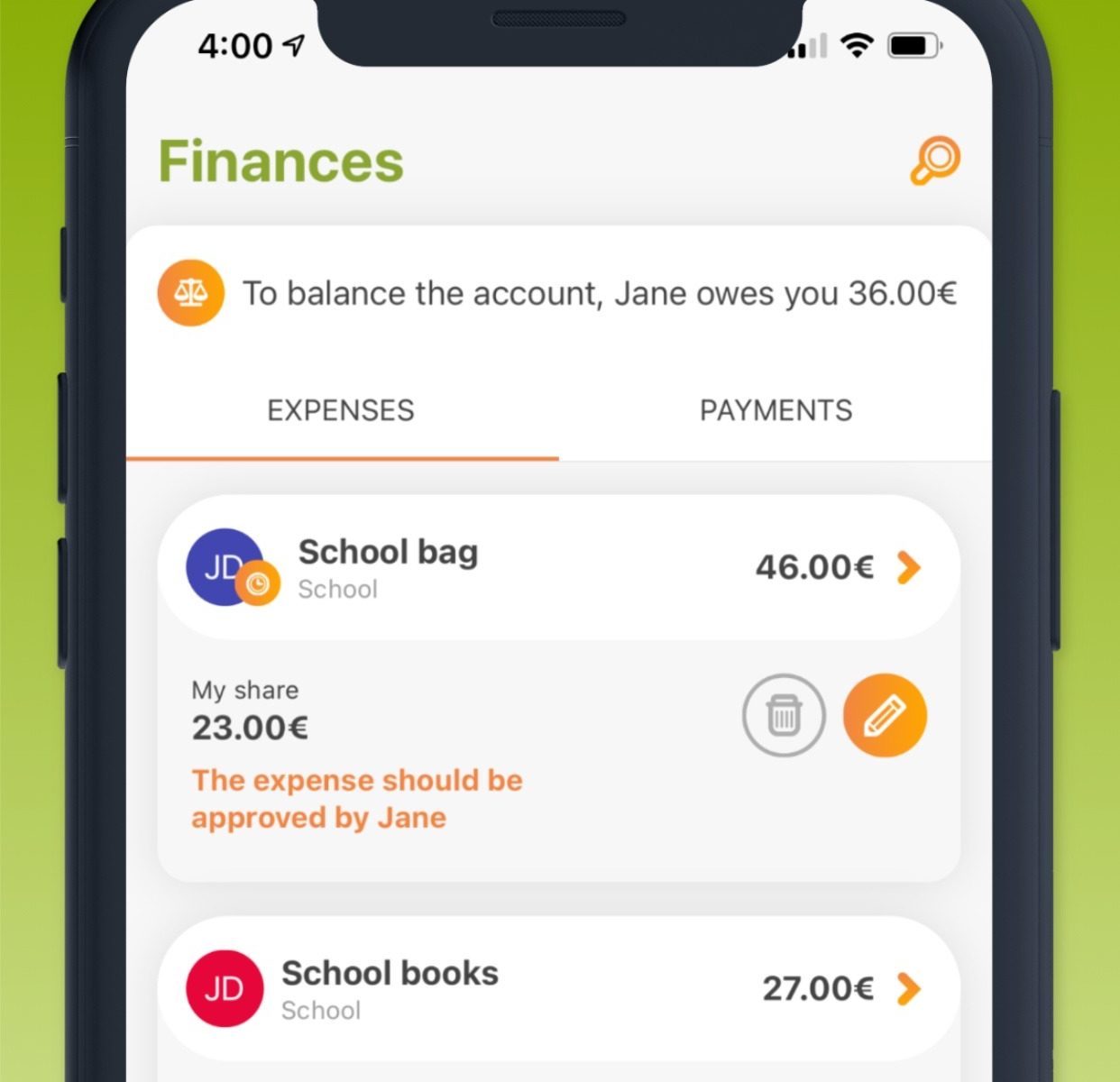 Children are expensive; there’s no denying that fact. And one of the major challenges of coparenting can be keeping track of all of the miscellaneous expenses that are involved and making sure that you are able to share that information with the other parent and make sure everything gets paid. If you’re confused on what … ]]>
Children are expensive; there’s no denying that fact. And one of the major challenges of coparenting can be keeping track of all of the miscellaneous expenses that are involved and making sure that you are able to share that information with the other parent and make sure everything gets paid. If you’re confused on what expenses are considered shared expenses, aren’t sure when or how you need to notify the other parent of an expense, or are having trouble keeping track of everything, we’ve got the answers and some tools to help.
Types of Shared Expenses
When you’re trying to figure out what expenses are considered shared expenses, the first thing to do is to consult your custody agreement. How shared expenses are supposed to be handled is usually listed in those documents. A few of the most common types of shared expenses are covered below:
- Medical expenses: Medical expenses are the most common type of shared expense in a copareting situation, and this is one that is almost always listed in either the custody agreement or the child support documents. In many cases, these expenses are split 50/50, but if there is a large income disparity the order may specify a different percentage, such as 80/20. These expenses are usually paid for by the primary residential parent, and then, the other parent has to reimburse the residential parent for their portion.
- Dental expenses: These are sometimes covered under the umbrella of medical expenses, but certain dental expenses such as orthodontia are handled separately.
- Extracurriculars: Things like gymnastics lessons, summer camp, school sports fees, and sports uniform costs all fall under the extracurricular umbrella. Extracurriculars are usually not specifically mentioned in court documents and are addressed via agreement by the two parents. In some cases, this may mean reimbursing one parent, but sometimes, both parents are able to just pay their portion directly to the provider.
- Private school tuition: If the children are already attending a private school before the divorce, this will likely be included in the custody documents as to how the expense will be paid for in the future. If you decide to put your children in private school after the divorce, it’s a good idea to put how the expense will be divided added into the official paperwork because this is usually tens of thousands of dollars over the course of their education.
- School supplies, clothes, and other miscellaneous expenses: These smaller expenses are ones that parents often don’t think about when going through the divorce process, but they can add up over time. Most of these expenses will be ones that you work out an agreement on who will pay what or what portion with the other parent.
In general, only things that are specifically listed in your custody documents as shared expenses will qualify in a court setting. You may still be able to agree with the other parent that you will split some things, but if they change their minds or don’t pay you back for something, it’s generally not enforceable in court unless it’s an expense covered in the order.
Guidelines for Notifying the Other Parent
In a coparenting situation, there are often times when only one parent is present for a situation that creates an expense. For example, if the residential parent has to take the child to urgent care for an illness, the other parent may not be able to be present and will need to be notified after the fact. How and when you need to notify the other parent of shared expenses might be outlined in your court documents, but if not, here are some possible options:
- Immediate: If you have a very good coparenting relationship with easy communication and agreement, it may make the most sense to just immediately let the other parent know about an expense so they can reimburse you or pay their part directly as soon as possible. However, this can create a lot of back and forth, especially in the case of multiple children.
- Monthly: Some parents prefer to cover expenses on a monthly basis. They may meet to present receipts and reconcile who owes who what after everything is calculated for the month. This also may make it easier for both parents to pay their parts of extracurricular fees or classes directly to the provider when the monthly bill is due.
- Quarterly: If you don’t have great communication with the other parent and have the finances to be able to wait for reimbursement, a quarterly settlement may be a good option. You can either submit expenses as they come in or all at once at the end of the quarter, and then, the other parent usually has a certain amount of time to repay.
Another thing to consider when thinking about how and when to notify the other parent is how to present receipts. It’s generally best to submit photocopies of detailed receipts that include which child the expense was for, how much it was, who it was paid to and the date. This ensures that the other parent has everything they need to repay you or to pay the provider directly, and it also ensures you have documentation of the expense if you need to present it to the courts.
Simplifying Shared Expenses
Once you know what expenses you should be sharing with the other parent and how often you’re going to be dealing with receipts and reimbursements, it’s time to work on your method. While physical copies and checks can give you a paper trail, it’s also hard to keep track of everything and know what has been paid and what hasn’t at a glance. This is where a tool like 2houses comes in.
2houses’ finance tool was designed to give you all of the information you need in an easy-to-read manner, and it lets you handle everything from reimbursement requests to payments all within the app. It also has a variety of reporting tools either parent can use to break down expenses by things like category or time period. Here are just a few of the ways using a coparenting app like 2houses can help:
- At-a-glance balance management: The app is set up so that you can see a balance summary at any time. This makes it easy for either parent to always know what’s been paid and what’s outstanding without having to go back and forth with the other parent.
- In-app payments: 2houses has the capability for payments to be registered in the app. This ensures that the balance is always correct and you don’t have to update anything when payments come in, and it also provides a record of payment if needed.
- Wishlist feature: If you and the other parent are splitting expenses like birthday gifts or new clothes, the wishlist feature makes it easy to suggest what your child might want or need. This also comes in handy for the other parent’s side of the family if they need gift ideas or suggestions.
- The ability to categorize expenses: You can tag expenses to be within certain categories, so it’s immediately clear what the money was spent for. This can also help you budget moving forward for recurring expenses. For example, if you are able to see that you usually have about $1,000 in medical expenses per child per year, this makes it easier for both parents to be able to see that and budget for their portion.
- Exporting capabilities: While it can be helpful to have everything online where you can access it from any device, there may be times when you need paper copies. An example of this is when you need to show the courts or the child support enforcement agency proof of expenses. 2houses lets you do both CSV and PDF exports for flexibility.
Whether you’re just starting your coparenting journey and trying to make it as easy as possible or are trying to streamline expenses and communication after a few years, 2houses’ coparenting app and finance tracker can help. The key to successful coparenting is open and frequent communication, but being able to access everything with just a few clicks makes a big difference in ensuring that expenses are reported and reimbursed quickly.
]]> Filing for divorce can be one of the most difficult events that occur in a person’s life, and it is only made more stressful and emotional when children are involved. Coming up with a co-parenting schedule that works for your kids, your spouse, and you is absolutely essential when your children are going to be spending time with both …
Continue reading "Creating a 3-3-4-4 Schedule – a 50/50 Custody Agreement"
]]>
Filing for divorce can be one of the most difficult events that occur in a person’s life, and it is only made more stressful and emotional when children are involved. Coming up with a co-parenting schedule that works for your kids, your spouse, and you is absolutely essential when your children are going to be spending time with both parents.
There are an endless number of options when it comes to 50/50 co-parenting schedules. However, no matter what you end up choosing, you want to make sure that you are organized and that the schedule is well-communicated between both parents.
Are you interested in creating a 3-3-4-4 schedule but aren’t quite sure if it’s the right method for you and your family?
Let’s take a look at what you need to know.
How 3-3-4-4 Schedules Work
When sharing custody of children, you want to create a schedule that prioritizes the needs of the children while also being practical for co-parents.
This is a 50/50 residential schedule. It has your child or children staying with one parent for three days of the week and then the other parent for the next three days. Then, the child stays with the first parent for four days before staying with the other parent for the next four days.
What this does is creates an equal amount of time spent with each parent over a two-week period. You can make different variations on this schedule, having a 4-3-3-4 schedule, a 3-4-3-4 schedule, a 4-3-4-3 schedule, and so on.
Creating a 3-3-4-4 Schedule
You can start a 3-3-4-4 schedule on whatever day of the week makes the most sense for you and your family. If you start on a Monday, then one of the weekends is split between the parents while the other is entirely spent with one parent. The same is true if you start the schedule on Sunday.
It’s important to be organized when it comes to creating parental schedules. The easiest way to make sure everyone understands the plan for the week or month is to use an online interactive calendar. This can help parents manage changes to the schedule without any time conflicts.
What Are the Pros and Cons of This Type of Schedule For Custody?
There are a lot of different 50/50 split custody models you can use to design your schedule. With each of them, there are some benefits and some drawbacks. Depending on your schedule and the schedule of your co-parent, as well as the schedule and needs of the child, one of these types of custody schedules might be more appropriate for your family.
Let’s take a look at some of the benefits of a 3-3-4-4 schedule:
- Every week parents have the same nights with the children except for one night a week that switches
- Each week, children are able to spend a significant amount of time with both parents
- Both parents get to spend an equal amount of time with the children
- The number of exchanges is minimized compared to other schedule models
- Both parents have the opportunity to participate in daily caretaking
- This can be a schedule that works well for parents who have different work schedules
- The children never have to go very long without seeing either of their parents
On the flip side, there are some things that might make this scheduling model less appealing to you and your family. Some of the cons are:
- It can work out that one parent has the children staying with them every weekend
- The children have to be able to adapt to living in two separate houses during the same week
- Co-parents need to be able to communicate about both the schedule and the children frequently
- Co-parents need to have good communication about both the activities and the schoolwork of the child because there is a midweek exchange
- Both parents need to live close to the children’s school and fairly close to one another for this schedule to be practical
When you are creating a custody schedule, you will want to take a look at the work schedule of both you and your co-parent. At the same time, you will need to consider the school and activity schedule for your child. This information can help guide you to choose a schedule that best supports your child and allows both parents to spend time with the children.
(Are you experiencing anxiety as a co-parent? If so, check out these five tips to help you cope with your anxiety.)
Different 50/50 Schedules For Custody
If this custody schedule doesn’t seem right for your family, there are a number of other options. You might find that some of the other choices offer more benefits for the needs of your family, while others might be completely inapplicable to your situation.
Alternating Weeks
In this model, your child spends a week with you and another week with your co-parent. Depending on your schedule, this can be an easy to keep track of schedule that minimizes exchanges. It also allows your children to spend an entire week in each house, which might help them feel more settled and centered.
Some of the pros of alternating weeks with children include:
- Each parent gets to spend a long period of time with the kids
- The exchanges are limited
- The amount of time each parent has with the children is equal
- It can provide consistency for your kids, particularly if they find change difficult
- You can add overnight or midweek visits so that your children can still see the other parent during the week
- It can help your children stay current on homework and other school assignments
On the negative side, the alternating week schedule means that:
- Both parents will need to live near to the school if the children are school-aged
- Some children might find it difficult and uncentering to have two different homes
- Both parents need to live fairly close to one another
- Parents will need to be in good and frequent communication about the children’s activities and school work
- It can be difficult for both the children and the parents to be apart from their kids for a week at a time
If you like the idea of minimizing exchanges for a 50/50 custody schedule, continue reading to learn about an every two-week schedule.
(Are you confused about what expenses legally have to be shared after you get divorced? Check out this resource to learn everything you need to know.)
Two Weeks Each
This is similar to the previous model except that the children spend two weeks with each parent. Some of the pros of this model include:
- Parents can limit the amount of contact they have with each other
- The number of exchanges is limited each month
- It can be a good solution in high-conflict situations
- The parenting time is equal which can lead to fewer schedule conflicts
- The children have the opportunity to live with each parent for an extended period of time
- Parents don’t have to live as close to one another as with schedules with more frequent exchanges
- You can add in overnight or midweek visits if desired
- Both parents have the opportunity to participate in the daily care of the children
On the other hand, some of the downsides of this model can include:
- Parents who have children that are school-age need to both live near the school
- Some children and parents might struggle to be apart for two weeks at a time
- The children have to adapt to having two different residences
- Parents have to communicate and cooperate about the children
If spending this amount of time apart just isn’t going to work for you, let’s check out some of the schedules that break up each week with both parents getting to spend time with the kids.
2-2-5-5 Schedule
This is a schedule where the children spend two days with one parent, two days with the other, five with the first parent, and then five with the second parent. This means that over a two-week period they spend the same amount of time with the children.
This can be good in a number of ways. For one, it allows the kids to spend time with both of their parents during each week. It means that they never have to go a long time without seeing either of their parents and that the parents can have equal time with the kids over the course of the month.
Many people who have nontraditional work schedules find this to be a fitting schedule. It can also work well for children who are young enough to not be in school yet.
Some of the drawbacks include having frequent exchanges that can be difficult to keep track of and might not be ideal in high-conflict situations. This schedule also means that one parent might end up having the kids every weekend.
2-2-3 Schedule
Another schedule that can work with unusual working hours is the 2-3-3 schedule. This allows kids to spend time with each parent during a typical week and means they never have to go too long without seeing either parent.
This model requires frequent exchanges, however. Some children might not adapt well to switching homes on such a regular basis, as it can be hard to ever feel settled in or centered.
Alternating Every Two Days
This is another schedule that might work for some while not being appropriate for other families. While children never have to go long without seeing either parent, it might be hard for them to adapt to switching homes so frequently. Dealing with the logistics of exchanges so often can also be difficult and time-consuming.
How Do You Choose the Right 50/50 Schedules For Custody?
There are a lot of things you’ll want to take into account when you are sharing custody of children evenly. You will want to honestly consider different aspects of your routine, your relationship with your co-parent, and the needs of your children.
For example, how many days are ideal between visits with your children? On the one hand, you don’t want to go too many days without seeing your child at a time, but you also want to minimize how frequently they are changing homes.
Additionally, how well do you and your co-parent communicate and get along? If you get along just great then you don’t have to worry about this aspect of things. However, if things tend to lean towards conflict, you might want to minimize how much communication and interaction is expected between the two of you as a part of your co-parenting.
You’ll also want to think about how consistent you want to keep the schedule. Is it better to have the same schedule every single week or better to spend the same weeks a month together? It’s important to consider this in conjunction with school, sports, and activities schedules.
Of course, you’ll also want to factor in the ages of your children and what will work best for them. Young children tend to do best with a consistent routine, while tweens and teens typically do better with schedules that allow them to stay in one place for longer at a time.
Schedules For Custody: How to Communicate About Custody in the Digital Age
Creating a 3-3-4-4 schedule can be an appropriate model for many co-parents who are splitting custody. It can allow both parents and children to spend time with each other each week while also minimizing exchanges and disruption to the home life of children.
No matter what schedule you choose, it’s important to have an easy way to make schedule changes and stay organized about your calendar. If you’re ready to minimize confusion and maximize organization and efficiency when it comes to your schedules for custody, check out 2houses today.
]]> When your children are first born, it can feel like every little thing has to be kept track of, including feedings, diaper changes and how often they’re sleeping. As your children get older, you spend a lot less time tracking these types of things, but their schedules are busy in a different way. There are … ]]>
When your children are first born, it can feel like every little thing has to be kept track of, including feedings, diaper changes and how often they’re sleeping. As your children get older, you spend a lot less time tracking these types of things, but their schedules are busy in a different way. There are extracurricular activities, sports practice and games, school events and play dates. All of this is plenty when everyone is under the same roof, but it gets even more complicated when you have to share and manage all of this information between two separate households. Here are some tips on how to manage your coparenting calendar for an easier and more streamlined process.
Managing the Calendar
The first step in creating a coparenting calendar that works for your situation is to make a master list of everything you may need to share with the other parent. We’ve covered some of the most common activities and events below, but keep in mind that every situation is different. If your child regularly attends therapy, it’s a good idea for both parents to know when those appointments are. It can also be of benefit to have a daily schedule for young children that’s shared between the two parents so that their routines can be kept similar. This ensures that the children feel safe in both spaces and know what to expect.
Extracurricular Activities
Extracurricular activities involve anything from sports and music lessons to debate team and theater. Even with young children, these activities can involve multiple practices a week as well as games, tournaments, and larger competitions. It’s likely that at least some of these activities will need to happen across both parents’ parenting time, so sharing schedules is important. It’s a good idea to ensure that the time, place, and supervising adult is listed on the event. A phone number for the coach or teacher is also a good idea in case you have trouble finding the location or are running late and need to be let into a building.
School Events
From tea with Mom and crazy hair day to Valentine’s boxes and birthday treats, having school-aged children comes with a lot of events and paperwork to keep track of. This can be especially challenging if you have a shared parenting schedule, such as one week on and one week off or 2-2-3 schedule. Sharing all of this information online through a data bank or shared calendar like 2houses offers can ensure everyone knows what’s coming no matter what house the kids are at that day, and it also makes it easier for you to keep track of everything when you can deal with digital information instead of endless paper fliers and notices.
Doctors Visits
Any kind of important appointment for your child should probably be on the shared coparenting calendar, but medical visits are especially important. Many custody agreements require both parents to be notified and to have the chance to be present at doctors visits, and putting it on the calendar as an event lets you do that without having to worry about whether the other parent remembers. You can also include other important information like the phone numbers and a summary of the visit if the parent isn’t able to attend so they can ask the practitioner any questions directly and request medical records.
Sharing Information With the Other Parent
When you’re starting to get everything together for your coparenting calendar, it might feel a little strange to be giving the other parent so much information about your life and where you’re going to be when. But unless there is a safety issue or a restraining order in place, it’s a good idea to think about it in terms of what’s best for the kids and what makes it easier on you. For example, if you have to deal with a lot of texts or calls from the other parent because they can’t remember when practice is or what building the parent teacher conference is in, providing all of that info in a digital format that they can check themselves can cut a lot of that back. It’s also a good way to ensure that everything is communicated in writing to cut down on he said she said situations.
When you’re getting information ready, try to stick to the facts and provide as much information as possible. It’s a good idea to cover all of these basics:
- Who: Make sure to note which child is involved, which parent’s time the event is happening on and what other people are going to be there that they need to know about.
- What: Note what the event is and what’s required, such as a uniform, musical instrument or homework assignment.
- Where: Be as detailed as possible here, providing an exact address that can be put into a GPS and other information such as “Field A” or “Enter through Door 3.”
- When: Provide start and end times if possible, or let the other parent know that it’s an all-day event so they can think about if they need to bring snacks or plan around other things.
Keeping Track of Information
A digital coparenting app is the gold standard when it comes to communicating the children’s schedules with the other parent, and 2houses has thought of everything you need when developing theirs. In addition to all of the other tools the app offers — from finance trackers to in-app messaging — the calendar has the following features:
- Color-coded dates to show who has the children when at a glance: Keeping track of which parent the children are with is crucial to knowing who is going to be taking them to events. 2houses lets you automatically create a color-coded version of your custody schedule superimposed into the calendar based on popular schedule breakdowns, or you can create a custom schedule to fit your needs.
- In-app schedule change requests: This feature lets you ask the parent for a change in the schedule, such as for a family event or holiday, so that there’s a record of the request, receipt of the request, and a record of the other parent’s response. It helps to have everything in writing and ready for documentation purposes if at any time anything has to go before a judge.
- Import special dates: The calendar makes it easy to load all of your scheduling needs at once, with import features for things like school holidays and vacation schedules. This saves you time and decreases the possibility of input errors.
- Syncing with most calendar applications: The 2houses calendar app can sync with most popular calendar applications, including Outlook and iCal, so you can have your own copy of the kids’ schedule in one place without having to share your personal information with the other parent or copy dates and events one by one.
- Calendar sharing: If you need to share your calendar with a third party, such as an attorney, family member, or guardian ad litem, it’s as simple as just a few clicks.
If you’re looking for a way to simplify scheduling and know exactly what’s on the agenda for each day without having to talk to the other parent or make a bunch of phone calls, a coparenting calendar can help. Check out what 2houses has to offer to make the coparenting journey easier.
]]> The effects on children of parental divorce are perceptible. They often manifest as disruptions to previously established attachment styles. Intentional and conscious parenting aims to alleviate the unconscious pressure put on children of divorced parents. After knowing what attachment styles are and how they can change after going through a divorce, you can parent more effectively to reduce psychological …
Continue reading "Attachment Styles and Parental Divorce: Everything You Need to Know"
]]>
The effects on children of parental divorce are perceptible. They often manifest as disruptions to previously established attachment styles. Intentional and conscious parenting aims to alleviate the unconscious pressure put on children of divorced parents.
After knowing what attachment styles are and how they can change after going through a divorce, you can parent more effectively to reduce psychological distress on your kids. There are preventative measures to take during the divorce to reduce effects.
The relationship you have with your children before, during, and after the divorce will either reinforce their latent insecurities or comfort their securities. Keep reading to identify parental attachment styles and support your children through the divorce process.
What Is Attachment Theory?
Attachment is the emotional or psychological bond one has to another person. Infants attach themselves naturally to their parental figures. Attachment is the way in which humans feel and grow their connection with one another.
Connection is innate to the human condition. A healthy emotional relationship with parents translates to healthy relationships later in life.
According to attachment theory, the emotional response to a caretaker is partially developed for survival. When the primary caretaker is near, the more likely the child will have their needs met. They feel safe with the presence of their primary caregiver.
In addition to survival, attachment style develops from how the child is being cared for. Attentiveness and nurturance influence attachment style. The ability to focus on and care for your child allows them to feel emotionally safe. This emotional safety is important for their psyche’s way of responding to the outer world.
If a young one is not properly nurtured, it feels abandoned. This goes beyond having basic needs met. Humans are emotional creatures. Babies and kids need the space to receive love and assurance from their parents.
Abandonment occurs when their needs have gone ignored. Babies who cry it out at night often feel abandoned. They stop crying because they have given up hope. They feel abandoned, so what is the point anyways?
Through their attachment and connection, they develop how safe they view the world. The kind of responsiveness you give them to their emotional needs shows them how the world will be. If you dismiss them, they feel abandoned. If you comfort and listen to them, they feel validated, important, and safe.
The theory is a bit complicated. Older generations may not fully grasp the importance of nurturing children emotionally because they may not have been taught that themselves.
What Are The Attachment Styles?
The development that Bowlby and his successors came to find changes how parents can behave to give their kids the best chance at being successful later on. (Bowlby was the founder of Attachment theory).
Before learning ways to positively affect your children during the divorce process, being able to identify attachment styles is important.
Attachment styles are developed during the critical time period following postpartum. As nurturing and comforting behavior coincide with how safe a child will feel, these are the actions that determine a child’s attachment style. Responding to a child’s request for engagement with consistency and attentiveness leads to secure attachment.
There are typically four types of attachments: ambivalent, avoidant, disorganized, and secure.
Ambivalent attachment is caused by parents who are unavailable. Children display this by becoming extremely distressed after a parent has left. Children with ambivalent attachment cannot rely on their parental figures for security and safety.
Avoidant attachment occurs when primary caretakers are neglectful and even otherwise abusive. Children tend to avoid them. They act indifferently in and without their presence. They do not prefer their primary caretaker over a stranger.
Disorganized attachment is seen in children whose parents are inconsistently available. They may sometimes be a source of love and comfort. At other times they may be a source for neglect and unavailability. Children with these types of parents become confused and disoriented. They can act resistant and avoidant when in the company of their caretaker.
Secure attachment is caused by dependable caretakers. Children become distressed when in their absence and joyous when reunited. They are typically wary of strangers. They are not afraid to find comfort with their caretaker and be assured they will return after they leave.
How Parental Divorce Influences Attachment Style
While attachment styles develop as an infant, they can be revised when traumatic events occur. Kids of divorced parents go through a drastic change in the way they see the world post-divorce. All of a sudden, they are taught that not every couple stays together.
This sudden instability can cause children to self-sabotage their own relationships. If they feel that all relationships are temporary, even serious ones, they unconsciously or intentionally ruin relationships. This occurs as an attempt to protect themselves from the inevitable fate that the relationship is doomed no matter what.
Their sense of safety is threatened by the added stress of change in living situations. Going back and forth between homes creates a sense of instability in their lives. So when a child may have previously had a secure attachment, this instability could spark a new attachment style.
Depending on how each parent acts, their behavior toward one parent may differ from the other. They may become more attached towards one parent and avoidant towards another. This is entirely dependent on how the divorce process and the time period before the divorce have been portrayed to them.
When at different parents’ houses, there may be difficult rules to abide by. This results in children having to plan on how their needs will be met instead of having the reassurance that no matter where they are, they will get what they need.
This Is Not To Guilt Trip You
Yes, attachment theory and divorce have an intricate relationship with each other. It’s scary to think that this serious change in your life is affecting the emotional well-being of your kids for their potential futures. But, there are ways in which to avoid having extremely negative effects on your kids’ emotions.
Parental divorce doesn’t have to be as traumatizing as possible. The way you handle presenting the divorce to your kids has an impact on how they will react emotionally.
Most parents don’t plan on getting divorced. If it has come to the point where reconciliation is not possible, there are ways to show your kids that the divorce was the best possible outcome for the situation.
If your kids are older, they may have seen and understood the reasoning for the divorce. They can understand that getting divorced is better than the alternative. Staying together while fighting, bickering, abusing each other, or just generally being unhappy doesn’t teach your kids a good lesson either.
In fact, staying in a relationship where both parties are being neglected or mistreated teaches your children to settle. So, while a divorce is a hard process and affects your kids, so does the alternative.
Take comfort in knowing you can actively influence how your kids respond emotionally to the divorce.
Support Your Kids
Here are the ways that you can comfort your children before, during, and after the divorce. Having a solid emotional relationship with your kid is a good beginning.
If you don’t already have this foundation, find ways to establish one. Connect with your kids outside of the divorce. Be interested in their interests.
Just because you are all experiencing a life change doesn’t mean life has to always be negative. Find ways to find the good in the bad. Uplift each other’s spirits. Have one night where you do an activity to connect.
Planning out time for connection helps so that it doesn’t slip by. Kids appreciate attentiveness beyond infancy. If you are overwhelmed and caught up in your divorce, you might miss this time in your kids’ lives.
Remember, they will never be the same age they are right now. Enjoy these precious moments with them.
Try having an open dialogue as a great way to share feelings. Do not leave your children to process the divorce by themselves. While they will go through their own experience on their own terms, you can help give them a safe place to feel their emotions.
How to Consider Attachment While Going Through a Divorce
Encourage your household to have a safe environment to feel grief, pain, hurt, sadness, anger, and any other negative emotions. The only way to the other side of this difficult time is through. By not reprimanding the portrayal of negative emotions, your kids learn that it is perfectly okay to feel how they do.
Remember, this is how a change in attachment style could occur. If they do not feel safe and taken care of in their emotions, their attachment style will change.
If possible, maintaining a cordial relationship with your ex-partner will go a long way. Not all situations make this possible. Communicate with your ex-partner and be on the same terms as far as raising your kids goes. This accounts for any inconsistencies across households.
Diminishing the number of inconsistencies in rules gives your kids a better chance at having their needs met no matter what.
Try having full transparency when it comes to divulging information to your kids. This honest line of communication helps build their trust levels. If your kids are young, they might not understand the dynamics leading to divorce.
Explaining things honestly gives them a chance at having that understanding. Not every detail needs to be uncovered. Approach telling the story in an unbiased way without sharing details that would harm them.
Don’t put all of the blame on the other spouse. Know that what you say about your ex influences your kids’ relationship with your ex.
Consider Family Therapy
With the emotional support given above, your kids should have a solid foundation to express emotions in a safe way. However, your situation might be more complicated. You may find it hard to manage your own emotions.
It’s okay. This time is heightened with sensitivity. Seeking help through family therapy may be the thing you need.
Family therapy aims to provide a monitored setting for sharing feelings. Therapists can even see you as a group, but also one-on-one. Seeing family members individually allows people to open up more.
The goal of family therapy is up to the family. Whatever area you are struggling with, you can work on. You can see a therapist with your ex to work on co-parenting. Or you can see a therapist with your children.
Therapists help to start a conversation. They are good at asking questions to dive deeper. Kids may not understand their emotions during the divorce process. A therapist can guide them.
Therapists are familiar with attachment theory. They can help you come up with a plan to maintain secure attachments in your children. They can also spot signs of insecure attachments.
It’s nice to have a professional, objective lens. Family therapy isn’t for every family. But, it’s good for those who need additional support.
You Are Not Alone
Remember that you are not alone. You are not the only people to experience divorce. You are lucky there is so much research on the effects of parental divorce.
Utilize this research to your advantage. Encourage your children to use the blog linked below as well.
There’s a plethora of information on making everyone feel safe and comfortable during the divorce. For more advice on coping with divorce, check out our blog page.
]]> Couples who are getting married for the first time in the United States have a 50% chance of eventually getting divorced. At this point, the majority of American families have shifted away from being a unit made up of the original biologically connected father, mother, and child. While divorce can be hard for everyone in the family, it can …
Continue reading "How to Create an Alternating Custody Schedule for the Summer"
]]>
Couples who are getting married for the first time in the United States have a 50% chance of eventually getting divorced. At this point, the majority of American families have shifted away from being a unit made up of the original biologically connected father, mother, and child.
While divorce can be hard for everyone in the family, it can be particularly difficult for children. However, when co-parents choose to put the well-being of their children as the top priority, they can still have a supportive and loving family environment in which to grow up.
If you and your co-parent have existing custody arrangements, you might find that they don’t quite work once school ends and summer begins.
It’s important to create an alternating custody schedule for the summer ahead of time. This way, everyone involved has a sense of the plan in a way that can reduce conflict and focus on your children having the best summer possible.
Why Is It Important to Create an Alternating Custody Schedule For Summer?
School offers a lot of structure to children’s schedules during the academic year. During the summer, however, their schedules open up which can mean that your custody arrangements require some alterations.
Summer vacation is often the most fun time of year for children, allowing them to go on vacation with family, play with friends, spend time outside, and have some time away from the classroom.
However, if you don’t have a set alternating custody schedule for the summer, this can cause confusion and instability for your kids. For this reason, you want to come up with a plan ahead of time. That way, your kids know when they will be where and so will you and your co-parent.
Avoiding conflict with your co-parent is also important when it comes to scheduling custody. Not only is it difficult and unpleasant for both of you, but it can be very difficult for your children as well. Working out your vacation times, conferences, or other unusual events before the summer begins can help keep the whole family on good terms and reduce stress and tension.
Tips For Summer Custody Arrangements
Even if your academic year custody arrangements are working out swimmingly, there is always the potential for hiccups when it comes to planning out summer vacations. You and your co-parents might have vacations in mind with your kids, and your children might have events or programs they’re planning on attending during the summer months.
Decide if You Need to Make Changes to Your Regular Co-Parenting Plan
If new plans pop up over the summer, your shared parenting time routine or custody plans can be thrown for a loop. Your kids will have a lot more free time when they are out of school, meaning that the existing schedule might not work for a few months.
Rather than waiting until the last minute to make changes to your parenting schedule, check in with your co-parent ahead of time. This way, you can take a look at both of your plans to make sure your alternating custody arrangements can be sorted out before the summer begins.
It’s possible that your existing parenting plan already accounts for adjustments during the summer months. It is also possible that is specifies how you need to make changes to your plan. It’s a good idea for this reason to talk with a family law professional or your attorney to make sure that you understand how you can make adjustments to the existing plan.
Check-In Early About Travel Plans
If you and your co-parent are making individual travel plans for the summer, check in with them ahead of time. This is particularly important if any of your plans involve taking the children along. When you create an open line of communication early on, it can help avoid any issues relating to conflicting vacation dates and plans.
You’ll want to have a conversation with your co-parent before you make any reservations or buy plane tickets. It’s better to get things sorted out with your vacation custody plans first before you buy non-refundable tickets or make reservations that can’t be canceled or changed.
When you tell your co-parent well in advance of your planned vacation, it can also help to avoid conflict about the days when you expect to be out of town. It also helps them schedule their own vacation if they plan on taking one.
Build a Sense of Your Personal Schedule
Beyond vacation, there can be a number of exceptional events and engagements that crop up during the summer. Start populating your calendar now rather than waiting until the last minute. Doing this will let you swap parenting time if necessary well in advance in a way that helps avoid conflict and ensures that your alternating schedule will work out fairly.
You’ll also want to look at each of your kids’ schedules when it comes to events like birthday parties, sports games, or other pre-planned events that you already know they will attend. You can then discuss these events with your co-parent and which one of you will attend if either of you does.
Think About Whether or Not Daycare Will Be Necessary
When your kids aren’t going to school during the day, you might need to think about having them attend a daycare program. If both you and your co-parent work the same hours during the day, you’ll have to come up with a plan for where they can have enjoyable yet supervised summer days.
You can find summer daycare programs on a wide price spectrum. You’ll want to start researching the options during the school year so that you can make sure to sign your children up for the program you think would best suit them.
Check-in with the parents of your children’s friends about this as well. From then you can learn where your kids’ friends are attending daycare, ensuring that your children will have buddies they know when they head to camp.
Ask Your Kids How They Feel
When there are so many logistical considerations dealing with alternating custody schedules for the summer, it can be easy to forget to check in with the most important part of the situation: your kids. Ask them what they think and see if they had anything they wanted to do during the summer. You can then try and work those ideas into the co-parenting schedule you set up.
It’s also possible that your kids have a preference when it comes to the type of custody plan you have. Maybe they prefer spending a few days with each parent each week, or maybe it’s better for them to spend two weeks with each parent at a time. It’s possible that your plan can be easily changed in order to better accommodate the needs of your kids.
Get Your Plan in Writing
No matter how well you and your co-parent get along, there’s always room for confusion and uncertainty when it comes to vacation custody plans. For this reason, always get your plans in writing. That way you have a document to fall back on and refer to if there are any issues.
It’s best to write these plans down and store them somewhere both parents have access to. This way, each parent can look at them on their own time if they aren’t sure about the schedule for the upcoming months.
Sample Custody Plans For Summer
Sometimes, it might be necessary to alter the custody schedule you have set up with your co-parent when summertime rolls around. You will want to factor in the time that each parent wants to take the children on vacation, as well as the kids’ activities like summer camp.
Two Weeks Each
If you and your co-parent have schedules that are relatively similar to the school year, you might consider a “two weeks each” plan. This way, the kids spend two weeks with one parent before spending two weeks with the other parent.
Alternating Weeks
Similar to the above plan, alternating weeks allows kids to stay with one parent every other week and the other parent on alternating weeks. For this plan, you can mark the beginning and end of the week whenever works best. For example, you might choose to have each week start and end on Friday at 4 pm.
3-4-4-3 Schedule
This schedule allows children to spend three days with one parent and then four days with the other parent. It then switches the next week, so both parents get equal time.
2-2-3 Schedule
With this plan, the kids spend two days with one parent, then two days with the other parent, before spending the remaining three days with the first parent. The schedule switches the next week so that over a two-week period both parents get equal time.
2-2-5-5 Schedule
In the 2-2-5-5 schedule, the children spend two days with each parent. Then, they spend five days with each parent. Over a two week period, both parents get to spend an equal amount of time with the children.
Alternating Every Two Days
If the above schedules seem a bit too hard to keep track of, you also might consider alternating every two days. This means that over the course of a month you will spend the same amount of time having custody of the children.
Incorporating Vacations
You will want to have a fairly set plan for the summer before you create your vacation custody plans. While life can be unexpected and things can always change last minute, it’s good to have a sense of your schedule before you create your custody plan.
If you are planning on going on vacation and taking the kids, this time can be incorporated into the overall schedule. Say that you are going to take the children on a two-week vacation. If you are following the two-week alternating plan, then you can simply schedule your vacation in order to accommodate the existing schedule.
Or you can change the existing schedule to accommodate your plan. If you and your co-parent have an agreement to split time with the kids 50/50, this means that the other parent can have an additional two weeks elsewhere in the summer or otherwise sprinkle in extra days throughout the summer weeks to make up the time.
How to Decide if a 50/50 Custody Schedule Is Right For You This Summer
When you are sharing custody of your children, your goal is to best fulfill their social, physical, and emotional needs. Using a 50/50 alternating schedule can be beneficial to children because it allows them to spend equal time with both parents.
These schedules tend to work best when the following conditions are met:
- The parents can communicate amicably about the children without conflict
- The parents live within a reasonable distance from one another so exchanges are easier
- Both parents see the child’s best interest as the most important thing
- The child can handle switching between each of their parents’ homes
- Both parents see a 50/50 alternating schedule as being the best option for the children
Creating a summer break schedule as well as a holiday schedule can help you keep your custody plan orderly and reduce confusion. They can also help to balance out the percentage of time each parent spends with the children if the academic year schedule isn’t even.
Custody and Vacations: What’s Your Plan?
No matter what alternating custody schedule for the summer you come up with, you want to make sure that it’s clearly written out for all involved parties to see. This way, you can avoid potential conflict and reduce the stress involved with keeping a schedule.
Are you looking for a way to keep your summer child care plans organized? With 2houses, you can use our co-parent calendar to help keep communication clear in a way that benefits the wellbeing of your children. You can check out this feature here.
]]> Did you know that children with divorced parents are more likely to develop insecure attachment styles? As a parent, the last thing you want is for your child to struggle with attachment issues. However, staying in an unhealthy marriage can be just as detrimental to your children. If you are going through a divorce and …
Continue reading "Are Attachment Issues More Common After Parent Divorce?"
]]>
Did you know that children with divorced parents are more likely to develop insecure attachment styles? As a parent, the last thing you want is for your child to struggle with attachment issues. However, staying in an unhealthy marriage can be just as detrimental to your children.
If you are going through a divorce and want to understand how this will impact attachment in your children, keep reading.
Understand Attachment Theory
The first attachment theorist was John Bowlby. He believed that the bonds formed early in children’s lives with their caregivers have an impact through your whole life. Attachment theory looks at attachment as an evolutionary process.
This theory stated that children are born with an innate drive to form an attachment with their caregiver. This attachment has a purpose in that it keeps the child closer to their mother and increases the chances of survival.
Many originally believed that it was food that drove successful attachment. However, Bowlby and other theorists have demonstrated that it is not food. It is instead nurturance and responsiveness from the child’s caregiver that drive attachment.
Essentially, a caregiver who responds to their child’s needs helps the child develop a sense of security. The caregiver then gives the child a secure base to explore the world.
Attachment Styles
There are two main attachment styles.
- Secure Attachment
- Insecure Attachment
Within insecure attachment, you have a few sub-styles of attachment. These include anxious, avoidant, and fearful-avoidant attachment.
Secure Attachment
If a child is securely attached then they have the ability to form a secure and loving relationship with other people. They have the ability to love and be loved. They also have the ability to trust and be trusted.
Intimacy is not something that will scare someone who is securely attached. In addition, they have the ability to depend on another person and not become completely dependent.
However, research in the 1980s indicated that only 56 percent of adults have a secure attachment style.
Insecure Attachment
There are three substyles of insecure attachment. Each of these styles of insecure attachment has different characterizing traits.Anxious Attachment Style
This form of insecure attachment is characterized by a fear of abandonment. This type of person will worry that their partner will leave them and often need a lot of validation.
Individuals who would get described as “needy” or “clingy” often fall into the category of anxious attachment style. Around 19 percent of adults who have insecure attachment fall into this category.Avoidant Attachment Style
This form of insecure attachment is characterized by a fear of intimacy. Individuals who fall into this category are going to struggle with getting close to others or trusting in a relationship.
This person may get described as “emotionally unavailable” in relationships. They tend to prefer independence and relying on themselves. Around 25% of individuals with insecure attachment fall into this category. Fearful-Avoidant Attachment Style
This form of insecure attachment is characterized by a combination of anxious and avoidant attachment styles. This individual craves affection, however, they want to avoid it at all costs.
While they feel the need to be loved by others they are wary of developing close romantic relationships. This type of attachment style is not as common and therefore not well-researched.
However, it has been associated with serious relational and psychological risks. This can include an increased risk for violence in relationships, difficulty regulating emotions, and heightened sexual behavior.
Caregivers Behavior and Attachment
There are some basic things that caregivers do that help form their child’s attachment style. Children who are securely attached are more likely to have parents who are responsive and tuned into their needs.
Children who are anxiously attached are more likely to have caregivers who are unpredictable with affection. This type of caregiver will fluctuate between withdrawn and overly involved. This unpredictability leads the child to be anxiously attached in future relationships.
Children who have avoidant attachment often have caregivers who are not responsive. This caregiver is dismissive and distant. There is an emotional disconnect from their child.
Due to this disconnect, this child believes that their needs will not get met. Children who are fearful-avoidant usually have a caregiver that is frightening or traumatizing. Because of this, the child experiences a sense of fear or lack of trust in others even though they want close connections.
A child that grows up in these circumstances will often have poor boundaries. They will also not understand what a healthy relationship looks like.
Attachment and Divorce
When parents divorce there are many effects on children. The effects of divorce on kids can range from anger to struggling in school to more. Divorce can also impact your child’s attachment.
The process of attachment begins in infancy. However, various factors throughout your child’s life can continue to influence your child’s attachment style. This includes divorce.
How Parent Divorce Impacts Attachment in Children
Children who have a secure attachment are more likely to be resilient. However, even securely attached children can have that foundation shaken by divorce.
When parents divorce your children will either now be spending the majority of their time with one parent, or there may be more of a joint custody situation. In a joint custody situation, it may look more like children are spending half the time with one parent and the other half of their time with another parent.
No matter the scenario to some degree one parent is no longer as available to the child as they previously were. As a young mind seeks to understand this the guidance that parents offer will be very important.
Oxytocin, Divorce, and Attachment
Oxytocin is also referred to as the “love hormone“. This is because this neurotransmitter when released in the brain impacts cognitive, social, and emotional behavior. It is believed that oxytocin impacts bonding.
In a study done by Maria Boccia, she looked at attachment, divorce, and oxytocin. In her study, she found that adults who had parents who divorced when they were children had lower levels of oxytocin in their system.
There are various thoughts on why oxytocin may be decreased in adults whose parents divorced when they were kids. Research previously done has shown that children who did not receive adequate or consistent nurturance, love, attention, and safety from their parents had decreased oxytocin production.
These studies have suggested that parental love and attention are responsible for the production of oxytocin. During a divorce, parents can get distracted by what is going on in their marriage. At times this can lead to parents not adequately responding to their children’s emotional needs.
However, this is not the only way that adult children of divorce’s oxytocin systems can change. Substance use can also change oxytocin production. Individuals who have divorced parents are more likely to engage in these types of behaviors.
How to Avoid Attachment Issues
During a divorce, it is easy for children to be angry, scared, and confused. While they are used to having two parents in the home suddenly they are being shuffled back and forth between houses and primarily living with only one parent.
There are ways you can respond to divorce and your children’s emotions that will help them as their world adjusts. By responding appropriately you will also help prevent attachment issues.
Do Not Put Children in the Middle
Your child should never be the person you vent to about how much you cannot stand the other parent. You chose to have children with your child’s other parent. When you get divorced you need to figure out how to co-parent.
Even if the other parent chooses not to involve themselves, NEVER speak negatively about the child’s other parent to them. Children may know things about their parents, but if you insult the other parent this will cause an internal struggle.
Keep Arguments Quiet
It is likely your children have heard you argue. However, heated discussions, legal conversations, and visible conflict should be kept away from your children.
This is a big adjustment for you and these things will happen. However, your child is still processing and learning how to handle their own emotions.
They should not have the added stress of being frightened by things they do not understand.
Help Them Express Emotions
Depending on your child’s age they may still be struggling to put their emotions into words. Helping your child talk about how they are feeling is important.
Saying things such as, “it seems like you’re feeling sad” or “do you know what is making you sad” can help your child begin to put words to their emotions.
It is also vital that you respond to their emotions appropriately. Never tell a child they should not feel something.
Validate what they are feeling and talk to them about it. You can validate your child’s feelings by practicing active listening. This includes not being distracted by phones or other external things and reflecting your child’s emotions back to them.
Offer Support
Talk to your child about what can help them feel better. Is it putting a picture of mom or dad next to the bed? Is it cuddling with their favorite stuffy?
Or maybe it is taking the time to call and video chat with the other parent. In addition, make sure you have important conversations about divorce with your kids. They need to know it’s not their fault and you are not divorcing them.
Kids who get separated from one of their parents by divorce are likely to be anxious. It is important that they know the parent is still there and available when they need them.
Use Consistent Discipline
If you are feeling guilty about your divorce then it is easy to let children get away with behavior that they previously would not have. Keep in mind though, consistent discipline provides much-needed structure and boundaries for your child.
Your child already knows what to expect from you. Many children can begin to act out to test new boundaries or to get attention. Maintain consistency in how you address these behaviors as you explore the reasons behind them.
Teach Coping Skills
Children are still learning how to cope with their emotions. They need positive outlets. So do you!
You can model good coping skills for your child. You can engage in activities to help both of you cope as you go through this process. Not only will this give your child coping skills to use but it will also reinforce the fact that you are there and responding to their emotional needs.
Help Kids Feel Safe
It is natural for your children to fear abandonment in this situation. Concerns about the future can also weigh heavily on your children. They need to feel safe.
Time, affection, consistency, boundaries, listening, and unconditional love are all methods you can use to show your child they are safe.
Spend Time
Time is a valuable commodity. Spending time with your kids should always happen. However, during a divorce, it is even more important.
Your kids need to know you are still there. There are many ways you can choose to bond with your children from reading to playing.
Take Care of You
Taking care of yourself is very important. If you do not then it will impact your ability to take care of your child.
If you do not take the time to process your emotions then it will be difficult to help your child process their emotions. Talk to friends and use your own coping techniques. This way when you are with your child you can care for them.
Get Help
If you are struggling to co-parent peacefully, or your kids are struggling and you do not know what to do, get help. Seeking professional help can feel like a failure but it’s not.
Knowing you are overwhelmed and struggling and not getting help is when you will fail. Your child’s future depends on you. Take the steps needed to ensure they have a good one.
Set Your Child up for Success
While the risk is higher for children of divorce to struggle with attachment issues, it is not unavoidable. There are things you can do as a parent to help your child in this difficult transition.
2houses is here to support you through this transition. They offer articles and tools to help you learn to co-parent successfully. Check out their app and how it can help you today.
]]> 39% of all marriages end in divorce. While it might not seem like a huge deal when it comes to the separation of marital assets. There is one area that can make separation quite challenging. It can become tricky when it comes to kids & divorce because several factors need to be considered, especially in terms of summer …
Continue reading "Kids & Divorce: Who Pays For Summer Camp?"
]]>
39% of all marriages end in divorce. While it might not seem like a huge deal when it comes to the separation of marital assets.
There is one area that can make separation quite challenging. It can become tricky when it comes to kids & divorce because several factors need to be considered, especially in terms of summer camp cost.
We’ve created a comprehensive guide that’s going to help you navigate the summer between yourself and your former partner.
Summertime Madness
It’s summertime, and children will be spending the hours they normally spend in school at home. But, if you’re a parent who still has work obligations, you might be considering ways for your child to spend their time constructively.
All of a sudden, the idea of sending your child to summer camp comes to mind. But, there’s something else that you’ve got to think about, and that’s consulting with your former spouse about who will cover summer camp costs.
Who’s paying for summer camp? Should it be written into your custodial agreement?
We’re here to make things simpler and help you continue to have an effective and smooth co-parenting relationship. After all, it’s summer, a time to enjoy the sunshine and freedom.
Here are some things that need to be defined before you can begin to think about summer camp costs.
Your Child’s Summer Schedule
Although it’s summer, your child will still need to follow the custody schedule that was agreed upon and is legally binding. This means spending time with both parents throughout the summer.
The first thing you need to do is create a schedule for your child’s summer plans before they begin. In this schedule document, the beginning and end of each camp your child wants to participate in.
Under these camps, fill in which parent the child will be with according to your schedule underneath. You want to do this because it gives your child and both parents a visual representation of where the child will be and which parent they will be with.
This will also reduce anxiety or nervousness when it’s time for camp and serves as a reminder for both parents. If your children are young, it can help them remember what is to come during that week and helps to establish a routine, reducing the confusion they feel moving between homes.
Who Will Cover the Cost?
The next thing that you need to discuss is the cost of summer camp. The first thing you need to do is check your legal custody agreement and review it to see if it mentions summer activities as a part of the cost of custody.
In most places, the only way to determine who will foot the cost of summer camp will depend on the law in your state and area.
If there isn’t an area in your agreement that details who will pay for your child to attend summer camp, it needs to be discussed between you and your former partner. It would help if you discussed what the cost of the following would be:
- Summer camp
- Summer activities
- Summer trips
Depending on the custodial agreement in place, you might have to edit the number of camps and trips your child takes to ensure that the funds to afford them are in place. Also, if you and your former spouse cannot cover the cost of camp, we recommend checking out financial aid.
Several camps allow children to attend on financial aid scholarships when their parents cannot pay the full cost of camp. You’ve got to create a plan that will help the summer go as smoothly as possible.Creating Your Plan
When you’re creating your plan, one thing that you don’t want to do is involve your child in the discussion. The reason you want to avoid this is if you and your former spouse begin arguing about potential plans, it can cause your child anxiety and unease.
Your child should have an opinion about which camps and trips they take, but they don’t need to be a part of the detailed planning of their summer schedule, especially when you’re discussing the finance side of things.
Another thing you don’t want to do when creating your child’s summer plans is let other issues that you’ve got in your co-parenting relationship interfere. Remain focused on what you’re attempting to accomplish and work on other issues in your relationship at a later time.
In the end, you want to ensure that both of you come to an agreement that will satisfy your needs and ensure that your child will be able to have the summer that they’ve been looking forward to.
Necessity or Non-Necessity?
We understand that you still might be wondering who’s going to pay for child support? We mentioned earlier that depending on where you live, it could already be written into your custodial agreement.
That’s where the terms necessity and non-necessity come into play. Some states classify summer camp as a necessity, and if you’re in one of these areas, it will already be written into your child support agreement.
The cost paid for the camp could be based on the type of camp where they will be going for the summer. If your divorce hasn’t been finalized, you must have your attorney include summer camp in the agreement.
It’s not always easy to have the parent who doesn’t have sole custody of the child pitch in for activities that they don’t think are necessary. It’s beneficial if you prove that your child attending summer camp is a form of daycare that allows you to continue working to make money to care for your child.
Non-Necessity
While there are states that deem summer camp as a necessity, some consider it a non-necessity. If your area doesn’t see summer camp as a non-necessity, the cost of the camp will need to be considered extracurricular summer activities.
In this case, the cost of summer camp isn’t going to be written into your child custody agreement because it’s not a necessity for your child. This means that the non-custodial parent has no legal obligation to help pay for your child to attend summer camp.
Although it’s not written into your agreement because this is a form of daycare that will ensure the child(ren) are being looked after, the judge may still require the non-custodial parent to help pay for summer camp.
The reason for this is that it’s in the child’s best interest. Now that we’ve given you some background information on who will cover the cost of summer camp, there’s still more that we need to share with you.
How to Choose a Summer Camp?
After you’ve sat down and discussed who will cover the cost of your child attending summer camp, the next step is deciding where your child will go camping. Again, depending on your agreement, one parent might have more say than the other, but you want to ensure that both agree, or things could get messy.
There are several factors to consider before you both come to a decision on which summer camp will be the best for your child. Keep in mind, wherever your child goes camping, you want them to have a great time and enjoy themselves.
Summer Camp Goals
The first thing you need to think about is what are your expectations for the camp that your child will be attending. Do you want them to attend camp because you want them to have the experience of interacting with other children their age?
Or are you hoping that your child will continue to broaden their intelligence through specific summer camp activities provided by the camp you send them to? Setting your expectations will narrow down the list of summer camp options your child has to choose from.
Camp Types
If the purpose of your child attending summer camp is daycare-based because you’ve got to work during the day, think about this when choosing the type of summer camp they’ll attend. There is a day camp where your child will attend for a couple of hours a day and then be picked up by their legal guardian.
If you’re working from home and need to keep your child preoccupied constructively, we recommend looking into virtual summer camps. Virtual summer camps are offered online due to the current COVID-19 pandemic and will continue to control the outbreak of the virus during the summer.
A virtual summer camp might require you purchase some items for your home that can be used while your child is online. The last camp you might consider for your child is an overnight camp.
Overnight camps last a couple of days or weeks, depending on the age of your child. This is better for older children and can handle being away from their parents for longer periods.
But, again, no matter what camp your child is being sent to, you and your former partner must agree on where they’re being sent. As well as what type of camp it is.
Camp Genres
Yes, you read that right you need to consider the genre of the camp. Tons of camps specialize in specific things. If you’re sending your child to a traditional camp, they’ll have the typical experience.
They’ll spend time singing around the campfire and engaging in several outdoor activities with other kids their age. If you wish for your child to continue learning and not forget what they were taught in school, you’ll need to find a camp that focuses on providing academic services.
If your child has special needs, the camp you sign them up for should be equipped to handle their needs. Is the environment provided conducive to improving their mental and physical state while ensuring that they have the time of their lives?
Think About the Instructors
The instructors at the camp are just as important as the camp that you send your child(ren) to. Find a camp whose instructors are invested in ensuring that your child has fun at summer camp every time they are there.
A good camp instructor should be someone that enjoys working with children and has a passion for helping them thrive in any situation. If you’re not sure how to determine if the instructors at a camp will be the right fit for your child, check out the camp’s website.
Most camps will typically have an area where you can review the instructors and learn a bit more about them before signing your child up for camp.
Set a Budget
One of the largest things to think about is how much it’ll cost for your child to attend summer camp. If funds are tight between parents, it’s ideal to find a camp that won’t put a huge dent in your pocket while still providing your child what they need.
Both parents should be open and honest about what they can afford to put towards summer camp if it’s not listed in your child custody agreement.
Kids & Divorce: Sweet Summertime
Summertime is a common topic when it comes to kids & divorce. Which parent will be responsible for covering the cost of summer camp?
Which summer camp will your child attend, and for how long? We’ve provided you the answers you’ve been searching for above.
If you need help managing your child’s schedule over the summer, don’t waste any more time and get started by contacting 2houses. It’ll make it easier for both parents to stay on top of their children’s schedule and input information where changes need to be made.
]]> Divorce is undeniably difficult, but when children are involved it becomes infinitely more complex and stressful. When you have children, you will need to communicate with your former spouse for many years after the divorce. While every divorce is different, it’s important to know generally what to expect while navigating a divorce with children. Separation …
Continue reading "Divorce With Children: Not One-Size-Fits-All"
]]>
Divorce is undeniably difficult, but when children are involved it becomes infinitely more complex and stressful. When you have children, you will need to communicate with your former spouse for many years after the divorce. While every divorce is different, it’s important to know generally what to expect while navigating a divorce with children.
Separation and divorce can bring about a lot of unchartered territory for everyone involved. Arming yourself with some information ahead of time can ease the pain at least somewhat. Here are some things to consider when heading down this path.
Breaking the News
Telling your children you’re getting a divorce is no easy task. The best approach in breaking the news of your divorce to your children is to be honest and direct.
Once you’ve decided to divorce, the first to know should be your children. As much as you may trust family and friends, you don’t want to take the chance that your children find out about your divorce from anyone other than you.
Set aside a time when you can sit down with your children without distractions and in a place where your children will feel most comfortable. It may seem like a good idea to share this news when your children are enjoying a fun event or during a holiday to distract them, but this is not the case. You don’t want them to associate those events with the trauma of your divorce.
Keep it simple. There is no need to go into every ugly detail. The most important thing to convey is that this decision will not affect how much you love and care for your children. They will need to know what will be different about their lives and what will stay the same.
Hearing that your parents will no longer be living under the same roof is a traumatic and life-changing experience for children. It’s important that you assure them that you love them no matter what. Go over everything with the other parent in advance so that when it comes time to tell your children you’re already well-informed with a plan in place.
The Process
Once you’ve decided to separate from your spouse, there may be a period of time before you’re actually able to officially divorce. During this time, one of the biggest decisions you will make will be settling the custody of the children.
In many cases, parents can come to an agreement as to how the custody arrangements will work. In cases of conflict where the parents cannot come to a mutually agreeable understanding, mediators can help find a solution that will work for everyone. In extreme cases, the matter can be taken before a judge.
There are many different ways parents can share custody of their children. The important thing is to find a schedule that keeps the needs of the children before the wishes and wants of everyone else. There are resources available to help you choose a path that’s right for you.
Children First
No matter what your relationship is with your former spouse, you should both agree that your children’s emotional and physical well-being should always come first. This process is going to be difficult enough for your children without them having to deal with parents who are constantly arguing.
There are several things you should avoid when dealing with children after a divorce. Never argue or belittle your former spouse in front of the children. If you find it difficult to communicate peacefully, make sure you take it far away from the earshot of your kids.
Never use your children as messengers or ask them to act as a go-between for you and the other parent. This causes the children to feel like they are expected to take sides between two people they love a great deal. In a similar vein, never grill your child for information regarding the other parent.
Being civil may be the last thing you’re in the mood to do, but for the sake of your children, it is essential that you put aside your differences and choose the paths that will serve their interests best, even if it means swallowing pride. While there are no one-size-fits-all solutions, keeping the children’s needs above everything else should be your primary goal.
Co-Parenting
Though you are no longer married, you are still parents and always will be. First and foremost you will need to establish open communication about schedules, vacations, and other relevant information.
Children thrive on routine and predictability. As much as is possible, keep their regular mealtimes, bedtimes, and other schedules unchanged from your house to theirs.
It can be tempting for both parents to be a lot more lenient or to overindulge their children after the divorce. While it’s important to be understanding of the turmoil your kids are facing, maintaining rules and discipline will actually go a long way in making them feel more secure.
Also, staying consistent with rules and discipline between both houses will help your children know exactly what is expected of them. Keeping this sense of normalcy for them will help them adjust to their new life.
Another thing to consider will be holidays and who will have the kids for which ones. It’s best to have a schedule laid out in advance so there’s no confusion or added anxiety. Many parents will simply swap from year to year.
With proper planning, there’s no reason that your new traditions won’t become just as special as the old ones.
Managing busy schedules for your kids can be a hassle even for parents who are still married. This can be especially difficult after a divorce. Many parents find that using a co-parenting app can help manage communication and scheduling.
Working together to put the children first in spite of your differences will also set an example for your kids on how to manage conflict and resolve issues peacefully.
Shared Costs
Even though you’re no longer living in the same home, you will still need to share the costs of raising the children. Things like food and shelter may be addressed in child support, but there are other things that will arise where you will likely need to split the cost.
Items like shoes and clothing will be an ongoing issue since your children will be constantly growing. At one point all of their clothes resided in one place. Now that you are living separately, you may find that you’ll both need more clothing at your place so your children will have plenty to wear.
Activities like sports, music lessons, and equipment that come with these activities can start to add up if only one parent is paying. Keep all receipts related to these expenses and choose a time periodically to go over how much each parent has spent so that the costs can be equally divided.
Other things like doctor visits, orthodontics, or other fees will need to be discussed ahead of time as well. Putting together an expense budget or parenting plan may help take the stress out of communicating about money.
Counseling
In many cases, parents and children alike will need some help processing all of the emotions that come with a divorce. For parents, this can provide a useful place to take their frustrations about the divorce. Having a healthy outlet for all the emotion that comes with divorce can mean you can guide your children through their grief.
For older children, the process of going through a divorce can bring about a host of issues. It’s not uncommon for children to act out or perform poorly in school. It can be a good idea to have them see a professional counselor to help them work through their thoughts and feelings about the divorce.
Watching their parents go through the process of ending a marriage can cause emotions in your children that they cannot define or understand. With the help of a therapist, you can help them put words to what they are feeling. When these emotions are defined, they can be handled in a healthy and productive way.
Helping children cope with divorce is a difficult process, so there is a great benefit to seeking out counseling.
Seek immediate help when you see the problems in your children or yourself worsen over time. If your child is acting in violent ways or threatening to hurt themselves or others, it is crucial to get them help as soon as possible.
The same is true for you. If the feelings of depression significantly interfere with your ability to care for yourself or if you begin to have thoughts of suicide, reach out to a professional immediately. You don’t need to go through this season alone.
Outside Help
Sometimes divorce comes with feelings of extreme hostility between the parents. When it’s impossible for the parents to communicate effectively for the benefit of the children it may be necessary to call in mediators to help you decide what’s best for your kids.
Though this type of help will come with added cost, it may be worth the expense to help you get started on the process of laying out a new normal for everyone. After some time has passed and wounds have healed, you can try again to communicate with each other one on one.
The most important thing is to protect your children from any hostility that lies between you and the other parent. Putting them first before your own feelings will minimize the trauma and stress they will go through.
Take Care of Yourself
There is a good reason why airlines tell you to put on your own oxygen mask before you help your children. You can hardly be of any use to them if you’re struggling to breathe yourself.
Going through a period of depression is completely natural after the end of a marriage. That’s why it’s more important than ever to pay attention to your physical and emotional needs.
Eating a healthy diet, drinking water, and getting plenty of exercise is always good advice. These things are even more important when you’re going through a time of stress.
If you are sharing custody with your former spouse, times without your children can be a good time to focus on hobbies and activities you enjoy. It may feel strange to be without your children initially, but you can use that time to engage with friends, travel, garden, or anything you’ve been wanting to do but haven’t found the time.
It’s also quite normal to feel lonely after a divorce. This is a time to be sure you are leaning on family and friends for support.
Even very small things like having a regularly scheduled outing with friends or taking a daily walk can boost your mood and fight feelings of depression. When you are feeling healthy you are even more capable of helping your children through their struggles.
Divorce with Children
Divorce can be a painful and traumatic event for everyone involved. When it comes to making sure your children navigate this process in a healthy way, there is no such thing as being overprepared.
There are many resources and apps that can help you along the way. For help with scheduling and communication, check out the 2houses app.
During this time, it is important to know that you are not alone. With the help of counselors, mediators, apps, family, and friends, you can eventually find your way to a new normal.
]]> The divorce process can prove challenging for parents. Deciding what to do with your children during a separation is one of the most important decisions that you must make. For instance, you’ll need to figure out how you’ll share expenses for the kids. There are many different ways that you might divide expenses. The right solution for …
Continue reading "What are Legally Shared Expenses for Children After a Divorce"
]]>
The divorce process can prove challenging for parents. Deciding what to do with your children during a separation is one of the most important decisions that you must make.
For instance, you’ll need to figure out how you’ll share expenses for the kids. There are many different ways that you might divide expenses.
The right solution for you will vary depending on where you live and your circumstances. However, a few pointers might make managing these decisions easier.
To learn more about the legally shared expenses for children after a divorce, continue reading.
Contemplating Legally Shared Expenses
Ending a marriage is challenging on many levels, especially when a child is involved. There’s a lot at stake. Here, we’ll take a look at some of the points involved in the finances of co-parenting.
During the separation process, you’ll split assets that you’ve accumulated over many years. Now, you’ll need to find common ground to support your child until they become an adult.
The court system compels separating couples to enter a divorce decree. It details the conditions of the separation.
For example, it might establish alimony and child support payments. It will also establish a visitation schedule for the noncustodial parent.
Furthermore, the decree will establish new beneficiaries for any financial assets. It will also divide any shared debts.
While you work through these conditions, some of the hardest things to do are to simultaneously focus on now and plan for the future. However, you must advocate for yourself and your family during this process.
The separation process is your opportunity to seek what’s best for yourself and your child. The court will take this point into consideration when you file the decree.
Most importantly, it’s important that everyone involved has their voice heard in order to establish an appropriate plan of action moving forward.
Some Common Legally Shared Expenses
In many cases, divorcing couples establish child support to cover the care of their offspring. These payments may go toward child care.
They may also go toward activities and college tuition. Child support also covers basic necessities such as food and clothing.
Sometimes, however, parents disagree over whether child support should cover all of their child’s expenses. Alternatively, they may disagree whether parents should split various costs.
With this in mind, the following entries offer a closer look at child-rearing expenses.
Daily Necessities H3
The idea of child support is to protect the interests of children. Ideally, it shields them from the economic impact of a divorce. Also, it helps them to maintain their standard of living.
Child support provides assistance for the parent with primary custody. It helps them to meet their child’s basic needs. It also helps the custodial parent maintain the standard of living they enjoyed while they were married.
Necessities include food, clothing and shelter. They might also include other basic needs such as personal hygiene products.
When parents get divorced, the law may expect them to either share these expenses equally or based on their incomes. However, in some cases, this isn’t always possible. In such a case, it’s in the child’s best interests if both parties can come up with an agreement about how they’ll handle their shared child-rearing responsibilities and costs.
Extra Expenses H3
Not all expenses are covered by child support. For instance, child support might not cover sports activities, school excursions or music lessons.
Also, child support usually doesn’t cover large expenses. Typically, a parent can expect to incur this kind of expense as a child grows older. For example, a teen that’s transitioning into adulthood will most likely want a car and need auto insurance.
Post-Secondary Education H3
In most states, the age of majority is 18 years old. Usually, child support ends at this time. In some states, however, child support will continue beyond the age of majority to cover college expenses.
This kind of child support is considered post-minority or post-secondary support. The terms of this kind of support may vary in different states.
For example, the noncustodial parent might pay post-minority support in addition to child support. Alternatively, they may pay it as part of child support. In some instances, a noncustodial parent might make a separate post-minority child support payment after regular child support comes to an end.
Extracurricular Education and Healthcare H3
Some states include health insurance, work-related child care and uninsured medical expenses in their support calculations. It’s a part of their formula for figuring out basic child support.
In other states, however, a judge may designate a separate payment. This payment will go toward your children’s medical expenses, child care and education-related expenses.
Education expenses, for example, may include tuition or tutoring. Here, it’s helpful to understand that these items are separate from the basic child support calculation.
These expenses could include participation in sports or music activities. If the court deems these activities a necessary part of the child’s education, it might order payment for these activities as a part of child support.
Expense Disputes
Sometimes, parents can’t agree on necessary child support expenses. They also have conflicts over who should pay for it.
In these cases, a judge may need to intervene. Typically, the court will divide the responsibility of paying for extra expenses.
The court will begin this process by examining each parent’s income. It will also consider which parent wants their child to participate in the activity.
Also, the court will assess whether a child has participated in this activity in the past. It may also assess why each parent supports or opposes the activity. After measuring these points, the court may modify the child support order to address these expenses.
Finding Common Ground
In most instances, child support doesn’t cover expenses beyond bare necessities. As a result, it’s helpful if parents can reach their own agreement.
In some cases, separating couples incorporate this agreement into their divorce decree. It becomes a part of their parenting plan.
There are times when separating couples will make these kinds of agreements very specific. Often, however, this kind of agreement can prove restrictive.
What’s worse, they can fail to accommodate all necessary expenses. Frequently, a problem in this area will arise when there’s a large disparity in the income of the parents.
Sometimes, these kinds of arrangements work, and sometimes they don’t. Most often, however, it’s difficult for them to succeed. In the end, it depends on the parents.
When managing financial issues with your children, it’s always better for parents to maintain a civil arrangement. This kind of arrangement means coming to terms with cost-sharing even if it’s not in the divorce decree. In most cases, this kind of common ground ends up benefiting both parents—and the child.
The Realities of Separation
Ending a marriage is always unpleasant on some level. Unfortunately, this kind of unpleasantness frequently manifests when it comes to child-related expenses. As a parent, however, it’s important to minimize conflict in this area as much as possible.
It helps to have a discussion with your spouse before finalizing your divorce. During this conversation, you should try to come to an agreement about how you’ll share your child’s expenses.
Eventually, you’ll develop a clear agreement in your divorce decree. However, relying solely on your divorce papers can turn into a minefield. Sticking to the letter of your decree can lead to unneeded disputes.
Also, it can fuel competition between you and your ex-partner. For example, without an amicable separation, parents might compete over enrolling their children in a preferred activity. Disputes can also arise over your child’s technology needs.
In many cases, the parent who does all the signing up and enrolling can feel like they’re carrying all the responsibility. They can feel like they’re covering all the expenses and not getting reimbursed.
Over time, this debt can accumulate. When this happens, the parent typically resorts to legal action. However, it’s in your child’s best interest to address this issue before it becomes a legal matter.
Ideally, you and your ex-spouse share decision-making. In this scenario, neither of you should end up blindsided by expenses.
When enrolling your child in extracurricular activities, it’s helpful to begin by talking to your spouse. You may even have to have this conversation every semester.
Some parents, however, must negotiate these activities in the parenting plan of their divorce decree. This circumstance typically arises when one parent doesn’t support a current activity.
It might also arise when the activity results in a significant expense. It could also come up if the child activity cuts into parenting time.
A Step in the Right Direction
It’s easy to suggest amicable co-parenting. However, challenges do arise in this regard.
Some parents want their children involved in extracurricular activities every day. Others feel that a single sport each season is enough.
If you’re going to include activities and your parenting plan, it’s a good idea to leave room for flexibility. Also, make sure that the plan incorporates the child’s preferences.
In general, it’s important to clearly share any expenses related to the activity. If you expect the other parent to support the activity financially, then you should have a clear list of what those expenses entail.
Balancing Expenses With Fairness H3
Most separating parents opt for an alternative to paying for specific items. Instead, they usually agree to share costs equally. Alternatively, they might share costs based on their income according to child support calculations.
In theory, this method allows for changes in proportion as child support changes. However, it’s very rare that this happens. Most often, parents don’t want to relive going through court.
If you and your ex-spouse disagree on activities, sometimes, the answer lies in who pays. For example, you might want your child to participate in an activity, but the other parent is not supportive. Yet, they may agree to the activity if you agree to cover all the expenses for it.
It’s also important to make sure that the activity doesn’t interfere with the other parent’s time with your child. If the activity takes place during their parenting time, they should agree to it.
A divorce decree serves as a guideline. With one, however, there are still many details to work out along the way.
When it comes to accounting for shared expenses, things can get tricky. This area can prove especially problematic when multiple children are involved.
Again, it can also prove troublesome if there’s a large disparity in income. In these cases, you’ll want to put forth the extra effort to resolve who foots the bill.
A Solution for Sharing Expenses and More
After a separation, you’ll have a lot of things to figure out together every day. For instance, you’ll need to figure out who’ll pay for and actually purchase your child’s school supplies.
In some cases, you’ll need to figure out how to receive reimbursement from the other parent. You’ll also need to come up with a way to negotiate unplanned expenses.
With so many things to consider, how will you keep track of it all? Fortunately, a co-parenting app—such as 2houses—can make the process easier. You can use it to better manage finances and the other affairs of your two houses.
For instance, a co-parenting app will allow you to share messages with each other about your child easily. It will also give you access to a shared calendar.
You can use the calendar to keep track of scheduled visits and other important dates. Also, you can use the co-parenting app to keep track of shared expenses and send real-time reimbursement requests.
A Co-Parenting App for Peaceful Child Rearing
Now you know more about the legally shared expenses for children after a divorce. What you need now is a powerful technology for harmonious co-parenting.
2houses is the child custody tool that helps parents navigate co-parenting after a divorce or separation, so they can focus on what matters most—their children. It’s easy to use, affordable and available anywhere in the world.
Our goal is simple—to give you more time with your kids and make sure they’re safe and happy. What’s more, we’ll do all of this without breaking the bank or taking up too much of your valuable time.
See for yourself. Please feel free to take a look at our features to learn more about a better way to manage two houses.
]]> When it comes to the relationship between divorce and children, parents breaking up can impact kids psychologically, emotionally, physically, and academically. When children are young, it is important for parents to learn how to explain divorce to children and how to help their children cope. However, teenagers and adults who have divorcing parents might be searching … ]]>
When it comes to the relationship between divorce and children, parents breaking up can impact kids psychologically, emotionally, physically, and academically. When children are young, it is important for parents to learn how to explain divorce to children and how to help their children cope.
However, teenagers and adults who have divorcing parents might be searching on their own for information on coping with divorce. For these different stages in life, learning how to deal with your parent’s divorce might look a bit different whether you’re still living under your parent’s roof or if you have transitioned into adulthood.
In both cases, though, it’s important for you to learn how to identify, experience, and validate your own emotions as a part of the healing process. It is easy for both teens and adults to suppress their emotions that stem from such a difficult occurrence, however, this can have a number of psychological and physiological consequences.
Are you wondering how to cope when you’re parents are getting a divorce? Let’s take a look at what you need to know.
Coping With Divorce as a Teenager
The teenage years are often a time of high emotions, with so much going on with friends, relationships, and school. Many teens are already feeling stress during this time, and parents divorcing or problems in the home can amplify that.
Here are some important things to remember when your parents are getting divorced.
It’s Not Your Fault and It Never Was
As a teenager, watching your parent’s relationship and can be one of the most difficult things you will go through. Even though this can be a very hard time, you never want to forget that it is not your fault. Relationships can be incredibly complicated, and your parents are separating because of issues between them and not to do with you.
It is easy to worry that things that you did or didn’t do led to your current situation. However, there is nothing that you could have done to change the outcome of your parent’s relationship.
You’re Not Their Messenger
Unfortunately, some parents will use their children as a messenger to share information between homes. This is not your responsibility, and you should not be put in the position of being their go-between. It is your parent’s responsibility to figure out how to communicate with each other in a way that does not involve you.
Validate Your Emotions, Don’t Suppress Them
When you find out that your parents are getting a divorce, there are a lot of different emotions that you might feel. Maybe you feel angry, confused, sad, or maybe you even feel relieved if your parents were always fighting. No matter how you feel about the situation, it is absolutely crucial that you validate your emotions.
Feeling guilty about the emotion you’re having won’t accomplish anything and will only cause more pain and discomfort for you. Many teenagers might be tempted to suppress their emotions because they are worried that there is something wrong with them. However, allowing yourself to experience your emotions and vent them is essential to your mental health.
When people suppress their emotions, they often find ways to vent these emotions. This might lead to issues like overeating or abusing alcohol or drugs. Self-destructive behavior like this will only make the situation worse, and if you’ve found yourself coping in this type of way it’s important to get professional counseling right away.
Emotions will always be a part of life. It is important that we learn to accept, experience, and validate our motion in order to leave the healthiest life possible.
Find New Ways of Dealing With Stress
You may have never dealt with as much stress as you are now that your parents are getting divorced. If you haven’t had to figure out how to handle stress in the past, you might be feeling unequipped for the situation you’re going through.
There are a lot of different things that you can do for stress management. Everyone is different, and you can experiment with what works for you. Lots of people, though, are able to find hobbies that they enjoy that assist them in getting through times that are tough.
Here are some popular stress management hobbies and techniques:
- Journaling
- Running
- Yoga
- Hiking
- Doing puzzles
- Cooking
- Coloring
- Knitting, crocheting, or quilting
- Spending time with your pet
- Playing sports
- Breathing exercises
- Art projects
- Socializing with friends
While you can’t change the fact that your parent’s getting divorced is causing stress in your life, you can adopt stress management techniques that help you cope with it.
Divorce can obviously be quite stressful for parents, too. If you’ve been experiencing anxiety as a co-parent, check out these five tips to help you cope.
Communicate With Your Parents
When you’re parents are getting a divorce, you might not feel particularly compelled to tell your parents how you are feeling. However, it’s important that you don’t keep your feelings from them during this time. Share with them what you’re going through emotionally so that they can understand how the divorce is affecting you.
You shouldn’t be scared or ashamed to tell your parents that you’re feeling sad or angry about the divorce. Some teens might worry that doing so will make their parents feel bad. However, your parents want to know how you’re doing and it’s their responsibility to be there for you.
Talk to Your Close Friends
Sometimes it can be good to talk to those who are close to you that are beyond your family. Your closest friends want the best for you and want to know what’s going on in your life. When you’re parents are going through a divorce, talk with your best friends and tell them what you’ve been going through.
It can be hard to talk about these things, and maybe you don’t want to talk about your parents divorce with all of your friends. However, confiding in your closest friends can be a very healthy way to deal with and vent your emotions, keeping you healthier and happier and avoiding the outcome of suppressing emotions.
Consider Talking to an Expert
It can feel odd to talk to a professional therapist or counselor at first. However, it can be very helpful to have someone to listen to you and talk things out with during this time. They can offer tips or insights to help you manage your emotions, and otherwise provide a safe place where you can talk about how you feel.
Relationships can be complicated, and there are some things that you might not feel comfortable telling your parents or your close friends. While it’s good to be open and honest with those around you, it is certainly understandable if you feel hesitant to be completely open about how you’re feeling. Therapists can be a great tool in this type of circumstance, to help you explore how you are feeling and decide how to communicate that honestly with the people in your life.
How to Deal With Your Parent’s Divorce as an Adult
Even though the divorce rate in the US is on the decline, there is one demographic where divorce is on the rise. Surprisingly, this group is people over the age of 50.
Commonly referred to as “gray divorces,” we are now at a point where one in four people that are getting divorced in the United States are in this older demographic.
There are a number of different factors that are thought to contribute to this rise in divorce at an older age. These include the fact that divorce is more socially acceptable, that women are more financially independent, and that people are living longer.
It is also common for parents to wait to end their marriage until their kids have left the house. The thought process behind this is that adult children will be better able to deal with their parent’s relationship unraveling. While this can be true in some ways and it can certainly be better for children to have a stable home environment when they’re growing up, that doesn’t mean that divorce can’t be devastating and confusing to adult children.
Many adult children whose parents are getting divorced might assume that it shouldn’t be a big deal for them. However, this is a major life transition for them, too, as it impacts the structure of their family forever. Let’s take a look at some divorce tips for adult children.
Understand That Your Experiences and Feelings Are Valid
Everyone is going to have a different experience when their parents are getting a divorce. Some adult children might be struck with relief, happy that their unhappy parents are finally moving on from an unhealthy relationship. On the other hand, though, it can be devastating to have your family structure change and feel as though it’s in dissolution, which is absolutely a valid way to feel.
No matter how you feel, the important thing is to validate your feelings and experiences. As adults, sometimes we think we know how we should feel about certain occurrences. However, our feelings aren’t dictated by what we think should happen rationally, and so it’s important to recognize how you actually feel versus how you think it would be most mature and ideal for you to feel.
Know That You’re Not Alone
As mentioned earlier, divorces between adults over the age of 50 are on the rise. While this may or may not be comforting, it can help to understand that you aren’t alone in this situation.
Some research surrounding this phenomenon finds that roughly half of the adult children of older divorcees report negative experiences and feelings. Conflicted feelings lead about half of them to withdraw from their parents. Luckily, within about five years most of these estranged parents and children will reconcile, according to the research.
Acknowledge Your Grief
You can lose so many things when your parents get divorced, even if you’re an adult and no longer living at home. You might find that your extended family is no longer intact, it can change the structure of your support systems, and it can alter your dreams about future family celebrations, rituals, and traditions.
Acknowledging your grief is an important step in this process. You should feel free to share the fact that you are grieving these losses with your family and friends. You should be allowed time to mourn this loss and accept so that you can heal, and communicating this need with family and friends can help give you the space you need.
Set Boundaries That Work For You
Adult children of divorcing parents can feel caught in the middle when there are conflict or issues. As an adult, you can set boundaries that make it clear that you don’t want to participate in being a messenger, middleman, therapist, surrogate spouse, or any other kind of unhealthy or unnecessary role.
If you want to have a relationship with both parents, make it clear that you love them both and want to maintain a healthy relationship with both of them. Rather than fulfilling unhealthy roles for your parents, it’s important that you insist that they get the help they need elsewhere.
You can also request that your parents keep their personal issues out of family and celebratory events. There is no need for holidays and celebrations to be traumatic events ad infinitum, and it’s important that both parents be able to participate in the family without making it about their personal scuffles.
If you’re getting divorced, check out these five tips to help you deal with the stress.
Divorce and Children: Finding Resources to Help Everyone Cope
Many people involved in a divorce or with divorcing parents might feel ashamed or even inconvenienced by their emotions and experience. However, it’s absolutely essential that you prioritize your mental health during this time to help you get through what is understandable a very difficult experience.
You don’t have to go through this alone and should seek the help of supportive family, friends, and healthcare professionals. There are countless resources available online and elsewhere to help you learn how best to cope with divorce.
If you’re looking for more resources that have to do with divorce and children, check out the library of information available on the 2houses blog.
]]> Children cost a lot of money. The average middle-income household should expect to spend more than $230,000 on raising their child. That’s around $13,000 per year. After a divorce, covering expenses for kids gets tricky. The expenses cost the same amount, but the means of paying for them can be difficult to determine. How can you start …
Continue reading "How to Share Expenses for Kids After a Divorce"
]]>
Children cost a lot of money. The average middle-income household should expect to spend more than $230,000 on raising their child. That’s around $13,000 per year.
After a divorce, covering expenses for kids gets tricky. The expenses cost the same amount, but the means of paying for them can be difficult to determine.
How can you start a dialogue with your ex about covering them? How should you take care of your own finances? What expenses should you be mindful of, and how do they change over time?
Answer these questions, and you can support your child into their adulthood. Here is your quick guide.
Talk to Your Co-Parent About Expenses for Kids
Talking about money can be exhausting. Make sure you take a break after you separate from your ex. Take a few weeks to rebuild your confidence so you can negotiate on a strong footing.
When you feel rejuvenated, you can turn to your finances. Go to a financial advisor and accountant and talk about sharing expenses with your ex.
Get a list of the expenses you should expect to cover. Figure out the ways that you are going to cover your payments on your end.
Then turn to your ex. You can talk to them by yourself, through an intermediary, or with lawyers. But you should engage with them about your mutual expenses.
Tell them what things you need to cover and how you will cover them. This can encourage your ex to think about the ways they will pay. This also establishes trust so you can continue the conversation.
Most co-parents split the expenses 50-50. If you both have similar amounts of money, you can do this.
But you are not required to. If one co-parent earns more than the other, they can pay for more.
You can match the payments to your custody schedule. If you pursue an 80/20 custody schedule, the parent with primary custody can pay 80 percent of the expenses.
If you decide on an inequal payment approach, you should not tell your child about your decision. It can lead them to believe that the parent who is paying less does not love them.
Keep the conversation focused on expenses for your kids. Talk about alimony and living arrangements on another occasion.
Your conversation can touch upon child support. If a court is requiring one co-parent to pay, talk about where the money should go.
Develop a Communication System
When you have decided on a payment approach, you next need to come up with a schedule. Figure out when you need to pay for things, including yearly.
It would be best if you gave each other reminders on when payments are due. If one of you cannot expect to cover something, you should tell the other that.
Whenever possible, the two of you should talk face to face. This makes for a direct line of communication that avoids confusion.
If the two of you are living far apart, you can talk over the phone. Try to avoid text messages or emails unless you are sending over documents.
You can download a co-parenting app. The app has a calendar that you can schedule your payments with. You can also track your finances, including when shared expenses are pending.
Take Care of Your Finances
You have your own expenses to cover. After a divorce, you may need to pay more money than you did previously. You may need to cover the cost of a new house and food.
Make sure you are taking care of yourself. If you run out of money, you won’t be able to pay for your child.
Write down a personal budget that itemizes each cost you need to pay for. Look at what revenue streams you have and see where the money should go first. If you are spending money on something useless, you should stop.
When you have multiple debts, develop a way to pay them off. You can adopt the debt avalanche method. This involves making minimum payments on your debts and throwing extra money on the ones with high interest.
Consider starting an expense fund. Each of you can add a little money into it each week. This gives you a safety net that lets you pay for sudden costs.
Figure out what you will use the fund for. You can cover a regular expense in addition to an unexpected one. You can open one with your ex or on your own.
You may decide to move in with someone else. Your new partner can cover some of your personal expenses.
But you should be the one to pay for your child. It is your responsibility to make sure your child’s needs are met.
Your new partner can pay if they want to, but you should not expect them to do so. They should not expect anything in return for their payments.
How to Cover Shared Expenses
The more you break down your individual expenses, the easier it will be to cover them. Each type of expense has its own trajectory. Some cost more through time, while others are stable.
Keep in mind that any discussion of expenses involves hypothetical estimates. You have to track how your finances are doing in real-time and adjust your payment approach.
Housing
29 percent of the money you spend on your child will go toward housing. This makes it the single-biggest shared expense.
How you compensate for housing depends on what your living arrangements are. If one of you owns a house with a mortgage, the owner should take the lead in covering the mortgage. The other parent can pay if interest rates are substantial.
If both of you pay weekly rent, each of you can focus on your own rent payments. You can help your ex when they need a little help. You should step in if they are facing foreclosure.
Your child should have their own bed wherever they live. If possible, they should have their own bedroom in both residences.
This means that you may have to buy things for it like a drawer or nightstand. If that is the case, you should expect to pay for those yourself.
Medical Expenses
Both of you should pay equal amounts to your child’s health insurance. Their insurance should cover most costs, including doctor’s visits.
No insurance plan is comprehensive. Have a conversation with your ex about how you will pay for additional medical services.
You must develop a plan for this well in advance. Your child can develop a medical condition without warning. Set money aside in your personal or expense account.
If your child has a chronic health condition, you should expect to pay more. Adjust your personal budget, so you spend less on yourself. If they have a condition that might deteriorate, talk about ways you can cover future costs.
Medical expenses include mental health expenses. If your child needs psychological therapy, both of you should contribute toward it.
Food
You should pay for your child’s food while they are living with you. If you and your co-parent are sharing a meal with your child, you can contribute equal amounts.
There are ways you can keep your expenses down. Plan your meals out in advance. Find a day during the week where you can shop and purchase your food at once.
Cook meals with inexpensive ingredients like fresh produce and beans. This will save you money and create healthy meals.
You can use coupons or go to the store during a sale. But coupons and sales are often for processed and unhealthy foods. Pick your sales, so you create healthy meals for your child.
Try to avoid ordering takeout. Takeout may be more convenient than cooking meals, but it is also more expensive when you do order it, select dishes that you can make multiple meals out of.
School Supplies
Your child will need new supplies at the start of every school year. This includes notebooks, binders, and paper.
As your child gets older, you may need to pay for textbooks. These can be expensive.
Both of you should pay for supplies. Save up a little extra money as you reach the end of the summer. Go to stores like Staples that run back-to-school sales.
You can reuse most supplies, including binders. Tell your child to preserve them with duct tape as the school year goes on.
College Tuition
The average four-year public college costs $56,840. Keep in mind that this is the expense of college right now. Tuition costs have grown through time, so you may need to pay more when your child turns 18.
If you have not started saving money, you should start doing so right now. You may need to find an additional revenue stream to cover tuition expenses.
If you have started saving money, keep doing so. You should not stop during or after the divorce process.
As your child approaches college, you can start examining financial aid programs. The Free Application for Federal Student Aid lets students with separated parents apply for financial aid.
The application includes a section about one parent’s finances. Listing the co-parent who makes less money increases your child’s chances of getting aid.
When your child picks a school, they should also apply for financial aid there. Most schools take into account the disposable income of co-parents. If two co-parents have to pay for their own costs, the school will give more financial aid.
Clothes
Clothes are a substantial expense because children grow so rapidly. A child should have a week’s worth of clothes at any given time. They should have seven bottoms and tops.
Get clothes made from sturdy materials. Blue jeans resist wear and tear. Sweatpants are thick and breathable, letting your child run around without breaking the material.
They should also have at least seven pairs of undergarments. It may be a good idea to buy more in case your child has an emergency. They should have a good pair of shoes.
Little children often put holes in their clothes. When that happens, try sewing the hole closed or patching it up.
Young children do not need formal wear. A shirt and pants with neutral colors suffice for an event like a wedding. If you do want to get them formal clothes, you can find cheap versions from online retailers.
Communicate with your ex when you think your child needs a new set of clothes. Buy clothes whenever one of you feels it is warranted. Both of you should contribute.
Recreational Activities and Vacations
Your child may go to summer camp, which can cost thousands of dollars per year. As they get older, they may participate in hobbies and extracurricular activities with registration fees.
For the time being, try to pay equal amounts for your child’s recreation. If one of you becomes involved in an activity they do, that person can take the lead on paying for it.
The parent conducting a vacation should pay for it. It is unreasonable to expect the other parent to pay for something that they are not participating in.
Provide the Best For Your Child
You and your co-parent can cover expenses for kids. Once you are ready, take a look at your financial picture. Talk to your co-parent and develop a plan with a payment schedule.
Make sure you are financially healthy. Pay off your debts using a particular scheme and find additional revenue streams.
Housing, healthcare, food, and school supplies are immediate problems. Save up money and contribute equal amounts. Be prepared to spend money on college tuition, clothes, and recreation.
Divorce does not have to be disruptive. 2Houses supplies co-parents with essential information. Read our guide on long-distance parenting.
]]> This matter of divorce does not require much of an introduction because nowadays, this matter is getting very common and, people are getting familiar with it. Divorce usually refers to the end of a messed up or a painful marriage by any legal process. As time is passing, this matter is getting extremely common in …
Continue reading "5 Things Children Should Know Before Parents’ Divorce"
]]>
This matter of divorce does not require much of an introduction because nowadays, this matter is getting very common and, people are getting familiar with it. Divorce usually refers to the end of a messed up or a painful marriage by any legal process. As time is passing, this matter is getting extremely common in society. The majority of people have experienced this issue through themselves, as a partner or children, or through knowing someone who has gone through it as a spouse or as children. And as common as this matter seems, it does bring many problems and create dilemmas both physically and mentally in families and children.
When some parents are taking a divorce, it is equally necessary for them to think about their children’s physical and mental health because it can affect them in various ways. And, before separation, they should discuss this matter with their children in detail and make sure that they are picking a suitable time in which both of them are together, so that it may show that they have made the decision together. Moreover, they should consider choosing a time in which children are relaxed to talk and ask questions because the children must be well aware of the circumstances of what’s going to happen and when it’s going to happen. Also, they should try to be a little nicer with children if they are getting divorced, for instance, bring a dog or cat for children, buy a dog house, place it on the lawn, and let kids spend time with a pet so they won’t overthink about this matter. Because it can affect their mental health and being a parent, they should care about it.
There are some laws of divorce but, before that court requires a legal reason for the divorce. Some of the reasons why divorce happens are usually because of a lack of communication and commitment, financial issues, lack of intimacy, abusive and violent behavior and, so and so forth.
So here are few things which children should know before parents divorce or few things which parents can clarify to their children before divorce:
1. Children should know the reason behind divorce:
The first and foremost point is that children should be well aware of the reason for divorce. They must know that they are not responsible for it, and their parents have tried their level best to maintain the relationship for their sake still, they are not competent to stay together and, splitting is the only option. They must know that they are not responsible; otherwise, they will feel unnecessary guilt and embarrassment about their parent’s divorce that will affect their health in various ways. So, parents must make it very clear to their children that they did not cause the divorce.
2. Divorce is not between parent and child:
The second important thing which children should know about divorce is that parents do not divorce their children. Parents should clarify to their kids that separation or divorce is for grown-ups and not between parents and their children. Because sometimes, some children whose parents are getting a divorce start to think that their parents are about to abandon them and their relationship with their parents will end after divorce, but that is not true. Moreover, parents should provide awareness to their kids so that they may not develop these negative thoughts. And, also they should know that even if their parents are living in separate homes, they will still be their parents and will love them as they have always done.
3. Change in everyday routine:
The third important thing which parents must tell their children and, to help them through is that children don’t mix up their everyday routine with divorce. Otherwise, this will affect other aspects of their lives. They should know that even if they had to switch homes, they should also maintain their school, dinner, and other routines.
4. Emotional support:

The fourth important thing which children should know before parents divorce is that whatever the circumstances are, their parents will always love them, and they are always there for them. Because most of the time, parents are so involved in the issue of divorce that they forget about their children’s physical and mental health. Children must be well aware that even if the parents are separated, their love and care for their kids will not change. And it’s okay for them to love both of their parents. Because at the time of divorce, kids often become more sensitive, and they need their parent’s attention more than ever. And they should know that with time everything will get better.
5. Child’s custody:
The fifth step is sufficient for both parents and children. Before-after a divorce, both parents want to or try to gain their children’s custody which isn’t the right way. If the children are young and sensible enough then, they must be equally aware of the rules and laws after divorce. And they should be given authority to stay connected with both of the parents even after separation. Children must know these details before the divorce. So, they may not get disheartened because they love both the parents equally and, it’s hard for them to choose one parent over the other.
]]> Family is one of the essential parts of your life and the sole source of motivation. Due to interpersonal conflicts, you may need to break cords with your partner and move ahead. But, the co-parenting responsibilities might impose a hurdle in the path of moving on and doing better. While you owe a good education …
Continue reading "Anxious Co-Parent? 5 Tips To Cope With Your Anxiety"
]]>
Family is one of the essential parts of your life and the sole source of motivation. Due to interpersonal conflicts, you may need to break cords with your partner and move ahead. But, the co-parenting responsibilities might impose a hurdle in the path of moving on and doing better. While you owe a good education and the utmost care to your child, bearing an interaction with your ex can feel like a nightmare. With the right tips and suitable measures, you can beat the anxiety that comes from talking to your ex now and then.
Here are the tips for coping up with your anxiety while co-parenting and taking care of your child.
1. Identify Your Triggers

One of the most important causes of anxiety is the frequent triggers you face after meeting your ex-partner. It could be anything, ranging from an event or a situation, that makes you react impulsively. Also, identification of the possible triggers can minimize the after-effects and ease your anxiety. Challenge your thoughts and try to overcome the feeling to beat the anxious thoughts. The moment you feel your heart racing, practice breathing exercises to calm your nerves down. Such measures can help you tackle the triggers without giving in to the negative thoughts.
With time, your mind is likely to stop reacting to the triggers and curb the panic attacks. If communicating with your ex for a long time causes distress, you can establish the much-needed boundaries.
2. Cut The Call As Soon As Possible
The initial days of your divorce can be pretty vulnerable and challenging. During these times, you need to minimize the communication in several ways to move on. Co-parenting doesn’t allow you to cut off cords completely and stop talking altogether. But, you can stick to short calls and discuss the business without deviating from the topic of discussion. Try to control your emotions and step back before giving in to the heat of the moment. Also, you can try other ways of communication like emails or texts. It gives you adequate time to think, process, and react in the right manner.
Such small measures can help you tackle the anxiety and deal with the triggers. Along with this, it reduces the chances of your child hearing things that they shouldn’t as of now. Make sure to limit communication and stick to the established boundaries to prevent anxiety. If the anxiety gets over your life, you can resort to the red malay kratom to uplift the mood.
3. Be Flexible

Co-parenting is full of unexpected plans and never-ending compromises between you and your partner. You must remain flexible to changes in plans and unforeseen delays. Also, try to sort out the timings with your ex-partner in an effective manner. While your ex gets to stay with the baby for new year’s night, you can keep your kid for Christmas dinner. Such compromises go a long way in managing the co-parenting deal and allow you to spend adequate time with your child. Not to forget, it can help manage the financial and emotional needs of your child.
Always expect the unexpected and make the most of the little time you get with your baby. Preach to settle for the best ways that help in molding your child’s future and provide a balanced upbringing.
4. Seek Professional Guidance
Divorce and co-parenting can be exhausting for your body as well as the mind. Hence, you may experience anxiety and burnout more often than before. In case the situation goes out of your hand, don’t hesitate to seek professional psychiatric support. You can try consulting a marriage coach to discuss your issues and vent your heart out. Try to remain calm and composed in front of your child as well as your ex-partner. Instead, you can talk your heart out with the psychologist and seek the required support.
Your marriage coach will guide you throughout the process and help take care of the triggers. That way, you can take control of your personal life and the responsibilities as a co-parent. Don’t forget to ask for a day off from the duties if the burden gets too much to handle.
5. Try To Consider Your Child’s Perspective

Breaking the relationship can feel like a significant trauma and evoke a feeling of hatred towards your ex-partner. But, you must try to let the negative feelings go and consider the situation from your child’s place. Healthy upbringing involves the support of both the parents in every aspect. Hence, your child needs your ex as much as you in the growing-up process. Empathizing towards your child can be a great way to overcome the negative feelings towards your ex. Also, it can ease the triggers and help you be a responsible co-parent for your little one.
Final Thoughts
Anxiety and stress are inevitable during the co-parenting days due to communication with your ex-partner. But, you can ease the triggers and manage the responsibility with simple tips and tricks. Try to identify the situations or discussions or trigger the anxiety attacks. Also, you can establish boundaries and set a few modes of communication to avoid unnecessary arguments. You might want to seek professional support and be flexible with your schedule. See the situation from your child’s perspective and realize that the kid needs both the parents during the growth phase. Such measures and realizations can help you tackle the co-parenting stage like a grown-up parent.
]]> It’s no secret that moving can be stressful. Add in the lingering distress of a recent divorce or separation and confused or emotionally distraught children, and you may start to feel overwhelmed. Despite these challenges, moving may be just what you and your children need. Finding a new place to live, whether near or far …
Continue reading "Finding a New Home That Your Child Will Love After a Divorce"
]]>
It’s no secret that moving can be stressful. Add in the lingering distress of a recent divorce or separation and confused or emotionally distraught children, and you may start to feel overwhelmed. Despite these challenges, moving may be just what you and your children need. Finding a new place to live, whether near or far can provide the family with a fresh start. How you go about this move will make all the difference. Here are seven ways to successfully find a new home for you and your children after a divorce.
Be Transparent
Neither divorce, nor separation are easy experiences to go through, especially when children are involved. You and your kids may go through a range of emotions as you try to process what this change means for your future. Oftentimes, children wonder if they are the cause of the separation. While that is rarely the reason that couples divorce, it’s important to reassure your children of this truth, particularly as you prepare to make other major decisions like choosing a new home. Being transparent will not eliminate your child’s sadness, anger or pain, but having an understanding of what is going on and why can make the transition a little easier.
While being honest is important, discretion is key. Depending on the age of your children, transparency will look different. No matter their age, though, they don’t need all the gorey details, but you should avoid half truths. Stick to the facts rather than badmouthing the other parent or blaming them for the separation. Anticipate that the kids will be upset and sometimes that anger will be misdirected, but your approach can make all the difference.
While you don’t need to discuss the end of your marriage frequently, be open to conversation with your children about the topic. Not only will this keep the lines of communication open, but such conversations may reveal any concerns that they might have. In turn, you can take these worries into consideration during your house hunt journey. As you do make decisions about moving, try to keep your children involved by taking them along to see the spaces and preparing them for the differences that may result from the move.
Establish a Budget and Stick to it
Sometimes guilt overwhelms recently divorced parents, and they mistakenly overindulge their children. This can happen even when it comes to picking a new place to live. After completely altering their lives, you may feel like you need to give them the world. However, instead of making promises that may create a financial burden, remember that the most important thing your children need is love. To avoid living beyond your means, make it a goal to establish a budget based on your new financial situation.
Whether you are planning to buy or rent a new home, a budget will come in handy. It’s important to be honest about what you can and cannot afford, especially before you discuss moving with your children. For instance, a pool or sizable backyard may be exciting for the kids, but if these features in a new home fall outside of your price range, it’s best to forego them. Remember that such things may temporarily intrigue your children, but are not worth going into debt over. Afterall, neither a big backyard nor a fancy pool can heal the pain they may experience during the divorce. Rather, set yourself up for success with a realistic budget that allows you to spend quality time with your kiddos, rather than working incessantly to keep up an expensive lifestyle. Your children will remember the time you spent with them more than anything money can buy.
As you create a budget that fits your new lifestyle, you may recognize that it does not allow for all things that your life once included. For instance, you may no longer be able to afford a residential cleaning service, but this change provides an opportunity for the kids to help more around the house. That’s okay; embrace this change and opportunity to help your children grow.
Find a Community
Moving with children after a divorce may involve relocating to a new neighborhood filled with unfamiliar faces, changing schools or simply being further away from your child’s favorite park. It’s true that nothing nor anyone can replace what you and your children are living behind. However, there are ways to make finding your place in a new community easier.
As you begin your house or apartment hunting journey, search for a family-centric neighborhood. While it may be challenging for you and your children to leave behind not only your spouse, but your close friends and neighbors, help your children to see the beauty of the change by finding an area that allows them to broaden their horizons and widen out. It’s tough to say goodbye to some of your favorite places, but buying a home or renting an apartment in a neighborhood that is community-oriented, family-centered and has lots to do can help you and your children feel welcome. Signing your children up for sports teams in the area, taking advantage of local parks and rec activities or simply walking around the new neighborhood can make the transition enjoyable.
A lot of change all at once can be difficult for anyone to deal with. So, if it’s possible to move without forcing the kids to change schools right away or at all, opt to do so. Sometimes school districts will allow students to complete whatever grade they are in before switching schools. If your child’s current school allows such an arrangement, it may be worthwhile to explore this option to give your child time to mentally and emotionally prepare for a new school. If remaining at the same school or in the same school district is not possible, help your children prepare for the change by attending any new student events and taking them to meet their new teachers before their first day.
Hire Movers
Once you’ve settled on a new home, do yourself a favor and hire a moving company. We all know the challenges that come along with moving. With children in the mix, you should anticipate obstacles that you’ve never faced before. Despite all the planning, preparation and open conversation, emotions are likely to be high on the day of the move. Hiring a moving company can help make things easier for everyone involved. While the movers take care of loading, you will be able to tend to your emotions and those of your children. Better yet, with careful, advanced planning and the help of a reputable moving company, you may be able to distract yourself and your children from the commotion of moving day with games, food, and upbuilding conversation.
During past moves, your ex-spouse may have been present, but this time things could be different. While you may have less stuff, trying to pack and load everything on your own will likely be challenging. You will appreciate the extra sets of hands.
Before you settle on a moving company, there’s a few things to consider. Take a look at the company’s reviews, get estimates and verify their credentials. Though your financial standing may have changed since the divorce, don’t simply go for the cheapest movers. This may involve using a credit card or taking out a small loan. You want a smooth transition from your current location to your new home. The moving company you choose can play a huge role in the seamlessness of the move.
Declutter, Downsize and Pack
Nailing down a moving date and movers will help you gauge when to start packing. Your packing experience will be much better if you declutter and downsize first. Think of decluttering as an opportunity to get rid of items that cannot be sold or given away because they are too old, dirty or tattered. Younger children usually like to help their parents, so enlist their assistance in decluttering. Not only will doing so allow you to rid your home of anything you don’t need to take along, your child will enjoy getting to help with a grownup task.
Downsizing is a bit tougher than decluttering. It involves more than simply tidying or discarding. Sometimes downsizing involves getting rid of items we like or love out of necessity. Depending on the size of your new home, it may not be possible to bring all of your belongings. If your finances have taken a hit during the divorce, downsizing may be necessary. Carrying out this task might be difficult for the entire family. To make it more enjoyable and manageable, try going through each child’s possessions separately with them. Downsizing and packing can be emotional, but it also provides an opportunity to go down memory lane as you rediscover objects that have been buried away. So, if you have had a hard time getting your children to open up to you about their feelings regarding the divorce, paring down may encourage them to open up.
After you have thoroughly and efficiently decluttered and downsized, it’s time to start packing! In a tidy environment and with less stuff, your packing experience will be much more manageable. Again, try to make the task enjoyable. Pick a week or certain days to focus on packing and then use those days as opportunities to enjoy your family’s favorite takeout meals. In addition, take breaks and incorporate simple games, like a scavenger hunt for young children.
Decorate Thoughtfully
Once you are all moved in, it’s time to make your new house a home. This is very important, as you want your children to feel comfortable in the new space. Allow your kids to have a say when it comes to decorating their rooms. Add familiar touches to their rooms, like any sentimental items from their other parent. It’s unlikely that you will want to decorate your home with pictures of you and your ex-mate, but it’s important that your children still feel connected to them. As a compromise, you might consider placing pictures of your ex-spouse with the children in their individual bedrooms.
As for the rest of the house, you may choose to ask your children for their input, as well. However, when it comes to shared spaces, such as a living room, den, dining room or finished basement, it’s important to be thoughtful when decorating. If the events leading up to the divorce were traumatic for the children, avoid decorating with items that may remind them of those tough times. It’s better to sell or donate those pieces, and buy new things according to your budget. Sometimes it’s not possible to get rid of certain things. If that’s the case, consider refurbishing the piece. With a little sanding or a fresh coat of paint, you can bring life and happiness into items that were once associated with painful times.
Start Fresh, But Be Patient
One of the most important things about moving with your children after a divorce is starting fresh at a reasonable pace. Too much change in a short amount of time can be traumatic and overwhelming, but little to no change can be just as damaging. Aim to maintain routines, but adopt new healthy habits. For instance, if you normally eat meals together, continue to do so. If you’ve never eaten meals together, try to start. It may seem like a small thing, but a divorce can leave your children feeling angry, sad and even isolated. It’s important to keep the family unit strong despite the change. Remember, finding a home that your children will love following a divorce is about more than the physical location. The behavior that each family member exhibits plays a huge role in their affinity for their new homebase.
Divorce, housing hunting and moving are some of the most major experiences a person can go through. Thankfully, it’s possible to stay positive throughout the journey and settle into the perfect place that suits you and your child’s new lifestyle.
]]> Relationships are one of the essential parts of your life due to constant support and emotional understanding. But, things can go wrong and take a drastic turn soon after uttering “I do.” You may experience anxious thoughts and racing hearts quite often after your divorce. Also, it can affect your social skills and lead to …
Continue reading "5 Crucial Tips To Deal With The Stress Of Divorce"
]]>
Relationships are one of the essential parts of your life due to constant support and emotional understanding. But, things can go wrong and take a drastic turn soon after uttering “I do.” You may experience anxious thoughts and racing hearts quite often after your divorce. Also, it can affect your social skills and lead to mental issues. Such after-divorce effects might hinder your daily life and call for adequate protective measures. You must sit back and find out the effective ways to deal with the stress and live a happy life.
1. Normalize The Mixed Feelings
Do you feel anxious and exhausted at one time and aggressive and heated at the next? Mixed feelings are pretty standard, especially after breaking ties with your partner. Venturing into the unknown without any support system by your side can be frightening. Also, it induces a sense of doubt about your capabilities and makes you feel vulnerable. You need to accept the mixed feelings and normalize the thousands of thoughts you experience. Try to let the thoughts flow without reacting to them. That way, you realize that these mixed feelings are temporary and better days await ahead.
While identifying your present emotions, you must try and make more room for positive feelings. Know that life has so much more to offer than just a life partner and a happy married life. Along with this, stay open to the unknown and let life guide you through these times. In case the stress takes over your mind and becomes unbearable, you can always resort to cbdMD for some calming CBD supplements.
2. Practice Self Care
During the moving on phase, even the normal tasks like waking up and taking a shower can be a lot to do. You may feel like lying on the bed and doing nothing for the entire day. But, try to understand that doing absolutely nothing is harmful to your body and your mind. You need to take care of yourself and practice self-care habits. Whether it’s a nice and warm bubble bath or your favorite cup of coffee on the bed, every little habit makes you feel better.
Hence, you must nurture your body and do the things you love. Take out a few minutes to read a self-help book with the sunset right in front. Or, maybe you can prep your skin with some herbal skincare products. Eat healthy and nutrient-packed foods to rejuvenate your mind and beat the negativity. Living an everyday life and keeping yourself busy at times can be the best stress-buster. Also, understand your worth and start a new journey at this point in life.
3. Don’t Make Abrupt Decisions.

A life crisis predisposes you to unwanted emotions and constant adrenaline surge. While moving on from the pain of divorce, you must refrain from making some life-changing decisions. Constant emotional disturbance can affect your decision-making abilities and cognition. Further, you might end up doing something that isn’t good for your future self. Try to make decisions after proper analysis and estimation of the future outcomes. That way, you can weigh all your options and make rational decisions.
Always go after practicality and logic for long-term benefits. Decisions driven by emotions are likely to backfire and cause more harm than good.
4. Let Go
If you can’t control a situation, then you shouldn’t spend even a minute overthinking about it. One of the best ways to deal with separation stress is to let go and quit overthinking. You must utilize the time to find out what’s best for you and your future. Also, try to stay away from negative assumptions and quit overthinking the uncontrollable. Such habits can help you tackle these difficult times and curb stress. Apart from this, you need to step back and say no to any arguments with your ex-partner. While moving on from the relationship takes time, communicating with your ex over the irreparable stuff worsens it. Get some mental clarity and remind yourself not to look back.
Do your best to secure a promising future and take the past incidents as a lifelong lesson. All these measures can help in letting go and venturing into the mysterious life ahead.
5. Exercise Daily
Another essential habit of incorporating into your life is an exercise routine. Staying active can reduce the levels of stress hormones like adrenaline and cortisol. Also, it contributes to a sense of accomplishment, nurtures your body, and limits negative emotions. Separation predisposes you to uncontrollable anger, aggression, and irritability. In such cases, you need a sweat-drenching workout to uplift your mood and stay positive.
Research suggests that exercise is the best way to deal with mental issues like anxiety and depression. Don’t forget to start with the beginner’s workout routine and deal with the mixed emotions like a pro.
Final Words
Divorce is the last thing that any couple wants to go through after tying the knots. Also, it can be quite stressful to deal with due to anxious thoughts and a feeling of vulnerability. If you’re unable to deal with the pain of separation, you must find out effective tips to tackle the issues. Start with understanding your emotions and make more room for positive ones. Also, you can practice self-care habits like reading books or taking a hot shower when you feel stressed. Include more movement in your routine to release stress and negative emotions.
]]> Every year families in America spend more than $4,000 on vacations. These vacations signal a special time to kick back, relax, and share quality time with your family. After a divorce with kids, it can feel like that dynamic changes. Most couples do not continue holidaying together after a divorce. You may also find that your traditional …
Continue reading "How to Create New Family Holiday Traditions After Divorce"
]]>
Every year families in America spend more than $4,000 on vacations. These vacations signal a special time to kick back, relax, and share quality time with your family.
After a divorce with kids, it can feel like that dynamic changes. Most couples do not continue holidaying together after a divorce. You may also find that your traditional holiday destinations no longer have appeal.
While this change can feel a little odd, it also means that you have a great opportunity to create new holiday traditions! Embracing this change means that holidays after divorce can be just as much fun as those before it.
Struggling for ideas about how to create new holiday traditions with your family? Well, we’re happy to help! Read on to find out our top tips for making the most of family vacations after a divorce.
Acknowledge the Difference
Holidays after divorce are always going to be different even if you’re friendly with your ex. Acknowledging this change with yourself and your kids is really important.
Remember, more than 700,000 marriages end in divorce every year. So if you’re going through it you’re not alone! In fact, loads of families navigate this transition successfully every year.
It’s a good idea to ask your kids about how they’re feeling around the holidays. Try to do this lightly – they might be feeling more okay than you are and the last thing you want is to stress them out!
One nice way to bring it up is to ask if there’s anything they like to do during the holidays. To avoid putting them in the middle of two households, present yourself and your ex as a united front. This will make your children feel much more comfortable expressing what they really want.
Include Your Kids in Holiday Planning
One of the most important things about planning holidays for divorced families is ensuring that everyone feels included. This is why it’s a great idea to include your kids in vacation planning.
This might involve asking them:
- Where they’d like to spend the holidays
- If there are any activities they’d particularly like to try
- Discussing holiday destinations they’ve always wanted to visit
To keep things family orientated, you might want to suggest a trip away with their cousins or grandparents. It’s a good idea to try something a little different after a divorce. Trying to recreate an old family holiday can be emotional for everyone involved.
If you do include your kids in holiday planning, you need to be prepared for differences of opinion. For example, if your kids live with your ex and have plans with friends they may want to stay in the area over the summer. In that case, it might be worth thinking about doing a mini-break somewhere nearby.
Try not to take this personally if it does happen. Their friends are an important part of their support network. So it’s understandable that they might want to spend time with them.
Discuss Scheduling With Your Ex
As with all things co-parenting communication is absolutely vital. After divorce, parenting as a unit is the most effective way to create cohesion for everyone involved.
This avoids your children feeling like they’re being pulled in different directions. It also makes planning ahead much easier.
Having a conversation about vacation plans can be very difficult and requires sensitivity. If you need to, bringing a mediator in can really help with this. That way you can both discuss things you need with someone in the room to keep things calm.
It’s important that you do not ask your children to decide what happens during the vacations directly. This can put them on the spot in a very stressful way.
Instead, ask about things that they might like to do and make suggestions for activities. That way you’re focusing on building something nice together rather than fixating on what isn’t happening.
If you get on well with your ex then you might consider spending some of the holidays together. For example, if your children have birthdays during the holidays you might both want to spend the day with them.
However, it’s important that you only do this if you are absolutely comfortable. Forcing yourselves to “have a nice time for the kids” on a special day could end in disaster.
While spending time apart can be difficult, it ensures that everyone has a relaxing holiday. The most important thing is to act in a way that is fair for everyone involved.
Get Out and About
Being stuck in the house for the holidays during divorce or after it can really emphasize the change. While it’s important to acknowledge and talk about this, getting out and about will do everyone good.
Some great ideas of fun activities to do with your kids during the holidays include:
- Going for walks and picnics to check out local landmarks
- Going swimming
- Doing some gardening (especially if you’ve moved into a new house!)
- Going for a bike ride
- Visiting an outdoor cinema (or creating your own in your garden)
- Going to the beach for a day
- Creating your own scavenger hunt
- Holding your own sports day
- Den-building
- Visiting a trampoline park
- Baking
All of these activities will keep your kids entertained without costing you the earth. So rather than using your holiday budget for one big activity, why not stretch it out to create a fun-filled week?
Of course, you can balance all these activities out with lots of cozy nights playing games or watching movies.
Stay in Touch During the Holidays
Unfortunately, there will be times when you aren’t with your kids during the vacations. This is one of the hardest parts of holidays during a divorce, especially for long-distance families.
It’s really important to show your kids that even if you aren’t with them you’re thinking of something. Make sure you keep in touch with them over the holidays by calling and messaging them.
If you aren’t with them for birthdays or Christmas, make sure you send any gifts and cards in plenty of time. This will ensure they have something to open and will show them you’re thinking of them.
Show Your Kids That You’ll Make Time for Them
When you can’t spend the whole vacation with your kids it’s important you make the most of the time you have with them. This shows them that you want to spend time with them.
Planning your vacation schedule in advance with your ex is incredibly important. That way everyone, including your children, will know in advance what is going to happen.
Make sure you can dedicate this time to your kids as much as possible. This means keeping your social schedule free and taking time off work if you can. That way they will feel like they are your sole focus.
If you do have any special holiday traditions between just you and your children these don’t have to go out of the window. Holding on to find little activities that you used to do will show your kids that your love for them hasn’t changed.
Keep Busy If You’re On Your Own
Being alone during the holidays can be a difficult time especially if you’re doing it for the first time. So it’s important that you keep yourself busy to avoid feeling too down.
This is a good time to reach out to friends and family. That way they can include you in their holiday plans if it works.
Make sure you do this in advance as a lot of people make their holiday plans early on. This will make factoring you in much easier.
If you are on your own, make sure you treat the holidays like just that. Take a break from work and make sure you’re doing something you enjoy.
If you’re looking for something worthwhile to do over the holidays why not look into volunteering? This is a great way to give something back and will leave you feeling fulfilled.
And if you aren’t seeing your kids during the holidays make sure you have something booked in with them soon. That way you will all be able to look forward to time together.
Approach Introducing Them to New People Carefully
After a divorce with kids, you might not be thinking about moving on very much at all. However, one in five marriages in America is a remarriage. So at some point (now or in the future), you may think about introducing your kids to a new partner.
It is important to handle this sensitively and it’s a good idea to keep it away from family holidays. For example, Christmas for divorced families would be a very bad time to introduce your kids to a new partner. This is a time when you should be focusing on them.
It’s far better to introduce a new partner to them in short bursts, such as over dinner.
If you do really want your new partner to join your holiday, consider having them join you for a weekend or short stay. That way, you still have a lot of quality one-on-one time with your kids.
Over time, you can start bringing together a blended family using fun activities or mini holidays. But it’s a good idea to take this slow and not throw anyone in at the deep end!
Plan in Advance
Planning ahead after divorce with kids makes all the difference. This means that when you do see your kids you can focus on spending quality time with them. This means organizing things such as:
- Exactly when you will be seeing your kids (including who is doing the pickup and drop off)
- Scheduling around any events they already have in the diary (such as parties or sports games)
- Getting a food shop or delivery in advance so you don’t have to waste time in the store
- Making a list of fun or free activities to do in the area to keep them entertained
- Booking accommodation and travel if you are going away
- Putting in holiday requests with work well in advance to ensure you are available
Having all of this in place before your holidays begin means you’ll have more time to relax later on. This will help you to be a more present parent and will let you enjoy the holiday yourself!
Don’t Put Too Much Pressure On Yourself
Speaking of enjoying the holiday, don’t put too much pressure on yourself to create the perfect family holiday. Americans might spend almost 200 hours every year daydreaming about holidays. But it’s important not to let fantasy overtake reality!
No family holiday is ever perfect. In fact, it’s often the unplanned moments that create the best holiday memories. So don’t worry if you’re working with a tight budget or if things change last minute.
It’s extremely important to take care of yourself when planning a family holiday after a divorce. You will probably feel emotional about the change in your family dynamic. This is a totally normal response.
Reaching out to friends and family For support at this time can make all the difference. That way you have someone to talk to.
And if things don’t go perfectly to plan that’s also okay! Focusing your time and attention on your kids is far more important than creating a picture-perfect vacation.
Enjoy Your Holidays After a Divorce With Kids
Whether you are planning a Christmas after divorce or a summer vacation with your kids, adjusting to this change can be difficult.
However, if you seize this opportunity to create traditions after a divorce with kids you can have more fun than ever before! In fact, it could be exactly what you all need.
For more help managing co-parenting schedules during the holidays, sign up for your free trial of the 2houses app now. It’s sure to take the pressure off.
]]> In cases of separation, what the majority of parents are concerned about is the wellbeing of their children and how the entire situation might affect them. Most children find it confusing that their parents live in different places and they have two homes now, not to mention that they don’t have daily contact with one … ]]>
In cases of separation, what the majority of parents are concerned about is the wellbeing of their children and how the entire situation might affect them. Most children find it confusing that their parents live in different places and they have two homes now, not to mention that they don’t have daily contact with one of their parents anymore. In addition, they sometimes have to adjust to new surroundings, new school and sometimes even their parents’ new partners. Fortunately, kids are able to bounce back and they can do so more quickly if you, as a parent, put some effort into helping them cope. One of the ways to do that is to strengthen the bonds between you and your children. Here are some ideas on how to do exactly that through educating children and inspiring them to be more creative.
Read with them
There aren’t many things in this amazing world that can spark a child’s imagination like an interesting story. Those parents who want to take advantage of this in order to bond with their children, brighten their thoughts and stimulate their intellect should turn to books. First, have your children see you read, as they’ll be more prone to do it themselves that way. Then, when they start showing interest in books, either read to them or, if they’re old enough, find books they can read themselves. Just the act of sitting in the same room and doing the same thing will make you feel closer to each other, as will talking about what you’ve read and perhaps even doing a role play based on the stories from their favorite books. The best part is that, when you talk about the books and how the characters behave and feel, you’ll actually gain a lot of insight into your children’s thoughts, wishes and fears, which is invaluable. Plus, once you instill love for reading in them, it’s more likely they’ll thrive at school and take pleasure in their classes and assignments when they’re older.
Play with them
Another great way to find out if there’s something bothering your child, develop a better relationship with them and boost their creativity is through play. All kids love games and they’ll simply adore the ones they get to play with you. Usually, there’s nothing children want more than for their parents and other adults in their life to play with them, but they don’t get the chance to do that often enough, due to their parents’ daily obligations. This is why you should also make sure they’re in safe hands when you’re not around. For instance, in Sydney, Australia, where divorce rates are quite high, parents seek the best child care Waterloo and other areas can offer, opting for educational centers with an inclusive approach and professional and dedicated staff. So, you should also find a place that promotes acceptance and encouragement for all children and where each child is given the attention they need. That way, whether your children are at home with you, or you put them into daycare, you’ll know that their emotional needs are being met through play and other enjoyable activities. And when they get home, you can play some of the games together and they can share their delight with you.
Practice a new language with them
If there’s one thing that your children can take pleasure in and which can also give them an advantage later in life is learning a new language. While finding an adequate language course or a private tutor is recommended, why not practice with them in the meantime, too? If you think that this is a good time for them to learn a second language, help your children with it by singing songs in that language, showing them flashcards or simply pointing to different objects and asking your kids to name them. If you’re fluent enough, you can even talk to them in the language. After all, children can and should learn outside the classroom as much as they do inside it. Not only will you make it amusing for your child and have them learn something new, but you can also bond with them greatly through such types of activities. The key is to always make it rewarding and entertaining for them and you’ll see how they soak in knowledge and how your connection becomes stronger and more profound.
The relationships between children and their parents play a crucial part in forming the kind of person those children will grow up to be. This is even more significant when your children are forced to go through your separation with you, so let the tips above guide you as you devote all your free time and all of your good will to bonding with your little ones.
]]> Holidays can be tricky for parents with joint custody. After all, many companies do not let you take vacations whenever you want! If you’re struggling to figure out what to do with your children during your holiday (but not theirs), this article is for you. The Old Standby: The Visitation Schedule Your custodian agreement likely …
Continue reading "Summer Holidays: Managing Conflicting Days Off"
]]>Holidays can be tricky for parents with joint custody. After all, many companies do not let you take vacations whenever you want! If you’re struggling to figure out what to do with your children during your holiday (but not theirs), this article is for you.
The Old Standby: The Visitation Schedule
Your custodian agreement likely has a clearly delineated visitation schedule. That said, it’s rare to see a custodial agreement that doesn’t include flexibility for trades, swaps, or other scheduling changes. If you’re struggling to figure out how to handle having your holiday when the kids are still in school, this is the first move.

The more you communicate with your former partner about your desire to spend time with the kids, the better. Be open to swapping weekends or even entire holiday seasons if that’s what it takes. For example, if you’re forced to take your vacation the month before the summer holidays begin, ask to swap possession during those few weeks. If your former partner is proving reticent, consider sweetening the pot: throw in some extended weekend visits.
The goal here is to work within the confines of the existing joint custody agreement to produce the best result for everyone. The more you can achieve with talking, the better.
Bring the Kids Along (Virtually)
If your children aren’t home (and you are taking your holidays), use your free time! For example, consider asking your former partner if it’s possible to do regular video calls with the kids. If physical possession is out of the question, bring the kids along in a virtual sense.

Nearly everyone has some combination of smartphone, laptop, or tablet computer. It’s easy as pie to video call the kids daily while you’re off surfing in Hawaii or exploring the streets of Europe. If the time zones don’t line up, or if the kids are busy, record short videos of your vacation adventures. The kids can watch them when they have the time and you’ll remain a constant presence in their life.
Consider Offering Your Own Time
Parenting is the busiest profession in the world, bar none. Taking the kids from soccer practice to band practice to chess club takes time that your former partner may not have. If you’d prefer to spend some of your summer holidays with your kids, offer to make your former partner’s life a bit easier.

Of course, this depends entirely on your joint custody agreement. Your current relationship with your ex certainly comes into play as well. That said, an amicable offer goes a long way: offering to take the kids to soccer practice (followed by ice cream) might give your former spouse a few precious hours they desperately need.
Talk Early, Talk Often
It’s a sad reality that joint custody parenting often focuses more on managing your relationship with your former partner than anything else. The more you talk, the better the outcome for those pesky holiday schedules. Take the time to work out a clear summer holiday schedule as far in advance as possible. The sooner you know there will be a scheduling conflict during your holiday, the better!
Managing Summer Holidays
It’s not fun to find out that you’re forced to take vacation days away from your children. If it happens, take the time to communicate your desires to the other parent and see if an agreement can be reached. If there’s no way to change the vacation schedule, see if it’s possible to volunteer some time here and there. And, of course, phone calls, video chats, and short video clips never go amiss.
It’s not an ideal situation, but use these tips and make the best of it!
]]> Authoritative and authoritarian parenting might sound like the same thing. In truth, they are quite different. They involve different approaches to behavior and vary in their level of success. How do these parenting strategies differ? How do they affect your child’s development? Which one is better and how can you implement it into your household? Read on to …
Continue reading "The Difference Between Authoritative Parenting and Authoritarian Parenting"
]]>
Authoritative and authoritarian parenting might sound like the same thing. In truth, they are quite different. They involve different approaches to behavior and vary in their level of success.
How do these parenting strategies differ? How do they affect your child’s development? Which one is better and how can you implement it into your household?
Read on to find out everything you need to know about authoritarian and authoritative parenting.
What Is Authoritarian Parenting?
Authoritarian parenting tends to follow an older school of thought. Built upon the foundations of children being seen and not heard, it utilizes phrasing like, “because I said so.”
This parenting style is characterized by a lack of positive reinforcement and encouragement. Authoritarian parenting strategies involve strict rules and high expectations. At the same time, they fail at providing children with the resources and support required to succeed.
A child’s inability to listen or behave is quickly followed by severe consequences. In a way, the child was set up for failure, then punished for their lack of success. Shame, embarrassment, and guilt are common themes, along with a general sense of disapproval.
What Is Authoritative Parenting?
Authoritative parenting does not shy away from high expectations. In fact, setting clear goals is a large part of authoritative parenting. It revolves around the idea of building your child up to help them succeed while maintaining reasonable boundaries.
This parenting style includes sensitivity, positive reinforcement, and transparency. It involves explaining the reasoning behind decisions and rules. It utilizes open communication and encourages discussion.
Authoritative parents take time to listen to and acknowledge their children. They do not act dismissive or demeaning, even when the child’s views or opinions seem unfounded or “out of line.” It is not a quick-fix solution for behavioral issues and requires both patience and time.
Key Differences Between Authoritarian and Authoritative Parenting
In both authoritarian and authoritative parenting, it is the parents who should be setting the limits and enforcing rules. The difference lies in how this is accomplished.
Parental Attitude
Authoritarian parenting is unresponsive and cold in nature. Parents address emotion as a weakness and resort to punishment or criticism when their child is struggling.
Authoritative parents, on the other hand, are warm and responsive. By approaching their children in this manner, they can foster positive attachments. This is often associated with higher levels of confidence.
Authoritative parenting means exerting control over your own emotions to avoid conflict escalation. Rather than reprimanding children for outbursts, parents start calm and constructive discussions. Studies show that kids who grow up in a supportive environment tend to be happier and exhibit more positive behaviors.
Rules
Authoritative and authoritarian parenting styles are similar in one way. They both have high expectations and strict rules. The difference lies in rule enforcement.
Authoritarian parents do not allow their children to ask questions. They expect children to follow rules in compliant silence.
This attitude often causes children to be anxious and insecure. It can also lead to misunderstandings when rules are not entirely clear.
Authoritative parenting involves a warm and nurturing approach. Parents explain rules in detail and support them with reasons. Authoritative parenting encourages children to ask questions if they don’t understand or agree.
In turn, children learn to think critically, communicate with confidence, and feel included.
Discipline
Authoritative parenting involves holistic consequences, such as computer restrictions or limited activity. Authoritarian parenting often resorts to demeaning or harsh punishment. Parents exert more control over their children but are less effective in their follow-through.
On the other hand, authoritative parents often set higher standards. They are more consistent when following through with discipline. They use inductive discipline, which encourages their child’s prosocial behavior and empathy.
Communication
Parents who default to an authoritarian strategy often lose control of their emotions. They may resort to yelling, name-calling, or scolding to achieve order and control. Communication is unidirectional, with the parent doing the speaking and the child remaining silent.
Authoritative parents often set their emotions aside. They look at each situation as a learning opportunity. These parents encourage open discussion, which helps their children feel supported and included.
Control
Authoritarian parents try to over-control or micromanage their children. Control over behavior is often not enough. They need to have emotional control as well to feel secure in their parental role.
This parenting style is like a dictatorship in that it relies on fear. It is a one-way street. Whatever the parent says is right and should be listened to and believed without question or protest.
This is different from authoritative parenting, where standards remain high, but children have leeway to make their own choices and mistakes. Control is not the ultimate goal. Parents focus on fostering independence and the ability to self-regulate, only offering corrections when necessary.
Authoritarian vs. Authoritative: Effects on Children
Authoritarian parents tend to be less involved in their children’s lives. They set expectations and wait for them to be followed with obedience. This has the potential to backfire in more ways than one.
Children raised under authoritarian parenting tend to be insecure and self-deprecating. They are prone to bullying, disruptive behaviors in school, and depression. Some find academic success, but in general, their performance is lacking.
Children with authoritative parents often achieve higher grades and success at school. This is likely because parent involvement correlates with higher performance.
Kids with authoritative parents also tend to have better self-esteem and mental health. They show high levels of resilience, picking themselves up with ease after a setback. These kids are better able to self-regulate and make decisions independent of their parents’ influence.
Which Parenting Strategy Is Better?
Many studies support authoritative parenting as the more effective parenting strategy. Children raised under an authoritarian thumb are more likely to have mental-health issues and poor peer relations.
But if authoritarian parenting is so counterproductive, why do some parents still resort to it?
The answer is that old habits die hard. People raised by authoritarian parents often fall into the habits they picked up from their parents.
Another reason is that authoritarian parenting feels easier. Losing your temper is simple, but maintaining control when you’re frustrated takes practice. Even parents raised in an authoritative household can struggle.
The fact of the matter is no one is perfect. We all make mistakes or lose our temper from time to time. The important thing is to recognize those mistakes when they happen.
Learn from your errors and be transparent about them with your children. Not only does this set a good example, but it encourages attachment behaviors and positive relationships.
Tips for Authoritative Parenting
You might be new to the authoritative parenting style. Perhaps you have been practicing it for years. Wherever you are in your parenting journey, these tips will help take your strategy to the next level.
Listen
Take time to listen to your child. Don’t ask how their day went, then start checking emails on your phone. Remain engaged.
What your child has to say may not always seem important to you. To them, it might feel like a matter of life and death. Staying connected and attentive makes them feel heard and appreciated.
Validate
Children are not born with a complete vocabulary and understanding of their emotions. It is your job to help them recognize their feelings, name them, and understand their connection to behavior.
Acknowledge that whatever they are experiencing is acceptable. Avoid saying things like, “stop crying,” or “don’t be a baby.” These are very invalidating statements that leave them feeling vulnerable and insecure.
Instead, focus on the behaviors, not the feelings. Being angry is okay and normal. Hitting, kicking, and biting, however, are not acceptable.
Make sure you discuss the difference with your kids.
Be Clear
Some rules are non-negotiable. These might be age-restricted rules, they might be educational, or perhaps they are family-wide rules. The important thing is to be clear about why these rules are in place.
“Don’t stick your finger in the light socket.”
To an adult, this is a reasonable and logical rule, but to a child, it’s like telling them they can’t open a new present. So, give them a reason. Even if they don’t understand that electrocution can kill, it will hold more weight than a generic, “because I said so.”
Use the One-Warning System
When you are straightforward with your children, then there is no room for doubt about expectations. So, consequences should also come as no surprise.
Be careful not to leap to serious punishment, especially for minor infractions like not doing their housework on time. Instead, start with a clear warning. “If you don’t take the trash out before dinner, then you won’t get to play Minecraft with your friends later.”
Not only have you reiterated the expectation, but you have established a tangible consequence. Now, you must follow through.
If your child fails to take the trash out, then you should not let the occasion slide. This teaches them that your words are hollow. In the future, they are less likely to listen, and you are less likely to remain calm and understanding.
Offer Incentives
Incentives are excellent for encouraging motivation. These can be anything from a sticker for doing their chores to money put towards a family road trip fund.
Incentives, however, are two-sided. If your child fails to hold up their end of the bargain, then you can’t give in to their crocodile tears and tantrums. On the flip side, if they do follow through, you better deliver on your end of the bargain.
Whenever you use incentives in authoritative parenting, be sure the expectations are realistic for all parties involved.
Allow Choices and Encourage Self-Regulation
If you decide everything for your child, they might struggle to make their own choices later in life. Even little things like, “do you want cereal or toast,” teach them to think for themselves.
This can also be used when it comes to discipline and behavior management. Encourage your children to find ways to manage their emotions, such as going for a walk or taking deep breaths.
Encouraging self-regulation makes your child more independent. Instead of scolding them for forgetting to do something, make a checklist or schedule to help them remember. Have them run through the list each day and reward them for their consistency.
Focus on What You Can Do
Co-parenting with no communication, or with minimal communication, is extremely challenging. It is important to accept that you won’t always have control over what happens when your child is away.
Even when parents stay happily married, there are many times when discipline is out of your hands. When your child goes to school or over to a friend’s house, you must relinquish control.
Don’t lose your nerve and give up on being a better authoritative parent just because your ex-spouse is uncooperative. Even having one authoritative household in their life will help improve your child’s well-being and set them up for success.
Maintain Healthy Relationships
You are not here to be your child’s best friend. They don’t always have to like you or even listen to you. However, that doesn’t mean you can’t have a positive and healthy relationship with your kids.
Being an authoritative parent is about setting a good example and following through with expectations. It involves showing love, affection, and support. By setting clear boundaries and treating your child with respect, you will help them be a more successful and happy human.
One Day at a Time
Authoritarian parenting is all about control, dominance, and silence. It can leave children feeling inadequate, insecure, and depressed. Authoritative parenting is a better style to implement in your home.
Children raised with an authoritative parent are more successful in school and life. Foster a good and healthy relationship with your children. Set clear boundaries, practice listening, and be supportive.
Establishing consistent rules and parenting styles can be difficult when you are divorced. At 2houses, we help separated parents work together to enhance their children’s well-being. Click here to learn more about how 2houses can help your family.
]]> Every separated parent worries about the best method to co-parenting. But what’s the best way to manage your joint custody schedule? The 70/30 custody schedule is a popular method for many reasons, including the fact that it allows parents to have one main home base for their children. It also works well when one parent …
Continue reading "A Co-Parenting Guide on What the 70/30 Custody Schedule Looks Like"
]]>
Every separated parent worries about the best method to co-parenting. But what’s the best way to manage your joint custody schedule?
The 70/30 custody schedule is a popular method for many reasons, including the fact that it allows parents to have one main home base for their children. It also works well when one parent lives farther away.
If you’re considering your ideal co-parenting schedule, the 70/30 custody schedule might be best for you! What does it entail? Keep reading to learn more in this guide.
What Is the 70/30 Custody Schedule and Why Is It So Popular?
This child custody schedule allows a child to spend 70% of their time staying with one parent. The child then spends 30% of their time with the other parent, and both adults are able to be involved with their child’s life and time.
Since one parent will spend more time with their child, this schedule usually works best if parents live far from each other. This way, you can limit the number of transitions for your child from one person’s home to another.
This schedule might also be best if you have one parent who is busier than the other. This might be because one parent has a more demanding work life, or because they are traveling more often. The parent with the consistent home base and who has 70% of their child’s time at their home is considered the “primary” parent.
Developing the right schedule that works for your family can be a difficult process, but it doesn’t have to be a negative experience! When two parents are committed to finding a schedule that will give their child the best of a consistent and happy lifestyle, the logistics become just another detail to sort out.
How Many Overnights Can You Expect?
One important logistic for both parents and for their child is the amount of overnights they can expect with the 70/30 joint schedule.
This schedule works out to 4 overnights for the non-primary parent. This ends up being more time than the “every other weekend” schedule.
There are several common schedules that can be used to work out a 70/30 custody arrangement. However, there are several important factors to consider when choosing which schedule will work best for you and your family.
Factors to Consider When Choosing a Schedule
The first factor to discuss with your co-parent is consistency. What is the best method for making sure your child has a consistent home life? At the same time, how can both parents have a consistent schedule for their work and individual lives?
Another discussion you may want to have with your co-parent is about hand-offs and general communication. It’s so important for separated parents to be able to discuss the best methods of handing off their children for an easier and happier time.
You might also want to discuss your child’s routine. Does your co-parenting schedule fit with your child’s other life routines, like day-care or sports?
More importantly, your child will be spending time away from each parent, so it’s important to factor this into your schedule when deciding how to split up their time.
Common Schedules For Sharing Time
The 70/30 parenting schedule can be set up in several ways. There are four common methods for this schedule, including the every weekend schedule, a 5-2 alternate weekend schedule, a third week schedule, and a schedule for every third day.
Keep reading for a full breakdown of what each of these schedules entails.
The Every Weekend Schedule
This schedule would allow the primary parent to have weekdays while the other parent has weekends. This does leave the non-primary parent with less time, but the every weekend schedule does allow for a lot of consistency.
Also, depending on the child’s age, they might be in school during the week. Handing off the child every weekend helps to not break up the school schedule.
This is also a helpful schedule because the non-primary parent might have more time with the child on the weekends since they don’t have to be in school. This can help make up for the time difference.
The every weekend schedule also works for families with one parent that works or travels on the weekends, but it certainly isn’t the only option.
5-2 Alternate Weekend Schedule
Another method of working out a 70/30 custody schedule is with a more flexible version of the weekend schedule. This is a great option if both parents are hoping to spend time with their children over the weekends, or if one parent is hoping to have some free weekends.
A 5-2 alternate weekend schedule means that you start on any day of the week and five nights are with the primary parent and two nights are with the other parent.
This schedule will depend on what is best for your child, and might be best if your child is younger than school age. That way, their normal routines are less interrupted and each parent can spend time with their child during more formative years.
Every 3rd Week Schedule
This schedule is best for parents who want to spend longer periods of time with their child. By using this schedule, your child will live with the primary parent for two weeks and then the secondary parent for the third week.
This schedule would mean that the second parent is going to go two weeks without being with their child. This may not be best for some families. However, if one parent lives farther away and the child is not school-age, this could be a great option.
When considering this schedule for a school-age child, you want to make sure both parents live close enough to the school and to the child’s activities. This will help reduce interruptions in your child’s life.
This is also where communication is key between each co-parent. Since the child will be spending a bigger chunk of time with one parent, it’s important to talk about what happened while the child was with each parent.
If your child is young enough, they might hit some milestones while in the custody of one parent, like crawling or talking. This can be an exciting time for both parents with a lot of communication involved.
If your child is older, personality will also help you decide if this is the right schedule. Your child might enjoy spending a lot of time with each parent, or they might struggle with being away from one parent for too many days or weeks. This could cause anxiety, so discussing it with your child could be a helpful strategy.
Every Third Day Schedule
The last common version of the 70/30 schedule is frequently transitioning the child to each parent every third day. This will only work if your child can handle traveling between parents this often.
With this schedule, the primary parent, or Parent A, will have the child for two days, and then the other parent, or Parent B, will be with them for one day. The child will then go back to Parent A.
This can be especially easy if the parents live close to each other and have similar work schedules. It’s also important for you to have a good relationship with your ex-partner, since this type of schedule involves a lot of communication and transitions.
It can be challenging to pick the right schedule that will work best for your child. While each schedule is a viable option, it’s important to understand which one is best for your particular situation.
70/30 Joint Custody Schedule for Based on Age
Your child’s age is an important factor in deciding the right custody schedule for your family. If your child is an infant, it will be important for them to be with their mother for more of the time, especially if the child is breast-fed.
This also means that any schedule involving a lot of time away from the primary parent might not be best if you have a baby. A schedule like the every third day schedule might be best so that the child isn’t away from the mother for more than one night at a time.
If your child is a toddler, there’s a bit more flexibility in what they might be able to handle. The every weekend schedule is usually popular for toddlers since it’s consistent and allows the child to know what to expect. This type of consistency also helps a toddler to adapt to parent separation.
For older children who are in school, you might want to work with your co-parent to consider a schedule that will fall in line with your child’s school and activities. If one parent lives farther away and your child has sports or other activities on the weekends, the 5-2 alternate weekend schedule could work out.
Also, since your child’s needs will change as they get older, your schedule can also change. Staying in frequent communication with your co-parent will allow you to discuss what’s best for your child during different phases of life. This will also keep you both flexible and willing to adapt to your child’s needs.
What Else Should You Know Before Choosing a Schedule?
Other than age, you may have more things to consider before you settle on a 70/30 schedule, like making sure you’re following your state’s laws. While parents are able to choose which schedule works best, it’s important that they make sure they’re following the child custody laws in their state.
Additionally, other than meeting your child’s needs based on the school schedule, you also want to meet your child’s emotional, physical and developmental needs. For example, if you have a teenager, their social schedule will also be an important factor for consideration.
Previously in this article, I’ve also mentioned that location can affect what schedule works best. If parents live close together, they can have a schedule that involves more frequent exchanges for the child.
If one parent lives in another state, things might get more complicated for your 70/30 schedule. Creating balance and maintaining consistency remain important but become more difficult if your child will be traveling farther. Also, keep in mind that both parents will want to understand each state’s laws to keep making sure you’re following the rules.
What If You Can’t Agree on a 70/30 Schedule?
The best case scenario would put you and your co-parent in the best positions to be raising your child. In this ideal situation, you can communicate easily and your child is able to transition to follow the joint custody schedule with ease.
However, some parents, especially separated parents, have trouble putting their differences aside and finding the right parenting agreement and schedule that works for everyone. If you’re unable to make an agreement, you might need to rely on a standard custody agreement.
This type of agreement will give the non-custodial parent one evening a week. This parent will also have every other weekend with the child. The rest of the time will be spent with the custodial-parent, also known as the primary parent.
Clearly it would be best for both parents to be involved in making the decision, and finding a more customized agreement. This way, you can also adjust the agreement easier as your child ages.
Get Help Organizing Your 70/30 Custody Schedule
Developing the right 70/30 custody schedule for family can be challenging. It’s important to consider all the important factors when deciding what will work best, but you can also get help to make organizing your schedule easier!
Check out the 2houses co parenting app for more help creating your schedule and staying on top of your custody planning.
]]> Co-parenting isn’t always smooth for everyone. Each co-parenting dynamic is different for each set of parents, meaning some situations are more challenging to navigate than others. Although disagreements over scheduling or subtle tension between yourself and your ex-partner may not seem like a big deal at first, constantly dealing with that underlying stress can take …
Continue reading "How Dads Can Take Care of Their Mental Health When Co-Parenting"
]]>

Co-parenting isn’t always smooth for everyone. Each co-parenting dynamic is different for each set of parents, meaning some situations are more challenging to navigate than others. Although disagreements over scheduling or subtle tension between yourself and your ex-partner may not seem like a big deal at first, constantly dealing with that underlying stress can take a significant toll on your mental health.
As June is Men’s Health Month, it’s essential to bring awareness to all aspects of men’s health, including mental well-being. Keep reading to learn more about how dads can stay mentally strong when co-parenting. But first, let’s take a look at the connection between men and mental well-being.
Men and Mental Health
Although society is making more ground in the mental health space, there is still a lot of work to be done. Stigmas surrounding mental health, especially for men, are still very prevalent. A lot of it stems from the assumption that “masculine” men shouldn’t ask for help and handle things independently. To ask for help is perceived as “weak.” Due to this stereotype, amongst many others, men are less likely to schedule doctor’s appointments. According to a survey done by Cleveland Clinic, 72 percent of men would rather do household chores, like cleaning the bathroom or mowing the lawn, than go to the doctor.
This is a problem as you cannot always deal with specific physical or mental health issues on your own. Consulting a trusted medical professional to help you develop a plan of action can help you address and sort out whatever is ailing you. Taking care of your mental health is extremely important if you have children seeing as it can affect everything from their development to their own mental health.
How Mental Health Affects The Kids
Mood Issues
It’s a common saying that kids are like sponges, and that isn’t necessarily wrong. Kids, especially young ones, soak up a lot of what their parents say and do, as well as how they feel. If you’re struggling mentally, whether you mean to or not, you may be passing your struggles off unknowingly on to your child. While mental disorders are not contagious, that doesn’t mean your child’s mood may not take a hit. Being around a parent who isn’t functioning at full capacity because of mental health struggles isn’t easy on anyone, let alone the child. Being with someone through the ups and downs of their health can be very taxing and affect their own mental health as long-term stress is usually a catalyst.
Behavioral Problems
A CDC article states that at least 1 in 4 children have a caregiver with mental health difficulties, meaning kids are more exposed to mental health issues than people may realize. If your child is acting out, it may be a result of your poor mental health. The helplessness children feel when they cannot help their parents, who are struggling mentally, can sometimes feel consuming and make them wonder what they’re doing wrong. Constantly feeling like things are out of their control or believing that they are the cause of your mental distress can result in them acting in ways that they normally would not.
How Mental Health Affects You
Your Self-Esteem
Mental health and self-esteem sometimes go hand in hand. When you’re dealing with bipolar disorder, anxiety, or depression, it’s common for negative thoughts to take over. As a dad, you may feel like you aren’t being a good enough parent or feel like you’re not good enough in general. Thoughts and feelings like this only serve to make your mental well-being worse, creating a cycle of negativity. Not only does stress affect the emotional side of things, but it can also affect more minor things that impact your self-esteem, like your hair, skin, and overall body image. For many, their appearance is their primary source of confidence, and when things are off, it can really affect you. Self-esteem and confidence issues can cause eating disorders, unhealthy lifestyle choices, and more.
Higher Risk For Disease
Mental illness is also usually a result of long periods of stress without reprieve during that time. This can put you at a higher risk of developing diseases like high blood pressure, diabetes, and heart disease since excessive stress is linked to a variety of health problems. If these problems are left unchecked, they can severely impact your quality of life causing you not to be able to function on the level that you’d like. Additionally, those who struggle with mental health may have a higher likelihood of turning to unhealthy outlets such as drugs and alcohol. This only serves to make matters worse as vices like alcohol worsen mood and health over time and only provide monetary satisfaction. This also won’t help your co-parenting situation, as excessive alcohol use is not conducive to a healthy home environment for your child.
Affects Co-Parenting
Mental health symptoms in men don’t always look like what is deemed “common” symptoms. For example, men who experience conditions like depression are often aggressive, angry, and/or irritable. While your mental health battles may cause your mood to fluctuate, your ex-partner may not know that. To them, you may seem like you’re in a never-ending bad mood, which can cause tension between the two of you. Tension often leads to a disagreement which isn’t ideal for people in a co-parenting relationship since you want to provide a healthy environment for your child or children. With that being said, while you don’t need to tell your ex-partner what you’re going through specifically, you still need to hold yourself accountable. If you are acting unlike yourself or feeling more irate than normal and it’s affecting your ability to co-parent, it’s your job to take the steps necessary to get the help you need.
Take Some Time
It won’t hurt to take some time for yourself every now and then. Many parents feel guilty when they’re spending time on or with their children, but they shouldn’t. Self-care is an integral part of overall wellness, including mental health. Sometimes your everyday life stressors like co-parenting can feel overwhelming, and you may need a break from it. On one of your off days away from your child, schedule some “me” time. Me time can mean a range of things and can be anything that you want. Men tend to shy away from self-care because of the notion that it’s all facials and bath bombs, however, it is not. While that may be self-care to some, it’s not what it has to look like for you. Your self-care day may look like taking a scenic drive or picking yourself up some of your favorite restaurant food. No matter what it is, take joy in doing something that is stress-free. This will give you much-needed time to rejuvenate before you see your child again.
Solutions To Try
Seeing as sometimes co-parenting may involve custody hearings, making sure your mental health is in optimal condition is essential. You need to show that you are mentally fit enough to take care of your child, so if co-parenting is the source of your mental distress, you should try and rectify the situation sooner rather than later.
Let It Go
A lot of the time, the tension between two parents comes from their previous relationship with each other. Depending on what happened, it can sometimes be hard to move on from situations despite having a child with that person. Every time you see them it can bring forward a bunch of emotions that you may not want to think about. However, sometimes releasing that anger or hurt is the best thing for you. Holding onto those negative feelings can lead to resentment building within the relationship, which doesn’t help you. It can be damaging to your mental well-being and it isn’t good for your child to see, hear or feel constant tension between you and your ex-partner. While it may be easier said than done to start things fresh, you should try to make an effort for your child. Because the most important thing is making sure your child has the best upbringing that they possibly can.
Talk Your Ex-Partner
This can mean a lot of different things depending on your situation. If you currently have a strenuous relationship with your ex-partner, try talking things out with them and coming to a truce. Don’t underestimate the power of a respectful and level-headed conversation. If you think you’re going to struggle to have a decent conversation with your ex-partner, consider getting a third party involved. A mediator can help you to have a productive conversation, and get things on the right track. Alternatively, if you still don’t want to see your ex-partner, you may benefit from tools that help separated parents communicate without being in-person to help mitigate potential problems. Aside from that, talking to your co-parent may also mean divulging when you need help. If you’re having a difficult time and need some time to work things out, let your ex-partner know so you can both come up with a plan that works best for your child.
Gain Confidence
Regain confidence in yourself and your parenting skills. With a lot of aspects of self-esteem, you have to remind yourself that you’re trying your best and that you are enough. Whether this means thinking positively about your parenting abilities or your overall life, make sure you remember the good you’re doing. Also, don’t forget to gain confidence in other aspects of your life too, since it can increase overall happiness. Struggling with your physical appearance can have a toll on your confidence, which can affect your overall well-being, so don’t let your insecurities run the show. Take charge and reinvent yourself. That new suit you wanted? Buy it and walk around confidently. Are you tired of your hair or lack thereof? Go to a salon or use a hair loss treatment to help make you feel like a new person. Whatever it may be, make sure you’re doing things that make you happy and gaining that confidence back to be the best parent you can be.
See A Therapist
Going to see a therapist is highly stigmatized. A lot of times people feel shameful if they seek out professional help as if there’s something wrong with it—there isn’t. Taking care of your mental health should never feel shameful or embarrassing. It will only serve to help improve your relationship with your ex-partner and better the upbringing for your child and that’s the most important thing. If you’ve never been to a therapist before, make sure you do your research. You want to make sure you’re going to someone who is professional and has your best interest at heart. Also, don’t feel as if you have to stay with one of your first, second, or even third therapist. You can switch as many times as you’d like until you find the right one.
Final Thoughts
Never be afraid to tell someone you trust about what you’re going through, no matter how big or small it may seem. Letting things out and letting someone know that you’re struggling is one of the best things you can do for your mental health. Sometimes all you need is a listening ear and someone to say that they understand. If you aren’t comfortable talking to a professional or a loved one, consider reaching out to an online support group to talk to people going
]]>