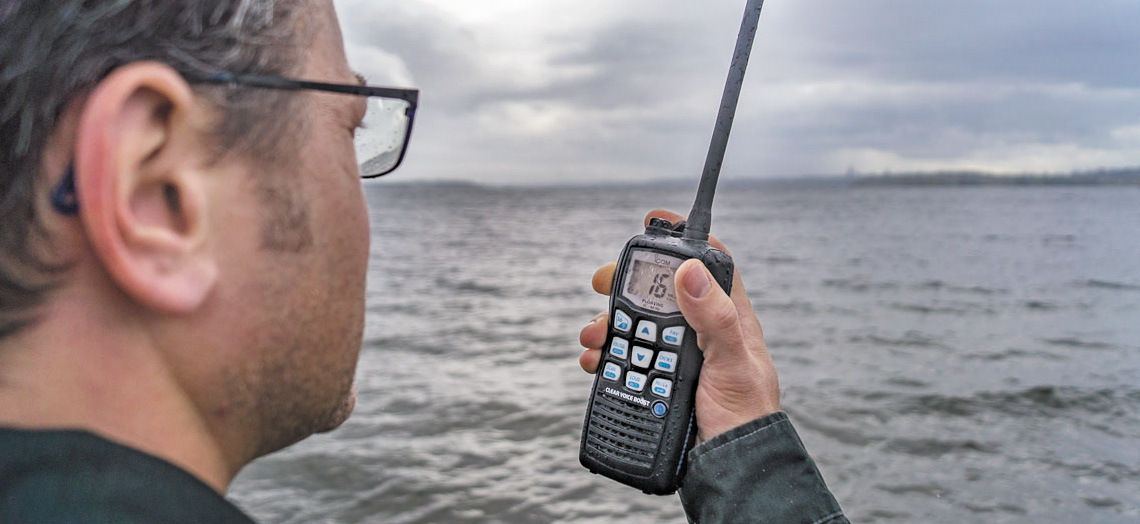
“A little thing like a radio can save your life.” – Brad Stemocosky
A beautiful, calm day on the water can change to a dangerous situation in an instant. On December 20, 2015, Brad Stemocosky and a friend went fishing on Potomac River, near Chesapeake Bay. The two men were well-prepared for the trip, however a fierce turn in the weather as they tried to return home was too much for the 16-foot boat. As 3 1/2-foot waves swamped their vessel, Stemocosky was able to quickly send out a mayday with his handheld VHF radio.
Within 10 seconds the boat was gone.
The two men bobbled in the cold, 50-degree water for nearly an hour and an half. While the search helicopter circled above, Stemocosky was able to communicate with the Coast Guard, assisting the Search and Rescue team. The two men were safely pulled out of the water.
“No one would have been able to find us or look for us if I didn’t send out [the] mayday,” Stemocosky said
Their rescue and survival was astonishing. Hypothermia was setting in and without the auto-inflatable life preservers they wore and their handheld VHF radio, a different outcome may have occurred that night. Stories like Stemocosky’s make you think; if something goes wrong out on the water, how will you ask for help?
VHF Marine Radios: Don’t Leave Home Without One

Survivors, Brad Stemcosky (right) and Charlie Frend explain how a handheld VHF-FM radio contributed to their survival after a news conference reunited them with their rescuers at Coast Guard Station Annapolis, MD., Wednesday, Dec. 30, 2015. (U.S. Coast Guard photo by Petty Officer 3rd Class Jasmine Mieszala) The appearance of U.S. Department of Defense (DoD) visual information does not imply or constitute DoD endorsement.
While cell phones are convenient, inexpensive and a great ship-to-shore communication tool, they nowhere compare to a marine fixed mount or handheld VHF radio while on the water. During an emergency, time is of the essences. Will you have cell service? Will someone answer? Relying on a cell phone as the only source of communication can be risky and waste precious time.
“[People] think a cell phone will do it for them. If you’re on the water, this is the world of VHF. You can’t rely on knowing the number of the person to help or that they’ll answer. You can call someone on the radio and contact them immediately,” Stemocosky stated.
VHF radios provided a direct link to the Coast Guard and other nearby vessels. Cell phones do not. Make sure you have a communication plan. A cell phone might be part of it, but should not be your only form of communication while on the water.
Icom’s Marine Communication Solutions
Winning more awards for marine communications equipment than any other manufacturer, Icom marine radios are covet by commercial mariners and boating enthusiasts alike. Icom offers a wide array of military-tough handheld and fixed mount radios, as well as AIS receivers, navigation systems and a GMDSS portable radio.
Stemocosky had an Icom M36 onboard during that fateful day. The Icom M36 Clear Voice Boost automatically adjusts the outgoing voice and incoming audio to compensate for the ambient noise level. The AquaQuake draining feature helps clear the water away from the speaker. It also has an IPX7 waterproof rating and it floats.
“Love this radio and the way it works. Battery life is amazing,” Stemocosky said.

The new Icom M93D is now available.
The new Icom M93D floating VHF transceiver has advanced marine radios to the next level. It is loaded with safety features like integrated GPS and a built-in Class D Digital Selective Calling (DSC) receiver. Equivalent to a “mayday button,” the DSC button provides a quick, direct link to the Coast Guard. This stylish radio also contains Icom favorites including Float’n Flash, AquaQuake and Active Noise Cancelling.
Whatever you decide on, make sure you have some type of VHF radio while on the water. Stemocosky’s best advice when purchasing a radio:
“Get a radio and get familiar with its features so when you need them you don’t have to think about it.”
Visit our website to learn more about Icom’s marine communication solutions.
]]>
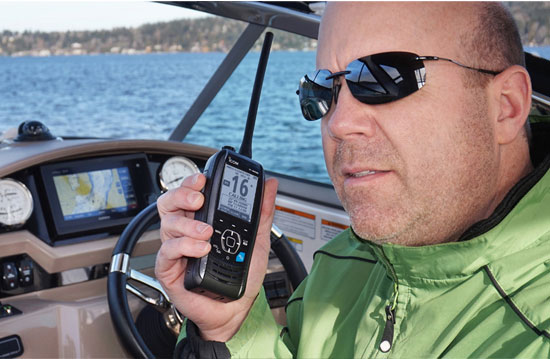
From ships to paddle boats, water safety is number one. While the U.S. Coast Guard has different requirements for different vessels, the concepts behind all safety basics are the same.
Preparation is Prevention
There can be many unforeseen circumstances that can occur while on the water, preparing for the day is crucial when it comes to safety at sea. Start with a pre-departure or vessel safety checklist to review that all systems and required safety equipment are in working condition and onboard. The last thing anyone wants is to be in an emergency situation and have missing or faulty equipment.
Filing a float plan should also be part of the pre-departure preparation. In case of an emergency, a float plan can provide rescue personnel essential information. Although helpful, friends and family members may not have or remember all the detailed information needed by rescue personnel.
Finally, do not forget to plan ahead and check the weather report. Bad weather can make for an unpleasant or dangerous day at sea. Know what to expect before departing and avoid potential weather hazards.
Wear a Life Jacket. It’s a Life Saver
One thing all watercrafts are required to carry on board are life jackets. Hot summer days and the open air make it tempting to not wear this life saving device, however they are most effective when worn. Even though life jacket requirements vary per state, there must always be enough jackets for each passenger on board. All life jackets need to be Coast Guard approved and the appropriate size for the intended user.
Communication Devices
The ability to communicate with other ships and land is imperative. While cell phones are a useful link to the shore, they are not designed to “talk” with other vessels. When in distress, a boat operator needs to quickly communicate with the Coast Guard. A marine radio provides the quickest and easiest form of reliable communications. When using a marine radio, distress calls can be received not only by the Coast Guard, but also by nearby ships as well.
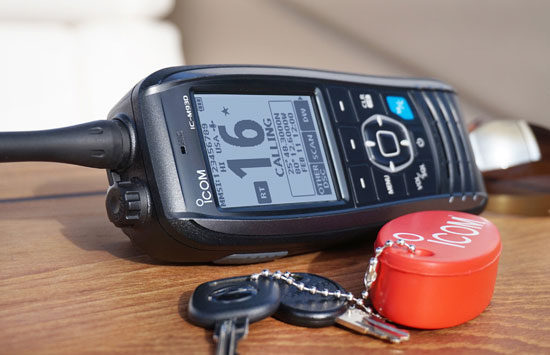
Radios are extremely useful for non-emergency situations as well. Any boater can confirm weather is unpredictable and can alter at any minute. Marine radios can keep a boat’s crew up to date with current conditions at the touch of a button, allowing them to avoid unnecessary dangers.
Knowing the Way of the Waves
Just like when driving a car, there are rules to follow while boating. Navigation rules are not only proper etiquette, but can help avoid collisions while on the water. Learning how to handle some common navigation scenarios or reading aids to navigation (ATONs) is basic knowledge all boat operators should know.
Water will always be more powerful and uncertain than any amount of preparation can provide. However, education and awareness are valuable in providing a safe and enjoyable atmosphere for all water activities. Additional information regarding boat safety and education can be obtained from the U.S Coast Guards Boating Safety Division or the Perry J. Cohen Foundation.
]]> Boat show season is in full effect with the Progressive® Insurance Miami International Boat Show® kicking off today. Icom is attending the annual event, which celebrates its 75th year at the Miami Marine Stadium Park & Basin. This new show location accommodates more than one million square feet of entertainment and exhibitor space for marine products — including over 1200 new boats. It is the ultimate oasis for seasoned and novice boaters alike.
Being one of the world’s largest boat shows, Icom has exhibited at the Miami Boat Show for more than 25 years. Attendees can always expect Icom to debut new product at Miami and this year is no different. Stop by at Icom’s Booth C484 – C Tent and check out the following new radios:
- GM600 (VHF) and GM800 (HF) transceivers featuring Global Maritime Distress and Safety System*
- IC-M200 fixed mount for entry-level boaters*
- M93D Float’n Flash handheld with enhanced audio functions
*Export only
Icom is also running a Miami Boat Show exclusive promotion when you purchase select radio models such as the award-winning M506, the M324 Series and new M25 handheld.
Come join Icom at the boat show now through President’s Day Weekend, Booth C484 – C Tent. Follow #MiamiBoatShow for updates and you can also check us out online via Facebook and Twitter. See you there and happy boating!
]]> In the real world, emergencies occur outside of cell coverage. Emergencies trigger people to call their loved ones to check on their safety. As impressive as cell phones are, when emergencies arise, their signal is often unreliable and can become overloaded, making it a poor form of communication.
In the movie, two way radios were used as a means to communicate between the command center of the park and the rescue crew. The reliable signal enabled them to communicate and track down the dangerous dinosaur. However, reliable communication isn’t just for the movies in the world today. Emergency personnel depend two way communication solutions to keep people safe.
Natural and man-made disasters are occurring more and more these days and it is always our hope that we are sufficiently prepared for them. The most important thing we can do to make sure we are ready for emergencies is to be adequately prepared and have the ability to communicate. Icom America provides a full line of reliable two way radios in Land Mobile, Marine, Avionics, and Amateur to help you communicate in any emergency situation.
]]> Avid boaters and those who love to fish know never to go out on the water without their cell phones and a VHF Radio. But there is a big difference between how you use a cell phone, and how and when you use your VHF radio. Every year we hear more people at tradeshows and events say that they don’t need a VHF Radio because they have a cell phone. We would like to share with everyone what the Coast Guard and experts in the field know: this is not a smart or safe idea.
There are a couple of main reasons you MUST think about a cell phone vs a VHF radio.
1. The Coast Guard does not monitor cell phone calls.
2. Cell phones do not have the quality of today’s VHF Radios. All Icom handheld and fixed mount VHF radios are waterproof and built to the highest military standards. We even have radios that float and flash.
3. You cannot monitor ship to ship or ship to shore calls with a cell phone. You easily can do this with a VHF radio.
4. All of today’s VHF Radios have DSC (Digital Selective Calling) so you can push a distress button on your radio and it will automatically send out your position and who you are to all the boats within VHF range as well as the Coast Guard. FYI – You must register your radio to make this feature work properly. It’s easy to do and free on Boatus.com.
5. At the press of a button you can receive weather alerts on VHF radios.
Boatus.com has more information about this subject to help familiarize yourself with the pros of a VHF radio.
One last comment to keep in mind, If your boat was sinking and there were boats around you, do you have their cell phone numbers to call for help?
Fun and safe boating everyone!
]]> Icom America wins Best Marine VHF Radio at the 2014 NMEA® International Marine Electronics Conference & Expo. Icom’s M506 VHF marine transceiver received the award based on its advanced options for NMEA 2000 connectivity, integrated AIS and intuitive user interface. The prestigious NMEA event is held annually and took place at the Sanibel Harbour Marriott Resort & Spa in Fort Myers, Fla. from October 8-11.
In the NMEA category for Best Marine VHF Radio, Icom’s M506 captured the title based on its NMEA 0183/2000 plug-and-play functionality and integrated AIS receiver (select M506 models). The M506 was also recognized for its new intuitive user interface, which promotes fast access to radio functions and settings like Class D DSC. Other award-winning features include “Last Call” voice recording/rewind function, enhanced audio and active noise cancelling and the unit’s large 132×96-pixels dot matrix display. Information regarding the show is available on the NMEA website.
Icom’s M506 VHF radio was also awarded the Chuck Husick Marine Technology Award, presented by Ocean Navigator magazine at the 2014 Annapolis Show earlier this month. The M506 was awarded the best of show honor for its superior marine technology. Award information can be obtained on the Ocean Navigator website.
For more information on the award-winning IC-M506 radio and a photo of the NMEA Award plaque, visit the Icom America M506 product page online.
]]>