Advertise with Googlier.com fort peck Archives - The National Wildlife Federation Blog https://blog.nwf.org/tags/fort-peck/ The National Wildlife Federation's blog Fri, 08 Jan 2016 19:15:19 +0000 en-US hourly 1 https://wordpress.org/?v=7.1.1 Wild Bison Find Their Way Home to Tribal Lands https://blog.nwf.org/2014/11/wild-bison-find-their-way-home-to-tribal-lands/ Thu, 13 Nov 2014 21:45:57 +0000 http://blog.nwf.org/?p=101650 In the summer of 1999, I spent several weeks, while interning with the National Wildlife Federation (NWF), in Yellowstone National Park manning a booth to speak with visitors about the … Read more

The post Wild Bison Find Their Way Home to Tribal Lands appeared first on The National Wildlife Federation Blog.
]]>
Fort Peck Bison Range
In the summer of 1999, I spent several weeks, while interning with the National Wildlife Federation (NWF), in Yellowstone National Park manning a booth to speak with visitors about the importance of protecting bison. The visitors came from all walks of life and all parts of the world – from Germany, to Asia, to Sweden. They all had one primary reason for visiting America’s first National Park – to see the buffalo.

After spending the day talking with these folks about the importance of Yellowstone bison (the last free-roaming, genetically pure, wild bison herd), I would sojourn on the rivers in Yellowstone, casting flies for trout. Fishing is a time for contemplation, my grandfather always used to say. As I fished, I would think about those tourists and those bison, and how we could get some of those bison back to their historic habitat on America’s grasslands. Those contemplations stayed with me through my graduate studies as I learned and wrote about Native peoples and their cultural and ecological connections to the land and wildlife.
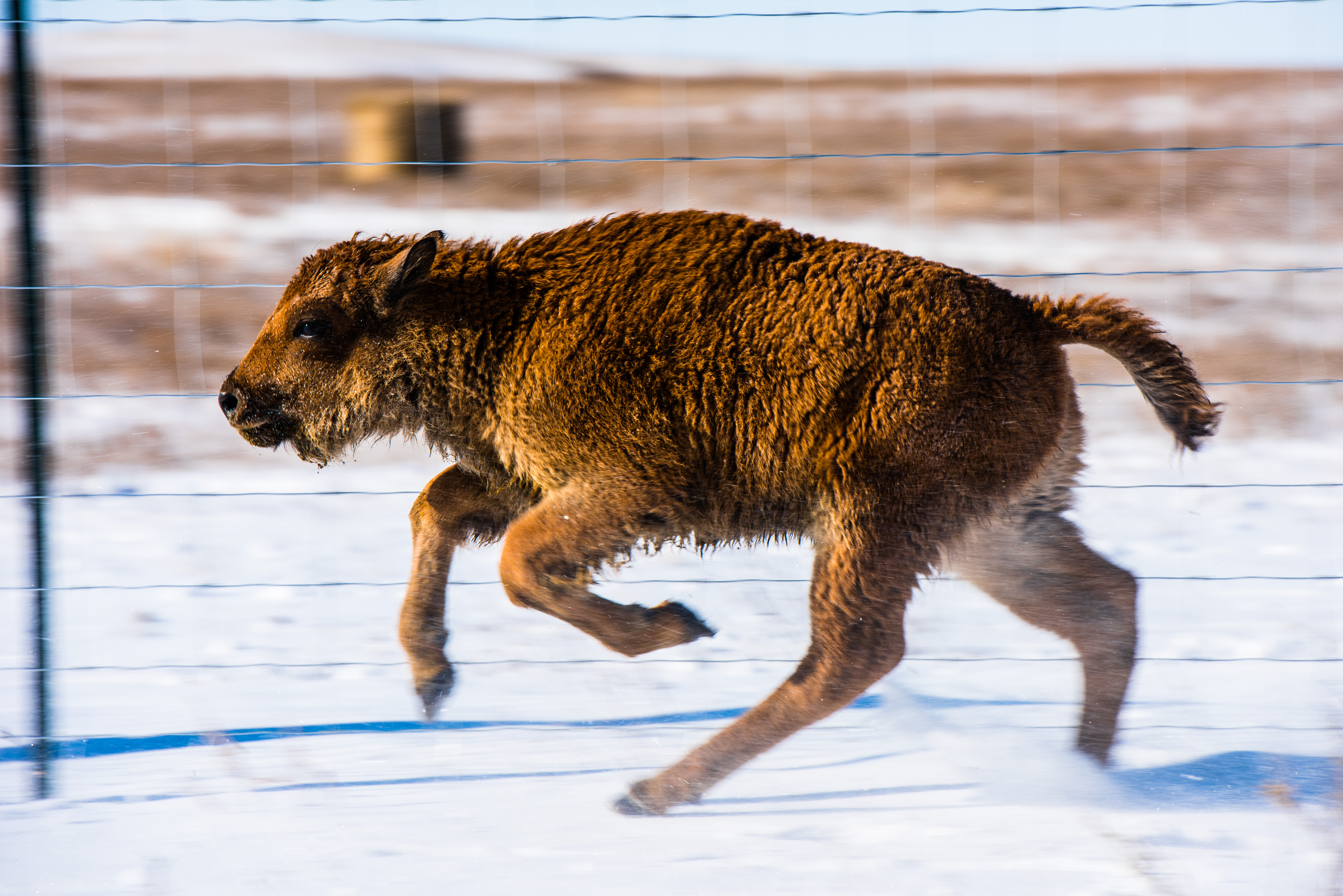
Bison calf. Photo credit: Alexis Bonogofsky
When I joined NWF full-time 10 years ago, I already had a deep knowledge of NWF’s conservation partnerships with tribes, something unique among national conservation organizations. I remained most passionate about getting bison back to tribal lands. When I come home after work, my kids only want to know what is happening with the buffalo. Two years ago, I was so proud to tell them that we had worked with the Fort Peck Tribes to finally restore 64 wild Yellowstone bison to their tribal lands – after more than a century of the absence of that culturally and ecologically important animal. A year later, I was delighted to tell them we got some of those Yellowstone bison to the Fort Belknap Tribes.

And, today, I’m elated to share with you that I saw the return of 138 Yellowstone bison to the Fort Peck Reservation. In a blog a few weeks ago, I wrote, “With the relocation of 138 bison to the Fort Peck Tribes, we have taken yet another positive step forward in bringing bison back to western landscapes. Doubters have become believers, opponents have become supporters. People now recognize that Tribes are leading the way forward in wild bison conservation.” After several decades of hard work with Tribes and our conservation partners, we are experiencing success after success. You and I both know that means now is the time to go full throttle – let’s keep pushing to get more bison back to tribal and other Western landscapes.

Seeing the bison run out onto tribal land at Fort Peck is exciting and it couldn’t have happened without your support.

[quicktime]http://blog.nwf.org/wp-content/blogs.dir/11/files/2014/11/Bison_plains_4.mov[/quicktime]

What inspires me most is the actions and words of our tribal partners. As Mark Azure, President of the Fort Belknap Tribes, expressed on the day the first Yellowstone bison arrived at Fort Peck, “Today is a great day!” And, as Robert Magnan, Director of the Fort Peck Tribes’ Fish and Game Department and the bison program said, “I’m so proud of the role the Fort Peck Tribes have played in bringing buffalo back. In two years, since we welcomed back the first Yellowstone buffalo, we’ve seen the ecosystem revive. Grassland birds have returned, native grasses are thriving. We welcome and look forward to the buffalo’s continued infusion of new life into our tribal culture and the health of our lands.”

There is nothing more to say than TODAY is a GREAT DAY!
 

The post Wild Bison Find Their Way Home to Tribal Lands appeared first on The National Wildlife Federation Blog.
]]>
101650
Yellowstone Bison Revitalize Prairie on Fort Peck Reservation in One Year https://blog.nwf.org/2013/07/yellowstone-bison-revitalize-prairie-on-fort-peck-reservation-in-one-year/ https://blog.nwf.org/2013/07/yellowstone-bison-revitalize-prairie-on-fort-peck-reservation-in-one-year/#comments Tue, 02 Jul 2013 16:46:30 +0000 http://blog.nwf.org/?p=82294 Robbie Magnan, Manager of the Fort Peck Tribes Game and Fish Department, picks us up from our hotel in Wolf Point, Montana right a noon. His smile and good mood … Read more

The post Yellowstone Bison Revitalize Prairie on Fort Peck Reservation in One Year appeared first on The National Wildlife Federation Blog.
]]>
Robbie Magnan, Manager of the Fort Peck Tribes Game and Fish Department, picks us up from our hotel in Wolf Point, Montana right a noon. His smile and good mood are infectious. To him, any day he gets to take people out to see the Yellowstone Bison is a good day.

Bison on Fort Peck Reservation. Photo Copyright Alexis Bonogofsky
He is taking us to see the Yellowstone Bison that the Tribes, the National Wildlife Federation and other partners successfully transferred to tribal lands last March. Robbie’s basic message? The bison and the native wildlife and plants that rely on the bison are thriving. New songbirds are coming through that they’ve never seen before. Native grasses and wildflowers are thriving in the bison pasture. The bison have restored balance to the land.

Donate today and help National Wildlife Federation protect wildlife like bison.
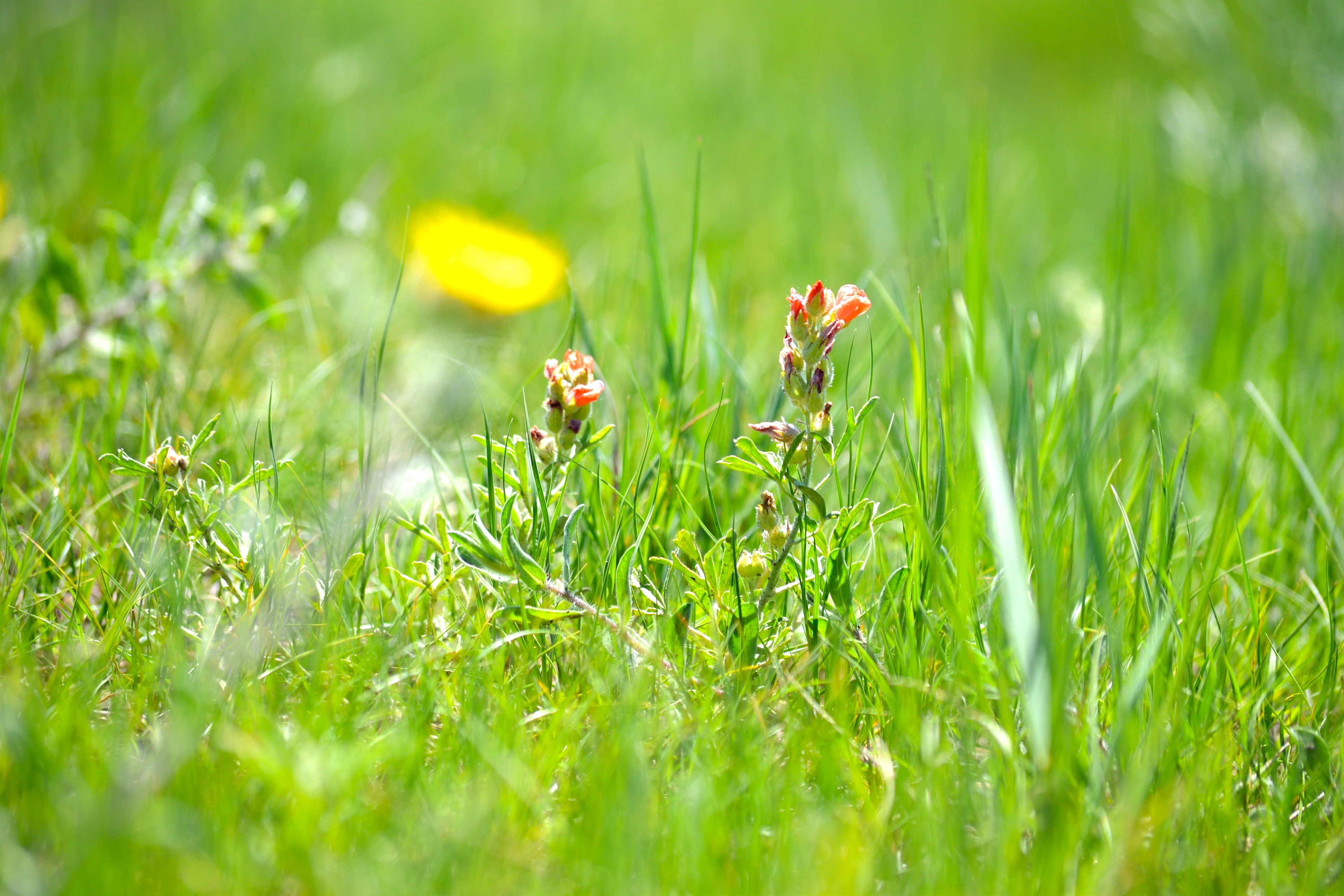
Native prairie flowers on Fort Peck Reservation. Photo copyright Alexis Bonogofsky
We hop into his big Ford pickup and head north on the highway up to the thousands of acres of prairie that the Yellowstone Bison now roam. It was just over a year and three months ago that I witnessed the first transfer of Yellowstone Bison ever, back to tribal lands on Montana’s northeastern prairie landscape.

However, this Saturday couldn’t have been any different from mid-March 2012 when the first bison stepped foot onto the land of the Assiniboine and Sioux. In March of last year, we were out in freezing temperatures waiting for the trucks and trailers to roll in with the bison.
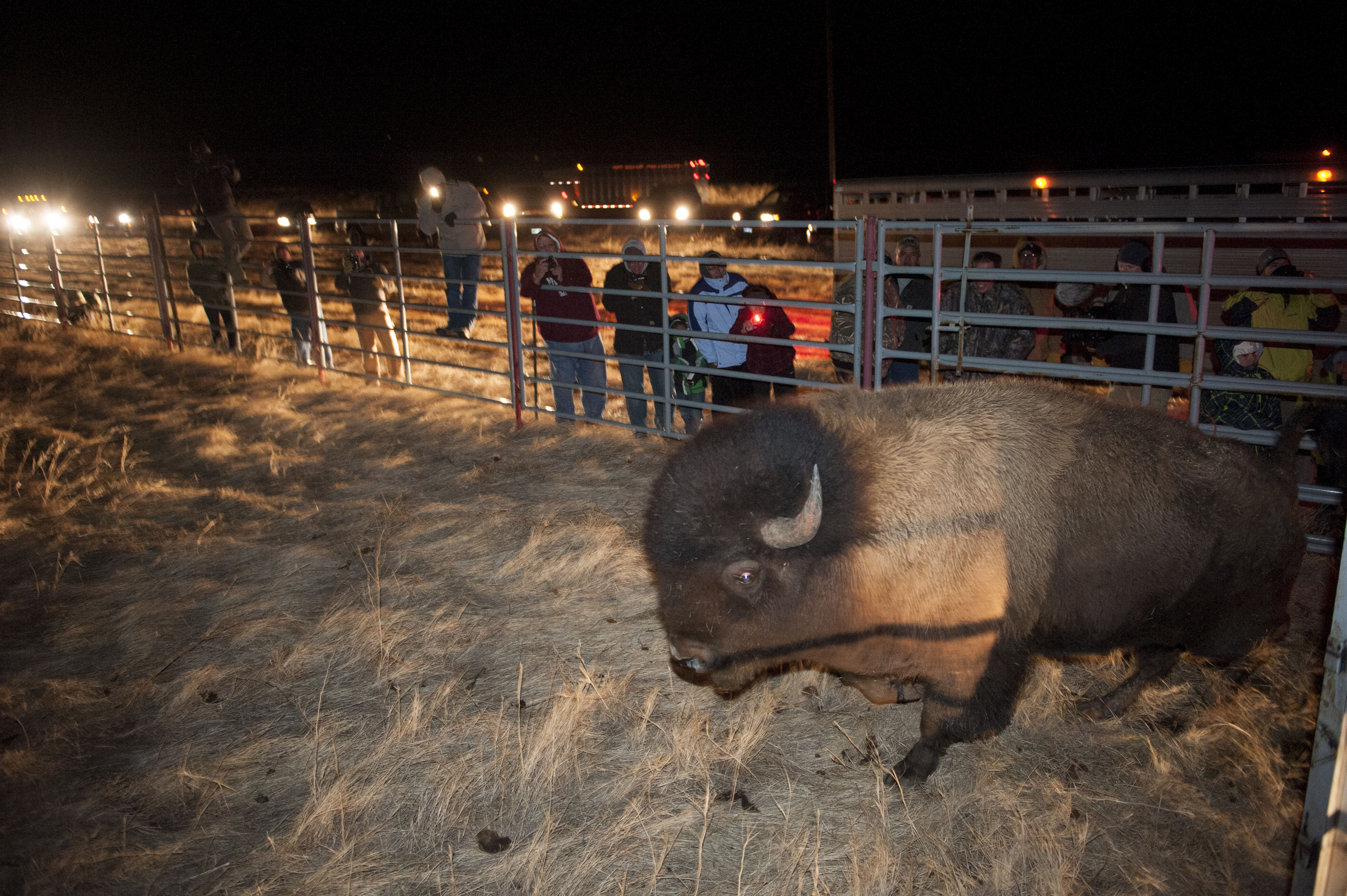
A Yellowstone Bison comes of the trailer in March 2013 on the Fort Peck Reservation.
A Yellowstone Bison comes of the trailer in March 2013 on the Fort Peck Reservation. Photo copyright Ted Wood, The Story Group.
Snow and sleet were coming down and people huddled close for warmth as bison came off the trailer. The bison were nervous, unsure. They had never been anywhere besides the quarantine facility in Gardiner, MT. This was the first day of their new lives, living wild on the prairie.

For me, it was my first time seeing them since I saw them come off the trailers. Today, it is 88 degrees, sunny and absolutely gorgeous as we drive along the highway. I am excited to see how the bison have acclimated to their new surroundings.
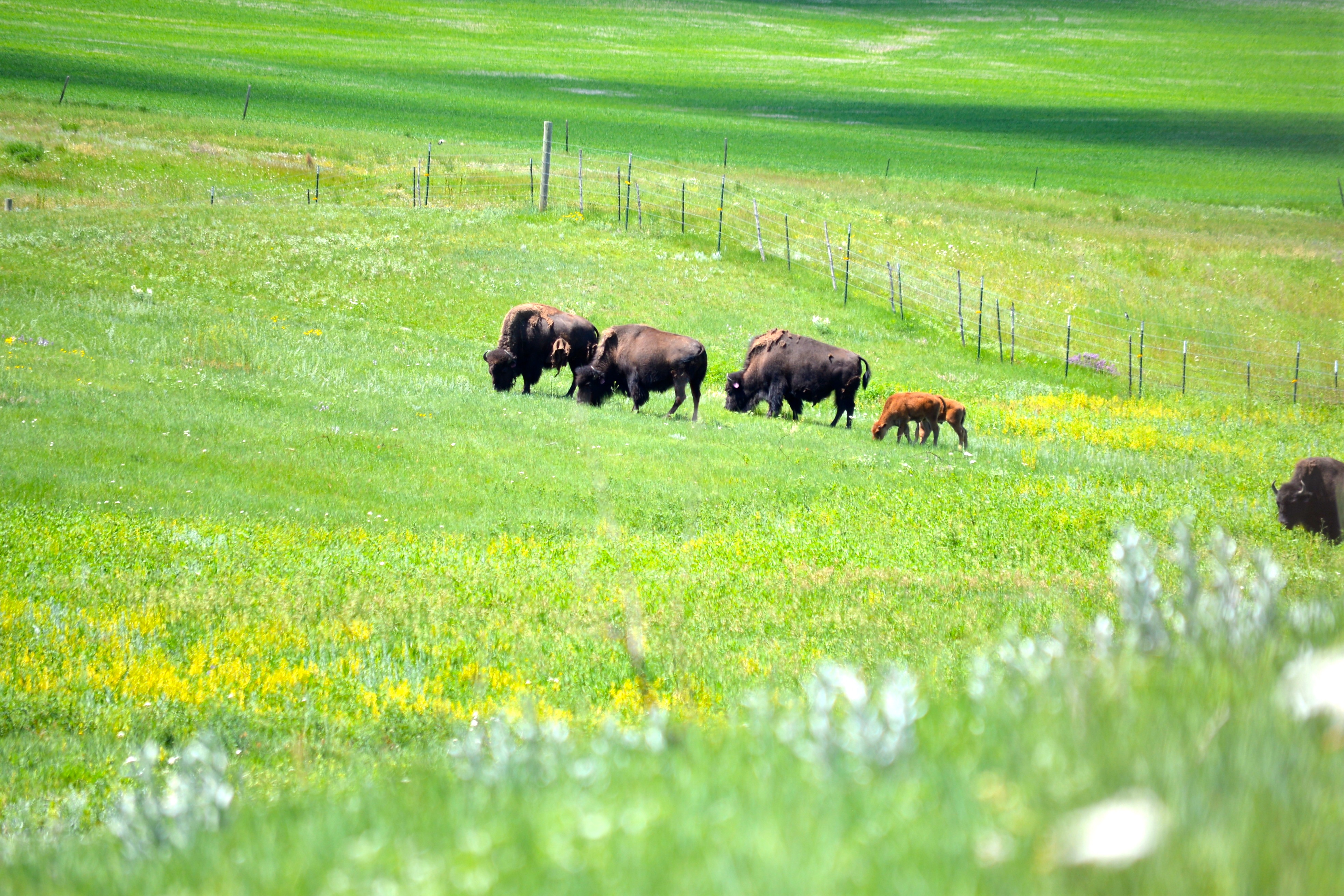
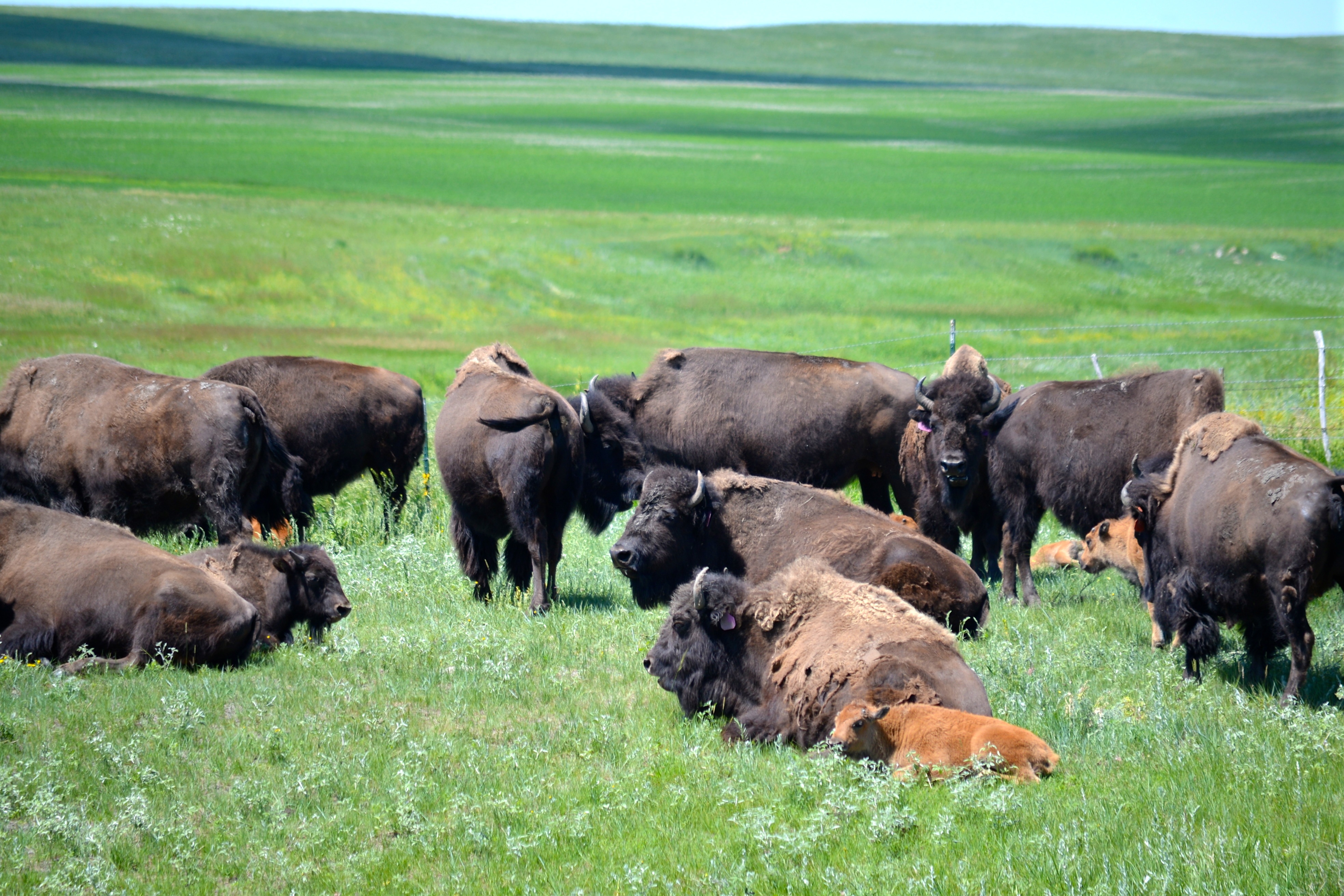
Yellowstone Bison grazing on the Fort Peck Reservation in southeastern Montana. Photo copyright - Alexis Bonogofsky
Yellowstone Bison grazing on the Fort Peck Reservation in southeastern Montana. Photo copyright – Alexis Bonogofsky
One of the major things that Robbie has noticed is that bison make it possible for other wildlife species to thrive in the winter months. Bison use their massive heads to push the snow out of the way, exposing grass and other vegetation to eat. Pronghorn antelope are unable to dig through the snow to find food so during the long hard prairie winters, pronghorn an suffer. However, with the bison back, Robbie noticed that the pronghorn follow behind the bison and are able to eat in the places that the bison have uncovered. Then come the ground birds and all of the other critters. The bison are bringing other species back to the prairie.

Bison start moving off to graze. Photo copyright Alexis Bonogofsky
Robbie telling us how that system works reminded me of lyrics written by Canadian songwriter and singer, Corb Lund. In a song called, The Truth Comes Out, he sings, “the antelope mourn the buffalo in the night.” It makes me think how interconnected the two animals are and how when the bison were killed off, the antelope lost a lot of their ability to forage for food in the long winter months.

Finding the bison

Robbie warns us it might take awhile to find them. They have thousands of acres after all and could be anywhere. We are lucky though. We drive up over a hill after five minutes and there they are, bedded down near a wetland, babies hopping and jumping and playing as their moms chew their cud and watch closely. Two big bull bison are off by themselves, contently resting after a morning of browsing the lush prairie grass.
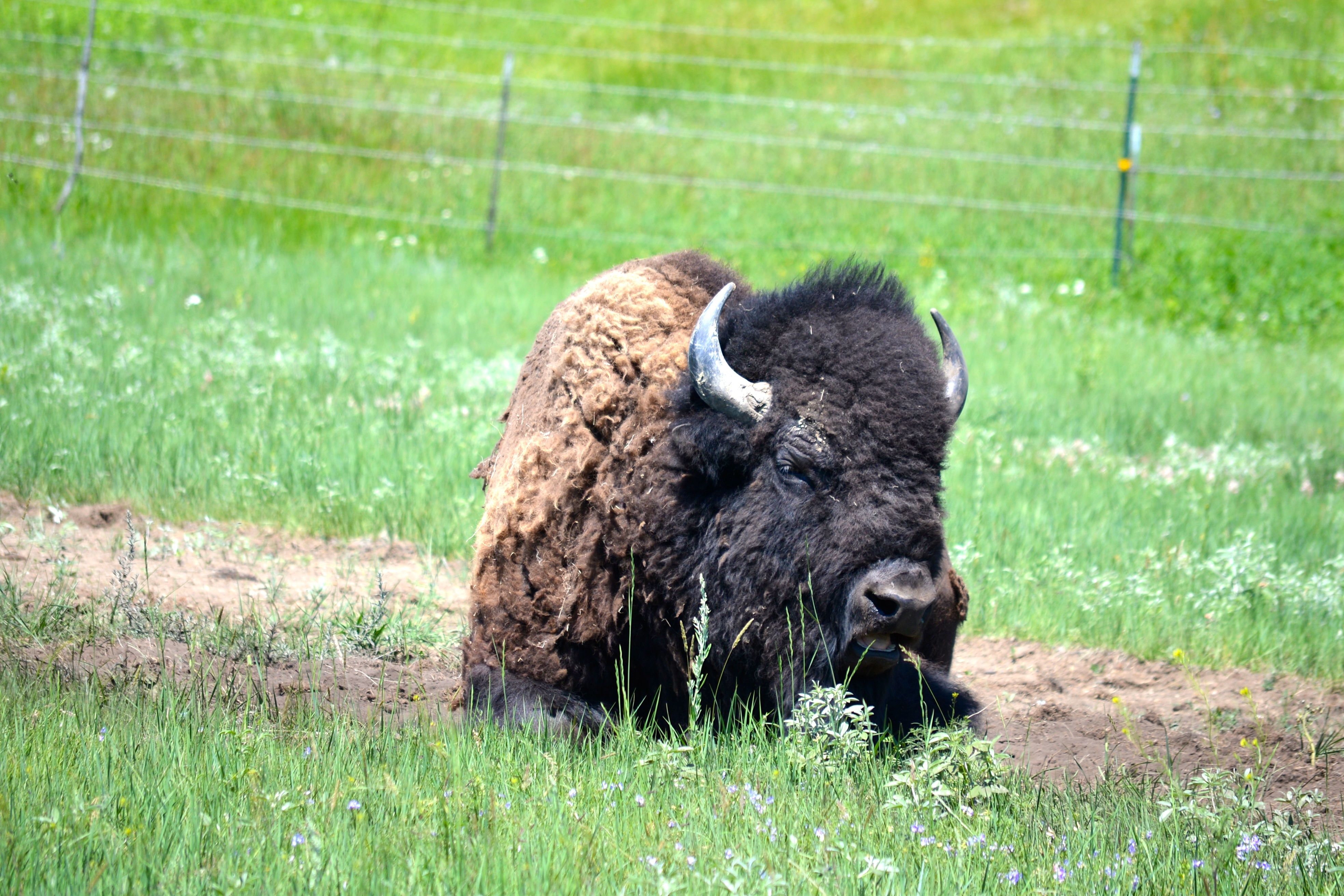
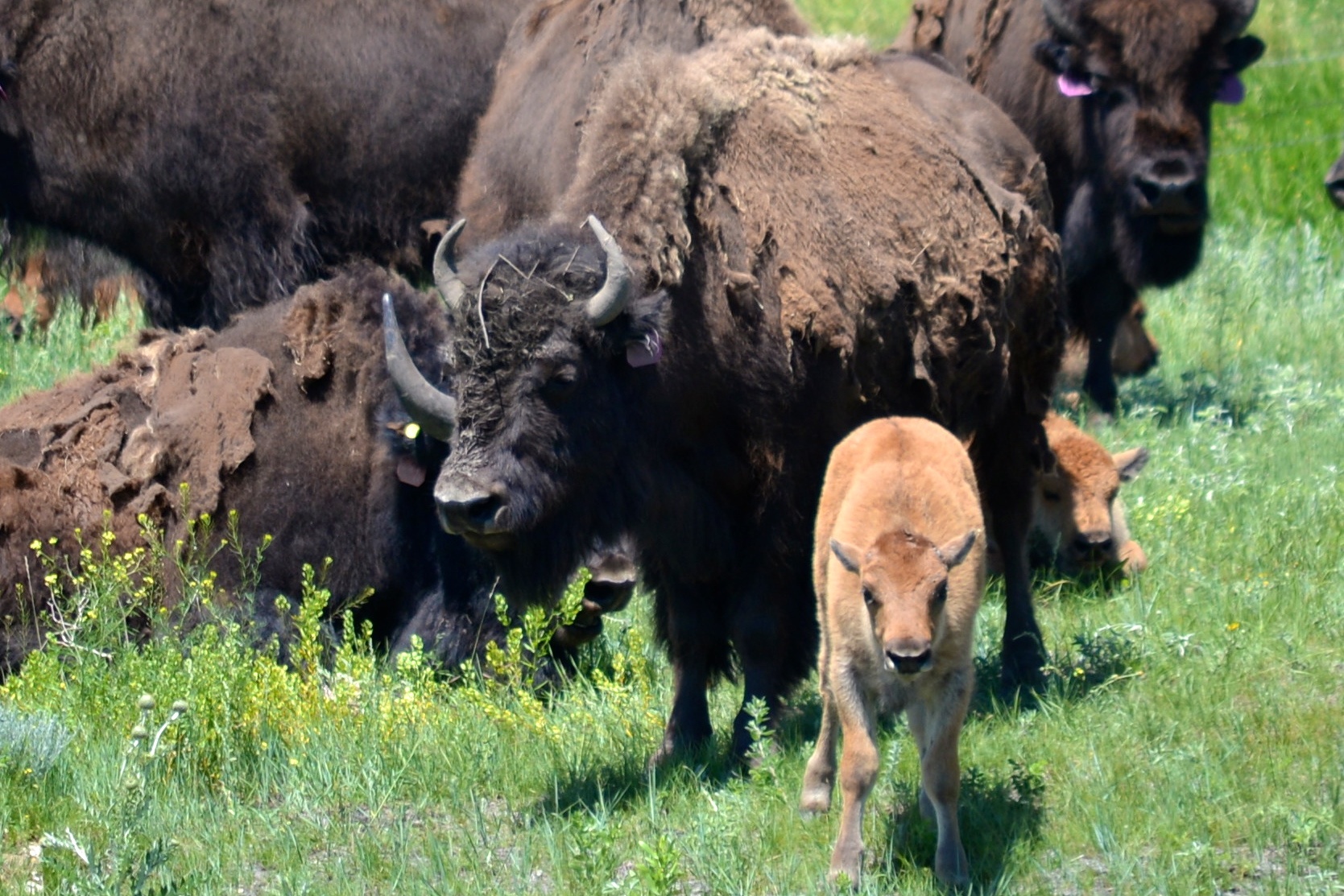
A Yellowstone Bull Bison rests in a mud wallow on the prairie. Photo copyright Alexis Bonogofsky.
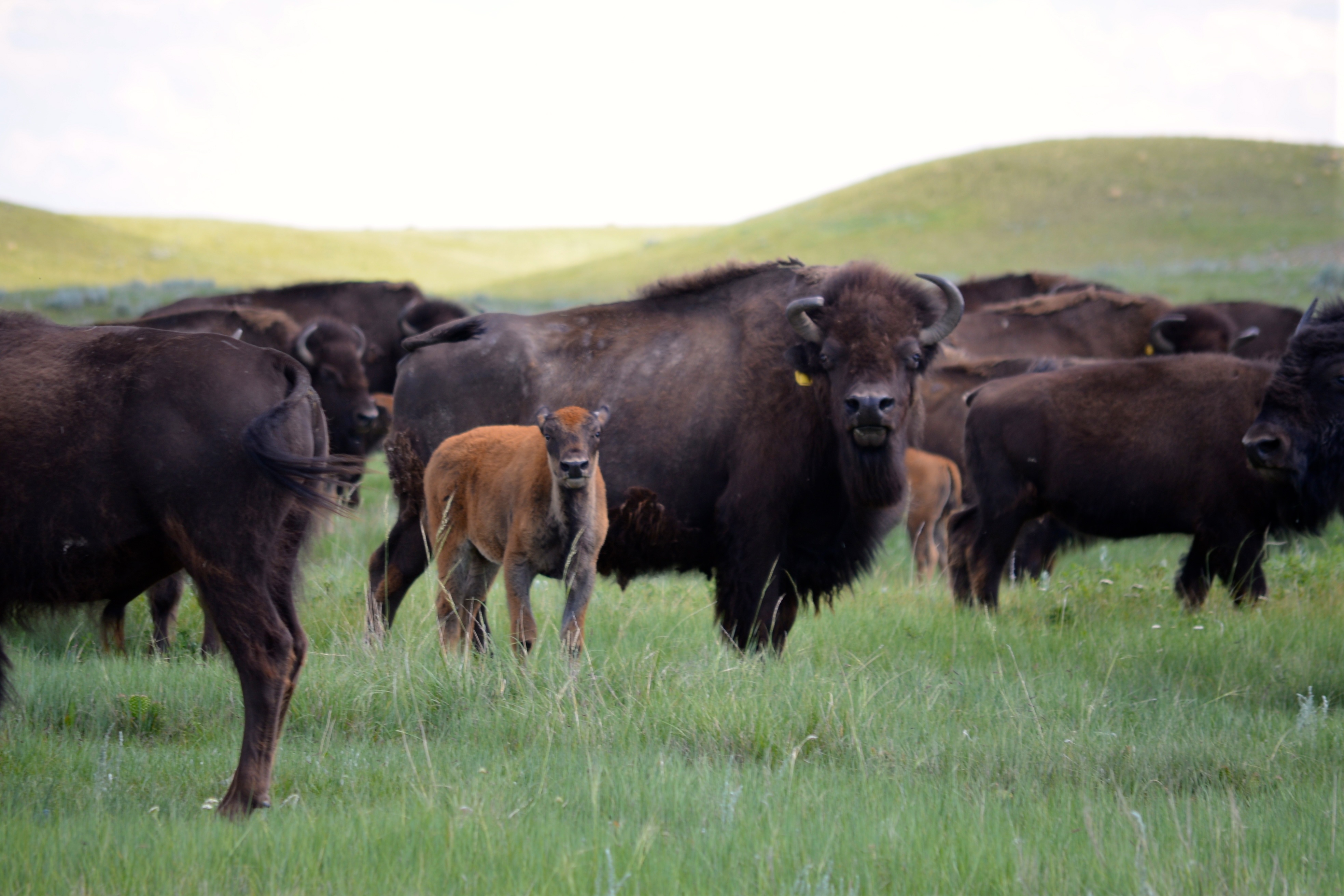
 We stay a good distance from the herd, not wanting to disturb them. Bison calve once every two years so this year there are about a dozen new babies in the pasture. Watching them roll on the grass and get milk from their mammas makes us all ridiculously happy. Robbie watches over them like a proud parent, pointing out various behaviors that he has noticed and telling us the various ways they have changed since they arrived.

A Yellowstone Bison Calf with its mom. This calf will never know anything different than the prairie. Photo copyright Alexis Bonogofsky.
Robbie tells us that since the bison came home, good things have been happening in his community and he is looking toward a future of more land for them to roam, more Yellowstone bison arriving from the park and a day where tourists from all over the world can come and see how the bison take care of the land and how the Assiniboine and Sioux are taking care of the bison.

Yellowstone Bison lounging on the prairie. Photo copyright Alexis Bonogofsky

How you can help

We aren’t done. Many other Tribes are seeking to restore Yellowstone Bison back to Tribal Lands but we need your help to make it happen.

Donate Now ButtonYour donation can help our work to restore bison back to tribal lands—donate here. To read more about our efforts and long term vision, go to our website here.

You can like National Wildlife Federation’s Tribal Lands Partnerships Facebook page here to stay updated on all bison related news and events.
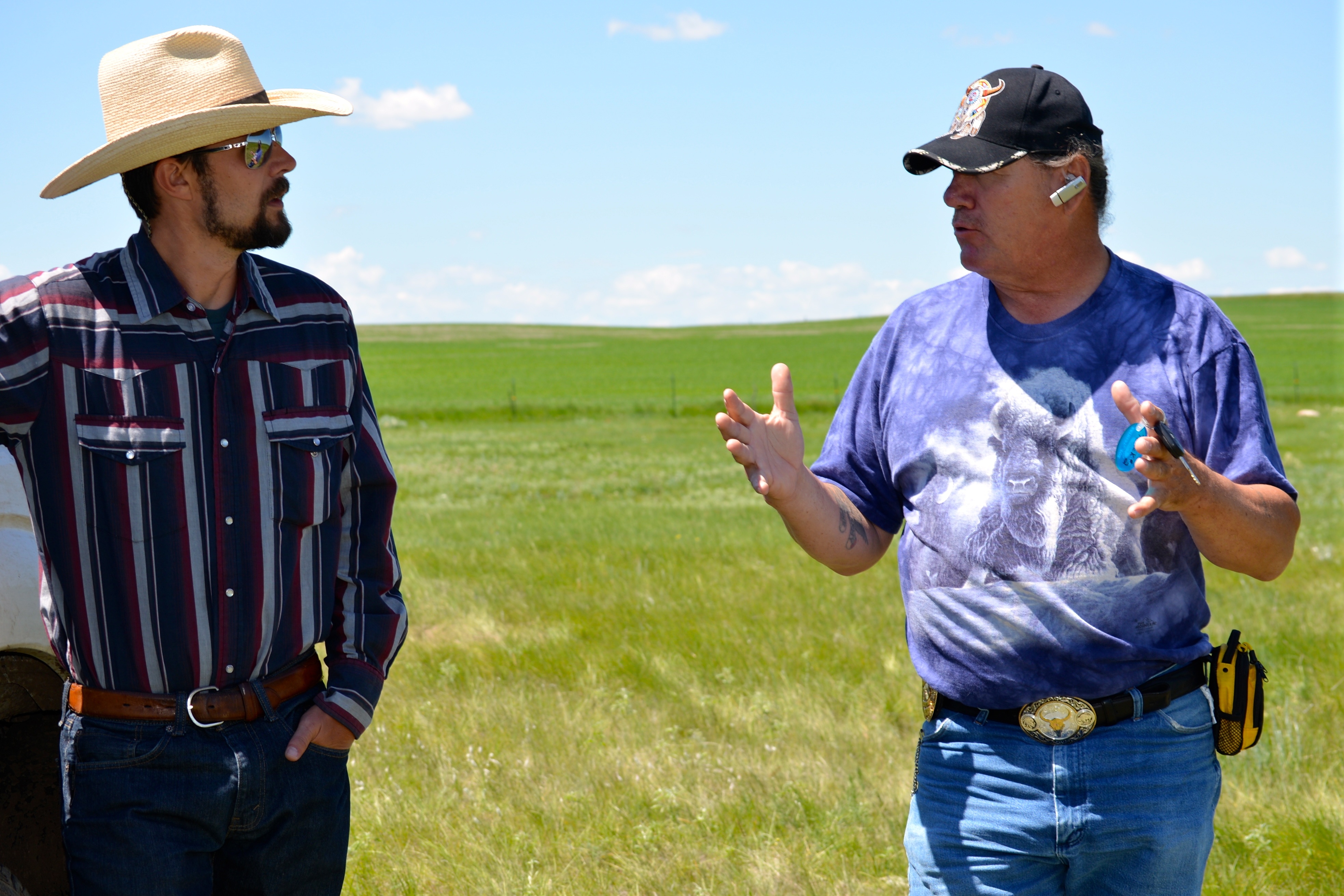
Robbie Magnan, Director of Fort Peck Game and Fish, explains how the Yellowstone Bison are acclimating to their new home on the prairie.
The post Yellowstone Bison Revitalize Prairie on Fort Peck Reservation in One Year appeared first on The National Wildlife Federation Blog.
]]>
https://blog.nwf.org/2013/07/yellowstone-bison-revitalize-prairie-on-fort-peck-reservation-in-one-year/feed/ 52 82294
Restoring Buffalo to their Home on the Range https://blog.nwf.org/2012/10/restoring-buffalo-to-their-home-on-the-range/ Fri, 19 Oct 2012 17:08:00 +0000 http://blog.nwf.org/?p=68798 Yesterday, I drove a thousand miles across the Great Plains and saw not a single buffalo. I did see domestic cows and sheep, coal-fired power plants and wind farms, miles … Read more

The post Restoring Buffalo to their Home on the Range appeared first on The National Wildlife Federation Blog.
]]>
Yesterday, I drove a thousand miles across the Great Plains and saw not a single buffalo. I did see domestic cows and sheep, coal-fired power plants and wind farms, miles of power lines and fences. I saw immense open prairie; grass-covered, wind-scoured, treeless hills tumbling out to the horizon. But in a land where 30 million American bison once roamed in herds that would rival the wildebeest of the African Serengeti, we now have to go out of our way to find one.

Great Plains
The Great Plains spread eastward from the foothills of Wyoming (Photo by Sarah Pizzo)
If you want to know where all the bison went, ask Jason Baldes. Jason is an expert on the history of the bison, and as a Shoshone tribal member, he understands this history in a way most of us can’t.

Jason explains that the plants, animals and humans of the American prairie have been evolving together for millennia. Bison were an integral part of the prairie ecosystem: their hooves broke up the soil so seeds could germinate and their wallows – the depressions left when they rolled in the dirt – gathered rain which fed medicinal plants.

The lives of Native Americans were also inextricably tied to the bison. They followed the herds across the plains, relying on the great creatures for food, shelter and tools. They worshipped bison, performing religious ceremonies to promote its abundance and express gratitude for its ultimate sacrifice to them in the hunt.

The U.S. Army recognized this reliance in the late 19th century, when the westward movement of miners and homesteaders led to clashes with the resident Sioux, Cheyenne, Shoshone, and Arapaho. To defeat the tribes and clear the way for “Manifest Destiny,” the U.S. Army used the following tactic: eliminate the tribes’ main food source.
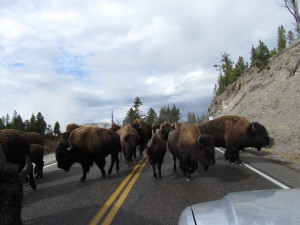
Yellowstone Bison Herd
A herd of wild bison approach the author’s car in Yellowstone National Park (Photo by Sarah Pizzo)
A few hundred bison survived the slaughter. Some took shelter in what later became Yellowstone National Park, where they thrive today as the last source of free-roaming, genetically pure bison (i.e. not interbred with domestic cattle). When I visited the Park on a crisp autumn day last week, a small herd sauntered along the road through a flat valley of steaming geysers. I was thrilled to see a healthy group with many young. As the herd slowly swarmed my car and I rolled down the window, sounds and smells wafted in: musky damp fur, the clip-clop of hooves on pavement, grunting males and bleating calves. The raw power in their thick, swinging necks sent chills down my spine and I felt blessed to be in the presence of these rare and wonderful beings.

NWF has been working for two decades to transfer some of these Yellowstone bison – whose numbers now overwhelm the Park’s capacity – back to their native lands. Our first major victory came last spring when we helped the Fort Peck Tribes move 61 Yellowstone bison to their reservation in northeast Montana. The tribes are thrilled to have these “tatanka” home. The bison and their 21 new calves are enjoying thousands of acres of wild prairie.

Today, NWF is working with Jason and other members of the Shoshone and Arapaho tribes to move a herd of Yellowstone bison to the Wind River Reservation in Wyoming. A group of bison awaits transfer on a Montana ranch. The land and the tribes are ready to receive them. Standing in the way is a complex web of legal and political hurdles that we are working to overcome.

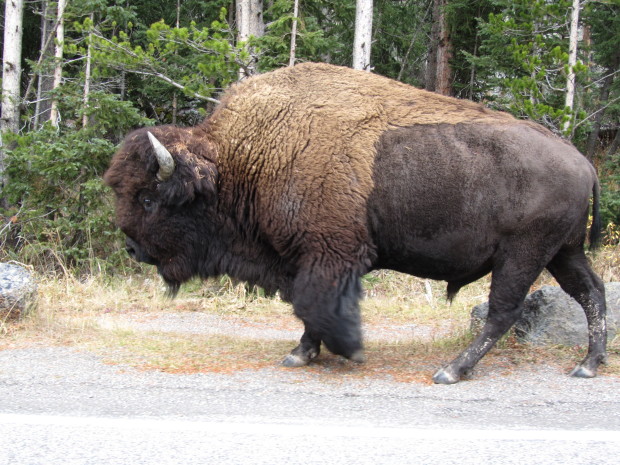
Late in the day on my visit to Yellowstone, I came upon a lone buffalo walking the center line of the Park’s loop road. I pulled to the shoulder to give him space to pass and he paused long enough to make eye contact. I stared with a sense of wonder and respect. His return gaze was fearless and unconcerned. And at that moment I knew: we are beginning to restore the balance.

Lone Yellowstone Bison
A Yellowstone bison wanders along the Park road (Photo by Sarah Pizzo)
Donate NowPlease donate to the National Wildlife Federation Tribal Lands Partnerships Program to help return bison back to tribal lands.
The post Restoring Buffalo to their Home on the Range appeared first on The National Wildlife Federation Blog.
]]>
68798
Bison Get More Room to Roam on Fort Peck https://blog.nwf.org/2012/07/bison-get-more-room-to-roam-on-fort-peck/ Thu, 26 Jul 2012 19:54:22 +0000 http://blog.nwf.org/?p=64174 This March, the National Wildlife Federation, our tribal partners and other wildlife advocates achieved a tremendous conservation victory when 61 wild Yellowstone bison that had spent years in quarantine right … Read more

The post Bison Get More Room to Roam on Fort Peck appeared first on The National Wildlife Federation Blog.
]]>
21  bison calves were born in the last 3 months on the Fort Peck reservation
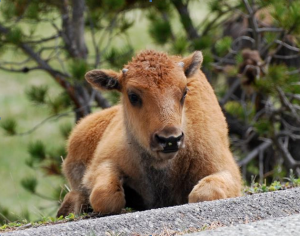
This March, the National Wildlife Federation, our tribal partners and other wildlife advocates achieved a tremendous conservation victory when 61 wild Yellowstone bison that had spent years in quarantine right outside Yellowstone National Park were relocated to the Fort Peck Reservation in northeastern Montana. Since then, 21 bison calves have been born! Partnering with the tribes, we returned wild bison to tribal lands for the first time in more than a century, reviving the tribes’ cultural and ecological connection to this American wildlife icon.

This week, the Sioux and Assiniboine Tribes of the Fort Peck Reservation have reached another conservation milestone–after being held in a temporary surveillance corral for the past four months while fencing for a larger enclosure was specially crafted, the 61 bison adults and their 21 calves will be able to freely roam within a 2,200-acre pasture.

These are the first wild Yellowstone bison to be restored to the Great Plains. Later this fall, an additional 5,120-acre pasture will be opened to the bison, allowing them access to more than 7,000 acres of their native habitat.

Bison are one of America’s most iconic species, a symbol of the West, and a vital part of our nation’s wildlife heritage. Their return to Fort Peck is a critical step forward in returning the animal to important parts of its historic range across the West. Building on this victory, NWF is working with the Wind River Tribes of Wyoming and other tribes to restore wild, genetically-pure bison. To accomplish this goal, we need your help. Together, we can bring wild bison back to the tribes and public lands, restoring them to their rightful place on America’s western landscape.

Learn more about our work at nwf.org/tribalbison
The post Bison Get More Room to Roam on Fort Peck appeared first on The National Wildlife Federation Blog.
]]>
64174
First Baby Bison Calf Born on Tribal Lands on Earth Day https://blog.nwf.org/2012/04/first-baby-bison-calf-born-on-tribal-lands-on-earth-day/ https://blog.nwf.org/2012/04/first-baby-bison-calf-born-on-tribal-lands-on-earth-day/#comments Mon, 30 Apr 2012 13:21:48 +0000 http://blog.nwf.org/?p=55292 On a warm and breezy Earth Day on the prairies of the Fort Peck Indian Reservation in northeastern Montana, a wondrous event occurred. A bison calf was born. Why is … Read more

The post First Baby Bison Calf Born on Tribal Lands on Earth Day appeared first on The National Wildlife Federation Blog.
]]>
Photo by Beth Pratt
On a warm and breezy Earth Day on the prairies of the Fort Peck Indian Reservation in northeastern Montana, a wondrous event occurred. A bison calf was born. Why is this baby bison so special? He is the first calf born to the genetically pure Yellowstone National Park bison herd that was successfully transferred to tribal lands last month.

This amazing little bison was welcomed into the world surrounded and protected by 61 members of his extended family.

“They’ve been doing a good job of protecting him,” said the Tribes’ Buffalo Ranch Manager Tote Gray Hawk. “They don’t let him drift too far away.”

A longtime friend of mine and NWF, Jonny Bearcub Stiffarm, who works for Native Energy and is an enrolled Fort Peck Tribal member, was at the bison pasture with her grandkids and was witness to the birth.

Jonny’s grandkids, 12-year-old Jaymee and 7-year-old Joe, were the first to see the newborn bison being licked off and dried by his mom. As Jonny put it to me:

“Oh my god, Alexis, it was so beautiful and amazing. All the buffalo were in a circle protecting this brand new baby who was just wobbling around and nursing on his mom every once in a while. Jaymee and Joseph Stiffarm, Fort Peck tribe members, the first to see the first born bison of the buffalo who came home!”

Watch the Story

This mom and the rest of the herd endured a 500-mile trek from a quarantine facility outside of Yellowstone National Park to the bison pastures at Fort Peck. The tribes, NWF, and other groups have worked for years to relocate wild bison to tribal lands rather than see them sent to slaughter. Now, instead of seeing bison killed we have created a pathway for bison to thrive.

[youtube]http://www.youtube.com/watch?v=hNkOWYm9Tbc[/youtube]


Donate NowHelp keep the bison roaming free on tribal lands! Please donate today to help National Wildlife Federation save bison and other wildlife >>

The post First Baby Bison Calf Born on Tribal Lands on Earth Day appeared first on The National Wildlife Federation Blog.
]]>
https://blog.nwf.org/2012/04/first-baby-bison-calf-born-on-tribal-lands-on-earth-day/feed/ 5 55292
Amazing Photos and Video of the Return of Wild Bison to Tribal Lands https://blog.nwf.org/2012/03/bison-return/ https://blog.nwf.org/2012/03/bison-return/#comments Mon, 26 Mar 2012 15:27:07 +0000 http://blog.nwf.org/?p=50885 More than a century after they disappeared, wild bison once again roam Montana’s Northern Great Plains. On March 19, 2012, more than 60 bison were loaded onto trucks near Yellowstone … Read more

The post Amazing Photos and Video of the Return of Wild Bison to Tribal Lands appeared first on The National Wildlife Federation Blog.
]]>
More than a century after they disappeared, wild bison once again roam Montana’s Northern Great Plains. On March 19, 2012, more than 60 bison were loaded onto trucks near Yellowstone National Park and driven to Montana’s Fort Peck Reservation for release into the wild. National Wildlife Federation, in partnership with the Assiniboine and Sioux tribes, spent decades working on an agreement with the state of Montana to make this happen. We envisioned a future when Yellowstone bison, the last genetically pure, free-roaming, wild bison population in the U.S., could provide animals to establish new herds across the West. That vision has now been fulfilled.

These photos and the video below capture the welcome home ceremony.

The Round Up

Herding bison bound for release at Fort Peck, MT
Bison bound for release at Fort Peck, MT are herded together.

“Tribal people have a deep historical, cultural, traditional and spiritual connection to bison that stretches back thousands of years. Yellowstone bison have a special status for us because they are the last wild, free-ranging herd with no cattle genes. The well-being of the bison and the tribes are intertwined.” ~ Mike Fox, Fort Belknap tribal council member

Driving the Bison Home
Drivers transport bison to Fort Peck, MT for release
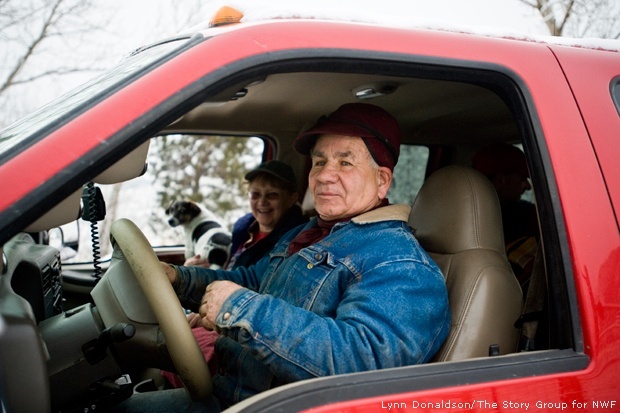
Jim & Lexi Marsh prepare to drive one of the trailers with bison bound for Fort Peck, MT.

“Special thank you to all who worked to make this happen!! You did good!!!” ~ Comment from Linda S. on National Wildlife Federation’s Facebook wall

The Bison are Released

Bison released at Fort Peck, MT
Bison leaving the trailer at Fort Peck, MT.

“By restoring wild bison to tribal lands, we’re also restoring a landscape, a habitat, one that supports a plethora of wildlife. Simultaneously, we’re helping to re-establish Native peoples’ cultural and historic connections to wildlife and the land.” ~Garrit Voggesser, NWF’s National Director, Tribal Partnerships.
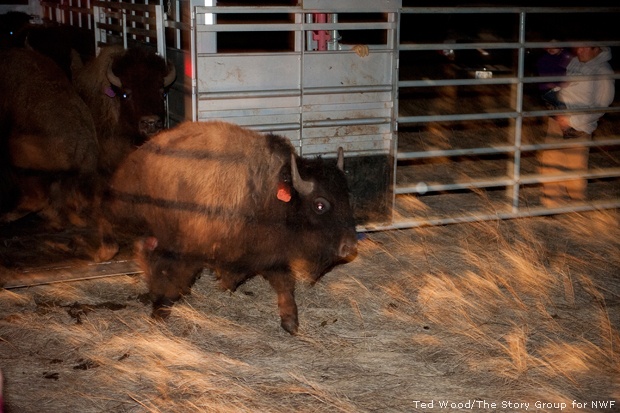
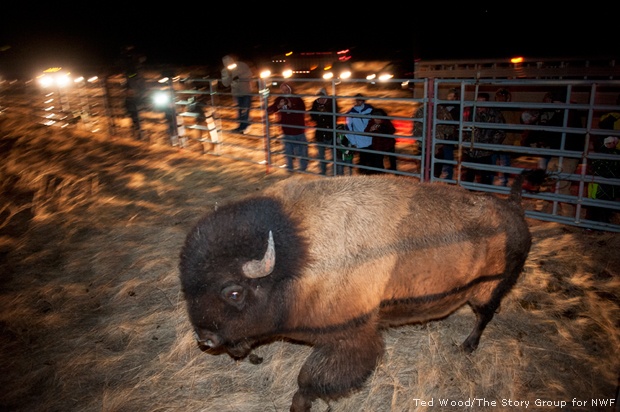
Bison released at Fort Peck, MT
Bison leaving the trailer at Fort Peck, MT.
“The thunder of bison on the move is a huge victory. After more than two decades of work, the National Wildlife Federation and our tribal partners are celebrating the return of an iconic wildlife species to the Great Plains. The return of these wild bison to tribal lands fills a big gap in the plains ecosystem and a longtime absence in Native American culture.” ~Larry Schweiger, National Wildlife Federation president and CEO

Bison released at Fort Peck, MT
Bison being released at Fort Peck, MT.
“After seven years of fighting, it’s nice to see them home. We’ll be able to quell people’s fears about them getting out (of the fences). A year from now, people will look and say, `Yeah, it does work.'”-Robbie Magnan, Fort Peck’s Fish and Game Department Director

The Pipe Ceremony

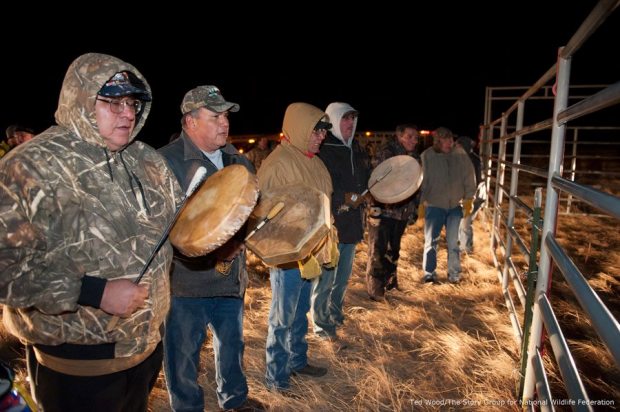
Tribal drum ceremony at the Ft. Peck bison release
Tribal drum ceremony

“This means everything to us. We’ve been separated from these majestic animals and now they’re here. We’re the buffalo people, tatanka oyate. Without the bison, none of us would be here.” ~Stoney Anketell, a member of the Fort Peck tribal executive board


Video of the Bison Release:

[youtube width=”620″ height=”450″]http://www.youtube.com/watch?v=28BXNWy3Hdw[/youtube]


Donate Now

Help support National Wildlife Federation’s ongoing work to bring wild bison back to tribal lands >>


Related Links

The post Amazing Photos and Video of the Return of Wild Bison to Tribal Lands appeared first on The National Wildlife Federation Blog.
]]>
https://blog.nwf.org/2012/03/bison-return/feed/ 11 50885
Wild Bison to Return Home to Tribal Lands https://blog.nwf.org/2012/02/wild-bison-to-return-home-to-tribal-lands/ https://blog.nwf.org/2012/02/wild-bison-to-return-home-to-tribal-lands/#comments Fri, 17 Feb 2012 18:42:58 +0000 http://blog.nwf.org/?p=45186 More than a dozen years ago, I manned a booth in Yellowstone National Park to inform people about conservation-based solutions for protecting bison. Visitors from across the United States and … Read more

The post Wild Bison to Return Home to Tribal Lands appeared first on The National Wildlife Federation Blog.
]]>
Yellowstone Bison, credit GVoggesser/NWF
More than a dozen years ago, I manned a booth in Yellowstone National Park to inform people about conservation-based solutions for protecting bison. Visitors from across the United States and around the world all had the same question: Why are buffalo being shot when they leave the park?

Since the mid-1990s, the National Wildlife Federation has been working to ensure people won’t have to ask that question. We believe restoration to other landscapes is a better management strategy to resolve livestock-wildlife conflicts. We envisioned a future when Yellowstone bison, the last genetically pure, free-roaming, wild bison population in the U.S., could provide animals to establish new herds across the West.

In 1997, we signed a memorandum of understanding with the Intertribal Bison Cooperative, the first ever conservation agreement between an environmental organization and a tribal organization, to advocate for the return of wild bison to tribal lands. NWF and the tribes shared a common vision – restoring wild bison to their historical habitat and restoring Native peoples’ cultural connections to bison. But the political opposition to the return of the bison seemed insurmountable.

A Victory for Conservation and Tribes
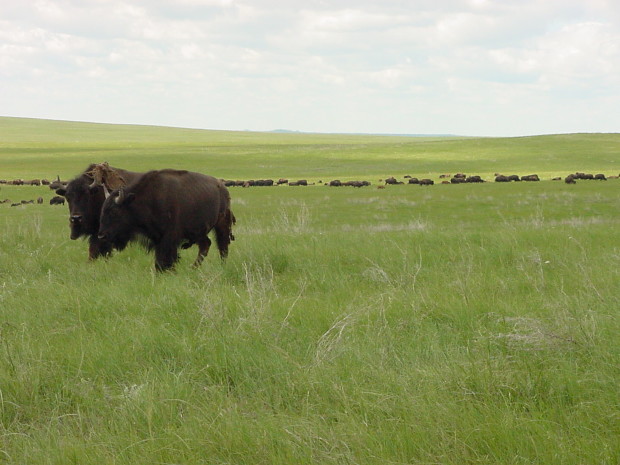
Room to Roam, credit Stephen C. Torbit/NWF
This winter, after 20 years, the tribes and NWF succeeded in convincing the state of Montana to transfer 68 Yellowstone bison to the Fort Peck and Fort Belknap Tribes.

This has been one of the hardest nuts to crack in wildlife conservation history. Many other large mammal species that had depleted in numbers have been restored, but not bison. By restoring bison to tribal lands and other former habitats across the country, we’re also revitalizing a landscape, habitat, and a diversity of wildlife. Simultaneously, we’re helping to re-establish Native peoples’ cultural and historic connections to wildlife and the land.

This is a win-win proposition for the tribes, the state of Montana, and the millions of Americans nationwide who want bison back where they belong. The return of wild bison to tribal lands is a major milestone in efforts to restore an iconic North American species to the landscape and restore an important element of Native American culture.

This spring, we will welcome the bison home.
The post Wild Bison to Return Home to Tribal Lands appeared first on The National Wildlife Federation Blog.
]]>
https://blog.nwf.org/2012/02/wild-bison-to-return-home-to-tribal-lands/feed/ 5 45186
Three Things to Learn from Bison Conservation https://blog.nwf.org/2011/05/three-things-to-learn-from-bison-conservation/ Mon, 23 May 2011 18:48:55 +0000 http://blog.nwf.org/wildlifepromise/?p=23243 The bison, or American buffalo, roamed the plains and woodlands of North America tens of thousands of years ago. It was a contemporary of saber-toothed cats, woolly mammoths and woolly rhinos … Read more

The post Three Things to Learn from Bison Conservation appeared first on The National Wildlife Federation Blog.
]]>
bison, yellowstone, fort peck, for belknap, reservation, charles russell national wildlife refuge, yellowstone, saving bison, bison conservation
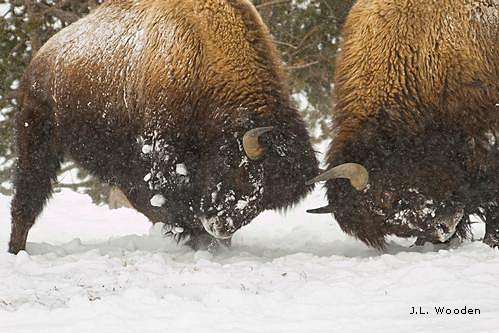
Bulls establish rank in Yellowstone National Park, the home of the last wild U.S. bison.

The bison, or American buffalo, roamed the plains and woodlands of North America tens of thousands of years ago. It was a contemporary of saber-toothed cats, woolly mammoths and woolly rhinos but was a better survivor: the bison is the largest land animal in North America today, and once numbered in the millions (the exact figure is disputed, but likely approached 40 million animals on western grasslands).

Neither its size nor its numbers protected it.

Once guns arrived in North America, and a market opened for wild meat and hides, only decades elapsed before the bison all but vanished from its native range in the United States and Canada.

The woodland bison of eastern U.S. forests vanished by the early 19th century, and theplains bison was all but wiped out by 1884—in less than 20 years of intensive hunting.

Saving Bison

Some people, most notably hunters, wanted to save the bison. Outstanding among them was National Wildlife Federation Conservation Hall of Fame member Theodore Roosevelt, who as a young man joined with leading naturalist (and Conservation Hall of Fame inductee) George Bird Grinnell in an effort to save the last bison.

The year was 1887, and in the U.S. wild bison were restricted to fewer than 100 animals in Yellowstone National Park. Saving the iconic species was a huge challenge. No Endangered Species Act existed to protect the animals, and even the 1872 law that created the park failed to authorize protections for park resources. People still entered Yellowstone quasi-legally to cut firewood and to kill game for markets. Elk and bison were still being shot.

Under pressure from Roosevelt, Grinnell and their allies, Congress finally in 1894 enacted a law protecting the natural resources within Yellowstone National Park.

Protection alone did not suffice to recover the bison: decades passed before the herd began to recover. Nevertheless, today the Yellowstone animals remain perhaps the only genetically pure U.S. bison still alive, the last truly wild bison in the United States.

The years that went into making the park safe for wildlife has paid off for the American buffalo—its number there sometimes reaches as high as 4,000.

The Fight Goes On

National Wildlife Federation is involved in what might be called the next phase in restoring U.S. bison. The Federation is partnering with Indian tribes across the nation, with promising developments occurring right now for reintroduction of bison from Yellowstone in the Fort Belknap and Fort Peck reservations in Montana.

NWF  is also initiating a long-term plan to restore bison to the Charles M. Russell National Wildlife Refuge (CMR to aficionados) south of the reservations. The refuge may offer the last grassland large enough to allow the nomadic species to follow a normal pattern of life, moving in herds across a vast prairie.

The story of the bison reinforces at least three critical lessons in wildlife conservation:

  1. Without legal protections, a rare or imperiled species is unlikely to survive
  2. Despite tremendous efforts, recovering a depleted wildlife population may be the work of years and even decades—the destruction of a species moves with speed, but the biological pace of recovery in species that breed slowly cannot be hastened.
  3. Suitable habitat is the key to species protection—without Yellowstone National Park the bison as a wild creature would almost certainly be extinct today.

Habitat at the Charles M. Russell National Wildlife Refuge and the two Indian reservations offers promise for the future of the American buffalo. Anyone who helps to restore this species is picking up the work that Theodore Roosevelt and his colleagues started more than 100 years ago and is marching in step with the generations of conservationists, hunters, wildlife enthusiasts and just plain bison fans who helped ensure that today we can see bison in native habit and not only in museums—an inheritance we too will want to leave to future generations.


Donate NowHelp bring bison back to their native prairie habitat. Give today and your donation will be matched dollar-for-dollar!


The photo associated with this blog was donated by a competitor in the annual National Wildlife Photo Contest. If you are a nature photographer, you may want to participate this year in the 41st annual National Wildlife Photo Contest. In addition to cash awards, winning photos will appear in National Wildlife magazine and on the NWF website.

The post Three Things to Learn from Bison Conservation appeared first on The National Wildlife Federation Blog.
]]>
23243