LinkedIn Search Results: LinkedIn


Next Page: 55
I'm not sure what you need help with on LinkedIn. I can help with things like: - **Writing a headline or About section** for your profile - **Drafting a post** to share an achievement, insight, or update - **Crafting a connection request** or follow-up message - **Optimizing your profile** for recruiters or a specific job search - **Writing a recommendation request** or responding to one - **Planning a content strategy** for your network - **Explaining how a LinkedIn feature works**, like Recruiter, Premium, or job alerts What are you working on? If you share your role, goals, or a draft, I can tailor the help.


AI for 38enso – Jack W Perry
Found 0 image(s):

Everything is being discussed about the imaopct of AI. Here is the answer when I asked Gemini (Google) about my … Learn more


HEROES – David Bowie
Found 3 image(s): RSS item image
RSS item image
RSS item image

A decade ago, Rolling Stone Magazine conducted a poll to “determine” the best David Bowie song. HEROES was selected as … Learn more


Eyewitness History of World War II
Found 4 image(s): RSS item image
RSS item image
RSS item image
RSS item image

When I was a kid, I enjoyed reading history – especially WW2 books. Every few weeks I would go to … Learn more


Colleen Hoover – CoHo Impact
Found 2 image(s): RSS item image
RSS item image

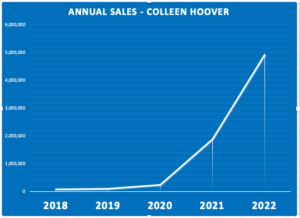
Colleen Hoover (CoHo) is the best-selling author in America this year. Prior to 2020, she was a best-seller, but after … Learn more


Content to Market
Found 1 image(s): RSS item image

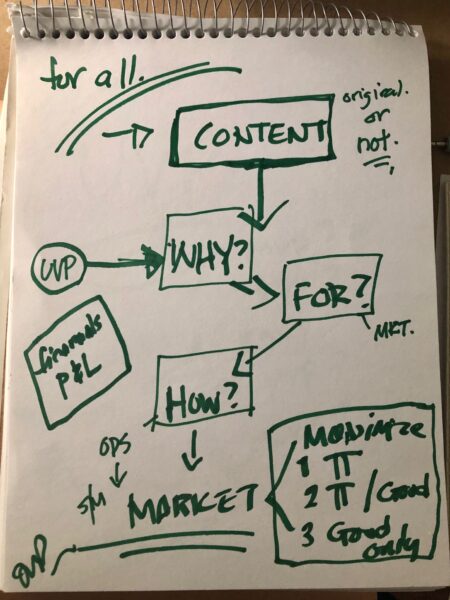
  There are hundreds of methods to properly get your idea to market. Many have full business plans and details. … Learn more


Murakami
Found 3 image(s): RSS item image
RSS item image
RSS item image

The other day one of the Gen Z’s in the office mentioned that she once read Haruki Murakami, but all … Learn more


Visuals Are Easier to Understand
Found 1 image(s): RSS item image

The other night I was sketching out a four year sales plan. As I was thinking about it, I decided … Learn more


THE BEATLES – and the enormous amount of books published about them…
Found 5 image(s): RSS item image
RSS item image
RSS item image
RSS item image
RSS item image

It was just announced that Paul McCartney has an enormous book publishing that covers all his songs and the meanings … Learn more


THE GREAT GATSBY is now in the Public Domain
Found 4 image(s): RSS item image
RSS item image
RSS item image
RSS item image

Every January, a list of books becomes public domain. Generally is a bunch of little known titles that have lost … Learn more


Yesterday, Today, and Tomorrow (book-retail)
Found 3 image(s): RSS item image
RSS item image
RSS item image

We are living in historic times. Covid has permanently changed the way we shop, live, interact and work. Once through … Learn more

RSS Parse Error: Premature end of data in tag description line 68


Balancing the Scales of Opportunity
Found 2 image(s): RSS item image
RSS item image

Balancing the Scales of Opportunity
Subheader
Those who have the advantages and resources have a responsibility to help level the playing field.
Body

For the 2019 Milken Institute Global Conference, we asked speakers to consider what prosperity means. See their insights and share your thoughts using #MIGlobal. See more coverage on the Milken Institute LinkedIn page. This article originally appeared in the #PowerofIdeas. See the entire POI series.

The recent college admissions scandal has accomplished something positive: It has prompted people to talk in a more honest way about unequal access to education and other building blocks of prosperity.

It starts with access to things such as better schools, tutors, or test prep and extends to means of building strong careers, such as access to alumni and other connections who can provide opportunities and introductions and offer guidance and mentoring. And there’s the fact that, in our society, some of us benefit from—or are disadvantaged by—our gender, race, economic background, or other factors.

For all those reasons, Americans are increasingly questioning whether the American Dream is equally within the reach of all. This is a serious issue. So are the pronounced gender wealth gap and the huge— and widening—racial wealth gap related in part to these inequities. Those who have the advantages and resources have a responsibility to help level the playing field.

What are the risks to the stability of our society if we allow gross inequities to go unchecked and continue to grow? What changes can we make within the spheres of our work to minimize or offset these inequities so that great talent from all walks of life can access the education, opportunity, and training they need to get a good job?

The financial services industry needs to accelerate progress in strengthening diversity at all levels. While the industry has good intentions, this hasn’t yet translated into the needed level of change.

It is now becoming a US policy issue. The newly formed House Financial Services Subcommittee on Diversity and Inclusion is taking this on, arguing that having more women and more minorities serve in top levels of our industry will not only help the industry at a time when we are competing against smaller, more nimble entrants, but also that, by improving access to high-paying jobs, it will help combat income inequality and the growing wealth gap nationwide.

To illustrate the opportunity gap, women and minorities manage just a tiny fraction of all assets under management industry-wide, despite the fact that the performance of their funds is at least as strong as those managed by non-diverse fund managers. Part of the issue is that women and people of color don’t pursue careers managing money because they don’t believe the industry is open to them, which should concern us all.

Change will not happen unless leaders are held accountable for making the tough decisions. At BNY Mellon, I am holding our Executive Committee accountable for achieving strengthened diversity and inclusion goals, with their incentive compensation tied to performance against these goals. We have to look at all of our teams—even the high-performance teams—and ask ourselves if we have the right diversity of thought and experience for the future.

There is expected to be increased pressure on companies to disclose demographic data and information about their approach to diversity and inclusion, something BNY Mellon has been sharing with our regulators for the past few years. And there will be pressure to show strong progress.

According to the US Bureau of Labor Statistics, in the next 10 to 20 years, artificial intelligence, robotics and other advanced technologies could replace up to 47 percent of US jobs that existed in 2010. Those at lower socio-economic levels will be disproportionately affected, widening the income disparity. These people need retraining. To help them—and develop the talent we will need in the future—corporations have to play a role.

BNY Mellon is investing in programs that provide education, training, and support to help people build viable, rewarding careers in the digital world. For example, we’ve committed $1 million to the City University of New York to equip high-achieving, underrepresented students with the knowledge and skills necessary to adapt.

We are looking at what more we can do to help our communities and our people.

The 2019 Milken Institute Global Conference is an opportunity to reflect on the disparity of opportunity and our responsibility as leaders. We all have to be a part of the solution.

Distribution Settings Markup

Date and Time are ET. We may take up to two hours to approve confirmed content. Content is reviewed for publishing: Monday - Friday 8am ET to 6pm ET

Featured Image
Type of Content


BNY Mellon Selected for 2019 Bloomberg Gender Equality Index
Found 2 image(s): RSS item image
RSS item image

BNY Mellon Selected for 2019 Bloomberg Gender Equality Index
Body

January 17, 2019 /3BL Media/ - BNY Mellon is one of 230 companies named to the 2019 Bloomberg Gender-Equality Index (GEI). The GEI distinguishes companies committed to transparency in gender reporting and advancing women’s equality. The sector-neutral GEI follows the release of the Bloomberg Financial Services Gender-Equality Index (BFGEI), launched in 2016. BNY Mellon has appeared on the index since its inception.

“We applaud BNY Mellon and the other 229 firms tracked by the index for their action to measure gender equality through the Bloomberg GEI framework,” said Peter T. Grauer, Chairman of Bloomberg and Founding Chairman of the U.S. 30% Club. “BNY Mellon’s GEI inclusion is a strong indicator to its employees, investors and industry peers alike that it is leading by example to advance ongoing efforts for a truly inclusive workplace.”

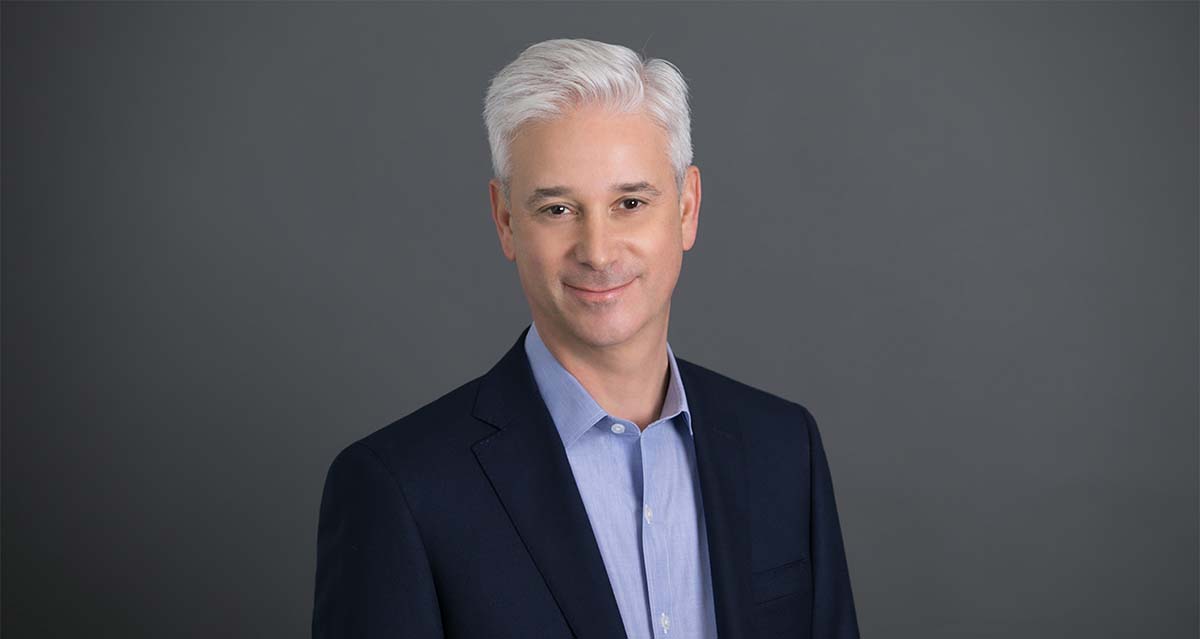
“Diversity and inclusion is a strategic priority at BNY Mellon, which is reflected in our policies, programs and practices,” said Yau Cheng, Global Head of Diversity and Inclusion. “We are honored to be recognized by Bloomberg for the fourth year in a row for our commitment to supporting gender equality at the firm. Our dedication can be seen at the highest level of company leadership. This year our CEO, Charlie Scharf, has also joined Mr. Grauer in the U.S. 30% club.”

BNY Mellon disclosed information on how the firm promotes gender equality by providing company statistics and details on its policies, community engagement and products and services. Companies included in the 2019 index scored above a global threshold, based on the extent of the disclosures and the achievement of best-in-class statistics and policies.

BNY Mellon is a global investments company dedicated to helping its clients manage and service their financial assets throughout the investment lifecycle. Whether providing financial services for institutions, corporations or individual investors, BNY Mellon delivers informed investment management and investment services in 35 countries. As of December 31, 2018, BNY Mellon had $33.1 trillion in assets under custody and/or administration, and $1.7 trillion in assets under management. BNY Mellon can act as a single point of contact for clients looking to create, trade, hold, manage, service, distribute or restructure investments. BNY Mellon is the corporate brand of The Bank of New York Mellon Corporation (NYSE: BK). Additional information is available on www.bnymellon.com. Follow us on Twitter @BNYMellon or visit our newsroom at www.bnymellon.com/newsroom for the latest company news.

Distribution Settings Markup

Date and Time are ET. We may take up to two hours to approve confirmed content. Content is reviewed for publishing: Monday - Friday 8am ET to 6pm ET

Featured Image
Type of Content


PWER Portfolio ‘Walks the Walk’ of Women’s Financial Inclusion
Found 2 image(s): RSS item image
RSS item image

PWER Portfolio ‘Walks the Walk’ of Women’s Financial Inclusion
Body

In the past 18 months, BNY Mellon has issued bold calls for gender inclusion, offering research to inspire financial markets to boost economic participation by women worldwide.

Now a new wealth management initiative called the PWER Portfolio is putting some of those ideas into action. PWER—an acronym for “promotion of women’s engagement and representation”—is built on a growing body of research showing that companies with diverse gender leadership tend to perform better.

Leading the portfolio management process is William F. Morgan, a Boston-based senior investment officer in wealth management, who credits “good, old-fashioned client demand” for spurring the development of the PWER Portfolio.

“The PWER Portfolio was the organic outgrowth of female investors and foundations in our Florida region asking their investment advisers about gender diversity,” Morgan said. The president of the Florida West Coast region, Lisa Simington, was a strong advocate for this investment approach; it took about three months of intense focus to get the portfolio up and running, though it evolved over a longer term.

The managed-account portfolio focuses on about 170 companies that passed a gender diversity and leadership screening and met BNY Mellon Wealth Management’s investment criteria. The diversity screening identifies companies that have a female CEO or a board of directors with at least 30 percent female representation. About 270 companies in the S&P 1500, a broad-market index, met these diversity criteria.

“Our goal was to create a risk-controlled portfolio that centers on well-run companies with diverse boards that are poised to increase in value over time,” Morgan said. The portfolio “allows people who embrace that approach to invest in a way that aligns with their personal beliefs and values."

New Opportunities for Gender-Lens Investors
The PWER Portfolio is an example of gender-lens investing—a concept BNY Mellon endorsed in its March 2018 report on women’s financial inclusion, Powering Potential, released in partnership with the UN Foundation. The report, a companion to the January 2017 publication, Return on Equality, identified a wide range of ideas for expanding access to financial products and services designed to meet women’s needs as individuals, economic agents and entrepreneurs.  In retail banking alone, expanding financial products and services to women could unlock an additional $40 billion in annual global revenue, the report found.

Gender-lens investing is the idea that one can invest for financial return while also giving weight to the benefits for women.  Among its many recommendations, Powering Potential challenged institutional asset managers to design new investment offerings that “help lower the search and transaction costs for investors who are interested in integrating gender-lens investing into their investment strategies.” The report suggested that taking a gender-lens approach to structuring new banking products, investment strategies, funds and indices is a pragmatic way of steering capital to companies that practice financial inclusion.

Responsible investing, of which gender-lens investing is a part, is evolving from a niche to a significant force in investment management. “Eventually, I believe responsible investing won’t just be a subset of investing, but an integral part of all investment decisions in general,” Morgan predicted. Indeed, environmental, social and governance (ESG) concerns have already become important factors in evaluating the sustainability and ethical impact of investments, he said, adding:  “Responsible investing is a mosaic, and it means different things to different people. The creation of new funds that have an ESG tilt has risen dramatically.”

Still in its infancy, the PWER Portfolio “has a lot of great buzz around it,” Morgan said. The minimum account size is $250,000. For now, it is being offered narrowly to existing wealth management clients.

Launching any new product requires intensive work to build and prove a case for it, and the PWER Portfolio’s compressed launch time of three months included careful deliberations by the wealth management team’s solutions strategies committee and other leaders, Morgan said. He added that it is garnering strong interest from high net worth professionals, including both women and men. It is also attracting attention from women’s foundations and other institutional investors, including pension funds. Institutional investors “have become really invested in socially-responsible processes,” Morgan said.

In designing the PWER Portfolio, BNY Mellon Wealth Management opted to keep the focus squarely on women-run companies and those with diverse boards, even though some gender-lens funds use broader metrics, Morgan said. For instance, some funds factor in qualitative factors such as whether a company has good diversity programs in general. But the consensus was to keep the metrics simple and completely objective. “We decided to capture leadership, because it’s measurable in objective terms, and because women-run companies and companies with diverse boards are good, sound investments,” Morgan said.

---

This white paper is the property of BNY Mellon and the information contained herein is confidential. This white paper, either in whole or in part, must not be reproduced or disclosed to others or used for purposes other than that for which it has been supplied without the prior written permission of BNY Mellon. This material is provided for illustrative/educational purposes only. This material is not intended to constitute legal, tax, investment or financial advice. Effort has been made to ensure that the material presented herein is accurate at the time of publication. However, this material is not intended to be a full and exhaustive explanation of the law in any area or of all of the tax, investment or financial options available. The information discussed herein may not be applicable to or appropriate for every investor and should be used only after consultation with professionals who have reviewed your specific situation. The Bank of New York Mellon, Hong Kong branch is an authorized institution within the meaning of the Banking Ordinance (Cap.155 of the Laws of Hong Kong) and a registered institution (CE No. AIG365) under the Securities and Futures Ordinance (Cap.571 of the Laws of Hong Kong) carrying on Type 1 (dealing in securities), Type 4 (advising on securities) and Type 9 (asset management) regulated activities. The Bank of New York Mellon, DIFC Branch (the “Authorised Firm") is communicating these materials on behalf of The Bank of New York Mellon. The Bank of New York Mellon is a wholly owned subsidiary of The Bank of New York Mellon Corporation. This material is intended for Professional Clients only and no other person should act upon it. The Authorised Firm is regulated by the Dubai Financial Services Authority and is located at Dubai International Financial Centre, The Exchange Building 5 North, Level 6, Room 601, P.O. Box 506723, Dubai, UAE. The Bank of New York Mellon is supervised and regulated by the New York State Department of Financial Services and the Federal Reserve and authorised by the Prudential Regulation Authority. The Bank of New York Mellon London Branch is subject to regulation by the Financial Conduct Authority and limited regulation by the Prudential Regulation Authority. Details about the extent of our regulation by the Prudential Regulation Authority are available from us on request. The Bank of New York Mellon is incorporated with limited liability in the State of New York, USA. Head Office: 225 Liberty Street, New York, NY 10286, USA. In the U.K. a number of the services associated with BNY Mellon Wealth Management's Family Office Services– International are provided through The Bank of New York Mellon, London Branch, 160 Queen Victoria Street, London, EC4V 4LA. The London Branch is registered in England and Wales with FC No. 005522 and #BR000818. Investment management services are offered through BNY Mellon Investment Management EMEA Limited, BNY Mellon Centre, 160 Queen Victoria Street, London EC4V 4LA, which is registered in England No. 1118580 and is authorised and regulated by the Financial Conduct Authority. Offshore trust and administration services are through BNY Mellon Trust Company (Cayman) Ltd. This document is issued in the U.K. by The Bank of New York Mellon. In the United States the information provided within this document is for use by professional investors. This material is a financial promotion in the UK and EMEA. This material, and the statements contained herein, are not an offer or solicitation to buy or sell any products (including financial products) or services or to participate in any particular strategy mentioned and should not be construed as such. BNY Mellon Fund Services (Ireland) Limited is regulated by the Central Bank of Ireland BNY Mellon Investment Servicing (International) Limited is regulated by the Central Bank of Ireland. BNY Mellon Wealth Management, Advisory Services, Inc. is registered as a portfolio manager and exempt market dealer in each province of Canada, and is registered as an investment fund manager in Ontario, Quebec, and Newfoundland & Labrador. Its principal regulator is the Ontario Securities Commission and is subject to Canadian and provincial laws. BNY Mellon, National Association is not licensed to conduct investment business by the Bermuda Monetary Authority (the “BMA") and the BMA does not accept responsibility for the accuracy or correctness of any of the statements made or advice expressed herein. BNY Mellon is not licensed to conduct investment business by the Bermuda Monetary Authority (the “BMA") and the BMA does not accept any responsibility for the accuracy or correctness of any of the statements made or advice expressed herein. Trademarks and logos belong to their respective owners. BNY Mellon Wealth Management conducts business through various operating subsidiaries of The Bank of New York Mellon Corporation.

© 2018 The Bank of New York Mellon Corporation. All rights reserved. 135240

Distribution Settings Markup

Date and Time are ET. We may take up to two hours to approve confirmed content. Content is reviewed for publishing: Monday - Friday 8am ET to 6pm ET

Featured Image
Type of Content


BNY Mellon Supports a Global Push for Financial Gender Equality
Found 3 image(s): RSS item image
RSS item image
RSS item image

BNY Mellon Supports a Global Push for Financial Gender Equality
Subheader
United Nations hosts a discussion on the gender gap in women’s access to financial products and services
Body

Each year, the United Nations’ Commission on the Status of Women brings world leaders together to review progress toward gender equality and the empowerment of women. As part of this year’s event, BNY Mellon partnered with the United Nations Foundation and the Group of Champions for Women’s Empowerment to discuss the findings of a new study: Powering Potential: Increasing women’s access to financial products and services. A webcast of the event is publicly available via UN Web TV.

Powering Potential examines the gender gap in women’s access to financial products and services around the globe, and the potential impact narrowing this gap could make in improving women’s lives, unlocking global capital and increasing market opportunities for financial services companies. For example, in the retail banking sector alone, the report found that closing the gender gap could unlock US$40 billion in global revenue.

Closing the Gap
While they may vary from country to country, barriers to financial inclusion – like fewer products that meet women’s needs, the lack of effective marketing to women and societal and structural impediments – are both a developed and a developing world problem.

“In the 1970s, women in the UK could not get a mortgage unless a man also signed for it,” noted Susan Williams, Baroness of Trafford.* “Even now it is harder for a woman to secure a housing loan and on average we pay higher interest rates.”

To empower women and close this gender gap, many countries are investing in new mobile banking technologies.

“Less than 30 percent of low-income people in Argentina have access to a financial product of some kind,” said Dr. Helena Estrada from Argentina’s Ministry of Production.* “At the same time, 80 percent have access to a cell phone.”
An Argentinian national bank recently launched a mobile banking solution called Pim to expand access across the country. They hope to have more than one million active users by the end of 2018.

Mobile banking solutions are a first step to engaging more women in financial services; they also provide small business owners with a measure of security.

“Over 80 percent of the small business conducted in the Pacific by women, in little marketplaces and so on,” said Dr. Sharman Stone, Australia’s Ambassador for Women.* “When they only had cash it was extremely dangerous for them to get that cash home, and to retain that cash once they got home. With mobile banking they can be physically more safe, more secure, and through that mobile banking they can also move into things like insurance, loans and a whole range of products which were not accessible or even dreamed about.”

Gender Equality Benefits Families and Communities
While Powering Potential highlights the market opportunities for companies that provide financial products and services, it also reinforces the fact that empowering women to be full participants in the financial system starts a chain reaction that benefits the broader community.

“We know that when women control financial assets, they are often more likely than men to invest in the health, education and wellbeing of their families, which has knock-on effects for the community,” said Heidi DuBois, Global Head of Philanthropy and Corporate Social Responsibility at BNY Mellon.* “When there are gender equality gains in financial services, the multiplier effect of women can help address other critical issues like poverty, hunger, education and health.”

*Direct quote from the event, publicly available via UN Web TV

Distribution Settings Markup

Date and Time are ET. We may take up to two hours to approve confirmed content. Content is reviewed for publishing: Monday - Friday 8am ET to 6pm ET

Featured Image
Type of Content


Closing the Gender Gap in Women’s Access to Financial Products and Services Could Unlock $330 Billion in Annual Global Revenue
Found 2 image(s): RSS item image
RSS item image

Closing the Gender Gap in Women’s Access to Financial Products and Services Could Unlock $330 Billion in Annual Global Revenue
Subheader
A new report from BNY Mellon and the UN Foundation reveals that increasing women’s access to financial products and services could expand the market for financial service providers and promote gender equality
Body

NEW YORK, March 2, 2018 /3BL Media/ - Closing the gender gap in women’s access to financial products and services could unlock $330 billion in global annual revenue, according to a new report released today from BNY Mellon and the United Nations Foundation. Increased market opportunities for financial services firms, along with greater financial inclusion and empowerment for women, are additional key outputs from narrowing this gap.

The report, Powering Potential: Increasing Women’s Access to Financial Products and Services, proposes actions to achieve major gains for both gender equality and market returns. By focusing on the financial sector, this report builds upon the approach used in the publication released last year, “Return on Equality,” to scale up the private, public and social sectors’ involvement in advancing the United Nations’ Sustainable Development Goal 5: “Achieve gender equality and empower all women and girls.”

“By clearing the way for women to become fully engaged as financial actors, we have the opportunity to improve the lives of women and dramatically expand the market for financial products and services,” said Heidi DuBois, Global Head of Philanthropy and Corporate Social Responsibility at BNY Mellon. “Our hope is that financial services providers will design and market more products and services that fuel women’s economic participation, giving investors more options to invest with a gender-lens.”

Expanding women’s access to financial services and products would be a boost to financial service firms and the global economy. Conservative estimates in the retail banking, investment and insurance sectors show that closing the financial gender gap could:

  • Unlock $40 billion in annual global revenue in retail banking product access;
  • Unlock $290 billion in annual global revenue in life insurance access; and
  • Enable financial services firms to grow their share of $100 billion to $120 billion in annual revenue that women currently contribute to the retail investment market.

According to the report, when women control financial assets, they are often more likely than men to invest in the health, education and well-being of their families, suggesting significant benefits of financial inclusion to society as a whole and future generations.

“Economically empowering women provides an undeniable return on investment: markets grow, women thrive and families and communities are stronger. Closing the gender gap in access to financial products and services is an opportunity and obligation we can’t ignore any longer. If we want a better future, it starts with gender equality,” said Kathy Calvin, President and Chief Executive Officer of the United Nations Foundation.

Women influence or control roughly 25 to 30 percent of global wealth – or more than $20 trillion in assets. However, women still only have 77 percent of the access to fundamental financial services that men do, such as checking and savings; payments; credit, loans and capital; insurance; and investment.

The report reveals that women access and use financial products and services at lower rates than men for three primary reasons: There are fewer products on the market that meet women’s needs; the products that do exist tend not to be effectively marketed or delivered to women; and societal and structural barriers often impede women’s ability to be financial actors.

Actors from across the private, public and social sectors can take actions to overcome barriers to women’s financial equality, including:

Private Sector - Innovate approaches to reach more women customers and steer capital to companies whose products and services promote women’s financial inclusion and empowerment.

Public Sector - Eliminate legal restrictions and private sector discrimination in access to and use of financial products and services, such as housing loans that prevent women’s full engagement as financial actors.

Social Sector - Orchestrate partnerships across sectors toward common goals for women’s financial inclusion; identify and evaluate service firms, products and policies most effective in advancing gender equality.

In addition, the report shows that digital innovations present transformative opportunities for equality, enabling previously excluded populations of women to access financial services.

Achieving the unrealized full social and economic gains of women’s financial access will require long-term commitments from financial institutions, investors, NGOs and governments.

As women around the world continue to exercise their full potential as independent and empowered financial agents, society overall will increasingly see improvements in health and educational outcomes, expansions in entrepreneurship and greater overall financial security – all key ingredients to global economic growth and sustainable development.

###


About BNY Mellon
BNY Mellon is a global investments company dedicated to helping its clients manage and service their financial assets throughout the investment lifecycle. Whether providing financial services for institutions, corporations or individual investors, BNY Mellon delivers informed investment management and investment services in 35 countries and more than 100 markets. As of Dec. 31, 2017, BNY Mellon had $33.3 trillion in assets under custody and/or administration, and $1.9 trillion in assets under management. BNY Mellon can act as a single point of contact for clients looking to create, trade, hold, manage, service, distribute or restructure investments. BNY Mellon is the corporate brand of The Bank of New York Mellon Corporation (NYSE: BK). Additional information is available on www.bnymellon.com. Follow us on Twitter @BNYMellon or visit our newsroom at www.bnymellon.com/newsroom for the latest company news.


About the United Nations Foundation
The United Nations Foundation builds public-private partnerships to address the world’s most pressing problems, and broadens support for the United Nations through advocacy and public outreach. Through innovative campaigns and initiatives, the Foundation connects people, ideas, and resources to help the UN solve global problems. The Foundation was created in 1998 as a U.S. public charity by entrepreneur and philanthropist Ted Turner and now is supported by philanthropic, corporate, government, and individual donors. Learn more at: www.unfoundation.org.

Distribution Settings Markup

Date and Time are ET. We may take up to two hours to approve confirmed content. Content is reviewed for publishing: Monday - Friday 8am ET to 6pm ET

Featured Image
Type of Content


BNY Mellon Earns Perfect Score in 2018 Corporate Equality Index
Found 2 image(s): RSS item image
RSS item image

BNY Mellon Earns Perfect Score in 2018 Corporate Equality Index
Subheader
Company earns top marks for 11th consecutive year on Human Rights Campaign Foundation’s scorecard on LGBTQ workplace equality
Body

BNY Mellon received a perfect 100 percent score on the 2018 Corporate Equality Index (CEI), a national benchmarking survey and report on corporate policies and practices related to lesbian, gay, bisexual, transgender and queer (LGBTQ) workplace equality, administered by the Human Rights Campaign Foundation. BNY Mellon joins the ranks of 609 major U.S. businesses which also earned top marks this year.

“Work is where we spend much of our most precious commodity—time—and there is no place in that environment for discrimination based on race, gender, sexual preference, or religion,” said Mitchell E. Harris, CEO of BNY Mellon Investment Management. “We are honored and delighted to receive a perfect score on the Human Rights Campaign’s Corporate Equality Index for an eleventh consecutive year —and take this moment to appreciate the diversity that makes BNY Mellon who it is. We also look forward to the day when respect and fairness for all is commonplace across every business and industry.”

BNY Mellon advocates for diversity, inclusion and equality to help protect and advance human rights, recruit essential talent and drive business performance. For example, in recent years the company has:

  • Supported amicus briefs, open letters and public charters in favor of marriage equality in the U.S., Australia and Ireland
  • Signed an open letter supporting the addition of gender equality to U.S. civil rights law
  • Published a public corporate statement opposing anti-inclusion legislation
  • Encouraged legal department pro bono projects, including the creation of an award-winning, comprehensive, free, online tax resource to help same-sex couples, and legal support for transgender people seeking to change their names to match their gender identity


The 2018 CEI rated 947 businesses in the report, which evaluates LGBTQ-related policies and practices including non-discrimination workplace protections, domestic partner benefits, transgender-inclusive health care benefits, competency programs and public engagement with the LGBTQ community. BNY Mellon’s efforts in satisfying all of the CEI’s criteria results in a 100 percent ranking and the designation as a Best Place to Work for LGBTQ Equality.

For more information on the 2018 Corporate Equality Index, or to download a free copy of the report, visit www.hrc.org/cei.

Explore the BNY Mellon website for more details on PRISM, the company’s LGBTQ employee resource group, and its overall commitment to diversity and inclusion.

Distribution Settings Markup

Date and Time are ET. We may take up to two hours to approve confirmed content. Content is reviewed for publishing: Monday - Friday 8am ET to 6pm ET

Featured Image
Type of Content


Three BNY Mellon Leaders Named OUTstanding Role Models
Found 2 image(s): RSS item image
RSS item image

Three BNY Mellon Leaders Named OUTstanding Role Models
Subheader
Executives featured on 2017 OUTstanding LGBT+ and Ally Lists, presented by the FT
Body

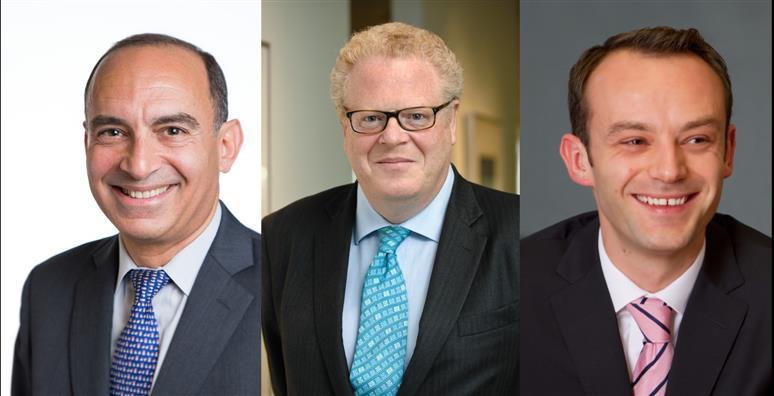
BNY Mellon’s Mitchell E. Harris, Michael Cole-Fontayn and Dario Parente are being honored for their impact on LGBT+ inclusion inside and outside the workplace.

Mitchell Harris, CEO of Investment Management, and Michael Cole-Fontayn, EMEA Chairman, are both named on the OUTstanding Leading Ally Executives List, presented by the FT. This list includes the top 50 ally executives dedicated to promoting LGBT+ inclusion through their work and in their communities.

Harris has served as the lead executive for PRISM, the company’s LGBT+ employee resource group, since 2014, providing guidance as the group grew its numbers by 25% and expanded to 27 international chapters. His efforts span the globe, including working with a major Japanese insurance company client to improve its LGBT+ initiatives, issuing a public statement on anti-inclusion legislation in North Carolina and Tennessee, and leading the charge as BNY Mellon became the only non-Australian bank to sign an open letter expressing support for marriage equality. Most recently, this month Harris brought a groundbreaking “Uncovering Talent” staff and client workshop on diversity and LBGT+ issues to Japan and led an LGBT+ ally event at BNY Mellon’s Tokyo offices.

Cole-Fontayn is a longstanding advocate for diversity and inclusion and oversees BNY Mellon’s EMEA Diversity and Inclusion Council. He leads by example to inspire senior leaders throughout the company to show their support for LGBT+ empowerment. Externally, Cole-Fontayn leverages his influence to advance workplace inclusion at global events from the World Economic Forum to the Out Leadership Europe Summit. He has encouraged leaders across sectors to bring an LGBT+ lens to strategy discussions, including helping to launch a study co-sponsored by BNY Mellon called Out in the World: Securing LGBT Rights in the Global Marketplace.

Dario Parente, Managing Director of EMEA Strategic Programs in the Corporate Program Management Office, appears on the OUTstanding Leading LGBT+ Executives List, presented by the FT. The list recognizes 100 LGBT+ leaders who are actively working to create an environment where LGBT+ people can comfortably bring their best professional selves to work.

As an openly gay man at BNY Mellon, Parente leads employee development in PRISM EMEA, overseeing talent development and mentoring programs for LGBT+ employees. Parente leads with an LGBT+ agenda in mind, integrating his passionate support for diversity and inclusion into his day-to-day responsibilities. Outside of work, Parente is a vocal advocate for adoption rights, serving on the board of an organization supporting LGBT+ adoptive and foster families.

“These lists exist to challenge the assumption you cannot be out and successful in business, and to highlight the importance of role models in inspiring the next generation of business leaders,” says Suki Sandhu, Founder & CEO, OUTstanding. “By recognizing and celebrating those who are leading the charge, the lists demonstrate how far the quest for workplace equality has come. But there is always more to be done. Big business and the public sector have the power and influence to promote LGBT+ inclusion more widely, paving the way for real societal change around the world.”

OUTstanding is an LGBT+ membership organization for global businesses. It provides professional, peer‐to-peer connections for its members and helps businesses create diverse and inclusive work environments. Find them on Twitter and join the discussion using #OUTleaders17.

Distribution Settings Markup

Date and Time are ET. We may take up to two hours to approve confirmed content. Content is reviewed for publishing: Monday - Friday 8am ET to 6pm ET

Featured Image
Type of Content

Next Page: 55
End of feed

Browser Fingerprint

Collecting…