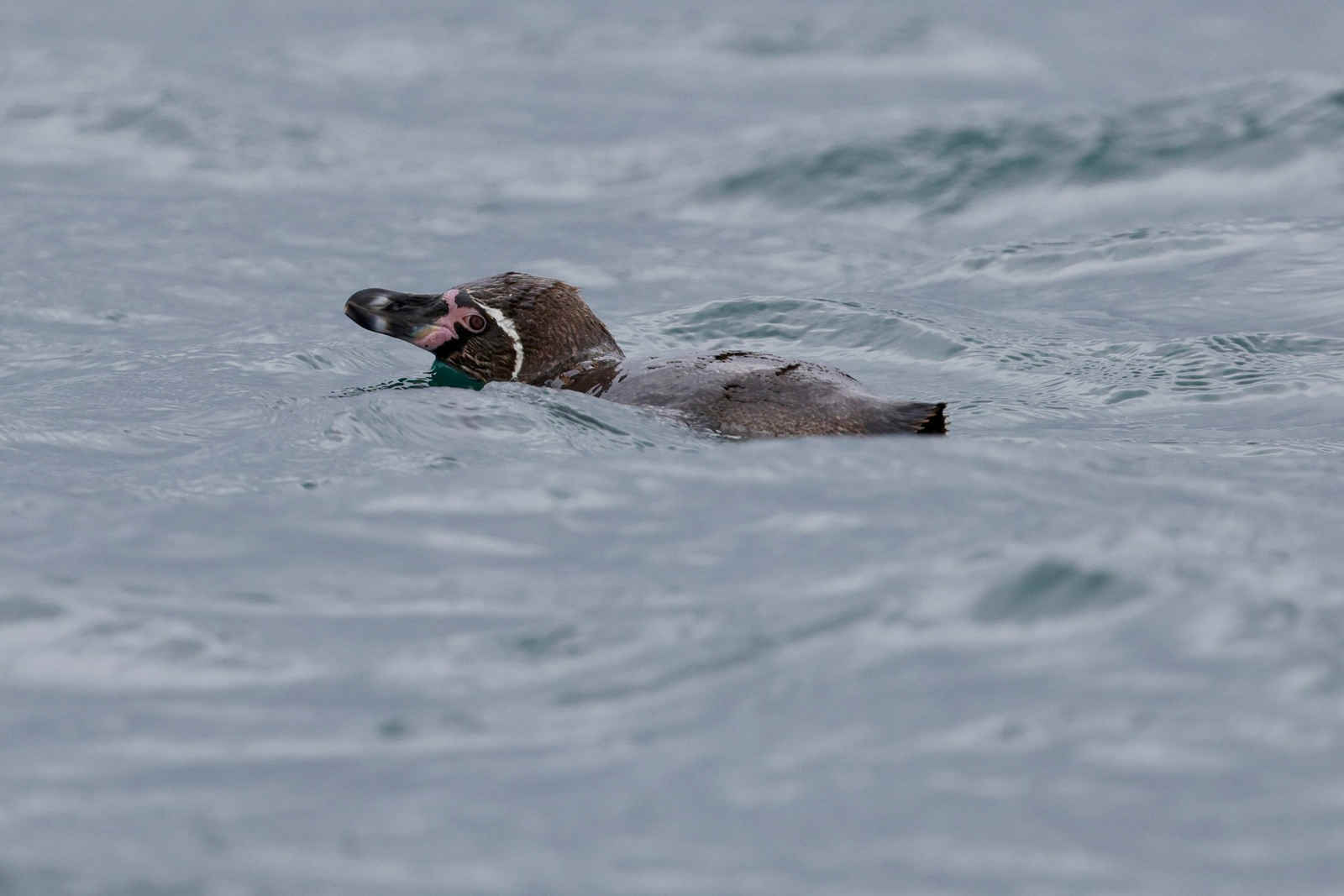
By Alfredo Fernández Alfredo Fernández is a Peruvian biologist and a National Geographic Explorer (2017), recognized for his work on the lomas fog oases of the Peruvian coast. He leads birding and wildlife trips across Peru with Wild Andes Tours, where the eBird-backed field reports from the Lima coast behind this piece are published in full. Pucusana is a fishing town an hour south of Lima, built around a harbour full of brightly painted wooden boats. A few hundred metres offshore sits Isla Pucusana, a small bare island streaked white with guano. There is nothing grand about it. Small boats leave the jetty, go round the island in about an hour, and come back. But it may be the easiest place in the world to see the seabirds of the Humboldt Current, and this spring it gave me something I did not expect: the same small piece of ocean, counted seven times in seven weeks, during a year when the ocean is not behaving. Between 12 September and 30 October we put in seven eBird counts from boats around the island. They were not a designed survey. The boats left at different hours, some days the harbour was counted separately and some days it wasn’t, and on busy days a few species went down as “present” with no number. I’ll come back to what that means. But seven looks at one rock in one season is more than most places get, and in 2026 it is worth writing down. The usual cast To see why this year is strange, you need to know what a normal year here looks like. The Humboldt Current carries cold water up the coast of Chile and Peru. Offshore winds push the surface water out to sea, and colder, nutrient-rich water wells up from below to replace it. The result is one of the most productive seas on the planet, and its foundation is a single small fish, the Peruvian anchoveta. Nearly everything at Pucusana is an anchoveta-eater. At the top of the list are the three species that once built Peru’s guano economy: Guanay Cormorant, Peruvian Booby and Peruvian Pelican. Then come the specialties that draw birders: Inca Tern, a slate-grey tern with a white moustache that curls back from the bill; Red-legged Cormorant, nesting on ledges so narrow they barely seem to exist; and Humboldt Penguin, Vulnerable on the IUCN Red List, swimming low in the harbour. Guanay Cormorant, close up, showing the red eye-ring. Pucusana pelagic, 29 September 2026. © Vincent Sanders Red-legged Cormorant on the water. Pucusana pelagic, 29 September 2026. © Vincent Sanders Further out you get the small tubenoses. There are Elliot’s Storm-Petrels, pattering over the swell in loose groups, and, if you are lucky, the Peruvian Diving-Petrel. On the rocks themselves lives the island’s one Peruvian endemic, the Surf Cinclodes. It is an ovenbird that feeds in the wash itself, on ledges the waves cover and uncover every few seconds. What a warm year looks like Peru’s El Niño monitoring committee, ENFEN, put the coast under a Coastal El Niño alert in February. By its late-September statement, it was calling the sea-surface warming “extraordinary.” When warm water sits on this coast, the anchoveta go deeper and further south, and the birds that depend on them have to follow, travel further, or go hungry. In the great El Niño events of the 1980s and 1990s, Peru’s guano-bird populations crashed. So I expected the counts to show the Humboldt cast thinning out. Here is what they actually showed. Counts from eBird checklists entered from boats around Isla Pucusana. “Present” means the species was recorded without a number. On 22 October, one of the six penguins was in the harbour rather than at the island. Three things stand out. The Blue-footed Booby never left. It turned up on all seven counts, three to five birds every time. This is a bird of Peru’s warmer north coast and the Gulf of California, and around Lima it is normally an irregular visitor, not a fixture. Seven out of seven is the clearest warm-water signal in the data. These birds came south with the water. Two Blue-footed Boobies on the guano-streaked rock, two weeks before the first of the seven counts. Pucusana pelagic, 29 September 2026. © Vincent Sanders The penguins went up, not down. This is the one I can’t fully explain. One, three, four, two, five, six, then twelve on the last day of October, twice any other count of the season. My guess is that this is not a healthier population but the same birds behaving differently. Humboldt Penguins are known to range more widely and forage closer to shore when food is short, so more birds may be passing through a sheltered bay. Twelve penguins is a good day out. It is not evidence of a good year, and I’d want to know what the breeding colonies further south are doing before reading anything more into it. The Peruvian Booby numbers are noisy, and I don’t trust the drop. Fifty birds in September and mid-October, then four, nine, and twenty late in the month. That looks like a decline. But the 18 October count was made in the late afternoon, when many boobies are away fishing, and the 22 October boat was a quick one. The honest reading is “maybe.” This is exactly where opportunistic counts let you down, and where one standardized count a week would have answered the question. Meanwhile, the Inca Terns seem barely bothered: sixty in September and a hundred and twenty-one around the island on 22 October. Terns can pick food from the surface rather than diving deep for it, which may help in a year like this. Inca Tern over Pucusana harbour, with the fishing boats behind. Pucusana pelagic, 29 September 2026. © Vincent Sanders Peruvian Diving-Petrel on the water off Isla Pucusana, 12 October 2026. © Frank Pong The Diving-Petrels That Stayed The Peruvian Diving-Petrel is the bird I most want visiting...

Could you introduce your organization and the main conservation work you do? Avian Conservation Uganda (ACU) is a youth-led non-profit organization founded by young Ugandan conservationists, birders and environmental enthusiasts. We are committed to safeguarding the country’s bird species and their habitats. Uganda is one of Africa’s richest birding countries, with over 1,090 documented species, about half of Africa’s birds, so there is a great deal to protect. ACU’s work is anchored on four interlinked pillars: Research and Monitoring: bird counts, ringing exercises, habitat assessments and citizen-science data collection (e.g., through eBird) to track population trends and inform conservation action. Rescue and Rehabilitation: treating and rehabilitating injured, orphaned, trafficked or confiscated birds, with the goal of releasing them safely back into the wild. Community Education and Awareness: school talks, radio programs, IEC materials and public campaigns, including our Run for Bird event, which combines fitness with conservation to raise funds and awareness, and our Birds Uganda magazine, which brings stories about birds and conservation to a wider audience. Birding Excursions: guided trips to Important Bird Areas (IBAs) and wetlands that build local guiding skills and generate conservation-linked income and appreciation for nature-based tourism. Is there a particular project, species, or place you’d like to tell our readers about? Yes, our Feathered Future program. It is a school-based avian conservation education project that uses schools as a way to reach young people, and through them their families and communities. Schools bring together large groups of learners over many years, so they are one of the best places to build lasting care for birds. The project will: Set up student-led bird and wildlife clubs. Increase knowledge and awareness of avian biodiversity and conservation among students and teachers Train teachers as club patrons. Take learners on hands-on birding excursions. Involve students in citizen-science bird monitoring. Train student ambassadors to carry conservation messages home. Our goal is at least 100 functional school clubs around the country especially in schools near the Important Bird Areas(IBA,s), reaching 30,000 to 40,000 students directly and many more family members indirectly. For the baseline study, we have engaged three schools: Kameme and Matanda Primary Schools in the Ishasha sector of Queen Elizabeth National Park, and Victoria High School Entebbe. In Ishasha, we reached 760 pupils across the three schools. In Kameme and Matanda Primary Schools students learned to identify birds, using binoculars and a telescope, and recorded 89 bird species on their walks. Wildlife clubs were formed with sub-clubs named after local birds, such as the Crested Crane Club and the Weaver Bird Club, and the pupils planted 45 trees to restore bird habitat. The pupils also told us that their biggest concern about birds is crop damage, especially from Mousebirds. This tells us that conservation messages must come with practical, bird-friendly ways of protecting crops. We are now looking forward to engaging more schools, starting with those around Bwindi Impenetrable Forest in Buhoma. What are the biggest challenges facing birds or their habitats in the areas where you work? Birds in Uganda face a range of interconnected threats, and our work across Lake Opeta (Magoro Sub-county), Lake Mburo, Ishasha, Kasese, Bushenyi and other farming landscapes shows that most of them come from competition and conflict between people and wildlife. Food competition and hunting. Around Lake Opeta, people and Shoebills fish in the same waters. This competition often ends with Shoebills being killed. Some communities also eat wild birds, and in the Ishasha landscape, refugee communities hunt birds for food. Targeted community sensitisation is needed to reduce this pressure. Habitat loss and degradation. Indigenous trees are being removed, wetlands and riparian vegetation are degraded, and agriculture is expanding into park boundaries and bird habitats. Uncontrolled bushfires and unsustainable land use make this worse. Human-wildlife conflict. Grey Crowned Cranes and doves raid newly sown cereal fields, and seed-eating birds return when the crops ripen. The resulting losses threaten household food security and reduce local tolerance for conservation. Many children are also kept out of school to scare birds from the fields, which harms their education and their future conservation awareness. This was experienced in Ishasha, in Kihihi kanungu District Poisoning and chemical use. Scavengers such as vultures are being poisoned, especially around Lake Mburo near Mbarara. Heavy reliance on chemical pest control, with little awareness of ecologically friendly alternatives. Limited awareness and participation. Schools and communities bordering the parks have few conservation education opportunities, and youth and community involvement in biodiversity monitoring and citizen science is weak. Together, these challenges show that bird conservation in Uganda must address livelihoods, education and community participation alongside habitat protection. Could you share a recent success or a moment that shows why this work matters? A recent success: 2026 has been a year of turning conservation into community action. River Rwizi restoration. In June 2026, together with the Rotaract Club of Kampala Maisha and with funding from Nile Breweries Limited, we carried out a three-day restoration and community engagement activity at Rwentango in Isingiro District. The Rwizi supplies water to more than 2.5 million people, but its banks are badly eroded and its flow has dropped sharply. We planted over 50 bamboo seedlings along a vulnerable stretch to stabilise the banks and trap silt. We also ran guided birding and community discussions. Three local landowners donated riverside land and committed to caring for the bamboo. Lake Opeta and Pian Upe excursion. In June 2026 we held a three-day community education excursion in the Lake Opeta wetland ecosystem, working alongside the Uganda Wildlife Authority at Pian Upe Wildlife Conservation Area. We held consultations with UWA and with local leaders, women’s groups, youth and fisher representatives in Magoro Sub-county. We also gave a live radio talk on Joshua FM and ran bird surveys, including one on the lake with local fishermen that recorded more than 30 bird species. The community sensitisation workshop led to the start of a community conservation association to protect Lake Opeta and its Shoebills. UWA has encouraged us to develop a...

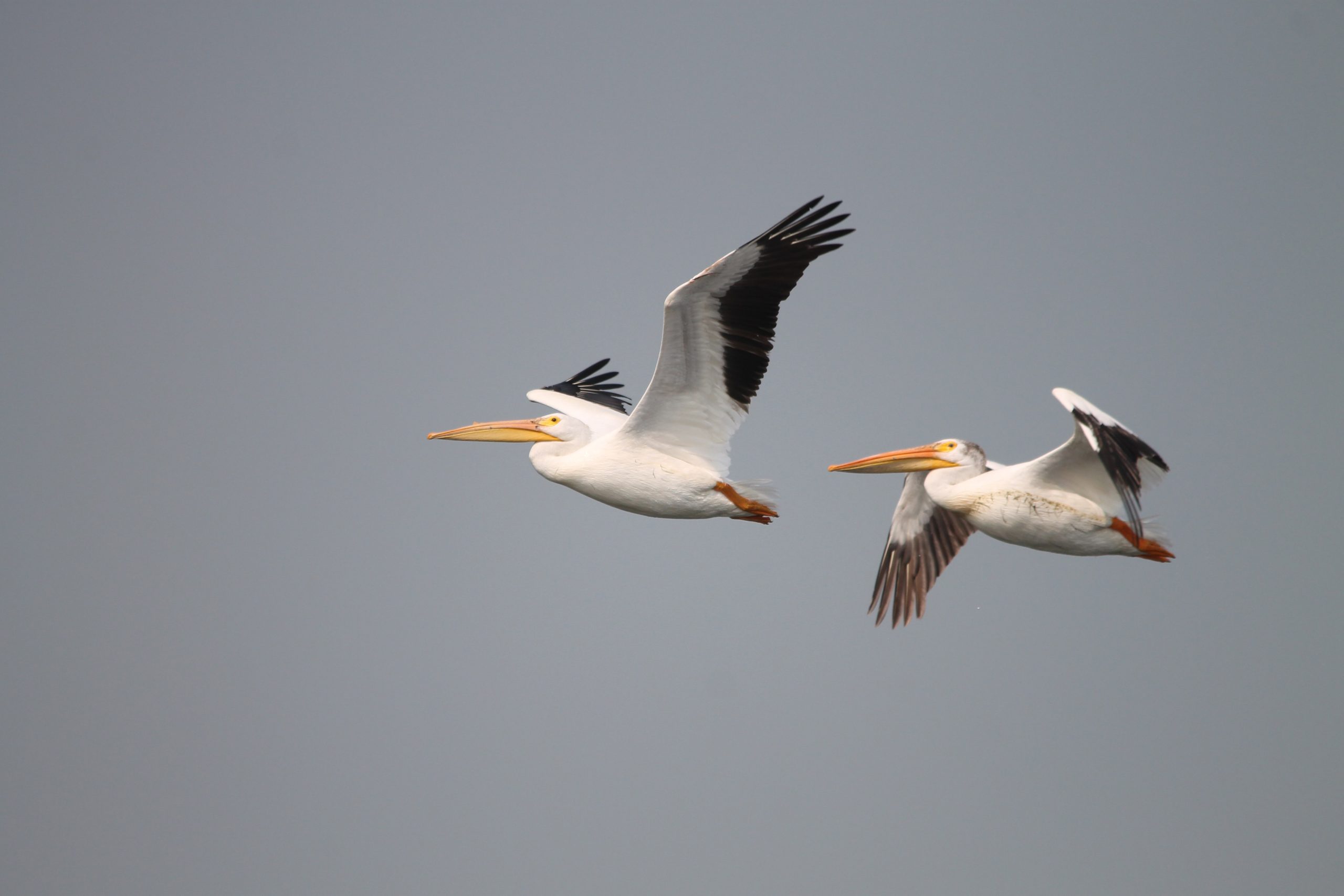
Winter brings wide wingspans with black edges. Finagling feisty fish from the shallows. Four American White Pelicans on the pond.

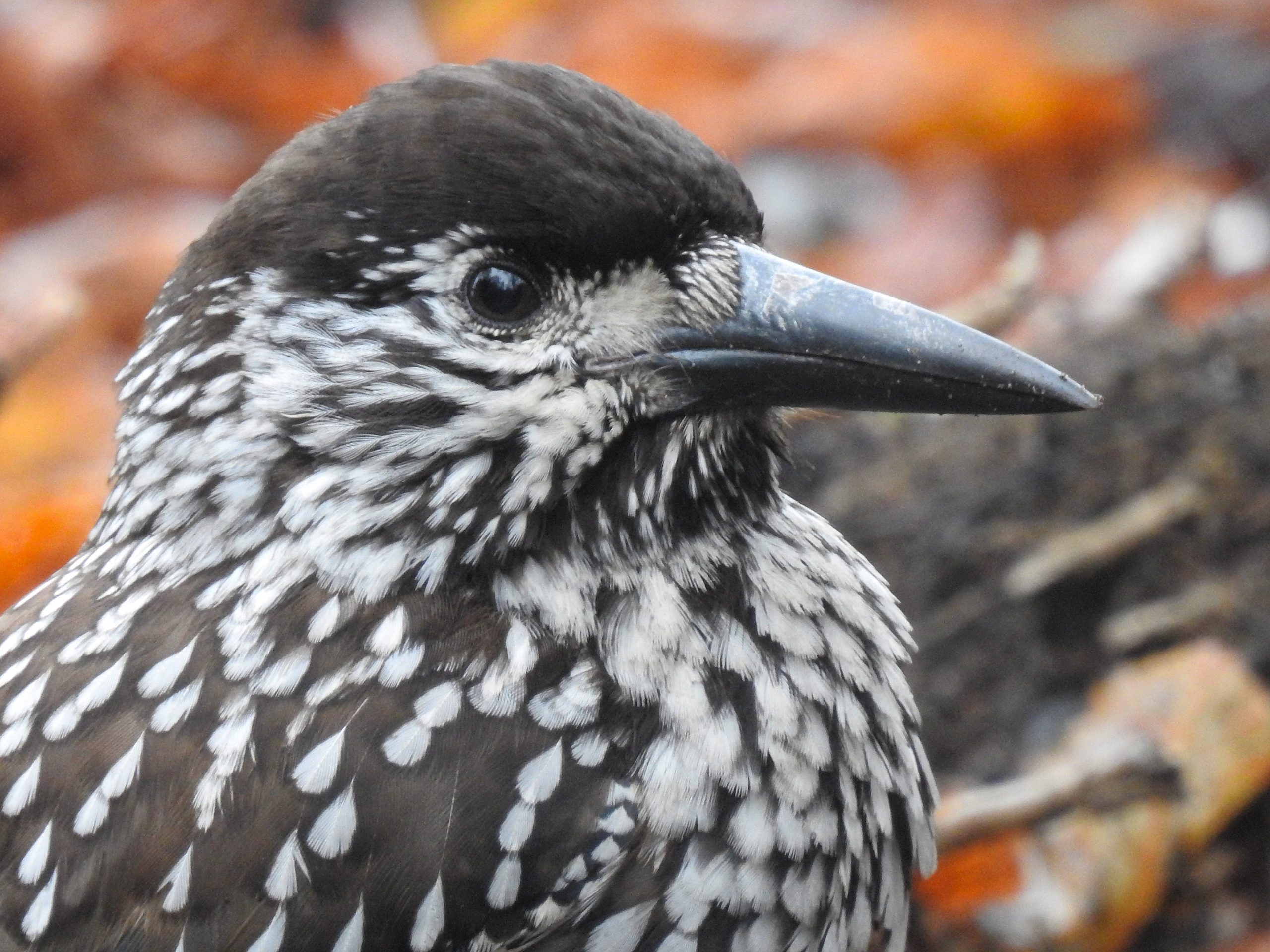
It is a little-known fact that Pyotr Ilyich Tchaikovsky wrote The Nutcracker Twitch before he moved on to the more widely known Nutcracker Suite. Humming extracts from that ballet I cycled through the early morning traffic towards De Tempel. Recent weeks had seen a benign invasion from Russia. Nutcrackers had appeared all over western Europe, and it was just a matter of time before they would pop up near me, or at least within cycling range. So I monitored the reports until the last week of October finally brought one close, at De Tempel. The entire week was sunny and clear but on the penultimate day of the month a thick fog had descended. This was my only available birding day, of course. Oh well. Even with decent weather, I do not like twitching, chasing after a rarity, a vagrant. Usually, it means you show up, look where all the cameras are and tick off the bird. More often than not, these twitchable birds have been blown out of range. They are pitiful beasts, just waiting for a Sparrowhawk to put them out of their misery. This is how I have spotted Dusky Warbler for example. Worse, my first Olive-backed Pipit was on a supermarket parking lot. Not satisfying at all. The Nutcracker was going to be a twitch, but these birds “belong” in western Europe. Their invasions are a natural phenomenon and not an accident. I might even see natural behaviour. Enough reasons to try despite my misgivings. At the gate I met two photographer/nature lovers. They did not mind me joining them as six eyes see more than two. Further down the wooded lanes we met another photographer and while the ladies moved ahead photographing the abundant mushrooms, we chatted a bit. “The Nutcracker! It’s here!”, an enthusiastic shout through the wood. Turned out the bird had been curiously observing the lady mycologists before they even had noticed the avian interest. We followed the bird to the foot of a tree where it disappeared into a hole in the ground. The Nutcracker was extremely confiding, which is apparently characteristic of their behaviour. Our little group stood at two metres from the bird while it dug up one wasp after the other (my apologies for the blurry picture, but I really wanted to show the wasp). We now became a beacon for others (twitchers) so the bird performed for an admiring audience. After wolfing down a great many larvae the Nutcracker flew off. Other birders joined us so we could tell them “it was here minutes ago, but it’s gone now”. Considering the times I have been on the receiving end of such a remark, it felt strangely satisfactory to once be able to be the disappointer, not the disappointed. No place in heaven for me, I suppose. One last shot of the raided wasps’ nest and back on the bicycle.

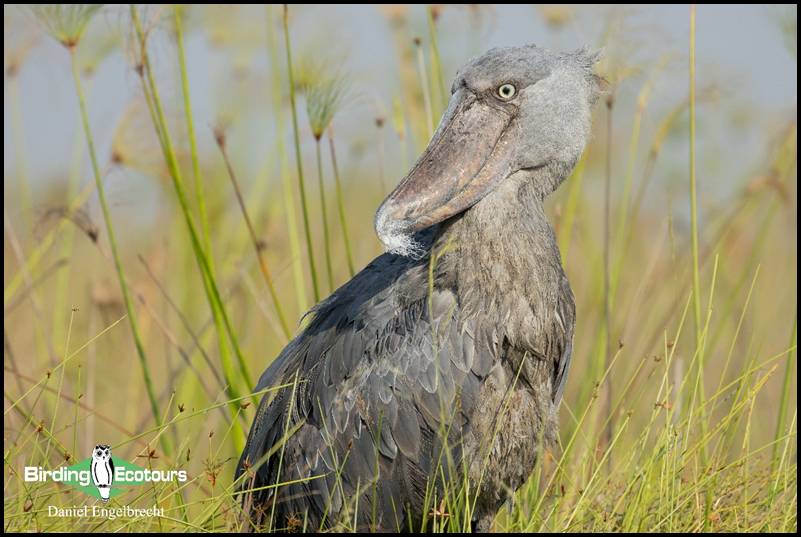
By Daniel Engelbrecht Dan works as a birding guide for Birding Ecotours and is an avid world birder with a lifelong passion for birds. Originally from South Africa’s Limpopo Province, he now lives in Stellenbosch, where he completed an Honours degree in Biodiversity and Ecology at Stellenbosch University in 2025. His travels have taken him across Africa and around the world in pursuit of new species. Uganda abounds with birds. Despite being roughly the same size as the United Kingdom, the country has a staggering list of more than 1,000 recorded species, including two endemics: Fox’s Weaver and the recently split Karamoja Apalis, formerly considered conspecific with the Maasai Apalis of Kenya and Tanzania. The modest number of endemic species, however, does little to reflect Uganda’s importance to world birders. Its position at the crossroads of several major biogeographic regions gives the country an extraordinary avifauna, while its relative stability makes it the only realistic option for seeing several species shared with politically unstable neighbours to the north and west. I recently had the good fortune to spend two months travelling across Uganda while guiding tours for Birding Ecotours. In this article, I’ll share my Top 10 birds of Uganda, including some of the country’s iconic classics alongside a few lesser-known species that I think deserve a place among Uganda’s finest. 10. Papyrus Gonolek This gaudy bushshrike has a relatively small global range, largely confined to papyrus swamps along the waterways and shores of the Rift Valley lakes. Although it also occurs in the well-birded neighbouring countries of Kenya, Tanzania, and Rwanda, Uganda is almost certainly the best place to see it. You don’t need to venture into remote or idyllic national parks to find this stunning bird, either. Some of my best sightings have come from roadside papyrus swamps, often encountered during long travel days on tour. There is something particularly satisfying about finding such a striking bird in an otherwise unassuming patch of roadside habitat. The gorgeous Papyrus Gonolek can be seen in many of the papyrus swamps in Uganda. 9. Karamoja Apalis To see this Ugandan endemic, you will need to go off the beaten track and visit the whistling thorn savannas of Pian Upe Wildlife Reserve in eastern Uganda. The savannas are exceptionally birdy, and you can expect a morning total of around 100 species while searching for this localized bird. The key is to familiarize yourself with its rapid, piping call. Once you know what you are listening for, you stand an excellent chance of locating a territorial flock moving through the thorn scrub. 8. Ring-necked Francolin Unlike the two species we’ve covered already, both of which are relatively easy to see, the Ring-necked Francolin is an exceptionally challenging bird to connect with. Your best bet is to visit the remote Kidepo Valley National Park in the northeast corner of the country, wedged between the borders of Kenya and South Sudan. Uganda offers the best chance of seeing this bird globally, but even here it is far from guaranteed. Rather than relying on your eyes, you will need to listen out for its distinctive, sombre call. The birds are most vocal around dawn and are best searched for in the woodlands before you reach the main gate at Kidepo. There are few very photos of the rare Ring-necked Francolin. 7. Nahan’s Partridge This is another tricky gamebird to connect with and, to make matters worse, it inhabits the dark and dense understory of Uganda’s lowland forests. Although they are relatively easy to hear at Budongo Forest along the famous Royal Mile, setting eyes on a Nahan’s Partridge requires a good dose of luck and patience in equal measure. Typically, the process of seeing this bird involves taping them into view across a path through the forest. Even then, you need to be alert, as they can disappear into the undergrowth almost as quickly as they appeared. 6. Black-breasted Barbet Heading back up to the northeast and Kidepo National Park, we now find ourselves among the park’s rocky outcrops, where fruiting fig trees may yield the impressive and highly localized Black-breasted Barbet. This huge bird, with its monstrous bill, is the largest of the African barbets, and despite its size, it can be surprisingly inconspicuous. On my recent tour, I managed to get one of the only recordings of the bird’s call, which you can listen to here. Once again, Uganda is the only easily accessible and stable country in which to observe this phenomenal bird. Black-breasted Barbet is Africa’s largest barbet species, and Kidepo Valley National Park is the only accessible place in the world to see it. 5. Fox’s Weaver This poorly known weaver has a minuscule global range and is confined to eastern Uganda. After a number of years without any sightings, the species was relocated a few years ago and is now relatively reliably seen near Pian Upe Wildlife Reserve. We saw several individuals breeding in this area in July 2026, and the best part is that it occurs alongside Uganda’s other endemic, Karamoja Apalis, discussed earlier. Seeing the two endemics together is difficult to beat, and Fox’s Weaver is a genuine global mega that thoroughly deserves its place in Uganda’s top five. The endemic Fox’s Weaver can be seen near Pian Upe Wildlife Reserve. 4. Rwenzori Turaco A Ugandan Top 10 wouldn’t be complete without featuring a few Albertine Rift endemics, and this is arguably the most iconic of the lot. In Uganda, Rwenzori Turaco can only be seen at Mgahinga Gorilla National Park, where it inhabits high-elevation montane forests. This unusual turaco has an atypical, high-pitched call and can be surprisingly challenging to see. The best approach is to find a clearing in the forest with a good view over the canopy, where you can scan for a bird bouncing between the branches or darting from tree to tree. Even when you hear one calling nearby, getting a view can require considerable effort. The unique-looking Rwenzori Turaco is an...

This post is republished in our “From the Archives” series, featuring highlights of our vast back catalogue of more than 10,000 birding-related posts published over the last 15 years or so. Originally published on November 11, 2018. We had not observed a Powerful Owl since we were living in Portland, Victoria for a few months in 2009, so once the opportunity arose to go looking for one at the Royal Botanical Gardens in Sydney we took it! According to eBird there had been at least one Powerful Owl present recently and although the exact details were not available it is always worth going to look. The Royal Botanical Gardens are a huge area to explore and easily accessed by public transport. Our first attempt was not successful, but we were limited by the time of day and decided we should make one more attempt before returning home to Broome. We had found a fresh owl pellet, but that did not produce an owl of any sort and was only evidence of owls in the area! Owl pellet On our second visit to the Royal Botanical Gardens in Sydney the weather was far from perfect, but we had only a couple of days left before we were heading home. It was with great delight that Grant was the first to observe a Powerful Owl sitting high up in a tree with its head tucked in. It was a race against time as the clouds raced across the sky and we sat on the conveniently located bench under the tree looking at this magnificent bird. Powerful Owls are the largest nocturnal bird in Australia and the largest of the owl species. There is a Powerful Owl Project being run to learn more about how they are living in the cities in Australia. We were able to capture a few photos of the Powerful Owl roosting high up in the tree and then it started to drizzle. Powerful Owl on a dull day! Although the rain cut short our encounter with a Powerful Owl it did make it stretch out its head and open its eyes to see what was going on with the weather. This worked in our favour and we were able to take a few more photos before we had to make a move and get ourselves back to the train station. I am of course rather limited by my camera in this situation, but we were more than happy to see this Powerful Owl after so many years without seeing one. We have to be content with Barking Owls around Broome, which are also magnificent owls! Powerful Owl realising that it is raining! Another thrill about finding this Powerful Owl was that we were quite possibly looking at the same bird that Tom had been looking at earlier this year! Of course Tom got much better photos than me and you can see some of them here!

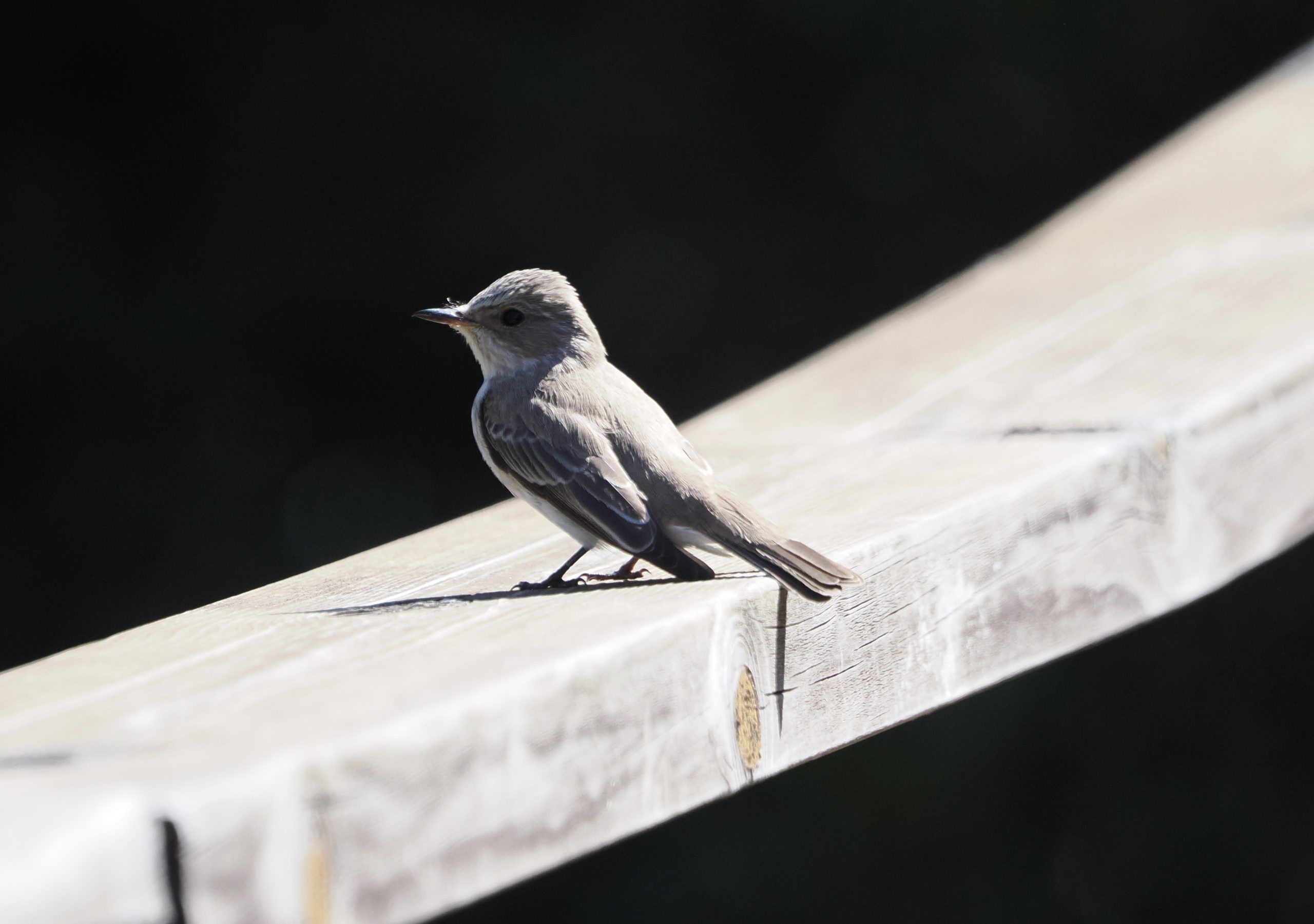
When 10000 Birds first took its name, it was generally assumed that there were around 10000 species of birds in the world. We now know, thanks to AviList, that it’s an impressive 11,131, in no fewer than 252 families. Bird taxonomy is both fascinating and, at times, confusing. Establishing what exactly makes a species is by no means clear cut. Just because two birds look alike doesn’t necessarily mean that they are the same species, while sometimes birds that look quite different are, in fact, so closely related that they are classified as the same. Carrion Crow and (below) Hooded Crow. Despite appearances, the same species A classic example of the latter is the Carrion Crow, which looks quite different from the Hooded Crow. Despite appearances, the two birds are so alike that AviList lumps them as one species, Corvus corone, though recognising six sub species. If you are a lister, that means just one tick if you follow AviList’s taxonomy. Until we had AviList, there were four world lists to choose from, each with slightly different taxonomy. There was the HBW and BirdLife International Checklist of the Birds of the World, The Howard and Moore Complete Checklist of the Birds of the World, the eBird/Clements Checklist of the Birds of the World and the IOC World Bird List. Both the latter recognised the Carrion Crow and the Hooded Crow as two distinct species. Having just one list makes life simpler for everyone, from conservationists to serious listers, so the AviList has generally received a warm welcome from the ornithological world. The first AviList was published last year, and this year we have the first major revision. (Annual updates are promised for the future). The headlines from this revision are the species which have been split, forming two species where only one was recognised before. From a North American perspective the most important here is the division of the Willet into two species: the Saltmarsh Willet Tringa semipalmata and Prairie Willet Tringa inornata. According to AviList: “Careful observation has revealed drastically different patterns of occurrence that have helped clarify that two species are involved. Saltmarsh Willet breeds in coastal saltmarshes from Atlantic Canada to Texas and sparingly in the Caribbean; it vacates North America almost entirely and primarily winters along the Atlantic Coast of South America, with Brazil hosting much of the population. Prairie Willet, by contrast, breeds in wetlands of the Prairie Provinces, Great Plains, and Great Basin Desert and winters along both the Pacific and Atlantic coasts from Canada south to the Southern Cone of South America.” I photographed this Willet in Tobago in February 2007. Presumably it would now be called a Saltmarsh Willet? Visually, the two can be separated most easily in juvenile plumage. Saltmarsh Willet is smaller and browner, while Prairie Willet is larger and greyer. I see that my copy of Sibley’s North American Bird Guide divides them into two, eastern and western, thus predicting the split. AviList comments “Much remains to be learned about the exact distribution, and having birders and ornithologists more focused on identifying these at the species level is sure to bring additional insights in the years to come.” Surprisingly, no Willet has ever been recorded in the British Isles, though vagrants have been seen as close as France, Norway and Finland. When one does finally turn up (it’s reckoned to be one of the most likely additions to the British list), the challenge will be to identify exactly which species. I’ve seen Willets at a number of locations, from California to Louisiana, Costa Rice to Tobago, so I’ve no doubt seen both species (Saltmarsh in Tobago, Prairie in California and Costa Rica?) but I’m afraid that the at the time, they were just Willets. I gain an armchair tick. Mediterranean flycatcher Muscicapa tyrrhenica (above and below). These individuals were photographed on the Balearic island of Menorca, where they are common breeding birds One split in the latest revisions that I am familiar with is Mediterranean Flycatcher (Muscicapa tyrrhenica), formerly regarded as a race of Spotted Flycatcher. Mediterranean Flycatchers breed in the Balearic Islands, Corsica, Sardinia, the Tuscan archipelago and a narrow stretch of Italy’s Tyrrhenian coast. The split was based on genetic, vocal, morphological and plumage differences. I spent a lot of time watching these flycatchers on the Balearic island of Menorca in May, but I’m forced to admit that the differences between Spotted and Mediterranean Flycatchers are subtle and far from obvious. Little Swift (above and below) is now lumped with the almost identical House Swift I’ve seen both House Swifts and Little Swifts on many occasions, and have always wondered why they were regarded as separate species. They are no longer: the House Swift has been absorbed into the Little Swift (Apus affinis). This is a curious bird, for it has a huge distribution that takes in all of sub-Saharan Africa, India, and now southern China, Malaysia, Japan and Borneo, but has just a single colony in Europe, in south-west Spain, where my photos were taken. Lastly, a welcome split, at least by me. Maghreb Wheatear has been divorced from the closely related Mourning Wheatear, a split anticipated by the Collins Bird Guide, which notes that it is a separate species “on account of clear sexual dimorphism and allopatric range”. I ticked my first Maghreb Wheatear in Morocco in April, so it’s good to see its status recognised.
End of feed
Browser Fingerprint
Collecting…